
Greeley City Zoning Code
CHAPTER 7
- ACCESS AND PARKING
Sec. 24-701.- Intent and applicability.
a.
Intent. The intent of the access and parking standards is to:
1.
Emphasize the importance of site access for multiple modes of transportation.
2.
Preserve streetscape design and street functions by coordinating access along blocks and internal to blocks.
3.
Provide the optimal amount of vehicle parking for individual sites, recognizing that too much and too little parking each have negative impacts.
4.
Create access and parking standards appropriate to the context of the site, considering street designs and surrounding development patterns.
5.
Ensure appropriate site design features that mitigate the physical and aesthetic impact of parking on streetscapes and surrounding sites.
6.
Maximize opportunities for on-street parking, shared parking, or reduced parking rates where appropriate, and reduce the inefficiency from underutilized and redundant surface parking on adjacent sites.
7.
Promote parking designs that minimize runoff, incorporate low-impact design features, infiltrate stormwater into the ground, and reduce the heat island effect from large paved surfaces.
b
Applicability. Access and parking shall be shown on site plans, according to the application requirements in chapter 2 of this title. Specifically, the standards in this chapter apply to:
1.
All new development, buildings, or uses on a site.
2.
A change of use for an existing lot or building, or additions to existing buildings, that would require 25 percent or more additional required parking than the previous condition.
3.
Where additional parking is required for an existing lot or building, the parking design standards shall only apply to the newly constructed parking; except, when more than 50 percent of a parking area is reconstructed, all parking and access shall comply with this section.
4.
When an existing parking area is resurfaced, the parking area shall comply with the dimension and accessible space requirements.
5.
The director may otherwise determine the extent of parking requirements to account for any nonconforming situations specified in section 24-105, and to facilitate reuse of an existing site and building.
(Ord. No. 36, 2021, § 2(app. A, § 2), 9-21-2021)
Sec. 24-702. - Access and circulation.
a.
Vehicle access. Vehicle access shall be designed according to the following standards:
1.
Driveway width and location. Driveways shall generally be located according to the Design Criteria and Construction Specifications Manual for Streets, Volume I. The subsections below provide specific and additional considerations to coordinate access with the streetscape and site design of a particular location.
(a)
Wherever feasible, adjacent lots with a similar land use shall use shared access to preserve the streetscape and eliminate conflicts with pedestrians and vehicles.
(b)
Direct access to an arterial street shall be permitted only when the subject property has no other reasonable access to the street system, after considering alternatives such as access from side streets, shared driveways, common frontage lanes, rear alleys, or internal access streets.
(c)
The frontage design standards on a particular lot or block in sections 24-503.b and 24-603 may further restrict the width, location, or extent of driveways. Where driveway spacing standards for streets limit or prohibit access, shared driveways, common access lanes, or alleys internal to blocks shall be used.
2.
Driveway setbacks. Driveways shall be set back from side or rear lot lines as stated in table 24-7-1.
3.
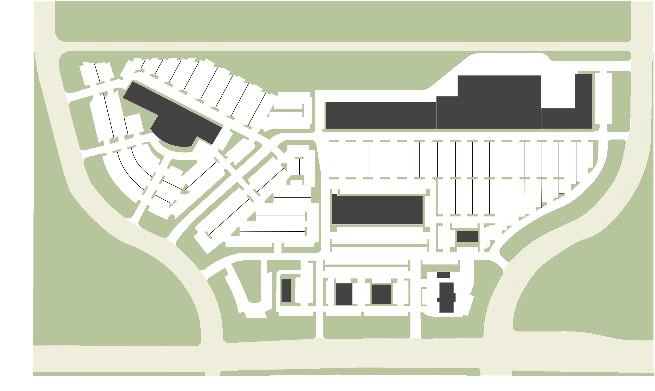
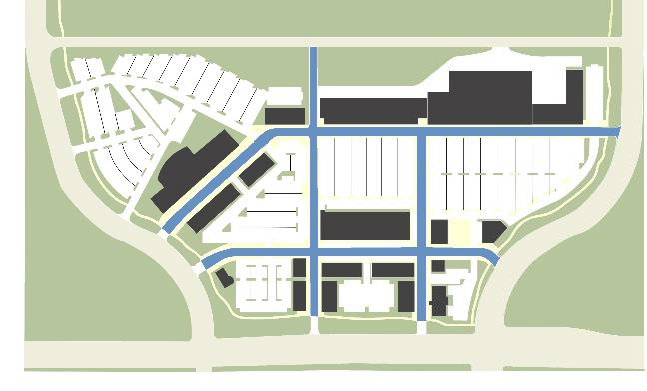
Internal access streets. Any single project, lot or site greater than five acres, or lots where access is constrained by driveway standards, shall provide a system of internal access streets that establish access and circulation within the site. Internal access streets:
(a)
Shall be laid out to organize the site into smaller internal blocks between one and four acres.
(b)
Shall be designed to mimic public street cross sections in section 24-301, including sidewalks, landscape amenities, on-street parking, and travel lanes.
(c)
May be treated as public streets for determining the proper location, orientation, and design of sites and buildings within the project.
(d)
Shall include a maintenance plan with the associated land use application for the internal private facilities, or designated as common areas for all properties in the project.
Trail, greenway, or pedestrian passages meeting the standards of section 24-302 may account for a portion of this internal circulation network, provided it connects buildings, open spaces, and internal streets with similar networks external to the site and presents a logical connection point for pedestrians and bicycles.
 |  |
| Not This | This |
| Figure 24-7-1: Internal access streets. | |
4.
General access design standards. All access shall meet any accepted transportation impact study recommendations associated with the development and the following design standards:
(a)
All vehicle stacking or queuing must be accommodated on site and shall not interfere with street traffic.
(b)
Provisions for circulation between adjacent parcels shall be provided by internal access streets, cross access easements, and other shared access provisions to protect the function, design, and character of public streets.
(c)
Driveway spacing and design shall be located so that safe ingress and egress are provided, considering the function and the design speed of the street from which the access is provided, and minimizing potential conflicts of all modes of transportation, including pedestrians, bicycles and vehicles.
(d)
Landscape, buildings, and other site elements at access points shall be designed to meet the sight distance requirements of section 24-301.d.2.
(e)
Any access from a state highway shall only be permitted as authorized and approved by the Colorado Department of Transportation (CDOT). An applicant for any development project with access to a state highway should coordinate with CDOT prior to an application with the city.
b.
Sidewalks.
1.
Generally. Development sites shall include direct sidewalk connections and circulation at the same or greater frequency as provided for vehicles. Sidewalks shall connect public entrances of buildings and sites to the following, in the most direct manner possible:
(a)
Sidewalks in the public streetscape or along internal access streets.
(b)
Parking areas and any perimeter sidewalks, internal walkways or crosswalks associated with the parking areas.
(c)
Civic or open space, or other common areas designed for active use.
(d)
Transit stops, stations, or park and ride locations — existing or anticipated.
(e)
Where connections from sidewalks in the public streetscapes or internal access streets are not practical or are too remote, sites shall provide pedestrian connections to any of the above areas or amenities on adjacent sites. Connections directly to adjacent sites shall be made in any case where the connections by sidewalks on public streets or through access ways result in pedestrian routes greater than 300 feet.
2.
Sidewalk width. Internal sidewalks shall meet the requirements of table 24-7-2.
3.
Pedestrian amenities. Sidewalks and internal pedestrian circulation shall be separated from moving vehicles with curbs, landscape buffers, curbside parking, or similar elements of the circulation and open space systems; except crosswalks or other similar limited segments, which may be distinguished by paint, brick, or colored or scored concrete and similar design features that signify pedestrian priority.
4.
Americans with Disabilities Act. All internal sidewalks and other pedestrian areas shall meet all applicable Americans with Disabilities Act (ADA) standards and guidelines.
c.
Alternative compliance. Alternative compliance to the access and circulation standards in this section may be authorized according to the process and criteria in section 24-208, and any of the following applicable additional criteria:
1.
The standards, when applied to a particular project or street, will adversely impact the function of the transportation network in the vicinity of the site.
2.
A specific access management study or plan for a portion of the city or street segment has altered the application of these standards.
3.
The context of the project warrants a different access design when considering the functional class of the street, the streetscape design on the particular block, and existing and anticipated adjacent land uses.
4.
The location of any paved surfaces may reduce or eliminate setbacks, provided the design adequately addresses potential drainage and screening issues relative to abutting property.
5.
Alternatives shall be evaluated balancing the streetscape design objectives, traffic conditions of a particular street segment, and pedestrian needs, and may be approved if the intent of this chapter is equally or better met by the alternative.
(Ord. No. 36, 2021, § 2(app. A, § 2), 9-21-2021)
Sec. 24-703. - Required parking.
a.
Vehicle parking rates. Table 24-7-3 provides minimum parking requirements, and general categories apply to all similar uses not specifically listed. Where a use is not similar to a general use in the table or could meet more than one category, the director shall determine the appropriate classification based on industry guides and the most similar use in terms of scale, format, and operation. The following criteria shall be used in interpreting the table:
1.
Employee rates shall consider the maximum number of employees likely to be on site at one time.
2.
Square footage rates shall consider leasable floor area or active area dedicated to the particular use. Where this number is not easily or readily determined, 85 percent of gross floor area may be used.
3.
A seating or capacity rate shall consider the total number of seats based on industry standards for typical layouts of buildings or building codes, where actual seating is not yet known.
4.
Where uses or sites have components of different uses (i.e., hotel with a restaurant), each component shall be calculated and apportioned under the most applicable rate.
b.
Maximum parking. Nonresidential uses shall not provide more than 125 percent of the minimum required vehicle parking without documented evidence of actual parking demand based on studies of similar uses in similar contexts. In addition, any parking permitted over 125 percent of the minimum shall require mitigating potential impacts of additional parking through one or more of the following strategies, based on the director's discretion:
1.
Utilize all eligible parking reductions permitted by section 24-703.c.
2.
Provide shared parking for other uses on the block or adjacent blocks according to this chapter.
3.
Utilize alternative surfaces designed to infiltrate stormwater, approved by the director, and subject to installation, maintenance, and performance assurances.
4.
Provide additional landscape to screen parking with at least a ten percent increase in the required parking landscape area and at least a 25 percent increase in the amount of landscape material required for the parking.
6.
Increase the lot open space required for the building and site in section 24-503 or section 24-603 by an amount equal to the area of parking that exceeds the 100 percent minimum parking requirement, and locate this open space to limit the impact and visibility of parking.
c.
Parking reductions. The parking required by table 24-7-3 may be reduced depending on context and according to the following strategies. Reductions beyond those provided in this subsection may only be approved according to an alternative parking and access plan in [section 24-707]:
1.
Downtown Overlay 1. See Section 24-1005.
2.
Administrative reduction. The director may reduce the required parking for any use that requires more than ten spaces by up to 15 percent of the required spaces due to the nature of a particular use or any unique circumstances on the site.
3.
On-street parking credit. All on-street parking within 300 feet of any lot frontage shall count towards the parking requirement at a rate of 0.25 spaces for every on-street space not on the lot boundary and 0.75 spaces for every space on the lot boundary.
4.
Bicycle parking credit. All bicycle parking designed and located according to section 24-703.d may reduce the required vehicle parking at a rate of one space for every four bicycle parking spaces up to a maximum of 15 percent of the required vehicle parking spaces. To be eligible for this credit, the applicant must demonstrate that it is practical to expect significant bicycle access to the site based on the location and proximity to the city-wide bicycle transportation network, the design of the site, and the nature of the use and anticipated patrons.
5.
Public parking credit. Any site within 1,320 feet of a public parking area may reduce the required vehicle parking at a rate of one space for every two parking spaces, except that if the public parking is part of a managed district, the district policies and management may establish a different allocation of spaces.
6.
Transit credit. The director may reduce the parking requirement up to 25 percent for any development within 1,320 feet of a transit stop. In making a determination on the eligibility for and amount of the credit, the director may consider the nature of the use, the likelihood that it generates transit trip origins and destinations, and the level of transit service at the stop.
7.
Shared parking. Required parking may be reduced for any site containing multiple uses or for adjacent sites with different uses according to table 24-7-4. Any shared parking arrangement shall require an agreement among all landowners participating in the agreement to ensure access, joint use, maintenance, and other operational issues. The agreement shall be recorded for each participating property with the office of the applicable county clerk and recorder. The agreement shall state that it cannot be changed or modified without the approval and signature of the director. A shared agreement that differs from this table may also be approved based on a joint parking study for the sites and uses demonstrating adequate parking during peak hours for all parties to the agreement.
8.
Affordable housing. When an applicant provides an executed and recorded deed restriction that a proposed dwelling unit will be reserved for affordable housing for no less than 15 years, the applicant may reduce the required parking for the affordable dwelling unit. All other uses on the site, including market rate dwelling units, do not qualify for this parking reduction. The applicant must provide evidence that the property will adhere to income limits and maximum rents published annually by the department of housing and urban development. The applicant must list each dwelling unit subject to the deed restriction, the number of bedrooms in the dwelling unit, and the area median income for which the dwelling unit is reserved. Upon fulfilling the above-mentioned requirements, the applicant may reduce the required parking as follows:
a.
Up to a 75 percent reduction for dwelling units that are affordable to households that earn up to 30 percent of area median income.
d.
Bicycle parking. All nonresidential or multifamily development shall provide bicycle parking spaces according to table 24-7-5.
Bicycle parking shall be designed according to the following standards:
1.
A structure shall be securely anchored to the ground and usable for both U-locks and cable locks, support a bike at two points of contact to prevent damage to wheels or frames, and have two feet by six feet clearance for each bicycle.
2.
Structures that serve another primary function but are designed to meet these standards may count toward this requirement.
3.
Bicycle parking shall be located in a well-lit area with convenient and safe pedestrian access and be on pavement or all-weather, dust-free, stabilized surface.
4.
Bicycle parking for nonresidential uses shall be located within 100 feet of and visible from the primary entrance.
5.
At least 50 percent of required bicycle parking for residential uses, employment uses, or other similar uses where bicycles are likely to be parked for longer than four hours, shall be located within the building or other all-weather and secure enclosure.
6.
Short-term bicycle parking facilities may be located in the right-of-way subject to streetscape design plans and the director's approval. Structures shall be designed for some other primary purpose meeting the streetscape standards or be designed with artistic or ornamentation enhancements compatible with the streetscape character at the specific location.
7.
Alternative standards and specifications based on recognized industry guidance or best practices for bicycle parking may be approved by the director through site plan review.
e
Accessible parking. Accessible vehicle parking spaces shall be provided in accordance with the applicable building codes and the Americans with Disabilities Act (ADA) standards and guidelines for quantity, design, and location.
f.
Alternative compliance. Alternative compliance to the required parking standards in this section may be authorized according to the process and criteria in section 24-208, and as provided in section 24-707.
(Ord. No. 36, 2021, § 2(app. A, § 2), 9-21-2021; Ord. No. 14, 2024, § 2(app. A), 6-4-2024; Ord. No. 20, 2025, § 1, 6-17-2025)
Sec. 24-704. - Parking design.
a.
Parking landscape design objectives. Landscape areas required by table 24-7-6 shall be arranged to achieve the following design objectives:
1.
All perimeter landscape and islands shall have the proper allocation of landscape materials required by section 24-802, and be arranged to provide shade, infiltrate runoff, soften large expanses of pavement, and screen parking from adjacent streets and property.
2.
In general, no parking or circulation area expanse shall be more than 200 feet in any direction without providing perimeter landscape, internal island, or parking block edge.
3.
Parking rows shall be no more than 15 contiguous spaces without landscape islands (end caps, center islands, or peninsulas), or no more than three double-loaded bays without perimeter landscape or a landscape median. This may be adjusted on a specific site plan that results in the same amount of islands and landscape on average for the entire parking lot.
4.
No landscape island shall be less than eight feet in any dimension and no less than 160 square feet in area.
5.
Any perimeter or center landscape area that contains a sidewalk shall have at least five feet of landscape on each side of the sidewalk or eight feet of landscape on one side in order to contribute to the parking landscape requirement.
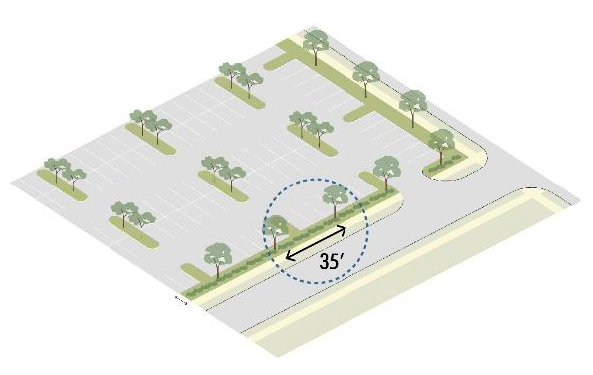 | 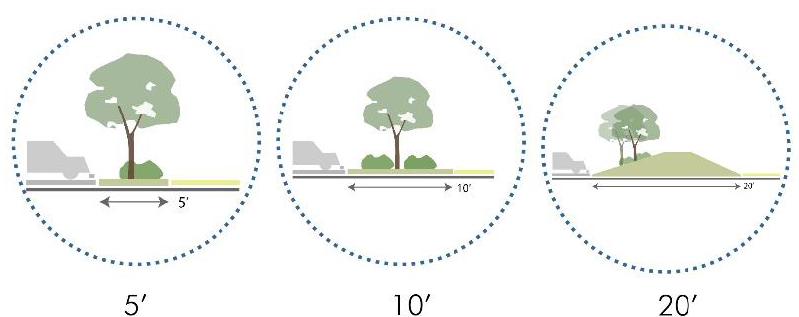 |
| Figure 24-7-2: Parking lot screening. | See section 24-803 Perimeter Landscape & Screening |
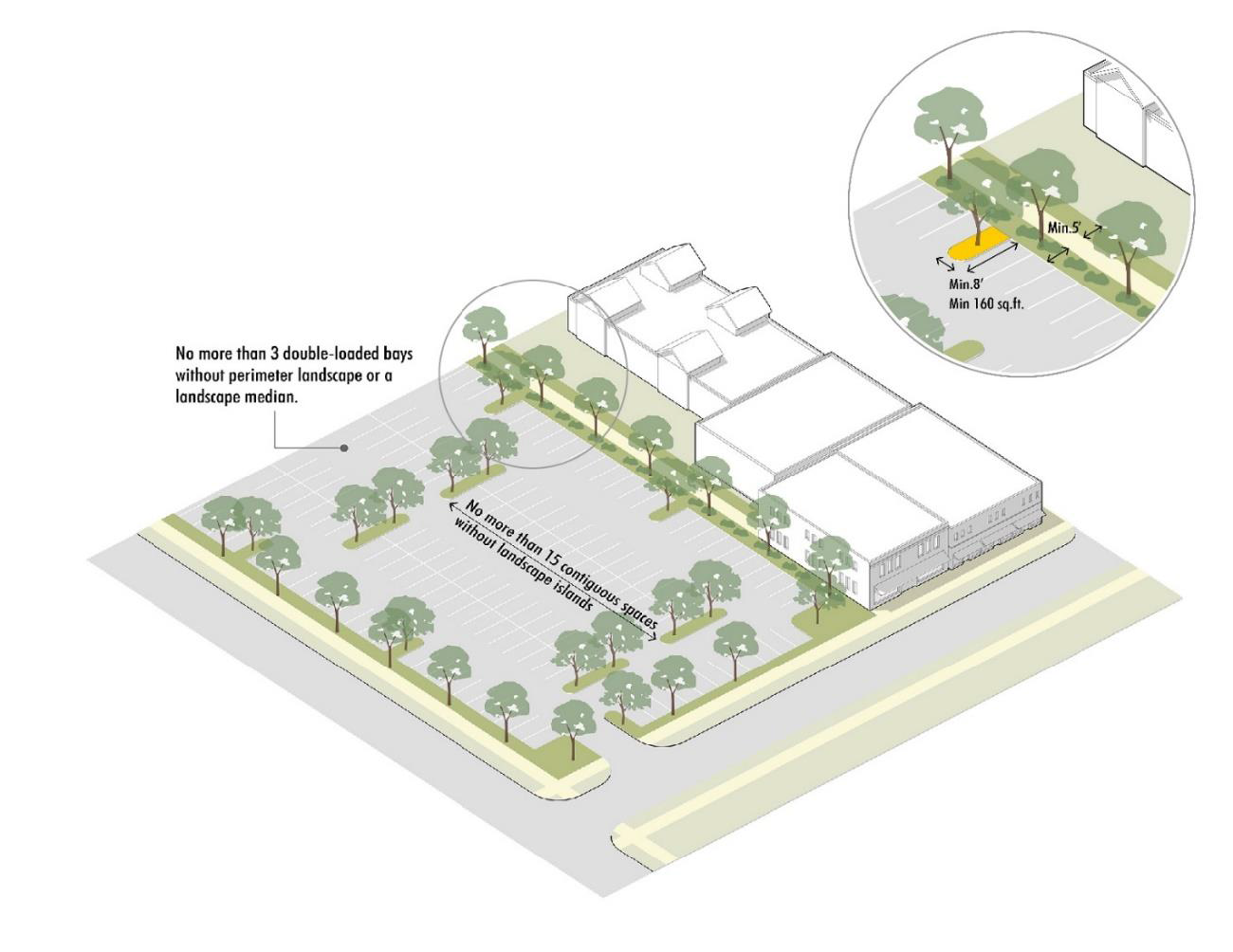
Figure 24-7-3: Parking lot islands and perimeter landscape.
b.
Location, size and landscape area. On-site parking shall be designed and located to mitigate adverse impacts on streetscapes and adjacent property. The design standards in table 24-7-6 are based on the number of parking spaces per area and the location on the parking lot relative to the principal building (front, side, or rear).
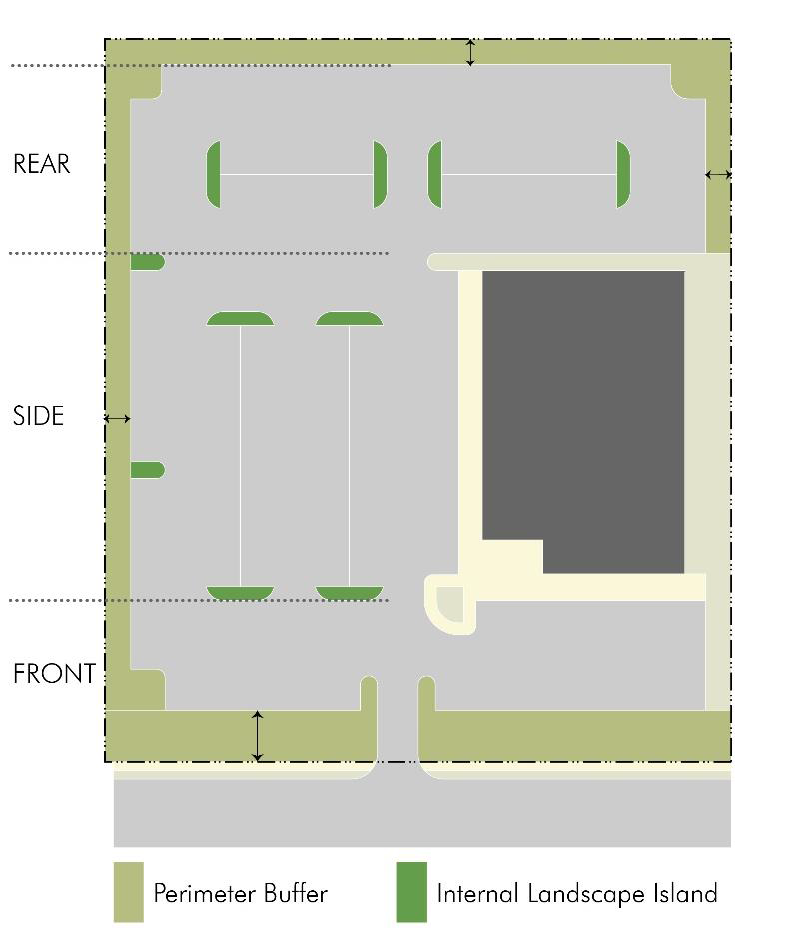
Figure 24-7-4: Parking lot design and location.
c.
Sidewalks. In meeting the standards of sections 24-702.b and 24-704.b, a sidewalk connection shall be provided from the perimeter of the parking lot to the building entrance or building frontage. For parking areas over 200 spaces, a sidewalk connection shall be provided through the parking area and to the building frontage at least once every 300 linear feet of frontage. Sidewalks meeting this standard may be located along internal access streets, in perimeter landscape, or located in a center landscape median.
d.
Footstep access. Landscape islands or other perimeter landscape areas adjacent to a parking stall shall have an additional one-foot setback from the curb or parking surface to provide a footstep for pedestrian access from the vehicle.
1.
The footstep may be accomplished by a wider sidewalk, enlarged curb or striping on the parking surface in addition to the stall width and striping.
2.
If the footstep is inside the landscape island, it must be concrete or an acceptable all-weather compacted material that does not float or drain into the stormwater sewer system.
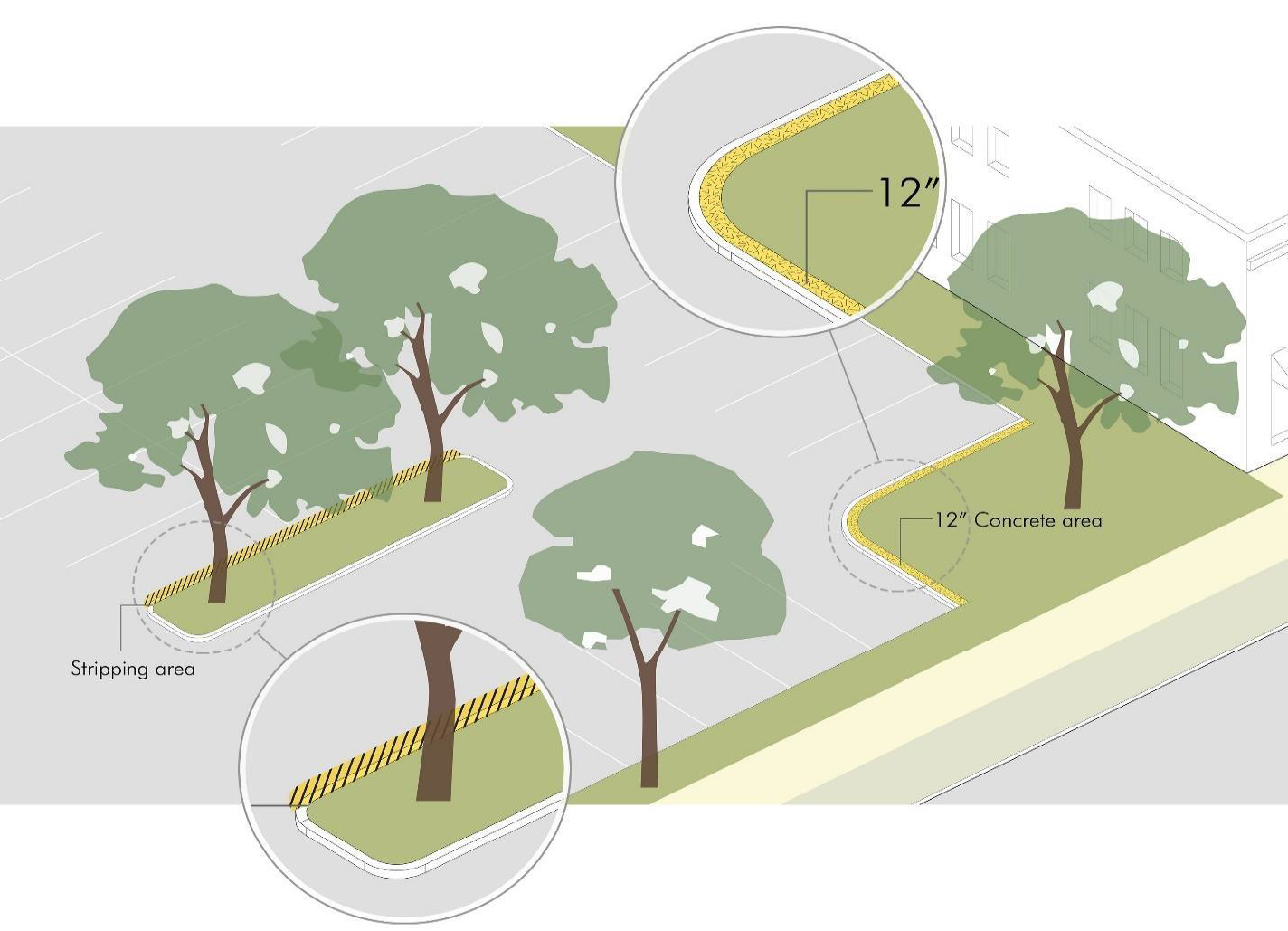
Figure 24-7-5: Landscape island footstep access.
e.
Parking dimensions. Parking areas shall be designed to meet the dimension specifications in table 24-7-7.
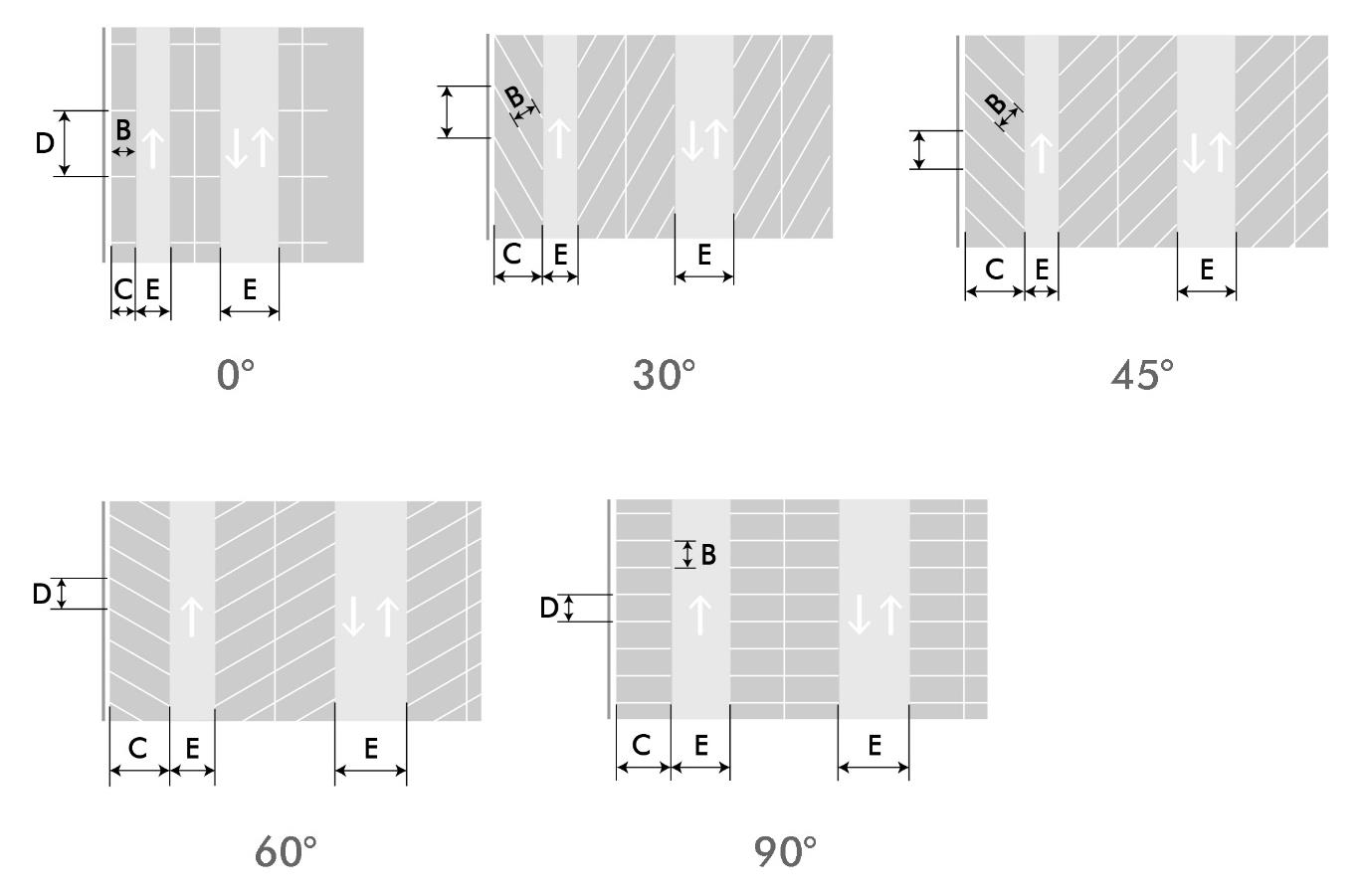
Figure 24-7-6: Parking dimensions.
f.
General design standards.
1.
A flatwork permit is required prior to the installation of any paving.
2.
All required parking shall be on site except as specifically provided in this chapter for credits or shared parking sections or as approved through alternative compliance.
3.
No parking space shall be located where it backs into a street or internal access street except:
(a)
Residential parking in driveways, permitted for detached houses, multi-unit houses, row houses, or small apartments for up to ten parking spaces.
(b)
On-street parking on streets or internal access streets designed according to the standards in section 24-301.
4.
All required parking areas shall be used solely for parking of vehicles in operating condition for patrons, occupants, or employees of the use unless specifically authorized otherwise by provisions in this code.
5.
All parking and access areas shall be designed to adequately address drainage and runoff, including curb, gutters, and inlets, or any other drainage strategy approved by the director to support best management practices to minimize runoff and encourage infiltration of stormwater.
6.
All off-street parking areas and driveways shall be graded and paved with asphalt or concrete, meeting the city's design criteria and construction specifications.
7.
All off-street parking spaces in parking lots shall be outlined with painted stripes or other similar markings on the surface. All non-parking spaces, such as loading zones, emergency lanes, drive-through lanes, or spaces in front of doorways and entrances shall be clearly differentiated from parking.
g.
Alternative compliance. Alternative compliance to the parking design standards in this section may be authorized according to the process and criteria in section 24-208, and the following additional criteria:
1.
Properties that include large monumentation, artwork, architectural hardscape, or other similar civic spaces, and that locate them in a manner that reduces the impact or perceived extent of surface parking, may request alternate parking location and dimensions.
2.
Parking lots designed with bio-retention strategies that cleanse and infiltrate parking lot runoff may request alternate design and construction standards that better address parking lot runoff, subject to installation, maintenance and performance assurances.
3.
Alternative all-weather surfaces for parking or storage areas may be approved on residential property located in a rear yard or interior side yard behind the principal building.
4.
Dimensions for compact vehicle parking spaces may be reduced to eight feet by 16 feet for up to 25 percent of the total parking spaces on lots over ten spaces, provided signs and a plan for management of the spaces are provided. Additional reductions may be made through an alternative access and parking plan in section 24-707.
5.
All or a portion of required parking may be off site subject to the following specific considerations:
(a)
The parking area is within 500 feet of the subject site for nonresidential and 250 feet for residential, measured along pedestrian connection routes;
(b)
It is in the same or comparable zoning district;
(c)
The presence of the off-site lot does not negatively impact potential development on that lot or any lot in the vicinity;
(d)
There are no pedestrian barriers or other access constraints between the lot and the use;
(e)
An agreement shall demonstrate rights and control of the off-site property, coordinated with the duration of the use, or a comparable contingency plan is reasonably available if the agreement is terminated. The city may require recording of the agreement or some other mechanism to enforce parking if there is default or termination of the agreement.
Sec. 24-705. - Loading areas.
a.
Loading requirements. In mixed-use, commercial, or industrial districts, off-street loading shall be required as indicated in table 24-7-8.
1.
The number and size of spaces may be revised based on the operating characteristics of the particular use and determined through site plan review.
2.
Loading areas shall be located on a remote portion of the building and site or internal to the block and buffered by other buildings wherever possible.
3.
Loading areas and activities shall not interfere with the use of walkways, drive aisles, stacking areas, internal access streets, or public streets.
4.
Loading shall be screened from public streets or adjacent residential areas in a manner that best limits visibility and mitigates noise, according to the buffer types and design standards in section 24-803.
b.
Mixed-use buildings or districts. In any area, project, or zoning district designed to promote pedestrian activity or for buildings and sites where more compact building and site design is required, alternate loading standards shall be permitted by the director. Alternate loading standards may include sharing loading spaces among multiple smaller tenants, using side streets, using on-street parking, or using alleys — particularly where there is sufficient spaces during off hours for loading or deliveries per table 24-7-9, or other similar strategies that avoid designing sites for large vehicle access.
(Ord. No. 36, 2021, § 2(app. A, § 2), 9-21-2021)
Sec. 24-706. - Recreational and oversized vehicles.
a.
Recreational vehicle and equipment storage. Recreational vehicles and equipment shall be prohibited from being located in any setback of residential property, except as specified below:
1.
Location. Recreational and oversized vehicles and equipment may be located in the following areas:
(a)
Rear yards and at least five feet from the rear lot line;
(b)
Interior side yards if behind the front building line; or
(c)
Street side yards, if at least ten feet from the lot line, and provided the side yard does not abut the front yard of an adjacent lot.
In no case shall they be stored closer than three feet to a structure or over any window wells.
2.
Quantity. No more than one recreational vehicle or major recreational equipment shall be stored per lot. Recreational vehicles are defined in section 24-5, and major recreational equipment includes boats over 18 feet and utility trailers greater than five feet by eight feet. There is no limit on the quantity of minor recreational equipment that can be stored, such as canoes, snowmobiles, jet skis, ATVs, small and low-profile recreational equipment
3.
Surfaces. Storage surfaces shall be paved, or a gravel surface surround be a constructed collar of concrete, pavers, or other solid form of edging at least six inches wide and sufficient to contain the gravel fully. Gravel shall be of a depth and density to fully cover the storage area and support the width of the vehicle without ruts or displacement of the gravel. Access to the storage shall be an approved all-weather surface.
b.
Limited parking.
1.
Loading, unloading, and repairs. Recreational vehicles shall be permitted to park in front yard driveways if located at least three feet in back of the sidewalk, or the front property line where no sidewalk exists, for loading, unloading or emergency repairs for a maximum of 48 hours.
2.
Guests. Guests traveling in recreational vehicles shall be permitted to park the guest's RV in front yard driveways for a maximum period of seven consecutive days if parking is:
(a)
At least three feet back from the sidewalk, or the front property line where no sidewalk exists;
(b)
No clear vision zone is adversely affected;
(c)
Parking shall be limited to one seven-day period per vehicle in 12 consecutive months. The director may grant extensions for one additional week where unusual circumstances warrant. In no event shall an extension be granted more than one time in a 365-day period for a single property unless there is a change in ownership or occupancy of the property.
3.
Dwelling. Recreational vehicles or equipment stored on a residential property shall not be used for temporary, accessory, or permanent living.
c.
Registration and licenses. Recreational vehicles, trailers, or equipment shall be operable and be current on all registrations or licenses required by law, and be legally registered to or owned by the owner or tenant of the dwelling where it is stored.
d.
Oversize vehicles. Work vehicles exceeding one-ton capacity, trailers exceeding 15 feet in length, tow trucks, taxicabs, limousines or vehicles not typically associated with a residential use shall not be parked at any time at single-family or two-family dwellings, except as follows:
1.
For deliveries made to the dwelling;
2.
For construction or maintenance work contracted to be done at the dwelling;
3.
As allowed associated with permitted home occupation standards and conditions; or
4.
When the occupant of the dwelling has obtained a minor variance from the community development department based upon the user of the vehicle being required to occasionally have the vehicle present overnight on the residential premises as part of limited, on-call work requirements that relate exclusively to a public utility (such as Xcel or Atmos) for emergency response or service.
Refer to section 16-397 for additional information regarding the parking of oversized vehicles on public roadways and private land.
(Ord. No. 36, 2021, § 2(app. A, § 2), 9-21-2021)
Sec. 24-707. - Alternate access and parking plan.
a.
Site plan. The director may approve an alternative access and parking plan that varies from the design standards or reduces the parking required by this chapter by up 25 percent, in addition to all other eligible reductions. The application shall be in association with the site plan process in section 24-207, and the director shall consider the following:
1.
The intensity and operating of the proposed use, as well as potential future uses on the site.
2.
Evidence of similar uses in similar contexts or other industry standard indicates a lesser number will be sufficient due any of the following:
(a)
The format of the use;
(b)
The likelihood that patrons or tenants have reduced car ownership or drive less;
(c)
The availability and practicality of walking, bicycling or transit access supporting the use; or
(d)
Other transportation demand management plans proposed by the applicant.
3.
The character of the surrounding area and adjacent land uses, and the availability and overall demand on alternative parking within 600 feet, including on-street parking.
4.
All potential negative impacts on adjacent property are mitigated by the plan, in terms of parking design, operation, and contingency plans.
5.
The reduction will equally or better meet the intent of this chapter.
b.
Use by special review. The planning commission may approve alternative access and parking plans beyond what may be approved by the director as a use by special review according to the procedures in section 24-206. The planning commission review shall be based on the same criteria in section 24-707.a, and be supported by a specific study or industry standard.
c.
Deferral of required spaces. In either of the above cases, a portion of the required parking may be deferred through the site plan review if the initial occupancy of the premises will be adequately served by the lesser number of spaces and an approved final plan clearly indicates the location, pattern, and circulation of deferred parking. The deferred parking area shall be brought to finished grade, be landscaped, and shall not be used for building, storage, loading, or other purposes. The approval of the site plan shall specify a time, criteria, or occurrences where the director may require construction of the necessary parking.
(Ord. No. 36, 2021, § 2(app. A, § 2), 9-21-2021)

