
Huntington City Zoning Code
CHAPTER SEVEN
ADDITIONAL ZONING STANDARDS
ARTICLE 1341 - GENERAL REGULATIONS[19]
Cross reference— Use of property, § 1319.01.
ARTICLE 1343 - OFF-STREET PARKING, LOADING AND UNLOADING REGULATIONS[20]
Cross reference— Parking generally, Art. 361; parking lot and space defined, § 1315.02; parking lot landscaping, § 1347.06.
1340.01 - PLANNING DEPARTMENT RULES AND REGULATIONS UNDER ARTICLE.
The City of Huntington Department of Planning and Development ("planning department") is hereby authorized to promulgate reasonable rules and regulations regarding the administration of the requirements of this article, to review all outdoor dining area permit applications and to either grant or deny such permits under this article. Copies of such regulations, as amended from time to time, shall be maintained by the planning department, posted on the city's website and filed in the city clerk's office, and shall be available to interested parties at all reasonable times.
(Ord. of 4-9-18(1))
1340.02 - COMPLIANCE WITH FEDERAL, STATE AND LOCAL LAWS AND REGULATIONS.
(a)
The operation of an outdoor dining area pursuant to a permit granted under this article shall comply with the Americans with Disabilities Act, all provisions of state and local building and fire codes, as well as all state and local health laws and regulations regarding the service and preparation of food, and shall not unreasonably interfere with utility access. The operations of an outdoor dining area shall also be conducted in accordance with the code provisions and regulations of the West Virginia Alcoholic Beverage Control Administration (WVABCA). Nothing in this article shall be intended to alter or abridge any applicable federal, state and local laws or the operator's responsibility to comply with all code provisions and regulations of the WVABCA.
(b)
Nothing in this article shall be intended to alter or abridge the prohibition of service of alcoholic beverages or possession thereof on public property in the city, as set forth in section 516.06 of the Huntington Revised Code, except that any permitted outdoor dining area operator and patrons of permitted operator's outdoor dining area shall be deemed to be exempt from said prohibition during the hours of operation of the outdoor dining area and only within the confines of said area.
(Ord. of 4-9-18(1))
1340.03 - NONDISCRIMINATION/RIGHT TO LIMIT OR DENY ADMISSION OR SERVICE.
No person shall be denied access or service to an outdoor dining area on the basis of race as defined in Article 147, religion, national origin, sex, sexual orientation, age or disability; notwithstanding the right of the operator to limit access and admission to an outdoor dining area to only bona fide paying customers of that operator's establishment who are behaving in a lawful manner.
(Ord. of 4-9-18(1); Ord. No. 2022-O-01, 3-14-22)
1340.04 - DEFINITIONS.
(a)
"Operator" shall mean a person, organization, proprietorship, corporation or other similar entity lawfully operating a business located in a district zoned for commercial use that possesses a valid State of West Virginia food vendor's permit and serves at a minimum both lunch and dinner, and has been issued an outdoor dining area permit by the city's planning department.
(b)
"Outdoor dining area" shall mean a confined area of the public sidewalk designated by a site plan approved by the city through its planning department and located in a commercial district, as shown on the City of Huntington's Official Zoning Map, where, if abutting a street, the street abutting the sidewalk is posted at a speed limit of 25 mph or less, and which area is adjacent to operator's building/permanent structure, where patrons may sit at tables while consuming food and beverages, which may include alcoholic beverages contingent on proper licensure by the WVABCA.
(c)
"Small partitioned area" shall mean an outdoor dining area that is fenced or otherwise enclosed and occupies 30 or less of linear feet along the adjacent storefront.
(d)
"Large partitioned area" shall mean an outdoor dining area that is fenced or otherwise enclosed and occupies greater than 30 feet of linear feet along the adjacent storefront.
(e)
"Non-partitioned area" shall mean an outdoor dining area that is not fenced or otherwise enclosed.
(Ord. of 4-9-18(1))
1340.05 - PERMIT PROCESS.
(a)
An applicant for an outdoor dining area permit shall file an application with the City of Huntington Planning office on such forms and subject to such procedures as the Planner may establish. An application for an outdoor dining area permit shall be accompanied by the appropriate administrative fee as listed in section 1340.05(c), a $5,000 surety bond for partitioned outdoor dining areas, and shall include: a site plan, drawn to scale showing the layout for the outdoor dining area which accurately depicts the existing sidewalk conditions, including sidewalk width from building face to curb; location and dimensions of tree wells; locations of lamp posts, traffic and parking signs, signal poles, trash receptacles, benches, and other sidewalk features or obstructions; as well as design, location, size and space of the dining area, chairs, tables, aisles between tables, and if applicable, enclosures; routes of ingress and egress; clearances between the seating area and the curb; and any such additional requirements of the planning department with respect to type, style, or specifications of the outdoor dining area, including those requirements subject to the approval of the WVABCA.
(b)
After reviewing the application and site plan, the planner shall determine if the proposed outdoor dining area, consistent with the requirements of this article, is reasonable, promotes safe pedestrian and retail friendly vitality, and that there is adequate space remaining within the public right-of-way to facilitate safe circulation of pedestrian traffic, while promoting the overall public health, safety and welfare. The planner may require that the applicant obtain the approval of other departments or utilities before making a final determination. Thereafter, the planning department may approve, approve with conditions, or deny an application. The approved plan and permit shall be posted at the operator's premises, visible to customers and the public. No material change to the approved plan shall be made without prior written approval by the planning department. The planning department shall provide separate guidelines regarding applicable standards for uniform aesthetics, design, installation, and maintenance of the outdoor dining area and the Planning Commission will review these guidelines annually.
(c)
The outdoor dining area permit term shall be for one fiscal year, renewed July 1, unless revoked prior to expiration, and may be renewed on an annual basis. An annual administrative fee of $100 for a non-partitioned outdoor dining area, a $250 administrative fee for a small partitioned area or a $500 administrative fee for a large petitioned area, shall be assessed for renewal of an existing outdoor dining area permit.
(d)
Any operator holding a valid existing permit for a particular outdoor dining area that continues to utilize that outdoor dining area, shall be deemed to have re-applied for permission to use the same space for a succeeding permit term. Such operator shall pay the applicable annual renewal administrative fee, complete all renewal paperwork and comply with any other renewal requirements of the planning department, within 30 days of the commencement of the succeeding permit term. If the operator fails to meet all renewal requirements within the 30 days, then the operator's permit shall be deemed to have expired.
(e)
The issuance of an outdoor dining area permit does not grant or imply vested rights to use of the area by the operator, but instead is a privilege granted to the operator. The city retains the right to deny the issuance of a permit or the renewal of a permit for any lawful reason. The city shall have broad discretion to grant or revoke permits issued pursuant to this article in the interests of promoting pedestrian and retail friendly vitality, and improving the overall public health, safety and welfare.
(Ord. of 4-9-18(1))
1340.06 - STANDARDS FOR OUTDOOR DINING AREAS.
(a)
The outdoor dining area shall be located adjacent to the property of an existing and lawful establishment of a permitted operator and shall be under the responsible direction and control of that operator.
(b)
The outdoor dining area may be open to patrons between the hours of 7:00 a.m. and 11:00 p.m. daily, but said outdoor dining area may only be open while the kitchen associated with such establishment is open and operating such that it is capable of serving food to patrons. In the event a permitted operator intends to serve any beverage regulated by the WVABCA in an outdoor dining area, all code provisions and regulations of the WVABCA regarding permitted days and hours of service shall be followed. If a bar is proposing to allow for outdoor drinking and do not meet the dining requirements listed above they may petition to go before the board of zoning appeals to allow for an expansion to their existing special permit/conditional use permit if all other site and location requirements can be met.
(c)
All furniture or other personal property located on the public sidewalk/right-of-way by operator must be readily removable without damage to the surface of public sidewalk/right-of-way. Penetrations into or permanent fixtures placed upon the public sidewalk/right-of-way by operator are strictly prohibited. If a permanent fixture is placed upon the right-of-way by the operator, the outdoor dining area permit shall be revoked immediately and the public right-of-way returned to its original condition.
(d)
As authorized by state law, including, but not limited to, W. Va. Code §§ 8-12-5(4), (20) and (44), all partitions or fencing required for the delineation, designation, or enclosure of the outdoor dining area on city right-of-way shall be provided, installed, maintained and removed by and at the discretion of the city, shall remain property of the city, and no other partitions or fencing shall be permitted absent a finding by the planning department that the city is unable to provide said partitions or fencing, and that the proposed partitions or fencing are consistent with applicable standards for uniform aesthetics, design, installation, maintenance and removal.
(e)
The planning department shall have the authority to determine when furniture, personal property and associated enclosures must be removed from the public sidewalk/right-of-way.
(f)
An unobstructed corridor space of 60 inches must be maintained between the outer dimension of the outside dining area and the curb or nearest obstruction, in order to ensure a clear pedestrian passageway along the sidewalk. Provided however that the planner may reduce this to a minimum of 36 inches of unobstructed corridor space with approvals from appropriate departments. In order to achieve a continuous pedestrian walk way, the pedestrian passageway shall be a straight line, parallel to the building face or curb line, for the entire length of the outdoor dining area. If the Americans with Disabilities Act requires a greater space, then the federal law shall control.
(g)
An unobstructed clearance of 36 inches, must be maintained between a fire connection and any furniture or enclosures of an outdoor dining area. If the city's Fire Code requires a greater space, that Code shall control.
(h)
The outdoor dining area must be kept sanitary, neat and clean at all times and shall be free from the accumulation of food, broken tableware, and litter.
(i)
In order to control litter, the use of disposable tableware and utensils is prohibited.
(j)
In accordance with section 572.04 of the Huntington Revised Code, noise from an outdoor dining area which unreasonably disturbs neighboring commercial or residential occupants is prohibited.
(k)
In order to serve any beverage regulated by the WVABCA in an outdoor dining area, the designated area must be included in the floor plan for the licensed premises as approved by the WVABCA. Any beverage regulated by the WVABCA shall be served and consumed only on the enclosed or bounded portion of the public sidewalk designated and permitted by the city as an outdoor dining area. Patrons are not permitted to carry any beverage regulated by the WVABCA out of the outdoor dining area.
(l)
Smoking is prohibited within any outdoor dining area.
(Ord. of 4-9-18(1))
1340.07 - ADDITIONAL REQUIREMENTS.
(a)
Prior to the issuance of a permit, the applicant must agree, in writing, that it shall indemnify, defend, and save harmless the city, its officers, agents, and employees, from and against all liability, claims, suits, damages, losses, costs, attorneys' fees and expenses of any or all types arising out of, or related in any way to, the permitted outdoor dining area.
(b)
The applicant shall maintain such general liability insurance with at least $1,000,000 coverage per each occurrence and shall the name as additional insured the City of Huntington, its agents, officers, directors and employees. A copy of said insurance policy shall be furnished to the City of Huntington.
(c)
The authorization and privilege granted by a permit approved under this section shall be terminated due to the operator's failure to comply with any federal, state or local laws, any unabated nuisances or whenever the city desires to use the affected public right-of-way for any public purpose. In the event the city shall have a public need for use of the right-of-way or the property affected by the right-of-way, the city may terminate the use of such right-of-way by written notification to the applicant for the removal of any encroachments, and the operator shall cease use of the right-of-way unless and until such time the city has no public need for use of the right-of-way. Said removal shall be completed by the date specified in the notice and shall be accomplished by the applicant without cost to the city. If the applicant fails or neglects to remove the encroachment within the time specified, the city shall have the right to remove the encroachment, at the expense of the operator, and shall not be liable to the operator for any loss, financial or otherwise, or damage to the encroachment or personal property within the encroachment area.
(Ord. of 4-9-18(1))
1340.08 - DENIAL OR REVOCATION OF PERMIT.
(a)
An outdoor dining area permit is a privilege granted to the operator that may be revoked by the city upon finding by the planning department that the operator has violated any federal, state or city law applicable to the outdoor dining area or the operation thereof, including but not limited to, compliance with all code provisions and regulations of the WVABCA, that the continued operation of the outdoor dining area poses a threat to the health, safety or welfare of the public, or that the outdoor dining area constitutes a public nuisance.
(b)
An applicant who has been denied a permit, or an operator whose permit has been revoked, may appeal the denial or revocation to the City of Huntington Board of Zoning Appeals (BZA). The provisions of Article 13 of the City of Huntington Zoning Ordinance shall apply. Such appeal may be made in writing within 30 days following the decision appealed from, on forms available at the planning department, and shall set forth the basis on which the person contests the decision. Within ten days of receipt of the appeal by the BZA, the BZA shall set a date and time for a public hearing. The public hearing shall be held within 45 days of receipt of the appeal to the BZA. The BZA shall conduct a public hearing on the appeal and may: deny the appeal and uphold the original order, requirement, decision or determination; grant the appeal and overturn the original order, requirement, decision or determination; or, issue an order which denies part of the appeal and grants part of the appeal. The BZA shall make written findings of fact and conclusions of law on which the BZA based its decision. The decision of the BZA may be appealed by either party, within 30 days, to the Cabell County Circuit Court, as set forth in WV Code § 8A-9-1, et seq.
(Ord. of 4-9-18(1))
1340.09 - NO GRANDFATHER PROVISION.
All outdoor dining areas on city right-of-way in operation at the time of the enactment of this article, as well as all such areas that are licensed thereafter, shall be subject to each provision of this article. No grandfather provision is applicable. No act of any person or business entity prior to the effective date of this article, which would be considered a violation under this article if it were in effect, shall be subject to prosecution.
(Ord. of 4-9-18(1))
1340.10 - SEVERABILITY.
Each section of this article shall be severable from the others, and if any section or portion thereof shall be determined to be unenforceable, then the remaining sections shall remain in full force and effect.
(Ord. of 4-9-18(1))
1340.99 - PENALTY.
Any operator who violates any provision of this article shall, upon conviction, be fined up to $500 per day. Each day any violation of this article shall continue shall constitute a separate offense.
(Ord. of 4-9-18(1))
1341.01 - SEVERABILITY CLAUSE.
If any section, sentence, clause or phrase of this ordinance of any part thereof is for any reason found to be invalid by a court of competend jurisdiction, such decision shall not affect the validity of the remainder of this ordinance or any part thereof.
(Ord. No. 2025-O-29, 9-8-25)
1341.02 - BARS, BREWPUBS, AND RESTAURANTS SERVING ALCOHOLIC BEVERAGES.
A.
Transparency. All new bars, brewpubs, and restaurants serving alcoholic beverages, or existing establishments that are relocating, are required to meet the transparency requirements of the districts they are located in.
1.
There is no grandfather provision for the transparency requirements applicable to the structure to which the bar, brewpub, or restaurant serving alcoholic beverages is located in.
2.
If there are no transparency requirements for the district, the structure shall have a minimum of 20% transparency on all street facing facades on the floors in which the bar, brewpub, or restaurants serving alcoholic beverages is located.
(Ord. No. 2020-O-15, 6-22-20)
Editor's note— Ord. No. 2020-O-15, adopted June 22, 2020, repealed the former Section 1341.02, and enacted a new Section 1341.02 as set out herein. The former Section 1341.02 pertained to exceptions to minimum lot areas, lot widths and yards.
1341.03 - DATA CENTERS/MICRO DATA CENTERS.
(1)
Development requirements.
(a)
All data centers and micro data centers must conform to the development requirements for commercial buildings of the zoning district where they are located.
(b)
Existing buildings. Any data center or micro data center may locate in an existing building in a permitted zone. When locating in an existing building, all exterior architectural features shall be maintained to preserve the character of the building, if changes are made to the exterior building facade, such changes must maintained the existing facade or be made more conforming to the development requirements for commercial buildings of the zoning district where they are located. Exception, replacement or reglazing of windows shall not trigger conformity to current facade transparency requirements and facade separation requirements unless replace or reglazing causes a change to the (1) size of the existing rough opening, (2) shape of the existing rough opening, or (3) level of transparency.
(c)
Design Standards for street-facing facades in zones C-1, C-3, and 1-1.
1.
Ground floor appearance of use and visual interest, At least 5% of the length of any street-facing building facade on the ground floor of a new data center or micro data center must give the appearance of an active use allowed in the zoning district other than parking. Examples of "appearance of an active use" would include lobbies, foyers, commercial or retail space, and interior lighting visible from the street during traditional business hours. All portions of such ground floor spaces shall extend a minimum of ten feet into the building.
2.
Upper floor appearance of use and visual interest, street-facing upper floor windows must give the appearance of an active use allowed in the zoning district. Interior walls that are parallel with the facade must not be visible from the pedestrian level. Window treatments may be used, to achieve this goal some interior lighting visible from the street is preferred.
(Ord. No. 2024-O-25, 10-15-24)
1341.04 - LOTS.
A.
Every building hereafter erected shall be located on a lot with frontage upon a street. In no case shall there be more than one principal building used for residential purposes, and its accessory building, located on one lot, except as provided in this ordinance.
B.
Use of existing lots deficient in area or width. A single-family dwelling may be located on any lot in any district in which single-family dwellings are permitted if the lot was a single parcel in a single ownership or a single parcel separately described or included in a deed which was or record in the office of the clerk of either Cabell or Wayne County, West Virginia, at the time of the passage of this ordinance, even though the lot does not have the minimum lot area specified for the district. Persons applying for a permit to develop a deficient lot must provide documentation as required by the planning director to prove such lot was in existence prior to the enactment of the city's zoning ordinance.
1341.05 - PERMITTED ACCESSORY USES IN ALL DISTRICTS.
An accessory use of a dwelling is only permitted if such use is customarily incidental to the residential use. The following are permitted by-right as accessory uses to a lawful principal use in all districts, within the requirements of this article.
A.
Antennas, standard as defined, and antennae for emergency service.
B.
Day care center as an accessory use, within the limits on number of children in section 1341.13.
C.
Fence or wall. (See sections 1341.19 and 1315.06)
D.
Garage sale. (See section 1341.21)
E.
Indoor storage that is customarily accessory to a permitted use.
F.
Recreation facilities, non-commercial, limited to use by employees of a lot or a development, or residents of a development and their occasional invited guests.
G.
Satellite antennae. (See section 1341.24)
H.
Signs as permitted by article 1345.
I.
Swimming pool, household. (See section 1341.16)
J.
Home occupation or home-based business, except that this permission does not supersede or abrogate any of the following:
(1)
Any deed restriction, covenant, or agreement restricting the use of land; or
(2)
Any deed, by-law, or document applicable to a common interest ownership community. (See section 1341.22)
K.
Outdoor lighting designed so as not to cause undue glare upon adjoining premises. Area lighting shall be shielded and directed upon owner's property.
L.
Such other accessory use or structure that the applicant proves to the satisfaction of the planning director is clearly customary and incidental to a permitted by-right, special exception or conditional principal use.
M.
Accessory private garage and carport. (See section 1315.06.A.1.)
(Ord. 4-9-01; Ord. No. 2020-O-15, 6-22-20; Ord. No. 2025-O-29, 9-8-25)
1341.06 - PERMITTED ACCESSORY USES TO BUSINESS AND INSTITUTIONAL USES.
The following are permitted by-right accessory uses only to a lawful principal business or institutional use, provided that all requirements of this ordinance are met.
A.
Amusement machines, coin or token operated as accessory uses.
B.
Food, beverage and toy machines, coin operated.
C.
Newspaper sales machines, coin operated.
D.
The following accessory uses, provided that the use is clearly limited to employees, patients, residents, and families of employees of the use and their occasional invited guests:
1.
Standard or fast-food restaurant without drive-thru service.
2.
Day care center.
3.
Non-commercial recreation facilities.
4.
Meeting facilities.
1341.07 - TEMPORARY USES.
A.
A temporary permit may be issued by the planning director for any of the following:
1.
Any temporary use that meets the requirements of this zoning ordinance.
2.
Customary, routine and accessory short-term special events, provided that:
a.
Only a well-established non-profit organization or lawful place of worship proposing a temporary use to clearly primarily serve a charitable, public service or religious purpose shall be eligible to receive approval of a commercial use in a district where that use is not permitted; and
b.
The planning director shall establish a reasonable limit on the duration of the use.
3.
Temporary construction-related trailers.
4.
The temporary erection of a tent or similar temporary structure that is not totally enclosed for a maximum of 14 days in any four-month period for clearly routine customarily accessory uses such as the following: a wedding in the rear yard of a dwelling, a festival of a place of worship or a special sale within the lot of a lawful commercial use. The seasonal sale of plants, produce, and other lawn and garden supplies is permitted within any commercial or industrial zone.
B.
Removal. Prior to the issuance of a permit for a temporary use or structure, the planning director may require an applicant to present a statement from the owner of record of the land recognizing the application and accepting responsibility to ensure that the use or structure is removed once the permit expires. Any temporary structure or use shall be removed completely upon expiration of the permit without cost to the city. If the structure or use is not removed in a timely fashion after proper notification, the city may remove the use or structure at the cost of the person who owns the land upon which the structure or use is located.
1341.08 - DRIVE-THRU RESTAURANT.
A.
If drive-thru service is provided, a maximum of two outdoor menu boards are permitted, beyond the signs normally permitted, with a maximum sign area of 40 square feet each. The words on such signs shall not be readable from a street or residential lot line.
B.
Traffic circulation onto, within and off of the lot shall be clearly marked. Any drive-thru use shall be designed:
1.
With adequate capacity for waiting vehicles, and
2.
To avoid conflicts with traffic onto, around and off of the site.
1341.09 - DAY CARE (CHILD OR ADULT).
A.
The use shall comply with any applicable county, state, and federal regulations including registration certificate or license.
B.
Convenient parking spaces within the requirements of article 1343 shall be provided for drop-off or pick-up.
C.
The use shall have a lot area of at least 8,000 square feet.
D.
The use shall include adequate measures to ensure the safety of children, if applicable, from traffic or other nearby hazards. This shall include a secure fence around outdoor areas routinely used for outdoor play to separate the areas from abutting streets or other nuisances or hazards on adjoining lots.
E.
Outside play areas of a day care facility involving the care of 25 or more children at any one time shall be setback a minimum of 25 feet from the lot line of an abutting dwelling.
F.
In residential districts, any permitted day care center shall maintain an exterior appearance that resembles and is compatible with any existing dwellings in the neighborhood.
(Ord. No. 2019-O-25, 10-29-19)
1341.10 - CAR WASH.
A.
Traffic flow and ingress-egress shall not cause traffic hazards on adjacent streets.
B.
On-lot traffic circulation channels and parking areas shall be clearly marked.
C.
Adequate provisions shall be made for the proper and convenient disposal of refuse. For a truck wash, the applicant shall provide evidence that adequate measures will be in place to prevent pollutants from being washed into the groundwater or waterways.
D.
Water from the operation shall not flow onto sidewalks or streets, to prevent hazards from ice.
E.
Any chemicals that may be hazardous to aquatic life shall be stored within an area that will completely contain any leaks or spills.
1341.11 - AUTO SERVICE STATION AND REPAIR SHOP.
A.
All storage areas, pits, lifts and working areas shall be within a building. All lubrication, repair, painting, or similar activities shall be performed in an enclosed building, and no dismantled parts shall be placed outside.
B.
No junked motor vehicle or part thereof or no unregistered motor vehicle shall be permitted outside an enclosed service station, except that not more than six (6) motor vehicles may be located outside a building for a period not to exceed five (5) days for each vehicle, provided that the owners are awaiting the repair of the motor vehicle.
C.
The exterior display and parking of equipment or vehicles for rent or sale shall be permitted, provided that the area devoted to this purpose is in addition to the minimum lot size required for a service station, the area devoted to this purpose does not exceed 20% of the total area of the entire site, the maximum sign area for a service station is not exceeded and the location of the equipment or vehicles being rented or sold does not interfere with the required off-street parking requirements for the service station and does not interfere with the on-lot traffic circulation indicated on the approved land development plan.
D.
The storage and disposal of solid waste and recyclable materials, including used or discarded motor vehicle parts or equipment, and fluids, shall comply with all applicable Federal, State, and local requirements.
E.
Outdoor solid waste and recyclable storage areas shall be screened in accordance with Section 1347.07.
(Ord. No. 2019-O-25, 10-29-19; Ord. No. 2022-O-09, 6-13-22)
1341.12 - COMMUNICATIONS TOWER OR ANTENNAE.
A.
The following requirements apply to all wireless telecommunications facilities regardless of the zoning district in which they are to be located. These general standards are to be supplemented with the specific regulations for nonresidential and residential districts as set forth in the sections which follow:
1.
When the proposed wireless telecommunications facility is to include a new tower, a plot plan at a scale of not less than one inch is equal to 100 feet shall be submitted. This plot plan shall indicate all building uses within 300 feet of the proposed facility. Aerial photos and/or renderings may augment the plot plan.
2.
The location of the tower and equipment shelter shall comply with all natural resource protection standards established in the zoning code, including those for floodplain, wetlands and steep slopes.
3.
Security fencing eight feet in height shall surround the tower, equipment shelter and any guy wires, either completely or individually as determined by the planning commission.
4.
Buffer plantings may be located around the perimeter of the security fence as deemed appropriate by the planning commission.
5.
Existing vegetation (trees and shrubs) shall be preserved to the maximum extent possible.
6.
Any applicant requesting permission to install a new tower shall provide evidence of written contact with all wireless service providers who supply service within a quarter mile of the proposed facility. The applicant shall inquire about potential co-location opportunities at all technically feasible locations. The contacted providers shall be requested to respond in writing to the inquiry within 30 days. The applicant's letter(s) as well as response(s) shall be presented to the Planning Director as a means of demonstrating the need for a new tower.
7.
Any application to locate an antenna on a building or structure that is listed on an historic register, or is in an historic district shall be subject to review by the Huntington Historic Preservation Commission.
8.
The tower shall be painted a non-contrasting gray or similar color minimizing its visibility, unless otherwise required by the Federal Communications Commission (FCC) or Federal Aviation Administration (FAA).
9.
No advertising is permitted anywhere on the facility, with the exception of identification signage.
10.
All providers utilizing towers shall present a report to the planning director notifying him or her of any tower facility located in the municipality whose use will be discontinued and the date this use will cease. If at any time the use of the facility is discontinued for 180 days, the planning director may declare the facility abandoned. (This excludes any dormancy period between construction and the initial use of the facility.) The facility's owner/operator will receive written notice from the planning director and instructed to either reactivate the facility's use within 180 days, or dismantle and remove the facility. If reactivation or dismantling does not occur, the city may remove or contract to have removed the facility and assess the owner/operator the costs.
11.
No tower under 150 feet shall be artificially lighted except to assure safety or as required by the FAA. Any tower between 150 and 200 feet in height shall follow safety marking and obstruction lighting as prescribed by the FAA. Security lighting around the equipment shelter is permitted.
12.
"No Trespassing" signs shall be posted around the facility with a telephone number of who to contact in the event of an emergency.
13.
Applicants will provide evidence of legal access to the tower site thereby maintaining this access regardless of other developments that may take place on the site.
14.
A special permit must be approved by the planning commission with a subsequent building permit issued by the city for construction of new towers in nonindustrial districts. Co-location of antennas on a single tower, antennas attached to existing structures/buildings, towers located in industrial districts, or replacement towers to be constructed at the site of a current tower are permitted uses and will not be subject to the special permit permitting process.
15.
Any decision to deny a request to place, construct or modify a wireless telecommunications antenna and/or tower shall be in writing and supported by evidence contained in a written record of the proceedings of the planning commission.
16.
Underground equipment shelters are encouraged, especially in nonindustrial districts, and may be requested by the planning commission.
B.
Nonresidential districts. Wireless telecommunications facilities proposed for industrial and commercial districts are subject to the following conditions:
1.
Sole use on a lot. A wireless telecommunications facility is permitted as a sole use on a lot subject to the following:
a)
Minimum lot size: Requirements of district.
b)
Minimum yard requirements:
Tower: The minimum distance to any residential use or district lot line shall be 300 feet.
Equipment shelter: See requirements for district for accessory use.
c)
Maximum height:
Tower: 200 feet (includes antenna).
Equipment shelter: See requirements for district for accessory use.
d)
Maximum size of equipment shelter:
300 square feet for a single shelter, or, if there is more than one, 750 total square feet.
2.
Combined with another use. A wireless telecommunications facility is permitted on a property with an existing use subject to the following conditions:
a)
The existing use on the property may be any permitted use in the district or any lawful nonconforming use, and need not be affiliated with the wireless telecommunications provider. The wireless telecommunications facility will not be considered an addition to the structure or value of a nonconforming use.
b)
The wireless telecommunications facility shall be fully automated and unattended on a daily basis, and shall be visited only for periodic and necessary maintenance (except during construction or an emergency).
c)
Minimum lot area: The minimum lot area shall be the area needed to accommodate the tower (and guy wires, if used), the equipment shelter, security fencing and buffer planting.
d)
Minimum yard requirements:
Tower: The minimum distance to any residential use or district lot line shall be 300 feet.
Equipment shelter: Shall comply with the minimum setback requirements for the primary lot.
e)
Access: The service access to the equipment shelter shall, whenever feasible, be provided along the circulation driveways of the existing use.
f)
Maximum height:
Tower: 200 feet (includes antenna).
Equipment shelter: See requirements for district for accessory use.
g)
Maximum size of equipment shelter:
300 square feet for a single shelter, or, if there is more than one, 750 square feet.
3.
Combined with an existing structure. Where possible an antenna for a wireless telecommunications facility shall be attached to an existing structure or building subject to the following conditions:
a)
Maximum height: 20 feet or 20% of the building height above the existing building or structure, whichever is greater.
b)
If the applicant proposes to locate the telecommunications equipment in a separate shelter (not located on, or attached to, the building), the shelter shall comply with the following:
1)
The minimum setback requirements for the subject zoning district.
2)
A buffer yard may be planted in accordance with section 1341.12.D.
3)
Vehicular access to the shelter shall not interfere with the parking or vehicular circulation on the site for the principle use.
4)
The maximum size of the equipment shelter shall not exceed 300 square feet, or, if there is more than one, 750 total square feet.
C.
Residential districts. Wireless telecommunications facilities that include towers are not permitted in residential districts with the exception of placement on any property with an institutional use (e.g., church, park, library, municipal/government, hospital, school, utility) located in a residential district. However, antennas attached to existing buildings or structures are permitted. In applying for a permit in any residential district, the applicant must present substantial evidence as to why it is not technically feasible to locate in a more appropriate nonresidential zone. Once those efforts have been exhausted, a wireless telecommunications facility may be located in a residential district subject to the following conditions:
1.
General. The wireless telecommunications facility shall be fully automated and unattended on a daily basis, and shall be visited only for periodic and necessary maintenance. This shall apply to B., C., D. and E. below.
2.
Combined with a nonresidential use. An antenna may be attached to a nonresidential building or a structure that is a permitted use in the district; including, but not limited to, a church, a municipal or governmental building or facility, agricultural building, and a building or structure owned by a utility. The following conditions shall be met:
a)
Maximum height, 20 feet above the existing building or structure.
b)
If the applicant proposes to locate the telecommunications equipment in a separate shelter, the shelter shall comply with the following:
1)
The shelter shall comply with the minimum setback requirements for the subject zoning district.
2)
The maximum size of the equipment shelter shall not exceed 300 square feet, or, if there is more than one, 750 total square feet.
3)
A buffer yard shall be planted in accordance with section 1341.12.D.
4)
Vehicular access to the shelter shall not interfere with the parking or vehicular circulation on the site for the principal use.
3.
Located on a nonresidential-use property. A tower to support an antenna may be constructed on a property with a nonresidential use that is a permitted use within the district, including but not limited to a church, hospital, school, municipal or government building, facility or structure, and a utility use, subject to the following conditions:
a)
The tower shall be set back from any property line abutting a single-family or two-family residential lot by 300 feet.
b)
Maximum height:
Tower: 200 feet (includes antenna).
Equipment shelter: See requirements for district for an accessory building.
c)
The maximum size of the equipment shelter shall not exceed 300 square feet, or, if there is more than one, 750 total square feet.
d)
Vehicular access to the tower and equipment shelter shall, whenever feasible be provided along the circulation driveways of the existing use.
e)
In order to locate a telecommunications facility on a property that is vacant or with an agricultural use the tract shall be at least 2.5 acres.
4.
Located on a residential building. An antenna for a wireless telecommunications facility may be attached to an apartment building exceeding four stories subject to the following conditions:
a)
Maximum height: 20 feet above the existing building.
b)
If the applicant proposes to locate the telecommunications equipment in a separate shelter (not located in, or attached to, the buildings), the shelter shall comply with the following:
1)
The shelter shall comply with the maximum setback requirements for the subject zoning district.
2)
The maximum size of the equipment shelter shall not exceed 300 square feet, or, if there is more than one, 750 total square feet.
3)
A buffer yard shall be planted in accordance with section 1341.12.D.
4)
Vehicular access to the shelter shall, if at all possible, use the existing circulation system.
5.
Located in open space. A wireless telecommunications facility is permitted on land that has been established as permanent open space, or a park subject to the following conditions:
a)
The open space shall be owned by the municipality, county or state government, a homeowners association, charitable organization, or a private, non-profit conservation organization.
b)
Maximum height:
Tower: 200 feet (includes antenna).
Equipment shelter: Maximum height for accessory building.
c)
The maximum size of the equipment shelter shall not exceed 300 square feet, or, if there is more than one, 750 total square feet.
d)
The tower shall be set back from any single-family or two-family property line 300 feet.
D.
Criteria for a special permit: Wireless telecommunications facility. A wireless telecommunications facility which includes a tower may be permitted as a special permit in a commercial district or located on an institutionally-used property in any residential district. In order to be considered for review, the applicant must prove that a newly-constructed tower is necessary in that opportunities for co-location on an existing tower is not feasible. The following steps must also be taken for the application to be considered for review in this category:
1.
The applicant shall present a landscaping plan that indicates how the wireless telecommunications facility will be screened from adjoining uses.
2.
The applicant shall demonstrate that the telecommunications tower must be located where it is proposed in order to service the applicant's service area. There shall be an explanation of why a tower and this proposed site is technically necessary.
3.
Where the telecommunications facility is located on a property with another principal use, the applicant shall present documentation that the owner of the property has granted an easement or entered into a lease for the proposed facility and that the vehicular access is provided to the facility.
4.
Any applicant requesting permission to install a new tower shall provide evidence of written contact with all wireless service providers who supply service within a quarter mile of the proposed facility. The applicant shall inquire about potential co-location opportunities at all technically feasible locations. The contacted providers shall be requested to respond in writing to the inquiry within 30 days. The applicant's letter(s) as well as response(s) shall be presented to the Planning Director as a means of demonstrating the need for a new tower.
(Ord. No. 2019-O-25, 10-29-19)
1341.13 - DAY CARE CENTER AS ACCESSORY USE TO A RESIDENTIAL USE.
A.
A maximum of six children under age 15 may be cared for in any dwelling unit, in addition to children who are residents of the dwelling.
B.
The dwelling shall retain a residential appearance with no change to the exterior of the dwelling to accommodate the use, other than cosmetic and any needed safety improvements.
C.
Any day care center involving seven or more children shall be considered a principal use and meet the standards of section 1341.09 for such use, if permitted.
D.
The use shall be actively operated by a permanent resident of the dwelling.
E.
If over two children are kept, a minimum of 200 square feet of safe exterior play area shall be available, which shall be fenced.
(Ord. No. 2019-O-25, 10-29-19)
1341.14 - RELIGIOUS USE.
A.
A primary or secondary school and/or a child or adult day care center are permitted on the same lot as a religious use provided that the requirements for such uses are also met.
B.
One dwelling unit for a religious leader of the place of worship and their family may be accessory to a religious use on the same lot.
1341.15 - SELF-STORAGE DEVELOPMENT.
A.
Outdoor storage shall be limited to recreational vehicles, boats and trailers. No "junk vehicles" shall be stored. Outdoor storage areas shall be screened in compliance with article 1347.
B.
Trash, radioactive or highly toxic substances, garbage, refuse, explosives or flammable materials, hazardous substances, animal carcasses or skins, or similar items shall not be stored.
C.
The interior traffic aisles, required off-street parking areas, loading areas and access ways shall be paved with a hard surface and shall be kept clear of stored items.
D.
Maximum building length - 250 feet.
E.
Minimum separation between buildings - 20 feet.
1341.16 - SWIMMING POOL—HOUSEHOLD.
A.
The swimming pool shall not involve any commercial use.
B.
Enclosure around in-ground pools shall meet the requirements of the Building Code.
C.
Enclosure around above ground pool. Any existing or new above ground pool shall include a secure fence, wall, or other enclosure a minimum of four feet high above the surrounding ground level. Such pools shall be equipped with an access ladder that can be raised and locked in a position so that it is a minimum of four feet above the surrounding ground level or otherwise completely inaccessible to children when the pool is unattended.
D.
Location. A pool and any deck or shelter that is elevated above the average surrounding ground levels shall meet the applicable setback requirement for an accessory building. Patios around pools that are level with the average surrounding ground level are not required to meet setbacks. A pool is not permitted within a required front yard.
E.
Drainage. A proper method shall be provided for drainage of the water from the pool that will not overload or flood any: 1) on-lot septic system or 2) portion of a building or property not owned by the owner of the pool. A pool shall not be located so as to interfere with the operation of a well or on-lot septic system.
1341.17 - SWIMMING POOL, NON-HOUSEHOLD.
A.
The water surface shall be setback at least 25 feet from any lot line.
B.
Minimum lot area - two acres.
C.
Any water surface within 100 feet of an existing dwelling shall be separated from the dwelling by evergreen screening in agreement with article 1347.
D.
The water surface shall be surrounded by a secure, well-maintained fence at least six feet in height.
E.
Drainage. A proper method shall be provided for drainage of the water from the pool that will not overload or flood any: 1) on-lot septic system or 2) portion of a building or property not owned by the owner of the pool. A pool shall not be located so as to interfere with the operation of a well or on-lot septic system.
1341.18 - COMPOSTING—AS A PRINCIPAL OR ACCESSORY USE.
A.
On a lot of less than five acres, composting shall be limited to the composting of biodegradable vegetative material, including grass clippings, trees, shrubs, leaves and vegetable waste, and shall not include animal wastes or fats.
B.
Composting shall only be conducted in ways that fire, rodent or disease-carrying insect hazards or noxious odors are not created.
C.
Composting of manure shall be setback a minimum of 150 feet from any dwelling on an adjacent lot, and be located and graded to prevent manure from being washed into a creek or lake by storm water.
D.
Compost shall be kept free of other garbage.
1341.19 - FENCES, WALLS, AND SCREENS.
A.
Fences and walls are permitted by-right in all districts. Any fence or wall shall be durably constructed and well-maintained. Privacy fences shall be constructed so that the finished side of the fence faces toward abutting properties or rights-of-way unless the fence is not visible from the adjoining property. Fences that have deteriorated shall be replaced or removed.
B.
Sight distance, stormwater and easements. No fence, wall or hedge shall obstruct the sight distance requirements of section 1341.03. No fence or wall shall obstruct the flow of storm water, except as part of a city-approved storm water system.
C.
Fences.
1.
Height. The height of a fence shall be measured from the ground level in which the fence is located on or above. For linear sections of fence that are mounted level, parallel to the horizon, but on ground that varies in height, the height shall be measured as an average across the level mounted segment of the fence.
2.
Residential district.
a.
Front yard. Any fence located in the front yard or required front yard, whichever distance is greater, shall have a minimum ratio of 1:1 open to structural areas (such as picket fence or split rail fence) and shall not exceed four feet in height.
b.
Side and rear yard. Any fence located in the side or rear yard shall have a maximum height of seven feet.
3.
Commercial district.
a.
Front yard. Any fence located in the front yard or required front yard, whichever is greater, shall not exceed four feet in height.
b.
Side and rear yard. A fence within a side or rear yard shall have a maximum height of eight feet.
4.
Industrial district.
a.
Front yard. Any fence located in the front yard shall not exceed four feet in height. If there is no principal structure on the property or the principal structure is setback greater than the requirement, no fence located within the required front yard shall exceed four feet in height.
b.
Side and rear yard. Any fence located in the side or rear yard shall not exceed ten feet in height.
5.
Setbacks. A fence may be constructed on a lot line and are not required to comply with minimum setbacks for accessory structures. Homeowners are encouraged but not required to setback fences at least two feet from an abutting lot line in order to allow for maintenance over the long-term. However, no fence shall be located closer than three feet from an adjoining residence. A fence shall not be placed within a public right-of-way or alley.
a.
Exception:
i.
A fence of a business shall be setback a minimum of five feet from the abutting lot line of an existing dwelling or an undeveloped residentially zoned lot.
6.
Exceptions.
a.
A maximum height of ten feet with a ten-foot setback from all property lines is permitted to enclose:
i.
A tennis or racquet sport court.
ii.
A non-household swimming pool.
iii.
An electric substation.
b.
On a corner lot, the planning commission staff may permit a side or rear yard fence into the front yard that is not abutting the primary entrance of the structure based on prevailing setback of other structures and fences on the same street as that front yard.
7.
Fence materials. A fence shall not be constructed out of fabric, junk, junk vehicles, appliances, tanks or barrels. Electric fences are prohibited in all zones. Barbed or razor fences are prohibited in all zones except industrial.
D.
Walls.
1.
Engineered retaining walls necessary to hold back slopes are exempted from setback regulations and the regulations of this section, and are permitted by-right as needed in all districts.
2.
Residential district.
a.
Front yard. Any wall located in the front yard or required front yard, whichever distance is greater, shall not exceed four feet in height.
b.
Side and rear yard. Any wall located within ten feet of the side or rear yard property line shall not exceed four feet in height. Any wall ten feet or farther from the side or rear yard property line shall not exceed seven feet in height.
3.
Commercial district.
a.
Front yard. Any wall located in the front yard or required front yard shall not exceed four feet in height. If there is no required front yard, any wall located within ten feet of the front yard property line shall not exceed four feet in height.
b.
Side and rear yard. Any wall located within ten feet of the side or rear yard property line shall not exceed four feet in height. Any wall ten feet or farther from the side or rear yard property line shall not exceed eight feet in height.
4.
Industrial district.
a.
Front yard. Any wall located in the front yard shall not exceed four feet in height.
b.
Side and rear yard. Any wall located within ten feet of the side or rear yard property line shall not exceed four feet in height. Any wall ten feet or farther from the side or rear yard property line shall not exceed eight feet in height.
5.
Fencing on top of walls. A non-chain-link metal fence or a wooden fence may be added to the top of a wall but not to exceed the height restrictions for the fence as if mounted at ground level.
(Ord. No. 2019-O-25, 10-29-19; Ord. No. 2020-O-15, 6-22-20)
1341.20 - RECYCLING COLLECTION CENTER.
A.
All materials shall be kept in appropriate containers, with appropriate sanitary measures and frequent enough emptying to prevent the attraction of insects or rodents and to avoid fire hazards.
B.
Adequate provision shall be made for movement of trucks if needed and for off-street parking.
C.
A 15 feet buffer yard with screening as described in article 1347 shall be provided between this use and any abutting "residential lot line."
D.
This use may be a principal or accessory use, including being an accessory use to a commercial use, an industrial use, a public or private primary or secondary school, a place of worship or a city-owned use, subject to the limitations of this section. On residential properties, only recyclables produced by the resident family may be collected and stored.
E.
Materials to be collected shall be of the same character as the following materials: paper, fabric, cardboard, plastic, metal, aluminum and glass. No garbage shall be stored as part of the use, except for garbage generated on-site or garbage accidentally collected with the recyclables. Only materials clearly being actively collected for recycling may be stored on site.
F.
The use shall only include the following operations: collection, sorting, baling, loading, weighing, routine cleaning and closely similar work. Unless located in an industrial zone, no burning or melting or mechanical shredding of metal or land filling shall occur. No mechanical operations shall routinely occur at the site other than operations such as baling of cardboard and shredding of newspaper.
G.
The use shall not include the collection or processing of pieces of metal that have a weight greater than 50 pounds, except within an industrial district.
H.
The use shall include the storage of a maximum of 50 tons of materials on the site if the use is within a residential district and within 500 feet of an existing dwelling.
1341.21 - GARAGE SALE (SEE DEFINITION IN ARTICLE 1315).
A.
A garage sale shall not include sale of new merchandise (other than custom crafts).
B.
Garage sales shall be limited to a maximum of two total days in any one month period.
1341.22 - HOME OCCUPATION OR HOME-BASED BUSINESS.
A.
A home occupation or home-based business shall be conducted completely indoors, and may be within a principal or accessory building. The total amount of floor area of all buildings used for a home occupation shall not be greater than 25 percent of the total floor area of the principal dwelling unit.
B.
There shall be no outdoor operations or outdoor storage of materials, products or equipment.
C.
Signs and displays. There shall be no use of show windows, business display or advertising visible from the street.
D.
Truck traffic. The use shall not require the parking of, storage of or regular servicing by a vehicle with an aggregate gross vehicle weight of more than 12,000 pounds, except for one vehicle used by a resident whose primary occupation is as an over-the-road driver of such vehicle. Such vehicle shall be parked off-street beyond the front of the house. While parked on the residential lot, such vehicle shall not generate noise beyond normal neighborhood levels.
E.
Uses permitted as a home occupation are limited to the sale of lawful goods and services, including, but are not limited to: art studio, home craft businesses (including home craft brewery production (nanobrewery) in accordance with section 1341.50), dressmaking, furniture making, office, custom sewing, clerical work, sales or survey over the telephone, tax preparation, musical instruction, tutoring of students, personal service businesses, trade businesses provided there is no on-site assembling, manufacturing, processing, or retail sales, repair service, day care in accordance with section 1341.13, or one chair beauty or barber shop.
F.
The following uses shall not be permitted as a home occupation: veterinarian office, stable, kennel, funeral home, industrial uses (other than custom crafts and sewing), wholesale or retail sales on the premises (except as accessory to custom crafts and except for sales over the phone, through the mail, or online), restaurant, repairs of motor vehicles or trucking company terminal, manufacturing, or repair of machinery, automobiles, trucks, and motorcycles, selling illegal drugs, selling products containing alcohol or tobacco, selling pornography or otherwise obscene material, operating a vape shop, or operating a commercial establishment where nude or topless dancing occurs.
G.
Nuisances. No machinery or equipment shall be permitted that produces noise, noxious odor, vibration, glare, electrical interference or radio or electromagnetic interference beyond the boundary of the property. Only general types and sizes of machinery that are typically found in dwellings for hobby, domestic or sewing purposes shall be permitted. No use shall generate noise or glare in excess of what is typical in a residential neighborhood.
H.
Parking and loading. The lot shall include sufficient parking for the maximum number of vehicles on-site at one time, plus parking for the dwelling unit. A defined driveway shall be provided, and shall be shown on the site plan. The applicant shall prove that such driveway provides for safe sight distance.
I.
Building appearance. The exterior of the residential building and the lot shall not be changed in such a way as to decrease its residential appearance, except for permitted parking spaces.
J.
Hours. A home occupation shall not be conducted in a way that is perceptible from beyond the lot line between the hours of 9:00 p.m. and 7:00 a.m. This time limit shall also apply to any loading or unloading of vehicles on the property or on a street that causes noise to adjoining residents.
K.
Hazardous substances. The use shall not involve the storage or use of hazardous, flammable or explosive substances, other than types and amounts commonly found in a dwelling.
L.
Advertising. The address of the home occupation shall not be advertised in such a way that would encourage customers or salespersons to come to the property without an appointment.
M.
Number of employees. No employees who are not permanent residents of the dwelling may work on the premise, except for businesses that involve field or on-site service, including salesmen, plumbers, cleaners, home repair, online services and other similar service activities. Such home occupations may employ up to four persons, provided that the home occupation may have one full time equivalent employee work at the home office. For the purposes of the home occupation full-time equivalent may include up to four employees provided that no more than one employee works on-site at any given time. A home occupation may apply for a special permit to have more than one employee at the home office provided it is found that based on physical characteristics of the lot file additional employees would not detract from the residential character.
N.
Instruction. Any instruction or tutoring shall be limited to a maximum of four students on the property at any one time.
O.
Whether a home occupation or home-based business is in compliance with the requirements herein shall be determined by the planning director or designee. There shall be an administrative fee of $30 for review of the application.
(Ord. of 9-28-15(4); Ord. No. 2025-O-29, 9-8-25)
1341.23 - FACTORY BUILT HOUSING.
It is the intent of this ordinance to encourage the provision of affordable housing in a general residential zone by permitting the use of new modular and manufactured homes as defined in article 1315, meeting the definition of single-family residences as defined in article 1315, in all zones in which similar dwellings constructed on the site are permitted, subject to the requirements and procedures set forth herein to assure similarity in exterior appearance between such residentially designed modular and manufactured homes and dwellings which have been constructed under these and other lawful ordinances on adjacent lots in the same district, zoning classification or general area.
Modular and manufactured homes, as defined in article 1315, shall be permitted in all zones subject to the requirements and limitations set forth in this Ordinance which are applicable to modular and manufactured homes and the requirements and limitations applying generally to residential use is such zoning classifications or districts, including minimum lots, yard and building spacing, percentage of lot coverage, off-street parking requirements, square footage requirements and approved foundations as describe herein.
A.
Modular and manufactured homes qualifying as a single-family residence shall be compared to site built and other housing in the immediate general area within the same zoning or residential district or area. Approval shall be granted upon the finding that the modular or manufactured home is substantially similar in size, siding material, roof material, foundation and general aesthetic appearance to (a) site-built or other forms of housing which may be permitted in the same general area under this ordinance or (b) existing development or (c) proposed development in the same zoning district or area.
B.
The home must measure in width and length at least 22 feet for the main body.
C.
The modular or manufactured home shall be placed on a permanent foundation in accordance with Appendix C of the CABO 1 and 2 Family Building Code and shall be installed pursuant to the manufacturers's installation instruction and in compliance with the rules and regulations of the West Virginia Manufactured housing Construction and Safety Board established by W. Va. Code, § 21-9 and regulations approved thereunder. All modular and manufactured homes are required to have a perimeter facia enclosure constructed of compatible masonry material that encloses the perimeter of the home.
D.
All tow bars, wheels, and axles shall be removed when the dwelling is installed on the residential lot, as a permanent structure not suited to relocation.
E.
The exterior siding materials shall consist of wood, masonry, concrete, stucco, masonite, metal or vinyl lap or other materials of like appearance but use of flat or corrugated sheet metal for the exterior walls or roof coverings is prohibited.
F.
The roof shall have a minimum 2:12 roof composition, wood shingles, concrete, fiberglass or metal tiles, slate, built up gravel materials or other building materials approved by the building official. A roof overhang and rain gutters are required and must not be less than six inches including the rain gutters which may account for up to four inches of overhang, measured from the vertical side of the dwelling. The roof overhang requirements shall not apply to the area above porches, alcoves or other appendages which together do not exceed 25% of the length of the dwelling.
G.
The code official may approve deviations from one or more of the developmental or architectural standards provided herein on the basis of finding that the materials to be utilized or the architectural style proposed for the dwelling will be compatible and harmonious with existing structures in the vicinity.
H.
Mobile homes, as defined in article 1315 shall be prohibited outside of mobile home parks as set forth in the zoning ordinance.
I.
Use of mobile homes, manufactured homes, or modular homes for any purpose other than for residential use is hereby expressly prohibited.
J.
Applications for approval of placement of manufactured homes and modular Homes shall be made on a form or forms developed for that purpose and shall be submitted to the City of Huntington Department of Development and Planning for review and approval in accordance with this ordinance.
Such applications shall include all information necessary to make determinations as to conformity with the provisions of this ordinance as applicable to each such structure and, as applicable, conformity with the standards herein, including photographs or renderings of the front and side of the modular and manufactured home, the exterior finish, and other information necessary to make determination required by this ordinance.
Approval or denial of the application shall be within ten working days of receipt of the application and all required supporting materials. The applicant shall be notified in writing of the approval, conditional approval or denial of the application within five working days after such decision is made. Conditional approval shall require that the conditions and reasons therefore be stated in writing and be agreed to by the applicant; such conditions shall be binding upon the applicant. In the case of disapproval, the reasons therefore shall be stated in writing.
K.
Any person aggrieved by a decision of a code official or other officer; department board or bureau charged with the conditional approval or denial of the placement of modular homes or manufactured homes, may appeal such decision to the City of Huntington Board of Zoning Appeals pursuant to the provisions of the City Charter and the appropriate ordinance governing such appeals.
1341.24 - SATELLITE DISH ANTENNA.
A.
No more than one satellite dish shall be allowed on any lot.
B.
The construction and installation of satellite dish antennas shall conform to all applicable building codes and other regulations and requirements.
C.
Subject to the provisions contained herein, satellite dish antennas in excess of 18 inches shall be located only in the rear yard of any lot. If a useable satellite signal cannot be obtained from such rear yard, the antenna may be located on the side or front of the property if a landscaped evergreen planting screen is provided for any ground mounted satellite dish antenna to screen it from the view of adjacent lots and public view. In the event that a usable satellite signal cannot be obtained by locating the antenna on the rear, side, or front yard of the structure, such antenna may be placed on the roof of the dwelling structure.
D.
Satellite dish antennas shall not be mounted on chimneys, towers, spires, or trees.
E.
A ground-mounted satellite dish shall not exceed a grade height of 12 feet.
1341.25 - RESERVED.
Editor's note— Ord. No. 2019-O-25, adopted October 29, 2019, repealed § 1341.25, which pertained to child care center.
1341.26 - RESERVED.
Editor's note— Ord. No. 2020-O-15, adopted June 22, 2020, repealed § 1341.26, which pertained to nursing homes.
1341.27 - RESERVED.
Editor's note— Ord. No. 2019-O-25, adopted October 29, 2019, repealed § 1341.27, which pertained to nursing home conversions.
1341.28 - HELIPORT.
A.
Minimum lot area - one acre.
B.
Fence - six-foot wire mesh when located at ground level.
C.
Screen planning where abutting a residential use - see section 1347.05.
D.
Distance of parking area from residential use - 25 feet.
1341.29 - CEMETERY.
A.
Minimum lot area - 20 acres.
B.
Minimum yards:
1)
Front - the requirements of the district shall apply.
2)
Side - 50 feet each.
3)
Rear - 50 feet.
C.
Buffering requirements of section 1347.05 shall apply.
D.
Covenant by owners to perpetuate maintenance and approve future improvements.
1341.30 - JUNK YARDS AND SALVAGE CENTERS.
A.
Storage of garbage of biodegradable materials is prohibited, other than what is customarily generated on-site and routinely awaiting pick-up.
B.
Outside storage of junk or salvaged parts shall be set back at least: 1) 250 feet from any residential district or C-1 Neighborhood Commercial District lot line and 2) 50 feet from any other lot line and the existing right-of-way of any public street. Buffering requirements of article 1347 shall apply.
C.
The site shall contain a minimum of two exterior points of access, each of which is not less than 20 feet in width. One of these accesses may be limited to emergency vehicles.
D.
Industrial parking standards shall apply. Customer parking shall be one space per 10,000 square feet of storage area.
E.
Secure fencing with a minimum height of eight feet shall be provided and well-maintained around all outdoor storage areas. The fencing shall be provided inside of the evergreen screening.
F.
Burning or incineration of vehicles or junk is prohibited.
G.
All gasoline and oil shall be drained from all vehicles and properly disposed of. All batteries shall be removed from vehicles and properly stored in a suitable area on an impervious, properly drained surface.
H.
Exterior junk piles shall not exceed 15 feet in height and shall be arranged in a manner (with drives for accessibility) for the purposes of fire protection and access.
I.
The area of the site where junk or salvaged parts are to be stored must be enclosed by a fence with a minimum height of eight feet with the exception of entrances or exits into the area. Such fence shall be designed to completely screen the use and shall be located at the required setback line. Additional screening and buffering may be required as appropriate to minimize impact on adjacent properties.
J.
Minimum lot area. Two acres; maximum lot area - 20 acres.
(Ord. No. 2019-O-25, 10-29-19)
1341.31 - MINERAL EXTRACTION, BORROW PIT, TOP SOIL REMOVAL, AND THEIR STORAGE AREAS.
A.
Minimum front, side, and rear yards of 150 feet minimum.
B.
Maximum number of principal entrances from major thoroughfare - one.
C.
Buffering requirements, per article 1347. A six feet wire mesh fence is required when use abuts a residential district.
1341.32 - MANUFACTURED/MOBILE HOME PARK.
A.
Minimum lot area. 25,000 square feet, including 2,500 square feet per mobile home stand.
B.
Minimum yards - not less than ten-foot buffer area in compliance with article 1347 surrounding development.
C.
Building setback from center line of interior road - 50 feet.
D.
Written statement from Huntington Sanitary Board or Cabell-Huntington Health Department certifying the adequacy of sanitary sewer facilities.
E.
Parking spaces - one per two employees plus one per mobile home stand, which may be part of the square footage required for each mobile home stand. All parking areas shall be hard surfaced.
F.
A landscape plan shall be submitted for any new or expanded development of a manufactured/mobile home park in according with article 1347. Plan shall include location of shade trees relevant to each mobile home stand and the type of tree as either deciduous or evergreen.
(Ord. No. 2020-O-15, 6-22-20)
1341.33 - OIL AND GAS EXTRACTION.
A.
No well may be located closer than 1,000 feet of any residential use.
B.
All oil and gas exploration shall be subject to the Oil and Gas Laws, Chapter 22, Article 4, Official Code of West Virginia and the regulations of the West Virginia Department of Mines.
(Ord. No. 2020-O-15, 6-22-20)
1341.34 - COMMERCIAL RECREATIONAL FACILITIES (OUTDOORS).
A.
Minimum yards. Zero feet, each yard.
B.
Buildings shall be set back 40 feet from any lot line abutting a residential zoning district.
C.
For all other lot lines, the setback and yard requirements of the applicable zoning district shall be applied.
D.
There shall be a minimum distance of 300 feet between loading and unloading berths from any adjacent residential use, where applicable.
(Ord. No. 2019-O-25, 10-29-19)
1341.35 - RESERVED.
Editor's note— Ord. No. 2019-O-25, adopted October 29, 2019, repealed § 1341.35, which pertained to private recreational development.
1341.36 - RESERVED.
Editor's note— Ord. No. 2019-O-25, adopted October 29, 2019, repealed § 1341.36, which pertained to public camp.
1341.37 - RESERVED.
Editor's note— Ord. No. 2019-O-25, adopted October 29, 2019, repealed § 1341.37, which pertained to public sanitary fill.
1341.38 - RESERVED.
Editor's note— Ord. No. 2019-O-25, adopted October 29, 2019, repealed § 1341.38, which pertained to stadium or coliseum.
1341.39 - PENAL OR CORRECTIONAL INSTITUTION.
A.
Minimum lot area - 80 acres.
B.
Minimum yards - 100 feet, each.
C.
Distance from residential use - 300 feet.
D.
Parking spaces - one per three employees plus one per ten inmates at estimated capacity.
E.
Distance of parking from residential use - 200 feet.
F.
Distance of loading and unloading berth from residential use - 300 feet.
1341.40 - ADULT USES.
A.
Location of adult business.
1.
It shall be unlawful to operate or cause to be operated an adult business in any location except as provided in this zoning ordinance.
2.
It shall be unlawful to operate or cause to be operated an adult business within 1,000 feet of another such business or within 500 feet of any religious institution, child care center, school or public park within the city or within 500 feet of any property designated for residential use.
B.
Measurement of distance. The distance between any two adult businesses shall be measured in a straight line, without regard to intervening structures, from the closest exterior structural wall of each business. The distance between any adult business and any religious institution, child care center, school or public park or any property designated for residential use or used for residential purposes shall be measured in a straight line, without regard to intervening structures, from the closest property line of the adult business to the closest property line of the religious institution, child care center, school or public park or the property designated for residential use or used for residential purposes.
C.
An adult business lawfully operating is not rendered a nonconforming use by the subsequent location of a religious institution, day care center, school, public park, or the property designated for residential use; however, if the adult business ceases operation for a period of 180 days or more regardless of any intent to resume operation, it may not recommence operation in that location.
(Ord. No. 2019-O-25, 10-29-19)
1341.41 - TATTOO PARLORS.
A.
Proposed location must be at least 250 feet from a residential zone. The distance between any proposed tattoo parlor and any residential district shall be measured in a straight line, without regard to intervening structures, from the closest property line of the residential zone to the closest property line of the tattoo parlor.
B.
No person shall engage in or carry on the business of operating a tattoo establishment without a permit from the Cabell-Huntington Health Department.
(Ord. No. 2019-O-25, 10-29-19)
1341.42 - MASSAGE THERAPY.
A.
Establishments offering massage treatments shall be governed by article 1113 of the Code of the City of Huntington.
B.
Applicant must show evidence of educational qualifications, including originals or certified copies of degrees, diplomas, or certificates, if any.
1341.43 - RESERVED.
Editor's note— Ord. No. 2019-O-25, adopted October 29, 2019, repealed § 1341.43, which pertained to shopping center.
1341.44 - HOSPITAL.
A.
Minimum lot area - five acres.
B.
Minimum yards:
Front—100 feet.
Side—40 feet.
Rear—40 feet.
C.
Maximum height - 70 feet.
D.
Landscaped buffer where abutting residential use - 25 feet.
E.
Parking (see section 1343.02).
F.
Distance of parking from residential use - 25 feet.
G.
Loading and unloading berths - (see section 1343.02).
H.
Distance of loading/unloading berths from residential use - 50 feet.
1341.45 - RESERVED.
Editor's note— Ord. No. 2019-O-25, adopted October 29, 2019, repealed § 1341.45, which pertained to offices for charitable organizations in an R-5 Multi-family Residential Zone and derived from Ord. of 3-13-00.
1341.46 - RESERVED.
Editor's note— Ord. No. 2020-O-15, adopted June 22, 2020, repealed § 1341.46, which pertained to accessory private garage and carport and derived from Ord. of 4-9-01.
1341.47 - LIMITED VIDEO LOTTERY AND KENO ESTABLISHMENTS.
(a)
Legislative intent. It is the intent and purpose of this section to regulate the time, place, and manner in which limited video lottery and keno is presented to promote the health, safety, and general welfare of the citizens of the City of Huntington, and to establish reasonable and uniform regulations to prevent the deleterious location and concentration of limited video lottery and keno within the City of Huntington and not to prohibit the limited video lottery and keno industry.
(b)
Findings of fact.
(1)
West Virginia law requires limited video lottery establishments to either hold or apply for, and receive, a liquor license before being granting a limited video lottery license to a particular individual or business location.
(2)
Current West Virginia law governing limited video lottery/Keno establishments does not limit the number of limited video lottery/Keno establishments that may be licensed.
(3)
There is considerable and growing local and statewide concern with many effects of limited video lottery establishments including, but not limited to: influence upon children, and increased criminal activity associated with bars/night clubs, including liquor law violations, violent crimes against persons, and property crimes.
(4)
There is dilatory effect on property values and neighborhoods in the vicinity of the land use and it is a legitimate concern of the city to protect the property values of those in residential districts from encroaching commercial activity.
(c)
Location of limited video lottery and keno establishments.
(1)
It shall be unlawful to operate or cause to be operated a limited video lottery and/or keno establishment in any location in the City of Huntington except as provided in this zoning ordinance.
(2)
Petitioners seeking a special permit shall identify that it is pursuing licensure for a limited video lottery and/or Keno establishment through the State of West Virginia.
(3)
It shall be unlawful to operate a limited video lottery and/or keno establishment within 1,000 feet of an existing establishment that already provides limited video lottery and/or keno, within 500 feet of an existing religious institution, school, child care center, or public park, and 250 feet from a residentially zoned district.
(4)
One parking space shall be required for each video lottery machine on premises, in addition to any other parking requirements in accordance with this zoning ordinance.
(d)
Measurement distance. The distance between any two limited video lottery and/or keno establishment shall be measured in a straight line, without regard to intervening structures, from the closest exterior structural wall of each business. The distance between any limited video lottery and/or keno establishment and any religious institution, school, child care center, public park, or residentially zoned properties shall be measured in a straight line, without regard to intervening structures, from the closest property line of the limited video lottery and/or keno establishment to the closest property line of the religious institution, school, child care center, public park, or residentially zoned property.
(e)
A limited video lottery and/or keno establishment lawfully operating is not rendered a nonconforming use by the subsequent location of a religious institution, school, child care center, public park, or change in property zoning designation; however, if a licensed limited video lottery and/or Keno establishment ceases operation for a period of 180 days or more regardless of any intent to resume operation, it may not recommence operation in that location.
(f)
An existing licensed limited video lottery and/or Keno establishment (effective date of the adoption of this amendment) is not exempt from these requirements. If the structure housing an existing limited video lottery and/or Keno establishment becomes damaged or destroyed by any cause, the structure may be replaced or reconstructed as long as action to reestablish the facility is initiated within 90 days.
All prior ordinances or parts of ordinances, inconsistent herewith are hereby expressly repealed. This ordinance shall become effective immediately upon passage.
(Ord. 2-9-04; Ord. No. 2019-O-25, 10-29-19)
1341.48 - SINGLE-FAMILY ATTACHED/FEE-SIMPLE TOWNHOUSE DWELLINGS.
Approval of single-family attached/fee-simple townhouse developments require the following:
A.
Planning commission subdivision approval for the development - or phase of the development - in accordance with the Huntington Development Ordinance.
B.
Each platted lot must have a minimum of 20 feet of frontage on a public or private road.
C.
"Party walls" or zero side-yard setbacks between units must comply with applicable fire and building codes.
D.
Each townhouse unit must meet the off-street parking standards listed in section 1343.02.A.2 for non single-family dwelling units.
E.
Any development amenities (i.e. swimming pools, tennis courts) must also meet the off-street parking requirements as listed in section 1343.02.
(Ord. of 1-24-11(4))
1341.49 - SELF-STORAGE, INDOORS.
A.
Outdoor storage at the site is prohibited.
B.
In cases where there is a proposed re-use of an existing building, the board of zoning appeals may require architectural features such as window treatments, etc. to protect the character of the building.
(Ord. of 6-25-12(5))
1341.50 - NANOBREWERY AS ACCESSORY USE TO A RESIDENTIAL USE.
A.
The dwelling shall retain a residential appearance with no change to the exterior of the dwelling to accommodate the use, other than cosmetic and any needed health and safety improvements as required by the health department.
B.
All state and county requirements are to be met.
C.
The use shall be actively operated by a permanent resident of the dwelling.
D.
Outdoor storage at the site is prohibited.
E.
No retail sales or on premise consumption is permitted at the home.
F.
Residential nanobreweries are only permitted to produce 1,000 gallons per year (32 barrels) on site by right and up to 15,750 gallons (500 barrels) with a special permit.
G.
No adverse effect on neighboring properties may be caused by the scale of the home craft production facility.
(Ord. of 9-28-15(4))
1341.51 - REDEVELOPMENT OF CLOSED SCHOOL, PUBLIC BUILDING, COMMUNITY CENTER, OR CHURCH.
A.
Purpose: To provide options for redevelopment of community and public structures that are surrounded by residential structures and within residential zoning districts.
B.
Intent: To protect the residential character without allowing these structures to become dilapidated and/or abandoned.
C.
The board of zoning appeals shall consider the following when determining whether to grant a special permit to a petitioner seeking to redevelop these structures:
1.
The redevelopment serves the community or is imperceptible to the residential properties nearby;
2.
The new development must preserve the historic character of the structure and maintain the development standards to be in line with the residential district character;
3.
No negative noise and/or traffic may be created due to the reuse of the commercial structure;
4.
A redevelopment of a community or public use may be extended throughout a building provided the size the of structure is not increased;
5.
Signage: Minimal or unobtrusive to the residential character and scaled for the pedestrian; and
6.
Parking: Reasonable accommodations to the required parking standards in article 1343 may be requested during the public hearing process based on the following:
a.
Alternative transportation accommodations be improved such as sidewalk repair or bicycle parking,
b.
Shared parking on nearby lots at complimentary times,
c.
Special considerations regarding uses.
(Ord. of 11-23-15(1))
1341.52 - INDOOR SHOOTING RANGE.
(a)
All indoor shooting ranges shall comply with all local, state, and/or federal regulations related to indoor shooting ranges.
(b)
All indoor shooting ranges shall be of soundproof construction whereby the sound from the discharge of any firearm and the impact of projectile shall not be detectable by a person with average hearing ability, unaided by any mechanical or electronic device, across any adjoining property line or at a distance of 50 feet from the building, whichever distance is greater.
(c)
Controlled access to the shooting range shall be maintained at all times.
(d)
Hours of operation for any indoor shooting range may be negotiated through the special permit process and incorporated as a condition of said permit.
(Ord. of 2-22-16(1))
1341.53 - ANIMAL BOARDING AND TRAINING.
A.
These regulations apply to any location providing animal training and/or boarding services. This section shall not apply to any establishment whose principle use is an animal hospital/clinic or pet store/pet services use.
B.
Distance. No training and animal boarding facilities may be directly adjacent to residentially zoned property.
1.
The distance restriction may be eliminated when adjacent to a residentially zoned property if sound proofing techniques approved by the fire marshal and chief building inspector are utilized.
2.
In granting a conditional use or any special exception under this section, the board of zoning appeals may impose additional conditions or restrictions, such as increasing buffers, requiring odor, noise, or animal waste disposal mitigation, and setting limits on the number dogs, to ensure that the proposed use will not be detrimental to the health, safety, or general welfare of the surrounding area.
C.
Measurement of distance. The distance between the animal boarding and training facility shall be measured in a straight line, without regard to intervening structures, from the closest property line of the animal boarding and training facility to the closest property line of the residential zone.
D.
Outdoor yard. If an outdoor yard is present, in no event shall it operate between the nighttime hours of 9:00 p.m. and 7 a.m. on weekdays and 9:00 p.m. to 9:00 a.m. on weekends and local legal holidays (Ref. Article 527).
1.
An outdoor yard shall be screened with privacy fencing, minimum six feet in height or landscaped to keep animals from view of the property lines.
(Ord. No. 2022-O-09, 6-13-22)
1341.54 - FUEL SALES.
1.
All gasoline pumps and islands upon which pumps are normally located shall be set back a minimum of 15 feet from the front yard property line and at least 50 feet from other property lines. Layout of all pumps shall conform to the requirements of the Building Code.
2.
Canopies shall be set back a minimum of ten feet from all lot lines and 25 feet from all adjacent residential lot lines.
3.
In districts other than C-2 Highway Commercial and I-2 Heavy Industrial, all gasoline pumps, air pumps, and islands upon which the pumps are normally located, shall only be permitted when in the side yard or rear yard. In no case shall such uses be located in between the principal building and a street.
(Ord. No. 2022-O-09, 6-13-22)
1341.55 - SMOKE SHOP/TOBACCO STORE.
A.
It shall be unlawful to operate a smoke shop/tobacco store within 1,500 feet of an existing smoke shop/tobacco store, day care center, or school.
B.
Measurement distance. Distance shall be measured in a straight line, without regard to intervening structures, from the closest property line of the smoke shop/tobacco store to the closest property line of the other smoke shop/tobacco store, day care center, or school.
C.
Nonconforming and conditional use status; time limitation.
1.
Upon the adoption of this section, any smoke shop/tobacco store, as defined in section 1315.02 of the city ordinances, that is within 1,500 feet of an existing smoke shop/tobacco store, day care center, or school shall become a lawful nonconforming use and be subject to all nonconforming use restrictions, except that, if any nonconforming smoke shop/tobacco store ceases operation for a period of 180 days or more regardless of any intent to resume operation, it may not recommence operation in that location.
2.
A lawfully operating smoke shop/tobacco store shall not be rendered a nonconforming use by the subsequent location of another smoke shop, day care center, or school with 1,500 feet; however, if the smoke shop/tobacco store ceases operation for a period of 180 days or more regardless of any intent to resume operation, it may not recommence operation in that location.
3.
Upon the adoption of this section, any smoke shop/tobacco store, as defined in section 1315.02 of the city ordinances, that is located within a C-1 Neighborhood Commercial, C-3 Downtown Commercial, or I-1 Light Industrial zoning district shall become a lawful conditional use and subject to all conditional use restrictions, whether general or for the district.
4.
Any smoke shop/tobacco store that is a conditional use, regardless of whether the conditional use was obtained by public hearing or operation of law, that ceases operation for a period of 180 days or more regardless of any intent to resume operation, may not recommence operation in that location.
D.
Shall conform with all federal, state, and local laws related to the sale of electronic cigarettes, tobacco products, and other vape products.
(Ord. No. 2023-O-11, 6-12-23)
1343.01 - GENERAL REGULATIONS.
A.
Off-street parking, loading and unloading facilities shall be provided to lessen congestion in the streets. In all zones in connection with every industrial, business, institutional, recreational, residential or any other use, there shall be provided, at the time any building or structure is erected or enlarged or increased in capacity, off-street parking for automotive and other vehicles in accordance with the requirements set forth herein. Such facilities shall be completed prior to the issuance of a certificate of occupancy. The facilities required herein shall be available throughout the hours of operation of the particular business or use for which such facilities are provided. As used herein, the term "parking space" includes either covered garage space or uncovered parking lot space located off or beyond the public right-of-way.
B.
Every parcel of land hereafter used as a public or private off-street parking or loading area shall be maintained in good condition, free of hazards and deterioration. All pavement areas, sidewalks, curbs, drainage facilities, lighting, bumpers, guardrails, markings, signs, landscaping, and other improvements shall be maintained in workable, safe and good condition.
C.
The city council may authorize repairs for such improvements if, after proper notice, the owner fails to maintain such improvements and such conditions constitute a hazard to health and safety or where such improvements are governed by a development or other similar agreement.
D.
In the case of a use not listed in this section, the minimum parking space requirement shall be determined by the planning director. In making such determinations, the planning director shall be guided by the requirements for similar uses, and studies of minimum parking space requirements for such use in other jurisdictions but in no event shall be less than two spaces.
(Ord. No. 2019-O-11, 4-8-19)
1343.02 - GENERAL CIRCULATION, PARKING, AND LOADING AREA LOCATION STANDARDS.
A.
Access. Unobstructed access to and from a street shall be provided to parking spaces. Paved access drives or driveways shall be provided in accordance with this article.
B.
Location of parking spaces. Such parking spaces, open or enclosed, shall be on the same lot or parcel as the building or use to be served unless collective off-street parking facilities for two or more buildings or uses on adjacent or contiguous lots are approved. The total of such collective off-street parking facilities shall meet the requirements for Shared Parking set forth in this article and any supplementary regulations for the district in which the parcels are located in.
C.
Location of parking in different zoning districts. No parking area, access drive, driveway or other means of ingress or egress shall be located in any residential zone to provide parking or access to uses other than those permitted in such residential zone, unless otherwise provided for this ordinance.
(Ord. No. 2020-O-15, 6-22-20)
1343.03 - SCHEDULE OF OFF-STREET PARKING AND LOADING REQUIREMENTS.
Any structure or building hereafter erected, converted, or enlarged for any of the following uses, or any open area hereafter used, shall be provided with not less than the minimum spaces, as set forth below. Said spaces shall be readily accessible to the uses served thereby. When the application of a unit of measurement results in a fractional space, a space shall be required for each such fraction.
(Ord. No. 2019-O-11, 4-8-19; Ord. No. 2020-O-15, 6-22-10)
Note— Formerly, § 1343.02.
1343.04 - PARKING REQUIREMENT REDUCTIONS.
A.
Compact car parking shall comprise no more than 10% of the total parking spaces.
B.
Bike parking. Automobile parking space requirements may be reduced by one parking space for each bicycle parking space provided, but by no more than 20% of the total required automobile parking spaces.
C.
Shared parking.
1.
An applicant may request shared parking to meet the vehicle parking requirements for mixed-use and non-residential uses that are located near one another and which have different peak parking demands or operating hours.
2.
Shared parking may be no farther than 1,320 feet from the majority of the primary entrances of uses pertaining to the non-residential parking requirements.
3.
The shared parking analysis must establish that the subject uses will use the shared parking spaces at different times of the day, week or month. A shared parking analysis shall at a minimum address:
a.
The intensity and type of activities and the composition of uses.
b.
Hours of operation of the uses.
c.
The rate of turnover for proposed spaces.
d.
Distances of shared parking spaces from the uses they serve.
e.
The anticipated peak parking and traffic loads for the site.
4.
Reserved parking spaces for a specific tenant or dwelling unit may not be included in the shared parking calculation.
(Ord. No. 2019-O-11, 4-8-19; Ord. No. 2020-O-15, 6-22-20)
Editor's note— Ord. No. 2020-O-15, adopted June 22, 2020, repealed § 1343.04, which pertained to waiver of parking and off-street landing and unloading requirements and derived from Ord. No. 2019-O-11, 4-8-19. Subsequently, § 1343.03 renumbered as 1343.04.
1343.05 - AUTOMOBILE PARKING AREA DESIGN REQUIREMENTS.
A.
Areas computed as parking spaces. Areas that may be computed as open or enclosed off-street parking spaces may include any private garage, carport, or other area available for parking, other than a street, access lane, or a driveway with the following exception:
1.
Residential, single family detached. A driveway within a required front yard for a one-family residence may count as one parking space provided there is at least 18 linear feet of driveway on the lot and not on the public right-of-way.
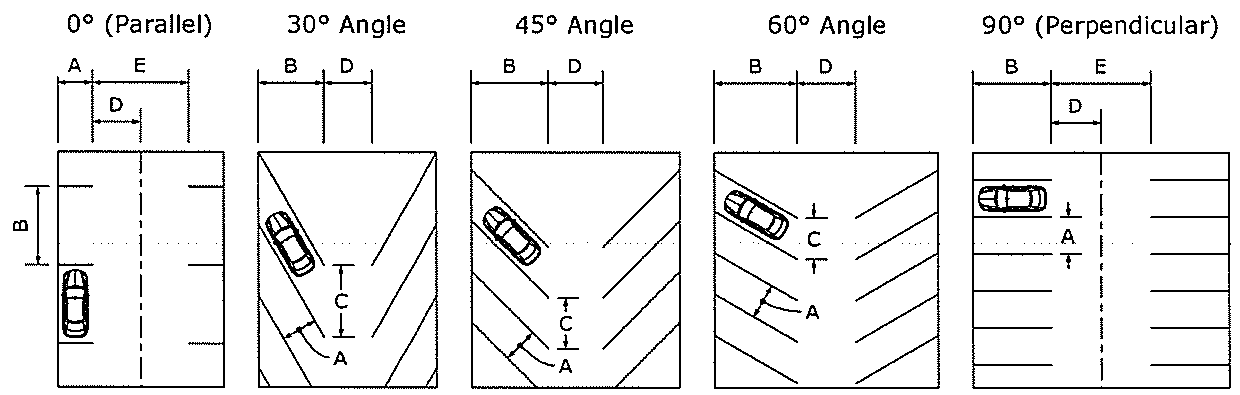
Figure 1343.A: Automobile Parking Stall and Drive Aisles
B.
Parking lot design requirements.
1.
Access. See section 1343.08.
2.
Barriers and curbs. All areas for off-street parking, off-street loading and unloading and the storage or movement of motor vehicles shall be physically separated from the street by a raised curb, planting strip, wall or other suitable barrier against unchanneled motor vehicle entrance or exit, except for necessary and approved vehicle entrances and exits to the lot. All commercial and industrial parking areas approved after the adoption of this ordinance shall be separated from the street by a landscaped strip of land of no less than five feet.
3.
Setbacks. All newly constructed parking lots shall be set back a minimum of three feet from all property lines unless exempted in a district's supplementary regulations.
4.
Materials. All parking areas and driveways shall be a paved surface except parking spaces accessory to one-family or two-family dwellings.
5.
Sidewalks and pedestrian pathways.
a.
In no case can a driveway or parking area block a city sidewalk.
b.
Sidewalks between parking areas and principal structures, along aisles and driveways and wherever pedestrian traffic shall occur, shall be provided with a minimum width of four feet of passable area and be raised six inches or more above the parking area except when crossing streets or driveways. At points of intersection between pedestrian and motorized lines of travel, and at other points where necessary to avoid abrupt changes in grade, a sidewalk shall slope gradually so as to provide an uninterrupted line of travel. Guardrails and wheel stops permanently anchored to the ground shall be provided in appropriate locations. Parked vehicles shall not overhang or extend over sidewalk areas, unless an additional sidewalk width of two and one-half feet is provided to accommodate such overhang. Handicapped provisions shall be included in all sidewalks and curbing construction.
6.
Landscaping and drainage. Parking areas shall be suitably landscaped to minimize noise, glare and other nuisance characteristics as well as to enhance the environment and ecology of the site and surrounding area. General landscaping design shall conform to criteria set forth in article 1347 of this ordinance. All parking areas and access ways thereto shall be properly drained and all such areas shall be a paved surface except parking spaces accessory to one-family or two-family dwellings. A drainage plan shall be approved by the director of public works. Parking viewed from the public right-of-way or from any property used for residential purposes shall be suitably shielded.
7.
Lighting. All parking areas shall be lighted to provide a minimum of three foot-candles at driveway intersections with main roads and a total average illumination of one-half foot-candles throughout the parking area. Such lighting shall be shielded in such manner as not to create a hazard or nuisance to the adjoining properties or the traveling public.
8.
Interior street crosswalks. Where pedestrians must cross service roads or access roads to reach parking areas, crosswalks should be clearly designated by pavement markings and or signs. In non-residential districts, provision for pedestrian access between adjoining commercial lots should be encouraged.
(Ord. No. 2019-O-11, 4-8-19; Ord. No. 2020-O-15, 6-22-20)
Editor's note— Ord. No. 2019-O-11, adopted April 8, 2019, renumbered and amended § 1343.03 as herein set out as § 1343.05. Formerly, this section pertained to similar subject matter and derived from Ord. of 4-14-03.
1343.06 - HANDICAPPED PARKING STANDARDS.
A.
All regulations within the section are duplicative or are supplemental to the regulations within the Federal Americans with Disability Act and ADA Standards for Accessible Design published by the Department of Justice. The requirements of the Federal Americans with Disability Act, ADA Standards for Accessible Design, and this zoning ordinance must be considered with the most restrictive applying.
B.
Number of spaces. All parking lots servicing four or more dwelling units or non-residential uses shall supply a minimum number of handicapped parking spaces according to Table E. The table below indicates the number of handicapped spaces that shall be provided, unless a revised regulation is officially established under the Federal Americans with Disabilities Act.
1.
Exception. Parking spaces used exclusively for buses, trucks, other delivery vehicles, law enforcement vehicles, or impounded vehicles shall not be required to comply with the rules of this section provided that lots accessed by the public are provided with a passenger loading zone complying with the Federal Americans with Disability Act, section 503.
C.
Location. Handicapped parking spaces shall be located where they will result in the shortest reasonable accessible distance to a handicapped accessible building entrance. Curb cuts shall be provided as needed to provide access from the handicapped spaces.
D.
Size requirements. Handicapped parking spaces required within this section shall comply with the minimum width requirements. Car parking spaces shall be a minimum of eight feet wide. Van parking spaces shall be a minimum of 11 feet wide. These widths shall be clearly marked to define the width, and shall have an adjacent access aisle. The width of the spaces and access aisle is measured from the centerline of the markings. See Figure 1343.B.
1.
Access aisle width. An access aisle small be a minimum of five feet in width, measured from the centerline of the parking space markings and shall have a length the full depth of adjacent parking spaces it serves. The access aisle shall be marked to discourage parking on it. See Figure 1343.B.
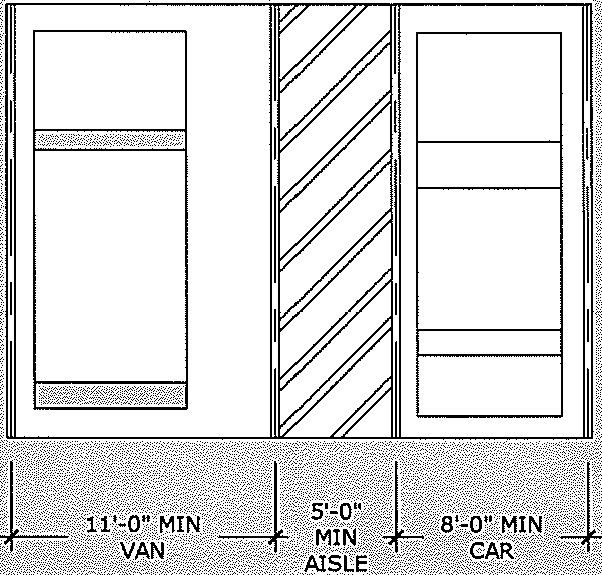
Figure 1343.B: ADA Parking Space Size Requirements
2.
Van parking space width exception. A van parking space may be a minimum of eight feet in width where the adjacent access aisle is also eight feet in width.
E.
Slope. Handicapped parking spaces shall be located in areas of less than 6% slope in any direction.
F.
Marking and signs. All required handicapped spaces shall be well-marked by clearly visible signs. Signs shall include the International Symbol of Accessibility (see Figure 1343.C) and be a minimum of five feet above the finish grade of the parking space it is intended to mark, measured from the bottom of the sign. For ground markings indicating the width of the parking spaces, blue paint is recommended.

Figure 1343.C: International Symbol of Accessibility
(Ord. No. 2020-O-15, 6-22-20)
1343.07 - BICYCLE PARKING STANDARDS.
A.
Bicycle parking space shall be a four feet by six feet space provided for locking up to two bicycles to a planner approved bicycle rack or a bicycle locker that can store up to two bicycles per unit. Bike parking spaces may overlap by one foot so that bike racks may be three feet apart. See Figure 1343.D.
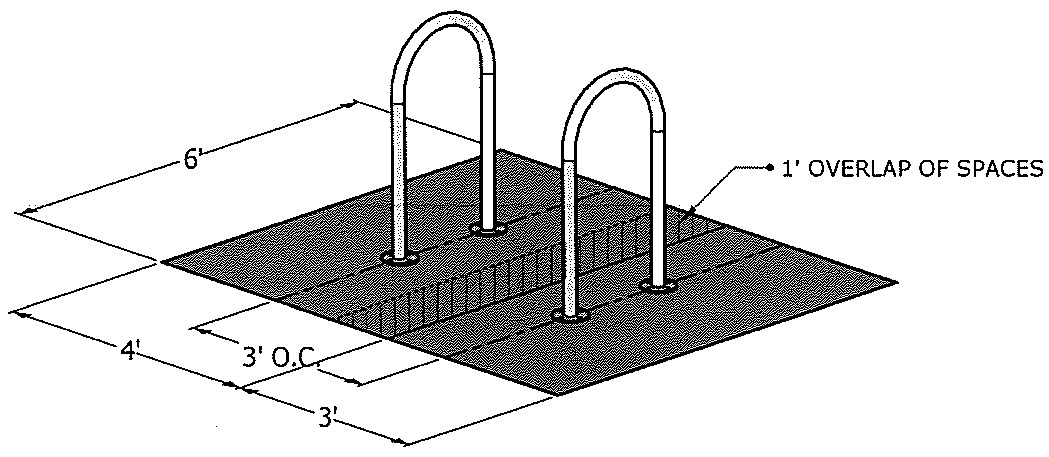
Figure 1343.D: Bike Parking Spaces
B.
Bicycle parking shall be at least as conveniently located as the most convenient automobile spaces, other than those spaces for persons with disabilities. Safe and convenient means of ingress and egress to bicycle parking facilities shall be provided.
C.
Bicycle parking facilities shall not interfere with accessible paths of travel or accessible parking as required by the Americans with Disabilities Act of 1990.
D.
Bicycle parking shall be located in highly visible areas to minimize theft and vandalism.
(Ord. No. 2019-O-11, 4-8-19; Ord. No. 2020-O-15, 6-22-20)
Editor's note— Ord. No. 2020-O-15, adopted June 22, 2020, repealed §§ 1343.07—1343.09, which pertained to off-street loading area, berth sizes, location and access of loading areas, berths, general circulation, parking and loading area design standards and derived from Ord. of 12-14-98; Ord. 11-28-05; Ord. No. 2019-O-11, 4-8-19.
1343.08 - LOCATION AND DESIGN OF DRIVEWAYS.
A.
Location.
1.
All entrance and exit driveways shall be located to afford maximum safety to traffic, provide for safe and convenient ingress and egress to and from the site, and to minimize conflict with the flow of traffic.
2.
All off-street vehicle parking must have direct access to a public right-of-way through an alley, driveway, or permanent access easement.
3.
Hierarchy of access location to parking.
a.
If an improved alley with a right-of-way of at least 15 feet in width is provided, all vehicle access shall be from the alley to the maximum extent practicable.
b.
If access is from a street right-of-way, the off street parking shall be designed to be accessible from the lowest order street on which the property fronts.
4.
Setbacks. All driveways shall be setback a minimum of three from all property lines except for the property line(s) in which the driveway is approved to cross over to access the property from the public right-of-way.
5.
Where a site occupies a corner of two intersecting roads, no driveway entrance or exit shall be located within 50 feet of the point of tangency of the existing or proposed curb radius of that site.
6.
No entrance or exit driveway shall be located on a rotary ramp of an interchange, or within 200 feet of the beginning of any ramp or other portion of an interchange.
7.
Where two or more driveways connect a single site to any one road, a minimum clear distance of 200 feet measured along the right-of-way line shall separate the closest edges of any two such driveways. Where such development fronts on an arterial street, access to parking and service areas, where practicable, shall be provided by a single access to the arterial street. (See Article 1343.07(H) below.)
B.
Design.
1.
Material. The portion of any driveway on the city right-of-way must be constructed of concrete and have a minimum of six inches in thickness.
2.
Driveways used for two-way operation shall intersect the road at an angle to as near 90 degrees as site conditions will permit and in no case will be less than 60 degrees.
3.
Driveways used by vehicles in one direction of travel (right turn only) shall not form an angle smaller than 45 degrees with a road.
4.
Driveway dimensions. The dimensions of driveways shall be designed to adequately accommodate the volume and character of vehicles anticipated to be attracted daily onto the land development. The required maximum and minimum dimensions for driveways are indicated below:
C.
Whenever a driveway is constructed, or reconstructed, on a state highway right-of-way, said driveway(s) location and dimension shall comply with the West Virginia Department of Transportation Division of Highways "Manual on Rules and Regulations for Constructing Driveways on State Highway Rights-Of-Way".
D.
Residential driveways.
1.
For any principal use that is residential only, there may only be on driveway, which must be a single-lane driveway, with the following exceptions:
a.
Multi-family dwelling units of four or more units may have one double-lane driveway or two single-lane driveways.
2.
Shared driveways. Shared driveways are permitted as long as the width of the driveway meets the dimensions in Table E.
3.
Double-track driveways. Double-track driveways are allowed so long as each wheel strip is at least 18 inches in width and the area between the wheel strips is landscaped with living groundcover. However, within the public right-of-way, the driveway must be fully paved along its total width, from the property line to the curb line, per the requirements of the public works department.
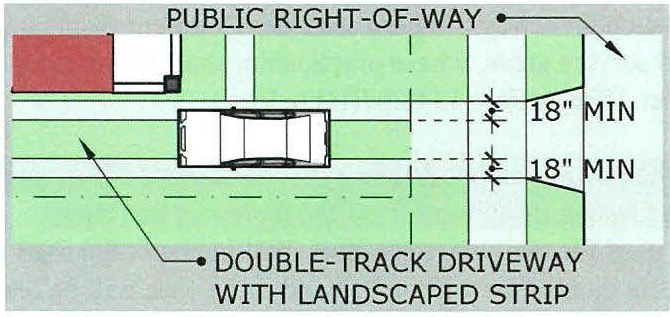
Figure 1343.E: Double-Track Driveway Example
4.
Garage aprons. A garage apron, that exceeds the maximum permitted driveway width, is permitted to extend for a depth of 26 feet from the garage doors, at which point the driveway must be no wider than the maximum permitted driveway width. The garage apron may be only as wide as the width of the garage.
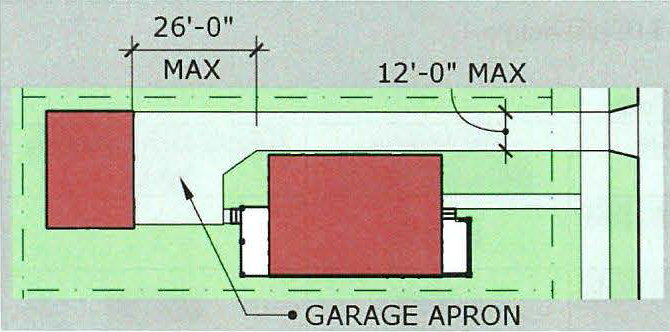
Figure 1343.F: Garage Apron Maximum Depth
(Ord. of 12-12-05; Ord. No. 2019-O-11, 4-8-19; Ord. No. 2020-O-15, 6-22-20)
Note— Formerly, § 1343.10.
1343.09 - OFF-STREET LOADING AREA, BERTH SIZES.
A.
Loading area. A loading area need not be necessarily a full berth, but shall have a minimum plan dimension of at least ten feet overload clearance. The planning director shall determine the sufficiency of the off-street loading area(s) based upon the land and amount of loading and unloading operation required by the proposed use, but in no case shall the use of such space hinder the free movement of vehicles and pedestrians over a street, sidewalk or alley.
B.
Loading berth. Each required loading berth shall be at least 12 feet wide, 33 feet long, and 14 feet high.
(Ord. No. 2015-O-15, 6-22-20)
1343.10 - LOCATION AND ACCESS OF LOADING AREAS, BERTHS.
A.
Unobstructed access, at least ten feet wide, to and from a street shall be provided. Such access may be combined with access to a parking lot. All permitted or required loading areas or berths shall be on the same lot as the use to which they are accessory. No entrance or exit for any loading area or berth shall be located within 50 feet of any street intersection. No off-street loading berth or area shall be located in any front yard.
B.
All areas for loading and unloading of vehicles and for the servicing of establishments or shops shall have adequate and unobstructed access from a street, service driveway or alley and shall be so arranged that they may be used without blocking or otherwise interfering with the use of automobile access ways, parking facilities, fire lanes or sidewalks.
(Ord. No. 2015-O-15, 6-22-20)
1343.11 - WAIVER OF PARKING AND OFF-STREET LOADING AND UNLOADING REQUIREMENTS.
A.
Excess spaces. To minimize impervious surfaces, while ensuring adequate parking, where it can be demonstrated, at the time of review of an application for a site plan approval, that the parking and/or loading and unloading requirements of this article will result in more parking spaces than actual needs require, the review board or planning director may permit a portion of the proposed parking and/or loading areas to remain unpaved, but landscaped.
B.
If a reduction is permitted under this section, the planning director may require as a condition of the approval that the lot include the reservation, permanently or for a specified number of years, of areas for use if needed in the future for additional parking. Such reservation shall be provided in a legal form acceptable to the city attorney. In such case, the applicant shall be required to submit site plans to the planning director showing where and how the additional parking could be accomplished. The additional parking shall be required to be provided within one year by the owner of the lot at that time after the planning director may determine in writing to the owner that the parking has become needed to meet actual use. The determination shall be based upon the planning director's on-site review on at least three different days.
C.
Exceeding off-street automobile parking and loading requirements. Automobile related off-street parking requirements and loading requirements required by this article may only be exceeded, where it can be demonstrated, at the time of review, that such additional parking is necessary for the actual operation of a proposed use. In such instances, the planning director may grant an increase in minimum space on a lot, provided that all other bulk and area requirements are met for the use in the district in which it is located.
(Ord. No. 2020-O-15, 6-22-20)
Editor's note— Ord. No. 2020-O-15, adopted June 22, 2020, repealed §§ 1343.11, 1343.12, which pertained to educational facilities parking modifications and handicapped parking and derived from Ord. No. 2019-O-11, 4-8-19.

