
Huntington City Zoning Code
CHAPTER NINE
ZONING ADMINISTRATION
ARTICLE 1351 - PLAN REVIEW[24]
Cross reference— Site plan defined, § 1315.02.
ARTICLE 1353 - HUNTINGTON HISTORIC PRESERVATION COMMISSION[25]
State Law reference— Historic landmarks commission, W. Va. Code, Art. 8-26A; H-1 Historic Preservation District Overlay, Art. 1339.
ARTICLE 1355 - NONCONFORMING USE SPECIFICATIONS[26]
Cross reference— Nonconforming uses and structures defined, § 1315.02; nonconforming signs, § 1345.12.
State Law reference— Validation of existing ordinances, W. Va. Code, § 8-24-49; existing uses safeguarded, W. Va. Code, § 8-24-50
ARTICLE 1357 - FILING FEES[27]
Cross reference— Building fees, § 1711.05.
ARTICLE 1359 - CONDITIONAL USE, REQUIREMENTS AND PROCEDURE[28]
Editor's note—Ord. No. 2020-O-15, adopted June 22, 2020, amended Article 1359 title to read as herein set out. Former Article 1359 pertained to special permit, requirements and procedures.
ARTICLE 1361 - BOARD OF ZONING APPEALS[29]
Charter reference— Establishment; composition, § 8.12.
State Law reference— Open governmental proceedings, W. Va. Code, Art. 6-9A; establishment; composition, W. Va. Code, § 8-24-51 et seq.; appeals, W. Va. Code, § 8-24-56 et seq.; injunctions, W. Va. Code, § 8-24-67.
ARTICLE 1363 - AMENDMENTS[30]
Cross reference— Annexed areas, § 1317.05.
State Law reference— Procedure, W. Va. Code, § 8-24-45 et seq.; existing uses safeguarded, W. Va. Code, § 8-24-50.
ARTICLE 1367 - REMEDIES AND PENALTIES[31]
State Law reference— Enforcement, W. Va. Code, § 8-24-66; injunction, W. Va. Code, § 8-24-67; penalty, W. Va. Code, § 8-24-68.
1351.01 - GENERAL.
Before a building permit is issued for any new use, a change of use or new occupancy of a non-conforming use, other than single-family or a two-family detached structure, or before approval is given for parking areas, or for off-street loading and unloading facilities, or for essential services, a site plan and other required drawings shall be submitted to the planner for review and approval.
(Ord. No. 2020-O-15, 6-22-20)
1351.02 - INFORMATION REQUIRED.
A.
Site plans shall include the following information, where appropriate, at a convenient scale:
1.
Title and location of the property.
2.
Name and address of landowner and applicant. If a corporation is landowner or applicant, the principal office and name of president and secretary shall be included.
3.
Name, address and professional license number and seal of the professional preparing documents and drawings.
4.
Place for signature of the director of planning, code official, or director of public work.
5.
Date of plan and any modifications thereto.
6.
North arrow, scale, graphic scale, date and notes and dated revisions.
7.
The zoning district in which the parcel is located together with the district boundaries including within the boundaries of the parcel or within 200 feet therefrom. All setback lines, landscape strips, landscape buffers, building heights, and other bulk requirements shall be shown and dimensioned. Any deviation from requirements of the zoning ordinance shall be specifically shown.
8.
Reference to any existing or proposed deed restrictions or exceptions concerning all or any portion of the parcel. A copy of such covenants, deed restrictions or exceptions shall be submitted with the application.
9.
The location of all existing water courses, ponding basins, slopes in excess of 15 percent, wooded areas, easements, rights-of-way, streets, roads, highways, freeways, railroads, canals, rivers, buildings, structures or any other feature directly on the property or beyond the property if such feature has an effect upon use of said property.
10.
The location, use and ground area of each existing or proposed building, structure or any other land use.
11.
The location and widths of proposed streets servicing the site.
12.
The location of existing and proposed grades.
13.
The location and capacity of existing and proposed off-street parking areas and loading and unloading facilities.
14.
Existing and proposed storm and sanitary drainage facilities.
15.
The location and treatment of existing and proposed entrances and exits to public rights-of-way, including the possible utilization of traffic signals, channelization, acceleration and deceleration lanes, additional width, and other device necessary to control traffic safety and convenience.
16.
The location of and identification of existing and proposed open spaces, parks or other recreation areas affected by the site plan.
17.
Proposals for soil erosion and sedimentation control, if appropriate.
18.
The location and design of landscaping, buffer areas and screening devices including a planting plan and schedule of plant materials.
19.
The location of sidewalks, walkways and other areas proposed to be devoted to pedestrian use.
20.
General nature and location of public and private utilities, including maintenance and solid waste disposal facilities.
21.
Specific location and design of signs including the size, nature of construction, height, and orientation, including all identification signs, traffic and directional signs, and arrow, freestanding and facade signs and time controls for sign lighting and lighting fixtures.
22.
The quantitative aspects of the proposal such as improvement coverage, number of units, square feet of construction, value of construction, density, coverage, number of employees, number of residents and area of land, etc. Specifically identified on the site plan, in tabular form, shall be pertinent zoning data indicating the bulk/area requirements of the zone in which the proposed development is located and how the proposed development responds to the zoning requirements.
23.
The location and size of all proposed easements, rights-of-way, public areas to be dedicated to the public or to be restricted or defined by deed or any other arrangement.
24.
A drainage study shall be prepared which will evaluate the affect of the proposed development of existing drainage system downstream of the development.
B.
Preliminary plans for the proposed buildings or structures, indicating typical floor plans, proposed use, elevations, height and general design or architectural styling.
C.
Any other information required by the planning commission staff which is reasonably necessary to ascertain compliance with the provisions of this ordinance.
1351.03 - PLANNING COMMISSION STAFF REVIEW.
In reviewing the site plan the planning commission staff shall consider its conformity to the Comprehensive Plan and the other codes and ordinances applicable to it. Traffic flow, circulation and parking shall be reviewed to ensure the safety of the public and of the other users of the facility and to ensure that there is no unreasonable interference with traffic on surrounding streets. The impact on drainage shall be considered to ensure against flooding. Conservation features, aesthetics, landscaping and impact on surrounding development as well as on the entire city shall be part of the planning commission staff review.
1351.04 - CONSTRUCTION DRAWINGS BINDING.
The site plan, lighting plan, building elevation drawings, and any other required construction drawings as approved by the city shall be binding upon the applicant. Any changes from the approved plan shall require resubmission and re-approval by the city. All construction drawings shall remain effective for a period of two years from the date of approval. In the event a particular facility is to be constructed in stages, a site plan and other required construction drawings for each particular stage shall be required for the issuance of each building permit.
(Ord. No. 2020-O-15, 6-22-20)
1351.05 - PERFORMANCE GUARANTEE.
The planning commission staff may require that improvements and landscaping be secured by a performance guarantee in the same manner prescribed for such improvements in the subdivision ordinance.
1351.06 - CODE OFFICIAL/PLANNING STAFF COORDINATION.
A.
Planner recommendations. The code official shall not issue a building permit under this article until receipt of the written recommendations or the planner or until 30 days or agreed upon extensions thereof has elapsed.
B.
Demolition permit. No demolition permit will be issued by the building inspector until written approval of same is made by the planning commission staff if it affects site plan approval.
C.
Waiver. The building inspector may waive the requirement for site plan review if the nature or extent of construction or alteration is considered part of normal repair, maintenance, or replacement.
D.
Temporary certificate of occupancy. The building inspector may grant a temporary certificate of occupancy for a specified period of time not exceeding six months.
In its review, the planning commission staff may secure recommendations from the citizens advisory committee, director of public works or any other local, county, state or federal agency which may have an interest in the particular development for which site plan approval is being sought, which recommendations shall be received by the planning commission within ten days after the request therefor.
In the event, a determination cannot be made with respect to required data or information at the time of submittal of a site plan, the planning commission staff may make compliance with the particular requirement a condition of approval for a certificate of occupancy and not require it prior to the issuance of a building permit.
The written recommendations of the planner regarding the site plan shall be forwarded to the building inspector and the applicant not more than 15 days from the time the site plan is submitted for planner review unless extended by mutual agreement between the planner and the applicant. If the planner takes no action within 30 days, the site plan shall be deemed to have been approved as submitted. The 30 days shall be deemed to have begun when all required data and exhibits are submitted.
The planning commission staff may impose reasonable conditions binding on the applicant in approving any site plan.
(Ord. No. 2020-O-15, 6-22-20)
1351.07 - PLANNING COMMISSION REVIEW.
Where a site plan is of an unusual nature that requires a reevaluation of policies implied in this article, the planning commission staff may request a review and judgment by the planning commission. In the event that the applicant disagrees with a decision made by the staff, the applicant may appeal such decision to the planning commission.
1353.01 - ESTABLISHMENT.
For the purpose of carrying out the provisions of this article, there is hereby established the Historic Preservation Commission of the City of Huntington.
1353.02 - DEFINITIONS.
For the purposes of this article:
A.
The term "commission" shall refer to the Historic Preservation Commission of the City of Huntington.
B.
The term "site" shall refer to any land, with or without any structure thereon, where some event or events of historic significance occurred or which is otherwise of historical value.
C.
The term "structure" shall refer to any manmade appurtenance, public or private, including but not limited to buildings, whether residential, commercial, governmental or otherwise; landmarks; monuments; memorials; fences; boundary walls; signs; light fixtures; steps and stairways; sidewalks and other pavings; and any other fixtures of any kind.
1353.03 - COMMISSION MEMBERSHIP.
A.
The commission shall be composed of five members appointed by the mayor. Of the initial appointees, two shall serve until the first day of July in the second calendar year subsequent to the year in which this ordinance is adopted, and three shall serve until the first day of July in the fourth calendar year subsequent to the year in which this ordinance is adopted. Each appointee thereafter shall serve a term of four years. The commission shall notify the mayor of any vacancy in its membership and such vacancy shall be filled in the same manner as the original appointment for the balance of the unexpired term. In the event any appointed member absents himself from 40% of the commission's meetings in any 12-month period, such member shall be disqualified and the commission shall declare a vacancy which shall be filled as provided hereinabove. At its first meeting and at the first meeting after July 1 of each year thereafter, the commission shall select one of its members to serve as chairman and one to serve as secretary.
B.
The members should have a demonstrated interest, background, or experience in historic preservation or historically related disciplines; e.g. history, architecture, renovation or rehabilitation projects, real estate, etc.
C.
All members shall be residents of the city.
D.
The members of the commission shall not receive any salary for their service, but shall be reimbursed for all reasonable and necessary expenses actually incurred in the performance of their duties having the prior approval of the mayor.
E.
The vote of each member of the commission shall be counted equally in all matters that come before it, provided, however, that no member shall vote upon any matter involving any property in which he or a member his immediate family has an ownership interest.
(Ord. of 8-27-12(4); Ord. of 9-28-15(2))
1353.04 - MEETINGS.
The commission shall meet at least quarterly and may meet more often at the call of the chairman or the majority of the commission as the business of the commission may require with due notice to each member given by the secretary. All meetings shall be public. A majority of the members shall constitute a quorum. The secretary shall file for public record with the city clerk minutes of all its meetings within 60 days of the date such meeting held.
1353.05 - POWERS AND AUTHORITY.
In addition, to any other powers and authority conferred by these codified ordinances or general law, the commission shall have plenary power and authority within the jurisdictional limits of the City of Huntington and within the limits of available funds to perform the following functions:
A.
Make a survey of the structures and sites within the City of Huntington which constitute the principal historical and architectural locations of local, regional, statewide or national significance. No structure or site shall be deemed to be an historic one unless it has been prominently identified with, or best represents, some major aspect of, or ideals related to, the history of the City of Huntington, Cabell and Wayne Counties, the State of West Virginia, or the United States of America. Structures so designated may embody the principal or unique features of an architectural type or demonstrate the style of a period of history or method of construction, or serve as an illustration of the work of a master builder, designer, or architect whose genius influenced the period in which he worked or has significance in current times.
B.
Prepare a register of structures and sites which meet the requirements of subsection A. of this section setting forth appropriate information concerning such structures and sites, and to certify them as historical landmarks.
C.
Inspect such registered or certified properties and sites from time to time and to designate or mark them with appropriately designed signs or markers, provided prior consent of the owner or owners has been obtained.
D.
Establish standards for the care and management of certified landmarks and withdraw such certification for failure to maintain the standards so prescribed.
E.
Acquire by purchase, gift, or lease and administer registered landmarks and easements or interests therein, both real and personal.
F.
Lease or sell property so acquired under terms and conditions designed to ensure the proper preservation of the landmark involved.
G.
Aid and encourage council and the city administration in the adoption of ordinances and rules and regulations for the preservation of properties of historical or architectural value.
H.
Prepare and place historical markers on or along the highway or street near the historical landmark, area, or district, which is intended to be identified by such markers.
I.
Seek the advice and assistance of individuals, groups and department or agencies of government which are conducting historical preservation programs and coordinate with the same insofar as possible.
J.
Seek and accept gifts, bequests, endowments and funds from any and all sources for the accomplishment of the purposes and duties of the commission.
K.
Adopt rules and regulations concerning the operation of the commission and such other matters as may be necessary to carry out the purpose of this ordinance, provided, however, that such rules or regulations shall not be inconsistent with any city ordinances.
1353.06 - CREATION OF HISTORIC PRESERVATION DISTRICTS.
A.
The commission may from time to time recommend that an area of the city containing at least one-half of a city block or the equivalent thereof (being approximately 86,000 square feet in the City of Huntington) and containing at least one structure or site meeting the requirements of subsection A. of section 1353.05 be designated as an historic preservation district. It shall not be necessary that all properties or structures within such area be historically significant.
B.
The recommendation of the commission shall be made first to the planning commission in the form of an application for an appropriate amendment to the zoning ordinance designating such area "H-1 Historic Preservation District," which application shall be in writing, shall clearly define the boundaries of the proposed district, and shall provide detailed information as to the historical significance of the structures and sites therein. The planning commission shall then hold such public hearings upon such proposed amendment as may be required by law and shall submit a report to the mayor together with the original application of the commission. The mayor shall review said report and application and, if found to be in order, shall submit the same together with an ordinance giving effect to the recommendation of the commission to council for action thereon. Council may, if it deems necessary, remand the application to the commission for further information or study.
C.
The properties, structures, and uses within the boundaries of any historic preservation district designated according to this section shall be subject to the review requirements of this article as well as the requirements imposed by the zoning ordinance.
D.
Upon the approval of council of an ordinance designating an area of the city as an historic preservation district, the commission shall inform the assessor of the county in which such area lies, and said assessor shall, pursuant to W. Va. Code, Ch. 8, Art. 26A, § 5, consider such designation in assessing the properties contained therein.
1353.07 - REVIEW OF PROPOSED ALTERATIONS.
A.
Prior to the alteration, movement, demolition, repair, or other change in the exterior of any structure located within an area which has been designated an historic preservation district or the construction of any new structure on property located within such a district, the owner thereof shall submit an application to the commission for a certificate of appropriateness on forms to be adopted by the commission and shall include at a minimum the following information:
1.
Detailed plans, depicting the exact work to be performed, including detailed renderings of the exterior of any proposed new structure or any exterior alterations to the existing structures. A delineation of the relationship of the renderings of the proposal in relation to adjacent structures on surrounding lands may be required.
2.
A statement of the relationship of the proposed work to the standards for approval of certificates of appropriateness as set forth below.
3.
Such other information as may be required from time to time by the appropriate municipal reviewing agency or official.
No structure exposed to public view within an historic preservation district shall be constructed, altered, moved, demolished, repaired, or otherwise changed without a certificate of appropriateness having been issued by the commission.
B.
The historic preservation commission shall review and designate the application as a minor or major application based upon the following criteria:
1.
Major application shall be any application for a "Certificate of Appropriateness" which involves demolition or removal of a structure or any part thereof; the addition to any structure located within the historic preservation district, or on any historic property (including structure and archeological resource); or the new construction of buildings within the historic district.
2.
Minor application shall mean an application for "Certificate of Appropriateness" which is considered maintenance and upkeep, such as painting, replacing, repair to a structure located within the historic preservation district, or on any historic property (including structure and archeological resource) and does not involve any activity set forth in paragraph 1. above.
3.
Waiver. A letter of waiver from minor application procedure for a "Certificate of Appropriateness" is available for the applicant who complies with accepted standards, colors or techniques to be used with respect to the maintenance and upkeep, painting, replacing, or repairing of an applicable structure. Said standards, colors and techniques shall be on file with the secretary of the commission. A letter defining the requested waiver which indicates the property in question and the particular maintenance, upkeep painting, replacing or repairing sought to be done, shall be available without charge from the office of the chairman or secretary of the commission. Such letter shall have an indefinite duration, thus eliminating the need for successive exemption letters for the same type of maintenance, upkeep, painting, replacing or repairing.
C.
All construction, alterations, movements, demolition, repairs, or other changes carried out on structures located within an historic preservation district shall be compatible, harmonious, and consistent with the style, scale, and character of the original structure. New structures need not be in any particular historical style, provided that the scale and design of the new structure and the materials used are harmonious with the overall character of the district. Standards for design are provided in article 1339 of this zoning ordinance.
D.
The commission shall review such application, plans, and designs, giving consideration to the following:
1.
With respect to applications for demolition, the commission shall first consider whether preservation of the resource in place is feasible or, failing that option, whether preservation of the resource at another location is feasible.
2.
With respect to applications for relocation, the cmmission shall first consider whether the preservation of the resource in place is possible.
3.
With respect to applications for certificates of appropriateness relating to changes in exterior appearance, new constructions, or signage or exterior lighting the commission shall consider the visual compatibility of the proposed changes to the subject structure and the other structures and surroundings to which it would be visually related; the extent to which the proposed changes would affect adversely the public's view of a historic structure from a public street; and the impact of the proposed changes upon the ambience of the historic district.
4.
In assessing visual compatibility, the commission should consider such factors as height, proportion of the building's front facade, proportion of window and door openings, relationship of entrance and porch projections to the street, roof shapes, scale of buildings, directional expressions of the front elevation, and the relationship of materials, texture and color of facade and roof of the subject building to that of others to which it is visually related.
5.
The in passing appropriateness of exterior architectural features, in any case, shall keep in mind the purposes set forth in this article and shall consider, among other things, the general design arrangements and material of the building or structure in question and the relationship of such factors to similar features of historic structures in the immediate surroundings and the position of such structures in relationship to the street or public way and each other.
6.
The commission shall not make any requirements except for the purpose of preventing developments obviously incongruous to the historic aspects of the surroundings.
7.
The commission shall be tolerant in its judgment of plans for new construction or for alterations, repair or demolition which would seriously impair the historic value and character of surrounding structures or the surrounding area.
8.
The commission shall provide encouragement that any alterations or repairs to structures in a historic district be made in the spirit of their architectural style and that any additions will be made in such manner as not to detract from a building's original appearance.
9.
It is the intent of this section that the commission be strict in its judgment of plans for alterations, repairs or demolition of existing structures deemed valuable according to studies approved by the city. Small additions and construction to existing properties in Huntington's Historic District, such as decks, porches, garages and the like, which are not visible from the street and have minimal or no impact on the historic character of the area, may be reviewed and approved by the planning commission staff upon notice to the commission and to the full planning commission of such action.
The commission shall pass only on exterior features of a structure and shall not consider the interior arrangement. If after reviewing the application and plans the commission is satisfied that the proposed construction, alteration, repair, or other change will not materially impair the historical or architectural value or significance of the structure or site in question or of the surrounding area, it shall issue a certificate of appropriateness to the applicant and shall notify the building inspector and the zoning officer of its action.
E.
If the commission disapproves of the application, it shall notify the applicant in writing of its reasons, and the commission may work with the applicant for the purpose of amending his proposed plans and designs to comply with the standards set forth in this article.
F.
The building inspector shall not issue a building permit and the zoning officer shall not issue any zoning permit for any construction, alterations, repairs, or other changes to any structure or site located within an historic preservation district without a certificate of appropriateness from the commission. Such building permit and zoning permit shall restrict any construction, alterations, demolition, repairs, or other changes to that which is covered by the certificate of appropriateness. The building inspector shall from time to time inspect the work approved by the certificate of appropriateness and shall take such action as may be necessary to ensure compliance therewith.
G.
Failure of the commission to act within 45 days from the date an application is submitted shall constitute approval, and the building inspector and zoning officer shall proceed as if a certificate of appropriateness has been issued.
1353.08 - VARIANCES.
Where by reason of unusual circumstances applicable solely to the particular applicant, strict enforcement of this article would result in serious undue hardship, the commission shall have the power to vary or modify the application of this article with respect to such applicant, provided always that such variances are harmonious with the general purposes of this article and will not seriously affect neighboring properties or the historic preservation district as a whole.
1353.09 - EXCEPTIONS.
Nothing in this article shall be construed to prevent ordinary maintenance or repairs which do not involve a change of design, materials, or the outward appearance of a building or structure in an historic preservation district, nor to prevent the construction, alteration, or demolition of any feature required by the public safety. The requirements of this article do not apply to work begun or for which a permit was issued prior to the establishment of the historic preservation district in which the concerned building or structure is located.
1353.10 - APPEALS.
Any property owner aggrieved by an action or decision of the commission concerning his application for a certificate of appropriateness may appeal the same to the board of zoning appeals.
1353.11 - RESTRICTIONS ON USE OF CERTIFIED HISTORICAL LANDMARKS OUTSIDE HISTORICAL PRESERVATION DISTRICTS.
Whenever the commission certifies property not contained in an historic preservation district as being a registered landmark, it may seek and obtain from the concerned property owner or owners an agreement as to such restrictions upon the use of the property as the commission may find reasonable and necessary to perpetuate and preserve the features which led it to certify such property as an historical landmark. The restrictions contained in such agreements shall run with the land and shall be binding upon the successors, heirs, and assigns of the property owner. All such agreements between the commission and the property owner shall be in writing, and when duly signed and acknowledged, shall be recorded in the office of the City Clerk of City of Huntington and in the deed books in the Office of the Clerk of the County Commission of Cabell County or the Office of the Clerk of the County Commission of Wayne County, depending upon the location of the property in question, and shall be served upon the assessor of the county in which the concerned property is located. Pursuant to W. Va. Code, Ch. 8, Art. 26A, § 5, the assessor shall take such restrictions into consideration when assessing such properties.
1353.12 - INTERAGENCY AND INTERGOVERNMENTAL COOPERATION.
The commission shall cooperate and coordinate its activities with the West Virginia Historical Society and the West Virginia Department of Culture and History with the view of developing a unified program for the identification, study, preservation, and protection of all historic buildings, structures and sites in the City of Huntington. The commission shall coordinate its activities with the Planning Commission of the City of Huntington in all matters affecting the City of Huntington Comprehensive Plan.
1355.01 - NONCONFORMING USES AND STRUCTURES.
The lawful use of a building or premises, existing at the time of passage of this ordinance, may be continued although such use does not conform to all the provisions of this ordinance, subject to the following conditions:
(a)
A nonconforming use may be extended throughout a building provided the size of the structure is not increased.
(b)
A nonconforming use may be changed to another nonconforming use of the same or greater restrictions provided:
(1)
The size of the structure is not increased.
(2)
Where the nonconforming use is also a conditional use, the ownership of both the property and the business constituting the special permit conditional use remain unchanged.
(3)
Where the ownership of the business constituting the conditional use, or both, are changed from the owner(s) granted the conditional use, the conditional use shall become null and void, and a new conditional use must be sought in accordance with the provisions of article 1359 of this zoning ordinance.
(c)
Legal nonconforming structures. A legal nonconforming structure is a building that was constructed for commercial or mixed-use purposes prior to the enactment of this zoning ordinance that resides within a residential district. When determining if a structure may qualify as a legal nonconforming structure, the planner must consider:
(1)
The architectural form and features of the structure that makes it distinctly constructed for commercial or mixed-use. See Figure 1355.A for graphic examples.
(2)
The structure was not originally constructed to be used for residential purposes only. Such examples would be single family structures, duplexes, townhouses, or multi-family dwelling units.
(3)
That the parcel meets the lot size and width requirements of the most restrictive commercial district.
(4)
The structure is not incidental or an accessory structure to a more principal structure located on the same parcel.
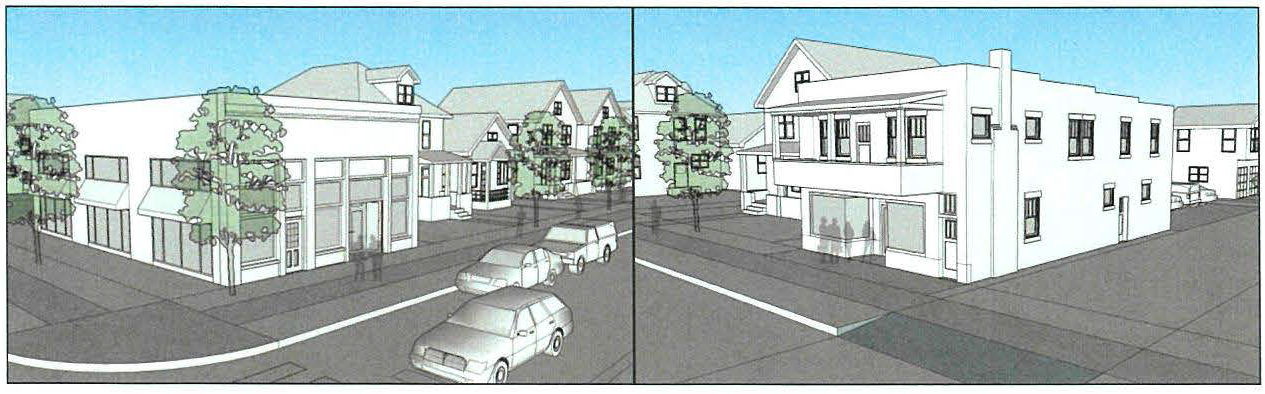
Figure 1355.A: Graphic examples of potential legal nonconforming structures within
residential districts. Note in the left image that the structure is a single-story,
flat roof building with storefront windows built for only commercial use without any
residential units. In the right image, it is an example of a mixed-use structure that
is built for commercial use for the first floor with potential for residential units
above. Both may be considered legal nonconforming. The houses and accessory structures
on residential lots in the background of these images would not be considered legal
nonconforming.
(d)
Legal nonconforming structure permitted uses. A legal nonconforming structure may allow for permitted and conditionally permitted uses from the most restrictive commercial district with the following exceptions:
(1)
Drive-thru's are prohibited in a legal nonconforming structure.
(2)
Off-street automobile parking spaces may not exceed the minimum required after all reductions are applied for a permitted use within the most restrictive commercial district.
(e)
Whenever a nonconforming use has been changed to a conforming use or to a use permitted in a district of greater restrictions, it shall not thereafter be changed to a nonconforming use of a less restricted district. For the purpose of this article, the R-l district shall be considered to have the greatest restrictions, and such restrictions are considered to decrease in the following order of districts R-2, R-4, R-5, C-l, C-2, C-3, and 1-1.
(f)
No building shall be erected upon any premises devoted to a nonconforming use, except in conformance with the provisions of this ordinance.
(g)
The board may authorize, by written permit, in an R-l, R-2, R-4, or R-5 district for a period of not more than one year from the date of such permit, a temporary building for business or industrial use incidental to the residential construction and development of such district.
(h)
Nothing herein contained shall require any change in the plans, construction or designated use of a building for which a building permit or improvement location permit has been heretofore issued, and the construction of which has been diligently prosecuted within 90 days of the date of such permit, and which entire building shall be completed according to such plans as filed within three years from the date of passage of this ordinance.
(i)
In the event that a nonconforming use of any building or premises is discontinued for a period of one year, abandonment will be presumed unless the owner of the property can show that the property has not been abandoned, the use of the same shall thereafter conform to the uses permitted in the district in which it is located, provided that abandonment of any agricultural use or manufacturing process shall not be construed as abandonment of agricultural or industrial use.
(j)
The continuance of the use of any land, building, or structure for the purpose for which land, building, or structure is used at the time this ordinance takes effect is hereby permitted, but any addition to any existing building for the purpose of carrying on any use prohibited under the zoning regulations applicable to the district is hereby prohibited; provided, however, that such prohibition shall not apply to alterations, additions to, replacement of structures, or to the acquisition or use of land presently owned by any firm or industry but not used for agricultural or industrial purposes or to the use or acquisition of additional land which may be required for the protection, continuing development or expansion of any agricultural, industrial or manufacturing operation or any present or future satellite agricultural, industrial or manufacturing use.
If a nonconforming use has been abandoned, any future use of such land, building or structure shall be in conformity with the provisions of this ordinance regulating the use in the district in which such land, building, or structures may be located; provided, however, that abandonment of any particular agricultural or manufacturing process shall not be construed as abandonment of agricultural or manufacturing use.
(k)
These provisions apply in the same manner to a use which may become a nonconforming use as a result of an amendment to this section.
(Ord. of 12-14-09; Ord. No. 2020-O-15, 6-22-20)
1357.01 - FEES ESTABLISHED.
Application and petitions filed pursuant to the provisions of this ordinance shall be accompanied by the filing fees hereafter specified.
(a)
For each application for a certificate of occupancy, a fee of $75 shall be paid.
(b)
For each petition for an appeal from the decision of the administrative official to the board, special permit/special exception, or variance a fee of $160 shall be paid, the receipt of which shall accompany the petition.
(c)
For each application for review of preliminary and/or final plan, and/or variance(s) pursuant to the development ordinance of the City of Huntington by the planning commission, a fee of $150 shall be paid, the receipt of which shall accompany the petition.
(d)
For each petition for an amendment to this ordinance, the fees shall be as follows:
(e)
Except for the fee for a certificate of occupancy, no part of any filing fee paid pursuant to this article shall be returnable to the applicant or petitioner.
(Ord. of 3-28-11(1); Ord. of 11-24-14(2))
1359.01 - PROCEDURES.
A.
Conditional uses as defined by article 1315 and their accessory buildings may be permitted by the board of zoning appeals in the districts where indicated, in accordance with the procedure and requirements set forth in this article and any other requirements described by this ordinance.
B.
Location. A conditional use is granted for a particular parcel or parcels of land, not to a particular business, property owner, or other entity. Therefore, if a particular use relocates, the conditional use issued does not follow that use to its new location.
C.
Public notice. Upon receipt of an application for a conditional use the planning director shall give public notice in accordance with Section 8A-8-11 of the West Virginia State Code. The planning director shall prepare a written notice which shall be mailed to all property owners within a 400-foot radius of the subject property 15 days prior to the hearing. Further, written notice shall be provided to all residents, if they be different than the owner, within the 400-foot radius by first class mailing through the United States Postal Service. If the petitioner's property is located on a street where the entrance and exit is the same (cul-de-sac, dead end or circle) all such properties within that location shall be notified regardless of the 400 feet guideline. Notice shall also be posted on the subject property by the applicant. The findings of the board and its order to the planning director shall be in writing.
D.
Consideration. In making its decision, the board of zoning appeals shall consider the following:
1.
Effect upon the Comprehensive Plan.
2.
Public health, safety, morals, and general welfare.
3.
Potential injury to the use and enjoyment of other property in the immediate vicinity for the purposes already permitted.
4.
Effect upon the normal and orderly development and improvement of surrounding property for uses already permitted in the District.
5.
Adequate provisions for utilities, access roads, drainage, and other necessary facilities.
6.
Adequate ingress and egress so designed to minimize traffic congestion in the public street.
The board shall direct the planning director to issue the building permit or zoning permit for such conditional use, otherwise the board shall direct the planning director to reject the application. The findings of the board of zoning appeals and its order to the planning director shall be in writing.
E.
Grievance of decision. Any person aggrieved by the decision of the board of zoning appeals regarding its action pertaining to the conditional use request may file an appeal with the circuit court in accordance with article 1361.
F.
Additional conditions. The board of zoning appeals may impose additional conditions to assure that special permits will conform to the intent of this ordinance.
G.
Existing conditional uses. An existing use which is listed herein as a conditional use, and which is located in a district in which such conditional use may be permitted, is a conforming use provided that:
1.
Expansion. Any expansion of such conditional use involving the enlargement of the buildings, structure, and land area devoted to such use shall be subject to the requirements and procedure described in this article. A conditional use may not expand onto a parcel that has been combined with another unless the parcels were combined in accordance to the zoning ordinance and issued a certificate of recording by the planner.
H.
Expiration. An issued conditional use shall expire after one year from the date of approval by the board of zoning appeals unless one of the following occurs:
1.
A building permit is issued relating to the conditional use, in which case the conditional use expiration date is extended through the time of the active building permit. The expiration date shall continue to be extended provided there is no more than a one month lapse for active building permits issued for the conditional use and provided that at least 30% of the total development plan that was approved is completed within one year of the issuance of the building permit.
2.
A certificate of occupancy is issued for the conditional use at the location in which it was approved for.
3.
A project number is issued relating to the conditional use and all requirements to obtain a project number are met. A preliminary site plan, proposed uses, and other required information shall be made available to the public. A conditional use shall then expire three years from the date of approval by the board of zoning appeals.
4.
Extension. The holder of a building permit or zoning permit for a conditional use may apply to the board of zoning appeals at any time for alteration, change, amendment to extension of the application or development plan upon which such permit was based.
a.
Upon receipt of such application, the board of zoning appeals shall proceed as in the case of original applications for a building permit or zoning permit for a conditional use.
b.
In the event the board of zoning appeals shall approve and order such application or development plan changed, altered, amended or extended, it shall so notify the planning director who shall issue an amended building permit or zoning permit accordingly.
I.
Cease of use. If a conditional use lawfully operating ceases operation for a period of 12 months or more regardless of any intent to resume operation, it may not recommence operation in that location without first applying for a conditional use via the public hearing process and approval of the board of zoning appeals in the districts where indicated, in accordance with the procedure and requirements set forth in this article and any other requirements described by this ordinance.
(Ord. of 2-8-10; Ord. of 11-24-14(1); Ord. No. 2020-O-15, 6-22-20)
1361.01 - ESTABLISHED; POWERS AND DUTIES.
A board of zoning appeals is hereby established with membership and appointment provided in accordance with the authority conferred by Article 8, Land Use Planning, Chapter 8A, Article 8 of the Code of West Virginia.
(a)
The first meeting of each year, the board shall elect a chairperson and vice chairperson from its members. The vice chairperson shall have authority to act as chairperson during the absence or disability of the chairperson.
(b)
A majority of members of a board shall constitute a quorum. No action of the board is official, however, unless authorized by a majority of the board present.
(c)
Alternate members.
(1)
Council may appoint up to three alternate members to serve upon the board of zoning appeals. Alternate members must meet the same eligibility requirements as full members, which is outlined in W. Va. Code, § 8A-8-3.
(2)
An alternate member shall serve on the board when one of the regular members is unable to serve. The alternate member shall serve until a final determination is made in the matter to which the alternate member was initially called on to serve.
(3)
The board of zoning appeals shall establish rules and procedures for designating an alternate member. An alternate member shall have the same powers and duties of a regular board member.
(d)
With consent from the governing body, the board may hire employees necessary to carry out the duties and responsibilities of the board, provided that the governing body sets the salaries; and supervises the fiscal affairs and responsibilities of the board.
(e)
The board shall adopt such rules concerning the filing of appeals, including the process and forms for the appeal, and applications for variances, and conditional uses (sometimes called special permits or special exceptions), giving of notice and conduct of hearings as shall be necessary to carry out their duties under the provisions of this ordinance.
(f)
Record keeping. The board shall:
(1)
Keep minutes of its proceedings;
(2)
Keep an accurate and complete audio record of all the board's proceedings and official actions and keep the audio record in a safe manner, which audio record is accessible within 24 hours of demand, for three years;
(3)
Record the vote on all actions taken;
(4)
Take responsibility for the custody and preservation of all papers and documents of the board. All minutes and records shall be filed in the office of the planning director and shall be public records.
(g)
The board shall have the following powers and it shall be its duty to:
(1)
Hear and determine appeals from and review any order, requirement, decision or determination made by an administrative official or board charged with the enforcement of the zoning ordinance or rule and regulation adopted pursuant thereto.
(2)
Authorize exceptions to the district rules and regulations only in the classes of cases or in particular situations, as specified in the zoning ordinance.
(3)
Hear and decide conditional uses of the zoning ordinance upon which the board is required to act under the zoning ordinance.
(4)
Authorize, upon appeal in specific cases, a variance to the zoning ordinance.
(5)
Reverse, affirm or modify the order, requirement, decision or determination appealed from and have all the powers and authority of the official or board from which the appeal was taken.
(h)
Appeals.
(1)
Any aggrieved owner or tenant of real property who shows that his property will be substantially affected by an order, requirement, decision or determination made by an administrative official charged with the enforcement of the zoning ordinance may appeal such to the board of zoning appeals.
(2)
An appeal taken from the requirement, decision or the determination made by an administrative official charged with the enforcement of this ordinance shall be filed with the board. The appeal shall specify the grounds thereof and shall be filed within 30 days of the decision of the administrative official and in such form as may be prescribed by the board by general rule.
(3)
The administrative official from whom the appeal is taken shall, upon request of the board, transmit to it all documents, plans and papers constituting the record of the action from which an appeal was taken.
(4)
The board shall fix a reasonable time for the hearing of an appeal. Public notice shall be given of the hearing and due notice shall be given additionally to the interested parties. The board may require the person taking the appeal to assume the cost of public notice and due notice to interested parties. Upon the hearing, any party may appear in person, by agent or by attorney.
(5)
When an appeal from the decision of any official has been taken and filed with the board, all proceedings and work on the premises concerning which the decision was made shall be stayed unless the official from whom the appeal was taken shall certify to the board that, by reason of facts stated in the certificate, a stay would cause imminent peril to life or property. In such case, proceedings or work shall not be stayed except by a restraining order which may be granted by the Circuit Court of Wayne County or Cabell County, depending upon which court has jurisdiction, on application, on notice to the officer from whom the appeal is taken and the owner of the premises affected and on due cause shown.
(i)
Every decision of the board shall be subject to review by certiorari.
(j)
Variances.
(1)
A variance is a deviation from the minimum standards of the zoning ordinance and shall not involve permitting land uses that are otherwise prohibited in the zoning district nor shall it involve changing the zoning classifications of a parcel of land.
(2)
The board of zoning appeals shall grant a variance to the zoning ordinance if it finds that the variance:
(a)
Will not adversely affect the public health, safety or welfare, or the rights of adjacent property owners or residents;
(b)
Arises from special conditions or attributes which pertain to the property for which a variance is sought and which were not created by the person seeking the variance;
(c)
Would eliminate an unnecessary hardship and permit a reasonable use of the land; and
(d)
Will allow the intent of the zoning ordinance to be observed and substantial justice done.
(Ord. of 12-14-09; Ord. No. 2022-O-02, 3-28-22)
1363.01 - MODIFICATION OF COMPREHENSIVE PLAN; PROCEDURE.
Any proposed ordinance for the amendment, supplement, change or repeal of this ordinance not originating from petition of the commission shall be referred to the commission for consideration and report before any final action is taken by the city council. Prior to the submission to the city council of a commission petition or a report on a proposed ordinance referred to it for an amendment, supplement, change or repeal of this ordinance, the commission shall give notice and hold a public hearing in the manner prescribed for adoption of a Comprehensive Plan in Section Eleven (11) of Article Three (3) Chapter Eight A (8A), of the Code of West Virginia, passed March 13, 2004, and in accordance with the Charter of the city.
(Ord. of 2-8-10; Ord. of 4-13-15(6))
1363.02 - GENERAL PROVISIONS.
(a)
Proposed amendments to this ordinance may be presented by the planning commission to the council requesting an amendment, supplement, repeal or change of the regulations of the zoning ordinance. Prior to submission to council of a planning commission petition or report on a proposed ordinance, the planning commission shall make its report on the proposed ordinance to council. Thereafter, council shall proceed to take such action on the proposed ordinance as it deems proper.
(b)
The city council may, from time to time, amend, supplement, or change the rules and regulations and districts fixed by the zoning ordinance.
(c)
Before amending the zoning ordinance or zoning map, city council with the advice of the planning commission, must find that the amendment is consistent with the Comprehensive Plan. If the amendment is inconsistent, then city council with the advice of the planning commission must find that there have been major changes of an economic, physical or social nature within the area involved which were not anticipated when the Comprehensive Plan was adopted and those changes have substantially altered the basic characteristics of the area.
(d)
Zoning map amendments (i.e., rezonings) often become issues of significant contention between the applicants and residents living adjacent to and in the vicinity of the property to be rezoned. Too often this results in difficult and argumentative public hearings before the municipal planning commission and city council. In most cases, opposition to a rezoning request is based on legitimate concerns over the well-being and preservation of a neighborhood, but sometimes opposition results from a simple lack of communication and understanding between the applicant and the neighborhood residents. The city, therefore, strongly advises any person that is considering applying for a zoning map amendment (i.e., rezoning) to discuss the proposal with residents living within 400-feet of the property to be rezoned and with the leadership of any organized neighborhood association that represents the area before making application to the planning department.
(Ord. of 2-8-10)
1363.03 - AUTHORITY AND PROCEDURES.
Whenever public necessity or the public health, safety, and general welfare require, city council may, by ordinance and the receipt of recommendation thereon from the planning commission and subject to the procedures below, amend, supplement, change, or repeal the regulations, restrictions, and boundaries or classifications of property.
(Ord. of 2-8-10)
1363.04 - APPLICATION PROCEDURES.
(a)
Amendment to the zoning map.
(1)
A request for rezoning of property shall be filed on prescribed forms with the planning department.
(2)
The planning department will conduct a formal review of the completed form, and, so much as is possible, the names and addresses of property owners and residents within a 400-foot radius of the petitioned property.
(3)
The planning department will publish a legal advertisement describing the request for rezoning in a local newspaper of general circulation at least 15 days prior to the scheduled public hearing before the planning commission. Notification will be sent to property owners and residents, to the extent that they can be identified, within 400-feet of the affected property no later than 15-days prior to the meeting.
(4)
The planning director shall require the petitioner to cause official notification to be posted in a prominent location on the property(ies) not later than 14-days prior to the meeting.
(5)
The planning commission will hold a duly scheduled public hearing on the rezoning request, prepare a report, and make a recommendation to the city council.
(6)
City council will hear the case according to its rules and procedures.
(7)
If the request is approved by council, the applicant shall receive approval and will be formally notified by mail by the planning department. The planning department shall amend the zoning map to reflect the approved rezoning.
(8)
If the request for rezoning is denied by council, the applicant will be formally notified in writing by the planning department of the denial and the right to appeal the decision to the Circuit Court of Cabell County, or Wayne County, whichever therein the property resides.
(9)
Any person who feels aggrieved by an approval or denial of a rezoning request may appeal the decision to the Circuit Court of Cabell County, or Wayne County, whichever therein the property resides.
(b)
Abandonment, annexation and/or variance to subdivision regulations.
(1)
A request for abandonment, annexation and/or variance to subdivision regulations of property shall be filed on prescribed forms with the planning department.
(2)
The procedure for advertisement and notification of affected properties shall be the same as those established in section 1363.03 et seq. of this ordinance.
(Ord. of 2-8-10)
1363.05 - RESERVED.
Editor's note— An ordinance adopted April 13, 2015, repealed § 1363.05, which pertained to comprehensive plan amendment. See Code Comparative Table for complete derivation.
1367.01 - PURPOSE.
To provide for remedies for the city and owners or tenants of property with respect to proposed or occurring violations of this ordinance, and to prescribe penalties for violation of this ordinance.
1367.02 - REMEDIES.
A.
The commission, the board or any other designated enforcement official may institute a suit for injunction in the Circuit Court of Wayne County or Cabell County, depending upon which court has jurisdiction, in the name of the city to restrain a person from violating the provisions of this ordinance. The commission or the board may also institute a suite for a mandatory injunction in the Circuit Court of Wayne County or Cabell County, depending upon which court has jurisdiction, in the name of the city, directing a person to remove a structure erected in violation of the provisions of this ordinance. If the commission or the board is successful in its suit, the respondent shall bear the cost of the action.
1367.03 - PENALTIES.
A.
Upon receiving any citation, a person who is found guilty by the municipal court judge to have violated any provision of this ordinance shall be guilty of a misdemeanor and, shall be fined not less than $50 and not more than $500.
Appeals of such actions shall be taken to the circuit court as provided in West Virginia Code § 8-34-1.
(Ord. No. 2020-O-15, 6-22-20)

