
La Quinta City Zoning Code
CHAPTER 9
90 - NONRESIDENTIAL DEVELOPMENT STANDARDS
9.90.010 - Maximum building height.
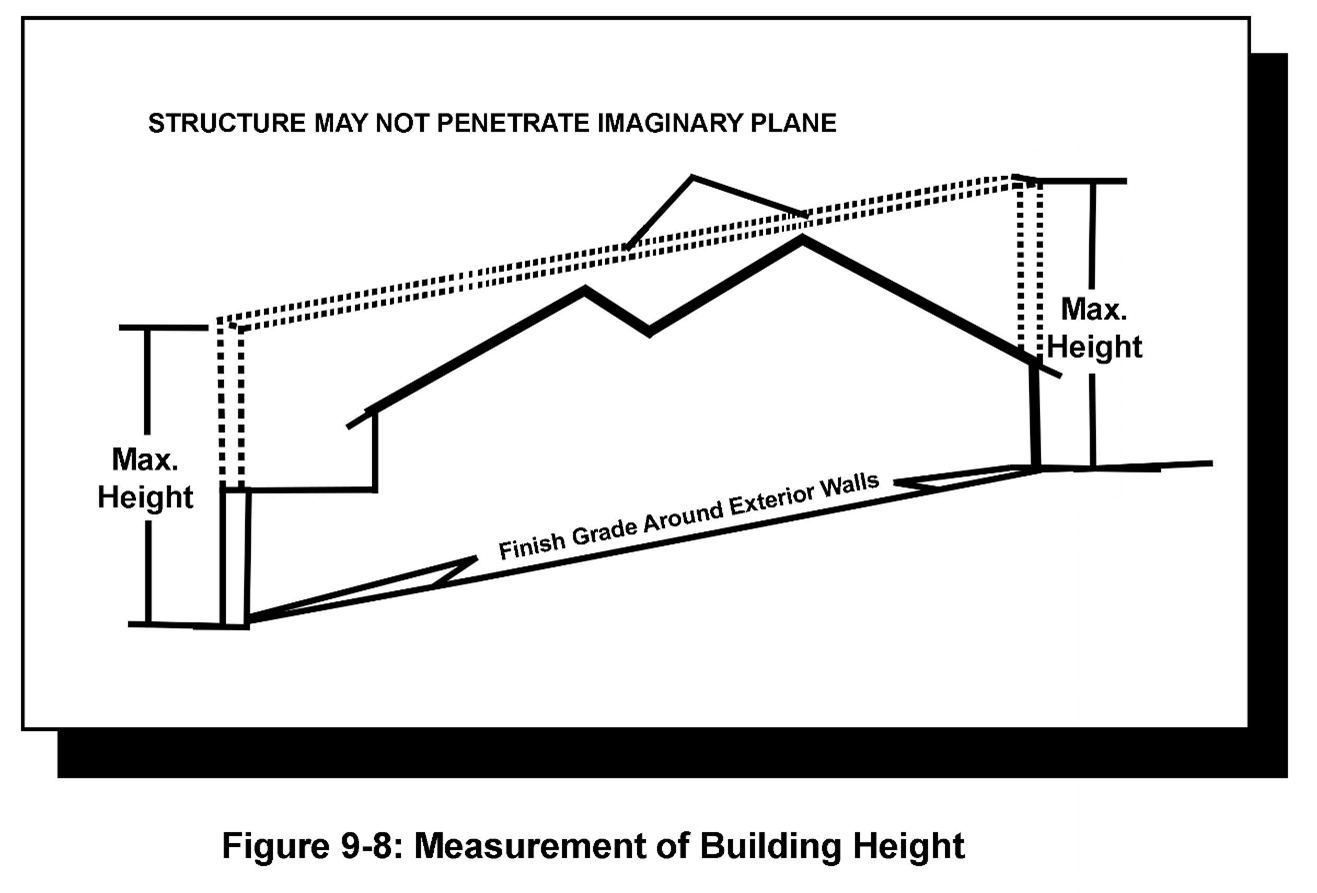
For purposes of this code, the maximum height of buildings and other structures shall be defined as the vertical distance from finish grade to an imaginary plane above the building site. The imaginary plane shall be established above and parallel to the finish grade adjacent to the exterior walls at a vertical distance equal to the specified maximum height. This definition is illustrated below:
(Ord. 550 § 1, 2016; Ord. 284 § 1, 1996)
9.90.020 - Roof projections.
A.
Encroachments Permitted. Notwithstanding Figure 9-8, architectural features not containing usable square footage, such as chimneys, towers, and spires, are permitted to extend fifteen (15) feet above the maximum structure height set forth in Table 9-6 if approved as part of a site development or other permit. The aggregate floor or "footprint" area of such architectural features shall encompass no more than ten percent (10%) of the ground square footage of the structure.
B.
Antennas. Satellite dish or other antennas shall not extend above the maximum structure height specified in Table 9-6 (see Chapter 9.170 for telecommunication facilities and Section 9.100.070, Satellite and other antennas).
(Ord. 550 § 1, 2016; Ord. 492 § 1, 2011; Ord. 325 § 1, 1998; Ord. 284 § 1, 1996)
9.90.030 - Wall projections.
A.
Permitted Encroachments. Roof overhangs, chimneys, awnings and canopies may encroach a maximum of three (3) feet into any of the required setbacks specified in Table 9-6 provided such projections do not extend over the property line.
B.
Prohibited Encroachments. Seating windows, balconies, exterior stairways and similar features shall not encroach into required setbacks.
(Ord. 550 § 1, 2016; Ord. 284 § 1, 1996)
9.90.040 - Table of development standards.
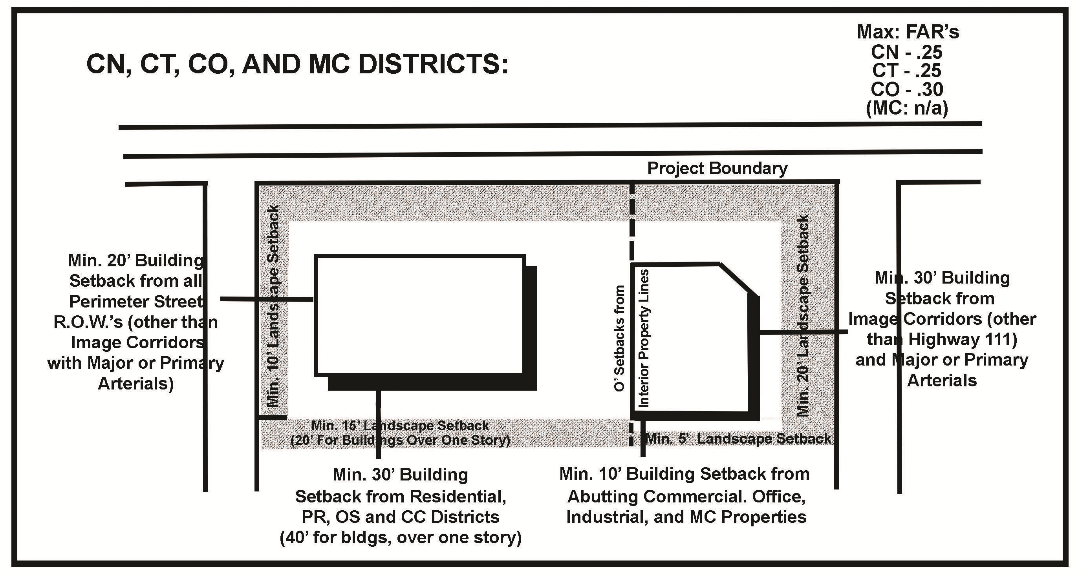
Table 9-6 and the illustrations in Section 9.90.050 set forth standards for the development of property within nonresidential districts. Notwithstanding Table 9-6, different standards shall apply if special zoning symbols, described in Section 9.20.030, are designated on the official zoning map.
Table 9-6 Nonresidential Development Standards
Notes:
1 All minimum perimeter setbacks shall be increased one foot for every foot in height that building is above thirty-five feet. Mixed use projects and projects in the Village Build-Out Plan Area are exempt from this requirement.
2 FAR means the gross floor area of all buildings divided by the building site area.
3 See General Plan Exhibit II-4.
4 Landscape setback shall consist of landscaped area within the building setback. Number given is minimum landscaped setback from the street right-of-way. The remaining building setback may contain parking, driveways and similar facilities. In addition to above landscape setbacks, interior landscaping shall be required as a percentage of the net project area as follows: parking areas: minimum five percent; non parking areas: minimum five percent (also see Section 9.100.050).
5 For buildings over one story in CN, CT and CO districts, setbacks shall be increased to 40/20.
6 Not including basements. Also, notwithstanding above table, the maximum structure height equals twenty-two feet for all buildings within one hundred fifty feet of any general plan image corridor and major or primary arterials. Any proposed building height over twenty-two feet requires minor use permit approval and shall not exceed a maximum building height of the existing zone.
7 Except in the Village Build-Out Plan Area, where the provisions of Section 9.70.110 shall apply.
(Ord. 588 § 2(Exh. A), 2-2-2021; Ord. 577 § 1, 2019; Ord. 553 § 1, 2017; Ord. 550 § 1, 2016; Ord. 466 § 1, 2009; Ord. 325 § 1, 1998; Ord. 299 § 1, 1997; Ord. 284 § 1, 1996)
9.90.050 - Illustration of development standards.
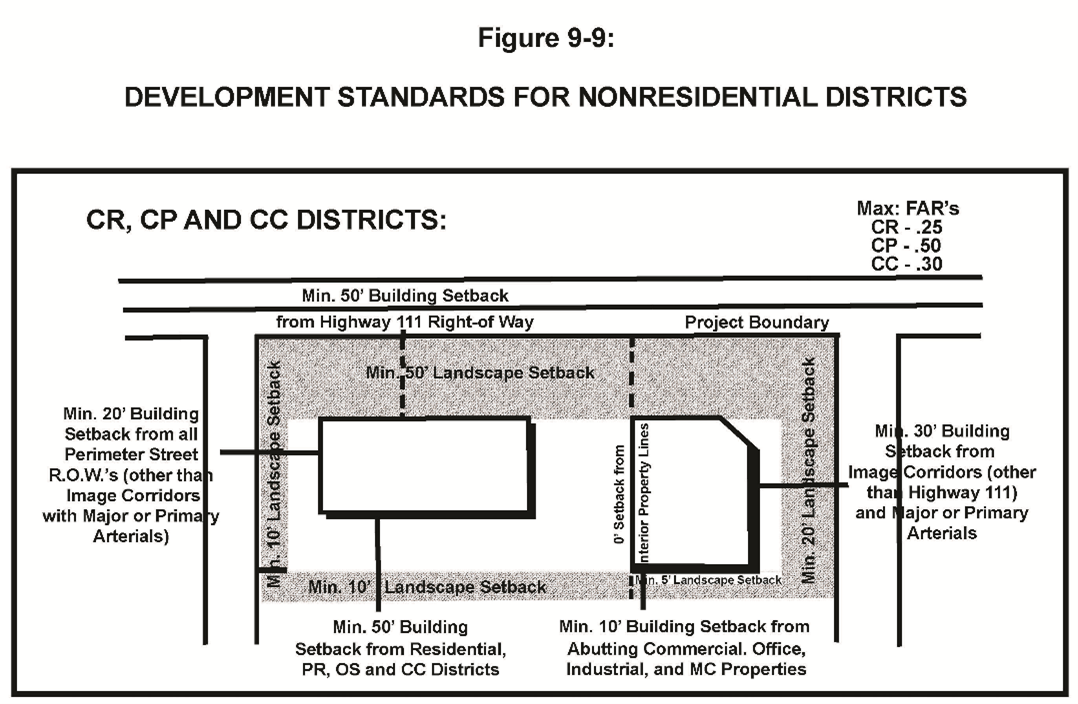
Interior landscaping required in all districts (in addition to landscape setbacks) as a percent of net project area:
Within parking areas: fifteen percent (15%)
Within non-parking areas: five percent (5%)
(Ord. 550 § 1, 2016; Ord. 284 § 1, 1996)
9.90.060 - Irregular lots.
A.
Purpose. The purpose of this section is to provide standards for the establishment and measurement of setbacks on irregular lots.
B.
Perimeter Setbacks. Perimeter setbacks shall be measured from the property line or the ultimate street right-of-way line, whichever results in the larger setback.
C.
Pie-Shaped Lots. Setbacks on pie-shaped lots shall be measured at the closest point between the building and the angled lot line.
D.
Flag or Panhandle Lots.
1.
Definition. For purposes of this section, "panhandle lot," "flag lot," "panhandle building site," and "flag building site" all mean the following: a lot or building site having its only vehicular access by way of a narrow access way which serves no other property and which is less than forty (40) feet wide and more than twenty (20) feet long.
2.
Setbacks. All setbacks shall be the same as for other lots in the applicable district. The front lot line shall be the line closest to parallel to the street on which the lot accesses, unless determined otherwise by the director.
3.
No Structures in Panhandle. No structures shall be permitted in the panhandle portion of the lot nor shall that portion be credited to minimum lot area requirements.
E.
Determination by Director. Where a building site is situated such that any of the property lines are not readily determinable, required setbacks shall be as determined by the director in compliance with the following criterion: required setbacks shall not permit the placement of buildings on the site in a manner that will constitute a grant of special privileges inconsistent with the limitations placed on other properties in the vicinity and incompatible with surrounding uses.
(Ord. 550 § 1, 2016; Ord. 284 § 1, 1996)
9.90.070 - Setbacks from surface easements.
Where a surface easement for street, vehicular access, bikeway or recreation trail purposes has been granted across any portion of a lot, the building setback shall be measured from the property line or to the edge of easement, whichever is closer to the building.
(Ord. 550 § 1, 2016; Ord. 284 § 1, 1996)

