
Lewisville City Zoning Code
SUBPART 2
ZONING REGULATIONS AND DEVELOPMENT REGULATIONS
CHAPTER VI.4. - CLASSIFICATION OF ZONING DISTRICTS
Zoning districts are categorized into three (3) classifications that relate to the type of development that is anticipated by the comprehensive plan in each area: Residential Zoning Districts, Mixed-Use Zoning Districts or Non-Residential Zoning Districts.
A.
Residential Zoning Districts - The following zoning districts shall be categorized as Residential Zoning Districts:
B.
Mixed-Use Zoning Districts - The following zoning districts shall be categorized as Mixed-Use Zoning Districts:
C.
Non-Residential Zoning Districts - The following zoning districts shall be categorized as Non-Residential Zoning Districts:
CHAPTER VII.3. - SUPPLEMENTAL USE REGULATIONS
The uses below have supplemental requirements based on the nature and impact of the use. These use specific regulations are designed to mitigate the concerns associated with the specific use so that it may be compatible within the zoning districts allowed. These regulations are needed to protect health, safety and welfare while adding flexibility to allow uses by right. The uses listed in this Chapter must comply with the additional standards as out-lined herein. If these standards cannot be met the applicant may apply for a Special Use Permit. These standards may be modified by the City Council through the Special Use Permit process.
CHAPTER VII.4. - CERTAIN DISTANCE AND DENSITY REGULATIONS[1]
Editor's note—Ord. No. 0800-25-ORD, § 3, adopted Oct. 6, 2025, changed the title of Ch. VII.4 from "Certain Distance Regulations" to read as herein set out.
Section VI.1.1. - Purpose
This Article describes the individual zoning districts and the accompanying regulations and allowed uses that have been determined, in accordance with the comprehensive plan, to promote the health, safety and general welfare of the City. The regulations have been adopted with reasonable consideration for the character of the district and its distinct suitability for the particular uses specified.
Section VI.1.2. - Establishment of Zoning Districts and Boundaries
The City is hereby divided into zoning districts, and the boundaries of these zoning districts are set out herein and delineated upon the official zoning map.
Section VI.2.1. - Official Zoning Map Designation
The location and boundaries of the zoning districts established by this UDC are maintained as part of the City's geographic information system (GIS) under the direction of the Planning Director. This geographic coverage layer constitutes the City's official zoning map. The official zoning map, together with all notations, references, data and other information shown on the map, is adopted and incorporated into this UDC, as if actually depicted herein.
Section VI.2.2. - Maintenance and Updates
The Planning Director is responsible for directing revisions to the official zoning map to reflect its amendment as soon as possible after the effective date of any ordinance amending the boundaries of a zoning district. No person may alter or modify the official zoning map without being directed to do so by the Planning Director.
Section VI.2.3. - Rules for the Interpretation of Zoning District Boundaries
Where uncertainty exists with respect to the boundaries of any of the zoning districts shown on the official zoning map, the following rules shall apply:
A.
Where zoning district boundaries are shown as approximately following the centerlines of rights-of-way or street lines, such centerlines or street lines shall be construed as the boundaries.
B.
Where zoning district boundaries are shown as approximately following the lot lines, such lot lines shall be construed as the boundaries.
C.
Where zoning district boundaries are shown as approximately following a drainage course or other prominent physical feature, such drainage course or other prominent physical feature shall be construed as the boundaries.
D.
Where zoning district boundaries are shown as approximately parallel to the centerlines of rights-of-way or street lines, such zoning district boundaries shall be construed as being parallel thereto and at such distance therefrom as indicated on the official zoning map. If no distance is given, such dimension shall be determined by the use of the scale of said official zoning map.
E.
Where zoning district boundaries are shown as approximately perpendicular to the centerline of rights-of-way, street lines, or drainage courses, such zoning district boundaries shall be construed to be perpendicular thereto.
F.
If the property has not been subdivided, the zoning district boundary lines on the official zoning map shall be determined by use of the scale appearing on the official zoning map.
G.
In the case of a zoning district boundary dividing a lot into two (2) parts, the boundary shall be construed as the lot line nearest the boundary as shown.
H.
Whenever any right-of-way is abandoned or vacated by official action of the City Council, the zoning district adjoining each side of such abandoned or vacated right-of-way shall be automatically extended to the center of such abandoned or vacated right-of-way, and all area included therein shall then and henceforth be subject to all regulations of the extended zoning districts.
I.
Where rights-of-way as built differ from the rights-of-way as shown on the official zoning map, the rights-of-way as built shall control.
Section VI.3.1. - Initial Zoning Procedure
All territory annexed to the City hereafter shall be temporarily classified as District "AO" Agricultural-Open Space, only until permanently zoned by the City Council; except that, property previously platted before annexation that has a zoning designation on said plat shall be temporarily classified as the zoning designation listed on said plat until permanently zoned by the City Council. The Planning and Zoning Commission shall, within 60 days after annexation of any territory, recommend to the City Council a plan for permanent zoning in the area. The procedure to be followed for adoption shall be the same as is provided by law for the adoption of original zoning regulations.
Section VI.3.2. - Unplatted Property
The Commission shall not approve any plat or any subdivision within city limits until the area covered by the proposed plat shall have been permanently zoned by the City Council, except that a plat or subdivision in conformance with the recommended zoning may be approved by the Commission concurrently with the recommendation for zoning and sent together to the City Council.
Section VI.5.1. - "AO" Agriculture - Open Space
A.
Purpose - The AO district is intended to provide for farming, pasturage, horticulture and other related agricultural uses, or to act as a temporary zoning classification upon annexation of property into the City. It is anticipated that all property in AO districts will be changed to other zoning district classifications as the city proceeds towards full development.
B.
Allowed Uses - See Article VII.2.4.A - Residential Zoning Districts Use Table.
C.
Area, Yard and Bulk Requirements
D.
Parking Requirements - Parking shall be provided in accordance with the parking requirements in Article VIII.1.
Section VI.5.2. - "R-18" Single-Family Residential (18,000 square foot lot)
A.
Purpose - The R-18 zoning district is intended to preserve and promote the health of existing single-family neighborhoods and accommodate single-family detached dwellings and accessory structures and uses on large lots. Development in the R-18 zoning district should promote walkability, access to parks, open space, and recreation amenities and be compatible with existing land uses and development patterns.
B.
Allowed Uses - See Article VII.2.4.A - Residential Zoning Districts Use Table.
C.
Area, Yard and Bulk Requirements
D.
Parking Requirements - Parking shall be provided in accordance with the parking requirements in Article VIII.1.
Section VI.5.3. - "R-12" Single-Family Residential (12,000 square foot lot)
A.
Purpose - The R-12 zoning district is intended to preserve and promote the health of existing single-family neighborhoods and accommodate single-family detached dwellings and accessory structures and uses on larger lots. Development in the R-12 district should promote walkability, access to parks, open space, and recreation amenities and be compatible with existing land uses and development patterns.
B.
Allowed Uses - See Article VII.2.4.A - Residential Zoning Districts Use Table.
C.
Area, Yard and Bulk Requirements
D.
Parking Requirements - Parking shall be provided in accordance with the parking requirements in Article VIII.1.
Section VI.5.4. - "R-9" Single-Family Residential (9,000 square foot lot)
A.
Purpose - The R-9 zoning district is intended to preserve and promote the health of existing neighborhoods and accommodate single-family detached dwellings and accessory structures and uses on moderate-sized lots. Development in the R-9 district should promote walkability, access to parks, open space, and recreation amenities and be compatible with existing land uses and development patterns.
B.
Allowed Uses - See Article VII.2.4.A - Residential Zoning Districts Use Table.
C.
Area, Yard and Bulk Requirements
D.
Parking Requirements - Parking shall be provided in accordance with the parking requirements in Article VIII.1.
Section VI.5.5. - "R-7.5" Single-Family Residential (7,500 square foot lot)
A.
Purpose - The R-7.5 zoning district is intended to preserve and promote the health of existing single-family neighborhoods and accommodate single-family detached, two-family dwellings and accessory structures and uses on moderate-sized lots. Development in the R-7.5 district should promote walkability, access to parks, open space, and recreation amenities and is compatible with existing land uses and development patterns,
B.
Allowed Uses - See Article VII.2.4.A - Residential Zoning Districts Use Table.
C.
Area, Yard and Bulk Requirements
D.
Parking Requirements - Parking shall be provided in accordance with the parking requirements in Article VIII.1.
Section VI.5.6. - "R-6" Single-Family Residential (6,000 square foot lot)
A.
Purpose - the R-6 zoning district is intended to preserve and promote the health of existing single-family neighborhoods and accommodate single-family detached and two-family dwellings and accessory structures and uses on smaller lots. Development in the R-6 district should promote walkability, access to parks, open space, and recreation amenities and be compatible with existing land uses and development patterns.
B.
Allowed Uses - See Article VII.2.4.A - Residential Zoning Districts Use Table.
C.
Area, Yard and Bulk Requirements
D.
Parking Requirements - Parking shall be provided in accordance with the parking requirements in Article VIII.1.
Section VI.5.7. - "R-5" Single-Family Residential (5,000 square foot lot)
A.
Purpose - The R-5 zoning district is intended to preserve and promote the health of existing single-family neighborhoods and accommodate single-family detached and two-family dwellings and accessory structures and uses on smaller lots. Development in the R-5 district should promote walkability, access to parks, open space, and recreation amenities and be compatible with existing land uses and development patterns.
B.
Allowed Uses - See Article VII.2.4.A - Residential Zoning Districts Use Table.
C.
Area, Yard and Bulk Requirements
D.
Parking Requirements - Parking shall be provided in accordance with the parking requirements in Article VIII.1.
Section VI.5.8. - "DU" Duplex Residential
A.
Purpose - The DU zoning district is intended to provide for two-family development consistent in design and development patterns with typical single-family detached development. The DU district may also serve as transitional areas between residential and non-residential zoning districts.
B.
Allowed Uses - See Article VII.2.4.A - Residential Zoning Districts Use Table.
C.
Area, Yard and Bulk Requirements
D.
Parking Requirements - Parking shall be provided in accordance with the parking requirements in Article VIII.1.
Section VI.5.9. - "ETH" Estate Townhouse Residential
A.
Purpose - The ETH zoning district is intended to accommodate single-family attached dwellings on larger-than-average lots and detached housing on smaller-than-average lots. Development in the ETH district should promote walkability, access to parks, open space, and recreation amenities and be compatible with existing land uses and development patterns.
B.
Allowed Uses - See Article VII.2.4.A - Residential Zoning Districts Use Table.
C.
Area, Yard and Bulk Requirements
D.
Parking Requirements - Parking shall be provided in accordance with the parking requirements in Article VIII.1.
Section VI.5.10. - "TH" Townhouse Residential
A.
Purpose - The TH zoning district is intended to provide for a variety of medium density residential uses. Development in the TH district should promote walkability, access to parks, open space, and recreation amenities and be compatible with existing land uses and development patterns.
B.
Allowed Uses - See Article VII.2.4.A - Residential Zoning Districts Use Table.
C.
Area, Yard and Bulk Requirements
D.
Parking Requirements - Parking shall be provided in accordance with the parking requirements in Article VIII.1
Section VI.5.11. - "TH-2" Townhouse Two Residential
A.
Purpose - The TH-2 zoning district is intended to accommodate a variety of medium-density residential types. The TH-2 district is intended to provide residential density while allowing for home ownership. Development in the TH-2 district should promote walkability, access to parks, open space, and recreation amenities and be compatible with existing land uses and development patterns.
B.
Allowed Uses - See Article VII.2.4.A — Residential Zoning Districts Use Table.
C.
Area, Yard and Bulk Requirements
D.
Parking Requirements - Parking shall be provided in accordance with the parking requirements in Article VIII.1.
Section VI.5.12. - "MF-1" Multi-Family One
A.
Purpose - The MF-1 zoning district is intended to accommodate condominiums and apartments at a medium density with extensive areas of usable open space and landscaping.
B.
Allowed Uses - See Article VII.2.4.A - Residential Zoning Districts Use Table.
C.
Area, Yard and Bulk Requirements
D.
Parking Requirements
1.
Parking shall be provided in accordance with the parking requirements in Article VIII.1.
2.
No parking spaces shall be allowed within the required front yard setback.
Di.
Open Space Requirements - Open space shall have at a minimum landscaping and paved sidewalk. It may also include play areas, pools, patio, and other recreational space within the development.
Dii.
Computation of Maximum Residential Density - The computation of maximum residential density may Include the area of a drainage easement which is dedicated to the City as a condition for development. Otherwise, density shall be based on the size of the building lot.
Section VI.5.13. - "MF-2" Multi-Family Two
A.
Purpose - The MF-2 zoning district is intended to accommodate condominiums and apartments at a medium density with extensive areas of usable open space and landscaping.
B.
Allowed Uses - See Article VII.2.4.A - Residential Zoning Districts Use Table.
C.
Area, Yard and Bulk Requirements
D.
Parking Requirements
1.
Parking shall be provided in accordance with the parking requirements in Article VIII.1.
2.
No parking spaces shall be allowed within the required front yard setback.
Di.
Open Space Requirements - Open space shall have at a minimum landscaping and paved sidewalk. It may also include play areas, pools, patio, and other recreational space within the development.
Dii.
Miscellaneous Multi-family District Provision - The computation of maximum density may include the area of drainage right-of-way which is dedicated to the City as a condition for development. Otherwise, density shall be based on the size of the platted lot.
Section VI.5.14. - "MF-3" Multi-Family Three
A.
Purpose - The MF-3 zoning district is intended to accommodate relatively dense condominium and apartment developments, with carefully designed areas of usable open space.
B.
Allowed Uses - See Article VII.2.4.A Residential Zoning Districts Use Table.
C.
Area, Yard and Bulk Requirements
D.
Parking Requirements - Parking shall be provided in accordance with the parking requirements in Article VIII.1.
E.
Open Space Requirements - Open space shall have at a minimum landscaping and paved sidewalk. It may also include play areas, pools, patio, and other recreational space within the development.
F.
Miscellaneous Multi-family District Provision - The computation of maximum density may include the area of drainage right-of-way which is dedicated to the City as a condition for development. Otherwise, density shall be based on the size of the platted lot.
Section VI.5.15. - "MHP" Manufactured Home Park
A.
Purpose - The MHP zoning district is intended to provide for the development of a coordinated, well-designed urban setting for manufactured homes.
B.
Allowed Uses - See Article VII.2.4.A - Residential Zoning Districts Use Table.
C.
Area, Yard and Bulk Requirements
D.
Parking Requirements - Parking shall be provided in accordance with the parking requirements in Article VIII.1.
Section VI.5.16. - "OTC" Old Town Center
A.
Purpose - The OTC zoning district is intended to serve as a pedestrian-oriented center for retail, office, governmental, cultural, entertainment and residential uses. It is designed to ensure that development and redevelopment, within the zoning district are consistent with the historical character of Lewisville's original business district and the surrounding area. This zoning district also includes a subdistrict and subareas to further tailor regulations to the specific needs in the zoning district.
B.
Plaza Subdistrict
1.
Purpose - Within the OTC district is the Plaza Subdistrict. The unique character of the Plaza Subdistrict requires unique height requirements in addition to all requirements for the underlying district as outlined herein.
2.
Boundaries - The Plaza Subdistrict is comprised of the properties with frontage on West Main Street between North Mill Street and North Charles Street; properties fronting the south side of West Church Street between North Mill Street and North Charles Street; and properties fronting the west side of North Mill Street between West Main Street and West Church Street.
3.
Main Street Corridor Subarea
a.
Purpose - Within the Plaza Subdistrict is the Main Street Corridor Subarea. The unique character of this subarea requires specific use requirements in addition to the requirements of the Plaza Subdistrict and all requirements for the underlying subdistrict and zoning district as outlined herein. These specific use requirements are outlined in the Mixed-Use Zoning Districts Use Table in Article VII.2.4.B.
b.
Boundaries - The Main Street Corridor Subarea is comprised of the properties with frontage on West Main Street between North Mill Street and North Charles Street.
C.
Allowed Uses - See Article VII.2.4.B - Mixed-Use Zoning Districts Use Table.
D.
Area, Yard and Bulk Requirements
E.
Parking Requirements - Parking shall be provided in accordance with the parking requirements in Article VIII.1.
Section VI.5.17. - "OTMU-1" Old Town Mixed-Use One
A.
Purpose - The OTMU-1 zoning district is intended to accommodate residential uses and infill development in the traditional neighborhoods surrounding downtown Lewisville.
B.
Allowed Uses - See Article VII.2.4.B Mixed-Use Zoning Districts Use Table.
C.
Area, Yard and Bulk Requirements
D.
Parking Requirements - Parking shall be provided in accordance with the parking requirements in Article VIII.1.
Section VI.5.18. - "OTMU-2" Old Town Mixed-Use Two
A.
Purpose - The OTMU-2 zoning district is intended to accommodate a wide range of medium and higher density residential infill development and retail, office and services uses that enhance the traditional development pattern of downtown Lewisville and surrounding neighborhoods.
B.
Allowed Uses - See Article VII.2.4.B - Mixed-Use Zoning Districts Use Table.
C.
Area, Yard and Bulk Requirements
D.
Parking Requirements - Parking shall be provided in accordance with the parking requirements in Article VIII.1.
Section VI.5.19. - "MU" Mixed-Use
A.
Purpose - The MU zoning district is intended to provide a framework for the design, development and operation of mixed-use developments which promote social interaction, community identity and efficient use of land and resources. The MU district should also support and encourage a wide variety of transportation options, including transit, bicycles and walking.
B.
Allowed Uses - See Article VII.2.4.B - Mixed-Use Zoning Districts Use Table.
C.
Area, Yard and Bulk Requirements
D.
Parking Requirements - Parking shall be provided in accordance with the parking requirements in Article VIII.1.
E.
Zoning Plan Required - At the time of submitting a zoning petition to designate property to Mixed-Use, the applicant shall include a zoning plan for the proposed development in accordance with Article III.8.7 of this UDC.
F.
Miscellaneous MU Zoning District Provisions
1.
The incidental display or sale of merchandise placed in front of the store selling the merchandise shall be allowed during store operating hours, provided it is not in the public right-of-way.
2.
Front and side yards shall not be used for storage of merchandise or equipment, except as noted in subsection F.1, above. All outdoor receptacle requirements set forth in Volume 1, Chapter 4.II.4-28 of the Code of Ordinances apply.
3.
Only residential uses shall be allowed in multi-family dwellings, single-family detached dwellings, and single-family attached dwellings except non-residential uses qualifying as a home occupation.
Section VI.5.20. - "MU-90" Mixed-Use Ninety
A.
Purpose - The MU-90 zoning district is intended to provide a framework for the for the design, development and operation of urban mixed-use developments which promote social interaction, community identity and efficient use of land and resources. The MU-90 zoning district should also support and encourage a variety of transportation options, including transit, bicycles and walking. The zoning district is applicable primarily to large undeveloped properties where higher density residential and non-residential uses are appropriate.
B.
Allowed Uses - See Article VII.2.4.B - Mixed-Use Zoning Districts Use Table.
C.
Area, Yard and Bulk Requirements
D.
Parking Requirements - Parking shall be provided in accordance with the parking requirements in Article VIII.1.
E.
Zoning Plan Required - At the time of submitting a zoning petition to designate property to Mixed-Use Ninety, the applicant shall include a zoning plan for the proposed development in accordance with Article III.8.7 of this UDC. Upon approval by the City Council of the zoning petition, the zoning plan shall be attached to and included as part of the ordinance.
F.
Minimum MU-90 Size - A zoning petition for a designation of a property for MU-90 must represent a site containing a minimum of 90 acres.
G.
Miscellaneous MU-90 District Provisions
1.
The incidental display or sale of merchandise placed in front of the store selling the merchandise shall be allowed during store operating hours.
2.
Front and side yards shall not be used for storage of merchandise or equipment, except as noted in Subsection G.1., above. All outdoor receptacle requirements set forth in Volume 1, Chapter 4, Article II, Section 4-28 of the Code of Ordinances apply.
3.
Only residential uses shall be allowed in multi-family dwellings and single-family attached dwellings except non-residential uses qualifying as a home occupation.
Section VI.5.21. - "OD" Office
A.
Purpose - The OD zoning district is intended to allow for low intensity office development providing professional, medical and other office-based services and employment centers. OD zoning districts may serve as an area of transition between residential and higher-intensity non-residential uses.
B.
Allowed Uses - See Article VII.2.4.C - Non-Residential Zoning Districts Use Table.
C.
Area, Yard and Bulk Requirements
D.
Parking Requirements
1.
Parking shall be provided in accordance with the parking requirements in Article VIII.1.
2.
No parking spaces, loading space, outside storage, or outside display shall be allowed within the required front yard, except that parking spaces are allowed if separated by at least 25 feet from any residential zoning district.
Section VI.5.22. - "MD" Medical
A.
Purpose - The MD zoning district is intended to provide for a variety of low- to high-intensity development primarily to accommodate hospitals and other associated medical uses.
B.
Allowed Uses - See Article VII.2.4.C - Non-Residential Zoning Districts Use Table.
C.
Area, Yard and Bulk Requirements
D.
Parking Requirements
1.
Parking shall be provided in accordance with the parking requirements in Article VIII.1.
2.
No parking spaces, loading space, outside storage, or outside display shall be allowed within the required front yard, except that parking spaces are allowed if separated by at least 25 feet from any residential zoning district.
Section VI.5.23. - "LC" Local Commercial
A.
Purpose - The LC zoning district is intended to provide areas for services and retail shopping primarily serving nearby neighborhoods and local needs.
B.
Allowed Uses - See Article VII.2.4.C - Non-Residential Zoning Districts.
C.
Area, Yard and Bulk Requirements
D.
Parking Requirements
1.
Parking shall be provided in accordance with the parking requirements in Article VIII.1
2.
No parking spaces, loading space, outside storage, or outside display shall be allowed within the required front yard, except that parking spaces are allowed if separated by at least 25 feet from any residential zoning district.
3.
No parking spaces, loading space, outside storage, or outside display shall be allowed in any required side yard adjoining a residential zoning district.
E.
Miscellaneous Local Commercial District Provisions - Required yards shall not be used for display, sale or storage of merchandise, or for the storage of vehicles, equipment, containers or waste material, except as provided for in the Non-Residential Zoning Districts Use Table in Article VII.2.4.C.
Section VI.5.24. - "GB" General Business
A.
Purpose - The GB zoning district is intended to provide for a wide array of retail, office and service uses, including some automobile related services, to meet the needs of local residents and businesses.
B.
Allowed Uses - See Article VII.2.4.C - Non-Residential Zoning Districts Use Table.
C.
Area, Yard and Bulk Requirements.
D.
Parking Requirements
1.
Parking shall be provided in accordance with the parking requirements in Article VIII.1
2.
No parking spaces, loading space, outside storage, or outside display shall be allowed within the required front yard, except that parking spaces are allowed if separated by at least 25 feet from any residential zoning district.
Section VI.5.25. - "GB-2" General Business Two
A.
Purpose - The GB-2 zoning district is intended to provide for a wide array of retail, office and service uses, including some automobile related services, to meet the needs of local residents and businesses.
B.
Allowed Uses - See Article VII.2.4.C - Non-Residential Zoning Districts Use Table.
C.
Area, Yard and Bulk Requirements
D.
Parking Requirements - Parking shall be provided in accordance with the parking requirements in Article VIII.1.
Section VI.5.26. - "LI" Light Industrial
A.
Purpose - The LI zoning district is intended to provide areas for light- and medium-intensity manufacturing firms engaged in processing, assembling, warehousing, research and development, and incidental services that are provided
B.
Allowed Uses - See Article VII.2.4.C - Non-Residential Zoning Districts.
C.
Area, Yard and Bulk Requirements
D.
Performance Standards - Uses shall not permit dust, fumes, gas, noxious odor, smoke, glare, vibrations or other atmospheric influence beyond the boundaries of the property on which such use is located, and which produces no noise exceeding in intensity at the boundary of the property the average intensity of noise of street traffic at that point, and no more than ten percent (10%) of the total lot is used for outside storage, and further provided that such uses shall not create fire or explosive hazards on adjacent property.
E.
Parking Requirements
1.
Parking shall be provided in accordance with the parking requirements in Article VIII.1
2.
No parking spaces, storage or similar uses shall be allowed within the required front yard or corner lot side yard except that parking spaces are allowed if separated by at least 25 feet from any residential zoning district.
3.
No parking spaces, loading space, outside storage, or outside display shall be allowed in any required side yard or rear yard adjacent to a residential zoning district, except that parking spaces are allowed if separated by at least 25 feet from any residential zoning district.
Section VI.5.27. - "WH" Warehouse
A.
Purpose - The WH zoning district is intended to accommodate warehouse and distribution activities along with office, showroom and other incidental uses.
B.
Allowed Uses - See Article VII.2.4.C - Non-Residential Zoning Districts Use Table.
C.
Area, Yard and Bulk Requirements
D.
Performance standards - Uses may permit no dust, fumes, gas, noxious odor, smoke, glare, vibrations, or other atmospheric influence beyond the boundaries of the property on which such use is located, no noise exceeding in intensity at the boundary of the property the average intensity of noise of street traffic at that point, nor create fire or explosive hazards on adjacent property.
E.
Parking Requirements
1.
Parking shall be provided in accordance with the parking requirements in Article VIII.1.
2.
No parking spaces, loading space, outside storage, or outside display shall be allowed within the required front yard, except that parking spaces are allowed if separated by at least 25 feet from any residential zoning district.
3.
No parking spaces, loading space, outside storage, or outside display shall be allowed within the required side yard or side yard when adjacent to a residential zoning district.
4.
No parking spaces, loading space, outside storage, or outside display shall be allowed in required rear yards within 25 feet of the rear property line when adjacent to a residential zoning district.
Section VI.5.28. - "HI" Heavy Industrial
A.
Purpose - The HI zoning district is intended to accommodate light-, medium- and heavy-intensity manufacturing uses, including basic industrial processing, and associated incidental services.
B.
Allowed Uses - See Article VII.2.4.C - Non-Residential Zoning Districts Use Table.
C.
Area, Yard and Bulk Requirements
D.
Performance Standards - Uses may permit no dust, fumes, gas, noxious odor, smoke, glare, vibrations, or other atmospheric influence beyond the boundaries of the property on which such use is located, no noise exceeding in intensity at the boundary of the property the average intensity of noise of street traffic at that point, nor create fire or explosive hazards on adjacent property.
E.
Parking Requirements
1.
Parking shall be provided in accordance with the parking requirements in Article VIII.1.
2.
No parking spaces, loading space, outside storage, or outside display shall be allowed within the required front yard, except that parking spaces are allowed if separated by at least 25 feet from any residential zoning district.
3.
No parking spaces, loading space, outside storage, or outside display shall be allowed within the required side yard within 25 feet of the property line.
4.
No parking spaces, loading space, outside storage, or outside storage shall be allowed in required rear yards within 25 feet of the property line.
Section VI.5.29. - "PU" Public Use
A.
Purpose - The PU zoning district is intended to accommodate a wide variety of public, educational and governmental buildings, services and activities.
B.
Allowed Uses - See Article VII.2.4.C - Non-Residential Zoning Districts Use Table.
C.
Area, Yard and Bulk Requirements
D.
Parking Requirements
1.
Parking shall be provided in accordance with the parking requirements in Article VIII.1.
2.
No parking spaces, loading space, outside storage, or outside storage shall be allowed within the required front yard, except that parking spaces are allowed if separated by at least 25 feet from any residential zoning district.
Section VI.5.30. - "SU" Specific Use
A.
Purpose - The SU zoning district is intended to accommodate specific public and private uses that may require additional review and consideration based on environmental impacts.
B.
Allowed Uses - See Article VII.2.4.C - Non-Residential Zoning Districts.
C.
Area, Yard and Bulk Requirements
D.
Parking Requirements - Parking shall be provided in accordance with the parking requirements in Article VIII.1.
E.
Miscellaneous Specific Use District Provision - All requests for Specific Use zoning shall be accompanied by an engineering site plan as outlined in Article III.4.3.
Section VI.6.1. - List of Existing Special Use Permits
This list shall be updated by the Planning Director as Ordinances establishing Special Use Permits are adopted and may be updated as they expire.
Section VI.7.1. - List of Existing Planned Development Districts
This list shall be updated by the Planning Director as Ordinances establishing Planned Development districts are adopted.
Section VI.8.1. - IH-35E Corridor Overlay District
A.
General Provisions
1.
Purpose - This Corridor District is intended to implement the IH-35E Corridor Redevelopment Plan adopted in November 2014 by the City Council. The purpose of the Corridor District is to guide new development and redevelopment along the IH-35E corridor by establishing enhanced standards that increase the quality of development and encourage sustainable design while still maintaining the health, safety, and welfare of the public. The design regulations included in this overlay district provide property owners and developers with a clear set of standards that will instruct site planning, architecture, landscaping, streetscapes, and other elements to create a consistent character of development throughout the IH-35E corridor.
2.
Geographic Limits - The geographic limits of the Corridor District are as generally shown in the IH-35E Corridor Overlay Map in Exhibit VI.8.1-1 and as more specifically described in Appendix H. Within the limits of the Corridor District, there are four (4) core sub-districts: Northern Gateway, Main Street, Central, and Southern Gateway, as shown in Exhibits VI.8.1-2 through VI.8.1-5. All other areas within the Corridor District shall be part of the transition sub-district, as shown in Exhibit VI.8.1-1.
3.
Purpose and Intent Statements - Purpose and intent statements are provided to set out high-level objectives.
4.
Standards - Standards are provided to set out quantifiable measures, designed as regulations, to achieve the stated intent and purpose.
EXHIBIT VI.8.1-1. OVERLAY DISTRICT MAP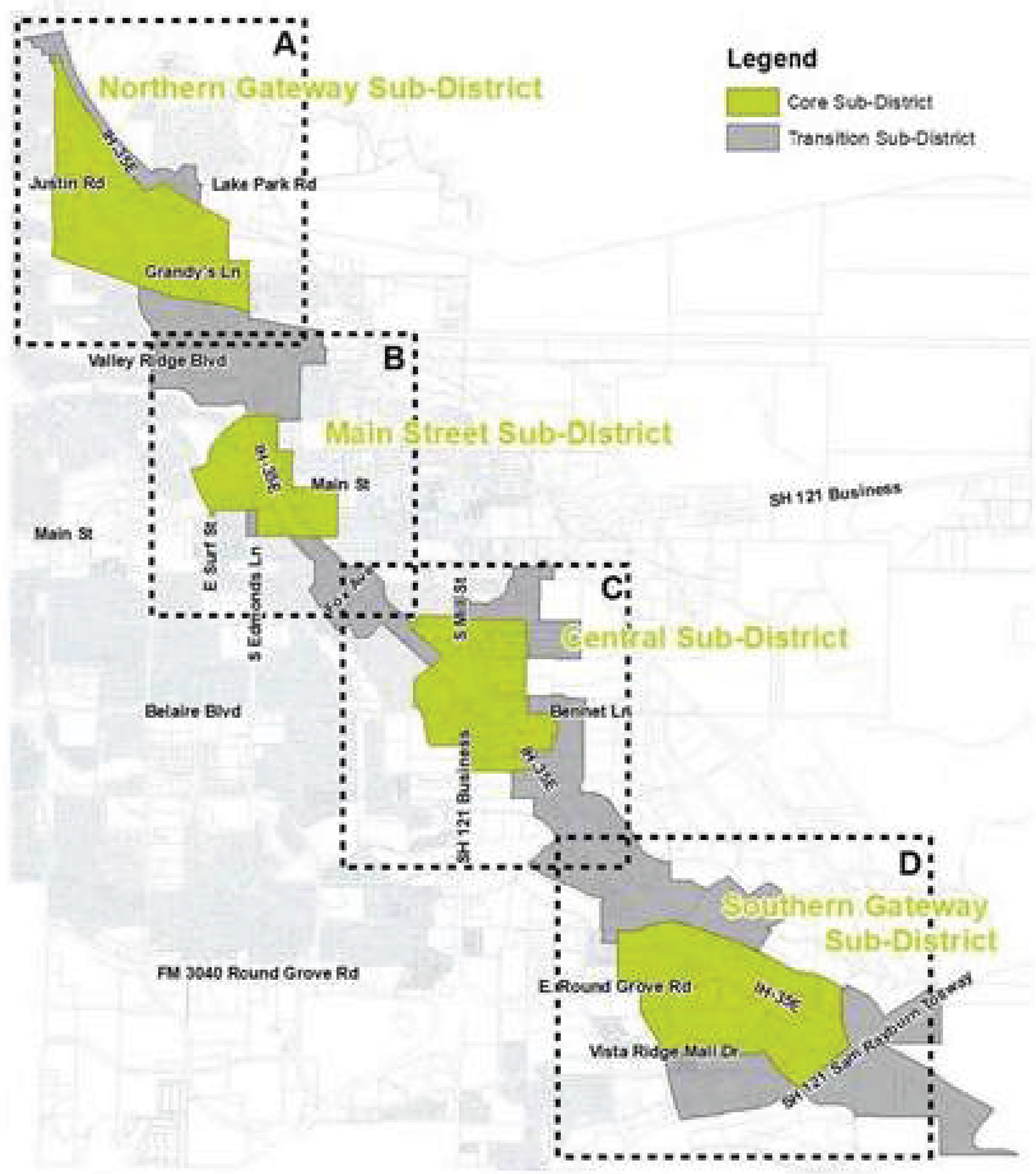
EXHIBIT VI.8.1-2. NORTHERN GATEWAY SUB-DISTRICT MAP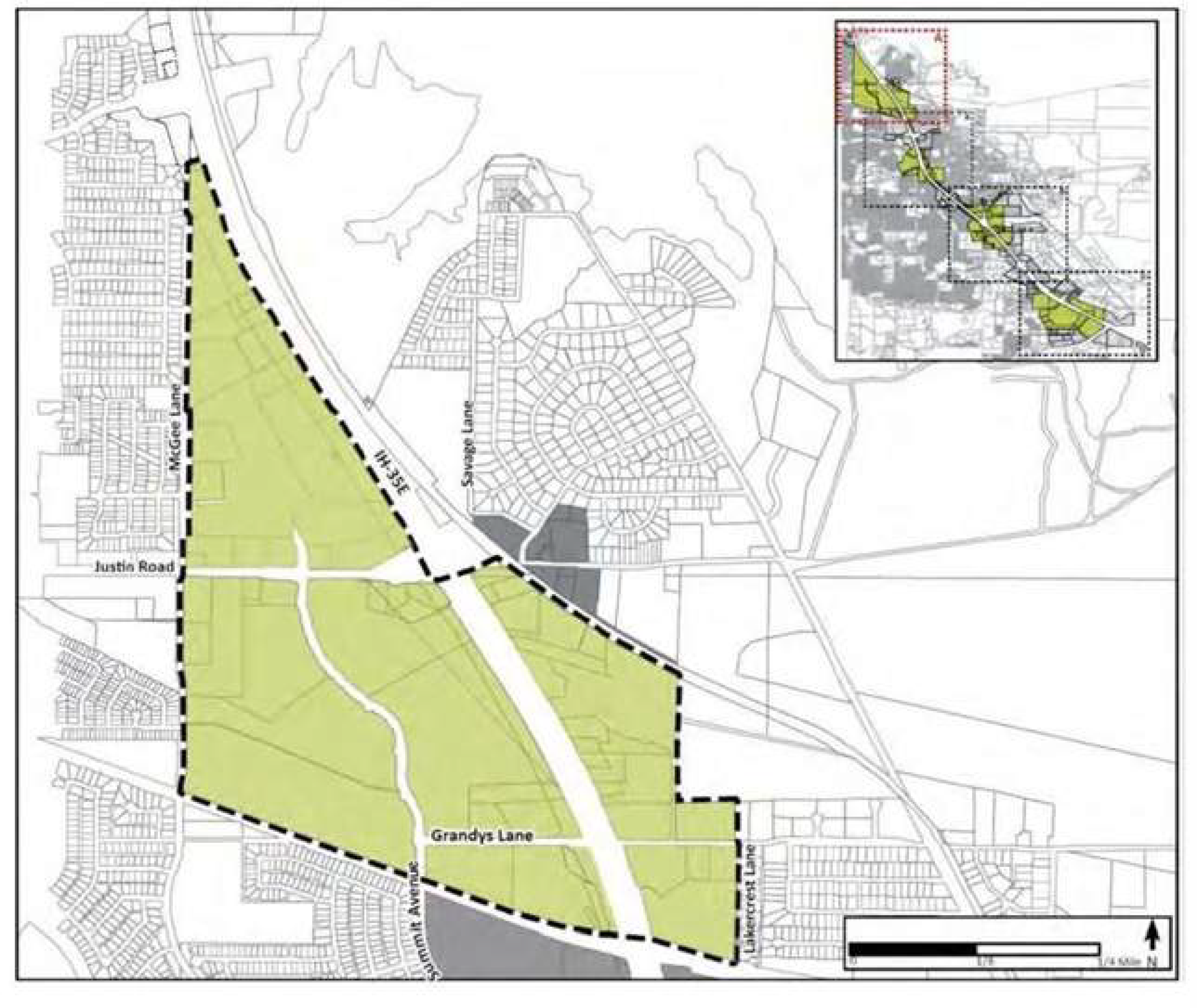
EXHIBIT VI.8.1-3. MAIN STREET SUB-DISTRICT MAP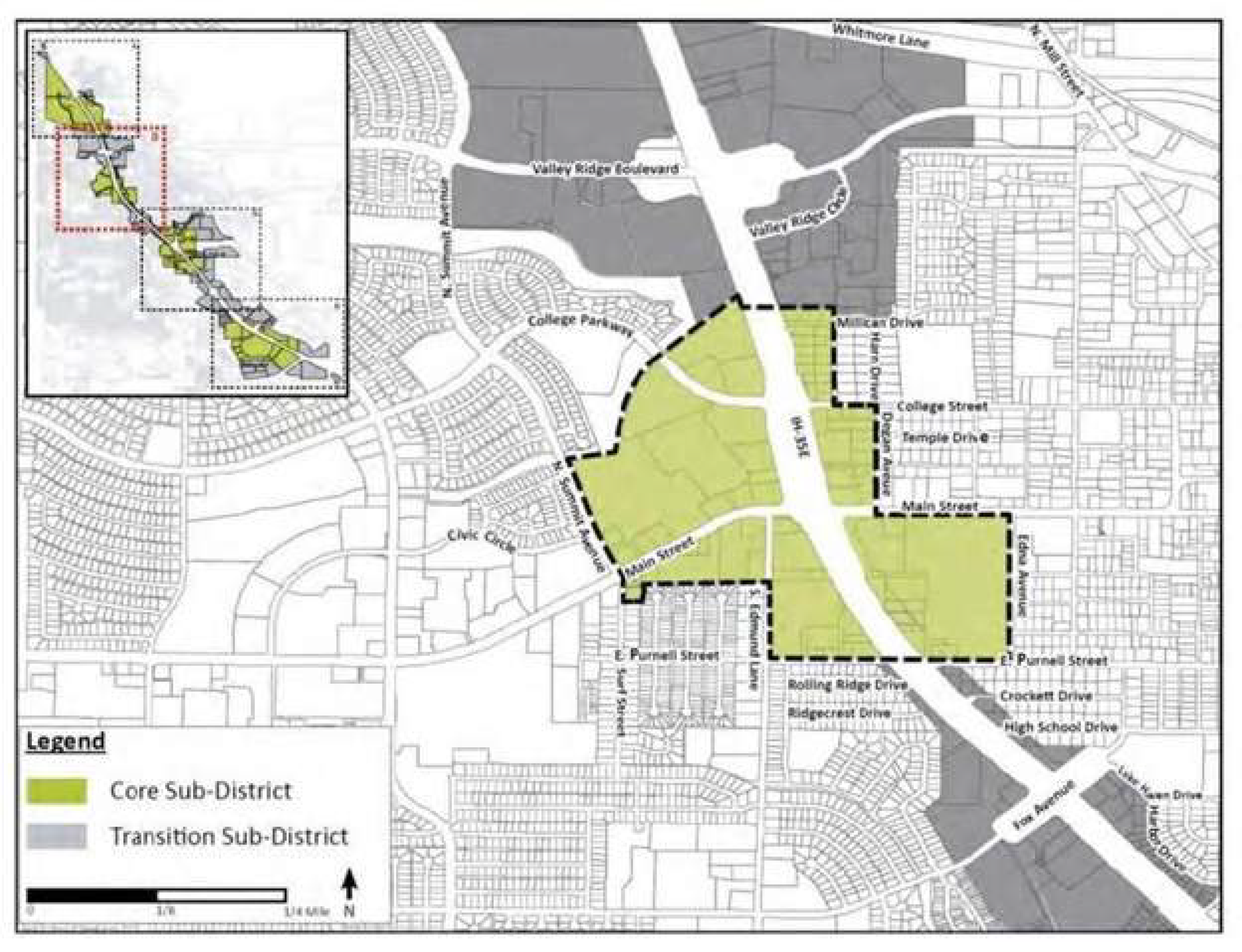
EXHIBIT VI.8.1-4. CENTRAL SUB-DISTRICT MAP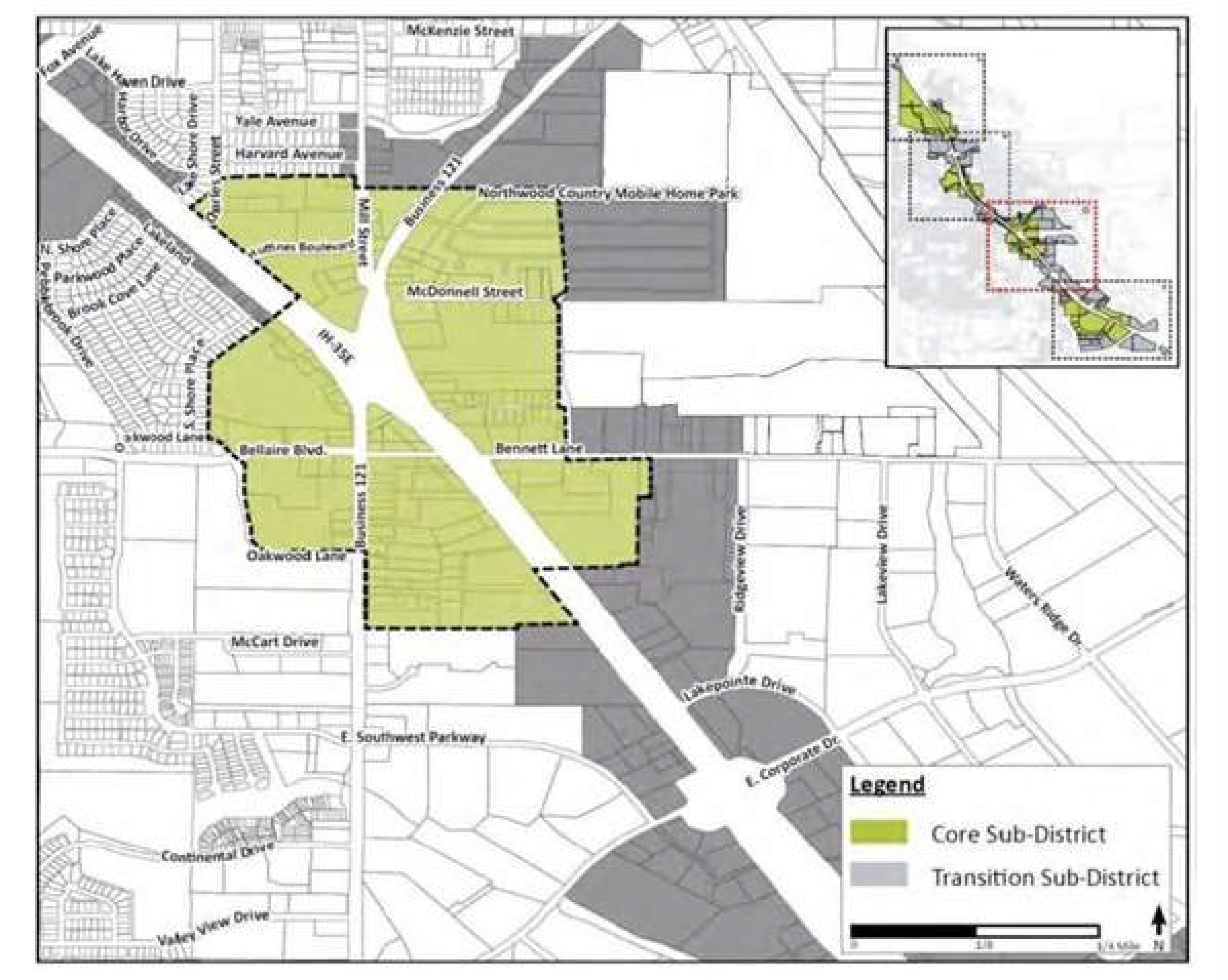
EXHIBIT VI.8.1-5. SOUTHERN GATEWAY SUB-DISTRICT MAP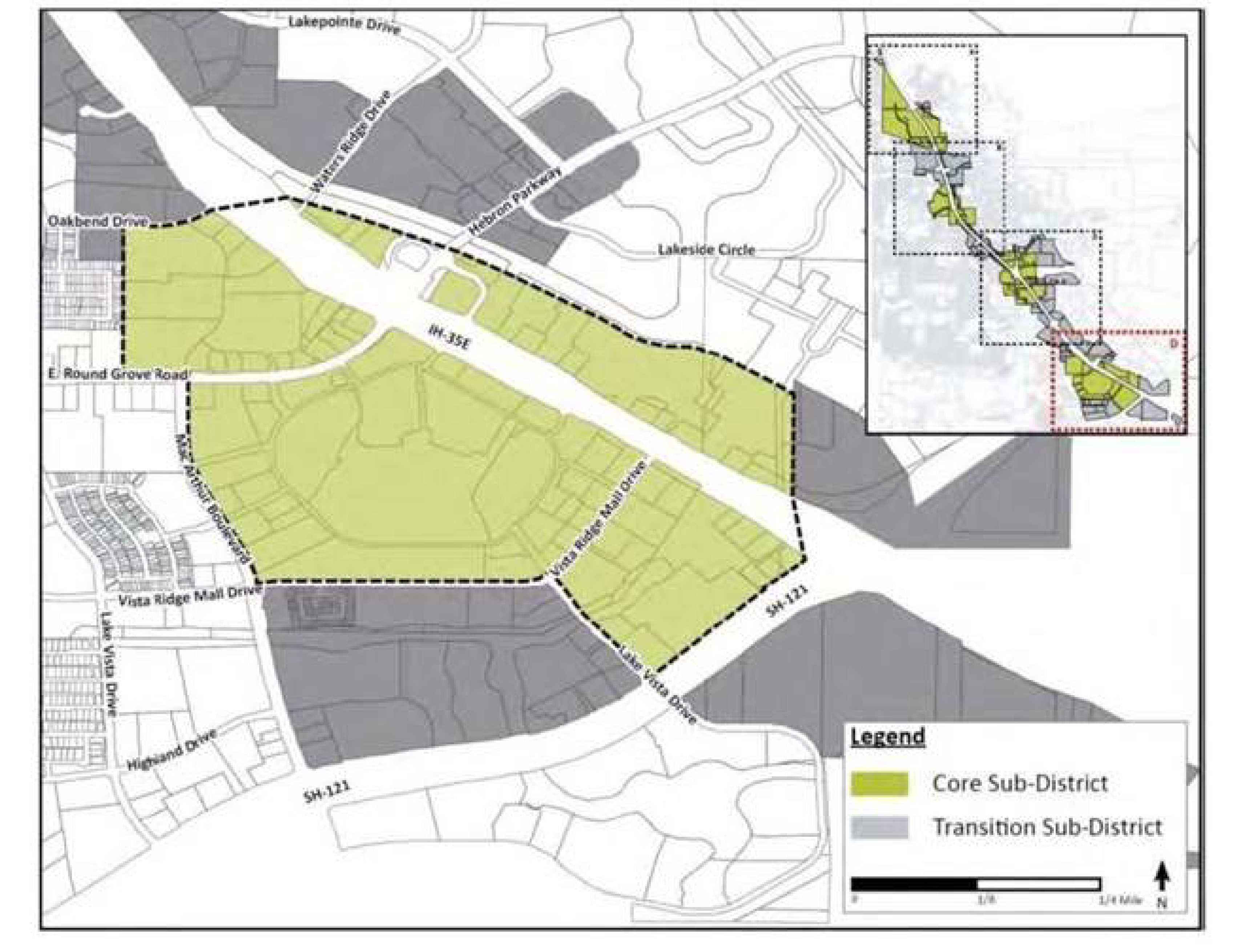
5.
Applicability
a.
The regulations identified in this Section shall apply to all properties within the Corridor District.
b.
Exhibit VI.8.5-6 Applicability Matrix illustrates the extent to which different subsections of this Section apply to any proposed new development or redevelopment.
c.
The following appendices shall be informational and illustrate the vision for development in the Corridor District:
1)
Appendix A: IH-35E Corridor Character Principles
2)
Appendix B: IH-35E Corridor Design Principles
3)
Appendix C: IH-35E Corridor Core Sub-district Illustrative Plans
d.
The following appendices shall be regulatory, and all applications for development within the Corridor District shall meet the requirements in:
1)
Appendix D: IH-35E Corridor Core Sub-district Framework Plans
2)
Appendix E: IH-35E Corridor Process Flow Chart
3)
Appendix F: IH-35E Corridor Core Sub-district Street Design Standards and transition Sub-district Street Design Standards
4)
Appendix G: IH-35E Corridor Planting List
5)
Appendix H: IH-35E Corridor Geographic Description
e.
Relationship to other provisions of this UDC
1)
All provisions and requirements of this UDC apply to development within the Corridor District, except where those provisions and requirements conflict with this Section, in which case this Section shall control.
2)
Standards, requirements, and processes that are not addressed in this Section shall be governed by this UDC.
3)
All planned development district standards approved prior to June 4, 2018 shall supersede the standards in this Section.
4)
Nothing in this Section shall change the underlying zoning designation of any property within the Corridor District.
* Engineering Site Plan shall be required.
** Engineering Site Plan may be required based on the extent of proposed improvements.
*** See Subsections B.7 and C.7.
B.
Core Sub-District Regulations
1.
Purpose, Intent and Applicability
a.
Purpose and Intent — The vision for the core sub-districts is to create a series of vibrant districts with a mix of uses at different strategic locations along the IH-35E corridor by:
1)
Focusing on creating a pedestrian-oriented, more walkable environment along identified primary pedestrian street/private vehicular route frontages (as illustrated in the framework plans in Appendix D).
2)
Creating memorable destinations that both capitalize on existing strengths while tying nodes of activity together;
3)
Creating regional gateways which are enhanced with a range of uses including living, working, and green spaces; and
4)
Encouraging higher densities with a vibrant mix of uses that leverage expanded transportation options, allow higher land utilization, and provide a higher tax base.
b.
Applicability: The regulations in this Section, as illustrated in Exhibit VI.8.1-6, Applicability Matrix apply to any property within the core sub-districts as shown on Exhibits VI.8.1-2 through VI.8.1-5 Core Sub-district Maps.
2.
Building and Envelope Standards - These standards establish where the building should be placed on the property with respect to setback lines and built-to zones, the orientation of a building's facades, alignment of new public streets/private vehicular routes and blocks, height of buildings, driveways and parking, and pedestrian accommodations on the site.
a.
Building Placement:
1)
Building fronts and sides shall be placed parallel to adjacent public streets/private vehicular routes to the extent practical with the highest priority placed on the front facade of the building.
2)
Built-to zones, as illustrated in Exhibit VI.8.1-8 Built-to Zones, and building setback lines shall be measured from the lot line and shall be provided in accordance with the requirements in Exhibit VI.8.1-7, Building Placement and Building Frontage Build-Out Standards of this subsection.
3)
The building frontage build-out shall be in accordance with the requirements in Exhibit VI.8.1-7 Building Placement and Building Frontage Build-Out Standards.
4)
At intersections, buildings shall have a minimum of at least 25 feet of building frontage build-out along both public/private vehicular routes streets.
5)
Canopies, signs, awnings, and balconies may encroach over walkways or over a built-to-zone as long as the vertical clearance is a minimum of nine (9) feet. In no case shall an awning or canopy encroach over a driveway or fire lane.
6)
Specific Standard for Administrative Modification — For properties fronting the IH-35E frontage road and arterial streets, an administrative modification may be requested to allow an 80-foot maximum built-to zone to allow for a single drive aisle with parking spaces between the ROW and principal building as long as the building placement meets the standard in Subsection (2) above.
7)
There shall be a minimum 20-foot rear yard or side yard when adjacent to single family residential that is not located within this Overlay.
 | 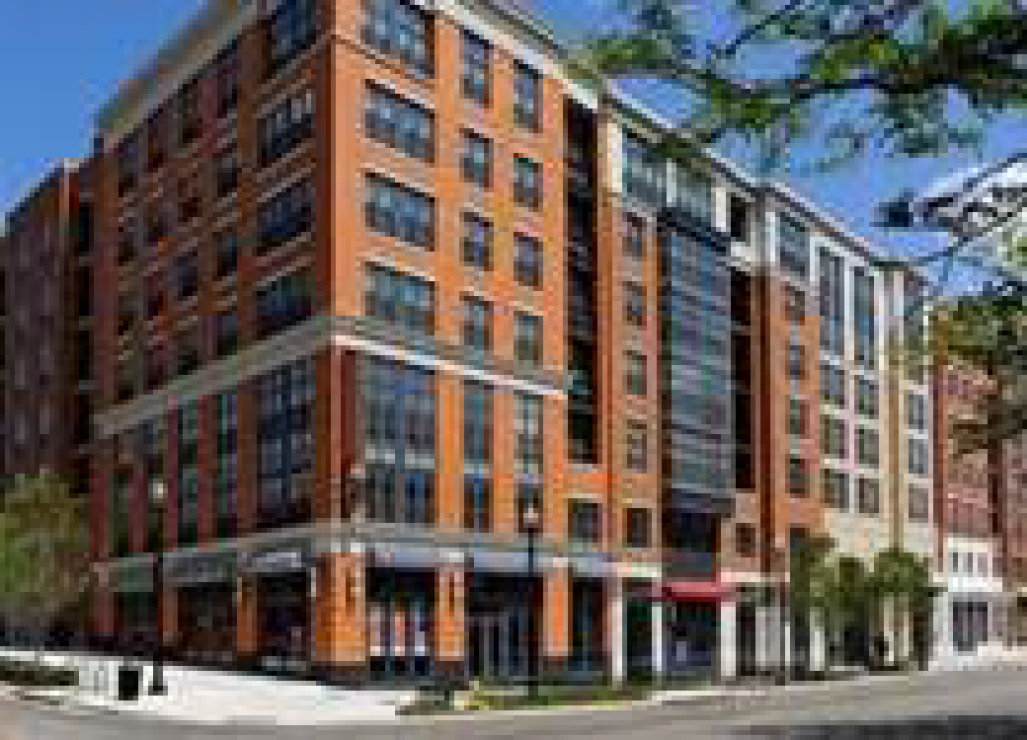 |
| GROUND FLOOR STOREFRONT IS BUILT TO THE PROPERTY LINE, DEFINING THE STREET EDGE. | |
b.
Building Orientation
1)
Primary Entrances
(a)
All primary entrances to a building shall be oriented towards a primary pedestrian street/private vehicular route.
(b)
If the building does not have frontage on a primary pedestrian street/private vehicular route, the primary entrances shall be oriented toward open space, parks and other significant spaces. A building may have a secondary entrance from a parking lot or other street.
(c)
Specific Standard for Administrative Modification - An administrative modification may be requested for buildings that do not have frontage on a primary pedestrian street/private vehicular route, open space, park or other significant space.
EXHIBIT VI.8.1-8. BUILD-TO ZONES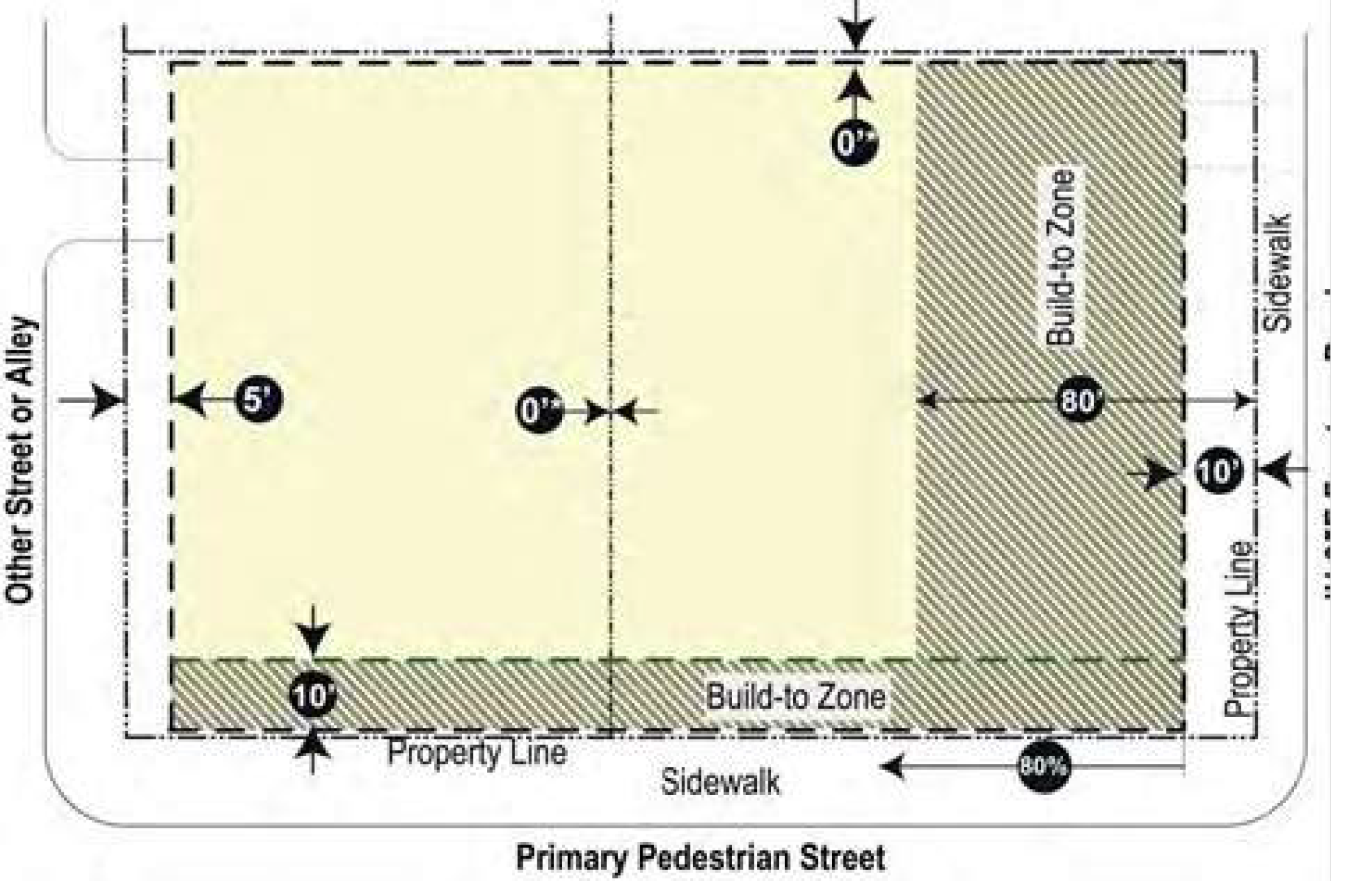
 |  |
| PRIMARY FACADES OF BUILDINGS SHALL BE ORIENTED TOWARDS A PRIMARY PEDESTRIAN STREET, PARKS, OPEN SPACE, AND OTHER SIGNIFICANT SPACES, WHERE AVAILABLE. | |
2)
Where a building is located along a primary pedestrian street/private vehicular route, the front of the building shall be oriented towards the primary pedestrian street/private vehicular route.
3)
Off-street parking shall not be located between any building and any street/private vehicular route unless permitted in accordance with Exhibit VI.8.1-7 above.
c.
Blocks and Lots
1)
All blocks shall provide service access and parking access along an alley or service drive.
2)
The maximum block perimeter shall be 1,600 feet unless the engineering site plan or concept plan follows the street network as established by the framework plans (Appendix D).
3)
Specific Standard for Administrative Modification: An administrative modification may be requested to allow for a 20 percent increase to the maximum block perimeter requirement.
4)
Block faces that are 600 feet in length or greater shall provide pedestrian access through the block at an approximate mid-block distance, in order to allow pedestrians to walk through the blocks to the opposite side without having to walk along the block perimeter.
d.
Building Height:
1)
The minimum building height of a building or parking structure shall be 20 feet.
2)
Minimum interior ground floor height shall be 12 feet (clear).
e.
Driveways:
1)
All driveways shall be located off of a local street or an alley. If a property has no access to a local street or an alley, driveways may be permitted along other streets with the exception of primary pedestrian streets/private vehicular routes. Driveways for service vehicles shall be via alleys or parking lots. See Exhibit VI.8.1-9 for acceptable driveway locations.
2)
Cross or joint access easements
(a)
Cross or joint access easements shall be required for all developments unless grade and topography make such cross or joint access unfeasible.
(b)
Cross or joint access easements shall be designated at the time of development in anticipation of future direct or indirect access.
3)
Driveways may be permitted along primary pedestrian streets/private vehicular routes only if the property has no direct or indirect access (via a cross or joint access easement through an adjoining property) to any other public street. Driveways along a primary pedestrian street/private vehicular route shall be a maximum of 24 feet wide with a 20-foot radius and be deemed temporary and shall be closed when alternative direct or indirect access is provided to the property.
EXHIBIT VI.8.1-9. ACCEPTABLE DRIVEWAY LOCATIONS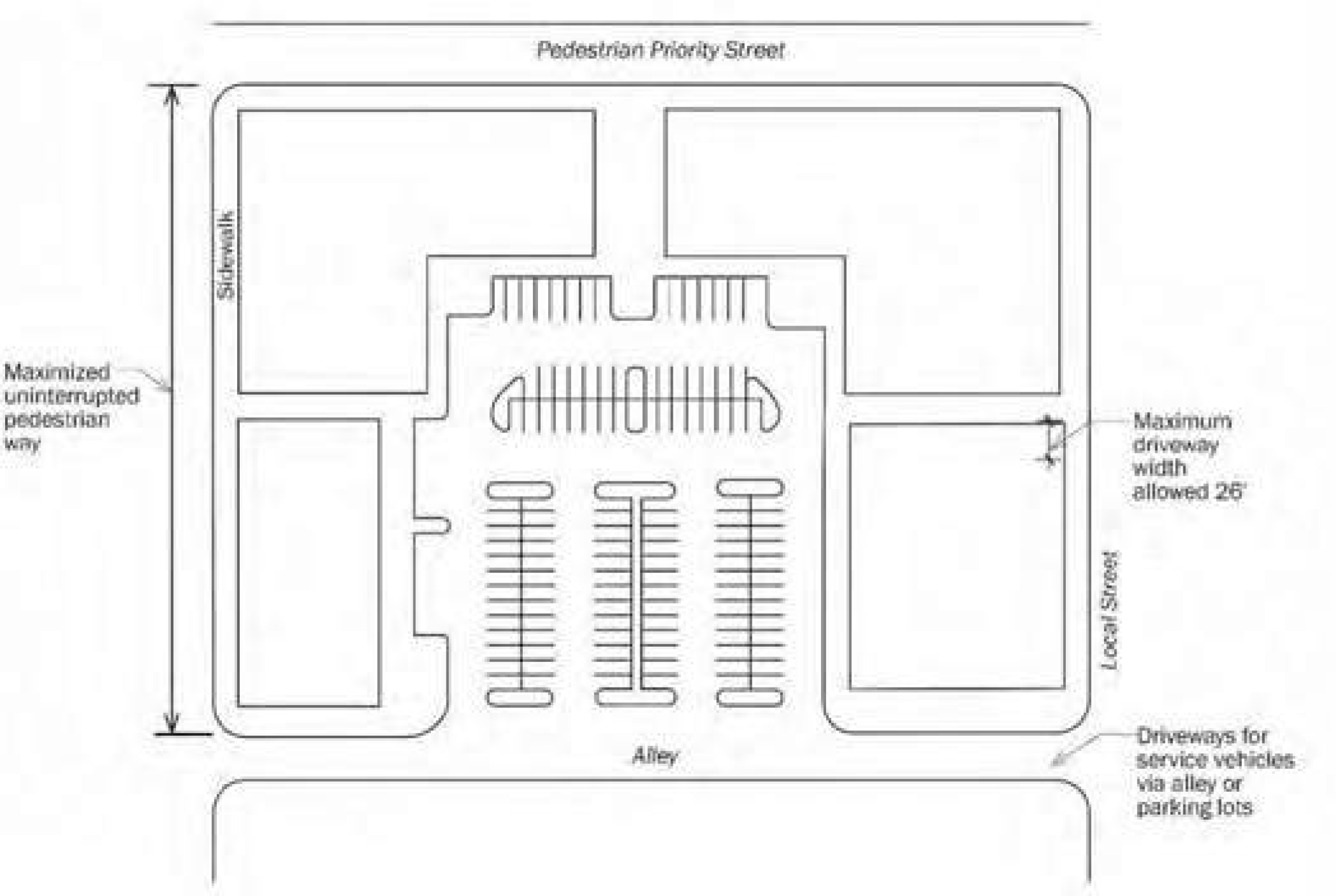
4)
For driveways onto the IH-35E frontage road and state highways, driveways shall adhere to the requirements in Subpart 4, Article IX.2.3.F.1-3. All other driveways shall comply with Subpart 4, Article IX.2.3, except that all driveways shall be a maximum of 30 feet wide with a 20-foot radius.
5)
Sharing and consolidation of driveways is encouraged to reduce the number of curb cuts to ensure smoother, more organized traffic movements and less disruption of pedestrian movement.
6)
Except where otherwise required by Article IX.2.3, driveways shall:
(a)
Be a minimum of 300 feet apart from any other driveway or public street/private vehicular route intersection; and
(b)
Not interrupt the paving material of the sidewalk with another material. Sidewalk paving shall be continuous across the driveway.
7)
Driveways into multi-building non-residential properties along the IH-35E frontage road and all arterial streets shall be enhanced with the addition of signs, accent paving, special landscaping and/or lighting. Design elements shall not be located within any required visibility easements or clear vision triangles.
8)
Stacking spaces and drive-through lanes shall not be located along the primary facade of the building.
f.
Pedestrian Circulation
1)
Sidewalks - Sidewalks for separate and continuous pedestrian circulation shall be provided along all streets/private vehicular routes.
2)
Walkways
(a)
Walkways shall be no less than six (6) feet in width.
(b)
Walkways shall be required:
i.
Connecting any existing or future sidewalk, trails, parks or greenways and primary entrances of all buildings on the site;
ii.
Connecting building entrances to all on-site facilities, such as parking lots, bicycle facilities, and open space;
iii.
Up to the building lot line in a manner which will allow walkway connection between adjoining properties and buildings; and
iv.
Connecting to any public transit stop that is adjacent to a site.
(c)
Walkways shall be distinguished from any driving surfaces through the use of colored pavements, bollards, grade changes, pavement markings or combination of treatments.
3)
Parking
(a)
Parking lots and parking structures shall clearly mark walkways between parked vehicles and primary entrances through the use of clearly marked stop signs, wayfinding/directional signage, lighting, and other similar measures.
(b)
Wheel stops, other barrier, or an increase in the minimum walkway, sidewalk or landscape area of at least two (2) feet are required to prevent cars from overhanging onto any walkway, sidewalk or landscape area.
g.
Off-Street Parking
1)
Parking lots shall be located behind or along the side of buildings. In no case shall parking be permitted within the required built-to zone, except as specifically permitted by this Section for properties with frontage along the IH-35E frontage road or arterial streets. Parking lots may be located adjacent to existing single-family residential uses located outside of the Corridor District only if they meet the following standards:
(a)
Parking is set back a minimum of ten (10) feet from the single-family residential building lot line; and
(b)
A masonry, vegetation, or combined screening that is at least six (6) feet in height shall be located at the building lot line along the single-family residential use.
2)
Off-street parking shall be provided in accordance with the following parking requirements:
(a)
Non-residential uses - One (1) space per 300 square feet of gross floor area with the following exceptions:
i.
The following uses shall follow the parking requirements of Article VIII.1.4 Parking Requirements by Use: Commercial Amusement (Indoor); Religious Facility; Nightclub; Sports Field (Private), Stadium or Arena (Private); Commercial Amusement (outdoor); Hospital; Hotel, Motel or Inn; Extended Stay Hotel; and all Warehouse and Storage Uses.
ii.
Restaurants, Stand Alone: one (1) space per 100 square feet of gross floor area.
(b)
Residential uses (as designated in Article VII.2) - One and one-half (1.5) spaces per dwelling unit
(c)
Mixed-Use - Use ratios above to calculate spaces based on composition of uses on the property.
3)
Specific Standard for Administrative Modification - An administrative modification may be requested to allow credit for available parking for public use or shared off-street parking on another lot within 1,000 feet of the subject property to apply towards off-street parking requirements for the subject property.
4)
Centralized parking locations throughout the core sub-districts that permit people to park at convenient locations with ample parking to access multiple uses are encouraged, but not required.
5)
Shared off-street parking shall be connected to businesses with paved and landscaped walkways in accordance with Subsection B.2.f above.
6)
Shared parking agreements shall be submitted for review with the engineering site plan and recorded in the appropriate county property records.
h.
On-Street Parking. On-street parking in compliance with Appendix F is required within the core sub-districts along all primary pedestrian streets/private vehicular routes, and encouraged, but not required, on collector and local streets.
3.
Architectural Standards - These standards apply to the exterior architectural treatments within the core sub-districts. Exterior architectural treatments include building articulations, facade composition, exterior materials and colors, windows and doors, and awnings and canopies. These standards apply to buildings containing non-residential, mixed-use, and multi-family uses in addition to special standards for parking structures.
a.
Building Articulation and Facades:
1)
Facades visible from any public street/private vehicular route shall provide horizontal and vertical articulation with a facade rhythm between 20 and 30 feet. The facade rhythm may be expressed by any of the following:
(a)
A change in a building's horizontal or vertical plane;
(b)
Stepping portions of facades in and out;
(c)
Utilizing balconies, columns or pilasters that are distinctively set out from the facade; or
(d)
Changing types or colors of materials in combination with other techniques.
2)
Each facade visible from any public street/private vehicular route or public open space shall provide architectural variety and scale through the use of elements including, but not limited to, at least three (3) of the following:
(a)
Expression lines denoting the base, middle, and top of a building;
(b)
Repetition in patterns of window, door or other openings or architectural elements;
(c)
Change in color;
(d)
Change in texture;
(e)
Change in material module or pattern; or
(f)
Art or ornament constructed as part of the building.
3)
A minimum of 25 percent of above-grade dwelling units adjacent to a public street/private vehicular route or public open space shall have balconies that extend a minimum of five (5) feet beyond the face of the facade. Balconies may extend over the sidewalk area provided they maintain a minimum of ten (10) feet of clearance above the sidewalk and do not substantially interfere with tree growth.
4)
All buildings with more than one street frontage shall treat facades facing public streets/private vehicular routes with equal design attention.
5)
All facades along primary pedestrian streets/private vehicular routes and facades immediately adjacent to a sidewalk at-grade shall have all of the following:
(a)
A minimum of 40 percent of the ground floor facade comprised of windows or doors, except those buildings with retail or restaurant uses on the ground floor shall have a minimum of 60 percent and a maximum of 80 percent of the ground floor facade comprised of windows.
(b)
Entries covered with awnings, canopies, or inset behind the facade a minimum of six (6) feet. A door shall not be permitted to swing into a public right-of-way or minimum sidewalk area.
(c)
Windows for a minimum of 25 percent and maximum of 60 percent of the upper floor facade area for upper floors of all facades facing primary pedestrian streets/private vehicular routes.
b.
Building Entrances
1)
Primary entrances for buildings with a single tenant shall be emphasized with dramatic architectural elements such as horizontal and vertical articulations with canopies, tower elements, recessed entries, pilasters, changes in height or materials, enhanced lighting, etc.
2)
Primary entrances for buildings with multiple tenants shall be emphasized through such design devices as awnings, differentiation in material and/or color, and/or building signage.
3)
A minimum of one (1) entrance shall be required for every 60 feet of a building designed for multiple tenants along primary pedestrian streets/private vehicular routes.
4)
For mixed-use buildings with dwelling units, one (1) or more separate building entrances from the sidewalk shall be used to provide access to the dwelling units.
c.
Facade Materials and Colors
1)
Facade Materials — Each exterior wall (except window and door area) of a building or parking structure shall comply with the following material requirements:
(a)
Eighty percent (80%) or more of each exterior wall shall be comprised of brick or stone. The remainder of each exterior wall may be comprised of either three-step stucco (EIFS shall only be allowed at locations nine (9) feet above grade), architectural metal, cladding, or panels, or a combination thereof.
(b)
Accent materials may be comprised of pre-cast stone, metal, or other architectural materials.
(c)
Industrial or manufacturing plants or office buildings that are 50,000 square feet or greater may use tilt wall and/or pre-cast concrete construction if comprised of a minimum of 20 percent brick or stone on facades facing a public street/private vehicular route and a minimum of 15 percent brick or stone on all other facades
2)
Colors — At least two (2) main colors, and no more than five (5) colors, shall be used on each elevation. Eighty percent (80%) of each elevation must utilize natural and/or earth tone colors, and each elevation must have 20 percent of another type of color. Buildings shall not have colors that are fluorescent or bright (e.g., yellow, green, purple) visible from any adjacent property, public street/private vehicular route. This shall include service doors, down spouts, utility boxes, panels and other similar features integral to the principal building. Variations of natural and/or earth tone brick or stone within the same color family shall be counted as one color.
 | 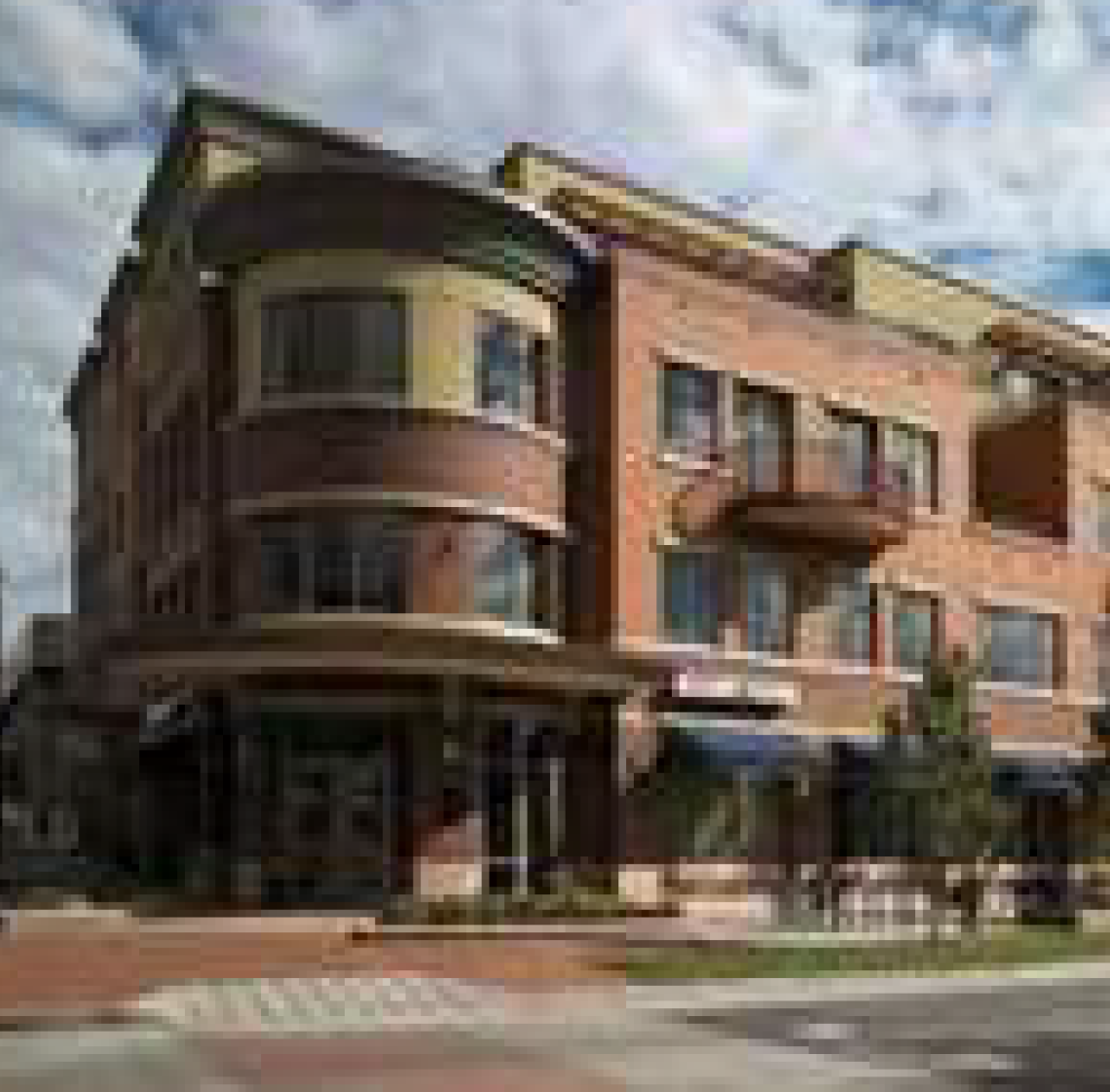 |
| GROUND FLOOR COMMERCIAL BUSINESSES ARE DIFFERENTIATED USING VERTICAL BREAKS AND CHANGES IN BUILDING COLOR AND MATERIALS WHILE MAINTAINING AN OVERALL DESIGN THEME. | |
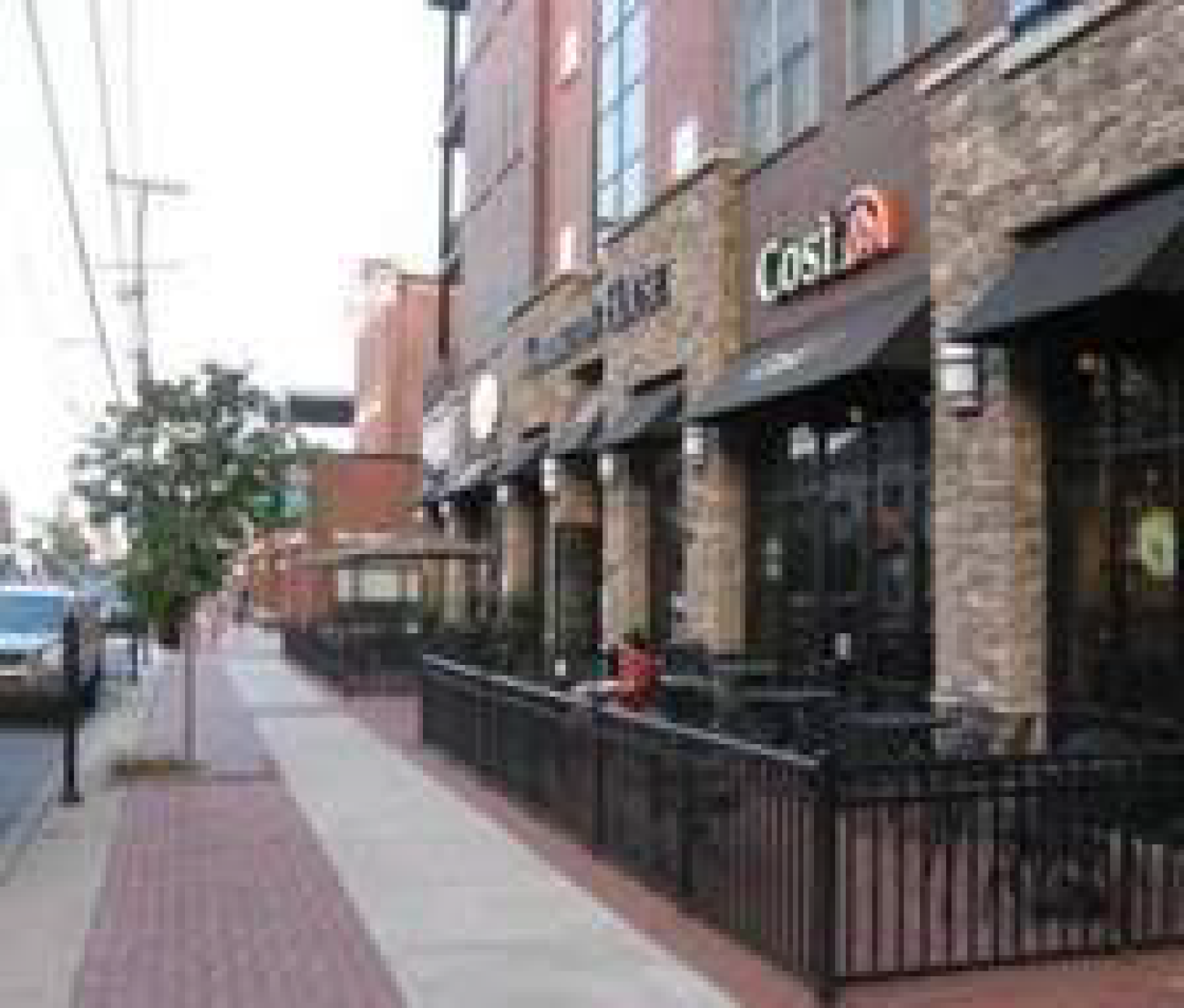 | 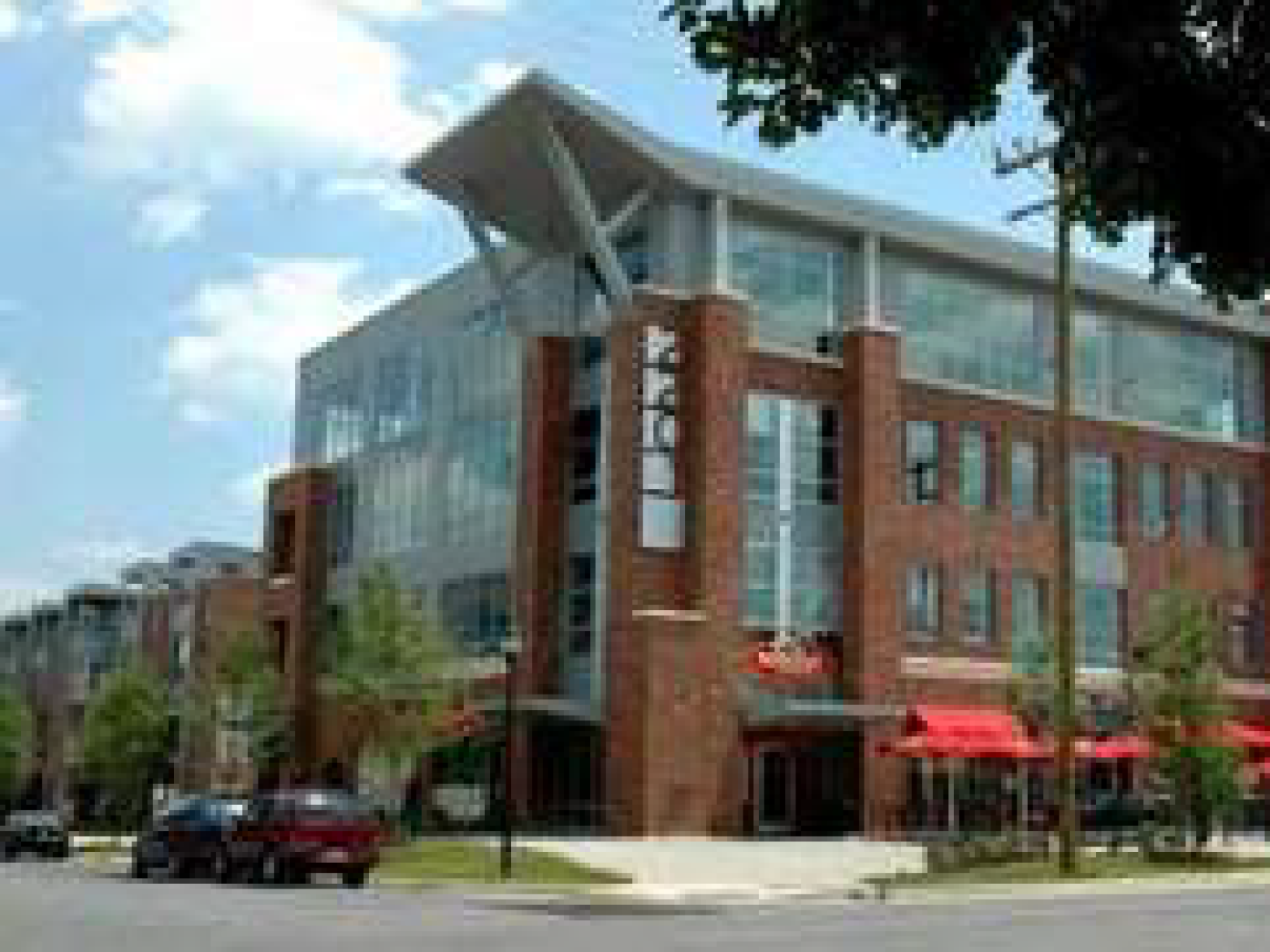 |
| BUILDINGS MATERIALS AS WELL AS ARCHITECTURAL DETAILS AND FINISHES CONVEY A SENSE OF PERMANENCE. QUALITY MATERIALS SHALL BE USED TO WITHSTAND THE TEST OF TIME REGARDLESS OF ARCHITECTURAL STYLE. | |
d.
Awnings and Canopies
1)
All non-residential uses adjacent to the sidewalk at-grade along primary pedestrian streets/private vehicular routes shall have an awning or canopy which extends beyond the face of the building over the adjacent sidewalk for a minimum of 75 percent along the building's sidewalk frontage.
2)
Awnings or canopies on any building shall be constructed of metal or canvas. Reflective materials for finishes are prohibited.
3)
An awning or canopy shall be located as to provide shading for exterior windows and doors and shall cover the entire width of the window opening or group of windows over which it is installed.
4)
Awnings and canopies may encroach over sidewalks up to 50 percent of the width of the sidewalk or five (5) feet, whichever is greater. They shall maintain a minimum nine-foot (9') vertical clearance as measured between the bottom of the awning/canopy and the finished grade of the sidewalk. In no case shall an awning or canopy encroach over a travel zone.
 | 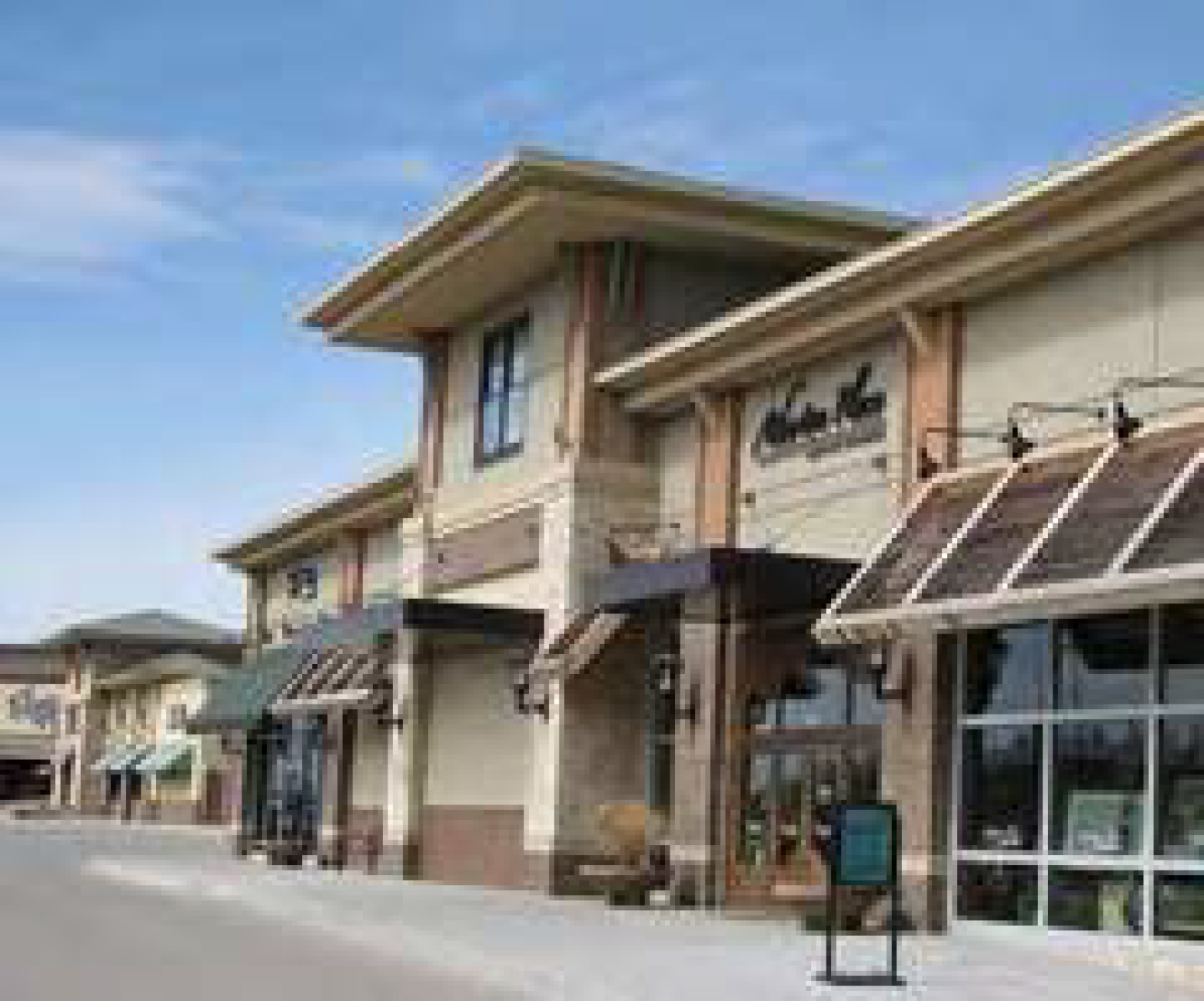 |
| AWNINGS SHOULD FIT INTO THE STOREFRONT'S OVERALL ARCHITECTURE AND APPEARANCE. AWNINGS PROVIDE PROTECTION AND COVER FROM BRIGHT SUNLIGHT AND INCLEMENT WEATHER. | |
e.
Windows
1)
Window framing materials shall consist of anodized aluminum, vinyl, or steel.
2)
For required windows at the ground floor, a minimum 60 percent visible light transmittance shall be required.
(a)
Specific Standard and Findings for Administrative Modification — a visible light transmittance less than 60 percent may be allowed with an administrative modification if staff finds that it is necessary in order for the windows to satisfy adopted building and energy code requirements related to energy efficiency.
3)
Mirrored glass is prohibited.
4)
Reflective glass is prohibited on ground floors along primary pedestrian streets/private vehicular routes. Ground floor facades along ROWs which are not primary pedestrian streets/private vehicular routes may be comprised of no more than 50 percent reflective glass.
5)
Window screens are prohibited on ground floors which do not contain non-residential uses.
6)
Horizontal groupings of windows shall not to exceed five (5) per grouping, where groupings are separated by a mullion, column, or wall section a minimum of seven inches (7") wide.
7)
Windows shall be a minimum of 30 inches from building corners, unless separated by a corner mullion or column twice the width used in grouping.
8)
For storefronts along primary pedestrian streets/private vehicular routes, the following are prohibited:
(a)
Single pane glass windows;
(b)
Black glass, opaque glass, and other "false window" techniques;
(c)
Doors with no opacity; and
(d)
Windows which do not permit unobstructed views into the building.
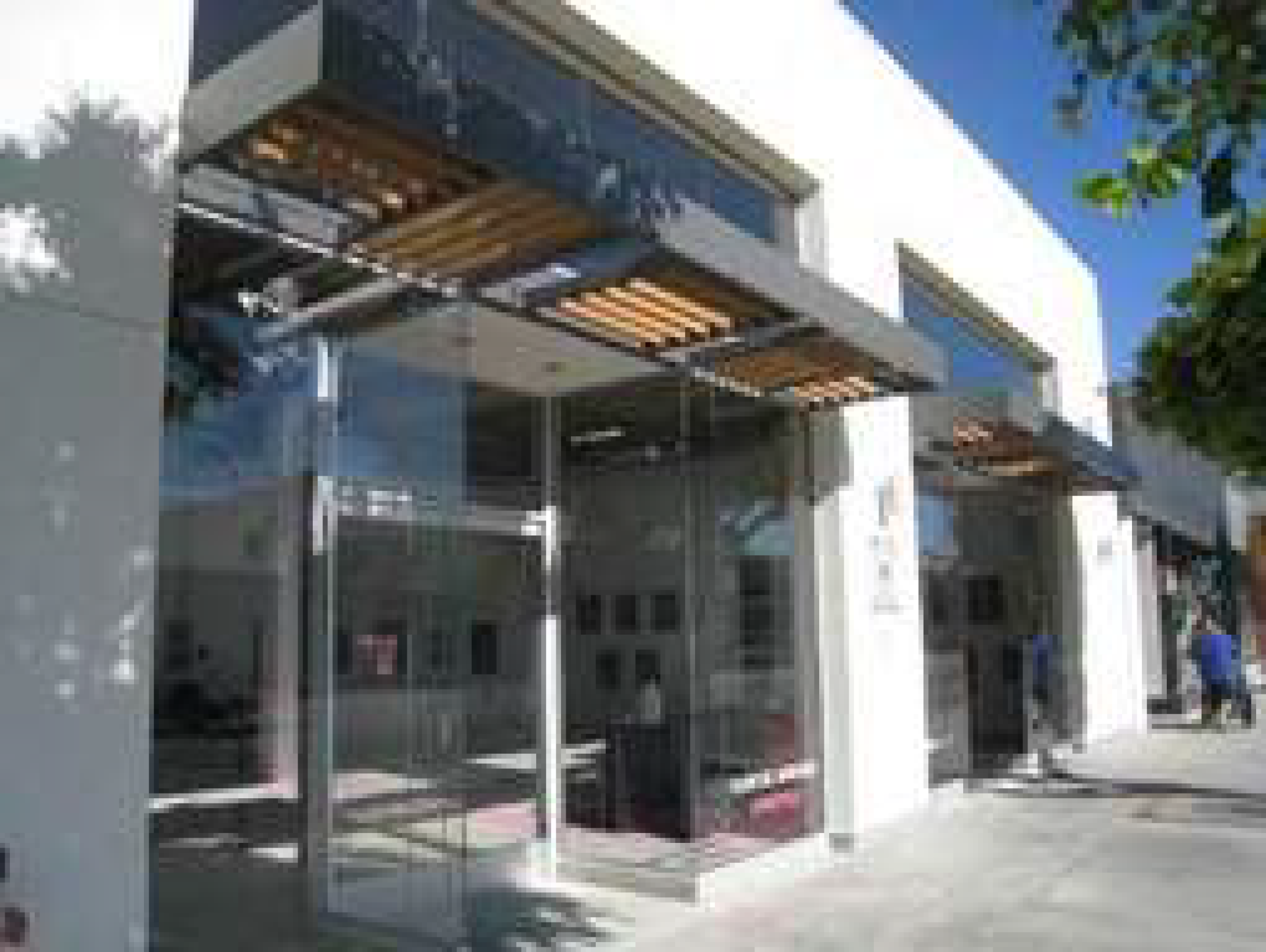 |
| WINDOWS SHOULD MAXIMIZE VISIBILITY TO THE STREET ON THE GROUND FLOOR. ENSURE THAT GROUND FLOOR WHICH DO NOT CONTAIN NON-RESIDENTIAL USES PROVIDE CLEAR UNOBSTRUCTED WINDOWS, FREE OF REFLECTIVE COATINGS. |
f.
Parking Structures
1)
Parking structures shall have a facade design with the same colors and materials as the principal building that the parking structure serves. If the parking structure serves multiple buildings, it shall have a facade design with the same colors and materials as one (1) or more of the buildings it serves. Parking structures shall be located behind buildings to minimize their visibility from adjacent public streets/private vehicular routes.
2)
Parking structures shall not be located with ground floor frontage along any primary pedestrian street/private vehicular route.
3)
Where a parking structure is located adjacent to a public street which is not a primary pedestrian street or private vehicular route, the following apply:
(a)
Parking structure facades shall be designed with both vertical articulation using changes in planes, columns, pilasters, etc., at least every 40 linear feet, and horizontal articulation aligning with horizontal elements along the block.
(b)
The parking structure shall be designed and screened in such a way that motor vehicles on all parking levels are hidden from view from all adjacent streets. Parking structure ramps shall not be visible from any street. Ramps shall not be located on the perimeter of the parking structure. Architectural screens shall be used to articulate the facade, hide parked motor vehicles, and shield the lighting inside the structure.
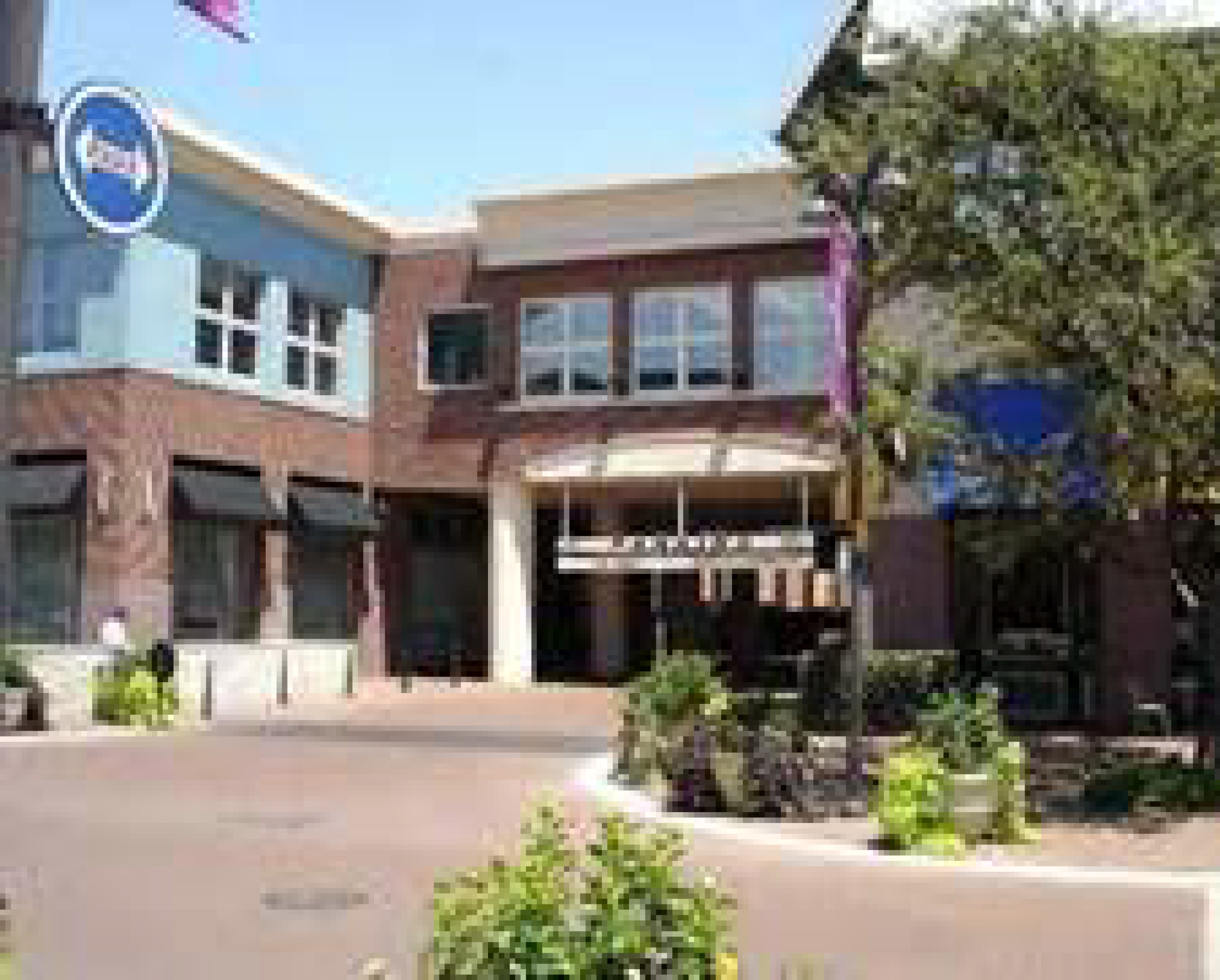 | 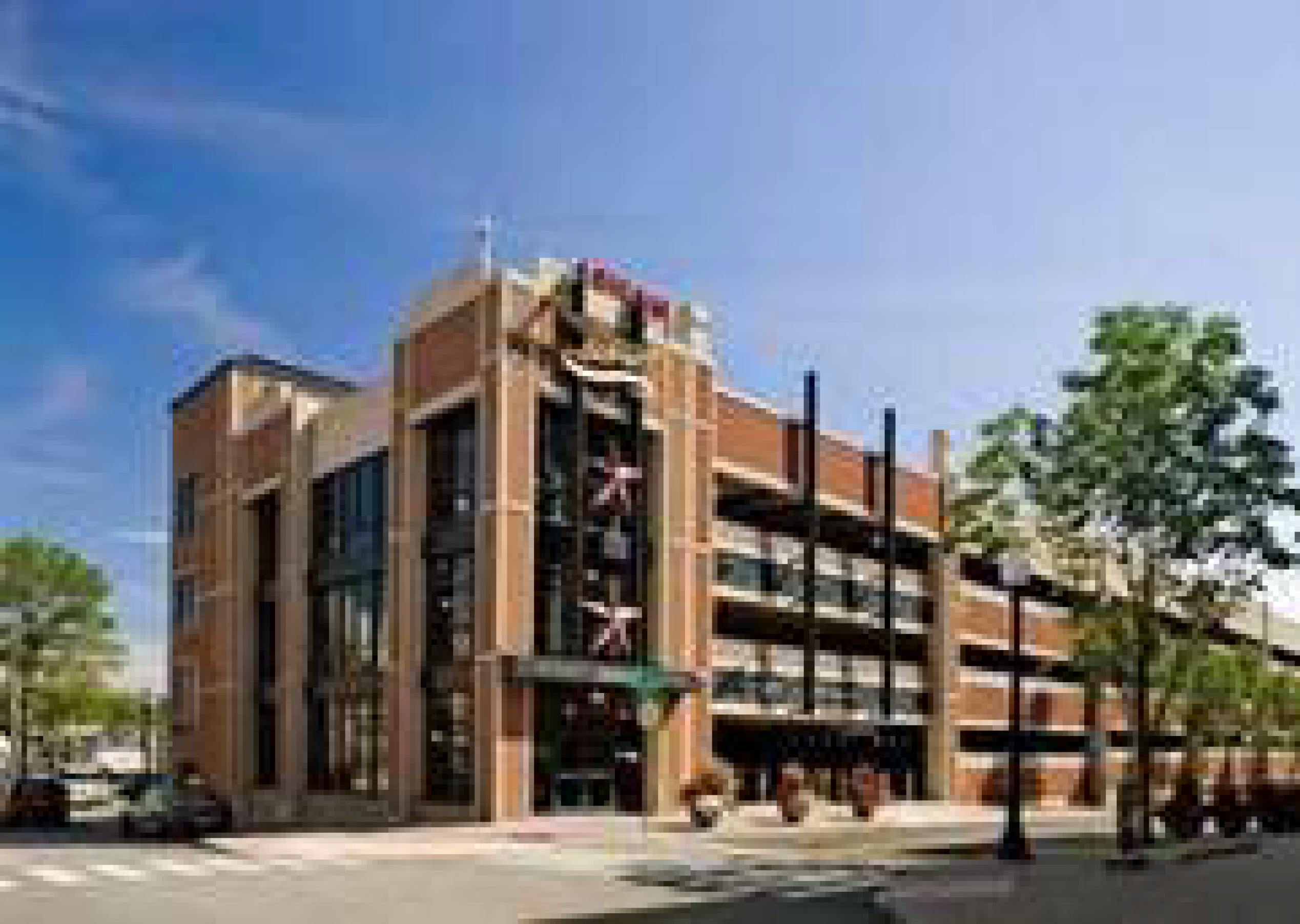 |
| PARKING STRUCTURES SHALL BE LOCATED BEHIND BUILDINGS TO MINIMIZE THEIR VISIBILITY FROM ADJACENT STREETS. | PARKING STRUCTURES SHALL HAVE A FACADE DESIGN SIMILAR TO SURROUNDING BUILDINGS ALONG THE STREET FRONT. |
4.
Landscape Standards - These standards apply to trees and shrubs, hardscape and open space treatments, screening of certain uses, and parking lot landscaping within the core sub-districts. Landscaping can reduce the urban heat island effect, soften the built environment and contribute to pedestrian comfort in addition to increasing property values and rents.
a.
Trees and Plant Materials
1)
Plantings may be placed in natural groupings along public street frontages.
2)
Tree and plant materials shall be selected from the approved plant material list provided in Appendix G. No artificial trees, shrubs, ground covers, turf, or seasonal colors are permitted.
(a)
Specific Standard for Administrative Modification - An administrative modification may be requested to use species not listed in Appendix G that are drought tolerant and adaptive.
3)
Irrigation systems shall be installed within all landscaped areas including for any required trees in secondary walkways and maintained by the developer or property owner in accordance with current Parks and Recreation Department standards.
4)
Canopy trees shall be:
(a)
Planted within the amenity zone and secondary walkway frontages;
(b)
Planted at an average spacing of 40 feet on center along all street frontages; and
(c)
A minimum three-inch (3") caliper and at least ten (10) feet in height with a single trunk at planting.
5)
Tree preservation and landscape maintenance shall comply with the provisions in Subpart 3, Articles VIII.2 and VIII.3.
6)
Parking lots with frontage on IH-35E shall provide a minimum 20-foot-wide landscape strip between the public ROW and parking lot along that frontage. Canopy trees shall be placed at an average spacing of 40 feet. A living screen that is at least 24 inches in height at the time of planting must screen the view of parked vehicles from the public ROW.
(a)
Specific Standard for Administrative Modification - An administrative modification may be requested to allow any of the following (minimum height of 36 inches) as a parking lot screening:
i.
Retaining wall;
ii.
Berming; or
iii.
A combination of retaining wall, berming, and/or living screen.
7)
Parking lots adjacent along all other public street frontage (except alleys) shall use one or both of the following screening methods along that frontage:
(a)
A minimum five-foot (5') wide landscape strip between the sidewalk and parking lot, with a living screen that is at least 24 inches at the time of planting and screens the view of parked vehicles from the street (except alleys); or
(b)
A brick or stone wall a minimum of 36 inches in height installed between the sidewalk and the parking lot, placed such that a minimum two-foot (2') parking space overhang is provided on the parking lot side of the wall, and wheel stops are provided for the parking spaces.
8)
All parking lots shall include the following landscaping elements:
(a)
Parking lots of more than 120 spaces shall be organized into blocks of no more than 120 parking spaces in each block. Each block of parking spaces shall be separated from other blocks of parking spaces by a minimum of one (1) 10-foot landscape island with plant cover and trees as required below, as well as walkways of at least four (4) feet in width leading to the primary facade of the principal building. Driveways between the blocks of parking spaces shall be provided.
(b)
Landscape islands shall be a minimum of ten (10) feet in width with a minimum of 50 percent plant cover. A landscape island shall be required on the end of each row of parking spaces and between each block of parking spaces.
(c)
Each parking lot shall include canopy trees at a ratio of one (1) tree per eight (8) parking spaces.
b.
Hardscaping
1)
All hardscaping materials shall be of earth tones or a color found on the principal building.
2)
The paving on walkways and secondary walkways shall be comprised of the following materials or a combination thereof:
(a)
Concrete;
(b)
Pavers; or
(c)
Stamped concrete or asphalt.
c.
Open Spaces
1)
Open spaces shall be provided on developments that incorporate five (5) acres or more.
(a)
The minimum set aside for open space shall be five percent (5%) of the development.
(b)
If the open space provided is publicly accessible, it shall be highly visible from the public ROW and accessible to the general public. If the open space provided is not publicly accessible, it shall be centrally located and easily accessible to all individuals it is expected to serve.
(c)
If the proposed development includes any open space as identified in the framework plan, then the location of the open space shall comply with the framework plan.
(d)
The engineering site plan or concept plan shall demonstrate how the open space requirement is being satisfied for an entire development being considered. For phased developments, at least 50 percent of the required open space must be constructed within the first phase of the project, with the remaining required open space being constructed in subsequent phases.
(e)
Open spaces required by this Section may also be used to meet parkland dedication requirements, if approved by the Park Director, in which case they shall also meet all standards in Article X.1.4.
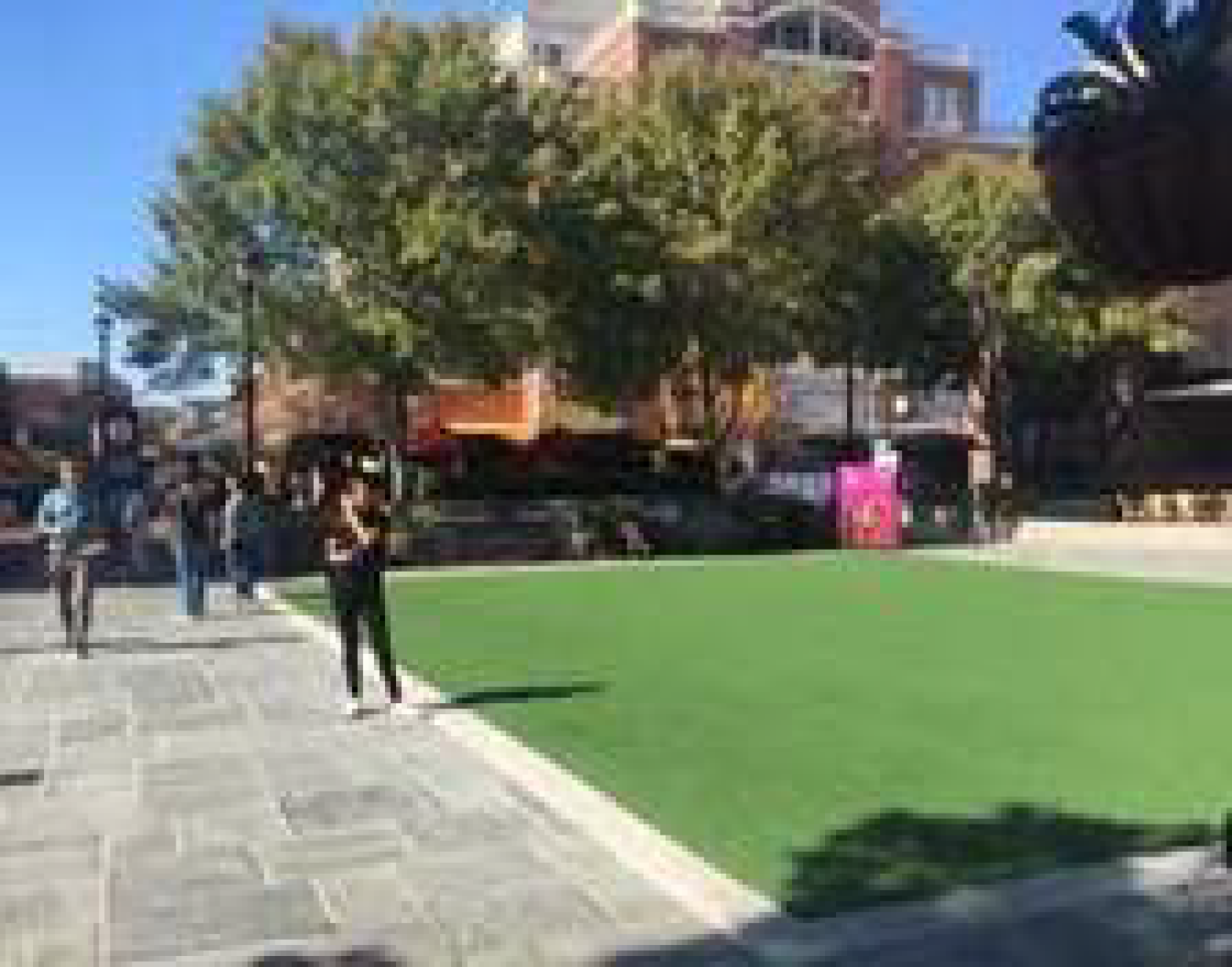 | 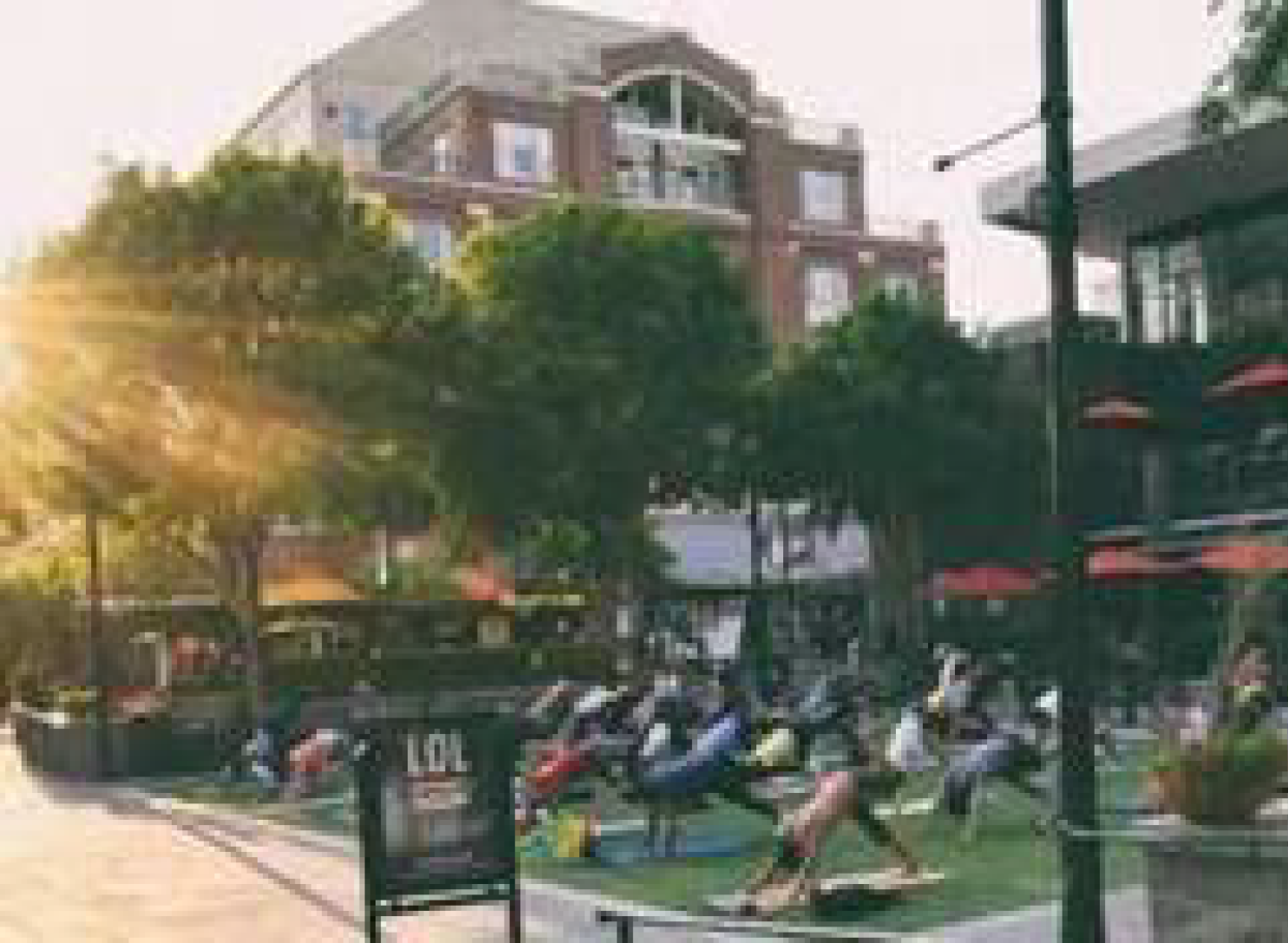 |
| OPEN SPACES SHOULD ENCOURAGE DIVERSE OPPORTUNITIES FOR SOCIAL ACTIVITIES, PROVIDE RELIEF AND RELAXATION, EXPAND AND REINFORCE THE PUBLIC REALM, AND FACILITATE LIVABILITY. | |
2)
Developments that incorporate less than five (5) acres may incorporate open spaces for the use of employees or the public.
3)
Private open spaces may be fenced or otherwise controlled for secure access using wrought iron, masonry, or comparable decorative fencing, or vegetative screening.
4)
Parking lots or spaces, driveways, or rear yards may not be used as publicly accessible open space, but publicly accessible open space may include front and side yards provided that they are integrated into the overall design of the project. Publicly accessible open space shall have public or private street frontage for a minimum of 25 percent of the perimeter of the open space. Retention and detention areas that are incorporated into the overall site design with appropriate amenities may be credited towards 50 percent of the open space requirement at the discretion of the Planning Director.
5)
A combination of landscape and hardscape materials shall be used in the design of open space. Open space shall be landscaped with trees, as well as turf, shrubs, or groundcover. All plant materials shall be permanently maintained and irrigated and shall be selected from Appendix G.
(a)
Specific Standard for Administrative Modification - An administrative modification may be requested to use species not listed in Appendix G that are drought tolerant and adaptive.
6)
In order to achieve a comfortable human scale within open spaces and ensure sunlight and air circulation, the following minimum height to width ratios are required for open spaces required by this Section:
(a)
For open space that is enclosed on four (4) sides, such as a courtyard, the required open space shall have a width of at least one-half the height of the adjacent building facade (measured perpendicularly from the facade). This requirement shall apply to all sides of the required open space.
(b)
For open space that is open on one (1) or more sides, the required open space shall have a width of at least one-third (⅓) the height of the adjacent building facade (measured perpendicularly from the facade). This requirement shall apply to all sides of the required open space.
5.
Street/Private Vehicular Routes and Streetscape Standards - These standards provide for design of new and improved public streets and private vehicular routes as well as the treatment of streetscape zones and street medians, if any, including the placement and installation of trees, sidewalks, street furnishings, lighting, and other amenities for pedestrians.
a.
General - Streets/private vehicular routes shall be built or improved in accordance with this Section, Appendix F, and the construction standards of the City. The City shall have the ultimate approval authority on streetscapes. Unless otherwise provided herein, all public right-of-way dedication and construction for public streets (existing and new) shall be in accordance with Article IX.2.3 and IX.2.4.
1)
Design Standards - Public streets/private vehicular routes shall include a travel zone and a streetscape zone in accordance with Appendix F.
(a)
Specific Standard for Administrative Modifications: The design standards in Appendix F may be adjusted through an administrative modification if staff finds that such an adjustment is necessary in order to fit existing and future utility locations, existing landscaping and development, or the Lewisville Fire Code.
2)
Private Vehicular Routes - Private vehicular routes shall be allowed within existing developed properties in lieu of required primary pedestrian streets designated on the framework plans in Appendix D where existing access drives at those locations currently provide internal vehicular circulation. Private vehicular routes shall meet all standards for new streets and design requirements for primary pedestrian streets in Appendix F.
(a)
Administrative Modification - Private vehicular routes may be requested in other locations in lieu of primary pedestrian streets designated on the framework plans in Appendix D with submission of a concept plan.
b.
New or Existing Streets
1)
Existing Public Streets - The property owner shall, for the length of public street frontage of the property, dedicate to the City sufficient public right-of-way to accommodate the required public street and streetscape, in accordance with Article IX of this UDC and any other applicable ordinances. Where the property does not include a private vehicular route or adjoin a primary pedestrian street as designated on the Framework Plan in Appendix D, a minimum of one (1) block face per existing block of the improved portion of the property shall be designated as a primary pedestrian street as dictated by existing conditions of surrounding property, and Appendix D shall be updated by the Planning Director to reflect the new designation.
(a)
In addition to the requirements in Article IX of this UDC, the property owner shall be responsible for streetscape, streetscape zone, or other improvements in accordance with an approved agreement with the City.
(b)
Fee-In-Lieu Option: A property owner may opt to pay a fee in lieu of the required streetscape zone if the development is phased or the sidewalk improvements need to match the timing of a programmed city capital project affecting that street frontage. The fee shall be based on reasonable construction cost estimates to install the required streetscape zone, as provided by the property owner to the City. Payments shall be made prior to the issuance of any building permit or grading permit for the development. Any such fees collected shall be used after the completion of the development or in conjunction with the programmed city capital project affecting that street frontage.
2)
New Streets — Any new street shall:
(a)
Meet the block perimeter maximums established in this Section;
(b)
Continue any established street and block pattern on adjoining sites developed or redeveloped under this Section;
(c)
Be designed in accordance with applicable street design standards provided in Appendix F; and
(d)
If required by this Section, be designated as primary pedestrian streets in compliance with the framework plans in Appendix D.
(e)
The property owner shall construct the entire public street including travel lanes, on-street parking, amenity zone, and sidewalks. Half public streets may be provided where necessary to comply with Article IX.2.3.
c.
Streetscape Zone
1)
The streetscape zone along streets/private vehicular routes shall be constructed as provided in Appendix F.
2)
Sidewalks shall be located within the streetscape zone and shall comply with the requirements as outlined in this Section and Appendix F.
(a)
The sidewalk must be unobstructed by any permanent or non-permanent element for a minimum height of nine (9) feet.
(b)
Accessibility is required to connect sidewalks on adjacent sites.
(c)
Sidewalks shall be constructed of concrete or pavers and may be embellished with earth tones or the same colors and patterns found on the adjacent facade(s).
3)
Enhanced sidewalks shall be constructed where recommended and in accordance with the enhanced sidewalk standards in the Trails Master Plan.
 |
| ILLUSTRATIONS DELINEATING THE STREETSCAPE ZONE ELEMENTS AND OPTIONAL LANDSCAPING ALONG BUILDING FRONTS |
EXHIBIT VI.8.1-10. STREETSCAPE ZONE ELEMENTS AND OPTIONAL LANDSCAPING ALONG BUILDING
FRONTS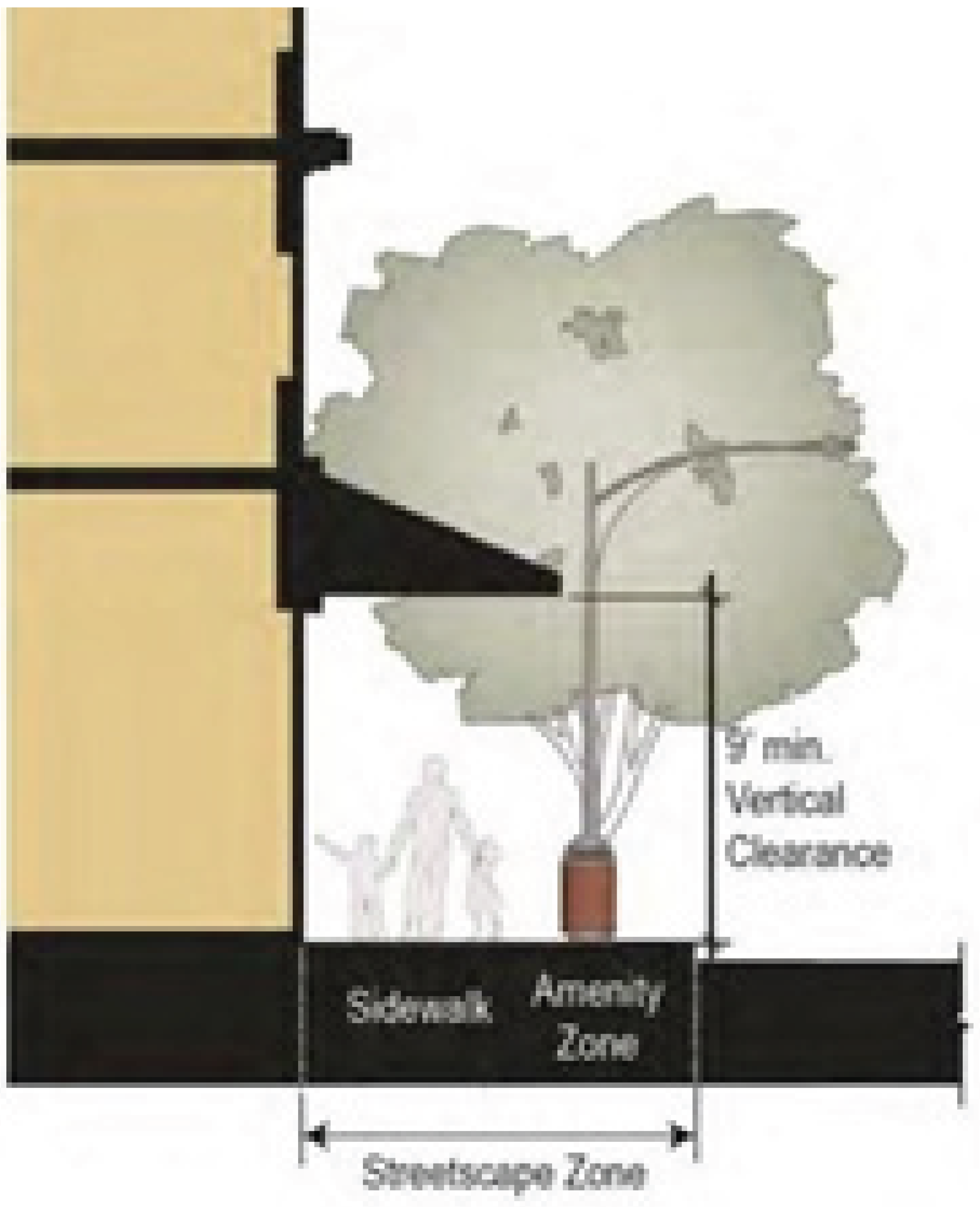
d.
Trails
1)
Trails shall be designed and constructed in accordance with the recommendations outlined in the most recently adopted Trails Master Plan.
2)
In the event of conflicts between the Trails Master Plan requirements and the sidewalk requirements herein, the Trails Master Plan shall prevail.
e.
Street and Pedestrian Lighting
1)
General
(a)
All types of exterior lighting shall comply with Volume 1, Chapter 9.I.9-3 of the Code of Ordinances and Subpart 3, Article VIII.7 of this UDC.
(b)
All lighting shall be directed downward.
(c)
Specific Standard for Administrative Modification: Up-lighting of building walls may be approved with an administrative modification if it is determined not to be detrimental or a nuisance to adjacent properties.
(c)
Lighting of signage, parking lots, and walkways is to be controlled or narrowly focused.
(d)
Placement and shielding of light sources shall be done to limit spillover lighting, visibility of fixtures, and visibility of light sources. Full cut-off metal fixtures are required.
(e)
Distracting, flashing, traveling or animated lighting shall not be permitted with the exception of lights associated with seasonal displays.
2)
Street Lighting - Pedestrian scaled street lighting shall be provided along all sidewalks and walkways as follows:
(a)
Maximum height of the light pole shall be 15 feet.
(b)
Streetlights shall be placed at 40 feet on center, approximately two (2) feet behind the curb line, if present.
(c)
The light standard selected shall be used consistently within an approved concept plan area.
3)
Exterior Building Lighting:
(a)
Exterior building lighting shall:
i.
Accentuate important architectural components of the building, such as entries, towers or roof elements, or repetitive columns or bays;
ii.
Provide indirect or direct lighting for adjoining sidewalks and open spaces; and
iii.
Be limited to decorative lighting; except that, standard pack lights may be attached on buildings within loading and service areas only.
(b)
Equipment and lighting fixtures shall be weather resistant.
(c)
Lighting fixtures shall include directional shields so as to prevent viewing the light source.
(d)
LED, halogen, metal halide, incandescent, and compact fluorescent lighting are permitted for exterior building lighting.
(e)
High-intensity discharge (HID) lights are prohibited.
(f)
Specific Standard for Administrative Modification - Neon lighting may be permitted subject to approval of an administrative modification.
4)
Landscape Lighting - Landscape lighting may be used to highlight landscape elements, building entries and other important architectural features and accent elements such as fountains and sculptures.
f.
Pedestrian Amenities
1)
Street furnishings shall be located fully within the amenity zone. In addition to street trees and street lighting, a property owner shall provide all of the required street furnishings and at least two (2) of the optional street furnishings, as outlined in this subsection. Street furnishings shall be required within the amenity zone along any primary pedestrian street/private vehicular route. Street furnishings shall be optional along all other streets. Street furnishings shall be maintained by the property owner.
2)
Required Street Furnishings
(a)
Trash receptacles - shall be (i) constructed of metal (steel or aluminum) with a black polyester powder coat finish and a side opening; (ii) approximately 25 inches in diameter and 34 inches high, with an approximately 28-gallon capacity; and (iii) placed at a frequency of two (2) per every 500 linear feet of block frontage.
(b)
Bike racks - shall be (i) at least one (1) bike rack accommodating a minimum of six (6) bicycles per 400 linear feet of block face; (ii) provided in an area of two (2) feet by six (6) feet for each bicycle parking space in order that a bicycle six (6) feet long can be securely held in place with its frame supported by the rack; and (iii) designed so that a bicycle may be placed in the rack in an upright manner that will not damage its wheels or components. The individual floor-mounted "inverted-U" style or "staple" style rack is recommended, but not required.
3)
Optional Street Furnishings
(a)
Planters - shall be (i) constructed of natural grey concrete/sandstone or beige/light tan precast concrete/cast stone, with a drainage hole for irrigation and shall be of a round tapered shape; (ii) circular (24"—42" in diameter) or square/rectangular (24"—48" wide) with a height between 24 and 36 inches; (iii) placed at a minimum of two (2) planters for every 200 linear feet of block frontage; and (iv) irrigated and maintained with landscaping in a healthy growing condition at all times.
(b)
Benches - shall (i) be constructed of metal (steel or aluminum) with a black polyester powder coat finish; (ii) have two-seat configurations, with no more than three (3) sets of seats; (iii) have seating surfaces of 16 to 18 inches high with a minimum depth of 16 inches for seats without backs and 14 inches for seats with backs; and (iv) be placed at a frequency of one (1) per every 40 linear feet of block frontage.
(c)
Bollards — shall (i) be constructed of metal (steel or aluminum) with a black polyester powder coat; (ii) have a maximum height of 36 inches and a maximum diameter of nine (9) inches; and (iii) be placed at a regular spacing of four (4) to six (6) feet on center.
(d)
Tree Grates - shall be (i) placed around the trees; (ii) manufactured of cast iron with a baked oil finish; and (iii) designed as a six (6) feet by six (6) feet square, with maximum one-half-inch square openings.
(e)
Specific Standard for Administrative Modification - Other optional street furnishings such as art, water features, water fountains, newspaper racks, etc., may be proposed and approved through administrative modifications.
6.
Screening of Service Areas, Loading Spaces, and Certain Other Improvements - These standards provide for the screening of certain improvements on the site.
a.
General Provisions - Loading spaces, outside storage, ground-mounted equipment, rooftop equipment, outdoor receptacles and utility equipment shall be screened in order to reduce the visual impact of these elements on adjoining properties and public rights-of-way. All screening walls shall be measured at the highest finished grade and designed by a professional civil engineer registered in the state. Construction and location details of the required screening shall be shown as part of the engineering site plan, when required. In areas where non-single-family development is proposed adjacent to established single-family residential dwellings and a screening wall is required, the screening wall shall be constructed prior to issuance of a building permit. The screening wall portion of the project costs may not be escrowed under the performance escrow policy as established in Article IX.3.
b.
Loading Spaces - Where off-street loading spaces for non-residential and mixed-use uses are required by Article VIII.2, such spaces shall be screened with one (1) or a combination of the following:
1)
A solid brick, stone, or decorative block masonry wall, of the same colors as the principal building on the site that is at least eight feet (8') in height;
2)
Solid metal gates; or
3)
Overhead doors.
c.
Outdoor Receptacles - Outdoor receptacles, as defined by Volume 1, Chapter 4.II.4-28 of the Code of Ordinances, shall be enclosed on three (3) sides by a screening wall, of earth tones or the same colors as the principal building on the site. The screening wall shall be a minimum of six (6) feet in height or equal to the height of the outdoor receptacle to be screened, whichever is higher. All other outdoor receptacle requirements in the Code of Ordinances also apply.
d.
Outside Storage — Outside storage which is allowed as an accessory use by this UDC shall be located behind a principal building and shall be screened from view of streets/private vehicular routes (excluding alleys) and adjacent properties. Materials, equipment, or commodities shall be stacked no higher than the height of the screening. Screening for outside storage shall be either of the following:
1)
Masonry walls (minimum six (6) feet tall, maximum eight (8) feet tall) of a natural color or the same color(s) as the principal building on the site; or
2)
Tubular steel fence (minimum six (6) feet tall, maximum eight (8) feet tall) with an irrigated, solid landscape screening consisting of evergreen variety trees and/or shrubs maintained at the same height as the steel fence.
e.
Roof-Mounted Equipment - All roof-mounted equipment, including fans, vents, and air conditioning units and cooling towers, shall be screened to eliminate the view of the equipment from any adjoining streets/private vehicular route (excluding alleys).
1)
The height of the screening shall be the height of the tallest element of the roof-mounted equipment. A parapet or architectural design element on a building may screen roof-mounted equipment; however, the parapet or architectural design element shall be limited to a maximum of six (6) feet in height. Roof-mounted equipment taller than six (6) feet shall be screened separately by a solid wall or metal panel/louver system.
2)
The outside of the screening shall be painted or finished in a similar color to the building facade, trim or roof surface and be architecturally integrated with the design of the building.
3)
The roof-mounted equipment and the inside of the screening shall be painted similar to the color of the roof surface in order to minimize visibility of the roof-mounted equipment and screening from overhead views from the adjacent properties.
f.
Ground-Mounted Equipment - All ground-mounted equipment shall be located behind the rear line of the building or along alleys without frontage along any public streets/private vehicular routes. If an alternative standard is approved allowing placement along a public street/private vehicular routes, the ground-mounted equipment shall be screened, and the screening shall be as tall as the equipment being screened and shall eliminate the view of the equipment from an adjoining public street/public vehicular route (excluding alleys). The screening may be a living screen or masonry walls matching the principal building material and color(s) on the site. All screening shall be architecturally integrated into the building facade along that public street/private vehicular route.
7.
Modified Standards Related to Acquisition of Property by Governmental Entity
a.
Applicability. This subsection applies to a property where frontage has been acquired by a governmental entity for public ROW purposes, when the acquisition is of such a degree that it does not otherwise affect buildings or structures, required setback lines, or vehicular circulation on the property.
b.
Landscape Standards. A ten-foot (10') landscape strip immediately adjacent to the public ROW acquisition area shall be provided between the public ROW and any parking lot. In this landscape strip, the property owner shall provide, install and maintain an irrigation system and canopy trees shall be placed at an average spacing of 40 feet, but in no case shall trees be placed greater than 50 feet apart. Tree preservation and landscape maintenance shall comply with the provisions of the LDR.
c.
Building and Envelope Standards—Off-Street Parking. If parking is reduced below the minimum parking requirements, additional parking spaces shall be added to bring the property into compliance or to replace the number of parking spaces lost due to the public ROW acquisition, whichever is less.
d.
Public Street/Private Vehicular Routes and Streetscape Standards—Streetscape Zone. Sidewalks shall be installed in accordance with Appendix F along the new frontage created after the acquisition of property by a governmental entity.
e.
Specific Standard for Administrative Modifications
1)
An administrative modification may be requested to allow the use of tree wells or islands in lieu of the acquisition landscape area or to allow the placement of required trees elsewhere on the property when, due to property constraints, strict compliance would unduly burden the property by necessitating redevelopment beyond the acquisition landscape area.
2)
Fee-In-Lieu Option: If city staff determines that the administrative modifications outlined in subsection e(1) above are not feasible, a proportional fee in lieu of the landscape standards set forth in subsection 7(b) above may be paid. The fee shall be calculated based on reasonable construction cost estimates provided by the property owner to the City. Payment shall be made prior to the issuance of any building permit or grading permit for the development. Any such fees collected shall be used for beautification of public property with the Corridor District.
C.
Transition Sub-District Regulations
1.
Purpose, Intent and Applicability
a.
Purpose and Intent - The vision for the transition sub-district is to create an appropriate transition of the development context from the core sub-districts to existing neighborhoods by:
1)
Maintaining motor vehicle-oriented uses while softening their frontages along major roadways with landscaping and facade improvements;
2)
Focusing on creating a more attractive frontage along the IH-35E highway corridor;
3)
Minimizing visual clutter with respect to driveways, signage, lack of landscaping, and older declining building facades; and
4)
Establishing a long-term redevelopment strategy to elevate property values and development context.
b.
Applicability — The standards in this Section, as illustrated in Exhibit VI.8.1-1 Applicability Matrix apply to any property within the transition sub-districts as shown on Exhibits VI.8.1-2 through Exhibit VI.8.1-5 IH-35E Corridor Overlay Maps.
2.
Building and Envelope Standards - These standards establish where the building should be placed on the property with respect to setback lines and built-to zones, the orientation of a building's facades, alignment of new streets and blocks, height of buildings, driveways and parking structures, and pedestrian accommodations on the site.
a.
Building Placement — Building setback lines shall be measured from the lot line and shall be provided in accordance with the requirements in Exhibit VI.8.1-11 Building Placement Standards.
b.
Building Orientation - If the building only has one (1) public street frontage on the IH-35E frontage road or arterial street, then the longer side of the building shall be placed parallel to the frontage road or arterial street. For all properties with frontage on the IH-35E frontage road or an arterial street, the front facade of the building shall be oriented to the higher category roadway.
c.
Blocks and Lots
1)
The maximum block perimeter shall be 2,400 feet.
2)
Specific Standard for Administrative Modification — An administrative modification may be requested to allow for a 20 percent increase to the maximum block perimeter requirement.
d.
Building Height
1)
The minimum building height of a building or parking structure shall be 20 feet.
2)
Minimum interior ground floor height shall be 12 feet (clear).
e.
Driveways
1)
Sharing and consolidation of driveways is encouraged in order to reduce the number of driveways to ensure smoother, more organized traffic movements and less disruption of pedestrian movement.
2)
Cross or joint access easements
(a)
Cross or joint access easements shall be required for all developments unless grade or topography make such cross or joint access unfeasible.
(b)
Cross or joint access easements shall be designated at the time of development in anticipation of future direct or indirect access.
3)
Except where otherwise required by the requirements in Article IX.2, driveways shall:
(a)
Be a minimum of 300 feet apart from any other driveway or public street intersection; and
(b)
Not interrupt the paving material of the sidewalk with another material. Sidewalk paving shall be continuous across the driveway.
f.
Pedestrian Circulation
1)
Sidewalks — Sidewalks for separate and continuous pedestrian circulation shall be provided along all streets.
2)
Walkways
(a)
Walkways shall be no less than four (4) feet in width.
(b)
Walkways shall be required:
i.
Between any existing or future sidewalk, trails, parks or greenways and primary entrances of all buildings on the site;
ii.
From building entrances to all on-site facilities, such as parking lots, bicycle facilities, and open space; and
iii.
To connect to any public transit stop that is adjacent to a site.
(c)
Walkways shall be distinguished from any driving surfaces through the use of colored pavements, bollards, grade changes, pavement markings or combination of treatments.
3)
Parking - Parking lots and parking structures shall clearly mark walkways between parked vehicles and primary entrances through the use of clearly marked stop signs, wayfinding/directional signage, lighting, and other similar measures.
g.
Off-Street Parking
1)
Off-street parking shall be provided in accordance with the following parking requirements:
(a)
Non-residential uses - One (1) space per 250 square feet of gross floor area with the following exceptions:
i.
The following uses shall follow the parking requirements Article VIII.I.4 Parking Requirements by Use: Commercial Amusement (Indoor); Religious Facility; Nightclub; Sports Field (Private), Stadium or Arena (Private); Commercial Amusement (outdoor); Hospital; Hotel, Motel or Inn; Extended Stay Hotel; and all Warehouse and Storage Uses.
ii.
Restaurants, Stand Alone: One (1) space per 100 square feet of gross floor area.
(b)
Residential uses (as designated in the Article VII.2) - Two (2) spaces per dwelling unit.
(c)
Mixed-Use - Use ratios above to calculate spaces required based on composition of the uses on the property.
2)
Specific Standard for Administrative Modification: An administrative modification may be requested to allow credit for available parking for public use or shared off-street parking on another lot within 1,000 feet of the subject property to apply towards off-street parking requirements for the subject property.
3)
Shared off-street parking shall be connected to businesses with walkways per Subsection f, above.
h.
On-Street Parking — On-street parking is encouraged, but not required, along all collector and local streets
3.
Architectural Standards - These standards apply to the exterior architectural treatments within the transition sub-districts. Exterior architectural treatments include building articulations, facade composition, exterior materials and colors, windows and doors, and awnings and canopies. These standards are intended to elevate the visual appeal of the corridor district through a common set of minimum building design standards.
a.
Building Articulation and Facades
1)
Facades visible from any street (except alleys), drive through lanes or open space shall demonstrate horizontal and vertical articulation with a facade rhythm between 20 to 40 feet. This rhythm may be expressed by any of the following:
(a)
A change in a building's horizontal or vertical plane;
(b)
Stepping portions of facades in and out;
(c)
Utilizing balconies, columns or pilasters that are distinctively set out from the facade; or
(d)
Changing types or colors of materials in combination with other techniques.
2)
All building facades along IH-35E frontage road or an arterial street shall have a minimum of 40 percent of the ground floor facade comprised of windows and doors.
3)
If windows and doors cannot be incorporated into the rear and side facades as required, changes of building materials and color shall be used to create the appearance of solids and voids.
b.
Building Entrances
1)
Primary entrances shall be emphasized architecturally with awnings, recessed entries, pilasters, etc.
2)
A minimum 12-foot-wide secondary walkway shall be required along each façade with primary entrances into businesses or tenant spaces, if such a facade faces a parking lot on the property. This secondary walkway shall incorporate shading elements along the entire applicable facade in the form of canopies, trees or a combination of the two (2). See Exhibit VI.8.1-12.
(a)
Canopies shall extend at least two (2) feet from the facade.
(b)
Trees within the secondary walkway shall be planted at an average spacing of 40 feet. Trees shall be selected from the canopy tree list in Appendix G and shall be a minimum of two and one-half-inch (2½") caliper when planted.
i.
Specific Standard for Administrative Modification - An administrative modification may be requested to use species not listed in Appendix G that are drought tolerant and adaptive.
EXHIBIT VI.8.1-12. SECONDARY WALKWAY REQUIREMENTS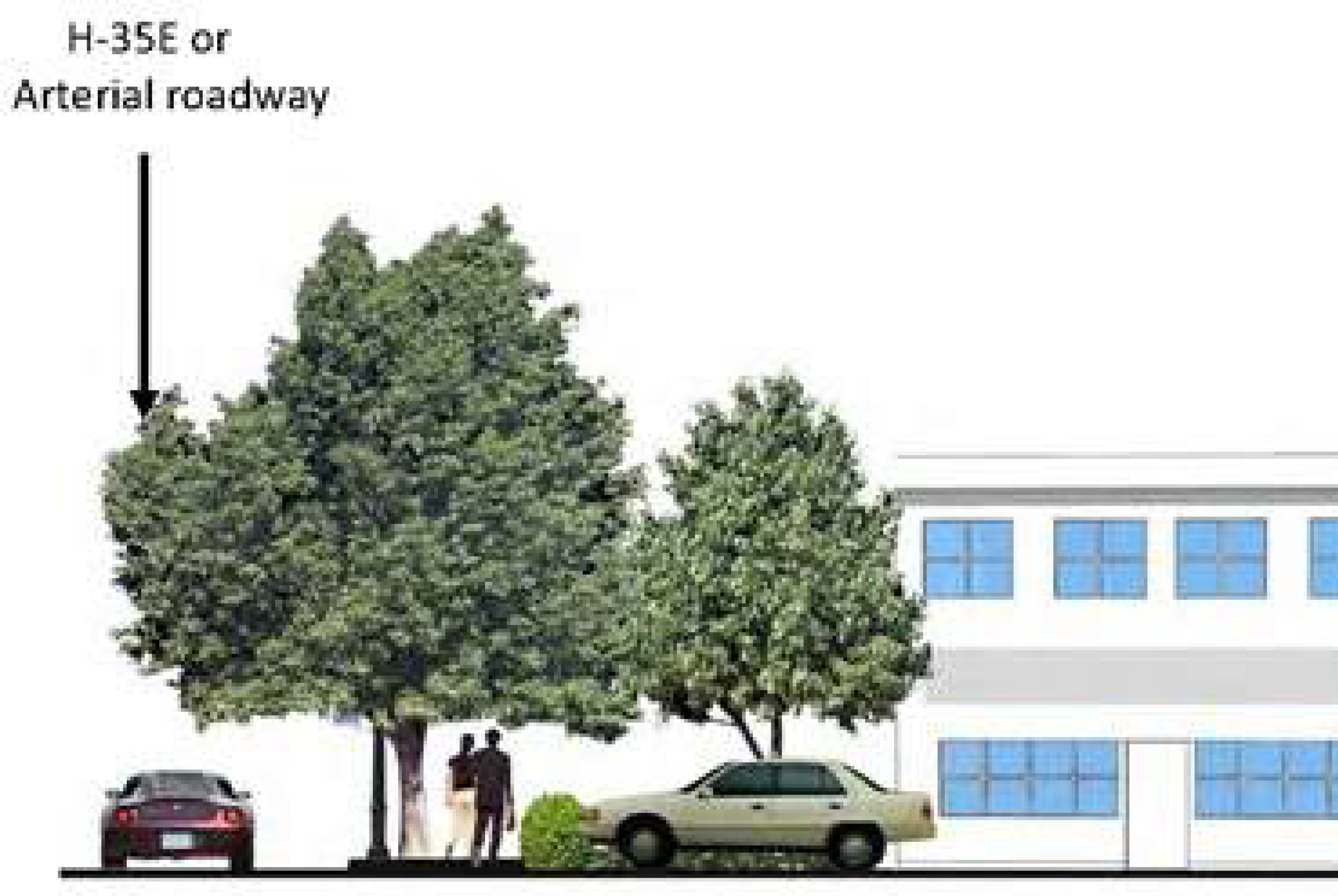
c.
Facade Materials and Colors
1)
Facade Materials - Each exterior wall (except window and door area) of a building or parking structure shall comply with the following material requirements:
(a)
Eighty percent (80%) or more of each exterior wall shall be comprised of brick or stone. The remainder of each exterior wall may be comprised of either three-step stucco (EIFS shall only be allowed at locations nine (9) feet above grade), architectural metal, cladding, or panels, or a combination thereof.
(b)
Accent materials may be comprised of pre-cast stone, metal, or other architectural materials.
2)
Industrial or manufacturing plants or office buildings that are 50,000 square feet or greater may use tilt wall and/or pre-cast concrete construction if comprised of a minimum of 15 percent brick or stone on facades facing a public street/private vehicular route and a minimum of ten percent (10%) brick or stone on all other facades.
3)
Colors - At least two (2) main colors, and no more than five (5) colors, shall be used on each elevation. Eighty percent (80%) of each elevation must utilize natural and/or earth tone colors, and each elevation must have 20 percent of another type of color. Buildings shall not have colors that are fluorescent or bright (e.g., yellow, green, purple) visible from any public place or public street. This shall include service doors, down spouts, utility boxes, panels and other similar features integral to the principal building. Variations of natural and/or earth tone brick or stone within the same color family shall be counted as one (1) color.
 |  |
| EXAMPLES OF ATTRACTIVE EXTERIOR ARCHITECTURAL TREATMENT. | |
 |  |
| BUILDING FACADE WITH NO MORE THAN TWO COLORS WITH 80 PERCENT NATURAL/EARTH TONE COLORS. | |
d.
Awnings and Canopies
1)
All facades with primary entrances into businesses or tenant spaces shall have an awning or canopy which extends beyond the face of the building over an adjacent walkway or sidewalk for a minimum of 50 percent of the building's applicable facade width.
2)
Awnings or canopies on any building shall be constructed of metal or canvas. Reflective materials for finishes are prohibited.
3)
Awnings or canopies shall be located as to provide shading for exterior windows and doors and shall cover the entire width of the window opening or groups of windows over which it is installed.
4)
Awnings and canopies may encroach over walkways up to 50 percent of the width of the walkway or sidewalk or five (5) feet, whichever is greater. They shall maintain a minimum nine-foot (9') vertical clearance as measured between the bottom of the awning/canopy and the finished grade of the walkway. In no case shall an awning or canopy encroach over a travel zone, driveway, or fire lane.
e.
Windows
1)
Window framing materials shall consist of anodized aluminum, vinyl, or steel.
2)
For required windows at the ground floor, a minimum 60 percent visible light transmittance shall be required.
(a)
Specific Standard and Findings for Administrative Modifications — Windows having a visible light transmittance less than 60 percent may be allowed with an administrative modification if staff finds that it is necessary in order for the windows to satisfy adopted building and energy code requirements related to energy efficiency.
3)
Mirrored glass is prohibited.
4)
No more than 50 percent of the windows on any facade may be reflective glass.
5)
Window screens are prohibited on ground floors which do not contain non-residential uses.
6)
Horizontal groupings of windows shall not exceed five (5) per grouping, where groupings are separated by a mullion, column, or wall section a minimum of seven (7) inches wide.
7)
Windows shall be a minimum of 30 inches from building corners, unless separated by a corner mullion or column twice the width used in grouping.
8)
For storefronts, the following are prohibited:
(a)
Single pane glass windows;
(b)
Black glass, opaque glass, and other "false window" techniques;
(c)
Doors with no opacity; and
(d)
Windows which do not permit unobstructed views into the building.
 |  |
| AWNINGS SHOULD FIT INTO THE STOREFRONT'S OVERALL ARCHITECTURE AND APPEARANCE. AWNINGS PROVIDE PROTECTION AND COVER FROM BRIGHT SUNLIGHT AND INCLEMENT WEATHER | |
 |
| WINDOWS SHOULD MAXIMIZE VISIBILITY TO THE STREET ON THE GROUND FLOOR. ENSURE THAT GROUND FLOORS WHICH DO NOT CONTAIN NON-RESIDENTIAL USES PROVIDE CLEAR UNOBSTRUCTED WINDOWS, FREE OF REFLECTIVE COATINGS. |
f.
Parking Structures
1)
Parking structures shall have a facade design with the same color(s) and materials as the principal building(s) that the parking structure serves. If the parking structure serves multiple buildings, it shall have a facade design with the same colors and materials as those buildings. Parking structures shall be located behind buildings to minimize their visibility from adjacent public streets.
2)
Where a parking structure is located adjacent to any public street:
(a)
Parking structure facades shall be designed with both vertical articulation at least every 40 linear feet and horizontal articulation aligning with horizontal elements along the block.
(b)
The parking structure shall be designed and screened in such a way that motor vehicles on all parking levels are hidden from view from all adjacent streets. Parking structure ramps shall not be visible from any street. Ramps shall not be located on the perimeter of the parking structure. Architectural screens shall be used to articulate the facade, hide parked motor vehicles, and shield the lighting inside the structure.
4.
Landscape Standards - These standards apply to trees and shrubs, hardscape and open space treatments, screening of certain uses, and parking lot landscaping. Landscaping can reduce the urban heat island effect, soften the built environment and contribute to pedestrian comfort in addition to increasing property values and rents.
a.
Trees and Plant Materials
1)
Plantings may be placed in natural groupings along public street frontages.
2)
Tree and plant materials shall be selected from the approved plant material list provided in Appendix G. No artificial trees, shrubs, ground covers, turf, or seasonal colors are permitted.
(a)
Specific Standard for Administrative Modification - An administrative modification may be requested to use species not listed in Appendix G that are drought tolerant and adaptive.
3)
Irrigation systems shall be installed within all landscaped areas including for any required trees in secondary walkways and maintained by the developer or property owner in accordance with current Parks and Recreation Department standards.
4)
Canopy trees shall be:
(a)
Planted within the amenity zone and secondary walkway frontages;
(b)
Planted at an average spacing of 40 feet on center along all street frontages; and
(c)
A minimum three-inch (3") caliper and at least ten (10) feet in height with a single trunk at planting.
5)
Tree preservation and landscape maintenance shall comply with the provisions in Subpart 3, Article VIII.2 and VIII.3.
6)
Parking lots with frontage on IH-35E shall provide a minimum 20-foot wide landscape strip between the public ROW and parking lot along that frontage. Canopy trees shall be placed at an average spacing of 40 feet. A living screen that is at least 24 inches in height at the time of planting must screen the view of parked vehicles from the public ROW.
(a)
Specific Standard for Administrative Modification - An administrative modification may be requested to allow any of the following (minimum height of 36 inches) as a parking lot screening:
(b)
Retaining wall;
(c)
Berming; or
(d)
A combination of retaining wall, berming, and/or living screen.
7)
Parking lots adjacent along all other public street frontage (except alleys) shall use one (1) or both of the following screening methods along that frontage:
(a)
A minimum five-foot (5') wide landscape strip between the sidewalk and parking lot, with a living screen that is at least 24 inches at the time of planting and screens the view of parked vehicles from the street (except alleys); or
(b)
A brick or stone wall a minimum of 36 inches in height installed between the sidewalk and the parking lot, placed such that a minimum two-foot (2') parking space overhang is provided on the parking lot side of the wall, and wheel stops are provided for the parking spaces.
8)
All parking lots shall include the following landscaping elements:
(a)
Parking lots of more than 120 spaces shall be organized into blocks of no more than 120 parking spaces in each block. Each block of parking spaces shall be separated from other blocks of parking spaces by a minimum of one (1) ten-foot (10') landscape island with plant cover and trees as required below, as well as walkways of at least four (4) feet in width leading to the primary facade of the principal building. Driveways between the blocks of parking spaces shall be provided.
(b)
Landscape islands shall be a minimum of ten (10) feet in width with a minimum of 50 percent plant cover. A landscape island shall be required on the end of each row of parking spaces and between each block of parking spaces.
(c)
Each parking lot shall include canopy trees at a ratio of one (1) tree per eight (8) parking spaces.
b.
Hardscaping
1)
All hardscaping materials shall be of earth tones or a color found on the principal building.
2)
The paving on walkways and secondary walkways shall be comprised of the following materials or a combination thereof:
(a)
Concrete;
(b)
Pavers; or
(c)
Stamped concrete or asphalt.
c.
Open Spaces
1)
Open spaces shall be provided on developments that incorporate five (5) acres or more.
(a)
The minimum set aside for open space shall be five percent (5%) of the development.
(b)
If the open space provided is publicly accessible, it shall be highly visible from the public ROW and accessible to the general public. If the open space provided is not publicly accessible, it shall be centrally located and easily accessible to all individuals it is expected to serve.
2)
Developments that incorporate less than five (5) acres may incorporate open spaces for the use of employees or the public.
3)
Private open spaces may be fenced or otherwise controlled for secure access using wrought iron, masonry, or comparable decorative fencing, or vegetative screening.
4)
Parking lots or spaces, driveways, or rear yards may not be used as publicly accessible open space, but publicly accessible open space may include front and side yards provided that they are integrated into the overall design of the project. Publicly accessible open space shall have public or private street frontage for a minimum of 25 percent of the perimeter of the open space. Retention and detention areas that are incorporated into the overall site design with appropriate amenities may be credited towards 50 percent of the open space requirement at the discretion of the Planning Director.
5)
A combination of landscape and hardscape materials shall be used in the design of open space. Open space shall be landscaped with trees, as well as turf, shrubs, or groundcover. All plant materials shall be permanently maintained and irrigated and shall be selected from Appendix G.
(a)
Specific Standard for Administrative Modification - An administrative modification may be requested to use species not listed in Appendix G that are drought tolerant and adaptive.
5.
Street and Streetscape Standards - These standards provide for design of new and improved streets as well as the treatment of streetscape zones and street medians, if any, including the placement or installation of trees, sidewalks, street furnishings, lighting, and other amenities for pedestrians.
a.
General Standards: Streets shall be built or improved in accordance with this Section, Appendix F, and the construction standards of the City. The City shall have the ultimate approval authority on streetscapes. Unless otherwise provided herein, all public right-of-way dedication and construction for streets (existing and new) shall be in accordance with Article IX.2.3.
1)
Design Standards - Streets shall include a travel zoned and a streetscape zone in accordance with Appendix F.
2)
Specific Finding for Administrative Modification - The design standards in Appendix F may be adjusted through an administrative modification if staff finds that such an adjustment is necessary in order to fit existing and future utility locations, existing landscaping or the Lewisville Fire Code.
b.
New or Existing Streets
1)
Existing Streets - The property owner shall, for the length of public street frontage of the property, dedicate to the City sufficient public right-of-way to accommodate the required public street and streetscape zone, in accordance with Article IX.2.3 and any other applicable city ordinances.
2)
New Streets
(a)
Any new street shall:
i.
Meet the block perimeter maximums established in this Section;
ii.
Continue any established street and block pattern on adjoining sites developed or redeveloped under this Section; and
iii.
Be designed in accordance with applicable street design standards in Appendix F.
(b)
The property owner shall construct the entire public street including travel lanes, on-street parking, amenity zones improvements and sidewalks. Half public streets may be provided where necessary to comply with Article IX.2.3.
c.
Streetscape Zone
1)
The streetscape zone along streets shall be constructed as provided in Appendix F.
2)
Sidewalks shall be located within the streetscape zone and shall comply with the requirements as outlined in this Section and Appendix F.
(a)
The sidewalk must be unobstructed by any permanent or nonpermanent element for a minimum height of nine (9) feet.
(b)
Accessibility is required to connect sidewalks on adjacent sites.
(c)
Sidewalks shall be constructed of concrete or pavers and may be embellished with the same colors and patterns found on the adjacent facade(s).
3)
Enhanced sidewalks shall be constructed where recommended and in accordance with the enhanced sidewalk standards in the Trails Master Plan.
d.
Trails
1)
Trails shall be designed and constructed in accordance with the recommendations outlined in the most recently adopted Trails Master Plan.
2)
In the event of conflicts between the Trails Master Plan requirements and the sidewalk requirements herein, the Trails Master Plan shall prevail.
e.
Street and Pedestrian Lighting
1)
General:
(a)
All types of exterior lighting shall comply with Volume 1, Chapter 9.I.9-3 of the Code of Ordinances and Article VIII.7 of this UDC.
(b)
All lighting shall be directed downward.
(c)
Specific Standard for Administrative Modification - Up-lighting of building walls may be approved with an administrative modification.
(c)
Lighting of signage, parking lots, sidewalks and walkways is to be controlled or narrowly focused.
(d)
Placement and shielding of light sources shall be done to limit spillover lighting, visibility of fixtures, and visibility of light sources. Full cut-off metal fixtures are required.
(e)
Distracting, flashing, traveling, or animated lighting shall not be permitted with the exception of lights associated with seasonal displays.
2)
Street Lighting - Pedestrian scaled street lighting shall be provided along all secondary walkways, walkways, and sidewalks as follows:
(a)
Maximum height of the light pole shall be 15 feet.
(b)
Street lights shall be placed at 40 feet on center, approximately two (2) feet behind the curb line, if present.
(c)
The light standard selected shall be used consistently within an approved concept plan area and compatible with the design of the proposed street furnishings, or buildings.
3)
Exterior Building Lighting:
(a)
Exterior building lighting shall:
i.
Accentuate important architectural components of the building, such as entries, towers or roof elements, or repetitive columns or bays.
ii.
Provide indirect or direct lighting for adjoining sidewalks and open spaces.
iii.
Be limited to decorative lighting; except that standard pack lights may not be attached on buildings within loading and service areas only.
(b)
Equipment and lighting fixtures shall be weather resistant.
(c)
Lighting fixtures shall include directional shields so as to prevent viewing the light source.
(d)
LED, halogen, metal halide, incandescent, and compact fluorescent lighting are permitted for exterior building lighting.
(e)
High-intensity discharge (HID) lights are prohibited.
(f)
Specific Standard for Administrative Modification - Neon lighting may be permitted subject to approval of an administrative modification.
4)
Primary Entrance Lighting - Primary entrances shall be externally lit. Standard security lighting, including but not limited to wall-packs, shall only be allowed in service areas and loading paces.
5)
Landscape Lighting - Landscape lighting may be used to highlight landscape elements, building entries, and other important architectural features and accent elements such as fountains and sculptures.
f.
Pedestrian Amenities
1)
General:
(a)
A minimum of two (2) street furnishings shall be located fully within the secondary walkway providing at least four (4) feet of clear area for pedestrian movement. The street furnishings shall be shown on an approved engineering site plan, when required, and landscape plan, when required, prior to installation.
(b)
Street furnishings and any adjacent area required for the functional use of the street furnishings shall not be within the clear area for pedestrian movement required by this Section.
(c)
All street furnishings shall be affixed to the ground so as to prevent removal or tipping.
2)
Street Furnishings List:
(a)
Trash receptacles — shall be (i) constructed of metal (steel or aluminum) with a black polyester powder coat finish and a side opening; (ii) approximately 25 inches in diameter and 34 inches high, with an approximately 28 gallon capacity; and (iii) placed at a frequency of two (2) per every 500 linear feet of block frontage.
(b)
Bike racks — shall be (1) at least one (1) bike rack accommodating a minimum of six (6) bicycles per 400 linear feet of block face; (ii) be provided in an area of two (2) feet by six (6) feet for each bicycle parking space in order that a bicycle six (6) feet long can be securely held in place with its frame supported by the rack; and (iii) designed so that a bicycle must be able to be placed in the rack in an upright manner that will not damage its wheels or components. The individual floor-mounted "inverted-U" style or "staple" style rack is recommended, but not required.
(c)
Planters — shall be (i) constructed of natural grey concrete/sandstone or beige/light tan precast concrete/cast stone, with a drainage hole for irrigation and shall be of a round tapered shape; (ii) circular (24"—42" in diameter) or square/rectangular (24"—48" wide) with a height between 24 and 36 inches; (iii) placed at a minimum of two (2) planters for every 200 linear feet of block frontage; and (iv) irrigated and maintained with landscaping in a healthy growing condition at all times.
(d)
Benches — shall be (i) constructed of metal (steel or aluminum) with a black polyester powder coat finish; (ii) have two-seat configurations, with no more than three (3) sets of seats; (iii) have seating surfaces of 16 to 18 inches high with a minimum depth of 16 inches for seats without backs and 14 inches for seats with backs; and (iv) placed at a frequency of one (1) per every 40 linear feet of block frontage.
(e)
Bollards — shall be (i) constructed of metal (steel or aluminum) with a black polyester powder coat; (ii) have a maximum height of 36 inches and a maximum diameter of nine (9) inches; and (iii) placed at a regular spacing of four (4) to six (6) feet on center.
(f)
Tree grates — shall be (i) placed around the trees; (ii) manufactured of cast iron with a baked oil finish; and (iii) designed as a six (6) feet by six (6) feet square, with maximum one-half-inch (½") square openings.
(g)
Specific Standard for Administrative Modification - Other street furnishings such as art, water features, water fountains, newspaper racks, etc., may be proposed and approved through administrative modifications.
6.
Screening of Service Areas, Loading Spaces, Utilities and Between Uses - These standards provide for the screening of certain improvements on the site.
a.
General Provisions - Loading spaces, outside storage, ground-mounted equipment, roof-mounted equipment, outdoor receptacles and utility equipment shall be screened in order to reduce the visual impact of these elements on adjoining properties and public rights-of-way. All screening walls shall be measured at the highest finished grade and designed by a professional civil engineer registered in the state. Construction and location details of the required screening shall be shown as part of the engineering site plan, when required. In areas where non-single-family development is proposed adjacent to established single-family residential dwellings and a screening wall is required, the screening wall shall be constructed prior to issuance of a building permit. The screening wall portion of the project costs may not be escrowed under the performance escrow policy of Article IX.3.
b.
Loading Spaces - Where off-street loading spaces for non-residential uses and mixed-use are required by Article VIII.2.6 such spaces shall be screened with one or a combination of the following:
1)
A solid brick, stone, or decorative block masonry wall, of the same color(s) as the principal building on the site that is at least eight (8) feet in height;
2)
Solid metal gates; or
3)
Overhead doors.
c.
Outdoor Receptacles - Outdoor receptacles, as defined in Volume 1, Chapter 4.II.4-28 of the Code of Ordinances, shall be enclosed on three (3) sides by a screening wall, of earth tones or the same color(s) as the principal building on the site. The screening wall shall be a minimum of six (6) feet in height or equal to the height of the outdoor receptacle to be screened, whichever is higher. All other outdoor receptacle requirements in the Code of Ordinances also apply.
d.
Outside Storage - Outside storage which is allowed as an accessory use by Article VII.2.4 shall be located behind a principal building and shall be screened from view of streets (excluding alleys) and adjacent properties. Materials, equipment or commodities shall be stacked no higher than the height of the screening. Screening for outside storage shall be either of the following:
1)
Masonry walls (minimum six (6) feet tall, maximum eight (8) feet tall) of the same color(s) as the principal building on the site; or
2)
Tubular steel fence (minimum six (6) feet tall, maximum eight (8) feet tall) with an irrigated, solid landscape screening consisting of evergreen variety trees and/or shrubs maintained at the same height as the steel fence.
e.
Roof-Mounted Equipment - All roof-mounted equipment, including fans, vents, and air conditioning units and cooling towers, shall be screened to eliminate the view of the equipment from any adjoining public streets (excluding alleys).
1)
The height of the screening shall be the height of the tallest element of the roof-mounted equipment. A parapet or architectural design element on a building may screen roof-mounted equipment; however, the parapet or architectural design element shall be limited to maximum of six (6) feet in height. Roof-mounted equipment taller than six (6) feet shall be screened separately by a solid wall or metal panel/louver system.
2)
The outside of the screening shall be painted or finished in a similar color to the building facade, trim or roof surface and be architecturally integrated with the design of the building.
3)
The roof-mounted equipment and the inside of the screening shall be painted similar to the color of the roof surface in order to minimize visibility of the equipment and screening from overhead views from the adjacent properties.
f.
Ground-Mounted Equipment - All ground-mounted equipment shall be located behind the rear line of the building or along alleys without frontage along any public streets. If an alternative standard is approved allowing placement along a public street, the ground-mounted equipment shall be screened, and the screening shall be as tall as the equipment being screened and shall eliminate the view of the equipment from any adjoining public streets (excluding alleys). The screening may be a living screen or masonry walls matching the principal building material and color(s) on the site. All screening shall be architecturally integrated into the building facade along that street.
7.
Modified Standards related to Acquisition of Property by Governmental Entity
a.
Applicability - This subsection applies to a property where frontage has been acquired by a governmental entity for public ROW purposes, when the acquisition is of such a degree that it does not otherwise affect buildings or structures, required setback lines, or vehicular circulation on the property.
b.
Landscape Standards - A 20-foot landscape strip immediately adjacent to the public ROW acquisition area shall be provided between the public ROW and any parking lot ("acquisition landscape area"). In this landscape strip, the property owner shall provide, install and maintain an irrigation system and shall plant canopy trees shall be placed at an average spacing of 40 feet, but in no case shall trees be placed greater than 50 feet apart. Tree preservation and landscape maintenance shall comply with the provisions of the LDR.
c.
Building and Envelope Standards - Off-Street Parking. If parking is reduced below the minimum parking requirements, additional parking spaces shall be added to bring the property into compliance or to replace the number of parking spaces lost due to the public ROW acquisition, whichever is less.
d.
Public Street and Streetscaping Standards - Streetscape Zone. Sidewalks shall be installed in accordance with Appendix F along the new frontage created after the acquisition of property by a governmental entity.
e.
Specific Standard for Administrative Modifications
1)
An administrative modification may be requested to allow the use of tree wells or islands in lieu of the acquisition landscape area or to allow the placement of required trees elsewhere on the property when, due to property constraints, strict compliance would unduly burden the property by necessitating redevelopment beyond the acquisition landscape area.
2)
Fee-In-Lieu Option: If city staff determines that the administrative modifications outlined in subsection e(1) above are not feasible, a proportional fee in lieu of the landscape standards set forth in Subsection 7.b, above may be paid. The fee shall be calculated based on reasonable construction cost estimates provided by the property owner to the City. Payment shall be made prior to the issuance of any building permit or grading permit for the development. Any such fees collected shall be used for beautification of public property with the Corridor District.
Section VI.8.2. - Old Town Center Design District
A.
General Provisions
1.
Purpose - The Old Town Center Design District overlay district is intended to preserve and continue the special historic, architectural and aesthetic features of Lewisville's historic downtown, and to ensure that new development, redevelopment and alterations to existing buildings and structures are compatible with the area's unique character.
2.
Geographic Limits - The geographic limits of the Old Town Center Design District overlay district are as generally shown in Exhibit V.8.2-1 and are more specifically described as:
All land located within the area bounded by the following: Beginning at the southeast corner of the intersection of West Church Street and North Charles Street, running easterly along the southern right-of-way of Church Street to the southwest corner of the intersection of East Church Street and North Kealy Street, then southerly along the western right-of-way of Kealy Street to the north property line of Lot 1 A, Block A of the Christian Community Action Addition, then westerly along the north property line of Lot 1 A to the northeast corner of Lot 1 R, Block A of the MHJ Sonic Addition, then westerly along the north property line of Lot 1 R to the easterly right-of-way of South Mill Street, continuing westerly across South Mill Street to the western right-of-way of South Mill Street, then southerly to the northwest corner of Elm Street and South Mill Street, then westerly along the northern right-of-way of Elm Street to the northeast corner of the intersection of Elm Street and South Charles Street, then northerly along the eastern right-of-way of Charles Street to the southeast corner of the intersection of North Charles Street and West Church Street.
3.
Applicability - The standards identified in this Section shall apply to all properties in the Old Town Center Design District overlay district.
4.
Relationship to Other Provisions of This UDC
a.
All provisions and requirements of this UDC apply to development within the Old Town Center Design District overlay district, except where those provisions and requirements conflict with this Section, in which case this Section shall control.
b.
Standards, requirements, and processes that are not addressed in this Section shall be governed by this UDC.
c.
Nothing in this Section shall change the underlying zoning designation of any property within the Old Town Center Design District overlay district.
d.
Exemptions - The following provisions of this UDC do not apply to properties within the boundaries of the Old Town Center Design District overlay district:
1)
All parking requirements in Article VIII.1;
2)
All landscaping requirements in Article VIII.3;
3)
All tree preservation requirements in Article VIII.4;
EXHIBIT VI.8.2-1 OLD TOWN CENTER BOUNDARIES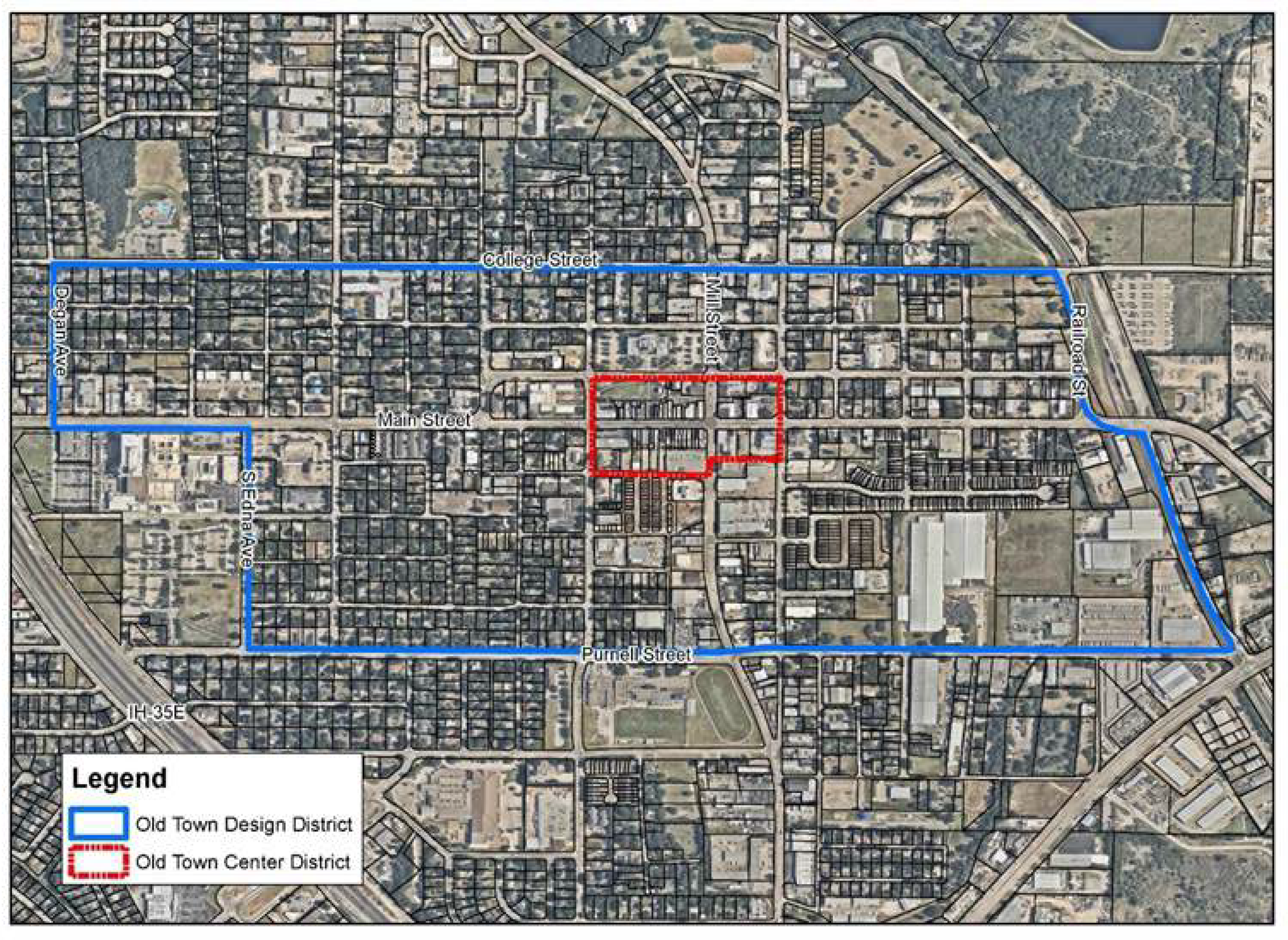
B.
Letter of Design Approval
1.
Purpose - The purpose of the Letter of Design Approval is to ensure changes to physical structures in the Old Town Center Design District are compatible with the design guidelines, the historic context of the area and existing buildings and structures.
2.
Applicability - A letter of design approval issued by the Old Town Design Review Committee is required for the following within the Old Town Center Design District overlay district:
a.
Construction of a new building or structure requiring a building permit; excluded signs or solar panels not seen from a public ROW.
b.
Expansion of an existing building or structure requiring a building permit, excluding permits for fences, accessory solar energy systems and accessory wind energy conversion systems;
c.
Renovation, remodeling or other alteration of the exterior of an existing building or structure requiring a building permit;
d.
The installation of new signs and the alteration, renovation, or rehabilitation of an existing sign or signs, where required by this Section; and
e.
The installation of outdoor murals, decorative clocks, or public street/sidewalk lighting which will be visible from public rights-of-way.
3.
Process - The Planning Director may establish procedures, forms, and standards with regard to the content, format, graphics, checklists, and number of copies of information listed required for an application for a letter of design approval, subject to the following:
a.
Pre-Development Meeting and Submittals - A pre-development meeting is recommended prior to the submission of an application for a letter of design approval. The applicant shall submit the following information at a time set by the Planning Director in advance of the pre-development meeting:
1)
Footprints of all existing structures;
2)
Proposed footprints of all new structures;
3)
Building setback lines;
4)
Location of parking lots, parking spaces, and parking structures;
5)
Location of landscape strips;
6)
Building elevations for all sides of the structure, building or buildings; and
7)
Photographs of adjacent properties.
b.
Letter of Design Approval Application Requirements - Applications for a letter of design approval shall include the following:
1)
Concept plan (drawn to scale);
2)
Proposed structure or building elevations (drawn to scale);
3)
Photograph of existing conditions;
4)
Product literature or specifications for proposed materials; and
5)
Material samples and color samples for Proposed materials and paint.
c.
Approval Authority - The Old Town Design Review Committee shall have the authority prescribed in Article III.1.5 to issue letters of design approval within the Old Town Center Design District overlay district.
1)
The Old Town Design Review Committee shall consider compliance with the requirements of this Section.
2)
The Old Town Design Review Committee may consider the compatibility of the proposed design with the architectural features and historic character of the Old Town Center Design District overlay district, as generally shown in the Old Town Design Guidelines, set forth in Appendix I;
ci.
Effect of Approval - Upon issuance of a letter of design approval, the applicant may proceed with engineering site plan, where required, and any applicable building permits. For projects which do not require additional plans or permits, issuance of a letter of design approval authorizes the applicant to proceed with the project.
cii.
Appeals - The Old Town Design Review Committee's denial of an application of a letter of design approval may be appealed to the City Council. The applicant must submit an appeal request in writing to the Planning Director within ten (10) calendar days from the date of the denial notification.
C.
Design and Development Standards
1.
Applicability - These Design and Development Standards shall apply to all new development and redevelopment within the Old Town Design District.
2.
Screening
a.
Screening Between Different Uses
1)
Screening is required when any portion of a parking lot that serves a non-residential or multi-family use or an area containing trash receptacles is adjacent to a single-family detached, duplex, or single-family attached residential use or a multi-family use.
2)
The screening shall be constructed and maintained by the property owner of the parking lot serving the non-residential or multi-family use or area containing trash receptacles.
3)
Required screening shall consist of:
(a)
A solid wood or masonry wall not less than six (6) feet in height as measured at the highest finished grade; or
(b)
A screening consisting of shrubs which are a minimum of five (5) gallon size at the time of planting and chosen from the list of approved shrubs found in Exhibit VIII.3.3-3.
b.
Screening Along Rights-of-Way - Where parking lots and areas containing trash receptacles are adjacent to a right-or-way, a living screening meeting the requirements in subsection 2.a(3)(b) above shall be installed. The screening must extend along the entire street frontage of the parking lot or receptacle area, exclusive of driveways.
c.
Screening of Roof-Mounted Equipment and Communication Antennas - A parapet wall or similar feature shall be used to screen roof-mounted equipment and communications antennas above the roofline. The screening shall consist of materials that are the same or similar to those used in the primary facade of the building and shall be constructed to a height that screens the roof-mounted equipment and communications antennas from a viewpoint at ground level within 60 feet of the building.
3.
Public Street Design - As public streets are built or improved, the required right-of-way width of certain streets within the Old Town Center Design District overlay district shall be as follows:
4.
Sidewalks - As sidewalks are built or improved, the sidewalk widths within the Old Town Center Design District overlay district shall be as follows:
a.
Sidewalk width may be reduced as an Administrative Modification in certain areas to accommodate landscaping, street furnishings, or existing infrastructure provided that at least six (6) feet of clear area for pedestrian movement remains.
5.
Off Street Parking - These standards apply to Parking Spaces, Parking Lots and Parking Garages:
a.
No off-site parking is required in the Old Town Center Design District overlay district.
b.
Entrances from public streets to parking lots or parking garages serving non-residential or multi-family uses shall be limited to maximum of 25 feet in width.
6.
Landscaping - No landscaping is required in the Old Town Center Design District overlay district.
7.
Signage - The standards for signs located within the Old Town Center Design District overlay district can be found herein. For requirements not referenced in this Article, the standards listed in Volume 1, Chapter 11 Signs shall apply.
a.
Applicability - All new signs and the alteration, renovation or rehabilitation of an existing sign or signs require a Letter of Design Approval with the exception of the following sign types. Although no Letter of Design Approval is required these signs shall comply with the time, place and manner requirements in herein and in Volume 1, Chapter 11 Signs. In the event of a conflict the standard herein shall apply.
1)
Temporary banner signs:
2)
Commercial real estate signs;
3)
Construction signs;
4)
Flags;
5)
Governmental signs;
6)
Ideological sign;
7)
Kiosk signs which comply with the approved Kiosk Sign Program and associated agreement;
8)
Official traffic signs, signals and devices;
9)
Political signs;
10)
Real estate signs which are on properties or premises for sale, rent or lease;
11)
Vehicle signage; and
12)
Zoning change signs
b.
Standards for Review - The Old Town Design Review Committee shall use the requirements contained within this Section in addition to the Old Town Architectural Design Standards in making its decision on a Letter of Design Approval for Signage. The request shall not be approved if the sign;
1)
Is prohibited by, or conflicts with the requirements specified in this Section or in Volume 1, Chapter 11 of the Code of Ordinances;
2)
Is not allowed in the Old Town Center Design overlay district;
3)
Conflicts with the building code or other city ordinances;
4)
May be injurious or detrimental to neighboring properties; or
5)
May threaten the public health, safety or welfare.
c.
Requests for Modifications - The OTDRC may approve applications for a letter of design approval and requests for modifications in one (1) or more of the characteristics:
1)
Sign area;
2)
Sign height;
3)
Sign width;
4)
Sign material;
5)
Number of signs;
6)
Lighting type;
7)
Location on building or premises.
d.
Sign Materials
1)
Allowed Materials - Signs may be composed of various materials as follows:
(a)
All permanent signs shall be made of metal, masonry, stone, wood, molded polyurethane or glass. Glass or other transparent materials shall not exceed 12 square feet in any one section.
(b)
Low-profile monument signs may be constructed of metal, masonry, wood or cementitious fiberboard.
(c)
Non-structural trim may be composed of wood, metal or any combination thereof.
(d)
Signs attached to the surface of fabric awnings may be allowed in compliance with the building code.
2)
Prohibited Materials — Plastic shall not be used as a sign material.
3)
Restrictions on Combustible Materials.
(a)
Electric signs, wall signs, projecting signs and awning, canopy and/or marquee signs shall be of noncombustible materials.
(b)
Signs erected within five (5) feet of an exterior wall in which there are openings withing the area of the sign shall be constructed of noncombustible material.
(c)
Non-electric wall signs may be constructed of combustible materials if affixed to walls allowed to be of unprotected combustible construction.
e.
Sign Design Requirements - Signs shall comply with the following design and illumination requirements:
1)
Color Palette - Only colors certified by the National Trust for Historic Preservation or those used as part of the business brand identity shall be allowed for use on signage. Fluorescent colors are prohibited.
2)
Illumination - The light sources illuminating a sign shall be shaded, shielded or directed away from pedestrians, streets and adjacent properties, and are limited to the following:
(a)
Indirect Lighting - Indirect lighting shall be directed at the sign and not produce glare or light overspill beyond the boundaries of the property.
(b)
Neon Lighting - Exposed neon lighting shall only be used as lettering or perimeter trim and limited to two (2) charged tubes.
f.
Number of Allowed Signs
1)
For each business or premises — one (1) low profile/monument sign or single-tenant wall sign.
2)
More than one (1) sign is allowed per tenant or building for the following:
(a)
Window sign;
(b)
Temporary window sign;
(c)
Vertical pole banner sign;
(d)
Awning, canopy or marquee sign;
(e)
Projecting sign;
(f)
Directional sign; and;
(g)
Building marker or historical designation tablet.
3)
For each tenant, one (1) of each type of the following signs:
(a)
Restaurant menu case;
(b)
Sandwich board;
(c)
Multi-tenant wall sign;
(d)
Banner sign; and
(e)
Hanging sign.
g.
Measurement of Signs
1)
Sign Height - The height of all freestanding signs shall be measured from the top edge of the sign and/or support structure to the average finished grade of the ground below the sign and/or support structure. If a sign is located on a mound, berm, valley or other similar area, the height of the sign shall be measured from the grade of the nearest pavement or top of pavement curb, whichever is more restrictive. For projecting signs, the height shall be measured by the display surface and shall not include structural supports integral to the sign, except allowed by this Section.
(a)
Height Above Travel Paths - The lowest point of any sign which extends over an area intended for vehicular use shall not be less than 14 feet above the finished grade. The lowest point of any sign above a sidewalk or other path used by pedestrians, shall not be less than seven (7) feet above finished grade.
h.
Required Clearances and Projection Limits
1)
General Provisions - Clearances required by this Section shall be measured as the shortest distance between the leading edge of the sign and the object or surface requiring clearance and represent the minimum required standards. The Building Official shall have the authority to increase these standards as deemed necessary for safety purposes.
2)
Sign Projection - No sign shall project above the highest point of the building on which it is placed. The highest point of the building excludes any rooftop mechanical structures, chimneys, elevator shafts, ventilators, or other such appurtenances. Additionally, no sign shall project closer than one (1) foot to the back of a street curb.
3)
Clearance of Conductors - Signs shall conform to the clearance and projects requirements for conductors as listed in Volume 1, Chapter 11 of the Code of Ordinances.
4)
Other Clearance Requirements - No sign or sign structure shall be erected in such a manner that any portion of its surface or supports will interfere in any way with the free use of a fire escape, exit, standpipe or fire department connection. No sign shall obstruct any opening to such an extent that light or ventilation is reduced to a point below that required by the building code.
5)
Setbacks shall be as required in subsections h. and i. below and are measured from the leading edge of the sign to the property line.
i.
Permissible Signs Which Do Not Require a Permit - In addition to the permit exempt signs listed in the Sign Ordinance, Volume I, Chapter 11, of the Code of Ordinances with the exception of window signs, building markers or historic designation tablets are exempt from permit requirements but must comply with the regulations listed herein.
1)
Building Markers or Historic Designation Tablets
| ILLUSTRATIONS | EXAMPLES | |
|---|---|---|
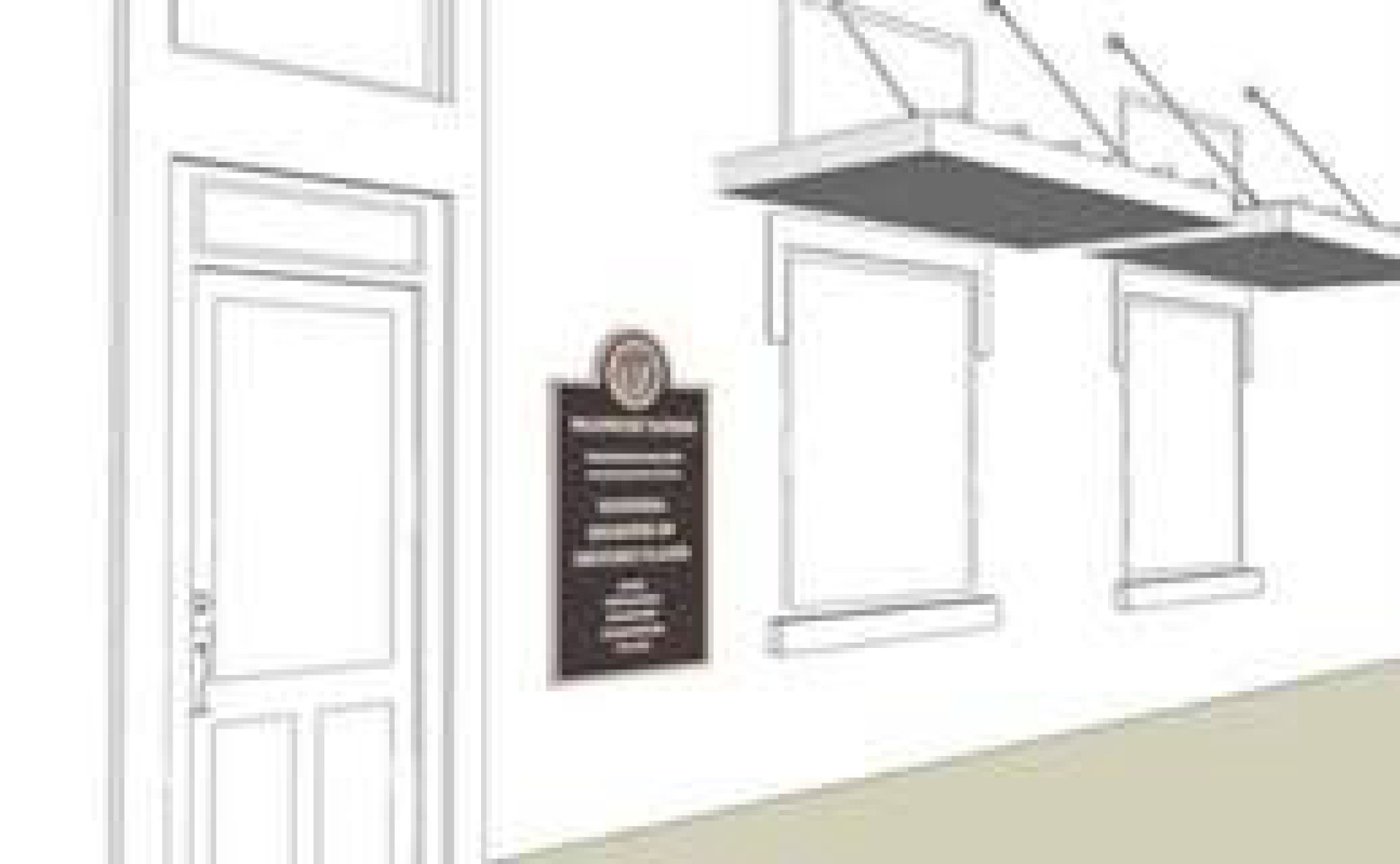 |  |  |
 |  | |
2)
Property Protection Signs
| ILLUSTRATIONS | EXAMPLES | |
|---|---|---|
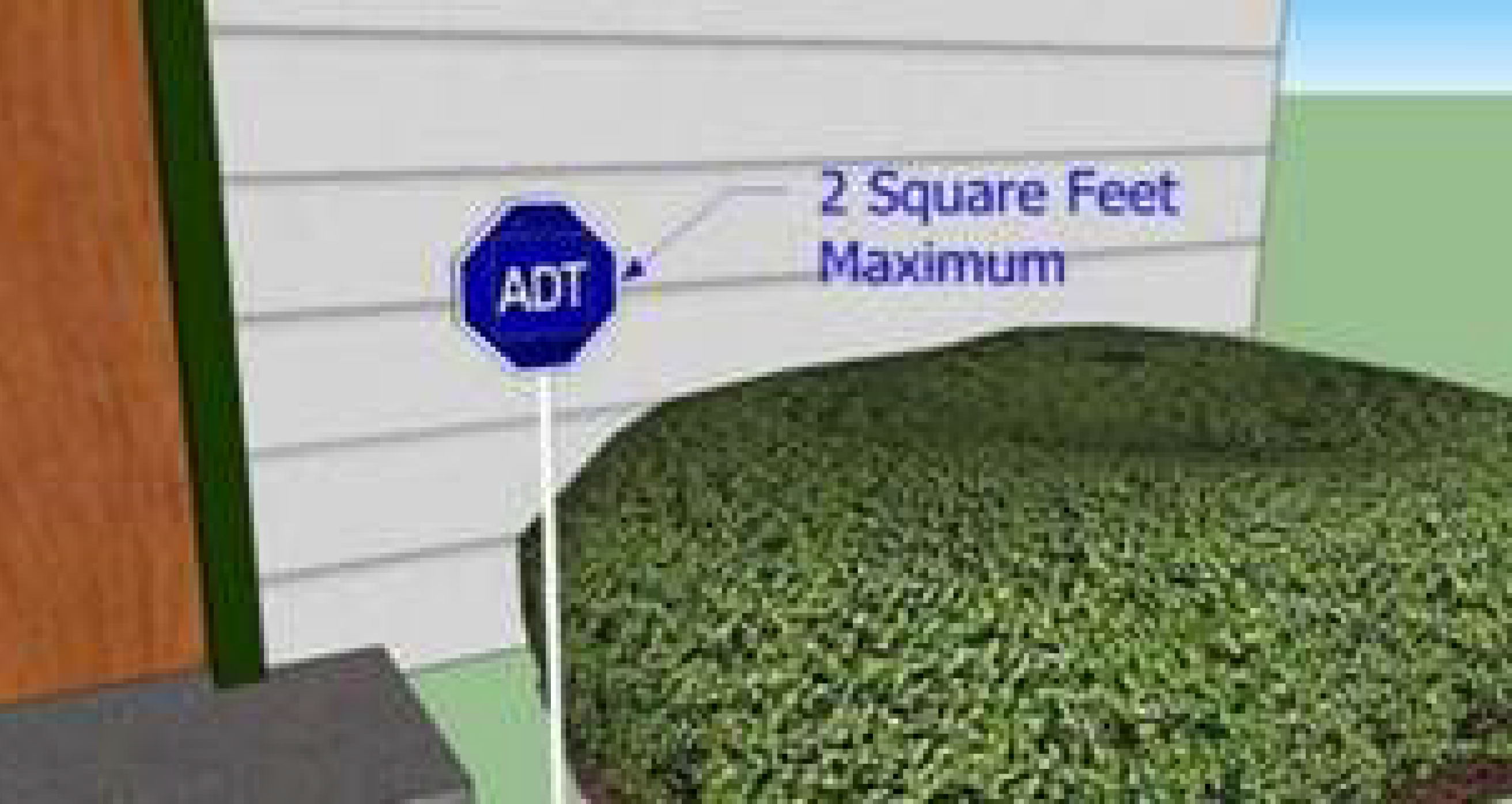 |  |  |
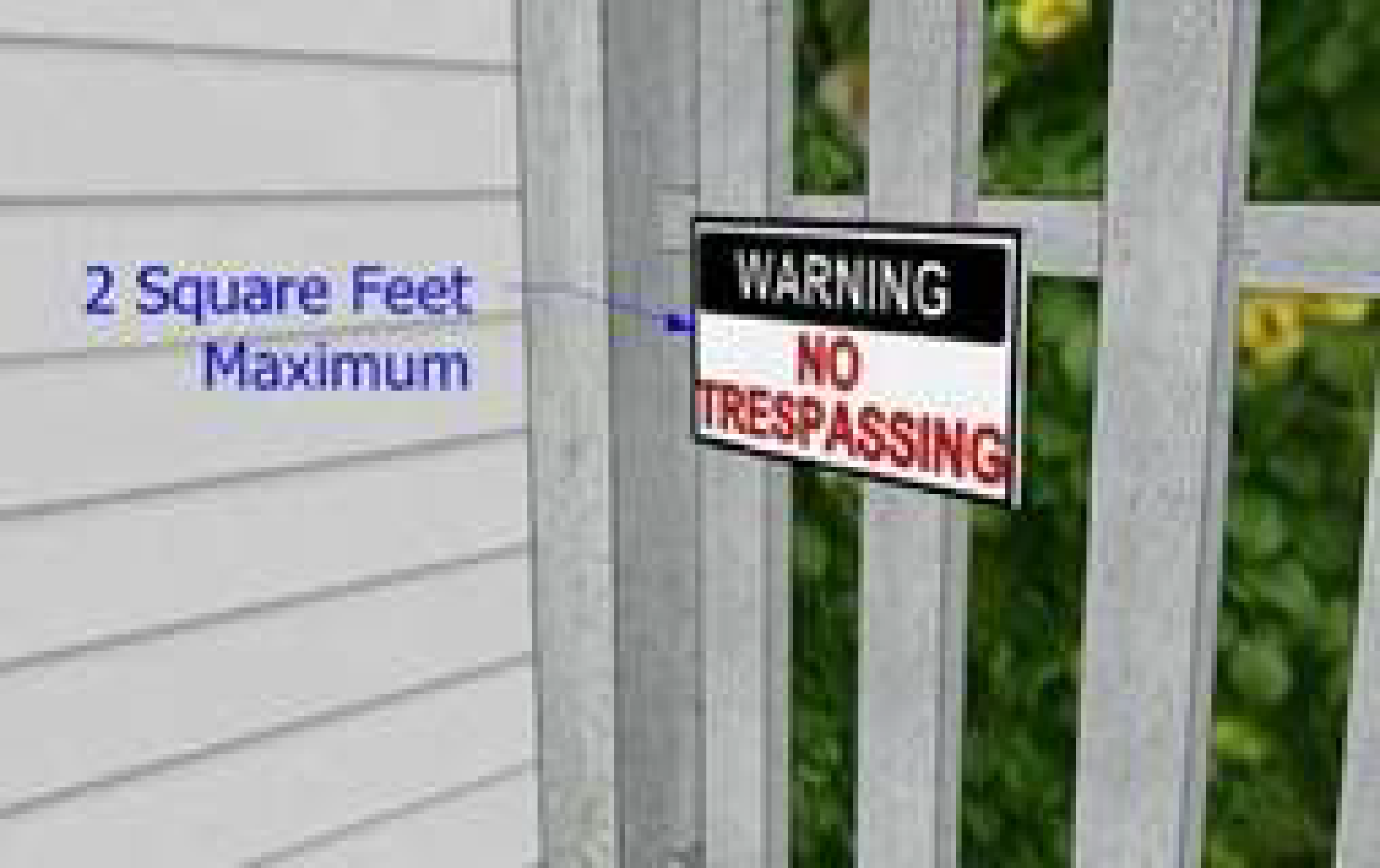 |  | |
3)
Restaurant Menu Cases
| ILLUSTRATIONS | EXAMPLES | |
|---|---|---|
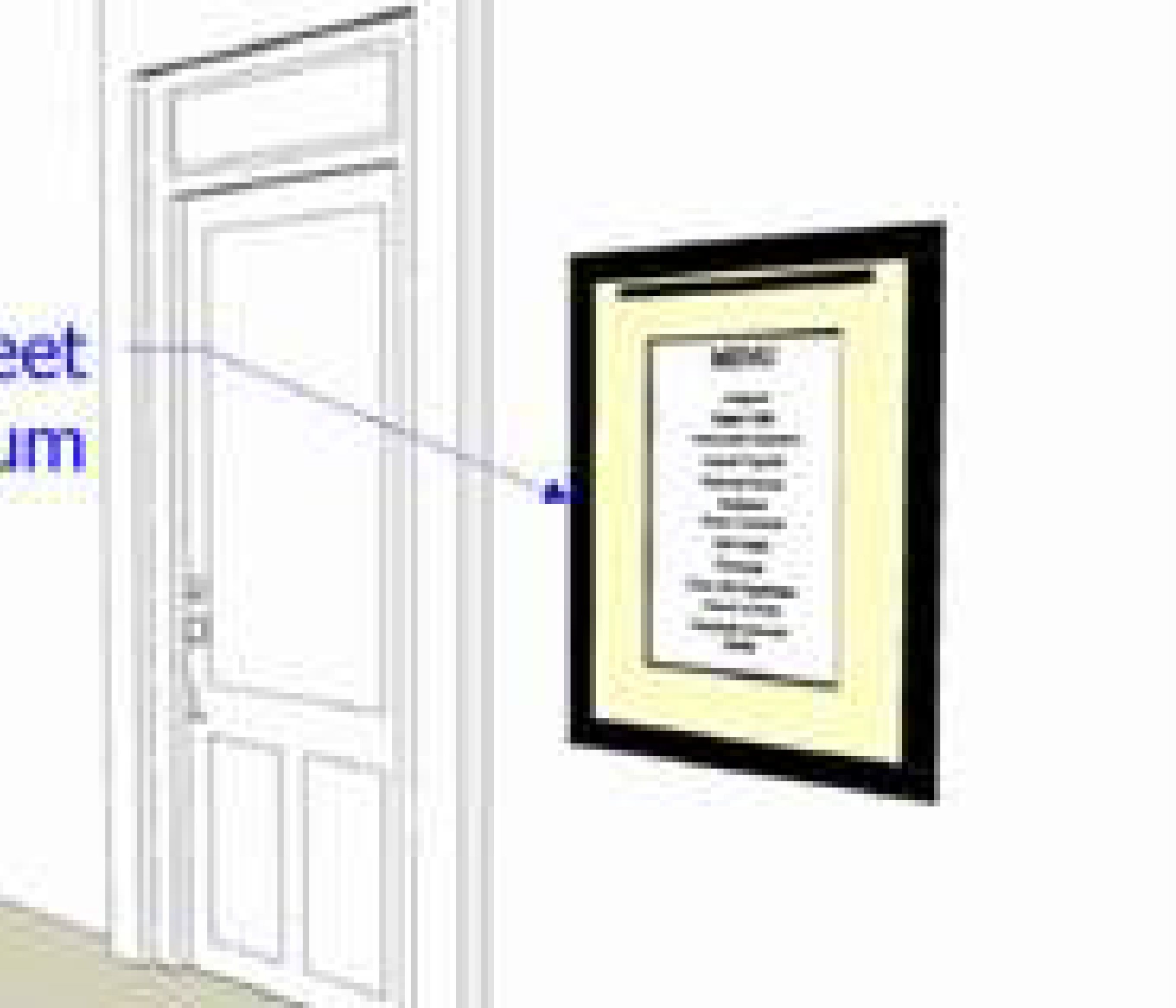 |  |  |
 | ||
4)
Sandwich Board
| ILLUSTRATIONS | EXAMPLES |
|---|---|
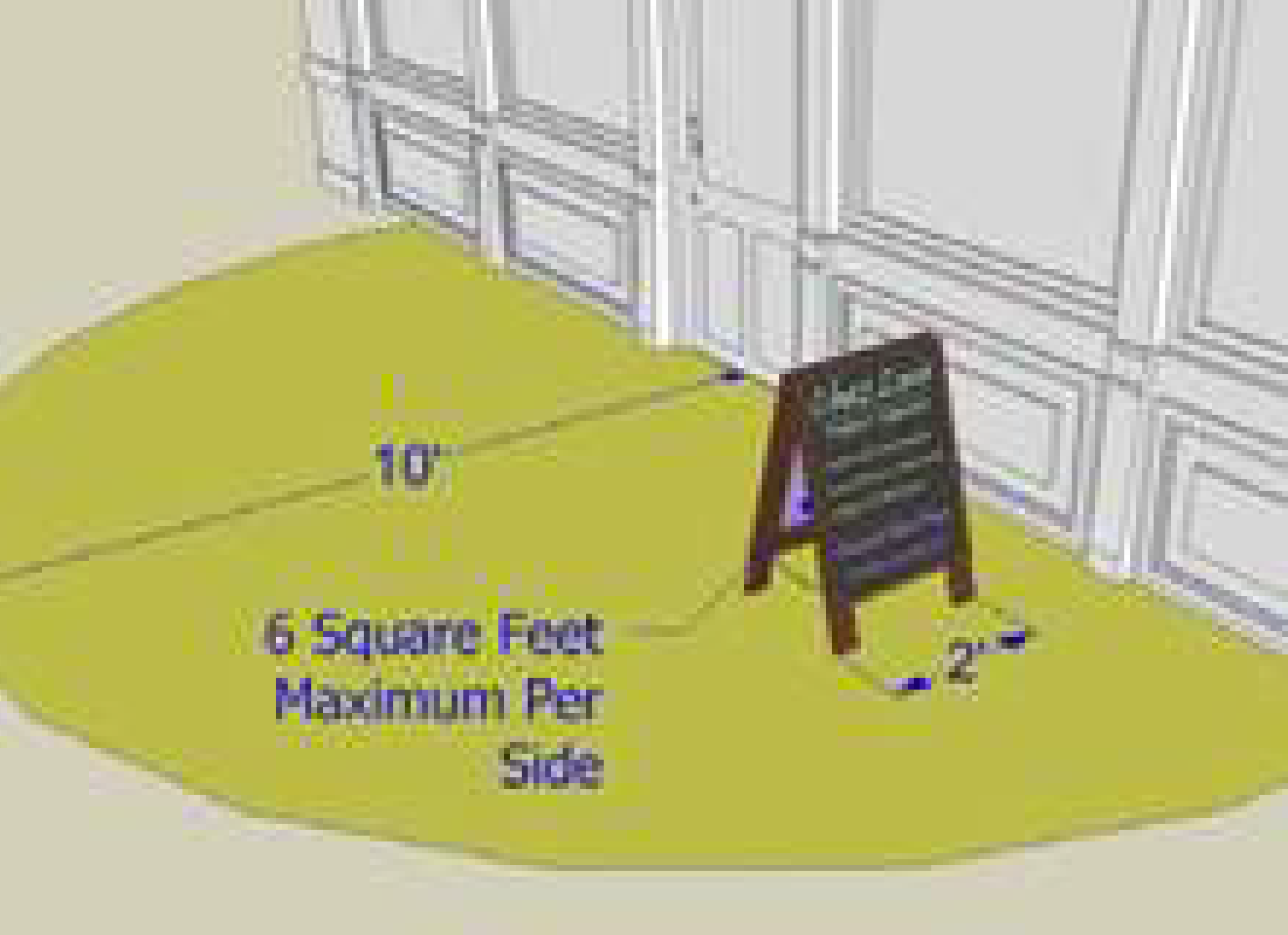 |  |
5)
Temporary Window Signs
| ILLUSTRATIONS | EXAMPLES | |
|---|---|---|
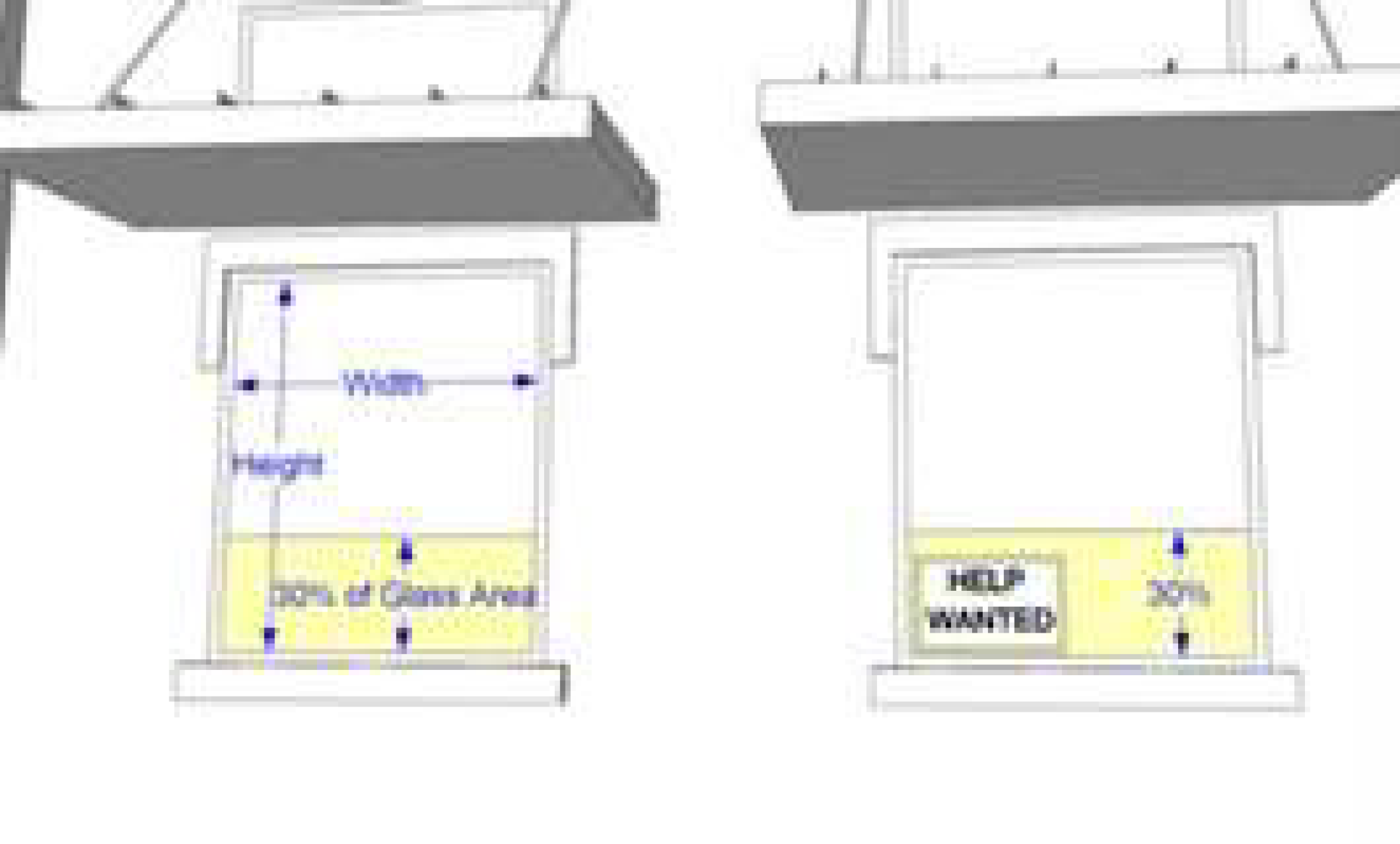 |  |  |
 | ||
j.
Permissible Signs Which Require a Permit - The following signs require a permit and shall comply with the time, place and manner stipulations.
1)
Awning, Canopy, or Marquee Signs
| ILLUSTRATIONS | EXAMPLES | |
|---|---|---|
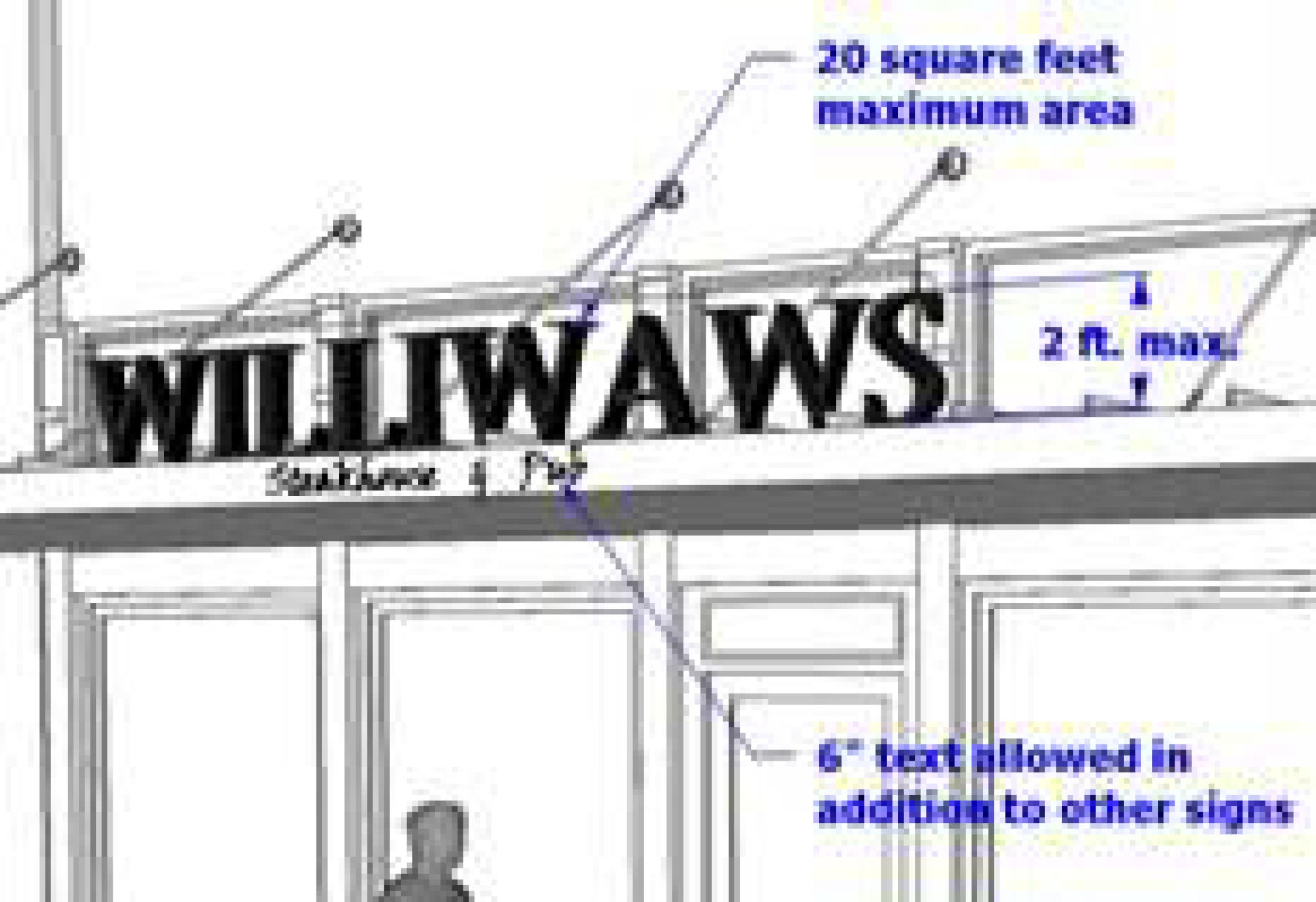 |  |  |
 | ||
2)
Construction Signs
| ILLUSTRATIONS | EXAMPLES | |
|---|---|---|
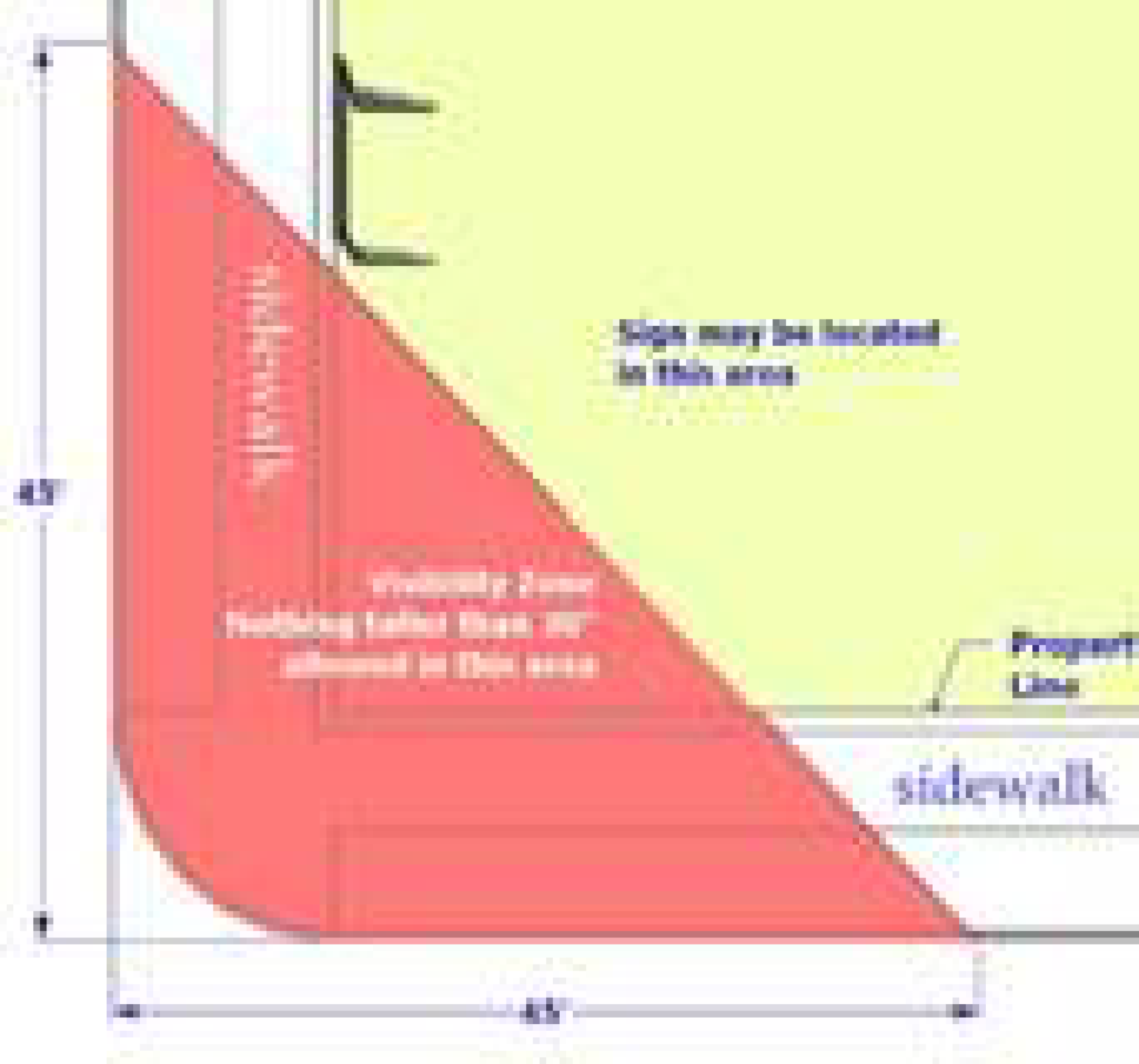 |  |  |
 | ||
| LOCATION OF CONSTRUCTION | ||
3)
Directional Signs
| ILLUSTRATIONS | EXAMPLES |
|---|---|
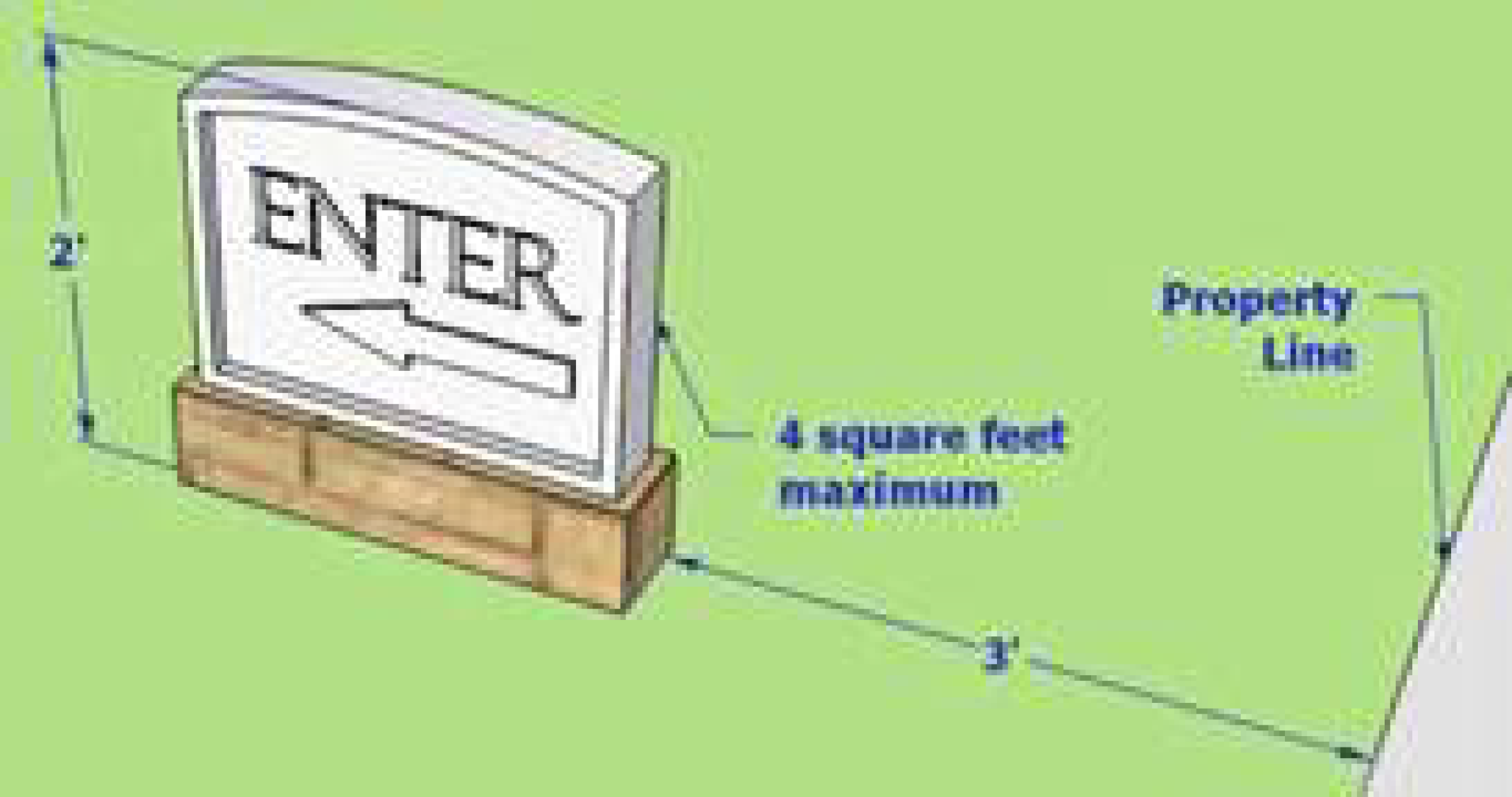 | 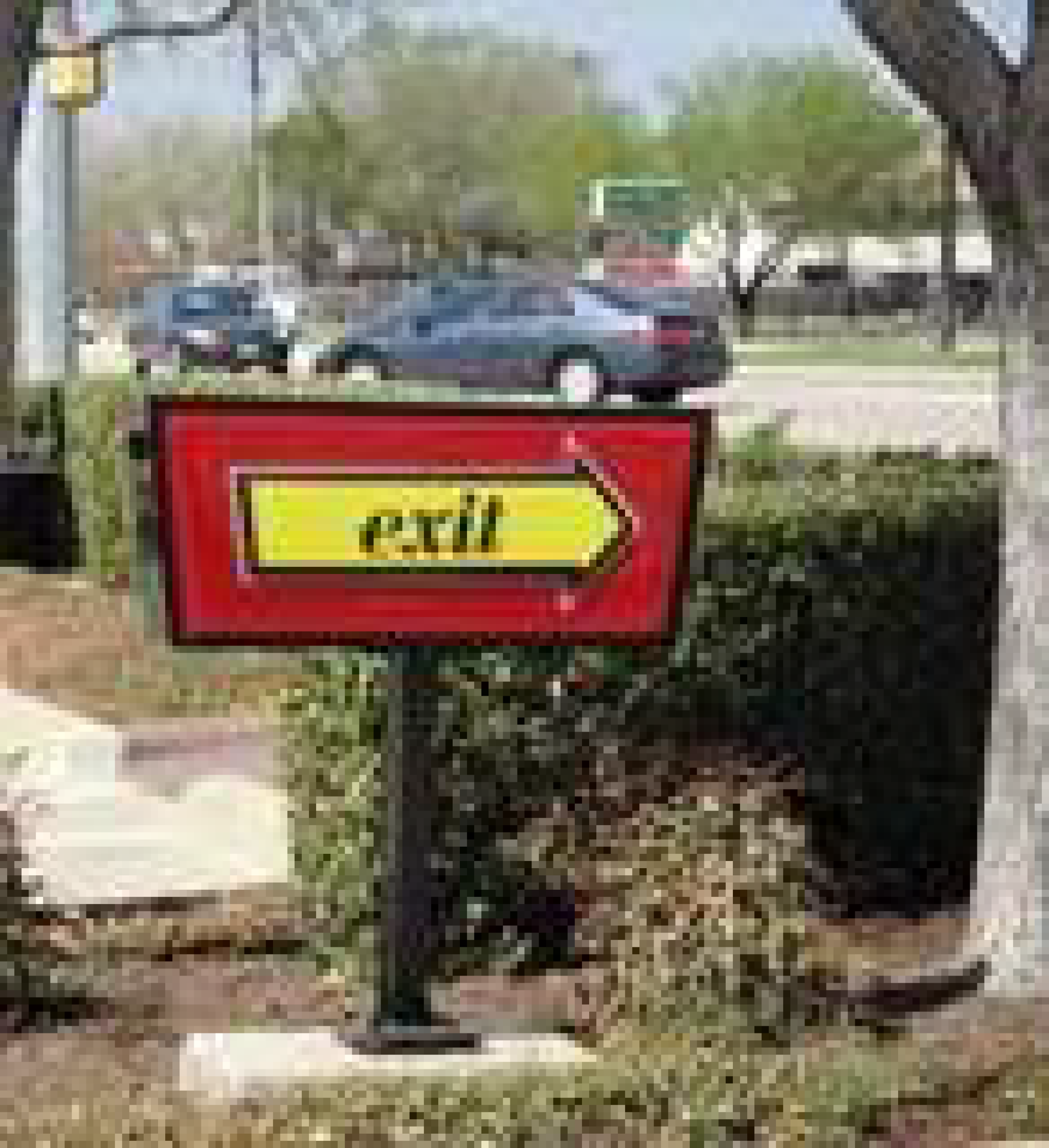 |
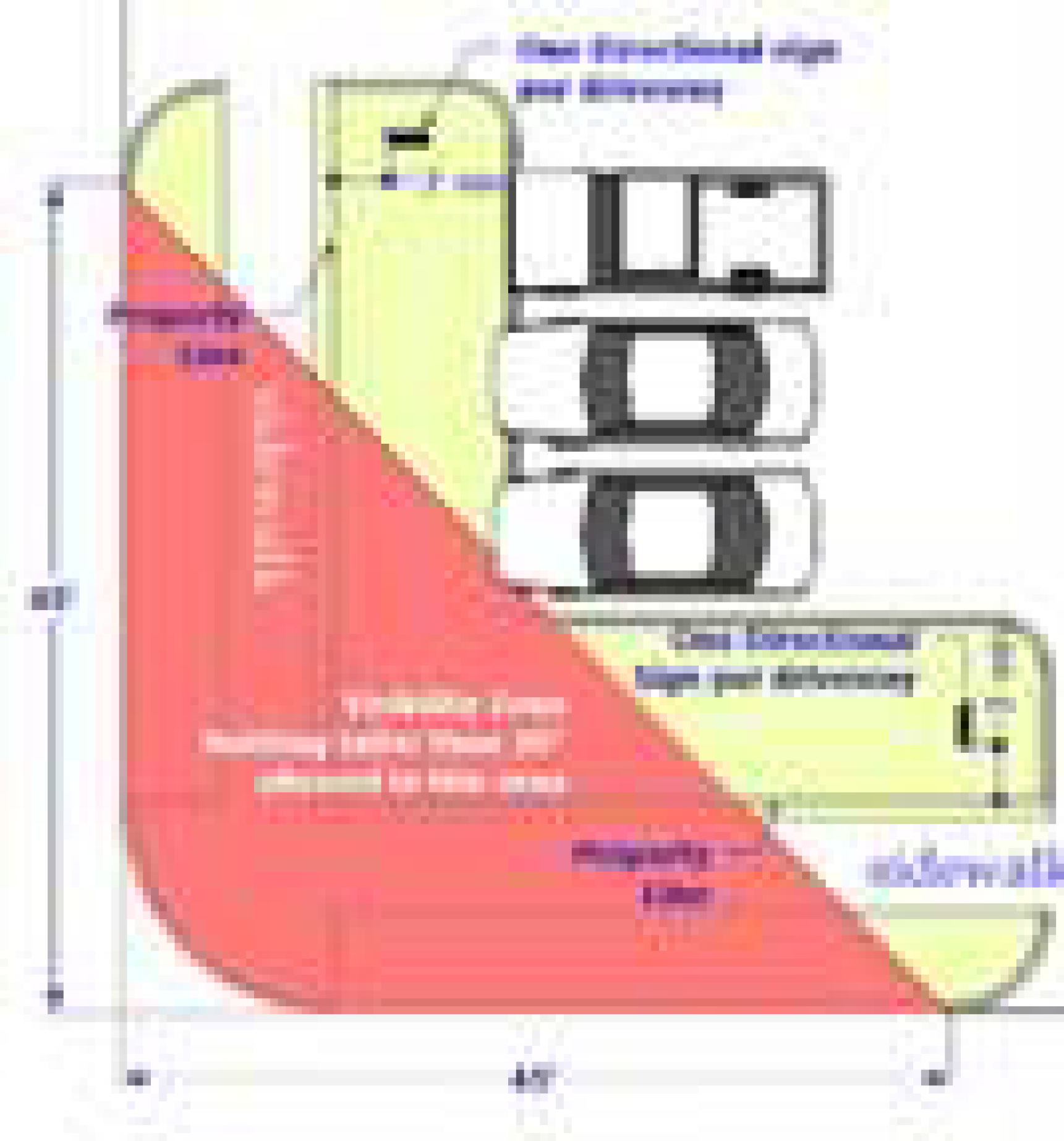 | 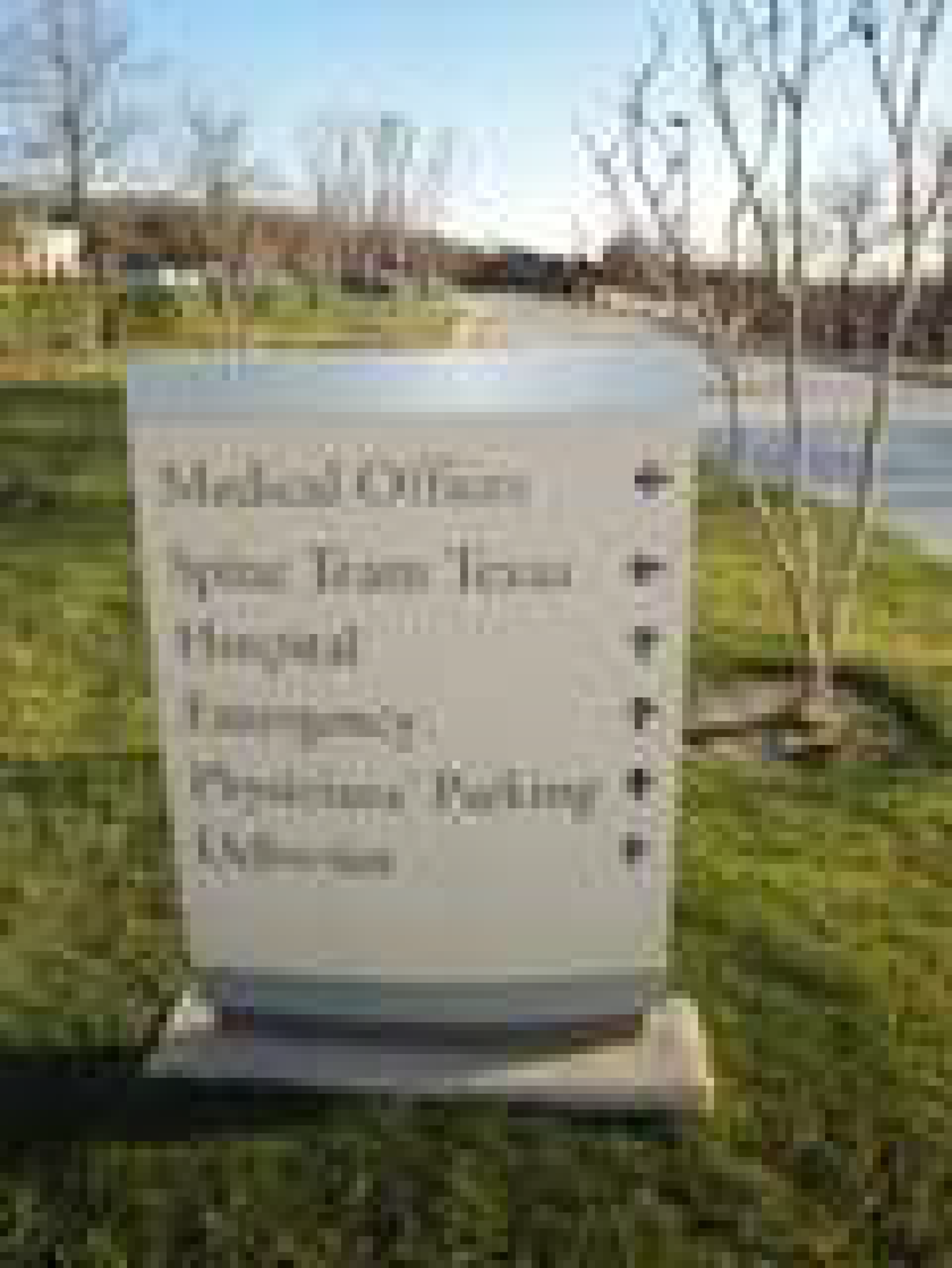 |
| DIRECTIONAL SIGN REQUIREMENTS |
4)
Grand Opening Signs
| ILLUSTRATIONS | EXAMPLES |
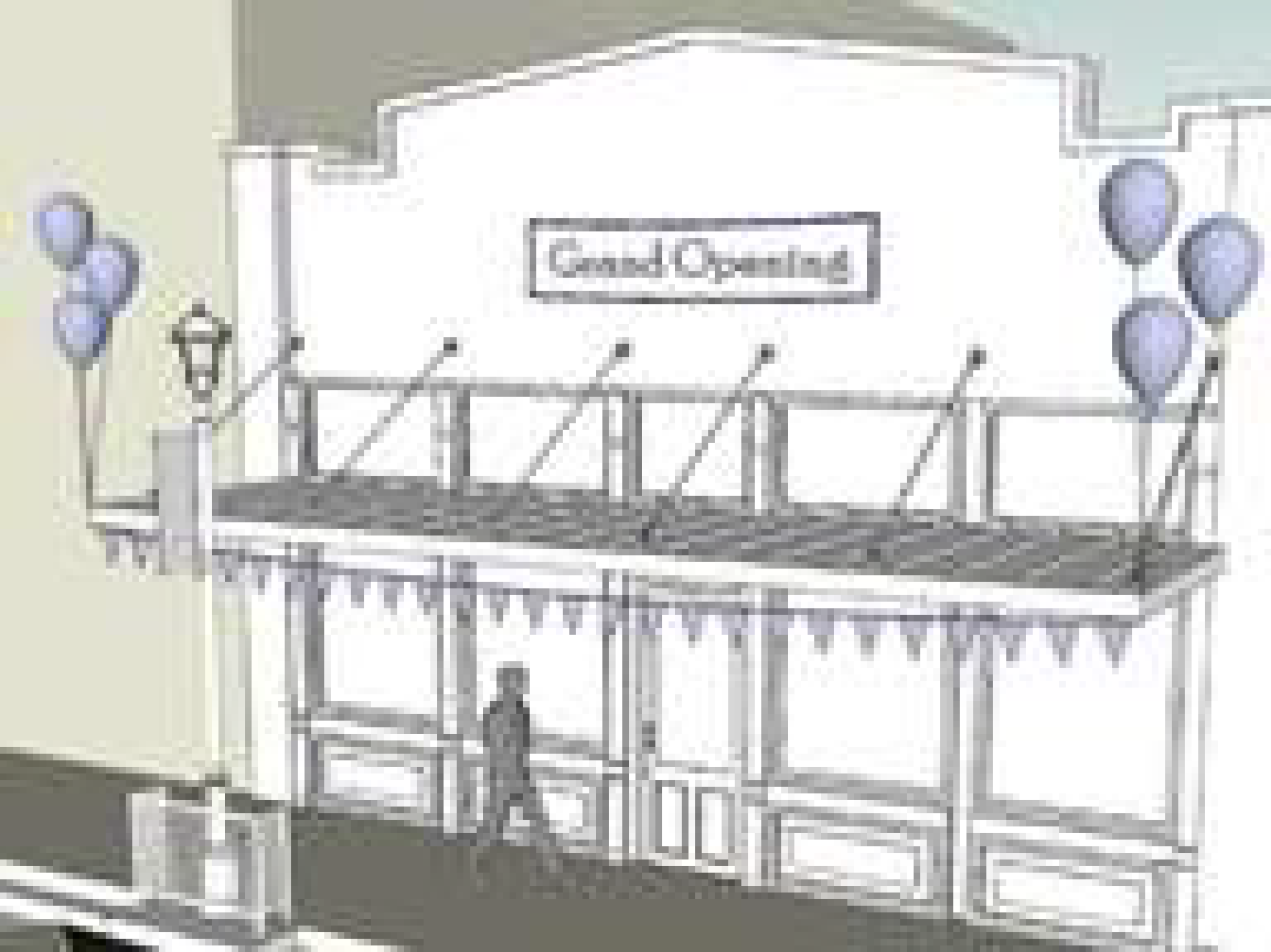 |  |
 |
5)
Hanging Signs
| ILLUSTRATIONS | EXAMPLES | |
|---|---|---|
 |  |  |
 |  | |
6)
Low-Profile/Monument Signs
| ILLUSTRATIONS | EXAMPLES | |
|---|---|---|
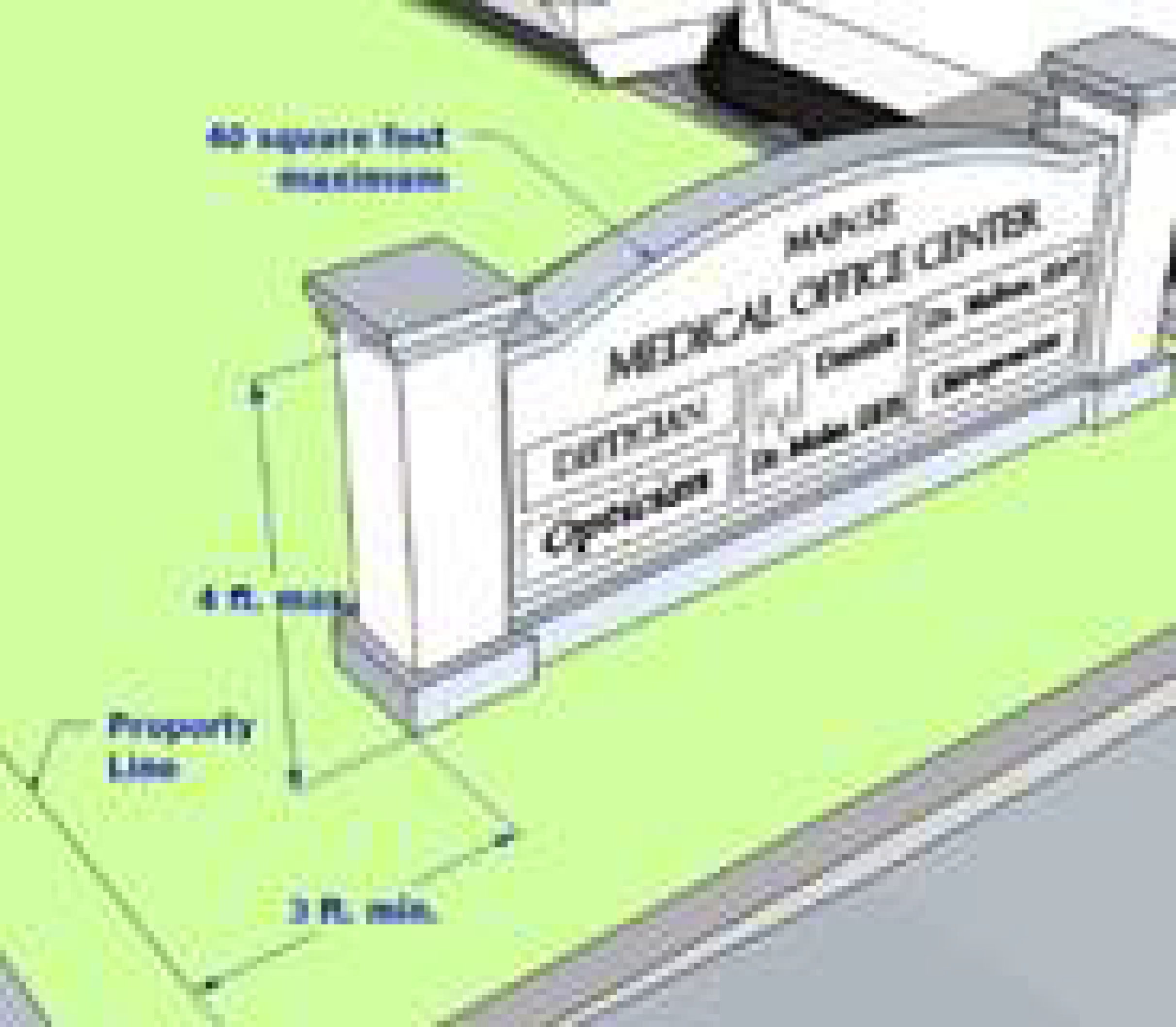 |  |  |
 | ||
7)
Model Home Signs
| ILLUSTRATIONS | EXAMPLES | |
|---|---|---|
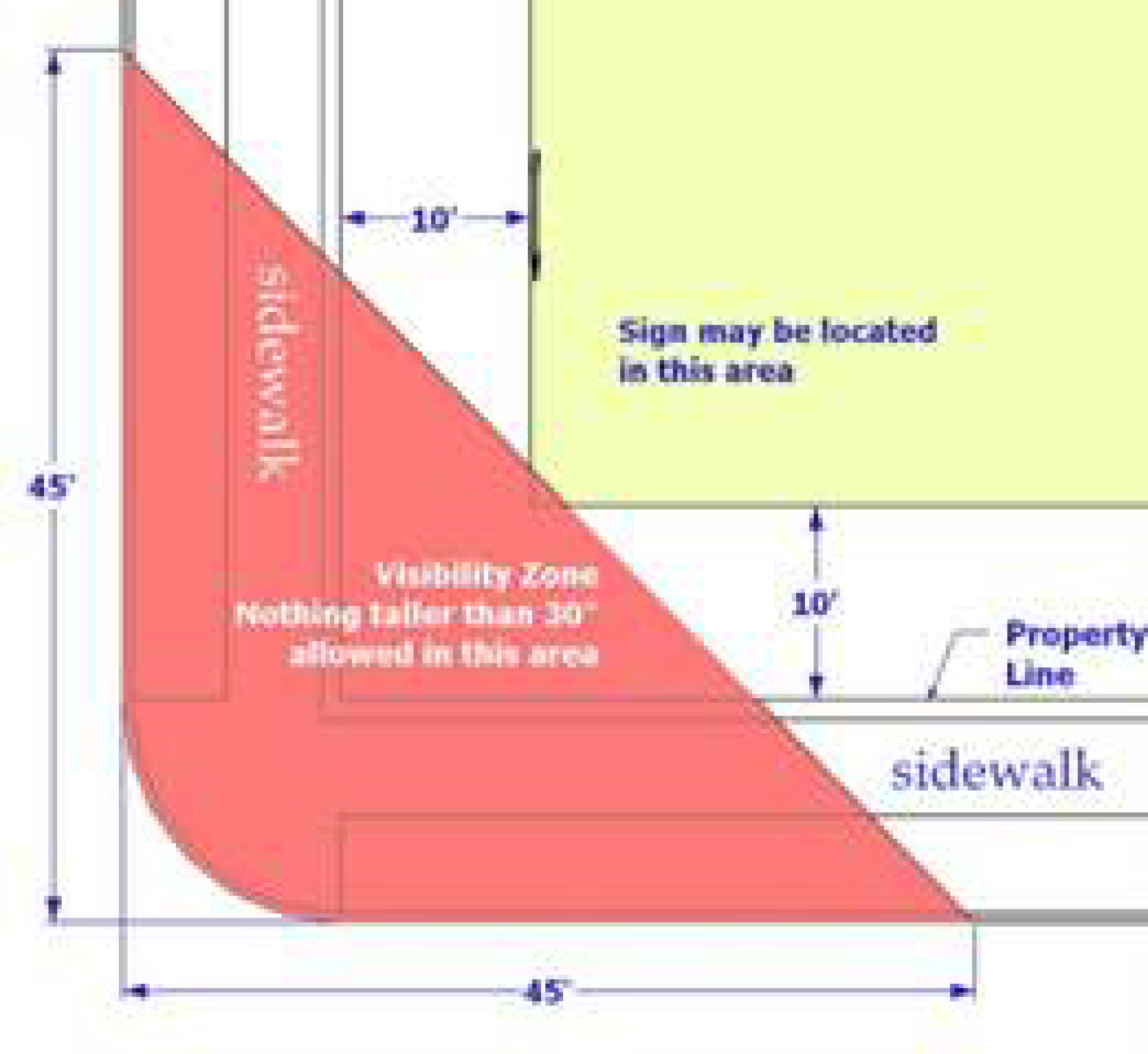 |  |  |
8)
Multi-Tenant Wall Signs
| ILLUSTRATIONS | EXAMPLES |
|---|---|
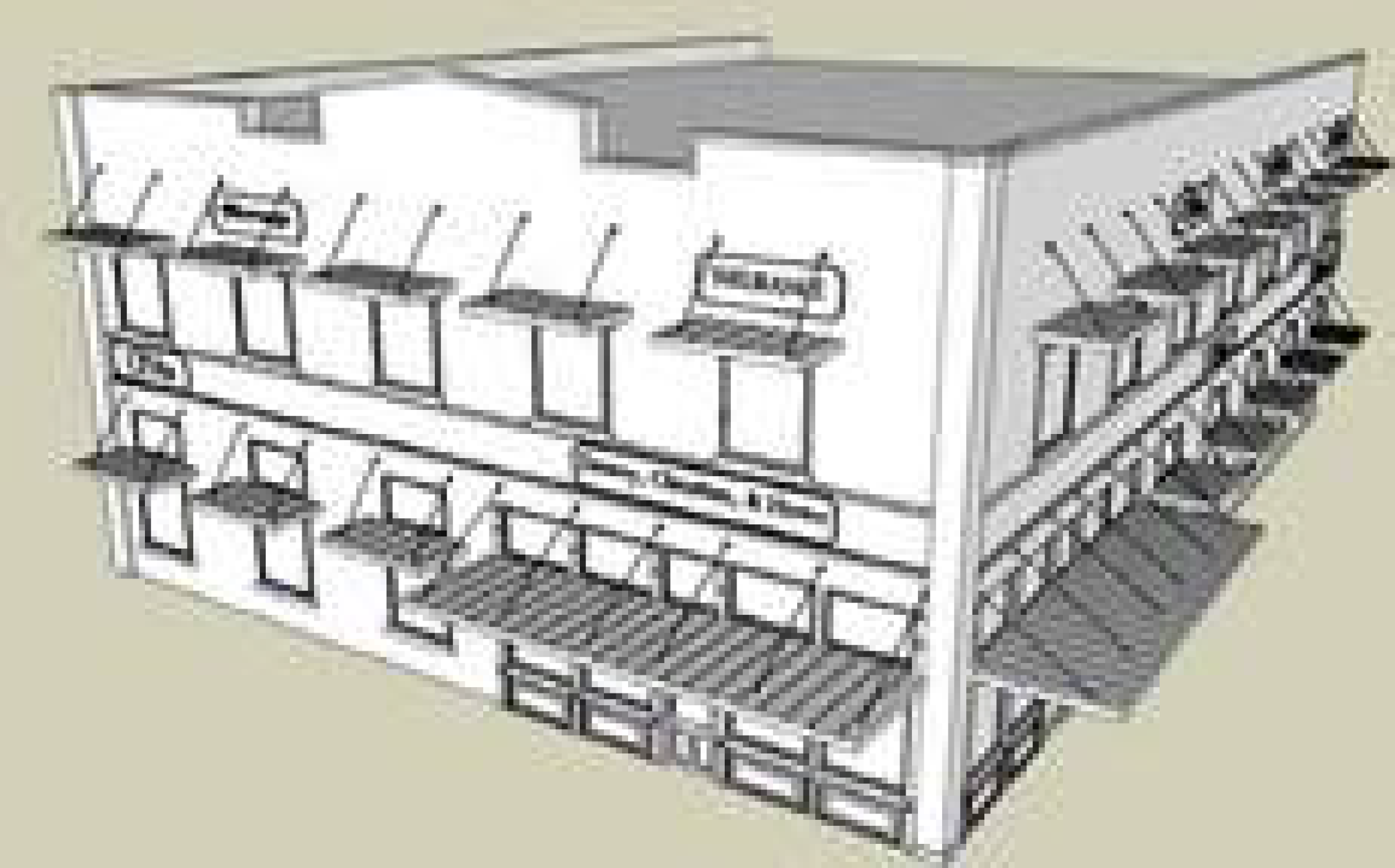 |  |
 |
9)
Off-Premises Construction Signs
| ILLUSTRATIONS |
|---|
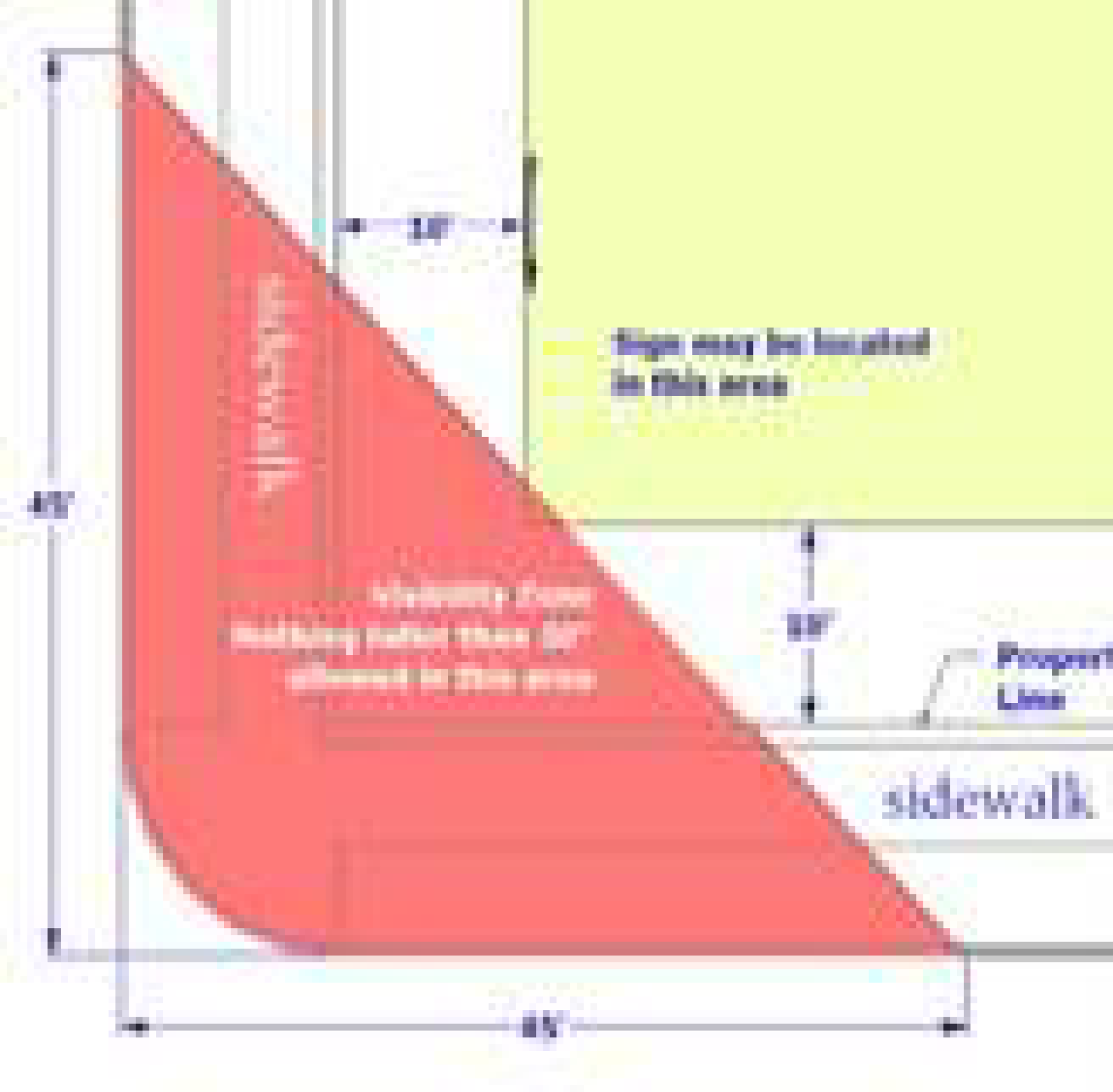 |
| OFF-PREMISES CONSTRUCTION SIGN LOCATION |
10)
Projecting Signs
| ILLUSTRATIONS | EXAMPLES | |||
|---|---|---|---|---|
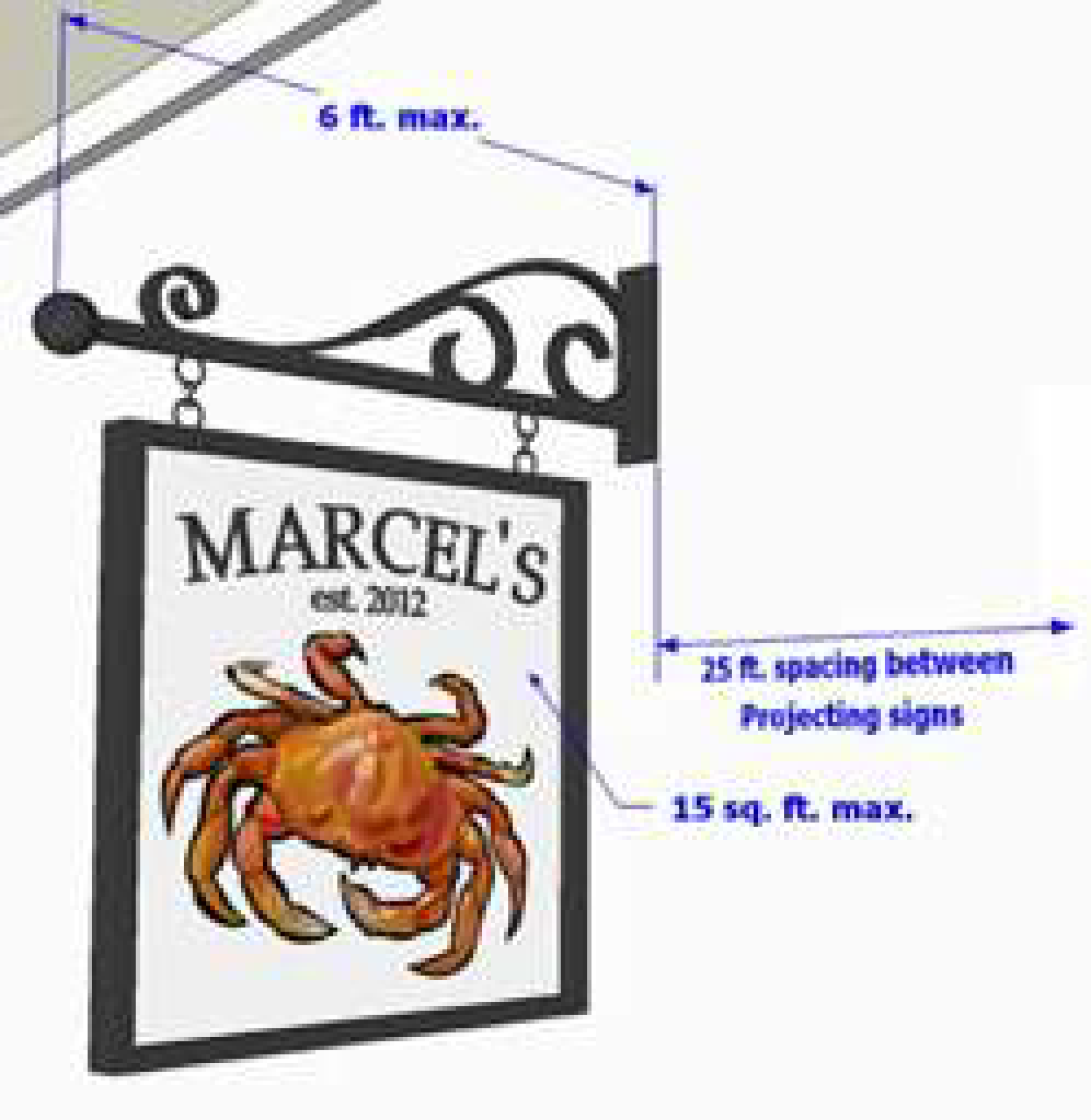 |  |  |  | |
 |  | |||
 |  | |||
11)
Single-Tenant Wall Signs
| ILLUSTRATIONS | EXAMPLES | |
|---|---|---|
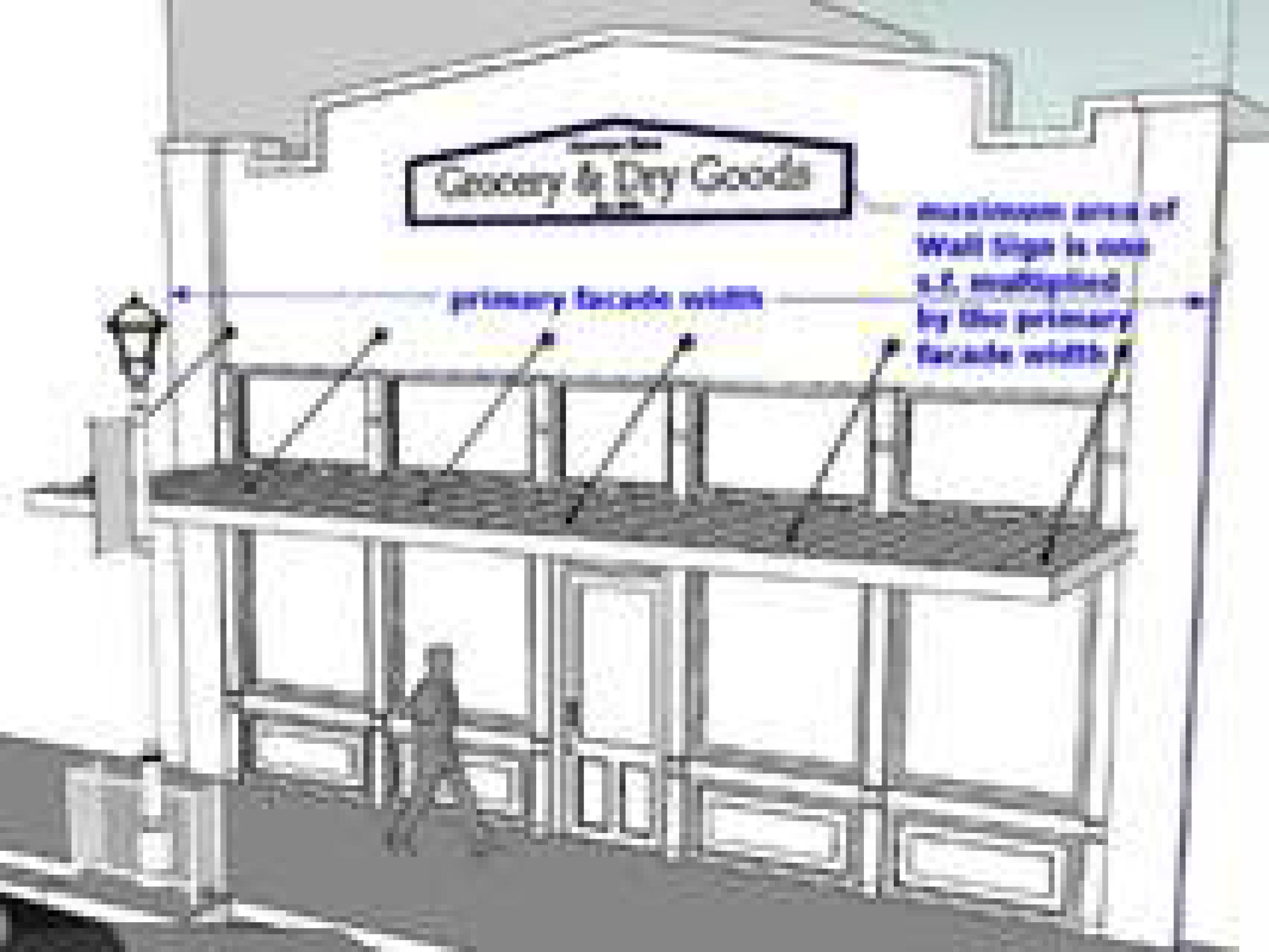 |  |  |
 | ||
 | ||
12)
Temporary Banner Signs
| ILLUSTRATIONS | EXAMPLES |
|---|---|
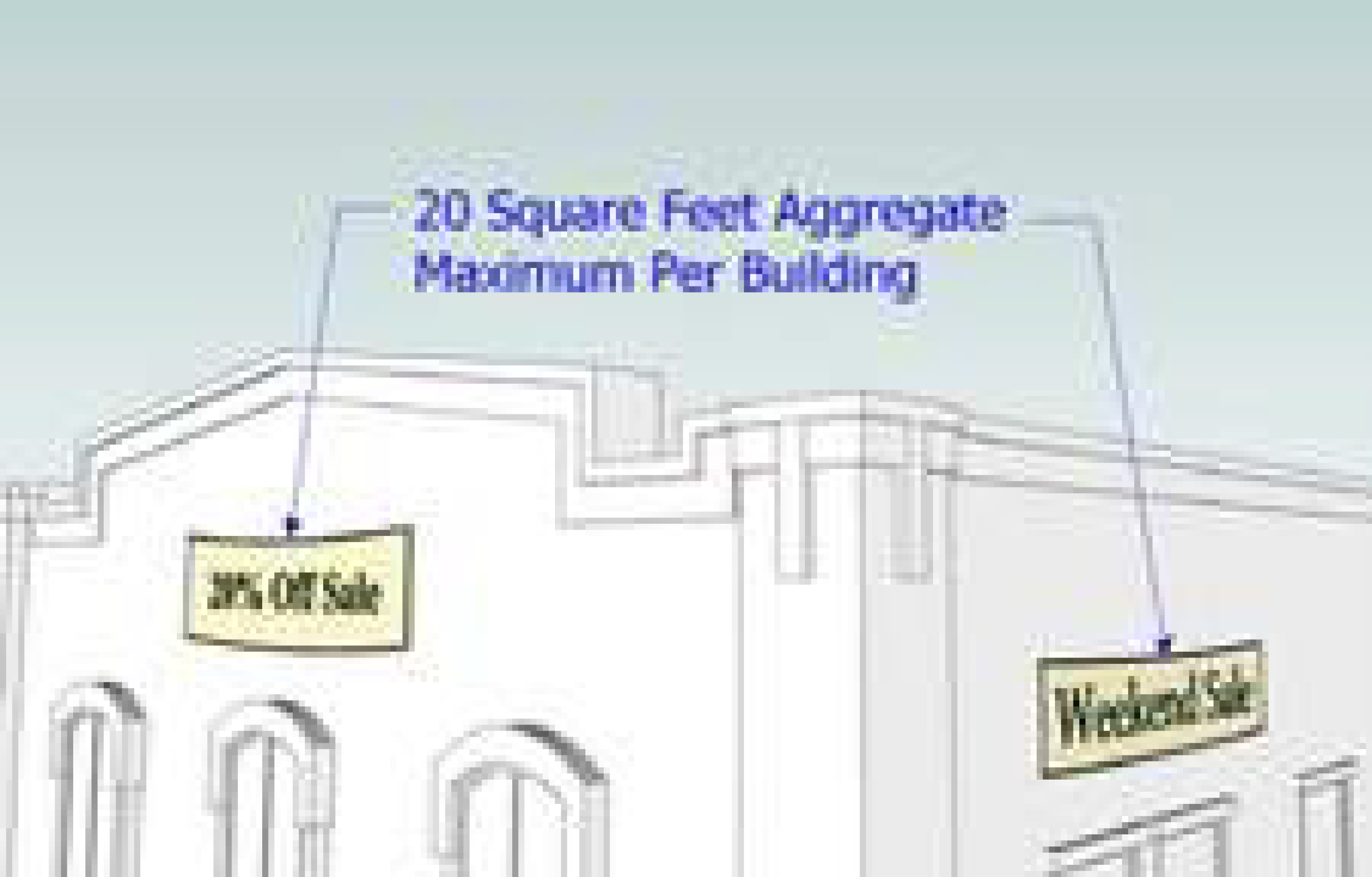 |  |
 |
13)
Window Signs
| ILLUSTRATIONS | EXAMPLES | |
|---|---|---|
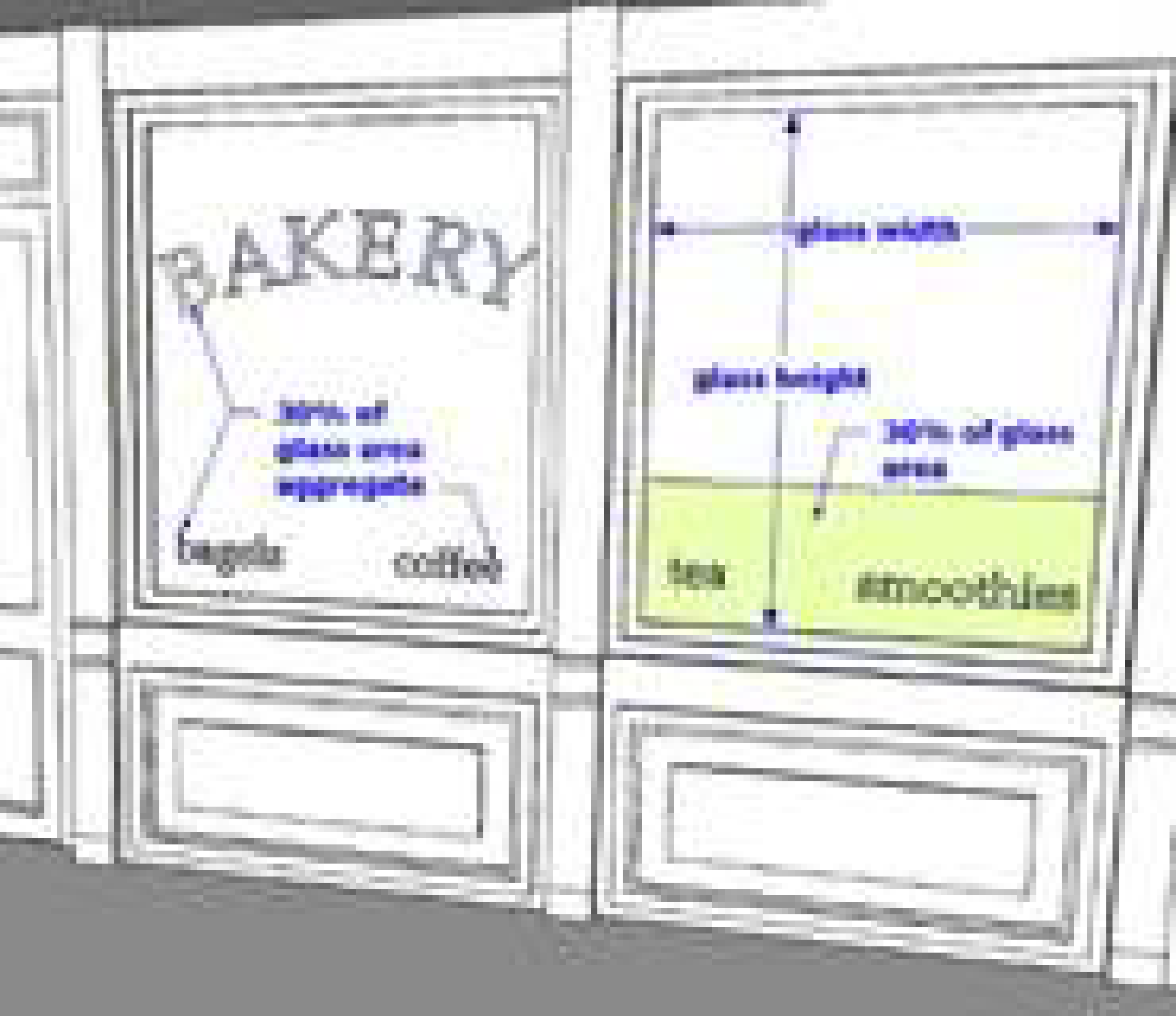 |  |  |
k.
Prohibited signs — Notwithstanding anything to the contrary, the following signs are expressly prohibited by this Article.
1)
Abandoned signs.
2)
Audible signs — Exception: Two-way communication integrated into a menu board sign.
3)
Balloons, balloon signs, inflatable signs, pennants and/or streamers — Exception: Balloons, balloon signs, inflatable signs, pennants and/or streamers may be used as part of a grand opening sign permit.
4)
Bench Signs.
5)
Billboards.
6)
Feather flags, wind movement or wind devices — Exception: Feather flags, wind movement or wind devices may be used as part of a grand opening sign permit.
7)
Flashing Signs.
8)
Off-Premises Signs — Exception: Off-premises construction signs.
9)
Lighted signs in single-family, two-family (duplex), and OTMU-1 zoning districts.
10)
Merchandise, equipment, products, vehicles, or other items which are not available for purchase or rental, but are intended to attract attention, or for identification or advertising purposes.
11)
Portable Displays — Exception: Sandwich board signs that conform to the requirements of this Section are allowed.
12)
Searchlights.
13)
Signs advertising illegal activities.
14)
Signs containing words or symbols that would cause confusion because of their resemblance to highway traffic control or directional signals.
15)
Signs on public property or utility easements. Any sign placed on public property or recorded utility easements, including public rights-of-way, without City approval or otherwise allowed by this Article shall be removed without notice.
16)
Signs on retaining walls, fences, rocks, or natural features.
17)
Signs or banners on a pole. Exception: Vertical pole banner signs that conform to the requirements of this Article.
18)
Temporary signs, unless otherwise permitted by this Article.
19)
Variable message electronic reader boards.
20)
Vehicle signs remaining stationary for a period exceeding 48 hours.
21)
Vending machines outside a building.
22)
Any other sign not specifically allowed by this Article is prohibited.
Section VI.8.3. - Old Town Design Overlay District
A.
General Provisions
1.
Purpose - The Old Town Design District overlay district is intended to preserve and continue the special historic, architectural and aesthetic features of Lewisville's historic downtown and surrounding neighborhoods, and to ensure that new development, redevelopment and alterations to existing buildings structures are compatible with the area's unique character while allowing for greater flexibility further from the historic core.
2.
Geographic Limits - The geographic limits of the Old Town Design District overlay district are as generally as shown in Exhibit V.8.3-1 and are more specifically described as (except that the Old Town Center Design District as described in Article VI.8.2 is excluded from this area):
All land located within the area bounded by the following: Beginning at the southeast corner of the intersection of West College Street and Degan Avenue, running easterly along the southern right-of-way of College Street to the southwest corner of the intersection of East College Street and the railroad right-of-way, formerly owned by M.K.T., then southerly along the western railroad right-of-way to the northwest corner of the intersection with Purnell Street, then westerly along the northern right-of-way of Purnell Street to the northeast corner of the intersection with South Edna Avenue, then northerly along the eastern right-of-way of South Edna Avenue to the southeast corner of the intersection with West Main Street, then westerly along the southern right-of-way of West Main Street to the southeast corner of the intersection with Degan Avenue, then northerly along the eastern right-of-way of Degan Avenue to the southeast corner of the intersection of West College Street and Degan Avenue.
EXHIBIT VI.8.3-1 OLD TOWN DESIGN OVERLAY DISTRICT BOUNDARY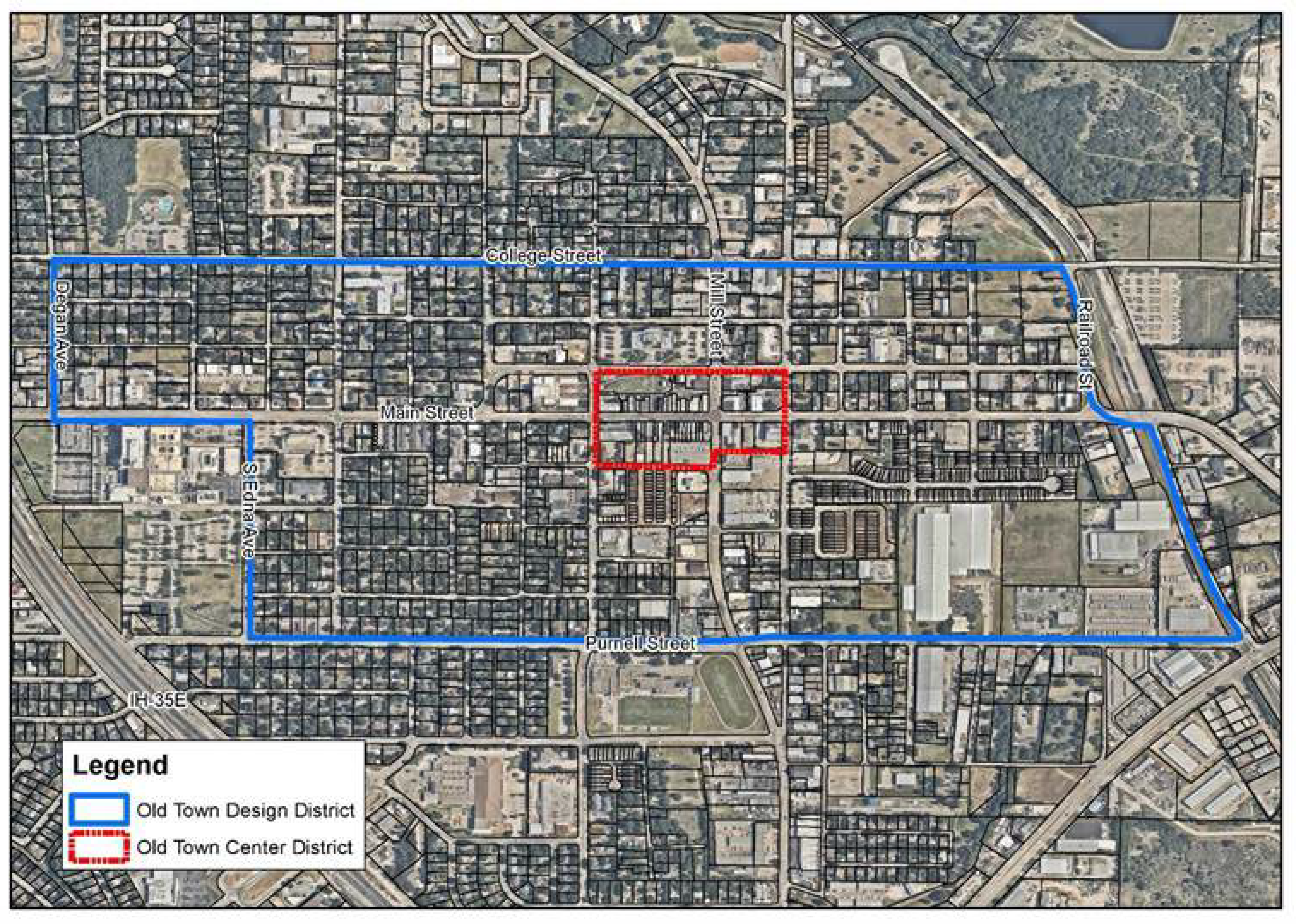
3.
Applicability - The standards identified in this Section shall apply to all properties in the Old Town Design District overlay district.
4.
Relationship to other provisions of this UDC
a.
All provisions and requirements of this UDC apply to development within the Old Town Design District overlay district, except where those provisions and requirements conflict with this Section, in which case this Section shall control.
b.
Standards, requirements, and processes that are not addressed in this Section shall be governed by this UDC.
c.
Nothing in this Section shall change the underlying zoning designation of any property within the Old Town Design District overlay district.
B.
Letter of Design Approval
1.
Purpose - The purpose of the Letter of Design Approval is to ensure changes to physical structures in the old Town Center Design District are compatible with the design guidelines, the historic context of the area and existing buildings and structures.
2.
Applicability - A letter of design approval issued by the Old Town Design Review Committee is required for the following within the Old Town Design District overlay district:
a.
Construction of a new building or structure requiring a building permit;
b.
Expansion of an existing building or structure requiring a building permit; excluding fences or low-profile solar panels mounted in the side or rear roof lines.
c.
Renovation, remodeling or other alteration of the exterior of an existing building or structure requiring a building permit;
d.
The installation of new signs and the alteration, renovation, or rehabilitation of an existing sign or signs, where required by this Section; and
e.
The installation of outdoor murals, decorative clocks, or public street/sidewalk lighting which will be visible from public rights-of-way.
3.
Process - The Planning Director may establish procedures, forms, and standards with regard to the content, format, graphics, checklists and number of copies of information listed required for an application for a letter of design approval, subject to the following:
a.
Pre-Development Meeting and Submittals - A pre-development meeting is required prior to the submission of an application for a letter of design approval. The applicant shall submit the following information at a time set by the Planning Director in advance of the pre-development meeting:
1)
Footprints of all existing buildings and structures;
2)
Proposed footprints of all new buildings and structures;
3)
Building setback lines;
4)
Location of parking lots, parking spaces, and parking structures;
5)
Location of landscape strips;
6)
Building elevations for all sides of the building or buildings; and
7)
Photographs of adjacent properties.
b.
Letter of Design Approval Application Requirements - Applications for a letter of design approval shall include the following:
1)
Site plan/roof plan (drawn to scale);
2)
Proposed building and structure elevations (drawn to scale);
3)
Photograph of existing conditions;
4)
Product literature or specifications for proposed materials; and
5)
Material samples and color samples for Proposed materials and paint.
c.
Approval Authority - The Old Town Design Review Committee shall have the authority prescribed in Article III.1.5 to issue letters of design approval within the Old Town Design District overlay district.
1)
The Old Town Design Review Committee shall consider compliance with the requirements of this Section.
2)
The Old Town Design Review Committee may consider the compatibility of the proposed design with the architectural features and historic character of the Old Town Design District overlay district, as generally shown in the Old Town Design Guidelines, set forth in Appendix I.
d.
Effect of Approval - Upon issuance of a letter of design approval, the applicant may submit applications for an engineering site plan, where required, and any applicable building permits. For projects which do not require additional plans or permits, issuance of a letter of design approval authorizes the applicant to proceed with the project.
e.
Appeals - The Old Town Design Review Committee's denial of an application of a letter of design approval may be appealed to the City Council. The applicant must submit an appeal request in writing to the Planning Director within ten (10) calendar days from the date of the denial notification.
C.
Design and Development Standards
1.
Applicability - These Design and Development Standards shall apply to all new development and redevelopment within the Old Town Design District.
2.
Screening - Screening in the Old Town Design District overlay district shall comply with the screening standards outlined in Article VI.8.2 (Old Town Center Design District overlay district).
3.
Public Street Design
a.
As public streets are built or improved, the required right-of-way width for certain streets or section of streets within the Old Town Design District overlay district shall be as follows:
b.
The following public streets within the Old Town Design District overlay district shall have a required right-of-way of 60 feet:
1)
College Street
2)
Cowan Avenue
3)
Degan Avenue
4)
Edna Avenue
5)
Railroad Street
6)
Lynn Avenue
c.
All public streets and public street sections within the Old Town Design District overlay other than those listed in subsections 3.a and 3.b above shall have a minimum required right-of-way of 50 feet.
4.
Sidewalks
a.
As sidewalks are built or improved, the sidewalk widths within the Old Town Design District overlay district shall be a minimum of six (6) feet, except for Main Street and Mill Street.
b.
The sidewalk widths on Main Street and Mill Street shall be a minimum of eight (8) feet but may be reduced through an Administrative Modification in areas to accommodate required landscaping, streetscaping, and existing infrastructure.
5.
Off-Street Parking - Off-street parking shall be required as follows for the listed uses or use categories:
a.
Uses:
1)
Day Care Center - One (1) parking space for each 500 square feet, and a minimum three (3) stacking spaces for pick-up and delivery of children.
2)
Single-Family Attached, Single Family Detached, and Two-Family Dwellings - One (1) parking space in an enclosed garage and one (1) additional concrete space.
3)
Hotel, Motel, or Inn - One (1) parking space for each two (2) guestrooms and one (1) parking space for each 400 square feet of associated or accessory commercial space open to the public.
4)
Professional and Administrative Office - One (1) parking space for each 500 square feet of floor area.
5)
Restaurant and Restaurant, Stand Alone - One (1) parking space for each 200 square feet of floor area.
6)
Theater - One (1) parking space for each four (4) fixed seats. For theaters with no fixed seats, two (2) parking spaces for each 200 square feet of floor area.
b.
Use Categories:
1)
Manufacturing or Industrial Uses - One (1) parking space for each 400 square feet of floor area.
2)
Warehouse and Storage Uses - One (1) parking space for each 2,000 square feet of floor area.
6.
Residential Garages, Parking Lots, and Parking Garages
a.
Residential Garages on Lots not Served by Alleys:
1)
All residential garages shall be set back a minimum of five (5) feet from the primary facade of the principal building. Detached residential garages located behind the principal building on the lot may be built to the rear and/or side lot line as long as they meet fire separation standards as outlined in the Lewisville Fire Code.
2)
Attached residential garages, which are located on the front facade of a dwelling, shall comprise no more than 40 percent of the width of the primary facade of the dwelling, up to a maximum of 24 feet.
3)
All new public street-facing residential garage doors shall be articulated single garage doors.
EXAMPLE OF PUBLIC STREET-FACING RESIDENTIAL GARAGE DOORS WITH ARTICULATED SINGLE GARAGE
DOORS
4)
The following graphic illustrates acceptable placements and an unacceptable placement of a residential garage (attached or detached):
EXHIBIT VI.8.3-3 GARAGE LOCATIONS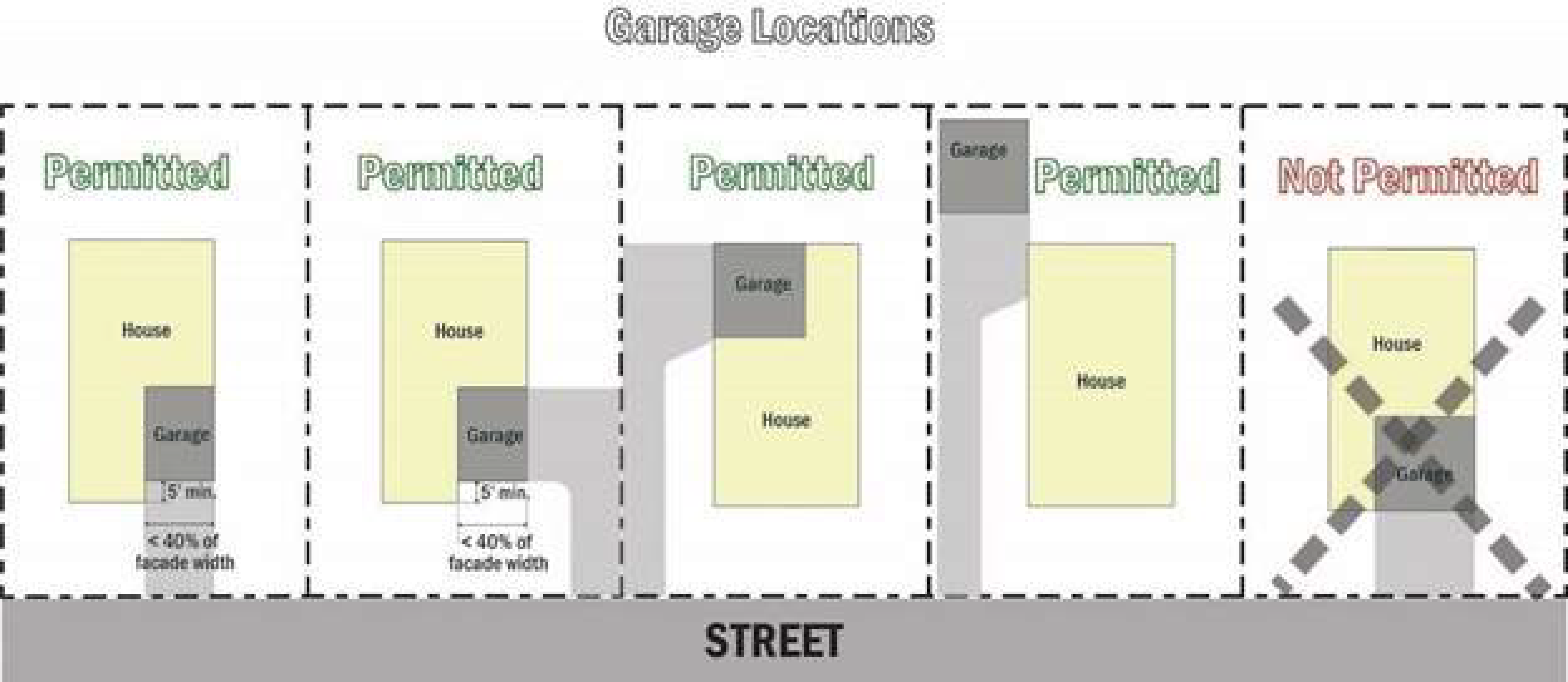
b.
Parking Lots or Parking Garages Serving Non-Residential or Multi-Family Uses - Entrances from public streets (except alleys) to parking lots or parking garages serving non-residential or multi-family uses shall be limited to maximum of 25 feet in width.
7.
Trash and Recycling Receptacles - All new development including multi-family, mixed use, and non-residential uses shall have an area designated where trash and recycling receptacles may be placed with sufficient room for maneuvering.
8.
Landscaping
a.
Developments including multi-family, mixed-use and non-residential uses shall provide one or both of the following along rights-of-way:
1)
If the front yard of the property is at least ten (10) feet deep, a ten-foot wide landscape strip shall be placed adjacent to any public street with one (1) two and one-half-inch (2.5") DBH canopy tree per every 50 linear feet and one (1) five-gallon shrub per every ten (10) linear feet.
2)
If the minimum sidewalk width is not reduced nor parking or traffic lanes impacted, one (1) two and one-half-inch (2.5") DBH canopy tree per every 50 linear feet within tree wells shall be placed in the public right-of-way adjacent to the developed property. Tree wells shall be flush with the sidewalk surface and of a size to accommodate the selected tree species at maturity. Tree grates shall be provided and shall be a minimum of five (5) feet by five (5) feet in size and constructed of cast iron.
9.
Signage - The standards for signs located within the Old Town Design District overlay district shall comply with Section VI.8.2 (Old Town Center Design District overlay district).
Section VI.9.1. - Purpose
This Chapter is intended to provide exceptions and modifications to the dimensional standards for height and yards within this UDC. Such exceptions and modifications are applicable as outlined herein and shall not require additional action as set forth in Article IV of this UDC.
Section VI.9.2. - Height Exceptions
In all zoning districts, the height regulations prescribed in this UDC shall not apply spires, steeples, belfries, monuments, other similar, unoccupied, and customary architectural features as determined by the Planning Director, public water towers, fire towers and sports field lighting, flag poles, necessary mechanical appurtenances, or any communication antenna/support structure or emergency siren tower owned by a local, state or federal governmental entity.
Section VI.9.3. - Modifications to Front Yard Regulations
A.
In any residential zoning districts, if 25 percent or more of the existing buildings along the frontage of the same side of a street between two intersecting streets have front yards less than required front yard for the specific zoning district, then the average front yard of all the building lots on that side of the street shall establish the minimum front yard. See Exhibit VI.9.3-1 below.
B.
If a minimum front yard has been established by plat, the front yard shown on the plat shall be observed regardless of the front yard requirements of the specific zoning districts or of Section VI.9.3.A, above.
C.
Open and unenclosed terraces, porches, and eave and roof extensions may project into the required front yard up to seven (7) feet; provided that the front setback is not reduced by more than 50 percent or to less than ten (10) feet.
D.
Where the Thoroughfare Plan or TxDOT has delineated the boundary of a future right-of-way or for widening of an existing right-of-way which abuts a lot, the front yard of said lot shall be measured from such boundary.
E.
In single-family detached and duplex residential zoning districts with front yard requirements of 20 feet or less, the minimum front yard for lots with frontage on cul-de-sacs and bends in a street of more than 45 degrees shall be no less than 20 feet, and the maximum shall be twice the required minimum.
EXHIBIT VI.9.3-1 AVERAGE SETBACKS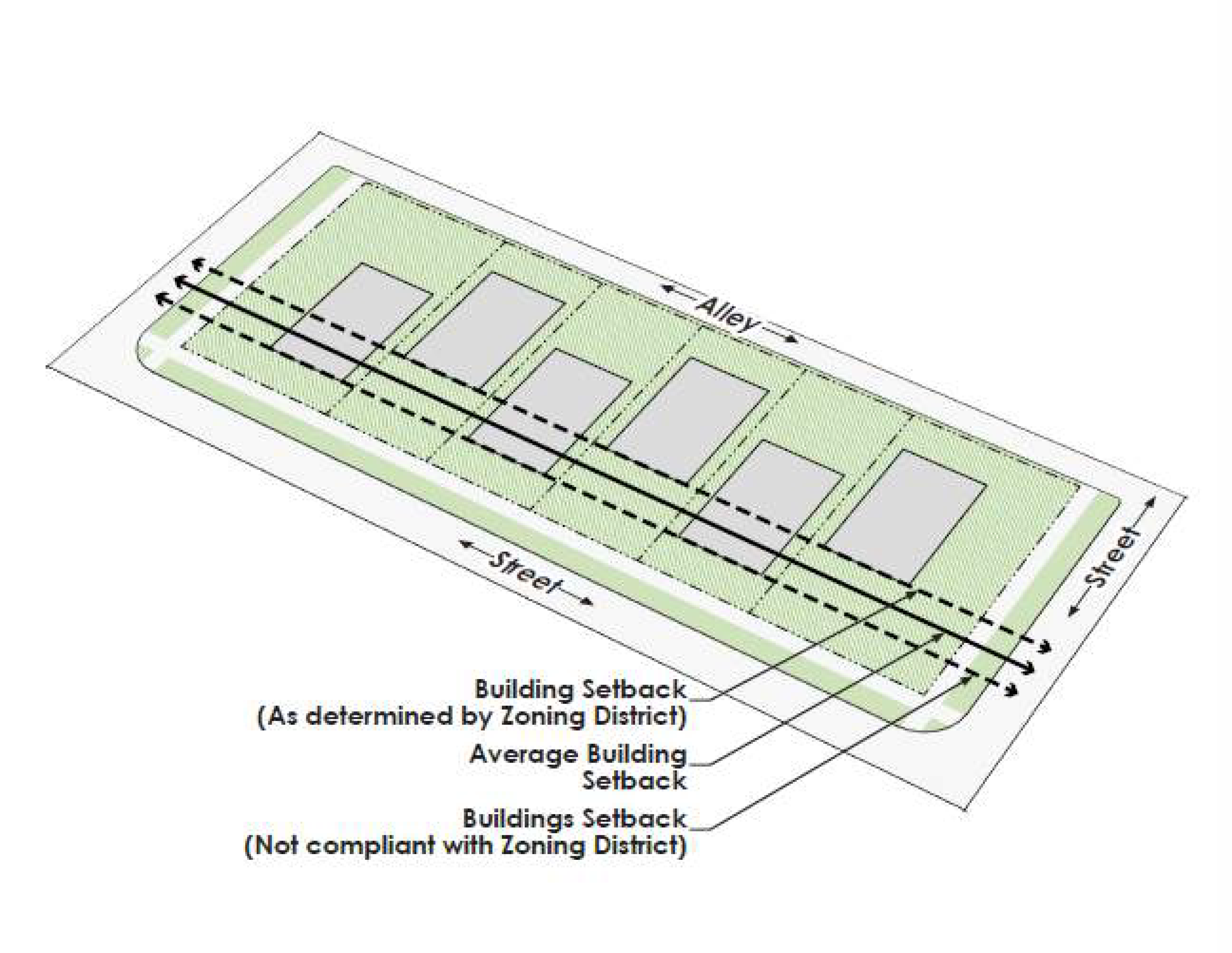
Section VI.9.4. - Modifications to Side Yard Regulations
A.
On a corner lot, the width of the side yard along a public or private street shall not be less than any required front yard on the same side of such street between intersecting streets or alleys; provided, however, that the buildable width of a lot shall not be reduced to less than 30 feet. See Exhibit II.2-2. This modification does not apply to non-residential uses and mixed-use in residential zoning districts.
B.
Every part of a required side yard shall be open and unobstructed except for the following:
1.
Allowed accessory buildings and fences;
2.
Swimming pools and pool equipment, decks and railings, and play structures;
3.
Architectural features as long as the projection into the required side yard does not exceed six (6) inches; and
4.
Roof overhang and roof eaves as long as the projection into the required side yard does not exceed 12 inches.
C.
Where an existing lot is less than 50 feet in width and is less than the minimum lot width required for the specific zoning district, the side yard may be reduced to provide a minimum buildable width of 30 feet; provided, however, that no side yard shall be less than five (5) feet.
D.
Where the Thoroughfare Plan or TxDOT has delineated the boundary of a future right-of-way or for widening of an existing right-of-way which abuts a lot, the side yard of said lot shall be measured from such boundary.
Section VI.9.5. - Modifications to Rear Yard Regulations
A.
Every part of a required rear yard shall be open and unobstructed except for the following:
1.
Allowed accessory buildings and fences;
2.
Swimming pools and pool equipment, decks and railings, and play structures;
3.
Architectural features as long as the projection into the rear yard does not to exceed six (6) inches; and
4.
Roof overhang and roof eaves as long as the projection into the rear yard does not exceed 12 inches.
Section VII.1.1. - Process for Classifying New Uses
New types of land uses will arise, and forms of land use not anticipated may seek to locate within the City. In order to provide for such changes and contingencies, a determination as to the appropriate classification of any new form of land use shall be made as follows:
A.
Any new use shall be referred to the Planning and Zoning Commission for an interpretation as to the zoning classification into which such use should be placed. The referral of the use interpretation shall be accompanied by a statement of facts listing the nature of the use (residential, mixed-use, or non-residential) and other pertinent information, such as, the amount of enclosed or open storage; anticipated employment and number of daily visitors; transportation requirements; the amount of noise, odor, fumes, dust, toxic material and vibration likely to be generated; and the general requirements for public utilities such as water or sanitary sewer. The Planning Director may require additional information regarding the new use.
B.
The Planning and Zoning Commission shall consider the new use and its compatibility with the uses allowed in the various zoning districts and determine the zoning district or districts within which the new use should be allowed.
C.
If the Planning and Zoning Commission determines that the zoning ordinance should include the new use, it may, on its own motion, propose necessary amendments to the zoning ordinance through the process outlined in Article III.10 of this UDC.
Section VII.2.1. - Allowed and Prohibited Uses
The use of property shall be in accordance with the use tables found in Subsection VII.2.4 below. Unlisted uses are not allowed. No land, building, or structure shall be used, and no building or structure shall be erected, altered or converted other than for those uses allowed in the zoning district in which it is located or consistent with the provisions of Article V regulating nonconformities.
Section VII.2.1.5. - Reserved
Editor's note— Ord. No. 0800-25-ORD, § 5, adopted Oct. 6, 2025, repealed § VII.2.1.5, which pertained to interim prohibition on short-term rental of dwelling units and derived from Ord. No. 0641-24-ORD, § 2, adopted Feb. 19, 2024.
Section VII.2.2. - Interpretation of Use Tables
A.
The use tables in Subsection VII.2.4 below shall be interpreted using the legend provided in those sections.
B.
The use-specific standards listed in the use tables in Subsection VII.2.4 below, are for reference only. The inclusion or omission of a reference to a section containing a use-specific standard shall in no way affect the applicability of that standard to the use.
C.
Where a listed use is a subtype of another listed use, the standards for the more specific use shall control. An example of this is a carport which is a subtype of accessory structure.
Section VII.2.3. - Use Categories
The uses in the use tables in Subsection VII.2.4 below are categorized as follows:
Section VII.2.4. - Uses by District
A.
Residential Zoning Districts Use and Parking
B.
MIXED-USE ZONING DISTRICTS USE TABLE
C.
NON-RESIDENTIAL ZONING DISTRICTS USE TABLE
(Ord. No. 0534-23-ORD, § 2, 3-20-2023; Ord. No. 0609-23-ORD, §§ 2, 3, 11-6-2023; Ord. No. 0665-24-ORD, § 2, 6-17-2024; Ord. No. 0717-24-ORD, § 3, 12-9-2024; Ord. No. 0736-25-ORD, § 2, 2-17-2025)
Section VII.3.1. - Accessory Dwelling Units
A.
Accessory Dwelling Units (Commercial) - One (1) accessory dwelling unit (commercial) in a non-residential building may be allowed as an accessory use when the occupant is an owner, manager, security guard or other person employed by the business. The dwelling unit shall:
1.
Be a minimum of 400 square feet.
2.
Contain a private bathroom containing a shower or tub, toilet and sink.
3.
Contain a private kitchen with full size refrigerator, oven and cooktop.
B.
Backyard Cottages - Backyard cottages shall meet the standards of the specific zoning district and the following additional requirements:
1.
One (1) backyard cottage is allowed per lot and must be located on the same lot as the principal building.
2.
The property owner must occupy either the principal building or the backyard cottage as a permanent residence.
3.
The backyard cottage shall not be sold separately from the principal building.
4.
A backyard cottage shall not exceed the height of the principal building.
5.
A backyard cottage shall have a minimum floor area of 400 square feet and a maximum floor area of 800 square feet or 50 percent of the principal building, whichever is greater.
6.
A backyard cottage must have ten (10) feet of separation from the principal building.
7.
If the parking space for the backyard cottage is on a paved surface located outside of a residential garage, it may not be achieved through tandem parking spaces and must be contiguous with the residential driveway serving the principal building.
8.
The backyard cottage must
a.
Be located behind the principal building;
b.
Be a minimum of five feet (5') from a lot line; and
c.
Meet the minimum required side yard if located on a corner lot. See Exhibit VII.3.1-1. For non-corner lots, the backyard cottage must be located a minimum of five feet (5') from the side or rear lot line. See Exhibit VII.3.1-2.
EXHIBIT VII.3.1-1 BACKYARD COTTAGE ON CORNER LOT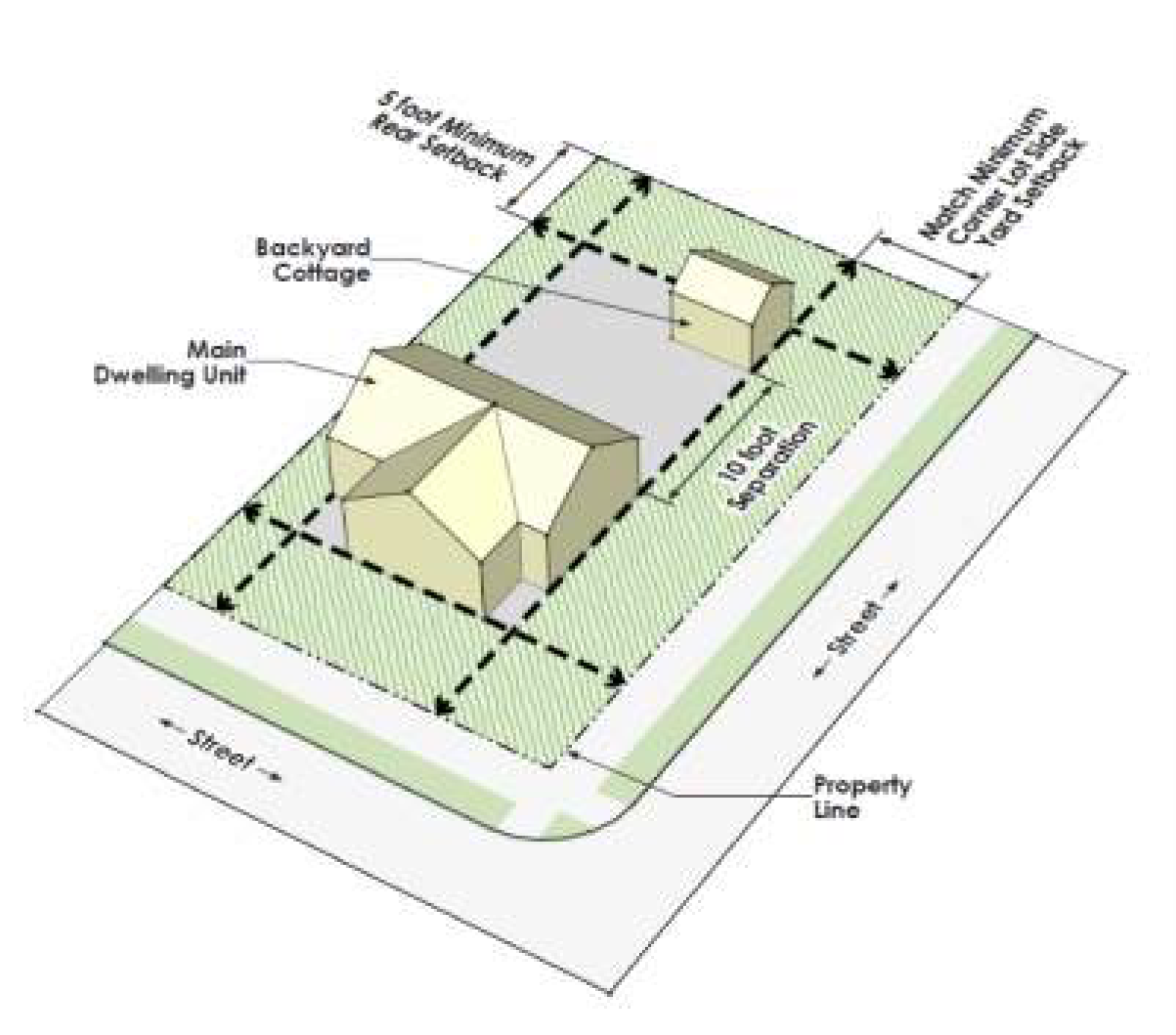
EXHIBIT VII.3.1-2 BACKYARD COTTAGE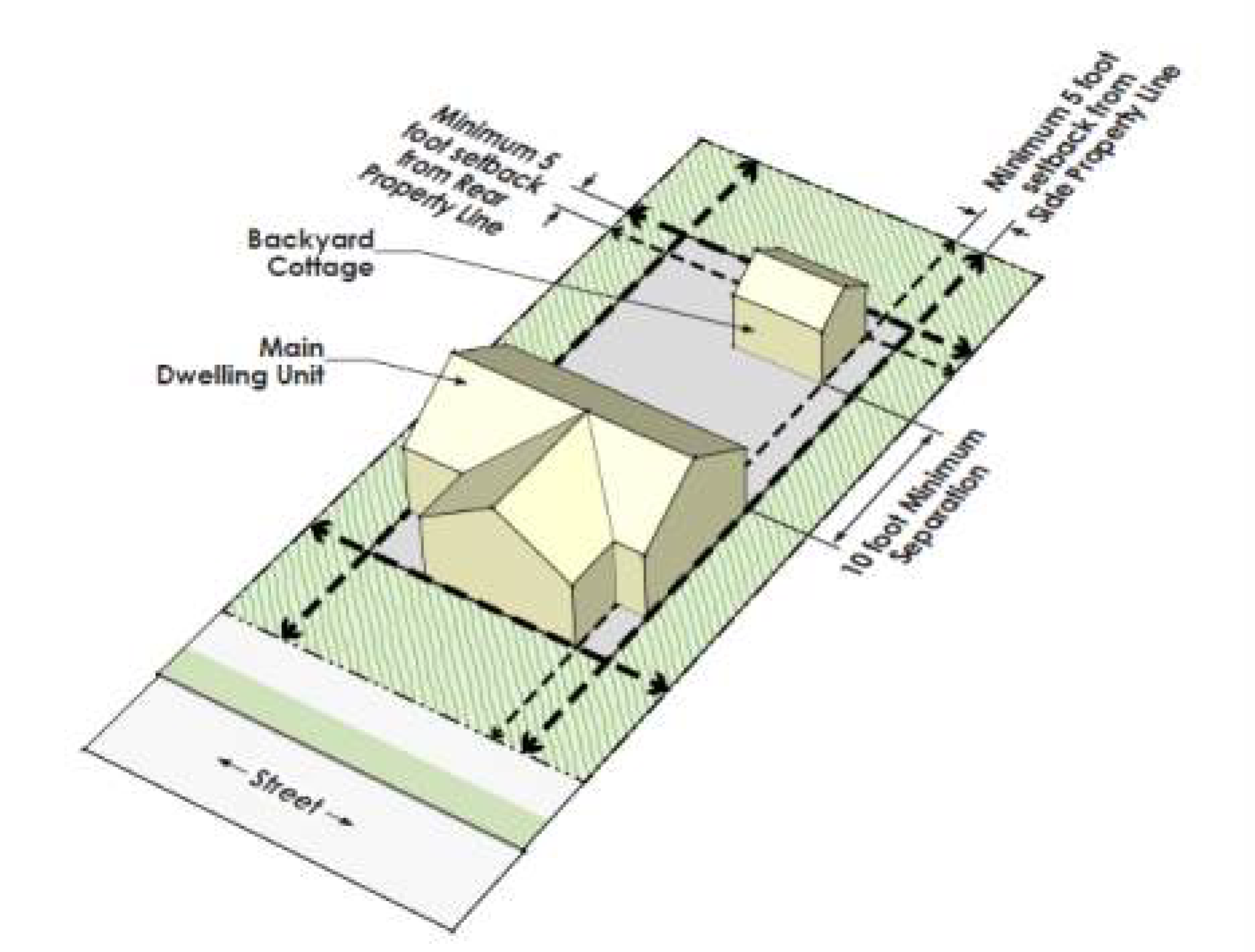
9.
The principal building, the backyard cottage, and any other allowed accessory buildings and structures shall not exceed the maximum lot coverage for the zoning district.
10.
Temporary buildings shall not be used as backyard cottages, and all backyard cottages must be placed on a permanent foundation.
11.
Backyard cottages must be architecturally designed to be compatible with the principal building.
Section VII.3.2. - Accessory Buildings/Accessory Structures
A.
In single-family (AO, TH, TH-2, ETH, R-5, R-6, R-7.5, R-9, R-12, R-18), two-family residential zoning districts, and for single family attached uses, single family detached uses and duplex uses in all other zoning districts, accessory buildings/accessory structures shall not be used for non-residential purposes or for home occupations.
B.
Maximum floor area and number of accessory buildings/accessory structures allowed:
1.
Lot area of 7,500 square feet or smaller: One (1) accessory building/accessory structure not to exceed 250 square feet.
2.
Lot area of 7,501 to less than 18,000 square feet: Two (2) accessory buildings/accessory structures with an aggregate total not to exceed 500 square feet.
3.
Lot area of 18,000 square feet or larger: Two (2) accessory buildings/accessory structures with an aggregate total not to exceed 800 square feet.
4.
Lot area of 12,000 square feet or larger: May apply for a special use permit for up to two (2) accessory buildings/accessory structures with an aggregate total square footage greater than that which is allowed herein.
C.
Location on Building Lot
1.
Accessory buildings/accessory structures must be set back a minimum of five (5) feet from side and rear lot lines. For residential lots served by alleys, carports shall not be located closer than three (3) feet from any side or rear lot line.
2.
Accessory buildings/accessory structures greater than 120 square feet in size must be set back a minimum of five (5) feet from the principal building. See Exhibit VII.3.1-3
3.
In residential zoning districts, accessory buildings/accessory structures, including carports, shall not be located in front of the principal building.
EXHIBIT VI.3.1-3 RESIDENTIAL ACCESSORY BUILDINGS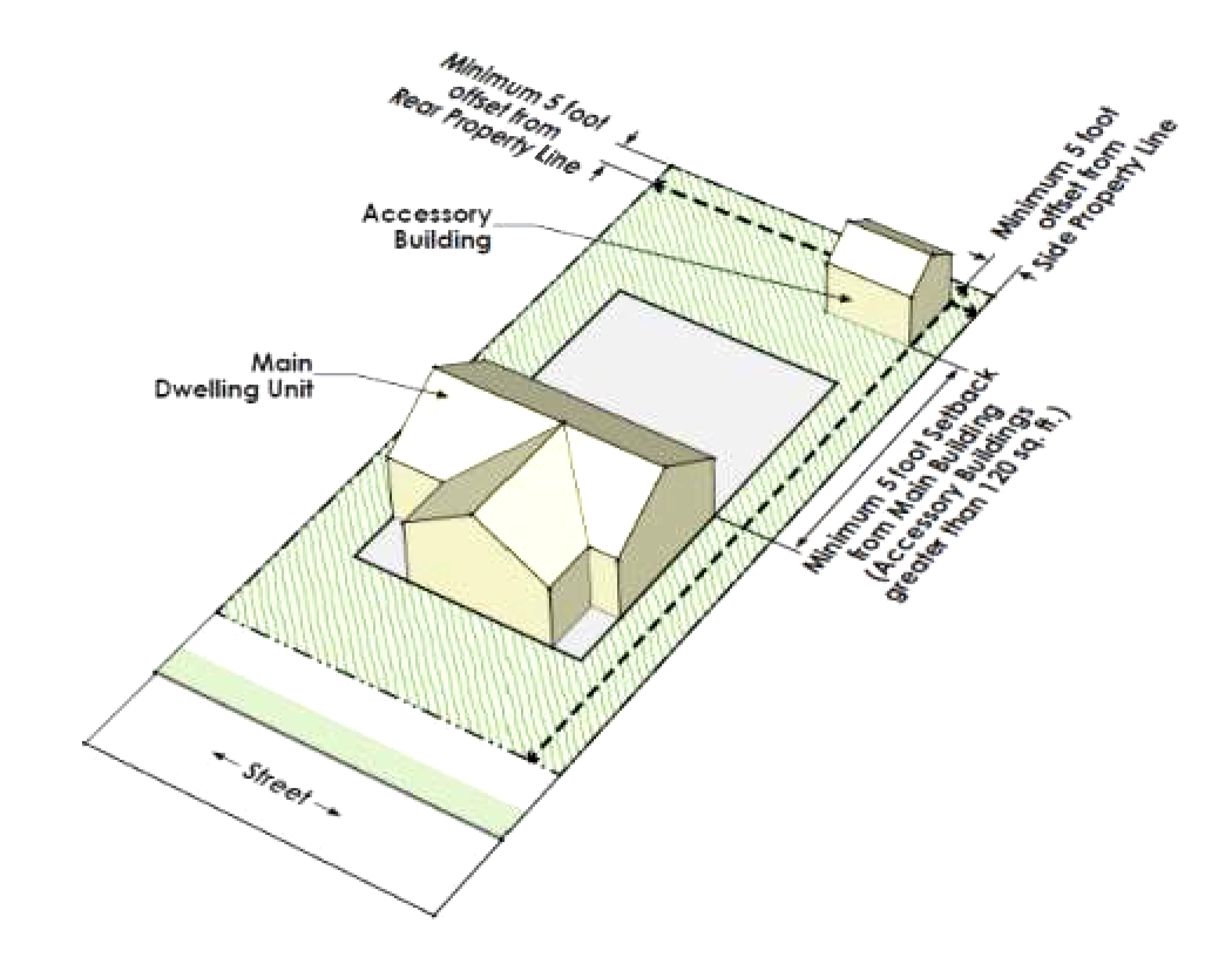
D.
An accessory building/accessory structure shall not exceed the height of the principal building.
E.
An accessory building/accessory structure may not be placed in an easement.
F.
Accessory buildings/accessory structures must be architecturally designed to be compatible with the principal building.
Section VII.3.3. - Animal Care (Indoor) and Veterinarian (Indoor Pens)
Animal Care (Indoor) and Veterinarian (Indoor Pens) uses must be operated in a building.
Section VII.3.4. - Bed and Breakfast
A.
Guest stays are limited to 14 consecutive days.
B.
Limited to ten (10) guest rooms.
Section VII.3.5. - Communications Antennas and Communication Support Structures
A.
All monopole and lattice towers which are more than 25 feet tall shall be placed at a distance of at least three (3) times the height of the monopole or lattice tower from the nearest lot in a single-family residential or duplex zoning district. Communication antennas and communication support structures may not be placed between the building and any street.
B.
Monopole and lattice towers which are placed on the ground and have a total height, including antenna, of not more than 25 feet above ground level shall be allowed in all zoning districts and shall be exempt from distance to height ratios contained in this Section and special use permit requirements contained in this UDC.
C.
A communication antenna not taller than 15 feet may be placed on a building or structure in all zoning districts and shall be exempt from distance to height ratios contained in this Section and special use permit requirements contained in this UDC. Communication antennas placed on buildings or structures shall be allowed, by right, as an accessory use in all residential zoning districts as enumerated in Article VII.2.4 and in office district (OD) and medical district (MD) zoning districts, or as a principal use in all other zoning districts.
D.
Communications antennas may be placed within spires, belfries, and other architectural features as an accessory use when integrated into the design.
E.
Communications antennas may be placed on electric transmission towers as an accessory use.
Section VII.3.6. - Day Care Centers and Day Care (In-Home)
A.
Day Care Centers
1.
If required by the State of Texas, a day care center must be licensed or registered.
2.
No day care center shall be part of a single-family or two-family dwelling.
B.
Day Care (In-Home) is allowed as a home occupation in the caretaker's residence subject to the following:
1.
If required by the State of Texas, a day care (in-home) must be licensed or registered.
2.
Care may be provided to a maximum of 12 children, including the caretaker's own children, maximum number of children
Section VII.3.7. - Duplexes
A.
Duplexes outside of the duplex (DU) zoning district shall not have any garage door facing a public or private street; except that, a single-family home with a garage door facing a public or private street that is converted to a duplex is allowed, but the garage door may not be enlarged.
B.
Duplexes shall not have off-street parking located in any portion of a yard between the principal building and a public or private street; except that if an existing structure is converted to a duplex any existing parking located between the principal building and public or private street may remain, but the parking area between the principal building and the street may not be enlarged.
C.
Duplexes with front entry may have up to two (2) residential driveways that access off-parking on the side or rear of the building.
Section VII.3.8. - Food Truck Parks
A.
Food trucks in a food truck park must be parked on pavement.
B.
Food trucks may remain parked at a food truck park for up to 12 hours but shall not be parked overnight and must return to a commissary for servicing.
Section VII.3.9. - Hotels, Motels or Inns and Extended Stay Hotels
A.
The following minimum standards apply to all hotels, motels or Inns constructed or modified in the OTC, OTMU1 or OMTU2 zoning districts if such modification exceeds 50 percent of the then current appraised value (as set by the appropriate county's Appraisal District) of the existing hotel, motel or inn or extended stay hotel:
1.
The minimum guest room or suite size shall be 400 square feet of livable floor space. This requirement shall be exclusive of garages, porches, breezeways and entry halls. A room size summary table shall be included on the Old Town development plan for all hotel, motel and extended stay facilities.
2.
All guest rooms or suites shall be accessible from a common interior corridor.
3.
At least one (1) staff member shall be available on-site 24 hours a day, seven (7) days a week.
B.
The following minimum standards apply to all hotels, motels or inns and extended-stay hotels constructed or modified in zoning district other that in Subsection A above, if such modification exceeds 50 percent of the then current appraised value (as set by the appropriate county's Appraisal District) of the existing hotel, motel or inn or extended stay hotel:
1.
The minimum guest room size shall be 325 square feet.
2.
All guest rooms shall be accessible from a common interior corridor.
3.
At least one (1) staff member shall be available on-site at all times.
4.
Daily housekeeping service is available to all guests.
5.
All guest rooms must include, at a minimum, a bed, dresser, nightstand, and television.
6.
A minimum of 120 guest rooms is required.
7.
All new construction shall be a minimum of four (4) stories in height.
8.
Elevations and color renderings depicting the material, design and color are required to be submitted with the engineering site plan submittal.
9.
All elevations shall have a uniform level of quality and shall incorporate the same architectural features and facade articulation including the following:
a.
Variation in building form such as recesses and projections;
b.
Vertical accents or focal points;
c.
Change in material and texture;
d.
Emphasis on building entry through form, detail, color or materials;
e.
Recessed windows minimum of three inches (3");
f.
Projecting windowsills; and
g.
Projecting cornices, roofs.
C.
Two (2) of the following five (5) items shall be included in all hotels, motels or inns and extended-stay hotels to which subsection A applies:
1.
Fitness facility - Minimum 400 square feet.
2.
Indoor or outdoor pool - Minimum 1,000 square feet.
3.
Salon, spa or sauna - Minimum 800 square feet.
4.
Gift shop - Minimum 400 square feet.
5.
Private, enclosed or partially enclosed space with plantings, decorative pavement, and seating space - Minimum 1,000 square feet.
D.
Three (3) of the following five (5) items shall be included in all hotels, motels or inns and extended-stay hotels to which subsection A applies:
1.
Landscaping and hardscaping
a.
Landscaping shall be increased by 30 percent from the then current city standards; and
b.
Enhanced hardscaping shall be used in pedestrian areas, walkways from parking spaces to the primary entrance, and at the primary entrance. Enhanced hardscaping may include brick/concrete pavers, pave stones, stamped and stained concrete or similar materials.
2.
A restaurant or bar
a.
Minimum hours of operation shall be from 6:00 p.m. to 11:00 p.m.
b.
Minimum seating capacity of 50.
c.
Full-service or counter service only.
3.
Meeting or conference room
a.
Minimum 1,500 square feet which may be one (1) large room or a combination of several rooms.
b.
Guest rooms and lobbies shall not count toward minimum square footage.
4.
Height - Minimum five (5) stories.
5.
Facades
a.
Eighty percent stone, brick veneer, or a combination thereof shall be used on all facades; and
b.
Exterior insulated finishing systems (EIFS) shall not be used below nine (9) feet from finished grade
Section VII.3.10. - Home Occupations
Home occupations may be conducted in accordance with the following requirements:
A.
Only occupants of the residence may be employed.
B.
There shall be no external evidence of the home occupation detectable at any lot line, including displays, signs, smoke, dust, noise, fumes, glare, vibration, electrical disturbance, storage of materials or equipment, or traffic or parking of vehicles in a manner evidencing the conduct of business.
C.
The home occupation shall not have a separate entrance and shall not generate continual visits by the general public.
D.
No outside storage of materials, goods, supplies or equipment shall be allowed.
E.
No repair or servicing of vehicles, internal combustion engines, large equipment, or large appliances shall be allowed.
Section VII.3.11. - Manufactured Homes and Manufactured Home Communities
A.
Except as provided herein, all manufactured home communities must also meet the requirements of Volume 1, Chapter 7.IV of the Code of Ordinances regulating manufactured homes and manufactured home parks.
B.
A six-foot (6') tall screening wall is required around all sides of a manufactured home community.
C.
The screening wall shall be constructed and maintained by the property owner of the manufactured home community.
Section VII.3.12. - Outside Storage
A.
General Requirements
1.
Outside storage must be designated on an approved engineering site plan.
2.
Outside storage must not be placed:
a.
Within the minimum required yards on the building lot, except when the outside storage is the principal use on the property;
b.
Within parking spaces, fire lanes, easements, access aisles, customer pick-up zones, or loading spaces;
c.
Where it obstructs visibility or interferes with pedestrian or vehicular circulation;
d.
On the roof of any building or structure; or
e.
So as to exceed the height of any required screening outlined in subsection B., below, except that living plants and trees may exceed the height of the required screening.
3.
The maximum permitted area of outside storage is as follows:
4.
A paved or gravel surface is not required for outside storage; however, access aisles, fire lanes and driveways that access the storage area must be paved.
B.
Screening Requirements for Outside Storage
1.
Outside storage must be screened as follows:
a.
Where adjacent to or within 25 feet of a public street, outside storage shall be screened by a minimum six-foot (6') tall screening wall which shall be placed behind the required landscape strip.
b.
Where not adjacent to or within 25 feet of a public street, outside storage shall be screened with a minimum six-foot (6') tall fence or screening wall.
2.
Chain link with vinyl slats shall not be used for screening of outside storage.
3.
Gates at access aisles and driveways are not required to be of solid construction.
Section VII.3.13. - Seasonal Sales
A.
Seasonal sales not to exceed 30 days or 60 days for temporary Christmas tree lots.
B.
Seasonal sales shall comply with Volume 1, Chapter 7.XIV (Seasonal/Temporary Sales Activities) and Article XII (Temporary Christmas Tree Lots) of the Code of Ordinances.
Section VII.3.14. - Self-Service Storage Facility
This use may include office space for the purposes of managing the facility; however, individual units may not be used for any purpose other than storage of household and personal property.
Section VII.3.15. - Independent Living, Assisted Living, Long Term Care or Continuing Care Facility
A.
Minimum Age Requirement for Independent Living Facility - After the death of a family member who was 55 years or older, surviving member(s), regardless of age, may continue to occupy the dwelling unit.
B.
Minimum Floor Area per Dwelling Unit - Minimum dwelling unit sizes shall comply with state regulations for facilities eligible to receive Medicare/Medicaid funding.
C.
Walls or Fences - Walls or fences of not more than six (6) feet in height may be constructed in the front yard of a building lot for assisted living, long term care facilities or continuing care facilities, provided the construction is at least 50 percent open.
Section VII.3.16. - Single-Family Attached Dwellings (Townhouses)
A.
No more than nine (9) single-family attached dwelling units may be attached to each other without a separation between dwelling units.
B.
No dwelling unit may be above another dwelling unit.
Section VII.3.17. - Solar Energy Systems
A.
As an accessory use, solar energy systems shall comply with the following:
1.
Building-mounted systems shall be installed flush parallel with the roof and shall not extend more than 12 inches above the roof surface. If screened from street view by a parapet, the solar collectors may be mounted at an angle to the roof but no portion of the solar collectors may exceed the height of the parapet.
2.
Ground-mounted systems shall not be located in front of the main building or within any required building setback and shall not exceed six (6) feet in height. They may exceed the lot coverage requirement for the zoning district if the following locational standards are met:
a.
Residential Installations - Solar collectors must be screened from adjacent streets and properties by a minimum six-foot (6') tall solid wood fence.
b.
Installations on Non-residential Uses - Solar collectors must be screened from public streets by a minimum eight-foot (8') tall screening wall.
3.
Solar energy systems that use concentrator technologies and have not incorporated antiglare measures shall be placed where the concentrated solar glare shall not be directed onto adjacent inhabited properties or rights-of-way.
B.
As a principal use, solar energy systems shall comply with the following:
1.
Ground-mounted systems shall not be located within required yards and shall not be included in the calculation of lot coverage.
2.
Solar energy systems that use concentrator technologies and have not incorporated antiglare measures shall be placed where the concentrated solar glare shall not be directed onto adjacent inhabited properties or rights-of-way.
Section VII.3.18. - State-Licensed Vehicle Storage Facility
No vehicle shall be stored for more than 30 days.
Section VII.3.19. - Temporary Construction Buildings
A.
Temporary Construction and Homebuilder Activities
1.
Temporary construction buildings and real estate sales offices (temporary) shall be limited in time to a period not exceeding 24 months, however, this may be extended by the Building Official.
B.
Temporary construction buildings shall be located on the same property or on an adjacent property under the same ownership as the activity being supported.
C.
A manufactured home may be used as a temporary construction building.
Section VII.3.20. - Vehicle and Related Uses
To be permitted by staff the following standards apply to all vehicle and related uses, as enumerated in the use tables in Article VII.2.4 of this UDC, when constructed or enlarged.
A.
A minimum 40-foot landscape strip shall be provided along all public streets with shade trees every 30 feet on center, understory trees every 30 feet on center and a solid evergreen shrubbery hedge. The landscape strip may be reduced in width as allowed in Article VIII.3.4 but shall not be reduced to less than 15 feet and shall contain shade trees every 30 feet on center and a solid evergreen shrubbery hedge.
B.
Signs shall only be low-profile/monument signs and wall signs.
C.
Service bay doors shall not face public and private streets or adjacent residential uses.
D.
Vehicle and related uses as listed in the use tables in Article VII.2.4 shall require a special use permit in order to be located (a) within 1,000 feet of an existing vehicle and related use; (b) at the intersection of two (2) collector or higher classification thoroughfares as shown on the Thoroughfare Plan; or (c) within 200 feet of property zoned for or developed with single-family, duplex, or multi-family uses.
Section VII.3.21. - Wind Energy Conversion Systems
Wind energy conversion systems must meet the height, setback and other requirements of the base zoning district.
Section VII.3.22 - Multi-Family Dwelling
In the Old Town Center (OTC) and Old Town Mixed-Use Two (OTMU2) zoning districts, the ground floor of all buildings which include multi-family dwellings shall be designed to accommodate non-residential uses for a depth of at least 24 feet facing Main Street, Church Street, College Street and/or Mill Street by meeting the standards below.
A.
The ceiling height shall not be less than 12 feet.
B.
Ceilings and walls separating the area designed to accommodate non-residential uses from any residential uses in the same building shall have a one-hour fire separation vertically and horizontally per the adopted building code.
C.
The exterior ground floor architecture shall reflect a vernacular commercial storefront designed as outlined in Appendix 1, Old Town Design Guidelines, Chapter 7, Section 2, and consist of a minimum of 60 percent glazing.
D.
Space for future signage shall be provided on the exterior of the building above first floor windows.
E.
Access to the area designed to accommodate non-residential uses shall meet all applicable accessibility standards for such uses, including, but not limited to, ramps and width of doors.
F.
The building must have access to either a minimum nine-foot by nine-foot concrete space to accommodate an outdoor receptacle for non-residential use or a trash compactor that can be shared with non-residential uses.
G.
The ground floor must comply with at least one of the following:
1.
Ground floor podiums will be constructed using load-bearing columns, whereby the ground floor space which is designed to accommodate non-residential uses may be demolished and remodeled.
2.
All ground floor space will utilize girders or beams to connect two or more adjacent dwelling units to create a minimum of 1,400 square feet of connected space for non-residential uses. An alternative construction technique to girders or beams may be approved by the Planning Director as an administrative modification, but any such alternative construction technique must allow for a minimum of 1,400 square feet of connected space.
H.
Post-tensioned foundation design shall not be allowed in the interior slabs for areas designated to accommodate non-residential uses.
(Ord. No. 0534-23-ORD, § 1, 3-20-2023)
Section VII.3.23. - Medical Office and Clinic, Hospital, and Licensed Massage Therapy
A.
A special use permit shall be required for any medical office and clinic, hospital, or licensed massage therapy:
1.
where two or more arrests have occurred for at least three offenses under Section 43.02, 43.021, 43.03, 43.04, 43.05, or 71.02 of the Texas Penal Code; or
2.
where an offense under Chapter 20A, or Section 34.02, 43.02, 43.021, 43.03, 43.04, 43.05, or 71.02 of the Texas Penal Code, was committed that resulted in a conviction; or
3.
that is operating at a location where a medical office and clinic, hospital, or licensed massage therapy which was required by this section to obtain a special use permit based on subsection A.1 or A.2, above, previously operated, whether or not the special use permit was ever obtained; or
4.
that is operating at a location where a medical office and clinic, hospital, or licensed massage therapy owned or operated by an individual who was arrested for an offense listed in subsection A.1 or was convicted of an offense listed in subsection A.2 previously operated.
B.
A special use permit required by this section shall:
1.
require as a condition that the medical office and clinic, hospital, or licensed massage therapy limit its hours of operation to between the hours of 7:00 a.m. and 10:00 p.m.; and
2.
expire after two years unless otherwise provided by the City Council, except that the ordinance granting a special use permit required by this section may be revoked by the City Council as provided for in subsection D or repealed by the City Council as provided for in subsection H, below.
C.
Upon the expiration of a special use permit required by this section, the medical office and clinic, hospital, or licensed massage therapy shall no longer require a special use permit under this section unless and until, subsequent to the expiration of the special use permit any of the conditions in subsection A occur.
D.
The City Council may, on its own motion, call a public hearing to consider revoking a special use permit under this section by repealing the ordinance granting such special use permit:
1.
the conditions outlined in the special use permit required by this section are not being met; or
2.
any additional arrest or citation in lieu of arrest for an offense listed in subsection A.1, or an offense listed in subsection A.2 resulting in a conviction, occurs at the location of a medical office and clinic, hospital, or licensed massage therapy operating pursuant to a special use permit required by this section.
E.
If a special use permit required by this section is revoked by the City Council as outlined in subsection D, the medical office and clinic, hospital, or licensed massage therapy requiring a special use permit under this section may no longer operate in the location where the special use permit had been required. Following revocation of such special use permit under this subsection, a medical office and clinic, hospital, or licensed massage therapy shall not be eligible to apply for a special use permit under this section in the same location for one year following repeal.
F.
To obtain a special use permit required by this section, in addition to the items required in Article III, Chapter 9, the owner or operator will be required to provide documentation showing what actions the owner or operator has taken to ensure that no further violations of the Texas Penal Code as listed in Subsections A.1. or A.2, above, occur at the medical office and clinic, hospital, or licensed massage therapy.
G.
Any medical office and clinic, hospital, or licensed massage therapy required to obtain a special use permit pursuant to subsections A.3 or A.4 may submit a request to the City Council for an exemption from such requirement.
1.
The request for an exemption must include documentation sufficient to demonstrate the owner or operator has undertaken or implemented procedures and controls to prevent the commission of any offense listed in subsections A.1 or A.2 at the medical office and clinic, hospital, or licensed massage therapy.
2.
The City Council shall consider, but is not required to approve, the requested exemption at the City Council's next regularly scheduled meeting that allows sufficient time to comply with Chapter 551 of the Texas Government Code if:
a.
in the two-year period preceding the date of the request for an exemption, an arrest has not occurred nor has a citation in lieu of arrest been issued for an offense listed in subsection A.1, nor has a conviction resulted from an offense listed in subsection A.2 committed at the medical office and clinic, hospital, or licensed massage therapy requesting the exception; and
b.
the current owner of the medical office and clinic, hospital, or licensed massage therapy is not an individual who has been arrested or issued a citation in lieu of arrest for offenses listed in subsection A.1 or convicted of an offense listed in subsection A.2.
H.
Any owner of a new medical office and clinic, hospital, or licensed massage therapy operating or wishing to operate in a location which has a special use permit required by this section may submit a request to the City Council to repeal the ordinance granting the special use permit before the end of the then-current two-year term.
1.
The request for repeal must include documentation sufficient to demonstrate the owner or operator has undertaken or implemented procedures and controls to prevent the commission of any offense listed in subsections A.1 or A.2 at the medical office and clinic, hospital, or licensed massage therapy.
2.
The City Council shall consider, but is not required to approve, the request to repeal the ordinance granting the special use permit if:
a.
in the two-year period preceding the date of the request for repeal, an arrest has not occurred nor has a citation in lieu of arrest been issued for an offense listed in subsection A.1, nor has a conviction resulted from an offense listed in subsection A.2 committed at the medical office and clinic, hospital, or licensed massage therapy requesting the repeal; and
b.
the current owner of the medical office and clinic, hospital, or licensed massage therapy requesting the repeal is not an individual who has been arrested or issued a citation in lieu of arrest for an offense listed in subsection A.1 or been convicted of an offense listed in subsection A.2.
(Ord. No. 0609-23-ORD, § 1, 11-6-2023; Ord. No. 0664-24-ORD, § 1, 6-17-2024)
Section VII.3.24. - Manufacturing, Light Intensity; Manufacturing, Medium Intensity; Manufacturing, Heavy Intensity; and Warehouse Distribution Facility
Manufacturing, Light Intensity; Manufacturing, Medium Intensity; Manufacturing, Heavy Intensity; and Warehouse Distribution Facility uses are subject to the following standards:
A.
No portion of a property containing a Manufacturing, Light Intensity; Manufacturing, Medium Intensity; Manufacturing, Heavy Intensity; or Warehouse Distribution Facility use may be located within 500 feet (500') of a property line of any property containing any use listed in Section VII.2.4.
1.
This regulation shall not apply when:
a.
Every property within 500' contains one of the following uses:
i.
Any use in the Manufacturing and Industrial Uses category as set forth in Section VII.2.4;
ii.
Any use in the Temporary Uses category as set forth in Section VII.2.4;
iii.
Any use in the Transportation, Utility and Communications Uses category as set forth in Section VII.2.4;
iv.
Any use in the Warehouse and Storage Uses category as set forth in Section VII.2.4;
v.
Landfill Operation and Accessory Use;
vi.
Automobile Salvage;
vii.
Junk Yard;
viii.
Motor Freight Terminal; or
ix.
Truck Parking Lot; or
b.
The use is locating in:
i.
A building or structure in use as a Manufacturing, Light Intensity; Manufacturing, Medium Intensity; Manufacturing, Heavy Intensity; or Warehouse Distribution Facility use on March 3, 2025 as evidenced by a certificate of occupancy which was current and valid on that date; or
ii.
If no certificate of occupancy exists for the building or structure, a building or structure which the Planning Director has determined, following review of any documentation he may deem relevant or helpful, to have been in use as a Manufacturing, Light Intensity; Manufacturing, Medium Intensity; Manufacturing, Heavy Intensity; or Warehouse Distribution Facility use on March 3, 2025; or
iii.
A building or structure within a planned development district that authorizes the use or states that the purpose of the planned development district is to allow light industrial and manufacturing uses; or
iv.
A building or structure designed for a Manufacturing, Light Intensity; Manufacturing, Medium Intensity; Manufacturing, Heavy Intensity; or Warehouse Distribution Facility use as designated on an Engineering Site Plan in effect on March 3, 2025; or
v.
A building or structure: (1) designed for a Manufacturing, Light Intensity; Manufacturing, Medium Intensity; Manufacturing, Heavy Intensity; or Warehouse Distribution Facility use as designated on a Concept Plan or Engineering Site Plan for which a complete development application had been submitted to and accepted by the City and was under review by City staff on March 3, 2025; and (2) which was subsequently built in accordance with said Concept Plan or Engineering Site Plan as finally approved, so long as such finally approved Concept Plan or Engineering Site Plan designates the building or structure as designed for one of the above listed uses; or
vi.
A building or structure which is less than 25,000 square feet.
2.
When a change is proposed to a building or structure described in Subsections VII.3.24.A.1.b.i, ii, and iv through vi that would require the submission of a new Engineering Site Plan as outlined in Section III.4.3, the exceptions set forth in those subsections shall no longer apply to that building or structure.
3.
Nothing in this subsection A shall be construed to remove or alter any other regulation in this UDC, including but not limited to abrogating a requirement to obtain a special use permit or altering the legal nonconforming status of an existing use, building lot, building structure, or site improvement which is based on any other regulation in this UDC.
B.
In addition to the landscape strip requirements in Sections VIII.3.4.A and VIII.3.4.B and in lieu of the screening requirements in Section VIII.5.3, a 50-foot landscape strip is required along all public or private streets and any property line adjoining all uses listed in Section VII.2.4 except for the uses listed in Subsections VII.3.24.A.1.a.i through ix above. In cases where a landscape strip is required along a public or private street under this Subsection A and the regulations set forth in this Section 24 conflict with the requirements of Sections VIII.3.4.A and VIII.3.4.B, the regulations set forth herein shall prevail. This standard may be modified or waived by an alternative standard.
1.
The turf and groundcover requirements of Section VIII.3.4.A.4 shall apply to the landscape strip. The landscape strip shall contain the following elements:
a.
A landscape berm which must be a minimum of five feet above the average grade of the nearest back-of-curb/pavement edge elevation or property line elevation, whichever is applicable, and the finished floor elevation of the building;
b.
A row of evergreen understory trees a minimum of 6 feet tall at planting spaced 20 feet on center;
c.
A double row of shade trees staggered and spaced 30 feet on center; and
d.
An eight (8)-foot-tall masonry screening wall along the property line adjacent to any property occupied by any use in the Residential Uses category as set forth in Section VII.2.4 or designated as a residential zoning district listed in Exhibit VII.2.3-2, Residential Zoning Districts.
e.
This standard may be modified or waived by an alternative standard.
C.
Truck docks shall not face any: public or private street; open space, including a public park and playground; or property occupied by any use in the Residential Uses category as set forth in Section VII.2.4 or designated as a residential zoning district listed in Exhibit VII.2.3-2, Residential Zoning Districts. This standard may be modified or waived by an alternative standard.
D.
The open sides of truck courts shall be screened from any street and adjoining properties with a minimum 12-foot-tall masonry or concrete tilt wall screening wall, which may have openings to accommodate required fire lanes and access aisles. The open sides of truck courts adjoining the uses listed in Subsections VII.3.24.A.1.a.i through ix above are exempt from this screening standard. This standard may be modified or waived by an alternative standard.
E.
These supplemental use regulations shall be in addition to the requirements of Section VI.8.1, IH-35E Corridor Overlay District. In cases where these supplemental use regulations conflict with the requirements of Section VI.8.1, IH-35E Corridor Overlay District, these supplemental use regulations shall prevail.
(Ord. No. 0717-24-ORD, § 2, 12-9-2024; Ord. No. 0736-25-ORD, § 1, 2-17-2025)
Section VII.4.1. - Sale of Alcoholic Beverages
A.
The sale of alcoholic beverages in a retail establishment with a permit for the off-premises consumption of beer and wine shall be prohibited within 300 feet of a church, public or private school, or public hospital.
B.
The sale of alcoholic beverages in a restaurant with a food and beverage certificate shall be prohibited within 300 feet of a church, public school, or public hospital.
1.
Subsection B does not apply to the holder of a license or permit covering a premises where minors are prohibited from entering under V.T.C.A., Alcoholic Beverage Code § 109.33, and which is located within 300 feet of a private school.
2.
The measurement of distances between a church, public or private school, or public hospital and a place of business shall be calculated in accordance with V.T.C.A., Alcoholic Beverage Code § 109.33.
3.
Variances to the distance requirements set forth in this Section may be allowed by the City Council upon justification in accordance with V.T.C.A., Alcoholic Beverage Code § 109.33. A variance under this subsection is not subject to the variance relief procedures set forth in this UDC.
Section VII.4.2. - Sexually-Oriented Businesses
A.
Purpose and Intent - It is the purpose of this Section to regulate the location of sexually-oriented businesses, to promote the health, safety, morals and general welfare of the citizens of the City, to preserve the quality, property values, integrity and character of the City's neighborhoods and other businesses, and to protect the citizens of the City from the negative direct and secondary effects of sexually-oriented businesses.
The provisions of this Section have neither the purpose, nor the intent of imposing a limitation or restriction on the content of any communicative materials, including sexually-oriented materials. Similarly, it is not the intent, nor the effect of this subsection to restrict or deny access by adults to sexually-oriented materials protected by the First Amendment, or to deny access by the distributors and exhibitors of sexually-oriented entertainment to their intended market.
B.
Definitions - The following words, terms, and phrases, when used in this subsection, shall have the following meanings. For any word, phrase, or term not defined in this subsection, the definitions in Article II of this UDC or Volume 1, Chapter 7.XI of the Code of Ordinances shall apply. If any definition in this subsection is in conflict with Article II of this UDC, then the definitions in this subsection shall prevail.
1.
Religious Facility - has the meaning given in Article II of this UDC, including all associated accessory uses, except that a cemetery or columbarium shall not be considered a "religious facility" for purposes of this Section.
2.
Certificate of Compliance - means a certificate signifying that the location standards, as defined herein, have been met.
3.
Civic facility - means any building or structure owned, controlled or operated by any school district, municipality, county, state or federal government which is open for use by the general public, except as otherwise provided for herein. The term shall not include storage and maintenance structures, police or fire stations, sanitary or construction/demolition landfills, or public utility structures, including substations or treatment, generation, or pump facilities.
4.
Location Standards - means the standards set forth in subsection C below.
5.
Public Park - means any public park or playground, as well as any property otherwise meeting the definition of a public park or playground which is owned, controlled or operated by any school district, municipality, county, state or federal government, and which is open for use by the general public.
6.
Sexually-Oriented Business - has the meaning given in Volume 1, Chapter 7, Article XI of the Code of Ordinances. A sexually-oriented business is not a use for the purposes of this Article, but a type of business.
C.
Location Standards
1.
A sexually-oriented business may not locate or operate within 1,000 feet of:
a.
Any property located in a residential zoning district or upon which a residential use is located;
b.
Any other sexually-oriented business; or
c.
The property line of any religious facility, hospital, public park, public or parochial school, private school, civic facility, or daycare center legally operating under the zoning laws of the City.
2.
For the purpose of this subsection, measurements shall be made in a straight line, without regard to intervening structures or objects, from the nearest portion of the building or structure used as a part of the premises where the sexually-oriented business is located to the nearest property line of a business, use, or zoning district enumerated in subsection C.1.
D.
Exception from Location Standards - Subsequent to the grant or renewal of the sexually-oriented business license under Volume 1, Chapter 7.XI of the Code of Ordinances, a sexually-oriented business lawfully operating under this subsection and which holds a valid license issued under Volume 1, Chapter 7.XI of the Code of Ordinances is not required to comply with the location standards due to the location or establishment of a business, use, or zoning district enumerated in subsection C.1 within a prohibited distance of the sexually-oriented business. This exception shall no longer apply to any sexually-oriented business upon the expiration or revocation of its sexually-oriented business license.
E.
Certification of Compliance with Location Standards
1.
Applications for a certificate of compliance shall be submitted in writing to the Planning Director on a form provided by the Planning Department accompanied by the appropriate fee set forth in Volume 1, Chapter 2.2-201 of the Code of Ordinances. The Planning Director shall issue a certificate of compliance or deny the application within ten (10) working days from the date the application is submitted.
2.
Upon determination that a proposed sexually-oriented business is in compliance with the location standards, the Planning Director shall issue a certificate of compliance.
3.
If an application for a certificate of compliance is denied, the applicant may appeal the decision as provided for in Article IV.5 of this UDC.
F.
Compliance with Other Ordinances - Sexually-oriented businesses shall be subject to, and comply with, the rules and provisions of the City's Code of Ordinances. Where conflict exists between the requirements established in this Section and other requirements of the City's Code of Ordinances, then the more restrictive requirement shall apply.
G.
Signage - Signs located on the building, structure, or premises of a sexually-oriented business shall conform to the requirements of the sign ordinance of the City. Such signage shall not advertise, either graphically or verbally, by explicit or literal expression, connotation, or implied reference, any specified sexual activity or specified anatomical area, as defined in Volume 1, Chapter 7.XI of the Code of Ordinances.
Section VII.4.3. - Short-Term Rental Units
A.
A property upon which a short-term rental unit is located within a single-family attached dwelling, single-family detached dwelling or duplex shall not locate within 1,000 feet of another property upon which a short-term rental unit is located within a single-family attached dwelling, single-family detached dwelling or duplex, as measured from property line to property line. Measurements required under this section shall be taken at the shortest distance in a straight line between property lines, without regard to intervening structures. Short-term rental units that have obtained a permit or begun the permitting process as set forth in section 4-201 of Volume 1, Chapter 4 of the Code of Ordinances prior to the effective date of this ordinance will be considered legal nonconforming uses subject to Article V, Nonconformities.
B.
No more than 3% of dwelling units in a multi-family dwelling may have a short-term rental unit located within the dwelling unit at any given time, except that at least two short-term rental units may locate within a multi-family dwelling at any given time. Where a property contains multiple multi-family dwellings, the entire property shall be considered one multi-family dwelling for the purposes of this section.
(Ord. No. 0800-25-ORD, § 4, 10-6-2025)

