
Miramar City Zoning Code
CHAPTER 10
SIGNS1
Editor's note— Ord. No. 12-05, § 3(Exh. A), adopted Nov. 30, 2011, repealed the former Ch. 10, §§ 1001—1014, and enacted a new Ch. 10 as set out herein. The former Ch. 10 pertained to similar subject matter and derived from Ord. No. 03-05, § 3, adopted Dec. 4, 2002; Ord. No. 04-04, § 3, adopted Nov. 19, 2003; Ord. No. 06-03, § 2, adopted Oct. 19, 2005.
Sec. 1001.- Purpose.
These sign regulations are intended to define, permit, and control the placement of signs within the city. The city commission has adopted these regulations in order to achieve the following community goals and objectives:
(a)
Protect the health, safety, and welfare of the public;
(b)
Safeguard the public use and nature of the streets and sidewalks;
(c)
Protect and enhance the visual environment of the city;
(d)
Minimize visual distractions to motorists using the public streets;
(e)
Promote an aesthetically pleasing environment for Miramar residents;
(f)
Promote the economic growth of Miramar by creating a community image that is conducive to attracting new business and industrial development;
(g)
Allow legible and effective signs and prevent their over-concentration, improper placement, and excessive height, bulk, density, and area;
(h)
Promote the safety of persons and property by requiring that signs not create a hazard due to collapse, fire, decay, or abandonment;
(i)
Ensure that signs do not obstruct fire-fighting efforts, and do not create traffic hazards by confusing or distracting motorists or by impairing drivers' ability to see pedestrians, obstacles, or other vehicles or to read traffic signs;
(j)
Allow the identification of commercial and noncommercial uses, ideas, products and services in the community; and
(k)
Control visual clutter and encourage high professional standards in sign design and display.
(Ord. No. 12-05, § 3(Exh. A), 11-30-11)
Sec. 1002. - Definitions.
It is the intention of this section to classify all types of signs. If a sign is not specifically mentioned herein, the city manager or said manager's designee, shall choose the most appropriate classification(s) for that sign.
Activity sign: A sign used to identify a nonprofit use (such as a place of worship or school or governmental/public facility) and the activities it hosts or sponsors. It may be attached or freestanding.
Address sign: An attached sign indicating the address of the structure, dwelling unit, or business to which it pertains. It may be attached to a wall, freestanding monument, directional information sign or to an awning.
Advertising sign: A sign that specifies, either directly or indirectly, a good or service either sold or offered for commercial gain. It may be attached or freestanding.
Animated sign: A sign located on private property that uses motion of any part, by any means, including wind power, or displays flashing, oscillating or intermittent lights. It may be attached or freestanding.
Apex: The highest point of a sign as measured from the point on the ground where the sign base is located, or, if no sign structure is present, from the point on the ground directly below the sign itself.
Architectural sign: A permanent sign that is integral to the design of a doorway, column, cornice, or parapet and the materials of which are integral to the surface of the building façade.
Architectural sign cluster: One or more signs attached to or integrated with one or more landscape elements, such as a wall or fountain, to form a unified entry feature.
ATM sign: An attached sign that identifies the name of the machine or the business entity that owns an automatic teller machine and that identifies the financial services networks that are accepted at that automatic teller machine.
Attached sign: A sign painted on or attached to and supported by a building or other structure.
Attention attracting device: Any streamer, pennant, propeller, inflatable sign, tethered balloon, portable sign, bunting or other artificial device, figure, shape, color, sound, light or exhibit, whether live, animated or still, that is intended to attract attention to the use or business being conducted on a site.
Awning: Any movable roof-like structure, cantilevered or otherwise entirely supported from a building, so constructed and erected as to permit it to be readily and easily moved.
Awning sign: A sign either painted on or attached to an awning, with the lettering/logos applied directly on the valance or other vertical portion of an awning, and which contains only the business name, logo, and/or street address.
Band identification sign: A sign that is attached flat on the exterior front, rear or side wall of any building or other structure, and which provides information consisting only of the name and/or logo of the business, and shall not list products, sales, or other promotional messages, or contact information. (Synonym: Fascia or wall sign). These signs are commonly used at office and shopping center buildings.
Banner sign: An advertising sign that cannot be considered a flag, having characters, letters or illustrations applied to cloths, paper, plastic, or fabric of any kind, with only such material for backing.
Bench sign: A sign that is attached to, painted on or incorporated into a bench of any fashion, size, or construction.
Billboard: See Off-premises sign.
Blade sign: A sign mounted on the building façade, projecting at a 90-degree angle.
Blade identification sign: A sign mounted on the building façade, projecting at a 90-degree angle which provides only the name and/or logo of the establishment. (Synonym: projecting sign)
Box sign: An attached sign where the face is enclosed, bordered, or contained within a box-like structure, frame or other device. Also known as a cabinet sign.
Bulk regulations means those regulations set forth in Table 801-1 of this Code, including provisions regarding building height, minimum yards and parcel size.
Building frontage: The length of the front façade of a building.
Bulletin board: A board on which pedestrian-scaled notices are posted. It may be attached or freestanding.
Bus bench: A long seat for two or more persons at a bus stop for people waiting for a bus located on a public right-of-way, city park, or governmentally owned easement or land.
Bus shelter: A covered structure at a bus stop providing protection against the weather for people waiting for a bus located on a public right-of-way, city park, or governmentally owned easement or land.
Bus shelter sign: A sign that is painted on or incorporated into the material structure of a bus shelter.
Canopy sign: A non-illuminated pedestrian-oriented sign that is attached to the underside of a canopy structure either parallel or perpendicular to the façade when such canopy structure is attached to or supported by another structure. It is typically known as a colonnade sign.
Changeable copy sign: A sign or portion thereof on which the copy or symbols change either electronically or manually through placement of letters or symbols on a panel mounted on a track system.
Channel letter sign: A sign comprised of individually illuminated removable formed, three-dimensional letters and graphics, with each letter or graphic made up of a U-channel base, with colored or clear Plexiglas face.
Channel letter sign, reverse: A sign comprised of individually illuminated letters or graphics made of metal faces and returns (sides of letters) with a clear plastic backing, designed to be mounted a short distance away from the wall and create a halo-lit effect. Also known as a back-lit letter sign.
City public information sign: means a sign erected by the city for the purpose of providing noncommercial public announcements of city-sponsored meetings, events, and activities to the community.
Clearance: The height above the walkway or ground surface, of the bottom edge of an element.
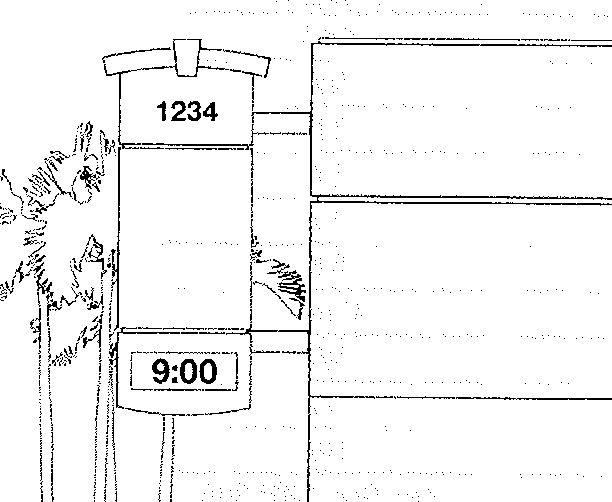
Clock: A device that displays the current time. It may be attached or freestanding.
Community information sign: A sign, located on and relating to, an activity on or near the premises upon which the sign is located. Examples include: "Children at Play," "Crime Watch Area," "Drug Free School Zone," and "Adopt a Highway." It may be attached or freestanding.
Contractor sign: A sign denoting the architect(s), engineer(s), contractor(s) or sub-contractor(s) on the premises of work under construction.
Copy: The words or message displayed on a sign.
Courtesy notice sign: A sign required per Land Development Code ("LDC") Section 301.11.
Development sign: A freestanding sign placed on a property outlining the name and type of development that is proposed for the site per an approved site plan.
Diameter breast height (DBH) means the diameter of the trunk of a tree measured at breast height. The DBH of trees with multiple trunks shall be the sum of the individual trunk diameters at breast height. Trees with less than four and one-half feet of clear trunk shall be measured as the diameter of the largest vertical branch or leader at breast height.
Digital billboard: A billboard as described in section 1014 with digital technology.
Digital technology (signs). Electronic technology that allows for changes to a sign copy resulting from digital data input. Included in this technology are signs that use a series of lights, including light emitting diodes (LED), fiber optics, or other similar technology.
Digital clock: An electronic sign that displays only the time, date, or temperature. It may be attached or freestanding.
Digital menu board: A sign that utilizes electronic display, including, but not limited to, liquid crystal (LCD) plasma display or project images at a drive-thru facility and is not readable from off the premises of the drive-thru facility. It may be an attached or freestanding sign.
Digital menu board preview monument sign: A sign that precedes the location of the primary menu board within the vehicular stacking lanes which utilizes electronic display, including, but not limited, to liquid crystal (LCD) plasma display or project images which is located at a drive-thru restaurant and not readable from off the premises of the restaurant. It may be an attached or freestanding sign.
Digital sign: A sign that utilizes an electronic display, including, but not limited to, liquid crystal (LCD) plasma display or projects images, to show content.
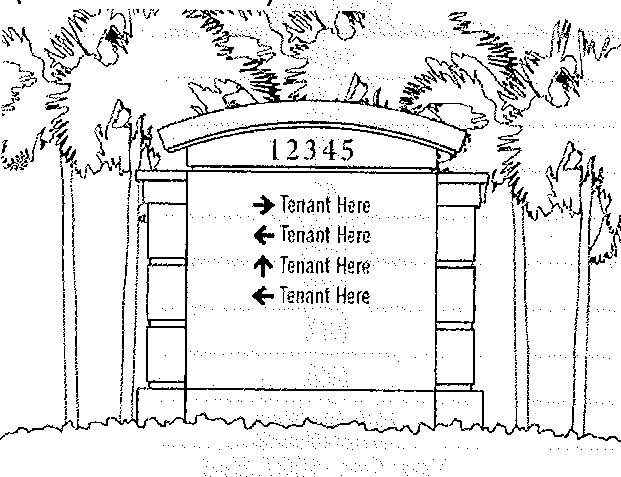
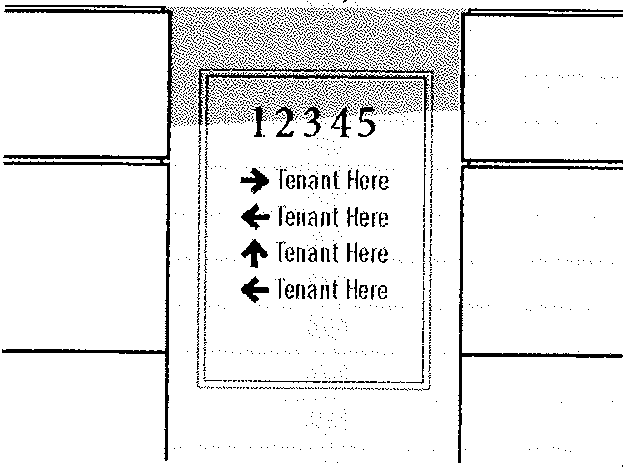
Directional sign: A sign relating to navigation on the property on which it is located, that provides directional information to pedestrian and vehicular traffic, such as "Entrance," "Exit," "Parking," "Drive-thru," "Loading," or that identifies the name of a place or location on the property on which it is located with a directional symbol. It may be attached or freestanding.
Director: See "community development director."
Directory sign: An attached index consisting of the names of tenants of an office building, shopping center, or other multi-tenant business complex.
Electric sign: Any sign containing or using electrical wiring.
Elevation: See "Façade."
Entrance feature sign: A sign with embellished architectural features that identifies a residential community. Such embellished architectural features include piers, columns, trellises, finials, ornaments, metalwork, light fixtures, and similar design and decorative elements that enhance the attractiveness of the structure. Also known as a "Residential Community Identification Monument Sign."
Exempt sign: A sign exempt from the permitting requirements, but not the other requirements of this chapter or other provisions of applicable codes.
Façade: The entire vertical building face of a building, including any parapet.
Family event sign: A sign on a residential lot indicating a family event such as birthday, wedding, anniversary, or family reunion, are examples of family events. It may be attached or freestanding.
Feather flag sign: A free-standing, temporary advertising sign typically constructed of a single plastic or metal shaft or harpoon-style pole driven into the ground for support or supported by means of an individual stand with an attached pennant that is vertically elongated and attached to the shaft.
Flag: A piece of fabric with a color or pattern representing a government or other noncommercial organization or idea. It may be attached or freestanding.
Font: A set of letters, numerals and shapes that conform to a specific set of design criteria.
Foot candle: The unit of measurement for luminance is foot candles (fc), which is the illuminance on a one square foot surface from a uniform source of light.
Freestanding sign: A self-supported structure not attached or affixed in any way to a building or any other structure.
Gasoline advertising sign: Any advertising or promotional sign attached to the pumps at a gasoline service station not exclusively relating to the price of gasoline or diesel fuel.
Gasoline price sign: An attached sign used solely for the purposes of stating the price of gasoline or diesel fuel (incorporated into a monument identification sign).
Gasoline service station identification sign: An attached sign used solely for the purposes of identifying the brand or company name and/or logo of the service station establishment, and not including advertising information.
Grand opening sign: A sign which is temporary in nature that is used to denote the fact that a new business or residential development is present.
Handheld sign: A sign which is temporary in nature that is held by an individual person and used to identify an establishment or activity located on or in immediate proximity to the location where the sign is displayed. Also known as a "human" sign.
Hazardous sign: A sign that approximates a traffic sign and is not placed for a legitimate public safety reason, or which may include words such as "Stop," "Danger," "Caution," "Look," or similar words. It may obscure a traffic sign or a directional sign. It may be attached or freestanding.
Identification sign: A sign that indicates the name and/or logo of a business or group of businesses, organization, activity, residence, or residential development, and shall not list products, sales, or other promotional messages, or contact information. It may be attached or freestanding.
Illegal sign: A sign erected in violation of any ordinances in effect at the time of the sign's erection or installation.
Illuminated sign, external: A sign having the characters, letters, figures, designs or outlines illuminated by electric lights or neon gas where the light source is visible. This does not include illumination from a source other than the sign. It may be attached or freestanding.
Illuminated sign, internal: An illuminated sign whose light source is concealed or contained within the sign. It may be attached or freestanding.
Individual building monument identification sign: A monument sign which identifies one establishment occupying a single premises, which may incorporate and identify up to two additional tenants.
Leasing advertising banner sign: A temporary sign erected on a building by the property owner or his/her agent, indicating that the property on which it is located or existing structures on that property are for sale, rent, or lease. This term shall include signs that indicate that a property is for sale or is available for inspection, such as signs containing the words "open house."
Leasing freestanding identification sign: A sign erected by the property owner or his/her agent, indicating that the property on which it is located or existing structures on that property are for sale, rent, or lease. This shall include signs that indicate that a property is for sale or is available for inspection, such as signs containing the words "open house." It may include existing tenant names and businesses.
Logo: An item of information or graphic used to signify an organization, corporation or the like.
Luminance: The measure of the light emanating from an object with respect to its size and is the term used to quantify electronic sign brightness.
Major roadway monument identification sign: A monument identification sign located at the intersection of two arterial roads, but within the limits of a property, that identifies such property.
Mansard sign: A sign attached to or erected against a mansard of a building, with the face horizontally parallel to the building wall.
Marquee sign: An attached sign that is used by theaters to advertise show times.
Master sign plan: A comprehensive document outlining the design, location, and specifications for all signs associated with a specific development project and to ensure consistency, aesthetics, and compliance with established design principles and zoning regulations by promoting a harmonious visual environment offering a cohesive strategy for the integration of signage within the project site.
Memorial sign: An attached sign or tablet used to denote the name of a building and date of erection and other related information.
Menu board: A sign that is located at a drive-thru restaurant, and is not readable from off the restaurant premises. It may be an attached or freestanding sign.
Menu board preview monument sign: A sign structure that precedes the location of the primary menu board within the vehicular stacking lanes at a drive-thru restaurant and is not readable from off the restaurant premises. It may be attached or freestanding and may have a digital display (see digital menu board preview sign definition).
Message board: A sign with changeable text. Manual changeable copy message boards typically consist of letters attached to a surface within a transparent display case. Electronic Message Boards consist of any sign that is capable of displaying illuminated words, symbols, figures, or images that can be electronically changed by remote or automatic means, excluding any digital clock as defined in this chapter.
Model sign: A temporary sign that designates particular dwelling units and is used to depict other residential units of similar design that are for sale. It may be attached or freestanding.
Monument sign: A freestanding, self-supported structure not attached or affixed in any way to a building or any other primary structure, with concealed means of support that is built into the ground and could not be construed to be a pole sign.
Multiple establishment center: A commercial shopping center, industrial center, employment center, town center, or other similar center.
Nameplate sign: An attached sign, consisting of either a panel or individual letters applied to a building indicating the name, profession, or address of a persons or persons residing on or tenants legally occupying the premises.
Nits (nt): The unit of measurement for luminance is nits (nt), which is the total amount of light emitted from a sign divided by the surface area of the sign (candelas per square meter (cd/m 2 ).
Noncommercial sign: A sign containing only noncommercial copy. "Noncommercial" shall mean not-for-profit or commercial gain. Regardless of the content of the copy, a noncommercial sign shall not be construed to be an off-premises sign.
Nonconforming lot of record means a lot of record which does not meet the area or width requirements of this LDC Code for the zoning district in which it is located.
Nonconforming sign, illegal: A sign located within the city limits on the effective date of this Code or existing in an area annexed by the city after the effective date of this Code (or amendments hereto), which by its height, type, area, design, colors, materials, location, use, or structural support, did not conform to the city's sign regulations that were in effect prior to August 19, 1998, or the date of amendments hereto (or Broward County's regulations if in an area that was annexed by the city) and does not conform to the requirements of this Code.
Nonconforming sign, legal: A sign located within the city limits on the effective date of this Code or existing in an area annexed by the city after the effective date of this Code (or amendments hereto) which, by its height, type, area, design, colors, materials, location, use, or structural support, conformed to the city's sign regulations that were in effect prior to August 19, 1998, or the date of amendments hereto, but does not conform to the requirements of this Code. This shall include signs that had been granted variances that were approved, and signs that were issued a construction permit by the city (or Broward County if in an area that was annexed by the city), prior to August 19, 1998, or the date of amendments hereto.
Off-premises sign: A sign that directs attention to a commercial business, commodity, service, product, or activity not conducted, sold, offered, or available on the premises where such sign is located, the copy of which may be intended to be changed periodically. An off-premises sign is a principal use of the property on which it is located. It may also be referred to as a "billboard." It includes a sign displayed on a trailer or the bed of a truck that advertises something other than the identity of the truck, the driver or its contents. Synonyms: Billboards/outdoor advertising.
On-premises sign: A sign that is located on the premises of the occupant, business, or property identified on the sign. The occupant, business, or property is the principal use of the property, and the sign is an accessory use of the property on which it is located.
Outdoor display case: A sign consisting of a lockable metal or wood framed cabinet with a transparent window or windows, mounted onto a building wall or freestanding support. It allows the contents, such as brochures, menus, maps, or posters, to be maintained and kept current.
Painted wall sign: A type of sign that is painted on to a flat, solid stucco or finished surface of a building.
Parapet: A wall extension above the roofline of the building.
Parapet sign: A sign installed on a parapet of a building.
Park fence banner sign: An advertising sign erected upon a city-owned park fence facing inwards, i.e., towards tracks, bleachers, or fields of an active or passive park.
Pole sign: A sign erected upon a pole, poles, post, or "pole-like" structure that are visible and wholly independent of any building or structure for support.
Political sign: A sign that indicates the name, cause or affiliation of anyone seeking public office, or that indicates any political issue. It may be attached or freestanding.
Portable sign: A movable sign not secured or attached to the ground or a structure, and not including a handheld sign as defined in this section.
Primary street frontage: The length of a street (not including limited-access highways or other elevated roadways) that is adjacent to the required front yard of a lot, parcel, or tract.
Principal entrance: An entrance to a building that is normally used by both clients and customers. Employees may also typically use this entrance.
Projecting sign: A sign attached to and supported by a building or other structure, which extends more than eight inches therefrom.
Pylon sign: A freestanding sign with a visible support structure, which may or may not be enclosed by a pole cover.
Raceway: An electrical conduit enclosure that may also serve as a mounting structure for a sign.
Real estate sign: A sign erected by the property owner or his/her agent, indicating that the property on which it is located or existing structures on that property are for sale, rent, or lease. This shall include signs that indicate that a property is for sale or is available for inspection, such as signs containing the words "open house." It may be attached or freestanding.
Return: The sides of a channel letter.
Reveal: An indented detail on a sign.
Roadside memorial marker: A sign used to memorialize people who have died as a result of a vehicle-related accident.
Roof sign: A sign erected over or on the roof of a structure. Does not include a sign attached to a parapet.
ROW: Right-of-way.
S.F.: Square foot or square feet.
Shed awning: An awning with two short sides in addition to the main canopy.
Sidewalk sign: A portable, freestanding sign, typically double-sided, placed on a sidewalk at an entrance to a business to attract pedestrians. Variations: Sandwich board, A-frame sign.
Sign: A device or representation for visual communication that is used for the purpose of making something known. Signs include, but are not limited to, figures, letters, logos, devices, flags, pennants, emblems, and pictures.
Sign area: See Section 1006 "Measurement of sign area and sign height."
Sign face: That part of the sign that is or can be used to identify, advertise, and communicate information or for visual representation, which attracts the attention of the public for any purpose. Sign face includes any background material, panel, trim, color, and internal or external illumination used that differentiate the sign from the building, structure, backdrop surface or object upon or against which the sign is placed.
Sign structure: The supporting or surrounding structure of a freestanding sign, with or without a sign thereon, situated upon or attached to the premises, upon which any sign may be fastened, affixed, displayed, or applied. This definition shall exclude a building, fence, bridge, freestanding perimeter wall, or distinct architectural or structural element.
Snipe sign: A sign that is not otherwise authorized by this chapter, and is tacked, nailed, posted, pasted, glued, or otherwise fastened or attached to a wire frame and posted in the ground, or attached directly to trees, poles, stakes, fences or any other support device. A park fence banner sign shall not be interpreted to be a snipe sign.
Special event sign: A temporary sign intended to advertise a special event. Festivals, art shows, decennial business anniversary celebrations, and homeowner association meetings are examples of special events. It may be attached or freestanding, and may be a banner.
Standard pedestrian entrance: An entrance to a building that is normally used by both employees and customers, and shall also include car wash, automobile, maintenance or loading entrances.
Street frontage: The length of a street (not including limited-access highways or other elevated roadways) that is adjacent to a property.
Street sign: A sign that specifies the name of a street that is placed adjacent to such street. It may be attached or freestanding.
Temporary sign: Any sign to be displayed for a limited period shall be deemed a temporary sign. Temporary signs shall include signs capable of being mounted on the ground through use of supports made of wood, plastic or metal, or leaned or affixed to a structure or similar object, hand-carried signs, signs attached or mounted on vehicles, or in the window of any vehicle, but shall not include bumper stickers placed on vehicle bumpers. It may be attached to a principal building or freestanding.
Tower entrance feature wall sign: Any wall identification sign(s) attached to the surface of an ornamental clock tower for the purpose of way finding that identify the name of a residential community, commercial center, or mixed-use development as well as a limited number of tenants located therein.
Traffic sign: A sign that specifies vehicular and traffic information, rules or regulations and is placed for a legitimate public safety reason. It may be attached or freestanding.
Valance: The portion of an awning that hangs perpendicular to the sidewalk.
Vehicle sign: A sign permanently or temporarily painted on or affixed to a vehicle, including but not limited to automobile, truck, boat, bus, trailer, or camper, whether the vehicle is parked or moving.
Warning sign: A sign whose purpose is to notify the public of a possible danger or policy that affects a property or to provide instructions at active construction sites, such as "Beware of Dog," "No Trespassing," "Men at Work," "No Parking," "Customer Parking Only," and "Caution." It may be attached or freestanding.
Window: An opening constructed in a wall that is spanned with glass and may additionally be framed with another, distinct material.
Window sign: An attached sign located on the inside of a window or within a building or other enclosed structure, where the sign face is visible and legible from the exterior through a window or other opening. A window sign may be one or all of the following:
(a)
Identification sign: A sign attached to or painted on an establishment window identifying the occupant and its address and telephone number.
(b)
Message sign: A sign containing a message.
(c)
Hours of operation sign: A sign stating hours and days of operation.
(d)
Advertising sign.
Yard sale sign: A temporary sign erected by the owner of the property or authorized agent of such owner that indicates that tangible goods are for sale at a certain time on the property on which it is located. It may be attached or freestanding.
(Ord. No. 12-05, § 3(Exh. A), 11-30-11; Ord. No. 14-08, § 2(Exh. A), 11-18-13; Ord. No. 17-17, § 3, 9-19-17; Ord. No. 19-07, § 4, 11-28-18; Ord. No. 19-14, § 9, 2-20-19; Ord. No. 19-17, § 2, 5-15-19; Ord. No. 20-02, § 3, 11-6-19; Ord. No. 20-10, § 2(Exh. A), 3-18-20; Ord. No. 22-06, § 2, 3-1-22; Ord. No. 24-07, § 5, 3-6-24)
Sec. 1003. - Applicability, Substitution and Severability.
(a)
Applicability. All signs shall be erected, placed, established, created, or maintained in the city only in conformance with the standards, procedures, exemptions, and other requirements of this chapter. All permanent signs are subject to the design requirements set forth in this is chapter as well as the established design standards referenced and community appearance standards set forth in LDC Section 813, "Community Appearance Board". All signs must be placed in compliance with the Florida Building Code 2007 Edition and the Florida Fire Prevention Code 2007 Edition. Signs that are not permitted or specified within the permanent sign, temporary sign, or exempt sign sections of this chapter are prohibited.
(b)
Substitution of noncommercial for commercial speech. Notwithstanding any provision of this chapter to the contrary, to the extent that this chapter permits a sign containing commercial copy, it shall permit a noncommercial sign to the same extent. The noncommercial message may occupy the entire sign area or any portion thereof, and may substitute for or be combined with the commercial message. The sign message may be changed from commercial to noncommercial, or from one noncommercial message to another, as frequently as desired by the sign's owner, provided that the sign is not prohibited and the sign continues to comply with all requirements of this chapter.
(c)
Severability.
(1)
Generally. If any part, section, subsection, paragraph, subparagraph, sentence, phrase, clause, term, or word of this chapter is declared unconstitutional by the final and valid judgment or decree of any court of competent jurisdiction, this declaration of unconstitutionality or invalidity shall not affect any other part, section, subsection, paragraph, subparagraph, sentence, phrase, clause, term, or word of this chapter.
(2)
Severability where less speech results. This subsection (2) shall not be interpreted to limit the effect of subsection (1) above, or any other applicable severability provisions in the LDC or any adopting ordinance. The city commission specifically intends that severability shall be applied to these sign regulations even if the result would be to allow less speech in the city, whether by subjecting currently exempt signs to permitting or by some other means.
(3)
Severability of provisions pertaining to prohibited signs. This subsection (3) shall not be interpreted to limit the effect of subsection (1) above, or any other applicable severability provisions in the LDC or any adopting ordinance. The city commission specifically intends that severability shall be applied to Section 1009 "specifically prohibited signs," so that each of the prohibited sign types listed in that section shall continue to be prohibited irrespective of whether another sign prohibition is declared unconstitutional or invalid.
(Ord. No. 12-05, § 3(Exh. A), 11-30-11; Ord. No. 19-14, § 10, 2-20-19)
Sec. 1004. - Sign Permit Process.
1004.1. Sign Permit.
(a)
Permit required. No permanent or temporary sign shall be erected, installed, displayed, enlarged, relocated, or modified without the appropriate permit being issued by the city, except as provided for in LDC Section 1010, exempt signs. All permanent signs, even those that are exempt from permitting requirements, are subject to the established design standards incorporated herein as well as in Section 813.3.2.1.2. Temporary signs, even those that are exempt from permitting requirements, are subject to the established design standards incorporated herein as well as in Section 813.3.2.1.2 and shall be constructed of high-quality materials and professionally designed.
(b)
Application. Before any permit is issued, a written application, in the form provided by the city, shall be filed together with such drawings and specifications as may be necessary to fully advise the city with the location, construction, materials, colors, size, manner of illuminating, method of securing or fastening, the number of signs applied for, the consent of the property owner, duration of use, and the wording of the sign. Every application for a sign permit shall include the square footage and location of all existing signs on the property, a photograph of all building facades and any other necessary information relating to the proposed sign in order for the city to determine compliance with all requirements of this chapter. In addition, applications for a monument sign and all other non-exempt freestanding signs shall include an accurate and up-to-date survey of the property indicating the lot dimensions, the proposed location of the sign(s) with all setbacks to relevant property lines, a general site plan, and a landscaping plan, if required.
(c)
Electrical signs. All signs that are electrically illuminated shall require a separate electrical permit and inspection. This shall include signs that are illuminated from an external source (such as a monument sign illuminated by a separate spotlight fixture).
(d)
Completeness. Upon the submission of an application, staff shall have ten business days to determine whether it is complete. If staff finds that the application is not complete, they shall provide the applicant with written notice of the deficiencies within the ten business day period. Upon resubmission of the application, staff shall have five additional business days to determine whether the applicant's revisions are sufficient to complete the application. If they are not, staff will again inform the applicant of any remaining deficiencies in writing. This process shall continue until the applicant has submitted a complete application, or demands that the application be reviewed "as is."
(e)
Compliance with master sign plan. All applications must conform to any master sign plan or document of similar nature that applies to the property.
(f)
Fees. A non-refundable permit fee is due and payable after the permit application is approved and before it is ready to be issued. More than one sign on one building or group of buildings located on the same parcel of land should be applied for at the same time, but will be issued separate, but related, permits.
(g)
Permit review. Based on the application, the director of community development (or his or her designee) shall approve or deny the sign permit based on whether it complies with the requirements of this chapter. The director shall approve or deny the sign permit within 30 days after the city's receipt of a complete application. The director shall prepare a written notice of the decision, describing the applicant's appeal rights, and send it by certified mail, return receipt requested, to the applicant. The applicant may file a written notice of appeal to the city commission within 15 days after the date of receipt of the city's written notice. The city commission shall hear the appeal at the next available commission meeting that is at least 30 days after the date of receiving the written notice of appeal. If the city commission does not grant the appeal, then the appellant may seek relief in the Circuit Court for Broward County, as provided by law.
(h)
Failure to commence. Every sign permit issued by the city shall become null and void if installation is not commenced within 180 days from the date of such permit. If work authorized by such permit is suspended or abandoned for 180 days in accordance with the Florida Building Code any time after the work is commenced, a new permit shall be first obtained to do so, and the fee will be the full amount required for a new permit for such work.
(i)
Revocation. The city may, in writing, suspend or revoke a permit issued under provisions of this chapter whenever the permit is issued on the basis of a misstatement of fact or fraud. The written revocation shall describe the appeal process. The city shall send the revocation by certified mail, return receipt requested, to the sign owner. Any person having an interest in the sign or property may appeal the revocation by filing a written notice of appeal with the city commission within 15 days after receipt of the written notice of revocation. The city commission shall hear the appeal at the next available commission meeting that is at least 30 days after the date of receiving the written notice of appeal. If the city commission does not grant the appeal, then the appellant may seek relief in the Circuit Court for Broward County, as provided by law.
(j)
Inspection. After the issuance of the appropriate permit(s), the applicant may install and display the approved sign(s). Once installed, the city shall inspect the sign(s) for conformance with the approved permit(s) and the standards contained herein.
(k)
Removal of sign on occupant's vacation of the premises. Within 30 days after an occupant vacates a lot or structure, the owner shall remove the occupant's sign.
(l)
Appeals. Any appeal from any decision of the city relating to enforcement of these sign regulations shall be made according to the following requirements. The city shall prepare a written notice of its decision, describing the applicant's appeal rights, and send it by certified mail, return receipt requested, to the applicant, no later than ten days after the decision. The applicant may file a written notice of appeal to the city commission within 15 days after the date of receipt of the city's written notice. The city commission shall hear the appeal at the next available commission meeting that is at least 30 days after the date of receiving the written notice of appeal. If the city commission does not grant the appeal, then the appellant may seek relief in the Circuit Court for Broward County, as provided by law.
1004.2. Sign Variances. Persons seeking a variance from any requirement of this chapter shall apply for a variance pursuant to Section 315 of the LDC, and demonstrate compliance with each of the applicable standards in Section 315.7. In no event shall any variance be granted to allow any sign listed in Section 1009 (prohibited signs).
1004.3. Master Sign Program.
(a)
General principles. The intent of the master sign program (MSP) is to provide large-scale developments containing at least ten (10) acres with flexibility to develop innovative, creative, and effective signage and to improve the aesthetics of the City of Miramar. The minimum sign standards established in this chapter ensure that signage will not have an adverse impact on the aesthetics, community character and quality of life of the city. The city recognizes, however, that in many circumstances, there are innovative and creative alternatives to these minimum sign standards which are desirable and attractive and will enhance community character and individual property values. The MSP aims to provide such an alternative subject to flexibility criteria which ensure that proposed signage will not have an adverse impact on the aesthetics, community character and quality of life of the city.
Signage which is proposed as a part of a MSP may deviate from the minimum sign standards in terms of types, numbers, area, height, and all other standards established in this chapter.
(b)
Approval required. Unless otherwise provided in this chapter, a MSP shall be approved by the city prior to the issuance of a building permit to install, erect, construct, or relocate any permanent sign on any eligible developments of land subject to compliance with the flexibility criteria set out in subsection 5-1506D. An MSP may be approved as a part of the approval required for the development to which it relates.
(c)
Inclusions. A request for an MSP approval shall be made in writing upon an application form approved by the building, planning and zoning department along with applicable fees, and shall include a fully dimensioned master sign plan, drawn to scale, indicating the following:
1.
Location/placement of all signs, present and future, including setbacks from property lines, building dimensions, spacing, vehicular use areas, clear sight distance triangles, except that window signs and required signs (traffic markings, fire lane, etc.) do not need to be shown.
2.
Hierarchy and classification of all permanent signs.
3.
Clear specifications and illustrations of sign types, height, dimensions, area of changeable copy, design, materials, use of color palettes, lighting, dimensions, quantities, and installation.
4.
Elevation drawings showing the proposed locations and dimensions of signs and illustrating concepts for the relationship between adjacent signs and between signs and locational or architectural conditions, as applicable. When a sign is attached to a building, the illustration shall be a composite of the sign and the building, rendered to scale.
5.
Landscape plan indicating plant material and ground cover.
6.
Signs not categorized as permanent signs should embody innovation and align with the distinctive style of the project.
(d)
Flexibility criteria. These flexibility criteria are intended to further the purpose and intent of this chapter by ensuring that the alternative signage permitted through the MSP not only contributes positively to the aesthetic and functional aspects of the development, but also does not have an adverse impact on the aesthetics, community character and quality of life of the city:
1.
Architectural theme. The signs proposed in the MSP shall be mirror the
2.
Architectural theme of the development and shall be constructed of materials and colors which reflect an integrated architectural vocabulary for the development. The design, character, location and/or materials of all signs shall be demonstrably more attractive than signs otherwise permitted under the minimum sign standards. All signs must be architecturally integrated into/with the design of the building and/or site using similar and coordinated design features, materials, and colors, etc. The design principles applied within the MSP shall exemplify a cohesive and unified approach, contributing to a visual appeal that complements both the overall development and its adjacent properties.
3.
Lighting. Any lighting that is internal to the sign letters or graphic elements (e.g., internally lit or back-lit, or that is indirect exterior lighting, e.g., goose neck lighting) proposed as a part of the MSP is automatically controlled so that the lighting is turned off at midnight or when the business is closed, whichever is later.
4.
Height, area, number, and location of signs. The height, area, number and location of signs proposed in the MSP shall be determined by the building, planning and zoning department based on the following criteria: overall size of site, relationship between the building setback and sign location, frontage, access and visibility to the site, intended traffic circulation pattern, hierarchy of signage, scale and use of the project, consistency with applicable special area plan and submittal of a MSP for the development parcel/project. In no event shall the maximum sign area for any attached sign and freestanding sign proposed in the MSP exceed 300 square feet and 1,000 square feet, respectively. In no event shall the height of any freestanding sign proposed in the MSP exceed 30 feet.
5.
Community character. The signs proposed in the MSP shall not have an adverse impact on the community character of the city.
6.
Property values. The signs proposed in the MSP will not have an adverse impact on the value of property in the immediate vicinity of the development.
7.
Special area or scenic corridor plan. The signs proposed in the MSP are consistent with any special area or scenic corridor plan which the city prepared and adopted for the area in which the development is located.
8.
Off-premises signage such as digital billboard signs shall not be permitted or applied through the MSP and shall be subject to the regulations and standards set forth in Section 1014.
(e)
Staff review of MSP. The building, planning and zoning department shall review the MSP for consistency with the flexibility criteria set forth in this subsection, as well as the following criteria:
1.
That the signage is in keeping with the overall architecture and character of the development, and the requirements of the Community Appearance Board, as may be applicable.
2.
That the signage is designed to meet the needs of the property for communication, identification, way finding, regulatory and informational messages in keeping with the overall architectural theme of the development.
3.
That the signage proposed is legible, conspicuous and easily readable.
4.
That the visibility and impact of the type of sign, number of signs, design, size, method of, construction, illumination and location of the proposed signs do not create a hazard or health risk, and do not adversely impact or create a nuisance to the occupancy or use of adjacent properties, especially residential properties.
5.
That all illumination shall be cutoff luminaires or equivalent, so that the light is not directed toward adjacent residentially zoned properties or residential developments and that illumination of monument or free-standing signs shall be external and directed from the ground via uplighting or from behind individual letters via backlighting.
6.
That the landscape materials be consistent with or exceed the minimum requirements of section 506.11 of this Code.
7.
That the proposed signage is not prohibited by this chapter.
(f)
Proposed revision to the MSP shall be approved by the building planning and zoning department.
(Ord. No. 12-05, § 3(Exh. A), 11-30-11; Ord. No. 19-17, § 3, 5-15-19; Ord. No. 24-07, § 6, 3-6-24)
Sec. 1005. - Design, Maintenance, and General Standards.
All signs, whether permanent, temporary, or exempt, as defined by this chapter, shall comply with the design criteria and community appearance standards and shall be used to enhance, not detract from, the buildings or site upon which they are placed.
1005.1. General Guidelines. Any sign displayed in the city shall comply with the following:
(a)
All provisions of this chapter and the community appearance standards set forth in Section 813, "community appearance board";
(b)
All applicable provisions of the Florida Building Code and Fire Prevention Code and the city code and all amendments thereto; and
(c)
All state and federal regulations pertaining to the display of signage; and
(d)
If any two or more sections of the above referenced regulations are in conflict, the most restrictive standard shall apply; and
1005.2. Sign Location. Signs or their supports shall not be placed in such position or manner as to obstruct or interfere, either physically or visually, with any other pre-established legally conforming and permitted sign, or legally nonconforming sign; any backflow preventer, fire hydrant, fire department connection ("FDC"), fire alarm, police alarm, traffic signal or sign, transformer, light pole, utility pole, or any devices maintained by or under public authority; landscaping pre-existing the placement of the sign; or with vehicular or pedestrian ingress or egress to or from any public or private ROW, roadway, driveway, or sidewalk. Where applicable, signs shall be erected only at locations shown on plans approved by the city and maintain a clear site triangle as provided in Section 804.8.2. Written consent from the easement holder(s) shall be submitted to the city for location within any easement.
1005.3. Construction and Materials.
(a)
Structural and design requirements for signs are as follows:
1.
All structural, electrical, and mechanical members utilized in the construction, erection, and operation of signs shall be concealed, except for vertical supports of other supporting members which are designed and arranged so as to be an integral part of the aesthetic composition of a sign.
2.
All lettering or graphic characters one foot or larger on permanent signs shall extrude from or intrude into the sign face a minimum of three-eighths of an inch.
3.
Concrete block and stucco construction is recommended for all permanent monument signs. Structural components shall not be covered by a material that is high gloss, reflective, or illuminated.
4.
All wood shall be rot and termite resistant. Marine wood may be used; however, the supports must be obscured from view. Routing or incising is encouraged. The wood must meet specifications in accordance with the standards of the American Wood Preservation Association, the applicable building code, or any other open-cell preservation treatment approved by the city's building division.
5.
Face jumping or wires that are visibly connected to individual letters are prohibited.
6.
Permanent attached wall signs may not be flat mounted (except for flat panel letters, nameplates and memorial signs), where composed of metallic or wooden panels, boxes or cabinets; flush-mounted wall signs must be of the following types: individual channel, reverse channel, or pin-mounted letters, engraved band signage, or projecting blade or awning signs.
7.
External raceways are not permitted.
8.
Boxes and cabinets are not permitted.
(b)
Permanent and temporary signs shall be made of durable materials, not paper or other short-lived materials. Signs shall be professionally designed and constructed.
(c)
Illumination:
1.
Wall signs may be internally illuminated or illuminated from an external light source such as a decorative wall-mounted light fixture. External neon tubing or strip lighting is prohibited. Ground-mounted signs may be internally illuminated or illuminated from an external light source that is appropriately visually screened by landscaping and must be submitted with the original sign permit application and design for approval. For permitted colors and illumination, see Section 813.2.1.2. An illuminated sign shall not be erected within 100 lineal feet of any portion of a residential district, except for monument entrance feature signs. Energy-efficient technology shall be used for all sign illumination, for signs receiving initial sign permits following the date of this amendment to this chapter (November 30, 2011). Replacement of existing bulbs with LED-light emitting diode bulbs is encouraged.
2.
An electronic message board sign, if specifically permitted to be included within a conforming on-premises sign type allowed by this chapter, shall comply with the following requirements:
a.
An electronic message board sign shall not exceed a maximum luminance intensity of 5,000 nits (candelas per square meter) during daylight hours and a maximum luminance of 500 nits between 15 minutes after sunset and 15 minutes before sunrise as measured from the sign face at maximum brightness. Sign copy may change only at intervals of not less than 60 seconds. Continuous scrolling, animation, or flashing of lights is prohibited.
b.
Sign copy may change only at intervals of not less than 60 seconds. The entire electronic sign face shall appear and disappear uniformly and simultaneously. Copy shall not fade-out or fade-in, or appear or disappear in any pattern, spiral or movement, or migrate from a side, top or bottom. Any such effects shall cause the sign to be considered a prohibited sign.
c.
An electronic message board sign shall not interfere with the effectiveness of, or obscure an official traffic sign, device or signal.
d.
An electronic message board sign shall have a disconnecting switch located in accordance with the provisions of the National Electric Code. The sign shall include an automatic shutoff device which renders a blank screen in the event of a malfunction.
e.
An electronic message board sign shall require both a sign permit and an electrical permit prior to installation.
3.
A digital menu board preview monument sign, if specifically permitted to be included within a conforming on-premises sign type allowed by this chapter, shall comply with the following requirements:
a.
Digital menu board preview monument sign copy and images may change at intervals of not less than 60 seconds.
b.
The entire digital menu board preview monument sign face shall appear and disappear uniformly and simultaneously. Copy shall not fade-out or fade-in, appear or disappear in any pattern, spiral or movement, or migrate from a side, top or bottom.
c.
A digital menu board preview monument sign shall not interfere with the effectiveness, or obscure a traffic sign, device, or signal.
d.
A digital menu board preview monument sign shall have a disconnecting switch located in accordance with the provisions of the National Electric Code and the Florida Building Code, as amended from time to time. The sign shall include an automatic shutoff device which renders a blank screen in the event of malfunction.
e.
A digital menu board preview monument sign shall require both a sign permit and an electrical permit prior to installation.
f.
A digital menu board preview monument sign shall require energy efficient LED-light emitting diode lighting.
g.
A digital menu board preview monument sign shall have a powder-coating and be UV-ultraviolet resistant.
4.
A digital menu board, if specifically permitted to be included within a conforming on-premises sign type allowed by this chapter, shall comply with the following requirements:
a.
Digital menu board sign copy and images may change at intervals of not less than 60 seconds.
b.
The entire digital menu board face shall appear and disappear uniformly and simultaneously. Copy shall not fade-out or fade-in, appear or disappear in any pattern, spiral or movement, or migrate from a side, top or bottom.
c.
A digital menu board sign shall not interfere with the effectiveness, or obscure a traffic sign, device, or signal.
d.
A digital menu board sign shall have a disconnecting switch located in accordance with the provisions of the National Electric Code and the Florida Building Code, as amended from time to time. The sign shall include an automatic shutoff device which renders a blank screen in the event of malfunction.
e.
A digital menu board sign shall require both a sign permit and an electrical permit prior to installation.
f.
A digital menu board sign shall require energy efficient LED-light emitting diode lighting.
g.
A digital menu board sign shall have a powder-coating and be UV-ultraviolet resistant.
(d)
Colors for sign copy, lettering, and logos are subject to city approval and conformance with an established master sign plan. Colors for sign backgrounds or sign structures should be contrasting with sign copy and are subject to city approval for conformance with the design standards established by the community design plan (LDC Section 813).
(e)
Federally-registered trademark logo designs utilized for identification shall be respected unless doing so violates any provision of this chapter. The director shall determine whether a corporate logo is incompatible with the architectural design. Trademark logo colors shall be consistent with the applicable master sign plan. The building design shall not serve as an element of corporate advertising.
(f)
These restrictions are not intended to hamper design creativity; however, consistency with professional standards and the city's established architectural design standards have priority.
1005.4. Maintenance. Every sign, together with its framework, braces, angles, or other supports, shall be well maintained in appearance and in a good and safe condition. The sign shall be properly secured, supported, and braced, and able to withstand wind pressures as required by the applicable building code or any other regulatory code or ordinance in effect within the municipal limits. In the event that an attached sign is removed, all anchor holes shall be filled and covered, by the owner of the property, in a manner that renders the anchor holes non-discernable with the wall. This shall be done within 30 days of removal. All lights and luminous tubes illuminating a sign shall be maintained in working condition. All replacement bulbs and lenses shall be of the same wattage and color as the light it is replacing, unless a change is required to meet existing code requirements. Rust inhibitors must be implemented to prevent staining of freestanding signs and walls.
1005.5. Landscaping. Refer to Section 506.11.
(Ord. No. 12-05, § 3(Exh. A), 11-30-11; Ord. No. 14-08, § 2(Exh. A), 11-18-13; Ord. No. 19-07, § 5, 11-28-18; Ord. No. 19-17, § 4, 5-15-2019; Ord. No. 20-10, § 2(Exh. A), 3-18-20)
Sec. 1006. - Measurement of Sign Area and Sign Height.
1006.1. Sign Area. Measurement of sign area shall be as follows:
(a)
Freestanding signs: The total area within the smallest rectangle, circle, or triangle, which will completely enclose the sign face. The sign structure must be designed proportionally with the sign face and may not exceed three times the area of the sign face, inclusive of the area of the sign face, excluding architectural embellishments
(b)
Attached (wall) signs: The total area within the smallest rectangle, circle, or triangle, which will completely enclose the sign face. If the sign consists of both a pictorial or iconic logo and lettering of different sizes, then it is permitted to measure each of the two components separately and add their total combined area as part of the allowable sign face area. These two components do not have to be in close proximity but do have to be on the same façade.
(c)
All signs: When a sign has two faces, the area of all sides shall be included in determining the area, unless they are placed back-to-back. If back-to-back, then the sign area shall be taken as the area of either side, and if the sides are of unequal area, the larger shall determine the area.
(d)
Exclusion of sign structure: The sign structure shall not be included as a portion of the sign face, provided that no message, symbol, or anything that can be construed as part of the sign face is displayed on or designed as part of the sign structure.
1006.2. Sign Height. Sign height for freestanding signs shall be measured from the crown of the nearest road (not including limited-access highways or other raised roadways) or paved area adjacent to the sign to the highest point of the overall sign structure, excluding architectural embellishments.
1006.3. Formula for Calculating Maximum Wall Sign Area Not Specifically Limited by Permanent Sign Standards in Section 1007 and Permanent Sign Table (Table 1): Maximum of 25 percent of linear building frontage of the establishment on the façade where the sign is located, multiplied by one square foot (or a base of 45 square feet, whichever is greater), plus distance and height bonuses as applicable. Bonus factors include (1) distance from nearest common access way (as measured from the edge of pavement) or street (as measured from the ROW) to the façade on which the sign is located; and (2) height of building.
(1)
Distance bonus: Multiply maximum sign area (linear frontage calculation) by:
(a)
1.25 for distances of at least 100 feet and less than 250 feet;
(b)
1.5 for distances of at least 250 feet and less than 500 feet;
(c)
2.0 for distances of at least 500 feet;
(2)
Height bonus: Multiply maximum sign area (with or without distance bonus applied) by 1.25 for each 15 feet of height measured to the top of parapet or to the median point of a sloped roof, excluding towers and other architectural features that project beyond the primary building height.
(3)
Maximum total sign area: Maximum total sign area for all wall signs may not exceed 200 square feet, even if the permitted area may be calculated to exceed this amount and even if the area of more than one permitted sign is specifically permitted to be combined.
1006.4. Formula for calculating maximum monument sign structure area not specifically limited by permanent sign standards in Section 1007 and/or permanent sign table (Table 1):
(1)
Maximum base area of 72 square feet for parcels with at least 100 feet of linear lot frontage where the sign is located, multiplied by the following acreage bonus factors:
(a)
1.25 for gross site area of at least two and one-half acres and less than five acres;
(b)
1.5 for gross site area of at least five acres and less than ten acres;
(c)
2.0 for gross site area of at least ten acres and less than 25 acres;
(d)
2.5 for gross site area of at least 25 acres and less than 40 acres;
(e)
3.0 for gross site area of at least 40 acres;
(2)
Height bonus: Multiply maximum height allowance in permanent sign table by 1.5 for each 5 acres of gross site area, up to a maximum of 16 feet in height.
(3)
Maximum allowance: Maximum total monument sign structure area may not exceed 216 square feet and sign height may not exceed 16 feet in height, as measured from the crown of the adjacent roadway.
(Ord. No. 12-05, § 3(Exh. A), 11-30-11; Ord. No. 20-10, § 2(Exh. A), 3-18-20)
Sec. 1007. - Permanent Signs.
The signs specified in the permanent signs table (Table 1) are permitted to be erected or maintained upon any structure, building lot, plot or parcel of land, subject to the standards listed in Table 1, the limitations of this chapter and the issuance of the appropriate permit, unless specifically required to obtain additional approval. If it is possible to define a sign using more than one of the definitions contained in Section 1002, and one of the corresponding sign types is referenced in Table 1, then the sign type that provides the most restrictive standard shall apply. Notwithstanding any provision of this chapter to the contrary, to the extent that this section permits a sign containing commercial copy, it shall permit a noncommercial sign to the same extent. In any instance where the provisions of Table 1 conflict with the textual provisions of this section, the textual provisions shall govern.
1007.1. General Intent. The intent of regulating signs that are visible from the public frontage is to ensure proper dimensioning and placement with respect to existing or planned architectural features, to maintain or improve public safety, to maintain or improve the aesthetic character of the context in which they are located, and to provide legible information for pedestrians, as well as motorists and cyclists.
"Residential property" shall refer to the RL, E, RS1, RS2, RS3, RS4, RS5, RS6, RS7, RM1, RM2, RM3 and RM4 districts or any other residential zoning district. "Nonresidential property" shall refer to the TND, TOC, B1, B2, B3, OP, PID, EC, CR, CF, OS, U or any other nonresidential or mixed use zoning district.
Parcels, tracts, or lots that are located within a residential zoning district, but are dedicated to nonresidential uses, shall be regulated as if they were in a nonresidential zoning district. References in both the permanent and temporary sign tables to locations where such signs are permitted include RS, Residential Single-Family Homes (including RL, E, RS1, RS2, RS3, RS4, RS5, RS6, RS7 districts); RM, Residential Multi-Family (including RM1, RM2, RM3 and RM4 districts); MU, Mixed Use Districts (including TND and TOC districts); CM, Commercial and other nonresidential property (including B1, B2, B3, OP, PID, EC districts); and CA, Communal and Civic areas (including CR, CF, OS, U districts, and including common public areas of RS and RM).
(a)
Signs may not be located in any easements unless a formal consent to encroach agreement has been approved by the city and all applicable easement holders.
(b)
No portion of a blade sign, canopy or awning sign shall be lower than eight feet clearance from the pedestrian walkway or ground surface.
(c)
All monument signs other than major roadway and residential monument signs must include an address number or address range.
1007.2. Table 1, Permanent Sign Table.
Purpose: These sign regulations are intended to define, permit, and control the placement of signs within the city. The city commission has adopted these regulations in order to achieve the following community goals and objectives:
(a)
Protect the health, safety, and welfare of the public;
(b)
Safeguard the public use and nature of the streets and sidewalks;
(c)
Protect and enhance the visual environment of the city;
(d)
Minimize visual distractions to motorists using the public streets;
(e)
Promote an aesthetically pleasing environment for Miramar residents;
(f)
Promote the economic growth of Miramar by creating a community image that is conducive to attracting new business and industrial development;
(g)
Allow legible and effective signs and prevent their over-concentration, improper placement, and excessive height, bulk, density, and area;
(h)
Promote the safety of persons and property by requiring that signs not create a hazard due to collapse, fire, decay, or abandonment;
(i)
Ensure that signs do not obstruct fire-fighting efforts, and do not create traffic hazards by confusing or distracting motorists or by impairing drivers' ability to see pedestrians, obstacles, or other vehicles or to read traffic signs;
(j)
Allow the identification of commercial and noncommercial uses, ideas, products and services in the community; and
(k)
Control visual clutter and encourage high professional standards in sign design and display.
Zoning Districts:
Notes on Tables:
If "Yes" indicator is present, then:
Landscaping is required, consistent with the requirements of Section 1005.5.
Illumination is permitted, consistent with the requirements of Section 1005.3(c).
In Other category, refer to text in Sections 1007, 1008, or 1010 for more detailed information.
The sign face area indicates the maximum area permitted for the sign face.
| Table 1. Permanent Signage | |||||||
|---|---|---|---|---|---|---|---|
| RS | RM | MU | CM | CA | Specifications | ||
|
Activity Identification Sign
(within Freestanding Monument) 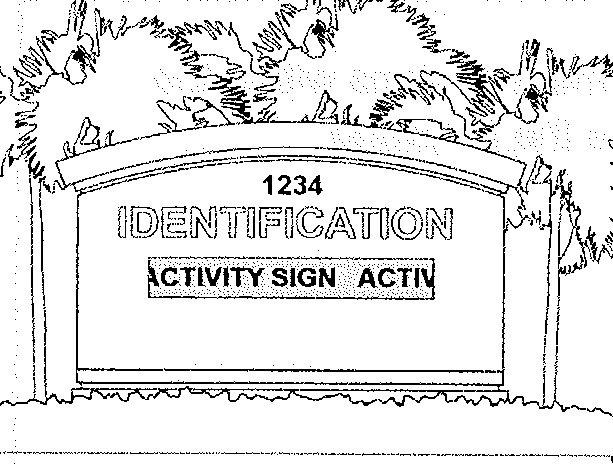 | ■ | ■ | ■ | ■ | ■ | a. Quantity (max) | 2 |
| b. Sign Face Area | 24/18 s.f. | ||||||
| c. Sign Structure Area | 72 s.f. | ||||||
| d. Width | 12 ft. | ||||||
| e. Height | 6 ft. | ||||||
| f. Depth/Projection | 8" max. | ||||||
| g. Clearance | N/A | ||||||
| h. Letter Height | 16" max. | ||||||
| i. Setback | 10 ft. | ||||||
| j. Time of Display | N/A | ||||||
| k. Landscaping/Illumination | Yes/Yes | ||||||
| l. Other | Yes; Sec. 1007.3(a) | ||||||
|
Activity Identification Wall Sign
(Attached to Wall) 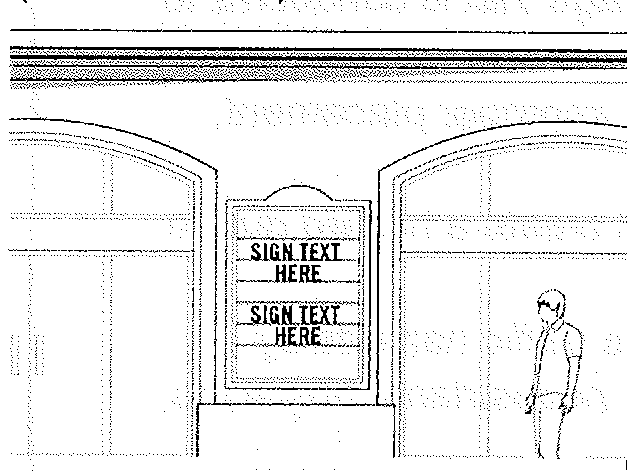 | ■ | ■ | ■ | ■ | ■ | a. Quantity (max) | 1 |
| b. Sign Face Area | 12 s.f. | ||||||
| c. Sign Structure Area | N/A | ||||||
| d. Width | 4 ft. | ||||||
| e. Height | 4 ft. | ||||||
| f. Depth/Projection | 8" max. | ||||||
| g. Clearance | 4 ft. | ||||||
| h. Letter Height | 2" min. | ||||||
| i. Setback | N/A | ||||||
| j. Time of Display | N/A | ||||||
| k. Landscaping/Illumination | N/A | ||||||
| l. Other | Yes; Sec. 1007.3(a) | ||||||
Address Sign--Non Residential
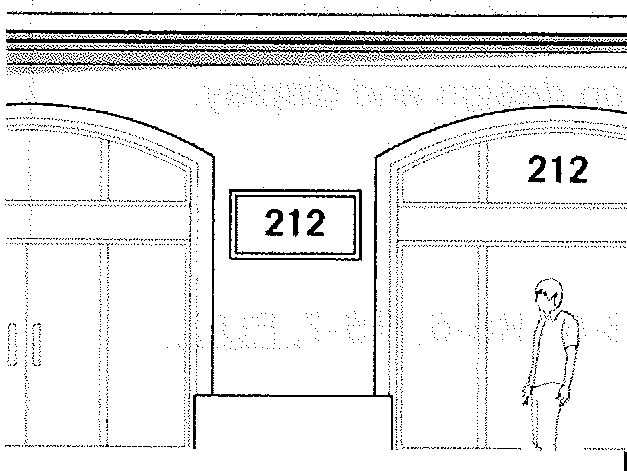 | ■ | ■ | ■ | a. Quantity (max) | 1 per unit min. | ||
| b. Sign Face Area | N/A | ||||||
| c. Sign Structure Area | N/A | ||||||
| d. Width | N/A | ||||||
| e. Height | N/A | ||||||
| f. Depth/Projection | ½" | ||||||
| g. Clearance | N/A | ||||||
| h. Letter Height | 6" min. | ||||||
| i. Setback | N/A | ||||||
| j. Time of Display | N/A | ||||||
| k. Landscaping/Illumination | N/A | ||||||
| l. Other | Yes; Sec. 1010(a) | ||||||
Address Sign--Residential
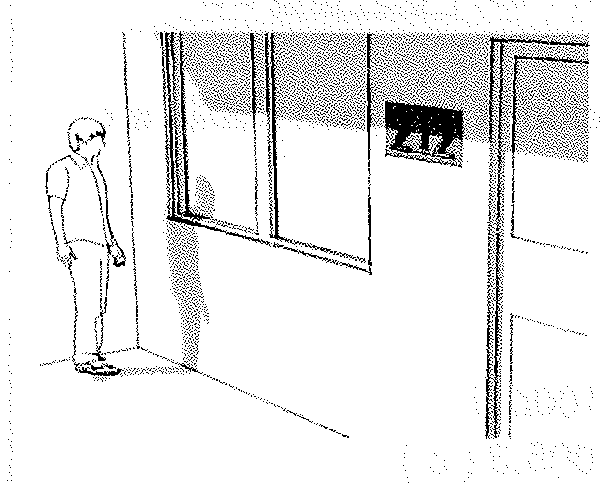 | ■ | ■ | ■ | a. Quantity (max) | 1/dwelling unit | ||
| b. Sign Face Area | N/A | ||||||
| c. Sign Structure Area | N/A | ||||||
| d. Width | N/A | ||||||
| e. Height | N/A | ||||||
| f. Depth/Projection | ½" | ||||||
| g. Clearance | N/A | ||||||
| h. Letter Height | 3" min. | ||||||
| i. Setback | N/A | ||||||
| j. Time of Display | N/A | ||||||
| k. Landscaping/Illumination | N/A | ||||||
| l. Other | Yes; Sec. 1010(a) | ||||||
|
ATM Sign
Automatic Teller Machine 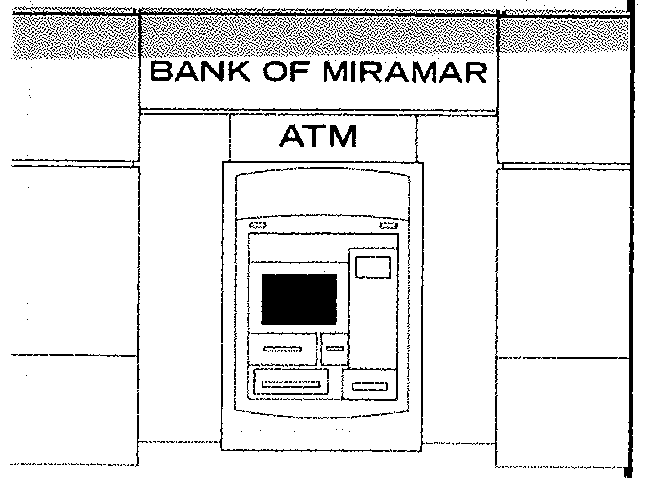 | ■ | ■ | ■ | a. Quantity (max) | 1 per ATM | ||
| b. Sign Face Area | 5 s.f. | ||||||
| c. Sign Structure Area | N/A | ||||||
| d. Width | N/A | ||||||
| e. Height | N/A | ||||||
| f. Depth/Projection | N/A | ||||||
| g. Clearance | N/A | ||||||
| h. Letter Height | 8" max. | ||||||
| i. Setback | N/A | ||||||
| j. Time of Display | N/A | ||||||
| k. Landscaping/Illumination | N/A/Yes | ||||||
| l. Other | Yes; Sec. 1007.3(b) | ||||||
Awning Address/Identification Sign
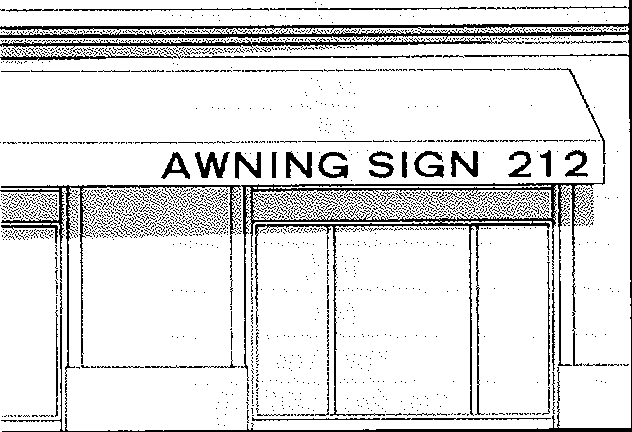 | ■ | ■ | ■ | a. Quantity (max) | 1 per awning | ||
| b. Sign Face Area | N/A | ||||||
| c. Sign Structure Area | N/A | ||||||
| d. Width | N/A | ||||||
| e. Height | N/A | ||||||
| f. Depth/Projection | N/A | ||||||
| g. Clearance | N/A | ||||||
| h. Letter Height | 4" min./12" max. | ||||||
| i. Setback | N/A | ||||||
| j. Time of Display | N/A | ||||||
| k. Landscaping/Illumination | N/A | ||||||
| l. Other | Yes; Sec. 1007.3(c) | ||||||
Band Identification Sign
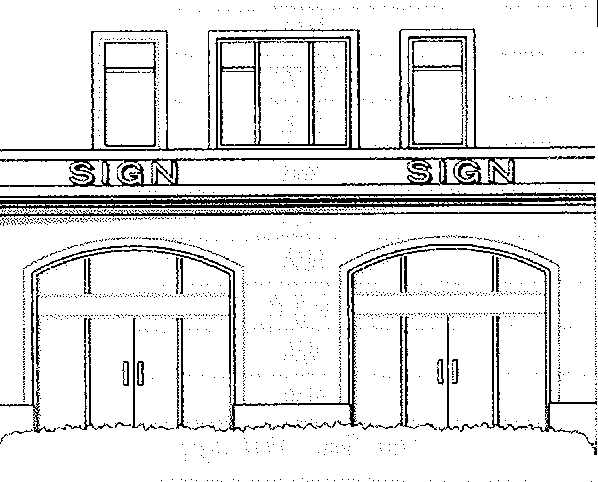 | ■ | ■ | ■ | a. Quantity (max) | 1 max./façade | ||
| b. Sign Face Area | Sec. 1006.3 | ||||||
| c. Sign Structure Area | N/A | ||||||
| d. Width | N/A | ||||||
| e. Height | N/A | ||||||
| f. Depth/Projection | 8" max. | ||||||
| g. Clearance | 8' min. | ||||||
| h. Letter Height | N/A | ||||||
| i. Setback | N/A | ||||||
| j. Time of Display | N/A | ||||||
| k. Landscaping/Illumination | No/Yes | ||||||
| l. Other | Yes; Sec. 1007.3(d) | ||||||
|
Blade Identification Sign
Blade Advertising moved to Temp. Sign Table 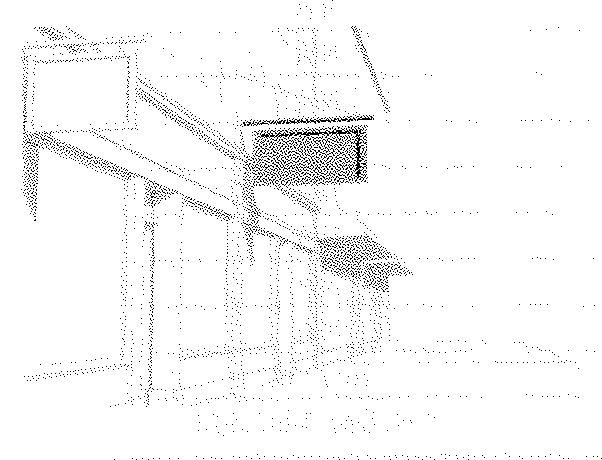 | ■ | ■ | ■ | a. Quantity (max) | 1/façade | ||
| b. Sign Face Area | 6 s.f. | ||||||
| c. Sign Structure Area | N/A | ||||||
| d. Width | 3 ft. | ||||||
| e. Height | 3 ft. | ||||||
| f. Depth/Projection | 3 ft. | ||||||
| g. Clearance | 8 ft. | ||||||
| h. Letter Height | 4" min. | ||||||
| i. Setback | N/A | ||||||
| j. Time of Display | N/A | ||||||
| k. Landscaping/Illumination | N/A | ||||||
| l. Other | Yes; Sec. 1007.3(e) | ||||||
|
Bulletin Board Sign
(Outdoor Display Case) 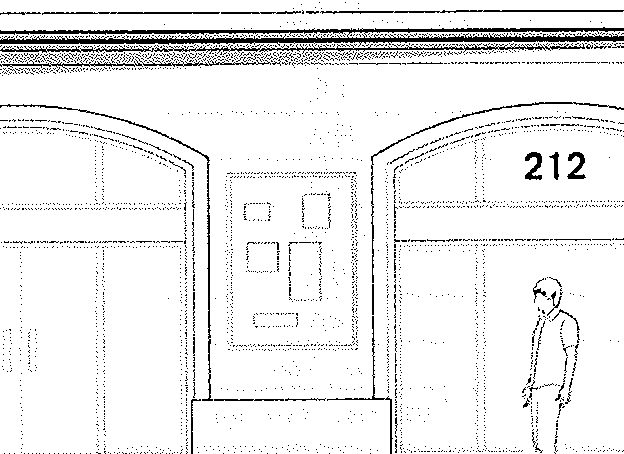 | ■ | ■ | ■ | a. Quantity (max) | 1 | ||
| b. Sign Face Area | 16 s.f. max. | ||||||
| c. Sign Structure Area | N/A | ||||||
| d. Width | 4 ft. | ||||||
| e. Height | 4 ft. | ||||||
| f. Depth/Projection | 4" | ||||||
| g. Clearance | N/A | ||||||
| h. Letter Height | N/A | ||||||
| i. Setback | N/A | ||||||
| j. Time of Display | N/A | ||||||
| k. Landscaping/Illumination | No/Yes | ||||||
| l. Other | Yes; Sec. 1007.3(w) | ||||||
Canopy Sign(Pedestrian-Oriented)
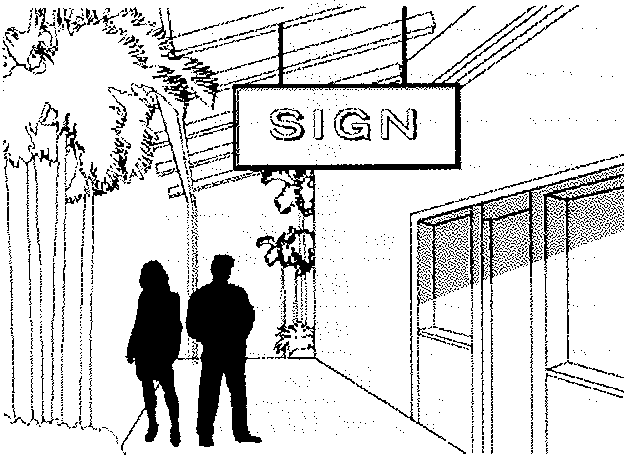 | ■ | ■ | ■ | a. Quantity (max) | 1/double sided | ||
| b. Sign Face Area | 6 s.f. | ||||||
| c. Sign Structure Area | N/A | ||||||
| d. Width | N/A | ||||||
| e. Height | N/A | ||||||
| f. Depth/Projection | N/A | ||||||
| g. Clearance | 8 ft. | ||||||
| h. Letter Height | N/A | ||||||
| i. Setback | N/A | ||||||
| j. Time of Display | N/A | ||||||
| k. Landscaping/Illumination | N/A | ||||||
| l. Other | No | ||||||
City Public Information Sign
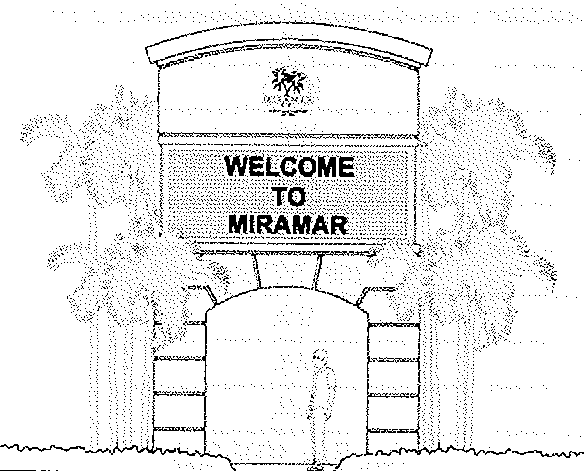 | ■ | ■ | a. Quantity (max) | 1 | |||
| b. Sign Face Area | 110 s.f. | ||||||
| c. Sign Structure Area | 200 s.f. | ||||||
| d. Width | 12 ft. | ||||||
| e. Height | 24 ft. | ||||||
| f. Depth/Projection | 6 ft. | ||||||
| g. Clearance | 8 ft. | ||||||
| h. Letter Height | N/A | ||||||
| i. Setback | 10 ft. | ||||||
| j. Time of Display | N/A | ||||||
| k. Landscaping/Illumination | Yes/Yes | ||||||
| l. Other | Yes; Sec. 1007.3(f) | ||||||
Community Information Sign
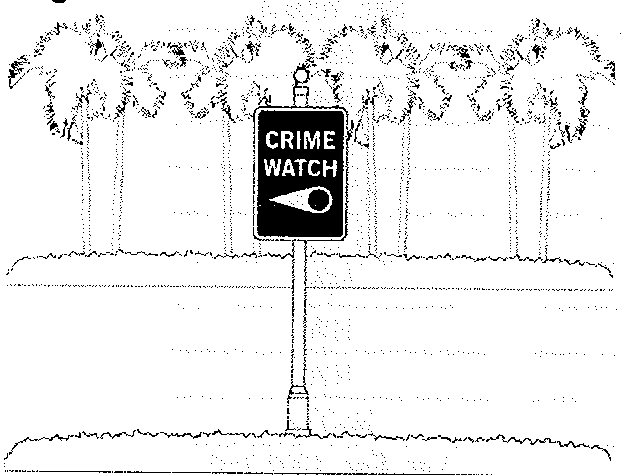 | ■ | ■ | ■ | a. Quantity (max) | 3/parcel | ||
| b. Sign Face Area | 4 s.f. | ||||||
| c. Sign Structure Area | N/A | ||||||
| d. Width | N/A | ||||||
| e. Height | 8 ft. | ||||||
| f. Depth/Projection | N/A | ||||||
| g. Clearance | N/A | ||||||
| h. Letter Height | N/A | ||||||
| i. Setback | 5 ft. | ||||||
| j. Time of Display | N/A | ||||||
| k. Landscaping/Illumination | N/A | ||||||
| l. Other | Yes; Sec. 1007.3(g) | ||||||
| Digital Billboard | ■ | ■ | Shall have the specifications noted in Section 1014 | Sec. 1014 | |||
Digital Clock
 | ■ | ■ | ■ | a. Quantity (max) | 1 | ||
| b. Sign Face Area | Sec. 1007.3 | ||||||
| c. Sign Structure Area | N/A | ||||||
| d. Width | N/A | ||||||
| e. Height | N/A | ||||||
| f. Depth/Projection | N/A | ||||||
| g. Clearance | N/A | ||||||
| h. Letter Height | N/A | ||||||
| i. Setback | N/A | ||||||
| j. Time of Display | N/A | ||||||
| k. Landscaping/Illumination | No/Yes | ||||||
| l. Other | Yes; Sec. 1007.3(h) | ||||||
|
Digital Menu Board
(Drive-thru restaurants) | ■ | ■ | a. Quantity (max) | 1 per drive-thru lane | |||
| b. Sign Face Area | 40 s.f. | ||||||
| c. Sign Structure Area | 80 s.f. | ||||||
| d. Width | 8 ft. | ||||||
| e. Height | 8 ft. | ||||||
| f. Depth/Projection | N/A | ||||||
| g. Clearance | N/A | ||||||
| h. Letter Height | N/A | ||||||
| i. Setback | 10 ft. | ||||||
| j. Time of Display | N/A | ||||||
| k. Landscaping/Illumination | Yes/Yes | ||||||
| l. Other | Yes; Sec. 1007.3(g) | ||||||
|
Digital Menu Board Preview Monument Sign
(Drive-thru restaurants) | ■ | ■ | a. Quantity (max) | 1 per drive-thru lane | |||
| b. Sign Face Area | 15 s.f. | ||||||
| c. Sign Structure Area | 30 s.f. | ||||||
| d. Width | 3 ft. | ||||||
| e. Height | 6 ft. | ||||||
| f. Depth/Projection | N/A | ||||||
| g. Clearance | N/A | ||||||
| h. Letter Height | N/A | ||||||
| i. Setback | 10 ft. | ||||||
| j. Time of Display | N/A | ||||||
| k. Landscaping/Illumination | Yes/Yes | ||||||
| l. Other | Yes; Sec. 1007.3(g) | ||||||
Directional Sign(Non-Residential)
 | ■ | ■ | ■ | a. Quantity (max) | Sec. 1007.3 | ||
| b. Sign Face Area | 8 s.f. | ||||||
| c. Sign Structure Area | 24 s.f. | ||||||
| d. Width | 6 ft. | ||||||
| e. Height | 4 ft. | ||||||
| f. Depth/Projection | N/A | ||||||
| g. Clearance | N/A | ||||||
| h. Letter Height | 4" min. | ||||||
| i. Setback | 10 ft. | ||||||
| j. Time of Display | N/A | ||||||
| k. Landscaping/Illumination | Yes/Yes | ||||||
| l. Other | Yes; Sec. 1007.3(i) | ||||||
Directional Sign(Non-Residential Wall)
 | ■ | ■ | ■ | a. Quantity (max) | Sec. 1007.3(i) | ||
| b. Sign Face Area | Sec. 1007.3(i) | ||||||
| c. Sign Structure Area | N/A | ||||||
| d. Width | N/A | ||||||
| e. Height | N/A | ||||||
| f. Depth/Projection | N/A | ||||||
| g. Clearance | N/A | ||||||
| h. Letter Height | Sec. 1007.3(i) | ||||||
| i. Setback | N/A | ||||||
| j. Time of Display | N/A | ||||||
| k. Landscaping/Illumination | No/Yes | ||||||
| l. Other | Yes; Sec. 1007.3(i) | ||||||
|
Directional Sign
(Residential) 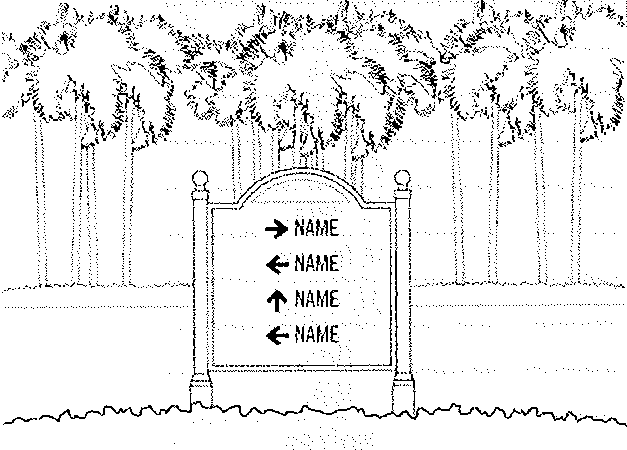 | ■ | ■ | ■ | a. Quantity (max) | Sec. 1007.3 | ||
| b. Sign Face Area | 8 s.f. | ||||||
| c. Sign Structure Area | 12 s.f. | ||||||
| d. Width | 3 ft. | ||||||
| e. Height | 4 ft. | ||||||
| f. Depth/Projection | N/A | ||||||
| g. Clearance | N/A | ||||||
| h. Letter Height | N/A | ||||||
| i. Setback | 5 ft. | ||||||
| j. Time of Display | N/A | ||||||
| k. Landscaping/Illumination | Yes/Yes | ||||||
| l. Other | Yes; Sec. 1007.3(i) | ||||||
Directory Monument Sign
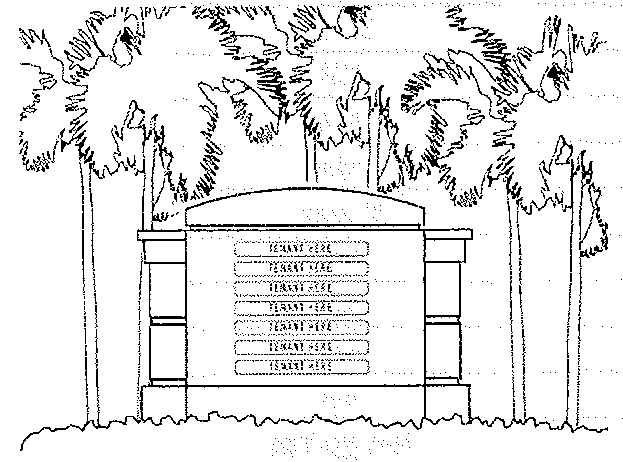 | ■ | ■ | ■ | a. Quantity (max) | 3; per Sec. 1004.3 | ||
| b. Sign Face Area | 24 s.f. | ||||||
| c. Sign Structure Area | 36 s.f. | ||||||
| d. Width | 6 ft. | ||||||
| e. Height | 6 ft. | ||||||
| f. Depth/Projection | N/A | ||||||
| g. Clearance | N/A | ||||||
| h. Letter Height | 4" min. | ||||||
| i. Setback | 5 ft. | ||||||
| j. Time of Display | N/A | ||||||
| k. Landscaping/Illumination | Yes/Yes | ||||||
| l. Other | No | ||||||
Directory Wall Sign
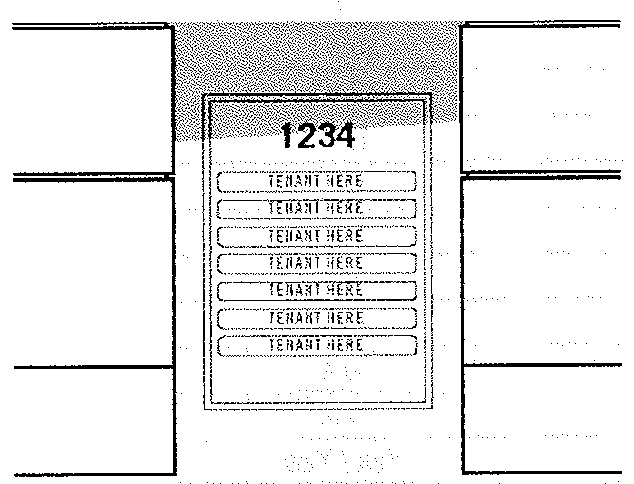 | ■ | ■ | ■ | a. Quantity (max) | 2 | ||
| b. Sign Face Area | 12 s.f. | ||||||
| c. Sign Structure Area | N/A | ||||||
| d. Width | 4 ft. | ||||||
| e. Height | 4 ft. | ||||||
| f. Depth/Projection | 8" max. | ||||||
| g. Clearance | N/A | ||||||
| h. Letter Height | 4" min. | ||||||
| i. Setback | N/A | ||||||
| j. Time of Display | N/A | ||||||
| k. Landscaping/Illumination | No/Yes | ||||||
| l. Other | No | ||||||
|
Drive-Thru Directional
Freestanding Monument or Decorative Pole Sign 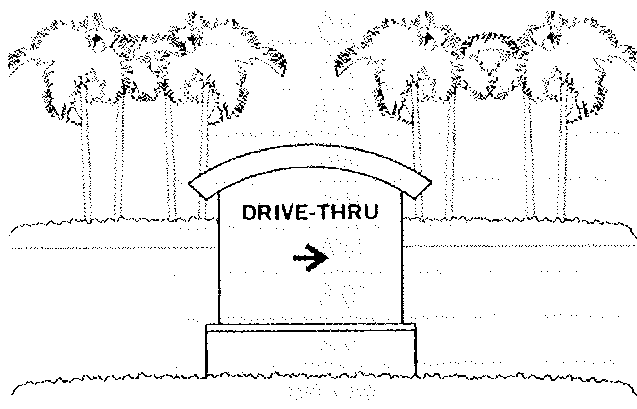 | ■ | ■ | a. Quantity (max) | 2 | |||
| b. Sign Face Area | 4 s.f. | ||||||
| c. Sign Structure Area | 12 s.f. | ||||||
| d. Width | 3 ft. | ||||||
| e. Height | 4 ft. | ||||||
| f. Depth/Projection | N/A | ||||||
| g. Clearance | N/A | ||||||
| h. Letter Height | N/A | ||||||
| i. Setback | 5 ft. | ||||||
| j. Time of Display | N/A | ||||||
| k. Landscaping/Illumination | Yes/No | ||||||
| l. Other | No | ||||||
|
Gasoline Monument Identification Sign
(includes Price Sign within Monument) 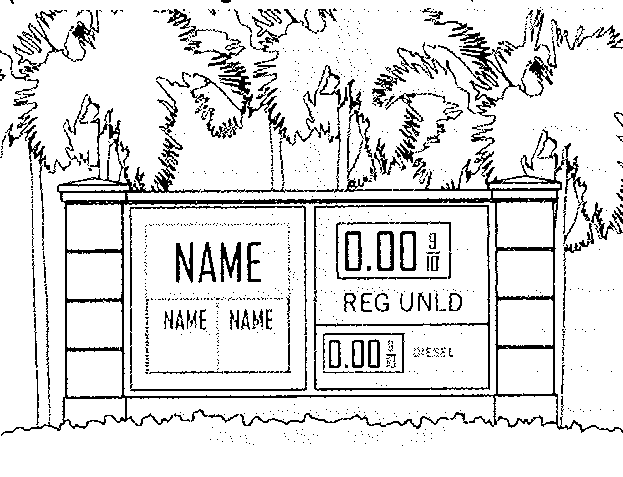 | ■ | a. Quantity (max) | 2; 1 set of prices per/face | ||||
| b. Sign Face Area | 24 s.f./20 s.f. | ||||||
| c. Sign Structure Area | 72 s.f. | ||||||
| d. Width | 12 ft. | ||||||
| e. Height | 6 ft. | ||||||
| f. Depth/Projection | N/A | ||||||
| g. Clearance | N/A | ||||||
| h. Letter Height | N/A | ||||||
| i. Setback | 10 ft. | ||||||
| j. Time of Display | N/A | ||||||
| k. Landscaping/Illumination | Yes/Yes | ||||||
| l. Other | Yes; Sec. 1007.3(j) | ||||||
|
Gasoline Service Station
Canopy Identification Sign 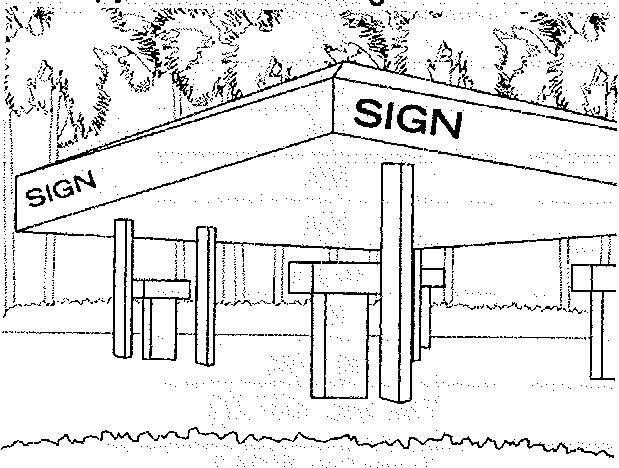 | ■ | a. Quantity (max) | 3 | ||||
| b. Sign Face Area | 24 s.f. | ||||||
| c. Sign Structure Area | N/A | ||||||
| d. Width | N/A | ||||||
| e. Height | 2 ft. max. | ||||||
| f. Depth/Projection | 8" max. | ||||||
| g. Clearance | 14 ft. min. | ||||||
| h. Letter Height | 24" max. | ||||||
| i. Setback | N/A | ||||||
| j. Time of Display | N/A | ||||||
| k. Landscaping/Illumination | No/Yes | ||||||
| l. Other | Yes; Sec. 1007.3(k) | ||||||
|
Gasoline Service Station Identification Sign on Store
(Convenience Store) 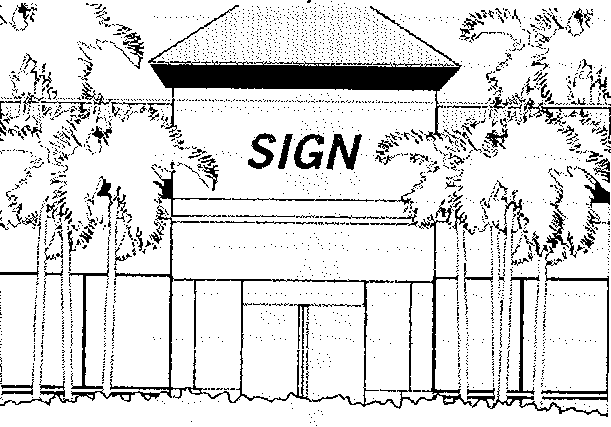 | ■ | a. Quantity (max) | 1 | ||||
| b. Sign Face Area | 30 s.f. | ||||||
| c. Sign Structure Area | N/A | ||||||
| d. Width | N/A | ||||||
| e. Height | N/A | ||||||
| f. Depth/Projection | 8" max. | ||||||
| g. Clearance | N/A | ||||||
| h. Letter Height | N/A | ||||||
| i. Setback | N/A | ||||||
| j. Time of Display | N/A | ||||||
| k. Landscaping/Illumination | No/Yes | ||||||
| l. Other | Yes; Sec. 1007.3(l) | ||||||
Individual Building Monument Identification Sign
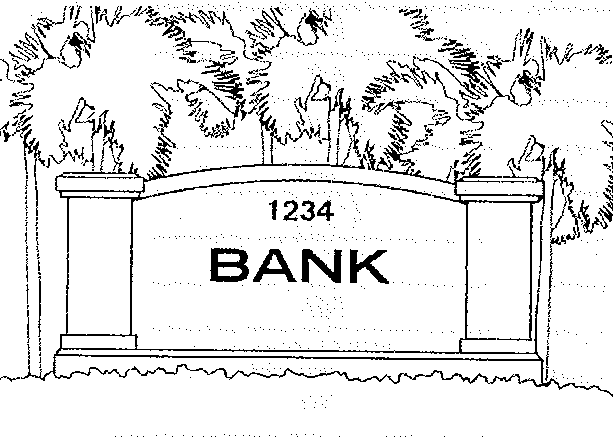 | ■ | ■ | ■ | a. Quantity (max) | 1 | ||
| b. Sign Face Area | 36 s.f. | ||||||
| c. Sign Structure Area | 72 s.f. | ||||||
| d. Width | 12 ft. | ||||||
| e. Height | 6 ft. | ||||||
| f. Depth/Projection | N/A | ||||||
| g. Clearance | N/A | ||||||
| h. Letter Height | N/A | ||||||
| i. Setback | 10 ft. | ||||||
| j. Time of Display | N/A | ||||||
| k. Landscaping/Illumination | Yes/Yes | ||||||
| l. Other | Yes; Sec. 1007.3(m) | ||||||
Leasing Freestanding Advertising Sign
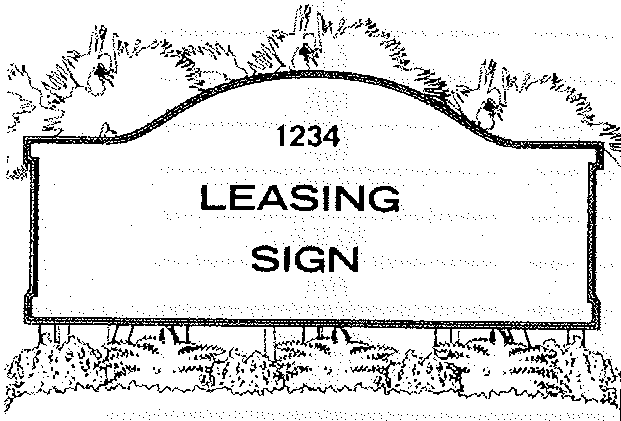 | ■ | ■ | ■ | ■ | a. Quantity (max) | Sec. 1007.3(n) | |
| b. Sign Face Area | 64 s.f. | ||||||
| c. Sign Structure Area | N/A | ||||||
| d. Width | 8 ft. | ||||||
| e. Height | 8 ft. | ||||||
| f. Depth/Projection | N/A | ||||||
| g. Clearance | N/A | ||||||
| h. Letter Height | N/A | ||||||
| i. Setback | 10 ft. | ||||||
| j. Time of Display | N/A | ||||||
| k. Landscaping/Illumination | Yes/No | ||||||
| l. Other | Yes; Sec. 1007.3(n) | ||||||
Major Roadway Sign
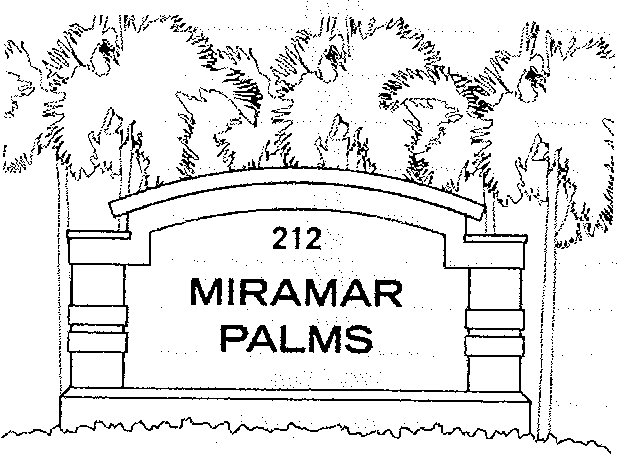 | ■ | ■ | ■ | ■ | ■ | a. Quantity (max) | 4 max. |
| b. Sign Face Area | 96 s.f. | ||||||
| c. Sign Structure Area | 180 s.f. | ||||||
| d. Width | 15 ft. | ||||||
| e. Height | 12 ft. | ||||||
| f. Depth/Projection | N/A | ||||||
| g. Clearance | N/A | ||||||
| h. Letter Height | 30" max. | ||||||
| i. Setback | 10 ft. | ||||||
| j. Time of Display | N/A | ||||||
| k. Landscaping/Illumination | Yes/Yes | ||||||
| l. Other | Yes; Sec. 1007.3(o) | ||||||
Marquee Sign
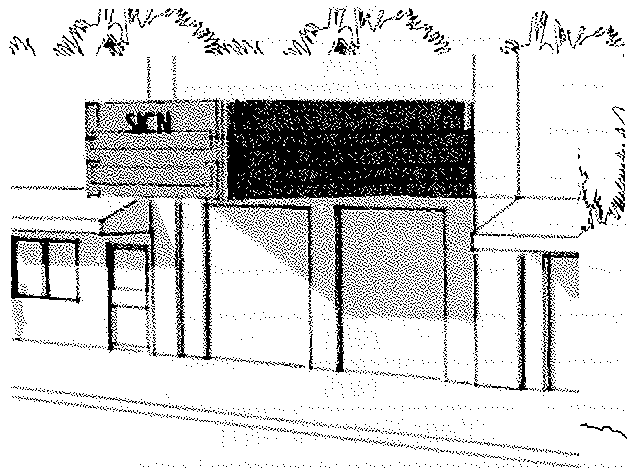 | ■ | ■ | ■ | a. Quantity (max) | 1 | ||
| b. Sign Face Area | 84 s.f. | ||||||
| c. Sign Structure Area | N/A | ||||||
| d. Width | Sec. 1007.3 | ||||||
| e. Height | Sec. 1007.3 | ||||||
| f. Depth/Projection | Sec. 1007.3 | ||||||
| g. Clearance | Sec. 1007.3 | ||||||
| h. Letter Height | N/A | ||||||
| i. Setback | Sec. 1007.3 | ||||||
| j. Time of Display | N/A | ||||||
| k. Landscaping/Illumination | No/Yes | ||||||
| l. Other | Yes; Sec. 1007.3(p) | ||||||
Memorial Sign
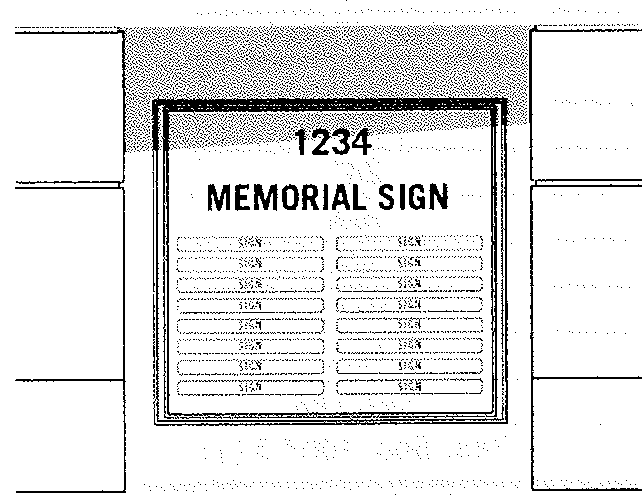 | ■ | ■ | ■ | ■ | ■ | a. Quantity (max) | 2 |
| b. Sign Face Area | 4 s.f. | ||||||
| c. Sign Structure Area | N/A | ||||||
| d. Width | N/A | ||||||
| e. Height | 2 ft. | ||||||
| f. Depth/Projection | 2 ft. | ||||||
| g. Clearance | N/A | ||||||
| h. Letter Height | N/A | ||||||
| i. Setback | N/A | ||||||
| j. Time of Display | N/A | ||||||
| k. Landscaping/Illumination | N/A | ||||||
| l. Other | Yes; Sec. 1010(e) | ||||||
Menu Board Monument Sign
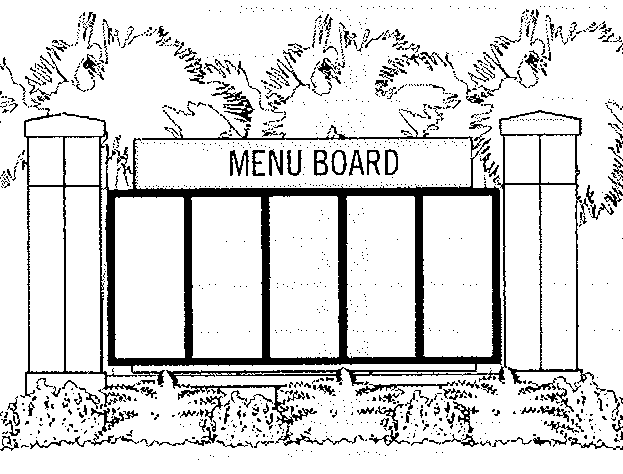 | ■ | ■ | a. Quantity (max) | 1 per drive-thru lane | |||
| b. Sign Face Area | 72 s.f. | ||||||
| c. Sign Structure Area | 108 s.f. | ||||||
| d. Width | 12 ft. | ||||||
| e. Height | 8 ft. | ||||||
| f. Depth/Projection | 24" | ||||||
| g. Clearance | N/A | ||||||
| h. Letter Height | N/A | ||||||
| i. Setback | 10 ft. | ||||||
| j. Time of Display | N/A | ||||||
| k. Landscaping/Illumination | Yes/Yes | ||||||
| l. Other | Yes; Sec. 1007.3(q) | ||||||
Menu Board Preview Monument Sign
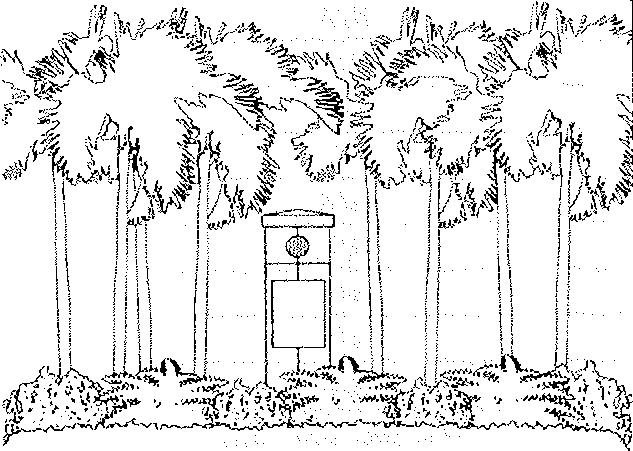 | ■ | ■ | a. Quantity (max) | 1 per drive-thru lane | |||
| b. Sign Face Area | 24 s.f. | ||||||
| c. Sign Structure Area | 36 s.f. | ||||||
| d. Width | 3 ft. | ||||||
| e. Height | 4 ft. | ||||||
| f. Depth/Projection | N/A | ||||||
| g. Clearance | N/A | ||||||
| h. Letter Height | N/A | ||||||
| i. Setback | 10 ft. | ||||||
| j. Time of Display | N/A | ||||||
| k. Landscaping/Illumination | Yes/Yes | ||||||
| l. Other | Yes; Sec. 1007.3(q) | ||||||
Menu Board Wall Sign
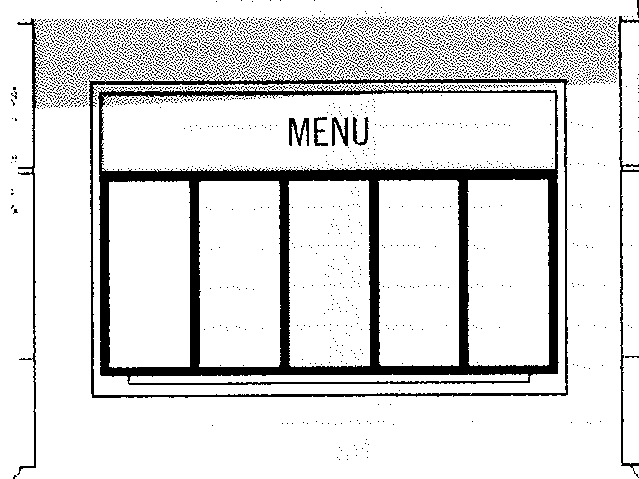 | ■ | ■ | a. Quantity (max) | 1 per drive-thru lane | |||
| b. Sign Face Area | 24 s.f. | ||||||
| c. Sign Structure Area | 30 s.f. | ||||||
| d. Width | 6 ft. | ||||||
| e. Height | 4 ft. | ||||||
| f. Depth/Projection | 8" | ||||||
| g. Clearance | N/A | ||||||
| h. Letter Height | N/A | ||||||
| i. Setback | N/A | ||||||
| j. Time of Display | N/A | ||||||
| k. Landscaping/Illumination | No/Yes | ||||||
| l. Other | No | ||||||
Nameplate Sign
 | ■ | ■ | ■ | ■ | ■ | a. Quantity (max) | 1 |
| b. Sign Face Area | 2 s.f. | ||||||
| c. Sign Structure Area | N/A | ||||||
| d. Width | N/A | ||||||
| e. Height | N/A | ||||||
| f. Depth/Projection | 2" | ||||||
| g. Clearance | N/A | ||||||
| h. Letter Height | N/A | ||||||
| i. Setback | N/A | ||||||
| j. Time of Display | N/A | ||||||
| k. Landscaping/Illumination | N/A | ||||||
| l. Other | Yes; Sec. 1010(f) | ||||||
|
Office Building Monument Identification Sign
(Multiple Establishment Center) 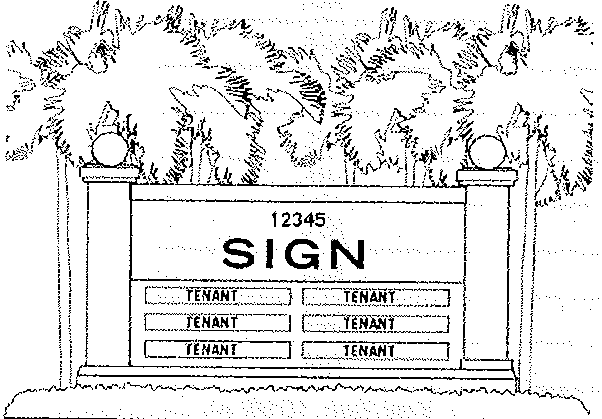 | ■ | ■ | ■ | a. Quantity (max) | 2; Sec. 1007.3(r); 1/entrance | ||
| b. Sign Face Area | 48 s.f. | ||||||
| c. Sign Structure Area | Sec. 1006.4 | ||||||
| d. Width | 18 ft. | ||||||
| e. Height | 6 ft. | ||||||
| f. Depth/Projection | 24" | ||||||
| g. Clearance | N/A | ||||||
| h. Letter Height | N/A | ||||||
| i. Setback | 10 ft. | ||||||
| j. Time of Display | N/A | ||||||
| k. Landscaping/Illumination | Yes/Yes | ||||||
| l. Other | Yes; Sec. 1007.3(r) | ||||||
|
Office Building Identification Wall Sign
(Multiple Establishment with Individual Tenant Entrances) 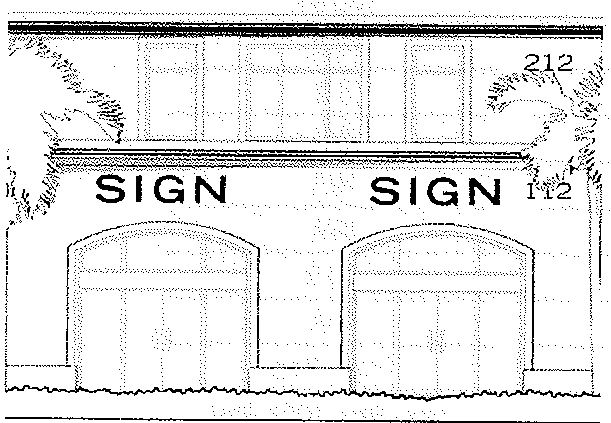 | ■ | ■ | ■ | a. Quantity (max) | 1/tenant | ||
| b. Sign Face Area | Sec. 1006.3 | ||||||
| c. Sign Structure Area | N/A | ||||||
| d. Width | N/A | ||||||
| e. Height | N/A | ||||||
| f. Depth/Projection | 8" Max. | ||||||
| g. Clearance | N/A | ||||||
| h. Letter Height | N/A | ||||||
| i. Setback | N/A | ||||||
| j. Time of Display | N/A | ||||||
| k. Landscaping/Illumination | N/A | ||||||
| l. Other | Yes; Sec. 1007.3(s) | ||||||
|
Office Building Identification Wall Sign
(Multiple Establishment Center with Shared Tenant Entrances) 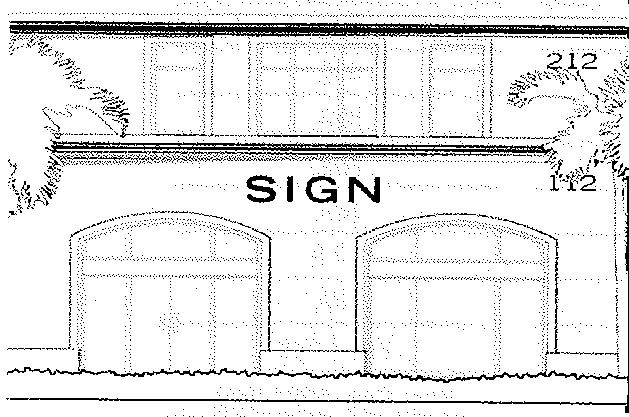 | ■ | ■ | ■ | a. Quantity (max) | Sec. 1007.3(t) | ||
| b. Sign Face Area | Sec. 1006.3 | ||||||
| c. Sign Structure Area | N/A | ||||||
| d. Width | N/A | ||||||
| e. Height | N/A | ||||||
| f. Depth/Projection | 8" | ||||||
| g. Clearance | N/A | ||||||
| h. Letter Height | N/A | ||||||
| i. Setback | N/A | ||||||
| j. Time of Display | N/A | ||||||
| k. Landscaping/Illumination | N/A | ||||||
| l. Other | Yes; Sec. 1007.3(t) | ||||||
|
Office Building Directory Wall Sign
(Multiple Establishment Center) 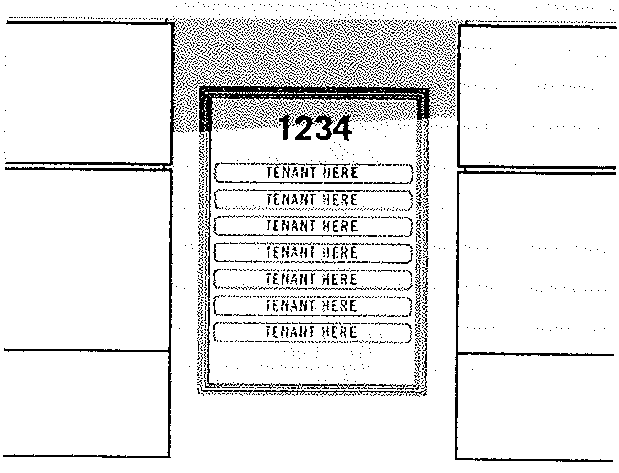 | ■ | ■ | ■ | a. Quantity (max) | 2 | ||
| b. Sign Face Area | 24 s.f. | ||||||
| c. Sign Structure Area | N/A | ||||||
| d. Width | N/A | ||||||
| e. Height | N/A | ||||||
| f. Depth/Projection | 8" | ||||||
| g. Clearance | N/A | ||||||
| h. Letter Height | N/A | ||||||
| i. Setback | N/A | ||||||
| j. Time of Display | N/A | ||||||
| k. Landscaping/Illumination | No/Yes | ||||||
| l. Other | No | ||||||
Parapet Sign
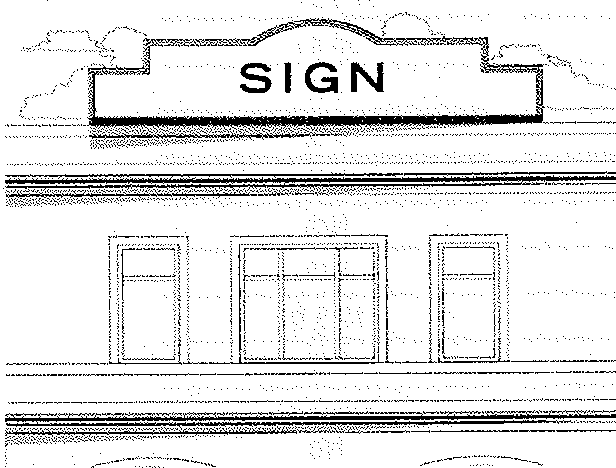 | ■ | ■ | ■ | a. Quantity (max) |
Sec. 1007.3(x);
1/façade | ||
| b. Sign Face Area | Sec. 1006.3 | ||||||
| c. Sign Structure Area | N/A | ||||||
| d. Width | N/A | ||||||
| e. Height | N/A | ||||||
| f. Depth/Projection | 8" max. | ||||||
| g. Clearance | N/A | ||||||
| h. Letter Height | N/A | ||||||
| i. Setback | N/A | ||||||
| j. Time of Display | N/A | ||||||
| k. Landscaping/Illumination | No/No | ||||||
| l. Other | Sec. 1007.3(x) | ||||||
|
Residential Community Identification Monument Sign
(Entrance Feature Sign) 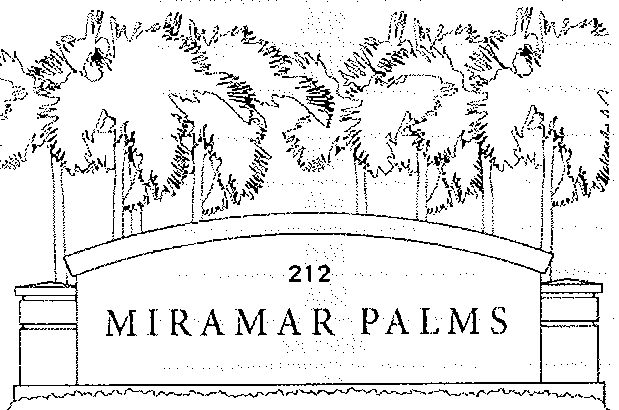 | ■ | ■ | ■ | a. Quantity (max) | Sec. 1007.3(y); 1/frontage | ||
| b. Sign Face Area | 48 s.f. | ||||||
| c. Sign Structure Area | Sec. 1006.4 | ||||||
| d. Width | N/A | ||||||
| e. Height | 10 ft. | ||||||
| f. Depth/Projection | N/A | ||||||
| g. Clearance | N/A | ||||||
| h. Letter Height | N/A | ||||||
| i. Setback | 10 ft. | ||||||
| j. Time of Display | N/A | ||||||
| k. Landscaping/Illumination | Yes/Yes | ||||||
| l. Other | Sec. 1007.3(y) | ||||||
Residential Community Identification Wall Sign
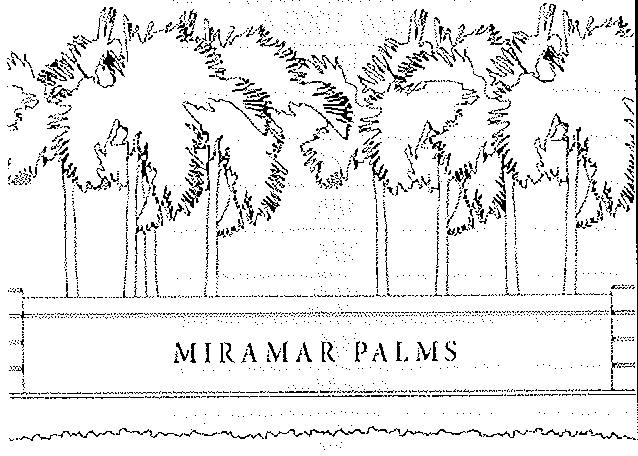 | ■ | ■ | ■ | a. Quantity (max) | 4 | ||
| b. Sign Face Area | Sec. 1006.3 | ||||||
| c. Sign Structure Area | N/A | ||||||
| d. Width | N/A | ||||||
| e. Height | N/A | ||||||
| f. Depth/Projection | N/A | ||||||
| g. Clearance | N/A | ||||||
| h. Letter Height | N/A | ||||||
| i. Setback | N/A | ||||||
| j. Time of Display | N/A | ||||||
| k. Landscaping/Illumination | No/Yes | ||||||
| l. Other | Yes; Sec. 1007.3(z) | ||||||
|
Shopping Center Directional Sign
(Multiple Establishment Center) 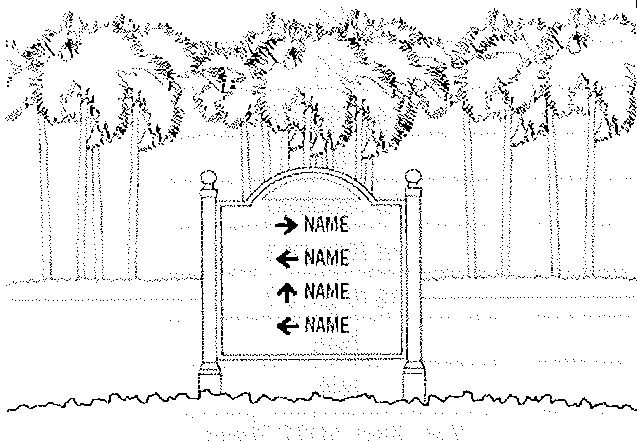 | ■ | ■ | a. Quantity (max) | 4 | |||
| b. Sign Face Area | 12 s.f. | ||||||
| c. Sign Structure Area | 24 s.f. | ||||||
| d. Width | 3 ft. | ||||||
| e. Height | 4 ft. | ||||||
| f. Depth/Projection | N/A | ||||||
| g. Clearance | N/A | ||||||
| h. Letter Height | N/A | ||||||
| i. Setback | 5 ft. | ||||||
| j. Time of Display | N/A | ||||||
| k. Landscaping/Illumination | Yes/Yes | ||||||
| l. Other | No | ||||||
|
Shopping Center Directory Wall Sign
(Multiple Establishment Center) 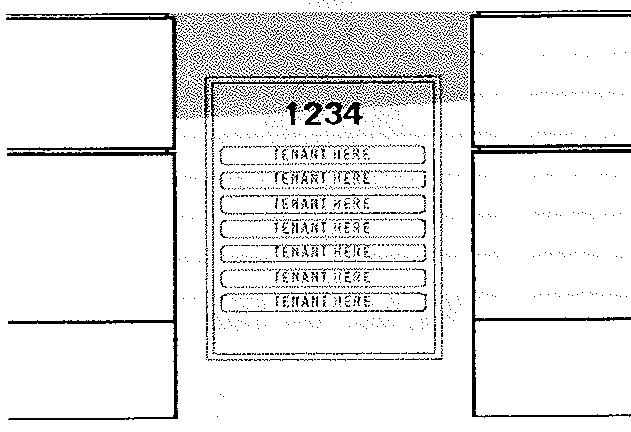 | ■ | ■ | a. Quantity (max) | 4 | |||
| b. Sign Face Area | 16 s.f. | ||||||
| c. Sign Structure Area | 16 s.f. | ||||||
| d. Width | 4 ft. | ||||||
| e. Height | 4 ft. | ||||||
| f. Depth/Projection | 4" | ||||||
| g. Clearance | N/A | ||||||
| h. Letter Height | N/A | ||||||
| i. Setback | N/A | ||||||
| j. Time of Display | N/A | ||||||
| k. Landscaping/Illumination | No/Yes | ||||||
| l. Other | No | ||||||
|
Shopping Center Directory Freestanding Sign
(Multiple Establishment Center) 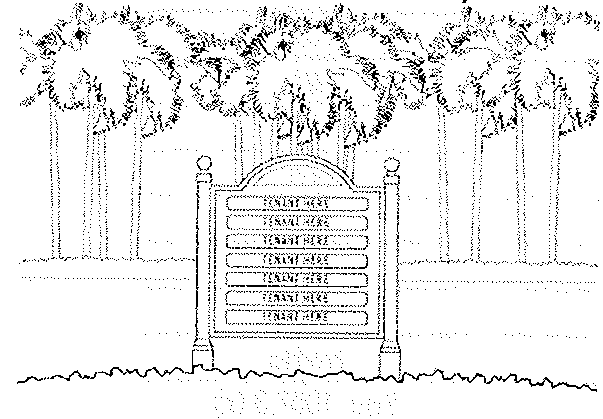 | ■ | ■ | a. Quantity (max) | 4 | |||
| b. Sign Face Area | 24 s.f. | ||||||
| c. Sign Structure Area | 36 s.f. | ||||||
| d. Width | 4 ft. | ||||||
| e. Height | 6 ft. | ||||||
| f. Depth/Projection | N/A | ||||||
| g. Clearance | N/A | ||||||
| h. Letter Height | N/A | ||||||
| i. Setback | 5 ft. | ||||||
| j. Time of Display | N/A | ||||||
| k. Landscaping/Illumination | Yes/Yes | ||||||
| l. Other | No | ||||||
|
Shopping Center Identification Wall Sign
(Multiple Establishment Center) 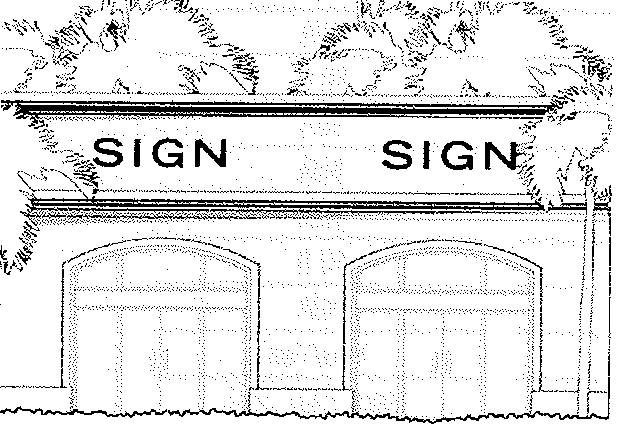 | ■ | ■ | a. Quantity (max) | Sec. 1007.3(d) | |||
| b. Sign Face Area | Sec. 1006.3 | ||||||
| c. Sign Structure Area | N/A | ||||||
| d. Width | N/A | ||||||
| e. Height | N/A | ||||||
| f. Depth/Projection | 8" | ||||||
| g. Clearance | N/A | ||||||
| h. Letter Height | N/A | ||||||
| i. Setback | N/A | ||||||
| j. Time of Display | N/A | ||||||
| k. Landscaping/Illumination | No/Yes | ||||||
| l. Other | No | ||||||
|
Shopping Center Monument Sign
(Multiple Establishment Center) 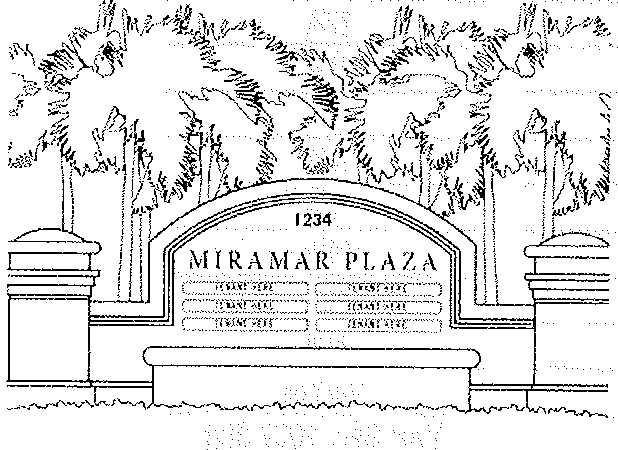 | ■ | ■ | a. Quantity (max) | 3 | |||
| b. Sign Face Area | Sec. 1006.4 | ||||||
| c. Sign Structure Area | Sec. 1006.4 | ||||||
| d. Width | N/A | ||||||
| e. Height | 6 ft. | ||||||
| f. Depth/Projection | N/A | ||||||
| g. Clearance | N/A | ||||||
| h. Letter Height | N/A | ||||||
| i. Setback | 10 ft. | ||||||
| j. Time of Display | N/A | ||||||
| k. Landscaping/Illumination | Yes/Yes | ||||||
| l. Other | No | ||||||
Street and Traffic Pole Signs
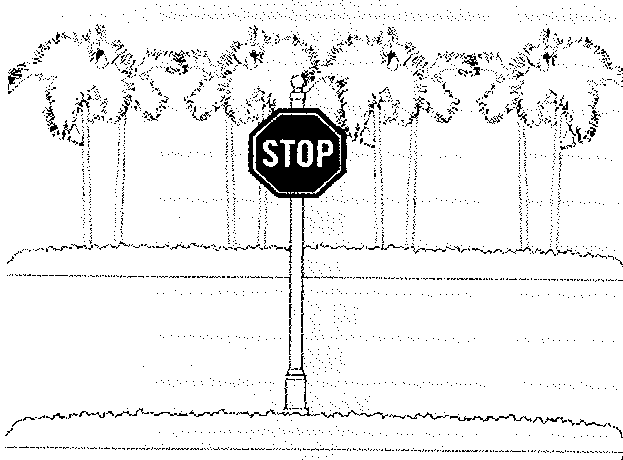 | ■ | ■ | ■ | ■ | ■ | a. Quantity (max) | As required |
| b. Sign Face Area | As required | ||||||
| c. Sign Structure Area | N/A | ||||||
| d. Width | N/A | ||||||
| e. Height | As required | ||||||
| f. Depth/Projection | N/A | ||||||
| g. Clearance | As required | ||||||
| h. Letter Height | As required | ||||||
| i. Setback | As required | ||||||
| j. Time of Display | N/A | ||||||
| k. Landscaping/Illumination | N/A | ||||||
| l. Other | Yes; Sec. 1007.3(aa) | ||||||
Street and Traffic Wall Signs
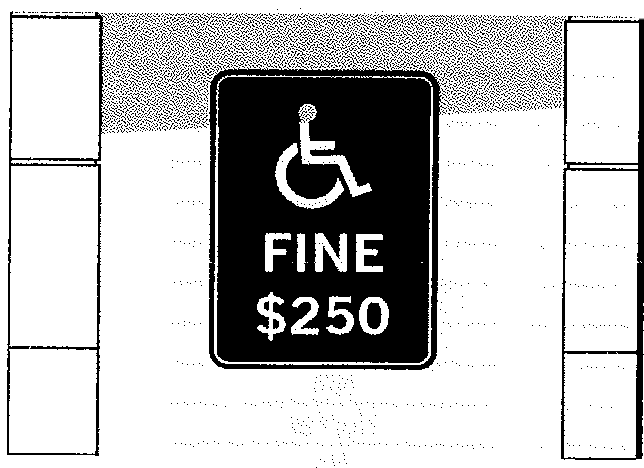 | ■ | ■ | ■ | ■ | ■ | a. Quantity (max) | As required |
| b. Sign Face Area | As required | ||||||
| c. Sign Structure Area | N/A | ||||||
| d. Width | N/A | ||||||
| e. Height | As required | ||||||
| f. Depth/Projection | As required | ||||||
| g. Clearance | As required | ||||||
| h. Letter Height | N/A | ||||||
| i. Setback | N/A | ||||||
| j. Time of Display | N/A | ||||||
| k. Landscaping/Illumination | N/A | ||||||
| l. Other | Yes; Sec. 1007.3(aa) | ||||||
|
Tower Entrance Feature Wall Sign
Identification 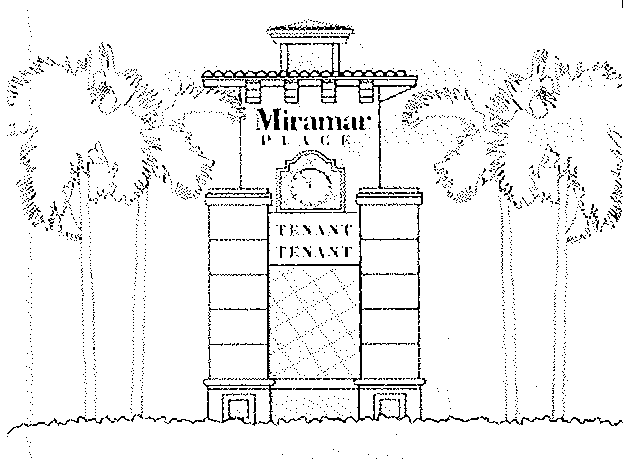 | ■ | ■ | ■ | ■ | ■ | a. Quantity (max) | 2; Sec. 1007.3(bb) |
| b. Sign Face Area | Sec. 1007.3(bb) | ||||||
| c. Sign Structure Area | N/A | ||||||
| d. Width | N/A | ||||||
| e. Height | N/A | ||||||
| f. Depth/Projection | 8" max. | ||||||
| g. Clearance | Sec. 1007.3(bb) | ||||||
| h. Letter Height | Sec. 1007.3(bb) | ||||||
| i. Setback | Sec. 1007.3(bb) | ||||||
| j. Time of Display | N/A | ||||||
| k. Landscaping/Illumination | Yes; Sec. 1007.3(bb) | ||||||
| l. Other | Sec. 1007.3(bb) | ||||||
Warning Signs
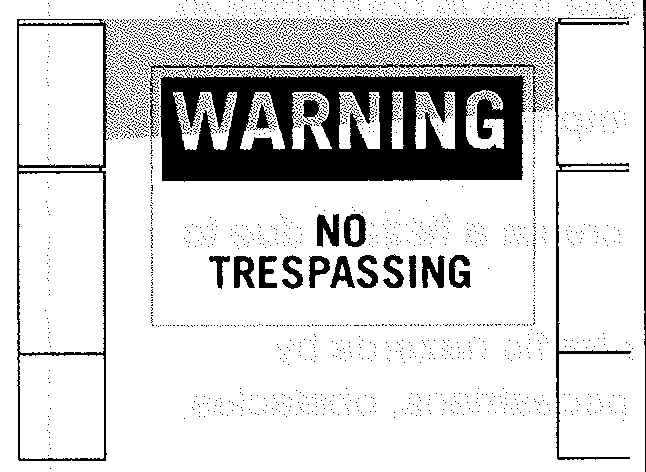 | ■ | ■ | ■ | ■ | ■ | a. Quantity (max) | 2 |
| b. Sign Face Area | 2 s.f. | ||||||
| c. Sign Structure Area | N/A | ||||||
| d. Width | As required | ||||||
| e. Height | As required | ||||||
| f. Depth/Projection | N/A | ||||||
| g. Clearance | As required | ||||||
| h. Letter Height | As required | ||||||
| i. Setback | As required | ||||||
| j. Time of Display | N/A | ||||||
| k. Landscaping/Illumination | N/A | ||||||
| l. Other | No | ||||||
|
Window Sign
Hours of Operation 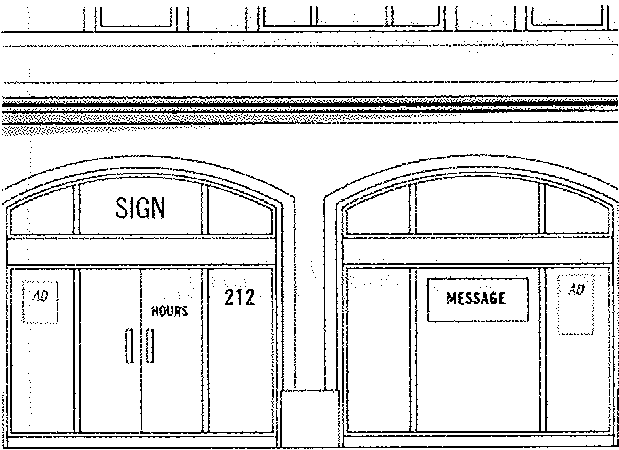 | ■ | ■ | ■ | a. Quantity (max) | 1 | ||
| b. Sign Face Area | Sec. 1007.3(ee) | ||||||
| c. Sign Structure Area | N/A | ||||||
| d. Width | N/A | ||||||
| e. Height | N/A | ||||||
| f. Depth/Projection | N/A | ||||||
| g. Clearance | N/A | ||||||
| h. Letter Height | N/A | ||||||
| i. Setback | N/A | ||||||
| j. Time of Display | N/A | ||||||
| k. Landscaping/Illumination | N/A | ||||||
| l. Other | Sec. 1007.3(ee) | ||||||
|
Window Sign
Identification 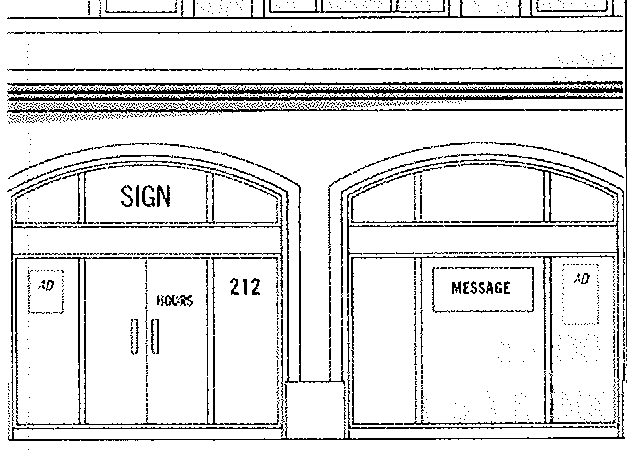 | ■ | ■ | ■ | a. Quantity (max) | Sec. 1007.3(cc), (dd) | ||
| b. Sign Face Area | Sec. 1007.3 | ||||||
| c. Sign Structure Area | N/A | ||||||
| d. Width | N/A | ||||||
| e. Height | N/A | ||||||
| f. Depth/Projection | N/A | ||||||
| g. Clearance | N/A | ||||||
| h. Letter Height | 8" max. | ||||||
| i. Setback | N/A | ||||||
| j. Time of Display | N/A | ||||||
| k. Landscaping/Illumination | N/A | ||||||
| l. Other | Sec. 1007.3(cc)—(ee) | ||||||
1007.3. Specific Sign Standards (Supplemental to Table 1).
a.
Specific to activity identification sign (within freestanding monument or attached to a wall).
A.
Monument sign must include address numerals.
B.
Up to two monument signs are permitted if facing different street frontages.
C.
May include a message board which may be electronic or manual changeable copy, subject to Section 1005.3(c).
D.
Identification of non-profit organizations is limited to 24 square feet and message board area is limited to 18 square feet within a freestanding monument; the combined area of identification and message board within a wall sign is limited to 12 square feet.
E.
A wall activity identification sign requires an architectural frame.
b.
Automatic teller machine (ATM) sign.
A.
Identification sign must be architecturally integrated into ATM.
B.
Advertising and instruction signs may consist of an electronic message board, subject to Section 1005.3(c), or decals, but must be integrated into the design and cannot exceed one square foot in total sign area.
c.
Awning address and identification sign.
A.
At least one awning per frontage must include the address of the establishment.
B.
Business identification, including logo, may be included on additional awning.
C.
Permissible awning types include:
1.
Fixed or retractable awnings.
2.
Shed awnings.
3.
Dome awnings.
D.
Signage shall be limited to the valance of the awning or the vertical portion of a dome awning.
E.
Awnings shall be a minimum of four feet in depth.
F.
Awnings shall not extend beyond the width of the building or tenant space, nor encroach above the roof line or the story above.
G.
The height of the valance shall not exceed 12 inches.
H.
Letters, numbers, and graphics shall not exceed 75 percent of the valance area.
I.
Awning signs shall not be internally illuminated or backlit.
d.
Band identification signs (also known as wall signs).
A.
All establishments within office and retail centers are permitted one band identification sign on each first story façade, provided that such façade faces a street frontage or contains a standard pedestrian entrance. An additional band identification sign may be permitted for a façade that does not face a street frontage or contain a standard pedestrian entrance, provided that such façade faces a parking area of a retail center, as in an outparcel condition, or faces an office or retail space. An additional band identification sign shall not be permitted on any façade which faces residential property, unless that residential property is a portion of a mixed-use community. An additional band identification sign allowed by this subsection is limited to no more than two feet in height and no more than 24 square feet in total area, regardless of the size permitted for other allowable band identification sign.
B.
Band identification signs may not be provided in addition to another type of permitted permanent wall identification sign type located on the same façade, such as a parapet sign, office building identification wall sign, shopping center identification wall sign or other attached identification sign. However, the following types of signs are permitted as additional identification signs, as appropriate: activity identification, awning identification, ATM identification, blade identification, and canopy identification.
C.
Band identification signs shall include only letters, background, lighting, and an optional logo.
D.
The following band identification sign construction types are permitted:
1.
Cut-out letters: Letters shall be individually attached to the wall or on a separate background panel, and may be illuminated by an approved decorative light source external and separate from the sign.
2.
Flat panel letters: Letters shall be printed or etched on the same surface as the background, which is then affixed to the wall and may be illuminated by an approved decorative light source external and separate from the sign.
3.
Channel letters: Each letter shall have its own internal lighting element, individually attached to the wall or onto a separate background panel. The letter shall be translucent, or solid to create a backlit halo effect.
E.
Height and width shall be measured using smallest rectangle that fully encompasses the entire extent of letters, logo and background.
F.
Band identification signs shall not be wider than 90 percent of the width of the building facade or individual tenant space.
G.
Band identification signs shall not project vertically above the roof line.
H.
Band identification signs may be illuminated from dusk to dawn. External light sources shall be shielded from direct view to reduce glare.
I.
Electrical raceways, conduits and wiring shall not be exposed. Internal lighting elements shall be contained completely within the sign assembly or inside the wall.
J.
Band identification signs should be placed consistent with the architectural features that suggest the best placement for signage. They should be vertically aligned with the center of an architectural feature such as a storefront window, entry portal, or width of a bay or overall retail space. They shall not interrupt or obscure these features or cause visual disharmony.
K.
Where multiple band identification signs are present on a single building (i.e., for retail tenants in a shopping center), signage shall be coordinated in terms of scale, placement, colors and materials, through master sign plan approval.
e.
Blade identification and blade advertising signs.
A.
Blade identification signs may be double-sided.
B.
Blade identification signs shall be permitted only for establishments that have a principal entrance on the first story.
C.
Establishments shall be permitted one blade identification sign per façade, in addition to one non-projecting wall sign. Blade identification signs may encroach into the public frontage up to four feet and shall clear the sidewalk by at least eight feet.
D.
Blade identification signs shall not encroach above the roof line nor above the bottom of the second story window.
E.
Slogans, address labels, operating hours and contact information shall not be permitted on the blade identification sign; however, coinciding with an approved special event, a blade identification sign may be temporarily replaced by a blade advertising sign upon approval of a TSP issued by the city for a specified duration not to exceed 30 days.
F.
Mounting hardware, such as supports and brackets, may be simple and unobtrusive or highly decorative, but shall complement the design of the sign and the building.
G.
For buildings and multiple establishment centers with multiple blade identification signs, placement and location, mounting hardware and sign shapes, sizes and colors shall be coordinated. A master sign plan shall be required prior to placement of blade identification signs within any multiple establishment center, and the location of all blade identification signs shall be in accordance with the master sign plan approval.
H.
Blade identification signs shall not be placed on the same horizontal or vertical plane as an attached sign, or otherwise placed in a manner that interferes with the visibility of an attached sign.
f.
City public information sign. May be a static sign or a freestanding sign that includes an electronic message board with animated text. It may also be in the form of an A-frame sign. City public information signs may be installed within the public right-of-way or median by city officials or subject to an agreement with the city.
g.
Community information sign.
A.
Signs must be at least five feet from edge of pavement, and shall not be located in any easement or within a sight triangle that would obstruct visibility by pedestrian or vehicle traffic.
B.
Permanent signs require landscaping treatment at base of sign.
h.
Digital clock.
A.
Clock must be included within allowable sign area of permitted monument or wall sign.
B.
May include digital message format for time and temperature indicators.
i.
Directional sign—Non-residential and residential.
A.
Maximum quantity determined per master sign plan for the property.
B.
Ground cover landscaping required; subject to landscaping requirements in this chapter if monument is at least 20 square feet in area.
C.
Must include addresses and building numbers, if applicable.
D.
All retail establishments may have directional wall signs not to exceed eight square feet in area. Furthermore, retail establishments exceeding 50,000 square feet in area and having at least two separate standard pedestrian entrances while offering general merchandise and/or specialty items, may install directional signs above the walls of these entrances with an identifying name not to exceed a letter height of 18 inches that directs customers to the proper entrance for the specified use.
j.
Gasoline identification and price signs within monument identification sign.
A.
Monument sign must include address numerals.
B.
Pricing message board may include an electronic message board or manual changeable copy message board, subject to Section 1005.3(c).
C.
Identification of business is limited to 24 square feet and message board is limited to 20 square feet.
D.
Up to two tenant signs may be included within the total 24 square feet for identification.
k.
Gasoline service station canopy identification sign.
A.
May include both lettering and logos.
B.
One per street frontage, not to exceed three per property.
C.
May not include colored stripes even if part of logo branding.
D.
Must be installed on the fascia of the canopy; may not be installed on the roof.
E.
Address signs must be installed on at least two frontages of canopy.
l.
Gasoline service station identification/directional signs on convenience store and automatic carwash.
A.
Address sign required on store.
B.
Identification of store is permitted 30 square feet.
C.
Identification of up to two additional businesses located on the premises are permitted with each up to 12 square feet.
D.
Convenience store shall not have any advertising on exterior walls. Advertising shall be permitted on window signs only.
E.
Car wash structure must also include "Enter" and "Exit" directional signs on car wash entrance and exit, consisting of permanent mounted metallic or plastic letters, which may be illuminated.
F.
Shall not have any advertising on or near the car wash structure other than an attached or freestanding menu board with price information and instructions approved by a master sign plan.
m.
Individual building monument identification sign.
A.
Address sign is required.
B.
Main occupant (as determined by owner) may have up to 36 square feet of sign face area for identification, including logo.
C.
May be double-sided if sign is perpendicular to the street.
D.
Up to four tenant signs may be included in the 36 square feet of total sign face area.
E.
Signs may be internally-illuminated as long as sign face illumination is integrated into the monument and electrical components are not visible.
F.
Signs may be externally-illuminated by ground light fixtures hidden within the ground cover landscaping bed. These fixtures may not exceed 18 inches in height.
G.
Banners may not be hung over a portion of the sign, except as a temporary replacement for a permanent sign and as approved with a temporary sign permit.
n.
Leasing freestanding advertising/identification sign.
A.
Requires a building permit from the building division.
B.
One per street frontage—Not to exceed three per property.
C.
General address indication is required.
D.
May not visually obstruct other permanent or temporary signs or any line-of-sight required for vehicle or pedestrian traffic.
E.
Landscaping treatment required per Section 1005.5.
F.
Design and maintenance standards shall comply with Section 1005.
o.
Major roadway monument identification sign, residential and nonresidential.
A.
General address indication or address range is required.
B.
Name of commercial center or residential subdivision is required; parcel or pod identification is optional, but no more than six pods or parcels and/or eight (8) tenant signs may be identified on a single identification sign.
C.
One per street frontage—Not to exceed four per parcel.
p.
Marquee sign.
A.
Marquee signs may only be permitted for theaters and performing arts centers.
B.
Electronic message boards may be permitted within marquee signs subject to the standards provided in Section 1005.3(c).
C.
Marquee signs shall be located only above a principal entrance of a building.
D.
No marquee sign shall be wider than the entrance it serves, plus two feet on each side thereof.
E.
No portion of a marquee sign shall be lower than ten foot clearance.
F.
No marquee sign shall extend closer to the curb/ROW than three feet.
G.
Columns or posts may be used as supports for marquee signs provided that a minimum eight foot clearance is provided.
H.
All Marquees, including anchors, bolts, supporting rods and braces, shall be constructed of non-combustible materials and shall be designed by a structural engineer and approved by the building inspector.
I.
Marquee components and materials may vary. Anchors, bolts, and supporting rods should be limited to the interior of the marquee.
J.
A band identification sign shall be permitted above a marquee sign, in accordance with subsection (d).
q.
Menu board monument sign and menu board preview monument sign.
A.
Advertising only permitted within sign face area.
B.
Signs may be internally-illuminated as long as sign face is integrated into the monument and electrical components are not visible.
C.
Signs may be externally-illuminated by ground light fixtures hidden within the ground cover landscaping bed. These fixtures may not exceed 18 inches in height.
D.
Full landscaping treatment is required per Section 1005.5, regardless of size.
E.
Preview menu board monument sign must be on architectural pedestal or integrated within vertical monument.
F.
The digital menu board and the preview menu board monument sign must have a full color spectrum and energy efficient LED-light emitting diode lighting, a powder-coat and UV-ultraviolet resistant finishes, and a full landscaping treatment as required by section 1005.5, regardless of size.
r.
Office building (multiple establishment center) monument identification sign.
A.
One per vehicular entrance from a street that allows left-turn access into the site for a maximum of two per parcel.
B.
Must identify name of center and may identify up to six tenants on each sign face side; may include additional tenants depending on size of property and maximum size per Section 1006.4 allowance.
C.
Must include property address number(s).
s.
Office building (multiple establishment with individual tenant entrances) identification wall sign (see also band sign).
A.
One per ground floor entrance for individual tenant spaces provided each tenant has a principal pedestrian entrance.
B.
Building may have a maximum of up to two wall identification signs indicating the name of the center exclusive of number of individual tenants permitted a sign.
t.
Office building (shared tenant entrance multiple establishment center) identification wall sign.
A.
Subject to a master sign plan approval.
B.
In buildings with up to ten stories with multiple tenants, tenants with at least one entire floor of space may have one wall sign, not to exceed more than four wall signs above the ground level for all tenants within the entire building.
C.
Tenants with at least 50 percent occupancy of the building may have up to two signs on the building on two different facades, not to exceed a total of four wall signs above the ground level for all tenants within the entire building.
D.
Building may have a maximum of two wall identification signs indicating the name of the center (if applicable), exclusive of number of tenants permitted a sign (maximum of one per street frontage).
E.
Building must have property address number(s).
u.
Office building (single establishment center) monument identification sign.
A.
One per vehicular entrance from a street that allows left-turn access into the site for a maximum of two per parcel.
B.
May have up to two additional tenants listed on each sign face.
C.
Must include property address number.
v.
Office building (single establishment center) identification wall sign.
A.
Must have a sign on the façade with a standard pedestrian entrance, subject to Section 1006.3, but may have one additional sign on another façade, provided it is visible from the roadway.
w.
Outdoor display cases (bulletin boards).
A.
Each outdoor display case shall not exceed 16 square feet.
B.
Outdoor display cases may be externally or internally illuminated.
C.
Outdoor display cases shall not be attached to shop front windows.
x.
Parapet sign.
A.
Parapet signs are permitted where the architecture requires this type of construction, but are not permitted where another attached (wall) identification sign type is provided.
B.
Parapet signs may not exceed 75 percent of the height of the parapet
C.
One per street frontage; maximum of two total.
y.
Residential community identification monument sign (entrance feature sign). May include the names of individual pods of the subdivision, provided that the subdivision name is provided in a larger font. Quantity shall be limited to one sign per street frontage; or a maximum of four for the entire community.
z.
Residential community identification wall sign.
A.
Letters may be pin-mounted (non-illuminated) or internally illuminated or up-lit.
aa.
Street and traffic pole or wall signs.
A.
Must meet established federal/state/local governmental standards and criteria.
B.
Must be decorative. U-channel posts are not permitted, except for those stop signs located at the driveway entrances.
bb.
Tower entrance feature wall sign.
A.
The design standards shall be determined by a master sign plan for the property.
B.
Each residential property may have a maximum of two entrance towers, each facing a different frontage, to which signage may be attached.
C.
Each commercial and mixed-use property may have a maximum of two entrance towers, each facing a different frontage, to which signage may be attached.
D.
Each residential entrance tower may have a maximum of one wall sign identifying the name of the community, which is limited to a total sign area of 36 square feet in area.
E.
Each nonresidential or mixed-use development entrance tower may have a maximum of one wall sign identifying the name of the center, which is limited to a total sign area of 36 square feet in area.
F.
Each nonresidential or mixed-use development entrance tower may have a maximum of eight wall signs identifying the names of tenants, which is limited to a total sign area of 48 square feet in area.
G.
Each nonresidential or mixed-use development entrance tower must have an address range installed on at least one face of the tower, with letters at least six inches tall.
H.
The name of the center may be placed above or below the clock, but can be no higher than 24 feet above the crown of the adjacent roadway. The maximum letter height shall be 18 inches.
I.
The tenant signs must be placed below the clock, but can be no higher than 16 feet above the crown of the adjacent roadway. The maximum letter height shall be 12 inches.
J.
Each tower must be located at least ten feet from the property line.
K.
Landscaping shall consist of a minimum of four trees and 48 shrubs and groundcover and shall be planted and maintained around and behind the sign base so as not to interfere with the visibility of the signage.
cc.
Window sign—Identification.
A.
Window identification signs may include only parts of the business establishment name that are not included on the permitted wall identification sign, due to space or allowance.
dd.
Window sign—Message.
A.
Window message signs are considered permanent, and shall include messages of a permanent nature, such as phone numbers and primary goods and services offered by the business(es) located within.
ee.
Specific to all window signs.
A.
Only the following window sign types shall be permitted, and shall be subject to the following requirements:
1.
One per establishment frontage.
2.
Window signs shall consist of professionally-made vinyl appliqué letters applied to the window. Appliqués shall consist of individual letters or graphics with no visible background.
3.
Hanging signs that hang from the ceiling behind the window shall be considered window signs and shall be included in the calculation of maximum allowable window sign area.
4.
Neon signs or signs which approximate neon in appearance shall be limited to a maximum of one square foot for the entire tenant storefront and must be placed inside the tenant space.
5.
Door signs applied to or hanging inside the glass portion of an entrance doorway shall be considered window signs and shall be included in the calculation of maximum allowable window sign area.
B.
Window signs shall not interfere with the primary function of windows, which is to enable passersby and public safety personnel to see through windows into premises and view product displays.
C.
The maximum area for all window signs on any establishment shall be no larger than 25 percent of the total area of all windows. Sign area shall be measured using smallest rectangle that fully encompasses the entire extent of letters, logo and background.
D.
Message window signs may list services and/or products sold on the premises, or provide phone numbers, operating hours or other messages, provided that the total combined area of both message window signs, and identification window signs, do not exceed the limit provided in subsection (c) above.
E.
Letters on window signs shall be no taller than eight inches.
ff.
Bus bench or bus shelter signage erected by the government or through written agreement with the city which agreement specifies the size, time of display, and other terms.
(Ord. No. 12-05, § 3(Exh. A), 11-30-11; Ord. No. 14-08, § 2(Exh. A), 11-18-13; Ord. No. 19-07, § 7, 11-28-18; Ord. No. 19-17, § 5, 5-15-2019; Ord. No. 20-10, § 2(Exh. A), 3-18-20; Ord. No. 22-06, § 3, 3-1-22)
Sec. 1008. - Temporary Signs.
Under no circumstances shall a temporary sign be erected for longer than the scheduled length of the event to which it relates. If it is possible to define a sign using more than one of the definitions contained in Section 1002, and one of the corresponding sign types is referenced in this section or in the Table 2, the Temporary Signs Table, then the sign type that provides the most restrictive standard shall apply. Notwithstanding any provision of this chapter to the contrary, to the extent that this section permits a sign containing commercial copy, it shall permit a noncommercial sign to the same extent. Specific sign standards are provided in Table 2. All temporary signs are prohibited to be placed on utility poles and similar structures.
General provisions for all temporary signs:
1008.1. Time of Display. Where not specified in this Code, all temporary signs shall not be posted more than 30 days prior to the time of the event or activity to which they related, and shall be removed no later than seven calendar days after the conclusion of that event or activity.
1008.2. Consent and Assurance Of Removal for Signs Placed on Property Owned by Others. Prior to the placement of any temporary sign on multi-family residential or nonresidential property, not owned by the person placing the sign(s), that person must:
(1)
Obtain the prior written consent, on forms provided by the city, of the owner of the property allowing the placement of the sign on the property and submit same to the city clerk. The property owner shall acknowledge that they are responsible for the removal of any such sign(s), if they are not removed by the person placing the sign(s).
(2)
Submit a letter acknowledging:
(a)
Responsibility for the removal of his or her temporary sign(s) no later than seven days after the event or activity to which they relate.
(b)
That no sign may be placed in a public right-of-way or within an easement.
(c)
That the city has the authority to remove such sign(s) and may charge the person placing the sign(s) a fee to be set by resolution of the city commission for such removal should the person not remove the sign(s).
1008.2.3. Exemption from consent requirement for political signs. Political signs shall not be subject to the requirements of Section 1008.2. Such signs shall be subject to all requirements provided in Section 1010.h.
1008.3. Specific Provisions for Residential Development and Marketing Signs (Model Signs). Signs erected for the purpose of marketing new housing developments shall be governed by a comprehensive signage program. This program shall be submitted with a temporary sign permit ("TSP") application before temporary signage may be erected. A model sign may be erected after the project to which it relates has received its first building permit and must be removed concurrently with the issuance of the last certificate of occupancy. The director shall approve updates or alterations to any model sign approved by a temporary sign permit, other than alterations to content. The following shall apply to such signs:
(a)
Entrance model sign. Two model signs are permitted per development entrance and shall be located within 50 feet of such entrance. Two model signs are permitted per pod or parcel and shall be located within 50 feet of a pod or parcel entrance. Such signs shall have a maximum sign face area of 64 square feet, and a maximum height of eight feet if freestanding. For the purposes of this paragraph, the distance from an entrance shall be measured from the extended ROW or pavement of the perpendicular street or access way providing ingress or egress for the entrance.
(b)
Sales center model sign. One model sign is permitted per residential sales center and shall be located at such sales center. Such signs shall have a maximum sign face area of 32 square feet, and a maximum height of six feet if freestanding.
(c)
Directional model sign. One directional model sign is permitted per every three residential pods or parcels with a minimum of one permitted per development entrance. Such signs shall designate the location of the pods or parcels and shall be located along the collector roads for the development. Such signs shall have a maximum sign face area of eight square feet, and a maximum height of four feet if freestanding. Such signs shall designate the location of the sales area or model homes and shall be located within the parcel or pod. Such signs shall have a maximum sign face area of eight square feet, and a maximum height of four feet if freestanding.
(d)
[Reserved.]
(e)
Model home/model unit sign. One model sign is permitted per model home or unit type and shall be located at the model home or unit type it identifies. Such signs shall have a maximum sign area of six square feet, and a maximum height of four feet if freestanding.
(f)
Warning sign for development. One warning sign is permitted per pod, outparcel or development entrance that provides instructions to contractors working therein. Such signs shall be located at such entrance. Such signs shall have a maximum sign area of 20 square feet, and a maximum height of six feet if freestanding.
1008.4. Table 2, Temporary Sign Table.
Purpose: These sign regulations are intended to define, permit, and control the placement of signs within the city. The city commission has adopted these regulations in order to achieve the following community goals and objectives:
(a)
Protect the health, safety, and welfare of the public;
(b)
Safeguard the public use and nature of the streets and sidewalks;
(c)
Protect and enhance the visual environment of the city;
(d)
Minimize visual distractions to motorists using the public streets;
(e)
Promote an aesthetically pleasing environment for Miramar residents;
(f)
Promote the economic growth of Miramar by creating a community image that is conducive to attracting new business and industrial development;
(g)
Allow legible and effective signs and prevent their over-concentration, improper placement, and excessive height, bulk, density, and area;
(h)
Promote the safety of persons and property by requiring that signs not create a hazard due to collapse, fire, decay, or abandonment;
(i)
Ensure that signs do not obstruct fire-fighting efforts, and do not create traffic hazards by confusing or distracting motorists or by impairing drivers' ability to see pedestrians, obstacles, or other vehicles or to read traffic signs;
(j)
Allow the identification of commercial and noncommercial uses, ideas, products and services in the community; and
(k)
Control visual clutter and encourage high professional standards in sign design and display.
Zoning Districts:
Notes on Tables:
If "Yes" indicator is present, then:
Landscaping is required, consistent with the requirements of Section 1005.5.
Illumination is permitted, consistent with the requirements of Section 1005.3(c).
Other category, refer to text in Sections 1007, 1008, or 1010 for more detailed information.
The sign face area indicates the maximum area permitted for the sign face.
| Table 2. Temporary Signage | |||||||
|---|---|---|---|---|---|---|---|
| RS | RM | MU | CM | CA | Specifications | ||
Blade Advertising Sign
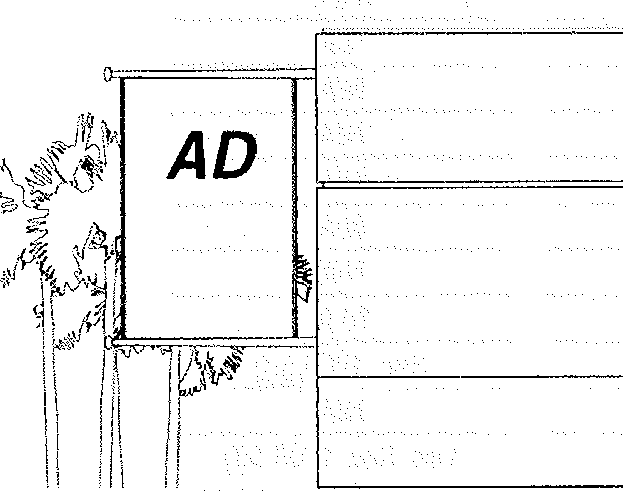 | ■ | ■ | ■ | a. Quantity (max) | 1/façade | ||
| b. Sign Face Area | 6 s.f. | ||||||
| c. Sign Structure Area | N/A | ||||||
| d. Width | 3 ft. | ||||||
| e. Height | 3 ft. | ||||||
| f. Depth/Projection | 3 ft. | ||||||
| g. Clearance | 8 ft. | ||||||
| h. Letter Height | N/A | ||||||
| i. Setback | N/A | ||||||
| j. Time of Display | 30 days | ||||||
| k. Landscaping/Illumination | N/A | ||||||
| l. Other | Yes; Sec. 1007.3(e) | ||||||
Contractor Sign
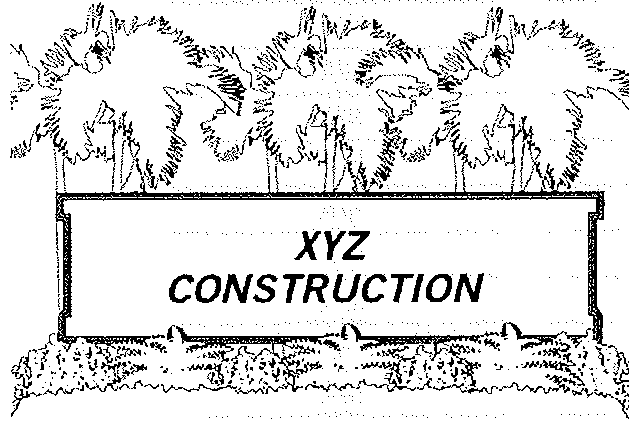 | ■ | ■ | ■ | ■ | ■ | a. Quantity (max) | Sec. 1008.5(a) |
| b. Sign Face Area | 48 s.f. | ||||||
| c. Sign Structure Area | N/A | ||||||
| d. Width | N/A | ||||||
| e. Height | 6 ft. | ||||||
| f. Depth/Projection | N/A | ||||||
| g. Clearance | N/A | ||||||
| h. Letter Height | N/A | ||||||
| i. Setback | 10 ft. | ||||||
| j. Time of Display | Sec. 1008.5(a) | ||||||
| k. Landscaping/Illumination | N/A | ||||||
| l. Other | Yes; Sec. 1008.5(a) | ||||||
Courtesy Notice Sign
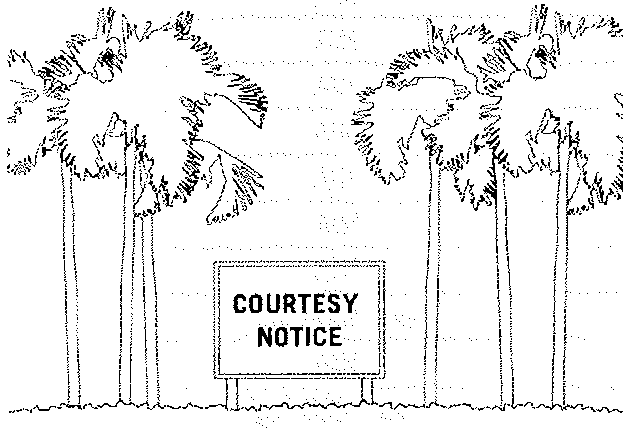 | ■ | ■ | ■ | ■ | ■ | a. Quantity (max) | 2 |
| b. Sign Face Area | As required | ||||||
| c. Sign Structure Area | N/A | ||||||
| d. Width | N/A | ||||||
| e. Height | As required | ||||||
| f. Depth/Projection | N/A | ||||||
| g. Clearance | 3 ft. | ||||||
| h. Letter Height | 3" min. | ||||||
| i. Setback | 5 ft. | ||||||
| j. Time of Display | Sec. 1008.5(b) | ||||||
| k. Landscaping/Illumination | N/A | ||||||
| l. Other | Yes; Sec. 1008.5(b) | ||||||
Development Sign
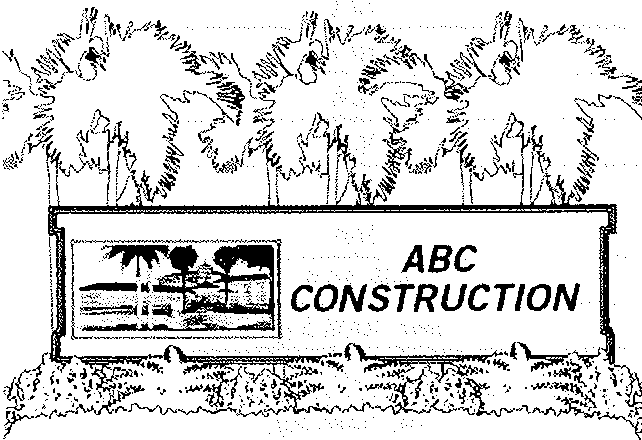 | ■ | ■ | ■ | ■ | ■ | a. Quantity (max) | Sec. 1008.5(c) |
| b. Sign Face Area | 48 s.f. | ||||||
| c. Sign Structure Area | N/A | ||||||
| d. Width | N/A | ||||||
| e. Height | 6 ft. | ||||||
| f. Depth/Projection | N/A | ||||||
| g. Clearance | N/A | ||||||
| h. Letter Height | N/A | ||||||
| i. Setback | 10 ft. | ||||||
| j. Time of Display | Sec. 1008.5(c) | ||||||
| k. Landscaping/Illumination | Yes/No | ||||||
| l. Other | Yes; Sec. 1008.5(c) | ||||||
Directional Sign(for Commercial Establishments)
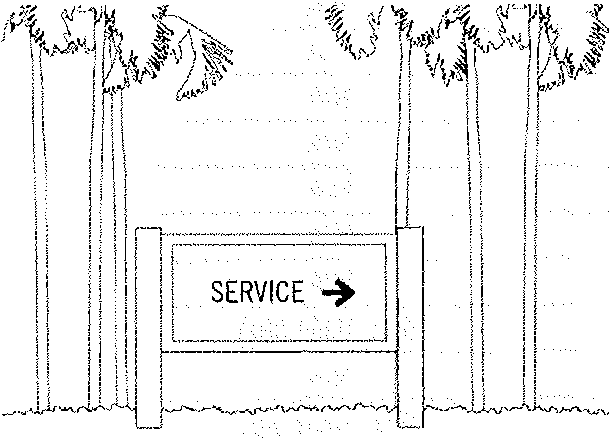 | ■ | ■ | ■ | ■ | ■ | a. Quantity (max) | 1 per accessway |
| b. Sign Face Area | 8 s.f. | ||||||
| c. Sign Structure Area | N/A | ||||||
| d. Width | N/A | ||||||
| e. Height | 4 ft. | ||||||
| f. Depth/Projection | N/A | ||||||
| g. Clearance | N/A | ||||||
| h. Letter Height | N/A | ||||||
| i. Setback | 10 ft. | ||||||
| j. Time of Display | Sec. 1008.5(e) | ||||||
| k. Landscaping/Illumination | N/A | ||||||
| l. Other | Yes; Sec. 1008.5(e) | ||||||
Directional Sign(for Religious Institutions)
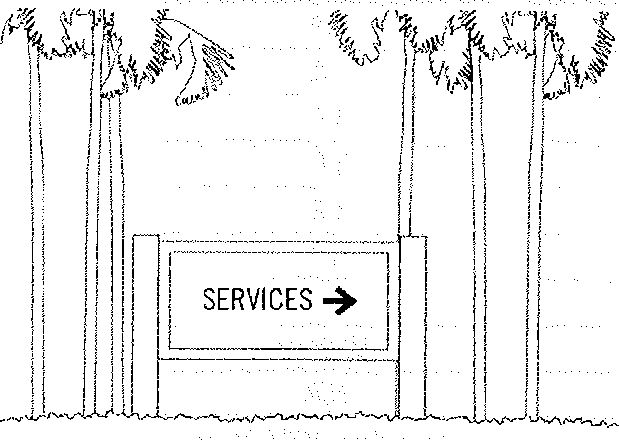 | ■ | ■ | ■ | ■ | ■ | a. Quantity (max) | 1 per accessway |
| b. Sign Face Area | 8 s.f. | ||||||
| c. Sign Structure Area | N/A | ||||||
| d. Width | N/A | ||||||
| e. Height | N/A | ||||||
| f. Depth/Projection | N/A | ||||||
| g. Clearance | N/A | ||||||
| h. Letter Height | N/A | ||||||
| i. Setback | 10 ft. | ||||||
| j. Time of Display | Sec. 1008.5(f) | ||||||
| k. Landscaping/Illumination | N/A | ||||||
| l. Other | Yes; Sec. 1008.5(f) | ||||||
Family Event Sign
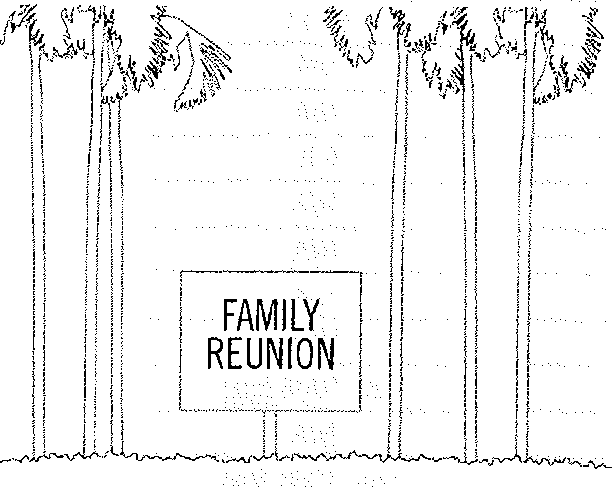 | ■ | ■ | ■ | a. Quantity (max) | 1 | ||
| b. Sign Face Area | 4 s.f. | ||||||
| c. Sign Structure Area | N/A | ||||||
| d. Width | N/A | ||||||
| e. Height | N/A | ||||||
| f. Depth/Projection | N/A | ||||||
| g. Clearance | N/A | ||||||
| h. Letter Height | N/A | ||||||
| i. Setback | 10 ft. | ||||||
| j. Time of Display | Sec. 1010(b) | ||||||
| k. Landscaping/Illumination | N/A | ||||||
| l. Other | Yes; Sec. 1010(b) | ||||||
Grand Opening Sign(Banner)
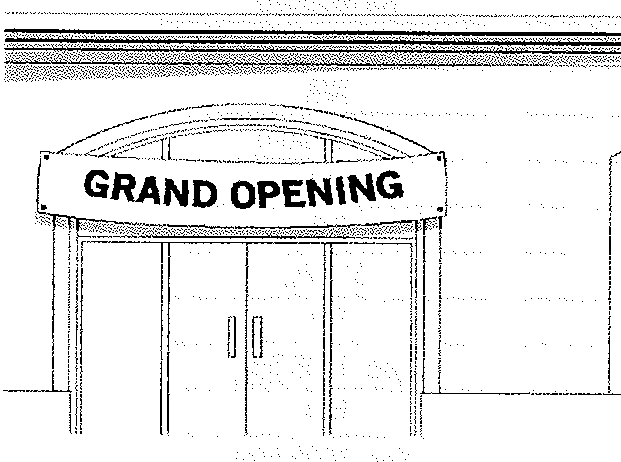 | ■ | ■ | ■ | a. Quantity (max) |
1 per street
frontage | ||
| b. Sign Face Area | 32 s.f. | ||||||
| c. Sign Structure Area | N/A | ||||||
| d. Width | N/A | ||||||
| e. Height | N/A | ||||||
| f. Depth/Projection | N/A | ||||||
| g. Clearance | N/A | ||||||
| h. Letter Height | N/A | ||||||
| i. Setback | N/A | ||||||
| j. Time of Display | Sec. 1008.5(g) | ||||||
| k. Landscaping/Illumination | N/A | ||||||
| l. Other | Yes; Sec. 1008.5(g) | ||||||
Grand Opening Sign(Freestanding)
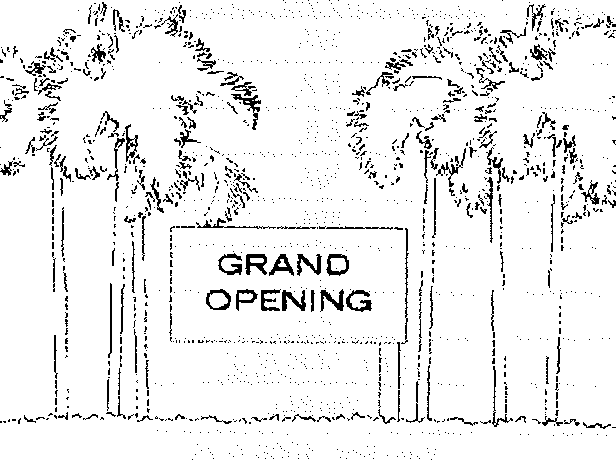 | ■ | ■ | ■ | a. Quantity (max) |
1 per street
frontage | ||
| b. Sign Face Area | 32 s.f. | ||||||
| c. Sign Structure Area | N/A | ||||||
| d. Width | N/A | ||||||
| e. Height | N/A | ||||||
| f. Depth/Projection | N/A | ||||||
| g. Clearance | N/A | ||||||
| h. Letter Height | N/A | ||||||
| i. Setback | 10 ft. | ||||||
| j. Time of Display | Sec. 1008.5(g) | ||||||
| k. Landscaping/Illumination | N/A | ||||||
| l. Other | Yes; Sec. 1008.5(g) | ||||||
Grand Opening Residential Sign(Banner)
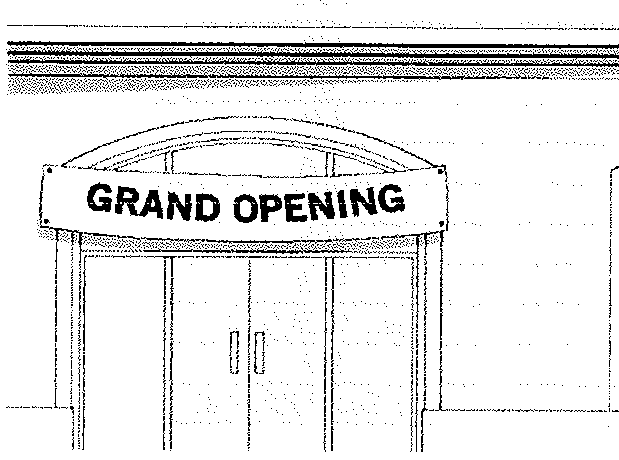 | ■ | ■ | ■ | a. Quantity (max) |
1 per street
frontage | ||
| b. Sign Face Area | 32 s.f. | ||||||
| c. Sign Structure Area | N/A | ||||||
| d. Width | N/A | ||||||
| e. Height | N/A | ||||||
| f. Depth/Projection | N/A | ||||||
| g. Clearance | N/A | ||||||
| h. Letter Height | N/A | ||||||
| i. Setback | N/A | ||||||
| j. Time of Display | Sec. 1008.5(g) | ||||||
| k. Landscaping/Illumination | N/A | ||||||
| l. Other | Yes; Sec. 1008.5(g) | ||||||
Political Sign
 | ■ | ■ | ■ | ■ | ■ | a. Quantity (max) | Sec. 1010(h) |
| b. Sign Face Area | Sec. 1010(h) | ||||||
| c. Sign Structure Area | N/A | ||||||
| d. Width | N/A | ||||||
| e. Height | N/A | ||||||
| f. Depth/Projection | N/A | ||||||
| g. Clearance | N/A | ||||||
| h. Letter Height | N/A | ||||||
| i. Setback | Sec. 1010(h) | ||||||
| j. Time of Display | Sec. 1010(h) | ||||||
| k. Landscaping/Illumination | N/A | ||||||
| l. Other | Yes; Sec. 1010(h) | ||||||
Real Estate Sign
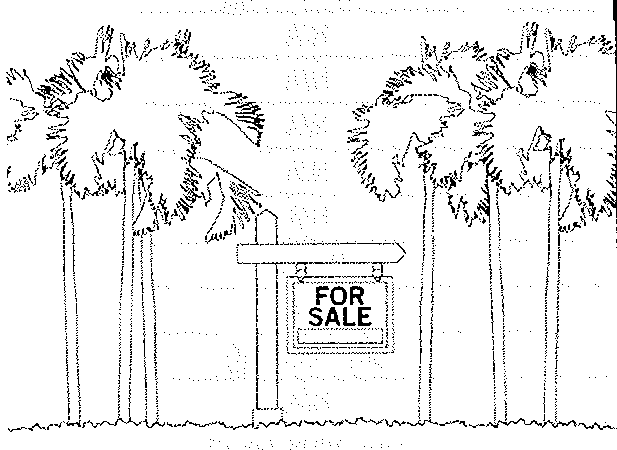 | ■ | ■ | ■ | ■ | ■ | a. Quantity (max) | 1 per frontage |
| b. Sign Face Area | Sec. 1008.5(i) | ||||||
| c. Sign Structure Area | N/A | ||||||
| d. Width | N/A | ||||||
| e. Height | N/A | ||||||
| f. Depth/Projection | N/A | ||||||
| g. Clearance | N/A | ||||||
| h. Letter Height | N/A | ||||||
| i. Setback | 15 ft. min. | ||||||
| j. Time of Display | Sec. 1008.5(i) | ||||||
| k. Landscaping/Illumination | N/A | ||||||
| l. Other | Yes; Sec. 1008.5(i) | ||||||
Residential Model Signs
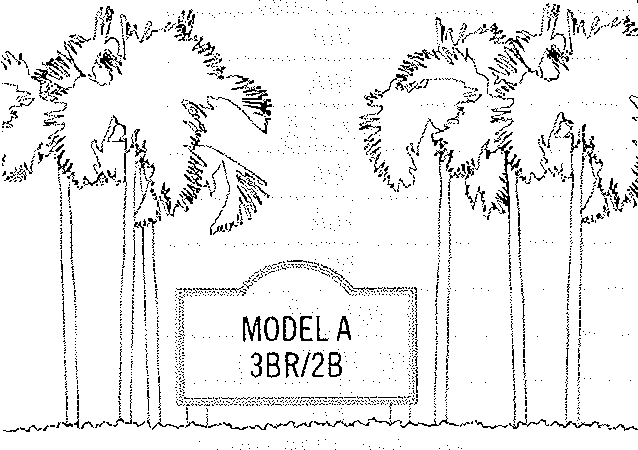 | ■ | ■ | ■ | a. Quantity (max) | Sec. 1008.3 | ||
| b. Sign Face Area | 6 s.f. | ||||||
| c. Sign Structure Area | N/A | ||||||
| d. Width | N/A | ||||||
| e. Height | 4 s.f. | ||||||
| f. Depth/Projection | N/A | ||||||
| g. Clearance | N/A | ||||||
| h. Letter Height | N/A | ||||||
| i. Setback | Sec. 1008.3 | ||||||
| j. Time of Display | Sec. 1008.3 | ||||||
| k. Landscaping/Illumination | N/A | ||||||
| l. Other | Yes; Sec. 1008.3 | ||||||
Roadside Memorial Marker
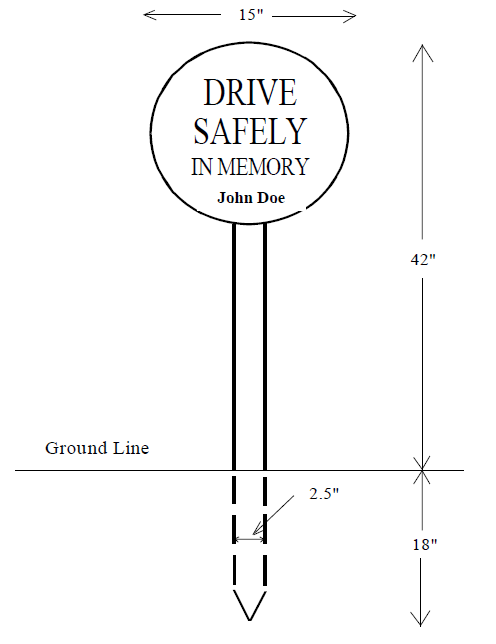 | a. Quantity (max) | Sec. 1013 | |||||
| b. Sign Face Area | 15" diameter | ||||||
| c. Sign Structure Area | N/A | ||||||
| d. Width | N/A | ||||||
| e. Height | 5 s.f. | ||||||
| f. Depth/Projection | N/A | ||||||
| g. Clearance | N/A | ||||||
| h. Letter Height | N/A | ||||||
| i. Setback | Sec. 1013 | ||||||
| j. Time of Display | Sec. 1013 | ||||||
| k. Landscaping/Illumination | N/A | ||||||
| l. Other | N/A | ||||||
Sidewalk Sign
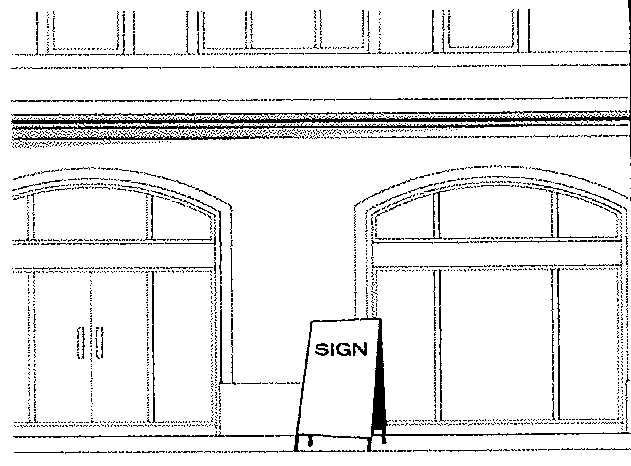 | ■ | ■ | ■ | a. Quantity (max) | 1 | ||
| b. Sign Face Area | N/A | ||||||
| c. Sign Structure Area | N/A | ||||||
| d. Width | 36" max. | ||||||
| e. Height | 42" max. | ||||||
| f. Depth/Projection | N/A | ||||||
| g. Clearance | N/A | ||||||
| h. Letter Height | N/A | ||||||
| i. Setback | N/A | ||||||
| j. Time of Display | N/A | ||||||
| k. Landscaping/Illumination | N/A | ||||||
| l. Other | Yes; Sec. 1008.5(j) | ||||||
Special Event Sign
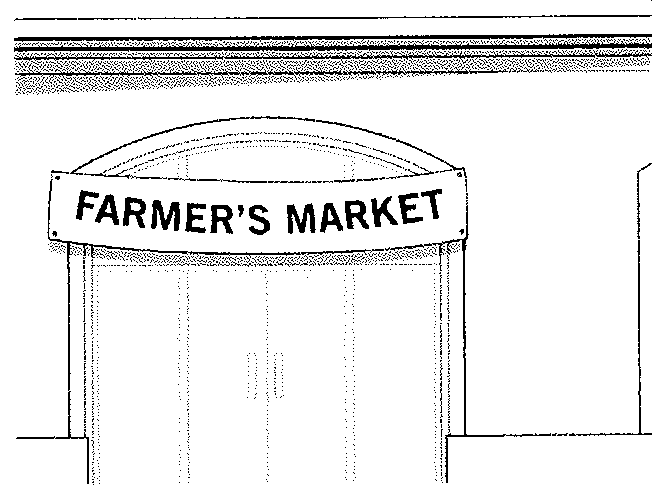 | ■ | ■ | ■ | ■ | ■ | a. Quantity (max) | 2 |
| b. Sign Face Area | Sec. 1008.5(k) | ||||||
| c. Sign Structure Area | Sec. 1008.5(k) | ||||||
| d. Width | N/A | ||||||
| e. Height | N/A | ||||||
| f. Depth/Projection | N/A | ||||||
| g. Clearance | N/A | ||||||
| h. Letter Height | N/A | ||||||
| i. Setback | N/A | ||||||
| j. Time of Display | Sec. 1008.5(k) | ||||||
| k. Landscaping/Illumination | N/A | ||||||
| l. Other | Yes; Sec. 1008.5(k) | ||||||
Warning Sign
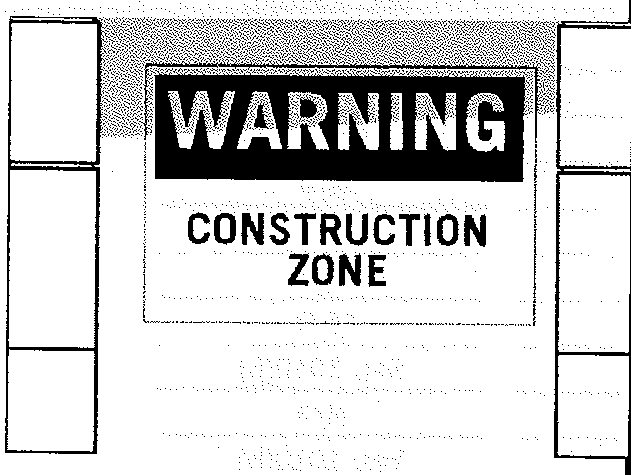 | ■ | ■ | ■ | ■ | ■ | a. Quantity (max) | 2 |
| b. Sign Face Area | 2 s.f. | ||||||
| c. Sign Structure Area | N/A | ||||||
| d. Width | N/A | ||||||
| e. Height | N/A | ||||||
| f. Depth/Projection | N/A | ||||||
| g. Clearance | N/A | ||||||
| h. Letter Height | N/A | ||||||
| i. Setback |
N/A; -10 ft.
freestanding | ||||||
| j. Time of Display | upon need | ||||||
| k. Landscaping/Illumination | N/A | ||||||
| l. Other | No | ||||||
Window Sign--Advertising
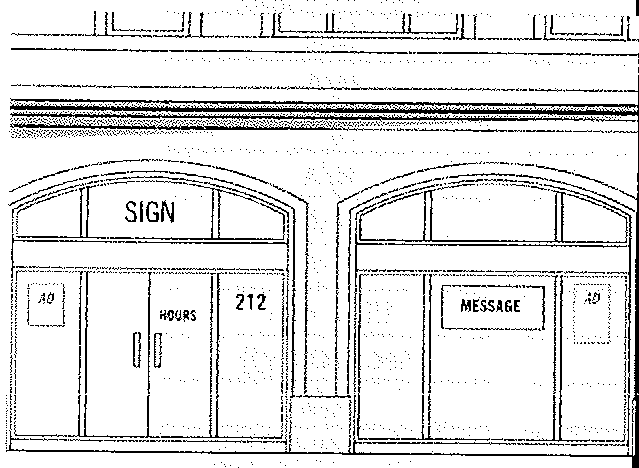 | ■ | ■ | ■ | ■ | ■ | a. Quantity (max) | N/A; Sec. 1008.5(l) |
| b. Sign Face Area | Sec. 1008.5(l) | ||||||
| c. Sign Structure Area | N/A | ||||||
| d. Width | N/A | ||||||
| e. Height | N/A | ||||||
| f. Depth/Projection | N/A | ||||||
| g. Clearance | N/A | ||||||
| h. Letter Height | 7" max. | ||||||
| i. Setback | N/A | ||||||
| j. Time of Display | Sec. 1008.5(l) | ||||||
| k. Landscaping/Illumination | N/A | ||||||
| l. Other | Yes; Sec. 1008.5(l) | ||||||
Yard Sale Sign
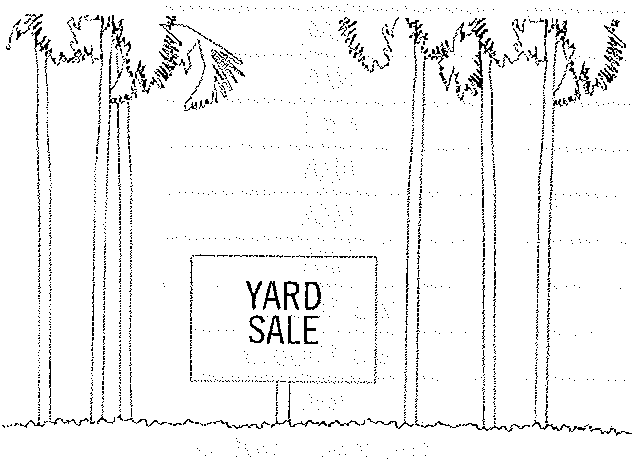 | ■ | ■ | a. Quantity (max) | 2 per dwelling | |||
| b. Sign Face Area | 4 s.f. max. | ||||||
| c. Sign Structure Area | N/A | ||||||
| d. Width | N/A | ||||||
| e. Height | 3 ft. | ||||||
| f. Depth/Projection | N/A | ||||||
| g. Clearance | N/A | ||||||
| h. Letter Height | N/A | ||||||
| i. Setback | 5 ft. | ||||||
| j. Time of Display | Sec. 1008.5(m) | ||||||
| k. Landscaping/Illumination | N/A | ||||||
| l. Other | Yes; Sec. 1008.5(m) | ||||||
1008.5. Specific Sign Standards (Supplemental to Table 2).
a.
Contractor sign.
A.
Quantity: One per dwelling unit for single-family lots; one per each street frontage for multi-family residential or non-residential project.
B.
Time of display: Contractor sign may be posted after issuance of a building permit, and shall be removed upon the issuance of a final certificate of occupancy for the last building or upon lapse of site plan approval.
C.
Permit requirement: Requires a TSP.
b.
Courtesy notice sign.
A.
Posting: Must be installed prior to or by the date required by statute or ordinance, when application(s) on subject property is/are officially scheduled for a public meeting/hearing.
B.
Removal: Within seven days after the final public hearing or community meeting to which it pertains.
C.
One sign may be posted on each perimeter roadway frontage.
c.
Development sign.
A.
Quantity: One per dwelling unit for a single-family lot; one per each street frontage for multi-family residential or non-residential project.
B.
Time of display: May be posted upon site plan approval, and shall be removed no later than upon the issuance of a final certificate of occupancy for the last building or upon lapse of site plan approval.
C.
Permit requirement: Requires a TSP and building permit.
D.
Shall identify name of project and type of development.
E.
May include a city-approved artistic perspective rendering of the project.
d.
[Reserved.]
e.
Directional sign, special event (for commercial establishments).
A.
Must be located within the subject property; one per access way.
B.
Permit requirement: Requires a TSP, issued in conjunction with a special event or meeting.
C.
Time of display: same day as special event or meeting; must be removed immediately after special event, meeting or service.
f.
Directional sign, special event (for religious institutions).
A.
Must be located within the subject property; one per access way.
B.
Time of display: Same day as special event, meeting or service, must be removed immediately after special event, meeting or service.
g.
Grand opening sign (banner)/grand opening sign (freestanding)/grand opening residential sign (banner).
A.
May not be erected unless a temporary use permit ("TUP") or TSP has been granted by the city.
B.
Only one grand opening sign of either permissible type (banner or freestanding) is permitted per establishment per approval period.
C.
Maximum area is 32 square feet.
D.
Time of display: No earlier than 30 days prior to the grand opening event; banner or sign shall be removed no later than 45 days after the event. Exceptions are made for a business owner to erect a banner for up to 90 days while waiting for the permanent identification wall sign to be installed.
E.
Purpose is to advertise a grand opening for a new business or a change in ownership of a business, or a new residential development; no business may have more than one grand opening.
F.
Banners may only be attached to a building surface or another sign and shall not be attached to trees, poles or fences.
h.
Handheld sign (also referred to as a "human sign").
A.
Up to one handheld sign may be displayed per establishment or activity at any time.
B.
Handheld signs shall be displayed only upon the premises of the establishment or activity, or upon the adjacent public sidewalk, provided that the placement of such sign shall not obstruct pedestrian or vehicle traffic.
C.
Maximum area of sign shall be 32 square feet.
i.
Real estate sign.
A.
One real estate sign is permitted per dwelling unit for residential property and one per business or nonresidential activity, unless the property has two frontages on a public ROW, in which case two signs shall be permitted.
B.
Real estate signs may be up to four square feet on residential lots and up to 16 square feet on non-residential property.
C.
Setback from public ROW: 15 feet.
D.
Time of display: May be posted no sooner than the date of listing of the property for sale or lease; shall be removed no later than three days following the sale closing or signing of the lease.
E.
Open house signs may only be posted on weekends and holidays, between the hours of 10:00 a.m. and 6:00 p.m. during the times and dates when the property is available for inspection.
j.
Sidewalk sign.
A.
Sidewalk signs shall consist of freestanding, double-sided temporary signs placed at the entrance to a business located in a primarily pedestrian environment.
B.
Sidewalk signs shall be removed at the close of business each day.
C.
One sidewalk sign shall be permitted for each business.
D.
Sidewalk signs shall not exceed 42 inches in height and 36 inches in width.
E.
Sidewalk signs shall be moved inside during high winds or other weather conditions that might cause the signs to pose a hazard to public safety.
k.
Special event sign/special event banner.
A.
May not be erected unless a TUP or TSP has been granted by the city.
B.
May be freestanding on a post or posts (up to 32 square feet in sign area) or a wall-mounted banner (not to exceed 32 square feet in sign area for a one-story or two-story building, or no more than 60 square feet for a three-story or higher building).
C.
No more than two special event signs of either type (banner or freestanding) are permitted per establishment during any single approval duration.
D.
No more than twelve special event signs may be erected during one calendar year for any individual property or establishment, or for any multi-tenant center, for no more than 14 days at a time, provided that the sign permit is issued in accordance with a TUP.
E.
Time of display: Banner or sign shall be removed immediately after the event.
l.
Window sign—Advertising.
A.
The total area of all window signs, including advertising window signs, shall not exceed 25 percent of total window area of an establishment.
B.
Advertising window signs must comply with the regulations specific to all window signs in Section 1007.
m.
Yard/garage sale sign.
A.
Up to two per dwelling unit on residential property only, provided it shall be set back at least five feet from any public ROW, does not exceed six square feet in sign area excluding posts, and does not exceed three feet in height including posts, measured from the yard at the post location.
B.
Time of display: Posting: One day prior to yard sale; Removal: Same day.
C.
A yard sale sign may be posted no more than once every 180 days on any single parcel.
n.
Park fence banner sign.
A.
Allowable area is 40 square feet, 10-foot width and 4-foot height.
B.
Up to two banners per applicant per park.
C.
Time of display: upon issuance of permit from the City of Miramar; Removal: upon expiration of permit approval.
D.
Park fence banner signage is permitted only at public parks and when erected by the city or through written agreement with the city.
o.
Feather flag sign.
A.
Allowable height is 15 feet.
B.
Only one per business.
C.
Time of display: 90 days upon issuance of TSP from the City of Miramar; removal: upon expiration of permit approval.
D.
Must be placed within the property lines where the business is located.
(Ord. No. 12-05, § 3(Exh. A), 11-30-11; Ord. No. 13-03, § 2, 10-17-12; Ord. No. 14-08, § 2(Exh. A), 11-18-13; Ord. No. 17-17, § 4, 9-19-17; Ord. No. 19-17, §§ 6, 7, 5-15-2019; Ord. No. 20-10, § 2(Exh. A), 3-18-20; Ord. No. 22-06, § 4, 3-1-22)
Sec. 1009. - Specifically Prohibited Signs.
The following signs are specifically prohibited in the city. If it is possible to define a sign using more than one of the definitions contained in Section 1002, and one of the corresponding sign types is referenced in this section as being prohibited, then that sign shall be prohibited.
(a)
Advertising sign, except for the following types: Activity, bench, blade advertising (temporary), contractor, development, digital billboard, family event, feather flag, fence wraps, gasoline price, gasoline pump advertising, grand opening, handheld human, identification (where the name of the establishment happens to indicate a product or service offered), interior (where not visible outside the building), leasing/real estate, marquee, menu, including preview board, including digital, park fence banner, residential model, sidewalk, special event, window, and yard/garage sale signs;
(b)
Animated sign;
(c)
Attention attracting device;
(d)
Balloon attached to a structure, landscaping feature or the ground;
(e)
Reserved;
(f)
Reserved;
(g)
Flags, except as provided for in Section 1010;
(h)
Hazardous sign;
(i)
Mansard sign;
(j)
Reserved;
(k)
Painted wall sign;
(l)
Pole sign, if not specifically prescribed as a permitted sign by this chapter;
(m)
Portable sign;
(n)
Projecting sign, if not specifically prescribed as a permitted sign by this chapter;
(o)
Roof sign;
(p)
Snipe sign;
(q)
Vehicle sign that acts as portable sign when the vehicle to which it is affixed or on which it is painted is not usually on the road during normal business hours;
In addition, the following conditions are prohibited:
(r)
Signs in conjunction with a home occupation, assisted living facility in a residentially-zoned area;
(s)
Sign installed on an external raceway;
(t)
Sign and sign structure which is not properly maintained or is abandoned;
(u)
Strip lighting used to outline roofs or any part of a building or window or sign frame;
(v)
Any sign placed on public property or rights-of-way by someone other than the city. No sign shall be placed on any utility pole except for utility identification or similar purpose;
(w)
No sign shall be placed within a sight triangle that would obstruct visibility by pedestrian or vehicle traffic;
(x)
Any sign not specifically prescribed as a permitted sign or exempted by this chapter, and permitted or exempted signs only to the extent allowed by this chapter.
(Ord. No. 12-05, § 3(Exh. A), 11-30-11; Ord. No. 19-14, § 11, 2-20-19; Ord. No. 19-17, § 8, 5-15-2019; Ord. No. 22-06, § 5, 3-1-22)
Sec. 1010. - Exempt Signs.
The following signs are exempt from obtaining either a permanent sign or building permit or a TSP and may be located in the zoning districts provided herein. If it is possible to define a sign using more than one of the definitions contained in Section 1002, and one of the corresponding sign types is referenced in this section, then the sign type that provides the most restrictive standards shall apply. These signs must still adhere to LDC Sections 1007 and 1008 and to other applicable sections of the LDC, City Code, Florida Building Code and Florida Fire Prevention Code, as updated from time to time.
(a)
Address sign;
(b)
Bulletin board;
(c)
Community information sign;
(d)
Courtesy notice sign, upon approval of notice requirement from the city;
(e)
Family event sign;
(f)
Flag in accordance with the requirements of Sections 1002 and 1010;
(g)
Handheld signs;
(h)
Memorial sign;
(i)
Nameplate sign;
(j)
Political sign;
(k)
Real estate sign;
(l)
Sidewalk signs;
(m)
Sign erected inside a building that is not legible from outside such building;
(n)
Street sign pursuant to an approved site plan or erected by a governmental agency;
(o)
Traffic sign that complies with FDOT and city design standards, subject to city approval;
(p)
Warning sign;
(q)
Window signs;
(r)
Yard/garage sale signs;
The following requirements shall apply to signs which are exempt from permitting pursuant to this section.
a.
Address signs.
A.
Address sign numerals applied to nonresidential buildings shall be at least six inches tall and at least one-half-inch wide. Address sign numerals applied to residential buildings shall be at least three inches tall.
B.
Address signs shall be easily visible by using colors or materials that contrast with their background.
C.
Address signs shall be constructed of durable materials. The address sign shall be attached to the front of the building in proximity to the principal entrance or at a mailbox.
D.
Address numbers are required for all permanent monument signs, except for residential community identification monument and residential entrance feature signs.
b.
Family event sign.
A.
One per dwelling unit (residential property only).
B.
Time of display: No earlier than 30 days prior to event; removal required within seven days after event.
C.
Shall not exceed four square feet in sign face area.
c.
Flag (residential and non-residential property). Flags shall be displayed on flagpoles and shall not be placed on top of buildings or light poles. Commercial/advertising flags are not permitted. No more than one governmental flag and two other noncommercial flags may be posted per flagpole, as follows:
A.
Maximum height: Flagpoles in residential districts shall not exceed 20 feet. Flagpoles in nonresidential districts shall not exceed 40 feet, unless the pole is utilized as part of a stealth telecommunications tower, in which case such stealth tower pole may be up to 150 feet high.
B.
Maximum number and size: Each residential property shall be allowed a maximum of one flagpole. Each nonresidential property shall be allowed a maximum of three flagpoles. The maximum dimensions of any flag shall be proportional to the flagpole height. The hoist side of the flag shall not exceed 20 percent of the vertical height of the pole. Flagpole height and maximum flag size shall be in accordance with the table provided in this section. References to flagpole height in this subsection refer to vertical flagpoles. References to the number of flags and flagpoles and flag dimensions refer to both vertical flagpoles and mast arm flagpoles [for example, staffs extending at an angle from a building]. On United States and Florida holidays, there shall be no maximum flag size or number or other limitations on manner of display.
C.
Setback: A vertical flagpole must be set back from all property boundaries at least 15 feet within residential property, at least 25 feet within non-residential property, or five feet less than the structural setback of the district, whichever is less, in any district.
D.
Condition of flag and pole or other permanent mounting: The flag and flagpole or other permanent mounting shall be maintained in good repair. Flagpoles with broken halyards shall not be used and flags which are torn or frayed shall not be displayed.
Flag size for pole heights not listed shall be proportionally derived.
d.
Gasoline advertising signs.
A.
Non-price advertising signage may only be attached to a gasoline pump, and shall not exceed two square feet of sign area per pump. No other advertising signage is permitted on the building, car wash, light poles or canopy.
e.
Memorial sign.
A.
One per standard pedestrian entrance located near the entrance.
B.
Shall not exceed four square feet in sign area.
C.
Memorial signs shall be constructed of durable materials.
f.
Nameplate sign.
A.
One per dwelling unit or per practicing professional in a business or professional office.
B.
Must be adjacent to standard pedestrian entrance.
C.
Nameplate signs shall consist of either a panel or individual letters applied to a building wall within ten feet of an entrance to the building.
D.
Nameplate signs shall not exceed two square feet in sign area per sign.
E.
Nameplate signs shall be constructed of durable materials.
g.
Noncommercial residential sign.
A.
Allowed only in window of a residential dwelling unit (as attached sign).
B.
Up to two square feet of sign area permitted.
h.
Political sign.
A.
Political signs may not be placed on a utility pole.
B.
Political signs may not be placed on public property, within public rights-of-way, or within a sight triangle that would obstruct visibility by pedestrian or vehicle traffic.
C.
Each private property may have one or more political signs per candidate or issue per parcel, not to exceed 48 square feet of sign area.
D.
Posting: Not earlier than 90 days prior to the election to which it relates or the date of candidate qualification, if applicable.
Removal: By the person placing the sign, or his/her designee, within seven days after the election.
E.
Supplemental pre-election posting: In addition to the political signs allowed by this subsection, no earlier than five days prior to the commencement of voting, including the commencement of any established early voting period:
1.
Political signs may be placed upon parcels which include a polling place or early voting site provided that such signs shall be no closer than 100 feet from the public entrance to the polling place or early voting site in accordance with F.S. § 102.031(4)(a).
2.
[Reserved.]
(Ord. No. 12-05, § 3(Exh. A), 11-30-11; Ord. No. 13-03, § 2, 10-17-12; Ord. No. 22-06, § 6, 3-1-22)
Sec. 1011. - Nonconforming Signs.
1011.1. Removal Required from Public Property. Any unauthorized sign placed on public property is subject to immediate confiscation and removal by the city. With the exception of snipe signs as defined in Section 1002, which shall be considered abandoned property and may be immediately disposed of, an owner may recover a removed sign by paying the removal costs within 20 days of the date of removal. If the owner does not recover the sign within 20 days, then it shall be considered abandoned property and shall be disposed.
1011.2. Amortization Allowed for On-Premises Signs. All nonconforming, legal, on-premises signs or sign structures shall be removed or altered so as to conform to the provisions of this chapter as it existed on October 1, 1998, by October 1, 2015. Signs or sign structures not removed or altered so as to conform to the provisions of this chapter shall accrue penalties, which are applicable to the property where the sign is located, as provided for in LDC Section 1012.
1011.3. Structural Alterations. Nonconforming signs shall not be structurally altered or enlarged, and the technology which they use shall not be modernized, unless they are made to conform to all the requirements of this chapter. Substitution or interchange of copy shall be permitted consistent with this chapter, until the expiration date for removal of said signs.
1011.4. Natural Damage. Nonconforming signs and sign structures that, to the extent of 50 percent or more of their value, are destroyed by wind, deterioration or other damage shall be made to conform to all the requirements of this chapter, or be removed.
1011.5. Conforming and Nonconforming Signs Prohibited on Same Premises. No conforming sign or sign structure on a single or multi-establishment property shall be erected on the same premises with an existing nonconforming sign until the nonconforming sign has been made to conform to all the requirements of this section or removed.
1011.6. Continuance of Certain Nonconforming Signs. Nonconforming, legal on-premises signs of roof sign or mansard sign type, that would otherwise be subject to Section 1011.2, but which the director determines cannot be altered to conform to the requirements of this chapter due to architectural constraints of the property upon which such signs are mounted, may remain until such time that the building upon which the sign is mounted undergoes architectural renovation that would allow for signage to be displayed in conformance with current Code standards. The director shall review the condition of the premises and sign structures, and shall make a determination as to whether the nonconforming roof or mansard signs cannot feasibly be replaced due to the present architectural condition of the property. At such time as the property is subject to architectural renovation, the director shall review the building permit and related applications for the proposed renovation and shall determine whether the proposed renovation will allow for the replacement of the nonconforming roof or mansard signs with identification sign types that are in conformity with this chapter. Upon the director's determination that replacement of a nonconforming roof or mansard sign is feasible, the owner of the nonconforming sign shall remove such sign prior to completion of the building renovation.
(Ord. No. 12-05, § 3(Exh. A), 11-30-11; Ord. No. 14-08, § 2(Exh. A), 11-18-13)
Sec. 1012. - Administration and Enforcement.
The requirements of this section shall be administered and enforced by the director.
1012.1. Inspections. All non-exempt, permanent and temporary signs must be inspected and approved by the planning division of the community development department prior to receiving their final inspection approval from the building division. All temporary signs installed prior to or after the approval of a valid temporary sign permit by the planning division are subject to inspection and removal or replacement if found to be inconsistent with the city's approval
1012.2. Erroneously Issued Permits. Issuance of a permit shall not be construed to be an approval of any violation, and upon discovery of a violation, the city manager or his/her designee shall order immediate correction thereof, and may stop, prevent the erection, or require the removal of any sign until the correction is completed.
1012.3. Penalties. Pursuant to the city's code enforcement procedures, sign code violations are subject to special magistrate hearings, fines, and penalties, as applied by the city's code compliance officers:
(a)
First notice: $25.00.
(b)
Second notice: $50.00.
(c)
Third notice: $100.00.
(d)
Fourth notice: $500.00.
(e)
After the issuance of the fourth notice, the city shall have the right to either continue penalties at the same rate as the fourth notice or remove the penalized sign at the expense of the owner of the property where the sign is located.
(f)
At least 15 days shall be provided between notices in order to give the penalized party sufficient time to respond to the notice.
(Ord. No. 12-05, § 3(Exh. A), 11-30-11)
Sec. 1013. - Roadside Memorial Markers.
1013.1. Locations. Roadside memorial markers within the City shall be permitted with the following limitations:
(1)
Roadside memorial markers are permitted in locations only where vehicular fatalities have occurred and may not be placed in swales adjoining residential properties.
(2)
It is understood, particularly for urban area curb and gutter sections, the memorial marker may not necessarily be placed at the exact location of the fatality due to restricted space within the right-of-way, property owner complaints, or other constraints. The exact location will be at the discretion of the city engineer.
(3)
A roadside memorial marker may be located within the swale of a public right-of-way, but shall be located at least three (3) feet from the edge of pavement or two (2) feet from the edge of a sidewalk, if no swale is present or as determined by the city engineer.
(4)
There shall be no more than one (1) roadside memorial marker per accident in a location where a death has occurred.
1013.2. Applications.
(1)
Application for a roadside memorial marker shall be made in writing to the city engineer. Application for a roadside memorial marker may be made by immediate family members or friends, with requests from friends requiring the written approval of the deceased's immediate family. For purposes of this section, "immediate family members" are defined as the parents, siblings, children, legal guardians, and/or spouse of the deceased.
(2)
Roadside memorial markers shall be permitted for an initial period of one (1) year, and may be renewed for one additional year upon reapplication, prior to the expiration of the initial permit.
1013.3 Design, Installation, and Maintenance.
(1)
Roadside memorial markers must adhere to Table 2 in Sec. 1008. The roadside memorial markers shall consist of a 15" diameter aluminum sign panel with a white background of engineering grade sign sheeting, and black letters. The post for installing the roadside memorial marker shall be a standard 5-foot metal delineator post. Placement of the deceased's name on the sign will be at the immediate family's option.
(2)
Roadside memorial markers shall be procured, installed, and maintained by city personnel after coordination with the appropriate agency(ies). Roadside memorial markers shall be the property of the city. Roadside memorial markers will not be allowed within the limits of active construction work zones.
(3)
There shall be no activities while the roadside memorial marker is in place that pose a safety hazard to the public or violate any provisions of chapter 316, Florida Statutes, concerning stopping, standing, sitting, parking, or obstruction of traffic on public roads.
(4)
Flowers, wreaths, or other paraphernalia affixed to, or placed adjacent to or near, the roadside memorial marker shall be subject to removal by the city at any time, without notice, and will be discarded.
(5)
Any roadside memorial marker found installed contrary to the provisions of this section may be removed by the City.
(Ord. No. 17-17, § 2, 9-19-17)
Sec. 1014. - Digital Billboards; Off-Premises Signage.
1014.1 Definitions. All terms in this section 1014 are defined as follows:
(1)
"Automatic changeable face" means a sign face that is capable of delivering two or more advertising messages through an automated or remotely controlled process.
(2)
"Commercial use" means activities associated with the sale, rental, or distribution of products or the performance of services in the B2, B3, OP, EC, PID, PUD (which is used exclusively for commercial purposes), and U zoning districts. The term includes, but is not limited to, such uses or activities as retail sales; wholesale sales; rentals of equipment, goods, or products; offices; restaurants; food service vendors; sports arenas; theaters; and tourist attractions. The term also includes utilities.
(3)
"Crown" means the highest point of elevation on the road pavement of the main traveled roadway immediately adjacent to the sign.
(4)
"Embellishment" means a temporary or permanent extension of a sign face which contains a portion of the message or informative contents, and which is added, modified, or removed when the message is changed.
(5)
"Erect" means to construct, build, raise, assemble, place, affix, attach, create, paint, remove, maintain, operate, draw, or in any other way bring into being or establish or continue the establishment of an off-premises sign or billboard. The term does not include such activities when performed as an incident to the change of advertising message or customary maintenance or repair of a sign.
(6)
"Industrial use" means activities associated with the manufacture, assembly, processing, or storage of products or the performance of related services in the EC, PID, PUD (which is used exclusively for industrial purposes), and U zoning districts. The term includes, but is not limited to, such uses or activities as automobile manufacturing or repair, boat manufacturing or repair, junk yards, meat packing facilities, citrus processing and packing facilities, produce processing and packing facilities, electrical generating plants, water treatment plants, sewage treatment plants, and solid waste disposal sites. The term also includes utilities.
(7)
"Major expressways" means Interstate-75 or the Florida Turnpike.
(8)
"Property" means the property where the sign is located or is proposed to be located.
(9)
"Sign face" or "sign facing" includes all automatic changeable faces as defined in section 1002 displayed at the same location and facing the same direction.
(10)
"Sign Structure Height" means the total vertical distance from the crown of the main-traveled adjacent to the billboard to the top of the highest sign face or sign structure (whichever is higher), including any border or trim.
(11)
"Utilities" includes all privately, publicly, or cooperatively owned lines, facilities, and systems for producing, transmitting, or distributing communications, power, electricity, light, heat, gas, oil, cable television, crude products, water, steam, waste, and stormwater not connected with the highway drainage, and other similar commodities.
1014.2 Findings and Intent.
(a)
The control of signs in areas adjacent to the major expressways in the city are declared to be necessary to protect the public investment in the state highways; to attract visitors to this state by conserving the natural beauty of the state; to preserve and promote the recreational value of public travel; to assure that information in the specific interest of the traveling public is presented safely and aesthetically; to enhance the economic well-being of the state by promoting tourist-oriented businesses, such as public accommodations, vehicle services, attractions, campgrounds, parks, and recreational areas; and to promote points of scenic, historic, cultural, and educational interest.
(b)
To minimize sign clutter and to protect public aesthetics, billboards and off-premises signage is being prohibited along all roadways in the city except along the major expressways Florida Turnpike and Interstate 75 as permitted in this section 1014. Digital billboards have the ability to accommodate instantly changeable copy, thereby permitting a greater number of messages on a billboard sign face which lessens the need for a greater number of billboards. Consequently, in an effort to minimize the number of off-premises signs and billboards in the city yet accommodate off-premises and other advertising, all billboards and off-premises signage shall consist only of digital billboards regulated as set forth in this section 1014.
(c)
The intent of this section 1014 is to ensure an adequate means of communication through limited numbers of billboards and off-premises signage while maintaining the attractive visual appearance within the city. By specifying criteria for all off-premises signage as stated herein, this section 1014 is intended to serve the following purposes.
(1)
Maintain the established suburban character and architectural quality of the city by regulating all billboards in a manner which promotes limited, high profile signage of high quality design to protect community and architectural aesthetics;
(2)
Protect and maintain the visual integrity of roadway corridors within the city by prohibiting billboard signage adjacent to all roadway corridors except the major expressways in an effort to establish an optional amount of off-premises signage in the city while prohibiting visual clutter and distractions to the motoring public;
(3)
Establish locations and setbacks for billboard signage which are designed to protect motorists from visual distractions, obstructions and hazards;
(4)
Enhance the appearance of the physical environment by requiring that billboards be limited as to number and location of signage to more intensive commercial and industrial areas along major expressways in an effort to be sensitive to the existing natural environment, and prohibiting encroachment of billboards into noncommercial and nonindustrial areas;
(5)
Protect the unique character and quality of the city's appearance, which is essential to its economic, cultural, and social welfare, and preserve the same by limiting billboard signage to limited locations and only along specified major expressways;
(6)
Preserve the property values of properties within the city, which are essential to the city's sustainability and the general welfare of its residents, by limiting billboards to limited locations and only along specified major expressways;
(7)
Protect the safety of the motoring public by avoiding visual clutter of billboards, reducing conflicts between and among off-premises signs, reducing the incidence of certain design elements that tend to distract motorists, and promoting proper maintenance, by limiting the number, size, and location of off-premises signage;
(8)
The number, size, scale, proportions, design and balance of billboard signs are regulated according to content-neutral standards that are based on architectural quality, character, limited number, location, and size of signage;
(9)
The U.S. Constitutional First Amendment rights of property owners are respected, and the opportunity for billboard signage is regulated to protect the aesthetics of the city while minimizing the distractions to and aiding in the ease of navigation for drivers, consistent with the requirements of Metromedia, Inc. v. City of San Diego, 453 U.S. 490 (1981) and other applicable case law.
(d)
Substitution of noncommercial speech for commercial speech. Notwithstanding anything contained in this section 1014 or the LDC to the contrary, any off-premises sign or billboard erected pursuant to the provisions of this section 1014 or otherwise lawfully existing with a commercial message may, at the option of the owner or tenant thereof, contain a noncommercial message unrelated to the business located on the property where the off-premises sign is erected. The noncommercial message may occupy the entire sign face or any portion thereof. The sign face of the may be changed from commercial to noncommercial messages, or from one noncommercial message to another, subject to the provisions of this section 1014 as frequently as desired by the owner or tenant of the sign; provided, that the billboard or off-premises sign is not a prohibited sign or sign-type and provided that the size, sign structure height, setback and other dimensional criteria contained in this section 1014 and code have been satisfied.
(e)
Content neutrality as to sign message (viewpoint). Notwithstanding anything in this section 1014 or this LDC to the contrary, no off-premises sign or sign structure shall be subject to any regulatory limitation based upon the content of the message contained on such sign or displayed on such sign structure.
1014.3. Regulations. Off-premises or billboard signage may only be designed and erected, as set forth in this section 1014. Off-premises or billboard signage may only consist of a digital billboard in locations meeting the following requirements and otherwise meeting the following requirements:
(1)
Locations.
(A)
All digital billboards must be located within one of the following zoning districts: B2, B3, OP, EC, MU, PID, PUD which is used exclusively for commercial or industrial purposes, and U; and
(B)
All digital billboards must be located on property contiguous to city's major expressways; for the purposes of this section, contiguous is defined as touching along a boundary or separated only by a canal or access road dedicated by the property owner or their predecessors in title; and
(2)
Orientation. All digital billboards shall be placed in such a manner that the sign face is directed at motor vehicles on major expressways or a road with a minimum of six lanes that connects directly to a major expressway; and
(3)
Number of faces. No more than two (2) digital billboard structures and billboards may be erected on any one property. Each digital billboard structure may have not more than two (2) sign faces. Digital billboard signage with more than one face shall be placed at an angle to form a single "V" or placed back-to-back, and shall not be placed in a straight line. For V-type, or back-to back signs, to be considered one sign for spacing purposes, the sign facings must either be connected by the same sign structure or cross-bracing, or the sign structures must be not more than fifteen (15) feet apart at their nearest point; and
(4)
Setback from Right-of-Way Line. The entire digital billboard sign face, sign structure, and any embellishments must be setback at least 15 feet from any right-of-way and at least 5 feet from any interior property line; and
(5)
Spacing from other billboards and other uses.
(A)
No digital billboard sign structure, or billboard sign, or portion thereof, shall be located within 1,500 feet of another digital billboard sign or billboard or off-premises sign structure, regardless of which side of any major expressway that a digital billboard sign is located. The distance shall be calculated as the shortest straight airline measurable distance between the edge of one sign to the edge of the other sign. The width of any intersections will be included in the measured distance between signs. This distance is measured in a direct line from the points of intersection of the edges of the main-traveled way; and
(B)
No billboard sign shall be erected within 250 feet of an existing residential use. All measurement of distances shall be along a straight airline route from the nearest point of the edge of the sign face to the property line of the existing residence; and
(C)
No billboard sign shall be erected within 50 feet of an existing building, and no new building shall be permitted within 50 feet of an existing billboard sign. All measurement of distances shall be made from the nearest edge of the sign face by straight airline measurement to the nearest point of the building or proposed building, as the case may be; and
(D)
No billboard sign shall be erected or placed within 100 feet of any place of worship, public or private school, cemetery/mausoleum, public park, public reservation, public playground, or state or national forest. All measurement of distances shall be along a straight airline route from the nearest point of the sign face to the property line of the place of worship, public or private school, cemetery/mausoleum, public park, public reservation, public playground, or state or national forest.
(6)
Prohibition on historical property. No digital billboard sign may be erected or placed on any property designated by a governmental agency as historical; and
(7)
Sign height. No digital billboard sign structure or sign face shall have a sign structure height that at any point exceeds 50 feet; and
(8)
Sign face area. A billboard sign face area shall not exceed 14 feet by 48 feet (672 square feet). Digital images shall be confined to the digital sign face; and
(9)
Landscaping. Native trees or other landscaping material shall be planted around or near the base of each billboard structure, sufficient to screen the base of the billboard base structure and any ground equipment from view of the public traveling on adjacent roads and at the property line. If a fence is provided around the base and ground equipment, landscaping shall be placed at the outside perimeter of the fence. Said trees shall be of a species typically grown in Broward County which normally mature to a height of at least 20 feet and shall have a clear trunk of 4 feet, an overall height of 12 feet and a minimum caliper of 2 inches (as measured pursuant to the provisions of the LDC) at time of planting; provided, however, that native trees and vegetation shall be managed such that no tree or vegetation on the property obscures vision of motorists on the city's major expressways; and
(10)
Compliance with LDC and building-related codes. The proposed digital billboard structure shall be required to meet all other requirements of this Code and the Florida Building Code, and shall have a painted finish for the pole and frame; and
(11)
Illumination.
(A)
No auditory message, smoke, or mechanical sounds shall be emitted from the sign; and
(B)
The sign shall not display any illumination that moves, appears to move, blinks, fades, rolls, dissolves, flashes, zooms, scrolls, shows animated movement, or changes in intensity during the static display period; and
(C)
Messages on all digital billboards shall not operate at a brightness level of more than .3 foot candles above ambient light, as measured using a foot candle meter at a distance of 250 feet for 14' x 48' digital billboards and at a distance of 200 feet for 10'6" x 36' digital billboards. Each digital billboard display shall have a light sensing device that will adjust the brightness of the billboard display as ambient light conditions change; and
(D)
The message display shall not change more often than once each eight (8) seconds, with all moving parts or illumination moving or changing simultaneously. The change from one message to the next message shall be instantaneous over the entire sign face; and
(E)
Any digital sign that malfunctions, fails, or ceases to operate in its usual or normal programmed manner shall immediately revert to a black screen and shall be restored to its normal operation conforming to the requirements of this section within twenty-four (24) hours; and
(F)
For public safety purposes, any signs which use the word "stop" or "danger" or imply the need or requirement of stopping, or which are copies or imitations of official signs shall be prohibited; and
(G)
Red, green, blue, or amber (or any color combination thereof) revolving or flashing light giving the impression of a police or caution light is prohibited; and
(12)
No embellishments extending from the sign face or sign structure are permitted on any billboard sign.
1014.4. Applications.
(1)
Application for a digital billboard shall be made to the Community Development Department for administrative site plan approval.
(2)
The application shall include of a line-of-sight study certified to and for reliance by the city, prepared by a professional Florida registered engineer. The line-of-sight study shall depict the lighting impact on affected surrounding properties.
(3)
Site plans for digital billboards that do not require variances shall be processed, and approved or denied, by the DRC. The procedure for site plan filing and submittal shall be as provided for in Section 310.3 and 310.4 of the LDC. In addition to the review criteria set forth in sections 310.6, staff shall consider the line-of-sight study and shall evaluate the site plan for compatibility with affected properties. Site plan approvals may be subject to conditions as approved by the DRC.
(4)
An applicant or affected party may request a quasi-judicial City Commission hearing on an application subject to an administrative decision of the DRC under this subsection. Within ten days of the DRC's decision to grant or deny administrative approval of a site plan or other administrative approval under this subsection, the Director shall provide posted and mailed notice of the DRC's decision to the applicant and all owners of property located within 1,000 feet of the billboard that is subject to the site plan or administrative approval, advising them of their right to request a quasi-judicial hearing of the City Commission on the application by filing an application on a form provided by the Director. Such request for a hearing of the City Commission shall be made within 30 days of the mailing of the notice by the Director. An approved administrative site plan or administrative approval shall become effective 30 days following the Director's posting and mailing of the notification of the DRC's decision, provided that no request for City Commission hearing is filed. If a request for a quasi-judicial hearing is made by the applicant or an affected property owner, it shall be scheduled for the next available City Commission meeting following the Director's completion of his or her review of the request. The City Commission hearing and decision shall be governed by the standards applicable to site plans and administrative approvals under this section.
(Ord. No. 19-14, § 12, 2-20-19; Ord. No. 20-02, § 4, 11-6-19; Ord. No. 22-06, § 7, 3-1-22)

