
Miramar City Zoning Code
CHAPTER 2
DEFINITIONS1
Editor's note— Ord. No. 18-01, § 1(Exh. A), adopted November 1, 2017, repealed ch. 2, §§ 201 and 202 and enacted a new ch. 2 as set out herein. Former ch. 2 pertained to similar subject matter and derived from Ord. No. 00-19, adopted January 19, 2000; Ord. No. 03-01, adopted October 2, 2002; Ord. No. 01-36, adopted June 20, 2001; Ord. No. 03-15, adopted May 21, 2003; Ord. No. 07-04, adopted November 29, 2006; Ord. No. 07-07, adopted November 29, 2006; Ord. No. 11-10, adopted September 21, 2011; Ord. No. 13-15, adopted August 21, 2013; Ord. No. 14-11, adopted February 5, 2014; Ord. No. 15-05, adopted November 24, 2014; and Ord. No. 17-07, adopted November 14, 2016.
Sec. 201.- General terms.
Accessory building or structure means a separate, subordinate building or structure devoted to an accessory use on the same plot with a building which is occupied by or devoted to a principal use. A barn located in the rural zoning district may exceed the area of the principal structure.
Accessory dwelling units (ADU) means a dwelling unit attached or detached from the principal single-family dwelling unit and shall be considered an accessory use to such dwelling unit.
Accessory fuel-service station means a structure that dispenses gasoline and diesel for private fleet use only.
Accessory use means a use that is subordinate to and serves a principal use; is subordinate in area, extent and purpose to the principal use; and is located on the same lot or lots under the same ownership and in the same land use district as the principal use.
Accident potential hazard area or airport hazard space means an area within 5,000 feet of the approach or departure end of a runway or in proximity to an airport in which aircraft may maneuver after takeoff or before landing and are subject to the greatest potential to crash into a structure or the ground.
Acquiring authority means the governmental entity proposing to acquire private property for public transportation or other public purposes pursuant to eminent domain proceedings or pursuant to negotiation in lieu of or under threat of the power of eminent domain. Acquiring authorities include, but are not limited to, the city, the county, the FDOT or other condemning authority.
Addition (to an existing building) means any walled and roofed expansion to the perimeter of a building in which the addition is connected by a common load-bearing wall other than a firewall. Any walled and roofed addition which is connected by a firewall or is separated by independent perimeter load-bearing walls is new construction.
Adult congregate living facility (ACLF) means any housing facility as follows:
(A)
Any housing facility licensed by the State of Florida for more than eight unrelated elderly individuals; or
(B)
Any not-for-profit housing facility for unrelated elderly individuals; or
(C)
Any housing facility which provides a life-care environment. A life-care environment shall include, but is not limited to, creation of a life estate in the facility itself and provision of on-site or off-site medical care.
Adult entertainment establishment or regulated use.
(1)
An adult theater, adult bookstore/adult novelty store/adult video store, adult motel, adult domination and submission parlor, adult dancing establishment, nude entertainment establishment; or other establishment or business operated for commercial gain where an employee, operator, or owner exposes his or her specified anatomical area for viewing by patrons, including, but not limited to, massage establishments, whether or not licensed pursuant to F.S. Ch. 480, tanning salons, modeling studios, or lingerie studios.
(2)
Excluded from this definition are educational institutions and schools, as defined in section 11-133 of the City Code, where the exposure of specified anatomical areas is associated with a curriculum or program.
(3)
An establishment that possesses an adult entertainment license, as provided in section 11-139 of the City Code, is presumed to be an adult entertainment establishment.
Adversely affected person means an individual requesting a development permit or decision; any person having a legally recognizable interest in the development permit, which interest is directly and adversely affected by a decision, and which interest is different than the interest of the community as a whole; or any person having a definite interest exceeding the general interest in the community good shared in common with all citizens. Factors to be considered in determining the sufficiency of a person's interest include, but shall not be limited to: (i) proximity of the person's property to the property at issue in the decision; (ii) character of the neighborhood including the existence of common restrictive covenants and set-back requirements that directly relate to the property at issue in the decision; and (iii) the fact that the person is among those entitled to receive notice of the decision-making proceeding resulting in the decision appealed from.
Airport means any area of land, or any manmade object or facility located thereon, which is used, or intended for use, for the landing and takeoff of aircraft and any appurtenant areas which are used, or intended for use, for airport buildings or other airport facilities or rights-of-way, together with all airport buildings and facilities located on that area.
Airport elevation means the highest point of an airport's usable landing area measured in feet above mean sea level.
Airport obstruction means any structure, object of natural growth, existing condition or use of land which would exceed the Federal obstruction standards as contained in 14 CFR Sections 77.21, 77.23, 77.25 and 77.28 as may be amended from time to time, or which obstruct the airspace required for flight of aircraft in landing and take-off at an airport or is otherwise hazardous to such landing or take-off of aircraft.
Airspace height means the height limits determined in all zoning districts in accordance with section 705 of this Code, which shall be fixed by reference to mean sea level elevation unless otherwise specified.
Alcoholic beverage. A beverage containing more than one percent of alcohol by weight, including, but not limited to, beer and wine.
(1)
It shall be prima facie evidence that a beverage is an alcoholic beverage if proof exists that:
a.
The beverage in question was or is known as whiskey, moonshine whiskey, shine, rum, gin, tequila, vodka, scotch, scotch whiskey, brandy, beer, malt liquor, or by other similar name or names; or
b.
The beverage was or is contained in a bottle or can labeled as any of the above names, or a name similar thereto, and the bottle or can bears the manufacturer's insignia, name, or trademark.
(2)
A person who, by experience in the handling of alcoholic beverages, or who by taste, smell, or drinking of such alcoholic beverages has knowledge of the alcoholic nature thereof, may testify as to his or her opinion about whether such beverage is an alcoholic beverage.
Alcoholic beverage sales A.P.S. beer and wine means the sale of alcoholic beverages, specifically limited to beer and or wine, by an establishment licensed by the Florida Division of Alcoholic Beverages and Tobacco as an Alcoholic Package Store (A.P.S.) for consumption off the premises of the establishment selling the alcoholic beverages.
Alcoholic beverage sales A.P.S. beer, wine and liquor means the sale of alcoholic beverages, which may include beer, wine and or liquor, by an establishment licensed by the Florida Division of Alcoholic Beverages and Tobacco as an Alcoholic Package Store (A.P.S.) for consumption off the premises of the establishment selling the alcoholic beverages.
Alcoholic beverage sales C.O.P. beer and wine means the sale of alcoholic beverages, specifically limited to beer and or wine, by an establishment licensed by the Florida Division of Alcoholic Beverages and Tobacco for consumption on the premises (C.O.P.) of the establishment selling the alcoholic beverages.
Alcoholic beverage sales C.O.P. beer, wine and liquor means the sale of alcoholic beverages, which may include beer, wine and or liquor, by an establishment licensed by the Florida Division of Alcoholic Beverages and Tobacco for consumption on the premises (C.O.P.) of the establishment selling the alcoholic beverages.
Alternative tower structure means a design mounting structure that camouflages or conceals the presence of an antenna or telecommunications tower, for example, flag poles, manmade trees, clock towers, bell steeples, light poles, utility poles and similar alternative designs. An antenna mounted on a utility pole shall be subject to all requirements as stated in the ordinance from which this section is derived. See also "stealth facility or tower."
Amusement business means a building, group of buildings, structures, or outdoor facilities used for recreational purposes and includes the use of coin operated or digital currency interactive entertainment machines.
Animal means a living organism other than a plant or bacterium, including fish, amphibians, reptiles, birds, and mammals other than human beings; every living nonhuman creature.
Animal, small (domesticated) mean an animal no larger than the largest breed of domesticated dogs. This term includes fish, birds, and mammals customarily kept as domestic pets within a dwelling unit.
Antenna means a transmitting and/or receiving device mounted on a tower, building or structure and used in telecommunications (personal wireless) services that radiates or captures electromagnetic waves, digital signals, analog signals, radio frequencies, wireless communications signals and other communications signals, including directional antennas such as panel and microwave dish antennas, and omni-directional antennas such as whips, but excluding radar antennas, amateur radio antennas and satellite earth signals.
Antenna dish (dish antenna, satellite dish) means an antenna with a concave shape used for the reception and/or transmission of radio signals to and from satellites.
Antenna tower means a structure used to support an antenna at some height above the ground.
Application for development approval means mean a written request for approval of a proposed use and for issuance of a development order, including, but not limited to, applications for approval of permitted uses, plats, conditional uses, rezonings, site plans and variances, etc.
Array means a group of antennas that are either (i) mounted or side mounted on the rooftop of a building or rooftop structure(s); or (ii) directly or indirectly mounted on a telecommunications tower.
Arterial road means a route providing service which is relatively continuous and of relatively high traffic volume, long average trip length, high operating speed, and high mobility importance. Arterial roads shall generally be those roads which provide access from collector roads, non-residential driveways or limited access highways. A street having that meaning given in F.S. § 334.03(15) as may be amended from time to time. Arterial roads within Broward County are identified on the Broward County Trafficways Plan.
Attached commercial means a building with a common roof that houses more than one tenant.
Attached residential means a building with a common roof that houses more than one dwelling unit.
Attached residential lot means a fee simple ownership lot for the purpose of an attached dwelling unit. These housing unit product types may include, but are not limited to, fee simple duplex and townhouse units.
Attached residential - minimum lot area per unit means the minimum required lot area of any attached residential lot within a development parcel.
Attached residential - multifamily means a group of two or more dwelling units which are attached by one or more bearing walls. These housing unit product types include garden apartments, townhouse units and may include other attached units.
Attached telecommunications facility means any telecommunications facility that is attached to an existing building or structure that is not itself a telecommunications tower or an antenna.
Automotive installation and repair means a facility or establishment engaged in the installation, repair, and maintenance of automotive vehicles, including, but not limited to, mechanical, electrical, and body repairs.
Awning means a type of architectural feature that is attached to the exterior of a building. It typically consists of a frame and fabric or metal cover, and is designed to provide shade and shelter from the elements, such as rain or sunlight. Awnings can be freestanding or attached to the building, and may be used for both residential and commercial properties.
Backhaul network means the lines that connect a telecommunication service provider's towers/cell sites to one or more cellular telephone switching offices, and/or long distance providers, or the public switched telephone network.
Bars, lounges or nightclubs means a commercial establishment whose primary business is the sale of alcoholic beverages for consumption on premises and where under fifty percent (50%) of gross receipts are related to food service. Bottle clubs as defined by Florida Statutes shall also be included. Unless a use otherwise meeting the definition of a bar, lounge, or nightclub can prove that fifty percent (50%) or more of its gross revenues are from food service by opening its books and accounts to the City, it shall be presumed that the facility is a bar, lounge, or nightclub.
Bedroom means a room that can be used for sleeping and that is at least 70 square feet in area of conditioned space, has a ceiling height from the floor that meets building code and that is located along an exterior wall, and has a closet and a door or an entrance where a door could be reasonable installed; and has an emergency means of escape and rescue opening to the outside in accordance with the Florida Building Code. For manufactured homes is constructed according to the standards of the United States Department of Housing and Urban Development and has a minimum of 50 square feet of floor area.
Beer garden means a garden, typically one attached to a bar or tavern, where beer is served; is an outdoor area in which beer and local food are served, typically at shared tables.
Block face means all development on the same side of the block as the subject development from cross-street to cross-street but does not include development across any street from the subject development.
Body art studio means any establishment where tattooing, permanent make-up and/or body piercing (other than ear piercing) takes place.
Breast height means a height of four and one-half feet above the natural grade.
Brewery means a building or establishment where malt beverages or beer, as described in chapter 563, Florida Statutes, are produced.
Brewpub means a combination brewery and restaurant; beer is brewed for consumption on the premises and served along with food.
Broadcasting facility means any telecommunication tower built primarily for the purpose of broadcasting AM, FM, satellite or television signals.
Bufferyard means an area of landscaping and open space around the perimeter of a development parcel, or an area adjacent to a parking lot which is used to screen differing land uses from each other. In some instances bufferyards may also be used to satisfy minimum yard requirements.
Building means any structure, either temporary or permanent, having a roof, and used or built for the shelter or enclosure of persons, animals, chattels or property of any kind. This definition shall include tents, awnings or vehicles situated on private property and serving in any way the function of a building.
Building Code means the Florida Building Code, Broward County Edition.
Bulk regulations means those regulations set forth in this Code, including provisions regarding building height, minimum yards and parcel size.
Call center means a facility or office where a large number of telecommunication operators or customer service representatives handle incoming or outgoing calls for customer support, sales, or other communication purposes.
Canal means a body of water having a width of 100 feet or less for linear areas in excess of 200 feet in length and used principally for the conveyance of water.
Canopy coverage means the areal extent of ground within the drip line of the tree.
Capacity means the capability of a facility to serve the needs of a user such as the number of vehicles a road can safely and sufficiently carry.
Capital improvements means the planning of, engineering for, acquisition of land or equipment, and the construction of improvements and facilities with a useful life of at least three years but does not include routine maintenance.
Carport means a structure intended for vehicle storage not completely enclosed by walls.
Cat means an animal of the Felidae family of the order carnivora.
Certificate of completion means a certificate of completion is issued by the city's building official and is proof that a structure or system is complete and for certain types of permits is released for use and may be connected to a utility system. This certificate does not grant authority to occupy a building, such as a shell building, prior to the issuance of a certificate of occupancy.
Certificate of occupancy means a certification issued by the city's building official that the building or structure may be used or occupied for habitable and other purposes and that the building or structure meets the requirements of the Florida Building Code, and no change in the existing occupancy classification of a building or structure or portion thereof shall be made, until the building official has issued a certificate of occupancy therefor as provided herein. Issuance of a certificate of occupancy shall not be construed as an approval of a violation of the provisions of this code or of other ordinances of the jurisdiction.
Child care center means an enterprise involving the care of five or more children at one and the same time, either by day or night, which children are not foster children or related by blood or marriage to the operator.
Church means any church, denominational or ecclesiastical organization having an established place for worship in the city at which nonprofit religious services and activities are regularly conducted.
Citizen with standing means anyone having a legally recognizable interest in the comprehensive plan or LDC amendment, which interest is directly affected by the comprehensive plan or LDC amendment, and which interest is different than the interest of the community as a whole; or any person having a definite interest exceeding the general interest in the community good shared in common with all citizens. Factors to be considered in determining the sufficiency of a person's interest include, but shall not be limited to: (i) proximity of the person's property to the property subject to a comprehensive plan or LDC amendment; (ii) character of the neighborhood including the existence of common restrictive covenants and set-back requirements that directly relate to the interpretative opinion; and (iii) the fact that the person is among those entitled to receive written notice (other than by newspaper or other legal advertisement) of a comprehensive plan or LDC amendment.
City means the City of Miramar.
City-licensed businesses means those businesses that were granted both a valid Zoning Certificate of Use (ZCU) and Business Tax Receipt (BTR) issued by the city.
City manager means the chief executive officer of the city as defined by the city code who shall have such duties as are legally prescribed.
CO means a certificate of occupancy. A certificate of occupancy includes a certificate of occupancy or a certificate of completion, all as defined or described in the Florida Building code, or a temporary certificate of occupancy.
Code means this LDC as may be amended from time to time.
Collector road means a route providing service which is of relatively moderate average traffic volume, moderately average trip length and moderately average operating speed. Such a route also collects and distributes traffic between local roads or arterial roads and serves as a linkage between land access and mobility needs.
College/University means an institution of higher education that offers undergraduate and/or postgraduate programs, including academic courses, research, and vocational training.
Co-location means use of a common telecommunications tower or site by two or more service providers. An application is for co-location if the service provider intends to install an array on an existing telecommunications tower or at the same site as an existing attached telecommunications facility.
Commercial center means a cohesive commercial development, designed for multiple occupancies.
Commercial recreation means a business use, or zoning district whose primary purpose is recreational activities of a spectator or participant type. Commercial recreation provides for major public or private commercial recreational, civic and cultural facilities which offer recreational opportunities to the residents and tourists. Commercial recreation uses include sports arenas, racetracks, theme parks, amusement parks, golf courses, movie theaters, bowling centers, health clubs, skating and roller rinks, pool and billiard halls, penny arcades, indoor batting cages, rock climbing, indoor play areas, sports fields, recreation centers, indoor swimming pools, tennis courts, arcades, paintball and laser tag.
Commercial use means any use whose primary purpose is retail sales or professional offices and services and that is not considered a heavy commercial use. Commercial uses may include office but not be limited to: financial institutions; medical facilities; personal services; restaurants; entertainment uses; small appliance repair; printing; studios and galleries; instructional businesses; and recreational uses such as movie theaters, bowling centers, health clubs, pool halls, or video arcades. Uses permitted in this category shall be consistent with the City of Miramar Comprehensive Plan, Land Use Element, Commercial Policies.
Commission means the City Commission of the City of Miramar.
Common area means a room or designated area within a building or complex of buildings zoned for residential use served by shared or public parking areas, which is reserved for the exclusive use of the residents of the building or complex and their invited guests and is an accessory use to the primarily residential use of such buildings.
Community center means a facility or building, open to the public, that is used for gatherings, events, and activities, often providing recreational, cultural, and social services to the community.
Community development director means the director of the community development department as appointed by the city manager.
Commuter College/University means any private college or university campus which is intended primarily to meet the needs of part-time and working students, which is located within a shopping center or office park, and which meets the following criteria: i) the campus is designed without any residential dormitories, athletic facilities, performance venues, and other facilities which are typically provided in college campuses to service full-time students, and ii) the square footage of all college and university campuses within the shopping center or office park consists of no more than 150,000 square feet of total building space or ten (10) percent of the square footage of the shopping center or office park, whichever is lower. A cafeteria/food court and school store selling new and used books and sundries for the convenience of students shall be considered as an ancillary use in connection with commuter college/university facilities provided that the square footage of such uses does not exceed ten (10) percent of the total square footage of the facility.
Compatible means a condition in which land uses or conditions can coexist in relative proximity to each other in a stable fashion over time such that no use or condition is unduly negatively impacted directly or indirectly by another use or condition.
CompatibilitySee "Compatible."
Comprehensive plan or plan means the city's comprehensive plan as adopted by Ordinance No. 89-31 and as may be amended from time to time. Conditional use means which may be allowed under certain circumstances in a particular zoning district after review and approval by the city commission.
Condominium means the form of real estate ownership defined by the Florida Condominium Act, Chapter 718, Florida Statutes, as amended from time to time.
Consistent means a development order or land development regulation is consistent with the comprehensive plan, if the land uses, densities or intensities, and other aspects of development permitted by such order or regulation are compatible with and further the objectives, policies, land uses, and densities or intensities in the comprehensive plan, and if it meets all other criteria enumerated by the city. A development approved or undertaken by the city shall be consistent with the comprehensive plan if the land uses, densities or intensities, capacity or size, timing, and other aspects of the development are compatible with and further the objectives, policies, land uses, and densities or intensities in the comprehensive plan and if it meets all other criteria enumerated by the local government.
Constrained facility means a road segment which is not planned for a capacity improvement in the Broward County Metropolitan Planning Organization's (MPO) adopted long range transportation plan.
Convenience store means a retail store that carries a limited selection of basic items and packaged foods and may open long hours for the convenience of patrons.
Covered patio means an area, usually paved and with a roof attached to a house that may be used as an area for outdoor recreation.
Cure means a variance granted pursuant to this ordinance, which authorizes the continued use and enjoyment of private property, as a lawful use, subsequent to the creation of a nonconformity by an acquiring authority.
Day care center means a child care center.
Decorative sign pole means a freestanding structure designed to support and display decorative signs or banners, often used for advertising, road signs (e.g. Stop signs) or wayfinding purposes.
Density or gross density means the number of dwelling units or rooms allocated to the project divided by the total project acreage. "Net density" means the number of residential dwelling units divided by the net parcel area.
Department means the city's community development department.
Detached residential means an individual residential dwelling that is not attached to another dwelling unit.
Detached residential - minimum lot area per unit means the minimum required lot area of any detached residential lot within a development parcel.
Detoxification center means a place where people go to receive substance abuse treatment.
Developer means any person, corporation, partnership or a governmental agency, undertaking any development as defined in this Code.
Development means the carrying out of any building activity or mining operation, the making of any material change in the use or appearance of any structure or land, or the dividing of land into three or more parcels. The following activities or uses shall be taken for the purposes of this Code to involve development:
(a)
A reconstruction, alteration of or material change in the extent or appearance of a structure on land.
(b)
A change in the intensity of use of land, such as an increase in the number of dwelling units in a structure or on land, or a material increase in the number of businesses, manufacturing establishments, or offices or dwelling units in a structure or on land.
(c)
Alteration of a shore or bank of a lake, pond, or canal, including any "coastal construction" as defined in § 161.021, Fla. Stat.
(d)
Commencement of drilling, except to obtain soil samples, mining, or excavation on a parcel of land.
(e)
Demolition of a structure.
(f)
Clearing of land as an adjunct of construction.
(g)
Deposit of refuse, solid or liquid waste, or fill on a parcel of land.
The following operations or uses shall not be construed for the purpose of this Code to involve "development":
(a)
Work by a highway or road agency or railroad company for the maintenance of a road or railroad track, if the work is carried out on land within the boundaries of the right-of-way.
(b)
Work by any utility and other persons engaged in the distribution or transmission of gas or water, for the purpose of inspecting, repairing, renewing, or constructing on established rights-of-way any sewers, mains, pipes, cables, utility tunnels, powerlines, towers, poles, tracks, or the like. This provision conveys no interest and does not eliminate any applicable notice requirements to affected land owners.
(c)
Work for the maintenance, renewal, or alteration of any structure, if the work affects only the interior of the structure.
(d)
The use of any structure or land devoted to dwelling uses for any purposes customarily incidental to enjoyment of the dwelling.
(e)
A change in the ownership or form of ownership of any parcel or structure.
(f)
The creation or termination of rights of access, riparian rights, easements, distribution and transmission corridors, covenants concerning development of land, or other rights in land.
(g)
The use of any land for the purpose of growing plants, crops, trees, and other agriculture or forestry products; raising livestock; or for other agricultural purposes.
(h)
A change in use of land or structure from a use within a class specified in an ordinance or rule to another use in the same class.
Furthermore, development includes all other development customarily associated with it unless otherwise specified. When appropriate to the context, development refers to the act of development or to the result of development. Reference to any specific operation is not intended to mean that the operation or activity when part of other operations or activities, is not development. Reference to particular operations is not intended to limit the generality of this definition.
Development agreement means an agreement between a property owner and the city pursuant to the "Florida Local Government Development Agreement Act" pursuant to sections 163.3220-163.3243, Florida Statutes. A developer, if other than the property owner of the parcel of land subject to the agreement, may also be required by the city to execute the agreement, and the holders of all security interests in privately owner portion of the parcel of land subject to the development agreement must also join in and consent to the agreement.
Development approval means any building permit, site plan approval, conditional use approval, temporary use permit, subdivision approval, change of land use district boundary, plan amendment, or any other official action to deny or grant with conditions by any official, commission, or board of the city having the effect of permitting development.
Development order means any order granting, denying, or granting with conditions an application for a development permit.
Development parcel means a parcel of land and water used for residential or non-residential structures, accessory structures, utilities, rights-of-way, easements, agriculture, open space and other public or private uses.
Development permit means any building permit, zoning permit, subdivision approval, rezoning, certification, special exception, variance, or any other official action of the city or Broward County having the effect of permitting the development of land.
Diameter breast height (DBH) means the diameter of the trunk of a tree measured at breast height. The DBH of trees with multiple trunks shall be the sum of the individual trunk diameters at breast height. Trees with less than four and one-half feet of clear trunk shall be measured as the diameter of the largest vertical branch or leader at breast height.
Director. See "community development director."
Dish antenna. See "antenna dish."
Dispense or dispensing means the transfer of possession of one or more doses of a controlled substance identified in schedule II, III, or IV in ss. 893.03, 893.035, or 893.0355, Florida Statutes, as may be amended from time to time, by a pharmacist, health care practitioner or any other person to the ultimate consumer thereof or to one who represents that it is his or her intention not to consume or use the same but to transfer the same to the ultimate consumer or user for consumption by the ultimate consumer or user.
Distributed antenna system, or DAS, is a network of spatially separated antenna nodes connected to a common source via a transport medium that provides wireless service within a geographic area or structure. DAS antenna elevations are generally at or below the clutter level and node installations are compact.
Divided roadway means a street where the opposing directional lanes of traffic are separated by a median or center turn lane.
Dog means an animal of the Canidae family of the order carnivora.
Dog grooming means a hygienic care and cleaning of a dog; a process by which a dog's physical appearance is enhanced.
Drip line means the peripheral limits of the horizontal crown of a tree spread vertically to the ground, provided, however, that the same shall not be less than a circle with a five-foot radius measured from the center of the tree.
Drive-thru means a facility designed to accommodate pickup of food, merchandise or services by a motor vehicle momentarily at rest in a driveway expressly designed for that purpose.
Drugstore means a retail establishment which provides for the dispensing and sale of pharmaceutical drugs, and which may offer various retail items and accessory services such as photo processing, eyeglass care, etc., but in which no more than 30 percent of the gross floor area of the establishment is utilized for prescription drug storage, dispensing or prescription drug-related customer service area.
Dumpster means a refuse container of one cubic yard or larger.
Duplex unit means two (2) dwelling units connected by a one-hour or greater fire-resistive wall.
Dwelling unit means a house, apartment, or condominium unit, trailer, group of rooms, or a single room intended for occupancy as separate living quarter with direct access from the outside of the building or through a common hall and with complete kitchen facilities for the exclusive use of the occupants, including rental units contained in a multi-unit structure or complex which are licensed by the state department of business regulation, division of hotels and restaurants, as "apartments," "rental condominiums" and "retirement housing."
Emergency means any occurrence or threat thereof whether accidental or natural, caused by man, in war or peace, which results or may result in substantial injury or harm to the population or substantial damage to or loss of property or public funds as declared by the chief administrator.
Employment center means a zoning district or land use district whose primary purpose is to permit non-residential development, compatible with residential and other less intensive land uses. Uses permitted in this category must be consistent with the comprehensive plan future land use element, employment center policies, or regional activity center policies.
Engineering construction permit means a permit issued by the public works/utilities department prior to the construction of any public improvements on public or private property.
Equipment facility means a room, cabinet, shelter, pedestal, build-out of an existing structure, building, or similar structure used to house ancillary equipment for a telecommunications tower or antenna. Each such cabinet, shelter, or building shall be considered a separate equipment facility.
Essential service means those services provided by the city and other governmental entities that directly relate to the health and safety of its residents, including fire, police and rescue.
EV capable means parking spaces that have listed raceway (conduit) and electrical capacity (breaker space) allocated in a local subpanel to accommodate future EVSE installations.
EV-Ready means a parking space that includes the following components: listed raceway (conduit), sufficient electrical panel service capacity, overcurrent protection devices, wire, and suitable termination points such as a junction box with a service loop or directly landed within an EVSE (i.e. Full Circuit).
Electric vehicle supply equipment (EVSE) infrastructure means equipment, as defined by the National Electrical Code, which is provided to support future electric charging. This shall include, but not be limited to: the design load placed on electrical panels and service equipment to support the additional electrical demand, the panel capacity to support additional feeder/branch circuits, the installation of raceways, both underground and surface mounted, to support the electrical vehicle supply equipment.
Excavations with blasting means the taking of natural materials or deposits from their natural state and location aided by the use of explosive materials or other techniques designed to fracture rock by vibration or compression. Excavation with blasting shall not mean the taking of natural materials or deposits from their natural state and location by the use of digging or scraping machinery.
Exception means a grant of relief from the requirements of this ordinance pursuant to the conditional uses of the Miramar Land Development Code, Section 503.
Exceptional hardship means a burden on a property owner that substantially differs in kind or magnitude from the burden imposed on other similarly-situated property owners in the same land use district as a result of adoption of these regulations.
Extraordinary conditions means subsequent to a hurricane, flood, or other natural hazard or subsequent to a defective finding on a previous inspection.
FAA means the Federal Aviation Administration.
Family means one person or a group of 2 or more persons living together and interrelated by bonds of consanguinity, marriage, or legal adoption, or a group of persons not more than 3 in number who are not so interrelated, occupying the whole or part of a dwelling as a separate housekeeping unit with a single set of culinary facilities. The persons thus constituting a family may also include gratuitous guests and domestic servants. Any person under the age of 18 years whose legal custody has been awarded to the state department of health and rehabilitative services or to a child-placing agency licenses by the department, or who is otherwise considered to be a foster child under the laws of the state, and who is placed in foster care with a family, shall be deemed to be related to a member of the family for the purposes of this chapter. Nothing herein shall be construed to include any roomer or boarder as a member of a family.
FBC means the Florida Building Code.
FCC means the Federal Communications Commission.
FDOT means the Florida Department of Transportation or successor entity.
Fence means a structure that is used to enclose or separate different areas of land or used to limit or control access to a specific area of land or property.
Fire Code means the Florida Building Code and other codes adopted by the City of Miramar.
Floor area means the sum of the gross horizontal areas of each story of the principal building, measured from the exterior walls or from the centerline of party walls, including the floor area of accessory uses and of accessory buildings and structures.
Food court means a place where the fast food chain outlets are located in a shopping center or mall.
Food hall means a large section of a commercial space, where are variety of food and drinks are sold.
Food truck means a large vehicle equipped with facilities for cooking and selling food.
FP&L means Florida Power and Light Company, a Florida corporation.
FP&L main power transmission easement means any FP&L power line transmission easement exceeding 200 feet in width.
Freestanding commercial means a structure used for commercial uses which does not share common walls or a roof with another building.
Front facade area means the area of a structure's or business's front surface area for the purpose of calculating permitted wall and graphic sign area. It is shall be calculated by multiplying the height to roof deck, or first floor ceiling of multi-story structures, by the length of the structure's or business's front facade. The facade area shall include doors and windows. The facade area shall not include canopies, overhang areas or other architectural embellishments.
Front street means at street corners, or in other situations where a lot abuts more than one street, the front street shall be the street upon which the lot has the least frontage and upon which the lot address is based.
Functional integrity means the completeness and natural stability of an assemblage of native plants and animals as indicated by measures of continuity, species diversity, species interdependence and biomass.
Gas pipeline easement means the gas pipeline easement running parallel to the FP&L main power line transmission easement.
Gazebo means a roofed structure that offers an open view of the surrounding area, typically used for relaxation or entertainment.
Golf course means a nine or eighteen hole golf course, and driving ranges. Club facilities such as locker rooms, restaurants and lounges, pro shops, and other complementary uses are considered part of a golf course.
Governmental agency means:
(a)
The United States of America, or any department, commission, agency, or other instrumentality thereof;
(b)
The State of Florida or any department, commission, agency, or other instrumentality thereof;
(c)
Any local government, including, but not limited to, the city or Broward County, or any department, commission, agency, or other instrumentality thereof; or
(d)
Any school board or other special district, authority, or governmental entity.
Grade means the highest natural elevation of the ground surface, prior to construction, measured from the crown or curb of the nearest road, whichever is higher.
Gross acre or gross area means the total area of a parcel including land and water.
Ground-mounted photovoltaic system means an Active Solar System that is structurally mounted to the ground and is not roof-mounted; may be of any size (small-, medium-, or large-scale).
Group home. See "Special residential facility - Category 1."
Guesthouse see "Accessory dwelling unit."
Guest house means a small, separate house on the same parcel as the primary residence, used for accommodating guests; means an attached or detached building used to house guests of the occupants of the main building, which is not rented or leased independently from the main building. Guest quarters are defined as having space for a room or sleeping room, a separate kitchen, and a bathroom with shower/tub, toilet and sink, which does not provide ingress or egress internally through the main residence.
Guyed tower means telecommunication towers that are supported, in whole or in part, by guy wires and ground anchors.
Hazardous materials shall have the same meaning as that found in the Florida Building Code.
Heavy commercial use means commercial uses which tend to be nuisance generating based on noise, odor or other impacts to adjacent uses. Heavy commercial uses include but are not limited to automotive services, automotive sales, building materials yards and other businesses where the principle use takes place outside of an enclosed building or where equipment or materials used in the business are stored outside of an enclosed building. Heavy commercial use also includes the refinishing, repair and/or rebuilding of vehicles or boats. Heavy commercial uses do not include retail sales of nursery plants and supplies which are stored in a screened area and are an accessory use to the commercial use's main business.
Height means the height of a building with a gabled or hip roof which is the vertical distance measured from the average elevation of the finished building grade to the top of the roof of the uppermost story. The height of a building with a flat or nearly flat roof shall be measured from the footing as stated in this definition to the highest point of the roof (but the parapet or coping shall not be used).
Historical tree means a particular tree or group of trees which has historical value because of its unique relationship to the history of the city or region.
Home occupation means a business or occupation conducted for limited business activities. It is designed for and operated as a business location in a dwelling unit, and carried on by persons residing in the dwelling unit involving only use clearly incidental and secondary to the use of the dwelling for residential purposes. Home occupation shall preclude any business operation which requires or permits customers or patrons to visit the dwelling unit.
Hookah and tobacco lounges/cigar bars means establishments where patrons can smoke hookah, tobacco, or cigars, often providing a relaxed and social atmosphere.
Hotel means a building or part thereof in which rental sleeping units are offered to the public and which maintains an inner lobby through which the occupants must pass to gain access and catering to transient occupancy.
Indoor Commercial Recreation means an establishment that provides amusement, entertainment, or physical fitness services that typically occur indoors for a fee or admission charge.
Industrial use means a use devoted to the manufacture, warehousing, assembly, packaging, processing, fabrication, storage or distribution of goods and materials whether new or used. Industrial uses may involve the outside storage of materials, equipment or work areas.
Institutional-residential use means a place of permanent or temporary residence where unrelated persons reside in a commercial setting with centralized eating, recreational and health care facilities, such as group homes, adult congregate living facilities, convents, foster care facilities, hospitals, nursing or convalescent homes and life care/elderly housing.
Institutional use means a use that serves the recreational, religious, educational, civic, cultural or health needs of the community.
Intensity means an objective measurement of the extent to which land may be developed or used, including the consumption or use of the space above, on, or below ground; the measurement of the use of or demand on natural resources; and the measurement of the use of or demand on facilities and services.
Interference means the impairment of transmission or reception of any desired communications or radio frequencies within the city. This term embraces electrical interference in all of its forms, including, without limitation, co-channel interference, interference from intermodulation products, and blanketing inference.
Land means the earth, at or below the surface, that lies above mean high water for freshwater bodies.
Land development regulations means ordinances enacted by the city commission for the regulation of any aspect of development and includes any city zoning, rezoning, subdivision, building construction, or sign regulations or any other regulations controlling the development of land.
Land use means:
(a)
The development that has occurred on land; or
(b)
The development that is proposed on land; or
a use that is permitted or permissible on the land under the plan, or element or portion thereof, or land development regulations.
Land useplan means the city's comprehensive plan.
Lattice tower means a telecommunications tower that is constructed to be self-supporting by lattice type supports and without the use of guy wire or other supports.
LDC means the city's adopted land development code.
Light industrial use means an industrial use for the manufacture, fabricating, processing, converting, warehousing, distribution, wholesaling, altering and assembling of products, repairing, packaging or treatment of goods, the nature of which is that it will not cause or result in; dissemination of dust, smoke, noxious gas, fumes, odor, noise, vibration, or excessive light beyond the boundaries of the lot on which the use is conducted; menace by reason of fire, explosion, or other physical hazards; harmful discharge of waste materials including hazardous wastes; or unusual traffic hazards or congestion due to type or amount of vehicles required by or attracted to the use. All permissible activities and storage areas shall be conducted in a completely enclosed structure.
Local planning agency(LPA) means the city's planning and zoning board, as described in Section 107 of the LDC, which is the agency designated to prepare the comprehensive plan or plan amendments required by this act.
Local road means a road designated and maintained primarily to provide access to abutting residential property. A local road or street is of limited continuity and is not intended for through traffic. A local road or street is not considered as part of the major road network system.
Local street. See "local road."
Lot means a portion of a parcel of land which has been subdivided and recorded in the Public Records of Broward County for residential purposes and is occupied or intended for occupancy by an individual use including the main structures together with accessory structures, yards, open spaces, and parking spaces. A lot has an assigned number, letter or other name through which it may be identified.
Lot area means the area enclosed by the exterior boundary lines of the lot. No portion of a public or private vehicular right-of-way adjacent to a lot shall be calculated as part of a lot's area. Utility easements within a lot shall not be deducted from the lot area. Lot area shall exclude all water bodies below the control water elevation within the lot boundaries.
Lot of record means either a lot or contiguous lots which exist, under single ownership at time of adoption of this Code, and which are part of a subdivision, the plat of which has been recorded in the Public Records of Broward County; or any parcel of land not part of a subdivision, that has been officially recorded by deed in the Public Records of Broward County; provided that the deed for the lot or parcel was recorded prior to the effective date of zoning in the area where the lot is located.
Major street means any street or road with a right-of-way greater than or equal to 60 feet. See also arterial road and collector road.
Manmade water body means a water body that was created by excavation under human control and shall include a canal, boat basin or channel where its edges or margins have subsequently been modified by natural forces.
Manufactured home means a structure, transportable in one or more sections, which is built on a permanent chassis and designed to be used with a permanent foundation when connected to the required utilities.
Marijuana means any strain of cannabis or marijuana, in any form, that is authorized by state law to be dispensed or sold in the state of Florida. Also referred to as "Medical Marijuana."
Master zoning plan means a master zoning plan submitted and approved according to the requirements of this Code.
Mean sea level means the average height of the sea for all stages of the tide. It is used as a reference for establishing various elevations within the floodplain. The purposes of this Land Development Code, the term is synonymous with National Geodetic Vertical Datum (NGVD).
Medical Marijuana Retail Center means a retail establishment, licensed by the Florida Department of Health as a "medical marijuana treatment facility," "medical marijuana treatment center," "dispensing organization," "dispensing organization facility" or similar use, that sells and dispenses medical marijuana.
Medical office or clinic means an establishment where patients, who are not lodged overnight except for observation or emergency treatment, are admitted for examination and treatment by a person or group of persons practicing any form of healing or health-building services to individuals, whether such persons be medical doctors, chiropractors, osteopaths, chiropodists, naturopaths, optometrists, dentists, surgeons, acupuncturists, podiatrist, psychiatrists, or any such profession, the practice of which is lawful in the State of Florida. Pharmacies, as defined in this section, are not medical offices or clinics.
Micro units or micro unit apartments means studio apartments that range between 350 and 500 square feet and include a fully functioning kitchen and accessible bathroom within the space.
Microwave dish antenna means a dish-like antenna used to link telecommunications sites together by wireless transmission and/or receipt of voice or data.
Minimum descent altitude means the lowest altitude expressed in feet above mean sea level, to which descent is authorized on final approach or during circling-to-land maneuvering in execution of a standard instrument approach procedure where no electronic glide slope is provided.
Minimum enroute altitude means the altitude in effect between radio fixes which assures acceptable navigational signal coverage and meets obstruction clearance requirements between those fixes.
Minimum obstruction clearance altitude means the specific altitude in effect between radio fixes on VOR (visual omni range navigational facility) airways, off-airway routes, or route segments which meets obstruction clearance requirements for the entire route segment and which assures acceptable navigational signal coverage only within 22 miles of a VOR.
Mining or quarrying means the taking, by any process, of natural materials or deposits from their natural state and location offsite. Mined or quarried materials may include rock, stone, minerals, shells, sand, marl, muck and soil, but shall not include horticultural or agricultural products. Mining and quarrying shall not include earth modification incidental to construction of city improvements or construction of water, sewer, paving, grading and drainage improvements associated with land development activities where title to such improvements is to be transferred to the city and shall not be construed to allow blasting.
Minor street means any street or road with a right-of-way less than sixty (60) feet. See also "local road."
Mobile home means a vehicular unit that is built on a self-propelled motor vehicle chassis, and is primarily designed to provide temporary living quarters for recreational, camping or travel use.
Modified shipping container means mobile structures used to accommodate temporary offices, dining facilities and storage of building materials during construction projects.
Modular home or unit means an industrialized building assembly or system of building subassemblies, including the necessary electrical, plumbing, heating, ventilating and other service systems, manufactured off-site and transported to the point of use for installation or erection, with or without other specified components, as a finished building or as a part of a finished building, comprising two (2) or more industrialized building unites and not designed for ready removal to or installation or erection on another site. For the purpose of this ordinance, a modular unit shall be deemed a single-family dwelling and shall not be deemed a mobile home.
Monopole tower means a telecommunications tower consisting of a single freestanding pole or spire self-supported on a permanent foundation, constructed without guy wire, ground anchors, or other supports.
Municipal facilities means facilities provided by the city to serve the residents of the city. These facilities may include police and fire department stations; municipal utilities including, but not limited to, water and wastewater plants, pumping facilities, and disposal facilities; municipal offices; city parks; civic and cultural buildings or any other uses which the city commission finds serve the residents of the city.
Natural forest community means all native stands of trees equal to or greater than two acres in size, including their associated understory.
Neighborhood support business means uses permitted in the Neighborhood Business (B1) zoning district. Uses that require conditional use approval within a B1 zoning district will not be considered neighborhood support businesses.
Net parcel area means the total area of a development parcel less water bodies below the control water elevation (excluding wetlands), rights-of-way, land dedicated or reserved for public parks (excluding tot lots and private recreation areas), the FP&L main power transmission easement and the gas pipeline easement.
New construction means the commencement of construction on or after the effective date of this LDC.
Nightclubs means a place of entertainment open at night usually serving food and alcoholic beverages, as defined in s. 561.01(4)(a), Florida Statutes, and providing music and space for dancing and often having a floor show; an establishment for evening entertainment, generally open until the early morning, that serves liquor and usually food and offers patrons music, comedy acts, a floor show, or dancing; nightspot.
Nonconforming lot of record means a lot of record which does not meet the area or width requirements of this LDC Code for the zoning district in which it is located.
Nonconforming structure means a structure lawfully established prior to and existing on the effective date of this Code, or any amendment hereto which renders the structure nonconforming, which no longer conforms to the requirements of this LDC for the zoning district in which it is located.
Nonconforming use means a use lawfully established prior to and being conducted on the effective date of this LDC, or any amendment hereto which renders the use nonconforming, which no longer conforms to the requirements of this LDC for the zoning district in which it is located.
Nonconformity means the failure of a lot, parcel, structure or use to comply with the requirements of the LDC including, but not limited to, motor vehicle parking, landscaping, setbacks, lot size or other criteria, which failure is caused or increased by acquisition of private property by an acquiring authority.
Non-precision instrument runway means a runway having a non-precision instrument approach procedure utilizing air navigation equipment, for which a straight-in non-precision instrument approach procedure has been approved or planned, and for which no precision approach facilities are planned or indicated on an FAA planning document or military service's military airport planning document.
Non-residential means any property that is not for residential use to include undeveloped and vacant properties.
Nursery means a use in which plants are grown for sale or for the harvest of their products.
Nursery school means any structure, lot or premise maintained or operated for the training and/or care (other than medical care) of pre-school age children.
Office means a use where the clerical, administrative, financial or consulting aspects of business, professional, or governmental services are conducted. Office uses shall include, but not be limited to: financial institutions, insurance offices, medical offices, or business consulting services. Office shall not include the retail sale of merchandise, industrial uses or recreational uses.
Office park means a zoning district and land use district whose primary purpose is to permit planned office complexes in a campus-like atmosphere with substantial buildings and ample open space.
Officer or official means an officer or official of the City of Miramar.
Open space means any area of land, which is open and unobstructed from the ground to the sky including wetland mitigation areas and areas maintained in a natural and undisturbed character. Open space includes private parks, bufferyards, common landscaped areas, and bicycle and pedestrian paths external to a development parcel. Open space shall not include submerged areas below the control water elevation (exclusive of wetland areas), or areas covered with buildings, parking areas, driveways and other paved areas, or the FPL main transmission easement.
Open space ratio means the percentage of a lot or parcel that is required to remain open space.
Outdoor lighting means any light source that is installed or mounted outside of an enclosed building, excluding street lights within a right-of-way.
Owner means any part owner, joint owner, tenant in common, tenant in partnership, joint tenant or tenant by the entirety with legal or beneficial title in whole or in part of a building or land.
Pain management clinic means any publicly or privately-owned medical office or clinic: (a) That advertises in any medium for any type of pain management services; or (b) Where in any month a majority of patients are prescribed opioids, benzodiazepines, barbiturates, or carisoprodol for the treatment of chronic nonmalignant pain.
Panel antenna means a flat, rectangular antenna or array of antennas designed to concentrate a radio signal in a particular area.
Parcel of land or site means any quantity of land or water capable of being described with such definiteness that its location and boundaries may be established; or which is designated by its owner or developer as land to be used or developed as a unit, or which has been used or developed as a unit.
Pergola/trellises mean an accessory structure usually consisting of parallel colonnades supporting an open roof of girders and cross rafters. A pergola is built as an outdoor sitting area with lattice or open slat roof for partial shade. Pergolas are typically freestanding, but may be attached to the wall of the primary structure. Structures with a thatch-type roof, including, but not limited to, tiki huts, shall not constitute a pergola.
Permeable area, pervious area means any portion of the ground unobstructed by a surface which prevents the natural seepage of water into the ground.
Person means an individual, corporation, governmental agency, business trust, estate, trust, partnership, association, two or more persons having a joint or common interest, or any other legal entity.
Personal services means the provision of personal services directly to the consumer which shall include, but not be limited to, barber shops, beauty parlors, nail salons, tanning salons, or day spas. Personal service establishments shall not include body art studios or massage facilities, although a body art studio, if permitted under this LDC, is sometimes co-located on the same premises.
Personal wireless services means commercial mobile services, unlicensed wireless services, and common carrier wireless exchange access services, as defined under federal law, 47 U.S.C. § 332(c)(7)(C), or as this definition may be amended from time to time, and includes but is not limited to, cellular, personal communication services, specialized mobile radio, enhanced specialized mobile radio, and paging service. Personal wireless services shall not be considered as essential services, public safety telecommunications, public utilities or private utilities.
Pet daycare/hotel means a short-term boarding kennel service for domestic animals.
Pharmacy means any retail establishment, which is not accessory to or a component of another retail use such as a grocery store or department store, and where pharmaceutical drugs are compounded, dispensed, stored, or sold or where prescriptions are filled or dispensed on an outpatient basis, and in which more than 30 percent of the gross floor area of the establishment is utilized for prescription drug storage, dispensing or prescription drug-related customer service area.
Place of public assembly means any area where individuals assemble, whether publicly or privately owned and maintained. Includes, but is not limited to, public assembly buildings such as auditoriums, fraternal lodges, community centers, clubhouses, and theaters; and places of worship or other facilities that are used for prayer and assembly by persons of similar beliefs, as follows:
(1)
Freestanding place of public assembly means a structure used for public assembly which does not share common walls or a roof with another building or establishment.
(2)
Attached place of public assembly means a structure used for public assembly which shares common walls or a roof with another building.
Plan. See "Comprehensive plan."
Planned residential development means single-family or multi-family home development proposals consisting of three or more homes.
Plat means a map or delineated representation of the subdivision of a tract or parcel of land being a complete exact representation of the subdivision and showing the designation of such land as lot(s), block(s), parcel(s), or other portions thereof, however the same may be designated.
Platted lot means a lot which is identified on a recorded plat.
Plot means the land occupied or to be occupied by a building or use, and its accessory buildings and accessory uses, together with such yards and open spaces as are required by this Code. A plot may consist of one, or more and/or portions of a platted lot or lots and/or unplatted land.
Portable storage unit means any container designed for the storage of personal property which is typically rented to owners or occupants of property for their temporary use and which is delivered and removed by vehicle.
Practical difficulty means a standard that is less rigorous than the unnecessary hardship standard. The practical difficulty must affect the lot or parcel of land in question. The practical difficulty does not affect the applicant.
Precision instrument runway means a runway having an instrument approach procedure utilizing an instrument landing system (ILS) or a precision approach radar (PAR). It also means a runway for which a precision approach system is planned and is so indicated on an FAA approved airport layout plan, a military service's approved military airport layout plan, any other FAA planning document, or military service's military airport planning document.
Pre-existing towers and pre-existing antennas means a telecommunications tower or antenna for which a building permit has been properly issued prior to the effective date of the ordinance from which this section is derived, including permitted telecommunications towers or antennas that have not yet been constructed so long as such approval has not expired.
Principal building means a building which is occupied by, devoted to, a principal use or an addition to an existing principal building which is larger than the original existing building. In determining whether a building is of primary importance, the use of the entire parcel shall be considered. There may be more than one principal building on a parcel.
Public buildings and uses means office and service buildings, uses, or facilities owned or operated by a governmental agency.
Public safety telecommunications means any and all wireless communications to and from police, fire, and other emergency services operating within the city.
Public utility means any publicly owned, franchised or regulated facility for rendering electrical, gas, communications, transportation, water supply, sewage disposal, drainage, garbage or refuse disposal and fire protection to the general public.
Quarrying. See "Mining."
Recreational vehicle means a vehicle or portable structure built on a chassis, without permanent foundation, which can be towed, hauled or driven and primarily designed as temporary living accommodation for travel, recreation, or vacation use, including, but not limited to, travel trailers, truck campers, camping trailers, and motor homes.
Rehabilitation centers means any facility for the treatment and rehabilitation of drug dependents as defined in F.S. Ch. 397.
Rendered see "Rendition."
Rendition means the issuance of a written order, including approval, approval with conditions, or denial of a determination by the director, CAB, DRC, planning and zoning board, or other administrative official, effective upon the date of signing as set forth on such order or final letter of determination and filed in the records of the secretary or clerk to the director or other administrative official, the CAB the DRC, the planning and zoning board.
Replat see "Plat."
Residence or residential use means used or intended for use exclusively for dwelling purposes, as applied to any lot, plat, parcel, tract, area or building, but not including hotel rooms.
Resource extraction means the dredging, digging, extraction, mining and quarrying of limerock, sand, gravel or minerals, but shall not be construed to allow blasting.
Ride sharing means an arrangement in which a passenger travels in a private vehicle driven by its owner, for free or for a fee, especially as arranged by means of a website or application.
Right-of-way means a public right-of-way, public utility easement, highway, street, bridge, tunnel, pier, waterway, dock, wharf, court, lane, path, or alley or any other property for which the city is the authority that has jurisdiction and control and may lawfully grant access to such property pursuant to applicable law, and includes the surface, the air space over the surface and the area below the surface to the extent the city holds a property interest therein. "Public rights-of-way" shall not include private property. "Public rights-of-way" shall not include any real or personal city property except as described above and shall not include city buildings, fixtures, poles, conduits, facilities or other structures or improvements, regardless of whether they are situated in the public rights-of-way. Poles for wireless communications facilities placed within a city right-of-way shall be of a size and configuration that is comparable to other utility poles that are traditionally and customarily located within the same or similarly sized rights-of-way. Regulations for the siting, placement, maintenance, use and removal of wireless telecommunications facilities are located at article VI chapter 23 of the city code of ordinances. Wireless communications facilities placed in a right-of-way may be comprised of "distributed antenna systems."
Road capacity means the maximum number of vehicles which can pass over a given section of a roadway, during a given time period under prevailing traffic conditions.
Roof line means the top edge of the roof which forms the top line of the building silhouette or, for flat roofs with or without a parapet, the top of the roof.
Rooftop means the exterior surface on the top of a building or structure.
Rooftop photovoltaic solar system means a system which uses one or more photovoltaic panels installed on the surface of a roof, parallel to a sloped roof or surface- or rack-mounted on a flat roof, to convert sunlight into electricity.
Runway means a defined area on an airport prepared for landing and takeoff of aircraft along its length.
Sale means the exchange of a good, service, product or other item for consideration, regardless of the form that consideration takes.
Satellite dish. See "Antenna Dish."
Schools means an institution for instruction and learning whether public or private; including grade schools, middle schools, high school, colleges and universities, however not including private schools of professional training or day care centers.
Service provider means any person or business entity providing wireless telecommunication services by utilizing a telecommunications tower or antenna within the city limits.
Setback shall have the same meaning as "yard."
Shipping container means a standardized reusable steel intermodal container commonly used for the storage and movement of materials and products in a global containerized freight transport system. Other names include container, storage container, freight container, ISO container, cargo container, hi-cube container, conex box and sea can. "Intermodal" indicates that the container can be moved from one mode of transport to another. Shipping Containers do not include rail box cars, truck trailers or vehicular transport truck box enclosures which were manufactured as an integral part of a vehicle, or which have or had permanently affixed wheels.
Short term rentals means a property that is rented more than three times a year for less than thirty (30) days at a time.
Sidewalk means a concrete pedestrian path a minimum of four feet in width which runs parallel to and within a right-of-way; or connects two or more non-residential parcels; or connects a parking area to the entrance of a building.
Sign means any object, device, display or structure, or part thereof, visible from a right-of-way, which is used to advertise, identify, display, direct or attract attention to an object, person, institution, organization, business, product, service, event or location by any means, including words, letters, figures, designs, symbols, fixtures, colors, or projected images. Signs do not include merchandise, pictures or models of products or services incorporated in a window display; works of art which in no way identify a product; or scoreboards located on athletic fields.
Single-family means a one family detached dwelling utilized for individually owned one family homes.
Site. See "Parcel of land."
Site plan means an illustrated proposal for the development or use of a particular piece of real property. The illustration consists of a map or sketch of how the property will appear if the proposal is accepted. The requirements for the contents of a site plan are set forth in "City of Miramar Land Development Process and Procedures Manual" (Rev. 2016), as amended from time to time.
Small scale development shall have the same meaning given in F.S. § 163.3187(1)(c)1 et seq., and as may be amended from time to time.
Special residential facility, category 1 means a housing facility which is licensed by the State of Florida for no more than six individuals who require treatment, care, rehabilitation or education. The facility is usually referred to as a group home. This includes individuals not overtly of harm to themselves or others. The facility provides a family living environment including supervision and care necessary to meet the physical, emotional and social needs of the individuals. It may or may not provide education or training. There may be more than one kitchen within the housing facility. There may be more than one special residential facility category 1 development on a parcel. This definition includes halfway homes.
Special residential facility, category 2 means a housing facility which is licensed by the State of Florida for nine to 16 non-elderly individuals who require treatment, care, rehabilitation or education. This includes individuals who are dependent children, physically disabled, developmentally disabled or individuals not overtly of harm to others or themselves. The facility provides a family living environment including supervision and care necessary to meet the physical, emotional, and social needs of the individuals. It may or may not provide education or training. There may be more than one kitchen within the housing facility. There may be more than one special residential facility category 2 development on a parcel. (See also "adult congregate living facility" and "group home.")
Special residential facility, category 3 means any housing facility as follows:
(A)
Any housing facility licensed by the State of Florida for more than 16 non-elderly individuals who require treatment, care, rehabilitation or education. This includes individuals who are dependent children, physically disabled, developmentally disabled or individuals not overtly of harm to others or themselves; or
(B)
Any housing facility licensed by the State of Florida for more than eight unrelated elderly individuals; or
(C)
Governmentally subsidized housing facilities entirely devoted to care of the elderly, dependent children, the physically handicapped, developmentally disabled, or not overtly of harm to themselves or others; or
(D)
Any not-for-profit housing facility for unrelated elderly individuals; or
(E)
Any housing facility which provides a life-care environment. A life-care environment shall include, but is not limited to, creation of a life estate in the facility itself and provision of on-site or off-site medical care.
Special status category tree means any tree or group of trees that occur in any of the following areas:
(1)
Natural forest community,
(2)
Local area of particular concern (Broward County Code s. 5-182(j)),
(3)
Natural resource area (Broward County Code s. 5-192(a)(13)),
(4)
Urban wilderness area (Broward County Code s. 5-182(j)),
(5)
Specimen trees are also included within this designation.
Specimen tree means any tree with any individual trunk which has a DBH of 18 inches or greater for conifers and 24 inches or greater for hardwoods which is well shaped and in good health provided, however, that the following trees are not specimen trees:
(1)
Non-native fruit trees that are cultivated or grown for the specific purpose of producing edible fruit, including, but not limited to: mangos, avocados, or species of citrus,
(2)
Species of the genus ficus except F. aurau (strangler fig), F. laevigata (short leaf fig), F. rubiginosa (rusty fig or rusty leaf fig), F. jacquinifolia, and
(3)
All multi-trunk trees in the palm family except the following palms which have a minimum overall height of 15 feet: Paurotis palm, Acoelorraphe wrightii, and the Phoenix palm, Phoenix reclinata.
State of the art means existing technology where the level of facilities, technical performance, capacity, equipment, components and service are equal to that developed and demonstrated to be more technologically advanced that generally available for comparable service areas in South Florida.
Stealth facility or tower means any telecommunications facility or tower that is designed to blend into the surrounding environment due to being disguised, hidden, part of an existing or proposed structure, or placed within an existing or proposed structure in a manner that make it not readily identifiable as a telecommunication facility. Examples of such facilities would include, but are not limited to, architecturally screened roof mounted antenna, building-mounted antenna painted to match the existing structure, antenna integrated into architectural elements, telecommunications towers designed to look like light poles, power poles, utility poles, flag poles, manmade trees, bell or clock towers, bell steeples, spires and similar alternative designs. An existing or proposed structure may or may not have a secondary function (e.g., bell tower, spire, flag pole, etc.). This term shall be synonymous with "camouflaged facility."
Storage area means any exterior area used for the keeping of garbage or trash cans, dumpsters, recycling receptacles or bins, newspaper containers, oil and bottled gas tanks, swimming pool equipment, air conditioning and mechanical appurtenances; including outdoor storage of merchandise; i.e., lumber, etc.
Street includes any public or private access way such as a street, road, lane, highway, avenue, boulevard, alley, parkway, viaduct, circle, a court, terrace, place, or cul-de-sac, and also includes all of the land lying between the right-of-way lines as delineated on a plat showing such streets, whether improved or unimproved, but shall not include those access ways such as easements and rights-of-way intended solely for limited utility purposes, such as for electric power lines, gas lines, telephone lines, water lines, drainage and sanitary sewers, and easements of ingress and egress.
Street, front has the same meaning as front street.
Structure means anything constructed, installed, or portable, the use of which requires a location on a parcel of land. It includes fixed or movable buildings which can be used for housing, business, commercial, storage, agricultural, or office purposes, either temporarily or permanently. Structure also includes roads, driveways, walkways, paths, fences, patios, decks, swimming pools, tennis courts, poles, pipelines, transmission lines, tracks, signs, cisterns, sheds, docks, and other accessory construction.
Subdivision means the division of land into two or more lots, parcels, tracts, tiers, blocks, sites, units, or any other division of land for the purpose of a transfer of ownership and building development; and includes establishment of new streets and alleys, additions, and resubdivisions; and, when appropriate to the context, relates to the process of subdividing or to the lands or area subdivided. The term includes resubdivision, replat, revised plat, or amended plat and, when appropriate to the context, shall relate to the process of subdividing or to the land subdivided. A group development which is developed so that it might be broken into smaller parcels at some future time shall also be considered a subdivision and shall meet the requirements of this code. Creation of a single condominium, other than a land condominium, shall not be construed to be a subdivision. Condominiums including three or more separate parcels of land owned by an incorporated association or other legal entity, excluding condominium units, and the condominium itself shall not be construed to be a single condominium.
Substantial improvement means any repair, reconstruction or improvement of a structure, the cost of which equals or exceeds fifty percent (50%) of the predestruction market value of the structure, as determined by the of Broward County property appraiser, either (1) before the improvement or repair is started, or (2), if the structure has been damaged and is being restored, before the damage occurred. For the purposes of this definition, substantial improvement is considered to occur when the first alteration of any wall, ceiling, floor, or other structural part of the building commences, whether or not that alteration affects the external dimension of the structure. The term does not, however, include either (1) any project for improvement of a structure to comply with existing state or local health, sanitary or safety code specifications which are necessary solely to assure safe living conditions, or (2) any alteration of a structure listed on the National Register of Historic Places, the State Inventory of Historic Places, or any inventory of local historic places.
TCO means a temporary certificate of occupancy.
Telecommunications means the transmission, between or among points specified by the user, of information of the user's choosing, without change in the form or content of the information as sent and received.
Telecommunications Act means the Telecommunications Act of 1996, Pub. L No. 104-104, codified at 47 U.S.C., and as may be amended from time to time.
Telecommunications equipment means equipment, other than customer premises equipment, used by a carrier to provide telecommunications services, and includes software integral to such equipment (including upgrades).
Telecommunications facilities means real estate, easements, apparatus, property, routes, and telecommunications equipment, used and operated to provide two-way telecommunications service.
Telecommunications facility means personal wireless services facilities, as defined under federal law, 47 U.S.C. § 332(c)(7)(C), as this definition may be amended from time to time, and includes, but is not limited to, antennas and radio-transmitting telecommunications towers, and associated facilities used to transmit telecommunications signals. Light, electric and utility poles are only a support structure and are not a telecommunications facility. An open video system is not a telecommunications facility to the extent that it provides only video services; a cable system is not a telecommunications facility to the extent that it provides only cable service.
Telecommunication facility height means the distance measured from the ground level to the highest point of a telecommunications tower or other structure. For the purposes of measuring height, the base pad and all antennas or other attachments mounted on a structure shall be included in the measurements to determine overall height.
Telecommunications services means the offering of telecommunications (or the transmission, between or among points, specified by the user of information of the user's choosing, without change in the form or content of the information as sent and received), for a fee directly to the public, or to such classes of users as to be effectively available directly to the public, regardless of the facilities used. Personal wireless telecommunications services shall not be considered as essential services, public utilities or private utilities
Telecommunications tower means any structure, and support thereto, designed and constructed primarily for the purpose of supporting one or more antennas intended for transmitting or receiving personal wireless services, telephone, radio and similar communication purposes, including alternative tower structure, lattice, stealth, monopole, and guyed towers. The term includes microwave telecommunications towers, common-carrier telecommunications towers, and cellular telephone telecommunications towers, among others. Light, electric and utility poles are only a support structure and are not a telecommunications tower.
Temporary political sign means any sign which advocates or suggests to the reader that they vote for or against, endorse or not endorse, contribute of not contribute to, or otherwise support or refrain from supporting in any way an individual seeking election or appointment to a particular position or office, or any proposition to be voted upon by the public.
Temporary sign means a sign designed, constructed, and intended to be used on a short-term basis.
Temporary uses means uses that are required in the construction phase of development or are uniquely seasonal in nature, including: Christmas tree sales, contractors' model homes, contractors' project offices, project sales offices, seasonal sales of farm produce, carnivals and tent meetings.
Tiki hut means a custom-built outdoor structure constructed mostly of wood and comes with a weather-resistant palm thatched roof. A tiki bar is usually constructed in the same way but usually comes with a built-in bar that is custom designed by a licensed professional contractor.
Tiny home/house means a residential structure under 600 square feet.
Townhouse means a building divided into three or more adjacent dwelling units within a unified envelope. Each unit shall be connected to the side of an adjacent unit by one party wall per side as described herein. The party wall(s) shall be constructed from the foundation to the building roof and shall attach the townhouse unit(s) along their length perpendicular to the building's front and rear elevations. The length of the shortest attachment along any unit's party wall shall be no less that 50 percent of the length of the building's maximum overall length, measured from rear. Townhouse units shall not be situated one on top of another; no portion of one townhouse shall be in front of or in the rear of another townhouse unit. The main entrance of each townhouse shall be situated in the front of the unit; additional entrances for each townhouse shall be permitted for a garage and/or rear door access.
Trafficway means a street designed to function as a collector or higher functional classification.
Trafficways plan means the Broward County Trafficways Plan or any subsequently adopted major and collector street plan of the city.
Tree survey means a document meeting the requirements of 21-HH F.A.C., which can be overlaid directly upon a site plan and must provide, at a minimum, the following information:
(1)
The location plotted by accurate techniques, in relation to all proposed development, of all existing non-nuisance trees which are proposed to be destroyed, relocated, impacted, or preserved;
(2)
The common and scientific names of each tree; and
(3)
The DBH of each tree, or if a multiple trunk tree, the sum DBH for all trunks.
Trip means a one-way movement of vehicular travel from an origin (one trip end) to a destination (the other trip end). For the purposes of these provisions, trip shall have the meaning which it has in commonly accepted traffic engineering practice and which is substantially the same as that definition in the ITE Trip Generation Manual, most current edition.
Trip generation means the attraction or production of trips caused by a given type of land development.
TUP means a temporary use permit.
Unlicensed wireless service means the offering of telecommunications service using duly authorized devices which do not require individual licenses, but does not mean the provision of direct-to-home satellite services.
Unnecessary hardship is a non-self-created characteristic of the property in question which renders it virtually impossible to use the land for the purpose or in the manner for which it is zoned. A hardship may not be found unless no reasonable use can be made of the property.
Useable open space means common land areas, either landscaped or developed in active recreational, but not located within a residential structure, that have a minimum dimension of 20 feet in length and width and that comprise a contiguous area of not less than 2,000 square feet. Land areas with a slope of greater than eight to one shall not be counted as usable open space. Spaces located between the ends of buildings which are individually less than 2,000 square feet in area shall not be counted as usable open space.
Utility includes electric, cable television, telephone, gas, water, reclaimed water, wastewater, solid waste, stormwater, telecommunication, or other public or private utility.
Utility runway means a runway that is constructed for and intended to be used by propeller driven aircraft of 12,500 pounds maximum gross weight and less.
Vacation rentals. See short term rentals.
Variance means a grant of relief from the requirements of this LDC which permits construction in a manner otherwise prohibited by this LDC where specific enforcement would result in an unnecessary hardship or a practical difficulty, or when a nonconformity in structure, area, or use is created by governmental acquisition. A variance may be made to a requirement, area, definition, or word but no variance as to use of property shall be included within the definition of the term "variance."
Vehicle impact protection devices (VIPDs) means a device that is designed, engineered, and sited so as to effectively separate areas of pedestrian and vehicular travel and prevent automobiles from encroaching into areas which are solely intended for pedestrian use and travel; vehicle impact protection devices shall be comprised of bollards or barriers.
Vehicular use area means areas on a parcel of land used for traffic circulation and parking which include, but are not limited to, driveways, parking spaces and access aisles, stacking areas and by-pass lanes for drive-thru windows, or outdoor retail sales and display areas for new or used cars, trucks, boats or recreational vehicles.
Visual runway means a runway intended solely for the operation of aircraft using visual approach procedures with no straight-in instrument approach procedure and no instrument designation indicated on an FAA approved airport layout plan, a military services approved military airport layout plan, or by any planning document submitted to the FAA by competent authority.
Wall means a concrete or block structure enclose or separate different areas of land or used to limit or control access to a specific area of land or property.
Warehouse means a business or building used primarily for storage and distribution of goods and materials by manufacturers, wholesalers, and distributors. A warehouse building may be occupied by an individual business or contain multiple bays which are leased or sold to businesses which require occupational licenses pursuant to the city code.
Warehouse—Self storage means a business or building used primarily for storage of materials and personal goods by businesses and persons. A warehouse—self storage building is leased in small increments to businesses and persons which do not conduct any business activity from the leased area and do not require an occupational license pursuant to the city code.
Waste means and includes sludge garbage, rubbish, refuse, special waste, yard trash, or other discarded material, including solid, liquid, semisolid, or contained gaseous material resulting from domestic, industrial, commercial, mining, agricultural, or governmental operations. As used herein, "special waste" means solid wastes that can require special handling and management, including, but not limited to, white goods, waste tires, used oil, lead-acid batteries, construction and demolition debris, ash residue, yard trash, and biological wastes. As used herein, "yard trash" means vegetative matter resulting from landscaping maintenance and land clearing operations and includes associated rocks and soils. See F.S. §403.703.
Wetland means that land which is subject to F.S. § 403.91.
Wetland mitigation means compensation for, or replacement of, lost or impacted wetland areas and functional values by the creation of new wetland areas or by the enhancement of existing wetland areas.
Wetland mitigation bank means an area designated and licensed for the purpose of providing compensation for wetland impacts, and includes a resource analysis, credit assignment system and long term maintenance plan that assures persistence of the mitigation bank and the wetland functional values.
Whip antenna means a cylindrical antenna that transmits signals in 360 degrees.
Yard means mean an open area between a structure and a parcel, lot or street easement/right-of-way line which is within a parcel boundary; or that area within a parcel between a building and another building. This area shall be unoccupied and unobstructed from the ground upward, except for structures 30 inches in height or less and for roof overhangs that do not encroach into adjacent properties and permitted encroachments otherwise allowed in these regulations. In measuring a required yard, the horizontal distance from the further-most projection of the main building shall be used.
Yard area means the front, side and rear yard areas as established and required by the comprehensive zoning ordinance.
Yard, front means a yard extending across the full width of the plot between the front plot line and the required set back line. Every required front yard shall be measured at the closest point between the lot or parcel line and the structure.
Yard, rear means a yard extending across the full width of the plot between the rear plot line and the required set back line. Every required rear yard shall be measured at the closest point between the lot or parcel line and the structure.
Yard, required means a front, side or rear yard, in which no structure shall be erected except as permitted by these regulations. Required yards for a building shall not overlap the required yards of another building. Required yards for residential uses shall not be permitted to overlap required bufferyards. Required yards for non-residential uses are permitted to overlap required bufferyards.
Yard, side means a yard extending from the front yard to the rear yard, between the side plot line and the required set back line. Every required side yard shall be measured at the closest point between the lot or parcel line and the structure.
ZCU See "Zoning Certificate of Use."
Zoning Certificate of Use means a document ensuring that new business occupancies and uses, and changes of existing business occupancies and uses, comply with the city's LDC, code of ordinances, building code and life safety requirements, and other applicable codes and regulations.
Zoning parcel means a parcel of land zoned for a specific zoning district by adoption of the official zoning map or a parcel of land rezoned by ordinance.
(Ord. No. 18-01, § 2(Exh. A), 11-1-17; Ord. No. 18-05, § 2, 11-27-17; Ord. No. 18-07, § 2, 3-7-18; Ord. No. 20-08, § 2(Exh. B), 3-18-20; Ord. No. 24-02, § 3(Exh. B), 11-1-23)
Sec. 202. - Specific Terms.
The following terms apply to specific sections of the LDC, but may apply to more than one section as well.
202.1. Terms Applicable to the Overlay District Standards
Arcade means a series of arches supported on columns along the primary building facades, creating cover for pedestrians.
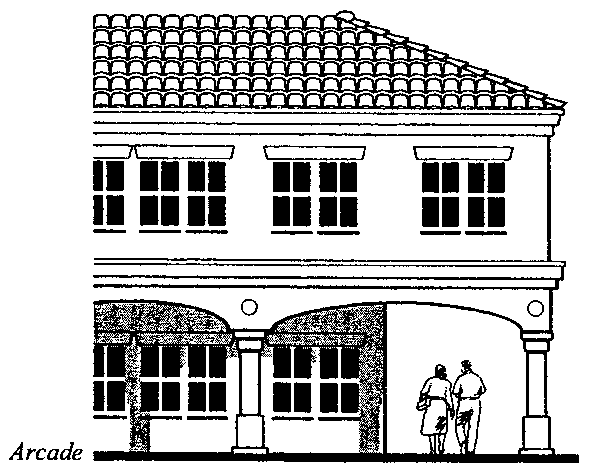
Awning means a roof-like cover of canvas extending over a window, doorway or deck, providing protection from the elements.
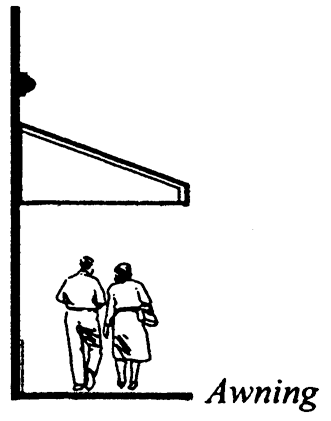
Balcony means an elevated platform projecting from the wall of a building and enclosed by a railing or parapet.
Building articulation means traditional architectural details that provide interest and human scale.
Building placement means the relationship of a building to the block and build-to/setback lines.
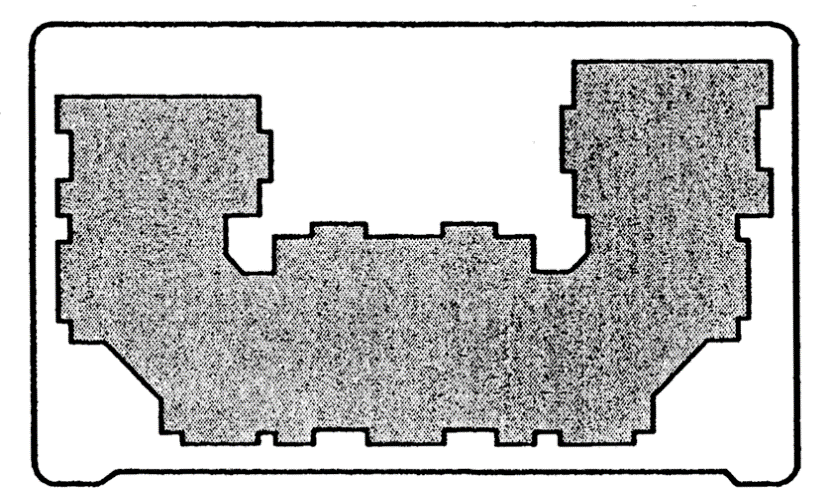
Building projections means any element of a building such as awnings, roofs, signs or ornamental details that project out from the walls of the building, particularly into the right-of-way.
Build-to line means a line parallel to the street right-of-way line at any story level of a building representing the minimum distance which all or any part of a building is constructed from said right-of-way line.
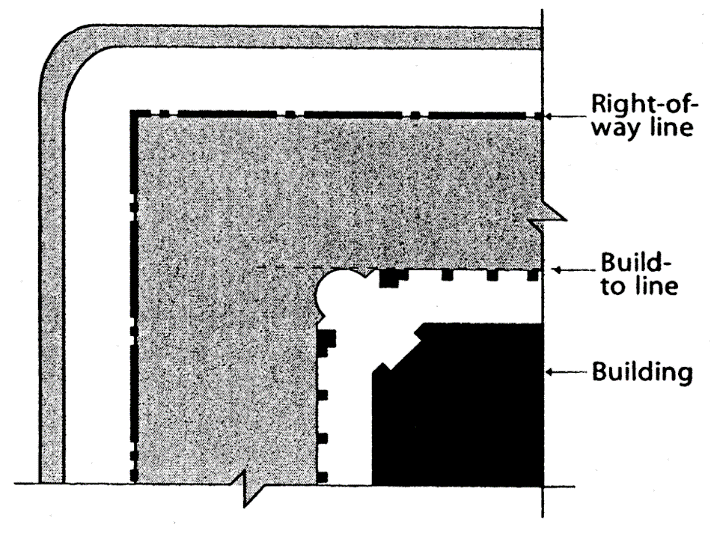
Build-to line
Bump out means curb projection at end or mid-block that defines the on-street parking lane.
Canopy means a projecting cover for pedestrians in the form of a roof-like structure, which may or may not be supported by columns, providing protection form the elements, usually in a continuous fashion.
Centerline means line defining the center of the street right-of-way.
Charrette means a public consensus event where design principles and project concepts are expressed.
Civic building means a city hall, library, community center or other such building, preferably prominently located in the community, with appropriately significant, formal architecture.
Clerestory window means windows that are placed above the pedestrian's eye level and contribute little to the building's transparency level.
Colonnade means the same as arcade, but not necessarily having arches.
Corner treatment means architectural detailing or significant floor plan configuration where a building occurs on the corner of an intersection of two primary, or a primary and secondary street.
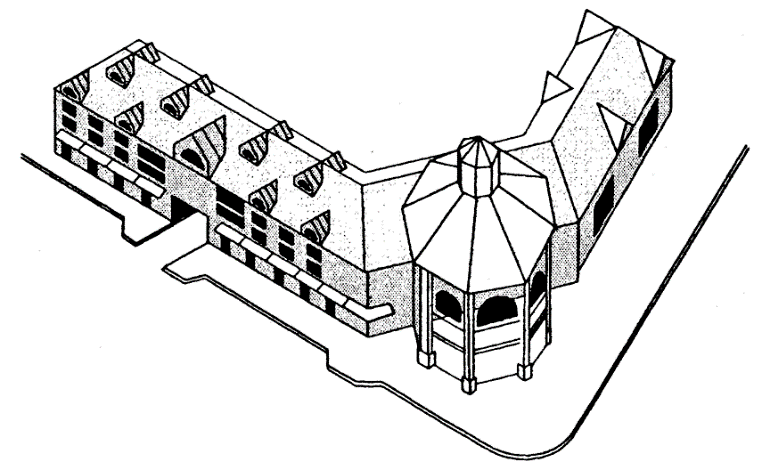
Corner treatment
Cornice means a continuous projection at the uppermost portion of a building which defines its top.
Crosswalk means a government, or properties owners association, owned or operated walkway city-owned right-of-way that crosses a right-of-way or street and furnishes access to adjacent sidewalks or properties.
Entry means the portion of a building that provides public access, preferably with notable form for easy identification.
Facade means the front of a building or any of its sides facing a public way or space, especially one distinguished by its architectural treatment.
Fascia means a broad flat surface which is the outer edge of a cornice or roof.
Fenestration means the design, proportioning, and disposition of windows and other exterior openings of a building.
Flat roof means a slightly pitched roof that is hidden by parapets on the front and sides, and possibly on the back of the building.
Floor area ratio (FAR) means the total floor area of all buildings on a zoning lot divided by the area of said lot.
Gable roof means a roof sloping downward in two parts, so as to from a gable at both ends.
Hip roof means a roof having sloping ends and sides at an inclined projecting angle.
Infill means development or redevelopment of land that has been bypassed, remained vacant, and/or is underused as a result of the continuing urban development process, and provides an opportunity to strengthen older neighborhoods and save on infrastructure and other resources.
Landscaped parking means parking areas made more pleasant to see and use by the addition of trees and other landscaping within, and on the perimeter of the parking area.
Landscape surface ratio (LSR) means a ratio derived by dividing the total amount of the site that is covered by planting materials, including by not limited to trees, shrubs, ground covers, grass, flowers, bark, mulch and other similar materials, by the gross area of the site.
Liner building means a building that is next to or connected to a parking garage or other less desirable building, that provides traditional scale, activity and interest on at least the street level, often storefronts or even apartments.
Loggia means a colonnaded or arcaded space within the body of a building but open to the air on one side, often at an upper story overlooking an open court.
Median means an area in the center of a street or highway used to separate the directional flow of traffic, which may contain left-turn lanes or landscaping, and is demarcated by curb and guttering, having stripes to distinguish it from the portion of road used for through traffic.
Mullion means vertical and horizontal dividers between the lights of a window.
Parapet means a low protective wall that rises above the edge of a flat or gable roof, often are unimportant part of the facade.
Portico means a porch having a roof supported by columns, often leading to the entrance of a building.
Primary frontage means the main facade of a building which faces the primary street.
Redevelop means to demolish existing buildings or structures, or to increase overall floor area, existing on a property; or both, irrespective of whether a change occurs in land use.
Retention means the permanent on-site maintenance of stormwater.
Right-of-way means a strip of land acquired by reservation, conveyance by deed, dedication, prescription, or condemnation and intended to be occupied by a street, trail, water line, sanitary sewer, rail transportation system, and/or other public utilities or facilities.
Round-a-bout/traffic circle means a raised island that is usually landscaped and located at the intersection of two or more streets used to reduce traffic speeds and accidents without diverting traffic onto adjacent residential streets.
Setback means the minimum distance by which any building or structure must be separated from a street right-of-way or lot line.
Street frontage means the distance along which a property line of a lot adjoins a public or private street.
Street furniture means those features associated with a street or right-of-way that are intended to enhance that street's or right-of-way's physical character and use by pedestrians, such as benches, trash receptacles, kiosks, lights, newspaper racks, etc.
Swale means a shallow ditch used to temporarily store, route or filter stormwater run-off.
Traffic calming means reducing the adverse impact of motor vehicles by reducing speeds, providing more space for pedestrians and cyclists, and improving the local environment.
Transparency means the amount of clear glass windows on a building wall, particularly on the front facade of a store or other building on an urban sidewalk.
Tree lawn means a landscaped area of grass and trees between the sidewalk of a street and a walkway close to a building.
202.2. Terms Applicable to the TND District Standards
202.2.1. Definitions. The following definitions shall be applicable to this section. Terms used throughout this section shall take their commonly accepted meaning unless otherwise defined herein. Terms requiring interpretation specific to this subchapter are as follows:
Block means a combination of lots surrounded by right-of-way or streets, other accessways, or open space areas.
Block face means the line where a block meets a right-of-way or street, other accessway, or open space area.
Boulevard means a street or street segment that serves as either a link from the center of a TND Neighborhood to its edge, a link between TND Neighborhoods, or describes the edge of the TND or TND Neighborhood and is customarily comprised of sidewalks, street trees/planting area/optional utility allocation, curb and gutter, on-street parking, bicycle lanes, travel lanes, and a median.
Bulb-out means a curbed landscaped area that projects at a 90 degree or lesser angle into an on-street parking area.
Category of use - Civic use means property designated for governmental uses or any use allowed, except for parks, within the Community Facilities (CF) zoning district.
Category of use - House use means property designated for detached single-family residential uses.
Category of use - Public use means property designated for civic use structures, streets, public accessways, open space areas and recreation property.
Category of use - Rowhouse use means property designated for either multi-family residential or mixed multi-family residential and commercial uses where commercial uses, except for live/work units, are only permitted on the ground floor of the structure.
Category of use - Shopfront use means property designated for either non-residential or mixed multi-family residential and non-residential uses where residential uses are not permitted on the ground floor of the structure.
Clear area means the area that may include roadway surface, curb and gutter, sidewalk, and planting area that is established free of all vertical obstructions including, but not limited to, trees, sign poles, fire hydrants, electrical boxes, or newspaper boxes.
Close means a street design which consists of either a courtyard of space at the end of a street which splits vehicular traffic, or a deep courtyard space alongside a street which does not split the traffic.
Colonnade means a roof or building structure, extending over the sidewalk, open to the street and sidewalk, except for supporting columns or piers.
Commercial street means a street or street segment located in a mostly built-up, non-residential area of a TND Neighborhood and which is customarily comprised of sidewalks, street trees/planting area/optional utility allocation, curb and gutter, on-street parking, bicycle lanes, and travel lanes.
Curb return means the curved edge of the street at corners of intersections. Curb return radius is measured at the edge of the travel lanes, or along the face of the curb where concrete curb is present.
Eyebrow means a street design which is a shallow space within the street that splits vehicular traffic.
Frontage line means the line between a building or parcel of land and a street (excluding lanes) that is parallel and adjacent to the edge of a street right-of-way (excluding lanes), plaza, or square. In the case of a building or lot having more than one possible frontage line, the street, plaza, or square or which the building or lot address is based shall be considered the frontage line. In the absence of an address, the part of the building or lot having the narrowest frontage on any street, plaza, or square, shall be considered the frontage line. In all cases of a building or lot having more than one possible frontage line, the street(s), plaza(s), or square(s) that are not considered the frontage line shall be considered the secondary frontage line.
Green belt means an optional open space or mitigation area adjoining the TND or TND Neighborhood.
Guest house means a building used for lodging of transients. Includes what is commonly known as a bed and breakfast.
Lane means a street or street segment that facilitates vehicular ingress and egress for residential uses, provides service access for non-residential uses, and usually contains utilities; and which is customarily comprised of street trees/planting area, utilities, and vehicular travel lanes.
Live/work unit means a dwelling unit that is also used as the primary place of work by the occupant of that dwelling unit.
Outbuilding means a secondary structure used for residential, guesthouse, parking, storage use, and the like.
Pedestrian accessways means interconnecting paved, gravel, or other type of improved walkways that provide pedestrian passage through blocks running from street to street.
Play lot means an open space recreational area generally designed for children ages two through six.
Plaza means an outdoor, pedestrian oriented open space area that contains less than fifty (50%) percent pervious area.
Production support activity means a nonpolluting, light industrial activity that manufactures or repairs items for use by a business or residence within the TND. Production support activity includes, but is not limited to, artist studios, pottery shops, woodworking shops, etc.
Residential street means a street or street segment located in a mostly residential area of a TND Neighborhood and customarily comprised of sidewalks, street trees/planting area/optional utility allocation, curb and gutter, on-street parking, bicycle lanes, and travel lanes.
Shared parking means a parking space that is utilized for multiple uses occurring at different times, where persons utilizing the spaces are unlikely to need the spaces at the same time of the day (e.g., offices and taverns).
Square means an outdoor, pedestrian oriented open space area that contains at least fifty (50%) percent pervious area.
Street means any public or private accessway of the following four types: boulevard, commercial street, residential street, and lane.
Street edge means a partition built along the frontage line meant to define the space of the street or right-of-way.
Street vista means a view along a street centerline which is not less than 600 feet in length.
Streetwall means a partition built along the frontage line meant to define the space of the street and screen views into a lot.
TND means a development within the TNDD that consists of one or more TND Neighborhoods and also may contain mitigation areas, green belts, or other open areas.
TND Neighborhood means an area within a TND that consists of lots, blocks, buildings, streets, open space areas, and contents having similar attributes, but excluding mitigation areas, green belts and other open periphery areas. A TND may contain more than one TND Neighborhood.
Tree grate means a permeable metal grating that may be walked upon and that fits around the base of a tree.
202.3. Terms Applicable to the Transit Oriented Corridor District Code (TOC) District Standards
202.3.1. Definitions. This section provides definitions for terms in this TOC district code that are technical in nature or that otherwise may not reflect a common usage of the term. If a term is not defined in this section, then the director shall determine the correct definition:
Administrative approval: A ruling that would permit a practice that is not consistent with a specific provision of this TOC district code, but that is justified by its intent. Administrative approval is granted administratively by the DRC.
Affordable housing: Dwellings consisting of rental or for-sale units that have a rent (including utilities) or mortgage payment typically no more than thirty (30%) percent of the income of families earning no more than eighty (80%) percent of median incomes by family size for Broward County.
Arcade: A series of arches supported on columns along the primary building Facades, creating a covered space that overlaps the sidewalk for pedestrians.
Attic: The interior part of a building contained within a pitched roof structure.
Avenue (AV): A thoroughfare of high vehicular capacity and low to moderate speed, acting as a short distance connector between urban centers, and usually equipped with a landscaped median.
Awning: A roof-like cover of canvas extending over a window, doorway or deck, providing protection from the elements.
Balcony: An elevated platform projecting from the wall of a building and enclosed by a railing or parapet.
Bed and breakfast: An owner-occupied lodging type offering 1 to 6 bedrooms, permitted to serve breakfast in the mornings to guests.
Bicycle lane (BL): A dedicated lane for cycling within a moderate-speed vehicular thoroughfare, demarcated by striping.
Block: The aggregate of private lots, passages, rear alleys and rear lanes, circumscribed by thoroughfares.
Building placement: The relationship of a building to the block and build-to/setback lines.
Build-to line: A line parallel to the street right-of-way line at any story level of a building representing the minimum distances which all or any part of a building is constructed from said right-of-way line.
Charrette: A public consensus event where building and development design and use principles and project concepts are expressed.
Civic: The term defining not-for-profit organizations dedicated to arts, culture, education, recreation, government, transit, and government operated parking.
Civic building: A building operated by not-for-profit organizations dedicated to arts, culture, education, recreation, government, transit, and government operated parking, or for use approved by the legislative body preferably prominently located in the community, with appropriately significant, formal architecture.
Civic space: An outdoor area dedicated for public use. Civic Space types are defined by the combination of certain physical constants including the relationships among their intended use, size, and landscaping.
Civic zone: A designation given for public sites dedicated for civic buildings and civic space.
Colonnade: A roof or building structure, extending over the sidewalk, open to the street and sidewalk except for supporting columns or piers. It is the same as an arcade, but not necessarily having arches.
Commercial: The term collectively defining workplace, office, retail, and lodging functions.
Commercial street: A street or street segment located in a mostly built-up, non-residential area which is customarily comprised of sidewalks, street trees/planting area/optional utility allocation, curb and gutter, on-street parking, bicycle lanes, and travel lanes.
Common yard: A planted private frontage wherein the façade is set back from the frontage line. It is visually continuous with adjacent yards.
Configuration: The form of a building, based on its massing, private frontage, and height.
Corner treatment: Architectural detailing or significant floor plan configuration where a building occurs on the corner of an intersection of two Primary Streets, or intersection of a Primary and secondary street.
Corridor: A lineal geographic system incorporating transportation and/or greenway trajectories. A transportation corridor may be a lineal transect zone.
Courtyard building: A building that occupies the boundaries of its lot while internally defining one or more private patios.
Curb: The edge of the vehicular pavement that may be raised or flush to a Swale. It usually incorporates the drainage system.
DRC: Development Review Committee
Density: The number of dwelling units within a standard measure of land area.
Design speed: Is the velocity at which a thoroughfare tends to be driven without the constraints of signage or enforcement. There are four (4) ranges of speed: Very Low: (below 20 MPH); Low: (20—25 MPH); Moderate: (25—35 MPH); High: (above 35 MPH). Lane width is determined by desired design speed.
Disposition: The placement of a building on its lot.
Driveway: A vehicular lane within a lot, often leading to a garage.
Edgeyard building: A building that occupies the center of its lot with setbacks on all sides.
Elevation: An exterior wall of a building not along a frontage line.
Encroach: To break the plane of a vertical or horizontal regulatory limit with a structural element, so that it extends into a setback, into the public frontage, or above a height limit.
Encroachment: Any structural element that breaks the plane of a vertical or horizontal regulatory limit, extending into a setback, into the public frontage, or above a height limit.
Entry: The portion of a building that provides public access, preferably with notable form for easy identification.
Facade: The exterior wall of a building that is set along a frontage line.
Fascia: A broad flat surface which is the outer edge of a cornice or roof.
Forecourt: A private frontage wherein a portion of the façade is close to the frontage line and the central portion is set back.
Form-Based code: Form-Based codes foster predictable built results and a high-quality public realm by using physical form (rather than separation of uses) as the organizing principle for the code. Form-Based codes address the relationship between building facades and the public realm, the form and mass of buildings in relation to one another, and the scale and types of streets and blocks. The regulations and standards in Form-Based codes are presented in both words and clearly drawn diagrams and other visuals. They are keyed to a regulating plan that designates the appropriate form and scale (and therefore, character) of development, rather than only distinctions in land-use types.
Frontage: A public frontage or private frontage as defined by this Code.
Frontage line: A lot line bordering a public frontage or the pedestrian zone. Facades facing frontage line define the public realm and are therefore more regulated than the Elevations facing other lot lines.
Funeral home: An establishment with facilities for the preparation of dead bodies for burial, for the viewing of the body, and for funerals.
Function: The use or uses accommodated by a building and its lot, categorized according to the intensity of the use.
Gable roof: A roof sloping downward in two parts, so as to form a gable at both ends.
Gallery: A private frontage conventional for retail use wherein the façade is aligned close to the frontage line with an attached cantilevered shed or lightweight colonnade overlapping the sidewalk.
GIS (Geographic Information System): A computerized program in widespread municipal use that organizes data on maps.
Highway: A rural and suburban thoroughfare of high vehicular speed and capacity.
Hip roof: A roof having sloping ends and sides at an inclined projecting angle.
House: An Edgeyard building type, usually a single-family dwelling on a large lot, often shared with an Accessory Building in the back yard.
Infill: New development on land that had been previously developed and cleared land within urbanized areas.
In-Lieu of parking fee agreement: An agreement between a property owner and the City addressing the terms of payment of fees in-lieu of provision of required parking on or off-site in accordance with this TOC district code.
Inn: A Lodging type, owner-occupied, offering six (6) to twelve (12) bedrooms, permitted to serve breakfast in the mornings to guests.
Landscaped parking: Parking areas made more pleasant to see and use by the addition of trees and other landscaping within, and on the perimeter of the parking area.
Layer: A range of depth of a lot within which certain elements are permitted.
Lightwell: A private frontage type that is a below-grade entrance or recess designed to allow light into basements.
Liner building: A building specifically designed to mask a parking lot, a parking structure or other less desirable building from a frontage.
Live/work unit: A dwelling unit that is also used as the primary place of work by the occupant of that dwelling unit.
Lodging: Premises available for daily and weekly renting of bedrooms.
Loggia: A colonnaded or arcaded space within the body of a building but open to the air on one side, often at an upper story overlooking an open court.
Lot: A parcel of land accommodating a building or buildings of unified design. The size of a lot is controlled by its width in order to determine the grain (i.e., fine grain or coarse grain) of the urban fabric.
Lot line: The boundary that legally and geometrically demarcates a lot.
Lot width: The length of the principal frontage line of a lot.
Manufacturing: Premises available for the creation, assemblage and/or repair of artifacts, using table-mounted electrical machinery or artisanal equipment, and including their retail sale.
Median: An area in the center of a street or highway used to separate the directional flow of traffic, which may contain left-turn lanes or landscaping, and is demarcated by curb and guttering, having stripes to distinguish it from the portion of road used for through traffic.
Mixed use: Multiple functions within the same building through superimposition or adjacency, or in multiple buildings by adjacency, or at a proximity determined by administrative approval.
Mortuary: An establishment with facilities where dead bodies are kept before burial or cremation.
Nonconforming structure: A structure lawfully established prior to and existing on the effective date of this TOC district code, or any amendment hereto which renders the structure nonconforming, which no longer conforms to the requirements of this TOC district code for the zoning district in which it is located.
Nonconforming use: A use lawfully established prior to and being conducted on the effective date of this TOC district code, or any amendment hereto which renders the use nonconforming, which no longer conforms to the requirements of this TOC district code for the district in which it is located.
Office: Premises available for the transaction of general business, but excluding retail, artisanal and manufacturing uses.
Open space: Land intended to remain undeveloped; it may be for civic space.
Outbuilding: A secondary structure used for residential, guesthouse, parking, storage use, and the like, usually located toward the rear of the same lot as a principal building.
Parapet: A low protective wall that rises above the edge of a flat or gable roof.
Park: A civic space type that is a natural preserve available for unstructured recreation.
Parking area: Any area designed and used for parking motor vehicles including parking lots and garages, driveways, garages serving residential functions, and thoroughfares.
Parking garage or parking structure: A structure containing vehicular parking, including mechanical parking systems.
Parking (Off-site): Spaces provided for vehicles and located outside of the boundaries of the lot to be served.
Parking (Off-street): Any land area designed and used for parking motor vehicles including parking lots and garages, driveways and garages serving residential uses, but excluding areas of thoroughfares.
Passage (PS): A pedestrian connector, open or roofed, that passes between buildings to provide shortcuts through long blocks and connect rear parking areas to frontages.
Path (PT): A pedestrian way traversing a park or rural area, with landscape matching the contiguous open space, ideally connecting directly with the urban sidewalk network.
Pedestrian accessways: Interconnecting paved or other type of improved walkways that provide pedestrian passage through blocks running from street to street.
Pedestrian shed: An area that is centered on a common destination. Its size is related to average walking distances for the applicable community unit type. Pedestrian sheds are applied to structure communities.
Pedestrian zone: The area between a building façade and the vehicular lanes, inclusive of its built and planted components. The pedestrian zone is divided into private frontage and public frontage.
Planter: The element of the public frontage which accommodates street trees, whether continuous or individual.
Play lot means an open space recreational area generally designed for children ages two through six.
Plaza: A civic space type designed for civic purposes and commercial activities generally paved and spatially defined by building frontages.
Primary frontage: The main façade of a building which faces a Primary Street.
Primary street: A thoroughfare intended for highest significance of intensity of use and development under this TOC district code, as specified in Table 2A. public frontage.
Principal building: The main building on a lot, usually located toward the frontage.
Principal entrance: The main point of access for pedestrians into a building.
Principal frontage: On corner lot, the private frontage designated to bear the address and principal entrance to the building, and the measure of minimum lot width. Prescriptions for the parking layers pertain only to the principal frontage. Prescriptions for the first layer pertain to both frontages of a corner lot.
Private frontage: The privately held layers between the frontage line and the principal building façade.
Public frontage: The area between the curb of the vehicular lanes and the frontage line.
Public parking: A parking facility available to the general public for parking motor vehicles, including parking lots or garages.
Rearyard building: A building that occupies the full frontage line, leaving the rear of the lot as the sole yard.
Redevelop means to demolish existing buildings or structures, or to increase overall floor area, existing on a property; or both, irrespective of whether a change occurs in land use.
Regulating plan: The TOCD zoning map that shows the classification of areas within the TOCD subject to regulation.
Residential: Characterizing premises available for long-term human dwelling.
Residential Street: A street or street segment located in a mostly residential area of a TND Neighborhood and customarily comprised of sidewalks, street trees/planting area/optional utility allocation, curb and gutter, on-street parking, bicycle lanes, and travel lanes.
Retail: Characterizing premises available for the sale of merchandise and food service.
Retail Frontage: Frontage designated on a regulating plan that requires or recommends the provision of a shopfront, encouraging the ground level to be available for retail use.
Right-of-way: A strip of land acquired by reservation, dedication, prescription, or condemnation and intended to be occupied by a street, trail, water line, sanitary sewer, and/or other public utilities or facilities.
Road (RD): A local, rural and suburban thoroughfare of low-to-moderate vehicular speed and capacity.
Rowhouse: A single-family dwelling that shares a party wall with another of the same type and occupies the full frontage line.
Secondary frontage: On corner lots, the secondary frontage that is not the principal frontage. As it affects the public realm, its first layer is regulated.
Secondary street: A thoroughfare of lesser intensity and significance than a Primary Street for use and development under this TOC district code, as specified in Table 2A. public frontage.
Setback: The minimum distance by which any building or structure must be separated from a street right-of-way or lot line.
Shared parking: Parking spaces that are utilized for multiple uses occurring at different times, where persons utilizing the spaces are unlikely to need the spaces at the same time of the day (e.g., offices and taverns).
Shopfront: A private frontage conventional for retail use, with substantial glazing and an awning, wherein the façade is aligned close to the frontage line with the building entrance at sidewalk grade.
Sidewalk: The paved section of the public frontage dedicated exclusively to pedestrian activity.
Sideyard Building: A building that occupies one side of the lot with a setback on the other side. This type can be a single or twin depending on whether it abuts the neighboring house.
Smart Code: A form-based code that addresses the physical form of buildings and community. The open-source Smart Code is a transect-based model code intended to be used as a template for local calibration.
Special District (SD): An area that, by its intrinsic function, placement, or character, cannot or should not conform to one or more of the normative districts specified by the TOCD Code.
Square: An outdoor, pedestrian oriented open space area that contains at least 50 percent pervious area.
Stoop: A private frontage wherein the façade is aligned close to the frontage line with the first story elevated from the sidewalk for privacy, with an exterior stair and landing at the entrance.
Story: A habitable level within a building, excluding an Attic or raised basement.
Street (ST): A local urban thoroughfare of low speed and capacity.
Street frontage: The distance along which a property line of a lot adjoins a public or private street.
Street furniture: Those features associated with a street that are intended to enhance that street's physical character and use by pedestrians, such as benches, trash receptacles, kiosks, lights, newspaper racks, etc.
Streetscreen: A freestanding wall built along the frontage line or coplanar with the façade. It may mask a parking lot from the thoroughfare, provide privacy to a side yard, and/or strengthen the spatial definition of the public realm.
Substantial modification: Alteration to a building that is valued at more than fifty (50%) percent of the replacement cost of the entire building, if new.
Surface parking lots: Area designed and used for parking motor vehicles.
Surface parking lots (Large): Area designed and used for parking more than thirty (30) motor vehicles.
Swale: A low or slightly depressed natural area for drainage.
Thoroughfare: A way for use by vehicular and pedestrian traffic and to provide access to lots and open spaces, consisting of vehicular lanes and the public frontage.
Tree grate: A permeable metal grating that may be walked upon and that fits around the base of a tree.
Work-Live: A mixed use unit consisting of a commercial and residential function. It typically has a substantial commercial component that may accommodate employees and walk-in trade. The unit is intended to function predominantly as work space with incidental residential accommodations that meet basic habitability requirements.
Zoning map: The official map or maps that are part of the city's LDC in section 104 and delineate the boundaries of individual zones and districts.
202.4. Terms Applicable to the Food Systems Standards
Aquaculture means the cultivation of aquatic animals and plants, especially fish, shellfish, and seaweed, in natural or controlled marine or freshwater environments.
Aquaponics, means a system that combines conventional aquaculture (raising aquatic animals such as fish, crayfish or prawns in tanks) with hydroponics (cultivating plants in water) in a symbiotic environment.
Commercial kitchen, means a licensed and regulated kitchen which may be used to create products for sale in wholesale or retail markets. These can be used as community kitchens within venues, such as churches or warehouse facilities.
Community garden, means a use in which land managed by a group of individual is used to grow food or ornamental crops for donation or for use by those cultivating the land and their households. Community gardens may include separate plots for cultivation by one (1) or more individuals or may be farmed collectively by members of the group and may include common areas maintained and used by group members.
Farmers' markets, means an open-air establishment that allows the selling of agricultural products, such as fruits, vegetables, herbs, nuts, flowers, or animal food products, such as eggs, honey, meat, milk, cheese and fish. The predominant sales area is for food products.
Greenhouse, means a free standing structure, with glass, plastic or film membrane, in which the temperature is maintained within a desired range, used for cultivating tender plants or growing plants in a controlled environment.
Hydroponics, means the cultivation of plants by placing the roots in liquid nutrient solutions rather than in soil; soilless growth of plants.
Mobile produce vending, means a mobile produce vendor is a self-contained produce service operation (e.g., trucks, carts, trailers and kiosks), located in a readily movable motorized wheeled or towed vehicle, used to store, prepare, display and sell produce.
Rooftop farms, means the practice of cultivating food on the rooftop of buildings. Rooftop farming is usually done using a green roof or container gardens (container cultivation).
Urban farm, means an establishment where edible or ornamental crops are grown or processed to be sold or donated that includes, but is not limited to, outdoor growing operations, indoor growing operations, vertical farms, aquaponics, aquaculture, hydroponics and rooftop farms.
Urban garden, means an establishment where edible or ornamental crops are grown as an accessory use on the ground, or a rooftop or inside a building, to be sold or donated.
Vertical farm, means the practice of producing food in vertically stacked layers, which can be on the exterior or interior of a building. The modern vertical farming utilizes controlled-environment agriculture technology, where all environmental factors can be controlled.
202.5. Terms Applicable to Landscaping Standards
Accessway means an area, excluded from the perimeter bufferyard required to be landscaped, which provides ingress or egress for vehicular and/or pedestrian traffic to a parcel, excluding single-family and dual-family driveways.
Bond means security in a form acceptable to and payable to the City of Miramar in an amount equal to the fair market value of the replacement tree(s) to be relocated or whose dripline may be encroached upon, and given by the applicant as guarantee of replacement for a period of the community development department each year and based upon published trade wholesale price lists with the appropriate multiplier representing maintenance, installation, warranty and other costs factored in.
Bufferyard means an area of landscaping and open space around the perimeter of a development parcel or an area adjacent to a parking lot which is used to screen and separate differing land uses from each other.
Buildable area means the portion of a site within the required yard areas on which a structure or improvements may be erected.
Buildingfootprint means the portion of the lot, parcel or plot upon which buildings are to be placed.
Buildingpad means the building footprint plus the five-foot distance from each of its sides.
Caliper means the diameter measurement of nursery-size tree trunks. Trunk caliper is measured at the height as follows: six inches above the ground on trees up to four inches in diameter; 12 inches above the ground for trees larger than four inches.
Clear trunk means the point above the root ball along the vertical trunk or trunks of a tree at which lateral branching or fronds begin.
Common area means the area under common ownership of a subdivision (e.g. recreation area, open space), excluding rights-of-way.
Conifer means a cone-bearing seed plant.
Crown thinning means the thinning of mature shade tree crowns for the purpose of improving light infiltration or the reduction of wind resistance. Not more than one quarter of the crown may be removed in any given year (ANSI A-300, 5.3.1.4), and one-half of the foliage shall remain evenly distributed in the lower two-thirds of the crown (ANSI A-300, 5.3.1.5).
Diameter at breast height (DBH) means the diameter of the tree trunk(s) measured at four and one-half (4½) feet above grade. For multi-trunk trees, it shall be the sum of the diameter of the individual trunks measured four and one-half feet above ground level.
Designated for conservation means trees which have been determined for conservation by resolution of the City Commission of Miramar as shown on the approved tree permit or areas within Miramar which have been determined by Broward County or the City of Miramar as subject to conservation and as stated specifically within the tree permit as defined herein.
Dicotyledonous (Dicot) tree means a tree having a woody stem and branches and leaves with net venation and having a separate, distinct outer bark which can be peeled from the tree.
Drip irrigation (also known as trickle irrigation) means a method of irrigation that involves a controlled delivery of water to plants through a system of pipes, valves, tubing, and emitters where the water is delivered from a source directly to the root zone of individual plants or to the surface of the soil and water drips constantly onto plants to keep them well-watered.
Dripline means the natural outside end of the branches of a tree projected vertically to the ground.
Dripline encroachment means any activity that has the effect of causing soil compaction, injury to lower limbs, grade change, contamination of soil, or damage to the root system. Specifically, this definition shall include acts such as parking of vehicles, use of heavy earth moving or grading equipment, placement of construction materials, excavation and filling, trenching and the exposure of paints, oils or chemicals within a tree's dripline. Specifically excluded from this definition are routine maintenance activities such as mowing or walking within the tree's dripline.
Dripline encroachment plan means a plan presented as part of the tree permit and shall be required for all trees whose dripline is planned to be encroached upon by any construction, excavation, fill or other activities associated with the development of the site. It shall include: (i) designation of each tree subject to any dripline encroachment, (ii) the reasons for the encroachment, (iii) detailed description of the proposed efforts to protect the tree from damage due to the encroachment, and (iv) a plan to ensure it survivability per Builder's Manual of Department of Agriculture.
Equivalent replacement means the replacement of a removed or damaged tree to compensate for that tree's removal or its damage either with one tree of the same diameter or a combination of smaller trees that will equal that removed tree's DBH as defined herein. The minimums established in the landscape code of the City of Miramar for tree planting may not count toward the equivalent replacement amount established here. The replacement species shall be trees of similar species to those removed as approved by the Community Development Department.
Equivalent value means an amount of money, which reflects the fair market value of the required replacement trees. The current market price of replacement trees shall be established by the Community Development Department annually.
Excessive lifting/overlifting means the removal of the majority of the inner lateral branches and foliage thereby displacing weight and mass to the ends of branches. The alteration of the tree's live crown ratio may be considered as evidence of overlifting.
Facer plant means a low shrub or groundcover used in front of a hedge or taller plant grouping.
Gray wood (clear wood) means the portion of the palm trunk which is mature, hard wood measured from the top of the rootball to the base of the new, green, soft, terminal growth or fronds.
Groundcover means plant material that grows close to the ground which normally reaches a maximum height of not more than 18 inches.
Hedge means an evenly-spaced planting of shrubs to form a compact, dense, visually-opaque living barrier or screen. Plantings designated or required as "hedges" must consist of plants spaced so that they will be tip-to-tip within six months of the time of planting.
Historic tree means a tree which has been determined to be of notable historic interest because of its age, type, size or historic association and has been so designated as part of the official records of the city.
Irrigation means the supply of water to landscaped areas by an automatic sprinkler system.
Land clearing means the indiscriminate removal of trees, shrubs and/or undergrowth by stripping or any other process, with the intention of preparing real property for non-agricultural development purposes. This definition shall not include: the selective removal of non-native tree and shrub species when the soil is left relatively undisturbed; removal of dead or nuisance trees; or normal mowing operations.
Landscape island means a pervious area set aside for landscaping, located at the end of a parking row where it abuts an aisle or driveway, and also intermittently located within parking rows for the purpose of accommodating a shade tree to ameliorate the temperature in the parking lot. Islands created to accommodate fire hydrants or related utilities may not be counted towards the landscape island requirement unless they are at least 16-foot in width and include a shade tree.Landscaping material means any of the following or a combination thereof such as, but not limited to: grass, ground cover, shrubs, vines, hedges, trees or palms; other materials are permitted, such as mulch, rocks, pebbles, pavers that allow for drainage, to a limited extent, but not including paving. Artificial turf is not considered to be landscape material.
Large shrub means a shrub that exhibits a mature height of ten feet or more, or a small tree with too many stems to qualify as a small tree as defined in this code.
Map of environmentally sensitive lands means a map that identifies areas of native vegetation within the City of Miramar.
Monocotyledonous (Monocot) tree means a tree having fronds with parallel venation and no true woody bark.
Mulch means an organic material that does not contain arsenic products, such as wood chips, pine straw or bark placed on the soil to reduce evaporation, prevent erosion, control weeds, enrich the soil and lower soil temperature.
Native tree means a tree of a species approved by the Community Development Department or identified as native to this area by the Association of Florida Native Nurseries, as may be amended from time to time, and incorporated herein by reference.
Natural area means an area identified on an approved site plan containing natural vegetation which will remain undisturbed when the property is fully developed.
Nuisance plants means certain non-native trees, often termed exotic, specifically Schinus terebinthifolius (Brazilian Pepper and Florida Holly), Metopium toxiferum (Poison Wood), Melaleuca quinquenervia (Punk Tree, Cajeput or Paper Bark), Casuarina spp. (Australian Pine, all specie), Brassaia actinophylla (Schefflera), Acacia auriculaeformis (Earleaf Acacia), Bischofia javanica (Bishopwood), and Ricinus communis (Castor Bean), and others as amended from time to time.
Ornamental tree See "Small tree."
Optional cash payment: means a fee equal to the fair market value of the required replacement tree(s) which may be paid by the applicant after determination from the community development department that replacement of trees on-site or off-site is not feasible.
Palm means a monocot tree which normally attains an overall height of at least 20 feet.
Pedestrian landscape zone means the area between the building and the adjacent parking spaces where foundation plantings are established in order to enhance the building's appearance and provide a pedestrian-friendly, shaded environment for people as they walk to and from their cars.
Plant means an organism of the vegetable kingdom having cellulose cell walls, growing by synthesis of inorganic substances, and lacking the power of locomotion.
Planting soil means planting soil defined as 50 percent sand and 50 percent organic material with a pH between 6.5 and 7.0.
Protected tree means a tree which has been determined to be of high value because of its type, size or other criteria and which has been so designated.
Prune means the removal of dead, dying, diseased, weak or objectionable branches in a manner consistent with the International Society of Arboriculture standards as incorporated herein, and as may be amended from time to time.
Quality of plants means plants installed pursuant to this chapter shall conform with or exceed the minimum standards for Florida # 1 as provided in the current edition of "Grades and Standards for Nursery Plants" prepared by the State of Florida Department of Agricultural and Consumer Services.
Retention area means an area designed and used for the temporary or permanent storage of stormwater runoff, which may be either dry or wet retention.
Rootball means the earthen ball encompassing the root system of a tree or plant.
Setback and yard areas means the front, side and rear areas or yards as established and required under this section and within the applicable zoning district requirements.
Shade tree means a single-trunked dicot or conifer tree, usually with one vertical stem or main trunk, which naturally develops a more or less distinct and elevated crown and provides at maturity a minimum shade crown of 30 feet in diameter.
Shaping or shearing means the illegal practice of routinely making pruning end cuts on tree branches of one-inch diameter or less for the purpose of controlling the size or shape of the tree canopy.
Shrub means a bushy, woody plant, usually with several permanent stems, and usually not over ten feet in height at its maturity.
Small tree means any self-supporting wood perennial plant, which, at maturity, normally attains an overall height between ten (10) to 25 feet. Trees with a multiple trunk growth characteristic shall have no more than three main trunks. These trees, along with tall shrubs, shall provide the mid-level landscaping within the specified height range.
Specimen tree means any dicot tree which has a diameter at breast height (DBH) of 18 inches or greater, and any monocot tree which has a DBH of 18 inches or greater and is also 35 feet or greater in height. Specimen trees must be well-shaped and in good health, as verified through inspection by a certified forester or the City of Miramar's landscape inspector provided however that the following trees are not considered specimen trees:
(1)
Fruit trees that are cultivated for the specific purpose of producing edible fruit, including, but not limited to: mangos, avocados, or species of citrus.
(2)
Ficus species, except F. aurea, F. rubiginosa, F. jacquinifolia, andF. religiosa.
(3)
Phoenix species and multi-trunk palms less than 15 feet in overall height.
Street tree means shade trees defined as acceptable to the City for street tree usage, and which are located in swale areas of rights-of-way.
Swale means all unpaved portions of a right-of-way located between the edge of pavement and the property line or an open space easement located on property adjacent to the right-of-way line.
Top soil means a medium composed of naturally occurring mineral particles and 30 percent organic matter which provides physical, chemical and biological properties necessary for plant growth.
Tree means any living, self-supporting woody perennial plant which at maturity attains a trunk diameter of at least three inches or more when measured at a point four and one-half feet above ground level and which normally attains an overall height of at least 10 feet, usually with one main stem or trunk and many branches.
Tree abuse means any pruning or other maintenance operations that are not in conformance with standards found in American National Standards Institute's documents A-300 and A-133. Tree abuse includes, but is not limited to, the following:
(1)
Improper pruning that reduces the height or spread of a tree that has not attained a height or spread of 30 feet, by altering the dominant stem(s) within the tree crown to such a degree as to remove the natural canopy of the tree; or
(2)
Improper pruning that leaves stubs (hat-racking) or results in a flush cut; or splitting of limb ends; or
(3)
Peeling or stripping of bark; or the removal of bark to the extent that, if a line is drawn at any height around the circumference of the tree, over one-third of the length of the line falls on portions of the tree where bark no longer remains; or
(4)
Using nails, climbing spikes, or hooks, except for purposes of total tree removal; or
(5)
Destroying the natural habit of growth which causes irreparable damage and permanent disfigurement to a tree such that, even with re-growth, the tree will never regain the original characteristics of its tree species, or is a danger to the public, wildlife, or property; or
(6)
Improper pruning that results in flat-cutting the top or sides of a tree, to sever the leader or leaders or to prune a tree by stubbing off mature wood (not at a growth node), or
(7)
Exception: The removal of diseased or dead portions of a tree (such as palm fronds), the removal of an interfering, obstructing or weak branch shall not constitute tree abuse under this section. Interference with or obstruction of street lights, stop signs or traffic signals is an example of pruning which, if accomplished by ANSI A-300 and A-133, is not a violation of this section.
(8)
Nuisance trees including the following are not exempt from tree abuse regulation: Schefflera, Melaleuca, Brazilian Pepper (Florida Holly). Australian Pine and Norfolk Island Pine may be topped provided that the upper branches are progressively tipped so as to duplicate the natural form.
Tree credit means the utilization of native dicotyledons measured at inches of caliper or native palm trees of equal size for off-site replacement trees for sites being developed. This credit only applies for a five-year period from date of planting of trees to be utilized for tree credit. This credit is for the inches at planting and is available only for off-site replacement.
Tree permit means the application and all necessary information relating to existing trees on site and proposed installation, relocation, removal, dripline encroachment and barricading. Except for nuisance species, this permit shall not be approved prior to city approval of the underlying project.
Tree relocation means to transplant a tree from one location to another either horizontally or vertically.
Tree removal means to permanently remove the trunk and/or root system of a tree.
Tree survey means a sealed survey prepared by a Florida licensed landscape architect or land surveyor which shows, in addition to all boundary information, the exact location, size, botanical and common name, and diameter of all trees at least three inches in diameter measured four and one-half feet above ground level within the area affected by the development except that groups of nuisance trees as defined herein may be designated as "clumps," with the predominant type shown. The tree species noted on the tree survey shall be certified by a landscape architect. The expense of the survey shall be borne by the applicant.
Tree-for-tree replacement means replacing a removed tree with a tree or trees with a minimum of three inches in trunk diameter at breast height and a minimum of 12 feet in height so as to equal the diameter at breast height of the removed tree(s).
Trim means to reduce, shorten or diminish gradually a plant or parts of a plant without altering the natural shape.
Understory means the plant life existing under a tree canopy including ferns, bushes and groundcovers.
Undeveloped land means land which is unimproved, in that no principal building or structure has been constructed upon it.
Vines means plants which normally require support to reach mature form.
Visual foil means a physical obstruction used to separate two areas or uses which is at least 60 percent opaque. Visual foils shall be living plant material, natural or manmade construction material or any combination thereof.
Visual screen means a physical obstruction used to separate two areas or uses which is at least 90 percent opaque. Visual screens shall be living plant material, natural or manmade construction material or any combination thereof.
Xeriscape means a type of landscaping utilizing native plants and ground cover which minimizes the use of water, and which is detailed in the South Florida Water Management District publication, Xeriscape, Plant Guide II, incorporated herein by reference.
202.6. Architectural Terms:
Accessory structure means a building or structure, the use of which is incidental to the main building or structure on the same property.
Arch means a structural element shaped in an arcor curve.
Balcony means a platform extending from the facade of a building.
Barrel tile means a semi-cylindrical tile used for roofing; i.e., especially within a Mediterranean Revival style.
Bay window means a window projecting outward from the main wall of a building.
Board and batten mean vertical siding composed of wide boards that do not overlap and narrow strips, or battens, nailed over the spaces between the boards.
Bollards mean low, single posts typically composed of stone or concrete, set in a series to prevent vehicles from entering an area.
Bond means the general method of overlapping the joints of successive courses of bricks or stones, thereby binding them together to form a wall or other surface. Different patterns may be formed by these joints (e.g. common bond, Flemish bond, English bond, herringbone bond).
Casement window means a window with hinges to the side and a vertical opening either on the side or in the center.
Clapboard means siding material or horizontal wooden strips, often applied with the thicker edge overlapping the clapboard below.
Coping means the capping or top course of a wall, sometimes protecting the wall from weather.
Cornice means projecting ornamental molding along the top of a building or wall.
Course means a horizontal row of bricks, shingles, stones or other building materials.
Coursed masonry means a wall with continuous horizontal layers of stone or brick.
Cupola means a lookout or similar small structure on the top of a building.
Dormer means a structure projecting from a sloping roof with window or ventilating louvers.
Double-hung window means a window with an upper and lower sash arranged so that each slides vertically past the other.
Double portico means a projecting two-story porch with columns and a pediment.
Eave means the projecting overhang at the lower edge of a roof.
Entablature in classical architecture, means the part of a structure between the column capital and the roof or pediment, comprising the architrave, frieze and cornice.
Façade means a building's face, front or elevation.
Fan light means a semicircular or fan-shaped window with radiating members or tracery set over a door or window.
Fascia means a flat, horizontal band used to finish the edge of an exposed rafter.
Fenestration means window design and placement.
Finial means an ornament at the top of a spire, gable or pinnacle.
Flashing means copper or other materials used to make weather-tight the joint between a chimney and a roof.
Flat roof means a roof having only enough slope for drainage.
Floor area ratio means the ratio of the gross floor area of all structures on a lot to the lot (FAR) area, excluding vertical core circulation areas for multistory structures.
Frieze means a horizontal band, often with decorative detail, located below the cornice.
Gable means a triangular wall section at the end of a pitched roof.
Gambrel roof means a roof with a lower steeper slope and an upper flatter one on each side.
Hiproof means a roof with four uniformly pitched sides.
Jalousie means a type of window or door with numerous horizontal slats, usually glass, operated by a crank.
Keystone means the central top most stone or feature of an arch. Also, the central detail above windows or doors which appears to come from an arch but is used for decorative purposes.
Lattice means diagonal interlocking lath or other material used as screening.
Lintel means the horizontal beam over the top of a door or window.
Loggia means an arcaded or colonnaded structure, open on one or more sides, sometimes having an upper story; it may serve as a porch or gallery incidental to another structure.
Louver means a door or window with fixed or movable slanted slats.
Mansard means a roof with two slopes on each side, the lower slope being much steeper; frequently used to add an upper story.
Manufactured home means manufactured housing is a type of prefabricated housing that is largely assembled in factories and then transported to sites of use.
Masonry means stone work or brick work used in wall construction.
Mass means three-dimensional forms, the simplest of which are cubes, boxes (or rectangular solids). Buildings are rarely one of these simple forms. This composition is generally described as the "massing" of forms in a building.
Miter means the edge of a piece of material, generally wood, that has been beveled preparatory to making a miter joint.
Molding means a decorative band either carved or applied into a surface.
Mullions mean a vertical member separating (and often supporting) windows, doors or panels set in a series.
Muntins mean a small, slender wood or metal member which separates the panes of glass in a window.
Painting means the application of new colors to a building face or structure. Existing buildings and structures that reapply identical paint colors to a surface for the purpose of maintenance shall be exempt from a CAB review, provided that there is evidence of a previously existing unified design and that the aesthetic character is harmonious with neighboring structures and design features. Any change in color, however slight, must comply with the pre-approved standard color palette and be reviewed and approved by the city before the work commences
Pediment means a wide, low-pitched gable end of the roof; triangular crowning element over doors and windows.
Pergola means a garden structure with an open wooden-framed roof, often in lattice form, supported by regularly spaced posts or columns. The structure is often covered by climbing plants, such as vines, roses, and bougainvillea, and serves as a shading device.
Pilaster a pier or pillar with a capital and base that may serve as decorative features, rather than supporting structures. Often used with ornamental fencing.
Pitch means the slope of a roof expressed in terms of a ratio of height to span.
Porch means an outside walking area having the floor elevated more than eight inches above grade.
Portecochere means a large covered entrance porch through which vehicles can drive.
Portico means a major porch, usually with a pediment roof supported by classical columns.
Primarybuilding means the particular facade of a building which faces the street to which the address of the building pertains.
Principalbuilding means the main structure on a lot.
Quoin means units of stone, brick or raised stucco used to accentuate the corners of a building.
Rafter means a sloping structural member of the roof that extends from the ridge.
Setback means the minimum horizontal distance between the lot or property line and the nearest front, side or rear line of the building (as the case may be), including terraces or any covered projection thereof, excluding steps.
Shake means split wood shingles.
Shed roof means a sloping, single-planed roof such as seen on a lean-to.
Shingle roof means a thin, oblong shaped material laid in overlapping rows as a covering for roofs, typically of wood or an asphalt-based material.
Shiplap siding means early siding consisting of wide horizontal boards with "U" or "V" shaped grooves.
Shutter means a cover or screen for a door or a window.
Sidelight means a window or opening in or at the side of a wall, door, etc.
Siding means building material used for the surface of a building.
Sill means the lowermost member of a frame house. The large dimension wooden element resting directly on the foundation.
Slate means thinly laminated rock, split for roofing, paving, etc.
Soffit means the finished underside of an eave.
Streetfrontage means the total linear dimension of all property lines which coincide with the edge of an adjoining street right-of-way.
Stucco means a coarse or fine plasterwork used for exterior or interior walls.
Terra cotta meansa fine-grained, brown-red, fired clay used for roof tiles and decoration; literally, cooked earth.
Tile roof means a thin, usually rectangular, material laid in overlapping rows as a covering for roofs, typically of fired clay or concrete.
Transom means a small window or shutter-like panel directly over a door or window.
Veranda means a roofed porch sometimes stretching on two sides of a building.
(Ord. No. 18-01, § 2(Exh. A), 11-1-17; Ord. No. 20-08, § 2(Exh. A), 3-18-20; Ord. No. 20-13, § 3(Exh. B), 6-17-20)
Sec. 203. - Rules of construction.
In the interpretation of the language of this LDC, the rules set out in this section shall be observed unless such construction would be inconsistent with the manifest intent of the city commission.
203.1. Generally. Terms used in these regulations, unless otherwise specifically provided, shall have the commonly understood meanings, per definition contained within the plan, or the meaning reasonably ascribed to them by the city commission.
In the interpretation and application of any provision of these regulations, the provision shall be held to be the minimum requirement adopted for the promotion of the public health, safety, comfort, aesthetics, convenience and general welfare. Where any provision of this LDC imposes greater restrictions upon the subject matter than a general provision imposed by another provision of these regulations or other city ordinance, the provision imposing the greater restriction or regulation shall be deemed to be controlling.
203.2. Computation of Time. The time within which an act is to be performed and completed shall be computed by excluding the first and including the last day; if the last day is a Saturday, Sunday or legal holiday recognized by the city, that day shall be excluded.
203.3. Administrative Delegation of Authority. Whenever a provision of this code requires any city officer or employee to do some act or perform some duty, this code shall be construed to authorize delegation to professional-level subordinates to perform the required act or duty unless the terms of the provision or section specify otherwise. Following any reorganization of the structure or duties of existing departments, authority shall be delegated to the appropriate successor department or division.
203.4. Gender. Words importing the masculine gender shall be construed to include the feminine and neuter. Words importing the neuter shall be considered to include the masculine and the feminine.
203.5. Non-Technical and Technical Words. Words and phrases shall be construed according to the common and approved usage of the language. Technical words and phrases and such others as may have acquired a particular and appropriate meaning in law shall be construed and understood according to such meaning.
203.6. Number. A word importing the singular number may extend and be applied to several persons and things as well as to one person and thing. The use of the plural number shall be deemed to include any single person or thing.
203.7. Shall, May. The word "shall" is mandatory; "may" is permissive.
203.8. Tense. Words used in the past or present tense include the future as well as the past or present.
203.9. Written or in Writing. The term "written" or "in writing" shall be construed to include any representation of words, letters or figures, whether by printing or otherwise.
203.10. Year. The word "year" means a calendar year, unless otherwise indicated.
203.11. Day. The word "day" means a calendar day, unless otherwise indicated.
203.12. Boundaries. Interpretations regarding boundaries of zoning districts shown on the official zoning map shall be made in accordance with the following:
(a)
Centerlines as boundaries. Where district boundaries appear to follow centerlines of streets, alleys, easements, railroads and the like, they shall be construed as following such centerlines.
(b)
Property lines and the like as boundaries. Where district boundaries appear to follow street, lot, property or similar lines, they shall be construed as following such lines.
(c)
Boundaries in or adjacent to bodies of water.
(1)
Where district boundaries appear to follow shorelines or centerlines of bodies of water, they shall be construed as following such shorelines or centerlines. In case of change in shorelines or course or extent of water, the boundaries shall be construed as moving with the change.
(2)
Boundaries indicated as entering any body of water, but not continuing to intersection with other zoning boundaries or with the limits of jurisdiction of the city shall be construed as extending in the direction in which they enter the body of water to intersect with other zoning boundaries or with the limits of jurisdiction.
(d)
Boundaries indicated as parallel to or extensions of features listed. Where district boundaries are indicated as parallel to or extension of features listed above, they shall be so construed.
(e)
Dimensions. Where dimensions are not otherwise indicated on or by the official zoning map, the scale of the map shall govern.
(f)
Variation of actual location from mapped location. Where physical or cultural feature existing on the ground are at variance with those shown on or by the official zoning map, the actual location shall govern.
(g)
Split-zoned properties. Where zoning district boundaries divide a property, the property may be developed under the terms of the less restrictive district subject to conditional use approval (section 305).
(Ord. No. 18-01, § 2(Exh. A), 11-1-17)

