
Mukwonago Town City Zoning Code
Appendix E
General Definitions
A
(1)
Accessory building. See building, accessory.
(2)
Accessory land use. See land use, accessory.
(3)
Active farm operation. A property where the principal current and ongoing use of the property is crop production, animal production, or growing Christmas trees or ginseng. Land that was engaged in the preceding activities, but has been harvested at the end of the last possible production season, continues to be an active farm operation unless and until it fails to engage in production in the next production season or after a period of 12 months, whichever occurs first.
(4)
Adult arcade. An establishment wherein coin, slug, electronically, or mechanically controlled or operated still or motion picture machines, projectors, computers, or other image producing devices are maintained to show images to five or fewer persons per machine at any one time, and where the images so displayed are distinguished or characterized by the depiction or description of specified sexual activities or specified anatomical areas.
(5)
Adult bath house. An establishment that provides a bath as a service, including all forms and methods of hydrotherapy, that is not operated by a medical practitioner or a professional physical therapist licensed by the state of Wisconsin and which provides to its patrons an opportunity for engaging in specified sexual activities.
(6)
Adult body painting studio. An establishment wherein patrons are afforded an opportunity to be painted or to paint images on specified anatomical areas. The term does not include a tattoo parlor.
(7)
Adult book/video store. An establishment having as its stock in trade the sale, rental, or lease for any form of consideration, any one or more of the following:
(a)
Books, magazines, periodicals or other printed or electronic matter, photographs, films, motion pictures, recordings, video cassettes, DVDs, video reproductions, slides, closed-circuit transmission, cable/satellite transmission, subscriber programming, or other visual representations or physical medium which are distinguished or characterized by their emphasis on any actual or simulated specified sexual activities or specified anatomical areas, the removal of articles of clothing, or partial or totally nude appearance;
(b)
Instruments, devices, or paraphernalia which are designed for use in connection with specified sexual activities;
(c)
Facilities or premises to which public patrons or members are invited or admitted for the presentation or viewing of adult entertainment as defined herein, including, but not limited to, adult-oriented films, motion pictures, video cassettes, video reproductions, slides, closed-circuit transmission, cable/satellite transmission, subscriber programming, or other visual representation or physical medium that allows an image to be displayed or transmitted; and/or any live performance, display, or dance of any type.
(8)
Adult cabaret. An establishment, such as a nightclub, dance hall, bar, restaurant, or similar establishment, that regularly features (i) persons who appear nude or semi-nude; (ii) live performances that are characterized by the exposure of specified anatomical areas or by specified sexual activities; or (iii) film, motion pictures, video cassettes, streaming videos, DVDs, slides or other photographic or video reproduction, or closed-circuit transmission, cable/satellite transmission, subscriber programming, or other visual representation or physical medium which are characterized by the exhibition or display of specified sexual activities or specified anatomical areas.
(9)
Adult entertainment. Any exhibition of any motion picture, video cassette or recording, photographic reproduction, closed-circuit transmission, cable/satellite transmission, subscriber programming, or other physical medium that allows an image to be displayed or transmitted; live performance, display, or dance of any type, which has as its dominant theme, or is distinguished or characterized by an emphasis on any one or more of the following: (i) specified anatomical areas, (ii) specified sexual activities, or (iii) removal of articles of clothing or partial or total nude appearance.
(10)
Adult massage parlor. An establishment with or without sleeping accommodations that provides the service of massage or body manipulation, including exercise, heat, and light treatment of the body, and any form or method of physiotherapy, not operated by a medical practitioner or professional physical therapist licensed by the state of Wisconsin and which also provides its patrons with the opportunity to engage in specified sexual activities.
(11)
Adult modeling studio. An establishment that provides the services of modeling for the purpose of reproducing the human body wholly or partially in the nude by means of photography, painting, sketching, drawing, or other means.
(12)
Adult motel. An establishment that (i) offers accommodations to the public for any form of consideration; provides patrons with closed circuit television transmissions, film, motion pictures, video cassettes, video reproductions, slides, closed-circuit transmission, cable/satellite transmission, subscriber programming, or other visual representation or physical medium characterized by depicting or describing specified sexual activities or specified anatomical areas; and has a sign visible from the public right-of-way which advertises the availability of this type of adult entertainment; (ii) offers a sleeping room for rent for a period of time that is less than 10 hours; or (iii) allows a tenant or occupant of a sleeping room to sublet the room for a period of time that is less than 10 hours.
(13)
Adult theater. An enclosed building such as a theater, concert hall, auditorium, or other similar business establishment which is used for presenting adult entertainment.
(14)
Antenna. Communications equipment that transmits and receives electromagnetic radio signals and is used in the provision of mobile services.
Note: This definition is based on the corresponding definition in Wis. Stats. § 66.0404.
(15)
Appeal. A process initiated by an aggrieved party to review a decision made pursuant to this chapter or an alleged failure to act as required by this chapter.
(16)
Applicant. A person that submits an application as required by this chapter.
(17)
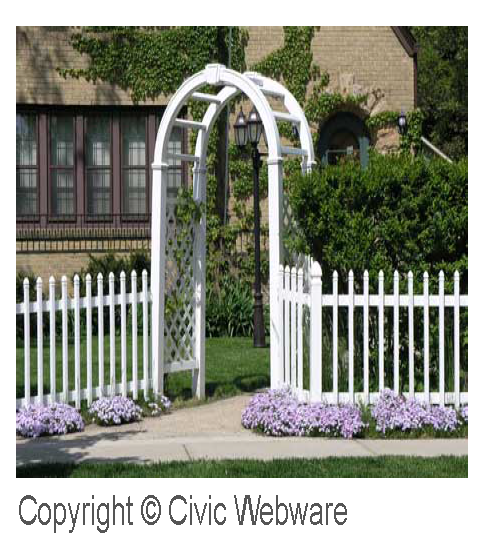
Arbor. A structure over a walkway or other open area often supporting vines or other plants.
(18)
Assessed value. The dollar amount assigned to taxable real and personal property by the assessor for the purpose of taxation.
(19)
Auto title loan business. Any person licensed pursuant to Wis. Stats. § 139.09, who makes a loan that is secured by an interest, other than a purchase money security interest, in the borrower's motor vehicle.
B
(20)
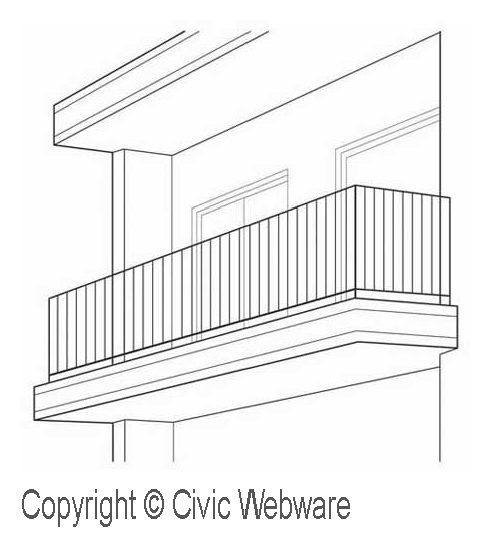
Balcony. A floor area that projects beyond the exterior wall of an upper story, is enclosed by a half wall or railing, and is only accessible from the building's interior. A balcony can be supported by columns or brackets or be cantilevered.
(21)
Base setback line. An imaginary line that is parallel to the centerline of certain roadways depicted on the highway width map adopted by Waukesha County.
(22)
Base zoning district. See zoning district, base.
(23)
Basement. That portion of a building below the first floor or ground floor with its entire floor below grade.
Note: This definition is based on the corresponding definition in Wis. Admin. Code § SPS 320.07(8).
(24)
Berm. A mound or embankment of earth typically installed to provide screening or for aesthetic effect.
(25)
Board of appeals. See Zoning board of appeals
(26)
Body piercer. An individual who performs body piercing on another upon his or her request.
Note: This definition is based on the corresponding definition in Wis. Admin. Code § DHS 173.03.
(27)
Body piercing. The perforating of any human body part or tissue, except an ear, and placing a foreign object in the perforation to prevent the perforation from closing.
Note: This definition is based on the corresponding definition in Wis. Admin. Code § DHS 173.03.
(28)
Building. A structure having a roof supported by columns or walls that is used or intended for the shelter or enclosure of people, animals, equipment, or property of any kind.
(29)
Building codes. Those regulations adopted by a municipality or the state that regulate the construction, repair, alteration, and maintenance of buildings.
(30)
Building coverage. The area of a lot that is occupied by buildings. Depending on the context, building coverage could refer to the actual or proposed amount, or the maximum amount that is permitted in a particular zoning district.
Note: See section 36-720 that describes how building coverage is measured.
(31)
Building height. As the context would indicate, building height could refer to the actual or proposed height, or the maximum height that is permitted in a particular zoning district.
Note: See section 36-721 that describes how building height is measured.
(32)
Building permit. A permit issued by the town that authorizes an applicant to conduct a specified construction activity that is consistent with the town's building code. (In contrast see zoning permit)
(33)
Building, accessory. A building or portion of a building used for a purpose customarily incidental to the permitted use of the lot and located on the same lot as the principal use.
(34)
Building, principal. The building on a lot in which is conducted the principal use as permitted on such lot by the regulations of the district in which it is located.
(35)
Burden of proof. The obligation of a party to establish a fact by evidence.
C
(36)
Campgroundspace. A designated portion of a campground that is rented for the exclusive use of its occupants. A campground space may include a parking area, fire ring, table, and other amenities.
(37)
CFR. An abbreviation for Code of Federal Regulations
(38)
Clear vision triangle. See vision clearance triangle.
(39)
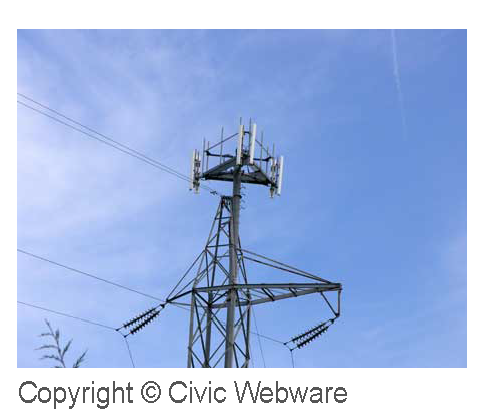
Co-location. The location of multiple antennas of more than one commercial wireless communication service provider or governmental entity on a single tower or alternative tower structure.
(40)
Common open space. In a planned unit development, that portion of the project that will remain undeveloped and which is jointly owned and maintained by those owning property in the development.
(41)
Comprehensive plan. The document adopted by the town board consistent with Wis. Stats. § 66.1001.
(42)
Conditional use. See land use, conditional
(43)
Conditional use order. A written decision issued by the town board authorizing the zoning administrator to issue a conditional use permit provided those conditions imposed by the board precedent to the issuance of the permit have been satisfied.
(44)
Conditional use order. A written decision issued by the town board that indicates whether the conditional use is approved or denied, and the terms of the approval if so granted. The conditional use may only be established on the subject property when the zoning administrator issues a conditional use permit indicating that all initial conditions of the approval have been satisfied.
(45)
Conditional use permit. A permit issued by the zoning administrator indicating that the conditional use may be established following a determination that all initial conditions of the conditional use order have been satisfied.
(46)
Condominium. A form of property ownership where multiple owners individually own specified portions of a building along with any common elements.
(47)
Conversion order. A written decision issued by the town board authorizing the property owner to convert an existing nonconforming use to a different nonconforming use that is determined to be of the same or lesser degree of nonconformity.
(48)
Corner lot. See lot, corner.
D
(49)
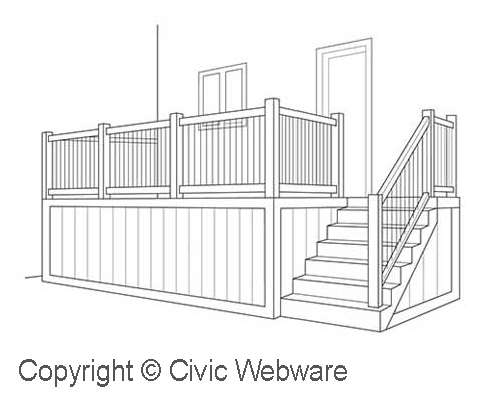
Deck. A structure characterized by a flat, unroofed, horizontal surface or platform suspended above the grade of the land it covers and which may be supported by posts, beams, cantilever, or other similar methods. (In contrast see stoop.)
(50)
Density. As the context would indicate, the number of existing, proposed, or permitted dwelling units in a given area. For example, a 40-acre parcel with 7 dwelling units has a density of one dwelling unit per 5.7 acres.
(51)
Developer agreement. A contract between a developer and a municipality that describes the obligations of both parties regarding a private development project.
(52)
Development. Any activity that must comply with, or is anyway regulated by, this chapter.
(53)
Disability. A mental or physical impairment that substantially limits one or more life activity.
(54)
Distinguished or characterized by. The dominant or principal theme of the object referenced. For instance, when the phrase refers to films "which are distinguished or characterized by an emphasis upon the exhibition or display of specified sexual activities or specified anatomical areas," the films so described are those whose dominant or principal character and theme are the exhibition or display of specified sexual activities or specified anatomical areas.
(55)
District. See zoning district.
(56)
Domesticated animal. An animal that is not wild and is kept as a pet or to produce food.
(57)
Double frontage lot. See lot, through.
(58)
Driveway, private. A private route of ingress and egress from a private or public right-of-way, which provides access to residential dwellings/units, business buildings, or properties.
(59)
Dwelling unit. A building, or portion thereof, that provides complete, independent living facilities for one family, including permanent provisions for living, sleeping, eating, cooking, and sanitation.
E
(60)
Easement. A non-possessory legal interest a person has in the property of another for a specific use. An easement may apply to the entire property or a portion thereof and may be perpetual or temporary, expiring after a period of time or after a certain event occurs. A utility easement, for example, gives any person with a right to use the easement the right to install and maintain utilities across, over, or under the subject land. A road easement would likewise allow the installation and maintenance of a driveway or roadway along with ancillary utilities.
(61)
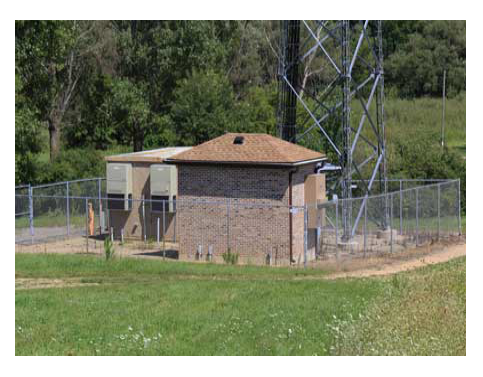
Equipment compound. When used in the context of telecommunication facilities, the area surrounding or adjacent to the base of an existing support structure within which is located mobile service facilities.
(62)
Established road grade. The elevation of the finished road at the centerline or curb as fixed by the town engineer, or by such authority as shall be designated by law to determine such an elevation.
F
(63)
FAA. An abbreviation for Federal Aviation Administration
(64)
Fall zone. When used in the context of telecommunication facilities, the area over which a mobile support structure is designed to collapse.
Note: This definition is based on the corresponding definition in Wis. Stats. § 66.0404.
(65)
Family. An individual living alone in a dwelling unit, or 2 or more individuals living together in a dwelling unit who are related by blood, marriage, adoption, or other legal means, or a group of not more than 4 individuals who are not so related who live together as a single housekeeping unit in a dwelling unit. A single housekeeping entity infers the use in common of all spaces, household services, and utilities with a single source of food preparation for all occupants.
(66)
FCC. An abbreviation for Federal Communications Commission
(67)
Flag lot. See lot, flag.
(68)
Flood. A general and temporary condition or partial or complete inundation of normally dry land areas caused by the overflow or rise of inland waters or the rapid accumulation of stormwater runoff or surface waters from any source.
(69)
Floodplain. Those lands subject to inundation by the 100-year reoccurrence flood, or, where such data is not available, the maximum flood of record.
(70)
Floor area. The maximum horizontal projected area of a building measured at each level from outside wall to outside wall.
(71)
Front yard. See yard, front.
(72)
Fugitive dust. Solid airborne particulate matter resulting from any activity conducted on a parcel.
H
(73)
Hazard. A condition, whether manmade or natural, that presents a tangible danger to the public health, safety, and general welfare.
(74)
Hazardous substance. A material regulated by the Emergency Planning and Community Right-to-Know Act of 1986, 42 USC 1101-11050, as may be amended.
(75)
Hazardous waste. A waste or combination of wastes that because of its quantity, concentration, or physical, chemical, or infectious characteristics, may (i) cause or significantly contribute to an increase in mortality or an increase in serious irreversible or incapacitating reversible illness; or (ii) pose a substantial present or potential hazard to human health or the environment when improperly treated, stored, transported, or disposed of or otherwise managed.
(76)
Highway. A State or County highway.
I
(77)
Impervious surface. The portion of a lot that substantially reduces or prevents the infiltration of stormwater into the ground. It includes areas of compacted soil, buildings, and nonporous surfaces such as sidewalks, parking lots, driveways, and similar features.
(78)
Interior lot. See lot, interior.
L
(79)
Land. The earth, water, and air, above, below, or on the surface.
(80)
Land use. As the context indicates (i) the development that has occurred on the land, (ii) development that is proposed for the land, or (iii) the use permitted for the land under this chapter.
(81)
Land use, accessory. A land use that is subordinate to, and customarily incidental to, the permitted principal use of the property or buildings and located upon the same lot as the principal use.
(82)
Land use, conditional. A land use, which by its nature, character, or circumstance, is so unique or so dependent upon specific conditions that permissibility by right is not practical, but which may be permitted subject to certain conditions and requirements as determined by the reviewing authority.
(83)
Land use, permitted by right. A land use that is allowed throughout a specified zoning district. Land uses permitted by right may be reviewed to ensure that all provisions of local, state, and federal regulations are met.
(84)
Land use, principal. The main or primary use of a property as may be allowed under this chapter.
Note: In some situations, a parcel of land can have more than one principal land use.
(85)
Land use, temporary. A land use which is on a parcel of land for a limited and specified period of time.
(86)
Legal nonconforming building. A building that at the time of construction conformed to existing regulations including size, location, and other dimensional standards, but is now inconsistent with this chapter.
(87)
Legal nonconforming conditional use. A use that was classified as a nonconforming use but which has since been reviewed and approved as a conditional use using the procedures and requirements specified in this chapter.
(88)
Legal nonconforming lot. A lot that at the time of creation conformed to existing regulations including lot size, dimensions, lot configuration, and other dimensional and design standards, but is now inconsistent with this chapter.
(89)
Legal nonconforming structure. A structure that at the time of construction or placement conformed to existing regulations including size, location, and other dimensional standards, but is now inconsistent with this chapter.
(90)
Legal nonconforming use. A use of land that at the time of establishment conformed to existing regulations, but is now inconsistent with this code.
(91)
Livestock. When used in the context of livestock facility siting, "livestock" shall only include cattle, swine, poultry, sheep, and goats. When not used in the context of livestock facility siting, "livestock" shall include bovine animals, equine animals, goats, poultry, sheep, swine, farm-raised deer, farm-raised game birds, camelids (alpacas, lamas, camels), ratites (emus, ostriches), and farm-raised fish.
Note: This definition is based on the corresponding definition in Wis. Admin. Code § ATCP 51.01.
(92)
Loading area. An off-street area set aside for the purpose of unloading or loading a motor vehicle, trailer, or truck.
(93)
Loafing shed. A building open on one side that is placed in a pasture or other similar area to provide shelter for livestock.
(94)
Lot. A land area having a definable location based on a survey or similar legal instrument recorded by the Waukesha County register of deeds. Where a navigable stream, navigable body of water, mil tax road, or public right-of-way divides a single described parcel into two or more parts, such severed portions shall be considered separate individual lots provided they meet the use, building location, and area regulations of the zoning district in which they are located. Where such separate parcels do not meet such use, building, location, and area regulations they, in combination, shall be considered to be a single lot for regulatory purposes, computation of area requirements, and other locational provisions of this chapter.
(95)
Lot area. As the context indicates, lot area can refer to the minimum required area, actual area, or proposed area.
Note: See section 36-712 that describes how lot area is measured.
(96)
Lot line. A line dividing one parcel of land from another.
(97)
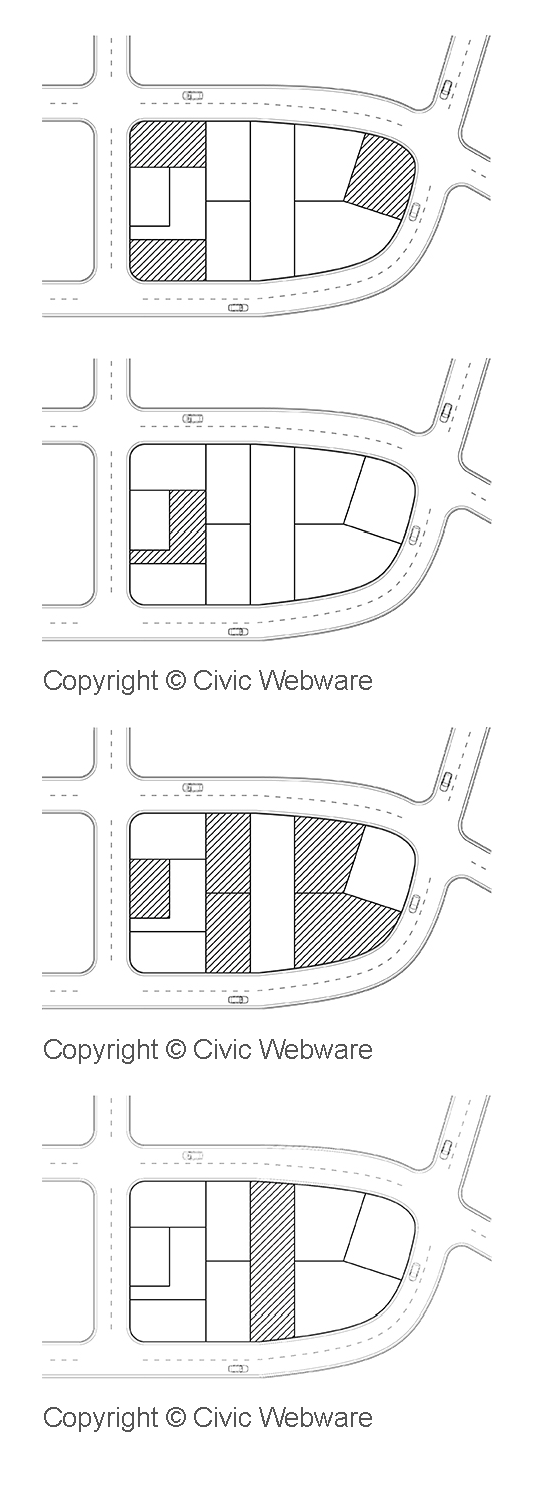
Lot line, front. The lot line described for each of the following types of lots. (1) For an interior lot, the property boundary line abutting a road right-of-way. (2) For a corner lot, the line abutting a street providing physical access (i.e., driveway) to the property. (3) For a through lot, the property boundary line abutting the road providing the primary access to the lot. (4) For a flag lot, the interior lot line most parallel to and nearest the road from which physical access is obtained.
(98)
Lot line, rear. A lot line that does not intersect a front lot line and that is most distant from and most closely parallel to the front lot line.
(99)
Lot line, side. A lot line that is not a front or rear lot line.
(100)
Lot width. As the context would indicate, lot width can refer to the minimum required distance, actual distance, or proposed distance.
Note: See section 36-715 that describes how lot width is measured.
(101)
Lot, corner. A lot situated at the junction of and fronting on two or more streets. A lot abutting on a curved street shall be considered a corner lot if straight lines drawn from the foremost points of the side lot lines to the foremost point of the lot meet at an interior angle of less than 135 degrees.
(102)
Lot, flag. A lot which has a narrow strip of land that extends from the main part of the lot where a building could be lawfully constructed to the road.
(103)
Lot, interior. A lot that abuts only one street.
(104)
Lot, through. A lot having a frontage on two streets that are more or less parallel to one another.
M
(105)
Maintenance and repair. See ordinary maintenance and repair.
(106)
Major road. A road so designated on the zoning map.
(107)
Manufactured home. A dwelling unit that is constructed in an off-site facility in conformance with the federal construction and safety standards established by the Secretary of Housing and Urban Development pursuant to the Manufactured Housing Construction and Safety Standards Act of 1974, as amended.
Note: A manufactured home bears a red insignia which certifies that it meets all applicable federal construction and safety standards.
(108)
Mitigate. To take an action designed to offset or rectify a negative effect.
(109)
Mobile home. A dwelling unit that was originally constructed prior to June 15, 1976, and that is (i) constructed off-site, (ii) equipped with the necessary utility service connections, (iii) made to be readily movable as a unit or units on its (their) own running gear, and (iv) designed to be used with or without a permanent foundation.
Note: No mobile homes have been constructed after June 15, 1976.
(110)
Mobile service. A radio communication service carried on between mobile stations or receivers and land stations, and by mobile stations communicating among themselves, and includes (i) both one-way and two-way radio communication services; (ii) a mobile service which provides a regularly interacting group of base, mobile, portable, and associated control and relay stations (whether licensed on an individual, cooperative, or multiple basis) for private one-way or two-way land mobile radio communications by eligible users over designated areas of operation; and (iii) any service for which a license is required in a personal communications service established pursuant to the proceeding entitled "Amendment to the Commission's Rules to Establish New Personal Communications Services" (GEN Docket No. 90-314; ET Docket No. 92-100), or any successor proceeding.
Note: This definition is based on the corresponding definition in Wis. Stats. § 66.0404.
(111)
Mobile service facility. The set of equipment and network components, including antennas, transmitters, receivers, base stations, power supplies, cabling, and associated equipment, that is necessary to provide mobile service to a discrete geographic area, but does not include the underlying support structure.
(112)
Mobile service provider. A person who provides mobile service.
Note: This definition is based on the corresponding definition in Wis. Stats. § 66.0404.
(113)
Modular home. A dwelling unit that meets local building codes and which was constructed off site in a factory as separate modules which are joined together and set on a permanent foundation.
(114)
Municipal code. The compilation of laws as adopted by the Town of Mukwonago town board.
N
(115)
Natural Resources Conservation Service (NRCS). A federal agency created in 1935 within the U.S. Department of Agriculture to work with private land owners and managers to conserve their soil, water, and other natural resources by providing technical and financial assistance. From 1935 to 1994, it was known as the Soil Conservation Service (SCS).
(116)
Navigable waterway. All natural inland lakes, streams, ponds, sloughs, flowages, and other waters, which are navigable under the laws of this state. The term does not include farm drainage ditches if (i) such lands are not adjacent to a natural navigable stream or river, (ii) those parts of such drainage ditches adjacent to such lands were not navigable streams before ditching, and (iii) such lands are maintained in nonstructural agricultural use.
Note: In Wisconsin, a navigable body of water is capable of floating the lightest boat or skiff used for recreation or any other purpose on a regularly recurring basis. See DeGayner and Co., Inc. v. DNR, 70 Wis. 2d 936 (1975) and Village of Menomonee Falls v. DNR, 140 Wis. 2d 579 (Ct. App. 1987)
(117)
Nonconforming building. See legal nonconforming building.
(118)
Nonconforming lot. See legal nonconforming lot.
(119)
Nonconforming structure. See legal nonconforming structure.
(120)
Nonconforming use. See legal nonconforming use.
O
(121)
Offset. The horizontal distance between any structure and any lot line (other than a street setback line), measured from the nearest point of the structure to the nearest point of any lot line. (In contrast see setback)
(122)
Operating standards. Regulations governing the ongoing operation of a land use, including related business practices.
(123)
Ordinary maintenance and repair. Those activities related to the general day-to-day maintenance of a building or other similar structure including interior remodeling; painting, decorating, paneling, plumbing, insulation, the repair of cracks in a foundation wall, the application of waterproof coatings to a foundation wall, and the replacement of windows, doors, electric wiring, siding, roofing materials, and other nonstructural components. (In contrast see structural alteration)
(124)
Overhang. That portion of a roof over a structure and designated as an integral part of the structure, which extends from the outer wall of the structure to the eave. Rain gutters are not included or considered part of the overhang.
(125)
Overlay zoning district. See zoning district, overlay.
P
(126)
Panelized home. A dwelling unit that meets local building codes and which was constructed off site in a factory as flat panels (e.g., walls, roof, and floor) which are joined together and set on a permanent foundation.
(127)
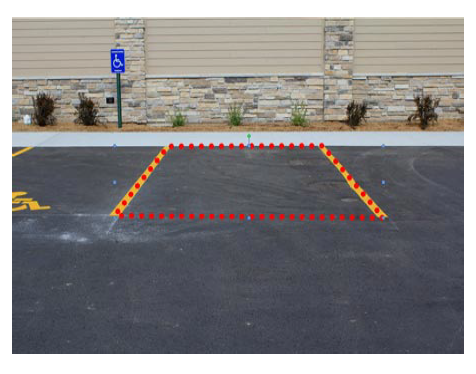
Parking space. An area permanently reserved and maintained for the parking of one motor vehicle that meets the dimensional standards of this chapter.
(128)
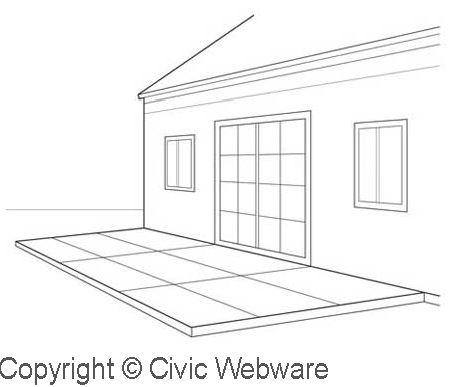
Patio. An at-grade surfaced area intended for outdoor living that may be next to a building or separated from a building.
(129)
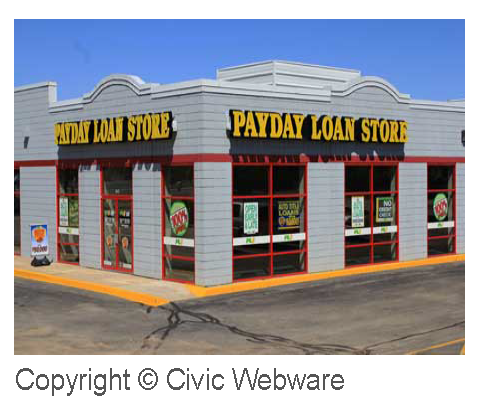
Payday loan business. Any person licensed pursuant to Wis. Stats. § 218.05, or a person licensed pursuant to Wis. Stats. § 139.09, who accepts a check, holds the check for a period of time before negotiating or presenting the check for payment, and pays to the issuer an agreed-upon amount of cash, or who refinances or consolidates such a transaction.
(130)
Permanent foundation. A foundation wall under the entire perimeter of a building.
(131)
Permitted use. See land use, permitted by right.
(132)
Person. An individual, corporation, governmental agency, business trust, estate, trust, partnership, association, two or more persons having a joint or common interest, or any other legal entity.
(133)
Plan commission. The commission established by the town board to make recommendations and decisions relating to planning and land use issues as authorized by Wisconsin Statutes.
(134)
Plan of operation. A document describing the operation of a particular enterprise and other related matters as may be required by this chapter. (Also see site plan)
(135)
Planned unit development district (PUD). A zoning district established pursuant to this chapter that has "PUD" followed by a number as its abbreviation (e.g., PUD-01).
(136)
Platted subdivision. A subdivision meeting the definition set forth in Wis. Stats. § 236.02.
(137)
Playhouse. An accessory building, either at ground level or elevated, or supported by a tree, characteristically used by children for play.
(138)
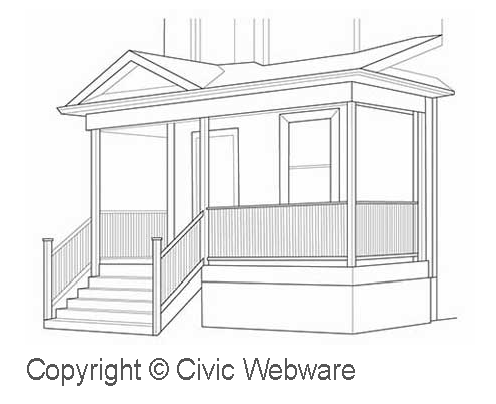
Porch. A part of a building with a roof of its own that covers an entrance.
(139)
Potbellied pig. A pig that is white, black, or pinto in color, stands less than 14 inches at the shoulders and less than 30 inches in length when grown, weighs less than 220 pounds, that is distinguished by having erect ears, a straight tail with a plume at the end, and hair on the back that does not part, and is kept by its owners as a household pet.
(140)
Pre-cut home. A dwelling unit that meets local building codes and which was largely constructed off site in a factory and then disassembled and transported to the site where it is reassembled and set on a permanent foundation.
(141)
Preserved lands. When used in the context of transfer of development rights, the sending parcel or part thereof that will be protected in perpetuity from any development or use except as consistent with its preservation as agricultural land or as a form of common "preserved lands" for the environmental or recreational benefit of the area.
(142)
Principal building. The primary building on a lot housing a principal use.
(143)
Principal land use. See land use, principal.
(144)
Property boundary line. See lot line.
(145)
Public notice. The means that a governmental body uses, or is required to use, to formally notify people and other interested entities of a pending governmental hearing or proposed action.
(146)
Public utility. A public utility as defined in Wis. Stats. § 196.01.
Note: This definition is based on the corresponding definition in Wis. Stats. § 66.0404.
R
(147)
Rear yard. See yard, rear.
(148)
Receiving parcel. The tract of land to which the additional residential development potential is added.
(149)
Recreational vehicle. A motorized or nonmotorized vehicle that includes a cabin for living accommodations, commonly used for recreational travel and touring. Vehicles included in this category come in several forms: travel trailers, tent trailers and camping trailers, all of which must be towed by another vehicle; and truck campers, motor homes and camper vehicles, all of which have a motor within the body of the vehicle and are self-propelled.
(150)
Regularly features or regularly shows. A consistent or substantial course of conduct, such that the films or performances exhibited constitute a substantial portion of the films or performances offered as part of the ongoing business of the adult establishment.
(151)
Repair and maintenance. See ordinary maintenance and repair
(152)
Reviewing authority. As the context would indicate, the zoning administrator, plan commission, town board, or zoning board of appeals.
(153)
Right-of-way. A strip of land dedicated to or acquired by the Town of Mukwonago, Waukesha County, or state of Wisconsin for public use. (In contrast see easement)
(154)
Road. A hard-surfaced travelway, generally within a public right-of-way or an easement, that is open to the public for vehicular travel.
(155)
Road, private. A road not maintained by the Town of Mukwonago, Waukesha County, the state of Wisconsin, or the federal government.
(156)
Road, public. A road maintained by the Town of Mukwonago, Waukesha County, the state of Wisconsin, or the federal government.
S
(157)
Screen. A feature, such as a wall, fence, hedge, berm, or similar feature used to shield or obscure elements of a development from adjacent sites.
(158)
Search ring. When used in the context of telecommunication facilities, a shape drawn on a map to indicate the general area within which a mobile service support structure should be located to meet radio frequency engineering requirements, taking into account other factors including topography and the demographics of the service area.
Note: This definition is based on the corresponding definition in Wis. Stats. § 66.0404.
(159)
Seasonal high-water table. The upper limit of the zone of saturation caused by underlying groundwater at its highest level.
(160)
Semi-nude or nude condition. The showing of the human male or female genitals, pubic area, vulva or anus, with not more than a complete opaque covering, or the showing of the female breast with not more than a complete opaque covering of any part of the nipple or areola.
(161)
Sending parcel. The tract of land from which residential development rights are transferred.
(162)
Setback. The horizontal distance between any structure and the base setback line, measured from the nearest vertical wall to the nearest point of the base setback line. (In contrast see offset)
(163)
Setback averaging. An approach to determining the minimum setback when the subject property is in an area of previously developed lots and the actual setbacks on those lots are less than the required setback for the district in which the subject property is located.
(164)
Setback, base. See base setback line.
(165)
Side yard. See yard, side.
(166)
Sight triangle. See vision clearance triangle.
(167)
Site plan. A drawing of a subject property that shows existing and proposed conditions and other features required by this chapter. (Also see plan of operation.)
(168)
Site-built home. A dwelling unit that meets the Wisconsin Uniform Dwelling Code standards and which was largely constructed on-site. Also known as a "conventional home" or "stick-built home."
(169)
Special exception. An approval that may be granted by the Plan Commission to deviate from otherwise applicable provisions of this chapter when certain circumstances apply. (In contrast see variance.)
(170)
Specified anatomical areas. The human male genitals in a discernibly turgid state, whether simulated or in fact, even if completely and opaquely covered; or less than completely and opaquely covered human genitals, pubic region, pubic hair, vulva, anus, buttocks, and/or the nipple and areola of the human female breast.
(171)
Specified sexual activity. Any of the following (i) the fondling or erotic touching of human genitals, pubic region, anus, or female breasts; (ii) the act of masturbation, sexual intercourse, sodomy, bestiality, necrophilia, sadomasochistic abuse, fellatio, cunnilingus, or anilingus; or (iii) excretory functions as part of, or in connection with any of the activities described in (i) or (ii).
(172)
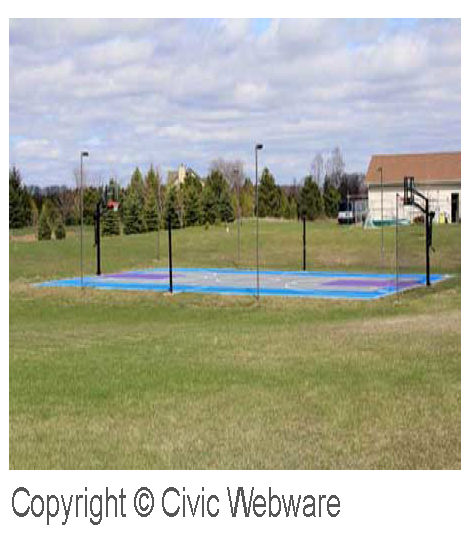
Sport court. A hard-surfaced area located out of doors used exclusively for basketball, tennis, or other similar sports-related activity. This term does not include any portion of a driveway that is also used for a sport-related use.
(173)
State. The state of Wisconsin.
(174)
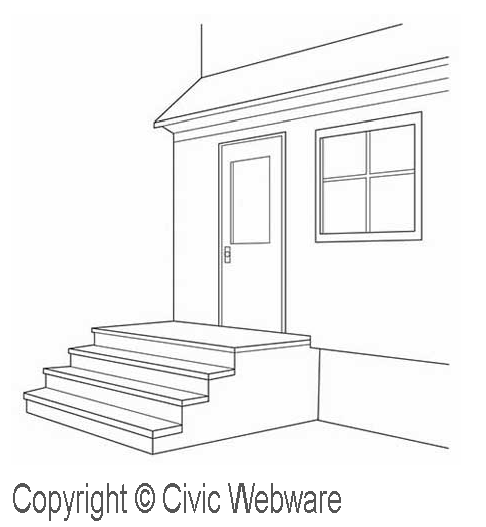
Stoop. A raised platform in front of an entrance to a building with one or more steps. (In contrast see deck, which is intended for outdoor living.)
(175)
Stormwater. Water from a rainfall event or melting snow or ice.
(176)
Stream. A natural body of running water flowing continuously or intermittently in a channel on or below the surface of the ground.
(177)
Street. See road.
(178)
Structural alteration. Any change in a supporting member of a structure such as foundation, bearing wall, column, beam or girder, footing, or pile, or any substantial change in the roof structure or in an exterior wall. (In contrast see ordinary maintenance and repair.)
(179)
Structure. A manmade object with form, shape, and utility that is either permanently or temporarily placed on or into the ground, a stream bed, or a lake bed or on another structure. Examples include buildings, decks, patios, stoops, play structures, swimming pools, hot tubs, bridges, storage tanks, fences, towers, flag poles, utility poles, pipelines, transmission lines, smokestacks, and signs.
(180)
Substandard lot. A lot, with or without a structure, having a lesser dimension or area, or both, than what is required for the zoning district in which it is located.
(181)
Substantial evidence. Facts and information, other than merely personal preferences or speculation, directly pertaining to the requirements and conditions an applicant must meet to obtain a conditional use permit and that reasonable persons would accept in support of a conclusion.
Note: This definition is based on the definition in Wis. Stats. § 62.23(7)(de).
(182)
Substantial modification. When used in the context of telecommunication facilities, the modification of a mobile service support structure, including the mounting of an antenna on such a structure, that does any of the following:
(a)
For structures with an overall height of 200 feet or less, increases the overall height of the structure by more than 20 feet, except as provided below.
(b)
For structures with an overall height of more than 200 feet, increases the overall height of the structure by 10 percent or more, except as provided below.
(c)
Measured at the level of the appurtenance added to the structure as a result of the modification, increases the width of the support structure by 20 feet or more, unless a larger area is necessary for collocation, except as provided below.
(d)
Increases the square footage of an existing equipment compound to a total area of more than 2,500 square feet.
An activity is not a substantial modification under subs. (a) and (b) above, if a greater height is necessary to avoid interference with an existing antenna. Furthermore, an activity is not a substantial modification under sub. (c) above, if a greater protrusion is necessary to shelter the antenna from inclement weather or to connect the antenna to the existing structure by cable.
Note: This definition is based on the corresponding definition in Wis. Stats. § 66.0404.
(183)
Support structure. An existing or new structure that supports or can support a mobile service facility, including a mobile service support structure, utility pole, water tower, building, or other structure.
Note: This definition is based on the corresponding definition in Wis. Stats. § 66.0404.
T
(184)
Tattoo. To insert pigment under the surface of the skin of an individual by pricking with a needle or other instrument or technique so as to produce an indelible mark or figure through the skin.
Note: This definition is based on the corresponding definition in Wis. Admin. Code § DHS 173.03.
(185)
Tattooist. An individual who tattoos another upon his or her request.
Note: This definition is based on the corresponding definition in Wis. Admin. Code § DHS 173.03.
(186)
Temporary use. See land use, temporary.
(187)
Through lot. See lot, through.
(188)
Trellis. A structure consisting of lattice with supporting posts and rails often supporting vines or other plants and used for aesthetic purposes or as a visual screen or barrier, or both.
U
(189)
Utility pole. In the context of telecommunication facilities, a structure owned or operated by an alternative telecommunications utility, as defined in Wis. Stats. § 196.01(1d); a public utility, as defined in Wis. Stats. § 196.01(5); a telecommunications utility, as defined in Wis. Stats. § 196.01(10); a city, village, town, or county; or a cooperative association organized under Wis. Stats. ch. 185; and that is designed specifically for and used to carry lines, cables, or wires for telecommunications service, as defined in Wis. Stats. § 182.017(1g)(cq); for video service, as defined in Wis. Stats. § 66.0420(2)(y); for electricity; or to provide light.
Note: This definition is based on the corresponding definition in Wis. Stats. § 66.0404.
V
(190)
Variance. A grant of relief, as approved by the zoning board of appeals, from the strict application of a rule or regulation that would permit development in a manner otherwise prohibited. (In contrast see special exception)
(191)
Vision clearance triangle. The area in the shape of a triangle located at the intersection of two roads or at the intersection of a road and a driveway within which the type and placement of structures and vegetation are controlled to ensure adequate sight distances for pedestrians and motorists. The configuration and size of this area is based on standards included in this chapter.
W
(192)
Wetland. An area that is inundated or saturated by surface or ground water at a frequency and duration sufficient to support, and under normal circumstances do support, a prevalence of vegetation typically adapted for life in saturated soil conditions.
(193)
Written or in writing. Any representation of words, letters, drawings, graphics, or pictures.
Y
(194)
Yard. The area of a lot that is required to be unoccupied and unobstructed from the ground upward, except by trees, shrubbery, or as otherwise provided in this chapter.
(195)
Yard, front. A yard as described for each of the following types of lots. (1) For an interior lot, that area that extends across the front of a lot between the side lot lines from the front lot line to the front of the principal building. (2) For a corner lot, that area that extends across the front of a lot between the side lot lines from the front lot line to the front of the principal building and that area that extends between the rear lot line to the front lot line from the side lot line to the side of the building. (3) For a double frontage lot, that area that extends across the front of a lot between the side lot lines from the front lot line to the front of the principal building and also that area that extends across the rear of a lot between the side lot lines from the rear lot line to the rear of the principal building.
(196)
Yard, rear. A yard as described for each of the following types of lots. (1) For an interior lot, that area that extends across the rear of a lot between the side lot lines from the rear lot line to the rear of the building. (2) For a corner lot, that area that extends between the front yard abutting the street right-of-way and the opposing side lot line from the rear lot line to the rear of the principal building.
(197)
Yard, side. A yard as described for each of the following types of lots: (1) interior lot, the area that extends between the front yard and rear yard from the side lot line to the side of the building; (2) corner lot, that area that extends between the front yard and the rear yard from the side lot line to the side of the principal building; (3) and double frontage lot, that area that extends between the front yard from the side lot line to the side of the principal building.
Z
(198)
Zoning administrator. The individual so designated by the town board chairman to perform those duties as enumerated in this chapter and as authorized by state law.
(199)
Zoning board of appeals (ZBA). A board created by the town board to render decisions relating to variances and administrative appeals and other matters enumerated in this chapter and in state law.
(200)
Zoning district. An area on the zoning map within which the zoning code is uniformly applied to all properties. Zoning districts can be classified as base zoning districts or overlay zoning districts.
(201)
Zoning district, base. A type of zoning district that establishes uniform regulations for the use and development of land. (In contrast see zoning district, overlay)
(202)
Zoning district, overlay. A type of zoning district that is superimposed over one or more base districts, or parts of districts, and that modifies the requirements of the base district or imposes additional requirements, or both. (In contrast see zoning district, base)
(203)
Zoning permit. A written permit issued for a specified parcel of land prior to the issuance of a building permit to ensure that the proposed use is consistent with the zoning requirements of the zoning district in which it is to be located.
(Ord. No. 2020-O-48, § 1(Exh. A), 9-16-2020; Ord. No. 2021-O-55, §§ 7, 8, 7-14-2021)

