
Northfield City Zoning Code
ARTICLE 3
- SITE DEVELOPMENT
3.1 - Measurements, Computations, and Exceptions.
3.1.1
Percentages and Fractions. When a calculation or ratio established in this LDC results in a fractional number or percentage, any fraction of ½ or less shall be rounded down to the next lower whole number and any fraction of more than ½ shall be rounded up to the next higher whole number. Any percentage of .5 percent or less shall be rounded down to the next lower whole number and any percentage greater than .5 percent shall be rounded up to the next higher whole number.
3.1.2
Distance Measurements. Unless otherwise expressly stated, distances specified in this LDC are to be measured as the length of an imaginary straight line joining those points. Building square footage shall be determined by measuring the area of the building using the outermost building exterior walls.
3.1.3
Lot Area Measurements.
(A)
The area of a lot includes the total horizontal surface area within the lot's boundaries minus any of the following, regardless of whether they may be used by the general public or are reserved for residents of the subdivision:
(1)
A vehicular or non-vehicular access easement through the parcel;
(2)
An easement for an open drainage course, whether a ditch, natural channel or floodway; and
(3)
Other easements restricting the use of the property.
(B)
For nonconforming lots, see Section 2.12.5, Nonconforming Lots of Record.
(C)
With the exception of governmental acquisition of land as provided for in Section 2.12.5(D), Governmental Acquisition of a Portion of a Lot, no lot shall be reduced in area so that the lot area per dwelling unit, lot width, yards, building area, or other requirements of this LDC are not met.
3.1.4
Lot Width Measurements. Lot width is the distance between the side lot lines measured at the point of the front building line where a build-to line is established or between the side lots lines measured 30 feet from the front lot line where a minimum front yard setback is required (See Figure 3-1).
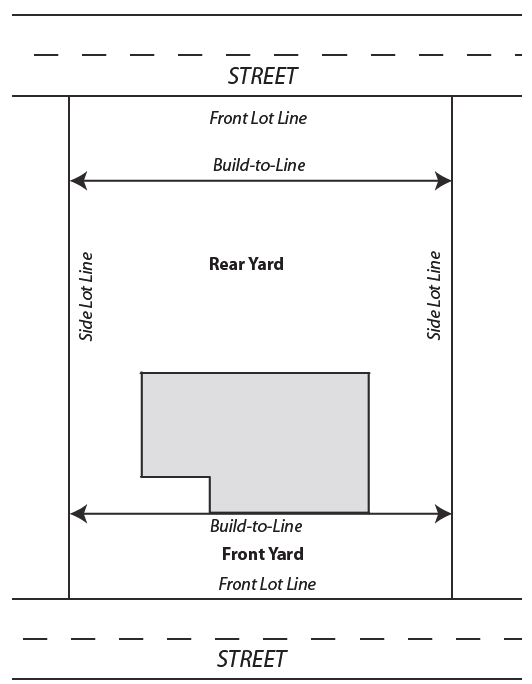
Figure 3-1: This image shows a building that has 60 percent of the front building
façade built to the build-to-line. In this case, the lot width is measured at the
build-to-line.
3.1.5
Build-to-Line and Setback Requirements and Exceptions.
(A)
Build-to Lines.
(1)
Where a build-to-line is established, the front façade of the principal building shall be constructed along that build-to-line for the minimum percentage required (See Figure 3-1).
(2)
Eaves and other projections may encroach into the front yard, past the build-to-line, in accordance with Section 3.1.5(F), Allowed Encroachments into Setbacks and Build-to Lines.
(3)
The city planner may waive build-to line requirements for a project with more than one building, where the project street frontage is occupied by one or more buildings in compliance with applicable build-to line requirements and secondary buildings are placed on the site to the rear of the front buildings.
(4)
No portion of any structure, including eaves or roof overhangs, shall extend beyond a property line, or into an access easement or street right-of-way, except as provided by this section.
(B)
Setbacks.
(1)
Setback standards provide open areas around structures for visibility and traffic safety, access to and around structures, access to natural light, ventilation and direct sunlight, separation between potentially conflicting activities, and space for privacy, landscaping, and recreation.
(2)
Each structure shall comply with the front, interior side, corner street side, and rear setback requirements of the applicable zoning district, except:
(a)
Where a front or street-side build-to line requirement is established by the applicable zoning district, in which case a proposed structure shall instead comply with the build-to line requirement;
(b)
Where a setback requirement is established for a specific land use type in Section 2.9, Use-Specific Standards;
(c)
In the case of development near a waterway, which shall comply with the setback requirements established by the WS-O district, where applicable; and
(d)
As otherwise provided by this section.
(3)
No portion of any structure, including eaves or roof overhangs, shall extend beyond a property line, or into an access easement or street right-of-way, except as provided by this section.
(C)
Exemptions from Setback and Build-to Line Requirements. The minimum setback requirements and build-to line requirements of this LDC do not apply to the following:
(1)
A building feature that encroaches into a required setback as allowed by Section 3.1.5(F), Allowed Encroachments into Setbacks and Build-to Lines;
(2)
A fence or wall that is allowed pursuant to Section 3.3.2, Fencing and Walls;
(3)
A deck, earthwork, step, patio, free-standing solar device other than in a front setback, or other site design element that is placed directly upon grade and does not exceed a height of 18 inches above the surrounding grade at any one point;
(4)
A sign in compliance with Article 6, Signage; or
(5)
A retaining wall less than 30 inches in height above finished grade.
(D)
Measurement of Setbacks and Build-to Lines. Setbacks shall be measured as follows, unless otherwise established elsewhere in Section 3.1, Measurements, Computations, and Exceptions, or in instances where the city planner may require different setback measurement methods because an unusual parcel configuration makes the following requirements infeasible or ineffective (See Figure 3-2).
(1)
General Requirements.
(a)
A front setback shall be measured at right angles from the nearest point on the public right-of-way at the front of the parcel to the nearest point of the wall of the structure, except as provided for in this subsection. The front property line is the narrowest dimension of a lot adjacent to a street.
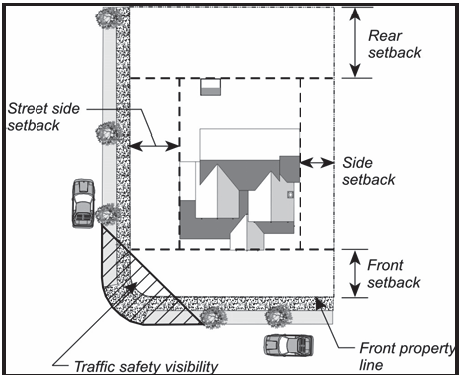
Figure 3-2: Setback locations and traffic safety visibility triangle.
(b)
If the city has established a plan that identifies a right-of-way for the future construction of a new street or the widening of an existing street, a required front or street side setback, or build-to line, shall be measured from the line shown on the plan.
(c)
Where the city has established specific setback requirements for individual single-dwelling parcels through the approval of a specific plan, subdivision map, or other entitlement, prior to the effective date of this LDC, those setbacks shall apply to infill development within the approved project instead of the setbacks required by this LDC.
(2)
Corner Lots.
(a)
The front setback or build-to line shall be measured from the nearest point of the wall of the structure to the nearest point of the most narrow street frontage property line. If the property lines on both street frontages are of the same length, the property line to be used for front setback measurement shall be determined by the city planner.
(b)
For the purposes of accessory uses, the rear yard shall be the setback that is on the opposite side of the lot from the front setback (front yard) from the street on which the building faces (See rear setback location on Figure 3-2).
(c)
The side setback or side build-to-line on the street side of a corner parcel shall be measured from whichever of the following points results in the greatest setback from an existing or future roadway:
(i)
The nearest point on the side property line bounding the street;
(ii)
The inside edge of the sidewalk; or
(iii)
The boundary of a planned future right-of-way established as described in Section 3.1.5(D) (1), General Requirements.
(3)
Double-frontage Lots.
(a)
A double-frontage lot is considered to have two front lot lines and a required front setback or build-to-line shall be provided from both front lot lines (See Figure 3-3).
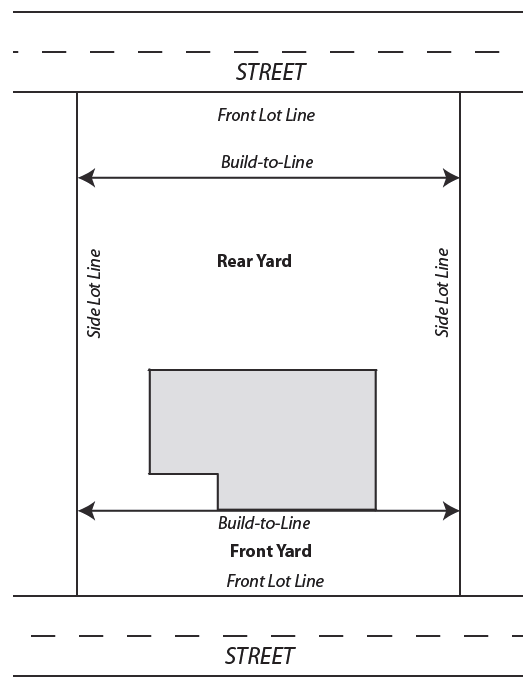
Figure 3-3: Illustration of a double frontage lot, related lot lines, and related
yards.
(b)
Vehicular access onto a double frontage lot shall generally be from the street with the lowest existing and projected traffic volumes, but with the proposed building designed so that its primary façade faces the higher volume street.
(c)
The city engineer may authorize alternative access locations, where appropriate, because of localized traffic conditions, and/or nearby residential areas that would be adversely affected by increased traffic.
(d)
For the purposes of accessory uses and structures, the rear yard shall be considered the yard that is behind the front, or principal, façade of the building.
(e)
See Section 5.2.2(G), Double Frontage Lots, regarding the limited circumstances where new double frontage lots are allowed.
(f)
Reverse frontage on double frontage lots shall be regulated by Section 3.3.1, Reverse Frontage.
(4)
Side Setbacks. The side setback shall be measured at right angles from the nearest point on the side property line of the parcel to the nearest point of the wall of the structure; establishing a setback line parallel to the side property line, which extends between the front and rear setbacks (See Figure 3-2).
(5)
Rear Setbacks.
(a)
The rear setback shall be measured at right angles from the nearest point on the rear property line to the nearest part of the structure, establishing a setback line parallel to the rear property line (See Figure 3-2).
(b)
Where a parcel has no rear lot line because its side lot lines converge to a point, the city planner shall be responsible for determining the location of the rear setback.
(E)
Limitations on the Use of Setbacks for Structures. A required setback area shall not be occupied by structures other than:
(1)
The fences and walls permitted by Section 3.3.2, Fencing and Walls;
(2)
Accessory uses permitted in the established yard per Section 2.11, Accessory Uses and Structures; and
(3)
The projections into setbacks allowed by Section 3.1.5(F), Allowed Encroachments into Setbacks and Build-to Lines, and the applicable zone.
(F)
Allowed Encroachments into Setbacks and Build-to Lines. An architectural feature attached to a principal structure may extend beyond the wall of the structure and into a required front, side, or rear setback in compliance with Table 3.1-1 (See also Figure 3-4). These requirements do not apply to accessory structures, which are instead subject to Section 2.10, Accessory Uses and Structures.
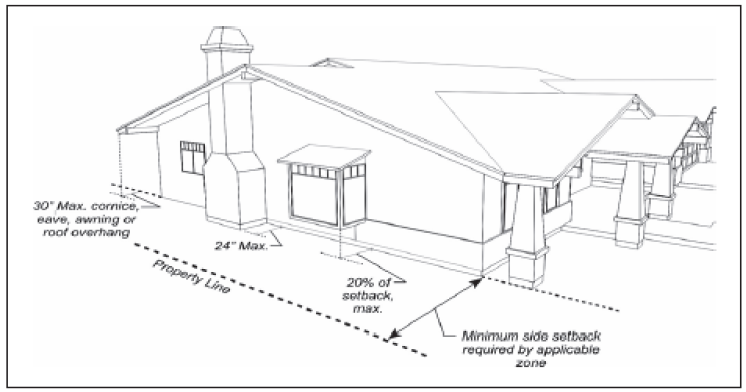
Figure 3-4: Allowed projections and encroachments.
(G)
Setback Requirements for Specific Structures. A detached deck, steps, terrace, or other site design element that is placed directly upon the grade, and that exceeds a height of 18 inches above the surrounding grade at any point, shall comply with the setback requirements of this LDC for detached accessory structures in Section 2.10, Accessory Uses and Structures.
3.1.6
Height Measurement, Limits, and Exceptions.
(A)
The height of each structure shall not exceed the height limit established for the applicable zoning district (See Section 3.2, Site Development Standards) except as otherwise provided by this subsection.
(B)
The maximum allowable height shall be measured as the vertical distance from the natural grade of the site to an imaginary plane located at the maximum allowed number of feet above and parallel to the grade (See Figure 3-5). The location of natural grade shall be determined by the city planner, and shall not be artificially raised to gain additional building height.
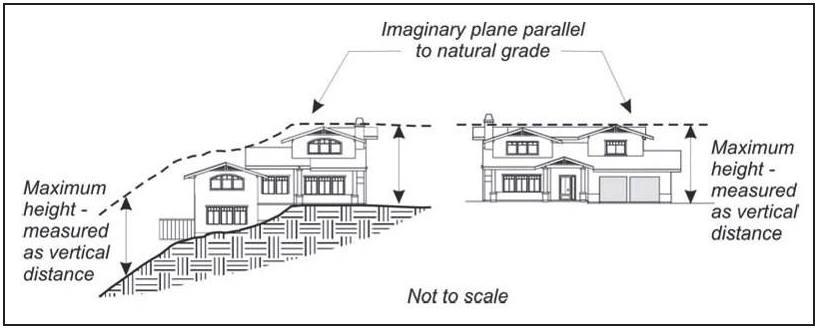
Figure 3-5: Maximum allowable height.
(C)
Where specified in feet, building height shall be measured as the vertical distance from grade at the base of the structure to (See Figure 3-6):
(1)
The highest point of a flat roof;
(2)
The deck line of a mansard roof; or
(3)
The mean height between the eaves and highest point on gable, hip, or gambrel roofs.
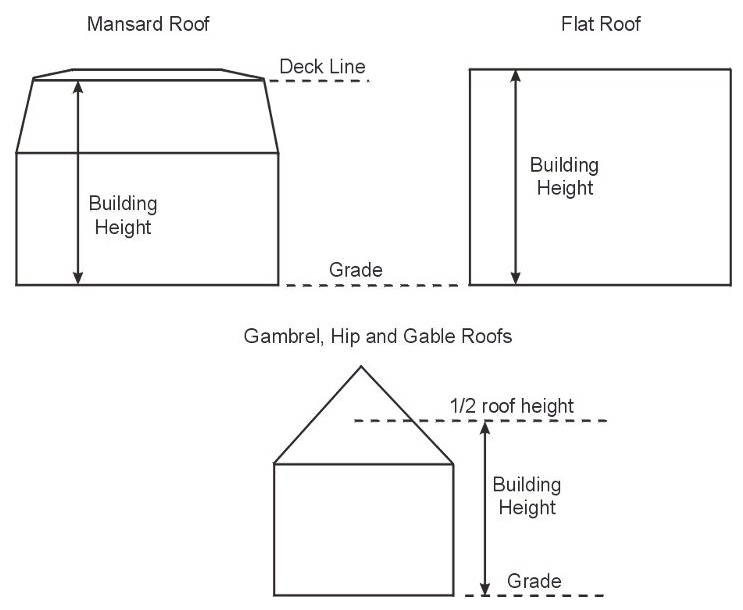
Figure 3-6: The height of a structure is measured based on the roof type.
(D)
Exceptions to Height Limits. The following structures and structural features may exceed the height limits of this LDC as noted:
(1)
Architectural features including a chimney, cupola, monument, mechanical equipment, or vent may exceed the height limit by a maximum of three feet. A spire, theater scenery loft, tower, or other uninhabitable feature may exceed the height limit by 25 feet for nonresidential uses.
(2)
The height of telecommunications facilities, including antennas, poles, towers, and necessary mechanical appurtenances, shall comply with Section 2.9.20, Telecommunication Facilities and Antennas.
(3)
The height of wind energy turbines shall comply with Section 2.10.4(K), Wind Energy Turbines (WET).
(E)
Height Limit at Street Corners (Traffic Safety Visibility Triangle). Development proposed adjacent to any public or private street or alley intersection in every district except C1 shall be designed to provide a traffic safety visibility area for pedestrian and traffic safety (See Figure 3-2, Figure 3-7, and Figure 3-8).
(1)
A traffic safety visibility area, which may include private property and/or public right-of-way, is a triangle area defined by measuring 35 feet from the intersection of the extension of the front and side street curb lines (or the right-of-way lines where there is no curb) and connecting the lines across the property (See Figure 3-7).
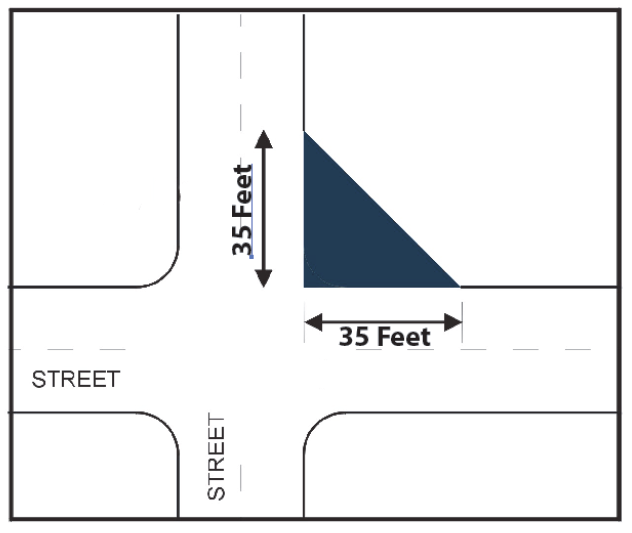
Figure 3-7: Traffic safety visibility triangle for intersecting streets.
(2)
For intersections of streets and driveways, the traffic safety visibility area shall be created by measuring 25 feet from the edge of the driveway along the street and 20 feet along the driveway, perpendicular from the street (See Figure 3-8).
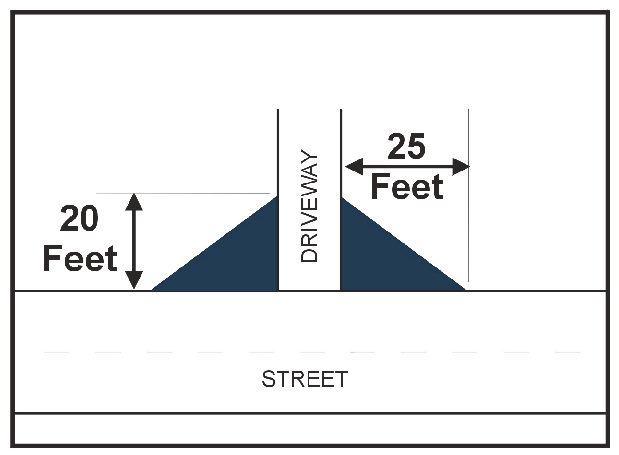
Figure 3-8: Traffic safety visibility triangle for driveway and street intersections.
(3)
The city planner, in consultation with the city engineer, may reduce the distance requirement where it determines a narrow parcel frontage would excessively reduce buildable area.
(4)
No structure, sign, or landscape element shall exceed 30 inches in height, measured from the top of the curb, within the traffic safety visibility area, unless approved by the city engineer.
(5)
An exception to this requirement shall be for existing trees where the canopy is trimmed to a minimum of eight feet above grade.
(Ord. No. 1071, § 8, 12-3-2024)
3.2 - Site Development Standards.
3.2.1
Purpose. The purpose of these site development standards is to further the purpose of this LDC and the goals and policies of the comprehensive plan. Furthermore, these standards are intended to establish appropriate lot dimensions within each zoning district, provide for appropriate scale of structures, and prescribe how structures will relate to a vibrant, pedestrian friendly streetscape.
3.2.2
Residential Site Development Standards.
(A)
Building Orientation in Residential Districts. All residential development shall be located parallel to the associated street or be consistent with existing development patterns rather than being sited at unconventional angles, unless irregular lot layouts require alternative orientations. Such alternative orientations shall be subject to approval by the city planner (Figure 3-9).
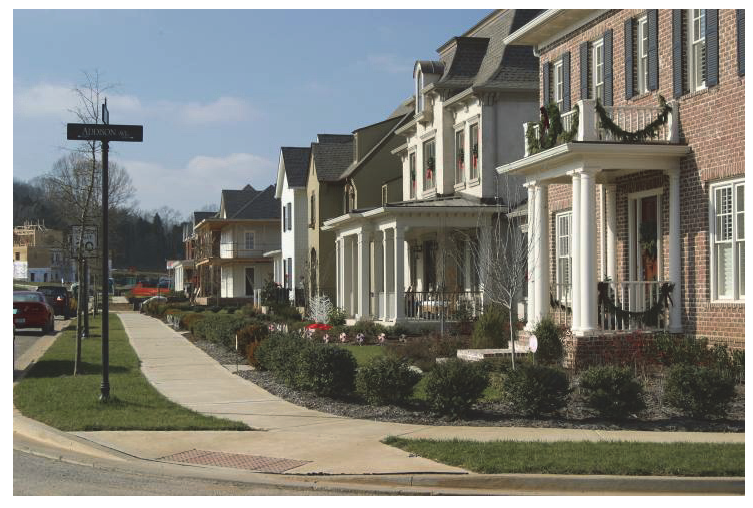
Figure 3-9 Example of residential development that is oriented toward the primary
street.
(B)
Principal Building Placement. Table 3.2-1 and 3.2-2 present the dimensional regulations for placing principal buildings in the residential districts.
(C)
Garage Placement and Size in the Residential Districts. Table 3.2-3 presents the dimensional regulations for garages in the residential districts.
(a)
Purpose and Intent. The intent of regulations on the setback, width and relative proportion of attached or detached garages is:
(i)
To ensure that there is a physical and visual connection between the living area of the home and the street;
(ii)
To ensure that the location and amount of living space of the home, as seen from the street, is more prominent than the garage;
(iii)
To prevent garages from obscuring the main entrance from the street and ensure that the main entrance for pedestrians, rather than automobiles, is the prominent entrance;
(iv)
Provide for a more pleasant pedestrian environment by preventing garages from dominating the views of the neighborhood from the sidewalk; and
(v)
Enhance public safety by preventing garages from blocking views of the street from inside the home.
(b)
Dimensional Regulations. Dimensional regulations for attached and detached garages for 1-, 2- and 3-family buildings are presented in Table 3.2-3.
(Ord. No. 986, 2-7-2017)
3.2.3
C1 District Site Development Standards.
Table 3.2-4: Dimensional Standards for the C1 District (in feet from property line)
3.2.4
C2 District Site Development Standards and Guidelines. Table 3.2-7 presents the site development dimensional standards for buildings in the C2 district.
(A)
Dimensional Standards.
(B)
Site and Building Design Guidelines. Table 3.2-8: Site and Building Design Guidelines for the C2 District
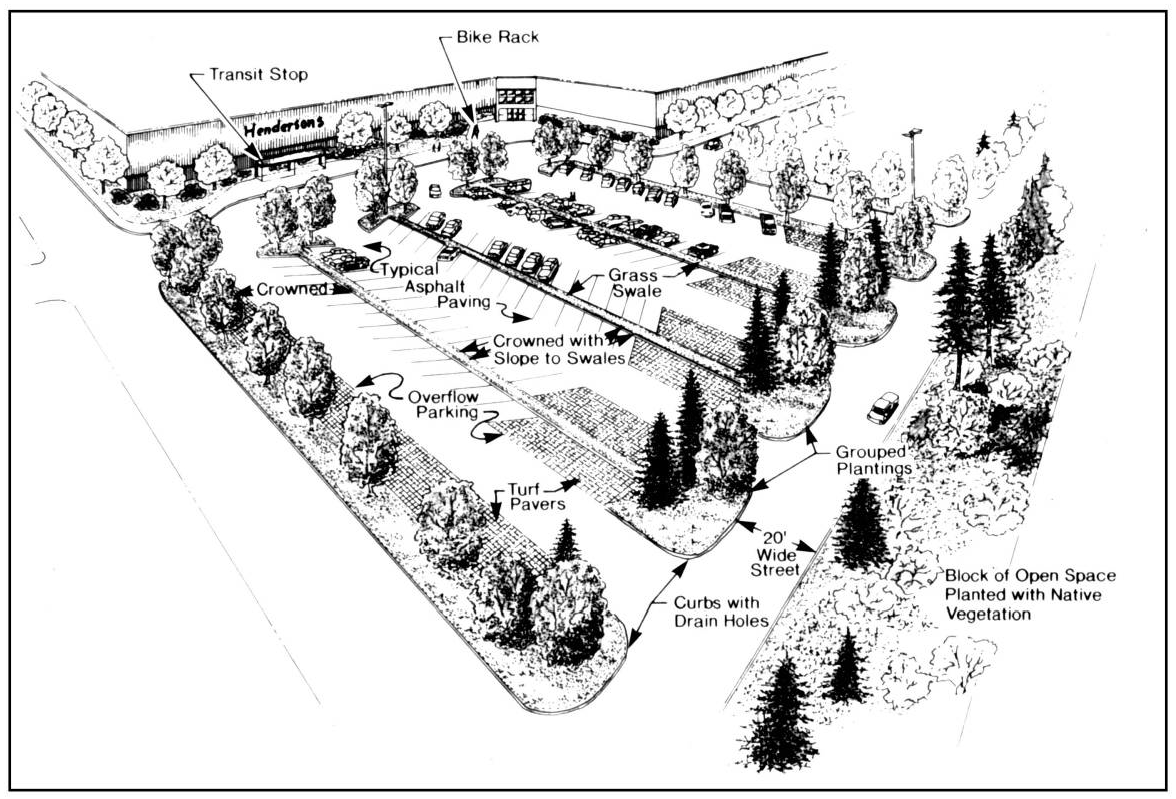
Figure 3-10: Illustration of conceptual parking lot landscape design.
3.2.5
I1 District Site Development Standards.
(A)
Dimensional Standards - Minimum.
(B)
Transitions and Appearances.
3.2.6
A-S District Site Development Standards
(A)
The minimum lot size shall be 35 acres unless a smaller lot or lots is part of an approved annexation process in which case the smaller lots shall be permitted and shall be considered to be legally conforming lots.
(B)
The minimum front yard setback is 70 feet.
(C)
The minimum rear yard setback shall be:
(1)
Fifty feet for nonagricultural structures;
(2)
One hundred feet for structures used to house livestock; and
(3)
Ten feet for accessory buildings.
(D)
The minimum side yard setback shall be:
(1)
Fifteen feet for nonagricultural structures;
(2)
One hundred feet for structures used to house livestock; and
(3)
Ten feet for accessory buildings.
(E)
The maximum height of principal buildings shall be 50 feet except for agricultural structures such as, but not limited to, silos and barns.
3.2.7
PB-S Public Benefit Site Development Standards.
(A)
Minimum Lot/Parcel Size - 43,560 square feet
(B)
Minimum Lot Width - 40 feet
(C)
Minimum Front Yard Setback - 20 feet, except that in areas zoned C1 the front yard setback is 0 feet
(D)
Minimum Interior Lot Side yard setback - 10 feet
(E)
Minimum Corner Lot side yard setback - 15 feet
(F)
Minimum Rear yard setback - 20 feet
(G)
Parking requirements - Parking shall be constructed in compliance with Tables 3.6-1 and 3.6-2.
3.2.8
CD-S District Site Development Standards.
(A)
IDA Sub-zone and PTA Sub-zone Adjoining Agricultural or Industrial Zones.
(1)
The minimum lot size - no minimum
(2)
The minimum lot width - 0 feet
(3)
The minimum front yard setback - 0 or as required by state building code
(4)
The minimum side yard setback - 0 or as required by state building code
(5)
The maximum height - No maximum
(6)
Parking Requirement - See Tables 3.6-1 and 3.6-2
(7)
Multiple Buildings - More than one principal building may be permitted on a single lot
(B)
PTA Sub-zone Adjoining All Other Zones Except Agricultural or Industrial Zones.
(1)
Maximum lot coverage - 40 percent including all buildings, other structures, and impervious surfaces.
(2)
Multiple Buildings - More than one principal building may be permitted on a single lot.
(3)
Other Development Standards - All other development standards shall be as governed by the Conditional Use Permit process and approval criteria provided for in Section 8.5.9, Conditional Use Permit, of this Land Development Code.
(C)
CD-S General Development Standards. Existing structures and uses of land and all new development proposed in the CD-S zone shall adhere to the General Development Standards found in Section 3.3.2 Fences and Walls, Section 3.3.4 Outdoor Lighting, and Section 3.3.5 Performance Standards as applicable.
3.2.9
Reserved.
Editor's note— Ord. No. 1071, § 3.2.9, adopted December 3, 2024, repealed § 3.2.9, which pertained to ED-F district site development standards.
(Ord. No. 1049, §§ 2, 3, 1-17-2023; Ord. No. 1066, § 4, 10-15-2024; Ord. No. 1071, §§ 10, 11, 12-3-2024)
3.3 - General Development Standards.
3.3.1
Reverse Frontage.
(A)
Reverse Frontage Prohibited.
(1)
Except for areas exempted in accordance with Section 3.3.1(B), Exemptions and Alternatives, residential lots with a reverse frontage shall be prohibited.
(2)
Lots along the perimeter of a subdivision shall be oriented so that dwellings front perimeter streets instead of backing up to streets around the outside of the subdivision.
(3)
Lots that have frontage on an arterial or collector road should utilize alleys for rear access to the site as an alternative to reverse frontage (See Section 5.2.3(B)(11)).
(4)
Nonresidential uses shall be subject to the multi-sided architectural standards of this section when the subject lot is bounded by a street and the Cannon River or by multiple streets.
(B)
Exemptions and Alternatives.
(1)
Residential structures on lots in the following locations may have reverse frontage:
(2)
Existing platted lots in residential subdivisions or lots subject to the PD-O district approved prior to the effective date of this LDC;
(3)
Residential lots where there is a minimum of 50 feet of open space between the street and the homes; and
(4)
Lots that provide a buffer "A" in Table 3.5-3 in accordance with Section 3.5.8(D), Perimeter Landscaping Requirements.
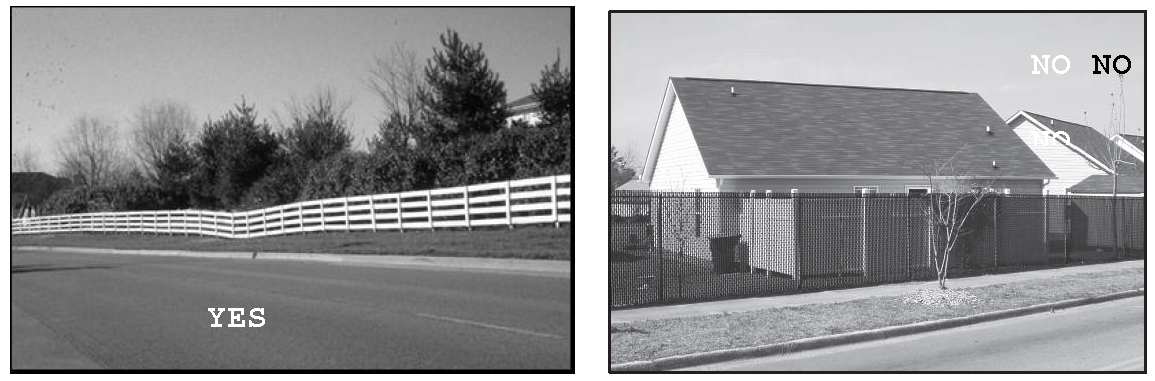
Figure 3-11: The image on the left demonstrates appropriate screening for reverse
frontage lots. Fences or walls without landscape are inappropriate.
3.3.2
Fencing and Walls.
(A)
Applicability.
(1)
The requirements of this section shall apply to all fences and walls unless otherwise stated.
(2)
A fence or wall in an area subject to flooding identified on a Federal Flood Insurance Rate Map (FIRM) on file in the city planner's office shall require a zoning certificate, and shall comply with all requirements of the city engineer in addition to the requirements of this section.
(3)
These regulations do not apply to fences or walls required by regulations of a state or federal agency, or by the city for reasons of public safety.
(B)
General Requirements. These requirements apply to fences in all zoning districts:
(1)
The finished side of a fence shall face the adjacent property.
(2)
All fences shall comply with the sight distance triangle requirements of Section 3.1.6(E), Height Limit at Street Corners (Traffic Safety Visibility Triangle).
(3)
All fences, including footings, shall be located entirely upon the property whose owner or occupant constructs the fence. It is the property owner's or occupant's responsibility to locate property lines prior to installing a fence.
(4)
Razor wire fencing, concertina, above ground electrical fences, and barbed wire fences are prohibited.
(5)
Fences used to enclose an outdoor pool shall meet the requirements of Section 2.10.4(G), Swimming Pools, Hot Tubs, and Spas.
(6)
All fences shall be maintained in good repair. Any fence that is potentially dangerous or in disrepair shall be removed or repaired.
(7)
No temporary fence, such as a snow fence or erosion control fence, shall be permitted on any property for a period in excess of 30 days unless approved by the city engineer.
(8)
The city planner may authorize temporary fencing that is necessary to protect archaeological or historic resources, trees, or other similar sensitive features during site preparation and construction. Such fencing shall be removed upon completion of construction.
(9)
Fencing may be allowed in drainage and utility easement areas in side and rear yards. Where such fences are installed the city will not be responsible for repairing or replacing the fence if work needs to be done in the easement.
(C)
Height.
(1)
Fences shall be measured from grade to the height of the fence (not the support structures).
(2)
All fences more than six feet in height require a building permit.
(3)
Fences around dog kennels shall be limited in height to eight feet in height.
(4)
Fences in residential zoning districts shall be limited to four feet in height in front yards and corner side yards. Fences in side and rear yards shall be limited to six feet in height, except for dog kennels.
(5)
Fences in commercial and industrial zoning districts shall be limited to four feet in the front yard and to eight feet in the side, corner side and rear yards.
(D)
Retaining Walls. Retaining walls supporting an embankment to be retained on any lot that exceeds 48 inches in height shall be benched, so that no individual vertical segment of a retaining wall exceeds a height of six feet except where the city engineer determines that topography requires a wall of greater height. Each individual horizontal bench segment, so constructed, shall be a minimum width of 36 inches (See Figure 3-12).
(1)
Retaining walls over 48 inches, measured from the top of the footing to the top of the wall, are required to be designed and certified by a registered professional licensed in Minnesota. A copy of the signed construction drawings should be submitted with a site plan or building permit in the case of a residential application.
(2)
Any retaining wall shall be approved by the city planner, in consultation with the city engineer, who will review the retaining wall's effects on drainage and erosion on the property and the neighboring properties.
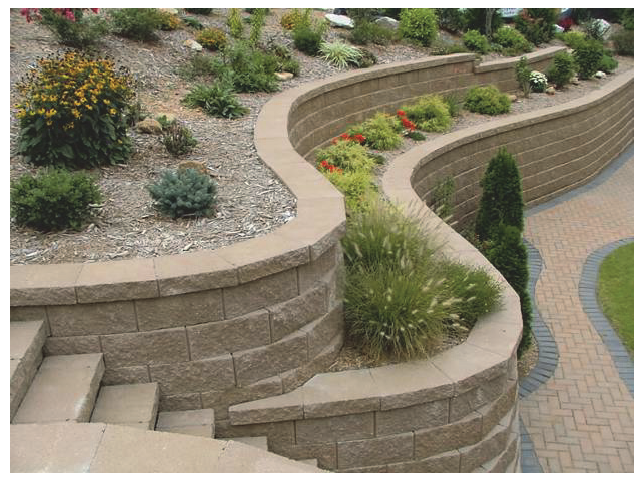
Figure 3-12: Retaining walls shall be benched, or terraced, so that no individual
wall exceeds a height of six feet.
3.3.3
Outdoor Dining, Display, and Storage.
(A)
Outdoor Dining Areas. Outdoor dining areas on a private property shall be regulated as follows:
(1)
An outdoor dining area may be allowed accessory and incidental to a restaurant with indoor eating area on the same site; provided, the outdoor eating area shall comply with the parking requirements of Section 3.6, Off-Street Parking, Loading, and Mobility.
(2)
Outdoor dining areas shall be designated on the site plan.
(3)
If no grade separation is provided between vehicular traffic and the outdoor dining area, permanent railings or fencing shall be provided around the dining area. If the outdoor dining area is adjacent to a street or area that is closed to vehicular traffic, no railing or fencing shall be required.
(4)
Umbrellas, or other protective elements, that shelter diners from the elements shall be secured so as not to create a hazard.
(5)
Enclosing an outdoor dining area either by a permanent roof or to expand the existing structure shall meet all the requirements of a building within the applicable zoning district and shall require the issuance of a zoning certificate.
(B)
Outdoor Sales and Storage of Goods and Materials.
(1)
Seasonal Agricultural Sales. Seasonal agricultural sales are regulated in Section 2.11.4(E), Seasonal Agricultural Sales.
(2)
Outdoor Sale and Display Areas. Temporary and permanent facilities for outdoor display sales (e.g., garden supply sales, news and flower stands, and similar uses) may be permitted in the C1 and C2 districts upon compliance with the following provisions:
(a)
Outdoor sale and display areas are prohibited on vacant lots unless approved in advance by the city planner as a temporary use.
(b)
Outdoor sale and display areas may be permitted provided that the merchandise is displayed along the sidewalk, the walkway adjacent to the building, or in the side yard.
(c)
The placement of the merchandise shall not interfere with customer movement on any sidewalk or walkway. A minimum of five feet of the sidewalk or walk way shall be clear of merchandise to allow for safe pedestrian movement.
(d)
The outdoor display and sale of bulk or large products that exceed 20 pounds, including, but not limited to mulch (bag or bulk), concrete, salt, or other similar products that cannot be easily carried into the store for purchase shall be required to meet the requirements of Section 3.3.3(B)(4), Outdoor Storage of Goods.
(e)
Temporary outdoor sales and display areas may be authorized in a parking lot under the following provisions:
(i)
The maximum time the temporary outdoor sales and display areas shall be authorized is for 90 days per year;
(ii)
Temporary outdoor sales and display areas shall only be authorized with a Temporary Use Permit pursuant to Section 8.5.2, Temporary Use Permit.
(3)
Storage of Materials. No front or street side setback shall be used for the storage of building materials, scrap, junk, machinery, indoor furniture, or similar materials, except for building materials required during an on-site construction project with a valid building permit.
(4)
Outdoor Storage of Goods. Outdoor storage areas may be permitted where such storage areas comply with the following regulations:
(a)
Outdoor storage of goods shall be prohibited on vacant lots.
(b)
Outdoor storage shall comply with all applicable state and federal regulations.
(c)
Outdoor storage of goods may be permitted provided that the storage areas are located in the side or rear yard. In no cases shall the outdoor storage of goods be permitted between a principal building and a street.
(d)
Storage of any goods or materials shall not exceed six feet in height unless the storage is fully screened by a six foot high fence or wall that is architecturally compatible with the main structure in material type and color (See Figure 3-25 in Section 3.5.10(D), Fence or Wall Screens).
3.3.4
Outdoor Lighting Standards.
(A)
Purpose. It is the purpose of these lighting standards to recognize the values as expressed by the International Dark Sky Association and the citizens of Northfield by implementing lighting standards that will serve to enhance the value of dark sky and minimize ambient lighting to the degree possible. These regulations are intended to minimize the spillover of light and glare on operators of motor vehicles, pedestrians, and land uses in close proximity to the light source. A reduction in light spillover increases safety for auto drivers and reduces hazards and nuisances associated with light and glare. The regulations found herein promote the reduction of light pollution that interferes with viewing the night sky and protects the natural environment from the damaging effects of night lighting from man-made sources.
(B)
Outdoor Lighting Plan.
(1)
An exterior light plan shall be required for the installation or modification of exterior lights for any project requiring site plan review (See Section 8.4.5, Type 2 Review Procedure).
(2)
The lighting plan shall be prepared by a certified professional either an architect, landscape architect or lighting designer.
(3)
The applicant shall provide a plan that identifies the location, height and type of luminaries and shows how the applicant will comply with this section.
(4)
A photometric plan of the site and fixture data sheets shall be submitted with the site plan in order to determine the effect of the luminaries on surrounding properties.
(C)
Outdoor Lighting Standards.
(1)
The placement of light poles within raised curb planter areas or landscaped islands is encouraged to the extent practical. Where conflict may occur as a result of adherence to this standard with respect to parking lot trees that may obscure required lighting, the design of parking lot lighting shall be modified to overcome these conflicts and shall be interpreted as being in compliance with lighting standards.
(2)
All wiring, fittings. and materials used in the construction, connection and operation of electrically illuminated signs shall be in accordance with the provisions of the State Electrical Code in effect.
(3)
The maximum height of a light fixture, either mounted on a pole or on a structure, is established in Table 3.3-1.
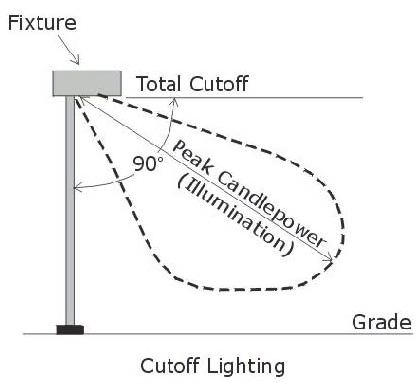
Figure 3-13: Cutoff lighting.
(4)
Illumination Standards.
(a)
Outdoor lighting shall not be designed or located in such a way as to shine directly into an adjacent dwelling unit, regardless of the applicable zoning district.
(b)
The maximum illumination permitted in each district type, as demonstrated by a photometric drawing, shall be as shown in Table 3.3-2 below:
(c)
When parking lots are within 15 feet of a property line, the placement cutoff light fixtures shall be designed to maintain the illumination levels at the property line as cited in Table 3.3-2.
(d)
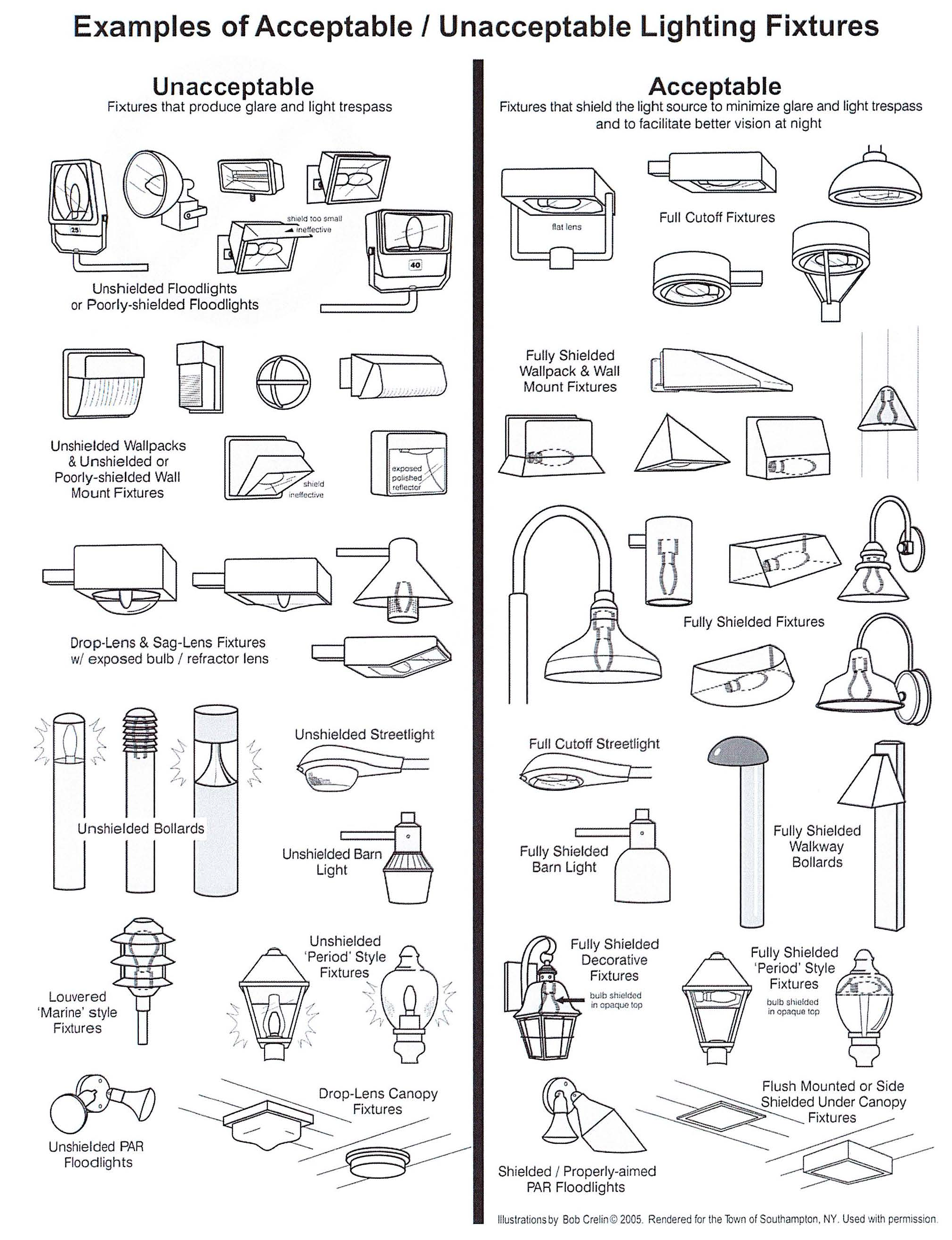
Wall packs on buildings may be used at entrances to a building to light unsafe areas. They are not intended to draw attention to the building or provide general building or site lighting. "Wall Packs" on the exterior of the building shall be fully shielded so the light source is not visible and will direct the light vertically downward.
(e)
Lighting Fixtures. Examples of acceptable and unacceptable lighting fixtures are shown below. This is not meant to be an exhaustive list, but to emphasize that lighting shall be fully shielded, and light fixtures shall emit light downward regardless of the location of the bulb or plastic covering that may emit light outward.
(5)
Temperature of Lamps. To minimize the amount of harmful blue light in the nighttime environment, Lighting sources or lamps (bulbs), shall not exceed a maximum Correlated Color Temperature (CCT) of 3,000 degrees Kelvin (as listed on the packaging or manufacturer specifications).
(6)
Lighting Controls. This provision applies to zoning districts CL C2, I1, CD-S, PI-S, and ED-F.
(a)
Outdoor lighting shall be extinguished by at least 50 percent at or before 11:00 p.m. and continue until dawn or the start of business, whichever is sooner. The reduction shall be determined as an overall average for a site. When possible, the lighting system should be turned off entirely.
(b)
Under the following circumstances, outdoor lighting need not adhere to the lighting standards applicable after 11:00 p.m. as set forth in the above subsection 3.3.4(C)(6)(a):
(i)
Lighting required by the Building Code.
(ii)
If normal business operations extend beyond 11:00 p.m. In those cases, the lighting reduction standards applicable after 11:00 p.m. shall apply upon closing.
(iii)
Permitted 24-hour operations.
(iv)
Where, as determined by the city, lighting levels must be maintained for safety reasons or special events.
(v)
Lighting for one-, two- and three-family structures.
(7)
Exemptions.
(a)
Outdoor athletic facilities developed on property zoned CD-S College Development Zone and other zones where athletic facilities are a permitted or accessory use shall be exempt from the lighting standards of this section except that lighting for such facilities shall adhere to these standards after 12:00 a.m.
(b)
Temporary seasonal lighting provided that individual lamps are less than ten watts and 70 lumens.
(c)
Temporary lighting for theatrical, television and performance areas.
(d)
Lighting within right-of-way.
(8)
Nonconforming Outdoor Lighting.
(a)
The nonconforming use of lighting may continue until the luminaire structure or fixture is replaced, at which point the lighting shall be subject to all the standards of this subsection with the exception of the maximum height.
(b)
When a nonconforming lighting fixture, including the pole or support, is removed, the lighting fixture shall lose its legal nonconforming status and all new lighting shall be subject to all standards of this Section 3.3.4.
3.3.5
Performance Standards.
(A)
Purpose. This section provides performance standards that are intended to minimize various potential operational impacts of land uses and development within the city, and promote compatibility with adjoining areas and land uses.
(B)
Applicability. The provisions of this section apply to all new and existing land uses, including permanent and temporary uses in all zoning districts, unless an exemption is specifically provided. Uses existing on the effective date of this section shall not be altered or modified thereafter to conflict with these standards.
(C)
Air Emissions. No gasses, or smoke shall be emitted, except as necessary for the heating or cooling of structures.
(D)
Combustibles and Explosives. The use, handling and transportation of combustibles and explosives shall comply with the International Fire Code and is subject to review by the Minnesota Department of Transportation.
(E)
Dust. Dust created by any non-agricultural activity or use of land of one acre or more or the operation of any vehicle or equipment associated with land disturbing activity of one acre or more is prohibited. Water application techniques that eliminate or minimize the creation of fugitive dust shall be required when dust from such use or activity occurs.
(F)
Ground Vibration. No ground vibration shall be generated that is perceptible without instruments by a reasonable person at the property lines of the site, except for vibrations from temporary construction or demolition activities.
(G)
Light and Glare. Outdoor lighting shall comply with the requirements of Section 3.3.4, Outdoor Lighting Standards.
(H)
Liquid Waste. No liquid, including dewatering waste, shall be discharged into a public or private body of water, sewage system, watercourse, or into the ground, except in compliance with applicable local and state regulations.
(I)
Noise.
(1)
It shall be unlawful to make, continue or cause to be made or continue any noise in excess of the noise levels set forth in this section unless such noise is reasonably necessary to the preservation of life, health, safety or property.
(2)
Any activity not expressly exempted by this section which creates or produces sound, regardless of frequency, exceeding the ambient noise levels at the property line of any property or if a condominium or apartment house within any adjoining apartment by more than six decibels above the ambient noise levels as designated in the Table 3.3-3 at the time and place and for the duration then mentioned shall be deemed to be a violation of the section, but any enumeration in this subsection shall not be deemed to be exclusive:
(3)
In determining whether a particular sound exceeds the maximum permissible sound level in Table 3.3-3:
(a)
Sounds in excess of the residential district limitations as measured in a residential district are in violation of this section whether the sound originates in a residential district or any other district.
(b)
During all hours of Sundays and state and federal holidays, the maximum allowable decibel levels for residential districts are as set forth in column entitled 6:00 p.m. - 7:00 a.m. (Residential Districts) of Table 3.3-3.
(4)
Sounds emanating from the operation of motor vehicles on a public highway; aircraft; outdoor implements such as power lawn mowers, leaf blowers, snow blowers, power hedge clippers, power saws; and pile drivers or jackhammers and other construction equipment are exempt from this section. Sounds emanating from vehicles and equipment referenced in this section are subject to regulations under the nuisance standards of the city in the Northfield Municipal Code Section 34-1027 and Section 34-1028.
(5)
Sounds emanating from lawful and proper activities at school grounds, playgrounds, parks or places wherein athletic contests take place are exempt from this section.
(J)
Odor. No obnoxious odor or fumes shall be emitted that are perceptible without instruments by a reasonable person at the property line of the site.
(K)
Radioactivity, Electrical Disturbance or Electromagnetic Interference. Electrical disturbance or electromagnetic interference that interferes with normal radio or television reception or with the function of other electronic equipment beyond the property line of the site; or that does not comply with all applicable Federal Communications Commission (FCC) and other applicable state and federal regulations shall not be emitted.
(L)
Vacant Buildings. Abandoned buildings and sites cause negative visual and fiscal concerns for the community. Therefore, in order to minimize these instances upon the community, and in addition to this and other applicable codes and ordinances, the following shall apply to vacated building(s) or development reviewed under this section:
(1)
Exterior Surfaces. All exterior surfaces, including but not limited to, doors, door and window frames, cornices, porches and trim shall be maintained in good repair. Exterior wood surfaces, other than decay resistant materials, shall be protected from the elements and decay by painting or other protective coverage or treatment. Peeling, flaking and chipped paint shall be eliminated and surfaces repaired. All siding and masonry joints shall be maintained weather resistant and watertight;
(2)
Exterior Walls. Exterior walls of buildings shall be maintained free from holes, breaks, loose or rotting materials, and graffiti; and shall be maintained weatherproof and properly surface coated as needed to prevent deterioration.
(3)
Roofs. Roofs of buildings shall be maintained so that they are structurally sound and in a safe condition and weather tight, and have no defects, which might admit rain or cause dampness in the interior portions of a building. All portions, additions or sections of a roof including, but not limited to, the fascia, eave, soffit sheathing, vent screening, gutter, downspout, roof jack, lead or metal flashing, shall be complete with all trim strips, moldings, brackets, braces and supports attached or fastened in accordance with common building practices.
(4)
Windows. All glass areas, including those in windows and doors shall be fully supplied and maintained as per the development plan.
(5)
Grounds.
(a)
All landscaped areas as defined in the approved development plan shall be maintained and kept free of trash, old building materials, junk, unlicensed or inoperative vehicles, and other such material and equipment.
(b)
All driveway, parking, loading and outside storage areas shall be maintained as per the approved development plan; and
(c)
All fences, walls, lighting, signs, storage structures, and other visual physical improvements or appurtenances as per the approved development plan shall be maintained in a safe, working order and in good appearance and free of graffiti.
(Ord. No. 1066, § 4, 10-15-2024; Ord. No. 1064, § 1, 11-26-2024)
3.4 - Neighborhood Compatibility Standards.
3.4.1
Purpose and Intent. The purpose of the neighborhood compatibility standards is to protect the character of existing residential neighborhoods in instances where there is a proposed infill development, redevelopment project, or building expansion. The primary focus of these compatibility standards is to ensure that new infill development, redevelopment, or building expansion relates to the massing and scale of the surrounding structures.
3.4.2
General Provisions.
(A)
Except where exempted by Section 3.4.3, Exemptions, these standards shall apply to the development, expansion, or redevelopment of structures in the R1, R2, R3, N1, and NC-F districts. In the PTA sub-zone, these standards shall be used as guidelines and not absolute standards.
(B)
The city desires to protect the quality of its surface waters, including the Cannon River and its creek tributaries.
(C)
Definitions: For the purposes of these standards:
(1)
"Building Placement" shall mean the actual location of an existing building on a property (See Section 3.1); and
(2)
"Primary Façade" shall mean the front face of a building which faces the front yard and is located nearest the front property line. An attached garage is not a component of the primary facade; and
(3)
"Recessed Façade" shall mean that portion of a building which faces the front yard and is set back from the front property line a distance greater than that of the primary façade.
3.4.3
Exemptions. The following forms of development shall be exempt from the standards of this section:
(A)
Accessory buildings;
(B)
Development subject to an approved master plan, development agreement, variance, or planned unit development protected by a PD-O district;
(C)
Existing nonresidential or mixed-use development lawfully established prior to the effective date of this LDC;
(D)
A change of use, with no structural changes, that is permitted in the base zoning district.
3.4.4
Standards for Residential Development.
(A)
Development subject to these neighborhood compatibility standards shall comply with the standards of this subsection.
(B)
Design Standards for One, Two and Three Family Dwellings in R1, R2 and R3.
(1)
Methods for Determining Compatibility Standards. For the purposes of this subsection, the following are the methods by which compatibility is determined for building placement, building height and massing:
(a)
Proposed new housing units or building expansions shall be compared to similar existing housing units. For example, single family homes shall be compared to other low density homes, not churches, schools, or high density residential land uses.
(b)
Proposed new development or building expansion in the front yard shall be placed within five feet of the average distance from the property line of the two structures adjacent on both sides of the same street, except those structures more than 50 feet or less than 15 feet from the front yard property line (see Figure 3-14). If there are fewer than four structures on the same side of the street, the lower number of structures is used in the calculation.
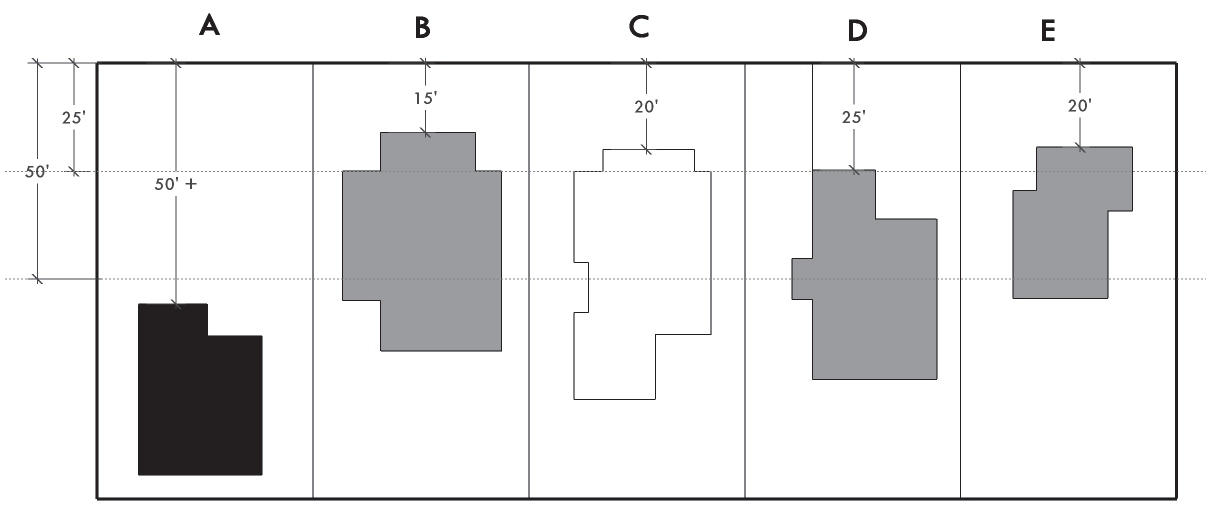
Figure 3-14: Because of the variety in existing placement of buildings on the same
block face, new development or building expansion on the subject property (lot C)
may be located with a building placement of 20 feet, which is the average of the placement
of lots B, D, and E. The building on lot A is not included in the average because
it is located more than 50 feet from the property line.
(c)
For corner lots, proposed new development or building expansion shall be compared to the average of the two adjacent structures on both streets, except those structures no more than 50 feet or no less than 15 feet from their front yard line (see Figure 3-15). If there are less than two structures on either street, the lesser number of structures is used in the calculation.
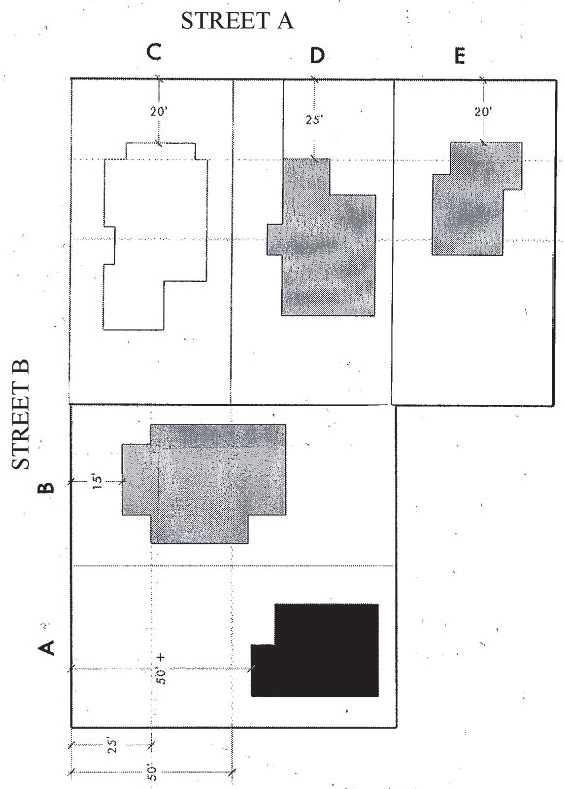
Figure 3-15: Building placement for corner lot conditions.
(2)
Building Placement.
(a)
Front yard. For new development or expansion of an existing building, the applicant shall demonstrate how the proposed building will meet the average front yard building placement of the two adjacent buildings on either side of the subject property, as shown in Figure 3-14, to within five feet.
(b)
Side yard. The minimum side yard setback shall be five feet.
(c)
Rear yard. The minimum rear yard setback shall be 30 feet.
(d)
Corner yard. For corner lots, all new development or expansion of an existing building shall meet both the average front and corner yard building placement of the two adjacent buildings on either side of the subject property (see Figure 3-15), to within five feet.
(3)
Building Height and Massing.
(a)
No principal building shall be constructed which is more than five feet taller than the average height of the two adjacent buildings on either side of the subject property as shown in Figure 3-14 or Figure 3-15. However, if the two adjacent buildings on either side of the subject property are single story homes, the building height for the subject property may be constructed to two stories, or 30 feet in height, whichever is less.
(b)
No principal building shall be constructed where the primary façade is more than five feet wider or narrower than the average width of the two adjacent buildings on either side of the subject property. However, the width of the façade may be increased by more than five feet beyond the average width of the two adjacent buildings if the building has a recessed façade which is set back at least six feet back from the primary façade.
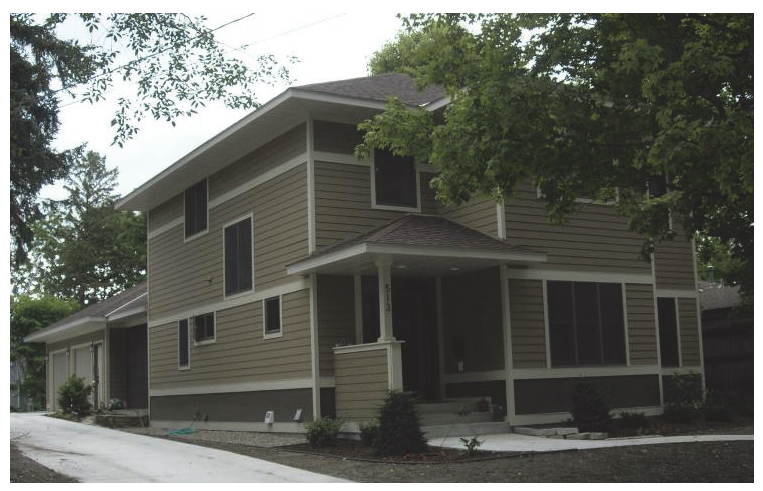
Figure 3-16: The above detached dwelling exhibits compatibility with the surrounding
dwellings in regard to design, scale, and building placement.
(C)
Design Standards for One, Two and Three Family Dwellings in N1.
(1)
Building Placement.
(a)
Front Yard. Proposed new development or building expansion in the front yard shall be placed within five feet of the setback established in the official development agreement on file for that property, but in no case may be closer than 15 feet to the front property line. If no development agreement exists, the front setback shall be 25—35 feet.
(b)
Side Yard. Proposed new development or building expansion in the side yard shall comply with the setback established in the official development agreement on file for that property. If no development agreement exists, the minimum side yard setback shall be five feet.
(c)
Rear Yard. All new development or expansion of an existing building shall comply with the rear yard setback established in the official development agreement on file for that property. If no development agreement exists, the rear yard setback shall be 30 feet.
(d)
Corner Yard. Proposed new development or building expansion on a corner lot shall comply with the setback established in the official development agreement on file for that property. If no development agreement exists, the corner side yard setback shall be 15 feet.
(D)
Maximum Amount of Paving Allowed on Single-Family Dwelling Lots.
(1)
Paving shall be limited to no more than 30 percent of the front or street side setback areas.
(a)
Increases in the maximum amount of allowable paving may be approved by the city planner where, if necessary, to provide safe ingress and egress for the site.
(b)
No parking shall be allowed in the landscaped areas.
(c)
Single dwelling front and street side setback areas shall only be used for the temporary parking of motor vehicles. Storage of vehicles in these areas shall not be allowed.
(d)
No vehicles shall be parked in the front and/or street side setback areas other than on a paved driveway.
3.4.5
Standards for Development in the NC-F District. Development subject to requirements of this section shall comply with the following standards in addition to the other requirements of this section:
(A)
Site Plan Review. The standards of this section shall be reviewed through the site plan review process established in Section 8.5.6, Site Plan Review.
(B)
Use Limitations. The following uses or features shall be prohibited as principal or accessory uses in the NC-F district:
(1)
Drive-through establishments;
(2)
Public address/speaker systems;
(3)
Outdoor storage; and
(4)
Uses providing delivery services via automobile or truck.
(C)
Site Layout.
(1)
Off-Street Parking.
(a)
The total amount of off-street parking will be as specified in Section 3.6, Off-Street Parking, Loading, and Mobility.
(b)
Where provided, off-street parking will be established in one of the following locations (listed in priority order):
(i)
Adjacent to off-street parking lots serving nonresidential uses on abutting lots;
(ii)
Adjacent to lot lines abutting nonresidential development;
(iii)
On a lot's corner side;
(iv)
Behind the building.
(c)
Off-street parking may be established adjacent to lot lines abutting residential uses or in front of the building only if the applicant can demonstrate that there is no other alternative location for the parking.
(2)
Landscaping/Screening.
(a)
Fully opaque screens (established with vegetation, walls, fences, berms, or a combination of these features) to a minimum height of four feet above grade shall be maintained along all lot lines abutting residential uses. Screen height shall be increased to a minimum height of six feet above grade between off-street parking areas and abutting residential uses.
(b)
Screening shall not interfere with public sidewalks or improved pedestrian connections.
(c)
Mechanical equipment shall be fully screened from adjacent residential uses by a fence, wall, landscaping, or combination of these features (See Section 3.5.10, Screening Requirements).
(3)
Outdoor Lighting.
(a)
Outdoor lighting shall:
(i)
Have a maximum height of 15 feet;
(ii)
Be fully-shielded;
(iii)
Be configured so that the source of illumination is not visible; and
(iv)
Be directed down and away from adjacent residential lots.
(b)
The requirements of Section 3.3.4, Outdoor Lighting Standards shall also apply.
(D)
Operation.
(1)
Nonresidential uses with outdoor activities (e.g., outdoor dining) located adjacent to lots in a low or medium density residential district shall curtail outdoor activities by 8:00 p.m. Sunday through Thursday, and by 10:00 p.m. on Friday and Saturday.
(2)
Loading or unloading activities shall take place only between the hours of 7:00 a.m. and 7:00 p.m.
(Ord. No. 1066, § 4, 10-15-2024)
3.5 - Landscape, Screening, and Buffering Standards.
3.5.1
Purpose. The purpose of this section is to promote the beautification of Northfield and enhance and establish green infrastructure and generally protect the public welfare, through the city's authority to regulate land use in a method that utilizes the benefits of landscaping. Specifically, it is the purpose of this section to:
(A)
Preserve the variety and extent of the city's urban forest as an integral part of this city's identity and infrastructure.
(B)
Protect privacy and provide buffering between land uses of differing intensities;
(C)
Aid in noise, glare and heat abatement;
(D)
Contribute to the process of air purification, ground water recharge, and control of ground water runoff;
(E)
Preserve large trees, natural wet lands, and/or other natural features;
(F)
Prevent tree loss by eliminating or reducing compaction, filling or excavation near tree roots;
(G)
Prevent or reduce soil erosion and sedimentation and stormwater runoff;
(H)
Enhance energy and water conservation;
(I)
Control the urban heat island effect;
(J)
Increase and maintain property values; and
(K)
Increase the utilization of and expand the use of native landscape species within the City of Northfield.
3.5.2
Applicability. The requirements of this section shall apply to all proposed development and new land uses unless otherwise stated.
3.5.3
Compliance and Maintenance Required.
(A)
Where landscaping is required, no building permit shall be issued until the required landscaping portion of the site plan or zoning certificate application has been submitted and approved.
(B)
See Section 3.5.12, Installation, for installation timing requirements.
(C)
Steep slope areas (those in excess of 12 percent slope) shall be landscaped to maximize opportunities for native vegetation restoration in compliance with this section, all other applicable sections of this Land Development Code and any applicable Section of Article VI Chapter 22, StormwaterManagement, of the Northfield Municipal Code.
3.5.4
General Landscaping Material Standards. Landscape materials should complement the form of the existing trees, plantings, and vegetation as well as the development's general design, architecture, and site direction or orientation (e.g., north/south or east/west). The amount of shade or sun and soil conditions should be considered in selecting plant materials. Plant materials are to include those materials and species that are demonstrated to be hardy to conditions found in southeast Minnesota. Landscape materials shall consist of the following:
(A)
Plants. All plant materials shall meet the following requirements:
(1)
Approved and Prohibited Plant Types.
(a)
Plants selected for specific site design purposes shall be those plants as identified and included on the List of Approved Landscape Trees and Plant Materials as approved and amended from time to time by the resolution of the city council on file with in the city clerk's office.
(b)
To conserve water, the installation of native and/or drought-tolerant plants and landscape materials is strongly encouraged.
(c)
Artificial plants are prohibited.
(2)
Quality.
(a)
Plants shall be free of disease, insects and/or damage, and shall be correctly labeled indicating genus, species and cultivar. No label shall be removed until after the final inspection by the city is completed.
(b)
Trees of species whose roots are known to cause damage to public roadways or other public improvements shall not be planted closer than 15 feet to such public improvements. The city's approved plant list may include lists of prohibited street trees.
(3)
Existing Vegetation.
(a)
Existing healthy, well-formed canopy and understory trees as well as healthy shrubs shall be credited toward the requirements of this section, provided the vegetation is protected before and during development of the site and maintained thereafter in a healthy growing condition and meets the applicable regulation.
(4)
Species Variety. To curtail the spread of disease or insect infestation in a plant species, new plantings shall comply with the diversity standards of Table 3.5-1.
(5)
Vegetation Size and Quality Requirements.
(a)
Deciduous canopy or shade trees shall have a minimum Diameter at Breast Height (DBH) of two inches for ball and burlap trees or DBH of 1.25 inches for container trees at the time of planting. Multi-stem varieties shall be a minimum of six feet in height above ground level at the time of planting.
(b)
Understory, small maturing, or ornamental trees shall have a minimum DBH of 1.25 inches at time of planting. Multi-stem varieties shall be a minimum of four feet in height above ground level at the time of planting.
(c)
Evergreen trees shall be a minimum of four feet in height for potted or ball and burlap trees at the time of planting.
(d)
All trees shall be adequately supported when planted. The supports shall be maintained until the trees are capable of withstanding the force of wind on their own. All newly planted trees shall be planted with tree stem wraps to protect the stem from abrasive damage.
(e)
Trees shall be planted with a minimum of 12 inches of high quality soil mix containing high organic content including 60 percent topsoil, 20 percent peat and no more than 20 percent sand or gravel to be installed around and below the root ball.
(f)
Shrubs or hedges that are upright in nature shall be a minimum of 12 inches tall in height at the time of planting, and shrubs or hedges which are spreading in nature shall be a minimum of 18 inches in diameter at the time of planting.
(g)
Ground cover may consist of grass normally grown in permanent lawns in Minnesota; native prairie grasses and or drought tolerant species of native plants including appropriate mixes as identified by the Minnesota Board of Water and Soil Resources.
(h)
Grass and prairie grasses shall be planted in species normally grown as permanent lawns in Minnesota, and may be sodded or seeded; except in swales or other areas subject to erosion where solid sod, erosion reducing net, or suitable mulch shall be used. Nurse-grass seed shall be sown for immediate protection until complete coverage otherwise is achieved.
(i)
Ground cover shall be planted in such a manner as to present a finished appearance and 60 percent of complete coverage after one complete growing season.
(j)
Ground cover may be supplemented with decorative rocks, pebbles, sand, or similar materials, when used for decorative purposes.
(k)
Landscape materials installed in a ball or burlap form shall be installed such that the ball and burlap does not extend above the immediate grade at installation.
(l)
Where landscaping is required, good quality soil must be provided and shall not include substandard fill, gravel, sand or highly alkaline soil material.
(B)
Earth Berms.
(1)
Berms shall be physical barriers which block or screen a view in a manner similar to a hedge, fence or wall.
(2)
Berms shall be constructed with proper and adequate plant material to prevent erosion. Where existing vegetative and/or topographic conditions provide a natural buffer, additional screening may not be required.
(3)
Where berms are to be mowed, the maximum permitted slope is 3:1 (See Figure 3-17).

Figure 3-17: Illustration of a permitted berm slope.
(C)
Walls and Fences. Walls and fences shall comply with the standards of Section 3.3.2, Fencing and Walls, for any proposed new building, residential or otherwise.
3.5.5
Landscaping Standards.
(A)
Minimum Dimensions. Wherever this LDC requires a landscaped area of a specified width, the width shall be measured within (interior measurements) any curb or wall bordering the landscaping area.
(B)
Protective Curbing. Where landscaping is installed in areas that are designed to manage stormwaterrun-off, no protective curbing shall be constructed that prohibits the flow of or infiltration of surface water. In other instances landscape islands and similar landscape areas may be protected by a minimum six inch high concrete curb where otherwise deemed necessary by the city engineer.
(C)
Safety Requirements. Landscape materials shall be located so that at maturity they do not:
(1)
Interfere with safe sight lines for bicycle, pedestrian, or vehicular traffic;
(2)
Conflict with overhead lights, utility lines, or walkway lights; or
(3)
Block bicycle or pedestrian ways.
3.5.6
Tree and Woodland Preservation.
(A)
Tree Inventory Required.
(1)
As part of a submittal application for site plan review or a major subdivision, the applicant shall submit a tree inventory or professionally prepared tree survey (as appropriate) that clearly depicts the following:
(a)
Lot lines of the parcel(s) involved;
(b)
The exact location, health, type, and size of all trees with a DBH of 12 inches or more located on the parcel(s) involved; and
(c)
Recommendations of which trees, or stands of trees, should be retained and protected.
(2)
The tree inventory shall be taken and reported by a qualified arborist, nurseryman, horticulturist, or landscape architect who is licensed, certified, registered or otherwise qualified in the State of Minnesota.
(B)
Tree Protection Requirements. Unless exempted pursuant to Section 3.5.6(D), Exemptions, all trees with a DBH of 12 inches or more shall be retained as a protected tree, to the maximum extent feasible.
(1)
Credit Towards Landscape Requirements.
(a)
Only those trees with a minimum DBH deviation of two inches that meet the location, species, and health requirements applicable to new landscape materials (See Section 3.5.4, General Landscaping Material Standards) shall be credited, and the applicant shall be responsible for demonstrating how retained trees meet the standards of this LDC.
(b)
Existing viable trees with a minimum DBH of two inches, meeting all other minimum requirements for new plantings, which are located within 20 feet of the perimeter edge of a surface off-street parking area shall be credited towards the parking lot perimeter landscape requirements of Section 3.5.8(D), Perimeter Landscaping Requirements.
(c)
Existing viable trees with a DBH of two inches meeting all other minimum requirements for new plantings that are not credited towards buffer or parking lot requirements may be credited towards any other landscaping requirements of this LDC.
(2)
Removal and Replacement of Protected Trees.
(a)
Except in cases where a tree is determined by the city planner to meet one of the exemptions stated in Section 3.5.6(D), Exemptions, the city planner shall allow the removal of protected trees only if the landowner demonstrates all of the following standards are met:
(i)
The site is otherwise in compliance with this subsection;
(ii)
The protected tree is an obstacle to access on the lot or site and no alternative exists for relocating such access; and
(iii)
Replacement tress shall be provided in accordance with Table 3.5-2.
(iv)
Each replacement tree shall be a minimum DBH of two inches for ball and burlap or 1.25 inches for container trees, and shall be replanted within 12 months of the removal of the protected tree, or within a timeframe approved by the city planner. Performance bonds for the associated replacement shall be established to the satisfaction of the city.
(v)
Replacement trees shall not be used to meet any other landscape requirements.
(vi)
All replacement trees shall be planted and maintained so as to thrive and be hardy at 12 months from the date of the installation of the replacement tree.
(b)
Tree Bank Alternative. Where the installation of replacement trees is not practicable due to site constraints, replacement trees shall be provided to the city or a cash payment to the city in amount equal to the replacement trees not installed shall be required as an alternative to the tree replacement standards in this section.
(c)
Location of Replacement Trees. Replacement trees shall be either planted on the lot or site where the protected tree was removed or, in cases where space on the lot or site is insufficient, the city planner may authorize the planting of the replacement trees on city-owned properties.
(d)
Temporary Moratorium on Approvals. Following notice of violation of this section, the city planner shall not review or approve development permit applications for the site from the date of the violation until a replacement plan has been approved by the city planner and a financial guarantee for the associated replacement has been established in accordance with this section.
(e)
Cutting, Removal, or Harm Prohibited. Except as allowed by Section 3.5.6(B)(2), Removal and Replacement of Protected Trees, protected trees shall not be cut, removed, pushed over, killed, or otherwise harmed.
(f)
Paving or Soil Compaction Prohibited. The area within the critical root zone (as defined as five feet beyond the drip line) of any protected tree shall not be subject to paving or soil compaction.
(3)
Tree Protection during Construction.
(a)
Owner's Responsibility. During development, the owner or developer shall be responsible for the erection of any and all barriers necessary to protect any existing or installed trees from damage both during and after construction in accordance with the standards of this subsection.
(b)
Tree Protection Fencing.
(i)
All protected trees and trees intended for use as credit towards the landscaping standards of this section shall be fenced in accordance with this subsection before grading or other land-disturbing activity begins. Fencing shall extend at least five feet from the edge of the drip line (See Figure 3-18 for illustration of a drip line.), but in no case closer than ten feet to the trunk. The city planner shall consider existing site conditions in determining the exact location of any tree protection fencing.
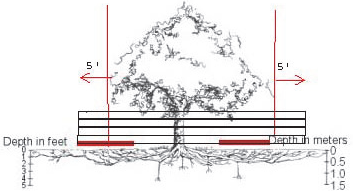
Figure 3-18: Illustration of protective fence placement for trees.
(ii)
All fencing required by this subsection shall be four feet in height and secured using appropriate posts.
(4)
Encroachments into Root Zones.
(a)
Encroachments within the root zones of trees protected in accordance with this subsection shall occur only in rare instances.
(b)
If such an encroachment is anticipated, written verification by a qualified arborist shall be required documenting the tree's condition before and after the encroachment, including preventive measures that shall be employed prior to, during, and after the encroachment to insure the viability of the tree.
(C)
Monitoring, Maintenance and Guarantee of Tree Protection and Landscaping Performance Owners of land shall be responsible for the preservation and maintenance of all trees required to be saved and protected under this subsection.
(D)
Exemptions.
(1)
The following tree removal activities are exempt from the standards of this section:
(a)
Removal of trees that are dead or dying based on an analysis and report by a qualified arborist;
(b)
Removal of trees that are determined by the city engineer to be an immediate nuisance or threat to an existing structure, underground utility, or to the public health, safety, or welfare;
(c)
Removal of trees prohibited by the city as established in Section 3.5.4(A), Plants; and
(d)
Removal by the city, or its authorized agent, of trees on city or publicly owned land and within public rights-of-way in accordance with this chapter to complete street improvement projects.
(e)
For the purposes of this section, a tree will be considered removed if 30 percent or more of the trunk diameter is injured.
3.5.7
Street Trees Required.
(A)
At least one street tree shall be properly installed for each 40 foot length of right-of-way. This requirement may be modified depending on the chosen tree species and its typical spread at maturity.
(B)
Trees required for parking lot perimeter landscaping in Section 3.5.8(D), Perimeter Landscaping Requirements, may count toward this street tree requirement.
3.5.8
Parking Lot Landscaping Requirements.
(A)
Purpose. The purpose for parking lot landscaping requirements is to ensure that the potential for negative effects from large expanses of asphalt, that have the potential to create heat islands, contribute to unnecessary surface water runoff and otherwise present a sterile image is mitigated through the use of effectively designed and properly placed landscape improvements. These requirements are applicable to both small and large parking lots where the extent of landscaping improvements varies depending on the number of spaces in the parking lot.
(B)
Small Parking Lots of 14 Spaces or Less. Parking Lots of 14 spaces or less shall install perimeter landscaping improvements to screen the parking lot from adjacent streets and adjacent property and shall adhere to the following standards.
(1)
Parking Lots Adjacent to Streets.
(a)
A parking area for a nonresidential use or a multi-family residential use adjacent to a public street shall be designed to provide a ten foot landscaped planting strip between the street right-of-way and any parking area.
(b)
The landscaping shall have a minimum height of 36 inches and be designed and maintained to screen cars from view of the street but shall not exceed 30 inches in height within the traffic safety visibility triangle as required in Section 3.1.6(E), Height Limit at Street Corners (Traffic Safety Visibility Triangle).
(c)
Screening materials will include a combination of plant materials, and may include raised planters, solid decorative masonry walls, or other screening devices which meet the intent of this requirement.
(d)
Shade trees shall be provided at a minimum rate of one for every 30 linear feet of landscaped area.
(2)
Parking Lots Adjacent to Side or Rear Property Lines.
(a)
Parking areas for nonresidential uses shall provide a perimeter landscape strip at least six feet wide (inside dimension) where the parking area adjoins a side or rear property line.
(b)
The requirement for a landscape strip may be satisfied by a setback or buffer area that is otherwise required.
(c)
Shade trees shall be provided at the rate of one for each 30 linear feet of landscaped area.
(3)
Non-Residential Parking Lots Adjacent to Residential Uses.
(a)
A nonresidential parking area adjacent to a residential use shall provide a landscaped buffer adhering to the following standards within a ten foot setback between the parking area and the lot line of the residential use.
(b)
Screening materials will include a combination of plant materials, and may include raised planters, solid decorative masonry walls, or other screening devices which meet the intent of this requirement.
(c)
Shade trees shall be provided at the rate of one for each 30 linear feet of landscaped area.
(C)
Large Parking Lots. Each required parking lot of 15 spaces or more in all zones, with the exception of the C2 zone, shall be landscaped pursuant to this subsection. The requirements of this subsection shall apply to all newly constructed parking lots or expansions of existing parking lots resulting from an expansion of a structure for a change in use to a more intense use, or the establishment of a new structure.
(a)
Landscaping shall be provided throughout the parking lot and consist of combination of ground cover, shrubs, and trees.
(b)
Areas containing plant materials may require a protective curbing pursuant to Section 3.5.5(B), Protective Curbing.
(D)
Perimeter Landscaping Requirements. All surface parking areas shall be screened from streets and adjoining residential properties, and the open areas between the property line and the public street right-of-way shall be landscaped.
(a)
Parking Lots Adjacent to Streets.
(b)
A parking area for a nonresidential use or a multi-family residential use adjacent to a public street shall be designed to provide a ten foot landscaped planting strip between the street right-of-way and any parking area.
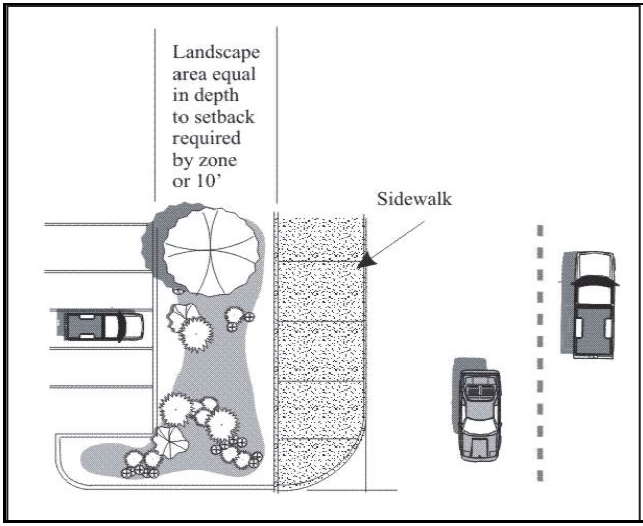
Figure 3-19: Perimeter landscaping required between a parking lot and a street.
(c)
The landscaping shall have a minimum height of 36 inches and be designed and maintained to screen cars from view of the street, but shall not exceed 30 inches in height within a setback or a traffic safety visibility triangle as required in Section 3.1.6(E), Height Limit at Street Corners (Traffic Safety Visibility Triangle).
(d)
Screening materials may include a combination of plant materials, raised planters, solid decorative masonry walls, or other screening devices which meet the intent of this requirement.
(e)
Shade trees shall be provided at a minimum rate of one for every 30 linear feet of landscaped area.
(f)
Shade trees should be strategically planted/located to provide the maximum possible shade to vehicles and paved areas.
(g)
Plant materials, signs, and/or structures shall be subject to the height and traffic safety visibility requirements of Section 3.1.6(E), Height Limit at Street Corners (Traffic Safety Visibility Triangle).
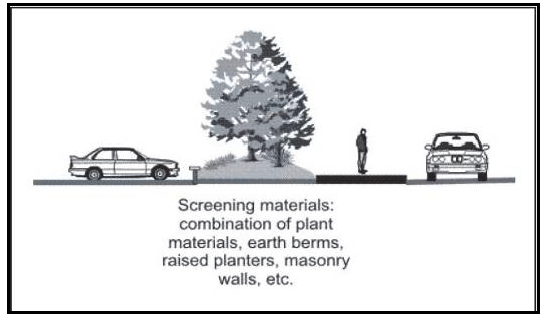
Figure 3-20: Illustration of parking lot perimeter screening.
(2)
Parking Lots Adjacent to Side or Rear Property Lines.
(a)
Parking areas for nonresidential uses shall provide a perimeter landscape strip at least six feet wide (inside dimension) where the parking area adjoins a side or rear property line.
(b)
The requirement for a landscape strip may be satisfied by a setback or buffer area that is otherwise required.
(c)
Shade trees shall be provided at the rate of one for each 30 linear feet of landscaped area.
(3)
Non-Residential Parking Lots Adjacent to Residential Uses. A nonresidential parking area adjacent to a residential use shall provide a landscaped buffer adhering to the following standards within a ten foot setback between the parking area and the lot line of the residential use:
(a)
A four-foot high solid decorative masonry wall or fence.
(b)
Shade trees shall be provided at the rate of one tree for each 30 linear feet.
(c)
When a parking area is located adjacent to a nonresidential structure, a minimum eight-foot wide (inside dimension) landscape strip shall be provided adjacent to the structure, exclusive of any building entries, or areas immediately adjacent to the wall of the structure that serve as pedestrian access ways. This landscape strip may include a sidewalk and landscaping but shall, at a minimum, include at least a three foot strip of landscaping along its length.
(E)
Interior Parking Lot Landscaping.
(1)
Amount of Landscaping.
(a)
Parking lots with 15 or more spaces shall provide landscaping within each outdoor parking area at a minimum ratio of ten percent of the gross area of the parking lot (including all drive and parking aisles). If parking is located on the side of the structure (not adjacent to a street) or in the rear, this landscaping ratio may be reduced to five percent.
(b)
Trees not less than five feet in height and 15-gallon container in size shall be planted throughout the parcel and along any street frontage. At a minimum, one shade tree and one shrub shall be provided for every five parking spaces.
(2)
Landscaping Location. Landscaping shall be evenly dispersed throughout the parking area, as follows.
(a)
Landscaped islands shall have a minimum width of nine feet as the narrowest dimension.
(b)
Shade trees planted using an orchard-style planting (the placement of trees in uniformly-spaced rows) is encouraged for larger parking areas.
(c)
The trees shall comply with the species diversity requirements of Table 3.5-1 such that no more than 33 percent of the required shade trees are of the same species. Shade trees shall create a shade canopy and have an unobstructed cross visibility between two and six feet.
(d)
The area not covered by the canopy of the tree, but within an interior landscape area, shall be covered by shrubs, grass, ground cover, landscape gravel, or mulch.
(e)
Parking lots with more than 50 spaces shall provide a concentration of landscape elements at primary entrances, including at a minimum, specimen trees, flowering plants, or enhanced paving.
(3)
Surface Water Management. The design of parking lot landscape areas shall consider and may, where appropriate, be required to include provisions for the on-site detention of surface water runoff, pollutant cleansing, and groundwater recharge. See also the surface water management standards in Chapter 22, Article VI - Surface Water Management.
3.5.9
Buffering Between Zoning District.
(A)
General.
(1)
Development shall provide a buffer between land uses in accordance with this section. The buffer shall have the width as provided in Table 3.5-3, an amount of vegetation as provided in Table 3.5-4 and other features to properly mitigate the negative effects of contiguous incompatible uses.
(2)
Development in the C1 and A-S districts shall be exempt from these requirements.
(B)
Locational Standards.
(1)
Buffer areas shall be located between the uses for which they are required to buffer or screen.
(2)
When the same property owner owns and is developing adjoining parcels, the required buffer area may be placed on either parcel.
(3)
When a different property owner owns the adjacent property, the buffer area shall be placed on the property being developed.
(C)
Structures. No structure shall be permitted within a required buffer other than a wall, fence, or earth berm. Parking areas and driveways shall not encroach upon buffer areas.
(D)
Minimum Planting Requirements. For every 100 lineal feet of a buffer area, the following number of plants shall be provided for each required buffer area as set forth in Table 3.5-4:
3.5.10
Screening Requirements.
(A)
Intent and Applicability. In addition to all other landscaping standards in this section, screening shall be required in all districts to minimize the negative impact of areas of high visual or auditory impact or hazardous areas from both on-site and off-site views. Such areas shall be screened at all times, unless otherwise specified, regardless of adjacent uses, districts, or other landscaping material.
(B)
Items to be Screened. The following areas shall be screened in accordance with this section:
(1)
Large waste receptacles (dumpsters or grease collection containers) and refuse collection points (including large recycling containers);
(2)
Loading and service areas;
(3)
Outdoor storage areas (including storage tanks) not subject to the outdoor storage requirements of Section 3.3.3, Outdoor Dining, Display, and Storage; and
(4)
Ground-mounted mechanical equipment and utility meters not located on, and screened by, the building or structure, except for equipment and meters for single family and two-family homes.
(5)
Building walls, parapets, and/or roof systems shall be designed to conceal all roof-mounted mechanical equipment from view from adjacent properties and public rights-of-way (See Figure 3-21).
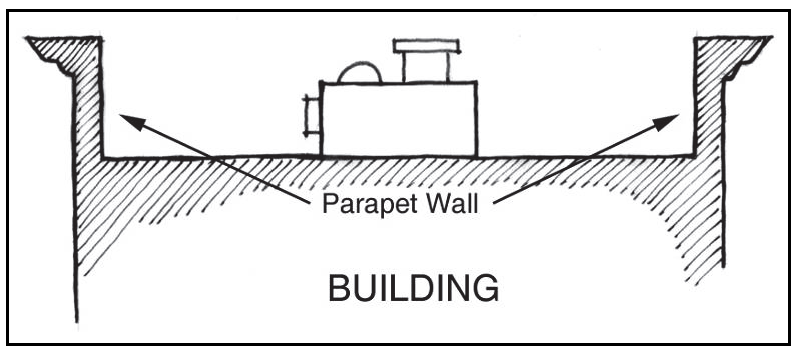
Figure 3-21: Example of how parapet walls are utilized to screen roof mounted mechanical
equipment.
(C)
Screening Requirements.
(1)
All screening shall be approved during zoning certificate or site plan review.
(2)
All items to be screened shall be shielded from view from public roads and adjoining property.
(3)
All items to be screened, except those on roofs, shall be provided with a visual screen consisting of fences, walls, berms or approved plant materials (See Section 3.5.4, General Landscaping Material Standards) or a combination thereof. The screening shall be at least one foot higher than the item to be screened but not less than six feet in height and shall extend along three sides of the items to be screened.
(4)
All plant materials used for required screens around service areas shall be of an evergreen variety.
(5)
If an adjacent building provides screening on one side of the service area, only two sides need to be screened, bermed, or walled, with a gate required in front of the service area. The gate shall be opaque enough to shield from view the interior of the service area.
(D)
Fence or Wall Screens.
(1)
Fences or walls shall be compatible with the architectural materials and patterns of the principal structure.
(2)
Under no circumstances shall a wall be constructed of unfinished concrete or cinder block.
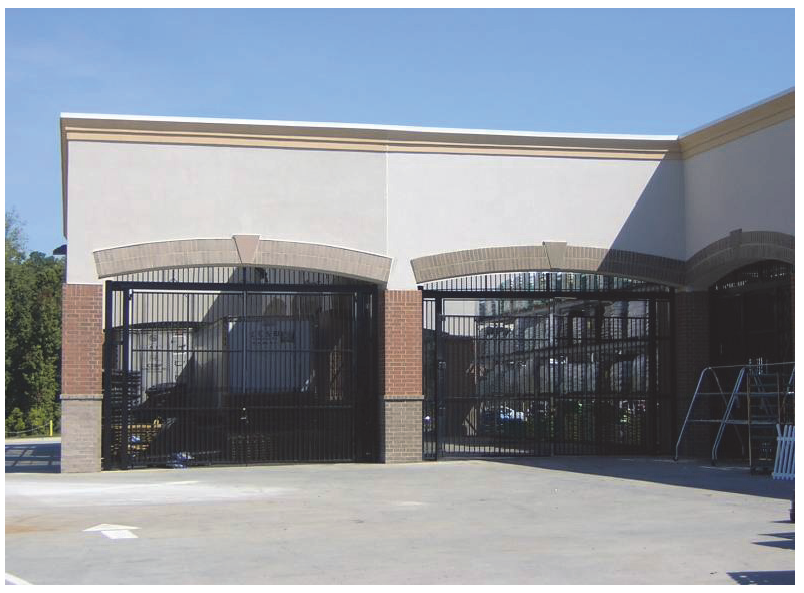
Figure 3-22: Use of a wall and fencing for screening that is architecturally compatible
with the principal building.
3.5.11
Changes to Approved Landscape Plans. The city planner may authorize minor changes from the requirements of this section.
(A)
For purposes of this subsection, minor changes shall be defined as changes to the landscaping plans that are not visible and do not affect the theme or character established for the subject development project.
(B)
A revised landscape plan shall be submitted to the city planner for review.
3.5.12
Installation.
(A)
Landscaping required as part of this section shall be installed by the time an occupancy permit is issued for the site. If landscaping is not installed, the applicant shall be required to submit a surety in accordance with Section 3.5.13, Statement of Surety.
(B)
Landscaping and irrigation systems shall be installed in compliance with the approved plans before final building inspection.
(C)
An extension of time for the completion of landscaping and irrigation system installation may be granted by the city planner if implementation is secured by an agreement or posting of adequate bond or cash deposit to guarantee performance under the agreement as required by the city planner, in compliance with Section 3.5.13, Statement of Surety.
(D)
Before final inspection or issuance of a certificate of occupancy by the building official, a letter signed by a licensed landscape architect, or the landscape contractor who performed the installation shall be submitted to the city planner and the building official certifying that the landscaping and improvements have been installed in compliance with the approved plan.
3.5.13
Statement of Surety. When a surety is required, such surety shall be in the form of cash, letter of credit, performance bond, or instrument of credit, in an amount equal to 110 percent of the total value of all plant materials, irrigation, installation, and maintenance and shall be posted with the city for a two-year period in compliance with Section 5.1.4(E)(4), Forms of Financial Guarantees.
3.5.14
Maintenance of Landscape Areas.
(A)
Maintenance Required.
(1)
All landscaping (e.g., ground cover, hedges, lawns, shrubs, and trees) shall be maintained in a healthful and thriving condition at all times.
(2)
The landscaping shall regularly be kept clean and free of debris, litter, and weeds.
(3)
All dead or decaying material shall be replaced with new material within 30 days upon notice of the city planner.
(B)
Water waste in existing developments resulting from inefficient landscape irrigation leading to excessive runoff, low head drainage, overspray, and other similar conditions where water flows onto adjacent property, non-irrigated areas, walks, roadways, or structures is prohibited.
3.6 - Off-Street Parking, Loading, and Mobility.
3.6.1
Purpose.
(A)
The purpose of the parking regulations is to accommodate the parking needs of motorized and non-motorized traffic in all districts using fiscally and environmentally responsible practices. The standards relating to parking will:
(1)
Prevent and alleviate the congestion of public streets;
(2)
Promote the efficient use of land and city services;
(3)
Integrate pedestrian and non-motorized transportation by emphasizing pedestrian circulation, and establishing requirements for bicycle parking;
(4)
Provide safe, visually obvious, and direct pedestrian routes between streets and vehicular and bicycle parking, between parking and building entrances, between adjacent buildings, and between buildings and the trail networks of adjacent areas including paths outlined in the city's Parks, Open Space and Trail System Plan.
(5)
Locate and design parking lots that will soften the visual impact of parking, contribute to a well-defined streetscape, and enhance the built and natural environment.
(6)
Protect our natural environment by encouraging the use of permeable surfaces, LID stormwater infiltration, and best practices for the reduction of air, light and noise pollution.
(7)
Provide adequate areas for off-street parking and storage of motor vehicles, while at the same time preventing over-supply of parking.
(B)
The parking regulations will implement the following objectives (as paraphrased) from the 2008 Comprehensive Plan.
(1)
Support economic vitality and existing businesses by encouraging shared parking ordinances and pedestrian paths as articulated in the land use objective LU2 and economic development objective ED1.4 in the comprehensive plan;
(2)
Encourage a compact development pattern and support infill, redevelopment and land intensification as articulated in land use objective LU3 in the comprehensive plan;
(3)
Improve transportation choices and efficiency through sidewalk and parking lot placement and "park once" site designs as articulated in land use objective LU9 in the comprehensive plan;
(4)
Be a good steward of the natural environment; protect and enhance water quality. Increase the density of the community's urban forest; reduce Northfield's contribution to climate change by including promotion of shading of parking lots as articulated in land use objective LU6, environmental resource objectives ER3, ER9 and ER10 in the comprehensive plan;
(5)
Maintain or improve air quality and minimize negative noise impacts as articulated in the environmental resource objectives ER7 and ER8 in the comprehensive plan;
(6)
Improve the gateways into the community by including attractive landscaping and parking to the rear of the structure as articulated in the community identity objective CI5 in the comprehensive plan.
3.6.2
Applicability.
(A)
New Uses. The parking and loading requirements of this section will apply to a site plan review as established in Section 8.5.6, Site Plan Review, or zoning certificate application as established in Section 8.5.1, Zoning Certificate, for the construction of a new building or use in any district.
(B)
Expanded Uses
(1)
Whenever a building or use created before the effective date of this LDC is changed or enlarged in floor area, number of units, seating capacity, or otherwise that creates a need for an increase in the number of parking spaces, any additional parking spaces will be provided based on these regulations.
(2)
If the proposed expansion or enlargement increases the floor area, number of dwelling units, seating capacity, or other area to an extent larger than 50 percent of the building or use before the effective date of this LDC, then the entire site will come into compliance with the requirements of this section,
(3)
Any expansion or enlargement smaller than that established in paragraph (2) above will comply with the requirements of this section for any new parking or loading areas required for the expansion. In cases where these small expansions or enlargements occur over a period of time after the effective date of this LDC, the site will come into full compliance with the requirements of this section once the total expansion or enlargement of the floor area, number of dwelling units, seating capacity of other area exceed 20 percent of the original size at the time this LDC became effective.
(C)
Existing Uses. The parking and loading requirements of this section will not apply to the buildings and uses legally in existence on the effect date of this LDC unless modified in the manner stated in subsections (A) or (B) above. Furthermore, any parking or loading facilities now serving such existing buildings or uses will not be reduced below the requirements established in this section in the future.
(D)
Maintenance. The duty to provide and maintain all such parking and loading areas will be the joint responsibility of the owner, operator, and lessee of the use for which the vehicular areas are required. Each land use and structure, including a change or expansion of a land use or structure, will provide suitable off-street parking and loading facilities in compliance with this section.
3.6.3
General Provisions.
(A)
Parking Plan Required. Plans for all parking facilities, including parking garages, will be submitted to the city planner for review whether through zoning certificate review as established in Section 8.5.1, Zoning Certificate, or site plan review as established in Section 8.5.6, Site Plan Review.
(B)
Parking and Loading Spaces to be Permanent. Each parking and loading space will be permanently available, marked, and maintained for parking or loading purposes for the use it is intended to serve; provided, that the approval of a temporary use permit as outlined in Section 2.11, Temporary Uses and Structures of this LDC may allow the temporary use of a parking or loading space for other purposes.
(C)
Parking and Loading to be Unrestricted. A lessee, owner, tenant, or other person having control of the operation of premises for which parking or loading spaces are required by this section will not prevent, prohibit, or restrict authorized persons from using the spaces without the prior approval of the city planner.
(D)
Outdoor Parking and Storage of Vehicles.
(1)
Parking and storage of any motorized vehicle may occur within a garage, or other structure approved for parking in accordance with the applicable sections of this LDC.
(2)
Parking and Storage of Vehicles in Residential Districts.
(a)
Parking and Storage in the Front or Side Yard.
(i)
Operable and licensed automobiles, motorcycles, or trucks of one-ton capacity or less, in regular use, may be parked on a driveway in the front yard.
(ii)
Operable recreational vehicles may be parked for a period of 72 hours on a driveway for the purpose of loading and unloading the vehicle.
(iii)
No other motorized vehicle parking will be located on an unpaved surface in the front or side yard.
(b)
Parking and Storage in the Rear Yard. Parking and storage of motorized vehicles in the rear yard is prohibited. Operational and licensed vehicles stored on a paved driveway, or paved surface immediately adjacent to a garage are exempt from this provision.
(c)
Truck Parking in Residential Areas. No motor vehicle over one-ton capacity bearing a commercial license and no commercially licensed trailer will be parked or stored in a residential district or on a public street except when loading, unloading, or rendering a service. Recreational vehicles and pickups are not restricted by the terms of this subsection.
(E)
Vehicles for Sale. No vehicle, trailer, or other personal property will be parked on an unpaved surface for the purpose of displaying the vehicle, trailer, or other personal property for hire, rental, or sale, unless the applicable zoning allows the use, and the person or business at that location is licensed to sell vehicles, trailers, or other personal property.
(F)
General Access and Circulation Requirements.
(1)
The traffic generated by any use, whether vehicular or pedestrian will be channeled and controlled in a manner that will avoid:
(a)
Congestion on the public streets;
(b)
Traffic hazards including obstacles to safe pedestrian and bicycle access; and
(c)
Excessive traffic through residential areas, particularly truck traffic. Internal traffic will be so regulated as to ensure its safe and orderly flow.
(2)
Traffic into and out of business areas will, to the maximum extent possible, be forward moving with no backing into streets.
3.6.4
Rules for Computation. The following rules will apply when computing parking, loading, or stacking spaces:
(A)
Driveway Space Meeting Parking Requirements. Entrances, exits, or driveways will not be computed as any part of a required parking lot or area, except in the case of single-family, two-family, and three-family dwellings where driveways may be used in calculating the amount of off-street parking.
(B)
Multiple Uses. Unless otherwise noted or approved, off-street parking areas serving more than one use will not provide parking in excess of the combined total of the maximums for each use.
(C)
Area Measurements. All square footage-based parking standards will be computed based on gross floor area of all floors in a nonresidential building. Up to 15 percent of the gross floor area will be excluded from the above calculation if the area is used for storage, loading, unloading, or for mechanical equipment.
(D)
Gasoline Stations. Spaces at the pump at a gas station will count toward the maximum parking space limits, but stacking spaces will not be counted toward the maximum space limits.
(E)
Occupancy- or Capacity-Based Standards.
(1)
For the purpose of computing parking maximums based on occupants, calculations will be based on the maximum fire-rated capacity.
(F)
Unlisted Uses.
(1)
Upon receiving an application for a use not specifically listed in the parking schedule below, the city planner will apply the parking standard specified for the listed use that is deemed most similar to the proposed use in regards to use, size and intensity of use.
(2)
If the city planner determines that there is no listed use similar to the proposed use, intensity, or size, they may refer to the estimates of parking demand based on recommendations of the American Planning Association (APA), the Urban Land Institute (ULI) and/or the Institute of Traffic Engineers (ITE).
(3)
The city planner's decision regarding parking requirements for a specific use is appealable to the zoning board of appeals as established in Section 8.5.17, Appeals.
(H)
Tandem Parking. The use of tandem parking (when one space is located directly behind another) is allowed; however, the parking spaces that will be blocked, or potentially blocked by other vehicles will count toward the standards of this section. Single-family, two-, and three-family dwelling units are exempt from this requirement.
(I)
Parking Areas within a Structure. When located within a private garage, parking garage, or other facility designed for the parking of cars, parking area located within the interior of a structure will be exempt from the surface parking maximums of this section.
3.6.5
Off-Street Parking Space Requirements.
(A)
Tables 3.6-1 and Table 3.6-2 define the maximum number of parking spaces permitted for each use in the city, and the minimum number of bicycle parking spaces required for each use in the city. There is no minimum number of vehicle spaces required. When required by the City Planner, the applicant must provide a parking analysis indicating how they will provide adequate parking for the proposed use without negatively impacting adjacent properties or creating or compounding a dangerous traffic situation.
(B)
See Section 3.6.7, Bicycle Parking for off-street parking requirements for bicycles.
3.6.6
Disabled Parking Requirements. Parking spaces required for the disabled will be provided in compliance with all the applicable state and federal requirements. All spaces for the disabled will be located so that:
(A)
The spaces provide easy access from the closest parking area to the major entrance of the use for which they are provided;
(B)
The disabled individual is not compelled to wheel or walk behind parked cars other than his or her own;
(C)
A pedestrian way accessible to physically disabled persons will be provided from each parking space to related facilities including curb cuts or ramps.
3.6.7
Bicycle Parking Requirements. The purpose of bicycle parking regulations is to encourage bicycling for personal transportation, to provide access to employment, commercial, residential, and other destinations, and to provide safe, convenient bicycle parking located as close as possible to the main entrance of a destination. Provision of bicycle parking is required throughout the city.
(A)
The number of required bicycle parking spaces is found in Table 3.6-2. The city planner may waive or reduce the required number of bicycle parking spaces in those instances where bike parking is not physically feasible. The following standards apply to each bicycle parking spaces:
(1)
If more than ten bicycle parking spaces are required, at least 50 percent of those spaces must be sheltered by overhangs, canopy, awning, recessed entry, or covered walkways of sufficient size to protect the bicycle and cyclist while locking and unlocking from the required rack. See Figure 3-24.
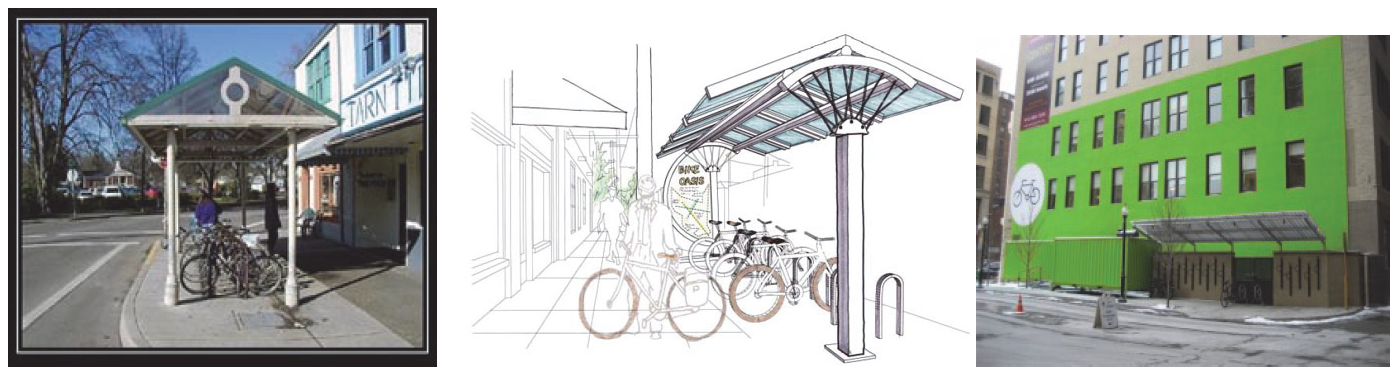
Figure 3-24: Examples of bicycle parking shelters.
(2)
Each bicycle parking space must be accessible without moving another bicycle, usually by adhering to the dimensions identified in Figure 3-25, acceptable and recommended dimensions for bicycle parking, and must not result in a bicycle obstructing a required walkway. The City Planner may require the provision of larger bicycle parking spaces at their discretion to accommodate bicycle trailers, cargo bikes, pedicabs, or other larger bicycles.
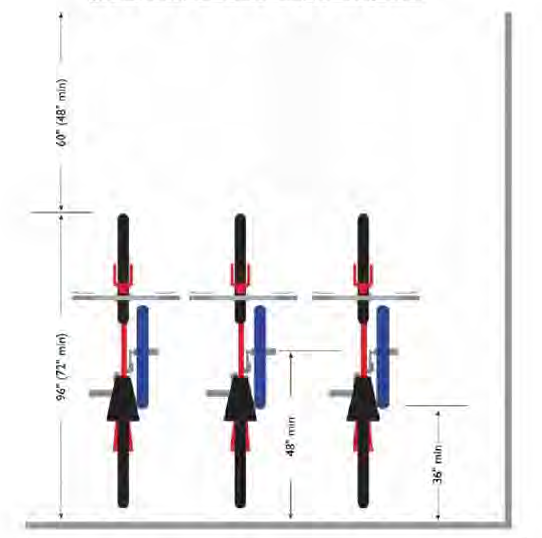
Figure 3-25: Acceptable Bicycle Parking Space Dimensions.
(3)
Bicycle parking spaces must include a securely anchored bicycle rack that permits the locking of the bicycle frame and one (1) wheel to the rack, and that supports the bicycle in a stable position without damage to wheels, frame, or components. Bicycle racks that hold only the wheel of the bicycle are not allowed (see Figure 3-26). Bicycle lockers or in-unit bicycle nooks are exempt from this requirement.
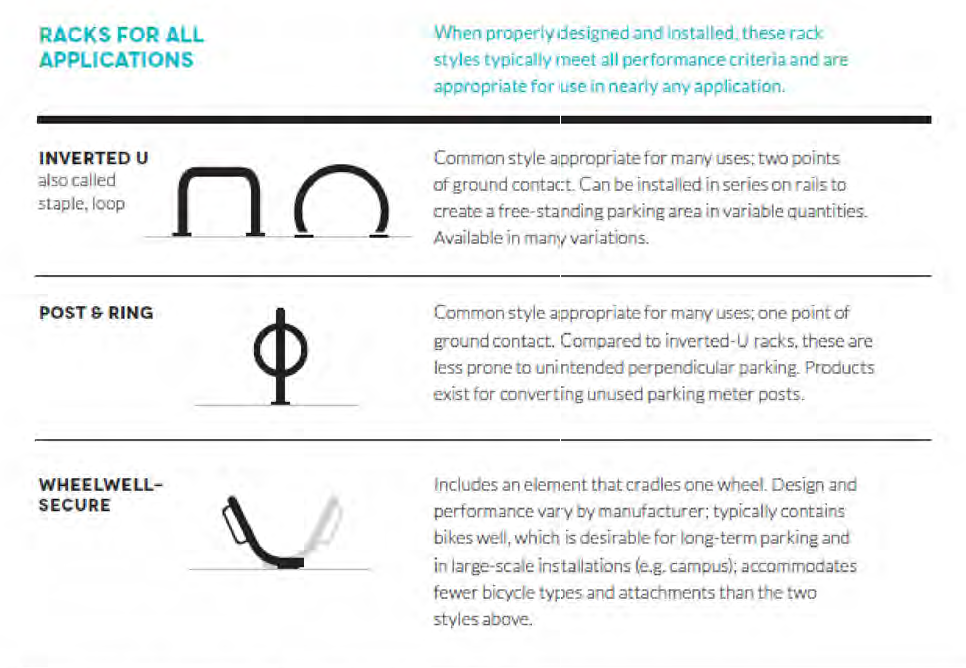
Figure 3-26: Examples of acceptable bicycle racks.
(4)
Bicycle parking spaces must be accessible and maintained during all seasons (i.e. free of debris and snow).
(B)
All bicycle parking must be accessible without requiring the use of stairs.
(C)
Bicycle parking must be located in an area that will not pose a safety hazard to the bicyclist and must be separated from auto parking and traffic with space and a physical barrier.
(D)
A sign must be posted at the main building entrance indicating the location of large bicycle parking areas, or indoor parking areas.
(E)
Bicycle parking areas must be well-lit for theft protection, personal security, and accident prevention.
(F)
For residential uses, no less than 90% of required bicycle parking spaces must meet the standards for long-term bicycle parking.
(G)
For offices, manufacturing, production and processing, hospitals, hotels, and uses where the intended users are employees or otherwise would require long-term parking as deemed appropriate by the city planner, no less than 50% of the required bicycle parking spaces must meet the standards for long-term bicycle parking.
(H)
For all other uses, no less than 50% of required bicycle parking spaces must meet the standards for short-term bicycle parking.
(I)
Required short-term bicycle parking spaces must be located in a convenient and visible area within fifty (50) feet of a principal entrance. With the permission of the city engineer, required bicycle parking may be located in the public right-of-way. Public bicycle parking spaces may contribute to compliance with required bicycle parking when located adjacent to the property in question.
(J)
Required long-term bicycle parking spaces must be located in enclosed and secured or supervised areas providing protection from theft, vandalism, and weather, and must be accessible to intended users. Required long-term bicycle parking for residential uses may not be located within deck or patio areas accessory to dwelling units. Residential bicycle rooms must include access to electricity. With permission of the City Planner, long-term bicycle parking spaces for nonresidential uses may be located off-site within three hundred (300) feet of the site.
3.6.8
Modification of Parking Requirements.
(A)
Modification of Required Number of Spaces. For all uses except single-, two-, and three-family dwellings, the number of parking spaces permitted in Table 3.6-1 may be modified according to the following provisions. Approval of requests to provide more or less parking spaces will be made according to the applicable review procedure associated with the principal uses listed in Table 2.7-1.
(1)
Providing More Parking Spaces than the Permitted Number of Spaces. An applicant may request additional spaces beyond those permitted in Table 3.6-1 but will be required to demonstrate a reasonable need and provide a plan for mitigating future over-supply. At a minimum, the following information will be provided:
(a)
Number of customers, patients, visitors, or other patrons of the proposed use. Information will also be included detailing the expected parking behavior of these people (i.e., how long a customer may be at the facility).
(b)
Number of full-time and part-time employees.
(c)
Number and approximate timing of deliveries.
(B)
Modification of Bicycle Parking. The city planner may waive or reduce the required number of bicycle parking spaces in those instances where parking is not appropriate to the nature and location of the land use. An applicant requesting a waiver or reduction will be required to provide the following information:
(1)
Number of customers, employees, patients, residents, visitors, or other patrons of the proposed use.
(2)
Information must also detail the expected transportation behavior of these people (i.e., the likelihood of customers or employees biking to the facility or parking at the facility).
(3)
Site constraints and additional considerations that clearly demonstrate the required bicycle parking can reasonably be expected to be excessive.
(C)
Unbundled parking. Unbundled parking is the practice of selling or leasing parking spaces separate from the purchase or lease of a residential use, such that potential renters or buyers have the option of renting or buying a residential unit at a price lower than would be the case if there were a single price for both the residential unit and the parking space.
(1)
Applicability. Accessory off-street parking may be unbundled for any development or redevelopment of a structure with four (4) or more residential dwelling units. Affordable housing dwelling units with financing that requires the cost for parking and housing be bundled together, are exempt from this provision.
(2)
Requirements. All accessory off-street parking spaces for residential units in new or rehabilitated residential dwellings may be unbundled and may be sold or leased separately for the life of the dwelling units.
(D)
Shared Parking. A portion of the required parking spaces may be located on an adjacent property if the parking area complies with the following standards and is authorized in accordance with Section 3.6.8, Modification of Parking Requirements.
(1)
Shared parking is encouraged and permitted if the multiple uses that the shared parking will benefit can cooperatively establish and operate the facilities.
(2)
Shared parking may be approved if:
(a)
A sufficient number of spaces is provided to meet the highest demand of the participating uses;
(b)
Evidence has been submitted by the parties operating the shared parking facility, to the satisfaction of the city planner, documenting the nature of uses and the times when the individual uses will operate so as to demonstrate the lack of potential conflict between them.
(c)
The shared parking spaces will not be located in excess of 500 feet from the further most point of the space to the front door, or other viable building entrance as approved by the city planner, of the use they are intended to serve;
(d)
A shared parking agreement is submitted and reviewed as to form by the city attorney, that provides for the rights of the respective parties to use the shared parking areas in a manner adequate to accommodate multiple users or that parking spaces will be shared at specific times of the day (i.e., one activity uses the spaces during daytime hours and another activity uses the spaces during evening hours). This agreement will include evidence of deed restrictions or other recorded covenants that ensure that the spaces will be properly maintained during the life of the development.
(e)
The approved shared parking agreement will be filed with the application for a zoning certificate and will be filed with the appropriate county and recorded in a manner as to encumber all properties involved in the shared parking agreement.
(f)
No zoning certificate will be issued until proof of recordation of the agreement is provided to the city planner.
(E)
Off-Site Parking. A portion of the permitted parking spaces may be located on a separate lot from the lot on which the principal use is located if the off-site parking complies with the following standards and is authorized in accordance with Section 3.6.8, Modification of Parking Requirements.
(1)
Required parking spaces reserved for persons with disabilities will not be located in an off-site parking facility.
(2)
With the exception of parking located in the CD-S zone, no off-site parking space will be located more than 800 feet from the primary entrance of the use served, measured along the shortest legal, practical walking route. This route may include crossing a right-of-way provided it uses a legal crosswalk.
(3)
If an off-site parking area is located in a different zoning district, the off-site parking areas will adhere to the regulations of the same or a more intensive zoning classification than that required for the use served.
3.6.9
Location of Parking.
(A)
Generally.
(1)
Unless otherwise stated, parking spaces will be located on the same lot as the principal use they serve unless the spaces meet the requirements of Section 3.6.8(D), Shared Parking or Section 3.6.8(E), Off-Site Parking.
(2)
Parking is prohibited in any required screening or landscaping buffering areas as may be required in Section 3.5, Landscape, Screening, and Buffering Standards.
(B)
Spaces accessory to multiple-family dwellings will be on the same lot as the principal use served or within 200 feet of the main entrance to the principal building served.
(C)
Setbacks.
(1)
Minimum setback requirements for parking lots, drive aisles, loading spaces and maneuvering areas are found in the site development standards for each individual zoning district.
(2)
All setbacks near intersections of public streets will be determined by the city engineer.
3.6.10
Parking Design Standards. Required parking areas will be designed, constructed, and maintained in compliance with the requirements of this subsection.
(A)
Access to Parking. Access to parking areas (i.e. driveways) will be provided as follows for all parking areas other than garages for individual dwelling units. Additional access requirements are found in Section 5.2.3(B)(7), Access.
(1)
Parking areas will provide suitable maneuvering area so that vehicles enter from and exit to a public street in a forward direction only.
(2)
Parking lots will be designed to prevent access at any point other than at designated access drives.
(3)
Single dwellings and multi-family dwellings units (up to a maximum of four units) are exempt from this requirement.
(4)
A non-residential development that provides 20 or more parking spaces will have access driveways that are not intersected by a parking aisle, parking space, or another access driveway for a minimum distance of 20 feet from the street right-of-way, to provide a queuing or stacking area for vehicles entering and exiting the parking area (See Figure 3-27).
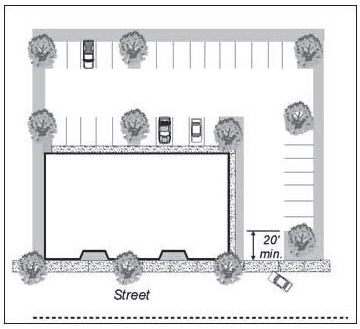
Figure 3-27: Non-impeded access driveway.
(5)
A minimum unobstructed clearance height of 14 feet will be maintained above areas accessible to vehicles within nonresidential developments.
(6)
Surfacing.
(a)
Surfaces will be constructed and maintained in good condition made of concrete, asphalt, approved pavers, or similar dust-free surface stabilized to prevent erosion and the tracking of sediment or debris into the public right of way, specifically approved by the city planner.
(b)
Within the R1, N1, and N2 districts, driveways may have a grass median separating the driveway parking area (see Figure 3-28). The paved driveway strips will be at least 12 inches in width.
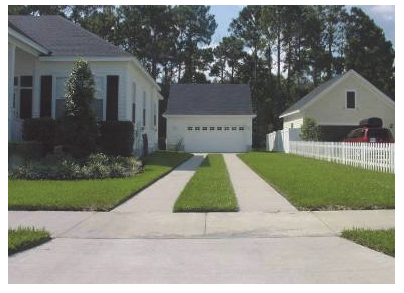
Figure 3-28: Example of grass median separating driveway parking area.
(c)
Driveways may be constructed with the use of other all-weather surfacing as determined to be appropriate by the city engineer, where it is first determined that a surface other than asphalt or concrete is consistent with the driveways of similar properties in the vicinity, and that the alternate surface will not impair accessibility for emergency vehicles.
(d)
A driveway with a slope of ten percent or greater will be paved with rough surface concrete in all cases.
(B)
Access to Adjacent Sites.
(1)
Nonresidential Developments.
(a)
Where an applicant proposes parking for nonresidential developments, on-site vehicle access to parking areas on adjacent nonresidential properties should also be provided for convenience, safety, and efficient circulation to the extent possible.
(b)
A joint access agreement running with the land will be recorded at the county by the owners of the abutting properties, as approved by the city planner, guaranteeing the continued availability of the shared access between the properties.
(2)
Shared pedestrian access between adjacent residential developments is strongly encouraged but not required.
(C)
Parking Space Dimensions.
(1)
Each parking space, driveway, and other parking lot features will comply with the minimum dimensions in Table 3.6-3 as illustrated in Figure 3-29.
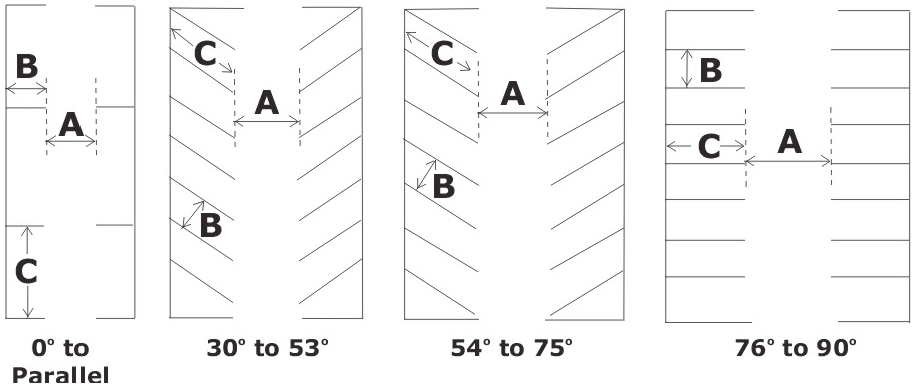
Figure 3-29: Parking space and aisle requirements based on angle of parking.
(2)
When the length of a parking space abuts a column, fence, wall, or other obstruction, the required width of the entire parking space will be increased by at least one foot.
(3)
The required length of a parking space will not provide for a vehicle overhanging a landscaped area or walkway. The entire length will be composed of a surfacing material in compliance with Section 3.6.10(F), Grading, Surface, and Maintenance.
(D)
Use of Compact Vehicle Spaces
(1)
This subsection provides for the establishment of compact vehicle spaces as an alternative to full sized spaces.
(2)
For parking lots with 50 or more spaces, a minimum of five percent of the total spaces will be designed for compact vehicle spaces.
(3)
A maximum of 20 percent of spaces in any single parking lot may be dedicated to compact parking spaces.
(4)
Compact spaces will be clearly labeled for "compact cars" and grouped together in one or more locations or at regular intervals so that only compact vehicles can easily maneuver into the space.
(5)
Existing nonresidential developments that wish to utilize this section to create additional parking spaces (e.g., either by adding land area to an existing parking lot or modifying an existing parking lot to gain more spaces) will first apply for site plan review.
(6)
Design techniques (e.g., use of lampposts and/or extra landscaped areas at the front of compact spaces) will be incorporated into the parking lot plan to preclude the parking of standard size vehicles in compact vehicle spaces, subject to the approval of the city planner.
(7)
The minimum off-street parking dimensions for compact vehicle spaces will be as identified in Table 3.6-3.
(8)
When the length of a compact parking space abuts a column, fence, wall, or other obstruction, the required width of the entire parking space will be increased by at least one foot.
(E)
Striping and Identification.
(1)
Parking spaces will be clearly outlined with four-inch wide lines painted on the parking surface.
(2)
The striping will be continuously maintained in a clear and visible manner in compliance with the approved plans.
(3)
The color of the striping will be white, yellow, or other color as approved by the city planner unless required by state law (e.g., parking for the disabled).
(F)
Grading, Surface, and Maintenance.
(1)
All grading plans relating to the parking facilities will be reviewed and approved by the city engineer before any work can commence.
(2)
All parking plans are subject to the surface water management standards in Chapter 22, Article VI - Surface Water Management.
(3)
All off-street parking facilities will be properly graded and drained so as to dispose of all surface water accumulated within the area of the parking lot.
(4)
In no instance will a storm drainage facility be designed to allow the flow of water into abutting property without an approved easement.
(5)
All parking spaces and maneuvering areas be designed to accommodate parking based on the land use, but will be surfaced with not less than two inches of asphalt, or three and one-half inches of Portland cement concrete, or comparable material (e.g., pervious pavers) as determined by the city engineer, and will be continually maintained in a clean and orderly manner and kept in good repair.
(G)
Wheel Stops and Curbing. The purpose of wheel stops and curbing is to minimize stormwater runoff, protect building and parking lot edges, and increase the survivability of plants. The following standards are applicable to wheel stops and curbing:
(1)
The preferred curbing used in parking lots is wheel stops which will be placed to allow two feet of vehicle overhang within the dimension of the parking space.
(2)
If protection of landscaped areas, trees, buildings and safety are not issues, the preference is flat curbing.
(3)
Continuous concrete curbing at least six inches high and six inches wide will be used for parking spaces only when wheel stops or flat curbing are not appropriate.
(H)
Curb Cuts. Access to an off-street parking lot will not be allowed to occur through the use of a continuous curb cut (e.g., where most or the entire street frontage is provided as a curb cut for access purposes).
Curb cuts will be designed according to the city's engineering standard specifications approved by the city engineer.
(I)
Entrance or Exit Adjacent to Side Property Line Prohibited.
(1)
For residential uses, no entrance or exit, including driveways, to off-street parking areas will be situated closer than three feet from a side property line, except in the case of a shared driveway, which will be subject to the approval of the city planner.
(2)
For all other uses, entrance and exits to off-street parking areas will be subject to approval by the city engineer according to the traffic impacts.
(J)
Parking Lot Landscaping. Requirements for parking lot landscaping are found in Section 3.6.8, Parking Lot Landscaping Requirements.
(K)
Deviation from Standards Requires a Detailed Study. No proposed parking layout which deviates from the standards identified in this section and which could create a safety hazard(s) will be allowed unless the developer provides a detailed report or study prepared by a registered transportation engineer who demonstrates that the parking layout is a viable alternative and is consistent with the purpose of this section.
3.6.11
Internal Sidewalks and Pedestrian Access.
(A)
A pedestrian connection will be constructed from the building to the public right of way.
(B)
The pedestrian connection will have a minimum width of eight feet.
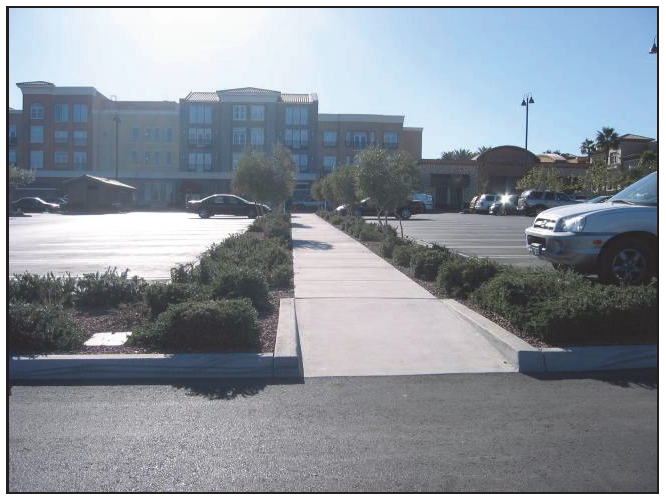
Figure 3-30: This photograph illustrates how a sidewalk connecting the public sidewalk
to the business can be integrated into the required landscaping.
(C)
At each point that the on-site pedestrian walkway system crosses a parking lot or internal street or driveway, the walkway or crosswalk will be clearly marked through the use of a change in paving materials, distinguished by their color, texture or height. (See Figure 3-30.)
(D)
Sidewalks will be provided along any facade featuring a customer entrance, and along any façade abutting public parking areas. At all times, such sidewalks will maintain a clear pedestrian passage equal to the width of the sidewalk. Additionally, such sidewalks will connect all customer entrances and to other internal sidewalks.
3.6.12
Loading Space Requirements.
(A)
Applicability. The application of these loading requirements will be limited to the same applicability as defined in Section 3.6.2, Applicability.
(B)
Loading Spaces Prohibited. Loading spaces are prohibited in all residential zoning districts and the C1 district.
(C)
Number of Off-Street Loading Spaces Required.
(1)
Off-street loading spaces will be provided in accordance with the schedule set forth in Table 3.6-4 and will not conflict or overlap with any areas used for parking.
(2)
The requirements of Table 3.6-4 may be reduced or waived by the city planner with development review committee review if the applicant demonstrates that due to the specific uses the number of loading spaces is not required.
(D)
General Design Standards. Every loading space will be designed, constructed, and maintained in accordance with the standards and requirements set forth below:
(1)
Location of Required Loading Spaces.
(a)
Loading spaces will be:
(i)
As near as possible to the main structure and limited to the rear two-thirds of the parcel, if feasible;
(ii)
Situated to ensure that the loading facility is screened from adjacent streets;
(iii)
Situated to ensure that loading and unloading takes place on-site and in no case faces a public street, or is located within a required front or street side setback, adjacent public right-of-way, or other on-site traffic circulation areas;
(iv)
Situated to ensure that all vehicular maneuvers occur on-site. The loading areas will allow vehicles to enter from and exit to a public street in a forward motion only;
(v)
Situated so that trucks parking in them will not encroach onto the public right-of-way or into required parking spaces or driveways. Loading spaces designed for larger trucks will have appropriately larger access to allow maneuvering without encroaching into landscaped areas; and
(vi)
Situated to avoid adverse impacts upon neighboring residential properties. The times allowed for loading and deliveries may be restricted for loading spaces that are located closer than 100 feet to a residential zoning district.
(b)
Loading spaces or loading docks will not be permitted to face a public street.
(2)
Dimensions. No required loading space will be less than 12 feet in width or 25 feet in length or have a vertical clearance of less than 14 feet.
(3)
Access.
(a)
Loading spaces will be designed and arranged to provide access to a street or alley in a manner that will create the least possible interference with traffic movement and parking lot circulation. The city planner will approve access to and from loading spaces.
(b)
No part of any truck or van that is being loaded or unloaded may extend into the right-of-way of a public thoroughfare.
(c)
Loading spaces will be designed with sufficient apron area to accommodate truck-turning movements and to prevent backing of trucks onto any street right-of-way.
(4)
Screening.
(a)
All operations, materials, and vehicles within any loading space that are visible from a public street or from any residential use will be screened.
(b)
The screening material will satisfy the buffer requirements of the most restrictive adjacent zoning district as outlined in Section 3.5.9, Buffering Between Zoning District.
(5)
Lighting. Loading areas will have lighting capable of providing adequate illumination for security and safety; lighting will also comply with the requirements of Section 3.3.4, Outdoor Lighting Standards.
(6)
Striping.
(a)
Loading spaces will be striped and identified for "loading only."
(b)
The striping and "loading only" notations will be continuously maintained in a clear and visible manner in compliance with the approved plans.
(Ord. No. 1051, § 2, 2-21-2023; Ord. No. 1066, § 1, 10-15-2024)
3.7 - Pedestrian Access and Circulation.
3.7.1
Purpose. The purpose of the following pedestrian access and circulation requirements is to ensure effective pedestrian connections and other means of non-motorized transportation through proper site design and land development improvements including walkways, trails and other improvements that link residential and commercial neighborhoods to each other and at the same time link one method of transportation to other methods of transportation throughout the city.
3.7.2
Internal Sidewalks and Pedestrian Access Site Design Requirements.
(A)
A pedestrian connection shall be constructed from all principal buildings on a lot to the public right-of-way. This requirement is not applicable to single family and two family structures.
(B)
The pedestrian connection shall have a minimum width of eight feet.
(C)
At each point that an on-site pedestrian walkway system crosses a parking lot or internal street or driveway, the walkway or crosswalk shall be clearly marked through the use of a change in paving materials, distinguished by their color, texture or height (See Figure 3-35).
(D)
Sidewalks shall be provided along any façade featuring a customer entrance, and along any façade abutting public parking areas. At all times, such sidewalks shall maintain a clear pedestrian passage equal to the width of the sidewalk. Additionally, such sidewalks shall connect all customer entrances to other internal sidewalks.
3.7.3
Subdivision Pedestrian Access and Circulation Requirements. Subdivision and development design shall emphasize pedestrian connectivity within each project, to adjacent neighborhoods, nearby schools and parks, and to transit stops within 1/4-mile of the subject site or subdivision. All streets and walkways shall be designed to provide safe and pleasant conditions for pedestrians, including the disabled, and cyclists, as determined by the city planner. Emphasis should be placed on implementing the Northfield Parks, Open Space, and Trail System and the Greater Northfield Area Greenway System, including making connections to the system.
3.7.4
Improvements Required at Subdivision.
(A)
A sidewalk or trail shall be installed along all arterial and collector roadways consistent with the city's comprehensive plan, comprehensive transportation plan update, or the plans referenced in Section 3.7.3(B) above.
(B)
A sidewalk shall be required on both sides of all local streets unless specifically waived by the city council in instances where an alternative is proposed that better meets the objectives of the city's Parks, Open Space, and Trail System Plan or where by reasons of steep topography, such sidewalks are not feasible from a grading standpoint as verified by the city engineer.
(C)
Construction of both sidewalks and trails shall be as specified in the city's engineering standard specifications.
(D)
Sidewalks along streets shall have a minimum width of five feet or wider as specified in Section 5.2.3, Streets and Table 5.2-3.
(E)
Trails shall be a minimum of eight feet wide, unless located directly behind a curb, in which case they shall be a minimum of ten feet wide.
(F)
Sidewalks and trails shall be constructed in such a manner so as to prevent pooling of surface water runoff and to drain away from any nearby buildings. The profile grade shall not exceed the grade of the adjacent roadway, unless authorized by the city engineer.
(G)
As part of subdivision approval, the city may require dedicated and improved trails in locations away from street frontages where necessary to provide safe and convenient pedestrian access to a public facility or to otherwise provide convenient connections between existing pedestrian routes. Where trails that are not classified as sidewalks are required, the city engineer shall specify standards for their design and construction.
(H)
All sidewalks and trails shall comply with applicable standards of the Americans with Disabilities Act.
3.7.5
Pedestrian Connections Required Outside of New Subdivisions.
(A)
To ensure safe, reasonably direct and convenient pedestrian connections between primary building entrances and all adjacent streets, all developments, except single family detached housing on individual lots, shall provide a continuous pedestrian and/or multi-use pathway system that may include a combination of sidewalks, trails, and pathways.
(B)
The pedestrian connection system shall extend throughout any development site and connect to all future phases of development, adjacent trails, public parks and open space areas, whenever possible. The developer may also be required to connect or stub trails(s) to adjacent streets and private property.
3.7.6
Location.
(A)
Sidewalks shall be included within the dedicated street right-of-way unless otherwise approved by the city engineer. Trails may be located within the street right-of-way, an easement or an outlet, depending on whether there is sufficient right-of-way to accommodate the trail and meet other city requirements, including snow storage.
(B)
Sidewalks shall be located at least seven feet from the back of curb to allow for snow storage.
3.7.7
In Long Blocks and at the End of Culs-de-Sac.
(A)
Multi-use trails (for pedestrians and bicycles) connecting streets on either side of a block shall be required at or near mid-block where the block length exceeds the required block standards of Section 5.2.2(L), Blocks.
(B)
When culs-de-sac are necessary, trails will be required where culs-de-sac are planned to connect the ends of the streets together, to other streets, and/or to other developments, as applicable (See Figure 3-30). Trails used to comply with these standards shall conform to all of the following criteria:
(1)
Multi-use trails shall be no less than eight feet wide and located within a 20-foot-wide right-of-way or easement that allows for drainage and access for maintenance and emergency vehicles;
(2)
Stairs or switchback trails using a narrower right-of-way/easement may be required in lieu of a multi-use pathway where grades are steep; and
(3)
The city may require landscaping within the trail easement/right-of-way for screening and the privacy of adjoining properties.
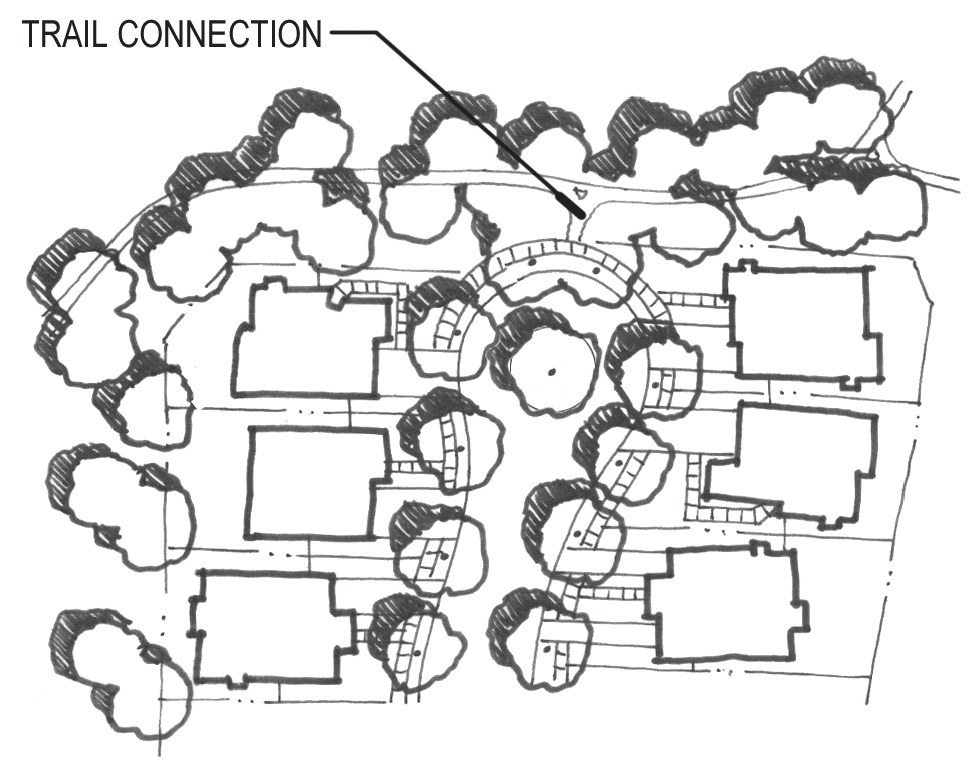
Figure 3-30: Cul-de-sac trail connection.

