
Plymouth City Zoning Code
ARTICLE X
- B-2 CENTRAL BUSINESS DISTRICTS
Sec. 78-100.- Intent.
The B-2, central business district provides the central gathering place and commercial area of the city, accommodating pedestrian access to local businesses, restaurants, and entertainment, as well as office and upper-level residential uses. It serves the retail, office, convenience, and service needs of the entire city. The central business district promotes uses which provide convenient pedestrian shopping and services along a continuous retail frontage. Much of the district is served by centralized parking.
(Ord. of 10-6-03; Ord. No. 22-04, 12-19-22; Ord. No. 2026-04, 5-4-26)
Sec. 78-101. - Principal uses permitted.
In a B-2, central business district, no building or land shall be used, and no building shall be erected except for one or more of the following specified uses, unless otherwise provided in this chapter.
Permitted uses:
(1)
Any generally recognized retail establishment which supplies commodities on the premises within a completely enclosed building.
(2)
Any personal service establishment which performs services on the premises within a completely enclosed building.
(3)
Standard restaurants and carry out restaurants not serving alcoholic beverages.
(4)
Hotels and motels.
(5)
Theaters or assembly halls when completely enclosed.
(6)
Offices and office buildings of an executive, administrative or professional nature.
(7)
Banks, credit unions, savings and loan associations, and other financial institutions including drive-through facilities, drive-through branches, and/or 24-hour automatic tellers.
(8)
Child care centers and nursery schools.
(9)
Municipal buildings and governmental offices.
(10)
Any service establishment of an office-showroom nature provided that the ground floor premises facing upon, and visible from any abutting street shall be used only for entrances, offices, or display. All storage of material on any land shall be within the confines of the building or part thereof occupied by the establishment.
(11)
An establishment at which instruction is given in a particular discipline.
(12)
Funeral homes.
(13)
Storage facilities, when incidental to and physically connected with any principal use permitted, provided that such facility is within the confines of the building or part thereof occupied by such establishment.
(14)
Parking facilities except private surface parking lots.
(15)
Other uses which are similar to the above and subject to the following restrictions:
a.
All businesses establishments shall be retail or personal service establishments dealing directly with consumers. All goods produced on the premises shall be sold at retail from the premises where produced or online through e-commerce.
b.
All business, servicing, or processing except for off-street parking or loading, shall be conducted within completely enclosed buildings.
c.
Outdoor storage of commodities shall be expressly prohibited.
(16)
Residential uses shall be permitted provided such living units are located on the second floor or above.
(Ord. of 10-6-03; Ord. No. 2007-01, § 2, 5-21-07; Ord. No. 2011-04, § 1, 5-2-11; Ord. No. 2013-04, § 3, 10-7-13; Ord. No. 22-04, 12-19-22; Ord. No. 2026-03, 3-16-26)
Sec. 78-102. - Special land uses permitted after review and approval.
The following uses may be permitted by the planning commission subject to article XXIII, the review and approval of the site plan by the planning commission, and the imposition of special conditions which, in the opinion of the commission, are necessary to ensure that the land use or activity authorized is compatible with adjacent uses of land, the natural environment and the capacities of public services and facilities affected by the land use, and subject further to a public hearing held in accord with section 78-281:
(1)
Public utility and service buildings and uses including telephone exchange buildings (without storage yards) when operating requirements necessitate the locating of such building within the district in order to serve the immediate vicinity.
(2)
Bars and lounges or restaurants serving alcohol subject to the following:
a.
No more than ten seats shall be allowed at the bar.
b.
Alcohol shall be served only to seated patrons or persons standing in the designated standing area adjacent to the bar.
c.
The standing area adjacent to the bar shall not exceed 150 square feet.
d.
No dance floor or dancing area, allowed.
e.
The bar, lounge, or restaurant serving alcohol shall be restricted to a specific size and square footage. Any increase in square footage or expansion of restaurant operations which serve alcoholic beverages shall be subject to a new or amended special land use permit.
f.
The community development director shall request a report from the city's director of public safety regarding the possible impacts of the establishment serving alcoholic beverages. The planning commission shall consider this report in their evaluation of the request for special land use approval.
(3)
Sale and service of food and drink out of doors provided such use is incidental to a similar principal use indoors and conducted adjacent to the principal use and subject further to street occupancy permits and all rules and regulations to control such street occupancy, provided the use does not interfere with pedestrian or vehicular traffic.
(4)
Rooftop dining subject to section 78-297.
(Ord. of 10-6-03; Ord. No. 2013-04, § 3, 10-7-13; Ord. No. 2020-04, 9-21-20; Ord. No. 22-04, 12-19-22; Ord. No. 2026-02, 3-2-26)
Sec. 78-103. - Area and bulk requirements.
See article XVII of this chapter for the schedule of regulations limiting the height and bulk of buildings, and the minimum size of lot permitted.
(Ord. of 10-6-03)
Sec. 78-104. - Private surface parking.
(a)
Private surface parking shall be prohibited within the B-2 zoning district except in accordance with this section. Enclosed sub-surface parking or enclosed private parking structures at least one story above ground level shall however be permitted.
(b)
Private parking or loading areas may be allowed along the rear of a building and adjoining a public alley. The parking or loading area shall be limited to the width of the building and a maximum depth of 19 feet. The private parking area shall not exceed six spaces and/or oneloading zone. Screening of the parking or loading zone area shall be provided along adjacent streets if viewed from the right-of-way.
(Ord. No. 2007-01, §, 5-21-07; Ord. No. 2007-3, § 2, 7-16-07)
Sec. 78-105. - Premiums, pedestrian amenities, design standards.
(a)
Premiums; intent.A premium is a legal authorization to reduce the normal parking requirements established by Article XXII for development in the B-2 zoning district.
(1)
Intent. The purpose of incorporating premiums into the zoning ordinance is listed as follows:
a.
To provide an incentive for residential development in and in close proximity to the city's central business core to encourage housing opportunities in situations where such opportunities might not otherwise be provided.
b.
To encourage development which reinforces pedestrian activity along streets within the central business core and to provide appropriate setbacks at corners to enhance public spaces and provide adequate sight visibility.
c.
To provide an incentive for the development of public spaces and pedestrian amenities and to encourage excellence in urban design through the provision of open space and landscaped approaches to buildings at appropriate corners.
(b)
Parking premium options. In the B-2 zoning district, the normal parking requirements as required in section 78-270(10) and 78-271, may be reduced by up to 15 percent subject to the following regulations:
General regulations.
(1)
Where seating is provided in an open space area available to the public and used to acquire a premium, it shall be available for use by the general public at all times the space is open. Tables and/or umbrellas may be placed in usable open space.
(2)
A public open space used to acquire a premium shall be designed to avoid creation of isolated areas, to maintain lines of sight into the space from streets and major pedestrian walkways, and to provide a secure environment. Lighting shall be provided for public open space premiums which are open at night.
(3)
All amenities or land uses used to acquire a premium shall remain for the life of the structure. The feature(s) shall only be diminished or discontinued if the additional gross floor area is permanently removed or if it is replaced with another approved premium feature of at least equivalent floor area value. The property owner or applicant may also consider payments in lieu of parking for a reduction in previously approved amenities.
(c)
Pedestrian amenities for a parking premium may include:
(1)
Arcade. A non-public owned, continuous covered open space along the facade of a building, which either:
a.
Adjoins the front line and is not less than ten feet or more than 15 feet deep, and extends the full length of, or at least 50 feet along, the front lot line, whichever is less; or
b.
Is at a corner lot bounded on two sides by two intersecting streets, has an area of not less than 500 square feet, and has a minimum dimension of ten feet perpendicular to the sidewalk.
(2)
Inner arcade. A non-public owned, continuous covered space which runs through a building and connects public streets, arcades, open space, or sidewalks and is readily visible and identifiable from the public street, arcade, or sidewalk. An inner arcade shall meet the following requirements:
a.
Connect and be accessible from at least two public streets or alleys, or a public street or alley and a public or non-public arcade fronting on another public street, or a public street or alley and a public or non-public arcade and another public or non-public arcade fronting on another public street; or a public or private parking garage and a public street; and
b.
Measure not less than 12 feet wide; and
c.
Have an open and unobstructed headroom of at least 12 feet in height; and
d.
Remain open for use by the general public during all business hours common in the area.
e.
Art works may occupy up to five percent of the total arcade area if a minimum clearance of eight feet for circulation is provided.
(3)
Gallery: A frontage wherein the facade of the building is aligned with an attached cantilevered enclosure or light weight colonnade and provides covered protection for pedestrians.
(4)
Plaza. A non-publicly owned continuous space, open to the sky for its entire width and length which fronts on a public street or public sidewalk, which is directly and conveniently accessible to the public at all times for passive recreational activities. Up to two-thirds of the surface area of the plaza may be occupied by features such as seating, permanent planting areas, water features, or works of art. When landscaping is provided for a plaza amenity premium, a variety of living trees, shrubs, ground covers, and seasonal plantings shall be used and shall be located in permanently installed beds or planters serviced by automatic irrigation systems or in large containers, provided they cannot be readily removed. A plaza shall meet the following requirements:
a.
Be located at a corner lot bounded on two sides by two intersecting public streets, be located at the corner closest to the street intersection, have a minimum dimension of ten feet.
b.
Be the same grade as the adjacent public sidewalk or not more than 24 inches above or below the grade of the adjoining public sidewalk for no more than 50 percent of either length of the sides adjoining and measured at the property line and shall be barrier free accessible.
(5)
Graphic examples illustrating an arcade, inner arcade, gallery, plaza, and shopfront awning are shown on the diagram in section 78-105 below.
DIAGRAM OF PEDESTRIAN AMENITIES
Arcade: A non-public owned, continuous covered open space along the facade of the building.
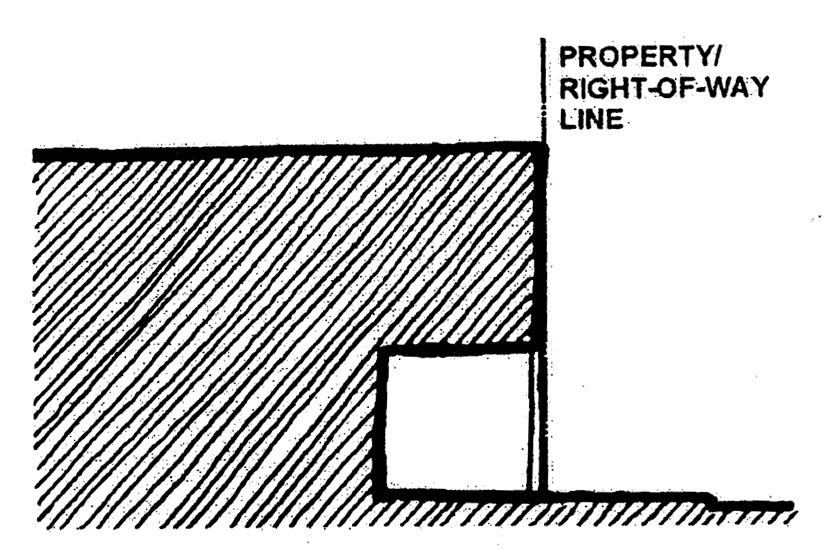
Arcade
Inner Arcade: A non-public owned, continuous covered space which runs through a building and connects
public streets, arcades, open space, or sidewalks.
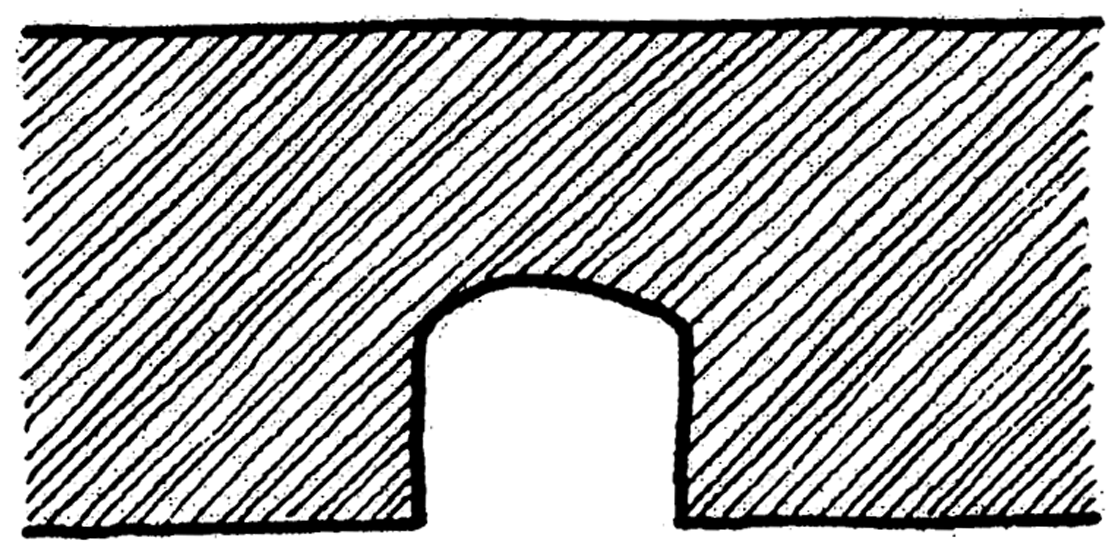
Inner Arcade
Gallery: A frontage wherein the facade of the building is aligned to the frontage line with
an attached cantilevered shed or a lightweight colonnade.
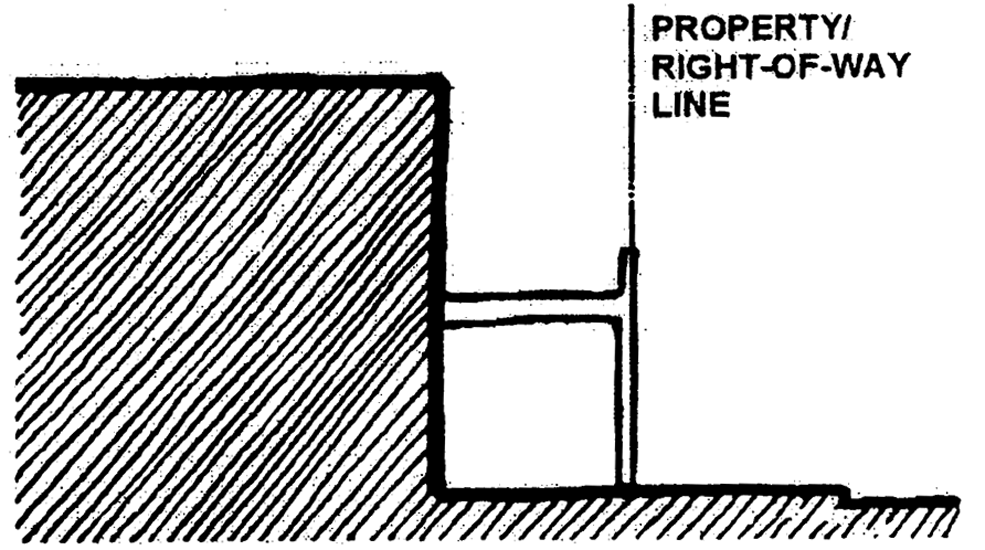
Gallery
Plaza: A non-public owned, pedestrian space which adjoins and connects to public streets
or sidewalks and contains pedestrian amenities such as benches, planters, kiosk, etc.
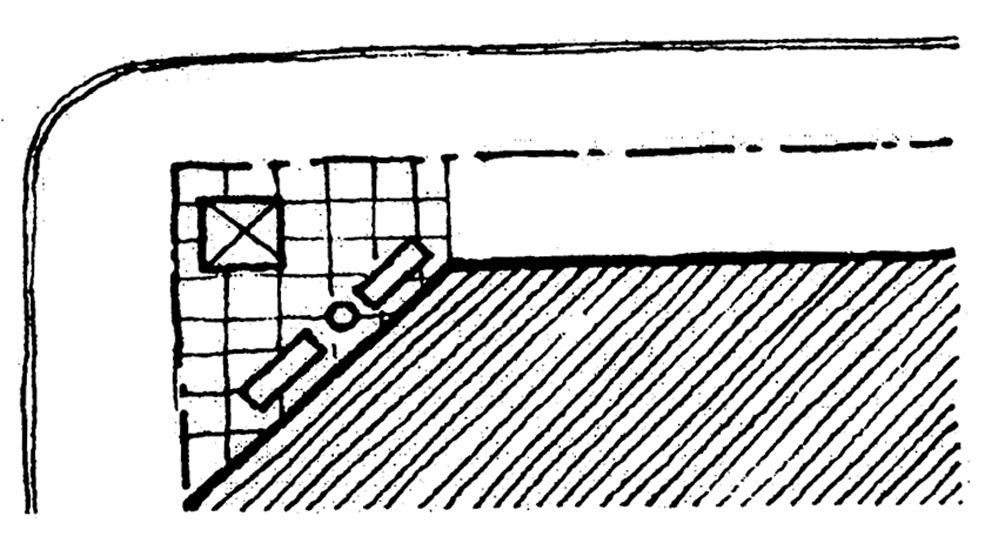
Plaza
(6)
Procedures for requests of parking premiums. The planning commission shall review requests of parking premiums for development projects in conjunction with site plan review and shall approve or deny such requests. For PUD projects, the planning commission shall make a recommendation regarding parking premiums to the city commission.
(e)
PUD/B-2 pedestrian amenities. In addition to parking premiums, planned unit development (PUD) projects proposed within the B-2 zoning district may be considered for modified standards pertaining to height, setback, density parking or other zoning requirements, if the PUD incorporates design features such as arcades, inner arcades, plazas or other pedestrian amenities as described in this section.
(f)
B-2 design standards.
(1)
The planning commission and/or city commission may require that PUD projects and other projects considered for site plan review (Article XX) within the B-2 zoning district adhere to the design standards of this section.
(2)
Building siting.
a.
A minimum of 90 percent of the length of the front lot line shall be occupied by building.
b.
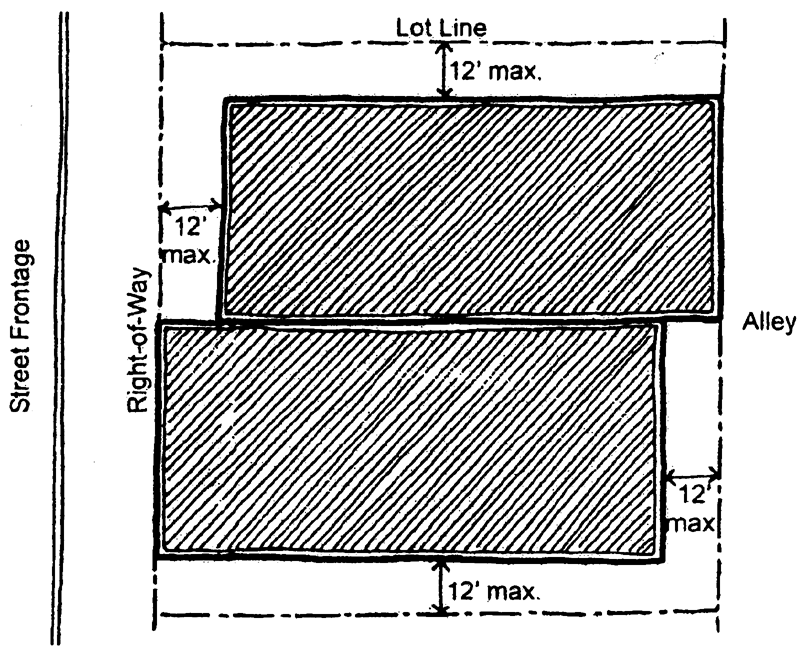
All buildings shall adhere to the schedule of regulations for setbacks and height (section 78-190). A building shall not be setback greater than 12 feet from the right-of-way unless the setback provides space for outdoor cafes or other public open space.
Building Siting: the building location shall be established at the right-of-way, lot
line, or no more than 12′ from the right-of-way or lot line.
Building Siting
(3)
Sidewalk/architecture interface.
a.
First floor architecture shall be compatible with sidewalk areas and shall provide an attractive interface between buildings and pedestrians. This shall be accomplished with generous window areas, recesses, and architectural detail.
b.
Where possible, there shall be a minimal grade differential between the elevation of the sidewalk and the first floor elevation of the adjoining building.
(4)
Building facade regulations.
a.
Building entries shall be readily identifiable and accessible, with at least one main entrance and shall open directly onto the public sidewalk.
b.
Architecture will be evaluated based upon its compatibility and relationship to the adjacent buildings and uses, and vice versa.
c.
Architectural interest shall be provided through the use of repetitious patterns of color, texture, and material, modules, at least one of which shall repeat horizontally. Each module should repeat horizontally. Each module should repeat at intervals of no more than fifty feet.
d.
Building facades shall incorporate recesses or projections along at least 20 percent for the length of the facade.
e.
At least 60 percent of the ground floor of a building facing a public street, courtyard or public square shall consist of clear glazed windows or glazed doors. At least 40 percent of the upper floor of a building facing a public street, courtyard or public square shall consist of clear windows.
f.
Primary building entrances shall be clearly defined and recessed or framed by a sheltering element such as an awning, arcade, or portico in order to provide shelter from the summer sun and winter weather.
g.
Flat roofs shall be enclosed by parapets to conceal mechanical equipment in accordance with section 78-213.
(5)
Building entrance standards.
a.
There shall be openings every 50 feet, at a minimum, into buildings, open spaces (plaza), or pedestrian linkages. Residential entrances should be designed at a human size scale. Commercial entryways should be differentiated by design, color, and material from other entryways. Primary building entrances must face upon the frontage line. Every building shall comply with barrier free access requirements of the State of Michigan Construction Code.
b.
The following types of entryways shall be encouraged within the B-2 district: Recessed, projected and porches.
1.
Recessed entrances. A recessed entryway places the doorway into the building. There is a clear distinction between the entrance and the windows that flank the door.
2.
Projected entrances. Projected entryways, opposite of recessed entryways, shall bring the entrance closer to the sidewalk and will also differentiate the ground floor windows. This design should be compatible and appropriately sized in consideration of the sidewalk width that it fronts upon.
3.
Porches. Porches are encouraged for residential uses. However, businesses have designed porches for their primary entrances. This type of raised entryways may also be prohibitive if barrier free access is not provided.
(6)
Corner buildings standards.
a.
Standards. Corner buildings and structures shall incorporate distinctive features, materials, designs, height levels, and colors that are sensitive to the flanking buildings. Encouraging wider sidewalks and/or further setback from the corner's edge shall retain a line-of-sight through the corner. Walls, screening elements (including foliage) and other visual obstructions at a height above 30 inches from the average gutter grade of the area shall not be permitted within the triangular area formed at the intersection of any street right-of-way line by a straight line drawn between such right-of-way lines at a distance along each line of 25 feet from their point of intersection.
b.
Form and function. Use of ground level open-aired areas at the intersection of the sidewalks is encouraged. The design and strong appeal of balconies adds aesthetic distinction to the facade and compliments the pedestrian atmosphere of the Downtown. Integrating covered/uncovered seating and resting areas are highly encouraged:
(7)
The planning commission and/or city commission may waive or modify the design standards of section 78-105(f) where one or more of the following factors are demonstrated:
a.
Architectural constraints and unique building characteristics.
b.
Compatibility with surrounding architecture and site design.
c.
Site constraints regarding size of parcel, circulation, limited right-of-way, etc.
d.
Other factors as identified by the planning commission and/or city commission.
(Ord. No. 2007-01, § 4, 5-21-07; Ord. No. 2007-3, § 3, 7-16-07)

