
Plymouth City Zoning Code
ARTICLE XXI
ACCESSORY BUILDINGS AND USES
Sec. 78-260.- Regulations.
Accessory buildings, structures, and uses except as otherwise permitted in this chapter, shall be subject to the following regulations:
(1)
Where the accessory building is structurally attached to a main building, it shall be subject to, and must conform to, all regulations of this chapter applicable to the main building.
(2)
An accessory building shall not be erected in any front or required yard setback except as allowed by this article.
(3)
No accessory building, structure or use may be placed on a lot without a principal building.
(4)
The height of the accessory structure having a dormer(s), which occupies ten percent or more of the total roof area, shall be determined by measuring the average height between the eaves and the ridge of the dormer(s).
(5)
No more than two detached accessory buildings in residential districts shall be permitted on any lot.
(6)
No detached accessory building in residential districts shall be located closer than three feet to any side or rear lot line. In those instances where the rear lot line is coterminous with an alley right-of-way, the accessory building shall be no closer than one foot to such rear lot line. In no instance shall an accessory structure be located within a dedicated easement right-of-way.
(7)
All accessory buildings, structures and uses combined shall cover no more than 35 percent of the area created by the required rear yard setback.
(8)
No detached accessory building in any residential district shall exceed 1½ stories or 15 feet in height. The minimum eave height for an accessory building shall not be less than seven feet from the average grade plane.
(9)
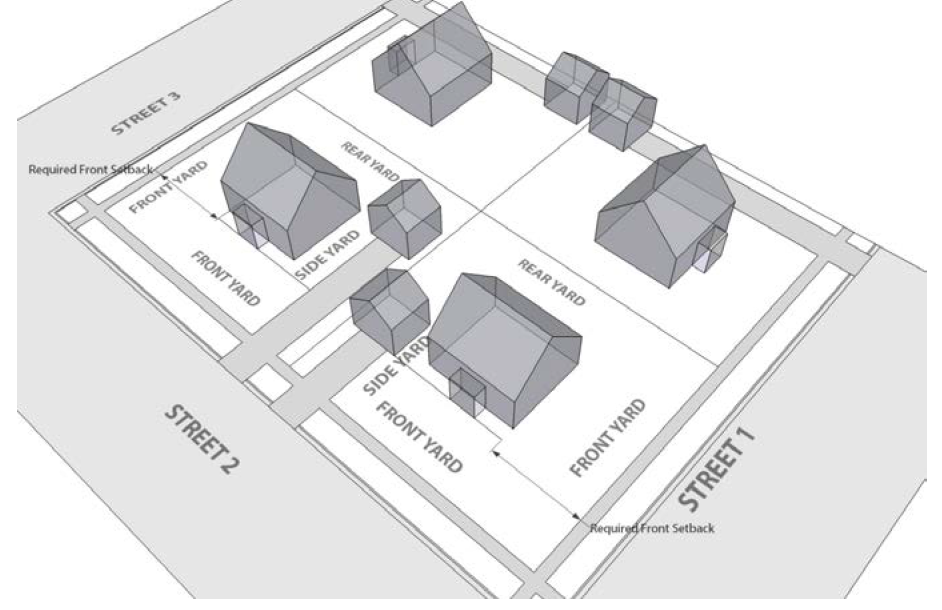
When an accessory building is located on a corner lot, the side lot line of which is substantially a continuation of the front lot line of the lot to its rear, such building shall not project beyond the front yard line required on the lot in rear of such corner lot. When an accessory building is located on a corner lot the side lot line of which is substantially a continuation of the side lot line of the lot to its rear, such building shall not project beyond the side yard line of the lot in the rear of such corner lot.
(10)
For accessory buildings or structures in the required rear yard of a residential lot, the total combined length of all walls of such building(s) or structure(s) that parallel the rear lot line shall be no longer than 50 percent of the length of the rear lot line as follows:
a.
If the 50 percent calculation results in a combined length of 30 feet or less, then the combined length allowed may be up to a maximum of 30 feet.
b.
If the 50 percent calculation results in a combined length of more than 30 feet, then the combined length allowed is the result of the calculation, but in no instance may be more than 50 feet.
Figure 1. Accessory Building Location for Corner Lots with
Front-Side Yard Situation
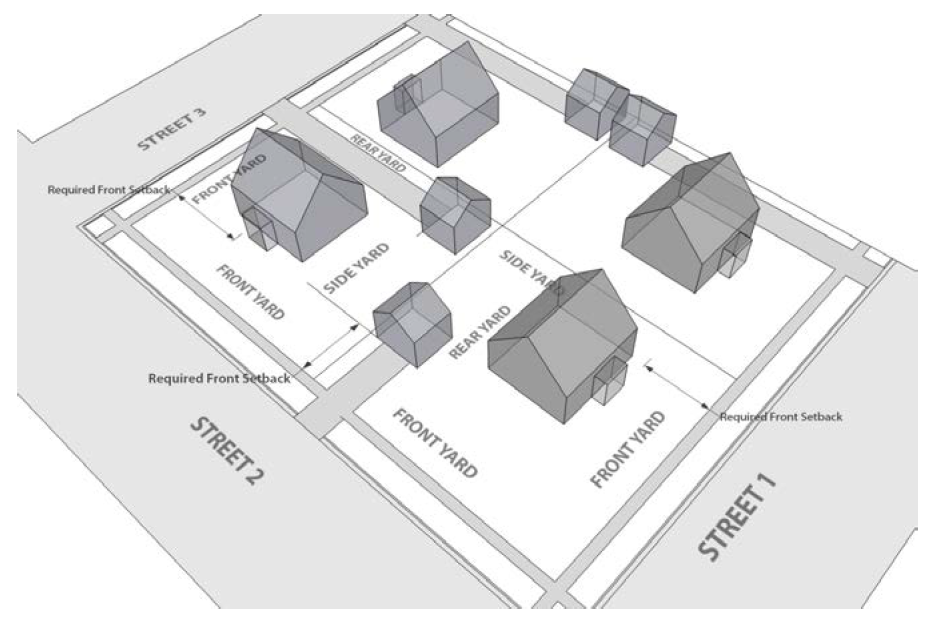
Figure 2. Accessory Building Location for Corner Lots with
Side-Side Yard Situations
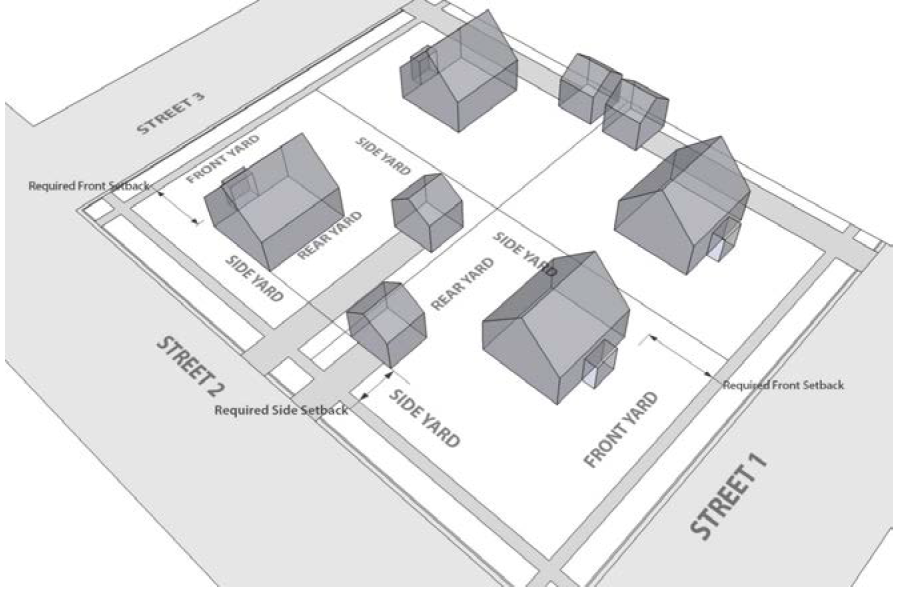
Figure 3. Accessory Building Location for Corner Lots with
Front-Front Yard Situation
(11)
Accessory buildings within all other nonresidential districts shall comply with applicable setback and height restrictions specified for the zoning district wherein the accessory use or structure is located.
(12)
Detached accessory buildings shall not be used as habitable space.
(13)
Detached accessory structures must be located a minimum of ten feet from the principle structure on site.
(14)
Private wind energy conversion systems shall be subject to regulations contained in section 78-261.
(15)
No detached accessory building in any residential district shall be constructed with an attached deck or balcony which exceeds 32 square feet.
(Ord. of 10-6-03; Ord. No. 2010-02, § 4, 4-5-10; Ord. No. 2012-04, § 12, 11-5-12; Ord. No. 2014-05, § 4, 6-2-14; Ord. No. 2014-05, § 4, 6-2-14; Ord. No. 16-06, § 3, 10-17-16; Ord. No. 2017-09, § 1, 1-2-18)
Sec. 78-261. - Wind energy conversion systems.
(a)
Intent. It is the intent of the City of Plymouth to promote the effective and efficient use of wind energy conversion systems (WECS) by regulating the siting, design, and installation of such systems to protect the public health, safety, and welfare. In no case shall this ordinance guarantee the wind rights or establish access to the wind.
(b)
Approval required. Except where allowed as an accessory use or as a special land use as listed in Article XII and XIII, it shall be unlawful to construct, erect, install, alter, or locate any WECS project within the city.
(c)
Accessory uses. Private WECS projects located on lots within the city, and within any zoning district shall be allowed as an accessory use. Accessory use private WECS projects shall conform to the regulations of this section, including maximum height and minimum setback standards.
(d)
General standards. The following standards shall apply to all private and commercial wind energy conversion systems in the city:
(1)
Design safety certification. The safety of the design of all private and commercial WECS structures shall be certified by a the manufacturer.
(2)
Controls and brakes. All private and commercial WECS structures shall be equipped with manual and automatic controls to limit rotation of blades to a speed below the designed limits of the WECS. The manufacturer must certify that the rotor and overspeed control design and fabrication conform to applicable design standards.
(3)
Setbacks. All private and commercial WECS structures must be setback from property lines at a distance equal to or greater than the height of the structure, measured from the base of the structure to the highest reach of its blade. This shall include WECS structures attached to a garage or residential unit.
(4)
Height. Private WECS structures shall not be greater than forty (40) feet in height. This shall include WECS structures attached to a garage or residential unit. Commercial WECS shall not exceed a height greater than the minimum setback to any property line.
(5)
Interference. All private or commercial WECS structures shall be designed and operated to minimize or mitigate interference with existing electromagnetic communications, such as radio, telephone, microwave or television signals.
(6)
Noise levels. The noise level for a WECS structure shall comply with the standards set forth in Section 34-89 of the City of Plymouth Code of Ordinances.
(Ord. No. 2010-02, § 5, 4-5-10; Ord. No. 2026-02, 3-2-26)

