
Rifle City Zoning Code
ARTICLE III
Zoning
Sec. 16-3-10. - Establishment of zone districts.
To carry out the provisions of this Chapter and the City's Comprehensive Plan, the City is divided into zone districts. The purpose of dividing the City into zone districts is: to recognize that certain areas of the City are in various stages of development; to preserve the character of certain neighborhoods in the City; and to establish appropriate land uses in existing and newly annexed areas of the City. It is intended that the boundaries of the zone districts shown on the zoning map adopted contemporaneously herewith will not be usually changed unless it is demonstrated that the character of an area has so changed that amending the zoning map is in the public interest. The City is divided into the following districts:
(1)
Residential districts:
a.
LDR, Low Density Residential District.
b.
MDR, Medium Density Residential District.
c.
MDR-X, Redeveloping Medium Density Residential District.
(2)
Commercial and industrial districts:
a.
CBD, Central Business District.
b.
CS, Community Service Business District.
c.
TC, Tourist Commercial District.
d.
LI, Light Industrial District.
e.
I, Industrial District.
(3)
Special purpose districts:
a.
DR, Developing Resource District.
b.
EZ, Estate Zone District.
c.
PZ, Public Zone District.
d.
OS, Open Space Zone District. (Prior code 17.03.110; Ord. 4 §2, 2009)
Sec. 16-3-20. - Incorporation of Zone District Map.
The location and boundaries of the zone districts established by this Article are shown on the "Zone District Map of the City of Rifle." The Zone District Map, together with all data shown thereon and all amendments thereto, is incorporated into and by reference made a part of this Chapter. The Zone District Map shall be kept by the City on a computer geographical information system, and a printed copy of the map as incorporated herein shall be dated, signed by the Mayor and attested by the City Clerk, and shall bear the seal of the City. Any changes in the boundary of any zone district shall be made by amendment to this Chapter, which shall promptly be entered into the geographical information system; a printed copy of each amendment shall be dated and signed by the Mayor and attested to by the City Clerk, and shall bear the seal of the City. All amended maps shall include the number of the ordinance which amended the map. The signed, original printed copies of the Zone District Map shall be filed with the City Clerk, and copies thereof shall be made available for purchase by the public. (Prior code 17.03.120; Ord. 4 §1, 2005)
Sec. 16-3-30. - Zone district boundaries.
Except where otherwise indicated, zone district boundaries shall follow municipal corporation limits, section lines, lot lines or right-of-way lines or extensions thereof. In unsubdivided property or where a zone district boundary divides a lot or parcel, the location of such boundary, unless indicated by dimension, shall be determined by the scale of the Zone District Map. Where a zone district boundary coincides with a right-of-way line and the right-of-way is abandoned, the zone district boundary shall then follow the centerline of the former right-of-way. Land not part of a public, railroad or utility right-of-way which is not indicated as being in any zone district shall be considered to be included in the most restricted adjacent zone district even when such district is separated from the land in question by a public, railroad or utility right-of-way. (Prior code 17.03.130)
Sec. 16-3-40. - Annexation and zoning.
All territory annexed to the City subsequent to the effective date of the ordinance codified herein shall be zoned according to district classifications of this Chapter. Such classifications shall be determined through a recommendation of the Planning Commission upon referral of the proposed annexation by the City Council to the Planning Commission. The proposed zoning shall be established in accordance with applicable state statutes. (Prior code 17.03.140)
Sec. 16-3-50. - Application of regulations.
(a)
Conformity to use regulations. Except as hereinafter provided, no building or structure shall be erected, no existing building or structure shall be moved, altered or extended, nor shall any land, building or structure be used, designed to be used or intended to be used for any purpose or in any manner other than as provided for among the uses hereinafter listed in the district regulations for the district in which such land, building or structure is located.
(b)
Conformity to setback, bulk, site area and height provisions. Except as hereinafter provided, no building or structure shall be erected, no existing building or structure shall be moved, altered or extended, nor shall any open space surrounding any building or structure be encroached upon or reduced in any manner, except in conformity with the building site area, building bulk, building location and height provisions hereinafter provided in the district regulations for the district in which such building, structure or open space is located.
(c)
Lot area, yard, frontage, open space and parking restrictions. Except as hereinafter provided, no lot area, yard, frontage, other open space or parking provided about any building for the purpose of complying with provisions of this Chapter shall be considered as providing lot area, yard, frontage, other open space or parking for any other building or for a building on any other lot. (Prior code 17.03.150; Ord. 4 §1, 2005)
Sec. 16-3-60. - Accessory dwelling units.
An accessory dwelling unit, when allowed, shall conform to the following requirements, and plans submitted to the City shall address each of these requirements:
(1)
Zone district requirements. Except as set forth in this Section, an accessory dwelling unit shall be subject to all of the zone district requirements that apply to the lot, including but not limited to uses, setbacks, height, lot coverage, floor area ratio, yards, parking and landscaping requirements.
(2)
Conditional use permit required. An application for the approval of an accessory dwelling unit within a commercial or industrial zone district shall be processed and reviewed pursuant to the City's conditional use permit process; provided, however, that, notwithstanding Article V, Division 3 of this Chapter, a conditional use permit application for an accessory dwelling unit on lots eight thousand (8,000) square feet or larger in a commercial zone district where the only use is residential, the permit shall be reviewed and approved at the City staff level, and shall only be reviewed by the Planning Commission if an objection to such application is filed with the City by a resident of the City following notice pursuant to Paragraph (3) below. If the City staff denies a conditional use permit application, the applicant may appeal the staff's decision to the Planning Commission for review and decision on the application pursuant to Article V, Division 3 of this Chapter.
(3)
Public notice. An applicant for a conditional use permit for an accessory dwelling unit shall comply with the public notice requirements stated in Section 16-1-50 of this Chapter. If the application qualifies for a staff decision and staff intends to grant the application, the public notice shall state that City staff intends to make a favorable determination on the conditional use permit and, unless a written objection to the granting of the conditional use permit is received within ten (10) days of the date of the public notice, the public hearing will be cancelled and the Planning Commission will not review the application.
(4)
Unit size/number. Accessory dwelling units shall be no less than three hundred (300) square feet and no more than eight hundred fifty (850) square feet and shall be limited to no more than two (2) bedrooms.
a.
Accessory dwelling units in residential zone districts, or on a lot in a commercial zone district where the only use is residential, shall also be limited in size equal to or less than fifty percent (50%) of the total livable area (excluding garage) of the principal dwelling. Only one (1) accessory dwelling unit shall be allowed per residential lot.
b.
Accessory dwelling units in commercial and light industrial zone districts that have commercial or light industrial uses may be detached. Attached accessory dwelling units shall be limited to only the top floor of the building, and the total area developed with an attached accessory dwelling unit(s) shall not exceed the total interior area of the commercial space in the building.
(5)
Compatibility/landscaping. Materials and design of the accessory dwelling unit shall be substantially the same as the principal structure, and landscaping for the accessory dwelling unit shall be compatible with the principal dwelling.
(6)
Parking/access. On-street parking may be utilized to satisfy the full required ADU parking requirements where on-street parking exists directly adjacent to the ADU lot. If on-street parking is not available directly adjacent to the ADU lot, each accessory dwelling unit shall provide one (1) dedicated off-street parking space per bedroom which shall be accessed by the same driveway/curb cut as the principal structure; provided, however, that the City staff may grant access to the accessory dwelling unit from an alley adjacent to the lot if such access is sufficient and will not negatively affect the traffic flow in the alley or adversely impact the neighborhood. Accessory dwelling units in commercial and light industrial zone districts may utilize shared parking with the principal commercial use so long as the commercial use allows sufficient parking for the accessory dwelling use.
(7)
Water and sewer utilities. Water and sewer utilities for an accessory dwelling unit may be installed and metered independently from the primary dwelling or building, the plans for which shall be reviewed and approved by the Public Works Director. All costs associated with any utility or line extension or upgrade shall be borne by the owner, and a cash deposit or other performance guarantee approved by the City staff may be required to secure the workmanlike installation of said lines and the restoration of public streets and sidewalks after road cuts are made.
(8)
Condominiumization or subdivision. Accessory dwelling units shall not be condominiumized or subdivided from the principal dwelling in residential zone districts or on a lot in a commercial zone district where the only use is residential; provided, however, that condominiumization or subdivision of accessory dwelling units shall be permitted in the commercial and light industrial zone districts that have commercial or light industrial uses if approved pursuant to this Code.
(9)
Separate address. An accessory dwelling unit shall be assigned a separate address from the principal dwelling or building.
(10)
Fees. Accessory dwelling units shall be subject to sixty percent (60%) of all fees of general applicability for new single-family residential dwellings, including parkland dedication fees, water rights dedication fees, water and sewer impact fees and any impact fees associated with a defined area. (Prior code 17.03.155; Ord. 2 §2, 2004; Ord. 22 §5, 2022; Ord. 24 §2, 2023; Ord. 10 §2, 2024; Ord. 13 §2, 2026)
Sec. 16-3-70. - Principal and accessory uses.
The primary land use occurring on a lot is referred to as a principal use. One (1) principal use is permitted on lots within residential zone districts (LDR, MOR and MDR-X) unless specifically permitted by a planned unit development or through approval of a conditional use permit. More than one (1) principal use is permitted on nonresidential lots, and said uses may occur in more than one (1) structure. (Prior code 17.03.160; Ord. 22 §9, 2022)
Sec. 16-3-80. - Conditional uses.
(a)
Intent. Uses designated as conditional uses are contingent uses which may or may not be appropriate in a particular location depending on the nature of the proposed use, its relationship to surrounding land uses and its impact on traffic capacities, potential environmental effects, compatibility with the neighborhood and conformance with the Comprehensive Plan. It is the intent of these regulations to provide a review of conditional uses so that the community is assured that any proposed conditional uses are suitable for the proposed location and are compatible with the surrounding land uses.
(b)
When allowed. Conditional uses may be permitted in designated zone districts upon approval of the Planning Commission or City Council as provided in these regulations.
(c)
Application and review. All applications for conditional uses will be reviewed according to the procedures set forth in Article V of this Chapter. Application submittal requirements are specified in Article VI of this Chapter.
(d)
Amendments to existing conditional uses. Any applications to amend an existing conditional use will be reviewed by the Director or their designee. If the Director's finding is that the request is a minor amendment to the existing use, the Director may administratively approve the request. Application amendments designated as a major amendment shall be subject to approval by the Planning and Zoning Commission.
Review criteria. Minor amendments are those that deviate from approved conditions of approval or alter elevations, structures, parking, landscaping, drainage, utilities, or other site improvements in an approved Conditional Use Permit, and that meet all the following criteria (as applicable):
(1)
Complies with all requirements of the existing conditional use.
(2)
Does not conflict with the Comprehensive Plan.
(3)
Does not change the character of the existing conditional use.
(4)
Does not alter the basic relationship of the existing use with adjacent properties.
(5)
Does not change the approved use(s).
(6)
Does not require amendment or abandonment of any easements and/or rights-of-way.
(7)
Does not increase the intensity of the existing conditional use.
(8)
Does not increase the existing conditions of approval in excess of the maximum permitted in the zone district in which the use is located; and
(9)
Does not decrease the requirements of the underlying zone district including open space, screening, etc., and/or other requirements specifically cited in the current conditions of approval.
(10)
Appeal of the Planning Director's decision shall be made to the Planning and Zoning Commission within thirty (30) days of the Director's decision. Appeal may be brought forward by the applicant or by owners of affected properties.
(Prior code 17.03.165; Ord. 15 §2, 2024)
Sec. 16-3-90. - Temporary uses.
(a)
Definition. Temporaryuse shall, for purposes of this Chapter, mean any outdoor retail and/or wholesale sales use on a short-term basis in one (1) location, including but not limited to: produce stands; prepared food stands; vehicles with kitchen facilities; and excluding temporary promotions or sidewalk sales by permanent businesses on their own property or in the public right-of-way pursuant to a valid encroachment permit. Temporarysalesstructure shall mean a structure for the purpose of storing or displaying goods for sale for a nonpermanent term outside of a preexisting building or structure, including but not limited to produce stands, tents, tables, racks, canopies, carts and trailers and other vehicles.
(b)
Permit required. It shall be unlawful for any person to conduct or establish any temporary sales use or structure within the City until a temporary use permit has been approved by the Planning Director, exempting specific circumstances as described herein. Temporary uses may only be permitted in designated zone districts as described herein upon approval of the Planning Director as provided in these regulations. Temporary use permits shall be valid for one (1) year from the date of issuance and shall be maintained on the approved location.
(c)
Nonfood sales prohibited. All temporary uses selling nonfood items are prohibited in all zone districts except as part of an approved master plan or as excepted below.
(d)
Exceptions. The following temporary uses shall be exempt from obtaining a temporary use permit pursuant to this Chapter.
(1)
Temporary uses associated with not-for-profit organizations, groups or community events (i.e., Christmas tree sales, Boy Scout sales, etc.), provided that such uses operate for no more than two (2) months out of the calendar year and meet the location requirements described herein.
(2)
Special community events or festivals, such as a farmers' market, which shall be reviewed under the City's special events permit process. Temporary sales uses associated with a community event shall be subject to all licensing requirements, including sales tax.
(3)
Temporary uses to be conducted on public property (sidewalks, etc.), which shall be subject to the City's encroachment permit regulations at Chapter 11, Article II.
(e)
Temporary produce sales. Temporary produce sales are permitted in the Community Service (CS) and Tourist Commercial (TC) zone districts, as long as such sales operate for no more than sixty (60) days out of the calendar year. There shall be no limit on the number of produce sales in permitted areas. Temporary produce sales must still obtain a permit under this Chapter and obtain a sales tax license.
(f)
Seasonal food sales. Seasonal food items such as snowcones, lemonade, ice cream and other non-entrée items are permitted in the Community Service (CS) and Tourist Commercial (TC) zone districts. Seasonal food sales are permitted on a seasonal basis not to exceed five (5) months out of the calendar year. There shall be no limit on the number of seasonal food sales in permitted areas. Seasonal food sales shall be limited to a trailer or other structure no greater than fifteen (15) feet by ten (10) feet in size. Seasonal food sales shall meet all performance standards and permitting requirements for temporary uses contained in this Section.
(g)
Prepared food temporary uses.
(1)
A limited number of prepared food temporary uses shall be permitted in the Community Service (CS), Tourist Commercial (TC), Light Industrial (LI) and Central Business District (CBD) zone districts. For purposes of prepared food temporary use permits, the City is divided into the following two (2) geographic districts, with the applicable permit criteria:
a.
General Commercial and Light Industrial Districts. Eight (8) prepared food vendors shall be permitted in areas of the City zoned Tourist Commercial (TC) and Community Service (CS). Two (2) additional temporary use permits may be issued in accordance with this Chapter, provided that the use does not operate for longer than twelve (12) days in a calendar year.
b.
Central Business District. Three (3) prepared food vendors shall be permitted in the Central Business District at any one (1) time on private property or on public plazas.
(2)
The following restrictions apply to prepared food temporary use permits in each district:
a.
General Commercial and Light Industrial Districts. Applicants that meet all of the temporary use permit criteria shall receive permits on a first-come, first-served basis until the limit on the number of permits is reached. Each permit shall be valid for one (1) year. If an applicant holding a valid temporary use permit wishes to renew the permit, the applicant may submit a new application before the one-year time limit expires and receive first review and approval priority regardless of other submitted applications for that district. If the applicant allows the permit to expire before submitting a new application, that permit shall be open to new applicants on a first-come, first-served basis.
b.
Central Business District.
1.
Prepared food temporary use applications are due to the Planning Department by March 1 of each year. By April 1, a maximum of three (3) Central Business District permits will be issued to vendors that meet all application criteria for the following year (April 1 through March 31). If more than three (3) valid applications are submitted by March 1, the Planning Director or his or her designee will choose three (3) vendors that receive the highest scores based on application criteria established by the Planning Director by January 1 of each year and set forth in the Mobile Vending Application. If fewer than three (3) vendors apply before March 1, qualified vendors shall be accepted throughout the year until the maximum number permitted is reached. Each permit shall be valid from April 1 to March 31 of a given year, regardless of when issued.
2.
Prepared food vendors shall not be permitted on streets, parking spaces, or sidewalks.
3.
The maximum cart size for prepared food vending carts in the Central Business District shall be eight (8) feet long by six (6) feet wide by eight (8) feet tall. Vehicle-based vendors shall not be permitted. Vending carts and equipment must be removed when not in operation.
4.
Temporary use permits for the Library/City Hall Civic Plaza shall be issued via the Rifle Parks Vending Permit application process, but shall still count towards the three (3) vendors permitted in the Central Business District.
(h)
Temporary use standards. The following standards shall apply to temporary uses in all permitted districts:
(1)
Temporary uses shall operate in the approved location through the length of the permit.
(2)
The use meets all setbacks, buffers from incompatible adjacent uses and other requirements of its specific zoning district.
(3)
The applicant has all licenses required by this Code and state law, including a sales tax license.
(4)
For food sales, the applicant has evidence of Colorado Department of Public Health and Environment approval.
(5)
The use occurs on a paved surface with marked parking spaces.
(6)
The hours of operation of the temporary use shall be reviewed and approved based upon the nature of the use and the location. During hours in which the operation is to be closed, the site will be vacated except for any structures approved as part of the application.
(7)
Adequate off-street parking is provided to serve the use, and the use shall not displace the required off-street parking spaces or loading areas of the principal permitted uses on the site or interfere with the flow of vehicle or pedestrian traffic. A maximum of two (2) temporary use permits may be approved by staff for any one (1) property. If a property owner feels that their property can support additional temporary uses above that which staff will approve, additional temporary use permits for any single property may be reviewed by the Planning and Zoning Commission through a Conditional Use Permit.
(8)
The use is compatible in intensity, characteristics and appearance with existing land uses in the immediate vicinity of the proposed location. Factors such as location, access, traffic generation, noise, light, dust control and hours of operation will be considered.
(9)
The proposed use and structure have a neat and clean appearance and properly disposes of any trash within fifty (50) feet of the use with evidence of the location of legal trash disposal.
(10)
Proposed lighting shall not glare onto adjoining properties or onto public streets.
(11)
No merchandise shall be displayed within thirty (30) feet of an intersection of the curb line of any two (2) streets; within the required setback area of the parcel on which the use is to be located; within ten (10) feet of any curb cut; or within one hundred fifty (150) feet of any structure primarily used as a residence.
(12)
Signs shall be limited to twenty-four (24) square feet of signage affixed to the temporary use structure. No flags, banners or other signage shall be permitted. Temporary uses in the downtown may have an A-frame sign that conforms with the requirements of the sign code.
(13)
Noisemakers of any kind, including amplifiers, shall be prohibited.
(i)
Revocation of permit. In addition to any other available remedies, permits issued pursuant to this Section may be revoked or suspended by the Planning Director based on evidence of fraud, misrepresentation, an incorrect statement contained in the application for a permit, failure to comply with permit conditions, failure to cure any violation within five (5) days of notice from the Planning Director or any other violation of this Code or state statute. Written notice of the suspension or revocation, along with supporting grounds therefor, shall be mailed, postage prepaid, to the permittee at his or her last known address or hand-delivered to the permittee at least three (3) days prior to the effective date of the suspension or revocation. The Planning Director may, whenever he or she determines that it is necessary for the immediate preservation of the public health, safety or welfare, immediately suspend a permit issued hereunder. Such suspension shall be for a period not to exceed seven (7) days, during which time notice shall be given within the provision of this Section.
(j)
Application and review. All applications for temporary uses will be reviewed according to the procedures set forth in Article V of this Chapter. Application submittal requirements are specified in Article VI of this Chapter.
(Ord. 2 §2, 2009; Ord. 8 §2, 2011; Ord. 6 §2, 2014; Ord. 10 §2, 2016; Ord. 22 §9, 2022; Ord. 7 §2, 2024)
Sec. 16-3-100. - Nonconforming uses, structures and lots.
(a)
Conformance to article required. all uses, structures and lots other than those in conformity with this chapter, shall be regulated as set forth in this article.
(b)
Continuation of nonconforming uses, structures and lots. Any use, structure or building lot in existence and lawful at the time of adoption of the zoning code or any subsequent amendment thereto which is not in conformance with the provisions of the zoning code or subsequent amendment shall be considered a nonconforming use, structure or building lot and may continue in existence pursuant to the provisions of this Chapter.
(c)
Extensions of nonconforming use. A nonconforming use of a building may be extended throughout the same building only with Planning Commission approval, and any structural alterations of the building shall only be made with approval of the Planning Commission.
(d)
Extension of nonconforming building. A building which cannot meet the area, setback, height or other site requirements of this Chapter may be extended, provided that any such extension is in full compliance with all provisions of this Chapter.
(e)
Restrictions on change of use. Except as otherwise provided herein, a nonconforming use shall not be changed to any other use which is more intensive than the existing use. A conforming use that is in a nonconforming structure shall be allowed to be changed to a more intensive use, as long as that use meets all other provisions of this Code.
(f)
Nonconforming building repair and maintenance. Repair and maintenance of a nonconforming building shall be permitted.
(g)
Restoration of a nonconforming building. Restoration of a nonconforming building shall comply with Section 903.2.4 of the International Fire Code, as adopted at Section 18-9-10, et seq., of this Code, which states the following: "When in any 24-month period the floor area of an alteration, remodel or modification to any existing building exceeds 40% of the floor area of the building being improved, the entire building shall be made to comply with the requirements of Chapter 9 of the 2003 International Building Code and the 2003 International Fire Code, as amended and adopted by the City of Rifle." See Section 18-9-30 of this Code for exemptions to this requirement.
(h)
Abandonment. Whenever a nonconforming use of land or building has been discontinued for a period of one (1) year, that nonconforming use of land or building shall be deemed abandoned. Any future use of the land or building shall be in conformance with all applicable provisions of this Chapter.
(i)
Destruction of a nonconforming structure or use. A nonconforming structure or use that is damaged or destroyed by fire or other involuntary cause may be rebuilt in accordance with the following:
(1)
A nonconforming structure or improvement damaged to less than sixty-five percent (65%) of its fair market value may be rebuilt only if all portions of the structure being restored are wholly within the lot line; all restorative and other work is within adopted building codes; a building permit is issued within one (1) year from the date of the damage; and the certificate of occupancy (or other final inspection) is issued as provided by adopted codes. A nonconforming use may be restored if damage to the structure is less than sixty-five percent (65%).
(2)
A nonconforming structure or improvement damaged to sixty-five percent (65%) or more of the fair market value may be rebuilt only if the portion of the structure being restored is wholly within the lot lines; all restorative and other work is within adopted building codes; the structure remains within the original envelope; the structure and property are in compliance with all other regulations of this Code; a building permit is issued within one (1) year from the date of the damage; and the certificate of occupancy (or other final inspection) is issued as provided by adopted codes. A nonconforming use shall not be restored if damage to the structure is sixty-five percent (65%) or more. A site plan application shall be required in this case.
(j)
Nonconforming lots. A parcel of land with an area less than prescribed in the applicable zone may be used for any purpose permitted in the zone if:
(1)
The owner is able to demonstrate to the satisfaction of the Planning Director that the parcel was lawful at the time it was created;
(2)
No reasonable alternative exists to make the nonconforming lot conforming, such as the addition of adjoining land under the property owner's control; and
(3)
The use meets all other regulations prescribed for the zone prior to occupancy or use.
(k)
Time extensions. The Planning Commission may permit one (1) extension of up to twelve (12) additional months to the time periods for abandonment, obtaining a building permit and/or completing construction, provided that the applicant can demonstrate circumstances out of his or her control have prevented a good faith attempt to reestablish or rebuild the nonconforming use and/or structure. Such circumstances may include the health of the applicant, court proceedings, failure to reach an insurance settlement, acts of God or similar hardships.
(l)
Evidence of status. Evidence of the status of a nonconforming use or site shall be supplied by the owner of the property upon request of the Planning Director.
(m)
Nonconforming mobile homes or mobile home developments. Notwithstanding other provisions to the contrary, nonconforming mobile homes and mobile home developments shall be subject to the following provisions:
(1)
Lawful use. The lawful use of a mobile home or mobile home development in existence in the City as of the effective date of the initial ordinance codified herein or, in the case of amendment to this Chapter, then at the time of such amendment, may be continued, although such use does not conform with the provisions of this Chapter or amendment thereto. All such legally nonconforming mobile homes or mobile home developments shall, however, conform to the permit and licensing requirements of Section 16-9-40 of this Chapter.
(2)
Repair and maintenance. Repair and maintenance of mobile homes or mobile home developments shall be permitted.
(3)
Nonconforming mobile home or mobile home replacement.
a.
A nonconforming mobile home that has been damaged, destroyed or removed may be replaced in its original location.
1.
A nonconforming mobile home may only be replaced by a home built in compliance with the HUD Code (1976 or later) and the UBC Code.
2.
Notwithstanding other provisions to the contrary, such replacement home may be less than seven hundred (700) square feet in size if necessary to fit within the existing mobile home space.
b.
The replacement of a mobile home on a lot outside of a mobile home development is allowed only upon approval of a conditional use application in accordance with Sections 16-3-80, 16-5-280 and 16-6-130 of this Chapter.
(4)
Expansion. A nonconforming mobile home development may be expanded upon approval of a conditional use permit in accordance with Sections 16-3-80, 16-5-280 and 16-6-130 of this Chapter, provided that such expansion area is in full conformance with all provisions of this Chapter other than the minimum mobile home development size. Noncompliance with the otherwise required minimum mobile home development size shall not be considered grounds for denial of such a conditional use permit.
(5)
Upgrade of nonconforming mobile home developments. Nonconforming mobile home developments shall be upgraded by the specified date following August 19, 2000, as follows:
a.
Street lighting shall be upgraded no later than September 1, 2013, in conformance with the requirements of Paragraph 16-9-60(c)(4) of this Chapter;
b.
Dumpsters/trash receptacles shall be upgraded no later than September 1, 2005, in conformance with the requirements of Paragraph 16-9-60(c)(4) of this Chapter;
c.
Individual storage shall be upgraded no later than September 1, 2013, in conformance with the requirements of Paragraph 16-9-50(5) of this Chapter;
d.
Fire hydrants shall be upgraded no later than September 1, 2005, in conformance with the requirements of Subparagraph 16-9-60(c)(3)b. of this Chapter; and
e.
Use of all mobile home spaces shall be upgraded no later than September 1, 2013, in accordance with the definition for mobile home in Section 16-1-220 of this Chapter.
(6)
Abandonment. Whenever the use of a nonconforming mobile home located outside of a mobile home development has been discontinued for a period of one (1) year, and whenever the use of a nonconforming mobile home development has been discontinued for a period of one (1) year, future use of the land, building or mobile home shall be in conformance with all applicable provisions of this Chapter. However:
a.
This provision shall not be interpreted to prevent the replacement of an individual mobile home on a nonabandoned mobile home space within a nonconforming mobile home development; and
b.
This provision shall not be interpreted to authorize the replacement of a mobile home on a space which was abandoned under the laws in effect at the time prior to August 19, 2000, unless a variance is approved pursuant to Section 16-3-130 below. It is the intent of the City Council that variances be encouraged for spaces deemed abandoned in the five (5) years prior to August 19, 2000, which are located in licensed mobile home developments. (Prior code 17.03.170; Ord. 4 §1, 2005; Ord. 40 §2, 2007; Ord. 2 §3, 2009; Ord. 12 §2, 2010)
Sec. 16-3-105. - Abandoned or deed-restricted filling (gas) stations.
(a)
Filling (gas) stations unused for gas sales for twelve (12) consecutive months shall be deemed abandoned. Upon abandonment, the property owner, including related corporate entities, or operator shall be responsible for the immediate removal of any and all infrastructure and building materials unique to the filling station use, including but not limited to tanks, pumps, canopies, tire filling stations, fuel pricing signs and reader boards.
(b)
As a condition of the approval and issuance of a certificate of occupancy or any other land use approval, any person attempting to utilize any portion of a property or a building previously used in affiliation with a filling (gas) station shall remove all infrastructure and building materials unique to this type of land use, including but not limited to tanks, pumps, canopies, tire filling stations, fuel pricing signs and reader boards.
(c)
Within thirty (30) days of the recording of a deed restriction prohibiting the future operation of a filling (gas) station on a parcel of land in the City, the property owner recording the deed restriction shall remove all infrastructure and building materials unique to the filling station use as described above.
(d)
As a condition of the approval and issuance of a certificate of occupancy for a filling (gas) station moving within the City to a new location, the owner, including related corporate entities, or operator shall provide security in the form of a letter of credit, cash deposit or other form acceptable to the City, in a sufficient amount to secure compliance with Subsection (a) above and cover the cost of removing all filling station infrastructure and building materials from the previous location. Upon the City's written acceptance that such materials have been removed to its satisfaction, the security shall be released to the appropriate entity within seven (7) business days. (Ord. 9 §2, 2011)
Sec. 16-3-110. - Nonconforming lots of record.
A lot which does not meet the minimum lot area requirements for the zone district in which it is located may be occupied in accordance with the applicable zone district regulations when the lot was held in separate ownership from adjoining properties or was platted and recorded prior to the effective date of the initial ordinance codified in this Chapter. (Prior code 17.03.171; Ord. 4 §1, 2005; Ord. 2 §3, 2009)
Sec. 16-3-120. - Uses not itemized.
(a)
Uses not listed in Sections 16-3-320 and 16-3-420 are prohibited in the applicable zone district, except that unlisted uses may be allowed by approval of a conditional use application or as a permitted use. Notwithstanding the provisions of Article V, Division 3 of this Chapter, the Planning Director shall review applications for uses not itemized in the Code and shall have the discretion to make one (1) of the following findings or to defer the decision to the Planning Commission:
(1)
The proposed use is similar to an itemized permitted use in the zone district in which the parcel is located and is permitted by right.
(2)
The proposed use is similar to an itemized conditional use in the zone district in which the parcel is located, and the applicant may apply for a conditional use permit. The Planning Director shall review and approve an unlisted use to be processed as a conditional use, provided that:
a.
The granting of the conditional use permit will not substantially modify the land use plan or the intent, purpose and spirit of this Article.
b.
The application incorporates reasonable means to create an environment harmonious with that of the surrounding properties.
c.
The conditional use permit will not adversely affect the public health, safety or welfare.
(3)
The proposed use is not similar to a use itemized as permitted or conditional in the zone district in which the parcel is located and cannot be permitted.
(b)
A similar use determination by the Planning Director shall not be site specific and shall thereafter be binding on the City in the interpretation and administration of this Article unless and until the same is amended in accordance with law and regulation.
(c)
Decisions by the Planning Director as to uses not itemized may be appealed by the applicant to the Planning Commission for review and decision on the application pursuant to Article V, Division 3 of this Chapter. (Prior code 17.03.175; Ord. 4 §1, 2005; Ord. 18 §2, 2005; Ord. 2 §3, 2009)
Sec. 16-3-130. - Zoning variances.
Special exceptions to the provisions of the zone districts may be granted by the Board of Adjustment pursuant to the provisions of Article V of this Chapter. Such special exceptions are known as variances. (Prior code 17.03.180; Ord. 2 §3, 2009)
Sec. 16-3-140. - Rezoning.
The City may from time to time amend the number, shape or boundaries of any zone district. Such an amendment to a zone district boundary is known as rezoning. The Planning Commission or City Council may also initiate applications for rezoning. (Prior code 17.03.185; Ord. 2 §3, 2009)
Sec. 16-3-150. - Rezoning of planned unit developments.
Planned unit developments as described in Article V of this Chapter shall be processed as an amendment to the zone district map and to the applicable zone district regulations within the area of the planned unit development. The subdivision plat of a planned unit development shall, upon favorable vote of the City Council, be incorporated into the Zone District Map. (Prior code 17.03.190; Ord. 2 §3, 2009)
Sec. 16-3-210. - Land and building use regulations.
In addition to regulations contained elsewhere in this Chapter, the use of land and buildings shall be governed by the provisions set forth in this Division. (Prior code 17.03.195)
Sec. 16-3-220. - Frontage.
Each lot or parcel in separate ownership shall have at least twenty-five (25) lineal feet of frontage on a public street unless provided for under planned unit development provisions. Every building devoted wholly or in part to residential use shall front a public street unless provided for under planned unit development provisions. (Prior code 17.03.195)
Sec. 16-3-230. - Yard requirements.
(a)
On double frontage lots or lots extending from one (1) street to another paralleling street, both streets shall be considered front streets for purposes of calculating front yard setbacks.
(b)
On lots bordered on two (2) contiguous sides by streets, the required front yard setback shall be observed along both streets.
(c)
On corner lots, the owner shall determine which yard shall be the rear yard and which yard shall be the side yard at the time of building permit application.
(d)
Where a lot in a business, commercial or industrial zone district shares a common side lot line with a lot in a residential district, the required side yard setback of the residential district shall be observed along the common lot line in the commercial or industrial district.
(e)
Where the side yard of a lot in the business, commercial district is an extension of the front yard of a lot in an adjacent residential district, a side yard setback equal to one-half (½) the required front yard setback of the residential district shall be observed by the lot in the commercial district.
(f)
For purposes of setback calculations, a two-family dwelling shall be construed as one (1) building occupying one (1) lot.
(g)
Every part of a required yard shall be unobstructed by building from ground level to the sky except for projections of architectural features as follows:
(1)
Cornices, sills and ornamental features may project twelve (12) inches into a yard.
(2)
Roof eaves may extend eighteen (18) inches into a yard.
(3)
Uncovered porches, slabs and patios, walks, steps, fences, hedges and walls are not restricted when less than forty-two (42) inches above ground level.
(4)
Fire escapes and individual balconies not used as passageways may project eighteen (18) inches into any required side yard, or four (4) feet into any required front or rear yard.
(5)
Solar energy devices and equipment may extend eighteen (18) inches into a yard.
(Prior code 17.03.195; Ord. 11 §3, 2011; Ord. 26 §4, 2017)
Sec. 16-3-240. - Fences, hedges and walls.
(1)
No fence, hedge, wall or sign shall be placed nearer than twelve (12) inches to any public sidewalk.
(2)
The total combined height of fences and/or walls shall not exceed seven (7) feet in height.
(3)
Fences in front yards. Within twenty (20) feet of a property line that borders a public right-of-way, the maximum height of a fence is four (4) feet. For properties with an elevated front yard that causes a four-foot fence to rise higher than four (4) feet above the elevation of the curb, fences of a non-opaque material such as chain link, wire, or other material that preserves views, shall be installed.
(4)
On corner lots, no opaque fence, hedge, landscape feature, shed or wall over thirty (30) inches in height above the elevation of the curb shall be placed in the intersection of a triangular area formed by three (3) points as established by: (a) the intersection of the flowline at the corner; (b) measuring thirty (30) feet back from this intersection on each flowline; and (c) connecting the two (2) ends of the legs to form a triangle. This Section shall not require the removal or modification of any retaining wall existing on December 1, 1993, which is necessary for the structural stability of the lot. The fee (but not the cost of mailing) shall be waived for any person seeking a variance from the strict application of this Section.
(5)
At the intersection of a street and alley, no structure, landscape feature, retaining wall or fence over forty-two (42) inches in height shall be placed within seven (7) feet of the corner of the lot next to the public right-of-way and the alley.
(6)
A security fence is defined as any fence incorporating barbed wire on the uppermost portion of the fence as described below. Security fences shall be permitted in the Light Industrial and Industrial Zone Districts, provided that the fencing does not exceed seven (7) feet in height and further provided that not more than three (3) stacked strands of barbed wire may be mounted in a vertical or cantilevered position at the top of the fence. In no event shall any strand of barbed wire in a security fence be mounted less than six (6) feet above the elevation of the ground. No barbed wire, sharp-pointed, or electrically charged fence shall be permitted except to control permitted livestock or as part of security fencing. No barbed wire fencing of any kind shall be permitted in the Central Business District.
(Prior code 17.03.195; Ord. 23 §3, 2016; Ord. 26 §6, 2017)
Sec. 16-3-250. - Height provisions.
(a)
Building heights. The maximum height of buildings shall be measured vertically at the front yard setback line from undisturbed or natural ground level to the top of a flat or mansard roof or to the midpoint between the eave line and ridge line of a gable, gambrel, hip, shed or similar pitched roof. The vertical height of a building shall not exceed the maximum height at the front yard facade of the building from existing grade or finished grade, whichever is lower.
(b)
Exemptions. Height limitations of this regulation shall not apply to stacks, vents, antennae, cooling towers, elevator bulkheads, solar panels, tanks or similar mechanical appurtenances which extend no more than ten (10) feet above the permitted height. No limitation shall apply to monuments, cupolas, domes, towers, spires and similar noninhabitable structural appurtenances for public or semipublic buildings.
(c)
Height of structures. Any structures that is not a building, such as industrial air exhaust structures or communication towers, may exceed the maximum permitted building height in any zone district upon approval of a conditional use application. For buildings located within the Central Business District, see also Figure 16-18-830 of this Chapter. (Prior code 17.03.195; Ord. 11 §4, 2011; Ord. 3 §2, 2026)
Sec. 16-3-260. - Swimming pools.
All swimming pools shall have a six-foot-high chain-link or solid opaque fence or structure around the perimeter of the pool with a self-latching gate. (Prior code 17.03.195)
Sec. 16-3-270. - Oil and natural gas exploration, development and production.
Oil and natural gas exploration, development and production shall be permitted on approval of a special use application subject to the provisions of Chapter 6, Article VI of this Code. (Prior code 17.03.195; Ord. 40 §4, 2006)
Sec. 16-3-280. - Home occupations.
(a)
Home occupations allowed by right. The following home occupations may be permitted in a residence in any zone district subject to the criteria specified in Subsection (c) below:
(1)
Office for the conduct of a business or profession.
(2)
Artist or craft studio.
(3)
Haircutting.
(4)
Light assembly.
(5)
Clothing alterations.
(6)
Child care facilities operating out of a residence shall be considered a family child care home (up to twelve (12) children) accessory land use.
(b)
Home occupations permitted as conditional uses. Home occupations other than those uses specified in Subsection (a) above may be permitted if approved as a conditional use, provided that the home occupation use is permitted as either a use by right or a conditional use in the zone district in which the residence (home) is located.
(c)
A home occupation may be placed in any zone as a use by right or as a conditional use, as specified in this Section, provided that the following standards are satisfied.
(1)
No persons other than family members residing in the dwelling are to be engaged in the business or home occupation.
(2)
No more than twenty-five percent (25%) of the floor area of the dwelling is used for the business or home occupation, except for child care facilities.
(3)
An accessory building may be used; provided that no more area than the equivalent of twenty-five percent (25%) of the floor area of the residence will be used for the home occupation; and, further, that the accessory building can be converted to a common accessory building upon termination of the home occupation. This provision shall not apply to child care facilities.
(4)
A minimum of one (1) additional parking space shall be provided on site for the home occupation, but more may be required by the City as necessary.
(5)
The property must maintain a nonbusiness appearance at all times.
(6)
No sign may exceed one and one-half (1.5) square feet.
(7)
The home occupation can be shown not to be a nuisance to surrounding properties due to noise, odor or increased traffic. If a home occupation is lawfully established and a nuisance resulting from the home occupation is determined to exist after the establishment of the home occupation, the City shall allow the property owner one hundred twenty (120) days in which to correct the nuisance, relocate the use or terminate use of the property for the home occupation. (Prior code 17.03.196; Ord. 11 §5, 2011; Ord. 12 § 3, 2021)
Sec. 16-3-310. - Description of districts.
(a)
LDR, Low Density Residential District. The regulations of this Article apply to those established and developing areas of the City that are primarily built up now as single-unit residential developments or are most suited to be developed and used as low density residential development with complementary uses permitted under certain conditions. Permitted and conditional uses for the LDR District are listed in the table in Section 16-3-320 below.
(b)
MDR, Medium Density Residential District. These areas are those areas of the City where medium density structures either have been developed in accordance with previous zoning codes or new areas of the City where multiple-unit dwellings and attached dwellings are encouraged in accordance with creative site planning with complementary uses permitted under certain conditions. Permitted and conditional uses for the MDR District are listed in the table in Section 16-3-320 below.
(c)
MDR-X, Redeveloping Medium Density Residential District. These are developed areas of the City that are in the process of change from existing development to medium density residential uses and complementary nonresidential uses. Permitted and conditional uses for the MDR-X District are listed in the table in Section 16-3-320 below. (Prior code 17.03.210)
Sec. 16-3-320. - Schedule of uses for residential districts.
The following is the schedule of uses for the LDR, MDR and MDR-X Zone Districts:
P = Permitted use
C = Conditional use
* = Prohibited use
(Prior code 17.03.220; Ord. 4 §1, 2005; Ord. 18 §3, 2005; Ord. 11 §6, 2011; Ord. 1 §3, 2020; Ord. 10, §2, 2020; Ord. 12, §4, 2021; Ord. 13, §3(Exh. B), 2022; Ord. 22 §2, 2022)
Sec. 16-3-330. - Schedule of requirements for residential districts.
The following is the schedule of requirements for the LDR, MDR and MDR-X Zone Districts:
(Prior code 17.03.230; Ord. 4 §1, 2005; Ord. 41 §3, 2007; Ord. 26 §5, 2017; Ord. 13 §2, 2025; Ord. 4 §2, 2026)
Sec. 16-3-340. - Additional requirements for residential districts.
(a)
Driveways shall be at least twenty (20) feet long.
(b)
On a vacant lot bordered on two (2) sides by previously constructed buildings which do not meet the required front yard setback for the district, the required front yard setback for the vacant lot shall be established as the averaged front yard setback of the two (2) adjacent buildings. Where a vacant lot is bordered on only one (1) side by a previously constructed building which does not meet the required front yard setback for the district, the required front yard setback for the vacant lot shall be established as the average front yard setback of the adjacent building and the minimum front yard setback for the district.
(c)
Multi-family units in the MDR and MDR-X zone districts shall provide a minimum of twenty-five (25) square feet (floor space) per bedroom, up to a maximum of fifty (50) square feet per unit, of attached or detached storage, which storage shall be located outside the physical interior of the unit and shall have direct access from outside the unit. If the storage space required hereunder is located in a structure not attached to the unit, such structure shall be architecturally compatible with the architecture of the structure in which the unit is located. Further, each unattached storage or accessory building of one hundred twenty (120) square feet or more will be inspected pursuant to the provisions of the Building Code, as adopted in this Code.
(d)
Accessory buildings, including garages, sheds, carports, and pole barns and similar structures shall be allowed only as provided in this Section.
(1)
Conex boxes, shipping containers, and similar structures are not permitted.
(2)
Structures less than two hundred (200) square feet:
a.
No building permit required.
b.
Any facade is permitted.
c.
Maximum height — ten (10) feet.
d.
Front yard setback — twenty (20) feet.
e.
Side and rear yard setback — none.
f.
Rear yard setback on double frontage lots — Same as required front yard setback of the zoning district in which the structure is located.
(3)
Accessory buildings are permitted between two hundred (200) and seven hundred twenty (720) square feet, and may be considered for a Conditional Use Permit up to one thousand (1,000) square feet, with the following standards:
a.
Any facade is permitted.
b.
Maximum height — ten (10) feet.
c.
Side and rear yard setback — five (5) feet.
d.
Front yard setback — twenty (20) feet.
e.
Multiple accessory structures may be permitted on a property, but cumulative square footage shall not exceed the amounts stated above.
(4)
Flexibility for structures with a residential character. Accessory buildings may exceed the standards in Subsection 16-3-340(e)(3) and instead follow the standards for primary residential dwellings, including size, setbacks, and height, if the facades of the structure are consistent with those of a typical residential dwelling. This includes facade materials other than metal, colors, windows, non-reflective roofs, and other architectural components. The Planning Director, at his or her discretion, may require the applicant to apply for a Conditional Use Permit if the residential character is in question or if impacts on neighbors or the community are anticipated.
(5)
Accessory buildings that combine a garage and an accessory residential use shall meet the Accessory Dwelling Unit (ADU) requirements in Section 16-3-60.
(6)
A storage structure shall only be established on a site concurrent with or after the primary residence has been established.
(e)
Residential structures constructed prior to September 1, 1996, are exempt from compliance with the minimum yard setbacks defined in this Section or in Section 16-3-440 of this Article. Any new construction, additions to existing residential structures or changes to existing residential building envelopes after September 1, 1996, shall be subject to the minimum yard setbacks set forth in this Section and in Section 16-3-440 below, except as otherwise provided in Subsection 16-3-340(b) above.
(Prior code 17.03.230; Ord. 4 §1, 2005; Ord. 41 §2, 2007; Ord. 23 §4, 2016; Ord. 26 §3, 2017; Ord. 5 §2, 2024)
Sec. 16-3-410. - Description of districts.
(a)
CBD, Central Business District. See Section 16-18-10 of this Chapter.
(b)
CS, Community Service Business District. The Community Service Business District is intended to provide areas for retail stores and commercial services necessary to satisfy the requirements of the residents of the City. The character of these uses requires convenient vehicular access from major streets. The commercial uses in the Community Services District include personal service establishments, wholesale and retail establishments. Many commercial uses in this zone district are allowed only upon approval of a conditional use permit and upon demonstration that the conditional use is appropriate for a particular site within the Community Services District, considering such factors as existing and proposed land uses in the area, access, utility availability, visual aesthetics and so on.
(c)
TC, Tourist Commercial District. The Tourist Commercial District is intended to provide for those uses that primarily serve the commercial needs of tourists and travelers. Tourist Commercial District uses require proximity to major highways. Nonresidential uses in the Tourist Commercial District are oriented towards the eating, lodging and automotive support services of the traveling public. This district does not include general retail or personal service establishments intended to satisfy overall community requirements, nor does it include extensive residential uses.
(d)
LI, Light Industrial District. The Light Industrial District is intended to provide for the proper development of commercial and light industrial uses that are necessary to serve the commercial and industrial needs of the City. The uses in this district are important to the economic diversification of the community. The uses include a variety of commercial, manufacturing, fabrication, assembly and repair, cultivation and other select commercial and light industrial uses. The Light Industrial District uses are intended to be less intense than typical industrial uses and to be visually unobtrusive, clean and quiet. All manufacturing and assembly and fabrication is to take place within a building or enclosed area. Adult entertainment establishments may also be located in the zone district subject to conditional use approval pursuant to Section 16-5-280 of this Chapter and compliance with relevant provisions of this Code.
(e)
I, Industrial District. The Industrial District is intended to provide for the development of industrial areas, including commercial and industrial uses that are compatible with the character of the community. Industrial development provides employment opportunities for the community and adds to the economic vitality of the City. The location of Industrial District boundaries is limited to those areas where the full range of industrial activities allowed in the zone district will not adversely affect any other area of the City. Uses in this zone district include manufacturing, fabrication, assembly, processing of natural resources, storage yards, cultivation and other uses that may require intense application of industrial processes both inside and outside of buildings. Adult entertainment establishments may also be located in the zone district subject to conditional use approval pursuant to Section 16-5-280 of this Chapter and compliance with relevant provisions of this Code. (Prior code 17.03.310; Ord. 11 §7, 2011; Ord. 3 §3, 2025)
Sec. 16-3-420. - Schedule of uses for commercial and industrial districts.
The following is the schedule of uses for the CS, TC, LI and I Zone Districts. For the Central Business District, see Section 16-18-1010 of this Chapter.
P = Permitted use
C = Conditional use
* = Prohibited use
1 Where the only use on the lot is residential; otherwise detached accessory dwelling units are prohibited.
2 For the purpose of an application for conditional use review approval of an adult entertainment establishment in the I and LI zone district, the Planning Commission and the City Council shall, when approving or denying the special review conditional use request for approvals, rely upon all the conditional use review criteria set forth in Section 1.5-280 of this Chapter only.
3 See Subsection 16-3-450(g) for additional requirements concerning caretaker/sleeping quarters units in Light Industrial and Industrial Zone Districts.
(Prior code 17.03.320; Ord. 4 §1, 2005; Ord. 18 §4, 2005; Ord. 9 §4, 2009; Ord. 11 §8, 2011; Ord. 1, §4, 2020; Ord. 10 §2, 2020; Ord. 12 §5, 2021; Ord. 13, §3(Exh. B, 2022); Ord. 22 §3, 2022; Ord. 10 §3, 2024; Ord. 3 §4, 2025; Ord. 14 §3, 2026)
Sec. 16-3-430. - General requirements for commercial and industrial districts.
(a)
For requirements applicable to the Central Business District, see Article XVIII of this Chapter.
(b)
Service, fabrication and repair operations. These activities shall be conducted within a building, with the exception of incidental repair and maintenance.
(c)
Seasonal, temporary, or permanent outdoor display of retail items. Retail display shall be permitted in commercial and industrial zone districts with the following standards:
(1)
The display is associated with a business whose primary operations are housed within a building that is located on the same property, or within one thousand (1,000) feet of the property where the display items are located.
(2)
The surface shall be either paved or graveled to an extent that prevents dust and mud.
(3)
For a property where the only use is outdoor retail display, the property shall meet landscaping standards that would apply to a parking area per Section 16-13-80.
(d)
Commercial and industrial facilities adjacent to residential uses. Facilities shall be screened with opaque fencing six (6) feet in height and landscaped per Section 16-13-80.
(e)
General outside storage standards for all commercial and industrial uses and zone districts:
(1)
Fencing and screening. A six-foot high fence following setback regulations is required (see Section 16-3-240). All sides facing a street shall use an opaque fencing material. Fabric is prohibited as a screening material.
(2)
Location. Minimum one hundred (100) feet from Airport Road west of Buckhorn Drive, Highway 13, Centennial Parkway, Railroad Avenue, and Whiteriver Avenue. Storage yards concealed behind a building may request an exception through a conditional use permit process.
(3)
On-site building required for outside storage, with exceptions. Outside storage shall be permitted only as an accessory use to a permitted business that is operating within a building on the same site. Exception: a business that rents space to the public for non-industrial items such as RVs, boats, or similar items is permitted without an on-site building in Light Industrial or Industrial Zoning Districts, and as a conditional use in the Community Service Zoning District.
(4)
Outside storage for residential uses in commercial or industrial zone districts. For outside storage located between a building and the street, a maximum of five thousand (5,000) square feet of contiguous outside storage shall be permitted, for use by residents only.
(f)
Additional outside storage standards specific to Community Service (CS) or Tourist Commercial (TC) Zone Districts.
(1)
Accessory commercial outdoor storage standards. The intent is to permit the minor outside storage needs of retail or restaurant uses.
a.
The area shall not contain a fenced storage area or permanent conex boxes, truck trailers, or shipping containers. Industrial materials, an accumulation of disorderly items, or materials that are directly transported to an off-site location are prohibited.
b.
Temporarily-placed trailers for loading and unloading are permitted.
(2)
Outside storage, a contractor's yard, or a heavy equipment storage yard. These uses, which frequently involve a fenced storage area, may be considered for a conditional use permit in commercial areas under the following additional criteria:
a.
Consideration of negative impacts to nearby uses or the image of the community as a whole.
b.
The storage shall not be associated with an industrial or light industrial use. The intent is to provide for commercial uses that may have some outside storage needs, such as offices for plumbing, electrical, landscaping or property maintenance contractors.
(3)
Accessory storage structures for commercial use. A property with a permitted commercial use may apply for an accessory storage structure. The maximum size shall be three hundred (300) square feet. The structure's facades and architectural details shall not be pre-fabricated metal or plastic, and the structure shall not be placed in a highly-visible location. The proposal shall be reviewed and approved or denied by the City of Rifle Planning Director. The applicant may appeal the Planning Director's decision to the Planning Commission through the Conditional Use Permit process.
(Prior code 17.03.330; Ord. 4 §1, 2005; Ord. 11 §9, 2011; Ord. 4 §3, 2017; Ord. 1 §7, 2020; Ord. 22 §8, 2022)
Sec. 16-3-440. - Schedule of requirements for commercial and industrial districts.
The following is the schedule of requirements for the CS, TC, LI and I Zone Districts. For the Central Business District, see Section 16-18-1010:
(Prior code 17.03.340; Ord. 4 §1, 2005; Ord. 11 §10, 2011; Ord. 22 §4, 2022)
Sec. 16-3-450. - Additional requirements for commercial and industrial districts.
(a)
Driveways shall be situated at approximately right angles to the public right-of-way.
(b)
The Interstate 70 setback area must be effectively landscaped to screen outside storage areas and present the impression of low intensity land use. The landscaping shall be maintained in a "green and growing" condition and shall be reviewed as part of a site plan, subdivision or PUD application.
(c)
All structures shall be set back one hundred (100) feet from the centerline or fifty (50) feet from the right-of-way line of an arterial street, whichever is greater. Arterial streets are: Highway 13, Highway 13 Bypass and Highways 6 and 24.
(d)
Corner lots. The front yard shall be determined by the Public Works Director during building permit review or final plat review. The side yard adjacent [to a] local street shall have a minimum fifteen-foot setback; if the side yard is adjacent to a state highway or interstate, it shall maintain the front yard setback specified for the zone district.
(e)
Residential structures constructed prior to September 1, 1996, are exempt from compliance with the minimum yard setbacks. Any new construction, additions or changes associated with residential structures after September 1, 1996, shall be subject to the minimum yard setbacks, except as otherwise provided in this Code.
(f)
Caretaker/sleeping quarters units. Pursuant to this Code, caretaker and sleeping quarters units for shift workers are a permitted use in the Light Industrial and Industrial Zone Districts so long as the following conditions are met:
(1)
No more than one (1) caretaker or sleeping quarters unit may be permitted per Industrial or Light Industrial Zone District lot.
(2)
The purpose of the caretaker/sleeping quarters unit is to provide security and/or a sleeping area for shift workers employed by the on-site business. No more than two (2) employees of the on-site business may occupy a caretaker/sleeping quarters unit, and the occupants must be employed by the on-site business in security or other shift work incidental to on-site operations. The caretaker/sleeping quarters unit may not house off-site employees of the business or any other occupants.
(3)
The caretaker/sleeping quarters unit may be an attached unit in the building containing the on-site business or a detached structure, but in no case shall the unit exceed six hundred (600) square feet in size. Manufactured homes, mobile homes or movable trailer-type structures are not permitted.
(Ord. 4 §3, 2004; Ord. 4 §1, 2005; Ord. 9 §5, 2009; Ord. 20 §3, 2014)
Sec. 16-3-510. - DR Developing Resource Zone District.
(a)
Description. The intent of the Developing Resource Zone District is to provide for the annexation of those areas that are presently used for agricultural or other nonurban uses that are adjacent to the City limits. These areas may potentially be suitable for urban development, but not in the immediate future because of lack of utilities, services or other needs.
(b)
Permitted uses. Uses permitted in the Developing Resource District include the following:
(1)
Uses existing at the time of annexation.
(2)
One (1) single-family dwelling per lot or parcel.
(3)
Agricultural uses limited to the raising of crops or orchards.
(c)
Schedule of requirements. Lot area and setback requirements, building height requirements, etc., for the Developing Resource Zone District shall be the same as the Low Density Residential District.
(d)
Park dedication requirements and water rights. The properties that are annexed and zoned Developing Resource shall not be subject to requirements for park dedication or cash payments in lieu of dedicating park land, or for water rights fees or requirements of any other fees except for the annexation costs and fees, unless municipal utilities are to be extended to the property, until such time that the property is zoned for development. The requirements for park land dedication and water rights or other fees and requirements shall be met before rezoning from Developing Resource is completed. There shall be a signed agreement at the time of annexation to meet all City requirements for dedications. Any fee changes or dedication requirements imposed generally after annexation of the parcel shall be applied to the parcel zoned Developing Resource at the time of rezoning.
(e)
Adult entertainment establishments are prohibited in Developing Resource Zone Districts. (Prior code 17.03.410; Ord. 4 §1, 2005)
Sec. 16-3-520. - EZ Estate Zone District.
(a)
Description. The intent of the Estate Zone District is to provide for alternative residential uses in a high quality, low density environment. Development in the Estate Zone District would be characterized by large lots, single-family dwellings and reasonable opportunities for the residents of the City to raise horses or otherwise engage in semi-rural activities in appropriate areas around the City.
(b)
Permitted uses. Uses permitted in the Estate Zone District include the following.
(1)
One (1) single-family dwelling per lot or parcel.
(2)
One (1) common stable for the boarding of horses by owners within the subdivision if approved by the Planning Commission when included as part of the submittals required for final plat approval.
(3)
One (1) common locked storage area for recreational vehicles for owners within the subdivision if approved by the Planning Commission when included as part of the submittals required for final plat approval.
(4)
One (1) additional accessory building smaller than the principal residence will be permitted.
(5)
An attached or detached garage shall be permitted.
(6)
All other uses shall be prohibited, notwithstanding the provisions of Section 16-3-120 of this Code.
(c)
Accessory dwelling units. Notwithstanding the provisions of paragraph (b)(6) above, one (1) accessory dwelling unit shall be considered a use by-right in the Estate Zone District and subject to all requirements in Section 16-3-60.
(d)
Schedule of requirements.
(1)
Minimum lot size: three-quarter (¾) acre.
(2)
Average minimum lot size: one and one-half (1½) acres.
(3)
Setback requirements:
a.
Front and rear: fifty (50) feet.
b.
Side yard: thirty (30) feet.
(4)
Height limitations: thirty-five (35) feet.
(e)
Additional regulations.
(1)
Streets:
a.
Streets shall be hard-surfaced to meet anticipated traffic volumes and designed with appropriate drainage/erosion control measures but are exempt from the Public Works Manual requirement of providing paved curbs, gutters and sidewalks, except as otherwise provided for in Subparagraph c below.
b.
In lieu of curb and gutter, the developer will be responsible for providing an eighteen-inch concrete ribbon curb as defined in the Public Works Manual. All other design and improvement standards will be met.
c.
The City recognizes that the Estate Zone District could be situated within or adjacent to areas defined in the Comprehensive Plan as supporting future development. If it appears likely the Estate Zone District roadway system will be utilized to gain access to these developable areas, these roadways will be developed as required in the Public Works Manual for all other City streets.
(2)
Effective, site-specific circulation paths shall be developed for bike, pedestrian and/or equestrian passage.
(3)
Lighting shall be provided at main intersections.
(4)
On-street parking shall be prohibited.
(5)
Gravel driveways and parking areas will be permitted. However, a driveway must access a public street/road with a positive grade; driveways adjacent to the road shall slope at a negative grade of two percent (2%) for a minimum of twenty (20) feet.
(6)
The animal regulations contained in Chapter 7 of this Code will apply to the Estate Zone District.
(7)
Landscaping design and building materials shall provide, as much as practical, a defensible structure in wildfire situations. Due to variables in vegetation and wildfire threats, roofing materials, siding materials and other fire protection concerns are subject to approval by the Colorado River Fire Protection District in accordance with accepted fire protection standards.
(8)
In conjunction with approval of a major or minor subdivision, resubdivision or planned unit development, the Planning Commission or City Council may but shall not be required to approve the use of shared, privately owned and privately maintained driveways by not more than four (4) lots within an Estate Zone District, subject to the requirements of Section 16-4-140 of this Chapter.
(9)
A minimum of five (5) lots constitutes an Estate Zone District.
(10)
Covenants, conditions and restrictions of any subdivision within the District will be reviewed and approved by the Planning Commission as part of the preliminary plan review. A fully executed copy shall be submitted to the Planning Department before final plat approval.
(Prior code 17.03.420; Ord. 4 §1, 2005; Ord. 2 §3, 2009; Ord. 21 §3, 2017; Ord. 24 §3, 2023)
Sec. 16-3-530. - PZ Public Zone District.
(a)
Description. The intent of the Public Zone District is to provide a classification for lands owned, leased or used by the City, or by other public or nonprofit entities, for public recreation, cultural, educational, civic and other public purposes within the City. Development in the Public Zone District is characterized by governmental and quasi-governmental facilities which provide public functions or services and related uses which are customarily incidental or accessory to public functions and services.
(b)
Definition of public use. Permitted uses in the Public Zone District are set forth in Subsection (c) below; however, for any use in the Public Zone District to be considered permissible or conditional, it must first be found to meet the following definition of public use, or be accessory to and necessary for the public use. A public use is a use which:
(1)
Provides basic or fundamental services on which the community is dependent for support;
(2)
Is available to serve the general public and serves principally the local community;
(3)
Fulfills the functions and obligations of a publicly elected body or is mandated by legislation, ordinance or statute; and
(4)
Is a not-for-profit venture, or a subsidiary thereof.
(c)
Permitted uses. Uses permitted in the Public Zone District include the following:
(1)
Libraries.
(2)
Museums.
(3)
Post offices.
(4)
Public transit stop.
(5)
Terminal buildings, transportation information and other service-related facilities.
(6)
Public surface and underground parking areas.
(7)
Public parks and playgrounds.
(8)
Community centers.
(9)
Skating rinks.
(10)
Public offices.
(d)
Conditional uses. The following uses are conditional uses within the Public Zone District, and may be allowed upon approval of the Planning Commission or City Council as provided in Section 16-3-80 of this Article:
(1)
Fairgrounds.
(2)
Golf courses.
(3)
Essential governmental and public utility uses, etc., including maintenance shops, sewer and water treatment facilities.
(4)
Community public recreation facilities.
(5)
Fire stations.
(6)
Swimming pools (indoor and outdoor).
(7)
Cemeteries.
(8)
Senior center.
(9)
Schools.
(10)
All other uses not listed.
(e)
Schedule of requirements. Lot area and setback requirements, building height requirements and other requirements for the Public Zone District shall be the same as those in the Community Services Zone District.
(f)
Additional requirements.
(1)
Uses and structures within the Public Zone District shall conform to all applicable provisions of this Code.
(2)
Parking. To the extent the proposed use is comparable to a use contemplated in Article VII of this Chapter, adequate parking will be provided based on the requirements of Article VII. If the proposed use is not comparable to a use set forth in Article VII, the developer will provide adequate parking as determined by the City.
(3)
Sign limits. The types and sizes of signs permitted in the Public Zone District shall conform to the requirements for the MDR and MDR-X Zone Districts, as set forth in Section 16-8-120 of this Chapter. (Prior code 17.03.430; Ord. 4 §1, 2005)
Sec. 16-3-540. - UMTRA Overlay Zone District.
(a)
Description. The intent of the UMTRA Overlay Zone District is to set forth the procedures and restrictions governing development on the City-owned East and West UMTRA sites. Due to the presence of residual contaminants on the two (2) UMTRA sites, the City must obtain prior written consent before conducting any operations on either site that will disturb the soil, wetlands or groundwater. Special handling of both soil and groundwater will be required, and the City shall adopt a Materials Handling Plan that details how human health and the environment will be protected during any activities on the sites.
(b)
Uses. The uses permitted on sites within the UMTRA Overlay Zone District will be that of the underlying zone district.
(c)
Restrictions on use of UMTRA sites. The City must comply with the following applicable provisions of the Uranium Mill Tailings Radiation Control Act (UMTRCA), 42 U.S.C. § 7901 et seq., as amended:
(1)
Groundwater from the site shall not be used for any purpose, nor shall anyone construct wells or any means of exposing groundwater to the surface unless prior written approval for such use is given by the Colorado Department of Public Health and Environment (CDPHE) and the U.S. Department of Energy (DOE).
(2)
The land shall not be sold or transferred to anyone other than a governmental entity within the State.
(3)
Any sale or transfer of the property described in this deed shall have prior written approval from the CDPHE and the DOE, and any deed or other document created for such sale or transfer and any subsequent sale or transfer will include information stating that the property was once used as a uranium milling site and all other information regarding the extent of residual radioactive materials removed from the property as required by Section 104(d) of UMTRCA, 42 U.S.C. § 7014(d), and as set forth in the Annotation attached hereto.
(4)
Construction and/or excavation or soil removal of any kind shall not occur on the property without permission from the CDPHE and DOE unless prior written approval of construction plans (e.g., facilities type and location) is given by the CDPHE and DOE.
(5)
Any habitable structures constructed on the property shall employ a radon ventilation system or other radon mitigation measures.
(6)
Use of the UMTRA sites shall not adversely impact groundwater quality nor interfere in any way with groundwater remediation under UMTRCA Section 104(e)(1)(c), 42 U.S.C. § 7914 (e)(1)(C).
(d)
Procedure. The following are the City's standard operating procedures for conducting activities within the UMTRA Overlay Zone District:
(1)
The City shall install and maintain a sign at the entrance of both UMTRA sites stating: "Any excavation of material or exposure of groundwater on this Property must be approved by the City of Rifle, Colorado Department of Public Health and Environment and U.S. Department of Energy."
(2)
When a use is proposed for an UMTRA site, City staff will review the project with the Planning Director. The Planning Director will review the GIS maps and identify the special procedures that must be followed. Staff shall also hold preliminary discussions with the DOE and CDPHE to identify any preliminary issues about the use of the property for the proposed project and further define the project for City Council approval of contracts for design and plan preparation.
(3)
Staff shall hire consulting engineers or work with the developer's engineers to refine the design of the development project and to identify and obtain other permits or approvals necessary for the project (e.g., USACE permitting, storm water permits, site plan application, etc.).
(4)
Staff shall develop a letter of request, including a project description (detailing building footprints, location, depth of bury, radon mitigation system design), and applicable maps and drawings, for approval of the defined project by the CDPHE and DOE. The City Attorney shall review the letter to ensure compliance with deed restrictions and environmental covenants prior to submission to the DOE and CDPHE.
(5)
Upon written approval by both the DOE and CDPHE and approval of the site plan by the Planning Department, the City Council shall authorize issuance of a notice to proceed with construction and the execution of the construction contract. The project will then be eligible for issuance of a building permit.
(6)
Appropriate training shall be provided to ensure that all project personnel are aware of the contaminants on site, restrictive covenants and the requirements of the Materials Handling Plan. The City shall periodically inspect the site to confirm compliance with all Code requirements.
(7)
Upon completion of the project, the developer shall submit a completion report to the CDPHE containing a construction summary and identifying any deviations from the original proposal. The completion report shall also document compliance with the Materials Handling Plan and detail the final disposal and disposition of any uranium mill tailings encountered on the site.
(8)
The City Manager shall annually inform all City department heads of these standard operating procedures, deed restrictions and environmental covenants affecting the UMTRA sites. (Ord. 9 §2, 2008)
Sec. 16-3-550. - OS Open Space Zone District.
(a)
Description. The intent of the Open Space Zone District is to provide a classification for areas that remain primarily as they exist, as public or private undeveloped open spaces. Some park improvements, utility and access improvements, landscaping and drainage control work may be necessary and desirable.
(b)
Permitted uses. Uses permitted in the Open Space Zone District include the following:
(1)
Small lakes and ponds.
(2)
Landscaping, screening and irrigation.
(3)
Pedestrian and bicycle paths and trails.
(c)
Conditional uses. Unless approved through a preliminary plan process permitting the uses, the following uses are conditional uses within the Open Space Zone District and may be allowed upon approval of the Planning Commission or City Council as provided in Section 16-3-80 of this Article:
(1)
Water storage tanks and facilities.
(2)
Agricultural uses.
(3)
Underground utilities.
(4)
Erosion protection structures.
(5)
Drainage structures.
(6)
Public or private streets or access drives and associated structures and improvements.
(7)
Park improvements, playground equipment, shelters and gazebos and access improvements and parking areas associated with the parcel.
(d)
Schedule of requirements. N/A. (Ord. 4 §3, 2009)
Sec. 16-3-610. - Intent of PUD regulations.
Planned Unit Developments (PUDs) are intended to promote the most beneficial and creative development of land areas in the City. PUDs permit greater flexibility in many aspects of development, including but not limited to the mixture of land uses, open space, setbacks, parking and streets. In exchange for the flexibility afforded by the PUD process, PUDs shall have innovative and exceptional design that improves upon the standards of conventional zoning. PUDs shall provide benefits to the City such as high quality project design, transportation amenities, community facilities, open space, affordable housing or other benefits. PUDs shall conform to the City Comprehensive Plan, as may be amended, and other approved plans of the City. (Prior code 17.03.510; Ord. 4 §1, 2005; Ord. 36 §3, 2007)
Sec. 16-3-620. - Permitted locations.
A PUD may be permitted in any zoning district in the City subject to the review of the Planning Commission and approval of the City Council. (Prior code 17.03.520)
Sec. 16-3-630. - Review process.
PUDs shall be reviewed by the City staff, Planning Commission and City Council pursuant to the provisions of Article V of this Chapter. PUD approval or conditional approval is granted only in conjunction with approval or conditional approval of subdivision preliminary plans and final plats.
(1)
Preapplication conference. Applicants shall meet with City staff prior to submittal of any PUD application per the requirements of Section 16-5-120 of this Chapter.
(2)
Concept plan/sketch plan review. The applicant shall submit a PUD concept plan and subdivision sketch plan concurrently for review by the Planning Commission as provided in Article V of this Chapter. Submittal requirements are the same as for sketch plans as specified in Article VI of this Chapter.
(3)
Preliminary development plan and PUD rezoning. PUD preliminary development plans are reviewed by the Planning Commission and City Council pursuant to the provisions for the review of subdivision preliminary plans and rezoning as specified in Article V. A three-dimensional image of the PUD, created using Sketchup or a similar program, is required at the preliminary plan stage in order to represent the bulk and massing of the project to the City.
(4)
Final development plan. PUD final development plans are reviewed by the Planning Commission and the City Council in conjunction with the review of the final plat associated with the PUD. (Prior code 17.03.530; Ord. 4 §1, 2005; Ord. 36 §4, 2007)
Sec. 16-3-640. - Review criteria.
(a)
General. PUDs shall be reviewed against the Planning Commission and City Council review criteria specified in Article V of this Chapter.
Additionally, the review criteria for PUDs are divided into eleven (11) themes, each including criteria by which the City will evaluate PUDs. Some criteria are mandatory, while other criteria are encouraged. In order to be approved by the City, a PUD shall incorporate enough of the encouraged criteria to justify the flexibility afforded by the PUD process. Each PUD will be evaluated on a case-by-case basis in order to balance flexibility with benefits to the City. Themes (b)(1) through (b)(6) describe benefits that the City may receive from a PUD. Themes (b)(7) through (b)(11) describe areas of flexibility that the City may consider depending on the benefits provided by the PUD. The themes are intended to be interrelated so that individual criteria often reference and are dependent upon other criteria.
(b)
Review criteria themes:
City benefits:
(1)
Project design and land use.
(2)
Architecture and design.
(3)
Perimeter criteria.
(4)
Affordable housing.
(5)
Energy efficiency measures.
(6)
Parks and open space.
Areas of Flexibility:
(7)
Streets.
(8)
Setbacks.
(9)
Off-street parking.
(10)
Lot size.
(11)
Signage.
(c)
Description of review criteria:
(1)
Project design and land use.
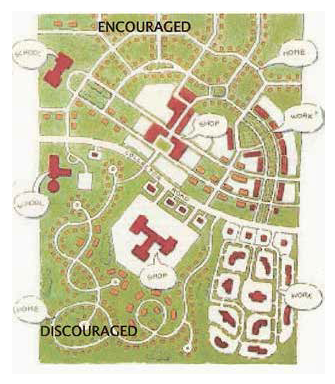
An interconnected neighborhood that connects different uses is preferred to cul-de-sacs
and separated uses.
a.
The PUD should integrate a variety of housing types and commercial uses through an interconnected street network oriented towards pedestrian activity. Traditional neighborhood design is favored over conventional design. Smaller projects or projects with specific site constraints may only have a single land use or fewer street connections but must still meet as many criteria as possible.
b.
Adjacent land uses shall be compatible with one (1) another and with adjacent developments.
c.
Mixed-use buildings (residential dwellings above compatible commercial or office uses) are encouraged.
d.
Commercial "strip" development that separates buildings from the street with large parking lots is discouraged. Commercial development oriented towards pedestrians and adjacent neighborhoods is encouraged. In a residential PUD, commercial uses will be evaluated based on the architectural and design criteria and the economic benefit to the to the City.
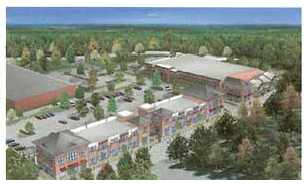
This picture illustrates how a large retail center can avoid being a "strip" center.
Parking is behind the building, office uses are on the second floor and windows make
the building transparent.
(2)
Architectural and design criteria. PUD architecture and building design shall demonstrate the cohesive planning of the development and present a clearly identifiable design feature throughout, while also demonstrating creativity in the design of individual lots. A successful PUD will include a diversity of building styles and types that create an attractive living environment, as promoted by the following criteria:
a.
The same exterior building elevation shall not repeat itself within three hundred twenty (320) feet of street frontage, or four (4) consecutive building lots.
b.
A variety of building materials should be utilized, including colors that vary but are selected for compatibility.
c.
Buildings should be "articulated" by breaking up flat surfaces with balconies, stepbacks, projections and other three-dimensional details that create shadow lines.
d.
If garages are accessed from the street, garages shall be set back a minimum of five (5) feet behind the front of the house, so that the garage is not the dominant visual feature of the structure.
e.
The rear of a building shall not front on a local or collector street. The preferred building orientation is for building entrances to front the street. It is also acceptable for the side of a building to front a street if it is a corner lot. The intent of this requirement is to encourage a livable streetscape that avoids "dead streets" and integrates adjacent neighborhoods. This requirement is applicable to every street except those that have pre-existing conditions that make houses facing the street undesirable or impossible.
f.
Commercial and multi-family residential building design should be oriented towards pedestrians, as provided for by the following criteria:
1.
Place parking on the side or rear of buildings rather than the front of buildings.
2.
Build up to the sidewalk and include an entrance from the sidewalk.
3.
For commercial uses, make the building front "permeable" through windows and doors.
4.
The design of commercial, multi-family, or mixed use buildings will be evaluated based on the building's relationship to the streetscape - the mass and bulk of the building should be at an appropriate ratio to the width of the street.
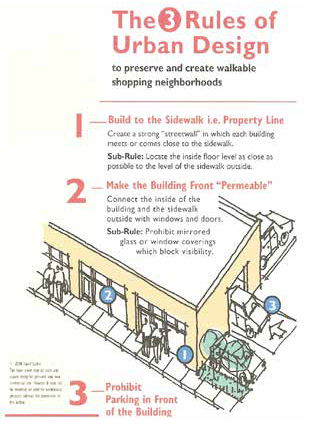
(3)
Perimeter criteria. The PUD shall take into account the use and character of adjacent neighborhoods to ensure that the PUD is compatible with its surroundings. The perimeter streets and boundaries of the PUD shall conform to the following standards:
a.
If the use, character or intensity of the PUD is not compatible with adjacent neighborhoods, the nuisance shall be minimized through appropriate setbacks, landscaping and screening.
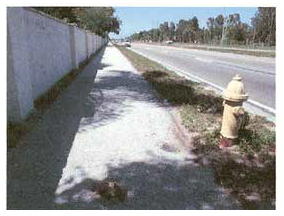
The tendency of PUDs is often to isolate themselves from their surroundings, which
can result in dead streets.
b.
If the PUD is compatible with surrounding neighborhoods (or with what is likely to be developed in the future), the neighborhoods shall be integrated to the maximum extent possible in order to prevent isolated neighborhoods and "dead streets" between developments. Perimeter streets shall serve as the "glue" between adjacent developments. This is provided for by the following criteria:
1.
Buildings shall front on the perimeter streets of the PUD so that they face out of the development unless the condition of adjacent properties is undesirable or the circumstances of the site dictate otherwise.
2.
Stub-outs on streets shall allow for future connections to undeveloped parcels.
3.
Frequent intersections with perimeter roads shall connect the interior street network with the exterior street network. If an adjacent development includes a stub-out or intersecting road, the PUD shall continue the street into the development.
4.
When appropriate, higher intensity uses such as townhomes, condos, parks, community facilities and commercial uses shall be located on perimeter streets to keep traffic off of minor streets and to amenitize perimeter streets.
5.
Landscaping, street trees and sidewalks shall be included on perimeter streets.
6.
Consideration of appropriate uses, setbacks and character of perimeter streets shall account for expected traffic volume.
(4)
Affordable housing. PUDs shall seek to adopt strategies to increase the supply of affordable housing. Affordable housing is a benefit to the City that can be exchanged for flexibility in other areas. Examples of affordable housing strategies include, but are not limited to, the following:
a.
Deed restrictions on the price of housing. With this strategy, the price of certain housing units remains affordable to residents who make a set percentage of the median income (often fifty percent [50%] or eighty percent [80%]). Developers should work with a local housing authority to determine the appropriate pricing structure.
b.
Owner-occupancy requirements. This strategy places deed restrictions on whom may own the housing. By limiting ownership to residents who derive ninety percent (90%) of their income from the City, speculation is prevented and housing costs are kept down.
c.
Partnerships with essential workforce providers. Developers may partner with the school system, the hospital or other essential employers to provide deed-restricted employee housing.
d.
Cash contributions to the County Housing Authority. These funds shall be used specifically for City housing.
e.
Size restrictions. Developers can provide more affordable housing by building smaller units that cost less.
(5)
Energy efficiency measures. PUDs shall seek to adopt energy efficiency measures that decrease the amount of water, energy or waste that households or businesses generate, and builders are encouraged to look to the LEED and Energy Star systems for guidance on green building strategies. Some of the key energy saving measures of LEED and Energy Star include:
a.
Building design and orientation. Buildings should be oriented to face within twenty percent (20%) of due south for maximum solar exposure and designed for day-lighting that reduces the need for electricity. Trees should be placed strategically to maximize energy savings. Recycling bins can be built into homes.
b.
Water conservation. Grey water systems, rainfall capture for lawn-watering, xeriscaping and low-use toilets and faucets are among strategies that can conserve water.
c.
Construction techniques. Energy needs can be reduced through the use of proper insulation, reduction of leaks, light-colored roofs, green roofs and energy-efficient windows and doors. Energy Star-rated appliances, efficient heating and cooling systems and compact fluorescent lamps can be installed.
d.
Building materials. Using local or recycled materials can cut down on energy use. Construction waste should be recycled.
e.
Renewable energy sources. Buildings can incorporate solar or geothermal power systems or be designed so that these systems may be included in the future.
(6)
Parks and open space criteria. Parks and open space shall be integrated within the PUD. Multi-family and higher density environments necessitate a variety of common open space and recreational opportunities. While there is no specific requirement for open space as a minimum percentage of total project area, as a general rule, required total acreage may be offset by the high quality of a particular open space plan.
a.
All housing shall be within a one-quarter-mile, five-minute walk of at least a half-acre park.
b.
Open space and parks shall be useful to residents and incorporate both passive and active recreational opportunities.
c.
Environmentally sensitive areas must be preserved.
d.
The PUD shall include trails and bike paths that connect to destinations outside the development whenever possible.
(7)
Setbacks.
a.
Setbacks within a PUD are flexible to an extent. Setbacks interior to a privately owned area (side setbacks, rear setbacks and setbacks from private driveways) shall meet all fire and building codes of the City. Exterior setbacks (those that front a public right-of-way) shall meet the following minimum standards:
1.
Single family units: fifteen-foot front yard setbacks.
2.
Multi-family dwellings or townhouses: ten-foot front yard setbacks.
3.
Commercial or mixed-use buildings: Zero (0) setbacks may be approved if an analysis of the architecture and design of the building and the relationship between the building's mass and bulk and the width of the street warrants it.
4.
In exceptional circumstances, the City may authorize even smaller setbacks than those provided above if warranted by the benefits provided by the PUD.
b.
In order for a PUD to include setbacks that are smaller than those of the underlying conventional zoning district, the PUD development plan shall ensure that smaller setbacks will contribute to, and be accompanied by, the following benefits:
1.
Sufficient parks and open space (see Subsection (c)(6)), such that public recreational opportunities offset the loss of private yard space.
2.
A greater diversity of housing types and mixed use.
3.
An attractive streetscape and pleasant pedestrian environment (see street criteria and architectural and design criteria).
4.
Affordable housing.
c.
Reduced setbacks shall also avoid creating substantial negative impacts, such as:
1.
Difficulties in the provision of public utilities and services.
2.
Unnecessary traffic congestion.
3.
Nuisances to property owners.
4.
Unsafe building design (must meet all City fire and building codes).
(8)
Streets. The maximum street width in PUDs shall be the street standards described in the Public Works Manual—thirty-six (36) feet for local and collector residential streets and forty (40) feet for commercial collector streets. PUDs may include narrower streets if certain criteria are met in order to prevent traffic congestion and provide emergency service access. The following street standards apply to all streets in PUDs. When more stringent criteria for narrower streets are required, those are also stated.
_____
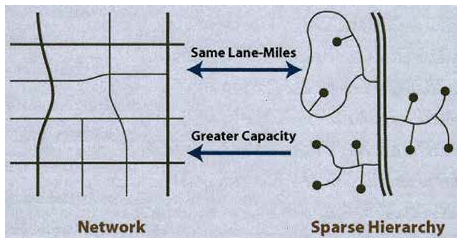
a.
An interconnected street network in the form of a grid-like pattern that eliminates cul-de-sacs is encouraged in order to provide emergency vehicles with at least two (2) access points to each structure, improve pedestrian access and create multiple routes from origins to destinations. This requirement is mandatory for narrower streets to ensure adequate emergency service.
b.
Sidewalks must be at least five (5) feet to eight (8) feet in width and on both sides of the street.
c.
Landscaping strips with street trees shall separate streets from the sidewalks.
d.
Blocks must be no longer than six hundred forty (640) feet without being broken up by an intersection. For narrower streets, blocks should be in the three hundred (300) feet to four hundred (400) feet range in length.
e.
Bulb-outs and pedestrian crossings shall be included to promote pedestrian activity.
f.
The design of streets and parking shall allow for adequate fire lanes. For narrower streets, a parking enforcement plan and other measures to provide adequate fire lanes must be included to ensure that emergency access is preserved.
g.
On-street bike lanes are encouraged on collector streets.
(9)
Off-street parking:
a.
Except for the following circumstances, parking shall comply with the requirements of Article VII of this Chapter:
1.
When the probable number of cars owned by occupants of dwellings in the PUD is fewer than the accepted City average (e.g., elderly housing);
2.
For nonresidential uses; or
3.
When joint use of common parking areas is proposed with varying time periods of use.
b.
Whenever the number of off-street parking spaces is reduced because of the nature of the occupancy, the developer shall provide the City with adequate assurances that the nature of the occupancy will not change.
c.
The City Council shall have discretion to grant parking reductions up to twenty percent (20%), provided that no parking reductions shall be granted for developments requiring three (3) or fewer parking spaces.
(10)
Lot size. A PUD may receive flexibility with the lot size requirements of the underlying zone district, which are six thousand (6,000) feet for residential zones.
(11)
Signage. A PUD may receive flexibility with the City's sign code regulations. (Prior code 17.03.540; Ord. 36 §5, 2007)
Sec. 16-3-650. - Effect of designation.
(a)
Approval of a PUD shall have the effect of overlaying the existing zoning and thereby adding to and modifying the existing zoning regulations. If there is conflict between the provisions of the existing zoning description and the PUD, the regulation of the underlying zone shall apply unless specifically addressed in the provisions of the approved PUD.
(b)
When a PUD is approved by the City Council, the zoning designation for that lot, tract or parcel on the official zoning map shall include the suffix "PUD". An approved site for a PUD that is zoned LDR would then have the designation "LDR-PUD." (Prior code 17.03.550)
Sec. 16-3-660. - Application submittal requirements.
Applications for approval of PUDs shall comply with the submittal requirements specified in Article VI of this Chapter. (Prior code 17.03.560)
Sec. 16-3-670. - Maintenance of open space areas, recreational areas, walkways or private streets.
(a)
It shall be the responsibility of the property owner to provide an acceptable program for the continuing maintenance of open space and recreational areas with a PUD. Such provisions shall comply with the Colorado Common Interest Ownership Act, which is contained in Article 33.3, Title 38, C.R.S. The property owner shall provide the City with copies of the declaration which creates the common interest community, or a draft outline thereof. The declaration shall become effective prior to the final approval of the PUD. At a minimum, the common interest community shall define the responsibility for continuing maintenance of open space areas including, but not limited to the following:
(1)
The landowners within the PUD may provide for and establish a corporation, duly incorporated in accordance with the laws of the State, for the ownership and maintenance of all common open space areas, walkways, recreational areas and private streets within the development.
(2)
The landowners shall be jointly responsible for the maintenance of the open space areas, recreational areas, walkways or private streets.
(3)
An open space and recreational agreement may be drafted which provide assurances that all such areas will be accessible to all residents of a residential PUD and that the areas will be maintained by the existing or future property owners. The form of the agreements shall be subject to the approval of the City.
(b)
All proposals for the maintenance of the common open space areas, walkways and private streets shall be subject to approval of the City Council. In the event that said open spaces are not properly maintained, the City may file a lien against properties within the PUD to pay for maintenance costs per state statutes. (Prior code 17.03.580; Ord. 4 §1, 2005; Ord. 36 §2, 2007)
Sec. 16-3-680. - Conflicts with other provisions of code.
Where there are conflicts between the provisions of this Article and other provisions of this Code, the provisions of this Article shall control. (Prior code 17.03.599; Ord. 36 §2, 2007)
Sec. 16-3-810. - Purpose.
The purpose and intent of this Article is to regulate sexually oriented businesses, to promote the health, safety, morals and general welfare of the citizens of the City, and to establish reasonable and uniform regulations to prevent the deleterious location and concentration of sexually oriented businesses within the City, thereby helping to reduce and eliminate the adverse secondary effects from such sexually oriented businesses. The provisions of this Article have neither the purpose nor effect of imposing a limitation or restriction on the content of any communicative materials, including sexually oriented materials. Similarly, it is not the intent or effect of this Article to restrict or deny access by adults to sexually oriented materials protected by the First Amendment or the Colorado Constitution, or to deny access by the distributors and exhibitors of sexually oriented entertainment to their intended market; neither is it the intent or effect of this Article to condone or legitimize the distribution of obscene material. (Prior code 17.03.600)
Sec. 16-3-820. - Location of establishment.
(a)
No adult entertainment establishment shall be located within five hundred (500) feet of the exterior boundary of any residential zone district, church, public or private school, child care center, public community center, park, fairground, recreation center, alcoholic beverage establishment located in the City at which alcoholic beverages are offered for sale for consumption on the premises, or area designated as an urban renewal project area pursuant to Section 31-25-107, C.R.S. Further, no adult entertainment use shall be located within two hundred (200) feet of any arterial or major collector roadways.
(b)
No adult entertainment use shall be located within one thousand (1,000) feet of any other adult entertainment use, whether such adult entertainment use is within or without the City.
(c)
The method of measurement for the one-thousand-foot restriction shall be computed by direct measurement from the exterior boundary of any area identified in Subsection (a) above, or from the nearest property line of the property upon which an adult entertainment business or establishment or other adult entertainment use is conducted, to the nearest property line of the property whereon the building in which an adult entertainment use is to occur. (Prior code 17.03.600; Ord. 4 §1, 2005)
Sec. 16-3-830. - Nonconforming use.
(a)
Any adult entertainment establishment operating at the effective date of the initial ordinance codified herein in violation of any relevant provision of Chapter 6 or 18 of this Code shall be deemed a nonconforming use. An adult entertainment establishment which is deemed a nonconforming use shall be permitted to continue operating for an amortization period of six (6) months. Such nonconforming adult entertainment use shall not be increased, enlarged, extended or altered, except that the use may be changed to a conforming use. Notwithstanding the foregoing, any adult entertainment establishment deemed a nonconforming use shall apply for a license provided for by Chapter 6, Article III of this Code within thirty (30) days of the effective date of the ordinance codified herein, or be subject to the relevant penalty provisions set forth herein and in Chapter 6, Article III.
(b)
An adult entertainment establishment lawfully operating as a conforming use pursuant to the receipt of zoning approval and obtaining a license is not rendered a nonconforming use by the location, subsequent to the grant or renewal of an adult entertainment establishment license, of any uses identified in Section 16-3-820(a) above, within the specific distance requirements noted therein. (Prior code 17.03.600; Ord. 4 §1, 2005)
Sec. 16-3-840. - Business regulations.
(a)
No licensee, manager or employee mingling with the patrons of a sexually oriented business or serving food or drinks shall be nude or in a state of nudity. It is a defense to prosecution for a violation of this Section that an employee of a sexually oriented business exposed any specified anatomical area during the employee's bona fide use of a rest room, or during the employee's bona fide use of a dressing room which is accessible only to employees. Further, no licensee or employee shall encourage or knowingly permit any person on the premises to engage in specified sexual activities, which conduct involving specified sexual activities is unlawful and shall be subject to criminal penalties as set forth in Section 6-3-510 of this Code.
(b)
Advertisements, displays or other promotional material depicting adult entertainment uses shall not be shown or exhibited to be visible to the public from pedestrian sidewalks or walkways, or from other public or semi-public areas.
(c)
Only one (1) adult entertainment establishment use shall be permitted per building; or, in other words, no building, premises, structure or other facility that contains any sexually oriented business shall contain any other kind of sexually oriented business therein.
(d)
All building openings, entries and windows shall be located, covered or screened in such a manner as to prevent a viewing to the interior from any public or semi-public area; for new construction, the building shall also be oriented so as to minimize any possibility of viewing the interior from public or semi-public areas. (Prior code 17.03.600; Ord. 4 §1, 2005)
Sec. 16-3-850. - Age limitations.
No one under twenty-one (21) years of age shall be admitted to any adult entertainment establishment where live nude entertainment and performances are featured, which live nude entertainment is characterized by the exposure of specified anatomical areas. Further, no one under eighteen (18) years of age shall be admitted to any adult entertainment establishment of any kind. The foregoing minimum age limitations also apply to any employees, agents, servants or independent contractors working on the premises during the hours when adult entertainment is being presented. (Prior code 17.03.600)
Sec. 16-3-860. - Hours of operation.
It shall be unlawful for an adult entertainment establishment and/or a sexually oriented business to be open for business, or for the licensee or any employee of a licensee to allow patrons upon licensed premises or to permit any employee to engage in a performance, solicit a performance, make a sale, solicit a sale, provide a service or solicit a service, between the hours of 1:00 a.m. and 9:00 a.m. of any particular day. Further, it shall be unlawful and a person commits a misdemeanor if, working as an employee of a sexually oriented business, regardless of whether a license has been issued for said business under this Code, engages in a performance, solicits a performance, makes a sale, solicits a sale, provides a service or solicits a service between the hours of 1:00 a.m. and 9:00 a.m. of any particular day. (Prior code 17.03.600)
Sec. 16-3-870. - Unlawful acts.
(a)
It shall be unlawful for an adult entertainment establishment and/or a sexually oriented business or for the licensee or any employee of a licensee thereto, regardless of whether a license has been issued for said business under this Code, to knowingly allow any patron upon the premises to engage in a specified sexual activity while on said premises. It shall also be unlawful for any licensee or employee of an adult entertainment establishment, regardless of whether a license has been issued for said business under this Code, to engage in a specified sexual activity while on the premises of said adult entertainment establishment. The foregoing conditions contained in this Subsection are promulgated pursuant to the terms of this Code contained in this Division, this Code and Sections 18-7-208 and 18-7-301, C.R.S.
(b)
This Division shall not apply to those areas of an adult motel that are private rooms. (Prior code 17.03.600)
Sec. 16-3-880. - Violations; penalties.
(a)
Any person or entity who operates or causes to be operated an adult entertainment establishment who violates any provision contained in this Division or does not have a valid license is subject to a suit for injunction and is subject to civil and criminal penalties as set forth in Sections 6-3-490 and 6-3-510 of this Code.
(b)
Except for the amortization period set forth in Section 16-3-830 above, each day of operation in violation of any provision of this Division shall constitute a separate offense.
(c)
Any adult entertainment establishment which engages in repeated or continuing violations of these regulations shall constitute a public nuisance. For purposes of these regulations, repeated violations shall mean three (3) or more violations of any provision set forth herein within one (1) year dating from the time of a new violation, and a continuing violation shall mean a violation of any provision set forth herein lasting for three (3) or more consecutive days.
(d)
Notwithstanding any other remedies at law or equity, the City Attorney may bring an action in the District Court for the County for an injunction against the operation of such establishments in a manner which violates any of the provisions set forth herein. (Prior code 17.03.600)

