
Rochester Hills City Zoning Code
ARTICLE 8
FLEX BUSINESS OVERLAY DISTRICTS
CHAPTER 3. - STREET DESIGN STANDARDS
This chapter establishes the street design parameters applicable in the FB overlay district.
CHAPTER 7. - RESERVED[10]
Editor's note— Ord. No. 191, § 3, adopted Sept. 26, 2022, deleted Ch. 7, §§ 138-8.700, 138-8.701 entitled "Definitions."
138-8.100 - Intent
The Flex Business (FB) Overlay District is designed to foster vital, lively, and sustainable development in strategic areas along arterial and collector roads and at major intersections in the city. The FB overlay district is adopted to implement the vision of the Master Land Use Plan, which encourages the redevelopment of older commercial sites to enhance property values and the overall appearance of the city by providing incentives for property owners to redevelop older and under-utilized commercial developments with a wider range of uses.
These form-based zoning standards regulate the major components of development: use, site design, and building design. Where traditional use-based zoning regulations emphasize the regulation of uses and contain much less specificity about design, these form-based regulations emphasize design and permit greater flexibility in use.
The intent of the form-based regulations is to direct redevelopment in a compact form that serves the need of pedestrians, bicyclists and motor vehicles equitably; provides places for planned and/or informal social activity and recreation; reduces the amount of impervious surfaces in the city; mitigates impacts on the natural environment; and creates building frontages that define the public space of streets.
(Ord. No. 191, § 3, 9-26-2022)
138-8.101 - Flex Business Overlay District Established
The FB overlay district is an optional overlay district for parcels larger than two acres. Any land that is located within the boundaries of the FB overlay district will have two zoning designations, the FB overlay district and the standard underlying zoning district as shown on the Zoning Map.
Property in the FB overlay district may continue to be used as permitted by the standard zoning district. Any new development or major redevelopment in the FB overlay district may be accomplished following either the requirements of this Article or the regulations applicable in the underlying zoning district.
(Ord. No. 191, § 3, 9-26-2022)
138-8.102 - Instructions
A.
Application of Requirements. The provisions of this Article are activated by "shall" or "must" when required, "should" or "encouraged" when recommended, and "may" when optional.
B.
Conflict. Wherever there appears to be a conflict between the regulations of this Article and other sections of the Zoning Ordinance (as applied to a particular development), the requirements specifically set forth in this Article shall prevail. For development standards not addressed in this Article the other applicable sections of this Zoning Ordinance shall be used as the requirement.
C.
Minor redevelopment. Minor redevelopment of existing buildings and uses developed in accordance with the standards of the underlying zoning district may be permitted according to the dimensional standards of this Article even if those dimensional standards violate the dimensional standards applicable in the underlying zoning district. In the case of such minor redevelopment, the Planning Commission shall determine which regulations of this Article shall apply based on the size, scale, and location of the proposed minor redevelopment.
(Ord. No. 191, § 3, 9-26-2022)
138-8.103 - Approval Process
Any proposed development using the FB overlay option shall require only site plan approval unless a use or design characteristic that requires conditional use approval as identified in this Article is proposed as part of the development.
A.
Site Plan Approval. Site plan approval shall be required in accordance with the requirements of Article 2, Chapter 2. The type of site plan review required shall be as identified in Section 138-2.200 and the site plan review process shall follow the procedures of Section 138-2.202. Site plans must contain all of the information required by Section 138-2.208.
B.
Conditional Use Approval. For any proposed development or establishment of use in a form-based district that requires conditional use approval, the application shall be reviewed following the procedures and review criteria of Article 2, Chapter 3.
C.
Site Condominium and Subdivision Development. Any proposed site condominium or subdivision in a form-based district shall be approved following the procedures contained in the City's site condominium or subdivision control ordinance with the exception that any design requirement contained in this Article shall take precedence over any similar design requirement contained in the condominium or subdivision control ordinance.
(Ord. No. 191, § 3, 9-26-2022)
138-8.104 - Existing Development in the Flex Business Overlay District
A.
Any development activity in the FB overlay district that requires administrative or sketch plan review, or does not require development review per Section 138-2.200.B may be reviewed following the requirements of this Article. Site or building improvements shall be consistent with the provisions of this Article to the greatest extent possible.
B.
Any development activity in the FB overlay district that requires site plan approval shall comply with all the requirements herein.
(Ord. No. 191, § 3, 9-26-2022)
Editor's note— Formerly codified as § 138-8.105. Ord. No. 191 deleted former § 138-8.104 entitled "Permitted and Optional Regulations," and renumbered existing § 138-8.105 accordingly, as herein set out.
SECTION 138-8.200 - Permitted Uses
Uses permitted in the FB overlay district are listed in Section 138-4.300.
(Ord. No. 170, § 17, 6-16-2014; Ord. No. 175, § 3, 6-1-2015; Ord. No. 183, § 17, 6-18-2018; Ord. No. 191, § 3, 9-26-2022; Ord. No. 196, § 8, 6-19-2023)
SECTION 138-8.300 - Street Types
Each street in and adjacent to the FB overlay district shall be assigned one of the following street functions. The street function will determine what kinds of buildings and uses can be located along that street, and how buildings will look and be placed along the street.
The following Table 9 describes the street types and their intended function. Perimeter streets are meant to carry large volumes of traffic and are primarily intended to serve the needs of vehicular traffic. Perimeter streets are major roads that already exist in the City and are defined as principal or minor arterials in the City's Master Thoroughfare Plan. Interior streets are intended to carry vehicular traffic and to promote pedestrian activity, and will be new streets that are constructed within the development or existing collector or local roads.
For the purposes of determining building frontage and placement, along with street design standards for new streets, a development plan in the FB overlay district on properties over ten acres in size shall designate all streets using one of the following four categories:
Table 9. Street Types in the FB overlay district
(Ord. No. 170, § 17, 6-16-2014; Ord. No. 191, § 3, 9-26-2022)
138-8.301 - Street Network and Blocks
Development in the FB overlay district must provide an interconnected network of streets or drives.
A.
Blocks. The street network in the FB overlay district need not form an orthogonal grid. However, sufficient intersections shall be provided to create walkable and pedestrian scale development.
1.
Block Perimeter. The maximum block perimeter in the FB overlay district is 2,200 feet.
2.
Block Length. The length of any block between intersecting streets may not exceed 500 feet without a dedicated pedestrian pass-through providing access through the block to another street.
3.
Interior Streets. Interior streets shall connect to other streets. Jogs or centerline offsets shall be at least 100 feet for interior streets.
B.
General Requirements.
1.
Street Connectivity. Street connections for the continuation of the street network onto adjacent properties shall be provided when the potential exists for the continuation of those streets on adjacent parcels. A minimum of one future street connection shall be provided for each 600 feet or fraction thereof of common property line between two parcels.
2.
Public Internal streets in the FB overlay district for parcels over ten acres shall be dedicated to the public to ensure connectivity between adjacent parcels.
3.
Cross-Access. Blanket cross-access easements shall be provided for all streets and drives in a development to ensure that the internal street system may connect to the internal street system on adjacent parcels. The blanket cross-access agreement shall provide for reciprocal cross-access for connection to streets on adjacent parcels without limitation.
4.
Public Transit Nodes. Area shall be set aside to accommodate a public transit node every 1,500 feet along a perimeter street to accommodate future transit service.
5.
Pedestrian Circulation Network. Development in the FB overlay district shall incorporate a pedestrian circulation network that connects all portions of the site with the regional pathway network via dedicated sidewalks or pedestrian pathways.
(Ord. No. 191, § 3, 9-26-2022)
138-8.302 - Street Design
Street "Zones" for parcels greater than ten acres, or where internal streets are incorporated into the site design. Streets consist of three zones: the travelway zone, the parking zone, and the pedestrian zone. The elements that are included in each street zone are as follows (see Figure 2):
A.
Travelway Zone. The travelway zone accommodates vehicles in transit, and consists of vehicle travel lanes, left turn lanes, public transit infrastructure (such as dedicated rapid bus lanes or light rail tracks) and boulevard medians.
B.
Parking Zone. The parking zone accommodates vehicles at rest and includes on-street parking lanes. The parking zone can also accommodate public transit elements by replacing some parking spaces with transit stops.
C.
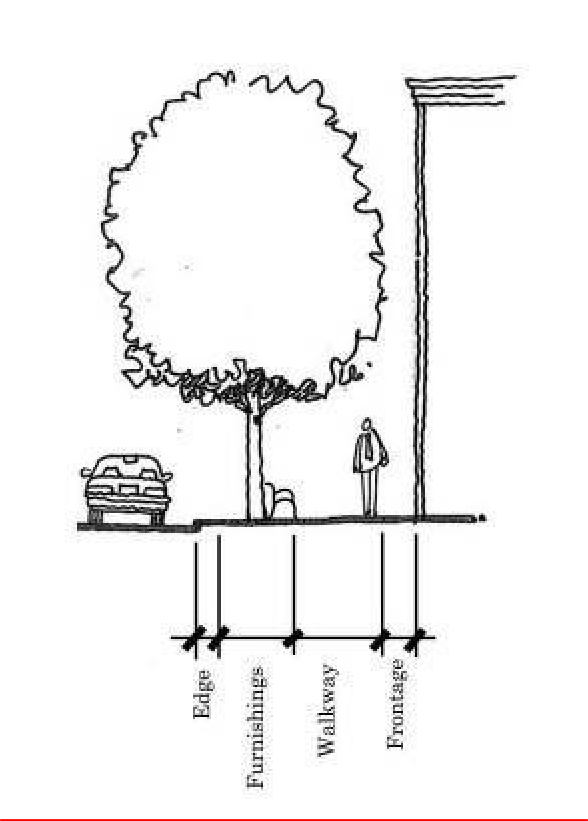
Pedestrian Zone. The pedestrian zone is located between the curb and the edge of the right-of-way or road easement. The pedestrian zone is further separated into four sub-zones (see Figure 3 on following page):
1.
Edge Area. The edge area is the space adjacent to and including the curb. The edge area is necessary to allow the doors of cars parked along the street to open and close freely, and must have a width of 2.5 feet. In general the edge area shall remain clear of obstructions, but streetscape elements such as parking meters, light posts, traffic control signs, and tree grates may be located in the edge area.
2.
Furnishings Area. The furnishings area accommodates amenities such as street trees, planters, and sidewalk furniture. The furnishings area can be paved (with street trees located in tree grates), or it may be landscaped with a street lawn. Outdoor eating areas or other similar uses associated with a use in an adjacent principal building may be located in a furnishings area.
3.
Walkway Area. The walkway area is the basic sidewalk area where pedestrians walk. The walkway area must remain clear of obstructions at all times to allow free pedestrian travel. No permanent structures or uses are permitted in the walkway area.
4.
Frontage Area. The frontage area is the portion of the pedestrian zone adjacent to the edge of the right-of-way or road easement when a building is located at the lot line. When the building is set back from the lot line, the pedestrian zone will not have a frontage area, and any frontage area will serve as walkway area. The frontage area is intended to accommodate door openings, window shoppers, and the tendency of people to shy away from walls higher than waist height. The frontage area may also be used for outdoor eating areas or other similar accessory uses associated with a use in the adjacent principal building.
(Ord. No. 170, § 17, 6-16-2014; Ord. No. 191, § 3, 9-26-2022)
138-8.400 - In General
A.
Lot Design Standards. The lot design standards set forth where buildings, parking, and other improvements shall be placed on a lot. The lot design standards are based on the type of street (see Section 138-8.300) upon which the lot has frontage.
B.
Building Entrances. Buildings located on corner lots or lots that front upon two or more streets shall be required to have a principal entrance onto each street or a corner entrance oriented toward the intersection of the two streets.
C.
Density. There are no maximum or minimum density standards for residential dwelling units in the FB overlay district. The number of dwelling units that may be developed will be determined by lot design requirements such as the maximum height, minimum parking requirement for buildings and places of interest requirements.
(Ord. No. 191, § 3, 9-26-2022)
138-8.401 - Setback Requirements
Buildings in the FB overlay district shall comply with the following minimum and maximum setback requirements. When there is a minimum and a maximum requirement for a setback, the building must be located within the build-to area that is created by the minimum and maximum setback requirement.
Table 10 Setback Requirements
(Ord. No. 170, § 17, 6-16-2014; Ord. No. 191, § 3, 9-26-2022)
Editor's note— Ord. No. 191 deleted former § 138-8-402 entitled "Front Yard Landscaping Requirements," which was derived from Ord. No. 170, § 17, adopted June 16, 2014.
138-8.500 - Private Frontage Requirements
This Section 138-8.500 establishes private frontage standards for buildings in the FB overlay district. The private frontage is the area between the building façade and the front property line. The design and treatment of the building façade and the private frontage area define the character of the building and how that building relates to the street. This, in turn, defines the character and context of the street itself.
Buildings in the FB overlay district shall comply with the requirements of one of the following private frontages. Note that any specific dimensional requirements included in this section are in addition to any other dimensional requirements of this article or ordinance.
A.
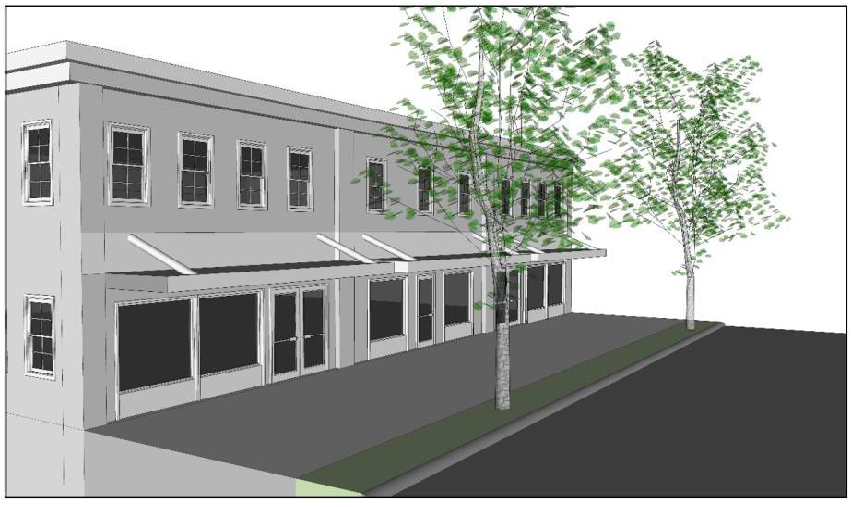
Shopfront. This frontage type is intended to encourage ground floor commercial uses in multiple story buildings that are typical in commercial main streets. Buildings feature ample windows for displays and open views to indoor activity on the ground floor. Primary entrances are prominent and street-facing, and they may be recessed at the doorway up to five feet. Awnings are encouraged to shield pedestrians from the elements and minimize the impact of direct sunlight near storefronts. Below: Shopfront axonometric view illustrating pedestrian-oriented storefront that encourages walking throughout the FB District. The storefront glazing, which allows views inside the building, is a critical element that attracts interest.
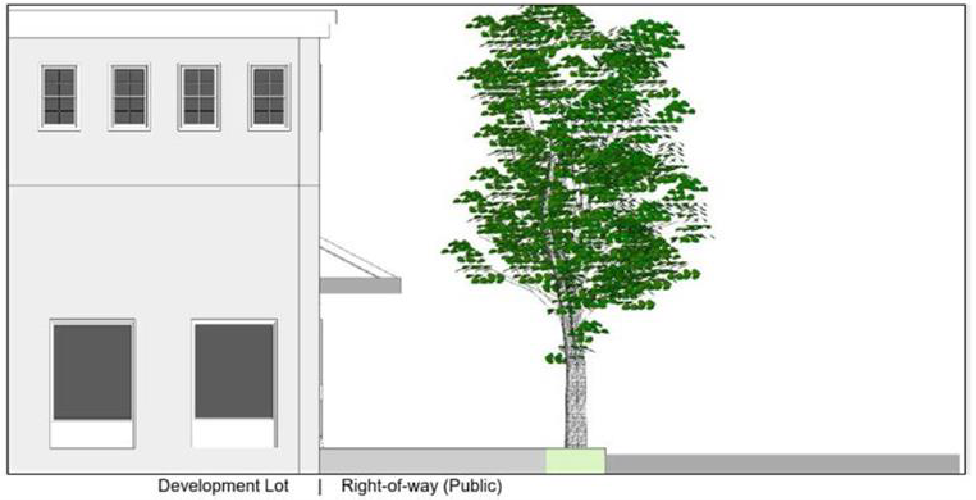
Below: Section view of shopfront illustrating relationship of storefront to pedestrian walkway. Street trees and awnings provide protection from the elements and reduce the impact of high temperatures during warm weather months.
1.
Building Width. Buildings shall be subdivided into bays not greater than 40 feet in width along the building's frontage facing the perimeter or main street. Building bays shall be defined by vertical articulations such as changes in wall plane, vertical projections, materials, or other methods. Each bay shall have a minimum of one building entrance and building entrances shall be spaced not more than 50 feet apart.
2.
Residential Dwelling Units. Residential dwelling units shall be located on floors above non-residential uses. No non-residential use may be located on a floor above a residential dwelling use, and residential and non-residential uses located on the same floor shall be designed such that the hallways or entrances providing access to the different use areas of the building are physically separated.
3.
Ground Floor Uses along a perimeter or main street shall include retail or restaurant uses or other uses that generate pedestrian traffic throughout the day.
4.
Parking. Off-street parking is encouraged to be located underneath or behind the building, or in a parking structure for parcels over ten acres.
B.
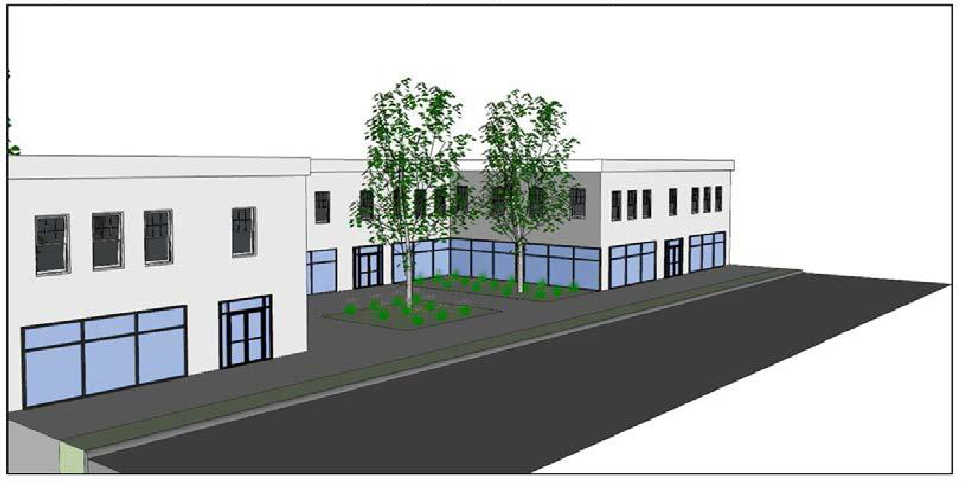
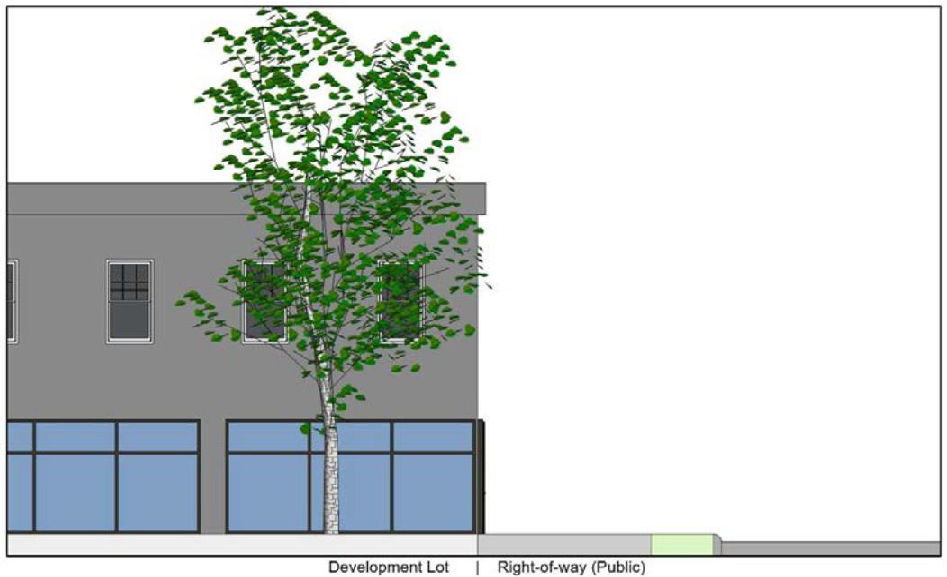
Forecourt. Forecourts are an additional design element incorporated into a shopfront or arcade frontage. The main façade of the building is at or near the build-to line, while a maximum of 50 percent of building frontage is set back up to 40 feet from the build-to line, creating a small court space. The space could be used as an entry court or shared garden space for apartment buildings, as an additional restaurant seating area within retail and retail service use areas, as a small park or plaza, or similar use.
Below: Forecourt axonometric view shows how the building design creates a recessed ground floor courtyard area. The courtyard is typically a combination of hardscape and landscape area. Examples of uses include outdoor dining and pedestrian plaza areas.
Below: Forecourt section view shows the relationship of the development lot to the right-of-way. The courtyard area is not visible from this angle, as it is behind the portion of the building placed at the build-to line.
1.
Forecourts may be placed at any location along the frontage provided that the forecourt is enclosed on three sides by building walls. The forecourt area shall have a mix of paved areas (brick, stone or concrete pavers or concrete), landscaped areas (planted with a mix of flowers, plants, shrubs, and trees), and street furniture (such as chairs, tables, benches, and similar features). Lawn areas are not appropriate for courtyards and may only be used as a minor accent to an otherwise landscaped area. Outdoor dining is encouraged.
2.
Parking. Surface off-street parking shall be set back at least 40 feet from the front building façade or located underneath the building or in a parking structure.
3.
Ground Floor Uses along a main street shall include retail or restaurant uses or other uses that generate pedestrian traffic throughout the day.
C.
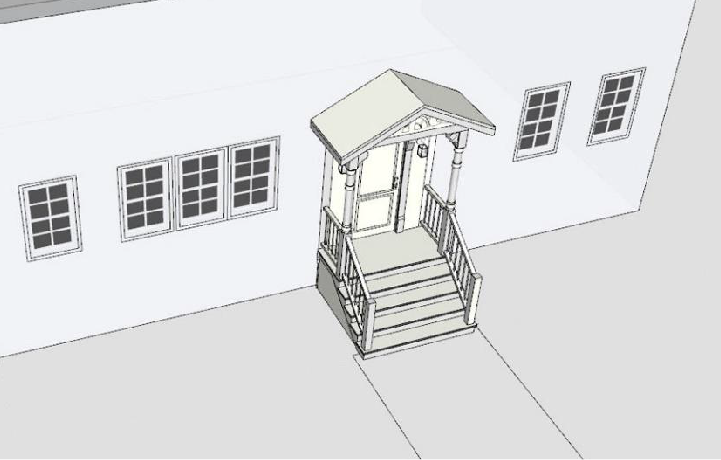
Stoop Frontage. Stoop frontages feature a first floor that is elevated above the sidewalk to provide privacy for first floor windows. The exterior entrance is usually from an exterior stair and landing. This frontage is suitable for ground-floor residential units in an attached building.
1.
Setback. The stoop or porch area shall be set back a minimum of two feet from the front lot line.
2.
Access and Entry. The principal entrance to each unit shall be located at ground level and shall face a street. Secondary entrances facing the side or rear of the building are permitted.
3.
Exposure to Light and Air. Each unit in a stoop frontage building shall have at least two sides exposed to the outdoors.
4.
Parking. Garage doors may only face a secondary street or rear yard area, and all dedicated off-street parking shall be located behind the building.
D.
Lawn Frontage. In a lawn frontage, the building is set back from the street with a landscaped front yard area.
1.
Access and Entry. The principal entrance to the building shall be located at ground level.
2.
Garages shall be set back a minimum of ten feet behind the primary street-facing façade of the building.
(Ord. No. 191, § 3, 9-26-2022)
138-8.501 - Building Height
Permitted building heights in the FB overlay district are as follows:
A.
Maximum Building Height.
1.
Two stories or 30 feet.
2.
Three stories or 45 feet for parcels that are at least three acres in size along Rochester Road or at least four acres in size elsewhere in the FB overlay district.
B.
Conditional Approval for Additional Height. Buildings in the FB overlay district may be permitted up to an additional story and up to 15 additional feet in height for sites at least ten acres in size with conditional approval. Standards for granting conditional approval shall include:
1.
The siting of the building or buildings is designed to maintain a reasonable expectation of privacy for adjacent residential uses and shall not negatively impact residential uses with respect to the enjoyment of direct sunlight.
2.
The site shall include a third place of interest, as regulated in Section 138-8.601, which shall be dedicated either to landscaping, natural feature preservation, or usable open space.
3.
Additional setbacks as noted in Table 10 shall apply.
(Ord. No. 191, § 3, 9-26-2022)
138-8.502 - Building Design Standards
A.
Façade Transparency. Buildings in the FB overlay district shall maintain a minimum level of transparency on the ground and upper stories. All windows must be transparent, non-reflective glass.
1.
Ground Floor Non-Residential Uses shall maintain a minimum of 70 percent façade transparency, measured between two feet and eight feet above the sidewalk.
2.
Upper Floor Non-Residential Uses shall maintain a minimum of 30 percent façade transparency measured from floor to floor.
3.
Ground Floor Residential Uses shall maintain a minimum of 25 percent façade transparency measured from exterior grade level to the second story floor level.
4.
Upper Floor Residential Uses shall maintain a minimum of 20 percent façade transparency measured from floor to floor.
B.
Building Materials. Exterior materials that may be used on buildings in the FB overlay district fall into two categories, primary and accent building materials. The building material requirement is based on the exterior wall surface area, excluding windows and doors. Primary building materials shall cover a minimum of 80 percent of the exterior wall surface area, while accent materials may be used on up to 20 percent of the exterior wall surface area.
1.
Primary Building Materials include:
a.
Durable natural building materials such as brick, stone, and other similar materials.
b.
Exposed logs, timbers, or wood trim.
c.
Alternative building materials may be approved when the applicant demonstrates to the satisfaction of the Planning Commission that the application of alternative materials is consistent with the intent of this section and will not have an unreasonable impact on adjacent uses. For demonstration purposes, building material specification sheets, photographs of existing application and material samples are encouraged to illustrate that durability and appearance equivalency with materials listed in this section will be maintained.
2.
Accent Building Materials include:
a.
Decorative precast concrete block.
b.
Metal panels and trim.
c.
Glass.
d.
Vinyl siding and non-durable building materials such as EIFS may be used as accent materials but may cover a maximum of ten percent of any exterior building façade's wall area.
e.
Any other material except those specifically prohibited by the following subsection 3.
3.
Prohibited Building Materials include:
a.
Plain concrete block (both painted and unpainted).
b.
Plywood or T-111 panels.
c.
Aluminum siding.
4.
Compliance with LEED-NC Standards. LEED certification for new buildings is encouraged. Absent certification for the entire building, compliance with the following building material credits is encouraged: MR 4.1 or MR 4.2, MR 5.1 or MR 5.2, MR 6, and MR 7.
C.
Ground Floor Ceiling Height. Non-residential buildings or building use areas shall have a minimum ground floor ceiling height of 15 feet. Residential buildings or building use areas shall have a minimum ground floor ceiling height of ten feet.
D.
Encroachments. Certain building elements may encroach into a setback area or right-of-way area. Building elements that may encroach into setback or right-of-way areas are as follows:
1.
Balconies. Balconies on upper stories may encroach up to six feet into any required setback area and up to four feet into any right-of-way area.
2.
Porches. Unenclosed covered front porches with a minimum depth of eight feet may encroach into a front yard setback area, provided that the front porch maintains a minimum setback of five feet from any right-of-way line.
3.
Stoops. Unenclosed and uncovered front stoops may encroach up to five feet into a front yard setback area, provided that the stoop maintains a minimum setback of five feet from any right-of-way line.
4.
Awnings. Ground-story awnings may encroach up to ten feet from the face of the building into a setback or right-of-way area. Awnings shall have a minimum of eight feet clear space between the sidewalk and the bottom of the awning or any awning support structure. If an awning projection of ten feet would conflict with the placement of any street lighting or street tree, the awning projection shall be reduced to resolve the conflict.
5.
Bay Windows. Bay windows on the ground story may encroach up to three feet into any required setback area but shall not encroach into a right-of-way area. Bay windows on upper stories may encroach up to three feet into a setback or right-of-way area.
6.
Eaves. Roof eaves may encroach up to three feet into any setback or right-of-way area.
E.
Service Areas. All service areas, including utility access, above ground equipment, and dumpsters shall be located in side or rear yards and shall be screened from view from all streets.
(Ord. No. 191, § , 9-26-2022)
138-8.600 - Parking
The following parking requirements are applicable in the form-based district, and replace similar requirements set forth in Article 11. Any requirement of Article 11 that is not superseded by one of the following parking requirements shall remain in effect in the form-based district.
A.
Minimum Parking Required.
1.
Residential Uses. Off-street parking shall be provided in accordance with the minimum requirements of Section 138-11.204. The Planning Commission may reduce the number of required spaces as described in Section 138-11.202, Modification of Standards.
2.
One parking space per 400 square feet of nonresidential floor area.
B.
Maximum Parking Permitted. The maximum surface parking requirement shall be 125 percent of the minimum parking requirement.
C.
On-Street Parking. On-street parking spaces shall be counted toward the minimum parking requirement.
D.
Parking Lot Layout. Parking lot layout, maintenance, and construction shall comply with all of the requirements of Article 11.
The Planning Commission may modify the dimensional requirements of Article 11 based on evidence submitted by the applicant indicating that the modification will result in superior site design, will achieve the same purpose as if the parking lot were designed according to conventional standards, and will function in a safe and efficient manner.
E.
Parking Lot Access. Parking lots or parking structures may only be accessed from a minor street.
F.
Parking Structures. Parking structures are permitted in the form-based district on parcels larger than ten acres, provided that they comply with the following requirements:
1.
Setback from Arterial and Main Streets. The parking structure and all parking spaces within shall be set back a minimum of 80 feet from any Arterial or Main street. If liner shops are located on the ground floor of a parking structure located along a main street, the building shall not be considered a parking structure, but rather shall be considered a shopfront building subject to the requirements of Section 138-8.500.A.
2.
Setback from Minor Streets. Parking structures shall be set back a minimum of seven feet from any minor street. When located adjacent to a residential zoning district, the structure shall comply with the setback standards in Section 138-8.401.
3.
Height. Parking structures may not exceed the maximum height permitted for a building at that location within the FB overlay district.
4.
Design Guidelines. Any parking structure façade that will be visible from a perimeter or interior street, civic/open space, or building shall comply with the following design guidelines:
a.
The façade shall comply with the building material requirements of Section 138-8.502.
b.
The parking structure shall have the appearance of a flat-roofed building with a parapet cap type.
c.
The ground floor of the structure shall be differentiated from upper floors through the use of a horizontal expression line.
d.
Exterior elevator towers or stair wells shall be open to public view, or enclosed with transparent glazing.
e.
Views into the parking structure shall be minimized. Façades of parking structures shall be designed without continuous horizontal parking floor openings. Decorative trellis work or another architectural element that will screen the view of parked cars in the structure shall be provided on all exterior openings.
G.
Loading Space. There are no specific loading requirements in the FB overlay district; however, buildings and sites shall be designed such that trucks and large delivery vehicles may be accommodated on the site without encroaching onto a perimeter or interior street. Further, loading facilities such as truck docks shall be located and screened such that they are not visible from any perimeter or interior street.
(Ord. No. 189, Pt. 1, 12-14-2020; Ord. No. 191, § 3, 9-26-2022)
138-8.601 - Places of Interest
In keeping with the intent of the FB overlay district to create a unique and vibrant spaces, all developments in the FB overlay district shall provide outdoor places of interest, one of which shall serve the general public.
A.
A place of interest shall include at least two of the following site elements or amenities listed in the table that follows, provided that such spaces are open, inviting, and accessible and total a minimum of five percent of the gross floor area of the buildings. Two of the same types of elements may be selected, provided they are two distinct locations that meet the requirements of this section. All places of interest shall be maintained in good condition on a year-round basis.
B.
Alternatives. Alternatives to the places of interest requirements herein may be permitted if the applicant is able to demonstrate that there is insufficient space for any of the above options. Alternatives may be permitted if the Planning Commission finds the proposed alternative place(s) of interest is/are in keeping with the spirit of this section. Any alternatives shall result in engaging, interesting, attractive, safe, context-sensitive, and comfortable places.
(Ord. No. 191, § 3, 9-26-2022)
Editor's note— Formerly entitled "Outdoor Amenity Space," which was amended as herein set out above by Ord. No. 191.
138-8.602 - Landscaping and Buffering
All landscaping requirements of Article 12 shall apply in the FB overlay district. For properties developed under the FB overlay option, the required buffer type is based on the predominant use that is most proximate to the adjacent district.
If the majority of the property will be developed with multiple-family dwellings, a C type buffer will be required. If a majority of the property will be developed with commercial uses, then a D type buffer will be required.
(Ord. No. 191, § 3, 9-26-2022)
138-8.603 - Signs
Exterior signs in the FB overlay district shall be governed by the sign requirements of Article VI of Chapter 134 of the Code of Ordinances of the City of Rochester Hills.
(Ord. No. 165, § 11, 3-19-2012; Ord. No. 182, § 6, 2-5-2018; Ord. No. 191, § 3, 9-26-2022)
Editor's note— Ord. No. 191 deleted former § 138-8-604 entitled "Modification of Dimension and Design Standards," which was derived from Ord. No. 189, Pt. 2, adopted Dec. 14, 2020.
SECTION 138-8.800 - Temporary Moratorium
(a)
Purpose.
1.
The City has identified concerns relating to the location and regulation of Flex Business Overlay Districts including, but not limited to, building height, density of development, compatibility with residential zoning and development, parking, and generally whether the Flex Business Overlay Districts are appropriately located and are accomplishing the intended goals and objectives of fostering and encouraging vital, vibrant, and sustainable mixed use developments, incorporating flexible, diverse, and creative development concepts.
2.
In order to maintain the status quo while the City studies and reevaluates Flex Business Overlay Districts zoning, and considers possible modification thereof, the City Council determines it is in the City's best interest to adopt a moratorium temporarily suspending the City's processing or acceptance of applications, plans, or permits for the development, improvement, or alteration of land under Flex Business Overlay Districts regulations.
Moratorium. A moratorium is established suspending the processing and acceptance of any applications, plans, or permits for the development, improvement, or alteration of any land parcel, lot, or premises under Article 8 Flex Business Overlay Districts (FB-1, FB-2, and FB-3) of the Zoning Ordinance. This moratorium does not apply to any development or building project that received, or that has submitted complete plans to the City for, site plan approval on or before February 25, 2022. This moratorium shall remain in effect until repealed by the city council or the expiration of 180 calendar days, whichever occurs sooner.
(Ord. No. 635, § 1, 4-11-2022)

