
Rose Township City Zoning Code
ARTICLE I
- IN GENERAL
Sec. 38-1.- Short title.
This chapter shall be known as and may be cited as the Township of Rose Zoning Ordinance, Oakland County, Michigan.
(Ord. No. 151, § 1.01, 6-13-2007)
Sec. 38-2. - Enactment.
The ordinance from which this chapter is derived is enacted under Michigan zoning enabling act, Public Act No. 110 of 2006 (MCL 125.3101 et seq.), for the regulation of land development and the establishment of districts which regulate the use of land and structures to meet the needs for food, fiber, energy, and other natural resources, places of residence, recreation, industry, trade, service, and other uses of land, to ensure that use of the land is situated in appropriate locations and relationships, to limit the inappropriate overcrowding of land and congestion of population, transportation systems, and other public facilities, to facilitate adequate and efficient provision for transportation systems, sewage disposal, water, energy, education, recreation, and other public service and facility requirements, and to promote public health, safety, and welfare.
(Ord. No. 151, § 1.02, 6-13-2007)
Sec. 38-3. - Conflicting regulations.
Wherever any provision of this chapter imposes more stringent requirements, regulations, restrictions or limitations than are imposed or required by the provisions of any other law or ordinance, then the provisions of this chapter shall govern. Whenever the provisions of any other law or ordinance impose more stringent requirements than are imposed or required by this chapter, then the provisions of such law or ordinance shall govern.
(Ord. No. 151, § 1.03, 6-13-2007)
Sec. 38-4. - Scope.
No building or structure, or part thereof, shall hereafter be erected, constructed or altered and maintained, and no new use or change shall be made or maintained of any building, structure or land, or part thereof, except in conformity with the provisions of this chapter.
(Ord. No. 151, § 1.04, 6-13-2007)
Sec. 38-5. - Rules of construction and usage.
(a)
Construction. The following rules of construction apply to this chapter:
(1)
The particular shall control the general.
(2)
In case of any difference of meaning or implication between the text of this chapter and any caption or illustration, the text shall control.
(3)
Words used in a singular number shall include the plural, and the plural shall include the singular, unless the context clearly indicates the contrary.
(4)
The word "shall" is always mandatory and not discretionary. The word "may" is permissive, with the decision made by the planning commission, township board, or board of zoning appeals, as indicated.
(5)
The masculine gender includes the feminine and neuter.
(6)
All measurements shall be to the nearest integral number, except density and lot measurements.
(7)
The term "used for" includes "arranged for," "designed for," "intended for" and "maintained for."
(8)
The term "building" includes the term "structure." The term "build" includes the terms "erect" and "construct."
(9)
The term "person" includes an individual, a corporation, a partnership, an incorporated association, or any other entity recognizable as a "person" under the laws of the state.
(10)
Whenever a word or term defined hereinafter appears in the text of this chapter, its meaning shall be construed as defined herein. Words or terms not herein defined shall have the meaning customarily assigned to them.
(b)
Usage of conjunction. Unless the context clearly indicates the contrary, where a regulation involves two or more items, conditions, provisions, or events connected by the conjunction "and," "or," or "either/or," the conjunction shall be interpreted as follows:
(1)
The term "and" indicates that all the connected items, conditions, provisions, or events shall apply;
(2)
The term "or" indicates the connected items, conditions, provisions, or events may apply singly or in any combination (i.e., "or" also means "and/or");
(3)
The term "either/or" indicates the connected items, conditions, provisions or events shall apply singly, but not in combination.
(c)
References to township, county. References to township herein shall mean Rose Township and references to county herein shall mean Oakland County.
(Ord. No. 151, § 23.01, 6-13-2007)
Sec. 38-6. - Definitions.
The following words, terms and phrases, when used in this chapter, shall have the meanings ascribed to them in this section, except where the context clearly indicates a different meaning:
Accessible means having lot frontage on an improved and certified public road or a private road easement that has received final approval by the township and meets the requirements of chapter 16, article IV, pertaining to roads standards. The term "accessible" does not include an unimproved right-of-way or a private easement that does not meet the requirements of chapter 16, article IV, pertaining to roads standards.
Accessory building. See Building, accessory.
Accessory use means a use subordinate to the main use of a lot and used for purposes clearly incidental to those of the main use.
Activity means any use, operation, development or action involving a change in, on or to uplands or bottomlands caused by any person, including, but not limited to, constructing, operating or maintaining any use or development; erecting buildings or other structures; depositing or removing material; dredging; ditching; land balancing; draining or diverting water; pumping or discharge of surface water; grading; paving; vegetative clearing or excavation; and mining or drilling operations.
Adult care facility means a facility for the care of adults over 18 years of age, as licensed and regulated by the state under Public Act No. 218 of 1979 (MCL 400.701 et seq.), and rules promulgated by the state department of human services. Such organizations shall be defined as follows:
(1)
Adult foster care large group home means a facility with the approved capacity to receive from 13 to 20 adults, who shall be provided supervision, personal care, and protection, in addition to room and board, for 24 hours a day, five or more days a week, and for two or more consecutive weeks, for compensation.
(2)
Adult foster care small group home means a facility with the approved capacity of not more than 12 adults, who shall be provided supervision, personal care, and protection, in addition to room and board, for 24 hours a day, five or more days a week, and for two or more consecutive weeks, for compensation.
(3)
Adult foster care family home means a private residence with the approved capacity to receive not more than six adults, who shall be provided foster care for five or more days a week and for two or more consecutive weeks. The adult foster care family home licensee shall be a member of the household and an occupant of the residence.
(4)
Agribusiness means a use engaged in the sale of farm produce and supplies, and the processing, storage, and distribution of farm commodities that are grown off site on other farms. The term "agribusiness" shall also include retail businesses that are operated on a farm for sale of farm commodities that are grown on site to the general public, such as but not limited to cider mills, wineries, fruit and vegetable processing and sales, processing of agricultural, or farm products and nurseries that provide retail sales to the general public.
(5)
Alteration means any change, addition or modification to a structure or type of occupancy, any change in the structural members of a building, such as walls or partitions, columns, beams or girders, the consummated act of which may be referred to herein as altered or reconstructed.
Adult entertainment facilities includes the following uses and definitions as indicated:
(1)
Adult bookstore means an establishment having as a substantial or significant portion of its stock in trade books, magazines, and other periodicals which are distinguished or characterized by their emphasis on matter depicting, describing or relating to specified sexual activities or specified anatomical areas.
(2)
Adult motion picture theater means an enclosed building with a capacity of 50 or more persons used for presenting material distinguished or characterized by an emphasis on matter depicting, describing, or relating to specified sexual activities or specified anatomical areas, for observation by patrons therein.
(3)
Adult mini-motion picture theater means an enclosed building with a capacity for less than 50 persons used for presenting material distinguished or characterized by an emphasis on matter depicting, describing or relating to specified sexual activities or specified anatomical areas, for observation by patrons therein.
(4)
Adult personal service business means a business whose activities include a person, while nude or partially nude, providing personal services for another person on an individual basis in a closed room. The term "adult personal service business" includes, but is not limited to, the following activities and services: modeling studios, photographic studios, wrestling studios, individual theatrical performances, body painting studios, and massage studios.
(5)
Cabaret means a cabaret which features topless dancers, go-go dancers, exotic dancers, strippers, male or female impersonators, or similar entertainers.
(6)
Specified anatomical areas means:
a.
Less than completely and opaquely covered human genitals, pubic region, buttock, and female breast below a point immediately above the top of the areola; and
b.
Human male genitals in a discernibly turbid state, even if completely and opaquely covered.
(7)
Specified sexual activities, for the purpose of adult regulated uses, means:
a.
Human genitals in a state of sexual stimulation or arousal;
b.
Acts of human masturbation, sexual intercourse or sodomy;
c.
Fondling or other erotic touching of human genitals, pubic region, buttock or female breast.
(8)
Partially nude means a person having any or all of the following body parts exposed: buttocks, genitals, pubic area or female breast.
Alley means any dedicated public way affording a secondary means of access to abutting property, and not intended for general traffic circulation.
Apartment. See Dwelling unit, multiple-family.
Automotive repair establishment, major, means an automotive repair establishment which may conduct, in addition to activities defined below, as minor services, one or more of the following: general repair, engine rebuilding, rebuilding or reconditioning of motor vehicles, collision service, such as body, frame, or fender straightening and repair; overall painting and undercoating of automobiles, major overhauling of engine requiring removal of cylinder-head or crankcase pan, recapping or retreading of tires, steam cleaning and similar activities.
Automotive repair establishment, minor, means an automotive repair establishment that conducts maintenance and minor repair, including one or more of the following: oil change, tire and brake service, exhaust system repair, glass repair and audio, and alarm installation.
Automotive service center means a business that offers the dispensing, sale, or offering for sale of motor fuels, lubricants, and automobile parts directly to users of motor vehicles and where automobile service may be carried out for minor repair and servicing of automobiles.
Barn weddings and receptions mean a seasonal use of an agricultural barn or structure on a farm that is used for private weddings and/or wedding receptions. The agricultural barn or structure was existing at the time of this ordinance.
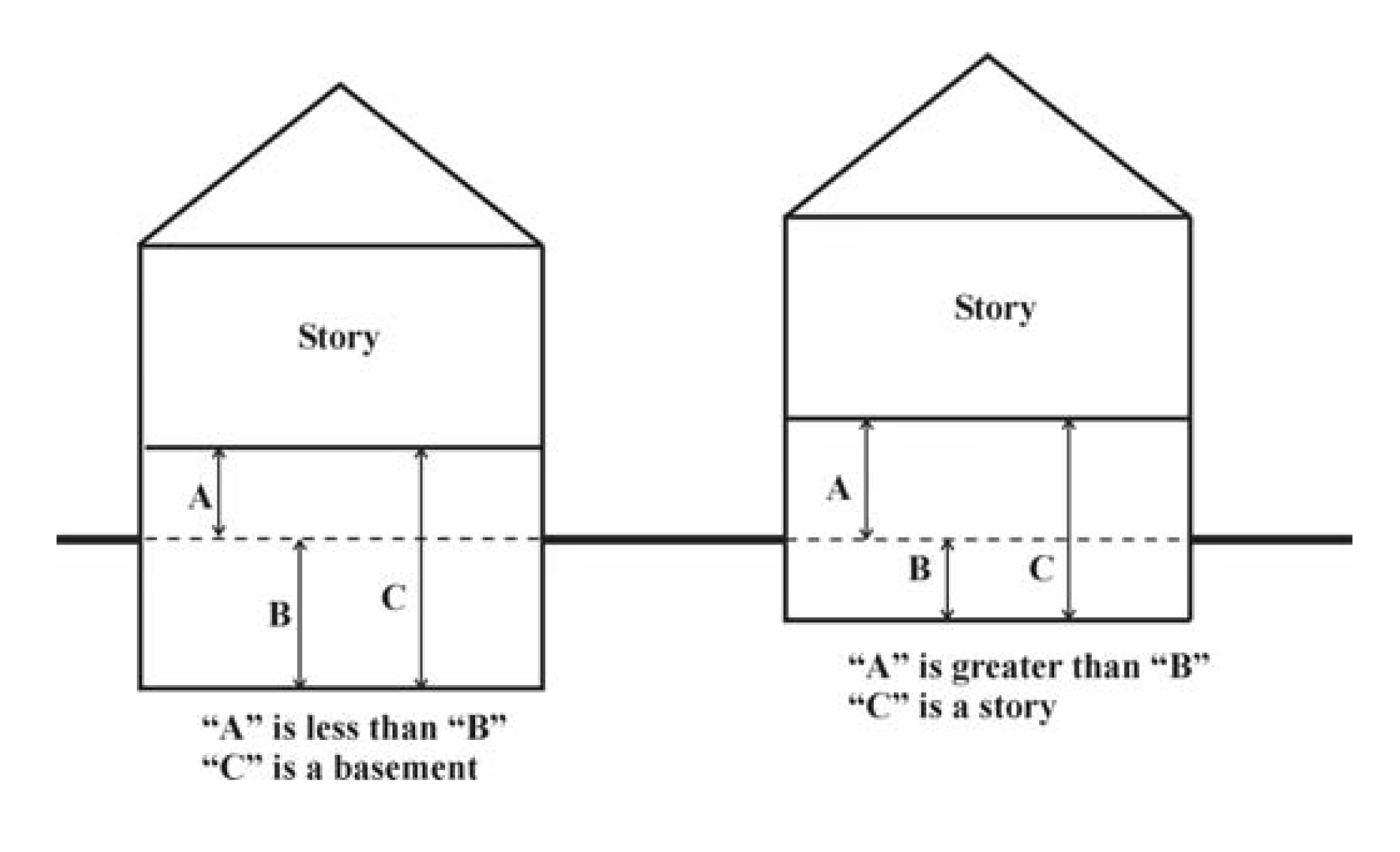
Basement means that portion of a building that is partly, or wholly, below grade. A basement shall be counted as a first story if more than 50 percent of the wall area is above grade, and in such cases, the second story shall be equal to the basement in outside dimensions.
Bed and breakfast inn means any dwelling in which overnight accommodations are provided or offered for transient guests for compensation, including provision for a morning meal only for the overnight guest. A bed and breakfast is distinguished from a motel in that a bed and breakfast establishment shall meet the location, design and operation standards of this chapter.
Boardinghouse means a dwelling where meals, or lodging and meals, are provided for compensation for three or more persons by prearrangement for definite periods. A boardinghouse shall be distinguished from a hotel.
Bottomland means the land area of a pond, stream, watercourse or drainageway which lies below the ordinary high-water mark and which may or may not be covered by water.
Buildable area means the buildable area of a lot or parcel is the space remaining after yard, parking, or any other requirements of this chapter have been met.
Buildable land area (for density computations). See Density.
Buildable site means a lot that is accessible from an improved public road or an approved private road meeting the requirements of chapter 16, article IV, pertaining to roads standards, that can be developed for a permitted use in conformance with the dimensional requirements of the zoning district, that can be developed in accordance with state wetland regulations and meets all county health department requirements for water and sanitary services.
Building means a structure, either temporary or permanent, having a roof supported by columns or walls, and intended for the shelter or enclosure of persons, animals, chattels, or property of any kind. The term "building" shall include tents, awnings, or vehicles situated on private property and used for such purposes.
Building, accessory, means a subordinate building, the use of which is clearly incidental to that of the main building or to the use of the land.
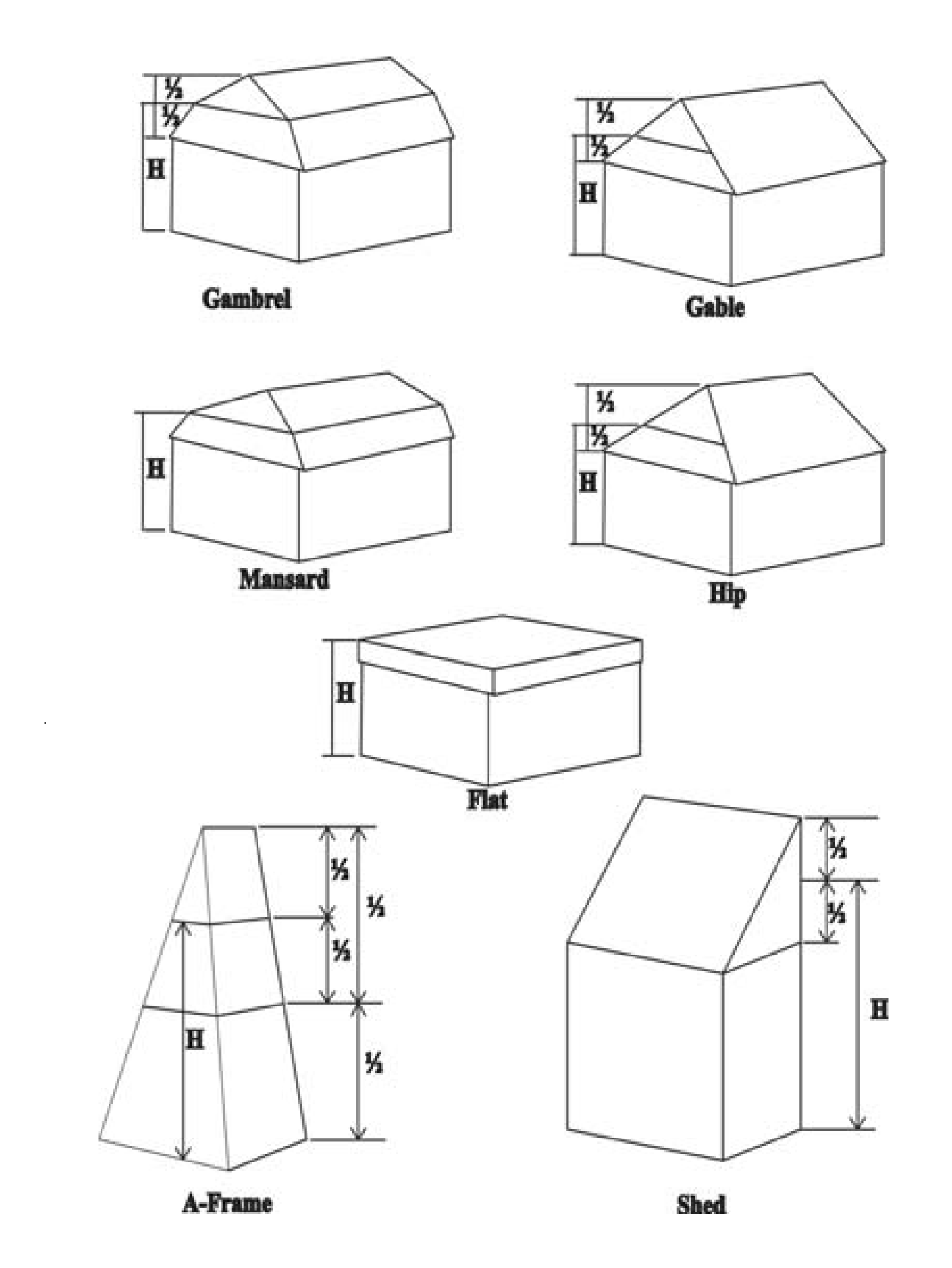
Building height means the vertical distance measured from the established grade at the center of the front (location of main entrance) of the building to the highest point of the roof surface for flat roofs; to the deck line of mansard roofs; and to the average height between eaves and ridge for gable, hip, and gambrel roofs; and the average height between the lowest point and the highest point on a shed roof. Where a building is located on sloping terrain, the height may be measured from the average ground level of the grade at the building wall.
Building inspector means the official so designated by the township board.
Building line means a line formed by the face of the building and, for the purpose of this chapter, a building line is the same as a front setback line.
Building, main, means a building in which is conducted the principal use of the lot on which it is situated.
Building permit means a written application provided by the building department which is used to record various developmental activities on land parcels within the township.
Camp means a voluntary association of persons under the auspices of public or private organizations, engaging in outdoor activities while living in nonpermanent housing such as tents, trailers, cabins designated for short-term experiences in nature, or specific recreational or educational pursuits. For the purpose of this chapter, the term "camp" shall exclude persons or organizations operating programs involving persons sentenced or assigned to said programs by government agencies or courts of law having statutory authority to detain persons against their will.
Child care facility, state-licensed, means a facility for the care of children under 18 years of age, as licensed and regulated by the state under Public Act No. 116 of 1973 (MCL 722.111 et seq.) and Public Act No. 218 of 1979 (MCL 400.701 et seq.) and the associated rules promulgated by the state department of social services. Definitions for various care organizations are listed as follows:
(1)
Child care center, day care, ornursery school means a facility, other than a private residence, receiving more than six children for group day care for periods of less than 24 hours a day, and where the parents or guardians are not immediately available to the child. The term "child care center," "day care," or "nursery school" includes a facility which provides care for not less that two consecutive weeks, regardless of the number of hours of care per day. The facility is generally described as a child care center, day care center, day nursery, nursery school, parent cooperative preschool, play group, or drop-in center. The term "child care center" or "day care center" does not include a Sunday school conducted by a religious institution or a facility operated by a religious organization where children are cared for during short periods of time while persons responsible for such children are attending religious services.
(2)
Child caring institution means a child care facility which is organized for the purpose of receiving children for care, maintenance, and supervision, usually on a 24-hour basis, in a building maintained for that purpose, and operates throughout the year. The term "child caring institution" includes a maternity home for the care of unmarried mothers who are minors, an agency group home, and institutions for mentally retarded or emotionally disturbed children. The term "child caring institution" does not include hospitals, nursing homes, boarding schools, or an adult foster care facility in which a child has been placed.
(3)
Foster family home means a private home in which one to four children, who are not related to an adult member of the household by blood, marriage, or adoption, are given care and supervision for 24 hours a day, for four or more days a week, for two or more consecutive weeks, unattended by a parent or legal guardian.
(4)
Foster family group home means a private home in which five to six children, who are not related to an adult member of the household by blood, marriage, or adoption, are provided care for 24 hours a day, for four or more days a week, for two or more consecutive weeks, unattended by a parent or legal guardian.
(5)
Family day care home means a private home in which up to seven children are received for care and supervision for periods of less than 24 hours a day, unattended by a parent or legal guardian, except children related to an adult member of the family by blood, marriage, or adoption. The term "family day care home" includes a home that gives care to an unrelated child for more than four weeks during a calendar year.
(6)
Group day care home means a private home in which six to 12 children are given care and supervision for periods of less than 24 hours a day unattended by a parent or legal guardian, except children related to an adult member of the family by blood, marriage, or adoption. The term "group day care home" includes a home that gives care to an unrelated child for more than four weeks during a calendar year.
Club means an organization of persons for special purposes or for the promulgation of sports, arts, science, literature, politics or the like, but not for profit.
Collocation means the location by two or more communication providers of communication towers or communication facilities on a common structure, tower, or building, with the view toward reducing the overall number of structures required to support communication antennas within the township.
Commercial driveway means any driveway or vehicular access point to a road that provides access to any use other than a single-family dwelling, a two-family dwelling, an agricultural use or an unmanned utility structure.
Commercial kennel means any lot or premises on which five or more dogs six months of age or older are kept. Commercial kennel shall also mean any lot or premises on which three or more dogs or cats six months of age or older are either permanently or temporarily boarded, bred, sold, trained, groomed, kept for daycare purposes, including the selling of pet care products, or related services are rendered either for profit or non-profit. All commercial kennels shall comply with all applicable township, county, and state regulations.
Commercial use relates to the use of property in connection with the purchase, sale, barter, display or exchange of goods, wares, merchandise or personal services and the maintenance or operation thereof of offices, or recreational or amusement enterprises.
Common use riparian access lots (keyholes) means a riparian parcel that is used by persons other than the owner residing thereon or occupant residing thereon for a park, beach, boat launch, picnic area, dockominium or similar use for outdoor waterfront recreation.
Communication tower means a radio, telephone, cellular telephone, or television relay structure of skeleton framework, or monopole attached directly to the ground or to another structure, used for the transmission or reception of radio, telephone, cellular telephone, television, microwave, or any other form of telecommunication signals.
Community correctional facility means a facility or institution which houses an inmate population under the jurisdiction of the department of corrections as a state correctional facility.
Condominium means a system of separate ownership of individual units and/or multiunit projects according to Public Act No. 59 of 1978 (MCL 559.101 et seq.). In addition to the interest acquired in a particular unit, each unit owner is also a tenant in common in the underlying fee and in the spaces and building parts used in common by all the unit owners, such as yards, foundations, basements, floors, walls, hallways, stairways, boat basins, elevators and all other related common elements.
Condominium act means Public Act No. 59 of 1978 (MCL 559.101 et seq.).
Condominium, general common element, means the common elements other than the limited common elements intended for the common use of all co-owners.
Condominium, limited common element means a portion of the common elements reserved in the master deed for the exclusive use of less than all of the co-owners.
Condominium plan means the drawings and information prepared in compliance with this chapter which display the proposed site layout, survey and utility plans; floor plans; floodplain plans; and sections, as appropriate, showing the existing and proposed structures and improvements including the location thereof on the land. The condominium plan shall show the size, location, area and horizontal boundaries of each unit as well as vertical boundaries and volume for each unit comprised of enclosed air space. A number shall be assigned to each condominium unit. The condominium plan shall include the nature, location and approximate size of common elements.
Condominium project means a plan or project consisting of not less than two condominium units, if established and approved in conformance with the condominium act.
Condominium setbacks shall be measured as described:
(1)
Front yard setback means the distance between the public street right-of-way or private road easement line and the foundation of the unit site.
(2)
Side yard setback means the distance between the side of a condominium building unit and the side unit (lot) line. Where no unit (lot) lines are provided, the distance between the closest points of two units shall be double the side yard setback required in the zoning district.
(3)
Rear yard setback means the perimeter shall be the distance between the limit of the development and the rear of the unit; within the development rear yard setbacks shall be measured as the distance between the rear building line and the rear site (lot) line, or, where lot lines are not defined, the space between the rear building lines of two buildings shall be double the rear yard setback required in the zoning district.
Condominium site means a condominium project designed to function in a similar manner, or as an alternative to a platted subdivision. A residential site condominium project shall be considered as equivalent to a platted subdivision for purposes of regulation in this chapter.
Condominium unit means the portion of the condominium project designed and intended for separate ownership as described in the master deed, regardless of whether it is intended for residential, office, industrial, business, recreational use, use as a time-share unit, or any other type of use.
Condominium unit site orsite condominium lot means the area designating the perimeter within which the condominium unit must be built. After construction of the condominium unit, the balance of the condominium unit site shall become a limited common element. General common elements shall not be considered part of the site condominium lot. The term "condominium unit site" shall be equivalent to the term "lot," for the purpose of determining compliance of a site condominium subdivision with the provisions of this chapter pertaining to minimum lot size, minimum lot width, minimum lot coverage and maximum floor area ratio.
Contiguous means any of the following:
(1)
A permanent connection or other direct physical contact with a lake, pond, river or stream, including surface water or groundwater connections.
(2)
A seasonal or intermittent direct water connection with a lake, pond, river or stream, including surface water or groundwater connections.
(3)
Located within 500 feet of the ordinary high-water mark of an inland lake, pond, river or stream.
(4)
Separated only by manmade barriers, such as dikes, roads, berms, or other similar features.
Convalescent home or nursing home means a home for the care of the aged, infirm, or those suffering from bodily disorders, wherein two or more persons are housed or lodged and furnished with nursing care. Such facilities are licensed in accordance with Public Act No. 139 of 1956.
Deck means an unroofed platform, commonly constructed of wood, which is typically attached to a house, and which is typically used for outdoor leisure activities.
Density means the number of dwelling units permitted for each acre of buildable land within a lot, which shall exclude areas occupied by public road rights-of-way, private road easements, and submerged land below the ordinary high-water mark of a lake or stream and shall discount the area of any regulated wetland, floodplain and MNFI-designated natural area at a 25 percent equivalent of that of buildable areas.
District, zoning, means a portion of the unincorporated part of the township within which certain regulations and requirements or various combinations thereof apply under the provisions of this chapter.
Drainageway means any drainage course, watercourse, drain, pipe, natural stream, creek, or swale which serves to transport stormwater runoff.
Drive-in restaurant. See Restaurant, drive-in.
Drive-through means a business establishment so developed that its retail or service character is dependent on providing a driveway approach or parking spaces for motor vehicles so as to serve patrons while in the motor vehicle rather than within a building or structure.
Dry hydrant means a permanent piping system, normally a drafting source that provides access to a water source other than a municipal water system.
Dwelling, multiple-family, means a building, or portion thereof, designed exclusively for occupancy by three or more families living independently of each other.
Dwelling, one-family, means a building designed exclusively for and occupied exclusively by one family.
Dwelling, two-family, means a building designed exclusively for occupancy by two families, living independently of each other.
Dwelling unit means a building, or a portion thereof, including a mobile home designed for occupancy by one family for residential purposes and having cooking facilities.
Ecological characterization report means a document, including narrative and maps, prepared by a professional qualified in the areas of ecology, botany, wildlife biology, or other relevant discipline describing the presence and ecological functions of waterways, wetlands, floodplains, wildlife habitat, significant native trees and vegetation as identified in a floristic quality assessment, topography, soil conditions and other natural features on a site proposed for site plan, subdivision plat, condominium or private road approval.
Erected means any physical operations on the premises required for the construction or moving on and includes constructions, reconstructions, alteration, building, excavations, fill, drainage, installation of utilities and the like.
Essential services means the erection, construction, alteration or maintenance by public utilities or municipal departments of underground, surface or overhead gas, electrical, steam, fuel, or water transmission or distribution systems, including towers, poles, wires, mains, drains, sewers, pipes, conduits, cables, fire alarm and police call boxes, traffic signals, hydrants, and similar equipment in connection herewith, but not including buildings which are necessary for the furnishing of adequate services by such utilities or municipal departments for the general health, safety or welfare.
Excavation means any breaking of the ground to hollow out by cutting, digging, or removing any soil or rock matter, except for common household gardening and general farm care.
Family means one or two persons or parents, with their direct lineal descendants and adopted children (and including the domestic employees thereof), or additional persons not so related, living together in the whole or part of the dwelling unit comprising a single housekeeping unit, not including relationships of a transitory or seasonal nature.
Farm means the carrying on of any agricultural activity or the maintaining or the raising of livestock, when conducted on at least three acres or more.
Fence means an unroofed structure of definite height and location to serve as an enclosure in carrying out the requirements of this chapter.
Fence, obscuring, means an unroofed structure of definite height and location to serve as an obscuring screen in carrying out the requirements of this chapter.
Filling means the depositing or dumping of any matter onto, or into the ground, except common household gardening and general farm care.
Floodplain means that area which would be inundated by storm runoff or floodwater equivalent to that magnitude which would occur with a rainfall or flood of 100-year recurrence frequency.
Floodway means the channel of a river or other watercourse and the adjacent land areas that must be reserved in order to discharge the base flood without cumulatively increasing the water surface elevation more than one foot.
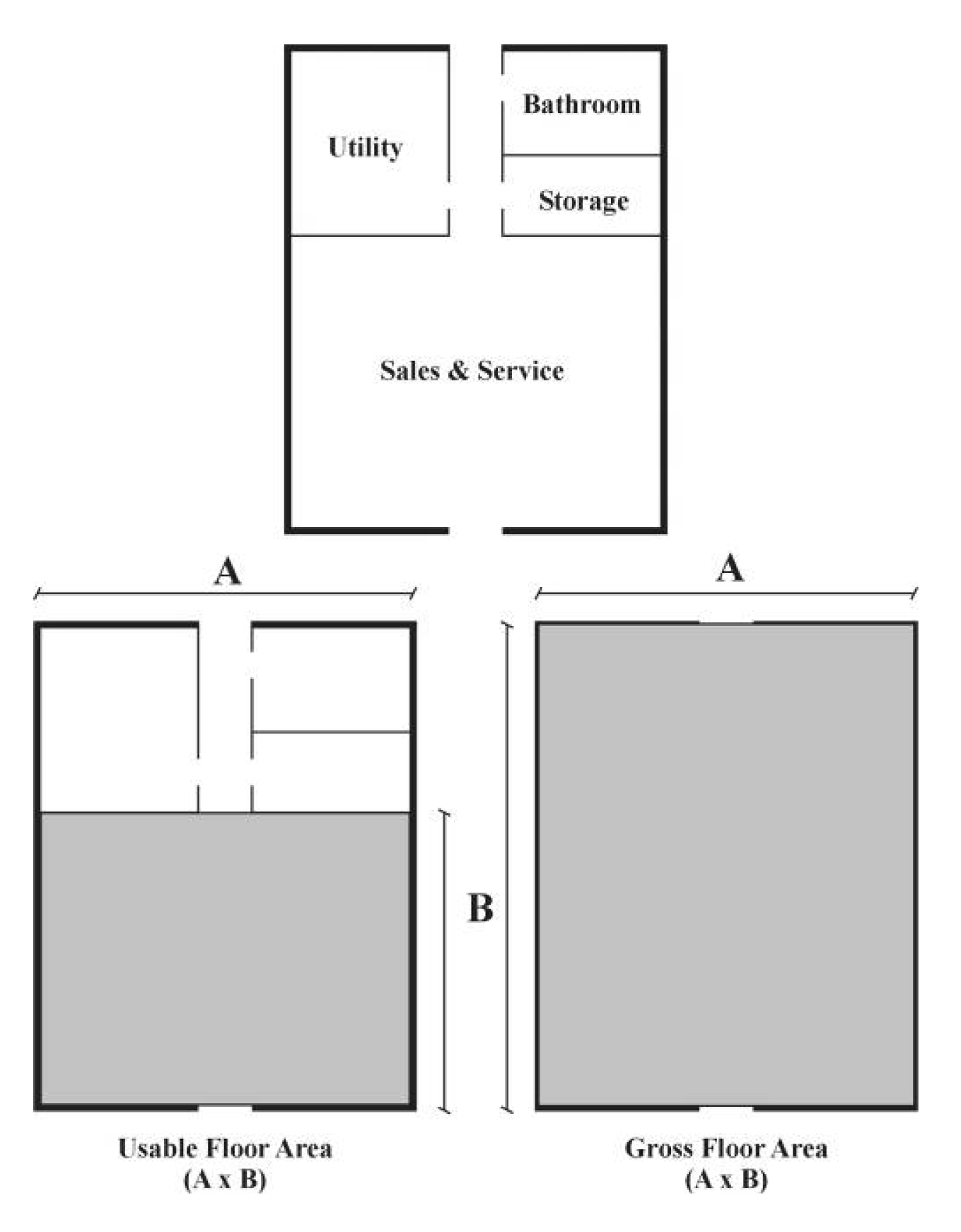
Floor area, when applied to a residential dwelling unit, means the sum of the horizontal areas of each story of the building as measured from the exterior walls; exclusive of areas of basements, unfinished attics, attached garages, breezeways and enclosed and unenclosed porches.
Floor area, usable, means, for the purposes of computing parking, all ground and nonground floor area used for, or intended to be used for, the sale of merchandise or services or for use to serve patrons, clients or customers. The term "usable floor area" shall not include areas for utility rooms, bathrooms or storage. For the purpose of computing parking for those uses not enclosed within a building, the area used for the sale of merchandise, display of merchandise, and/or area used to serve patrons or clients shall be measured to determine necessary parking spaces.
Garage, private, means a building used primarily for the storage of self-propelled vehicles for the use of the occupants of a lot on which such building is located. The term "private garage" shall be construed to permit the storage on any one lot, for the occupants thereof, of not more than one commercial vehicle and shall not be construed to include the storage of mobile homes, large construction tractors, backhoes, bulldozers, other construction-type equipment or similar equipment.
Garbage shall be held to include every refuse, accumulation of all waste, animal, fish, fowl, fruit or vegetable matter incident to the preparation, use, cooking, dealing in or storage of meat, fish, fowl, fruit and vegetables, including spoiled food, dead animals, animal manure and fowl manure.
Gasoline service station. See Automotive service center.
Generally accepted agricultural and management practices (GAAMPs) means the latest agricultural management practices as adopted by the Michigan Agricultural Commission (MAC).
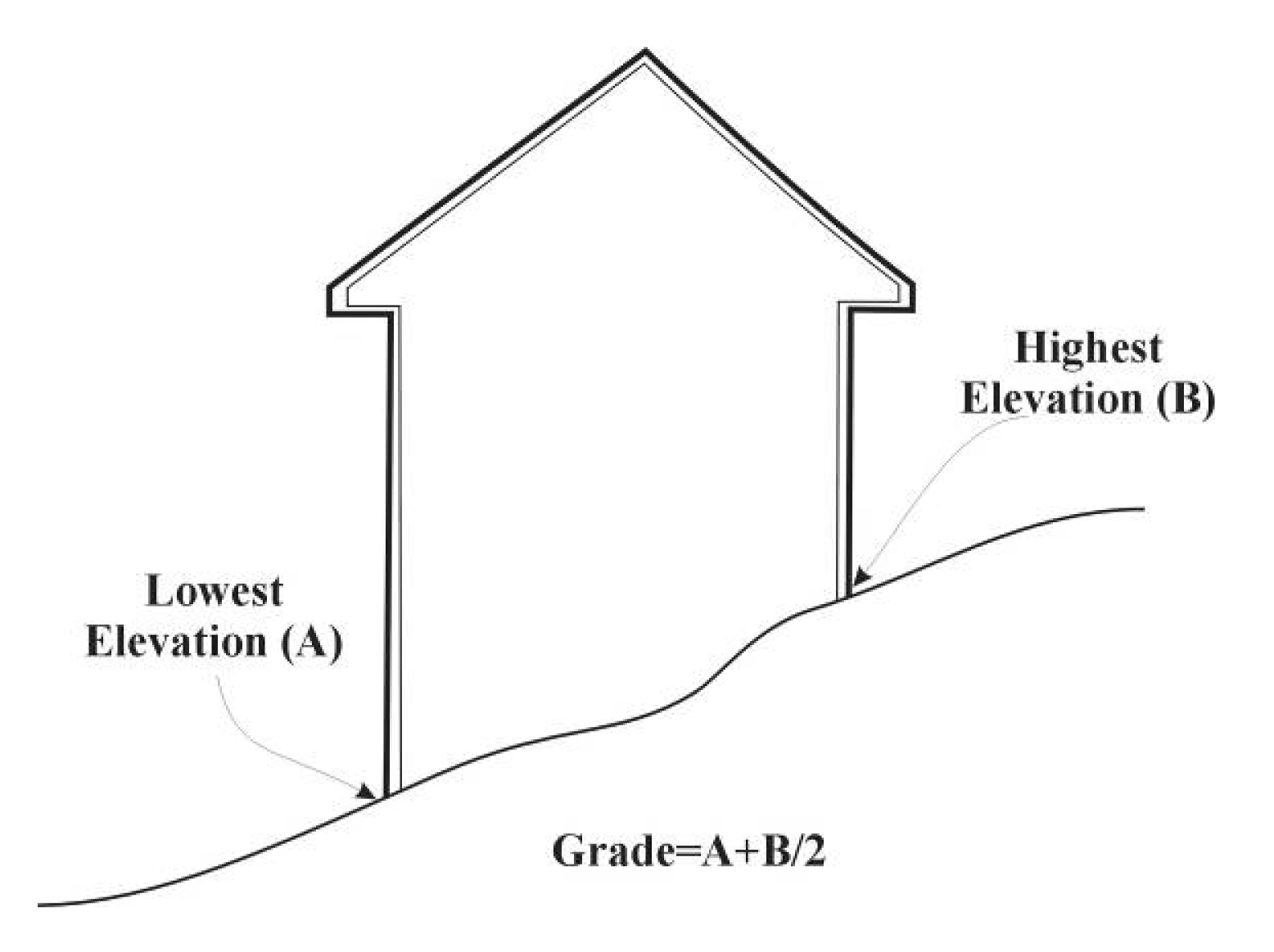
Grade means the highest point of ground contacting any portions of the basement or foundation of a dwelling.
Greenbelt means a strip of land of definite width and location reserved for the planting of shrubs and/or trees to serve as an obscuring screen or buffer strip in carrying out the requirements of this chapter.
Gun club means any club, organization, individual, group of individuals, or use, whether operated for profit or not, which caters to or allows the use of firearms.
Home-based business means an occupation or hobby having traditional acceptance as being one customarily carried on in the home by the inhabitants thereof, such use being clearly incidental to the principal use of the dwelling as a residence.
Hospital means a building, structure or institution in which sick or injured persons are given medical or surgical treatment and operating under license by the county health department. The term "state hospital" shall have statutory meaning only.
Hotel andmotel means a series of attached, semidetached or detached rental units which provide overnight lodging and are offered to the public for compensation.
Impervious surface means manmade material which covers the surface of land and substantially reduces the infiltration of stormwater to a rate of five percent or less. The term "impervious surface" shall include pavement, buildings, and structures.
Improvement means any addition to the natural state of land which increases its value, utility or habitability. The term "improvement" includes but is not limited to street pavements, with or without curbs and gutters, sidewalks, water mains, storm and sanitary sewers, trees and other appropriate and similar items.
Industrial use means any land or building occupied or used for manufacturing, processing, or the storage of equipment, materials or machinery.
Junkyard means an open area where waste, used or secondhand materials are bought and sold, exchanged, stored, baled, packed, disassembled, or handled, including, but not limited to: scrap iron and other metals, paper, rags, rubber tires and bottles. The term "junkyard" includes automobile wrecking yards, and any area of more than 200 square feet for storage, keeping or abandonment of junk, but does not include uses established entirely within enclosed buildings.
Lake means a permanent water body that has definite banks, a bed, visible evidence of a continued occurrence of water, and a surface area of water that is five acres or more in size.
Livestock means any of various bird or animal breeds, long ago domesticated by man so as to live and breed in a tame, docile, tractable condition useful to man, including horses, ponies, mules, donkeys, cattle, sheep, goats, buffaloes, llamas, ostriches, chickens, ducks, geese, turkeys and swine.
Loading space means an off-street space on the same lot with a building, or group of buildings, for temporary parking of a commercial vehicle while loading and unloading merchandise or materials.
Lot means a parcel of land occupied by, or which could be occupied by, a main building or group of such buildings and accessory buildings, or utilized for the principal use and permitted accessory uses thereto, together with such open spaces as are required under the provisions of this chapter. A lot may consist of either a single lot of record, a portion of a lot of record, a combination of contiguous lots of record that have been combined into one tax ID number, or a parcel of land described by metes and bounds.
Lot area means the total horizontal area within the lot lines of the lot. Lots within a platted subdivision or units within a site condominium shall not include public road rights-of-way, private road easements or submerged land below the ordinary high-water mark of a lake or stream in the calculation of lot area.
Lot, corner, means a lot where the interior angle of two adjacent sides at the intersection of the two streets is less than 135 degrees. A lot abutting upon a curved street shall be considered a corner lot for the purposes of this chapter, if the arc is of less radius than 150 feet and the tangents to the curve, at the two points where the lot lines meet the curve or the straight street line extended, form an interior angle of less than 135 degrees.
Lot coverage means the percentage of the lot occupied by buildings, including accessory buildings, structures and paved areas. There are two measurements of lot coverage:
(1)
Percentage of lot area covered by all buildings; and
(2)
Percent of lot covered by impermeable surfaces, including all buildings, structures and paved areas.
Lot depth means the horizontal distance between front and rear lot lines measured along the longest distance between the front and rear lot lines.
Lot, double frontage, means any interior lot having frontage on two more or less parallel streets as distinguished from a corner lot.
Lot frontage means the horizontal distance between the side lot lines, as measured along a road right-of way or road easement line.
Lot, interior, means any lot other than a corner lot.
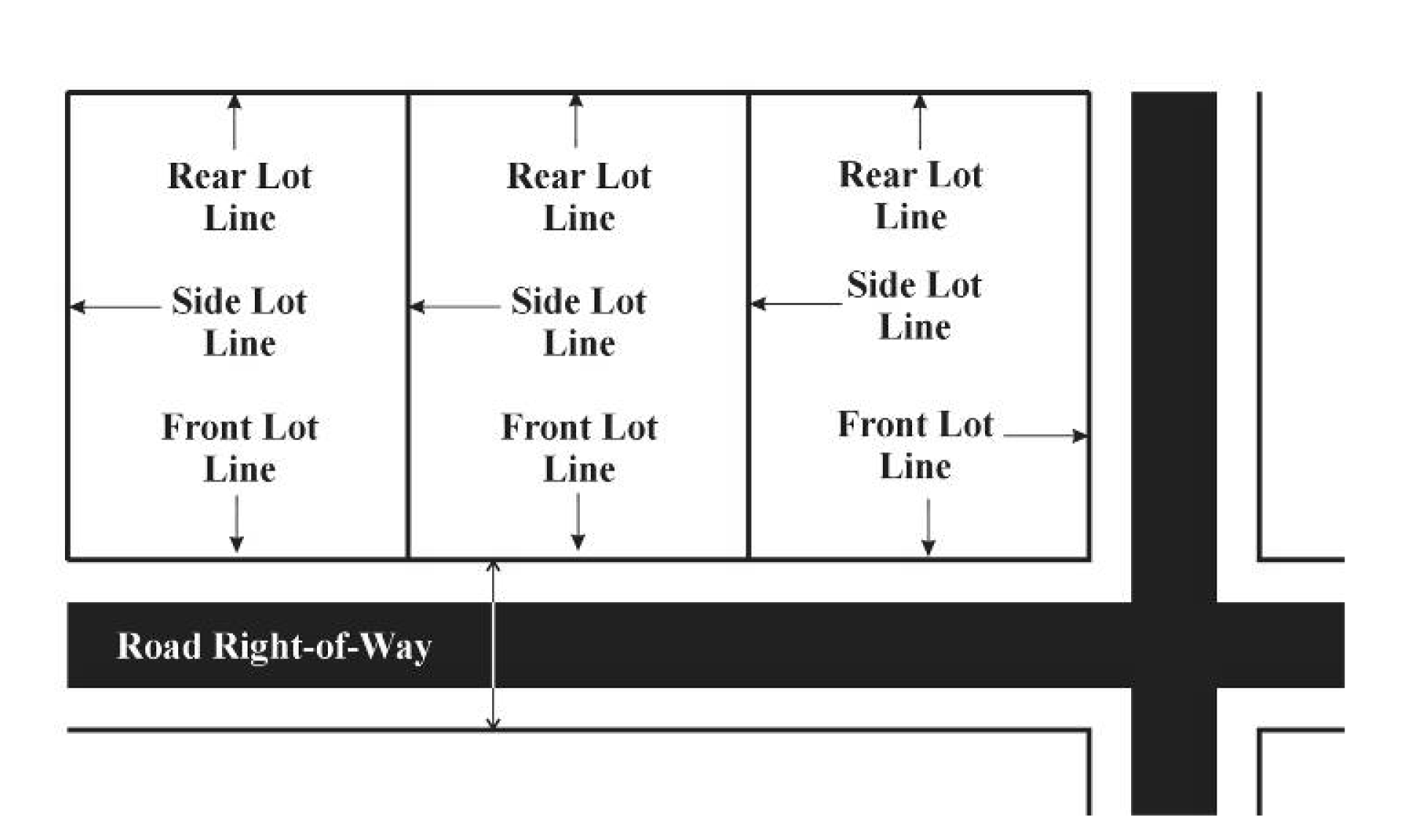
Lot line means the lines bounding a lot, as defined herein:
(1)
Front lot line means, in the case of an interior lot, the line separating said lot from the road right-of-way or road easement. In the case of a corner lot, each lot line separating the lot from the road right-of-way or road easement shall be considered a front lot line. The interior lot lines shall be considered side lot lines. In the case of a double frontage lot, both lot lines abutting on road rights-of-way or road easements shall be treated as front lot lines; except in the case of a platted subdivision or site condominium where the lot is restricted to only having access to an internal street within the development and the frontage on the external public road shall be considered a rear yard.
(2)
Rear lot line means the lot line opposite the front lot line. In the case of a lot pointed at the rear, the rear lot line shall be an imaginary line parallel to the front lot line, not less than ten feet long lying farthest from the front lot line and wholly within the lot.
(3)
Side lot line means any lot lines other than the front lot line or rear lot line. A side lot line separating a lot from a street is a side street lot line. A side lot line separating a lot from another lot is an interior side lot line.
Lot of record means parcel of land, the dimensions of which are shown on a document or map on file with the county register of deeds or in common use by township or county officials, and which actually exists as so shown, or any part of such parcel held in record ownership separate from that of the remainder thereof and has a valid tax identification number.
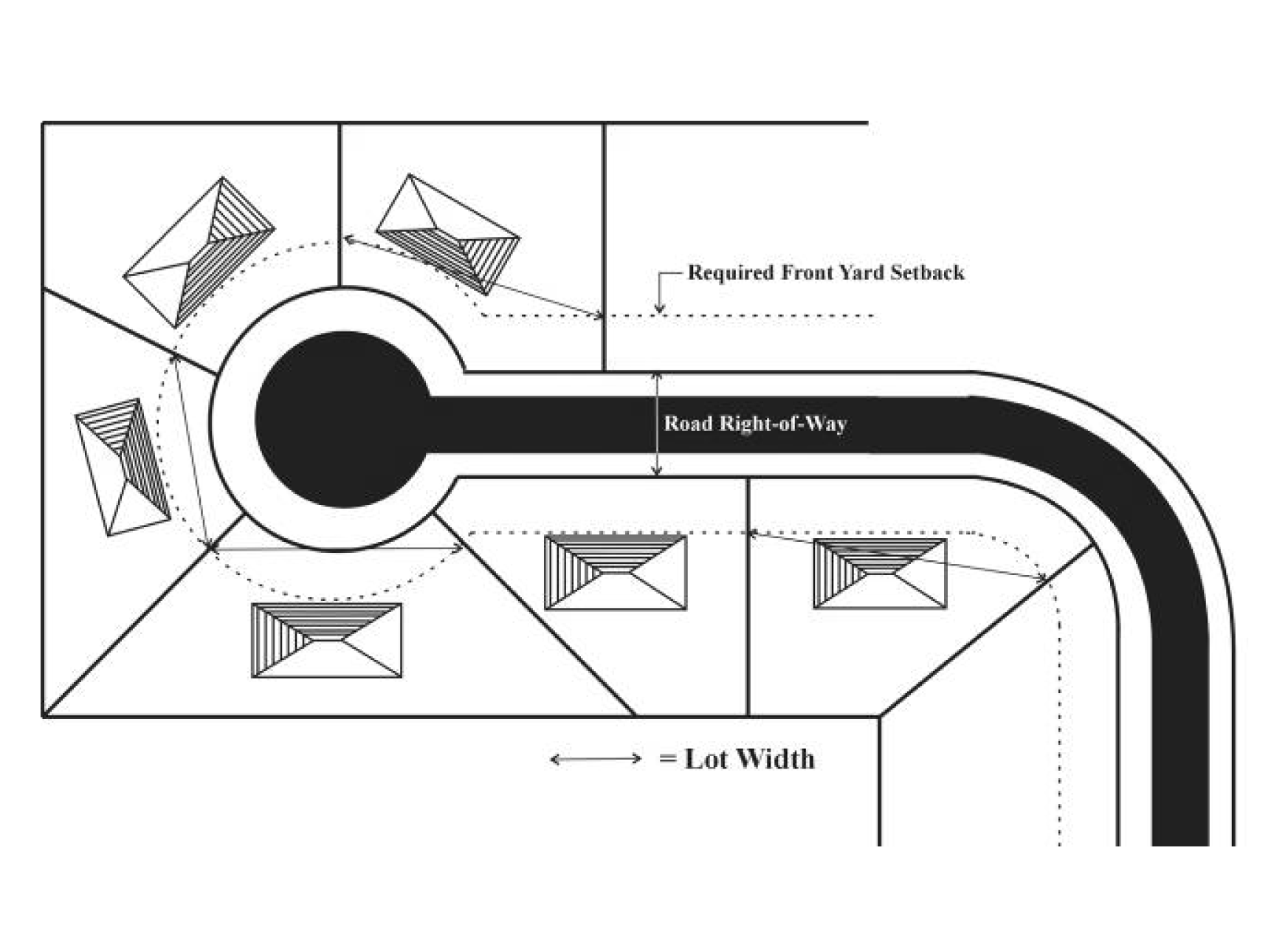
Lot width means the horizontal distance between the side lot lines measured at the two points where the building lines or setback intersects the side lot lines for cul-de-sac lots and at the two points where the side lot lines intersect the front lot line on all other lots.
Manufactured (mobile) home. See section 38-228.
Manufactured home park. See section 38-228.
Master plan means the adopted master plan of the township including graphic and written proposals indicating the general location for streets, parks, schools, public buildings, and all physical development of the township and includes any unit or part of such plan, and any amendment to such plan or parts thereof.
Michigan Natural Features Inventory (MNFI) means an organization of environmental professionals that gathers, stores and provides information on the natural features of the state. MNFI was formed in 1979 as a partnership between the state department of natural resources and the Nature Conservancy. In 2000, MNFI became a program of Michigan State University Extension Service. MNFI's comprehensive database tracks the location and status of the state's threatened and endangered species and the array of natural ecosystems. The information is gathered through such methods as aerial analysis, field inventories and from other scientists and naturalists. Natural areas designated MNFI in the township are mapped in the township master plan and in the Shiawassee and Huron Headwaters Resource Preservation Project Report.
Native vegetation, trees, or landscape means plant species that are native to southeastern Michigan and characteristic of a pre-settlement landscape.
Natural areas means areas possessing high-quality natural features, native vegetation and high-quality wildlife habitat which are mapped in the township master plan and in the Shiawassee and Huron Headwaters Resource Preservation Project Report. See also Michigan Natural Features Inventory (MNFI).
Natural features means any one or more of the following: soils, topography, geology, vegetation, woodlands, hedgerow, historic/landmark tree, animal life, endangered species habitat, floodplain, watercourse, lakes, rivers, streams, creeks, ponds, wetland, groundwater, watersheds, aesthetic resources, such as views and microclimate which are influenced by site topography and vegetation.
Needed fire flow (NFF) is the rate of flow considered necessary to control a major fire in a specific building. The NFF is intended to assess the adequacy of a water system or supply source. The NFF reasonably coincides with the actual flow required to suppress a fire in a real-life situation. The NFF shall be calculated based upon the formula created by the Insurance Services Office (ISO) and can be found in the American Water Works Association (AWWA) manual of water supply practices, entitled Distribution System Requirements for Fire Protection, Number AWWA M31, 3rd Edition, or in the fire suppression rating schedule published by the ISO.
Nonconforming building means a building existing at the effective date of the ordinance from which this chapter is derived, or amendments thereto, that does not conform to the provisions of this chapter.
Nonconforming lot means a lot of record, lawfully in existence on the effective date of the ordinance from which this chapter is derived, and any amendments thereto, which no longer meets the dimensional requirements of this chapter for the district in which it is located.
Nonconforming site means a development on a site which met chapter requirements for site design elements at the time the site was developed, such as the amount of parking, parking lot pavement or landscaping, but which does not meet the current site standards of the township.
Nonconforming use means a use which lawfully occupied a building or land at the time the ordinance from which this chapter is derived, or amendments thereto, became effective, that does not conform to the use regulations of the district in which it is located.
Nurseries andgreenhouses means farms or similar sites where plants are grown for transplanting, for use as stocks for budding and grafting, or for sale. Wholesale of plant materials to retailers and landscape contractors shall be permitted as part of a nursery. On-site retail sales to the public shall be regulated as an agribusiness.
Occupancy load means the number of individuals normally occupying a building or part thereof, or for which the existing facilities have been designed, or an open area or space enclosed by buildings or fences intended for the gathering of people, such as fairs, carnivals, outdoor spectator events and festivals.
Off-street parking lot means a facility providing vehicular parking spaces, along with adequate drives and aisles, for maneuvering so as to provide access for entrance and exit for the parking of automobiles.
Ordinary high-water mark means the line between upland and bottomland which persists through successive changes in water levels, below which the presence and action of the water is so common or recurrent that the character of the land is markedly distinct from the upland and is apparent in the soil itself, the configuration of the surface of the soil and the vegetation.
Park, active, means a park, open to the public, that is owned and operated by a regional agency or department, such as the state, the county, or the township, or an institution or private organization that offers a broad range of active recreational facilities and opportunities such as athletic fields, athletic courts, campgrounds, playground equipment, facilities for recreational vehicles, water parks and ancillary uses such as parking, concessions, rentals, and restrooms.
Park, passive, means a park, open to the public, that is owned and operated by a regional agency or department, such as the state, the county, or the township, or an institution or private organization that has been undisturbed or minimally developed and is limited in use to only passive recreation activities such as nature trails, nature observation/interpretation, picnic areas, canoeing, sailing, fishing, nonmotorized recreational uses and limited parking.
Parking space means an area of definite length and width and shall be exclusive of drives, driveways, aisles or entrances giving access thereto and shall be fully accessible for the storage or parking of permitted vehicles.
Person means any individual, partnership, copartnership, limited partnership, firm, corporation, or association and their lessees, trustees or receivers appointed by any court. In the instance of a legal entity, the individuals who are the general partners of a partnership, whether limited or not, the trustee and any beneficiary having the power to appoint or constitute a trustee of a trust, the officers and directors of a corporation and any receiver thereof shall be equally liable with the legal entity for any requirements or penalties provided for in this chapter. In any instance, an agent having the apparent authority to control the use or occupation of such persons having property regulated by this chapter shall be equally liable with his, her or its principal for any requirements or penalties provided in this chapter.
Planned building groups means multiple structures constructed on a parcel of land, excluding farmland, under the ownership, control, or development by an individual, a corporation, a partnership or a firm.
Pole barn means any accessory building of pole-type construction with wood or steel supporting vertical wall members installed below grade.
Pond means a water body that has permanent open water with a surface area that is less than five acres.
Principal building, structure or use means the main building, structure or use to which the premises are devoted and the principal purpose for which the premises exist. In cases where there is more than one use, the use comprising the greatest floor area shall generally be considered the principal use, except in cases where a use comprising a secondary amount of floor area is considered to have greater impact in terms of traffic generated, noise levels, disruption of views and similar impacts.
Private Community Wastewater System (PCWS) means a facility for the transportation, collection, processing or treatment of sanitary sewage, which is owned by a nongovernmental entity and which is proposed to service more than one structure. The PCWS shall include any individual septic tanks, pumps, lines and appurtenances serving each residence, in addition to the community drainfield and treatment system.
Public service facilities means such uses and services as voting booths, pumping stations, fire halls, police stations, public health activities and similar uses, including essential services.
Public sewer means a facility for the transportation, collection, processing or treatment of sanitary sewage for more than one lot or dwelling unit that is owned and operated by a governmental entity such as the township, a village, city, county or an authority established by a combination of local units of government.
Public utility means any person, firm or corporation, municipal department, board or commission duly authorized to furnish and furnishing under federal, state, or municipal regulations to the public: gas, steam, electricity, sewage disposal, communication, telegraph, transportation or water.
Residential lake lot means a residentially zoned riparian lot that has at least one property line along a bank or shore of a lake.
Residential zoning district means any zoning district that permits residential uses, including AG/RP, R-1R, R-1E, R-1A, R-1B, MH and RM districts.
Restaurant means an establishment serving foods and/or beverages to a customer in a ready-to-consume state. The method of operation may be characteristic of a carryout, drive-in, drive-through, fast food, standard restaurant, or lounge/tavern, or combination thereof, as defined below:
(1)
Restaurants with outdoor seating means a use that involves the sale or delivery of any prepared food or beverage for consumption in a defined area on premises but outside of the building in which it is prepared. Examples of defined areas include an external deck, patio, mall, garden, or sidewalk.
(2)
Carryout restaurant means a use that involves the sale of food, beverages, and/or desserts in disposable or edible containers or wrappers in a ready-to-consume state for consumption mainly off the premises. A carryout restaurant differs from a drive-through restaurant in that a customer must park and walk up to the restaurant or an employee must exit the restaurant and deliver the food to a customer in a parked car.
(3)
Drive-in restaurant means a use that involves delivery of prepared food so as to allow its consumption within a motor vehicle while parked on the premises.
(4)
Drive-through restaurant means a use that involves the delivery of prepared food to the customer within a vehicle, typically passing through a passthrough window, for consumption off the premises.
(5)
Standard restaurant means a use that involves either of the following:
a.
The delivery of prepared food by waiters and waitresses to customers seated at tables within a completely enclosed building.
b.
The prepared food is acquired by customers at a cafeteria line and is subsequently consumed by the customers within a completely enclosed building.
(6)
Bar/lounge/tavern means a type of restaurant that is operated primarily for the dispensing of alcoholic beverages. The preparation and sale of food or snacks to customers may be permitted.
Riding academy or stables means any parcel and structures where horses or other equestrian animals are rented, hired, used for training, display, show, competition, or boarded for compensation, fees, admission, membership or other remuneration.
River. See Stream.
Road means a thoroughfare which affords the principal means of access to abutting property.
(1)
Arterial roadway means a roadway which carries high volumes of traffic at relatively high speeds, and serves as an avenue for circulation of traffic onto, out of, or around the area. An arterial roadway will typically correspond to a county primary road and will have a master planned right-of-way of 120 feet in width. Since the primary function of the regional arterial roadway is to provide mobility, access to adjacent land uses may be controlled to optimize capacity along the roadway. Arterial roadways are listed in the township master plan.
(2)
Collector road means a road whose principal function is to carry traffic between minor and local roads and arterial roadways but may also provide direct access to abutting properties. A collector roadway will typically have a master planned right-of-way of at least 86 feet in width. Collector streets are classified in the township master plan.
(3)
Local or minor road means a road whose principal function is to provide access to abutting properties and is designed to be used or is used to connect minor and local roads with collector or arterial roadways. Local streets are designed for low volumes and speeds of 25 mph or less, with numerous driveways and on-street parking permitted.
(4)
Major thoroughfare means a road that carries a relatively high volume of through traffic, including all county primary roads and all roads meeting the definition of an arterial roadway or collector road, or designated as such in the master plan.
(5)
Private road means any road for vehicular traffic which is to be privately owned and maintained and has not been accepted for maintenance by a municipality or the road commission for county, but which meets the requirements of the roads standards outlined in chapter 16, or has been approved as a private road by the township under any prior ordinance.
(6)
Public street means any road or portion of a road which has been dedicated to and accepted for maintenance by a municipality or the road commission for the county.
(7)
Roadside stands means the temporary use of property or facilities for the selling of produce, such as fruits and vegetables, which are grown on the property from which they are sold.
Rubbish means the miscellaneous waste materials resulting from housekeeping, mercantile enterprises, trades manufacturing and offices, including other waste matter such as slag, stone, broken concrete, fly ash, ashes, tin cans, glass, scrap metal, rubber, paper, rags, chemicals, or any similar or related combinations thereof.
Sanitary landfill means any operation which involves the piling, placing, storing, dumping or depositing, in a hole or trench, any material in the form of rubbish and/or waste materials.
Senior apartments means multiple-family dwelling units occupied by persons 55 years of age or older that offers independent living accommodations with individual apartments or semi-independent accommodations containing congregate kitchen, dining, and living areas. Such facilities could provide special support services, such as organized programming, transportation and limited medical care.
Service drive means an access drive which parallels the public right-of-way in front of or behind a building, or may be aligned perpendicular to the street between buildings, which provides shared access between two or more lots or uses.
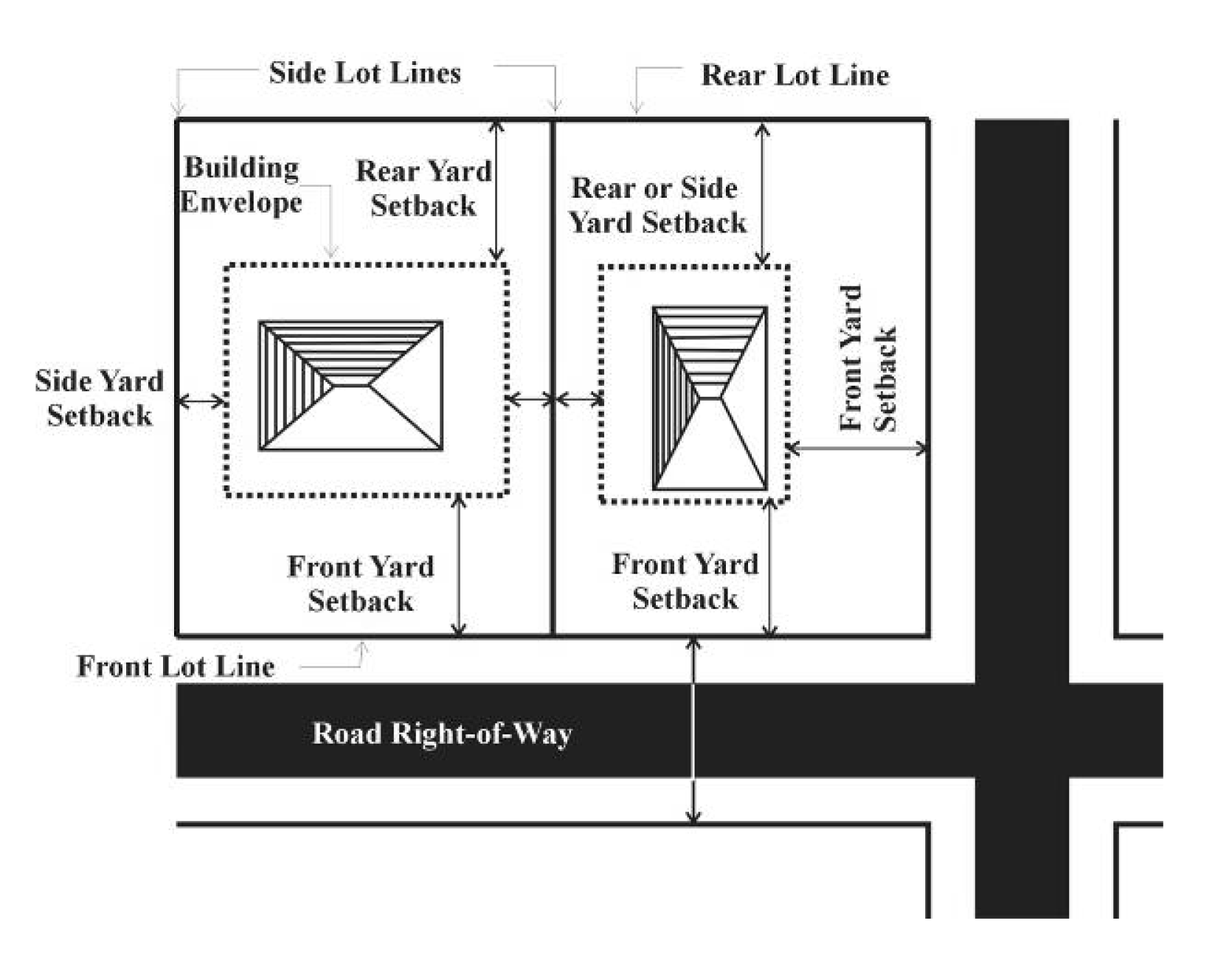
Setback means the distance required to comply with front, side or rear yard open space provisions of this chapter.
Shoreline. See Ordinary high-water mark.
Sign. See article VI of this chapter.
Solar energy systems. The following definitions are associated with solar energy systems:
(1)
Solar energy systems means any mechanism that converts solar radiation to electricity.
(2)
Private solar energy system means a solar energy system used exclusively for private purposes and not utilized for any commercial resale of any energy, except for the sale of surplus electrical energy back to the electrical grid.
(3)
Commercial solar energy system means a solar energy system where the principal design, purpose or use of such system is to provide energy to off-site uses or the wholesale or retail sale of generated electricity to any person or entity.
(4)
Roof or building mounted solar energy system means a solar energy system attached to or mounted on any roof or exterior wall of any principal or accessory building but excluding BIPVs.
(5)
Ground mounted solar energy system means a solar energy system that is not attached to or mounted to any roof or exterior wall of any principal or accessory building.
(6)
Building integrated photovoltaics (BIPVs) means a solar energy system that is integrated into the structure of a building, such as solar roof tiles and solar shingles.
Standard kennel means any lot or premises on which five or more dogs, six months of age or older are kept. Standard kennel shall also mean any lot or premises of which three or more dogs or cats six months of age or older are either permanently or temporarily boarded, bred, sold, trained or related services are rendered either for profit or non-profit. All standard kennels shall comply with all applicable township, county, and state regulations.
Steep slope means a naturally occurring land form with a vertical change in elevation of ten feet or more over a length of 50 feet or more measured parallel to the contour lines and a slope of 20 percent or more.
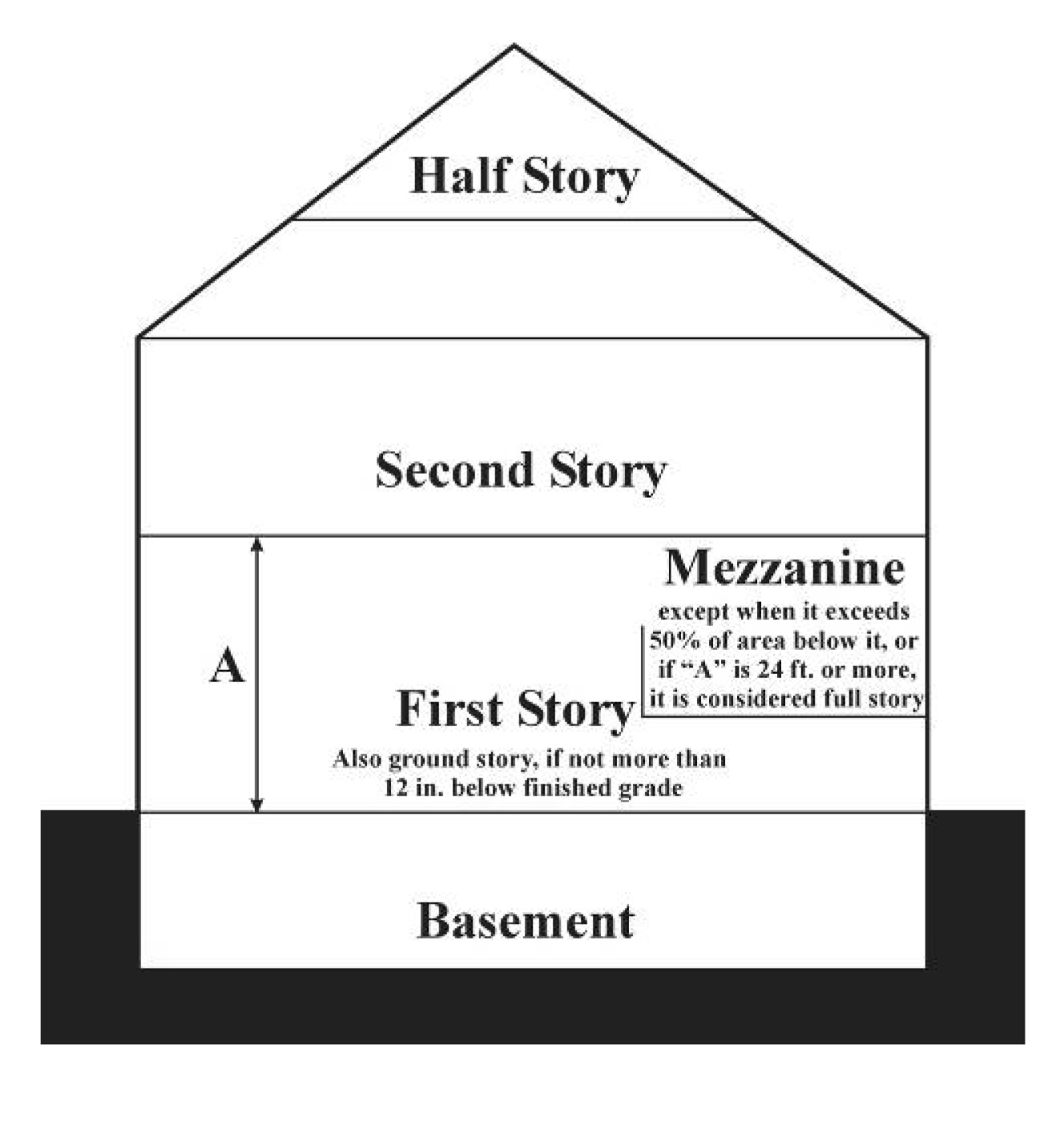
Story means that part of a building included between the surface of one floor and the surface of the next floor, or if there is no floor above, then the ceiling next above.
Stream means a waterway that has definite banks, a bed and visible evidence of a continued flow or continued occurrence of water.
Street. See Road.
Structure means anything constructed, or erected and designed for a permanent location on the ground.
Temporary building or use means a structure or use permitted by the board of appeals to exist during periods of construction of the main building or use, or for special events.
Thoroughfares, major. See Road.
Tower means a structure typically higher than its diameter and high relative to its surroundings that may stand apart or be attached to a larger structure, and that may be fully walled in or of a skeleton framework.
Travel trailer and/ormotor home means a vehicle designed as a travel unit for occupancy as a temporary or seasonal vacation living unit.
Tree means a woody plant with an erect perennial which, at maturity, is 13 feet or more in height, which has a more or less definite crown of foliage.
Variance, dimensional, means a modification granted by the zoning board of appeals to the dimensional requirements of the zoning district or the other provisions of this chapter when strict enforcement of this chapter would cause practical difficulty owing to circumstances unique to the individual property.
Waste receptacle (i.e., dumpster) means any accessory exterior container used for the temporary storage of rubbish, pending collection, having a capacity of at least one cubic yard. Recycling stations and exterior compactors shall be considered to be waste receptacles.
Watercourse means any natural or open artificial watercourse, diversion, lake, stream, river, creek, ditch, channel, canal conduit, culvert, drain, waterway, gully, ravine or wash in which waters flow in a definite direction or course, either continuously or intermittently, and which has a definite channel, bed and banks, and shall include the floodplain.
Wetland means any land characterized by the presence of water at a frequency and duration sufficient to support (and that under normal circumstances does support) wetland vegetation or aquatic life and is commonly referred to as a bog, swamp, or marsh.
Wetland, regulated, means land characterized by the presence of water at a frequency and duration sufficient to support (and that under normal circumstances does support) wetland vegetation or aquatic life and is commonly referred to as a bog, swamp, or marsh and which is any of the following:
(1)
Contiguous to any lake, pond, river or stream.
(2)
Not contiguous to any lake, pond, river or stream; and more than five acres in size.
(3)
Not contiguous to any lake, pond, river or stream; and five acres or less in size if the Michigan Department of Environmental Quality (MDEQ) determines that protection of the area is essential to the preservation of the natural resources of the state from pollution, impairment, or destruction and the MDEQ has so notified the owner.
Wetland vegetation means plants, such as trees, shrubs, and grasses, that exhibit adaptations to allow, under normal conditions, germination or propagation and to allow growth with at least their root systems in water or saturated soil. Wetland vegetation is the macrophytic plant life that occurs in areas where the frequency and duration of inundation or saturation produces permanently or periodically saturated conditions of sufficient duration to exert a controlling influence on the plant species present.
Winery, small: An agribusiness, accessory to a farm, that includes processing and/or packaging agricultural produce grown onsite for wholesale and/or retail sales of wine. The building(s) may also include a retail sales area for direct sales of wine to consumers and tasting of wine.
Woodland means a forested area of one-half acre or more containing 20 trees per one-half acre greater than eight inches in diameter at breast height (DBH). The critical root zone of all trees on the perimeter of the forested area defines the area of a woodland. A tree nursery or farm where trees have been planted for harvesting or transplant would not be considered a woodland.
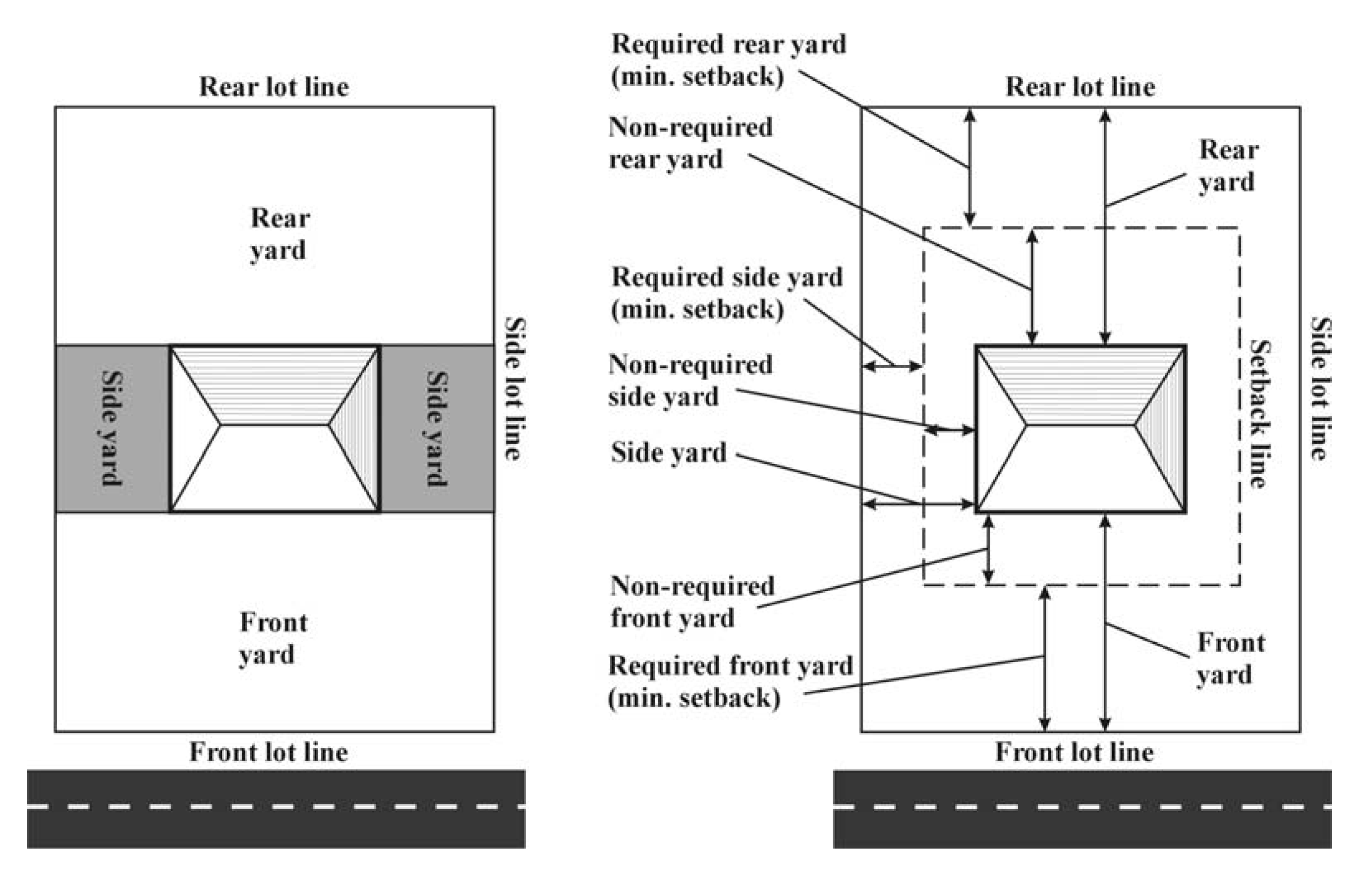
Yard means the open space on the same lot with a main building or main use, unoccupied and unobstructed from the ground upward except as otherwise provided in this chapter, and as defined below.
(1)
Front yard means an open space extending the full width of the lot, the depth of which is the minimum horizontal distance between the front lot line and the nearest point of the main building.
(2)
Nonrequired yard means the open space between the minimum setback line and the main building. The nonrequired yard is the additional yard area that the building is setback beyond the minimum setback requirement for the district.
(3)
Rear yard means an open space extending the full width of the lot, the depth of which is the minimum horizontal distance between the rear lot line and the nearest point of the main building.
(4)
Required yard means the open space between the lot line and the minimum setback line. The required yard corresponds to the minimum setback requirement for the district.
(5)
Side yard means an open space between a main building and the side lot line, extending from the front yard to the rear yard, the width of which is the horizontal distance from the nearest point of the side lot line to the nearest point of the main building.
Zero lot line means the location of a building on a lot in such a manner that one or more of the buildings sides rests directly on a lot line, separated only by firewalls.
Zoning act means the Michigan zoning enabling act, Public Act No. 110 of 2006 (MCL 125.3101 et seq.).
Zoning administrator means the official so designated by the township board.
(Ord. No. 151, § 23.02, 6-13-2007; Ord. of 9-5-2008(1), §§ 6, 7; ; Ord. of 5-11-2016; Ord. No. 167, 2-14-2018; Ord. No. 171, 5-8-2019; Ord. No. 176, 3-18-2020)
Cross reference— Definitions generally, § 1-2.
Sec. 38-7. - Vested right.
Nothing in this chapter should be interpreted or construed to give rise to any permanent vested rights in the continuation of any particular use, district, zoning classification or any permissible activities therein; and they are hereby declared to be subject to subsequent amendment, change or modifications as may be necessary to the preservation or protection of public health, safety and welfare.
(Ord. No. 151, § 24.01, 6-13-2007; Ord. of 9-5-2008(1), § 8)
Sec. 38-8. - Severability.
Sections of this chapter shall be deemed to be severable and should any section, paragraph, or provision hereof be declared by the courts to be unconstitutional or invalid, such holdings shall not affect the validity of this chapter as a whole or any part thereof, other than the part so declared to be unconstitutional or invalid.
(Ord. No. 151, § 24.02, 6-13-2007)

