
Roselle City Zoning Code
SECTION 1
- TITLE/ PURPOSE AND INTENT / DEFINITIONS
1-1. - Title.
This ordinance shall be known, cited and referred to as the Roselle Zoning Ordinance, as amended, 2022.
1-2. - Purpose and Intent.
This ordinance is adopted for the following purposes:
A.
Promoting the public health, safety, comfort, morals, convenience, and general welfare.
B.
Securing adequate light, pure air, and safety from fire and other dangers.
C.
Conserving the taxable value of land and buildings throughout the Village of Roselle.
D.
Dividing the entire Village of Roselle into districts and classifying, restricting, and regulating therein trades and industries, and the location, construction, reconstruction, alteration, and use of buildings, structures, and land, whether for residence, business, manufacturing, or other specified uses.
E.
Avoiding or lessening congestion in the public streets.
F.
Preventing the unproductive or overly intensive development of land through managing the height and bulk of buildings hereafter erected as related to land area.
G.
Establishing and regulating building or setback lines on or along streets, alleys, trafficways, drives, parkways, storm or flood water runoff channel or basin, or property lines to secure development that enhances its surroundings and the Village.
H.
Regulating and managing the intensity of the use of lot areas, and regulating and determining the area of open spaces within and surrounding such buildings.
I.
Ensuring uses, buildings, or structures are compatible with the character of the residence, business, or manufacturing districts.
J.
Requiring that additions, alterations or remodelings of existing structures meet the requirements of this Chapter and the Village Code.
K.
Providing for the gradual elimination of those uses, buildings, and structures which are incompatible with the character of the districts in which they are made or located, including without being limited thereto:
1.
Elimination of such uses of unimproved lands or lot areas when the existing rights of the persons in possession thereof are terminated or when the uses to which they are devoted are discontinued;
2.
Elimination of uses to which such buildings and structures are devoted if they are adaptable for permitted uses; and
3.
Elimination of such buildings and structures when they are destroyed or damaged in major part or when they have reached the age fixed by the corporate authorities of the municipality as the normal, useful life of such buildings or structures.
L.
Protecting the air, water, and land resources of the village from the hazards of pollution.
M.
Protecting land and buildings and the lawful use of land and buildings from natural hazards including flooding and erosion.
N.
Encouraging the construction and maintenance of a full range of housing opportunities so as to enable all persons working within the village to reside therein.
O.
Defining and limiting the powers and duties of the administrative officers and bodies as provided hereinafter.
P.
Prescribing penalties for the violation of the provisions of this ordinance or of any amendment thereto.
1-3. - Rules and Definitions.
1-3-A. RULES.
The language set forth in the text of this ordinance shall be interpreted in accordance with the following rules of construction:
A. The singular number includes the plural, and the plural the singular.
B. The present tense includes the past and future tenses, and the future the present.
C. The word "shall" is mandatory while the word "may" is permissive.
D. The masculine gender includes the feminine and neuter.
E. Whenever a word or term defined hereinafter appears in the text of this ordinance, its meaning shall be constructed as set forth in the definition thereof. Any word appearing in parentheses between a word and its definition herein shall be construed in the same sense as that word.
F. All measured distances, expressed in feet, shall be to the nearest integral foot. If a fraction is one-half foot or more, the integral foot next above shall be taken.
1-3-B. - Definitions.
The following words or terms, wherever they occur in this ordinance, shall be interpreted as herein defined:
Abandonment. An action resulting in relinquishing one's use, rights, or interest in property.
Abut. See Adjoining.
Accessory building, structure, or use. An accessory building, structure, or use, is one which:
a. Is subordinate to and serves a principal building, principal structure, or principal use; and
b. Is subordinate in area, intensity of use, or purpose to the principal building, principal structure, or principal use served; and
c. Contributes to the comfort, convenience, or necessity of occupants of the principal building, principal structure, or principal use served; and
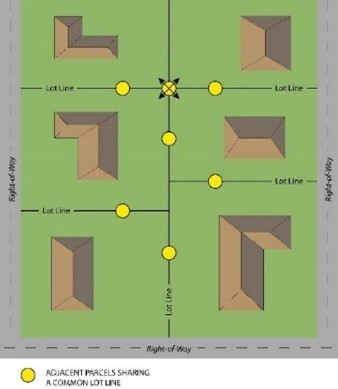
d. Is located on the same zoning lot as the principal building, principal structure, or principal use served, with the single exception of such accessory off-street parking facilities as are permitted to locate elsewhere than on the same zoning lot with the building, structure, or use served.
Adjoining (abutting, contiguous) lot or land. A lot or parcel of land that shares all or part of a common lot line with another zoning lot or parcel of land.
Adult regulated uses: Adult regulated uses and related definitions shall include but not be limited to the following:
Adult bookstore and/or video store. An establishment having as a significant or substantial portion of its stock in trade books, magazines, periodicals, or other printed matter; and/or photographs, films, motion pictures, video cassettes, slides, tapes, records, or other forms of visual or audio representations which are distinguished or characterized by their emphasis on matters depicting, describing, or relating [to] specified sexual activities or specified anatomical areas.
Adult business use. The use of property for the operation of a use of which a significant or substantial portion involves an activity distinguished or characterized by its emphasis on matters depicting, describing, or relating to sexual activities or specified anatomical areas as they relate to sexual activities, including the operation of adult bookstore and/or video store, adult mini-motion picture theater, adult motion picture theater, adult motion picture arcade, and adult card, gift, and novelty store. For the purposes of this section, an adult business use shall not be deemed a retail business, service business, recreational, or social facility, accessory use, or general use.
Adult card, gift, or novelty store. An establishment having as a significant or substantial portion of its stock in trade items such as cards, games, articles of clothing, and novelties which are distinguished or characterized by an emphasis on depicting or describing specified sexual activities or specified anatomical areas.
Adult mini-motion picture theater. An enclosed building or any portion or portions thereof having a capacity from six (6) to fifty (50) persons, where, for any form of consideration (including a coin or token inserted into a coin or token-operated projector, video screen, or other image producing device), patrons may view films, motion pictures, video cassettes, slides, or similar photographic electronic reproductions in which a significant or substantial portion of the total presentation time is devoted to the showing of materials that are distinguished by an emphasis on matters depicting, describing, or related to specified sexual activities or specified anatomical areas.
Adult motion picture arcade. An establishment in which electronic, electrical, or mechanical still or slide projector(s), motion picture projector(s), video screen(s), closed circuit television transmission(s) or other image-producing device(s) operable by insertion of a coin or token or for other consideration, are maintained for presentation of images to five (5) or fewer persons at a single time per such device and where the images presented are distinguished or characterized by an emphasis on depicting or describing specific sexual activities or specified anatomical areas.
Adult motion picture theater. An enclosed building with a capacity of fifty (50) or more persons where, for any form of consideration, patrons may view closed circuit television transmissions, films, motion pictures, video cassettes, slides, or similar electronic or photographic reproductions in which a significant or substantial portion of the total presentation time is devoted to the showing of materials which are distinguished or characterized by an emphasis on matter depicting, describing or relating to specified sexual activities or specified anatomical areas.
Specified anatomical areas.
(1)
Less than completely or opaquely covered human genitals, pubic region, buttocks, anus, or female breast below a point immediately above the top of the areola; and
(2)
Human male genitals in a discernibly turgid or nonturgid state, even if completely or opaquely covered.
Specified sexual activities.
(1)
Human genitals in a state of sexual simulation or arousal;
(2)
Acts of human masturbation, sexual intercourse, fellatio, or sodomy;
(3)
Fondling, kissing, or other erotic touching of specified anatomical areas;
(4)
Flagellation or torture in the context of a sexual relationship;
(5)
Masochism, erotic, or sexually oriented torture, beating, or the infliction of pain;
(6)
Erotic touching, fondling, or other such contact with an animal by a human being; or
(7)
Human excretion, urination, menstruation, or vaginal or anal irrigation as part of or in connection with any of the activities set forth in (1) through (6) above.
Airport (heliport or helistop). A premises which are used or intended for use for the landing, take-off, or servicing of aircraft; and an appurtenant area which are used or intended for use for airport buildings or other airport structures, facilities, or rights-of-way, together with all airport buildings and structures located thereon.
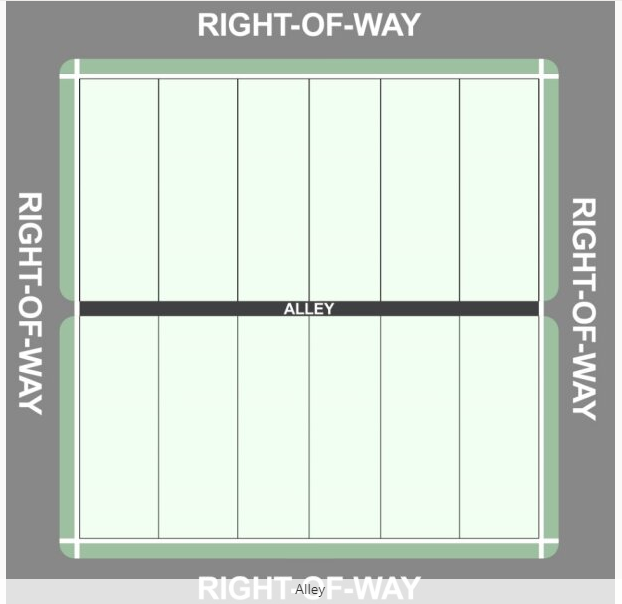
Alley. A public or private right-of-way which affords only a secondary means of access to abutting property along the side or back of properties.
Agriculture, home. The production, principally for use or consumption of the property owner, of plants, animals, or their products and for sale to others where such sales are incidental; including, but not limited to, gardening, fruit production, and poultry and livestock products for household use only.
Agriculture, commercial. The production principally for the sale to others of plants, animals, or their products. Commercial agricultures shall not include poultry or swine production or animal feedlot operations.
Alteration. An act or process which changes an exterior or interior architectural element of a structure, including, but not limited to the erection, construction, reconstruction, or removal of any structure and the addition, removal, or alteration of bearing walls, columns, beams, girders, or foundations
Ambulatory surgical treatment center. An institution, place or building devoted primarily to the maintenance and operation of facilities for the performance of surgical procedures. Such facilities shall not provide beds or other accommodations for the overnight stay of patients. Ambulatory surgical treatment centers do not include any institution, place, or building devoted exclusively to the performance of dental or oral surgical procedures.
Amusement device, coin-operated. An amusement machine or device operated by means of the insertion of a coin, token, or similar object, for the purpose of amusement or skill and for the playing of which a fee is charged, which return to the player thereof no money or property or right to receive money or property. The term does not include vending machines in which are not incorporated game or amusement features, nor does the term include any coin-operated mechanical musical devices.
Animal, domestic. Ordinary household pets, excluding horses, donkeys, and other such animals not normally housed or cared for entirely within the confines of a residence.
Animal hospital. An establishment where animals are given medical or surgical treatment and are cared for during the time of such treatment with overnight accommodations. However, crematory facilities shall not be allowed in an animal hospital.
Antenna. A structure, mast, pole, tripod, parabolic dish, mesh work, or framework, used for the purpose of transmitting or receiving microwave, radio, or television signals, or any other electromagnetic signals. An antenna as herein defined shall include all mounting structures and electrical connections therefor. This definition shall not include traditional pole-supported television antennas typically mounted on residential roof tops and chimneys.
Antenna, building-mounted. An antenna directly mounted or affixed to the exterior roof, walls, or other major exterior part of building or a similar structure.
Antenna, ground-mounted. A freestanding antenna mounted on the ground and the entire weight of which is supported by an approved platform, framework, or other structural system. It is not supported in any way by a building.
Antenna, personal wireless telecommunication. An antenna and related systems that is part of a personal wireless telecommunications facility.
Antenna, roof-mounted. An antenna, the entire weight of which is supported by a building through the use of an approved framework or other structural system, which system is affixed to one (1) or more structural members of the roof of the building or to any structural portion of the building above the roof line.
Apartment. See "dwelling unit."
Arbor: A frame of wooden or metal, mainly used to support small trees or climbing plants.
Architectural Entrance Structure: Structure located at the gateway to a residential, commercial, or industrial development.
Arena. See "Stadium."
Art gallery. A private establishment engaged primarily in the sale of art pieces, but may also, loan, appraisal, or display such works. This clarification does not include museums or art studios.
Auditorium. A room, hall, or building, often a part of a church, theatre, school, recreation building, or other building, used for the gathering of people as an audience to hear lectures, plays, and other presentations.
Automobile laundry: See Car Wash.
Automobile rental/leasing establishment. An establishment leasing or renting automobiles, motorcycles, and trucks.
Automobile and / or truck repair. A commercial building or structure, where motor vehicles are equipped, repaired, or serviced.
Automobile and / or truck sales (new and used). A building or portion thereof, or other premises or portion thereof, for the display, sale, rental, or lease of new and/or used motor vehicles, and any warranty repair work and other repair service conducted as an accessory use.
Automobile Service Station See Gas/fueling station.
Awning. A temporary or permanent shelter projected from the exterior wall of a building, and which may overhang a right-of-way.
Bakery. A business primarily engaged in the retail sale of baked products for consumption, which may be prepared either on or off premises.
Balcony. An elevated platform open to the elements, not supported by the ground and projecting from an upper story and enclosed entirely by a railing
Banks and financial institutions. Commercial banks, currency exchanges, savings and loan associations, brokerage offices, and other similar financial institutions, but not including loan offices, finance companies, and pawn shops.
Banquet hall (assembly, meeting hall). A building or portion thereof, for lease, primarily intended to accommodate private parties for functions such as banquets, weddings, anniversaries, and other similar celebrations.
Basement. That portion of a structure or a building, partly or wholly underground, having one-half (½) or more of its floor-to-ceiling height above the average level of the adjoining ground and with a floor-to-ceiling height of not less than seven and one-half (7½) feet. A basement is not included in computing the number of stories for the purpose of building height measurement. See "cellar."
Bay window: A window projecting beyond the wall line of the building and not supported by a foundation.
Bed and breakfast. A transient lodging establishment or business, generally in a single-family dwelling or detached guesthouse owned and occupied by the property owner, which provides overnight or otherwise temporary lodging for the general public and may provide meals for compensation.
Berm. An earthen mound designed to provide visual interest on a site, screen undesirable views, reduce noise, or fulfill other such purposes.
Bioswales. A stormwater management approach which is designed as vegetated, shallow, landscaped depressions to manage stormwater runoff closest to its source through the natural processes of filtration, infiltration, storage, evapotranspiration, and plant uptake.
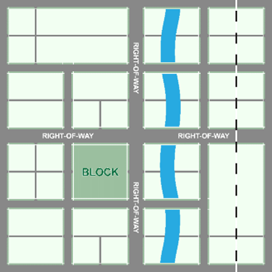
Block. A tract of land bounded by rights-of-way or by a combination of street rights-of-way and public parks, cemeteries, railroad and utility rights-of-way, bulkhead lines or shorelines or waterways, or corporate boundary lines.
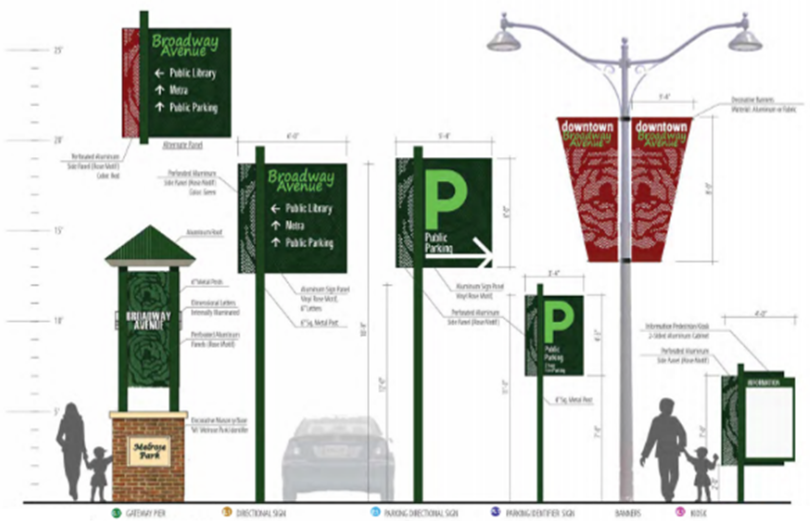
Wayfinding
Buildable area. That portion of a zoning bounded by all lot lines within which construction of principal and accessory structures may be permitted, subject to the requirement of this Chapter.
Building. A structure with a permanent roof, separated on all sides from adjacent open space by exterior or party walls, built for the support, shelter, or enclosure of persons, animals, chattel, or movable property of any kind, and which is permanently affixed to the ground.
Building, attached. A building which has at least part of a wall in common with another building or shares a roof with another building.
Building, detached. A building surrounded by open space on the same zoning lot.
Building, principal. A building in which is conducted the primary use of the zoning lot on which it is located.
Building, public. A building owned, used, or controlled exclusively for public purposes by any department or branch of government.
Building footprint. The outline of the total area covered by a building's perimeter at the ground level.
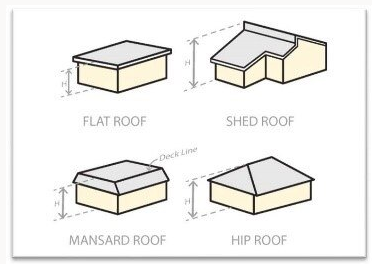
Building height. The vertical distance of a building measured from the average elevation of the finished grade within twenty (20) feet of the building to the highest point of the underside of the ceiling beams of a flat roof; to the deck line of a mansard roof; and to the mean level of the underside of rafters between the eaves and the ridge of a gable, hip, or gambrel roof. Chimneys, spires, towers, elevator penthouses, tanks, and similar projections other than signs shall not be included in calculating the height.
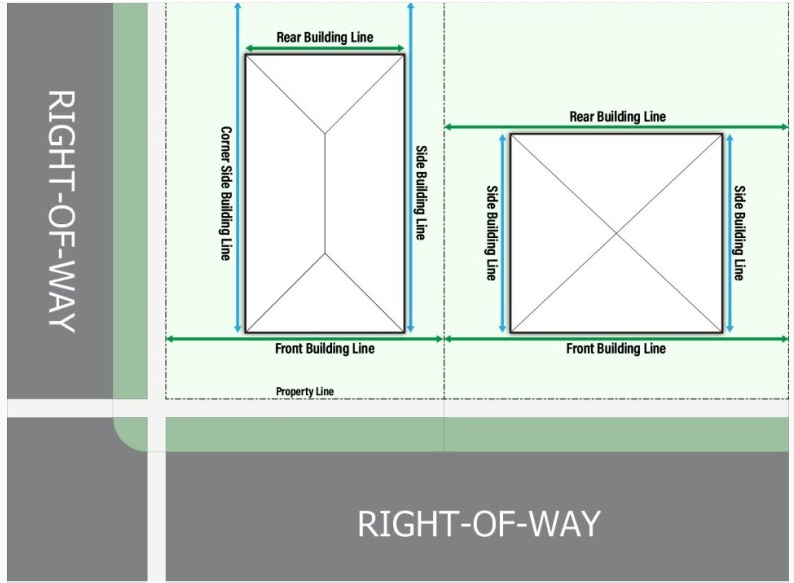
Building line. A line parallel to the right-of-way line at any story level of a building and representing the minimum distance which all or any part of the building is set back from said right-of-way line.
Building mass. The three-dimensional bulk of a building: height, width, and depth.
Building site. A parcel of land occupied or intended to be occupied by main and accessory structures and uses, including such open spaces as are provided or are intended to be used in connection therewith or are required by the regulations for the district wherein such parcel is located.
Bulk. The size and mutual relationships of a building or structure and the location of same with respect to its size, shape, placement, and location on a lot. :
By-pass channel. A channel formed in the topography of the earth's surface to carry stormwater runoff through a specific area.
Canopy: A roof-like structure with posts or other ground support, constructed to provide shelter to pedestrians or vehicles.
Cannabis business establishment. A dispensing organization, craft grower, cultivation center, infuser organization, processing organization, transporting organization as defined in the Illinois Cannabis Regulation and Tax Act (410 ILCS 705/1 et seq.) as amended, operated in strict compliance with state law and the regulations set forth in the Village of Roselle Code of Ordinances.
Cannabis dispensary. A "dispensing organization" as defined in the Illinois Cannabis Regulation and Tax Act (410 ILCS 705/1 et seq.) as amended, operated in strict compliance with state law and the regulations set forth in the Village of Roselle Code of Ordinances.
Cannabis craft grower. A "craft grower" as defined in the Illinois Cannabis Regulation and Tax Act (410 ILCS 705/1 et seq.) as amended, operated in strict compliance with state law and the regulations set forth in the Village of Roselle Code of Ordinances.
Cannabis cultivation center. A "cultivation center" as defined in the Illinois Cannabis Regulation and Tax Act (410 ILCS 705/1 et seq.) as amended, operated in strict compliance with state law and the regulations set forth in the Village of Roselle Code of Ordinances.
Cannabis infuser. An "infuser organization" as defined in the Illinois Cannabis Regulation and Tax Act (410 ILCS 705/1 et seq.) as amended, operated in strict compliance with state law and the regulations set forth in the Village of Roselle Code of Ordinances.
Cannabis processor. A "processing organization" as defined in the Illinois Cannabis Regulation and Tax Act (410 ILCS 705/1 et seq.) as amended, operated in strict compliance with state law and the regulations set forth in the Village of Roselle Code of Ordinances.
Cannabis transporter. A "transporting organization" as defined in the Illinois Cannabis Regulation and Tax Act (410 ILCS 705/1 et seq.) as amended, operated in strict compliance with state law and the regulations set forth in the Village of Roselle Code of Ordinances.
Car Wash. A building or portion thereof containing facilities for washing motor vehicles. It may use automatic production line methods—a chain conveyor, blower, steam cleaning device, or other mechanical devices—or it may provide space, water, and equipment for the handwashing of motor vehicles, whether by the customer or the operator.
Carnival. An aggregation of shows or riding devices, games of skill or chance, or a combination of shows and riding devices, or a combination of several enterprises, such as revolving wheels, merry-go-rounds, giant swings, panoramas, musical and theatrical entertainments, or riding devices and where the public pays either an admission or participation fee. See "circus."
Carport. An accessory and roofed shelter for one (1) or more motor vehicles, with up to two (2) sides of enclosures by walls and attached to the principal building.
Cemetery. A parcel of land or structure dedicated to, and at least a portion of which is being used for, the interment of human or animal remains. A cemetery may include crematoria, mausoleums, columbaria, mortuaries, and funeral establishments, when operated in conjunction within the boundary of such cemetery.
Circus. A temporary outdoor amusement center involving assemblages on a site where there may or may not be an admission charge, and which may include such activities as rides, entertainment, games, booths, food services and sales, exhibitions, and animal displays. See "carnival."
Clinic, Medical/Dental. A building containing an association or group of physicians, dentists, clinical psychologists, and similar professional health care practitioners, including allied professional assistants who are assembled for the purpose of carrying on their professions. The clinic may include a pharmacy, dental and medical laboratories, acute care services, and/or X-ray facilities, but shall not include in-patient care or operating rooms for major surgery.
Club or lodge, private. Buildings and facilities owned or operated by an association, organization, person, or persons for a social, educational, or recreational purpose, but not primarily for profit to any individual and not primarily to render a service which is customarily done as a business.
Clustering (of residences). A grouping of residential structures around courts, cul-de-sacs, or short streets, more closely than in conventional residential plans, in order to preserve natural site amenities and open space.
Coffee shop. An establishment whose primary business is serving brewed coffee or teas along with refreshment items for consumption either on or off premises.
College (university). See "Educational Facility, College (university)
Community Residence: A group home or specialized residential care home serving persons with disabilities that have been determined to be eligible for services by an independent service coordination agency, and which agency has determined that joint occupancy of a residential property is medically necessary or beneficial for the person with disabilities. A community residence shall be licensed by the State of Illinois and does not include a residence that serves persons as an alternative to incarceration for a criminal offense.
Comprehensive plan. An official plan, adopted by the legislative body of the Village of Roselle, containing graphic and written proposals specifying the general goals, policies, and guidelines that directs the present and future physical, economic, social, political, aesthetic, and related development, both public and private, of the village. Also, any unit or part of such plan separately adopted, including any amendment to such plan and parts thereof, adopted by the Roselle Village board of trustees.
Condominium. A form of real estate ownership in which designated units or volumes of space are owned by individual owners who, by virtue of their unit ownership, have joint use of, interest in, and ownership of halls, entranceways, service facilities, lands, and such other improvements as may be included in the condominium declaration required by the Condominium Property Act of the State of Illinois.
Contractor offices. Office for uses that provides off site services for construction, maintenance and repairs of buildings, structures, equipment or other services. This use may also include storage of equipment and materials
Court. An open and unoccupied space, other than a yard or plaza, that may or may not have street access and is on the same lot with and enclosed on two (2) or more sides by the walls of a building or multiple buildings.
Country club. A club with recreation facilities such as golf courses for members, their families, and invited guests.
Curb cut. The area of vehicular ingress or egress between a property and an abutting public right-of-way.
Daycare Center: A facility, other than within a residential dwelling unit, which exclusively provides supplemental care and supervision, recreation, and/or educational instruction to children or adults during the entire or any portion of the day. Daycare centers shall be in keeping with current state regulations.
Daycare home. A residential dwelling which receives more than three (3) and up to a maximum of eight (8) children for less than twenty-four (24) hours per day. The maximum of eight (8) children includes the family's natural, foster, or adopted children and all other persons under the age of twelve (12). Daycare homes shall be in keeping with current state regulations.
Deck: A level, unenclosed platform serving as a floor and located above the finished grade, and usually directly adjoining or attached to a building.
Density. The numerical value obtained by dividing the total number of dwelling units in a development by the area of the tract of land (in acres) within a development.
Density, gross. Gross density calculations shall include all nonresidential land uses and private streets of the development as well as the rights-of-way of proposed streets within the development. Rights-of-way of existing dedicated streets on the borders of the development shall be excluded from gross density calculations. The result is the number of dwelling units per gross acre of land.
Detention pond. A facility that is designed to be normally dry and contains water only when excess stormwater runoff occurs. A detention pond is a "dry bottom" pond.
Development. Any man-made change, other than maintenance of existing structures, to improved or unimproved real estate, including, but not limited to installation of new or enlargement of existing structures, sites, streets, utilities, excavation, landscaping, or stormwater systems.
Drive-through facility. An establishment or portion thereof that is designed, intended, or used to transact business or services with persons seated in a motor vehicle.
Drug store. See "indoor retail sales."
Driveway. A private roadway providing access for vehicles from a street to a parking space, garage, dwelling, or other structure.
Dwelling. A building, structure, or portion thereof, designed or used exclusively for human habitation. The term shall not be used to describe, portable homes, trailers, or lodging rooms in hotels or motels.
Dwelling, accessory. A residential dwelling unit, but not a mobile home, located on the same zoning lot as a single-family dwelling unit, either within the same building as the single-family dwelling unit or in a detached building.
Dwelling, single unit attached. A dwelling attached to one other dwelling by common vertical walls, also known as a duplex.
Dwelling, multiple-unit. A dwelling containing two or more dwelling units, which use as their principal means of egress common entryways, hallways, stairways, or corridors. The definition may include, but shall not be limited to, the following terms: apartment, condominium, or two-flat.
Dwelling, single-unit. A building designed for occupancy within a single dwelling.
Dwelling, single-unit detached. A building designed for occupancy within a single dwelling, and surrounded by open space or yards with no attachment to any other dwelling by any means.
Dwelling, townhouse. A dwelling on a single lot in a row of at least three (3) such units horizontally abutting each other in which each unit is separated from any other unit by one (1) or more common walls and has its own direct access to the outside.
Dwelling unit. A unit in a building or structure, designed as an independent living quarter for the exclusive use of a household. Each dwelling unit shall include an individual and complete kitchen and sanitary facilities. Each dwelling unit shall have its own direct access to the outside or to a common hall.
Easement. An authorization or grant by a property owner for the use by another, and for a specific and limited purpose of any designated part of the subject property.
Eave: The projecting lower edges of a roof, overhanging the wall of a building.
Educational facility, college (university). An institution, other than a trade school, that provides full-time or part-time education beyond high school and that grants associate or bachelor degrees and may also have research facilities and/or professional schools that grant master and doctoral degrees.
Educational facility, commercial school (trade school). A school established to provide for the teaching of industrial, clerical, managerial, or artistic skills. This definition applies to schools that are owned and operated privately for profit and that do not offer a complete educational curriculum.
Educational facility, (primary / secondary school). An institution conducting regular academic instruction at kindergarten, elementary, junior high or senior high school levels, operated by governmental or nongovernmental organizations.
Emergency shelter. A facility with overnight sleeping accommodations, the primary purpose of which is to provide temporary shelter for homeless persons.
Excavation/filling. Any changing of the grade or sub-grade of a tract of land by cutting, scraping, grading, trenching, digging, filling in, or otherwise reshaping the natural contour of the ground.
Facade. That portion of any exterior elevation or facing of a building.
Fence. A structure which is a barrier and is used as a boundary, enclosure, screen separation, means of privacy, protection, or confinement, and is constructed of wood, plastic, metal, wire mesh, or masonry.
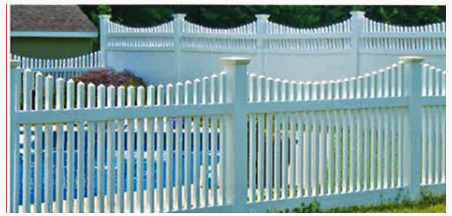
Fence, decorative. A fence which includes solid entrance and exit gates, designed and constructed so that the surface area of any segment of such fence contains at least 50 percent open spaces, as compared to solid materials.
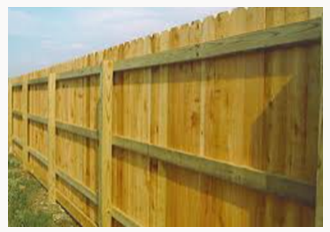
Fence, Privacy. A fence which includes solid entrance and exit gates, which effectively conceals from view (from adjoining properties and streets) materials that are stored and operations conducted behind it.
Floor area (for the purpose of determining the floor area ratio, conversions of existing structures, and maximum size of business establishments). The sum of the horizontal areas of the floor space contained in all floors, including a basement floor but not including a cellar floor, of a building or buildings on a lot. Floor area is measured in square feet from the exterior faces of the exterior walls of each building or from the centerline of party walls separating two (2) buildings. Such floor area shall also include:
a.
Space devoted to elevator shafts and stairwells at each floor;
b.
Floor space used for mechanical equipment when the structural headroom exceeds seven (7) feet, ten (10) inches in height, except equipment such as bulkheads, water tanks, and cooling towers, when located on the roof, whether or not such equipment is in the open or enclosed;
c.
Floor space in that part of a half-story where headroom is seven (7) feet, ten (10) inches or more in height;
d.
Floor space devoted to interior balconies, mezzanines, and enclosed porches;
e.
Floor space devoted to accessory uses in the principal building and in the accessory building or buildings; and
f.
Floor space devoted to enclosed off-street parking and off-street loading.
Floor area, (for the purpose of determining off-street parking and off-street loading requirements). The sum of the gross horizontal areas of each floor of a building or portion thereof devoted to such use requiring off-street parking and off-street loading, including accessory storage areas located within selling or working space (such as counters, racks or closets), and any basement floor area devoted to dwelling purposes, to retailing activities, to the production or processing of goods, or to business or professional offices. However, such floor area shall not include: Floor area devoted primarily to storage purposes (except as otherwise noted herein); floor area devoted to off-street parking or loading facilities including aisles, ramps, and maneuvering space; or cellar floor area other than area devoted to retailing activities, to the production or processing of goods, or to business or professional offices.
Floor area ratio (FAR). The numerical value obtained through dividing the gross floor area of a building or buildings by the net lot area on which such building or buildings are located.
Food preparation establishment. An establishment producing or processing food products such as bakery, sugar and confectionery, dairy, fats and oil, fruits and vegetables, grain, meat, poultry, and seafood for sales, retail, and wholesale. Other miscellaneous food preparation including catering services which are independent from food stores or restaurants.
Food store / Grocery. An establishment devoted to the sale of food which, without limiting the generality of the foregoing, may include a bake shop, fruit and vegetable store, meat or butcher products, dairy products and delicatessens.
Foundation. A structural system for transferring loads from a structure to the earth.
Frontage. All the property along one (1) side of a right-of-way between the two (2) nearest intersecting rights-of-way, measured along the property. If the street or right-of-way is a dead-end, then all property or properties along one (1) side between an intersecting right-of-way and the dead end of the street or right-of-way shall constitute the frontage.
Fuel storage. A tank for the bulk storage of petroleum, gasoline, fuel, oil, gas or inflammable liquid or fluid but does not include a container for inflammable liquid or fluid legally and properly kept in a retail store or a tank for storage merely incidental to some other use of the premises where such tank is located.
Funeral home. A building or part thereof used for human funeral services such as preparing the deceased for burial and display of the deceased and rituals connected therewith before burial or cremation.
Garage. A deck, building, or structure, or part thereof, used or intended to be used for the parking and storage of motor vehicles.
Garage, detached. A structure which is accessory to the principal building and to which there is legal vehicular access from a right-of-way on a zoning lot.
Garage, private residential. A structure which is accessory to, or an accessory portion of, a residential building and which is used for the parking and.
Garage, public parking. A building or structure intended to be used for the temporary, daily, or off-street parking of motor vehicles.
Garden/home center. A business where retail and wholesale products and produce are sold to the consumer for landscaping and home improvements and projects.
Gas Fueling Station. A building or premises used for dispensing, sale, or offering for sale any automotive fuels or oils which has pumps and storage tanks. Also, any building or premises where vehicle maintenance services are rendered wholly within a building. In addition, the convenience sale of food or other retail goods or services on premises may be an accessory use to the Gas Fueling Station.
Golf course. A public, semi-public, or private area or course for playing golf, Additional services such as a clubhouse, shelters, and related retail sales may be provided as accessory uses.
Government facility. A building or structure owned, operated, maintained, or occupied by government agency to provide governmental services to the public.
Grade. The degree of rise or descent of a sloping surface.
Grade, finished. The final elevation of the ground surface after development.
Grade, natural. The elevation of the ground surface in its natural state before man-made alterations.
Grade (for determination of building height). The average elevation of the finished grade within twenty (20) feet of the building or structure.
Greenhouse. A building or structure constructed chiefly of glass, glasslike, or translucent material, cloth or lath, which is devoted to the protection or cultivation of plants grown on the site.
Ground cover. Living plants designed to grow low to the ground and intended to stabilize soils and protect against erosion.
Guest, permanent. A person who occupies or has the right to occupy a hotel or apartment hotel accommodation as his domicile and place of permanent residence.
Gymnasium. See "Indoor athletic facility."
Health care facilities. A facility or institution, whether public or private, principally engaged in providing services for health maintenance, diagnosis or treatment of human diseases, pain, injury, deformity, or physical condition.
Heliport. An area designed to be used for the landing or takeoff of helicopters including operations facilities, such as maintenance, loading and unloading, storage, fueling, or terminal facilities.
Home occupation. Any gainful occupation or profession carried out by the occupant of a dwelling unit in which the home occupation is being conducted. Such home occupation are incidental and subordinate to the use of the dwelling unit for dwelling purposes and does not change the residential character of the property thereof.
Hospital. An institution, place, building, or agency, public or private, whether organized for profit or not, devoted primarily to the maintenance and operation of facilities for the diagnosis and treatment or care of two (2) or more unrelated persons admitted for overnight stay or longer in order to obtain medical (including obstetric, psychiatric, and nursing) care of illness, disease, injury, infirmity, or deformity.
Hotel. An establishment containing lodging accommodations designed for use by transients, travelers, or temporary guests. Facilities provided may include house cleaner service, laundering of linen used on the premises, telephone and secretarial, or desk service, meeting rooms, restaurants, including the sale of alcoholic beverages.
Indoor Retail Sale of Goods: The use of a structure for the display and sale of merchandise directly to the ultimate consumer commonly sold as retail items that may include stocks of goods, wares or merchandise incidental to such purpose and open and accessible to the public.
Indoor Places of Entertainment and Amusements: Spectator and participatory uses conducted within an enclosed building, such as movie theaters, bowling alleys, and indoor sporting exhibitions. Indoor amusement facilities may include Accessory Uses, such as snack bars or restaurants, for the use of patrons.
Indoor Athletic Facilities. An establishment that provides health, fitness, and exercise facilities such as running, jogging, aerobics, weightlifting, court sports, swimming, or other recreational activities. May also include facilities for sports training such as baseball, soccer, gymnastics, and martial arts.
Junkyard. An area where junk, waste, scrap, discarded or salvaged materials are bought, sold, exchanged, stored, baled, packed, disassembled, or handled, including but not limited to scrap iron and other metals, paper, rags, rubber tires and bottles. A junkyard may include automobile wrecking or salvage yards, any lot on which one or more unregistered, inoperable motor vehicles are placed, house wrecking yards, used lumber yards and places of yards for storage of salvaged house wrecking and structural steel materials and equipment, but does not include uses established entirely within enclosed buildings.
Kennel. An establishment where dogs or cats are boarded for compensation or where dogs or cats are bred or raised for sale purposes. Any premises or portion thereof on which four (4) or more pets over four (4) months of age are kept, or any premises or portion thereof on which more than two (2) such animals are maintained, boarded, bred, or cared for in return for remuneration, or are kept for the purpose of sale.
Laboratory. See "Research and development facility.
Landfill. A site used for the disposal of refuse from: (a) More than one (1) residential premise, or (b) one (1) or more commercial, industrial manufacturing, or municipal operations. In a sanitary landfill refuse is disposed of without creating nuisances or hazards to the public health or safety by confining refuse to the smallest practical area with approved power equipment and covering it with a layer of compacted earth or suitable cover material at the conclusion of each day's operation.
Lawn and Garden equipment storage building. See "shed".
Library. A public facility for the use or loaning, but not sale, of literary, musical, artistic, or reference materials by the public.
Liquor store. A business which sells alcoholic beverages for off-premises consumption.
Loading berth. A space within a loading facility, exclusive of driveways, aisles, maneuvering areas, ramps, columns, landscaping areas, office, and work areas, for the temporary parking of a commercial vehicle while loading or unloading goods or materials, and which abuts upon a street, alley, or other appropriate means of access.
Lot. A parcel of land which is either a "lot of record" or "zoning lot."
Lot, corner. A lot or parcel of land abutting upon two (2) or more streets at their intersection, or upon two (2) parts of the same street forming an interior angle of less than one hundred thirty-five (135) degrees.
Lot, interior. Any lot other than a corner lot.
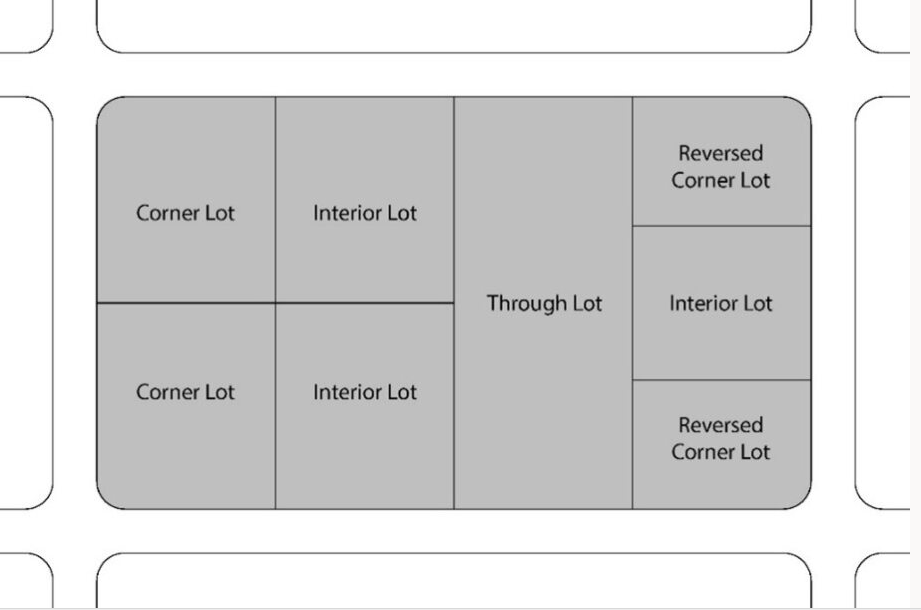
Lot, reversed corner. A corner lot, the street-side lot line of which is substantially a continuation of the front lot line of the first lot to its rear.
Lot, reserved. A lot of record, most of which is adjacent to and located behind another lot of record and which derives its only access to a public street by a stem and driveway.
Lot, through. A zoning lot which fronts upon two (2) parallel streets, or which fronts upon two (2) streets which do not intersect at the boundaries of the lot. On a through lot, both street lines shall be designated front lot lines, and front yards shall be provided on both street frontages as required.
Lot, zoning. A single tract of land, which (at the time of filing for a building permit) is designated by its owner or developer as a tract to be used, developed, or built upon as a unit, under single ownership or control. Zoning lot lines shall not cross zoning district boundary lines unless otherwise permitted in this ordinance. Therefore, a zoning lot or lots may or may not coincide with a lot of record.
Lot area. The total area within the lot lines of a lot, excluding any street rights-of-way.
Lot coverage. That portion of a zoning lot covered by all structures excluding a conforming portion of a driveway within a required front and/or corner side yard. Patios and decks are included in the calculation of lot coverage.
Lot depth. The mean horizontal distance between the front lot line and the rear lot line of a zoning lot, measured within the lot boundaries.
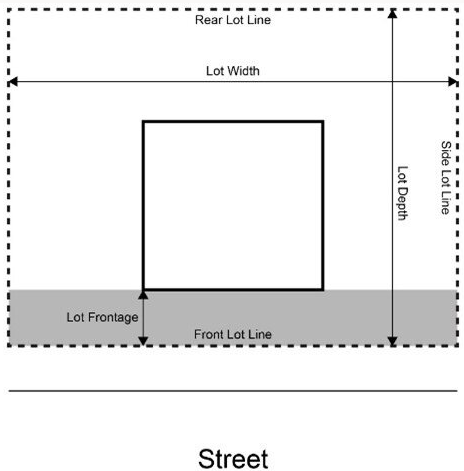
Lot frontage. The distance along a right-of-way line from one property line to the next of an individual property.
Lot line. A property boundary line of any lot held in single or separate ownership; except that, where any portion of the lot extends into the abutting street or alley, the lot line shall be deemed to be the street or alley right-of-way line.
Lot line, front. That boundary of a zoning lot which is along an existing or dedicated public right-of-way. On corner lots, the owner may select either right-of-way lot line as the front lot line.
Lot line, rear. That boundary of a zoning lot which is most distant from, and is parallel or approximately parallel, to the front lot line.
Lot line, side. Any boundary of a lot which is not a front lot line or a rear lot line.
Lot line, corner side. That boundary of a corner lot which abuts a right-of-way but is not the front lot line.
Lot line, interior side. A boundary of a zoning lot which does not abut a right-of-way and which is not a front or rear lot line.
Lot of record. A lot which is part of a subdivision the plat of which has been recorded in the office of the recorder of deeds of DuPage or Cook Counties; or a parcel of land, the deed to which was recorded in the office of said recorder of deeds pursuant to Chapter 109 (Plats Act), paragraph 1(b).
Lot width. The horizontal distance between the side lot lines measured at the building line. In the case of a zoning lot that has a curvilinear front lot line, the width shall be measured at the front yard setback line, at the center point of the front lot line.
Major change. A revision to approved plan as specified in the Administration and Enforcement Section of this Chapter.
Manufacturing, general. The mechanical or chemical transformation of materials or substances into new products, including the assembling of component parts, the creation of products, and the blending of materials including but not limited to oil, plastics, resins, liquors, etc.
Manufacturing, limited. The manufacture, predominantly from previously prepared materials, of finished products or parts, including processing, fabrication, assembly, treatment and packaging of such products, and incidental storage, sales, and distribution of such products. This does not involve the assembly of large equipment and machinery and has very limited external impacts in terms of noise, vibration, odor, hours of operation and commercial motor vehicle traffic.
Marijuana cultivation center. A cultivation center as defined in the Compassionate Use of Medical Cannabis Pilot Program Act.
Marijuana dispensing organization. A medical cannabis dispensing organization as defined in the Compassionate Use of Medical Cannabis Pilot Program Act.
Massage. Any method of applying pressure on or friction against or stroking, kneading, rubbing, tapping, pounding, vibrating, or stimulating the external soft parts of the body with the hands or with the aid of any mechanical or electrical apparatus or appliance, with or without supplementary aids such as rubbing alcohol, liniments, antiseptics, oils, powder, creams, lotions, ointments, or other similar preparations.
Massage parlor and/or bathhouse. An establishment or place that is not a regularly licensed and established hospital or dispensary where nonmedical or nonsurgical manipulative exercises or devices are practiced upon the human body manually by a masseur, masseuse, or massage therapist, who is not licensed as physician, surgeon, dentist, occupational or physical therapist, chiropractor, osteopath, or other occupations listed in the State of Illinois's Massage Licensing Act.
Massage therapist. A person licensed by the State of Illinois, in accordance with the Massage Licensing Act, to administer or perform massages at a massage establishment.
Microbrewery. An establishment for the production and packaging of malt beverages for distribution, retail, or wholesale, on or off premises.
Microdistillery. An establishment which produces spirits from any source or substance that is licensed by the director to manufacture, store and sell spirits.
Microwinery. An establishment engaged primarily in the production, including crushing, fermentation, aging, bottling, selling, and distribution of wine either on or off premises. A microwinery may operate a tasting room or in conjunction with a food-serving establishment.
Mini Warehouse: A building or group of buildings consisting of individual, self-contained units leased to individuals, organizations, or businesses for self-service storage of personal property.
Mobile home. A transportable dwelling structure suitable for year-long single-family occupancy and having water, sewage, and electrical connections, and kitchen and sanitary facilities. For the purpose of this ordinance, a mobile home shall not be deemed a "single-unit detached dwelling."
Mobile home park. A parcel or tract of land developed with facilities for locating two (2) or more mobile homes as defined under "mobile home" in this ordinance. Commercial sales of mobile homes shall be prohibited in a mobile home park.
Monopole. A structure composed of a single spire, pole, or tower used to support antennas or related equipment, but excluding lattice structures.
Monument sales: An establishment involved, in part or in whole, in the retail sale of tombstones, gravestones, burial monuments, and other similar items.
Motel. See "hotel."
Motor freight terminal. See "Warehousing and Logistics Facilities".
Motor vehicle. A vehicle primarily for transportation of persons or goods which is self-propelled or is propelled by electric power obtained from overhead trolley wires, but not operated upon rails.
a.
Vehicle, abandoned. Any vehicle in a state of disrepair rendering the vehicle incapable of being driven in its present condition; or any vehicle that has not been moved or used for seven (7) consecutive days or more and is apparently deserted. Abandoned vehicles shall be permitted only in authorized automobile wrecking yards or junk yards.
b.
Vehicle, commercial. Any vehicle operated for the transportation of persons or property in the furtherance of any commercial or industrial enterprise, "for-hire" or "not-for-hire," including any vehicle which exceeds a three-quarter (¾) ton rated capacity and all vehicles displaying commercial advertising or commercial name. Not included, however, is any recreational vehicle not being used commercially.
c.
Vehicle, passenger. A motor vehicle, including a multipurpose passenger vehicle, that is designed for carrying not more than ten (10) persons.
d.
Vehicle, recreational. Every vehicle originally designed or permanently converted and used for temporary living accommodations and not used as a commercial vehicle, including but not limited to any camper, house car, house trailer, or private living coach.
Museum. A cultural facility devoted to the procurement, care, study, and display of artistic, historical, or scientific objects of lasting interest or values.
Nonconforming building or structure. A building or structure which: (a) does not comply with all of the regulations of this ordinance or any amendment hereto governing bulk for the zoning district in which such building or structure is located.
Nonconforming lot. A property which is not permitted in the zoning district in which such use is located due to insufficient size or dimension, but which use conformed with all of the codes, ordinances, and other legal requirements applicable at the time such lot was established.
Nonconforming use. A use of land, buildings, or structures which is not permitted in the zoning district in which such use is located, but which use conformed with all of the codes, ordinances, and other legal requirements applicable at the time such use was established.
Not-for-profit (nonprofit organization). A person(s), partnership, association, corporation, or other group whose activities are conducted for the benefit of others, and not for the gain of any private individual or group.
Notice / Legal publication. Notice—Legal publication of information regarding hearings as specified in this Chapter and the Illinois Revised Statutes.
Noxious material. Material capable of causing injury to living organisms by chemical reaction or capable of causing detrimental effects upon the psychological, social, or economic well-being of human beings.
Off-street loading and unloading space or berth. An open, hard-surfaced area of land, other than a street, or a public way, the principal use of which is for the standing, loading, and unloading of motor vehicles, tractors, and trailers to avoid undue interference with public streets and alleys.
Off-street parking space. A temporary storage space for motor vehicles within a public or private parking area in compliance with the requirements set forth in section 11.00 of this ordinance.
Office, business and professional. A room or group of rooms used for conducting the affairs of a business, profession, service industry, government, or governmental agency. This use may include offices of individual medical providers.
Open sales lot. A lot or parcel of land used or occupied for the purpose of buying, selling, or trading of all goods and commodities and including the storage of same prior to sale or exchange. An open sales lot is not allowed as a principal use of land; an open sales lot shall only be allowed as an accessory use to a permitted or a special use.
Open space. public. An open space which is owned, operated, and maintained by a public agency for the use and benefit of the general public.
Open space, private. An open space which is under private ownership and management and are limited to use of the occupants on the subject property.
Open space, common. An open space within a residential development designated and designed for the exclusive use of the residents in the development and their guests with any leisure and recreational facilities.
Outdoor dining area, temporary. A privately owned or publicly owned area, street, or sidewalk, which is available or customarily used by the general public and which is designed, established, or regularly used for consuming food or drink with tables.
Outdoor recreational facilities: Uses that provide entertainment services partially or wholly outside of a completely enclosed building. Such uses typically, although not always, attract an audience where patrons are not engaged in a physical recreational activity. Examples may include: Amusement parks, drive-in theaters, outdoor live theaters, vehicular, and animal racetracks, zoos, and similar land uses. Such facilities may be owned and operated publicly or privately.
Outdoor business activity. The display and sales of products or services primarily outside a building or structure. This definition does not include an automobile and or truck sales establishment, and garden/home center.
Outdoor storage. The keeping of personal or business property, goods for sale, storage, or display, or motor vehicles in a required open parking space or any other area outside of a building.
Park/Playground. A public or private open space with natural vegetation, landscaping and/or play equipment.
Parking, handicapped (accessible). A parking space posted and maintained with a permanent sign bearing the internationally accepted wheelchair symbol or the caption "parking by disabled permit only," or both such symbol and caption.
Parking, joint (shared). A public or private parking area used jointly by two or more uses.
Parking area (space). Any public or private land area designed and used for parking or storing motor vehicles include parking lots, garages, private driveways, and legally designated areas on public rights-of-way.
Parking enforcement agreement. An agreement between an owner of private property and the village that allows the village to enforce parking regulations as set forth in the agreement and issue citations for infractions against such regulations.
Parking lot. An off-street, surfaced, ground level open area where motor vehicles in running condition are stored for the purpose of temporary, daily, or overnight parking, whether or not a fee is charged. No equipment or parts are sold and no motor vehicles shall be processed, rebuilt, serviced, repaired, hired or sold, and where fuel, grease, oil, or other similar commodities are not dispensed.
Parking pad. A platform for vehicle parking, constructed on a residential parcel which slopes downward from a street.
Parked vehicle. A vehicle in an enclosed garage or temporarily parked outside, which is used frequently for utilitarian and travel purposes. Parking spaces for parked vehicles shall be surfaced with concrete, asphalt, pavers, or similar paving materials.
Parkway. The area, excluding the sidewalk, if any, between the property line and the curb or, in the absence of a curb, between the property line and the nearest edge of the street paving.
Party wall (common wall). A wall starting from the foundation and extending continuously through all stories to or above the roof which separates one (1) building from another, and is in joint use by each building.
Patio
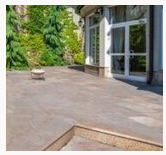
Patio: A level, unenclosed surfaced area located at grade and usually directly adjoining or attached to a building.
Personal services establishment. An establishment providing nonmedically related services, including beauty and barber shops; clothing rental; dry cleaning; laundromats (self-service laundries); shoe repair shops; tanning salons.
Personal wireless communications facility. Facilities for the provision of personal wireless services.
Performance standard. A set of criteria to protect the public health and safety by controlling nuisance elements such as noise, odor, smoke, toxic or noxious matter, vibration, fire and explosive hazards or glare or heat generated by or inherent in uses of land or buildings.
Pet care services. Facilities that provide services for dogs and cats, such as daycare, grooming or obedience training. This does not include medical services or overnight kenneling of animals.
Pet shop. A retail establishment primarily involved in the sale of domestic animals, which may include dogs, cats, large exotic birds, unless otherwise excluded by other sections of the Village Zoning Ordinance, fish, birds, small mammals, and small reptiles, but in all cases excluding exotic animals, farm animals, and other prohibited animals listed under Section 25.110 of the Illinois Animal Welfare Act.
Planned unit development (PUD). A parcel of land or abutting parcels of land of a size sufficient to create its own character, controlled by a single landowner or by a group of landowners in common agreement as to control, to be developed as a single entity, the character of which is compatible with adjacent parcels and the intent of the zoning district or districts in which it is located. The developer or developers may be granted relief from specific land-use regulations and design standards and may be awarded certain premiums in return for assurances of an overall quality of development, including any specific features which will be of exceptional benefit to the village as a whole and which would not otherwise be required by the zoning ordinance.
Playground. A public or private area designed to offer active play and recreation with play apparatus to the public.
Porch
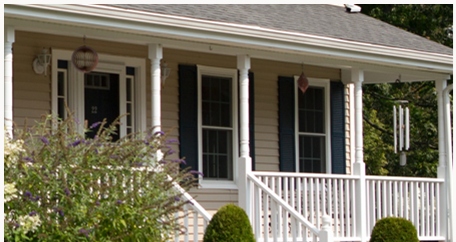
Porch: A roofed-over structure, projecting out from the wall or walls of a main structure, and partially open to the weather.
Positive gravity outlet. The drainage of an area by means of natural gravity so that it lowers the free water surface to a point below the existing grade or invert of storm drains within the area.
Public way. Any sidewalk, street, alley, highway, or other public thoroughfare.
Pumping station. A station positioned in the public sewer system at which wastewater is pumped to a higher level.
Preserve. An outdoor recreational facility that preserves or protects endangered species, critical environmental features, or resources to ensure that the space remains in a predominately natural or undeveloped state. The preserved open space also provides possible opportunities for passive recreation and environmental education for the public.
Railroad passenger station. A facility, either light or heavy rail, for the boarding of passengers and related ticketing sales and offices.
Recycling center. A building or structure in which recyclable materials only are collected, processed, and/or baled in preparation for shipment to others who will use those materials to manufacture new products. This shall not include junk yards or wrecking yards.
Recreational vehicle. Vehicles including any boat, boat mounted on a trailer, any camp trailer, travel trailer, or other unit built or mounted on a vehicle or chassis, without permanent foundation, which may legally be driven or towed by a motor vehicle on a highway.
Refuse. All waste products resulting from human habitation, except sewage.
Research and development facility. A facility in which a wide range of goods and materials are analyzed tested, experimented on and assessed for further development.
Religious institution. A place of worship or religious assembly, including churches, chapels, temples, synagogues, and mosques, with accessory facilities and uses, is maintained and owned by a religious body.
Restaurant. An establishment being operated where there is furnished, for sale, foods, desserts, or beverages of any kind for consumption therein or for carry out or delivery. A Drive Thru component shall be an accessory function of the restaurant and may require separate or additional approval by the Village.
Reservoir. An impoundment of surface waters designed to provide drinking water to the public.
Retention pond. A facility that is designed to be maintained as free water surface or pond. A retention pond is a "wet bottom" pond.
Right-of-way. A strip of land dedicated to the public and occupied or intended to be occupied by a street, crosswalk, railroad, electric transmission line, oil or gas pipeline, water main, sanitary or storm sewer main, or for another special use.
School. See "Educational Facility".
Screening. A structure erected or vegetation planted for shielding or obscuring the area behind it from viewers.
Setback. The minimum distance by which buildings or structures shall be separated from each other and from a right-of-way or lot line.
Setback line. The minimum required distance from the property line that establishes the area within which buildings, structures, or uses must be erected or placed. The area between the property line and the setback line is the required yard (See "Yard").
Setback line, front. A line parallel with the front lot line of a property across the full width of the lot, behind which buildings, structures, or uses must be erected or placed.
Setback line, interior side. A line parallel to the interior side lot line buildings, structures, or uses must be erected or placed.
Setback line, rear. A line parallel with the rear lot line of a property across the full width of the lot, in front of which buildings, structures, or uses must be erected or placed.
Sewage system, private. A sewage disposal system that collects, treats, and disposes of sewage independent of any public sewage facilities.
Sewage system, public. An off-site system for the treatment and disposal of sewage in which sewage is conveyed by interceptor to a publicly operated treatment plant and disposed of through means approved by the State of Illinois.
Sewage treatment plant. A facility designed for the collection, removal, treatment, and disposal of waterborne sewage generated within a given service area.
Shed. An accessory structure or building used primarily for storage purposes, which shall meet setback and lot coverages as set forth in this ordinance.
Skilled care facility. An establishment for the care of the aged, rehabilitating, or infirm that provides some degree of professional care, continuous nursing observations, restorative nursing, and other services including assisted senior living, skilled senior living, memory care, and extended stay physical rehabilitation.
Shooting range. An indoor establishment open to the public and at which firearms are rented for the practicing of target shooting on an established target range(s) for the purpose of amusement within an enclosed building to prevent any projectiles from projecting beyond the confines of the building. Any establishment which is open
Shopping center. A complex of commercial establishments that is planned, owned, managed, and developed as a total entity, sharing common activity space and access, landscaping, and on-site parking facilities used by customers and employees.
Short term rental. An owner occupied single-family residential abode, including townhomes, manner homes, condominiums and row house dwellings, strictly subject to the following terms and conditions,
Showroom/Sales area. The accessory area of a business that displays goods sold or produced at the facility so they can be viewed, inspected or purchased by the general public.
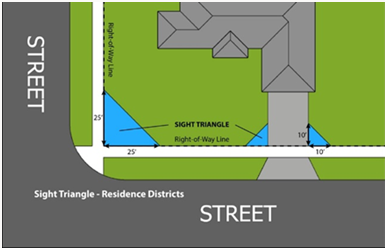
Sight triangle. A triangular-shaped portion of land bounded by the right-of-way lines at the intersection and a line connecting the two (2) points on the subject zoning property in which nothing shall be erected, placed, planted, or allowed to grow in such a manner as to limit or obstruct the sight distance of motorists entering or leaving the intersection.
Sign. A structure regulated by Article II, Chapter 17 of the Roselle Municipal Code.
Skilled care facility. An establishment for the care of the aged, rehabilitating, or infirm that provides some degree of professional care, continuous nursing observations, restorative nursing, and other services including assisted senior living, skilled senior living, memory care, and extended stay physical rehabilitation.
Small cell antennas. A personal wireless telecommunications facility consisting of an antenna and related equipment either installed singly or as part of a network to provide coverage or enhance capacity in a limited defined area.
Smoke shop. A premises dedicated to the display, sale, offering, furnishing, or marketing of tobacco, tobacco products, or tobacco paraphernalia.
Smoking lounge. A premises dedicated to providing an area for smoking tobacco products.
Solar access. The ability to receive sunlight across real property for any solar energy devices by the property owner.
Solar energy system. A complete design or assembly consisting of a solar energy collector, an energy storage facility (when used), and components for the distribution of transformed energy.
Solid waste transfer station. A site and facility used in the collection of solid wastes into bulk containers for the further transport to a landfill site, recycling facility or other waste disposal facility.
Stacking spaces. Spaces for motor vehicles queuing or waiting to use a drive-thru facility.
Stadium. A large open or enclosed building or structure with tiers of seats for spectators at sporting or other major recreational events.
State highway (Sign Control by Illinois Department of Transportation). A state highway for the purposes of sign control by the Illinois Department of Transportation (IDOT) shall be any interstate highway designated as a part of the national system of interstate and defense highways, any primary highway designated as a part of the Federal Aid Primary System (FAP), and any expressway (primary highway) constructed as a freeway which has complete control of access. These highways are designated by IDOT for control of signs.
Stoop. A raised platform, approached by steps and sometimes having a roof, but not enclosed, at the entrance to a building.
Stored vehicle. A vehicle remaining outside, which is used infrequently, seasonally, or for recreational or special activities.
Stormwater management regulations. Stormwater management in Roselle is regulated by the DuPage County, Countywide Stormwater and Flood Plain Ordinance.
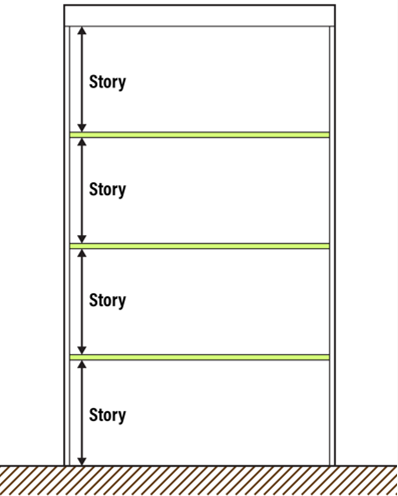
Story. That portion of a building included between the surface of any floor and the surface of the floor next above A basement shall be counted as a story for the purposes of this ordinance when more than one-half (½) of the clear floor to ceiling height of such basement is above the average grade level.
Street. An improved surface that affords a primary means for vehicular access to abutting properties, and which is typically located within a right-of-way. Driveways to buildings are not part of the street. See "right-of-way."
Street apron. The driving surface area within a public right-of-way located between the edge of a paved street and the property line of private property.
Street, arterial. A major or minor street of substantial length which is intended to serve as a large volume trafficway for both the immediate village area and region beyond. It may be designated on the DuPage County's Year 2000 Street and Highway Plan or by the Cook County Highway Department as a principal or minor arterial, parkway, tollway, freeway, expressway, or equivalent term to identify those streets comprising the basic structure of the street plan.
Street, collector. A secondary street used primarily to carry traffic from minor streets to arterials.
Street, cul-de-sac. A minor street of short length, having one (1) end open to traffic and being permanently terminated at the other end by a vehicular turnaround.
Street frontage. The distance along a right-of-way line from one property line to the next of an individual property.
Street, frontage road. A minor street paralleling, adjacent to, and often within the right-of-way of an arterial which provides access to local street systems and protection from through traffic on the arterial.
Street, loop. A minor street of short length with openings to traffic beginning from the same street, and projecting parallel to each other and connecting at their termination by a loop.
Street, minor. A street of limited continuity used primarily for access to abutting residential properties.
Street, private. An undedicated street which is privately owned and maintained, or an easement of access benefitting a dominant tenant.
Structure. Anything constructed or erected which requires location on the ground or is attached to something having location on the ground, including a fence or freestanding wall.
Structure, accessory. See "accessory building, structure, or use."
Structure, completely enclosed. A structure enclosed by a permanent roof and by solid exterior walls, pierced only by windows and customary entrance and exit doors.
Structure, detached. Any structure having no party wall or common wall with another structure. Bridges, tunnels, breezeways, and other similar means of connecting one (1) structure to another shall not, for the purposes of this ordinance, be considered to constitute a party wall or a common wall.
Structure, nonconforming. See "nonconforming building or structure."
Structure, principal. The main or primary structure in which or on which is conducted the principal use of the lot on which it is located.
Structure, temporary. See "temporary building or structure."
Studio, arts. Space used or designed to be used as workspace by artists, artisans, craftspeople for the sale and exhibit of art works including drawing, vocal or instrumental music, painting, sculpture, and writing. The space is also engaged in the creations of such art works and often offer instruction in their creation.
Studio, broadcasting. An indoor facility utilized for commercial and public communications including radio and television broadcasting and receiving stations and studios.
Studio, recording. An indoor facility utilized for the production, editing, or recording of audio or video productions such as, but not limited to, music, commercials, motion pictures, television, videos, or other multi-media related activities.
Supermarket. See "Food Store / Grocery.
Swimming pool. A water-filled enclosure, permanently constructed or portable, which is designed, used, and maintained for swimming and bathing.
Tattoo parlor. An establishment performing compensated tattooing service which means a placement in human tissue of any indelible design, letter, scroll, figure, symbol, or other mark placed with the aid of needles or other instruments; or any design, letter, scroll, figure, or symbol done by scarring upon or under the skin.
Tavern/Pub. An establishment where the principal business is serving alcoholic beverages to be consumed by the customers on the premises and in which serving food is only incidental.
Teen center. A public or private club or lodge that provides on a regular basis, recreational, vocational, academic or social services activities for persons younger than 21 years old or for those persons and their families.
Temporary building or structure. A building or structure not designed or intended for permanent human occupancy nor for the permanent protection of animals, chattel, or property of any kind.
Terrace. A leveled, paved or planted area on top of a flat roof or open platform adjoining a building.
Theater. A building or structure designed for the enactment of dramatic, operatic, motion pictures, or other performance. For the purpose of this ordinance, a dinner theatre shall be deemed a "restaurant."
Tower. A structure that is designed and constructed primarily for the purpose of supporting one (1) or more antennas, including self-supporting lattice towers, guy towers, or monopole towers.
Toxic material. A substance (liquid, solid, or gaseous) which by reason of an inherent deleterious property tends to destroy life or impair health.
Trailer. A structure standing on wheels, towed or hauled by another vehicle and used for short-term human occupancy, carrying materials, goods, or objects, or as a temporary office.
Trash enclosure. A fenced or walled structure that surrounds and screens from view trash receptacles.
Tree, coniferous. A mostly plant species usually having needle-shaped or scalelike leaves and including forms (such as pines) with true cones and others (such as yews) with an arillate fruit.
Tree, deciduous. A plant species with foliage that, unlike evergreens, lose their leaves and become dormant during the winter.
Tree, evergreen. A plant species with foliage that persists and remains green year round.
Tree, flowering. A plant species with foliage having seeds and ovules contained in the ovary.
Tree, ornamental. A flowering plant species with foliage used for color and texture.
Tree, shade. A woody plant, usually deciduous, that normally grows with one (1) main trunk and has a canopy that screens and filters the sun in the summer and winter, respectively.
Trellis. See "Arbor"
Use. A purpose for which a building, structure, or tract of land may be designed, arranged, intended, maintained, or occupied. Also, any activity, occupation, business, or operation carried on, or intended to be carried on, in or on a building or structure or on a tract of land. Said use or uses shall comply with all performance standards contained in this ordinance.
Use, accessory. A subordinate use which is clearly and customarily incidental to the principal use of a building or premises, and which is located on the same lot as the principal building or use, except for such accessory parking facilities as are specifically authorized to be located elsewhere.
Use, nonconforming. See "Nonconforming use".
Use, principal. The main use of land or buildings as distinguished from a subordinate or accessory use. The principal use may be either a permitted or a special use.
Use, special. A use, either public or private, which because of its unique characteristics, merits additional review based on the criteria in this Chapter in order to be located on a particular site in a zoning district or districts.
Use, temporary A use of a building, structure, or parcel of land which is impermanent and in existence for a limited amount of time.
Utility and public service uses. Infrastructure functions, public or private, related, but are not limited to, water and wastewater treatment facilities, electrical services, cable, cell or land line phone, natural gas, and water storage facilities
Variation. A deviation from the terms of the zoning ordinance where such variations will be in harmony with the general purpose and intent and not contrary to the public interest, and where, due to conditions particular to the property and not the direct result of the actions of the owner, a literal enforcement of the ordinance would result in practical difficulties or unnecessary hardship.
Veterinary clinic or hospital. A facility for the care, observation or treatment of domestic animals, which may include overnight veterinary care, but does not include boarding of animals
Warehousing and Logistics facility. The activity and facilities related to storage and distribution of goods and products, and supplies goods to other locations for resale, as well as activities involving movement and storage of products, items or equipment of other persons, companies, or organizations.
Water filtration plant. A facility at which raw water is treated so that it meets the water quality of treated water following delivery to the plant.
Wholesale establishment. A building wherein the primary occupation is the sale of merchandise in gross for resale, and any such building wherein the primary occupation is the sale of merchandise to institutional, commercial, and industrial consumer. For the purpose of this ordinance, a warehouse shall not be deemed a wholesale establishment.
Wind-energy system: An energy producing device which coverts wind energy by means of a rotor to mechanical or electrical energy.
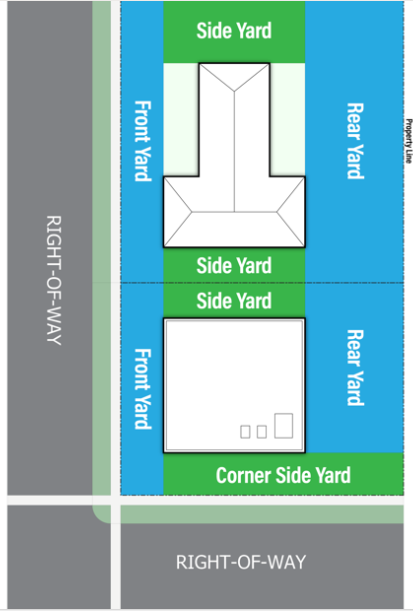
Yard. An open space on the same zoning lot with a use, building, or structure. A yard shall be unoccupied and unobstructed from its lowest level to the sky, except as otherwise permitted in this ordinance. A required yard extends along a lot line, and to a depth or width specified in the yard requirements for the zoning district in which such zoning lot is located.
a.
Yard, front. A yard extending along the full length of the front lot line between the side lot lines. On a corner lot, the front yard is also considered to extend along the corner side lot line from the front yard to the rear lot line.
b.
Yard, rear. A yard extending along the full length of the rear lot line between the side lot lines. On a corner lot, the rear yard extends along the rear lot line between the interior side lot line and the corner side yard.
c.
Yard, required. The open space between a lot line and the buildable area within which no structure shall be located except as provided in this ordinance.
d.
Yard, side. A yard extending along a side lot line from the front yard to the rear yard.
1.
Yard, corner side (also "side yard adjoining a street"). A yard extending along the corner side lot line from the front yard to the rear lot line.
2.
Yard, interior side. A yard extending along the interior side lot line from the front yard to the rear yard.
e.
Yard, transitional. That yard which must be provided on a zoning lot in a business district which adjoins a zoning lot in a residential district. Also, that yard which must be provided on a zoning lot in an industrial district which adjoins a zoning lot in either a residential or business district.
Zero lot line. A development approach in which a building is sited on one (1) or more lot lines with no yard.
Zoning administrator. That person designated as zoning administrator by the village board of trustees and such deputies as may be appointed by the village board. The zoning administrator is hereby authorized, and it is their duty to administer and enforce the provisions of the zoning ordinance, making such determinations, interpretations, and other descriptive material in connection with applications/permits as are necessary for him/her to judge compliance with this ordinance.
Zoning amendment. A change in the wording, context, or substance of the code or ordinance, or a change in the zoning or district boundaries of the official zoning map, to be made.
Zoning certification. A certification issued by the zoning administrator that any proposed use, building, or structure to be located on a zoning lot is in accordance with all the regulations of this ordinance.
Zoning district. The areas into which the Village of Roselle has been divided for which uniform regulations governing the use, size, height, and intensity of land and buildings and open space around buildings are established.
Zoning lot. See "lot, zoning."
Zoning map. The map incorporated herein as part hereof, which delineates the boundaries of zoning districts.
Zoning ordinance. An ordinance enacted by the Roselle Village Board of Trustees that sets forth regulations and standards relating to the nature and extent of uses of land and structures, which is consistent with the comprehensive plan of the Village of Roselle.
(Ord. No. 2023-4306, § 2, 12-4-23)

