
Seguin City Zoning Code
CHAPTER 5
- SITE DEVELOPMENT STANDARDS
Sec. 5.1. - [General regulations.]
5.1.1.
Intent. Site design standards establish design criteria and minimum standards for development in the City. The intent of the site development standards is to help enhance the visual character of the built environment. Pertinent to the visual character of the area is site design, parking and site access, landscaping, and lighting.
5.1.2.
Application of Requirements. Unless otherwise noted within this chapter this section applies in the following areas:

5.1.3.
Chapter Components. This chapter includes the following sections:
•
Landscaping/Tree Protection and Mitigation
•
Parking/Loading Requirements
•
Sidewalks
•
Drainage/Detention
•
Screening
•
Waste Receptacles
•
Auto Repair Uses
•
Fencing
•
Lighting
5.1.4.
General Standards.
•
If the subject property being developed is located in a special flood hazard area as identified by the Federal Emergency Management Agency in the current scientific and engineering report entitled, "The Flood Insurance Study (FIS) for Guadalupe County, Texas and Incorporated Areas," with accompanying Flood Insurance Rate Maps the subdivision is subject to the standards of Chapter 54-Floods of the City Code.
•
The requirements of this chapter shall be visually demonstrated through depiction on a site plan or note on a site plan attesting to compliance with the standards of this chapter.
(Ord. No. 2024-026, pt. 1(Att.), 5-21-24)
Sec. 5.2. - Landscaping.
5.2.1.
Intent. It is the intent of this section to encourage the preservation of trees and their value to the community, increase the compatibility of adjacent uses, and to minimize the effects of noise, dust, debris, artificial light intrusions, and other impacts created by the development of land. The standards and requirements set out in this Article [chapter] are intended to:
A.
Protect and preserve the appearance and character of the community;
B.
Preserve permeable, native soil and enhance disturbed soils to store and infiltrate storm flows;
C.
Promote the value and benefit of abundant landscaping while recognizing the needs to utilize water and other resources as efficiently as possible;
D.
Promote the health and quality of life of the residents of the City through the protection of trees and landscaping;
E.
Reduce heat island effects for large areas of impervious cover;
F.
Promote the planting of trees and shrubs that are native to Texas;
G.
Establish criteria and standards for the design, installation, and maintenance of water-efficient landscapes in new development projects; and
5.2.2.
Applicability.
A.
The requirements and standards for the installation and maintenance of landscape elements and site improvements shall apply to all developed area within the City limits; provided, however, that the requirements and standards shall not apply to the Historic Downtown Overlay District, unless new off-street parking is added, in which case the parking area shall conform to these regulations.
B.
If other articles of this Code would otherwise permit land coverage by building development that would conflict with this section, this section shall supersede and prevail over the other requirements.
5.2.3.
General Provisions.
A.
All new development or redevelopment of properties must comply with the requirements of this section. In the case of a redevelopment of an existing site or structure only the new portion of the site or structure shall come into conformance with the applicable requirements of the landscape section unless one of the following exists:
1.
The redevelopment of the property includes a 50% or more increase in square footage; or
2.
If the extent of the proposed modifications is 50% or more of the site's assessed value over a 5-year time period. For the purposes of the code the assessed value of a structure shall be the value cited by the Guadalupe County Appraisal District.
In such case the site in its entirety must be brought into conformance with the requirements of this code.
B.
Landscape standards do not apply to active agricultural uses
C.
Visibility Clearance. No landscape tree or other material shall be maintained in the vicinity of any corner or intersection to the extent that it is determined, by City staff, to create a visibility obstruction. A 15' visibility triangle shall be required, in which any obstruction 30" to 7' above grade shall be prohibited.
D.
Trees planted under electric utility lines or within an electric utility easement shall be selected from the preferred plant list - small trees category.
E.
The owner of the building, or the manager or agent of the owner, shall be responsible for the maintenance of all landscape areas. The areas shall be maintained so as to present a healthy, neat and orderly appearance at all times and shall be kept free of refuse and debris. All planted areas shall be provided with a readily available water supply and watered sufficiently to ensure continuous healthy growth and development. Maintenance shall include the replacement of all dead plant material needed to meet the requirements of this Code.
F.
All property within the City limits will adhere to City Drought Policy.
G.
A Protected Tree is any tree not classified as "not protected", listed in the preferred plant list and meeting the following criteria:
1.
6" diameter or larger for canopy or large maturing trees measured 4.5 feet above natural grade.
2.
4" diameter or larger for small maturing trees measured 4.5 feet above natural grade.
3.
4" for multi-trunk trees, calculated by measuring the largest trunk and ½ the diameter of the sum of all other trunks.
4.
Historical tree: Any tree recognized as historically significant by a bona fide local, state, or national organization is considered a protected tree.
5.2.4.
Required Planting. All required plant materials shall be from the City's Preferred Plant List in the Technical Manual.
A.
Single- and Two-Family [Development Requirements]. Developments shall plant two (2) shade trees that are a minimum of two inches in caliper and eight feet in height at the time of planting. At least one tree shall be planted in the front yard. Lots zoned zero-lot line shall only be required to plant one (1) shade tree in the front yard.
B.
Multifamily Lot Landscaping Requirements. 15% of the developed lot area shall be devoted to landscaping. 1 large shade tree, 2 shrubs shall be planted for every 400 square feet of required landscaping. 30% of required landscaping shall be located between the front property line and the building. Overall landscaping can be used to meet the requirements of the buffering, and perimeter lot landscaping requirements.
C.
Commercial, Public, and Industrial Development Requirements. 10% of the lot area shall be devoted to landscaping. 1 shade tree, 2 shrubs shall be planted for every 400 square feet of required landscaping. 50% of the required landscaping shall be located between the front property line and the building. Overall landscaping can be used to meet the requirements of the parking lot, buffering, and perimeter lot landscaping requirements. For development that has minimal frontage on a public street an alternative landscaping plan may be submitted. Landscaping requirements may be reduced but not eliminated in their entirety. The alternative landscaping plan shall demonstrate proper landscaping in those areas visible from the public streets and adjacent residential properties; demonstrate compliance with any buffer/screening areas required per this code; and demonstrate compliance in staff/customer parking areas.
5.2.5.
Multi-family, Commercial, Public and Industrial Developments Off-Street Parking Areas. For the purposes of this section of the code a parking area is defined as a paved or improved surface designed and ordinarily used for the parking of motor vehicles. Parking area does not include outdoor display area for equipment. All off-street parking areas including 10 spaces or more are required to meet the following standards (these standards are in addition to the below buffer requirements):
A.
Area Requirements. The landscaped area shall consist of either a minimum of fifteen (15) square feet for each off-street parking space, or a minimum of 5% of the total parking area, including back-up space, whichever is greater.
B.
Location Requirement. The landscape area may consist of numerous landscaped areas; however, each separate area shall contain a minimum of the following and shall be evenly distributed throughout the parking lot:
1.
A minimum of 25 square feet in area.
2.
One (1) tree.
3.
Ground cover, which may include sod, ornamental grasses, perennials, shrubs, or xeriscaping materials that are compacted and bordered.
4.
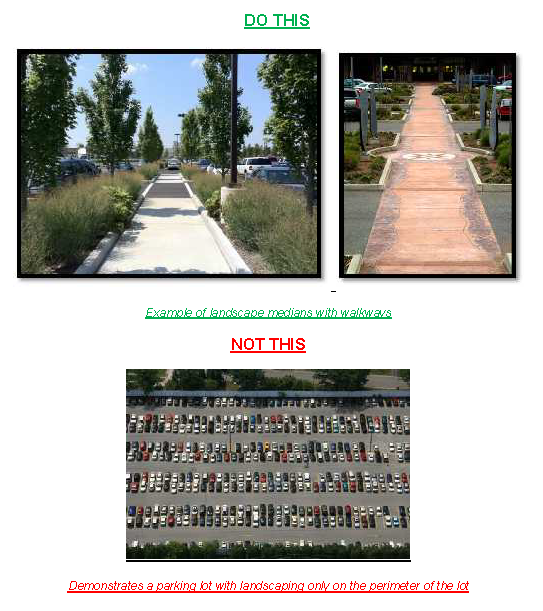
Large Parking Lots. Parking lots must be visually and functionally segmented into smaller lots with no more than 150 parking spaces per parking area. For every parking area a minimum of a 15-foot landscape median/divider shall be installed to help break up large parking fields. These medians shall contain pedestrian walkways to offer safe, marked routes between parking spaces and building entries.
5.
Curbing. Landscape areas shall be protected from vehicular encroachment by the use of curbing or wheel stops.
6.
Landscape Materials. Shall consist of a combination of shrubs, trees, grasses in accordance with size requirements and types outlined below. All plantings of shrubs/ground covers shall be located in a prepared planting bed to include mulch.
5.2.6.
Buffer Yards. Between any non-residential property and the adjacent right-of-way a visual landscape buffer shall be provided. The landscape buffer shall consist of shrubs and a tree planted on average of every 50 feet. Shrubs shall generally be planted to maintain a visual landscaping of the parking area. Trees may be clustered to create visual gateways or enhancements areas however the number of required trees shall not be reduced. In the case of a development in which there is not a parking lot located between the front façade of the building and the right-of-way the property owner may submit an alternative landscape plan for review.
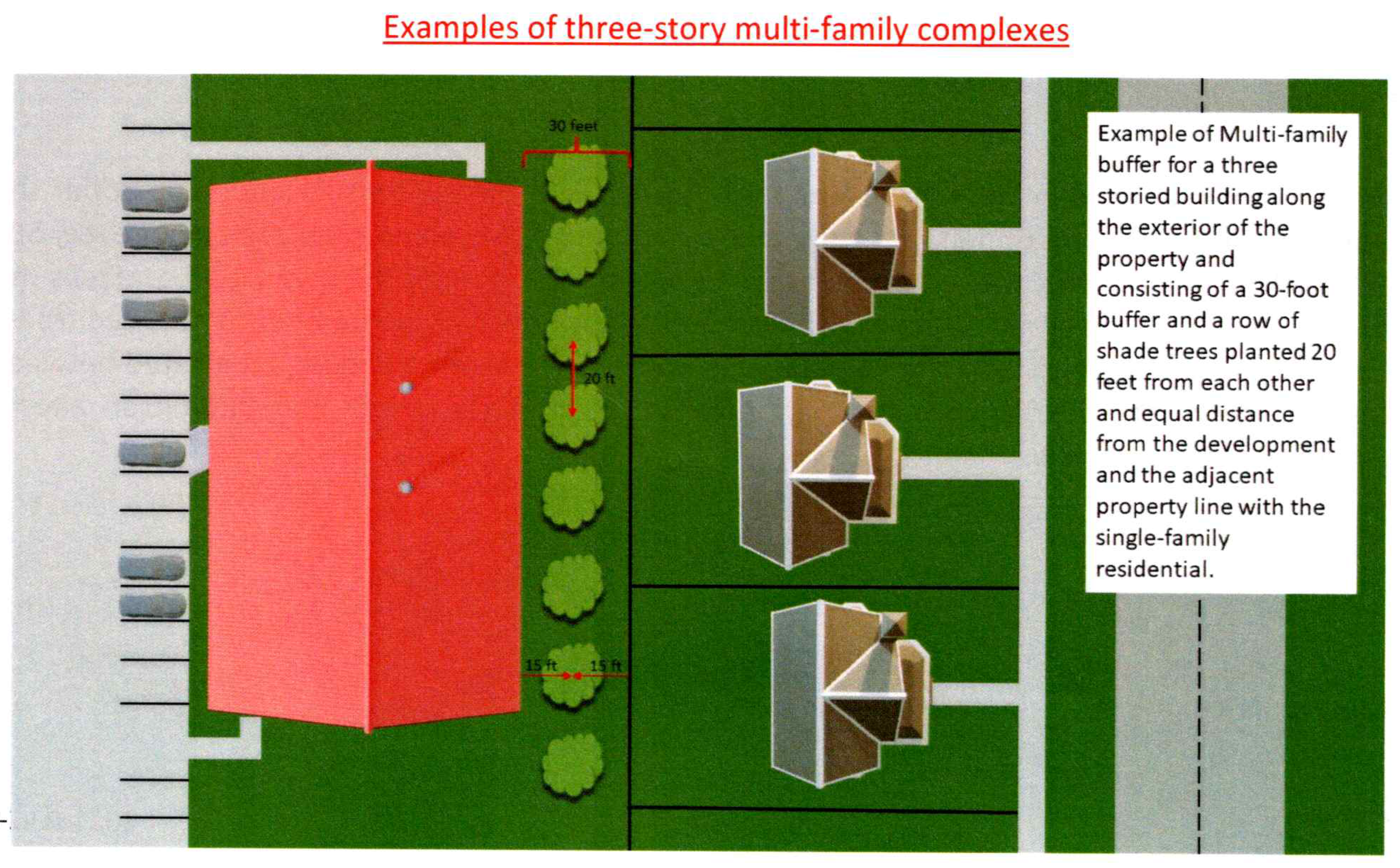
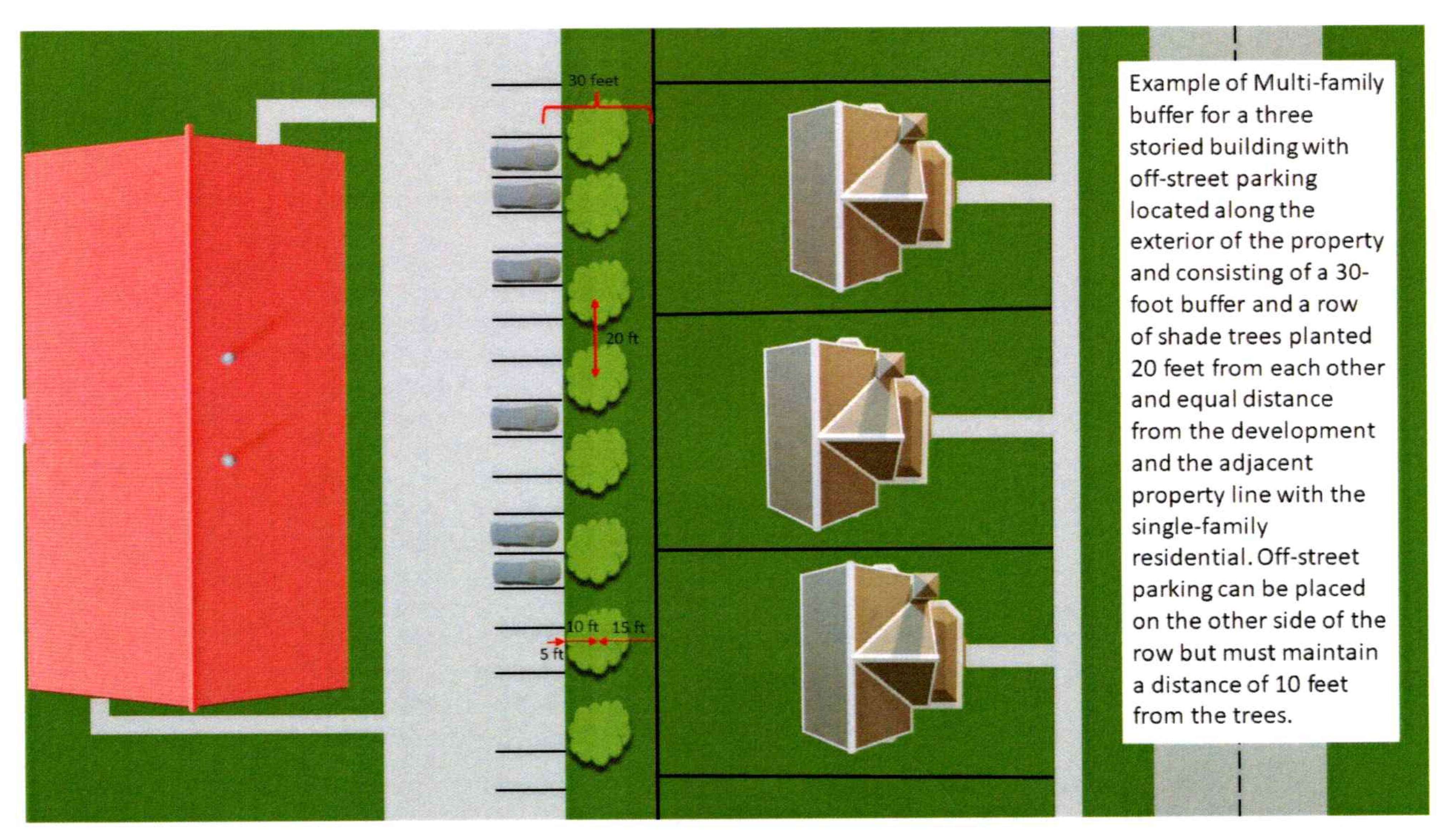
Between any multi-family development and an adjacent property that is zoned for single-family dwellings a buffer shall be provided on the property of the multi-family development in accordance with the following table:
5.2.7.
Alternative Landscape Plan. A property owner may submit an alternative landscaping plan for review. The Planning Director, in his or her discretion, may approve any such alternative plan; provided the Director finds that the alternative plan is at least the equivalent of that prescribed in this section. In rendering his or her decision, the director shall consider preexisting topographic, geological, hydrological, lot layout, or environmental factors. The Director shall require that sufficient evidence or proof be submitted to substantiate any claim made regarding the alternative plan.
5.2.8.
Tree Protection and Mitigation.
A.
Permit. No person directly or indirectly shall cut down, remove or destroy a protected tree without first obtaining a Tree Removal Permit from the Director of Planning. The application for tree removal shall include the following information:
1.
Address and location of tree(s) to be removed;
2.
The diameter of the tree(s) to be removed;
3.
The species or common name of the tree(s) to be removed;
4.
The reason for removal.
B.
Exemptions. The following situations shall be exempt from Tree Protection and Removal Permit Requirements:
1.
Removing a dead, damaged or diseased tree that has been approved for removal by the City.
2.
Removal and/or pruning of trees as a result of a disease, storm, fire, accident or other act of nature.
3.
Clearing for agricultural purposes on land held for that purpose and for which an agricultural tax exemption exists.
4.
A tree or trees that constitute a danger to the public and immediate removal is necessary.
5.
A tree or trees located on platted or subdivided single-family residential properties.
6.
Trees that must be altered or removed in order to install utility lines shall be exempt from this requirement.
C.
Standards for Approval of a Tree Removal Permit. Unless other mitigation alternatives are not practicable, a protected tree may be approved for removal under the following circumstances:
1.
The tree lies in the proposed building footprint.
2.
The tree lies in the traffic circulation pattern of the proposed development.
3.
The tree is classified as "exempt" under this section.
5.2.9.
Tree Removal for Non-Residential or Subdivision Development. For non-residential or subdivision development, property owners/developers shall comply with the following standards shall be required:
A.
Tree protection prior to and during construction shall consist of protection of the Root Protection Area (RPA) with adherence to the following requirements:
1.
The RPA is calculated at a ratio of 1 foot of RPA radius for each inch of tree diameter measured 4.5 feet above natural grade.
2.
Prior to construction, an approved protective barrier shall be constructed and maintained around the RPA of all protected trees. The protective barrier shall be maintained throughout the construction period. For any group of trees the RPA shall be measured from the outermost trees. The RPA may be shifted so long as no construction activity encroaches more than ½ of the RPA radius and the total square footage of the RPA is maintained.
3.
The natural grade and pervious surface shall be maintained in the RPA.
4.
While not required, the City encourages root protection practices for routine maintenance or improvements to existing single-family residential structures.
5.
Prohibited Activities within the RPA include:
º
Parking or operating equipment.
º
Storage of materials or construction supplies.
º
Cleaning or washing of any kind.
º
Paving, trenching, excavating or changing the grade unless previously approved.
º
Disposal of any waste material.
º
Attachments to the tree(s) of any kind other than those used to protect the tree.
º
Exemption: If encroachment into the RPA is unavoidable, a layer of 6" mulch shall cover the RPA.
º
Protective barriers for grade changes greater than two inches within the RPA. Protective barriers including an approved retaining wall or tree well of rock, brick, wood or other suitable material shall be constructed around the protected tree no closer than the RPA boundary. Alternatives to the protective barrier requirements, professionally prepared, may be submitted to the City for approval.
B.
Tree Replacement Standards. Any tree approved for removal, unless otherwise stipulated herein, shall be replaced in accordance with the following schedule:
1.
Protected trees shall be replaced with an approved tree at a ratio of 1" to 1" diameter.
2.
Protected trees having an historical designation shall be replaced with an approved tree at a ratio of 3" for every 1" diameter removed.
3.
Replacement trees shall have a minimum diameter of 2".
4.
Where planting of mitigation trees on site is impractical, in lieu of tree replacement, if approved by the Director of Planning, a payment of $100.00 per 1" diameter for every protected tree removed, shall be deposited in the Tree Trust Fund, in accordance with this ordinance. Requests for payment of fee-in-lieu of planting must demonstrate a unique circumstance in which the planting of the tree is not practical (topography, limited planting space, etc.). The request may not be based off of inconvenience or financial gain.
5.
The Director of Planning may consider off-site tree replacement at his or her discretion and may consider said request from the developer/contractor. Maintenance of the off-site tree should be the responsibility of the owner/developer requesting off-site planting.
6.
Tree Credits. In order to offer an incentive for tree preservation, a tree credit will be given towards the tree planting requirement in Section 5.2.4 for all protected trees that are preserved. Credits will be calculated on a one for one caliper inch basis, i.e. one 6" caliper oak retained = a caliper credit of 6" towards the planting requirement.
7.
Tree Trust Fund. A tree trust fund shall be created for the purpose of purchasing, growing, and/or maintaining trees within the City limit. The Tree Trust Fund shall be administered by the Director of Planning in accordance with policies established by the Seguin City Council.
C.
Tree Survey. Prior to approval of a building permit or site development permit for any nonresidential or subdivision development, the developer/contractor shall provide to the City the following materials:
1.
A site plan depicting all existing and proposed improvements including new buildings, proposed utility location, easements, paving and grade changes;
2.
A site plan indicating all protected trees and identifying said trees by type and caliper;
3.
A description of protective measures that will be used in accordance with requirements as stipulated in this ordinance;
4.
A list of all protected trees to be removed and identified on the site plan;
5.
A list of replacement trees, including on-site and off-site, by type, diameter and location on the site plan.
5.2.10.
General Planting Specifications. Unless otherwise specified above all plantings required by this section shall meet the following requirements:
A.
[Generally.] Landscaping shall devoted to plant materials adaptable to this region, including, but not limited to, trees, shrubs, grasses, ground covers, mulch and other landscape features.
B.
Shrubs and Hedges. Shrubs shall be a minimum of two (2) feet in height upon planting or 5-gallon or larger container grown.
C.
Trees. A tree shall be minimum of 8 feet in overall height, with the exception of approved multi-trunk specimens, immediately upon planting, and a minimum caliper of 2 inches measured 4.5' from the ground. All trees shall be selected from the list provided in the Technical Manual. Variations may be permitted by City staff if it can be shown that the proposed tree(s) are adaptable to this region and provide similar drought tolerance as those recommended.
D.
Grasses. Grass requiring copious amounts of water are discouraged, i.e. St. Augustine. Any generally accepted method of planting is approved, including hydro-mulching, seeding or sodding.
E.
[Varieties required.] All planting material shall be of drought tolerant, disease resistant varieties, preferably indigenous species or those readily adaptable to this region. In addition, plantings of shrubs/groundcovers shall be located in a prepared planting bed.
F.
Maintenance of Plantings.
1.
Watering: Priority should be given to drought tolerant species. Xeriscape and drip irrigation designs are highly recommended. Mulching shall be included in designs in order to preserve water.
2.
The owner, agent or manager of the property shall be responsible for the maintenance of all landscape areas. Maintenance shall include watering, pruning, replacement and other activities necessary to keep the landscape area in a neat, healthy and attractive condition.
3.
Whenever required maintenance, in accordance with this ordinance, is identified, the City shall notify the property owner and tenant of the required action in writing. The property owner/tenant shall have ten (10) days from the date of receipt of the written notification to advise the City of plans to correct the deficiency. Failure to remedy the maintenance problem, or an unacceptable plan to correct the maintenance problem, shall constitute a violation of the ordinance.
4.
Plans for corrective maintenance may include the following: availability of plants, availability of water (drought policies), and availability of qualified contractors or work force.
G.
Oak Wilt Abatement and Treatment.
1.
All tree cutting/pruning wounds shall be immediately sealed with a tree paint or protective compound.
2.
All infected tree cuttings (limbs, trunks) shall be disposed of in such a way as to not infect healthy oak trees.
3.
All oak firewood shall be wrapped in a clear plastic covering, with ends tucked into the ground, from February 1 until June 15, to prevent the spread of oak wilt by insects.
4.
All cutting/pruning tools shall be disinfected using a commercial disinfectant (i.e. bleach, Lysol spray) between each oak tree trimmed, pruned or removed. In addition to those precautions listed above, which are required of all commercial tree cutting businesses, residents are encouraged to consider the following.
5.
If oak wilt is identified in the vicinity of other healthy oaks, particularly in a rural setting, trenching around the infected tree (cut at least 48" deep, then immediately filled) may prevent the underground transmission of the disease through the root system. Underground trenching is extremely difficult in an urban or suburban development because of the presence of underground utilities and the proximity of property lines. Therefore, in many cases this is not an option.
6.
Tree injection with systemic fungicide for infected trees may be used as a preventative of the disease. A tree professional should be contacted to verify the extent of oak wilt infection and to outline treatment alternatives and specifications. County Extension Agents, Texas Forest Service representatives, or other professionals should be contacted before any treatment.
(Ord. No. 2015-44, § 3, 7-21-15; Ord. No. 2023-036, § 1, 6-20-23)
Sec. 5.3. - Off-street parking and loading.
5.3.1.
Intent. Off-street parking and loading requirements are established to ensure that all developments within the City provide adequate and reasonable parking necessary to serve the development or use.
5.3.2.
Applicability. Off-street parking and loading standards required by this Chapter apply in the following circumstances, in addition to any additional standards or requirements provided for this Code:
A.
New Development: The off-street parking and loading standards apply to any new building constructed and to any new use established.
B.
Expansions and Alterations: In the case of a redevelopment of an existing site or structure only the new portion of the site or structure shall come into conformance with the applicable requirements of the off-street parking and loading section unless one of the following exists:
1.
The redevelopment of the property includes a 50% or more increase in square footage; or
2.
If the extent of the proposed modifications is 50% or more of the site's assessed value over a 5-year time period. For the purposes of the code the assessed value of a structure shall be the value cited by the Guadalupe County Appraisal District.
In such case the site in its entirety must be brought into conformance with the requirements of this code.
C.
Change in Use: The off-street parking and loading standards shall be required to be met when a change in use is proposed.
5.3.3.
General Provisions.
A.
Unclassified use: Where the proposed land-use cannot be classified within the uses herein specified, the Planning Director shall determine the specified use most closely related to the proposed use and the minimum requirements for the specified use so determined shall apply to the proposed use.
B.
Parking spaces used for the parking of trucks or buses shall not be counted towards meeting the requirements of this section.
C.
When measurements of the number of required spaces result in a fractional number, any fraction of ½ or less will be rounded down to the next lower whole number and any fraction of more than ½ will be rounded up to the next higher whole number.
D.
A public street or right-of-way shall not be classified as off-street parking in computing the parking requirements for any use.
E.
Compact parking spaces may account for up to twenty-five (25) percent of the total required off-street parking spaces.
F.
All parking areas and spaces shall be designed and constructed so as to have free ingress and egress at all time.
G.
No off-street parking area or space shall be designed so as to require a vehicle to back into a public street or across a public sidewalk, except in the case of one and two-family dwelling units.
H.
All parking lots shall be paved according to City standards and specifications.
5.3.4.
Exceptions and Permitted Reductions in Parking.
A.
Off-street parking is not required for properties within the Downtown Historic District.
B.
An Alternative Parking Plan may be approved by the Planning Director for the following instances:
1.
Groups of uses requiring vehicle parking space may join in establishing group parking areas with capacity aggregating that required for each particular use. Where it can be established before the Planning Director that parking for two (2) specific uses occurs at alternating periods, the parking space requirements of the use requiring the greater number of spaces may be applied to both uses in a combined parking area. Such parking shall be within three hundred (300) feet of all uses to be served by such parking. Example: church and professional office building. A shared parking plan will be enforced through written agreement among all owners of record. An attested copy of the agreement between the owners of record must be submitted to the Director for recordation. Recordation must take place before issuance of a Building Permit for any use to be served by the off-site parking area.
2.
Specific uses which are deemed to require less parking than the standards outlined in this ordinance based on the following criteria:
•
The user provides a detailed breakdown of his/her parking requirements indicating employee counts, shift distribution and visitor or customer needs.
•
The user provides a site plan showing how additional parking to meet these ordinance requirements would be provided if the use changed or parking needs increase, or what land uses would need to be prohibited in order to keep parking demands consistent with parking provided.
•
The Director shall establish conditions necessary to assure the adequacy of future on-site parking when approving an alternate parking standard.
3.
Specific parking and access alternatives may be considered, including off-site, shared or valet parking. The Director shall be authorized to consider and approve any alternative to providing off-street parking spaces on the site of the subject development if the applicant demonstrates to the satisfaction of the Director that the proposed plan shall result in a better situation with respect to surrounding neighborhoods, city wide traffic circulation or urban design than would strict compliance with otherwise applicable off-street parking standards.
4.
Projects within three hundred (300) feet of a public transit stop are eligible for a five percent (5%) reduction in the parking requirement in addition to any other type of parking reduction.
5.
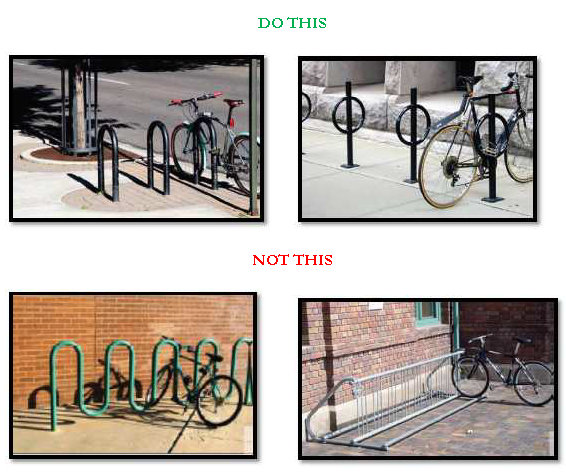
Projects providing permanent, securely anchored bicycle parking are eligible for a reduction of one (1) parking space for each six (6) bicycle parking spaces up to five percent (5%) of the parking requirement in addition to any other type of parking reduction. Racks must support the bike frame at two locations. Ribbon or wave-type racks shall not qualify for this reduction.
5.3.5.
Parking/Loading Schedule.
•
Off-street loading requirements. In all zoning districts there shall be provided in connection with appropriate allowable uses, off-street loading facilities in accordance with the following requirements:
º
Any department store, industrial plant, manufacturing establishment, retail establishment, storage warehouse or wholesale establishment, which has an aggregate gross floor area of 10,000 square feet or more, arranged, intended, or designed for such use shall be provided with off-street truck loading or unloading berths at least 12 feet wide, 14 feet high, and 35 feet long in accordance with the following table. There shall be sufficient space to ensure that all maneuvering required to utilize such loading space will not include street right-of-way.
5.3.6.
Deleted by Ord. No. 2015-44.
(Ord. No. 2015-44, § 4, 7-21-15; Ord. No. 2017-75, § 2, 12-19-17)
Sec. 5.4. - Sidewalks.
5.4.1.
Intent. The intent of the following sidewalk requirements is to implement the goals of the Comprehensive Master Plan and create an accessible sidewalk network which improves pedestrian safety and creates complete streets with opportunities for pedestrians, cyclists, and automobiles.
5.4.2.
Applicability. This section applies to properties located within the Seguin City Limits and to all properties within the Extraterritorial Jurisdiction (ETJ) of Seguin that are subject to the subdivision platting or site plan requirement of the City of Seguin.
5.4.3.
General Requirements.
A.
Location.
1.
Sidewalks must be constructed along all public streets including new streets constructed within a development and existing streets abutting or bordering a development.
2
Sidewalks shall be located along all sides of lots where there is frontage on a public street, regardless of where access is taken.
3.
Sidewalks shall be located within the right-of-way, with the exact location determined by the public entity that maintains the abutting street. Sidewalks may be placed in an access easement on private property only when existing right-of-way is limited.
4.
Sidewalks may meander to avoid trees, utility poles and utility boxes, and other obstacles, and for aesthetics.
5.
Where trails are identified on a City adopted master plan the developer shall construct improvements as per the Seguin Comprehensive Master Plan and/or Parks, Recreation, Open Space and Trails Master Plan.
B.
Timing of Construction.
1.
New Construction. Construction of sidewalks and trails must take place at the time of development and all required sidewalks and trails must be built before a certificate of occupancy is issued for a new residential and nonresidential development.
2.
Existing Sites/Structures. Modification of an existing site and/ or structure, other than a single-family residential site, must be brought into conformance with these requirements to the maximum extent practicable if the extent of the proposed modifications is 50 percent or more of the site's assessed value over a five year time period. For the purposes of the code the assessed value of a structure shall be the value cited by the Guadalupe County Appraisal District.
3.
Perimeter Sidewalks and Trails. At the time of platting, prior to the recording of a subdivision plat, the developer must construct sidewalks and trails along new and existing streets on lots where no building permit will be issued. This includes but is not limited to streets adjacent to amenity centers, open space, detention ponds, land dedicated for public and/or private parks, and on the rear lot lines of double-frontage lots.
C.
Connectivity. Sidewalks must connect to existing adjacent sidewalks or be designed and placed to allow connection to future adjacent sidewalks. Required sidewalks serving non-residential lots must connect to parking in the lot and to primary building entrances (connections may include street crosswalks, crush granite pathways, other methods may be approved by the City Engineer and Planning Director).
D.
Minimum Size and Design. Trails shall be 12 feet in width and ADA compliance. Please see technical manual for construction specifications.
5.4.4.
Specific Requirements.
A.
Development within the City Limits.
1.
Single- or Two-Family Development—New Street Construction. The developer shall be responsible for construction of a sidewalk in conformance with the general requirements outlined above.
2.
Single- or Two-Family Development—No New Street Construction.
º
The developer of a single-family or two-family lot whose lot is within 300 feet of an existing sidewalk (on the same side of the street, measured property line to property line) shall be responsible for construction of a sidewalk in conformance with the general requirements outlined above.
º
The developer of a single-family or two-family lot created prior to July 5, 2011 that is more than 300 feet from an existing sidewalk (on the same side of the street) shall have the option of either constructing the sidewalk in conformance with the general requirements outlined above or paying a fee-in-lieu of construction (see below for specifics on fee-in-lieu).
3.
All Other Development. The developer shall be responsible for construction of a sidewalk in conformance with the general requirements outlined above.
B.
Development within the ETJ.
1.
Sidewalks are required in subdivisions involving five or more lots.
2.
Subdivisions with four or fewer lots fronting on an existing street and not requiring the creation of a new street shall not be required to install sidewalks.
3.
When sidewalks are required, a plat note shall be placed on the final plat indicating that sidewalks are required, upon which streets they are required, and who is responsible for installation.
5.4.5.
Fee-in-Lieu/ Alternative Sidewalk Plan.
A.
In situations where sidewalk or trail installation is impractical, as described below, a property owner may request a cash fee-in- lieu of sidewalk or trail installation or an alternative sidewalk plan with the approval of the Planning Director and the City Engineer.
1.
Fee-in-lieu. A cash fee for the installation of off-site sidewalks or trails may be paid in lieu of all or part of the sidewalks or trails when the option is outlined above or when the Planning Director and City Engineer have approved the request.
2.
Alternative Sidewalk or Trail Plan. An alternative sidewalk or trail plan may be requested when the developer would like to use alternative materials, construct the sidewalk or trail in an alternative location or seek to vary (as opposed to waive) one of the above requirements. All elements of an alternative sidewalk or trail plan must meet ADA requirements.
B.
All fees-in-lieu of installation or alternative sidewalk or trail plan requests shall be approved prior to the issuance of a building permit or construction permit. In evaluating the request, the Planning Director and City Engineer shall consider the following.
1.
Proximity to the nearest existing sidewalk;
2
Topographic or drainage issues;
3.
Proximity to pedestrian generators, such as schools, libraries, shopping centers, parks and other government buildings;
4
The master plan guidance for an existing rural area;
5.
For a single-family home being constructed on a lot larger than one acre on an existing public street, the fee-in-lieu of construction shall be based on a maximum of 100 feet of frontage;
6.
Whether any public sidewalk improvements are planned or contemplated in the area; and
7.
Any other information deemed appropriate in the professional judgment of the Planning Director and City Engineer.
The actual amount of the fee-in-lieu of installation shall be adopted annually by the City Council as part of the adopted fee schedule.
(Ord. No. 2018-040, pts. 1—3, 8-7-18; Ord. No. 2025-007, pt. 1(Attch.), 2-18-25)
Sec. 5.5. - Drainage/detention.
The drainage/detention standards of Chapter 4 and the Technical Manual shall be applicable to new development and redevelopment of a site. Should a subdivision plat not be required prior to site development the drainage/detention standards shall be reviewed in conjunction with the site development application.
Sec. 5.6. - Screening.
Recycling/garbage container screening.
5.6.1.
Intent. The intent of the requirements of this section is to reduce the visual clutter of trash and refuse collection areas and integrate screening materials consistent with the building materials use on site.
5.6.2.
Applicability.
A.
[Compliance required.] Trash receptacles 90 gallons or larger used for storage, disposal of trash, garbage, refuse or grease shall be comply with the requirements of this section.
B.
New Construction. All new construction or redevelopment of existing properties in excess of 50% of the predevelopment value of property shall comply with the provisions of this ordinance.
C.
Existing Facilities. All existing facilities utilizing garbage receptacles as defined by this ordinance shall comply with the provisions of this ordinance. Existing properties utilizing garbage receptacles are exempt from the provisions of this ordinance if the receptacle is not visible from ordinary public view from the adjacent right-of-way and adjacent property or the receptacle is 75 feet or more from the nearest right-of-way or property line. Existing facilities using the right-of-way for garbage containers, where no other practical alternative exists, will be required to obtain approval from the City.
5.6.3.
Exceptions. The following types of trash/recycling receptacles are exempt from the screening requirements of this section:
A.
Temporary dumpsters used in construction;
B.
Temporary dumpster for special events;
C.
Recycling dumpsters;
D.
Residential garbage containers, usually 90 gallons or less, provided by the City's franchise holder.
5.6.4.
Proof of Compliance Required. A screening detail and note attesting to compliance with the general standards of this section shall be added to all site plans, at the time of site development application submittal. The approved garbage receptacle site plan shall become part of the approved site and building plans and no Certificate of Occupancy shall be issued until the garbage receptacle screen is constructed and approved by the Building Official.
5.6.5.
Visual Screening Requirements.
A.
Visual screening consisting of a solid fence or masonry wall, having a minimum height sufficient to screen the entire garbage receptacle on all sides shall be constructed and maintained by the occupant or property owner.
B.
Grease rendering receptacles: All grease rendering receptacles shall be placed on an impervious surface (i.e. concrete, asphalt) approved by the Building Official.
C.
For new food service establishments, or for the relocation of existing food service garbage containers, the garbage container shall be placed as far from any property line adjacent to residential uses as reasonably possible as determined by City staff.
D.
To facilitate cleaning, dumpsters serving food service establishments shall be placed on an approved impervious surface.
E.
Non-food service dumpster enclosures adjacent to residential locations are required to setback a minimum 10' from the property line.
F.
If unsanitary conditions exist, including, but not limited to, noxious odors, insects or rodents, City staff shall have the authority to require that the dumpster and enclosure be relocated, maintained in a sanitary condition, or if the conditions remain unabated, removed.
5.6.6.
Materials and Design. The following building materials shall be used:
A.
Treated wood designed in fence fashion. No plywood or wooden sheeting will be approved.
B.
Solid masonry construction in accordance with the Standard Building Code. No cinder block construction will be approved unless painted or of stucco exterior.
C.
Chain link with wooden or synthetic slats completely enclosing the garbage container. No synthetic or fabric wrappings will be approved.
D.
Landscape stock may be used only in conjunction with other approved screening materials in order to enhance and improve the screen's appearance.
E.
All materials must be approved by the Building Official.
F.
Gates must include a locking device to protect against unauthorized use.
5.6.7.
Maintenance.
A.
The property owner, tenant or agent shall be responsible for maintaining all garbage receptacles in a clean, non-odorous, structurally sound condition; replacing and repairing the receptacle and screening when necessary and keeping the surrounding area free from garbage, trash, refuse and high weeds in accordance with all City ordinances.
B.
Screening must be repaired or replaced in accordance with this ordinance within (60) days of notification by the Building Official.
C.
Failure to properly maintain screening shall constitute a violation.
5.6.8.
Visibility Clearance. No garbage receptacle and screen shall be located in the vicinity of any corner, street, intersection, or access way if the Building Official determines a visibility obstruction will occur. In such cases, every effort shall be made to relocate the receptacle and screen to a safer location on the property. This may include the use of one or more parking spaces provided the Building Official determines sufficient parking to service the facility will remain.
Auto Repair and Servicing
5.6.9.
Intent. The intent of the requirements of this section is to reduce the visual clutter of trash and refuse collection areas and integrate screening materials consistent with the building materials use on site.
5.6.10.
Applicabilty. Automotive repair and servicing facilities, both new and existing, including but not limited to general automotive repair, automotive service centers, paint and body shops, collision centers, towing/impound lots, and other maintenance services shall be subject to the screening and vehicle storage requirements contained in the following section.
5.6.11.
Vehicle Storage. Vehicle storage requirements for Automotive Repair; Paint and Body Shops near one- or two-family residential use shall meet the following requirements:
A.
Automotive Repair; Paint and Body Shops located on property adjacent to a one- or two-family residential use must screen all vehicles that have been accepted for repairs from view from such residential use by parking/storing the vehicles within a building or by providing a six-foot solid screening fence along the property line adjacent to, or across an alley from, the one- or two-family residential use.
B.
All other Automotive Repair; Paint and Body Shops within 200 feet from any one- or two-family residential use must screen all vehicles that have been accepted for repairs from view from such residential use by parking/storing the vehicles within a building or by providing a six-foot solid screening fence on all property lines facing the residential use. The measurement of the distance between the automotive repair or paint and body shop and the one- or two-family residential use shall be along the nearest property line of the one- or two-family residential use to the nearest property line of the automotive repair or paint and body shop, along street lines and in a direct line across intersections.
C.
Overnight vehicle storage requirements. No more than two vehicles per bay or repair/inspection station that have been accepted for repairs by the repair, paint or body shop may be stored/parked outside after regular business hours.
D.
Vehicle storage requirements for wrecked or dismantled vehicles. All wrecked or dismantled vehicles must be stored in an enclosed building or completely enclosed behind a minimum six-foot solid screening fence.
E.
No automobile repair or service facility shall be permitted to have bay doors facing a one- or two-family district.
F.
No vehicle retained for repairs may be stored for more than sixty (60) days from the date the vehicle is accepted for repair. The sixty-day time limit may be extended to a total of one hundred eighty (180) days from the date the vehicle is accepted for repair if the automotive repair or paint and body shop has begun the process to obtain a lien on the vehicle pursuant to state law.
Parking and Unsightly Areas
5.6.12.
Screening of Parking. All multi-family residential and commercial parking spaces shall be designed and constructed to protect adjacent residences from the direct glare of headlights of vehicles using the parking area. In accordance, all off-street parking areas shall be effectively screened on each side by a solid wall or fence from any adjoining residentially zoned property. Such wall or fence shall not be less than four (4) feet or more than six (6) feet in height, and shall be maintained in good condition without any advertising thereon. Any space between such wall or fence and the lot line of any adjoining residential property shall be landscaped with grass, hardy shrubs, or evergreen ground cover. In lieu of such wall or fence, a strip of land not less than ten (10) feet in width and planted and maintained with evergreen hedges, or dense planting of evergreen shrubs, not less than four (4) feet in height may be substituted.
5.6.13.
Other Unsightly Areas. Unsightly areas, including, but not limited to, loading spaces and docks, outside storage areas, mechanical equipment, and the rear of structures on reverse frontage lots, must be screened from view from the street, public rights-of-way, and adjacent property by a landscaping buffer or privacy fencing. The Director may waive the screening requirement between similar uses or where similar unsightly areas abut each other.
Subdivision Perimeter Fences/Walls
5.6.14. Intent. The intent is to provide screening buffers and safety measures for any single-family and two-family residential development directly adjacent to a major thoroughfare that is either identified on the City of Seguin's Master Thoroughfare Plan or is classified as an existing collector or higher classification roadway.
5.6.15. Applicability. The requirement for subdivision perimeter fences/walls applies to any new one-family or two-family residential development in the City of Seguin.
5.6.16. General Standards. Any residential or open space lots that abut a collector or higher classification roadway shall provide a perimeter fence/wall and buffer per the following schedule:
5.6.17. Additional Standards.
A.
Subdivision perimeter fences/walls shall be built at the time of public infrastructure construction.
B.
Subdivision perimeter fences/walls shall be designed as not to interfere with drainage.
C.
The landscaping buffer shall be irrigated.
D.
Prohibited fencing materials from Section 5.7.4.B apply to subdivision perimeter fences/walls.
E.
Masonry fences/walls shall be defined as brick, natural stone, stucco, or architecturally finished reinforced concrete. Composite fences shall be in a natural tone flat color such as rust, tan, or a similar color.
F.
Buffer areas shall be measured from the right-of-way line of the adjacent roadway to the property line of the residential lot(s) within the subdivision that are adjacent to the roadway as identified by the subdivision plat; or in the case in which a right-of-way reservation is identified, the measurement shall be from the edge of the reservation line to the property line of the residential lot(s) within the subdivision that are adjacent to the roadway.
G.
All trees shall be selected from the City of Seguin's List of Preferred Plants.
H.
Trees shall not be planted within utility easements or drainage easements/lots.
5.6.18. Maintenance. The maintenance of the subdivision perimeter fences/walls and the landscaping buffer shall be the responsibility of the property or homeowner's association or any equivalent.
5.6.19. Exemptions.
A.
Lots that abut collectors within the subdivision development, in which the lots on both sides of the roadway are within that subdivision, are exempt from the requirement.
B.
These subdivision perimeter fences/walls are exempt from the fence height regulations adopted in Section 5.7.5.F.
5.6.20. Variances. Variances to the requirements of this section shall be processed as a subdivision variance per Section 2.9.8 and shall be under the authority of the Planning and Zoning Commission.
(Ord. No. 2015-44, § 5, 7-21-15; Ord. No. 2017-33, pt. 1, 7-18-17; Ord. No. 2022-041, § 1, 5-24-22; Ord. No. 2022-099, § 1, 12-20-22)
Sec. 5.7. - Fencing.
5.7.1.
Intent. The intent of this section is to establish standards for the erection and maintenance of fences. The general objectives of these standards are to promote health, safety, welfare, and enjoyment of the public, and to promote the safety of persons and property by providing that fences do not:
A.
Create a hazard due to collapse, fire, decay or abandonment;
B.
Obstruct firefighting or police observation ability;
C.
Create traffic hazards by confusing or distracting pedestrians or motorists; or
D.
Become obstacles that hinder the ability of pedestrians, bicyclists or motorists to read traffic signs.
5.7.2.
Applicability. The requirements of this section apply to all new fences and reconstruction of existing fences.
5.7.3.
General Standards.
A.
Fences with an unfinished or rough side and a finished or smooth side must be placed so the finished or smooth side faces out.
B.
It shall be unlawful for any person to erect a fence that is not in compliance with this section.
5.7.4.
Construction materials.
A.
Approved materials include: Treated wood, wrought iron, stone or brick with mortar, painted or textured masonry, decorative metal, chain link, cedar, vinyl fencing.
B.
Prohibited materials include: Sheet metal, barbed wire and razor ribbon, plywood, corrugated steel, fiberglass panels or electric fences.
C.
Agricultural, Public and Industrial sites: Agricultural, public and certain industrial locations may be suitable for otherwise prohibited fencing materials. These include, but are not limited to, barbed wire, razor ribbon, corrugated steel and electric fencing.
5.7.5.
Location and height regulations.
A.
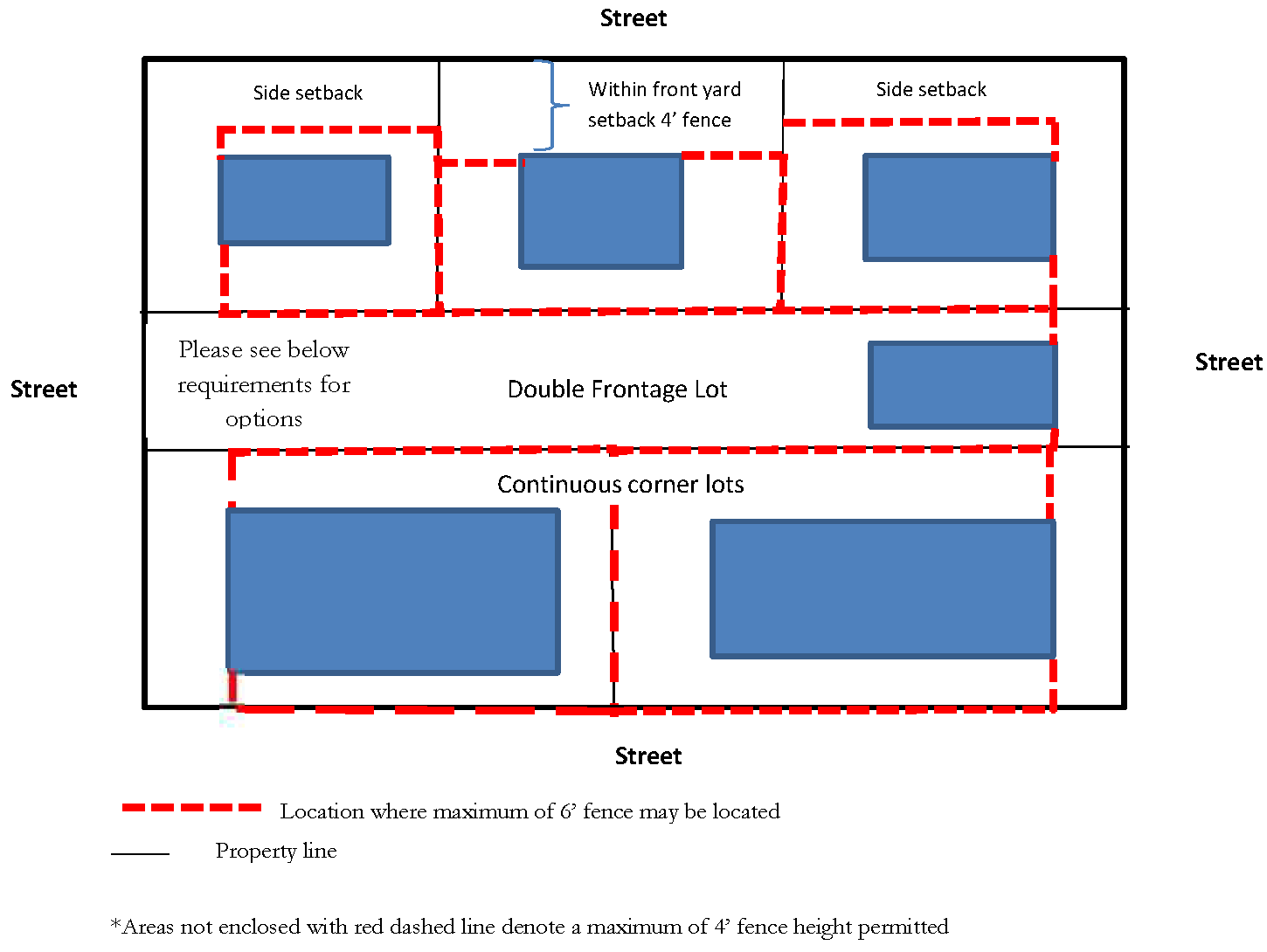
[Intersecting street corners.] It shall be unlawful for any owner of property on a street intersection corner in the City to permit a fence, vine, tree, shrub, structure or any other opaque object to remain on the property, which is within six lineal feet of the legal street corner and which prevents a driver of a vehicle from having a clear view through the six-foot area of the intersecting street in the opposing direction.
B.
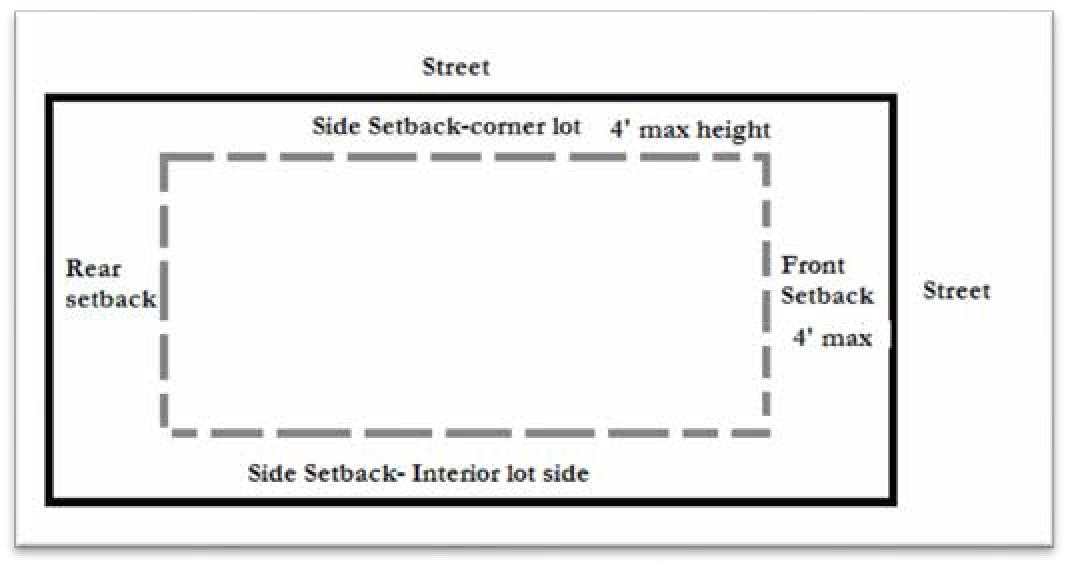
[Height limit.] Any fence or wall located between the property line and the required front yard setback line (or side yard setback line if a corner lot and adjacent to an interior lot) of a building shall not exceed four feet in height.
C.
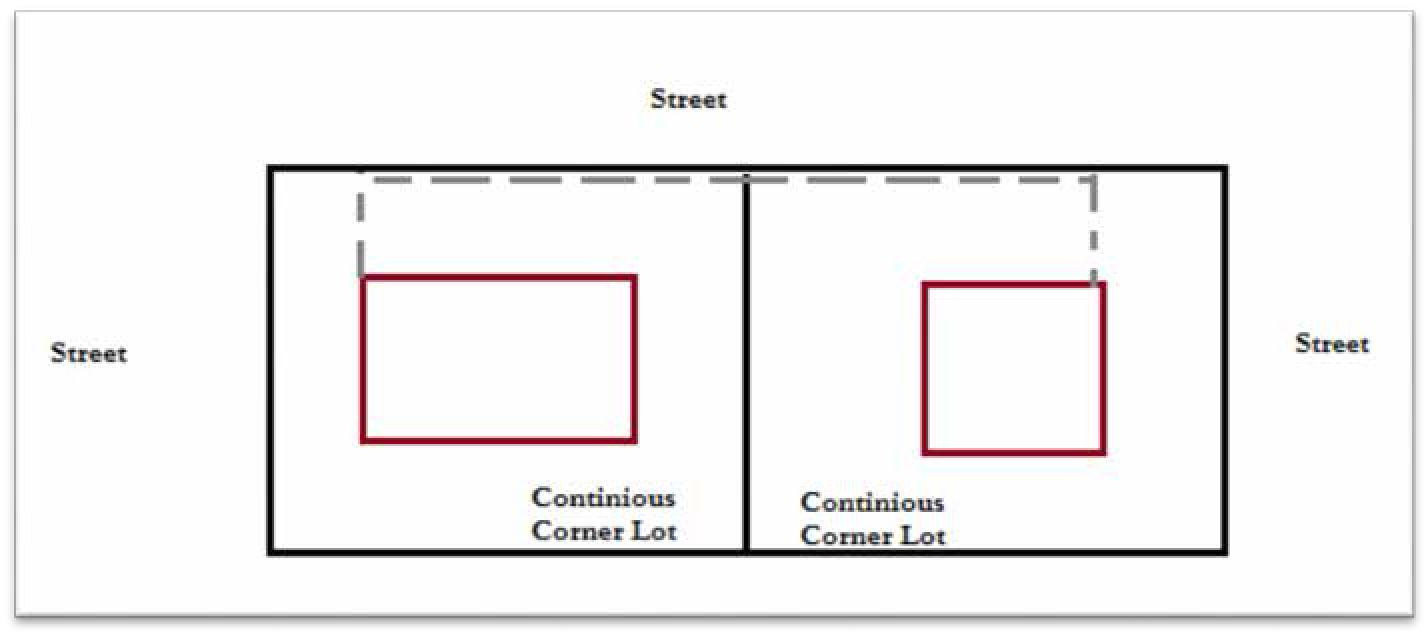
In cases of a continuous corner lot (two corner lots back to back) the sideyard fence may be constructed out to the property line and shall not exceed 6' in height (behind the front building line).
D.
[Measuring.] If an existing, legally non-conforming building has less than the required setback, the front yard shall be measured from the front building line.
E.
Front yard. No fence shall exceed four feet in height measured from the adjacent natural grade, in front yards as used herein. Fences located in properties zoned Industrial shall not exceed 8 feet in height in front yards.
F.
Side and rear yard (interior lots). No fence shall exceed six feet in height measured from the adjacent natural grade, in side and rear yards as herein used. Fences located in non-residential zoned properties shall not exceed 8 feet in height in side and rear yards.
G.
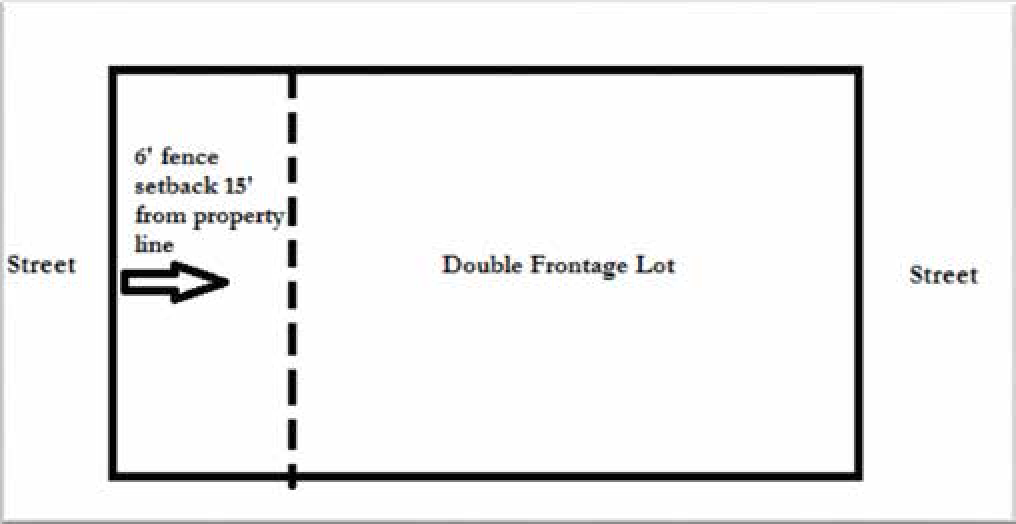
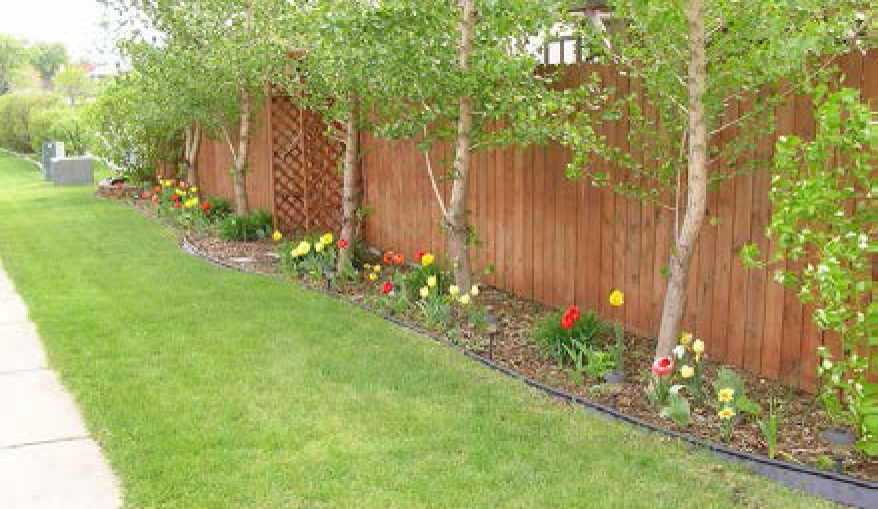
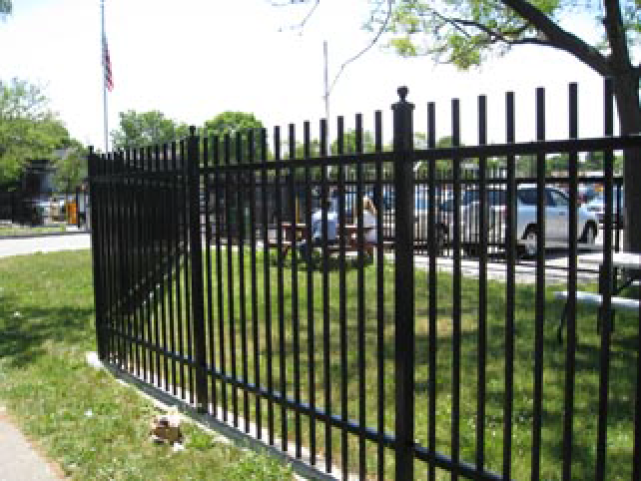
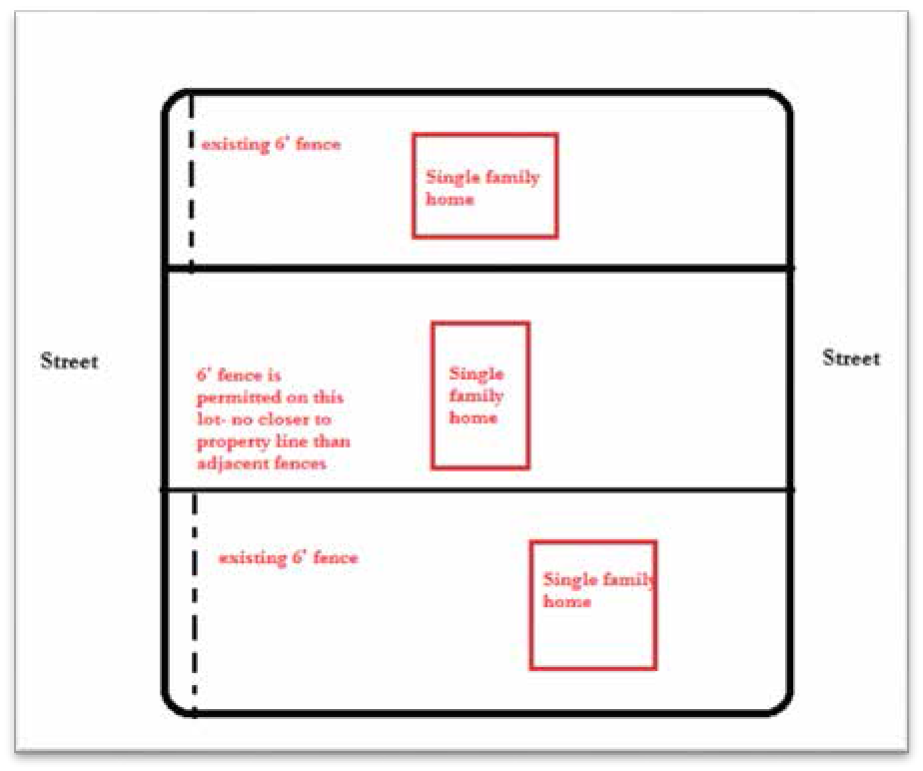
Double Frontage Lots. A double frontage lot is a lot bounded on opposite sides by streets. With regard to fence placement on double-frontage lots, the front shall be the portion of the property from which it is addressed, and fences along the front and rear yards must meet those requirements related to the "front." The opposite side of the property may be permitted to meet the requirements related to a "rear," provided that one of the following is met:
1.
The fence is setback a minimum 15' from the rear property line.
2.
The fence is setback 5' from the property line and landscaping (trees and shrubs) is evenly distributed throughout the length of the fence to visually break up the fence.
3.
Decorative metal fencing is used.
4.
The existing character of the adjacent lots has a 6' rear yard privacy fence (only applicable to single family development existing at the time of this code).
5.
Single-Family Residential lot abutting I-10 frontage road.
5.7.6.
Maintenance.
A.
All fences constructed within the City shall be maintained in a vertical position, and not create an unsightly condition that substantially detracts from the appearance of the neighborhood.
B.
All fences shall be maintained structurally sound, with no missing components and not out of vertical alignment in excess of 20%.
C.
All damaged, rotting, removed or missing portions of the fence shall be replaced with comparable materials.
D.
Fences shall not be externally braced in lieu of replacing or repairing posts, columns or other structural elements.
E.
All damaged or missing parts of chain link or metal fences shall be replaced or repaired.
F.
Fence reconstruction shall be in accordance with the provisions of this code.
5.7.7.
Utility easements.
A.
Fencing across easements shall only be allowed with the written approval of the City and/or easement holder and shall include any and all requirements for utility access and maintenance.
B.
Access requirements may include gates sufficiently wide to allow equipment access, removable fence panels or other designs acceptable to the City and easement holder.
C.
Access to easements shall be allowed as needed for repair and maintenance.
D.
Permission to build a fence upon or across a utility easement does not remove the obligation of the owner of said fence to remove the fence upon demand of the City or utility company.
E.
Removal and rebuilding of the fence shall be the responsibility of the owner of said fence and at the owner's expense.
(Ord. No. 2022-040, pt. 2, 5-24-22)
Sec. 5.8. - Lighting.
5.8.1.
Intent. Lighting standards set forth in this chapter are intended to reduce hazards to motorists and annoyance and inconvenience from light trespass upon the residents, drivers, pedestrians, businesses and other elements of the community. These standards are intended to allow reasonable enjoyment of adjacent and nearby property by their owners and occupants while requiring adequate levels of lighting of parking areas, internal drives, service and pedestrian areas.
5.8.2.
Applicability. The standards of this section shall apply to all new construction.
5.8.3.
Proof of Compliance Required. A note attesting to compliance with the general standards of this section shall be added to all site plans, at the time of site development application submittal.
5.8.4.
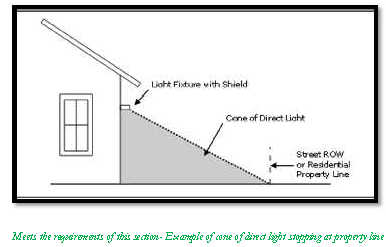
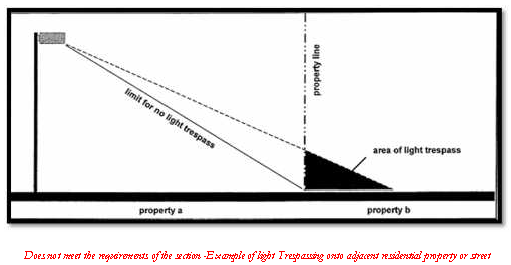
General Standards. Site lighting shall shine downward and be shielded so that light sources are not visible from public thoroughfares or from adjacent residential zoned or used property. All permanent exterior lighting shall be non-flashing and shielded such that the light source (cone of direct light) is not visible from the public ROW or adjacent residential uses at the property line. Wall pack lighting or other lighting that directs the light in a horizontal direction without an adequate shield is not permitted (since it directs the light glare directly outward) if there are streets or residential uses in the direction of the light.
5.8.5.
Prohibited Lighting. The following light sources are prohibited:
A.
Laser source light.
B.
Strobe light.
C.
Flashing or blinking (Exceptions are: traditional holiday lighting not used to draw attention to a sign and flashing or blinking lights required by law).
D.
Beacon or searchlight, including temporary display.

