
Seguin City Zoning Code
CHAPTER 6
- SIGN REGULATIONS
Sec. 6.1. - [Intent and application]
6.1.1.
Intent.
The purpose of this section is to protect and promote the public health, safety and general welfare, and enhance the aesthetics and attractiveness of the city for its citizens and visitors. To achieve this purpose, it is the intent of this section to:
• Regulate the construction, erection, alteration, and maintenance of signs in the city limits.
• Ensure the safe construction of all signs covered under this chapter.
• Aid in the attraction of consumers to the community while preserving the values of community appearance.
• Protect the integrity and beauty of streetscapes, corridors, neighborhoods, public spaces, and historic districts.
• Protect adjacent and nearby properties from the impact of excessive signage.
6.1.2.
Application of Requirements.
This section applies in the following areas:
6.1.3.
Chapter Components.
This chapter includes the following sections:
• Definitions (6.2).
• Contractor Registration & Permitting (6.3).
• Construction, Maintenance & Operation (6.4).
• Permanent Signs (6.5).
• Signs exempt from permitting (6.6).
• Prohibited Signs (6.7).
• Signs in the Downtown Historic District (6.8).
• Nonconforming, Abandoned & illegal Signs (6.9).
• Violations, Enforcement, & Remedies (6.10).
• Variances (6.11).
(Ord. No. 2025-021, pt. 2(Exh. A), 5-20-25)
Sec. 6.2. - Definitions.
The following words, terms, and phrases, when used in this section, shall have the meanings ascribed to them in this section, except where the context clearly indicates a different meaning:
Abandoned sign: A sign that no longer displays a legible message or advertisement on the sign face. This shall include a blank sign face, an empty frame without a sign face, a sign which has been painted to cover the advertisement, or a sign face that is no longer legible due to fading or damage.
Athletic scoreboard: A structure erected at an athletic field or stadium which is generally used to maintain the score or time expiration for an event at the field or stadium.
Banner: A long strip of cloth or other suitable material with printed words, logos, or images intended to advertise a business or activity.
Billboard: A sign that advertises establishments, products, organizations, businesses, activities, or services that are not sold, produced, manufactured or distributed on or from the property on which the sign is located. A billboard is an off-premises sign. A digital billboard is a billboard with a digital message board.
Canopy sign: A sign attached to an awning, canopy, or other protective cover over a door, entrance, or window, or any sign attached to a freestanding canopy structure.
Contractor sign: A temporary sign located at an active construction site to inform the public of the name of the project, name of the contractor, or similar information.
Digital sign: An on-premises electronic sign with a display that may be changed by means of computerized programming. Gas price cabinets with displays that change no more than once a day are excluded from this definition.
Directional sign: An on-premises ground sign that is intended to aid in internal circulation of a site or identify points of ingress and egress.
Downtown Historic District (DHD): The Downtown Historic District (DHD) is an overlay district that includes the blocks in the Inner and Acre lots of the City of Seguin as identified on the map in Section 3.3.5 of the Unified Development Code.
Flag, decorative: A piece of fabric or other similar material in the shape of a flag attached to a pole that contains designs or images that are used as symbols, decorations, or advertisements. Decorative signs often display logos, business names, or other images that attract attention to a business or activity.
Flag, feather: A temporary sign composed of durable lightweight fabric with a sturdy frame enclosing only a portion of the material. A feather flag is designed to flow in the wind and is mounted on a pole that is driven into the ground for support or supported by an individual stand.
Flag, official: The official, authentic flag of a government or political subdivision, such as the state or national flag.
Illegal sign: A sign that was erected without the required sign permit; or a sign that does not meet the requirements of this chapter and which does not meet the criteria to be designated as a nonconforming (grandfathered) sign.
Inflatable sign: A temporary sign made of a flexible material inflated with air that advertises or promotes events, sales, or businesses.
Government sign, official: A temporary or permanent sign erected and maintained by a governmental agency for the purpose of directing, regulating, warning, informing, or guiding the general public. Governmental signs include traffic signs, warning signs, or any signs indicating public works projects, public service or other programs or activities conducted or required by any governmental agency.
Ground sign: A temporary sign supported by stakes driven into the ground.
Memorial plaque: A decorative plate or stone with writing on it that honors a person, event or occasion. Memorial plaques are affixed to a wall or other structure to remind people of an important person or event.
Monument sign, single-tenant: A freestanding sign with no more than two sign faces that has a base mounted directly on the ground or has a maximum of 12 inches of clearance from the ground to the bottom of the sign; and that advertises a single tenant located on the same property in which the sign is located.
Monument sign, multi-tenant: A freestanding sign with no more than two sign faces that has a base mounted directly on the ground or has a maximum of 12 inches of clearance from the ground to the bottom of the sign; and that advertises multiple tenants located on the same property in which the sign is located.
Nonconforming sign: A permanent sign which was legally erected in accordance with the sign regulations of the City of Seguin effective at the time the sign was erected but does not conform to the current regulations of this section. Nonconforming signs may also be referred to as grandfathered signs.
Off-premises sign: A sign that advertises establishments, products, organizations, businesses, activities, or services that are not sold, produced, manufactured or distributed on or from the property on which the sign is located. An off-premises sign is a billboard.
On-premises sign: A sign that advertises establishments, products, organizations, businesses, activities, or services that are sold, produced, manufactured or distributed on or from the property on which the sign is located.
Pole sign, single-tenant: A freestanding sign that is supported by one or more free-standing poles in or upon the ground and that advertises a single tenant located on the same property in which the sign is located.
Pole sign, multi-tenant: A freestanding sign that is supported by one or more free-standing poles in or upon the ground and that advertises multiple tenants located on the same property in which the sign is located.
Political/campaign sign: A temporary sign in connection with any local, state, or national election.
Portable sign: A sign constructed on wheels, casters, skids or otherwise designed to be movable from one location to another, including a-frame and sandwich signs.
Projecting sign: A sign, single- or double-faced, other than a flat wall sign, which is attached to and projects from a building façade.
Real estate sign: A temporary sign advertising the real estate upon which the sign is located. Real estate signs typically advertise the rent, lease, or sale of the real estate, but may also advertise the future development of a property/site.
Right-of-way, public: The portion of land on, below, or above a public street, alley, crosswalk, sidewalk or drainageway owned by a governmental entity (city, county of state) and intended for vehicles, pedestrians, or other travel.
Right-of-way, private: The portion of land on, below, or above a private street, alley, crosswalk, sidewalk or drainageway that is privately owned and intended for vehicles, pedestrians, or other travel.
Roadway, constructed: The portion of a right-of-way that is specifically designed, constructed, and used for the movement of vehicles.
Roof sign: A sign mounted upon, against, or directly above the roof parapet line of a building or structure, or that is wholly dependent upon a building for support, and that projects above the rooftop of a building.
Rotating sign: A pole sign in which the sign itself or any portion of the sign moves in a revolving or similar motion. Rotating signs are classified as pole signs and shall follow the applicable requirements.
Sign: A sign is an outdoor structure, display, light device, figure, painting, drawing, message, plaque, poster, billboard, or other object that is designed, intended, or used to advertise or inform. The term "sign" includes all other devices, structures, or objects that may reasonably be included under it, whether attached or unattached.
Subdivision entry sign: A sign located at the entrance of a subdivision that identifies the neighborhood or development and serves as a visual marker for the entry into the subdivision. Subdivision entry signs may include monument signs, walls, structures, or a combination thereof.
Temporary sign: A sign erected for a limited time that identifies an event or activity of limited duration.
Vehicle sign: Vehicle decals attached to or painted on a vehicle that advertise a business or activity, but that are incidental to the vehicle's main use for transportation.
Wall mural: Artwork painted directly onto a wall or fence that is intended as a decorative feature. Logos, trademarks, and icons may be incorporated into the artwork but shall not exceed more than 20 percent of the wall area. Telephone numbers, addresses, and other advertising messages are not allowed.
Wall sign: A sign attached to, projected on, or painted on the wall of a building or structure in such a manner that the wall becomes the supporting structure for, or forms the background surface of, the sign.
(Ord. No. 2025-021, pt. 2(Exh. A), 5-20-25)
Sec. 6.3. - Contractor registration & permitting.
6.3.1.
Contractor Registration.
Every person engaging in erecting, installing, servicing or maintaining commercial signs shall be registered with the city as a contractor and shall pay the annual fee as established by the City Council and set forth in Appendix C of the Seguin Code of Ordinances.
6.3.2.
Sign Permit Required.
Unless specifically exempted herein, it shall be unlawful for any person to erect, install, or substantially alter a commercial sign without obtaining a sign permit from the City of Seguin. The term "substantially alter" shall not include routine painting, maintaining, or refacing an existing commercial sign.
6.3.3.
Sign Permit Application.
The sign permit application submitted to the City of Seguin shall contain all information, drawings, and specifications necessary for staff to review the proposed sign for compliance with all regulations.
6.3.4.
Fees.
Fees for sign permits and inspections shall be collected by the city prior to the issuance of a sign permit. The fees shall be established by the City Council and set forth in Appendix C of the Seguin Code of Ordinances. When work for which a permit is required by this section is started prior to obtaining the permit, the fees specified shall be doubled.
(Ord. No. 2025-021, pt. 2(Exh. A), 5-20-25)
Sec. 6.4. - Construction, maintenance & operation.
6.4.1.
Preventing Obstructions.
All signs governed by this chapter shall be situated in a manner which does not interfere with or obstruct windows, doors or other means of exit from the building. Further, no signs shall be supported on or attached to any fire escape, door or window casing.
6.4.2.
Creating Hazards.
No signs shall be erected on or over public property in a manner which interferes with any fire hydrant, traffic light, fire alarm box or streetlight. Similarly, billboards and commercial signs shall not be erected in any location where, because of traffic conditions, fire, or explosion hazards, the sign would imperil public safety or hamper the functions of the fire department as determined by the chief building official and fire marshal.
6.4.3.
Attachment & Wind Loads.
All signs shall be securely fastened or anchored to a building wall, structural framing or other foundation with a sufficient number of bolts or anchors to resist the stress resulting from the dead weight of the sign and wind loads. Both commercial signs and billboards shall be constructed to resist a minimal horizontal wind load of 30 pounds per square foot of service area. The use of staples, wires and wood plugs in erecting signs is prohibited.
6.4.4.
Materials & Supports.
All signs governed by this chapter, excluding electrical signs, shall be constructed of durable materials and securely attached to framework and supports made of wood, metal or other similar material of equivalent strength. Commercial signs may be made of pressed wood. All electrical signs shall have metal supports and frames.
6.4.5.
Electrical Wiring.
Electrically illuminated signs or signs which are equipped in any way with electrical devices or appliances shall conform to all electrical provisions and requirements of the Electrical Code in Chapter 18, Article III of the Seguin Code of Ordinances. The building official shall have the right to check all wiring for code compliance.
6.4.6.
Maintenance of Signs.
All signs shall be kept in a state of good repair. Good repair shall mean the following:
A.
Copy and print shall be legible and shall not be faded or worn.
B.
Sign face shall be free of tears, rips or other defacements that obscure the copy, lettering or design of the sign.
C.
The sign frame shall be free of rust, painted if needed, and structurally sound.
(Ord. No. 2025-021, pt. 2(Exh. A), 5-20-25)
Sec. 6.5. - Permanent signs.
6.5.1.
Permanent Signs Matrix.
The signs listed below in the Permanent Signs Matrix are required to meet the provisions and regulations of this Ordinance, including the requirement to obtain a sign permit. All signs in the DHD shall be regulated in accordance with Section 6.8.
6.5.2.
Billboards.

A.
Definition (per Section 6.2)- a advertises establishments, sign that products, organizations, businesses, activities, or services that are not sold, produced, manufactured or distributed on or from the property on which the sign is located. Billboards are also known as off- premises signs. Digital billboards are billboards that contain digital message boards.
B.
Location Requirements.
1.
Zoning Districts- Billboards shall only be allowed on properties with zoning designations of commercial, light industrial, and industrial.
2.
Downtown Historic District- Billboards are prohibited m the Downtown Historic District.
3.
Street Classifications- Billboards shall only be allowed on properties that have street frontage along roadways classified as arterials, major arterials, or freeways, as defined by the Seguin Master Thoroughfare Plan.
C.
Area Requirements.
1.
The minimum size of the sign face shall be 75 square feet adjacent to frontages along arterials and major arterials, and 300 square feet adjacent to frontages along freeways.
2.
The maximum size of the sign face shall be 200 square feet adjacent to frontages along arterials and major arterials, and 480 square feet adjacent to frontages along freeways.
D.
Height Requirements.
1.
The maximum height, measured from the adjacent grade to the top of the billboard, shall be 30 feet for signs adjacent to the frontages along arterials and major arterials.
2.
The maximum height, measured from the adjacent grade to the top of the billboard, shall be 40 feet for signs adjacent to the frontages along freeways.
E.
Spacing Requirements.
No billboard shall be erected within 3,500 feet of any other billboard. The distance shall be measured in a direct line from one billboard to the other, with no regard to property lines, rights-of-ways, or other boundaries.
F.
Setback Requirements.
1.
Billboards shall have a minimum setback of 30 feet from the property line.
2.
Billboards shall have a maximum setback of 75 feet from the property line.
3.
Billboards shall have setbacks from the property lines of the following facilities, districts and parks:
a.
Public Park- 500 feet
b.
Historic Building- 200 feet
c.
Any property located within the Downtown Historic District- 200 feet
d.
University or College- 200 feet
e.
Public or Private School- 200 feet
G.
Clearance Requirements.
There shall be a minimum clearance of seven feet measured from the ground to the bottom of the sign face.
H.
Digital Message Boards.
1.
Digital message boards shall be allowed on billboards as a portion of the sign face or as the entire sign face.
2.
The area of the digital message board shall be calculated and included as part of the total area requirements for the billboard.
3.
Digital message boards on billboards shall not be located within 500 feet of the property line of an existing residential structure or residentially zoned district. For the purposes of this section, the neighborhood commercial district shall be considered a non-residential zoned district.
4.
The operation of digital message boards on billboards shall have the following limitations and/or restrictions:
a.
The message or picture shall not display flashing, blinking, running lights, animations, streaming video, scrolling text, or special effect transitions.
b.
Messages or pictures shall not change more frequently than once every ten seconds and must occur simultaneously on the entire sign face.
c.
The message board shall be equipped and programmed for automatic dimming to prevent glaring.
I.
Billboards on Public Property.
Billboards shall be prohibited on or above any public property or public roadway.
J.
Construction Requirements.
1.
All new or replacement billboard signage shall be constructed of metal, monopole structural supports.
2.
The billboard shall be firmly and solidly constructed to withstand a wind load of at least 30 pounds per square foot of area.
3.
An open space of at least seven feet shall be provided between the bottom of the billboard and the ground. If necessary, support bracing for the sign may extend through the open space.
4.
All billboards exceeding 35 feet in height shall be of fireproof construction.
5.
Base aprons measuring not less than 24 inches high shall be attached to the bottom of all billboards with sign faces measuring ten feet or more in height and 40 feet or more in width.
6.
All service platforms shall have a jack or support at each structural upright and shall have a minimum width of 20 inches of worker's walking surface. Service platforms shall be mandatory on all billboards measuring more than 12 feet between ground level and the bottom of the sign face.
7.
All exposed wood or metal surfaces, including treated but unpainted stringers, platforms, jacks or other supports, excepting galvanized metal, shall be painted, both front and back, upon installation of the billboard.
8.
Billboards shall be designed and emplaced not to create a traffic hazard near street intersections or railroad crossings. Billboards shall not be positioned in a way which obscures or physically interferes with a traffic sign, signal device or a driver's view of approaching, merging or intersecting traffic.
9.
Billboards shall not be illuminated in a manner which interferes with the effectiveness of or obscures an official traffic sign, signal or device nor may the light emitted from any billboard cause glare to or impede the vision of the driver of any motor vehicle.
10.
To ensure public safety, there shall be a distance of 14 feet between the ground and the bottom rung of any ladder which is permanently attached to the billboard structure. Signs existing on the effective date of this ordinance which do not meet this standard shall not be granted nonconforming status.
6.5.3.
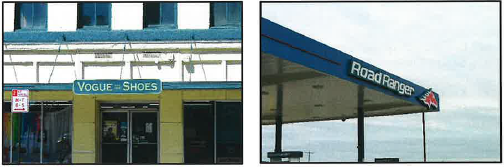
Canopy Signs.
A.
Definition (per Section 6.2)- a sign attached to an awning, canopy, or other protective cover over a door, entrance, or window, or any sign attached to a freestanding canopy structure.
B.
Location Requirements.
Zoning Districts- Canopy signs shall only be allowed on properties with zoning designations of multi-family (1,2,3), neighborhood commercial, commercial, public, light industrial, and industrial.
C.
Area Requirements.
The total combined maximum size of the sign faces shall be 20 percent of the area of the canopy side it is painted on or attached to.
D.
Height Requirements.
The maximum height shall be 4 feet above the roof of the canopy side it is attached to.
E.
Number of Signs Allowed.
There shall not be a maximum number of canopy signs, but the maximum combined area of all canopy signs shall not exceed the maximum area allowed in this section.
6.5.4.
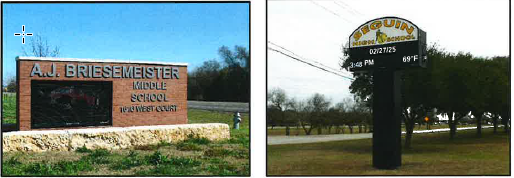
Digital Signs.
A.
Definition (per Section 6.2)- an on-premises electronic sign with a display that may be changed by means of computerized programming. Gas price cabinets with displays that change no more than once a day are excluded from this definition.
B.
Applicability.
1.
This section shall only apply to on-premises digital signs. Digital message boards on billboards shall be regulated per Section 6.5.2. of this UDC and digital message boards on athletic scoreboards shall be regulated per Section 6.6.2.
2.
On-premises digital signs shall only be allowed as monument signs and pole signs. On-premises digital signs are prohibited on all other sign types including but not limited to canopy signs, projecting signs, roof signs, subdivision entry signs, wall signs, and signs within the Downtown Historic District.
C.
Location Requirements.
Zoning Districts- Digital signs shall only be allowed on properties with zoning designations of neighborhood commercial, commercial, public, light industrial, and industrial.
D.
Area Requirements.
1.
The maximum size of the digital sign face display on digital signs located along the frontage of SH 130 or IH 10 shall be 100 square feet.
2.
The maximum size of the digital sign face display on digital signs along all other roads shall be 32 square feet.
3.
The area of a digital sign face shall be calculated separately from the maximum area requirements of the non-digital portion of the pole or monument sign.
E.
Height Requirements.
1.
Digital signs located along the frontage of SH 130 or IH 10- the maximum height, measured to the top of the sign, shall be 40 feet above the adjacent grade.
2.
Digital signs along all other roads- the maximum height, measured to the top of a digital pole sign, shall be 25 feet above the adjacent grade. The maximum height of a digital monument sign shall meet the height requirements of a single-tenant monument sign, which is eight feet.
F.
Number of Signs Allowed.
There shall be a limit of one digital sign allowed per lot.
G.
Distance Requirements from Residential.
1.
Digital signs that are on monuments signs shall not be located within 150 feet of the property line of an existing residence or the property line of a residentially zoned property. For the purposes of this section, the neighborhood commercial zoning district shall be considered a non-residential zoned district.
2.
Digital signs that are on pole signs shall not be located within 200 feet of the property line of an existing residence or the property line of a residentially zoned property. For the purposes of this section, the neighborhood commercial zoning district shall be considered a non-residential zoned district.
H.
Setback Requirements.
Digital signs shall have a minimum setback of S' from the property line, measured from the outermost edge of the sign to the property line.
I.
Clearance Requirements.
Digital signs that are located on poles shall have a minimum clearance of seven feet above the adjacent grade. Digital signs that are located in monuments shall meet the maximum clearance of monument signs, which is no more than 12 inches above the adjacent grade.
J.
Message Board Operations
1.
The message or picture shall not display flashing, blinking, running lights, animations, streaming video, or special effect transitions other than scrolling text.
2.
With the exception of scrolling text, message or pictures shall not change more frequently than once every ten seconds and must occur simultaneously on the entire sign face.
3.
The message board shall be equipped and programmed for automatic dimming to prevent glaring.
6.5.5.
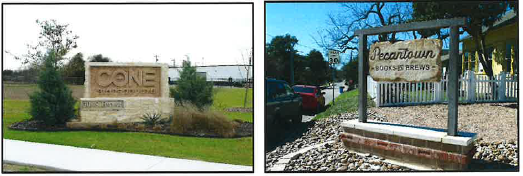
Monument Signs: Single-Tenant.
A.
Definition (per Section 6.2)- A freestanding sign with no more than two sign faces that has a base mounted directly on the ground or has a maximum of 12 inches of clearance from the ground to the bottom of the sign and that advertises a single tenant located on the same property in which the sign is located.
B.
Location Requirements.
Zoning Districts- Single-tenant monument signs shall only be allowed on properties with zoning designations of multi-family (1,2,3), neighborhood commercial, commercial, public, light industrial, and industrial. Monument signs are prohibited in the Downtown Historic District.
C.
Area Requirements.
The maximum size of the sign face shall be 80 square feet.
D.
Height Requirements.
The maximum height, measured to the top of the sign, shall be eight feet above the adjacent grade.
E.
Number of Signs Allowed.
Properties with less than 500 feet of road frontage shall be limited to a maximum of one single-tenant monument sign. Properties with 500 feet or more of road frontage shall be limited to a maximum of two single-tenant monument signs.
F.
Setback Requirements.
Single-tenant monument signs shall have a minimum setback of five feet from the property line, measured from the outermost edge of the sign to the property line.
6.5.6.
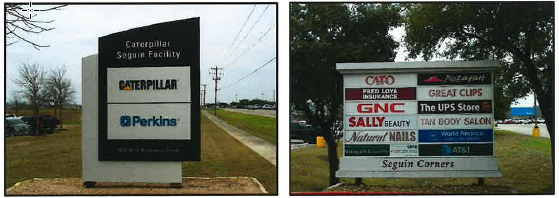
Monument Signs: Multi-Tenant.
A.
Definition (per Section 6.2)- A freestanding sign with no more than two sign faces that has a base mounted directly on the ground or has a maximum of 12 inches of clearance from the ground to the bottom of the sign and that advertises multiple tenants located on the same property in which the sign is located.
B.
Location Requirements.
Zoning Districts- Multi-tenant monument signs shall only be allowed on properties with zoning designations of multi-family (1,2,3), neighborhood commercial, commercial, public, light industrial, and industrial. Monument signs are prohibited in the Downtown Historic District.
C.
Area Requirements.
The maximum size of the sign face shall be 100 square feet.
D.
Height Requirements.
The maximum height, measured to the top of the sign, shall be ten feet above the adjacent grade.
E.
Number of Signs Allowed.
Properties with less than 500 feet of road frontage shall be limited to a maximum of one multi-tenant monument sign. Properties with 500 feet or more of road frontage shall be limited to a maximum of two multi-tenant monument signs.
F.
Setback Requirements.
Multi-tenant monument signs shall have a minimum setback of five feet from the property line.
6.5.7.
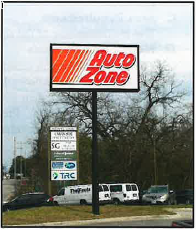
Pole Signs: Single-Tenant.
A.
Definition (per Section 6.2)- A freestanding sign that is supported by one or more free-standing poles in or upon the ground and that advertises a single tenant located on the same property in which the sign is located.
B.
Location Requirements.
Zoning Districts- Single-tenant pole signs shall only be allowed on properties with zoning designations of multi-family (1,2,3), neighborhood commercial, commercial, public, light industrial, and industrial. Pole signs are prohibited in the Downtown Historic District.
C.
Area Requirements.
1.
Signs located along the frontage of SH 130 or IH 10- the total combined area of the sign faces on the single-tenant pole sign shall not exceed 300 square feet.
2.
Signs along all other roads- the total combined area of the sign faces on the single-tenant pole sign shall not exceed 100 square feet.
D.
Height Requirements & Minimum Clearance.
1.
Signs located along the frontage of SH 130 of IH 10- the maximum height of the top of the sign shall be 60 feet above the adjacent grade.
2.
Signs along all other roads- the maximum height of the top of the sign shall be 25 feet above the adjacent grade.
3.
There shall be a minimum clearance of seven feet measured between the bottom of the sign and the adjacent grade.
E.
Number of Signs Allowed.
There shall be a limit of one single-tenant pole sign allowed per lot.
F.
Setback Requirements.
Single-tenant pole signs shall have a minimum setback of five feet from the property line, measured from the outermost edge of the sign to the property line.
6.5.8.
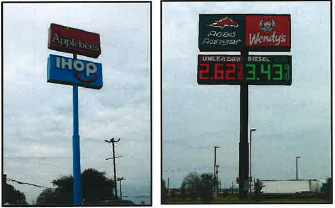
Pole Signs: Multi-Tenant.
A.
Definition (per Section 6.2) A freestanding sign that is supported by one or more free-standing poles in or upon the ground and that advertises multiple tenants located on the same property in which the sign is located.
B.
Location Requirements Zoning Districts- Multi-tenant pole signs shall only be allowed on properties with zoning designations of multi-family (1, 2, and 3), neighborhood commercial, commercial, public, light industrial, and industrial. Pole signs are prohibited in the Downtown Historic District.
C.
Area Requirements.
1.
Signs located along the frontage of SH 130 or IH 10- the total combined area of the sign faces on the multi-tenant pole sign shall not exceed 600 square feet.
2.
Signs along all other roads- the total combined area of the sign faces on the multi-tenant pole sign shall not exceed 200 square feet.
D.
Height Requirements & Minimum Clearance.
1.
Signs located along the frontage of SH 130 or IH 10- the maximum height of the top of the sign shall be 60 feet above the adjacent grade.
2.
Signs along all other roads- the maximum height of the top of the sign shall be 30 feet above the adjacent grade.
3.
There shall be a minimum clearance of seven feet measured between the bottom of the sign and the adjacent grade.
E.
Number of signs allowed.
Properties with less than 500 feet of road frontage shall be limited to a maximum of one multi-tenant pole sign. Properties with 500 feet or more of road frontage shall be limited to a maximum of two multi-tenant pole signs.
F.
Setback Requirements.
Multi-tenant pole signs shall have a minimum setback of S' from the property line, measured from the outermost edge of the sign to the property line.
6.5.9.
Projecting Signs.

A.
Definition (per Section 6.2)- A sign, single- or double-faced, other than a flat wall sign, which is attached to and projects from a building façade.
B.
Location Requirements.
Zoning Districts. Projecting signs shall only be allowed on properties with zoning designations of multi-family (1, 2, 3), neighborhood commercial, commercial, public, light industrial, and industrial.
C.
Area Requirements.
The maximum size of the sign face is 30 square feet.
D.
Height Requirements & Minimum Clearance.
1.
The top of the sign shall not be taller than the building.
2.
There shall be a minimum clearance of seven feet measured between the bottom of the sign and the adjacent grade.
E.
Number of signs allowed.
There shall be a maximum of one sign per tenant/business.
F.
Setback Requirements.
Projecting signs may encroach into the right-of-way up to five feet from the property line, but shall remain at least two feet away and set back from the constructed roadway.
G.
Construction.
1.
No wooden poles or timbers shall be used. Only sound, straight steel, galvanized or iron pipes in good condition, free from all major flaws and defects and painted with weatherproof paint, are authorized.
2.
The crossarms of angle iron for side guys are to be bolted or welded to the pipes in a secure manner, and side guys are to be of galvanized cable.
3.
The pipe must extend far enough above the top of the sign to provide space for a suitable head lift, which must be galvanized cable.
4.
All pipes must be of sufficient diameter and strength to properly support the weight of the signs which are to be installed on them as follows:
5.
All pipes used for signs weighing in excess of 100 pounds must be of the well-casing type or the equivalent. Lighter weight pipe may be used for signs weighing 100 pounds or less and situated entirely within the property lines. In no case, however, may a sign be supported by a pipe less than three inches in diameter.
6.5.10.
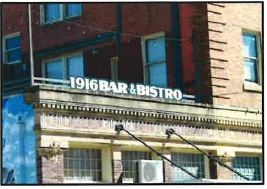
Roof Signs.
A.
Definition (per Section 6.2)- A sign mounted upon, against, or directly above the roof parapet line of a building or structure, or that is wholly dependent upon a building for support, and that projects above the rooftop of a building.
B.
Location Requirements.
Zoning Districts- Roof signs shall only be allowed on properties with zoning designations of commercial, public, light industrial, and industrial.
C.
Construction Requirements.
1.
Roof signs shall only be constructed of channel letters that are mounted directly to the roof.
2.
Roof signs shall not project beyond the roof edge of the building it is mounted to.
3.
Adequate provisions shall be made for grounding all metallic parts of all roof signs as a protection against lightning.
D.
Area Requirements.
Roof signs shall be no larger than 20 percent of the area of the adjacent building façade.
E.
Height Requirements.
Roof signs shall be no taller than eight feet, measured from the portion of the roof of the building or structure over which it is erected to the top of the sign.
F.
Number of Signs.
Roof signs shall be limited to one per building.
G.
Other Restrictions
Painted signs on building roofs shall be prohibited.
6.5.11
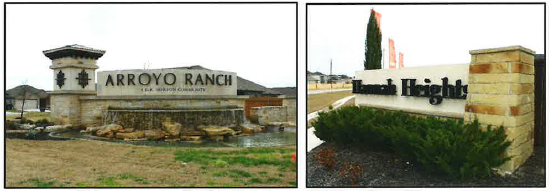
Subdivision Entry Signs.
A.
Definition (per Section 6.2)- A sign located at the entrance of a subdivision that identifies the neighborhood or development and serves as a visual marker for the entry into the subdivision. Subdivision entry signs may include monument signs, walls, structures, or a combination thereof.
B.
Location Requirements.
Zoning Districts. Subdivision entrance signs are allowed in all zoning districts.
C.
Area Requirements.
The total combined maximum area of the sign face on each entry sign is 80 square feet. The sign face shall be defined as the portion of the sign that includes the name of the subdivision, including any logos or images associated with the subdivision.
D.
Height Requirements.
1.
Subdivision entry signs and all associated structures shall have a maximum height of 20 feet measured from finished grade to top of structure.
2.
The maximum height of sign face shall be 30 inches.
E.
Number of Signs Allowed.
There shall be a maximum of two subdivision entry signs allowed per entrance into the subdivision.
F.
Setback Requirements.
1.
Subdivision entry signs shall have a minimum setback of five feet from all property lines.
2.
Subdivision entry signs shall not encroach into public rights-of-way, private rights-of-way, access easements, utility easements, or drainage easements.
G.
Building Materials.
Subdivision entry signs must be constructed of masonry, stone, brick, wood or other material that is deemed compatible with surrounding developments by the Director of Planning.
H.
Landscaping Requirements.
Subdivision entrance signs must provide landscaped area(s) equal to twice the area of sign. Landscaped area(s) shall include shrubs, plants, flowers and/or native ground cover.
I.
Construction and Permitting.
1.
A sign permit shall be required for the sign face, as defined in this section.
2.
If a monument sign is constructed as part of the subdivision entry sign, it shall meet the area and height requirements of monument signs per section 6.5.5. A sign permit shall be required for the monument sign.
3.
Structures that do not contain copy/letters used for the name of the subdivision will require building permits and shall meet all applicable building code regulations in regard to construction of the structures, including any roof structures.
J.
Other Restrictions/Requirements
1.
Subdivision entry signs shall not consist of more than two useable sides for copy/lettering/symbols.
2.
Subdivision entry signs at roadway intersections, to include roadway intersections with driveways, must be outside of the sight triangle as per the most current AASHTO standards.
3.
The perpetual maintenance of subdivision entry signs and the associated landscaped areas shall be owned and maintained by the property owners association (or similar entity) of the subdivision (or similar entity). This shall be referenced in the covenants of the subdivision.
6.5.12.
Wall Signs.
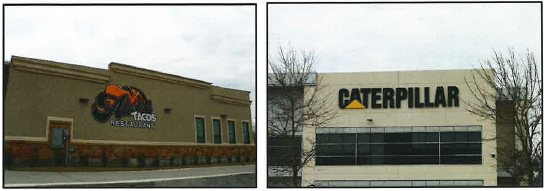
A.
Definition (per Section 6.2)- a sign attached to, projected on, or painted on the wall of a building or structure in such a manner that the wall becomes the supporting structure for, or forms the background surface of, the sign.
B.
Location Requirements.
Zoning Districts- Wall signs shall only be allowed on properties with zoning designations of multi-family (1,2,3), neighborhood commercial, commercial, public, light industrial, and industrial.
C.
Area Requirements.
The sum of the area of all wall signs on a single side of a building shall not exceed 20 percent of the total area of the building wall that the signs are attached to and/or painted on.
D.
Construction.
1.
The frames and panels of wall signs all signs which are to be attached to the wall of a building shall be constructed of wood, metal or other durable materials approved by the building official. Standard sign hooks, expansion bolts or through bolts with the washers on the inside of the wall shall be used, depending on the weight and area of the sign and the condition of the wall to which it is to be attached, as required by the building official. Before the sign can be installed, the commercial sign operator or building owner must ensure that the wall, when the sign is affixed to it, will be able to withstand a wind pressure load of at least 30 pounds per square foot.
2.
Wall signs may not project more than 12 inches from the face of the building.
(Ord. No. 2025-021, pt. 2(Exh. A), 5-20-25)
Sec. 6.6. - Signs exempt from permitting.
6.6.1.
Matrix for Signs Exempt from Permitting.
The signs listed below in the matrix are exempt from the requirement to obtain a sign permit but shall be required to meet the provisions and regulations as stated in this section.
All exempt signs (permanent and temporary) shall be placed on private property and cannot encroach into the right-of-way.
6.6.2.
Athletic Scoreboards.
A.
Definition (per Section 6.2)- a structure erected at an athletic field or stadium which is generally used to maintain the score or time expiration for an event at the field or stadium.
B.
Location Requirements.
Zoning Districts- Athletic scoreboards shall only be allowed on properties with zoning designations of neighborhood commercial, commercial, public, light industrial, and industrial.
C.
Permitting Requirements.
An athletic scoreboard is a structure and shall therefore require a building permit prior to construction. A sign permit is not required.
D.
Advertising on Athletic Scoreboards.
Advertising on an athletic scoreboard, including on a digital message board, shall only be exempt from a sign permit if it is directed to face the athletic field for viewing by the spectators at the athletic event. Advertising directed toward a public right-of-way that is intended to be visible by vehicular traffic shall be regulated as a billboard.
6.6.3.
Directional Signs.
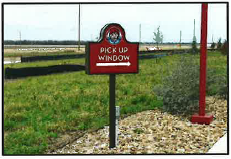
A.
Definition (per Section 6.2)- An on-premises ground sign that is intended to aid in internal circulation of a site or identify points of ingress and egress.
B.
Location Requirements.
Zoning Districts- Directional signs shall only be allowed on properties with zoning designations of multi-family (1,2,3), neighborhood commercial, commercial, public, light industrial, and industrial.
C.
Area Requirements.
Directional signs shall be a maximum of 20 square feet.
D.
Height Requirements.
Directional signs shall be a maximum height of five feet above the adjacent grade.
E.
Number of Signs Allowed.
There shall be a limit of one directional sign per street entrance.
F.
Other Allowances and Exemptions.
Internal directional signage that directs traffic throughout a site shall not be limited in number, but each sign shall have a minimum setback of 20 feet from the property line and shall have a maximum area of 15 square feet.
6.6.4.
Official Flags.
A.
Definition (per Section 6.2)- The official, authentic flag of a government or political subdivision, such as a state or national flag.
B.
Location Requirements.
Zoning Districts- Official flags are allowed in all zoning districts.
C.
Height Requirements.
The maximum height of the flagpole shall be 30 feet on residentially zoned properties and 60 feet on non-residential zoned properties.
D.
Construction and Permitting- Flagpoles.
Flagpoles that are taller than 30 feet shall require a building permit.
6.6.5.
Decorative Flags.

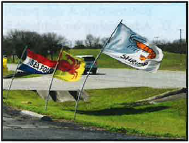
A.
Definition (per Section 6.2)- A piece of fabric in the shape of a flag attached to a pole that contains designs or images that are used as symbols, decorations, or advertisements. Decorative signs often display logos, business names, or other images that attract attention to a business or activity.
B.
Location Requirements.
Zoning Districts- Decorative flags are allowed m all zoning districts.
C.
Area Requirements.
The maximum size of the sign face shall be 15 square feet.
D.
Height Requirements.
The maximum height of a decorative sign shall be 25 feet measured from the adjacent grade.
E.
Number of Signs Allowed.
In commercial zoning districts there shall be a limit of one decorative flag per 50 feet of street frontage. In all other zoning districts, there shall be a limit of two decorative flags per lot.
6.6.6.
Memorial Plaques.
A.
Definition (per Section 6.2)- A decorative plate or stone with writing on it that honors a person, event or occasion. Memorial plaques are affixed to a wall or other structure to remind people of an important person or event.
B.
Location Requirements.
Zoning Districts- Memorial plaques are allowed in all zoning districts.
C.
Area Requirements.
N/A
D.
Height Requirements.
N/A
E.
Number of Signs Allowed.
N/A
6.6.7.
Wall Murals.
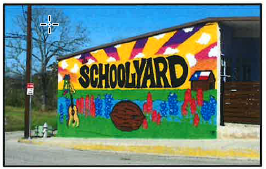
A.
Definition (per Section 6.2)- Artwork painted directly onto a wall or fence that is intended as a decorative feature. Logos, trademarks, and icons may be incorporated into the artwork but shall not exceed more than 20 percent of the wall area. Telephone numbers, addresses, and other advertising messages are not allowed.
B.
Location Requirements.
Zoning Districts- Wall murals shall only be allowed on properties with zoning designations of multi-family (1,2,3), neighborhood commercial, commercial, public, light industrial, and industrial.
C.
Area Requirements.
The maximum size of any logos, trademarks, and icons incorporated into the artwork shall not exceed more than 20 percent of the total area of the wall or fence that the mural is painted on.
D.
Height Requirements.
N/A
E.
Number of Signs Allowed.
N/A
D.
Height Requirements.
N/A
E.
Number of Signs Allowed.
N/A
6.6.8.
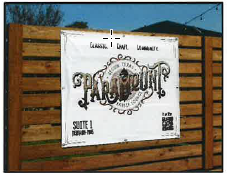
Banners.
A.
Definition (per Section 6.2)- A long strip of cloth or other suitable material with printed words, logos, or images intended to advertise a business or activity.
B.
Location Requirements.
Zoning Districts- Banners shall only be allowed on properties with zoning designations of multi-family (1,2,3), neighborhood commercial, commercial, public, light industrial, and industrial.
C.
Area Requirements.
The maximum area of a banner shall not exceed more than 20 percent of the total area of the building wall or fence that the banner is attached to.
D.
Height Requirements.
N/A
E.
Number of Signs Allowed.
N/A
F.
Time Limit.
Remove the banner if it becomes worn, tattered, or in disrepair.
G.
Other Restrictions/Requirements.
Banners are temporary wall signs. All banners shall be securely attached to a building or fence. Banners attached to poles, ground stakes, or other supports must remain upright, visible, and in good repair.
6.6.9.
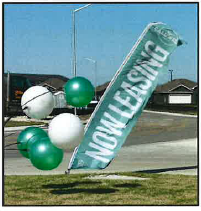
Feather Flags.
A.
Definition (per Section 6.2)- A temporary sign composed of durable lightweight fabric with a sturdy frame enclosing only a portion of the material. A feather flag is designed to flow in the wind and is mounted on a pole that is driven into the ground for support or supported by an individual stand.
B.
Location Requirements.
Zoning Districts- Feather flags shall only be allowed on properties with zoning designations of multi-family (1,2,3), neighborhood commercial, commercial, public, light industrial, and industrial.
C.
Area Requirements.
N/A
D.
Height Requirements.
The maximum height of a feather flag is ten feet measured from the adjacent grade.
E.
Number of Signs Allowed.
There shall be a limit of one feather flag per 50 feet of street frontage.
F.
Setback Requirements.
Feather flags shall have a minimum setback of two feet from the property line. No part of the sign shall encroach into the adjacent public right-of-way.
G.
Time Limit.
Feather flags shall be limited in use to 60 consecutive days per sign.
H.
Other Requirements.
Feather flags shall be properly driven into the ground to withstand wind conditions or be properly anchored on an individual stand that can withstand wind conditions.
6.6.10.
Ground Signs.

A.
Definition (per Section 6.2)- A temporary sign supported by stakes driven into the ground.
B.
Location Requirements.
Zoning Districts- Ground signs shall be allowed in all zoning districts.
C.
Area Requirements.
The maximum area of a ground sign shall not exceed six square feet.
D.
Height Requirements.
N/A
E.
Number of Signs Allowed.
Multi-family and non-residential zoning districts- There shall be a limit of one ground sign per 50 feet of street frontage.
F.
Time Limit.
In multi-family and non-residential zoning districts, ground signs shall be limited in use to 60 consecutive days per sign.
G.
Other Restrictions and Requirements.
1.
Ground signs shall be staked directly into the ground or placed within small containers or planters on the ground.
2.
Ground signs shall not be placed in the public right-of-way, including any signs placed in small containers or planters.
3.
Ground signs shall not be made of cloth.
6.6.11.
Inflatable Signs.
A.
Definition (per Section 6.2)- A temporary sign made of a flexible material inflated with air that advertises or promotes events, sales, or businesses.
B.
Location Requirements.
Zoning Districts- Inflatable signs shall only be allowed on properties with zoning designations of neighborhood commercial, commercial, public, light industrial, and industrial.
C.
Area Requirements.
N/A
D.
Height Requirements.
There shall be a maximum height of 25 feet measured from the bottom of the sign to the top of the sign.
E.
Number of Signs Allowed.
There shall be a limit of one inflatable per tenant/business.
F.
Time Limit.
Inflatables shall be limited in use to seven consecutive days per sign.
G.
Other Requirements & Exceptions.
1.
Inflatables shall be anchored into the ground or securely attached to a building or structure in order to withstand wind conditions.
2.
Seasonal inflatables located on properties with existing residences shall not be regulated.
6.6.12.
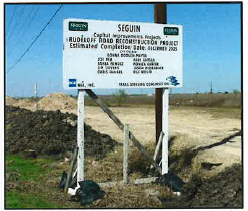
Official Government Signs.
A.
Definition (per Section 6.2)- A temporary or permanent sign erected and maintained by a governmental agency for the purpose of directing, regulating, warning, informing, or guiding the general public. Governmental signs include traffic signs, warning signs, or any signs indicating public works projects, public service or other programs or activities conducted or required by any governmental agency.
B.
Location Requirements.
Zoning Districts- Official government signs are allowed in all zoning districts and within the public right-of-way as necessary and allowed by the governing authority of the right-of-way.
C.
Area Requirements.
N/A
D.
Height Requirements.
N/A
E.
Time Limit.
Signs shall be removed at the end of the project as applicable.
F.
Other Restrictions/Requirements.
All other signs erected by governmental entities to identify governmental buildings and/or properties, public spaces, etc., including but not limited to pole signs, wall signs, and monuments signs, shall meet the requirements of the applicable section of this chapter.
6.6.13.
Political/Campaign Signs.
A.
Definition (per Section 6.2)- A temporary sign in connection with any local, state, or national election.
B.
Location Requirements.
Zoning Districts- Political/ campaign signs are allowed in all zoning districts, but cannot be placed within a public right-of-way.
C.
Area Requirements.
N/A
D.
Height Requirements.
N/A
E.
Time Limit.
Signs shall be removed at the end of the election.
6.6.14.
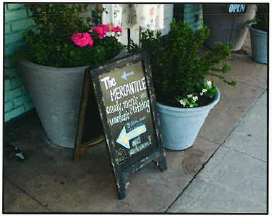
Portable Signs.
A.
Definition (per Section 6.2)- A sign constructed on wheels, casters, skids or otherwise designed to be movable for one location to another, including a-frame and sandwich signs.
B.
Location Requirements.
Zoning Districts- Portable signs shall only be allowed on properties with zoning designations of neighborhood commercial, commercial, public, light industrial, and industrial.
C.
Area Requirements.
The maximum area of a portable sign shall not exceed eight square feet.
D.
Height Requirements.
There shall be a maximum height of four feet measured from the adjacent grade.
E.
Number of Signs Allowed.
There shall be a limit of one portable sign per lot.
F.
Time Limit.
Portable signs shall be removed after business hours.
6.6.15.
Real Estate & Contractor Signs.
A.
Definitions (per Section 6.2)- A real estate sign is a temporary sign advertising the real estate upon which the sign is located. Real estate signs typically advertise the rent, lease, or sale of the real estate, but may also advertise the future development of a property/ site. A contractor sign is a temporary sign located at an active construction site to inform the public of the name of the project, name of the contractor, or similar information.
B.
Location Requirements.
Zoning Districts- Real estate and contractor signs shall be allowed in all zoning districts.
C.
Area Requirements.
The maximum area of a real estate or contractor sign shall not exceed 32 square feet.
D.
Height Requirements.
N/A
E.
Number of Signs Allowed.
There shall be a limit of two real estate or contractor signs per lot.
F.
Time Limit.
Real estate and contractor signs shall be removed once the property is rented, leased, or sold; or when the construction of the project is complete.
6.6.16.
Other Exempt Signs.
A.
Signs not exceeding 15 square feet of facing composed of durable materials that are securely affixed to a building or other permanent structure and having a frame or trim not more than three inches wide. This subsection shall not apply to any signs erected in the downtown historic district.
B.
Garage and state sale signs are exempt from sign permits and shall be regulated in accordance with Section 78-30 of the Seguin Code of Ordinances.
(Ord. No. 2025-021, pt. 2(Exh. A), 5-20-25)
Sec. 6.7. - Prohibited signs.
A.
All signs not specifically authorized herein are prohibited.
B.
The designated city official shall have the authority to remove any sign in violation of this ordinance which is not permanently affixed to the ground.
C.
The following signs are specifically prohibited:
1.
Signs placed on or affixed to parked vehicles, trailers, or tractor trailers or to storage containers or nonpermanent structures in which the primary purpose of the vehicle, container, or structure is for advertising. This does not prohibit vehicular signs that are incidental to the vehicle's primary use as transportation and in which parking is short term.
2.
Signs attached to utility poles or other surfaces which are not the property of the utility company or serve a public purpose located within a public right-of-way or easement.
3.
Signs erected, maintained or painted upon any tree, rock or other natural feature.
(Ord. No. 2025-021, pt. 2(Exh. A), 5-20-25)
Sec. 6.8. - Sign regulations in the Downtown Historic District (DHD).
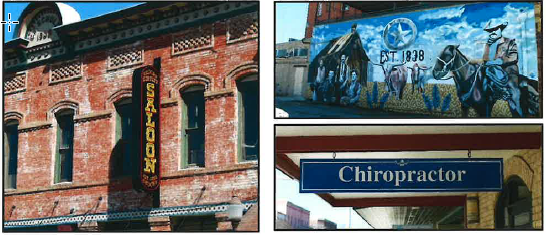
The purpose of this section is to regulate signage and to enhance the architecture of the downtown historic district. All signs in the downtown historic district shall be designed, constructed and affixed to promote and not visually obscure the significant architectural features of the district and its buildings. Signs shall not be positioned in a way which obscures or physically interferes with a traffic sign, signal device or a driver's view of a preaching, merging, or intersecting traffic.
6.8.1.
Special Restrictions.
The following special restrictions shall apply in the downtown historic district in the city.
A.
Billboards, monument signs, digital signs, and pole signs are prohibited.
B.
Permanent signs shall not be constructed of plastic, coroplast or banner material.
C.
No sign shall be erected, constructed, placed, attached, located, hand carried or displayed by any means unless the sign relates to or advertises a legitimate business conducted in or on the premises to which the sign adjoins.
D.
Exterior lighting for signage shall be a steady light concealed by a hood.
E.
Daylight fluorescence pigmented materials or paints are prohibited.
F.
Except for donor plaques, advertising on planters, trash receptacles, park benches or other street amenities are prohibited.
G.
No building may have signage on more than two facades.
6.8.2.
Continued Use of Nonconforming Signs.
In the event of a change or alteration in a sign beyond normal maintenance and upkeep, the entire sign must be brought into compliance.
6.8.3.
Abandoned Signs.
The sign is considered abandoned, in accordance with the definition of an abandoned sign is Section 6.2, for a period of six months or more.
6.8.4.
Removal of Abandoned. Illegal and Nonconforming Signs.
Abandoned signs, illegal signs, and signs that have lost their nonconforming designation and have not been brought into compliance shall be removed within 30 days of receiving official notice from the city to remove the sign.
6.8.5.
Permanent Signs Matrix (DHD).
The signs listed below in the Permanent Signs Matrix are required to meet the provisions and regulations of this Ordinance, including the requirement to obtain a sign permit.
* Wall Murals
All murals painted on the building façade in the must first obtain approval from the Main Street Director. Murals must be visually appealing, enhance the architecture of the downtown historic district, and must be designed to promote and not visually obscure the significant architectural features of the district and its buildings.
6.8.6.
Temporary Signs Matrix-Exempt from Permitting (PHD).
The signs listed below in the matrix are exempt from the requirement to obtain a sign permit but shall be required to meet the provisions and regulations as stated in this section.
6.8.7.
Variance.
A.
An applicant that is eligible may apply for a variance under this section to the Historic Preservation Officer and make payment of the application fee as set forth in the Fee Schedule as adopted in Exhibit C of the Seguin Code of Ordinances.
B.
The Historic Preservation Officer & Historic Design Review Committee may approve the request, approve the request with conditions, or deny the request. The Historic Preservation Officer & Historic Design Review Committee shall consider the health, safety, and welfare of the public and the equities of the situation to determine if it is in the best interest of the community to grant the variance and shall only prescribe conditions that it deems necessary or desirable to the public interest.
6.8.8.
Appeal.
An applicant may appeal against an adverse decision by the Historic Preservation Officer & Historic Design Review Committee to the Seguin City Council. The City Council shall conduct a public hearing prior to deciding on the appeal. All property owners within 200 feet of the lot on which the sign is located shall be notified of the public hearing to be held for the requested appeal by standard mail.
6.8.9.
Use of Period Light Poles in the Downtown Historic District.
A.
The city has installed several period light poles throughout the downtown historic district. In keeping with the aesthetics of the downtown district, the period light poles may be used by nonprofit organizations for the promotion of local history or events of interest to the public.
B.
Permit application.
1.
An application to use the period light poles, along with any fee set out in Appendix C of this Code, shall be submitted to the Main Street Office at least one month before the date any material is to be installed. The nonprofit organization and city will work together on installation of promotional materials.
2.
Use of light pole locations may be reserved up to 12 months in advance by filling out a application form with the Main Street Office and prepaying the installation fee.
3.
In line with the historic nature of the period light poles and the historic district additional stipulations may be required for use of the period light poles, including review and approval of the use by the historic preservation and design review committee.
4.
No organization may use the period light poles during the holiday season from November 10 through January 31 of each year.
5.
The city has priority to use period light poles for promotion and can remove a nonprofit organization's promotional materials from one or more period light poles at any time.
6.
Only one organization can use a period light pole at a time.
C.
Placement of different promotional material on period light poles.
1.
Promotion of Seguin history and heritage can be displayed for up to nine months of the year. Promotional material can be installed starting February 1 and can remain until October 31.
2.
Promotion of events may be installed up to 14 days before an event and remain until the event ends. The promotion shall be removed no later than five days after the event.
3.
When promotional items are removed, the applicant is responsible for picking up the items from the City of Seguin Parks Department or Main Street Program within ten working days of the removal date. A late fee, as set out in Appendix C, will be charged for items left after the ten-day period. Unclaimed items will be disposed of 30 days after the removal date.
4.
The City of Seguin is not responsible for any materials that are lost, stolen, or damaged.
(Ord. No. 2025-021, pt. 2(Exh. A), 5-20-25)
Sec. 6.9. - Nonconforming. abandoned & illegal signs.
6.9.1.
Continued use of Nonconforming Signs.
A.
Definition. A nonconforming sign, also known as a grandfathered sign, as defined in Section 6.2, is a permanent sign which was legally erected in accordance with the sign regulations of the City of Seguin effective at the time the sign was erected but which does not conform to the current regulations of this section.
B.
Continued Use. Nonconforming signs may continue in use for the remainder of their structurally useful economic life in accordance with the regulations of this section, but shall not be re-erected, reconstructed, or rebuilt except in full compliance and conformance with the most current sign regulations.
C.
Temporary Signs. Temporary signs do not qualify for a nonconforming designation and must be removed or brought into full compliance with the most current sign regulations.
6.9.2.
Loss of Nonconforming Designation.
A
nonconforming sign shall immediately lose its nonconforming designation and must be removed or brought into full compliance with the most current sign regulations if:
1.
The sign structure is replaced; this shall not prevent the replacement of the face(s) to accommodate a new business, express a different image, or upgrade conditions;
2.
The sign is relocated;
3.
The sign is abandoned, in accordance with the definition of an abandoned sign is Section 6.2, for a period of six months or more;
4.
The sign advertises an establishment that has discontinued its operation for a period of two years or longer;
5.
The sign is damaged or structurally altered to an extent greater than 50 percent of the current estimated replacement value;
6.
All buildings or structures on the property have been demolished or removed, making the sign an off-premises sign (billboard), for a period of one year or more; or
7.
The sign endangers the public by presenting a visual obstruction to traffic or poses a significant risk of collapse.
6.9.3
Bringing Nonconforming Signs into Compliance.
Signs that have lost their nonconforming designation and have not been removed must be brought into compliance as follows:
1.
An application for a sign permit must be submitted within 30 days of receiving official notice from the city.
2.
All repairs and improvements necessary to bring the sign into full compliance shall be completed and inspected within 90 days of the issuance of the sign permit.
6.9.4.
Abandoned Signs.
An abandoned sign, as defined in section 6.2, is a sign that that no longer displays a legible message or advertisement on the sign face. This shall include a blank sign face, an empty frame without a sign face, a sign which has been painted to cover the advertisement, or a sign face that is no longer legible due to fading or damage.
6.9.5.
Removal of Abandoned, Illegal and Nonconforming Signs.
Abandoned signs, illegal signs, and signs that have lost their nonconforming designation and have not been brought into compliance under the current sign regulations in the time specified under this section shall be removed within 30 days of receiving official notice from the city to remove the sign.
(Ord. No. 2025-021, pt. 2(Exh. A), 5-20-25)
Sec. 6.10. - Violations, enforcement, & remedies.
6.10.1.
Compliance Required.
No person shall erect, construct, reconstruct, alter, repair, locate or relocate a sign, or remove or demolish an off-premises or on-premises sign except in accordance with the provisions of this chapter, and failure to comply with this chapter shall constitute a violation of this code. All violations of the Unified Development Code shall be subject to the enforcement and remedies as identified in Section 1.1.9 of the UDC.
6.10.2.
Signs constituting a nuisance; abatement.
A.
Any sign erected, altered, used or maintained in violation of this chapter shall constitute a public nuisance.
B.
If the owner or operator fails to remove a sign within 30 days after being notified in writing, it may be removed by the city at the expense of the owner or the person erecting, using or maintaining it. Any sign so removed shall be stored or impounded and shall not be returned to the owner until all applicable charges are paid. If any sign remains unclaimed for a period of 30 days after its removal or if the removal and storage costs are not paid within the 30-day period, the city may destroy, sell or otherwise dispose of the sign.
C.
In lieu or removal of the sign, the City of Seguin may institute any appropriate action or proceeding to correct or abate such violation as allowed in Section 1.1.9 of the UDC.
(Ord. No. 2025-021, pt. 2(Exh. A), 5-20-25)
Sec. 6.11. - Variances.
6.11.1.
Applicability.
The Planning & Zoning Commission has the authority to grant a variance to the following sign regulations:
1.
Sign Height, up to an increase of 20 percent of the maximum allowed.
2.
Sign Area, up to an increase of 20 percent of the maximum allowed.
3.
Number of signs allowed.
4.
Setbacks from property lines.
6.11.2.
Procedure for Requesting Variance.
An applicant that is eligible to apply for a variance under this section to the City of Seguin and make payment of the application fee as set forth in the Fee Schedule as adopted in Exhibit C of the Seguin Code of Ordinances.
6.11.3.
General Process.
The Planning and Zoning Commission shall hold a public hearing to consider the applicant's request for a sign variance. All property owners within 200 feet of the lot on which the sign is located shall be notified of the public hearing by standard mail.
6.11.4.
Criteria for Approval.
Following
a public hearing, the Commission may approve the request, approve the request with conditions, or deny the request. The Commission shall consider the health, safety, and welfare of the public and the equities of the situation to determine if it is in the best interest of the community to grant the variance, and shall only prescribe conditions that it deems necessary or desirable to the public interest.
6.11.5.
Appeal.
An applicant may appeal against an adverse decision by the Planning and Zoning Commission to the Seguin City Council. The City Council shall conduct a public hearing prior to deciding on the appeal. All property owners within 200 feet of the lot on which the sign is located shall be notified of the public hearing to be held for the requested appeal by standard mail.
(Ord. No. 2025-021, pt. 2(Exh. A), 5-20-25)

