
Selma City Zoning Code
ARTICLE V
- STANDARDS AND SUPPLEMENTARY USE REGULATIONS
Sec. 17-500. - Intent.
It is the intent of Part 1 of this article to provide general design and performance standards to ensure that development within the Town planning and development regulation jurisdiction will be designed, arranged, and constructed in a safe, orderly, and visually harmonious manner, and will reflect the basic character of the development site and its immediate surroundings as well as the nature of the proposed uses of the site. It is the intent of Part 2 to provide supplementary standards for specific uses listed in Section 17-410, the "Table of Permitted Uses." It is the intent of Part 3 to provide specific performance standards about the external effects of manufacturing and processing facilities. Part 4 is intended to provide minimum maintenance requirements for common areas and other private properties.
(Ord. No. 2021-64-R, 7-13-21)
Sec. 17-501. - Applicability.
Except where otherwise specifically provided in this chapter, no land or structure shall be used or occupied, and no excavation, removal of soil, clearing a site or placing fill shall take place on land contemplated for development, and no structure, or part of a structure, shall be constructed, erected, altered, renovated or moved except in compliance with the general design and performance standards specified in this article and appendices. These design standards shall not apply to a single-family detached dwelling units, duplexes or townhomes.
(Ord. No. 2021-64-R, 7-13-21)
Sec. 17-502. - Appendices.
Appendices B through E contain specific design, performance and/or construction standards. Such standards shall supplement and be in accordance with the general design and performance standards contained in this article, and shall reflect, where applicable, generally accepted design and construction practices and techniques. The Appendices are adopted as a part of this ordinance and are incorporated herein by reference.
(Ord. No. 2021-64-R, 7-13-21)
Sec. 17-503. - General site arrangement.
The requirements for site planned developments are found at Article IV and Appendix A. Please see those documents. Developments shall be arranged to be visually harmonious both within the development site and in relation to adjacent developments. Site design elements of the development shall be integrated to the degree of their compatibility with each other and shall be separated to the degree of their incompatibility. Insofar as is practicable, developments shall be arranged to preserve or enhance natural vistas. Structures shall be placed and arranged so as not to adversely affect adjacent property. Adverse effects shall include, but are not limited to, the removal of lateral support, the creation of hazard, nuisance, danger or inconvenience, unreasonable loss of light and air, or unreasonable loss of privacy or views.
Except where otherwise specifically provided in this chapter, only one (1) principal building devoted to a primary use and its customary accessory building(s) may be erected on any lot.
(Ord. No. 2021-64-R, 7-13-21)
Sec. 17-504. - Access and circulation.
A.
Standards. The provisions of Appendix B, Streets, Sidewalks, Access and Circulation, are adopted by reference as if incorporated fully below. The standards of Appendix B, including but not limited to roadway design must be followed in all developments.
B.
Internal circulation.
1.
Internal circulation systems (sometimes called "vehicular use areas") shall provide the types, amounts and locations of accessibility appropriate to the type and size of development, and shall be designed to facilitate the movement of persons, goods, services and waste products in a safe and efficient manner, while minimizing the impermeable surfaces.
2.
Safe and convenient vehicular access shall be provided for emergency and service vehicles.
3.
Wherever appropriate to the type and size of the development, the provision of a safe, efficient, and convenient pedestrian system shall be provided.
4.
The integration of separation of circulation systems and patterns shall be provided as appropriate to the type and size of the development and to the existing or anticipated traffic flows.
C.
External Circulation shall meet the applicable standards of the N.C. Department of Transportation or the Town. Please see Appendix B for the Town's standards.
(Ord. No. 2021-64-R, 7-13-21)
Sec. 17-505. - Off-street parking and loading.
A.
Off-Street Parking and Loading Required.
1.
Off-street parking and loading shall be provided for all uses of land, structures, and buildings as well as for any expansion of such uses or increases in intensity of use in accordance with the requirements of this section, except for those uses located within the CB zoning district.
2.
An off-street loading space shall be provided for all retail business, wholesale, and industrial uses as well as for any expansion of such uses or change in use requiring the regular delivery of shipping of goods, merchandise, or equipment to the site by semi-trailer trucks, in accordance with the requirements of this section.
3.
In the case of developments containing a mix of uses, the total requirements for off-street parking or loading space shall be the sum of the requirements for the various uses computed separately. Off-street parking requirements may be reduced if uses, located on the same site, can utilize the same parking spaces during different times. (For example, a theater that uses spaces at night could share spaces with a hardware store that uses the same spaces during the day.)
4.
All required parking areas including driveways and drive aisles (also called "vehicular use areas") shall be paved.
B.
Methods of Providing Required Parking and Loading Spaces.
1.
All required parking or loading spaces shall be located on the same zoning lot as the principal use it serves, except as provided below.
2.
In lieu of actual construction of required on-site parking spaces, all or any portion of the off-street parking required in this section may be provided by the following means.
3.
Required parking for a use on a zoning lot may be located on another zoning lot, either by itself or combined with the parking for other uses, subject to certification by the planning director that the following requirements have been met:
a)
The use being served by the off-site parking shall be a permitted principal use, as established in Article IV of this chapter.
b)
The off-street parking spaces shall be located within four hundred (400) feet walking distance of a public entrance to the structure or land area containing the use for which such spaces are required. A safe, direct, attractive, lighted and convenient pedestrian route shall exist or be provided between off-street parking and the use being served.
c)
The continued availability of off-site parking spaces necessary to meet the requirements of this section shall be ensured by an appropriate restriction on the title to the land providing the off-street parking spaces, in the form of a declaration, covenant, or contract.
d)
The off-site parking lot shall meet the state building code requirements.
e)
Any off-site parking lot, or any individual lot where any parking facility is the principal use of the lot, shall require the explicit approval of a site plan by the City Council or the Planning Director (as applicable) and certification that the lot meets all the design requirements of this section.
f)
An easement, lease or contract showing that the remote parking lot will be used as the parking lot.
C.
Combined Parking. Up to one-half (½) of the parking spaces required for any one (1) use may be used to satisfy the parking requirements for either a second use on the same zoning lot or a use for which the provisions of subsection 2. of this section are utilized, subject to certification by the planning director that such joint usage of parking spaces complies with the following provision:
The peak usage of the parking facility by one (1) use will be at night, or on Sundays (such as with theaters, assembly halls, or places of worship), and the peak usage of the parking facility by the second use will be at other times.
D.
Use of Required Parking and Loading Space.
1.
Required parking areas shall be available for the parking of operable vehicles of residents, customers, and employees, and shall not be used for the storage of vehicles or materials, the display of merchandise or for the parking of vehicles used for loading or unloading, or in conducting the use.
2.
Required loading spaces shall be available for the loading and unloading of vehicles and shall not be used for the storage of vehicles and materials, the display of merchandise or to meet off-street parking requirement, or in conducting the use.
E.
Parking Landscaping Standards are found in Appendix C.
F.
Residential Parking Restrictions. On a property designed or used as a residence, no person shall park or store any trailer, boat or motor vehicle in the front yard of property that results in:
1.
Uncut grass or weeds under or around the trailer, boat or motor vehicle, or deteriorates the lawn area to the extent that no grass remains under or adjacent to the trailer, boat or motor vehicle; or
2.
Creates an un-vegetated area(s) that allows for standing water or significant erosion of the area(s) onto a public street or adjoining property.
G.
Recreational Vehicle Parking and Storage Limitations.
1.
On property designed or used as a residence, no person shall park or store any recreational vehicle in any yard adjacent to a public street that results in uncut grass or weeds under or around the trailer, boat or motor vehicle, or deteriorates the lawn area to the extent that no grass remains under or adjacent to the trailer, boat or motor vehicle.
2.
An owner or operator of a recreational vehicle parked or stored on property designed or used as a residence shall be an occupant of the property upon which the recreational vehicle is parked or stored, except as set forth in this section.
3.
No property owner or tenant shall allow or suffer another person to park or store a recreational vehicle on property designed or used as a residence in a manner prohibited by any provision of this Code.
H.
Minimum off-street parking space requirements. The following minimum parking space requirements are provided as a general guide to complement the parking requirements as set forth in the Town Development Ordinance:
1The following vehicles may not be parked at any time on a property designed and used as a residence:
(1) Any airplane or other aircraft, or any parts thereof in the front or side yard.
(2) Any construction or commercial equipment, machinery, vehicle having a manufacturer's gross vehicle weight rating of ten thousand (10,000) pounds or more, or construction materials, except that the construction equipment, machinery, vehicle or materials may be temporarily kept within or upon the property for and during the time that the equipment, machinery, vehicle, or materials are required in connection with the delivery, pick-up, construction, installation, repair, or alteration of improvements or facilities on the property, unless the activity is otherwise prohibited by this code, by any permit issued pursuant to this code, or by other applicable law.
(3) Any unmounted camper shell, in an area visible from any street.
(4) Any motor vehicle, boat, or trailer that is defaced with graffiti and is in an area visible from any street for more than seventy-two (72) consecutive hours.
2All other motor vehicles, trailers, wagons, special mobile equipment and non-motorized vehicles ("other vehicles") may be parked, stored, or maintained in an area visible from any street for more than seventy-two (72) consecutive hours.
(1) Except that "special mobile equipment" may be parked, stored in a side or rear yard if it is stored in:
a. An accessory building constructed in accordance with the provisions of this chapter; or
b. In an area outside of a five-foot setback from any property line and which is not visible from any street.
c. In addition to a and b above, at least one thousand five hundred (1,500) square feet, or at least sixty (60) percent of the remaining rear yard area, whichever is less, must not contain special mobile equipment.
(2) No "other vehicles" or special mobile equipment shall be parked, stored, or kept within five (5) feet of any required building exit, including exit windows.
(3) No motor vehicle or boat that has been wrecked, dismantled or disassembled, or any part thereof, or any motor vehicle that is disabled or may not be operated because of the need of repairs or for any other reason shall be parked, stored, or maintained in an area visible from any street for more than seventy-two (72) consecutive hours.
3Parking ratios shall be determined using the gross square feet of any building unless the applicant provides floor plans in sufficient detail to ascertain the actual uses of different portions of a building(s). Different parking ratios for different portions of a building(s) will be considered if information is submitted with an application to allow the Administrator to make that determination.
In the case of a use not listed in the general categories above, the minimum parking space requirement may be determined by the Planning Director. In making such determinations, the Planning Director shall be guided by the requirements for similar uses, the number and kind of vehicles likely to be attracted to the use, and any studies and references of minimum parking space requirements for such use(s) in another jurisdiction.
(Ord. No. 2021-64-R, 7-13-21)
Sec. 17-506. - Drainage and stormwater management.
A.
Properties located in the Water Supply Watershed Protection District shall meet the standards found there. See Article IV Zoning District Regulations, Part 2. Overlay Districts, Section 17-422.
All other properties shall retain stormwater discharged from the site so the post development peak discharge rate shall not exceed the rate for the site predevelopment for the 1-inch, 24-hour storm.
(Ord. No. 2021-64-R, 7-13-21)
Sec. 17-507. - Electricity, water, and sewer.
A.
Service by Public Systems.
1.
All developments shall be served by a town or county water supply and a town or county sanitary sewer system wherever applicable and practicable. All utility systems owned by the Town or proposed for Town ownership and maintenance shall be built to the standards found in Appendix D, which is adopted by reference and incorporated herein as if reproduced herein.
2.
All proposed public water and sanitary sewer installations shall be approved by the town or county public utilities department where applicable. Certification of such approval shall be submitted to the planning director prior to issuance of any zoning permit for the development being served.
3.
No certificate of occupancy for a structure shall be issued until the following documents have been submitted to the planning director:
a)
Certification for the town public utilities department that all water/sewer facilities necessary to serve such structure have been completed to town standards; and
b)
As-built construction drawings of those completed water and/or sewer facilities located within a public right-of-way or easement.
B.
Service by Individual Systems. Individual water supply systems intended to provide potable water, and/or individual subsurface sewage disposal systems, may be permitted on a zoning lot, subject to approval by the county health department. Certification of such approval shall be submitted to the planning director prior to issuance of any land use permit for the development being served.
C.
Other Utilities. For all new developments, except residential subdivisions of seven (7) lots or less, all utility lines, other than lines used only to transmit electricity between generating stations or substations and three-phase electric power distribution lines, shall be placed underground, and all surface disruptions required for installation shall be rehabilitated to the original or an improved condition.
(Ord. No. 2021-64-R, 7-13-21)
Sec. 17-508. - Collection of solid waste.
A.
All multifamily, office, commercial and industrial developments should provide secure, safe, and sanitary facilities for the storage and pickup of solid waste and recyclables. Such facilities shall be convenient to collection and shall be appropriate to the type and size of the development or use being served.
B.
All solid waste and recyclable storage facilities shall be screened by a solid wall, fence, tight evergreen hedge, or combination of a wall, fence, or hedge. Such screening shall be of sufficient height and design to effectively screen the facility from the view from adjacent properties and streets.
C.
In newly proposed developments all streets are required to be built to Town standards to assure that refuse collection vehicles will have adequate access. Readers are referred to Appendix B for further design standards.
D.
Single-Family Residential Collection. Residential refuse collection is provided by the Town of Selma Public Works Department for occupants of single family residential dwellings as provided in Chapter 16, Public Services and Utilities of the Code of Ordinances.
E.
Multi-Family Commercial/Institutional Refuse Collection.
1.
Multi-family development includes all sites zoned for multi-family use with apartment buildings, townhouses or condominiums.
2.
Commercial and institutional development includes all sites zoned for non-residential uses that are not used for residential development.
3.
Multi-family/commercial/institutional refuse collection service is provided by a private contractor.
4.
To provide refuse collection service, the owner or occupant of all multi-family, commercial and institutional properties is required to provide standard front-loading six (6) or eight (8) cubic yard dumpsters.
F.
Inadequate Solid Waste Management.
The accumulation of solid waste, as defined in Article II, constitutes property blight in the following situations:
1.
The accumulation of solid waste is visible from a street or neighboring property and is present for more than seventy-two (72) consecutive hours; or
2.
The accumulation of solid waste is being stored or disposed of in a manner that would allow the material to be transported by wind or otherwise onto or upon any street, or neighboring property, unless the method of storage or disposal is specifically allowed by this chapter;
3.
The accumulation of dirt, litter, or debris in vestibules or doorways of buildings constitutes property blight if it is visible from any street or neighboring properties and is present for more than seventy-two (72) consecutive hours.
(Ord. No. 2021-64-R, 7-13-21)
Sec. 17-509. - Landscape areas.
A.
Purpose of Landscape Areas. Landscape areas are required to separate a proposed development from adjacent major streets and different land uses or zoning designations to minimize potential nuisances such as the transmission of noise, dust, odor, litter, and glare of lights; to reduce the visual impact of unsightly aspects of adjacent development; to provide for the separation of spaces; and to establish a sense of privacy.
B.
Landscape Areas Required.
1.
A landscape area is a piece of land together with the landscaping or screening required thereon. Except as otherwise specifically provided in this chapter, the type of landscape area required between proposed development and adjacent streets, land uses or zoning designations shall be specified in this section.
2.
Width and screening specifications for each landscape area shall be detailed and illustrated in Appendix C. Screening required within landscape buffers is intended to provide separation of spaces without necessarily eliminating visual contact between spaces, and may consist of existing vegetation, planted vegetation, a landscaped earth berm, a decorative wall, a wood fence, or a combination of the above. Any options specified in the design manual for the required landscape area type shall satisfy the landscape requirements of this section.
C.
General Regulations.
1.
Whenever the landscaping requirements of this ordinance are applicable, no site shall be cleared or graded for pending construction until a landscape plan has been submitted and approved by the town. See Section 17-607 Landscape Plan for the landscape plans procedures.
2.
Additions or expansions to sites as they existed at the time of the adoption of this section, which singularly or collectively exceed twenty-five (25) percent of the gross floor area or lot existing at the time this ordinance becomes applicable, shall meet all the requirements of this section for both the existing facility and proposed addition/expansions.
3.
The owners and their agents shall be responsible for protecting and maintaining all landscape materials in accordance with the landscape plan approved by the town.
4.
Foundation Plantings. For all portions of buildings, which are adjacent to parking facilities or internal drive aisles, foundation plantings shall be required and located between the buildings face and the parking or drive isle curb. The minimum standards are required; however, it is encouraged that sites exceed the minimum whenever possible. The minimum standards are found in Appendix C.
5.
If the requirements of this section conflict with any other requirements from other sections of this ordinance, the more stringent shall apply.
6.
The following general standards shall be used in the process of designing all landscaping plans:
a)
Selection of Plant Materials. All plant materials and their spacing requirements, which are to be planted to meet the opacity and height requirements of this section shall be approved by the Planning Department.
b)
Provision for Other Uses. Up to fifteen (15) percent of the area to be landscaped may be covered with surfaces specifically intended to afford intensive use and enjoyment by employees or the public (such as walking paths, bench and table pads, etc.).
c)
[Integration.] It is encouraged that stormwater management systems be integrated into the landscaping plan.
D.
Location for Buffers and "Street Yards." Required landscape areas shall be located along the interior or street lot lines nearest the adjacent streets, land uses, or zoning designations except where such lot lines are intersected by crossing access ways or utility easements, or by a joint parking area. Required landscape areas shall not be located on any portion of an existing or proposed street right-of-way or easement.
E.
Use of Landscaped Areas. In addition to subsection C.6.b) above and provided the required landscape area width and screening is maintained, a landscape area may contain utilities, pedestrian paths, and other minor or passive uses compatible with the general separation of land uses.
F.
Schedule of Required Landscaper Areas. Specifications for each landscape area type are contained in Appendix C.
G.
Existing Vegetation. Significant existing vegetation shall be retained and maintained whenever possible to permit such vegetation to contribute to landscape area and screening requirements.
H.
Maintenance of Landscaping. All landscaping and screening required in this section shall be maintained to continue their effectiveness and as required in Appendix C.
(Ord. No. 2021-64-R, 7-13-21)
Sec. 17-510. - Outdoor lighting and signage.
A.
In developments contemplating the use of outdoor lighting to ensure the security of property and the safety of persons using such development, streets, sidewalks and facilities, all principal entrances to the development, and internal areas as appropriate, should be sufficiently lighted to ensure the safety of residents and the security of the building.
B.
All development shall incorporate street lighting and signs per the standards of Appendix E which are adopted by reference as if incorporated fully herein to ensure the security of property and the safety of persons using such development, streets, driveways, and facilities.
(Ord. No. 2021-64-R, 7-13-21)
Sec. 17-511. - Accessibility for the handicapped.
Except for single- and two-family dwellings, all buildings and facilities used by the general public shall be accessible to and usable by the physically handicapped in accordance with the building code provisions as established by the state.
(Ord. No. 2021-64-R, 7-13-21)
Sec. 17-519. - Adult day care.
A.
An adult day care facility must not allow any adult to remain on the premises for more than twenty-four (24) consecutive hours in one (1) day.
B.
An on-site drop-off and/or residential passenger zone is required.
(Ord. No. 2021-64-R, 7-13-21)
Sec. 17-520. - Amateur radio antennas (Ham radios).
A.
Due to health, safety and aesthetic considerations, the town hereby regulates amateur radio antennas. Nothing in this chapter, however, is intended to violate the requirements of G.S. § 160D-905, which requires that amateur radio antennas be reasonably accommodated and be subject only to the minimum practicable regulations necessary.
B.
Amateur radio antennas must be located a minimum distance from all property lines that is equal to or greater than the height of the proposed antenna. For example, a forty (40) foot tall antenna must be located at least forty (40) feet from all property lines.
(Ord. No. 2021-64-R, 7-13-21)
Sec. 17-521. - Bars, taverns, and nightclubs.
Establishments such as bars, taverns and clubs (not part of a restaurant) dispensing and/or selling alcoholic beverages subject to the following conditions:
A.
The minimum distance for the establishment from all single-family residences, and any property used as a school shall be two hundred (200) feet in all directions, measure from property line to property line.
B.
Noise limitations are found in Chapter 3 of the Code of Ordinances.
C.
Hours of operation and other restrictions for compatibility with the surrounding area may be established by the town council upon review of the special use permit application.
(Ord. No. 2021-64-R, 7-13-21)
Sec. 17-522. - Bed and breakfast. (G.S. 130A-247 and 130A-248)
A.
A bed and breakfast shall be permitted only within a principal residential structure.
B.
A bed and breakfast shall be in a dwelling in which there is a resident owner or resident manager.
C.
In residential districts, food service shall be available only to guests and not to the general public.
D.
Signage shall be limited to one (1) identification sign not to exceed four (4) square feet in area and four (4) feet in height.
E.
A bed and breakfast shall have vehicular access to a sub-collector or higher classified street.
(Ord. No. 2021-64-R, 7-13-21)
Sec. 17-523. - Bona fide farms in the extraterritorial jurisdiction.
Property that is located in the Town's extraterritorial jurisdiction and that is used for bona fide farm purposes is exempt from the Town's zoning regulation to the same extent bona fide farming activities are exempt from county zoning pursuant to G.S. § 160D-903. As used in this subsection, "property" means a single tract of property or an identifiable portion of a single tract. Property that ceases to be used for bona fide farm purposes becomes subject to exercise of the city's extraterritorial planning and development regulation jurisdiction.
(Ord. No. 2021-64-R, 7-13-21)
Sec. 17-524. - Building design, exterior standards.
In addition to other standards set forth in this chapter, the following exterior design standards shall apply to all industrial, commercial, institutional, multi-family residential and any other development, other than single-family detached dwellings, two-family dwellings and townhouses subject to the NC Residential Building Code:
A.
A minimum of sixty (60) percent of the primary building material for the front facade and a minimum of twenty-five (25) percent of each side facade shall be constructed of glass, wood, brick, stone, split-face block, pre-cast concrete (if the surface is painted, textured or designed to simulate brick, stone or lap siding), vinyl lap siding or architectural concrete (if the surface is designed to simulate brick or stone). This subsection shall not apply to buildings constructed pursuant to Section 17-546, "Metal Buildings" walls and gas station canopies;
B.
All refuse facilities, mechanical equipment and utility equipment shall be located to the side or rear of the primary building and shielded from any public roadway or adjacent property by means of landscaping or fencing.
(Ord. No. 2021-64-R, 7-13-21)
Sec. 17-525. - Bulk petroleum plants; LP gas and storage farms.
A.
The potentially high environmental impact use must meet the requirements established by the fire prevention code of the National Board of Fire Underwriters and the latest edition of the "Flammable and Combustible Liquids Code, NPFA 30" of the National Fire Protection Association.
B.
All storage tanks and loading facilities will be located at least two hundred (200) feet from any property line. The buffer area required by Section 17-509 and Appendix C shall contain enough natural or planted vegetation so that such facilities are screened visually from an adjoining property not located in an industrial district.
C.
Vehicle access to the use will be provided only by way of a U.S.- or N.C.-numbered highway or an industrial area access road.
D.
All principal and accessory structures and off-street parking and service areas will be buffered from any abutting property in accordance with Section 17-509 and Appendix C.
(Ord. No. 2021-64-R, 7-13-21)
Sec. 17-526. - Cemetery accessory to church.
A cemetery located on the same property as a church shall be subject to the following criteria:
A.
The cemetery shall not encroach on any yard setbacks.
B.
A site pan shall be submitted in accordance with Article VI, Part 1.
(Ord. No. 2021-64-R, 7-13-21)
Sec. 17-527. - Cemeteries, columbariums and crematoriums.
On-site cemeteries and/or columbariums are hereby recognized as traditional accessory uses for churches and other religious institutions, and cemeteries may be located on or adjacent to the property of any church or other religious institution. Off-site cemeteries for churches and other religious institutions, however, shall be subject to all zoning restrictions set forth in this chapter.
A.
No crematorium may be located less than one (1) mile from another crematorium or less than one-quarter (¼) mile from any property zoned residential or office and institutional.
B.
Crematoriums may be allowed pursuant to the use table in Section 17-410, upon compliance with the following:
1.
All facilities must comply with N.C. State licensing requirements.
2.
There shall be no emission of particulate matter or noticeable odors.
3.
No new crematorium operating may be located within one hundred fifty (150) feet from an existing crematory facility and five hundred (500) feet from any residentially zoned property.
4.
The loading/unloading zone for the facility must be enclosed or screened from view with fencing in accordance with Appendix C.
5.
All windows with an open view of the crematory processing equipment must be screened from view.
(Ord. No. 2021-64-R, 7-13-21)
Sec. 17-528. - Central Business District (CB) design standards.
This section is intended to protect the historic and aesthetic character of uptown Selma, by ensuring quality design and appropriate materials are used in the construction of new buildings. In addition to all other design and improvement regulations within this ordinance, sites and buildings within the CB District (Uptown Selma) are regulated in accordance with specific standards described herein.
A.
Pedestrian Spaces, Building Setbacks and Entries.
1.
The intent of the pedestrian space is to allow the property owner to develop a usable size space for gathering, including but not limited to, outdoor seating, art displays, eating, or a plaza. The pedestrian space shall be accessible, visible, and easy to use. Substantial grade changes creating isolated or hidden spaces shall be avoided.
2.
Setbacks may be staggered to create a private pedestrian space. The minimum front yard setback for a portion of the building may be increased to any depth for the purposes of creating a patio or courtyard space so long as at least fifty (50) percent of the total building frontage meets the minimum setback of Section 17-430 Table of Density and Dimensional Regulations. (Example: A building with fifty (50) linear feet of frontage and a ten-foot front setback requirement may setback twenty-five (25) feet of frontage more than ten (10) feet.) (See Figure 1.) For corner lots, this provision may be used to create a corner public space.
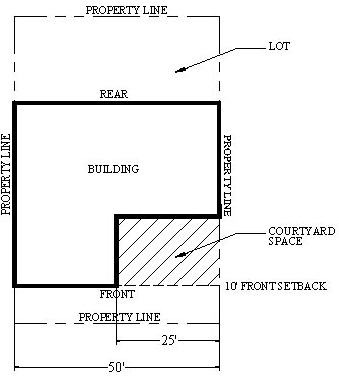
Figure 1: Illustration Showing Staggered Setback
3.
Where the pedestrian space is adjacent to the public right-of-way, there shall be an architectural (or defined) edge that complies with all requirements of the CB District to define the pedestrian space. All buildings shall have their principal entrance opening to a street, sidewalk or pedestrian space such as a courtyard, square or plaza. The principal entrance shall not open onto an off-street parking lot. Pedestrian access from the public sidewalk, street right-of-way or driveway to the principal structure shall be provided through appropriate pedestrian paving and landscaping where required.
4.
Landscaping is required and shall include a combination of trees, groundcover and plants as required by Appendix C of this ordinance; however, the following shall supersede the landscape requirements of Appendix C:
a)
Within the pedestrian space, one (1) canopy tree must be planted for each five hundred (500) square feet; or one (1) ornamental tree for each two hundred fifty (250) square feet of created pedestrian space.
b)
A minimum of one (1) ornamental tree is required for any space of two hundred fifty (250) square feet or less.
c)
Existing street trees should not be removed as part of the creation of a pedestrian space. Any existing trees or plant material, which is part of a previously approved landscape plan, shall be replaced.
5.
The following permitted amenities within the interior of the non-public pedestrian space include but are not limited to: ornamental fountains, stairways, waterfalls, sculptures, arbors, trellises, planted beds, drinking fountains, clock pedestals, public telephones, awnings, canopies, decorative benches, tables and similar structures.
B.
General Design Standards. To promote pedestrian activity and to avoid the impacts of traffic crossing sidewalks, the following uses shall be regulated as follows:
1.
The first floor (street level) of any new multi-story building shall be devoted to retail, commercial, and service uses, as listed in Table 17-410. Multi-story buildings shall include non-residential uses along not less than fifty (50) percent of their street frontage. Residential dwellings shall be permitted above the first floor of any building with commercial and/or retail uses on the first floor.
2.
No "9.0000 Motor Vehicle-Related Sales and Service Operations" use(s) listed in Table 17-410 shall be located within four hundred (400) feet of another motor vehicle use, as measured from the exterior boundaries of the buildings, or not more than one (1) shall be located along any single block frontage, whichever is less.
3.
Accessory structures, additions, remodels and rehabilitation projects shall be designed and constructed using the same general form and materials as the principal building, if the principal building is architecturally consistent with the general character of the CB District. For the purposes of this ordinance, brick and/or brick with stone is considered the general character of the buildings in the Central Business District.
4.
The design requirements of this section apply to all building walls that are visible from any public right-of-way.
5.
The preferred wall material for structures in the CB District is brick or predominantly brick colored material that is complementary to surrounding structures. The Administrator may waive the brick requirements based on certain circumstances included, but not limited to:
a)
Stucco may be approved to cover damaged or deteriorated brick.
b)
Structural wood may be used as decorative elements as trim, in windows or on doors.
Any waivers beyond the authority of the Administrator shall be subject to approval by the Town Council.
6.
Under no circumstances shall metal siding, unfinished concrete block, precast concrete, split-faced block, or vinyl siding be allowed for any building surface. Split-faced block may be used as an accent material so long as it does not cover more than twenty (20) percent of the total building surfaces.
7.
The first floors of all buildings shall be designed to encourage and to complement pedestrian-scale activity using windows and doors arranged so that the uses are visible from and/or accessible to the street on not less than fifty (50) percent of the length of the first-floor street frontage. Not less than fifty (50) percent of the length and twenty-five (25) percent of the surface of the primary structure(s) shall be in public entrances or windows (including retail display windows). Where windows are used, they shall be transparent. Solid walls shall not exceed twenty (20) feet in length. All street level retail uses with sidewalk frontage shall be furnished with an individual entrance and direct access to the sidewalk in addition to any other access that may be provided.
8.
Window glass shall be recessed a minimum of two (2) inches from the building face rather than flush. Aluminum colored windows or door frames are not permitted. Metal and/or aluminum window or door frames are permitted if trimmed in such a way as to give the appearance of wood. Synthetic material that gives the appearance of wood (i.e., Fiberglass with a wood grain pattern) is permitted. All materials shall be identified on the architectural drawings submitted for review.
9.
Reflective or tinted glass is not permitted on window or door surfaces. Glass surfaces shall not have a reflectivity more than thirty-six (36) percent. Submitted plans shall clearly indicate the type of glass being used and its reflectivity index.
10.
Doors shall be recessed into the face of the building (to provide a sense of entry and to add variety to the streetscape). An entryway shall not be less than one (1) square foot for each one thousand (1,000) square feet of floor area, and in all cases, shall not be less than fifteen (15) square feet.
11.
Decorative fences such as those constructed of brick and wrought iron are allowed within the CB District. Screening fences shall be opaque and either painted or stained with the decorative side adjacent to the public right-of-way. In no instance, will a chain link or barbed wire fence be acceptable except around construction sites. Plywood, sheet metal, fiberglass or other such panel fences are also prohibited. Temporary plywood screening fences shall be allowed during construction.
12.
Canopies, awnings, and similar appurtenances may be constructed over the entrance to any building, and/or over windows subject to the following criteria:
a)
Such appurtenances shall be constructed of material designed to complement the streetscape.
b)
In no instance, shall these appurtenances utilize internal illuminated backlights in their design or mounting.
c)
Awnings shall be made of canvas or treated fabric/canvas material.
d)
Vinyl, metal, or Plexiglas awnings are not permitted.
e)
An encroachment agreement is required for awnings or signs that hang over the public rights-of-way.
f)
Any such appurtenance may extend from the building to up to eighty (80) percent of the width of the public sidewalk area in front of the building or nine (9) feet, whichever is less, subject to any encroachment permit which may be required by the North Carolina Department of Transportation, or the Town. In addition, the property owner may be required to provide proof of liability insurance and to provide a certificate of insurance showing that the Town is a named insured party.
g)
Such appurtenances shall be self-supporting. In no case, shall supports for such appurtenances extend to the sidewalk and/or ground within the public right-of-way.
h)
In no case, shall any such facility extend beyond the curb line of the street, nor shall it interfere with the growth or maintenance of street trees, or maintenance of streetlights or street signs.
i)
A minimum overhead clearance of eight (8) feet from the sidewalk shall be maintained.
C.
Any lot, which becomes vacant through the removal of a structure for any reason must be screened from all abutting public street rights-of-way in accordance with the provisions of this ordinance or cleared of rubbish and debris and seeded with grass or other appropriate landscaping material. If the lot is to be used for parking, either as a transitional or permanent use, it must meet all the minimum requirements for that use as established by this ordinance.
D.
A site plan is required as per Article VI, Part 1 along with architectural elevations or perspective drawings.
E.
Prohibited Alterations. In no such case, shall any existing window opening be enclosed to create a solid wall. In situations where alterations of original windows have been completed prior to the adoption of this ordinance, restorative measures to return the opening to its original existence shall be made when additions or alterations are made to the existing structure, unless otherwise prohibited by State Building Code.
F.
Parking Criteria.
1.
Parking for renovated and rehabilitated buildings is exempt from the following requirements unless new rentable gross floor area is added or created.
2.
To maintain a pedestrian friendly street edge, no off-street surface parking shall be permitted between the principal structure and the street right-of-way. Parking is permitted on the sides of buildings, but the maximum width shall not exceed sixty (60) feet (two (2) rows including drive aisle). Such parking shall be screened with landscaping with evergreen plant material that reaches a mature height of no less than three (3) feet. Off-street surface parking areas, which are screened from the view from public streets by the principal buildings, except for the limited view through the driveway providing access to parking, shall provide one (1) ornamental tree and five (5) shrubs for lots less than ten (10) spaces. For lots greater than ten (10) spaces, one (1) shade tree or two (2) ornamental trees and eight (8) shrubs shall be required per ten (10) parking spaces. Off-street parking areas shall be designed so that parked vehicles do not encroach upon or extend onto public rights-of-way, sidewalks or strike against or damage any wall, vegetation, utility, or other structure.
3.
The Administrator may allow a decorative masonry wall or a combination of a wall with plantings in lieu of parking lot yards if one (1) or more of the following conditions exist:
a)
The site on which the parking is located contains a designated historic structure.
b)
The presence of lot yards complicates deliveries necessary for the day-to-day operations of the principle structure.
G.
Loading and Unloading Areas. Where feasible, loading/unloading areas shall be located only in the rear or side yard.
H.
Parking Decks. In addition to the above listed requirements, parking decks shall be subject to the following criteria:
1.
Parking decks must be designed so that the only openings at the street level are those to accommodate vehicle entrances and pedestrian access to the structure.
2.
If any openings for ventilation, service or emergency access are located at the first-floor level in the building wall then they must be decorative and must be an integral part of the overall building design. These openings as well as pedestrian and vehicular entrances must be designed so that cars parked inside are not visible from the street. The remainder of the street level frontage must either be occupied retail space or an architecturally articulated wall designed to screen the parking areas of the structure, to encourage pedestrian activity and to provide for urban open space. Parking garages shall be architectural compatible with the CB district.
3.
Cars on all levels of a parking deck must be screened from view from the street utilizing decorative elements such as grillwork or louvers. In no instance, will cabling alone be sufficient to meet this screening requirement.
4.
The design requirements of this section apply to all building walls, which are visible from any public right-of-way.
I.
Compliance. A site plan is required as per Article VI, Part 1 along with architectural elevations or perspective drawings compiling with the requirements of this ordinance. In no case, shall a Certificate of Zoning Compliance be issued if the design requirements covered in this ordinance have not been met.
(Ord. No. 2021-64-R, 7-13-21)
Sec. 17-529. - Child care centers.
A.
When a center is licensed for six (6) to twenty-nine (29) children, inclusive, there shall be seventy-five (75) square feet per child of outdoor play area for the total number of children for which the center is licensed. In addition, the total number of children on the playground shall not exceed the number the space will accommodate at seventy-five (75) square feet per child. When a center is licensed for thirty (30) or more children, there shall be seventy-five (75) square feet per child of outdoor play area for at least one-half (½) of the total number for which the center is licensed, if the minimum amount of space on the outdoor play area shall be enough to accommodate at least thirty (30) children. The outdoor play area shall provide an area that is shaded by a building, awnings, trees or other methods. The outdoor area shall be designed so that staff can see and easily supervise the entire area.
B.
If a special use permit is required, the permit shall establish the hours of operation.
C.
Minimum paved off-street pick up and drop off lane: Space for at least two (2) vehicles for center holding up to twenty-nine (29) children and five (5) vehicle-stacking spaces for centers for more than twenty-nine (29) children.
(Ord. No. 2021-64-R, 7-13-21)
Sec. 17-530. - Convenience stores and gas stations.
A.
Convenience stores and gas stations shall have the landscaped area contiguous to all public rights-of-way required by Section 17-509 and Appendix C. No structure, part of a structure or vehicular parking (except permitted signs) shall be permitted within the setback. Should the setback and landscaping requirements of the zoning district in which the convenience store or gas station is located differ from the requirements of this subsection, the more stringent requirements shall control.
B.
If the property is a corner lot, the front property line shall be that portion of the property fronting on a U.S. or NC numbered highway with U.S. numbered highways having precedence.
C.
Fuel pump canopies shall not exceed one and one-half (1½) the height of the roof of the primary building it serves to a maximum height of thirty (30) feet measured from the ground.
D.
All light fixtures (luminaries) shall be completely concealed behind an opaque surface and recessed within an opaque housing and shall not be visible from any street right-of-way or adjoining properties.
E.
Overhead lighting fixtures shall be designed to prevent light from emitting upwards toward the sky. Under-canopy lighting fixtures should be completely recessed within the canopy.
F.
Fixture Height. Lighting fixtures shall be a maximum of thirty (30) feet in height within the parking lot and shall be a maximum of fifteen (15) feet in height within non-vehicular pedestrian areas. Pedestrian scale lighting at a height not exceeding twelve (12) feet is encouraged. All light fixtures located within fifty (50) feet of any adjacent residential use or residentially zoned property boundary shall not exceed fifteen (15) feet in height
(Ord. No. 2021-64-R, 7-13-21; Ord. No. 2024-013-O, § 1, 6-6-24; Ord. No. 2024-018-O, § 1, 8-13-24)
Sec. 17-531. - Dish antennas.
A.
Permitting Use. Dish antennas are permitted as accessory uses in all zoning districts, subject to the regulations of this section. For the purposes of this section, lots located within a planned unit development shall be considered residential if the primary use of the lot is residential and nonresidential if the primary use of the lot is nonresidential.
B.
General Requirements.
1.
A zoning permit is required to install, move or substantially construct or reconstruct a dish antenna.
2.
In addition to the requirements of this section, a dish antenna must also be installed to comply with the manufacturer's specifications.
3.
In residential zoning districts, dish antennas that are less than thirty (30) inches in height and less than twenty-four inches (24) inches in width may be installed on roofs or other parts of the principal structure.
4.
In commercial, office and institutional and industrial zoning districts, dish antennas may either be installed on the ground or on the roof of the building. If installed on the roof, the dish shall not be larger than twelve (12) feet in diameter, and the dish shall not be used for advertising purposes.
5.
If a dish antenna is repainted, the only permissible colors are the original color used by the manufacturer, off-white, pastel beige, pastel gray or pastel gray-green. The paint must have a dull (non-glossy) finish and no patterns, lettering or numerals shall be permitted on the dish surface.
C.
Location in Yards.
1.
In all zoning districts, dish antennas less than thirty (30) inches in height and less than twenty-four (24) inches in width may be installed in any side or rear yard. Larger dishes shall be installed in accordance with subsections B.4. and C.2. of this section.
2.
In commercial and industrial zoning districts, a dealer selling dish antennas may have a maximum of one (1) such antenna installed in the front or side yard for display purposes providing all other requirements of this section are met. If a dealer displays a dish antenna in the front or side yard, his permissible sign area shall be reduced by one-half (½).
3.
No dish antenna may be installed in any public right-of-way or in any drainage or utility easement.
D.
Minimum Setback.
1.
The setback of a dish antenna shall be measured from the center of the mounting post supporting the antenna.
2.
The minimum required setback for dish antennas, from the side lot line, shall be the same as for the principal building except on corner lots. In the case of corner lots, the minimum required setback for the side(s) abutting the street shall be the same as the required front setback along that street.
3.
The minimum required setback for dish antennas from the rear lot line shall be five (5) feet or the same as accessory buildings, whichever is greater, but in no case, shall any part of the antenna come closer than one (1) foot to the property line.
4.
In districts where there are no side or rear yard setback requirements, a minimum setback of five (5) feet from the side and rear lot lines shall be required of dish antennas, but in no case, shall any part of the antenna come closer than one (1) foot to the property line.
5.
In all cases, no dish antenna shall be located within fifteen (15) feet of any street right-of-way.
6.
No dish antenna shall be located within ten (10) feet of a principal building, except as necessary to meet the requirements of subsection (D)(5) of this section.
7.
In commercial, office and institutional and industrial zoning districts, dishes shall be set back from the front and sides of the building at least the same distance as one and one-half (1½) times the diameter of the dish.
8.
There are no setback requirements between a dish antenna and any other accessory structure.
E.
Maximum Height.
1.
In all residential zoning districts, the maximum height of dish antennas shall be twenty (20) feet or the height of the principal building, whichever is less.
2.
In commercial, office and institutional and industrial zoning districts, the maximum height of dish antennas installed on the ground shall be thirty (30) feet. Dish antennas mounted on the roof of a building shall not project more than ten (10) feet above the height of the building or more than one-third (⅓) the total height of the building, whichever is less.
F.
Buffering and Screening.
1.
In all residential zoning districts, dish antennas shall be surrounded with any one (1) or a combination of evergreen vegetation; topographic features (for example a hillside); landscaped earthen berm; or architectural features, such as fences or buildings. This screen shall be tall enough and dense enough that the lower two-thirds (⅔) of the dish area is not visible from any public street or from six (6) feet above ground level on surrounding residential properties. If evergreen vegetation is used, a species and size shall be planted which can reasonably be expected to screen the required area within two (2) years of planting. Any dead screening vegetation must be replaced.
2.
In commercial, office and institutional and industrial zoning districts, dish antennas must be screened from the view of surrounding residential properties and primarily residential public streets. The screening requirements as to materials and height shall be the same as in subsection F.1. above.
(Ord. No. 2021-64-R, 7-13-21)
Sec. 17-532. - Dwelling over a business.
One-, two- and multi-family dwelling units, complying with state and local ordinances, are permitted above the first story of a commercial (retail or wholesale) or office building.
(Ord. No. 2021-64-R, 7-13-21)
Sec. 17-533. - Electronic gaming operations.
A.
As used in this subsection, "electronic gaming operations" shall mean any business enterprise whether as a principle or accessory use, where persons utilize electronic machines, including but not limited to computers and gaming terminals (collectively the "electronic gaming machines"), to conduct games of chance, including sweepstakes, and where cash, merchandise or other items of value are redeemed or otherwise distributed, whether or not the value of such distribution is determined be electronic games played or by predetermined odds. Electronic gaming operations may include, but not limited to, internet cafes, internet sweepstakes, electronic gaming machines/operations, cybercafés, or business centers. Electronic gaming operations shall not include any lottery approved by the State of North Carolina or nonprofit operations that is otherwise lawful under state law (for example, church or civic fundraisers).
B.
Nonstandard Fees. Each place of business housing electronic gaming operations that is not regulated by North Carolina General Statutes, Chapter 14 Article 37, shall remit an annual registration fee of two thousand five hundred dollars ($2,500.00) per year.
C.
In addition to the amount in subsection B. above, each business housing electronic gaming operations not regulated by North Carolina General Statutes, Chapter 14 Article 37 shall pay an annual fee for each gaming machine used or stored as part of the electronic gaming operation in the amount of two hundred dollars ($200.00) per machine.
D.
Existing electronic gaming operations known to the Town, situated in non-conforming locations, are permitted; pre-existing establishments are not subject to the location requirements described within this chapter. All pre-existing, non-conforming establishments are subject to the requirements of this chapter unless otherwise specified.
E.
Permit for New Electronic Gaming Operations. An application for electronic gaming operations permit shall be submitted and issued by the Town before electronic gaming operations are permitted.
F.
Permit Approval Criteria.
1.
No establishment shall be located within five hundred (500) feet of any residentially zoned or developed property, church, school, day care, playground, or public park. Where the proposed establishment is separated from residentially zoned or developed property by a four-lane highway, the five hundred (500) foot separation shall only apply to the properties along the sides and rear of the establishment.
2.
No such establishment shall be located within one (1) mile (five thousand two hundred eighty (5,280) feet) of another such establishment.
3.
The hours of operation for such operations shall be limited to 7:00 a.m. to 2:00 a.m.
4.
The Applicant shall provide satisfactory proof to Town that all electronic gaming machines are legal. In the event any machine is determined to be illegal, Applicant agrees to immediately remove the machine.
G.
Uses which are legally existing at the time of adoption this ordinance shall have thirty (30) days to come into compliance with the hour of operation limitation as defined in this section.
H.
If the State of North Carolina prohibits the operation of Electronic Gaming Machines, the State law prohibition controls over the regulations cited herein. If the State of North Carolina regulates the operation of Electronic Gaming Machines, the provisions herein shall remain in place to the extent not in conflict with State law.
(Ord. No. 2021-64-R, 7-13-21; Ord. No. 2024-020-O, § 1, 5-14-24)
Sec. 17-534. - Explosives, use and storage of.
A.
The manufacture or storage of explosives as a primary use is prohibited. Explosives may be stored as an accessory use in the I-1 and I-2 zoning districts, provided that such storage strictly complies with all applicable State and federal requirements, including, but not limited to 27 C.F.R. Part 555, "Commerce in Explosives"; G.S. § 14-284.1(c); 13 N.C.A.C. 7F .0700, et seq., "Blasting and Use of Explosives"; and the 2009 North Carolina State Building Code, Fire Prevention Code, Chapter 33, "Explosives and Fireworks."
B.
The use of explosives shall be regulated by the Town of Selma Fire Department in accordance with the requirements of the Selma Code of Ordinances Chapter 9 and the 2009 North Carolina State Building Code, Fire Prevention Code, Chapter 33, "Explosives and Fireworks."
(Ord. No. 2021-64-R, 7-13-21)
Sec. 17-535. - Family care homes (group homes).
A.
A family care home shall be deemed a residential use of property for zoning purposes and shall be a permissible use in all residential districts.
B.
A family care home is a residential use of property for the purposes of determining charges or assessments imposed by the Town political subdivisions or businesses for water, sewer, power, telephone service, cable television, garbage and trash collection, repairs or improvements to roads, streets, and sidewalks, and other services, utilities, and improvements.
C.
No family care home may be located within a one-half-mile radius of any other existing family care home, unless a reasonable accommodation or special use permit is obtained. See Section 17-1402 for the process to apply for a reasonable accommodation. See Section 17-610 for the process to obtain a Special Use Permit. As provided in Section 17-1402, a variance or a reasonable accommodation to the one-half-mile separation may be obtained when the separation is accomplished by intervening human-made features (i.e., railroad yards, freeways) or natural features (i.e., rivers, wetlands) and provides sufficient separation to ameliorate the harmful effects that justified the statutory separation.
(Ord. No. 2021-64-R, 7-13-21)
Sec. 17-536. - Family child care homes (home daycare).
A.
In addition to the other standards set forth in this chapter, each family child care home, also known as a home daycare, must meet the following requirements:
1.
A home daycare may have no more than eight (8) children. Of the children present at any one (1) time, no more five (5) shall be preschool-aged, not including the operator's own preschool-age children.
2.
The maximum hours of operation are 7:00 a.m. to 6:00 p.m., Monday through Friday.
3.
The daycare shall include a fenced-in outdoor play area that complies with State regulations.
4.
No signage, other than that permitted by Article XI "Signs" is allowed.
5.
The home daycare must be licensed through the NC Department of Health and Human Services.
B.
Violations of subsections A.2. and 4. of this section are violations of this chapter, and the town may impose civil penalties and/or seek other remedies, as provided in this chapter, to correct violations of those subsections. Subsection A.1. or 3. of this section are established by State law, and the violations of these subsections may be punished as provided by State law. No violation of subsection A.1. or 3. shall subject the offending party to civil penalties or other remedies established by this chapter.
(Ord. No. 2021-64-R, 7-13-21)
Sec. 17-537. - Flea market, permanent.
A.
Hours of operation shall be established by the special use permit.
B.
The sale of food for consumption on or off the premises will require approval by the Department of Health.
C.
Permanent open-air flea markets are required to install and maintain fencing or landscaping along three (3) sides of the open market. A landscape plan describing both fencing and landscaping must be reviewed and approved by the Administrator.
(Ord. No. 2021-64-R, 7-13-21)
Sec. 17-538. - Forestry activities.
No forestry activity, as that term is used in G.S. § 160A-458.5, shall be regulated by this ordinance except in compliance with G.S. § 160A-458.5. Pursuant to G.S. § 160A-458.5(b), the town shall not adopt or enforce any ordinance, rule, regulation, or resolution that regulates either:
A.
Forestry activity on forestland that is taxed based on its present use value as forestland under Article 12 of Chapter 105 of the General Statutes; or
B.
Forestry activity that is conducted in accordance with a forest management plan that is prepared or approved by a forester registered in accordance with Chapter 89B of the General Statutes.
To the extent any provision of this ordinance conflicts with G.S. § 160D-921, that portion of the ordinance shall be deemed repealed.
(Ord. No. 2021-64-R, 7-13-21)
Sec. 17-539. - Golf courses.
A.
A minimum land area of thirty (30) acres is required for a regulation eighteen-hole golf course, which includes any ancillary uses including but not limited to the following: driving ranges, practice areas, parking, the clubhouse, offices, the pro shop, maintenance buildings, on-course restrooms, half-way houses or similar uses or structures. Golf courses do not include miniature golf facilities, par-three (3) golf courses or driving ranges that are not directly associated with an eighteen-hole golf course.
B.
If a developer elects to begin construction of any part of a golf course, prior to receiving site plan approval, the developer shall submit a conceptual or sketch plan of the planned layout of the proposed golf course to the Administrator. The developer may then obtain a temporary zoning permit. The developer must obtain site plan approval for the golf course and all ancillary uses within six (6) months of the date of the issuance of such temporary zoning permit, or the temporary zoning permit shall be null and void.
(Ord. No. 2021-64-R, 7-13-21)
Sec. 17-540. - Housing facility for older persons ("HFOP").
A.
Housing Facilities for Older Persons (HFOP) are permitted as special uses as provided in Section 17-410 subject to the multi-family requirements of this ordinance.
B.
Federal Restrictions. Prior to issuance of an application for a special use permit approval authorizing construction or establishment of an HFOP, the applicant shall provide to the Administrator:
1.
A copy of the policies and procedures required by 24 C.F.R. § 100.306.
2.
A copy of the verification of occupancy required by 24 C.F.R. § 100.307.
C.
An HFOP approved as a special use shall comply with the following:
1.
The building shall not exceed two (2) stories in height.
See also Section 17-524, "Building Design, Exterior Standards."
(Ord. No. 2021-64-R, 7-13-21)
Sec. 17-541. - Kennels, animal boarding.
A.
Large Kennel. A large kennel shall meet the following requirements:
1.
It shall be located on a tract of land that is a minimum of ten (10) acres in size.
2.
All buildings and structures associated with the kennel shall be located a minimum of one thousand (1,000) feet from any hospital, retirement home or assisted living center building in operation as of the date the certificate of zoning compliance for the kennel is issued.
3.
All boarding facilities for animals shall be set back a minimum of one hundred (100) feet from the property line. Ordinary building setback requirements shall apply to all other kennel facilities, including training areas.
4.
All required State and federal licenses, approvals or permits for site operation must be filed with the town before the kennel receives a certificate of zoning compliance.
5.
In addition to the other buffering requirements imposed by this chapter, fencing shall be provided to separate boarding, training, and material storage areas of the kennel from adjoining uses.
B.
Small Kennel. A small kennel shall meet the following requirements:
1.
It shall be located on a tract of land that is a minimum of three (3) acres in size but less than ten (10) acres in size.
2.
All boarding facilities for animals shall be set back a minimum of fifty (50) feet from the property line. Ordinary building setback requirements shall apply to all other kennel facilities, including training areas.
3.
All required State and federal licenses, approvals or permits for site operation must be filed with the town before the kennel receives a certificate of zoning compliance.
4.
In addition to the other buffering requirements imposed by this chapter, fencing shall be provided to separate boarding, training, and material storage areas of the kennel from adjoining uses.
(Ord. No. 2021-64-R, 7-13-21)
Sec. 17-542. - Land clearing and inert debris landfills and construction and demolition landfills.
A.
Land Clearing and Inert Debris ("LCID") and Construction and Demolition (C&DLF) landfills must be at least two (2) acres in area and no larger than thirty (30) acres.
B.
There shall be only one (1) access way on the site, and it shall serve as both the entrance and the exit. The access way shall not be wider than thirty (30) feet.
C.
The first thirty (30) feet of the access way shall be constructed of a concrete or asphalt surface, and the remaining driveway shall consist of and be maintained with gravel.
D.
A copy of the application for a permit required by 15A N.C.A.C. 13B.0534 or by 15A N.C.A.C. 13B.0560 et seq.
E.
Before a Certificate of Zoning Compliance is issued, a copy of the required State of North Carolina Permits.
(Ord. No. 2021-64-R, 7-13-21)
Sec. 17-543. - Livestock.
This section is adopted pursuant to authority granted by G.S. Ch. 160D, Art. 7, and G.S. § 160A-186.
A.
Nothing in this ordinance shall regulate "bona fide farms" in the extraterritorial jurisdiction (See G.S. § 160D-903). Livestock may be kept as part of an agricultural operation in accordance with Section 14-410, "Table of Permissible Uses."
B.
Livestock may also be kept for purposes other than as part of an agricultural operation, provided that such livestock shall be allowed only in the RA and R20 zoning districts. Notwithstanding the foregoing, chickens shall be permitted in the zoning districts listed in subsection (G).
C.
In all cases, including as part of agricultural operations, the keeping of livestock shall be restricted as follows:
Table Notes:
1. Maximum Number of Animals.Any number of chickens may be kept on a single lot, provided the minimum area requirement is met. For example, a ten-acre lot may have any number of chickens and ten (10) cows, or the same lot could have any number of chickens and one (1) cow, one (1) goat and eight (8) horses.
2. Spacing Requirement.All livestock, except for chickens, shall be located a minimum of one hundred fifty (150) feet from any dwelling, except the dwelling occupied by the owner or other keeper of the livestock; school; church or other religious institution; business, except the business of the owner or other keeper of the livestock; and commercial or professional establishment, except when such uses are owned or operated by the owner or other keeper of the livestock. This requirement shall not apply to chickens.
3. Minimum Acreage.A minimum of one (1) acre of land shall be provided for each animal, except for chickens. A minimum of five thousand (5,000) square feet per chicken shall be provided. Land used for chickens may also be applied toward the minimum acreage requirement of other animals. For example, a property having one (1) chicken and one (1) cow must have a minimum of one (1) acre of land of land dedicated to the animals.
D.
A site plan for all stables and other animal housing structures, except chicken coops, shall be submitted to the administrator for review. The administrator shall review the site plan for conformance with the requirements set forth in this section and any other applicable requirements, such as setbacks. If applicable, these structures shall also comply with the requirements of the North Carolina State Building Code. No site plan shall be required for a chicken coop, but it shall be the responsibility of the owner of the coop to confirm that the structure either complies with or is exempt from the requirements of the North Carolina State Building Code.
E.
All stables and other animal housing structures shall be kept in a sanitary manner and as free as possible of noxious odors. Stables and other structures that are cleaned and disinfected once per day shall be presumed to comply with this subsection. The administrator may approve an alternative cleaning schedule upon a showing by the applicant that the alternative schedule complies with established best management practices for the livestock.
F.
All livestock shall be contained within a fence or by other acceptable means. The fence shall be of an appropriate height to protect both the livestock and neighboring properties. A fence built to satisfy the requirements of this subsection need not comply with the requirements of Appendix C "Fences and Walls," unless the fence is also built to provide privacy and/or security for the occupant of the property. A fence built to satisfy the requirements of this subsection shall also comply with the setback requirements of Section 17-430 if the fence exceeds six (6) feet in height and is substantially opaque.
G.
Additional Requirements for Chickens. In addition to the other requirements of this ordinance, the following requirements apply to chickens:
1.
Chickens and Domestic Fowl are permitted in the extra-territorial jurisdiction only in the RA and R20 zoning districts.
2.
Chickens, roosters and other domestic fowl living outside the planning and development regulation jurisdiction of the town may be brought into the town planning and development regulation jurisdiction for temporary events such as festivals and other special events, provided that no such fowl shall be allowed to remain within the planning and development regulation jurisdiction of the town for more than three (3) days.
3.
Coops and yarding areas (i.e., the areas where chickens, domestic fowl roam outside of the coop) shall be in back yards or pastures/fields located to the rear of a dwelling. No coop or yarding area may be in a front or side yard, pasture or field.
4.
Chickens and other domestic fowl shall be kept in coops at night time, but they may be allowed to roam during the day within the yarding area.
5.
Coops and yarding areas shall be fully enclosed by a perimeter fence. Coops shall be located within the yarding area and shall be set back either a minimum of thirty (30) feet from solid perimeter fencing or a minimum of one hundred (100) feet from open wire perimeter fencing.
Provided the requirements of this section are met, no certificate of zoning compliance shall be required for coops or yarding areas.
H.
Bees. Bees are not livestock. Any residence may keep up to five (5) bee hives. Bona fide farms in the RA zoning district may keep any number of hives. A special use permit is required to keep six (6) or more hives. Bee hives are not permitted in the GB, NB, IH, I-1 or I-2 zoning districts.
I.
Nonconforming Situations:
1.
The effective date of this ordinance is March 31, 2017. Coops and yarding areas that were lawful prior to the effective date of this ordinance shall be subject to Article XIII, "Nonconformities."
2.
The owners of coops and yarding areas that were unlawful prior to the effective date of the ordinance shall have six (6) months from the effective date to bring said coops and yarding areas into conformity with this ordinance.
3.
Roosters living within the planning and development regulation jurisdiction of the town as of the effective date of this ordinance may remain until they die, but they shall not be replaced.
4.
Chickens or other domestic fowl living within the planning and development regulation jurisdiction of the town as of the effective date of this ordinance that are illegal or lawful nonconformities with respect to this ordinance may remain until they die, but they shall not be replaced.
To the extent that any of the requirements of this subsection conflict with the other subsections of Article XIII, "Non-conformities," the requirements of this subsection shall control.
(Ord. No. 2021-64-R, 7-13-21)
Sec. 17-544. - Manufactured homes, single lot.
A.
All mobile homes that are moved to a parcel or lot within the RA District shall meet the following standards:
1.
Each mobile home must have exterior siding that is either painted or stained wood such as board-and-batten, or board-on-board, Masonite, simulated stucco, residential grade aluminum, or vinyl lap siding. All siding shall be in good condition, complete, not damaged or loose.
2.
Each mobile home shall either have a brick curtain wall, ABS colored plastic skirting with interlocking edges (key locked) or PVC painted colored metal skirting installed around the perimeter of the home. Skirting shall be attractive and in good condition, not pierced, and shall be laid-up in an attractive, workmanlike manner.
3.
Each mobile home having a painted exterior shall have the exterior paint in good condition, not peeling or any rust showing through.
4.
Each mobile home shall meet all the provisions of the Town's Minimum Housing Code.
5.
Each mobile home shall have in place permanent steps meeting North Carolina Building Code.
6.
All repairs made to the exterior of a mobile home shall be made to be consistent with the "original intent or integrity" of the mobile home when that mobile home was built. (For example, if repairs are made to the siding, materials close to, or consistent with, the original shall be used).
7.
All conditions listed in subsection A, of this section shall be complied with before a certificate of zoning compliance is issued for the mobile home.
8.
All single-wide mobile homes and single-wide manufactured homes shall have the minimum lot size required in the zoning district in which the home is placed.
(Ord. No. 2021-64-R, 7-13-21)
Sec. 17-545. - Manufactured home parks.
A.
Establishment of the MH-C District.
1.
Manufactured home parks shall be located in the MH-C zoning district, which is a parallel conditional zoning district. Property may be rezoned to MH-C only in response to a petition by the owners of all the property to be included in the district.
2.
Approval of an MH-C zoning district shall constitute approval of a site-specific vesting plan for purposes of establishing vested rights as permitted by this ordinance. See Section 17-680, "Vested Rights."
3.
Work on a manufactured home park must begin within one (1) year of the establishment of the MH-C zoning district. If all work authorized under the MH-C zoning district ceases for a continuous period of one (1) year after work has commenced, then the zoning of the tract shall automatically revert to the zoning in effect at the time the MH-C zoning district was established. Upon the request of the developer submitted prior to expiration of the time to begin construction, the Town Council may grant one-year extensions on the time to begin construction.
4.
Modifications to the MH-C zoning district may be permitted in accordance with Section 17-1754, "Modification of Approval."
B.
Area. The area of the manufactured home park shall be a minimum of two (2) acres, and the park shall have a minimum of five (5) manufactured home spaces available at first occupancy.
C.
Utilities. The manufactured home park and all occupied units located in it must be connected to the Selma municipal water and sewerage systems or other systems approved by the Johnston County Environmental Health Department or the appropriate North Carolina state agencies. All utilities shall be underground. Each space shall have hook-up facilities for water, sewer, electricity and telephone services. All occupied manufactured home units shall have and use approved sanitary facilities within the manufactured home unit.
D.
Access and Parking. Paved, privately maintained roadways must be provided for access to individual units and other facilities located within the park. Required parking spaces are required to be paved. Sidewalks. Sidewalks shall be located on at least one (1) side of each street within the mobile home park. Each space shall have access to an interior roadway with a paved width of at least eighteen (18) feet. No space shall have direct access to a public street.
E.
Permitted Uses, Building Heights and Setbacks. Service buildings, recreation buildings and other areas or structures providing laundry, sanitation and managerial facilities are permitted, subject to approval of the Town Council, and such approval shall not be unreasonably withheld. Such facilities shall serve only the park in which it is located. No such facility shall have direct access to a public street but shall instead be served by the privately maintained roadway. All buildings and structures, other than manufactured homes, shall meet the front, side and rear yard setbacks and building heights set forth in Section 17-430, "Table of Density and Dimensional Regulations."
F.
Other Requirements.
1.
All spaces within a mobile home park shall be serially numbered for mailing address purposes. These numbers shall be displayed in the front of the mobile home on the driveway side with four-inch lettering.
2.
All streets in the mobile home park shall be adequately illuminated. The minimum streetlight shall be a one-hundred-seventy-five-watt mercury vapor approximately seven thousand (7,000) lumen class, or its equivalent, spaced at intervals of not more than three hundred (300) feet and at each intersection.
G.
Mobile Home Park Use/Appearance Requirements. All uses within a mobile home park shall conform to the following regulations:
1.
[Additions.] No living compartment or structure other than a "Florida-type" room, or other prefabricated structure, specifically designed for mobile home use or extension, shall be added to any mobile home.
2.
Administrative Office. Within a mobile home park, one (1) mobile home may be used as an administrative office.
3.
Building Proportion. The main portion of the building, when viewed from the front lot line, shall have a building length not exceeding six (6) times the building width.
4.
All manufactured homes shall meet the standards of Section 17-544, "Manufactured Homes - Single Lot," subsection A.
5.
Mailboxes. When more than five (5) rural mailboxes are used for mail delivery, the approval of the local post office department and the district highway engineer shall be required.
6.
A recreational vehicle (RV), as defined in 17-200, shall be permitted as a permanent residence in an established manufactured home park. All existing regulations (pertaining to mobile home parks) would remain the same regardless of the number of recreational vehicles placed into an existing Mobile Home Park. Motor homes as well as "pull behind" trailer type RVs are allowed in Mobile Home Parks, which are defined in G.S. § 20-4.01. Definitions.
H.
Evacuation plan. Each mobile home park in a community's floodprone area shall have an evacuation plan indicating alternate vehicular access and escape routes. All mobile homes to be placed in floodprone areas shall be anchored to resist flotation, collapse, or lateral movement by providing over-the-top ties at each of the four (4) corners of the mobile home with two (2) additional ties per side at intermediate locations.
I.
Landscape Requirements. All mobile home parks shall be landscaped in accordance with the more stringent of either:
1.
Section 17-509 and Appendix C, or
2.
A landscaped buffer strip shall be provided at all exterior property lines and shall consist of an approved wall, fence, or a planted strip at least eight (8) feet in width, composed of deciduous or evergreen trees or a mixture of each, spaced not more than twenty (20) feet apart and not less than one (1) row of dense shrubs, spaced not more than five (5) feet apart and five (5) feet in height; after one (1) growing season, which shall be planted and maintained in a healthy, growing condition by the property owner.
J.
Dimensional Requirements. The dimensional requirements of Section 17-430, "Table of Density and Dimensional Regulations," shall not apply to manufactured home spaces and manufactured homes. Instead, such lots and units shall satisfy the following requirements:
1.
Space Size. Each manufactured home space shall be a minimum of six thousand (6,000) square feet. For the purposes of this subsection, a "space" is the land area allocated to a single manufactured home, irrespective of whether the manufactured home park has been subdivided into individual lots.
2.
Clearance. Each space shall be designed so that at least a twenty-foot clearance will be maintained between units and other structures within the park.
3.
Unit Setbacks. Manufactured home units shall be located so that a ten-foot setback is maintained from the centerline of the private interior roadway to which the unit has access. Further, no manufactured home unit shall be located closer than twenty-five (25) feet to the front, side or rear property lines.
4.
Parking. Each manufactured home space shall have at least two (2) paved parking spaces, and at least one (1) of these two (2) spaces shall be located on or adjacent to the manufactured home space.
K.
Recreational Areas and Open Space.
1.
All manufactured home parks that contain at least twenty (20) manufactured home spaces shall include a recreation area that is not less than eight (8) percent of the total park area. The owner of the park, a homeowner's association or similar entity shall be responsible for the continued maintenance of this area. The minimum size of any recreation area shall be two thousand five hundred (2,500) square feet. Lakes, ponds, rivers, streams, swamps and marsh lands shall not be considered as meeting (in part or whole) the recreation area requirements of this subsection.
2.
All manufactured home parks shall provide open space in accordance with Article XII, "Open Space."
L.
Tie Down and Anchoring Requirements. Manufactured homes shall be securely anchored to the ground by means of a tie-down system, and all such tie-down and anchoring systems shall comply with the "State of North Carolina Regulations for Manufactured Homes" as established by the North Carolina Department of Insurance.
M.
Storage Buildings; Storage of Possessions.
1.
Each manufactured home space or lot may be equipped with a storage building not to exceed ten (10) feet by ten (10) feet, provided that all such buildings are located adjacent to the rear lot line, on the same space as the manufactured home to which they belong.
2.
Storage of possessions and equipment in the area beneath the manufactured home is prohibited.
N.
Responsibilities and Duties of Park Operators.
1.
Manufactured Home Park Maintenance. Manufactured home park operators shall be required to provide adequate supervision to maintain the park in compliance with the requirements of this chapter. Further, any manufactured home park operator shall keep all park-owned facilities, improvements, equipment and all common areas in good repair and maintained in such a manner as to prevent the accumulation or storage of materials which would constitute a fire hazard or would be conducive to insect or rodent breeding and harborage.
2.
Placement and Anchoring. Operators shall be required to supervise the placement of all manufactured homes to ensure that they are properly anchored and attached to utilities, and operators shall be liable under this chapter for the improper placement and/or anchoring and tying down of any manufactured home within the park.
3.
Assist County Tax Supervision. Operators shall be required to comply with G.S. § 105-316(a)(1), which requires that as of January 1 of each year each manufactured home park operator that rents lots for six (6) or more manufactured homes furnish the County Tax Supervisor the name(s) of the owner of and a description of each manufactured home located in the park.
4.
Solid Waste Disposal. The park operator shall operate or provide for the operation of a solid waste disposal system, including providing park tenants with appropriate containers.
O.
Approval of Manufactured Home Parks; Procedure.
1.
A site plan application is required. If individual lots are conveyed, a major subdivision plat application is required in addition to a site plan application.
2.
The developer or manufactured home park operator shall notify the Administrator of the date on which the manufactured home park begins operations.
3.
Renewal of Authorization to Operate. Two (2) years after operations begin and every two (2) years thereafter, the manufactured home park operator shall submit to the Administrator information sufficient to demonstrate that the manufactured home park continues to comply with all requirements of this chapter, the zoning district and the approved site plan. The Administrator shall determine which materials must be submitted, and the Administrator shall provide the park operator his or her determination in writing.
(Ord. No. 2021-64-R, 7-13-21; Ord. No. 2024-012-O, § 1, 10-8-24)
Sec. 17-546. - Metal buildings.
A.
Metal buildings as new principal structures are prohibited within the Selma Historic Overlay Districts.
B.
Metal buildings may be used in all other zoning districts subject to the following requirements:
1.
When visible from roadways, easements or any public viewing area such as park lands, one hundred (100) percent of the primary building material of the facade (whether front, side or rear) shall be constructed of or covered with glass, wood, brick, stone, split-face block, pre-cast concrete (if the surface is painted, textured or designed to simulate brick, stone or lap siding), vinyl or fiber cement lap siding or architectural concrete (if the surface is designed to simulate brick or stone);
2.
A minimum of fifty (50) percent of each side facade shall be constructed of or covered with glass, wood, brick, stone, split-face block, pre-cast concrete (if the surface is painted, textured or designed to simulate brick, stone or lap siding), vinyl or fiber cement lap siding or architectural concrete (if the surface is designed to simulate brick or stone). These materials shall extend horizontally throughout the side facade and shall not be used to solely frame the edges;
3.
For industrial applications, when approved by the Town Council upon the determination that the use of any other material would be deemed unsafe or impractical;
4.
In commercially zoned districts when all corrugations are less than 5/16 of an inch in depth and there are no exposed rivets; and
5.
Metal accessory buildings of one hundred (100) square feet or less are allowed in all zoning districts, including the Selma Historic Overlay Districts.
(Ord. No. 2021-64-R, 7-13-21)
Sec. 17-547. - Micro-brewery, distillery, winery.
An establishment that meets the definition of a microbrewery, winery or distillery shall be permitted in accordance with Section 17-410, provided it meets the requirements of G.S. § 18B-1104 or 18B-1105, respectively. Tasting rooms are an accessory use to a microbrewery.
(Ord. No. 2021-64-R, 7-13-21)
Sec. 17-548. - Mobile food vendors (food trucks).
All mobile food vendors shall comply with the regulations of this section except for vendors associated with Temporary Events. Mobile food vendors associated with temporary events shall be consistent with Article IV, Part 4 of this chapter. This section is not applicable to wayside stands for sale of produce and seasonal products.
Mobile food vendors at fixed locations on private property shall obtain a zoning permit stipulating an expiration date of the permit not to exceed 180 days (six months). A copy of this zoning permit shall be posted conspicuously at or near the window or windows where customers order or pick up food being vended. Documents required to be submitted to the Planning Department at the time a permit is applied for shall include the following:
1.
A copy of any written agreement between the mobile food vendor and the owner of the private property where mobile vending will take place.
2.
A copy of the most recent inspection from the Environmental Health Department that licensed the mobile food vendor (food truck).
3.
A copy of the State issued photo identification of the applicant, which shall be placed on file in the office of the Planning Director. The name, along with a copy of the State issued photo identification of any alternate mobile food vending personnel shall be provided if other persons will be allowed at any date/time by the applicant to vend from the permitted food truck.
4.
A food vending permit from the Johnston County Environmental Health Department (if applicable).
5.
A means for the disposal of grease within an approved grease disposal facility.
6.
A North Carolina Sales and Use Certificate for collecting and paying the proper sales taxes (if applicable).
A.
Siting Requirements.
1.
A maximum of two (2) mobile food vendors shall be located on a Lot or Parcel in all zoning districts except Interstate Business (IB). In the IB District, a maximum of four (4) mobile food vendors may operate on any privately owned parcel exceeding three (3) acres in size.
2.
Mobile food vendors shall be located a minimum of one hundred (100) feet from the main entrance to any eating establishment or similar food service business, and one hundred (100) feet from any outdoor dining area operated as part of an eating establishment, as measured from the designated location on the Lot or Parcel accommodating the food truck, trailer or cart.
3.
Mobile food vendors, food trucks, trailers and carts shall be located a minimum distance of fifteen (15) feet from any fire hydrant.
4.
Mobile food vendors, food trucks, trailers and carts shall not be located within any area of the Lot or Parcel that impedes, endangers, or interferes with pedestrian or vehicular traffic.
5.
Mobile food vendors, food trucks, trailers and carts shall not occupy any parking spaces required to fulfill the minimum requirements of the principal use, unless the Principal Use's hours of operation do not coincide with those of the food truck business. Nor shall any mobile food vendor occupy parking spaces that may be leased to another business and used to fulfill its minimum parking requirements.
6.
Food trucks, trailers and carts shall not occupy any handicap accessible parking space as specified in NCGS § 20-37.6.
7.
In cases where a mobile food vendor operates on two or more different lots, the mobile food vendor shall secure an owner's consent form for each additional lot and submit it to the Town with no additional fee or permit.
B.
Operations.
1.
One freestanding sandwich board sign shall be permitted as part of the food truck, trailer or cart vending operation. No audio amplification shall be permitted as part of the food truck, trailer or cart vending operation.
2.
Hours of operation of food trucks, trailers and carts shall be limited to the hours between 6:00 a.m. and 9:00 p.m. in all zoning districts except Interstate Business (IB), where the hours allowed are between 6:00 a.m. and 10:00 p.m.
3.
When open for business, the food truck, trailer or cart operator, or his or her designee, shall be present at all times, except in cases of an emergency. If the food truck, trailer or cart operator's name does not match the name on the zoning permit displayed conspicuously at the window or windows where customers order or pick up food being vended, the name of the operator shall be displayed alongside the permit.
4.
The food truck, trailer or cart vendor is responsible for the proper disposal of waste and trash associated with the operation. Town trash receptacles are not to be used for this purpose. Vendors shall remove all waste and trash from their approved location at the end of each day or as needed to maintain the health and safety of the public. The vendor shall keep all areas of the permitted lot free and clean of grease, trash, paper, cups, cans or other materials associated with the vending operation. No liquid waste or grease is to be disposed in tree pits, storm drains or onto the sidewalks, streets, or other public space. Under no circumstances shall grease be released or disposed of in the Town's sanitary sewer system.
5.
All equipment required for the operation shall be contained within, attached to or within twenty (20) feet of the food truck, trailer, or cart. All food preparation, storage, and sales-distribution shall comply with all applicable County, State and Federal Health Department sanitary regulations.
C.
Additional Standards.
1.
If at any time evidence of the improper disposal of liquid waste or grease is discovered, the mobile food vendor permit shall be rendered null and void, and the business shall be required to cease operation immediately. The vendor shall be cited for the violation as hereinafter set forth.
2.
Copies of the zoning permit and food vending permit shall be kept in the food truck, trailer, or cart at all times.
3.
If at any time, the Johnston County Environmental Health Department revokes or suspends the issued food vending permit, the Town permit for mobile food vending operation shall be revoked or suspended simultaneously.
4.
The food truck, trailer, or cart shall be removed after operating hours or a special event and be stored in a legally permissible location.
D.
Enforcement.
1.
This section shall be enforced by law as provided in G.S. § 160A-175 or as provided in this code. All criminal sanctions shall be up to the dollar limit provided in G.S. § 14-4(a), as currently enacted or as hereafter amended, or any similar limitations.
2.
The civil penalty for violating this section shall be as follows: For the first offense, the fine shall be one hundred ($100.00) dollars. For the second offense, the fine shall be three hundred ($300.00) dollars. The mobile food vendor permit shall be revoked after the third offense.
(Ord. No. 2021-64-R, 7-13-21; Ord. No. 2025-003-O, § 1, 5-13-25)
Sec. 17-549. - Motor vehicle repair and service.
All existing and future "Motor Vehicle Repair and Service," are permitted to store vehicles which are inoperative and stationary for a period not to exceed thirty (30) days per vehicle. Furthermore, these land uses shall be required to install opaque fencing or a vegetative buffer in accordance with App. D of this chapter along those boundaries which abut a residential use or district. These provisions became effective August 31, 2010.
(Ord. No. 2021-64-R, 7-13-21)
Sec. 17-550. - Multi-family development.
A.
Permitted Zoning Districts. Multi-family development shall be permitted with a special use permit in the TR Transitional Residential zoning district where no less than four (4) contiguous acres of land are planned for the complex. Multi-family development is prohibited in all other districts and cannot be developed on parcels of land that are less than four (4) acres in size.
B.
Any point of a property line of a lot containing a multi-family development with more than eight (8) multi-family dwelling units and approved after the effective date of this ordinance must be located at least five hundred (500) linear feet from the closest point of the property line of any other parcel containing a multi-family development with more than eight (8) multi-family dwelling units which were approved after the effective date of this ordinance. This spacing requirement shall not prohibit the location of new multi-family development within five hundred (500) feet of the property line of multi-family development that was approved prior to or as of the date of this ordinance.
C.
Landscaping. The landscape requirements are found in Section 17-509 and Appendix C.
D.
Parking. Off-street parking shall be located between the principal building and the rear lot line, an alley or interior to a block. Parking shall also be provided in accordance with Section 17-505, "Off Street Parking and Loading" and Appendix B.
E.
Site Design Requirements for Multifamily Developments.
1.
The site plan must be designed to consider the following factors:
a)
The size and shape of the tract;
b)
The topography and necessary grading;
c)
The reasonable preservation of the natural features of the land and vegetation;
d)
The size of the development and its relationship with adjacent and nearby land uses;
e)
Safe and convenient pedestrian access and connections for all ages and abilities; and
f)
Multi-family residential units and ingress/egress to the multi-family development shall not be located within a Special Flood Hazard Area (zone AE or AE floodway) on the adopted Flood Insurance Rate Map.
2.
The site plan must provide plans for stormwater management in compliance with Section 17-506 of this ordinance and in compliance with applicable regulations in effect for the Neuse River Basin.
3.
Developments with forty (40) or more dwelling units shall have a point of ingress and egress directly onto an adjacent major or minor thoroughfare as shown on the thoroughfare plan. Access by a connecting street is not acceptable. Developments with eighty (80) or more dwelling units shall have at least two (2) direct points of direct ingress and egress onto a major or minor thoroughfare as shown on the thoroughfare plan. See also Section 17-566, "Traffic Impact Analysis."
4.
Developments with eighty (80) or more dwelling units shall be provided with a divided ingress-egress driveway with a landscaped median for all entrances from public streets.
5.
Any proposed ingress and egress points shall be located and designed to not result in a substantial amount of vehicular traffic to be channeled onto adjacent non-thoroughfare local streets.
6.
Sidewalks and/or paths shall be constructed within the development to link the interior of the development with residential buildings within the development and to other destinations such as, but not limited to, adjoining streets, mailboxes, trash disposal areas, on-site amenity areas and the like. These sidewalks shall be constructed in accordance with the Town of Selma standards for sidewalk construction. These sidewalks shall also be constructed as indicated by and in accordance with any applicable adopted plans, including, but not limited to, pedestrian plans and the comprehensive plan.
7.
The minimum spacing between multi-family buildings within a development shall be twenty (20) feet, plus one (1) foot for each one (1) foot of height more than the maximum height permitted in the zoning district, or as required/recommended by the Town of Selma Fire Chief and the State Fire Code.
8.
To provide an interesting and aesthetically attractive development, the following standards shall apply:
a)
With the exceptions of buildings that front the same public street, buildings shall be arranged in patterns that are not strictly linear. Exceptions shall be allowed for buildings that define common space such as a courtyard or green.
b)
Building entryways shall face a street, sidewalk, or common area. Buildings shall not face the rear of other buildings within the same development.
9.
The maximum allowable density for any multi-family development shall be eight (8) units per acre.
10.
For all multi-family developments not specifically developed for the elderly and containing more than sixteen (16) dwelling units, a shelter shall be constructed at a location where a public-school bus may pick up and/or drop off children riding county school buses.
11.
All solid waste container sites must be shown on the site plan and screened with a continuous six (6) foot high opaque vegetative, wood or masonry screen. Container pads shall be graded and constructed with a reverse crown designed to shed stormwater. Gates and doors are required on all solid waste screens and must be of a substantial and durable material. Support posts, gate frames, hinges and latches should be of a sufficient size and strength to allow the gates to function without sagging or becoming a visual eyesore.
12.
Multi-family site plans shall include the designation of bike paths or lanes when such facilities are indicated on an approved Selma bikeway plan and designated in the Johnston County Parks and Recreation Master Plan.
F.
Open Space and Recreational Facilities.
1.
Common Open Space Requirements. Open space areas shall be provided for all multifamily developments with five (5) or more dwelling units (including the multi-family portions of developments with both single-family and multi-family dwelling units). Upon approval of the Town Council, open space areas may be dedicated to the Town. A minimum play or open space area of four hundred thirty-five (435) square feet per dwelling unit having a minimum width of forty (40) feet at its narrowest dimension or a minimum radius of twenty-six (26) feet shall be provided. The spatial distribution and number of individual open space areas shall be shown on the approved site plan in consideration of the spatial arrangement of the dwelling units, topography, and other physical features. Swimming pools and their accessory structures may be used to satisfy the open space requirement.
2.
A survey, site development plan, or plat depicting all open space shown on the site development plan for a multi-family development shall be recorded in the Johnston County Register of Deeds Office prior to issuance of certificates of zoning compliance for multi-family dwelling units.
3.
The Administrator may waive up to fifty (50) percent of the open space requirement if all units within the development are located within one thousand (1,000) feet of a public park as measured along a public sidewalk. Open space provided pursuant to this requirement shall be accessible to all residents of the development.
4.
Private Open Space. Each dwelling unit shall have appurtenant private open space, such as a private porch, deck, balcony, patio, atrium, or other outdoor private area. The private open space shall be contiguous with the unit in a single area. The private open space shall have the dimensions as described in the following table:
5.
Recreational facilities shall be provided in accordance with Section 17-1202, "Usable Open Space."
G.
Outdoor Lighting. All multi-family buildings and projects, including outparcels, shall be designed to provide safe, convenient, and efficient lighting for pedestrians and vehicles. Lighting shall be designed in a consistent and coordinated manner for the entire site. The lighting and lighting fixtures shall be integrated and designed to enhance the visual impact of the project on the community and, where practicable, should be designed to blend into the surrounding landscape. Lighting design and installation shall ensure that lighting accomplishes onsite lighting needs without intrusion on adjoining properties.
1.
Lighting Plan. A site lighting plan shall be required as part of the application and site plan review for all multi-family developments exceeding four (4) dwelling units per multifamily development.
2.
Site Lighting Design Requirements. Lighting shall be used to provide safety while accenting key architectural elements and to emphasize landscape features. Light fixtures shall be designed as an integral design element that complements the design of the project. This can be accomplished through style, material, or color. All lighting fixtures designed or placed to illuminate any portion of a site shall meet the following requirements:
a)
Fixture (Luminaire). The light source shall be completely concealed behind an opaque surface and recessed within an opaque housing and shall not be visible from any street right-of-way or adjoining properties. Overhead lighting fixtures shall be designed to prevent light from emitting upwards toward the sky.
Under-canopy lighting fixtures should be completely recessed within the canopy.
b)
Fixture Height. Lighting fixtures shall be a maximum of thirty (30) feet in height within the parking lot and shall be a maximum of fifteen (15) feet in height within non-vehicular pedestrian areas. Pedestrian scale lighting at a height not exceeding twelve (12) feet is encouraged. All light fixtures located within fifty (50) feet of any adjacent residential use or residentially zoned property boundary shall not exceed fifteen (15) feet in height.
c)
Light Source (Lamp). Incandescent, florescent, metal halide, or color corrected high-pressure sodium are preferred. The Administrator shall have the authority to approve other lamp types (including light emitting diodes [LEDS] and fiber optics) provided the color emitted is similar to the preferred types. Noncolor corrected high pressure sodium lamps are prohibited.
The same light source type must be used for the same or similar types of lighting on any one (1) site throughout any development.
d)
Mounting. Fixtures shall be mounted in such a manner that the cone of light is contained onsite and does not cross any property line of the site.
e)
Limit Lighting to Periods of Activity. Where practicable, the use of sensor technologies, timers or other means to activate lighting during times when it will be needed may be required by the Administrator to conserve energy, provide safety, and promote compatibility between different land uses.
3.
Illumination Levels. All site lighting shall be designed so that the level of illumination as measured in footcandles (fc) at any one (1) point meets the standards in the table below, with minimum and maximum levels measured on the pavement within the lighted area and average level (the overall generalized ambient light level) measured as a not-to-exceed value calculated using only the area of the site intended to receive illumination.
*The maximum level of illumination at the outer perimeter of the site or project shall be 0.5 footcandles when abutting a residential zoning district and 5.0 footcandles when abutting all other districts and/or streets.
4.
Excessive Illumination. Lighting within any lot that unnecessarily illuminates and substantially interferes with the use or enjoyment of any other property is prohibited. Lighting unnecessarily illuminates another lot if it exceeds the requirements of this subsection.
a)
All outdoor lighting shall be designed and located such that the maximum illumination measured in footcandles at the property line does not exceed 0.2 on neighboring residential uses, and 0.5 on neighboring commercial sites and public rights-of-way.
b)
Lighting shall not be oriented to direct glare or excessive illumination onto streets in a manner that may distract or interfere with the vision of drivers on such streets.
c)
Fixtures used to accent landscaping or art shall be located, aimed, or shielded to minimize light spill into the night sky.
d)
Blinking or flashing lights shall be prohibited unless the lights are required as a safety feature.
5.
Nonconforming Lighting. Lighting fixtures existing as of the date of adoption of this ordinance, may remain, and shall be considered lawful nonconforming structures. Modifications, replacement or expansions shall conform to the standards of this ordinance.
H.
Multifamily Building Design.
1.
Multifamily projects shall be designed to satisfy the following objectives:
a)
Provide interesting and aesthetically attractive multi-family developments;
b)
Avoid monotonous, "barracks" style buildings;
c)
Ensure that multi-family buildings have a multifaceted exterior form in which articulated facades are combined with window and door placements as well as other detailing;
d)
Create an interesting and attractive architectural design; and
e)
Otherwise limit flat walls with minimal features.
2.
Exterior materials shall be durable and residential in character. Suggested materials include wood clapboard siding, wood shingles, brick, stone, stucco, vinyl, or similar materials. Suggested pitched roof materials include asphalt shingles, standing seam metal, slate, or similar materials.
3.
The following minimum design standards shall be complied with:
a)
Buildings shall not exceed one hundred fifty (150) feet in length;
b)
Facades greater than fifty (50) feet in length, measured horizontally, shall incorporate wall plane projections or recesses. Ground floor facades that face public streets shall have windows, entry areas, awnings, or other such features for at least sixty (60) percent of their horizontal length;
c)
Buildings shall be arranged so that they are aligned parallel to a sidewalk or around common open space, such as courtyards, greens, squares, or plazas; and
d)
On owner occupied units (townhouses and condominiums), side or rear entry garages are encouraged. When front entry garages are provided, the garage should be recessed at least twelve (12) feet behind the unit front wall line closest to the required front yard setback.
4.
Orientation. Multifamily buildings shall be oriented as follows:
a)
For lots not exceeding forty thousand (40,000) square feet, all multi-family buildings shall be oriented to the street.
b)
For lots that are at or over forty thousand (40,000) square feet, at least eighty (80) percent of the ground area between the front lot line and the maximum setback, excluding required driveways and access points, shall be occupied by multi-family dwelling units that are oriented to the street. The remaining area may include driveways and required access points, or courtyards or similar open spaces.
c)
Window/Door/Exterior Finish Arrangement. Windows, porches, balconies, and entryways shall comprise at least thirty (30) percent of the length of the front elevation on each floor.
5.
Building Arrangement. Buildings that contain multi-family dwellings shall be arranged as follows:
a)
Multi-family buildings on multiple lots with an average frontage of less than fifty (50) feet in width shall be arranged at intervals consistent with the existing lot lines or the lot lines of the opposing block;
b)
Multi-family buildings on single or multiple lots with at least fifty (50) feet of frontage shall be arranged at intervals of not more than fifty (50) feet;
c)
Multi-family buildings that face single-family homes shall be arranged at intervals consistent with the existing yard requirements or the yard requirements of the opposing block; and
d)
The arrangement of buildings pursuant to this section shall include at least two (2) of the following:
(1)
Horizontal projections or offsets, such as towers or turrets, which extend at least five (5) feet from the front elevation and the height of the building up to the eaves. Projections or offsets shall be at least three (3) feet in depth and eight (8) feet in width;
(2)
Projecting entryways, such as stoops, balconies, porticoes, bay windows, or porches;
(3)
Changes in roof elevations, roof dormers, hips, or gables; or
(4)
Open balconies that project at least six (6) feet from the front building plane.
See also Section 17-524, "Building Design, Exterior Standards."
(Ord. No. 2021-64-R, 7-13-21; Ord. No. 2022-5-O, § 1, 3-8-22)
Sec. 17-551. - Outdoor shooting range.
A.
Standards. A site plan complying with the provisions of Article IV, Part 1 shall be submitted for review and if approved, all applicable permits must be obtained prior to commencement of range activity. The site plan shall be sealed by a North Carolina registered engineer attesting that the proposed plan incorporates the specific safety and design standards for outdoor firing range provisions and live fire shoot house provisions, if applicable, as set out in Section 4, Outdoor Range Design; Section 6, Live Fire Shoot House; and Attachments 1-2 through 1-20, of the Range Design Criteria (June 2012) as published by the U.S. Department of Energy's Office of Health, Safety and Security for the type of range proposed; except that Section 4.b(10), the words "or administrative" in the first sentence of Section 4.c(7), the second sentence of Section 4.c(7) and Section 6.a(1) shall not be considered for the reason that these sections are specific to the needs of the DOE. These standards do not apply to occasional target practice by individuals on property owned or leased by individuals, sighting of weapons, or temporary "turkey shoots" held no more than twelve (12) days in any calendar year.
B.
The site on which the outdoor firing range is proposed shall contain a minimum of twenty (20) acres within a tract or contiguous tracts owned or leased under a recorded lease to the owner/operator of the outdoor firing range. The detailed site plan shall show the boundary of the subject property in its entirety and shall further disclose all existing uses, if discernible, and structures within three hundred (300) feet from the boundary.
C.
Surface danger zones shall be located entirely on the subject property and shall be designed to contain all projectiles and debris caused by the type of ammunition, targets and activities to be used or to occur on the property. The layout of the proposed range(s) with the accompanying safety fans shall be delineated on the required site plan for each/all range(s) to be constructed on the property. All firing stations shall be setback a minimum of one hundred eighty (180) feet from the boundary of the of the subject property.
D.
A sixty-foot-wide buffer, undisturbed except for fence installation and vegetative planting, shall be provided around the entire perimeter of the subject property and shall also be delineated on the detailed site plan.
E.
A firing range facility must have access to an approved private street or a public street.
F.
Unauthorized access to the firing range facility shall be controlled while firearms are being discharged.
G.
The developer/operator of the firing range facility shall provide to the Administrator at the time of application for the certificate of zoning compliance, a certification prepared by a North Carolina registered engineer that the firing range facility has an environmental stewardship plan, which may include semi-annual soil and water sampling, regular liming of the soil to prevent lead migration, reclamation and recycling of the lead and is compliant with the Best Management Practices, specifically relating to lead management, as specified by the Environmental Protection Agency's (EPA's) most current edition of Best Management Practices for Lead at Outdoor Shooting Ranges.
H.
If any firing range facility, or the use thereof, is intended to be expanded to include types of ranges, operations, munitions or activities not covered by the most current conditional approval or pre-existing status, re-submittal/submittal of the site plan for the entire firing range facility for review and approval of the change or expansion shall be required prior to commencement of the change or expansion. This provision applies regardless whether the firing range facility was in existence prior to the adoption of this section.
I.
All outdoor firing range facilities shall maintain general liability insurance coverage in an amount of not less than three million ($3,000,000.00) dollars through an insurance company licensed to do business in North Carolina. The policy shall not exclude coverage for property damage or personal injury caused by the discharge of firearms.
J.
All other applicable Federal, State and local regulations, to include the County's Noise Ordinance, shall be strictly adhered to.
This subsection J shall specifically apply to all non-permitted existing uses which are outdoor firing ranges within the definition of this ordinance, except those as may be permitted in accordance with this subsection. A permit shall be issued for any non-permitted outdoor firing range in operation on the date of operation, upon the submission of an application that shall include:
1.
The date upon which the applicant commenced outdoor firing range operations on the site;
2.
An aerial map which shows the boundaries of the site and the improvements located thereon;
3.
A statement of the hours of operation;
4.
A statement of the largest caliber ammunition discharged on the site; and
5.
A narrative description of the measures employed (a) to control unauthorized access to the facility when weapons are being discharged, (b) to prevent projectiles from leaving the site, (c) to mitigate noise and (d) to mitigate potential lead contamination of the groundwater.
The permit issued under this subsection J. shall establish the benchmark for the determination of an expansion under subsection H. Any facility permitted under this subsection J. shall remain subject to all other applicable state laws and local ordinances.
(Ord. No. 2021-64-R, 7-13-21)
Sec. 17-552. - Planned Unit Development—Residential.
A.
Minimum Size. Residential Planned Unit Developments ("PUD-R") must meet one (1) of the following criteria:
1.
Five (5) acres of net buildable area.
2.
The size of the PUD-R shall be determined at the time a conditional zoning application is submitted.
B.
Allowable Use Standards. A PUD-R shall be developed in compliance with the uses and standards for one (1) of the following zoning districts: R20, R10, R8, TR, IN, NB, CB or GB. Commercial uses within a PUD-R shall be limited to uses and standards permitted within the GB zoning district.
See also Section 17-524, "Building Design, Exterior Standards."
C.
Maximum Overall Density. Ten (10) dwelling units per acre of net buildable area.
D.
Open Space and Recreation Facilities.
1.
Fifteen (15) percent of the total PUD-R area shall be maintained as open space. Street rights-of-way, parking lots, building areas, and yards held in individual ownership shall not constitute any part of the required open space; however, building areas for recreational facilities may be computed as open space. Any open space land use not included under approval of the PUD-R Land Use Plan must be reviewed by the Planning Board and approved by the Town Council prior to its development. All areas to be used as open space must be noted on the final recorded plat, and privately held open space must also be protected through a deed restriction. Open space provided by elementary schools may be in any form of ownership, if the open space is open to the general public when not used by the school.
2.
Recreational facilities shall be provided in accordance with Section 17-1202 Usable Open Space. If integrated into the neighborhood pattern public structures, such as schools, churches and civic buildings, and public open spaces, such as squares, parks, playgrounds, and greenways may be counted as part of the required open space.
E.
Streets.
1.
A dense network and connected grid of narrow streets with reduced curb radii are fundamental to sound PUD-R design. This network serves to both slow and disperse vehicular traffic and provide a pedestrian friendly atmosphere. Such alternate guidelines are encouraged when the overall design ensures that non-vehicular travel is to be afforded every practical accommodation that does not adversely affect safety considerations. The overall function, comfort, and safety of a multipurpose or "shared" street is more important than its vehicular efficiency alone.
2.
PUD-Rs should have a high proportion of interconnected streets, sidewalks, and paths. Streets and rights-of-way are shared between vehicles (moving and parked), bicycles, and pedestrians of all ages and abilities. Bikeways which are delineated on an approved Town of Selma bikeway plan or the Johnston County Parks and Recreation Master Plan must be included in the design and construction of the PUD-R. A dense network of PUD-R streets should function in an interdependent manner, providing continuous routes that enhance non-vehicular travel. Most PUD-R streets should be designed to minimize through traffic by the design of the street and the location of land uses. Streets are designed to be only as wide as needed to accommodate the usual vehicular mix for that street while providing adequate access for moving vans, garbage trucks, fire engines, and school buses. See Figures 1 to 8 at the end of this section for suggested design objectives.
3.
To accomplish the street design objectives, the Town Council may authorize variations to zoning and subdivision ordinance requirements when such changes are supported by a traffic impact analysis, as required by Section 17-566. Variations may only be considered for developments expected to generate four hundred (400) or more trips per day, and such changes may be authorized only if the Town Fire, Police and Public Works Departments certify that the variation will not impair the provision of services to the development.
F.
Residential Development. The applicable area, yard, and height requirements as contained in the standards for the zoning districts indicated on the approved site plan shall be adhered to. All multi-family developments shall adhere to the applicable development regulations contained herein.
G.
Nonresidential Development. Non-residential uses are permitted, but not required in a PUD-R. In a PUD-R up to ten (10) percent of the net buildable area may consist of non-residential uses. Non-residential uses should be located within a community core area and not on the periphery of the PUD-R.
1.
Elementary schools are an important community element, and the Town encourages their inclusion in PUD-Rs. Elementary schools shall not count as a part of the ten (10) percent non-residential uses or areas permitted.
2.
Industrial development shall not be allowed within a PUD-R zoning district.
H.
Procedure.
1.
PUD-Rs are permitted only in the PUD zoning district, which is a conditional zone.
2.
As part of the ordinances governing any new PUD-R conditional zone, the Town Council may vary or waive the standards and requirements established in this section.
3.
In addition to other considerations, the following criteria shall be considered in the evaluation of an application for a PUD-R conditional zoning district:
a)
That the proposed development creates a needed residential environment;
b)
That existing or proposed utility and other public services are adequate for the anticipated population densities;
c)
That the proposed population densities, land uses, and other special characteristics of the development can exist in harmony with adjacent areas;
d)
That the adjacent areas can be developed in compatibility with the proposed PUD-R;
e)
That the proposed PUD-R will not adversely affect traffic patterns and flow in adjacent areas; and
f)
That the PUD-R is in general conformity with the Town's Comprehensive Land Use Plan.
4.
Land Use Plan. In addition to or as part of the materials submitted to satisfy the requirements of Section 17-1750, "Plans and Other Information to Accompany Petition," all applications for a PUD-R conditional zoning district shall be accompanied by a Site Plan, Major Subdivision Plat or a Land Use Plan prepared by a licensed engineer or a licensed architect and which shall include, but not be limited to, the following:
a)
The numbers and types of residential dwelling units, including density, setbacks and the delineation of nonresidential areas;
b)
Designation/delineation of applicable zoning district designations; i.e., R20, NB, etc. The zoning district designations will determine which standards will govern development. For example, an area designated R10 must utilize R10 minimum yard requirements and allowed uses;
c)
Planned primary and secondary traffic circulation patterns showing proposed and existing rights-of-way and easements;
d)
Common open space and recreation areas to be developed or preserved in accordance with this section. The peripheral boundary setback shall be indicated;
e)
Preliminary (sketch) plans for water, sanitary sewer, storm sewer, natural gas, and electric utilities;
f)
The delineation of areas to be constructed in sections, showing acreage;
g)
Soil maps prepared according to the United States Department of Agriculture cooperative soil survey standards as published in the Johnston County Soil Survey;
h)
Boundary survey of the tract showing courses and distances and total acreage, including zoning, land use, and lot lines of all contiguous property;
i)
Existing vegetation;
j)
U.S. Clean Water Act Section 404 wetland areas and any other nonregulated wetland areas of significance;
k)
Flood hazard areas including base flood elevations;
l)
Topographic contours at a maximum of ten-foot intervals showing existing grades;
m)
Site data including vicinity sketch, north arrow, engineering scale ratio, title of development, date of plan, name and address of owner/developer and person or firm preparing the plan;
n)
Any other information as may be required by the Planning Board or staff;
o)
Proposed phasing and timing of the PUD; and
p)
Each proposed development phase shall be specifically titled/referenced by number and/or name.
5.
Additional Information Required. In addition to the Land Use Plan and those items that are or may be required by Section 17-1750, "Plans and Other Information to Accompany Petition," the developer shall be required to submit to the Administrator the following information and any other information that may be reasonably required by the Town Council:
a)
A draft of the proposed protective covenants whereby the developer proposes to regulate land use and otherwise protect the proposed development;
b)
A draft of any proposed incorporation agreement and a draft of any bylaws or easement declarations concerning maintenance of recreational and other common facilities; and
c)
Data on the market potential necessary to support the location of the site and the size of uses in any planned development.
I.
Expiration of Conditional Zoning District.
1.
Construction of a PUD-R must begin within one (1) year of the establishment of the conditional zoning district in which the development will be located. If all work authorized by the rezoning ceases for a continuous period of one (1) year after work has commenced, then the zoning of the tract shall automatically revert to the zoning in effect at the time the conditional zoning district was established. Upon the request of the developer submitted prior to expiration of the time to begin construction, the Town Council may grant one-year extensions on the time to begin construction.
Subsection I.1. above does not apply to PUD-R developments of one hundred (100) acres or more. Instead, construction must begin within seven (7) years of the date on which the first site plan is approved. (See G.S. § 160D-108.1.)
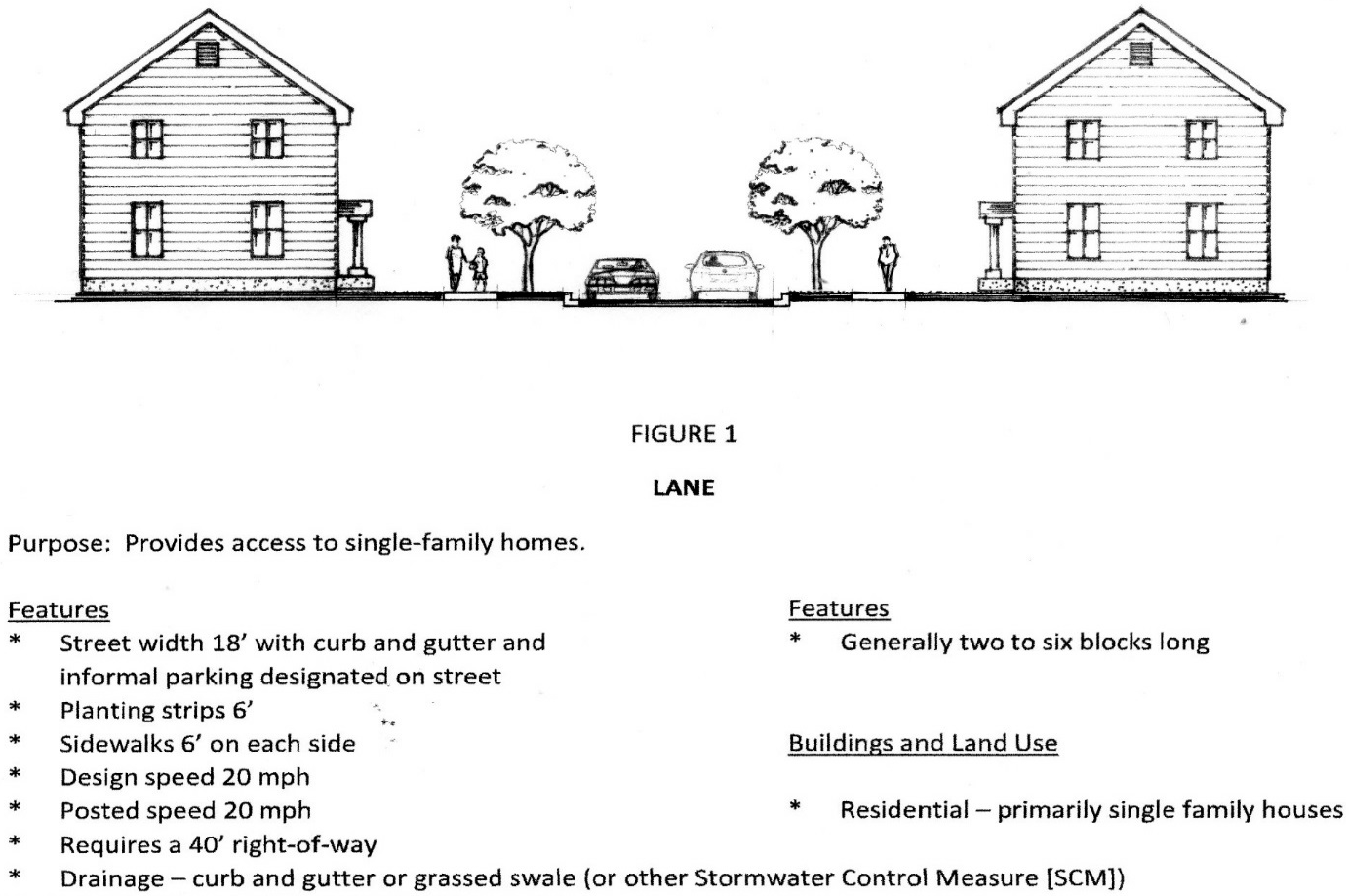
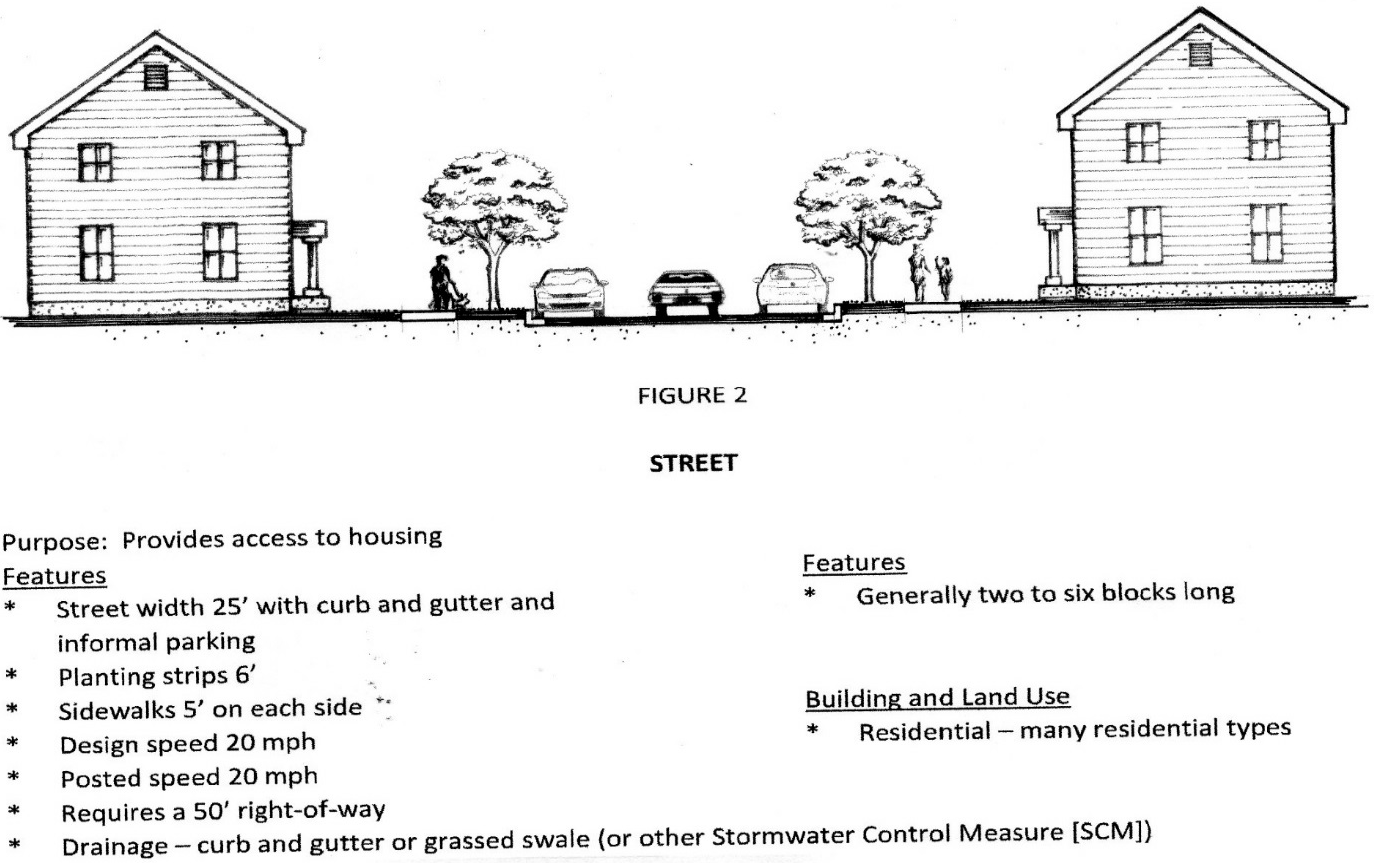
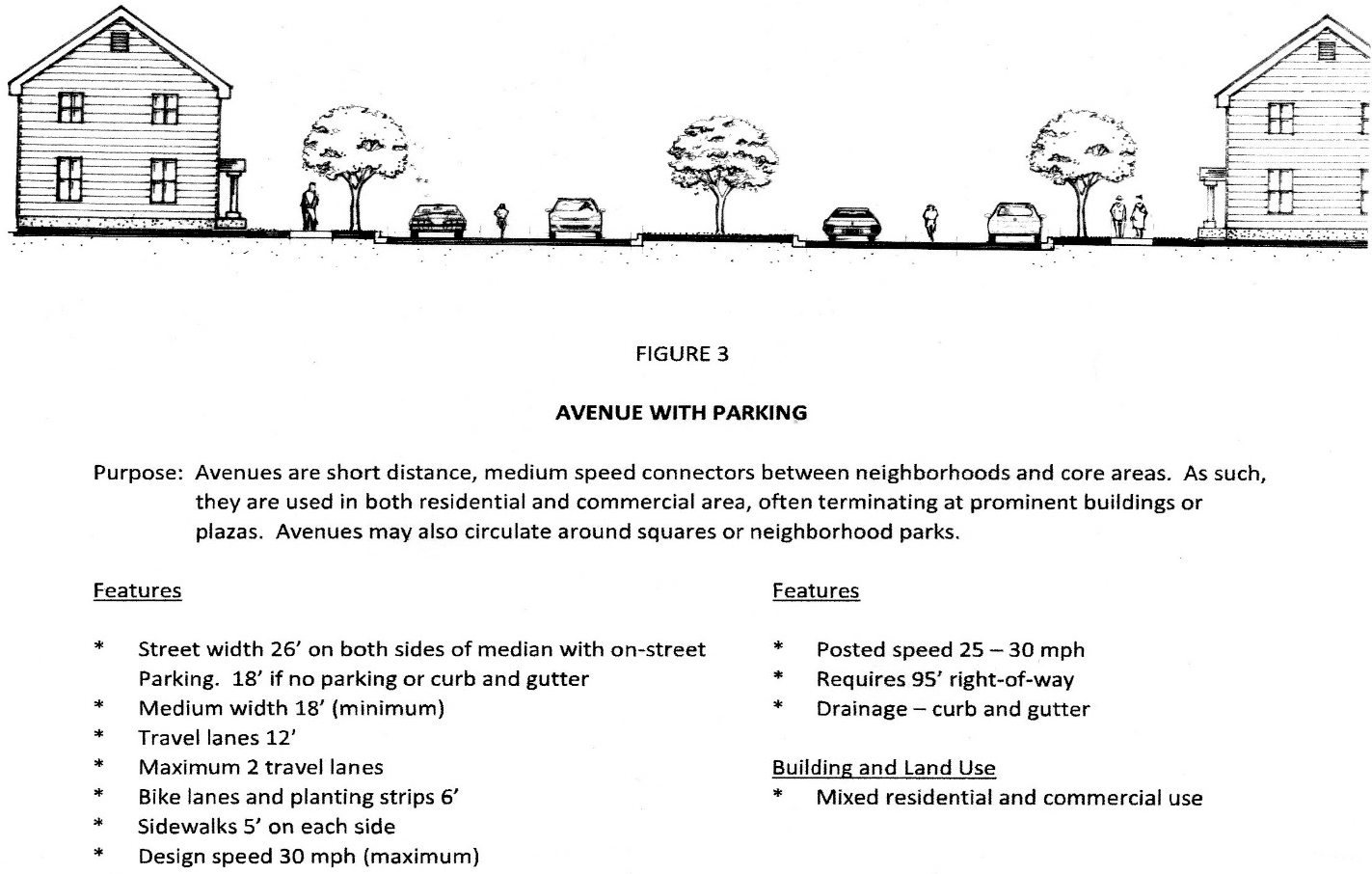
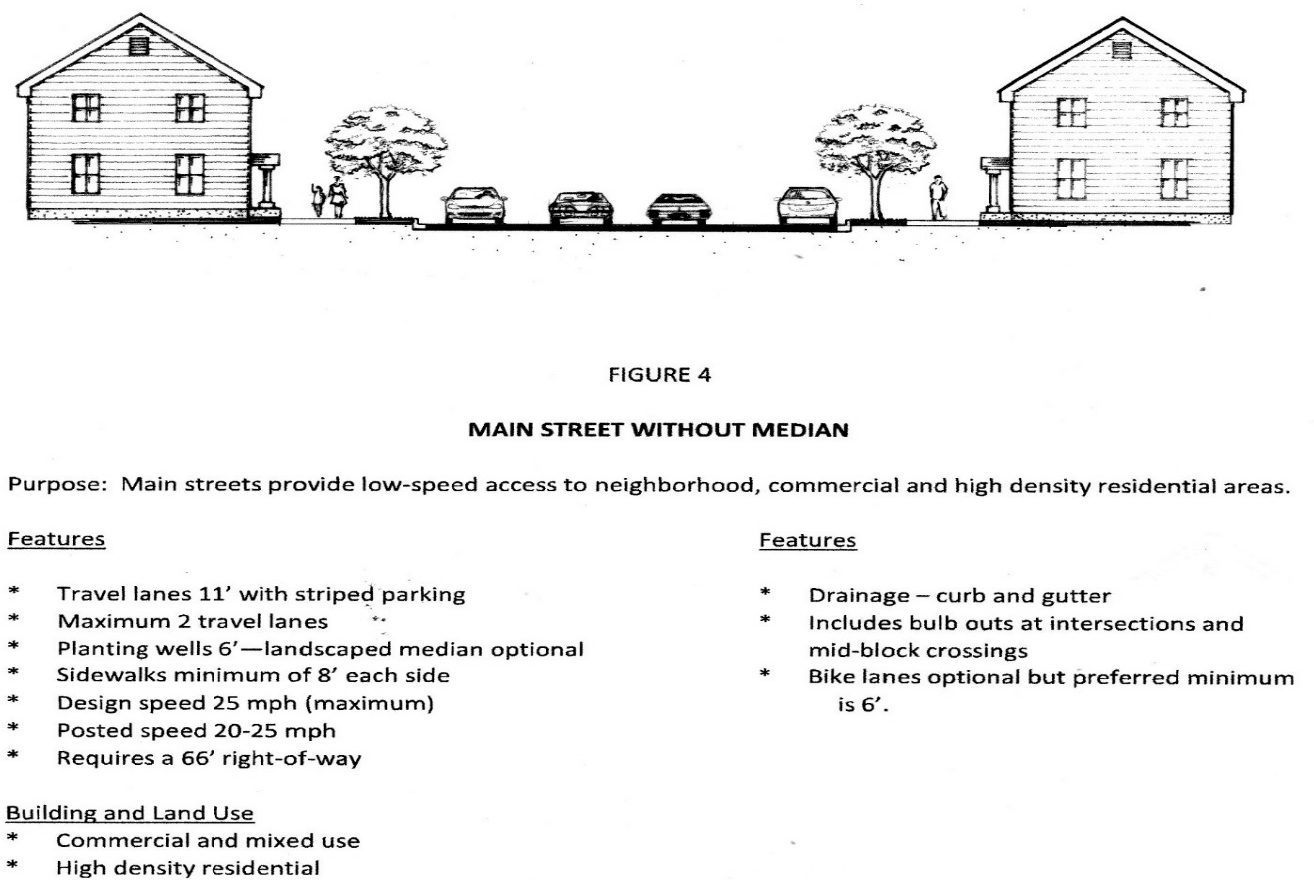
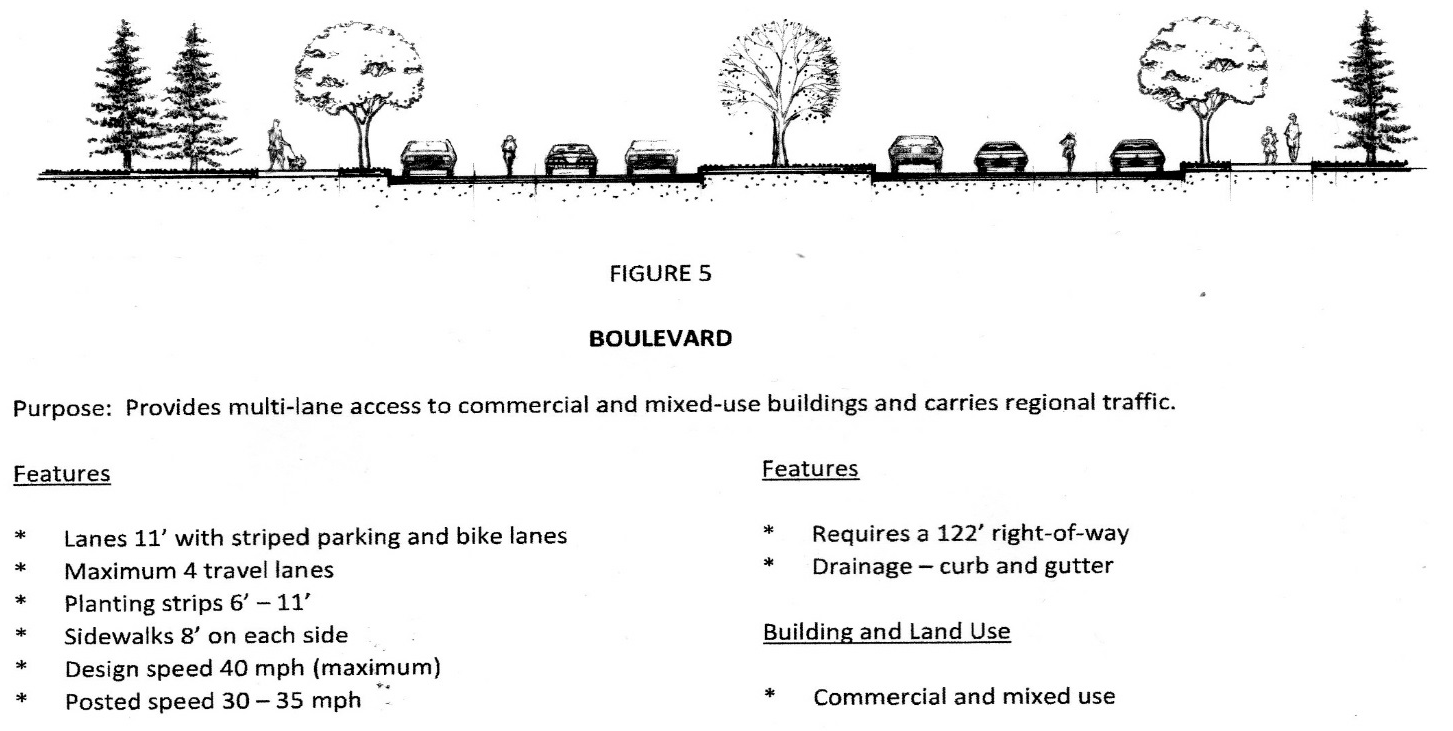
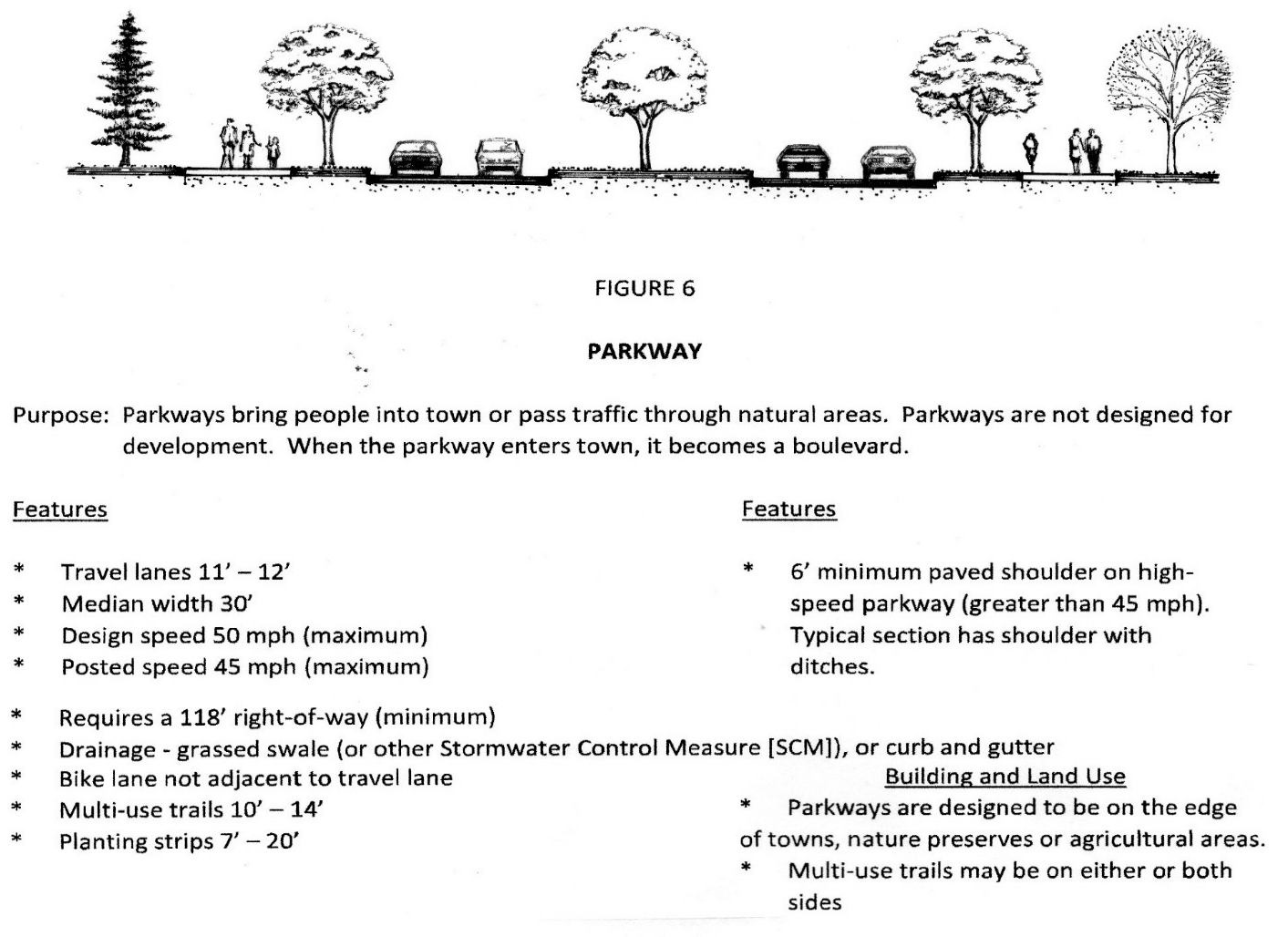
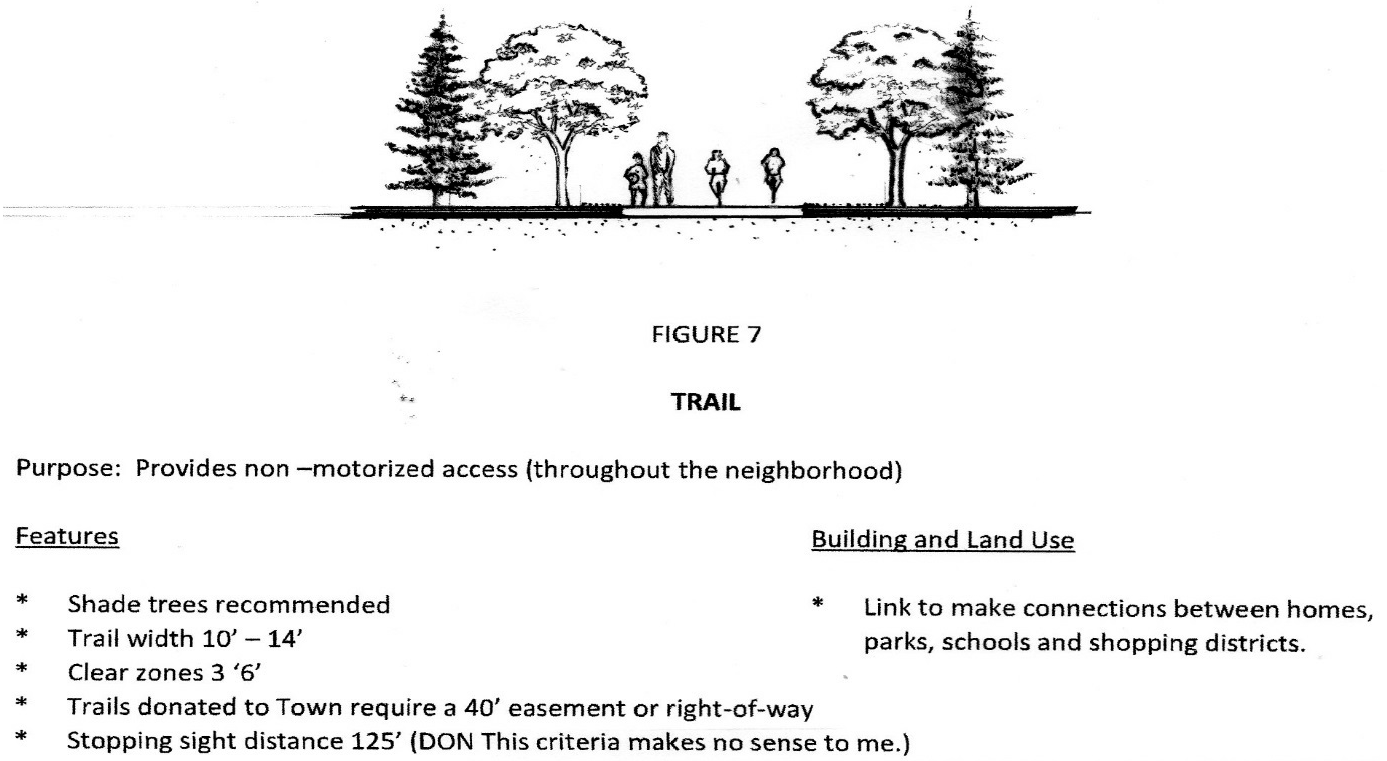
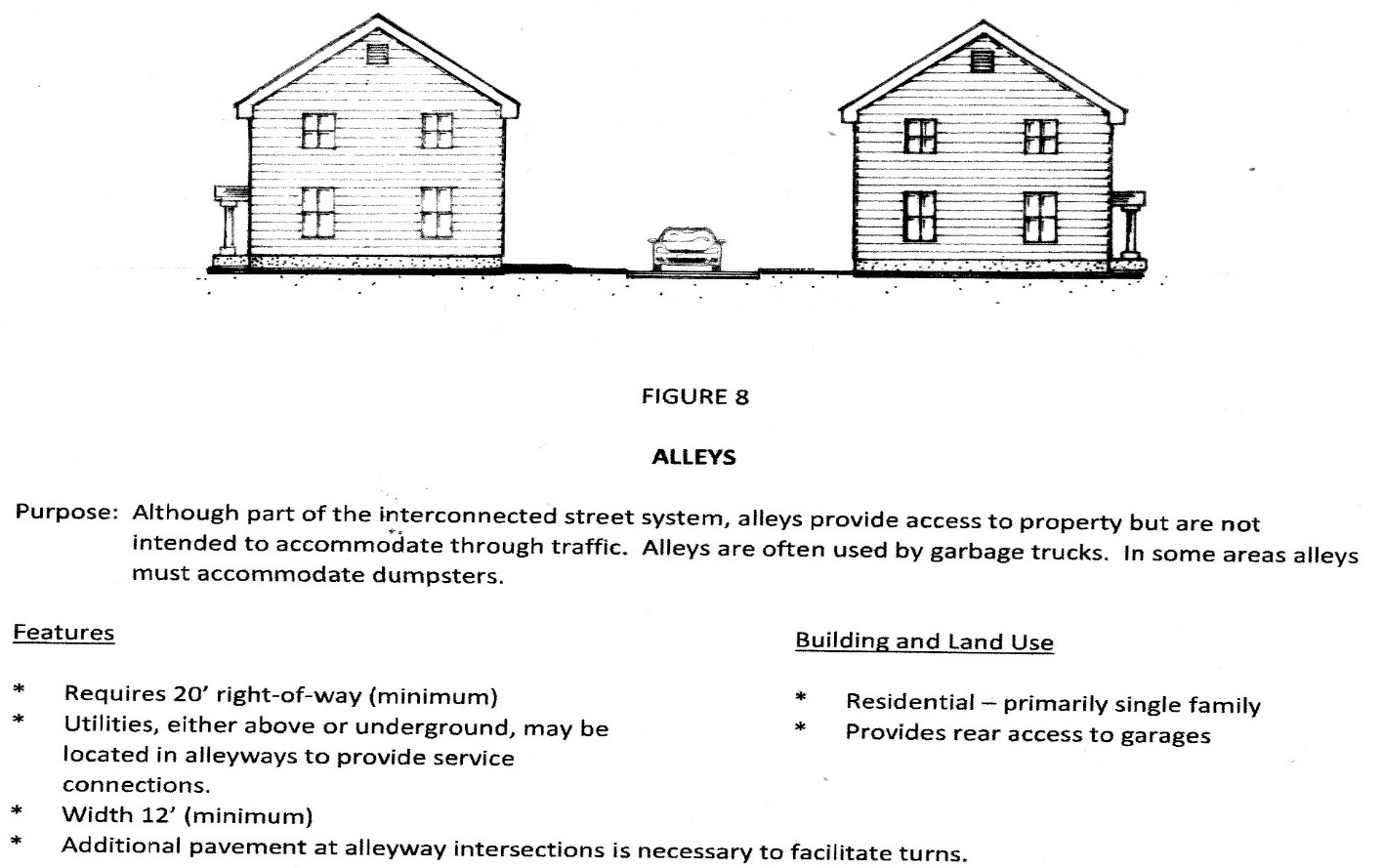
(Ord. No. 2021-64-R, 7-13-21)
Sec. 17-553. - Planned Unit Developments—Business and Industrial.
A.
Purpose.
1.
Business Planned Unit Development ("PUD-B"). The purpose of a PUD-B is to promote the cooperative development of business centers each with adequate off-street parking, to control access points on thoroughfares, to separate pedestrian and automobile traffic, to aid in stabilizing property values, to develop centers of size and location compatible with market potential, to buffer adjacent residential areas with landscaped green spaces and to encourage harmonious architectural treatment of adjacent commercial structures and compatibility between homes and commercial structures.
2.
Industrial Planned Unit Development ("PUD-I"). The purpose of a PUD-I is to promote the establishment of industrial parks, to permit groups of industrial buildings with integrated design and a coordinated physical plan, to encourage recreational facilities within industrial areas and to buffer adjacent residential areas with landscaped green spaces.
B.
Permitted Uses, Dimensional Requirements, Buffer Screens and Parking. Those uses permitted of right or by special use permit in the GB and IB zoning districts shall be permitted in PUD-Bs, and the dimensional requirements (i.e., minimum lot size, building setbacks, building height limitations, etc.), buffer screens and parking requirements for uses in PUD-Bs shall be the same as for uses in the GB or IB zoning districts. Those uses permitted of right (USES PERMITTED BY SUP IN I-1 and I-2 are not permitted) in the I-1 and I-2 zoning district shall be permitted in PUD-Is, and the dimensional requirements (i.e., minimum lot size, building setbacks, building height limitations, etc.), buffer screens and parking requirements for uses in PUD-Is shall be the same as for uses in the I-1 zoning district. Buffer screens and parking requirements may also be varied, provided the Town Council adopts reasonable conditions to protect neighboring properties from potential adverse effects that may arise because of these variations.
C.
Designation of Permanent Common Open Space.
1.
For the purposes of this section, "permanent common open space" shall be defined as any land held and developed as permanent open space or any land dedicated to the public as parks, playgrounds, parkway medians, landscaped green space, schools, community centers or other similar areas held in public ownership or covered by an open space easement. Additionally, open space provided to satisfy the requirements of this subsection shall meet the requirements for "usable open space" set forth in Sections 17-1202C. and D. only.
2.
Designation. No plan for a PUD-B or PUD-I shall be approved unless such plan provides for permanent open space equivalent to five (5) percent of the total area.
D.
Buffer screens. Buffer screens shall be required pursuant to the requirements of Section 17-509 and Appendix C but may be reduced or varied pursuant to App. C, and Section 17-1204 "Flexibility in Administration Authorized." Pursuant to Section 17-1752, "Conditions on Approval of Petition," the Town Council shall adopt any conditions that it finds necessary to further protect surrounding areas from the effects of a reduced screen.
E.
Off-street parking and loading requirements. Off-street parking and loading shall be provided as required in Appendix B and Section 17-505.
F.
Procedure.
1.
PUD-Bs and PUD-Is are permitted only in PUD zoning districts, which are conditional zones.
2.
As part of the ordinances governing any new PUD-B or PUD-I conditional zone, the Town Council may vary or waive the standards and requirements established in this section.
3.
In addition to other considerations, the following criteria shall be considered in the evaluation of an application for a PUD-B or a PUD-I conditional zoning district:
a)
That the proposed development creates a needed business or industrial environment;
b)
That existing or proposed utility and other public services are adequate for the anticipated uses;
c)
That the proposed land uses and other special characteristics of the development can exist in harmony with adjacent areas;
d)
That the adjacent areas can be developed in compatibility with the proposed PUD;
e)
That the proposed PUD will not adversely affect traffic patterns and flow in adjacent areas; and
f)
That the PUD is in general conformity with the Town's Comprehensive Land Use Plan.
4.
Land Use Plan. In addition to or as part of the materials submitted to satisfy the requirements of Section 17-1750, "Plans and Other Information to Accompany Petition," all applications for a PUD-B or PUD-I conditional zoning district shall be accompanied by a Land Use Plan prepared by a licensed engineer or a licensed architect and which shall include, but not be limited to, the following:
a)
If there are to be any residential units within the PUD, the numbers and types of residential dwelling units, including density, setbacks and the delineation of non-residential areas;
b)
Designation/delineation of applicable zoning district designations; i.e., I-1 or I-2. The zoning district designations will determine which standards will govern development. For example, an area designated I-1 will be governed by the standards of the I-1 district;
c)
Planned primary and secondary traffic circulation patterns showing proposed and existing rights-of-way and easements;
d)
Common open space and recreation areas to be developed or preserved in accordance with this section. The peripheral boundary setback shall be indicated;
e)
Preliminary (sketch) plans for water, sanitary sewer, storm sewer, natural gas, and electric utilities;
f)
The delineation of areas to be constructed in sections, showing acreage;
g)
Soil maps prepared according to the United States Department of Agriculture cooperative soil survey standards as published in the Johnston County Soil Survey;
h)
Boundary survey of the tract showing courses and distances and total acreage, including zoning, land use, and lot lines of all contiguous property;
i)
Existing vegetation;
j)
U.S. Clean Water Act Section 404 wetland areas and any other nonregulated wetland areas of significance;
k)
Flood hazard areas including base flood elevation;
l)
Topographic contours at a maximum of ten-foot intervals showing existing grades;
m)
Site data including vicinity sketch, north arrow, engineering scale ratio, title of development, date of plan, name and address of owner/developer and person or firm preparing the plan;
n)
Any other information as may be required by the Planning Board or staff;
o)
Proposed phasing and timing of the PUD; and
p)
Each proposed development phase shall be specifically titled/referenced by number and/or name.
5.
Additional Information Required. In addition to the Land Use Plan and those items that are or may be required by Section 17-1750, "Plans and Other Information to Accompany Petition," the developer shall be required to submit to the Administrator the following information and any other information that may be reasonably required by the Town Council:
a)
If necessary, a draft of the proposed protective covenants whereby the developer proposes to regulate land use and otherwise protect the proposed development;
b)
A draft of any proposed incorporation agreement and a draft of any bylaws or easement declarations concerning maintenance of recreational and other common facilities; and
c)
Data on the market potential necessary to support the location of the site and the size of uses in any planned development.
G.
Expiration of Conditional Zoning District. Construction of a PUD-B or PUD-I must begin within one (1) year of the establishment of the conditional zoning district in which the development will be located. If all work authorized by the rezoning ceases for a continuous period of one (1) year after work has commenced, then the zoning of the tract shall automatically revert to the zoning in effect at the time the conditional zoning district was established. Upon the request of the developer submitted prior to expiration of the time to begin construction, the Board of Commissioners may grant one-year extensions on the time to begin construction.
(Ord. No. 2021-64-R, 7-13-21)
Sec. 17-554. - Retail centers, shopping centers and shopping malls.
See also Section 17-524, "Building Design, Exterior Standards."
A.
Retail centers, shopping centers and shopping malls require a special use permit.
B.
Shopping Centers.
1.
Parking for customers and employees of a shopping center shall be provided on site.
2.
Shopping centers must be built on tracts having a minimum area of three (3) acres.
C.
Shopping malls may include offices and satellite structures that are served by the mall road network.
D.
Outparcels. For the purposes of this chapter, outparcels are considered part of a retail center or shopping center and must conform to the signage ordinances applicable to the shopping center. Outparcels established prior to adoption of this ordinance, however, are not considered part of a retail center or shopping center and, thus, are not subject to those uniform signage regulations. See Section 17-1308 "Completion of Non-conforming Projects."
(Ord. No. 2021-64-R, 7-13-21)
Sec. 17-555. - Roadside stands.
A.
Roadside stands are limited to the sale of the following: produce, including fruits and vegetables; horticultural uses such as nursery stock, shrubs, trees and flowers; and other farm goods such as honey, Christmas trees and pumpkins. Prepared food may not be sold from a roadside stand. Food trucks are not "roadside stands."
B.
A roadside stand must satisfy the following requirements:
1.
The operator of the stand must submit a sketch plan to receive a zoning permit for the operation of the stand.
2.
No electrical wiring or plumbing for the stand may be installed without a building permit or a certification by the Building Inspector that the proposed work is exempt from the requirements of the North Carolina State Building Code.
3.
A stand must not obstruct the clear view of intersecting streets, and a stand may not be an obstruction to traffic.
4.
The stand location must not present any significant negative effects upon the surrounding environmental quality or natural resources or encroach upon any public street or right-of-way. The Administrator may require that a special use permit be sought for any proposed stand that, in the opinion of the Administrator, may have significant negative effects upon the surrounding environmental quality or natural resources.
5.
If the stand operator is someone other than the owner of the land upon which the stand is to be sited, the stand operator must obtain written permission from the property owner to operate the stand.
(Ord. No. 2021-64-R, 7-13-21)
Sec. 17-556. - Sexually oriented business.
A.
Sexually oriented businesses include but are not limited to adult movie theaters, live adult entertainments, massage parlors, adult hotels and motels, adult novelty retail, or adult bookstores; See use group 31.000 in the Table of Permissible Uses (see Section 17-410).
B.
Location of Sexually Oriented Businesses.
1.
No sexually oriented business shall be located within one-thousand (1,000) feet of another sexually oriented business.
2.
No sexually oriented business may be located within one-thousand (1,000) feet of a nursery, public or private school, day care, church or other religious institution.
3.
No sexually oriented business may be located within eight-hundred (800) feet of a residential district or residence.
4.
For the purpose of enforcing this section, distances shall be measured from the exterior wall of the sexually oriented business to the closest business wall of the building (residence, church or school) or residential zoning district line if the closest residential property is not developed.
C.
Landscaping. Sexually oriented businesses shall be screened by at least a Type B, landscape buffer and/or "street yard" as described in section Appendix C, Table 1. Additionally, the area of landscaping shall be at least fifteen (15) feet wide with a mix of vegetation types and shall incorporate a wall, fence or other physical barrier wherever possible and advantageous to the interest of protected adjoining properties. Notwithstanding the foregoing, the landscaping and screening shall be designed to completely shield a sexually oriented business from adjoining properties.
D.
Signs. Notwithstanding the provisions of Article XI, "Signs," the signage for sexually oriented businesses shall be limited as follows:
1.
There may be no more than one (1) wall sign per business.
2.
The wall sign may be no larger than twenty (20) square feet.
E.
Neon lighting outside of the permitted sign face is not allowed.
(Ord. No. 2021-64-R, 7-13-21)
Sec. 17-557. - Sidewalk dining.
Sidewalk dining shall be permitted provided the Town enters an agreement with the North Carolina Department of Transportation ("Department") as set forth in G.S. § 136-27.4, which defines "sidewalk dining activities" as serving food and beverages from a restaurant abutting State right-of-way to customers seated in the State right-of-way. The agreement pursuant to G.S. § 136-27.4 shall provide that:
A.
Tables, chairs, and other furnishings shall be placed a minimum of six (6) feet from any travel lane.
B.
Tables, chairs, and other furnishings shall be placed in such a manner that at least five (5) feet of unobstructed paved space of the sidewalk, measured from any permanent or semi-permanent object, remains clear for the passage of pedestrians and provides adequate passing space that complies with the Americans with Disabilities Act.
C.
Tables, chairs, and other furnishings shall not obstruct any driveway, alleyway, building entrance or exit, emergency entrance or exit, fire hydrant or standpipe, utility access, ventilations areas, or ramps necessary to meet accessibility requirements under the Americans with Disabilities Act.
D.
The maximum posted speed permitted on the roadway adjacent to the right-of-way to be used for sidewalk dining activities shall not be greater than forty-five (45) miles per hour.
E.
The restaurant operator shall provide evidence of adequate liability insurance in an amount satisfactory to the Town, but in no event in an amount less than the amount specified by the Town under G.S. § 160A-485 as the limit of the local government's waiver of immunity or the amount of Tort Claim liability specified in G.S. § 143-299.2, whichever is greater. The insurance shall protect and name the Department of Transportation and the Town as additional insureds on any policies covering the business and the sidewalk activities.
F.
The restaurant operator shall provide an agreement to indemnify and hold harmless the Department or the Town from any claim resulting from the operation of sidewalk dining activities.
G.
The restaurant operator shall provide a copy of all permits and licenses issued by the State, county or Town, including health and ABC permits, if any, necessary for the operation of the restaurant or business, or a copy of the application for the permit if no permit has been issued. This requirement includes any permits or certificates issued by the county or the Town for exterior alterations or improvements to the restaurant.
H.
The restaurant operator shall cease part or all sidewalk dining activities to allow construction, maintenance, or repair of any street, sidewalk, utility, or public building, by the Department, the Town government, its agents or employees, or by any other governmental entity or public utility.
I.
Any other requirements deemed necessary by the Department, either for the Town or a component of the State highway system.
In the event the Town is given the administrative right to permit sidewalk dining activities pursuant to G.S. § 136-27.4, the Town may impose additional requirements on a case-by-case basis, and nothing in this section requires the Town to issue or maintain any permit for sidewalk dining activities if, in the opinion of the Town Council, such activities cannot be conducted in a safe manner.
(Ord. No. 2021-64-R, 7-13-21)
Sec. 17-558. - Solar energy generating facility, accessory.
Solar collectors shall be permitted as an accessory use to new or existing structures or facilities in accordance with Section 17-405, subject to the following:
A.
Roof-Mounted Solar Systems. The collector surface and amounting devices for roof-mounted solar systems shall not extend beyond the exterior perimeter of the building on which the system is mounted or built.
1.
Pitched Roof-Mounted Solar Systems. For all roof-mounted systems other than a flat roof, a drawing shall be submitted showing the location of the solar panels.
2.
Flat Roof-Mounted Solar Systems. For flat roof applications, a drawing shall be submitted showing the distance to the roof edge and any parapets on the building.
B.
Ground-Mounted Solar Systems. Ground-mounted solar systems (accessory) shall meeting the minimum zoning setback for the zoning district in which it is located.
C.
Approved Solar Components. Electric solar components shall have a UL listing.
D.
Compliance with Building and Electrical Codes. All solar collector systems shall be in conformance with the International Building Code with North Carolina amendments. Compliance with Other Regulations. All solar collector systems shall comply with all other applicable regulations.
(Ord. No. 2021-64-R, 7-13-21)
Sec. 17-559. - Solar farms.
A solar farm developed as a principal use shall be permitted in accordance with Section 17-410, Permitted Use Table, subject to the following:
A.
Setbacks. Solar farms shall meet the minimum zoning setbacks for the zoning district in which located.
B.
Height. Fifteen (15) feet maximum for solar arrays.
C.
Visibility.
1.
Solar farms with panels located at least one hundred fifty (150) feet from an adjacent public street right-of-way shall not require screening.
2.
Solar farms with panels located less than one hundred (100) feet from an adjacent public street right-of-way, a residentially zoned property, or a property currently utilized for residential purposes must be screened by the buffer required in Appendix C containing at least a continuous screen of evergreen vegetation intended to be at least six (6) feet high and three (3) feet thick at maturity.
D.
Application Requirements. A site plan is required in accordance with Article VI.
1.
Installation and Design.
a)
Approved Solar Components: Electric solar energy system components must have a UL listing and must be designed with anti-reflective coating(s).
b)
Compliance with Building and Electrical Code: All solar farms shall meet all requirements of the International Building Code with North Carolina amendments
2.
Decommissioning. A decommissioning plan signed by the party responsible for decommissioning and the land owner (if different) addressing the following shall be submitted with the permit application.
a)
The anticipated life span of the solar farm.
b)
The estimated decommissioning costs in current dollars.
c)
The method for ensuring that funds will be available for decommissioning and restoration.
d)
Defined conditions upon which decommissioning will be initiated (i.e., end of land lease, no power production for twelve (12) consecutive months, or other).
e)
Removal of all non-utility owned equipment, conduit, structures, fencing, roads and foundations. This includes the removal of solar panels/arrays, buildings, cabling, electrical components, and any other associated facilities above or below grade that were installed as a part of the solar collector (farm) facility.
f)
Removal of all graveled areas and access roads unless the landowner requests in writing for the roads to stay in place.
g)
Restoration of the property to condition prior to development of the solar farm, including replacement of top soil removed or eroded and revegetation of any cleared areas with warm season grasses that are native to the area, unless requested in writing by the landowner not to revegetate due to other planned uses of the property.
h)
The time frame for completion of the decommissioning activities, which shall be no more than ninety (90) days from the date that electricity is no longer generated or construction or reconstruction on the facility ceases, or other date as determined by the Administrator.
i)
Description (or copy) of any agreement with the landowner(s) regarding decommissioning.
j)
The party responsible for decommissioning.
k)
Plans for ensuring that the decommissioning plan is current and up to date.
3.
After approval of the Special Use Permit by the Town Council, but prior to issuing a certificate of zoning compliance by the Administrator, the applicant must provide to the Administrator a certified cost estimate and performance guarantee for decommissioning. The performance guarantee must be in the form of a surety or performance bond that renews automatically, including a minimum sixty-day notice to the Planning Department prior to cancellation, is approved by the Administrator and is from a company on the U.S. Department of Treasury's Listing of Certified Companies. The amount of the performance guarantee must be one-and-one-half (1½) times the decommissioning cost minus the estimated salvageable value of the components or fifty thousand dollars ($50,000.00), whichever is greater. Estimates for decommissioning the site and salvage value shall be determined by a N.C. licensed general contractor or professional engineer. A new estimate and a new bond certificate must be submitted to the Planning Department every year verifying that the bond is still an adequate amount to ensure compliance with the ordinance and to ensure that it has been properly renewed. The full amount of the bond must remain in full force and effect until the solar farm is decommissioned and any necessary site restoration is complete.
After approval of the Special Use Permit but prior to the issuance of the certificate of zoning compliance the decommissioning plan shall be recorded in the Johnston County Register of Deeds Office and recorded copy given to the Administrator. If the decommissioning plans are modified a copy of the modified plan as recorded in the Johnston County Registry shall be provided to the Administrator. If the ownership of the solar farm changes, the new owner must provide an updated signed decommissioning plan as recorded at the Johnston County Registry to the Administrator within thirty (30) days of the ownership change.
4.
The landowner, tenant or solar farm operator shall notify the Planning Department when the site is abandoned and when the site is restored according to the decommissioning plan.
5.
The performance guarantee shall be released by the Administrator once the site is restored as provided in the approved decommissioning plan and inspected by Planning Department and/or Johnston County Inspections Department staff.
6.
Before the final electrical inspection, provide the deed book and page number showing that the decommissioning plan is recorded in the Johnston County registry.
E.
Compliance with Building and Electrical Code - All solar farms shall meet all requirements of the International Building Code with North Carolina Amendments, or other applicable North Carolina code(s).
(Ord. No. 2021-64-R, 7-13-21)
Sec. 17-560. - Storing or maintaining of merchandise for sale, lease, or trade on property in commercial zoning districts.
A.
Merchandise that is intended to be sold, leased, or traded as the primary land use on property located in a commercial zoning district, or on property otherwise designed to serve a commercial purpose, shall not be stored or maintained on the exterior of a primary or accessory use structure. All merchandise must be fully stored and maintained on the inside of a structure at all times, with the following exceptions:
1.
Large or bulk items, which by nature of their size or purpose cannot be practically stored or maintained indoors. These items include, but are not limited to, vehicles, prefabricated structures, power equipment, etc.
2.
Naturally grown or derived goods such as produce, potted plants, or seasonal items specifically related to a recognized holiday or season.
3.
Items displayed in conjunction with town sponsored special events.
4.
Items displayed by merchants holding a valid North Carolina State Sales Tax Identification Number for the business which is displaying the merchandise. Furthermore, these merchants may only display a portion of merchandise on the same lot as a primary use structure having been licensed, permitted, and devoted to a similar purpose.
B.
Any retail, wholesale or rental use that involves that the display of goods outside a fully enclosed building (Table of Permissible Uses # 2.200) shall store the goods inside a fully enclosed structure when the use is not open for business.
(Ord. No. 2021-64-R, 7-13-21)
Sec. 17-561. - Swimming pools.
All public, commercial or private outdoor swimming pools of three (3) feet or more in depth, either above ground or below ground, and of either permanent or temporary construction shall meet the following requirements in addition to setbacks and other requirements specified elsewhere.
A.
The setback for an above ground swimming pool from any lot line equals the required setback for accessory structures in the district in which it is located plus one (1) foot for each foot over five (5) of pool height. The additional setback for an in-ground pool shall be at least two (2) feet.
B.
A fence to be erected to a minimum height of four (4) feet to completely enclose all sides of the pool not bounded by a building. A self-latching gate of equal height shall be installed and securely fastened when the pool is not in use. Fences shall be constructed to the standard in the applicable Building Code.
C.
Contractor must have construction fence/silt fence surrounding an in-ground pool area (construction site) while under construction.
D.
Mechanical equipment may encroach up to five (5) feet into a side or rear yard setback, must be screened from view, and must not be located in a street yard.
(Ord. No. 2021-64-R, 7-13-21)
Sec. 17-562. - Temporary emergency, construction or repair residences.
A.
Temporary residences used on construction sites of nonresidential premises shall be removed immediately upon the completion of the project.
B.
Permits for temporary residences to be occupied pending the construction, repair, or renovation of the permanent residential building on a site shall expire within six (6) months after the date of issuance, except that the Administrator may renew such permit for one (1) additional period not to exceed three (3) months if he or she determines that such renewal is reasonably necessary to allow the proposed occupants of the permanent residential building to complete the construction, repair, renovation, or restoration work necessary to make such building habitable.
(Ord. No. 2021-64-R, 7-13-21)
Sec. 17-563. - Temporary health care structures (granny pod).
Temporary health care structures, sometimes called "Granny Pods," are permitted under the authority of G.S. § 160D-915. Granny pods are permitted as an accessory use to single family residences in accordance with Section 17-410, subject to the following standards:
A.
Structures must be transportable residential units assembled off-site and built to the standards of the State Building Code. It must be no more than three hundred (300) gross square feet and must not be placed on a permanent foundation.
B.
The accessory structure must comply with all setbacks and any maximum floor area ratio limits that apply to the primary residential structure. The structure shall be connected to any public water, sewer, and electric utilities serving the property or water and/or sewer systems approved by Johnston County Environmental Health Department. Only one (1) accessory temporary family care structure is allowed per lot. No signage regarding the presence of the structure is allowed. The structure must be removed within sixty (60) days after care-giving on the site ceases.
C.
A zoning permit is required to be obtained prior to installation. Evidence of compliance may be required as part of the permitting and annual permit renewal, including an annual renewal of the doctor's certification of impairment. The Town may make periodic inspections at times convenient to the caregiver to assure on-going compliance.
D.
The caregiver must be at least eighteen (18) years old and must be a first or second degree relative of the impaired person (a spouse, parent, grandparent, child, grandchild, aunt, uncle, nephew, or niece). A legal guardian of the impaired person also qualifies.
E.
In the IN district, granny pods shall only be permitted for single-family residentially used property.
(Ord. No. 2021-64-R, 7-13-21)
Sec. 17-564. - Temporary storage facility (portable storage unit).
Temporary storage facilities shall be subject to the following regulations:
A.
Dumpsters or temporary storage facilities incidental to a natural disaster, or construction with a valid building permit shall be exempt from these regulations.
B.
Temporary storage facilities intended to be in place for greater than thirty (30) days shall require a zoning permit.
C.
Except for Light Industrial (I-1) and Heavy Industrial (I-2) zoning districts, temporary storage facilities may be placed on a property a maximum of one hundred twenty (120) day period during one (1) calendar year from its initial placing on the property.
D.
No temporary storage facility shall encroach into any public right-of-way.
E.
No temporary storage facility may encroach into vehicular use areas where such encroachment reduces the amount of parking below the minimum permitted amount.
F.
No temporary storage facility shall be used as living space and/or a permanent accessory building.
(Ord. No. 2021-64-R, 7-13-21)
Sec. 17-565. - Tiny house.
A tiny house shall be allowed in accordance with Section 17-410 Table of Permitted Uses, subject to the following:
A.
A tiny house shall comply with the N.C. State Building Code, N.C. Modular Construction Program or U.S. H.U.D. Manufactured Housing Construction Program. Tiny houses on trailers or wheels are Recreational Vehicles (See the N.C. Department of Insurance Recreational Park Trailer Requirements.)
B.
A tiny house must be situated on a permanent foundation with secure wind resistant tie downs and connected to public water, sewer and electric utilities.
C.
If the tiny house is constructed on a travel chassis with wheels, the wheels must be removed for permanent location on a foundation.
D.
A tiny house must comply with all UDO requirements for the zoning district(s) in which it is located. Tiny house development shall not be built following the manufactured home park requirements.
(Ord. No. 2021-64-R, 7-13-21)
Sec. 17-566. - Traffic impact analysis.
A.
Purpose. A traffic impact study shall be required for any use generating more than three thousand (3,000) trips per day, as defined by the American Association of State Highway Officials (AASHTO), or if the proposed driveway access points are within one thousand (1,000) feet or a highway interchange; in the vicinity of a high accident location on a major arterial highway, involve a median crossover, involve an active road construction project or are otherwise required by the NCDOT. The study will enable the Town of Selma to assess the impact of a proposed development on the Town street system and the State highway system, when that system is at or near capacity, and when a safety problem exists. Its purpose is to ensure that proposed developments do not adversely affect the Town street system and State highway system and to identify any traffic problems associated with access from the site to the existing transportation network. The purpose of the study is also to identify solutions to potential problems and to present improvements to be incorporated into the proposed development.
B.
Applicability.
1.
Except as described below, a traffic impact study shall be required for any special use permit, conditional rezoning, or major subdivision application that is estimated to generate more than three thousand (3,000) trips per day.
2.
Notwithstanding subsection B.1. above, the Town Council may require any special use permit, conditional rezoning or major subdivision application to be accompanied by a traffic impact study when a road capacity or safety issue exists. If one (1) is required, the Town will notify the applicant of the reason for the requirement.
3.
Special use permits, conditional rezoning or major subdivisions that produce more than three thousand (3,000) trips per day may be exempted from the requirements to prepare and submit a traffic impact study if:
a)
A traffic impact study has previously been prepared for this development, the study is no more than five (5) years old and the Administrator determines that the data remains accurate and sufficient to allow the Town to effectively evaluate the project.
b)
There is to be no change in land use or density that would increase travel.
c)
There is to be no change in access to the external street system.
d)
Material is submitted to demonstrate that traffic created by the proposal when added to existing traffic will not result in a need for transportation improvements.
The Town Council, with a recommendation from the Planning Board, will review material submitted in support of an exemption and will determine from that material whether to grant the exemption. All exemptions shall be concurred with by the NC DOT District Office. If an exemption is granted, documentation of the exemption will be submitted as part of the staff recommendation.
4.
If the project is reviewed as a Planned Unit Development, only one (1) traffic impact study is required, irrespective of the proposed number of phases, unless revisions are proposed that would increase traffic or change access.
C.
Capacity Analysis of the Existing System. Traffic impact studies shall utilize the level of service ("LOS") methodology described in the table and graphic labeled "Levels of Service" on the pages that follow.
An indication of the adequacy of the existing street system is a comparison of traffic volumes versus the ability of the streets to move traffic freely at a desirable speed. The ability of a street to move traffic freely, safely, and efficiently with a minimum delay is controlled primarily by the spacing of major devices utilized. Thus, the ability of a street to move traffic can be increased by restricting parking and turning movements, using proper sign and signal devices, and by the application of other traffic engineering strategies.
Capacity is the maximum number of vehicles which have a "reasonable expectation" of passing over a given section of roadway, during a given time period under prevailing roadway and traffic conditions. The relationship of traffic volumes to the capacity of the roadway will determine the level of service (LOS) being provided. Six (6) levels of service have been selected for analysis purposes. They are given letter designations from A to F with LOS A representing the best operating conditions and LOS F the worst. For a visual representation, see the figure labeled "Levels of Service" at the end of this subsection.
Levels of Service
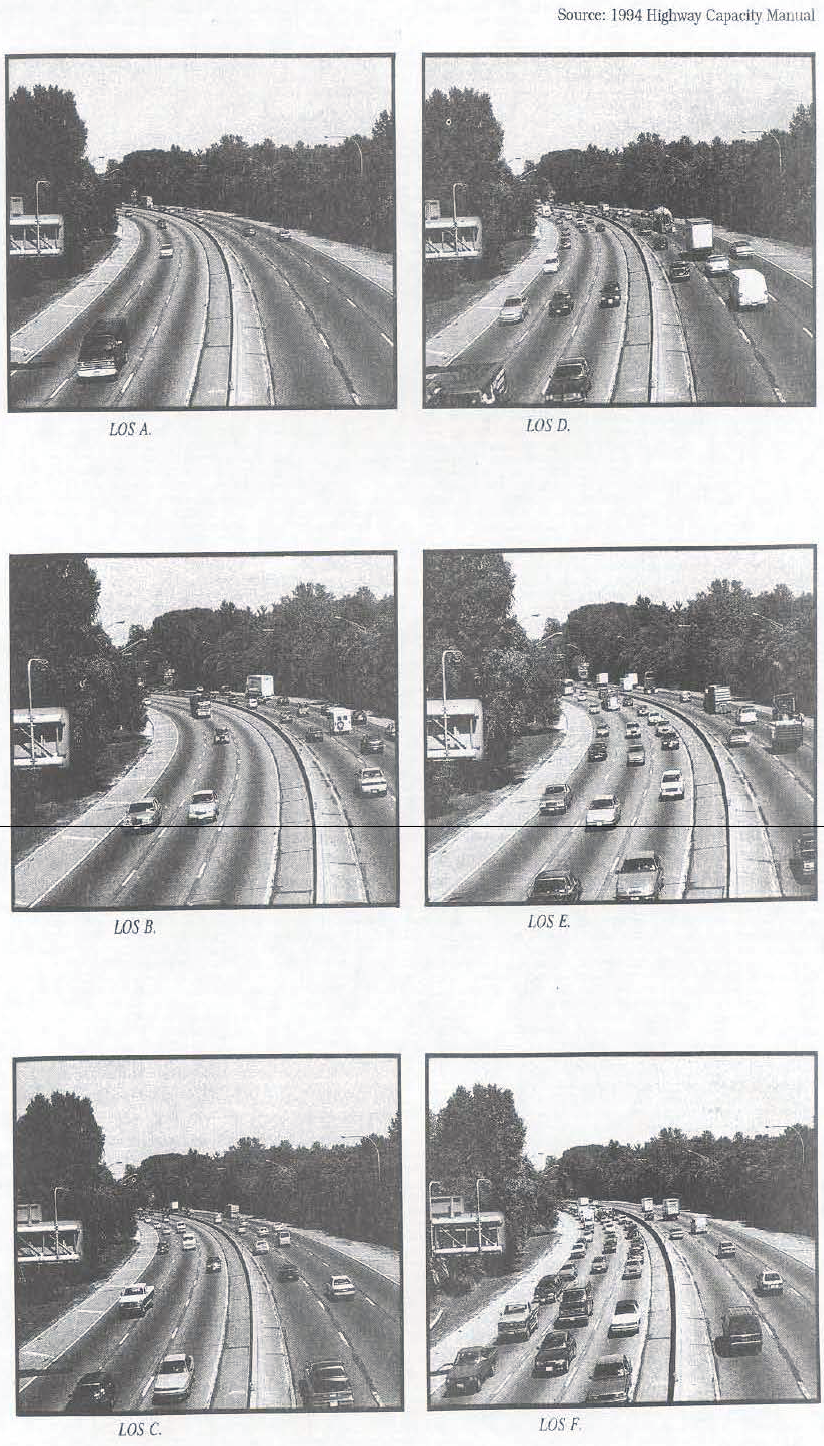
D.
General Requirements and Standards. The traffic impact study shall contain the following information:
1.
General Site Description. The site description shall include the size, location, proposed land uses, number of units and gross square footage by land use, existing land use and zoning, construction staging, and completion date of the proposed land development to the extent known or able to be described at the time the application is prepared. If the development is residential, types of dwelling units and number of bedrooms shall also be included. A brief description of other major existing and proposed land developments within the study area shall be provided. The general site description shall also include probable socioeconomic characteristics of potential site users to the extent that they may affect the transportation needs of the site (i.e., number of senior citizens).
2.
Transportation Facilities Description. The description shall contain a full documentation of the proposed internal and existing external transportation system. This description shall include proposed internal vehicular, bicycle, and pedestrian circulation; all proposed ingress and egress locations; all internal roadway widths and rights-of-way, pedestrian crossings, curb cuts, turn lanes, parking conditions and traffic channelization; safety or wayfinding signs; and any traffic signals or other intersection control devices at all intersections within the site.
The report shall describe the entire external roadway system within the study area. Major intersections in the study area and all intersections or driveways adjacent to or within eight hundred (800) feet of the site shall be identified and sketched. All existing and proposed public transportation services and facilities within one (1) mile of the site shall also be documented. Future highway improvements, including proposed construction and traffic signalization, shall be noted. All proposed traffic signals shall be approved by the NC DOT District Office. This information shall be obtained from North Carolina's Transportation Improvement Program and the thoroughfare plan. Any proposed roadway improvements due to proposed surrounding developments shall also be noted.
3.
Existing Traffic Conditions. Existing traffic conditions shall be documented for all roadways and intersections in the study area. This shall include documentation of traffic accident counts as recorded by the NC DOT, Division of Motor Vehicles Traffic Records Branch; Town law enforcement; and the NC Highway Patrol. Existing traffic volumes for average daily traffic, peak highway hour(s) traffic, and peak development generated hour(s) traffic, if appropriate, shall be recorded. Manual traffic counts at major intersections in the study area shall be conducted, encompassing the peak highway and development generated hour(s), if appropriate, and documentation shall be included in the report. Existing average daily or peak—hour traffic counts made within one (1) year of the study date may be used subject to land use patterns and development rates when approved by the Administrator. A volume/capacity analysis based upon existing volumes shall be performed during the peak highway hour(s) and the peak development generated hour(s), if appropriate, for all roadways and major intersections expected to be impacted by development traffic. Levels of service shall be determined for each signalized intersection or roadway segment analyzed above.
This analysis will determine the adequacy of the existing roadway system to serve the current traffic demand. Roadways and/or intersections experiencing levels of service E or F shall be noted as congestion locations.
4.
Transportation Impact of the Development. Estimation of vehicular trips to result from the proposed development shall be completed for the average weekday, the average daily peak hours of highway travel in the study area, and if appropriate, the peak hour of traffic generation by the development. Vehicular trip generation rates to be used for this calculation shall be obtained from an accepted, current source such as "Trip Generation" (Institute of Transportation Engineers, Seventh Edition, 1987 as amended or superseded). These development generated traffic movements, as estimated, and the reference source(s) and methodology followed shall be documented. These generated volumes shall be distributed to the study area and assigned to the existing roadways and intersections throughout the study area. Documentation of all assumptions used in the distribution and assignment phase shall be provided. All average daily traffic link volumes within the study area shall be shown graphically. Peak hour turning movement volumes shall be shown for signalized and other major intersections, including all access points to the development. Pedestrian and bicycle volumes at school crossings and as otherwise applicable shall be reported. Any characteristics of the site or use that will cause trip generation to vary significantly from average rates available in published sources shall be documented, including such factors as diversion of passerby traffic, internal capture, staggered work hours, or use of transit.
5.
Analysis of Transportation Impact. The total traffic demand that will result from construction of the proposed development shall be calculated. This demand shall consist of the combination of the existing traffic, traffic generated by the proposed development, and traffic due to other developments and other growth in traffic that would be expected to use the roadway at the time the proposed development is completed. If staging of the proposed development is anticipated, calculations for each stage of completion shall be made. This analysis shall be performed for average weekday traffic, the peak highway hour(s) and, if appropriate, peak development generated hour(s) for all roadways and major intersections in the study area. Volume/capacity calculations shall be completed for all major intersections. It is usually at these locations that capacity is most restricted. All access points, major entrances and driveways, and pedestrian crossings shall be examined for adequate sight distance and for the necessity of installing traffic signals. The traffic signal evaluation shall compare the projected traffic and pedestrian volumes to the warrants for traffic signal installation.
6.
Conclusions and Recommended Improvements. Levels of service for all roadways and signalized intersections serving ten (10) percent or more of peak-hour project traffic shall be reported. All roadways and/or signalized intersections showing a level of service below C shall be considered deficient, and specific recommendations for the elimination of these problems shall be listed. Recommendations should address the need for pedestrian related facilities/improvements. This listing of recommended improvements shall include, but not be limited to, the following elements: internal circulation design, site access location and design, connectivity and short cuts, safety and traffic calming, street crossing design and placement, external roadway and intersection design and improvements, traffic signal installation and operation including signal timing, transit service improvements and consideration of the needs of special pedestrian populations. All physical roadway improvements shall be shown on the site plan.
E.
Submission and Implementation. The traffic impact study will be submitted to the Administrator within the applicable time frame indicated below. The Administrator will review the study as part of the development review process. Recommendations will be incorporated into the approval process as indicated below.
1.
Special Use Permits.
a)
Time of Submission. The traffic impact study shall be submitted as a part of the application for the special use permit, or at such other time as authorized by the Administrator.
b)
Review and Implementation. The Administrator and such other agencies or officials as may appear appropriate in the circumstances of the case shall review the impact study to analyze its adequacy in solving any traffic problems that will occur due to the proposed use.
The Planning Board and Town Council shall consider the impact study and the analysis of the impact study before the application is approved or denied. The Board or Council may decide that certain improvements on or adjacent to the site or on roadways or intersections for which the improvements are needed to adequately and safely accommodate site traffic are mandatory for special use permit approval and may make these improvements conditions of approval, may require modifications in the use, or may deny the permit, provided that such conditions, requirements or denial shall conform in all respects with Article VI, Part 1 of this chapter.
2.
Subdivision Plat Approval.
a)
Time of Submission. The traffic impact study will be submitted prior to or with the preliminary plat.
b)
Review and Implementation. The Administrator and such other agencies or officials as may appear appropriate in the circumstances of the case shall review the impact study to analyze its adequacy in solving any traffic problems that will occur due to development proposed on the plat. The approval-issuing authority may find that certain improvements on or adjacent to the site or on roadways or intersections for which the improvements are needed to adequately and safely accommodate site traffic are mandatory for subdivision plat approval, and it may require that these improvements be undertaken and depicted on the approved plat.
3.
Conditional Zoning District Approval.
a)
Time of Submission. The traffic impact study shall be submitted at the time the conditional zoning district petition is submitted, or at such other time as authorized by the Administrator.
b)
Review and Implementation. The Administrator and such other agencies or officials as may appear appropriate in the circumstances of the case shall review the impact study to analyze its adequacy in solving any traffic problems that will occur due to development proposed on the site plan. The Town Board may find that certain improvements on or adjacent to the site or on roadways or intersections for which the improvements are needed to adequately and safely accommodate site traffic are mandatory for conditional zoning district approval, and it may request that reasonable and appropriate conditions be attached to approval of the petition in conformance with Section 17-1752, "Conditions on Approval of Petition."
(Ord. No. 2021-64-R, 7-13-21)
Sec. 17-567. - Wireless telecommunications facilities.
A.
Purpose and Intent. The purpose of this section to facilitate the deployment of necessary telecommunication services that are the least visibly intrusive type of installation that is not proven to be commercially or technologically impracticable and that will effectively prohibit the applicant from accomplishing its intended goal(s).
B.
Siting Hierarchy and Preferences.
1.
The following list indicates the Town's preferences for facility locations, in descending order of preference:
• Antennae co-location on an existing tower
• Concealed (stealth) Antennae of Existing Building/Structure
• New concealed (stealth) tower fifty (50) feet in height or less
• New concealed (stealth) towers over fifty (50) feet in height
• Building-Mounted Antennae and/or Tower
• New Freestanding Non-Stealth Towers (monopoles)
• New Freestanding Non-Stealth Towers (all other types)
2.
The following list indicated the Town's preference in descending order for the zoning district locations for new freestanding towers and new towers over fifty (50) feet in height:
• Industrial 2 (I-2)
• Industrial 1 (I-1)
• Interstate Business (I-B)
• General Business (GB)
• Residential - Agriculture (RA)
• Neighborhood Business (NB)
• Institutional and Office (IN)
• Low Density Residential R-20 (R-20)
• Central Business (CB)
• Transitional Residential (TR)
• Mobile Home Park Residential (MHP)
• High Density Residential (R-8)
• Medium Density Residential (R-10)
C.
What Information the Town May Consider in Evaluating Applications.
1.
When considering applications for wireless telecommunications facilities, the Town shall comply with the requirements of G.S. Ch. 160D, Article 9, Pt. 3, "Wireless Telecommunications Facilities," the Telecommunications Act of 1996, as amended (specifically 47 U.S.C. § 332 and § 1455), and the Reports and Orders of the Federal Communications Commission, including 09-99 and 14-153.
2.
When considering a permit application for a wireless telecommunications facility, the Town shall not require information about and the permit-issuing authority shall not consider the following:
a)
An applicant's business decisions about its designed service;
b)
Customer demand for an applicant's service;
c)
The quality of an applicant's service to or from a site;
d)
The radio frequency emissions that will be produced by the facility.
3.
When considering an application for a wireless telecommunications facility that requires a special use permit, the permit issuing authority may consider the following:
a)
Issues pertaining to public safety, aesthetics, landscaping, structural design, setbacks, and fall zones;
b)
Information or materials directly related to an identified public safety, zoning or other land development issue, including evidence that no existing or previously approved structure can reasonably be used for the antenna placement instead of the construction of a new tower; that residential, historic, and designated scenic areas cannot be served from outside the area; or that the proposed height of a new tower or initial antenna placement or a proposed height increase of a modified tower, replacement tower, or collocation is necessary to provide the applicant's designed service; and
c)
For permit applications for new wireless facilities, whether it is reasonably feasible to collocate new antennas and equipment on an existing structure or structures within the applicant's search ring. Collocation on an existing structure is not reasonably feasible if the applicant shows by verifiable technical evidence that the collocation is technically or commercially impractical or the owner of the existing structure is unwilling to enter into a contract for such use at fair market value.
D.
Additional Approval Standards and Processes.
1.
Streamlined Process for Colocation Applications. Qualified applications for the collocation of wireless telecommunications facilities shall be entitled to streamlined processing. Streamlined processing means that the application shall be reviewed for conformance with applicable site plan and State Building code requirements but that shall not otherwise be subject to zoning requirements or public hearing requirements. Streamlined processing shall be completed within forty-five (45) days of the town's receipt of a completed application. The Town shall provide written notice that an application is incomplete within forty-five (45) days of the receipt of the application. To qualify for streamlined processing, the new facility shall either:
a)
Not exceed the number of wireless telecommunications facilities previously approved for the wireless support structure on which the collocation is proposed and meet all the other requirements of the original approval; or
b)
Meet the following requirements:
1)
The collocation does not increase the overall height and width of the tower or wireless support structure to which the wireless facilities are to be attached;
2)
The collocation does not increase the ground space area approved in the site plan for equipment enclosures and ancillary facilities;
3)
The wireless telecommunications facilities in the proposed collocation comply with applicable regulations, restrictions, or conditions, if any, applied to the initial wireless facilities placed on the tower or other wireless support structure;
4)
The additional wireless facilities comply with all federal, State and local safety requirements; and
5)
The collocation does not exceed the applicable weight limits for the wireless support structure.
2.
Maximum Tower and Antennae Height, Non-Residential Buildings.
E.
Additional Standards for Facilities in the Public Rights-of-way. Wireless telecommunication facilities may be placed is a publicly-owned right-of-way if all the following standards are met:
1.
The public entity controlling the rights-of-way consents to the encroachment in writing; and
2.
No antennae may be discernable as antennae by the average person from more than 250 feet, unless the standard of subsection E below applies. The stricter standard shall apply.
3.
Wireless installations shall be on poles that meet or exceed current NESC standards and the wind and ice loading requirements of ANSI 222 Version G.
4.
No open lattice work towers are permitted.
5.
For Town-controlled rights-of-way:
a)
The Town Council approves the encroachment; and
b)
The established encroachment fees are paid; and
c)
If requested by the Town, the structure is designed to accommodate other reasonable attachments by the Town's electric utility department; and
d)
Unless proven unfeasible by clear and convincing evidence, in lieu of installing new poles, any wireless installation in the PROW shall replace a pre-existing distribution pole, secondary pole or streetlight.
E.
In the R-20, R-10, R-8, MHP, TR, IN and CB zoning districts and in all other zoning districts on properties located within five hundred (500) feet of any R-20, R-10, R-8, MHP, TR, IN and CB zoning district (measured from the base of the tower or other supporting structure to the zoning district line) wireless facilities shall meet all the following standards:
1.
Poles must not be metal or concrete. Poles must not conduct electricity.
2.
Poles shall be no taller than fifty (50) feet.
3.
All supporting structures and antennae must be a "concealed design" including all cabling and antennae inside a "hollow pole."
4.
All radios, network equipment and batteries shall be enclosed in a pedestal cabinet near the pole; or in a pole-mounted cabinet or under a pole mounted shroud.
5.
Cabinets shall be consistent in size and be no larger than standard NC DOT streetlight signal cabinets.
Pursuant to 47 U.S.C. § 332(c)(7), all applications for wireless telecommunications facilities, other than collocation applications, shall be acted on by the Town Council or Administrator within one hundred fifty (150) days of the town's receipt of the completed application.
(Ord. No. 2021-64-R, 7-13-21)
Sec. 17-568. - Wind energy generating facility.
Wind energy generating facilities (both as a principal and an accessory use) designed to supplement other electricity sources shall be permitted as an accessory use in accordance with Sections 17-405 and 17-436, subject to the following standards:
A.
A wind energy generator shall be set back from all property lines a distance equal to one (1) linear foot for every foot of height of the highest structure that is part of the facility or the minimum setback for the zoning district, whichever is greater. Maximum height of wind turbines shall be consistent with the requirements of the underlying zoning district. The height shall be measured from the ground to the highest point of the prop.
B.
A wind turbine may not be located between the front wall of the primary structure and the street.
C.
Rotor blades on wind turbines shall maintain at least fifteen (15) feet of clearance between their lowest point and the ground.
D.
The installation and design of the wind energy generator (accessory) shall conform to applicable industry standards, including those of the American National Standards Institute.
E.
The visual appearance of wind energy generators shall:
1.
Be constructed of a corrosion resistant material that will not fade, show rust spots, or otherwise change the appearance because of exposure to the elements and be a non-obtrusive color such as white, off-white or gray.
2.
Not be artificially lighted, except to the extent required by the Federal Aviation Administration or other applicable authority that regulates air safety.
(Ord. No. 2021-64-R, 7-13-21)
Sec. 17-569. - Wrecking, junk and recycling facility.
A.
Recycling operations conducted wholly within an enclosed building are permitted subject to the following requirements:
1.
All aspects of the recycling operation, except the movement of delivery trucks on and off the site, shall be conducted entirely within an enclosed building. Further, nothing related to the operation, including but not limited to recyclable materials, waste and scrap materials, fluids, and chemicals, may be stored outside. All such items shall be stored within a fully enclosed building;
2.
These facilities may accept materials for recycling that have a commercial value, including but not limited to junked cars, scrap metal and other items typically sent to salvage yards and junk yards. These facilities shall not accept any construction and demolition debris that cannot and will not be recycled, wood debris or other materials suitable for a land-clearing and inert debris landfill, or hazardous wastes;
3.
Materials may be collected for onsite recycling or for shipping to an off-premises location;
4.
All fluids, chemicals, parts or other components that are removed onsite shall be processed and disposed of in strict compliance with applicable federal, State and local laws; and
5.
In addition to the performance standards established in Part 3 of this article and any noise ordinances contained in the Selma Code of Ordinances, no facility shall produce noises that can be heard by persons of ordinary hearing and sensitivity standing at the property line of the lot upon which the recycling operation is located.
B.
Recycling Operations Accessory to a Principal Use. This use is intended to allow businesses that generate large amounts of recyclable materials to process the materials onsite and/or prepare them for shipping elsewhere. An example of this use would be a cardboard breakdown area located behind a grocery store. These operations are subject to the following requirements:
1.
All materials recycled shall be generated exclusively by the principal onsite use. No off-site materials may be accepted or processed; and
2.
The recycling operation shall be fully screened with either a Type C screen, as described in Appendix C, Table 1, or a wooden fence that completely obscures views of the recycling operation from neighboring properties and public rights-of-way.
C.
Consumer Recycling Collection Centers. These facilities are intended to serve as collection points for household recyclables and small amounts of recyclable materials generated by commercial uses, such as discarded paper and cardboard from offices. These operations are subject to the following requirements:
1.
The facility shall serve solely as a collection and transfer station. No processing of recyclable materials may occur onsite;
2.
No tipping fee or other fees may be charged for the collection of recyclable materials. However, a private solid waste company or local government may limit access to the facility to those persons for whom the company or government provides solid waste and recycling services; and
3.
The facility shall be fully screened with either a Type C screen, as described in Appendix C, Table 1, "Description of Screens and Landscaping," or a wooden fence that completely obscures views of the recycling operation from neighboring properties and public rights-of-way.
D.
Industrial Recycling Collection Centers.
E.
Wrecking Junk and Salvage Yard Standards. Wrecking, junk and salvage yards are permitted in the I-2 zoning district, provided that:
1.
Any such yard shall be entirely enclosed by an opaque fence or wall at least six (6) feet in height and no more than sixteen (16) feet in height, which shall be kept properly painted if of a type which requires painting and otherwise maintained in good condition. Landscaping and buffers in accordance with Appendix C, Part 1 shall be maintained along the outside of all fencing.
2.
All motor vehicles and other materials shall be stored or kept in such a manner that will not catch or hold water in which mosquitoes may breed and so that they will not constitute places in which rats, mice, or other vermin may be harbored, reared or propagated.
3.
All such yards shall be maintained in a sanitary condition at all times so as not to be a menace to the public health or safety.
4.
No more than two (2) driveways are permitted on any single road frontage, subject to and permitted by N.C. Department of Transportation, if applicable.
(Ord. No. 2021-64-R, 7-13-21)
Sec. 17-570. - Recreational vehicle parks.
A.
Establishment of a Recreational Vehicle Park. All Recreational Vehicle Parks, as defined in 17-200, shall comply with the following requirements.
B.
Minimum Size of Parks. All recreational vehicle parks shall be at least three (3) acres in size.
C.
Minimum Size of Spaces. Every space shall consist of a minimum of two thousand (2,000) square feet.
D.
Dimensional Requirements. All recreational vehicles parks must adhere to the following dimensional requirements:
1.
Minimum structure separation for recreational vehicles: Ten (10) feet.
2.
Minimum separation from other structures: Twenty (20) feet.
3.
Minimum exterior property boundary setback: Twenty (20) feet.
E.
Office Unit Usage. Within a recreational vehicle park, one (1) commercial modular office unit may be used as an administrative office.
F.
Toilet Facilities. Each park shall provide a central structure or structures that will supply separate toilet facilities and showers for both sexes, to be maintained and kept in good repair at all times.
G.
Commercial Establishments. Establishments of a commercial nature including food stores and coin operated laundry may be permitted in recreational vehicle parks subject to the following conditions:
1.
Such establishments shall be located, intended, and designed to serve only the trade or service needs of persons residing in the park.
2.
Establishments shall be accessory to the use and character of the park.
3.
Access to the commercial establishment must be from interior streets.
4.
Off-street parking for commercial establishments shall be provided at a ratio of one (1) space for every four hundred (400) square feet of gross floor area.
H.
Special Flood Hazard Area. Any recreational vehicle parked in a Special Flood Hazard Area shall comply with the requirements of 17-1004(B)(6).
I.
Designated Tent-Only Camping. Recreational vehicle parks may allow for designated tent-only camping sites, not to exceed twenty (20) percent of the park's gross area.
J.
Permanent Parking/Storage. Permanent parking and storing of a recreational vehicle shall not be permitted in the park.
K.
Manufactured Homes. No manufactured home used for residential purposes shall be permitted in a recreational vehicle park.
L.
List of all Homes and Owners. The operator of a recreational vehicle park shall keep an accurate register containing a list and description of all homes located in the park and owner thereof.
M.
Landscape Requirements. All parks shall adhere to the Landscape Requirements set forth in Appendix C.
N.
Connection. A safe, adequate, and convenient central water supply and sewage system connection must be provided for each park space. All recreational vehicle parks must be connected to central public water and sewer systems or state approved private central water and sewer systems.
O.
Refuse Collection. Park owners shall make arrangements for a private vendor or other sources to collect refuse, either from individual spaces or from centrally located dumpster sites. All dumpster locations are to be fenced and screened from view. Individual refuse receptacles shall be waterproof and rodent proof.
P.
Rights-of-Way, Easements, etc. The location and dimensions of all proposed and existing rights-of-way, utility or other easements, riding trails, pedestrian or bicycle paths, natural buffers, and areas if any to be dedicated to public use with the purpose of each stated shall be referenced on the site plan.
Q.
Access to Public-Maintained Road. No individual recreational vehicle space shall have direct access to a public-maintained road.
R.
Driveways. All driveways must be constructed of all-weather material, such as bituminous or concrete or equal pursuant to Appendix B. Recreational vehicle parks shall have direct access to a public maintained road and shall have a secondary exit.
S.
Attendant Required. All RV parks shall have a twenty-four-hour attendant on duty for security and emergency purposes.
T.
Evacuation Plan. Each Recreational Vehicle Park in a community's flood prone area shall have an evacuation plan indicating alternate vehicular access and escape routes.
(Ord. No. 2024-012-O, § 1, 10-8-24)
Sec. 17-580. - Noise.
A.
No 4.000 (manufacturing) classification use in any permissible zoning district may generate noise that tends to have an annoying or disruptive effect upon (i) uses located outside the immediate space occupied by the 4.000 use if that use is one (1) of several located on a lot, or (ii) uses located on adjacent lots.
B.
Except as provided in subsection F. of this section, the table set forth in subsection E. of this section establishes the maximum permissible noise levels for 4.000 classification uses in the I-1, I-2 and IB districts. Measurements shall be taken at the boundary line of the lot where the 4.000 classification use is located, and as indicated, the maximum permissible noise levels vary according to the zoning of the lot adjacent to the lot on which the 4.000 classification use is located.
C.
A decibel is the measure of a unit of sound pressure. Since sound waves having the same decibel level "sound" louder or softer to the human ear depending upon the frequency of the sound wave in cycles-per-second (i.e., whether the pitch of the sound is high or low), an A-weighted filter constructed in accordance with the specifications of the American National Standards Institute, which automatically takes account of the varying effect on the human ear of different pitches, shall be used on any sound level meter taking measurements required by this section. And accordingly, all measurements are expressed in dB(A) to reflect the use of this A-weighted filter.
D.
The standards established in the table set forth in subsection E. are expressed in terms of the Equivalent Sound Level (Leq), which must be calculated according to the prescribed formulae for the Town's noise measuring equipment.
E.
Table of Maximum Permitted Sound Levels, dB(A).
F.
Impact noises are sounds that occur intermittently rather than continuously. Impact noises generated by sources that do not operate more than one (1) minute in any one-hour period are permissible up to a level of ten (10) dB(A) more than the figures listed in subsection E. above, except that this higher level of permissible noise shall not apply from 7:00 p.m. to 7:00 a.m. when the adjacent lot is zoned residential. The impact noise shall be measured using the fast response of the sound level meter.
G.
Noises resulting from temporary construction activity that occurs between 7:00 a.m. and 7:00 p.m. shall be exempt from the requirements of this section.
(Ord. No. 2021-64-R, 7-13-21)
Sec. 17-581. - Vibration.
A.
No 4.000 (manufacturing) classification use in any permissible business district may generate any ground-transmitted vibration that is perceptible to the human sense of touch measured at (i) the outside boundary of the immediate space occupied by the enterprise generating the vibration if the enterprise is one (1) of several located on a lot, or (ii) the lot line if the enterprise generating the vibration is the only enterprise located on a lot.
B.
No 4.000 classification use in a I-1, I-2 or IB district may generate any ground-transmitted vibration more than the limits set forth in subsection E. of this section. Vibration shall be measured at any adjacent lot line or residential district line as indicated in the table set forth in subsection E. of this section.
C.
The instrument used to measure vibrations shall be a three-component measuring system capable of simultaneous measurement of vibration in three (3) mutually perpendicular directions.
D.
The vibration maximums set forth in subsection E. of this section are stated in terms of particle velocity, which may be measured directly with suitable instrumentation or computed based on displacement and frequency. When computed, the following formula shall be used:
PV = 6.28 F x D, where:
PV = Particle velocity, in inches-per-second,
F = Vibration frequency, in cycles-per-second, and
D = Single amplitude displacement of the vibration, in inches.
The maximum velocity shall be the vector sum of the three (3) components recorded.
E.
Table of Maximum Ground-Transmitted Vibration.
F.
The values stated in subsection E. above may be multiplied by two (2) for impact vibrations, i.e., discrete vibration pulsations not exceeding one (1) second in duration and having a pause of at least one (1) second between pulses.
G.
Vibrations resulting from temporary construction activity that occurs between 7:00 a.m. and 7:00 p.m. shall be exempt from the requirements of this section.
(Ord. No. 2021-64-R, 7-13-21)
Sec. 17-582. - Odor.
A.
For the purposes of this section, the "odor threshold" is defined as the minimum concentration in air of a gas, vapor, or particulate matter that can be detected by the olfactory systems of a panel of healthy observers.
B.
No 4.000 classification use in any district may generate any odor that reaches the odor threshold, measured at:
1.
The outside boundary of the immediate space occupied by the enterprise generating the odor if the enterprise is one (1) of several located on a lot, or
2.
The lot line if the enterprise generating the odor is the only enterprise located on a lot.
(Ord. No. 2021-64-R, 7-13-21)
Sec. 17-583. - Air pollution.
A.
Any 4.000 classification use that emits any "air contaminant," as defined in G.S. § 143-213, shall comply with applicable state standards concerning air pollution, as set forth in G.S. Ch. 143, Art. 21B, "Air Pollution Control," and as set forth in any administrative rules promulgated by the North Carolina Department of Environmental Management.
B.
No zoning or special use permit may be issued with respect to any development covered by subsection A. above until the North Carolina Department of Environmental Quality Division of Air Quality has certified to the permit-issuing authority that the appropriate State permits have been received by the developer, or the developer will be eligible to receive such permits and that the development is otherwise in compliance with applicable air pollution laws.
(Ord. No. 2021-64-R, 7-13-21)
Sec. 17-584. - Disposal of liquid wastes.
No 4.000 classification use in any district may discharge any waste contrary to the provisions of G.S. Ch. 143, Art. 21, "Water and Air Resources," and as set forth in any administrative rules promulgated by the North Carolina Department of Environmental Management.
(Ord. No. 2021-64-R, 7-13-21)
Sec. 17-585. - Electrical disturbances or interference.
No 4.000 classification use may:
A.
Create any electrical disturbance that adversely affects any operations or equipment other than those of the creator of such disturbance; or
B.
Otherwise cause, create, or contribute to the interference with electronic signals (including, but not limited to, those from television, radio, and cellular telephone equipment) to the extent that the operation of any equipment not owned by the creator of such disturbance is adversely affected.
(Ord. No. 2021-64-R, 7-13-21)
Sec. 17-590. - Long-term maintenance requirements.
A.
Purpose and Intent. The initial building construction or development in a community is usually accomplished after a great deal of planning, designing, and implementation. The time and attention to detail given to the initial construction is often the last concentrated effort regarding the total visual effect of the building and building lot or site. While many property owners establish a periodic maintenance program to keep their property in a visually pleasing, physically safe and sanitary condition, some properties are unkempt and are left to visually or physically decay. The Town Council further finds that well-maintained properties generally contribute to the overall appeal of the town and to higher property values in individual neighborhoods. For these reasons, it has been determined that there is a need to set forth regulations to ensure the continuing maintenance of property within the town.
B.
Scope. This section shall apply to all industrial, commercial and multi-family residential uses and shall apply in addition to, and not in lieu of, any requirements imposed elsewhere by this chapter and/or the Selma Code of Ordinances. This section shall not apply to single-family residential uses. Any property located in an industrial or commercial zoning district shall be presumed to be subject to the requirements of this section, but the Administrator may waive the requirements of this section if the property owner can satisfactorily demonstrate that the primary use of the property is as a single-family residence.
C.
Property Maintenance Standards. Industrial, commercial and multi-family uses shall meet the following standards:
1.
All buildings on a property shall be maintained in a condition to visually appear to be in good repair including but not limited to the condition of the foundation; the exterior paint or finish; the windows and doors; the roof, gutters and down spouts; accessory buildings; and architectural appurtenances such as chimneys and steps.
2.
All solid waste containers stored outside shall be screened to not be visible from public rights-of-way and adjacent properties by means of one (1) or a combination of the following: building positioning; by being placed within a four-sided containment structure made of a material similar in appearance to the exterior finish of the principal building; or by being screened from view by dense vegetative growth. The Administrator may authorize a different screening method if such method will provide a similar level of screening as those methods set forth herein.
3.
All sidewalk, driveway, parking, loading and outside storage areas shall be continuously maintained in a state of good repair without potholes, broken pavement, standing water or other signs of deterioration.
4.
All permanent or long-term outside storage shall be screened from view to not be visible from public rights-of-way. Screening may employ such measures as earth berming, vegetative planting, decorative fencing or building positioning.
5.
All fences, walls, lighting, signs, storage structures, mailboxes, postal boxes, newspaper boxes, and other visual physical improvements or appurtenances shall be maintained in a safe, working order and in good appearance, and in conformance with all applicable codes and ordinances.
(Ord. No. 2021-64-R, 7-13-21)
Sec. 17-591. - Property owners' association.
No final plat, site plan, or special use permit for which a property owners' association will exist shall be approved until all required legal instruments have been approved by the Town. Draft declarations of restrictive covenants may be submitted at the time of preliminary plat or sketch plan review for review and comment by the town's staff. The special use permit required for PUD site plan approval is exempt from this requirement. For a PUD, the property owners' association legal instruments must be submitted and approved as the individual sections/phases of the PUD are approved. For PUDs, the Town staff must approve all legal instruments prior to signature on the final plat for each phase.
(Ord. No. 2021-64-R, 7-13-21)
Sec. 17-592. - Maintenance of common areas and facilities.
A.
Unless the Town requires that common areas, recreational facilities or open space be dedicated to the Town or agrees to accept an offer of dedication voluntarily made by the developer, such common areas, recreational facilities and open space shall remain under the ownership and control of the developer (or his successor) or a homeowners' association or similar organization that satisfies the criteria established in Section 17-592C. If such common areas, recreational facilities and open space are not publicly dedicated, they shall be made available to all residents of the development under reasonable rules and regulations established to encourage and govern the use of such facilities and open space by the residents without payment of separate optional fees or charges other than membership fees in a homeowners' association. Such common areas, recreational facilities and open space may be made available to a limited extent on a fee basis to persons who are not residents of the development where such facilities or open space are located, so long as such use does not become so extensive as to remove the common areas, recreational facilities and open space from the category of an accessory use to a residential development and transform the use to a separate principal use classification.
B.
The person or entity identified in Section 17-592A. as having the right of ownership and control over such common areas, recreational facilities and open space shall be responsible for the continuing upkeep and proper maintenance of the same.
C.
Homeowners' associations or similar legal entities that, pursuant to Section 17-592A., are responsible for the maintenance and control of common areas, recreational facilities and open space, shall be established in such a manner that:
1.
Provisions for the establishment of the association or similar entity is made before any lot in the development is sold or any building occupied;
2.
The association or similar legal entity has clear legal authority to maintain and exercise control over such common areas and facilities;
3.
The association or similar legal entity has the power to compel contributions from residents of the development to cover their proportionate shares of the costs associated with the maintenance and upkeep of such common areas and facilities; and
4.
The association will establish a capital fund for the maintenance and upkeep of common areas and facilities and a method of contributing to that fund which will spread the costs of said maintenance and upkeep to the residents over several years.
5.
There is no property blight, or it is promptly abated. Property blight is defined in the next section.
(Ord. No. 2021-64-R, 7-13-21)
Sec. 17-593. - Description of property blight.
A.
Parking, Storing, or Maintaining Motor Vehicles and Boats. No motor vehicle or boat that has been wrecked, dismantled or disassembled, or any part thereof, or any motor vehicle that is disabled or may not be operated because of the need of repairs or for any other reason shall be parked, stored, or maintained in an area visible from any street for more than seventy-two (72) consecutive hours.
B.
Storing or Maintaining Household Items, Boxes, Lumber, Dirt or Other Debris.
1.
No household item shall be stored or maintained in a carport or area visible from any street for more than seventy-two (72) consecutive hours.
2.
The storage or maintenance of a household item, boxes, lumber, dirt or other debris in a side or rear yard shall either be:
a)
In an accessory building constructed in accordance with the provisions of this chapter; or
b)
In an area that provides for a five-foot setback from any property line and, which is not visible from any street.
3.
No household item, boxes, lumber, dirt or other debris shall be stored, or maintained within five (5) feet of any required building exit, including exit windows.
4.
This section does not prohibit the storage, or maintenance of machinery installed in accordance with the provisions of this code in the rear or side yard setback areas for household or recreational use, furniture designed and used for outdoor activities, or any item stored or kept within an enclosed storage structure.
C.
Activities Prohibited on Property Designed or Used as a Residence.
1.
The following activities on any property designed or used as a residence constitute property blight:
a)
Wrecking, dismantling, disassembling, manufacturing, fabricating, building, remodeling, assembling, repairing, painting, or servicing, in any setback area, of any airplane, aircraft, motor vehicle, special mobile equipment, boat, trailer, machinery, equipment, appliance or appliances, furniture or other personal property.
b)
The use of any motor vehicle for living or sleeping quarters in any place in the city, except in a location lawfully operated as a mobile home park or travel trailer park, subject to the following:
2.
Nothing contained in this section shall be deemed to prohibit bona fide guests of a town resident from occupying a recreational vehicle upon residential premises with the consent of the resident for a period not to exceed seventy-two (72) hours.
3.
Any recreational vehicle so used shall not discharge any waste or sewage into the city's sewer system except through the residential discharge connection of the residential premises on which the recreational vehicle is parked.
4.
Exclusions. This section shall not prohibit the following:
a)
An owner, lessee, or occupant of the property from repairing, washing, cleaning, or servicing of personal property that is owned, leased, or rented by the owner, lessee, or occupant of the property so long as any repairing or servicing performed shall be completed within a seventy-two (72) consecutive-hour period; or
b)
Repairing or servicing of a motor vehicle or part thereof within a completely enclosed building in a lawful manner where it is not visible from the street or other public or private property.
(Ord. No. 2021-64-R, 7-13-21)
Sec. 17-594. - Vacant Properties.
A.
Purpose. The Town finds that the presence of properties exhibiting evidence of vacancy poses special risks to the health, safety, and welfare of the community, and therefore requires heightened regulatory attention. The provisions of this ordinance shall apply to all non-residential and commercial properties within the Commercial Districts. It is the purpose and intent of the Town of Selma Council, through the adoption of this Ordinance, to establish a Vacant Building Registration for all vacant commercial and non-residential properties in the Commercial Districts. Commercial Districts are described in Sec. 17-307 and include Institutional and Office (IN), Neighborhood Business (NB), Central Business (CB), General Business (GB), and Interstate Business (IB).
1.
The purpose of this registration ordinance is to ensure that Owners of vacant properties:
a.
Are identified to the Town and other interested parties;
b.
Establish a point of contact with the Town;
c.
Are aware of the obligations of ownership under relevant codes and regulations; and
d.
Meet minimum standards of maintenance of vacant properties.
2.
The intent of this ordinance is to preserve the integrity of the districts from becoming blighted through a lack of adequate maintenance and security of abandoned and vacant properties, and to prevent the appearance of vacancy or neglect of unoccupied properties.
3.
The Town desires to deter crime and theft of materials, to minimize loss of property value to vacant properties and surrounding occupied properties.
4.
The Town intends to reduce the risk of damage from fire, flooding, or other hazards, and to promote the comfort, happiness, and emotional stability of area residents.
5.
The fee structure established in this ordinance is assessed for the purpose of covering costs incurred by the Town from the regulation of vacant properties, intended to motivate owners to restore and subsequently occupy the properties.
B.
Duties and Responsibilities of the Owner. It is the sole duty and responsibility of the property owners of commercial and/or non-residential premises located within the Commercial Districts to ensure that the properties are maintained to minimize the appearance of vacancy and to prevent the appearance of blight or neglect in accordance with the following sections.
C.
Registration Required. Property owners of commercial and/or non-residential premises located within the Commercial Districts shall be required to register the vacant premises with the Town. The purpose of registration is to identify and document the location of vacant structures to monitor blight, prevent the abandonment and deterioration of structures leading to unsafe conditions, to improve the quality of life for residents, and to promote the economic vitality of the Town. The following requirements for owners of commercial and non-residential properties are as follows:
1.
Any vacant commercial or non-residential property that is expected to be vacant in excess of ninety days must be registered by the owner with the Town of Selma Planning Department. The owner shall register the property with the Town within the 90-day vacancy period unless the owner can provide clear and convincing evidence that the property is not vacant.
2.
For properties that exhibit evidence of vacancy, if registration is not made within ninety days, the Town Planning Director shall send a notice of registration to the owner of record. Registration compliance shall occur within fifteen days of the notice date. Property owners failing to complete the registration shall be subject to violations and penalties as described herein.
D.
General Maintenance of Vacant Properties. All commercial and non-residential properties shall comply with the Town of Selma Ordinance Sec. 17-590., Long Term Maintenance requirements, additionally:
1.
The windows and doors of the building shall be intact, operable, and shall be maintained in a way that does not provide evidence of vacancy, which prohibits the use of coverings of plastic, paper, plywood, or other obscuring material.
2.
The storefronts and facades of buildings shall be maintained in a way that does not provide evidence of vacancy.
3.
All awnings and signs shall be maintained. Signage that appears worn, tattered, or has missing areas shall be in violation.
4.
Interiors visible by the storefront windows, shall be maintained in a way that does not exhibit evidence of vacancy, including trash, debris, stored materials, or goods.
5.
Broken windows shall be replaced or re-glazed. Windows shall not be boarded up, except as a temporary security measure, which must be approved in writing by the Town's Planning Director.
6.
Vacant properties shall have lighting at entrances and exits from dusk to dawn.
E.
Requirements for Property Management for Out-of-Town Owners.
1.
If the property owner's principal address is not local, then a local property management company, business, or resident shall be designated as the point of contact to fulfill the maintenance and security requirements as described herein, together with all other applicable laws.
2.
The requirements set forth may be waived for owners who (1) reliably demonstrate an ability to maintain the property; and (2) have not received any citations for maintenance violations in the previous calendar year. The property owner shall request a waiver at the time of registering the vacant property. Waivers will be considered on a case-by-case basis.
F.
Exemptions. The following buildings shall be eligible for an exemption status from the registration fee:
1.
Buildings with damage resulting from fire or natural disaster. The owner shall have one hundred twenty days to repair or demolish the building. If the repair or demolition cannot be completed within one hundred twenty days, the property owner shall register the property as a vacant building with the Town pursuant to the requirements described herein.
2.
The property is for sale or lease and said listing shall not exceed 2 years. The owner shall provide proof that the building is actively and continuously being marketed through a licensed real estate broker and provide proof of advertising in the area. The listing price for lease or purchase shall not exceed 25% over the assessed value or market rate, said rate shall be verified by an appraisal provided by a licensed appraiser using accepted appraisal standards.
3.
The property is under an active renovation process. Renovations shall not exceed 120 days unless otherwise agreed upon, in writing, by the Town of Selma Planning Department.
G.
Inspections. The Town shall have the authority and the duty to inspect properties subject to this subchapter for compliance and to issue citations for any violations. The County Building Inspection Department or other entities acting for the Town may perform the inspections as an agent for the Town.
H.
Enforcement, Violations, and Penalties.
1.
It shall be unlawful for any owner to be in violation of any of the provisions of this subchapter.
2.
Any person who violates a provision of this subchapter or fails to comply with any order made thereunder and from which no appeal has been taken, or who shall fail to comply with such order as affirmed or modified by appeal, or by a court of competent jurisdiction, within the time fixed herein, shall severally, for each and every such violation and noncompliance respectively, be guilty of a Class 3 misdemeanor, punishable as provided in this chapter.
3.
The imposition of one penalty for any violation shall not excuse the violation or authorize its continuance.
4.
All such persons shall be required to submit an acceptable plan of action to the Town's Planning Director within ten (10) business days from the date of the notice of violation. The plan of action must include but is not limited to the following: a description of the work to be done, by whom, and a specific schedule for the described work. Upon review of the plans and written confirmation of staff approval, work is to commence within fifteen (15) days of written approval. If not otherwise specified, failure to meet any stated condition within ten (10) days of required action shall constitute a separate offense.
5.
If the registration fee is not paid during the appropriate time period, the owner shall be in violation of this ordinance and a lien may be assessed against the property.
I.
Registration Fees. Registration with the Town of Selma shall be for a six-month term and must be renewed every 6 months so long as the property remains vacant. The Registration process starts with the submittal of the application.
1.
Fee Schedule:
a.
Registration for the first 6-month period (1-6 months): $250.00
b.
Registration for the second 6-month period (6-12 months): $500.00
c.
Registration for the third 6-month period (12-18 months): $750.00
d.
Registration for the fourth 6-month period (18-24 months): $1,000.00
2.
Extensions after 2 years will be assessed on a case-by-case basis.
3.
The property owner must maintain liability insurance coverage of at least $250,000.00 for a vacant property. Proof of Insurance is required with the application and shall be provided by the owner when any renewals are submitted.
4.
The interior and exterior of the building shall be inspected by the Town's Planning Director at the time of each registration and renewal.
J.
Appeals. Any property owner aggrieved under this chapter may present an appeal in writing to the Town's Planning Director and then, if not satisfied, appeal to the Town's Board of Adjustment.
K.
Severability. Should any provision of this article be determined or declared invalid by any final court action or by reason of preemptive legislation, the remaining provisions shall remain in full force and effect.
L.
Penalties.
1.
Any violations of the provisions of this chapter for which no specific penalty is provided shall be subject to Sec. 1-12 of the Selma Municipal Code.
2.
Failure to comply with the requirements of this article may result in additional civil penalties which are assessed at fifty dollars per day up to the maximum allowed in the discretion of the Town.
3.
For violations of this chapter, each day that a violation remains in effect shall constitute a separate violation.
(Ord. of 12-07-2023(1))

