
Springfield City Zoning Code
Division 7
Grant Avenue Parkway District Standards
Sec. 36-486.- General provisions.
(1)
GAP district generally. The Grant Avenue Parkway District shall have the boundaries shown on the official zoning map maintained by the department. In case a property is included in two or more subdistricts, and the provisions of which conflict, the provisions of the more restrictive subdistrict shall apply.
(2)
GAP district purpose and intent. The purpose of the GAP - Grant Avenue Parkway District is to regulate the development of the parcels along Grant Avenue Parkway between College Street and Fassnight Park. The GAP district is intended to provide greater flexibility in use by requiring high-quality design that fosters sense of place to promote reinvestment and redevelopment that leverages the new parkway as an asset.
(3)
Establishment of subdistricts.
(a)
Subdistricts generally. The GAP district is comprised of unique areas with varying patterns of development, architectural styles, and visions as established in the City of Springfield Grant Avenue Parkway Corridor Plan. In order to better regulate these areas, the GAP District is further divided into six subdistricts as detailed below. The purpose of the subdistricts is to capitalize on the unique character of each portion of the GAP district and accommodate existing development while encouraging additional opportunities for redevelopment and reinvestment.
(b)
Grant Avenue Parkway District Subdistricts.
1.
Subdistrict A. Subdistrict A, generally located from College Street to Walnut Street at the north end of the GAP district, shall be prioritized for mixed use development. New development in this subdistrict shall complement nearby downtown urban-scale development and provide for the integration and transition of these uses into a more traditional neighborhood form.
2.
Subdistrict B. Subdistrict B, generally located from Walnut Street to Elm Street, is intended to accommodate the renovation of existing residential structures or their conversion to neighborhood-scale home businesses. The subdistrict also accommodates mixed use or multifamily residential development to create a seamless transition to adjacent subdistricts A and C.
3.
Subdistrict C. Subdistrict C, generally located from Elm Street to Mt. Vernon Street is intended to be a local-serving, mixed use neighborhood center that is compatible with the West Central neighborhood. The subdistrict allows for the conversion of existing properties to preserve their historic integrity and extend their economic life by allowing owners to justify expenditures for repairs and modernization.
4.
Subdistrict D. Subdistrict D, generally located from Mt. Vernon Street to Grand Street, is intended to be a mixed residential corridor. This subdistrict is intended to accommodate reinvestment in existing homes and new development of higher density housing types that blend seamlessly with existing nearby residences.
5.
Subdistrict E. Subdistrict E, generally surrounding the intersections of Grant Avenue and Grand Street and Grant Avenue and Catalpa Street, is intended to accommodate local-serving, mixed use neighborhood centers that benefit from traffic along Grand Street and the connection of Fassnight Park at Catalpa Street. New development in this subdistrict should complement the entrance to Fassnight Park and connect to the Fassnight Creek Greenway trail.
6.
Subdistrict F. Subdistrict F, generally located along Grant Avenue at Delmar Street and Loren Street and along Catalpa Street west of Grant Avenue, is intended to accommodate higher density development to support the adjacent neighborhood retail nodes.
(4)
Figures. Figures are included in this division to clarify written text. In the case of conflict between the figures and written text within this division, the written text shall govern.
(5)
Definitions. The definitions included in table 36-486(5), definitions shall be utilized in the interpretation of this division. If a term is utilized in this division and is not defined in table 36-486(5), definitions, the definitions included in division 2 of Article III of the city's land development code shall be utilized.
(6)
Site plan review process.
(a)
Applicability. Development within the GAP District shall be required to certify compliance with all applicable provisions of this division through the site plan review process established in section 36-360.
(b)
Submittal requirements. In addition to the submittal requirements detailed in section 36-360 the applicant shall be required to submit a building elevation plan showing the height, façade design, exterior building materials, signage, and window specifications for all proposed buildings.
(c)
Review criteria. In addition to the review criteria detailed in section 36-360 alignment with the Grant Avenue Parkway Corridor Plan shall be considered in the site plan review process.
(G.O. 6661, § 1(Exh. B), 6-28-21)
Sec. 36-487. - Bulk standards.
Table 36-487. Bulk standards addresses the requirements applicable to development of a lot per subdistrict.
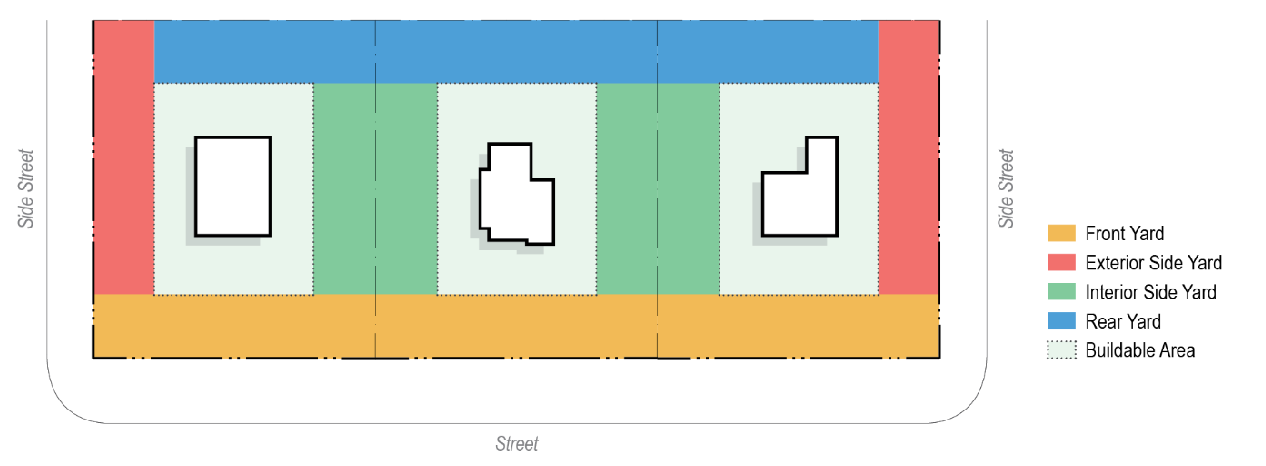
Figure 1: Required Yard
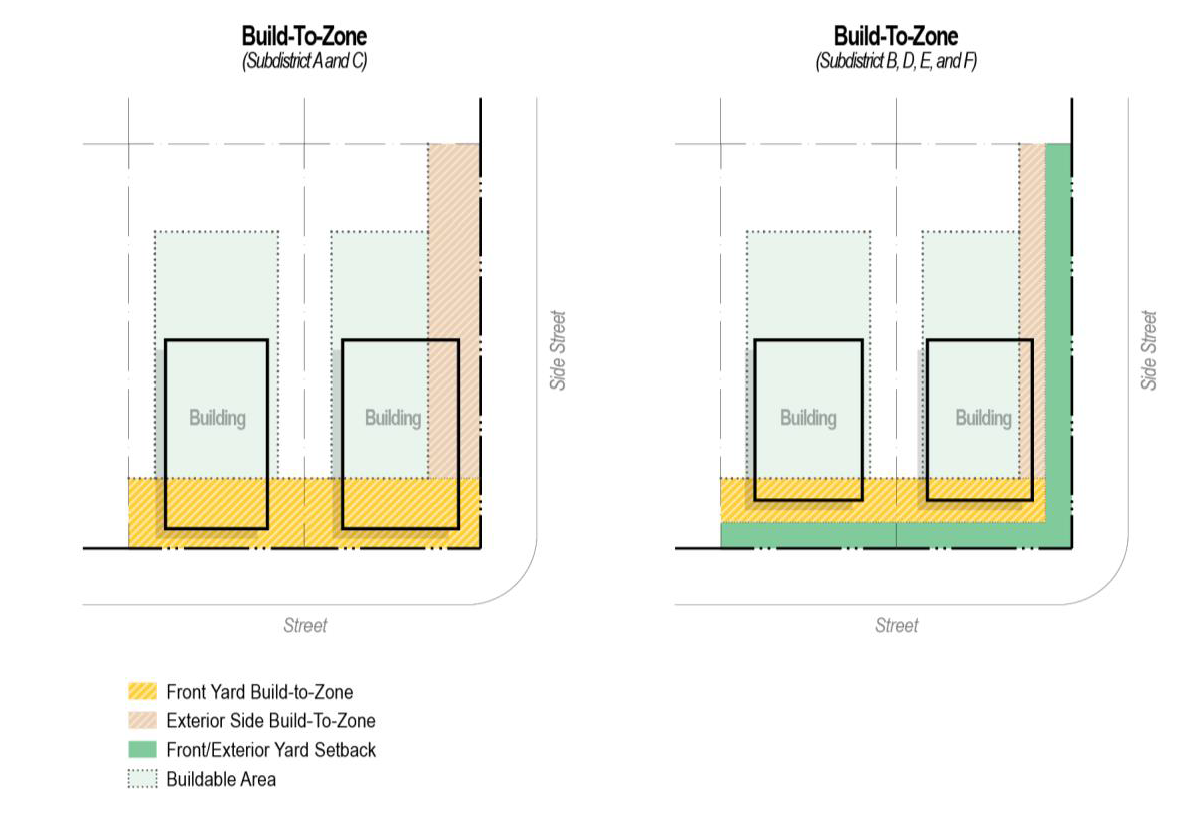
Figure 2: Build-To-Zones
(G.O. 6661, § 1(Exh. B), 6-28-21; G.O. 6684, § 1(Exh. B), 9-20-21; G.O. 6792, § 1, 6-26-23)
Sec. 36-488. - Permitted and conditional uses.
The following key is to be used in the interpretation of table 36-488, permitted and conditional uses below.
(1)
Permitted uses. Uses which are marked as "P" in the table shall be allowed subject to all applicable regulations of this article.
(2)
Conditional uses. Uses which are marked as "C" in the table shall be allowed upon the approval of a conditional use permit as detailed in section 36-363.
(3)
Prohibited uses. A blank space in the table indicates that a use type is not allowed in the respective subdistrict.
(4)
Uses not listed. If a proposed use is not listed in the tables, the administrative review committee shall determine if the use is substantially similar to a use listed in the tables. If it is, they shall treat the use in the same manner as the substantially similar use. If not, the use shall be regarded as prohibited.
(5)
Conversions. Structures existing at the time of the adoption of this ordinance [G.O. 6684] in subdistricts A, B, and/or C may be converted to any use permit in that subdistrict.
(6)
Additional regulation. If uses have use specific standards they are referenced in this column. Use specific standards shall apply to permitted and conditional uses. Where use specific standards conflict with district specific standards, the district specific standards shall be followed.
(G.O. 6661, § 1(Exh. B), 6-28-21; G.O. 6684, § 1(Exh. B), 9-20-21; G.O. 6792, § 2, 6-26-23; G.O. 6775§ 1, 1-31-23)
Sec. 36-489. - Use specific standards.
(1)
Dwelling, live work.
(a)
Occupancy. A live work unit shall be occupied and used only by the operator of the business within the unit, or a household of which at least one member shall be the business operator.
(b)
Sale or rental of portions of unit. No portion of a live work unit may be separately rented or sold as a commercial space for any person not living in the unit or as a residential space for any person not working in the same unit.
(c)
Nonresident employees. Up to two persons who do not reside in the live work unit may work in the unit. The employment of three or more persons who do not reside in the live work unit may be permitted subject to conditional use permit approval, based on additional findings that the employment will not adversely affect traffic and parking conditions in the site vicinity. The employment of any persons who do not reside in the live work unit shall comply with all applicable building code requirements.
(2)
Dwelling, multifamily as part of mixed use.
(a)
To create a continuous nonresidential façade along Grant Avenue, multifamily dwelling units may be a component of mixed use developments but shall be located either:
1.
Above the ground floor; or
2.
In a portion of the ground floor which does not front Grant Avenue with the exception of building entries and hallways which lead to residential units.
(b)
The nonresidential portion of the ground floor shall have a minimum depth of 50 feet.
(3)
Dwelling, multifamily conversion.
(a)
Applicability. Single-family dwellings built prior to 1930 may be converted to three or more units in accordance with the standards set forth below. The units shall be located only in the existing structure, additions shall not be built to provide units.
(b)
Size. Each residential unit shall be a minimum of 800 square feet. Smaller units may be approved as a conditional use.
(c)
Location of entrances. Only one entrance shall be located on the front façade of the structure. The front façade of the structure shall face Grant Avenue.
(d)
Exterior alterations. No exterior alterations that would change the single-family character of the dwelling, other than those necessary to ensure the safety of the structure, shall be made.
(e)
Driveways. Each dwelling unit shall be served by one common driveway connecting all units to a public road, vehicular cross access drive, or alley.
(4)
Dwelling, single-family detached existing. If a single-family detached dwelling that exists prior to the date of adoption of this division is destroyed by a natural hazard outside of human control, it may be rebuilt within 18 months of the incident. After 18 months, the lot shall be developed in a manner which complies to the standards of this division.
(5)
Bed and breakfast.
(a)
Applicability. Single-family dwellings built prior to 1930 may be converted to bed and breakfast establishments in accordance with the standards set forth below. The bed and breakfast establishment shall only be located in the existing structure. Additions shall not be built to provide bed and breakfast rooms, and a new structure shall not be built expressly for a bed and breakfast.
(b)
Location of entrances. Only one entrance shall be located on the front façade of the structure. The front façade of the structure shall face Grant Avenue.
(c)
Guest rooms. There shall be a maximum of five guest rooms in the bed and breakfast.
(d)
Exterior alterations. No exterior alterations that would change the single-family character of the bed and breakfast, other than those necessary to ensure the safety of the structure, shall be made.
(e)
Duration of stay. Only short-term lodging shall be permitted, no monthly rentals.
(f)
Signs (figure 3). Bed and breakfast establishments shall be permitted one monument sign in accordance with the standards set forth below.
1.
Area. The monument sign shall not exceed six square feet in area.
2.
Height. The monument sign shall not exceed four feet in height.
3.
Location. The monument sign shall be located a minimum of five feet from all property lines, rights-of-way, and utility easements; shall not block points of ingress or egress; shall not be placed on any sidewalk or pedestrian walkway; and shall provide safe site distance where driveway curb cuts intersect public rights-of-way.
4.
Sign base. The base of the monument sign, including all structural components, shall extend horizontally from the sign face a minimum of ten percent and a maximum of 25 percent of the width of the sign face. The base of the monument sign shall be constructed from masonry, stone, or similar high-quality materials in keeping with the exterior cladding materials and design of the primary building.
5.
Landscape. The monument sign shall have a landscape area equal to the area of the sign surrounding the sign base. A minimum of 80 percent of the landscape area shall be planted and maintained with herbaceous perennials and evergreen shrubs.
(g)
Other provisions.
1.
There shall be no individual cooking facilities.
2.
The operator shall live at the bed and breakfast.
3.
A business license shall be obtained annually, and the operator shall verify that the standards established in this division are still being met.
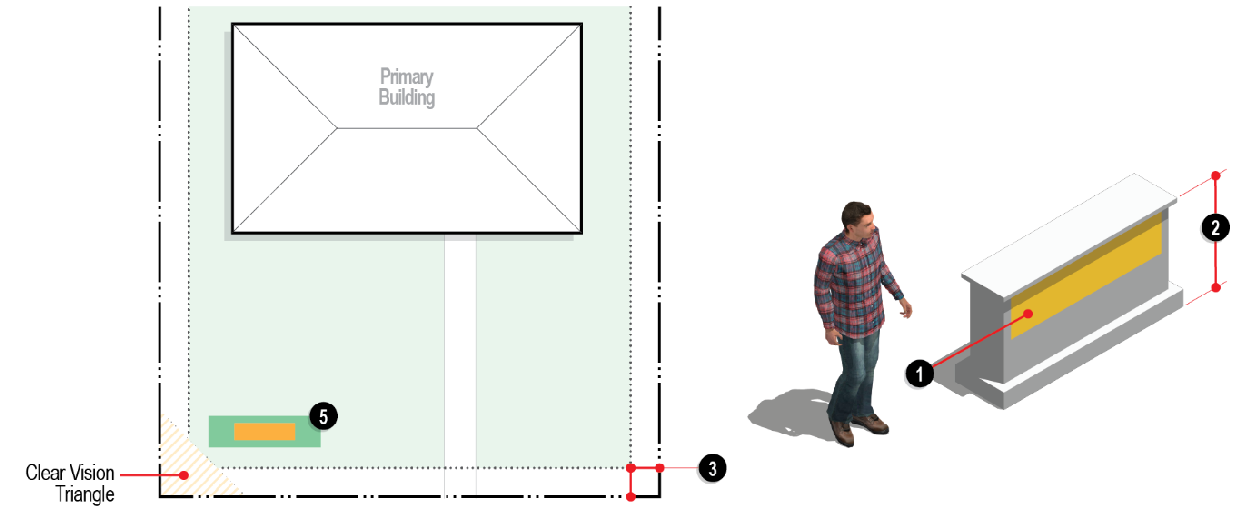
Figure 3: Bed and Breakfast Monument Signs
(5)
Hotel.
(a)
If the facility is managed by a public or non-profit agency to provide short-term housing, with or without a fee, the facility shall not be considered a hotel.
(b)
Bed and breakfast, boarding house, lodging house, fraternity house and sorority house uses shall not be considered hotels.
(6)
General office conversion.
(a)
Applicability. Single-family dwellings built prior to 1930 may be converted to general office(s) uses in accordance with the standards set forth below. The office space(s) shall be located only in the existing structure, additions shall not be built to provide office space(s).
(b)
Location of entrances. Only one entrance shall be located on the front façade of the structure. The front façade of the structure shall face Grant Avenue.
(c)
Exterior alterations. No exterior alterations that would change the single-family character of the dwelling, other than those necessary to ensure the safety of the structure, shall be made.
(d)
Outdoor storage. No outdoor storage shall be permitted in conjunction with a general office conversion use.
(e)
Signs (figure 4). General office conversion uses shall be permitted one monument sign in accordance with the standards set forth below.
1.
Area. The monument sign shall not exceed six square feet in area.
2.
Height. The monument sign shall not exceed four feet in height.
3.
Location. The monument sign shall be located a minimum of five feet from all property lines, rights-of-way, and utility easements; shall not block points of ingress or egress; shall not be placed on any sidewalk or pedestrian walkway; and shall not be located in a clearance sight triangle as detailed in subsection 36-490(1)(f).
4.
Sign base. The base of the monument sign, including all structural components, shall extend horizontally from the sign face a minimum of ten percent and a maximum of 25 percent of the width of the sign face. The base of the monument sign shall be constructed from masonry, stone, or similar high-quality materials in keeping with the exterior cladding materials and design of the primary building.
5.
Landscape. The monument sign shall have a landscape area equal to the area of the sign surrounding the sign base. A minimum of 80 percent of the landscape area shall be planted and maintained with herbaceous perennials and evergreen shrubs.
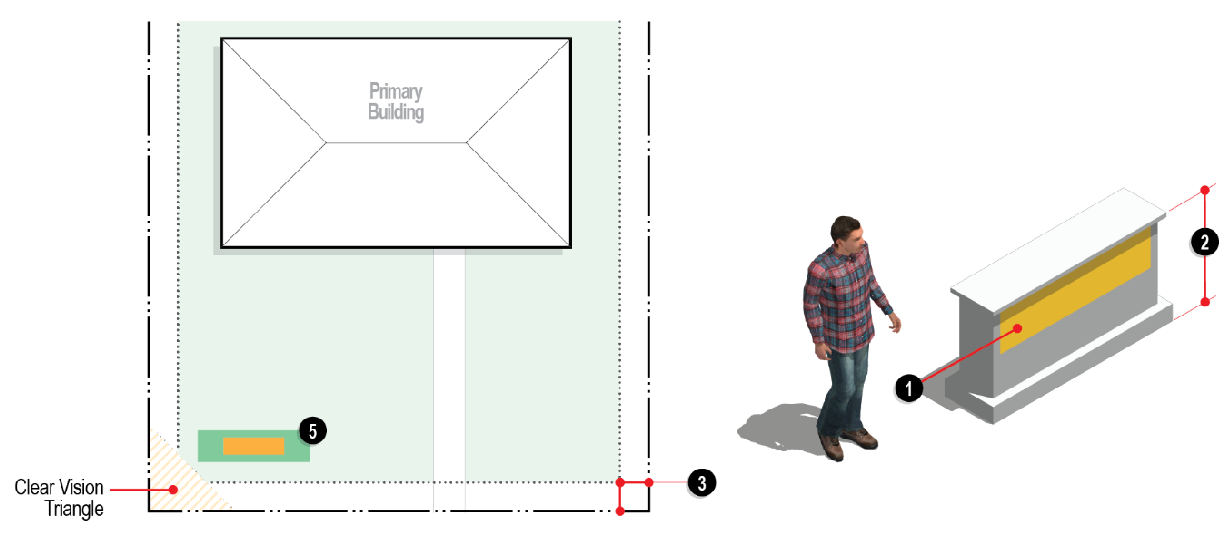
Figure 4: General Office Conversion Monument SIgn
(7)
Commercial off-street parking lots. Commercial off-street parking lots shall provide all of the landscape required in section 36-492 as well as the screening and landscape elements detailed below in areas adjacent to public rights-of-way, excluding alleys:
(a)
A fully opaque wall or fence with a height of four feet shall be used in conjunction with required parking lot perimeter area landscaping. Plant materials shall be installed between the sidewalk and the wall or fence to provide a softening effect.
(b)
Four understory trees shall be planted for every 100 lineal feet of right-of-way adjacent frontage, excluding alley rights-of-way, and shall be clustered at points of pedestrian ingress and egress.
(c)
Points of pedestrian ingress and egress shall be provided outside of vehicular curb cuts.
(d)
Screening standards established above shall be provided to the greatest extent possible, so as to provide safe site distance where driveway access intersect public rights-of-way.
(8)
Artisan manufacturing.
(a)
Gross floor area shall not exceed 10,000 square feet unless approved as a conditional use.
(b)
Outdoor storage and/or outdoor operations or activities shall be prohibited.
(c)
Retail sales of goods manufactured on-site shall be required and shall comprise a minimum of 15 percent of the total area of the building. Retail sales areas shall be located on the ground floor and shall be directly adjacent to storefront windows.
(9)
Solar energy collection system, canopy (figure 5).
(a)
The height of canopy solar energy collection systems shall not exceed the height of the primary building that the parking area serves.
(b)
The minimum height of solar energy collection systems shall allow clearance for emergency and service vehicles.
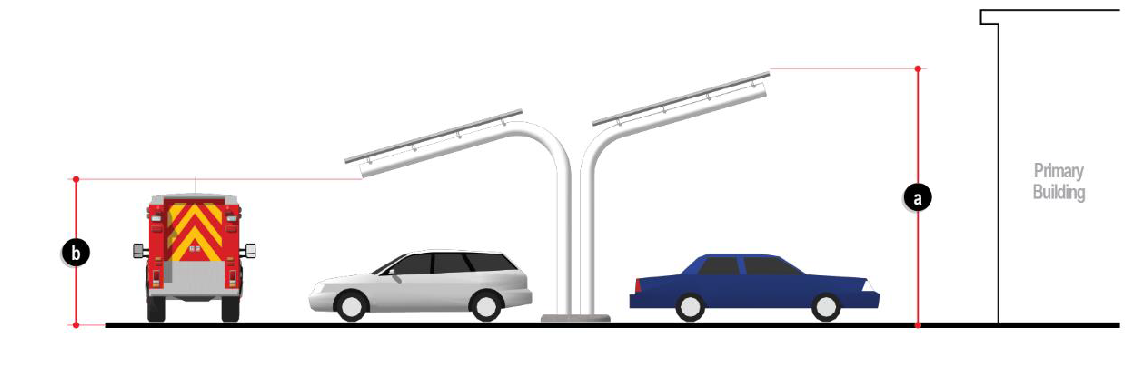
Figure 5: Solar Energy Collection System, Canopy
(10)
Solar energy collection system, roof mounted (figure 6).
(a)
Roof-mounted solar energy collection systems may be located on any roof face of principal or accessory buildings.
(b)
Systems should be flush mounted when possible. Systems on residential structures shall not extend beyond 12 inches parallel to the roof surface of a pitched roof or flat roof. Systems on nonresidential structures shall not extend beyond 36 inches parallel to the roof surface of a pitched roof or flat roof. Systems on all structures shall not extend above the highest peak of a pitched roof.
1.
Height is measured from the roof surface on which the system is mounted to the highest edge of the system.
(c)
All materials used for racking, mounting, mounting clamps, and flashings shall be of a color consistent with the color of the roof surface to minimize visibility.
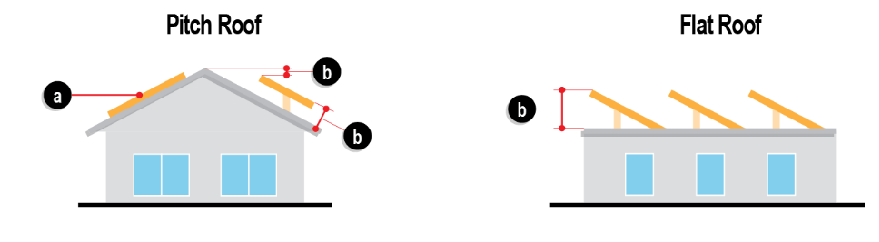
Figure 6: Solar Energy Collection System, Roof-Mounted
(11)
Farm stand.
(a)
Farm products sold. Goods sold at a farm stand shall be farm products or value-added farm products grown and/or processed on the parcel on which the farm stand shall be located only. The sale of non-agricultural items or products produced off site shall be prohibited.
(b)
Farm stand structure. Any structure associated with a farm stand shall:
1.
Not occupy greater than 100 square feet in floor area.
2.
Not exceed eight feet in height.
3.
Comply with all required setbacks of the primary building.
4.
Be removed from display during the time period outside of the established hours of operation as detailed in (c) below.
(c)
Hours of operation. A farm stand may be in operation between the hours of 7:00 a.m. and 7:00 p.m. only.
(d)
Signs. No signs, other than signs otherwise permitted for single-family uses as detailed in table 36-494(3), shall be permitted.
(G.O. 6661, § 1(Exh. B), 6-28-21; G.O. 6684, § 1(Exh. B), 9-20-21)
Sec. 36-490. - Building orientation, siting, and design.
(1)
All uses.
(a)
Subdistrict A. In subdistrict A, the expansion or enlargement of structures existing at the time of adoption of this ordinance [G.O. 6684] shall be exempt from the requirements of this section (36-490).
(b)
Building orientation. The primary building entrance(s) of all development on lots with a property line fronting Grant Avenue shall be oriented towards Grant Avenue. If the lot does not front on to Grant Avenue, the primary building entrance shall be oriented towards the primary street to which the lot is adjacent.
(c)
Frontage types. The primary façade of all development shall meet the standards of one of the frontage types allowed in the applicable subdistrict as detailed in table 36-490(1)(c), frontage types by subdistrict.
1.
Projecting porch (figure 7). The primary façade of the building is sufficiently setback from the property line to accommodate the projecting porch within the front yard build-to-zone. The resulting front yard may or may not be defined by a fence or hedge to spatially maintain the edge of the street. The projecting porch is open on three sides and has a roof form that is separate from the main house. A projecting porch shall encroach into the front yard build-to-zone. The following minimum standards shall apply to projecting porches.
a.
Width. Ten feet.
b.
Depth. Eight feet.
c.
Height. Eight feet.
d.
Finish level above sidewalk. Eighteen inches.
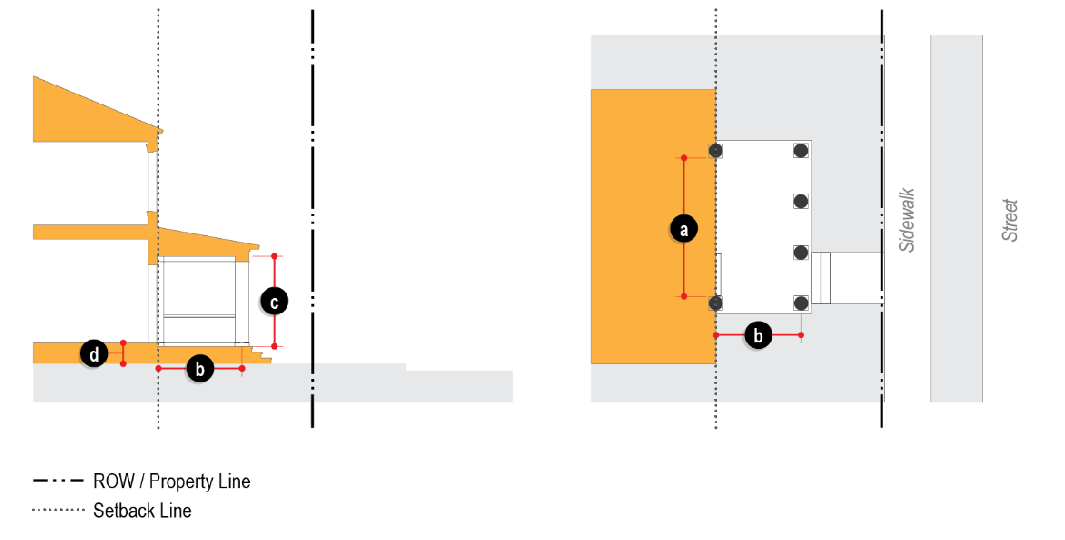
Figure 7: Projecting Porch Frontage Type
2.
Engaged porch (figure 8). The primary façade of the building is built to the minimum front yard setback, or is located a minimum of ten feet from the property line, whichever is more. The resulting front yard may or may not be defined by a fence or hedge to spatially maintain the edge of the street. The porch is partially or fully enclosed on two sides and has a roof. An engaged porch may not encroach into the required front yard. The following minimum standards shall apply to engaged porches.
a.
Width. Ten feet.
b.
Depth. Eight feet.
c.
Height. Eight feet.
d.
Finish level above sidewalk. Eighteen inches.
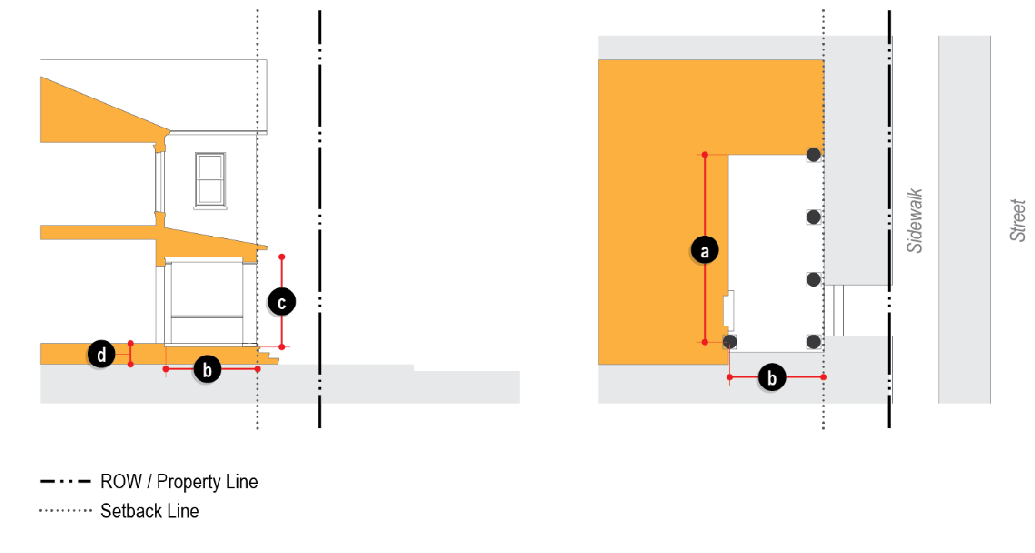
Figure 8: Engaged Porch Frontage Type
3.
Integral porch (figure 9). The primary façade of the building is built to the minimum front yard setback, or is located a minimum of ten feet from the property line, whichever is more. The resulting front yard may or may not be defined by a fence or hedge to spatially maintain the edge of the street. An integral porch is part of the overall massing and roof form of a building. It is not possible to remove an integral porch without major changes to the overall roof form. An integral porch may not encroach into the required front yard. The following minimum standards shall apply to integral porches.
a.
Width. Eight feet.
b.
Depth. Eight feet.
c.
Height. Eight feet.
d.
Finish level above sidewalk. Eighteen inches.
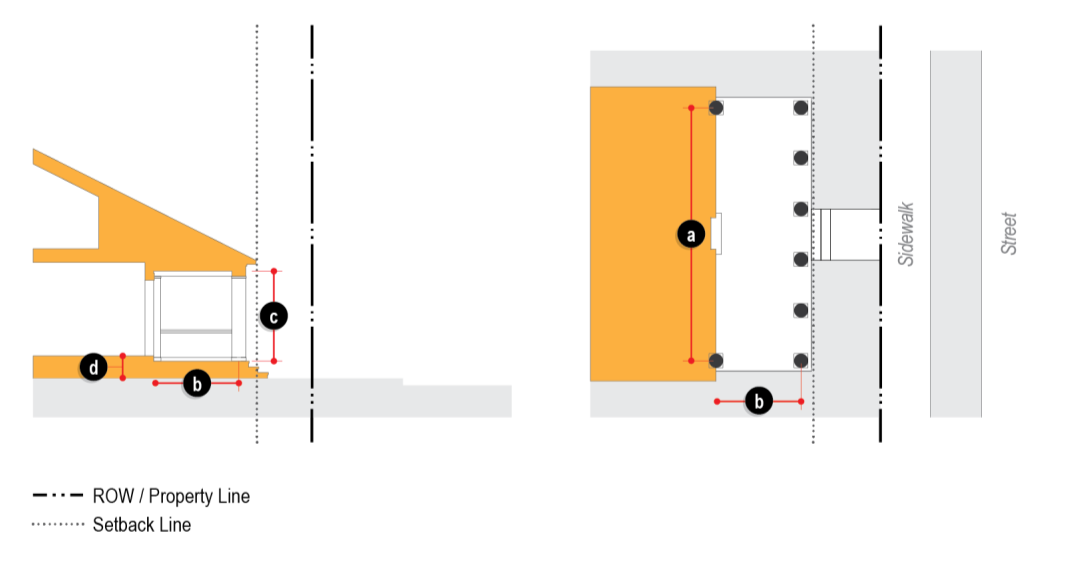
Figure 9: Integral Porch Frontage Type
4.
Balcony (figure 10). The primary facing façade of the building is set back a minimum of eight feet if balconies are to project and may be at the property line if balconies are to be recessed. Projecting and recessed balconies must remain open on all sides except those along an exterior wall to which the balcony is attached. Projecting and recessed balconies must be fully supported by the building, with no posts extending to the ground. The following standards shall apply to balconies and shall be considered minimum requirements unless otherwise stated.
a.
Width. Four feet.
b.
Depth. Four feet.
c.
Vertical clearance. Eight feet.
d.
Projection from building façade. Eight feet, maximum.
e.
Railing height. Five feet, maximum.
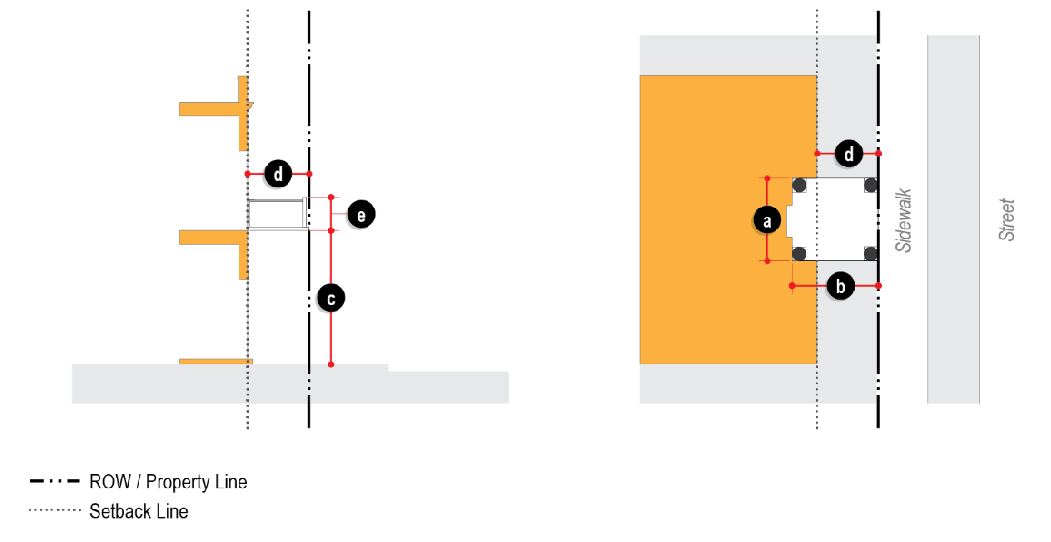
Figure 10: Balcony Frontage Type
5.
Forecourt (figure 11). A portion of the primary façade of the building is at the property line and a small percentage is set back, creating a small court space. The space could be used as an entry court or shared garden space for multifamily buildings, or as an outdoor dining, plaza, or public gathering area for nonresidential uses. The proportions and orientation of these spaces should be carefully considered for solar orientation and user comfort. The following minimum standards shall apply to forecourts.
a.
Width. Twelve feet.
b.
Depth. Twelve feet.
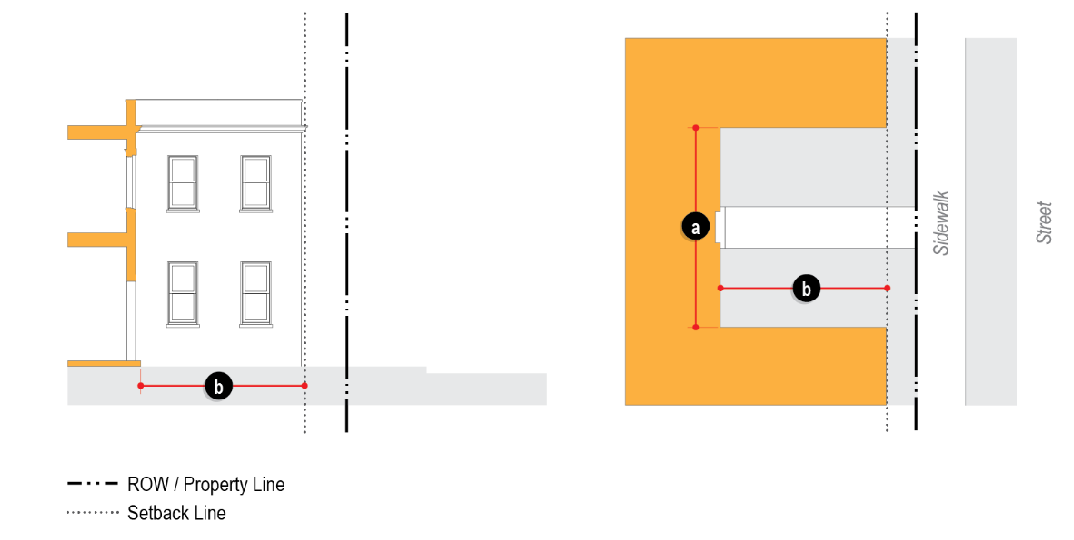
Figure 11: Forecourt Frontage Type
6.
Shopfront (figure 12). The primary façade of the building is at the property line with an at-grade entrance either at the property line or recessed to allow the main entrance to swing outwards without obstructing the sidewalk. A canopy or awning element is encouraged to project over the sidewalk along the majority of the frontage. Accordion-style windows/doors or other operable windows that allow the space to open to the street are encouraged. The following standards shall apply to shopfronts and shall be considered minimum requirements unless otherwise stated.
a.
Window area. Sixteen square feet.
b.
Window width. Three feet.
c.
Window height. Four feet.
d.
Sill height. Three feet, maximum.
e.
Depth of recessed entrance. Five feet, maximum.
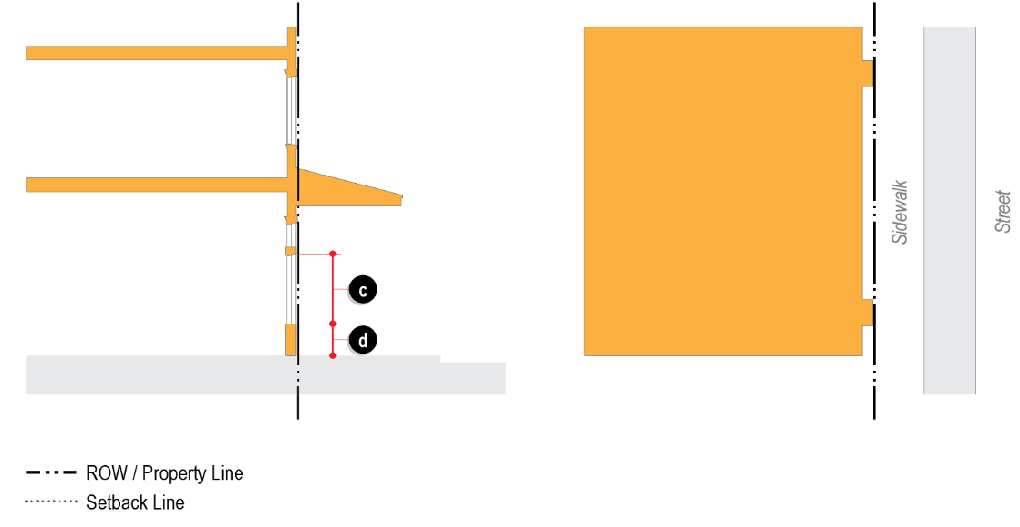
Figure 12: Shopfront Frontage Type
(d)
Exterior building cladding materials.
1.
Exterior building cladding materials shall be masonry, stone veneer systems, stucco, or other time and weather tested materials approved by the administrative review committee.
2.
The ground level must offer pedestrian interest along sidewalks and pedestrian paths through the use of contrasting exterior building cladding materials and elements.
3.
In no instance shall the finish of non-natural materials utilized mimic or match the texture of the natural materials utilized.
4.
A maximum of three exterior building cladding materials may be used.
5.
Vinyl and steel clapboard siding and/or adhered thin veneer exterior building cladding materials shall be prohibited.
(e)
Roof finishing.
1.
Eaves may expose rafters.
2.
Gutters and downspouts may not discharge upon public rights-of-way.
(2)
Single-family attached and detached uses.
(a)
Fences. Fences shall be allowed on lots with single-family attached and detached uses in accordance with the following standards.
1.
Location. All fences allowed in this subsection shall provide safe site distance where driveway curb cuts intersect public rights-of-way.
2.
Height.
a.
Fences in front and/or exterior side yards shall not exceed four feet in height.
b.
Fences in interior side and/or rear yards shall not exceed six feet in height.
3.
Materials. Fences in front yards and/or exterior side yards shall be of non-sight barrier construction and have a maximum opacity of 50 percent. Permitted fence materials in all yards shall be only those materials which are designed and intended for use in fence installations and shall be limited to:
a.
Vegetation;
b.
Wood, chemically treated or naturally resistant to decay;
c.
Wood composites;
d.
Aluminum;
e.
Vinyl/PVC;
f.
Wrought iron; and
g.
As approved by the administrative review committee.
(3)
Multifamily, mixed use, and nonresidential uses.
(a)
Building siting (figure 13). Development located at the corner of two streets shall be sited to connect or anchor the corner with prominent architectural features and site treatments.
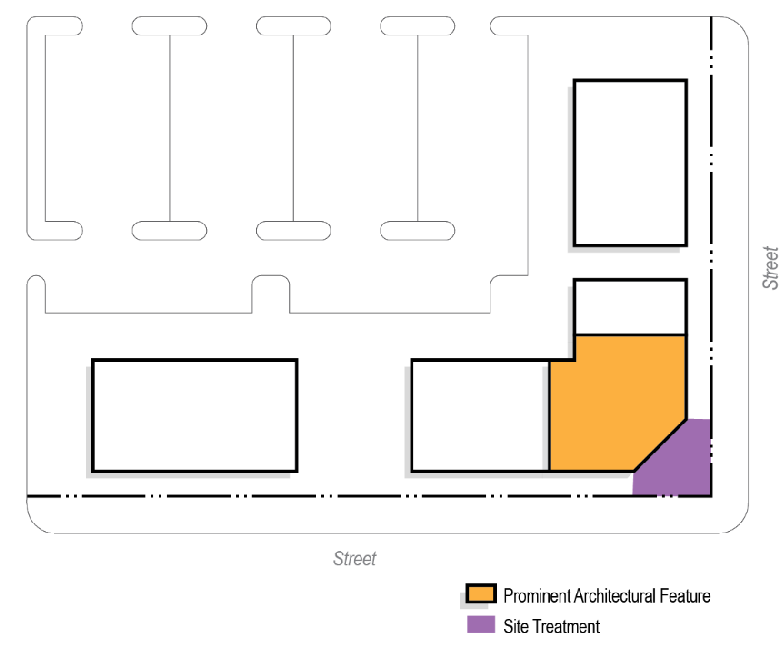
Figure 13: building Siting
(b)
Transparency (figure 14).
1.
Ground level transparency. The ground level of nonresidential or mixed-use buildings must offer pedestrian interest along sidewalks and pedestrian paths through the placement of window and doors. Therefore, the first floor of any building façade facing a public right-of-way, with the exception of alleys, shall include transparent, clear glass windows and/or doors arranged so that the uses inside are visible from and/or accessible to the street. Window and/or doors with reflective or tinted glass that impede views into a building shall be prohibited.
2.
All stories transparency. All stories of all building facades facing a public right-of-way, with the exception of alleys, shall include at least 40 percent of the subject facade in windows or doors. The administrative review committee may waiver transparency requirements by up to 20 percent for medical and dental office uses.
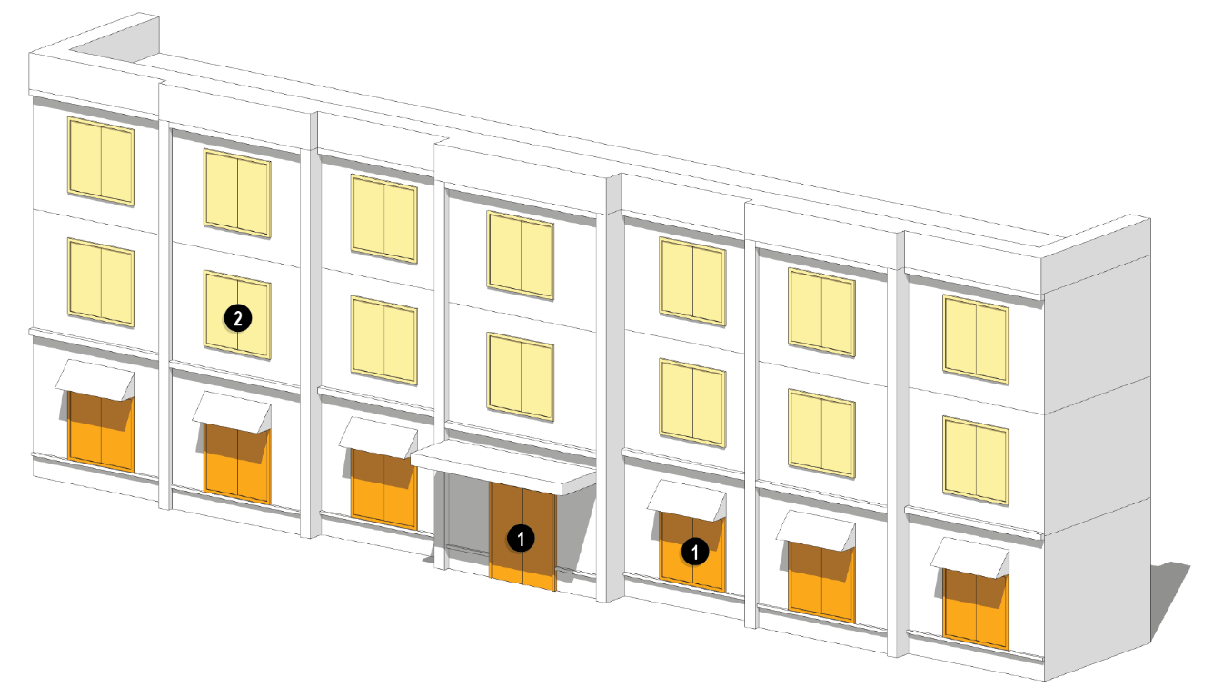
Figure 14: Transparency
(c)
Awnings and canopies (figure 15). Building awnings, canopies, or similar weather protection devices are encouraged on the first floor of non-single-family development facing a public right-of-way. If provided, awnings or canopies shall project a minimum of three feet and a maximum of ten feet from the façade.
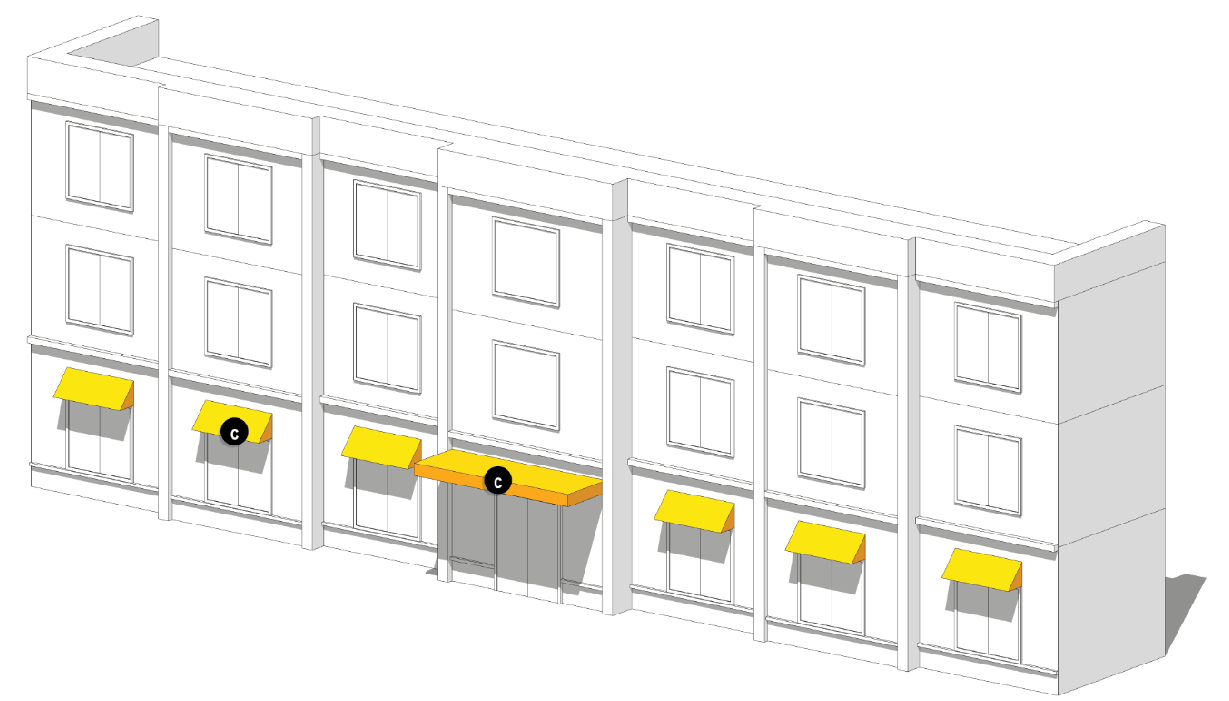
Figure 15: Awnings and Canopies
(d)
Articulation (figure 16). The ground level must offer pedestrian interest along sidewalks and pedestrian paths that face a public right-of-way, with the exception of alleys, through the use of contrasting elements. Façades shall be articulated with a sense of depth by including design elements that create shadow lines, change color or materials, or incorporate other details that together with required landscaping (section 36-492) breakdown large expanses of flat, unembellished surfaces.
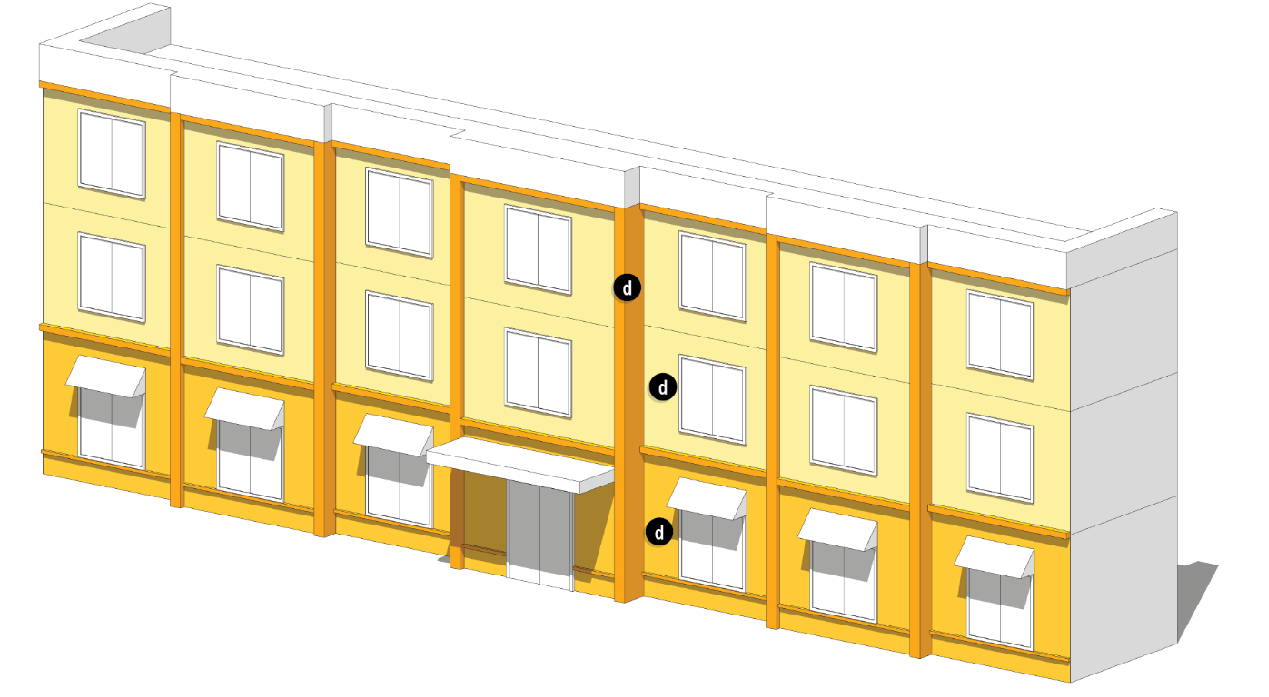
Figure 16: Articulation
(G.O. 6661, § 1(Exh. B), 6-28-21; G.O. 6684, § 1(Exh. B), 9-20-21)
Sec. 36-491. - Off-street parking.
(1)
Off-street vehicle parking requirements.
(a)
Subdistrict A. Off-street vehicle parking shall not be required in subdistrict A.
(b)
Subdistricts B, C, D, E, and F. Off-street vehicle parking for residential, nonresidential, and mixed uses shall be provided in subdistricts B, C, D, E, and F, as follows:
1.
Single-family attached and detached. One space/dwelling unit.
2.
Micro-efficiency dwelling unit. One space/dwelling unit.
3.
Efficiency/one-bedroom dwelling unit. One and one-half spaces/dwelling unit.
4.
Two or more bedroom dwelling unit. Two spaces/dwelling unit.
5.
Nonresidential uses. Off-street vehicle parking is not required.
(2)
Off-street vehicle parking location and access (figure 17).
(a)
Fronting Grant Avenue. Parking lots, structures, and/or garages shall be located to the rear of the principal building and accessed from a side street, alley, or access easement.
(b)
Not fronting Grant Avenue. Parking lots, structures, and/or garages accessory to principal buildings not fronting Grant Avenue may be located to the side of the principal building only if the lot, structure, and/or garage is located on one or both sides of an access point to any street other than Grant Avenue. In no case shall such lot, structure, and/or garage be located closer to the right-of-way than the principal building.
(c)
Grant Avenue access points. Access points from Grant Avenue shall be permitted only if located directly across from an existing roadway which runs perpendicular to Grant Avenue or if the property has no access to any side street, alley, or access easement.
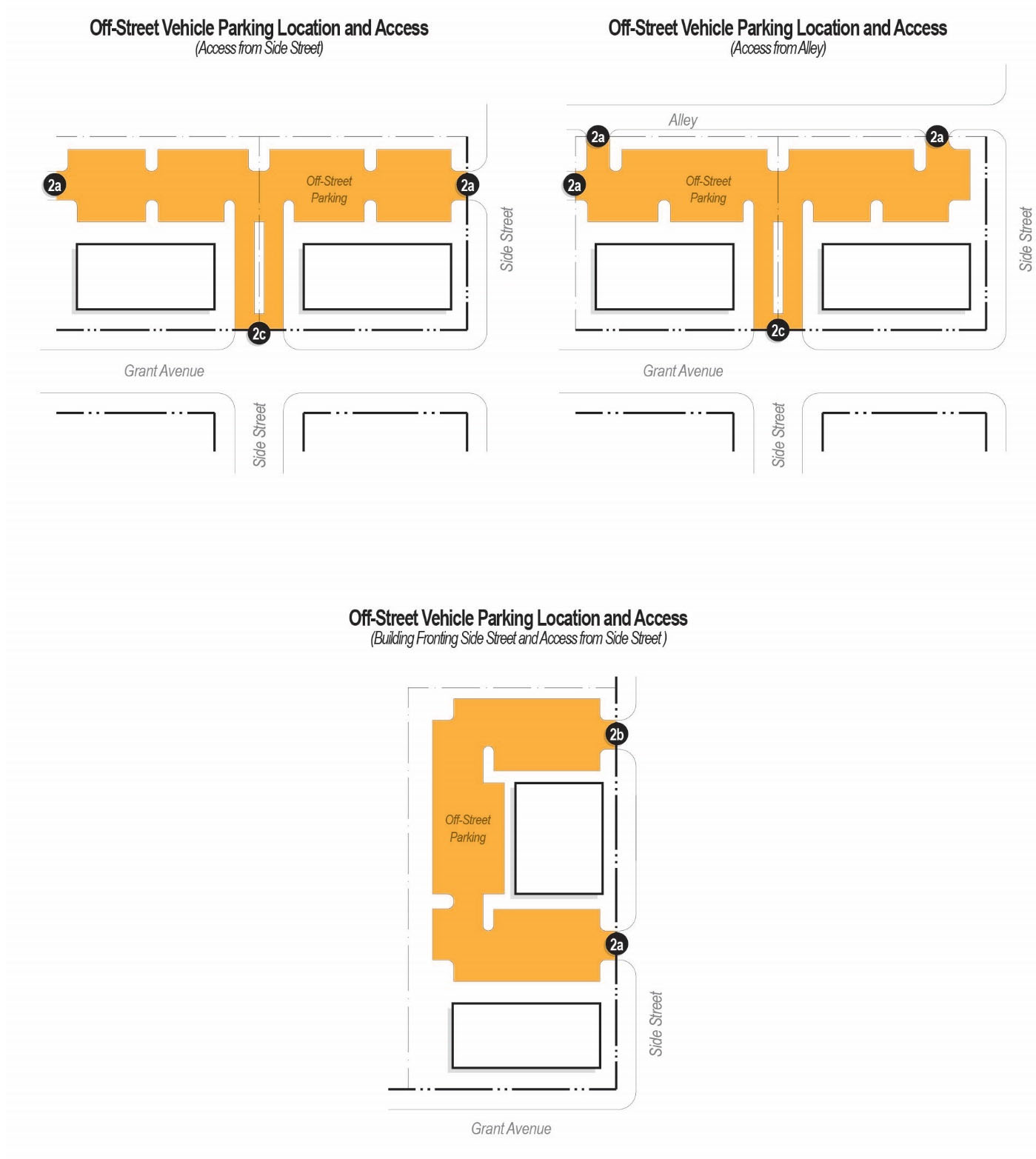
Figure 17: Off-Street Vehicle Parking Location and Access
(3)
Vehicular cross access drives (figure 18). To facilitate vehicular access between adjoining developments and to minimize access points along Grant Avenue, development in all subdistricts shall comply with the following standards:
(a)
Internal vehicular circulation systems shall be designed to allow for vehicular cross-access between the development's vehicle parking facilities and vehicle parking facilities in an adjoining non-single-family development, or to the boundary of adjoining vacant land.
(b)
Required vehicular cross access between the adjoining lots shall be provided through the use of a single two-way maneuvering lane or two one-way maneuvering lanes that are sufficiently wide to accommodate traffic by automobiles, service vehicles, loading vehicles, and emergency vehicles.
(c)
The administrative review committee may waive or modify the requirement for vehicular cross access on determining that such cross access is impractical or undesirable because it would require crossing a significant physical barrier or environmentally sensitive area or would create unsafe conditions.
(d)
Easements allowing cross access to and from properties served by a vehicular cross-access drives, along with agreements defining maintenance responsibilities of property owners, shall be recorded with the register of deeds for the county in which the properties are located before issuance of a building permit for the development.
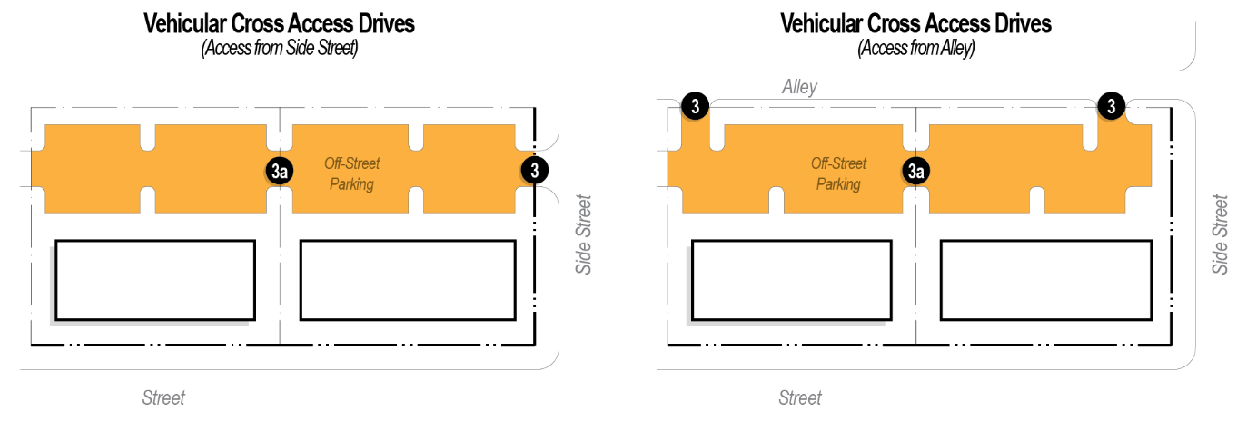
Figure 18: Vehicular Cross Access Drives
(4)
Pedestrian walkways.
(a)
ADA accessible pedestrian walkways shall be provided from the perimeter public sidewalk to the primary building entrance and from the parking lot to the primary building entrance and shall be along direct routes that do not require significant out-of-direction travel.
(b)
ADA accessible pedestrian walkways must be distinguished from driving surfaces through the use of raised curbs or contrasting materials to enhance pedestrian safety. Examples of acceptable contrasting materials include, but are not limited to, stamped asphalt, special pavers, bricks, or scored concrete.
(5)
Bicycle parking (figure 19).
(a)
Location.
1.
Required bicycle parking shall be provided on the same lot as the use for which it is intended to serve.
2.
Bicycle parking shall be sited within 50 feet of a building entrance. If provided indoors, bicycle parking shall be located within a common area designated for secure bicycle storage.
3.
Bicycle parking areas shall be adequately lit and located such that they are highly visible from the street and/or building entrance(s) from where bicyclists approach.
4.
Bicycle parking adjacent to a pedestrian walkway shall be sited to ensure that a minimum five-foot walkway clearance is maintained.
5.
The location of bicycle parking shall not conflict with pedestrian and/or vehicular circulation.
(b)
Design criteria.
1.
Bicycle facilities shall be constructed of sturdy, tamper-proof materials such as welded steel. Rack design may be varied to complement the architecture of the primary building, provided it meets all design criteria.
2.
Bicycle racks shall be installed on a hard surface area.
3.
Each bicycle rack shall provide parking for at least two bicycles.
4.
Racks shall allow for the bicycle frame and at least one wheel to be locked to the racks.
5.
The bicycle rack shall allow for the use of a cable as well as a U-shaped lock.
6.
The installation of bicycle parking facilities shall conform to the manufacturer requirements.
(c)
Dimensional standards.
1.
Each bicycle parking space shall be a minimum of six feet in length with the exception of vertical or wall mounted bicycle parking spaces.
2.
Bicycle racks shall be located at least three feet in all directions from any obstruction, including, but not limited to, other bicycle racks, walls, doors, posts, columns, or landscaping.
3.
A minimum vertical clearance of seven feet shall be maintained above all bicycle parking facilities.
(d)
Off-street bicycle parking requirements.
1.
The number of required bicycle parking spaces shall be equal to five percent of required vehicle parking spaces or ten spaces, whichever is less. Additional demand for bicycle parking shall be monitored and provided as necessary.
2.
Exemption. The bicycle parking requirements of this section shall apply to all uses other than the following:
a.
Dwelling, single-family detached.
b.
Dwelling, single-family attached.
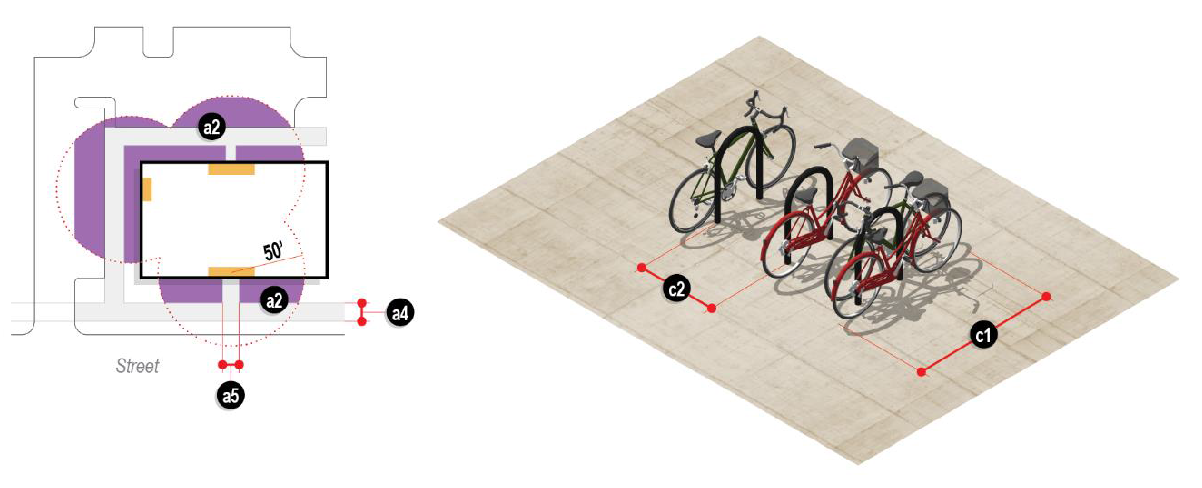
Figure 19: Off-Street Bicycle Parking
(G.O. 6661, § 1(Exh. B), 6-28-21; G.O. 6684, § 1(Exh. B), 9-20-21)
Sec. 36-492. - Landscape.
Landscape improvements required by this section shall apply to all non-single-family development and consist of living plants in a combination of trees, shrubs, native grasses, and/or groundcover. Unless otherwise stated in this section, all size specifications for plant materials shall be based upon the time of planting. When caliper is specified for tree planting, the caliper of the tree trunk shall be measured at six inches above the soil level. Any plant materials used to meet the requirements of this section shall not include any plant material identified as an invasive plant by the Missouri Department of Conservation.
(1)
Planting types (figure 20). Plant materials which are native to or adapted to the State of Missouri are encouraged.
(a)
Canopy trees: A woody plant (deciduous or evergreen) having not less than a two and one-half-inch caliper with single central axis which typically reaches a mature height of not less than 40 feet and a mature spread of not less than 15 feet.
(b)
Understory trees: A woody plant having not less than a one and one-half-inch caliper, or six feet tall for multiple stem species, that normally attains a mature height of at least 15 feet.
(c)
Evergreen trees: A tree having foliage that persists and remains green throughout the year and has a height of not less than six feet at installation and maturing to a height of not less than 20 feet.
(d)
Shrub: A woody plant (deciduous or evergreen) of low to medium height characterized by multiple stems continuous from its base and having a height of not less than two feet.
(e)
Native grasses: Grasses and flowering broad leaf plants that are native to, or adapted to, the State of Missouri, and that are commonly found in meadow and prairie plant communities, not including noxious weeds.
(f)
Groundcover: Herbaceous plants, other than turf grass, or prostrate shrubs normally reaching an average maximum height of 18 inches at maturity.
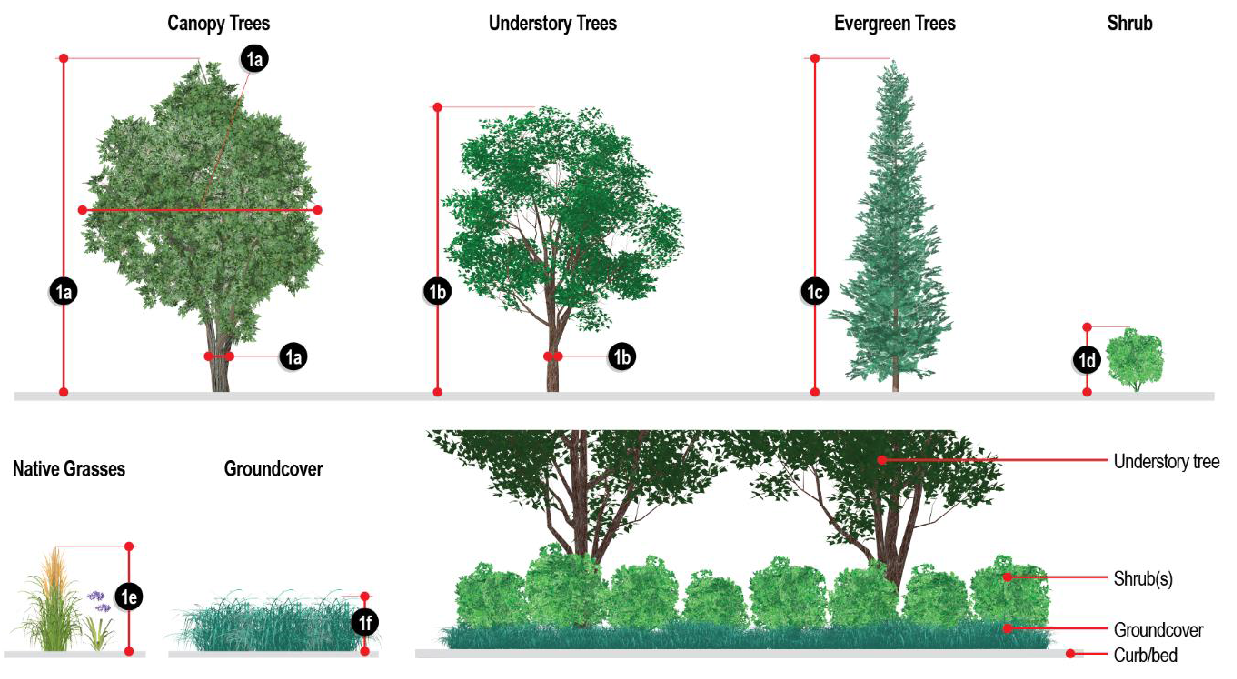
Figure 20: Planting Types
(2)
Required landscape areas (figure 21). Landscape shall be provided as outlined below in the locations illustrated in figure 21.
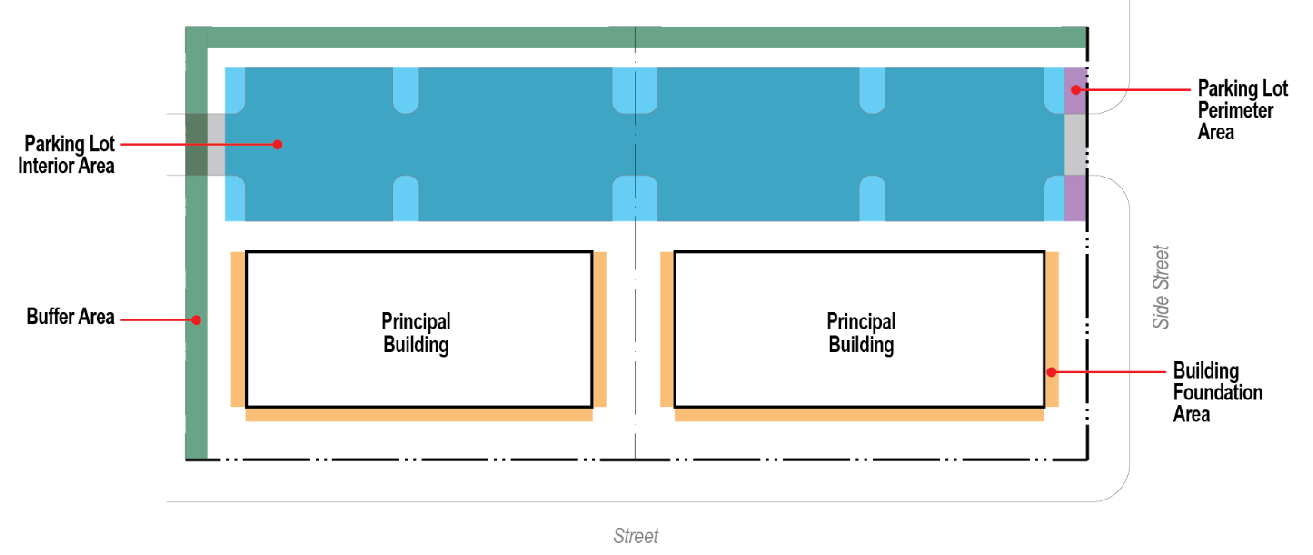
Figure 21: Required Landscape Areas
(3)
Parking lot perimeter area. Trees and landscape required by this section shall be in addition to trees and landscape required under other sections of this division. It is the objective of this section to provide screening between parking areas and rights-of-way, and to provide for the integration of stormwater management with required landscaping.
(a)
Location. All surface parking lots which abut a public or private right-of-way, excluding alleys, shall include landscape and trees as required by this section located between the parking lot back of curb and the right-of-way.
(b)
Applicability. The parking lot perimeter landscape regulations of this section apply to the following:
1.
The construction or installation of any new surface parking lot or vehicular use area; and
2.
The expansion of any existing surface parking lot or vehicular use area, in which case the requirements of this section apply only to the expanded area.
(c)
Requirements (figure 22).
1.
Perimeter landscape shall run the full length of the parking lot and shall be located between the property line and the edge of the parking lot.
2.
Perimeter landscape shall have a minimum width of seven feet as measured from the parking lot back of curb, to accommodate vehicle bumper overhang and ensure planting areas that are adequate in size.
3.
Perimeter landscape areas shall be improved as follows:
a.
One shrub or native grass the height of which shall not be less than three feet nor greater than five feet, shall be planted for every three feet of landscape area length, spaced to adequately screen vehicle bumpers. Fifty percent of required landscape shall be evergreen shrubs unless a low masonry wall or fence is provided as detailed in subsection b., below.
b.
A low masonry wall or fence the height of which provides effective screening to a maximum height of three feet shall be used in conjunction with required landscaping as detailed above if the parking lot is located within 70 feet of residential use. Plant materials shall be installed between the sidewalk and the fence or wall to provide a softening effect.
4.
Perimeter landscape areas outside of shrub/native grasses and tree masses shall be planted in live groundcover.
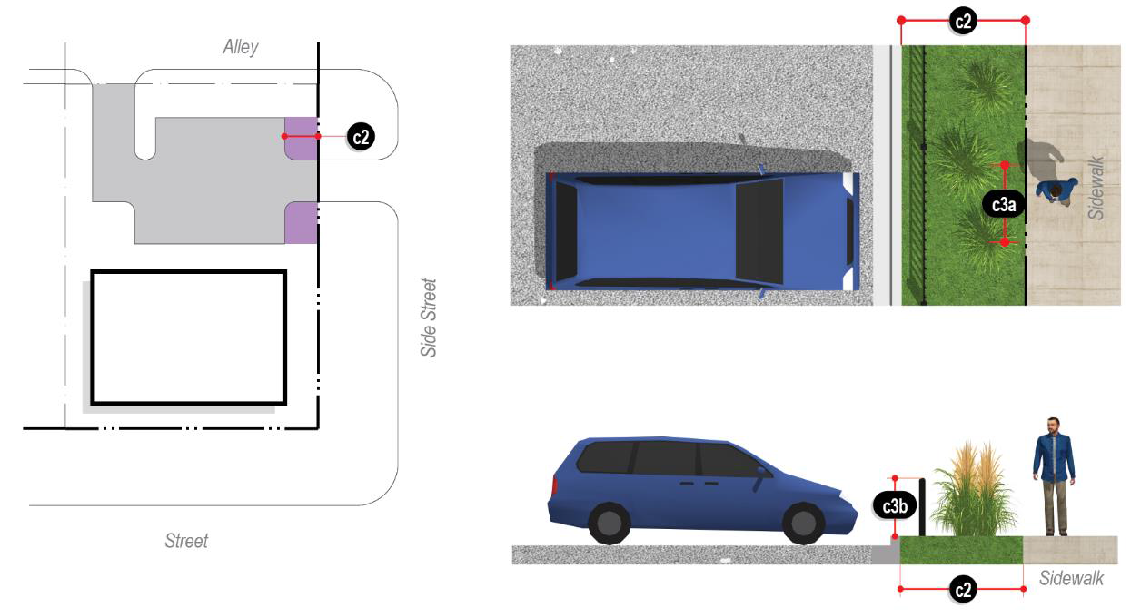
Figure 22: Parking Lot Perimeter Area Landscape
(4)
Parking lot interior area. All parking lots shall include landscape and trees located within the parking lot as required by this section. Trees and landscape required by this section shall be in addition to trees and landscape required under other sections of this division. It is the objective of this section to provide shade within parking areas, break up large expanses of parking lot pavement, support stormwater management where appropriate, and provide a safe pedestrian environment.
(a)
Applicability. The parking lot interior landscape regulations of this section apply to the following:
1.
The construction or installation of any new surface parking lot; and
2.
The expansion of any existing surface parking lot, in which case the requirements of this section apply only to the expanded area.
(b)
Amount (figure 23).
1.
Parking lots with fewer than 15 spaces. In parking lots with fewer than 15 spaces, all rows of parking shall be terminated by a parking lot island.
2.
Parking lots with 15 to 100 spaces. In parking lots with 15 to 100 spaces, required parking lot interior landscape area shall be provided in the form of islands.
a.
Parking lot island amount requirement. Parking lot islands shall be located on all parking rows. Parking lot islands shall be spaced not more than 135 feet or more than 15 continuous spaces apart, and at the end of any row of parking bordered by a drive aisle, public or private street, or pedestrian walkway.
3.
Parking lots with 100 spaces or more. In parking lots with 100 or more spaces, required parking lot interior landscape area shall be provided in the form of islands and medians.
a.
Parking lot median amount requirement. Parking lot medians shall be placed between every third row of parking.
b.
Parking lot island amount requirement. Parking lot islands shall be located on parking rows which are not required to have parking lot medians. Parking lot islands shall be spaced not more than 135 feet or more than 15 continuous spaces apart, and at the end of any row of parking bordered by a drive aisle, public or private street, or pedestrian walkway.
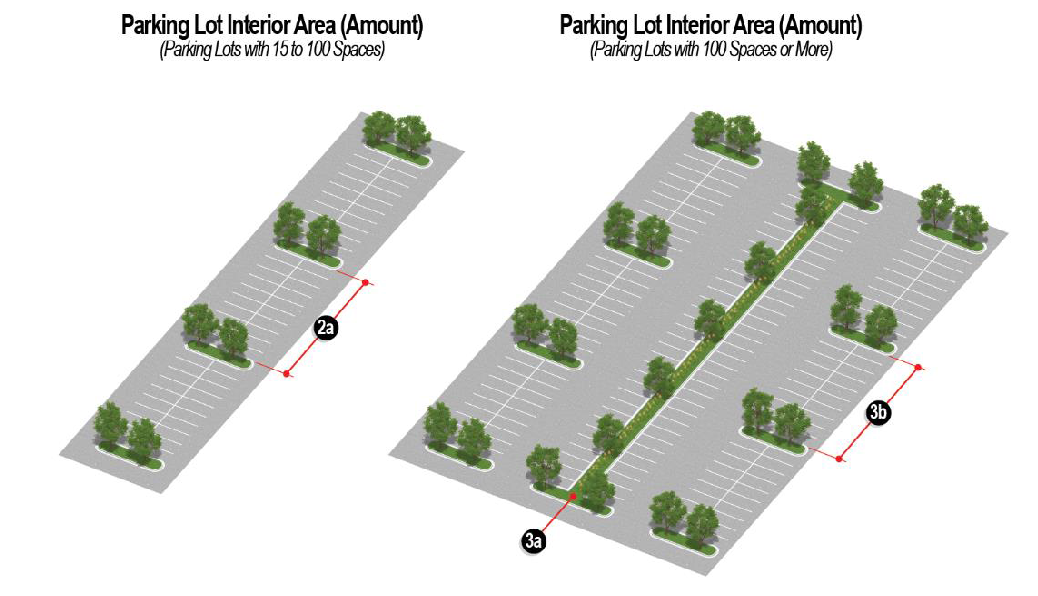
Figure 23: Parking Interior Area Landscape - Amount
(c)
Parking lot median standards (figure 24).
1.
Size. Parking lot medians shall have a minimum width of nine feet and minimum soil depth of 36 inches.
2.
Planting. A minimum of one canopy tree and 15 shrubs or native grasses shall be planted for each 50 linear feet of parking lot median.
3.
Design. Parking lot medians shall be protected with concrete curbing, wheel stops, or other suitable barriers. Such medians shall be properly drained or irrigated as appropriate to the site conditions to ensure survivability of plant materials and proper stormwater management function.
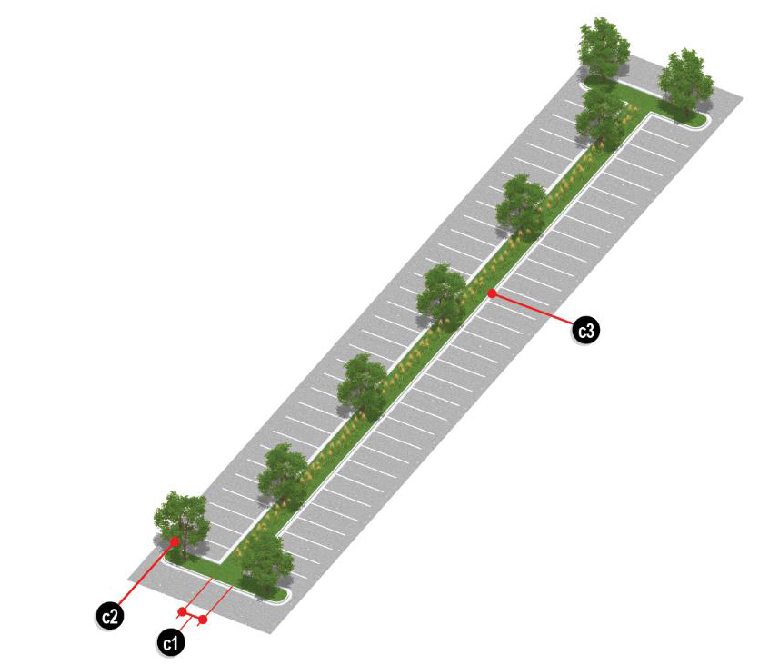
Figure 24: Parking Lot Median Standards
(d)
Parking lot island standards (figure 25).
1.
Size. Parking lot islands shall be a minimum nine feet wide by 18 feet long if adjacent to standard parking spaces and 16 feet long if adjacent to compact parking spaces and shall have a minimum soil depth of 36 inches. Double rows of parking shall provide parking lot islands opposite one another to form continuous single islands.
2.
Planting. A minimum of one canopy tree shall be provided for every parking lot island. If the island extends the width of a double row, then two canopy trees shall be provided.
3.
Design. Parking lot islands shall be protected with concrete curbing or other suitable barriers. Such islands shall be properly drained or irrigated as appropriate to the site conditions to ensure survivability of plant materials and proper stormwater management function.
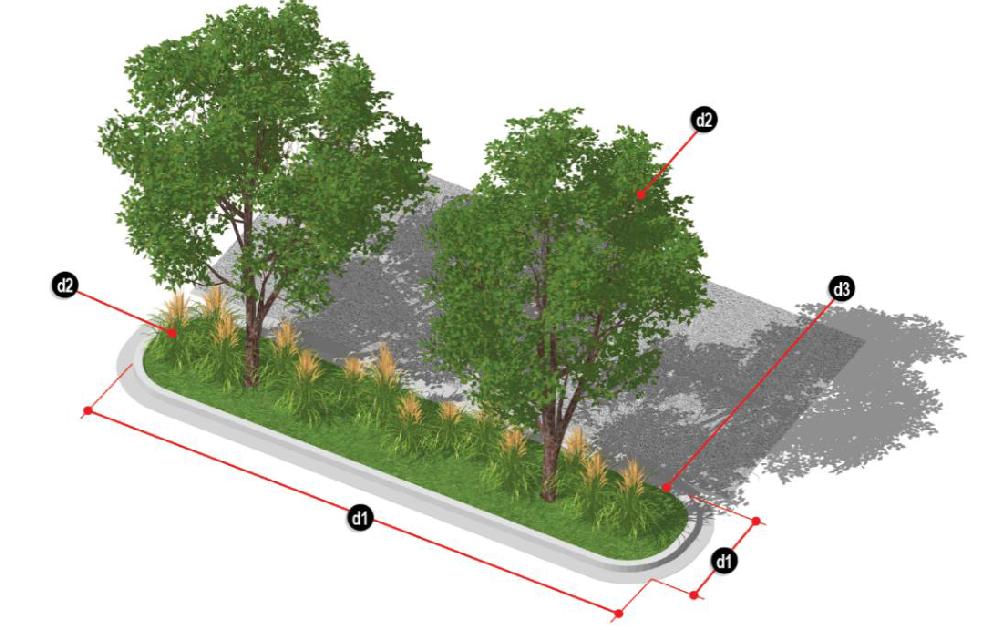
Figure 25: Parking Lot Island Standards
(e)
Pedestrian walkways. Pedestrian walkways, as required by subsection 36-491(4), shall be located along parking lot medians. The administrative review committee may waive or modify this requirement on determining that locating pedestrian walkways along parking lot medians is impractical due to site conditions or is undesirable because it would create unsafe conditions.
(f)
Type of landscape material. Except where areas are designed as vegetated stormwater management areas, canopy trees shall be the primary plant material used in parking lot islands and canopy trees and shrubs or native grasses shall be the primary plant materials used in parking lot medians. Understory trees, evergreen trees, shrubs, native grasses, groundcover, and other plant materials may be used to supplement the required plantings shall provide safe site distance where driveway curb cuts intersect public rights-of-way. If medians or islands are designed as stormwater management areas, deviations from required plantings may be approved by the administrative review committee.
(g)
Groundcover. Except where areas are designed as vegetated stormwater management areas, a minimum of 75 percent of the surface area of every parking lot island and median shall be planted with live groundcover. If medians or islands are designed as stormwater management areas, deviations from required plantings may be approved by the administrative review committee.
(5)
Building foundation area (figure 26). All non-single-family development, with the exception of non-single-family development built with a zero-foot front yard setback, shall include landscape located at the building foundation as required by this section. Landscape required by this section shall be in addition to landscape required under other sections of this division. It is the objective of this section to provide a softening effect at the base of buildings.
(a)
A non-single-family development is required to maintain a building foundation area at front and exterior side yards with a minimum width of the building setback or seven feet, whichever is less.
(b)
Foundation plantings shall be placed 18 inches on center from the foundation of the building.
(c)
Foundation plantings shall be designed to frame architectural features and to visually soften long expanses of walls.
(d)
Foundation plantings shall be installed across 80 percent of the length of the front and exterior side façade of the building.
(e)
Foundation plantings may include trees, shrubs, native grasses, and groundcover.
(f)
Where the area between the building and right-of-way is entirely paved as a public gathering space, plaza, or outdoor dining area, required building foundation area landscaping may be substituted by a minimum of two of the following elements:
1.
Moveable tables and chairs,
2.
Fountain or other water feature,
3.
Sculpture or other public art feature,
4.
Benches, seat walls, or amphitheaters,
5.
Raised landscape planters,
6.
Understory trees lining the area,
7.
Pedestrian scale and celebratory lighting,
8.
Other features as approved by the administrative review committee.
(g)
Above-ground stormwater planter boxes along building facades may be substituted for foundation plantings.
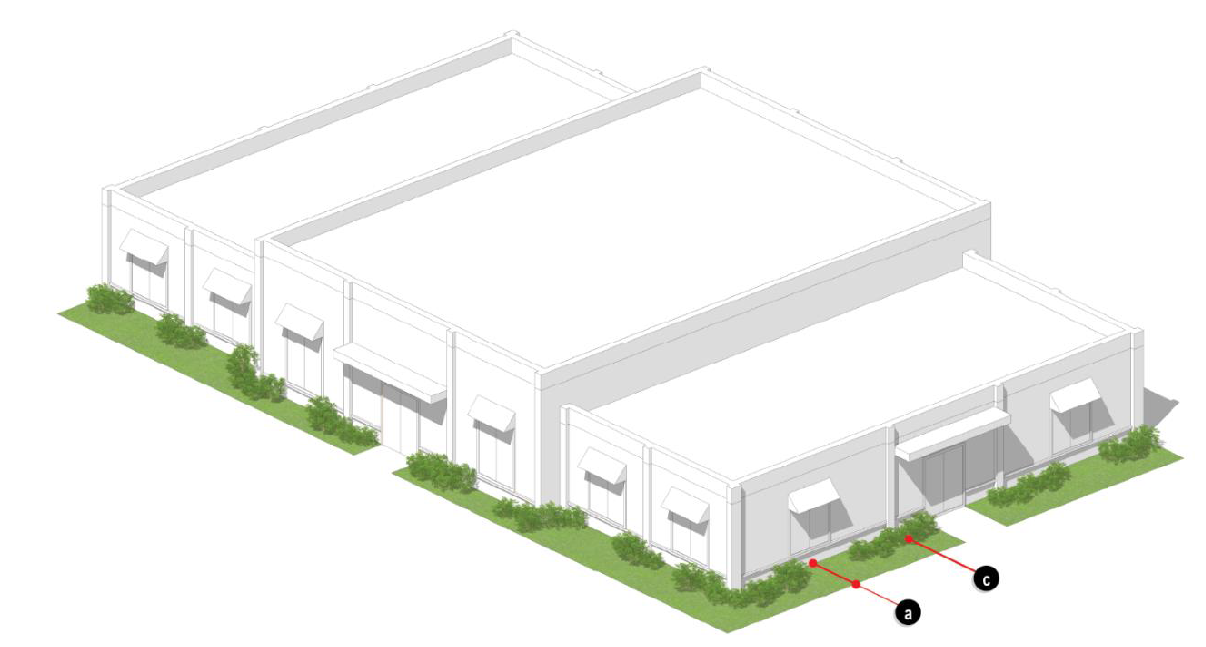
Figure 26: Building Foundation Area Landscape
(6)
Buffer area. Buffer area landscape shall be required along interior property lines of all non-single-family development when adjacent to single-family uses. It is not expected that the buffer area will totally screen such uses but rather will minimize land use conflicts and enhance aesthetics. Landscape required by this section shall be in addition to landscape required under other sections of this division.
(a)
Applicability. Buffer area landscaping is required as follows:
1.
The construction or installation of any new primary building or primary use; and
2.
The expansion of any existing primary building or primary use that results in an increase in gross floor area by more than five percent or 1,000 square feet, whichever is greater. In the case of expansions that trigger compliance with buffer area requirements, buffer area landscaping is required only in proportion to the degree of expansion. The administrative review committee is authorized to allow the buffer area to be established adjacent to the area of expansion or to disperse buffer area landscaping along the entire site buffer area.
(b)
Buffer area standards (figure 27).
1.
Width. Buffer areas shall have a minimum width of seven feet. Required yard setbacks may be utilized for buffer area landscape.
2.
Fences. The exterior line of the buffer area shall be improved with a fence meeting the following standards:
a.
Height. The fence shall be six feet in height.
b.
Materials. The material of the fence shall be pressure treated wood (chemically treated or naturally resistant to decay) or wood composites.
c.
Design. The finished side of the fence shall face the adjacent property.
d.
Location. Fences shall be located in line with the fences of adjacent properties, shall provide safe site distance where driveway curb cuts intersect public rights-of-way, and shall not extend beyond the front elevation of the primary building.
3.
Landscape elements. The buffer area shall, at a minimum, be improved with the following landscape elements:
a.
Canopy/evergreen trees. Four canopy and/or evergreen trees shall be planted per every 100 lineal feet of buffer area.
b.
Shrubs/native grasses. Ten shrubs/native grasses shall be planted per every 100 lineal feet of buffer area.
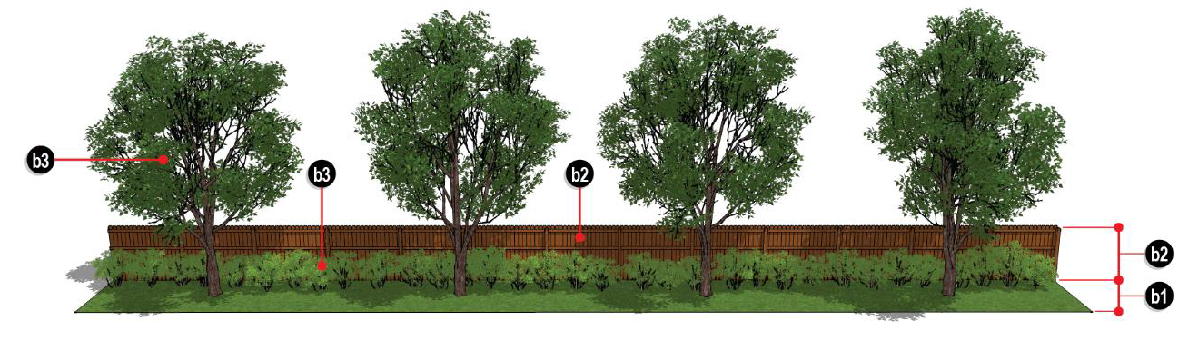
Figure 27: Buffer Area Landscape
(7)
Installation and maintenance of landscape areas.
(a)
All installed landscape shall conform to the most recently approved American Standard for Nursery Stock (ANSI Z60.1), published by the American National Standards Institute.
(b)
All new landscape areas shall be installed prior to the occupancy or use of the building or premises, or substantial completion of the building to allow for occupancy; or if the time of the season or weather conditions are not conducive to planting, the developer shall apply to the Administrative Review Committee for a delay in landscape installation. The delay in landscape installation request shall identify a date certain by which all required landscape materials shall be installed or the developer shall be subject to a fine as detailed in the agreement.
(c)
A total cost estimate of landscaping for the construction must be given in January 1 dollars for the current calendar year. Twenty percent of the total landscaping costs should be deposited in escrow with the city before building permits are granted. The 20 percent landscaping deposit will be held in escrow for a period of one year past the time of planting and will be refunded on approval of the city.
(d)
Dead plant materials shall be replaced within 60 days taking into consideration the season of the year and shall have at least the same quantity and quality of landscape elements as initially approved. If the particular project is constructed in more than one phase, the 60-day timeframe shall apply to each individual phase.
(e)
All landscape shall be maintained in a healthy, neat, trimmed, clean, and weed-free condition. With the exception of surface areas in vegetated stormwater management areas where mulch is not specified, the ground surface of landscape areas shall be covered with either turf and/or other types of pervious groundcover located beneath and surrounding trees and shrubs.
(f)
For stormwater management areas where irrigation is not specified, all installed plantings shall be guaranteed for a period of 18 months following municipal approval of installation. During this guarantee period the landowner shall supply water as necessary to promote successful establishment and growth.
(g)
Any required landscape area not intended for stormwater management, greater than 150 square feet in area, shall be provided with an underground irrigation system or be provided with a portable water supply within 50 feet of said landscape areas. No part of an irrigation system may be installed in city rights-of-way.
(h)
All plantings required under this division shall be maintained perpetually and replaced if they die or are substantially weakened or damaged. If plantings succumb due to cultural conditions, they shall be replaced with more culturally suitable species of the same type (e.g. tree, shrub, groundcover).
(G.O. 6661, § 1(Exh. B), 6-28-21)
Sec. 36-493. - Screening.
(1)
Used frying oil, trash, and recycling receptacles (figure 28). The following regulations shall apply to all non-single-family development.
(a)
Used frying oil, trash, and recycling receptacles shall be screened on three sides with a solid, opaque material with a minimum height of six feet and a maximum height of eight feet.
(b)
Materials used for screening shall complement the exterior building cladding materials of the primary building.
(c)
Materials and elevations for enclosures that are attached to buildings shall be designed to be integrated into the primary building.
(d)
If enclosures are to be attached to buildings, they shall comply with applicable fire and building codes.
(e)
Shrubs shall be installed every three feet along the exterior of the enclosure, with the exception of enclosure openings, to provide a softening effect.
(f)
Enclosure openings shall be gated with an opaque material.
(g)
Enclosure openings shall be kept closed at all times except for when the receptacle is being accessed.
(h)
Property owners shall be responsible for ensuring that used frying oil, trash, and recycling receptacles be placed in the enclosure at all times other than when it is being accessed.
(i)
Access drives shall be constructed of materials and to a thickness which accommodates truck loading. Year-round access to the enclosure area for service trucks shall be maintained by the property owner or tenant.
(j)
Enclosures shall be of an adequate size to accommodate expected containers. The enclosure shall be designed to be expandable to accommodate future additional containers.
(k)
Enclosure structures shall be designed to protect the walls from damage by containers. Such protection may be provided by the use of barrier curbing, reinforced masonry walls, or other similar means.
(l)
Used frying oil, trash, and recycling receptacle enclosures shall not occupy areas used for required parking spaces.
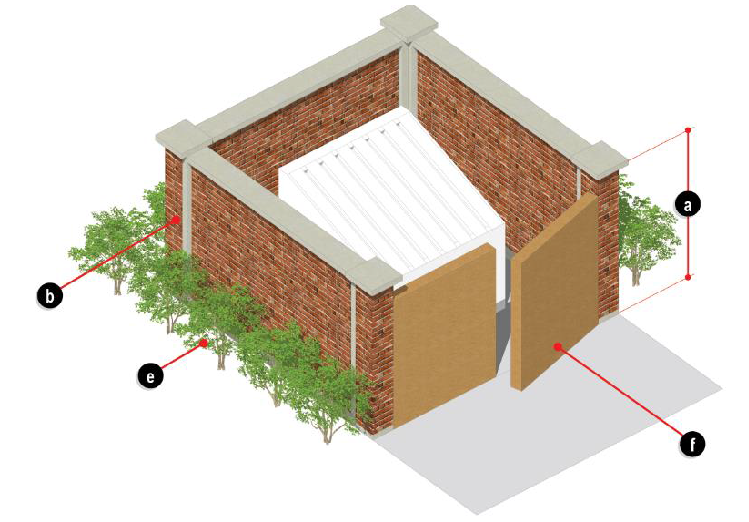
Figure 28: Used Frying Oil, Trash, and Recycling Receptacle Screening
(2)
Ground/wall-mounted mechanical units (figure 29). The following regulations shall apply to all ground/wall-mounted mechanical units, including, but not limited to, generators, air-conditioning condensers, heat pumps, ventilation units, computer cooling equipment, etc., and any related utility structures and equipment. Tanks and/or silos related to a brewery, winery, distillery are exempt from these requirements.
(a)
Locating mechanical units within the primary building is strongly encouraged in order to minimize exterior visual impacts. Ground-mounted mechanical units are prohibited within the front yard, regardless of whether screening is provided.
(b)
Ground/wall-mounted mechanical units that are visible from any public right-of-way or adjacent residential property shall be screened from public view.
(c)
Materials used for screening shall be designed and established so that the area or element being screened is no more than 20 percent visible through the screen.
(d)
Chain-link fence or slats in chain-link fence shall not be used to meet this requirement.
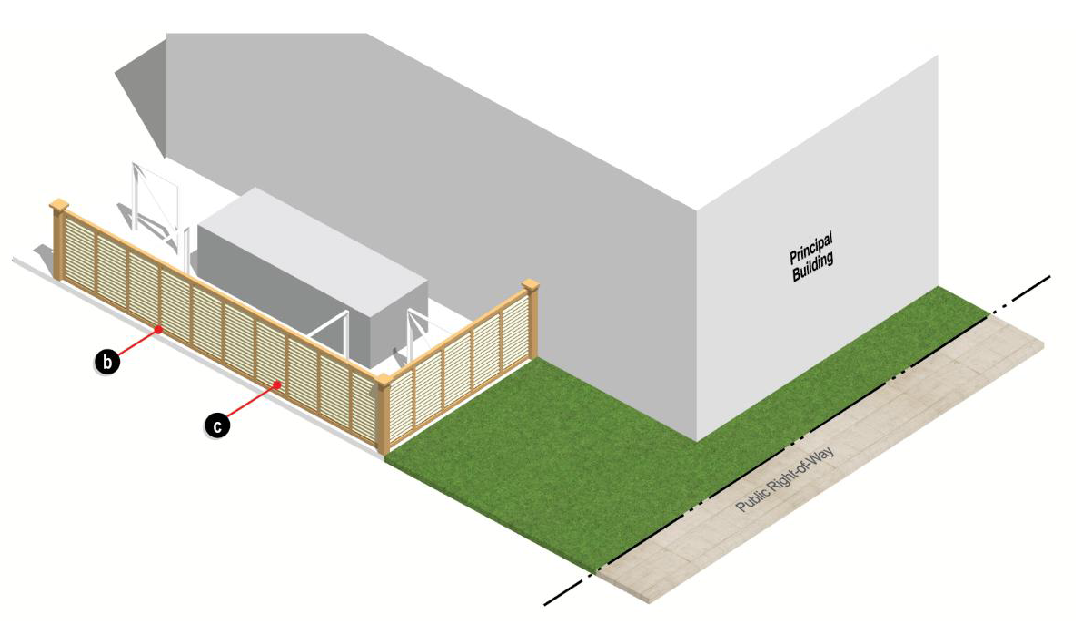
Figure 29: Ground/Wall-Mounted Mechanical Unit Screening
(3)
Roof-mounted mechanical units (figure 30). The following regulations shall apply to all roof mounted mechanical units, including, but not limited to, air-conditioning condensers, heat pumps, ventilation units, computer cooling equipment, etc., and any related utility structures and equipment which service multifamily, nonresidential, or mixed-use developments.
(a)
Locating mechanical units within the primary building is strongly encouraged in order to minimize exterior visual impacts.
(b)
Roof mounted mechanical units that are visible from any public right-of-way or adjacent residential property shall be completely screened from public view.
(c)
Materials used for screening shall be architecturally integrated with the building and shall be continuous and permanent.
(d)
Screening shall be required when new equipment is installed and shall be provided around both new and existing roof mounted mechanical units in order to provide visual continuity. Normal maintenance of roof mounted mechanical units shall not mandate the screening requirements.
(e)
Additional screening may be required due to topographic differences in the adjoining properties.
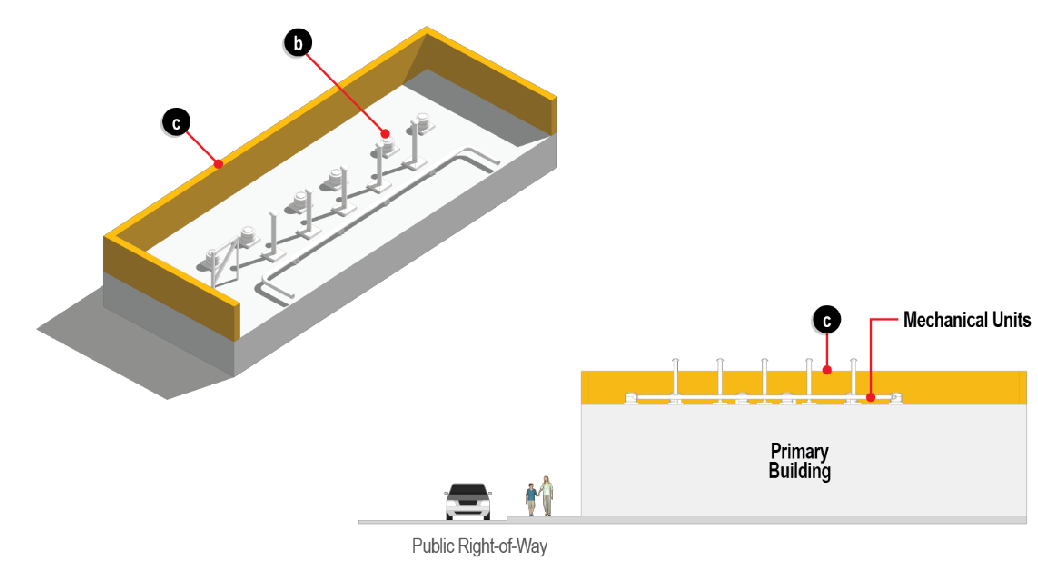
Figure 30: Roof-Mounted Mechanical Unit Screening
(G.O. 6661, § 1(Exh. B), 6-28-21; G.O. 6684, § 1(Exh. B), 9-20-21)
Sec. 36-494. - Signs.
(1)
Sign measurement.
(a)
Sign area (figure 31). Unless otherwise defined, sign area shall be determined by the total area enclosed by a continuous perimeter along the edges of a sign, including any frame or border. The area of a sign composed of individually affixed letters is determined by the total area of the smallest geometric shape enclosing the letters. A maximum of two geometric shapes may be utilized. The calculation for a double-faced sign shall be the area of one face only.
Figure 31: Sign Area Measurement
(b)
Sign height (figure 32). Sign height shall be measured from grade directly below the sign to the topmost portion of the sign.
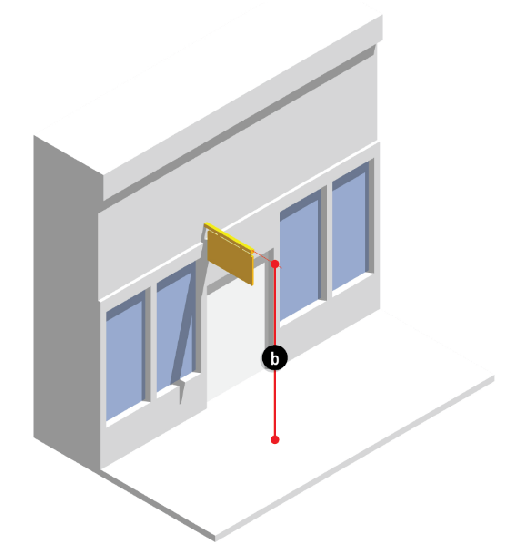
Figure 31: Sign Height Measurement
(2)
Limit on sign area (figure 33).
(a)
Permanent sign area limit. Each lot shall be allowed one square foot of aggregate sign area per linear foot of building frontage for permanent signs.
(b)
Temporary sign area limit. Each lot shall be allowed one-half foot of aggregate sign area per linear foot of building frontage for temporary signs.
(c)
Premises having frontage on more than one dedicated street. Premises having frontage on more than one dedicated street will be allowed an additional one-half square feet of aggregate sign area for each lineal foot of the secondary lot frontage; however additional sign area shall only be displayed on the secondary frontage.
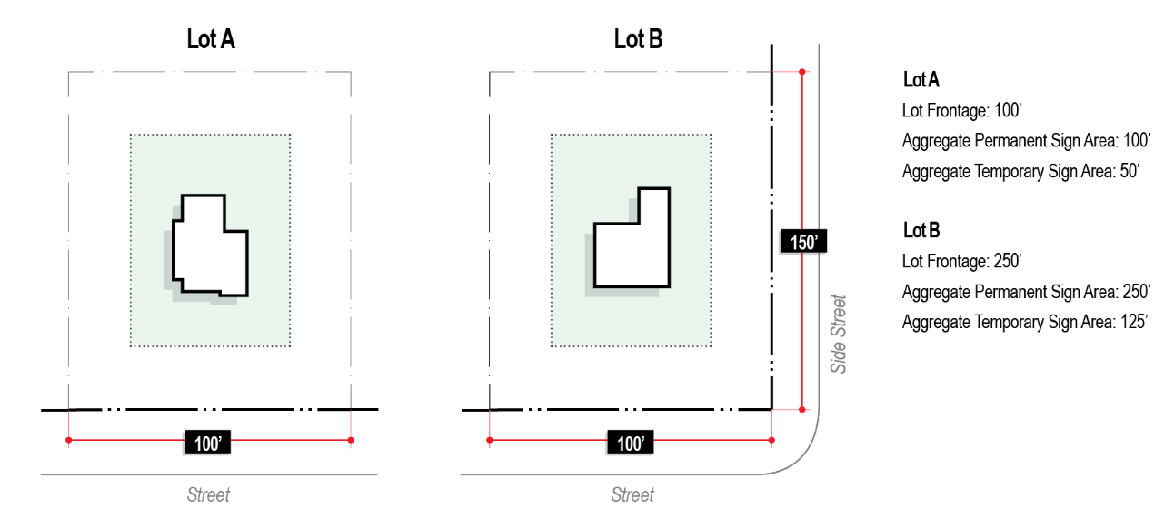
Figure 33: Limit on Sign Area
(3)
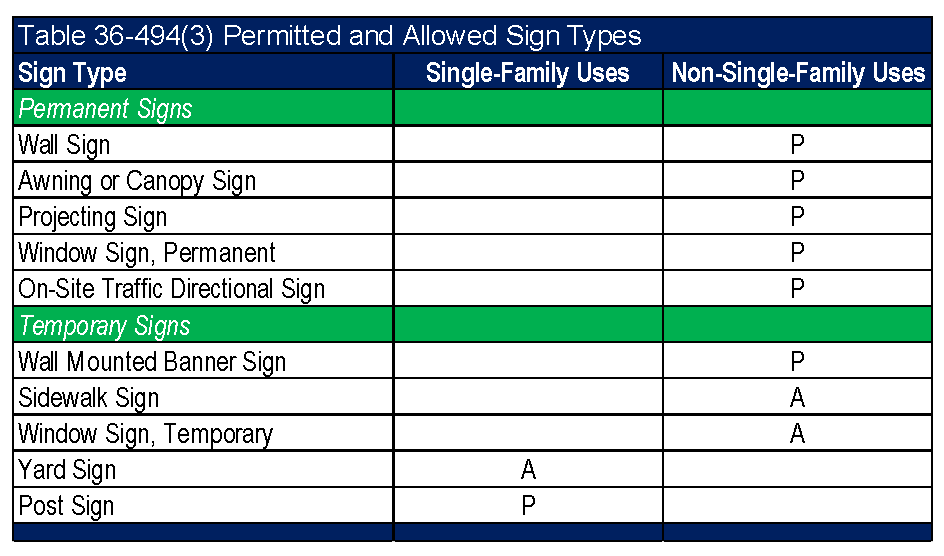
[Permitted and allowed sign types (table 36-494(3).] Table 36-494(3) permitted and allowed sign types details the types of signs allowed in the GAP district per use type. The following key is to be used in the interpretation of the table.
(a)
Permitted sign types. Sign types marked as "P" in the table shall be permitted subject to all applicable provisions of this division and only after the issuance of a sign permit as detailed in subsection 36-454(22).
(b)
Allowed sign types. Sign types marked as "A" in the table shall be allowed subject to all applicable provisions of this division. No sign permit shall be required.
(c)
Prohibited sign types. A blank space in the table indicates that a sign type is not allowed for the respective use type.
(d)
Unlisted sign types. Sign types not included in table 36-494(3) shall be considered prohibited.
(4)
Standards for permanent signs.
(a)
Wall signs (figure 34).
1.
Sign area. The maximum sign area of a wall sign shall be five percent of the total area of the face of wall on which the sign is to be located.
2.
Height. No wall sign shall protrude above the highest roofline or the top of the parapet wall or mansard roof.
3.
Projection. A wall sign shall not extend more than six inches from the wall of the building or structure to which it is attached and shall maintain a minimum vertical clearance of ten feet.
4.
Number of signs. A maximum of one wall sign shall be permitted per lot frontage of a single-tenant building or unit of a multi-tenant building.
5.
Sign copy. All sign copy featured on wall signs shall either be individually affixed letters, appear to be individually affixed letters, or be printed, etched, or otherwise incorporated directly on the sign's backing plate. Box signs shall be prohibited.
6.
Other standards.
a.
No wall sign shall cover any architectural features (architectural features shall include, but not be limited to, pediment, cornice, belt course, pier, windows, pilaster, roof, decorative stone or inlay, kick plate/bulkhead, raised or colored brick pattern, and corbel) of the building to which it is affixed.
b.
No wall sign shall be affixed to HVAC screening, elevator overrun, or other features protruding from the roof of the structure.
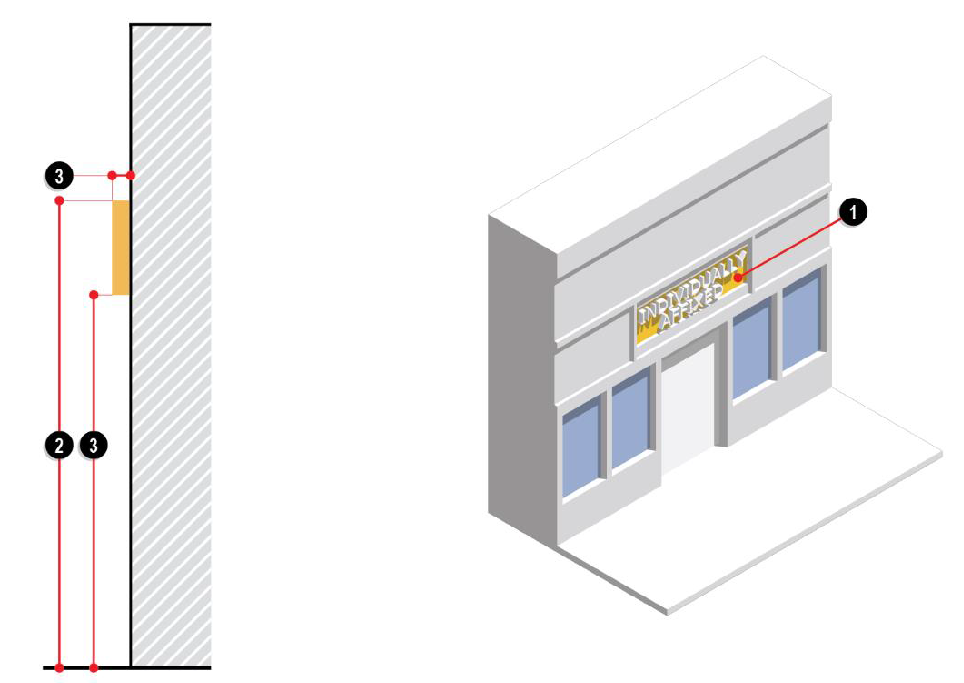
Figure 34: Wall Signs
(b)
Awning or canopy signs (figure 35).
1.
Sign area. The maximum sign area of an awning or canopy sign shall be 50 percent of the face of the awning or canopy upon which the sign shall be printed or affixed.
2.
Other provisions. Awning or canopy signs shall only be permitted on awnings or canopies extending above ground floor entrances or windows.
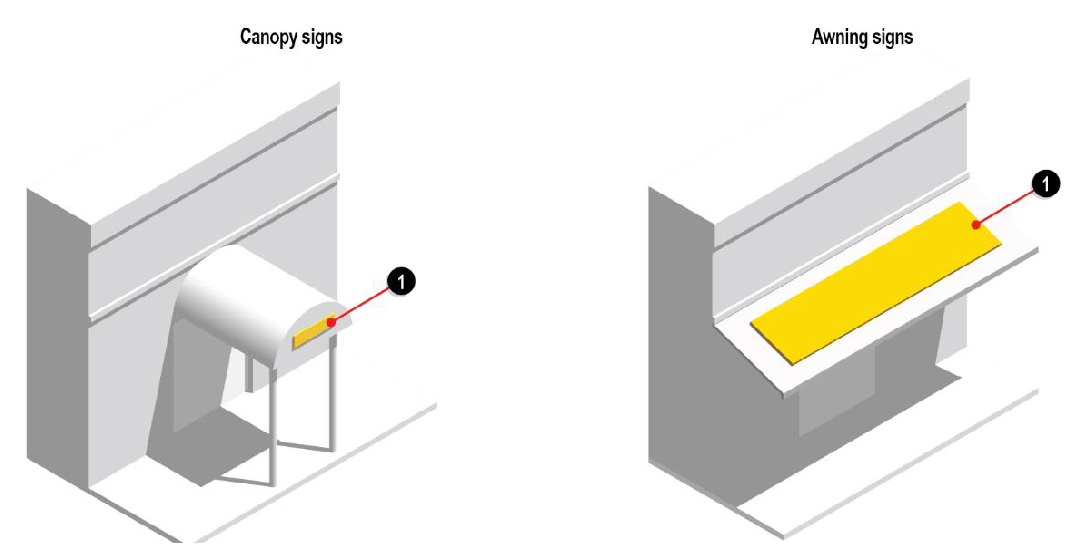
Figure 35: Awning or Canopy Signs
(c)
Projecting signs (figure 36).
1.
Sign area. The maximum sign area of a projecting sign shall be six square feet.
2.
Height. A projecting sign shall not extend above the roofline of the building to which it is attached, or a maximum of 12 feet, whichever is less, and shall maintain a minimum vertical clearance of eight feet.
3.
Number of signs. A maximum of one projecting sign shall be permitted per ground floor nonresidential tenant space. A projecting sign and a wall sign may be displayed on the same building frontage. A projecting sign and an awning or canopy sign shall not be displayed on the same building frontage.
4.
Projection. A projecting sign shall horizontally project a maximum of four feet from the mean elevation of the building to which it is attached.
5.
Other provisions.
a.
The property owner shall be required to provide a release or hold harmless to the city prior to the display of any signs located within a public right-of-way.
b.
Projecting signs shall not be illuminated.
c.
Projecting signs may encroach upon, extend, or project over a public sidewalk.
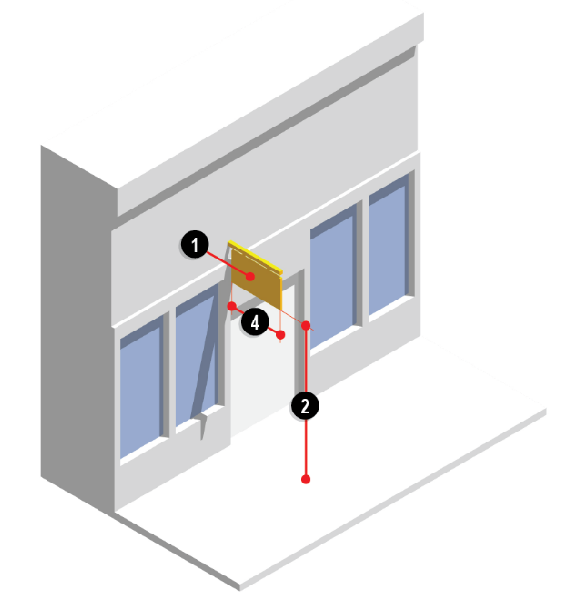
Figure 36: Projecting Signs
(d)
Window signs, permanent (figure 37).
1.
Sign area. The maximum sign area of a permanent window sign shall be 25 percent of the total area of the window on which the sign shall be located. Permanent window sign area shall be counted in aggregate with wall sign area.
2.
Other provisions. Window signs shall be allowed on ground floor windows only.
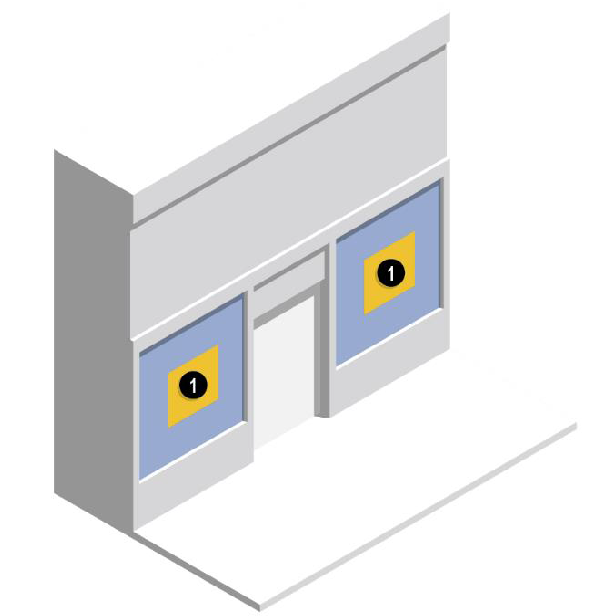
Figure 37: Window Signs, Permanent
(e)
On-site traffic directional signs (figure 38).
1.
Sign area. The maximum sign area of an on-site traffic directional sign shall be six square feet.
2.
Height. The maximum height of an on-site traffic directional sign shall be four feet.
3.
Number of signs. The number and placement of on-site traffic directional signs shall be as necessary to assist in the safe movement of vehicular and pedestrian traffic on a property, as approved by the administrative review committee.
4.
Location. On-site traffic directional signs shall be located a minimum of five) feet from all property lines, rights-of-way, and utility easements; shall not block points of ingress or egress; be placed in any sidewalk or pedestrian walkway and shall not be located in a clear vision triangle as detailed in subsection 36-490(1)(f).
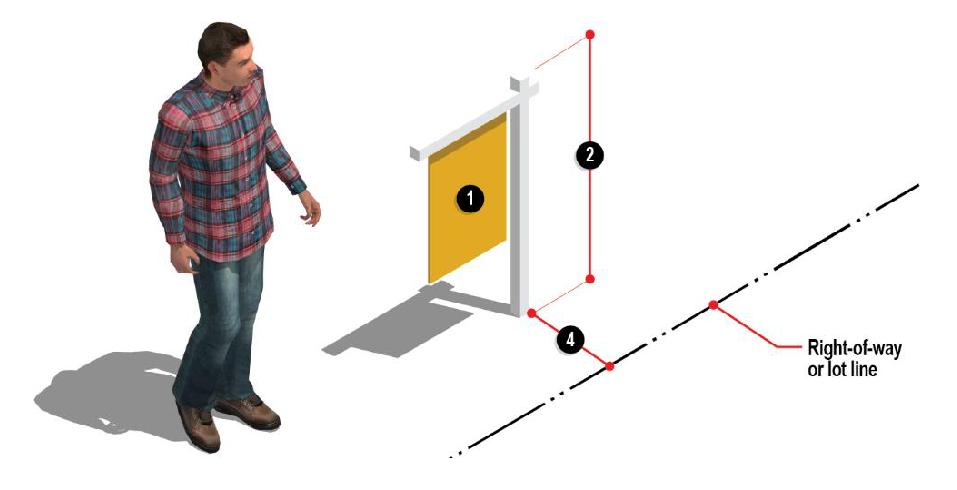
Figure 38: On-Site Traffic Directional Signs
(5)
Standards for temporary signs.
(a)
Wall-mounted banner signs (figure 39).
1.
Sign area. The maximum sign area of a wall mounted banner sign shall be two and one-half percent of the total area of the face of wall on which the sign is to be located.
2.
Height. No wall mounted banner sign shall protrude above the highest roofline or above the top of the parapet wall or mansard roof.
3.
Number of signs. A maximum of one wall mounted banner sign shall be permitted per lot frontage of a single-tenant building or unit of a multi-tenant building.
4.
Location. Wall mounted banner signs shall be affixed to a building.
5.
Projection. Wall mounted banner signs shall be affixed flat against the building to which they are mounted.
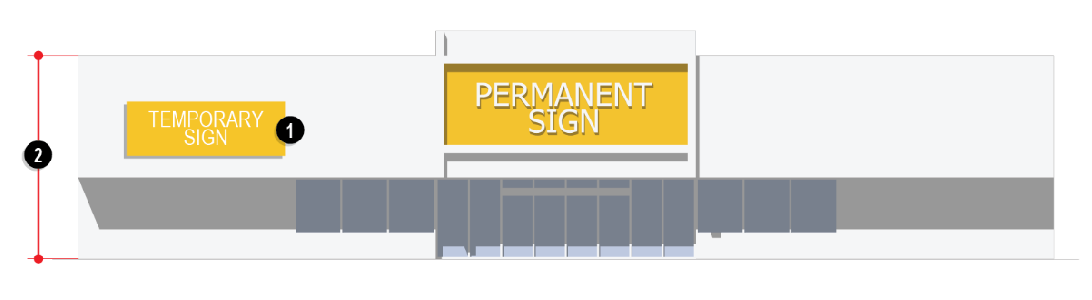
Figure 39: Wall-Mounted Banner Signs
(b)
Sidewalk signs (figure 40).
1.
Sign area. The maximum sign area of a sidewalk sign shall be four square feet.
2.
Height. The maximum height of a sidewalk sign shall be three feet.
3.
Number of signs. A maximum of one sidewalk sign shall be permitted per lot frontage of a single-tenant building or unit of a multi-tenant building.
4.
Location.
a.
Sidewalk signs shall be placed in a manner that preserves a continuous sidewalk width of a minimum of three feet.
b.
No part of any sidewalk sign shall block points of ingress or egress.
c.
Sidewalk signs shall be placed no more than one foot from the wall of the building or unit of a building to which the sign is associated.
d.
Sidewalk signs shall be placed no less than three feet and no more than six feet from the entrance of the building or unit of a building to which the sign is associated.
5.
Duration of display. The display of sidewalk signs shall only be permitted during the operating hours of the use to which the sign is associated and shall be brought indoors during non-operating hours.
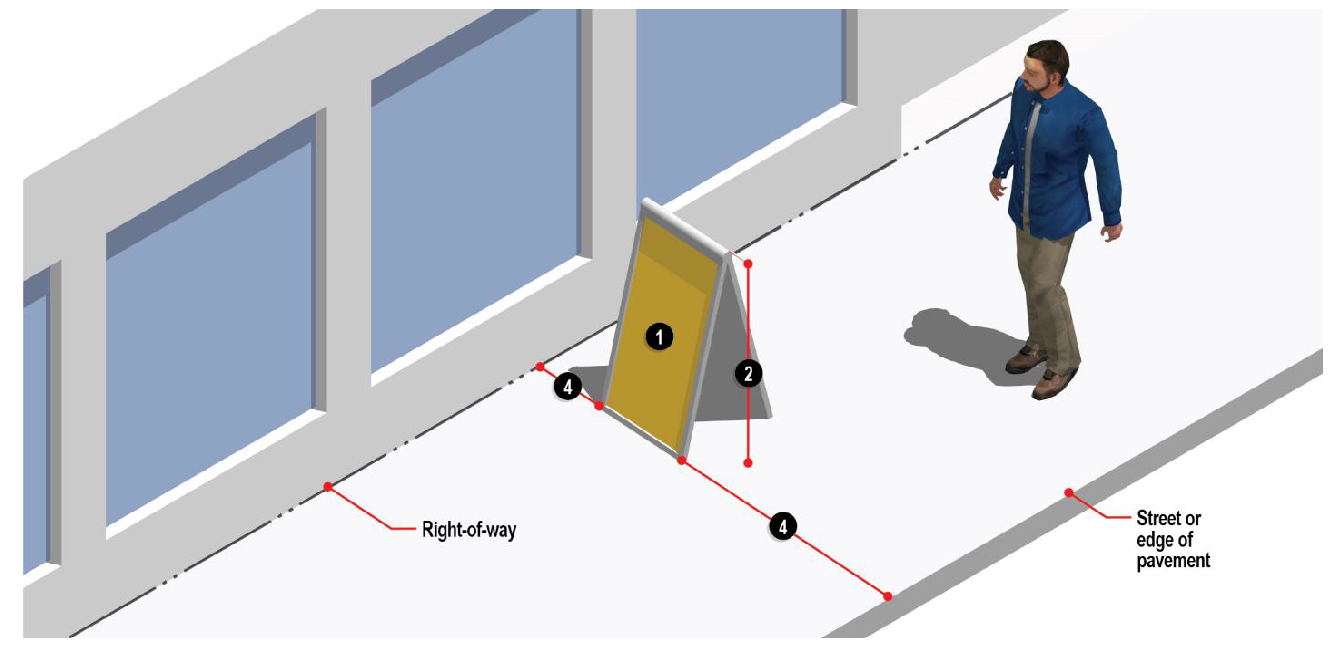
Figure 40: Sidewalk Signs
(c)
Window signs, temporary.
1.
Sign area (figure 41).
a.
The maximum sign area of a temporary window sign shall be 15 of the total area of the window on which the sign shall be located if a permanent window sign is displayed on the same window.
b.
If a permanent window sign is not displayed on the same window, the maximum sign area of a temporary window sign shall be 25 percent of the total area of the window on which the sign shall be located.
2.
Other provisions.
a.
Temporary window signs shall be allowed on ground floor windows only.
b.
Temporary window signs shall not be located on transom windows.
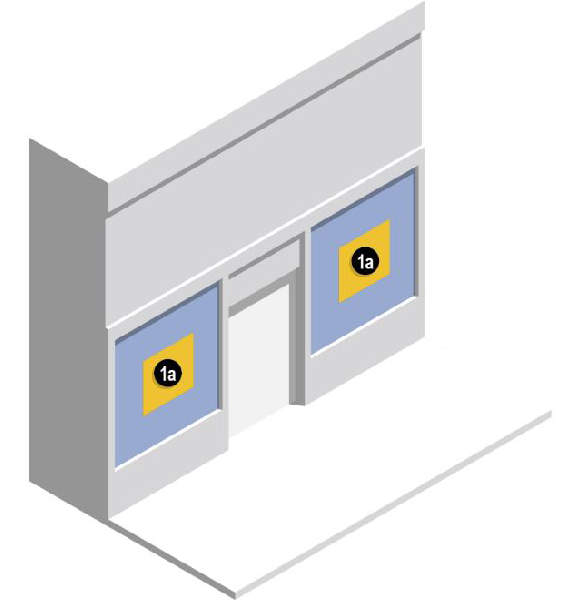
Figure 41: Window Signs, Temporary
(d)
Yard signs (figure 42).
1.
Sign area. The maximum sign area of a yard sign shall be three square feet.
2.
Sign height. The maximum height of a yard sign shall be four feet.
3.
Number of signs. A maximum of two yard signs may be displayed concurrently per lot. However, in the 30 days before and two days after a local, state, or federal election, a maximum of four yard signs may be display concurrently.
4.
Location. Yard signs shall be located a minimum of five feet from all property lines, rights-of-way, and utility easements; shall not block points of ingress or egress; or be placed in any sidewalk or pedestrian walkway.
5.
Other provisions.
a.
Yard signs shall be securely anchored into the ground or secured in a portable base designed for such function.
b.
Yard signs shall be maintained in good condition and shall not sag, lie on the ground, be torn, or otherwise kept in a disorderly state.
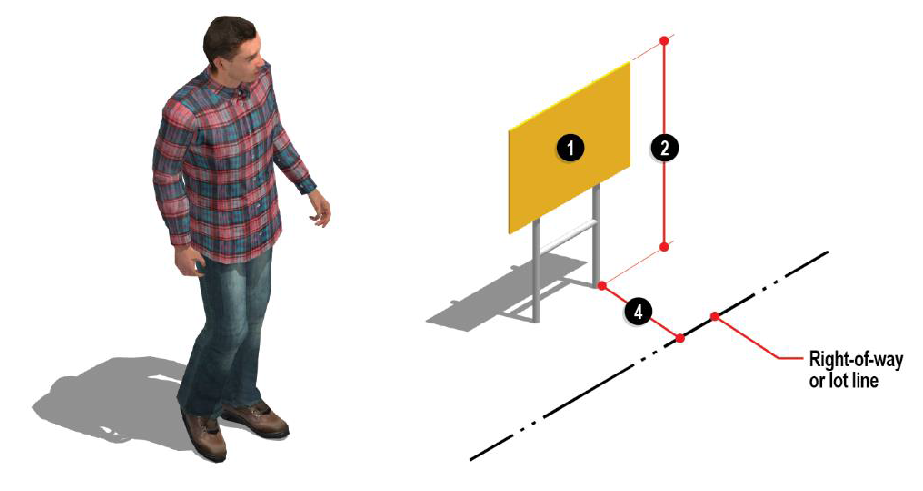
Figure 42: Yard Signs
(e)
Post signs (figure 43).
1.
Sign area. The maximum sign area of a post sign shall be four square feet.
2.
Height. The maximum height of a post sign shall be six feet.
3.
Number of signs. A maximum of one post sign shall be allowed per lot frontage.
4.
Location. Post signs shall be located a minimum of five feet from all property lines, rights-of-way, and utility easements; shall not block points of ingress or egress; or be placed in any sidewalk or pedestrian walkway.
5.
Other provisions.
a.
Post signs shall be securely anchored into the ground or secured in a portable base designed for such function.
b.
Post signs shall be maintained in good condition and shall not sag, lie on the ground, be torn, or otherwise kept in a disorderly state.
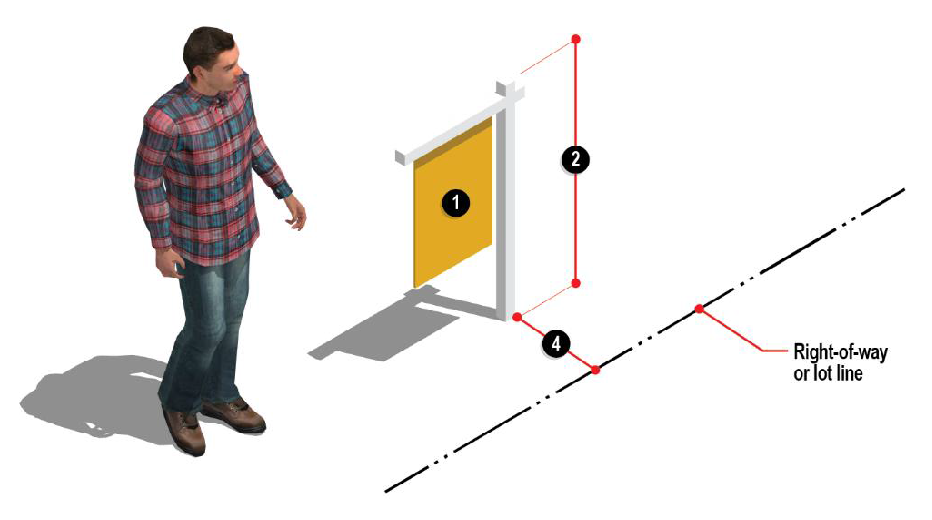
Figure 43: Post Signs
(6)
Prohibited signs. Unless otherwise allowed in this division, the following signs are expressly prohibited:
(a)
Electronic message boards,
(b)
Outline lighting,
(c)
Pole/pylon signs,
(d)
Monument signs,
(e)
Roof signs,
(f)
Signs with flashing lights,
(g)
Moving, rotating, or animated signs,
(h)
Pennants, streamers, spinners, propellors, balloons, inflatable shapes,
(i)
Snipe signs,
(j)
Box signs,
(k)
Feather signs,
(l)
Billboards/off-premises signs,
(m)
Attention getting devices, and
(n)
Other sign types not explicitly permitted.
(7)
Nonconforming signs.
(a)
All permanent signs which are in existence at the time of passage of this division, but which do not conform to one or more provisions of this division, shall be deemed to be a legal nonconforming structure and may be continued only as provided in this section.
(b)
Any sign for which a permit has been lawfully granted prior to the effective date of this or any subsequent amendment of this division and which does not comply with the provisions of such amendment may nonetheless be completed in accordance with the approved plans, provided erection of the sign is started within 90 days after the passage of the ordinance amendment, and is diligently prosecuted to completion.
(c)
Whenever a nonconforming sign has been discontinued for a period of six consecutive months, or whenever there is evidence of a clear intent on the part of the owner to abandon a nonconforming sign, such sign shall not, after being discontinued or abandoned, be reestablished, and the sign thereafter shall be in conformity with the regulations of this division.
(d)
Normal maintenance of a nonconforming sign is permitted, including necessary nonstructural repairs and incidental alterations which do not extend or intensify the nonconforming features of the sign.
(e)
No structural alteration, enlargement or extension shall be made to a nonconforming sign, except in the following situations:
1.
When the alteration is required by law; and/or
2.
When the alteration will actually result in eliminating the nonconforming portion of the structure.
(f)
If a nonconforming sign is damaged or destroyed by any means to the extent of 50 percent or more of its replacement value at that time, the sign shall not be rebuilt or used thereafter except in compliance with the provisions of this division. In the event the damage or destruction is less than 50 percent of its replacement value, based upon prevailing costs, the sign may then be restored to its original condition at the time of such partial destruction until the nonconforming sign is otherwise abated by the provisions of this division. In either event, restoration or repair must be started within a period of six months from the date of damage or destruction, and diligently prosecuted to completion.
(g)
Existing temporary signs shall expire at the termination date specified on the permit, but in no case later than six months from the date of passage of this division. New temporary signs shall be allowed only in conformance with the provisions contained in this division.
(h)
The administrative review committee shall, after the adoption of this division, notify each owner of a nonconforming sign of the manner in which such sign is not in compliance with this division. They shall further notify each owner of a nonconforming sign that such sign must either be brought into compliance with this division or removed prior to its required abatement date.
(G.O. 6661, § 1(Exh. B), 6-28-21)
Sec. 36-495. - Outdoor lighting.
(1)
Fixture classification. All outdoor lighting fixtures shall either have a fixture cutoff classification of "full cutoff" or be fully shielded, unless otherwise expressly permitted.
(2)
LED fixtures. All outdoor lighting utilizing a light-emitting diode (LED) fixture shall meet the following standards:
(a)
Color rendering. Outdoor LED fixtures shall be rated a minimum color rendering index (CRI) value of 70 or higher.
(b)
Color temperature. Outdoor LED fixtures shall have a correlated color temperature between 4,000 and 5,000 degrees Kelvin.
(G.O. 6661, § 1(Exh. B), 6-28-21)

