
St Cloud City Zoning Code
ARTICLE 21
- DEFINITIONS
21.1 - PURPOSE
This Article contains definitions for terms used throughout the Code.
(Ord. of 12-2-24(1))
21.2 - INTERPRETATION
The language set forth in the text of this Code is interpreted in accordance with the following rules of construction:
A.
The singular number includes the plural, and the plural the singular.
B.
The present tense includes the past and future tenses, and the future tense includes the present.
C.
The masculine gender includes the feminine and neuter.
D.
Whenever a defined word or term appears in the text of this Code, its meaning is construed as set forth in the definition. Any word appearing in parenthesis, between a word and its definition herein, is construed in the same sense as that word. Words not defined are interpreted in accordance with the definitions considered to be normal dictionary usage.
E.
If a definition contains a regulation and the use is inconsistent with that regulation, the use is prohibited.
(Ord. of 12-2-24(1))
21.3 - USE DEFINITION RULES OF INTERPRETATION
Certain terms in this Article are defined to be inclusive of many uses in order to eliminate overly detailed lists of uses in the zoning districts established by this Code. These terms are referred to as generic use definitions.
A use that is not specifically listed in a zoning district or does not fall within a generic use definition as defined in this Article is prohibited.
If a use is listed specifically, it cannot be considered part of a generic use definition.
(Ord. of 12-2-24(1))
21.4 - USE DEFINITIONS
Activity Center. A facility offering social, physical and mental rehabilitation or training of persons with disabilities.
Adult Use. An adult use includes, but is not limited to: adult arcade, adult bookstore, adult cabaret, adult motion picture theater, adult theater, or sexual encounter establishment.
1.
Adult Arcade. An establishment where, for any form of consideration, one (1) or more motion picture projectors, slide projectors or similar machines for viewing by five (5) or fewer persons each are used to show films, motion pictures, video cassettes, slides or other photographic reproductions that are characterized by an emphasis upon the depiction or description of "specified sexual activities" or "specified anatomical areas."
2.
Adult Bookstore. An establishment that has as a substantial portion of its stock-in-trade and offers for sale, for any form of consideration, any one (1) or more of the following: books, magazines, periodicals or other printed matter, or photographs, films, motion pictures, video cassettes, slides or other visual representation that are characterized by an emphasis upon the depiction or description of "specified sexual activities" or "specified anatomical areas," or instruments, devices or paraphernalia designed for use in connection with "specified sexual activities."
3.
Adult Cabaret. A nightclub, bar, restaurant or similar establishment that regularly features live performances characterized by the exposure of "specified anatomical areas" or by "specified sexual activities," or films, motion pictures, video cassettes, slides or other photographic reproductions in which a substantial portion of the total presentation time is devoted to the showing of material that is characterized by an emphasis upon the depiction or description of "specified sexual activities" or "specified anatomical areas."
4.
Adult Motion Picture Theater. An establishment where, for any form of consideration, films, motion pictures, video cassettes, slides or similar photographic reproductions are shown, and in which a substantial portion of the total presentation time is devoted to the showing of material characterized by an emphasis on the depiction or description of "specified sexual activities" or "specified anatomical areas."
5.
Adult Theater. A theater, concert hall, auditorium or similar establishment characterized by activities featuring the exposure of "specified anatomical areas" or by "specified sexual activities."
6.
Sexual Encounter Establishment. An establishment other than a hotel, motel or similar establishment offering public accommodations, which, for any form of consideration, provides a place where two (2) or more persons may congregate, associate or consort in connection with "specified sexual activities" or the exposure of "specified anatomical areas." This definition does not include an establishment where a medical practitioner, psychologist, psychiatrist or similar professional person licensed by the state engages in sexual therapy.
7.
Specified Anatomical Areas. "Specified anatomical areas" means and includes any of the following: 1) less than completely and opaquely covered human genitals, pubic region, buttocks, anus, or female breasts below a point immediately above the top of the areolae; or 2) human male genitals in a discernibly turgid state, even if completely and opaquely covered.
8.
Specified Sexual Activities. "Specified sexual activities" means and includes any of the following: 1) the fondling or other erotic touching of human genitals, pubic region, buttocks, anus, or female breasts; 2) sex acts, actual or simulated, including intercourse, oral copulation, sodomy; 3) masturbation, actual or simulated; or 4) excretory functions as part of or in connection with any of the activities set forth in 1 through 3 of this definition.
Agricultural Service Establishment. A use where the primary activity is to provide goods or services to general or industrial farm operations including, but not limited to, fertilizer, seed and feed supply companies, grain elevators, milling operations, implement dealerships, processing and packaging of agricultural products, cold storage plants, and livestock sales excluding slaughter houses.
Airport. Any premises which are used, or intended for use, for the landing and takeoff of aircraft, and any appurtenant areas which are used, or intended for use, for building incidental to aircraft services, together with all buildings and structures thereon.
Ambulance Operations Facility. A facility for the dispatch, storage and maintenance of emergency medical care vehicles.
Amusement Center. Any room, place or space available for public patronage, operated as a business, together with any contiguous private parking areas of the business, which has five (5) or more pieces of equipment or games including, but not limited to, pool or billiard tables, table tennis tables, foosball tables, pinball machines, or any mechanical or electronic amusement device. The presence of amusement equipment or games as a secondary or ancillary use does not constitute an amusement center. An amusement center as defined in this section does not include intoxicating or non-intoxicating, on- or off-sale liquor establishments licensed pursuant to Section 800 or Section 810 of the City Code of Ordinances.
Assisted Living Facility. A facility that provides daily assistance and long-term residence for disabled or elderly individuals. This includes a combination of housing, supportive services, personalized assistance and health care designed to respond to the individual needs of those who need help with activities of daily living, such as dressing, grooming, bathing, etc.
Athletic Field. Outdoor sites, often requiring equipment, designed for formal athletic competition in field sports (e.g., softball, soccer, football).
Bakery. An establishment primarily engaged in the retail sale of baked products for consumption off-site. The products may be prepared either on- or off-site. Such use may include incidental food service.
Bed and Breakfast Facility. A transient lodging establishment, generally located in a single-family dwelling, providing overnight or temporary lodging (no individual cooking facilities) for the general public and may provide meals for compensation.
Best Management Practices (BMPs). Erosion and sediment control and water quality management practices that are the most effective and practicable means of controlling, preventing and minimizing degradation of waters of the state, including avoidance of impacts, prohibitions of practices, general housekeeping practices, pollution prevention and educational practices, operating and maintenance procedures, and other applicable management practices.
Blacksmith Shop. A business where iron and other metals are shaped and repaired, typically using a forge.
Bottling Works and Distribution. A business where drinks intended for sale for human consumption are prepared, mixed, cooked, bottled or packed, and/or shipped.
Building Materials Sales and Storage. Retail establishments that sell lumber and other large building materials, and also including paint, wallpaper, glass, fixtures, nursery stock, lawn and garden, etc.
Cannabis Cultivation Business. A business with a cannabis cultivator license, medical cannabis cultivator license, or cultivation endorsement from the State of Minnesota Office of Cannabis Management.
Cannabis Delivery Business. A business with a cannabis delivery service license or delivery service endorsement from the State of Minnesota Office of Cannabis Management.
Cannabis Lounge. A portion of the premises of the cannabis business licensed or endorsed by the State of Minnesota Office of Cannabis Management for on-site consumption of edible cannabis products and lower-potency hemp edibles.
Cannabis Manufacturing Business. A business with a cannabis manufacturer license or manufacturing endorsement from the State of Minnesota Office of Cannabis Management.
Cannabis Processing Business. A business with a medical cannabis processor license or processing endorsement from the State of Minnesota Office of Cannabis Management.
Cannabis Retailer. A business with a cannabis retailer license, medical cannabis license, or retail endorsement from the State of Minnesota Office of Cannabis Management.
Cannabis Testing Business. A business with a testing facility license or testing endorsement from the State of Minnesota Office of Cannabis Management.
Cannabis Transportation Business. A business with a cannabis transporter license or transportation endorsement from the State of Minnesota Office of Cannabis Management.
Cannabis Wholesaling Business. A business with a cannabis wholesaler license or wholesaling endorsement from the State of Minnesota Office of Cannabis Management.
Car Wash. A building, or portion thereof, containing facilities for washing more than one (1) motor vehicle using steam cleaning or other mechanical devices.
Carpet Cleaning Establishment. A business that specializes in the cleaning of carpet and upholstery, which makes use of cleaning products designed for the purpose of eliminating dirt and stains on rugs, carpeting and/or household furniture or objects upholstered or covered with fabrics such as wool, cotton, nylon or other synthetic fabrics, as well as the treatment of the same with products that make fabric protectant claims.
Cemetery/Memorial Garden. Land used or dedicated to the burial of the dead, including crematoriums, mausoleums, and necessary sales and maintenance facilities. Mortuaries may be included when operated within the boundary of such cemetery.
Club. A membership organization and its premises that holds regular meetings and caters exclusively to members and their guests for social, intellectual, recreational or athletic purposes. A club may, subject to other regulations controlling such uses, maintain dining facilities, possess a liquor license, or engage professional entertainment for the enjoyment of dues-paying members and their guests.
Cold Storage Plant. The business where food is stored or preserved for a period of thirty (30) days or more in which ice, refrigerating machinery or other artificial means of cooling.
Commercial Kennel. An establishment where pet animals owned by another person are temporarily boarded for pay or remuneration of any sort. Kennel does not apply to zoos or animal hospitals operated by veterinarians duly licensed under the law where the boarding of animals is accessory to medical treatment.
Commercial Outdoor Recreation Facility. Predominantly participant recreational uses conducted almost wholly outdoors, including miniature golf, go-kart tracks, water parks, amusement parks, and similar uses.
Common Plan of Development or Sale. One proposed plan for a contiguous area where multiple separate and distinct land disturbing activities may be taking place at different times, on different schedules, but under one proposed plan. One plan is broadly defined to include design, permit application, advertisement or physical demarcation indicating that land disturbing activities may occur.
Communications Facility. Any creation, transmission, emission, storage-retrieval or reception of signals, images, sounds, or intelligence of any nature, by wire, radio, television, optical or other means.
Community Center. A building used as a place of meeting, recreation, or social activity and not operated for profit, and in which neither alcoholic beverages nor meals are normally dispensed or consumed.
Construction Activity. Activities including clearing, grading, and excavating, that result in land disturbance where ½ acre or more new impervious surfaces is created and/or fully reconstructed. This includes a disturbance to the land that results in a change in the topography, existing soil cover, both vegetative and nonvegetative, or the existing soil topography that may result in accelerated stormwater runoff that may lead to soil erosion and movement of sediment. Construction activity does not include a disturbance to the land of less than five acres for the purpose of routine maintenance performed to maintain the original line and grade, hydraulic capacity, and original purpose of the facility. Pavement rehabilitation that does not disturb the underlying soils (e.g., mill and overlay projects) is not construction activity.
Convalescent Home. A building where, for compensation, nursing care is provided for persons suffering from illness, other than mental or contagious, which is not of sufficient severity to require hospitalization, or persons requiring further institutional care after being discharged from a hospital other than a mental hospital.
Convenience Store. A retailer offering automotive fuel and accessories in addition to convenience food items and personal goods, but not offering mechanical repair or services.
Dance Establishment. A room, place or space open to general public patronage, where dancing is the principal use, which the public may participate in, whether or not there is a charge for admission, either directly or indirectly.
Day Care Facility. Any facility, public or private, which for gain or otherwise regularly provides one (1) or more persons with care, training, supervision, habilitation, rehabilitation or developmental guidance on a regular basis, for periods of less than twenty-four (24) hours per day, in a place other than the person's own home. Day care facilities include, but are not limited to, family day care homes, group family day care homes, day care centers, day nurseries, nursery schools, developmental achievement centers, day treatment programs, adult day care centers and day services.
Distribution. The storage, wholesale and distribution of manufactured products, supplies and equipment.
Dormitory. A structure with sleeping and living accommodations, excluding cooking facilities, for more than twenty-five (25) persons.
Drive-In Establishment. A facility selling, serving or offering goods directly to customers either waiting in parked motor vehicles or to customers who return to their vehicles to consume or use the goods on-premises of the principal use.
Drive-Thru Facility. A facility selling, serving or offering goods directly to customers waiting in a parked motor vehicle who consume or use the goods off-premises of the principal use.
Driving Range. An area equipped with distance markers, clubs, balls and tees for practicing the striking of golf balls, which may include a snack-bar and pro-shop. Miniature golf courses are considered a commercial outdoor recreation facility and not a driving range.
Dry Cleaner. A business maintained for the pickup and delivery of dry cleaning and/or laundry, which may maintain or operate laundry or dry-cleaning equipment or machinery on the premises.
Dwelling, Above the Ground Floor. Dwelling units within multi-story buildings located above non-residential uses on the ground floor.
Dwelling, Accessory Unit. An independent dwelling unit that is located within or attached to a detached single-family dwelling or detached accessory structure on a single-family lot.
Dwelling, Multi-Family. A dwelling containing three (3) or more dwelling units, designed so that each dwelling unit is connected to a common corridor or entranceway, originally constructed for said purposes. Multi-family dwelling does not include converted dwellings or townhouses.
Dwelling, Single-Family Detached. A detached dwelling containing accommodations for, and occupied by one (1), family. Not including accessory dwelling units.
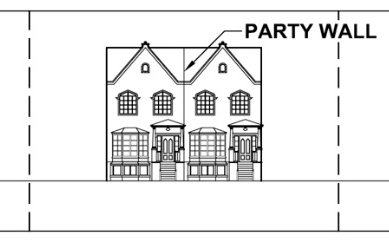
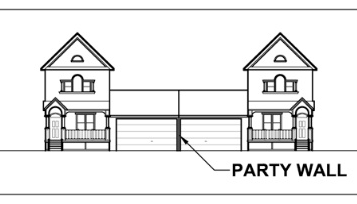
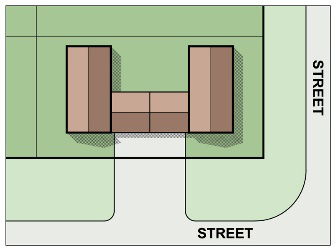
Dwelling, Townhouse. An independent dwelling unit which is attached on one (1) or both sides to another independent dwelling unit(s) or attached garage, and where more than one (1) principal structure can be located on the same zoning lot with common open space for all independent dwelling units on the zoning lot. Each townhouse must have a separate entrance. See Figure 21-1: Townhouse Dwelling.
FIGURE 21-1: TOWNHOUSE DWELLING
 |  |  |
Dwelling, Two Family. One (1) principal structure containing two (2) dwelling units on a zoning lot.
Engraving Facility. A facility where incised or raised patterns, characters, lines, etc., are produced upon a hard material, such as metal plates or blocks of wood.
Escape Room. A building or room in which a physical adventure game is played, where the players are locked in a room and have to use elements of the room to solve a series of puzzles and escape within a set time limit.
Essential Service Structure. Structures and buildings necessary for the operation of essential services including, but not limited to, telephone buildings, telephone booths, gas regulator stations, substations, electrical stations, water tanks and lift stations. Facilities that are staffed are not considered essential service structures. Essential service structures do not include wireless communication towers and their associated buildings.
Essential Services. The erection, construction, alteration or maintenance by public utilities or municipal departments of underground or overhead telephone, gas, electrical, communication, water or sewer transmission, distribution, collection, supply or disposal systems, including poles, wires, mains, drains, sewers, pipes, conduits, cables, fire alarm boxes, police call boxes, traffic signals, hydrants, and other similar equipment and accessories in connection therewith for the furnishing of adequate service by such private or public utilities or municipal departments. Wireless telecommunications towers and antennas are not classified as essential services.
Financial Institution. A bank, savings and loan, credit union, mortgage office, or automated teller machine (ATM).
Food Processing. The preparation, processing, or canning and packaging of food products.
Fraternity House. A building occupied, or to be occupied, by an organized group of male students, and providing for a succession of memberships therein, where lodging or board, or both, are provided only for its members and guests of its members, when approved and recognized as such by the administrative authorities.
Fully Reconstructed. Areas where impervious surfaces have been removed down to the underlying soils. Activities such as structure renovation, mill and overlay projects, and other pavement rehabilitation projects that do not expose the underlying soils beneath the structure, pavement, or activity are not considered fully reconstructed. Maintenance activities such as catch basin repair/replacement, utility repair/replacement, pipe repair/replacement, lighting, and pedestrian ramp improvements are not considered fully reconstructed.
Game Refuge. Areas reserved for public or private hunting of wildlife, fishing, and accessory structures in support of those activities.
General Farming. An area of at least five (5) acres, or an area eligible for protection under the Green Acres Act, on which crops are grown, livestock are fed, and/or dairy cattle are maintained for the purpose of preparing the crops, and/or livestock (excluding fur-bearing livestock), and/or milk for sale and/or for use as feed. General farming does not include industrial-type farming operations, e.g., large poultry operations, where force-feeding or confinement techniques are predominant or where the majority of feed utilized is harvested from land not owned or leased by the farm property owner.
Golf Course. A place where the game of golf is played on a minimum nine (9) hole, par three (3) course, where the sale and consumption of alcohol (on-sale) is allowed on the property. Sale of alcohol to be taken off the premises is not permitted on the property. Property may contain a clubhouse, maintenance building(s) and other structures/buildings common to a golf course. Miniature, putt-putt, etc., type golf does not qualify as a golf course. Driving ranges are permitted as a part of a golf course, but stand-alone driving ranges do not qualify as a golf course.
Green Infrastructure. A wide array of practices at multiple scales that manage wet weather and that maintains or restores natural hydrology by infiltrating, evapotranspiration, or harvesting and using stormwater. On a regional scale, green infrastructure is the preservation or restoration of natural landscape features, such as forests, floodplains and wetlands, coupled with policies such as infill and redevelopment that reduce the overall imperviousness in a watershed. On a local scale, green infrastructure consists of the site and neighborhood-specific practices such as bioretention, trees, green roofs, permeable pavements and cisterns.
Heliport. Any area used or to be used for the landing or take-off of helicopters, or other steep-gradient aircraft capable of hovering, but does not afford refueling, maintenance or repair facilities, and accommodates only a single helicopter.
Hobby Farm. An area on which crops are grown and or livestock (excluding fur-bearing livestock) are raised.
Homeless Day Center. Any facility whose primary purpose is to provide service to those experiencing homelessness, such as day center, free meals or snacks, free clothing, personal hygiene facilities, information and referral, counseling, mail and/or telephone services. Overnight shelter is prohibited.
Hotel/Motel. A structure occupied as a temporary abiding place of individuals who are lodged with or without meals.
Impervious Surface. A constructed hard surface that either prevents or retards the entry of water into the soil and causes water to run off the surface in greater quantities and at an increased rate of flow than prior to development. Examples include rooftops, sidewalks, driveways, parking lots, and concrete, asphalt, or gravel roads. Bridges over surface waters are considered impervious surfaces. Recreational trails that are distinctly set apart from a roadway (i.e., not parallel) and intended for non-motorized recreational uses, are not considered impervious surfaces. Sidewalks that are parallel to a roadway (or generally following alongside a roadway) must still be included as impervious surfaces.
Independent Living Facility. A residential complex containing dwellings where the occupancy is limited to persons who are fifty-five (55) years of age or older; or, if two (2) persons occupy a unit, at least one (1) must be fifty-five (55) years or older. Such facilities may include common areas for meals and socializing, offer minimal convenience services, but exclude institutional care such as medical or nursing care.
Industrial Farming. An area where, in addition to general farming uses, livestock (including fur-bearing livestock) may be fed and maintained for the purpose of preparation for sale or breeding, and/or where force-feeding or confinement techniques are predominant, and/or where the majority of feed utilized is harvested from land not owned or leased by the farm property owner.
Institutional Use. Educational facilities, golf courses, sports arenas, religious institutions, athletic fields and publicly owned property. For the purpose of this section, parks and cemeteries, whether publicly or privately owned, shall not be included in this definition.
Junk/Scrap Yard. Land or buildings where waste, discarded, or salvaged materials are bought, sold, stored, exchanged, cleaned, packed, disassembled or handled including, but not limited to, scrap metal, rags, paper, hides, rubber products, glass products, lumber products, and products resulting from the wrecking of motor vehicles and the storing of wrecked motor vehicles. Junk/scrap yard includes motor vehicle wrecking yards where the dismantling or wrecking of used motor vehicles or trailers, or the storage, sale or dumping of dismantled, partially dismantled, or wrecked motor vehicles or their parts occurs.
Laboratory. A facility for scientific laboratory research in technology-intensive fields, such as biotechnology, pharmaceuticals, genetics, plastics, polymers, resins, coatings, fibers, fabrics, films, heat transfer, and radiation research facilities.
Land Disturbing Activity. Any activity that results in a change or alteration in the existing ground cover (both vegetative and non-vegetative) and/or the existing soil topography. Land disturbing activities include, but are not limited to, development, redevelopment, demolition, excavating, grading, clearing, filling, stockpiling, hauling, construction, reconstruction, and borrow pits. Pavement rehabilitation that does not disturb the underlying soils (e.g., mill and overlay projects) is not considered a land disturbing activity.
Linear project. Construction of new or fully reconstructed roads, trails, sidewalks, or rail lines that are not part of a common plan of development or sale. For example, roads being constructed concurrently with a new residential development are not considered linear projects because they are part of a common plan of development or sale.
Lodging House. A structure where only sleeping rooms are provided, with a common entrance, internal access to all rooms, one (1) or more bathrooms, and one (1) or more kitchens to provide lodging for five (5) or more persons distinguished from dwelling units and motels, hotels open to transients. Bathrooms and bedrooms may have locks on the doors.
Machine Shop. A facility where material is processed or treated by machining, cutting, grinding, welding, or similar processes.
Manufactured Housing Park. Any site, lot, field or tract of land upon which two (2) or more occupied manufactured homes are located, either free of charge or for compensation, and includes any building, structure, tent, vehicle or enclosure used or intended for use as part of the equipment of the manufactured home park.
Manufacturing. The mechanical or chemical transformation of materials or substances into new products, including the assembling of component parts, the creation of products, and the blending of materials including, but not limited to, oils, plastics, resins, etc.
Massage Facility. An establishment where, for any form of consideration, massage, alcohol rub, fomentation, electric or magnetic treatment, or similar treatment or manipulation of the human body is administered, unless such treatment or manipulation is administered by a medical practitioner, chiropractor, acupuncturist, physical therapist, or similar professional person licensed by the state. This definition does not include an athletic club, health club, school, gymnasium, salon, spa, or similar establishment where massage or similar manipulation of the human body is offered as an incidental or accessory service.
Medical/Dental Office. Medical instruction featuring the examination and discussion of actual cases, and the diagnosis and treatment of outpatients, such as doctor, dentist or similar offices.
Meteorological Tower. For the purposes of this WECS ordinance, meteorological towers are those towers which are erected primarily to measure wind speed and directions plus other data relevant to siting WECS. Meteorological towers do not include towers and equipment used by airports, the Minnesota Department of Transportation, or other similar applications to monitor weather conditions.
Micro-Brewery. An establishment where beer, ale, etc. are brewed, typically in conjunction with tavern or restaurant use.
Mineral Extraction. The use of land for surface or subsurface removal of sand, gravel, rock, industrial minerals, other nonmetallic minerals, and peat not regulated under Minn. Stats. §§ 93.44 to 93.51.
Motor Vehicle Dealership. Any business establishment that sells or leases new or used automobiles, trucks, vans, trailers, recreational vehicles, boats, motorcycles or farm vehicles, or other similar motorized transportation vehicles. An automobile dealership may maintain an inventory of the vehicles for sale or lease either on-site or at a nearby location and may provide on-site facilities for the repair and service of the vehicles sold or leased by the dealership.
Motor Vehicle Parts Retail Establishment. A retail goods establishment that specializes in the sale of motor vehicle parts.
Motor Vehicle Rental/Leasing Facility. A business that stores motor vehicles on-site for short- or long-term rental or leasing.
Motor Vehicle Repair, Major. Engine rebuilding or major reconditioning of worn or damaged motor vehicles or trailers, collision service including body, frame or fender straightening or repair, and overall painting of vehicles.
Motor Vehicle Repair, Minor. Incidental repairs, replacement of parts, and motor service to automobiles, but not including any operation specified under major motor vehicle repair.
Nursery. An operation for the cultivating, harvesting, and sale of plants, shrubs, trees and other nursery items grown on-site or established in the ground prior to sale, and related accessory sales and uses.
Nursing Home. A licensed home to provide care for the aged or infirmed persons requiring or receiving nursing care, which includes care or treatment requiring technical knowledge. The term nursing home also includes convalescent home.
Office. A use that engages in the processing, manipulation or application of business information or professional expertise. Such an office may or may not offer services to the public. An office is not materially involved in fabricating, assembling or warehousing of physical products for the retail or wholesale market, nor is an office engaged in the repair of products or retail services. It is characteristic of an office that retail or wholesale goods are not shown on the premises to a customer. Examples include, but are not limited to, professional offices for non-profit organizations, advertising, accounting, investment services, insurance, contracting, architecture, engineering, legal services and real estate services.
Office, Headquarters. An establishment primarily engaged in providing internal office administration services as opposed to customer service in a single building or a campus setting, for example, the headquarters, regional offices or the administrative offices for a corporation. Generally, the majority of the traffic generated from corporate offices comes from employees and not the general public.
Open Space. An area that is intended to provide light and air, and is designed for either environmental, scenic or recreational purposes. Open space may include, but is not limited to, lawns, walkways, active and passive recreation areas, playgrounds, wooded areas and water courses. Open space does not include driveways, parking lots, or other surfaces designed or intended for vehicular travel.
Parking Garage (Principal Use). A structure composed of one (1) or more levels or floors used for the parking or storage of motor vehicles. A parking garage may be totally below grade, as in an underground parking garage, or either partially or totally above grade with those levels being either open or enclosed.
Parking Lot (Principal Use). An open, hard-surfaced area, other than street or public way, available to the public, to be used for the storage, for limited periods of time, of operable passenger automobiles and commercial vehicles. Such storage may be for compensation, free or as an accommodation to residents of a multi-family dwelling, or clients and customers of a business.
Parking Space(s), Tandem. A group of two off-street parking spaces arranged one behind another.
Personal Services Establishment. An establishment or place of business primarily engaged in the provision of frequent or recurrent needed services of a personal nature. Typical uses include, but are not limited to, beauty shops, barbershops, tanning salons, massage parlors, shoe repair, laundromats, dry cleaners and tailors.
Place of Worship. A building, together with its accessory buildings and uses, where persons regularly assemble for religious purposes and related social events and which building, together with its accessory buildings and uses, is maintained and controlled by a religious body organized to sustain religious ceremonies and purposes.
Power Generating Station. A facility that converts one (1) or more energy sources, including, but not limited to, water power, fossil fuels, nuclear power or solar power, into electrical energy or steam.
Print Shop. A business which consists of duplicating and printing services using photocopy, blueprint, or other reproduction methods, not including offset printing equipment, including small scale publishing, binding, and engraving.
Public Building. A building held, used or controlled exclusively for public purposes by any department or branch of government (state, county or local), without reference to the ownership of the building or of the realty upon which it is situated.
Public Park/Recreation Area. A non-commercial, not-for-profit facility designed to serve the recreation needs of the residents of the community. Parks include, but are not limited to, ballfields, football fields, soccer fields, basketball courts, playgrounds and park district field houses that may have indoor recreation facilities.
Publicly Owned Property. Land, buildings or structures owned by any governmental body or public agency including city, county, state or federally owned properties, other than public rights-of-way.
Publishing. A business which produces large volumes of printed materials using photocopy, blueprint and other reproduction methods, including offset printing equipment.
Railroad Repair Shop. A repair facility consisting of tracks and shop buildings for the purpose of repairing, inspecting, testing, painting, maintaining, servicing and storing cars, engines, trucks, locomotives, switch engines, rolling stock and equipment as well as all equipment and facilities utilized to accomplish the foregoing activities.
Railyard. An area of land, a portion of which is covered by a system of tracks that provide for the making up of trains by one (1) or more railroads or private industry concerns. Functions of a railyard include, but are not limited to, the classifying, switching, storing, assembling, distributing, consolidating, moving, repairing, weighing or transferring of cars, trains, engines, locomotives and rolling stock.
Raising of Livestock. A parcel of land where animals, other than household pets, are kept and maintained for commercial production and sale or family food production. Accessory sales of products that have been produced or grown by the owner of the land on which the use is located, are included as part of raising of stock activities.
Residential Facility. Any facility, public or private, which for gain or otherwise regularly provides one (1) or more persons with a twenty-four (24) hour per day substitute for care, food, lodging, training, education, supervision, habilitation, rehabilitation and treatment they need but, for any reason, cannot be furnished in the person's own home. Residential facilities include, but are not limited to, state institutions under the control of the commissioner of human services, foster homes, residential treatment centers, maternity shelters, group homes, residential programs, supportive living residences for functionally impaired adults, or schools for handicapped children.
Restaurant. A place, structure or enclosure where meals are prepared for service on the premises or elsewhere.
Retail Goods Establishment. A commercial enterprise that provides physical goods, products or merchandise directly to the consumer, where such goods are typically available for immediate purchase and removal from the premises by the purchaser.
Roadside Stand. A temporary structure used for the display or sale of farm products produced on the premises upon which such roadside stand is located.
School. A public, private or parochial education facility offering instruction at the elementary, junior and/or senior high school levels.
Service Station. Any building or premises used for the dispensing or sale of motor vehicle fuel, lubricating oil or grease, tires, batteries or minor motor vehicle accessories. Services offered may include the installation of tires, batteries and minor accessories, minor motor vehicle repairs, and greasing or washing of individual motor vehicles. When sales, services and repairs as detailed here are offered as incidental to the conduct of a service station, the premises is classified as a service station. Motor vehicle service stations do not include the sale or storage of junk motor vehicles or motor vehicle wrecking.
Shopping Center. A group of commercial establishments planned, developed, owned and managed as a unit related in location, size and type of shops that the unit serves.
Sign Sales and Service. An establishment where the primary use is the retail sale and service of signs, banners, or similar items.
Sorority House. A building occupied, or to be occupied, by an organized group of female students and providing for a succession of memberships therein, where lodging or board or both, are provided only for its members, when approved and recognized as such by the administrative authorities.
Stable. An area on which the primary use is for the raising, boarding, training and/or grooming of horses.
Stone, Marble and Granite Grinding, Dressing and Cutting. Manufacturing establishment primarily engaged in cutting, shaping, and finishing marble, granite, slate and other stone for building and miscellaneous uses. Also includes establishments primarily engaged in buying or selling partly finished monuments and tombstones.
Stormwater Runoff. Rainwater runoff, snow melt, and subsurface runoff and drainage.
Structural Stormwater BMPs. Stationary and permanent BMPs designed, constructed and operated to prevent or reduce the discharge of pollutants in stormwater.
Tavern. An establishment where the principal business is the on-sale of alcoholic and non-alcoholic beverages. Accessory uses to a bar can include food service, dancing and amusement devices, subject to all other provisions of City regulations.
Taxidermy. The business of preparing, stuffing and mounting the skins of animals.
Temporary Shelter Facility (TSF). Any facility, public or private, which, for gain or otherwise, commonly known to regularly provide one (1) or more persons with a temporary abiding place for an individual(s) for a maximum of forty-five (45) consecutive days, who are lodged with or without meals, with or without compensation to the facility, in which no provisions are made for cooking in any individual sleeping area(s), in contradistinction to a hotel/motel or lodging house.
Tennis Club. A commercial or noncommercial establishment that provides facilities for playing tennis on a membership basis.
Theater. A structure used for dramatic, operatic, motion pictures or other performance, which charges an admission fee for entry.
Tree Farm. A parcel of land used to raise or harvest trees for wood products, such as lumber, posts and poles, fuel wood and Christmas trees, where forest products are sold on-site or transported to market. Accessory sales of products that have been produced or grown by the owner of the land on which the use is located, are included as part of tree farms.
Truck Terminal. A building or area in which freight brought by truck is assembled and/or stored for routing in intrastate shipment by truck.
University. An educational institution, other than a trade school, that provides full-time or part-time education beyond high school.
Utilities. Any person, firm, corporation, municipal department or board fully authorized to furnish, and furnishing under municipal regulation, to the public, electricity, gas, steam, communication services, transportation or water. For the purpose of this Code, commercial wireless telecommunication service facilities are not considered a public utility use.
Veterinary Office (Large Animal). An establishment for the care and treatment of the diseases and injuries of animals and where animals may be boarded during their convalescence. Large animals are considered those larger than the largest breed of dogs. This term includes horses, cows, and other mammals customarily kept in corrals or stables.
Veterinary Office/Animal Hospital (Small Animal). An establishment for the care and treatment of the diseases and injuries of animals and where animals may be boarded during their convalescence. A veterinary office/animal hospital for small animals may not contain an outdoor run. Small animals are considered those no larger than the largest breed of dogs. This term includes fish, birds and mammals customarily kept in kennels.
Warehousing. The storage, wholesale and distribution of manufactured products, supplies and equipment.
Wholesale. An establishment primarily engaged in selling and/or distributing merchandise to retailers, to industrial, commercial, institutional or professional business users or other wholesalers, or acting as agents or brokers and buying merchandise for, or selling merchandise to, such individuals or companies. This is not considered a commercial use.
(Ord. of 12-2-24(1))
21.5 - GENERAL TERMS DEFINITIONS
Accessory Structure. A structure on the same lot with, and of a nature customarily incidental and subordinate to, the principal structure. See Figure 21-2: Accessory Structure.
FIGURE 21-2: ACCESSORY STRUCTURE
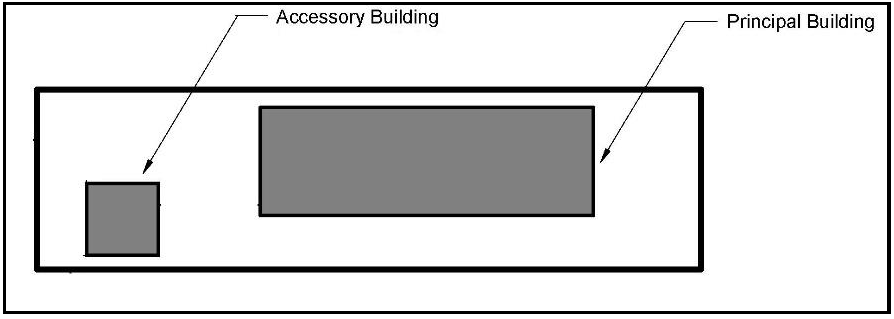
Accessory Use. A use on the same lot with, and of a nature customarily incidental and subordinate to, the principal use.
Alley. A public right-of-way primarily designed to serve as secondary access to the side or rear of those properties whose principal frontage is on some other street.
Alteration. Any construction, addition, demolition, relocation or material change affecting the exterior of a Heritage Preservation Property that requires a building permit.
Antenna. Any structure or device used for the purpose of collecting or transmitting electromagnetic waves including, but not limited to, directional antennas, such as panels, microwave dishes, satellite dishes and omni-directional antennas, such as whip antennas.
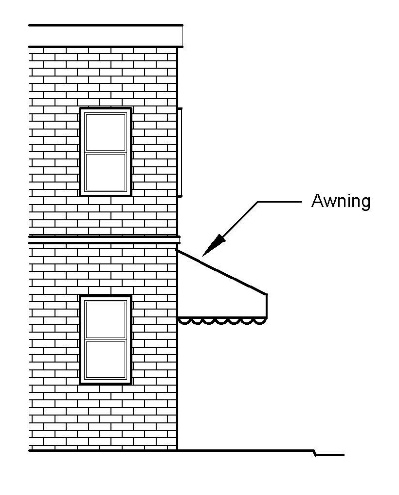
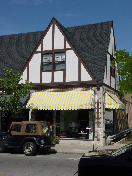
Awning. A roof-like cover, made of canvas or other material, designed and intended for protection from the weather and/or as a decorative embellishment, and which projects from a wall or roof of a structure, typically over a window or door. See Figure 21-3: Awning.
FIGURE 21-3: AWNING
 |  |
Balcony. An accessory use structure consisting of a railed deck or open porch that is at least eight (8) feet above the average grade of the ground surface below the structure.
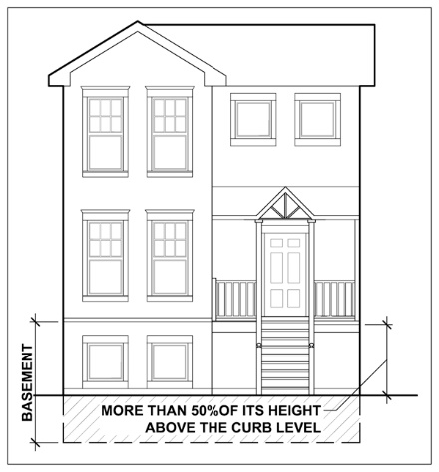
Basement. A story having part, but no more than fifty percent (50%), of its height below the average level of the adjoining finished grade. See Figure 21-4: Basement.
FIGURE 21-4: BASEMENT
Basement (floodplain). Means an area of a structure, including crawl spaces, having its floor or base subgrade (below ground level) on all four sides, regardless of the depth of excavation below ground level.
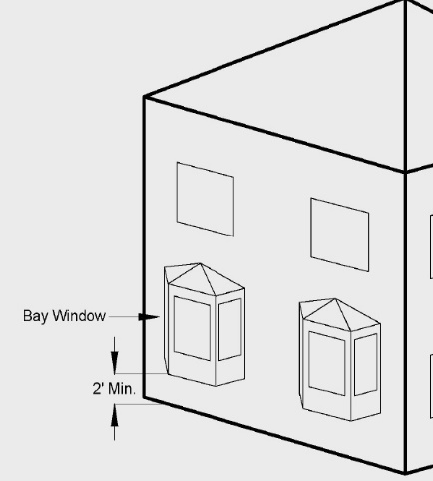
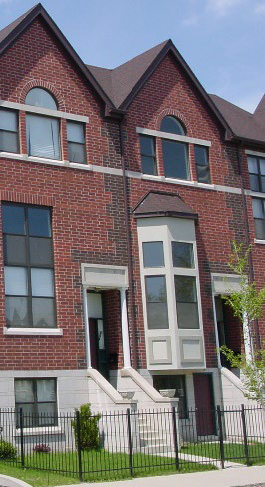
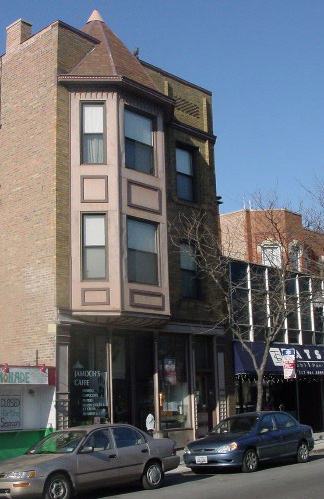
Bay Window. A window projection protruding from an exterior wall of a building, located at least two (2) feet above ground. See Figure 21-5: Bay Window.
FIGURE 21-5: BAY WINDOW
 |  |  |
Billboard. See "Off-premises sign."
Biodiversity. The variety of life forms that inhabit the earth. Biodiversity includes the number of different species of living things found in an area and the number of different ecosystems found in an area.
Block. A tract of land bounded by streets, or a combination of streets and public parks, cemeteries, railroad rights-of-way, shorelines, waterways or boundary lines of the corporate limits of the City.
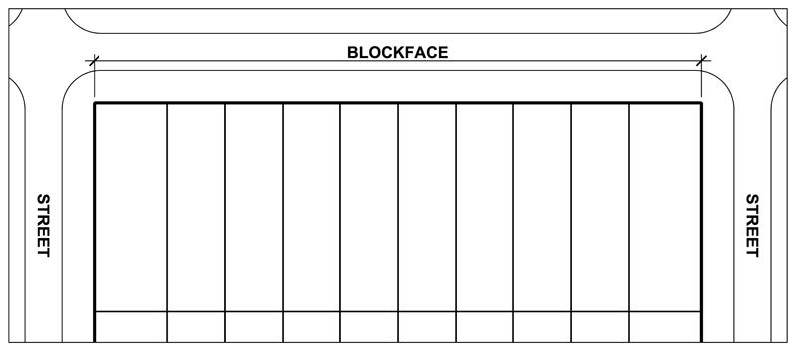
Blockface. That portion of a block or tract of land facing the same side of a single street and lying between the closest intersecting streets. See Figure 21-6: Blockface.
FIGURE 21-6: BLOCKFACE
Bluff. A topographic feature such as a hill, cliff or embankment having the following characteristics:
1.
Part, or all, of the feature is located in a shoreland area.
2.
The slope rises at least twenty-five (25) feet above the ordinary high-water level of the waterbody.
3.
The grade of the slope from the toe of the bluff to a point twenty-five (25) feet or more above the ordinary high-water level averages thirty percent (30%) or greater.
4.
The slope must drain toward the waterbody.
An area with an average slope of less than eighteen percent (18%) over a distance of fifty (50) feet or more is not considered part of the bluff.
Bluff Impact Zone. A bluff and the land located within twenty (20) feet from the top of a bluff.
Bluffline. A line along the top of a slope connecting the points at which the slope becomes less than thirteen percent (13%). This applies to those slopes within the Scenic Rivers Overlay District that are beyond the setback provision from the ordinary high-watermark.
Boathouse. A structure used solely for the storage of boats or boating equipment and does not contain a sanitary facility.
Breezeway. A roof covered walkway or structure providing a physical connection between structure(s).
Buffer. Buffers are areas of secondary protection, established on a case-by-case basis, for each Environmentally Sensitive Area. The width of a buffer is anticipated to vary around the perimeter of each ESA.
Buildable Area. The space remaining on a zoning lot after the minimum setback requirements of this Code have been met.
Building. A structure having a roof supported by columns or walls. When separated by division walls without openings, each portion of such building is deemed a separate building.
Building, Detached. A building surrounded by open space, with the open space located on the same zoning lot as the building.
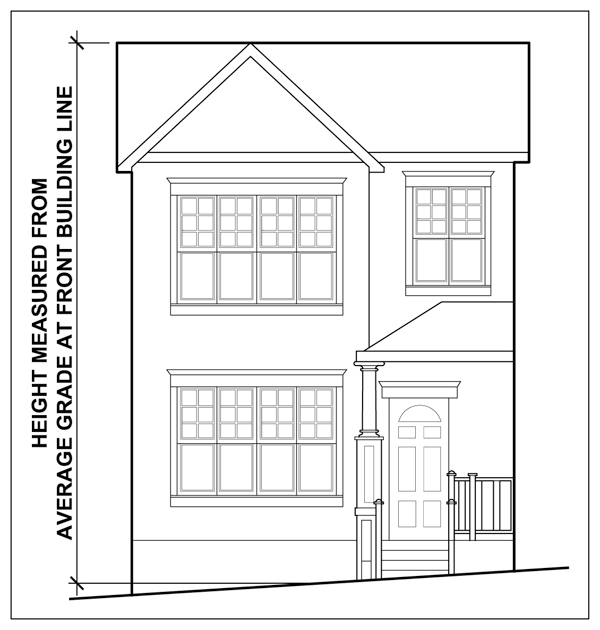
Building, Height of. The vertical distance measured from the curb level to:
1.
The highest point of the roof surface in a flat roof.
2.
The deck line of mansard roofs.
3.
The mean height level between eaves and ridge of gable, hip and gambrel roofs.
For buildings set back from the street line, the height of the building is measured from the average elevation of the finished grade along the front of the building, provided its setback from the street line is not less than the height of such finished grade above the established curb level. See Figure 21-7: Building Height and Figure 21-8: Height Measured from Grade.
FIGURE 21-7: BUILDING HEIGHT
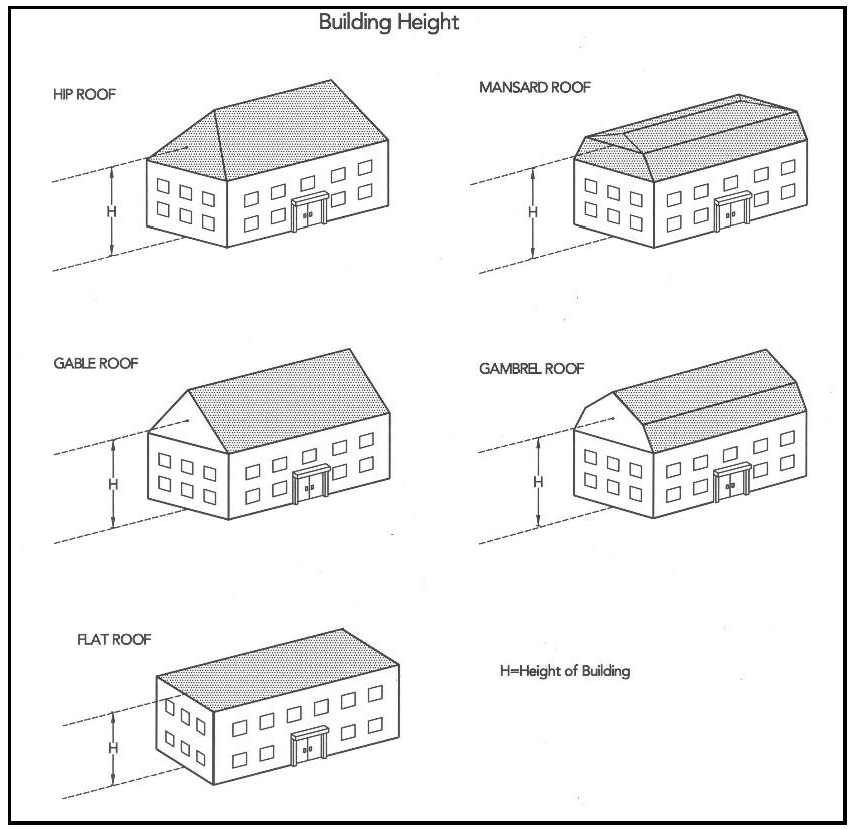
FIGURE 21-8: HEIGHT MEASURED FROM GRADE
Building Line. The inner edge of any required setback, and the corresponding outer edge of the buildable area. Except as specifically provided by this Code, no portion of any building or structure may be extended to occupy any portion of a lot outside its building lines.
Building, Unit Group. Two (2) or more buildings, other than dwellings, grouped upon a lot and held under single ownership, such as universities, hospitals, institutions and industrial plants.
Bulk. The term used to indicate the size and setbacks of structures and their location.
Bulk Materials. Uncontained solid matter, such as powder, grain, stone, sand, sulphur, etc., which has a tendency to become airborne.
Bus. Every motor vehicle designed to carry more than fifteen (15) passengers, including the driver, and used for transporting persons.
Caliper. The American Association of Nurserymen standard for trunk measurement of nursery stock, as measured at six (6) inches above the ground for trees up to and including four (4) inch caliper size, and as measured at twelve (12) inches above the ground for larger sizes.
Camping Area. An area accessible by vehicle and containing campsites or camping spurs for tents and trailer camping.
Cannabinoid Products. Any product containing nonintoxicating cannabinoids extracted from hemp, including an edible cannabinoid product, that is sold for human or animal consumption.
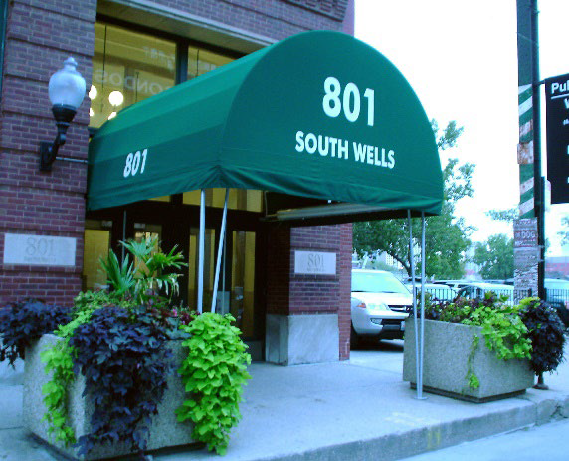
Canopy. A roof-like cover, made of canvas or other material, with supports extending to the ground from underneath the hood, and placed so as to extend outward from the building providing a protective shield for building entrances. See Figure 21-9: Canopy.
FIGURE 21-9: CANOPY
Cargo (Step) Van. A vehicle of box-like design with no barrier or separation between the operator's area and the remainder of the cargo-carrying area used for transporting supplies rather than passengers, and with a manufacturer's nominal rated carrying capacity of three-fourths (¾) ton or less.
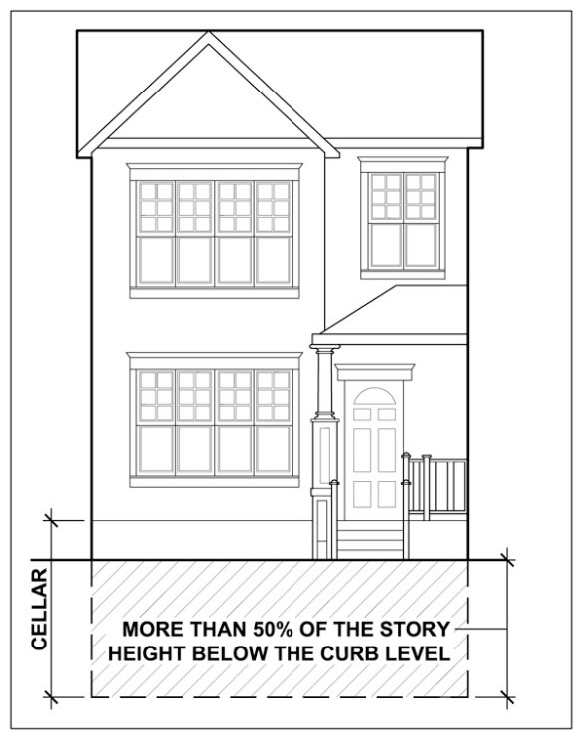
Cellar. A story having more than fifty percent (50%) of its height below the curb level or below the highest level of the adjoining ground. See Figure 21-10: Cellar.
FIGURE 21-10: CELLAR
Central Business District. For the purpose of this Code, the Central Business District is located within the defined boundaries:
Beginning at the intersection of the center of the Mississippi River and the center of the right-of-way line of the DeSoto Bridge; thence northerly along the centerline of the Mississippi River to the center of the right-of-way line of the Veterans Memorial Bridge; thence westerly along the center of the right-of-way line of the Veterans Memorial Bridge and continuing west along the center of the right-of-way line of First Street North to the center of the right-of-way line of Sixth Avenue North; thence northerly along the center of the right-of-way line of Sixth Avenue North to the center of the right-of-way line of the Burlington Northern Railroad; thence northwesterly along the center of the right-of-way line to the center of the right-of-way line of Second Street North; thence westerly along the center of the right-of-way line of Second Street North to the center of the right-of-way line of 11th Avenue North; thence south along the center of the right-of-way line of 11th Avenue North and continuing south along the center of the right-of-way line of 11th Avenue South to the center of the right-of-way line of Second Street South and continuing south to the center of the right-of-way line of T.H. 52 and 23; thence easterly along the center of the right-of-way line of T.H. 52 and 23 to the point of beginning.
Certificate of Appropriateness. A certificate issued by the Zoning Administrator evidencing the review and authorization by the Heritage Preservation Commission of plans for alteration of a Heritage Preservation Property or nominated property under interim protection.
City. The City of St. Cloud, Minnesota.
Clear Cutting. The removal of an entire stand of trees and/or vegetation.
Cluster Development. A development design technique that concentrates buildings in specific areas on a site to allow the remaining land to be used for recreation, common open space and preservation of Environmentally Sensitive Areas.
Commercial Message. A message that contains advertising for any business, retail goods, service or product.
Commercial Use. The principal use of land or structures for the sale, lease, rental or trade of products, goods and/or services.
Commercial Wireless Telecommunication Services. Licensed commercial wireless telecommunication services, including cellular, personal communication services (PCS), specialized mobilized radio (SMR), enhanced specialized mobilized radio (ESMR) paging, and similar services.
Complex. Two (2) or more Environmentally Sensitive Areas adjacent to each other.
Concept Plan. As part of the Environmentally Sensitive Area Site Plan Review, a non-engineered plan for a property proposed for development. The Concept Plan must include enough detail to analyze the proposed development and its relation to the environmentally sensitive areas located on the property.
Conditional Use. A specific type of use that may be allowed only after a review procedure and with appropriate conditions or restrictions as provided in this Code for an undefined period.
Contiguous Buildings. Within the SSNCO District standards the term "contiguous" shall mean all buildings to the right or left of the building in question on the same block face fronting the same street. In the case of corner lots, "contiguous" shall mean all buildings to the right or left of the building in question on the same block face and on the block face across the street to the right or left of the building in question. A block shall be defined as a tract of land bounded by streets, or a combination of streets and public parks, cemeteries, railroad right-of-way, shorelines, waterways, or boundary lines of the corporate limits of the City.
Corridors. Corridors are strips or blocks of land that form connections between two (2) separated areas of similar natural habitat. These corridors allow plants and animals to disperse and travel from one "island" of suitable habitat to another.
Curb Level. The level of the established curb in front of the building measured at the center of such front. Where a building faces on more than one (1) street, the curb level is the average of the levels of the curbs at the center of the front of each street. Where no curb elevation has been established, the City Engineer will establish such curb levels.
Day. Unless otherwise specifically indicated, when used in this Code, "day" means one (1) calendar day.
Deck. A horizontal, unenclosed platform, with or without attached railings, seats, trellises or other features, attached or functionally related to a principal structure and, at any point, raised more than seven (7) inches above the ground. A deck is not roofed.
Design Review Guidelines. Specific design criteria adopted by the Heritage Preservation Commission for Historic Districts to be used in reviewing applications for Certificates of Appropriateness.
Dog House. An accessory building, or portion of a building, whose principal purpose is for the housing of a dog or dogs.
Dry Well. A hole made in porous ground and filled with gravel or rubble to receive water, such as drainage from a roof, and allow it to percolate away.
Dwelling. A structure, or portion thereof, designed or used exclusively for residential occupancy, including single-family, two-family, townhouse and multi-family dwellings, but not including hotels/motels, dormitories or lodging houses.
Dwelling, Detached. A dwelling entirely surrounded by open space with the open space located on the same zoning lot as the dwelling.
Dwelling Site. A designated location for residential use by one (1) or more persons using temporary or movable shelter, including camping and recreational vehicle sites, excluding manufactured homes.
Dwelling Unit. One (1) or more rooms in a dwelling designed for occupancy by one (1) family for living purposes and having its own permanently installed kitchen and bathroom facilities.
Easement. A grant by a property owner for the use of a strip of land for public purposes of constructing and maintaining utilities and transportation ways including, but not limited to, electric lines, telephone lines, storm sewer or storm drainage ways and gas lines.
Enlargement. To increase physical land or structural floor area or volume than currently exists.
Equal Degree of Encroachment. A method of determining the location of floodway boundaries so that floodplain lands on both sides of a stream are capable of conveying a proportionate share of flood flows.
Exception. Modification to existing bulk and use standards within a zoning district granted as part of a development approval process, such as the ESA Site Plan Review Process.
Exotic Species. A species that is foreign or introduced into an area due to European settlement.
Expansion. An increase in the physical land or structural area of use, the addition of equipment or machinery of a structural nature, and/or the adding of a substantially new or different product, service or activity to an existing use.
Extension. An action to prolong a use or cause the continued existence of a use that would not otherwise have been reasonably able to continue.
Family. Persons living together on the premises in a single dwelling unit under one (1) of the following conditions:
1.
Four (4) or fewer unrelated persons.
2.
Any number of persons related by blood or marriage.
3.
Any number of persons related by blood or marriage and two (2) unrelated persons.
Farm Crop. An area of more than one (1) acre which is used for the growing of usual farm crops such as vegetables, fruit trees and grains, and for the packing or storage of the products produced on the premises. Farm crop does not include the raising of farm animals or laboratory animals such as mice, rats, rabbits, etc.
Flood. A temporary increase in the flow or stage of a stream or in the stage of a wetland or lake that results in the inundation of normally dry areas.
Flood Frequency. The frequency for which it is expected that a specific flood state or discharge may be equaled or exceeded.
Flood Fringe. That portion of the floodplain outside of the floodway. Flood fringe is synonymous with the term "floodway fringe" used in the Flood Insurance Studies.
Floodplain. The beds proper and the areas adjoining a wetland, lake or watercourse that have been or may be covered by the regional flood.
Flood-Proofing. A combination of structural provisions, changes or adjustments to properties and structures subject to flooding, primarily for the reduction or elimination of flood damages.
Floodway. The bed of a wetland or lake and the channel of a watercourse and those portions of the adjoining floodplain that are reasonably required to carry or store the regional flood discharge.
Floor Area, Gross (GFA). The gross floor area of a building is the sum of the gross horizontal areas of the floors of the building, measured from the exterior faces of the exterior walls.
Floor Area (Livable). Livable floor area excludes all areas occupied by garages, porches, attics, stairways and storage, and utility and heating rooms.
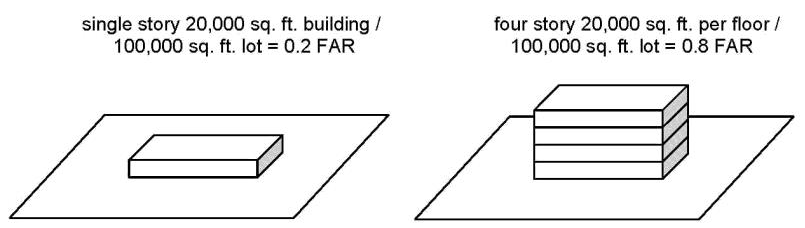
Floor Area Ratio (FAR). The floor area ratio of the building or buildings on any zoning lot is the floor area of the building or buildings on that zoning lot divided by the area of such zoning lot or, in the case of planned unit developments, by the net side area. The floor area ratio requirements determine the maximum floor area of both principal and accessory buildings in direct ratio to the gross area of the zoning lot. In all residential districts, the floor area in principal buildings used for parking are exempt from the floor area ratio (FAR) limitations.
Floor Area Ratio
Foot Candle. A unit of illumination intensity.
Forest Land Conversion. The clear cutting of forested lands to prepare for a new land use other than reestablishment of a subsequent forest stand.
Forestry. The use and management, including logging, of a forest, woodland or plantation, and related research and educational activities, including the construction, alteration or maintenance of woodroads, skidways, landings and fences.
Frequency. The number of oscillations per second in a sound wave and an index of the pitch of the resulting sound.
Frontage. All the property fronting on one (1) side of a street between the nearest intersecting streets, or between a street and a right-of-way, waterway or other similar barrier.
Garage, Private. An accessory building designed or used for the storage of motor vehicles owned and used by the occupants of the building to which it is accessory.
Garage, Public. Any premises used for the storage or care of motor vehicles, or premises where any such vehicles are equipped for operation, are repaired, or are kept for remuneration, for hire or for sale.
Garage, Truck. A building which is used or intended to be used for the storage of motor trucks, truck trailers, tractors and commercial vehicles exceeding one and one-half (1.5) ton capacity.
Grade, Street. The elevation of the established street in front of the building measured at the center of such front. Where no street grade has been established, the City Engineer will establish such street grade or its equivalent for the purpose of this Code.
Heavy Commercial. Commercial establishments which sell, rent and/or lease durable goods including, but not limited to, furniture, home furnishings and equipment stores, motorized and non-motorized vehicles, boats, recreational vehicles, and mobile home establishments. These goods are generally more expensive and purchased, rented or leased infrequently.
Heritage Preservation Property. Any area, place, building, structure, land, site or other objects located within a historic district.
High Rise Building. Any structure designed for a specific use that exceeds four (4) floors of elevation.
Highway, Interstate, Federal Aid Primary, National Highway System (NHS). Interstate, federal aid primary or the National Highway System (NHS) highways are defined as roads that receive federal aid or are considered part of the NHS.
Historic District. A single parcel or combination of parcels and right-of-way within a defined area designated as an historic district by the City Council because of the historical, cultural, architectural, or archaeological significance of the area.
Historic Preservation. The study, identification, protection, restoration and rehabilitation of buildings, structures, objects, districts, areas and sites significant in the history, architecture, archaeology or culture of the City.
Home Occupation. Any occupation or profession carried on by a member of a family, residing on the premises, conducted entirely within the dwelling.
Impact Zones. Zones assigned around the perimeter of Environmentally Sensitive Areas.
Impervious. A surface consisting of material, such as asphalt, concrete, roofing material, plastic and similar materials, which does not absorb water.
Improvement Design Criteria. Standards that set forth specific improvement requirements.
Industrial Use. The use of land or buildings for the production, manufacture, warehousing, storage or transfer of goods, products, commodities or other wholesale items.
Intensification. An increase in measure of or degree in the extent, quantity or volume of use.
Intensity of Use. The number of square feet of development devoted to a land use.
Intensive Vegetation Clearing. The complete removal of trees or shrubs in a contiguous patch, strip, row or block.
Interim Use. A specific use or activity that may be allowed only after a review procedure and with appropriate conditions or restrictions as provided in this Code for a defined period.
Kennel, Accessory Use. The boarding of one (1) or more dogs within a pen or other enclosure on the property for the personal enjoyment of the occupants of the property, and for which commercial gain is not the primary objective.
Landscaping. A groundcover that contains one (1) or more of the following materials: grass, decorative rock, wood chips, shrubs, flower and vegetable gardens and trees, and to exclude patio(s), sidewalk(s), and open deck(s) materials as qualifying as a landscaping material.
Light Commercial. Commercial establishments which sell, rent and/or lease convenience goods such as, but not limited to, apparel, grocery, food and meats, books, shoes and liquor. These goods are generally inexpensive and purchased, rented or leased frequently.
Loading Space. That portion of a lot or plot designed to serve the purpose of loading and/or unloading all types of vehicles.
Lot. A parcel of land designated by plat, metes and bounds, registered land survey, auditors plot or other accepted means, and separated from other parcels or portions by said description for the purpose of sale, lease or separation.
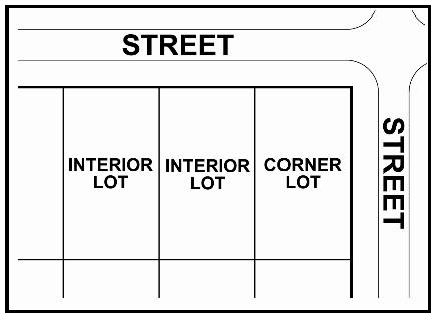
Lot, Corner. A lot located at the intersection of two (2) streets or a lot bounded on two (2) sides by a curving street two (2) chords of which form an angle of one-hundred twenty degrees (120°) or less measured on the lot side. See Figure 21-11: Corner and Interior Lots.
FIGURE 21-11: CORNER AND INTERIOR LOTS
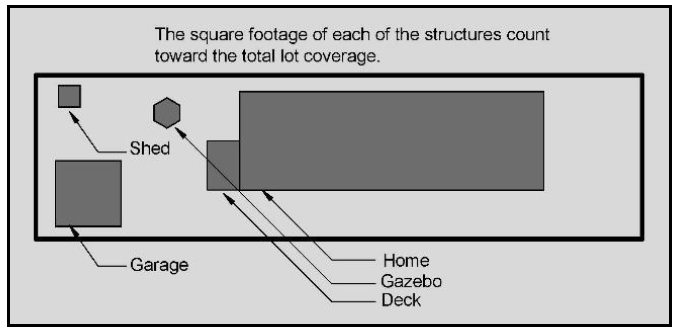
Lot Coverage. The area of a zoning lot occupied by principal and accessory structures. See Figure 21-12: Lot Coverage.
FIGURE 21-12: LOT COVERAGE
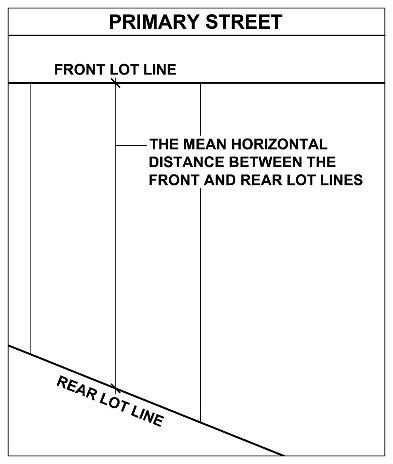
Lot Depth. The mean horizontal distance between the front and rear lot lines. See Figure 21-13: Lot Depth and Width.
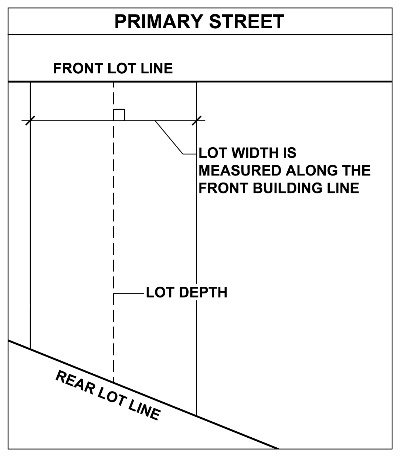
FIGURE 21-13: LOT DEPTH AND WIDTH
 |  |
Lot, Double Frontage. See "Through lot."
Lot, Interior. A lot other than a corner or through lot. See Figure 21-11.
Lot Line, Front. The boundary of a lot abutting a street. On a corner lot, the shortest street lot line is the front lot line, except in the R-3 zone or for a lot adjacent to an R-3 zone, when the lot is adjacent to an alley, the front property line is the property line opposite the alley.
Lot Line, Rear. The rear lot line is the lot line or lot lines most nearly parallel to and most remote from the front lot line. Lot lines other than front or rear lot lines are side lot lines.
Lot, Through. A lot having frontage on two (2) non-intersecting streets as distinguished from a corner lot. Also called a "double-frontage lot." See Figure 21-14: Through Lot.
FIGURE 21-14: THROUGH LOT
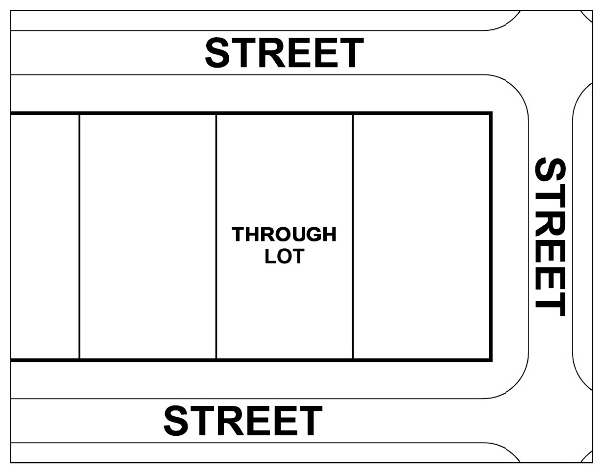
Lot Width. The horizontal distance between the side lot line measured at right angles to the lot depth at the established front building line. See Figure 21-13.
Lot, Zoning. A plot of ground, made up of one (1) or more parcels of land, which is or may be occupied by a use, structure or structures, including the open spaces required by this Code.
Lot of Record. A lot which is part of a subdivision, the map of which has been recorded in the Office of the Register of Deeds, or a lot described by metes and bounds, the deed to which has been recorded in the Office of the Register of Deeds at the time this Code is passed.
Lowest Floor. The lowest floor of the lowest enclosed area (including basement). An unfinished or flood resistant enclosure, used solely for parking of vehicles, building access, or storage in an area other than a basement area, is not considered a building's lowest floor.
Major Alteration. Work on the exterior of a Heritage Preservation Property that modifies its design, massing, materials, or quality of workmanship.
Manufactured Home. A structure, transportable in one (1) or more sections, which in the traveling mode, is eight (8) body feet or more in width or forty (40) body feet or more in length or, when erected on site, is three hundred twenty (320) or more square feet, and which is built on a permanent chassis and designed to be used as a dwelling with or without a permanent foundation when connected to the required utilities and includes the plumbing, heating, air conditioning and electrical systems contained therein.
Manufactured Home (floodplain). A structure, transportable in one or more sections, which is built on a permanent chassis and is designated for use with or without a permanent foundation when attached to the required utilities. The term "manufactured home" does not include the term "recreational vehicle."
Marquee. A permanent, roofed structure attached to and supported by the building, typically projecting over public property.
Membrane. A non-rigid exterior building covering made of fabric or synthetic materials, typically supported by poles or air.
Minor Alteration. Work on the exterior of a Heritage Preservation Property that does not modify its design, massing, materials or quality of workmanship. Minor work includes: repair or re-roofing in kind; repairs or replacement in kind for existing windows, doors, siding or trim; repairs or replacement in kind for porches; and other work of a similar nature or which is specifically provided for in the applicable design review guidelines.
Motor Home. A unit designed to provide temporary living quarters, built into as an integral part of, or permanently attached to, a self-propelled motor vehicle chassis or van. A motor home must contain permanently installed independent life support systems which meet the American National Standards Institute standard number A119.2 for recreational vehicles and provide at least four (4) of the following facilities, two (2) of which must be from the following systems: 1) cooking facility with liquid propane gas supply; 2) refrigerator; 3) self-contained toilet or a toilet connected to a plumbing system with connection for external water disposal; 4) heating or air conditioning separate from the vehicle engine; 5) a potable water supply system including a sink with faucet either self-contained or with connection for an external source; and 6) separate 110-125 volt electrical power supply. For purposes of this Code, permanently installed means built into or attached as an integral part of a chassis or van, and designed not to be removed except for repair or replacement. A system that is readily removable or held in place by clamps or tie downs if not permanently installed.
Motor Vehicle. Any motor operated conveyance allowed to operate on the streets including, but not limited to, automobiles, pickups, vans, trucks, semi-tractors, motorcycles and recreational campers.
Municipal Water and Sewer Systems. Utility systems serving a group of buildings, lots or an area of the City, with the design and construction of such utility systems as approved by the City Engineering Department and Public Utilities Commission.
Native Species. A species that existed in an area prior to European settlement.
Natural Community. A group of native plants and animals that interact with each other and their abiotic environment in ways not greatly altered by modern human activity or by introduced organisms. A natural community is classified and described by considering vegetation, hydrology, landforms, soils and natural disturbance regimes, such as wildfires, windstorms, normal flood cycles and normal infestation by native insects and microorganisms.
Natural Heritage Area. Natural Heritage Areas, as designated in this Code, are those Environmentally Sensitive Areas that have been identified by the Department of Natural Resources' Natural Heritage and Nongame Research Program and Minnesota County Biological Survey as having not only local, but state-wide significance. These areas are largely unaltered by modern human activity and have native vegetation distributed in naturally-occurring patterns. Natural Heritage Areas are the few remaining examples of native vegetative communities present prior to European settlement. As such, they are of unusually high quality, may contain rare or endangered species, and represent remnants of St. Cloud's history and heritage.
Noncommercial Message. A message that does not direct attention to a business or to a service or commodity for sale, and is typically of a political, religious, or ideological nature.
Nonconformity. Any legal use, structure or parcel of land already in existence, recorded or authorized before the adoption of official regulations that do not permit such use, structure or parcel of land.
Obstruction (Floodplain). Any dam, wall, wharf, embankment, levee, dike, pile, abutment, projection, excavation channel modification, culvert, building, wire, fence, stockpile, refuse, fill, structure, or matter in, along, across, or projecting into any channel, watercourse, or regulatory floodplain which may impede, retard or change the direction of the flow of water, either in itself or by catching or collecting debris carried by such water.
Open Space Recreation Uses. Recreational uses particularly oriented to, and utilizing, the outdoor character of an area including hiking and riding trails, primitive campsites, campgrounds, waysides, parks, and recreational areas.
Ordinary High-Water Level. The boundary of public waters and wetlands, and an elevation delineating the highest water level which has been maintained for a sufficient period of time to leave evidence upon the landscape, commonly that point where the natural vegetation changes from predominantly aquatic to predominantly terrestrial. For watercourses, the ordinary high-water level is the elevation of the top of the bank of the channel. For reservoirs and flowages, the ordinary high-water level is the operating elevation of the normal summer pool.
Ordinary High-Water Mark. A mark delineating the highest water level, which has been maintained for a sufficient period of time to leave evidence upon the landscape. The ordinary high-water mark is commonly that point where the natural vegetation changes from predominantly aquatic to predominantly terrestrial. In areas where the ordinary high-water mark is not evident, setbacks are measured from the stream bank of the following water bodies that have permanent flow or open water: the main channel, adjoining side channels, backwaters and sloughs.
Overburden. The loose soil, silt, sand, gravel or other unconsolidated material overlying bedrock, either transported or formed in place.
Owner. For purposes of this Code, the word "owner" is deemed to include any person having a freehold interest or a contractual interest that may become a freehold interest.
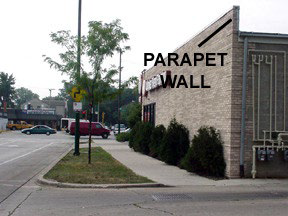
Parapet Line. Refers to the line established by intersection between the roof and outer wall of a building.
Parapet Wall. That portion of a wall which extends above the roof line. See Figure 21-15: Parapet Wall.
FIGURE 21-15: PARAPET WALL
Parking Area. Land area used for parking motor vehicles and the areas of access to parking spaces and public streets or alleys.
Parking Space. A land area of such shape and dimensions, and used for the parking of a motor vehicle, and located as to be readily accessible to a public street or alley.
Passenger Automobile. A motor vehicle designed and used for the carrying of no more than fifteen (15) persons including the driver. Passenger automobile does not include motorcycles, motor scooters, buses, commercial vehicles, recreational vehicles, racing cars or stock cars.
Patio. An at-grade ground covering consisting of interlocking brick, tile, cement, asphalt or similar material.
Pedestrian Way. A public or private right-of-way across a block or within a block to provide access to be used by pedestrians, which may be used for the installation of utility lines.
Person. Any individual, firm, association, organization, partnership, business, trust, corporation or company.
Planned Unit Development. An area with specified minimum contiguous acreage to be developed as a single entity according to a plan and is distinguished from the traditional subdivision process of development in that the zoning standards such as density, setback, and minimum lot sizes may be altered by negotiation.
Plat. The drawing or map of a subdivision prepared for filing of record pursuant to Minn. Stats. ch. 505 and containing all elements and requirements set forth in regulations adopted pursuant to Minn. Stats. § 462.358 and Minn. Stats. ch. 505.
Plat, Common Interest Community Plat (CIC). A Common Interest Community Plat described in Minnesota Statutes, Chapter 515B (Minnesota Common Interest Ownership Act), which often shares common areas.
Plat, Final. A drawing or map of a subdivision meeting all the requirements of the City, and in such form as required by the County for purposes of recording.
Plat, Preliminary. The preliminary map, drawing or chart indicating the proposed layout of the subdivision.
Plat, Sketch. A sketch preparatory to the preliminary plat, drawn to scale and indicating all existing buildings and site improvements.
Pool, Temporary. A temporary pool is an above ground pool that is constructed with non-metallic, molded polymeric walls or inflatable fabric walls, which is not intended as a permanent installation and installed/removed seasonally.
Porch, Enclosed. A structure, or portion thereof, consisting of a platform structure with a roof that is enclosed, in whole or part, by a screening or a permeable material, such as mesh, lattice or other similar open material, and containing no windows. If the porch is attached to the principal structure and has a common door from the principal structure to the porch, the porch is considered part of the principal structure. If the porch is detached from the principal structure or does not have a common door from the principal structure to the porch, the porch is considered an accessory building.
Porch, Unenclosed. A structure, or portion thereof, consisting of a platform structure with a roof, with or without rails or walls, that extends a maximum of four (4) feet high, excluding roof columns, from the platform, that contains no windows or screening materials. If the porch is attached to the principal structure and has a common door to the porch, the porch is considered part of the principal structure. If the porch is detached from the principal structure or does not have a common door from the principal structure to the porch, the porch is considered an accessory building.
Practical Difficulties. As used in connection with the granting of a variance, means that:
1.
The property owner proposes to use the property in a reasonable manner not permitted by the zoning ordinance;
2.
The plight of the landowner is due to circumstances unique to the property not created by the landowner; and
3.
The variance, if granted, will not alter the essential character of the locality. Economic considerations alone do not constitute practical difficulties if any reasonable use for the property exists under the terms of this Code.
Predominant. In the context of building materials, a material is considered to be predominant when it either comprises the majority of the facade or exerts the most marked influence over the facade. This is distinguished from use of materials as an accent, which is an emphasized detail or area; in particular, a small detail in contrast to its surroundings.
Primitive Campsites. An area that consists of individual remote campsites accessible only by foot or water.
Principal Building. A non-accessory building in which is conducted a principal use of the zoning lot on which it is located.
Principal Use. All uses that are not accessory uses.
Protective Covenants. Contracts made between private parties as to the manner in which land may be used, with the view to protect and preserve the physical, social and economic integrity of any given area.
Public Open Space. Any publicly-owned open area including, but not limited to, parks, playgrounds, school sites, parkways and streets.
Public Waters. Any waters as defined in Minn. Stats. § 105.37, subds. 14 and 15.
Railroad Right-of-Way. A strip of land with tracks and auxiliary facilities for track operation, but not including depots, loading platforms, station, train sheds, warehouses, car shops, car yards, locomotive shops or water towers.
Rare Species Site. A documented historic location of a species that is listed on federal or state lists for rare, threatened and endangered species.
Reach. A hydraulic engineering term to describe a longitudinal segment of a stream or river influence by a natural or man-made obstruction. In an urban area, the segment of a stream or river between two (2) consecutive bridge crossings would most typically constitute a reach.
Recreational Camping Area. Any area, whether privately- or publicly-owned, used on a daily, nightly, weekly or longer basis for the accommodation of five (5) or more tents or recreational camping vehicles free of charge or for compensation. Recreational camping area excludes children's camps, industrial camps, migrant labor camps, as defined in Minnesota Statutes and State Commissioner of Health rules, United States Forest Service camps, state forest service camps, state wildlife management areas or state-owned public access areas which are restricted in use to picnicking and boat landing.
Recreational Camping Vehicle. Recreational camping vehicles include the following:
1.
Any vehicular, portable structure built on a chassis, designed to be used as a temporary dwelling for travel, recreation and vacation uses.
2.
Any structure designed to be mounted on a truck chassis for use as a temporary dwelling for travel, recreation and vacation.
3.
Any portable, temporary dwelling to be used for travel, recreation and vacation, constructed as an integral part of a self-propelled vehicle.
4.
Any folding structure, mounted on wheels and designed for travel, recreation and vacation use.
Recreational Equipment. Items that are used off-road including, but not limited to, boats, canoes and snowmobiles.
Recreational Vehicle. A recreational vehicle is any of the following:
1.
Any self-propelled vehicle and any vehicle propelled, drawn, towed or carried by a self-propelled vehicle, which is designed to be used for temporary living quarters while engaged in recreational or vacation activities.
2.
A non-motorized trailer intended and generally used for transporting recreational vehicles such as boats and snowmobiles.
3.
A van or truck with a slide-in camper which is not used primarily for day to day transportation needs.
4.
Snowmobiles, all-terrain vehicles, any type of water craft and similar vehicles. Such vehicles which are placed on a trailer shall, together with the trailer, be considered a recreational vehicle.
5.
Hobby vehicles, defined as passenger automobiles with antique or collector license plates, and specialized off-road vehicles which are not primarily used for day to day transportation needs. Such vehicles which are placed on a utility trailer shall, together with the trailer, be considered a single recreational vehicle.
6.
A trailer designed for carrying property or material.
7.
The vehicle or trailer is 400 sq. ft. or less in area when measured at the largest horizontal projection (floodplain).
8.
Recreational vehicle is synonymous with the term travel trailer, travel vehicle, and recreational camping vehicle (floodplain).
Regional Flood. A flood which is representative of large floods known to have occurred generally in Minnesota and reasonably characteristic of what can be expected to occur in an average frequency in the magnitude of the one hundred (100) year recurrence interval. Regional flood is synonymous with the term "base flood" used in the Flood Insurance Study.
Regulatory Flood Protection Elevation. The regulatory flood protection elevation is an elevation no lower than one (1) foot above the elevation of the regional flood plus any increases in flood elevation caused by encroachments on the floodplain that result from designation of a floodway.
Riparian Corridors. The complex assemblages of organisms and their environment existing adjacent to and near flowing water. Such corridors have two (2) essential characteristics: 1) laterally flowing water that rises and falls at least once within a growing season; and 2) a high degree of connectedness with other ecosystems. As such, riparian corridors act as natural buffers between the flowing water and adjacent land uses, i.e., agriculture, urban areas, etc.
Rock Outcrop. Bare exposure of bedrock without soil cover and regardless of plant association. These outcrops may indicate presence of sensitive soils, sensitive hydrological features, sensitive geological features, and/or unique biotic communities.
Roof. Refers to the building covering which has a direct connection to outer walls or supports of a building.
Safety Fence (Pool). A pool safety fence is a barrier with non-climbable vertical supports and no gaps in the fencing that exceed four (4) inches.
Scientist. A person with a professional degree or training in one or more of the following areas: natural history, ecology, geology, hydrology, wildlife biology or botany.
Screened (Scenic Rivers Ordinance). When a structure is built or placed on a lot or vegetation is planted such that when the structure is built it is visibly inconspicuous as viewed from the river during the summer months. Visibly inconspicuous means difficult to see or not readily noticeable in summer months as viewed from the river.
Selective Cutting. The minimum horizontal distance between a structure and the ordinary high-water mark, bluffline or road.
Semi-Public Use. The use of land by a private, non-profit organization to provide a public service that is ordinarily open to some persons outside the regular constituency of the organization.
Semi-Trailer. A vehicle of the trailer type so designed and used in conjunction with a truck-tractor that a considerable part of its own weight, or that of its load, rests upon and is carried by the truck-tractor, and includes a trailer drawn by a truck-tractor semi-trailer combination. Trailers coupled with a truck-tractor, semi-trailer combination are semi-trailers.
Sensitive Geological Areas. Any geologic feature easily modified or destroyed by human activity. Examples include glacially-polished bedrock, open fractures and residual clays. Sensitive geological features are areas included within designated Natural Heritage and Natural Resource Areas.
Sensitive Hydrological Areas. A surface or groundwater feature where minor human disturbances will change water movement, water level or water quality. Sensitive hydrological features are areas included within designated Natural Heritage and Natural Resource Areas.
Sensitive Resource Management. The preservation and management of areas unsuitable for development in their natural state due to constraints such as shallow soils over groundwater or bedrock, highly erosive or expansive soils, steep slopes, susceptibility to flooding, or occurrence of flora or fauna in need of special protection.
Sensitive Soils. Soil where soil structure or function is easily lost with minor disturbance, such as thin soils underlain by shallow bedrock or a high-water table.
Setback. The minimum distance by which any building or structure must be separated from a property line. See Figure 21-16: Setback.
FIGURE 21-16: SETBACK
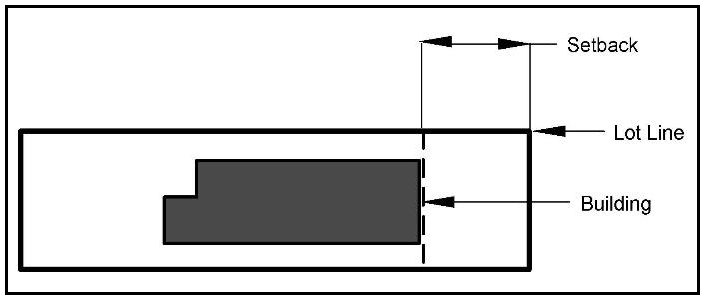
Sewage Treatment System. Any system for the collection, treatment and dispersion of sewage including, but not limited to, septic tanks, soil absorption systems and drainfields.
Sewer System. Pipelines or conduits, pumping stations and force main, and all other construction, devices, appliances or appurtenances used for conducting sewage or industrial waste or other wastes to a point of ultimate disposal.
Shore Impact Zone. Land located between the ordinary high-water level of a public water and a line parallel to it at a setback of fifty percent (50%) of the structure setback.
Shoreland. Land located within the following distances from public waters: one thousand (1,000) feet from the ordinary high-water level of a lake, pond or flowage, and three hundred (300) feet from a river or stream, or the landward extent of a floodplain designated by ordinance on a river or stream, whichever is greater. The limits of shorelands may be reduced whenever the waters involved are bounded by topographic divides which extend landward from the waters for lesser distances and when approved by the commissioner.
Sign. A name identification, description, display, illustration, or device which is affixed to or represented directly or indirectly upon a building, structure, or land in view of the general public and which directs attention to a product, place, activity, person, institution, or business.
Sign, A-Frame. A temporary advertising device ordinarily in the shape of an "A," or some variation thereof, located on the ground, not permanently attached and easily movable, and usually two-sided. Also called a "sandwich board." See Figure 21-17: A-Frame Sign.
FIGURE 21-17: A-FRAME SIGN
 | 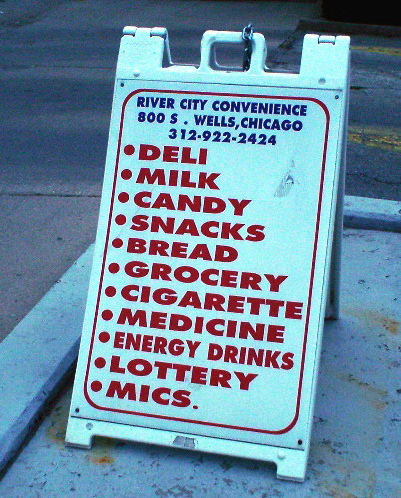 |
Sign, Balloon. Any sign that is any lighter-than-air or gas-filled balloon attached by means of a rope or tether to a definite or fixed location. Displays designed to inflate or move by use of a fan or blower is also considered a balloon sign. Balloons used as temporary attention-getting devices in conjunction with another sign which are no more than eighteen (18) inches in diameter, are not considered balloon signs.
Sign, Banner. Any sign printed or displayed upon cloth or other flexible material with or without frames.
Sign, Cabinet (Contoured). An illuminated sign that contains all text and/or logo symbols within an enclosed cabinet that is contoured to the shape of the sign's letters and/or logo, as distinguished from a cabinet box sign. See Figure 21-18: Cabinet Sign.
FIGURE 21-18: CABINET SIGN
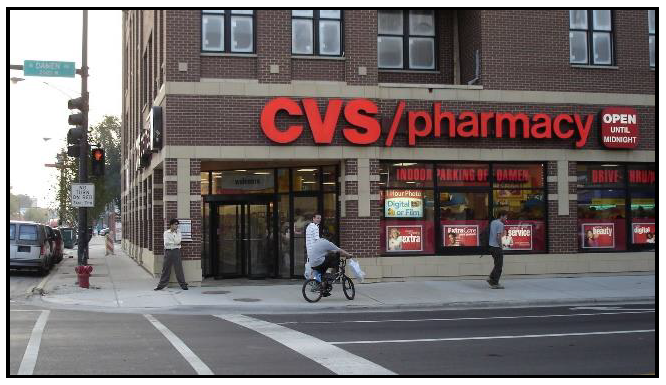
Sign, Cabinet Box. An illuminated sign that contains all text and/or logo symbols within a single enclosed box cabinet, as distinguished from a cabinet sign. See Figure 21-19: Cabinet Box Sign.
FIGURE 21-19: CABINET BOX SIGN
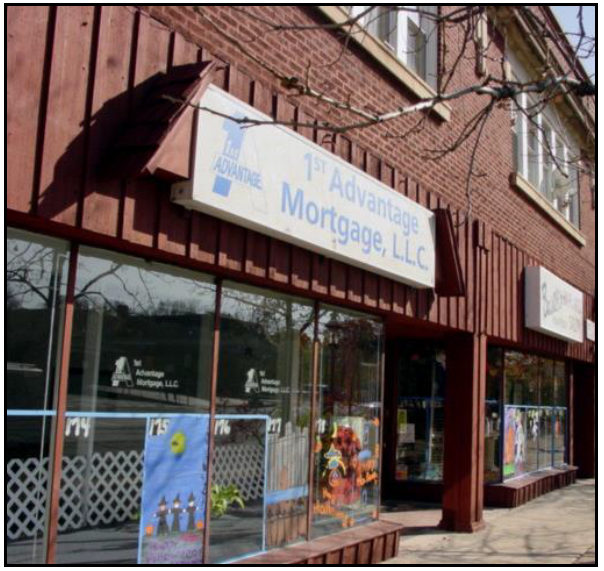
Sign, Directional. A sign that identifies parking lot entrances and exits, restrooms, public telephone, walkways and features of a similar nature.
Sign, Electronic. Signs whose alphabetic, pictographic or symbolic informational content can be changed or altered on a fixed display screen composed of electrically illuminated segments. For the purposes of this Code, electronic signs within ground or wall signs are regulated as one (1) of the two (2) following types:
1.
Electronic Display Screen. A sign, or portion of a sign, that displays an electronic image or video, which may or may not include text. This definition includes television screens, plasma screens, digital screens, flat screens, LED screens, video boards and holographic displays. See Figure 21-20: Electronic Display Screen.
FIGURE 21-20: ELECTRONIC DISPLAY SCREEN
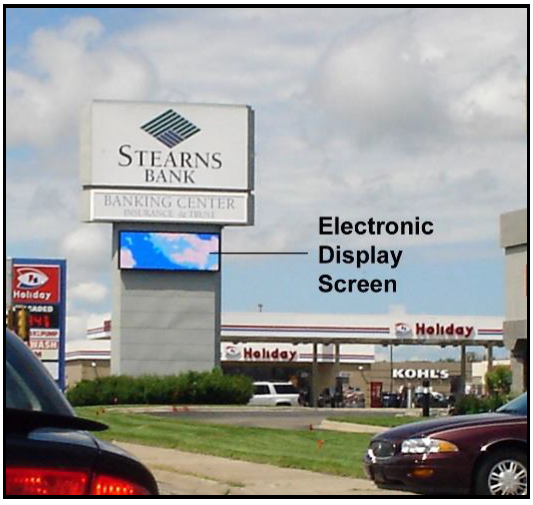
2.
Electronic Message Sign. Any sign, or portion of a sign, that uses changing lights to form a sign message or messages in text form wherein the sequence of messages and the rate of change is electronically programmed and can be modified by electronic processes. Time and temperature signs are considered electronic message signs. See Figure 21-21: Electronic Message Sign.
FIGURE 21-21: ELECTRONIC MESSAGE SIGN
Sign, Flashing. A sign with blinking or flashing lights, or other illuminating devices that change light intensity, brightness or color, traveling/chasing or blinking lights, or rotating beacons are prohibited. Electronic signs, as permitted by Article 18, are not considered flashing signs; however, the messages or images on an electronic sign may not imitate flashing signs.
Sign, Ground. A sign that is attached to a completely self-supporting structure. A ground sign may be a pole or monument sign. See "Sign, Ground Monument" and "Sign, Ground Pole."
1.
Sign, Ground Monument. Any sign, other than a pole sign, placed upon or supported by the ground independently of any other structure. Ground monument signs are typically mounted on a masonry base. As distinguished from a ground pole sign, the sign base of any monument sign must be a minimum of seventy-five percent (75%) or more of the width of the sign face that is to be situated upon the base. A sign base less than seventy-five percent (75%) of the width of the sign face is considered a ground pole sign. See Figure 21-22: Ground Monument Sign.
2.
Sign, Ground Pole. A sign erected and maintained on one (1) or more freestanding mast(s) or pole(s) and not attached to any building, but not including a ground monument sign. See Figure 21-23: Ground Pole Sign.
FIGURE 21-22: GROUND MONUMENT SIGN
FIGURE 21-23: GROUND POLE SIGN
Sign, Nonconforming. A sign lawfully erected and maintained prior to the adoption of this Code that does not conform to the requirements of this Code.
Sign, Obscene. A sign which is found to meet the three (3) established criteria of obscenity: 1) prurient in nature; 2) completely devoid of scientific, political, educational or social value; and 3) a violation of local community standards.
Sign, Obsolete or Abandoned. A sign that advertises a business, product, service or activity that is no longer located on the premises where the sign is displayed.
Sign, Off-Premises. A sign which directs attention to a business, commodity, service or entertainment conducted, sold or offered at any location other than upon the premises where such sign is located or to which it is affixed. Also called a billboard.
Sign, Pennant. Any geometric shaped cloth, fabric or other lightweight material normally fastened to a stringer, which is secured or tethered so as to allow movement of the sign.
Sign, Permanent. A sign attached to a structure or the ground which is made of materials intended for long-term use.
Sign Permit. A permit for erection, alteration or relocation of a sign.
Sign, Portable. A sign whose principal supporting structure is intended, by design and construction, to be used by resting upon the ground for support and may be easily moved or relocated for reuse. Portable signs include, but are not limited to, signs mounted upon a trailer, wheeled carrier, or other non-motorized mobile structure with or without wheels.
Sign, Projecting. Any sign that is attached to a building or other structure, and extends beyond the surface of the building or structure to which it is attached by more than twelve (12) inches. A projecting sign does not include a wall sign. See Figure 21-24: Projecting Sign.
FIGURE 21-24: PROJECTING SIGN
Sign, Roof. Any sign wholly erected, constructed or maintained upon or above the roof or parapet parapet of any building, with the principal support attached to the roof structure.
Sign Support Structure. Any structure that supports, or is capable of supporting, a sign, including decorative cover.
Sign, Temporary. A sign not intended or designed for permanent display.
Sign, Unsafe. A sign or other advertising structure that constitutes a hazard to public safety or health by reason of inadequate design, construction, repair or maintenance.
Sign, Wall. A sign mounted on the wall of a building or structure, with the exposed face of the sign in a plane parallel to the face of the wall. Wall signs do not include projecting signs. See Figure 21-25: Wall Sign.
FIGURE 21-25: WALL SIGN
Sign, Window (Permanent). A sign printed on the interior of a window or door of a building intended for viewing from the exterior of such a building. See Figure 21-26: Permanent Window Sign.
FIGURE 21-26: PERMANENT WINDOW SIGN
Sign, Window (Temporary). A sign attached to or placed upon the interior of a window or door of a building intended for viewing from the exterior of such a building. See Figure 21-27: Temporary Window Sign.
FIGURE 21-27: TEMPORARY WINDOW SIGN
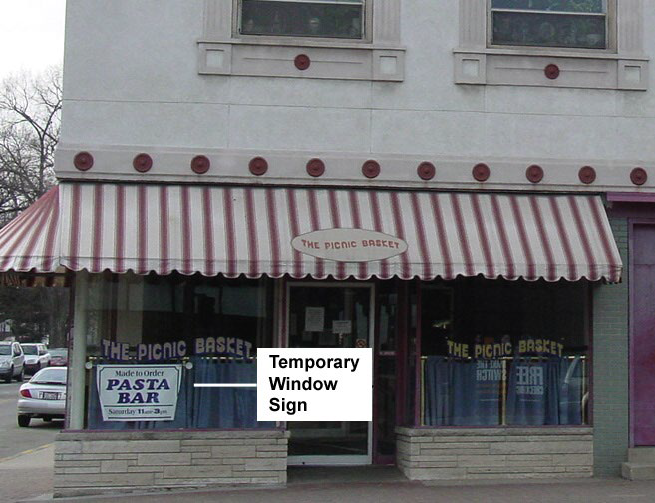
Sign with Moving Parts. A sign or other advertising structure with moving, revolving or rotating parts or visible mechanical movement of any kind, including wind-activated signs. Clocks and signs which change messages by way of louvers are not considered signs with moving parts.
Significant Historic Site. Any archaeological site, standing structure or other property that meets the criteria for eligibility to the National Register of Historic Places, is listed in the State Register of Historic Sites, or is listed in the City of St. Cloud Register of Historic Sites, or is determined to be an unplatted cemetery that falls under the provisions of Minn. Stats. § 307.08. A historic site meets these criteria if it is presently listed on the above registers or if it is determined to meet the qualifications for listing after review by the Minnesota State Archaeologist or the Director of the Minnesota Historical Society. All unplatted cemeteries are automatically considered to be significant historic sites.
Sleeping Room. A room in a structure rented for sleeping with access to a bathroom, with or without access to a kitchen in contradistinction to dwelling units and motels, hotels open to transients.
Spa. An artificial container designed with a mechanical air injection system and/or re-circulating device where jets of forced air produce currents and bubbles within hot water. Also known as a "hot tub."
Steep Slope. Land where agricultural activity or development is either not recommended or described as poorly suited due to slope steepness and the site's soil characteristics, as mapped and described in available county soil surveys or other technical reports, unless appropriate design and construction techniques and farming practices are used in accordance with the provisions of this Code. Where specific information is not available, steep slopes are lands having average slopes over twelve percent (12%), as measured over horizontal distances of fifty (50) feet or more, that are not bluffs.
Stoop. A landing pad providing ingress and egress from an above grade door in the principal building. A stoop may be roofed, but cannot be enclosed. See Figure 21-28: Stoop.
FIGURE 21-28: STOOP
Stormwater Runoff. Surplus surface water generated by rainfall that does not seep into the earth but flows overland to flowing or stagnant bodies of water.
Story. That portion of a building included between the surface of any floor and the surface of the floor next above it, or, if no such floor above, the space between such floor and the ceiling next above it.
Story, Half. A space under a sloping roof which has the line of intersection roof decking and wall face not more than three (3) feet above the top floor level, and in which space not more than two-thirds (⅔) of the floor area is finished off for use. A half-story containing an independent apartment or living quarters is counted as a full story.
Street. A public right-of-way affording primary access by pedestrians and vehicles to abutting properties, whether designated as a street, highway, thoroughfare, parkway, throughway, road, avenue, boulevard, land, place or however otherwise designated.
Street, Cul-De-Sac. A minor street with only one (1) outlet and having an appropriate terminal for the safe and convenient reversal of traffic movement.
Street, Frontage Roads. Minor streets which are parallel and adjacent to arterial streets and highways, and which provide access to abutting properties and protection from through traffic.
Street, Grade. On street centerline means the distance vertically (up or down) from the horizontal in feet, and tenths (0.10) of a foot for each one hundred (100) feet of horizontal distance.
Street, Local. This street serves to provide direct access to abutting properties from the higher order systems.
Strip Commercial Development. A pattern of commercial development comprised of two (2) or more separate businesses, generally one (1) lot in depth with commercial activity arranged in a line, usually along an arterial street.
Structural Alterations. Any change in the supporting members of a building, such as bearing walls, columns, beams, or girders, or any substantial changes in the roof and exterior walls. The application of any exterior siding to an existing building for the purpose of beautifying and modernizing is not considered a structural alteration.
Structure. Anything constructed or erected on the ground or attached to the ground or on-site utilities, including, but not limited to, buildings, factories, sheds, detached garages, cabins, manufactured homes and other similar items.
Subdivision. Any land, vacant or improved, which is divided or proposed to be divided into two (2) or more lots, parcels, sites, units, plots, tracts, or interests for the purpose of offer, sale, lease, or development whether immediate or future, either on the installment plan or upon any and all other plans, terms, and conditions. Subdivision includes the division or development of residential and non-residential zoned land, whether by deed, metes and bounds description, devise, intestacy, lease, map, plat, or other recorded instruments. Subdivision includes resubdivision.
Substandard Use. Any use within the zoning district existing prior to the date of enactment of this Code which is permitted within the applicable land use district but does not meet the minimum lot area, length of water frontage, structure setbacks or other dimensional standards of the Code.
Substantial Damage (floodplain). Means damage of any origin sustained by a structure where the cost of restoring the structure to its before damaged condition would equal or exceed 50 percent of the market value of the structure before the damage occurred.
Substantial Improvement (floodplain). Within any consecutive 365-day period, any reconstruction, rehabilitation (including normal maintenance and repair), repair after damage, addition, or other improvement of a structure, the cost of which equals or exceeds 50 percent of the market value of the structure before the "start of construction" of the improvement. This term includes structures which have incurred "substantial damage," regardless of the actual repair work performed. The term does not, however, include either:
1.
Any project for improvement of a structure to correct existing violations of state or local, health, sanitary, or safety code specifications which have been identified by the local code enforcement official and which are the minimum necessary to assure safe living conditions.
2.
Any alteration of a "historic structure," provided that the alteration will not preclude the structure's continued designation as a "historic structure." For the purpose of this Code, "historic structure shall be as defined in 44 Code of Federal Regulations, Part 59.1.
Surface Water-Oriented Commercial Use. The use of land for commercial purposes, where access to and use of a surface water feature is an integral part of the normal conductance of business. Marinas, resorts and restaurants with transient docking facilities are examples of such use.
Toe of the Bluff. The lower point of a fifty (50) foot segment with an average slope exceeding eighteen percent (18%).
Tower. Any ground- or roof-mounted pole, spire or structure, or combination thereof, taller than fifteen (15) feet, including supporting lines, cables, wires, braces and masts, intended primarily for the purpose of mounting an antenna, meteorological device or similar apparatus above grade.
Tower, Camouflage. A tower or structure which is concealed or disguised to be compatible with existing or proposed uses on-site (i.e., antenna incorporated into site lighting at a park or incorporated into an electrical distribution center).
Tower, Commercial Communication. A tower designed or used for commercial wireless telecommunications services, public radio transmission, or commercial television transmission.
Tower, Guyed. A lattice or monopole tower constructed with a system of wires that hold the tower in place.
Tower, Hierarchy. For the purpose of determining impact the following hierarchy has been established in Figure 21-29: Tower Hierarchy.
FIGURE 21-29: TOWER HIERARCHY
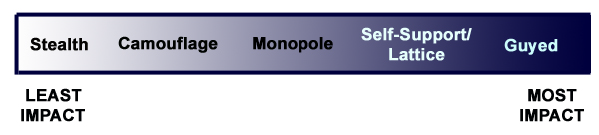
Tower, Lattice. A framework or structure of crossed wood or metal strips assembled in a pattern to create a tower.
Tower, Monopole. A tower consisting of a single pole, constructed without guyed wires and anchors.
Tower, Self-Supporting. A lattice or monopole tower constructed without any additional exterior reinforcement or support.
Tower, Stealth Facility. A structure together with the communications equipment or devices located thereon, which is not readily identifiable as a tower or antenna and is architecturally compatible with existing buildings/structures on-site, and is compatible with existing or proposed uses on-site. The structure may or may not have a secondary function (i.e., bell tower, spire, etc.).
Trailer. A vehicle designed for carrying property or passengers on its own structure and for being drawn by a motor vehicle, but does not include a trailer drawn by a truck-tractor semi-trailer combination, or an auxiliary axle on a motor vehicle which carries a portion of the weight of the motor vehicle to which it is attached.
Tuck-Under Parking. Any parking that is located in any portion of a building that has any portion of the floor area of the principal structure above the parking area.
Uses, Conservancy. The City may designate an area unsuitable for development due to wet soils, steep slopes, inadequate drainage, severe erosion potential, or any other feature likely to be harmful to the health, safety or welfare of the future residents of the community as conservancy districts. Only open space uses and accessory structures, which provide negligible encroachment on the shoreland environment, are permitted in conservancy districts. No land may be subdivided for development in this district.
Variance. A modification or variation of the provisions of this Code, as applied to a specific piece of property, except that modification in the allowable uses within a district is not considered a variance.
Water Feature. Any ornamental tub, pool or other natural or artificial water container, which may contain aquatic flora or fauna. Detention and retention ponds, and man-made lakes are not considered "water features."
Water-Oriented Accessory Structure or Facility. A small, aboveground building or other improvement, except stairways, fences, docks and retaining walls, which, because of the relationship of its use to a surface water feature, reasonably needs to be located closer to public waters than the normal structure setback. Examples of such structures and facilities include boathouses, gazebos, screen houses, fish houses, pump houses and detached decks.
Watershed Management or Flood Control Structure. A dam, floodwall, wingdam, dike, diversion channel, or an artificially deepened or widened stream channel following the same or approximately the same course as the natural channel or any other structure for altering or regulating the natural flow condition of a river or stream. The term watershed management or flood control structure does not include pilings, retaining walls, gabion baskets, rock riprap or other facilities intended primarily to prevent erosion, and which must be authorized by permit from the Commissioner of Natural Resources.
Wetland. Land which is annually subject to periodic or continual inundation by water and commonly referred to as a bog, swamp or marsh or a surface water feature classified as a wetland in the United States Fish and Wildlife Service Circular No. 39 (1971 edition).
Wildlife Corridor. Swath of habitat (land, water, air) through which undomesticated organisms may move. Such corridors can be discrete linear vegetated areas along rivers (riparian corridors) and fence lines (hedge rows) or broad connected patches of vegetated land.
Wind Energy Conversion System (WECS). An electrical generating facility comprised of one or more wind turbines and accessory facilities, including, but not limited to: power lines, transformers, substations and meteorological towers that operate by converting the kinetic energy of wind into electrical energy.
Wind Energy Conversion System, Building-Mounted. A wind energy conversion system attached to a building.
Wind Energy Conversion System, Freestanding. A wind energy conversion system located on a pole or tower, which is anchored to the ground.
Wind Energy Conversion System Height. The height of a freestanding wind energy conversion system shall be measured as the distance from ground level to the highest point on the tower, including the vertical length of any extensions such as the rotor blade. The height of a building mounted wind energy conversion system shall be measured as the distance from the point where the base of the system is attached to the building or to the lowest point on the wind energy conversion system, whichever is closer to the ground, to the highest point on the wind energy conversion system, including the vertical length of any extensions such as the rotor blade.
Yard. An open space on the same zoning lot with a building or structure, which yard is unoccupied and unobstructed from its lowest level to the sky, except as otherwise permitted by this Code. See Figure 21-30: Yards.
FIGURE 21-30: YARDS
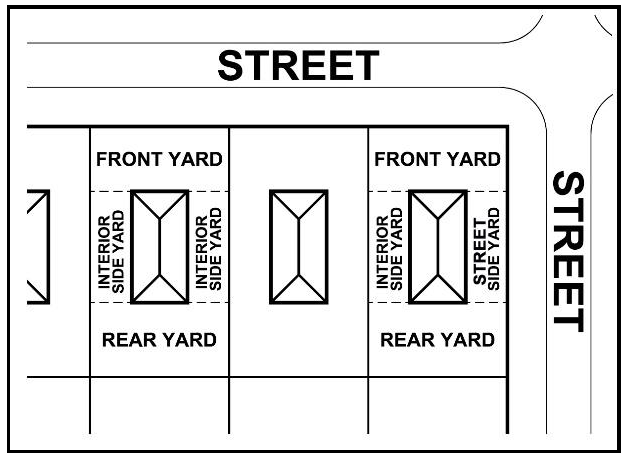
Yard, Front. An open, unobstructed yard across the front of a lot between the building or allowed building line, and the front property line and between side yard property lines. See Figure 21-30.
Yard, Interior Side. A side yard that does not abut a street right-of-way. See Figure 21-30.
Yard, Rear. An open, unobstructed yard, except as permitted herein, on the same lot with a building between the nearest line of the building or allowed building line and the rear property line extending between the interior property lines or between the interior property line and the street side yard. See Figure 21-30.
Yard, Side. A yard extending along a side lot line between the front and rear yard, for the required minimum depth, as specified for the district in which such lot is located, measured perpendicular to the side lot line. See Figure 21-30.
Yard, Street Side. A side yard on a corner lot that abuts a public street. See Figure 21-30.
Zoning Map. The map or maps incorporated into this Code as a part hereof, designating the use district.
(Ord. of 12-2-24(1))

