
Sun Prairie City Zoning Code
CHAPTER 17
24 - BULK REGULATIONS
17.24.010 - Purpose.
The purpose of this chapter is to indicate the requirements for building location and bulk in both residential and nonresidential developments. The provisions of this chapter interact closely with the provisions of Chapter 17.20, density and intensity regulations.
(Prior code § 13-6-1)
17.24.020 - How to use this chapter.
This chapter contains the standards which determine the location and height of buildings on any given site. Prior to using the provisions of this chapter to determine the potential layout of a given project, the recommendations provided below should be reviewed.
This chapter recognizes inherent differences between residential and nonresidential projects, and thus regulates their development in slightly different manners. The description of the process addressing residential property in subsections A and B of this section, refers to the requirements of Section 17.24.030, residential bulk standards. The description of the process addressing nonresidential property in subsections A and C of this section, refers to the requirements of Section 17.24.040, nonresidential bulk standards.
A.
For Both Residential and Nonresidential Development.
1.
Identify the Zoning District and Development Option to Govern Development of the Subject Property. For buildable lots, the official zoning map should be consulted to determine the zoning of the subject property. For proposed developments, the operations required in Chapter 17.20 should be performed in order to identify the applicable zoning district and development option. Section 17.20.060 contains a detailed step-by-step description of the recommended procedure for determining the applicable zoning district and development option.
2.
Note the Identified Zoning District and Development Option Applicable to the Subject Property. The applicable zoning district and development option identified for the subject property per subsection (1), above, should be noted. The development option for residential development determines the minimum lot area (MLA) permitted within the development. This is the key item of information for determining residential bulk regulations. The development option for nonresidential development determines the maximum number of floors (#F) permitted within the development. This is the key item of information for determining nonresidential bulk regulations.
B.
For Residential Development. For Steps (1) and (2), see subsection A. of this section.
1.
Determine the Type(s) of Dwelling Unit to be Used. Data for residential bulk standards are presented in a series of illustrations in Section 17.24.030, with each illustration pertaining to a specific dwelling unit type and its minimum lot size. The type(s) of dwelling unit(s) identified for use in subsection 1., above, should be used to identify the pertinent subsections of Section 17.24.030.
2.
Identify the Bulk Standards for Each Dwelling Unit Type. Each page of Section 17.24.030 contains information for all bulk standards applicable to each dwelling unit type. All residential development within a proposed project must conform to the standards of Section 17.24.030, unless a variance is granted in accordance with Section 17.44.090 of this title.
C.
For Nonresidential Development. For Steps (1) and (2), see subsection A. of this section.
1.
Determine the Type(s) of Development Options to be Used. Data for all nonresidential bulk standards are presented in Table 17.24.040, with each row of the table pertaining to a specific zoning district and development option. The type(s) of development option(s) identified for use in subsection A.1. of this section should be used to identify the pertinent portions of Section 17.24.040.
2.
Identify the Bulk Standards for Each Development Option. Each row of Table 17.24.040 contains information for all bulk standards applicable to each development option. All nonresidential development within a proposed project must conform to the standards of Section 17.24.040, unless a variance is granted in accordance with Section 17.44.090 of this title.
(Prior code § 13-6-2)
17.24.030 - Residential bulk standards.
All residential lots created under the provisions of this title shall comply with the standards of this section. These standards are related to the type of dwelling unit used, rather than to a specific zoning district. Table 17.16.030 and Table 17.20.040 relate each dwelling unit type to each zoning district and development option.
A.
Single-Family Detached House—1,000,000 Square Foot Lot. This dwelling unit type consists of a fully detached, single-family residence which is built in complete compliance with the state of Wisconsin One-Family and Two-Family Dwelling Code (Section 101.60.66), located on an individual lot or within a building envelope. This dwelling unit type may not be split into two or more residences. All units must be located within a development which conforms to the requirements of Section 17.20.040 (residential density standards).
This dwelling unit type may be located as a use permitted by right in: Any residential district.
Bulk Standards
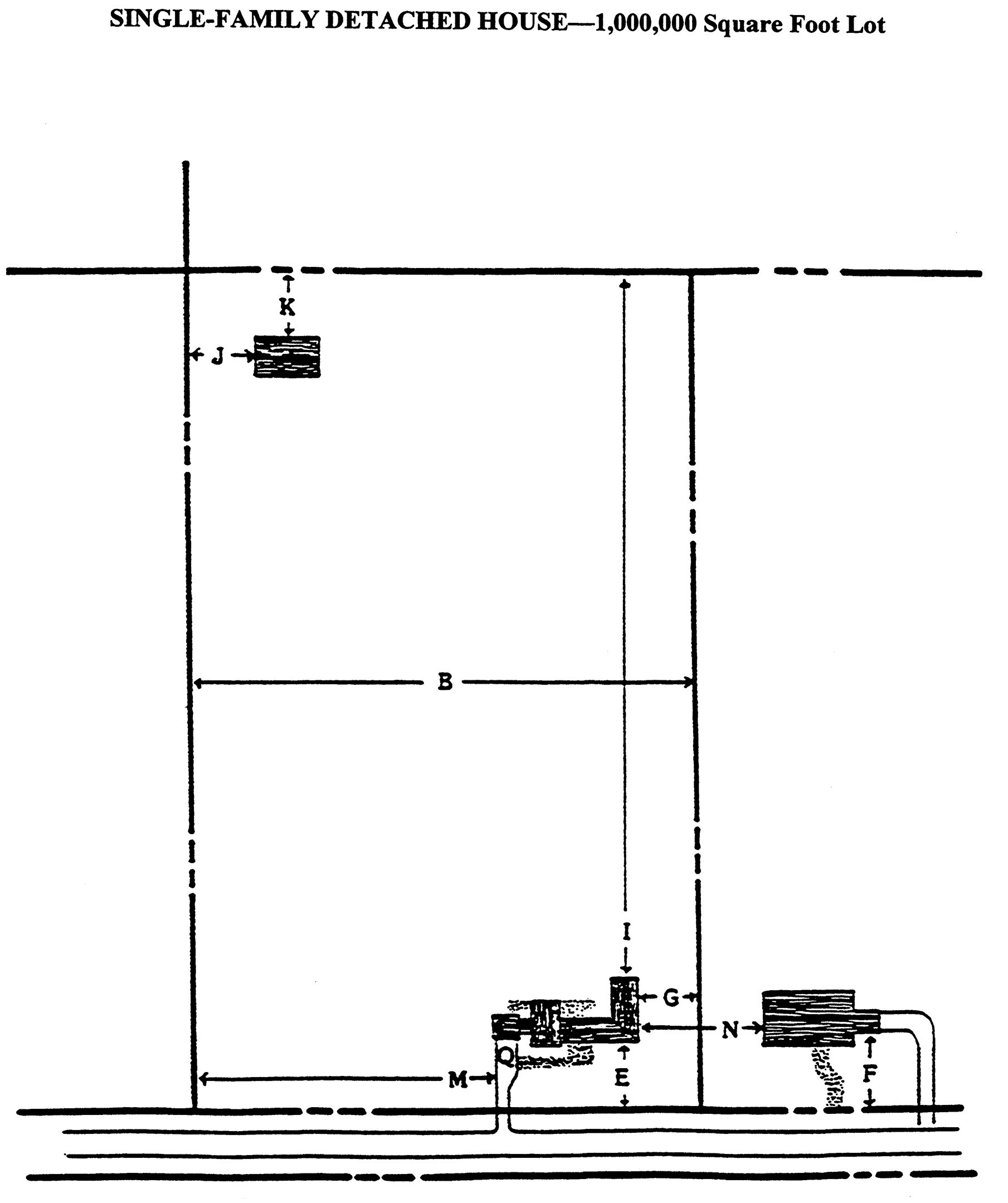
Single-Family Detached House—1,000,000 Square Foot Lot
B.
Single-Family Detached House—175,000 Square Foot Lot. This dwelling unit type consists of a fully detached, single-family residence, which is in complete compliance with the state of Wisconsin One- and Two-Family Dwelling Code (Section 101.60.66), which is located on an individual lot or within a building envelope. This dwelling unit type may not be split into two or more residences. All units must be located within a development which conforms to the requirements of Section 17.20.040 (residential density standards).
This dwelling unit type may be located as a Use Permitted by Right in: (CR-5ac), (ER-1), (SR-4), (MR-8), (UR-12);
Use Permitted as Conditional Use in: Equestrian Development in (CR-5ac).
Bulk Standards
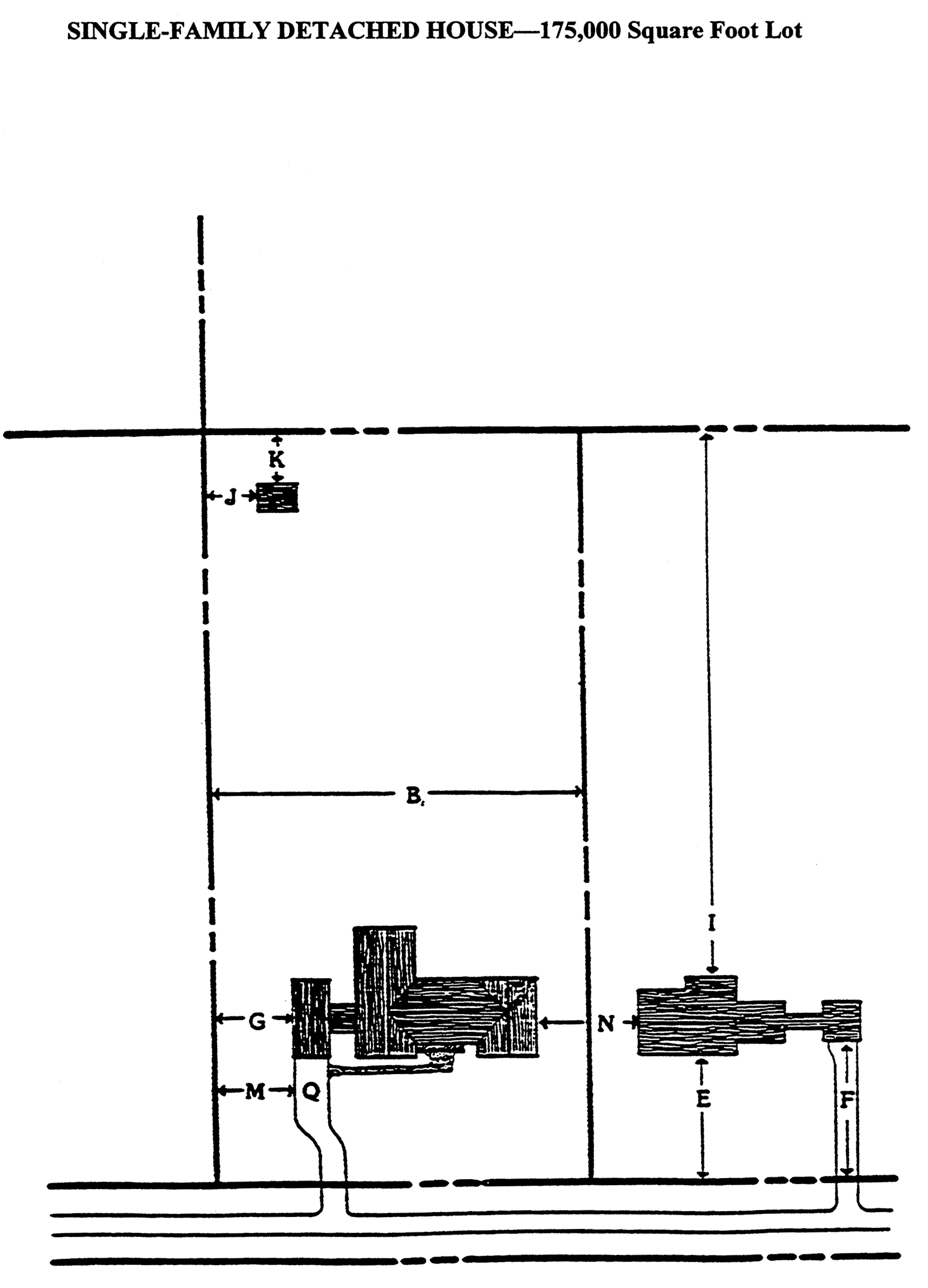
Single-Family Detached House—175,000 Square Foot Lot
C.
Single-Family Detached House—130,000 Square Foot Lot. This dwelling unit type consists of a fully detached, single-family residence, which is in complete compliance with the state of Wisconsin One- and Two-Family Dwelling Code (Section 101.60.66), which is located on an individual lot or within a building envelope. This dwelling unit type may not be split into two or more residences. All units must be located within a development which conforms to the requirements of Section 17.20.040 (residential density standards).
This dwelling unit type may be located as a Use Permitted by Right in: (CR-5ac) (ER-1), (SR-4), (MR-8), (UR-12).
Bulk Standards
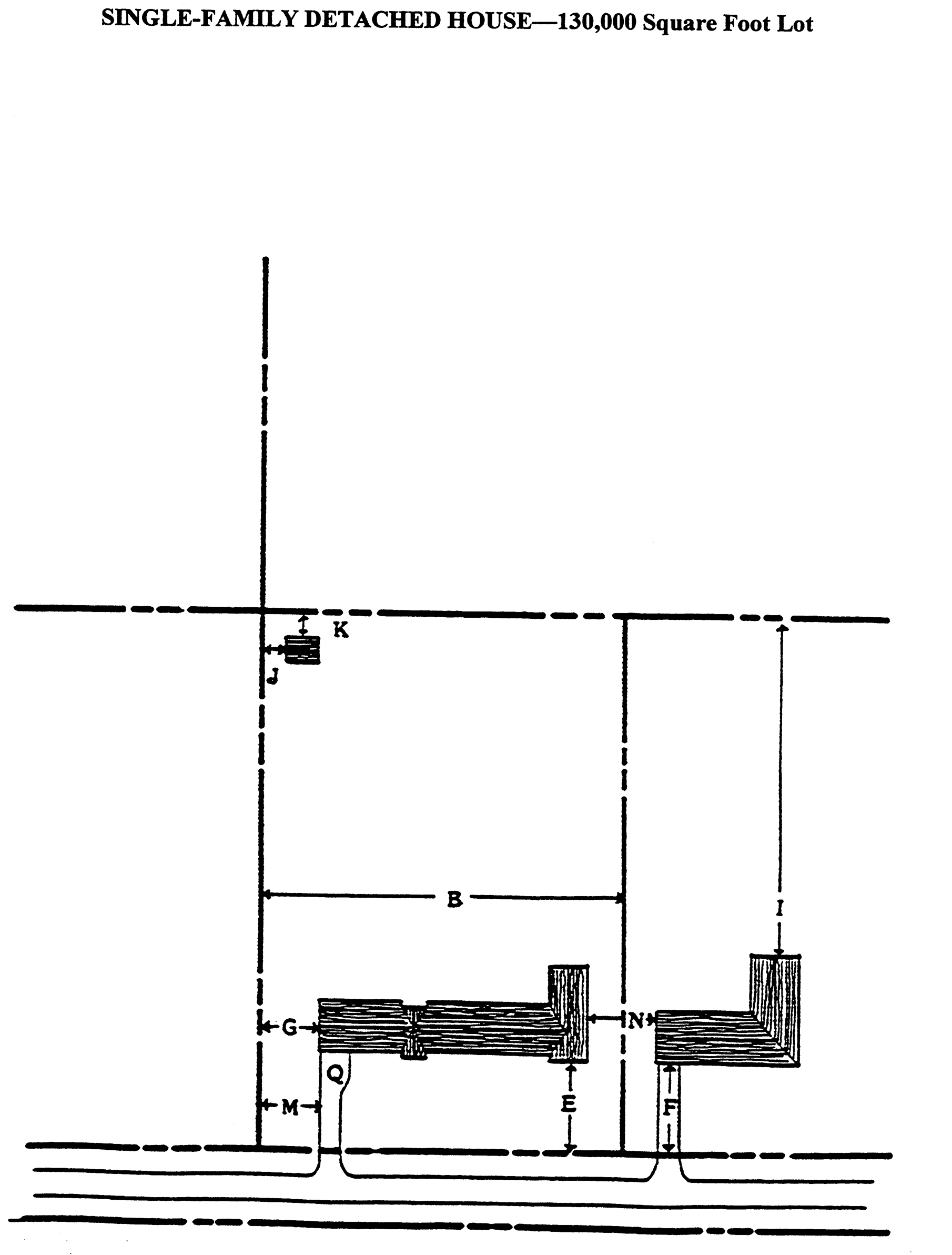
Single-Family Detached House—130,000 Square Foot Lot
D.
Single-Family Detached House—80,000 Square Foot Lot. This dwelling unit type consists of a fully detached, single-family residence, which is in complete compliance with the state of Wisconsin One- and Two-Family Dwelling Code (Section 101.60.66), which is located on an individual lot or within a building envelope. This dwelling unit type may not be split into two or more residences. All units must be located within a development which conforms to the requirements of Section 17.20.040 (residential density standards).
This dwelling unit type may be located as a Use Permitted by Right in: (ER-1), (SR-4), (MR-8), (UR-12);
Use Permitted as Conditional Use in: (CR-5ac).
Bulk Standards
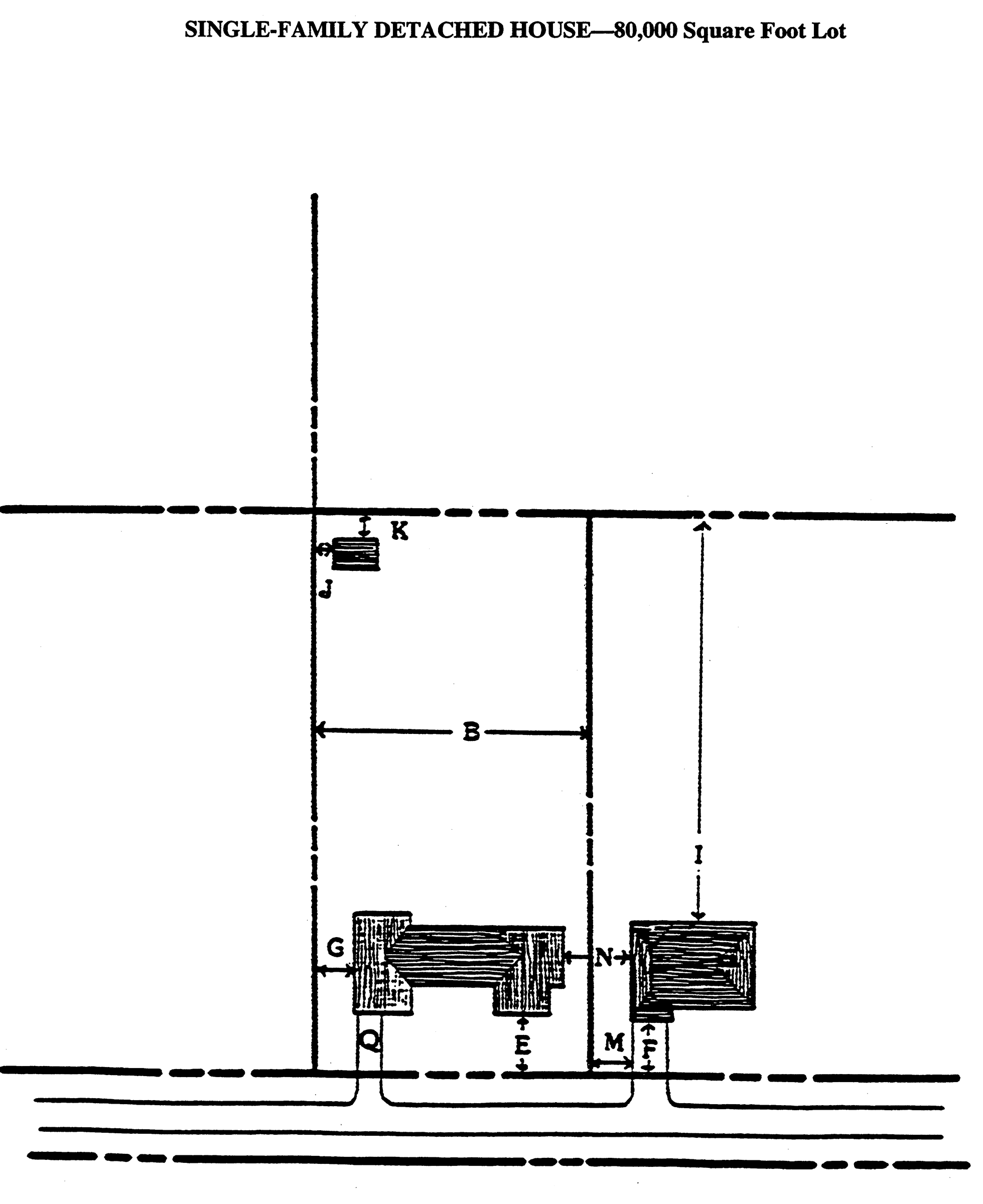
Single-Family Detached House—80,000 Square Foot Lot
E.
Single-Family Detached House—40,000 Square Foot Lot. This dwelling unit type consists of a fully detached, single-family residence, which is in complete compliance with the state of Wisconsin One- and Two-Family Dwelling Code (Section 101.60.66), which is located on an individual lot or within a building envelope. This dwelling unit type may not be split into two or more residences. All units must be located within a development which conforms to the requirements of Section 17.20.040 (residential density standards).
This dwelling unit type may be located as a Use Permitted by Right in: (ER-1), (SR-4), (MR-8), (UR-12);
Use Permitted as Conditional Use in: (CR-5ac).
Bulk Standards
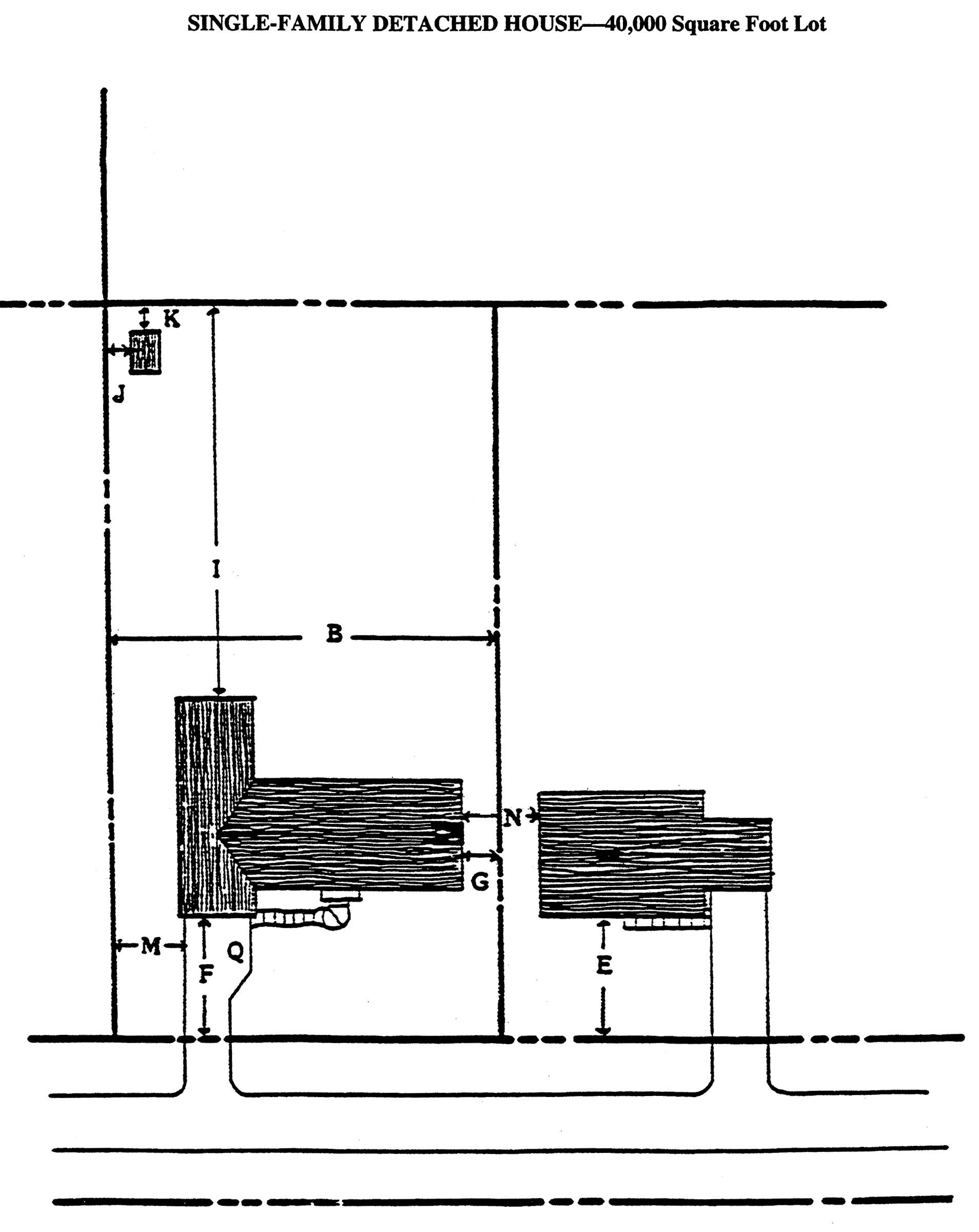
Single-Family Detached House—40,000 Square Foot Lot
F.
Single-Family Detached House—30,000 Square Foot Lot. This dwelling unit type consists of a fully detached, single-family residence, which is in complete compliance with the state of Wisconsin One- and Two-Family Dwelling Code (Section 101.60.66), which is located on an individual lot or within a building envelope. This dwelling unit type may not be split into two or more residences. All units must be located within a development which conforms to the requirements of Section 17.20.040 (residential density standards).
This dwelling unit type may be located as a Use Permitted by Right in: (ER-1), (SR-4), (MR-8), (UR-12).
Bulk Standards
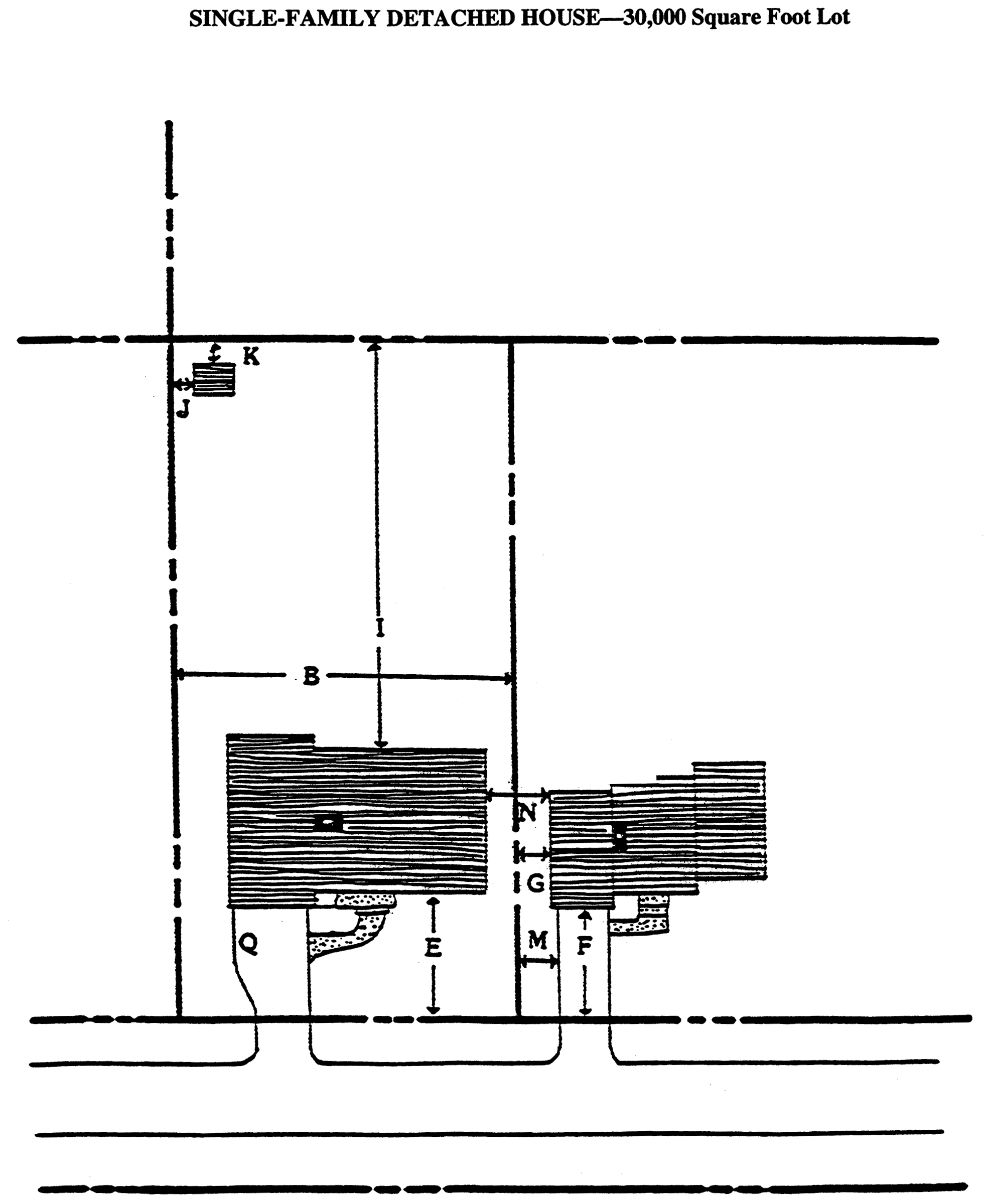
Single-Family Detached House—30,000 Square Foot Lot
G.
Single-Family Detached House—20,000 Square Foot Lot. This dwelling unit type consists of a fully detached, single-family residence, which is in complete compliance with the state of Wisconsin One- and Two-Family Dwelling Code Section 101.60.66), which is located on an individual lot or within a building envelope. This dwelling unit type may not be split into two or more residences. All units must be located within a development which conforms to the requirements of Section 17.20.040 (residential density standards).
This dwelling unit type may be located as a Use Permitted by Right in: (SR-4), (MR-8), (UR-12);
Use Permitted as Conditional Use in: (ER-1).
Bulk Standards
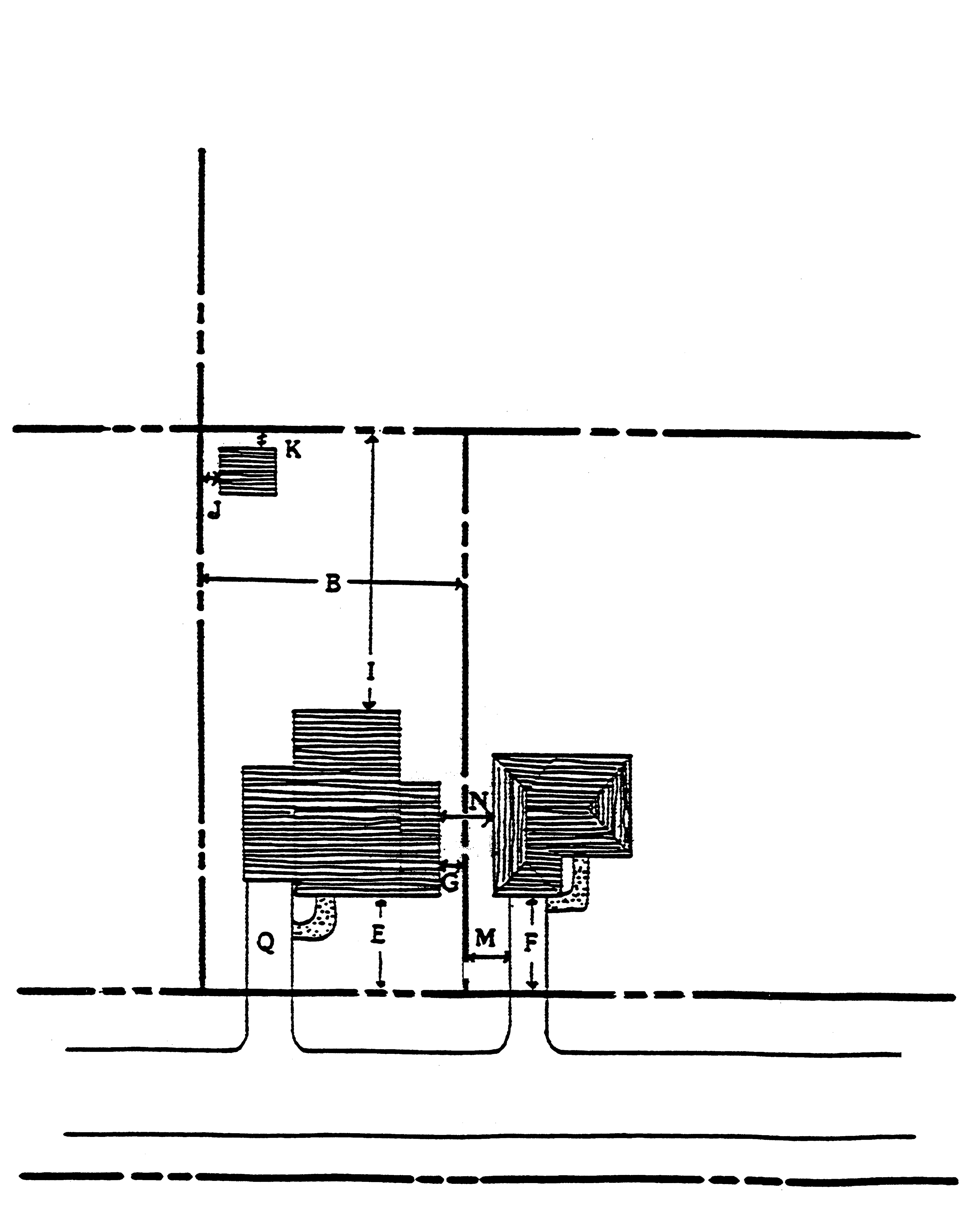
Single-Family Detached House—20,000 Square Foot Lot
H.
Single-Family Detached House—10,500 Square Foot Lot. This dwelling unit type consists of a fully detached, single-family residence, which is in complete compliance with the state of Wisconsin One- and Two-Family Dwelling Code (Section 101.60.66), which is located on an individual lot or within a building envelope. This dwelling unit type may not be split into two or more residences. All units must be located within a development which conforms to the requirements of Section 17.20.040 (residential density standards).
This dwelling unit type may be located as a Use Permitted by Right in (SR-4), (MR-8), (UR-12);
Use Permitted as Conditional Use in: (ER-1).
Bulk Standards
** See Section 17.24.050.
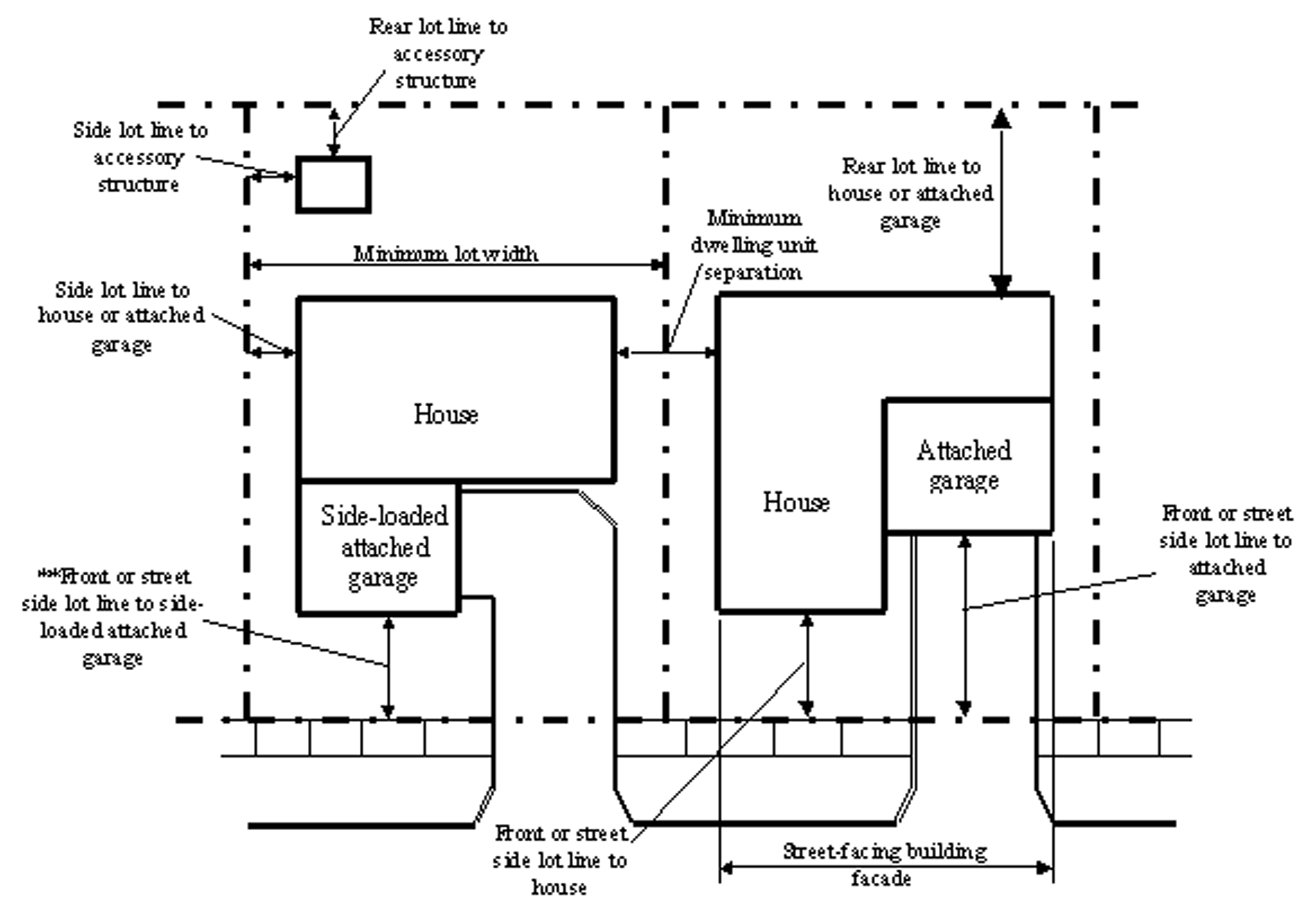
Single-Family Detached House—10,500 Square Foot Lot
I.
Single-Family Detached House—9,000 Square Foot Lot. This dwelling unit type consists of a fully detached, single-family residence, which is in complete compliance with the state of Wisconsin One- and Two-Family Dwelling Code (Section 101.60.66), which is located on an individual lot or within a building envelope. This dwelling unit type may not be split into two or more residences. All units must be located within a development which conforms to the requirements of Section 17.20.040 (residential density standards).
This dwelling unit type may be located as a Use Permitted by Right in: (SR-4), (MR-8), (UR-12).
Bulk Standards
* See Section 17.24.060.
** See Section 17.24.050.
*** See Section 17.36.040(G)3.
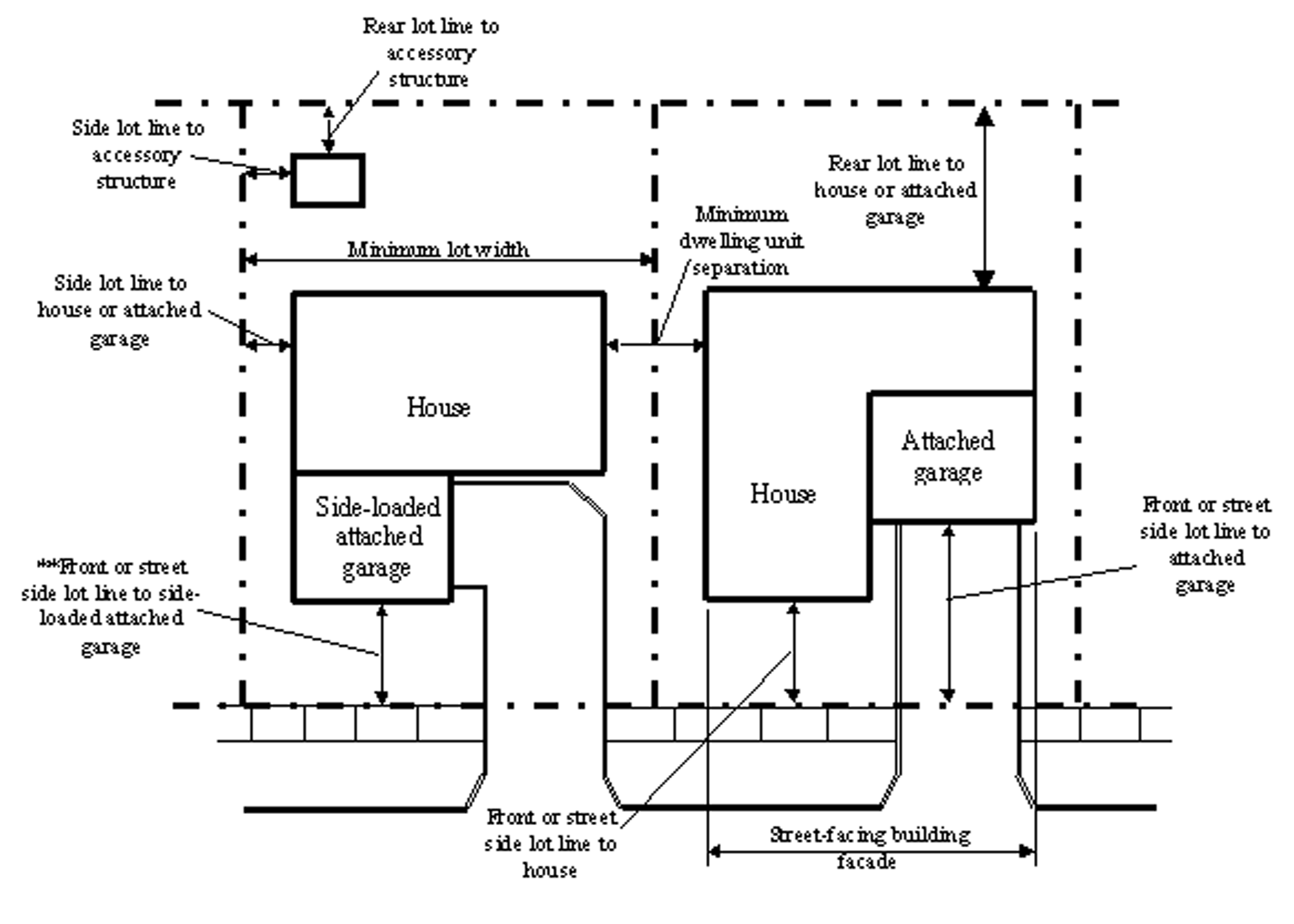
Single-Family Detached House—9,000 Square Foot Lot
J.
Lot Line House—7,200 Square Foot Lot. This dwelling unit type consists of a fully detached, single-family residence, which is in complete compliance with the state of Wisconsin One- and Two-Family Dwelling Code (Section 101.60.66), which is located on an individual lot or within a building envelope. The dwelling unit may be located with one side abutting a side lot line (with the provision of a five foot wide maintenance easement on the adjoining lot). No windows (except clerestory and skylights) or doors may be located on a side of any dwelling unit located less than five feet from a lot line (in order to provide a private side yard for the adjoining lot line unit). This dwelling unit type may not be split into two or more residences. All units must be located within a development which conforms to the requirements of Section 17.20.040 (residential density standards). All dwellings must be located entirely within building pads which are designated on a recorded plat or certified survey map (except for lots of record existing prior to the effective date of this (title). Lot line house units shall be located a minimum of sixteen (16) feet from the property boundary of the development (except for lots of record existing prior to the effective date of this title).
This dwelling unit type may be located as a Use Permitted by Right in: (SR-4), (MR-8), (UR-12).
Bulk Standards
* See Section 17.24.060.
** See Section 17.24.050.
*** See Section 17.36.040(G)3.
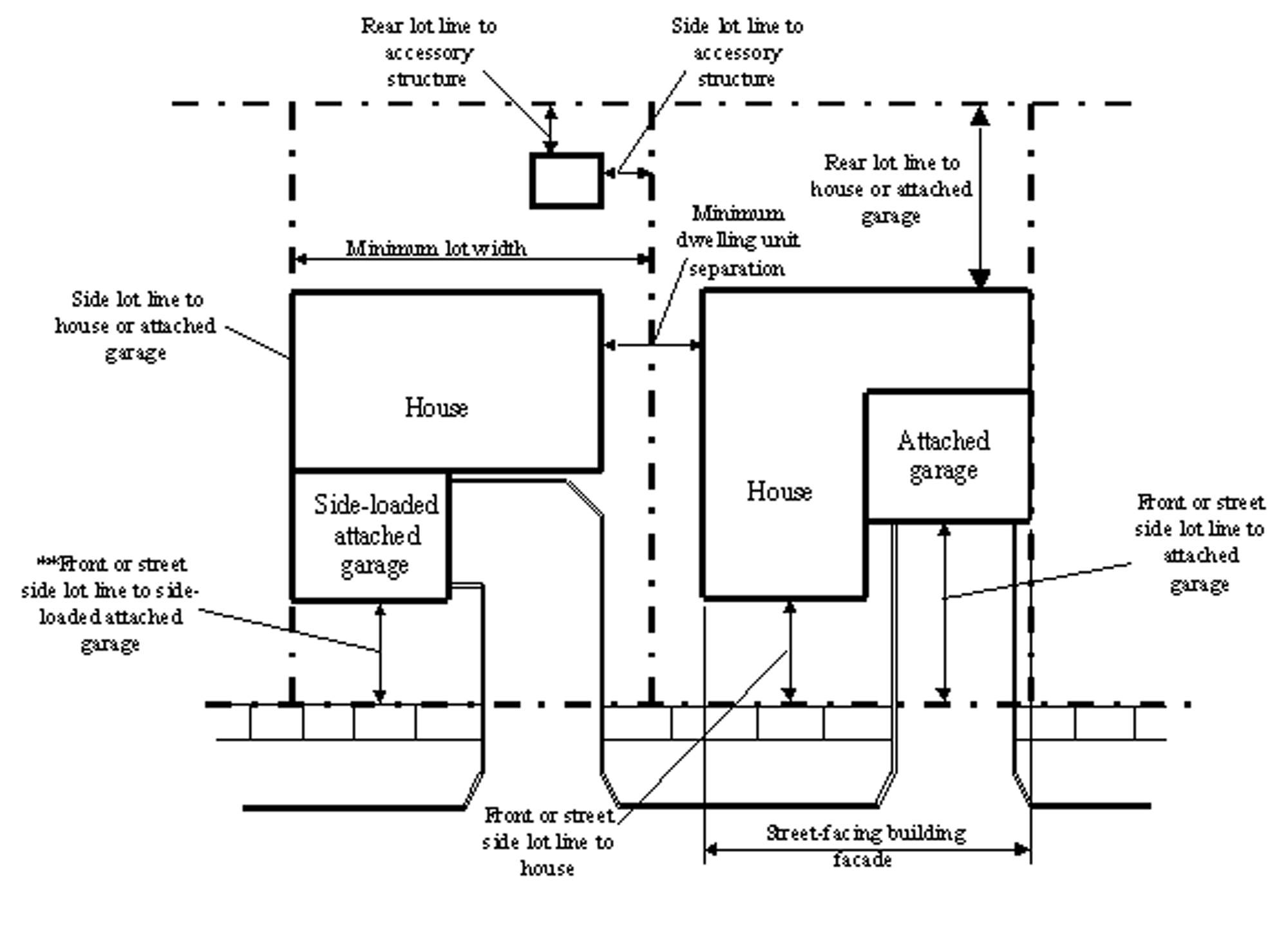
Lot Line House—7,200 Square Foot Lot
K.
Twin House—4,500 Square Foot Lot. This dwelling unit type consists of a single-family residence, which is in complete compliance with the state of Wisconsin One- and Two-Family Dwelling Code (Section 101.60.66), which is attached on one side to another single-family residence. A minimum one-hour fire rated wall assembly division, separating all areas from the lowest level to flush against the underside of the roof, is required between each dwelling unit. The two residences shall be located on individual lots. The twin house is distinguished from the duplex house merely by having each unit located on an individual lot. These dwelling unit types may not be split into additional residences. All units must be located within a development which conforms to the requirements of Section 17.20.040 (residential density standards).
This dwelling unit type may be located as a Use Permitted by Right in: (MR-8), (UR-12);
Use Permitted as Conditional Use in: (SR-4).
Bulk Standards
* See Section 17.24.060.
** See Section 17.24.050.
*** See Section 17.36.040(G)3.
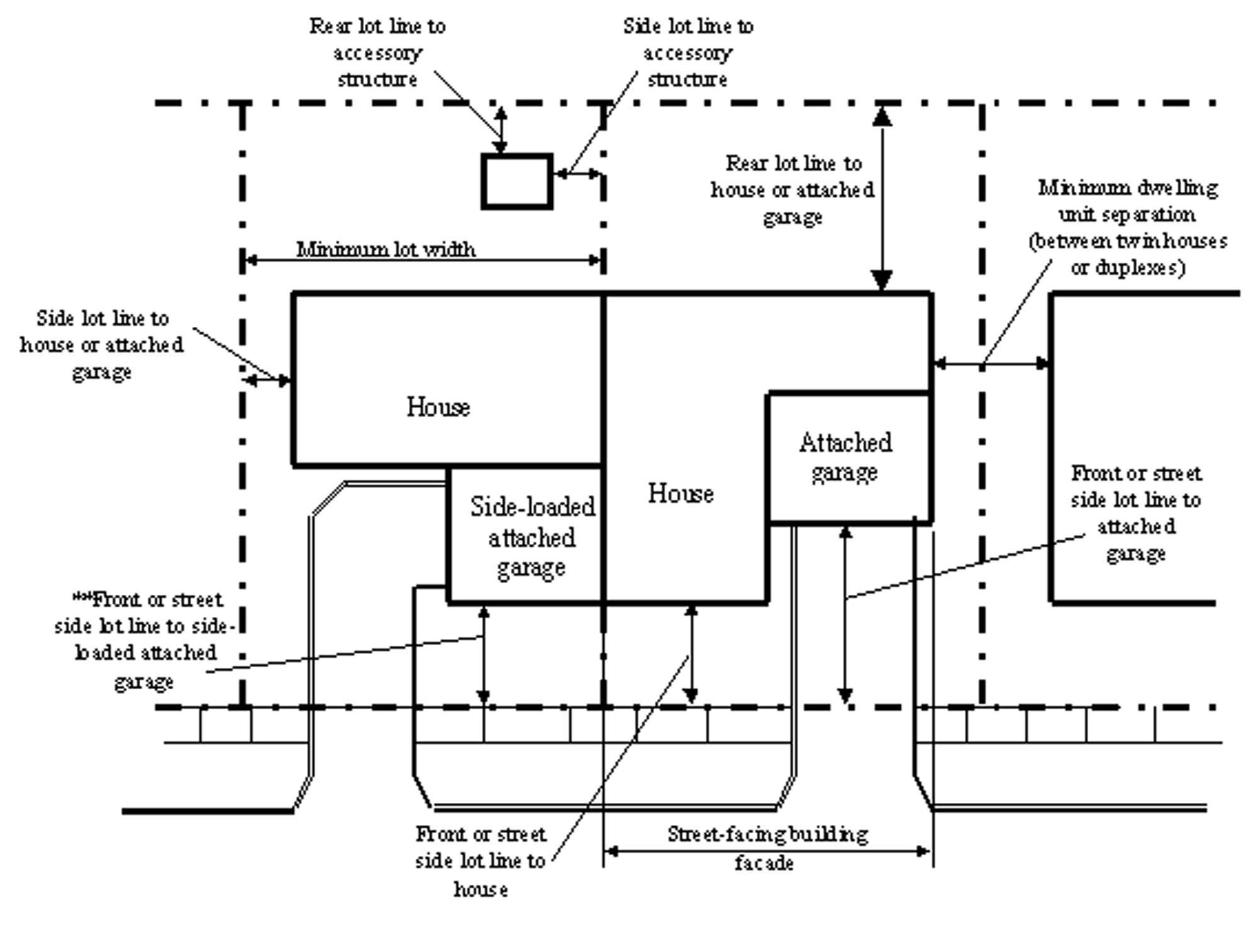
Twin House—4,500 Square Foot Lot
L.
Duplex House—9,000 Square Foot Lot (4,500 Per Each Dwelling Unit). This dwelling unit type consists of a single-family residence, which is in complete compliance with the state of Wisconsin One- and Two-Family Dwelling Code (Section 101.60.66), which is attached on one side to another single-family residence. A minimum one-hour fire rated wall assembly division, separating all areas from the lowest level to flush against the underside of the roof, is required between each dwelling unit. The two residences shall not be located on individual lots. The duplex house is distinguished from the twin house merely by having both units located on an individual lot. These dwelling unit types may not be split into additional residences. All units must be located within a development which conforms to the requirements of Section 17.20.040 (residential density standards).
This dwelling unit type may be located as a Use Permitted by Right in: (MR-8), (UR-12);
Use Permitted as Conditional Use in: (SR-4).
Bulk Standards
* See Section 17.24.060.
** See Section 17.24.050.
*** See Section 17.36.040(G)3.
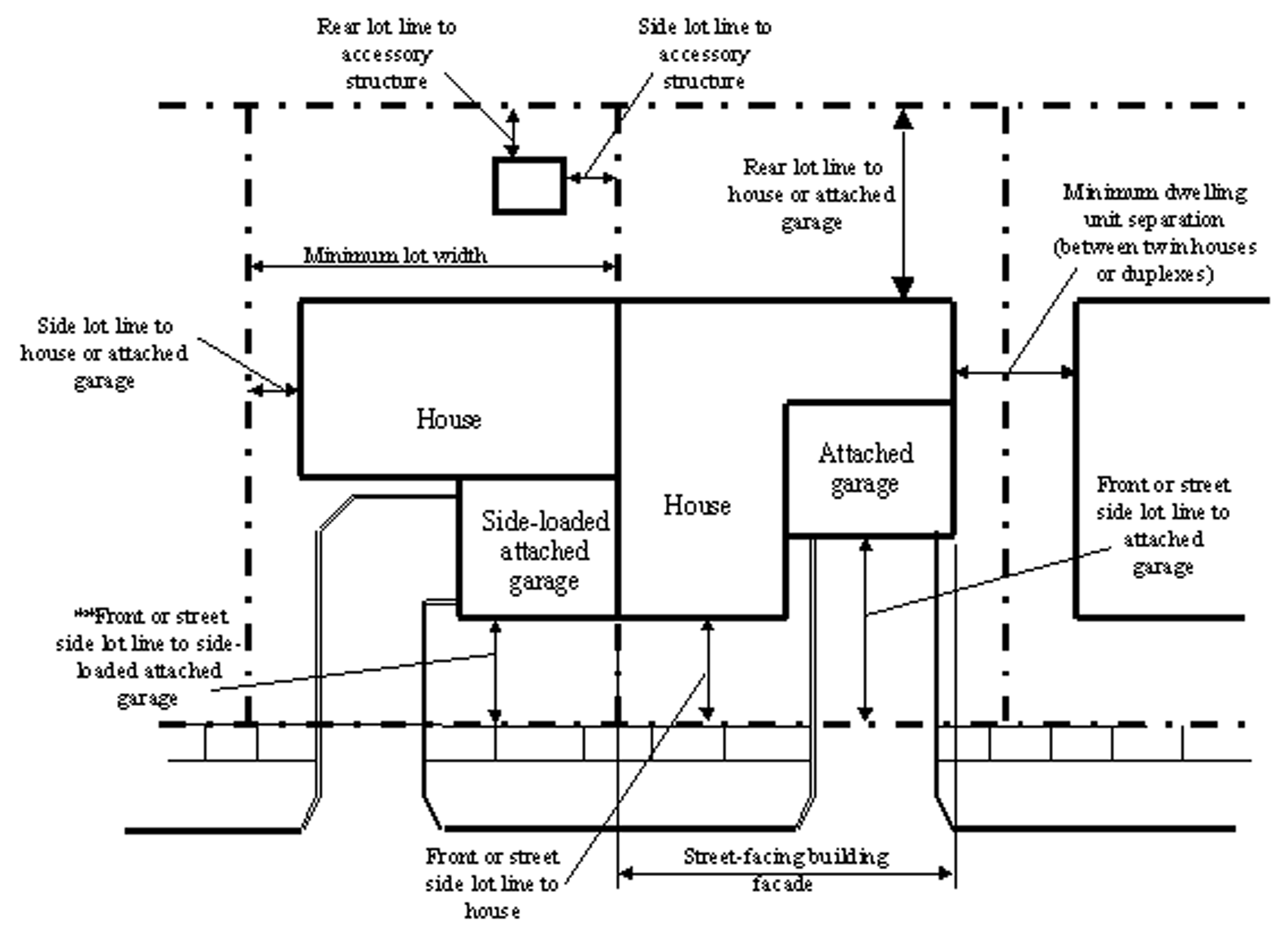
Duplex House—9,000 Square Foot Lot
M.
Two Flat House—9,000 Square Foot Lot (4,500 Square Feet Per Unit). This dwelling unit type consists of a single-family residence, which is in complete compliance with the state of Wisconsin One- and Two-Family Dwelling Code (Section 101.60.66), which has been converted into a two-family residence. The two residences are both located on the same lot or within the same building envelope. This dwelling unit type may not be split into additional residences. Where permitted, this use is a conditional use and must be approved through the procedures of Section 17.44.050.
This dwelling unit type may be located as a Use Permitted as Conditional Use in: (SR-4), (MR-8), (UR-12).
Bulk Standards
** See Section 17.24.050.
*** See Section 17.36.040(G)3.
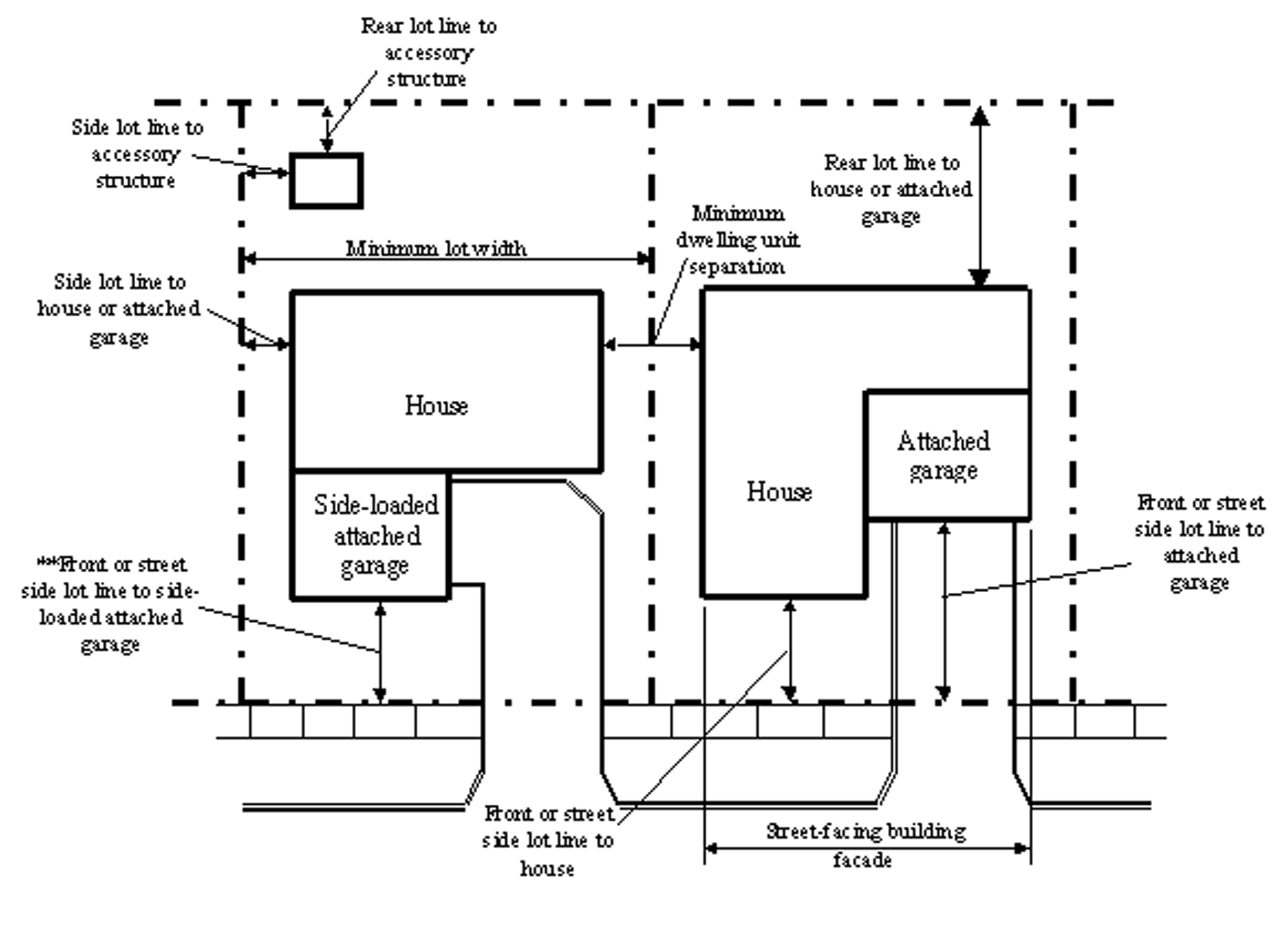
Two Flat House—9,000 Square Foot Lot
N.
Atrium House—3,600 Square Foot Lot. This dwelling unit type consists of an attached, one-story, single-family residence, which is in complete compliance with the state which has a private, individual access and is located on its own lot or building envelope. This dwelling unit can be considered a one-story townhouse. This dwelling unit type may not be split into additional residences. A minimum one-hour fire rated wall assembly division, separating living areas from the lowest level through the roof, is required between each dwelling unit. Each dwelling unit shall enclose its entire rear yard by a fence which has an opacity of one. The fence shall be a minimum of six feet high. All units must be located within a development which conforms to the requirements of Section 17.20.040 (residential density standards). No more than six atrium house dwelling units may be attached per group. All atrium house units within a development shall be located a minimum of thirty (30) feet from the boundary of the development.
This dwelling unit type may be located as a Use Permitted by Right in: (UR-12) in nongroup developments;
Use Permitted as Conditional Use in: (SR-4) and (MR-8) in all developments; and (UR-12) in group developments (see Section 17.16.180).
Bulk Standards
*** See Section 17.36.040(G)3.
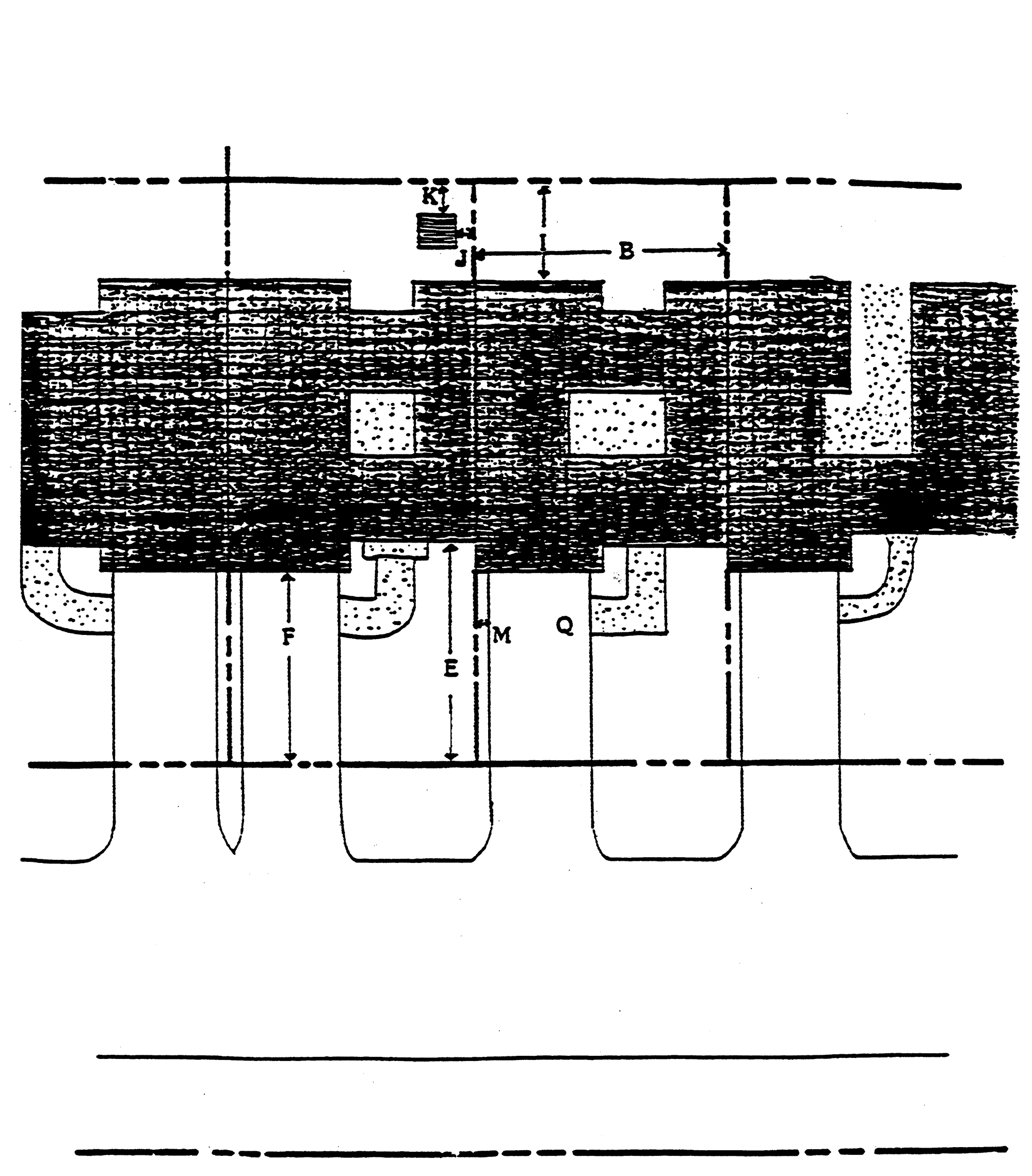
Atrium House—3,600 Square Foot Lot
O.
Weak-Link Townhouse—2,800 Square Foot Lot. This dwelling unit type consists of an attached, one- and two-story, single-family residence which has a private, individual access and is located on its own lot or building envelope. This dwelling unit can be considered a townhouse with both a one-story, and a two-story, components. The one-story side of the unit shall be a minimum of ten (10) feet wide, or thirty percent (30%) of the lot width, (whichever is greater). This dwelling unit type may not be split into additional residences. A minimum one-hour fire rated wall assembly division, separating living areas from the lowest level through the roof, is required between each dwelling unit. No more than six weak-link townhouse dwelling units may be attached per group. All units must be located within a development which conforms to the requirements of Section 17.20.040 (residential density standards). All weak-link townhouse units within a development shall be located a minimum of thirty (30) feet from the boundary of the development.
This dwelling unit type may be located as a Use Permitted by Right in: (UR-12) in nongroup developments;
Use Permitted as Conditional Use in: (SR-4) and (MR-8) in all developments; and (UR-12) in group developments (see Section 17.16.180).
Bulk Standards
*** See Section 17.36.040(G)3.
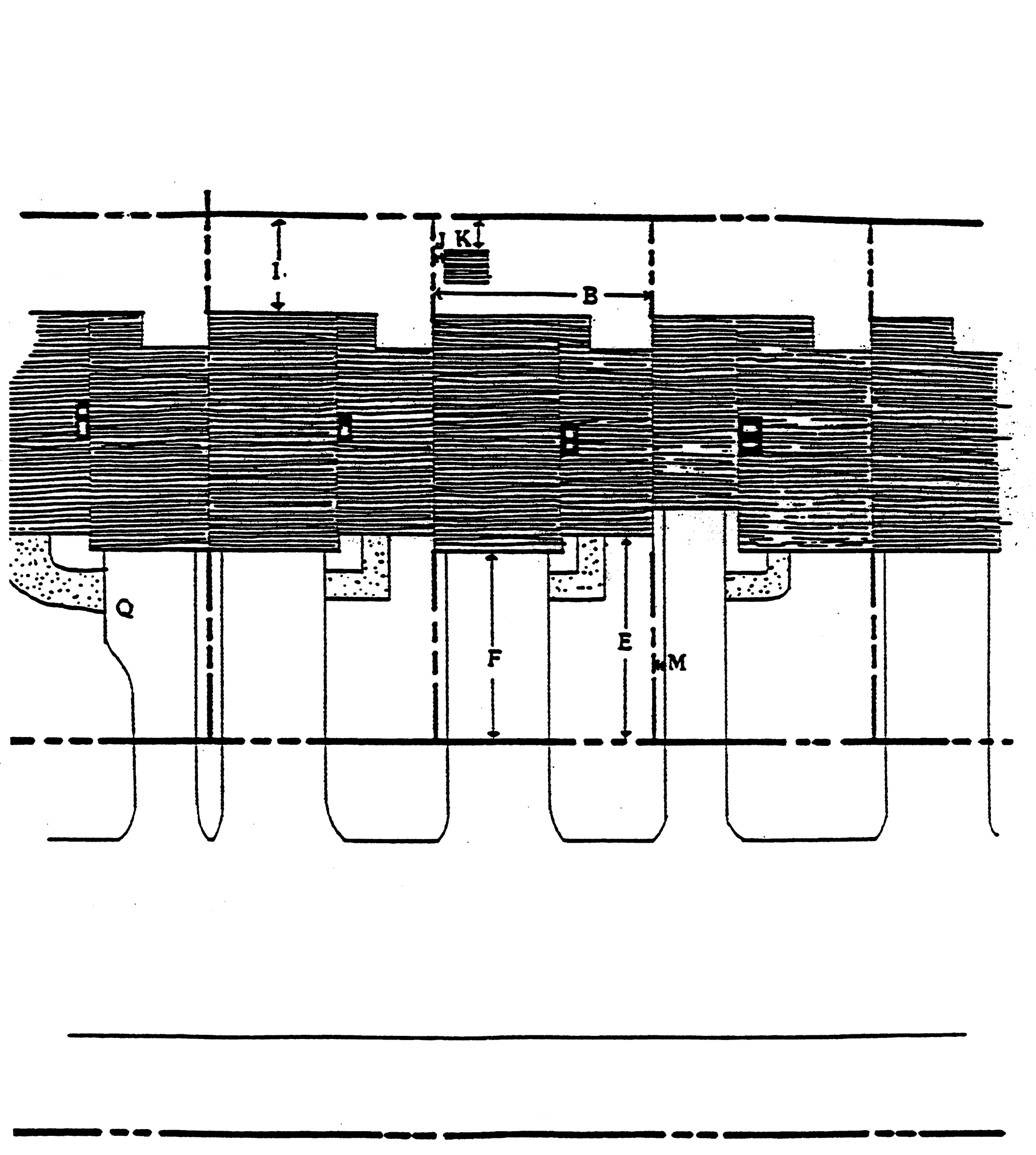
Weak-Link Townhouse—2,800 Square Foot Lot
P.
Townhouse—2,400 Square Foot Lot. This dwelling unit type consists of an attached, two-story, single-family residence which has a private, individual access and is located on its own lot or building envelope. This dwelling unit type may not be split into additional residences. A minimum one-hour fire rated wall assembly division, separating living areas from the lowest level through the roof, is required between each dwelling unit. No more than eight townhouse dwelling units may be attached per group. All units must be located within a development which conforms to the requirements of Section 17.20.040 (residential density standards). All townhouse units within a development shall be located a minimum of thirty (30) feet from the boundary of the development.
This dwelling unit type may be located as a Use Permitted by Right in: (UR-12) in nongroup developments;
Use Permitted as Conditional Use in: (MR-8) in all developments; and (UR-12) in group developments (see Section 17.16.180).
Bulk Standards
*** See Section 17.36.040(G)3.
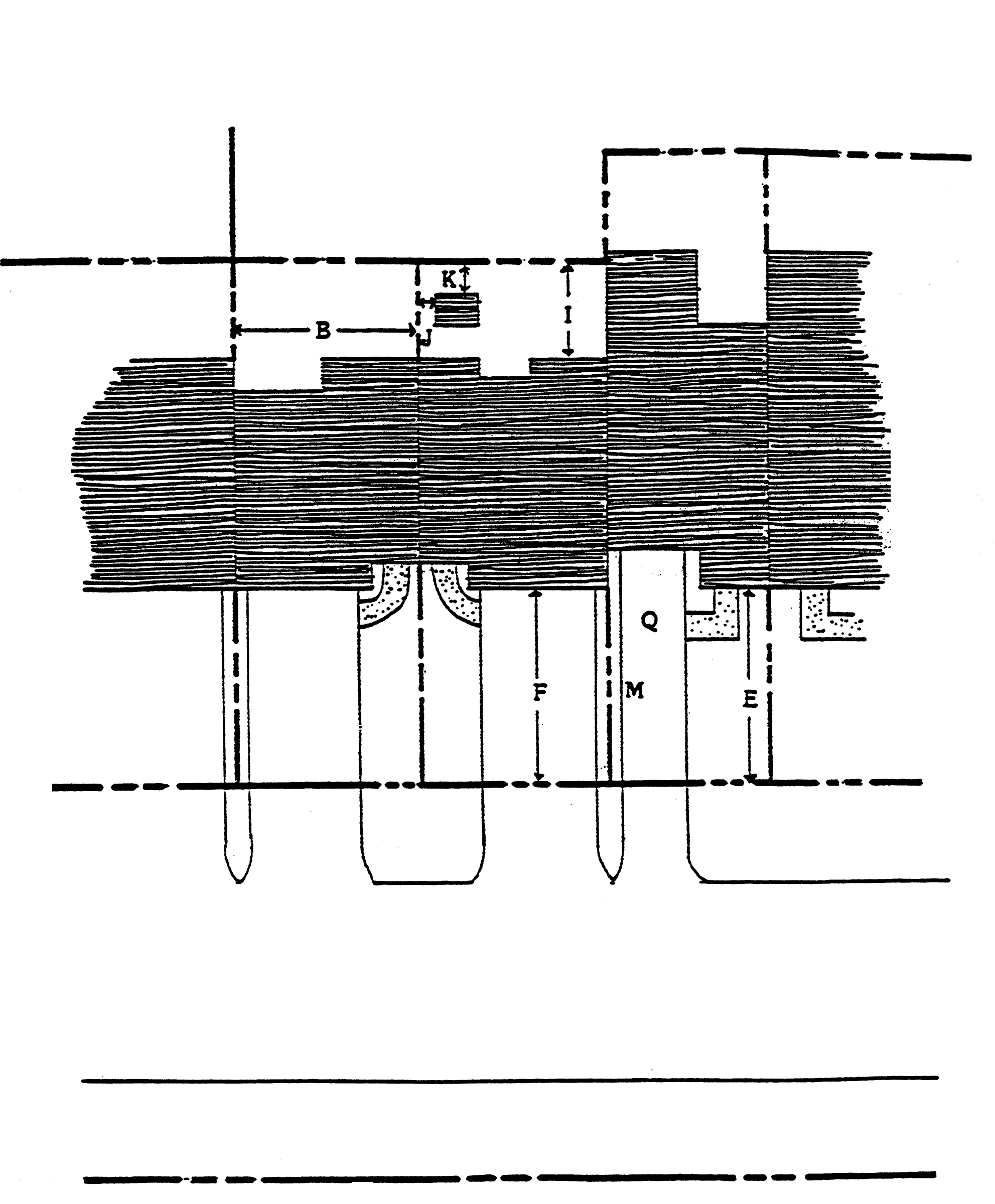
Townhouse—2,400 Square Foot Lot
Q.
Multiplex—2,000 Square Feet Per Dwelling Unit). This dwelling unit type consists of an attached, multi-family residence which has a private, individual access. A minimum one-hour fire rated wall assembly division, separating living areas from the lowest level through the roof, is required between each dwelling unit. No more than six multiplex dwelling units may be attached per group. All units must be located within a development which conforms to the requirements of Section 17.20.040 (residential density standards). All multiplex units within a development shall be located a minimum of thirty (30) feet from the boundary of the development.
This dwelling unit type may be located as a Use Permitted by Right in: (UR-12) in nongroup developments;
Use Permitted as Conditional Use in: (MR-8) in all developments; and (UR-12) in group developments (see Section 17.16.180).
Bulk Standards
*** See Section 17.36.040(G)3.
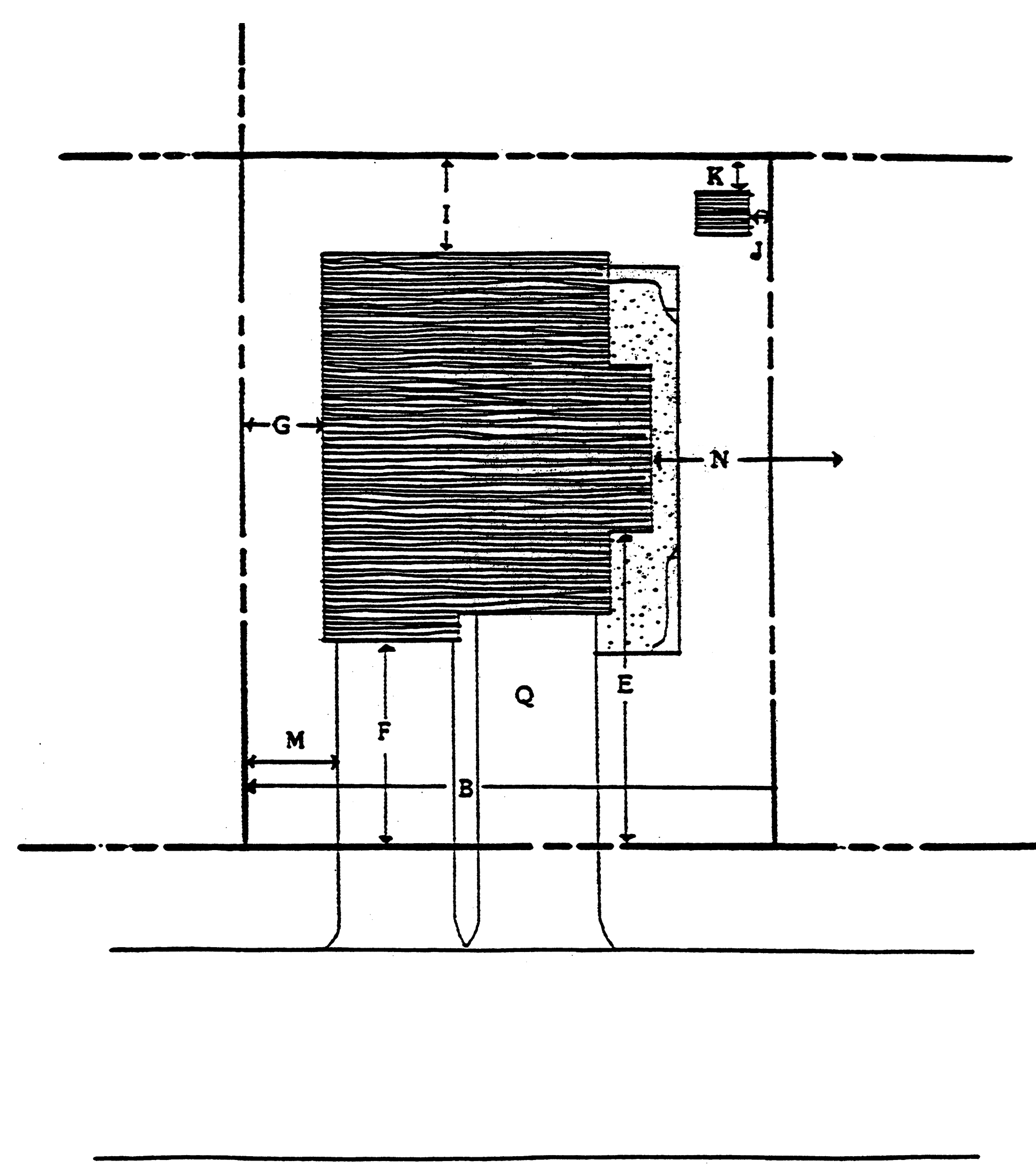
Multiplex—2,000 Square Foot Lot
R.
Apartment—1,400 Square Feet Per Dwelling Unit. This dwelling unit type consists of an attached, multi-family residence which takes access from a shared entrance or hallway. A minimum one-hour fire rated wall assembly division, separating living areas from the lowest level through the roof, is required between each dwelling unit. No more than thirty (30) two-bedroom, three-bedroom, and/or four-plus-bedroom units; or thirty-six (36) one-bedroom and/or efficiency units may be located in a building. As part of the conditional use requirements for group developments, any development comprised of one or more buildings which contain thirteen (13) or more dwelling units shall provide additional site design features such as: underground parking, architectural elements, landscaping, and/or on-site recreational facilities. All units must be located within a development which conforms to the requirements of Section 17.20.040 (residential density standards). All apartment units within a development shall be located a minimum of thirty (30) feet from the boundary of the development.
This dwelling unit type may be located as a Use Permitted by Right in: (UR-12) in nongroup developments;
Use Permitted as Conditional Use in: (MR-8) in all developments; and (UR-12) in group developments (see Section 17.16.180).
Bulk Standards
*** See Subsection 17.36.040.G.3.
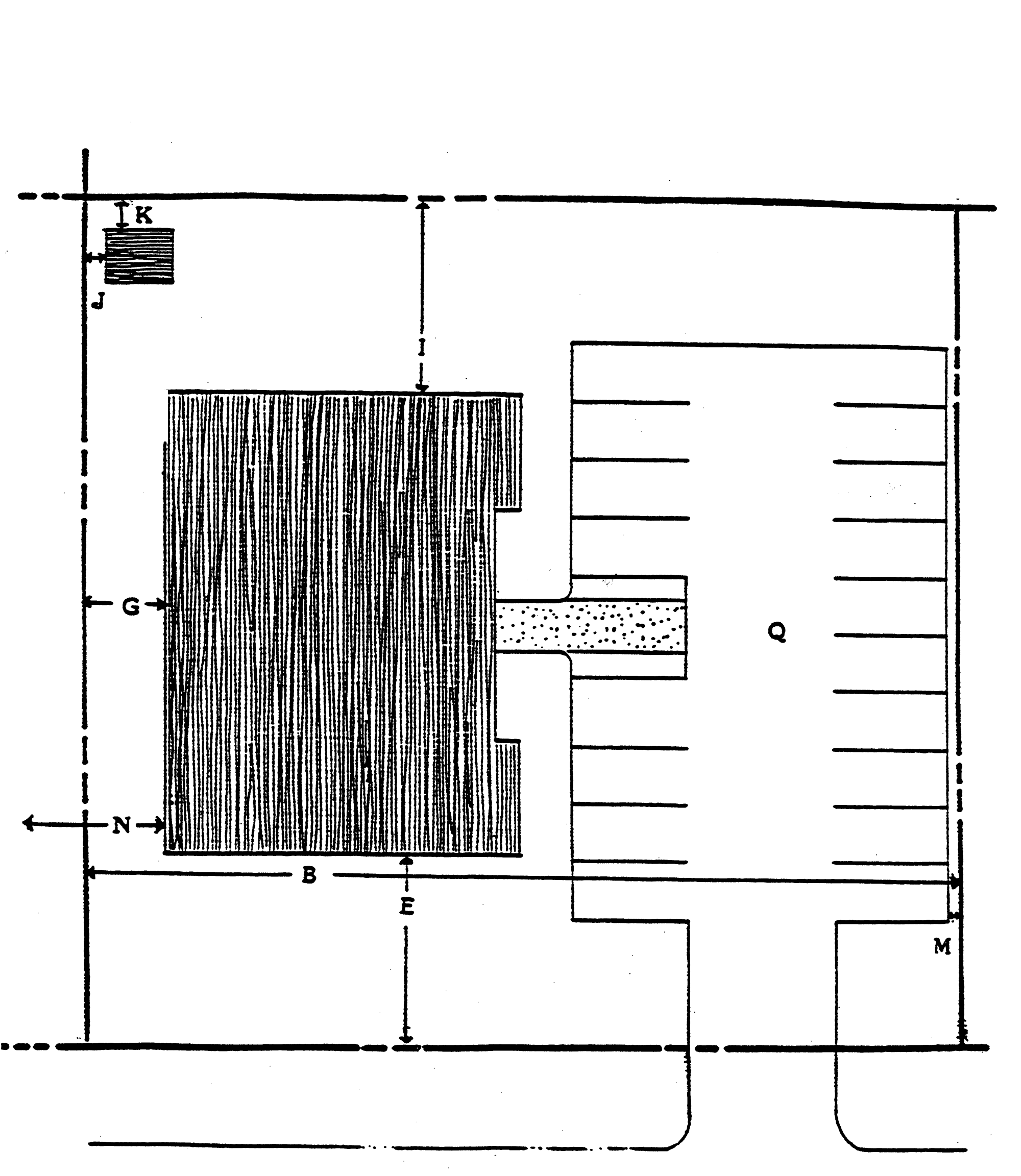
Apartment—1,400 Square Foot Lot
S.
Institutional Residential—800 Square Feet Per Dwelling Unit. This dwelling unit type consists of an attached, multi-family residence which takes access from a shared entrance or hallway. All units must be located within a development which conforms to the requirements of Section 17.20.040 (residential density standards). All institutional residential units within a development shall be located a minimum of thirty (30) feet from the boundary of the development. (See also Subsections 17.16.070.F and 17.16.090.F, detailed land use descriptions and regulations.
This dwelling unit type may be located as a Use Permitted as a Conditional Use in: (UR-12), (SO).
Bulk Standards
T.
Manufactured Home—5,000 Square Foot Lot. This dwelling unit type consists of a fully detached, single-family residence, which is in complete compliance with the state of Wisconsin regulations regarding manufactured homes (Section 101.90.96), which is located on an individual lot or within a building envelope. The manufactured home is distinguished by its construction, otherwise, it closely resembles a conventional single-family detached dwelling unit. This dwelling unit type may not be split into two or more residences. All units must be located within a development which conforms to the requirements of Section 17.20.040 (residential density standards).
This dwelling unit type may be located as a Use Permitted as Conditional Use in: (MR-8).
Bulk Standards
Manufactured Home—5,000 Square Foot Lot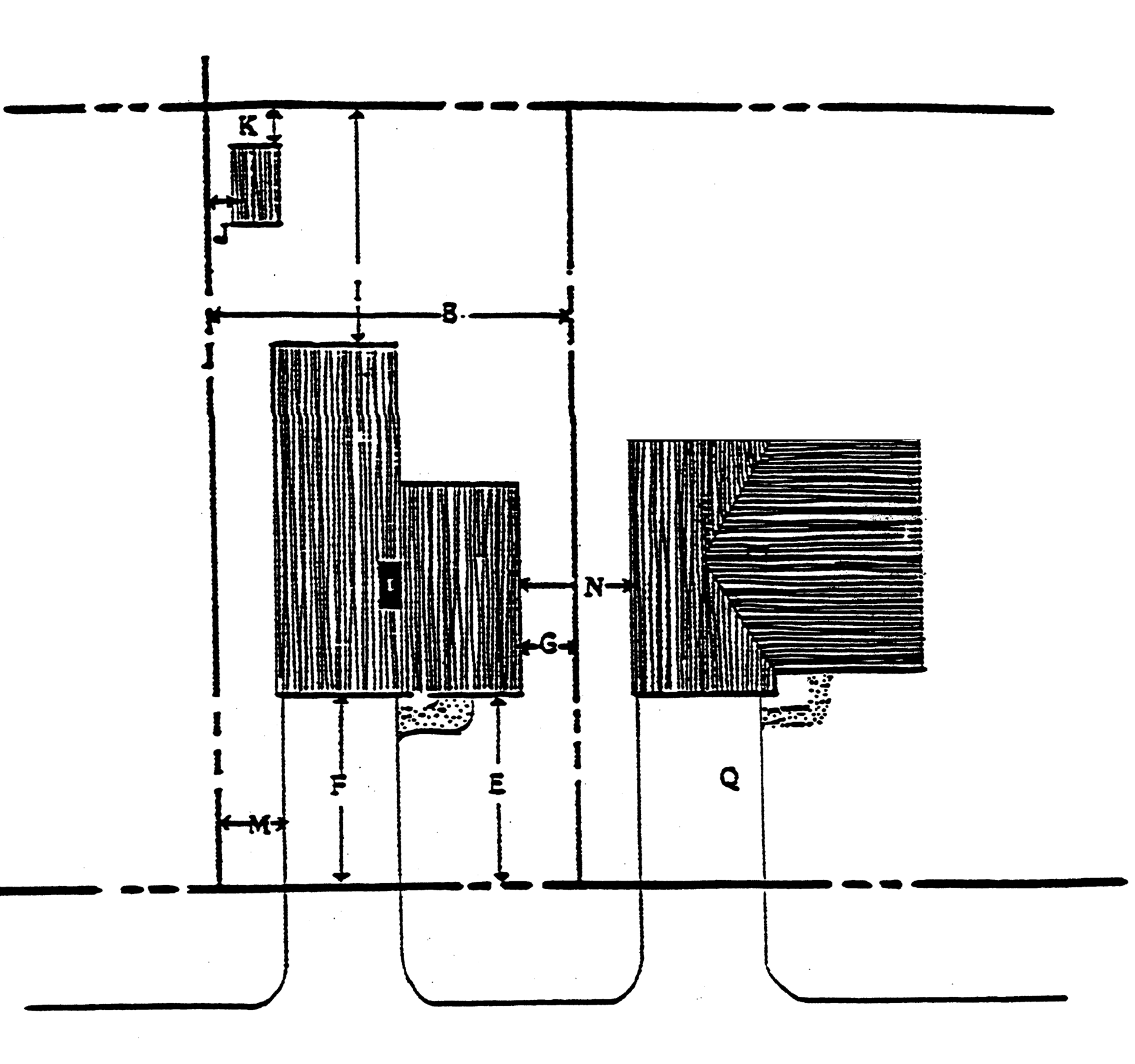
(Ord. No. 906, § 1, 11-15-2022; Ord. 645, § 1, 6-21-2016; Ord. 395, § 1, 1-20-2009; Ord. 167, § 2, 12-21-2004; Ord. 552, 2000; prior code § 13-6-3)
17.24.040 - Nonresidential bulk standards.
All nonresidential lots created under the provisions of this title shall comply with the standards of this section. These standards are related to the specific zoning district and development option used. Table 17.16.030 and Table 17.20.050 relate each use with each zoning district and development option.
Rationale: The maximum permitted height restrictions established are based upon the firefighting equipment available to the fire department as of the effective date of this title, the existing and planned character of neighborhoods within each zoning district, and the compatibility of a proposed use with existing similar uses within the city. Consideration to exceed the maximum building height limit may be made and approved through a conditional use permit if the following standards can be met:
A.
The structure is equipped with internal firefighting mechanisms approved by the fire department or the fire department has firefighting equipment available to them to effectively fight a fire in the structure of the proposed height.
B.
The proposed maximum building height does not exceed the maximum structure height allowed for that area of the city regulated by the "Height Limitation Zoning Map, Dane County Regional Airport, Madison, Wisconsin."
C.
The proposed maximum building height is found to be compatible with existing and planned land uses adjacent to the subject site.
The following table, 17.24.040, presents the standards for nonresidential bulk regulations:
Table 17.24.040—Nonresidential Bulk Standards
* Refer to Section 17.32.050 regarding minimum paved area setbacks to accommodate required street frontage landscaping.
** Refer to Section 17.24.095 for exceptions to bulk standards for nonresidential uses in the Urban Residential (UR-12) zoning district.
*** Refer to Section 17.24.120 for exceptions to bulk standards for the expansion of existing nonresidential uses in the Suburban Residential (SR-4), Mixed Residential (MR-8) and Urban Residential (UR-12) zoning districts.
**** Landscaping standards of Section 17.32.050, Street Frontages, and Section 17.32.090, Bufferyards, may be varied as part of site plan approval for a use in the Suburban Office (SO) zoning district provided that: adequate landscaping is installed to screen areas for refuse and recycling use, loading, parking, and utility equipment; adequate landscaping is provided to ensure effective bufferyards between incompatible adjacent land uses; and the site provides enough landscaping to be aesthetically attractive and to meet the intent of Chapter 17.32 of the Zoning Ordinance.
^ Wisconsin Administrative Code Chapter Trans 233 may require a greater setback from state trunk and federal highways than that required in this zoning ordinance.
(Ord. 353, § 2, 2-19-2008; Ord. 340, § 5, 11-6-2007; Ord. 144, § 1, 6-1-2004; prior code § 13-6-4)
17.24.050 - Front yard or street yard setback adjustment.
A.
The required front yard or street side yard setback for any use may be reduced for a principal structure on any lot where more than fifty percent (50%) of the same type of principal structure on the same block face or street face do not meet the required front yard setback. In such instances, the required front yard setback for the proposed structure shall be the average of all same type principal structures on such block face or street face.
B.
A special use permit may be granted to reduce the front yard or street side yard setback requirement for a residential use along an arterial street, as established for each individual dwelling unit type in Section 17.24.030, to a dimension equal to or greater than the required front yard or street side yard setback for the same dwelling unit type along a collector street, provided the zoning administrator, upon consultation with the city engineer, determines that the following standards are being met:
1.
A need for additional right-of-way for roadway expansion is not anticipated along the arterial street in the foreseeable future;
2.
The proposed development will be generally consistent with the existing or proposed development along the same block face and in the surrounding area; and
3.
Shall comply with Section 17.44.040, standards and procedures applicable to all special uses.
C.
A special use permit may be granted to reduce the front yard or street yard setback requirement for a side-loaded attached garage, provided the zoning administrator determines that the following standards are being met;
1.
At least fifteen percent (15%) of the street-facing facade of the garage consists of windows or pedestrian entryway doors;
2.
Architectural details of the street-facing facade of the garage, such as window and door design and placement, trim details, and building materials, are consistent with the features of the living portion of the home; and
3.
Shall comply with Section 17.44.040, standards and procedures applicable to all special uses.
D.
If a requested front yard or street side yard setback reduction, listed as a special use above, cannot meet one of the special use requirements of subsection B., of this section, for reasons directly related to the nature of the subject property, the petitioner may request plan commission and city council review for approval as a conditional use, per the requirements of Section 17.44.050. No more than one special use requirement shall be waived in this manner for any given request.
(Ord. 167, § 3, 12-21-2004; Ord. 74, § 1, 2003; prior code § 13-6-5)
17.24.060 - Side yard setback adjustment.
The minimum required side yard setback listed for single-family detached houses of nine thousand (9,000) square feet and lot line houses (Section 17.24.060) are reduced for lots of record existing as of the effective date of this title. For both dwelling unit types, required minimum side yards shall be five feet for one-story dwellings and eight feet for two-story dwellings; and for both dwelling types, required total side yards shall be thirteen (13) feet for one-story dwellings and sixteen (16) feet for two-story dwellings.
(Prior code § 13-6-6)
17.24.070 - Rear yard setback reduction.
Certain residential dwelling unit types may qualify for a reduction in the required rear yard setback with the provision of a bufferyard to mitigate any potential adverse effects of the rear yard reduction on adjacent residential properties.
A.
Such reduction shall permit the required rear yard setback to be reduced from thirty (30) feet to twenty (20) feet (from the rear lot line to the nearest point of the dwelling unit).
B.
These units shall include the: single-family detached nine thousand (9,000) square foot lot house, lot line house, village house, twin house, duplex house, and two-flat house.
C.
Prior to acquiring a building permit which indicates such reduction, the petitioner shall file an agreement with the recorder of deeds which requires the installation and continuous maintenance of such bufferyard. Such agreement shall specifically state that such requirements shall apply to any current or future owner or assign of the subject property.
D.
Such bufferyard shall have a minimum opacity of two-tenths, and shall be located along the entire length of the rear lot line, and along both side lot lines a distance of thirty (30) feet from the rear lot line toward the front lot line, except as provided in subsections 1. and 2. below:
1.
Where the abutting properties to the rear or side of the subject rear yard consist of uses such as cemeteries, schools, parkland, stormwater management facilities or other permanently protected green spaces, the plant units required to meet the landscaping component of the required bufferyard may be reduced by two-thirds, provided that the landscaping or landscape features provided are used in such a manner as to define the property line, thereby minimizing the potential for future encroachment of rear yard activities or mowing into the adjacent lands.
2.
Where the provisions of subsection 1., above, do not apply, and the abutting properties are developed or zoned for nonresidential uses and are not planned for future residential use as per the recommendations of the Comprehensive Plan, no bufferyard shall be required.
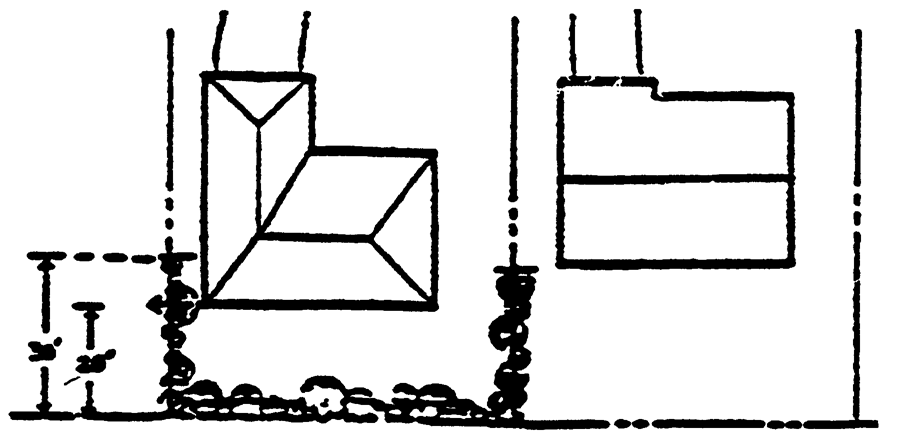
Rear Yard Setback Reduction
(Ord. 405, § 1, 7-7-2009; prior code § 13-6-7)
17.24.080 - Intrusions into required yards.
The minimum setback requirements of Sections 17.24.030 and 17.24.040 establish the minimum required yards for all uses, except those exempted by the provisions of this section.
A.
No yard shall be reduced in area or dimension so as to make such yard less than the minimum required by this title. If an existing yard is less than the minimum required, it shall not be reduced further, except where exempted by the provisions of this section.
B.
No required yard or lot area allocated to satisfy the minimum yard or lot area requirements for one building or structure shall be used to satisfy the minimum yard or lot area requirement for another building or structure.
C.
In instances where the required bufferyard width (per Chapter 17.32) exceeds the minimum required setback width, the minimum required bufferyard width shall prevail. Absolutely no intrusions of a building or structure are permitted within the required bufferyard. (Refer to Section 17.32.090.)
D.
Permitted Intrusions Into Required Yards. The following intrusions by buildings and structures are permitted into the specified required yards:
1.
Permitted Intrusions Into Required Front or Street Yards:
a.
Chimneys, flues, sills, pilasters, lintels, ornamental features, cornices, eaves, and gutters for residential buildings; provided they do not extend more than two and one-half feet into the required yard;
b.
Yard lights, ornamental lights, and nameplate signs for residential lots (provided the direct source of light is not visible from a public right-of-way or any adjacent residential property); provided they do not locate closer than five feet from the front or street property line;
c.
Terraces, steps, uncovered porches, decks, stoops, or similar appurtenances to residential buildings which do not extend above the floor level of the adjacent building entrance; provided they do not locate closer than fifteen (15) feet from any street right-of-way;
d.
Fences on residential or nonresidential lots which do not exceed four feet in height; provided they do not locate closer than two feet to any street right-of-way. Permitted fence types shall comply with the provisions of Section 17.32.090(D)(2).
2.
Permitted Intrusions Into Required Rear or Side Yards:
a.
Chimneys, flues, sills, pilasters, lintels, ornamental features, cornices, eaves, and gutters for residential buildings; provided they do not extend more than two and one-half feet into the required yard;
b.
Overhanging bays (on residential buildings) which do not extend more than two feet into the required yard and which do not contain a gross floor area of more than twenty (20) square feet;
c.
Fences may locate on the property line. Permitted fence types shall comply with the provisions of Sections 17.32.090(D)(2) and 17.36.200;
d.
Fire escapes (on residential buildings) which do not extend more than three feet into the required yard;
e.
Air conditioning equipment, vents, utility meters, and similar equipment which do not extend more than three feet into the required yard.
f.
All solar energy systems
3.
Permitted Intrusions Into Required Rear Yards:
a.
Terraces, steps, uncovered porches, decks, stoops, or similar appurtenances to residential buildings which do not extend more than three feet above grade; provided they do not locate closer than eight feet to the rear lot line;
b.
Balconies or similar appurtenances to residential buildings which extend more than three feet above grade; provided they do not extend more than six feet into the required rear yard.
E.
All Front Yard, Street Yard, and Other Side Yard Areas. With the exception of fences or those uses or structures regulated elsewhere within this title such as vehicle fuel station canopies, no accessory structures shall be permitted within any portion of a required front yard or street yard in any zoning district. Within residential districts, no detached accessory structures shall be located within the required side yard setback (from the principal building (including attached garage) to the side lot line) between the required front and rear yard setbacks. Detached accessory structures on commercially zoned properties are permitted within interior side yards provided they meet a minimum side yard setback of five feet (except for the CC - central commercial district where no side yard setback is required) and the provisions of Section 17.32.090; landscaping requirements for buffer-yards wherever such properties abut a different zoning district or a different development option. All accessory uses and structures in commercial districts require site plan review and approval per Section 17.44.070 in addition to the requirements for special or conditional use approval as applicable to a particular use.
(Ord. No. 945, § 5, 2-20-2024; Prior code § 13-6-8)
17.24.090 - Exceptions to maximum height regulations.
A.
Permitted Exceptions to Maximum Height Regulations.
1.
The maximum permitted number of floors listed for nonresidential uses in Section 17.20.050, and the maximum height regulations listed for residential uses and residential accessory structures in Section 17.24.030, and for nonresidential uses and nonresidential accessory structures in Section 17.24.040, are the maximum permitted number of floors and maximum heights for all buildings and structures, except those allowed per subsection A.2. of this section or if granted through the conditional use permit process per subsection B. of this section.
2.
The following are permitted up to a maximum height of forty-five (45) feet in all rural and residential zoning districts and fifty (50) feet in all nonresidential zoning districts: church spires, belfries, cupolas and domes which do not contain useable space, public monuments, water towers, fire and hose towers, flagpoles, chimneys, cooling towers, elevator penthouses, and communication towers. Exhaust stacks are permitted up to a maximum height of eighty-five (85) feet in all industrial zoning districts. In zoning districts that allow for a greater maximum building height than stated in Section 17.24.040, the maximum building height for that zoning district applies to all structures within that respective zoning district.
3.
Roof-mounted solar energy systems are permitted to exceed the maximum height limitations within the respective zoning district.
B.
Required Procedure for Exceeding Maximum Height Regulations. In order to secure permission to exceed the maximum height regulations of Sections 17.24.030 and/or 17.24.040, and/or the maximum number of floors regulations of Section 17.20.050, or the regulations of subsection A.2. of this section, the petitioner shall apply for and be granted a conditional use permit which specifically states the maximum permitted height and/or maximum permitted number of floors per the standards and procedures of Section 17.44.050, as well as the following standards:
1.
The building shall be equipped with internal firefighting mechanisms as determined necessary by the fire department.
2.
The requested height shall be compatible with surrounding existing or surrounding proposed or planned structure or building heights or shall be designed with a stepped roofline or similar design to minimize the difference in heights; or is otherwise so located in terms of distance or natural topography or screening from surrounding structures that the proposed increase in height will not detract from the area nor negatively impact adjoining land uses.
3.
The request shall comply with the general purposes of the zoning ordinance, particularly those relating to provision of adequate light and air, including access to sunlight for solar collectors and to wind for wind energy systems, prevention of overcrowding, undue concentration of population, and security from fire, as well as the standards for conditional uses per Section 17.44.050, and any other neighborhood plan or adopted plan or policy governing development of the site.
(Ord. No. 945, § 6, 2-20-2024; Ord. 353, § 2, 2-19-2008; Ord. 277, § 1, 10-17-2006; prior code § 13-6-9)
17.24.095 - Exceptions to bulk standards, intensity standards, and landscape bufferyard regulations for nonresidential uses in the Urban Residential (UR-12) zoning district.
A.
Permitted Exceptions to Bulk Standards, Intensity Standards, and Landscape Bufferyard Regulations for Nonresidential Uses in the Urban Residential (UR-12) Zoning District.
1.
The standards for minimum lot width, minimum setbacks, and minimum building separation for nonresidential uses contained in Section 17.24.040, the minimum lot area, minimum landscape surface ratio, and maximum floor area contained in Section 17.20.050, and the landscaping requirements for bufferyards contained in Section 17.32.090 may be reduced through the approval of a conditional use permit provided that the city determines that the following standards are met:
a.
The most recent use of the property and structure was a conforming or legally nonconforming nonresidential use;
b.
The proposed use is listed as an allowed use within the zoning district in Section 17.16.030 Table of Land Uses;
c.
The requested use is compatible with surrounding existing or surrounding proposed or planned land uses;
d.
Exceptions or reductions from landscape bufferyard standards are kept to a minimum;
e.
The public benefit resulting from flexibility in design standards must be justified versus the benefit of a private individual or entity; and
f.
The standards for all conditional use permits contained in Section 17.44.050 are met.
2.
Exceptions permitted under this section shall only be granted for existing buildings.
3.
To avoid duplication of conditional use permit applications, if a proposed use already requires a conditional use permit, per Section 17.16.030 Table of Land Uses, then a request for the exceptions listed in this section may accompany such request.
(Ord. 144, § 1, 6-1-2004)
17.24.100 - Nonconforming lot regulations.
A.
Except as provided in subsection C., below, upon and after the effective date of this title, no lot shall be created which does not meet the minimum lot area (MLA) requirements of Section 17.20.040 or 17.20.050 or which does not meet the lot dimension requirements of Section 17.24.030 or 17.24.040.
B.
A lot of record existing upon the effective date of this title in a residential district (see Section 17.12.020), which does not meet the minimum lot area (MLA) requirements of Section 17.20.040 or 17.20.050 or which does not meet the lot dimension requirements of Section 17.24.030 or 17.24.040 may be utilized for a detached single-family dwelling unit, provided the measurements of such area and dimensions are equal to or greater than seventy percent (70%) of the requirements of this title. Such lot shall not be more intensively developed (with multifamily or nonresidential uses) unless combined with one or more abutting lots (or portions thereof) so as to create a lot which meets the requirements of this title.
C.
A special use permit may be granted to accommodate lot adjustments to lots of record existing prior to March 16, 1989, that contain existing single-family or duplex uses, even if the resulting lot configuration does not meet the city's bulk standards of Section 17.24.030, the minimum lot area requirements of Section 17.20.040 or the minimum lot dimension requirements of Section 17.24.030. In such situations, the bulk standards, minimum lot area requirements or minimum lot dimension requirements may be reduced provided the zoning administrator determines that the following standards are being met:
1.
The lot adjustment does not result in the creation of additional lots, nor will it facilitate the creation of additional dwelling units.
2.
As a result of the adjustment, adequate area will be maintained on the lot to allow for maintenance and upkeep of all structures on the lot and to meet the Uniform Building Code.
3.
The proposed lot pattern would be consistent with the lot pattern established for other single-family and/or two-family uses within the neighborhood.
4.
The reduction in the bulk standards being proposed is determined to be the minimum necessary to facilitate the proposed adjustment.
In the event that a special use permit is granted per this section, the lot adjustment shall be accomplished by certified survey map or subdivision plat.
Rationale: Many of the lots that predate the current zoning ordinance, particularly in the older portions of the city, do not meet the current bulk standards, minimum lot area and minimum lot dimension requirements. Since these areas of the city were developed decades before the current standards were adopted, it is difficult to meet the more "suburban" lot standards contained in the current ordinance. The result has been a significant loss of flexibility for owners of homes in the city's older neighborhoods who wish to make a minor adjustment to their lot to reflect changing circumstances or desires for the property, even when such adjustments would result in lots that are still substantially consistent with the overall pattern of development within the neighborhood. This process was conceived to allow for city staff to review proposals for lot adjustments and approve such adjustments provided that certain standards are met and no negative impacts are anticipated as a result of the lot adjustment.
(Ord. 267, § 1, 8-15-2006; prior code § 13-6-10)
17.24.110 - Nonconforming structure and building regulations.
A.
Any structure or building lawfully existing upon the effective date of this title may be continued at the size and in a manner of operation existing upon such date, except as hereafter specified.
B.
Nothing in this title shall preclude the building inspector from remedial or enforcement actions when such structure or building is declared unsafe.
C.
When any lawful nonconforming structure or building in any district is modified so as to be in conformance with the provisions of this title, any future modification of such structure or building shall be in conformance with the provisions of this title.
D.
Whenever a lawful nonconforming structure or building has been damaged by fire, flood, wind, explosion, earthquake, war, riot, unlawful act, or act of God, it may be reconstructed and used as before if it be reconstructed within one year after such calamity, unless the damage to such structure or building equals or exceeds fifty percent (50%) of its assessed value. In such cases, the reconstruction shall be limited to uses permitted by the provisions of this title (unless the ability to re-establish a nonconforming use is specifically granted by council).
E.
Normal maintenance of a nonconforming structure or building is permitted, including necessary nonstructural repairs and incidental alterations which do not extend, enlarge, or intensify the nonconformity.
F.
Alterations may be made to a building containing lawful nonconforming residential units, provided such alterations do not increase the number of dwelling units or the bulk of the building, except that a conforming garage may be added if none previously existed.
G.
A legal, nonconforming garage may be enlarged or replaced provided the following requirements are met:
1.
That the proposed garage replacement or addition does not encroach farther into required setback(s) than the current legal, nonconforming structure;
2.
That the proposed garage replacement or addition does not locate closer to an existing residence on an adjacent parcel than the sum of the required garage setback (on the subject property) and the required house setback (on such adjacent parcel);
3.
That exterior building materials and building styles match that of the original garage or the residence;
4.
And that precautions (determined on a case-by-case basis by the building inspector) are taken to reduce the possibility of fire damage to nearby structures.
H.
Any structure or building for which a building permit has been lawfully granted prior to the effective date of this title which will become nonconforming under the provisions of this title or amendments thereto, may be completed in accordance with the approved plans, provided construction is started within one hundred eighty (180) calendar days of the effective date of this title and provided that construction is completed within seven hundred thirty (730) calendar days of the effective date of this title or amendments thereto. Such structure or building shall thereafter be a legal nonconforming structure or building.
I.
A variance for any and all requirements of this chapter is automatically granted to all nonconforming residential dwellings in their configuration existing as of the effective date of this title. However, after the effective date of this title, such structures shall not be permitted to enlarge, expand or extend without bringing the enlargement, expansion or extension into compliance with the provisions of the chapter unless a variance is granted by the board of zoning appeals per the requirements of Section 17.44.090.
Rationale: The "blanket variance" provision of subsection I of this section is intended to eliminate the continued classification and/or creation of certain nonconforming residential structures within the jurisdiction of this title. This provision addresses two different situations. First: prior to the provision of full-time inspection services, a number of residential structures were approved in the City of Sun Prairie which did not meet setback requirements. Second: this title requires greater side yard setback requirements for certain residential lot sizes than did previous regulations for similar sized lots. The adoption of the provisions of subsection I of this section ensure that residential structures approved prior to the adoption of this title do not encounter difficulty in transferring ownership because they would otherwise be considered nonconforming uses. This "blanket variance" is not available for nonresidential structures.
(Prior code § 13-6-11)
17.24.120 - Exceptions to bulk standards, intensity standards and bufferyard regulations for the expansion of existing nonresidential uses in the Suburban Residential (SR-4), Mixed Residential (MR-8), and Urban Residential (UR-12) zoning districts.
A.
Permitted Exceptions to Bulk Standards, Intensity Standards, and Landscape Bufferyard Regulations for Nonresidential Uses in the Suburban Residential-4 (SR-4), Mixed Residential-8 (MR-8), and Urban Residential (UR-12) Zoning Districts.
1.
The standards for minimum lot width, minimum setbacks, and minimum building separation for nonresidential uses contained in Section 17.24.040, the minimum lot area, minimum landscape surface ratio, and maximum floor area contained in Section 17.20.050, and the landscaping requirements for bufferyards contained in Section 17.32.090 may be reduced through the approval of a conditional use permit provided that the city determines that the following standards are met:
a.
The most recent use of the property and structure was a conforming or legally nonconforming nonresidential structure;
b.
The proposed use is listed as an allowed use within the zoning district in Section 17.16.030, Table of Land Uses;
c.
The requested use and building expansion is compatible with surrounding existing or surrounding proposed or planned land uses and buildings;
d.
The front or street yard setback reduction shall not be reduced to less than twenty (20) feet. If reduced to twenty (20) feet, parking shall not be allowed in the front or street setback area;
e.
The front or street yard setback shall not be reduced for street-facing garages;
f.
Exceptions or reductions from the landscape bufferyard standards are kept to a minimum;
g.
The architectural quality shall be compatible with existing building and the neighborhood;
h.
The public benefit resulting from flexibility in design standards must be justified versus the benefit of a private individual or entity; and
i.
The standards for all conditional use permits contained in Section 17.44.050 are met.
2.
Exceptions permitted under this section shall only be granted for the expansion of existing buildings and/or a change of use within an existing building.
3.
To avoid duplication of conditional use permit applications, if a proposed use already requires a conditional use permit, per Section 17.16.030 Table of Land Uses, then a request for the exceptions listed in this section may accompany such request.
(Ord. 340, § 6, 11-6-2007)

