
Tarboro City Zoning Code
CHAPTER 7
- OPEN SPACE
7.1 - PURPOSE AND INTENT
It is the intent of this Chapter to require that each new development contribute to the parks and open space critical to the quality of life for each resident and visitor. It is expected that all new residential development provides centrally located, unencumbered land as neighborhood park space for human use and/or unimproved open space. Open space serves numerous purposes, including preservation and protection of natural areas and sensitive environmental features, as well as opportunities for passive and active recreation.
7.2 - APPLICABILITY
Any person developing and/or subdividing property for purposes subject to this Ordinance shall be subject to the standards contained in this Chapter.
7.3 - NEIGHBORHOOD PARK AND OPEN SPACE DEDICATION REQUIREMENTS
All new development shall dedicate neighborhood parks and undisturbed open space, as applicable. The intent is to ensure that each new home or dwelling unit has a range of parks and open spaces within a typical walking or biking distance of ¼ to ½ mile.
7.3.1 REQUIRED OPEN SPACE CONSERVATION/RECREATION SPACE DEDICATION TABLE*
* Dedication of Park and Open Space is only required for those developments containing residential uses.
7.3.2 CREDIT FOR PROXIMITY TO EXISTING PARK SPACE
Developments that are proximate to an existing Town-owned, publicly-accessible park space may count all such lands in their park space dedication requirement up to 25% of the required total, subject to the provisions below:
A.
The existing park or parks must be within ½ mile of the development, as measured along a road or pedestrian path, to be considered proximate.
B.
Adequate pedestrian access from the development to the existing park space must be provided as determined by the Administrator.
7.3.3 CREDIT FOR CONSTRUCTED NEIGHBORHOOD AMENITIES
Developments that provide neighborhood amenity facilities will receive a credit of 25% of the required Recreation and Open Space dedication, subject to the provisions below:
A.
The facilities are open to all residents of the neighborhood and are not subject to a private membership separate from any related HOA dues.
B.
Such facilities shall, at a minimum, include a clubhouse or other conditioned structure a minimum of 1,000 square feet and either athletic courts (basketball, pickleball, tennis, etc.; minimum 2 courts) or a pool/waterpark/spray ground (minimum of 2,500 square feet in water surface area).
7.3.4 EXEMPTIONS
A.
Very Low-Density Developments: Recreation and Open Space dedication is not required for any residential development with an overall density of 1 unit/acre or less.
B.
Small Developments: Developments with 25 units or less in all phases combined shall not be subject to the requirements of this Chapter.
C.
Non-Residential & Mixed-Use Developments: Neighborhood parks are required only for those areas that are exclusively residential. Commercial and vertically mixed-use buildings are exempt from the requirements of this Chapter.
7.4 - REQUIRED TYPES OF OPEN SPACE
7.4.1 UNIMPROVED OPEN SPACE
Pursuant to § 7.3.1, unimproved open space is required in conjunction with improved park spaces in new development. Public accessibility to unimproved open space is not required but is permitted. When practical, the following priority list shall be used for the identification and dedication of unimproved open spaces:
•
Primary Conservation Areas - includes riparian buffer corridors, special flood hazard areas, unique geological formations, rock outcroppings, rare plants, rare plant communities, rare habitats, wetlands, and prime agricultural areas and farmland.
•
Secondary Conservation Areas - includes unbuildable areas, such as those with highly erodible soils or slopes in excess of 60%.
•
Other Conservation Areas - includes any portions of a development to remain undeveloped. These areas may be graded during development but no use of the property is intended or permitted.
7.4.2 REQUIRED NEIGHBORHOOD PARK TYPES
Neighborhood parks, as required by the district provisions, shall conform to one or more of the typologies defined on the following page. Neighborhood parks shall not be located on any area of a parcel elaborated in § 7.3.2 of this Ordinance.
| A. Park/Greenway/Natural Preserve: A nature preserve for unstructured recreation. Its landscape shall consist of paths and trails, meadows, waterbodies, woodland and open shelters, all naturalistically disposed. These types of open space may be linear, following the trajectories of natural corridor. The minimum size shall be 2 acres (except Greenways for which there is no minimum.) | 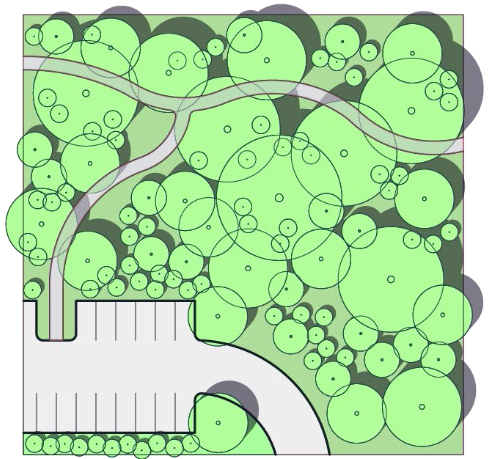 |
| B. Urban Open Space: An open space available for unstructured recreation. This category of open space includes pocket parks, plazas, squares, and greenbelts. These areas may be spatially defined by landscaping or building frontages. Landscaping shall consist of lawn and trees, naturalistically disposed. The minimum size for an urban open space shall be ¼ acre and the maximum size shall be 2 acres. | 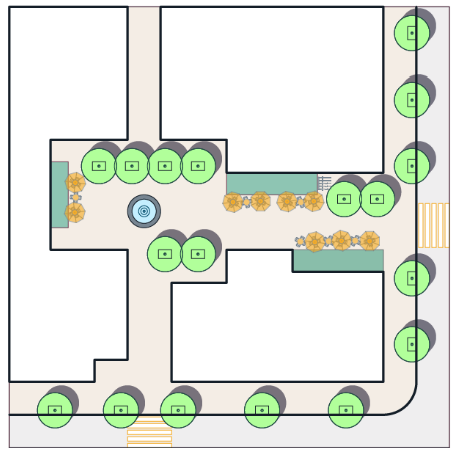 |
| C. Outdoor Recreation Centers/Facilities: An open space designed and equipped for structured uses. These open spaces may include playgrounds, sports courts, athletics fields, and other programmed outdoor activities. These open spaces may be interspersed within residential areas and may be placed within a block. There shall be no minimum or maximum size for these types of open spaces. | 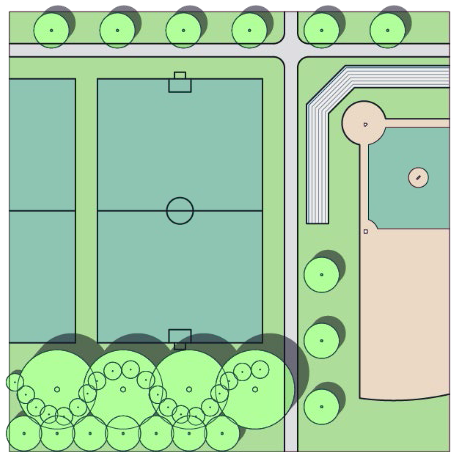 |
| D. Gardens: This type of open space includes community gardens, butterfly gardens, rock gardens, and similar types of uses. These open spaces may be designed to attract wildlife while encouraging passive recreation. Accommodation for storage sheds for gardening equipment should be made when designing this type of open space. There shall be no minimum or maximum size for these types of open spaces. | 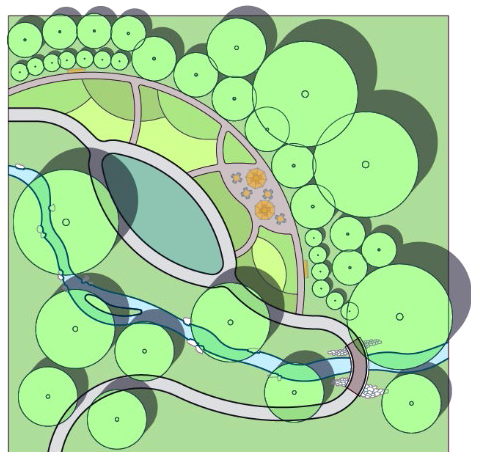 |
7.4.3 LOCATION
A.
Land for neighborhood park spaces shall be centrally and internally located to as to serve the needs of the residents of the neighborhood.
B.
Required neighborhood parks shall provide focal points for the development.
C.
Areas described in Town of Tarboro adopted plans or policies, such as greenways, or publicly maintained parks and open space, shall be preserved and dedicated. All such dedication shall also be in conformance with all applicable federal and state rules and/or interlocal agreements. For developments that abut or include areas designated as future greenways on an adopted plan, the administrator shall require a dedicated 20-foot minimum public pedestrian and non-motorized vehicle easement to be dedicated along all such areas. Construction of greenways shown on an adopted plan shall be considered required infrastructure for all new development and shall be constructed by the developer.
7.4.4 ACCESSIBILITY/VISIBILITY
A.
All recreation spaces shall be conveniently accessible to all residents of the development and shall have at least 20 feet of frontage on at least one public street within the development.
B.
No residential unit within a development shall be further than ¼ mile (1,320 feet), as measured along a road or pedestrian path, from a recreation space as defined above or other publicly-accessible park facility.
C.
All recreation spaces shall be visible from dwelling units that are adjacent to the neighborhood park. This includes dwelling units on properties that share a property boundary with the neighborhood park or front the neighborhood park from directly across a street.
7.4.5 USABILITY
A.
At least one-quarter of the total land dedicated shall be located outside of special hazard areas, watercourses, and required stream buffers. All land dedicated shall be outside of wetlands and waters subject to State or Federal regulatory jurisdiction. Within the area proposed for dedication, sufficient engineering data and/or detail shall be indicated to ensure compliance with this section.
B.
Areas including ponds, lakes, wetlands, or easements for public utility transmission lines shall not exceed more than 50% of the required neighborhood recreation space.
7.4.6 MINIMUM AMENITIES
Required recreation space shall be planned, improved, and useable by persons living nearby. Improved shall mean cleared of underbrush and debris and shall contain 2 or more of the following amenities: landscaping, walls or fences, walks or pathways, lighting and electricity fountains, ball fields, and/or playground equipment.
A.
Minimum Amenities (All Neighborhood Park Types):
1.
Public Seating: Provide seating areas appropriate to the intended use of the space (e.g., park benches and durable theft/vandalism-resistant chairs in formal active spaces and garden wall seats in informal passive spaces).
2.
Supplement Tree Planting/Significant Species Preservation: A minimum of 1 tree (2-inch caliper minimum) to be planted in at least 350 square feet of soil or 1 preserved existing canopy tree, a minimum of 12 inches in caliper, for every 2,500 square feet of required park space.
3.
Trash Receptacle: Garbage and recycling receptacles shall be required for each park space.
4.
Bicycle Parking: At least one bicycle rack shall be required for every ¼ acre of neighborhood park space and every ½ mile of greenway. Bicycle parking shall meet the requirements in Chapter 9 of this Ordinance.
7.5 - OWNERSHIP AND MAINTENANCE
Dedicated recreation or open space land shall be separately deeded to either a homeowner's association, a non-profit land trust, the Town of Tarboro, Edgecombe County, or may be held in private ownership with conservation easements recorded in the Edgecombe County Register of Deeds in a form approved by the Town. A metes and bounds description of the space to be preserved and limits on its use shall be recorded on the development plan, in homeowner covenants, and on individual deeds when open space lands are not held entirely in common. Alternative means of permanent open space preservation may include acceptance by a land conservation trust or a unit of government. Private management alternatives will also be permitted. Non-public ownership strategies must be accompanied by a long-term maintenance plan.

