
Warrensburg City Zoning Code
ARTICLE IX
SIGN REGULATIONS2
Editor's note— Ord. No. 3624, § 1, adopted May 14, 2001, repealed § 27-500 and enacted similar provisions as set out herein. The former § 27-500 derived from Ord. No. 2748, § 2, adopted June 22, 1992.
Sec. 27-500.- Purpose.
This article is intended to regulate the construction, reconstruction, placement, and design of signs to protect the public health, safety, peace, and general welfare. Specifically, this article is intended to regulate the size, type of construction and manner of anchoring, and to regulate time, place and manner of their display in order to:
(a)
Prevent or limit injuries, deaths, and property damages from traffic accidents (including accidents involving pedestrians) resulting from obstructed vision, distraction, or confusion;
(b)
Minimize the risk of damage and injuries from signs that are dilapidated, wind-blown, electric shock hazards, etc.;
(c)
Achieve some uniformity in the size and placement of signs;
(d)
Enhance aesthetics of the community;
(e)
Prevent blight;
(f)
Ensure equality in regulatory treatment among residents, lessees and property owners and property users;
(g)
Otherwise protect the public health, safety, peace and general welfare.
(Ord. No. 3624, § 1, 5-14-01; Ord. No. 5121, § 1, 6-8-15; Ord. No. 5306, § 1, 1-23-17)
Sec. 27-501. - Definitions.
The following definitions shall apply in the interpretation, administration, and enforcement of this chapter:
Address. Alphanumeric building or property identification.
Animated sign. Any sign that uses action or motion which is activated by mechanical, electrical, or other non-natural means, other than flashing lights or automatic changeable copy.
Driveway sign. A freestanding sign not to exceed six (6) square feet in surface display area and four (4) feet in overall height that is erected within ten (10) feet of a driveway entrance or exit, as measured at the lot line.
Electronic message center. Signs whose alphabetic, pictographic, or symbolic informational content can be changed or altered on a fixed display surface composed of electrically illuminated or mechanically driven changeable segments.
Existing finish grade level. The highest point of elevation within five (5) feet of the supporting structure for the sign, excluding all planter boxes, foundation, berms, or any other surface alteration that would increase the height of the sign.
Flag. A piece of cloth or similar material attachable by one (1) edge to a pole or device manufactured for that purpose.
Freestanding sign. A sign supported permanently upon the ground by poles, columns, or braces and not attached to any building.
Ground mounted sign. A freestanding sign whose bottom edge of advertising is less than twenty-four (24) inches above finish grade.
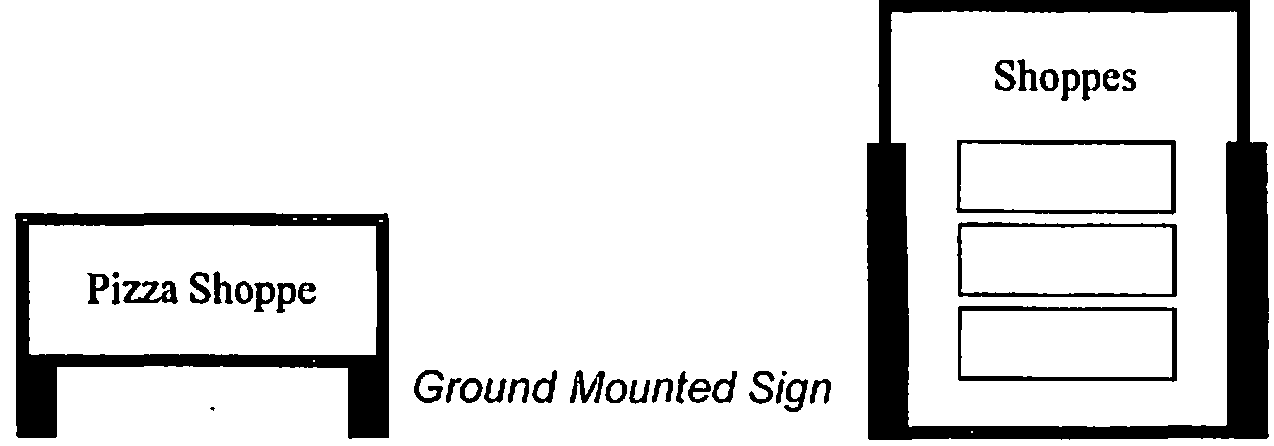
Illuminated sign. A sign with an artificial light source either projecting through its surface(s) (internally illuminated); or reflecting off its surface(s) (externally illuminated).
Incidental sign. A small sign, emblem, or decal less than two (2) square feet in size.
Monument sign. See ground mounted sign.
Pole sign. A freestanding sign whose surface display is not less than twenty-four (24) inches above finish grade. Formerly known in this article as freestanding signs.
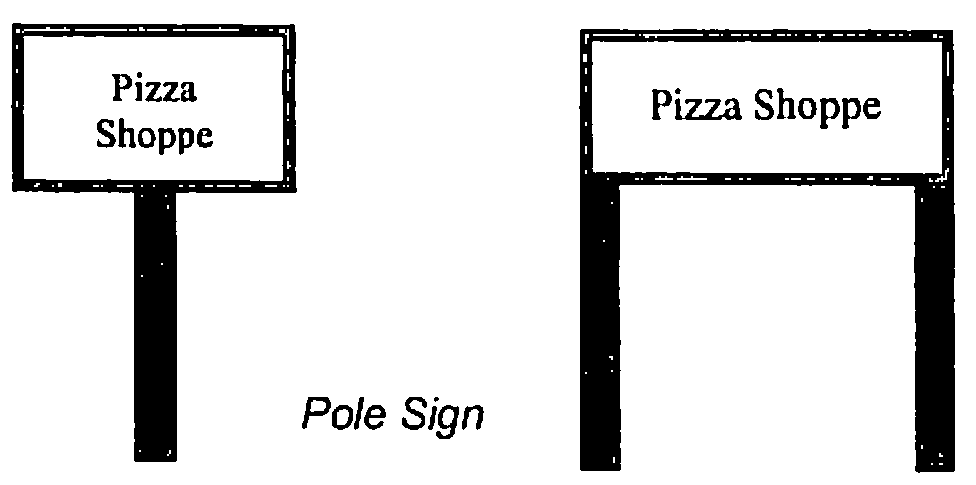
Portable sign. Any sign designed to be moved easily and not permanently affixed to the ground or to a structure or building, not including magnets or decals, etc. attached to vehicles.
Projecting sign. A sign, other than a flat wall sign, which is attached to and projects from a building wall or other structure not specifically designed to support the sign.
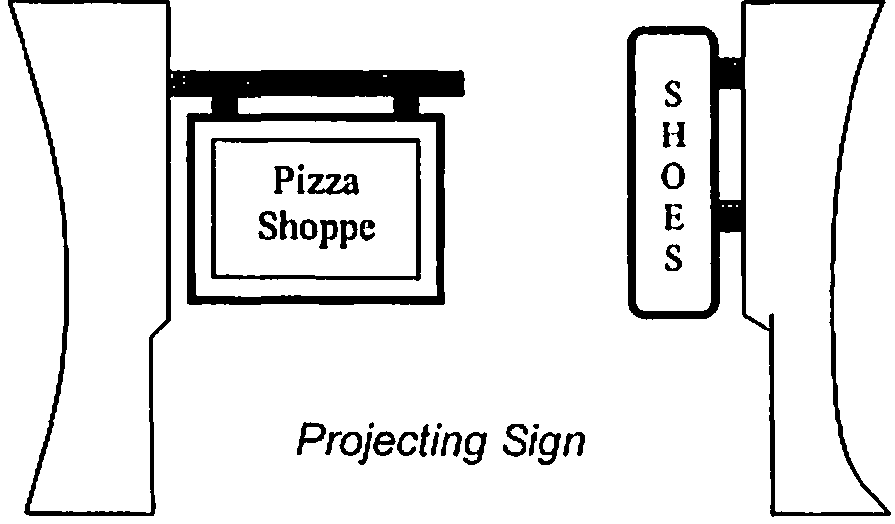
Pylon sign. A freestanding sign with three (3) or more sign faces forming a closed shape.
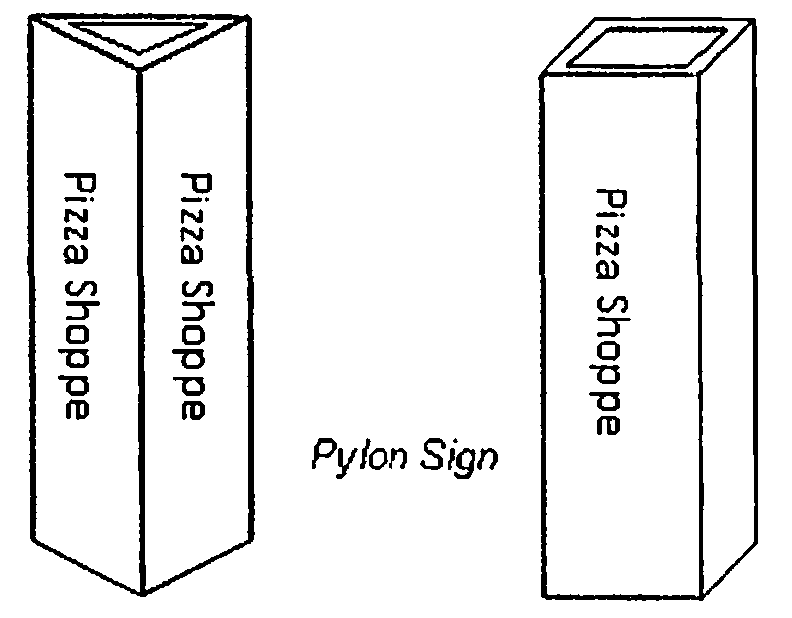
Roof sign. A sign erected on a roof, including a mansard type roof, or above a parapet wall.
Sandwich board. An "A-frame" sign which stands without additional support and is not permanently affixed to the ground or any structure.
Sign. Any device, structure, fixture, or placard using graphics, words, symbols, and/or written copy for the primary purpose of identifying, providing directions, or advertising any establishment, products, goods, or services, or which communicates through graphics, words, symbols, and/or written copy any message, position, or idea.
Surface display area. The area expressed in square feet within a single continuous perimeter of straight lines enclosing extreme limits of a single message of writing, representations, graphics, symbols, emblems, or figures of a similar character together with all material or color forming an integral part of the display or used to differentiate the sign from the background against which it is placed, provided that:
(a)
If the sign is composed of individual letters or symbols using the wall as the background with no added decoration, the total sign surface display area shall be calculated as the area of the smallest square, rectangle, or circle that can be drawn around the letters or symbols.
(b)
The areas of lamps, neon tubing, or artificial illumination on walls of any structure shall be counted as part of the total allowable surface display area for wall signs.
(c)
The area of any double-sided or "V" shaped sign shall be the area of the largest single face only. The area of a sphere shall be computed as the area of a circle having the same radius/diameter as the sphere. The area of all other multiple-sided signs shall be computed as fifty (50) percent of the sum of the area of all faces of the sign.
(d)
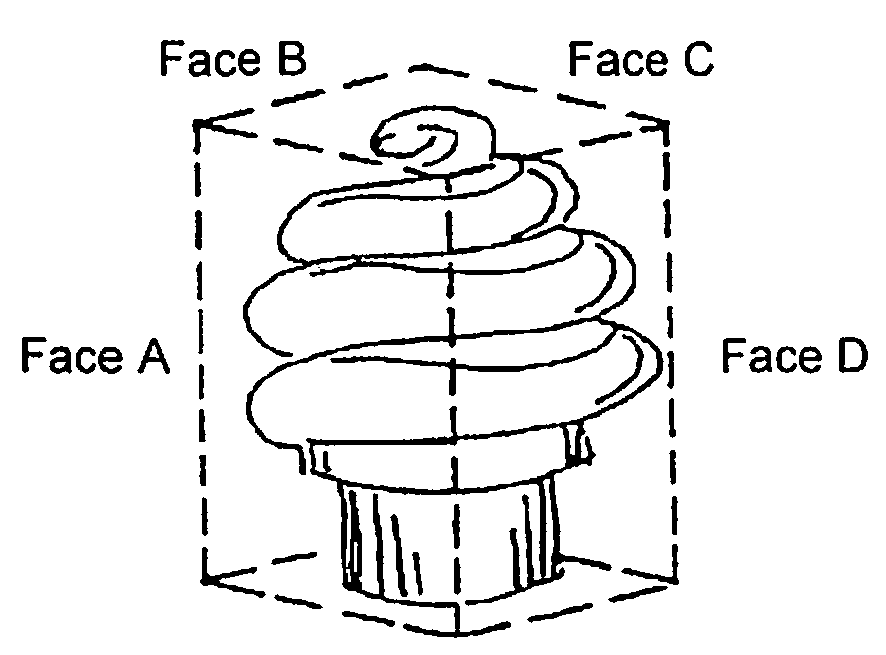
The area of any free-form, sculptural, or other non-planar sign shall be fifty (50) percent of the sum of the areas using only the four (4) vertical sides of the smallest four-sided polyhedron that will encompass the surface display area.
(e)
The structural supports for a sign, whether they are columns, pylons, or a building, or part thereof, shall not be included in the surface display area, provided that there are no graphics, symbols, and/or written copy on such structural supports.
Temporary signs. A sign not constructed or intended for long-term use.
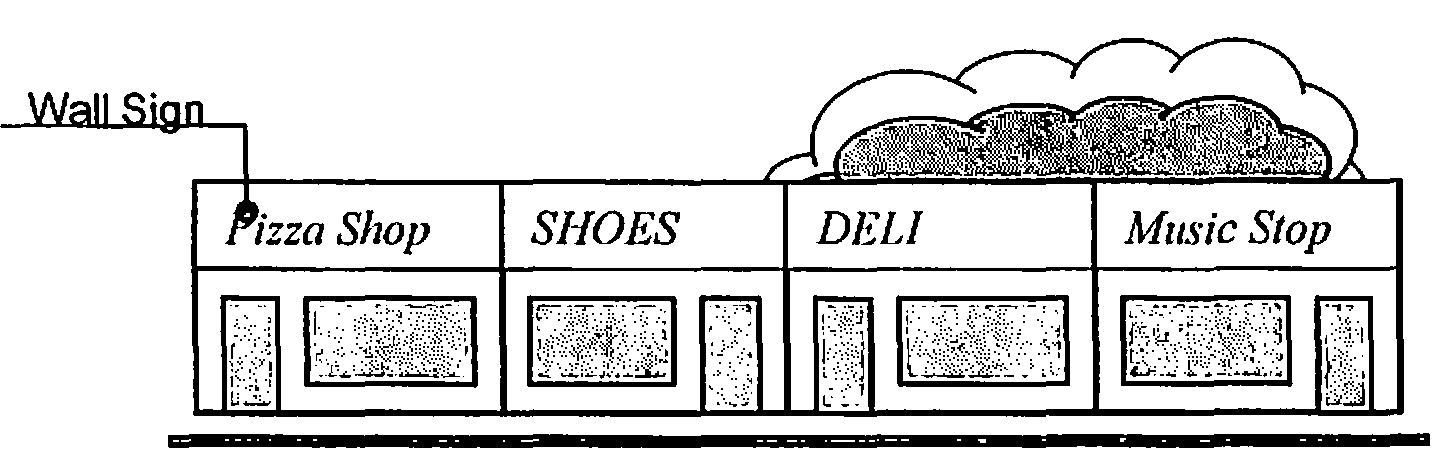
Wall sign. Any sign painted on, attached to, or erected against the wall with the exposed face of the sign in a plane parallel to the plane of said wall, including signs installed inside a window and intended to be viewed from the outside.
Yard sign. A sign erected by poles or stakes affixed to the ground not to exceed four (4) square feet in surface display area and three (3) feet in overall height.
(Ord. No. 3624, § 1, 5-14-01; Ord. No. 5121, § 1, 6-8-15; Ord. No. 5306, § 1, 1-23-17)
Sec. 27-502. - Signs prohibited.
The following types of signs are prohibited in the City of Warrensburg:
(a)
Signs which have flashing, blinking, or beacon-type light sources, whether emitting from illuminated signs, or from lamps designed for purposes of attracting attention only.
(b)
Signs which contain or are an imitation of an official traffic sign or signal.
(c)
Signs causing odor or sound emission.
(d)
Animated signs.
(Ord. No. 3624, § 1, 5-14-01; Ord. No. 5121, § 1, 6-8-15; Ord. No. 5306, § 1, 1-23-17)
Sec. 27-503. - Signs not requiring permits.
(a)
The following standards and restrictions shall apply to signs not requiring a permit:
(1)
Sight triangle. No sign shall be located within the sight triangle of any corner lot (see section 27-231).
(2)
Emission of light. All space lighting and signs shall be so oriented, positioned, and shielded such that only reflected or diffused light beams may reach a residence structure in a residential district, and so as not to create a traffic hazard to operators of motor vehicles or pedestrians on public thoroughfares in any district.
(b)
Except as otherwise provided herein, the following types of signs shall be excluded from the permit requirements of this article:
(1)
Incidental signs less than two (2) square feet in surface display area;
(2)
Flags;
(3)
Legal notices, identification, directional, traffic control, or other signs by any governmental body;
(4)
Sandwich boards having dimensions less than four (4) feet by three (3) feet in overall size for each sign face shall be allowed at one (1) per each premises. Sandwich boards shall not interfere with pedestrian or vehicular circulation and/or safety and must be placed within fifteen (15) feet of the entry to the advertised premises;
(5)
Signs installed adjacent to a drive-thru lane and intended to be viewed from vehicles using the drive-thru of a business. Drive-thru signs shall not be installed in such a manner as to attract customers or be intentionally legible from the public right-of-way;
(6)
Yard signs, banners, portable signs, and other temporary signs.
a.
Temporary signs are allowed up to thirty (30) days per premises per calendar year, except as detailed below:
1.
Construction sites. A property under active construction or with an active building permit shall be allowed temporary signs for up to thirty (30) days after construction ceases or a final certificate of occupancy has been issued.
2.
Properties for sale. A property advertised for sale, lease or rent shall be allowed temporary signs to be removed within thirty (30) days of the sale, rental, or lease.
3.
Election cycle. A property shall be allowed temporary signs for up to ninety (90) days before and fifteen (15) days after an election is held that citizens of the City of Warrensburg are eligible to participate in.
a)
Temporary signs during an election cycle in residential zoning districts shall not exceed four (4) square feet in surface display area.
b)
Temporary signs during an election cycle in non-residential zoning districts shall not exceed thirty-two (32) square feet in surface display area.
(7)
Address identification for premises not to exceed two hundred (200) percent of the minimum address size as required by chapter 6, buildings and building regulations.
(8)
Works of visual art, when not displayed in conjunction with a commercial enterprise (nor which display a commercial message).
(Ord. No. 3624, § 1, 5-14-01; Ord. No. 5121, § 1, 6-8-15; Ord. No. 5306, § 1, 1-23-17; Ord. No. 5608, § 1, 9-14-20)
Sec. 27-504. - Signs requiring permits.
The following standards and restrictions shall apply to all signs requiring a permit:
(a)
Sight triangle. No sign shall be located within the sight triangle of any corner lot (see section 27-231).
(b)
Emission of light. All space lighting and signs shall be so oriented, positioned, and shielded such that only reflected or diffused light beams may reach a residence structure in a residential district, and so as not to create a traffic hazard to operators of motor vehicles or pedestrians on public thoroughfares in any district.
(c)
Signs in residential districts:
(1)
In R1: Single-Family Residence districts and R2: One- and Two-Family Residence districts, either one (1) yard sign or one (1) wall sign limited to four (4) square feet in surface display area shall be allowed per premises. Such signs shall be non-illuminated.
(2)
In R3: Low-Density Multi-Family Residence districts, R4: Medium-Density Residence districts and R-MH: Manufactured Home Residence districts, signs are allowed as follows:
a.
Either one (1) yard sign or one (1) wall sign limited to four (4) square feet in surface display area shall be allowed per premises.
b.
A multi-family complex is allowed:
1.
One (1) illuminated or non-illuminated, ground mounted sign not to exceed fifty (50) square feet per entrance to the multi-family complex; or
2.
One (1) illuminated or non-illuminated wall sign not to exceed thirty (30) percent of the aggregate square footage of the wall area upon which it is installed.
(3)
Signs for non-residential uses allowed or granted with a conditional use permit by section 27-200, Table of Permissible Uses, shall be permitted in accordance with the height, location, size, and number restrictions located within section 27-504(d), Signs in central business district, except that at least a ten (10) feet setback is required from any lot line.
(4)
Signs are permitted on a tract, lot or common space identified for the erection of a sign on a recorded plat as follows:
a.
Type. Ground-mounted signs shall be allowed in accordance with the clearance, height, and location restrictions located in section 27-504(d), Signs in central business district.
b.
Size. Signs shall not exceed one-hundred twenty (120) square feet in overall size.
c.
Ownership. The owner of the tract, lot, or common space upon which the sign is located, shall be responsible for the repair and maintenance of the sign in accordance with section 27-506 of this chapter.
d.
Number. Two (2) signs are allowed at each entrance to a subdivision from a collector or arterial street.
(d)
Signs in central business district.
(1)
Driveway signs shall not intrude into any public right-of-way and all structures, supports, and sign faces shall be at least five (5) feet from any lot line.
(2)
Ground mounted signs.
a.
Clearance. Ground mounted signs shall have between zero (0) and twenty-four (24) inches of clearance above the existing finish grade level.
b.
Height. Ground mounted signs may not exceed ten (10) feet in height above the existing finish grade level.
c.
Location. No ground mounted sign shall intrude into any public right-of-way or interfered with pedestrian circulation, and all structures, supports, and sign faces shall be at least five (5) feet from any lot line.
d.
Number. One (1) ground mounted sign is allowed per premises in addition to other signs allowed in the central business district.
(3)
Projecting signs.
a.
Clearance. Projecting signs shall maintain a minimum clearance of ten (10) feet over pedestrian areas, and fourteen (14) feet over vehicular ways. Awnings utilized as projecting signs shall maintain a minimum clearance of seven (7) feet over pedestrian areas.
b.
Projection. Projecting signs may not project over six (6) feet from the edge of the building or structure to which it is attached.
c.
Location. Projecting signs may extend within two (2) feet of an existing curb line.
d.
Number. One (1) projecting sign per premises is allowed in addition to other signs allowed in the central business district.
(4)
Wall signs
a.
Height. Wall signs shall not extend above the highest point of the wall.
b.
Location. Wall signs shall not extend more than one (1) foot from the building wall.
c.
Size. Wall signs, including signs installed on windows, shall not exceed thirty (30) percent of the aggregate square footage of the building elevation upon which it is installed.
(e)
Signs in other commercial and industrial districts.
(1)
Driveway signs shall not intrude into any public right-of-way and all structures, supports, and sign faces shall be at least five (5) feet from any lot line.
(2)
Pole signs.
a.
Clearance. A clear unobstructed area, a minimum of eight (8) feet in height above existing finish grade level, shall be maintained under any pole sign.
b.
Height. Pole signs may not exceed thirty (30) feet in height above the existing finished grade level.
c.
Location. No pole sign shall intrude into any public right-of-way and all structures, supports, and sign faces shall be at least ten (10) feet from any lot line adjacent to a street, and at least five (5) feet from any other lot line.
d.
Number. One (1) pole sign, ground mounted sign, or pylon sign per street frontage is allowed per premises.
e.
Cumulative width of all supports shall not exceed twenty-five (25) percent of the width of the surface display.
f.
When the pole sign is on land immediately adjacent to and along the right-of-way of a federal or state controlled highway and within two thousand eight hundred (2,800) feet of the intersection of two (2) federal highways or a federal and a state highway, excluding designated business routes, said pole sign shall not exceed ninety (90) feet in overall height. All pole signs constructed in excess of thirty (30) feet in height under the provisions of this subsection are subject to the additional regulations as follows:
i.
Said pole sign shall be an on-premises sign which advertises the name of the establishment or activity located upon the premises upon which it is located, or the principal or accessory products or services offered by the establishment or activity upon the premises upon which it is located.
ii.
No point on said pole sign shall be farther than four hundred (400) feet back from the right-of-way of said federal or state highway;
iii.
Said pole sign shall not be erected closer than three hundred (300) feet from an existing residential structure;
iv.
Maximum surface display area of said pole sign shall not exceed four (4) square feet for each lineal foot of frontage along the right-of-way of a federal or state controlled highway, provided no single sign shall exceed a gross surface area of seven hundred (700) square feet;
v.
Said pole sign shall be erected so as to be viewed from the right-of-way of said federal or state highway;
vi.
No point on said pole sign shall be erected closer than two thousand five hundred (2,500) feet from another pole sign in excess of thirty (30) feet in overall height;
vii.
Said pole signs shall be subject to the provisions of section 27-504 (a)—(c) and exempted from sections 27-504 (d) and (e). Said pole signs shall meet the following standards for illumination:
1.
Illumination shall not be directed toward any residential area and shall not cast more than five (5) foot candles of light at the edge of the property line adjacent to a residential district.
2.
No revolving or rotating beam or beacon of light that simulates any emergency light or device shall be permitted as part of the pole sign. No flashing, intermittent, or moving light or lights will be permitted.
3.
External lighting, such as floodlights, thin line and gooseneck reflectors are permitted, provided the light source is directed upon the face of the pole sign and is effectively shielded so as to prevent beams or rays of light from being directed into any portion of the main traveled way on federal and state designated highways and the lights are not of such intensity so as to cause glare, impair the vision of the driver of a motor vehicle, or otherwise interfere with a driver's operation of a motor vehicle.
(3)
Ground mounted signs.
a.
Clearance. Ground mounted signs shall have between zero (0) and twenty-four (24) inches of clearance above the existing finish grade level.
b.
Height. Ground mounted signs may not exceed fifteen (15) feet in height above the existing finish grade level.
c.
Location. Ground mounted signs shall not intrude into any public right-of-way and all structures, supports, and sign faces shall be at least ten (10) feet from any lot line adjacent to a public street, and at least five (5) feet from any other lot line.
d.
Number. One (1) pole sign, ground mounted sign, or pylon sign per street frontage is allowed per premises.
(4)
Pylon signs.
a.
Clearance. Pylon signs shall have zero (0) inches of clearance above the existing finish grade level.
b.
Height. Pylon signs may not exceed twenty-five (25) feet in height above the existing finish grade level.
c.
Location. No pylon sign shall intrude into any public right-of-way and all structures, supports, and sign faces shall be at least ten (10) feet from any lot line adjacent to a street, and at least five (5) feet from any other lot line.
d.
Number. One (1) pole sign, ground mounted sign, or pylon sign per street frontage is allowed per premises.
(5)
Projecting signs.
a.
Clearance. Projecting signs shall maintain a minimum clearance of ten (10) feet over pedestrian areas, and fourteen (14) feet over vehicular ways. Awnings utilized as projecting signs shall maintain a minimum clearance of seven (7) feet over pedestrian areas.
b.
Projection. Projecting signs may not project over six (6) feet from the edge of the building or structure to which it is attached.
c.
Location. Projecting signs may not extend over or beyond the lot line.
d.
Number. One (1) projecting sign per premises is allowed in addition to other signs allowed by this article.
(6)
Roof signs.
a.
Size. Roof signs shall not exceed thirty (30) percent of the aggregate square footage of the roof area upon which it is installed.
b.
Height. Roof signs shall not project above the highest point of the roof to which it is attached.
(7)
Wall signs.
a.
Height. Wall signs shall not extend above the highest point of the wall.
b.
Location. Wall signs shall not extend more than one (1) foot from the building wall.
c.
Size. Wall signs, including signs installed on windows, shall not exceed thirty (30) percent of the aggregate square footage of the building elevation upon which it is installed.
(8)
Electronic message centers.
a.
Height. The electronic message center shall conform to the height requirements of the sign type it is installed as.
b.
Location. One (1) electronic message center whose variable message capability can be electronically or mechanically programmed is permitted per premises. The electronic message center shall conform to the location requirements of the sign type it is installed as.
c.
Size. The electronic message center shall be no more than fifty (50) percent of the aggregate square footage of the surface display for the sign to which it is attached when it is integrated in to a pole sign, ground mounted sign, or pylon sign. Electronic message centers installed as wall signs are exempt from this requirement, but shall conform to size requirements for a wall signs.
d.
Brightness. All electronic message centers shall be equipped with a sensor or other device to automatically determine ambient light conditions and dim the display so that the illumination shall not exceed 0.3 footcandles difference from the ambient light conditions. Electronic message centers shall conform to section 27-504 (b) regarding emission of light.
(f)
Agricultural accessory use signs. There may be one (1) non-illuminated sign of not more than four (4) square feet in surface display area for each one-half (½) acre of land area devoted to such agricultural uses.
(Ord. No. 3624, § 1, 5-14-02; Ord. No. 3807, § 1, 8-18-03; Ord. No. 5121, § 1, 6-8-15; Ord. No. 5306, § 1, 1-23-17; Ord. No. 5400, § 1, 2-12-18; Ord. No. 5610, § 1, 9-28-20; Ord. No. 5839, §§ 1, 2, 2-12-24)
Sec. 27-505. - Abandoned signs.
Nonconforming signs. Where a lawful sign exists at the effective date of adoption or amendment of this article that would be illegal under the terms of this article, such sign may be continued until the principal activity on the property is discontinued for a continuous period of twelve (12) months, or until there is no message on the surface display area of the sign for a continuous period of twelve (12) months. At that time, the use of the sign shall be deemed to have been abandoned. Abandoned signs and sign structures shall be removed or brought into conformance with the provisions of this article and any other applicable provisions of the Code of City Ordinances by the sign, business, or property owner within thirty (30) days of receiving notice by the city.
(Ord. No. 3624, § 1, 5-14-01; Ord. No. 5121, § 1, 6-8-15; Ord. No. 5306, § 1, 1-23-17)
Sec. 27-506. - Administration and enforcement.
(a)
Compliance with Codes. All signs shall be constructed in accordance with the requirements of the current adopted building and electrical codes and the Code of Ordinances of the City of Warrensburg.
(b)
Sign permit required. Except as otherwise stated in section 27-503, any person erecting, installing, constructing or structurally altering a sign in the City of Warrensburg must obtain a sign permit from the city. Application for a sign permit shall be made on a form approved by the city.
(c)
Inspections required. Any sign for which a permit has been issued may be inspected periodically by the City of Warrensburg for compliance with the Code of Ordinances for the City of Warrensburg. During construction phases, the owner or his/her designee is required to schedule all appropriate inspections in a timely manner in regards to the final, electrical, footing or other inspections as needed.
(d)
Maintenance of signs. All signs and components thereof shall be maintained in good repair and in a safe, neat, clean and attractive condition, and shall be refurbished often enough to be clearly legible.
(e)
Variances. If a sign permit is denied due to a standard set forth in this article, an appeal for a variance can be requested. The board of adjustment shall hear all appeals in accordance with the procedure set forth in Article II of Chapter 27 of the Code of City Ordinances.
(f)
Historic signs. Signs may be designated as a landmark per the requirements of section 27-176. The adopted resolution and subsequent certificates of appropriateness shall govern the maintenance, repair, and removal of designated landmark signs.
(Ord. No. 3624, § 1, 5-14-01; Ord. No. 5121, § 1, 6-8-15; Ord. No. 5306, § 1, 1-23-17)
Cross reference— Placement of signs upon utility poles or city right-of-way, authorization to remove, § 14-5.

