
Waynesboro City Zoning Code
ARTICLE 1
- INTRODUCTORY PROVISIONS
Sec. 98-1.1.- Title.
This Chapter and the official Zoning District Map shall be officially known and cited as the "City of Waynesboro Zoning Ordinance," the "zoning ordinance" or "this Chapter."
Sec. 98-1.2. - Authority.
This Chapter is adopted pursuant to the authority conferred by the Section 15.2-2280 et seq. VA Code Ann.
Sec. 98-1.3. - Adoption date and effective date.
This Chapter was adopted on September 27, 2010, becoming effective on January 1, 2011.
Sec. 98-1.4. - Applicability and jurisdiction.
This Chapter shall be effective everywhere throughout the city of Waynesboro. No building shall be erected or structurally altered nor shall any land use or development activity take place, unless it conforms to the provisions of this Chapter.
Sec. 98-1.5. - Purpose and intent.
This Chapter is adopted in order to protect the health, safety and welfare of the residents of Waynesboro; to advance the objectives set out in Sections 15.2-2200, -2283 and -2284 VA Code Ann.; and to implement the City of Waynesboro Comprehensive Plan (Comprehensive Plan).
Sec. 98-1.6. - Commentary.
Whenever a provision of this Chapter requires additional explanation to clarify its intent, a "commentary" is included. Commentaries have no regulatory effect, but rather are intended solely as a guide for decision-making bodies and officials and the public to use in understanding and interpreting the Chapter.
Sec. 98-1.7.1. - Meanings and intent.
All provisions, terms, phrases and expressions contained in this Chapter shall be construed according to the purpose and intent set out in Sec. 98-1.5. (See also Sec. 98-7.13, Written interpretation)
Sec. 98-1.7.2. - Headings, illustrations and text.
In case of any difference of meaning or implication between the text of this Chapter and any heading, drawing, table, figure or illustration, the text shall control.
Sec. 98-1.7.3. - Lists and examples.
Unless otherwise specifically indicated, lists of items or examples that use terms such as "including," "such as" or similar language are intended to provide examples; not intended to be exhaustive lists of all possibilities.
Sec. 98-1.7.4. - Computation of time.
A.
References to "days" are to calendar days unless otherwise expressly stated.
B.
The time in which an act is to be completed is computed by excluding the first day and including the last day. If the last day is a Saturday, Sunday, or holiday observed by the City, that day is excluded.
C.
A day concludes at the close of business local time (5:00 p.m.), and any materials received after that time will be considered to be have been received the following day.
Sec. 98-1.7.5. - References to other regulations, publications and documents.
Whenever reference is made to a resolution, ordinance, statute, regulation, or document, that reference shall be construed as referring to the most recent edition of such resolution, ordinance, statute, regulation, or document or to the relevant successor document, unless otherwise expressly stated.
Sec. 98-1.7.6. - Technical and non-technical terms.
Words and phrases shall be construed according to the common and approved usage of the language, but technical words and phrases that may have acquired a peculiar and appropriate meaning in law shall be construed and understood according to such meaning as specified in Article 10, Definitions.
Sec. 98-1.7.7. - Public officials and agencies.
All public officials, bodies and agencies to which references are made are those of the City of Waynesboro, unless otherwise expressly provided.
Sec. 98-1.7.8. - Mandatory and discretionary terms.
The words "shall," "will" and "must" are mandatory. The words "may" and "should" are advisory and discretionary terms.
Sec. 98-1.7.9. - Conjunctions.
Unless the context clearly suggests the contrary, conjunctions shall be interpreted as follows:
"And" indicates that all connected items, conditions, provisions or events apply; and
"Or" indicates that one or more of the connected items, conditions, provisions or events may apply.
Sec. 98-1.7.10. - Tenses and plurals.
Words used in one tense (past, present or future) include all other tenses, unless the context clearly indicates the contrary. The singular includes the plural, and the plural includes the singular.
Sec. 98-1.8. - Implementation of the comprehensive plan.
This Chapter has been prepared in accordance with the Comprehensive Plan. It is intended that decisions made pursuant to this Chapter will implement and be consistent with the goals and objectives contained in the Comprehensive Plan. The text of the plan is the plan, a guide; prior development (and even approved new development) can be inconsistent with a current plan and not be illegal.
Sec. 98-1.9. - Newly added property.
All territory which may be added to the city after the effective date of this Chapter shall be considered as being in the RS-12 district until otherwise changed pursuant to the Zoning District Map amendment (rezoning) procedures of Sec. 98-7.4.
Sec. 98-1.10. - Interpretation of regulations.
The regulations in this Chapter shall be enforced and interpreted according to the following rules:
Sec. 98-1.10.1. - Minimum requirements.
Regulations set forth by this Chapter shall be interpreted as providing minimum regulations necessary to promote and protect the public health, safety and welfare. If the requirements set forth in this Chapter are at variance with the requirements of any other lawfully adopted uses, regulations, or ordinances, the more restrictive or higher standard shall govern. The more restrictive provision is the one that imposes more stringent controls.
Sec. 98-1.10.2. - Conflicting provisions.
A.
Conflict with State or Federal Regulations. If the provisions of this Chapter are inconsistent with those of the State or Federal government, the more restrictive provision will control, to the extent permitted by law.
B.
Conflict with Other City Regulations. If the provisions of this Chapter are inconsistent with one another, or if they conflict with provisions found in other adopted ordinances or regulations of the City, the more restrictive provision will control unless otherwise expressly stated.
C.
Conflict with Private Agreements and Covenants. This Chapter is not intended to interfere with, abrogate or annul any easement, covenant, deed restriction or other agreement between private parties. The City does not enforce private covenants. If the provisions of this Chapter impose a greater restriction than imposed by a private agreements or covenants, the provisions of this Chapter control.
Sec. 98-1.11. - Delegation of authority.
Whenever a provision appears requiring the Zoning Administrator or Planning Director to perform an act or duty, that provision shall be construed as authorizing the Zoning Administrator or Planning Director to delegate that responsibility to others over whom they have authority.
Sec. 98-1.12. - Graphics and illustrations.
Where graphics or illustrations included in this Chapter conflict with the text of the regulations, the text shall control. Otherwise, compliance with graphics and illustrations is required.
Sec. 98-1.13.1. - General.
No lot, even though it may consist of one or more adjacent lots of record in single ownership, shall be reduced in size so that the lot area, lot area per dwelling unit, lot width, required yard (setback), impervious area requirements, and other requirements of this Chapter are not maintained. This prohibition, however, does not prevent the purchase or condemnation of narrow strips of land for public utilities or right-of-way purposes.
Sec. 98-1.13.2. - Density.
A.
Calculation. Density is calculated as the number of dwelling units per gross acre located within the development site.
B.
Multiple Districts. If the development site is located in more than one zoning district, the maximum number of dwelling units allowed must be determined separately for that portion of the site lying within each respective zoning district.
Sec. 98-1.13.3. - Area.
Area shall be measured in gross square feet or acres.
A.
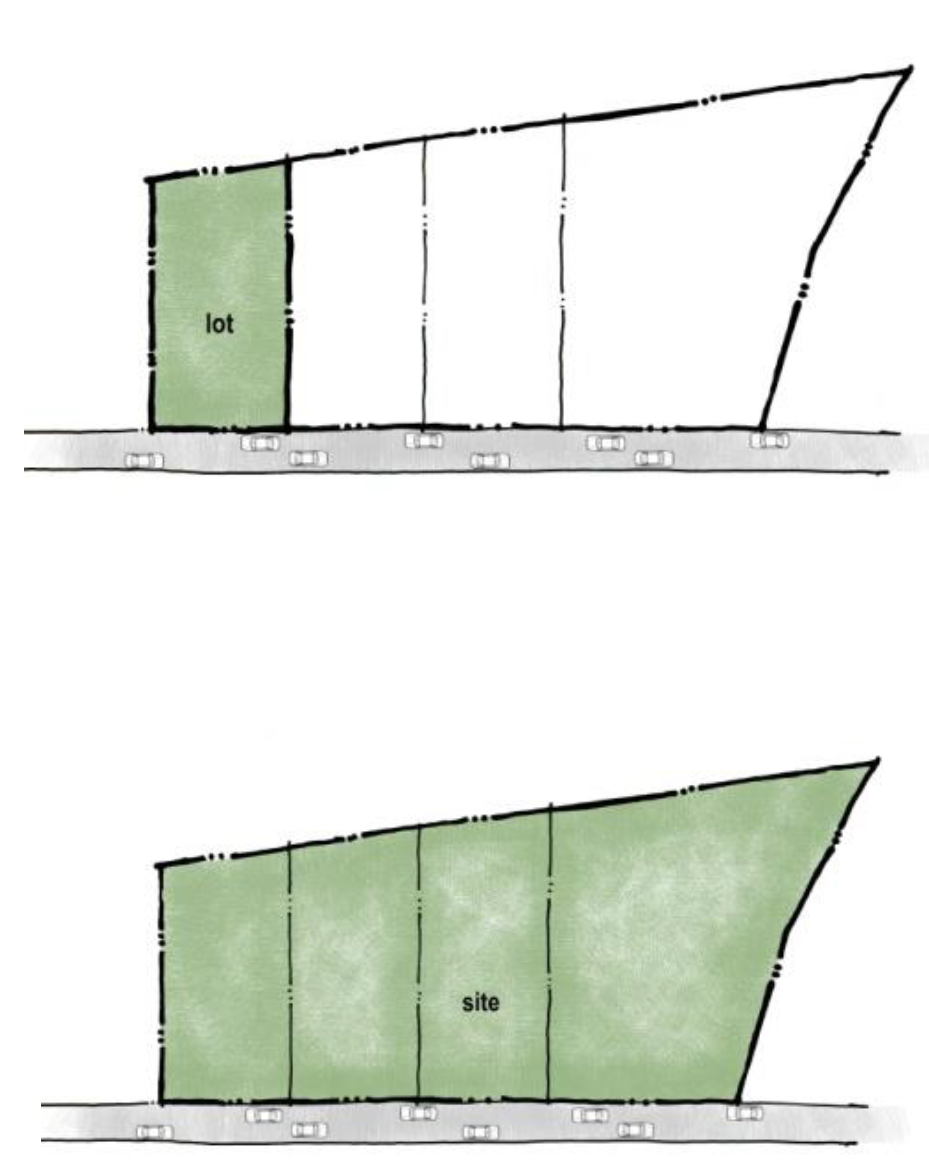
Lot.
1.
A single lot of record.
2.
Lot area shall be that area contained within the property lines of a single, undivided piece of land.
3.
If a lot falls within multiple zoning districts, the minimum lot area requirements for the most restrictive district shall be met.
B.
Site.
1.
A continuous quantity of land to be developed as a single project. A site may include more than one lot.
2.
Site area shall be the total land area contained within the property lines of a development site.
3.
A site may include multiple lots.
C.
Lot Area Per Unit. Lot area per unit refers to the amount of lot area required for each dwelling unit on the subject lot.
D.
Floor Area. Floor area is the gross floor area (GFA) of a building. GFA shall be measured from the exterior faces of the exterior walls or from the centerline of walls separating two buildings and shall include:
1.
The area of each floor of the structure;
2.
All attic space used for active commercial space; and
3.
All permitted outside storage areas.
E.
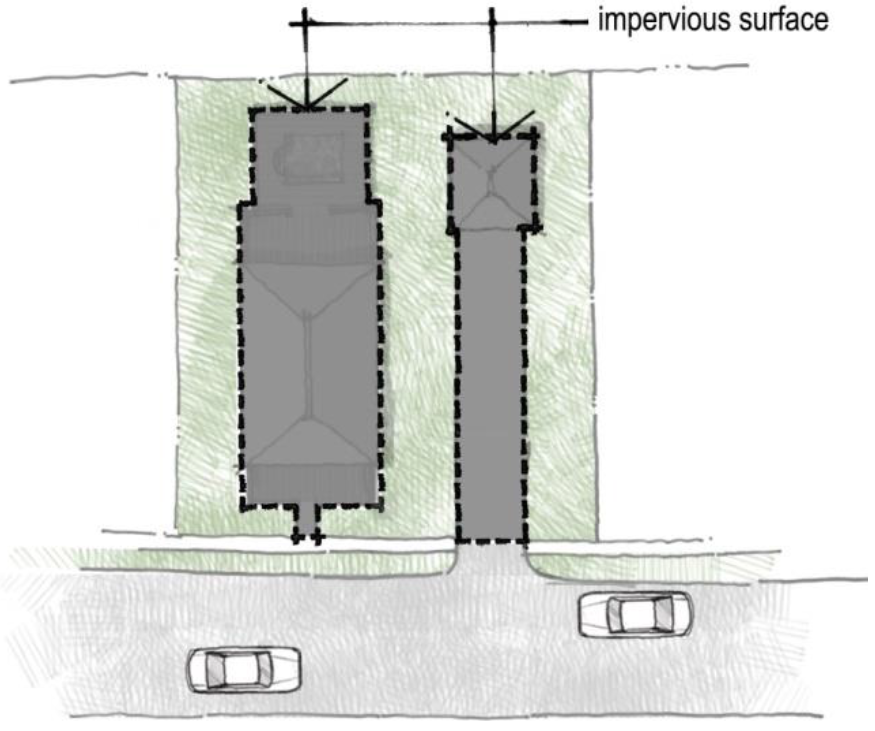
Impervious Surface. Impervious surface is the area of the lot that is permitted to be covered by buildings, including both principal structures and accessory buildings, paved areas such as swimming pools, driveways, uncovered porches or patios, or solid decks.
Sec. 98-1.13.4. - Lot width.
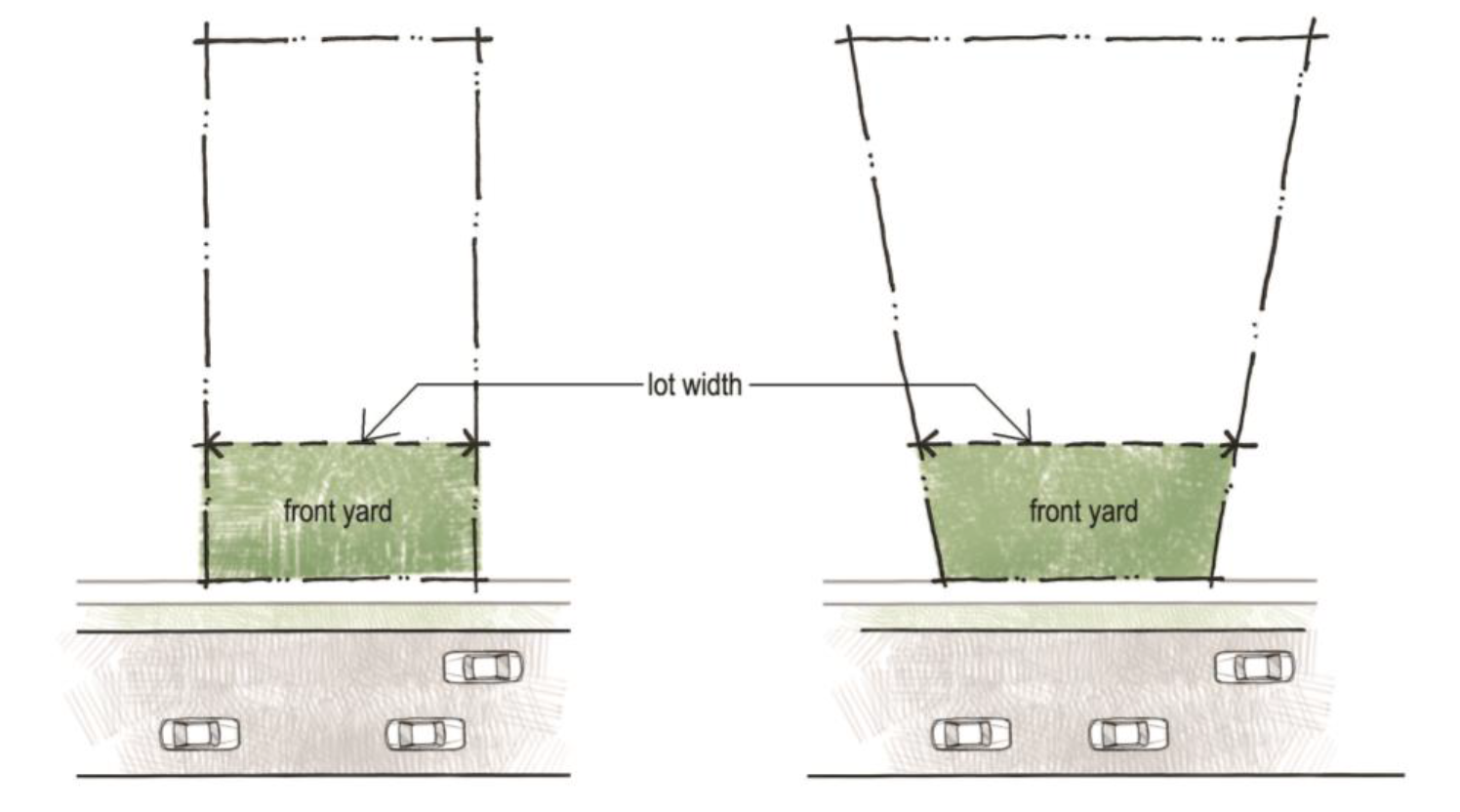
Lot width is the horizontal distance between the side property lines of a lot measured at the point of the minimum front setback.
Sec. 98-1.13.5. - Required yards (setbacks).
A.
General.
1.
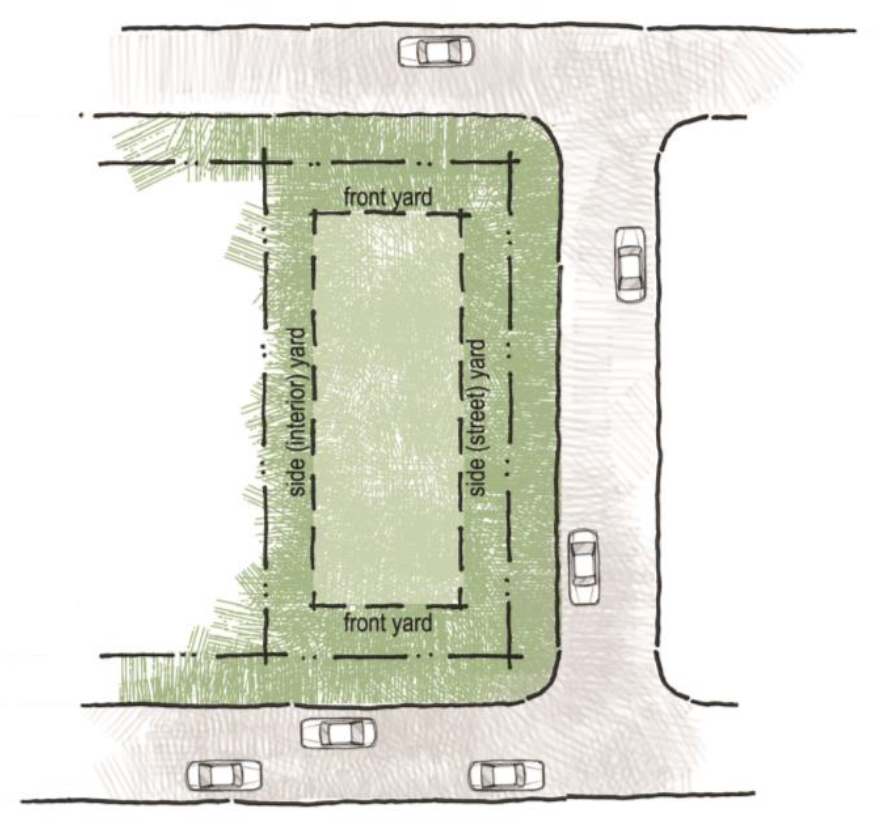
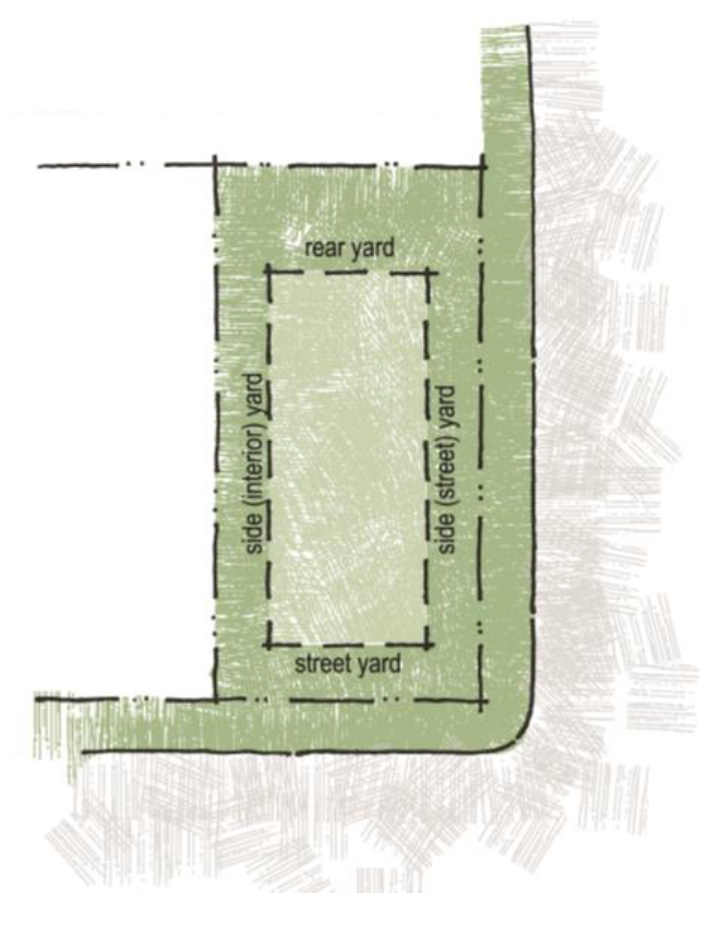
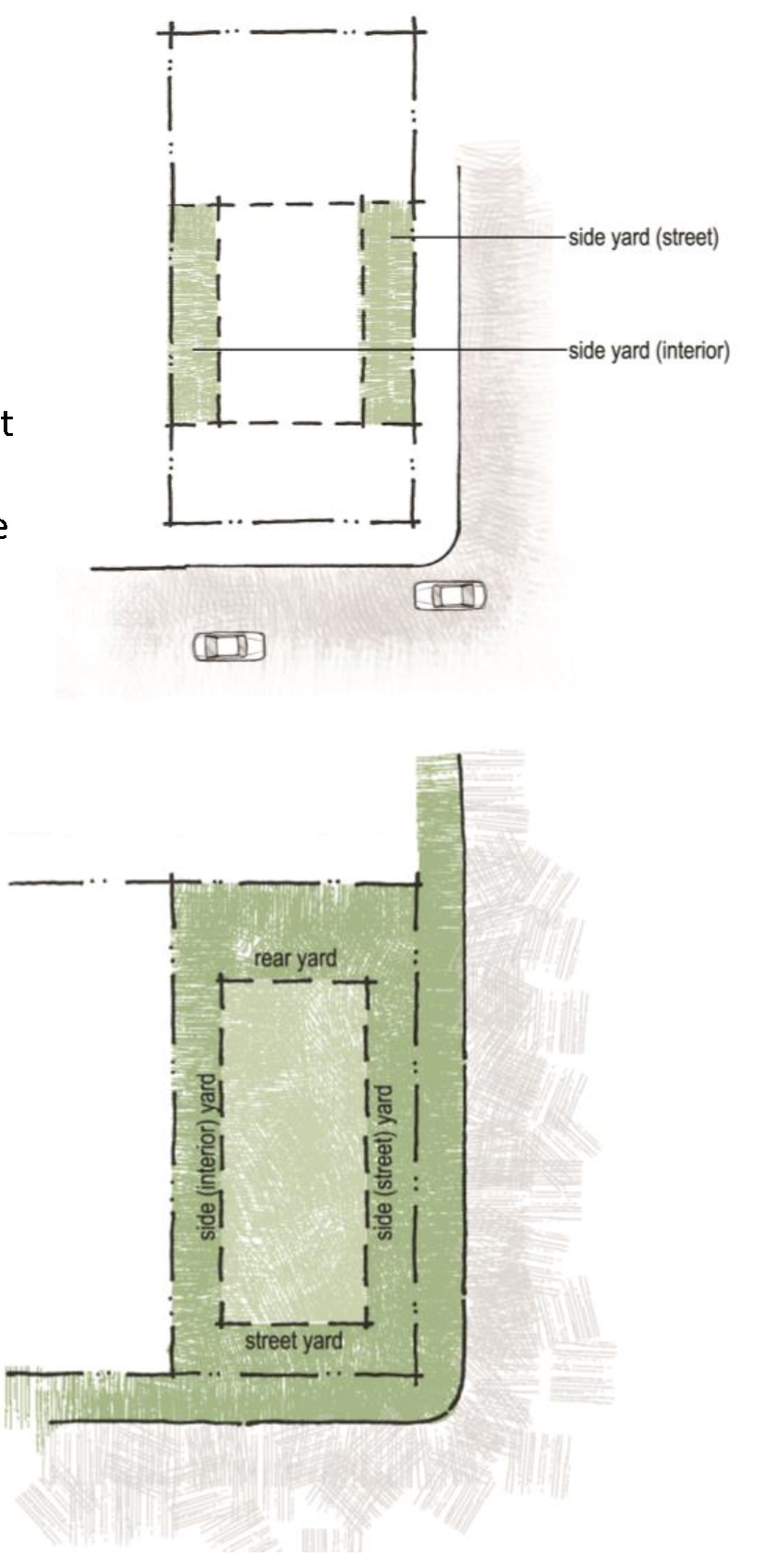
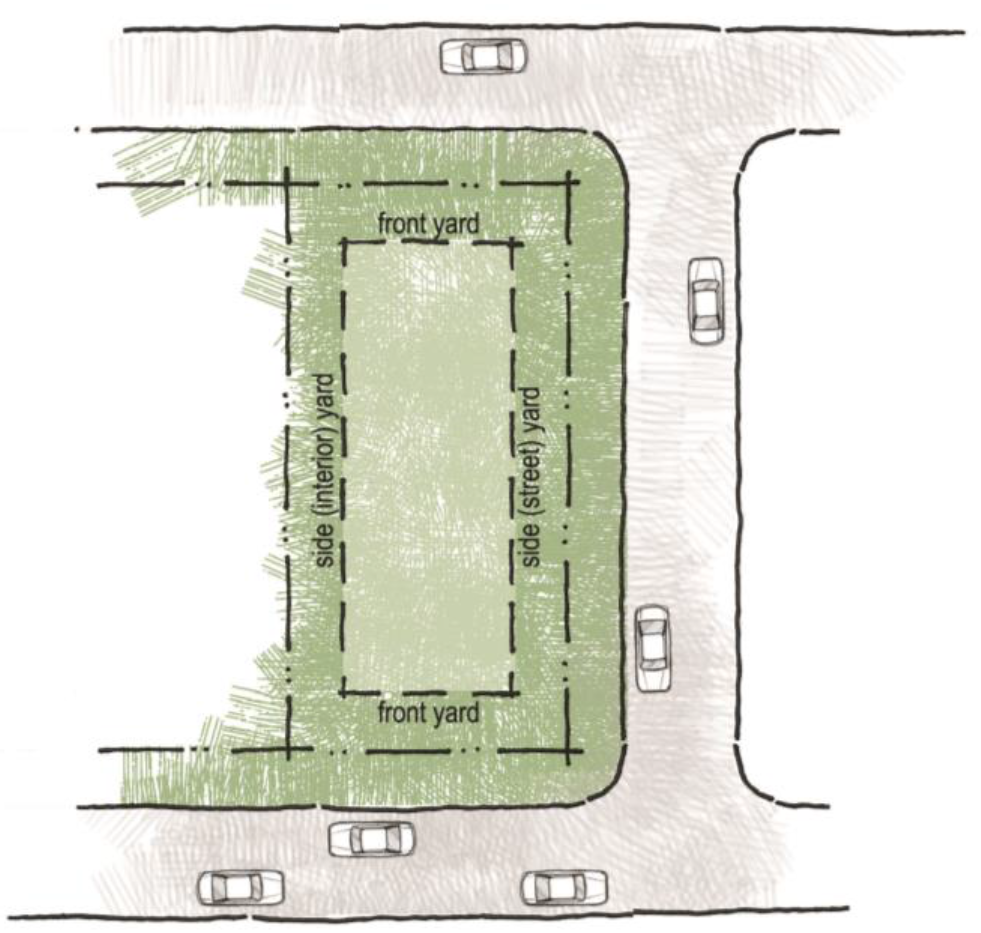
There are four types of required yards—Front, side (street), side (interior) and rear yards.
2.
Every part of every required yard shall be open and unobstructed above the general ground level of the graded lot upward to the sky except as provided or as otherwise permitted in Sec. 98-1.13.5.E.
3.
No part of a required yard shall be included as a part of a yard similarly required for another structure or use.
B.
Front Yards.
1.
Measurement.
(a)
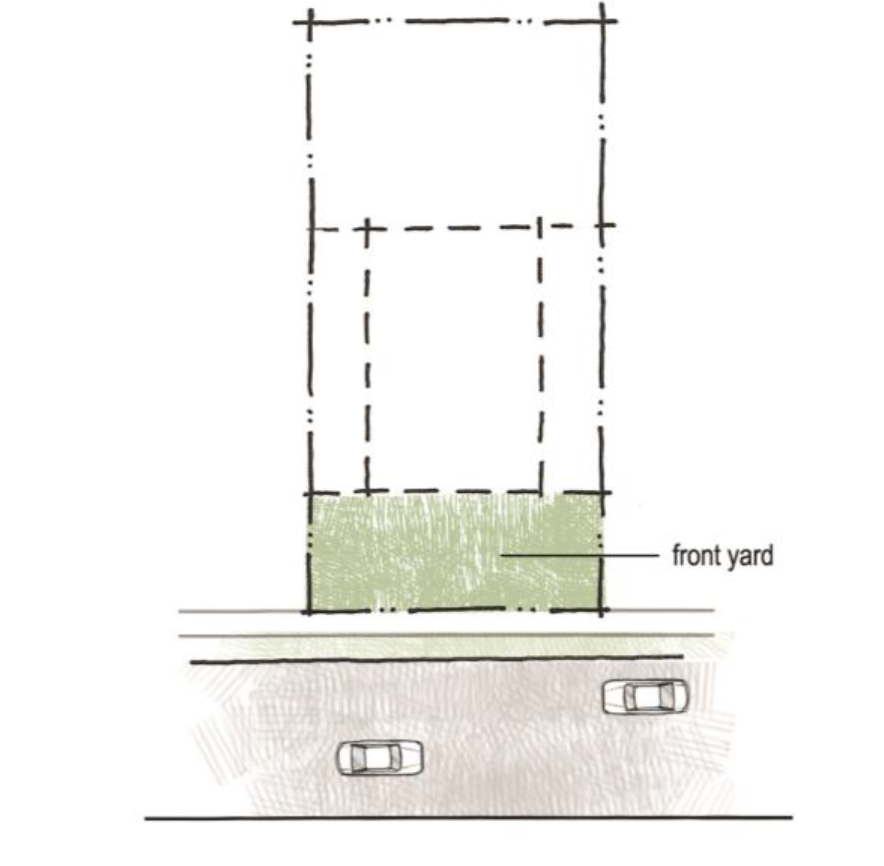
Front yards are measured from the front property line to the closest point of the building or structure.
(b)
Through lots must have a required front yard on both opposing sides of the lot. For purpose of this provision, the front property line is the property line abutting the street.
(c)
On corner lots, the front property line is the property line that is parallel to the alley that serves the lot. When no alley exists, the Zoning Administrator is authorized to establish the front property line and the street side property line based on the neighborhood lot pattern.
(d)
All single-family homes and duplexes must have a primary façade and entrance parallel to the street from which the front setback is marked.
(Ord. No. 2018-46, 7-5-18)
2.
Exception. Adjustment of the required front yard regulations for lots on cul-de-sacs established in this article may be made by the Zoning Administrator as necessary to create a reasonable building line complementary to the balance of the neighborhood.
3.
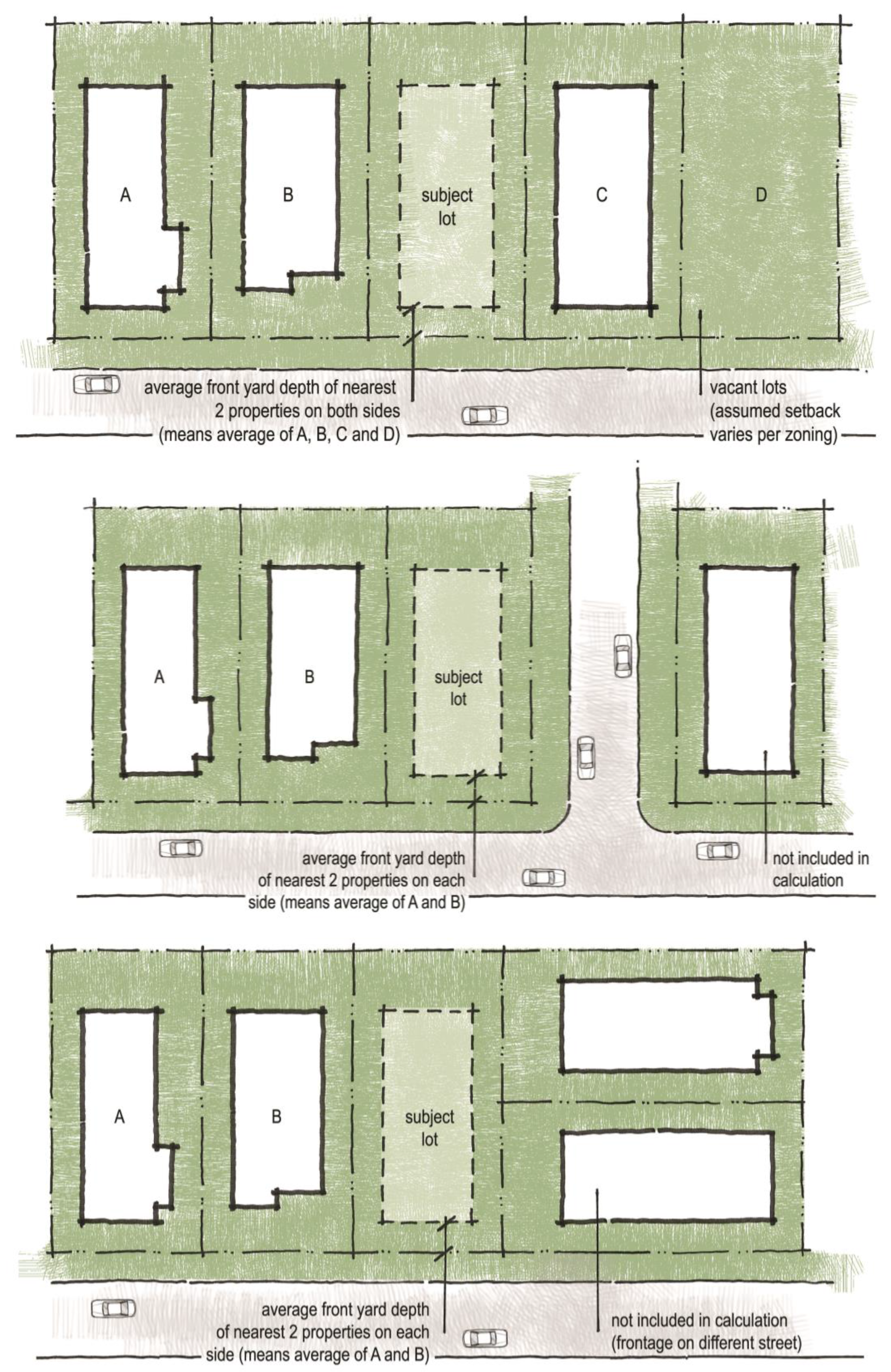
Front Yard Averaging, Residential. When existing lawfully established residential buildings on one or more abutting lots are closer to the front property line than the otherwise required front yard, additions to existing residential buildings or construction of new residential buildings on the subject lot may comply with the average front yard depth that exists on the nearest two lots on either side of the subject lot in lieu of complying with the zoning district's minimum front yard requirement.
(a)
If one or more of the lots required to be included in the averaging calculation are vacant, the vacant lots shall be deemed to have a front yard depth equal to the minimum front yard requirement of the underlying zoning district.
(b)
Lots that front on a different street than the subject lot or that are separated from the subject lot by a street or alley may not be used in computing the average.
(c)
When the subject lot is a corner lot, the average front yard depth shall be computed on the basis of the nearest two lots that front on the same street as the subject lot.
(d)
When the subject lot abuts a corner lot fronting on the same street, the average front yard depth will be computed on the basis of the abutting corner lot and the nearest 2 lots that front on the same street as the subject lot.
C.
Side Yards.
1.
Measurement. Side yards are measured from the side (interior or street) property line (or right-of-way line) to the closest point of the building.
2.
Exceptions.
(a)
Where a lot of record existing on or before October 9, 1961 is less than 60 feet in width, the required side yard on each side may be reduced to ten percent of the width of the lot; provided, that no side yard shall be less than five feet.
(b)
The minimum yard regulations established in this article shall not reduce the buildable width of a lot of record existing on or before October 9, 1961 to less than 55 percent of the lot width.
(c)
When an existing nonconforming structure encroaches into the otherwise required side yard, additions to that nonconforming structure may also encroach, but no further than the nonconforming structure.
D.
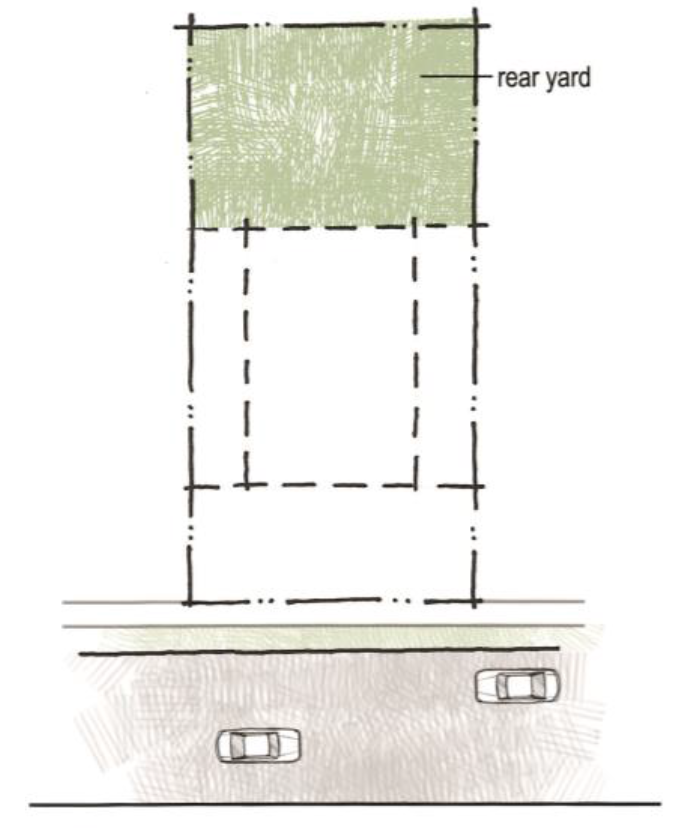
Rear Yards.
1.
Measurement. Rear yards are measured from the rear property line to the closest point of the building.
2.
Through Lots. On through lots both (opposing) street lines are considered front property lines and front yard standards apply; rear yard standards do not apply.
3.
Exception. When an existing nonconforming structure encroaches into the otherwise required rear yard, additions to that nonconforming structure may also encroach, but no further than the nonconforming structure.
E.
Build-To Line. Build-to line refers to the front and street side property line to which a minimum percentage of the building façade along the front yard and street side yard, if any, must be built.
F.
Features Allowed to Encroach Into Required Yards. Required yards must be unobstructed and unoccupied from the ground to the sky except that features are allowed to encroach into required yards to the extent indicated in the following table:
Permitted Yard Encroachments
(Ord. No. 2012-31, 6-8-12)
Sec. 98-1.13.6. - Building separation.
Building separation shall be the required horizontal separation between any two buildings located on the same lot or parcel of land.
Sec. 98-1.13.7. - Street frontage.
Street frontage shall mean the horizontal length of the street frontage along a property's lot line.
Sec. 98-1.13.8. - Height.
A.
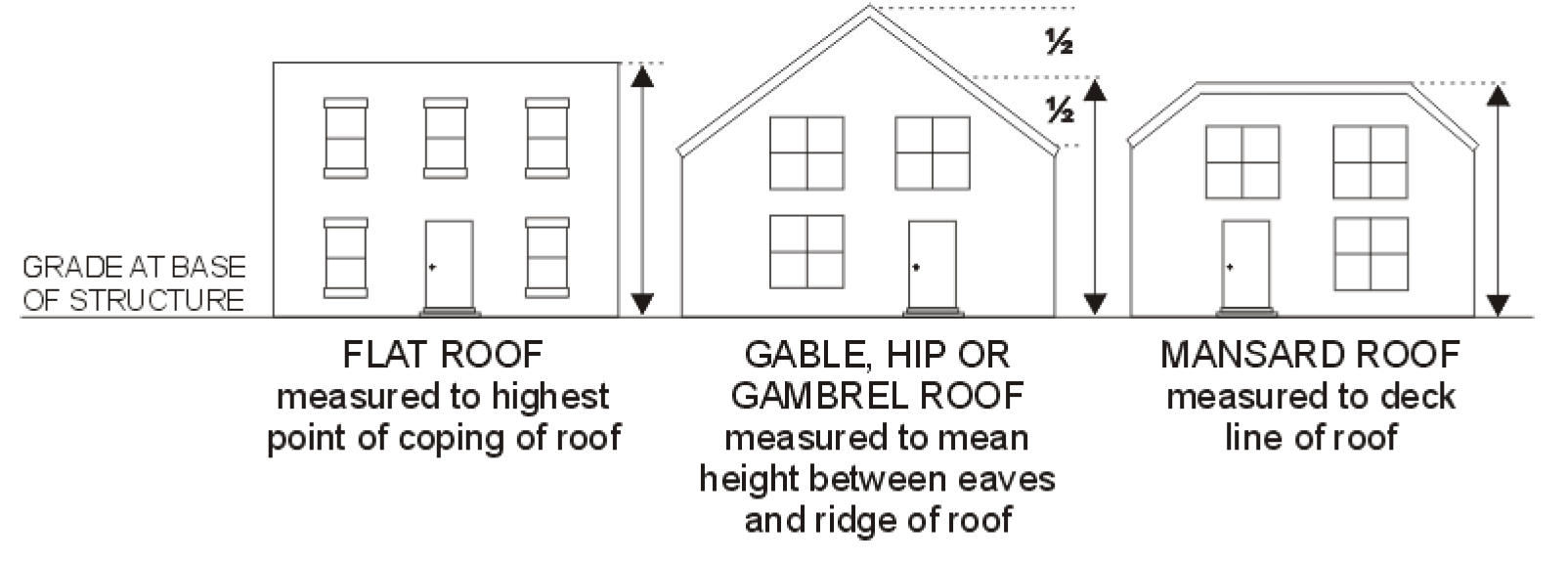
Building. Building height is measured as the vertical distance from average finished grade to the highest point of any flat roof, or to the deck line of a mansard roof, or to the mean height between the plate and the ridge of a gable or hip roof.
B.
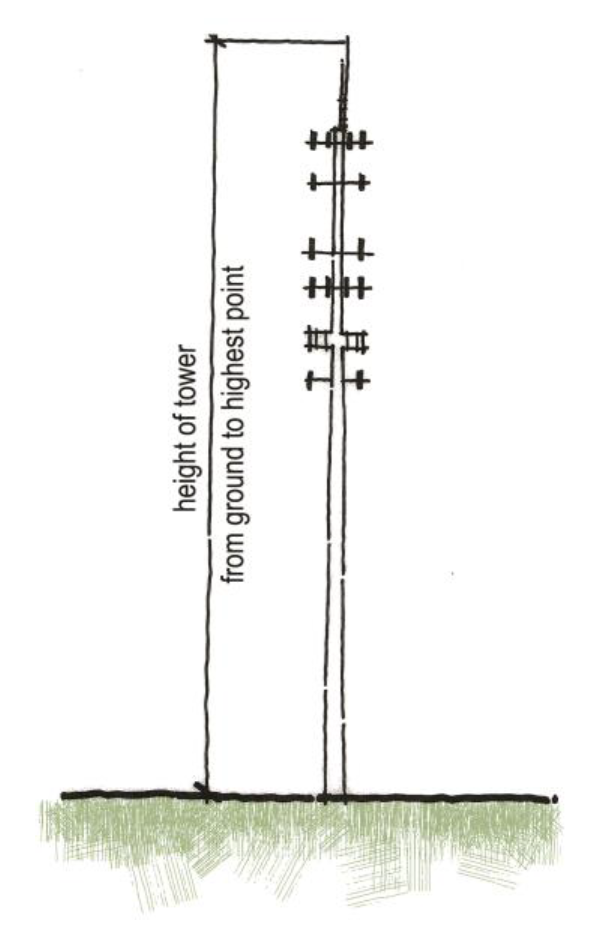
Telecommunications Tower or Structure. Telecommunications tower or structure height is measured from ground level to the highest point on the telecommunications tower or structure, even if said highest point is an antenna.
C.
Amateur Radio and Receive-Only Antennas. Antenna height is measured from ground level to the highest point on the antenna.
D.
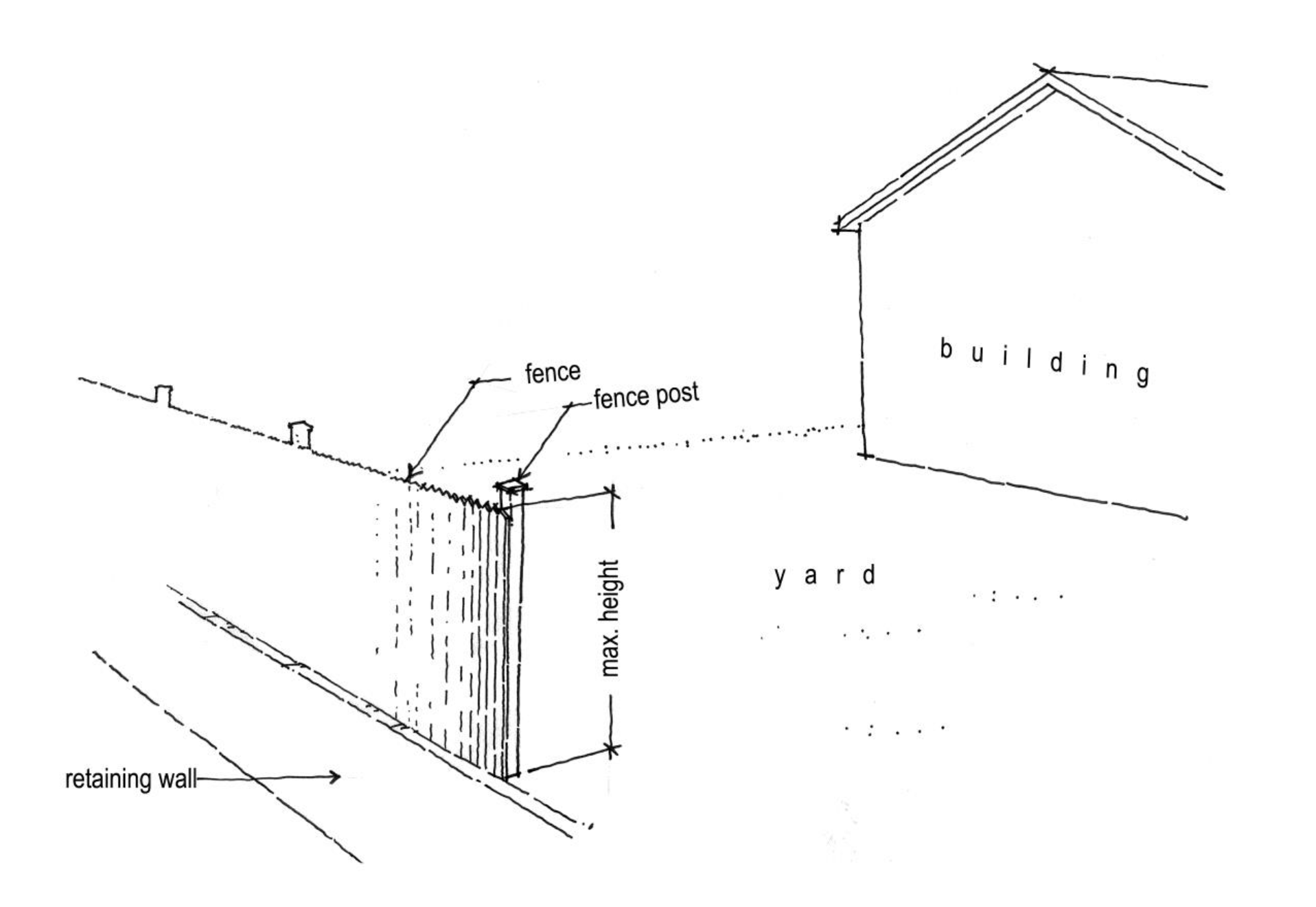
Fence or Wall. The height of fences or walls shall be measured as the vertical distance between finished grade on the highest side of the fence or wall to the top of the fence or wall, rather than to the top of the fence post or columns.
E.
Exceptions, General. The following features may exceed maximum building height limits, except as otherwise specified:
1.
Chimneys;
2.
Commercial television and radio towers;
3.
Conveyors;
4.
Cooling towers;
5.
Elevators and elevator equipment housing;
6.
Flagpoles;
7.
Monuments;
8.
Ornamental towers or spires;
9.
Wind vanes and lightning rods;
10.
Satellite antennas;
11.
Skylights;
12.
Smokestacks;
13.
Solar panels that do not exceed maximum building height limits by more than two feet;
14.
Stage fly towers or scenery lofts;
15.
Cupolas;
16.
Steeples and belfries;
17.
Tanks;
18.
Vents and ventilation stacks; and
19.
Water and fire towers.
F.
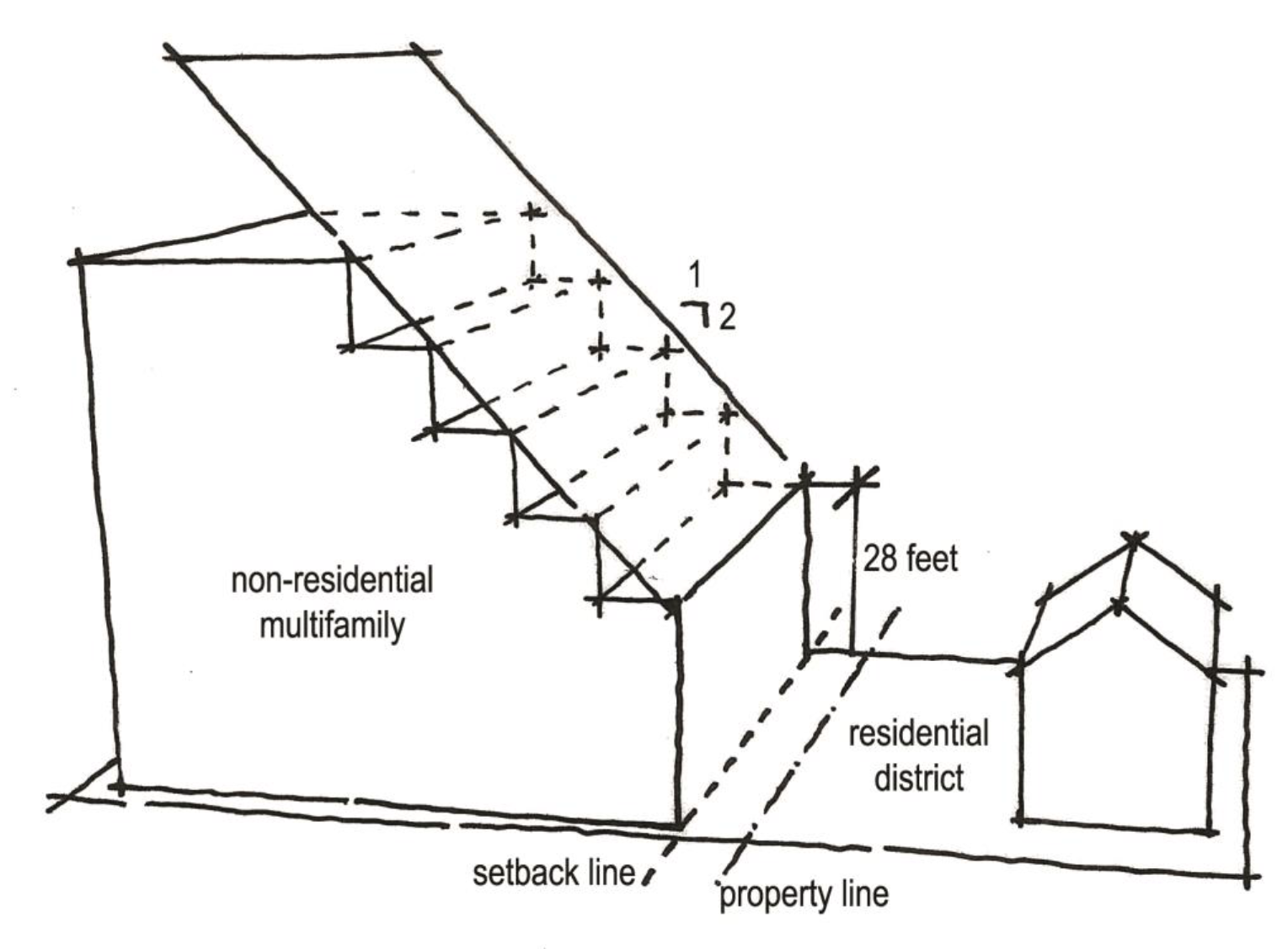
Exception, Upper Floor Step-Back. For nonresidential or multifamily building development on lots abutting residential districts that have a maximum allowed building height of 35 feet, the maximum building height at the point of the required yard or setback line is 28 feet. Height may be increased above 28 feet by up to two feet (vertical) for each one foot of building setback or upper floor step-back.
Sec. 98-1.14. - Transitional provisions.
The following transitional provisions shall apply to various activities, actions and other matters pending or occurring on the effective date of this Chapter.
Sec. 98-1.14.1. - Conforming uses and structures.
A.
Permitted Uses. Any conditional use lawfully approved prior to the effective date of this Chapter shall continue to be valid after the effective date. Development in accordance with an approved conditional use shall comply with the requirements of this Chapter, provided that in the event of any inconsistency between an approved conditional use and the requirements of this Chapter, development in accordance with the approved conditional use shall be permitted.
B.
Conditional Uses.
1.
Any use or structure existing prior to the effective date of this Chapter that would be permitted by this Chapter as a conditional use in the district in which it is located, may be continued as if a Conditional Use Permit had been issued, provided that any use, structural or other changes shall comply with the provisions of this Chapter.
2.
Any expansion or change of such use beyond conditions placed on the approval shall require a new conditional use approval in compliance with the procedures set out in Sec. 98-7.6, Conditional Use Permit.
C.
PUD Code of Developments.
1.
Any PUD Code of Development lawfully approved prior to the effective date of this Chapter shall continue to be valid after the effective date. Development shall be permitted in accordance with an approved PUD Code of Development. Such plans shall comply with the requirements of this Chapter, provided that in the event of any inconsistency between an approved PUD Code of Development and the requirements of this Chapter, development in accordance with the approved PUD Code of Development shall be permitted.
2.
Any changes to previously approved PUD master plan (referred to as a "Code of Development" in this Chapter) shall be subject to the provisions of Sec. 98-7.5.15.
D.
Variances. Any variance lawfully approved prior to the effective date of this Chapter shall continue to be valid after the effective date. Development in accordance with an approved variance shall comply with the requirements of this Chapter, provided that in the event of any inconsistency between an approved variance and the requirements of this Chapter, development in accordance with the approved variance shall be permitted.
Sec. 98-1.14.2. - Violations continue.
Any violation of the previous zoning ordinance shall continue to be a violation under this Chapter and shall be subject to penalties and enforcement under Article 9, unless the use, development, construction or other activity expressly complies with the current terms of this Chapter.
Sec. 98-1.14.3. - Nonconformities.
Any legal nonconformity under the previous zoning ordinance shall be considered a nonconformity under this Chapter, provided the situation that resulted in the nonconforming status under the previous regulations continues to exist. Such nonconformity may continue in accordance with the provisions of Article 8, Nonconformities. If, however, a nonconformity under the previous ordinance becomes conforming as a result of the adoption of this Chapter or any subsequent amendment to this Chapter, then such situation shall no longer be considered a nonconformity.
Sec. 98-1.14.4. - District conversion.
The zoning district names in effect prior to the effective date of this Chapter are amended as shown below.
Sec. 98-1.15. - Severability.
Should a court of law declare any article, section, clause or provision of this Chapter to be invalid, it is the express intent of the City Council that such declaration shall not affect the validity of the remainder of this Chapter as a whole, or any part thereof.

