
Waynesboro City Zoning Code
ARTICLE 4
- USE STANDARDS
Sec. 98-4.1.- Complexes.
Nonresidential, two-family houses, multiplexes, townhouse and multifamily building complexes may be established on a single unified parcel, provided that the following requirements are met.
Sec. 98-4.1.1. - Defined.
A complex is a group of two or more office, industrial, commercial, two-family houses, multiplexes, townhouses and multifamily buildings and/or other operations on an unsubdivided parcel, operating under one name or presenting other elements of a unified image of identity to the public.
Sec. 98-4.1.2. - General.
Complexes shall comply with all applicable development standards as set forth in Article 5, Site Development Standards, all other provisions in this Chapter and all other applicable laws.
Sec. 98-4.1.3. - Uses.
Uses within complexes shall be limited to those permitted within the zoning district in which the development is located (See also Sec. 98-2.4, Use Table).
Sec. 98-4.1.4. - Intensity.
The overall intensity of the land use shall be no higher, and the standard of development no lower, than that permitted in the district in which the project is located.
Sec. 98-4.1.5. - Required yards (setbacks).
The distance of every building from every property line shall comply with the respective yard front, rear and side requirements of the district in which the development is located as specified in Article 2. In no case, however, shall any portion of a building be located closer to a street than the required minimum front yard setback of the zoning district.
Sec. 98-4.1.6. - Building separation.
Minimum spacing between any two buildings shall be 20 feet, unless a greater separation is required by the Fire Code.
Sec. 98-4.1.7. - Building design.
Design for buildings within complexes shall exhibit a unity of design through the use of similar elements such as rooflines, materials, window arrangement, sign location and details.
Sec. 98-4.2.1. - Corner lot duplexes.
(New, based in part on existing provisions from the RB-2, RB-3 and RB-4 districts)
A.
Each corner lot duplex must have a primary ground-floor building entrance that is clearly defined and highly visible on the front building façade or other building façade that faces a public street or right-of-way other than an alley.
B.
No more than one entrance may be permitted per building façade. The entrance must be in the form of a porch or covered entry that is at least eight feet in width and six feet in depth. A patio-style door, such as sliding glass door, or a door that leads directly into a garage does not qualify as a primary entrance.
C.
Street-facing walls greater than 50 feet in length must be articulated with bays, projections or recesses at least ten feet in width that effectively break-up the mass of the building.
D.
Where a developed alley is provided, all vehicular access shall be taken from the alley.
Sec. 98-4.2.2. - Multiplexes.
A.
Each multiplex must consist of 3-5 dwelling units and each dwelling unit shall have a primary entrance denoted by a porch or covered entry that is at least eight feet in width and six feet in depth.
B.
Street-facing façades may not exceed 70 feet in width.
C.
Street-facing façades greater than 50 feet in length must be articulated with bays, projections, recesses or other design elements that effectively break-up the mass of the building.
D.
Outdoor (surface) parking areas shall not be located between the street and principal structures.
Sec. 98-4.2.3. - Multifamily buildings.
A.
Outdoor (surface) parking areas shall not be located between the street and principal structures.
Sec. 98-4.2.4. - Zero lot line houses.
Zero lot line houses (lot line house) must comply with the lot and building standards of the underlying general district, except as modified by the following standards:
A.
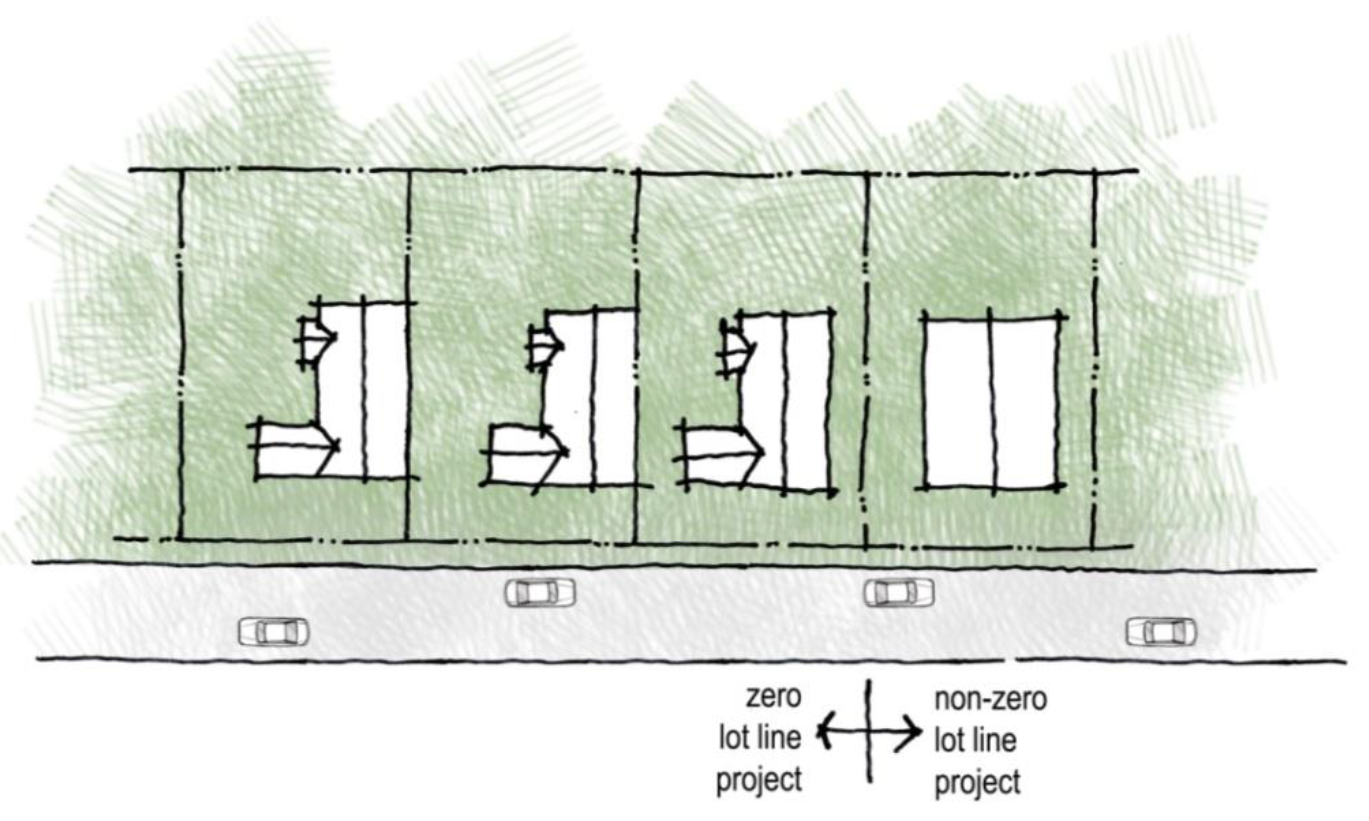
Lot line house developments must consist of at least three contiguous lots with frontage on the same street.
B.
Planning for all house locations for lot line house developments must be done at the same time. Because the exact location of each house is predetermined, greater flexibility in site planning is possible, while ensuring that neighborhood character is maintained.
C.
The side yard on one side of the lot containing a lot line house may be reduced to as little as zero. The zero or reduced yard side of a lot line house may not abut a street and may not abut a lot that is not part of the lot line house development.
D.
On the "non-zero" side, a yard must be provided equal to at least 2 times the minimum side yard requirement of the underlying district, as specified in Sec. 98-2.5 and Sec. 98-2.6.
E.
When the lot line house's exterior wall or eaves are set back less than two feet from the abutting side lot line, a perpetual maintenance easement at least five feet in width shall be provided on the lot abutting the zero lot line property line, which, with the exception of walls and/or fences, must be kept clear of structures. The easement must be shown on the plat and incorporated into each deed transferring title to the property. This provision is intended to ensure the ability to conduct maintenance on the lot line house.
F.
Windows, doors or other openings that allow for visibility into the side yard of the lot abutting the reduced or zero setback side of the lot line house are prohibited. Windows that do not allow visibility into the side yard of the lot abutting the zero or reduced setback side, such as clerestory windows or translucent windows, are allowed, subject to compliance with the Building Code.
Sec. 98-4.2.5. - Townhouses.
A.
The first floor shall be located a minimum of 18 inches above finished grade.
B.
Outdoor (surface) parking areas shall not be located between the street and principal structures.
C.
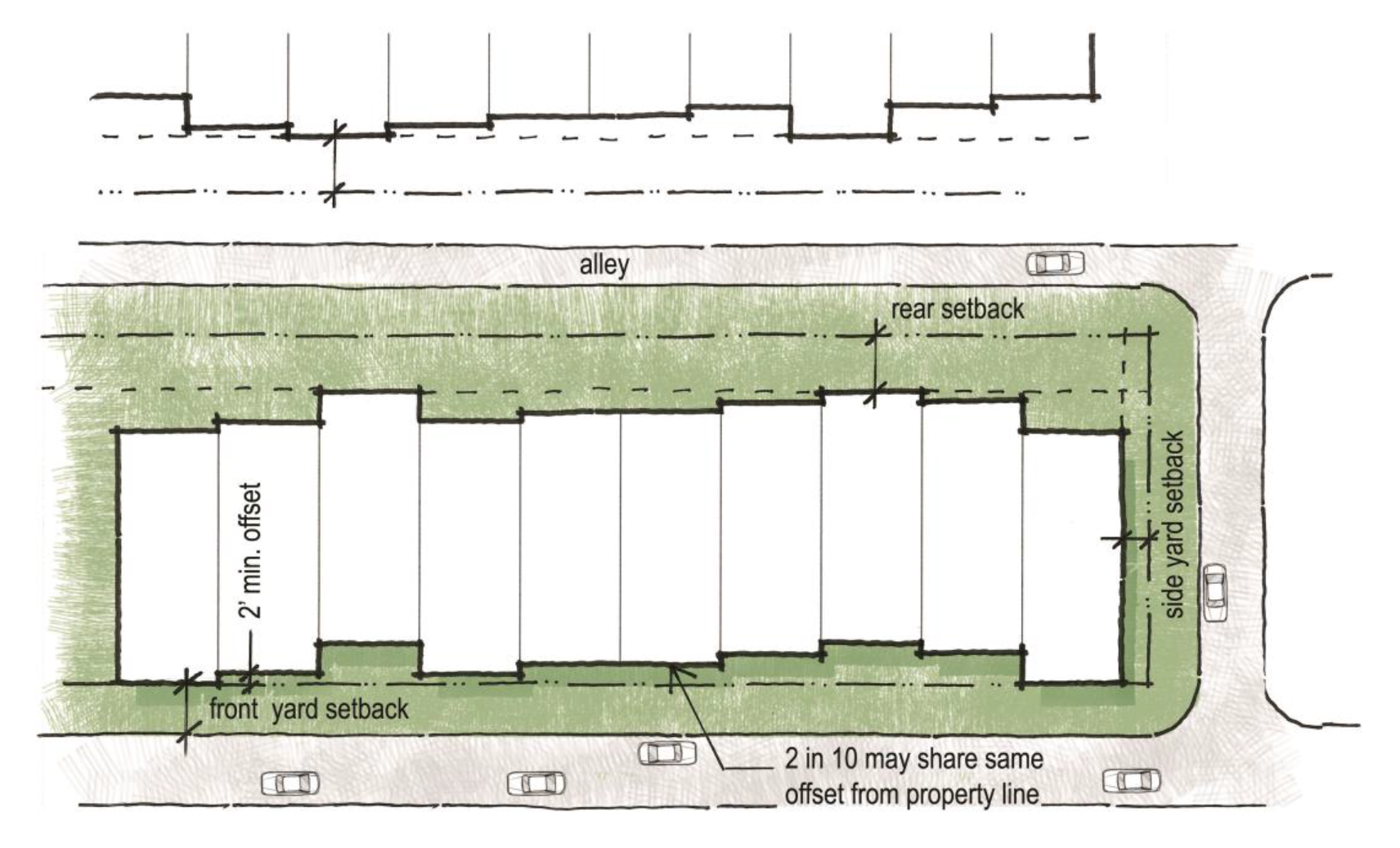
The exterior façades of all townhouse units shall be varied in material and design so that no more than five of any ten abutting units will have the same architectural appearance or front yard setback.
D.
No more than two of any ten abutting dwelling units having the same front yard setback. Varied street yard setbacks shall not be less than two feet offset from adjoining units as measured at the principal foundation line of each unit and no setback distance shall be less than the required minimum. Side yards are not required for interior townhouses, but street and rear yards shall be provided for all such dwellings and building separation requirements shall be maintained for all townhouse structures. (See also Sec. 98-4.1, Complexes)
Sec. 98-4.2.6. - Upper-story residential.
Such uses shall adhere to all dimensional standards of the permitted nonresidential use.
Sec. 98-4.2.7. - Manufactured homes.
A.
General. All manufactured homes shall:
1.
Be on a full foundation or completely skirted with materials approved by the Building Official;
2.
Be set up and tied down in accordance with the standards set by Virginia Uniform Statewide Building Code regulations; and
3.
Wheels, axles, tongue, towing apparatus and transporting lights, if any, shall be removed prior to final installation of the unit.
B.
-HPO District. Manufactured homes are not allowed in the -HPO district. (See also Sec. 98-3.3.3)
Sec. 98-4.2.8. - Manufactured home parks or subdivisions.
A.
Applicability. The standards of this section shall apply equally to all allowed uses in a manufactured home park or subdivision, including any nonconforming mobile homes.
B.
General Requirements.
1.
Minimum park or subdivision area: 5 acres.
2.
Maximum density: 6 homes and spaces or lots per acre.
3.
Minimum space or lot area: 4,500 square feet.
4.
Minimum space or lot width: 40 feet.
5.
Minimum space or lot depth: 100 feet.
6.
Minimum building separation: 15 feet, provided that the minimum separation may be reduced to ten feet between carports, porches and patios open on three sides and adjacent buildings.
7.
Each manufactured home shall comply with the specific use requirements of Sec. 98-4.2.7.
8.
A homeowner's association or similar entity shall be established for maintenance of common areas which are not maintained by the owner or developer.
C.
Allowed Uses. Allowed uses shall include:
1.
Manufactured homes and detached single-family dwellings;
2.
Mobile homes lawfully installed prior to the effective date of this Chapter; and
3.
Common facilities and uses accessory to dwelling units, including recreation facilities for the use of residents, park management offices, laundry facilities, tenant storage areas, parking areas, and garbage and trash disposal facilities.
D.
Site Plan Required.
1.
Each home in a manufactured home park shall be located on a manufactured home space designated on a site plan prepared in accordance with the requirements of Sec. 98-7.7, which shall be approved and filed as part of the approval of any new manufactured home park established after the effective date of this Chapter and prior to the enlargement of any existing manufactured home park.
2.
The site, including manufactured home stands, structures and all site improvements, shall be laid out in relation to topography, the shape of the tract and the shape, size and position of structures, with consideration for usability of space, appearance and livability, and adjacent land uses.
3.
All manufactured homes shall be placed on a designated manufactured home lot and shall not obstruct the use of, or project over, any driveway, walkway or public utility easement.
E.
Streets and Access. Unless otherwise permitted by the City Council, public streets internal to the development shall be provided in accordance with subdivision regulations (See also City Code, Chapter 74). No manufactured home site shall be designated so as to permit direct access to a street outside the boundaries of the manufactured home park or subdivision.
F.
Project Boundary Buffer. A Class C buffer shall be provided along project boundaries in accordance with Sec. 98-5.4.5.B.4.
G.
Signs and Numbering of Spaces.
1.
Each manufactured home park or subdivision shall have a sign located adjacent to a public street which includes the name of the park and the street address.
2.
A maximum of two manufactured home park or subdivision identification signs may be utilized, with a maximum sign face of 40 square feet per face. Sign illumination shall be limited to external, non-flashing lighting. Maximum height of such signs shall not exceed 12 feet.
3.
Each manufactured home space or lot shall be identified with four-inch reflective numbers on contrasting background and/or letters set at least 40 inches above ground level and clearly visible from the adjacent roadway.
Sec. 98-4.2.9. - Boarding or rooming houses.
A.
Boarding or rooming houses shall have a full-time resident manager or owner on the site.
B.
Occupancy shall be for a maximum of 8 persons, in addition to the resident manager or owner and family; and minimum occupancy period shall be for 14 days.
C.
Such use shall not be deemed a home occupation.
D.
Individual guest rooms may not contain kitchens.
E.
All parking will be provided on the side or rear of the principal structure.
Sec. 98-4.2.10. - Group homes/other (8 or fewer).
Group homes housing persons shall comply with the following standards.
A.
Occupancy shall be limited to no more than eight mentally ill, intellectually disabled, or developmentally disabled persons, with one or more resident counselors or other staff persons. For the purposes of this subsection, mental illness and developmental disability shall not include current illegal use of or addiction to a controlled substance as defined in VA Code Ann. Sec. 98-54.1-3401.
B.
Such facilities shall be licensed by the Virginia Department of Behavioral Health and Developmental Services.
Sec. 98-4.2.11. - Group homes/seniors.
Occupancy of group homes housing seniors shall be limited to no more than three persons over the age of 61, living with not more than one caretaker.
Sec. 98-4.2.12. - Short-term residential rentals and homestays.
Homestays shall comply with the following standards.
A.
The operator of the homestay must register in accordance with City Code section 78-131. A homestay operator authorizes city inspectors to enter the subject property, upon reasonable advance written notice to the applicant, at least one (1) time during the calendar year for which the registration is valid, to verify that the homestay is being operated in accordance with the regulations set forth within this section.
B.
Operators shall provide evidence of a city business license (or a statement from the commissioner of revenue that no city business license is required), proof of payment of taxes required by City Code Section 78-126, and a certificate of occupancy or other written indication from the city's building code official that use of the dwelling or accessory building for the home occupation business is in compliance with all applicable building code regulations.
C.
Homestay operators may enter into rental agreements with only one party per legal dwelling unit per 24-hour period. A homestay operator offering two or more spaces for rent under separate contracts shall be considered a Bed and Breakfast or an Inn and shall be subject to the use standards and zones established by the Zoning Ordinance, sections 98-2.4.4, 98-4.4.4, and 98-4.4.6.
D.
Homestays may not have any exterior signage.
E.
Except for a sign authorized by subparagraph (A) above, there shall be no evidence or indication visible from the exterior of the dwelling that the dwelling or any accessory building is being utilized in whole or in part for any purpose other than residential occupancy.
F.
No food shall be prepared for or served to guests of the homestay by the owner or the owner's agent(s) or contractor(s).
G.
Every homestay shall have working smoke detectors, carbon monoxide detectors and fire extinguishers, and all such equipment shall be accessible to overnight guests of the homestay at all times. Every homestay shall comply with requirements of the applicable version of the Virginia Uniform Building Code, as determined by the City's Building Code Official.
H.
Authorization to operate a homestay may be revoked by the zoning administrator (i) upon multiple violations on more than three occasions of applicable state and local laws, ordinances, and regulations, as they relate to the short-term residential rental within a calendar year, or (ii) for failure to maintain compliance with any of the regulations set forth within this section. An operator whose authority has been revoked pursuant to this paragraph, or City Code Sec. 78-131, shall not be eligible to operate a home for the remaining portion of the calendar year in which the permit is revoked, and for the entire succeeding calendar year.
Sec. 98-4.2.13. - Cottage court use standards.
98-4.2.13.1.
Purpose and intent.
The purpose of the cottage court housing type is to promote infill development and redevelopment within established neighborhoods that is consistent in style and materials with existing surrounding structures. By situating many housing units in small spaces, cottage courts are an efficient use of land and cost-effective in delivery of city services. The cottage court housing type encourages innovative site planning and variety in housing types to meet the needs of diverse populations, including young professionals, older adults and empty nesters, and small families. Cottage court housing is pedestrian-scaled and community-oriented. It provides developers and property owners the flexibility to develop projects that strengthen existing neighborhoods.
98-4.2.13.2.
General use standards.
• In the event that the use standards pertaining to cottage court housing are determined by the Zoning Administrator to expressly conflict with any other provision of the zoning ordinance, these use standards shall take precedence and shall preempt any such expressly conflicting standard.
• A cottage court development should endeavor to "fit in" or be consistent with the design and uses that comprise the surrounding neighborhood. Architectural details shall be submitted with the conditional use permit application to show how the development will be compatible with the broader neighborhood.
• Cottage court housing may be developed on separate parcels or upon a single parcel of land.
• If the cottage court housing units are individually saleable, all common areas or shared improvements shall be dedicated to and maintained by a homeowners' association or condominium association, as applicable.
• Cottage courts shall not be used as short-term rentals except within the L-B and MX-B districts.
• Review requirements
◦ Projects developed on a single parcel of land, with no intention of subdividing shall require a major site development plan in accordance with Sec. 98-7.7 of the City Code.
◦ Projects developed as a subdivision with units on individual lots shall require a major/minor subdivision plat per Chapter 74 of the City Code.
• An area for community trash receptacles or dumpsters should be indicated on the preliminary plat/site plan according to Sec. 98-5.4.8.E. and Sec. 98-5.1.5.B.2.
• The requirements for utilities per Chapter 86 of City Code shall apply.
98-4.2.13.3.
Cottage court unit size requirements.
• There shall be no minimum size requirements for a cottage court dwelling. However, prevailing building code requirements per Chapter 18 of City Code shall apply.
• Cottage court units are limited to a maximum of 1,200 square feet of finished floor area and 1,700 square feet gross square footage.
98-4.2.13.4.
Cottage court parking requirements.
• 1.25 parking spaces are required per cottage court unit. If the number of required parking spaces falls between two numbers, the required parking spaces will be calculated by rounding up to the nearest number.
• Parking areas, rather than individual driveways, are encouraged. Parking areas should be clustered in logical areas throughout the development. If the property has existing alley access, parking areas may be accessed from the alley.
• Parking may be located within an accessory structure such as a multi-car carport or garage, but such structure shall not be attached to individual cottages, except that single-car garages and carports may be attached to the rear of individual cottages.
• Parking shall be oriented to ensure the cottage housing units are the main focal point of the development.
• Parking areas shall be screened in accordance with the applicable landscape standards of Sec. 98-5.4.7.
98-4.2.13.5.
Common area/space requirements.
• 400 square feet of common space per cottage court unit is required.
• Common areas should consist of a central space or a series of interconnected spaces.
• At least 50 percent of the units shall abut the common open space, all of the units shall be within reasonable walking distance of the common open space, and the common open space shall have cottages abutting at least two sides.
• Stormwater facilities, connections between common areas, parking areas, driveways, and other physically constrained areas such as wetlands or steep slopes cannot be counted towards the common area requirements.
• All units shall have access to the common areas and public sidewalk through the use of walkways. These walkways shall be at least four feet wide and consist of a material that meets current ADA accessibility standards.
98-4.2.13.6.
Private areas.
• Each cottage housing unit shall be provided a minimum of 200 square feet of useable private open space.
• The private open space shall be screened or otherwise separated from the common open space to create a sense of separate ownership and may include front or back yards, gardening areas, patios or porches.
• No dimension of private open space shall be less than eight square feet.
98-4.2.13.7.
Orientation of cottage court units.
• Cottages with facades that face a public street shall avoid blank walls or the appearance that the units "turn their backs" to the street by including one or more of the following on all street-facing facades:
◦ Changes in exterior siding material and paint color;
◦ Windows, which may include bay windows;
◦ Building modulation with a depth measuring at least one foot;
◦ Views of front doors or porches.
• The majority of units shall be oriented around a common area to promote a sense of community.
98-4.2.13.8.
Buffer requirements.
• Buffer requirements will be determined on a case by case basis during the conditional use permit process.
98-4.2.13.9.
Area and dimensional standards.
98-4.2.13.10.
Alternative standards.
Designs that do not comply with all of the provisions above may be considered and approved during the conditional use permit process in accordance with Sec. 98-7.6.11.
(Ord. No. 2019-49, 6-24-19; Ord. No. 2025-01, § 4, 12-9-24)
Sec. 98-4.3.1. - Civic clubs or community centers.
In residential districts, all structures shall be located not less than 25 feet from side or rear lot lines.
Sec. 98-4.3.2. - Child care centers.
Child care centers shall be State licensed or employee sponsored.
Sec. 98-4.3.3. - Golf courses or clubs.
In residential districts, all structures shall be located not less than 25 feet from side or rear lot lines.
Sec. 98-4.3.4. - Libraries or museums.
In residential districts, all structures shall be located not less than 25 feet from side or rear lot lines.
Sec. 98-4.3.5. - Parks or playgrounds.
In residential districts, all structures shall be located not less than 25 feet from side or rear lot lines.
Sec. 98-4.3.6. - Religious institution.
In or adjacent to residential districts, religious institutions shall comply with the following requirements. (See also Sec. 98-4.6.13 for requirements related to religious institutions accessory uses.)
A.
All structures shall be located not less than 25 feet from side or rear lot lines.
B.
Religious institutions in or adjacent to any residential district with seating capacity for more than 300 persons or more than 3,000 square feet of accessory uses shall have the principal vehicular entrance and exit on an arterial or collector street within 150 feet of its intersection with an arterial street.
C.
Buffering in excess of that required by Sec. 98-5.4 may be required through the review and approval of a major or minor site plan to address the development intensity of more than 3,000 square feet of accessory uses.
D.
Accessory uses shall require additional lot area to comply with the dimensional standards applicable to the use and the general use district.
Sec. 98-4.3.7. - Schools, elementary or secondary.
In residential districts, all structures shall be located not less than 25 feet from side or rear lot lines.
Sec. 98-4.3.8. - Telecommunications tower and facilities.
A.
Purpose. The purpose of this section is to:
1.
Encourage provision of adequate telecommunications facilities in nonresidential areas where the adverse impact on the city is minimal;
2.
Encourage co-location and use of telecommunications sites and facilities, and minimize the total number of telecommunications sites; and
3.
Minimize the adverse visual impact of such towers and facilities.
B.
Applicability.
1.
General. The requirements of this section govern the siting of telecommunications towers and facilities, except as specifically excluded herein.
2.
Existing Structures and Towers.
(a)
The placement of a telecommunication antenna on alternative telecommunications structures such as roofs, walls, water tanks, and existing towers may be approved by the Zoning Administrator (without a CUP) provided the antenna:
(1)
Does not add more than 20 feet to the existing structure; and
(2)
Meets all applicable standards of local, State and Federal Building Codes and this Chapter.
(b)
Applications for such use must include:
(1)
A final site plan for approval; and
(2)
A report prepared by a qualified engineer indicating the existing structure's suitability to accept the antenna and the proposed method of affixing the antenna to the structure.
(c)
The placement of additional buildings or supporting equipment must comply with the standards of this and other applicable City ordinances or regulations.
3.
Federal and State Law. In case of conflict, Federal or State law, such laws shall supersede the requirements of this section.
C.
Location and Construction. The requirements for the location and construction of all new telecommunications facilities regulated by this Chapter shall include the following:
1.
New telecommunications facility site shall not be permitted unless the applicant demonstrates to the reasonable satisfaction of the City that existing telecommunications facilities or alternative telecommunications structures cannot accommodate the applicant's proposed antenna.
2.
Telecommunications towers shall either maintain a galvanized steel finish or, subject to any applicable standards of the Federal Aviation Administration (FAA), be painted so as to reduce visual obtrusiveness. Dish antennas will be of a neutral, non-reflective color with no logos.
3.
At the telecommunications facility, the design of the buildings and related structures used in conjunction with telecommunications facilities shall, to the extent possible, use materials, colors, textures, screening, and landscaping that will blend the telecommunications facilities with the natural setting and the built environment.
4.
If an antenna is installed on an alternative telecommunications structure, the antenna and supporting electrical and mechanical equipment must be of a color that is identical to, or closely compatible with, the color of the alternative telecommunications structure so as to make the antenna and related equipment as visually unobtrusive as possible.
5.
A telecommunications facility or telecommunications tower shall not be artificially lighted, unless required by the FAA or other applicable authority. If lighting is required, the City may review the available lighting alternatives and approve the design that would cause the least disturbance to the surrounding views.
6.
No advertising of any type may be placed on the telecommunications facility, or other structures associated with the telecommunications facility, except that a sign shall be required displaying the name, registration number and emergency contact number of the tower owner. The sign shall not exceed four square feet in size and shall be located on the security fence or other approved location.
D.
Structural.
1.
Prior to the use or extension of a telecommunications tower, the owner shall have obtained approval of the structural integrity by a qualified engineer and a copy of such report shall be filed with the Zoning Administrator.
2.
To ensure the structural integrity of a telecommunications facility or telecommunications tower, the owner or operator of a telecommunications facility or telecommunications tower shall ensure that it is maintained in compliance with standards contained in applicable Federal, State and local Building Codes and regulations.
E.
Required Yards (Setbacks) and Separation. The following setbacks and separation requirements shall apply to all telecommunications facilities except alternative telecommunications structures:
1.
Telecommunications towers shall be setback a minimum of 110 percent of the height of the telecommunications tower from any off-site structures used for human habitation, provided this provision shall not apply to monopole towers certified by a structural engineer. Such monopole towers shall comply with the setbacks of the underlying zoning district for principal structures.
2.
Security fencing, equipment and accessory facilities must comply with setback requirements applicable to primary structures.
F.
Security. Telecommunications towers and facilities shall be enclosed by security fencing not less than six feet in height and equipped with an appropriate anti-climbing device, unless otherwise approved by the City.
G.
Perimeter Buffer. A Class A buffer shall be provided around the perimeter of telecommunications towers and facilities in accordance with Sec. 98-5.4.5.A.2(a), unless otherwise approved by the City.
H.
Co-Location.
1.
The following requirements shall pertain to the co-location of an antenna that will be placed on a telecommunications facility or telecommunications tower that was sited under the provisions of this Chapter and will not increase the height of the telecommunications tower:
(a)
Inventory and contour map of existing facilities within the city and at least five miles from the corporate limits, including specific information about the location, height, coverage and capacity zones, and design of each telecommunications facility, telecommunications tower and antenna;
(b)
Calculations and necessary documentation, signed and sealed by appropriate licensed professionals, showing the location and dimensions of all improvements;
(c)
Radio frequency coverage;
(d)
Height of telecommunications tower with proposed antenna; and
(e)
Other information deemed by the City to be necessary to assess compliance with this Chapter.
2.
The City may share such information with other applicants applying for approvals or Conditional Use Permits under this Chapter or other organizations seeking to locate telecommunications towers within the city; provided, however, that the City is not, by sharing such information, in any way representing or warranting that such sites are available or suitable.
I.
Local Government Access. Owners of towers shall provide the city with co-location opportunities as a community benefit to improve radio communication for City departments and emergency services provided it does not conflict with the co-location requirements of this Chapter.
J.
Federal Requirements. All telecommunications towers and antennas must comply with or exceed current standards and regulations of the FAA, the FCC and any other agency of the Federal government with the authority to regulate such facilities. If such standards and regulations are changed, the owners of telecommunications towers and antennas governed by this Chapter shall bring such towers and antennas into compliance with such revised standards as required. Failure to bring telecommunications towers and antennas into compliance with such revised standards and regulations shall constitute grounds for the removal of the telecommunications towers and antennas at the owner's expense.
K.
Removal of Defective or Abandoned Telecommunications Facilities.
1.
Any antenna, telecommunications tower, or telecommunications facility found to be defective or unsafe shall be repaired to comply with Federal, State and local safety standards, or removed within six months at the owner's expense. Any antenna, telecommunications tower or facility that is not operated for a continuous period of 24 months shall be considered abandoned.
2.
Where removal of telecommunications antenna, tower or facility is required, the owner shall remove such telecommunications antenna, tower or facility within 90 days of receipt of notice from the City notifying the owner of such removal requirement. Removal includes the removal of the antennas, telecommunications towers, and telecommunications facilities, fence footers, underground cables and support buildings. The buildings and foundation may remain (with land owner's approval). Where there are two or more users of a single telecommunications facility or telecommunications tower, this provision shall not become effective until all users cease using the antennas and telecommunications tower.
3.
If the antenna, telecommunications tower and telecommunications facility are not removed as herein required, the City may either seek court enforcement of such removal or the City may, at its discretion, remove the antenna, telecommunications tower and facility at the expense of the owner.
L.
Supplemental Information. The following supplemental information shall be required before the City will consider an application for a Conditional Use Permit for a telecommunications facility, telecommunications tower or for siting an antenna on an alternative telecommunications structure:
1.
Inventory of Applicant's Existing Sites. Each applicant for a telecommunications facility, telecommunications tower or antenna shall provide the Zoning Administrator with an inventory of its existing facilities that are within the city or within five miles of the border thereof, including specific information about the location, height and design of each tower. The City may share such information with other applicants applying for approvals or Conditional Use Permits under this Chapter or other organizations seeking to locate antennas within the city, provided however, that the City is not, by sharing such information, in any way representing or warranting that such sites are available or suitable.
2.
Site Plan. A scaled site plan including site topography and topography within a 400-foot radius of the proposed tower, a scaled elevation view and other supporting drawings, calculations, and other documentation, signed and sealed by appropriate licensed professionals, showing the location and dimensions of all improvements including radio frequency coverage, tower height, setbacks, parking, security fencing, landscaping, proposed ingress and egress, adjacent uses including proximity to residential uses and residential district boundaries.
3.
Co-Location. The applicant shall encourage co-location by providing the following information: An engineering report, certifying that the proposed telecommunications tower is compatible for a minimum of three similar users including the primary user; information demonstrating that antennas, telecommunications towers, and telecommunications facilities for possible co-locator antennas are no higher in elevation than necessary; co-location policy which outlines policy regarding company's willingness to co-locate on other company's telecommunications towers and company's willingness to accept other users on its telecommunications towers.
4.
Design Standards.
(a)
Applicant shall indicate design of the telecommunications facility and telecommunications tower, with particular reference to design characteristics that have the effect of reducing or eliminating visual obtrusion.
(b)
Applicant shall provide actual photographs from the site showing adjoining properties and other relevant views and simulated photographic images of the proposed telecommunications tower from the perspective of adjoining properties.
5.
Other. The City may request other information deemed necessary to assess compliance with this Chapter.
Sec. 98-4.3.9. - Utility office, shops and yards.
Outdoor storage and equipment shall be screened to a height of eight feet from view off-site in accordance with the requirements of Sec. 98-5.4.8.B.
Sec. 98-4.4.1. - Adult uses.
A.
Purpose. The standards of this section are intended to address potentially negative, secondary effects of adult uses on the community.
B.
Establishment. The following activities shall each constitute the "establishment" of an adult use, as referred to herein:
1.
The initial opening of an adult use (including, without limitation, the conversion, in whole or part, of an existing business to any adult use);
2.
The relocation of an existing adult use; or
3.
An increase in the floor area of an existing adult use, by 25 percent or more.
C.
Location.
1.
No adult use may be established within 1,000 feet of a residential zoning district or property used as a residence, school, educational institution, religious institution, public park, playground, playfield or child care center, regardless of zoning.
2.
No adult use may be established within 1,000 feet of any other such adult use in any zoning district.
3.
All distances specified in this section shall be measured in a straight line from the property line of the adult use to the nearest regulated use. The distance between an adult use and a residential zoning district shall be measured from the property line of the use to the nearest point of the boundary line of the residential zoning district.
Sec. 98-4.4.2. - Animal care facilities and services.
Animal care facilities, including veterinary clinics or animal hospitals and kennels, shall comply with the standards of this section.
A.
All activities shall be conducted indoors except as permitted herein.
B.
Waste handling and ventilation shall be designed to substantially control odors discernable off-site.
C.
All kennels with outdoor runs shall be subject to the following setback requirements:
1.
Residential zoning boundaries: 150 feet;
2.
Residential uses: 300 feet.
For the purpose of this section, measurement of the setback requirements shall be made in a straight line, without regard to intervening structures or objects, from the nearest portion of an existing dwelling unit or residential district boundary to the nearest portion of the kennel.
D.
Outdoor exercise areas, runs, or yards, when provided for training or exercising, shall be restricted to use during daylight hours.
E.
Animal care facilities and services with outdoor runs and overnight boarding shall not be allowed in the C-B (Central Business) District.
(Ord. No. 2014-29, 6/6/14)
Sec. 98-4.4.3. - Art studios or galleries.
In residential districts, all structures shall be located not less than 25 feet from side or rear lot lines.
Sec. 98-4.4.4. - Bed and breakfasts.
A.
Bed and breakfast establishments shall be operated as an incidental use to the primary use of the structure as an owner-occupied residence.
B.
Overnight accommodations shall be provided with five or fewer guest rooms.
C.
Accessory food service shall not be available to persons other than overnight guests; provided, however, wedding parties and similar larger groups may be served by temporary use permit approved pursuant to Sec. 98-7.8.
Sec. 98-4.4.5. - Coffee shops.
Coffee shops shall:
A.
Have less than 2,000 square feet of floor area and shall not have drive-through facilities; and
B.
Not have a commercial kitchen, as defined by a commercial hood.
Sec. 98-4.4.6. - Inns.
A.
Inns shall have a full-time resident manager or owner on the site.
B.
Overnight accommodations shall be provided with six or more, but less than 20 guest bedrooms.
C.
An inn shall only be permitted if it is adjacent to or has direct access to an arterial or collector street, as defined Article 10.
D.
Accessory food service shall not be available to persons other than overnight guests; provided, however, wedding parties and similar larger groups may be served by temporary use permit approved pursuant to Sec. 98-7.8.
Sec. 98-4.4.7. - Mini-warehouse facilities.
A.
Individual storage units shall have a maximum of 300 square feet.
B.
Except for the purposes of loading and unloading, there shall be no incidental parking or storage of trucks and/or moving vans. Loading docks shall not be permitted.
C.
Storage units shall only be used for storage of household goods and personal effects as defined in VA Code Ann. Sec. 98-58.1-3504; tangible personal property employed in a trade or business as defined in VA Code Ann. Sec. 98-58.1-3503.A.17 and inventory of stock on hand as that term is used in VA Code Ann. Sec. 98-58.1-3510.A; and motor vehicles or boats.
D.
No office, retail or wholesale use of the storage units shall be permitted.
E.
Under no circumstances may radioactive materials, explosives and flammable or hazardous materials be stored therein.
F.
One accessory residential unit may be permitted solely for the use of a caretaker or watchman.
G.
All storage shall be within completely enclosed buildings, except as designated on an approved site plan.
H.
Any outdoor storage areas shall comply with the requirements of Sec. 98-5.7.3. Such areas shall not be used for the storage or display of inoperable vehicles.
Sec. 98-4.4.8. - Restaurants, limited.
Limited restaurants shall have less than 2,500 square feet of floor area and shall not have accessory drive-through facilities or an accessory bar.
Sec. 98-4.4.9. - Restaurants with drive-through.
A.
Restaurants with drive-through shall comply with the requirements of Sec. 98-4.6.9.
B.
Restaurants with drive-through in the C-B district may be allowed only by Conditional Use Permit approved in accordance with the requirements of Sec. 98-7.6.
Sec. 98-4.4.10. - Vehicles sales and service.
A.
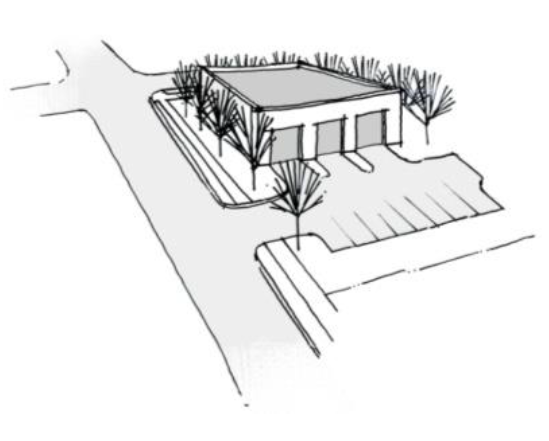
All service bay doors (openings) shall face away from adjacent residential uses and from corridors designated in Sec. 98-3.3.2.B.
B.
In the MX-B (Mixed Business) zone, vehicle sales and service uses must meet the following standards:
1.
Vehicle sales and service uses may not operate between the hours of 8:00 p.m. and 8:00 a.m.
2.
All vehicle service must be contained in a constructed building. All outdoor storage or display must be fully screened by a solid fence. Outdoor vehicle sales must be screened by a solid fence or class A landscape buffer.
(Ord. No. 2017-43, 10-5-17; Ord. No. 2020-77, 11-23-20; Ord. No. 2022-06, § 1, 1-24-22)
Sec. 98-4.4.11. - Temporary special events.
Temporary special events may be permitted through a Conditional Use Permit pursuant to Sec. 98-7.6., in all districts, subject to the following requirements.
A.
Purpose. The purpose of this section is to address temporary small-scale special events that may occur at more frequent intervals and be of a smaller size than temporary outdoor events regulated by Sec. 98-4.7.6. Temporary special events are short term events that may be held by non-profit organizations or for-profit businesses multiple times a year. Events typically last one day or up to three days. Temporary special events can include, but are not limited to, workshops, conferences, seminars, weddings, dinners, banquets, private parties, and other similar activities. This section establishes criteria for the approval or disapproval of such temporary special events and provides the requirements for the conduct of such uses. For large scale temporary outdoor events, including, but not limited to, carnivals, circuses, festivals, and fairs, refer to Sec. 98-4.7.6.
B.
General.
1.
Temporary special events are subject to the approval of a Conditional Use Permit pursuant to Sec. 98-7.6 and the requirements found in this section.
2.
In addition to the information required as part of the Conditional Use Permit application, all Conditional Use Permit applications for temporary special events shall include the following as applicable:
(a)
Concept plan;
(b)
Information about parking and access;
(c)
Description of the types of events to be held, the number per year, and the approximate timespan;
(d)
Estimated number of participants;
(e)
Estimated hours of operation;
(f)
Address how adequate water and sanitation facilities will be provided;
(g)
Description of the use of any temporary or permanent structures or facilities, including information about size;
(h)
A safety plan containing details regarding emergency preparedness and emergency response plans, emergency services, medical services, law enforcement and security services, and similar details necessary for ensuring the safety of attendees and the general public. The plan shall be reviewed and approved against all applicable regulations including all current regulations of the International Building Code, International Fire Code, Virginia Statewide Fire Prevention Code, NFPA, Federal, State and local laws, ordinances, codes, standards and rules;
(i)
A lighting plan which provides for safe lighting without excessive glare into residential areas or streets; and
(j)
Description and planned use of sound including, but not limited to, amplified music, disc jockeys, and bands.
3.
Permanent structures in which the primary use is for events, including, but not limited to, pavilions and barns, are permitted subject to the following requirements.
(a)
No new, permanent structures shall be installed or constructed unless all required zoning, building, and Fire Department approvals and/or permits are obtained, as applicable.
(b)
Permanent structures existing on the date of adoption of this Section, to be used in conjunction with any temporary special event shall be required to obtain approval and/or any necessary permits and/or certificates of occupancy from the building, zoning and fire departments, as applicable.
(c)
New, permanent structures shall conform to the regulations of the underlying zoning district.
C.
Operations. In addition to any conditions required as part of the Conditional Use Permit, the following shall apply:
1.
Any temporary or permanent signage advertising any temporary special event shall be a maximum of 22 square feet and a maximum height of eight feet; and
2.
The installation of temporary structures, such as tents and stages, is permissible in connection with an approved Temporary Special Events Conditional Use Permit, subject to all applicable laws and regulations and the following:
(a)
Temporary structures are those that are erected for 179 days or less;
(b)
Temporary structures are prohibited in front yards and must be 20 feet from any rear or side property lines; and
(c)
No temporary structures shall be installed or constructed unless all required zoning, building, and/or fire department approvals and/or permits are obtained, as applicable.
3.
The installation of temporary facilities, such as portable toilets and trash receptacles, may be permitted on site in connection with an approved Temporary Special Events Conditional Use Permit, subject to all applicable laws and regulations and the following:
(a)
Temporary facilities shall be screened from view from adjacent parcels and any street by topography, structures, or landscaping;
(b)
Temporary facilities are prohibited in front yards and must be 20 feet from any rear or side property lines;
(c)
Temporary facilities shall be lawfully removed within three days of the end of each event; and
(d)
No temporary facilities shall be installed or constructed unless all required zoning, building, and/or Fire Department approvals and/or permits are obtained, as applicable.
4.
Additional conditions may be determined to be required depending on the type and number of temporary special events proposed and the number of participants.
(Ord. No. 2023-01, § 2, 1-23-23; Ord. No. 2024-13, § 1, 4-22-24)
Sec. 98-4.5.1. - Vehicle or equipment storage yards.
Vehicle or equipment storage yards shall be conducted wholly within a non-combustible building or screened to a height of eight feet from view off-site in accordance with the requirements of Sec. 98-5.4.8.
Sec. 98-4.5.2. - Wrecking or salvage yards.
A.
Wrecking or salvage yards shall comply with the requirements of Sec. 98-5.7, Outdoor storage and display. (See also Sec. 98-5.4.8)
B.
No wrecking or salvage yard shall be located within 300 feet of a residential district.
Sec. 98-4.5.3. - Micro-brewery.
A.
The facility may include other uses such as retail sales, tasting rooms, restaurants or outdoor recreational uses. In C-B, L-B, and H-B Districts, the facility must include at least one of the following components: retail, eating, drinking or tasting.
B.
All production, processing and distribution activities must be conducted within an enclosed building.
C.
Outside storage is allowed with appropriate fence screening and/or buffer planting areas in accordance to Zoning Ordinance Sec. 98-5.4.8.B.
(Ord. No. 2017-43, 10-5-17)
Sec. 98-4.5.4 - Industrial development in the MX-B industrial redevelopment zone.
Manufacturing and other industrial uses in the MX-B zone must meet the following additional standards:
A.
Industrial uses may not operate or receive deliveries between the hours of 8:00 p.m. and 7:00 a.m.
B.
Industrial uses which generate noxious discharges (e.g., smoke or noxious smells) are prohibited.
C.
Industrial uses involving manufacture of hazardous chemicals or discharge of hazardous byproducts into the soil or air are prohibited.
D.
All industrial activity and equipment storage must be contained in a constructed building. The Zoning Administrator may permit limited outdoor storage if fully screened from neighboring properties and public rights of way.
E.
Vehicle and equipment storage is permitted as an accessory use to a contractor's office if the site also contains the contractor's registered place of business and a primary office use. In the MX-B zone, vehicle and equipment storage at a contractor's office must be fully screened from view.
(Ord. No. 2020-77, 11-23-20; Ord. No. 2021-15, 2-8-21)
Sec. 98-4.6.1. - General.
Accessory buildings and uses shall comply with all standards in the district for the principal use, except as expressly set forth below.
A.
Accessory buildings and uses shall be accessory and clearly incidental and subordinate to permitted principal uses. An accessory use shall only be allowed when a principal use exists (for permitted accessory uses associated with a principal see Sec. 98-10.2, Use Categories).
B.
Accessory buildings and uses shall be located on the same lot as the permitted use or building.
C.
Accessory buildings and uses shall not involve operations or buildings not in keeping with the character of the primary use or principal building served.
D.
Accessory buildings and uses shall not be of a nature likely to attract visitors in larger numbers than would normally be expected in association with the principal use, where applicable.
E.
An accessory use shall contribute to the comfort, convenience or necessity of occupants of the primary use served.
F.
An accessory use shall be located within the same district as the principal use.
G.
Tractor trailers and storage pods are prohibited for use as storage buildings or buildings, except as permitted on an active construction site or by temporary use permit. (See also Sec. 98-4.7)
Sec. 98-4.6.2. - Accessory buildings and structures.
Accessory buildings and structures shall comply with the dimensional standards for principal buildings (Article 2), except as specified below. These requirements do not apply to signs (see Sec. 98-5.6.) or fences (see Sec. 98-4.6.10.).
A.
Setbacks.
1.
No accessory building or structure shall be located closer than five feet to any building.
2.
No accessory building or structure shall extend in front of the front building line of the principal building.
3.
No accessory building or structure may extend within five feet of any rear or side (interior) property line.
B.
Height.
1.
The height of accessory buildings or structures in residential districts shall not exceed 22 feet or the height of the principal building, whichever is less.
2.
The height of accessory buildings or structures in nonresidential districts shall not exceed the height of the principal building.
C.
Floor Area.
1.
The maximum floor area of individual accessory buildings or structures shall be 50 percent of the floor area of the principal building.
2.
The combined floor area of all accessory buildings or structures on a lot shall not exceed 60 percent of the floor area of the principal building. (See Sec. 98-1.13.3.D for more information.)
(Ord. No. 2024-12, § 1, 4-22-24)
Sec. 98-4.6.3. - Residential accessory structures and uses.
Residential accessory structures and uses shall include, but not be limited to, the following:
A.
Accessory apartments, subject to the standards of Sec. 98-4.6.5;
B.
Amateur radio and receive-only antennas, subject to the standards of Sec. 98-4.6.6;
C.
Barbecue pits;
D.
Children's play areas and equipment, playhouses;
E.
Fences and walls, subject to the standards of Sec. 98-4.6.10;
F.
Garages, carports and similar structures;
G.
Home occupations, subject to the standards of Sec. 98-4.6.11;
H.
Patios, gazebos, etc.;
I.
Swimming pools, hot tubs and spas;
J.
Noncommercial greenhouses and plant nurseries, tool houses and garden sheds, garden work centers and similar accessory structures;
K.
Small wind energy conversion systems, subject to the standards of Sec. 98-4.6.14;
L.
Utility service lines delivering electric, telephone, CATV and other utility services; and
M.
Other necessary and customary uses determined by the Zoning Administrator to be appropriate, incidental and subordinate to the principal use on the lot.
Sec. 98-4.6.4. - Nonresidential accessory structures and uses.
Nonresidential accessory structures and uses shall include, but not be limited to, the following:
A.
Amateur radio and receive-only antennas, subject to the standards of Sec. 98-4.6.6;
B.
Car washes, subject to the standards of Sec. 98-4.6.7;
C.
Caretaker's residences, subject to the standards of Sec. 98-4.6.8;
D.
Child care centers;
E.
Drive-through facilities, subject to the standards of Sec. 98-4.6.9;
F.
Fences and walls, subject to the standards of Sec. 98-4.6.10;
G.
Loading areas, subject to the standards of Sec. 98-4.6.12;
H.
Refueling facilities for fleet vehicles that belong to a specific use;
I.
Religious institutions accessory uses, subject to the standards of Sec. 98-4.6.13;
J.
Small wind energy conversion systems, subject to the standards of Sec. 98-4.6.14;
K.
Utility service lines delivering electric, telephone, CATV and other utility services; and
L.
Other necessary and customary uses determined by the Zoning Administrator to be appropriate, incidental and subordinate to the principal use on the lot.
Sec. 98-4.6.5. - Accessory apartments.
Accessory apartments may be permitted as accessory use to single-family detached dwellings, subject to the following requirements:
A.
Purpose. Accessory apartments are intended to provide additional housing options for the benefit and convenience of families and households; e.g., housing for the elderly, handicapped, "boomerang" adult children, care providers and personal guests of households. It is anticipated that each approved apartment will serve a variety of the above purposes as necessary over time and by doing so enhance the sense of community and social responsibility which all citizens share.
B.
General.
1.
The owner of the property shall occupy either the primary structure or the accessory apartment as his/her primary residence.
2.
Maximum occupancy of accessory dwelling units shall be limited to two persons per bedroom.
3.
Accessory apartments shall be built in an architectural style and of materials similar to the principal structure.
4.
[Reserved.]
5.
Accessory apartments shall not have a separate electrical meter.
C.
Attached Accessory Apartments.
1.
Minimum lot area required for attached apartment: 5,000 square feet.
2.
Accessory apartments shall be attached to the principal dwelling and no new entrance or other exterior modifications shall be visible from the street to suggest the presence of the accessory apartment.
3.
Maximum floor area of such apartments shall not exceed 400 square feet or one-half the size of the principal dwelling, whichever is less.
D.
Detached Accessory Apartments.
1.
Minimum lot area required for detached apartments: 10,000 square feet.
2.
Detached accessory apartments may be separate structures or attached to another allowed accessory structure (e.g., a garage apartment).
3.
Detached accessory apartments shall be subject to approval of a minor site plan pursuant to Sec. 98-7.7.4.
4.
A landscaped buffer, increased setbacks or other measures may be required to mitigate the impact of such apartments on adjacent dwellings.
5.
Maximum floor area of such apartments shall not exceed 600 square feet or one-half the size of the principal dwelling, whichever is less.
6.
Manufactured homes may not be used as detached accessory apartments.
7.
Such apartments shall not unreasonably interfere with the use and enjoyment, adjacent property.
E.
Alternative Standards. Accessory apartments not satisfying the above standards may be approved as a conditional use pursuant to Sec. 98-7.6.
Sec. 98-4.6.6. - Amateur radio and receive-only antennas.
A.
Accessory amateur radio and receive-only antennas shall be under 75 feet in height; and
B.
Owned and operated by a Federally-licensed amateur radio operator, and used exclusively for noncommercial purposes; or used for receive-only purposes, including, but not limited to, television reception.
Sec. 98-4.6.7. - Car washes.
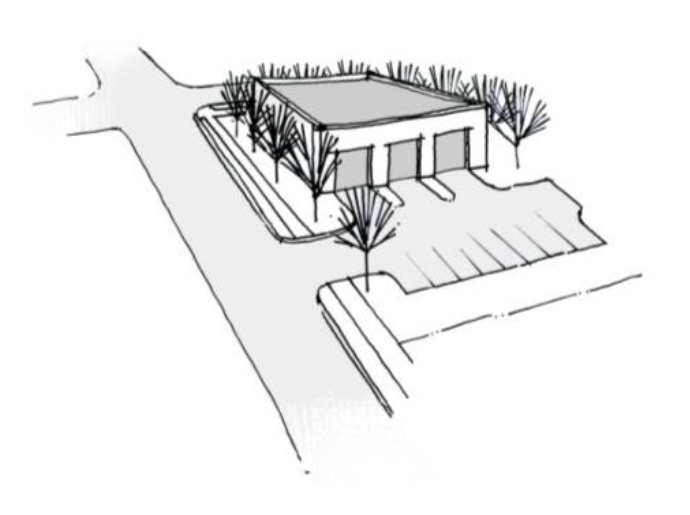
Car washes shall be located and designed so that vehicular circulation shall not conflict with traffic movements in adjacent streets, service drives, driveways and/or parking areas. All service bay doors (openings) shall face away from adjacent residential uses and from corridors designated in Sec. 98-3.3.2.B.
Sec. 98-4.6.8. - Caretaker's residences.
A.
No more than one caretaker's residence shall be allowed on a lot unless otherwise expressly allowed by this Chapter.
B.
Caretaker's residences may be occupied exclusively by the caretaker and his/her immediate family.
C.
A caretaker's residence may contain a maximum of 1,000 square feet of gross floor area.
Sec. 98-4.6.9. - Drive-through facilities.
A.
No drive-through facilities or windows shall be permitted on the side of a building adjacent to any residential district.
B.
Drive-through facilities in the L-B or C-B district may be approved only by Conditional Use Permit pursuant to Sec. 98-7.6. Such facilities are prohibited in the R-O district.
C.
Screening shall be provided in accordance with the requirements of Sec. 98-5.4.8.A
Sec. 98-4.6.10. - Fences and walls.
Unless otherwise expressly stated, fences and walls shall comply with the following requirements:
A.
Residential Districts. Maximum height of fences or walls in residential districts shall be as follows:
1.
Front yard: 4 feet.
2.
Side and rear yards: 6 feet.
B.
Nonresidential Districts. Except as otherwise specified, maximum height of fences or walls in nonresidential districts shall be as follows:
1.
Front Yard:
(a)
H-B, L-I and H-I districts: 8 feet.
(b)
LB, C-B and R-O zoning districts: 4 feet.
2.
Rear Yard:
(a)
All nonresidential districts: 8 feet.
Sec. 98-4.6.11. - Home occupations.
A.
Type A. Type A home occupations may be approved by the Zoning Administrator as a normal and customary accessory use. (See also Sec. 98-4.6.1)
1.
Type A home occupations and all related activities shall be carried on wholly within the principal building or fully enclosed accessory building, and only by a resident of the household.
2.
There shall be no advertising by sign or by media, or visible display or storage of materials on premises.
3.
Type A home occupations shall not generate more traffic or noise than other uses permitted by right in the same district.
B.
Type B. Type B home occupations may be approved as a conditional use pursuant to Sec. 98-7.6.
1.
Type B home occupations and all related activities shall be carried on wholly within the principal building or fully enclosed accessory building by residents of the principal dwelling, plus up to two persons who are not residents of the principal dwelling.
2.
Signage shall be limited to one non-illuminated wall or free-standing sign up to two square feet in area.
3.
Type B home occupations shall not generate more traffic or noise than other zoning uses permitted by right or by conditional use in the same district.
C.
Prohibited Home Occupations. The following uses are not permitted as home occupations.
1.
Animal hospitals and kennels;
2.
Any type of repair or assembly of vehicles or equipment with internal combustion engines (such as autos, motorcycles, scooters, snowmobiles, outboard marine engines, lawn mowers, chain saws, and other small engines) or of large appliances (such as washing machines, dryers, and refrigerators or any other work related to automobiles and their parts;
3.
Bulk storage of flammable liquids;
4.
Commercial nursery or truck farm;
5.
Dispatch centers or other businesses where employees come to the site and are dispatched to other locations;
6.
Food handling, processing or packing, other than services that utilize standard home kitchen equipment;
7.
Funeral homes and mortuaries;
8.
Group instruction;
9.
Material or equipment storage businesses;
10.
Medical or dental clinics and labs;
11.
Restaurant;
12.
Retail-oriented uses (See also Sec. 98-10.2.9.F);
13.
Tow truck services; and
14.
Vehicle or equipment rental.
Sec. 98-4.6.12. - Loading areas.
All loading areas shall be off-street and shall comply with the requirements of Sec. 98-5.1.8.
Sec. 98-4.6.13. - Religious institutions accessory uses.
A.
Accessory Uses Permitted By Right. The following accessory uses are permitted by right up to a maximum 3,000 square feet of gross floor area:
1.
Offices for the institution;
2.
Meeting rooms for intermittent community meetings or instruction;
3.
Fellowship hall;
4.
Child care center;
5.
Kitchen facilities, including "Meals on Wheels" or other similar programs using the kitchen in the place of worship but delivering food elsewhere;
6.
Senior center, neighborhood arts center or other community center;
7.
Temporary child care during religious services or events;
8.
Outdoor play area;
9.
School with enrollment less than 50 students;
10.
Unlighted athletic field or similar facility;
11.
Gymnasium or similar indoor recreational facility;
12.
Cemetery and/or columbarium; and
13.
Residence for clergy employed by the institution.
The following accessory uses are permitted by right without limitation upon square feet of gross floor area:
14.
Rotating Thermal Shelters.
B.
Accessory Uses Permitted By Conditional Use Permit.
1.
Accessory uses totaling more than 3,000 square feet gross floor area;
2.
School with enrollment of 51 or more students; and
3.
Lighted athletic field or similar facility.
Sec. 98-4.6.14. - Small wind energy conversion systems.
A.
General.
1.
Small wind energy systems may be ground-mounted or attached to a building or other structure, except as provided in this section.
2.
Only one small wind energy conversion system is allowed per lot, provided that up to three ground-mounted small wind energy conversion systems may be allowed on a single lot if approved through the conditional use process pursuant to Sec. 98-7.6.
3.
Multiple small wind energy systems may not be approved on residential district lots of less than 40,000 square feet in area.
B.
Location, Setbacks and Height.
1.
Small wind energy conversion systems may not be located in required building setbacks or within drainage, utility or other established easements.
2.
No portion of a system may extend on or over a property line.
3.
The lowest point of any moving elements, such as blades or vanes, must be at least 20 feet above the ground beneath such feature.
4.
All power transmission and telemetry lines from the tower to any building or other structure must be placed underground.
5.
Small wind energy conversion systems must comply with the height limits of the underlying district, measured from existing grade to the highest point of the system structure, which includes the tip of the top blade when the blade is in its highest position.
C.
Operational and Performance Standards.
1.
Operational noise may not be audible at the property line except during short-term, high wind speed events, such as storms.
2.
All systems must be equipped with manual and automatic (mechanical or electrical) over-speed controls to limit the blade rotation speed to within the design limits of the system.
3.
The rotating turbine may not produce vibrations that are perceptible to humans standing at ground level outside the property lines of the subject site.
4.
Towers, rotors and turbines may not be illuminated unless required by a State or Federal agency, such as the FAA.
D.
Design.
1.
Lattice type towers and towers using guy wires are prohibited.
2.
All structures and equipment must maintain factory colors or be finished in a non-reflective, matte finished, neutral color.
3.
No commercial messages may be placed or painted on the tower, rotor, turbine, generator or tail vane that is legible from off-site. This provision is not intended to prohibit warning signs or manufacturer's logos.
4.
All climbing pegs, ladders and similar apparatus on freestanding towers must be located at least 12 feet above the ground at the base of the structure.
E.
Abandonment. Any wind energy conversion system that is not operated for a continuous period of 12 months or more or that is in an obvious state of disrepair and a threat to public safety will be deemed abandoned and must be dismantled and removed by the property owner.
(Ord. No. 2012-31, 6-8-12; Ord. No. 2012-31, 8-2-12; Ord. No. 2017-43, 10-5-17; Ord. No. 2020-02, 1-13-20)
Sec. 98-4.7.1. - Purpose and intent.
There are certain uses that may be permissible on a temporary basis subject to the controls, limitations and regulations of this section. The following sections provide the procedures and criteria used by the Zoning Administrator in reviewing temporary use applications.
Sec. 98-4.7.2. - Permitted temporary uses.
A.
Temporary Uses Allowed by Permit. No temporary use shall be established unless a temporary use permit is approved pursuant to the provisions of Sec. 98-7.8, except as specifically exempted below. In addition to complying with the approval criteria of Sec. 98-7.8.5, the following uses shall comply with the applicable specific use requirements:
1.
Concrete and/or asphalt products, temporary, shall be subject to Sec. 98-4.7.4;
2.
Construction offices, temporary, shall be subject to Sec. 98-4.7.5;
3.
Outdoor events, temporary, shall be subject to Sec. 98-4.7.6;
4.
Peddlers, temporary, subject to Sec. 98-4.7.7;
5.
Residential sales offices and model homes, temporary, shall be subject to Sec. 98-4.7.8;
6.
Residence, temporary, shall be subject to Sec. 98-4.7.9; and
7.
Other uses similar in nature to the ones listed above, with corresponding controls, limitations and regulations, in accordance with Sec. 98-10.2.1.C.
B.
Temporary Uses Exempt from Permit. Storage pods for storage of household or other goods, temporary, are exempt from permit requirements but shall be subject to Sec. 98-4.7.10.
Sec. 98-4.7.3. - General standards.
A.
No temporary use shall be permitted unless the applicant demonstrates compliance with these standards to the satisfaction of the Zoning Administrator. The Zoning Administrator may impose reasonable conditions on the proposed use to ensure compliance with these standards or other applicable provisions of law.
B.
Adjacent uses shall be suitably protected from any adverse effects of the use, including noise and glare.
C.
The use shall not create hazardous conditions for vehicular or pedestrian traffic, or result in traffic in excess of the capacity of streets serving the use.
D.
Adequate refuse management, security, emergency services and similar necessary facilities and services shall be available for the temporary use, and all necessary sanitary facilities shall be approved by the appropriate health agency.
E.
The site shall be suitable for the proposed use, considering flood hazard, drainage, soils and other conditions which may constitute a danger to life, health or safety.
F.
The use shall not have a substantial adverse impact on the natural environment, including trees, ground cover and vegetation.
Sec. 98-4.7.4. - Concrete and/or asphalt products, temporary.
Temporary facilities for manufacturing concrete, asphalt or related products shall comply with the standards of this section. Such uses may be located in any zoning district where they are directly associated with construction in the area. Retail sales of such products shall be prohibited in conjunction with temporary plants. The production site must be returned to its pre-construction state following completion of the associated project.
Sec. 98-4.7.5. - Construction offices, temporary.
An industrialized building may be used as a temporary office, security shelter, or shelter for materials or tools necessary for construction on or development of the premises upon which the temporary office is located. Such use shall be strictly limited to the time construction or development is actively underway.
Sec. 98-4.7.6. - Outdoor events, temporary.
Temporary outdoor events, including, but not limited to, carnivals, circuses, festivals, fairs, dog shows, horse shows, outdoor retail sales events, firework shows, tent revivals and similar events, regardless of whether or not admission is charged, may be permitted subject to the following standards:
A.
A temporary use permit for such activities shall be issued for not more than ten consecutive days, in any six-month period.
B.
No such activity shall be located closer than 300 feet to a residential use, without the approval of City Council. This provision shall not apply to City-sanctioned/sponsored events.
C.
Adequate provisions must be made for parking, and safe ingress and egress must be provided.
D.
Night operations shall be permitted only if there is a lighting plan which provides for safe lighting without excessive glare into residential areas or streets.
E.
Signs for temporary outdoor events shall comply with Sec. 98-5.6.
Sec. 98-4.7.7. - Peddlers, temporary.
Temporary peddlers, including, but not limited to, the sale of food, beverage or other products from a stationary location without permanent facilities and itinerant merchants, may be permitted subject to the following standards:
A.
A temporary permit for such activities shall be issued for not more than 45 consecutive days, in any six-month period;
B.
Adequate provisions must be made for parking, and safe ingress and egress must be provided;
C.
Night operations shall be permitted only if there is a lighting plan which provides for safe lighting without excessive glare into residential areas or streets; and
D.
Signs for temporary peddlers shall comply with Sec. 98-5.6.
Sec. 98-4.7.8. - Residential sales office and model homes, temporary.
A.
Temporary residential sales offices and model homes may be located within a residential district as part of an on-going residential development. Such offices and homes shall be removed or converted to a use permitted within the district when certificates of occupancy have been issued to 80 percent of the associated residential units or when use as a sales office or model home has ceased.
B.
Model homes for new subdivisions shall only be occupied for residential habitation after all business activities have ceased. Upon sale the home shall comply with the applicable residential parking standards at that time.
Sec. 98-4.7.9. - Residence, temporary.
No recreational vehicle, trailer, tent, garage, barn or other similar vehicle or building erected on any lot shall be used as a residence, temporarily or permanently, nor shall any residence of a temporary character be permitted for more than ten consecutive days.
Sec. 98-4.7.10. - Storage pods, temporary.
Storage pods for off-site storage of household or other goods located in a yard are permitted for a maximum of 30 consecutive days.

