
Waynesville City Zoning Code
CHAPTER 10
LIGHTING
10.1 - Purpose and Intent.
The standards set forth in this section are designed to achieve several purposes. It is the intent of this section to:
• Minimize light pollution, glare and light trespass.
• Conserve energy and resources while maintaining night-time safety and utility.
• Curtail the degradation of the night-time visual environment.
• Enhance and preserve mountain and valley vistas.
This section shall apply to all new development in the Town of Waynesville unless otherwise specified.
10.2 - Applicability.
The standards contained in this Chapter shall apply to all new lighting unless specifically exempted herein or as specified in Sections 13.2 and 13.7.
10.2.1 Nonconforming Lighting.
Any nonconforming lighting fixture lawfully in place or approved by the Town prior to the adoption of this Ordinance shall be exempt from these requirements. Routine maintenance, including changing the lamp, ballast, starter, photo control, lens, and other required components, is permitted for all existing fixtures. At the time that a nonconforming fixture, which was installed prior to the adoption of this Ordinance, is replaced, moved, upgraded, or otherwise changed, the fixture must be replaced by either:
A.
The same type of fixture that emits an equal or less amount of lumens as the original fixture; allows the trespassing of an equal or less amount of light onto neighboring properties; and restricts uplighting to an equal or less amount than the original fixture. OR
B.
A fixture that is in compliance with this Ordinance.
10.3 - Design Standards.
10.3.1 Control of Glare—Luminaire Design Factors.
A.
Any luminaire with a lamp or lamps rated at a total of more than 1,000 lumens shall be full-cutoff type fixtures.
B.
Any luminaire with a lamp or lamps rated at a total of more than 1,000 lumens shall be mounted at a height equal to or less than thirty-two (32) feet above finished grade.
C.
Exceptions:
1.
Non-cutoff decorative post-mounted fixtures equipped with a solid top and mounted 18 feet or less above ground and other non-cutoff dusk to dawn utility type fixtures mounted 25 feet or less may be used. The maximum initial lumens generated by each fixture shall not exceed 9500 initial lamp lumens.
2.
All metal halide, mercury vapor, fluorescent, and other white-colored light source lamps used in non-cutoff fixtures (excluding flood lights) shall be coated with an internal white frosting inside the outer lamp envelope.
3.
All metal halide fixtures equipped with a medium base socket must utilize either an internal refractive lens or a wide-body refractive globe so that light rays emitted by the light fixture are projected below the horizontal plane passing through the lowest point on the fixture from which light is emitted.
10.3.2 Lighting Use Regulations for Specific Areas.
A.
Other than floodlights, flood lamps, and spotlights all outdoor lighting fixtures of more than 2,000 lumens shall be full-cutoff type fixtures. Any fixture that is not full-cut off shall be a directional fixture (such as flood lights) and may be used provided they shall be aimed and fully shielded.
B.
The mounting height of all outdoor lighting, except outdoor sports field lighting and outdoor performance area lighting, shall not exceed thirty-two (32) feet above finished grade.
1.
Outdoor Display Areas:
a.
The mounting height of outdoor display area fixtures shall not exceed thirty-two (32) feet above finished grade.
b.
All light fixtures shall meet the IESNA definition of full cutoff fixtures. Forward throw fixtures (type IV light distribution, as defined by the IESNA) are required within twenty-five (25) feet of any public street right-of-way. Alternatively, directional fixtures (such as flood lights) may be used provided they shall be aimed and fully shielded.
2.
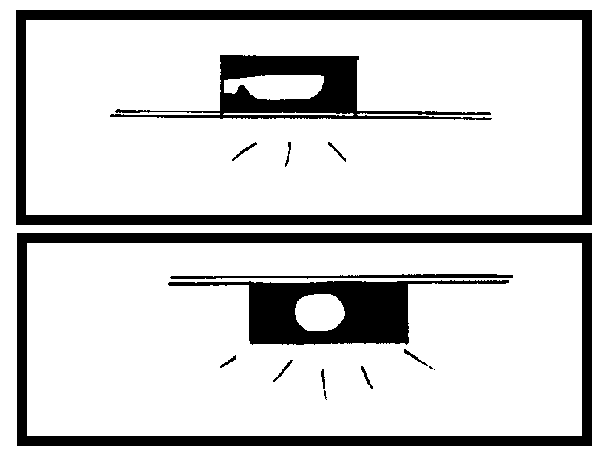
Lighting for Vehicular Canopies: Lighting under vehicular canopies shall be designed so as not to create glare off-site. Acceptable methods include one or more of the following:
a.
Recessed fixture incorporating a lens cover that is either recessed or flush with the bottom surface of the vehicular canopy.
b.
Surface mounted fixture incorporating a flat lens that provides a cutoff or shielded light distribution.
c.
Other method approved by the administrator.
C.
Lighting Standards by District:
1.
District Lighting Standards in Footcandles (FC).
2.
The values of the preceeding Subsection for Trespass and Display/Canopy area lighting shall represent the maximum point of illuminance.
3.
The values of the preceeding section for Parking Area shall represent the average point of horizontal illuminance, provided that in all districts the maximum uniformity ratio shall be 4:1 minimum to average.
10.3.3 Security Lighting.
A.
Motion activated security lights; unshielded flood and spotlights, with 45 watts or less, installed for security and activated by motion sensor, are permitted. These unshielded lights must be mounted and aimed in a manner that minimizes up-lighting and light trespass.
B.
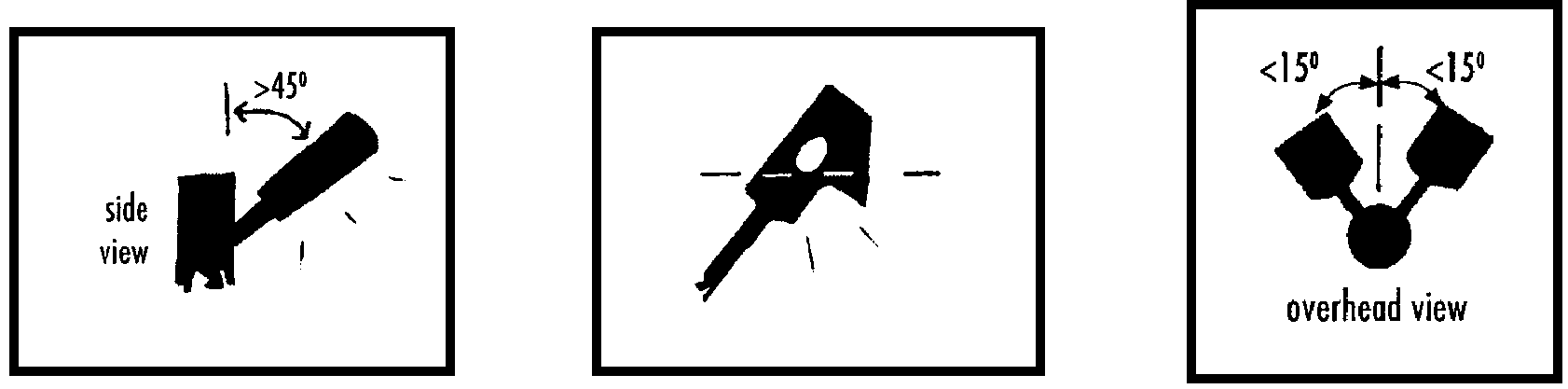
All floodlights shall be installed such that the fixture shall be aimed down at least forty-five (45) degrees from vertical flood lights and display lights shall be positioned such that any such fixture located within fifty (50) feet of a public street right-of-way is mounted and aimed perpendicular to the right-of-way, with a side-to-side horizontal aiming tolerance not to exceed fifteen (15) degrees from perpendicular to the right-of-way.
C.
All flood or spot lamps emitting 1,000 or more lumens shall be aimed at least sixty (60) degrees down from horizontal or shielded such that the main beam from the light source is not visible from adjacent properties or the public street right-of-way.
D.
Landscape and decorative lighting using incandescent lighting of 40 watts or less is permitted, provided that the light is installed and aimed to prevent lighting build up and light trespass and shielded to prevent view from the public right-of-way.
E.
Area "dusk to dawn" open-bottom lights are permitted. These lights must be full cutoff.
10.3.4 Outdoor Recreational Lighting.
A.
Lights shall be shielded and positioned so as not to shine onto adjacent properties.
B.
All fixtures used for event lighting shall be fully shielded or be designed or provided with Manufacturer's Glare Control Package, so as to minimize up-light, spill-light, and glare.
C.
Fixtures for outdoor recreational facilities must not exceed eighty feet (80') in mounting height (this includes bases and/or other mounting structures) above finished grade.
D.
Fixtures shall be fitted with a manufacturer's glare control package.
E.
Fixtures shall be designed and aimed so that their beams fall within the primary playing area and the immediate surroundings, so that off-site direct illumination is significantly restricted (spillover levels at the property line must not exceed 1.5 footcandles).
10.3.5 Street Lighting.
Street lighting shall be placed on all streets by the developer to allow for the safe use of streets by both cars and pedestrians. All street lighting shall be placed in accordance with the following minimum design standards
A.
Minimum average street light spacing:
B.
Lighting shall be placed at street intersections and is preferred at street curves.
C.
Pedestrian-scaled lighting (no taller than 18 feet) shall be prioritized over automobile lighting. Lighting shall be placed in a manner to limit the casting of shadows on sidewalks.
D.
All lighting shall utilize a cutoff fixture. Where buildings are close to the street (less than 15 feet from the right-of-way), full cutoff fixtures are required to limit glare and light spillage on upper levels.
E.
Alleys are excluded from the spacing and lighting requirements of this Section.
10.3.6 Building Façade Lighting.
Floodlights, spotlights, or any other similar lighting shall not be used to illuminate buildings or other site features unless approved as an integral architectural element on the development plan. On-site lighting may be used to accent architectural elements but not used to illuminate entire portions of building(s) or sign(s). Where accent lighting is used, the maximum illumination on any vertical surface or angular roof surface shall not exceed 5.0 average maintained footcandles. Building façade and accent lighting will not be approved unless the light fixtures are carefully selected, located, aimed, and shielded so that light is directed only onto the building façade and spillover light is minimized.
10.4 - Exemption and Prohibitions.
10.4.1 Exemptions.
A.
Luminaires used for public-roadway illumination may be installed at a maximum height of thirty-seven (37) feet and may be positioned at that height up to the edge of any bordering property.
B.
All temporary emergency lighting needed by the Police or Fire Departments or other emergency services, as well as all vehicular luminaires, shall be exempt from the requirements of this ordinance.
C.
All hazard warning luminaires required by Federal regulatory agencies are exempt from the requirements of this article, except that all luminaires used must be red and must be shown to be as close as possible to the federally required minimum lumen output requirement for the specific task.
D.
Individual residential lighting that is not part of a site plan or subdivision plan for street or other common or public area outdoor lighting.
E.
Lighting associated with landscape/holiday/festive/temporary uses.
F.
Lighting of public art that has been permitted or otherwise approved by the Town.
G.
Other Municipal or State lighting installed for the benefit of public health, safety, and welfare.
H.
All fixtures installed or temporarily used by public agencies, their agents, or contractors for the purpose of illuminating public streets.
I.
Lighting of US Flags provided the flag standard does not exceed the maximum permitted building height for that district.
10.4.2 Prohibitions.
A.
Laser Source Light - The use of laser source light or any similar high intensity light for outdoor advertising or entertainment is prohibited.
B.
Searchlights - The operation of searchlights for advertising purposes is prohibited.
C.
Flashing Lights - Lights that flash, move, revolve, rotate, scintillate, blink, flicker, vary in intensity or color, or use intermittent electrical pulsation are prohibited.
D.
Awning and Canopy Lighting - Awnings and canopies used for building accents over doors, windows, and etc. shall not be internally lit (i.e., from underneath or behind) so as to visually turn a translucent material into an internally illuminated material. Lighting may be installed under canopies that lights the sidewalk, or downlights onto the architectural features of a building.
10.5 - Administration.
10.5.1 Light Measurement Technique.
Light level measurements shall be made at the property line of the property upon which the light to be measured is being generated. If measurement on private property is not possible or practical, light level measurements may be made at the boundary of the public street right-of-way that adjoins the property of the complainant or at any other location on the property of the complainant. Measurements shall be made at finished grade (ground level), with the light-registering portion of the meter held parallel to the ground pointing up. The meter shall have cosine and color correction and have an accuracy tolerance of no greater than plus or minus five (5) percent. Measurements shall be taken with a light meter that has been calibrated within the year. Light levels are specified, calculated and measured in footcandles (FC).
10.5.2 Compliance.
While not required to be provided with the submission of the site plan, projects may be required to provide the following information upon request by the Administrator:
A.
Point-by-point footcandle arrays in a printout format indicating the location and aiming of illuminating devices. The printout shall indicate compliance with the maximum maintained footcandles required by this Ordinance.
B.
Description of the illuminating devices, fixtures, lamps, supports, reflectors, poles, raised foundations and other devices (including but not limited to manufacturers or electric utility catalog specification sheets and/or drawings, and photometric report indicating fixture classification [cutoff fixture, wall pack, flood light, etc.]).

