
Weston Marathon County
City Zoning Code
City Zoning Code
ARTICLE 94
13 SIGNS
Sec 94.13.01 Purpose
The purpose of this Article is to establish standards for signage that protect public health and safety, advance aesthetic and community character objectives; promote compatible business development and activity; and ensure the effective and flexible use of signage for commercial, community, and individual expression.
Sec 94.13.02 Sign Permitting And Approval Procedures
- General Requirements. Except as otherwise provided in Section 94.13.02(8), no sign shall hereafter be located, erected, moved, reconstructed, extended, enlarged, converted, or structurally altered without a sign permit.
- A sign permit shall be required for a change of copy on any sign, but not for repainting or exact replacement of a sign face with the same sign copy, cleaning, repair, or other normal maintenance.
- No new sign permit is required for signs that are in place as of March 18, 2015, and such signs may remain as legal nonconforming structures if legally established under applicable sign regulations at time of installation and are subject to Section 94.13.11.
- Any sign permit granted hereunder may not be assigned or transferred to any other sign.
- The applicant may include all signs at one premise under one permit, if applied for at the same time.
- Application Procedure. Each application for a sign permit shall be filed with the Zoning Administrator on a form provided by that office prior to sign installation or modification. Each complete application shall include the following:
- The name and address of the permit applicant.
- A site plan for the property showing, at a minimum, the location of the proposed sign; the location of all existing signs on the property; all property lines and buildings on the property; and parking areas, driveways, public roads, and buildings within 50 feet of the proposed sign.
- A diagram of the proposed sign, drawn to a recognized scale, and listing and depicting the type, height, width, total sign square footage, square footage of each sign component, method of attachment, structural support, method of illumination, and sign materials.
- For wall mounted signs, the lineal footage and square footage of the wall on which the sign is proposed.
- The property’s zoning district designation.
- A summary of existing signage on the property, including quantity, location, type, and area of all signs on the property both before and after the installation of the proposed sign.
- Evidence that the structural design requirements of Section 94.13.09 will be met. The footing and related supporting structure of each freestanding sign including bolts, flanges, and brackets shall be concealed by the sign exterior or shall be surrounded by landscaping, included on a landscape plan submitted with the application.
- Proof of payment of the appropriate sign permit fee, per the Village’s fee schedule.
- A line marking a distance equal to 660 feet from the nearest right-of-way from any U.S. Highway, State Highway, or Interstate. Any sign on property within a U.S. or State Highway right-of-way or setback jurisdiction may also require approval from the Wisconsin Department of Transportation.
- Granting and Issuance.
- Upon the receipt of a complete application, in cases where the requested sign does not require an approval or recommendation from another body under this Chapter, the Zoning Administrator shall review said application and shall, in writing, approve or deny a sign permit within 10 working days of acceptance of the complete application.
- Upon the receipt of a complete application, and in cases where the requested sign requires an approval or recommendation from another body under this Chapter, such as a special exception permit, the Zoning Administrator shall within 10 working days of the acceptance of the complete application notify the applicant of such additional action and schedule the item on the appropriate meeting agenda(s). Following all necessary approvals, the Zoning Administrator shall then, in writing, approve or deny a sign permit based on the submitted application and such additional body’s action within 10 working days of action by the body with final approval authority.
- Denial of a sign permit shall not result in total or partial reimbursement of permit fees paid.
- Basis for Granting. In deciding whether or not to grant a sign permit, the Zoning Administrator shall determine whether the proposed sign is in compliance with the provisions of this Article; whether the sign is in compliance with all provisions of this Chapter, including those related to traffic safety, traffic visibility, sign setbacks, and structural integrity; and whether a special exception permit or other required Village approval has or has not been granted for the sign.
- Enforcement and Revocation.
- Any sign permit may be revoked by the Zoning Administrator in the event that the applicant has failed to comply with the provisions of this Chapter, the submitted sign permit application, or any conditions that may have accompanied the permit at the time of granting.
- Any sign permit granted by the Zoning Administrator shall be null and void and automatically revoked in the event that construction, installation, or manufacture of the sign has not been commenced within 180 days from the date of the issuance of such permit. If work authorized by such permit is suspended or abandoned for a period of 90 days any time after the work is commenced, the original permit shall become null and void. A new permit shall first be obtained to complete the work, and a new permit fee shall be required.
- The sign(s) subject to any revoked permits shall be removed by the sign owner, or property owner within 10 working days of such revocation, or shall be subject to enforcement under Section 94.16.19.
- Revocation shall not result in total or partial reimbursement of permit fees paid.
- Appeals. Any person affected by a decision of the Zoning Administrator may petition for a hearing before the Zoning Board of Appeals under the provisions of Section 94.16.14. The filing of such petition automatically stays removal of any sign involved and already legally erected until the Zoning Board of Appeals decides whether to sustain, modify, or withdraw the notice.
- Removal of Defective, Dangerous, or Abandoned Signs.
- If the Zoning Administrator determines that any sign is defective, dangerous, abandoned, in poor repair, or other exists in violation of this Article, then the Zoning Administrator shall notify the sign permit holder or the owner of the property on which the sign is located that such violation must be corrected within 10 working days of receipt of such notice on penalty of automatic revocation of any sign permit previously granted.
- If the Zoning Administrator causes such notice to be sent and the violation is not corrected within 10 working days, the Zoning Administrator shall revoke any sign permit for the defective or dangerous sign. Any failure to remove such sign shall be a violation of this Chapter and shall be subject to enforcement under Section 94.16.19.
- Any sign illegally placed in a public right-of-way shall be subject to immediate removal and confiscation without notice by the Zoning Administrator, and without any payment or return of the sign to its installer or owner.
- Signs Allowed without Permit. The following signs are permitted without the need for a sign permit, in cases where they are beneath any size limitations provided herein. Such signs shall not count as part of the maximum permitted sign area in the zoning district in which they are located per Section 94.13.05 or 94.13.07 below, unless they are above any size limitations provided herein and therefore requiring a sign permit.
- Addresses. Address numerals and other sign information required to identify a location by law or governmental order, rule, or regulation, provided the size does not exceed that required by any law, order, rule or regulation; including but not limited to Sections 14.6.04 and 14.6.05.
- Architectural Elements. Integral decorative or architectural elements of buildings or works of art, so long as there is no commercial message, trademark, moving parts, or moving lights.
- Auxiliary Signs. Auxiliary signs less than one square foot placed in store windows regarding hours of operation, accepted charge cards, warnings, or similar information.
- Bulletin Boards. Bulletin boards, not exceeding 12 square feet in sign area and 8 feet in height, for public, philanthropic, or religious institutions located on the premises of said institutions.
- Commemorative Signs. Plaques, tablets, cornerstones, or lettering inlaid into the architectural materials of a building or structure denoting the name of that structure or its date of erection, not exceeding two square feet.
- Construction or Project Identification Signs. Per one-time event sign requirements of Section 94.13.08.
- Farm Field Signs. Freestanding signs located in a farm field that identify in association with the crop or product used in the field, provided that no such sign exceeds 12 square feet in area and 8 feet in height.
- Flags. Flags, standards, emblems, and insignia of governmental, civic, philanthropic, religious, or educational organizations, when not displayed in connection with a commercial promotion or as an advertising device. Flags shall be placed on a flag pole (in ground pole or angled pole mounted) to be considered this category.
- Historical Markers. Commemorative plaques, memorial tablets, or emblems of historical bodies, not exceeding two square feet, placed flat against a building, monument, or other permanent surface.
- Holiday Decorations. Temporary displays of a primarily decorative nature, in connection with traditionally accepted civic, patriotic, or religious holidays.
- Interior Signs. Signs that are located on the interior of a premise and that are primarily oriented to persons within that premises.
- Menu Board Signs. One menu board sign for a drive-in or drive-through restaurant exclusive of any two-way microphone/speaker devices, provided that the sign does not exceed 40 square feet in area or 8 feet in height.
- Real Estate Signs. Per the one-time event sign requirements of Section 94.13.08.
- Regulatory and Government Information Signs. Signs erected by or on behalf of a duly constituted governmental body and for regulatory and other basic government informational purposes, including but not limited to legal notices; handicap parking signs; and traffic signs or other regulatory, directional, or warning signs. Any other sign for broader governmental purposes shall require a permit.
- Residential Signs. Signs customarily associated with residential use and not of a commercial nature that do not exceed a total of 4 square feet in residential and N zoning districts Such signs include property identification names and numbers, names of occupants, signs relating to private parking, signs warning the public against trespass or danger of animals, signs indicating a particular farm, and Neighborhood Crime Watch signs.
- Required Signs. Signs required by State or Federal statute or regulation that do not exceed 110 percent of the minimum legal size requirements.
- Site Information Signs. Signs of no more than 4 square feet that, without including advertising of any kind, provide direction or instruction to facilities intended to serve the public, such as rest rooms, public telephones, walkways, parking, and similar facilities.
- Temporary Signs on Non-Residential Zoned Property. Per the one-time event sign requirements of Section 94.13.08.
- Temporary Signs on Residential Zoned Property. Per the one-time event sign requirements of Section 94.13.08.
- Certain One-time Event Signs. Per the one-time event sign requirements of Section 94.13.08.
- Window Signs. Per the associated requirements in Section 94.13.05(5).
- Special Exceptions.
- Applicability and Procedure. Following submittal of a complete special exception application, the Plan Commission (or Extraterritorial Zoning Committee if in the ETZ Area) may grant a special exception to one or more requirements in Sections 94.13.04(2)-(6), 94.13.05, 94.13.06, and 94.13.07. The application for special exception shall include materials required to obtain a sign permit under Section 94.13.02(2). The Zoning Administrator shall notify all landowners within 300 feet of the property on which the sign(s) are proposed, providing them an opportunity to express their opinion at the meeting at which the special exception will be considered.
- Criteria. No special exception shall be granted unless the Commission or Committee finds that the sign(s) authorized thereby, as limited by any enforceable conditions, will meet all of the following criteria:
- Consistent with the purpose and intent of this Chapter and this Section.
- Consistent with the Comprehensive Plan including any applicable aesthetic signage guidelines therein.
- Not negatively affecting the reasonable use and development of nearby properties or the community.
- Compatible with existing signage on and visible from the subject site and not significantly exceeding the height, area, or quantity of such existing signage.
- Proportional with the scale of the subject site and the building(s) and use(s) on the subject site to which the sign relates or advertises.
- Not hazardous, harmful, or otherwise adverse to the natural environment and aesthetic value of the site, nearby properties, and the community.
- Not negatively affecting the safe and efficient installation, use, and maintenance of public facilities serving the area, including but not limited to roadways, sidewalks and paths, and utilities.
- Supported by evidence that normally applicable requirements do not provide for sufficient visibility for the proposed signage or use(s) it advertises, such as a highway visibility study for freestanding signage that exceeds normally applicable height or area requirements.
Amended by Ord. 15-021 - 94.12.2 (8) on 10/21/2015
Amended by Ord. 19-001 on 1/23/2019
Amended by Ord. 20-015 on 12/23/2020
Amended by Ord. 22-002 on 1/17/2022
Sec 94.13.03 General Signage Standards
- Sign Purposes. The following are definitions of the different purposes that signs regulated under this Article may have:
- Advertising sign, off-premise. A sign that directs attention to a business, commodity, service, or entertainment conducted, sold, or offered on a premise other than the premise where the sign is displayed. Off-premise advertising signs include off-premise “billboards,” but do not include community information signs described below.
- Auxiliary sign. A sign that provides special information such as price, hours of operation, parking rules, or warnings, and that does not include brand names or information regarding product lines. Examples of such signs include directories of tenants in buildings, “no trespassing” signs, menu boards, drive-through ordering stations, and signs that list prices of gasoline, up to one price listing sign per type of fuel, which must all be displayed on a single structure.
- Business sign, on-premise. A sign that directs attention to a business, commodity, service, or entertainment conducted, sold, offered, or manufactured on the premises where the sign is located.
- Community information sign. A sign that displays a variety of information of interest to the general community regarding scheduled public events, public activities, and public facilities and is located either on-premise or off-premise; serves as an identification, entrance, or wayfinding sign for the community; or is located on public lands and advertises sponsors of public events, activities, or facilities thereon. Also known as an outdoor bulletin board.
- Directional sign, on-premise. A sign that indicates only the name (or logo or symbol) of a specific business/department/use area/destination within a development or premises, and a directional arrow or symbol to that destination. For purposes of an on-premise directional sign, the premises shall include all lots that are contiguous, either under unified single ownership and intended to remain so, or within a unified business park or group development.
- Group development sign. An on-premise sign displaying the collective name of a group of uses (such as an industrial park or multitenant retail center) and/or the names and/or logos of the individual occupants of a group of uses. For purposes of a group development sign, the premises shall include all lots that are contiguous, either under unified single ownership and intended to remain so, or within a unified business park or group development.
- Identification sign. A sign indicating the name and/or address of the tenant of the unit or manager of the property located upon the residential premises where the sign is displayed.
- Parking area sign, on-premise. A sign used to state parking restrictions and/or conditions, not including handicap parking signs.
- One-time Event sign. A sign or advertising display (including festoons, pennants, banners, flags, and similar devices) intended to be displayed for a certain limited period of time. This type of sign is not of a permanent nature, also known as a temporary sign. . If a sign display area is permanent but the message displayed is subject to periodic changes, that sign shall not be considered temporary, but instead shall be considered permanent. Flags as described in 93.13.02.(8).i. are not considered One-time Event signs.
- Sign Configurations. The following are definitions of the different configurations (methods of placement or mounting) that signs regulated under this Article may have:
- Advertising vehicle sign. A vehicle or truck trailer parked so as to be seen from a public right-of-way, which attached to or located on is any sign or advertising device for the basic purpose of providing advertisement of products or directing people to a business activity or event. Not considered advertising vehicle signs are mobile signs or business vehicles that contain typical business signage; are actively used for business purposes; and are parked in an approved parking space that either serves the advertised business or another property where actively receiving or providing goods or services.
- Arm/post sign. A type of small-scale freestanding sign mounted on a post or posts, either with a bracket arm extending outward to support a hanging sign, with the sign attached directly to the side of the post, or with the sign mounted between two posts.
Example of arm/post sign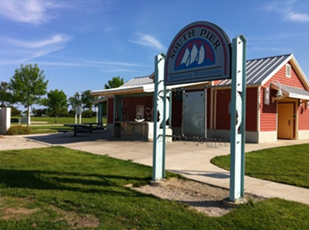
- Awning sign. A sign that is directly affixed via sewing, painting, or similar method to a non-rigid removable awning or canopy that is legally mounted to the facade of a building. Text and/or logos shall not project below or above the canopy surface and shall not exceed 50 percent of the awning/canopy area.
Example of awning sign
- Freestanding sign. A self-supporting sign resting on or supported by means of poles, standards, or any other type of base on the ground. This type of sign includes arm/post signs, monument signs, and pylon signs.
- Marquee sign. A sign mounted to a permanent roof-like structure that projects out from the exterior wall of a structure and shelters the entrance and/or entrance approaches to a building, such as traditional movie theater signs. Marquee signs shall be mounted parallel to the vertical surface of the marquee and not project more than 18 inches beyond the vertical surface of the marquee. No part of a marquee sign shall extend beyond the top, bottom, or side edges of the vertical face of the marquee surface.
- Mobile sign. A sign mounted on a frame or chassis designed to be easily relocated, including vehicles and/or trailers whose principal commercial use is for signage, including portable message board signs. Does not include any advertising vehicle signs.
- Monument sign. A type of freestanding sign with a bottom edge located within one foot of a ground-mounted pedestal or the ground surface.
Example of monument sign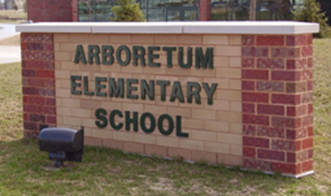
- On-building sign. A type of sign permanently affixed to an outside wall of a building. This type of sign includes, awning signs, marquee signs, projecting signs, and wall signs, but not window signs.
- Projecting sign. A type of on-building sign that is mounted at any angle other than parallel to the wall on which it is mounted and/or extends beyond 18 inches from the wall. No projecting sign shall project more than 5 feet from the wall on which it is mounted. No portion of a projecting sign shall have less than 8 feet of ground clearance or extend higher than 20 feet above the ground, measured from the grade immediately below the sign.
Example of Projecting signs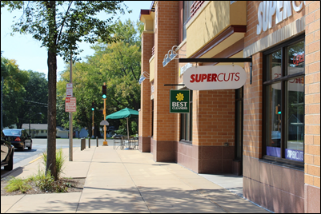
- Pylon sign. A type of freestanding sign erected upon one or more pylons, poles, or posts, generally of a scale that is larger than an arm/post sign.
- Sandwich board/pedestal sign. A movable, on-premise sign placed by hand outside the building while the business is open; removed at the time the business closes each day; self-supporting and stable even on windy days because of its design; and meeting all applicable size, placement, and other requirements of Section 94.13.04(6). Does not include “mobile signs” as described above.
Example of sandwich board sign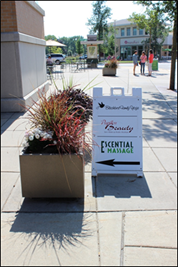
- Wall sign. A type of on-building sign mounted parallel to and directly on a building facade or other vertical building surface. Wall signs shall not project more than 18 inches beyond the edge of any wall or other surface to which they are mounted. The top of the sign shall not extend above the top edge of the vertical wall or above the lowest edge of a roof line of the portion of the building to which it is mounted.
- Window sign. A type of sign mounted on or within an exterior window with a primary intent to advertise a business or product within the premises.
Examples of wall and window signs
- Variable message sign (VMS). An on-building or freestanding sign that displays words, lines, logos, graphic images, or symbols that can automatically or by computer program change to provide different information, including computer signs, electronic reader boards with changeable letters, LCD and other video display signs, and time and temperature signs.
- Advertising vehicle sign. A vehicle or truck trailer parked so as to be seen from a public right-of-way, which attached to or located on is any sign or advertising device for the basic purpose of providing advertisement of products or directing people to a business activity or event. Not considered advertising vehicle signs are mobile signs or business vehicles that contain typical business signage; are actively used for business purposes; and are parked in an approved parking space that either serves the advertised business or another property where actively receiving or providing goods or services.
- Sign Measurement.
- Sign height. The height of a freestanding sign shall be measured from the average ground level adjacent to the sign to the top of the sign. The average ground level is defined as the average elevation of the ground upon which the sign supports are placed, except when the sign supports rest upon a berm or other area elevated above the surrounding ground. In such cases, the average elevation of the base of such berm or other area shall be considered as the ground level.
- Sign area. Sign area shall be measured in the following manner:
- In the case of an on-building sign placed within a frame, a marquee sign, or other structure, sign area consists of the entire surface area of the sign on which sign copy, could feasibly be placed.
- In the case of an on-building sign on which the message is fabricated together with the background that borders or frames that message, sign area shall be the total area of the entire background.
- In the case of an on-building sign on which a message is applied to a background that provides no border or frame (such as individual letters applied to a building face or awning), sign area shall be the combined areas of the smallest rectangle that can encompass the complete message (e.g. business name, business logo, etc.) of the subject sign.
- In the case of a freestanding sign, sign area shall consist of the total area of the smallest rectangle that can enclose all structural elements of the sign, including the area in which copy can be placed, and all surrounding borders, decorative frames, etc. Where a freestanding sign has two or more display faces, the total area of all of the display faces that can be viewed from any single vantage point shall be considered the sign area. Freestanding sign area shall exclude any elements of the sign structure designed solely for support of the sign structure and located below or to the side of the sign elements listed above. Examples of supporting structures excluded from freestanding sign area calculations include the masonry base of a monument sign, the supporting post(s) to the side of or below an arm/post sign, or supporting pole(s) or pylons of a pylon sign.
Amended by Ord. 15-021 - 94.13.3 (1) on 10/21/2015
Amended by Ord. 22-002 on 1/17/2022
Sec 94.13.04 General Signage Regulations Applicable To All Zoning Districts
- Sign Prohibitions and Limitations.
- No sign shall be erected at any location where it may, by reason of its position, shape, color, or design, interfere with, obstruct the view of, or be confused with any authorized traffic sign, signal, or device, nor shall such sign make use of words such as “stop,” “look,” “drive-in,” “danger,” or any other word, phrase, symbol, or character in such manner as to interfere with, mislead, or confuse users of streets or highways.
- No sign shall be erected, relocated, or maintained so as to prevent free ingress to or egress from any door, window, fire lane, or fire escape, and no sign shall be attached to a standpipe or fire escape.
- No sign shall be erected that violates the visibility and clearance requirements of Section 94.12.08(12).
- No private sign shall be attached to or painted on any public utility pole, public light pole, or traffic regulatory structure.
- No fluttering, undulating, swinging, rotating, or otherwise moving signs, pennants, feather flags, feather banners, or other moving decorations shall be permitted.
- No illuminated flashing or animated signs shall be permitted. Variable message signs meeting the definition and requirements of this Article shall not be considered illuminated flashing or animated signs.
- No illuminated sign/bulb shall be permitted unless the illumination of the sign is so designed that the lighting element (except for neon signs) is not visible from any property within any residential or RR zoning district.
- No sign other than a regulatory or government information sign shall be permitted within or extend into a public right-of-way, except where otherwise specifically allowed in this Article.
- No sign shall be mounted or displayed above the top edge of a roof or extend above the top-most edge of an exterior wall or parapet.
- Mobile or portable signs shall be permitted only as a type of one-time event signage for events of public interest or as a type of one-time event business sign or banner, both as described under Section 94.13.08, but shall be prohibited for any other purpose. Sandwich board/pedestal signs as defined and regulated in this Article shall not be considered mobile or portable signs.
- No inflatable signs shall be permitted.
- No advertising vehicle signs as defined in Section 94.13.03(2)(a) shall be permitted.
- No off-premise advertising signs or structure supporting such sign(s) shall be permitted to be installed or expanded in area or number of signs after March 18, 2015. This provision does not prohibit the use of community information signs under Section 94.13.04(3) or on-premise business signs allowed in Section 94.13.07 that are accessory to established on-premise principal uses for constitutionally protected free speech, provided all messages are in accordance with the time, place, and manner requirements of this Article and other provisions of this Chapter, other chapters of the Village Municipal Code, and other applicable laws. Off-premise advertising signs legally installed before March 18, 2015 but made nonconforming by this Article shall be permitted to continue as legal, nonconforming structures, subject to the requirements of Section 94.15.04, except that:
- Billboards legally installed before March 18, 2015 that are directed to and on parcels adjacent to State Highway 29 may be upgraded and/or replaced as new technologies become available, provided that the sign area, number, and height at each installation are not increased and other applicable provisions of this Chapter are satisfied.
- Billboards adjacent to State Highway 29, Business Highway 51, Schofield Avenue, or other locations in the Village that fail to meet the maintenance requirements in Section 94.13.10 may be subject to removal under Section 94.13.02(7). Said sign cannot be replaced once removed.
- Sign Location Requirements.
- Relationship to Regulatory and Government Information Signs. No sign shall be erected or maintained at any location where by reason of its position, wording, illumination, size, shape, or color it may obstruct, impair, obscure, interfere with the view of, or be confused with any authorized traffic control sign, signal, or device. Freestanding signs may not locate within required vision clearance areas under Section 94.12.08(12), nor otherwise impede traffic or pedestrian visibility.
- Setbacks. The permitted locations and setbacks of all freestanding signs shall be as stated in this Article. Sign setback shall be the shortest distance between the vertical plane extending from the property line (or other specified basis for the setback point) to the nearest structural element of the sign, whether said sign element is attached to the ground or suspended above ground.
- Minimum Ground Clearance. All pylon signs, projecting, marquee, and awning signs shall have a minimum clearance from grade of 8 feet to the bottom of the sign and shall not project into any vehicle circulation area, beyond a public street curb line, or beyond any public street surface edge if no curb is present.
- Spacing Between Freestanding Signs. No permanent freestanding signs shall be placed any closer than 100 feet from another permanent freestanding sign, except where lot sizes, lot frontages, or other condition beyond the reasonable control of the applicant prevent such spacing in the determination of the Zoning Administrator.
- Community Information Signs. On-premise and off-premise community information signs shall be allowed subject to the following regulations:
- Is a permanent or seasonal sign that shall only display information in accordance with Section 94.13.03(1)(d). One-time event signs serving similar functions are listed and regulated under Section 94.13.08.
- May be located on public property or rights-of-way if approved by the Zoning Administrator.
- May have changeable copy.
- Shall conform to the visibility requirements of this Article and of Section 94.12.08(12).
- Shall not be counted as adding to the area of signage on the property on which it is placed for the purposes of regulating sign area.
- Shall not exceed 16 square feet in sign area per business or other destination, up to a maximum of 32 square feet if two or more businesses or other destinations are included on the same sign or if the sign is placed in public parkland (such as on an outfield fence).
- Shall not exceed 10 feet in height, except where the sign is installed by a unit of government such as the Village or WisDOT.
- If off-premise, may total not more than one per business, except where the sign is installed by a unit of government such as the Village or WisDOT.
- If advertising or providing directions to a product or business, shall not be located within any residential or RR zoning district, except where such copy is associated with public event, public facility, or public activity sponsors or where such copy is integral to a community entrance or wayfinding sign.
- May be subject to restrictions on lighting, color, duration of placement (e.g., seasonal limitations) as part of sign permit approval, provided that such restrictions are consistent with the purposes of this Article and Chapter.
- Variable Message Signs (VMS).
- Allowable Districts and Land Uses. No VMS shall be allowed within any agricultural, rural, open space, residential, RM or N district, or for any residential use regardless of district.
- Length of Cycle. Messages and non-text images shall not change appearance more than once every six (6) seconds and transitions between messages shall be via instantaneous change. Use of variable message signs for images, text, or lighting that change appearance in a manner not permitted above shall be considered prohibited flashing or animated signs. No scrolling messages are permitted.
- Brightness Adjustment. All VMS shall be equipped with photosensitive equipment that automatically adjusts the brightness and contrast of the sign in direct relation to the ambient outdoor illumination. Light output shall not exceed that allowed under Section 94.12.11.
- Dimensions. The illuminated or message display area of the VMS is subject to the same height and area requirements as other on-premise business signs in the zoning district. All variable message signs shall be included in the calculation of total permitted sign area for the type of on-premise business sign (wall or freestanding) and the zoning district in which the sign is located.
- Maintenance. Each VMS shall be maintained so as to be able to display messages in a complete and legible manner.
- Location. In addition to standard setback requirements for the applicable sign type, no VMS shall be positioned to be visible from any permitted residential use unless the sign is located at least 100 feet from said use.
- Window Signs.
- Installation. Window signs shall be confined within the transparent area of the window and shall not encroach upon the frame, mullions, or other supporting features of the glass. All permanent window signs that have their lettering or graphic elements directly on the surface of the glass shall be painted, metal leafed, vinyl transferred, or in some other manner permanently applied to the building window or door.
- Area and Quantity. Window signage that advertise commercial situations relating to goods or services sold on premises shall be allowed without restriction on quantity or coverage, provided that they do not interfere with other State and Federal code requirements or public, health, safety, or welfare.
- Structural Design and Maintenance. All window signs shall be designed and maintained so as to be able to display messages in a complete and legible manner, and otherwise in accordance with Sections 94.13.09 and 94.13.10.
- Sandwich Board/Pedestal Signs.
- There shall be a maximum of one sandwich board/pedestal sign per business.
- Height shall not exceed 6 feet (as measured when such sign is properly placed directly on the ground or sidewalk surface), width shall not exceed 3 feet, and sign area shall not exceed 6 square feet per side.
- All sandwich board/pedestal signs shall be designed to be self-supporting and in such a manner to withstand the elements, including the ability to remain upright on windy days.
- No sandwich board/pedestal sign shall be illuminated in any manner (except via cordless power for not more than 30 days in any calendar year), have more than two sides, be placed off-premise (except where allowed on a sidewalk immediately adjacent to the business lot to which it relates), or be designed to resemble a public regulatory sign (such as a stop sign).
- All sandwich board/pedestal signs shall be placed directly on a hard-surfaced walkway.
- No sandwich board/pedestal sign shall be placed on a public sidewalk or shall otherwise extend onto or into a public right-of-way.
- Placement of all sandwich board/pedestal signs shall meet all vision clearance requirements in Section 94.12.08(12), and shall otherwise not impede traffic visibility in the determination of the Zoning Administrator.
- All sandwich board/pedestal signs must be kept in good condition, as determined by the Zoning Administrator and per the maintenance requirements of Section 94.13.10.
- Sandwich board/pedestal signs shall not count against the maximum area or number of business signs allowed per Section 94.13.07.
Amended by Ord. 15-021 - 94.13.03 (1) on 10/21/2015
Amended by Ord. 16-046 - 94.13.04 (4) on 12/21/2016
Amended by Ord. 18-011 - 94.13.04 (4) on 4/18/2018
Amended by Ord. 22-002 on 1/17/2022
Sec 94.13.05 Regulations For Residential And RR Zoning Districts
In all residential and RR zoning districts, signage shall be permitted per the following and all other applicable requirements of this Article:
- Identification Sign.
- For each single-family and two-family residential principal use:
- Permitted Sign Types: Wall Signs, Arm/post signs.
- Maximum Permitted Number per Lot: One sign
- Maximum Permitted Area per Sign: Two square feet.
- Minimum Setback from All Property Lines: Three feet.
- For a multi-family residential structure containing three or more dwelling units:
- Permitted Sign Types: Wall Signs, Monument Signs, Arm/post signs.
- Maximum Permitted Number per Lot: One Wall Sign or one Monument Sign.
- Maximum Permitted Area per Sign: 12 square feet.
- Minimum Setback from All Property Lines: Three feet.
- For each multi-structure residential group development, residential subdivision, institutional use, or “Community Garden” land use:
- Permitted Sign Type: Wall Sign, Monument Sign, or Arm/post Sign.
- Maximum Permitted Number: One per public street or driveway entrance, up to a maximum of three per lot.
- Maximum Permitted Area per Sign: 32 square feet.
- Minimum Setback from All Property Lines: Three feet.
- For each single-family and two-family residential principal use:
- Auxiliary Sign. (such as “Beware of Dog” or “No Trespassing”):
- Permitted Sign Types: Wall Signs, Freestanding Signs.
- Maximum Permitted Number of Freestanding Signs per Lot: Two, or more if allowed by site plan approval.
- Maximum Permitted Area per Sign: Two square feet.
- Minimum Setback from All Property Lines: Three feet.
- On-Premise Parking Area and Directional Sign. (for multi-family residential use, multi-building development, or institutional use):
- Permitted Sign Types: Wall Signs, Monument Signs, and Arm/post Signs.
- Maximum Permitted Number per Lot: One directional sign for each vehicular entrance and each vehicular exit, and one parking restrictions/conditions sign for each parking area.
- Maximum Permitted Area per Sign: Nine square feet.
- Minimum Setback from All Property Lines: Three feet.
- One-time Event Sign. One-time event signs are allowed per the requirements of Section 94.13.08.
- On-Premise Home Occupation, Residential Business, Intermediate Day Care Home, or Bed and Breakfast Sign. These shall be in lieu of the allowances in subsection (1)(a) above.
- Permitted Sign Types: Wall Signs and Arm/Post Signs.
- Maximum Permitted Number per Lot: One Wall Sign or one Arm/Post Sign.
- Maximum Permitted Area per Sign: Six square feet.
- Minimum Setback from All Property Lines: Three feet.
- On-Premise Business Sign. For legal, non-conforming businesses only, signs shall comply with the provisions for signs applicable to the B-1 Neighborhood Business district.
- Community Information Sign. Shall comply with the provisions of Section 94.13.04(3), except that no Community Information Sign advertising or providing directions to a business shall be located within a residential or RR zoning district.
Amended by Ord. 15-021 - 94.13.05 (4) on 10/21/2015
Amended by Ord. 21-011 on 5/17/2021
Sec 94.13.06 Signage For Residential Uses In Non-Residential Districts
Regardless of zoning district, signage for all principal residential land uses within non-residential zoning districts shall comply with provisions of Section 94.13.05 and all other applicable provisions of this Article.
Sec 94.13.07 Regulations For Non-Residential, Agricultural, PR, PD And N Zoning Districts
Except for residential uses within non-residential zoning districts (instead see Section 94.13.06), signage within non-residential, agricultural, and PR zoning districts shall be permitted per the following and all other applicable provisions of this Article. Signage standards for the PD and N districts encompassed in subsection (8).
- Auxiliary Sign. (such as “open”, business hours, "no trespassing", and required gas pump price signs):
- Permitted Sign Types: Wall Signs, Freestanding Signs.
- Maximum Permitted Number per Lot: Per approved sign plan.
- Maximum Permitted Area per Sign: Combined area of all auxiliary signs on any lot shall not exceed 50 percent of the permitted freestanding or on-building sign area for the lot, whichever is greater.
- Minimum Setback from All Property Lines: For freestanding auxiliary sign, same as for all other freestanding signs in district.
- On-Premise Parking Area and On-Premise Directional Signs.
- Permitted Sign Types: Wall Signs, Monument Signs, and Arm/post Signs.
- Maximum Permitted Number per Lot: One directional sign for each vehicular entrance/exit, and one parking restrictions/conditions sign for each parking area.
- Maximum Permitted Area per Sign: Nine square feet
- Minimum Setbacks from All Property Lines: Three feet or the height of the sign, whichever is greater.
- On-Premise Group Directional Signs. Within non-residential developments in which two or more separate establishments, agencies, and/or use areas occupy different buildings or occupy the same building but are accessed from different driveways, parking areas, and/or sides of a building, on-premise directional signage may be combined on a monument sign in accordance with subsections (a) through (e) below. Examples of eligible uses include multi-agency institutional buildings with separate building entrances and parking areas; hospitals with separate entrances or vehicle accommodation areas for distinctive functions (emergency rooms, visitor parking, clinics) or campuses with multiple buildings; sites or business parks with multiple, individual businesses; and large business or industrial principal structures with separate use area entrances (e.g. customer, employees, and/or shipping). Content of such signs shall be limited to destination name/logo and directional arrows or words.
- Permitted Sign Types: Wall Signs, Monument Signs, and Arm/Post Signs.
- Maximum Permitted Number per Lot: One, or as otherwise specified on an approved site plan.
- Maximum Permitted Area per Sign: Five square feet per establishment, agency, or entrance. Area allowance shall not be combined and allotted in a manner that allows the directional sign for a specific destination to exceed five square feet in area. Maximum total area per freestanding Group Directional Sign shall be 50 square feet.
- Maximum Height: Eight feet.
- Minimum Setback from All Property Lines: Three feet or the height of the sign, whichever is greater.
- Sandwich Board/Pedestal Signs. Per the requirements of Section 94.13.04(6).
- One-time Event Signs. Per the requirements of Section 94.13.08.
- Community Information Signs. Per the provisions of Section 94.13.04(3).
- On-Premise Business Signs. (also see summary in Figure 13.07)
- For the FP Farmland Preservation, AR Agricultural Residential, PR Parks and Recreation, and RM Rural Mix Zoning Districts.
- Permitted Sign Type: Wall Sign
- Maximum Permitted Number per Lot: One sign.
- Maximum Permitted Area per Sign: 48 square feet.
- Permitted Sign Type: Freestanding Sign (Monument Sign or Arm/Post Sign only)
- Maximum Permitted Number per Lot: One sign.
- Maximum Permitted Area per Sign: 32 square feet for all combined sign faces seen from a single vantage point.
- Maximum Permitted Sign Height: Eight feet.
- Minimum Permitted Sign Setback from All Property Lines: The greater of actual sign height or three feet.
- Permitted Sign Type: Wall Sign
- For the INT Institutional and B-1 Neighborhood Business Districts.
- Permitted Sign Type: On-Building Sign (Wall, Awning, Marquee, or Projecting sign)
- Maximum Permitted Area: 1 square foot of on-building sign area per 1 linear foot of exterior length of each signable wall. For buildings with multiple tenants, the building owner(s) shall be responsible for assignment of allowable sign area to individual businesses within the building.
- Maximum Permitted Number. 1 on-building sign per signable wall per business.
- Permitted Location: On any signable wall visible from a public street, except signable walls which are adjacent to a residentially zoned property. On-building signs shall not be located on any portion of upper stories. Sign placement shall be integrated with, and not cover, architectural elements and details.
- Permitted Sign Type: Freestanding Sign (Monument, Pylon, or Arm/Post)
- Maximum Permitted Number per Lot: 1 per lot.
- Maximum Permitted Area Per Sign: 48 square feet for all combined sign faces seen at one time, or up to 64 square feet by special exception.
- Maximum Permitted Sign Height: 8 feet, or up to 20 feet by special exception.
- Minimum Permitted Sign Setback from All Property Lines: The greater of actual sign height or 3 feet.
- Permitted Sign Type: On-Building Sign (Wall, Awning, Marquee, or Projecting sign)
- For the B-2 Highway Business, B-3 General Business, BP Business Park, and I Industrial Districts.
- Permitted Sign Type: On-Building Sign (Wall, Marquee, or Awning sign).
- Maximum Permitted Area per Sign: One square foot of on-building sign area for every one linear foot of signable wall length (for the subject wall). For buildings with multiple tenants, the owner(s) shall be responsible for assignment of allowable sign area to individual businesses within the building.
- Maximum Permitted Number: Two on-building sign per signable wall per individual business or establishment on the lot.
- Permitted Location: On any signable wall that is visible from a public street, except signable walls that are adjacent to a residentially zoned property.
- Permitted Sign Types Freestanding Sign (Monument or Pylon Sign).
- Maximum Permitted Area per Sign: 200 square feet for each sign located within 660 feet of the Interstate or State Highway 29 right-of-way, 64 square feet in other locations. Sign area shall be for all combined sign faces seen at one time.
- Maximum Permitted Number per Lot: One per public street frontage per lot.
- Maximum Permitted Sign Height: 40 feet for each sign located within 660 feet of the Interstate or State Highway 29 right-of-way, 20 feet in other locations.
- Minimum Permitted Sign Setback from All Property Lines: A distance equal to sign height. The Zoning Administrator may approve a lesser setback in the following instances: sign at least 10 feet from any vehicular, bicycle, or pedestrian travel way; safe relationship to pedestrian and vehicular traffic movement and safety; sign designed and installed to prevent or make extremely unlikely its collapse; lesser setback does not conflict with Village’s adopted aesthetic standards for the area (including any design overlay district); and lesser setback does not conflict with Village and utility use and operations.
- Permitted Sign Type: Freestanding Group Development Sign
- Except within 660 feet of any Interstate or Highway 29, freestanding Group Development Signs shall be allowed only in lieu of and not in addition to freestanding signs for individual establishments allowed under subsection 2. above, and any existing or subsequent freestanding sign shall count against the maximum number of freestanding Group Development Signs allowed for the property or site.
- Maximum Permitted Area per Sign: 50 square feet per individual business or establishment on the Group Development site, to a maximum area of 200 square feet per freestanding Group Development Sign regardless of the number of business establishments located within the development (400 square feet if located within 660 feet of the Interstate or State Highway 29 right-of-way). The property owner(s) shall be responsible for apportionment of allowable freestanding business sign area to individual businesses or establishments within the Group Development.
- Maximum Permitted Number per Group Development: One per group development of 5 acres or less; two per each larger group development.
- Maximum Permitted Sign Height: 50 feet for each sign located within 660 feet of the Interstate or State Highway 29 right-of-way, 25 feet in other locations.
- Minimum Permitted Sign Setback from All Property Lines: A distance equal to sign height. The Zoning Administrator may approve a lesser setback in the following instances: sign at least 10 feet from any vehicular, bicycle, or pedestrian travel way; safe relationship to pedestrian and vehicular traffic movement and safety; sign designed and installed to prevent or make extremely unlikely its collapse; lesser setback does not conflict with Village’s adopted aesthetic standards for the area (including any design overlay district); and lesser setback does not conflict with Village and utility use and operations.
- Permitted Sign Type: On-Building Sign (Wall, Marquee, or Awning sign).
- For the FP Farmland Preservation, AR Agricultural Residential, PR Parks and Recreation, and RM Rural Mix Zoning Districts.
- For the PD and N Districts Zoning District. Permitted sign types, number, area, location, and other characteristics shall be per an approved Specific Implementation Plan per Article 14. Unless otherwise addressed in the Specific Implementation Plan, the types, number, area, location, and other characteristics of allowable signs on individual lots approved exclusively for residential use shall be those for the corresponding type of residential uses in other districts in Section 94.13.05. For non-residential uses, only signage shown on an approved Specific Implementation Plan or otherwise specifically addressed in or authorized by the Specific Implementation Plan approval documents shall be located on any site or lot in a PD or N district. Any such sign shall also be subject to the permit requirements of Section 94.13.02.
Figure 13.07: SUMMARY of Maximum Dimensions and Number of On-Premise Business Signs (For Non-Residential, Agricultural, and PR Districts—See Section 94.13.05 for Residential and RR District Standards)
| Zoning District | Maximum Sign Area and Height | Maximum Number of Signs | |
| On-Building | Freestanding | ||
| FP AR PR RM | Wall only: 48 SF | Monument or Arm-post only: Maximum Area: 32 SF Maximum Height: 8 ft | 1 on-building sign and freestanding sign per lot |
| INT B-1 | Wall, Awning, or Projecting: 1 SF of sign area per linear foot of wall length on that wall | Monument, Pylon, or Arm/post: Maximum Area: 48 SF (64 SF by Special Exception) Maximum Height: 8 ft (20 ft by Special Exception) | 1 on-building wall sign per signable wall per business 1 monument or arm/post sign per lot |
| B-2 B-3 BP LI GI | Wall, Awning, or Projecting: 1 SF of sign area per linear foot of exterior wall length on that wall | Monument or Pylon: Maximum Area: 64 SF (200 SF if within 660 feet of Interstate or Highway 29) Maximum Height: 20 ft (40 ft if within 660 feet of Interstate or Highway 29) | 2 on-building signs per signable wall per business 1 pylon or monument sign per lot; 2 for lots with more than one street frontage where each frontage is at least 200 ft |
| NOTE: This table is only a summary of the sign regulations applicable to nonresidential uses. Section 94.13.07 contains more specific requirements, including allowances for other signs in these districts such as group development signs and sign setbacks. In the event of any conflict, the text in Section 94.13.07 controls. | |||
Amended by Ord. 15-021 - 94.13.07 (5) on 10/21/2015
Amended by Ord. 16-027 - Figure 13.07 on 5/18/2016
Amended by Ord. 16-046 - Figure 13.07 on 12/21/2016
Amended by Ord. 21-011 on 5/17/2021
Amended by Ord. 22-002 on 1/17/2022
Sec 94.13.08 One-Time Event Signs
The following are allowable one-time event sign types and unique requirements for each type. A sign permit shall not be required except where indicated.
- Real Estate Signs. Within each residential and rural and open space zoning district, only one on-premise real estate sign per street frontage is permitted, in association with a real estate transaction. Such sign shall be removed within 30 days of the sale or lease of the single space it is advertising or of the sale or lease of 90 percent of the total land or space available for sale or lease on the property. Such signs shall not be located in the public right-of-way, shall not exceed 12 square feet in area and 6 feet in height in residential, rural and open space zoning districts, and 64 square feet in area and 12 feet in height in all other districts. No off-premise real estate signs, such as “open house” signs, are permitted.
- Construction or Project Identification Signs. Such signs shall be erected no sooner than the beginning of work for which a valid building or demolition permit has been issued, and shall be removed once occupancy certificate has been issued . Construction or project identification signs shall not exceed 64 square feet in area and 12 feet in height, except that each fence surrounding a construction site may be partially or fully covered with a banner including signage.
[Amended via Ord. 19-001; 1/23/2019] - Temporary Signs on Non-Residential Zoned Property. Signs other than allowed per permanent sign allotments above. Such signs shall not exceed 64 square feet in area and 12 feet in height if ground mounted, nor extending above the roof line if building mounted. Except as may be allowed below or by site plan approval under Section 94.16.09, no single use is permitted to display more than one temporary sign or banner at a single time and no single lot is permitted to display more than two temporary signs and banners at a single time. No temporary sign or banner shall be placed on a lot for greater than 60 consecutive days. Five days must pass before the placement of another temporary sign. An advertising vehicle sign is not a permitted temporary commercial sign, but a mobile sign is permitted. A sign permit shall be required for a temporary sign serving this purpose. Smaller signs of no more than 32 square feet shall be limited to two signs per street frontage, and no closer than five feet from any property lines, with no permit required. These signs shall be placed on the lot no greater than 60 consecutive days. If a portable Variable message sign (VMS) is used as a temporary commercial sign, then the regulations in Section 94.13.04(4) shall also apply.
- Temporary Signs on Residential Zoned Property. No more than two temporary signs, with a combined total of 12 square feet. Within 60 days prior to, and 10 days following any local, state, or federal election hosted by the Village, any number of signs is permitted, with a maximum area of 32 square feet and maximum height of 6 feet.
- Temporary Window Signs. Signs temporarily affixed to the inside of a window that advertise commercial situations relating to goods or services sold on premises shall be allowed without restriction on quantity or c overage, provided that they do not interfere with other State and Federal code requirements or public, health, safety, or welfare. If a portable variable message sign (VMS) is used as a temporary commercial sign, then the regulations in Section 94.13.04(4) shall also apply.
Amended by Ord. 15-021 on 10/21/2015
Amended by Ord. 16-006 on 4/20/2016
Amended by Ord. 22-002 on 1/17/2022
Sec 94.13.09 Structural Requirements
- All signs shall be constructed and mounted so as to comply with State Building Codes.
- No sign or any part thereof, anchor, brace, or guide rod shall be attached, fastened, or anchored to any fire escape, fire ladder, or standpipe.
- All temporary/one-time event signs shall be anchored and supported in a manner that reasonably prevents the possibility of the signs becoming hazards to public health and safety.
- No sign or any part thereof, anchor, brace, or guide rod shall be attached, erected, or maintained that may cover or obstruct any door, doorway, or window of any building that may hinder or prevent ingress or egress through such door, doorway, or window, or that may hinder or prevent the raising or placing of ladders against such building in the event of fire.
- No signs shall, in any instance, create a traffic visibility or other safety hazard. No sign shall be erected so that it impedes visibility for safe pedestrian and/or vehicular circulation.
- No sign not designed and constructed to withstand winds during typical Wisconsin storm events shall be erected at any location.
- All freestanding signs erected in any location shall be designed and constructed with footings for support of such sign that extend not less than 42 inches below the existing ground level. The base or support(s) shall be securely anchored to a concrete base or footing, except for signs legally installed in public rights-of-way. The footing and related supporting structure of each freestanding sign including bolts, flanges, and brackets shall be concealed by the sign exterior or shall be surrounded by landscaping.
- All signs attached to buildings and that are permitted to project away from the building wall shall be designed and constructed such that the attachment to such wall does not extend above a point of bearing with the roof rafters.
- All illuminated signs erected at any location shall be designed and constructed to meet the following requirements:
- All signs shall be constructed and maintained to conform with State Electrical Codes and shall bear UL labels. All sign permit applications in which electrical wiring and connections are proposed shall be submitted to the Electrical Inspector. The Electrical Inspector shall examine the plans and specifications submitted for the proposed sign and may require additional information relating to the proposed electrical installation from the applicant. If the Electrical Inspector determines that the proposed installation complies with local ordinances relating to the electrical wiring and construction, then the Electrical Inspector shall approve the application and submit the approved application to the Zoning Administrator. The Zoning Administrator may not approve a sign permit application for an illuminated sign unless and until approval is received from the Electrical Inspector.
- Unless an illuminated sign bears the label of approval of a recognized testing laboratory, all illuminated signs shall be inspected and approved by the Electrical Inspector on the site prior to the erection of the sign. No illuminated sign, despite issuance of a sign permit, shall be erected until the site inspection has been made or waived by the Electrical Inspector and the sign permit initialed or stamped to show the Electrical Inspector's approval.
- All illuminated signs shall be equipped with a watertight safety switch, located where electric current enters the sign. All parts covering service openings to the electrical supply shall be securely fastened.
- No illuminated sign shall be connected to an electric power source except by an electrical contractor, unless the only connection to the electric power source is through a grounded three-prong heavy duty plug.
- All freestanding illuminated signs shall be supplied power only by underground wiring or internal batteries.
Amended by Ord. 15-021 - 94.13.09 (3) on 10/21/2015
Sec 94.13.10 Maintenance Requirements
- All signs and structures appurtenant thereto shall be maintained in a neat and proper state of appearance.
- Proper maintenance shall be the absence of loose materials (including peeling paint, paper, or other material); the lack of excessive rust; the lack of excessive vibration or shaking; and the presence of the original structural integrity of the sign, its frame and other supports, its mounting, and all components thereof.
- The repainting, changing of parts, and preventive maintenance of signs that completely conform to the requirements of this Article, and result in absolutely no change in the appearance of the sign from that originally approved, shall not be deemed alterations requiring a sign permit.
- The owner, lessee, or manager of a sign, and the owner of the land on which the same is located, shall keep grass or weeds and other growth cut and debris and rubbish cleaned up and removed from the lot on which the sign is located.
- The base of signs shall be landscaped so as to conceal footings, mountings, brackets, and related structural elements, if not shielded by a decorative portion of the sign.
- A sign that is improperly maintained, is abandoned, is unsafe, or otherwise exists in violation of this Chapter, shall be removed by the sign permit holder or the owner of the property on which the sign is located within three months from the date of disrepair, abandonment, or unsafe condition or by the notice from the Zoning Administrator of the problem. Any failure to remove such sign shall be a violation of this Chapter and shall be subject to enforcement under Section 94.16.19.
- Business signs that advertise an activity, business product or service no longer conducted or available on the premises on which the sign is located shall be prohibited. In such instance, the property owner shall be responsible for removing the sign or sign face related to such activity, business product, or service within 30 days of the cessation of such activity, product or service, or sooner if the Zoning Administrator determines that the signs do not meet the maintenance requirements of Section 94.13.10. Any failure to remove such sign shall be a violation of this Chapter and shall be subject to enforcement under Section 94.16.19.
- Signs shall also be maintained in accordance with Section 50.102. The Village may utilize abatement procedures in Chapter 50 to achieve compliance with this Section.
Sec 94.13.11 Nonconforming Signs
- Generally. Any signs lawfully existing at the time of the adoption or amendment of this Article may be continued although the use, size, or location does not conform to the provisions of this Article. However, such sign shall be deemed a nonconforming structure, and the provisions of Section 94.15.04 shall apply, except where otherwise limited by other provisions of this Chapter.
- Maintenance and Alteration of Nonconforming Signs. Nonconforming signs may be maintained. No nonconforming on-premise sign shall be altered, extended, enlarged, converted, or moved to a new location without being brought into compliance with the requirements of this Article, except that sign face copy or materials may be repaired or replaced, and a marquee or other permanent sign with a manually changeable message may be converted to a variable message sign, provided that sign area is not increased or reconfigured. Alteration of a nonconforming on-premise sign is considered to be any other change to the exterior appearance of any part of the sign, frame, supporting structure, lighting, material, height, location, or any other alterations as determined by the Zoning Administrator.
[Amended via Ord. 19-001; 1/23/2019] - Removal of Nonconforming Signs. All nonconforming signs found not to be in compliance with the provisions of this Chapter shall be removed within 10 days of receiving written notice of noncompliance and removal from the Zoning Administrator, except as otherwise provided for in Section 94.13.02(6).
- Change of User of Nonconforming Signs. Whenever there is a change in the user of a nonconforming sign (excluding off-premise signs), sign owner, or owner of the property on which the sign is located, the new sign user, sign owner, or new property owner shall forthwith notify the Zoning Administrator of the change. No new sign permit is required unless there is modification of the sign face or sign structure. The sign will continue to be considered a legal, nonconforming structure.
- Signs Related to Nonconforming Uses. Business signs on the premises of a nonconforming use or structure may be continued, but new signs for such uses shall not be allowed, nor shall expand in number, area, height, or illumination.

