
Whitewater City Zoning Code
CHAPTER 19
09 - DEFINITIONS
19.09.010 - Generally.
For the purposes of this title, the definitions set out in this chapter shall be used. Words used in the present tense include the future; the singular number includes the plural number; and the plural number includes the singular number. The word "shall" is mandatory and directory.
(Ord. No. 1914A, 2-18-2016)
19.09.015 - A zones.
"A zones" means areas of potential flooding shown on the "flood insurance rate map" or "flood hazard boundary map" which would be inundated by the regional flood as defined in this title. These zones may be numbered as A0, A1 to A99, or be unnumbered A zones. The A zones may or may not be reflective of flood profiles, depending on the availability of data for a given area.
(Ord. No. 1914A, 2-18-2016)
19.09.020 - Accessory use or structure.
"Accessory use or structure" means a use or detached structure subordinate to the principal use of structure, land, or water and located on the same lot or parcel serving a purpose customarily incidental to the principal use of the principal structure.
(Ord. No. 1914A, 2-18-2016)
19.09.025 - Adult-oriented establishments.
A.
"Adult-oriented establishments" shall include the following:
1.
"Adult bath house" means an establishment or business which provides the service of baths of all kinds, including all forms and methods of hydrotherapy, that is not operated by a medical practitioner or a professional physical therapist licensed by the state of Wisconsin and which establishment provides to its customers an opportunity for engaging in specified sexual activities as defined in this section.
2.
"Adult body painting studio" means an establishment or business wherein customers are afforded an opportunity to paint images on a body which is wholly or partially nude.
3.
"Adult bookstore" means an establishment having as a substantial or significant portion of its stock and trade in books, magazines, and other periodicals which are distinguished or characterized by their emphasis on matter depicting, describing, or relating to specified sexual activities or specified anatomical areas as defined herein. The term includes an establishment having as its stock in trade, for sale, rent, trade, lease, inspection or viewing, books, films, video cassettes, compact discs, digital video discs, computers or computer programs in any format, motion pictures, magazines or other periodicals which are distinguished or characterized by their emphasis on matters depicting, describing or relating to specific sexual activities or specified anatomical areas, and in conjunction therewith have facilities for the presentation of adult entertainment, including adult-oriented videotapes, films, motion pictures or other offered entertainment for observation by customers therein. The term includes a commercial establishment that, as one of its principal business purposes, offers for sale or rental for any form of consideration, instruments, devices, or paraphernalia that are designed for use in connection with "specified sexual activities."
4.
"Adult cabaret" means a nightclub, dance hall, bar, restaurant, or similar commercial establishment that regularly features:
a.
Persons who appear in a state of nudity or semi-nudity; or
b.
Live performances that are characterized by sexual activities; or
c.
Films, motion pictures, videocassettes, slides, or other photographic or computer reproductions or depictions that are characterized by the depiction or description of sexual activities or nudity.
5.
"Adult entertainment" means any exhibition of any motion pictures, live performance, display or dance of any type, wherein a significant or substantial portion of such performance is distinguished or characterized by an emphasis on any actual or simulated performance of specified sexual activities, the exhibition and viewing of specified anatomical areas, or the removal of articles of clothing to reveal specified anatomical areas.
6.
"Adult mini-motion picture theater" means an enclosed building with a capacity for less than fifty customers, including establishments that have coin-operated video or motion picture booths, used for presenting material distinguished or characterized by an emphasis on matters depicting, describing, or relating to specified sexual activities or specified anatomical areas as defined herein for observation by customers therein.
7.
"Adult motel" means a hotel, motel, or similar commercial establishment which:
a.
Offers accommodations to the public for any form of consideration; provides customers with closed-circuit television transmissions, films, motion pictures, videocassettes, slides, or other photographic reproductions which are characterized by the depiction or description of specified sexual activities or specified anatomical areas; or
b.
Offers a sleeping room for rent for a period of time that is less than ten hours; or
c.
Allows a tenant or occupant of a sleeping room to sub-rent the room for a period of time that is less than ten hours.
8.
"Adult motion picture theater" means an enclosed building with a capacity of fifty or more persons at which a significant or substantial portion of the material presented is distinguished or characterized by an emphasis on matter depicting, describing, or relating to specified sexual activities or specified anatomical areas for observation by customers therein.
9.
"Adult motion picture theater (outdoor)" means a parcel of land from which individuals may view a motion picture presented out of doors which presents material distinguished or characterized by an emphasis on matter depicting, describing, or relating to specified sexual activity or specified anatomical areas for observation by customers.
10.
"Adult novelty shop" means an establishment or business having as a substantial or significant portion of its stock and trade in novelty or similar items which are distinguished or characterized by their emphasis on specified sexual activities or specified anatomical areas or for simulation of the foregoing.
11.
"Miscellaneous adult-oriented establishment" means an establishment which includes, but is not limited to, adult bookstores, adult motion picture theaters, outdoor adult motion picture theaters, adult mini-motion picture theaters, adult theaters, adult bath houses, adult body painting studios, adult motels, adult novelty shops or adult cabarets, sexual encounter centers, escort agencies, establishments featuring live sexually explicit performances, and any premises to which public customers or members are invited or admitted and which are so physically arranged so as to provide booths, cubicles, rooms, compartments or stalls separate from the common area of the premises for the purposes of viewing adult-oriented motion pictures, or wherein an entertainer provides adult entertainment to a member of the public, a customer or a member, whether or not such adult entertainment is held, conducted, operated or maintained for profit, direct or indirect. An adult-oriented establishment further includes, without being limited to, any adult entertainment studio or any premises that is physically arranged and used as such whether advertised or represented as an adult entertainment studio, rap studio, exotic dance studio, encounter studio, sensitivity studio, modeling studio or any other term of like import.
B.
"Adult-oriented establishment" shall not include:
1.
Theaters, performing arts centers, civic centers, and dinner theaters where live dance, ballet, music and dramatic performances of serious artistic, social or political merit are offered on a regular basis; and in which the predominant business or attraction is not the offering of entertainment which is intended for the sexual interests or titillation of customers; and where the establishment is not distinguished by an emphasis on or the advertising or promotion of nude or semi-nude performances; or
2.
Any public or private school, as defined in Wisconsin Statutes Chapter 115, when instructing pupils as part of its curriculum.
(Ord. No. 1914A, 2-18-2016)
19.09.030 - Alley.
"Alley" means a special public right-of-way affording only secondary access to abutting properties.
(Ord. No. 1914A, 2-18-2016)
19.09.035 - Alternative support structure.
"Alternative support structure" means a water tower, silo, utility pole, light pole, smokestack, electrical transmission tower, building or other similar structure of at least fifty feet in height, and used as a structural base, stand, pedestal, or physical support for one or more wireless telecommunications facilities.
(Ord. No. 1914A, 2-18-2016)
19.09.040 - Apartment-style building.
"Apartment-style building" means a building containing three or more attached dwelling units with a majority of the units having primary access from a common entranceway or hallway. Units may be attached either vertically or horizontally.
(Ord. No. 1914A, 2-18-2016)
19.09.050 - Arterial street.
"Arterial street" means a public street or highway used or intended to be used primarily for fast or heavy through traffic. For the purpose of this title, arterial streets shall include all county, state and federal highways.
(Ord. No. 1914A, 2-18-2016)
19.09.055 - Base flood.
"Base flood" means the flood having a one percent chance of being equaled or exceeded in any given year, as published by the Federal Emergency Management Agency (FEMA) as part of a flood insurance study (FIS) and depicted on a flood insurance rate map (FIRM).
(Ord. No. 1914A, 2-18-2016)
19.09.060 - Basement.
"Basement" means that portion of any structure located partly below the average lot grade, which if occupied for living purposes shall be counted as a story for purpose of height measurement.
(Ord. No. 1914A, 2-18-2016)
19.09.063 - Bed and breakfast establishment.
"Bed and breakfast establishment" means a place of temporary lodging that provides eight or fewer sleeping rooms for paying lodgers, allows a maximum individual lodger stay of one month, provides meals only to paying lodgers, also serves as the principal residence for the operator/owner (who shall live on the premises at all times when the establishment is active), and meets all requirements of DHS 197 of the Wisconsin Administrative Code. Does not include "tourist homes," "lodginghouses," or "group lodging houses" defined elsewhere in this chapter.
(Ord. No. 1914A, 2-18-2016)
19.09.064 - Bedroom.
For the purpose of defining the number of occupiable bedrooms in a residential unit, a "bedroom" shall:
A.
Meet all applicable building codes.
B.
Be at least one hundred net square feet for a one-person bedroom or one hundred twenty-five net square feet for a two-person bedroom.
C.
Contain a closet not included in the net square feet.
D.
When added as part of a new remodeling or addition, be consistent with the function and appearance of the interior of the residential unit.
(Ord. No. 1914A, 2-18-2016)
19.09.065 - Block.
A "block" means a unit of land bounded by streets or by a combination of streets and public land, railroad rights-of-way, waterways, or any other barrier to the continuity of development.
(Ord. No. 1914A, 2-18-2016)
19.09.070 - Building.
"Building" means any structure having a roof supported by columns or walls used or intended to be used for the shelter or enclosure of persons, animals, equipment, machinery or materials.
(Ord. No. 1914A, 2-18-2016)
19.09.080 - Building, accessory.
"Accessory building" means a building or portion of building used for a purpose customarily incident to the permitted principal use of the lot, and located on the same lot as the principal use.
(Ord. No. 1914A, 2-18-2016)
19.09.090 - Building area.
"Building area" means the total living area bounded by the exterior walls of a building at the floor levels, but not including basement, garages, porches, breezeways and unfinished attics.
(Ord. No. 1914A, 2-18-2016)
19.09.100 - Building height.
"Building height" means the vertical distance measured from the main elevation of the finished lot grade along the street yard face of the structure to the mid-point between the eave and highest point of the roof, not including ornamental features or architectural projections.
(Ord. No. 1914A, 2-18-2016)
19.09.110 - Building, principal.
"Principal building" means the building on a lot in which is conducted the principal use as permitted on such lot by the regulations of the district in which it is located.
(Ord. No. 1914A, 2-18-2016)
19.09.113 - Building scale.
"Building scale" means the relationship between the mass of a building and its surroundings, including streets, open spaces, and surrounding buildings. Mass is the three-dimensional bulk of a structure: height, width, and depth.
(Ord. No. 1914A, 2-18-2016)
19.09.114 - Bulkhead line.
"Bulkhead line" means a geographic line along a reach of navigable water that has been adopted by a municipal ordinance and approved by the Department of Natural Resources pursuant to Wisconsin Statutes 30.11, and which allows limited filling between this bulkhead line and the original ordinary high-water mark, except where such filling is prohibited by the floodway provisions of this title.
(Ord. No. 1914A, 2-18-2016)
19.09.115 - Campground.
"Campground" means any parcel of land which is designed, maintained, intended or used for the purpose of providing sites for nonpermanent overnight use by four or more camping units, or which is advertised or represented as a camping area.
(Ord. No. 1914A, 2-18-2016)
19.09.116 - Camping unit.
"Camping unit" means any portable device, no more than four hundred square feet in area, used as a temporary shelter, including but not limited to a camping trailer, motor home, bus, van, pick-up truck, tent, or other mobile recreational vehicle.
(Ord. No. 1914A, 2-18-2016)
19.09.117 - Certificate of compliance.
"Certificate of compliance" means a certification that the construction and the use of land or a building, the elevation of fill, or the lowest floor of a structure is in compliance with all of the floodplain provisions of this title.
(Ord. No. 1914A, 2-18-2016)
19.09.120 - Classes of notice.
References in this title to Class 1 and Class 2 notices refer to Wisconsin Statutes Chapter 985.
(Ord. No. 1914A, 2-18-2016)
19.09.125 - Channel.
"Channel" means the floodlands normally occupied by a stream of water under average annual high-water flow conditions while confined within general well-established banks.
(Ord. No. 1914A, 2-18-2016)
19.09.128 - Co-location.
"Co-location" means the clustering of multiple antennas, dishes or similar telecommunications facilities or devices operated by different service providers but located on a single, freestanding wireless telecommunications facility or alternative support structure.
(Ord. No. 1914A, 2-18-2016)
19.09.130 - Commercial use.
"Commercial use" means and refers to activity carried out for pecuniary gain.
(Ord. No. 1914A, 2-18-2016)
19.09.140 - Commonly owned open space.
"Commonly owned open space" means publicly or privately owned undeveloped open space intended for aesthetic, recreational or other conservation purpose, to be used by the owners or residents of a particular development or the public in general.
(Ord. No. 1914A, 2-18-2016)
19.09.150 - Community living arrangements.
"Community living arrangements" means a group lodging facility licensed or operated or permitted under the authority of the Wisconsin Department of Health Services (see Wisconsin Statutes 46.03(22)) where three or more unrelated persons reside, and in which care, treatment or services above the level of room and board but less than skilled nursing care is provided to persons residing in the facility. Such care, treatment or services are provided as a major function of the facility. Child care facilities, nursing homes, hospitals, prisons, jails, foster family homes which are the primary domiciles of a foster parent and four or fewer children are not "community living arrangements" for purposes of this title.
(Ord. No. 1914A, 2-18-2016)
19.09.155 - Comprehensive (master) plan.
"Comprehensive (master) plan" means the plan for the physical development of the city, also called a master plan or comprehensive plan, adopted by the city pursuant to Wisconsin Statutes 62.23 and/or 66.1001, including proposals for future land use, transportation, urban redevelopment and public facilities.
(Ord. No. 1914A, 2-18-2016)
19.09.160 - Conditional uses.
"Conditional uses" means uses of a special nature as to make impractical their complete predetermination as a use in a district.
(Ord. No. 1914A, 2-18-2016)
19.09.171 - Crawlways or crawlspace.
"Crawlways or crawlspace" means an enclosed area below the first usable floor of a building, generally less than five feet in height, used for access to plumbing and electrical utilities.
(Ord. No. 1914A, 2-18-2016)
19.09.173 - Day care center, adult.
"Day care center, adult" means a facility operated for the purpose of providing care, protection, and guidance to adults during normal business hours and with no overnight facilities.
(Ord. No. 1914A, 2-18-2016)
19.09.177 - Day care center, child.
"Day care center, child" means a state licensed facility where a person or persons, other than a relative or legal guardian, provides paid care and supervision for four or more children under seven years of age, for less than twenty-four hours a day.
(Ord. No. 1914A, 2-18-2016)
19.09.178 - Deck.
"Deck" means an unenclosed exterior structure that has no roof or sides, but has a permeable floor which allows the infiltration of precipitation.
(Ord. No. 1914A, 2-18-2016)
19.09.180 - Development.
"Development" means any manmade change to improved or unimproved real estate, including but not limited to construction of or additions or substantial improvements to buildings, other structures, or accessory uses, the placement of mobile homes, mining, dredging, filling, grading, paving, excavation or drilling operations, or deposition of materials.
(Ord. No. 1914A, 2-18-2016)
19.09.185 - District, basic.
"Basic district" means a part or parts of the city for which the regulations of this chapter governing the use and location of land and buildings are uniform.
(Ord. No. 1914A, 2-18-2016)
19.09.190 - Drive-in establishment.
"Drive-in establishment" means a building and the lot on which it is situated, or a portion thereof which is used for off-street quick-service business purposes catering primarily to automobile trade wherein the customer is served directly at the automobile or the automobile is parked temporarily and the customer is served from a counter or pass-through window. Drive-in food service establishments may contain very limited seating accommodations for walk-up customers.
(Ord. No. 1914A, 2-18-2016)
19.09.191 - Driveway.
An improved access which is used primarily to connect off-street parking spaces to the public right-of-way. All areas intended to be utilized as driveways and parking areas shall be surfaced with asphalt or concrete to control dust and drainage. The use of bricks, gravel or pavers will require a permit. Plans for surfacing and drainage of driveways shall be submitted to the city for review and approval.
(Ord. No. 1914A, 2-18-2016)
19.09.195 - Dryland access.
"Dryland access" means a vehicular access route which is above the regional flood elevation and which connects land located in the floodplain to land which is outside the floodplain, such as a road with its surface above the regional flood elevation and wide enough to accommodate wheeled vehicles.
(Ord. No. 1914A, 2-18-2016)
19.09.200 - Dwelling.
"Dwelling" means a building or part of a building, containing one or more dwelling units and also containing other directly associated elements such as hallways, storage areas or common laundry facilities. For purposes of this title, the term "dwelling" does not include group lodging facilities.
(Ord. No. 1914A, 2-18-2016)
19.09.210 - Dwelling, attached.
"Attached dwelling" means a dwelling attached to another dwelling unit by having any portion of any roof, any wall, or any floor in common with another dwelling unit.
(Ord. No. 1914A, 2-18-2016)
19.09.220 - Dwelling, detached.
"Detached dwelling" means a dwelling separated from another dwelling unit and not having any portion of any roof, any wall, or any floor in common with another dwelling unit.
(Ord. No. 1914A, 2-18-2016)
19.09.230 - Dwelling, multiple-family.
"Multiple-family dwelling" means a dwelling having three or more attached dwelling units, and includes both apartment and townhouse-style buildings.
(Ord. No. 1914A, 2-18-2016)
19.09.240 - Dwelling, single-family.
"Single-family dwelling" means a detached dwelling having one dwelling unit.
(Ord. No. 1914A, 2-18-2016)
19.09.250 - Dwelling, two-family or duplex.
"Two-family dwelling" or "duplex" means a dwelling having two attached dwelling units.
(Ord. No. 1914A, 2-18-2016)
19.09.260 - Dwelling unit.
"Dwelling unit" means an area of or within a dwelling that is designed, occupied or intended to be occupied by a family (or by a nonfamily household) as permitted by this title as a separate living quarters with private kitchen, sanitary, sleeping and living quarters within the dwelling unit. Quarters are within the dwelling unit if they are within the same contiguous area. Kitchen quarters in a dwelling must be designed and outfitted to have, at a minimum, a refrigerator, stove and range, kitchen sink and cabinet facilities.
(Ord. No. 1914A, 2-18-2016)
19.09.270 - Dwelling unit, efficiency.
"Efficiency dwelling unit" means a dwelling unit within a dwelling that has two or more attached units and having not more than one habitable room in addition to kitchen and sanitary facilities.
(Ord. No. 1914A, 2-18-2016)
19.09.275 - Encroachment.
"Encroachment" means any fill, structure, equipment, building, use or development in the floodway.
(Ord. No. 1914A, 2-18-2016)
19.09.280 - Essential services.
"Essential services" means services provided by public and private utilities, necessary for the exercise of the principal use or service of the principal structure. These services include underground, surface, or overhead gas, electrical, television, steam, water, sanitary sewerage, stormwater drainage, and conventional, nonwireless telephonic communication systems and accessories thereto, such as poles, towers, wires, mains, drains, vaults, culverts, laterals, sewers, pipes, catchbasins, water storage tanks, conduits, cables, fire alarm boxes, police call boxes, traffic signals, pumps, lift stations, and hydrants, but not including buildings, wireless telecommunications facilities, or wireless telecommunications support facilities.
(Ord. No. 1914A, 2-18-2016)
19.09.285 - Existing manufactured home park or subdivision.
"Existing manufactured home park or subdivision" means a parcel of land, divided into two or more manufactured home lots for rent or sale, on which the construction of facilities for servicing the lots is completed before January 1, 2006. At a minimum, this would include the installation of utilities, the construction of streets and either final site grading or the pouring of concrete pads.
(Ord. No. 1914A, 2-18-2016)
19.09.286 - Expansion to existing mobile/manufactured home park.
"Expansion to existing mobile/manufactured home park" means the preparation of additional sites by the construction of facilities for servicing the lots on which the manufactured homes are to be affixed. This includes installation of utilities, construction of streets and either final site grading, or the pouring of concrete pads.
(Ord. No. 1914A, 2-18-2016)
19.09.290 - Family.
"Family" means an individual or a group of two or more individuals who are related by blood, marriage, adoption, domestic partnership, or civil union, (limited to immediate family members, grandparents, aunts, uncles, nieces, nephews, and first cousins) together with not more than two additional persons not so related (with the exception of the R-O overlay district), living as a single household in a dwelling unit. (For the purposes of this title, "family" includes "nonfamily households.")
(Ord. No. 1914A, 2-18-2016)
19.09.295 - Federal Emergency Management Agency.
"Federal Emergency Management Agency" means the federal agency that administers the National Flood Insurance Program. Also referred to as FEMA.
(Ord. No. 1914A, 2-18-2016)
19.09.296 - Flood frequency.
"Flood frequency" means the probability of a flood occurrence which is determined from statistical analyses. The frequency of a particular flood event is usually expressed as occurring, on the average, once in a specified number of years or as a percent chance of occurring in any given year.
(Ord. No. 1914A, 2-18-2016)
19.09.300 - First floor.
"First floor" means that floor located at ground level and having one-half or more of its windows above the lot grade at the building line.
(Ord. No. 1914A, 2-18-2016)
19.09.305 - Flood.
"Flood" means a general and temporary condition of partial or complete inundation of normally dry land caused by the overflow or rise of inland waters; or the rapid accumulation or runoff of surface waters from any source; or inundation caused by waves or currents of water exceeding cyclical levels along the shores of Lake Michigan or Lake Superior; or a sudden increase caused by an unusually high water level in a natural body of water, accompanied by a severe storm, or by an unanticipated force of nature, such as a seiche, or by some similarly unusual event.
(Ord. No. 1914A, 2-18-2016)
19.09.306 - Flood insurance rate map.
"Flood insurance rate map" means a map of a community on which the Federal Insurance and Mitigation Administration has delineated both special flood hazard areas (the floodplain) and the risk premium zones applicable to the community. This map can only be amended by the Federal Emergency Management Agency. Also referred to as FIRM.
(Ord. No. 1914A, 2-18-2016)
19.09.307 - Flood insurance study.
"Flood insurance study" means a technical engineering examination, evaluation, and determination of the local flood hazard areas. It provides maps designating those areas affected by the regional flood, provides both flood insurance rate zones and base flood elevations, and may provide floodway lines. The flood hazard areas are designated as numbered and unnumbered A-zones. Flood insurance rate maps, that accompany the flood insurance study, form the basis for both the regulatory and the insurance aspects of the National Flood Insurance Program (NFIP).
(Ord. No. 1914A, 2-18-2016)
19.09.310 - Flood hazard boundary map.
"Flood hazard boundary map" means a map designating approximate flood hazard areas. Flood hazard areas are designated as unnumbered A-zones and do not contain floodway lines or regional flood elevations. This map forms the basis for both the regulatory and insurance aspects of the National Flood Insurance Program (NFIP) until superseded by a flood insurance study and a flood insurance rate map.
(Ord. No. 1914A, 2-18-2016)
19.09.312 - Flood profile.
"Flood profile" means a graph showing the relationship of the floodwater surface elevation of a flood event of a specified recurrence interval to the stream bed and other significant natural and manmade features along a stream.
(Ord. No. 1914A, 2-18-2016)
19.09.314 - Flood protection elevation.
"Flood protection elevation" means a point two feet above the water surface elevation of the one-hundred-year recurrence interval flood. This safety factor, also called "freeboard," is intended to compensate for the many unknown factors that contribute to flood heights greater than those computed. Such unknown factors may include ice jams, debris accumulation, wave action, and obstruction of bridge openings.
(Ord. No. 1914A, 2-18-2016)
19.09.315 - Floodplain.
"Floodplain" means land which has been or may be covered by floodwater during the regional flood. It includes the floodway and the floodfringe, and may include other designated floodplain areas for regulatory purposes.
(Ord. No. 1914A, 2-18-2016)
19.09.316 - Flood stage.
"Flood stage" means the elevation of the floodwater surface above an officially established datum plan, which is Mean Sea Level 1929 Adjustment.
(Ord. No. 1914A, 2-18-2016)
19.09.318 - Floodlands.
For the purpose of this title, the "floodlands" are all lands contained in the "regional flood" or one-hundred-year recurrence interval flood.
(Ord. No. 1914A, 2-18-2016)
19.09.320 - Floodfringe.
"Floodfringe" means that portion of the one-hundred-year recurrence interval floodplain located beyond the limits of the floodway. The floodfringe is generally associated with standing water rather than rapidly flowing water.
(Ord. No. 1914A, 2-18-2016)
19.09.321 - Floodplain island.
"Floodplain island" means a natural geologic land formation within the floodplain that is surrounded, but not covered, by floodwater during the regional flood.
(Ord. No. 1914A, 2-18-2016)
19.09.322 - Floodproofing.
"Floodproofing" means measures designed to prevent and reduce flood damage for those uses which cannot be removed from, or which, of necessity, must be erected in the floodplain, ranging from structural modifications through installation of special equipment or materials to operation and management safeguards, such as the following: reinforcing of basement walls; underpinning of floors; permanent sealing of all exterior openings; use of masonry construction; erection of permanent watertight bulkheads, shutters and doors; treatment of exposed timbers; elevation of flood-vulnerable utilities; use of waterproof cement; adequate fuse protection; sealing of basement walls; installation of sump pumps; placement of automatic swing check valves; installation of sealtight windows and doors; installation of wire-reinforced glass; location and elevation of valuable items; waterproofing, disconnecting, elevation or removal of all electric equipment; avoidance of the use of flood-vulnerable areas; temporary removal or waterproofing of merchandise; operation of emergency pump equipment; closing of backwater sewer valves; placement of plugs and flood drain pipes; placement of movable watertight bulkheads; and the shoring of weak walls or structures. Floodproofing of structures shall be extended at least to a point two feet above the elevation of the regional flood. Any structure that is located entirely or partially below the flood protection elevation shall be anchored to protect it from larger floods.
(Ord. No. 1914A, 2-18-2016)
19.09.323 - Floodplain management.
"Floodplain management" means policy and procedures to ensure wise use of floodplains, including mapping and engineering, mitigation, education, and administration and enforcement of floodplain regulations.
(Ord. No. 1914A, 2-18-2016)
19.09.324 - Floodway.
"Floodway" means a designated portion of the one-hundred-year recurrence interval flood that will safely convey the regulatory flood discharge into small, acceptable upstream and downstream increases, limited in Wisconsin to 0.01 foot unless special legal measures are provided. The floodway, which includes the channel, is that portion of the floodplain needed to convey the regional flood discharges and is not suited for human habitation. All fill, structures and other development that would impair floodwater conveyance by adversely increasing flood stages or velocities or would itself be subject to flood damage should be prohibited in the floodway.
(Ord. No. 1914A, 2-18-2016)
19.09.326 - Flood storage.
"Flood storage" means those floodplain areas where storage of floodwaters has been taken into account during analysis in reducing the regional flood discharge.
(Ord. No. 1914A, 2-18-2016)
19.09.330 - Fraternity or sorority house.
"Fraternity or sorority house" means a building containing sleeping rooms, bathrooms, common rooms and a central kitchen and dining room maintained exclusively for fraternity or sorority members and their guests or visitors and affiliated with an institution of higher learning.
(Ord. No. 1914A, 2-18-2016)
19.09.333 - Freeboard.
"Freeboard" means a safety factor expressed in terms of a specified number of feet above a calculated flood level. Freeboard compensates for any factors that cause flood heights greater than those calculated, including ice jams, debris accumulation, wave action, obstruction of bridge openings and floodways, the effects of watershed urbanization, loss of flood storage areas due to development and aggregation of the river or stream bed.
(Ord. No. 1914A, 2-18-2016)
19.09.335 - Freestanding wireless telecommunications facility.
"Freestanding wireless telecommunications facility" means a self-supporting telecommunications tower or other self-supporting wireless telecommunications facility that is not mounted, or otherwise attached to, an alternative support structure. A tower using guy wires shall be considered a freestanding wireless telecommunications facility.
(Ord. No. 1914A, 2-18-2016)
19.09.340 - Garage, private.
"Private garage" means a structure primarily intended for and used for the enclosed storage or shelter of the private motor vehicles of the families resident upon the premises. Carports shall be considered garages within this definition.
(Ord. No. 1914A, 2-18-2016)
19.09.350 - Garage, public or commercial.
"Public or commercial garage" means any garage not falling within the definition of a "private garage" as established in this chapter.
(Ord. No. 1914A, 2-18-2016)
19.09.360 - Group lodging facilities.
"Group lodging facilities" means buildings or parts of buildings designed, occupied or intended to be occupied as living quarters on a basis other than described in this chapter under the defined terms: dwelling, dwelling unit, hotel or motel.
(Ord. No. 1914A, 2-18-2016)
19.09.370 - Group lodging house.
"Group lodging house" means a group lodging facility containing several lodging rooms without kitchen facilities that are offered for rent or comparable compensation on a monthly or longer basis. Meals or access to common meal preparation facilities may be offered as part of the service to occupants. Facilities commonly known as dormitories are group lodging houses for purposes of this title.
(Ord. No. 1914A, 2-18-2016)
19.09.375 - Habitable structure.
"Habitable structure" means any structure or portion thereof used or designed for human habitation.
(Ord. No. 1914A, 2-18-2016)
19.09.376 - Hearing notice.
"Hearing notice" means a publication or posting meeting the requirements of Wisconsin Statutes Chapter 985. For appeals, a Class 1 notice, published once at least one week (seven days) before the hearing, is required. For all zoning ordinance text and map amendments, a Class 2 notice, published twice, once each week consecutively, the last at least a week (seven days) before the hearing, is required.
(Ord. No. 1914A, 2-18-2016)
19.09.377 - High flood damage potential.
"High flood damage potential" means damage that could result from flooding that includes any danger to life or health or any significant economic loss to a structure or building and its contents.
(Ord. No. 1914A, 2-18-2016)
19.09.380 - Historic landmark.
"Historic landmark" means any building or structure which has a special historic, architectural or cultural interest, significance or value as part of the heritage, development or cultural characteristics of the city, state or nation and which has been designated as a landmark under this title.
(Ord. No. 1914A, 2-18-2016)
19.09.385 - Historic structure.
For the purposes of the floodplain regulations in this title, "historic structure" means any structure that is either: listed individually in the National Register of Historic Places or preliminarily determined by the Secretary of the Interior as meeting the requirements for individual listing on the National Register, certified or preliminarily determined by the Secretary of the Interior as contributing to the historical significance of a registered historic district or a district preliminarily determined by the Secretary to qualify as a registered historic district; individually listed on a state inventory of historic places in states with historic preservation programs which have been approved by the Secretary of the Interior; or individually listed on a local inventory of historic places in communities with historic preservation programs that have been certified either by an approved state program, as determined by the Secretary of the Interior, or by the Secretary of the Interior in states without approved programs.
(Ord. No. 1914A, 2-18-2016)
19.09.390 - Household occupation or home occupation.
"Household occupation" or "home occupation" means an occupation for gain or support that is traditionally or customarily conducted within a residential building by resident occupants, and which meets all of the following criteria:
A.
Home occupation is incidental to the principal residential use of the premises.
B.
Space used for the home occupation(s) does not exceed either twenty-five percent of the usable floor area of the principal building or fifty percent of an accessory building.
C.
No article or service shall be sold or offered for sale on the premises except articles or services that are produced by such occupation.
D.
There shall be no exterior alterations that change the character of the dwelling or accessory building, or exterior evidence of the home occupation, other than permitted signage under Chapter 19.54.
E.
There shall not be more than one employee other than members of the resident family.
F.
No home occupation shall create smoke, odor, glare, noise, dust, vibration, fire hazard, small electrical interference, or any other nuisance not normally associated with the average residential use in the district.
G.
There shall be no exterior display or storage of any materials, supplies, equipment, or product produced or used by such occupation.
(Ord. No. 1914A, 2-18-2016)
19.09.395 - Impervious surface.
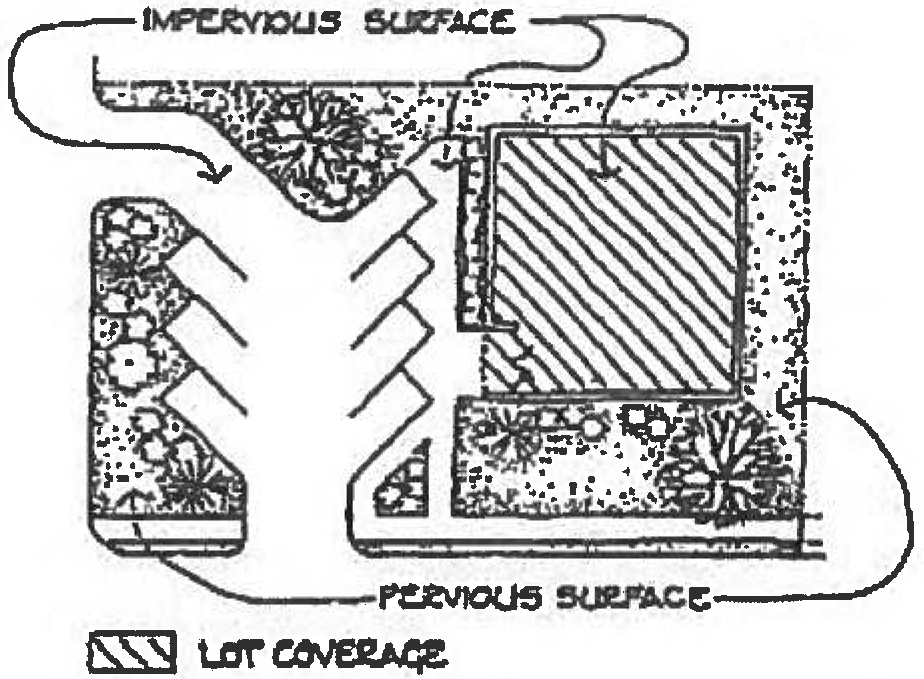
"Impervious surface" is a surface which has been compacted or covered with a layer of material so that it is highly resistant to infiltration by water and increases both the amount and rate of stormwater runoff. This includes but is not limited to streets, driveways, roofs, awnings, sidewalks, parking lots, patios, sheds, compacted aggregate and similar surfaces.
(Ord. No. 1914A, 2-18-2016)
19.09.400 - Incidental repairs.
"Incidental repairs" are not considered structural repairs, modifications, or additions; incidental repairs include internal and external painting, decoration, paneling, and the replacement of doors, windows, and other nonstructural components.
(Ord. No. 1914A, 2-18-2016)
19.09.401 - Increase in regional flood height.
"Increase in regional flood height" means a calculated upward rise in the regional flood elevation, equal to or greater than 0.01 foot, based on a comparison of existing conditions and proposed conditions which is directly attributable to development in the floodplain but not attributable to manipulation of mathematical variables such as roughness factors, expansion and contraction coefficients and discharge.
(Ord. No. 1914A, 2-18-2016)
19.09.403 - Land use.
For the purposes of the floodplain regulations in this title, "land use" means any nonstructural use made of unimproved or improved real estate.
(Ord. No. 1914A, 2-18-2016)
19.09.405 - Letter of map change (LOMC).
"Letter of map change" or "LOMC" means official notification from the Federal Emergency Management Agency (FEMA) that a flood hazard boundary map or flood insurance rate map has been amended.
(Ord. No. 1914A, 2-18-2016)
19.09.410 - Living rooms.
"Living rooms" means all rooms within a dwelling except closets, foyers, storage areas, utility rooms and bathrooms.
(Ord. No. 1914A, 2-18-2016)
19.09.420 - Loading area.
"Loading area" means a completely off-street space or berth on the same lot for the loading or unloading of freight carriers, having adequate ingress and egress to a public street or alley.
(Ord. No. 1914A, 2-18-2016)
19.09.430 - Lodginghouse.
"Lodginghouse" means a building other than a hotel, restaurant or a dormitory where lodging is regularly furnished by prearrangement for a definite period for compensation for six or more persons not members of a family, but not exceeding twelve persons and not open to transient customers. A lodginghouse shall maintain a minimum green space area of three hundred fifty square feet per allowed occupant.
(Ord. No. 1914A, 2-18-2016)
19.09.440 - Lodging rooms.
"Lodging rooms" means rooms within group lodging facilities that are rented as sleeping and living quarters, or spaces within a suite of rooms in a group lodging facility that provide sleeping accommodations. For purposes of this title any lodging room that is designed or intended to be occupied by one or two persons shall be counted as one lodging room.
(Ord. No. 1914A, 2-18-2016)
19.09.450 - Lot.
"Lot" means a single parcel of contiguous land abutting and having frontage on a public street, being a part of a platted recorded subdivision, or recorded certified survey map (CSM), or a parcel of land for which the deed is recorded with the respective county register of deeds occupied or intended to be occupied by a principal structure or principal group of structures or use and sufficient in size to meet the lot width, lot frontage, lot area, yard parking area, and other open space provisions of this title.
(Ord. No. 1914A, 2-18-2016)
19.09.451 - Lot, corner.
"Corner lot" means a lot located at the intersection of two or more streets. A lot abutting on a curved street or streets shall be considered a corner lot if straight lines drawn from the foremost point of the side lot lines to the foremost point of the lot (or an extension of the lot where it has been rounded by a street radius) meet at an interior angle of less than one hundred thirty-five degrees.
(Ord. No. 1914A, 2-18-2016)
19.09.452 - Lot coverage.
"Lot coverage" is the total buildable area that can be occupied by principal and accessory structures. Parking area, driveways, sidewalks and similar at-grade structures shall not be included when figuring lot coverage.
(Ord. No. 1914A, 2-18-2016)
19.09.453 - Lot, through.
"Through lot" means a lot that abuts on a street at the front of the lot and abuts on a street at the rear of the lot. A conditional use permit (CUP) is required for fencing and accessory structures in the rear lot of through lots.
(Ord. No. 1914A, 2-18-2016)
19.09.455 - Lot width.
"Lot width" means the horizontal distance between side lot lines as measured at the minimum front yard setback required in the zoning district in which the lot is located or through a recorded final plat or certified survey map.
(Ord. No. 1914A, 2-18-2016)
19.09.457 - Major subdivision.
"Major subdivision" means the division of a lot or parcel, or tract of land by the owners thereof, or their agents, for the purpose of transfer of ownership or building development where a single act of division creates five or more parcels or building sites, each less than five acres in size; or an act of division results in the creation of five or more parcels or building sites by successive divisions within a period of five years, where at least five of the parcels or sites are less than one and one-half acres in size in the M-I general manufacturing district, or less than five acres in size in all other zoning districts.
(Ord. No. 1914A, 2-18-2016)
19.09.458 - Manufactured home.
"Manufactured home" means a type of single-family dwelling as defined in Wisconsin Statutes 101.91(2), fabricated in an off-site manufacturing facility for installation or assembly at the building site, and bearing a Department of Housing and Urban Development (HUD) label or insignia certifying that it was built in compliance with the Federal Manufactured Home Construction and Safety Standards under 42 U.S.C. Chapter 70 Sections 5401 to 5426. For the purposes of the floodplain regulations in this title only, the term "manufactured home" includes a mobile home but does not include a "mobile recreational vehicle."
(Ord. No. 1914A, 2-18-2016)
19.09.470 - Minor structures.
"Minor structures" are small structures, less than six feet in height and less than one hundred square feet in area (such as doghouses, birdhouses, small storage sheds, play structures, mailboxes, or similar structures) and are either permanently affixed to a foundation or portable.
(Ord. No. 1914A, 2-18-2016)
19.09.475 - Minor subdivision.
"Minor subdivision" is a division of land into four or fewer parcels, each of which is less than five acres in size (this is customarily accomplished by certified survey map).
(Ord. No. 1914A, 2-18-2016)
19.09.480 - Mobile home.
"Mobile home" means a transportable factory built structure as is defined in Wisconsin Statutes 101.91(2)(k), designed for long term occupancy by one family and built prior to June 15, 1976, the effective date of the Federal Manufactured Home Construction and Safety Standards Act. A mobile home is not considered to be a type of single-family dwelling for the purposes of this title.
(Ord. No. 1914A, 2-18-2016)
19.09.490 - Mobile home park.
"Mobile home park" means a site with required improvements and utilities for the long-term parking of mobile homes, which may include services and facilities for the residents.
(Ord. No. 1914A, 2-18-2016)
19.09.495 - Mobile recreational vehicle.
"Mobile recreational vehicle" means a vehicle which is built on a single chassis; is four hundred square feet or less when measured at the largest horizontal projection; is designed to be self-propelled; is carried or permanently towable by a licensed, light-duty vehicle; is licensed for highway use if registration is required; and is designed primarily not for use as a permanent dwelling but as temporary living quarters for recreational, camping, travel or seasonal use. Manufactured homes that are towed or carried onto a parcel of land but do not remain capable of being towed or carried, including park model homes, do not fall within the definition of a "mobile recreational vehicle." Also referred to as "recreational vehicle" or "RV."
(Ord. No. 1914A, 2-18-2016)
19.09.500 - Modular home.
"Modular home" means a dwelling unit which meets all regulations for conventional construction, sections of which are built in a factory and joined on a permanent foundation.
(Ord. No. 1914A, 2-18-2016)
19.09.501 - Motor vehicles.
"Motor vehicle" means a vehicle, including a combination of two or more vehicles or an articulated vehicle, which is self-propelled, except a vehicle operated exclusively on a rail. "Motor vehicle" includes, without limitation, a commercial motor vehicle or a vehicle which is propelled by electric power obtained from overhead trolley wires but not operated on rails. A snowmobile and an all-terrain vehicle shall only be considered motor vehicles for purposes made specifically applicable by ordinance.
(Ord. No. 1914A, 2-18-2016)
19.09.502 - Municipality or municipal.
"Municipality" or "municipal" means the city of Whitewater, Wisconsin. Also referred to as "city."
(Ord. No. 1914A, 2-18-2016)
19.09.504 - National geodetic vertical datum.
"National Geodetic Vertical Datum" or NGVD means elevations referenced to mean sea level datum, 1929 adjustment.
(Ord. No. 1914A, 2-18-2016)
19.09.505 - Navigable water.
"Navigable water" means Lake Superior, Lake Michigan, all natural inland lakes within Wisconsin, and all rivers, streams, ponds, sloughs, flowages, and other waters within the territorial limits of this state, including the Wisconsin portion of boundary waters, which are navigable under the laws of this state. The Wisconsin Supreme Court has declared navigable all bodies of water with a bed differentiated from adjacent uplands and with levels or flow sufficient to support navigation by a recreational craft of the shallowest draft on an annually recurring basis. [Muench v. Public Service Commission, 261 Wis. 492 (1952), and DeGaynor and Co., Inc. v. Department of Natural Resources, 70 Wis. 2d 936 (1975)]
For the purpose of this title, rivers and streams will be presumed to be navigable if they are designated as either continuous or intermittent waterways on the United States Geological Survey quadrangle maps until such time that the Wisconsin Department of Natural Resources has made a determination that the waterway is not, in fact, navigable.
(Ord. No. 1914A, 2-18-2016)
19.09.507 - Neighborhood development plan.
"Neighborhood development plan" means a city, developer, or property owner prepared plan for the future development of a part of the community, and including the proposed land use pattern, zoning, street alignments, lot patterns, locations of utilities and public buildings, parks, open spaces, environmental corridors, trails, and a development phasing timetable.
(Ord. No. 1914A, 2-18-2016)
19.09.508 - New construction.
For floodplain management purposes, "new construction" means structures for which the start of construction commenced on or after the effective date of the original floodplain zoning regulations adopted by the city and includes any subsequent improvements to such structures. For the purpose of determining flood insurance rates, it includes any structures for which the "start of construction" commenced on or after the effective date of an initial flood insurance rate map (FIRM) or after December 31, 1974, whichever is later, and includes any subsequent improvements to such structures.
(Ord. No. 1914A, 2-18-2016)
19.09.510 - Nonconforming structure.
A dwelling, building, or other structure that existed lawfully at the time of the effective date of the ordinance from which this section is derived or an amendment thereto that does not conform to one or more of the development regulations of this chapter. Any such structure conforming with respect to use (containing a conforming use) but not in respect to development regulations shall be considered a nonconforming structure and not a nonconforming use.
(Ord. No. 1914A, 2-18-2016; Ord. No. 1976A, § 1, 4-4-2019)
19.09.511 - Nonconforming use.
A use of structure (including buildings), fixture, or premises (land or water) that existed at the time of the effective date of the ordinance from which this section is derived or an amendment thereto that does not conform to the current use restrictions of this chapter.
(Ord. No. 1914A, 2-18-2016; Ord. No. 1976A, § 2, 4-4-2019)
19.09.512 - Nonconforming lot.
A lot, the area, dimensions, or location that existed at the time of the effective date of the ordinance from which this section is derived or an amendment thereto that does not conform to current regulations of this chapter. Such nonconforming lots are also referred to as substandard lots.
(Ord. No. 1976A, § 3, 4-4-2019)
19.09.513 - Development regulations.
Those portions of this chapter pertaining to lot area, lot width, structure size, yard/setback, frontage, height, parking, loading, or separation distance requirements.
(Ord. No. 1976A, § 3, 4-4-2019)
19.09.520 - Nonfamily household.
"Nonfamily household" means a group of individuals who do not constitute a family under the terms of this title and who live as a single household in a dwelling unit. This definition is intended to facilitate application of regulations that ensure the right of quiet enjoyment of each property owner, or resident of their home. The constant or consistent presence of visitors to a particular residence can constitute the equivalent of additional persons living there, for land use purposes, regardless if they are listed as residents on a lease or deed, if the "quiet enjoyment" of others' property rights is affected. For the purposes of this section, actions that affect quiet enjoyment shall include actions by occupants or visitors which unreasonably disturb other property owners' or occupants' enjoyment of their premises.
(Ord. No. 1914A, 2-18-2016)
19.09.521 - Obstruction to flow.
"Obstruction to flow" means any development which blocks the conveyance of floodwaters such that this development alone or together with any future development will cause an increase in regional flood height.
(Ord. No. 1914A, 2-18-2016)
19.09.522 - Official floodplain zoning map.
"Official floodplain zoning map" means that map, adopted and made part of this title, as described in Section 19.46.010E.2., which has been approved by the department of natural resources (DNR) and the Federal Emergency Management Agency (FEMA).
(Ord. No. 1914A, 2-18-2016)
19.09.524 - Open space use.
"Open space use" means those land uses having a relatively low flood damage potential, and not involving structures when in a floodplain.
(Ord. No. 1914A, 2-18-2016)
19.09.525 - Ordinary high water mark.
"Ordinary high water mark" means the point on the bank or shore up to which the presence and action of surface water is so continuous as to leave a distinctive mark such as by erosion, destruction or prevention of terrestrial vegetation, predominance of aquatic vegetation, or other easily recognized characteristics.
(Ord. No. 1914A, 2-18-2016)
19.09.527 - Outdoor lighting fixture.
"Outdoor lighting fixture" means an outdoor artificial illuminating device, either permanent or portable, used for illumination or advertisement of parking lots, architecture, signage, landscaping, entryways, or areas requiring security.
(Ord. No. 1914A, 2-18-2016)
19.09.528 - Overlay permission area map.
An "overlay permission area map" depicting the boundary lines within which applications are allowed for changing the zoning district designation to that of a specific overlay zone (with the exception of the R-O overlay district).
(Ord. No. 1914A, 2-18-2016)
19.09.529 - Overlay zoning district.
An "overlay zoning district" is a type of zoning district that offers alternative regulations for an existing zoning district. The properties which can apply for an overlay zoning district map change are limited by boundaries as depicted in an overlay permission area map (with the exception of the R-O overlay which is applicable anywhere within the city). The procedures for changing and amending a property to overlay zoning status are described in Chapter 19.69 and in each of the overlay districts.
(Ord. No. 1914A, 2-18-2016)
19.09.530 - Parking lot.
"Parking lot" means a structure or premises containing parking spaces open to the public. Curb cut openings shall be designed to facilitate traffic safety and pedestrian movement.
(Ord. No. 1914A, 2-18-2016)
19.09.540 - Parking space or parking stall.
"Parking space" or "parking stall" means a graded and paved area either enclosed or open for the parking of a motor vehicle, having adequate ingress and egress to a public street or alley except as additionally provided for in Section 19.51.010. All areas intended to be utilized as motor vehicle parking areas and motor vehicle driveways shall be surfaced with asphalt or concrete to control dust and drainage. The use of bricks, gravel or pavers will require a permit. Plans for surfacing and drainage of stalls and driveways shall be submitted to the city for review and approval.
(Ord. No. 1914A, 2-18-2016)
19.09.550 - Parties of interest.
"Parties of interest" includes all abutting property owners, all property owners within three hundred feet, and all property owners of opposite frontage. For purposes of this title, property ownership shall be determined from property tax billing records available within municipal records at the time the notification is sent.
(Ord. No. 1914A, 2-18-2016)
19.09.555 - Person.
"Person" means an individual, or group of individuals, corporation, partnership, association, municipality or state agency.
(Ord. No. 1914A, 2-18-2016)
19.09.560 - Planting screen.
"Planting screen" means an arrangement of living vegetation reaching an anticipated height of four feet or more, which may or may not be accompanied by materials used to construct fences and the like, which is intended to provide a reasonable separation of vision between abutting lots or the lot and the street line.
(Ord. No. 1914A, 2-18-2016)
19.09.570 - Principal use or structure.
"Principal use or structure" means a use or structure specified as a principal use under the district regulations of this title; such uses or structures must occur or be built prior to or concurrently with any accessory uses or structures.
(Ord. No. 1914A, 2-18-2016)
19.09.580 - Private club or lodge.
"Private club or lodge" means a structure or grounds used for regular or periodic meetings or gatherings of a group of persons organized for a nonprofit purpose, but not groups organized to render a service customarily carried on as a business.
(Ord. No. 1914A, 2-18-2016)
19.09.585 - Private sewage system.
"Private sewage system" or "private on-site waste treatment system (POWTS)" means a sewage treatment and disposal system serving one structure with a septic tank and soil absorption field located on the same parcel as the structure. It also means an alternative sewage system approved by the department of commerce, including a substitute for the septic tank or soil absorption field, a holding tank, a system serving more than one structure or a system located on a different parcel than the structure. Also referred to as "septic system".
(Ord. No. 1914A, 2-18-2016)
19.09.590 - Professional home offices.
"Professional home offices" means residences of doctors of medicine, practitioners, dentists, clergymen, architects, landscape architects, professional engineers, real estate and insurance offices, registered land surveyors, lawyers, artists, teachers, authors, musicians or other recognized professions, used to conduct their professions, where the office does not exceed one-half of the area of only one floor of the residence and only one nonresident person is employed.
(Ord. No. 1914A, 2-18-2016)
19.09.600 - Professional offices.
"Professional offices" means doctors of medicine, practitioners, dentists, clergymen, architects, landscape architects, professional engineers, real estate and insurance offices, registered land surveyors, lawyers, artists, teachers, authors, musicians or other recognized professions not able to meet professional home office requirements.
(Ord. No. 1914A, 2-18-2016)
19.09.602 - Public utilities.
"Public utilities" means those utilities using underground or overhead transmission lines such as electric, telephone and telegraph, and distribution and collection systems such as water, sanitary sewer, and storm sewer.
(Ord. No. 1914A, 2-18-2016)
19.09.604 - Reach.
"Reach" means longitudinal segment of a stream, generally including those floodlands wherein flood stages are primarily and commonly controlled by the same manmade or natural obstructions to flow.
(Ord. No. 1914A, 2-18-2016)
19.09.605 - Reasonably safe from flooding.
"Reasonably safe from flooding" means base flood waters will not inundate the land or damage structures to be removed from the special flood hazard area and that any subsurface waters related to the base flood will not damage existing or proposed buildings.
(Ord. No. 1914A, 2-18-2016)
19.09.608 - Regional flood.
"Regional flood" means a flood determined to be representative of large floods known to have generally occurred in Wisconsin and which may be expected to occur on a particular stream because of like physical characteristics. The flood frequency of the regional flood is once in every one hundred years; this means that in any given year, there is a one-percent chance that the regional flood may occur or be exceeded. During a typical thirty-year mortgage period, the regional flood has a twenty-six-percent chance of occurrence.
(Ord. No. 1914A, 2-18-2016)
19.09.609 - Start of construction.
"Start of construction" means the date the building or zoning permit was issued, provided the actual start of construction, repair, reconstruction, rehabilitation, addition, placement, or other improvement was within six months of the permit date. The actual start means either the first placement of permanent construction on a site, such as the pouring of slab or footings, the installation of piles, the construction of columns, or any work beyond initial excavation, or the placement of a manufactured or mobile home on a foundation. Permanent construction does not include land preparation, such as clearing, grading and filling, nor does it include the installation of streets and/or walkways, nor does it include excavation for a basement, footings, piers or foundations or the erection of temporary forms, nor does it include the installation on the property of accessory buildings, such as garages or sheds not occupied as dwelling units or not part of the main structure. For an alteration, the actual start of construction means the first alteration of any wall, ceiling, floor or other structural part of a building, whether or not that alteration affects the external dimensions of the building.
(Ord. No. 1914A, 2-18-2016)
19.09.610 - Story.
"Story" means that portion of a building included between the surface of a floor and the surface of the floor next above it, or if there is no floor above it, then the space between the floor and the ceiling next above it. A basement or cellar having one-half or more of its height above grade shall be deemed a story for purposes of height regulation.
(Ord. No. 1914A, 2-18-2016)
19.09.620 - Public or semipublic uses.
For purposes of this title, the following uses shall be considered "public and semipublic uses": government office buildings, fire and police stations, public garages, libraries, museums, community centers, churches, cemeteries, public and private elementary and secondary schools, colleges and universities, and similar uses not specifically listed but similar in character.
(Ord. No. 1914A, 2-18-2016)
19.09.623 - Shielded light fixture.
"Shielded light fixture" means an outdoor lighting fixture which through design is shielded in such a manner that light rays emitted by the fixture, either directly from the lamp or indirectly from the fixture, are projected at least fifteen degrees below a horizontal plane running through the lowest point on the fixture where light is emitted. Except for ground and sign mounted light fixtures, that horizontal plane shall be parallel to the surface of the ground.
(Ord. No. 1914A, 2-18-2016)
19.09.625 - Shorelands.
"Shorelands" are those lands lying within the following distances from the ordinary high water mark of navigable waters: one thousand feet from a lake, pond or flowage; and three hundred feet from a river or stream; or to the landward side of the floodplain, whichever distance is greater. Shorelands shall not include those lands adjacent to farm drainage ditches where:
A.
Such lands are not adjacent to a navigable stream or river;
B.
Those parts of such drainage ditches adjacent to such lands were not navigable streams before ditching or had no previous stream history; and
C.
Such lands are maintained in nonstructural agricultural use.
(Ord. No. 1914A, 2-18-2016)
19.09.630 - Sign.
"Sign" means any words, letters, figures, numerals, phrases, sentences, emblems, devices, designs, pictures, symbols, trade names or trademarks by which anything is made known, and which are used to advertise or promote an individual, firm, association, corporation, profession, business, commodity or product, located outside a structure or incorporated into the structure or in windows, and which are visible from any public street or highway.
(Ord. No. 1914A, 2-18-2016)
19.09.640 - Sign, directional.
"Directional sign" means a sign intended solely for the purpose of directing patrons or customers to an establishment off the main-traveled road, and not including promotional advertising unnecessary to such directional purpose.
(Ord. No. 1914A, 2-18-2016)
19.09.650 - Sign, nonaccessory.
"Nonaccessory sign" means a sign related to commercial or similar activities other than those actually engaged in on the site on which such nonaccessory sign is located.
(Ord. No. 1914A, 2-18-2016)
19.09.660 - Street.
"Street" means a public right-of-way not less than sixty feet wide providing primary access to abutting properties. Existing streets with rights-of-way less than sixty feet shall also be included in this definition.
(Ord. No. 1914A, 2-18-2016)
19.09.670 - Street line.
"Street line" means a dividing line between a lot, tract, or parcel of land and a contiguous street.
(Ord. No. 1914A, 2-18-2016)
19.09.680 - Structural alterations.
"Structural alterations" means the erection, strengthening, removal or other change of the supporting elements of a building or structure. Such elements shall include, but shall not be limited to, footings, foundations, bearing walls, columns, beams, girders, joists and decking. The enlargement of an existing building or structure shall be considered a structural alteration for the purpose of this title.
(Ord. No. 1914A, 2-18-2016)
19.09.690 - Structure.
"Structure" means any erection or construction, above or below grade, to form a shelter, enclosure, retainer, container, support or decoration, such as, but not limited to, buildings, towers, tanks, masts, poles, booms, signs, sculpture, carports, tents, machinery and equipment (excluding driveways and on-grade parking lots).
(Ord. No. 1914A, 2-18-2016)
19.09.700 - Structure, accessory.
"Accessory structure" means a structure or portion of a structure customarily incident to any permitted principal use of such lot and located on the same lot as such principal use.
(Ord. No. 1914A, 2-18-2016)
19.09.710 - Structure, permanent.
"Permanent structure" means a structure placed on or in the ground or attached to another structure in a fixed and determined position, and intended to remain in place for a period more than nine months.
(Ord. No. 1914A, 2-18-2016)
19.09.720 - Structure, principal.
"Principal structure" means a structure used or intended to be used for the principal use as permitted on such lot by the regulations of the district in which it is located.
(Ord. No. 1914A, 2-18-2016)
19.09.730 - Structure, temporary.
"Temporary structure" means any structure other than a permanent structure.
(Ord. No. 1914A, 2-18-2016)
19.09.732 - Substantial damage.
"Substantial damage" means damage of any origin sustained by a structure, whereby the cost of restoring the structure to its pre-damaged condition would equal or exceed fifty percent of the equalized assessed value of the structure before the damage occurred.
(Ord. No. 1914A, 2-18-2016)
19.09.735 - Substantial improvement.
"Substantial improvement" means any repair, reconstruction or improvement of a structure, the cost of which equals or exceeds fifty percent of the present equalized assessed value of the structure either before the improvement or repair is started or, if the structure has been damaged and is being restored, before the damage occurred. The term does not, however, include either:
A.
Any project for improvement of a structure to comply with existing state or local health, sanitary or safety code specifications which are solely necessary to assure safe living conditions, or
B.
Any alteration of a structure or site documented as deserving preservation by the Wisconsin State Historical Society or listed on the National Register of Historic Places.
Ordinary maintenance repairs are not considered structural repairs, modifications or additions; such ordinary maintenance repairs include internal and external painting, decorating, paneling, and the replacement of doors, windows and other nonstructural components.
(Ord. No. 1914A, 2-18-2016)
19.09.740 - Tourist home.
"Tourist home" means a building in which lodging, with or without meals, is offered to transient guests for compensation and having no more than five sleeping rooms for this purpose, with no cooking facilities in any such individual room or apartment.
(Ord. No. 1914A, 2-18-2016)
19.09.750 - Townhouse.
"Townhouse" means a building having three or more attached dwelling units with each unit having separate primary ground level access to the outside, each unit having a first floor at ground level, and the units being attached by vertical common walls.
(Ord. No. 1914A, 2-18-2016)
19.09.760 - Townhouse dwelling units.
"Townhouse dwelling units" means attached single-family dwellings having direct outside access from each unit. Units may be attached either vertically or horizontally.
(Ord. No. 1914A, 2-18-2016)
19.09.770 - Trailer camp.
"Trailer camp" means any tract or parcel of land upon which two or more trailers, camp cabins, house cars, or other mobile homes are located, or trailer or camp sites are provided for the purpose of either temporary or permanent habitation.
(Ord. No. 1914A, 2-18-2016)
19.09.775 - Unnecessary hardship.
"Unnecessary hardship" is that circumstance where special conditions, which are not self-created, affect a particular property and make strict conformity with the restrictions governing dimensional standards (such as lot area, lot width, setbacks, yard requirements, or building height) unnecessarily burdensome or unreasonable in light of the purpose of the ordinance.
(Ord. No. 1914A, 2-18-2016)
19.09.780 - Usable open space.
"Usable open space" means land used for recreation, resource protection, amenity or buffers, is freely accessible to all residents, and is protected by the provisions of this title to ensure that it remains in such uses. Usable open space does not include land occupied by buildings, roads, road rights-of-way or drives, nor does it include the yards of single, two-family or multifamily dwellings used for parking areas.
(Ord. No. 1914A, 2-18-2016)
19.09.790 - Use, accessory.
"Accessory use" means a use customarily incident to the permitted principal use of property and on the same lot as the principal permitted use.
(Ord. No. 1914A, 2-18-2016)
19.09.800 - Use, legal nonconforming.
"Legal nonconforming use" means a use not in compliance with the regulations of this title, but which existed lawfully in April, 1982.
(Ord. No. 1914A, 2-18-2016)
19.09.810 - Use, permitted.
"Permitted use" means that utilization of land by occupancy, activity, building or other structure which is specifically enumerated as permissible by the regulations of the zoning district in which the land is located.
(Ord. No. 1914A, 2-18-2016)
19.09.820 - Use, principal.
"Principal use" means the main or primary use of property or structures as permitted on such lot by the regulations of the district in which it is located.
(Ord. No. 1914A, 2-18-2016)
19.09.830 - Utilities.
"Utilities" means public and private facilities such as water wells, water and sewage pumping stations, water storage tanks, power and communication transmission lines, electrical power substations, static transformer stations, telephone and telegraph exchanges, microwave radio relays, and gas regulation stations, but not including sewage disposal plants, municipal incinerators, warehouses, shops, and storage yards.
(Ord. No. 1914A, 2-18-2016)
19.09.833 - Variance.
"Variance" means an authorization granted by the zoning board of appeals to construct, alter, or use a building or structure in a manner that deviates from the dimensional standards of this title. A variance may not permit the use of a property that is otherwise prohibited by the ordinance codified in this title or allow floodland construction that is not protected to the flood protection elevation.
(Ord. No. 1914A, 2-18-2016)
19.09.834 - Vehicle.
"Vehicle" means every device in, upon or by which any person or property is or may be transported or drawn upon a highway, except railroad trains. A snowmobile or an all terrain vehicle (ATV) shall not be considered a vehicle except for purposes made specifically applicable by ordinance.
(Ord. No. 1914A, 2-18-2016)
19.09.835 - Violation.
With respect to the floodplain regulations of this chapter, "violation" means the failure of a structure or other development to be fully compliant with the floodplain zoning provisions of this title. A structure or other development without required permits, lowest floor elevation documentation, floodproofing certificates or required floodway encroachment calculations is presumed to be in violation until such time as that documentation is provided.
(Ord. No. 1914A, 2-18-2016)
19.09.836 - Watershed.
"Watershed" means the entire region contributing runoff or surface water to a watercourse or body of water.
(Ord. No. 1914A, 2-18-2016)
19.09.837 - Water surface profile.
"Water surface profile" means a graphical representation showing the elevation of the water surface of a watercourse for each position along a reach of river or stream at a certain flood flow. A water surface profile of the regional flood is used in regulating floodplain areas.
(Ord. No. 1914A, 2-18-2016)
19.09.838 - Well.
"Well" means an excavation opening in the ground made by digging, boring, drilling, driving or other methods, to obtain groundwater regardless of its intended use.
(Ord. No. 1914A, 2-18-2016)
19.09.839 - Wetland.
"Wetland" means an area where water is at, near, or above the land surface long enough to be capable of supporting aquatic or hydrophytic vegetation and which has soils indicative of wet conditions.
(Ord. No. 1914A, 2-18-2016)
19.09.840 - Wireless telecommunications facility.
"Wireless telecommunications facility" means a facility that consists of or includes one or more antennas, antenna arrays, telecommunications towers, microwave relay systems, satellite dish antennas of at least thirty-six inches in diameter, or other similar communications devices used for transmitting, receiving, or relaying radio, microwave, digital, cellular, or other wireless telecommunications signals. For the purposes of this title, wireless telecommunications facilities shall not include conventional, nonwireless telephone poles (unless also serving as an alternative support structure), residential satellite dishes less than thirty-six inches in diameter, residential television antennas, and amateur radio facilities.
(Ord. No. 1914A, 2-18-2016)
19.09.841 - Wireless telecommunications support facility.
"Wireless telecommunications support facility" means any and all ancillary structures, mechanicals, shelters, devices, or equipment, other than attached antennas, that are incidental or accessory to the operation of a wireless telecommunications facility.
(Ord. No. 1914A, 2-18-2016)
19.09.845 - Yard.
"Yard" means the space on the same lot with a principal structure, between such structure and the street line and the lot lines, unoccupied and unobstructed from the ground upward except for vegetation, and with the exception of allowed accessory structures.
(Ord. No. 1914A, 2-18-2016)
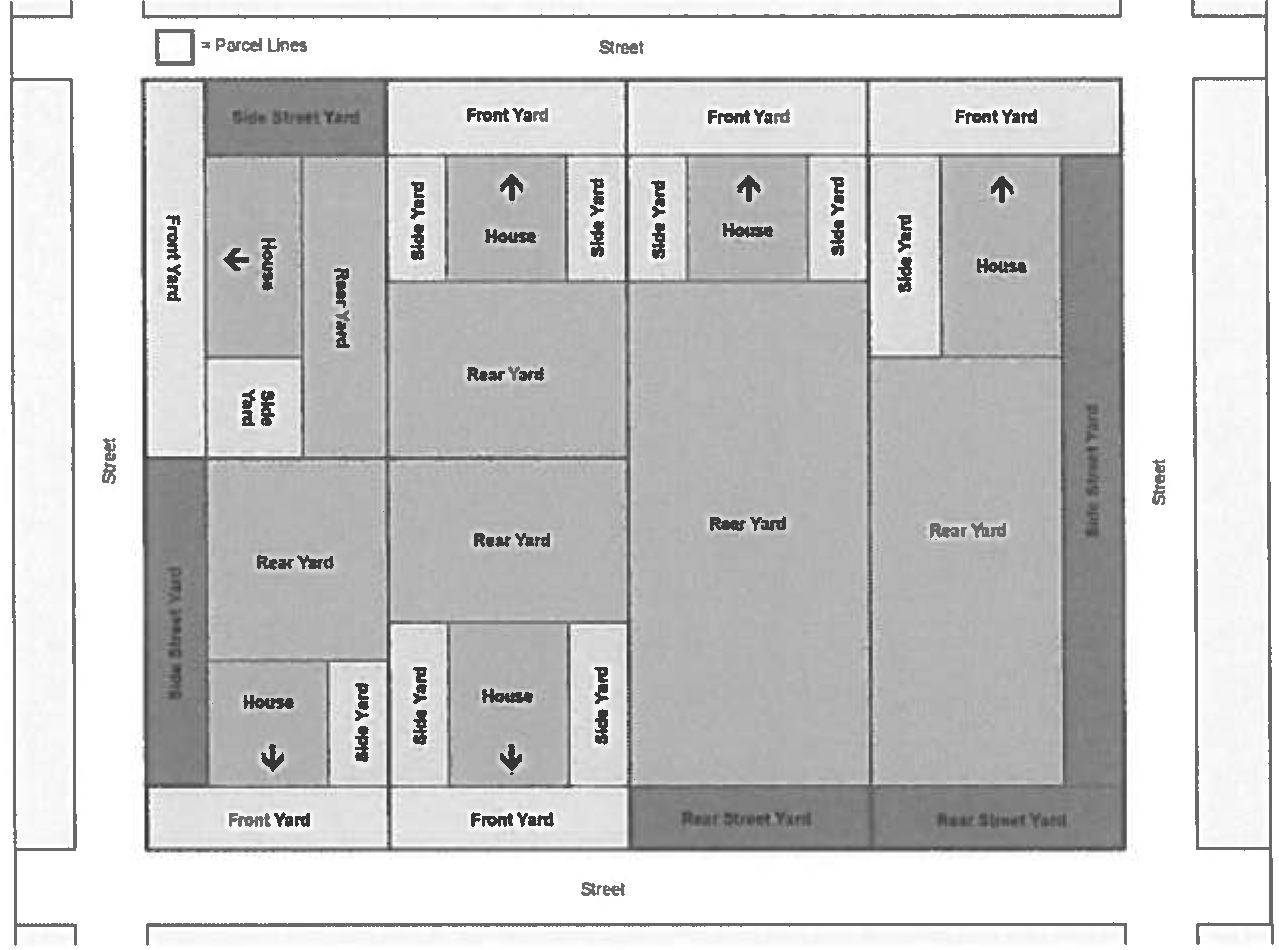
19.09.850 - Yard, rear.
"Rear yard" means a yard extending across the full width of the lot, the depth of which shall be the minimum horizontal distance between the rear lot line and a line parallel thereto through the nearest point of the principal structure, subject to the following (a) as to corner lots, the rear yard shall exclude the portion of the lot constituting the side street yard; and (b) as to through lots, use of the structures otherwise permitted in a rear yard shall be restricted to that portion of the rear yard lying between the rear of the principal structure and the rear street yard.
(Ord. No. 1914A, 2-18-2016)
19.09.860 - Yard, shore.
"Shore yard" means a yard extending across the full width or depth of a lot, the depth of which shall be the minimum horizontal distance between a line intersecting both side lots at the same angle and containing the point of the high-water elevation of a pond, stream or lake nearest the principal structure and a line parallel thereto containing the point of the principal structure nearest the high-water line.
(Ord. No. 1914A, 2-18-2016)
19.09.870 - Yard, side.
"Side yard" means a yard extending from the street yard to the rear yard of the lot, the width of which shall be the minimum horizontal distance between the side lot line and a line parallel thereto through the nearest point of the principal structure.
(Ord. No. 1914A, 2-18-2016)
19.09.880 - Yard, rear street.
"Rear street yard" means a yard extending the full width of the lot on through lots, the depth of which shall be the minimum horizontal distance between the line of the street abutting the rear of the lot and a line drawn parallel thereto at a horizontal distance equal to the minimum required street yard set back for the district in which such lot is located.
(Ord. No. 1914A, 2-18-2016)
19.09.881 - Yard, street (front yard).
"Street yard" or "front yard" means a yard extending across the full width of the lot, the depth of which shall be the minimum horizontal distance between the existing or proposed street or highway abutting the front of the lot and a line parallel through the nearest point of the front of the principal structure. Corner lots shall have two street yards, a front street yard and a side street yard. Through lots shall have a front street yard and a rear street yard.
(Ord. No. 1914A, 2-18-2016)

