
Bedford Township City Zoning Code
ARTICLE XVIIB
400.1700B - Intent.
Sec. 1700B. The purpose of the Village Overlay District is to encourage traditional pedestrian-friendly, local service character within a more or less established village town center area. Through the use of standards unique to the Overlay District for area, bulk, height, and orientation, as well as for design, parking, accessory uses, signage, lighting and screening, this Article will empower the town center area to develop in a manner complimentary to, and compatible with, existing development. It is the intent of the Village Overlay District to encourage existing and new local and convenience commercial and office uses, residential dwellings, civic and downtown entertainment and social uses, and similar village uses, which are compatible with the existing development. There may be one or more separate Village Overlay Districts within the Township.
(Ord. No. 44A-232, § 1, 5-18-04)
400.1701B - Temperance Village Overlay District.
Sec. 1701B. There is hereby established the Temperance Village Overlay District. The purpose of the Temperance Village Overlay District is to encourage traditional, pedestrian-friendly, local service character within the established town center area of Temperance. Through the use of standards unique to the Overlay District for area, bulk, height, and orientation, as well as for design, parking, accessory uses, signage, lighting, and screening, this Section will empower the Temperance Village to develop in a manner complimentary to, and compatible with, existing development. It is the intent of this Overlay District to encourage C-1 and C-2 District zoning, and to promote the proliferation of local and convenience commercial uses, traditional downtown entertainment and social uses, and the development of new buildings that ensure the desired character of the area. In addition to commercial uses, the Overlay will permit the development of office uses, residential dwellings, civic uses, and other uses common to, and desirable within, the traditional Temperance Village environment.
1.
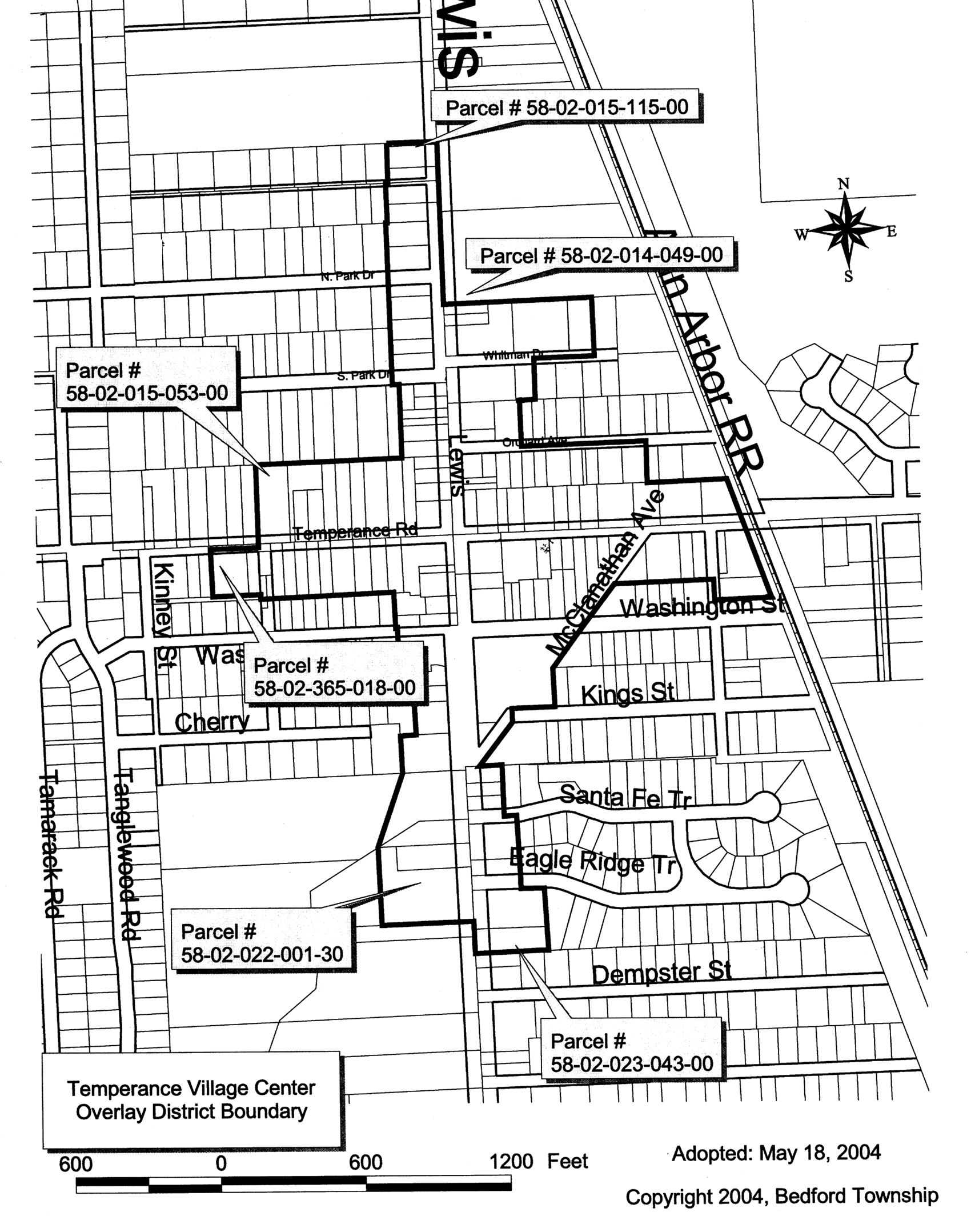
The Temperance Village Overlay District shall encompass all parcels located within the Temperance Village Center Master Plan District as defined by the attached map.
2.
The provisions of this Overlay District shall supplement the underlying zoning district in which a property is located. The standards prescribed herein shall control the overall development in this Overlay District and where there may exist any conflict between the provisions of this Section and those of the underlying zoning district or a planned unit development, the provisions of this Section shall prevail. This Section shall not change the status of any existing use, lot, or structure established prior to the adoption date of this Ordinance.
3.
Permitted uses and permitted uses subject to special approval within the Temperance Village Overlay District:
a.
For parcels having a nonresidential underlying zoning district:
(1)
Permitted Uses: Those uses permitted as principal uses in the R-1, R-2, R-3, C-1 and C-2 Districts, and mixed use developments in accordance with the provisions set forth for mixed uses within this Overlay District.
(2)
Permitted Uses Subject to Special Approval:
(a)
Those uses permitted as uses subject to special approval in the R-1, R-2, R-3, C-1 and C-2 Districts.
(b)
Multiple-family residential developments.
(c)
In cases where the underlying zoning is not C-1 or C-2, but is nonresidential, those uses normally permitted in that underlying zoning district.
b.
For parcels having a residential underlying zoning district:
(1)
Permitted Uses:
(a)
Those uses permitted as principal uses in the underlying residential zoning district.
(b)
Those uses permitted as principal uses in the C-1 and C-2 Districts and mixed use developments shall be permitted as principal uses, provided that the parcel is contiguous on at least one side to a parcel that is zoned or used for commercial use or is contiguous to a parcel that contains an existing mixed use development.
(2)
Permitted Uses Subject to Special Approval:
(a)
Those uses permitted subject to special approval in the underlying residential zoning district.
(b)
Those uses permitted as uses subject to special approval in the C-1 and C-2 Districts, provided that the parcel is contiguous on at least one side to a parcel that is zoned or used for commercial use or is contiguous to a parcel that contains an existing mixed use development.
4.
Uses Outlined in the R-1, R-2 and R-3 Districts that are not permitted within the Village Center Overlay District are:
a.
Cemeteries.
b.
Public, parochial and other private elementary schools offering courses in general education.
c.
Public, parochial and other private intermediate and secondary schools offering courses in general education.
d.
Golf courses.
e.
College, universities and other institutions of higher learning, public and private, offering courses in general, technical or religious education.
f.
Accessory buildings and uses customarily incidental to the above uses.
5.
Mixed Uses:
a.
The mixing of residential uses with office and/or commercial uses is encouraged within the Temperance Village Overlay District. On any parcel within the Overlay District, the mixing of residential and nonresidential uses as outlined above under "Permitted Uses" shall be permitted by right subject to the following requirements:
(1)
All residential components of a mixed use project shall be located either above at least one story of a nonresidential use or to the rear of a nonresidential use building. Residential uses shall not be permitted on the ground floor unless they are located behind a nonresidential use.
(2)
Required off-street parking shall be computed separately for each of the uses incorporated into the mixed use project.
(3)
The primary public customer entrance to the nonresidential component of a mixed use development shall be oriented toward a street and shall provide direct pedestrian access to the street right-of-way or parking lot.
6.
Accessory Buildings and Uses:
a.
Uses and buildings clearly incidental to, customarily found in connection with, and located on the same zoning lot as a principal use shall be permitted subject to the requirements of Section 1903 and shall be permitted as principal permitted uses. An accessory building shall be located in the rear yard, except as follows: If the rear yard is not feasible for the placement of an accessory structure, the Planning Commission shall have the discretion to review and approve an alternate location on the lot.
7.
Temporary Uses:
a.
Temporary uses within the Temperance Village Overlay District shall be permitted subject to the approval of the Board of Zoning Appeals, as established in Section 2204 (1).(c).(7), unless otherwise stated within the review procedures set forth within this Section.
8.
Site Plan Approval:
a.
To insure compliance with the provisions of this Section, all new construction or development incorporating an increase in the intensity or size of an existing use within the Temperance Village Overlay District shall be subject to site plan review in accordance with the site plan review procedures set forth in Section 1913.
b.
Any exterior change to an existing building not incorporating an increase in the size or intensity of the use or a change in use shall be approved administratively through the Bedford Township Planning and Building Departments.
9.
Permanent Sidewalk Cafes and Outdoor Displays Located on a Public Sidewalk and/or in the Public Right-of-Way:
a.
A sidewalk cafe is defined as a use located on a public sidewalk, which may be within or without a public right-of-way, that is associated with the adjacent business establishment which serves and/or sells food, including beverage products. A permanent outdoor display is defined as a business use located on a public sidewalk, which may be within or without a public right-of-way, adjacent to a retail use and consists of a display of goods available for purchase.
b.
Sidewalk cafes and permanent outdoor displays may be approved administratively provided they are in compliance with the regulations of this Subsection. If compliance with this Subsection cannot be adhered to or cannot be determined by Township staff, the sidewalk cafe or outdoor display shall be subject to Planning Commission site plan approval. In any unusual or questionable case or application, the Township staff may require that an outdoor cafe or permanent display be made subject to Planning Commission approval.
It shall be unlawful for any person to operate a sidewalk cafe or outdoor display on any public sidewalk or public right-of-way without a permit as provided by this article. Sidewalk cafes and/or outdoor displays shall be permitted via administrative approval only within the Temperance Village Overlay District. Receipt of a sidewalk cafe permit shall exempt the permittee from obtaining a "minor easement" from the Township for any fixture or structure approved by the permit. A sidewalk cafe or outdoor display permit shall be a license to use the sidewalk and shall not grant nor shall it be construed or considered to grant any person any property right or interest in the sidewalk.
c.
Application for a sidewalk cafe and/or outdoor display permit shall be made to the Township. Applications shall be reviewed by any departments deemed appropriate by the Township. Such application shall include, but not be limited to, the following information:
(1)
Name, address, and telephone number of the applicant;
(2)
Name and address of the abutting, permitted business establishment;
(3)
A copy of a valid occupational license to operate the business establishment abutting the sidewalk cafe which is the subject of the application;
(4)
If available, the written approval or disapproval of the owners of property abutting the proposed sidewalk cafe and/or display, and if not available, the written notice and means of giving said notice to the abutting property owners.
(5)
A copy of current certificate of insurance naming the Township and Monroe County Board of Road Commissioners (if adjacent to a road under its jurisdiction) as additional insureds. The insurance shall provide general liability insurance of no less than $1,000,000.00.
(6)
A sketch (drawn to scale) showing the layout and dimensions of the sidewalk, sidewalk cafe, and/or display area and adjacent private property, proposed location, size, and number of tables, chairs, steps, umbrellas, awnings, canopies, location of doorways, trees, parking meters, bus shelters, sidewalk benches, trash receptacles, railings, decorative chains, and any other fixture, structure, or obstruction either existing or proposed within the sidewalk cafe and/or outdoor display.
d.
Sidewalk cafes and permanent outdoor displays permitted under this Subsection article shall be subject to the following conditions:
(1)
Permits shall be issued only to persons who hold valid occupational licenses for a business establishment.
(2)
Sidewalk cafes and permanent outdoor displays are restricted to the sidewalk frontage of the business establishment to which a permit has been issued or such other area as approved by the Township.
(3)
Sidewalk cafes and permanent outdoor displays shall be located in a manner that promotes efficient and direct pedestrian movement. A minimum of one unobstructed pedestrian path at least four feet wide shall be maintained at all times. In areas of congested pedestrian activity, the Township may require a wider pedestrian path. Variances to this requirement may not be granted.
(4)
The perimeter around the sidewalk cafe or permanent outdoor display area may be delineated using nonpermanent fixtures such as railings, potted plants, decorative chains, or other approved fixtures. Tables, chairs, umbrellas, canopies, awnings and any other fixtures shall be of uniform design and shall be made of quality materials and workmanship to ensure the safety and convenience of users and to enhance the visual quality of the urban environment.
(5)
By use of any permit granted hereunder, the permittee agrees to indemnify, defend, save, and hold harmless the Township, the Monroe County Board of Road Commissioners (if adjacent to a road under its jurisdiction), and any other unit of government and any government agency and their agents and employees from any and all claims, liability, lawsuits, damages and causes of action which may arise out of this permit or the permittee's activity regarding the sidewalk cafe or permanent outdoor display. If requested by the Township, the permittee shall enter into a written agreement with the Township to evidence this indemnification. This written agreement and all pertinent insurance documentation shall be submitted for review. Such agreement and insurance documentation must have the written approval of the Township attorney prior to issuance of a permit.
(6)
The Township may require the temporary removal of sidewalk cafes and permanent outdoor displays by the permittee when street, sidewalk, or utility repairs necessitate such action or when it is necessary to clear sidewalks for a Township function. The permittee shall be responsible for removing all sidewalk cafe or permanent outdoor display fixtures at least two days prior to the date identified in writing by the Township.
(7)
The Township may cause the immediate removal or relocation of all or any part of the sidewalk cafe or permanent outdoor display or its fixtures in emergency situations. The Township, its officers, agents, and employees shall not be responsible for any damages or loss of sidewalk cafe or permanent outdoor display fixtures relocated during emergency situations and shall not be responsible for any costs associated with the removal or the return and installation of any sidewalk cafe or permanent outdoor display fixtures.
(8)
The sidewalk cafe or permanent outdoor display shall be specifically limited to the sidewalk cafe or permanent outdoor display area shown in the permit.
(9)
Tables, chairs, awnings, canopies, umbrellas, and any other decorative material shall be fire-retardant or manufactured of fire resistant material.
(10)
Tables, chairs, and other fixtures associated with a sidewalk cafe or permanent outdoor display must be secured or anchored to one another or removed from the sidewalk at the close of business to ensure that the fixtures will be stable during inclement weather conditions and to deter theft.
(11)
No tables, chairs, or any other fixtures used in connection with a sidewalk cafe or permanent outdoor display shall be attached, chained, or in any manner affixed to any tree, post, sign, or other public fixture.
(12)
The sidewalk cafe or permanent outdoor display area including the area extending from the sidewalk cafe area to the street and five feet beyond either end, shall be maintained in a neat and orderly appearance at all times and shall be cleared of all debris on a periodic basis during the day and at the close of each business day.
(13)
No additional outdoor seating authorized herein shall be used for calculating seating requirements pertaining to the location of, applications for, or issuance of a liquor license for any establishment nor shall the additional seats be used to claim any exemption from any other requirements of any Township, County, or State codes, ordinances, and/or laws.
(14)
The opening and closing hours of sidewalk cafes and permanent outdoor displays shall not extend beyond the hours of operation for the business establishment holding the sidewalk cafe or permanent outdoor display permit.
(15)
No food preparation shall be allowed on the sidewalk. There shall be no cooking, storage, cooling, or refrigeration or other equipment located in a sidewalk cafe area.
(16)
The permittee is responsible for repair of any damage to the sidewalk caused by the sidewalk cafe or permanent outdoor display.
(17)
Displays, tables, or chairs shall not be placed within four feet of bus stops, taxi stands, telephone booths, fire hydrants, or counter service windows or within two feet of any adjacent building entrances and/or exits.
(18)
Permittee shall meet all other Township, County, and State regulations, laws, or ordinances.
e.
The Township may deny, revoke, or suspend a permit for any sidewalk cafe or any permanent outdoor display for reasons of public health, safety, and welfare and without penalty upon the giving of up to 30 days written notice. Such reasons may include, but are not limited to, the following:
(1)
Any required business or health permit or occupational license for the sidewalk cafe or permanent outdoor display of the abutting business establishment has expired or been suspended, revoked, or canceled.
(2)
The permittee does not have insurance in effect.
(3)
Changing conditions of pedestrian or vehicular traffic cause congestion. Such decision shall be based upon findings of the Township that the minimum 4-foot pedestrian path is insufficient under existing circumstances and represents a danger to the health, safety, or general welfare of pedestrians or vehicular traffic.
(4)
The permittee has failed to correct violations of any Township code or ordinances or conditions of the permit or other applicable laws or regulations within three days of receipt of the Township's notice of same delivered in writing to the permittee.
(5)
The failure of the permittee to use the sidewalk cafe or any permanent outdoor display for at least some part of a summer season from March to November of any year.
f.
In the event the permittee fails to remove any tables, chairs, canopies, awnings, or other fixtures or objects related to the sidewalk cafe or permanent outdoor display before the date set forth in the Township's notice of denial, revocation or suspension, the Township may remove such fixtures or objects. The permittee shall be responsible for all expenses incurred by the Township for the removal and storage of such fixtures or objects.
10.
Approval Procedures for Permitted Uses Subject to Special Approval:
a.
Uses permitted subject to special approval shall be permitted after making application and submitting any reasonable exhibits or information required by the Planning Commission, and after paying any fees established by the Township Board by resolution or ordinance, and after public hearing, review, and approval of the site plan by the Planning Commission. Uses subject to special approval must:
(1)
Be complimentary to the spirit and purpose of this Village Overlay District.
(2)
Be compatible with existing uses in the area.
(3)
Not interfere with the orderly development of the area.
(4)
Not be detrimental to the safety and convenience of vehicular and pedestrian traffic.
(5)
Not be injurious to the Overlay District and its environs.
(6)
Be served adequately by essential public facilities and services.
(7)
Be consistent in assuring that the public health, safety, and welfare will be maintained.
(8)
Be in compliance with Township, County, State, and Federal laws and regulations.
b.
Once approved, uses permitted subject to special approval shall be deemed to authorize one specific use or mix of uses and shall expire and become null and void without further notice or action by the Planning Commission in any case where the special approval use has not been established within six months after the Planning Commission grants approval, except it shall be one year for a seasonal use, or where the special approval use is discontinued or ceases to exists for six consecutive months or for 18 months during any three year period, except it shall be for a full season for a seasonal use; and which may be revoked by the Planning Commission after it finds any of the requirements of this Ordinance or conditions of approval are not being met.
11.
Dimensional Requirements:
a.
Setbacks:
(1)
Front Yards: Lots within the Overlay District shall not be required to provide a front yard setback.
(2)
Side Yards: Lots within the Overlay District shall not be required to provide a side yard setback. However, all fire and building code regulations shall apply.
(3)
Rear Yard: Lots within the Overlay District shall not be required to provide a rear yard setback, unless such use is established adjacent to a residentially zoned or used property, in which case a minimum 30-foot rear yard setback shall be required. Multiple-family uses shall provide in all cases a minimum 30-foot rear yard setback. All fire and building code regulations shall apply.
b.
Height: New developments and modifications of existing buildings within the Overlay District shall have a maximum height of three stories and 40 feet.
c.
Minimum Lot Area: No minimum lot area is required within the Overlay District for any use.
d.
Floor Area:
(1)
Residential Uses: Single-family residential uses within the Overlay District shall conform to the minimum floor area requirements for the underlying residential district in which they are located. Multiple-family residential uses shall conform to the minimum floor area for the RM-1 District, as set forth in Section 1800 (i). Residential components developed as part of a mixed use project shall conform to all building and health code requirements for floor area.
(2)
Nonresidential Uses: Nonresidential uses within the Overlay District shall not be held to a minimum floor area requirement.
e.
Lot Coverage: Uses within the Temperance Village Overlay District shall not be held to a maximum lot coverage requirement.
12.
Off-Street Parking Requirements:
a.
Residential:
(1)
Single-family residential uses approved as a special use within the Overlay District shall be required to provide not less than two parking spaces per unit. Spaces provided within an enclosed garage shall be permitted to meet this requirement.
(2)
Residential units incorporated within a mixed use development or multiple-family residential units shall be required to provide one parking space per unit, regardless of unit size. Required parking for residential units developed as part of a mixed use development or multiple-family residential development may be incorporated within the principal building or within an accessory building, or may be located off-site, provided the required spaces are designated solely for the use of those units, are not located within a public right-of-way and are located within 500 feet of the principal building with which they are associated.
(3)
The Planning Commission may waive the minimum required parking for residential units incorporated within a mixed use development, provided the parking needs for the development have been met through alternative means acceptable to the Planning Commission.
b.
Nonresidential:
(1)
Nonresidential uses within the Overlay District shall provide off-street parking at a rate of 50 percent of the required parking for the same use under normal zoning circumstances as set forth in Section 1904.
(2)
Parking spaces located within a public right-of-way or other public space may be counted toward the minimum parking requirements for the nonresidential use, provided that such spaces are located directly in front of the principal building with which they are associated.
(3)
The Planning Commission may waive the minimum required parking for nonresidential uses, provided the parking needs for the development have been met through alternative means acceptable to the Planning Commission.
13.
Site and Architectural Design Standards:
a.
Screening: Screening shall not be generally required within the Overlay District, except when a nonresidential use or mixed use development is established adjacent to a residentially zoned or used property located outside of the Overlay District boundaries, in which case a screen not less than six feet in height shall be erected along the common lot line. In addition, screening shall be required between any outdoor cafes which are located on private property (not public sidewalks) and any adjacent parking lots. Screening treatments shall be subject to the review and approval of the Planning Commission.
b.
Landscaping: For lots not developed at 100 percent lot coverage within the Overlay District, site landscaping shall be designed in accordance with the following requirements:
(1)
All permanently undeveloped portions of the site shall be planted with grass, ground cover, shrubbery, or other suitable live plant material, which shall extend to any developed pavement edge. Existing plant material on the property may be used.
(2)
Foundation plantings are encouraged along the front or sides of any building, which faces a public or private road, or is adjacent to a parking lot or other area, which provides access to the building, by the general public. Foundation planting areas should be integrated into the sidewalk system between the front or sides of the building and the parking area (and/or associated driveways) adjacent to the building.
(3)
Landscaping within the Overlay District shall be maintained in a healthy, neat, and orderly appearance, free from refuse and debris. All unhealthy and dead plant material shall be replaced immediately unless the season is not appropriate for planting, in which case such plant material shall be replaced at the beginning of the next planting season. All constructed or manufactured landscape elements, such as but not limited to benches, retaining walls, edging, and so forth, shall be maintained in good condition and neat appearance. Rotted, deteriorated, or damaged landscape elements shall be repaired or replaced.
c.
Lighting: All exterior lighting within the Overlay District shall comply with the following requirements:
(1)
Exterior lighting shall be designed to reflect the architectural character of the area and shall comply with a coordinated lighting system, if one is designed for the Overlay District.
(2)
Exterior lighting which is provided for parking and access areas, and for customer, occupant, or employee entrance areas shall be so arranged to reflect away from any adjoining residential properties located outside of the Overlay District boundaries.
(3)
Ground mounted lighting shall have a maximum height of 20 feet.
(4)
Building mounted lighting shall not project more than 12 inches into the public right-of-way and shall be placed a minimum of eight feet above grade.
(5)
Building or roof mounted lighting intended to attract attention to the building and/or use and not strictly designed for security purposes shall not be permitted.
(6)
Temporary holiday lighting and decorations are permitted for a period not to exceed 45 days.
d.
Site and Architectural Design Standards: Site and architectural features, including building orientation, shall be designed in harmony with the guidelines set forth in the Bedford Township Site and Architectural Design Manual for traditional commercial areas, if one is adopted, and in accordance with any coordinated architectural and design style adopted for the Overlay District. In no case shall off-street parking be located in a front yard. It is the intention of the Township to require all non-residential or mixed use development primary buildings to be situated immediately adjacent to the front lot line, but the Planning Commission may waive this requirement where the applicant presents good reasons for setting the building back from the front lot line, such as, but not limited to, an outdoor use or feature necessary to the primary use of the building.
14.
Sign Requirements:
a.
All signs shall be subject to the requirements of Section 1922 and must meet all Township sign regulations unless otherwise outlined herein.
b.
Signs shall be of a design and material that is compatible with the intent and character of the Overlay District.
c.
Small signs with distinctive shapes, unique textures, symbols, and materials that promote creativity shall be encouraged.
d.
Indirect sign illumination shall be encouraged in the Overlay District.
e.
Menu Board Signs: Not more than one menu board shall be allowed for each restaurant or sidewalk cafe. The menu board shall not exceed four square feet. The menu board shall be attached to the building unless an alternate location is approved by the Planning Commission.
f.
Freestanding Portable Temporary Signs: One A- or T-frame portable sign shall be permitted per building and shall not exceed eight square feet per side. All portable signs shall be located within the building frontage of the use they are advertising for and they must be removed from the public sidewalk and public right-of-way at the close of business.
g.
Freestanding Signs: One monument sign of up to 40 square feet in area and four feet in height shall be permitted on each parcel or lot within the Overlay District, which shall apply to the use on that parcel or lot. Alternate freestanding signs may be approved by the Planning Commission where the intent of the Overlay District is better served by such an alternative, rather than through the strict interpretation of this requirement.
h.
Wall Signs: One wall sign 40 square feet in area, except the sign shall not exceed 80% of the width of the building, is permitted per parcel or lot within the Overlay District, which shall apply to the use on that parcel or lot. The Planning Commission may allow a larger sign for unusual circumstances where the building is large or far from the front lot line, but only if the character of the Overlay District may be preserved.
i.
Projecting Signs: A projecting sign is any sign, generally doubled-faced, affixed to a building or wall in such a manner that it extends more than 12 inches from the wall. Projecting signs may be used in lieu of wall signs. Projecting signs may be no larger than eight square feet in area and must be a minimum of eight feet from grade to the bottom of the sign. Roof mounted projecting signs are prohibited.
j.
Canopy and/or Awning Signs: Any sign that is an integral and permanent part of an awning, canopy, or other fabric, plastic, or structural protective cover.
(1)
Canopy and/or awning signs shall only be permitted on that portion of the valance of the canopy and/or awning that faces the front-yard street frontage.
(2)
One canopy and/or awning shall be permitted per building and/or tenant. If a wall sign is present, a canopy and/or awning sign shall be prohibited.
(3)
Canopy and/or awning sign text shall occur on the valance portion of the canopy and/or awning only. A valance is that portion of the canopy and/or awning that hangs parallel to the building facade and is not larger than 25 percent of the total area of the canopy and/or awning.
(4)
The sign shall be an integral permanent part of the canopy and/or awning.
(5)
A marquee sign is not a canopy sign and shall be prohibited.
(Ord. No. 44A-232, § 1, 5-18-04)
400.1702B - Lambertville Village Overlay District.
Sec. 1702B. There is hereby established the Lambertville Village Overlay District. The purpose of the Lambertville Village Overlay District is to encourage traditional, pedestrian-friendly, local service character within the established town center area of Lambertville. Through the use of standards unique to the Overlay District for area, bulk, height, and orientation, as well as for design, parking, accessory uses, signage, lighting, and screening, this Section will empower the Lambertville Village to develop in a manner complimentary to, and compatible with, existing development. It is the intent of this Overlay District to encourage C-1 and C-2 District zoning, and to promote the proliferation of local and convenience commercial uses, traditional downtown entertainment and social uses, and the development of new buildings that ensure the desired character of the area. In addition to commercial uses, the Overlay will permit the development of office uses, residential dwellings, civic uses, and other uses common to, and desirable within, the traditional Lambertville Village environment.
1.
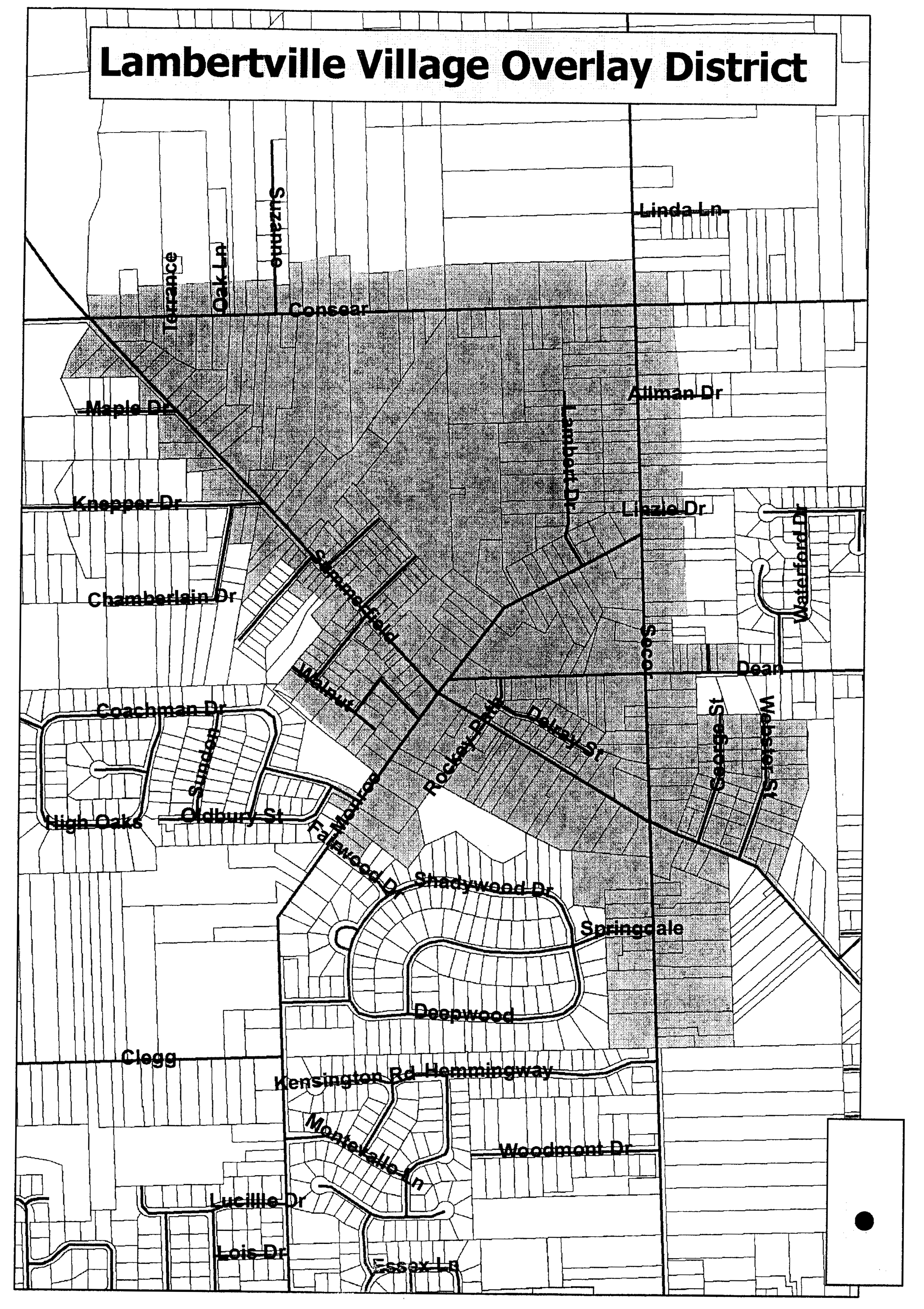
The Lambertville Village Overlay District shall encompass all parcels located within the Lambertville Village Center Master Plan District as defined by the attached map.
2.
The provisions of this Overlay District shall supplement the underlying zoning district in which a property is located. The standards prescribed herein shall control the overall development in this Overlay District and where there may exist any conflict between the provisions of this Section and those of the underlying zoning district or a planned unit development, the provisions of this Section shall prevail. This Section shall not change the status of any existing use, lot, or structure established prior to the adoption date of this Ordinance.
3.
Permitted uses and permitted uses subject to special approval within the Lambertville Village Overlay District:
a.
For parcels having a nonresidential underlying zoning district:
(1)
Permitted Uses: Those uses permitted as principal uses in the C-1 and C-2 Districts and mixed use developments in accordance with the provisions set forth for mixed uses within this Overlay District.
(2)
Permitted Uses Subject to Special Approval:
(a)
Those uses permitted as uses subject to special approval in the C-1 and C-2 Districts.
(b)
Multiple-family residential developments.
(c)
In cases where the underlying zoning is not C-1 or C-2, but is nonresidential, those uses normally permitted in that underlying zoning district.
b.
For parcels having a residential underlying zoning district:
(1)
Permitted Uses:
(a)
Those uses permitted as principal uses in the underlying residential zoning district.
(b)
Those uses permitted as principal uses in the C-1 and C-2 Districts and mixed use developments shall be permitted as principal uses, provided that the parcel is contiguous on at least one side to a buildable parcel or a portion of a buildable parcel that is zoned or used for commercial use or is contiguous to a parcel that contains an existing mixed use development.
(2)
Permitted Uses Subject to Special Approval:
(a)
Those uses permitted as uses subject to special approval in the C-1 and C-2 Districts, provided that the parcel is contiguous on at least one side to a parcel that is zoned or used for commercial use or is contiguous to a parcel that contains an existing mixed use development.
(b)
Those uses permitted subject to special approval in the underlying residential zoning district.
4.
Mixed Uses.
a.
The mixing of residential uses with office and/or commercial uses is encouraged within the Lambertville Village Overlay District. On any parcel within the Overlay District, the mixing of residential and nonresidential uses as outlined above under "Permitted Uses" shall be permitted by right subject to the following requirements:
(1)
All residential components of a mixed use project shall be located either above at least one story of a nonresidential use or to the rear of a nonresidential use building. Residential uses shall not be permitted on the ground floor unless they are located behind a nonresidential use.
(2)
Required off-street parking shall be computed separately for each of the uses incorporated into the mixed use project.
(3)
The primary public customer entrance to the nonresidential component of a mixed use development shall be oriented toward a street and shall provide direct pedestrian access to the street right-of-way or parking lot.
5.
Accessory Buildings and Uses.
a.
Uses and buildings clearly incidental to, customarily found in connection with, and located on the same zoning lot as a principal use shall be permitted subject to the requirements of Section 1903 [Section 400.1903] and shall be permitted as principal permitted uses. An accessory building shall be located in the rear yard, except as follows: If the rear yard is not feasible for the placement of an accessory structure, the Planning Commission shall have the discretion to review and approve an alternate location on the lot.
6.
Temporary Uses.
a.
Temporary uses within the Lambertville Village Overlay District shall be permitted subject to the approval of the Board of Zoning Appeals, as established in Section 2204 (1)(c)(7) [Section 400.2204(1)(c)(7)], unless otherwise stated within the review procedures set forth within this Section.
7.
Site Plan Approval.
a.
To insure compliance with the provisions of this Section, all new construction or development incorporating an increase in the intensity or size of an existing use within the Lambertville Village Overlay District shall be subject to site plan review in accordance with the site plan review procedures set forth in Section 1913 [Section 400.1913].
b.
Any exterior change to an existing building not incorporating an increase in the size or intensity of the use or a change in use shall be approved administratively through the Bedford Township Planning and Building Departments.
8.
Permanent Sidewalk Cafes and Outdoor Displays Located on a Public Sidewalk and/or in the Public Right-of-Way.
a.
A sidewalk cafe is defined as a use located on a public sidewalk, which may be within or without a public right-of-way, that is associated with the adjacent business establishment which serves and/or sells food, including beverage products. A permanent outdoor display is defined as a business use located on a public sidewalk, which may be within or without a public right-of-way, adjacent to a retail use and consists of a display of goods available for purchase.
b.
Sidewalk cafes and permanent outdoor displays may be approved administratively provided they are in compliance with the regulations of this Subsection. If compliance with this Subsection cannot be adhered to or cannot be determined by Township staff, the sidewalk cafe or outdoor display shall be subject to Planning Commission site plan approval. In any unusual or questionable case or application, the Township staff may require that an outdoor cafe or permanent display be made subject to Planning Commission approval. It shall be unlawful for any person to operate a sidewalk cafe or outdoor display on any public sidewalk or public right-of-way without a permit as provided by this article. Sidewalk cafes and/or outdoor displays shall be permitted via administrative approval only within the Lambertville Village Overlay District. Receipt of a sidewalk cafe permit shall exempt the permittee from obtaining a "minor easement" from the Township for any fixture or structure approved by the permit. A sidewalk cafe or outdoor display permit shall be a license to use the sidewalk and shall not grant nor shall it be construed or considered to grant any person any property right or interest in the sidewalk.
c.
Application for a sidewalk cafe and/or outdoor display permit shall be made to the Township. Applications shall be reviewed by any departments deemed appropriate by the Township. Such application shall include, but not be limited to, the following information:
(1)
Name, address, and telephone number of the applicant;
(2)
Name and address of the abutting, permitted business establishment;
(3)
A copy of a valid occupational license to operate the business establishment abutting the sidewalk cafe which is the subject of the application;
(4)
If available, the written approval or disapproval of the owners of property abutting the proposed sidewalk cafe and/or display, and if not available, the written notice and means of giving said notice to the abutting property owners.
(5)
A copy of current certificate of insurance naming the Township and Monroe County Board of Road Commissioners (if adjacent to a road under its jurisdiction) as additional insureds. The insurance shall provide general liability insurance of no less than $1,000,000.00.
(6)
A sketch (drawn to scale) showing the layout and dimensions of the sidewalk, sidewalk cafe, and/or display area and adjacent private property, proposed location, size, and number of tables, chairs, steps, umbrellas, awnings, canopies, location of doorways, trees, parking meters, bus shelters, sidewalk benches, trash receptacles, railings, decorative chains, and any other fixture, structure, or obstruction either existing or proposed within the sidewalk cafe and/or outdoor display.
d.
Sidewalk cafes and permanent outdoor displays permitted under this Subsection article shall be subject to the following conditions:
(1)
Permits shall be issued only to persons who hold valid occupational licenses for a business establishment.
(2)
Sidewalk cafes and permanent outdoor displays are restricted to the sidewalk frontage of the business establishment to which a permit has been issued or such other area as approved by the Township.
(3)
Sidewalk cafes and permanent outdoor displays shall be located in a manner that promotes efficient and direct pedestrian movement. A minimum of one unobstructed pedestrian path at least four feet wide shall be maintained at all times. In areas of congested pedestrian activity, the Township may require a wider pedestrian path. Variances to this requirement may not be granted.
(4)
The perimeter around the sidewalk cafe or permanent outdoor display area may be delineated using nonpermanent fixtures such as railings, potted plants, decorative chains, or other approved fixtures. Tables, chairs, umbrellas, canopies, awnings and any other fixtures shall be of uniform design and shall be made of quality materials and workmanship to ensure the safety and convenience of users and to enhance the visual quality of the urban environment.
(5)
By use of any permit granted hereunder, the permittee agrees to indemnify, defend, save, and hold harmless the Township, the Monroe County Board of Road Commissioners (if adjacent to a road under its jurisdiction), and any other unit of government and any government agency and their agents and employees from any and all claims, liability, lawsuits, damages and causes of action which may arise out of this permit or the permittee's activity regarding the sidewalk cafe or permanent outdoor display. If requested by the Township, the permittee shall enter into a written agreement with the Township to evidence this indemnification. This written agreement and all pertinent insurance documentation shall be submitted for review. Such agreement and insurance documentation must have the written approval of the Township attorney prior to issuance of a permit.
(6)
The Township may require the temporary removal of sidewalk cafes and permanent outdoor displays by the permittee when street, sidewalk, or utility repairs necessitate such action or when it is necessary to clear sidewalks for a Township function. The permittee shall be responsible for removing all sidewalk cafe or permanent outdoor display fixtures at least two days prior to the date identified in writing by the Township.
(7)
The Township may cause the immediate removal or relocation of all or any part of the sidewalk cafe or permanent outdoor display or its fixtures in emergency situations. The Township, its officers, agents, and employees shall not be responsible for any damages or loss of sidewalk cafe or permanent outdoor display fixtures relocated during emergency situations and shall not be responsible for any costs associated with the removal or the return and installation of any sidewalk cafe or permanent outdoor display fixtures.
(8)
The sidewalk cafe or permanent outdoor display shall be specifically limited to the sidewalk cafe or permanent outdoor display area shown in the permit.
(9)
Tables, chairs, awnings, canopies, umbrellas, and any other decorative material shall be fire-retardant or manufactured of fire resistant material.
(10)
Tables, chairs, and other fixtures associated with a sidewalk cafe or permanent outdoor display must be secured or anchored to one another or removed from the sidewalk at the close of business to ensure that the fixtures will be stable during inclement weather conditions and to deter theft.
(11)
No tables, chairs, or any other fixtures used in connection with a sidewalk cafe or permanent outdoor display shall be attached, chained, or in any manner affixed to any tree, post, sign, or other public fixture.
(12)
The sidewalk cafe or permanent outdoor display area including the area extending from the sidewalk cafe area to the street and five feet beyond either end, shall be maintained in a neat and orderly appearance at all times and shall be cleared of all debris on a periodic basis during the day and at the close of each business day.
(13)
No additional outdoor seating authorized herein shall be used for calculating seating requirements pertaining to the location of, applications for, or issuance of a liquor license for any establishment nor shall the additional seats be used to claim any exemption from any other requirements of any Township, County, or State codes, ordinances, and/or laws.
(14)
The opening and closing hours of sidewalk cafes and permanent outdoor displays shall not extend beyond the hours of operation for the business establishment holding the sidewalk cafe or permanent outdoor display permit.
(15)
No food preparation shall be allowed on the sidewalk. There shall be no cooking, storage, cooling, or refrigeration or other equipment located in a sidewalk cafe area.
(16)
The permittee is responsible for repair of any damage to the sidewalk caused by the sidewalk cafe or permanent outdoor display.
(17)
Displays, tables, or chairs shall not be placed within four feet of bus stops, taxi stands, telephone booths, fire hydrants, or counter service windows or within two feet of any adjacent building entrances and/or exits.
(18)
Permittee shall meet all other Township, County, and State regulations, laws, or ordinances.
e.
The Township may deny, revoke, or suspend a permit for any sidewalk cafe or any permanent outdoor display for reasons of public health, safety, and welfare and without penalty upon the giving of up to 30 days written notice. Such reasons may include, but are not limited to, the following:
(1)
Any required business or health permit or occupational license for the sidewalk cafe or permanent outdoor display of the abutting business establishment has expired or been suspended, revoked, or canceled.
(2)
The permittee does not have insurance in effect.
(3)
Changing conditions of pedestrian or vehicular traffic cause congestion. Such decision shall be based upon findings of the Township that the minimum 4-foot pedestrian path is insufficient under existing circumstances and represents a danger to the health, safety, or general welfare of pedestrians or vehicular traffic.
(4)
The permittee has failed to correct violations of any Township code or ordinances or conditions of the permit or other applicable laws or regulations within three days of receipt of the Township's notice of same delivered in writing to the permittee.
(5)
The failure of the permittee to use the sidewalk cafe or any permanent outdoor display for at least some part of a summer season from March to November of any year.
f.
In the event the permittee fails to remove any tables, chairs, canopies, awnings, or other fixtures or objects related to the sidewalk cafe or permanent outdoor display before the date set forth in the Township's notice of denial, revocation or suspension, the Township may remove such fixtures or objects. The permittee shall be responsible for all expenses incurred by the Township for the removal and storage of such fixtures or objects.
9.
Approval Procedures for Permitted Uses Subject to Special Approval.
a.
Uses permitted subject to special approval shall be permitted after making application and submitting any reasonable exhibits or information required by the Planning Commission, and after paying any fees established by the Township Board by resolution or ordinance, and after public hearing, review, and approval of the site plan by the Planning Commission. Uses subject to special approval must:
(1)
Be complimentary to the spirit and purpose of this Village Overlay District.
(2)
Be compatible with existing uses in the area.
(3)
Not interfere with the orderly development of the area.
(4)
Not be detrimental to the safety and convenience of vehicular and pedestrian traffic.
(5)
Not be injurious to the Overlay District and its environs.
(6)
Be served adequately by essential public facilities and services.
(7)
Be consistent in assuring that the public health, safety, and welfare will be maintained.
(8)
Be in compliance with Township, County, State, and Federal laws and regulations.
b.
Once approved, uses permitted subject to special approval shall be deemed to authorize one specific use or mix of uses and shall expire and become null and void without further notice or action by the Planning Commission in any case where the special approval use has not been established within six months after the Planning Commission grants approval, except it shall be one year for a seasonal use, or where the special approval use is discontinued or ceases to exists for six consecutive months or for 18 months during any three year period, except it shall be for a full season for a seasonal use; and which may be revoked by the Planning Commission after it finds any of the requirements of this Ordinance or conditions of approval are not being met.
10.
Dimensional Requirements.
a.
Setbacks:
(1)
Front Yards: Lots within the Overlay District shall not be required to provide a front yard setback.
(2)
Side Yards: Lots within the Overlay District shall not be required to provide a side yard setback. However, all fire and building code regulations shall apply.
(3)
Rear Yard: Lots within the Overlay District shall not be required to provide a rear yard setback, unless such use is established adjacent to a residentially zoned or used property, in which case a minimum 30-foot rear yard setback shall be required. Multiple-family uses shall provide in all cases a minimum 30-foot rear yard setback. All fire and building code regulations shall apply.
b.
Height: New developments and modifications of existing buildings within the Overlay District shall have a maximum height of three stories and 40 feet.
c.
Minimum Lot Area: No minimum lot area is required within the Overlay District for any use.
d.
Floor Area:
(1)
Residential Uses: Single-family residential uses within the Overlay District shall conform to the minimum floor area requirements for the underlying residential district in which they are located. Multiple-family residential uses shall conform to the minimum floor area for the RM-1 District, as set forth in Section 1800(i) [Section 400.1800(i)]. Residential components developed as part of a mixed-use project shall conform to all building and health code requirements for floor area.
(2)
Nonresidential Uses: Nonresidential uses within the Overlay District shall not be held to a minimum floor area requirement.
e.
Lot Coverage: Uses within the Lambertville Village Overlay District shall not be held to a maximum lot coverage requirement.
11.
Off-Street Parking Requirements.
a.
Residential:
(1)
Single-family residential uses approved as a special use within the Overlay District shall be required to provide not less than two parking spaces per unit. Spaces provided within an enclosed garage shall be permitted to meet this requirement.
(2)
Residential units incorporated within a mixed use development or multiple-family residential units shall be required to provide one parking space per unit, regardless of unit size. Required parking for residential units developed as part of a mixed use development or multiple-family residential development may be incorporated within the principal building or within an accessory building, or may be located off-site, provided the required spaces are designated solely for the use of those units, are not located within a public right-of-way and are located within 500 feet of the principal building with which they are associated.
(3)
The Planning Commission may waive the minimum required parking for residential units incorporated within a mixed use development, provided the parking needs for the development have been met through alternative means acceptable to the Planning Commission.
b.
Nonresidential:
(1)
Nonresidential uses within the Overlay District shall provide off-street parking at a rate of 50 percent of the required parking for the same use under normal zoning circumstances as set forth in Section 1904 [Section 400.1904].
(2)
Parking spaces located within a public right-of-way or other public space may be counted toward the minimum parking requirements for the nonresidential use, provided that such spaces are located directly in front of the principal building with which they are associated.
(3)
The Planning Commission may waive the minimum required parking for nonresidential uses, provided the parking needs for the development have been met through alternative means acceptable to the Planning Commission.
12.
Site and Architectural Design Standards.
a.
Screening: Screening shall not be generally required within the Overlay District, except when a nonresidential use or mixed use development is established adjacent to a residentially zoned or used property located outside of the Overlay District boundaries, in which case a screen not less than six feet in height shall be erected along the common lot line. In addition, screening shall be required between any outdoor cafes which are located on private property (not public sidewalks) and any adjacent parking lots. Screening treatments shall be subject to the review and approval of the Planning Commission.
b.
Landscaping: For lots not developed at 100 percent lot coverage within the Overlay District, site landscaping shall be designed in accordance with the following requirements:
(1)
All permanently undeveloped portions of the site shall be planted with grass, ground cover, shrubbery, or other suitable live plant material, which shall extend to any developed pavement edge. Existing plant material on the property may be used.
(2)
Foundation plantings are encouraged along the front or sides of any building, which faces a public or private road, or is adjacent to a parking lot or other area, which provides access to the building, by the general public. Foundation planting areas should be integrated into the sidewalk system between the front or sides of the building and the parking area (and/or associated driveways) adjacent to the building.
(3)
Landscaping within the Overlay District shall be maintained in a healthy, neat, and orderly appearance, free from refuse and debris. All unhealthy and dead plant material shall be replaced immediately unless the season is not appropriate for planting, in which case such plant material shall be replaced at the beginning of the next planting season. All constructed or manufactured landscape elements, such as but not limited to benches, retaining walls, edging, and so forth, shall be maintained in good condition and neat appearance. Rotted, deteriorated, or damaged landscape elements shall be repaired or replaced.
c.
Lighting: All exterior lighting within the Overlay District shall comply with the following requirements:
(1)
Exterior lighting shall be designed to reflect the architectural character of the area and shall comply with a coordinated lighting system, if one is designed for the Overlay District.
(2)
Exterior lighting which is provided for parking and access areas, and for customer, occupant, or employee entrance areas shall be so arranged to reflect away from any adjoining residential properties located outside of the Overlay District boundaries.
(3)
Ground-mounted lighting shall have a maximum height of 20 feet.
(4)
Building-mounted lighting shall not project more than 12 inches into the public right-of-way and shall be placed a minimum of eight feet above grade.
(5)
Building or roof mounted lighting intended to attract attention to the building and/or use and not strictly designed for security purposes shall not be permitted.
(6)
Temporary holiday lighting and decorations are permitted for a period not to exceed 45 days.
d.
Site and Architectural Design Standards: Site and architectural features, including building orientation, shall be designed in harmony with the guidelines set forth in the Bedford Township Site and Architectural Design Manual for traditional commercial areas, if one is adopted, and in accordance with any coordinated architectural and design style adopted for the Overlay District. The location of off-street parking in the side or rear yard is encouraged. It is the intention of the Township to encourage all non-residential or mixed use development primary buildings to be situated immediately adjacent to the front lot line, but the Planning Commission may waive this requirement where the applicant presents good reasons for setting the building back from the front lot line, such as, but not limited to, an outdoor use or feature necessary to the primary use of the building, or where existing adjacent buildings are set back from the right-of-way.
13.
Sign Requirements.
a.
All signs shall be subject to the requirements of Section 1922 [Section 400.1922] and must meet all Township sign regulations unless otherwise outlined herein.
b.
Signs shall be of a design and material that is compatible with the intent and character of the Overlay District.
c.
Small signs with distinctive shapes, unique textures, symbols, and materials that promote creativity shall be encouraged.
d.
Indirect sign illumination shall be encouraged in the Overlay District.
e.
Menu Board Signs: Not more than one menu board shall be allowed for each restaurant or sidewalk cafe. The menu board shall not exceed four square feet. The menu board shall be attached to the building unless an alternate location is approved by the Planning Commission.
f.
Freestanding Portable Temporary Signs: One A- or T-frame portable sign shall be permitted per building and shall not exceed eight square feet per side. All portable signs shall be located within the building frontage of the use they are advertising for and they must be removed from the public sidewalk and public right-of-way at the close of business.
g.
Freestanding Signs: One monument sign of up to 40 square feet in area and four feet in height shall be permitted on each parcel or lot within the Overlay District, which shall apply to the use on that parcel or lot. Alternate freestanding signs may be approved by the Planning Commission where the intent of the Overlay District is better served by such an alternative such as, but not limited to the size and scale of the building or lot, rather than through the strict interpretation of this requirement.
h.
Wall Signs: One wall sign 40 square feet in area, except the sign shall not exceed 80% of the width of the building, is permitted per parcel or lot within the Overlay District, which shall apply to the use on that parcel or lot. The Planning Commission may allow a larger sign for unusual circumstances where the building is large or far from the front lot line, but only if the character of the Overlay District may be preserved.
i.
Projecting Signs: A projecting sign is any sign, generally doubled-faced, affixed to a building or wall in such a manner that it extends more than 12 inches from the wall. Projecting signs may be used in lieu of wall signs. Projecting signs may be no larger than eight square feet in area and must be a minimum of eight feet from grade to the bottom of the sign. Roof mounted projecting signs are prohibited.
j.
Canopy and/or Awning Signs: Any sign that is an integral and permanent part of an awning, canopy, or other fabric, plastic, or structural protective cover.
(1)
Canopy, window and/or awning signs shall only be permitted on that portion of the canopy, window and/or awning that faces the front-yard street frontage.
(2)
One wall sign, window sign and one canopy and/or awning shall be permitted per building and/or tenant so long as the total permitted wall/canopy sign area is not exceeded.
(3)
The sign shall be an integral permanent part of the canopy and/or awning.
(4)
A marquee sign is not a canopy sign and shall be prohibited.
(Ord. No. 44A-266, 6-17-08)
400.1703B - Samaria Village Overlay District.
Sec. 1703B. There is hereby established the Samaria Village Overlay District. The purpose of the Samaria Village Overlay District is to encourage traditional, pedestrian-friendly, local service character within the established town center area of Samaria. Through the use of standards unique to the Overlay District for area, bulk, height, and orientation, as well as for design, parking, accessory uses, signage, lighting, and screening, this section will empower the Samaria Village to develop in a manner complimentary to, and compatible with, existing development. It is the intent of this Overlay District to preserve the existing uses and encourage the development of C-1 - Local Commercial, C-2 - Shopping Center, I-1 - Planned Industrial Park and I-2 Light Industrial zoning, and to promote the proliferation of local and convenience commercial uses, traditional downtown entertainment and social uses, and the development of new buildings that ensure the desired character of the area. In addition to commercial uses, the Overlay will permit the development of office uses, residential dwellings, civic uses, and other uses, including mixed uses, common to, and desirable within, the traditional Samaria Village District.
1.
The Samaria Village Overlay District shall encompass all parcels located within the Samaria Village Center District as defined by the attached map.
2.
The provisions of this Overlay District shall supplement the underlying zoning district in which a property is located. The standards prescribed herein shall control the overall development in this Overlay District and where there may exist any conflict between the provisions of this Section and those of the underlying zoning district or a planned unit development, the provisions of this Section shall prevail. This Section shall not change the status of any existing use, lot, or structure established prior to the adoption date of this Ordinance.
3.
Permitted uses and permitted uses subject to special approval within the Samaria Village Overlay District:
a.
For parcels having a nonresidential underlying zoning:
(1)
Permitted Uses: Those uses permitted as principal uses in the C-1 - Local Commercial, C-2 - Shopping Center, I-1 - Planned Industrial Park and I-2 Light Industrial zoning districts and mixed use developments in accordance with the provisions set forth for mixed uses within this Overlay District. Uses permitted in the I-1 - Planned Industrial Park District and the I-2 - Light industrial District are required to provide a minimum 100-foot setback from any residential district.
(2)
Permitted Uses Subject to Special Approval:
(a)
Those uses permitted as uses subject to special approval in the C-1 - Local Commercial, C-2 - Shopping Center. Uses permitted in the I-1 - Planned Industrial Park and I-2 - Light Industrial zoning districts are to provide a setback of at least 100 feet from any residential zoning district.
(b)
Multiple-family residential developments.
(c)
In cases where the underlying zoning is not C-1 or C-2, but is nonresidential, those uses normally permitted in that underlying zoning district.
b.
For parcels having a residential underlying zoning district:
(1)
Permitted Uses:
(a)
Those uses permitted as principal uses in the underlying residential zoning district.
(b)
Those uses permitted as principal uses in the C-1 and C-2 Districts and mixed use developments shall be permitted as principal uses, provided that the parcel is contiguous on at least one side to a buildable parcel or a portion of a buildable parcel that is zoned or used for commercial use or is contiguous to a parcel that contains an existing mixed use development.
(2)
Permitted Uses Subject to Special Approval:
(a)
Those uses permitted as uses subject to special approval in the C-1 and C-2 Districts, provided that the parcel is contiguous on at least one side to a parcel mat is zoned or used for commercial use or is contiguous to a parcel that contains an existing mixed use development.
(b)
Those uses permitted subject to special approval in the underlying residential zoning district.
(c)
Uses permitted in the I-1 and I-2 Districts which consist of not less than six (6) acres, has frontage and access on Samaria Road and is located south of Samaria Road and West of Jackman Road.
4.
Mixed Uses:
a.
The mixing of residential uses with office and/or commercial uses is encouraged within the Samaria Village Overlay District. On any parcel within the Overlay District, the mixing of residential and nonresidential uses as outlined above under "Permitted Uses" shall be permitted by right subject to the following requirements:
(1)
All residential components of a mixed use project shall be located either above at least one story of a nonresidential use or to the rear of a nonresidential use building. Residential uses shall not be permitted on the ground floor unless they are located behind a nonresidential use.
(2)
Required off-street parking shall be computed separately for each of the uses incorporated into the mixed use project.
(3)
The primary public customer entrance to the nonresidential component of a mixed use development shall be oriented toward a street and shall provide direct pedestrian access to the street right-of-way or parking lot.
5.
Accessory Buildings and Uses:
a.
Uses and buildings clearly incidental to, customarily found in connection with, and located on the same zoning lot as a principal use shall be permitted subject to the requirements of Section 1903 and shall be permitted as principal permitted uses. An accessory building shall be located in the rear yard, except as follows: If the rear yard is not feasible for the placement of an accessory structure, the Planning Commission shall have the discretion to review and approve an alternate location on the lot.
6.
Temporary Uses:
a.
Temporary uses within the Samaria Village Overlay District shall be permitted subject to the approval of the Board of Zoning Appeals, as established in Section 2204(1)(c)(7), unless otherwise stated within the review procedures set forth within this Section.
7.
Site Plan Approval:
a.
To insure compliance with the provisions of this Section, all new construction or development incorporating an increase in the intensity or size of an existing use within the Samaria Village Overlay District shall be subject to site plan review in accordance with the site plan review procedures set forth in Section 1913.
8.
Approval Procedures for Permitted Uses Subject to Special Approval:
a.
Uses permitted subject to special approval shall be permitted after making application and submitting any reasonable exhibits or information required by the Planning Commission, and after paying any fees established by the Township Board by resolution or ordinance, and after public hearing, review, and approval of the site plan by the Planning Commission. Uses subject to special approval must:
(1)
Be complimentary to the spirit and purpose of this Village Overlay District.
(2)
Be compatible with existing uses in the area.
(3)
Not interfere with the orderly development of the area.
(4)
Not be detrimental to the safety and convenience of vehicular and pedestrian traffic.
(5)
Not be injurious to the Overlay District and its environs.
(6)
Be served adequately by essential public facilities and services.
(7)
Be consistent in assuring that the public health, safety, and welfare will be maintained.
(8)
Be in compliance with Township, County, State, and Federal laws and regulations.
b.
Once approved, uses permitted subject to special approval shall be deemed to authorize one specific use or mix of uses and shall expire and become null and void without further notice or action by the Planning Commission in any case where the special approval use has not been established within six months after the Planning Commission grants approval, except it shall be one year for a seasonal use, or where the special approval use is discontinued or ceases to exist for six consecutive months or for 18 months during any three-year period, except it shall be for a full season for a seasonal use; and which may be revoked by the Planning Commission after it finds any of the requirements of this Ordinance or conditions of approval are not being met.
9.
Dimensional Requirements for reconstruction but not new construction. New construction shall meet all current setback requirements:
a.
Setbacks:
(1)
Front Yards: Lots within the Overlay District shall not be required to provide a front yard setback.
(2)
Side Yards: Lots within the Overlay District shall not be required to provide a side yard setback. However, all fire and building code regulations shall apply.
(3)
Rear Yard: Lots within the Overlay District shall not be required to provide a rear yard setback, unless such use is established adjacent to a residentially zoned or used property, in which case a minimum 30-foot rear yard setback shall be required. Multiple-family uses shall provide in all cases a minimum 30-foot rear yard setback. All fire and building code regulations shall apply.
b.
Height: New developments and modifications of existing buildings within the Overlay District shall have a maximum height of three stories and 40 feet.
c.
Minimum Lot Area: No minimum lot area is required within the Overlay District for any use.
d.
Floor Area:
(1)
Residential Uses: Single-family residential uses within the Overlay District shall conform to the minimum floor area requirements for the underlying residential district in which they are located. Multiple-family residential uses shall conform to the minimum floor area for the RM-1 District, as set forth in Section 1800 (i). Residential components developed as part of a mixed-use project shall conform to all building and health code requirements for floor area.
(2)
Nonresidential Uses: Nonresidential uses within the Overlay District shall not be held to a minimum floor area requirement.
e.
Lot Coverage: Uses within the Samaria Village Overlay District shall not be held to a maximum lot coverage requirement.
10.
Off-Street Parking Requirements
a.
Residential:
(1)
Single-family residential uses approved as a special use within the Overlay District shall be required to provide not less than two parking spaces per unit. Spaces provided within an enclosed garage shall be permitted to meet this requirement.
(2)
Residential units incorporated within a mixed use development or multiple-family residential units shall be required to provide one parking space per unit, regardless of unit size. Required parking for residential units developed as part of a mixed use development or multiple-family residential development may be incorporated within the principal building or within an accessory building, or may be located off-site, provided the required spaces are designated solely for the use of those units, are not located within a public right-of-way and are located within 500 feet of the principal building with which they are associated.
(3)
The Planning Commission may waive the minimum required parking for residential units incorporated within a mixed use development, provided the parking needs for the development have been met through alternative means acceptable to the Planning Commission.
b.
Nonresidential:
(1)
Nonresidential uses within the Overlay District shall provide off-street parking at a rate of 50 percent of the required parking for the same use under normal zoning circumstances as set forth in Section 1904.
(2)
Parking spaces located within a public right-of-way or other public space may be counted toward the minimum parking requirements for the nonresidential use, provided that such spaces are located directly in front of the principal building with which they are associated.
(3)
The Planning Commission may waive the minimum required parking for nonresidential uses, provided the parking needs for the development have been met through alternative means acceptable to the Planning Commission.
11.
Site and Architectural Design Standards:
a.
Screening: Screening shall not be generally required within the Overlay District, except when a nonresidential use or mixed use development is established adjacent to a residentially zoned or used property located outside of the Overlay District boundaries, in which case a screen not less than six feet in height shall be erected along the common lot line and any adjacent parking lots. Screening treatments shall be subject to the review and approval of the Planning Commission.
b.
Landscaping: For lots not developed at 100 percent lot coverage within the Overlay District, site landscaping shall be designed in accordance with the following requirements:
(1)
All permanently undeveloped portions of the site shall be planted with grass, ground cover, shrubbery, or other suitable live plant material, which shall extend to any developed pavement edge. Existing plant material on the property may be used.
(2)
Foundation plantings are encouraged along the front or sides of any building, which faces a public or private road, or is adjacent to a parking lot or other area, which provides access to the building, by the general public. Foundation planting areas should be integrated into the sidewalk system between the front or sides of the building and the parking area (and/or associated driveways) adjacent to the building.
(3)
Landscaping within the Overlay District shall be maintained in a healthy, neat, and orderly appearance, free from refuse and debris. All unhealthy and dead plant material shall be replaced immediately unless the season is not appropriate for planting, in which case such plant material shall be replaced at the beginning of the next planting season. All constructed or manufactured landscape elements, such as, but not limited to, benches, retaining walls, edging, and so forth, shall be maintained in good condition and neat appearance. Rotted, deteriorated, or damaged landscape elements shall be repaired or replaced.
c.
Lighting: All exterior lighting within the Overlay District shall comply with the following requirements:
(1)
Exterior lighting shall be designed to reflect the architectural character of the area and shall comply with a coordinated lighting system, if one is designed for the Overlay District.
(2)
Exterior lighting which is provided for parking and access areas and for customer, occupant, or employee entrance areas shall be so arranged to reflect away from any adjoining residential properties located outside of the Overlay District boundaries.
(3)
Ground-mounted lighting shall have a maximum height of 20 feet.
(4)
Building-mounted lighting shall not project more than 12 inches into the public right-of-way and shall be placed a minimum of eight feet above grade.
(5)
Building or roof-mounted lighting intended to attract attention to the building and/or use and not strictly designed for security purposes shall be permitted.
(6)
Temporary holiday lighting and decorations are permitted.
d.
Site and Architectural Design Standards: Site and architectural features, including building orientation, shall be designed in harmony with the guidelines set forth in the Bedford Township Site and Architectural Design Manual for traditional commercial areas, if one is adopted, and in accordance with any coordinated architectural and design style adopted for the Overlay District. The location of off-street parking in the side or rear yard is encouraged. It is the intention of the Township to encourage all non-residential or mixed use development primary buildings to be situated immediately adjacent to the front lot line, but the Planning Commission may waive this requirement where the applicant presents good reasons for setting the building back from the front lot line, such as, but not limited to, an outdoor use or feature necessary to the primary use of the building, or where existing adjacent buildings are set back from the right-of-way.
13.
Sign Requirements:
a.
All signs shall be subject to the requirements of Section 1922 and must meet all Township sign regulations unless otherwise outlined herein.
b.
Signs shall be of a design and material that is compatible with the intent and character of the Overlay District.
c.
Small signs with distinctive shapes, unique textures, symbols, and materials that promote creativity shall be encouraged.
d.
Indirect sign illumination shall be encouraged in the Overlay District.
e.
Menu Board Signs: Not more than one menu board shall be allowed for each restaurant or sidewalk cafe. The menu board shall not exceed four square feet. The menu board shall be attached to the building unless an alternate location is approved by the Planning Commission.
f.
Freestanding Portable Temporary Signs: One A- or T-frame portable sign shall be permitted per building and shall not exceed eight square feet per side. All portable signs shall be located within the building frontage of the use they are advertising for and they must be removed from the public sidewalk and public right-of-way at the close of business.
g.
Freestanding Signs: One monument sign of up to 40 square feet in area and four feet in height shall be permitted on each parcel or lot within the Overlay District, which shall apply to the use on that parcel or lot. Alternate freestanding signs may be approved by the Planning Commission where the intent of the Overlay District is better served by such an alternative such as, but not limited to the size and scale of the building or lot, rather than through the strict interpretation of this requirement.
h.
Wall Signs: One wall sign 40 square feet in area, except the sign shall not exceed 80% of the width of the building, is permitted per parcel or lot within the Overlay District, which shall apply to the use on that parcel or lot. The Planning Commission may allow a larger sign for unusual circumstances where the building is large or far from the front lot line, but only if the character of the Overlay District may be preserved.
i.
Projecting Signs: A projecting sign is any sign, generally doubled-faced, affixed to a building or wall in such a manner that it extends more than 12 inches from the wall. Projecting signs may be used in lieu of wall signs. Projecting signs may be no larger than eight square feet in area and must be a minimum of eight feet from grade to the bottom of the sign. Roof-mounted projecting signs are prohibited.
j.
Canopy and/or Awning Signs: Any sign that is an integral and permanent part of an awning, canopy, or other fabric, plastic, or structural protective cover.
(1)
Canopy, window and/or awning signs shall only be permitted on that portion of the canopy, window and/or awning that faces the front-yard street frontage.
(2)
One wall sign, window sign and one canopy and/or awning shall be permitted per building and/or tenant so long as the total permitted wall/canopy sign area is not exceeded.
(3)
The sign shall be an integral permanent part of the canopy and/or awning.
(4)
A marquee sign is not a canopy sign and shall be prohibited.
k.
[Community Identification Signs.] Community identification signs are permitted.
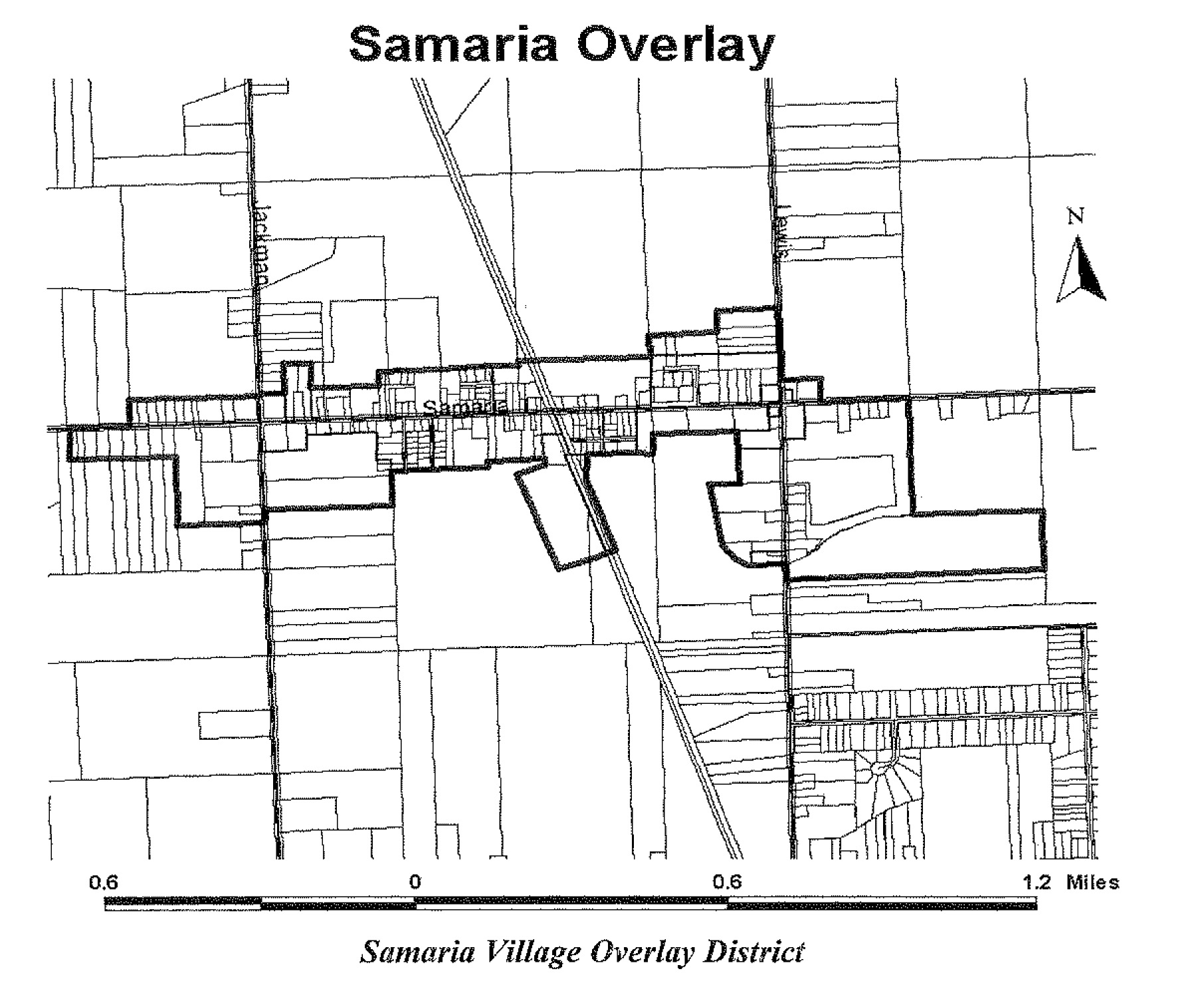
(Ord. No. 44A-280, § 1, 6-21-11)

