
Camas City Zoning Code
CHAPTER 18
03 - DEFINITIONS2
Prior ordinance history: Ords. 2443, 2455 and 2481.
18.03.010 - Purpose.
The purpose of the definitions chapter is to carry out the intent of the city's development regulations. The terms defined in this chapter are the minimum necessary to resolve questions of interpretation. Terms not defined shall hold their common and generally accepted meaning, unless specifically defined otherwise in this code.
(Ord. 2515 § 1 (Exh. A (part)), 2008)
(Ord. No. 2691, § I(Exh. A), 1-21-2014)
18.03.020 - Interpretation of terms.
A.
Terms in this title that are not defined in this chapter hold their common and accepted meaning.
B.
The following terms shall be interpreted as follows:
1.
Words used in the present tense include the future;
2.
The plural includes the singular and vice-versa;
3.
The words "will" and "shall" are mandatory;
4.
The word "may" indicates that discretion is allowed;
5.
The word "used" includes designed, intended, or arranged to be used;
6.
The masculine gender includes the feminine and vice-versa;
7.
The word "person" may be taken for persons;
8.
The word "building" includes a portion of a building or a portion of the lot on which it stands;
9.
Distances shall be measured horizontally unless otherwise specified;
10.
The word "occupied" includes designed or intended to be used.
(Ord. 2515 § 1 (Exh. A (part)), 2008)
18.03.030 - Definitions for land uses.
For the purposes of this title, the following definitions shall apply:
"Accessory Residential Storage Lot" means a designated lot within a North Shore residential zone (LD-NS, HD-NS) for the use as a storage facility for recreational vehicles, boats, and/or other watercraft. A Homeowner's Association (HOA) shall operate and maintain the storage facility. Only residents within the established HOA may use the facility. The HOA will establish rules and regulations for the storage facility to be recorded within the Covenants, Conditions & Restrictions for the HOA during the subdivision application period. Lots created for use as accessory residential storage facilities shall meet the dimensional requirements of the designated North Shore land use designation they are in. The North Shore Design Manual defines additional development requirements for accessory residential storage lots.
"Adult Entertainment Facility" see CMC Chapter 5.36 Sexually Oriented Business.
"Adult family home" means a dwelling, licensed by the State of Washington Department of Social and Health Services, in which a person or persons provide personal care, special care, room and board to more than one but not more than six adults who are not related by blood or marriage to the person or persons providing the services. An existing adult family home may provide services to up to eight adults upon approval from the Department of Social and Health Services in accordance with RCW 70.128.066. Adult family homes are a permitted use in all areas zoned for residential use.
Animal Kennel. See "Kennel."
"Antique shop" means an establishment engaged in the sale of collectibles, relics or objects of an earlier period than the present.
"Appliance sales and incidental service" means an establishment engaged in the sale and repair of household or office tools or devices operated by gas or electric current. Such tools or devices may include stoves, fans, refrigerators, etc.
"Assisted living" means any group residential program that provides personal care and support services to people who need help with daily living activities as a result of physical or cognitive disability. Assisted living communities usually offer help with bathing, dressing, meals and housekeeping. The amount of help provided depends on individual needs, however, full-time (twenty-four hours a day) care is not needed. Assisted living communities go by a variety of names: adult homes, personal care homes, retirement residences, etc.
"Automobile repair garage" means a building designed and used for the storage, care repair, or refinishing of motor vehicles including both minor and major mechanical overhauling, paint and body work.
"Automobile sales, new or used" means an establishment that provides for the sale of motorized vehicles as its primary use.
"Automobile service station" means any premises used primarily for supplying motor fuel, oil, minor servicing, excluding body and fender repair, and for sale of accessories as a secondary service for automobiles at retail direct to the customer.
"Automobile wrecking" means the dismantling or wrecking of used motor vehicles or trailers, or the storage, sale or dumping of dismantled, partially dismantled, obsolete or wrecked vehicles or their parts when screened from view from a public roadway and adjoining properties.
Bakery (Retail). "Retail bakery" means an establishment where the majority of retail sale is of products such as breads, cakes, pies, pastries, etc., which are baked or produced and for sale to the general public.
Bakery (Wholesale). "Wholesale bakery" means an establishment where breads, cakes, pies, pastries, etc. are baked or produced primarily for wholesale rather than retail sale.
Bar. See "Tavern."
"Bed and breakfast inn" means a dwelling or portion thereof, where short-term lodging rooms and meals are provided. The operator of the inn shall live on the premises or in adjacent premises. A bed and breakfast which includes six or more guest rooms shall be classified and defined as a hotel.
"Boat sales, and repair" means a business primarily engaged in sales and repair of new and used motorboats, sailboats, and other watercraft. Also includes businesses primarily engaged in the sale of supplies for boating.
"Book, stationery and art supply store" means an establishment engaged in the retail sale of books and magazines, stationery, record and tapes, video and art supplies, including uses.
Brew pub. See "specialty goods production."
"Building and hardware and garden supply store" means an establishment engaged in selling lumber and other building materials such as paint, glass, wallpaper, tools, seeds and fertilizer.
"Bus station" means an establishment for the storage, dispatching, repair and maintenance of coaches and vehicles of a transit system.
Child Care. See "Day care."
"Church" means a permanently located building commonly used for religious worship, fully enclosed with walls and roof. A memorial chapel is similar to a church, with the exception that no funeral home activities, such as embalming or casket display are permitted.
"Clinic" means a building or portion of a building containing offices and facilities for providing medical, dental and psychiatric services for outpatients only.
"Community center" means a facility owned and operated by a public agency or nonprofit corporation; provided, that the principal use of the facility is for public assistance, recreation, community improvement, or public assembly.
Convenience Store. See "Grocery, neighborhood."
"Convention center" means an establishment developed primarily as a meeting facility; including facilities for recreation and related activities provided for convention participants, excluding overnight lodging.
"Day care center" means a state licensed entity regularly providing care for thirteen or more children for periods of less than twenty-four hours. A day care center is not located in a private family residence unless the portion of the residence to which the children have access is used exclusively for the children during the hours the center is open or is separate from the usual quarters of the family.
Day Care, Family Home. "Family home day care" means an entity regularly providing care during part of the twenty-four hour day to six or fewer children in the family abode of the person(s) under whose direction the children are placed; or, a state licensed entity regularly providing care during part of the twenty-four hour day to between six and twelve children in the family abode of the person(s) under whose direction the children are placed.
Day Care, Mini-Center. "Mini-center day care" means a state licensed entity providing care during part of the twenty-four hour day period for twelve or fewer children in a facility other than the family abode of the person or persons under whose direct care the children are placed, or for the care of seven through twelve children in the family abode of such person or persons.
"Delicatessen (deli)" means retail food stores selling ready-to-eat food products such as cooked meats, prepared salads or other specialty food items. This definition includes seafood, health food and other specialty foods.
"Drug store" means an establishment engaged in the retail sale of prescription drugs, nonprescription medicines, cosmetics and related supplies.
"E-cigarette" means any electronically actuated device or inhaler meant to simulate cigarette smoking that uses a heating element to vaporize a liquid solution, popularly referred to as "juice," and that causes the user to exhale any smoke, vapor, or substance other than that produced by unenhanced human exhalation. The juice used in e-cigarettes typically contains nicotine, and for this reason e-cigarettes and their juice fall under the classification of tobacco products and tobacco paraphernalia.
"Electric vehicle battery charging station" and "rapid charging station" mean an electric component assembly, or cluster of component assemblies designed specifically to charge batteries within electric vehicles, which meet or exceed any standards, codes, and regulations set forth by RCW Chapter 19.28.
"Electric vehicle infrastructure" means structures, machinery, and equipment to support electric vehicles such as a battery exchange station or facility, and which may be subject to site plan permits.
"Event center" means a building or property used by groups for celebratory events (e.g. weddings, parties, reunions, etc.), meetings and other events. Occupancy must be less than two hundred persons otherwise it shall be regulated as a convention center. Events may occur outdoors. Typically food service and alcohol are associated with this use.
"Fitness center/sports club" means an establishment engaged in operating physical fitness facilities, sports and recreation clubs.
"Florist shop" means establishments engaged in the retail sale of flowers and plants.
"Food carts/food trucks/food delivery business" means a business in which food is primarily prepared and sold from a vehicle or trailer. Restaurants or fast food restaurants in a permanent building are not included in this definition. Food carts are generally not allowed to conduct business within the public right-of-way and must be located on leased or owned property. For more information refer to zoning structure setbacks, uses allowed in the zone, and siting requirements at CMC Chapter 18.18 Site Plan Review.
"Funeral home" means a building where services and/or ceremonies are held in conjunction with human burial or cremation. Crematories may be an accessory use to a funeral home.
"Furniture store" means establishments engaged in the retail sale of household furniture and furnishings for the home.
"Gas/fuel station" means establishments engaged primarily in the sale of automobile gasoline or other auto fuel to the general public.
"Gas/fuel station with mini market" means establishments engaged in the sale of gasoline or other auto fuel together with a minor incidental building in which incidental items including snack foods and beverages are sold.
"Golf course" means a recreational facility, under public or private ownership, designed and developed for uses including, but not limited to a golf course, driving range, putt-putt golf, and other auxiliary facilities such as a pro shop, caddy shack building, restaurant, meeting rooms, and storage facilities.
Grocery, Large Scale. "Large scale grocery" means a retail business enclosed within a structure greater than thirty thousand square feet with the majority of sales relating to food for the consumption off-premises.
Grocery, Neighborhood. "Neighborhood grocery" means a retail business enclosed within a structure less than six thousand square feet with the majority of sales relating to food and associated items. Limited outdoor storage may be permitted; provided it complies with screening requirements. Where outdoor storage occurs, the use shall be defined as a small scale grocery.
Grocery, Small Scale. "Small scale grocery" means a retail business enclosed within a structure between six thousand square feet and thirty thousand square feet with the majority of sales relating to food for the consumption off-premises.
Hardware Store. See "Building, hardware and garden supply store."
"Hazardous waste" means all dangerous and extremely hazardous, as defined in RCW 70.105.010, except for moderate-risk waste.
"Hazardous waste storage" means the holding of dangerous waste for a temporary period, as regulated by state dangerous waste regulations, Chapter 173-303, Washington Administrative Code.
"Hazardous waste treatment" means the physical, chemical or biological processing of dangerous waste to make waste nondangerous or less dangerous, safer for transport, amenable for energy or material resource recovery, amenable for storage, or reduced in volume.
Hazardous Waste Treatment and Storage Facility, Off-site. "Off-site hazardous waste treatment and storage facility" means treatment and storage facilities of hazardous wastes generated on properties other than those on which the off-site facility is located.
Hazardous Waste Treatment and Storage Facility, On-site. "On-site hazardous waste treatment and storage facility" means treatment and storage of hazardous wastes generated on-site.
"Home occupation" See CMC Chapter 18.39 Home Occupations.
"Hospital" means an establishment that provides sleeping and eating facilities to persons receiving medical, obstetrical or surgical care and nursing service on a continuous basis.
"Hotel" means a building or buildings in which short-term lodging is provided for a fee for up to thirty consecutive nights. The facility may provide such things as restaurants, meeting rooms, self-service kitchens, and/or other auxiliary facilities and services. This definition is interchangeable with "motel," "hostel," and "inn."
Junkyard. See "Wrecking yard."
"Kennel/boarding (incidental use)" means any premises or building in which four or more dogs or cats at least four months of age are kept commercially for training or board. Propagation and sale of pets may not occur as an incidental use. Facilities for the boarding of animals may occupy no more than 30 percent of the gross floor area of the primary building and must be indoors. Excessive barking may be considered cause for revocation of permit in accordance with CMC Section 9.32.050 Public disturbance noises.
"Kennel/commercial boarding (primary use)" means any premises or building in which four or more dogs or cats at least four months of age kept commercially for board, propagation or sale. Facilities for kennels/boarding must be entirely indoors, unless otherwise approved with a Type III permit.
Laundry/dry cleaning (industrial): "Industrial laundry/dry cleaning" means a business supplying bulk laundry services, such as linen and uniform services on a rental or contract basis. May also include cleaning used carpets and upholstery.
Laundry/dry cleaning (retail): "Retail laundry/dry cleaning" means a business providing drop-off and pick-up services of laundry and dry cleaning (except coin- operated); and providing specialty cleaning services for specific types of garments and other textile items (except carpets and upholstery), such as fur, leather, or suede garments; wedding gowns; hats; draperies; and pillows.
Laundry, self-service: "Self-service laundry" means a business providing coin-operated machines for home type washing, drying, and/or ironing to be performed primarily by customers.
Live work unit: "Live-Work" means a type of residential mixed-use development that combines a nonresidential use with a residential use in the same unit, and where a resident uses the workspace. The living space may be located in front or behind the workspace on the same floor or on a separate floor.
"Marijuana processor" means a facility licensed by the Washington Liquor Control Board to transform marijuana into usable marijuana and marijuana-infused products into useable marijuana and marijuana-infused products, package and label useable marijuana and marijuana-infused products for sale in retail outlets, and sell usable marijuana and marijuana-infused products at wholesale to marijuana retailers. Processors are classified as follows:
Processor I, a facility limited to drying, curing, trimming, and packaging; and
Processor II, a facility that extracts concentrates, infuses products, or involves mechanical and/or chemical processing in addition to drying, curing, trimming, and packaging.
"Marijuana producer" means a facility licensed by the Washington State Liquor Control Board for the growing and sale at wholesale of marijuana to marijuana processors and other marijuana producers.
"Marijuana retailer" means a facility licensed by the Washington State Liquor Control Board for the sale to consumers of usable marijuana and marijuana-infused products.
"Meeting facility" means a primary or secondary use in which a room or series of rooms are available for businesses purposes on an hourly or daily rate.
"Mini-storage facility" means a building consisting of individual, small, self-contained units that are leased or owned for the storage of business and household goods or contractor's supplies. May also include an accessory residential use, which will not exceed nine hundred square feet of floor area or forty percent of the primary building size, whichever is lesser. This singular, accessory dwelling is intended solely as living quarters for security staff or for the manager, and shall not be leased to non-employees of the facility.
"Newspaper printing plant" means a building housing a business to include the writing, layout, editing, and publishing of a newspaper.
Nursery, Plant. "Plant nursery" means an enterprise, establishment, or portion thereof that conducts the retailing or wholesaling of plants grown on the site, as well as accessory items (but not farm implements). The accessory items normally sold include items such as clay pots, potting soil, fertilizers, insecticides, hanging baskets, rakes and shovels.
"Nursing, rest or convalescent home" means an establishment which provides full-time care for three or more chronically ill or infirm persons. Such care shall not include surgical, drug or alcohol treatment services, or obstetrical or acute illness services. See residential treatment facility (RTF) definition for drug and alcohol treatment services.
"Office supply store" means stores selling office products such as stationery, legal forms, writing implements, typewriters, computers, copiers, office furniture, and the like.
"Pawnshop" means establishments who lend money on goods deposited until redeemed.
"Permanent supportive housing" means subsidized, leased housing with no limit on of stay, that prioritizes people who need comprehensive support services to retain tenancy and utilizes admissions practices designed to use lower barriers to entry than would be typical for other subsidized or unsubsidized rental housing, especially related to rental history, criminal history, and personal behaviors. Permanent supportive housing is paired with on-site or off-site voluntary services designed to support a person living with a complex and disabling behavioral health or physical health condition who was experiencing homelessness or was at imminent risk of homelessness prior to moving into housing to retain their housing and be a successful tenant in a housing arrangement, improve the residents' health status, and connect the resident of the housing with community-based health care, treatment, or employment services. Permanent supportive housing is subject to all of the rights and responsibilities defined in chapter 59.18 RCW.
"Pet shop" means establishments engaged in the retail sale of pets, pet food, supplies and the grooming of pets and other small animals.
Pharmacy. See "Drug store."
"Photographic" and "electronic stores" mean establishments engaged in the retail sale of camera and photographic supplies and a variety of household electronic equipment.
"Print shop" means a retail establishment that provides duplicating services using photocopy, blueprint, and offset printing equipment, including collating of booklets and reports.
"Professional offices" means an office containing activities such as those offered by a physician, surgeon, dentist, lawyer, architect, engineer, accountant, artist or teacher, real estate or insurance sales.
"Public agency" means any agency office for the administration of any governmental activity or program.
"Recreational vehicle (RV) park" means any lot of land upon which two or more recreational vehicle sites are located, established, or maintained for occupancy by recreational vehicles of the general public as temporary living quarters for recreation or vacation purposes.
"Recycling center" means a building in which used material is separated and processed prior to shipment to others who will use those materials to manufacture new products.
"Recycling collection point" means a collection point for recoverable resources, such as newspapers, glassware, and metal cans, with processing of items occurring off-site. See Figure 18.03-1.
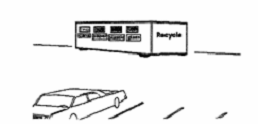
Figure 18.03-1 Recycling Collection Point
"Recycling plant" means a facility that is not a junkyard and in which recoverable resources, such as newspapers, glass, metal cans and other products are reprocessed and treated to return such products to a condition in which they may again be used for production.
"Residential care facility" means a facility, licensed by the state of Washington, that cares for at least five but not more than fifteen people with functional disabilities, and that has not been licensed as an adult family home pursuant to RCW 70.128.175.
"Residential treatment facility (RTF)" means a facility meeting applicable state and federal standards that provides support services including, but not limited to, counseling, rehabilitation and medical supervision for the need of drug or alcohol treatment. An RTF may function as a residence, day-treatment facility, or a combination thereof. An RTF may be staffed by resident or nonresident staff and may include more than eight unrelated individuals. An RTF shall not be located within one thousand feet of public and private schools, public parks, public libraries, other RTFs, or similar uses.
"Restaurant" means an establishment that serves food and beverages primarily to persons seated within the building. This includes cafes, coffee shops, tearooms, and outdoor cafes.
Restaurant, Fast Food. "Fast food restaurant" means an establishment that offers quick food service, which is accomplished through a limited menu of items already prepared and held for service, or prepared, fried, or grilled quickly, or heated in a device such as a microwave oven. Orders are not generally taken at the customer's table, and food is generally served in disposable wrapping of containers. The establishment may also offer drive-up or drive-through service.
"Roadside produce stand" means an establishment engaged in the retail sale of local fresh fruits and vegetables and having permanent or semi-permanent structures associated with such use.
"Second-hand/consignment store" means an establishment engaged in the retail sale of used clothing, sports equipment, appliances and other merchandise.
"Smoke shop/head shop" means any premises where the primary use (fifty percent or more of the net floor area of a business) is dedicated to the display, sale, distributions, delivery, offerings, furnishing, or marketing of tobacco, tobacco products or tobacco paraphernalia.
"Sober Living Homes" means a home-like environment that promotes healthy recovery from a substance use disorder and supports persons recovering from a substance use disorder through the use of peer recovery support. Sober living homes are limited to no more than eight unrelated individuals.
"Social gathering hall" means a building used primarily by community groups and organizations for meetings, celebrations, bingo and other events.
"Specialty goods production" means small scale businesses that manufacture artisan goods or specialty foods. Small manufacturing production aims at direct sales rather than the wholesale market. This use may include public viewing, tasting area for consumption on site, restaurant or café, and other customer service space. This use category includes the following: Microbreweries (a.k.a. Brew pub), microdistilleries, and wineries; fruit and vegetable preserving and specialty foods; and artisan leather, glass, cutlery, hand tools, wood, paper, ceramic, textile and yarn products.
"Stock broker, brokerage firm" means a qualified and regulated professional or company that oversees financial assets, buys and sells (trades) shares or stocks, and other securities through market makers on behalf of investors.
"Tavern" means an establishment primarily serving alcoholic beverages for consumption on-site. Secondary activities may include dining, music, bottling, and sale of bottled beverages prepared on-site.
"Tiny house" and "Tiny house with wheels" means a dwelling to be used as permanent housing with permanent provisions for living, sleeping, eating, cooking, and sanitation built in accordance with state building code.
"Tiny house communities" means real property rented or held out for rent to others for the placement of tiny houses with wheels or tiny houses as approved through site plan review (Chapter 18.18).
"Tobacco paraphernalia" means any paraphernalia, equipment, device, or instrument that is primarily designed or manufactured for the smoking, chewing, absorbing, dissolving, inhaling, snorting, sniffing, or ingesting by any other means into the body of tobacco, tobacco, tobacco products, marijuana, marijuana products, or other controlled substances as defined by the state of Washington. Items or devices classified as tobacco paraphernalia include but are not limited to the following: pipes, punctured metal bowls, bongs, water bongs, electric pipes, e-cigarettes, e-cigarette juice, buzz bombs, vaporizers, hookahs, and devices for holding burning material. Lighters and matches shall be excluded from the definition of tobacco paraphernalia.
"Tobacco product" means any product in leaf, flake, plug, liquid, or any other form, containing nicotine derived from the tobacco plant, or otherwise derived, which is intended to enable human consumption of the tobacco or nicotine in the produce, whether smoked, chewed, absorbed, dissolved, inhaled, snorted, sniffed, or ingested by any other means. For the purposes of this chapter, the term "tobacco product" excludes any product that has been specifically approved by the United States Food and Drug Administration (FDA) for sale as tobacco/smoking cessation product or for other medical purposes, where such product is marketed and sold solely for such an approved purpose.
"Transitional housing" means a project that provides housing and supportive services to homeless persons or families for up to two years and that has as its purpose facilitating the movement of homeless persons and families into independent living.
"Use" means an activity or a purpose for which land or a structure is designed, arranged or intended, or for which it is occupied or maintained.
"Veterinarian clinic" means a facility established to provide examination, diagnostic, and health maintenance services for medical and services for medical and surgical treatment of companion animals on an outpatient basis. A veterinarian clinic operates during regular business hours and discharges all patients prior to closing time.
"Vision clearance hazard" An object that interferes with vision near intersections of roadways and motor vehicle access points where a clear field of vision is required for traffic safety and to maintain adequate sight distance. See also ["Corner lot vision clearance area"] design provisions at Section 18.17.030.
"Veterinarian hospital" means a facility established to provide examination, diagnostic and health maintenance services for medical and surgical treatment of companion animals and equipped to provide housing and nursing care for them during illness or convalescence.
Warehouse, Bulk Retail. "Bulk retail warehouse" means a building primarily used for the storage and retail sale of large quantities of goods and materials.
Warehouse, Wholesale and Distribution. "Wholesale and distribution warehouse" means a use engaged in storage, wholesale, and distribution of manufactured products, supplies, and equipment, but excluding bulk storage of materials that are inflammable or explosive or that create hazardous or commonly recognized offensive conditions.
(Ord. 2515 § 1 (Exh. A (part)), 2008)
(Ord. No. 2612, § I(Exh. A), 2-7-2011; Ord. No. 2654, §§ I, II, 7-16-2012; Ord. No. 2691, § I(Exh. A), 1-21-2014; Ord. No. 2712, § 2, 10-20-2014; Ord. No. 15-023, § I, 11-16-2015; Ord. No. 17-013, § I(Exh. A), 10-2-2017; Ord. No. 18-014, § X, 9-4-2018; Ord. No. 21-004, § II(Exh. A), 3-15-2021; Ord. No. 22-007, § I, 5-16-2022; Ord. No. 23-010, Exh. A, 8-7-2023; Ord. No. 25-025, § I (Exh. A), 12-15-2025)
18.03.040 - Definitions for development terms.
As used in this title:
"Abutting" means adjoining.
Access Easement. See "Street."
Access Panhandle. See "Flag lot."
"Accessory dwelling unit" means a dwelling unit located on the same lot as a single-family housing unit, duplex, triplex, townhome, or other housing unit. Refer to Chapter 18.27 Accessory Dwelling Units.
"Accessory structure or accessory use" means a structure or use incidental and subordinate to the principal use or structure and located on the same lot or tract.
"Alley" means a narrow street primarily for vehicular service access to the rear or side of properties otherwise abutting on another street.
"Annexation" means the legal process in which a parcel or contiguous group of parcels in an unincorporated area become part of the city taking the action of incorporation.
Arterial. See "Street."
"Assessment project" means the assessment may be a local improvement district (LID) or equitable reimbursement method.
"Basement" means any area of the building having its floor subgrade (below ground level) on all sides.
"Binding site plan" means a drawing to scale which: (1) identifies and shows the areas and locations of all streets, roads, improvements, utilities, open spaces, and any other matters specified by local regulations; (2) contains inscriptions or attachments setting forth limitations and conditions for the use of the land; and (3) contains provisions making any development be in conformity with the site plan.
"Boundary line adjustment" means an adjustment of boundary lines between platted or unplatted lots or both, which does not create any additional lot, tract, parcel, site or division.
"Breakaway wall" means a wall that is not part of the structural support of the building and is intended through its design and construction to collapse under specific lateral loading forces, without causing damage to the elevated portion of the building or supporting foundation system.
"Breezeway" means a structure for the principal purpose of connecting the main building or buildings on a property with other main buildings or accessory buildings.
"Building" means any structure used or intended for supporting or sheltering any use or occupancy.
"Building envelope" means a delineated area identifying where a primary building may be established. See Figure 18.03-3.
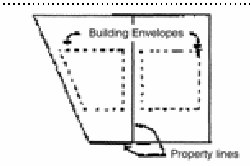
Figure 18.03-3
Building Envelopes
"Building height" means the vertical distance above a reference datum measured to the highest point of the coping of a flat roof or to the deck line of a mansard roof or to the average height of the highest gable of a pitched or hipped roof. The reference datum shall be selected by either of the following, whichever yields a greater building height: (a) the elevation of the highest adjoining sidewalk or ground surface within a five-foot horizontal distance or the exterior wall of the building when such sidewalk or ground surface is not more than ten feet above the lowest grade; (b) an elevation ten feet higher than the lowest grade when the sidewalk or ground surface described in subsection (a) of this definition is more than ten feet above the lowest grade. The height of a stepped or terraced building is the maximum height of segment of the building. See Figure 18.03-4.
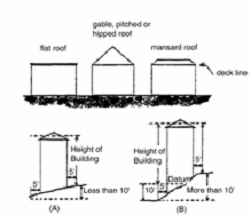
Figure 18.03-4 Building Height
"Building line" means a line on a plat indicating the limit beyond which primary buildings or structures may not be erected.
"City" means the City of Camas.
Collector. See "Street."
"Commission" means the Planning Commission of the City of Camas.
"Comprehensive plan" means the comprehensive plan for the City of Camas, comprising plans, maps or reports, or any combination thereof relating to the future economic and physical growth and development of the city.
"Contractor" means the person/firm hired by the applicant to perform work.
"Cottage housing" means residential units on a lot with a common open space that either: (a) is owned in common; or (b) has units owned as condominium units with property owned in common and a minimum of 20 percent of the lot size as open space.
"Council" means the Council of the City of Camas.
"Court" means a space open and unobstructed to the sky, located at or above grade level on a lot and bounded on three or more sides by walls of a building.
"Courtyard apartments" means up to four attached dwelling units arranged on two or three sides of a yard or court.
"Critical facility" means a facility for which even a slight chance of flooding might be too great. Critical facilities include (but are not limited to) schools, nursing homes, hospitals, police, fire and emergency response installations, and installations which produce, use, or store hazardous materials or hazardous waste.
Cul-de-sac. See "Street."
"Dedication" means the deliberate appropriation of land by an owner for any general and public uses, reserving to the owner no other rights than such as are compatible with the full exercise and enjoyment of the public uses to which the property has been devoted.
"Density transfer" means a transfer of dwelling units located on a site identified as sensitive lands or open space to the developable portion of land on the site. (Refer to Section 18.09.060 Density Transfers)
"Developed/net acreage" means the total acreage of a land use development exclusive of open space and critical areas.
"Development" within the area of special flood hazard means any manmade change to improved or unimproved real estate, including but not limited to buildings or other structures, mining, dredging, filling, grading, paving, excavation, or drilling operations, or storage of equipment or materials located within the area of special flood hazard.
"Director" means community development director or designee.
"Driveway" means the required traveled path to or through a parking lot for three or more vehicles. A "driveway" also refers to the vehicular access for single-family dwelling.
"Duplex or two-family dwelling" means a residential building with two attached dwelling units.
"Dwelling unit" means an independent living unit within a dwelling structure designed and intended for occupancy by not more than one family and having its own housekeeping and kitchen facilities. Hotel, motel, and bed and breakfast that are primarily for transient tenancy are not considered dwelling units.
Dwelling Unit, Accessory. "Accessory dwelling unit" means an additional, smaller, subordinate dwelling unit on a lot or attached to an existing or new house. Refer to Chapter 18.27 Accessory Dwelling Units.
Dwelling, Condominium. "Condominium dwelling" means two or more units where the interior space of which are individually owned; but the balance of the property (both land and/or building) is owned in common by the collective owners of the building.
Dwelling, Cottage Cluster. "Cottage-style home" or "Cottage Cluster" means a grouping of no fewer than four detached dwelling units with a maximum footprint of one thousand square feet each and that includes a common courtyard. Cottage clusters may be located on a single lot or parcel or on individual lots or parcels. Cottage clusters are allowed on up to twenty-five percent of the developable acreage of a project site. Cottage cluster development standards are detailed in the North Shore Design Manual.
Dwelling, Duplex or Two-Family. "Duplex or two-family dwelling" means a structure containing two dwelling units on one lot.
Dwelling, Single-Family. "Single-family dwelling" means a detached building containing one dwelling unit.
Dwelling, Single-Family Attached (Row House). "Single-family attached dwelling" means a single household dwelling attached to another single household dwelling by a common vertical wall, and each dwelling is owned individually and located on a separate lot. These are more commonly referred to as townhouses or rowhouses.
Dwelling, Multifamily. "Multifamily dwelling" or "apartment" means a building containing three or more dwelling units on a lot or parcel.
"Easement" means a grant of the right to use land for specific purposes.
"Elevated building" means for insurance purposes, a non-basement building that has its lowest elevated floor raised above ground level by foundation walls, shear walls, post, piers, pilings, or columns.
"Erosion control bond" insures the satisfactory installation, maintenance, and operation of erosion control measures within an approved development. The developer/owner is the principle and the city is the obligee. The bond shall remain in full force and effect until released by the city.
"Established grade" means the curb line grade established by the city.
Facility, Essential Public. "Essential public facility" means and includes those facilities that are typically difficult to site, such as airports, state education facilities and state or regional transportation facilities, state and local correctional facilities including substance abuse facilities, mental health facilities, and group homes.
Facility, Public. "Public facility" means streets, roads, highways, sidewalks, street and road lighting systems, traffic signals, domestic water systems, water towers, storm and sanitary sewer systems, parks and recreation facilities, and schools that are open to the general public and owned by or in trust for a government entity.
"Family" means an individual, or two or more persons related by blood or marriage, or two persons with functional disabilities as defined in this chapter, or a group of not more than five unrelated persons (excluding servants), living together in the same dwelling unit.
"Fence" means a structure, other than a building, designed, constructed and intended to serve as a barrier or as a means of enclosing a yard or other structure; or to serve as a boundary feature separating two or more properties. Landscaping plantings do not fall within this definition.
Fence, Sight-Obstructing. "Sight-obstructing fence" means a fence so arranged as to obstruct vision.
"Final acceptance" means city council approval of the complete public improvements and acceptance of the warranty for the public improvements. The end of the warranty period signifies the city responsibility for maintenance and repair of any public improvements.
"Final plat" means the final drawing of the subdivision or short subdivision and dedication, prepared for filing for record with the county auditor and containing all elements and requirements set forth in this chapter and in state law.
"Flag lot" means a lot that does not have full frontage on a public street and the "pole" of the flag lot is less than half the width of the average lot width. Flag poles shall be a minimum of twenty feet wide, provide a minimum of twelve feet wide pavement and extend no longer than three hundred feet.
"Floor area" means the area included within the surrounding exterior walls of a building or portion thereof, exclusive of vent shafts and courts. The floor area of a building, or portion thereof, not provided with surrounding exterior walls shall be the usable area under the horizontal projection of the roof or floor above.
"Fourplex" means a residential building with four attached dwelling units.
"Grade (adjacent ground elevation)" means the lowest point of elevation of the finished surface of the ground paving or sidewalk within the area between the building and the property line or, when the property line is more than five feet from the building, between the building and a line five feet from the building.
"Gross area" means the total usable area including accessory and common space dedication to such things as streets, easements and uses out of character with the principal use but within a unit of area being measured.
"Guest house" means an accessory, detached dwelling without kitchen facilities, designed for and used to house transient visitors or guests of the occupants of the main building without compensation.
Half Street. See "Street."
"Hammerhead" means a term used to describe a particular style of turnaround for emergency vehicles designed in accordance with guidelines in the Camas Design Standard Manual.
"Hearings examiner" conducts quasi-judicial public hearings for land development applications and renders decisions based on regulations and policies as provided in Camas Municipal Code and other ordinances. See CMC Chapter 2.15 Hearing Examiner System.
Height of Building. See "Building height."
"Home, designated manufactured" means a manufactured home which:
(a)
is comprised of at least two fully enclosed parallel sections each not less than twelve (12) feet wide by thirty-six feet long;
(b)
was originally constructed with and now has composition or wood shake or shingle, coated metal, or similar roof, or not less than 3:12 pitch;
(c)
has exterior siding similar in appearance to siding materials commonly used on conventional site-built IBC single-family residences; and
(d)
is placed upon a permanent foundation.
"Home, Manufactured" means a single-family residence constructed after June 15, 1976, in accordance with the U.S. Department of Housing and Urban Development (HUD) requirements for manufactured housing, and bearing the appropriate insignia indicating such compliance.
"Home, Mobile" means a single-family residence transportable in one or more sections that are eight feet or more in width and thirty-two feet or more in length, built on a permanent chassis, designed to be used as a permanent dwelling and constructed before June 15, 1976. Such home shall be installed in accordance with applicable WAC rules and regulations.
"Home, Modular" means a structure constructed in a factory in accordance with the International Building Code and bearing the appropriate insignia indicating such compliance. This definition includes "prefabricated," "panelized," and "factory built" units. Such home shall be installed in accordance with applicable WAC rules and regulations.
"Homeowner's association" means an incorporated, nonprofit organization operating under recorded land agreements through which: (a) each lot owner is automatically a member; and (b) each lot is automatically subject to a charge for a proportionate share of the expenses for the organization's activities, such as maintaining a common property.
"IBC" means the International Building Code as adopted by city council.
"IFC" means the International Fire Code as adopted by the city council.
"Infrastructure acreage" means the total area of public improvements including any utility or private road outside of the lot area, street right-of-way, and storm drainage facilities.
"IRC" means the International Residential Code as adopted by the city council.
"Land development" means any project subject to review under Title 16, 17 or 18.
"Lot" means a fractional part of divided lands having fixed boundaries, being of sufficient area and dimension to meet minimum zoning requirements for width and area. The term shall include parcels.
"Lot area" means the total square footage of a lot.
"Lot coverage" means the portion of a lot that is occupied by the principal and accessory buildings, including all projections except eaves, expressed as a percentage of the total lot area.
"Lot depth" means the horizontal distance from the midpoint of the front lot line to the midpoint of the rear lot line.
"Lot line" means the property line bounding a lot.
Lot Line, Front. "Front lot line" means, in the case of an interior lot, the lot line separating the lot from a street other than an alley, and in the case of a corner lot, the shortest lot line separating the lot from a street other than an alley.
Lot Line, Rear. "Rear lot line" means a lot line which is opposite and most distant from the front lot line. In the case of an irregular shaped lot, a line ten feet in length within the lot parallel to and most distant from the front lot line shall be considered the rear lot line for purposes of determining required setbacks. See Figure 18.03-6.
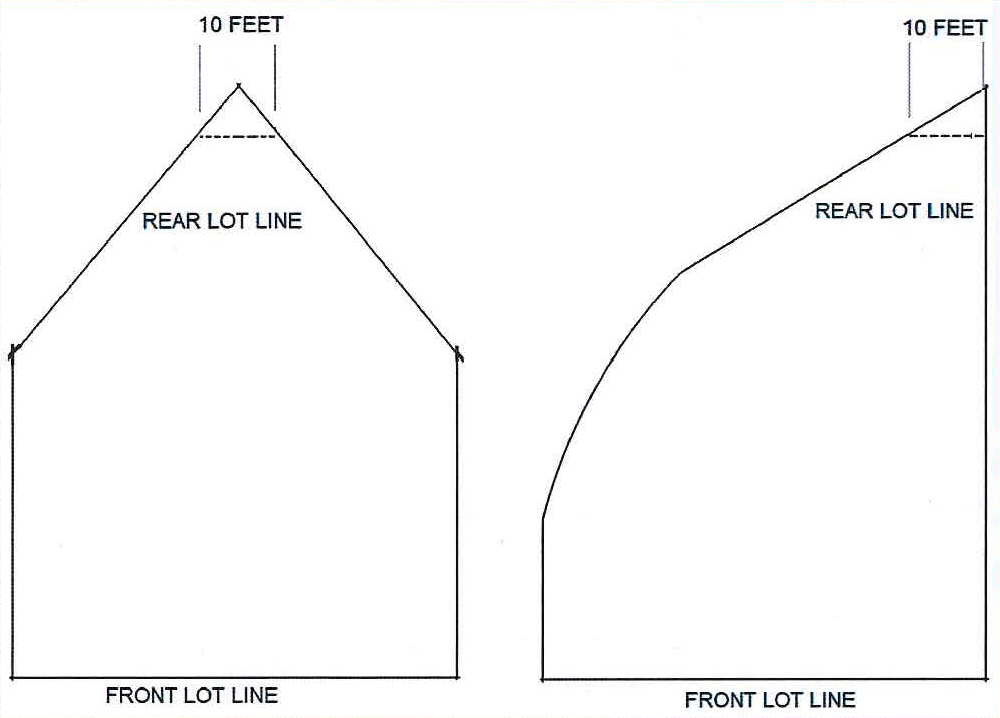
Figure 18.03-6 Rear Lot Line in the Case of an Irregular Lot
Lot Line, Side. "Side lot line" means any lot line not a front or rear lot line. See Figure 18.03-8.
"Lot width" means the horizontal distance between the side lot lines at a point midway between the front and rear property lines.
Lot, Corner. "Corner lot" means a lot abutting on two intersecting streets other than an alley provided that the streets do not intersect at an angle greater than one hundred thirty-five degrees. See Figure 18.03-7.
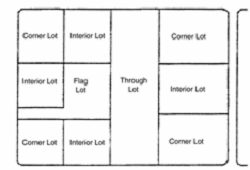
Figure 18.03-7
Lot Configuration
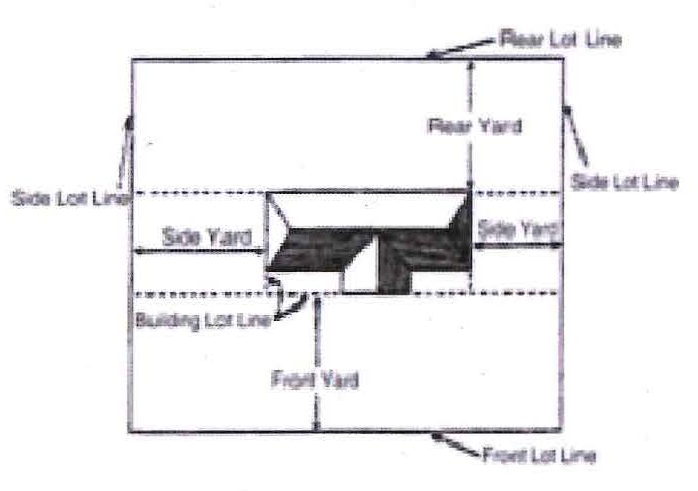
Figure 18.03-8
Yard and Lot Lines
Lot, Interior. "Interior lot" means a lot other than a corner lot. See Figure 18.03-7.
"Lot, parent" means a lot which is subdivided into unit lots through the unit lot subdivision process.
Lot, Through. "Through lot" means a lot having frontage on two parallel or approximately parallel streets. See Figure 18.03-7.
"Lot, unit" means a lot created from a parent lot and approved through the unit lot subdivision process.
"Lot width" means the horizontal distance between the side lot lines at a point midway between the front and rear property lines.
"Lowest floor" means the lowest floor of the lowest enclosed area (including basement). An unfinished or flood-resistant enclosure, usable solely for parking of vehicles, building access or storage, in an area other than a basement area, is not considered a building's lowest floor; provided, that such enclosure is not built so as to render the structure in violation of the applicable non-elevation design requirements found in CMC Chapter 16.57.
"Major transit stop" means a stop on a high capacity transportation system funded or expanded under the provisions of chapter 81.104 RCW, commuter rail stops, stops on rail or fixed guideway systems, and stops on bus rapid transit routes.
"Manufactured home park" means any property meeting the minimum standards established in CMC Chapter 18.29 "Manufactured home parks," which would be divided into individual spaces for sale, lease or rent for the accommodation of occupied manufactured/mobile homes.
Marginal Access Street. See "Street."
"Middle housing" means buildings that are compatible in scale, form, and character with single-family houses and contain two or more attached, stacked, or clustered homes including duplexes, triplexes, fourplexes, townhouses, stacked flats, courtyard apartments, and cottage housing.
Minor Street. See "Street."
"Nonconforming building or use" See CMC Chapter 18.41 Nonconforming Uses.
"Owner" means the persons/organization who hold legal right to the property. The owner may also serve as applicant, developer and contractor.
"Pawnshop" means establishments who lend money on goods deposited until redeemed.
"Pedestrian way" means a right-of-way for pedestrian traffic connecting two streets other than at an intersection.
"People with functional disabilities" means a person who, because of a recognized chronic physical or mental condition or disease, is functionally disabled to the extent of:
1.
Needing care, supervision or monitoring to perform activities of daily or instrumental activities of daily living;
2.
Needing supports to ameliorate or compensate for the effects of the functional disability so as to lead as independent a life as possible;
3.
Having a physical or mental impairment which substantially limits one or more of such person's major life activities; or
4.
Having a record of having such an impairment, but such term does not include current, illegal use of or active addiction to a controlled substance.
"Performance bond" means a pledge, guarantee or bond, usually to back the performance of an individual or company. The bond guarantees the contractor's performance. A performance bond is generally used to ensure that a particular obligation will be completed at a certain date or that a contract will be performed as stated. It has no end date, but terminates upon successful completion of obligation.
"Person" means an individual, firm, partnership, corporation, company, association, syndicate or any legal entity, including any trustee, receiver, assignee or other similar representative thereof.
"Phase" means a group of lots, tracts or parcels within well identified and fixed boundaries. The term shall include blocks. Phases shall be consecutively numbered.
"Planned residential development (PRD)." See CMC Chapter 18.23 Planned Residential Development.
"Planning commission" means the planning commission of the City of Camas.
"Planning control area" means an area in a state of incomplete development within which special control is to be exercised over land partitioning.
"Plat" means a map or representation of a subdivision, showing thereon the division for a tract or parcel of land into lots, blocks, streets and alleys, or other divisions and dedications.
"Preliminary plat" means a neat and approximate drawing of a proposed subdivision showing the general layout of streets and alleys, lots, blocks, tracts and other elements of a land division consistent with the requirements of this chapter. The preliminary plat shall be the basis of the approval or disapproval of the general layout of the land division.
"Punch list" means a term used by the engineering department to designate items still to be completed per conditions of approval and city standards for the land use to reach final acceptance phase of the approval process.
"Recreational vehicle" means a vehicle which is: a) built on a single chassis; b) four hundred square feet or less when measured at the largest horizontal projection; c) designed to be self-propelled or permanently towable by a light duty truck; and d) designed primarily not for use as a permanent dwelling but as temporary living quarters for recreational, camping, travel, or seasonal use.
"Right-of-way" (commonly referred to as ROW) means the area between boundary lines of a street or other easement.
"Roadway" means the portion of a street right-of-way developed for vehicular traffic.
"Rowhouse." See "Dwelling, Single-Family Attached."
"Sensitive Areas and Open Space." For related definitions see CMC Section 18.03.050 Environmental definitions.
"Setback." See "Yard"
"Shorelines." For related definitions see CMC Section 18.88.030 Definitions in Chapter 18.88 Shoreline Management.
"Short plat" means a map or representation of a short subdivision.
"Short subdivision" means the division of land into nine or fewer lots, sites or divisions for the purpose of sale or lease.
"Sidewalk" means a pedestrian walkway with permanent surfacing to city standards.
"Sidewalk area" means the portion of a street right-of-way between proposed curb line and adjacent lot line.
"Signs." For related definitions see Chapter 18.15 Signs.
"Single-family attached dwelling" means a single household dwelling attached to another single household dwelling by a common vertical wall, and each dwelling is owned individually and located on a separate lot. See also "townhouses".
"Stacked flat" means dwelling units in a residential building of no more than three stories on a residential zoned lot in which each floor may be separately rented or owned.
"Start of construction" means and includes substantial improvement, and means the date the building permit was issued, provided that the actual start of construction, repair, reconstruction, placement, or other improvement was within one hundred eighty days of the permit date. The actual start means either the first placement of permanent construction of a structure on a site, such as the pouring of slab or footings, the installation of piles, the construction of columns, or any work beyond the state of excavation; of the placement of a manufactured home on a foundation. Permanent construction does not include land preparation, such as clearing, grading, and filling; nor does it include the installation of streets and/or walkways; nor does it include excavation for a basement, footings, piers or foundation, or the erection of temporary forms; nor does it include the installation on the property of accessory buildings, such as garages or sheds not occupied as dwelling units or not part of the main structure. For a substantial improvement, the actual start of construction means the first alteration of any wall, ceiling, floor, or other structural part of a building, whether or not that alteration affects the external dimensions of the building.
"Story" means the space between two successive floors in a building. The top floor shall be the space between the floor surface and the underside of the roof framing. A basement shall be counted as a story if over fifty percent of its ceiling is over six feet above the average finished grade of the adjoining ground surface.
"Story, First." "First story" means the lowest story in a building which qualifies as a story, as defined in this chapter, except that a floor level in a building having only one floor level shall be classified as a first story, provided such floor level is not more than eight feet below grade, as defined in this chapter, at any point.
"Story, Half." "Half-story" means a space under a roof which has the line of intersection of roof decking and exterior wall face not more than four feet above the top floor level. A half-story containing one or more dwellings shall be counted as a full story.
"Street" means the entire width between the boundary of property or lot lines, for the purpose of vehicular and pedestrian traffic. See Table 17.19-1.
1.
"Access easement" refers to "private road."
2.
"Alley" means a narrow street primarily for vehicular service access to the back or side of properties otherwise abutting on another street.
3.
"Arterial" means a street of considerable continuity that is primarily a traffic artery for intercommunication among large areas. There are usually three to five lanes of traffic.
4.
"Collector" means a street supplementary to the arterial street system and a means of intercommunication between this system and smaller areas; used to some extent for through traffic and to some extent for access to abutting properties. There are usually two to three lanes of traffic.
5.
"Cul-de-sac (dead-end street)" means a short street having one end open to traffic and being terminated by a vehicle turnaround. See Design Standards Manual for required right-of-way, pavement, curb and gutters.
6.
"Driveway" see "Private road."
7.
"Half street" means a portion of the width of a street usually along the edge of a subdivision where the remaining portion of the street could be provided in another subdivision.
8.
"Marginal access street" means those streets whose primary function is the circulation of through traffic and shall include all major and secondary arterials and all collector streets identified in the city comprehensive plan.
9.
"Minor street" means a street intended exclusively for access to abutting properties. Also referred to as a neighborhood street. This type of street has only two lanes of traffic.
10.
"Private road" means a strip of land that provides access to a lot, tract or parcel. This road is privately maintained but is designed and installed per Table 17.19-1 and with approval of the engineering manager.
"Structural alteration" means any change to the supporting members of a building including foundations, bearing walls or partitions, columns, beams or gliders, or any structural change in the roof.
"Structure" means that which is built or constructed. An edifice or building of any kind or any piece of work artificially built up or composed of parts joined together in some definite manner.
"Subdivision" means a division or redivision of land into ten or more lots, tracts, sites or divisions for the purpose of sales, lease or transfer of ownership.
"Subdivision improvement bond" means a guarantee that improvements to an approved residential development will be completed in accordance with city standards, and code as stated in conditions of approval. The owner is the principle and the city is the obligee. There is no expiration date on this type of bond but it terminates upon acceptance of improvements by the city. The bond is issued in the amount equal to one hundred five percent of the cost of all public improvements and any improvements required as part of the conditions of approval per CMC Section 17.21.050 Bonds and other financial agreements.
"Substantial damage" means damage of any origin sustained by a structure whereby the cost of restoring the structure to its before damaged condition would equal or exceed fifty percent of the market value of the structure before the damage occurred.
"Substantial improvement" for the purposes of CMC 16.57 Frequently Flooded Areas, substantial improvement means any repair, reconstruction, or improvement of a structure, the cost of which equals or exceeds fifty percent of the market value of the structure either:
1)
Before the improvement or repair is started; or
2)
If the structure has been damaged and is being restored, before the damage occurred. For the purposes of this definition "substantial improvement" is considered to occur when the first alteration of any wall, ceiling, floor, or other structural part of the building commences, whether or not that alteration affects the external dimensions of the structure.
The term can exclude:
1)
Any project for improvement of a structure to correct pre-cited existing violations of state or local health, sanitary, or safety code specifications which have been previously identified by the local code enforcement official and which are the minimum necessary to assure safe living conditions, or
2)
Any alteration of a structure listed on the National Register of Historic Places or a State Inventory of Historic Places.
"Supported living arrangement" means a living unit owned or rented by one or more persons with functional disabilities who receive assistance with activities of daily living, instrumental activities of daily living, and/or medical care from an individual or agency licensed and/or reimbursed by a public agency to provide such assistance.
"Telecommunications." For related definitions see Section 18.35.030 Definitions in Chapter 18.35 Telecommunications Ordinance.
"Tract" means an area dedicated to such things as streets, easements and uses out of character with the principal use, but within a unit of area being measured. Tracts may include critical areas, storm ponds, and forestlands, parkland and other open space. Tracts shall not be considered lots for the purpose of determining short plat or subdivision status. Tracts shall not be considered buildable lots of record.
"Triplex" means a residential building with three attached dwelling units.
"Townhouses" means buildings that contain three or more attached single-family dwelling units that extend from foundation to roof and that have a yard or public way on not less than two sides.
"Turn-arounds" are any location identified by the city engineering manager as necessary to be improved for emergency and other vehicles to turn around.
"UBC." See "IBC" or "IRC."
"Unit density" means the number of dwelling units (including accessory dwelling units) allowed on a lot, regardless of lot size.
"Unit lot subdivision" means the division of a parent lot into two or more unit lots within a development and approved through the unit lot subdivision process.
"Usable Open Space" means areas planned and improved to provide opportunities for active recreation, passive relaxation, or community interaction, and that are accessible to the public or to residents, employees, or customers in common. Examples include plazas, courtyards, private parks, sport fields and courts, and viewpoints overlooking natural resource areas. Usable Open Space does not include public parks unless the parks were approved as Usable Open Space and conveyed to the City.
Utility Facilities, Minor. "Minor utility facilities" means those facilities which have a local impact on surrounding properties and are necessary to provide essential services such as:
1.
Substations (transmission and distribution);
2.
Pump stations;
3.
Outfalls;
4.
Water towers and reservoirs;
5.
Public wells;
6.
Cable television receiver and transmission facilities, excluding wireless communications facilities as defined in CMC Section 18.35.030 Definitions;
7.
Catch basins, retention ponds, etc.;
8.
Water treatment facilities.
"Vision clearance area" means a triangular area on a lot at the intersection of two streets, or a street and an alley, or a street and a railroad, two sides of which are lot lines measured from their corner intersection for a distance specified in the code. The third side of the triangle is a line across the corner of the lot adjoining the ends of the other two sides. Where the lot lines at intersections have rounded corners, the lot lines will be extended in a straight line to a point of intersection. See Section 18.17.030 [Corner lot vision clearance area,] along with Figures 18.17-030-1 and 18.17-030-2.
"Warranty bond" means and is referred to as a function and maintenance bond, it is generally used to insure the satisfactory operation to public improvements within an approved development. The developer is the principal and the city is the obligee. The warranty bond has a beginning and ending date in amount specified per CMC Section 17.21.040(B)(1). At the end of the warranty period, the city will assume responsibility for the maintenance and repair of the public improvement.
"Wireless." For related definitions see Chapter 18.35 Telecommunication Ordinance.
"Yard" means an open space, other than a court or accessory structure, unobstructed from the ground to the sky, except where specifically provided by this code, on the lot on which a building is situated. See Figure 18.03-8.
"Yard, Front." "Front yard" means an open space between the side lot lines and measured horizontally, from the front lot line at right angles to the front lot line, to the nearest point of the building. See Figures 18.03-8 and 18.03-6.
"Yard, Rear." "Rear yard" means an open space between side lot lines and measured horizontally, at right angles from the rear lot line, to the nearest point of the main building. See Figures 18.03-8 and 18.03-6.
"Yard, Side." "Side yard" means an open space between a building and the side lot line measured horizontally, at right angles from the side lot line, to the nearest point of the main building. See Figure 18.03-8.
(Ord. 2515 § 1 (Exh. A (part)), 2008)
(Ord. No. 2612, § I(Exh. A), 2-7-2011; Ord. No. 2648, § I, 5-21-2012; Ord. No. 2691, § I(Exh. A), 1-21-2014; Ord. No. 17-013, § I(Exh. A), 10-2-2017; Ord. No. 18-014, § XI, 9-4-2018; Ord. No. 19-012, § II(Exh. A), 11-4-2019; Ord. No. 21-005, § I(Exh. A), 3-15-2021; Ord. No. 23-010, Exh. A, 8-7-2023; Ord. No. 25-025, § I (Exh. A), 12-15-2025)
18.03.050 - Environmental definitions.
In addition to the definitions found in Title 16, the following definitions shall also apply to this title:
"Adverse environmental impact" means an impact caused by vegetation removal which creates a risk of landslide or erosion, or which alters or damages wetlands, wetland buffers, wildlife habitat, streams, or watercourses.
"Alteration of watercourse" any action that will change the location of the channel occupied by water within the banks of any portion of a riverine waterbody.
"Area of shallow flooding" a designated zone AO, AH, AR/AO or AR/AH (or VO) on a community's Flood Insurance Rate Map (FIRM) with a one percent or greater annual chance of flooding to an average depth of one to three feet where a clearly defined channel does not exist, where the path of flooding is unpredictable, and where velocity flow may be evident. Such flooding is characterized by ponding or sheet flow. Also referred to as the sheet flow area.
"Area of special flood hazard" means the land in the floodplain within a community subject to a one percent or greater chance of flooding in any given year. It is shown on the Flood Insurance Rate Map (FIRM) as zone A, AO, AH, A1-30, AE, A99, AR (V, VO, V1-30, VE). "Special flood hazard area" is synonymous in meaning with the phrase "area of special flood hazard".
"Base flood" means the flood having a one percent chance of being equaled or exceeded in any given year (also referred to as the "one hundred-year flood").
"Base flood elevation (BFE)" means the elevation to which floodwater is anticipated to rise during the base flood.
"Best available information" means, in the absence of official flood insurance rate map data, communities can use data from other federal, state, or other sources; provided this data has either been generated using technically defensible methods or is based on reasonable historical analysis and experience. Flood data from existing flood events may be used where flood events are considered more accurate indicators of past base flood conditions. Any variance from adopted flood insurance rate maps must be of a more restrictive nature.
"Buffer" means either: (i) an area adjacent to hillsides which provides the margin of safety through protection of slope stability, attenuation of surface water flows, and landslide, seismic, and erosion hazards reasonably, necessary to minimize risk to the public from loss of life, well-being, or property damage resulting from natural disasters; or (ii) an area adjacent to a stream or wetland which is an integral part of the stream or wetland ecosystem, providing shade; input of organic debris and coarse sediments; room for variation in stream or wetland boundaries; habitat for wildlife; impeding the volume and rate of runoff; reducing the amount of sediment, nutrients, and toxic materials entering the stream or wetland; and protection from harmful intrusion to protect the public from losses suffered when the functions and values of stream and wetland resources are degraded.
"Critical root zone" is the area of soil around a tree trunk where roots are located that provide stability and uptake of water and minerals required for tree survival.
"Diameter at breast height (DBH)" means the diameter of the tree measured at four feet six inches above soil grade.
"Drainage facility" means the system of collecting and storing surface and stormwater runoff. Drainage facilities shall include but not be limited to all surface and stormwater runoff conveyance and containment facilities including streams, pipelines, channels, ditches, wetlands, closed depressions, infiltration facilities, retention/detention facilities, and other drainage structures and appurtenances, both natural and man-made.
"Environmentally sensitive area(s)" or "sensitive lands" means areas within the city that are characterized by, or support unique, fragile or valuable natural resources, or that are subject to natural hazards. Sensitive areas include wetlands and wetland buffers, streams and watercourses, steep slopes, and areas with potentially unstable soils, as those areas are defined and identified pursuant to this title and Title 16.
"Flood or Flooding" means:
A.
A general and temporary condition of partial or complete inundation of normally dry land areas from:
1.
The overflow of inland or tidal waters.
2.
The unusual and rapid accumulation or runoff of surface waters from any source.
3.
Mudslides (i.e., mudflows) which are proximately caused by flooding as defined in paragraph [B.] of this definition and are akin to a river of liquid and flowing mud on the surfaces of normally dry land areas, as when earth is carried by a current of water and deposited along the path of the current.
B.
The collapse or subsidence of land along the shore of a lake or other body of water as a result of erosion or undermining caused by waves or currents of water exceeding anticipated cyclical levels or suddenly caused by an unusually high water level in a natural body of water, accompanied by a severe storm, or by an unanticipated force of nature, such as flash flood or an abnormal tidal surge, or by some similarly unusual and unforeseeable event which results in flooding as defined in paragraph [A.] of this definition.
"Flood elevation study" means an examination, evaluation, and determination of flood hazards and, if appropriate, corresponding water surface elevations, or an examination, evaluation, and determination of mudslide (i.e., mudflow) and/or flood-related erosion hazards. Also known as a flood insurance study (FIS).
"Flood insurance rate map (FIRM)" means the official map of a community, on which the Federal Insurance Administrator has delineated both the special hazard areas and the risk premium zones applicable to the community. A FIRM that has been made available digitally is called a digital flood insurance rate map (DFIRM).
"Flood insurance study (FIS)" means the official report provided by the Federal Insurance Administration that includes flood profiles, the flood insurance rate maps, and the water surface elevation of the base flood.
"Floodplain or flood prone area" means any land area susceptible to being inundated by water from any source. See "flood or flooding."
"Floodplain administrator" means the community official designated by title to administer and enforce the floodplain management regulations.
"Flood proofing" means any combination of structural and nonstructural additions, changes, or adjustments to structures which reduce or eliminate risk of flood damage to real estate or improved real property, water and sanitary facilities, structures, and their contents. Flood proofed structures are those that have the structural integrity and design to be impervious to floodwater below the base flood elevation.
"Floodway" means the channel of a river or other watercourse and the adjacent land areas that must be reserved in order to discharge the base flood without cumulatively increasing the water surface elevation more than a designated height. Also referred to as "regulatory floodway."
"Functionally dependent use" means a use which cannot perform its intended purpose unless it is located or carried out in close proximity to water. The term includes only docking facilities, port facilities that are necessary for the loading and unloading of cargo or passengers, and ship building and ship repair facilities, and does not include long term storage or related manufacturing facilities.
"Hazard tree." A hazard tree is any tree with a combination of structural defect and/or disease, which makes it subject to a high probability of failure and a proximity to persons or property which makes it an imminent threat.
"Highest adjacent grade" means the highest natural elevation of the ground surface prior to construction next to the proposed walls of a structure.
"Hillsides" means geological features of the landscape having slopes of fifteen percent or greater. To differentiate between levels of hillside protection and the application of development standards, the city categorizes hillsides into four groups: hillsides of at least fifteen percent but less than forty percent; hillsides with unstable slopes; hillsides of forty percent slope and greater; hillsides which are ravine sidewalls or bluffs.
"Historic structure" means any structure that is:
A.
Listed individually in the National Register of Historic Places (a listing maintained by the Department of Interior) or preliminarily determined by the Secretary of the Interior as meeting the requirements for individual listing on the National Register;
B.
Certified or preliminarily determined by the Secretary of the Interior as contributing to the historical significance of a registered historic district or a district preliminarily determined by the secretary to qualify as a registered historic district;
C.
Individually listed on a state inventory of historic places in states with historic preservation programs which have been approved by the Secretary of Interior; or
D.
Individually listed on a local inventory of historic places in communities with historic preservation programs that have been certified either:
1.
By an approved state program as determined by the Secretary of the Interior, or
2.
Directly by the Secretary of the Interior in states without approved programs.
"Mean sea level" for purposes of the National Flood Insurance Program, the vertical datum to which base flood elevations shown on a community's flood insurance rate map are referenced.
"Mitigation" means the use of any combination of, or all of the following actions:
A.
Avoid impacts to environmentally sensitive areas by not taking a certain action, or parts of an action;
B.
Minimize impacts by limiting the degree or magnitude of the action and its implementation, by using appropriate technology, or by taking affirmative steps to avoid or reduce impacts;
C.
Rectifying the impact by repairing, rehabilitating, or restoring the affected environmentally sensitive area;
D.
Reducing or eliminating the impact over time by reservation and maintenance operations during the life of the development proposal;
E.
Compensating for the impact by replacing or enhancing environmentally sensitive areas, or providing substitute resources.
"New construction" for the purposes of determining insurance rates, structures for which the "start of construction" commenced on or after the effective date of an initial flood insurance rate map or after December 31, 1974, whichever is later, and includes any subsequent improvements to such structures. For floodplain management purposes, "new construction" means structures for which the "start of construction" commenced on or after the effective date of a floodplain management regulation adopted by a community and includes any subsequent improvements to such structures.
"Open space" means land set aside and maintained in a natural state, providing air, light, and habitat for wildlife, and/or containing significant trees and vegetation. Open space may contain environmentally sensitive lands, which include but are not limited to steep slopes and areas with unstable soils, wetlands, and streams and watercourses. Open space may also provide for active and passive recreation use. There are two general categories of open space, which are as follows:
A.
"Natural open space" means land devoted to protecting environmentally sensitive lands as defined in this title and CMC Title 16. Natural open space generally has no developed areas, with the exception of trails as identified in the comprehensive parks, recreation, open space plan, or by a condition of development approval.
B.
"Recreational open space" means land set aside for recreational opportunities, which may contain trails, sports fields, playgrounds, swimming pools, tennis courts, and picnic areas. Recreational open space is generally limited in size and intensity, proportionate to the development, and is intended for the enjoyment of the residents of the development.
"Open space connectors" means tracts of land with typically no sensitive lands that connect parcels of land to form the open space network.
"Open space network" means a network of open space composed of mostly wooded areas, steep slopes, ravines, streams and waterways, as areas identified in the comprehensive parks, recreation, and open space plan.
"Protective mechanism" means a method of providing permanent protection to open space, and shall include conservation easements, dedication to the city, conveyance to a public or private land trust, conveyance to a homeowner's association, restrictive covenants, or any combination of such mechanisms.
"Ravine sidewall" means a steep slope which abuts and rises from the valley floor of a stream, and which was created by the wearing action of the stream. Ravine sidewalls contain slopes predominantly in excess of forty percent, although portions may be less than forty percent. The toe of a ravine sidewall is the stream valley floor. The top of a ravine sidewall is typically a distinct line where the slope abruptly levels out. Where there is no distinct break in slope, the top is where the slope diminishes to less than fifteen percent. Minor natural or man-made breaks in the slope of ravine sidewalls shall not be considered as the top. Benches with slopes less than fifteen percent, and containing developable areas, shall be considered as the top.
Sensitive Areas. See "environmentally sensitive areas."
"Sensitive area(s) map(s)" means those maps adopted, and/or incorporated by reference, by the city to identify the general location of environmentally sensitive or valuable areas. In case of questions as to map boundaries or mapping errors, the presence or absence of a sensitive area shall be determined in the field by a qualified professional, experienced in a discipline appropriate to evaluation of the appropriate feature, and shall determine the applicability of this chapter.
"Significant trees" means evergreen trees eight inches DBH, and deciduous trees twelve inches DBH. Does not include hazard trees or invasive species.
"Steep slopes" or "area with potential unstable soils" means any land potentially subject to landslides, severe erosion, or seismic activity (earthquake faults). Steep slopes are generally characterized by slopes of fifteen percent or greater, impermeable subsurface material (sometimes interbedded with permeable subsurface material), and/or springs or seeping groundwater during the wet season. Seismic areas are those lying along or adjacent to identified earthquakes faults.
"Stream" or "watercourse" means those areas where surface waters produce a defined channel or bed. The channel or bed need not contain water year-round. This definition does not include irrigation ditches, canals, storm or surface water conveyance devices, or other entirely artificial watercourses. Streams are further categorized as Class 1 through 5 in accordance with the classifications used by WAC 222-16-030.
"Structure" for floodplain management purposes, a walled and roofed building, including a gas or liquid storage tank, that is principally above ground, as well as a manufactured home.
"Tree protection zone" is an arborist-defined area surrounding the trunk intended to protect roots and soil within the critical root zone and beyond, to ensure future tree health and stability. Tree protection zones may be calculated based on multiplying the tree's DBH by a factor of twelve depending on the tree's species and tolerance of root disturbance.
"Variance" means a grant of relief by a community from the terms of a floodplain management regulation.
"Water dependent" means a use or portion of a use that cannot exist in a location which is not adjacent to the water, and which is dependent on the water by reason of the intrinsic nature of it operations. Examples include, but are not limited to: aquaculture, marinas, or float plane facilities.
"Wetland bond" insures the satisfactory installation, maintenance, and monitoring of wetland creation or enhancement as may be required as part of the SEPA or wetland mitigation plans. The bond has a beginning and ending date, and shall be in the amount as specified in CMC Section 17.21.050(B)(3).
"Wetland buffer" means a naturally vegetated and undisturbed, enhanced or revegetated area surrounding wetland that is part of a wetland ecosystem and protect a wetland from adverse impacts to its function, integrity, and value. Wetland buffers serve to moderate runoff volume and flow rates; reduce sediment, chemical nutrient and toxic pollutants; provide shading to maintain desirable water temperatures; provide habitat for wildlife; and protect wetland resources from human activities.
"Wetlands" means areas that are inundated or saturated by surface water or groundwater at a frequency and duration sufficient to support, and that under normal circumstances do support, a prevalence of vegetation typically adapted for life in saturated soil conditions. Wetlands generally include swamps, marshes, bogs and similar areas. Wetlands do not include those artificial wetlands intentionally created from nonwetland sites, including, but not limited to, irrigation and drainage ditches, grass-lined swales, canals, detention facilities, wastewater treatment facilities, farm ponds, and landscape amenities. However, wetlands include those artificial wetlands intentionally created to mitigate conversions of wetlands.
"Wildlife habitat" means areas that provide food, protective cover, nesting, breeding, or movement for threatened, endangered, sensitive, monitor, or priority species of wildlife, or other wildlife species of special concern. "Wildlife habitat" shall also mean areas that are the location of threatened, endangered, sensitive, monitor, or priority species of plants, or other plant species of special concern.
(Ord. 2515 § 1 (Exh. A (part)), 2008)
(Ord. No. 2612, § I(Exh. A), 2-7-2011; Ord. No. 2648, § I, 5-21-2012; Ord. No. 2691, § I(Exh. A), 1-21-2014; Ord. No. 21-006, § I(Exh. A), 3-15-2021)

