
Camas City Zoning Code
CHAPTER 18
17 - SUPPLEMENTAL DEVELOPMENT STANDARDS
18.17.010 - Purpose.
It is the purpose of this chapter to establish development standards that supplement those established within various zone districts. These supplemental standards are intended to address certain unique situations that may cross district boundaries, and to implement related policies of the Camas comprehensive plan.
(Ord. 2515 § 1 (Exh. A (part)), 2008: Ord. 2443 § 3 (Exh. A (part)), 2006)
18.17.020 - Scope.
The provisions contained in the following sections are of both general application to the zoning districts and supplemental to specific districts established by the Camas Municipal Code.
(Ord. 2515 § 1 (Exh. A (part)), 2008: Ord. 2443 § 3 (Exh. A (part)), 2006)
18.17.030 - Corner lot vision clearance area.
A.
On all corner lots no vehicle, fence, wall, hedge, or other obstructive structure or planting shall impede visibility between a height of forty-two inches and ten-feet above the sidewalk or twelve-feet above the street.
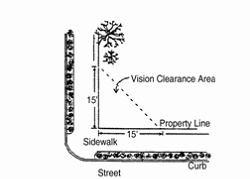
Figure 18.17.030-1
Vision Clearance
B.
The vision clearance triangular area shall be formed by measuring fifteen feet along property lines beginning at their point of intersection. The third side of the triangle shall be a line connecting the end points of the first two sides of the triangle. See Figure-18.17.030-1.
(Ord. 2515 § 1 (Exh. A (part)), 2008: Ord. 2443 § 3 (Exh. A (part)), 2006)
(Ord. No. 2545, § III, 5-4-2009; Ord. No. 2547, § VIII, 5-18-2009; Ord. No. 2612, § I(Exh. A), 2-7-2011; Ord. No. 21-005, § I(Exh. A), 3-15-2021)
18.17.040 - Accessory structures.
In an R or MF zone, accessory structures on each lot shall conform to the following requirements:
A.
Definition. An "accessory structure" is a subordinate structure detached from, but located on the same lot as the principal structure, the use of which is incidental and accessory to that of the principal structure. All in-ground swimming pools and spas, and above ground pools and spas with a capacity of five thousand gallons or greater, are considered accessory structures. Refer to Chapter 18.27 for accessory dwelling unit definition and standards.
All in-ground swimming pools and spas, and above ground pools and spas with a capacity of five thousand gallons or greater, are considered accessory structures;
B.
Height. Not to exceed one story or fourteen feet in height, except on a lot having a minimum area of one acre;
C.
Placement. Not project beyond the front building line. See Figure 18.17.040-1;
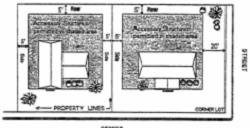
Figure 18.17.040-1 Accessory Structure Placement
D.
Coverage. Not occupy altogether more than thirty percent of the required rear yard, provided that total lot coverage shall not be exceeded;
E.
Placement. Not be located closer than five feet to a side or rear lot line within a rear yard, or not closer than twenty feet to a side lot line within a rear yard along a flanking street of a corner lot; provided, that in the case of a manufactured home park, accessory structures shall not be located closer than twenty-five feet to a side lot line within a rear yard along a flanking street of a corner lot. See Figure 18.17.040-1;
F.
Placement. Not be located closer than five feet to a rear lot line where such rear lot line coincides with the side lot line of an adjoining lot. See Figure 18.17.040-1;
G.
Fire Protection. Fire protection of accessory structures placed adjacent to an existing buildings shall be regulated based on WAC 51-51, the International Residential Code as adopted by the State of Washington.
(Ord. 2515 § 1 (Exh. A (part)), 2008: Ord. 2443 § 3 (Exh. A (part)), 2006)
(Ord. No. 2691, § I(Exh. A), 1-21-2014; Ord. No. 25-025, § I (Exh. A), 12-15-2025)
18.17.050 - Fences and walls.
A.
Purpose. The purpose of this section is to provide minimum regulations for fences and masonry walls, with the desired objectives of privacy and security for residents, and safety for motorists and pedestrians using the streets and sidewalks.
B.
Permits. If a fence or wall is over seven feet high then a building permit will be required.
C.
Heights and Location.
1.
Fences/walls not more than six feet in height may be maintained along the side yard or rear lot lines fully within the property; provided, that such wall or fence does not extend into the front yard area. The height of the fence/wall shall be measured from the finished grade.
2.
A fence/wall shall not exceed forty-two inches high in the front yard. The front yard area is the distance between the front property line and the nearest point of the building specified in the zone districts under this title.
3.
Fences or walls greater than six feet in height must meet required setbacks.
D.
Access. No fence/wall shall be constructed so as to:
1.
Block or restrict vehicular access to a dedicated alley, access or way; or
2.
Create a traffic hazard by impairing or obstructing vision clearance from any driveway, alley, or access.
E.
Prohibited Materials. Fiberglass sheeting, barbed wire, razor ribbon or other similar temporary material shall not be permitted as a fencing or wall material, unless otherwise allowed in commercial and industrial zones.
F.
Temporary Fences. Vacant property and property under construction may be fenced with a maximum six-foot high fence.
G.
Agriculture/Ranching (A/R) Exception. Barbed wire and electric fences shall be permitted on land classified A/R. All electric fences in such instances shall be clearly identified. Maintenance, repair and replacement of existing fences shall be governed by state law.
H.
Security fencing may be permitted with the following limitations:
1.
The security fencing shall consist of not more than four strands of barbed wire located on the top of a six-foot high fence; and
2.
The security fencing shall be associated with a commercial or industrial development.
(Ord. 2515 § 1 (Exh. A (part)), 2008: Ord. 2443 § 3 (Exh. A (part)), 2006)
(Ord. No. 2691, § I(Exh. A), 1-21-2014; Ord. No. 17-013, § I(Exh. A), 10-2-2017; Ord. No. 25-025, § I (Exh. A), 12-15-2025)
Editor's note— Ord. No. 17-013, § IV, adopted Oct. 2, 2017, amended the catchline of § 18.17.050 from "Fences" to read as herein set out.
18.17.060 - Retaining walls.
A.
Permits Required. Building permits are required for retaining walls over four feet zero inches in height, and for retaining walls that support additional weight (e.g., steep slopes, buildings, parking areas). Retaining walls are measured from the bottom of the footing to the top of the wall.
B.
Height. Retaining walls shall not exceed six feet, unless otherwise approved by the director.
C.
Drainage [is] required behind retaining wall to relieve buildup of water pressure.
D.
[Exterior Facing Retaining Walls.] Exterior facing retaining walls are those walls that are supporting fill. The exposed side is facing the neighboring property or right-of-way and the fill side is within the subject property. (Refer to Figure 18.17.060-1 Exterior Facing Retaining Walls.)
1.
When fence is atop the retaining wall, then the total height of wall and fence shall not exceed forty-two inches (front yard) or six feet zero inches (side and rear yards), or set back a distance of one foot for every foot in height of fence in excess of allowed height.
2.
When retaining wall is over thirty inches above grade, then guards are required if on the property line.
3.
If approved, retaining walls over six feet zero inches in height shall include landscaping to minimize bulky appearance, as approved by the director.
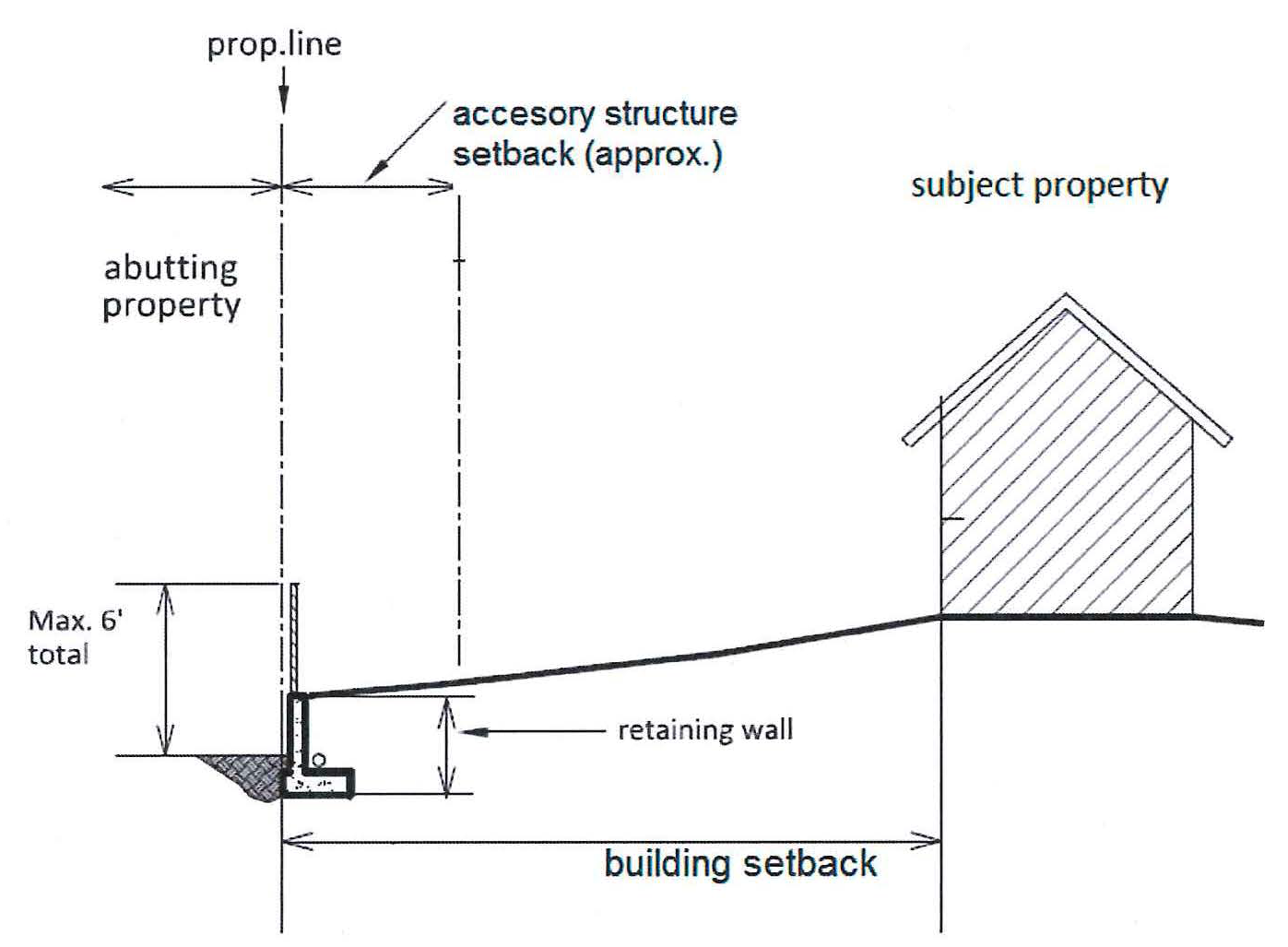
Figure 18.17.060-1
Exterior Facing Retaining Wall
E.
[Interior Facing Retaining Walls.] Interior facing retaining walls are those walls that are supporting cuts. The fill side of the retaining wall is facing the neighboring property and the exposed side is facing the subject property. (Refer to Figure 18.17.060-2 Interior Facing Retaining Walls.)
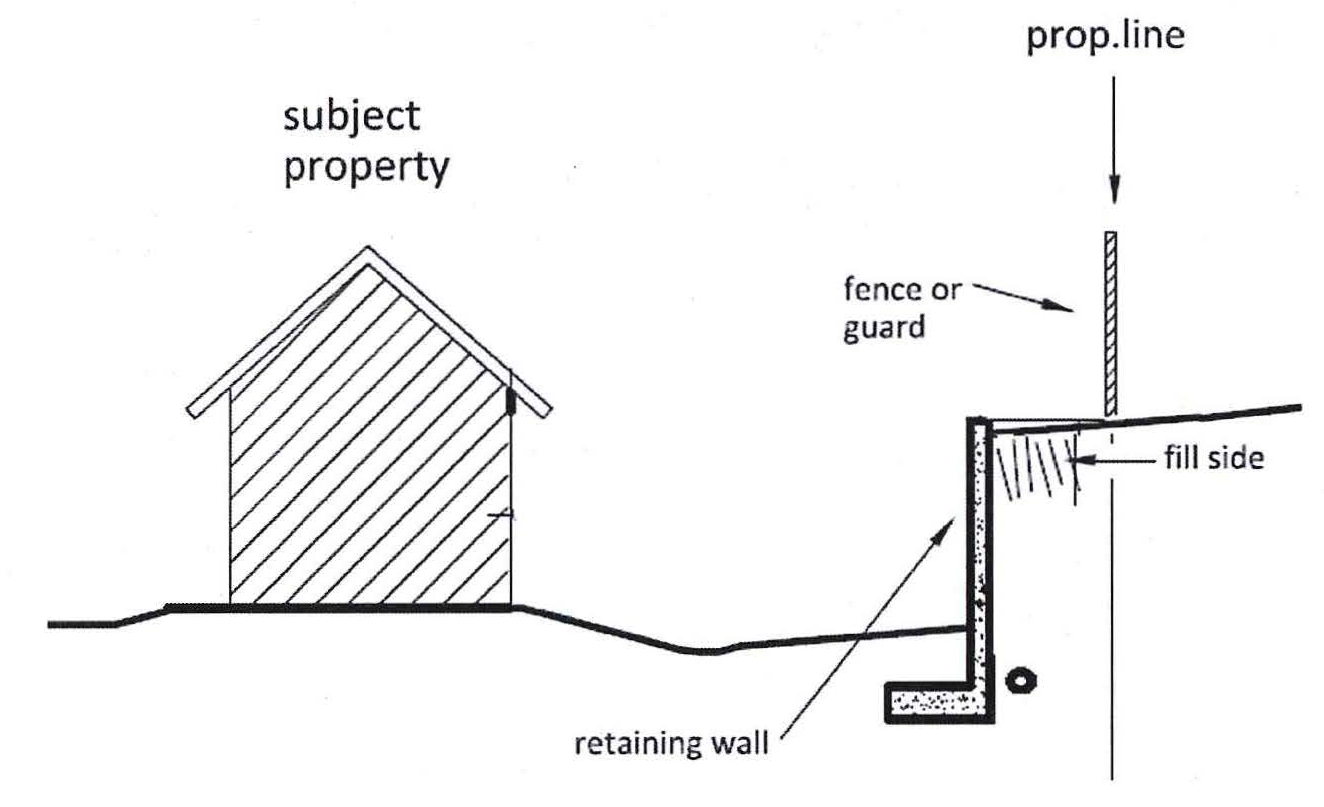
Figure 18.17.060-2
Interior Facing Retaining Wall
(Ord. 2515 § 1 (Exh. A (part)), 2008: Ord. 2443 § 3 (Exh. A (part)), 2006; Ord. No. 17-013, § I(Exh. A), 10-2-2017; Ord. No. 21-005, § I(Exh. A), 3-15-2021)

