
Campbell City Zoning Code
CHAPTER 21
18 - SITE DEVELOPMENT STANDARDS
21.18.010 - Purpose of chapter.
This chapter provides standards for site planning and the provision of specific components of development that are intended to minimize the adverse effects and operational characteristics of land uses.
(Ord. 2043 § 1(part), 2004).
21.18.020 - Air conditioning units.
The standards contained in this section are designed to minimize the adverse visual impacts and operational effects of air conditioning units (including similar equipment such as generators, heating, and ventilation equipment) using appropriate design, siting, and screening techniques while providing for the personal needs of residents and local businesses.
A.
Disturbance prohibited. Air conditioners and similar equipment shall not be located and operated in a manner that would negatively impact surrounding activities or uses.
B.
Screened from public view. Roof- or ground-mounted air conditioning units and similar equipment shall be screened from public view. Acceptable screening methods include, but are not limited to, architectural elements, fences, and landscaping. Replacement of existing equipment shall trigger this requirement.
C.
Setbacks. Air conditioning units and similar equipment shall be setback a minimum of three feet from any property line.
(Ord. 2043 § 1(part), 2004).
21.18.030 - Bicycle and pedestrian access standards.
A.
Connections in development.
1.
New and redevelopment projects shall provide safe and efficient bicycle and pedestrian connections on-site, between parking areas, buildings, street sidewalks, and to existing or planned public right-of-way facilities.
2.
New and redevelopment projects shall provide pedestrian passages between street-front sidewalks and rear-lot parking areas where applicable.
3.
Bicycle and pedestrian connections shall be designed to interface with vehicular circulation routes in a safe manner.
B.
Access points. New and redevelopment projects shall provide multiple designated access points onto adjacent bikeways and pedestrian routes when appropriate.
(Ord. 2043 § 1(part), 2004).
21.18.040 - Conformance with area provisions.
A.
Requirements. Unless otherwise provided in this Zoning Code, the following regulations shall apply:
1.
Buildings shall not be erected or located on a lot unless the building, structure, or enlargement conforms with the area regulations of the zoning district in which it is located.
2.
Parcels of land held under separate ownership at the time this chapter became effective, shall not be reduced in a manner below the minimum lot width and lot area required by this chapter.
3.
Lot areas shall not be reduced or diminished so that the yards or other open space becomes smaller than prescribed by this Zoning Code, nor shall the occupancy be increased in any manner except in conformity with the regulations established in this Zoning Code.
4.
Required yards or other open spaces around an existing building, or which are provided around any building for the purpose of complying with the provisions of this Zoning Code shall not be considered as providing a yard or open space for any other building; nor shall any yard or other required open space on an adjoining lot be considered as providing a yard or open space for any other building; nor shall any yard or other required open space on an adjoining lot be considered as providing a yard or open space on a lot whereon a building is to be erected.
B.
Exceptions. The following items shall be exempt from the required area regulations of this Zoning Code:
1.
Architectural features. Cornices, eaves, sills, canopies, bay windows not more than ten feet in width, or other similar architectural features may extend or project into a required side yard or rear yard, or required building separation distance, not more than twenty-four inches and may extend or project into a required front yard or street-side yard not more than thirty inches. Chimneys may project into a required front, side, street-side, or rear yard not more than twenty-four inches. No architectural feature may extend closer than three feet to any property line.
2.
Fire escapes. Open, unenclosed fire escapes may extend or project into any front, side, or rear yard not more than four feet.
3.
Open stairways and balconies. Open, unenclosed stairways, or balconies, not covered by a roof or canopy may extend or project into a required front yard not more than thirty inches.
4.
Decks, steps, and terraces. Decks, steps, and terraces that do not exceed a height of twelve inches above grade shall be allowed in any required front, side, or rear yard.
5.
Trees, shrubs, and plants. Landscape features (e.g., trees, shrubs, flowers, plants, etc.) shall be allowed in any required front, side, or rear yard provided they do not produce a traffic safety hazard that would be detrimental to the health, safety, and welfare of the residents.
(Ord. 2043 § 1(part), 2004; Ord. No. 2286, § 7, 8-16-2022)
21.18.050 - Exceptions to height provisions.
Roof structures for the housing of elevators, stairways, tanks, ventilating fans or similar equipment required to operate and maintain the building, parapet walls, skylights, steeples, flagpoles, chimneys, smokestacks, or similar structures (as defined by the planning commission) may be erected above the height limit herein prescribed, but no penthouse or roof structure, or any space above the height limit shall be allowed for the purpose of providing additional floor space.
(Ord. 2043 § 1(part), 2004).
21.18.060 - Fences, walls, lattice and screens.
The standards contained in this section pertain to all properties except when otherwise provided for by an area plan, neighborhood plan, or specific plan.
A.
Setbacks. A fence, wall, lattice or screen not exceeding three and a half feet may be allowed in any required front, side or rear yard in all zoning districts. A fence, wall, lattice or screen not more than six feet in height, may be allowed in all zoning districts as follows:
1.
Interior lot:
a.
Front yard: No closer than fifteen feet from the front property line.
b.
Side yards: Allowed up to and along the property line, except for the required fifteen-foot front yard setback.
c.
Rear yard: Allowed up to and along the property line.
2.
Corner lot:
a.
Front yard: No closer than fifteen feet from the front property line.
b.
Interior side yard and rear yard: Allowed up to and along the property line, except for the required fifteen-foot front yard setback.
c.
Street side yard: No closer than five feet from the street property line and not within the triangular area formed by measuring thirty feet along the front and street side property lines along the right-of-way from their "extended" intersection and connecting these two points.
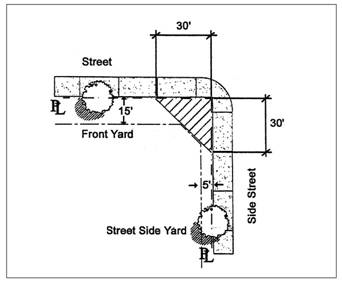
Figure 3-1
d.
Driveways. No fence wall, lattice or screen over three and a half feet shall be allowed within the triangular area formed by measuring ten feet along the street property line and ten feet along the driveway from their "extended" intersection and connecting these two points.
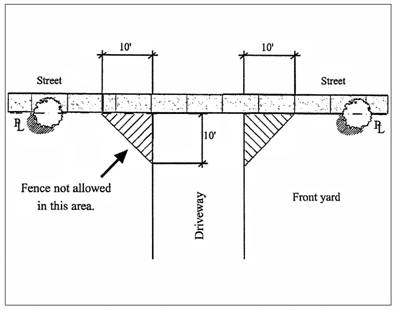
Figure 3-2
B.
Height measurement. The height of a fence, wall, lattice, or screen shall be measured from the adjacent finished grade to the highest point of the fence. Where the finished grade is a different elevation on either side of the fence on private property, the height shall be measured from the side having the highest elevation. Where the finished grade is a different elevation on either side of the fence adjacent to a public right-of-way, the height shall be measured from the public right-of-way side.
C.
Decorative arbors. A lightweight, decorative arbor not exceeding eight feet tall, six feet wide, and four feet deep may be allowed in the front yard of residential properties. An arbor shall not be allowed within the sight visibility area required for driveways and corner properties, as specified in subsections (A)(2)(c) and (d) of this section.
D.
Prohibited materials.
1.
Chain link fences are prohibited in any required front yard or street side yard areas for residential, mixed-use, and commercial properties.
2.
Barbed wire and razor wire fencing are prohibited in any zoning district, unless it is approved as part of a discretionary development permit and is found to be necessary for the security of the facility.
E.
Fence exception. The community development director, upon recommendation from the director of public works, may approve a fence exception to allow lesser setbacks and greater heights than allowed by this section. The community development director may approve a fence exception only after the four following findings are made: (1) the change would not impair pedestrian or vehicular safety; (2) would result in a more desirable site layout; (3) would not be detrimental to the health, safety, peace, morals, comfort or general welfare of persons residing or working in the neighborhood of the change; and (4) would not be detrimental or injurious to property and improvements in the neighborhood or to the general welfare of the city. A fence exception application shall be processed through the administrative decision process as prescribed in Chapter 21.71, (Administrative Decision Process). An application for a fence exception shall be filed with the community development department in compliance with Chapter 21.38, (Application Filing, Processing and Fees). The application shall be accompanied by a detailed and a fully dimensioned site plan, and any other data/materials identified in the community development department application for a fence exception. It is the responsibility of the applicant to establish that the proposed request satisfies the findings required by this section. The decision by the community development director may be appealed as prescribed in Chapter 21.62, (Appeals).
F.
Design criteria. When a fence exception is requested for a taller fence or lesser setbacks in the required front yard or street yard areas for residential properties, the fence or wall shall be of a decorative style and the portion of the fence that exceeds the allowable height limit shall be at least fifty percent open to the passage of light and air, as determined by the community development director.
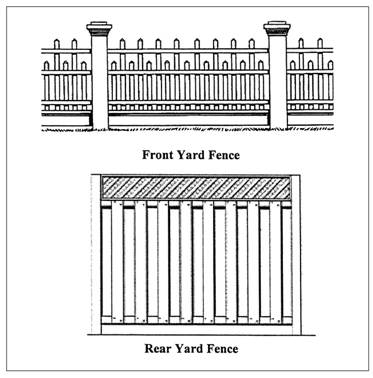
Figure 3-3
G.
Fences as part of a development application. The planning commission or City Council shall have the authority, upon making the findings required by subsection E of this section, to allow lesser setbacks and greater heights than allowed by this section for fences, walls, lattice and screens submitted as part of a discretionary development application and shall not require the submittal of a separate fence exception application.
(Ord. 2043 § 1 (part), 2004; Ord. 2070 § 1 (Exh. A)(part), 2006; Ord. No. 2225, § 10, 8-15-2017; Ord. No. 2293, § 1(Exh. B), 5-2-2023)
21.18.070 - Front yard paving.
Except as otherwise provided for by a development agreement, overlay district, area plan, neighborhood plan, or specific plan, paving shall not amount to more than fifty percent of the required front yard setback area. Increases in the amount of allowable paving may be approved by the community development director if necessary to provide safe ingress and egress for the site.
(Ord. 2070 § 1 (Exh. A)(part), 2006: Ord. 2043 § 1 (part), 2004).
(Ord. No. 2225, § 11, 8-15-2017)
21.18.080 - Hazardous materials.
This section provides guidelines for the regulation of hazardous materials for the protection of health, safety, and welfare of persons, resources, and property.
A.
Setbacks required. Any person, firm, or corporation that stores, handles, or dispenses any hazardous material shall provide the necessary setbacks (buffer zones) along property lines and between buildings in compliance with the uniform building code and uniform fire code.
B.
Change in use. Projects that involve a change in land use from industrial to residential or commercial shall provide detailed information regarding potential historical hazardous materials uses, including soil and/or groundwater sampling results, if warranted.
C.
Hazardous materials management plan (HMMP). Any person, firm, or corporation who proposes to store, handle, or dispense any hazardous material within the hazardous thresholds defined by the UBC and UFC and within five hundred feet of any school or property zoned for residential use shall submit a HMMP to the community development department for review and approval.
D.
Disclosure. As part of all development applications, the applicant shall complete a hazardous waste and substance sites disclosure form certifying that they have reviewed the current CAL-EPA hazardous waste and substances sites list available in the community development department.
E.
Information required. Applications for discretionary development projects that will generate, use or store hazardous materials shall provide detailed information regarding waste reduction, recycling and storage.
F.
City review. The type of review required is dependent on the location of the subject site and the type and volume of hazardous materials being used. At the discretion of the community development director, the building official, or the fire marshal, the applicant shall submit a written hazardous materials management plan (HMMP) for approval by the city. The HMMP shall include detailed information regarding the safe storage, handling, recycling, and waste reduction of hazardous or other regulated materials, a transportation plan for using city streets to transport hazardous materials, and an emergency response plan in the event of a reportable release or threatened release of a hazardous or other regulated material. The emergency response plan shall include, but not be limited to, the following:
1.
Procedures for the immediate notification to city, to the county fire department, and to the State Office of Emergency Services;
2.
Procedures for the mitigation of a release or threatened release to minimize any potential harm or damage to persons, property, or the environment;
3.
Evacuation plans and procedures for the business site, including immediate audible notice and warning to all persons on the site.
(Ord. 2043 § 1 (part), 2004; Ord. No. 2293, § 1(Exh. B), 5-2-2023).
21.18.090 - Lighting design standards.
A.
Exterior lighting. Exterior lighting shall be:
1.
Architecturally integrated with the character of the structure(s);
2.
Energy-efficient, and fully shielded or recessed; and
3.
Completely turned off or significantly dimmed at the close of business hours when the exterior lighting is not essential for security and safety, when located on parcels within nonresidential zoning districts.
B.
Permanent lighting. Permanently installed lighting shall not blink, flash, or be of unusually high intensity or brightness. Lighting fixtures shall be appropriate in height, intensity, and scale to the use they are serving.
C.
Shielding requirements. Outdoor lighting fixtures shall be designed and installed so that light rays are not emitted across property lines, to the extent possible. Fixtures like the "shoe box" design are capable of providing accurate light patterns and can be used for lighting parking lots without spilling onto the neighboring property.
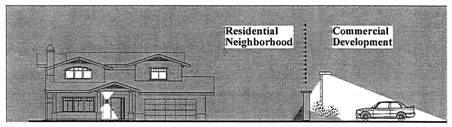
Figure 3-4
D.
Design criteria.
1.
External light fixtures, poles, and their foundation should be simple in design and compatible with and complimentary to the style of surrounding development. Historical-themed fixtures are not appropriate for a contemporary building design and modern fixtures are not appropriate for a structure with a significant historical design theme. Simple and functional designs are considered to be appropriate in most environments. Lighting standards should be of a scale that is compatible with their surroundings. Pedestrian-style lighting (three to five feet high) should be installed in areas where foot traffic is prevalent. Lighting fixtures for parking lots and private roadways should not be installed at a height greater than twenty feet.
2.
Color-corrected lamps of appropriate intensity should be used in exterior lighting. High-efficiency lamps that alter the colors of objects at night are discouraged. Incandescent, fluorescent, color-corrected sodium vapor and mercury lamps should be used because they provide light with an appropriate color spectrum.
3.
Lighting intensity should be the minimum required to serve the tasks for which the fixtures are intended.
4.
Exterior lighting should be considerate of both the neighbors and the community as a whole. Each new lighting scheme should actively strive to reduce negative light impacts.
(Ord. 2070 § 1 (Exh. A)(part), 2006: Ord. 2043 § 1 (part), 2004).
21.18.100 - Nonresidential open space and recreational facilities.
This section provides standards and incentives for the provision of open space and recreational facilities in nonresidential projects. The intent is to make commercial and industrial projects more attractive and pedestrian-oriented through the provision of open spaces, including plazas, courtyards, benches, and outdoor eating and seating areas.
A.
Open space and recreation facilities incentives. Development incentive bonuses to encourage extraordinarily high quality pedestrian-oriented open spaces and recreation facilities may be granted at the discretion of the planning commission or City Council. The types of bonus incentives that may be available to eligible projects include, but are not limited to:
1.
Reduced parking requirements; or
2.
Increased lot coverage or FAR.
B.
Configuration of open space. To ensure that the open space is well-designed, usable, and accessible, the decision making body shall employ the following standards and guidelines in evaluating proposed open space and recreation facilities:
1.
Open space and recreation facilities shall be located on-site;
2.
Open space and recreation facilities shall be provided as continuous, usable site elements that reinforce or enhance other aspects of the site plan, (e.g., as pedestrian networks, view corridors, and environmental features).
3.
Open space and recreation facility areas should be oriented to pedestrian circulation and should incorporate seating, enhanced paving materials, lighting, courtyards, plazas, shade trees and/or trellises, and landscaping.
4.
The orientation of the open space should take advantage of natural sunlight and should be sheltered from incompatible uses.
C.
Allowed uses. Required open space shall not include driveways, public or private streets, utility easements where the ground surface cannot be appropriately used for open space, parking spaces, or other areas primarily intended for other functions.
D.
Maintenance. Required common open space shall be controlled and permanently maintained by the owner of the property.
(Ord. 2043 § 1(part), 2004).
21.18.110 - Refuse and recycling storage areas.
A.
Required storage area. In compliance with 6.04.080(b) of the Municipal Code, each commercial, industrial, public, apartment, or multi-residential use shall have a refuse and recycling storage area.
B.
Enclosure requirements. Refuse and recycling containers shall be located in an enclosure constructed and consisting of a concrete floor at least six inches in depth, surrounded by a minimum six-foot high masonry wall and having a solid gate. An enclosure that is constructed within five feet of combustible surfaces shall comply with the fire prevention requirements of Section 6.04.020. The enclosure shall be of a size sufficient to accommodate the receptacles required by Section 6.04.020 of the Municipal Code or as otherwise approved by the community development director as safe and adequate for the intended use.
C.
Location requirements. Exterior storage area(s) shall not be located in a required front yard, side yard, or rear yard setback. The enclosure shall be located as far as possible from any residential units that the enclosure is intended to serve. Driveways or aisles shall provide unobstructed access for collection vehicles and personnel and provide at least the minimum clearance required by the collection methods and vehicles utilized by the designated collector.
D.
Maintenance requirements. The wall, gate, and surface inside the enclosure shall be kept in sound repair and condition.
E.
Use requirements. The refuse and recycling containers shall be kept in the enclosure at all times except when being emptied by collection personnel.
F.
Screening requirements for residential zoning districts. Except during the period of time specified in Chapter 6.04 of the Municipal Code, garbage, yard waste, and recycling containers shall not be placed, kept, or stored within any front yard or street side yard on corner lots. Garbage, yard waste, and recycling containers shall be fully screened from view from the public street right-of-way by a structure, fence, wall, or landscaping that is as tall as the tallest container(s), unless otherwise approved by the community development director upon finding that the property is physically constrained in such a way as to make the strict compliance with the foregoing requirements impractical.
G.
Screening requirements for commercial and industrial zoning districts. Refuse and recycling storage areas shall be designed, located, and fully screened from view from the public street right-of-way.
(Ord. 2043 § 1(part), 2004).
21.18.120 - Screening and buffering.
This section provides standards for the screening and buffering of adjoining land uses, equipment, outdoor storage areas, and surface parking areas with respect to multi-family and nonresidential land uses.
A.
Screening between different land uses. Fences and walls shall be provided and maintained between different zoning districts in the following manner:
1.
Wall height. An opaque screen consisting of plant material and a solid masonry wall or wooden fence, not less than six feet in height, shall be installed along parcel boundaries whenever a commercial or industrial development adjoins a residential zoning district and whenever a multi-family zoning district adjoins a single-family residential zoning district. A fence or wall taller than six feet in height may be allowed in compliance with Section 21.18.060, (Fences, walls, lattice, and screens).
2.
Architectural compatibility. The method of screening shall be architecturally compatible with the other on-site development in terms of colors, materials, architectural style, and shall include appropriately installed and maintained landscaping, as applicable.
3.
Pedestrian access. Pedestrian access may be provided through the required wall or fence.
4.
Waiver. The decision-making body may waive or change the requirement for a screen wall/fence if the development plan adequately provides for the integration of different adjacent land uses in a way that avoids conflicts between the different uses; an existing wall or fence is in place that meets or could be modified to meet the intent of this section; or a lesser screening is appropriate due to the nature of the adjoining uses.
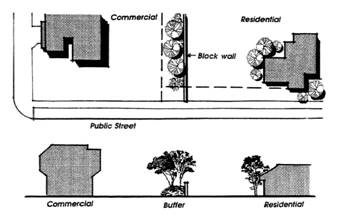
Figure 3-5
Screening and Buffering Between Two Different Uses
B.
Mechanical equipment. Uses that utilize mechanical equipment shall comply with the following:
1.
Screened from public view. Roof or ground mounted mechanical equipment (e.g. air conditioning, heating, ventilation ducts and exhaust, water heaters, etc.), loading docks, service yards, storage and waste areas, and utility services shall be screened from public view.
2.
Architectural compatibility. The method of screening shall be architecturally compatible with the other on-site development in terms of colors, materials, architectural style, and shall include appropriately installed and maintained landscaping, as applicable.
C.
Outdoor storage and work yards. Uses with outdoor storage of materials or operations shall comply with the following:
1.
Solid sight obscuring wall and gates. Outside uses shall be surrounded by a fence or a solid masonry wall and gate, not less than six feet in height, of a type and design approved by the approval authority. The wall and gate shall be maintained in a manner satisfactory to the community development director. A fence or wall taller than six feet may be allowed in compliance with Section 21.18.060, (Fences, walls, lattice and screens).
2.
Architectural compatibility. The fence or wall shall be architecturally compatible with the other on-site development in terms of colors, materials, architectural style, and shall include appropriately installed and maintained landscaping, as applicable.
3.
Operations within the screened area. Site operations in conjunction with an outdoor use, including the loading and unloading of materials and equipment, shall be conducted entirely within a screened area.
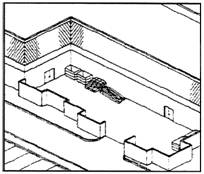
Figure 3-6
(Ord. 2070 § 1 (Exh. A)(part), 2006; Ord. 2043 § 1 (part), 2004).
21.18.130 - Seismic and geologic hazards.
This section provides standards for geologic hazard reviews and report requirements to protect citizens from building or developing in hazardous areas and to avoid personal injury and/or private and public losses.
A.
All new development, remodels, and redevelopment shall comply with the uniform building code and the California Building Code provisions regarding engineering and geotechnical analysis.
B.
The type of geotechnical investigation required is dependent on the location of the subject site and the extent of the proposed development. Official seismic hazard zone maps are on file with the community development department and are the major basis for determination by the community development director or building official whether a geotechnical report shall be required.
C.
Where a geotechnical report is required, it shall be prepared by a certified engineering geologist and submitted to the community development director for review and approval prior to final action on the application. The conclusions and recommendations set forth in the geotechnical report shall become the standards for review and shall govern development.
(Ord. 2043 § 1 (part), 2004).
21.18.140 - Undergrounding of utilities.
All development and remodels, shall provide for the undergrounding of existing and proposed utility facilities in compliance with this section, unless expressly exempted.
A.
Definitions. As used in this section, the following terms shall have the meaning set forth below. All other terms shall have the same meaning as defined in Chapter 21.72, (Definitions).
1.
Addition means construction that expands a structure's existing gross floor area or replaces existing floor area that was demolished.
2.
Arterial street means a Class I Arterial or Class II Arterial, as identified by the City of Campbell Roadway Classifications Diagram.
3.
Collector street means a commercial/industrial collector or residential collector, as identified by the City of Campbell Roadway Classifications Diagram.
4.
Remodel means any rebuilding or structural alteration which changes the supporting members of a structure, such as bearing walls, columns, beams or girders. It shall not include interior tenant improvements or structural alterations solely to meet code.
B.
Applicability. The following site improvements require the undergrounding of utility services as set forth below:
1.
Service lines. Excluding utility poles, new utilities, and all existing overhead utility lines, serving property located along an arterial or collector street shall be installed underground with:
a.
Construction of a single-family dwelling, except when located along a residential collector street;
b.
Construction of a residential development with two or more dwelling units;
c.
Construction of a non-residential main structure;
d.
An addition, remodel, or combination thereof, to an existing non-residential main structure that remodels or expands the structure's existing gross floor area by fifty percent or more in the aggregate over the preceding five-year period;
e.
An addition to an existing single-family dwelling that within a five-year period adds and/or replaces fifty percent or more to the dwelling's gross floor area except when located along a residential collector street. Existing and/or new detached garages, accessory dwelling units, and other fully enclosed accessory structures shall be considered in this section; and
f.
A residential or non-residential subdivision that is subject to the provisions of Title 20, (Subdivision and Land Development) of the Campbell Municipal Code.
A variance to the requirements of this subsection may be granted in compliance with Chapter 21.48, (Variances).
2.
Frontage lines and poles. Existing utility poles and associated overhead utility lines located along an arterial or collector street abutting the frontage(s) of a development site shall be removed and the utilities replaced underground in association with the site improvements set forth below:
a.
Construction of a non-residential main structure;
b.
Construction of a residential development with five or more dwelling units; and
c.
A residential or non-residential subdivision that is subject to the provisions of Title 20, (Subdivision and Land Development) of the Campbell Municipal Code resulting in five or more parcels, exclusive of parcels created solely to provide access into a development site.
A variance to the linear feet of overhead utility lines to be replaced underground may be granted in compliance with Chapter 21.48, (Variances).
C.
Development requirements. As required by this section, all new and existing electric, telecommunications, and cable television lines to be installed on the site to serve a proposed development shall be installed underground at the time of development except for surface mounted transformers, pedestal-mounted terminal boxes and meter cabinets, and concealed ducts and other similar equipment appurtenant to underground facilities. All utilities shall be taken from the nearest aboveground utility service. No new poles or overhead lines shall be allowed, except as determined necessary by the city engineer to accomplish the removal of frontage lines and poles required by subsection B.2, above.
D.
Screening Requirements. Aboveground equipment (e.g., utility control boxes and similar cabinets) shall be screened from view and deterred from graffiti vandalism by using a combination of landscaping and screen walls.
E.
Exemptions. The requirements of this section do not apply to:
1.
Existing or proposed major electrical transmission lines;
2.
A service upgrade, modification, or relocation of an existing electrical panel that is unrelated to site improvements that would otherwise require undergrounding of utilities in compliance with this section, and which would not result in an increase in overhead utility line length;
3.
Underground installations that would require substantially crossing the rear yard of an adjacent single-family residential property; and
4.
Underground installations precluded by a topographical, soil, or other environmental condition.
5.
Single family dwellings on property located along a local or residential collector street.
Applicability of an exemption shall be determined by the community development director, which may be appealed as an interpretation of this Code in compliance with Section 21.02.030 (Procedures for interpretations).
(Ord. 2070 § 1 (Exh. A)(part), 2006: Ord. 2043 § 1 (part), 2004).
(Ord. No. 2166, § 2(Exh. A), 5-7-2013; Ord. No. 2202, § 2(Exh. A), 5-17-2016; Ord. No. 2216, § 9, 12-12-2016)

