
Campbell City Zoning Code
CHAPTER 21
30 - SIGNS*
* Prior ordinance history: Ord. 2043.
21.30.010 - Purpose.
This chapter regulates the height, size, location, duration, and design of signs for the following purposes:
A.
To preserve and improve the visual quality of the city;
B.
To eliminate hazards to pedestrians and motorists brought about by distracting sign displays;
C.
To ensure architectural compatibility with adjacent buildings and the surrounding environment;
D.
To promote the economic vitality of the city by maintaining the identification, visibility and individual character of each business; The city recognizes the economic need for a sign to function as a means of business and product identification, as well as to communicate messages of a noncommercial nature. This chapter is intended to allow a reasonable amount of signing for business, product, building identification, and noncommercial messages so as to provide adequate information to the public without creating a cluttered visual environment. These regulations shall apply to all zoning districts in addition to any specific provisions in the applicable zoning district regulations. The City Council finds that any and all violations of this chapter unnecessarily detract from the public health, safety, and welfare and are indecent and offensive to the senses in that they unnecessarily clutter the environment and therefore constitute a public nuisance.
(Ord. 2070 § 1 (Exh. A)(part), 2006).
21.30.020 - Definitions.
As used in this chapter:
"Animated" means any sign which includes action or motion or the optical illusion of action or motion, changes in intensity of illumination, or color changes of all or a part of the sign facing, which actions or changes require an energy source or are set in motion by movement of the atmosphere.
"Banner" means any sign of lightweight fabric or similar material that is attached to a building or other structure erected for another purpose.
"Business" means a legally recognized entity that offers services, property, goods, products, accommodations or supplies to the public or some segment thereof, whether or not offered for compensation. For purposes of this chapter, each business tenant or nonresidential occupancy located within the nonresidential zoning districts of the city of Campbell shall constitute a distinct business.
"Business frontage" means the linear length of that portion of a building (normally where the main entrance is located) in which a business is located that faces a street, parking lot, pedestrian mall, arcade, or walkway.
"Civic event" means a community event of general public interest taking place within the city, which promotes or serves as a fundraiser for a nonprofit organization.
"Civic organization" means a nonprofit organization whose activities benefit the community (e.g., chamber of commerce, fire fighters association, boy scouts, girl scouts, churches, and school districts).
"Commercial center" means two or more commercial, professional or industrial businesses in the same building or group of buildings, which also share common street access and/or parking areas. "Commercial center" includes "Shopping center."
"Commercial message" means any message, the prevailing thrust of which is to propose a commercial transaction or name, advertise or call attention to a business, product, accommodation, service or other commercial activity.
"Commercial sign" means any sign that directly or indirectly names, advertises or calls attention to a business, product, accommodation, service or other commercial activity.
"Flag" means a devise generally made of flexible materials, usually cloth, paper or plastic, usually used as a symbol of a government, school, or institution, which does not contain a commercial message.
"Freestanding sign" means a sign substantially or completely detached from a building and not projecting through the roof or eaves of a building.
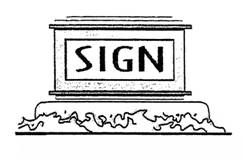
Figure 3-9
Freestanding Sign
"Freeway-oriented signs" means signs which are located on a property adjoining a freeway or expressway and are oriented to, or which are intended to be viewed primarily from freeways or expressways.
"Height" means the vertical distance from the adjacent finished grade to the highest portion of the sign structure. Accentuated grades (e.g., planter boxes) above natural grade levels immediately under or contiguous to a freestanding sign shall be included in the calculation of height.
"Noncommercial message" means any message that is not a commercial message as defined in this chapter.
"Noncommercial sign" means any sign that is not a commercial sign as defined in this chapter.
"Off-site sign" means a sign, located in either the public right-of-way or on a parcel different from that occupied by the business, accommodations, services, property or commercial activities advertised or identified on the sign, or which is otherwise not an on-site sign.
"On-site sign" means a sign advertising or identifying property, products, accommodations, services, or activities provided on the site on which the sign is located.
"Permanent sign" means every sign except "temporary sign" as defined in this section.
"Political sign" means a sign which is intended to influence the vote for the passage or defeat of a measure, or for the election or defeat of a candidate for nomination or election in any governmental election.
"Portable signs" means signs that are not permanently attached to the ground or a permanent structure (e.g., A-frame signs and sandwich-Board signs).
"Promotional devices" means temporary items other than signs used to attract attention toward a business (e.g., streamers, flags, searchlights, balloons, etc.).
"ReaderBoard sign, electronic" means a sign intended for a periodically changing advertising message whereby the periodically changing message is controlled by means of electronic programming. This may also be referred to as an electronic message center, electric readerBoard sign or programmable display sign.
"ReaderBoard sign, manual" means a sign intended for a periodically changing advertising message whereby the individual letters or words are manually changed from the exterior of the sign.
"Real estate sign" means a temporary sign indicating a particular premises or parcel is for sale, lease or rent or open for viewing (e.g., sign advertising an open house).
"Regional Commercial Center" means a group or cluster of retail businesses, offices, and hotel(s) sharing common pedestrian and off-street parking, and which are located on parcel(s) of land having the following characteristics:
1.
Minimum area of twenty acres uninterrupted or undivided by public streets; and
2.
Abutted on at least two sides by public streets that intersect at one corner of the commercial center, and by a freeway on one other side.
May consist of one or more legal parcels tied together by a binding legal agreement providing rights of reciprocal vehicular parking and access, and one or more ownerships.
"Roof sign" or "roof-mounted" sign means a sign that is mounted upon a roof or above a parapet or eave of a building or structure or above the highest point of the ridgeline.
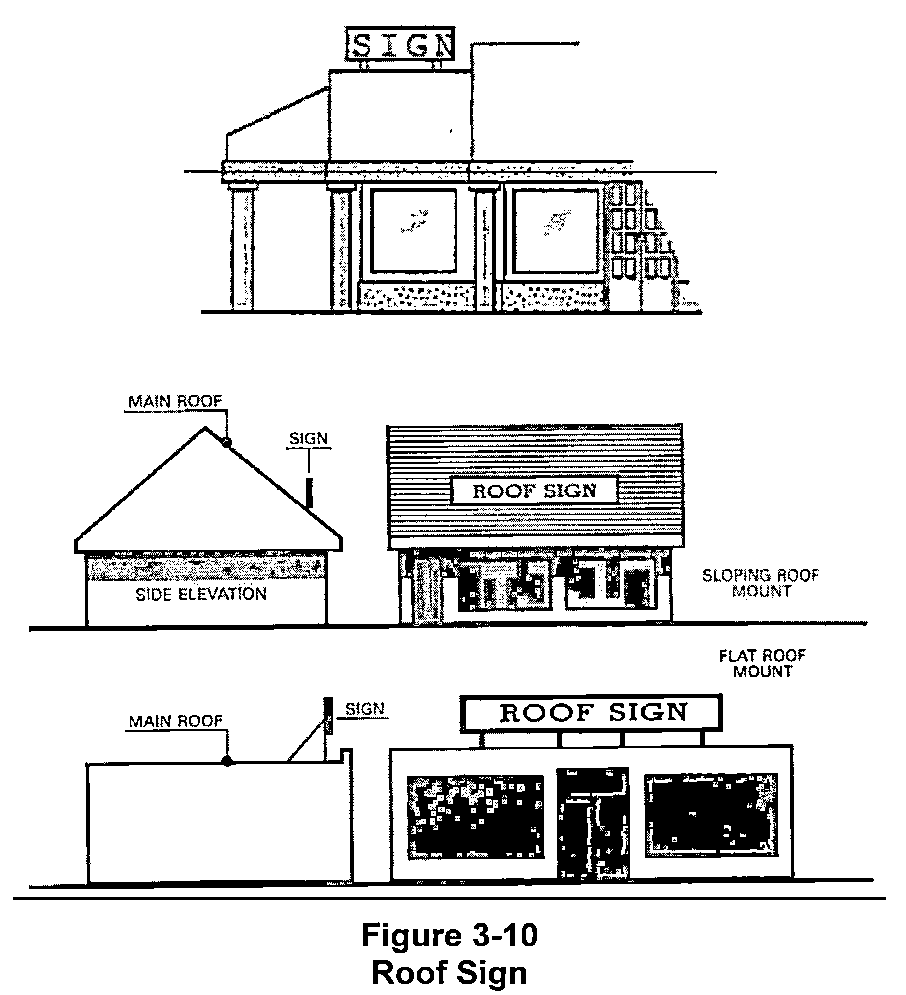
"Running neon" means neon lighting that outlines the shape or architectural elements of a structure which shall be considered a sign for the purposes of this chapter.
"Sign" means any structure, device, figure, painting, display, message placard, or other contrivance, or any part thereof, situated outdoors or indoors, which is designed, constructed, intended, or used to advertise, or to provide data or information in the nature of advertising, to direct or attract attention to an object, person, institution, business, service, event, or location by any means, including words, letters, figures, designs, symbols, fixtures, colors, illumination, or projected images.
"Site" means the parcel or commercial center, whichever is larger, on which the business, accommodations, services, property, products or commercial activities identified or advertised on a sign are located, except as applied to freeway-oriented signs, for which the term "site" shall mean only the space occupied by the subject business and any associated parking area or other common areas utilized by the subject business on the same parcel. "Site," as applied to freeway-oriented signs shall not include other tenant spaces or business locations whether or not located on the same parcel or commercial center. The latter definition of the term "site" shall not apply to a regional commercial center.
"Temporary sign" means any sign displayed for infrequent and/or limited time periods.
"Wall sign" means a sign that is painted on, attached to, or erected against a wall of a building or structure.
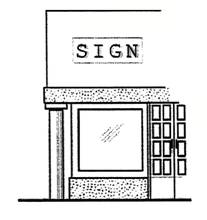
Figure 3-11
Wall Sign
"Window sign" means any sign that is temporarily attached to or lettered on the exterior or interior of a store window or is located inside a building in a manner that it can be seen from the exterior of the structure.
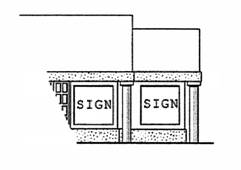
Figure 3-12
Window Sign
(Ord. 2070 § 1 (Exh. A)(part), 2006).
(Ord. No. 2181, § 2(Exh. A), 9-2-2014; Ord. No. 2213, §§ 3, 4, 11-1-2016)
21.30.030 - Administrative procedures.
A.
Sign permit required. Signs, including temporary and permanent signs, except those exempt from these regulations as provided in Section 21.30.040 of this chapter, and those permitted by issuance of a zoning clearance as authorized by a regional commercial center master sign plan, shall not be erected, created, altered, or allowed to be located (regardless of whether or not it is initially erected, or painted by the property owner or lessee) unless:
1.
A sign permit has been issued by the community development director in compliance with the regulations of this chapter.
2.
A building permit has been issued by the building official, as required by the codes and ordinances of the city.
3.
Any illegal or nonconforming signs associated with the business are made to comply with the provisions of this chapter.
B.
Permit expiration. Any building permits or sign approvals issued by the city shall expire six months from the date of approval unless the sign has been erected in compliance with the approvals.
C.
Signs requiring City Council or planning commission approval. The following signs shall require approval of the planning commission or the City Council, as specified below, in compliance with the regulations of this chapter and the requirements of Chapter 21.64, (Public Hearings) of this title:
1.
Freeway-oriented signs. Freeway-oriented signs shall require approval by the City Council upon recommendation from the planning commission pursuant to the provisions of Section 21.30.080(E) of this chapter.
2.
Off-site signs. Off-site signs shall require approval by the planning commission pursuant to the provisions of Section 21.30.080(F) of this chapter.
3.
ReaderBoard signs. ReaderBoard signs shall require approval by the planning commission pursuant to the provisions of Section 21.30.080(G) of this chapter.
4.
Increased sign area or increased sign height. The planning commission shall approve increased sign area or increased sign height when it determines that the signs otherwise allowed by this chapter would not be visible to the public due to issues of distance or obstructions that are beyond the control of the owner of the site on which the signs are or would be located. No sign shall be increased in size or height more than is necessary to allow the signs to be visible and intelligible to a person of normal sight; and in no event may any sign exceed forty-five feet in height or three hundred fifty square feet in area.
5.
Additional signs. The planning commission shall approve additional signs when it determines that all of the following have been met:
a.
The signs otherwise allowed by this chapter would not be visible to the public due to issues of distance or obstructions that are beyond the control of the owner of the site on which the signs are or would be located;
b.
The signs could not be made visible and intelligible to a person of normal sight by allowing an increase in the area or height of the sign pursuant to subsection (C)(4), (Increased sign area or increased sign height) of this section;
c.
The additional signs comply with all the requirements of this chapter, except for the limitations on the number of signs; and
d.
The number of signs allowed pursuant to this provision shall not exceed the minimum number of signs necessary to make the signs visible to the public due to issues of distance or obstructions that are beyond the control of the owner of the site on which the signs are or would be located, which could not be accomplished by the number of signs otherwise allowed by this chapter.
6.
Temporary off-site signs. The planning commission shall approve up to two temporary off-site signs when it determines that all of the following have been met:
a.
It is temporarily impossible to locate signs on site due to construction activities or destructive or dangerous conditions; and
b.
The signs would comply with all of the provisions of this chapter, except for being located off-site.
7.
Sign applications referred by the community development director. The community development director shall have the option of referring an application for a sign permit to the planning commission for its review and decision if the director finds that there are discrepancies of fact bearing on the approval of the application.
D.
Application form and content. An application for a sign permit, signed by the property owner or duly authorized agent, shall be filed with the community development department. The application shall contain information regarding the size, color, illumination (intensity and type), materials, number, location, type of signs, and the location and nature of the business on the site.
E.
Approval of permit. A sign permit shall be approved, provided that:
1.
Inspection of the site and the proposed sign and review of the plans disclose that the signs will comply with all of the regulations of this chapter. The decision-making body may attach the conditions as are necessary to carry out the intent of this chapter; and
2.
The owner and/or applicant agree to abide by the sign regulations and conditions imposed.
F.
Time for decision. The decision-making body shall approve or deny all applications within the following time periods, which shall not apply to appeals taken from the initial decision:
1.
The community development director shall approve or deny applications for which the director is the decision-making body within thirty days from the date that the application is deemed complete;
2.
The planning commission shall approve or deny applications for which it is the decision-making body within forty-five days from the date that the application is deemed complete;
3.
The City Council shall approve or deny applications for which it is the decision-making body within sixty days from the date that the application is deemed complete.
G.
Appeals from decisions. A decision of the community development director or planning commission may be appealed in compliance with Chapter 21.62, (Appeals) of this title, in accordance with the criteria set forth in this chapter. The failure of an applicant to exercise the applicant's right to an appeal shall not bar the applicant from pursuing judicial review of any decision rendered under this chapter.
H.
Master sign plan required.
1.
Applicability. A master sign plan shall be required prior to the issuance of a sign permit for:
a.
New nonresidential projects with four or more tenants in conjunction with the applicable development application;
b.
Major rehabilitation work that involves the exterior remodeling of an existing nonresidential project with four or more tenants. For the purposes of this chapter, major rehabilitation means adding more than fifty percent to the total square footage of the building/buildings, or exterior redesign of more than fifty percent of the length of the building's facade within the development; or
c.
A sign application for a nonresidential project with four or more tenants, which seeks approval of two or more signs.
2.
Decision-Making Body. The decision-making body for a master sign plan shall be the community development director, except where a request for a freeway-oriented sign, off-site sign, readerboard sign, an increase in sign area, an increase to sign height, and/or an additional number signs, is included, which shall require approval of the master sign plan by the Planning Commission or City Council pursuant to Section 21.30.030.C.
3.
Design elements. Signs covered by a master sign plan shall have the following elements:
a.
Uniform background in terms of color, illumination, and materials;
b.
Letter colors that are consistent with the approved master sign plan;
c.
Uniform sign type (e.g., channel letters or cabinet sign); and
d.
Uniform location with building's design.
4.
Regional commercial centers. A master sign plan for a regional commercial center may include provision for roof-mounted signs. Request for signs reviewed pursuant to a regional commercial center master sign plan shall be granted by issuance of a zoning clearance.
5.
Findings. In approving a master sign plan, the decision-making body shall make the following findings:
a.
That the signs are consistent with the requirements of this chapter;
b.
That the design complies with the design elements criteria listed in subsection H.3 of this section;
c.
That both the location of the proposed signs and the design of their visual elements (lettering, words, figures, colors, decorative motifs, spacing, and proportions) are legible under normal viewing conditions; and
d.
That the location and design of the proposed signs do not obscure existing or adjacent signs from view.
(Ord. 2070 § 1 (Exh. A)(part), 2006).
(Ord. No. 2213, §§ 5, 6, 11-1-2016)
21.30.040 - Exemptions.
The following signs shall be exempt from the regulations in this chapter:
A.
Architectural features. Integral decorative or architectural features of buildings, except letters, trademarks, running neon or moving parts.
B.
Construction signs. One on-site sign not exceeding thirty-two square feet in area for each display surface for any multi-family residential, commercial, or industrial complex, either to be constructed or under construction, shall be allowed provided that the sign shall be removed within three months after final inspection of the building by the city. A maximum of two display surfaces are allowed per sign.
C.
Garage sale signs. A maximum of two on-site signs for garage sales, not exceeding a combined total area of twelve square feet, provided that the signs are located on the site of the event advertised and are removed at the end of the last day of sale.
D.
Governmental signs. Legal notice, identification, informational, safety, or directional signs erected or required by governmental bodies or public utilities.
E.
Identification signs. On-site identification signs not exceeding one and one-half square feet in area.
F.
Informational or directional signs. On-site signs directing and guiding pedestrians and vehicles on private property, and having a maximum display area of six square feet.
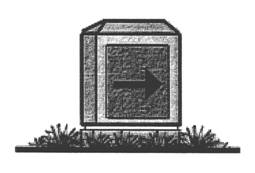
Figure 3-13
Directional Sign
G.
Maintenance of damaged legal signs. Normal maintenance of existing legal signs, provided the maintenance of a damaged sign:
1.
Does not exceed fifty percent of the sign;
2.
The maintenance is other than facial copy replacement; and
3.
The sign is repaired within thirty days of the date of its damage.
H.
Real estate signs in residential zoning districts. Temporary on-site signs not exceeding twelve square feet in aggregate total display area pertaining to the prospective sale, rental, or lease of real property. One sign per street frontage shall be allowed. In addition, one on-site open house sign is allowed per lot, provided the total allowable sign area is not exceeded, and the sign is removed at the end of each day of the open house event. Off-site open house signs to direct people to a property offered for sale, rent, or lease during an open house event are allowed provided they are located on private property, have the consent of the property owner where they are located, are limited to one per parcel, do not exceed twelve square feet in total sign area, and are removed at the end of each day of the open house event.
I.
Repainting or refacing. Repainting or refacing an existing, conforming, legally created sign so long as there is no change in advertising display area, colors, materials, illumination or structural size, height, or design of the sign. A change in lettering to accommodate a new business name is not considered a change in the design of the sign.
J.
Temporary noncommercial signs. Noncommercial signs, including, but not limited to, political signs, posted for no more than seventy-five days, subject to the following conditions:
1.
Signs shall be removed within fifteen days after any event to which it relates, such as an election;
2.
Signs shall be a maximum of twelve square feet and no more than eight feet in height;
3.
Signs shall not be placed in the public right-of-way, nor on any city-owned property.
K.
Symbols and insignias. Flags and insignia of any government except where displayed in connection with commercial promotion.
L.
Window signs. Window signs temporarily attached to or lettered on the exterior or interior of a store window for nonresidential uses, provided that the signs do not exceed twenty-five percent of the window area per facade.
M.
Bus shelter signage. Signs installed and displayed by a public entity in compliance with an executed agreement with the city on bus shelters as follows:
1.
Signs as necessary to convey transit information to transit users;
2.
Other signage of up to fifty square feet in sign area per bus shelter.
N.
Display and use of the United States and California flags. Display and use of the United States and California flags shall conform to federal and state regulations.
(Ord. 2070 § 1 (Exh. A)(part), 2006).
21.30.050 - Prohibited signs.
The following signs are prohibited in the city as provided below unless authorized by the planning commission as specified in Section 21.30.030 of this chapter:
A.
Abandoned signs. Signs located on property that became vacant and unoccupied for a period of ninety days or more, and any sign that was erected for an occupant or business unrelated to the present occupant of the premises, and any sign that pertains to a time, event, or purpose that no longer pertains, shall be presumed to have been abandoned. Abandoned signs are prohibited and shall be promptly removed by the owner of the premises.
B.
Animated, moving, flashing signs. Signs shall not move, rotate, or be animated by flashing or traveling lights.
C.
Portable signs. Portable signs are prohibited.
D.
Promotional devices. Promotional devises are prohibited.
E.
Roof-mounted signs. Roof-mounted signs are prohibited, except as permitted by a master sign plan for a regional commercial center.
F.
Signs attached to trees or utility poles. Signs attached to any tree or other landscape material, utility poles, traffic control devices, light poles, and similar structures not originally intended to support signs are prohibited.
G.
Signs on vehicles. The parking of any vehicle or trailer on either public or private property at or within three hundred feet of a business location, which vehicle has attached to it any sign that is intended to attract the attention of the public to that business or direct the public to that business is prohibited. This section is not intended to apply to signs or displays that are painted on or permanently attached to a business or commercial vehicle, provided:
1.
The vehicle or trailer is registered as operable with the California Department of Motor Vehicles;
2.
The vehicle is operable and can be lawfully operated on the public streets;
3.
The signs or displays do not extend more that fifteen inches beyond the exterior of the vehicle;
4.
The sign or display does not move or rotate or contain flashing or traveling lights or is otherwise animated; and
5.
The vehicle is driven on a daily basis as a regular part of the business.
H.
Other signs. All other signs not specifically allowed by or exempt from the regulations of this chapter are prohibited.
(Ord. 2070 § 1 (Exh. A)(part), 2006).
(Ord. No. 2213, § 7, 11-1-2016)
21.30.060 - Number and surface area.
A.
Number of signs. A single display device containing elements organized, related, and composed to form a single unit shall constitute a single sign. Where material is displayed in a random manner without organized relationship of elements, each element shall be considered to be a single sign.
B.
Surface area.
1.
The surface area of a sign shall be computed as including the entire area of the sign within a regular geometric form of parallel lines or combinations of regular geometric forms of parallel lines comprising all of the display area of the sign and including all of the elements of the material displayed. Circle sign areas shall be computed as the area of a circle (i.e., ?r 2 ). Frames and structural members not bearing advertising material shall not be included in computation of surface area. When the size of a sign is regulated, the regulation refers to one display surface only. On a sign having more than one display surface, each display surface may equal the maximum dimensions prescribed in the regulation, unless otherwise approved pursuant to Section 21.30.030(C)(4) of this chapter. See Figure 3-14 (Sign Area).
2.
Running neon shall be counted in the computation of sign area.
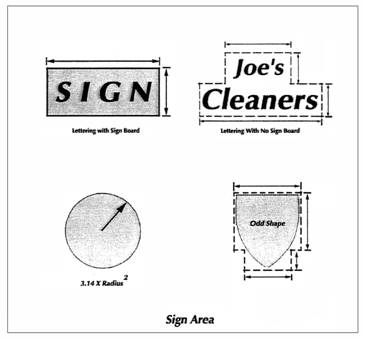
Figure 3-14
Sign Area
(Ord. 2070 § 1 (Exh. A)(part), 2006).
21.30.070 - Temporary signs.
A.
Temporary sign permit. Temporary signs shall be allowed subject to the approval of a temporary sign permit and in compliance with the standards for individual sign types provided in this section and the following standards:
1.
Signs shall not extend over or past any curb into or street;
2.
Signs shall not be attached to poles supporting streetlights, traffic signals, traffic signs, nor shall signs be attached to any trees;
3.
Signs shall not overhang a sidewalk unless a minimum of ten feet of vertical clearance is provided between the sign and the sidewalk;
4.
Signs shall not be placed in a street median;
5.
Other conditions of approval may be issued with the temporary sign permit to ensure compliance with the above requirements and criteria.
B.
Temporary signs. Each business shall be allowed temporary signs in all nonresidential zoning districts in conformance with the following provisions:
1.
Each business may display temporary signs for a maximum of thirty days within any one hundred eighty-day period;
2.
No more than two temporary signs are allowed per business at any time;
3.
The total sign area for all temporary signs shall be forty square feet;
4.
Temporary signs shall be attached and parallel to the building wall and may not project above the height of the building tenant space occupied by the business that is the subject of the advertising message;
5.
Signs shall be placed entirely on the site occupied by the business. Signs shall not be placed in or encroach into the public right-of-way.
C.
Real estate signs in nonresidential zoning districts. On-site real estate signs located in any zoning district, except single-family or two-family residential zones, shall be allowed as provided below:
1.
Freestanding real estate signs. Freestanding real estate signs shall be allowed in compliance with the following standards:
a.
The site is vacant;
b.
The buildings on the site are undergoing or have recently been remodeled or newly constructed in excess of twenty-five percent of the building area;
c.
The applicant can reasonably demonstrate the building on a single building site or the commercial center is currently, or will be at least twenty-five percent un-leased at the time the sign is to be erected;
d.
One real estate sign shall be allowed per street frontage;
e.
The sign shall be a maximum of eight feet in height;
f.
The sign shall be a maximum of thirty-two square feet per sign face, with a maximum of two faces per sign; or
g.
The sign may be displayed for one year or until the building or space is sold, rented, or leased, whichever occurs first, unless the following conditions exist:
(1)
The building or commercial center is twenty-five percent un-leased; or
(2)
The site is vacant. Real estate signs on vacant sites shall be removed prior to transfer of title.
2.
Building-mounted real estate signs. Building-mounted real estate signs may be allowed in compliance with the following standards.
a.
Building-mounted real estate signs may be used in lieu of a freestanding sign described in subsection (C)(1) of this section.
b.
One building-mounted real estate sign shall be allowed per street frontage.
c.
Signs shall be a maximum of twelve square feet in area.
d.
Signs may be displayed until the property, building or space is sold, rented, or leased.
(Ord. 2070 § 1 (Exh. A)(part), 2006).
21.30.080 - Permanent signs.
A.
Commercial, office, and/or industrial development. On-site signs for commercial (except the CB-MU District), office, and industrial districts shall comply with the following standards. Standards for the CB-MU zoning district are provided in Section 21.11.050 (Central Business Mixed-Use zoning district).
1.
Wall signs. Wall signs shall be allowed as follows:
a.
The size of each individual sign shall not be greater than one square foot of sign area for each linear foot of business frontage, on which the sign is located. No sign shall be greater than fifty square feet. Each sign shall be allowed a minimum of twenty square feet,
b.
Each business shall be allowed one wall sign. Businesses that are located adjacent to two streets (on a corner) shall be allowed one additional wall sign to face the second adjacent street if the business is not identified on a freestanding sign,
c.
Wall signs shall be mounted parallel to the building;
2.
Freestanding signs. Freestanding signs shall be allowed as follows:
a.
One freestanding sign shall be allowed for each parcel of land or commercial center, whichever is less,
b.
The size of each individual sign shall not be greater than one square foot of sign area for each linear foot of business frontage, on which the sign is located. No sign shall be greater than fifty square feet. Each sign shall be allowed a minimum of twenty square feet,
c.
The maximum height of a freestanding sign shall be fourteen feet,
d.
The support structures for all freestanding signs shall be surfaced in a manner to appear to be of the same materials, color and texture as the buildings located on the site;
3.
Individual signs for occupants in the same building or commercial center shall be of the same design. Section 21.30.030(H) (Master sign plan required) may require a master sign plan in compliance with that section;
4.
Signs shall not project over a public right-of-way for a distance greater than two feet. Any sign projecting over public property shall have a minimum of ten feet clearance extending from the level of the sidewalk or grade, immediately below the sign, to the lowest point of the projection;
5.
Any illumination shall be provided by interior lights or reflectors concealed in shrubbery or decorative structures. Illumination shall not cause glare on surrounding streets or adjacent property;
6.
Gasoline stations, in addition to other signage as allowed under this section, may be allowed a maximum of two changeable gasoline or other motor vehicle fuels price signs, not to exceed sixteen square feet each. The sign(s) shall be attached to an approved freestanding sign, building, canopy, or secured to the property.
B.
Office development. On-site signs for office buildings shall comply with the following standards:
1.
The total display area for all signs for any one parcel or commercial center, whichever is less, shall be no greater than eighty square feet and no single sign shall have a display surface greater than forty square feet;
2.
Any illumination shall be provided either by interior lights or reflectors concealed in shrubbery or decorative structures. Illumination shall not cause glare on surrounding streets or adjacent property;
3.
Signs may be attached to or painted on the building or they may be freestanding. If attached, the signs shall be parallel to the building wall and shall not project above the roof-line nor extend beyond one foot of the wall. If freestanding, the signs shall not project over a public property for a distance greater than two feet nor be higher than fourteen feet. The support structures for all freestanding signs shall be surfaced in a manner to appear to be of the same materials, color and texture as the buildings located on the site. Any sign projecting over a public right-of-way shall have a minimum of ten feet clearance extending from the level of the sidewalk or grade, immediately below the sign, to the lowest point of the projection;
4.
Individual signs for occupants in the same building or commercial center shall be of the same design. Section 21.30.030(H) (Master sign plan required) of this chapter may require a master sign plan in compliance with that section.
C.
Public/semi-public and institutional development. On-site signs that identify public or semi-public buildings or grounds, institutional uses, or places of worship shall be allowed, provided that:
1.
The total display area of all signs shall not exceed forty square feet;
2.
Any illumination shall be provided by interior lights or reflectors concealed in shrubbery or decorative structures. Illumination shall not cause glare on surrounding streets or adjacent property;
3.
The signs may be attached to or painted on the building or freestanding. If attached, the signs shall be parallel to the building wall to which it is attached and shall not project above the roof-line nor extend beyond one foot of the wall. If freestanding, the signs shall not project over public property and shall not be more than six feet high. The support structures for all freestanding signs shall be surfaced in a manner to appear to be of the same materials, color and texture as the buildings located on the site.
D.
Multi-family residential developments. On-site signs pertaining to the prospective sale, rental, or lease of real property of multi-family dwellings shall comply with the following standards:
1.
The total display area for all signs for any one complex shall not be greater than eighty square feet and no single sign shall have a display surface greater than forty square feet;
2.
Any illumination shall be provided either by interior lights or reflectors concealed in shrubbery or decorative structures. Illumination shall not cause any glare on surrounding streets or adjacent property;
3.
The signs may be attached to or painted on the building or freestanding. If attached, the signs shall be parallel to the building wall to which it is attached and shall not project above the roof-line nor extend beyond one foot of the wall. If freestanding, the signs shall not project over public property and shall not be more than six feet high. The support structures for all freestanding signs shall be surfaced in a manner to appear to be of the same materials, color and texture as the buildings located on the site.
E.
Freeway-oriented signs. Signs located on parcels adjoining a freeway or expressway and oriented to freeways or expressways shall comply with the following standards:
1.
Allowable Uses: Freeway-oriented signs shall be limited to parcels that have the following uses that traditionally draw a significant number of patrons from persons using regional expressways and freeways and only when the use itself is not directly identifiable from the freeway or expressway:
a.
Gasoline stations;
b.
Hotels and motels (stand-alone or as part of a regional commercial center);
c.
Commercial schools occupying at least fifteen thousand square feet of building space;
d.
Retail stores that occupy at least fifty thousand square feet of building space;
e.
Professional Office or Research and Development; properties adjoining a freeway, located within one hundred feet of a freeway interchange with a building tenant(s) that occupies at least fifty thousand square feet of building space;
f.
Regional commercial center;
2.
Allowable Number. The allowable number of freeway-oriented sign(s) per parcel or site shall be as follows:
a.
Professional office and research and development: One wall mounted freeway-oriented sign for each fifty thousand square feet of building space occupied by a tenant, provided that there be no more than two freeway-oriented wall mounted signs on a building and no tenant shall be allowed more than one freeway-oriented sign.
b.
Regional commercial center. One wall mounted freeway-oriented sign and one free-standing freeway-oriented sign.
c.
All other uses listed by subsection E.1 (Allowable uses). One on-site freestanding or wall mounted freeway-oriented sign for each parcel or commercial center, whichever is less, that adjoins an expressway or freeway.
3.
Allowable size. The permitted size of allowable freeway-oriented signs shall be as follows:
a.
Freestanding freeway-oriented signs. A freestanding freeway-oriented sign shall be the minimum height and size necessary to achieve visibility from the freeway, or expressway, but in no case shall it exceed forty-five feet in height and three hundred fifty square feet in area.
b.
Wall-mounted freeway-oriented signs. Freeway-oriented wall mounted signs shall be limited to one square foot of sign area for each two linear feet of freeway property frontage, but in no case shall a single sign exceed one hundred twenty-five square feet total and the total sign area for freeway-oriented wall mounted signs on a building shall not exceed two hundred square feet.
c.
Regional commercial center. Each wall-mounted and freestanding freeway-oriented sign shall be limited to three hundred fifty square feet in area, except that the total display area for freeway-oriented signs within a regional commercial center shall be no greater than five hundred square feet.
4.
Roof-signs prohibited. Freeway-oriented signs that are "roof-mounted", as defined by Section 21.30.020 of this chapter, are prohibited.
F.
Off-site signs. Off-site signs shall comply with the following standards:
1.
The sign shall be a noncommercial sign;
2.
The total display area of an off-site sign shall not exceed forty square feet;
3.
The location and size of the signs shall not limit driver or pedestrian visibility or create other safety hazards;
4.
The sign shall be the minimum height and size necessary to convey the message to a person of normal visual acuity.
G.
Readerboard signs. Readerboard signs shall comply with the following standards:
1.
An electronic readerboard sign or manual readerboard sign shall be allowed for "theaters, movie or performing arts and concert halls" uses with two hundred or more fixed seats. The display surface shall not be animated and shall utilize a maximum of two colors at any time. Notwithstanding the definition of "site" contained in Section 21.30.020 of this chapter, as applied to electronic readerboard signs, the term "site" shall mean only the space occupied by the theater or concert hall and any associated parking area or other common areas utilized by the theater or concert hall on the same parcel. "Site," as applied to electronic readerboard signs shall not include other tenant spaces or business locations whether or not located on the same parcel or commercial center as the theater or concert hall;
2.
A manual readerboard sign shall be allowed for "public assembly uses" with fifty or more fixed seats;
3.
A readerboard sign, either electronic or manual, which is located inside a building within five feet of an exterior window shall be subject to the readerboard sign regulations pursuant to this chapter and shall not be exempt under Section 21.30.040(L) (Window signs) of this chapter;
4.
A readerboard sign, either electronic or manual, shall also comply with the standards contained in subsections A through C of this section, depending on the type of development the readerboard sign is intended for.
(Ord. 2070 § 1 (Exh. A)(part), 2006; Ord. No. 2181, § 2(Exh. A), 9-2-2014; Ord. No. 2213, § 8, 11-1-2016; Ord. No. 2293, § 1(Exh. B), 5-2-2023)
21.30.090 - Substitution of noncommercial message.
In each instance and under the same conditions to which this chapter permits any sign, a sign containing an ideological, political or other noncommercial message shall be permitted wherever commercial signage is permitted.
(Ord. 2070 § 1 (Exh. A)(part), 2006).
21.30.100 - Nonconforming signs.
A.
Permanent signs which are lawfully in existence and in use prior to and at the time of the legal adoption of the ordinance codified in this chapter may remain in use even though they do not conform with the provisions of this chapter, until the time a change is proposed which requires a permit under Section 21.30.030.
B.
A change to a nonconforming permanent freestanding sign, for a commercial center which identifies two or more tenants shall be allowed without bringing the entire sign into conformance so long as the change is limited to a change in copy for one of the tenants and there is no change in the advertising display area, colors, materials, illumination or structural size, height or design of the sign.
C.
Except as otherwise allowed by this chapter, a change in the advertising display area, colors, materials, illumination or structural size, height or design of the sign shall constitute the erection of a new sign, which shall comply with the provisions of this chapter.
(Ord. 2070 § 1 (Exh. A)(part), 2006).
21.30.110 - Maintenance and repair.
All signs, together with all supports, braces, guys and anchors shall be maintained in good safe condition. The display surface of all signs shall be kept neatly painted or posted at all times.
(Ord. 2070 § 1 (Exh. A)(part), 2006).
21.30.120 - Abatement of temporary signs.
Temporary signs posted or maintained in violation of this chapter are declared to be a public nuisance. The city may remove any temporary sign posted or maintained in violation of this chapter, in compliance with the following provisions:
A.
A temporary sign that is unlawfully in place in violation of the time restrictions specified in this chapter or is unlawfully erected and deemed a public safety hazard by the community development director or public works director may be summarily abated pursuant to the procedures as follows:
1.
Signs abated pursuant to this subsection shall be held by the city pending completion of the notice and hearing procedures set forth below;
2.
The city shall schedule a hearing before the City Council to affirm the illegality of the signs. The hearing shall be held within thirty calendar days of the removal of the signs;
3.
The city shall make a reasonable attempt to identify and notify the owner of the sign. The city clerk shall send not less than a ten days' written notice prior to the hearing, by first class United States mail, postage prepaid, to all persons owning the property upon which or in front of which the signs are located, as listed on the last equalized assessment roll available on the date the notice is prepared. If the city is able to ascertain the mailing address of the owner of the sign, the city clerk shall also send notice to the sign owner in the same manner. If the city is unable to ascertain the mailing address of the sign owner, but is able to ascertain some other means of contacting the sign owner, the city clerk shall notify the sign owner by the means most likely to notify the sign owner. The notice shall state the date, time, and place of the hearing and generally describe the purpose of the hearing and the nature of the illegality of the display, and that the city may assess a lien to secure recovery of its costs. The notice shall be in substantially the following form and contain the following information:
NOTICE OF REMOVAL OF ILLEGAL ADVERTISING DISPLAY
Notice is hereby given that the City of Campbell removed an allegedly illegal sign located upon or in front of the property located at (location of the sign). If the City Council affirms the removal of the sign, the cost of removal will be assessed upon the property from or in front of which the display is removed and will constitute a lien upon the property until paid.
All persons having any objection to the removal of the sign are hereby notified to attend a meeting of the City Council of Campbell to be held (give date, time and location), when their objections will be heard and given due consideration.
Dated this _______ day of _______, 20___
___________
(Title)
City Campbell
4.
The city shall also cause the foregoing notice to be conspicuously posted on or in front of the property on or in front of which the signs exist. The notice shall be posted at least ten days prior to the time for hearing objections by the City Council;
5.
At the time stated in the notices, the City Council shall hear and consider all objections to the removal of the sign. It may continue the hearing from time to time. At the conclusion of the hearing, the City Council shall allow or overrule any objections. The decision of the City Council is final. If objections have not been made or if the City Council otherwise determines that the sign is in violation of this chapter, it may order the destruction of the sign;
6.
If the City Council upholds the removal of the sign, the city shall be entitled to recover the costs that it incurred in abating the sign pursuant to this subsection.
B.
In situations other than those set forth in subsection A, the city may abate temporary signs that are in violation of the provisions of this chapter, pursuant to the procedures as follows:
1.
The City Council may, by resolution, declare the signs to be public nuisances. The resolution shall describe the property upon which or in front of which the nuisance exists by giving its lot and block number according to the county or city assessment map and its street address if known. Any number of parcels of private property may be included in one resolution. The resolution shall also establish a date and time to hold a public hearing to hear any objections to abatement of the signs;
2.
Prior to the adoption of the resolution, the city shall make a reasonable attempt to identify and notify the owner of the sign. The city clerk shall send not less than a ten days' written notice by first class United States mail, postage prepaid, to all persons owning the property upon which or in front of which the signs are located, as listed on the last equalized assessment roll available on the date the notice is prepared. If the city is able to ascertain the mailing address of the owner of the sign, the city clerk shall also send notice to the sign owner in the same manner. If the city is unable to ascertain the mailing address of the sign owner, but is able to ascertain some other means of contacting the sign owner, the city clerk shall notify the sign owner by the means most likely to notify the sign owner. The notice shall state the date, time, and place of the hearing, generally describe the purpose of the hearing and the nature of the illegality of the sign;
3.
After adoption of the resolution, the city shall cause notices, to be conspicuously posted on or in front of the property on or in front of which the signs exist. The notice shall be posted at least ten days prior to the time for hearing objections by the City Council, and shall be substantially in the following form:
NOTICE TO REMOVE ILLEGAL ADVERTISING DISPLAY
Notice is hereby given that on the ___ day of _______, 20___, the City Council of City of Campbell adopted a resolution declaring that an illegal sign is located upon or in front of this property which constitutes a public nuisance and must be abated by the removal of the illegal sign. Otherwise, it will be removed, and the nuisance abated by the City. The cost of removal will be assessed upon the property from or in front of which the display is removed and will constitute a lien upon the property until paid. Reference is hereby made to the resolution for further particulars. A copy of this resolution is on file in the office of the City Clerk.
All persons having any objection to the proposed removal of the sign are hereby notified to attend a meeting of the City Council of Campbell to be held (give date, time and location), when their objections will be heard and given due consideration.
Dated this _______ day of _______, 20___
___________
(Title)
City Campbell
4.
In addition to posting the notice, the city clerk shall mail a copy of the notice of the proposed abatement to all persons owning the property upon which or in front of which the signs are located, as listed on the last equalized assessment roll available on the date the notice is prepared, and to the owner of the sign, if ascertainable, at least ten days prior to the time for hearing objections, in the same manner as notice was sent pursuant to subsection (B)(2) of this section;
5.
At the time stated in the notices, the City Council shall hear and consider all objections to the proposed removal of the sign. It may continue the hearing from time to time. At the conclusion of the hearing, the City Council shall allow or overrule any objections. The decision of the City Council is final. If objections have not been made or if the City Council otherwise determines that the sign is in violation of this chapter, it may order the abatement of the sign;
6.
The property owner shall be given a reasonable amount of time after the hearing to remove the sign. If the sign is not removed after this period of time, the city may remove and destroy the sign.
C.
The city shall maintain accounting records of all costs incurred in removal of each sign, and shall render an itemized report in writing to the City Council showing the cost of removal of the signs, a copy of which shall be mailed by first class United States mail to the last known address of the owner of the sign and the owner of the property upon which or in front of which the signs were located together with a notice of the time, date and location when the report will be considered by the City Council for confirmation. A copy of the report shall also be posted for at least three days, prior to its submission to the City Council, on or near the chamber door of the City Council, with notice of the time of submission.
D.
At the time and place fixed for receiving and considering the report, the City Council shall hear and pass upon the report of the costs of abatement, together with any objections or protests. Thereupon, the City Council may make the revision, correction or modification to the report as it may deem just, after which, by motion, the report, as submitted or as revised, corrected or modified, shall be confirmed. The decision of the City Council on all protests and objections that may be made shall be final and conclusive, and costs assessed shall be a joint obligation of the owner of the sign and the owner of the property upon which or in front of which the signs were located.
E.
If the costs of removing the sign are not paid to the city within ten days after the City Council confirms, the costs shall become a special assessment against the respective property to which it relates, and upon recordation in the office of the county recorder of a notice of lien on the property for the amount of the assessment. After the confirmation and recordation, a copy of the lien may be turned over to the tax collector for the city. It shall be the duty of the tax collector to add the amounts of the respective assessments to the next regular tax bills levied against the respective property for municipal purposes. The amounts shall be collected at the same time and in the same manner as ordinary municipal taxes are collected, and shall be subject to the same penalties and the same procedure under foreclosure and sale in case of delinquency as provided for ordinary municipal taxes. After the recordation, the lien may be foreclosed by judicial or other sale in the manner and means provided by law. Notices of lien for recordation shall be in a form provided by the city.
F.
The city of Campbell shall not be liable for any costs incurred in removal of signs from property owned by the city.
(Ord. 2070 § 1 (Exh. A)(part), 2006).
21.30.130 - Preemption.
In the event that any of the provisions of this chapter are preempted by lawful enactments of the state or federal governments, the enactments of those bodies shall supersede the preempted provisions of this chapter.
(Ord. 2070 § 1 (Exh. A)(part), 2006).
21.30.140 - Judicial review.
Judicial actions brought challenging any decision made pursuant to this chapter are subject to the provisions of California Code of Civil Procedure Section 1094.8.
(Ord. 2070 § 1 (Exh. A)(part), 2006).

