
Casper City Zoning Code
CHAPTER 17
94 - OLD YELLOWSTONE DISTRICT AND SOUTH POPLAR STREET CORRIDOR FORM-BASED CODE
17.94.010 - Purpose, intent and using the code.
The Old Yellowstone District and South Poplar Street Corridor form-based code regulating plan is intended to integrate urban design, building form, placement, use and design as a means for implementing the West Central and South Poplar Street Corridor Plan, dated September, 2007, as may be amended from time to time.
This form-based code is also intended to encourage land uses that promote vibrant commerce, social interaction, and a wide variety of housing types, where people can live, work, shop and play, all within proximity and walking distance.
The intended goal of the form-based code is to create a complimentary extension of the downtown, with its own unique character and design, and to provide a framework for achieving the desired built-form characteristics of a downtown, including similar densities, building materials, building orientation, building heights, architecture and a diversified mix of complimentary and interrelated land uses.
The form-based code consists of a regulating plan, building envelope standards and design standards.
The code is comprised of five interrelated elements.
1.
Zoning district narrative describing purpose, intent, applicability and design.
2.
A regulating plan that describes the areas within the development project where specified building types may be located.
3.
Building envelope and street standards that describe the allowable height, disposition and use for the specified building types and right-of-way, travel lane, center median, parking, terrace and/or sidewalk and alleyway width for the specified thoroughfares.
4.
Design standards for guiding specific aspects of building and site design.
5.
The regulating plan and building envelope and street standards apply to new facilities such as buildings, streets, parking lots, etc. The design standards apply to existing and new facilities.
A.
Design Principles. The code is based on several fundamental design principles:
1.
Mixing of uses vertically within structures and horizontally upon sites allows for greater market flexibility, sharing of support facilities such as parking, reducing the necessity for short vehicle trips while promoting walking and biking and leading to a more sustainable city.
2.
Buildings should be placed close to the sidewalk and street to better define and enliven the public realm and economize resources such as land and utilities.
3.
Building types that support multiple uses and are flexible or adaptable over time are preferable to highly specific, single-use typologies that may more easily become obsolete.
4.
Increased density helps afford increased private and public realm amenities such as brick and stone building exteriors and streetscaping.
5.
A more enhanced public realm with interconnected sidewalks, plazas, landscaped parkways and trails promotes and support social interaction and healthier living.
B.
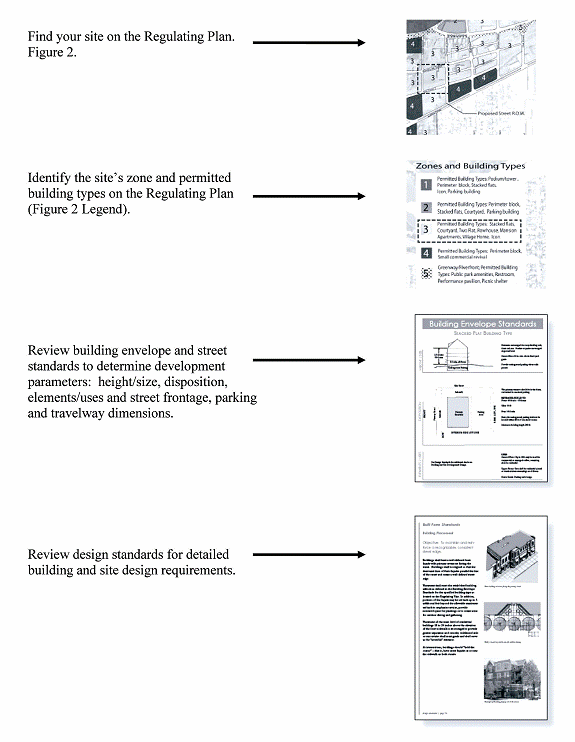
Using the Regulating Plan. The regulating plan illustrates the proposed street and block layout for the Old Yellowstone District and South Poplar Street Corridor and specifies new structures by building type permitted on each block. The plan includes a typical representative photograph of each specific building type, along with a corresponding legend indicating which building types are permitted in each of the four specified zones. Persons wishing to develop new facilities within the project area should refer to the regulating plan as the first step towards preparing a proposed building and site design for a specific block of blocks. (Figure 1 represents the process for using the regulating plan.)
Figure 1. Steps to Using the Form-Based Code Process
C.
Architectural Review Committee. Each submittal under the form-based code shall be reviewed and approved by an architectural review committee appointed by the city council. The architectural review committee shall consist of the community development director, public services director, building and code enforcement division manager, urban renewal coordinator, an architect and a member of the Casper city council.
D.
Submittal Process. Persons wishing to rehabilitate, remodel or build new buildings, parking lots or signs within the project area are required to undertake the following procedures. If it is determined by the community development director, after the initial review of the submittals required herein, that specific requirements do not apply to the subject project, then the community development director may waive those requirements:
1.
Review the Old Yellowstone District and South Poplar Street form-based code documents;
2.
Schedule and attend a preliminary project review meeting with the community development staff to discuss the proposed project's compliance with the West Central and South Poplar Street Corridor Plan, dated September, 2007, as may be amended from time to time, and applicability of the form-based code;
3.
Submit a site-development application to the community development department for review. All items listed below shall be required for an application to be considered complete, unless otherwise waived by the community development director:
a.
Up to ten copies of the project site plan based on a physical site survey, drawn at a scale of one inch is to ten feet, or a multiple thereof, and showing the following information:
i.
Property boundaries,
ii.
Easements,
iii.
North arrow,
iv.
Legal description of the property,
v.
Vicinity map at a scale of one inch is to six hundred feet clearly indicating the location of the land in question with respect to a larger recognizable area,
vi.
Title block stating name of project, designer and address and telephone number of designer,
vii.
Title block stating name of applicant, and address and telephone number of applicant,
viii.
Adjacent public rights-of-way, street names and pavement widths,
ix.
Proposed and existing building locations and orientation,
x.
Parking Areas and Layout. A statement of how the applicant will meet the minimum parking standards, if parking is not provided on site,
xi.
Existing and proposed sidewalks, pathways and walkways,
xii.
Site lighting,
xiii.
Existing and proposed utilities,
xiv.
Fire hydrants and building connections,
xv.
All ground surface materials (turf, concrete, brick, asphalt, etc.),
xvi.
Physical relationship of proposed buildings and structures to adjacent lots and buildings,
xvii.
Curb cuts and driveways,
xviii.
Outdoor seating areas, if provided,
xix.
Streetscape details (trees, benches, decorative lighting, bike racks, etc.),
xx.
Arrows showing the direction of traffic flow,
xxi.
Proposed and existing building setbacks,
xxii.
Screening and buffering measures,
xxiii.
Location of trash receptacles,
xxiv.
Location and type of all fences,
xxv.
Any other plans or data requested by the architectural review committee,
xxvi.
Estimated traffic generation based on the most recent edition of the Institute of Transportation Engineers (ITE) Manual;
b.
General notes to include a summary of:
i.
Total land area in acres or square feet,
ii.
Total square footage of building footprint,
iii.
Number of stories and total floor area,
iv.
Building height,
v.
Number of parking spaces required,
vi.
Number of parking spaces provided,
vii.
Total area of landscaping, and
viii.
Percentage of site covered by landscaping;
c.
Fee, as established by city council resolution;
d.
One original copy of the signed development application;
e.
Ten copies of a landscaping plan illustrating and noting all proposed plantings by size and species, drawn at the same scale as the project site plan;
f.
Ten copies of architectural building elevations; front, side and rear, indicating all type and color of exterior materials, windows and door openings, and drawn at a scale of one-quarter inch is to one foot;
g.
Ten copies of colored architectural perspective renderings depicting proposed building design;
h.
Ten copies of colored architectural illustration of proposed signs (sign plan) drawn at a minimum scale of one-half inch is to one foot, and showing type, size and location of all signs;
i.
Two copies of a grading plan, a drainage plan or a drainage study performed by a Wyoming licensed engineer (if determined to be necessary by the architectural review committee);
j.
Two copies of an erosion control plan;
k.
A traffic impact analysis (traffic study) may be required, if the proposed site plan is expected to generate in excess of seventy-five peak hour trips. If required, the traffic study will be performed by the city's third party contractor, and the applicant will reimburse the city for the cost of the study;
l.
Digital copy of site plan, landscaping plan, architectural elevations and renderings in both AutoCAD and PDF format.
4.
After the complete submittal of all required materials, the architectural review committee shall meet and provide comments and/or request additional information and/or changes from the applicant. Upon finding that the project complies with the form-based code and the West Central and South Poplar Street Corridor Plan, dated September, 2007, as may be amended from time to time, the committee shall either approve, or approve with conditions. If the committee finds that the development proposal does not comply with the form-based code and/or the Old Yellowstone District and South Poplar Street Corridor Redevelopment Plan, the committee shall deny the proposal. Decisions of the committee may be appealed as per Section 17.94.020.
5.
Upon approval of the development proposal, and prior to the issuance of a building permit, the applicant shall execute a site development agreement with the city, agreeing to construct the project as it was submitted and approved, and agreeing to any final conditions imposed by the architectural review committee. Said site plan development agreement shall be executed by the applicant and the community development director.
6.
Apply for building permits per state, county and city requirements.
(Ord. No. 7-17, § 1, 5-16-2017; Ord. 21-08 § 1 (part), 2008)
17.94.020 - Appeals process.
A.
Purpose. This section establishes procedures for the appeal and review of determinations and decisions of the architectural review committee or the community development director.
B.
Definitions.
1.
Appeal Subjects and Jurisdictions. A determination or decision by the architectural review committee or community development director may be appealed to the council committee board of appeals. The council committee board of appeals shall consist of not less than three members of the city council. The community development director shall be an ex-officio member and act as secretary to said board, but shall have no vote upon any matter before the board. The council committee board of appeals shall be appointed by the mayor with the consent of the governing body.
C.
Process.
1.
Timing and Form of Appeal. An appeal shall be submitted in writing and filed with the community development department, as applicable, within ten days of the date of the written decision. The appeal shall state the pertinent facts and the basis for the appeal. Appeals addressed to the council committee board of appeals shall be filed with the community development department.
2.
Report and Scheduling of Hearing.
a.
If a request for hearing is filed as provided, a hearing shall be held before the council committee board of appeals. Notice of the time, place and hour of the hearing shall be sent at least ten days in advance of the hearing to the applicant.
b.
At such hearing, all parties shall be afforded an opportunity to present evidence, to cross-examine and present argument; provided that all persons testifying shall be sworn; irrelevant, immaterial or unduly repetitious evidence shall be excluded; and, the decisions of the council committee board of appeals shall be based upon the type of evidence commonly relied upon by reasonably prudent people in the conduct of their serious affairs.
c.
At or after such hearing, the council committee board of appeals may uphold the architectural review committee's or community development director's decision or determine an alternate requirement.
d.
Appeals from adverse decisions rendered by the council committee board of appeals pursuant to subsection c of this subsection may be made to the district court in the same manner as an appeal from an adverse decision rendered by an agency in a contested case under the provisions of the Wyoming Administrative Procedures Act, Section 16-3-114 of the Wyoming Statutes, as it may be amended from time to time.
e.
If a request for hearing is not properly and timely filed, the right to a hearing is waived.
(Ord. 21-08 § 1 (part), 2008)
17.94.030 - Prohibited uses.
A.
Prohibited uses in the Old Yellowstone District and South Poplar Street corridor shall include the following:
1.
"Agriculture" meaning food animals produced for consumption, pleasure animals raised for recreation, sale barns for the auction of food and/or pleasure animals, large gardens and orchards which produce food for consumption, and large farm equipment offered for sale, service and/or storage;
2.
"Animal boarding center/animal shelter" meaning an establishment where animals are admitted solely for the purpose of overnight stays. Outside runs are prohibited. Establishments that provide day services with no overnight stays are permitted. Boarding is allowed only for medical purposes or treatment by licensed animal hospitals or clinics;
3.
"Automobile-oriented sales or services," not existing as of the effective date of the Old Yellowstone District and South Poplar Street Corridor form-based zoning ordinance, meaning an area or structure used for the display, sale and/or service of automobiles, including cars, trucks, recreational vehicles, trailers, motorcycles or boats; and includes businesses that sell and/or install automobile accessories. Automobile-oriented sales or services shall include businesses such as vehicle dealerships, vehicle consignment lots, muffler shops, auto-detail shops, engine repair or rebuilding, collision repair, tire sales and service shops, paint shops, undercoating, window and glass replacement and tinting, alignment shops, upholstery shops, oil change and lubrication shops, brake shops, stereo and radio sales and/or installation, dismantling or salvage operations, towing businesses, and businesses that lease or rent vehicles;
4.
"Car wash" meaning a structure/business where motor vehicles are washed, whether or not it is associated with or accessory to another business.
5.
"Commercial laundries" meaning establishments where clothes and linens can be washed and ironed in bulk quantities, typically for commercial or industrial uses; not for individual patronage, such as laundromats;
6.
"Construction/contractor shops or yards" meaning a lot or structure, the principal use of which is to provide offices, vehicle and equipment storage, construction material storage, or tool storage for a construction or contracting business. examples are plumbing shops, electrical shops, excavating businesses, mechanical shops, welding shops, fabrication shops, electrical or plumbing supply shops, or similar uses.
7.
"Convenience establishment, high volume" meaning an establishment primarily designed for the purpose of providing legally stored vehicle engine fuels, kerosene or motor oil, and lubricants or grease, on a full- or self-service basis to the traveling public and/or commercial haulers.
8.
"Convenience establishment, medium volume" meaning an establishment in which the primary business is selling gasoline/diesel fuel and grocery store related products.
9.
"Custodial care facility" meaning a public or privately operated facility providing custodial care for persons residing by court placement, or being held or detained awaiting trial or court placement, including, without limitation, correctional and post-correctional facilities, adult and/or juvenile detention facilities, reentry centers and correctional transitional housing. A custodial care facility shall not include "group homes," as defined in the municipal code;
10.
"Emergency shelter" meaning a nonprofit facility that provides long-term or short-term living accommodations and/or care for individuals and families who have been displaced from their homes. "Care" is defined as room and board, and/or the provision of a program for counseling, therapy or social services;
11.
"Heavy industrial" meaning facilities which conduct and support manufacturing, fabrication, storage of bulk materials, including both solid and liquid fuels, industrial painting, and storage of heavy equipment, asphalt plants, concrete plants, gypsum manufacturing, refineries, rock quarrying and crushing, brick/masonry yards, bulk plants, fabrication plants, foundry, factories or manufacturing plants;
12.
"Industrial food or food processing facility" meaning an establishment where food goods or animals are processed into meat or food products, and includes slaughter, skinning, butchering, packaging, and freezing of the meat for commercial sale;
13.
"Lumber yards/builder's supply yards" meaning a business operation that operates as a distribution or wholesale operation for the construction industry in which the physical yard is a storage location for storing lumber and construction materials;
14.
"Manufactured home (mobile) park" meaning a parcel, or contiguous parcels of land, divided into spaces for rent or lease on which a manufactured home is to be permanently affixed;
15.
"Manufactured/modular structure sales" meaning a business which sells, displays manufactures or stores manufactured or modular structures.
16.
"Motels" meaning a building, or series of connected rental units, providing a dwelling unit or overnight lodging for compensation. The physical structure has individual exterior entrances into each dwelling unit, with no common inside corridor;
17.
"Off-premises signs" as defined in Section 17.08.010 of this code, not existing as of the effective date of the form-based zoning ordinance, meaning outdoor signs that are used to advertise the sale of goods and services, and/or promote social, commercial, political or religious messages;
18.
"Pawn shop" meaning a commercial establishment where persons deposit goods, merchandise or other personal property in exchange for a monetary loan, or other compensation, and giving the creditor the right to sell the property if the debt is not paid;
19.
"Recreational overnight park/recreational vehicle (RV) sales, service and storage lot" meaning a parcel of land intended for occupancy by recreational vehicles for transient dwelling purposes; and a parcel, or parcels, of land on which recreational vehicles will be displayed for sale, stored for service, or housed for seasonal use;
20.
"Recycling center" meaning a structure or storage area whose primary use is where waste or scrap materials are stored, bought, sold, accumulated, exchanged, packaged, disassembled, or handled, including, but not limited to, scrap aluminum, paper, plastic and glass;
21.
"Salvage yard or wrecking yard" meaning an establishment or location which is maintained or used for storage, keeping, buying, or selling of wrecked, scrapped or dismantled motor vehicles or parts thereof, or any vehicle storage area in which any vehicle is stored for more than thirty days, regardless of whether said vehicle is awaiting repair.
22.
"Sexually-oriented businesses" as defined in Chapter 9.24 of this code;
23.
"Store, wholesale" means an establishment devoted to the wholesaling of goods and generally includes large areas devoted to storage or warehousing.
24.
"Thrift shops" meaning commercial establishments which sell, trade, or dispense donated merchandise. "Consignment shops," meaning commercial establishments which pay a customer a percentage of sales on their consigned merchandise once it is sold, are permitted;
25.
"Tower" meaning any ground, roof, or otherwise mounted pole, spire, structure or combination thereof that is fifteen feet or greater in height above the ground, including supporting lines, cables, wires, braces, masts or other structures, for the purpose of mounting an antenna, meteorological device, or cellular apparatus aboveground;
26.
"Transportation depot" meaning a facility specifically designated for the storage, transfer, or boarding and unloading of material or persons such as a bus station, railroad station, etc. Transit stations for the local, public bus service are excluded;
27.
"Truck/car stops" meaning establishments primarily designed for the purpose of providing stored vehicle engine fuels, kerosene or motor oil, and lubricants or grease, on a full- or self-service basis to semi-trucks, which may include similar services for automobile/truck stop facilities, restaurant facilities, and/or overnight sleeping facilities;
28.
"Utility service center" meaning a facility, and/or lot, owned by a private or public entity which engages in the supply and distribution of water, gas, electrical, sewer, and communications products, and includes installation, repair and storage facilities;
29.
"Warehouses, indoor and outdoor storage" meaning facilities where goods, wares, and/or merchandise are deposited for storage or securing. In the case of "automobile services," vehicles awaiting repair or service are excluded, provided no vehicle awaiting repair or service shall be stored on a site for more than thirty days.
(Ord. No. 7-17, § 2, 5-16-2017; Ord. No. 13-11, § 3, 3-21-2011; Ord. 21-08 § 1 (part), 2008)
17.94.040 - Existing uses.
All uses in existence on the date the Old Yellowstone District and South Poplar Street form-based code is adopted shall be considered conforming. This means that existing businesses can remain as long as the owners choose; they can be sold to new owners; they can be rebuilt (according to the West Central and South Poplar Street Corridor Plan design guidelines, dated September, 2007), as may be amended from time to time, if destroyed by fire or other catastrophe; and, they can expand to include adjoining properties. The prohibited uses, however, would not be allowed to establish in the district as new uses after the adoption of the form-based code.
Off-premises signs existing at the time the form-based code is adopted may remain at current locations, but no new off-premises signs may be established, even upon the removal of existing off-premises signs.
(Ord. 21-08 § 1 (part), 2008)
17.94.050 - Definitions.
A.
The following definitions shall apply:
1.
"Accessory dwelling unit" means a habitable living unit added to, created within, or detached from a single-family dwelling unit that provides basic requirements for living, sleeping, eating, cooking and sanitation.
2.
"Accessory structure" means a detached subordinate building structure intended for the incidental use of the principal building on the same lot, parcel, or tract. Accessory structures shall include garages, noncommercial greenhouses, carports, porte cochere, and garden and/or tool sheds.
3.
"Architectural arcade" means a roofed passageway, usually with shops on one or both sides.
4.
"Articulation" means the detailing or ornamentation of architectural elements on the exterior of a building.
5.
"Attic" means the open area above the ceiling and under the roof deck of a steep-sloped roof.
6.
"Building disposition" means the placement of a building on its lot.
7.
"Building envelope standards" means the specific building heights, disposition and uses for the permitted building types specified in the regulating plan.
8.
"Building height" means the vertical extent of a building measured in stories, not including a raised basement or a habitable attic. Height limits do not apply to masts, belfries, clock towers, chimney flues, water tanks, elevator bulkheads and similar structures. Building height shall be measured from the average grade of the enfronting thoroughfare.
9.
"Building type" means a structure category determined by function, disposition on the lot and configuration, including frontage and height.
10.
"Building type code sheet" means a graphic and written document that describes the height, building placement, permitted use, parking requirements and parking placement of a prescribed building typology.
11.
"Cornice" means any projecting ornamental molding along the top of a building or wall.
12.
"Courtyard building" means a building that is designed with an open space surrounded by exterior building walls on three sides.
13.
"Design standards" means the approved set of rules specifying the use of design elements for aspects of building design and site development.
14.
"Eave" means the under part of a sloping roof overhanging a wall.
15.
"Enfront" means to place an element along a frontage line, as in "porches enfront the street."
16.
"Facade" means any face of a building.
17.
"Flat roof" means a roof with little to no pitch, typically with scuppers or internal drains.
18.
"Form based-zoning" means this zoning approach places primary emphasis on the physical form of the area; building type, building placement, building dimensions, location of off-street parking facilities and secondary emphasis on land use. This is predicated on the notion that over time, traditional building types such as the commercial block, stacked flat, courtyard, rowhouse, villa, etc., have proven to be very adaptable to a wide array of commercial and residential uses and that the essential characteristics and quality of "place" are defined by the aspects of physical form more than use.
19.
"Franchise architecture" means building design that is trademarked or identified with a particular chain or corporation and is generic in nature.
20.
"Gable roof" means a pitched roof with a central ridgeline and vertical wall ends.
21.
"GIS" means geographic information system.
22.
"Green roof" means a building roof system designed to reduce rainwater runoff, heat and glare and reduce energy consumption by mimicking a variety of hydrologic processes normally associated with open space and employing living vegetation as the primary exterior material.
23.
"Hipped roof" means a pitched roof with sloped instead of vertical ends.
24.
"Hotel" means a multi-story building in which lodging is provided to transient guests, offered to the public for compensation, and in which access to units is primarily from interior lobbies, courts or halls.
25.
"Icon structures" means important, public buildings such as libraries, performing arts centers, theaters, museums, city halls, etc., that are typically planned with the assistance of public commissions, committees and/or the subject of public design review.
26.
"Illustrative plan" means a comprehensive site plan illustrating the layout of streets and blocks, open space, placement of buildings and parking areas and general landscape treatments. It is a graphic description that consolidates the physical components identified within the Old Yellowstone District and South Poplar Street Corridor form-based code area.
27.
"Low pitch" means a roof with pitch less than 4/12.
28.
"MPO" means metropolitan planning organization.
29.
"Mansard roof" means a pitched roof having a double slope, the lower pitch being longer and steeper than the upper.
30.
"Mansion apartments" means a multifamily structure that is constructed to resemble a large, stately, single-family residence.
31.
"Medium pitch" means a roof with pitch between 4/12 and 8/12.
32.
"Mixed use" means multiple functions within the same building through superimposition or adjacency, or in multiple buildings within the same area or district by adjacency.
33.
"Neighboring buildings" means buildings located adjacent to or across from a principal building. Neighboring buildings may be located on the same lot as the principal building, or on adjacent properties.
34.
"New building" means in addition to actual newly-constructed buildings, the term "new building" means and includes any expansion of an existing building that equals or exceeds fifty percent of the original building's floor area.
35.
"Parking building" means a building specifically designed for the purpose of sheltering automobiles on a temporary basis, as well as commercial and residential activities on a portion of its ground floor.
36.
"Pent roof" means a sloped roof that protrudes from a building facade, separating the stories of a building, often covering an entryway.
37.
"Perimeter block building" means a multi-story building that is designed to support a mix of commercial or office uses on the first floor with office and/or residential units above.
38.
"Podium tower" means a multi-story building organized with two- to three-story rowhouses and/or ground level commercial uses with a taller, narrower, multi-story tower setback from the front, side and rear facades.
39.
"Primary building" means the main building located on a site.
40.
"Primary entrance" means the main public entrance to a building.
41.
"Primary facade" means the facade fronting a public street. In the case of corner buildings, the primary facade fronts the highest classification of street.
42.
"Primary street" means a street distinguished by wide sidewalks along both sides, buffered by trees in tree grates and on-street parking.
43.
"Regulating plan" means the plan directing the location of permitted building types for areas within the Old Yellowstone District and South Poplar Street Corridor Redevelopment District.
44.
"Rowhouse" means single-family, multi-story, walk-up dwellings with individual entrances, open on at least two sides, separated from adjoining units with a party wall or common wall. A rowhouse is often called a townhouse in various markets.
45.
"Screen wall" means an opaque or semi-opaque freestanding wall or fence panel used to totally or partially screen or enclose an outdoor area such as parking lot, front, side or rear yard.
46.
"Setback" means the area of a lot measured from the lot line to a building facade. The building setback shall be considered the build-to line. The setback shall be clear of permanent structures, with the exception of porches, stoops, balconies, arcades, bay windows, awnings, fences or screen walls, garden or retaining walls, patios and terraces that are permitted to encroach into the setback per the Old Yellowstone District and South Poplar Street Corridor design standards.
47.
"Shed roof" means a pitched roof of one plane having only one slope. Pitch is higher on one side than the other.
48.
"Side street" means a street distinguished by narrow sidewalks along both sides, buffered by trees in a planted terrace and on-street parking.
49.
Sign Types.
a.
"Awning, canopy or marquee sign" means a sign that is permanently or semi-permanently affixed to an awning, canopy, marquee or other similar device.
b.
"Freestanding sign" means a self-supporting sign affixed to a freestanding frame structure not attached to a building.
c.
"Monument or ground sign" means a sign not supported by exposed posts or poles, which is architecturally designed and located directly at grade, and where the base width dimension is fifty percent or more of the greatest width of the sign.
d.
"Projecting sign" means any sign that projects more than twelve inches from the front edge of a roof structure and/or building facade.
e.
"Pylon sign" means a sign supported by a column-type structure that is set firmly in or below ground surface and finished in a material consistent with the sign.
f.
"Roof sign" means a sign erected upon or against a sloping roof, but not extending above or beyond the roofline.
g.
"Wall sign" means a single-faced sign attached to or painted on an exterior wall of a building, parallel to the building wall, and which does not project more than twelve inches from the plane of the building.
h.
"Window sign" means a sign that is placed inside a window.
50.
"Small commercial revival" means small scale, freestanding commercial buildings designed to be compatible with the architectural character of surrounding buildings.
51.
"Streetscape" means the public realm consisting of the elements within the public right-of-way — travel lanes, bike lanes, parking bays, tree terrace, streetlights, sidewalks, benches, bike racks, etc. — and the semi-private frontage (front-yard) between the right-of-way and the fronting building face.
52.
"Steep pitch" means a roof with pitch greater than 8/12.
53.
"Stacked flats" means multi-story, walk-up building with combined entrances, stairways and elevators, comprised of single-story occupant spaces stacked on top of each other, typically accessed from a center corridor. Permitted uses include residential, professional offices and services.
54.
"Story" means a habitable level within a building. Basements and attics are not considered stories for the purposes of determining building height.
55.
"Two-story flat" means freestanding building with two, single-family occupant spaces stacked on top of each other, accessible from a side located foyer and stairway, either with a shared or separate foyer.
56.
"Village home" means a single-family dwelling, one or two stories, designed to be compact and fit on a narrow lot with either an attached or detached garage. This building type may include an accessory dwelling unit over the garage.
(Ord. 21-08 § 1 (part), 2008)
(Ord. No. 3-09, § 1, 2-17-2009)
17.94.055 - Land use plan.
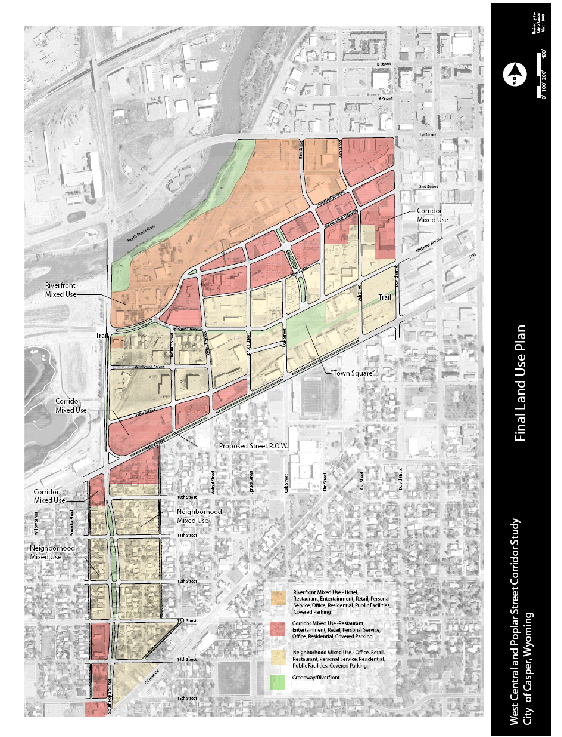
The Casper City Council adopted the West Central and South Poplar Street Corridor Plan in September 2007. The plan includes a land use map that designated particular land use types for specific areas within the redevelopment area. The regulating plan (Section 17.94.070), adopted as a part of the form-based code, regulates the development area and illustrates the proposed street and block layout, as well as specifying the building type, setbacks and design standards. The land use plan defines allowable uses in the redevelopment district and must be used in concert with the regulating plan.
(Ord. No. 3-09, § 2, 2-17-2009)
17.94.060 - Organization and use of the code.
A.
The regulating plan identifies building types allowed within particular zones as part of the Old Yellowstone District and South Poplar Street Corridor Redevelopment District. The regulating plan outlines building placement and design within each building type. The following are the buildings types allowed in various areas of the district:
1.
Perimeter block;
2.
Small commercial revival;
3.
Parking building;
4.
Podium tower;
5.
Stacked flats;
6.
Courtyard building;
7.
Rowhouse;
8.
Mansion apartment;
9.
Two-story flat;
10.
Village home;
11.
Icon structure.
(Ord. 21-08 § 1 (part), 2008)
17.94.070 - Regulating plan.
See Figure 2, which is the Regulating plan that is adopted for the Old Yellowstone District and South Poplar Street Corridor.
(Ord. 21-08 § 1 (part), 2008)
17.94.080 - Regulating plan zones.
A.
Zone 1. This zone is the most intensive development area and is most appropriate for multi-story mixed-use buildings with ground floor offices and commercial. Building types include podium tower, perimeter block, stacked flats, icon structures and parking buildings.
B.
Zone 2. Areas coded for this zone are secondary in intensity and, are intended to support the bulk of the commercial and business ground floor uses within the Old Yellowstone District and South Poplar Street Corridor. Building types include perimeter block, stacked flats, courtyard and parking buildings.
C.
Zone 3. This zone is less intensive with predominantly residential uses. Building types include stacked flats, courtyard, two-story flats, village homes, row houses, mansion apartments and icon structures.
D.
Zone 4. The location of this zone includes concentrated nodes along Collins Drive and South Poplar Street. Building types include small commercial revival, perimeter block buildings and stacked flats.
E.
Zone 5. This area represents the greenway and riverfront area. This area is intended to be preserved as open space and/or developed for limited recreation with trails, seating, overlooks and community gathering facilities, such as outdoor performance pavilion and public restrooms.
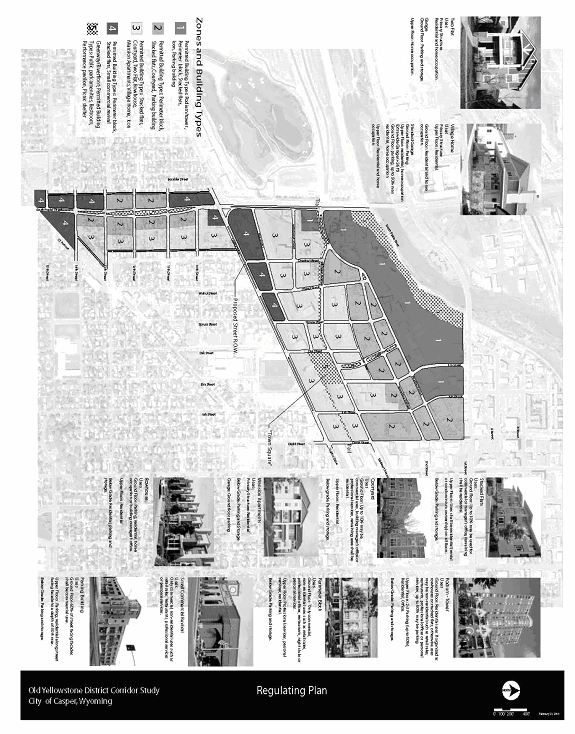
Figure 2
(Ord. 21-08 § 1 (part), 2008)
17.94.090 - Regulating plan allowable building types by zone.
(Ord. 21-08 § 1 (part), 2008)
17.94.100 - Parking regulations.
A.
Off-street Parking Dimensions. Refer to Casper Municipal Code Section 17.12.070.
B.
Specific Requirement. Unless specified, requirements listed represent the minimum number of parking spaces required.
(Ord. No. 6-17, § 1, 5-16-2017; Ord. 21-08 § 1 (part), 2008)
17.94.110 - Shared parking agreements.
A.
Shared parking is encouraged, where appropriate. Credit may be granted if adequate off-street parking is available within a distance of four hundred feet of the use. Application for such credit shall demonstrate:
1.
That such parking spaces have been irrevocably secured for a minimum period of ten years through a shared parking agreement between the parties, and said parking agreement shall be recorded in the office of the county clerk; and
2.
There is no substantial conflict in the principal operating hours of the buildings or uses for which joint use of off-street parking facilities is proposed.
(Ord. 21-08 § 1 (part), 2008)
17.94.120 - Building envelope and street standards.
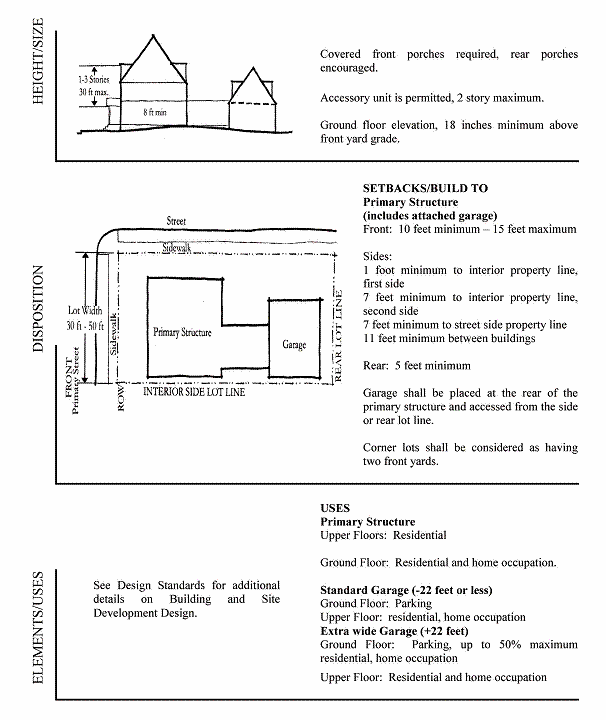
This section outlines the building envelope regulations for each building typology, the building's placement on the lot, building height requirements and street cross sections. The street sections also include alley and residential street sections, if they are proposed as part of a redevelopment site.
BUILDING ENVELOPE STANDARDS
Perimeter Block Building Type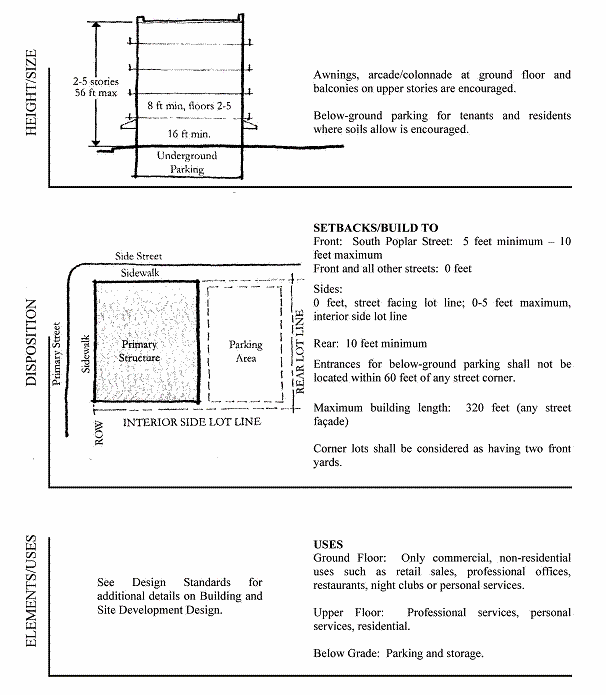
BUILDING ENVELOPE STANDARDS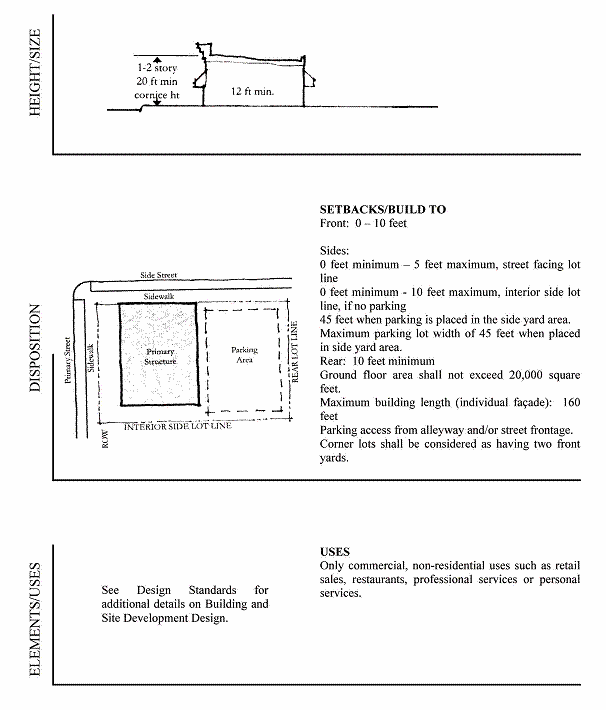
BUILDING ENVELOPE STANDARDS
Parking Building Type
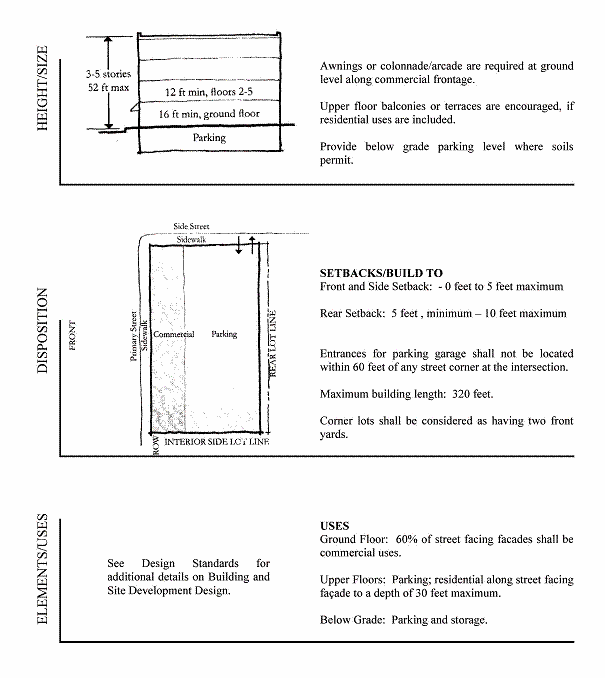
BUILDING ENVELOPE STANDARDS
Podium Tower Building Type
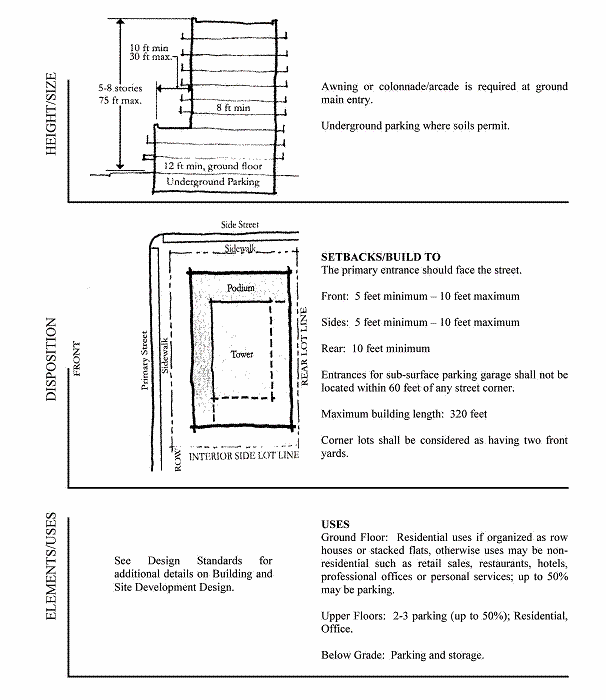
BUILDING ENVELOPE STANDARDS
Courtyard Building Type
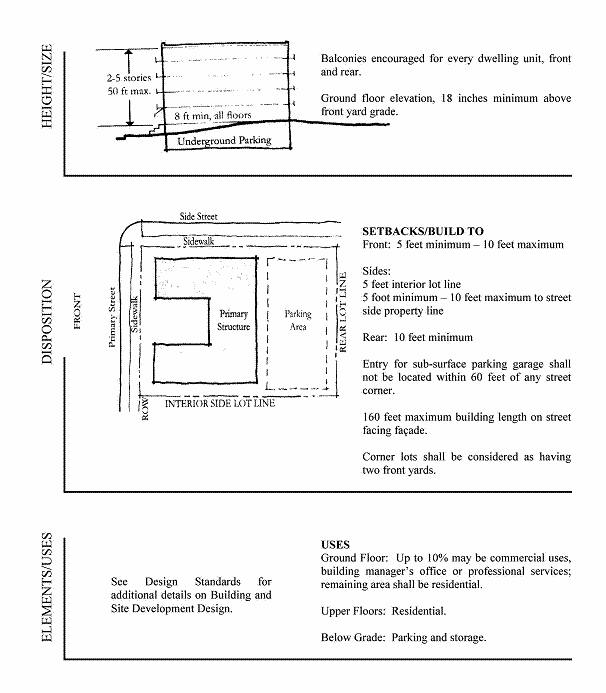
BUILDING ENVELOPE STANDARDS
Rowhouse Building Type
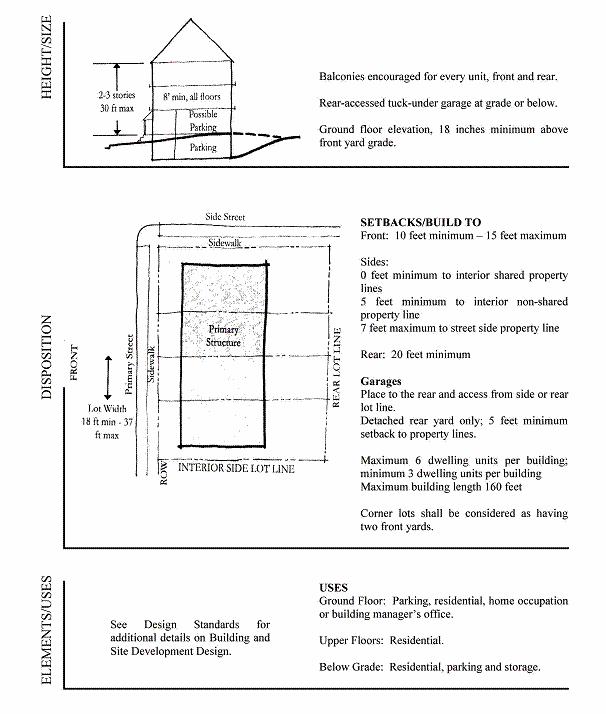
BUILDING ENVELOPE STANDARDS
Stacked Flat Building Type
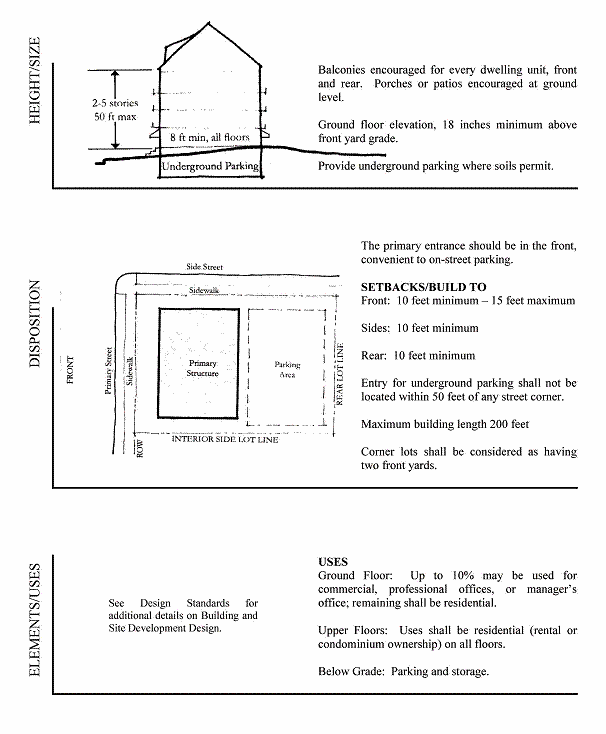
BUILDING ENVELOPE STANDARDS
Mansion Apartments Building Type
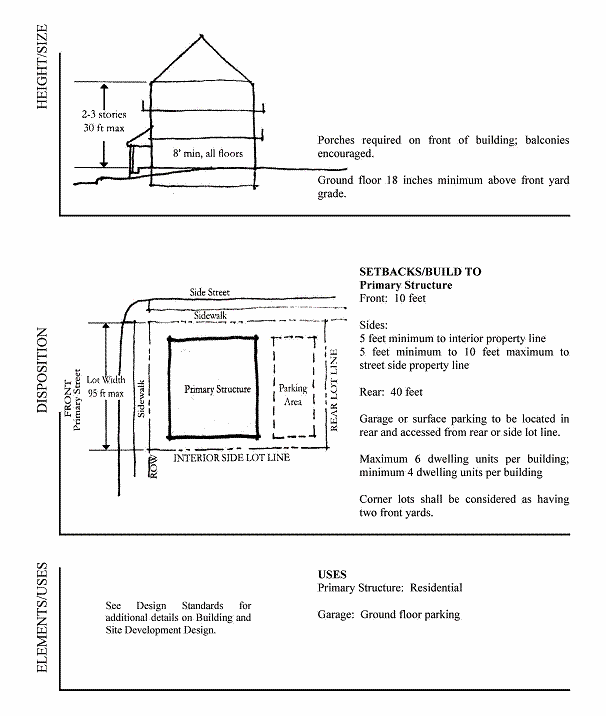
BUILDING ENVELOPE STANDARDS
Two Flat Building Type
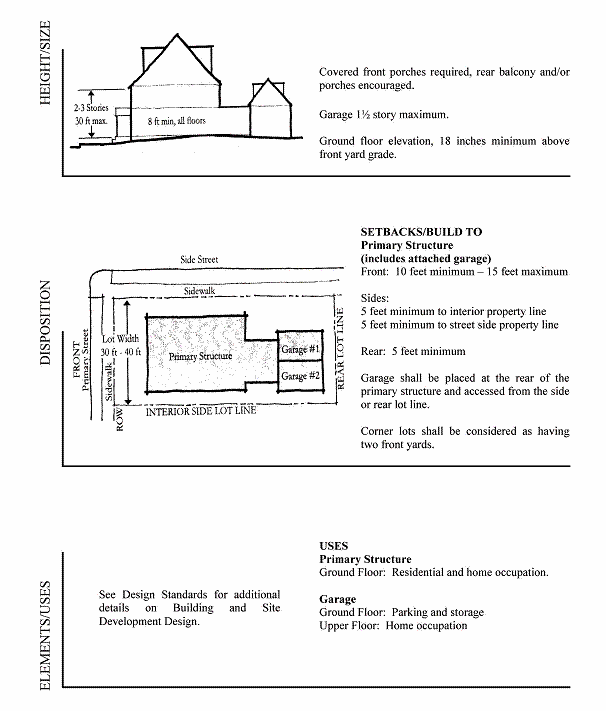
BUILDING ENVELOPE STANDARDS
Village Home Building Type
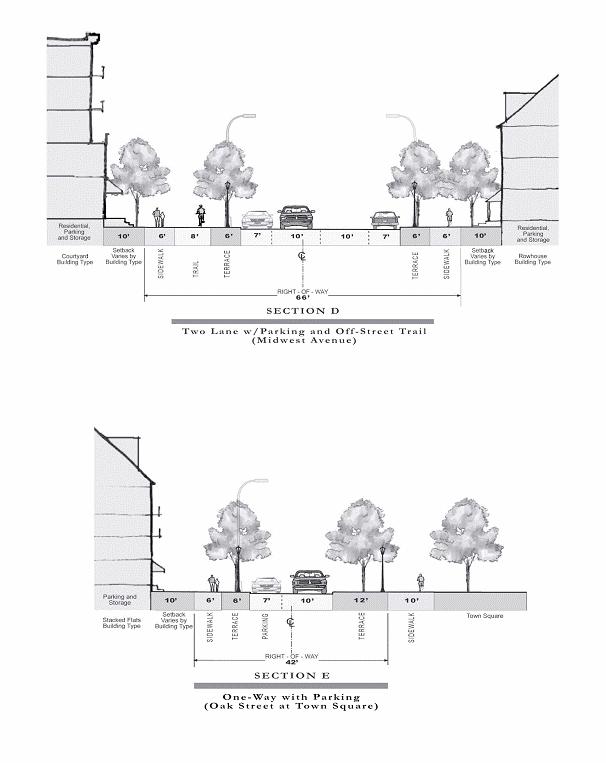
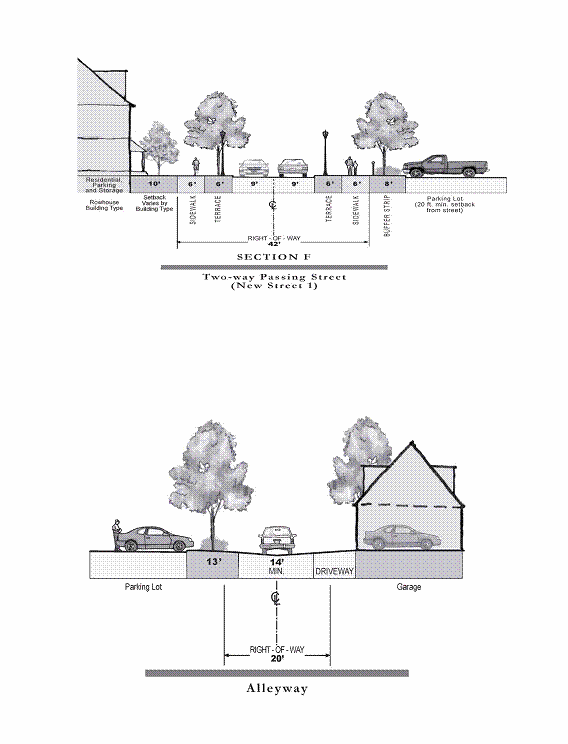
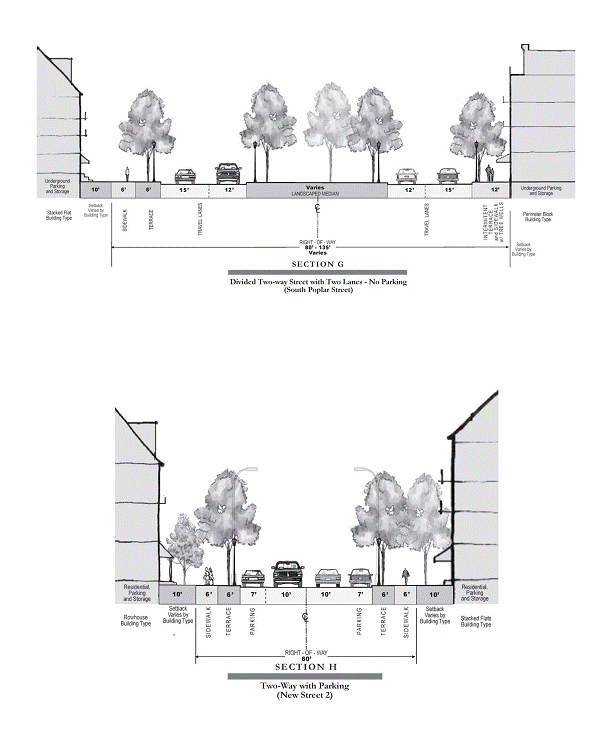
STREET STANDARDS
Section Key Plan
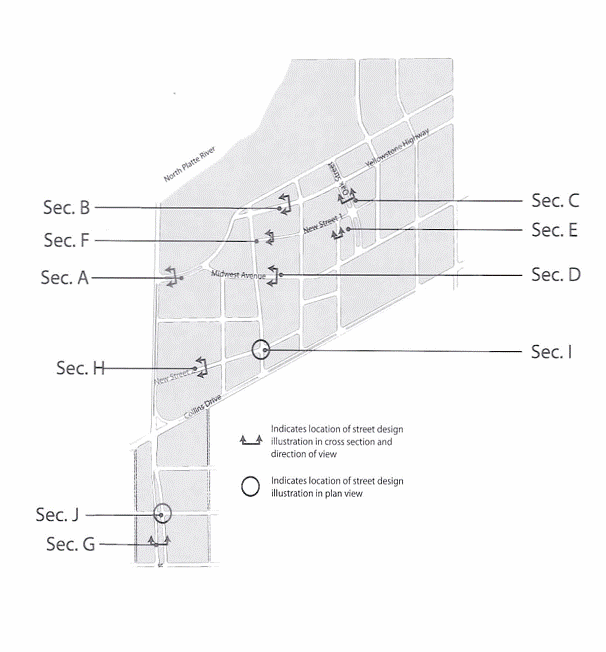
STREET STANDARDS
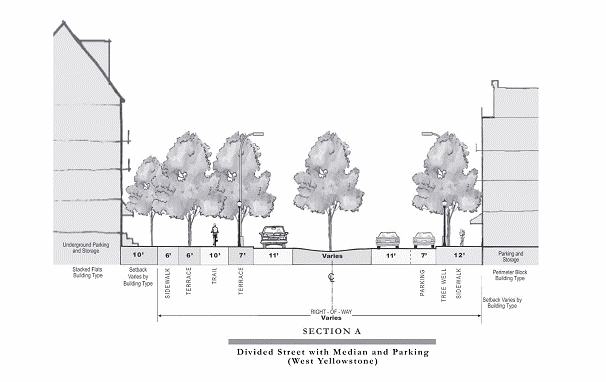
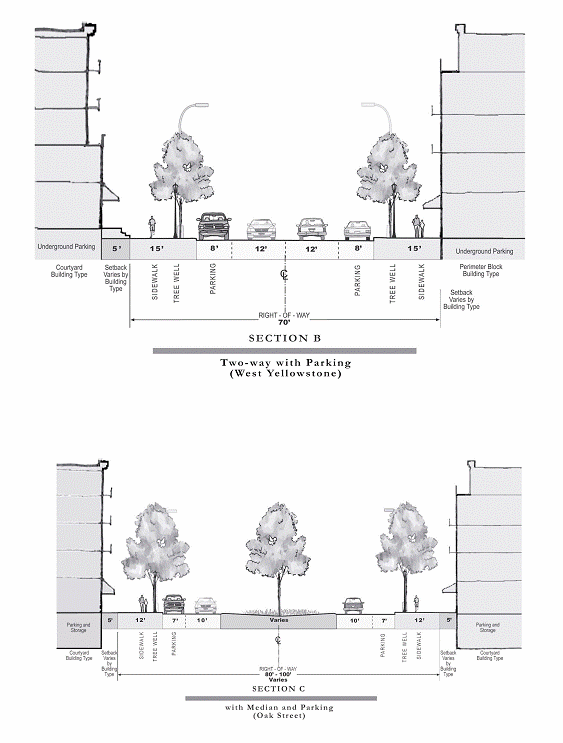
Typical Dimensions
Local street travel lane: ten feet.
West Yellowstone Highway travel lanes: eleven feet.
South Poplar Street travel lane: twelve feet inside, fifteen feet outside, including shoulder.
Alleyway: fourteen feet (twenty-foot right-of-way).
Parallel parking bay: seven feet.
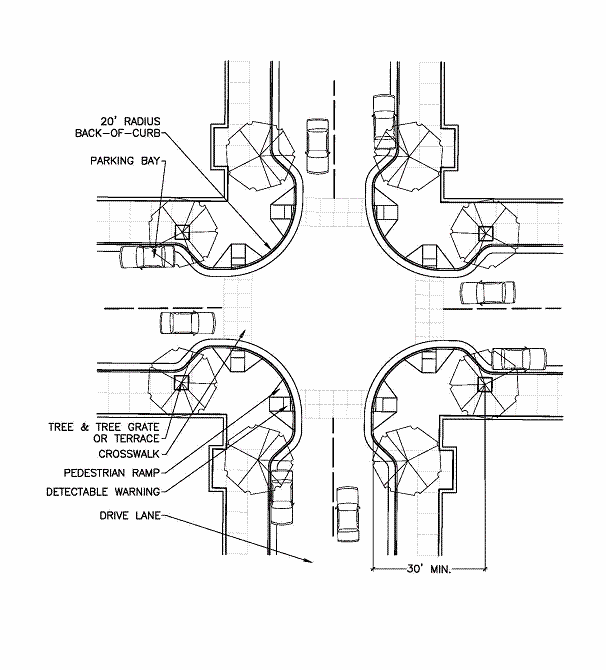
Curb extensions (bulb-outs) at intersections:
Terrace: six feet minimum.
Sidewalk: six feet.
Combined sidewalk: twelve feet with tree well.
Entry for subsurface parking garage shall not be located within sixty feet of any street corner.
Vertical curbs.
STREET STANDARDS
STREET STANDARDS
STREET STANDARDS
STREET STANDARDS
STREET STANDARDS
Section I: Curb Extensions on Four Corner Intersections
STREET STANDARDS
Section J: Curb Extensions on Two Corner Intersections
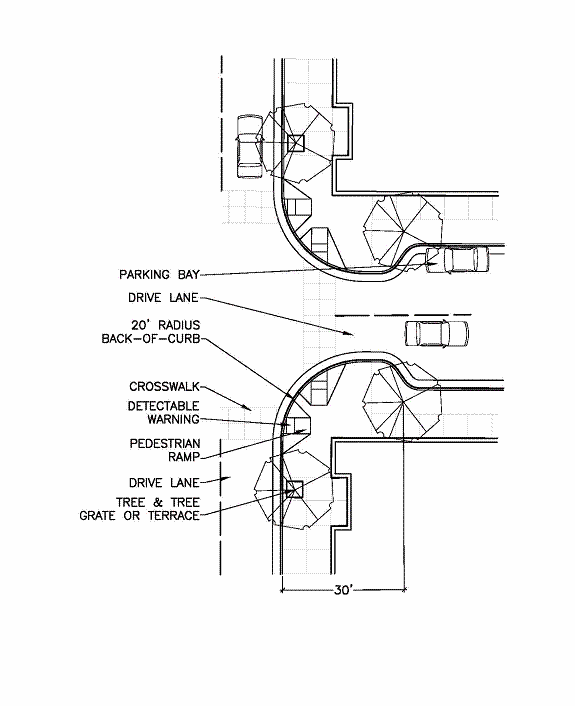
(Ord. 21-08 § 1 (part), 2008)
17.94.130 - Design standards.
A.
Purpose. These standards have five primary functions:
1.
To support the form-based zoning by providing additional design direction;
2.
To direct developers or business owners wishing to propose expansions, renovations or new construction of buildings or parking within the project area;
3.
To assist city staff and city officials in reviewing development proposals;
4.
To support the goals, policies, land use and transportation plans crafted as part of the Old Yellowstone District and South Poplar Street Corridor; and
5.
To create durable, high quality development, including office, retail and life cycle housing for a range of income levels.
B.
Application. The design standards for the Old Yellowstone District and South Poplar Street Corridor shall apply to the following activities on all types of institutional, commercial, mixed use and residential facilities:
1.
New building construction;
2.
Exterior remodeling affecting more than fifty percent of street facing facades or additions of over fifty percent of the existing floor area, not including routine maintenance, such as repainting or roof repairs within a single one-year timeframe;
3.
Interior remodeling over fifty percent of existing structure floor area and affecting existing doors and fenestration within a single one-year timeframe;
4.
New surface parking of more than four spaces or expansion of existing parking lot totaling more than four parking spaces;
5.
New signs must comply with sign regulations herein.
C.
Design Review. Project sponsor (developer or owner) shall meet with the community development director to discuss the proposed project prior to making a formal submittal for approval. Accepted submittals will be reviewed by the city for compliance with these design standards as a part of the site plan review process.
D.
Relief.
1.
Relief from a specific building-material-related design requirement may be granted by the Architectural Review Committee on an individual basis for new or different construction materials not permitted or addressed by these design standards if the applicant demonstrates that such building materials meet the design objectives of the Old Yellowstone District and South Poplar Street Corridor Form-Based Code. Approval of alternate building materials by the Architectural Review Committee shall include findings supporting the approval and shall be based on compliance with one or more specific objectives or goals of the Old Yellowstone District and South Poplar Street Corridor Form-Based Code.
2.
If an applicant requests relief, and after the Architectural Review Committee has made its findings, is aggrieved by the decision of the Architectural Review Committee, said applicant may appeal the Committee's decision pursuant to Section 17.94,020.
E.
Reference and Precedence. These design standards have been coordinated with information established in the city of Casper Design Standards for Commercial Downtown Streetscape and Parks dated September 2005. Additional guidance on aspects of these site development standards such as public streetscape, parking lot, bikeway and park facility design can be obtained from consulting the city of Casper Design Standards for Commercial/Downtown Streetscape and Parks (Chapter 16.17 of this code). In the event of discrepancies between the two documents, the West Central and South Poplar Street Corridor Plan, dated September, 2007, as may be amended from time to time, design standards shall take precedence.
BUILT FORM STANDARDS
Building Placement
OBJECTIVE: To maintain and reinforce a recognizable, consistent street edge.
Buildings shall have a well-defined front facade with primary entrances facing the street. Buildings shall be aligned so that the dominant lines of their facades parallel the line of the street and create a well-defined street edge.
Placement shall meet the established building setback as defined in the building envelope standards for the specified building type as located on the regulating plan. In addition, portions of the facade may be set back up to five additional feet beyond the allowable maximum set back to emphasize entries, provide increased space for plantings or to create areas for outdoor dining and gathering.
Placement of the main level of residential buildings eighteen to twenty-four inches above the elevation of the front sidewalk is encouraged to provide greater separation and security. Additional side or rear entries shall meet grade and shall serve as the "accessible" entrance.
At intersections, buildings should "hold the corner" — that is, have street facades at or near the sidewalk on both streets.
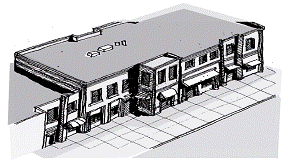
Place building entrances facing the primary street.
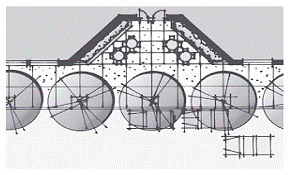
Entry recessed to provide area for outdoor dining.
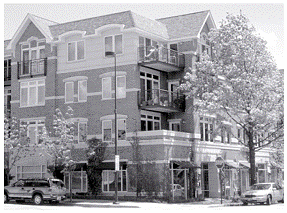
Example of building properly set to the corner.
BUILT FORM STANDARDS
Facades
OBJECTIVE: To employ visually legible building proportions that support pedestrian interaction, are scaled to provide a distinct first story, define the street edge and provide visual continuity.
In general, buildings over two stories shall have a well-defined base, middle and top. The base, or ground floor, shall appear visually distinct from upper stories, through the use of a change in building materials, window shape or size, an intermediate cornice line, an awning, arcade or portico, or similar techniques.
It shall be recognized that buildings will be viewed from a variety of vantage points. Consequently, the placement of doors, windows, balconies, changes in materials or roof height, etc. shall be designed to provide an attractive and harmonious design from the front, side, rear and top.
Building tops shall be articulated with discernible cornice lines, parapets and/or fascias.
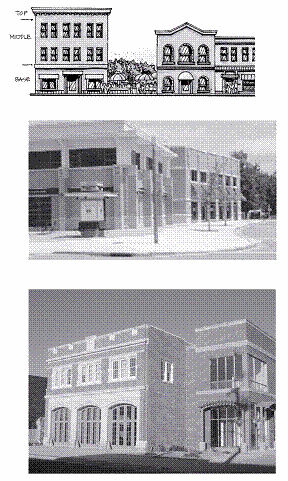
Buildings with recognizable layers — base, middle and top
BUILT FORM STANDARDS
Building Width and Facade Articulation
OBJECTIVE: To add visual interest and variety by avoiding long, monotonous facades.
New building facades, including parking garages, shall have a pedestrian scale aesthetic. This can be accomplished by establishing a layering of rhythmic patterns and architectural elements such as windows, columns, roof lines, building materials and colors.
"Flat" facades shall be avoided; historic structures exhibit more of the desired play of light and shadow on a building; new development shall create more of a visual impact in ways similar to that of historic structures.
The primary facade(s) (viewable by the public from streets and parking lots) of all buildings shall be articulated into distinct increments through the following or similar techniques:
•Stepping back or extending forward a portion of the facade
•Use of different textures or contrasting, but compatible, materials
•Division into storefronts with separate display windows and entrances
•Arcades, awnings, window bays, balconies or similar ornamental features
•Variation in roof lines to reinforce the articulation of the primary facade
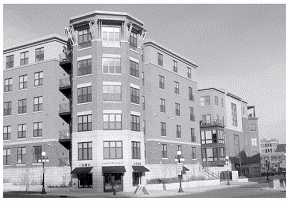
Changes in material and color, along with multiple entrances, break this block-long
facade into smaller, more human scale increments.
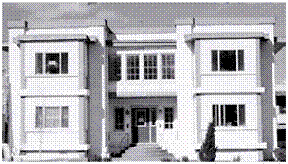
Well proportioned, rhythmic facade using uniform exterior building material (painted
concrete).
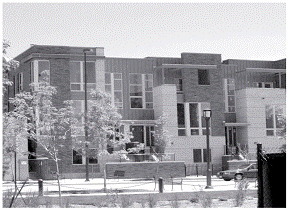
Facades divided into smaller, human scale increments that also reflect the building's
interior organization and ownership pattern.
BUILT FORM STANDARDS
Building Height
OBJECTIVE: To support development economics with adequate density and intensity, create an increased sense of enclosure, diminish the perceived width of the street, and maximize opportunities for upper-story offices and housing.
Multi-story buildings (at least two stories) built to the maximum heights permitted by zoning (Building Envelope Standards) are encouraged.
Stepping portions of upper stories back from the line of the front facade to provide areas for outdoor terraces, rooftop patios, etc. is encouraged. This is especially important for buildings facing the river front.
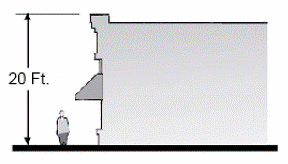
New single story commercial building types with flat roofs shall have a minimum cornice height of twenty feet to better define the street.
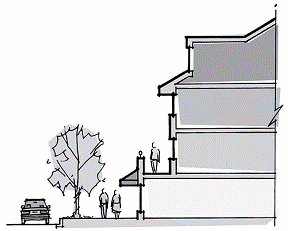
Stepping upper stories back from front, the plane of the primary facade provides areas
for outdoor balconies, rooftop gardens and more sunlight to reach the street corridor.
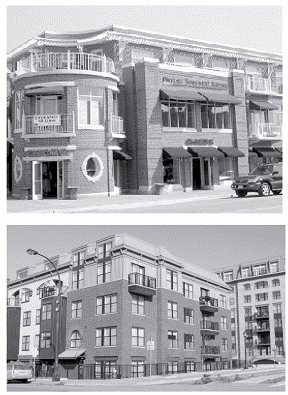
Example of mid-rise, stacked flats building type.
BUILT FORM STANDARDS
Roof Design
OBJECTIVE: To provide a visual terminus to the building, reduce monotony and reflect interior and exterior patterns of use or ownership.
Buildings may be designed with pitched and/or flat roofs. Flat roofs shall be defined with a discernible cornice line. Variations in roof type, height, and/or distinct, separate roof segments shall be considered as a means of creating greater visual interest, identifying changes in use, areas of ownership or reducing monotony.
Pitched roofs such as gable, hip, shed or mansard roofs shall be clad with highly durable, fire resistant materials, such as standing seam metal, slate, ceramic or composite tiles. Use of asphalt rolls or shingles is strongly discouraged.
Use of green roofs for reductions in heat island effects, building energy consumption and stormwater management is highly encouraged.
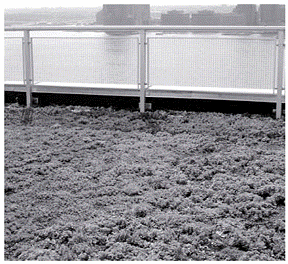
Green roofs are an effective way to reduce energy costs and heat island effects.
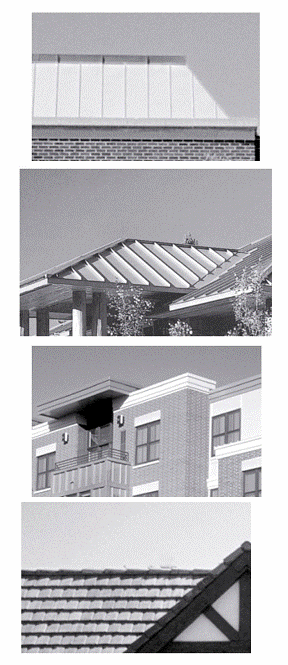
Roof designs from top down: Mansard, hip, flat and gable.
BUILT FORM STANDARDS
Transparency: Window and Door Openings
OBJECTIVE: To reflect the character of the corridor's historic commercial heritage, enliven the streetscape and enhance security by providing views into and out of buildings.
For nonresidential or mixed-use buildings:
• Window and door openings shall comprise at least sixty percent of the length and at least thirty percent of the area of the ground floor of the primary street facade.
• A minimum of twenty percent of the ground level of side and rear facades not fronting a public street shall consist of window and door openings.
• A minimum of twenty percent of all sides of upper story facades shall consist of window or balcony/door openings.
• New and renovated buildings with alleyway frontage shall include windows to allow views into the alleyway for added surveillance.
For residential buildings:
• A minimum of twenty percent of primary (street-facing) facades and fifteen percent of other facades, including rear and upper stories, shall consist of window and door openings, providing residents within the buildings light, air and visual connections to activity on the sidewalk, street and alleyway.
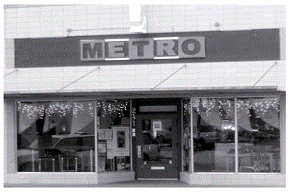
Large, transparent shop front windows are common throughout downtown Casper.
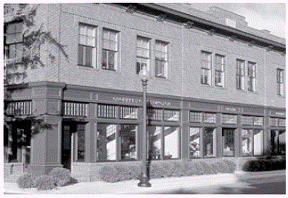
Traditional application of transparent, store front type windows at ground level and
transparent double-hung windows on second floor.
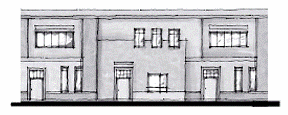
Residential buildings with 20% of facade featuring windows and doors at group level;
15% of second story.
Windows and door openings shall meet the following requirements:
• Windows shall be designed with punched and recessed openings, in order to create a strong rhythm of light and shadow.
• Window shape, size and patterns shall emphasize the intended organization of the facade and the definition of the building.
• Mirrored, dark tinted, opaque or glass block shall not be used on street-facing facades as major window openings. Glass on street facing doors and windows shall be clear or lightly tinted, allowing views into and out of the interior. Glass block may not contribute to transparency requirements, but may be used as architectural adornment.
• Windows on all facades of buildings shall meet the requirements of the Wyoming Building Energy Codes for energy efficiency.
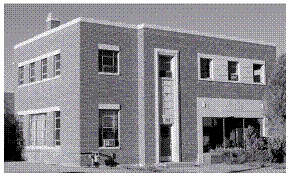
The historic Coca-Cola building displays recessed and punched window openings.
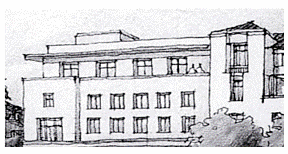
Example of building with individual window openings deeply recessed or "punched" through
the facade.
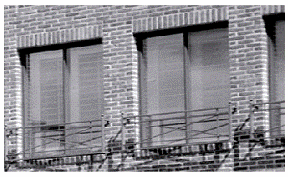
Recessing windows into the facade adds depth and visual interest.
BUILT FORM STANDARDS
Entries
OBJECTIVE: To establish the visual importance of the primary street entrance, and to ensure that entries contribute to the visual attractiveness of the building and are readily visible to visitors.
Nonresidential or Mixed-Use Buildings
Primary building entrances on all buildings shall face the primary abutting public street or walkway, or be linked to that street by a clearly defined and visible walkway or courtyard. Additional secondary entrances shall be oriented to a secondary street or parking area. Residential entries shall be separate and distinct from commercial entrances.
In the case of a corner building or a building abutting more than one street, the street with the higher functional classification shall be considered primary. The main entrance shall be placed at sidewalk grade.
Entries shall be designed with one or more of the following:
• Canopy, portico, overhang, arcade or arch above the entrance.
• Recesses or projections in the building facade surrounding the entrance.
• Display windows surrounding the entrance.
• Architectural detailing such as brick work or ornamental moldings.
• Planting areas, pots or window boxes for seasonal landscaping.
Canopies or awnings protecting the primary entrance shall be set at least seven feet above sidewalk grade, and project no greater than three feet into the walk zone of the public streetscape.
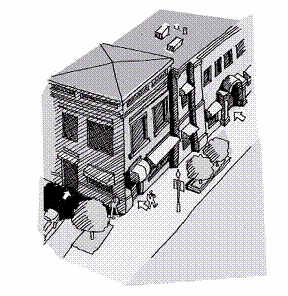
Primary entrances shall be oriented to the primary street. Secondary entrances shall
be provided to the side and back of buildings.
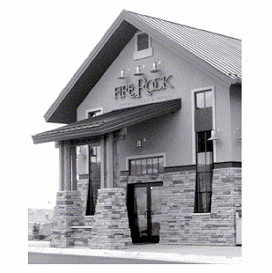
Covered entry, oriented away from the prevailing winds to maximize protection and
comfort.
Residential Buildings
Primary building entrances on all buildings shall face the primary abutting public street or walkway, or be linked to that street by a clearly defined and visible walkway or courtyard. Additional secondary entrances may be oriented to a secondary street or parking area.
Porches, steps, pent entryway roofs, roof overhangs, hooded front doors or similar architectural elements shall be used to define the primary entrances to all residences. When the primary residential entrance is accessible by steps, a secondary at-grade entrance shall be provided.
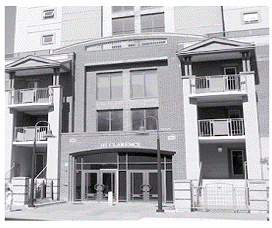
Separate entries set at grade for residential high-rise and townhomes.
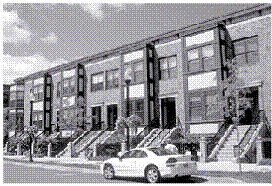
Separate entrances for multifamily buildings helps to reduce monotony and promote
individuality.
BUILT FORM STANDARDS
Rear Facades and Entries
OBJECTIVE: To improve the appearance of rear facades, orient customers parking or walking to the rear of buildings, and provide safe and convenient access to all building entries.
Rear facades shall be designed as an integral part of the overall building with similar materials and detail treatments. If parking is placed to the rear of a building, the building's rear facade shall include elements such as awnings, landscaping and small wall signs identifying businesses.
If customers, visitors and/or tenants park to the rear of the building, a well-defined and lighted rear entrance is required.
If no rear building entrance is provided, a signed and lighted walkway to the front or side building entrance shall be provided.
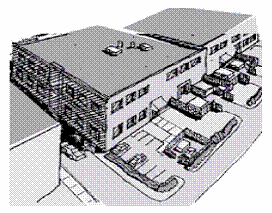
Buildings with rear off-street parking and loading shall provide windows, walkways
and lighted entrances.
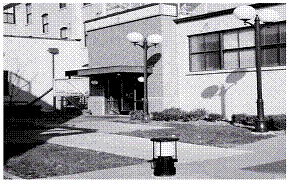
Well-designed commercial entrance serving customers using off-street parking behind
building.
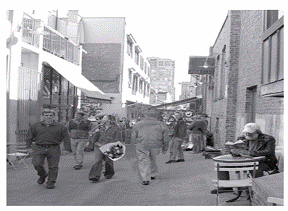
Rear entrances located along an alleyway designated for pedestrian use.
BUILT FORM STANDARDS
Parking Structures
OBJECTIVE: To ensure scale and form will achieve visual continuity with surrounding buildings, while providing neighborhood-supportive uses along the street edge.
The design of parking structures within the corridor shall comply with these design standards.
At least sixty percent of the ground floor facade abutting any street shall be occupied by commercial or office uses.
Facades shall be designed and architecturally detailed like other commercial buildings within the corridor. (see section on facade articulation). The structure's exterior shall feature horizontal detailing to hide angled ramps within the structure's interior. Windows or other openings shall be provided that echo those of surrounding buildings.
Screening of refuse facilities and mechanical equipment shall be accomplished by locating the facilities internally in a partitioned enclosure.
Parking facilities within the corridor shall incorporate CPTED (Crime Prevention Through Environmental Design) by utilization of both active and passive security design features, including but not limited to:
• Parking Layout — maximize horizontal floor area; avoid layouts that require parking on angled ramps.
• Lighting — design that meets illuminance, uniformity and glare standards of the IESNA (Illuminating Engineering Society of North America).
• Natural Surveillance — openings in the facade on all sides of a structure and low landscape plantings placed away from the base of the structure.
• Access control — transparent decorative metal fencing and minimization of pedestrian and auto ingress/egress.
• Emergency communication — panic buttons, emergency telephones, intercoms, sound-activated surveillance systems, CCTV and security personnel.
• Locate stairways at corners and enclose with transparent glass.
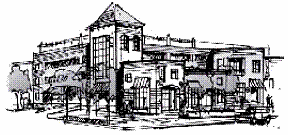
Parking structures with street facing liner shops, well articulated facade and corner
stair tower.
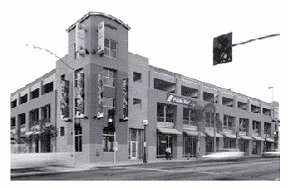
Parking structures with street facing liner shops, well articulated facade and corner
stair tower.
BUILT FORM STANDARDS
Building Materials
OBJECTIVE: To ensure that durable and authentic building materials are used in all forms of building construction.
Buildings shall be constructed using local or regionally available, durable materials such as:
• Brick
• Natural stone
• Manufactured stone
• Textured, patterned and/or integrally colored cast-in-place concrete
• Integrally colored, pre-cast CMU (concrete masonry units), provided that surfaces are molded, serrated or treated to give wall surfaces a three-dimensional texture.
• Stucco or EIFS (exterior insulating finish system) above the ground line (plus two feet).
• Architectural metal; pre-finished decorative panels such as store front systems, structural elements such as columns and beams and decorative support or trim members such as brackets or cornices.
Materials to avoid:
• Unadorned plain or painted concrete block.
• Unarticulated or blank tilt-up concrete panels.
• Pre-fabricated metal building systems.
• Aluminum, fiberglass, asphalt or fiberboard siding.
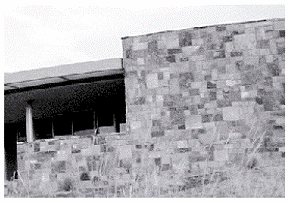
Natural stone, common in Wyoming
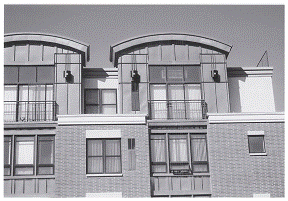
Architectural metal, copper siding and fascia on stacked flats condominium.
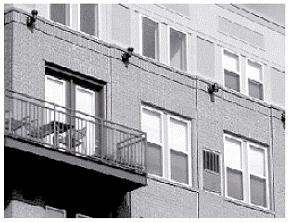
Brick and EIFS above.
BUILT FORM STANDARDS
Rooftop Equipment
OBJECTIVE: To ensure that views of rooftop equipment from public streets or pedestrian ways are minimized.
All rooftop equipment shall be screened from view from adjacent streets, public rights-of-way and adjacent properties. Preferably, rooftop equipment shall be screened by the building parapet, or shall be located out of view from the ground.
If this is not feasible, the equipment shall be grouped within a single enclosure. This structure shall be set back a distance of one and one-half times its height from any primary facade fronting a public street. Screens shall be of durable, permanent materials (not including wood) that are compatible with the primary building materials.
Exterior mechanical equipment such as duct work shall not be located in primary building facades.
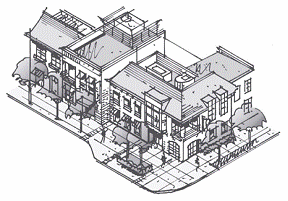
Example of screening equipment with roof forms.
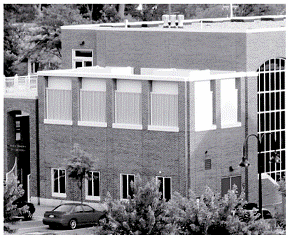
Rooftop equipment screening panels integrated into building facade.
BUILT FORM STANDARDS
Building Colors
OBJECTIVE: To ensure that building colors are aesthetically pleasing and compatible with their surroundings.
Building colors shall blend with, or enhance surroundings. Principal building colors shall consist of subtle, neutral or muted colors with low reflectance (e.g., browns, grays, tans, dark or muted greens). No more than three principal colors shall be used on a facade or individual store front. Bright, complimentary colors shall be used only as accents.
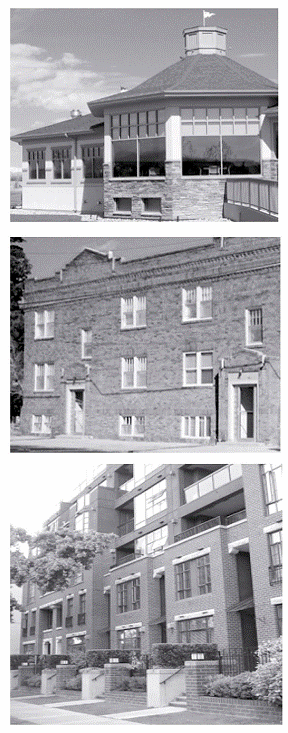
BUILT FORM STANDARDS
Architectural Detailing
OBJECTIVE: To have new building design that enlivens building facades and contributes to a rich textured, human-scaled environment.
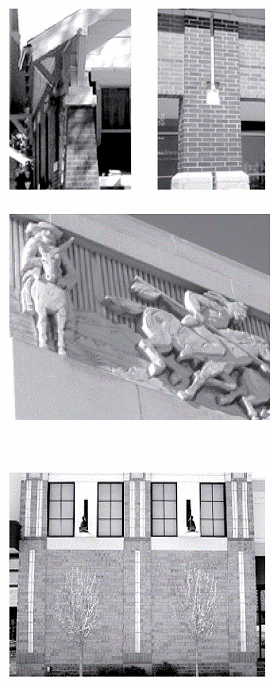
Architectural details such as ornamental cornices, arched windows and brick with bands of contrasting color are encouraged in new construction. The contemporary adaptation of historic and vernacular residential, institutional and commercial styles found in Casper is encouraged.
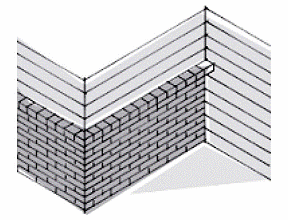
Terminate materials at an inside corner
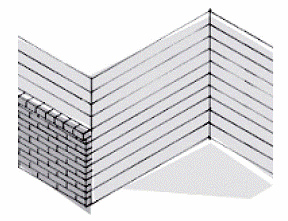
Avoid termination of materials at an outside corner.
BUILT FORM STANDARDS
Franchise Architecture
OBJECTIVE: To have new building design that is supportive of the urban design goals of the city, and that responds to the corridor's walkable development pattern.
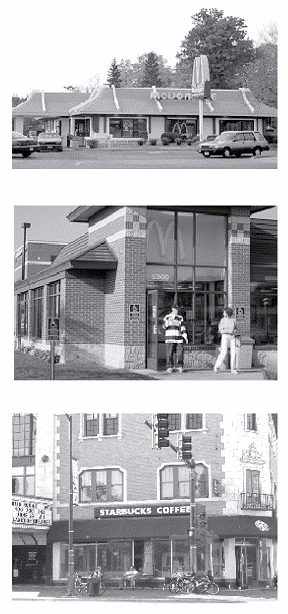
Franchise architecture (building design that is trademarked or identified with a particular chain or corporation and is generic in nature) is prohibited, unless it employs a traditional storefront commercial style. Franchises or national chains shall follow this code to create context-sensitive buildings that are sustainable in that they can be reused by other types of business.
BUILT FORM STANDARDS
Awnings
OBJECTIVE: To encourage the use of awnings as a way to shelter customers, residents and other pedestrians; reduce glare and conserve energy; and, provide additional accent color to building facades.
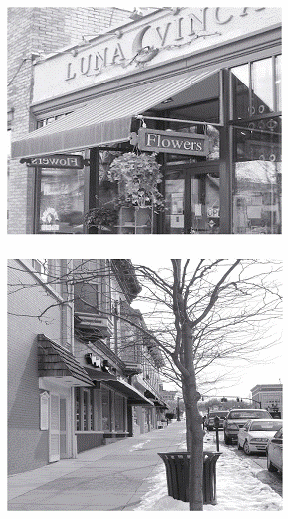
Where awnings are used, canvas, fabric or vinyl awnings are preferable. If glass or metal awnings are employed, they shall complement the building's architectural character and aesthetic.
All awnings shall extend beyond the facade no greater than three feet.
The bottom of a window awning shall be set at least seven feet above the public sidewalk.
Back lighted vinyl awnings and canopy signs shall not be used.
BUILT FORM STANDARDS
Architectural Arcades and Balconies
OBJECTIVE: To provide sun and weather protection and increase opportunities for people to see and be seen.
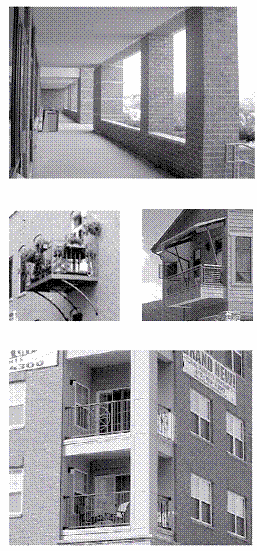
The use of ground floor architectural arcades to provide pedestrian connections between facilities is encouraged.
Upper floor balconies and terraces are encouraged to provide opportunities for outdoor activities.
Balconies fronting public streets shall not project into the public right-of-way more than five feet. Balcony supports such as columns or posts shall be located on private property.
Architectural arcades shall be illuminated with wall or ceiling light fixtures for pedestrian safety and security.
SITE DEVELOPMENT STANDARDS
Parking Lot Design
OBJECTIVE: To ensure parking lots are well-designed and constructed utilizing civil engineering and landscape architecture "best practices," including adherence to the principles of Crime Prevention Through Environmental Design (CPTED), i.e., territoriality surveillance, activity support and access control.
Parking lots shall be designed to promote efficient traffic patterns, minimize conflicts between vehicles and pedestrians and to proactively reduce the opportunity for crime.
Paving treatments shall incorporate durable, long lasting materials. The use of pervious materials such as pervious concrete or paving stones is encouraged to minimize stormwater runoff. Stormwater runoff should be captured, when possible, and directed toward landscaped areas.
Parking lots shall be lit evenly and adequately to ensure visibility at night for pedestrian and vehicle safety and to reduce opportunities for vehicle break-ins. Lighting shall comply with the standards outlined in the appendix.
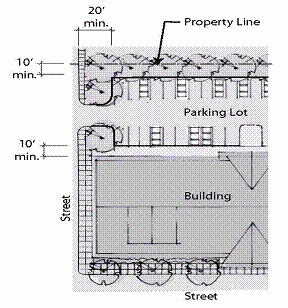
Parking lots shall be broken up into smaller areas located at the side and to the rear of buildings, whenever possible. When parking is located adjacent to a roadway, a landscaped buffer shall be provided (see "Landscaping and Screening, Parking Areas").
Lots shall be designed to incorporate intermediate planting beds, planting island and intermediate planting "fingers" to break up large areas of impervious surface.
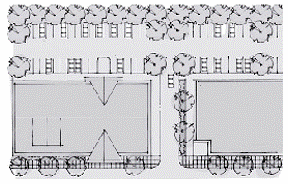
Parking located at the rear of building.
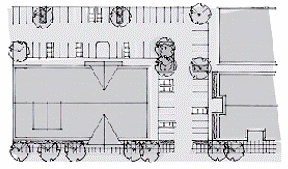
Parking located at the side and rear of building.
SITE DEVELOPMENT STANDARDS
Landscaping and Screening
OBJECTIVE: To ensure surface parking lots are adequately landscaped with a variety of multi-seasonal plantings to buffer or soften the appearance of vehicles and mitigate the adverse environmental affects of impervious surfaces.
Parking Areas
Screening is required wherever parking lots front onto the public rights-of-way or are adjacent to residential and/or mixed uses including residential properties.
Parking bays shall have landscape islands at each end, and bays in excess of fifteen spaces in length shall be divided by intermediate landscape islands. Landscape islands shall provide at least three hundred sixty square feet of area for planting trees, shrubs and/or groundcovers. Intermediate landscape "fingers" shall provide at least one hundred eighty square feet of planting area.
A landscape buffer strip of a minimum five feet in width shall be provided between all parking areas and the public sidewalk. The buffer strip shall consist of drought tolerant shade trees, low shrubs or perennial flowers and a decorative fence or masonry wall. Plantings and parking lot screen walls or fences shall be no less than two feet and no more than three feet in height to allow views into and out of parking areas.
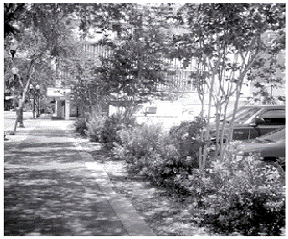
Parking located at the side and rear of building.
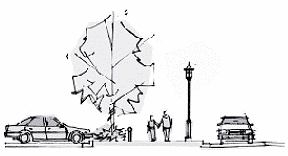
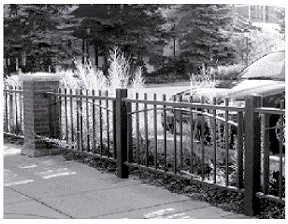
Minimum 5 foot wide landscape planting buffer provides effective screening of parking
areas from walks and streets.
SITE DEVELOPMENT STANDARDS
Pathways and Walks
OBJECTIVE: To provide pedestrian connections between facilities, reduce internal vehicle trips within the corridors and support healthy living.
All walkways within the corridor shall be designed and constructed in strict adherence to the Americans with Disabilities Act.
Continuous sidewalks are required along all street frontages. The use of ground floor arcades to provide weather protected pedestrian connections between facilities is encouraged.
Lighted sidewalks shall extend between rear or side parking areas and building entrances.
Public sidewalks and boulevard areas along the corridor shall be enhanced with decorative pavement treatments, ornamental street lighting, streetscape furnishings, appropriately scaled landscaping as part of the design and implementation of the Old Yellowstone District and South Poplar Street Corridor, and in compliance with the Design Standards for Commercial/Downtown Streetscape and Parks (Chapter 16.17 of the Casper Municipal Code).
The street grid shall be maintained and extended wherever possible. Where the street grid is interrupted by steep slopes or other topographic variations, walkways or stairways shall be built to maintain pedestrian continuity.
Commercial developments shall strive to provide bicycle parking spaces in a convenient, visible, preferably sheltered location.
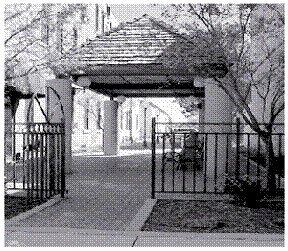
Covered walkway connects rear parking area to primary entrance.
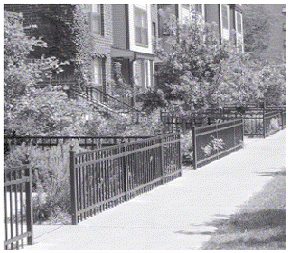
Public sidewalk with shallow, adjacent front yards and entry walks. Use of low decorative
metal fence and perennial plantings and small trees helps to demarcate the area as
semi-private.
SITE DEVELOPMENT STANDARDS
Outdoor Seating and Dining
OBJECTIVE: To provide space and facilities for outdoor gatherings, and provide opportunities to socialize.
New commercial and mixed-use development projects shall provide semi-public or private areas for people to sit outdoors and be served food and beverages. These areas shall be established with either seasonal, moveable barriers such as lightweight decorative metal fence or railing systems, or permanently defined with low planters or screen walls.
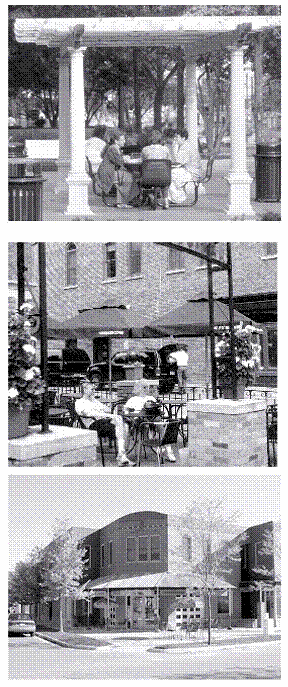
Providing areas for people to sit and dine outdoors is good for business, promotes
civility and strengthens sense of community.
SITE DEVELOPMENT STANDARDS
Site Development Standards Enclosures and Accessory Structures
OBJECTIVE: To limit the use and direct the design of accessory structures, and refuse or mechanical equipment enclosures to be compatible with the principal structures they serve.
New free-standing restaurants, nightclubs, and mixed-use facilities which includes commercial food service, constructed after the adoption of this ordinance, shall locate refuse containers and mechanical equipment in an enclosed structure. Said structure shall adhere to state and local health and safety codes, and approved design standards.
Use of an accessory structure to support new multiple-family residential, office, and commercial/personal service facilities constructed after the adoption of this ordinance is prohibited. Newly constructed multiple-family, office, commercial or personal service facilities shall include a sufficient amount of space within the primary structure for the suitable storage.
The design of the refuse or mechanical enclosure, carport or detached garage or the upgrade to an existing accessory structure shall be in character with, and constructed of, the same quality permanent materials as the principal building, or adopted design standards. No metal buildings or structures will be allowed.
Any accessory structure shall be located on the same lot and in close proximity to the principal structure; provided, however, if an owner has two or more contiguous lots, the accessory structure may be located on a separate lot that is contiguous to the lot of the principal structure if all of the following conditions are met: (1) contiguous lots containing principal and accessory structures shall not be sold, transferred or encumbered separately; and (2) the owner, upon approval by the city and prior to the issuance of a building permit, shall execute a deed restriction in a form acceptable to the city that disallows the separate sale, transfer or encumbrance of the contiguous lots containing the principal and accessory structures.
Where accessory structures exceed two hundred square feet in area, at least one-third of the building's exterior perimeter shall be landscaped in the same manner as the principal structure, and/or in compliance with the landscaping design standards.
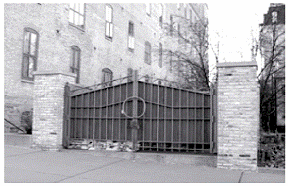
Example of accessory structure for enclosing dumpsters designed to match the principle
building.
SITE DEVELOPMENT STANDARDS
Site Lighting
OBJECTIVE: To ensure quality lighting design through glare reduction, minimum overspill and the use of fixtures that promote the existing character of the Old Yellowstone District and South Poplar Street Corridor.
Exterior light fixtures shall be selected and located to minimize glare and negative effects upon the night character of the Old Yellowstone District and South Poplar Street Corridor.
Lighting of structures shall be minimized to reduce ambient light pollution from above and below.
Lighting fixtures style shall be compatible with the architecture of nearby buildings. Lights attached to buildings shall be screened by the building's architectural features to eliminate glare and overspill onto adjacent properties.
Public and private walkways shall be evenly illuminated to a level between one- and two-foot candles. Walkway light fixtures shall be between twelve and fourteen feet in height to provide human scale.
Appropriate light sources:
• Incandescent (for signs or on buildings)
• Halogen
• High pressure sodium
• "Warm" metal halide
• Cold season fluorescent
Inappropriate light sources:
• Neon, unless used as accent
• Colored
• Low-pressure sodium
• Mercury vapor
Appropriate light fixture types:
• Pole mounted
• Recessed
• Wall mounted
• Shield spotlighting
Inappropriate light fixture types:
• Internally lit awnings
• Blinking or flashing
• High mast (cobra head features)
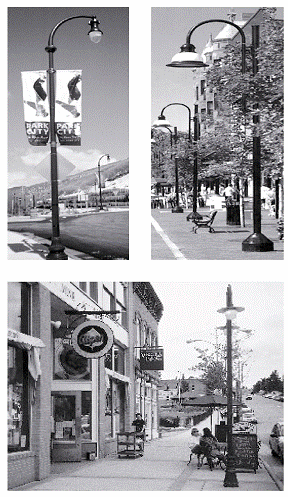
Parking lot illumination shall consist of a combination of commercial grade parking lot and pedestrian style fixtures. Pedestrian fixtures shall be used for lighting internal parking lot walkways. Parking lot fixtures shall be employed to illuminate parking bays and drive aisles.
Parking lot illumination shall achieve levels to provide safety while minimizing over-lighting and excessive spillover of ambient light onto adjacent properties. Cutoff fixtures shall be located below the mature height of trees in parking lot islands. This will prevent ambient "glow" or light pollution onto adjacent properties. Evenly distributed illumination shall be provided to provide safety and security.
See appendix for additional information on lighting parking lot facilities.
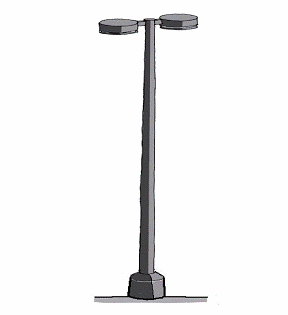
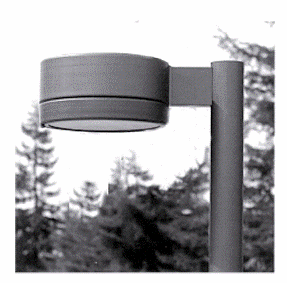
Example of pole mounted, hat-box style fixture with engineered cut-off luminaire to
provide even distribution and reduce glare.
SITE DEVELOPMENT STANDARDS
Signs
Applicability: These signs requirements are applicable to all new signs and the modification or reconstruction of existing signs in the Old Yellowstone District and South Poplar Street Corridor (OYDSPSC). New signs that comply with OYDSPSC design standards are required when there is a change of use in the principal building. No new sign will be allowed on existing, noncompliant sign structures, except as provided for off-premises signs (billboards). Sign permit applications will be reviewed by the architectural review committee for their consistency with these requirements and other applicable standards contained in the city's sign code (Title 17). The purpose of these requirements is to establish criteria for the creation of well-designed signs and further clarify and support the intent of the OYDSPSC design standards by providing examples of the city's expectations for well-designed, consistent signage that is pleasing in appearance and promotes a high-quality environment.
OBJECTIVE: To achieve sign designs that harmonize and enhance the architectural, structural or landscape features of the associated facility and to enliven the resident and visitor experience. In addition to the zoning ordinance, signs shall meet the intent of these standards.
•
Provide creative, high quality signage that positively contributes in the improvement of the visual environment, expression of local character, and development of a distinctive image.
•
Enhance the building's architectural design.
•
Consider the scale and proportions of the building.
•
Provide property owners with an effective means of communication without creation of sign clutter.
General Standards
1.
Compatibility
a.
Large signs that dominate a building facade or streetscape are prohibited. Signs shall be designed to be compatible with building design in terms of relative scale, overall size, materials and colors.
b.
Signage elements shall incorporate materials, colors and shapes that appropriately reflect and complement the building's architectural style and the surrounding environment.
2.
Legibility
a.
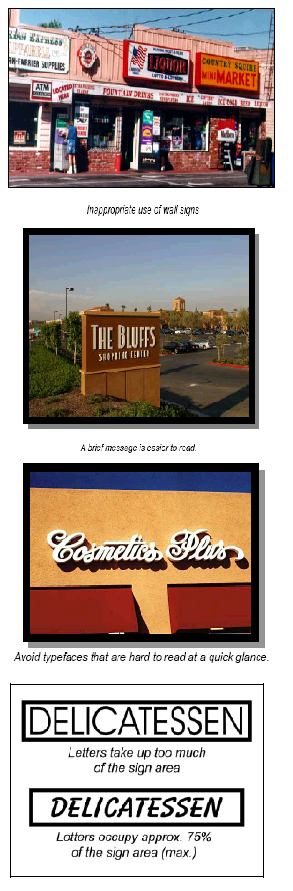
Use a brief message.
b.
Avoid hard-to-read intricate type-faces, and limit the number of letter styles. The number of lettering styles should be limited in order to increase legibility. A general rule is to limit the number of letter types to no more than two for small signs (up to ten square feet), and three for larger signs.
c.
Limit the area of the sign devoted to text. Lettering and logos shall not occupy more than seventy-five percent of the sign face.
d.
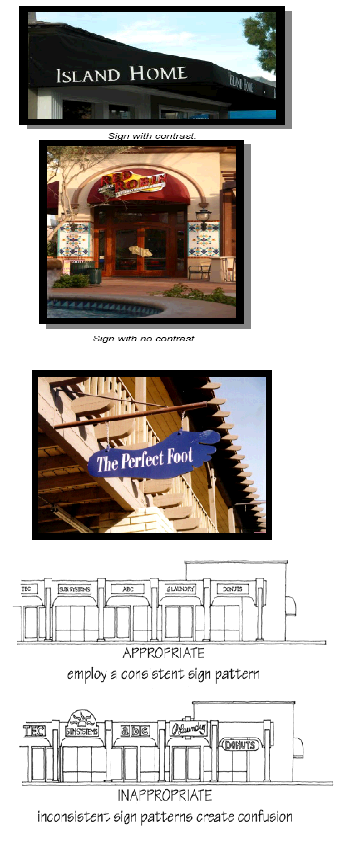
Use significant contrast. If there is little contrast between the brightness or hue of the message and its background, it will be difficult to read.
e.
Use of symbols and logos is permitted.
f.
Avoid large areas of blank space. Signs with more than fifty percent of the sign area left blank shall be avoided.
Location and Size
a.
Signs shall be designed to relate to the architectural features of the building and to create visual continuity with other storefronts in the same or adjacent buildings.
b.
Signs shall be placed at or near the public entrance. Signs shall be placed to indicate the location of accesses to a business.
c.
Signs shall be sized consistent with the proportions of the building's facade.
Color
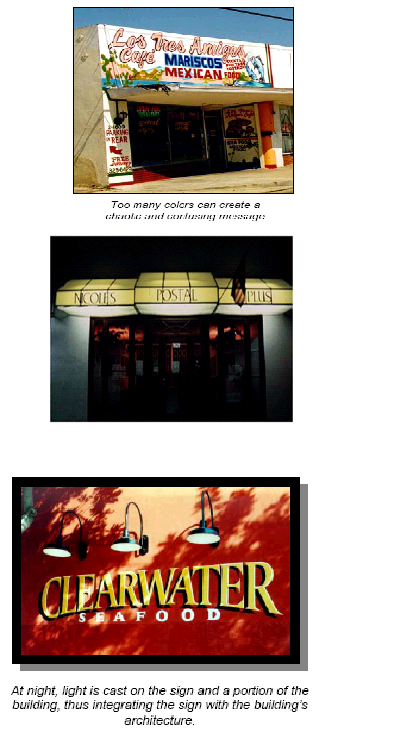
Signs shall be limited to no more than three colors on a single sign.
Illumination
a.
Internally illuminated cabinet signs with translucent panels shall be prohibited. Utilization of a direct source of light (e.g., spotlight) is permitted. Light fixtures supported in front of the structure cast light on the sign and generally a portion of the face of the structure as well, thereby emphasizing the continuity of the structure's surface.
b.
Back-lit, solid letters are encouraged. Signs consisting of opaque individually cut letters mounted directly on internally illuminated cabinet signs with translucent panels shall be prohibited. Individually illuminated letters, either internally illuminated or back-lit solid letters (reverse channel), are permitted.
c.
Signs that use blinking or flashing lights are not permitted.
Materials
Sign materials shall be selected with consideration for the architectural design of the building's facade. Materials utilized shall be durable, and the following materials are permitted:
•
Wood (carved, sandblasted, etched, properly sealed and painted, or stained).
•
Metal (formed, etched, cast, engraved, and properly primed and painted or factory coated to protect against corrosion).
•
Neon tubing.
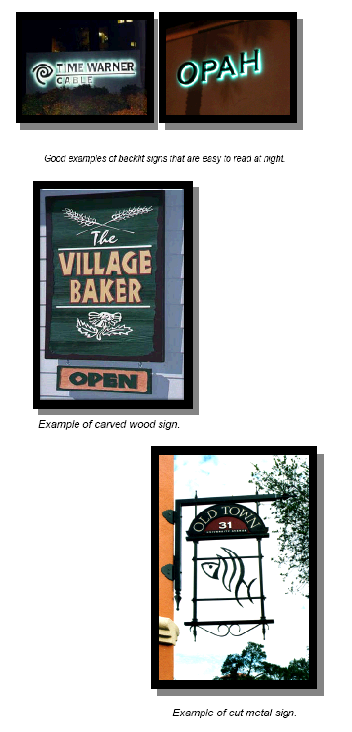
Design Standards by Sign Type
Wall Signs
a.
Wall signs shall not project from the surface upon which they are attached more than twelve inches.
b.
Wall signs and "ghost" signs painted directly on a structure are appropriate.
c.
The maximum total wall signage per facade shall not exceed two square feet per linear foot of building facade length of the wall on which it is to be located. In no case shall total wall signage exceed a maximum of three hundred square feet for any building.
Projecting Signs
a.
The use of small, pedestrian-oriented signs along streets, walkways and in alleys (subject to the height standards in subsection f., below) is permitted. Projecting signs shall be used for ground floor uses only. On a multistoried building, the sign shall be suspended between the bottom of the second story windowsills and the top of the doors or windows on the first story. On single-story buildings the top of the sign should be in line with the lowest point of the roof. The projecting sign shall be hung at a ninety degree angle from the face of the building.
b.
Sign support brackets shall be compatible with the architectural design of the building. Decorative iron and wood brackets are permitted.
c.
Internal illumination of projecting signs is prohibited.
d.
Establishments with frontage on a street, alley or public walkway are permitted one projecting sign each, per street frontage, alley or public walkway.
e.
Projecting signs shall not be over ten square feet in size.
f.
Projecting signs in alleys shall be a minimum of fourteen feet above the surface of the alley.
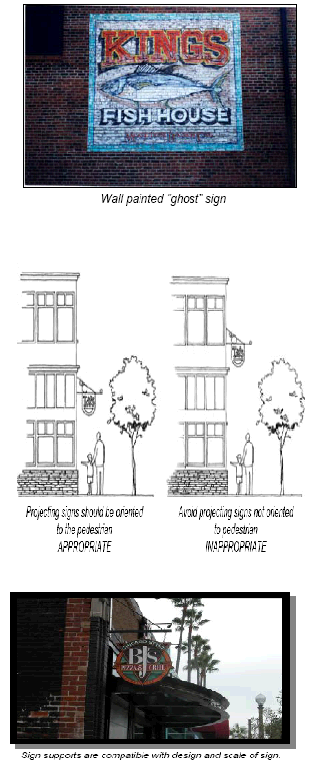
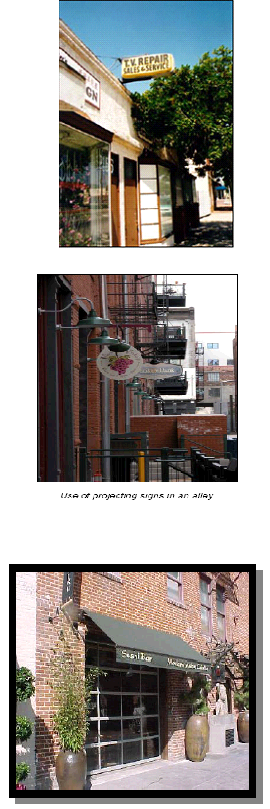
Awning Signs
a.
Awnings are limited to first and second floor uses only. Awnings shall be mounted on the building in such a way that they project over individual windows and door openings.
b.
Backlit, translucent, internally illuminated awnings are prohibited.
c.
Sign area or sign lettering shall comprise no more than thirty percent of the total exterior surface of an awning. Any graphic logo or text printed on an awning will be counted toward the total maximum allowable sign area.
Window Signs
Window signs shall not cover more than twenty-five percent of the area of each window.
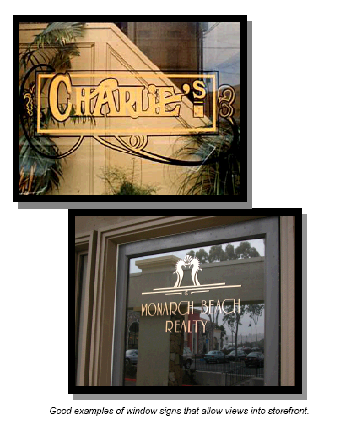
Freestanding Signs (Monument Signs)
a.
The maximum number of freestanding signs is one per street frontage.
b.
All free standing signs shall be monument-type (solid base). Pole and pylon signs are prohibited.
c.
Monument signs may be internally illuminated, however, the sign copy should be the only portion of the sign face that is illuminated. The sign background or field should be opaque with a nongloss, nonreflective finish.
d.
Monument signs shall be placed perpendicular to the street, and so they do not obstruct sight lines at driveways or intersections.
e.
Monument signs shall incorporate landscaping at their base, in accordance with the landscaping regulations found in the appendix of the Old Yellowstone District and South Poplar Street Corridor Form-Based Code.
f.
Monument signs shall conform with the following:
•
Maximum height - eight feet.
•
Maximum sign area - fifty square feet.
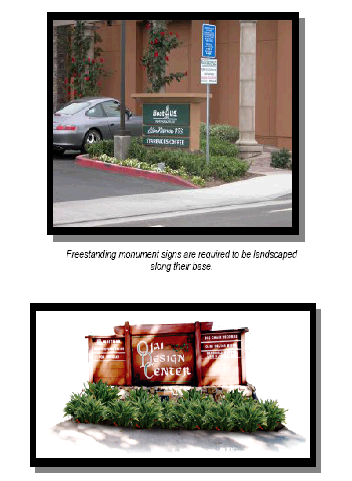
Roof Signs
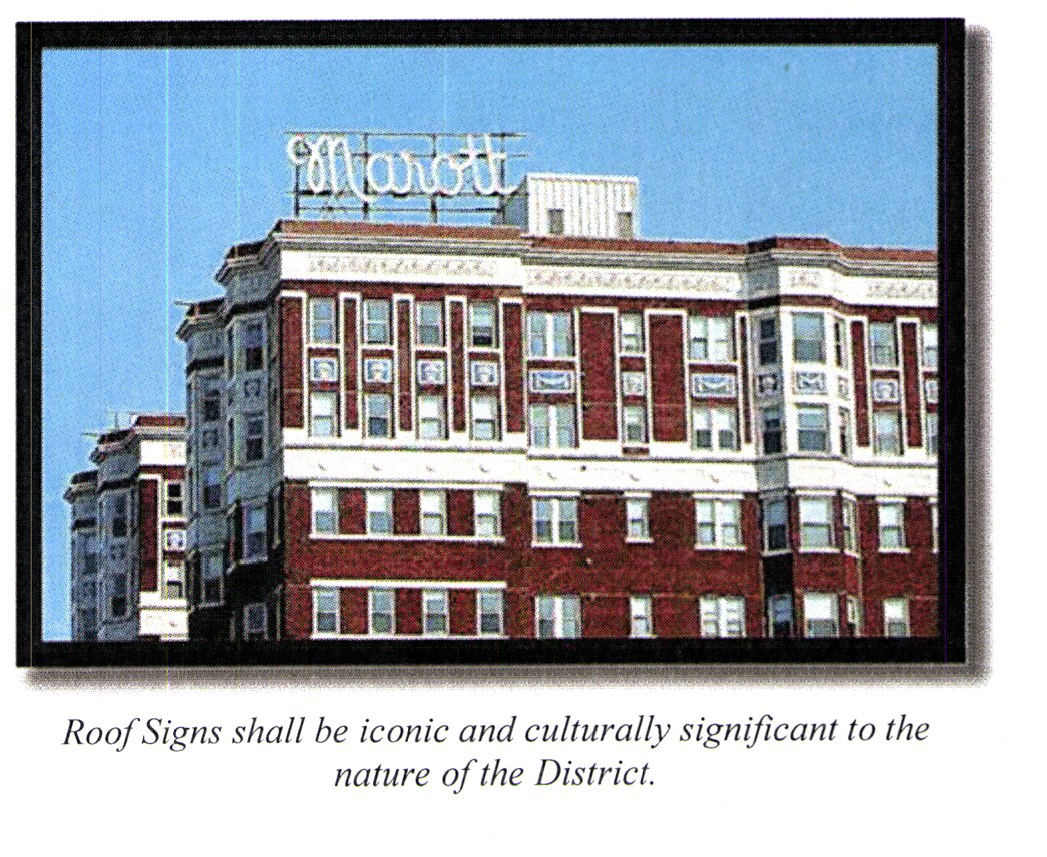
A sign located on the roof that by its construction materials, age, prominent location, unique design or craftsmanship, provides historic character, individuality, and a sense of place or orientation regarding clues to the building's history may be permitted in the Old Yellowstone District and South Poplar Street Corridor. Roof signs may be permitted by the architectural review Committee if demonstrated that the following requirements are met:
a.
The maximum number of roof signs is one per primary structure.
b.
Roof signs shall only apply to buildings with at least an average of twenty feet of vertical height from grade to parapet or roofline.
c.
Roof signs are allowed one historic feature, such as a logo or brand mark, not to exceed thirty-two square feet in area.
d.
Roof signs are only allowable on flat roofs.
e.
Roof signs shall not extend beyond the fascia, parapet, or roofline of the subject building.
f.
Roof signs shall only be one-sided.
g.
Roof signs should be an architectural feature of the historic building and not the primary form of advertising.
h.
Cabinet signs and electronic message centers are not permitted.
i.
Lighting shall be consistent with the vintage character of the sign. Roof signs may consist of internally illuminated individual letters; however, the sign copy should be the only portion of the face that is illuminated. Lighting may be exposed neon on a decorative background or from an external source that is consistent with the architectural style of the building. Flashing lights are discouraged.
j.
Lighting shall be downward facing to prevent light trespass and pollution.
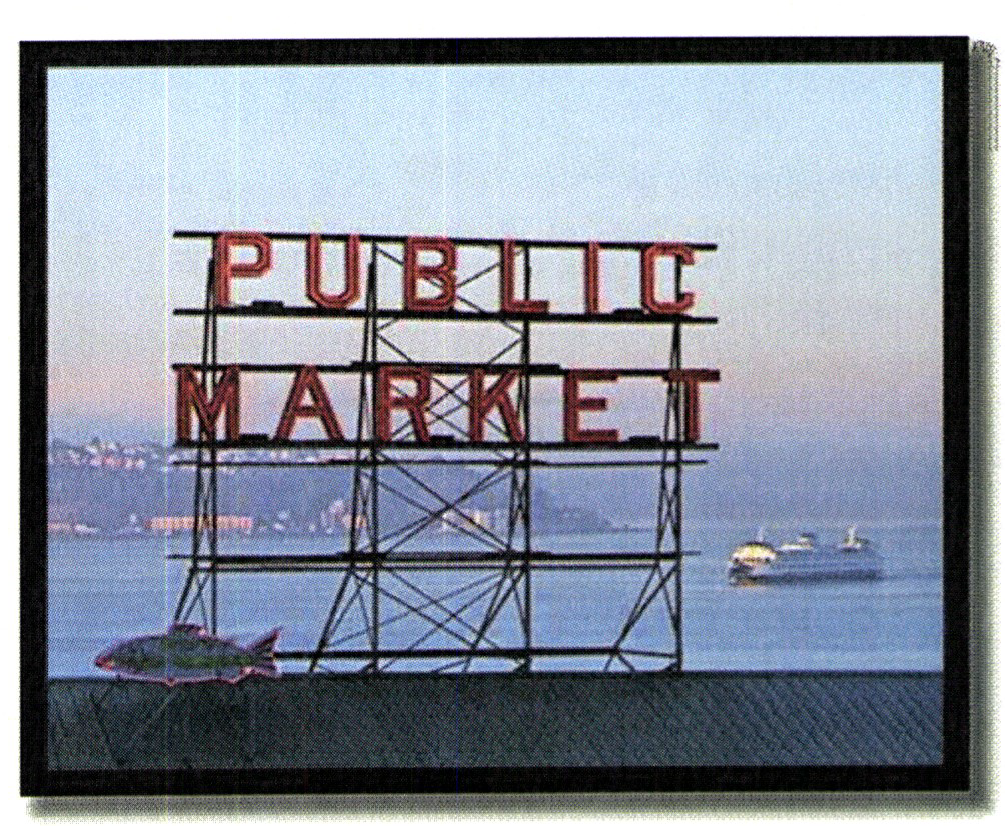
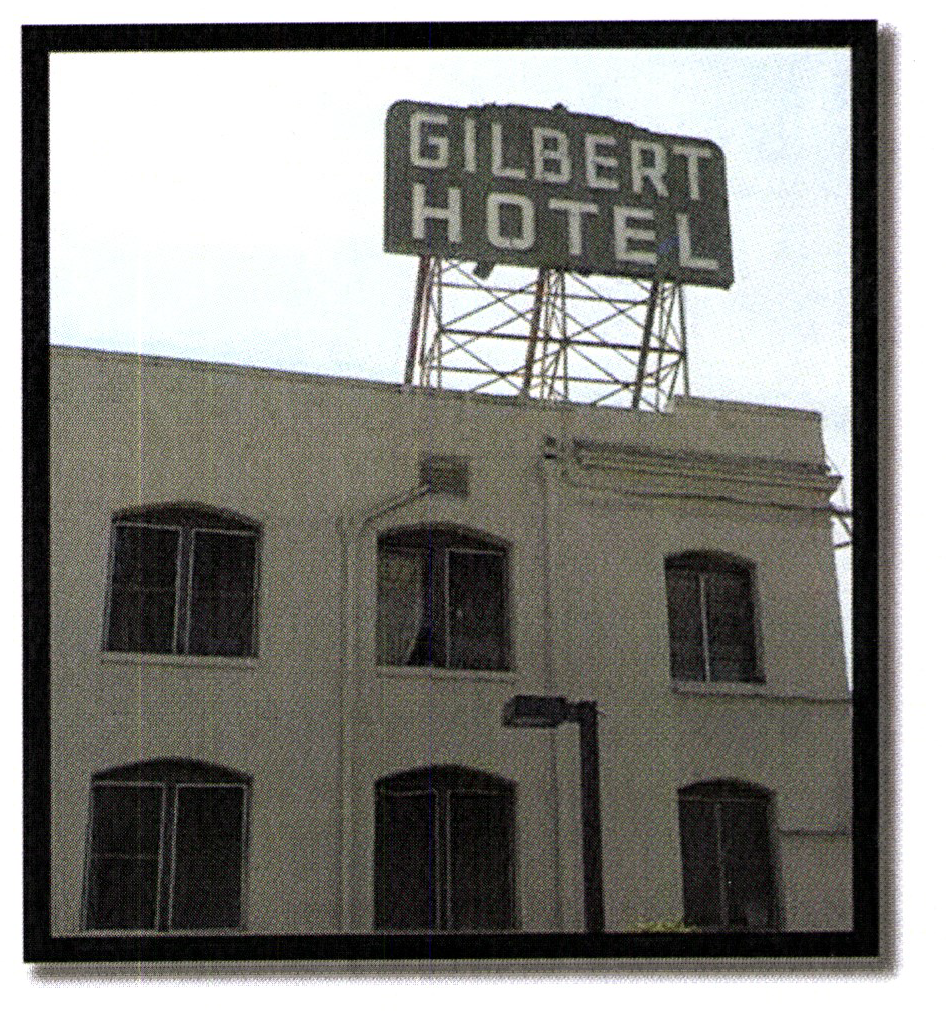
k.
The maximum total roof signage shall not exceed the following ratios:
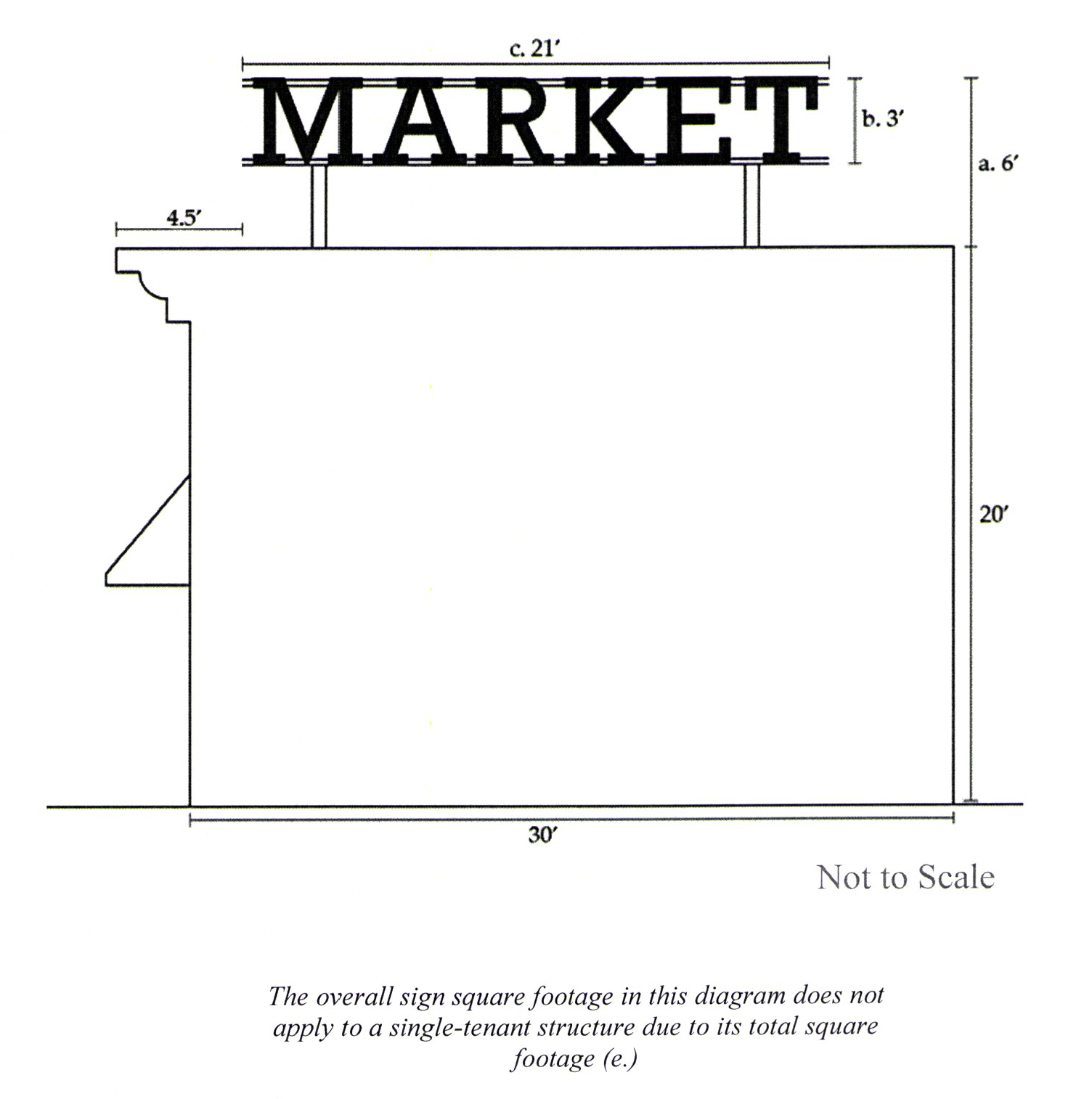
SITE DEVELOPMENT STANDARDS
Off-Premises Signs
A total of five off-premises, freestanding signs existed at the time of the adoption of the Old Yellowstone District and South poplar Street Corridor Form-Based Code, and were generally located at:
•
the northeast corner of Poplar Street and West Collins Drive;
•
adjacent to and west of 800 West Collins Drive;
•
on Collins Drive, east of South Walnut Street at 600 West Collins Drive;
•
on British Petroleum property immediately southeast of the South Poplar Street bridge; and
•
on West First Street, immediately west of the North Platte River bridge.
Those signs may remain at their current locations or move to new locations within the district; provided, however, that the total number of off-premises signs in the district cannot exceed five. In addition, off-premises sign spacing shall comply with Section 17.96.050(I) of the Casper Municipal Code. Additional off-premises signs at new locations are prohibited. If existing signs are reconstructed, (including reconstruction of the sign structure or pole, or changes or upgrades to a faulty or degraded structure) they must comply with the following design standards:
Size
Off-premises sign faces shall not exceed ten feet in height, and twenty-three feet in width. The entire sign structure shall not exceed fifteen feet in height above the adjacent road grade. The opening from the bottom of the sign face to the ground shall be enclosed with lattice, wood or stone.
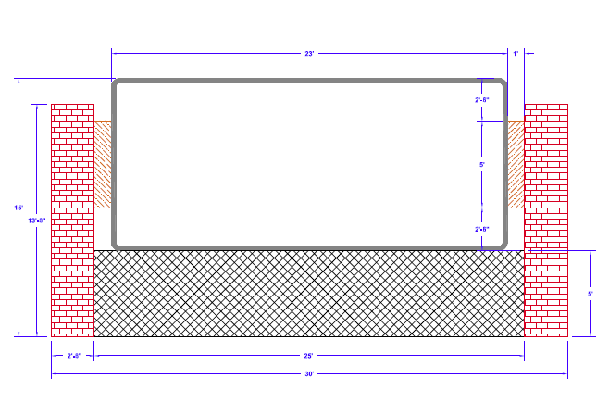
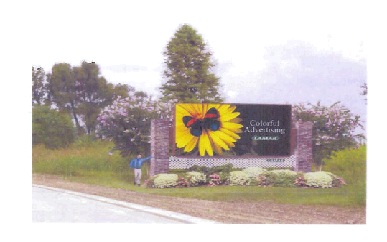
Landscaping
The base of the sign shall include a minimum of one hundred eighty square feet of irrigated landscaping that spans the entire width of the sign structure. Acceptable landscape materials are in the appendix of the Old Yellowstone District and South Poplar Street Corridor Form-Based Code.
SITE DEVELOPMENT STANDARDS
Fences and Screen Walls
OBJECTIVE: To provide exterior enclosures or barriers that harmonize with the architectural design of their associated facilities, and enhance the aesthetics of surrounding environment.
Frontages
Decorative fencing or screen walls for entry courtyards or outdoor seating areas located between buildings and the primary street frontage, to include corner lots, shall not exceed forty-eight inches in height, be at least sixty percent transparent and be limited to the following materials:
• Painted or sealed architectural metals such as wrought iron pickets or rails, cast or cut, and patterned screens supported by appropriately-sized structural systems.
• Stone and/or brick veneer wall systems supported by appropriately-sized structural backup walls and subsurface foundations.
• Wood, chain link, plastic, vinyl fiberglass pickets and/or corrugated metal panels are prohibited as a dominant material, but combinations of these materials, with the exception of chain link, may be allowed as long as they meet the site development standards identified in the Form Based Code and comprise not more than forty percent, in total, of the face area of the fence
Side, Rear Yards, and Rear Yards on Alley or on Through Lots
Fencing and screen walls for enclosing side yards, back patios or rear courtyards, or patios or yards on through lots, may be opaque and shall not exceed eight feet in height. The meaning of "through lots" in the Form Based Code has the same definition as in Section 17.08.010 of the Casper Municipal Code. Fences that are greater than six feet in height require a building permit. Fences shall be limited to the following materials:
• Same materials as for frontages but also including painted wood or stained wood.
Fences made solely of wood, chain link, plastic, vinyl fiberglass pickets, and/or corrugated metal panel are prohibited; but, combinations of these materials, with the exception of chain link, may be allowed as long as they meet the site development standards identified in the Form Based Code and comprise no more than forty percent, in total, of the face area of the fence.
• Where fences and screen walls, located at the rear entry, are over six feet in height, the fence or screen wall must be designed into distinct increments through the following or a combination of or similar techniques:
;circle; Variation of fence or screen wall setback.
;circle; Using different textures or contrasting, but compatible, materials.
;circle; Incorporation of bases of contrasting, but compatible materials and/or planters and/or plant alcoves which shall receive irrigated landscaping materials.
;circle; Variations in the height (to allowable limits) and/or material of the fence so as to include and/or feature landscaping elements such as, but not limited to, earth berms, garden structures, gates, pergolas, or other appropriate elements of interest. Incorporating landscaping features into the fence or screen wall.
;circle; Variations in the transparency of the fence through the use of arcades, awnings, openings, windows or window bays, ledges, trellises or other ornamental features.
;circle; Varying the top line of the fence or screen wall to reinforce the articulation of the primary building facade.
;circle; A setback of at least five feet from the sidewalk, buffered with landscaping in accordance with the design standards outlined in the Form Based Code.
Parking Lots
Parking lot screen walls and fences shall be no less than two feet, and no more than three feet, in height to allow views into and out of the parking area.
All fencing projects must first complete the fence or building permit application available in the community development department, and then arrange for a review and approval of the fencing project by the architectural review committee.
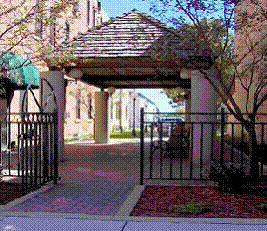
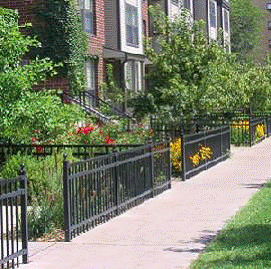
Use of architectural metals for entry courtyards or primary street frontages.
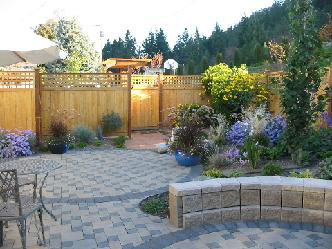
Variation of fence or screen wall setback.
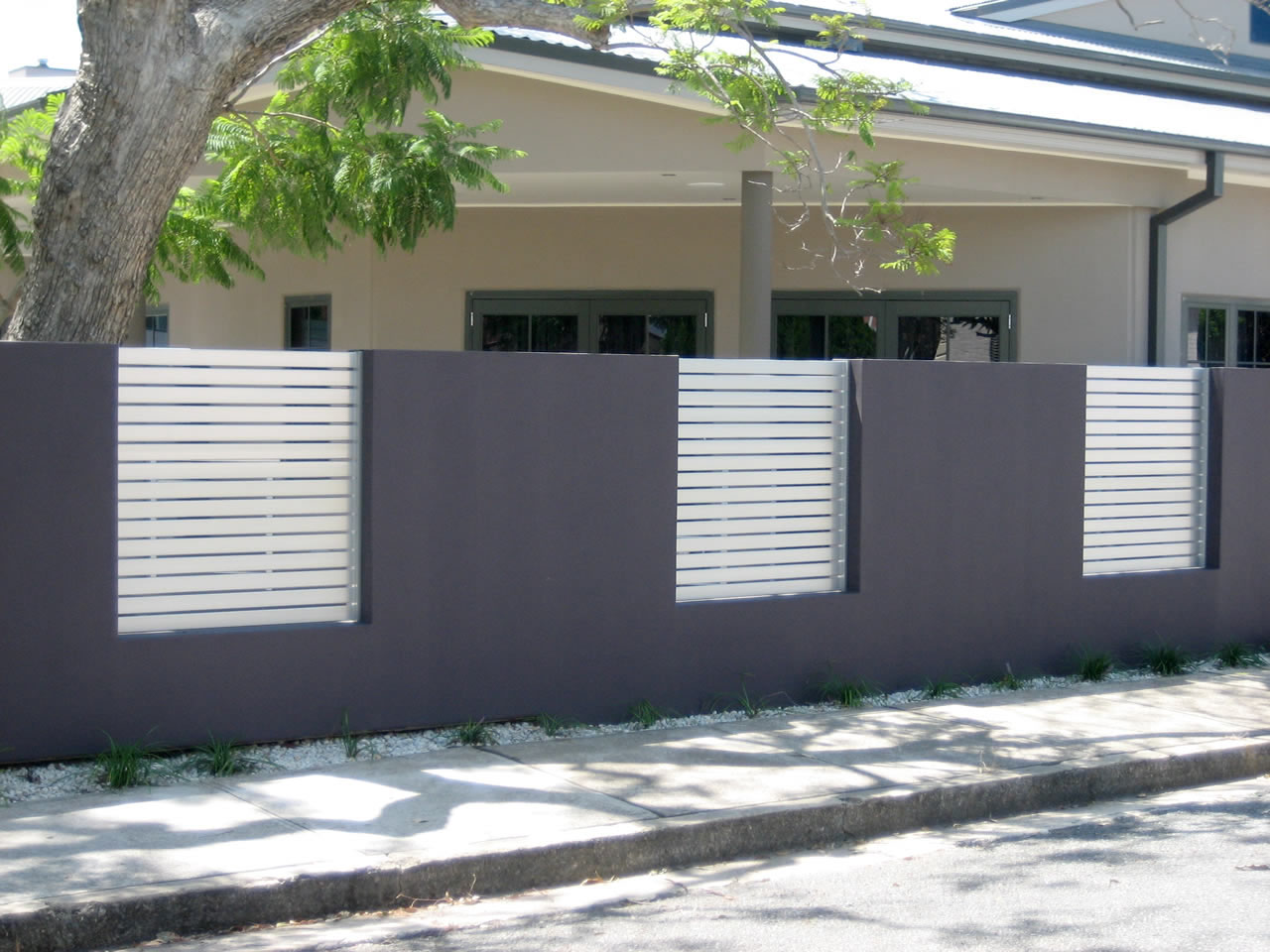
Using different textures or contrasting, but complimentary, materials and variation in transparency.
Use of windows and/or openings.
Use of landscaping and varying materials.
(Ord. 21-08 § 1 (part), 2008)
(Ord. No. 3-09, §§ 3—5, 2-17-2009; Ord. No. 25-09, § 1, 12-15-2009; Ord. No. 7-11, § 1, 3-1-2011)
Appendix
Illuminance Requirements for Parking Lots
These requirements include exterior lighting practices for the reasonably safe movement of vehicular and pedestrian traffic in parking facilities, the enhancing of personal security and the deterring of vandalism, while conserving energy and minimizing maintenance. They provide minimum guidelines, but are subject to variations based upon sound engineering judgment. Retailers, especially big-box stores, usually prefer higher levels of illuminance than specified herein, to attract customers or to more strongly address perceptions of personal security needs.
Generally speaking, parking lots and parking structures have vehicular speeds that are much lower than roadways. More importantly, the primary purpose of the lighting here is to benefit the pedestrian. It is intended that a driver (or pedestrian) looking at the brightest spot in the field of view will also be able to detect an object in the dark areas within the field of view. This detection can only occur if the maximum-to-minimum illuminance is limited to a range that the human eye can see.
Table 1: Recommended Maintained Illuminance Values for Parking Lots
1 For typical conditions. During periods of non-use, the illuminance of certain parking facilities may be turned off of reduced to conserve energy. If reduced lighting is to be used only for the purpose of property security, it is desirable that the minimum (low point) value not be less than 1.0 horizontal lux (0.1 hfc). Reductions should not be applied to facilities subject to intermittent night use, such as at apartments, hospitals, and transportation terminals.
2 If personal security or vandalism is a likely and/or severe problem, a significant increase of the Basic level may be appropriate. Many retailers prefer even higher levels, with a specification of 10 lux (1 fc) as the minimum value.
3 For preliminary design, an average value of 10 horizontal lux (1 hfc) for Basic, or 25 horizontal lux (2.5 hfc) for enhanced illuminance may be calculated. The minimum points (or areas) and maximum point are then calculated and the uniformity ratio checked for compliance with the Table 1 values. Note: The 5:1 average-to-minimum ratio is the first step toward directing the design to achieve the maximum to minimum ratios presented in Table 1.
4 Measured on the parking surface, without any shadowing effect from parked vehicles or trees at points of measurement.
5 Rounded conversion of lux to foot candles.
6 The highest horizontal illuminance point divided by the lowest horizontal illuminance point or area should not be greater than the values shown.
7 Facial recognition can be made at levels a low as 2.5 lux (0.25 fc). The TESNA Security Lighting Committee recommends that for facial identification, the minimum vertical illuminance should be 5.0 lux (0.5 fc).
8 Measured at 1.5 meters (5.0 ft.) above parking surface at the point of lowest horizontal illuminance, excluding facing outward along boundaries.
Basic lighting requirements tend to be similar for most land uses. Typical or average security needs are equally as great in a parking lot serving an apartment building or a regional shopping center. In fact, the higher the pedestrian activity level, the lower the likely security problem. However, greater pedestrian activity usually equates to greater conflict with vehicles. Because these conditions tend to counterbalance, no difference in the basic level of illuminance appears warranted among various land uses. However, customer attraction can be a reason to provide illuminance higher than the basic illuminance level given in Table 1. When higher light levels are used, retailers should give careful consideration to the safety consequences of drivers exiting the parking facility directly onto adjacent streets with lower lighting levels.
HARDY PLANTS FOR USE IN CORRIDOR LANDSCAPING PROJECTS
Recommended by:
University of Wyoming
College of Agriculture
Cooperative Extension Service
Natrona County
Casper, Wyoming
Evergreen Trees
Abies Concolor - Concolor Fir (white fir)
Juniperus Scopulorum - Rocky Mountain Juniper, many varieties
Juniperus Virginiana - Eastern Red Cedar, many varieties
Pinus Aristata - Bristlecone Pine
Pinus Cembroides Edulis - Pinyon Pine
Pinus Ponderosa - Ponderosa Pine
Deciduous Trees
Acer ginnala - Amur Maple (understory or screening use)
Acer negundo - Boxelder (sensation variety only)
Aesculus glabra - Ohio buckeye
Catalpa specious - Northern or Western catalpa
Celtis occidentalis - Hackberry
Crataegus sp. - Hawthorne - many varieties
Gleditsia triacanthos inermis - Honey locust, several varieties
Gymnociadus dioicus - Kentucky coffee tree
Quercus gambelii - Gambel oak (scrub oak)
Quercus macrocarpa - Bur oak
Rhus typhina - Staghorn sumac
Robinia neomexicana - New Mexico locust
Robinia pseudoacacia - Black locust
Tilia Americana - American linden
Tilia cordata 'Greenspire' - Greenspire linden
Tilia tomentosa - Silver linden
Shrubs
Caryoptevis x Clandonensis - Blue Mist Spirea
Cercocarpus Ledifolius - Motintain Mahogany
Cotoneaster Apiculatus - Cranberry Cotoneaster
Holodiscus Dumosus - Rock Spiraea
Juniperus Chinensis - Chinese Juniper
Juniperus Communis - Common Juniper
Juniperus Horizontalis - Spreading Juniper
Rhamnus Cathartica - Common Buckthorn
Rosa Rugosa - Rugosa rose, Ramanas Rose
Symphoricarpos Alba - Snowberry
Perennials
Achillea sp. - Yarrow
Asclepias Tuberosa - Butterfly Weed
Callirhoe Involucrata - Wine Cup
Centranthus Ruber - Valerian
Eviogonum Umbellatum - Sulfur Flower
Gaillardia x grandiflora - Blanket Flower
Hemerocallis sp. - Daylily
Nepeta x faassenii - Catmint
Oenothera Missouriensis - Evening Primrose
Perovskia atriplicifolia - Russian Sage
Salvia - Sage
Sedum sp. - Stonecrop
Tanacetum Densum - Partridge Feather
Vines
Lonicera - Honeysuckle Vine
Polygonum Aubertii - Silver Lace Vine
Groundcovers
Antennaria Dioica - Pussytoes
Cerastium Tomentosum - Snow-in-Summer
Polygonum Affine - Fleece Flower
Sedum - Stonecrop
Sempervivum sp. - Hens and Chicks
Thymus Pseudolanuginosus - Woolly Thyme
Veronica Pectinata - Woolly Speedwell

