
Cibolo City Zoning Code
ARTICLE 11
- WIRELESS COMMUNICATION FACILITIES, HAM RADIO ANTENNA, SATELLITE DISHES, SMALL-SCALE WIND ENERGY CONVERSION SYSTEMS, SOLAR ARRAYS12
Editor's note—Ord. No. 1332, § I(Exh. A), adopted April 27, 2021, amended Art. 11, §§ 11.1—11.6, in effect replacing said article with §§ 11.1—11.4, as set out herein. Formerly, Art. 11 pertained to similar subject matter and derived from Ordinance 1233, adopted April 24, 2018.
Section 11.1 - Purpose and Applicability
A.
Purpose.
The purpose of this section is to establish guidelines regulating the location of telecommunications towers and antennas with the objective of minimizing their number, to protect and promote public safety, and to mitigate any adverse visual impacts on the community while promoting the provision of telecommunications service to the public.
B.
Compliance with Telecommunications Act.
The regulations contained in this ordinance have been developed under the following general guidelines as provided in the federal Telecommunications Act of 1996:
1.
Cities have local authority over "placement, construction, and modification" of cellular telephone facilities and other personal wireless telecommunication service facilities.
2.
Regulations "shall not unreasonably discriminate among providers of functionally equivalent services."
3.
Regulations "shall not prohibit or have the effect of prohibiting the provisions of personal wireless services."
4.
"Denial shall be in writing and supported by substantial evidence."
5.
Cities may not "regulate the placement, construction, and modification of personal wireless service facilities on the basis of environmental or radio frequency emissions to the extent that such facilities comply with the Federal Communication Commission's regulations concerning such emissions."
6.
Cities must distinguish between a traditional permit application review under 47 U.S. Code Sec. 332 (c) 7 or an eligible facility request expedited review required by 47 U.S Code Sec. 1455.
Notwithstanding any other provisions for this ordinance, telecommunications towers and antennas, when permitted by federal law and the laws of the State of Texas, shall be regulated and governed by the following use regulations and requirements.
11.1.1
Wireless Communication Facilities (WCF) Permitted
A WCF is permitted by right in all commercial (C-1, C-2, C-3 and C-4) zoning districts, all industrial (I-1 and I-2) zoning districts, subject to the Locational requirements of Section 11.1.4. A WCF is allowed subject to the approval of a Conditional Use Permit in Agricultural (AG) and Public Facilities (PF) zoning districts.
11.1.2
Non-Residential Wireless Communication Facilities (WCF) Definitions
For purposes of administering this article of the UDC, the following terms are defined as follows:
A.
ANTENNA.
Any device or system of devices, such as poles, panels, rods, reflecting discs, or
similar or other objects, used for the transmission or reception of electromagnetic
signals, including but not limited to radio waves and microwaves.
B.
ANTENNA, AMATEUR RADIO.
A ground-, building-, or tower-mounted antenna operated by a federally licensed amateur
radio operator as part of the Amateur Radio Service and as designated by the Federal
Communications Commission (FCC).
C.
ANTENNA ARRAY.
An Antenna Array is one or more rods, panels, disc or similar devices used for the
transmission or reception of radio frequency signals, which may include omni-directional
antenna (rod), directional antenna (panel) and parabolic antenna (disc). The Antenna
Array does not include the Support Structure defined below.
D.
COLLOCATION/SITE SHARING.
Collocation/Site Sharing shall mean use of a common WCF or common site by two or more
wireless license holders or by one wireless license holder for more than one type
of communications technology and/or placement of a WCF on a structure owned or operated
by a utility or other public entity.
E.
HEIGHT.
When referring to a WCF, Height shall mean the distance measured from ground level
to the highest point on the WCF, including the Antenna Array.
F.
LATTICE TOWER.
A guyed or self-supporting three- or four-sided, open steel frame structure used to
support telecommunications equipment.
G.
MONOPOLE.
A structure composed of a single spire used to support telecommunications equipment.
H.
OMNI ANTENNA.
A thin, vertical, whip-like antenna that delivers omni directional signals.
I.
PRE-EXISTING SUPPORT STRUCTURES and PRE-EXISTING ANTENNAS.
Any support structure or antenna for which a building permit or specific use permit
has been properly issued prior to the effective date of this ordinance, including
permitted support structures or antennas that have not yet been Constructed so long
as such approval is current and not expired.
J.
RESIDENTIAL DISTRICT.
Any section of the City zoned for Single Family, Duplex, Multi-Family, Mobile Home
and Planned Development Residential.
K.
REVIEW PROCESS.
As used herein, Review Process shall mean those processes set forth in this UDC and
permitting requirements of the City.
L.
SELF-SUPPORTING LATTICE SUPPORT STRUCTURE.
A self-supporting, open steel frame structure used to support telecommunications equipment
M.
SETBACK.
Setback shall mean the required distance from the property line of the parcel on which
the WCF is located to the Support Structure.
N.
SUPPORT STRUCTURE.
A Support Structure is a structure designed and constructed specifically to support
an Antenna Array, and may include a monopole, self-supporting (lattice) tower, guy-wire
support tower and other similar structures. Any device (Attachment Device) of a maximum
of twenty (20') feet in height which is used to attach a WCF to an existing building-or
structure (Attachment Structure) shall be excluded from the definition of and regulations
applicable to Support Structures.
O.
TELECOMMUNICATIONS FACILITY.
Any unmanned facility consisting of equipment for the transmission, switching, and/or
receiving of wireless communications. Such facility may be elevated (either structure-mounted
or ground-mounted) transmitting and receiving antennas, low-power mobile radio service
base station equipment, and interconnection equipment. The categories of facility
types include both roof and/or structure-mount facilities and telecommunications support
structures.
P.
TEMPORARY ANTENNA.
An antenna and supporting equipment used on a temporary basis in conjunction with
a special event, emergency situation, or in case of equipment failure.
Q.
TEMPORARY WIRELESS COMMUNICATION FACILITY.
Temporary Wireless Communication Facility shall mean a WCF to be placed in use for
one hundred twenty (120) or fewer days.
R.
TOWER.
A stand-alone structure consisting of a support structure, antenna and associated
equipment. The support structure may be a wooden pole, monopole, lattice tower, light
standard, or other vertical support.
S.
TRANSCEIVER RADIO.
Radio equipment rectangular in shape that attaches to lighting fixtures and/or utility
poles and meets wind load requirements. Transceiver radios may have an attached omni-directional
whip antenna.
T.
WIRELESS COMMUNICATIONS.
Wireless Communications shall mean any personal wireless services as defined in the
Telecommunications Act of 1996, which includes FCC licensed commercial wireless telecommunications
services including cellular, personal communication services (PCS), specialized mobile
radio (SMR), enhanced specialized mobile radio (ESMR), paging, and similar services
that currently exist or that may in the future be developed.
U.
WIRELESS COMMUNICATION FACILITY (WCF).
A facility that transmits and/or receives electromagnetic signals, including without
limitation, antennas, microwave dishes, satellite dishes, radio, TV transmitter and
broadcasting station, and other types of equipment for the transmission or reception
of such signals, monopoles or similar structures supporting the equipment, equipment
building, shelters, cabinets, parking area, and other accessory construction. Including
amateur and professional facilities.
11.1.3
Wireless Communication Facility
General Regulations
A.
Antennas and support structures may be considered either principal or accessory uses
B.
Antenna installations shall comply with all other requirements of the UDC with the exception of those expressly specified within this Article.
C.
Applications for commercial antennas and antenna support structures shall include the following:
1.
The distance between the proposed support structure and the nearest residential unit and/or residential zoning district boundary line.
2.
An inventory or map of the applicant's existing support structures, antennas, or sites previously approved for such, either owned or leased, both within the city and within one mile of the city limits, including specific information about the location, height, and design of each support structure. The separation distance between the proposed support structure or antenna and these support structures shall also be noted.
3.
Certification of the following:
a)
That the applicant has sought and received all franchises or permits required by the City for the construction and operation of the communication system.
b)
Identification of the backhaul provider and connectivity locations for the installation. Applicants must notify the city of any change in collocation or backhaul providers within 30 days of the change.
c)
Certification of the structural engineering information, including an industry-standard pole load analysis, if applicable;
d)
A notarized statement from the applicant that the proposed support structure can accommodate the collocation of proposed additional antennas
4.
Information concerning the finished color, alternative design standards (if applicable), and method of fencing, if applicable.
5.
The application may require a site plan and landscape plan in accordance with this UDC.
6.
Platting of the property may be required in accordance with the UDC.
D.
All commercial signs, flags, lights and attachments, other than those required for emergency identification, communications operations, structural stability, or as required for flight visibility by the FAA or FCC, shall be prohibited on any antenna or antenna support structure. Lights may remain or be replaced on light standards that are altered or replaced to serve as antenna support structures.
E.
All antennas must meet or exceed current standards and regulations of the FAA, the FCC, and any other state and federal agency with regulatory authority over support structures and antennas. If standards change, owners must comply within six months or as required by the regulating authority.
F.
A building permit is required to erect or install an antenna, antenna support structure, and related equipment, unless the particular antenna is exempt from regulation, as provided above. All installations must comply with applicable state and local building codes and the standards published by the Electronic Industries Association. Owners shall have thirty (30) days after receiving notice that an installation is in violation of applicable codes to fully comply.
G.
All support structures and antennas must be constructed and operated in a manner that does not create electromagnetic or other interference with the City 's radio frequencies and mobile communications operations, including telecommunications systems relating to public safety, as required by the FCC.
H.
No commercial antenna, antenna support structure, microwave reflector/antenna, or associated foundations or support wires may be located within any required front, side, or rear yard setback.
I.
All antennas and antenna support structures owned and/or operated by a governmental entity shall be permitted by right in any zoning district.
J.
All antennas and support structures must meet visibility requirements as defined in this Article.
K.
Safeguards shall be utilized to prevent unauthorized access to an antenna support structure. Safeguards include those devices identified by the manufacturer of the antenna support structure utilized, a fence, climbing guard, or other commercially available safety device. Climbing spikes must be removed after use.
L.
Temporary antennas shall only be allowed in the following instances:
1.
In conjunction with a festival, carnival, or other similar activity.
2.
In case of emergency as required by the Cibolo Police, Fire Departments or Guadalupe County Sheriff.
3.
When needed to restore service on a temporary basis after failure of an antenna installation. The city must be notified within seventy-two (72) hours of the placement of a temporary antenna. If the temporary antenna is to be needed for more than seven days, then the provider must acquire a permit for the use. However, nothing in this subsection prohibits or requires additional permits for activities described in Section 284.157 of the Texas Local Government Code (TLGC).
M.
A building permit shall be required for all WCF towers, proposed antennas attached to an alternative tower structures or collocated on an existing tower.
N.
No advertising shall be permitted on any WCF.
O.
No signs or illumination shall be placed on an antenna or tower unless required by the City, FCC, FAA, or other state or federal agency of competent jurisdiction. The Planning Department may review the available lighting alternatives and approve the design that would cause the least disturbance to the surrounding uses and views.
P.
No new antenna tower exceeding fifty (50') feet in height shall be permitted unless the tower is designed and constructed to accommodate co-location. The owner of the tower and the property on which it is located must provide written documentation to the City that the antenna tower is available for use by another telecommunications provider or user on a reasonable and nondiscriminatory basis and cost. If the proposed tower location is to be leased, the applicant shall submit those portions of the lease document that demonstrate compliance with the requirements of this paragraph.
Q.
Exemptions.
WCF facilities and towers installed by a governmental agency, hospital or similar entity for the purpose of providing public health, safety and service shall be exempt from the height, zoning district and locational requirements of these regulations. All technical and permitting requirements shall be applicable.
R.
All antenna towers and WCF installations shall meet or exceed all standards and regulations of the Federal Aviation Administration (FAA), the Federal Communications Commission (FCC), and any other Federal or State government agency with authority to regulate towers, antennas and WCF's.
11.1.4
Locational Regulations
A.
In order to protect the City's natural beauty and historic character no WCF, unless expressly authorized under state or federal law, shall be in the following areas:
1.
Within a one mile or a 5,280-foot radius measured from the intersection of the centerlines of the rights of-way of Main Street and the Union Pacific Railroad.
2.
Within a 500-foot radius of any District, structure or site designated as being Historic by any lawfully authorized local, state or federal historic preservation agency or entity by law, including the City.
3.
Within 500 feet of the centerline of Cibolo Creek.
4.
Within 500 feet of rights-of-way of Interstate Highway 35 and Interstate Highway 10. The restrictions of this Section apply to all areas within the City limits except for properties and structures owned by the City. Location of a Wireless Transmission Facility on a municipally owned property or facility is subject to approval by the City Council.
B.
Wireless transmission facilities are allowed by right, without a Conditional Use Permit, on any existing wireless towers or tanks, utility, lighting standard, sign support or other appropriate structures provided that the antennas or related equipment or structures do not exceed, by 10 feet, the lesser of the height of the structure or the height limits of the highest permitted structure in the zoning district in which it is located provided that the applicant provide a notarized statement of approval from the owner of the equipment or tower allowing the installation of the wireless equipment on an existing wireless tower or other structure as stipulated in this section. This requirement shall not supersede any requirements of this section that stipulate City Council approval on any facility or equipment owned by the City.
C.
A WCF with towers are allowed within any electric substation, within any Zoning District, provided that the antennas or related equipment or structures do not exceed, by 10 feet, the lesser of the height of the structure or the height limits of the highest permitted structure in the District in which it is located. Should the tower exceed the height limitation, an applicant may request a Conditional Use Permit for a WCF at this location, regardless of the zoning district.
All free-standing towers (not mounted on rooftops or alternative tower structures) must conform to the following minimum tower separation requirement shown below:
TOWER SEPARATION REQUIREMENTS
D.
Towers that are designed using alternative or stealth designs as defined by this Article may be considered for an exemption from the above spacing requirements. The use of an alternative, or stealth design, is encouraged for all antenna support structures, antennas, and supporting equipment and is required when mounted on rooftops, streetlight, parking lot light standards and other similar architectural and infrastructure structures. Towers shall be painted a neutral color, unless other designs and colors are required by the Federal Aviation Administration for safety purposes.
11.1.5
Section 6409 Procedures for Expedited Review of Eligible Facilities Request
This Section implements Section 6409 (a) of the Middle Class Tax Relief and Job Creation Act of 2012 (47 U.S. Code Sec. 1455), as interpreted by the FCC's Acceleration of Broadband Deployment Report and Order (FCC's Order), which requires a state or local government to approve any Eligible Facilities Request for a modification of an existing tower or base station that does not result in a substantial change to the physical dimensions of such tower or base station. These definitions and related Section 6409 procedures only apply to the city to the extent the FCC's Order preempts existing city procedures
A.
Eligible facilities request (Section 6409) Definitions. For the purposes of a personal wireless facilities siting permit under Section 6409(a), as interpreted by the Federal Communications Commission's ("FCC") in the 2014 Infrastructure Order, which is asserted to be a qualified application for a Section 6409 eligible facilities request, the following defined terms shall be used:
1.
Base station.
A structure or equipment at a fixed location that enables FCC- licensed or authorized wireless communications between user equipment and a communications network. The term does not encompass a tower as defined in subsection (a)(1)a, below or any equipment associated with a tower. Base station includes, without limitation:
a)
Equipment associated with wireless communications services such as private, broadcast, and public safety services, as well as unlicensed wireless services and fixed wireless services such as microwave backhaul.
b)
Radio transceivers, antennas, coaxial or fiber-optic cable, regular and backup power supplies, and comparable equipment, regardless of technological configuration (including distributed antenna systems ("DAS") and small-cell networks).
c)
Any structure other than a tower that, at the time the relevant application is filed with the city, supports or houses equipment described in subsections (a)(1)a and b, that has been reviewed and approved under the applicable zoning or siting process, or under another state or local regulatory review process, even if the structure was not built for the sole or primary purpose of providing that support. The term does not include any structure that, at the time the relevant application is filed with the city does not support or house equipment described in subsections (a)(1)a and b of this section.
2.
Collocation.
The mounting or installation of transmission equipment on an eligible support structure for the purpose of transmitting and/or receiving radio frequency signals for communications purposes.
3.
Eligible facilities request.
Any request for modification of an existing tower or base station that does not substantially change the physical dimensions of such tower or base station, involving:
a)
Collocation of new transmission equipment;
b)
Removal of transmission equipment; or
c)
Replacement of transmission equipment.
4.
Eligible support structure.
Any tower or base station, as defined in these Section 6409 Definitions, if it is existing at the time the relevant application is filed with the city.
5.
Existing.
A constructed tower or base station is existing for purposes of Section 6409 if it has been reviewed and approved under the applicable zoning or siting process, or under another state or local regulatory review process, provided that a tower that has not been reviewed because it was not in a zoned area when it was built, but was lawfully constructed, is existing for purposes of Section 6409.
6.
Site.
For towers other than towers in the public rights-of-way, the current boundaries of the leased or owned property surrounding the tower and any access or utility easements currently related to the site, and, for other eligible support structures, further restricted to that area in proximity to the structure and to other transmission equipment already deployed on the ground.
7.
Substantial change.
A modification substantially changes the physical dimensions of an eligible support structure if it meets any of the following criteria:
a)
For towers other than towers in the public rights-of-way, it increases the height of the tower by more than ten percent or by the height of one additional antenna array with separation from the nearest existing antenna not to exceed twenty (20') feet, whichever is greater; for other eligible support structures, it increases the height of the structure by more than ten percent or more than ten feet, whichever is greater;
b)
For towers other than towers in the public rights-of-way, it involves adding an appurtenance to the body of the tower that would protrude from the edge of the tower more than twenty (20') feet, or more than the width of the tower structure at the level of the appurtenance, whichever is greater; for other eligible support structures, it involves adding an appurtenance to the body of the structure that would protrude from the edge of the structure by more than six feet;
c)
Eligible support structure, involves installation of more than the standard number of new equipment cabinets for the technology involved, but not to exceed four cabinets; or, for towers in the public rights-of-way and base stations, it involves installation of any new equipment cabinets on the ground if there are no pre-existing ground cabinets associated with the structure, or else involves installation of ground cabinets that are more than ten percent larger in height or overall volume than any other ground cabinets associated with the structure;
d)
It entails any excavation or deployment outside the current site;
e)
It would defeat the concealment elements of the eligible support structure; or
f)
It does not comply with conditions associated with the siting approval of the construction or modification of the eligible support structure or base station equipment, provided however that this limitation does not apply to any modification that is noncompliant only in a manner that would not exceed the thresholds identified in subsections (a)(7) a—f, above.
8.
Transmission equipment.
Equipment that facilitates transmission for any FCC- licensed or authorized wireless communication service, including, but not limited to, radio transceivers, antennas, coaxial or fiber-optic able, and regular and backup power supply. The term includes equipment associated with wireless communications services including, but not limited to, private, broadcast, and public safety services, as well as unlicensed wireless services and fixed wireless services such as microwave backhaul.
9.
Tower.
Any structure built for the sole or primary purpose of supporting any FCC-licensed or authorized antennas and their associated facilities, including structures that are constructed for wireless communications services including, but not limited to, private, broadcast, and public safety services, as well as unlicensed wireless services and fixed wireless services such as microwave backhaul, and the associated site.
B.
Eligible facilities request (Section 6409) application review.
1.
Application.
The city shall prepare and make publicly available an application form which shall be limited to the information necessary for the City to consider whether an application is a qualified eligible facilities request. The application may not require the applicant to demonstrate a need or business case for the proposed modification.
2.
Type of review.
Upon receipt of self-described application for an eligible facilities request, the designated city department shall review such application to determine whether the application qualifies as a Section 6409 eligible facility request, in accordance with the 2014 Infrastructure Order.
3.
Timeframe for review.
Within 60 days of the date on which an applicant submits an application seeking approval, the city shall approve the application unless it determines that the application is not a qualified Section 6409 eligible facilities request.
4.
Tolling of the timeframe for review.
The sixty (60) day review period begins to run when the application is filed and may be tolled only by mutual agreement by the city and the applicant, or in cases where the city determines that the application is incomplete. The timeframe for review is not tolled by a moratorium on the review of applications.
a)
To toll the timeframe for incompleteness, the city must provide written notice to the applicant within thirty (30) days of receipt of the application, specifically delineating all missing documents or information required in the application.
b)
The timeframe for review begins running again when the applicant makes a supplemental submission in response to the city's notice of incompleteness.
c)
Following a supplemental submission, the city will notify the applicant within ten days that the supplemental submission did not provide the information identified in the original notice delineating missing information. The timeframe is tolled in the case of second or subsequent notices pursuant to the procedures identified in subsection (4)b of this section. Second or subsequent notices of incompleteness may not specify missing documents or information that were not delineated in the original notice of incompleteness.
5.
Failure to act.
In the event the city fails to approve or deny a request seeking approval of an eligible facilities request within the timeframe for review (accounting for any tolling), the request shall be deemed granted. The deemed grant does not become effective until the applicant notifies the city in writing after the review period has expired (accounting for any tolling) that the application has been deemed granted.
6.
Remedies.
Applicants and the city may bring claims related to Section 6409(a) to any court of competent jurisdiction.
7.
Interaction with Section 47 U. S. Code Sec. 332(c)(7).
If the city determines that the applicant's request is not a Section 6409 eligible facilities request, the presumptively reasonable timeframe under Section 332(c)(7), as prescribed by the FCC's Shot Clock order, as interpreted by the 2014 Infrastructure Order, will begin to run from the issuance of the city's decision that the application is not an eligible facilities request. To the extent such information is necessary, as determined by the city, the city may request additional information from the applicant to evaluate the application under Section 332(c)(7), pursuant to the limitations applicable to other Section 332(c)(7) reviews, presumably 150 days, or 90 days if for collocation.
11.1.6
Principal, Accessory and Joint Uses
A.
Structures and Storage.
Accessory structures used in direct support of a tower are allowed, but such structures must not be used for offices, vehicle storage, or other outdoor storage. Mobile or immobile equipment not used in direct support of a tower shall not be stored or parked on the site of the tower, unless repairs to the tower are being made.
B.
Towers in Relation to a Principal Use.
Towers may be located on sites containing another principal use in the same buildable area. Towers may occupy a parcel meeting the minimum lot size requirements for the zoning district in which it is located. For a monopole tower, the minimum distance between the tower and any other principal use located on the same lot shall be twenty (20%) percent of the tower height or twenty-five (25') feet, whichever is greater.
C.
More Than One Tower on One Site.
To minimize the number of WCF locations across the City, placement of more than one tower on a single lot is permitted, provided all setback, design and landscape requirements are met as to each tower. The structures may be located as close to each other as technically feasible, provided tower failure characteristics of the towers on the site will not lead to multiple failures in the event that one fails. The tower separation requirements are automatically waived for such instances and the formal granting of a variance shall not be required.
D.
Support Buildings and Equipment Storage.
Support buildings and equipment storage areas or buildings must meet the following requirements:
1.
When these structures are mounted on rooftops, they must be screened by a parapet wall or other mechanical unit screening. Existing mechanical unit screening may be utilized if it provides screening in accordance with the standards of this Article and other applicable screening requirements of the UDC.
2.
When these structures are ground mounted, they must comply with the following:
a)
Meet all applicable front, side, and rear yard setback requirements.
b)
Be of a neutral color and use exterior building materials that are compatible with surrounding structures.
c)
Be screened by an evergreen landscaping per the requirements of UDC Article 17 or a by a solid masonry fence six feet in height. Landscaping must be irrigated and maintained in a living, growing condition. Wood and chain link fences are prohibited. Decorative wrought iron may only be used in conjunction with an opaque landscape screen.
11.1.7
Tower Owner Responsibilities
A.
Any permit which is granted for a new tower is specifically subject to the condition that the tower owner abides by the following provisions relating to shared use, regardless of whether the ordinance granting the permit contains the conditions:
1.
The tower owner must respond in a timely, comprehensive manner to a request for information from a potential shared use applicant;
2.
The tower owner must negotiate in good faith for shared use by third parties; and
3.
The tower owner must allow shared use where the third party seeking the use agrees in writing to pay reasonable, pro rata charges for sharing, including all charges necessary to make modifications of the tower and transmitters to accommodate the shared use, and to observe whatever technical requirements are necessary to allow shared use without creating interference.
B.
Compliance Required.
The willful failure of an owner whose tower was approved under this article to comply with the requirements of this section is grounds for withholding approval of any application by the owner for a building permit for the approved tower, for revoking permits granted for the tower, and for refusing to approve requests for any new WCF tower or antenna at other location in Cibolo.
11.1.8
Mounting Standards
A.
WCF may be located on the roof of any Non-Residential and non-historic building, within any Zoning District, provided the WCF does not exceed, by ten feet, the lesser of the height of the building or structure or the height limits of the district in which it is located.
B.
WCF may be mounted on the exterior of any Non-Residential and non-historic building, within any Zoning District, provided the antenna or antenna support structure or equipment:
1.
Is mounted flush with the exterior of the building or that it projects no more than 24 inches from the surface of the building to which it is attached and does not exceed height restrictions established in this part of the Code and that said projection is at least fifteen (15') feet above grade; and
2.
Is textured and colored so as to blend with the surrounding surface of the building.
C.
A WCF, with or without towers, is allowed on municipally owned properties and structures subject to approval of a lease or permit by the City Council specifying WCF location, design, and other restrictions.
D.
A WCF may be located in the areas set forth in paragraphs A and B above provided that they comply with all other standards regarding height requirements; collocation; structures or sites; setbacks and site development requirements of this UDC or other applicable law.
11.1.9
Professional Engineering Report
A.
A Professional Engineering Report from a professional structural, radio and/or electrical engineer(s) licensed in the State of Texas shall be submitted documenting the following:
1.
Tower height and design, showing a cross-section of the tower structure.
2.
Total anticipated capacity of the tower structure, including the number and types of antennas which can be accommodated.
3.
A letter of intent to lease excess space on the tower and to lease additional excess land on the tower site when the shared use potential of the tower is absorbed, if structurally and technically possible.
4.
No new antenna tower shall be constructed unless the applicant has adequately described the efforts and measures taken to pursue location collocation and has adequately explained why co-location was not feasible. The supplied documentation should describe the following:
a)
The proposed antennae would cause unacceptable interference with the operation of other existing or planned equipment on an existing or approved antenna tower or alternative tower structure, as documented by a qualified licensed engineer, and that the interference cannot be prevented or eliminated at a reasonable cost as determined by a qualified licensed engineer.
b)
The planned equipment cannot be accommodated on existing or approved antenna towers or alternative tower structures due to structural deficiencies as documented by a qualified licensed engineer and that such deficiency cannot be eliminated at a reasonable cost as determined by a qualified licensed engineer.
c)
The existing or planned equipment on an existing or approved antenna tower or alternative tower structure would cause unacceptable interference with the equipment proposed by the applicant as documented by a qualified licensed engineer and that the interference cannot be prevented or eliminated at a reasonable cost as determined by a qualified licensed engineer.
d)
The fee costs required to share an existing antenna tower or adapt an existing antenna tower for sharing would exceed the cost of constructing a new antenna tower.
5.
Antennas, antenna towers and equipment buildings shall be located to minimize their number, height and obtrusiveness to minimize visual impacts on the surrounding area, considering the applicant's economic, technological, legal and regulatory requirements for a specific site, and in accordance with the following City policies:
a)
The applicant shall ensure that the height of antennas and antenna towers are no greater than required to achieve service area requirements and potential co-location.
b)
The applicant shall demonstrate that the selected site for a new antenna or antenna tower provides minimal visual impact on residential areas and the public right-of-way by analyzing and documenting the potential impacts from other vantage points in the area.
c)
The applicant shall make every reasonable effort to design, construct, and locate new antennas or antenna towers to blend into the character and environment of the area in which they are located.
6.
Any other information which may be requested by the City to fully evaluate and review the application and the potential impact of a proposed tower or antenna.
B.
Unless prohibited by other law, the applicant shall reimburse the City for the actual cost incurred by the City for the services of a radio or electrical engineer or other qualified consultant, should one be required, to review the application and provide engineering expertise. However, any information submitted by an applicant that bears the seal of a qualified professional will be presumed to be accurate and correct.
11.1.10
Collocation
A.
To minimize the number of wireless facilities that need to be sited, applicants should cooperate with other service providers in collocating additional antennas on existing towers and/or structures to the extent that collocation is reasonably economical and technically feasible. Applicants shall exercise good faith in collocating with other providers and sharing the permitted site. Good faith includes sharing non-proprietary technical information to evaluate the feasibility of collocation.
B.
Service providers should, to the maximum extent feasible, promote collocation of antennas by multiple providers through the use of nonexclusive agreements for antenna sites, relocation and reconfiguration of antennas to accommodate additional users, utilization of current technology to maximize antenna separation and minimize antenna/tower height and obtrusiveness, and ensure building support structures are of sufficient strength.
C.
The City encourages that each WCF be constructed in such a way that the structure can support additional antenna systems having the same or similar wind and weight loading characteristics of those that are proposed by applicant. Tower space on existing towers should be provided on a reasonable, proportioned cost basis to other service providers who seek use of the structure, unless it would result in the creation of a level of radio frequency interference which would degrade applicant's services.
11.1.11
Setback Requirements
No permit for a WCF tower shall be approved or issued unless the proposed WCF is in compliance with the applicable provisions governing setback distance requirements, which are as follows:
A.
Monopole Towers.
The distance between the base of a single monopole, and all Residential Districts or uses must not be less than:
1.
The height of the WCF tower for towers under 60 feet;
2.
One- and one-half times the height of the WCF tower if the height of that tower is over 60 feet, but not over 90 feet;
3.
Two times the height of the WCF tower if the height of that tower is over 90 feet, but not over 120 feet;
4.
Two- and one-half times the height of the WCF tower if the height of that tower is over 120 feet, but not over 150 feet; or
5.
Three times the height of the WCF tower if the height of that tower is over 150 feet.
B.
All distance measurements referred to in this section shall be the distance of a straight horizontal line from the center of the base of the WCF to the center of the residential lot minus fifty (50') feet or the closest residential property line, whichever results in the greatest distance from the WCF and the nearest outer wall of a residential structure or residentially zoned property line.
C.
Safety issues will be fully addressed by applicants for a WCF siting. WCF should be located in such a manner that if the structure should fall along its longest dimension it will remain within the owned or leased property boundaries of the service provider and will avoid structures, public streets, and utility lines. If a proposed WCF has a potential for affecting a nearby property or structure upon collapse or scattering of equipment debris, the situation must be addressed by the applicant.
D.
Property uses and distances referred to in this Section shall be determined as of the date and time that the completed WCF permit application is filed.
E.
Equipment enclosures shall be set back from property lines per applicable district regulations.
11.1.12
Fencing Requirements
A.
The base of a WCF with a tower, including all mechanical equipment and accessory structures, must be completely enclosed by a fence, wall, or barrier which limits climbing access to such WCF and any supporting systems, lines, wires, buildings or other structures. The base must be fully screened from view of residential structures, residentially zoned properties, or public roadways by a substantially opaque screening fence designed and built to provide privacy.
B.
The fence shall be a minimum height of eight (8') feet and consistent in color and character with surrounding structures and properties.
C.
The fencing shall have no openings, holes, or gaps larger than four (4") inches measured in any direction.
D.
The fencing may contain gates or doors allowing access to the WCF and accessory structures for maintenance purposes; such gates or doors shall be kept completely closed and locked except for maintenance purposes and shall be located so that all gates and doors do not intrude into the public right-of-way.
E.
The use of razor wired fencing and concertina razor wire fencing shall be expressly prohibited, unless such fencing is a requirement of the State of Texas or U.S. Government for certain uses for security purposes.
F.
The requirements of this Section do not apply to:
1.
WCF located on buildings or structures that are not designed or built primarily to support a WCF, provided that the general public has no physical access to the WCF, and adequate safety measures are taken to prevent access by unauthorized persons;
2.
Legally existing WCF having security fences at least six feet in height; and
3.
Wireless Transmission Facilities with towers that are sufficiently camouflaged or disguised such that the City determines that a security fence is unnecessary and/or would cause the tower to be unnecessarily more obtrusive.
11.1.13
Maintenance and Inspection
A.
The owner or operator of a WCF shall be responsible for the maintenance of the WCF and shall maintain all buildings, structures, supporting structures, wires, fences, or ground areas used in connection with a WCF in a safe condition and in good working order, as required by city building, fire, or any other applicable codes, regulations or ordinances or to standards that may be imposed by the City at the time of the granting of a permit. Such maintenance shall include, but shall not be limited to, maintenance of the paint, landscaping, fencing, equipment enclosure, and structural integrity. If the City finds that the WCF is not being properly maintained, the city will notify the owner of the WCF of the problem. If the applicant fails to correct the problem within thirty (30) days after being notified, the City may undertake maintenance at the expense of the applicant or revoke the permit, at its sole option.
B.
By applying for a WCF permit under this article, the applicant specifically grants permission to the City, its duly authorized agents, officials, and employees, to enter upon the property for which a permit is sought, after first providing a reasonable attempt to notify a person designated by the applicant, except in the event of an emergency, for the purpose of making all inspections required or authorized to be made under this part of the Development Code. The City may require periodic inspections of WCF to ensure structural integrity and other code compliance. Based upon the result of an inspection, the City may require repair or removal of a WCF.
11.1.14
Radio Frequency Standards
A.
The applicant shall comply with federal standards for radio frequency emissions and must submit a signed statement that the proposed site fully complies with federal standards for radio frequency emissions. The City reserves the right to request a sealed report from a registered radio frequency engineer that provides the estimated cumulative field measurements of radio frequency emissions of all antennas installed at the subject site and compares the results with established federal standards. Said report shall be subject to review and approval by the City for consistency with federal standards. If on review the City finds that the proposed or established WCF does not meet federal standards, the City may deny or revoke the permit, whichever is applicable.
B.
The applicant shall ensure that the WCF will not cause localized interference with the reception of area television or radio broadcasts, or other legally existing WCF. If on review the City finds that the WCF will interfere with such reception, it may deny the permit. If interference occurs after the permit is issued and the problem is not corrected within sixty (60) days, the City may revoke the permit.
11.1.15
Visual Impacts
A.
Materials and Colors.
1.
Towers must either maintain a galvanized steel finish or, subject to any applicable standards of the FAA or other applicable federal or state agency and may be painted a neutral color to reduce visual obtrusiveness.
2.
At a tower site, the design of the building and related structures must use materials, colors, textures, screening, and landscaping that will blend the tower and facilities to the natural setting and built environment.
3.
If an antenna is installed on a structure other than a tower, the antenna and supporting electrical and mechanical equipment must be of a neutral color that is identical to, or closely compatible with, the color of the supporting structure so as to make the antenna and related equipment as visually unobtrusive as possible.
B.
Height and Design.
1.
Towers constructed at the same site must be of similar height and design.
2.
Towers must be the minimum height necessary to provide parity with existing similar tower supported antenna and must be freestanding where the negative visual effect is less than would be created by use of a guyed tower.
11.1.16
Security
Antenna towers shall be secured to protect against trespass or unauthorized use of the property, antenna tower, or related buildings and structures on site. At a minimum, towers shall be equipped with an anti-climbing device and enclosed by security fencing and a locking gate not less than six (6') feet in height.
11.1.17
Specific Development Standards
Wireless transmission facilities shall conform to the following site development standards:
A.
All towers must be of monopole construction and be as least obtrusive as possible. At a minimum, antennas must be flush with the tower;
B.
To minimize potential safety hazards, WCF with towers shall be setback from residential structures or residentially zoned property lines as required in this section;
C.
All lots on which WCF are located must have access to a public right-of-way accepted by the appropriate governmental agency.
D.
A WCF shall be designed and placed on the site in a manner that takes maximum advantage of existing trees, mature vegetation, and structures to:
1.
Use existing site features to screen as much of the total WCF as possible from public view;
2.
Use existing site features as a background so the WCF blends into the background with increased sight distances; and
3.
To the degree technically feasible, locate on a portion of the site that is effectively isolated from view of residential areas by structures or terrain features unless the WCF is integrated or act as an architectural element of the structure such as a flag pole or parking lot light or are effectively screened through installed landscaping or other acceptable screening.
E.
A WCF having towers viewable from a residential structure, residentially zoned property or public roadway shall be landscaped along the perimeter of the WCF fencing. Further, the use of existing vegetation shall be preserved to the maximum extent practical and may be used as a substitute for or in supplement towards meeting landscaping requirements. The installed landscaping requirements include:
1.
A row of shade trees a minimum of one-inch caliber shall be planted around the perimeter of the fence with a maximum spacing per Section 17.1 of this Ordinance;
2.
A continuous hedge of one-gallon sized (minimal) evergreens shall be planted along the perimeter of the WCF; and
3.
All landscaping shall be drought-resistant or irrigated and properly maintained to ensure good health and viability.
F.
The City may consider waiving landscaping requirements if the design of the WCF tower is such that landscaping would cause the tower to be more obtrusive, if the tower is integrated or acts as an architectural element of a structure such as a flag pole, parking lot light, bell tower, or other similar structure and/or the City determines landscaping to be unnecessary.
G.
A WCF with a tower shall conform to the fence standards established in this section.
H.
Equipment enclosures of a WCF that may be seen from a residential structure, residentially zoned property or public roadway, are encouraged to be located underground, if site conditions permit. If the equipment enclosure is not put underground, then it must be within the building in which the antenna is mounted or in separate equipment enclosure which matches the existing building or surrounding structures in character and building materials.
I.
All signs, flags, lights, and attachments other than those required for communications operations, structural stability, or as required for flight visibility by the Federal Aviation Administration (FAA) and Federal Communications Commission (FCC) shall be prohibited on any WCF.
J.
Applicant shall identify to the City any structures in the vicinity which the applicant investigated for possible use that have not been addressed otherwise in the application.
11.1.18
Submittal Requirements
A.
Service Providers proposing to operate a WCF shall ensure and submit documentation demonstrating:
1.
That the tower will be erected and operated in compliance with current FCC and FAA rules and regulations and other applicable federal, state, and local standards;
2.
That all back-haul providers are identified and have all the necessary approvals to operate as such, including holding necessary franchises, permits, and certificates;
3.
A notarized statement signed by the WCF tower operator, the tower owner and the landowner that indicates:
a)
The extent to which all agree to allow collocation of additional WCF equipment by other service providers on the applicant's structure or within the same site location on a reasonable and non- discriminatory basis;
b)
An understanding of the requirements of this Article for maintenance and inspections.
c)
An understanding that if the service provider fails to remove the Wireless Transmission Facility upon sixty (60) days of its discontinued use, the responsibility for removal falls upon the landowner, and in the event the WCF is not removed within another sixty (60) days, the City may remove the WCF and recover the costs associated with such removal from the landowner and place a lien on the property until such costs are paid.
4.
Service providers shall submit updated notarized statements as required above whenever ownership or operators change.
5.
A certification and sealed report from a registered professional engineer stating that all structural components of the WCF comply with all applicable codes and regulations. In the case of WCF towers, the report should further note the extent to which the tower is designed and/or built to accommodate collocation.
B.
Service providers wishing to establish a WCF shall:
1.
Secure all necessary approvals and permits needed to operate and construct a WCF;
2.
Fully and accurately complete a questionnaire supplied by the City;
3.
Comply with all ordinances of the City;
4.
Pay all related development and permit application fees;
5.
If applicable, reimburse the City for actual costs incurred by the City for radio frequency evaluations, structural engineering reviews and/or any other services that the City may deem necessary to review and process the application; and
6.
Provide the City with:
a)
A master antenna plan, including detailed maps:
I.
Showing the precise locations and characteristics of the proposed and all existing WCF's in the City and in its extraterritorial jurisdiction (ETJ);
II.
Indicating coverage areas of the proposed and existing sites within the City and its ETJ;
III.
Showing topography and the area of wireless coverage to be provided from the proposed site, as well as the location of wireless service gaps and areas where existing wireless coverall is less than optimal; and.
IV.
For WCF that will include a tower in excess of 90', as measured from grade, submit scientific and/or engineer reports that demonstrate how additional tower height will either provide more complete wireless transmission coverage of the City and the Cibolo ETJ, or result in fewer towers to provide complete coverage or is required to compensation for topographic coverage challenges or some other wireless technology purpose.
b)
Updates of the above documents shall be filed with the City as they become available.
c)
Photo simulations of the proposed WCF from varying points and distances, including affected residential properties and public rights-of-way. The photo simulation shall include a diagram or map indicating points from where the photo simulations are taken.
d)
Site and landscaping plans indicating:
I.
The specific placement of the WCF and related structures on the site;
II.
The location of existing trees, and other significant site features;
III.
The type and location of landscaping proposed for screening;
IV.
The color(s) for the WCF and proposed antenna and other mounted equipment;
V.
Architectural and structural drawings for the proposed site.
11.1.19
Notice Requirements
The notice requirements of this section apply only to applications for which a Public Hearing is required and when a proposed WCF tower is proposed to be located within 200 feet, or a distance equal to twice the height of the proposed WCF tower, whichever is greater, of a residential structure or residentially zoned property.
A.
Notice.
1.
Written notice of the filing of each application for a WCF permit shall be given to the owners, as is indicated by the most recently approved tax rolls, of all property within a distance of 200 feet, or a distance that is equal to twice the height of the proposed Wireless Transmission Facility, whichever is greater, from the proposed Wireless Transmission Facility site. The required written notice, which will be mailed out by the City, shall be in a form prescribed by the UDC and shall be mailed by depositing the same in the United States Mail, per the notice requirements of this UDC.
2.
Written notice shall be published by the City at least once in a local newspaper of general circulation within the City not later than the seventh calendar day following the date of filing of the required completed application. Such notice shall be published in the section of such newspaper in which other legal notices are commonly published.
3.
The ""written notice"" required above shall include the following:
a)
The name, signature, address, and telephone number of the person or entity representative that will own the proposed WCF;
b)
The name, address, and telephone number of the applicant if different from the owner of the proposed WCF;
c)
The approximate proposed location of the WCF structure, including the street address (or nearest street intersection) and the name of the subdivision or survey if there is no recorded subdivision;
d)
The proposed use of the WCF structure and site;
e)
The proposed maximum height above grade of the proposed WCF structure; and
f)
That additional information may be obtained by contacting the City.
11.1.20.
Permitted Hours for Construction
Construction, placement, removal, or alterations to a WCF shall not be performed except between the hours of 7:00 a.m. and 9:00 p.m. during the weekdays of Monday through Saturday and between the hours of 9:00 a.m. to 7:00 p.m. on Sunday, except in the cause of urgent necessity in the interest of public safety, for which a permit shall be obtained from the chief building official or designee.
11.1.21
Permit Limitations
A.
Any City permit, including a Conditional Use Permit, shall become null, void and non-renewable if the permitted WCF is not constructed within one year of the date of the issuance of a permit, provided that the permit may be extended one time for up to six (6) months if construction has commenced before expiration of the initial year.
B.
The applicant/permittee of a WCF shall expressly indemnify, protect, and hold the City harmless to the maximum extent allowed by law. No exceptions to this requirement shall be allowed.
C.
Any City permit, including a Conditional Use Permit, for a WCF shall expire and the applicant must remove the WCF if it is not put into use within 120 days after construction or if use is discontinued for a period in excess of one hundred twenty 120 days. If the WCF is not removed, the City may cause the WCF to be removed and all expenses of removal shall be paid by the owner of the land where the WCF is located.
D.
The applicant shall notify the Director of all changes in ownership or operation of the WCF tower within thirty (30) days of actual knowledge of the change.
11.1.22
Effective Date and Effect on Pre-Existing and Permitted WCF Facilities
A.
The requirements of this part of the Code apply to all new WCF facilities after the date of adoption and the expansion and/or alteration of any existing WCF; provided that an in-kind or smaller replacement of transmission equipment will require only a written notification to the City.
B.
A WCF which was in existence on the date of final passage of these requirements shall not be required to be removed or relocated in order to meet the minimum distance requirements of this Code due to subsequent platting of a residential lot nearer to the WCF than the distance requirements of this Section. However, any alteration to existing WCF facilities shall require compliance with the applicable provisions of these WCF requirements.
11.1.23
Abandoned Towers
A.
Not Operated for a Specific Period and Removal.
Any antenna or antenna tower that is not operated for a continuous period of more than twelve (12) months shall be removed within ninety (90) days of the end of the twelve (12) month period. The last telecommunications service provider to use an antenna or antenna tower shall notify the Building Official or designee within thirty (30) days of the discontinued use of the antenna or antenna tower.
B.
Use after Abandonment.
If the owner of an abandoned tower or antenna wishes to use the abandoned tower or antenna, the owner first must apply for and receive all applicable permits and meet all of the conditions of this article as if the tower or antenna were a new tower or antenna.
11.1.24
Public Property
Exempt. Antennas or towers located on property owned, leased or otherwise controlled by a City, State, or Federal entity are exempt from the requirements of this Article.
[Section] 11.2 - Amateur radio antennas
11.2.1
Definition
A tower with an antenna that transmits amateur radio, citizen band, or both spectrums or a tower that receives any portion of a radio spectrum.
11.2.2
Additional Provisions
In all districts where this accessory use is permitted, a person may erect one amateur communication tower that exceeds the maximum height specified in Article 14 subject the following provisions:
A.
The tower does not exceed sixty (60') feet in height;
B.
The tower is setback an additional twelve (12") inches from the required front, side, and rear yards for each additional eighteen inches of height above the maximum height specified in Article 14;
C.
The tower has a maximum horizontal cross-sectional area of three-square feet;
D.
The tower has no more than two antennae above the maximum height specified in Article 14 with a maximum volume of 900 cubic feet for a single antenna and 1,400 cubic feet for two antennae. In this provision, antenna volume is the space within an imaginary rectangular prism which contains all extremities of the antenna;
E.
The tower does not encroach into the required front, side, or rear yard. A guy wire and anchor point for a tower is prohibited in the required front yard and is also prohibited in the required side and rear yards unless the guy wire and anchor point is attached to the top of a structural support that is no less than six (6') feet in height. If a structural support for a guy wire and anchor point is used, the structural support may project into the required side and rear yards no more than two feet, measured from the setback line. A structural support for an anchor point is any pole, post, strut, or other fixture or framework necessary to hold and secure an anchor point or within three feet of the side or rear property line. If an alley abuts a rear property line, a guy wire and anchor point may extend to the rear property line; and
F.
The tower has a minimum space between antennae above the maximum height specified in Article 14 of eight (8') feet or more as measured vertically between the highest point of the lower antenna and the lowest point of the higher antenna.
11.2.3
Special Exception
The Board of Adjustment can consider a Special Exception from any of the requirements described above with the exception that the tower cannot exceed sixty (60') feet in height, provided that Board determines and finds that the Special Exception would not adversely affect neighboring property and would be in harmony with the general purpose and intent of this section. If a Special Exception is request, it must follow all of the procedural requirements described in this UDC for the granting of a Zoning Variance.
11.2.4
Receive Only or Amateur Radio Antenna
A.
Height Restrictions (All Zoning Districts).
1.
Free standing receive only or amateur radio antennas or antenna structures including antenna may not be higher than twenty (20') feet above the maximum structure height for the zoning district in which the antenna is located, and in no case shall such antenna and/or antenna structure exceed sixty (60') feet in height.
2.
Roof-mounted antennas may not extend more than twenty (20') feet above the highest point of the structure.
[Section] 11.3. - Satellite Dishes
11.3.1
Non-Residential Satellite Dishes
A.
Rooftop mounted antenna or a satellite dish may be located on any building serving a non-residential use, if the structure will not exceed the height limitation of the zoning district within which it is located;
B.
The antenna and/or satellite dish will add no more than twenty (20') feet to the total height of the existing structure;
C.
The tower or antenna does not contain advertising;
D.
It complies with the lighting regulations for towers as specified in the UDC;
E.
Roof mounted satellite dishes shall per screened per the screening requirements of the UDC; and
F.
These requirements shall be applicable to the MF-1, MF-2 and all commercial and industrial zoning districts.
11.3.2
Single-Family, Duplex and MH Residential Satellite Dishes.
Direct broadcast satellite reception, multi-channel multi-point distribution (as defined by the FCC), television reception antennas, and amateur radio antennas shall adhere to the following requirements of this Article.
A.
Free-Standing Satellite Dishes
The following conditions must be met for the placement of any satellite dish that has a diameter greater than two (2.0') feet:
1.
Number.
Only two (2) antennas greater than two (2') feet in diameter shall be allowed per dwelling unit and may be either ground- or roof-mounted. An antenna shall be considered ground-mounted whenever it is not entirely supported by the roof.
2.
Location.
Free standing satellite dishes and antennas shall not be permitted nearer the front yard of a lot or tract than the plane formed by that portion of the structure most recessed or removed from the front yard. In the case of attached dwellings, the front of the unit that is most recessed or removed from the front yard shall form the limiting plane for all units or structures. Satellite dishes or antenna array may not extend into any required front yard setback.
3.
Appearance.
Dishes shall, to the greatest extent possible, be compatible in character, color and appearance of the surrounding neighborhood.
B.
Roof-Mounted Satellite Dishes
1.
Roof-mounted antennas shall not extend beyond the maximum height of structures permitted in the district in which they are located, except that when mounted to a two story structure, no portion of the dish or appurtenances shall extend more than ten (10') feet beyond the roof line.
2.
Satellite dishes and antennas shall, to the extent possible, be compatible in character, color and appearance with the surrounding neighborhood.
3.
Dishes and antenna shall be accessory to the primary use of the lot or tract upon which it is located.
4.
In any residential zoning district, dishes or antennas concealed behind, on, or within attics, eaves, gutters, or roofing shall be permitted and shall not be subject to any rear or side yard setback requirements.
5.
Dishes, dish support structures or antennas legally installed before adoption of these regulations are not required to comply with this ordinance but must meet all applicable state and federal requirements, building codes, and safety standards.
[Section] 11.4 - Wind Energy Conversion (WEC) Systems
11.4.1
Definitions
A.
Wind Energy Conversion System (WEC).
A wind energy conversion system consisting of a wind turbine/rotor (blades), a tower (freestanding, engineered, monopole structure only upon which the wind turbine/generator is mounted-no lattice-type or guyed tower structures allowed), and associated control or conversion electronics, that has a rated capacity of not more than 100kW output at any given time, and that is intended for on-site production of electricity in order to reduce consumption of commercial utility power.
B.
Wind Energy Conversion System, Large (LWEC).
A wind energy conversion system that has a rated capacity of more than 10kW, but not more than 100kW, output at any given time, and that is intended for on-site production of electricity for a residence, agricultural structure or business.
C.
Wind Energy Conversion System, Small (SWEC).
A wind energy conversion system that has a rated capacity of not more than 10kW output at any given time, and that is intended for on-site production of electricity for a residence, agricultural structure, or small business.
D.
Wind Energy Tower Height.
The height above grade of the fixed portion of the tower (i.e., to the center of the hub), excluding the wind turbine itself.
E.
Wind Energy Turbine/Generator.
The blades and associated mechanical and electrical conversion components mounted on top of the tower.
11.4.2
Requirements
Wind energy conversion systems shall be permitted in all districts subject to the approval of a Conditional Use Permit (CUP). Large wind energy systems shall be located on a lot having a minimum lot size of five (5) acres. All wind energy systems shall be subject to the following additional requirements (unless one or more of the following requirements are specifically waived or modified in the CUP:
A.
An accurately drawn-to-scale survey/site plan is required with the CUP application and shall include the following:
1.
Property lines and physical dimensions of the property;
2.
Location, dimensions, setbacks and types of existing major structures on the property;
3.
Location of the proposed wind system tower, and setbacks/dimensions from all existing structures on-site, from all property lines, and from structures on adjacent properties;
4.
Locations and dimensions/setbacks from all public rights-of-way contiguous with the property;
5.
Overhead utility lines, and approximate locations/canopy coverage of large existing trees on the property;
6.
Wind system specifications, including manufacturer and model, rotor diameter, tower height, tower type and rated kW output;
7.
Tower foundation blueprints or drawings;
8.
Tower blueprint or drawing. And/or;
9.
Elevation drawings showing the design and height of the proposed energy system, and any screening that will be provided to screen the system/tower from public view.
B.
Wind towers and generators proposed to be installed within the 100-year floodplain shall also have approval of the City's Engineer and, where applicable, the U.S. Army Corps of Engineers. Such tower sites shall take such measures, as required by the City's Engineer, to protect the sites from damage from potential flooding. The City's Engineer shall require a floodplain permit and a licensed engineer's certification that the tower/generator will not pose a threat or safety hazard due to flood conditions.
C.
No portion of the tower structure of a wind energy system shall be located within any required front, side or rear yard, and the tower and all of its appurtenances shall be located behind (i.e., not in front of) the main building unless otherwise authorized by the CUP. No portion of a system may protrude over a property line without acquisition of an easement for the encroachment from the adjacent property owner, or over an easement without proper written release from the utility provider or entity that owns or controls such easement.
D.
A wind energy system may exist only as an accessory use, and it may not be constructed or installed until a primary structure exists on the property. A wind energy system may only supply power to structures on the lot/parcel where the system is located (i.e., not to an off-site structure).
E.
For property sizes less than or equal to five (5) acres in area, the tower height shall be a maximum of seventy-five (75) feet. For property sizes greater than five (5) acres in area, the tower height shall not exceed one hundred (100) feet unless otherwise approved in the CUP. Blade clearance shall be a minimum of twenty (20) feet above the ground.
F.
Wind energy conversion systems must comply with applicable Federal Aviation Administration (FAA) regulations, including any necessary approvals for installations close to airports and must comply with applicable ASHTO engineering standards.
G.
The tower for a wind energy system shall be set back a minimum distance of two (2) times the tower's height from all property lines, public rights-of-way and occupied buildings, and shall be set back a minimum distance of one and one-half (1.5) times the tower's height from the applicant's own building(s) on the property unless constructing the WEC according to Subsection P below.
H.
The tower for a wind energy system shall be set back a minimum distance of one and one-half (1.5) times the tower's height from any overhead utility lines, unless written permission is granted otherwise by the affected utility.
I.
No tower shall be erected closer than two hundred (200) feet or a distance of five (5) times the diameter of the larger rotor, whichever is the greater distance, to another wind energy tower.
J.
All wind energy systems shall be equipped with a redundant braking system. This includes both aerodynamic over speed controls (including variable pitch, tip and other similar systems) and mechanical brakes. Mechanical brakes shall be operated in a fail-safe mode. Stall regulation shall not be considered a sufficient braking system for over speed protection.
K.
Safety and Security Measures
1.
A clearly visible warning sign that states "Caution, High Voltage" must be placed at the base of all pad-mounted transformers and substations.
2.
All ground-mounted electrical and control equipment shall be labeled and secured to prevent unauthorized access.
3.
The tower shall be designed and installed so as to not provide step bolts or a ladder readily accessible to the public for a minimum height of twelve (12) feet from the ground.
4.
All access doors to wind energy systems and their appurtenances (e.g., cabinets, junction boxes, etc.) shall be locked or fenced, as appropriate, to prevent entry by non-authorized persons.
L.
All electrical wires associated with a wind energy system, other than wires necessary to connect the wind generator to the tower wiring, the tower wiring to the disconnect junction box, and the grounding wires shall be located underground.
M.
Wind energy systems shall be required to comply with the noise standards of this UDC.
N.
Visual Appearance
1.
A wind tower and generator shall not be artificially lighted unless such lighting is required by the Federal Aviation Administration.
2.
The wind tower and generator shall remain painted or finished in the neutral white, light grey or silver color to finish that was originally applied by the manufacturer.
3.
All signs, other than the manufacturer's or installer's identification, appropriate warning signs, or owner identification on a wind generator, tower, building, or other structure associated with a wind energy system, shall be prohibited. Such signs as described above shall be no larger than four (4) square feet in size and shall be located near the base of the tower.
4.
No flags, pennants, banners or similar materials may be displayed on or attached to any portion of a wind energy system, including its tower, unless a proper permit is obtained from the City for a temporary sign/display, in accordance with the Cibolo Sign Ordinance.
O.
Nuisance Prevention
1.
Wind energy systems shall be sited, to the greatest extent practical, to minimize the impact of shadow flicker or blade glint upon any inhabited structures (except for the owner's) or public roadways. Systems found to be a nuisance, or a traffic hazard shall be shut down until the flicker or glint problem is remedied.
2.
Wind energy systems shall comply with all applicable Federal Communications Commission (FCC) rules and shall not cause static noise interference with other individuals' television reception or with private or public telecommunications (e.g., public safety communications, 911 dispatch, etc.).
P.
No wind energy system shall be placed or constructed on the roof of any existing structure unless such structure is/was designed and constructed to structurally accommodate and support a roof-mounted wind energy system. Certification by a structural engineer shall be required for any roof-mounted system. No roof mounted WEC shall exceed a maximum height of sixty-five (65) feet, as measured from the lowest ground level elevation point of the structure to which it is mounted, to the top of the tower (i.e., at the center of the hub).
11.4.2
Building Permit Required
A.
A building permit shall be required for the installation of a wind energy system:
1.
The owner shall submit an application to the Building Official. The application shall be accompanied by standard drawings of the wind turbine structure, a line drawing of the electrical components, and two copies of the site plan for the wind energy system, and any fee the City requires for an accessory use or building.
2.
No permit for a wind energy system shall be issued until evidence of written approval has been given to the City that the utility company has been informed of the customer's intent to install an interconnected customer-owned generator, and the utility company has expressed written approval for the system. Off grid systems shall be exempt from this requirement.
3.
Building permit applications for wind energy systems shall be accompanied by standard drawings of the wind turbine structure, including the tower, base and footings. An engineering analysis of the tower showing compliance with the City's Building Code, and certified by a licensed professional engineer, shall also be submitted. This analysis is frequently supplied by the manufacturer.
4.
Building permit applications for wind energy systems shall be accompanied by a line drawing of the electrical components in sufficient detail to allow for a determination that the manner of installation conforms to the City's Electrical Code. This information is frequently supplied by the manufacturer.
5.
A building permit issued for a wind energy system shall expire if the system is not installed, functioning and passed City inspection within six (6) months (i.e., 180 calendar days) following the date the permit is issued.
11.4.3
Abandonment
A.
A wind energy system that is out-of-service for a continuous twelve (12) month period will be deemed to be abandoned. The Building Official may issue a Notice of Abandonment to the owner of a wind energy system that is deemed to have been abandoned. The owner shall have the right to respond to the Notice of Abandonment within thirty (30) calendar days from the date that the Notice was mailed to the owner. The Building Official shall withdraw the Notice of Abandonment and notify the owner that the Notice has been withdrawn if the owner provides sufficient information that demonstrates the wind energy system has not been abandoned, and that it is in compliance and operational in accordance with the City's regulations for WECs. b. If the wind energy system is determined to be abandoned, the owner of the wind energy system shall remove the wind generator and tower structure (including all its appurtenances) from the property at the owner's sole expense within three (3) months after the Notice of Abandonment has been sent to the owner. If the owner fails to completely remove the wind generator, tower and any associated appurtenances, the Building Official may pursue a legal action to have the wind generator and tower structure removed at the owner's expense.
11.4.4
Subdivision
A.
Future subdivision of any property upon which a wind energy system is located shall only be allowed if the WEC is a legally conforming use/structure, and if all setback, height and other requirements for WECs remain in compliance.
11.4.5
Small Wind Energy Systems and Windmills
A.
Purpose. These small wind energy system regulations were adopted to accommodate small wind energy systems in appropriate locations, while protecting the public's health, safety and welfare. In addition, this ordinance provides a permitting process for small wind energy systems to ensure compliance with the provisions of the requirements and standards established herein.
B.
Definitions.
1.
Meteorological Tower (Met Tower).
Includes the tower, base plate, anchors, guy wires and hardware, anemometers (wind speed indicators), wind direction vanes, booms to hold equipment for anemometers and vanes, data loggers, instrument wiring, and any telemetry devices that are used to monitor or transmit wind speed and wind flow characteristics over a period of time for either instantaneous wind information or to characterize the wind resource at a given location. For the purpose of these regulations, the term Met Towers shall refer only to those whose purpose are to analyze the environmental factors needed to assess the potential to install, construct or erect a small wind energy system.
2.
Modification.
Any change to the small wind energy system that materially alters the size, type or location of the small wind energy system. Like-kind replacements shall not be construed to be a modification.
3.
Net metering.
The difference between the electricity supplied to a customer over the electric distribution system and the electricity generated by the customer's small wind energy system that is fed back into the electric distribution system over a billing period.
4.
Power grid.
The transmission system created to balance the supply and demand of electricity for consumers in Texas.
5.
Shadow flicker.
The visible flicker effect when rotating blades of the wind generator cast shadows on the ground and nearby structures causing a repeating pattern of light and shadow.
6.
Small wind energy system.
A wind energy conversion system consisting of a wind generator, a tower, and associated control or conversion electronics, which has a rated capacity of 100 kilowatts or less and will be used primarily for onsite consumption.
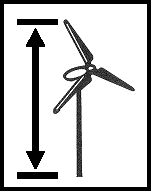
7.
System Height.
The vertical distance from ground level to the tip of the wind generator blade when it is at its highest point.
8.
Tower.
The monopole, guyed monopole or lattice structure that supports a wind generator.
9.
Tower height.
The height above grade of the fixed portion of the tower, excluding the wind generator.
10.
Vertical Axis Helix Wind Turbine (VAWT's).
VAWT's have a vertical rotor drive shaft that does not need to be pointed into the wind to function for wind to take advantage of wind that blows from multiple directions and is turbulent. VAWT's have generator and gearbox located at the base of the system where they are more accessible for maintenance. The blades and associated mechanical and electrical conversion components mounted on top of the tower whose purpose is to convert kinetic energy of the wind into rotational energy used to generate electricity. VAWT's can be roof mounted or free-standing.
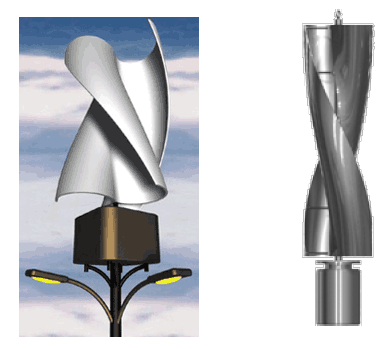
11.
Wind generator.
The blades and associated mechanical and electrical conversion components mounted on top of the tower whose purpose is to convert kinetic energy of the wind into rotational energy used to generate electricity.
C.
Procedure for Review:
1.
Building Permit: Small wind energy systems and met towers are an accessory use permitted in all zoning districts where structures of any sort are allowed. No small wind energy system shall be erected, constructed, or installed without first receiving a building permit from the building inspector. A building permit shall be required for any physical modification to an existing small wind energy system. Met towers that receive a building permit shall be permitted on a temporary basis not to exceed three (3) years from the date the building permit was issued.
2.
Application: Applications submitted to the City shall contain a site plan and the following information:
a)
Property lines and physical dimensions of the applicant's property;
b)
Location, dimensions, and types of existing major structures on the property;
c)
Location of the proposed small wind energy system, foundations, guy anchors and associated equipment;
d)
Tower foundation blueprints or drawings;
e)
Tower blueprints or drawings;
f)
Setback requirements as outlined in this UDC;
g)
The right-of-way of any public road that is contiguous with the property;
h)
Any overhead utility lines;
i)
Small wind energy system specifications, including manufacturer, model, rotor diameter, tower height, tower type, nameplate generation capacity;
j)
Small wind energy systems that will be connected to the power grid shall include a copy of the application for interconnection with their electric utility provider;
k)
Sound level analysis prepared by the wind generator manufacturer or qualified engineer;
l)
Electrical components in sufficient detail to allow for a determination that the manner of installation conforms to the Cibolo Building Code, as amended; and
m)
Evidence of compliance or non-applicability with Federal Aviation Administration requirements.
D.
Standards
1.
The City shall evaluate the application for compliance with the following standards;
a)
Setbacks.
The setback shall be calculated by multiplying the minimum setback requirement number by the system height and measured from the center of the tower base to property line, public roads, or nearest point on the foundation of an occupied building.
I)
Small wind energy systems must meet all setbacks for principal structures for the zoning district in which the system is located.
II)
Guy wires used to support the tower are exempt from the small wind energy system setback requirements.
b)
Height.
For lots in the SF-1, SF-2, SF-3, SF-4, TF-1, MH-1, MH-2, C-1, C-2 and Old Town zoning districts, small scale wind generation systems shall be limited free-standing and/or roof mounted vertical axis helix wind turbines with a height that shall not exceed thirty-five (35') feet. In the event that structures or vegetation on an adjoining property result in practical difficulties in deploying such a system, the Board of Adjustment can consider a variance to allow additional height and consider the off-site impediment to wind flow as a valid hardship for the granting of a variance to a height that will clear the wind generation system from the impediment.
For lots in the PF, MF-1, MF-2, C-3 districts, small scale wind generation systems shall be limited free-standing and/or roof mounted vertical axis helix wind turbines with a height that shall not exceed fifty (50') feet. This requirement shall also to schools, churches and government facilities, regardless of the zoning of the site. The height limitation can be increase by ten (10.0') feet for the installation of these systems on light standards and like equipment. In the event that structures or vegetation on an adjoining property result in practical difficulties in deploying such a system, the Board of Adjustment can consider a variance to allow additional height and consider the off-site impediment to wind flow as a valid hardship for the granting of a variance to a height that will clear the wind generation system from the impediment.
For lots in the AG district, small scale wind generation systems shall be limited free-standing and/or roof mounted vertical axis helix wind turbines with a height that shall not exceed seventy-five (75') feet. In the event that structures or vegetation on an adjoining property result in practical difficulties in deploying such a system, the Board of Adjustment can consider a variance to allow additional height and consider the off-site impediment to wind flow as a valid hardship for the granting of a variance to a height that will clear the wind generation system from the impediment.
c)
Sound Level.
The small wind energy system shall not exceed sixty (60) decibels using the A scale (dBA), as measured at the site property line, except during short-term events such as severe windstorms and utility outages.
d)
Shadow Flicker.
Small wind energy systems shall be sited in a manner that does not result in significant shadow flicker impacts. Significant shadow flicker is defined as more than thirty (30) hours per year on abutting occupied buildings. The applicant has the burden of proving that the shadow flicker will not have significant adverse impact on neighboring or adjacent uses. Potential shadow flicker will be addressed either through siting or mitigation measures.
e)
Signs.
All signs including flags streamers and decorative items, both temporary and permanent, are prohibited on the small wind energy system, except for manufacturer identification or appropriate warning signs.
f)
Code Compliance.
Small wind energy systems shall comply with all applicable sections of the Cibolo Building Code, as amended.
g)
Aviation.
The small wind energy system shall be built to comply with all applicable Federal Aviation Administration regulations.
h)
Visual Impacts.
It is inherent that small wind energy systems may pose some visual impacts due to the tower height needed to access wind resources. The purpose of this section is to reduce the visual impacts, without restricting the owner's access to the optimal wind resources on the property.
I.
The applicant shall demonstrate through project site planning and proposed mitigation that the small wind energy system's visual impacts will be minimized for surrounding neighbors and the community. This may include, but not be limited to information regarding site selection, wind generator design or appearance, buffering, and screening of ground mounted electrical and control equipment. All electrical conduits shall be underground, except when the financial costs are prohibitive.
II.
The color of the small wind energy system shall either be the stock color from the manufacturer or painted with a non-reflective, unobtrusive color that blends in with the surrounding environment. Approved colors include but are not limited to white, off-white or gray.
III.
A small wind energy system shall not be artificially lit unless such lighting is required by the Federal Aviation Administration (FAA). If lighting is required, the applicant shall provide a copy of the FAA determination to establish the required markings and/or lights for the small wind energy system.
i)
Approved Wind Generators.
The manufacturer and model of the wind generator to be used in the proposed small wind energy system must have been approved by the California Energy Commission or the New York State Energy Research and Development Authority, or a similar list approved by the State of Texas.
j)
Utility Connection.
If the proposed small wind energy system is to be connected to the power grid through net metering, it shall adhere to applicable Public Utility Commission of Texas standards and regulations.
k)
Access.
The tower shall be designed and installed so as not to provide step bolts or a ladder readily accessible to the public for a minimum height of 8 feet above the ground. All ground-mounted electrical and control equipment shall be labeled and secured to prevent unauthorized access.
l)
Clearing.
Clearing of natural vegetation shall be limited to that which is necessary for the construction, operation and maintenance of the small wind energy system and as otherwise prescribed by applicable laws, regulations, and ordinances.
D.
Abandonment
1.
At such time that a small wind energy system is scheduled to be abandoned or discontinued, the applicant will notify the City by certified U.S. mail of the proposed date of abandonment or discontinuation of operations.
2.
Upon abandonment or discontinuation of use, the owner shall physically remove the small wind energy system within ninety (90) days from the date of abandonment or discontinuation of use. This period may be extended at the request of the owner and at the discretion of the building inspector. "Physically remove" shall include, but not be limited to:
a)
Removal of the wind generator and tower and related above-grade structures;
b)
Restoration of the location of the small wind energy system to its natural condition, except that any landscaping, grading or below-grade foundation may remain in its same condition at initiation of abandonment.
3.
In the event that an applicant fails to give such notice, the system shall be considered abandoned or discontinued if the system is out-of-service for a continuous twelve (12) month period. After the twelve (12) months of inoperability, the building inspector may issue a Notice of Abandonment to the owner of the small wind energy system. The owner shall have the right to respond to the Notice of Abandonment within thirty (30) days from Notice receipt date. After review of the information provided by the owner, the building inspector shall determine if the small wind energy system has been abandoned. If it is determined that the small wind energy system has not been abandoned, the building inspector shall withdraw the Notice of Abandonment and notify the owner of the withdrawal.
4.
If an owner fails to respond to the Notice of Abandonment or if, after review by the City, it is determined that the small wind energy system has been abandoned or discontinued, the owner of the small wind energy system shall remove the wind generator and tower at the owner's sole expense within three (3) months of receipt of the Notice of Abandonment. If the owner fails to physically remove the small wind energy system after the Notice of Abandonment procedure, the City may pursue legal action to have the small wind energy system removed at the owner's expense.
(Ord. No. 1364, § 5, 5-24-2022)
[Section] 11.5 - Solar Energy Systems
A.
Purpose
The purpose of these regulations is to encourage investment in Solar Energy Systems, while providing guidelines for the installation of those systems that are consistent with the character of the Town and are necessary to protect the public health, safety and general welfare.
B.
Definitions
1.
Accessory Solar Energy System.
A Solar Energy System that supplies electrical or thermal power primarily for on-site use.
2.
Building-Integrated Solar Energy System.
A Solar Energy System that is an integral part of a principal or accessory building replacing or substituting for an architectural or structural component of the building. Building-Integrated Solar Energy Systems include but are not limited to Photovoltaic or hot water solar systems that are contained within roofing materials, windows, or skylights.
3.
Photovoltaic (PV).
The technology that uses a semi-conductor material to convert light directly into electricity.
4.
Solar Collector Panel.
Any part of a Solar Energy System that absorbs solar energy for use in the system's energy transformation process. The Solar Collector Panel does not include frames, supports or mounting hardware.
5.
Solar Energy System.
A device or structural design feature, a substantial purpose of which is to provide for the collection, storage, and distribution of solar energy for space heating or cooling, electrical generation, or water heating.
C.
General Standards
1.
Solar Energy System shall provide power for the principal use and/or accessory use of the property on which the Solar Energy System is located and shall not be used for the generation of power for the sale of energy to other users, although this provision shall not prohibit the sale of excess power generated to the local utility company.
2.
Whenever practical, all Accessory Solar Energy Systems shall be attached to a building.
3.
A Solar Energy System shall not be used to display advertising, including signage, streamers, pennants, spinners, reflectors, ribbons, tinsel, balloons, flags, banners, or similar materials.
4.
The manufacturer and equipment information, warning, or indication of ownership shall be allowed on any equipment of the Solar Energy System.
5.
The owner of a Solar Energy System shall remove it if an inspection of the system reveals that it has become a public nuisance or hazard.
6.
Solar Collector Panels shall be placed and arranged such that reflected solar radiation or glare shall not be directed onto adjacent buildings, properties or roadways.
7.
Roof-mounted Solar Energy Systems shall be set back a minimum of one (1') foot from all roof edges (eaves, gutter-line, or ridge-line) of the roof surface.
8.
Appurtenant electric, piping, wiring or equipment for Solar Energy Systems shall be allowed to extend beyond the perimeter of the building on a side or rear yard exposure, but must be affixed to the building or structure in a neat and workman like manner with the intent of connection to the building system or to run underground.
9.
The horizontal area covered by the area of the Solar Collector Panels of a ground-mounted system at optimum design tilt shall be calculated as part of the overall lot coverage.
10.
All power transmission lines and/or piping from a ground-mounted Solar Energy System to any building or other structure shall be located underground unless otherwise required by the State Building Code.
11.
A ground-mounted Solar Energy System shall limit the impacts on the surrounding properties, maintain safe accessibility, and limit storm water runoff.
D.
Design Standards in Residential Districts
1.
Roof-mounted Solar Energy Systems.
a)
Roof-mounted Solar Energy Systems are permitted on principal and accessory structures.
b)
All roof-mounted Solar Collector Panels will be subject to the following height limitations:
c)
The top surface of any Solar Collector Panel mounted on a south-facing sloped roof shall not exceed twelve (12") inches above the adjacent finish roof surface.
d)
The top surface of any Solar Collector Panel mounted on a north-, east, or west-facing sloped roof shall not exceed twenty-four (24") inches above the adjacent finish roof surface.
e)
The topmost point of any Solar Collector Panel mounted on a flat roof (1/2 inch or less per foot slope) shall not exceed thirty (30") inches above the adjacent finish roof surface on flat roofs with or without parapets.
2.
Ground-mounted Solar Energy Systems.
a)
The minimum setback distance from the side and rear property lines to a ground-mounted Solar Energy System shall be five (5') feet when oriented at minimum design tilt. A ground-mounted Solar Energy System shall not be located within the front yard, defined as the area between the front facade of the dwelling extended to the side property lines and extending to the street line (corner lots have two (2) front facades).
b)
A ground- or pole-mounted Solar Energy System shall not exceed eight (8') feet in height to the tallest point of the Solar Collector Panels at 42.39º. Greater height is permitted provided the Solar Energy System setback from each lot line exceeds otherwise applicable setback requirements by ten (10') feet plus one (1') foot for each foot of excess height. In no case shall the height exceed ten (10') feet. The Board of Adjustment may grant a special exception to exceed this height limitation subject to the provisions of Section 11.2.3.
E.
Design Standards in Non-Residential Districts
1.
Building-mounted Solar Energy Systems are permitted in the following locations:
a)
On the roofs of principal and accessory structures, and/or
b)
On side and rear building facades, or on front or corner building facades, so long as the Solar Energy System is a Building-Integrated Solar Energy System.
c)
All Solar Energy System appurtenances such as, but not limited to, plumbing, water tanks, mounting structures, and support equipment shall be screened to the maximum extent possible without compromising the effectiveness of the Solar Collector Panels.
2.
Roof-mounted Solar Energy Systems are permitted in accordance with the following criteria:
a)
A roof-mounted Solar Energy System on a flat roof (1/2 inch or less per foot slope), whether mounted on the principal building or accessory building, shall be considered to be a mechanical device and shall be restricted consistent with other building-mounted mechanical systems.
b)
All roof-mounted Solar Collector Panels on a sloped roof will be subject to the following height limitations:
3.
The top surface of any Solar Collector Panel mounted on a south-facing sloped roof shall not exceed twelve (12") inches above the adjacent finish roof surface.
4.
The top surface of any Solar Collector Panel mounted on a north -, east-, or west-facing sloped roof shall not exceed twenty-four (24") inches above the adjacent finish roof surface.
5.
Ground-mounted Solar Energy Systems are permitted in accordance with the following criteria:
a)
The minimum setback distance from the side and rear property lines to a ground mounted Solar Energy System shall be five feet when oriented at minimum design tilt. A ground-mounted Solar Energy System shall not be located within the front yard, defined as the area between the front façade of the dwelling extended to the side property lines and extending to the street line (corner lots have two (2) front facades).
b)
A ground- or pole-mounted Solar Energy System shall not exceed the maximum height of ten (10') feet.

