
Cocoa City Zoning Code
ARTICLE XI
SCHEDULE OF DISTRICT REGULATIONS
For the purpose of classifying, regulating and restricting the location of trades and industries, and the location of buildings designed for industry, business, residence and other uses, the City of Cocoa hereby is divided into use districts as follows:
The use districts hereinabove referred to are designated upon the official zoning map and expressly made a part of this ordinance. No building shall be erected, nor shall buildings or premises be used for any purpose other than a purpose permitted by this ordinance in the use district in which such building or premises is or are located. The designation of use districts and uses by letter symbols as set forth herein, when used throughout this ordinance and upon the zoning map shall have the same effect as if the full description of said districts was stated.
(Ord. No. 28-04, § 2, 1-11-05)
Sec. 1. - District and intent—RE, Residential Estate District.
The provisions of this district are intended to apply to an area of estate density single-family residential development. Large lot sizes and other restrictions are intended to promote and protect the highest quality residential development:
(A)
PRINCIPAL USES AND STRUCTURES.
(1)
One single-family dwelling.
(B)
ACCESSORY USES AND STRUCTURES.
(1)
Structures clearly incidental and subordinate to the principal use such as: Patio, swimming pool, toolhouse, garage, playhouse, carport and similar uses in keeping with the residential character of the district.
(2)
Noncommercial nurseries and greenhouses.
(3)
Noncommercial piers, boathouses and loading places owned by and intended solely for the use of the adjoining residences, providing that the following conditions are met:
a.
It shall in all respects comply with the rules and regulations of the corps of engineers and/or the trustees of the internal improvement fund or such other board or agency having jurisdiction.
(4)
Television dish receivers and antennae as regulated by article XIII, section 21, Television dish receivers and antennae.
(C)
SPECIAL EXCEPTIONS.
(1)
Public parks and playgrounds.
(2)
Sewer lift stations.
(3)
Churches, rectories, parish houses, temples, synagogues, and associated buildings, including educational and recreational facilities.
(4)
Security mobile home located upon public property.
(5)
Electronic communication/transmission facilities and exchanges.
(D)
PROHIBITED USES AND STRUCTURES.
(1)
All other uses not specifically or provisionally permitted herein.
(E)
BULK REGULATIONS.
(F)
MINIMUM YARD REQUIREMENTS.
Front setback—Fifty (50) feet or average depth of existing front yards of developed lots within one hundred (100) feet of each side but not less than twenty-five (25) feet.
Side interior lot setback—Fifteen (15) feet.
Side corner lot setback—Twenty-five (25) feet.
Rear setback—Thirty-five (35) feet.
(Ord. No. 1618-3, § 3; Ord. No. 1-78, § 4, 1-10-78; Ord. No. 3-85, § 4, 1-8-85; Ord. No. 4-85, § 4, 2-12-85; Ord. No. 11-2021, § 3(B), 2-22-2022)
Sec. 1A. - District and intent—RA, Residential Agricultural.
The provisions of this district are intended to apply to lands devoted to agricultural pursuits and single-family residential development of spacious character. Large lot sizes and other restrictions are intended to promote and protect agricultural uses while at the same time permitting limited residential development that preserves rural character.
(A)
PRINCIPAL USES AND STRUCTURES.
(1)
One single-family dwelling.
(2)
Agricultural pursuits, including the packing, processing, and sales of commodities raised or grown on the premises.
(3)
Plant nurseries and greenhouses.
(4)
Animal raising and grazing.
(B)
ACCESSORY USES AND STRUCTURES.
(1)
Structures clearly incidental and subordinate to the principal use such as: Private garage, carport, patio, swimming pool, toolhouse, playhouse, and similar uses in keeping with a residential character.
(C)
SPECIAL EXCEPTIONS.
(1)
Playgrounds, parks, and golf courses.
(2)
Sewer lift stations.
(3)
Churches, rectories, parish houses, temples, synagogues, and associated buildings, including educational and recreational facilities.
(4)
Security mobile homes located upon public property.
(5)
Electronic communication/transmission facilities and exchanges.
(D)
PROHIBITED USES AND STRUCTURES.
(1)
All other uses not specifically or provisionally permitted herein.
(E)
BULK REGULATIONS.
(F)
MINIMUM YARD REQUIREMENTS.
a.
Front setback—Fifty (50) feet.
b.
Side interior lot—Fifteen (15) feet.
c.
Side corner lot setback—Twenty-five (25) feet.
d.
Rear setback—Twenty-five (25) feet.
(Ord. No. 28-04, § 2, 1-11-05)
Sec. 2. - District and intent—RR-1, Rural Residential District.
The provisions of this district are intended to apply to an area of single-family residential development of a spacious character. Large lot sizes and other restrictions are intended to promote and protect quality residential development while at the same time permitting limited agricultural uses which are conducted in such a way as to minimize possible offense to residential development.
(A)
PRINCIPAL USES AND STRUCTURES.
(1)
One single-family dwelling.
(B)
ACCESSORY USES AND STRUCTURES.
(1)
Structures clearly incidental and subordinate to the principal use such as: Private garage, carport, patio, swimming pool, toolhouse, playhouse, and similar uses in keeping with a residential character.
(2)
Horses, cattle, swine or other farm type animals are permitted for the personal use of the occupant of the property, provided there is a minimum of twenty thousand (20,000) square feet of land for each animal. Personal use of the occupant shall not include any commercial or business purpose. Structures for housing such animals, such as barns and stalls, shall not be permitted closer than one hundred (100) feet to any residence, and shall be located to the rear of the principal building.
(3)
Noncommercial nurseries and greenhouses.
(4)
Television dish receivers and antennae as regulated by article XIII, section 21, Television dish receivers and antennae.
(C)
SPECIAL EXCEPTIONS.
(1)
Playgrounds, parks and golf courses.
(2)
Sewer lift stations.
(3)
Churches, rectories, parish houses, temples, synagogues, and associated buildings, including educational and recreational facilities.
(4)
Security mobile homes located upon public property.
(5)
Electronic communication/transmission facilities and exchanges.
(D)
PROHIBITED USES AND STRUCTURES.
(1)
All other uses not specifically or provisionally permitted herein.
(E)
BULK REGULATIONS.
(F)
MINIMUM YARD REQUIREMENTS.
(1)
Principal building:
a.
Front setback—Not less than fifty (50) feet.
b.
Side interior lot setback—Not less than ten (10) feet.
c.
Side corner lot setback—Not less than fifteen (15) feet.
d.
Rear setback—Not less than twenty (20) feet.
Accessory structures:
a.
Barns and stalls:
1)
Front setback—One hundred twenty-five (125) feet from the lot line.
2)
Side setback—Twenty-five (25) feet from side lot line.
3)
Rear setback—Thirty (30) feet from rear lot line.
(Ord. No. 1618-3, § 3; Ord. No. 1-78, § 4, 1-10-78; Ord. No. 3-85, § 5, 1-8-85; Ord. No. 4-85, § 5, 2-12-85; Ord. No. 4-90, § 1, 1-23-90; Ord. No. 19-96, § 2, 11-12-96)
Sec. 2A. - District and intent—RR-2, Rural Residential District.
The provisions of this district are intended to apply to an area of low density single-family residential development. Large lot sizes and other restrictions are intended to protect and promote high quality residential development.
(A)
PRINCIPAL USES AND STRUCTURES.
(1)
One single-family dwelling.
(B)
ACCESSORY USES AND STRUCTURES.
(1)
Structures clearly incidental and subordinate to the principal use such as: Patio, swimming pool, garage, toolhouse, carport, playhouse and similar uses.
(2)
Television dish receivers and antennae as regulated by article XIII, section 21, Television dish receivers and antennae.
(C)
SPECIAL EXCEPTIONS.
(1)
Public parks and playgrounds.
(2)
Sewer lift stations.
(3)
Churches, rectories, parish houses, temples, synagogues, and associated buildings, including educational and recreational facilities.
(4)
Electronic communication/transmission facilities and exchanges.
(D)
PROHIBITED USES AND STRUCTURES.
(1)
All uses not specifically or provisionally permitted herein.
(E)
BULK REGULATIONS.
(F)
MINIMUM YARD REQUIREMENTS.
Front setback—Fifty (50) feet or average depth of existing front yards of developed lots of each side but not less than twenty-five (25) feet.
Side interior lot setback—Fifteen (15) feet.
Side corner lot setback—Twenty-five (25) feet.
Rear setback—Thirty-five (35) feet.
(Ord. No. 18-78, § 1, 12-19-78; Ord. No. 3-85, § 6, 1-8-85; Ord. No. 4-85, § 6, 2-12-85)
Sec. 3. - District and intent—RU-1-7, Single-Family Residential District.
The provisions of this district are intended to apply to an area of medium density single-family residential development. Lot sizes and other restrictions are intended to promote high quality residential development.
(A)
PRINCIPAL USES AND STRUCTURES.
(1)
One single-family dwelling.
(B)
ACCESSORY USES AND STRUCTURES.
(1)
Structures clearly incidental and subordinate to the principal use such as: Patio, swimming pool, toolhouse, garage, playhouse, carport and similar uses.
(2)
Noncommercial piers, boathouses and loading spaces as regulated in section 1(B)(3) herein.
(3)
Television dish receivers and antennae as regulated by article XIII, section 21, Television dish receivers and antennae.
(C)
SPECIAL EXCEPTIONS.
(1)
Temporary subdivision sales office during active construction of a subdivision.
(2)
Sewer lift stations.
(3)
Public parks and playgrounds.
(4)
Churches, rectories, parish houses, temples, synagogues, and associated buildings, including educational and recreational facilities.
(5)
Security mobile home located upon public property.
(6)
Electronic communication/transmission facilities and exchanges.
(7)
Emergency children's shelter.
(D)
PROHIBITED USES AND STRUCTURES.
(1)
All uses not specifically or provisionally permitted herein.
(E)
BULK REGULATIONS.
Minimum lot area: Seven thousand five hundred (7,500) sq. ft.
Minimum lot width: Seventy-five (75) ft.
Minimum lot depth: One hundred (100) ft.
Maximum lot coverage: Thirty percent (30%)
Minimum living area: One thousand two hundred (1,200) sq. ft.
Maximum height: Thirty-five (35) feet.
(F)
MINIMUM YARD REQUIREMENTS.
(1)
The following minimum yard requirements shall be applicable to properties located in the RU-1-7 use district, except those properties located within the jurisdictional boundaries of the Diamond Square Community Redevelopment Agency.
Front setback—Twenty-five (25) feet.
Side interior lot setback—Eight (8) feet.
Side corner lot setback—Fifteen (15) feet.
Rear setback—Fifteen (15) feet.
(2)
The following minimum yard requirements shall be applicable to properties located in the RU-1-7 use district which are also located within the jurisdictional boundaries of the Diamond Square Community Redevelopment Agency.
Front setback—Twenty (20) feet.
Side interior lot setback—Five (5) feet.
Side corner lot setback—Ten (10) feet.
Rear setback—Ten (10) feet.
(Ord. No. 1618-3, § 3; Ord. No. 1-78, § 4, 1-10-78; Ord. No. 3-85, § 7, 1-8-85; Ord. No. 4-85, § 7, 2-12-85; Ord. No. 19-96, § 2, 11-12-96; Ord. No. 12-06, §§ 2, 4, 3-14-06; Ord. No. 12-2024, § 2, 9-10-2024)
Sec. 3A. - District and intent—RU-1-7-a, Single-Family Residential District.
The provisions of this district are intended to apply to an area of medium density single-family residential development. Lot sizes and other restrictions are intended to promote high quality residential development.
(A)
PRINCIPAL USES AND STRUCTURES.
(1)
One single-family dwelling.
(B)
ACCESSORY USES AND STRUCTURES.
(1)
Structures clearly incidental and subordinate to the principal use such as: Patio, swimming pool, toolhouse, garage, playhouse, carport and similar uses.
(2)
Noncommercial piers, boathouses and loading spaces as regulated in section 1(B)(3) herein.
(3)
Television dish receivers and antennae as regulated by article XIII, section 21, Television dish receivers and antennae.
(C)
SPECIAL EXCEPTIONS.
(1)
Temporary subdivision sales office during active construction of a subdivision.
(2)
Sewer lift stations.
(3)
Public parks and playgrounds.
(4)
Churches, rectories, parish houses, temples, synagogues, and associated buildings, including educational and recreational facilities.
(5)
Electronic communication/transmission facilities and exchanges.
(D)
PROHIBITED USES AND STRUCTURES.
(1)
All uses not specifically or provisionally permitted herein.
(E)
BULK REGULATIONS.
(F)
MINIMUM YARD REQUIREMENTS.
Front setback—Twenty-five (25) feet.
Side interior lot setback—Eight (8) feet.
Side corner lot setback—Fifteen (15) feet.
Rear setback—Fifteen (15) feet.
(Ord. No. 1618-7, § 2, 5-25-76; Ord. No. 3-79, § 1, 4-3-79; Ord. No. 3-85, § 8, 1-8-85; Ord. No. 4-85, § 8, 2-12-85; Ord. No. 17-86, § 1(a), 9-23-85; Ord. No. 19-96, § 2, 11-12-96)
Sec. 4. - District and intent—RU-1-10, Single-Family Residential District.
The provisions of this district are intended to apply to an area of low density single-family residential development. Lot sizes and other restrictions are intended to protect and promote high quality residential development.
(A)
PRINCIPAL USES AND STRUCTURES.
(1)
One single-family dwelling.
(B)
ACCESSORY USES AND STRUCTURES.
(1)
Structures clearly incidental and subordinate to the principal use such as: Patio, swimming pool, garage, toolhouse, carport, playhouse and similar uses.
(2)
Television dish receivers and antennae as regulated by article XIII, section 21, Television dish receivers and antennae.
(C)
SPECIAL EXCEPTIONS.
(1)
Public parks and playgrounds.
(2)
Sewer lift stations.
(3)
Churches, rectories, parish houses, temples, synagogues, and associated buildings, including educational and recreational facilities.
(4)
Security mobile home located upon public property.
(5)
Electronic communication/transmission facilities and exchanges.
(D)
PROHIBITED USES AND STRUCTURES.
(1)
All uses not specifically or provisionally permitted herein.
(E)
BULK REGULATIONS.
(F)
MINIMUM YARD REQUIREMENTS.
Front setback—Twenty-five (25) feet.
Side interior lot setback—Fifteen (15) feet.
Side corner lot setback—Twenty-five (25) feet.
Rear setback—Twenty-five (25) feet.
(Ord. No. 1618-3, § 3; Ord. No. 1-78, § 4, 1-10-78; Ord. No. 3-85, § 9, 1-8-85; Ord. No. 4-85, § 9, 2-12-85)
Sec. 4A. - District and intent—RU-2-10, Low Density Single-Family and Multiple-Family District.
The provisions of this district are intended to apply to an area of mixed, low density multifamily and single-family residential development in close proximity to major collector and arterial streets and, after the effective date of Ord. 02-2021 [April 13, 2021], shall be specifically limited to the real property subject to the Substitute Consent Decree as ordered on January 28, 2009.
(A)
PRINCIPAL USES AND STRUCTURES.
(1)
Multifamily dwellings of not more than four (4) units per building.
(2)
Single-family dwellings.
(3)
Multifamily dwellings of more than four (4) units, provided such use was in existence as of the date of adoption of this ordinance.
(4)
That specific use of land and structures legally existing as of March 8, 1988, provided such use was a permitted use in the CW district as of March 8, 1988, and certain other CW and CC permitted uses as follows:
(a)
Any lot of record containing such a specific CW use legally existing as of March 8, 1988, may be converted to (1) warehousing or wholesaling in a completely enclosed structure as provided by article XI, section 15(A) (2), or (2) service or repair establishments limited to dry cleaning and laundry plants, business services, printing plants, welding shops, and light assembly/manufacturing as provided by article XI, section 15(A) (3) and (10); and
(b)
Any lot of record containing such a specific CW use legally existing as of March 8, 1988, and any such lot of record subsequently converted to an alternative CW use as provided in subsection (a) may be converted to any use permitted in the CC district under article XI, section 18(a) (1)—(12) as of the date of adoption of this ordinance;
Provided that, once such specific CW use legally existing as of March 8, 1988, has been converted to a CC use pursuant to subsection (b) hereof, or has been converted to a residential use permitted in the RU-2-10 district, or has been abandoned as defined for a nonconforming use in article X, section 7, such lot of record may not return or be converted to such specific CW use or to any alternative CW use provided in subsection (a) hereof. Once any specific CW use legally existing as of March 8, 1988, or any CC use permitted pursuant to subsection (b) hereof has been converted to any residential use permitted in the RU-2-10 district, or has been abandoned as defined for a nonconforming use in article X, section 7, such lot of record may not return or be converted to any CC use permitted by subsection (b) of this section. The owner of a principal use set forth in this section shall have the right to continue such principal use on a lot of record until and unless such use is so converted or abandoned.
(5)
That specific use of land and structures legally existing as of the date sixty (60) days following the date of the adoption of this ordinance provided such use was a permitted use in the CC district as of the date of the adoption of this ordinance, and certain other CC permitted uses as follows: any lot of record containing such specific CC use or any lot of record containing a specific CC use legally existing as of the date of the adoption of this ordinance may be converted to any other use permitted in the CC district under article XI, section 18(a)(1)—(12) as of the date of the adoption of this ordinance, provided that, once any such CC use has been converted to any residential use permitted in the RU-2-10 district, or has been abandoned as defined for a nonconforming use in article X, section 7, such lot of record may not return or be converted to any CC use. The owner of a principal use set forth in this section shall have the right to continue such principal use on a lot of record until and unless such use is so converted or abandoned.
(B)
ACCESSORY USES AND STRUCTURES.
(1)
Customary accessory uses clearly incidental and subordinate to the principal use and in keeping with the intent and purpose of the district.
(2)
Television dish receivers and antennae as regulated by article XIII, section 21, Television dish receivers and antennae.
(C)
SPECIAL EXCEPTIONS.
(1)
Public parks and playgrounds.
(2)
Noncommercial cultural centers, social service centers, museums, galleries, community centers.
(3)
Private clubs and lodges.
(4)
Reserved.
(5)
Sewer lift stations.
(6)
Churches, rectories, parish houses, temples, synagogues and associated buildings, including educational and recreational facilities.
(7)
Security mobile home located upon public property.
(8)
Electronic communication/transmission facilities and exchanges.
(D)
PROHIBITED USES AND STRUCTURES.
(1)
All uses not specifically or provisionally permitted herein.
(E)
BULK REGULATIONS.
(F)
MINIMUM LIVING AREA.
Single family—One thousand (1,000) square feet.
Duplex—Seven hundred fifty (750) square feet each unit.
Triplex—Seven hundred fifty (750) square feet each unit.
Fourplex—Seven hundred fifty (750) square feet each unit.
(G)
MINIMUM YARD REQUIREMENTS.
Front setback—Twenty-five (25) feet.
Side interior lot setback—Eight (8) feet.
Side corner lot setback—Fifteen (15) feet.
Rear setback—Fifteen (15) feet.
(Ord. No. 3-78, § 2, 3-14-78; Ord. No. 3-85, § 10, 1-8-85; Ord. No. 4-85, § 10, 2-12-85; Ord. No. 22-90, § 3, 9-24-90; Ord. No. 02-2021, § 2, 4-13-2021; Ord. No. 11-2021, § 3(B), 2-22-2022)
Sec. 5. - District and intent—RU-2-15, Multiple-Family Dwelling District.
The provisions of this district are intended to apply to an area of medium density residential development with a variety of housing types. Lot sizes and other restrictions are intended to promote and protect medium density residential development, maintaining an adequate amount of open space for such development. Paragraphs (A) through (O) below shall not apply to construction meeting the definition of "townhouse" in article V. Paragraphs (P) through (BB) shall apply only to construction meeting the definition of "townhouse" contained in article V.
(A)
PRINCIPAL USES AND STRUCTURES.
(1)
Multiple-family dwellings (four (4) or more units per building) not more than fifteen (15) dwelling units per acre (two thousand nine hundred (2,900) square feet of lot per dwelling unit) for multi-storied structures. Multiple-family dwellings (four (4) or more units per building) of not more than ten (10) units per acre (four thousand three hundred fifty (4,350) square feet of lot per dwelling unit) for single-story structures. For the purpose of computing density allowed, property divided by a public road shall be considered as separate parcels (refer to article XIII, Supplementary District Regulations, section 2, Designation of lesser maximum density.)
(2)
Single-family and multi-family dwellings of not more than three (3) units per building as regulated by Section 3, RU-1-7, or in accordance with this Section 5. Single-family and multi-family dwellings of not more than three (3) units per building constructed, platted and lawfully approved in accordance with the regulations of section 4A, RU-2-10, prior to the effective date of Ord. 02-2021 [April 13, 2021] shall be considered lawful, conforming lots and structures subject to all applicable conditions and requirements imposed by the city when said lots and structures were previously permitted.
(3)
Townhouse residential subdivisions as regulated in this section.
(B)
ACCESSORY USES AND STRUCTURES.
(1)
Customary accessory uses clearly incidental and subordinate to the principal use and in keeping with the intent and purpose of the district.
(2)
Television dish receivers and antennae as regulated by article XIII, section 21, Television dish receivers and antennae.
(C)
SPECIAL EXCEPTIONS.
(1)
Public parks and playgrounds.
(2)
Noncommercial cultural centers, social service centers, museums, galleries, community centers.
(3)
Private clubs and lodges.
(4)
Sewer lift stations.
(5)
Churches, rectories, parish houses, temples, synagogues, and associated buildings, including educational and recreational facilities.
(6)
Security mobile home located upon public property.
(7)
Child care centers, day nurseries, or kindergartens.
(8)
Electronic communication/transmission facilities and exchanges.
(9)
Bed and breakfast establishments as regulated by article XIII, section 24, Bed and breakfast establishments.
(10)
Adult congregate living facility (ACLF).
(D)
PROHIBITED USES AND STRUCTURES.
(1)
All uses not specifically or provisionally permitted herein.
(E)
BULK REGULATIONS.
(1)
Minimum lot area—Seven thousand five hundred (7,500) square feet; five thousand (5,000) square feet for single-family and multi-family dwellings of not more than three (3) units per building.
(2)
Minimum lot width—Seventy-five (75) feet.
(3)
Minimum lot depth—One hundred (100) feet.
(4)
Maximum lot coverage—Forty percent (40%).
(5)
Maximum height—Thirty-five (35) feet.
(F)
MINIMUM LIVING AREA.
Single-family dwellings—One thousand two hundred (1,000) square feet.
Duplex—Seven hundred fifty (750) square feet each unit.
Efficiency apartments—Five hundred (500) square feet.
One-bedroom apartments—Eight hundred (800) square feet.
Two-bedroom apartments—Nine hundred (900) square feet, plus one hundred (100) square feet for each additional bedroom.
(G)
MINIMUM YARD REQUIREMENTS.
Front setback—Twenty-five (25) feet.
Side interior lot setback—Ten (10) feet, eight (8) feet for single-family and multi-family dwellings of not more than three (3) units per building.
Side corner lot setback—Fifteen (15) feet.
Rear setback—Twenty (20) feet, fifteen (15) feet for single-family and multi-family dwellings of not more than three (3) units per building.
(H)
[OPEN AIR SPACE.] Multiple-family buildings (more than two (2) units) located on the same lot shall have an open air space of not less than fifteen (15) feet between exterior walls of buildings.
(I)
PRESERVATION OF TREES. Reserved.
(J)
UTILITIES. All utilities distribution systems, including TV cable, telephone and electrical systems shall be installed underground for multifamily buildings located on a lot one (1) acre or larger in size. Primary facilities providing service to the site may be exempted.
(K)
[MAXIMUM BUILDING LENGTH.] The maximum length and/or width of any building shall be two hundred (200) feet.
(L)
[PERPETUAL MAINTENANCE.] Provisions satisfactory to the city council, City of Cocoa, shall be made to assure that nonpublic areas and common open space shall be perpetually maintained in a satisfactory manner, without expense to the City of Cocoa.
(M)
COMMON USABLE OPEN SPACE AND RECREATIONAL FACILITIES.
(1)
Twenty percent (20%) of the gross acreage of the site shall be set aside and specifically delineated on the site plan as common usable open space. The twenty percent (20%) requirement may be reduced to ten percent (10%) if the major recreational facilities such as swimming pool, or two (2) tennis courts, or two (2) racquet ball courts or any combination, are provided for each forty (40) units for common use of the development's residents.
(N)
CURBING. A four-inch concrete curb shall be provided as a separation between paved parking areas and open green islands.
(O)
[UNDERGROUND IRRIGATION.] An underground irrigation (sprinkler) system shall be provided for all landscaped areas within multiple-family residential projects of ten (10) units or more.
Townhouse Residential Subdivision
(P)
PURPOSE. This section is intended for townhouse type residential structures having both single- and multifamily characteristics. Its purpose is to encourage housing innovations in the grouping or separately owned dwelling units, so as to make efficient, economical, and aesthetically pleasing use of land so restricted that the same will be continually well maintained in order to preserve health, welfare, safety, morals, and convenience of the neighborhood and surrounding area.
(Q)
PERMITTED PRINCIPAL USES AND STRUCTURES. Permitted principal uses and structures shall be:
(1)
Townhouses provided that the area to be developed exceeds one (1) acre.
(R)
PERMITTED ACCESSORY USES AND STRUCTURES. Permitted accessory uses and structures shall be:
(1)
Recreation buildings or structures, playgrounds or parks, when accessory to and clearly subordinate in use and in keeping with the intent and purpose of the district.
(2)
One common television antenna per group of dwelling units.
(3)
Garage, carport, or space for housing or parking of private automobiles, provided such uses are attached to the principal building.
(S)
PROHIBITED USES AND STRUCTURES. Prohibited uses and structures shall be:
(1)
Commercial and industrial uses and structures.
(2)
Business, professional, and personal service establishments.
(3)
Individual outside antennas of any type.
(T)
MINIMUM LOT REQUIREMENTS. The minimum requirements for area and width of lots shall be:
(1)
Area to be developed—One acre.
(2)
Minimum lot area.
a.
With two-car garage—Two thousand four hundred (2,400) square feet.
b.
With on-lot parking—Two thousand (2,000) square feet.
c.
With off-lot parking—Two thousand (2,000) square feet.
(3)
Minimum lot width.
a.
With two-car garage—Twenty-eight (28) feet.
b.
With on-lot parking—Twenty (20) feet.
c.
With off-lot parking—Twenty (20) feet.
(U)
MINIMUM YARD REQUIREMENTS.
(1)
Front setback.
a.
With two-car garage—Twenty-six (26) feet (with six (6) feet required to be landscaped).
b.
With on-lot parking—Twenty-six (26) feet (with six (6) feet required to be landscaped).
c.
With off-lot parking—Fifteen (15) feet (with six (6) feet required to be landscaped).
(2)
Rear setback—Twenty-five (25) feet.
(3)
Setbacks from the exterior boundaries of this district shall not be less than twenty-five (25) feet. When any single-family district abuts this district, a substantial fence or landscaping of at least six (6) feet in height shall be provided along the boundary of the townhouse subdivision abutting said single-family district.
(4)
Side setback.
a.
Fifteen-foot side setback required at the end of each group of units abutting a dedicated right-of-way or a public or private street.
b.
A spacing of twenty (20) feet between each group of townhouses shall be provided.
c.
All side yard spacing required shall remain unobstructed.
(V)
MAXIMUM LOT COVERAGE BY ALL BUILDINGS. The maximum lot coverage shall be:
(1)
Forty percent (40%) of the site.
(W)
MAXIMUM HEIGHT OF STRUCTURES. No portion intended for human occupancy shall exceed thirty-five (35) feet.
(X)
MINIMUM FLOOR AREAS. The minimum floor area requirements for townhouse units shall be as follows (any patio area shall not be included with these minimum floor areas):
(1)
One bedroom—Eight hundred (800) square feet.
(2)
Two (2) bedrooms—Nine hundred (900) square feet plus one hundred (100) square feet for each additional bedroom.
(Y)
MINIMUM OFF-STREET PARKING REQUIREMENTS. Two (2) parking spaces per dwelling unit.
(Z)
MISCELLANEOUS PROVISIONS. The following miscellaneous provisions shall apply in this district:
(1)
Sidewalks shall be constructed on both sides of all streets within a townhouse subdivision.
(2)
All utilities distribution systems, including TV cable, telephone, and electrical systems shall be installed underground. Primary facilities providing service to the site may be exempted.
(3)
The maximum length and/or width of any building shall be two hundred (200) feet.
(4)
Sidewalks shall be installed along all public or private streets with city standards and specifications.
(5)
Fencing: No fencing shall be permitted within the front or side yards as determined by the required setbacks. Rear yard fencing shall not exceed six (6) feet in height.
(6)
Provisions satisfactory to the administration of the City of Cocoa shall be made to assure that nonpublic areas and common open space shall be maintained in a satisfactory manner, without expense to the City of Cocoa.
(7)
Each townhouse unit shall be located on its own individual platted lot. If areas for common use of occupants of townhouse development are shown on the plat, such plat shall not be approved until satisfactory arrangements are made for maintenance as provided by this ordinance.
(8)
A site plan is required in accordance with article XII and site plan review in accordance with the zoning code of the City of Cocoa.
(9)
A development schedule shall be submitted for review to the planning and zoning board, who may approve subject to conditions, or disapprove. When submitted, the development schedule shall indicate:
a.
The staging of construction and the staging of open space or other common use areas for conveyance, dedication, or reservation; the geographic stages in which the project will be built, the approximate date when construction of each stage shall begin, and its anticipated completion date. The initial stage shall require a minimum of one (1) acre. Provision for the construction of cultural and recreational facilities which are shown on the site plan shall proceed at an equivalent or greater rate as the construction of the dwelling units.
(10)
Site plan: Refer to article XII, section 1.
(11)
Curbing: An eight-inch concrete reinforced curb shall be provided as a separation between parking areas and open green islands and shall be so designed as to allow water to run from the parking areas into the green areas.
(AA)
DENSITY. Maximum of ten (10) dwelling units per acre for single-story units of fifteen (15) dwelling units per acre for two (2) or more story units.
(BB)
PRESERVATION OF TREES. During the development of the subdivision all trees of six (6) inches in diameter or larger shall be preserved or replaced unless they exist within:
(1)
A proposed public or private easement or draining facility.
(2)
Proposed structure dimensions.
(3)
A proposed driveway or designated parking areas.
(4)
Ten (10) feet of a proposed structure.
(Ord. No. 1618-3, § 3; Ord. No. 1-78, § 4, 1-10-78; Ord. No. 13-78, § 3, 9-5-78; Ord. No. 11-81, § 1, 4-28-81; Ord. No. 22-81, §§ 1, 2. 9-22-81; Ord. No. 3-85, § 11, 1-8-85; Ord. No. 4-85, § 11, 2-12-85; Ord. No. 17-86, § 1(b), (c), 9-23-86; Ord. No. 16-90, § 2, 6-12-90; Ord. No. 19-96, § 2, 11-12-96; Ord. No. 26-98, § 2, 9-22-98; Ord. No. 23-2007, § 2, 7-10-07; Ord. No. 12-2020, § 3, 8-26-2020; Ord. No. 02-2021, § 2, 4-13-2021)
Sec. 6. - District and intent—RU-2-25, Multiple-Family Dwelling District.
The provisions of this district are intended to apply to several areas of the city adjacent or proximate to the Central Business District and primarily within the redevelopment area as designated on the city's adopted redevelopment plan. Uses are based upon the city comprehensive plan and redevelopment plan and are intended to accommodate medium-high density residential multi-family development in areas proximate to commercial and office development or to the waterfront and on or near major collector or arterial streets. The permitted uses and design and development standards are intended to promote major developments of high quality including townhouse and multiple-family residential development, hotels and motels and single-family development. It is intended that "performance standards" control the permissible type, density or intensity, mix of development and design and development criteria.
All development in the RU-2-25 Multiple-Family Dwelling District, except for the construction of an individual single-family dwelling unit on a single lot, shall be required to submit a site plan and obtain approval pursuant to article XIII, section 1 of this zoning ordinance.
(A)
PRINCIPAL USES AND STRUCTURES.
(1)
Multiple-family dwellings (five (5) or more units per building). For the purpose of computing density allowed, property divided by a public road shall be considered as separate parcels (refer to article XIII, Supplementary District Regulations, section 2, Designation of lesser maximum density).
(2)
Single-family and Multi-family dwellings of not more than four (4) units per building. Single-family and multi-family dwellings of not more than four (4) units per building constructed, platted and lawfully approved in accordance with the regulations of section 4A, RU-2-10, prior to the effective date of Ord. 02-2021 [April 13, 2021] shall be considered lawful, conforming lots and structures subject to all applicable conditions and requirements imposed by the city when said lots and structures were previously permitted.
(3)
Townhouse residential subdivision (as regulated by section 5, RU-2-15 and this section).
(B)
ACCESSORY USES AND STRUCTURES.
(1)
Customary accessory uses clearly incidental and subordinate to the principal use and in keeping with the intent and purpose of this district.
(2)
Limited retail and service establishments according to the following provisions:
a.
The building complex must contain at least sixty (60) units.
b.
Private marinas to serve the residents of the principal structure, however, no watercraft shall be used for dwelling purposes.
(C)
SPECIAL EXCEPTIONS.
(1)
Hotels and motels; provided, however, there shall be no more than forty (40) sleeping units per gross acre.
(2)
Principal uses and structures exceeding eighty (80) feet in height.
(3)
Public parks and playgrounds.
(4)
Noncommercial cultural centers, social service centers, museums, galleries, community centers.
(5)
Private clubs and lodges.
(6)
Sewer lift stations.
(7)
Churches, rectories, parish houses, temples, synagogues, and associated buildings, including educational and recreational facilities.
(8)
Security mobile home located upon public property.
(9)
Child care centers, day nurseries or kindergartens.
(10)
Utilities.
(11)
Medical facilities.
(12)
Bed and breakfast establishments are regulated by article XIII, section 24, Bed and breakfast establishments.
(13)
Adult congregate living facility (ACLF).
(D)
PROHIBITED USES AND STRUCTURES.
(1)
All uses not specifically or provisionally permitted herein.
(2)
Commercial establishments not specifically allowed in (B)(2).
(E)
PERFORMANCE STANDARDS REQUIREMENT. No building, structure or land shall be used or occupied except in conformance with the performance standards as set forth herein. All minimum performance standards applicable to a use must be met, unless a variance or special exception is granted pursuant to article XVII, sections 2 and 3 of this ordinance. The performance standards set forth herein shall be implemented through the site plan approval process set forth in article XIII, section 1 of the zoning ordinance, which shall apply to all uses in this zoning district, except for the construction of a single-family dwelling unit on a single lot.
(F)
TABLE OF PERFORMANCE STANDARDS.
(Ord. No. 1618-3, § 3; Ord. No. 1-78, § 4, 1-10-78; Ord. No. 13-78, § 3, 9-5-78; Ord. No. 26-81, § 1, 12-22-81; Ord. No. 3-85, § 12, 1-8-85; Ord. No. 4-85, § 12, 2-12-85; Ord. No. 17-86, § 1(d), 9-23-86; Ord. No. 7-88, § 5, 3-8-88; Ord. No. 17-89, § 4, 12-22-89; Ord. No. 16-90, §, 6-12-90; Ord. No. 19-96, § 2, 11-12-96; Ord. No. 6-98, § 1, 3-24-98; Ord. No. 26-98, § 3, 9-22-98; Ord. No. 20-2007, § 2, 6-5-07; Ord. No. 02-2021, § 2, 4-13-2021)
Sec. 7. - District and intent—RM-3, Planned Residential Development for Mobile Home Parks.
The provisions of this district are intended to apply to mobile home parks developed in such a manner as to make efficient economical and aesthetically pleasing use of the land, so restricted that the same will be continually maintained by the owner.
(A)
PRINCIPAL USES AND STRUCTURES.
(1)
Mobile homes, exclusive of travel trailers and recreational vehicles.
(B)
ACCESSORY USES.
(1)
Cabanas, carports, porches or awnings, and other customary accessory buildings and uses provided the same can be dismantled and stored within four (4) hours in the event of hurricane, storm, fire or other emergency.
(2)
Structures and uses related to and for the exclusive use of residents of the mobile home park as follows (excluding commercial operations):
a.
Recreational facilities and areas.
b.
Community center.
c.
Washing facilities.
d.
Storage of travel trailers and recreational vehicles provided such units are stored in a separate area, landscaped and maintained. Storage of these units shall not be permitted on individual lots.
(C)
SPECIAL EXCEPTIONS.
(1)
Sewer lift stations.
(2)
Churches, rectories, parish houses, temples, synagogues, and associated buildings, including educational and recreational facilities.
(3)
Security mobile home located upon public property.
(4)
Electronic communication/transmission facilities and exchanges.
(D)
PROHIBITED USES AND STRUCTURES.
(1)
All other uses not specifically or provisionally permitted herein.
(E)
LAND USE REGULATIONS.
(1)
Minimum site for a mobile home park—An area not less than ten (10) acres, having a minimum width of three hundred (300) feet measured along a public right-of-way.
(2)
Minimum site size—An area not less than five thousand (5,000) square feet and having a minimum width of not less than sixty (60) feet.
(3)
Setbacks—Mobile homes and structures shall be set back not less than fifty (50) feet from all property lines unless such line is contiguous to property zoned RM-3, RM-4, or any industrial, commercial or professional classification, in which case the setback shall be fifteen (15) feet. Individual structures within the park shall set back not less than twenty (20) feet from all public rights-of-way or pavement edges of private streets.
(4)
Minimum distance between structures—Fifteen (15) feet.
(5)
Minimum living area—Five hundred fifty (550) square feet.
(6)
Maximum height of structures—Thirty-five (35) feet.
(7)
Off-street parking—Two (2) spaces for each mobile home space. Each mobile home site shall have both paved spaces located on the site (20' × 20' area).
(8)
Patio—Each mobile home space shall have a concrete patio of not less than ten (10) feet by twenty-four (24) feet, conveniently located at the entrance of each mobile home.
(9)
Recreation area—There shall be required that not less than fifteen percent (15%) of the gross area of the mobile home park to be set aside, designed, constructed and equipped as a recreational area. This fifteen percent (15%) shall be provided in land area unless the total area of development exceeds twenty-five (25) acres. In which case, water areas may comprise one-half of the fifteen percent (15%) requirement. All lakes shall be permanent water bodies and shall be improved with decks and piers, 5:1 minimum sloped edge extending at least twenty (20) feet into the lake and slanted with grass and maintained around the sides so as not to harbor mosquitoes, insects and rodents.
(10)
Signs—A sign shall be permitted identifying the mobile home park, and shall be set back not less than fifteen (15) feet. "For Rent" signs, for the mobile home spaces, shall be permitted but not to exceed thirty-two (32) square feet.
(11)
Mobile home foundation and anchorage—All mobile homes shall be located on a masonry foundation and securely anchored and tied down according to the requirements of the Mobile Home Manufacturer's Association.
State Law reference— For mobile home tie-down requirements, see F.S. § 320.8325.
(12)
Development standards—The minimum construction and design requirements for sewer facilities, street lights, utilities and drainage shall be in compliance with the requirements of the Cocoa subdivision regulations.
(13)
All streets within the park shall have a twenty-two (22) foot minimum paved width. Minimum public rights-of-way shall be in accordance with the subdivision regulations of Cocoa. Curbs and gutters shall be required along all streets.
(14)
Where this zone abuts any residential zone, a fifteen (15) foot wide freeze resistant planted screening area shall be required and continuously maintained.
(15)
Underground utilities—Within the development, all utilities including telephone, television cable, and electrical systems shall be installed underground. Primary facilities providing service to the site of the development may be exempted from this requirement. Large transformers shall be placed on the ground and contained with pad mounts, enclosures or vaults. The developer must provide freeze-resistant landscaping with shrubs and plants to screen all utility facilities permitted above ground. The city council may require that substations be screened by trees and shrubs or walls resembling a structure which is compatible with the design of the buildings within the development.
(16)
Additional regulations:
a.
Water, sanitary sewage and refuse disposal shall comply with applicable Florida State Board of Health regulations.
Editor's note— The state board of health has been abolished and its former functions vested in the state department of health and rehabilitative services.
b.
A mobile home park shall be subject to one (1) ownership and no one shall be permitted partial ownership thereof without complying with the provisions applicable to the RM-4 zoning classification.
c.
No outdoor storage of any material (usable or waste) shall be permitted in this zone except within enclosed metal containers.
d.
No motor vehicle which is inoperable or an unoccupied mobile home which is usable or unusable shall be stored or used for storage of any items therein on any lot or parcel of ground in this zone unless it is within a completely enclosed building.
e.
Expansion of existing mobile home parks shall be treated in the same manner as plans for new mobile home parks. Improvement of substandard conditions in existing parks may be required as a precedent to expansion of such parks.
(F)
SITE PLAN APPROVAL.
(1)
A site plan shall be required in accordance with article XIII, Supplementary District Regulations, section 1, and, in addition, a statement defining the manner in which the City of Cocoa is to be assured that all improvements and protective devices are to be installed and maintained shall accompany the request for a planned mobile home development. The city council may require the posting of a performance bond not to exceed one hundred ten percent (110%) of the cost of providing:
a.
The public services customarily supplied by the City of Cocoa to fill respective needs for storm water and sanitary sewage disposal, water supply and so forth.
b.
The public improvements necessary to insure proper ingress and egress for the site.
(Ord. No. 1-78, § 4, 1-10-78; Ord. No. 4-85, § 13, 2-12-85; Ord. No. 17-86, § 1(e), 9-23-86)
Cross reference— Mobile homes and mobile home parks generally, Ch. 13.
Sec. 8. - District and intent—RM-4, Single-Family Mobile Home Cooperative.
This zone classification encompasses lands devoted to single-family mobile home development of high density, together with such public buildings, schools, churches, public recreation facilities and accessory uses as may be necessary or are normally compatible with residential surroundings. The higher density or compacted lot size is permitted where there are cooperative agreements to insure upkeep and where maintenance of the overall development shall be perpetually maintained in a satisfactory manner, without expense to the City of Cocoa. Approval is to be predicated on the site plan of development. If the project is to be developed in phases, the area and location of common open space that will be provided at each stage must be designated. Provisions for all common open space and the construction of cultural and recreational facilities which are shown on the site plan shall proceed at an equivalent, or greater, rate as the rate of lot sales.
(A)
PRINCIPAL USES AND STRUCTURES.
(1)
The parking, storage, or residential uses of single-family mobile homes.
(2)
Recreation facilities.
(3)
Administrative building.
(B)
ACCESSORY USES AND STRUCTURES.
(1)
Cabanas, or screened porches, so long as the same are attached to the mobile home—Such accessory buildings shall have no sanitary plumbing or kitchen facilities, and shall be limited to a total not exceeding fifty percent (50%) of the total square footage of the mobile home unit.
(2)
Schools and churches.
(3)
Travel trailers, campers and boats placed off-site in common storage areas and maintained.
(C)
SPECIAL EXCEPTIONS.
(1)
Sewer plant, lift stations, water plant, power substation—All with approved landscaping.
(2)
Churches, rectories, parish houses, temples, synagogues, and associated buildings, including educational and recreational facilities.
(3)
Security mobile home located upon public property.
(4)
Television dish receivers and antennae as regulated by article XIII, section 21, Television dish receivers and antennae.
(5)
Electronic communication/transmission facilities and exchanges.
(D)
PROHIBITED USES AND STRUCTURES.
(1)
All other uses not specifically or provisionally permitted herein.
(E)
LAND USE REGULATIONS.
(1)
Minimum size—Ten (10) acres.
(2)
Minimum lot size—An area not less than six thousand (6,000) square feet and having a width of not less than seventy-five (75) feet and a depth of not less than eighty (80) feet.
(3)
Setbacks—Principal and accessory structures shall be set back not less than twenty (20) feet from the front lot line, and not less than seven and one-half (7½) feet from the side lot lines and not less than fifteen (15) feet from the rear lot line. On a corner lot the side street setback shall be not less than twenty (20) feet. Swimming pools and screened enclosures thereof shall be set back not less than five (5) feet from the side and rear lot lines and shall be located to the rear of the principal building.
(4)
Minimum common recreation and open space—Lot sizes may be increased above the minimum six thousand (6,000) foot requirements according to the following schedule for open space provision:
"Common recreation and open space" shall be defined as the total amount of improved usable area, including outdoor space, permanently set aside and designated on the site plan as recreational or open space for use by residents of the development. Such usable space may be in the form of active or passive recreational areas including, but not limited to, playgrounds, golf courses, and nature trails. Common open space shall be improved to the extent necessary to complement the residential uses and may contain compatible and complementary structures for the benefit and enjoyment of the residents of the development. Easements, parking areas, road rights-of-way or minimum yards and spacing between dwelling units may not be included in determining usable open space. If golf courses are used to partially fulfill open space requirements, calculations for such may not exceed one-half (½) of the required open space. Recreational and open space shall be improved at a rate equal to or in excess of the development and occupancy within the cooperative. If the development exceeds twenty-five (25) acres in size, water bodies may be used to partially fulfill minimum open space requirements. Such areas may not exceed one-half (½) of the total minimum open space required. All lakes shall be permanent water bodies and shall be improved with docks and piers, 5:1 minimum sloped edge extending at least twenty (20) feet into the lake (for borrow pits), and planted with grass and maintained around all sides so as not to harbor mosquitoes, insects and rodents.
(5)
Minimum living area—Six hundred (600) square feet.
(6)
Maximum height of structures—Twenty-five (25) feet for residential and all accessory uses, thirty-five (35) feet for all other permitted uses.
(7)
Off-street parking—Two (2) spaces per unit located on site in a paved area (20' × 20').
(8)
Access to development—At least two (2) entrances from a public street shall be provided for any development; entrances shall be a minimum of sixty (60) feet in width with thirteen (13) foot lanes and a raised and planted median separating the lanes.
(9)
Property access—Each dwelling unit or other permitted use shall have access to a public street either directly or indirectly via an approach private road, pedestrian way, court or other area dedicated to public or private use or common easement guaranteeing access. Permitted uses are not required to front on a public dedicated road. The city shall be allowed access on privately owned roads, easements, and common open space to insure the police and fire protection of the area, to meet emergency needs, to conduct city services and to generally insure the health and safety of the residents of the development.
(10)
Underground utilities—Within the development, all utilities, including telephone, television cable, and electrical systems shall be installed underground. Primary facilities providing service to the site of the development may be exempted from this requirement. Large transformers shall be placed on the ground and contained within pad mounts, enclosures or vaults. The developer must provide landscaping with shrubs and plants to screen all utility facilities permitted above ground. The city may require that substations be screened and maintained by freeze-resistant trees and shrubs or walls resembling a structure which is compatible with the design of the buildings within the development.
(11)
Streets and roads—Street widths and rights-of-way shall be provided in accordance with the subdivision regulations of Cocoa. Curbs and gutters shall be required along all streets.
(12)
Development standards—The minimum construction and design requirements for sewer facilities, street lights, utilities and drainage shall be in compliance with the requirements of the City of Cocoa subdivision regulations.
(13)
Signs—Real estate signs, "For Sale" or "For Rent," shall not exceed six (6) square feet. Temporary signs for construction shall be permitted during construction only and shall not exceed sixteen (16) square feet. Setbacks shall be not less than ten (10) feet from the property line.
State Law reference— For mobile home tie-down requirements, see F.S. § 320.8325.
(14)
Mobile home foundation and anchorage—All mobile homes shall be located on a masonry foundation and securely anchored and tied down according to the requirements of the mobile home manufacturer's association. Each unit shall be skirted with masonry, metal or plastic screening from the ground to the first floor and approved by the building official. An access panel shall be provided.
(15)
Screening—A twenty-five-foot wide buffer zone shall be required around the perimeter of the development. This buffer area may be utilized toward satisfying the open space requirement. The area shall be composed of freeze-resistant and continuously maintained landscaping material which will adequately screen the park from adjacent residential uses providing an adequate buffer between said uses.
(F)
SITE PLAN APPROVAL.
(1)
A site plan shall be required in accordance with article XIII, Supplementary District Regulations, section 1, and in addition, a statement defining the manner in which the City of Cocoa is to be assured that all improvements and protective devices are to be installed and maintained shall accompany the request for single-family mobile home cooperative development. The city may require the posting of a performance bond not to exceed one hundred ten percent (110%) of the cost of providing:
a.
The public services customarily supplied by the City of Cocoa to fulfill respective needs for storm water, and sanitary sewage disposal, water supply and so forth.
b.
The public improvements necessary to insure proper ingress and egress for the site.
The property shall be platted in accordance with the City of Cocoa subdivision plat requirements and the requirements set forth herein.
(Ord. No. 1618-3, § 3; Ord. No. 1-78, § 4, 1-10-78; Ord. No. 3-85, § 13, 1-8-85; Ord. No. 4-85, § 14, 2-12-85; Ord. No. 03-2017, § 2, 3-14-2017)
Cross reference— Mobile homes and mobile home parks generally, Ch. 13.
Sec. 9. - District and intent—R-P, Residential Professional District.
The provisions of this district are intended to apply to an area between commercial and residential uses. Principal uses and restrictions of the district are intended to promote and protect medium density residential development in combination with low density commercial development to provide a buffer area between residential and nonresidential areas as well as to facilitate cohesive grouping of more intensely developed commercial activities with high traffic generating capabilities.
(A)
PRINCIPAL USES AND STRUCTURES.
(1)
Professional offices, general offices and similar uses.
(2)
Medical and dental clinics and laboratories.
(3)
Multiple-family dwellings as regulated by section 5, RU-2-15.
(4)
Pharmacy, medical marijuana treatment center dispensing facilities, apothecary and optical services. Medical marijuana treatment center dispensing facilities shall not be located within five hundred (500) feet of the real property that comprises a public or private elementary, middle or secondary school, unless the city council approves the location at a public hearing and determines that the location promotes the public health, safety, and general welfare of the community, or as otherwise provided in F.S. Ch. 381, as may hereafter be amended.
(B)
ACCESSORY USES AND STRUCTURES.
(1)
Customary accessory uses clearly incidental and subordinate to the principal use.
(C)
SPECIAL EXCEPTIONS.
(1)
Parking facilities provided that a suitable landscape plan is approved and maintained at all times.
(2)
Personal service establishments.
(3)
Retail sales directly associated with a profession.
(4)
Uses in keeping with the intent of the district.
(5)
Churches, rectories, parish houses, temples, synagogues, and associated buildings, including educational and recreational facilities.
(6)
Security mobile home located upon public or private property.
(7)
Television dish receivers and antennae as regulated by article XIII, section 21, Television dish receivers and antennae.
(8)
Electronic communication/transmission facilities and exchanges.
(9)
Bed and breakfast establishments as regulated by article XIII, section 24, Bed and breakfast establishments.
(10)
Adult congregate living facility (ACLF).
(D)
PROHIBITED USES AND STRUCTURES.
(1)
Retail shops, repair shops and other commercial establishments not specifically or provisionally permitted herein.
(2)
Hotels and motels.
(3)
All other uses not specifically or provisionally permitted herein, any use not in keeping with the transitional character of this district.
(E)
BULK REGULATIONS.
(F)
MINIMUM YARD REQUIREMENTS.
Front setback—Twenty-five (25) feet.
Side interior lot setback—Eight (8) feet.
Side corner lot setback—Fifteen (15) feet.
Rear setback—Twenty (20) feet, fifteen (15) when abutting an alley.
(Ord. No. 1618-3, § 3; Ord. No. 1-78, § 4, 1-10-78; Ord. No. 3-85, § 14, 1-8-85; Ord. No. 4-85, § 15, 2-12-85; Ord. No. 16-90, § 4, 6-12-90; Ord. No. 26-98, § 4, 9-22-98; Ord. No. 05-2020, § 2, 7-8-2020)
Sec. 10. - District and intent—P-S, Professional, Offices and Services District.
The provisions of this district are intended to apply to an area adjacent to major streets and convenient and complementary to major commercial uses. The types of uses permitted and other restrictions are intended to provide an amenable environment for the development of professional offices and services separate from the intensive development of commercial and industrial facilities.
(A)
PRINCIPAL USES AND STRUCTURES.
(1)
Professional offices and services and studies such as medical, dental, legal, engineering, real estate, insurance, technical management consultant.
(2)
Business services such as secretarial services, drafting, reproduction services.
(3)
Book and stationery stores, business supply retail stores.
(4)
Medical and dental clinics and laboratories.
(5)
Financial institutions.
(6)
Pharmacy, medical marijuana treatment center dispensing facilities, apothecary and optical services. Medical marijuana treatment center dispensing facilities shall not be located within five hundred (500) feet of the real property that comprises a public or private elementary, middle or secondary school, unless the city council approves the location at a public hearing and determines that the location promotes the public health, safety, and general welfare of the community, or as otherwise provided in F.S. Ch. 381, as may hereafter be amended.
(7)
Personal service establishments such as florist shops, barber and beauty shops, laundry and dry cleaning pickup stations, tailor shops, and similar uses.
(B)
ACCESSORY USES AND STRUCTURES.
(1)
Customary accessory uses of one (1) or more of the principal uses clearly incidental and subordinate to the principal use, in keeping with the professional character of the district.
(C)
SPECIAL EXCEPTIONS.
(1)
Uses in keeping with the intent of the district.
(2)
Technical schools not with an industrial nature.
(3)
Sewer lift stations.
(4)
Clinic, animal.
(5)
Private club.
(6)
Churches, rectories, parish houses, temples, synagogues, and associated buildings, including educational and recreational buildings.
(7)
Nursing and convalescent homes.
(8)
Multiple-family dwellings as regulated by section 5, RU-2-15 District.
(9)
Security mobile home or facility located upon public or private property.
(10)
Half-way houses.
(11)
Television dish receivers and antennae as regulated by article XIII, section 21, Television dish receivers and antennae.
(12)
Electronic communication/transmission facilities and exchanges.
(13)
Adult congregate living facility (ACLF).
(D)
PROHIBITED USES AND STRUCTURES.
(1)
Retail stores and other commercial activities except as specifically permitted herein.
(2)
Manufacturing activities, storage, warehousing and other activities of a similar nature.
(3)
All uses not specifically or provisionally permitted herein, any use not in keeping with the professional character of the district.
(4)
Adult entertainment establishments and sexually oriented businesses.
(E)
BULK REGULATIONS.
(F)
MINIMUM YARD REQUIREMENTS.
Front setback—Twenty-five (25) feet.
Side interior lot setback—None except where use borders a district requiring setbacks, said setbacks shall also apply in this district.
Side corner lot setback—Twenty (20) feet.
Rear setback—Twenty (20) feet, fifteen (15) feet when abutting an alley.
(Ord. No. 1618-3, § 3; Ord. No. 1618-7, § 3, 5-25-76; Ord. No. 17-78, § 1, 11-28-78; Ord. No. 26-82, § 1, 5-25-82; Ord. No. 3-85, § 15, 1-8-85; Ord. No. 4-85, § 16, 2-12-85; Ord. No. 26-98, § 5, 9-22-98; Ord. No. 21-2011, § 2, 11-22-11; Ord. No. 05-2020, § 2, 7-8-2020)
Sec. 10A. - District and intent—C-R, Restricted Commercial District.
The provisions of this district are intended to apply to an area adjacent to major arterial streets and convenient to residential neighborhoods. The types of uses permitted are intended to serve the commercial needs of the surrounding residential neighborhoods. Lot sizes, design control, and other restrictions are intended to integrate quality commercial development with the existing natural environment.
(A)
PRINCIPAL USES AND STRUCTURES. The following uses and structures are permitted for any use or groups of uses that are developed, either separately, or as a unit with certain site improvements shared in common:
(1)
Retail stores, sales and display rooms (except automotive) and similar uses, including places such as bakeries in which goods are produced and sold at retail upon the premises.
(2)
Personal service establishments such as beauty and barber shops, laundry and dry cleaning pickup stations, tailor shops, and similar uses.
(3)
Professional offices, studios, clinics, laboratories, general offices and similar uses.
(4)
Multiple-family and single-family residences as regulated in section 5, RU-2-15.
(5)
Financial institutions.
(6)
Pharmacy, medical marijuana treatment center dispensing facilities, apothecary and optical services. Medical marijuana treatment center dispensing facilities shall not be located within five hundred (500) feet of the real property that comprises a public or private elementary, middle or secondary school, unless the city council approves the location at a public hearing and determines that the location promotes the public health, safety, and general welfare of the community, or as otherwise provided in F.S. Ch. 381, as may hereafter be amended.
(7)
Restaurants.
(8)
Gym and fitness facilities of less than seven thousand five hundred (7,500) square feet.
(B)
ACCESSORY USES AND STRUCTURES.
(1)
Customary accessory uses clearly incidental and subordinate to the principal uses and in keeping with the intent of the district.
(C)
SPECIAL EXCEPTIONS.
(1)
Any other use in keeping with the neighborhood commercial intent of the district.
(2)
Commercial recreation structures such as theaters, driving ranges, and bowling alleys, except drive-in theaters (enclosed structures [shall be air conditioned]).
(3)
Sewer lift stations.
(4)
Public parks and playgrounds.
(5)
Churches, rectories, parish houses, temples, synagogues and associated buildings, including educational and recreational facilities.
(6)
Security mobile home or facility located on public or private property.
(7)
Television dish receivers and antennae as regulated by article XIII, section 21, Television dish receivers and antennae.
(8)
Electronic communication/transmission facilities and exchanges.
(9)
Retail automotive gasoline/fuel sales as an accessory use to convenience stores, subject to the following provisions:
a.
Access: Convenience stores selling gasoline/fuel shall be located on arterial roadways or on corner lots at intersections of collector roads or roads of higher functional classification (as identified in the City of Cocoa Comprehensive Plan). No driveway or point of access shall be permitted within one hundred (100) feet of an intersection of collector roads or roads of higher functional classification.
b.
Minimum street frontage: One hundred fifty (150) feet on each abutting street.
c.
Location of facilities: Gasoline/fuel pumps and other service island equipment shall be set back at least twenty (20) feet from all property lines, fifteen (15) feet from any building, and one hundred (100) feet from the nearest residentially zoned land. In addition, pumps and other service island equipment shall not interfere with the safe and orderly movement of traffic in parking and other vehicular use areas.
d.
Tank storage: Underground storage is required for all receptacles for combustible materials in excess of two hundred (200) gallons.
e.
Number of pumps: The maximum number of gasoline/fuel pumps allowed in this district is four (4).
(10)
Adult congregate living facility (ACLF).
(11)
Self-service storage facilities, subject to the following provisions:
a.
Minimum lot area: An area not less than twenty thousand (20,000) square feet having a minimum width of one hundred (100) feet and a minimum depth of two hundred (200) feet.
b.
There shall be a minimum of one (1) parking space for the office manager, one (1) parking space for each 600 square feet of office space, one (1) parking space for each 50 storage units, and one (1) parking space for each five thousand (5,000) square feet of major recreational equipment storage area.
c.
Where a self-service storage facility abuts residentially-zoned property, an opaque fence or wall, at least six (6) feet in height, shall be provided.
d.
All lights shall be shielded to focus and direct light onto the uses established, and away from adjacent property or street/roads. The lighting may be of sufficient intensity to discourage vandalism and/or theft.
e.
The structure shall not be utilized as a place of business by renters or lessors of space and no local business tax receipt shall be approved where the business operation takes place on the property other than that of the self-service storage facility owner/operator.
f.
Outdoor storage of major recreational equipment shall be permitted with the following conditions:
1.
Outdoor storage areas shall be screened from view on all sides visible from rights-of-way and adjoining property by either a solid wall or opaque fence at least ten (10) feet in height or an on-site building. Where such outdoor storage area abuts a right-of-way, the required wall or fence shall be set back a minimum of five (5) feet from the property line and a landscape buffer installed between the property line and the fence. See subsection (g) below on landscaping.
2.
Gates in fencing shall be of the same opaque material as the fence. Gates in a wall shall be of an opaque material.
3.
Gate width for vehicle entry/exit and interior drive access aisles shall be sized to accommodate the turning radius needed for large vehicles.
4.
Outdoor storage of vehicles such as cars or trucks shall not be permitted.
5.
Outdoor storage of major recreational equipment exceeding thirteen and one-half (13½) feet in height shall not be permitted.
6.
On-site light, minor maintenance and cleaning of any major recreational equipment permitted by this section is allowed. However, the following shall be strictly prohibited: refueling, oil and engine fluid changes, major restoration, part salvage, major part replacement, engine repair, transmission repair, body repair, and other heavy and major repairs.
7.
No major recreational equipment may be stored which is wrecked, being stripped for parts, awaiting salvage or recycling, or inoperable.
8.
Major recreational equipment permitted under this section shall not be used as living quarters.
g.
Landscaping: A five-foot landscape buffer shall be provided along all road rights-of-way and shall consist of trees and high profile shrubs together with suitable ground cover to include native grasses and mulching, where appropriate. Landscaping shall be designed, placed and maintained in such a manner as not to impair vehicle visibility at corner intersections. The landscaping requirements shall conform to article XIV, Landscaping Requirements of the zoning code, of the city.
h.
When the application for special exception is submitted, it shall be accompanied by a site plan addressing specific provisions identified herein, and shall be considered binding upon use as a self-service storage facility.
(12)
Automobile laundry or quick wash.
(13)
Gym and fitness facilities of seven thousand five hundred (7,500) square feet or greater.
(D)
PROHIBITED USES AND STRUCTURES.
(1)
Outdoor sales and display areas such as fruit and grocery stands.
(2)
Automotive sales and display.
(3)
Service stations.
(4)
Manufacturing activities, transportation terminals, storage, warehousing and other activities of a similar nature.
(5)
All uses not specifically or provisionally permitted herein.
(E)
OFF-STREET PARKING AND FRONT ACCESS. In addition to those requirements set forth in article XII of this ordinance, the following requirements shall also apply:
(1)
No part of the required front setback may be used for off-street parking or commercial uses. Parking may be permitted in that area which exceeds the required front setback providing that it meets the requirements set forth in article XII of this ordinance. Ingress drives perpendicular to the right-of-way are permitted.
(2)
Front access shall be provided by curbcuts and driveways. Curbcuts shall be limited to one (1) curbcut per one hundred (100) feet of road frontage. Curbcuts shall be a minimum of twenty-four (24) feet wide and a maximum of thirty (30) feet wide.
(F)
LANDSCAPING. The required front yard, except driveways and walkways must remain unpaved and landscaped.
(G)
PRESERVATION OF TREES. Reserved.
(H)
BULK REGULATIONS.
(I)
MINIMUM YARD REQUIREMENTS.
Front setback—Thirty (30) feet.
Side interior lot setback—None, except where a use borders a district requiring setbacks, said setbacks shall also apply along the abutting property line.
Side corner lot setback—Twenty (20) feet.
Rear setback—Twenty (20) feet.
(Ord. No. 3-78, § 2, 3-14-78; Ord. No. 26-82, § 1, 5-25-82; Ord. No. 35-82, § 1, 9-14-82; Ord. No. 3-85, § 16, 1-8-85; Ord. No. 4-85, § 17, 2-12-85; Ord. No. 2-88, §, 2-9-88; Ord. No. 26-98, § 6, 9-22-98; Ord. No. 12-00, § 1, 8-22-00; Ord. No. 17-2001, § 1, 11-13-01; Ord. No. 16-2008, § 8, 7-22-08; Ord. No. 05-2020, § 2, 7-8-2020; Ord. No. 06-2020, § 2, 7-8-2020; Ord. No. 12-2020, § 3, 8-26-2020; Ord. No. 02-2023, § 2, 5-23-2023)
Sec. 11. - District and intent—C-N, Neighborhood Commercial District.
The provisions of this district are intended to apply to an area adjacent to major arterial streets and convenient to major residential areas. The types of uses permitted are intended to serve the consumer needs of nearby residential neighborhoods as well as the commercial needs of the motorist. Lot sizes and other restrictions are intended to reduce conflicts with adjacent residential uses to minimize the interruption of traffic along thoroughfares.
(A)
PRINCIPAL USES AND STRUCTURES. The following uses and structures are permitted for any use or group of uses that are developed, either separately, or as a unit with certain site improvements shared in common:
(1)
Retail stores, sales and display rooms (except automotive) and similar uses, including places such as bakeries in which goods are produced and sold at retail upon the premises.
(2)
Personal service establishments such as beauty and barbershops, laundry and dry cleaning pickup stations, tailor shops and similar uses.
(3)
Professional offices, studios, clinics, laboratories, general offices and similar uses.
(4)
Restaurants, subject to the following:
a.
Outdoor entertainment shall be prohibited;
b.
The restaurant shall be required to close no later than 10:00 PM on Sunday through Thursday and no later than 12:00 AM on Friday and Saturday; and
c.
Walls and/or opaque vegetative screening buffers shall be required between the restaurant and adjacent properties with residential zoning designations.
(5)
Multiple-family and single-family residences as regulated in section 5, RU-2-15 District.
(6)
Financial institutions.
(7)
Pharmacy, medical marijuana treatment center dispensing facilities, apothecary and optical services. Medical marijuana treatment center dispensing facilities shall not be located within five hundred (500) feet of the real property that comprises a public or private elementary, middle or secondary school, unless the city council approves the location at a public hearing and determines that the location promotes the public health, safety, and general welfare of the community, or as otherwise provided in F.S. Ch. 381, as may hereafter be amended.
(8)
Child care centers, day nurseries of kindergartens.
(9)
Package store, beer and wine.
(10)
Gym and fitness facilities of less than seven thousand five hundred (7,500) square feet.
(B)
ACCESSORY USES AND STRUCTURES.
(1)
Customary accessory uses clearly incidental and subordinate to the principal uses and in keeping with the intent of the district.
(C)
SPECIAL EXCEPTIONS.
(1)
Any other use in keeping with the (neighborhood commercial) intent of the district.
(2)
Reserved.
(3)
Commercial recreation structures such as theaters, driving ranges, and bowling alleys, except drive-in theaters (enclosed structures shall be air conditioned).
(4)
Sewer lift stations.
(5)
Public parks and playgrounds.
(6)
Churches, rectories, parish houses, temples, synagogues, and associated buildings, including educational and recreational facilities.
(7)
Security mobile home or facility located upon public or private property.
(8)
A bar and lounge, with or without a package store, or a package store.
[(9)
Reserved.]
(10)
Retail automotive gasoline/fuel sales as an accessory use to convenience stores, subject to the following conditions:
a.
Access: Convenience stores selling gasoline/fuel shall be located on arterial roads or on corner lots at intersections of collector roads or roads of higher functional classification as identified in the City of Cocoa Comprehensive Plan). A site may be located on a corner lot at an intersection of a collector road and a road of a lower functional classification provided a site traffic impact analysis is prepared demonstrating the affected neighborhood and local road is not adversely impacted. No driveway or point of access shall be permitted within one hundred (100) feet of an intersection of collector roads or roads of higher functional classification.
b.
Minimum street frontage: One hundred fifty (150) feet on each abutting street.
c.
Location of facilities: Gasoline/fuel pumps and other service island equipment shall be set back at least twenty (20) feet from all property lines, fifteen (15) feet from any building, and one hundred (100) feet from the nearest residentially zoned land. In addition, pumps and other service island equipment shall not interfere with the safe and orderly movement of traffic in parking and other vehicular use areas.
d.
Tank storage: Underground storage is required for all receptacles for combustible materials in excess of two hundred (200) gallons.
e.
Number of pumps: The maximum number of gasoline/fuel pumps allowed in this district is four (4). The maximum number of gasoline/fuel pumps may be increased up to eight (8) provided the site traffic impact analysis demonstrates the affected neighborhood and site traffic circulation (including ingress and egress) will not be adversely impacted.
(11)
Television dish receivers and antennae as regulated by article XIII, section 21, Television dish receivers and antennae.
(12)
Electronic communication/transmission facilities and exchanges.
(13)
Adult congregate living facility (ACLF).
(14)
Senior/elderly only housing, subject to the following conditions:
a.
Applicants shall submit a needs analysis demonstrating the need for senior/elderly only housing within the city.
b.
The senior/elderly only housing project shall be located within an area designated as a community redevelopment area.
c.
The density of the senior/elderly only housing project shall be regulated by the maximum allowable intensity and/or density permitted under the future land use category, but not to exceed twenty-five (25) dwelling units acres per acre.
d.
A maximum of thirty (30) dwelling units per acre is permitted provided the senior/elderly only housing project is developed as part of a mixed use project and provided it does not exceed the maximum allowable intensity and/or density permitted under the future land use category. For purposes of this subsection, a mixed use project shall include at least two (2) of the following land uses in addition to the residential use:
(1)
Retail;
(2)
Office;
(3)
Cultural;
(4)
Entertainment.
e.
A minimum of one (1) parking space per dwelling unit shall be provided.
f.
Twenty percent (20%) of the gross acreage of the site shall be developed as common useable open space and recreational facilities. Common useable open space shall entail both passive and active open space and recreational facilities.
g.
Should the senior/elderly only use, as defined in Article V, Appendix A, Zoning of the Code of the city, be abandoned, the owner shall be required, within one hundred eighty (180) days of the discontinued use, to bring the property into full compliance and conformity with the multi-family provisions of the C-N zoning district regulations. For purposes of this subsection, "abandoned" shall have the same meaning as set forth in Article X., Section 7 of Appendix A, Zoning.
(15)
Gym and fitness facilities of seven thousand five hundred (7,500) square feet or greater.
(D)
PROHIBITED USES AND STRUCTURES.
(1)
Outdoor sales and display areas such as fruit and grocery stands.
(2)
Automotive sales and display.
(3)
Service stations.
(4)
Manufacturing activities, transportation terminals, storage, warehousing and other activities of a similar nature. All uses specifically or provisionally permitted herein.
(E)
BULK REGULATIONS.
(F)
MINIMUM YARD REQUIREMENTS.
Front setback—Twenty-five (25) feet.
Side interior lot setback—None, except where a use borders a district requiring setbacks, said setbacks shall also apply along the abutting property line.
Side corner lot setback—Twenty (20) feet.
Rear setback—Twenty (20) feet, fifteen (15) feet when abutting an alley.
(Ord. No. 1618-3, § 3; Ord. No. 1618-7, § 4, 5-25-76; Ord. No. 1-78, § 4, 1-10-78; Ord. No. 13-78, §§ 1, 2, 9-5-78; Ord. No. 2-79, §§ 2, 6, 3-6-79; Ord. No. 5-82, § 1, 1-12-82; Ord. No. 26-82, § 1, 5-25-82; Ord. No. 3-85, § 17, 1-8-85; Ord. No. 4-85, § 18, 2-12-85; Ord. No. 2-88, § 3, 2-9-88; Ord. No. 4-98, § 2, 1-27-98; Ord. No. 26-98, § 7, 9-22-98; Ord. No. 20-2007, § 2, 6-5-07; Ord. No. 02-2011, § 2, 1-25-2011; Ord. No. 14-2011, § 2, 9-24-2011; Ord. No. 05-2020, § 2, 7-8-2020; Ord. No. 02-2023, § 2, 5-23-2023)
Sec. 12. - District and intent—C-G, General Commercial District.
The provisions of this district are intended to apply to an area intended to be developed and preserved as a major commercial center serving the commercial needs of the community and region. The type of uses and other restrictions are intended to promote adequate protection from conflicts with adjacent residential and other noncommercial uses, and to minimize the interruption of traffic along adjacent thoroughfares.
(A)
PRINCIPAL USES AND STRUCTURES. The following uses and structures are permitted for any use or group of uses that are developed, either separately, or as a unit with certain site improvements shared in common:
(1)
All principal uses and structures allowed in section 10, P-S Professional Services District, and section 11, C-N, Neighborhood Commercial District, except residential uses and child care centers, day nurseries or kindergartens.
(2)
Any other retail sales outlet of products sold directly to the consumer.
(3)
Wholesaling from sample stocks.
(4)
Dry cleaning establishments using noninflammable solvents and cleaning fluids as determined by the fire chief.
(5)
Business service establishments.
(6)
Commercial recreation structures such as theaters, driving ranges, bowling alleys, and similar uses except drive-in theaters (enclosed structures shall be air conditioned).
(7)
Automobile laundry or quick wash.
(8)
Liquor stores (retail) and cocktail lounges.
(9)
Storage garage, public and private automobile parking.
(10)
Repair service establishments such as household appliances, radio and television and similar uses.
(11)
New and used automotive vehicles and agricultural equipment and mobile home sales and/or rentals with accessory uses subject to design standards provided in appendix A, article XIII, section 28 of the City Code.
(12)
New and used major recreational equipment sales and/or rentals with accessory uses and certain new and used commercial vehicles and heavy equipment sales and/or rentals with accessory uses, which shall be limited to the sale and rental of enclosed and unenclosed utility trailers, subject to design standards provided in appendix A, article XIII, section 28 of the City Code and the following additional conditions, which shall take precedence in the event of a conflict with section 28:
a.
Parking of major recreational equipment and unenclosed utility trailers forward of the front building line of the principal structure shall be limited to one (1) vehicle for each 30 lineal feet of street frontage. Unenclosed utility trailers parked forward of the front building line of the principal structure shall not exceed sixteen (16) feet in length. Such parking spaces shall be shown and identified on the scaled drawing depicting display and/or sales areas that shall be filed with the Community Services Director or the Planning and Zoning Division in accordance with appendix A, article XIII, section 28. If major recreational equipment and unenclosed utility trailers are parked forward of the front building line of the principal structure, ornamental fencing set-back a minimum of five (5) feet from the public right-of-way boundary line and a landscaping strip shall be provided as described in appendix A, article XIII, section 28.
b.
Parking of enclosed utility trailers shall be prohibited forward of the front building line of the principal structure.
c.
Outdoor storage areas located behind the front building line shall be screened from view on all sides visible from rights-of-way and adjoining property by either a solid wall or opaque fence at least six (6) feet in height or an on-site building. Fencing located in a side or rear yard behind the front building line may include as an alternative to the requirements of Appendix A, Article XIII, Section 5, black vinyl coated chain link fabric, provided the yard does not abut a residentially zoned district, or is a double frontage yard, as defined by the code. Where a side or rear yard abuts a residentially zoned district, the business or use shall conform with the requirements of Appendix A, Article XIII, Section 5(F).
d.
Major recreational equipment and utility trailers shall not be elevated or located on nonmoving single automotive vehicle display structures.
e.
Outdoor storage of major recreational equipment exceeding thirteen and one-half (13½) feet in height shall not be permitted.
f.
Major recreational equipment permitted under this section shall not be used as living quarters.
(13)
Professional business schools, vocational and trade schools, not involving operations of an industrial nature.
(14)
Printing, bookbinding, lithography and publishing establishments, blueprinting, photostating.
(15)
Package store, beer and wine.
(16)
Hotels and motels with no more than fifty (50) units per gross residential acre and with a minimum living area per dwelling unit of no less than three hundred (300) square feet.
(17)
Retail automotive gasoline/fuel sales as an accessory use to convenience stores, subject to the following provisions:
a.
Access: Convenience stores selling gasoline/fuel shall be located on arterial roadways or on corner lots at intersections of collector roads or roads of higher functional classification (as identified in the City of Cocoa Comprehensive Plan). No driveway or point of access shall be permitted within one hundred (100) feet of an intersection of collector roads or roads of higher functional classification.
b.
Minimum street frontage: One hundred fifty (150) feet on each abutting street.
c.
Location of facilities: Gasoline/fuel pumps and other service island equipment shall be set back at least twenty (20) feet from all property lines, fifteen (15) feet from any building, and one hundred (100) feet from the nearest residentially zoned land. In addition, pumps and other service island equipment shall not interfere with the safe and orderly movement of traffic in parking and other vehicular use areas.
d.
Tank storage: Underground storage is required for all receptacles for combustible materials in excess of two hundred (200) gallons.
(18)
Gym and fitness facilities.
(B)
ACCESSORY USES AND STRUCTURES,
(1)
Customary accessory uses clearly incidental and subordinate to the principal use and in keeping with the intense commercial character of the district.
(C)
SPECIAL EXCEPTIONS.
(1)
Automotive repair establishments when conducted entirely within an enclosed structure.
(2)
Service stations and car wash establishments, subject to the following provisions:
a.
Minimum lot size: Ten thousand (10,000) square feet.
b.
Minimum floor area: Three hundred (300) square feet exclusive of interior servicing area.
c.
Height: Twenty-five (25) feet.
d.
Setbacks other than required elsewhere in this district: 1) Gasoline pumps and other service island equipment: Twenty (20) feet from property line; 2) Building or other structure: Fifteen (15) feet each side.
e.
Tank storage: Underground storage required for all receptacles for combustible materials in excess of two hundred (200) gallons.
f.
A visual screen meeting the specifications of article XIII, section 5, Visual screens, Supplementary District Regulations, shall be provided along the rear and the length of the sides of the site.
(3)
Commercial recreation structures such as theaters, driving ranges, and bowling alleys, except drive-in theaters.
(4)
Telecommunications towers and antennas pursuant to article XIII, section 26.
(5)
Passenger transportation terminals with subordinate freight facilities.
(6)
Sewer lift stations.
(7)
Any other use in keeping with the intent of the district.
(8)
Churches, rectories, parish houses, temples, synagogues, and associated buildings, including educational and recreational facilities.
(9)
Mortuaries and funeral homes.
(10)
Security mobile home or facility located upon public or private property.
(11)
Child care centers, day nurseries or kindergartens.
(12)
Half-way houses.
(13)
A bar or lounge, with or without a package store, or a package store.
(14)
Self-service storage facilities, subject to the following provisions:
a.
Minimum lot area: An area not less than twenty thousand (20,000) square feet having a minimum width of one hundred (100) feet and a minimum depth of two hundred (200) feet.
b.
There shall be a minimum of one (1) parking space for the office manager, one (1) parking space for each 600 square feet of office space, one (1) parking space for each fifty (50) storage units, and one (1) parking space for each five thousand (5,000) square feet of major recreational equipment storage area.
c.
Where a self-service storage facility abuts residentially-zoned property, an opaque fence or wall, at least six (6) feet in height, shall be provided.
d.
All lights shall be shielded to focus and direct light onto the uses established, and away from adjacent property or street/roads. The lighting may be of sufficient intensity to discourage vandalism and/or theft.
e.
The structure shall not be utilized as a place of business by renters or lessors of space and no local business tax receipt shall be approved where the business operation takes place on the property other than that of the self-service storage facility owner/operator.
f.
Outdoor storage of major recreational equipment shall be permitted with the following conditions:
1.
Outdoor storage areas shall be screened from view on all sides visible from rights-of-way and adjoining property by either a solid wall or opaque fence at least ten (10) feet in height or an on-site building. Where such outdoor storage area abuts a right-of-way, the required wall or fence shall be set back a minimum of five (5) feet from the property line and a landscape buffer installed between the property line and the fence. See subsection (g) below on landscaping.
2.
Gates in fencing shall be of the same opaque material as the fence. Gates in a wall shall be of an opaque material.
3.
Gate width for vehicle entry/exit and interior drive access aisles shall be sized to accommodate the turning radius needed for large vehicles.
4.
Outdoor storage of vehicles such as cars or trucks shall not be permitted.
5.
Outdoor storage of major recreational equipment exceeding thirteen and one-half (13½) feet in height shall not be permitted.
6.
On-site light, minor maintenance and cleaning of any major recreational equipment permitted by this section is allowed. However, the following shall be strictly prohibited: refueling, oil and engine fluid changes, major restoration, part salvage, major part replacement, engine repair, transmission repair, body repair, and other heavy and major repairs.
7.
No major recreational equipment may be stored which is wrecked, being stripped for parts, awaiting salvage or recycling, or inoperable.
8.
Major recreational equipment permitted under this section shall not be used as living quarters.
g.
Landscaping: A five-foot landscape buffer shall be provided along all road rights-of-way and shall consist of trees and high profile shrubs together with suitable ground cover to include native grasses and mulching, where appropriate. Landscaping shall be designed, placed and maintained in such a manner as not to impair vehicle visibility at corner intersections. The landscaping requirements shall conform to article XIV, Landscaping Requirements of the zoning code, of the city.
h.
When the application for special exception is submitted, it shall be accompanied by a site plan addressing specific provisions identified herein, and shall be considered binding upon use as a self-service storage facility.
(15)
Television dish receivers and antennae as regulated by article XIII, section 21, Television dish receivers and antennae.
(16)
Electronic communication/transmission facilities and exchanges.
(D)
PROHIBITED USES AND STRUCTURES.
(1)
Manufacturing activities, freight transportation terminals, storage, warehousing and other activities of a similar nature.
(2)
All uses not specifically or provisionally permitted herein, any use not in keeping with the commercial character of the district.
(E)
BULK REGULATIONS.
(F)
MINIMUM YARD REQUIREMENTS.
Front setback—Twenty-five (25) feet.
Side interior lot setback—None, except where the use borders a district requiring setbacks, said setbacks shall also apply in this district along the abutting property line.
Side corner lot setback—Twenty (20) feet.
Rear setback—Twenty (20) feet, fifteen (15) feet when abutting an alley.
(Ord. No. 1618-3, § 3; Ord. No. 1618-7, § 5, 5-25-76; Ord. No. 1618-11, § 3, 5-10-77; Ord. No. 1-78, § 4, 1-10-78; Ord. No. 13-78, §§ 3, 4, 9-5-78; Ord. No. 17-78, § 1, 11-28-78; Ord. No. 2-79, §§ 3, 7, 3-6-79; Ord. No. 9-79, § 1, 12-11-79; Ord. No. 26-82, § 1, 5-25-82; Ord. No. 2-85, § 1, 1-8-85; Ord. No. 3-85, § 18, 1-8-85; Ord. No. 4-85, § 19, 2-12-85; Ord. No. 7-86, § 3(A), 4-8-86; Ord. No. 2-88, § 4, 2-9-88; Ord. No. 6-95, § 3, 4-11-95; Ord. No. 4-98, § 2, 1-27-98; Ord. No. 2-03, § 2, 7-22-03; Ord. No. 08-2008, § 2, 4-22-08; Ord. No. 16-2008, § 8, 7-22-08; Ord. No. 06-2020, § 2, 7-8-2020; Ord. No. 02-2023, § 2, 5-23-2023; Ord. No. 13-2024, § 2, 1-14-2025)
Sec. 13. - District and intent—CBD, Central Business District.
The provisions of this district are intended to apply to the central commercial, professional, financial, governmental and civic core of the city as described in the comprehensive plan and which is entirely within a designated redevelopment area as defined in the Cocoa Redevelopment Agency Redevelopment Plan. The area is generally bounded by Center Street on the north, Forrest Avenue and Florida Avenue on the west, Rosa L. Jones Drive and Derby Street on the south, and the Indian River on the east. Uses are based on the comprehensive plan and the redevelopment plan and are intended to permit and encourage more intensive office and commercial development, hotel and motel development, marinas and marina-related development and multiple-family residential development. The district is intended to discourage uses not requiring a central location and which would create friction with or be incompatible with performance of Central Business District functions. The permitted uses and design and development standards are intended to promote high quality development compatible with a Central Business District location. It is intended that "performance standards" control the permissible type, density and intensity, mix of development and design and development standards in order to assure and promote the development and redevelopment of property in the central business district in a manner compatible with comprehensive and redevelopment plan objectives.
It is intended that high density multiple-family residential development in this area is to be promoted and encouraged, either in separate buildings or in combination with office and supporting, retail and service areas, and that such supporting, uses shall be scaled and designed to serve the needs of the district. All uses and design should recognize the proximity to the areas of great natural beauty which are historically significant to the city. High density, so long as it provides public and scenic access to these natural and historic areas, is permitted. Water views, easy access to contiguous waterwalks, and several key water vistas should be made available to the public. The purpose of this district is to allow for the development of fully integrated, mixed-use pedestrian oriented neighborhoods. Streets, pedestrian paths and bike paths should contribute to a system of fully-connected and interesting routes to all destinations.
Within the Central Business District is a subarea known as "Cocoa Village" for which additional and supplemental use, intensity, design and development standards are necessary in order to maintain the special and distinctive character of the area, which is an important objective of the comprehensive plan and redevelopment plan. The supplemental regulations applicable to the Cocoa Village subdistrict shall be applied through imposition and mapping of a "Cocoa Village Overlay" zoning district. The regulations are in addition to and not in substitution of the underlying Central Business District zoning regulations which shall also remain applicable to the Cocoa Village Overlay subdistrict. The Cocoa Village Overlay subdistrict is designed to preserve and extend the "Cocoa Village" uses, scale and theme within the Central Business District. Where the regulations of the Cocoa Village Overlay subdistrict are more restrictive than those of the Central Business District, the former shall be controlling. The Cocoa Village Overlay subdistrict (identified by the suffix CVO following the designation CBD) shall be mapped on the official "Zoning Map" of the City of Cocoa.
(A)
PRINCIPAL USES AND STRUCTURES.
(1)
Professional offices, services, and studios such as medical; dental; optical; legal; engineering; real estate; insurance; travel agents; employment services consultant.
(2)
Retail stores, sales and display rooms (except automotive) and similar uses, including places such as bakeries in which goods are produced and sold at retail upon the premises.
(3)
Personal service establishments such as beauty and barber shops, laundry and dry cleaning pickup stations, tailor shops and similar uses.
(4)
Restaurants.
(5)
Residential—Multiple-family dwellings.
(6)
Residential—Townhouse dwellings.
(7)
Hotels and motels.
(8)
Marinas—Public and private.
(9)
Bed and breakfast establishments as regulated by article XIII section 24, bed and breakfast establishments.
(10)
Business service establishments.
(11)
Clubs and lodges, private.
(12)
Cultural centers, social service centers, museums, galleries, and community centers—Commercial.
(13)
Cultural centers, social service centers, museums, galleries, and community centers-Noncommercial.
(14)
Financial institutions.
(15)
Gym and fitness facilities of less than seven thousand five hundred (7,500) square feet.
(16)
Reserved.
(17)
Medical and dental clinics and laboratories.
(18)
Printing, engraving and related reproduction processes as well as the publishing and. distribution of books, newspapers and other printed material.
(B)
ACCESSORY USES AND STRUCTURES.
(1)
Customary accessory uses of one (1) or more of the principal uses clearly incidental and subordinate to the principal use, in keeping with the Central Business District character of the district.
(2)
Incidental manufacturing is permitted only for production of goods for sale at retail on the premises.
(3)
Television dish receivers and antennae.
(C)
SPECIAL EXCEPTIONS.
(1)
Schools, including public, private, business, technical, vocational and trade but not involving operations of an industrial nature.
(2)
Other commercial uses in keeping with the Central Business District character of the district.
(3)
Churches, rectories, parish houses, temples, synagogues, and associated buildings, including educational and recreational facilities.
(4)
Security building.
(5)
Child- and day-care facilities, preschools.
(6)
A bar or lounge, with or without a package store.
(7)
Commercial recreation facilities, such as theatres, driving ranges, and bowling alleys, except drive-in theaters.
(8)
Repair service establishments, such as household appliances, radio and television and similar uses.
(9)
Parking lots and garages, public or private.
(10)
Dry cleaning establishments using non-inflammable solvent and cleaning fluids as determined by the fire chief.
(11)
Sewer lift stations.
(12)
Adult living facilities.
(13)
Animal clinics with or without kennels.
(14)
Commercial radio and television broadcasting transmitters, towers, and antennae.
(15)
Drive-through facilities.
(16)
Electronic communication/transmission facilities and exchanges.
(17)
General contractors without open storage or display.
(18)
Nursing and convalescent homes.
(19)
Outdoor arenas, facilities, flea markets, or similar outdoor or indoor/outdoor sales complexes, temporary or permanent race tracks (auto, dog, go-kart, horse, motorcycle).
(20)
Package store.
(21)
Parks—Public and private,
(22)
Public facilities/uses.
(23)
Sales office—Temporary.
(24)
Shopping center.
(25)
Craft breweries, with or without a bar and/or lounge area as an accessory use, subject to the following:
a.
Onsite production shall be limited to beer, only; and
b.
No alcohol consumption, other than that associated with a bar and lounge area, shall be permitted on-site; and
c.
All materials and supplies related to the brewery operation shall be stored in an enclosed structure.
(D)
PROHIBITED USES AND STRUCTURES.
(1)
Manufacturing activities, freight transportation terminals, warehousing and other activities of a similar nature not specifically or provisionally permitted herein.
(2)
Any use not in keeping with the character of the Central Business District.
(3)
Automotive repairs, sales and display.
(4)
Service stations.
(5)
Any retail sales of gasoline or fuel intended for use in automobiles.
(6)
Adult entertainment establishments and sexually oriented businesses.
(E)
PERFORMANCE STANDARDS REQUIREMENT. No building, structure or land shall be used or occupied except in conformance with the performance standards as set forth herein. All minimum performance standards applicable to a use must be met, unless a variance or special exception is granted pursuant to article XVII, sections 2 and 3 of this ordinance. The performance standards set forth herein shall be implemented through the site plan approval process set froth in article XIII, section 1 of the zoning ordinance which shall apply to all uses in this zoning district.
(F)
TABLE OF PERFORMANCE STANDARDS
(G)
ARCHITECTURAL REVIEW FOR COCOA VILLAGE OVERLAY. In addition to all other requirements of this zoning ordinance and in order to promote a uniform and harmonious type, scale, design and intensity of development in the Cocoa Village Overlay consist with the adopted city comprehensive plan and redevelopment plan, no permit for building or building expansion shall be issued on any building site in the Cocoa Village Overlay until architectural review of such building plans has occurred during the site plan review process pursuant to Ordinance No. [1618].
(Ord. No. 1618-3, § 3; Ord. No. 1-78, § 4, 1-10-78; Ord. No.13-78, § 3, 9-5-78; Ord. No. 17-78, § 1, 11-28-78; Ord. No. 2-79, §§ 4, 8, 3-6-79; Ord. No. 9-79, § 2, 12-11-79; Ord. No. 19-81, § 1, 8-11-81; Ord. No. 26-82, § 1, 5-25-82; Ord. No. 16-84, § 1, 5-22-84; Ord. No. 3-85, § 19, 1-8-85; Ord. No. 4-85, § 20, 2-12-85; Ord. No. 2-88, § 5, 2-9-88; Ord. No. 7-88, § 6, 3-8-88; Ord. No. 17-89, § 5, 12-2-89; Ord. No. 16-90, § 5, 6-12-90; Ord. No. 22-90, § 5, 9-24-90; Ord. No. 8-96, § 1(B), 3-12-96; Ord. No. 6-01, § 1, 5-22-01; Ord. No. 06-2016, § 2, 5-10-2016; Ord. No. 05-2020, § 2, 7-8-2020; Ord. No. 06-2020, § 2, 7-8-2020; Ord. No. 11-2021, § 3(B), 2-22-2022; Ord. No. 10-2022, § 2, 12-13-2022; Ord. No. 02-2023, § 2, 5-23-2023)
Sec. 14. - District and intent—C-P, Commercial Parkway District.
The provisions of this district are intended to apply to areas located adjacent to a main highway approach to the city. The types of uses permitted and restrictions are intended to serve the needs of the motorist and provide an amenable impression of the city. Large lot sizes and other restrictions are intended to minimize frequent ingress and egress to the highway from abutting uses, thereby allowing the thoroughfare to serve its primary function of carrying an uninterrupted flow of traffic.
(A)
PRINCIPAL USES AND STRUCTURES. The following uses and structures are permitted for any use of group of uses that are developed, either separately, or as a unit with certain site improvements shared in common:
(1)
Retail stores, sales and display rooms, including places in which goods are produced and sold at retail on premises.
(2)
Personal service establishments such as florist shops, barber and beauty shops, laundry and dry cleaning pickup stations, tailor shops, and similar uses.
(3)
Professional offices, studios, clinics, laboratories, general offices, business schools and similar uses, eating and drinking establishments.
(4)
Commercial recreation such as theatres, driving ranges, bowling alleys, and similar uses except drive-in theatres (enclosed structures shall be air conditioned).
(5)
Research, design and development activities and accessory laboratories:
a.
Where the use does not involve:
1)
Operation of heavy machinery or equipment, or
2)
Creation of noise, fumes, dirt, or
3)
Damage to or interference with other properties.
b.
Where all work is done within the building.
c.
Where no product is manufactured except purely incidental results of such research, design and development activities for the purpose of these activities only and not for sale.
(6)
Hotels and motels except there shall be no more than fifty (50) units per gross residential acre:
a.
Minimum living area per dwelling unit shall be three hundred (300) square feet.
(7)
Plant nurseries and greenhouses, providing that no outside display of merchandise shall be contained in the required setbacks.
(8)
Retail stores using outside display areas providing the following provisions are met:
a.
The area outside shall not exceed in size one-third (⅓) the enclosed area of the principal structure.
b.
The outside display area shall be surfaced with concrete or asphalt or other suitable materials.
c.
The outside display area may be open along the front of the lot but shall be effectively screened on the sides in order to avoid any deleterious effect on adjacent properties.
d.
The outside display areas shall be considered the same as the floor area for the purpose of calculating off-street parking requirements.
(9)
Public and private clubs and lodges.
(10)
Package store, beer and wine.
(11)
Retail automotive gasoline/fuel sales as an accessory use to convenience stores, subject to the following provisions:
a.
Access: Convenience stores selling gasoline/fuel shall be located on arterial roadways or on corner lots at intersections of collector roads or roads of higher functional classification (as identified in the City of Cocoa Comprehensive Plan). No driveway or point of access shall be permitted within one hundred (100) feet of an intersection of collector roads or roads of higher functional classification.
b.
Minimum street frontage: One hundred fifty (150) feet on each abutting street.
c.
Location of facilities: Gasoline/fuel pumps and other service island equipment shall be set back at least twenty (20) feet from all property lines, fifteen (15) feet from any building, and one hundred (100) feet from the nearest residentially zoned land. In addition, pumps and other service island equipment shall not interfere with the safe and orderly movement of traffic in parking and other vehicular use areas.
d.
Tank storage: Underground storage is required for all receptacles for combustible materials in excess of two hundred (200) gallons.
(12)
Gym and fitness facilities.
(B)
ACCESSORY USES AND STRUCTURES.
(1)
Customary accessory uses clearly incidental and subordinate to the principal use, and in keeping with the highway approach character of the district.
(C)
SPECIAL EXCEPTIONS.
(1)
Multiple-family dwellings as regulated by section 6, RU-2-25 Multiple-Family District.
(2)
New and used automotive vehicles, agricultural equipment, major recreational equipment and mobile home sales or rentals with accessory uses; subject to design standards provided in appendix A, article XIII, section 28, of the City Code.
(3)
Veterinary hospitals and clinics providing that the following conditions are met:
a.
All areas used for boarding or temporary housing of animals shall be completely enclosed unless appropriate safeguards are constructed to control objectionable odors and/or noises, as determined by the board of adjustment.
b.
Any area used for boarding or temporary housing of animals shall be buffered from all adjacent properties by a visual and aural screen, meeting the specifications of article XIII, section 5, Supplementary District Regulations, and any other conditions required by the board of adjustment.
(4)
Service stations as regulated in section 12, C-2, C-G General Commercial District.
(5)
Sewer lift stations.
(6)
Churches, rectories, parish houses, temples, synagogues, and associated buildings, including educational and recreational facilities.
(7)
Mortuaries and funeral homes.
(8)
Security mobile home or facility located upon public or private property.
(9)
A bar or lounge without a package store providing there is a total net floor area of three thousand five hundred (3,500) square feet.
(10)
Television dish receivers and antennae as regulated by article XIII, section 21, Television dish receivers and antennae.
(11)
Electronic communication/transmission facilities and exchanges.
(12)
Telecommunication towers and antennas, pursuant to article XIII, section 26.
(D)
PROHIBITED USES AND STRUCTURES.
(1)
Residential uses except those specifically or provisionally permitted herein.
(2)
Outdoor sales and/or display except those specifically or provisionally allowed herein.
(3)
Manufacturing activities, transportation, terminals, storage, warehousing and other activities of a similar nature.
(4)
Any other use not specifically or provisionally permitted herein.
(E)
BULK REGULATIONS.
(F)
MINIMUM YARD REQUIREMENTS.
Front setback—Thirty (30) feet.
Side interior lot setback—Ten (10) feet.
Side corner lot setback—Twenty (20) feet.
Rear setback—Fifteen (15) feet, ten (10) feet when abutting an alley.
(G)
BUFFER REQUIREMENTS. In addition to the bulk and yard requirements as set forth herein, all development in the C-P District shall be subject to the buffer requirements imposed by article XIII, section 3(C).
(Ord. No. 1618-3, § 3; Ord. No. 1618-11, § 3, 5-10-77; Ord. No. 1-78, § 4, 1-10-78; Ord. No. 2-79, §§ 4, 9, 3-6-79; Ord. No. 26-82, § 1, 5-25-82; Ord. No. 3-85, § 20, 1-8-85; Ord. No. 4-85, § 21, 2-12-85; Ord. No. 2-88, § 6, 2-9-88; Ord. No. 7-88, § 7, 3-8-88; Ord. No. 2-03, § 2, 7-22-03; Ord. No. 08-2008, § 2, 4-22-2008; Ord. No. 02-2023, § 2, 5-23-2023)
Sec. 15. - District and intent—C-W, Wholesale Commercial District.
The provisions of this district are intended to apply to an area in close proximity to transportation facilities and which can serve warehousing, distribution, wholesaling and other related functions of the city and region.
(A)
PRINCIPAL USES AND STRUCTURES.
(1)
All uses allowed in section 12, general commercial district except uses specifically prohibited.
(2)
Warehousing and wholesaling in enclosed structures, enclosed refrigerated storage.
(3)
Service and repair establishments, dry cleaning; and laundry plants, business services, printing plants, welding shops, taxidermists and similar uses.
(4)
Building materials supply and storage, contractor's storage yard, except scrap materials. Outside storage areas shall be effectively walled on all sides to avoid any deleterious effect on adjacent properties.
(5)
Automotive, major recreational equipment, mobile home and marine, storage and repair establishments such as body shops, tire recapping, paint shops and the like.
(6)
Freight-handling facilities, transportation terminals.
(7)
Vocational and trade schools, including those of an industrial nature.
(8)
Veterinary hospitals and clinics.
(9)
Reserved.
(10)
Low intensity industrial uses, such as the manufacturing and assembly of various items, which include scientific, electrical, optical and precision instruments or equipment, within an enclosed structure.
(11)
Television dish receivers and antennae as regulated by article XIII, section 21, Television dish receivers and antennae.
(12)
Electronic communication/transmission facilities and exchanges.
(13)
Service stations, subject to the provisions of article XI, section 12, C-G (General Commercial District), subsection (C)(2).
(14)
Retail automotive gasoline/fuel sales as an accessory use to convenience stores subject to the following provisions:
a.
Access: Convenience stores selling gasoline/fuel shall be located on arterial roadways or on corner lots at intersections of collector roads or roads of higher functional classification (as identified in the City of Cocoa Comprehensive Plan). No driveway or point of access shall be permitted within one hundred (100) feet of an intersection of collector roads or roads of higher functional classification.
b.
Minimum street frontage: One hundred fifty (150) feet on each abutting street.
c.
Location of facilities: Gasoline/fuel pumps and other service island equipment shall be set back at least twenty (20) feet from all property lines, fifteen (15) feet from any building, and one hundred (100) feet from the nearest residentially zoned land. In addition, pumps and other service island equipment shall not interfere with the safe and orderly movement of traffic in parking and other vehicular use areas.
d.
Tank storage: Underground storage is required for all receptacles for combustible materials in excess of two hundred (200) gallons.
(15)
Self-service storage facilities subject to the following provisions:
a.
Minimum lot area: An area not less than twenty thousand (20,000) square feet having a minimum width of one hundred (100) feet and a minimum depth of two hundred (200) feet.
b.
There shall be a minimum of one (1) parking space for the office manager, one (1) parking space for each six hundred (600) square feet of office space, one (1) parking space for each fifty (50) storage units, and one (1) parking space for each five thousand (5,000) square feet of major recreational equipment storage area.
c.
Where a self-service storage facility abuts residentially-zoned property, an opaque fence or wall, at least six (6) feet in height, shall be provided.
d.
All lights shall be shielded to focus and direct light onto the uses established, and away from adjacent property or street/roads. The lighting may be of sufficient intensity to discourage vandalism and/or theft.
e.
The structure shall not be utilized as a place of business by renters or lessors of space and no local business tax receipt shall be approved where the business operation takes place on the property other than that of the self-service storage facility owner/operator.
f.
Outdoor storage of major recreational equipment shall be permitted with the following conditions:
1.
Outdoor storage areas shall be screened from view on all sides visible from rights-of-way and adjoining property by either a solid wall or opaque fence at least ten (10) feet in height or an on-site building. Where such outdoor storage area abuts a right-of-way, the required wall or fence shall be set back a minimum of five (5) feet from the property line and a landscape buffer installed between the property line and the fence. See subsection (g) below on landscaping.
2.
Gates in fencing shall be of the same opaque material as the fence. Gates in a wall shall be of an opaque material.
3.
Gate width for vehicle entry/exit and interior drive access aisles shall be sized to accommodate the turning radius needed for large vehicles.
4.
Outdoor storage of vehicles such as cars or trucks shall be permitted in an outdoor storage area, not to exceed a maximum of ten (10) vehicles.
5.
Outdoor storage of major recreational equipment exceeding thirteen and one-half (13½) feet in height shall not be permitted.
6.
On-site light, minor maintenance and cleaning of any major recreational equipment permitted by this section is allowed. However, the following shall be strictly prohibited: refueling, oil and engine fluid changes, major restoration, part salvage, major part replacement, engine repair, transmission repair, body repair, and other heavy and major repairs.
7.
No major recreational equipment may be stored which is wrecked, being stripped for parts, awaiting salvage or recycling, or inoperable.
8.
Major recreational equipment permitted under this section shall not be used as living quarters.
g.
Landscaping: A five-foot landscape buffer shall be provided along all road rights-of-way and shall consist of trees and high profile shrubs together with suitable ground cover to include native grasses and mulching, where appropriate. Landscaping shall be designed, placed and maintained in such a manner as not to impair vehicle visibility at corner intersections. The landscaping requirements shall conform to article XIV, Landscaping Requirements of the zoning code, of the city.
(16)
Gym and fitness facilities.
(B)
ACCESSORY USES AND STRUCTURES.
(1)
Customary accessory uses clearly incidental and subordinate to the principal use and in keeping with the character of the district.
(C)
SPECIAL EXCEPTIONS.
(1)
Planned industrial development on a minimum sized parcel of five (5) acres, subject to the conditions set forth in article XIII, section 3, Supplementary District Regulations.
(2)
Any other use in keeping with the character of the district.
(3)
Churches, rectories, parish houses, temples, synagogues, and associated buildings, including educational and recreational facilities.
(4)
Mortuaries and funeral homes.
(5)
Security mobile home or facility located upon public or private property.
(6)
Half-way houses.
(7)
Telecommunication towers and antennas, pursuant to article XIII, section 26.
(D)
PROHIBITED USES AND STRUCTURES.
(1)
Residential uses including hotels and motels.
(2)
Automobile wrecking yards, junkyards, scrap and salvage yards for secondhand building material.
(3)
Any use deemed objectionable by the standards established in Article XIV, Performance Standards.
(4)
Any other use not specifically or provisionally permitted herein.
(E)
BULK REGULATIONS.
(F)
MINIMUM YARD REQUIREMENTS.
Front setback—Twenty (20) feet.
Side interior setback—None.
Side corner lot setback—None except where a use borders a district requiring setbacks, said setbacks shall also apply in this district along the abutting property line.
Rear setback—Ten (10) feet when abutting an alley.
(Ord. No. 1618-3, § 3; Ord. No. 1618-7, § 1, 5-25-76; Ord. No. 1618-11, § 3, 5-10-77; Ord. No. 1-78, § 4, 1-10-78; Ord. No. 17-78, § 1, 11-28-78; Ord. No. 26-82, § 1, 5-25-82; Ord. No. 3-85, § 2, 1-8-85; Ord. No. 4-85, § 2, 2-12-85; Ord. No. 7-86, § 3(B), 4-8-86; Ord. No. 2-88, § 7, 2-9-88; Ord. No. 6-95, § 3, 4-11-95; Ord. No. 4-98, § 2, 1-27-98; Ord. No. 2-03, § 2, 7-22-03; Ord. No. 08-2008, § 2, 4-22-08; Ord. No. 21-2010, § 2, 10-12-2010; Ord. No. 06-2020, § 2, 7-8-2020; Ord. No. 02-2023, § 2, 5-23-2023)
Sec. 16. - District and intent—M-I, Light Industrial and Warehouse District.
The provisions of this district are intended to apply to an area located in close proximity to transportation facilities and which can serve the industrial and related functions of the city and region. Restrictions herein are intended to minimize adverse influences of the industrial activities on nearby nonindustrial areas and to eliminate unnecessary industrial traffic through nonindustrial areas.
(A)
PRINCIPAL USES AND STRUCTURES. The following uses and structures are permitted for any use or group of uses that are developed, either separately, or as a unit with certain site improvements shared in common:
(1)
All uses allowed in section 15, C-W Wholesale Commercial District.
(2)
Light manufacturing, processing and assembly, such as precision manufacturing, electrical machinery, instrumentation, bottling plants, dairy products, plants, fruit packing and similar uses.
(3)
Television dish receivers and antennae regulated by article XIII, section 21, Television dish receivers and antennae.
(4)
Electronic communication/transmission facilities and exchanges.
(5)
Adult entertainment establishment.
(B)
ACCESSORY USES AND STRUCTURES.
(1)
Customary accessory uses clearly incidental and subordinate to the principal use and in keeping with the light industrial character of the district.
(C)
SPECIAL EXCEPTIONS.
(1)
Sewer lift stations.
(2)
Churches, rectories, parish houses, temples, synagogues, and associated buildings, including educational and recreational facilities.
(3)
Security mobile home or facility located upon public or private property.
(4)
Telecommunication towers and antennas, pursuant to article XIII, section 26.
(5)
Electrified fencing, subject to the following conditions:
a.
The fence shall not be located adjacent to any land with a non-industrial zoning designation, including unincorporated non-industrial land of Brevard County. For purposes of this subsection electrified fencing separated from non-industrial land by a developed right of way with a designation of "collector" or higher shall not be considered adjacent to the non-industrial land;
b.
Electrified fences shall be constructed or installed in conformance with the specifications set forth in International Electrotechnical Commission (IEC) Standard No. 60335-2-76.
1.
The energizer for electric fences must be driven by a commercial storage battery not exceeding twelve (12) volts DC;
2.
The electric charge produced by the fence upon contact shall not exceed energizer characteristics set forth in paragraph 22.108 and depicted in Figure 102 of the aforementioned IEC Standard;
c.
A non-electrified painted fence shall be a minimum of six (6) feet in height and shall be separated from the electrified fence by no greater than six (6) inches. The non-electrified fence shall be installed as the outside perimeter fence ensuring no inadvertent contact with the electrified fence from the exterior of the property. The color of the non-electrified fence shall be black or green and shall blend into the surrounding area;
d.
Warning signs shall be prominently displayed at all entrances to the property, and on the non-electrified fence that surrounds the electrified fencing at an interval of not less than one hundred (100) feet;
e.
A site plan showing compliance with the above specified conditions shall be submitted simultaneously with an application for special exception approval;
f.
All fencing shall be maintained free of corrosion and damage;
g.
Property owner or operator shall provide a means of emergency access for public safety reasons as approved by the fire chief. This may include but is not limited to a Knox Box.
(6)
Outdoor firearm testing facility when ancillary to a permitted firearm manufacturing use, subject to the following conditions:
(a)
No sales or consumption of alcoholic beverages shall be permitted on the property.
(b)
Hours of operation shall be established for each outdoor firearm testing facility. No nighttime testing shall be permitted.
(c)
Measures shall be implemented to mitigate the sound impacts of the facility to the surrounding community. Noise impacts caused by the facility shall not exceed 40 dBA. Outdoor sound testing shall be performed on a semi-annual basis or more frequently, as determined necessary by Cocoa, to ensure compliance with this subsection. Said sound testing shall be in accordance with American Society for Testing and Materials (ASTM) standards.
(d)
The following shall be submitted with all applications for an outdoor firearm testing facility special exception permit for informational purposes only:
(i)
A list of the types of firearms, ammunition, and shooting to be allowed at the facility.
(ii)
All existing and proposed structures and appurtenances at the facility including landscaping, screening, buildings, driveways, parking areas, walkways, utilities, etc.
(iii)
Information pertaining to firing lines, firing positions, target lines, shotfall zones and related data.
(iv)
The location, composition and dimensions of all baffles, safety berms, backstops and related safety features.
(v)
Other information deemed necessary by the Community Development Director.
(D)
PROHIBITED USES AND STRUCTURES.
(1)
All uses not specifically or provisionally permitted herein.
(E)
BULK REGULATIONS.
(F)
MINIMUM YARD REQUIREMENTS.
Front setback—Twenty (20) feet.
Side interior lot setback—None.
Side corner lot setback— None, except where a use borders a district requiring setbacks, said setbacks shall also apply in this district along the abutting property lines.
Rear setback—Twenty (20) feet, fifteen (15) feet when abutting an alley.
(Ord. No. 1618-3, § 3; Ord. No. 1-78, § 4, 1-10-78; Ord. No. 26-82, § 1, 5-25-82; Ord. No. 3-85, § 3, 1-8-85; Ord. No. 4-85, § 3, 2-12-85; Ord. No. 7-86, § 3(C), 4-8-86; Ord. No. 6-95, § 3, 4-11-95; Ord. No. 4-98, § 2, 1-27-98; Ord. No. 3-2009, § 3, 2-24-09; Ord. No. 05-2013, § 2, 3-26-2013)
Sec. 17. - (PUD), Planned Unit Development District.
(A)
DEFINITIONS. For the purpose of this section, certain words and terms used herein shall be defined as follows:
Words used in the present tense shall include the future tense; words used in the singular number shall include the plural number and words used in the plural number shall include the singular number; and the word "shall" is mandatory, not directive. The word "person" includes any individual, group of persons, firm, corporation, association, organization, and any legal public entity.
(1)
Planned unit development or PUD. "Planned unit development" or "PUD" is an area of land developed as a single entity, or in approved stages in conformity with a final development plan by a developer or group of developers acting jointly, which is totally planned to provide for a variety of compatible uses and common open space.
(2)
Common space. "Common space" is a parcel or parcels of land, or a combination of land and water, within the site designated as a planned unit development that is set aside for the collective benefit and enjoyment of all residents or other users of the property. Easements, parking areas, road rights-of-way or minimum yards and spacing between dwelling units may not be considered to satisfy common space requirements.
a.
"Common public space" is land within the planned unit development intended to provide gathering space for non-residential uses such as central plazas, promenades, boardwalks, passive parks and the like. Examples of public space amenities within a commercial or mixed-use PUD would be a lighted boardwalk around a central lake, a courtyard, village green or central plaza with amenities such as a gazebo, lawn chess game, or splash fountain. Interactive public art installations would also be considered under this category.
b.
"Common recreation space" " is land or a combination or land and water within the planned unit development designed and intended for the active use and enjoyment of its residents. Such common recreation space may be provided within an enclosed structure and/or located outdoors. Examples of common recreation space amenities within a residential PUD would be a clubhouse with swimming pool, fitness center, dog park, jogging or walking track, fishing docks or a non-motorized boat pier that provides access to a stocked stormwater pond or lake, children's playground, or pavilion with outdoor grilling area.
c.
"Common preservation space" is land or a combination of land and water within the planned unit development that is intended to remain in its natural state, providing wildlife habitat, environmental balance, and passive enjoyment to the residents and other users of the property. Examples of such areas include naturally forming lakes, wetlands, meadows, and wooded areas, and shall not include stormwater ponds.
(3)
Development plan. A "development plan" is a total site plan of a planned unit development drawn in conformity with the requirements of this section. Said development plan shall specify and clearly illustrate the location, relationship, design, nature and character of all primary and secondary uses, public and private easements, structures, parking areas, public and private roads, and common open space.
(4)
Preliminary development plan. "Preliminary development plan" is the development plan that accompanies the preliminary development plan application, approved by the city council of the city and filed with approval by the city of a planned unit development zone.
(5)
Final development plan. "Final development plan" is the development plan approved by the city council of the City of Cocoa and recorded with the clerk of the circuit court of Brevard County according to the provisions in this chapter [ordinance].
(6)
Preliminary development plan application. "Preliminary development plan application" is the application for approval of the use of a site as a planned unit development and for approval of the required exhibits as specified in this chapter [ordinance].
(7)
Final development plan application. "Final development plan application" is the application for approval of the final development plan and for approval of the required exhibits as specified in this chapter [ordinance].
(8)
Developer. A "developer" is a person, firm, association, syndicate, partnership or corporation, who owns land which is developed into a planned unit development and who is actually involved in the construction and creation of a planned unit development.
(9)
Stage. A "stage" is a specified portion of a planned unit development that may be developed as an independent entity that is delineated in the preliminary development plan and the final development plan, and specified within the development schedule.
(10)
Site. "Site" is the actual physical area to be developed as a planned unit development, including the natural and created characteristics of said area.
(11)
Development schedule. "Development schedule" is a comprehensive statement showing the type and extent of development to be completed within the various practicable time limits and the order in which development is to be undertaken. A development schedule shall contain an exact description of a specific building, facilities, common open space, and other improvements to be developed at the end of each time period.
(B)
DISTRICT AND INTENT. The planned unit development is a concept which encourages and permits variation in developments by allowing deviation in lot size, bulk or type of dwellings, residential and/or commercial buildings, density, lot coverage, open space or other development criteria from that required in any one (1) land use classification under the zoning regulations of the city. The purpose of a planned unit development is to encourage the development of planned residential neighborhoods, commercial centers, and communities or combination of such uses, which provide a full range of uses designed to serve the users and inhabitants of the planned unit development. It is recognized that only through ingenuity, imagination and flexibility can developments be produced which are in keeping with the intent of this section while departing from the strict application of conventional use and dimension requirements of other zoning districts and subdivision regulations.
This section is intended to establish procedures and standards for planned unit developments within the incorporated areas of the city, in order that the following objectives may be attained:
(1)
Accumulation of large areas of usable open spaces for recreation and preservation of natural amenities.
(2)
Flexibility in design to take the greatest advantage of natural land, trees, historical and other features.
(3)
Creation of a variety of housing types and compatible neighborhood arrangements that give a resident greater options in selecting types of environment and living units.
(4)
Establishment of criteria for the development or redevelopment of planned commercial areas and mixed-use areas.
(5)
Allowance of sufficient freedom for a developer to take a creative approach to the use of land and its related physical development, including the application of vertical mixed-use as well as utilizing innovative techniques to enhance the visual character of the city.
(6)
Efficient use of land which may result in smaller street and utility networks and reduce development costs.
(7)
Establishment of criteria for the inclusion of compatible associated uses to complement the residential areas or mixed of uses within the planned unit development.
(8)
Simplification of the procedure for obtaining approval of proposed developments through simultaneous review by the city of proposed land use, site consideration, lot size, height and setback considerations, public needs and requirements, and health and safety factors.
(9)
Economical and efficient use of land, utilities and streets with resulting lower housing costs.
(C)
PERMITTED USES. Uses permitted in the planned unit development may include and shall be limited to the following:
(1)
Primary residential uses. For residential PUDs, single-family residential dwelling units in detached, semidetached, and attached structures as regulated by article XI, section 17, (G). In residential PUDs, churches rectories, parish houses, temples, synagogues, and associated buildings, including educational and recreational facilities and electronic communications/transmission facilities and exchanges shall further by permitted by special exception.
(2)
Primary commercial and/or mixed-uses. For commercial PUDs and mixed-use PUDs, (As regulated by article XI, section 17, (H), the following uses:
a.
Multi-family dwellings, attached single-family housing, or multistoried apartments and condos;
b.
Retail stores, sales and display rooms (except automotive) and similar uses, including places such as bakeries in which goods are produced and sold at retail upon the premises;
c.
Liquor stores (retail);
d.
Personal service establishments such as beauty and barbershops, laundry and dry cleaning pickup stations, tailor shops and similar uses;
e.
Professional offices;
f.
Medical and dental clinics and laboratories;
g.
Pharmacy, medical marijuana treatment center dispensing facilities, apothecary and optical services. Medical marijuana treatment center dispensing facilities shall not be located within five hundred (500) feet of the real property that comprises a public or private elementary, middle or secondary school, unless the city council approves the location at a public hearing and determines that the location promotes the public health, safety, and general welfare of the community, or as otherwise provided in F.S. Ch. 381, as may hereafter be amended;
h.
Animal clinics and veterinary services;
i.
Financial institutions;
j.
Business service establishments such as secretarial services, drafting, reproduction services;
k.
Printing, bookbinding, lithography and publishing establishments, blueprinting, photostatting;
l.
Professional business schools, vocational and trade schools, not involving operations of an industrial nature;
m.
Restaurants, with or without drive-thru facilities, provided that a restaurant located within one hundred (100) feet of adjacent residentially zoned property shall be subject to the following:
i.
Outdoor entertainment shall be prohibited; and
ii.
The restaurant shall be required to close no later than 10:00 p.m. on Sunday through Thursday and no later than 12:00 a.m. on Friday and Saturday;
n.
Hotels and motels;
o.
Community or cultural centers, art galleries, museums and libraries;
p.
Public parks and playgrounds;
q.
Commercial recreation structures such as theaters, driving ranges, and bowling alleys;
r.
Nursing and convalescent homes;
s.
Adult congregate living facility (ACLF);
t.
Senior/elderly only housing;
u.
Automobile laundry or quick wash;
v.
Retail automotive gasoline/fuel sales as an accessory use to convenience stores, subject to the following conditions:
i.
Access: Convenience stores selling gasoline/fuel shall be located on arterial roads or on corner lots at intersections of collector roads or roads of higher functional classification (as identified in the City of Cocoa Comprehensive Plan). A site may be located on a corner lot at an intersection of a collector road and a road of a lower functional classification provided a site traffic impact analysis is prepared demonstrating the affected neighborhood and local road is not adversely impacted. No driveway or point of access shall be permitted within one hundred (100) feet of an intersection of collector roads or roads of higher functional classification;
ii.
Minimum street frontage: One hundred fifty (150) feet on each abutting street;
iii.
Location of facilities: Gasoline/fuel pumps and other service island equipment shall be set back at least twenty (20) feet from all property lines, fifteen (15) feet from any building, and one hundred (100) feet from the nearest adjacent residentially zoned land. In addition, pumps and other service island equipment shall not interfere with the safe and orderly movement of traffic in parking and other vehicular use areas;
iv.
Tank storage: Underground storage is required for all receptacles for combustible materials in excess of two hundred (200) gallons.
w.
Self-service storage facilities, subject to the following provisions:
i.
Minimum lot area: An area not less than twenty thousand (20,000) square feet having a minimum width of one hundred (100) feet and a minimum depth of two hundred (200) feet;
ii.
There shall be a minimum of one (1) parking space for the office manager, one (1) parking space for each six hundred (600) square feet of office space, one (1) parking space for each fifty (50) storage units, and one (1) parking space for each five thousand (5,000) square feet of major recreational equipment storage area;
iii.
Where a self-service storage facility abuts adjacent residentially-zoned property, an opaque fence or wall, at least six (6) feet in height, shall be provided;
iv.
All lights shall be shielded to focus and direct light onto the uses established, and away from adjacent property or street/roads. The lighting may be of sufficient intensity to discourage vandalism and/or theft;
v.
The structure shall not be utilized as a place of business by renters or lessors of space and no local business tax receipt shall be approved where the business operation takes place on the property other than that of the mini-warehouse self- service storage facility owner/operator;
vi.
Outdoor storage of major recreational equipment shall be permitted with the following conditions:
a.
Outdoor storage areas shall be screened from view on all sides visible from rights-of-way and adjoining property by either a solid wall or opaque fence at least ten (10) feet in height or an on-site building. Where such outdoor storage area abuts a right-of-way, the required wall or fence shall be set back a minimum of five (5) feet from the property line and a landscape buffer installed between the property line and the fence. See subsection (vii) below on landscaping.
b.
Gates in fencing shall be of the same opaque material as the fence. Gates in a wall shall be of an opaque material.
c.
Gate width for vehicle entry/exit and interior drive access aisles shall be sized to accommodate the turning radius needed for large vehicles.
d.
Outdoor storage of vehicles such as cars or trucks shall not be permitted.
e.
Outdoor storage of major recreational equipment exceeding thirteen and one-half (13½) feet in height shall not be permitted.
f.
On-site light, minor maintenance and cleaning of any major recreational equipment permitted by this section is allowed. However, the following shall be strictly prohibited: refueling, oil and engine fluid changes, major restoration, part salvage, major part replacement, engine repair, transmission repair, body repair, and other heavy and major repairs.
g.
No major recreational equipment may be stored which is wrecked, being stripped for parts, awaiting salvage or recycling, or inoperable.
h.
Major recreational equipment permitted under this section shall not be used as living quarters.
vii.
Landscaping: A five-foot landscape buffer shall be provided along all road rights-of-way and shall consist of trees and high profile shrubs together with suitable ground cover to include native grasses and mulching, where appropriate. Landscaping shall be designed, placed and maintained in such a manner as not to impair vehicle visibility at corner intersections. The landscaping requirements shall conform to article XIV, Landscaping Requirements of the zoning code, of the city.
viii.
When the application for special exception is submitted, it shall be accompanied by a site plan addressing specific provisions identified herein, and shall be considered binding upon use as a mini-warehouse self-service storage facility.
(x)
Gym and fitness facilities.
(3)
Accessory uses:
a.
Public or private parking garage structures which provide parking for a principal use.
(4)
The following must be considered when permitting any primary or secondary uses:
a.
Streets and traffic flow within and adjacent to the planned unit development site must be adequate to support the anticipated traffic to be generated by the uses.
b.
Compatibility of the uses with any other uses within the planned unit development.
c.
Compatibility of the uses with the land use classification of surrounding properties and existing uses.
(D)
SPECIAL EXCEPTIONS. The following uses shall require approval of a special exception:
(1)
Reserved.
(2)
Churches, rectories, parish houses, temples, synagogues, and associated buildings, including educational and recreational facilities.
(3)
Television dish receivers and antennae as regulated by article XIII, section 21.
(4)
Electronic communications/transmission facilities and exchanges.
(5)
Passenger transportation terminals.
(6)
Child care centers.
(7)
Bar or lounge.
(8)
Private club.
(9)
Half-way house.
(10)
Mortuaries and funeral homes.
(E)
UNIFIED OWNERSHIP OR CONTROL. The title to all land within a proposed site for a planned unit development shall be owned or controlled by the developer submitting the applications provided for under this section. The term "controlled by" shall be interpreted to mean that said developer shall have the written consent of all owners of property within the proposed site not wholly owned by the developer. Said consent shall contain a statement that said developer is authorized to represent said owners in the submission of an application under the provisions of this section and that said owners shall agree to be bound by the decision of the city council in the event said application is approved.
(F)
OWNERSHIP AND CONTINUITY OF COMMON SPACE.
(1)
All forms of common space shall be preserved for its intended purpose as set forth in the final development plan. The developers shall choose one (1) or a combination of the following three (3) methods of administering common space:
a.
Public dedication to the city of the common space. This method is subject to formal acceptance by the city in its sole discretion.
b.
Establishment of an association or nonprofit corporation of all owners of property within the planned unit development to insure the maintenance of all common space.
c.
Retention of ownership, control and maintenance of all common space by the developer.
(2)
All privately owned common space shall continue to conform to its intended use and remain as expressed in the final development plan through the inclusion in all deeds of appropriate restrictions to insure that the common space is permanently preserved according to the final development plan. Said deed restrictions shall run with the land and be for the benefit of present as well as future property owners and shall contain a prohibition against partition.
(3)
All common public space and common recreation space facilities, shall be specifically included in the development schedule and be constructed and fully improved by the developer at an equivalent or greater rate than the construction of residential structures.
(4)
All common preservation space shall be kept in a natural state for the future enjoyment of all members of the planned unit development and a conservation easement shall be placed over the common preservation space acreage.
(5)
If the developer elects to administer common space through an association or nonprofit corporation, said organization shall conform to the following requirements:
a.
The developer must establish the association or nonprofit corporation prior to the sale of any lots.
b.
Membership in the association or nonprofit corporation shall be mandatory for all residential and nonresidential property owners within the planned unit development and said association or corporation shall not discriminate in its members or shareholders.
c.
The association or nonprofit corporation shall manage all common space and recreational and cultural facilities that are not dedicated to the public, shall provide for the maintenance, administration and operation of said land and any other land within the planned unit development not publicly or privately owned, and shall secure adequate liability insurance on the land.
d.
If the developer elects an association or nonprofit corporation as a method of administering common space, the title to all residential property owners shall include an undivided fee simple estate in all common space.
(G)
LAND USE REGULATIONS (for residential PUD's).
(1)
Maximum density and future land use. Residential PUDs shall be permitted in the very low density residential, low density residential, medium density residential, and high density residential future land use categories established in the city's comprehensive plan. The average density permitted in each PUD shall be established by the city council upon recommendation of the planning and zoning board. The criteria for establishing an average density includes existing zoning, adequacy of existing and proposed public facilities and services, site characteristics, and the recommended density of any land use plan involving the area in question. In no case shall the density exceed the maximum density established in the city's comprehensive plan.
(2)
Minimum common space. A minimum of twenty (20) percent of the gross site acreage, less any dedicated common preservation space acreage, shall be permanently set aside and designated on the site plan as common recreation space for use by residents of the PUD. Such usable space may be in the form of active or passive recreational areas including, but not limited to, playgrounds, golf courses, nature trails and lakes. If golf courses and/or water areas are used to partially fulfill common recreation space requirements, calculations for such may not exceed one-half (½) of the required common recreation space. All water areas included as part of the common recreation space requirements shall be permanent water bodies and shall be improved with docks or piers and stocked with native fish species in accordance with the Florida Fish and Wildlife Conservation Commission's Guidelines for Designing and Managing Florida Ponds for Recreation; 5:1 minimum sloped edge extending at least twenty (20) feet into the lake or stormwater pond; and planted with grass and maintained around all sides so as not to harbor mosquitoes, insects and rodents. Jogging or walking tracks surrounding a water body shall not be sufficient to receive credit for the entire acreage of the water body but may be separately used to fulfill common recreation space requirements. Credit for common recreation space shall be afforded for jogging or walking tracks surrounding natural wetlands or lakes to include both the acreage of the track and fifty (50) feet into the natural wetland or lake. In addition, any boardwalk or nature trail bisecting a natural wetland shall be afforded credit for both the acreage of the boardwalk or trail and fifty (50) feet on either side.
(3)
Minimum lot area, frontage and setbacks.
a.
No minimum lot size shall be required within a PUD district.
b.
Each dwelling unit or other permitted use shall have access to a public street either directly or indirectly via an approach private road, pedestrian way, court or other area dedicated to public or private use or common easement guaranteeing access. Permitted uses are not required to front on a public dedicated road. The city shall be allowed access on privately owned roads, easements and common open space to insure the police and fire protection of the area, to meet emergency needs, to conduct city services, and to generally insure the health and safety of the residents of the PUD.
c.
No minimum distance between structures shall be required within a PUD district except as may be required by the Florida Building Code.
d.
Each PUD shall establish appropriate building setbacks from all interior street rights-of-way based on the mix of uses and the adjacent uses. PUD's adjacent to residentially-zoned property shall provide a building setback from the perimeter of the PUD as follows:
i.
Where a PUD boundary adjoins a residentially-zoned property, a minimum twenty-five (25) feet setback shall be maintained between the walls of all structures with a building height of thirty-five (35) feet or less and the perimeter of the PUD. For each additional ten (10) feet in building height the setback shall be increased by a further ten (10) feet.
(4)
Maximum length of structures. No building facade shall exceed forty (40) feet in length unless the façade is interrupted by wall plane projections and/or recesses of not less than five (5) feet in off-set and/or one (1) or more of the following or similar architectural features on each wall plane: canopies/awnings, porticos, arcades, colonnades, bay windows, and/or balconies. Uninterrupted building facades in excess of forty (40) feet may be specifically authorized by the planning and zoning board.
(5)
Minimum floor area per unit.
Single-family dwellings—One thousand two hundred (1,200) square feet.
(6)
Off-street parking. Parking shall be provided in compliance with appendix A, art. XII.
Parking areas shall be convenient to residential use and shall not be separated from structures to be served by a public right-of-way or private street.
(7)
Underground utilities. Within the PUD, all utilities distribution systems including telephone, television cable, and electrical systems shall be installed underground. Primary facilities providing service to the site of the PUD may be exempted from this requirement. Large transformers shall be placed on the ground and contained within pad mounts, enclosures or vaults. The developer must provide landscaping with shrubs and plants to screen all utility facilities permitted aboveground. The planning and zoning board may require that substations be screened by trees and shrubs or walls resembling a structure which is compatible with the design of the buildings within the PUD.
(8)
Development standards. The minimum construction requirements for streets or roads, sidewalks, sewer facilities, utilities and drainage shall be in compliance with the requirements with respect to streets, sidewalks and drainage and may be waived by the city council on the recommendation of the planning department, public works department and utilities department.
(9)
Preservation of trees. Tree preservation shall conform to the requirements of the landscape regulations of the city.
(10)
Lighting. All parking areas and access ways for vehicles and pedestrians shall be lighted at night. All outside lighting shall be arranged and shielded to prevent glare or reflection, nuisance, inconvenience, or hazardous interference of any kind on adjoining street or residential properties.
(H)
LAND USE REGULATIONS (for commercial and mixed-use PUD's).
(1)
Permitted uses. Any use permitted in subsection (C)(2) primary commercial or mixed-uses and special exception uses in subsection (D) with approval of the board of adjustment.
(2)
Maximum density and future land use. Commercial and mixed-use PUDs shall be permitted in the commercial, neighborhood commercial, and mixed-use future land use categories established in the city's comprehensive plan. For mixed-use PUDs, the average density permitted in each PUD shall be established by the city council upon recommendation of the planning and zoning board. The criteria for establishing an average density includes existing zoning, adequacy of existing and proposed public facilities and services, site characteristics, and the recommended density of any land use plan involving the area in question. In no case shall the density exceed the maximum density established in the city's comprehensive plan or twenty-five (25) units per acre if not established therein.
(3)
Common space requirements. Commercial and mixed-use PUD's shall provide the following types of common space:
a.
Commercial PUD. A minimum of ten (10) percent of the gross site acreage, less any dedicated common preservation space acreage, shall be permanently set aside and designated on the site plan as common public space for use by users of the PUD.
b.
Mixed-use PUD. A minimum of fifteen (15) percent of the gross site acreage, less any dedicated common preservation space acreage, shall be permanently set aside and designated on the site plan as common recreation space. Further, a minimum of five (5) percent of the gross site acreage, less any dedicated common preservation space acreage, shall be permanently set aside and designated on the site plan as common public space. Common recreation space may be in the form of active or passive recreational areas including, but not limited to, playgrounds, golf courses, nature trails, and lakes. If golf courses and/or stormwater ponds are used to partially fulfill common recreation space requirements, calculations for such may not exceed one-half (½) of the required common recreation space. All water areas included as part of the common recreation space requirements shall be permanent water bodies and shall be improved with docks or piers and stocked with native fish species in accordance with the Florida Fish and Wildlife Conservation Commission's Guidelines for Designing and Managing Florida Ponds for Recreation; 5:1 minimum sloped edge extending at least twenty (20) feet into the lake or stormwater pond; and planted with grass and maintained around all sides so as not to harbor mosquitoes, insects and rodents. Jogging or walking tracks surrounding a water body shall not be sufficient to receive credit for the entire acreage of the water body but may be separately used to fulfill common recreation space requirements. Credit for common recreation space shall be afforded for jogging or walking tracks surrounding natural wetlands or lakes to include both the acreage of the track and fifty (50) feet into the natural wetland or lake. In addition, any boardwalk or nature trail bisecting a natural wetland shall be afforded credit for both the acreage of the boardwalk or trail and fifty (50) feet on either side.
(4)
Building setback line. Appropriate building setbacks from all interior street rights-of-way shall be established based on the mix of uses and the adjacent uses. PUD's adjacent to residentially-zoned property shall provide a building setback from the perimeter of the PUD as follows:
a.
Where a PUD boundary adjoins a residentially-zoned property, a minimum 25-foot setback shall be maintained between the walls of all structures with a building height of thirty-five (35) feet or less and the perimeter of the PUD. For each additional ten (10) feet in building height the setback shall be increased by a further ten (10) feet.
(5)
Side and rear yards. Appropriate side and rear yards shall be established based on the mix of uses, adjacent property uses and the topography of the site. A minimum strip twenty (25) feet in width or depth along side and rear lot lines shall be maintained as a landscaped buffer strip.
(6)
Minimum floor area per dwelling or sleeping unit.
a.
Single-family attached dwellings—One thousand two hundred (1,200) square feet
b.
Multifamily dwellings:
i.
Efficiency—Four hundred (400) square feet.
ii.
One (1) bedroom—Six hundred 600) square feet.
iii.
Two (2) bedrooms—Eight hundred (800) square feet, plus one hundred (100) square feet for each additional bedroom.
c.
Hotel and motel units (where permitted)—Two hundred seventy-five (275) square feet.
(7)
Height restrictions. Appropriate height limitations shall be established based on the mix of uses and the adjacent property uses. The maximum height for primary and accessory buildings shall be stated on the preliminary development plan.
(8)
Minimum distance between structures. No minimum distance between structures shall be required within a PUD district except as may be required by the Florida Building Code.
(9)
Maximum length of structures. No building facade shall exceed forty (40) feet in length unless the façade is interrupted by wall plane projections and/or recesses of not less than five (5) feet in off-set and/or one (1) or more of the following or similar architectural features on each wall plane: canopies/awnings, porticos, arcades, colonnades, bay windows, and/or balconies. Uninterrupted building facades in excess of forty (40) feet may be specifically authorized by the planning and zoning board.
(10)
Access and traffic control.
a.
Access. Each dwelling unit or other permitted use shall have access to a public street either directly or indirectly via an approach private road, pedestrian way, court or other area dedicated to public or private use or common easement guaranteeing access. Permitted uses are not required to front on a public dedicated road. The city shall be allowed access on privately owned roads, easements and common space to insure the police and fire protection of the area, to meet emergency needs, to conduct city services, and to generally insure the health and safety of the residents and other users of the PUD.
b.
Access ways. Each PUD shall have at least two (2) access ways from a public street unless unusual circumstances demonstrate the need for additional access points. Where a PUD has accessible frontage on more than one (1) roadway it is desirable that there should be one (1) access onto each road as opposed to two (2) accesses onto the same road.
(11)
Off-street parking areas. All off-street parking spaces and servicing drives shall be located within the boundaries of the property being developed as a commercial or mixed-use PUD. Off-street parking spaces shall be provided in compliance with appendix A, article XII, except that the minimum width of a parking space may be reduced to nine and one-half (9 ½) feet.
(12)
Off-street loading areas. All off-street loading areas shall be provided as needed and in compliance with article XII, section 4.
(13)
Lighting. All parking areas and access ways for vehicles and pedestrians shall be lighted at night and during business hours. All outside lighting shall be arranged and shielded to prevent glare or reflection, nuisance, inconvenience, or hazardous interference of any kind on adjoining street or residential properties.
(14)
Trash enclosures. Each building shall be provided with a trash enclosure of sufficient size to accommodate all trash and waste stored on the premises in accordance with chapter 9 of the City Code.
(15)
Trash burners or incinerators. There shall be no trash burners or incinerators, or any burning of trash or rubbish on the premises.
(16)
Underground utilities. Within the PUD, all utilities distribution systems including telephone, television cable, and electrical systems shall be installed underground. Primary facilities providing service to the site of the PUD may be exempted from this requirement. Large transformers shall be placed on the ground and contained within pad mounts, enclosures or vaults. The developer must provide landscaping with shrubs and plants to screen all utility facilities permitted aboveground. The planning and zoning board may require that substations be screened by trees and shrubs or walls resembling a structure which is compatible with the design of the buildings within the PUD.
(17)
Development standards. The minimum construction requirements for streets or roads, sidewalks, sewer facilities, utilities and drainage shall be as established in the City Code and may be waived by the city council on the recommendation of the planning department, public works department and utilities department.
(18)
Preservation of trees. Tree preservation shall conform to the requirements of the landscape regulations of the city.
(I)
PROCEDURE FOR RECEIVING APPROVAL OF A PRELIMINARY DEVELOPMENT PLAN AND TENTATIVE ZONING. The following procedures, applications and exhibits shall be required when applying for tentative zoning and approval of a preliminary development plan:
(1)
Preliminary development plan. Before submission of a preliminary or final application for approval as a planned unit development zone, the developer and his or her registered engineer, architect, and site planner are encouraged to meet with planning and building departments staff, as well as the directors of public works, utilities, fire and such other personnel as necessary to determine the feasibility and suitability of the application. This step is encouraged so that the developer may obtain information and guidance from city personnel before entering into any binding commitment or incurring substantial expenses of site and plan preparation.
(2)
Preliminary development plan application.
a.
Preliminary application: A preliminary application may be submitted to the city planning and zoning division by the developer requesting approval of the site as a planned unit development zone. Said preliminary application shall contain the name of the developer, surveyor and engineer who prepared the development plan topographic data map, and the name of the proposed planned unit development.
b.
Exhibits: The following exhibits shall be attached to the preliminary application:
1.
Vicinity map indicating the relationship between the planned unit development and its surrounding area including adjacent streets and thoroughfares.
2.
Development plan that shall contain, but not be limited to the following information:
a)
Proposed name or title of project, the name of the engineer, architect, and developer.
b)
North arrow, scale (1" = 200' or larger) date and legal description of the proposed site.
c)
Boundaries of tract shown with bearings, distances and closures and bulkhead lines. All existing easements, section lines, and all existing streets and physical features in and adjoining the project, and the existing zoning.
d)
Names and locations of adjoining developments and subdivisions.
e)
Proposed parks, school sites, or other public or private open space.
f)
Vehicular and pedestrian circulation systems including off-street [parking] and loading areas, driveways and access points.
g)
Site data including tabulation of the total number of gross acres in the project, the acreage to be devoted to each of the several types of primary residential and nonresidential uses, and the total number of dwelling units. All potential uses must be clearly listed on the preliminary development plan.
h)
Proposed common space by type, including the proposed improvements and any complementary structures and the tabulation of the per cent of the total area devoted to common space by type. Areas qualifying for common space shall be specifically designated on the site plan.
i)
Delineation of specific areas designated as a proposed development stage. Commercial and residential areas being clearly delineated as separate areas.
j)
General statement indicating proposed means of drainage for the site to insure conformity with natural drainage within the vicinity area or with the drainage plan established within the vicinity area.
k)
General location within site of each primary residential and nonresidential use, and the proposed amount of land to be devoted to individual ownership.
l)
Schematic drawings of the elevation and architectural construction of the proposed structures.
m)
The proposed method of dedication and administration of proposed common open space.
n)
Title opinion: A title opinion from an attorney or a property information report that is prepared within the preceding ninety (90) days showing the status of the title to the site encompassed by the preliminary development plan and all liens, encumbrances and defects, if any.
o)
Traffic report: A traffic study and analysis, prepared by a duly qualified expert, regarding both the estimated impact of the proposed preliminary development plan on the neighborhood and surrounding properties and the established level of service on affected roads.
3.
Topographic data map drawn to a scale of two hundred (200) feet to one (1) inch or larger by a registered surveyor and/or engineer showing:
a)
The location of existing property lines both for private property and public property, streets, buildings, watercourses, transmission lines, sewers, bridges, culverts and drain pipes, water mains, and any public utility easements.
b)
Wooded areas, wetlands, streams, lakes, marshes, floodplains, and any physical conditions affecting the site.
c.
Submittal:
1.
The PUD zoning application and preliminary development plan shall be submitted to the city community services department for review.
2.
A fee in accordance with article XXI shall accompany the PUD application for the purpose of administration.
3.
The application shall include two (2) copies of the required exhibits and one (1) electronic copy.
d.
Application review: The preliminary development plan shall be reviewed formally by the departments comprising the city's development review committee to determine the feasibility and suitability of the plan prior to the submission of the PUD zoning application to the planning and zoning board of the city. The planning and zoning board of the city shall then review said preliminary development plan to determine its conformity with the official plans and policies of the city and the requirements of this section. Upon completion of its review, the planning and zoning board of the city shall recommend to the city council, the approval, approval subject to conditions, or disapproval of the preliminary development plan application.
e.
Review criteria: The decision of the planning and zoning board of the city on the preliminary development application shall include the findings of fact that serve as a basis for its recommendation. In making its recommendation, the planning and zoning board of the city shall consider the following facts:
1.
Degree of departure of proposed planned unit development from surrounding areas in terms of character and density.
2.
Compatibility within the planned unit development and relationship with surrounding neighborhoods.
3.
Prevention of erosion and degrading of surrounding area.
4.
Provision for future public education and recreation facilities, transportation, water supply, sewage disposal, surface drainage, flood control and soil conservation as shown in the preliminary development plan.
5.
The nature, intent and compatibility of common space, including the proposed method for the maintenance and conservation of said common space.
6.
The feasibility and compatibility of the specified stages contained in the preliminary development plan to exist as an independent development.
7.
The availability and adequacy of primary streets and thoroughfares to support traffic to be generated within the proposed planned unit development.
8.
The availability and adequacy of water and sewer service to support the proposed planned unit development.
9.
The benefits within the proposed development and to the general public to justify the requested departure from standard land use requirements inherent to a planned unit development classification.
10.
The conformity and compatibility of the planned unit development with any adopted development plan of the city.
11.
The conformity and compatibility of the proposed common space, primary residential and nonresidential uses within the proposed planned unit development.
f.
Review by the city council: Upon receiving the recommendation of the planning and zoning board of the city, the city council shall, at a regularly scheduled public meeting, review said recommendation and preliminary development plan and either approve, approve subject to conditions, or disapprove the preliminary development plan application. Approval of the preliminary development plan indicates approval of the PUD zoning subject to acceptance of the final development plan. The decision of the council shall be based upon consideration of the fact specified as review criteria for the planning and zoning board in subsection "e" of this subsection.
g.
Recordation of preliminary application: In the event the preliminary development plan application is approved by the city council, a copy of said application and required exhibits shall be certified and approved by the city clerk and said certified copy shall be filed with the city as a permanent record. A notice of said approval and filing containing a legal description of the site shall be recorded in the official records of the city.
(3)
In the event that any PUD application is in excess of one thousand (1,000) acres, the city council may approve planned unit development zoning based on the requirements of section (I) above on a revised or general basis. Specifically, the exact requirements of (I)(2)b.2., subsections c), k), l) and (I)(2)b.3., may be revised in terms of map scale and detail required. Following this, the developer shall have six (6) months to present a preliminary development plan for any minimum stage often ten (10) acres. At the request of the developer, and for good cause shown, the city council may extend said period required for filing of said plan for a time certain not to exceed six (6) months. Said plan shall be reviewed by the planning and zoning board and procedure of section (I) would specifically then apply to any stage or the total development. Provided, however, approval of a preliminary development plan of a minimal stage or the total development shall be a condition precedent to the filing of an application for the approval of a final development plan under section (J) of this district regulation.
(J)
PROCEDURE FOR SECURING APPROVAL OF A FINAL DEVELOPMENT PLAN. The developer shall have one (1) year from the approval of the preliminary development plan for a planned unit development zone in which to file a final development plan application. The planning and zoning board shall then review the final development plan and determine the acceptability of said plan in view of the preliminary plan as approved and recorded. The planning and zoning board shall then recommend to the city council the approval, approval subject to conditions, disapproval or such other action as may be appropriate. The final development plan application may request approval for the entire planned unit development plan or any stage. If approval is not requested for the entire planned unit development, the developer shall have one (1) year from approval of the final development plan application to file another final development plan application for approval of any or all of the remaining stages specified in the preliminary development plan. At the request of the developer, and for good cause shown, the city council may extend for a time certain not to exceed one (1) year the period for the filing of said application.
(1)
Required exhibits. The following exhibits shall be attached to the final development plan application:
a.
Engineering plans showing:
1.
Existing ground surfaces and proposed elevations in the planned unit development.
2.
If deemed necessary by the city, subsurface conditions on the tract, including the location and results of tests made to ascertain the conditions of subsurface soil, rock, and groundwater, and the existing depth of groundwater.
3.
Typical cross-sections of proposed grading, streets and sidewalks, canals and waterways.
4.
Proposed type of pavement in accordance with city specifications.
5.
Layout of water distribution, sanitary sewers and storm drainage systems, with grades and sizes indicated.
6.
Final engineering drawing of water, sanitary sewer and storm drainage systems and sidewalks, streets, bulkheads, street name signs, and adequate lighting. Said engineering plans shall be in conformity with the requirements and specifications of the city subdivision regulations.
b.
A final development plan containing, in addition to those items specified in subsection (I)(2)b, the following information:
1.
Dedication of owner and completion of certificate of surveyor.
2.
The location, dimensions and character of construction of all proposed streets, driveways, points of ingress and egress, loading areas, number of parking spaces and areas, residential areas and structures, nonresidential areas and structures, recreational areas and structures, and common space areas by type. All primary and secondary uses must be clearly listed on the final development plan.
3.
Proposed lot lines (if any), lot and block numbers and dimensions of all primary and secondary uses proposed.
4.
The proposed architectural and landscape design of all structures and common space that clearly reflects the compatibility of the variety of primary and secondary uses proposed.
5.
Location and width of canals and waterways.
6.
Reservations, easements, alleys and any areas to be dedicated to public uses or sites for other than residential use with notes stating their purpose and any limitations.
7.
Sufficient data to determine readily and reproduce on the site the location, bearing and length of every street line, lot line, boundary line and block line, whether curved or straight.
8.
The radius, central angle, point of tangent, tangent distance and arcs and chords of all curved property lines.
9.
A legal description of the planned unit development boundaries with bearings, distances and tie point.
10.
Accurate location and description of all monuments and markers.
Two (2) paper copies of the final development plan plus one (1) electronic copy shall be filed.
All dimensions should be to the nearest one two-hundredth (1/200) of a foot, and angles to the nearest second.
The final development shall meet the platting requirements of F.S. Ch. 177. In case of a large plan that may require two (2) or more, sheets are to be indicated on the first sheet below the title.
c.
Development schedule: The development schedule shall contain the following information:
1.
The order of construction of the proposed stages delineated in the development plan.
2.
The proposed date for the beginning of construction of said stages.
3.
The proposed date for the completion of construction of said stages.
4.
The proposed schedule for the construction and improvement of common space within said stages, including any complementary buildings.
d.
Deed restrictions: Deed restriction proposals to preserve the character of the common space as set forth in subsection "c". Said deed restrictions shall include a prohibition against partition by any residential property owner.
e.
Association or nonprofit corporation: If the developer elects this method of administering common open space, the proposed bylaws of the association or the certificate of incorporation and the corporate bylaws of the nonprofit corporation shall be submitted for approval by the city.
f.
Instruments: Instruments dedicating all rights-of-way, easements and other public lands shown on the final development plan from all persons having any interest in said land.
g.
Bill of sale: A bill of sale, conveying to the city water and sewer utility lines, mains, lift stations, and other personal property required to be installed by this chapter [ordinance] and accepted by the city.
h.
Instruments: Indicating that all necessary off-site easements of dedications have been acquired. In lieu of originals, "certified true copies" will be accepted if the recording information from the public records of Brevard County, Florida, is included thereon.
i.
Title opinion: A title opinion from an attorney or a property information report obtained within the preceding thirty (30) days showing the status of the title to the site encompassed by the final development plan and all liens, encumbrances and defects, if any.
j.
Tax receipts: Paid receipts indicating ad valorem taxes have been paid in full up to and including the current period.
k.
Tree removal/land clearing application. A tree removal application in conformance with the requirements of article XIII, section 22.
l.
Floodplain development permit application. If applicable, a floodplain development permit application in conformance with the requirements of the City Code and the city's comprehensive plan.
(2)
Procedure.
a.
A fee in accordance with article XXI shall accompany the final development plan application for the purpose of administration.
b.
The planning department upon consultation with the other city departments comprising the development review committee shall recommend the approval, approval subject to conditions, or disapproval of the final development plan with the preliminary development plan, the sufficiency and accurateness of the required exhibits, and the requirements and purposes of this section and ordinances and regulations of the city. If the planning department determines that the final development plan is not substantially in conformance with the approved preliminary development plan, the planning and zoning board shall review the final development and determine the acceptability of said plan in view of the preliminary concept as approved and recorded. The planning and zoning board shall recommend the approval, approval subject to change, or denial of the final development plan.
c.
The city council shall review the recommendations of the planning department and other departments reviewing the application at the regular public meeting of the city council and shall approve, approve subject to conditions, or deny the final development plan application.
(3)
Recording of final development plan.
a.
After approval by the city council of the city of the final development plan application, the clerk of the city shall see that all requirements of F.S. Ch. 177, have been complied with before the final development plan is recorded in the public records of Brevard County, Florida. No final development plan of a planned unit development within Cocoa shall be recorded unless it shall have the approval of the city council of the city inscribed thereon.
b.
The transfer of, sale of, agreement to sell, or negotiation to sell land by reference to or exhibition of, or other use of final development plan of a planned unit development, or portion thereof, that has not been given final approval of the city council and recorded in the official records of Brevard County, Florida, is prohibited. The description by metes and bounds in the instrument of transfer or other documents shall not exempt the transaction from such prohibition.
(K)
PHYSICAL REVIEW. The city shall have the right to evaluate the physical layout, architectural characteristics, and amenities of the planned unit development and to suggest changes or modifications designed to create compatibility and conformity in the variety of uses within the development to insure, protect and promote the health, safety and general welfare of the property owners of the planned unit development and the residents of the city.
(L)
BUILDING PERMIT. No building permit shall be issued by the city until the final development plan has been approved and duly recorded as provided in this section.
(M)
BONDING. Prior to the commencement of construction within the site of a planned unit development, the developer shall file with the city the following contracts and bonds for the appropriate stage of development:
(1)
A performance, labor and material payment bond for the completion of the construction of all public improvements specified in the final development plan within one (1) year from the date of commencement of construction.
(2)
A performance, labor and material payment bond for the completion of the construction of all common areas designated in the final development plan within one (1) year from the date of commencement of construction.
(3)
A maintenance warranty bond in the amount of ten (10) percent of the total cost of the construction of all public improvements to be in force for a period of two (2) years following acceptance by the city of the final construction of said public improvements.
All such bonds shall be from a company licensed as a surety in the State of Florida, listed by the U.S. Treasury Department, as rated A: AAA in Best's Insurance Guide. Upon acceptance of all improvements described in subsections (1) and (2), above, said performance and payment bonds shall be released. All of the provisions relating to bonding contained in the subdivision regulations of the city shall be fully applicable to the bonds required under this section.
(N)
TERMINATION OF PUD ZONE.
(1)
Any owner of all or a portion of land that has been designated a planned unit development under the provisions of this section can apply to the city for the termination of that portion of a stage within an approved final development plan within which his property is located if construction has not been commenced pursuant to said final development plan. The procedure for said termination shall be that applicable to the land use classification change under the zoning regulations of the city.
(2)
Failure of the developer to file a final development plan application within the time periods specified in subsection (J) shall automatically revoke approval of the preliminary development plan filed under subsection (I)(2)g., and the site shall revert to the zoning classifications for which the property was zoned prior to the approval of said preliminary plan. A notice of said revocation, containing a legal description of the site, shall be recorded in the official records of the city.
(O)
ENFORCEMENT. In addition to any other method of enforcement, the city shall have the power to enforce the provisions of this section by an appropriate suit in equity.
(P)
AMENDMENT OF PUD. Proposals to amend an approved final PUD shall be processed as follows:
(1)
Applicant-generated modifications or requests for revision(s) that result in any substantial changes to the final development plan as determined by the city, including changing the basic design, density, uses, circulation, or common space requirements of the planned unit development, shall be treated and processed as a new preliminary or final PUD application.
(2)
Applicant-generated modifications or requests for revision(s) that do not result in any substantial changes to the final development plan as determined by the city may be administratively approved following review of city staff and shall not be treated as a new application. The applicant shall be required to submit new engineering plans documenting the minor changes, which shall be kept on file with the city as a permanent record and may be required to be recorded in the public records of Brevard County, Florida.
(Ord. No. 1-78, § 4, 1-10-78; Ord. No. 7-83, § 1, 4-12-83; Ord. No. 1-84, § 1, 1-10-84; Ord. No. 10-84, § 2, 4-10-84; Ord. No. 3-85, § 21, 1-8-85; Ord. No. 4-85, § 22, 2-12-85; Ord. No. 24-85, §§ 1, 2, 10-22-85; Ord. No. 17-86, § 1(f), 9-23-86; Ord. No. 56-03, § 2, 11-11-03; Ord. No. 12-04, § 2, 4-27-04; Ord. No. 11-2020, § 2, 8-26-2020; Ord. No. 02-2023, § 2, 5-23-2023)
Sec. 18. - District and Intent—C-C, Core Commercial District.
The provisions of this district are intended to apply to the core area as described in the city's adopted redevelopment plan, an area generally bounded on the north by Mitchell Street, on the east by Forest Avenue and Brunson Boulevard, on the south by the city limits and on the west by U.S. 1. Uses are based on the redevelopment plan and are intended to be low to medium intensity commercial, office and professional uses, in areas located adjacent to and between major transportation corridors. The permitted uses and design and development standards are intended to promote major developments of high quality, including medium density multi-family, townhouse, and single-family housing, office parks, village commercial, institutional uses and significant open space areas. It is intended that "performance standards" control the permissible type, density or intensity, mix of development and design and development standards. All development in the Core Commercial District shall be required to submit a site plan and obtain approval pursuant to article XIII, section 1 of this zoning ordinance.
(A)
PRINCIPAL USES AND STRUCTURES. The following uses and structures are permitted for any use or group of uses that are developed, either separately, or as a unit with certain site improvements shared in common:
(1)
Professional offices.
(2)
Dental clinics, medical offices laboratories.
(3)
Financial institutions.
(4)
Business services.
(5)
Restaurants (bars and lounges allowed only as an accessory use to restaurant).
(6)
Personal service establishments.
(7)
Retail commercial.
(8)
Public and private automobile parking.
(9)
Recreational and cultural facilities.
(10)
Hotel/motel uses.
(11)
Public benefit uses.
(12)
Private clubs in conjunction with a mixed-use, commercial or hotel use.
(13)
That specific use of land and structures existing as of the date of the adoption of this ordinance provided such use was a permitted use in the CW District. The city's local business tax receipt records shall constitute primae facie evidence of the specific use in operation at the time of adoption of this ordinance.
Two (2) other classifications of use would be permitted under this subsection as follows:
a.
Warehousing and wholesaling in a completely enclosed structure(s).
b.
Service and repair establishments limited to dry-cleaning and laundry plants, business services, printing plants, welding shops, and light assembly/manufacturing. Such use(s) of land/structures would terminate upon conversion to any other permitted use in this section.
(B)
ACCESSORY USES AND STRUCTURES.
(1)
Customary accessory uses clearly incidental and subordinate to the principal uses and in keeping with the commercial character of the area, including warehousing but only as an accessory to a retail commercial use.
(C)
SPECIAL EXCEPTIONS.
(1)
Multiple-family dwellings as regulated in article XI, section 6, RV-2-25 Multiple-Family Dwelling District, provided, however, that, multiple-family uses may be developed in conjunction with nonresidential uses.
(2)
Townhouse residential subdivision (as regulated by section 5, RU-2-15)
(3)
Single-family homes and duplexes (as regulated by section 5, RU-2-15)
(4)
Churches and schools.
(5)
Parks and green areas.
(6)
Sewer lift stations.
(7)
Child care centers.
(8)
Service stations as regulated in section 12, C-G (C)(2), except that all repair services shall be within an enclosed structure.
(9)
Utilities.
(10)
Bed and breakfast establishments as regulated by article XIII, section 24, Bed and breakfast establishments.
(11)
Telecommunication towers and antennas, pursuant to article XIII, section 26.
(12)
Craft breweries, with a bar and/or lounge area as an accessory use, subject to the following:
a.
Onsite production shall be limited to beer only; and
b.
Bar and lounge areas associated with the brewery shall be permitted but shall not exceed 50 percent of the total square footage of the operation; and
c.
Bar and lounge areas associated with the brewery may serve beer and wine, only; and
d.
No alcohol consumption, other than that associated with the bar and lounge area, shall be permitted on-site; and
e.
All materials and supplies related to the brewery operation shall be stored in an enclosed structure.
(13)
Printing, engraving and related reproduction processes as well as the publishing and distribution of books, newspapers and other printed material.
(D)
PROHIBITED USES AND STRUCTURES.
(1)
Manufacturing and industrial uses, freight transportation terminals, storage warehousing, and other activities of a similar nature.
(2)
Any use requiring outside storage of materials.
(3)
Warehousing.
(4)
Automotive repair establishments and automotive sales.
(5)
Heavy commercial uses such as welding shops, paint and body shops, etc., and other uses not specifically or provisionally permitted herein, and any use not in keeping with the character of the district.
(6)
Package stores.
(E)
PERFORMANCE STANDARDS REQUIREMENT. No building, structure or land shall be used or occupied except in conformance with the performance standards as set forth herein. All minimum performance standards applicable to a use must be met, unless a variance or special exception is granted pursuant to article XVII, sections 2 and 3 of this ordinance. The performance standards set forth herein shall be implemented through the site plan approval process set forth in article XIII, section 1 of the zoning ordinance which shall apply to all uses in this zoning district.
(F)
TABLE OF PERFORMANCE STANDARDS.
(Ord. No. 25-85, § 1, 10-22-85; Ord. No. 7-88, § 8, 3-8-88; Ord. No. 17-89, § 6, 12-22-89; Ord. No. 16-90, § 6, 6-12-90; Ord. No. 22-90, § 4, 9-24-90; Ord. No. 4-98, § 2, 1-27-98; Ord. No. 16-2008, § 8, 7-22-08; Ord. No. 03-2016, § 2, 3-22-2016; Ord. No. 04-2021, § 2, 4-13-2021; Ord. No. 15-2022, § 2, 1-10-2023)
Sec. 19. - District and Intent—M2 Manufacturing and Industrial District.
The provisions of this district are intended to preserve the function of various industrial activities, warehousing and distribution without creating hazards or negatively influencing surrounding land uses. This district shall be located in areas accessible to collector or higher classification roadways and be served by public services and facilities. These districts shall be discouraged from locating next to areas designated for residential or low-intensity commercial uses.
(A)
PRINCIPAL USES AND STRUCTURES. The following uses and structures are permitted for any use or group of uses that are developed, either separately, or as a unit with certain site improvements shared in common:
(1)
Industrial uses, industrial processing, and manufacturing.
(2)
Commercial greenhouses.
(3)
Schools (industrial and vocational in nature).
(4)
Storage facilities (excluding salvage yards), including automobiles, mobile homes, commercial vehicles and heavy equipment, building materials, general, refrigerated, and recreational vehicles pursuant to Appendix A, Article XIII, Sec. 5 of the Code of the City of Cocoa.
(5)
Research facilities:
a.
Where the use does not involve:
1.
Creation of excessive noise, fumes, dirt; or
2.
Damage or interference with other properties.
b.
Where all work is done within an enclosed structure.
(6)
Transportation facilities; passenger and/or freight.
(7)
Warehousing and distribution.
(8)
Mobile home repair facilities.
(9)
Contractor's office and storage yard, except scrap materials. Outside storage shall be effectively screened on all sides to avoid any deleterious effect upon adjacent properties and right of ways.
(10)
Sales or rental of new and/or used commercial vehicles and heavy equipment, major recreational equipment, and mobile homes as regulated by appendix A, article XIII, section 28 of the Code of the City of Cocoa.
(11)
Limited commercial uses, as identified in this section, shall be permitted with the following conditions:
a.
Commercial uses shall only be located on property having a minimum of one hundred fifty (150) feet of frontage along Grissom Parkway.
b.
Commercial uses shall only be located within four hundred (400) feet of Grissom Parkway, as measured from the right-of-way line. All on-site commercial-related improvements, such as retention, parking, loading/unloading, etcetera, shall be contained within this four hundred (400) foot area. Retention areas may be provided outside of the four hundred (400) foot requirement if the proposed commercial use is part of a master planned industrial park with an associated retention system.
c.
Commercial uses shall have no outdoor storage or display.
d.
Commercial uses shall be limited to:
1.
Retail sales of carpet, tile, pool, furniture, construction products or materials sold directly to the end user (builder, installer, or homeowner).
2.
Restaurants located within one (1) principal structure with a minimum three thousand (3,000) linear feet spacing requirement between restaurant uses as measured between the nearest property lines. This distance requirement shall not apply if the proposed restaurant is part of a master planned industrial park and the restaurant is located within four hundred (400) feet of Grissom Parkway.
3.
Business service establishments.
4.
Veterinary hospitals, clinics, and animal boarding facilities.
5.
Indoor shooting ranges, with ancillary retail sales and restaurant subject to the requirements of subsection (A)(12)(d)2. of this section, shall be permitted with the following conditions:
a.
All firing shall take place within a completely enclosed building.
b.
Site plan applications for the development of an indoor shooting range shall include a plan by a Florida registered engineer demonstrating that the building is soundproof and appropriately designed for such use.
(B)
ACCESSORY USES AND STRUCTURES.
(1)
Customary accessory buildings and uses are permitted; including operations required to maintain, or support any industrial use permitted in this district.
(2)
Office buildings as an accessory to primary use and structure.
(3)
Accessory retail sales on site.
(C)
SPECIAL EXCEPTIONS.
(1)
Principal structures listed in subsection (A) exceeding sixty (60) feet in height.
(2)
Sewer lift stations, plants, power plants, and other utility activities.
(3)
Telecommunication towers and facilities.
(4)
Security trailers on public and private property.
(5)
Salvage yards, subject to the following provisions:
(a)
Enclosed storage area: Salvage yards shall be within an enclosed storage area, which shall be a continuous fence or wall. Such enclosure, including any gates, shall be a minimum six (6) feet in height and be constructed of solid material that is opaque. All gates shall be kept closed at all times except when ingress and egress is being made to or from the storage space. No materials, equipment, supplies or other form of tangible personal property shall at any time be placed, stored, or kept within the storage space so as to exceed the height of the fence or wall constituting the enclosure, or so as to be visible from adjoining properties or from any public right-of-way.
(b)
Vegetative buffer: In addition to conditions set forth in paragraph (C)(4)(a) above and requirements set forth in Article XIII, Section 22, the outside portion of an enclosure (the side nearest and facing abutting property) shall contain a vegetative buffer along its entire perimeter. Such buffering shall consist of decorative shrubs and bushes with a minimum height of three (3) feet to form a visual screen with a density of eighty percent (80%) opacity within two (2) years of planting. Additionally, there shall be one (1) tree with minimum two (2) inches dbh and grade of Florida #1 or better, planted every thirty-five (35) feet along said buffer area.
(c)
Residential zoning district buffer: The outside portion of an enclosure (the side nearest and facing abutting property) shall have a minimum buffer of twenty-five (25) feet from any residential zoning district.
(d)
Unobtrusive in nature: Salvage yards shall be designed to prevent any toxic or environmentally damaging spillage, leakage, or venting into the atmosphere, soil, aquifer, or any other ecosystem. Such salvage yard shall not be arranged as to promote a harboring of insects, vermin, or wild animals, nor present any hazard to the general health and sanitation of surrounding properties and neighborhood. Said storage shall also be subject to Chapters 9 (Health and sanitation) and Chapter 10 (Junk) of the Code of the City of Cocoa.
(6)
Automotive repair, conducted within an enclosed structure. Repair bays shall not be permitted to face the right-of-way.
(7)
Hotels/motels, including accessory restaurants and gift sales contained within the confines of the hotel. Hotels/motels shall only be permitted on the south side of Grissom Parkway, with the following conditions:
(a)
Minimum required lot size: Three (3) acres of usable uplands.
(b)
Minimum required number of units: Twenty-five (25).
(c)
Minimum required floor area of each unit: Four hundred (400) square feet.
(d)
A minimum of ten (10) semi-trailer truck parking spaces shall be required on-site.
(e)
No permanent residency shall be permitted.
(f)
On-site staffing shall be available twenty-four (24) hours a day.
(g)
Daily housekeeping service, at no additional cost to the customer, shall be required.
(8)
Retail automotive gasoline/fuel sales and accessory convenience stores and restaurants subject to the following conditions:
(a)
Minimum required lot size: One-and-a-half (1.5) acres of usable uplands.
(b)
Minimum required floor area of principal structure: Two thousand (2,000) square feet.
(c)
Access: Retail automotive gasoline/fuel sale uses shall be located on arterial roadways or on corner lots at intersections of collector roads or roads of higher functional classification.
(d)
Minimum spacing shall be four thousand (4,000) linear feet between retail automotive gasoline/fuel sales uses on properties located within the M-2 District, as measured between the nearest property lines.
(e)
Minimum number of required gas pumps: Eight (8). A minimum of twenty-five percent (25%) of all on-site pumps shall be diesel, and all diesel pumps shall be accessible to semi-trailer trucks.
(f)
A semi-trailer truck wash shall be permitted, as an accessory use to the retail gasoline/fuel sales use, if located to the rear of the principal structure.
(9)
Outdoor firearm testing facility, when ancillary to a permitted firearm manufacturing use, subject to the following conditions:
(a)
No sales or consumption of alcoholic beverages shall be permitted on the property.
(b)
Hours of operation shall be established for each outdoor firearm testing facility. No nighttime testing shall be permitted.
(c)
Measures shall be implemented to mitigate the sound impacts of the facility to the surrounding community. Noise impacts caused by the facility shall not exceed 40 dBA. Outdoor sound testing shall be performed on a semi-annual basis or more frequently, as determined necessary by Cocoa, to ensure compliance with this subsection. Said sound testing shall be in accordance with American Society for Testing and Materials (ASTM) standards.
(d)
The following shall be submitted with all applications for an outdoor firearm testing facility special exception permit for informational purposes only:
(i)
A list of the types of firearms, ammunition, and shooting to be allowed at the facility.
(ii)
All existing and proposed structures and appurtenances on the range including landscaping, screening, buildings, driveways, parking areas, walkways, utilities, etc.
(iii)
Information pertaining to firing lines, firing positions, target lines, shotfall zones and related data.
(iv)
The location, composition and dimensions of all baffles, safety berms, backstops and related safety features.
(v)
Other information deemed necessary by the Community Development Director.
(10)
Outdoor propulsion testing facilities, used for testing of aircraft, space vehicle, or guided missile engines and propulsion units, subject to the following conditions:
(a)
Testing shall not include launching rockets, aircraft, engines or propulsion units of any kind.
(b)
Hours of operation shall be established for each outdoor propulsion testing facility. No nighttime testing shall be permitted.
(c)
No more than five (5) test firings per day may be performed.
(d)
Measures shall be implemented to mitigate the sound impacts of the facility to the surrounding community. Noise impacts caused by the facility shall not exceed 90 dBA when measured at or within the property boundary nearest to the test area. Outdoor sound testing shall be performed on a semi-annual basis or more frequently, as determined necessary by Cocoa, to ensure compliance with this subsection. Said sound testing shall be in accordance with American Society for Testing and Materials (ASTM) standards. Testing conducted in accordance with this subsection shall not be considered a noise disturbance under section 13.5-23 of this Code.
(e)
Testing shall not be conducted that will impact environmentally sensitive lands where habitats for protected or endangered species are likely to be found.
(f)
A written safety plan developed for each different type of propulsion engine shall be submitted fourteen (14) business days prior to commencing testing for each type of propulsion engine, which includes the following information:
(i)
Exact location of the test site, including distances from adjacent buildings and structures, and description of supporting or anchoring structures used to conduct test firings;
(ii)
Number of tests to be performed per day and length of each test;
(iii)
Type of propulsion engine;
(iv)
Noise expected to be generated by the test firings;
(iv)
Description of the fuel to be used in the engine or propulsion unit and during testing;
(v)
Location and protocol for storage of fuels or other combustible components of the engine or propulsion unit;
(vi)
Description of test operations and safety controls, including automatic and manual shut-off or abort mechanisms; physical safety and/or sound barriers to be used during testing; procedures to limit pedestrian and observer access during testing; and emergency procedures, including fire and evacuation procedures; and
(vii)
Identification of smoke or fumes that may impact nearby properties.
Review and approval of the written safety plan by the city fire chief, or his or her designee, shall be required. The written safety plan shall be subject to on-going monitoring by the city fire chief and shall be subject to modification by the city to adequately address safety concerns. A special exception issued under this subsection shall be subject to suspension or revocation by the city council, after written notice and hearing, if the outdoor propulsion testing facility is found in violation of the conditions of the written safety plan.
(g)
A site plan shall be required in accordance with article XIII, Supplementary District Regulations, section 1.
(i)
Exact location of the test site, including distances from adjacent buildings, structures, and rights of way shall be depicted.
(ii)
Supporting and or anchoring structures used to conduct test firings shall be clearly delineated on the site plan, to include any sound or exhaust deflectors.
(iii)
Exhaust area(s) from test firings shall be depicted.
(11)
Reserved.
(12)
Self-service storage facilities, subject to the following provisions:
(a)
Maximum lot area: Self-service storage facilities shall be allowed as a special exception in this District only on lots which are four (4) acres or less as of the effective date of Ordinance 09-2023, July 25, 2023.
(b)
Minimum lot area: An area not less than twenty thousand (20,000) square feet having a minimum width of one hundred (100) feet and a minimum depth of two hundred (200) feet.
(c)
There shall be a minimum of one (1) parking space for the office manager, one (1) parking space for each 600 square feet of office space, one (1) parking space for each fifty (50) storage units, and one (1) parking space for each 5,000 square feet of major recreational equipment storage area.
(d)
Where the self-service storage facility abuts residentially-zoned property, an opaque fence or wall, at least six (6) feet in height, shall be provided.
(e)
All lights shall be shielded to focus and direct light onto the uses established and away from adjacent property or streets/roads. The lighting may be of sufficient intensity to discourage vandalism and/or theft.
(f)
The structure shall not be utilized as a place of business by renters or lessors of space and no local business tax receipt shall be approved where the business operation takes place on the property other than that of the self-service storage facility owner/operator.
(g)
Outdoor storage of major recreational equipment shall be permitted with the following conditions:
(i)
Outdoor storage areas shall be screened from view on all sides visible from rights-of-way and adjoining property by either a solid wall or opaque fence at least ten (10) feet in height or an on-site building. Where such outdoor storage areas abuts a right-of-way, the required wall or fence shall be set back a minimum of five (5) feet from the property line and a landscape buffer installed between the property line and the fence. See subsection (h) below on landscaping.
(ii)
Gates in fencing shall be of the same opaque material as the fence. Gates in a wall shall be of an opaque material.
(iii)
Gate width for vehicle entry/exit and interior drive access aisles shall be sized to accommodate the turning radius needed for large vehicles.
(iv)
Outdoor storage of vehicles such as cars or trucks shall not be permitted.
(v)
Outdoor storage of major recreational equipment exceeding thirteen and one-half (13½) feet in height shall not be permitted.
(vi)
On-site light, minor maintenance and cleaning or any major recreational equipment permitted by this section is allowed. However, the following shall be strictly prohibited: refueling, oil and engine fluid changes, major restoration, part salvage, major part replacement, engine repair, transmission repair, body repair, and other heavy and major repairs.
(vii)
No major recreational equipment may be stored which is wrecked, being stripped for parts, awaiting salvage or recycling, or inoperable.
(viii)
Major recreational equipment permitted under this section shall not be used as living quarters.
(h)
Landscaping: a five-foot landscape buffer shall be provided along all road rights-of-way and shall consist of trees and high profile shrubs together with suitable ground cover to include native grasses and mulching, where appropriate. Landscaping shall be designed, placed and maintained in such a matter as not to impair vehicle visibility at corner intersections. The landscaping requirements shall conform to article XIV, Landscaping Requirements of the zoning code, of the city.
(i)
When the application for special exception is submitted, it shall be accompanied by a site plan addressing specific provisions identified herein and shall be considered binding upon use as a self-service storage facility.
(D)
PROHIBITED USES AND STRUCTURES.
(1)
All uses not specifically or provisionally permitted herein.
(2)
Production of materials by nuclear fusion.
(3)
Rendering or refining of fats and oils, and poultry and animal slaughtering and dressing.
(4)
Adult entertainment establishments and sexually-oriented businesses.
(5)
Residential land uses.
(6)
Sales or rental of new and/or used automotive vehicles.
(E)
BULK REGULATIONS.
(1)
Minimum lot area: Twenty-thousand (20,000) square feet.
(2)
Minimum lot width: One-hundred (100) feet.
(3)
Minimum lot depth: Two-hundred (200) feet.
(4)
Maximum lot coverage: One hundred percent (100%) except for required yards, retention areas, and off-street parking and loading requirements.
(5)
Maximum building height: Sixty (60) feet, except as provided by special exception.
(6)
Minimum building size: Three hundred (300) square feet. All proposed uses shall require a principal structure with permanent foundation, roof, and walls.
(F)
MINIMUM YARD REQUIREMENTS.
(1)
Special yard setback: Zero (0) feet, where a lot line abuts railroad rights-of-way or tracks.
(2)
Front setback: Twenty-five (25) feet.
(3)
Side interior lot setback: None, except twenty-five (25) feet if abutting a residential zoning district.
(4)
Side corner lot setback: Fifteen (15) feet.
(5)
Rear setback: Fifteen (15) feet, except twenty-five (25) feet if abutting a residential zoning district.
(Ord. No. 2-2001, § 1, 1-23-01; Ord. No. 06-2007, §§ 2, 4, 3-13-07; Ord. No. 05-2013, § 2, 3-26-2013; Ord. No. 10-2017, § 2, 8-8-2017; Ord. No. 04-2019, § 2, 5-8-2019; Ord. No. 06-2020, § 2, 7-8-2020; Ord. No. 09-2023, § 2, 7-25-2023; Ord. No. 16-2023, § 2, 9-12-2023)
Sec. 20. - District and intent—UMD, Urban Mixed-Use District.
The provisions of this district are intended to provide zoning compatible with the regional activity centers and mixed-use policies found in the future land use element of the city's comprehensive plan. The permitted uses, design and development standards, and mixed-use guidelines are intended to promote developments of high intensity, including medium to high-density multi-family housing, professional, financial, governmental, office parks, commercial, institutional uses, entertainment facilities, cultural centers, and industrial uses of a pedestrian-oriented nature where appropriate. It is intended that performance standards control the permissible type, density or intensity, mix of development and design and development standards. Development standards will allow for modification of certain amenities and for conformance with specified plan objectives, thereby encouraging more flexible and innovative design and development.
The UMD zoning district may be applied to areas with Future Land Use Map designations of Regional Activity Center (RAC) and Mixed Use (MU). Due to the unique characteristics of these Future Land Use categories, the UMD provides a specific schedule of permitted uses and development standards for areas within each Future Land Use category. Additionally, overall mixed-use guidelines are incorporated in the UMD, to which the entire zoning district is subject.
A.
Mixed-Use Guidelines (District-Wide). The following guidelines shall apply to the entire UMD zoning district:
(1)
All sidewalks, trails and pathways within the UMD shall be interconnected to each other and shall provide access to adjacent parcels and uses.
(2)
Individual parcels within the UMD shall be developed in a manner that promotes compact development and walkability. In order to achieve the mixed use objectives, parcels must either:
i.
Include a minimum of two of the following uses: residential, commercial, office and/or institutional; or
ii.
Incorporate elements of traditional neighborhood design (TND) that promotes compact development and walkability such as parking in the rear of buildings, a network of paths, streets and lanes suitable for pedestrians as well as vehicles, or civic spaces in the form of plazas, greens, parks and squares.
(3)
Encroachment into required side and rear yards shall be permitted for the following: mechanical equipment, pool enclosures, porches, stoops, handicap ramps and balconies.
(4)
Mixed-use buildings shall be permitted, including residential over retail, office over retail, live-work combinations and residential over office.
(5)
Colonnades, arcades and awnings are encouraged and may be constructed over public sidewalks along street frontage at a minimum clear height of 10 feet (excluding signage or lighting, which will be at a minimum clear height of 8 feet).
(6)
Unenclosed balconies with a minimum of 10 feet of clearance above finished grade shall be permitted to extend into an adjacent right-of-way, up to six (6) feet beyond the property line or the width of the sidewalk which ever is less, for all uses except detached housing.
(7)
Privately owned streets, parking areas, parking access driveways and private drives may be spanned by architectural structures. These structures shall have a minimum of 18 feet of height clearance (measured from the highest finished grade elevation of the drive covered) and minimum of two feet of horizontal clearance (measured from the edge of the pavement).
(8)
At the option of the property owner, projects may provide build-to-line standards at the time of site plan submittal depicting the minimum and maximum setbacks or comply with setback requirements provided in the UMD Development Standards.
(9)
Parking areas for new buildings or structures shall be located in the rear of the principal use or principal building to the maximum extent practical.
(10)
Nonresidential and mixed uses shall provide public civic spaces. Civic spaces may include streetscape areas, common areas, parks, plazas, greens, public gathering spaces, and similar areas. Individual buildings with less than 10,000 square feet of enclosed area are exempt from this requirement. The following shall be employed for civic spaces:
i.
Typical uses may include, but are not limited to: sitting areas; parks and plazas for public events.
ii.
Civic Elements. Tower elements, landscaping, kiosks, water features, sculptures, benches, arbors, gateways, or other hardscape and architectural amenities shall be incorporated in civic spaces.
iii.
Civic spaces for commercial and office uses shall be calculated at a minimum of 100 square feet per 1,000 square feet of enclosed building area. Civic spaces shall have a minimum size of 1,000 square feet and shall be a minimum of 25 feet in width. Minimum areas may be reduced at the discretion of the Community Development Director.
iv.
Civic spaces shall be owned and maintained by the property owner or property owner's association.
v.
In all cases, for open space to qualify as a civic space, the area must be designed for pedestrian use and not solely designed as a landscaped area.
vi.
All mini-parks or pocket parks smaller than 1/4 acre shall be owned and maintained by the property owner or property owner's association.
(11)
Residential Uses. Developments with more than 200 units shall be required to have a central civic space containing an enclosed amenity building (clubhouse) or an open air pavilion. The open air pavilion may be completely open on all sides but must include a fully sheathed and clad roof system. Trellises, arbors or similar structures with open roof systems are encouraged but cannot be solely used to satisfy this requirement for an open air pavilion. The developer, property owner or property owner's association shall be responsible for construction and maintenance of the civic space and its associated structures. Structure size shall be five square feet per unit for an enclosed building (clubhouse) or 225 square feet total for an open air pavilion. Enclosed buildings shall have a minimum size of 1,000 square feet and shall not be required to exceed 2,000 square feet. Minimum areas may be reduced at the discretion of the Community Development Director.
B.
Brevard Crossings UMD Sub-District:
(1)
Schedule of Permitted Uses, Special Exceptions and Prohibited Uses.
NOTES:
1.
All uses and structures that are not specifically or provisionally permitted within the UMD are prohibited.
2.
Unless specifically addressed herein, all uses and structures shall comply with the City of Cocoa Land Development Regulations.
3.
Any other uses in keeping with the intent of the district shall be by Special Exception only.
(2)
Development Standards.
Notes:
(1)
Minimum lot area shall be 1,500 sq. ft. in portions of the UMD developed in accordance with Section 20 (A) Mixed-Use Guidelines and the Brevard Crossings Development Guidelines.
(2)
Minimum lot width shall be 20 ft. in portions of the UMD developed in accordance with Section 20 (A) Mixed-Use Guidelines and the Brevard Crossings Development Guidelines.
(3)
Minimum lot depth shall be 75 ft. in portions of the UMD developed in accordance with Section 20 (A) Mixed-Use Guidelines and the Brevard Crossings Development Guidelines.
(4)
The maximum lot coverage for residential uses in portions of the UMD is 95% provided development is in accordance with Section 20 (A) Mixed-Use Guidelines and the Brevard Crossings Development Guidelines.
(5)
Required front setback is 0 ft. when developed in accordance with Section 20 (A) Mixed-Use Guidelines and the Brevard Crossings Development Guidelines.
(6)
Required corner lot setback is 5 ft. when developed in accordance with Section 20 (A) Mixed-Use Guidelines and the Brevard Crossings Development Guidelines.
(7)
Except where a use boarders a non-industrial use, said setbacks shall also apply in the Industrial area along the abutting property lines.
(8)
Required rear setback is 0 ft. for office and commercial uses when developed in accordance with Section 20 (A) Mixed-Use Guidelines and the Brevard Crossings Development Guidelines.
C.
Reserved for Future Sub-District(s).
(Ord. No. 5-01, § 1, 4-24-01; Ord. No. 23-2010, § 2, 11-9-2010; Ord. No. 05-2020, § 2, 7-8-2020)
Sec. 21. - District and intent—INST, Institutional District.
The provisions of this district are intended to apply to an area which serves the needs of the community for public and semipublic facilities of a religious, educational, health or cultural nature.
(A)
Principal Uses and Structures.
(1)
Public and semipublic buildings such as government administrative offices, public safety buildings and uses of a similar nature.
(2)
Public and private schools and learning centers.
(3)
Religious institutions and associated educational and recreational facilities.
(4)
Health institutions, including but not limited to hospitals, clinics, nursing and convalescent homes.
(5)
Cultural institutions, including but not limited to museums, libraries, community centers, and art galleries.
(6)
Public parks and playgrounds.
(7)
Utilities and associated equipment facilities; public and private.
(B)
Accessory Uses and Structures.
(1)
Any use clearly incidental and subordinate to the permitted use and in keeping with the character of the district.
(C)
Special Exceptions.
(1)
Security mobile homes.
(2)
Electronic communications/transmission facilities and exchanges.
(D)
Prohibited Uses and Structures.
(1)
Psychiatric institutions and facilities.
(2)
Treatment and recovery centers, including halfway houses.
(3)
Corrections facilities.
(4)
All uses not specifically or provisionally permitted herein.
(E)
Minimum Yard Requirements.
Front setback—Twenty-five (25) feet.
Side interior lot setback—Twenty (20) feet.
Side corner lot setback—Twenty-five (25) feet.
Rear setback—Twenty (20) feet; Ten (10) feet when abutting a dedicated alley.
(F)
Maximum Lot Coverage: 35%
(G)
Maximum Height: Forty-five (45) feet.
(Ord. No. 13-2012, § 2, 8-14-2012)
Sec. 22. - Cocoa Waterfront Overlay District.
(A)
Relationship to the Cocoa Redevelopment Area. The Cocoa Waterfront Overlay District (CWOD) assists in the implementation of the Cocoa Waterfront Master Plan, November 2008, which require regulations by sub district that address design, scale and appearance of developing within the Cocoa Redevelopment Area.
(B)
Purpose of the Overlay. The Cocoa Waterfront Overlay District is intended to establish urban design standards to perpetuate the positive design elements and the residential and commercial development patterns found within the Cocoa Redevelopment Area. The Cocoa Redevelopment Area is defined by recognizable geographic boundaries.
(C)
Applicability.
1.
The provisions of this Code, when in conflict, shall take precedence over those of other codes, ordinances, regulations and standards except the Local Health and Safety Codes.
2.
Issues not covered by this Section shall be subject to those sections of this land development code, except where they would be in conflict with 22.B Purpose of the Overlay.
3.
Where in conflict, numerical metrics shall take precedence over graphic metrics.
(D)
Existing Development. The regulations contained in this Code apply to both new development and redevelopment activities within the city of Cocoa. The standards shall apply to the redevelopment of existing sites and structures if:
1.
The building floor area is being increased by more than thirty (30) percent; or
2.
More than fifty (50) percent of the existing building floor area is being replaced; or
3.
There is a combination of floor area increase and existing floor area replacement exceeding fifty (50) percent of the original building floor area; or
4.
The existing building is being redeveloped and the cost of redevelopment is greater than fifty (50) percent of the assessed value of the building prior to the improvements.
(E)
Cocoa Waterfront Overlay Sub districts. The waterfront overlay includes nine (9) sub districts and identified in the Regulating Plan. The sub districts include:
1.
Cocoa Village (CV).
2.
Heart of Cocoa (HC).
3.
King/Willard Corridor (KW).
4.
Uptown Neighborhood (UN).
5.
South of the Village (SV).
6.
South End (SE).
7.
Waterfront (WF).
8.
North of Village (NV).
(F)
Uses. The following table identifies, by zoning district and overlay sub district what uses are permitted (P), not permitted (blank) and/or requires a special exception (SE).
1 Parking uses shall be located either in a garage conforming to the requirements of subsection (L) or, except for municipal lots, in a surface lot shared with a commercial, institutional, or civic building in accordance with the on-site location requirements of subsection (I). Parcels solely occupied by a surface parking lot use existing upon the effective date of this Ordinance (August 14, 2019) and as further identified as Parcel Number 24-36-33-39-8-7 (unassigned address) and 24-36-33-77-*-1 (4 Church Street), shall be exempt from this requirement until such time as a parking garage or commercial, institutional or civic building is constructed on the parcel. Parking uses located on property with a commercial, institutional, or civic building shall not reduce the number of required parking spaces associated with the use of the building.
(G)
Regulating Plan. The regulating plan is the principal tool for implementing the standards in this Section and identifies, by sub districts, the permitted building types and street setbacks for the Cocoa Waterfront Overlay District.
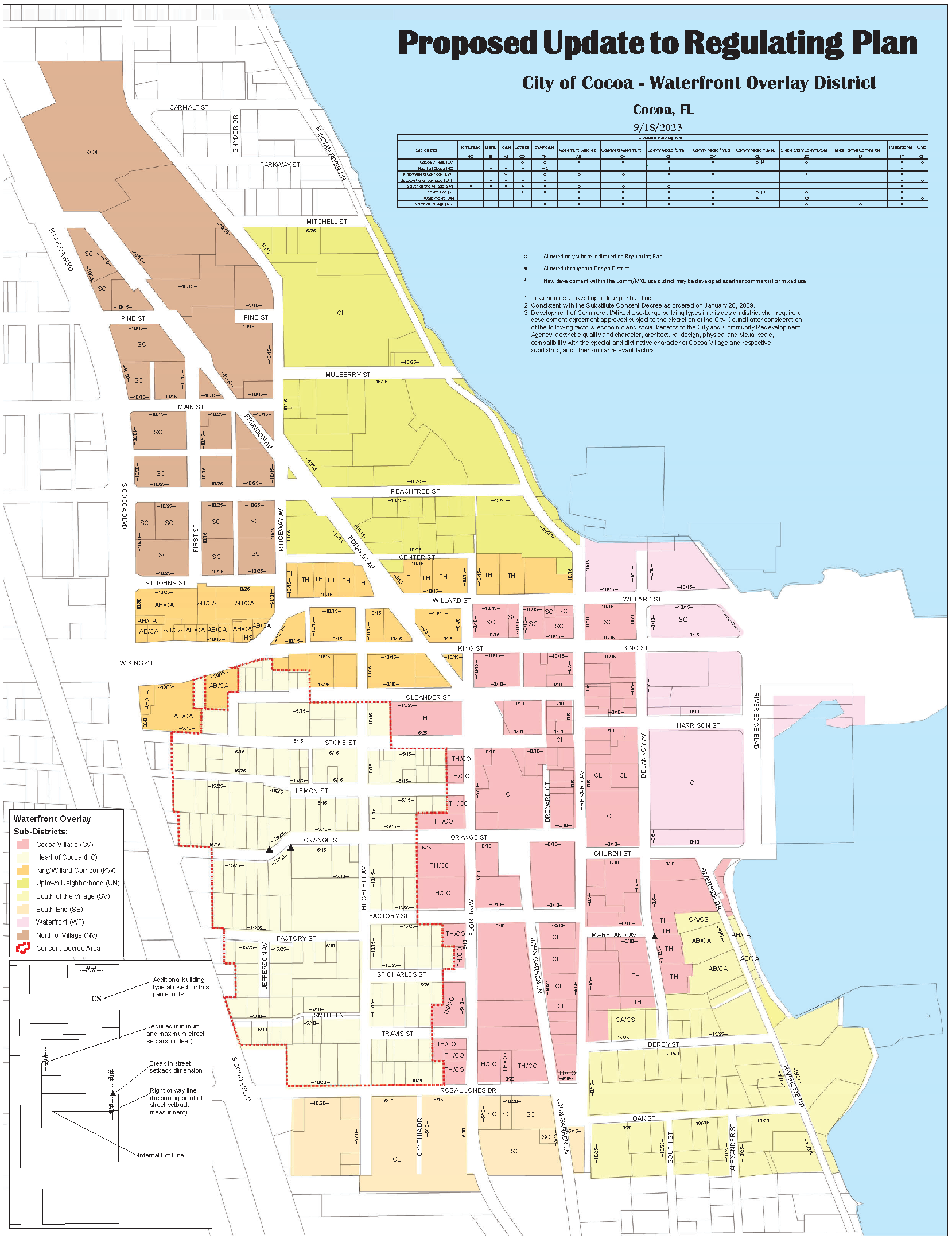
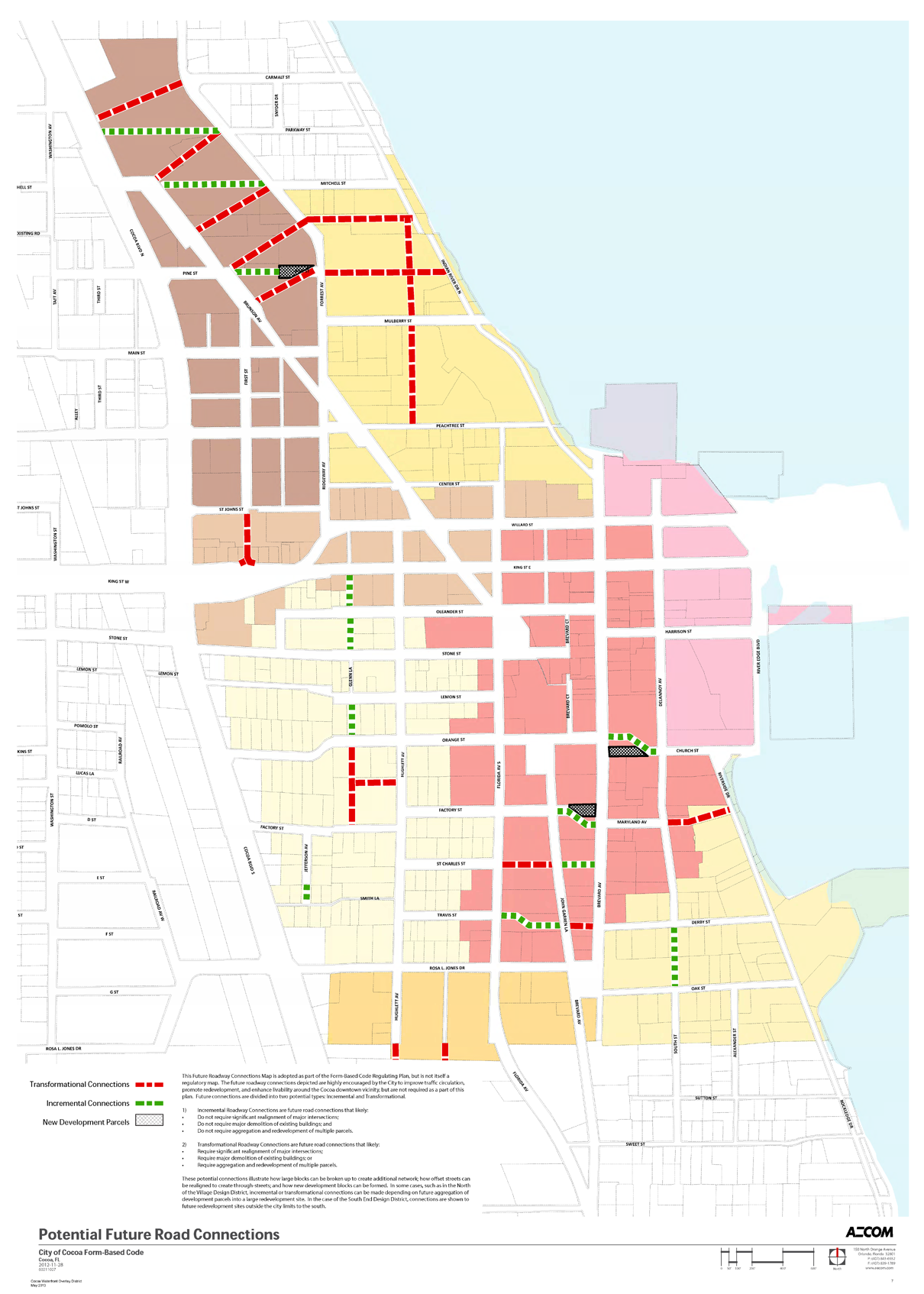
(H)
Circulation Standards.
1.
Block Pattern. The current street framework for the Cocoa Waterfront Overlay District and block size shall remain intact. Additional street connections for vehicular use and pedestrian connections should be reviewed during a submittal for application. A general Circulation Map for the Cocoa Waterfront Overlay District highlights potential connections that should be reviewed an assessed at the type of development review. The waterfront area within the Cocoa Waterfront Overlay District shall remain intact.
2.
Vehicular Access, new development.
(a)
A system of joint use driveways and cross access easements shall be established wherever feasible and the building site shall incorporate the following:
i.
A continuous service drive or cross access extending the entire length of each parcel served to provide for driveway separation consistent with access management classification system and standards.
ii.
Stub-outs and other design features to make it visually obvious that the butting properties may be tied in to provide cross access via a service drive.
iii.
A unified access and circulation system plan that includes coordinated or shared parking areas is encouraged wherever practicable.
(I)
Building Types. Building types are permitted by Sub-district when any new and/or redevelopment occurs on any parcel within the Cocoa Waterfront Zoning Overlay. The building typologies are consistent with the size, scale and character desired within each sub-district.
The following categories are included in the table provided for each building type. Each standard is labeled by a letter (A, example) which directly relates to the table provided on each building type. The categories are described as follows:
1.
Lot requirements: Provisions for minimum and maximums; lot depth, lot size and the permitted lot coverage;
2.
Building envelope: Provisions for the minimum and maximum setbacks permitted by front, side, and rear yards for Urban and Suburban development. There is a minimum and maximum setback for each lot type. The maximum and minimum frontage refers to the proportion of the lot width along which the primary building façade must be within the minimum and maximum front setback; and
3.
Accessory Structure Envelope: Provides the setbacks and maximum building footprints permitted for accessory structures. In no case shall an accessory structure exceed the height of the primary structure on the parcel.
4.
Building height: Provisions for permitted heights in stories (st). The maximum height for first floor residential development shall be fourteen (14) feet and twenty (20) feet for non-residential. The maximum height for second story and higher shall not exceed twelve (12) feet. Each building lot typology provides the range of height appropriate for the building type. Height shall be measured from finished floor.
5.
Parking provisions: The amount of parking shall be determined by Article XII, Off street parking, of the Land Development Regulations. Parking provisions provide zones where parking is permitted. The parking zone refers to any uncovered parking area located on the parcel in accordance to Appendix A, Article 12. Driveways are permitted in any zone provided the frontage requirements have been met as required by building type. The diagram illustrates a Primary and Secondary street. Primary streets are streets that are addressed to the parcel of land. Secondary streets may or may not have access to the parcel. Zones are defined and illustrated by the lot area between the principal building frontage and:
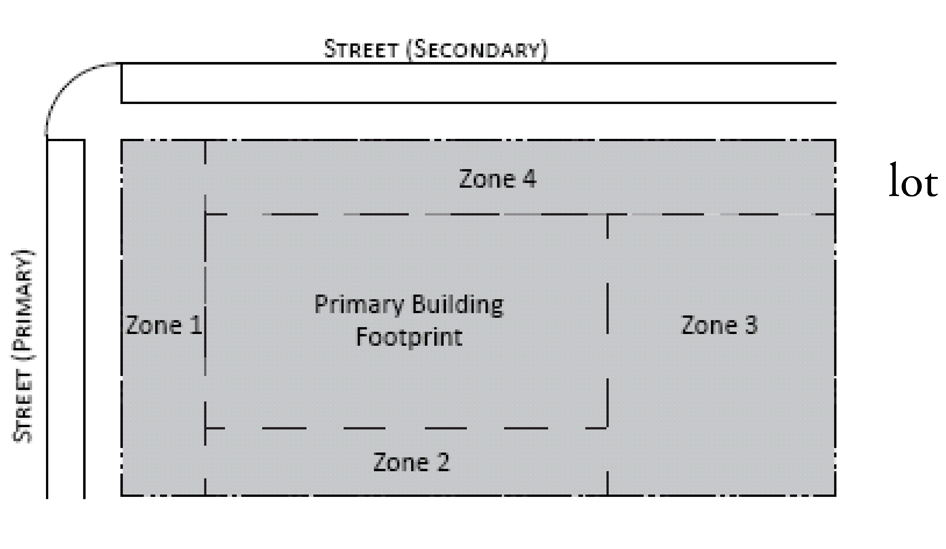
Zone 1: The right-of-way of any primary street.
Zone 2: Any common interior lot line.
Zone 3: Any rear lot line.
Zone 4: The right-of-way of any secondary street.
6.
Private frontages, refers to the area that is attached or integrated into the primary building. The building types are either required or preferred. If there are multiple frontages provided in the table, the applicant may choose what private frontage to provide per building. The private frontage area may count towards the calculation of the frontage build out requirement under the "Building Envelope" category.
Design Districts and Building Types Table
RP, permitted only where indicated on Regulating plan.
P, Permitted in the Design District.
Blank Cell, is not permitted.
* Commercial/Mixed Use is a mix of uses, ie. Office/retail, office/residential.
(1) Townhomes are permitted up to 4 units per building.
(2) Consistent with the Substitute Consent Decree as ordered on January 28, 2009.
(3) Development of Commercial/Mixed Use-Large building types in this design district shall require a development agreement approved by the City Council after consideration of the following factors: economic and social benefits to the City and Community Redevelopment Agency, aesthetic quality and character, architectural design, physical and visual scale, compatibility with the special and distinctive character of the Cocoa Village, and other similar relevant factors.
HO HOMESTEAD
A building lot located and designed to accommodate a detached building with large side, rear yards and front yards for a rural area.
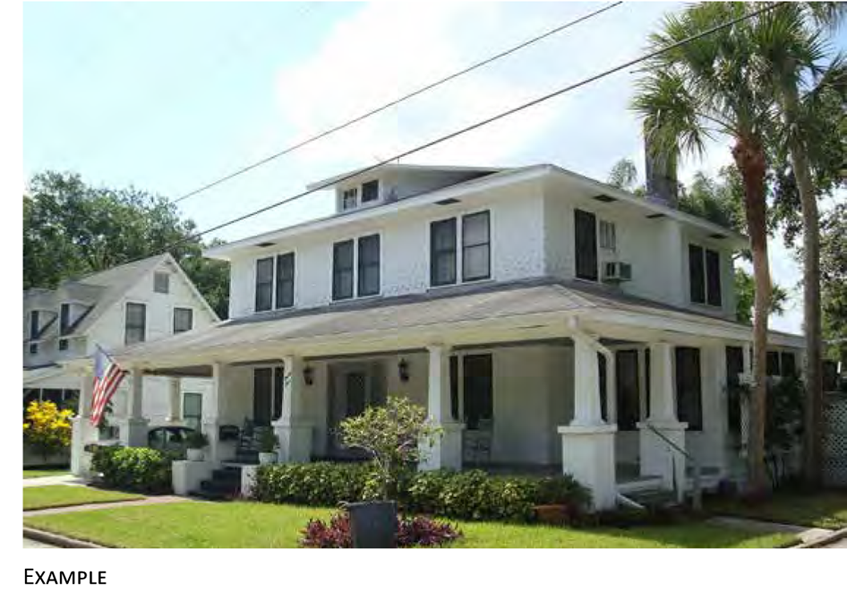
LOT REQUIREMENTS AND BUILDING
ENVELOPE
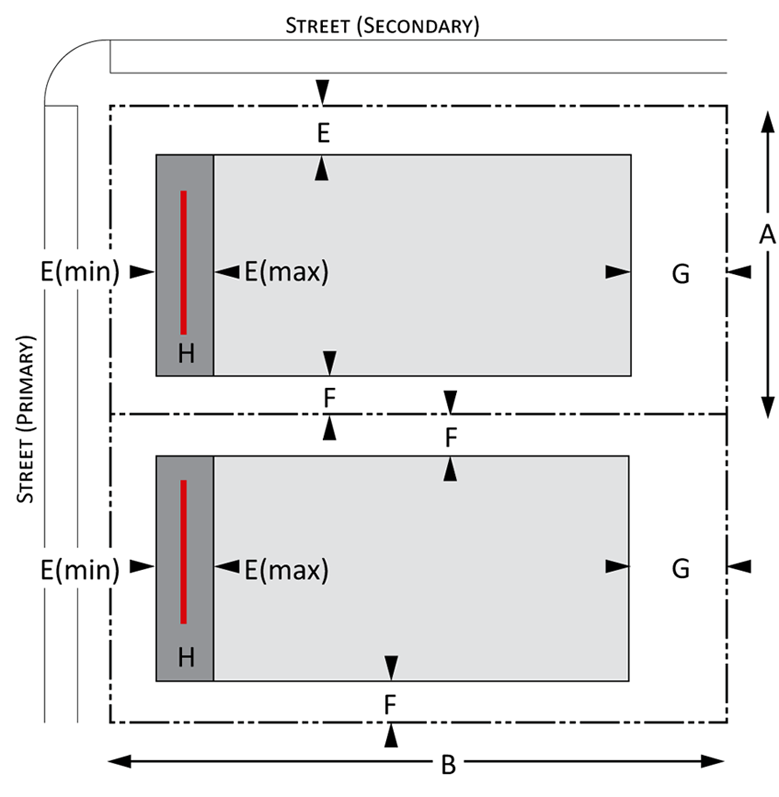
ACCESSORY STRUCTURE ENVELOPE
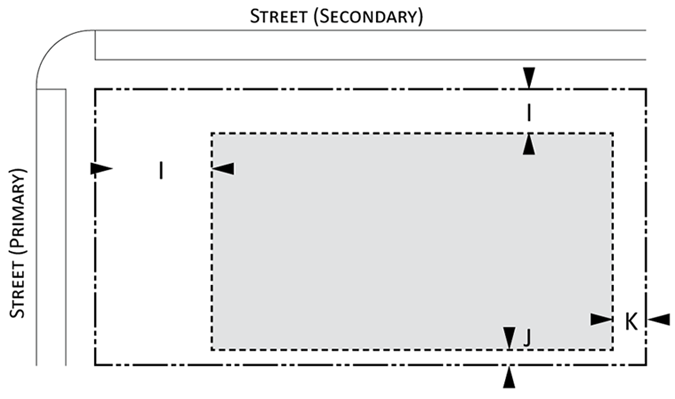
BUILDING HEIGHT
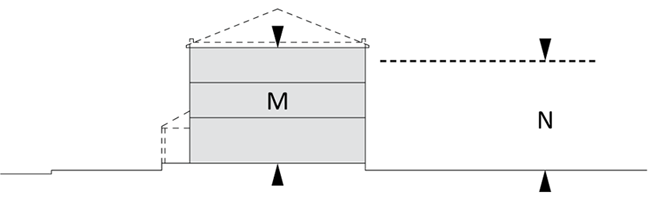
PARKING LOCATION
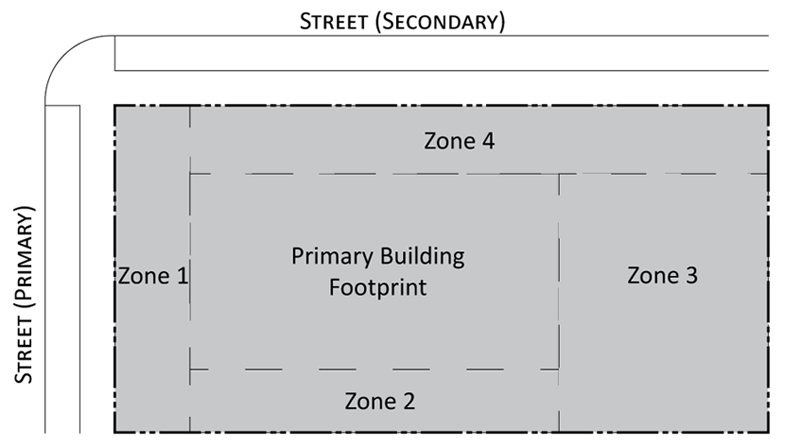
ES ESTATE
A building lot located and designed to accommodate a detached building with large side, rear and front yards.
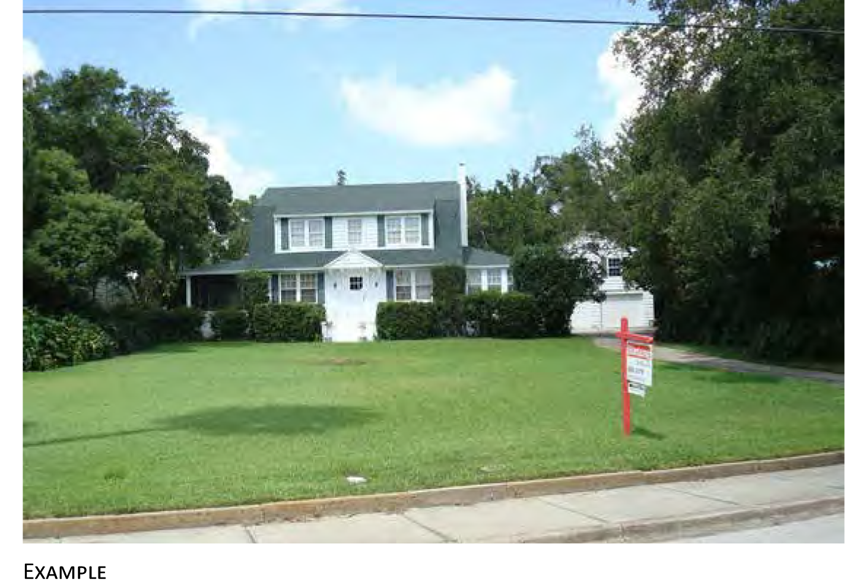
LOT REQUIREMENTS AND BUILDING ENVELOPE
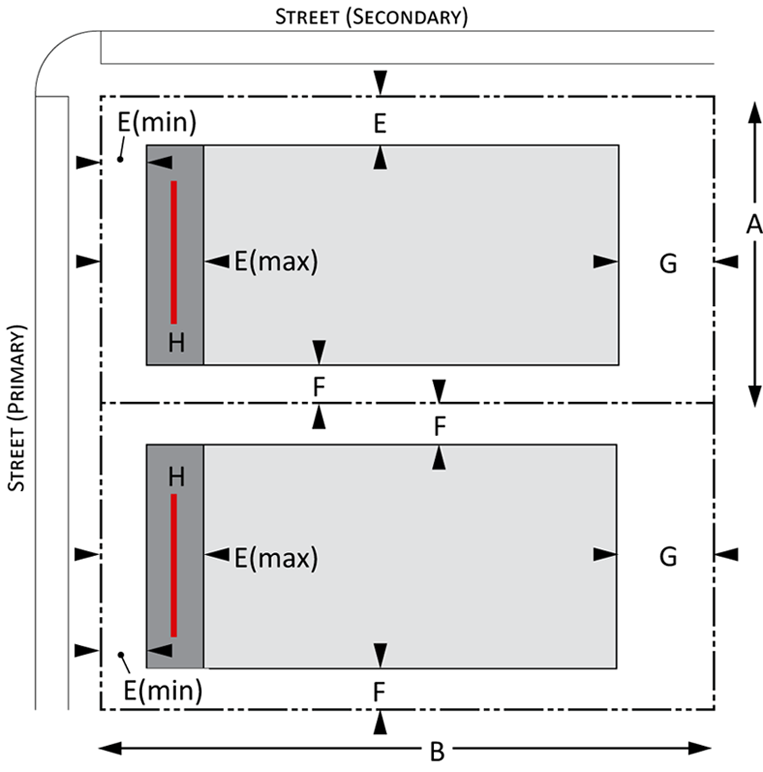
ACCESSORY STRUCTURE ENVELOPE
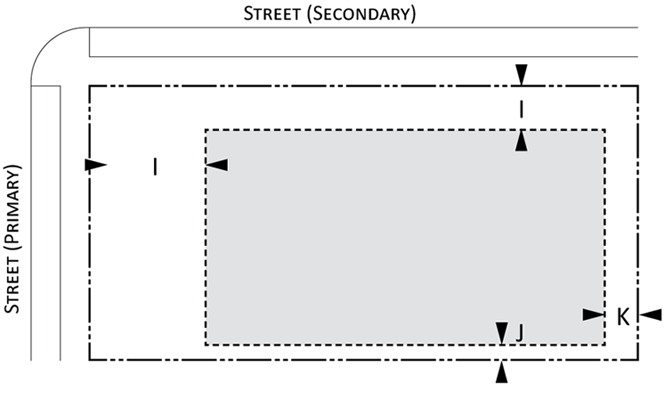
BUILDING HEIGHT
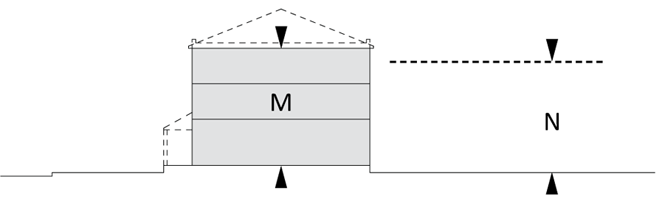
PARKING LOCATION
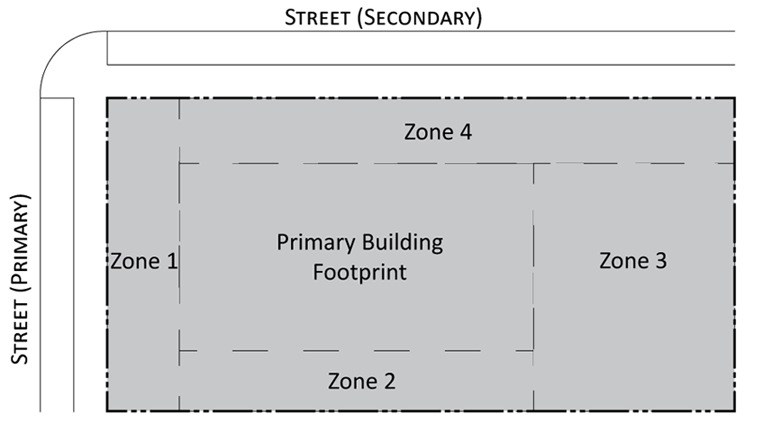
HS HOUSE
A building lot located and designed to accommodate a detached building with small side yards and a large front yard.
LOT REQUIREMENTS AND BUILDING ENVELOPE
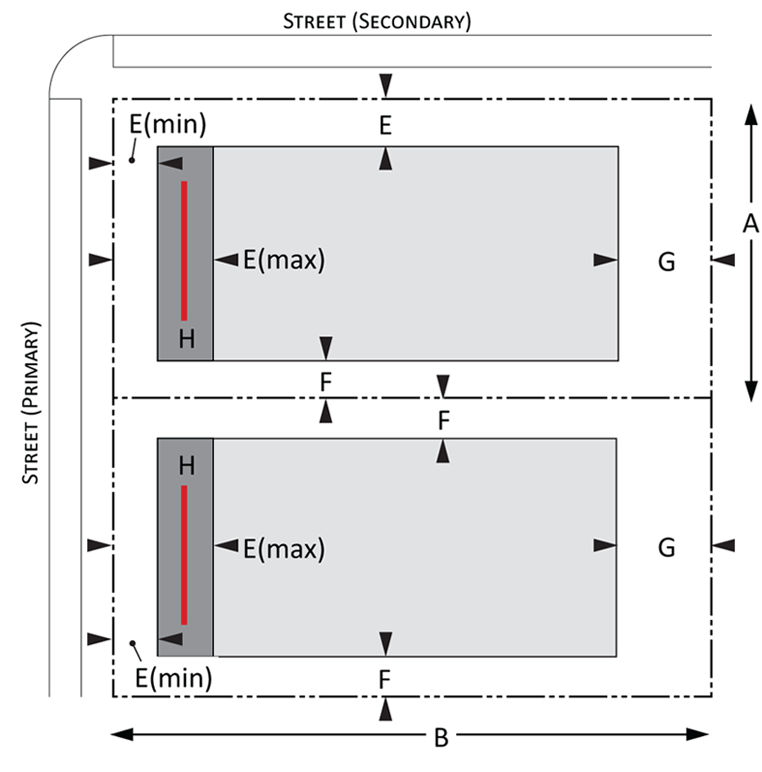
ACCESSORY STRUCTURE ENVELOPE
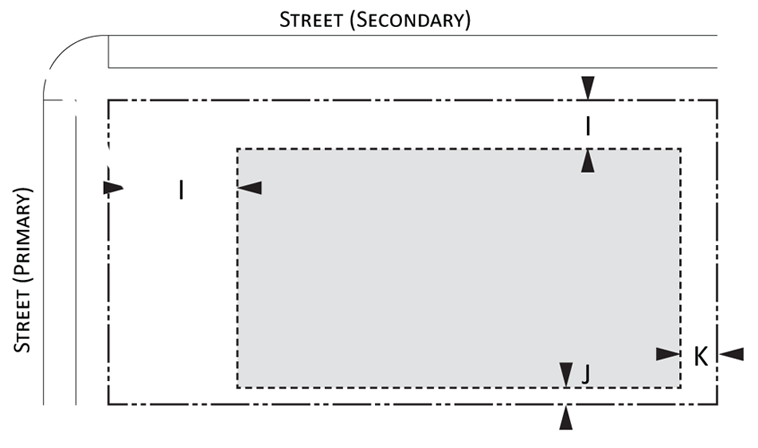
BUILDING HEIGHT
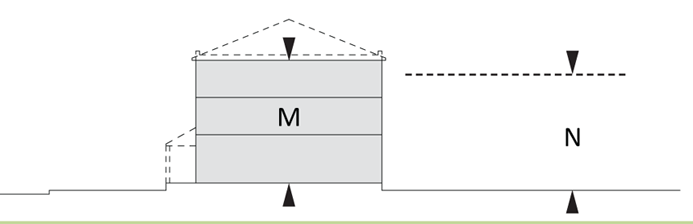
PARKING LOCATION
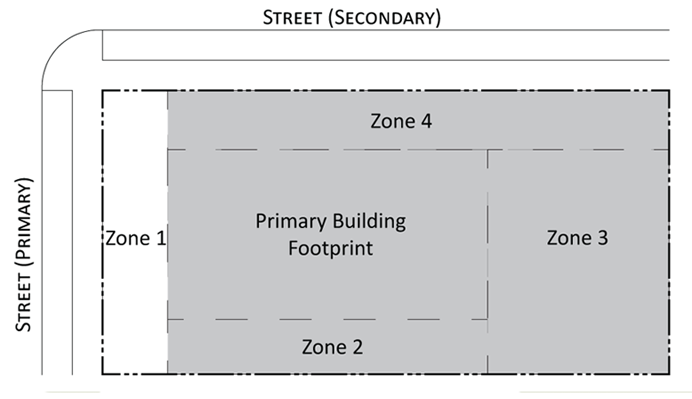
CO COTTAGE
A building lot located and designed to accommodate a small detached building with small side and front yards.
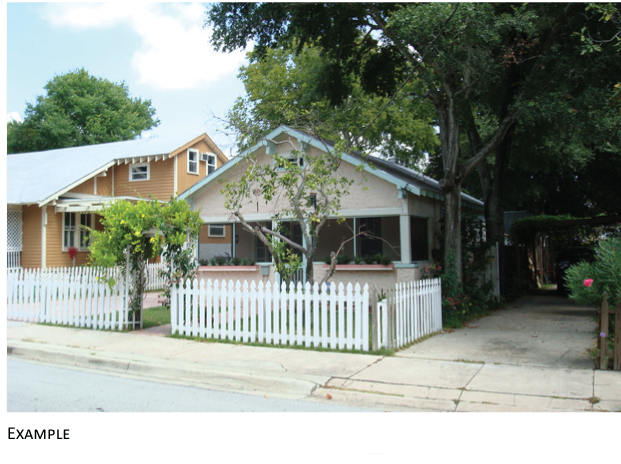
LOT REQUIREMENTS AND BUILDING ENVELOPE
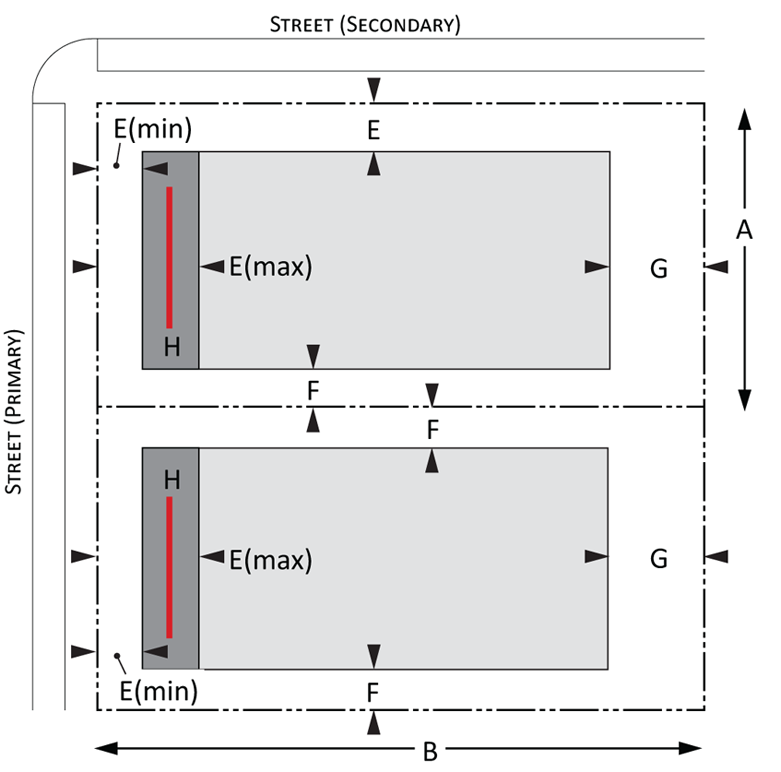
ACCESSORY STRUCTURE ENVELOPE
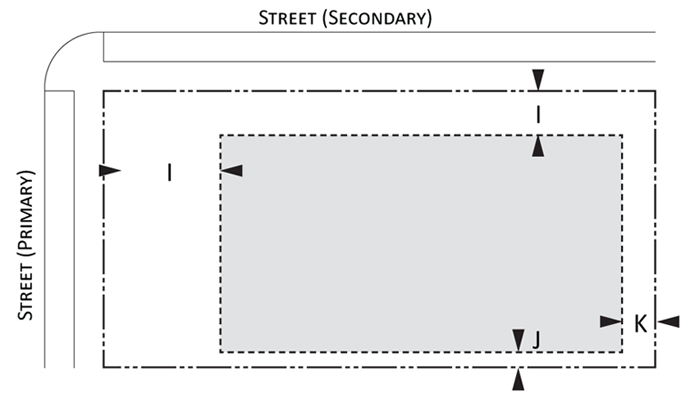
BUILDING HEIGHT
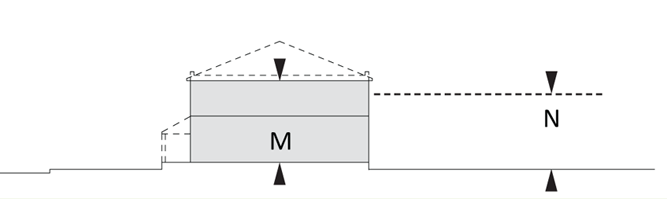
PARKING LOCATION
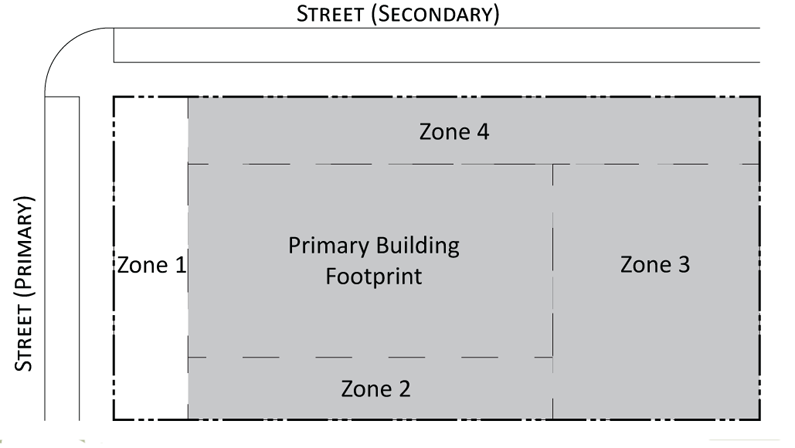
TH TOWNHOUSE
A building lot located and designed to accommodate a building with sidewalks on both side building lot lines and a private garden to the rear.
*10′ Separation required from adjacent detached building
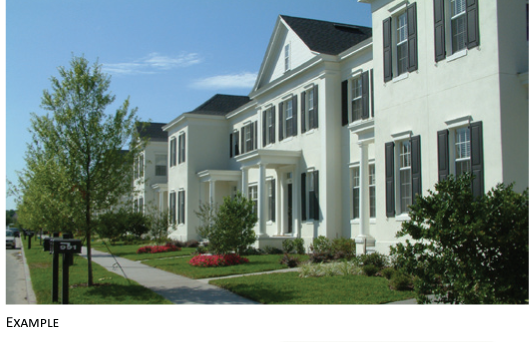
LOT REQUIREMENTS AND BUILDING ENVELOPE
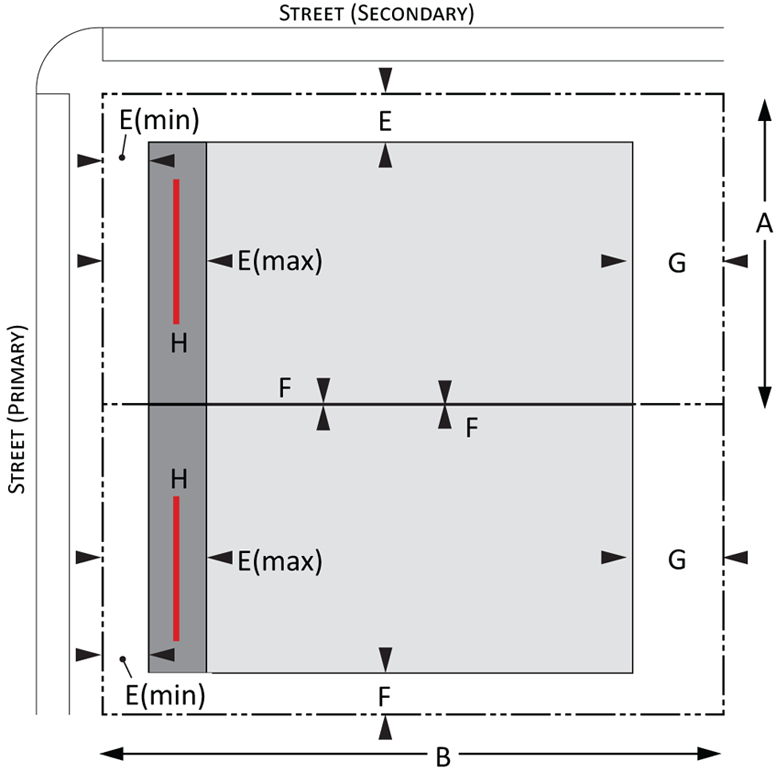
ACCESSORY STRUCTURE ENVELOPE
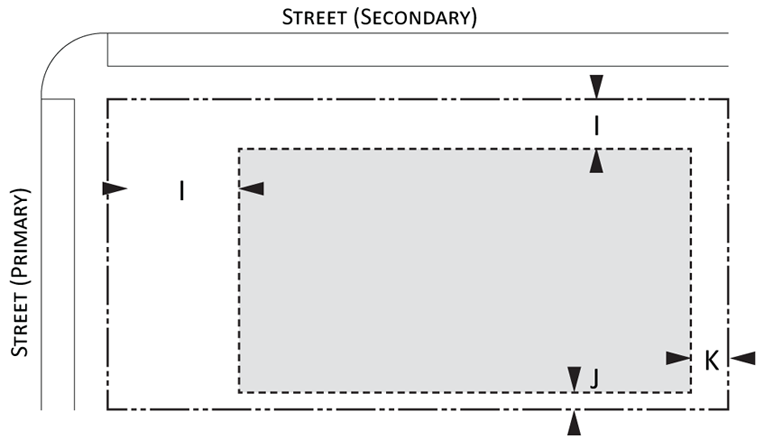
BUILDING HEIGHT
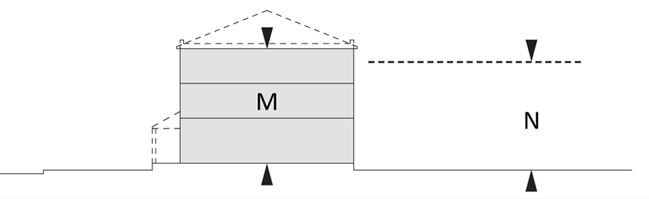
PARKING LOCATION
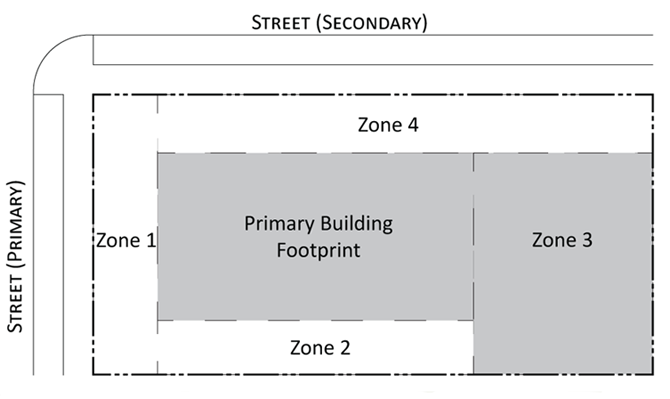
AB APARTMENT BUILDING
A building lot located and designed to accommodate multiple dwellings above or beside each other in a building that occupies most of its building lot width and is placed close to the sidewalk.
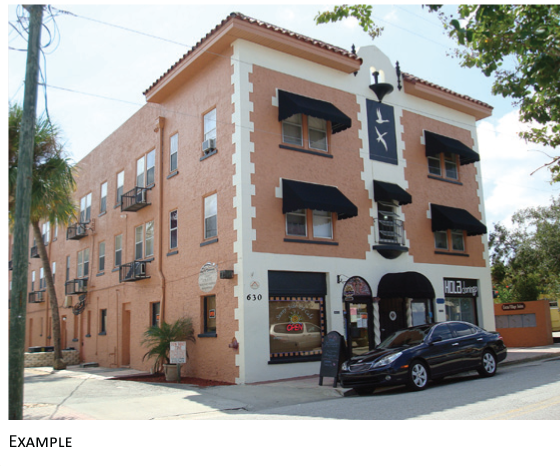
LOT REQUIREMENTS AND BUILDING ENVELOPE
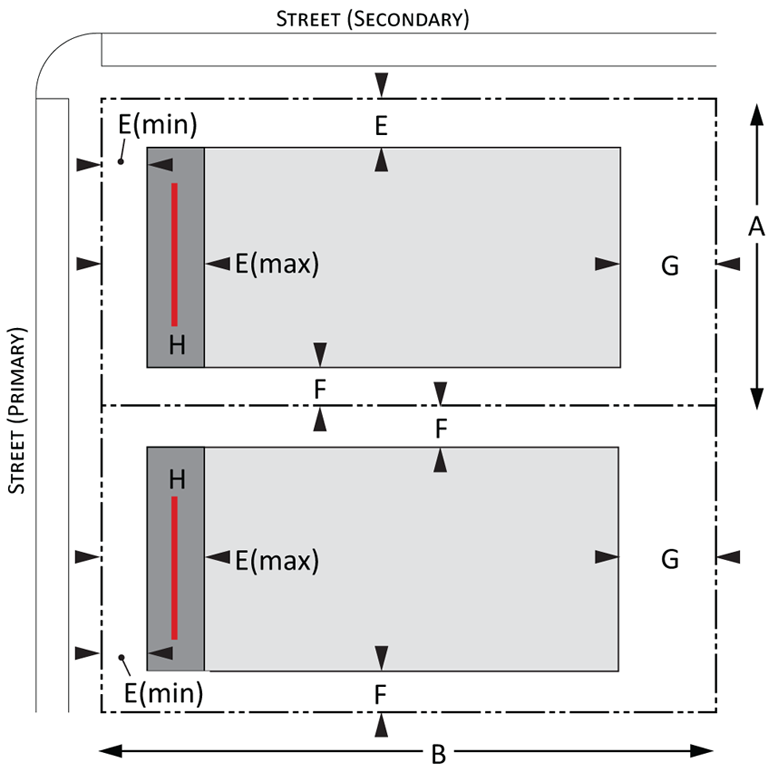
ACCESSORY STRUCTURE ENVELOPE
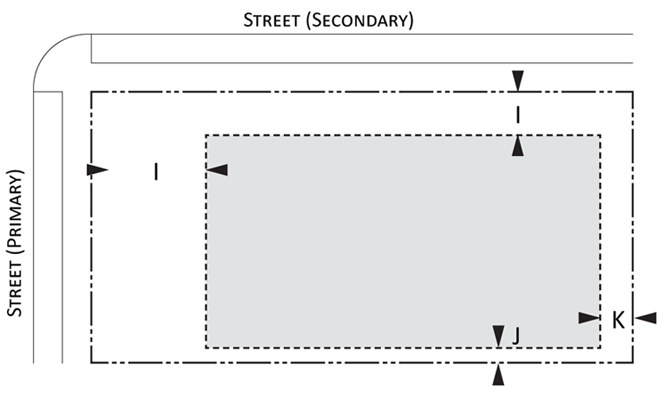
BUILDING HEIGHT
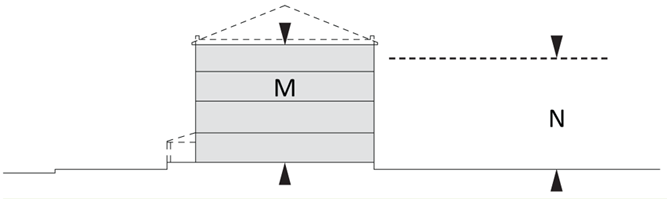
PARKING LOCATION
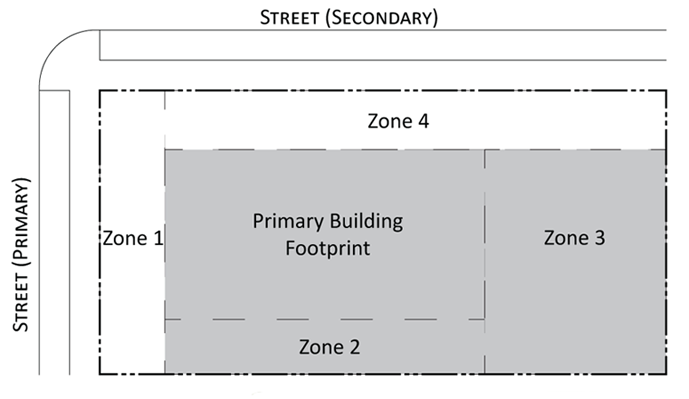
CA COURTYARD APARTMENT
A building lot located and designed to accommodate multiple dwellings arranged around and fronting on a central garden or courtyard that may be partially or wholly open to the street.
*10′ Separation required from adjacent detached building
LOT REQUIREMENTS AND BUILDING ENVELOPE
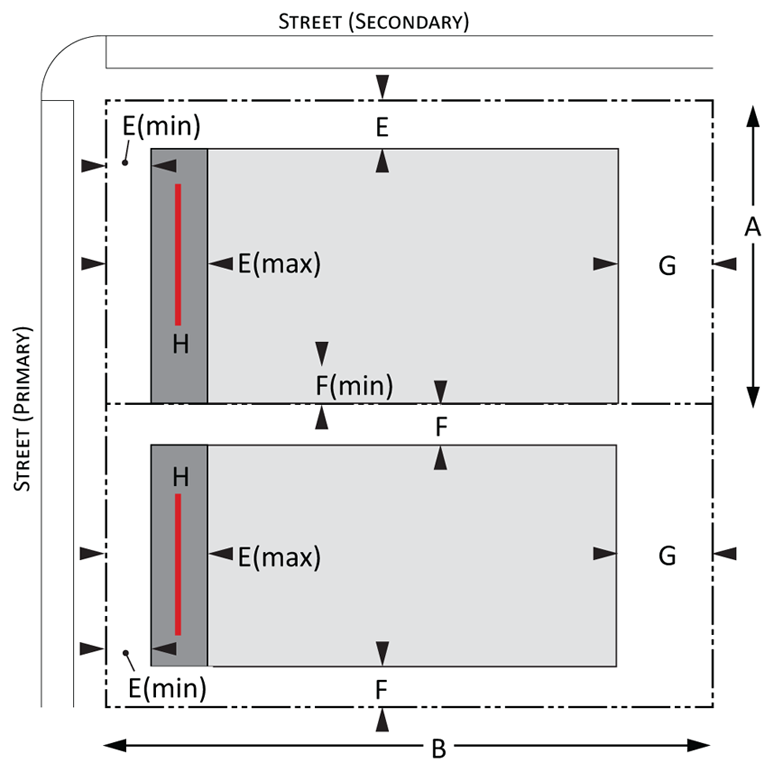
ACCESSORY STRUCTURE ENVELOPE
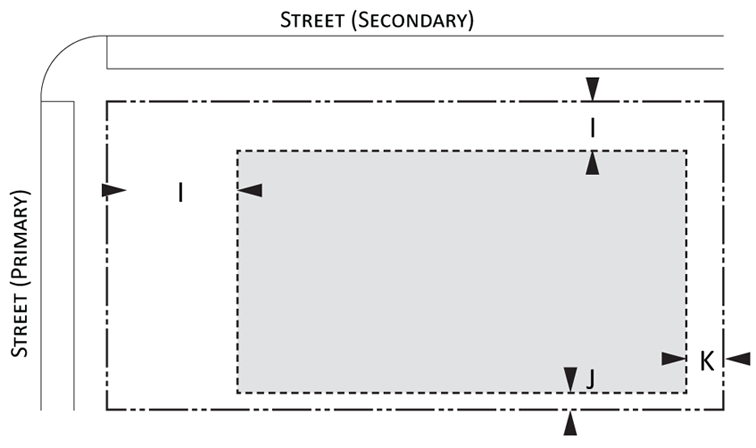
BUILDING HEIGHT
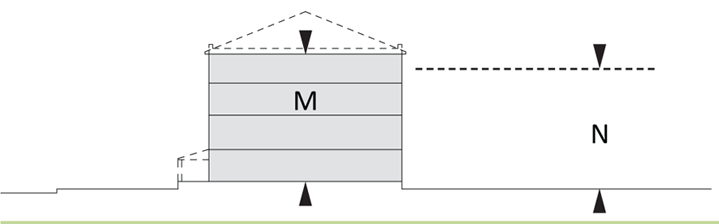
PARKING LOCATION
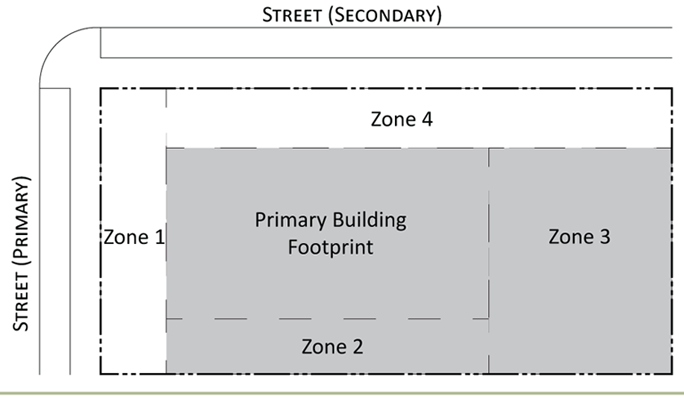
CS COMMERCIAL/MIXED-USE—SMALL
A building lot located and designed to accommodate a multi story building with commercial, office and/or multiple dwellings in any story that is designed for smaller lot sizes.
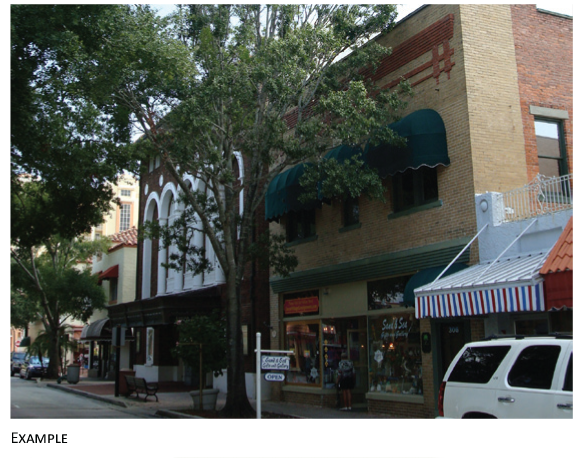
LOT REQUIREMENTS AND BUILDING ENVELOPE
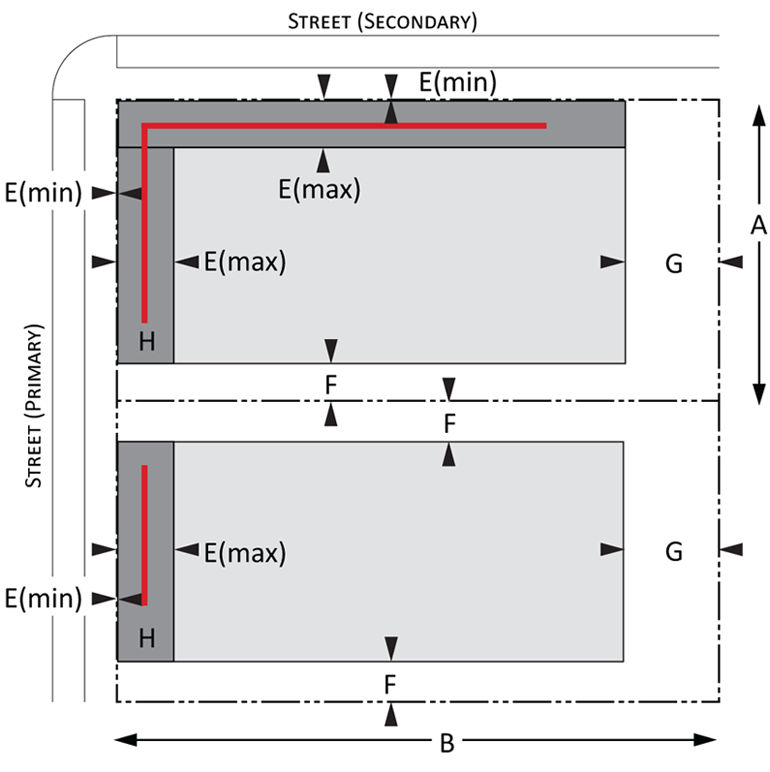
ACCESSORY STRUCTURE ENVELOPE
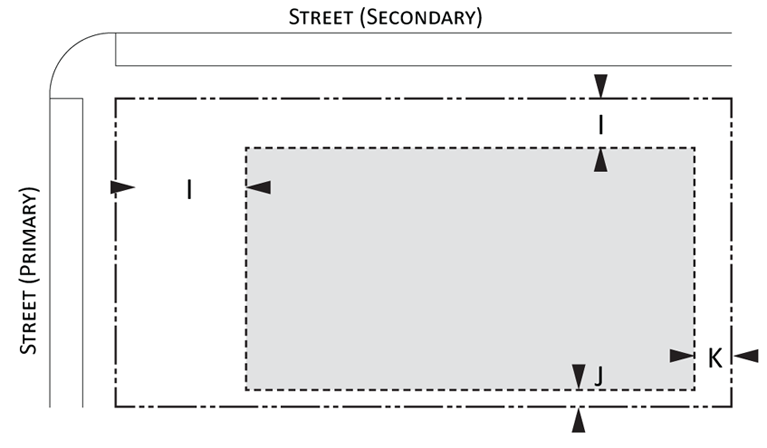
BUILDING HEIGHT
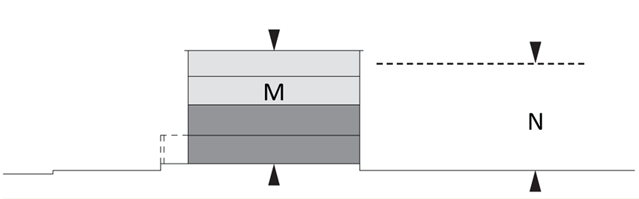
PARKING LOCATION
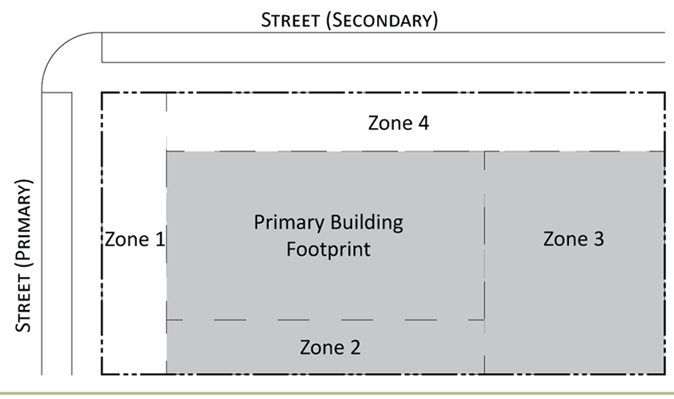
CM COMMERCIAL/MIXED-USE—MEDIUM
A building lot located and designed to accommodate a multi story building with commercial, office and/or multiple dwellings in any story that is designed for average lot sizes.

LOT REQUIREMENTS AND BUILDING ENVELOPE
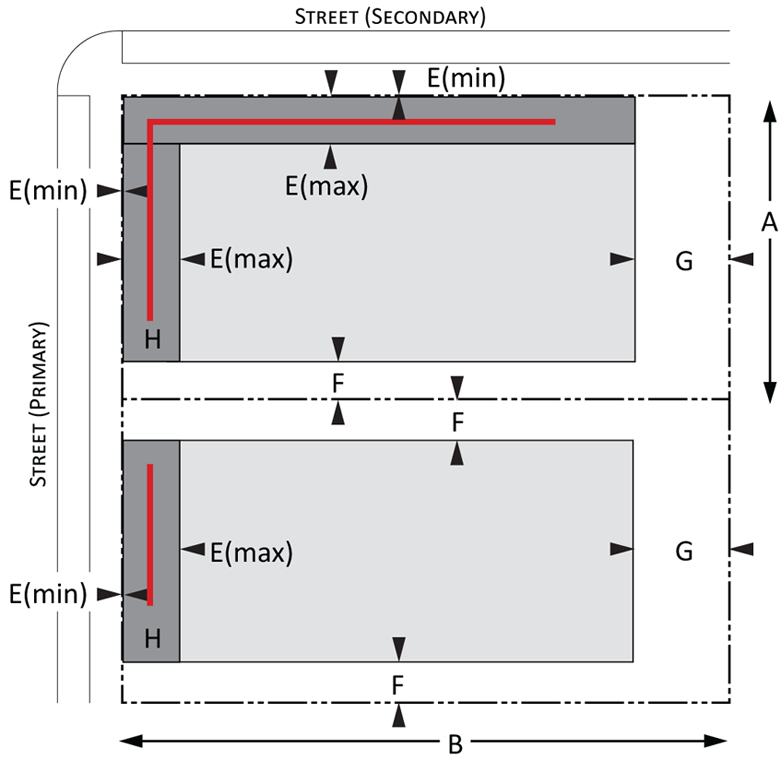
ACCESSORY STRUCTURE ENVELOPE
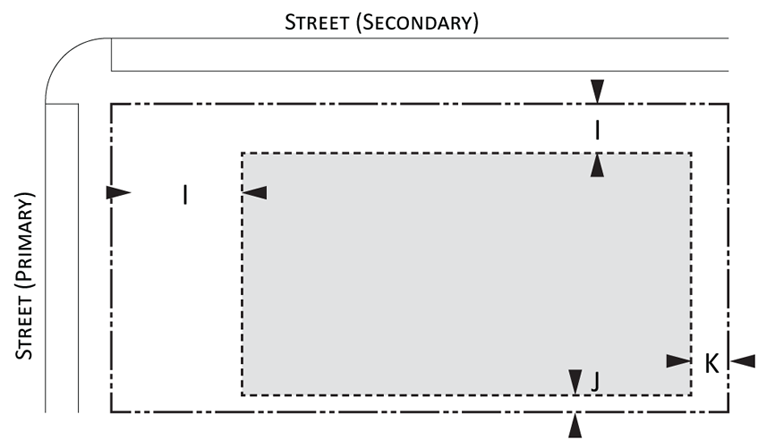
BUILDING HEIGHT
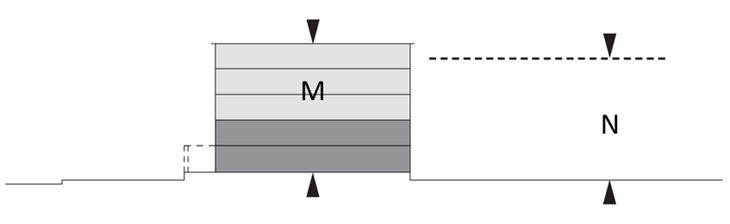
PARKING LOCATION
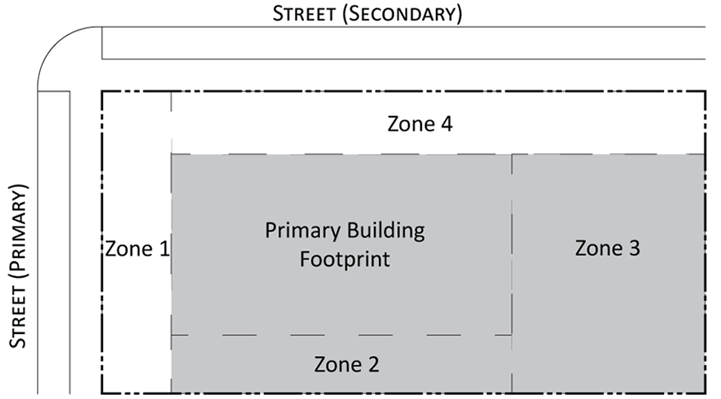
CL COMMERCIAL/MIXED-USE—LARGE
A building lot located and designed to accommodate a multi story building with commercial, office and/or multiple dwellings in any story that is designed for larger lot sizes.
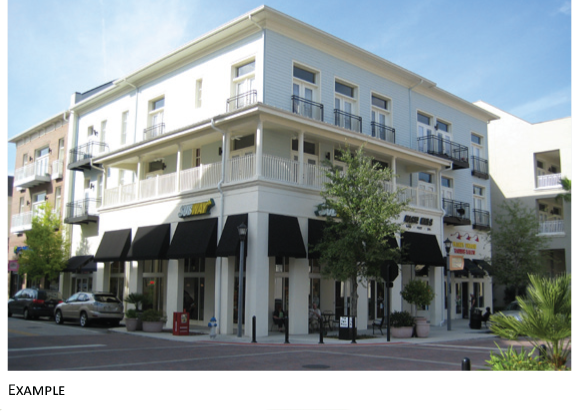
LOT REQUIREMENTS AND BUILDING ENVELOPE
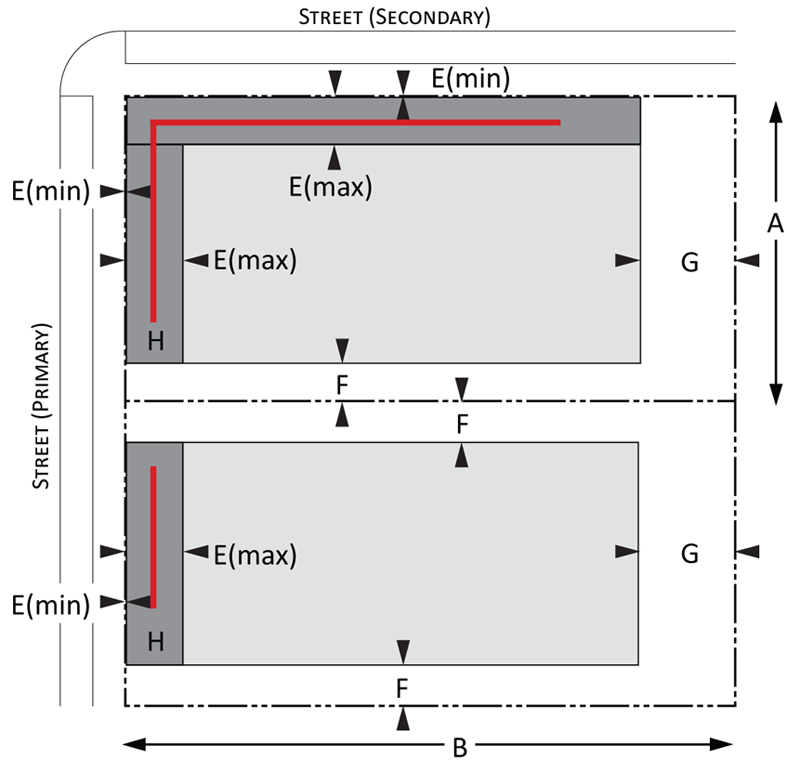
ACCESSORY STRUCTURE ENVELOPE
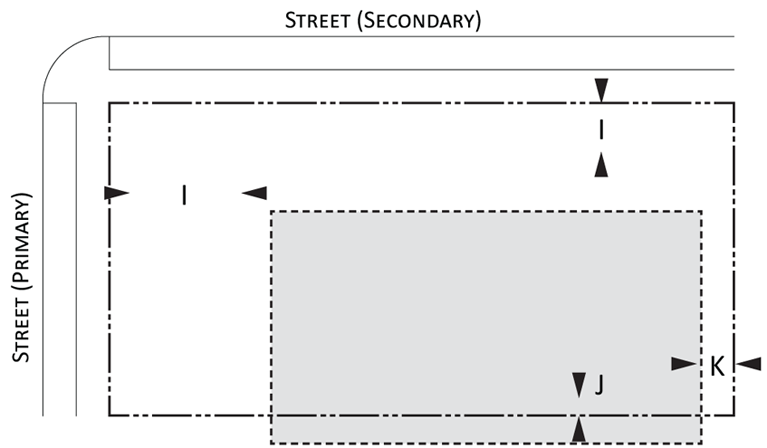
BUILDING HEIGHT
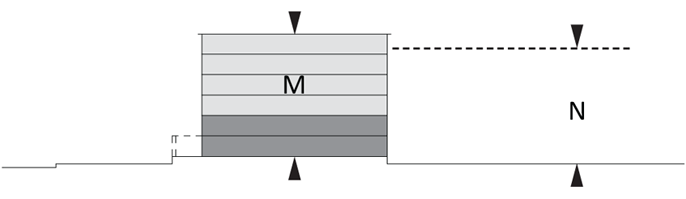
PARKING LOCATION
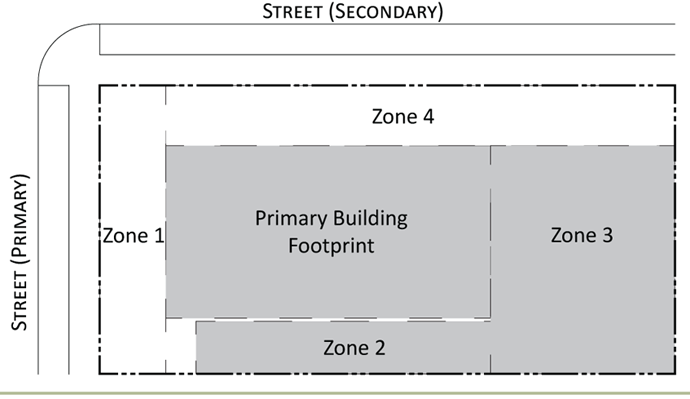
SC SINGLE STORY COMMERCIAL BUILDING
A building lot located and designed to accommodate single use office and retail.

LOT REQUIREMENTS AND BUILDING ENVELOPE
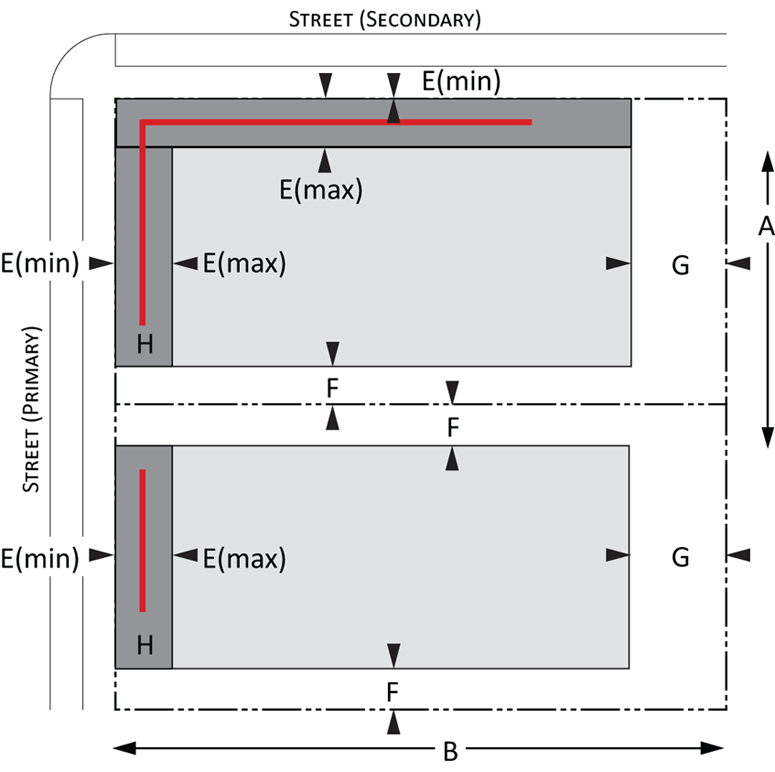
ACCESSORY STRUCTURE ENVELOPE
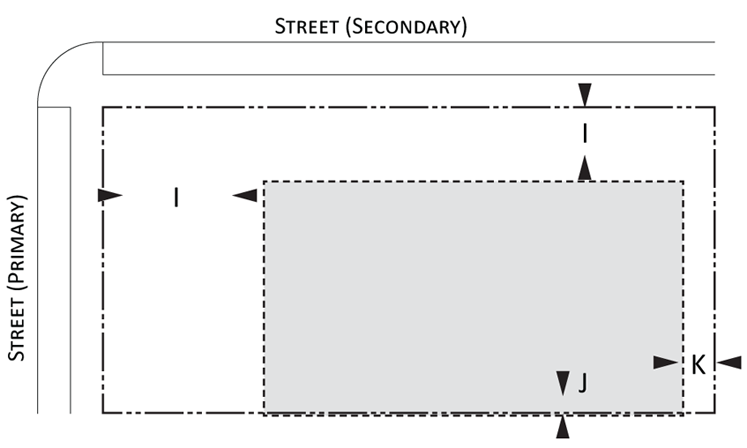
BUILDING HEIGHT
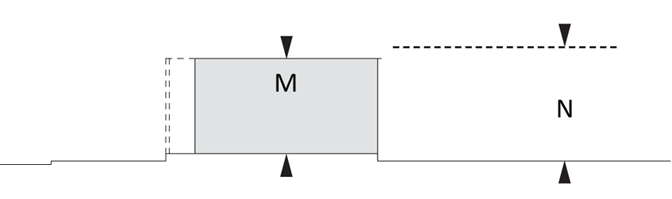
PARKING LOCATION
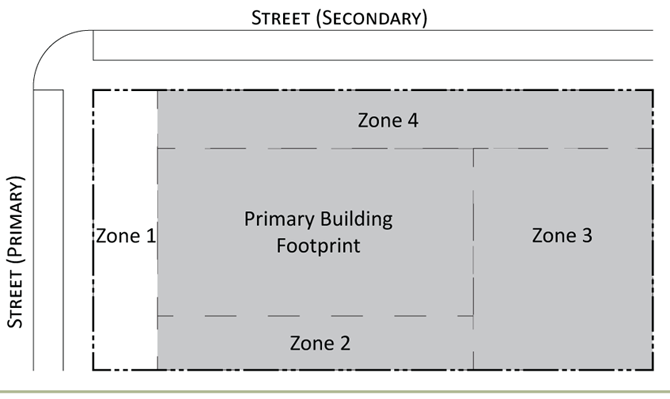
LF LARGE FOOTPRINT SINGLE STORY COMMERCIAL BUILDING
A building lot located and designed to accommodate a large footprint building with one or more uses.

LOT REQUIREMENTS AND BUILDING ENVELOPE
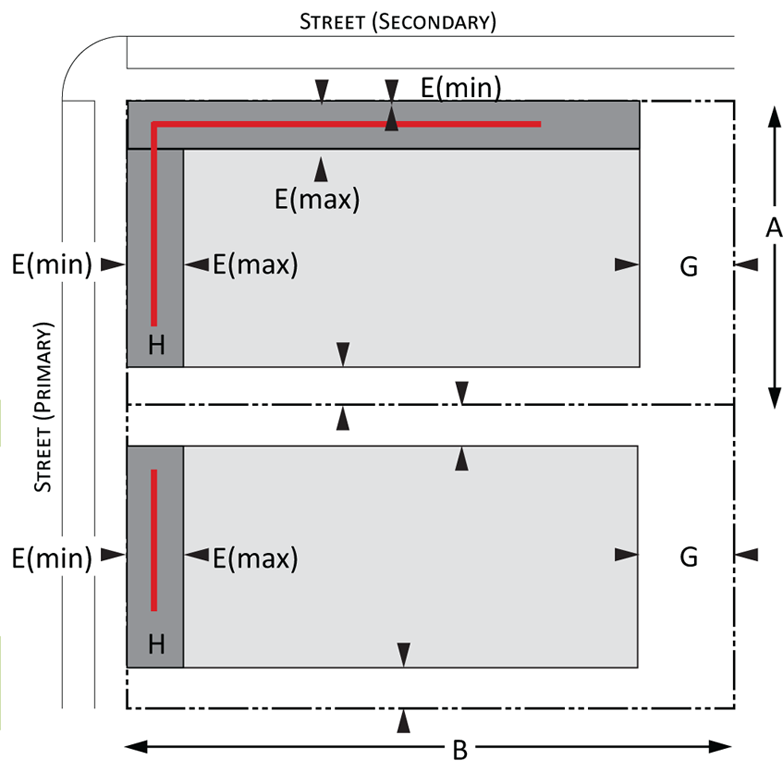
ACCESSORY STRUCTURE ENVELOPE
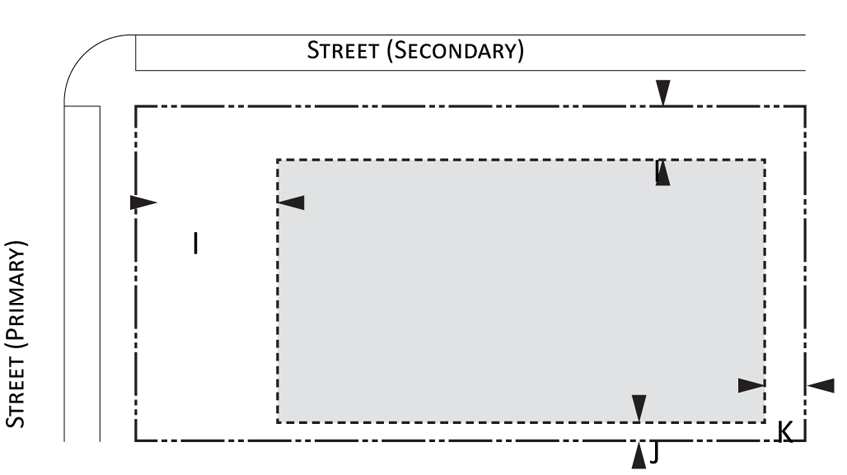
BUILDING HEIGHT
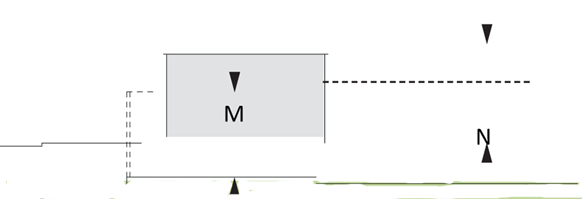
PARKING LOCATION
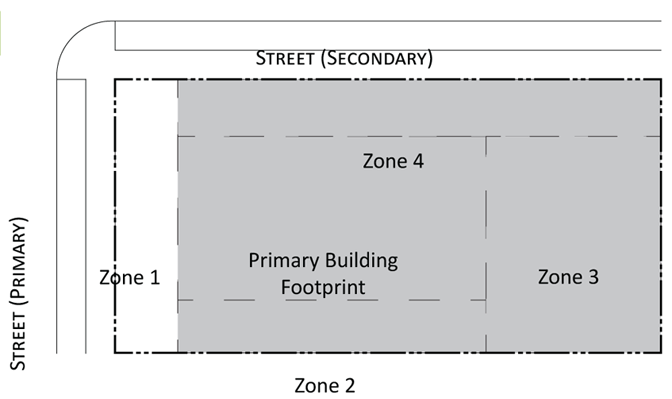
IT INSTITUTIONAL
A building lot located and designed to accommodate institutional users such as day care, social services, hospitals, places of worship, and schools.
*Ground floor transparency requirement reduced to 25%

LOT REQUIREMENTS AND BUILDING ENVELOPE
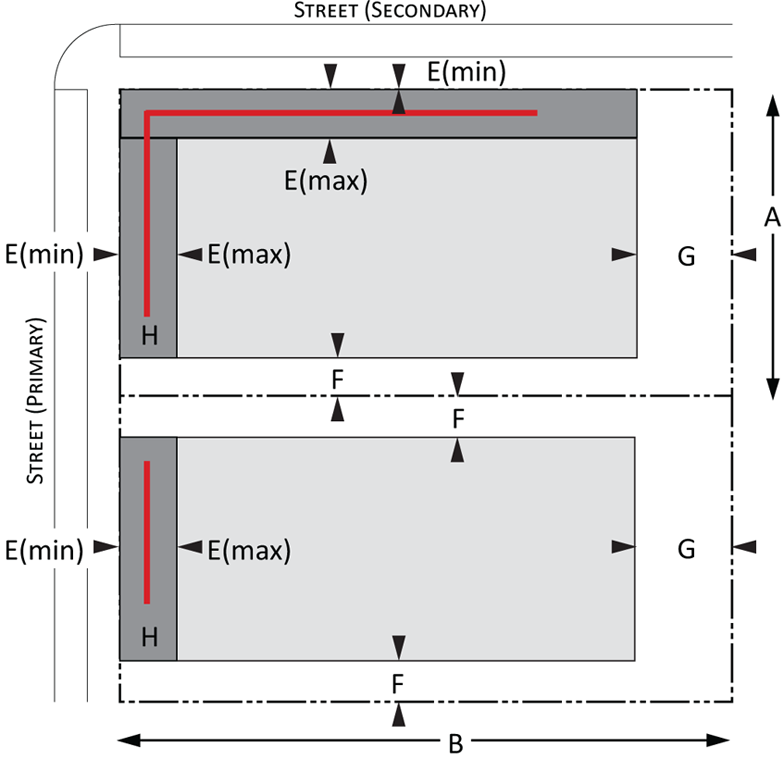
ACCESSORY STRUCTURE ENVELOPE
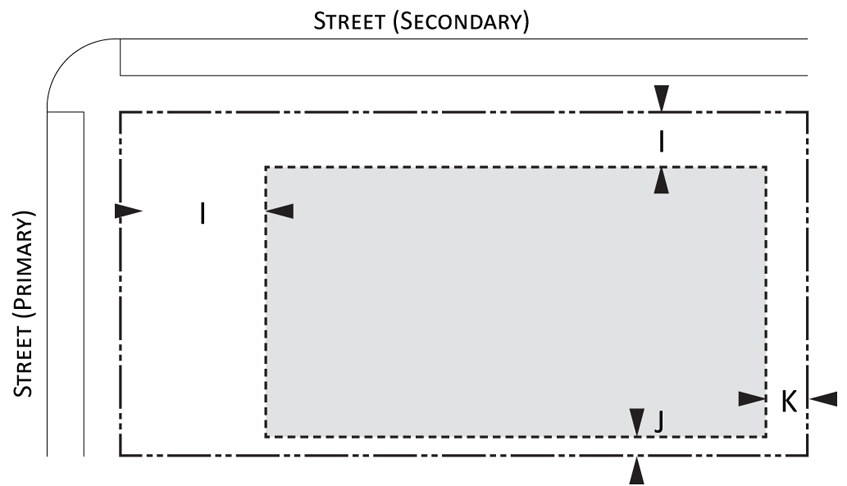
BUILDING HEIGHT
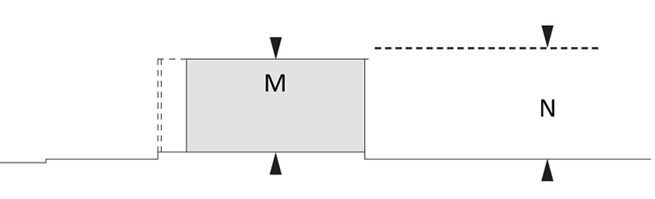
PARKING LOCATION
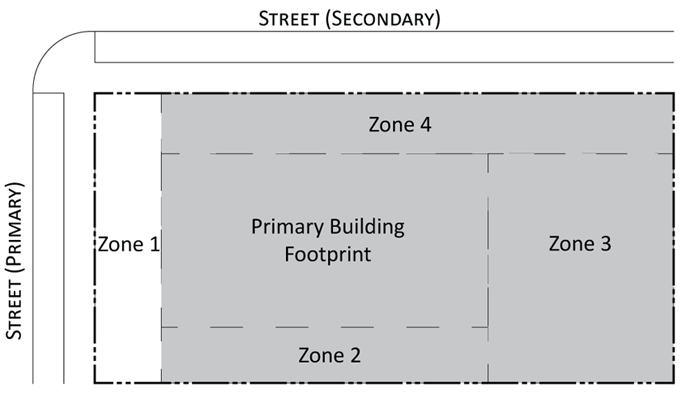
CI CIVIC BUILDING
A building lot located and designed to accommodate a building containing government uses.
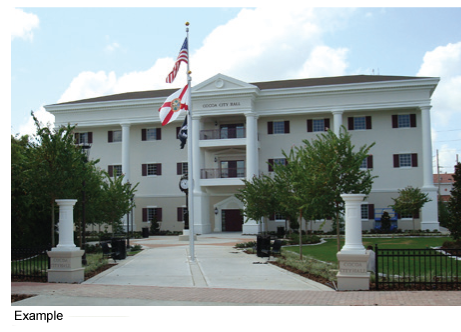
LOT REQUIREMENTS AND BUILDING ENVELOPE
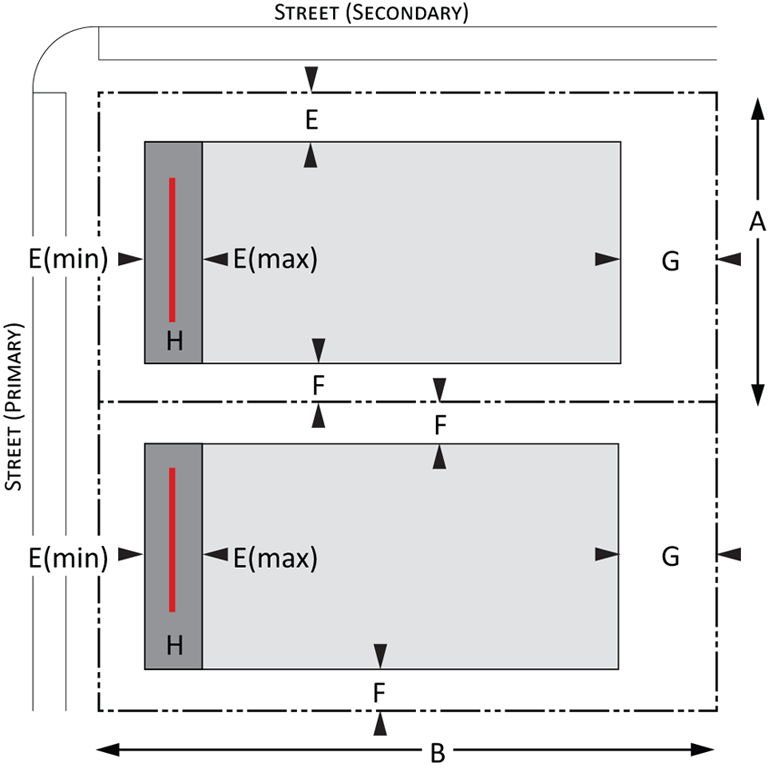
ACCESSORY STRUCTURE ENVELOPE
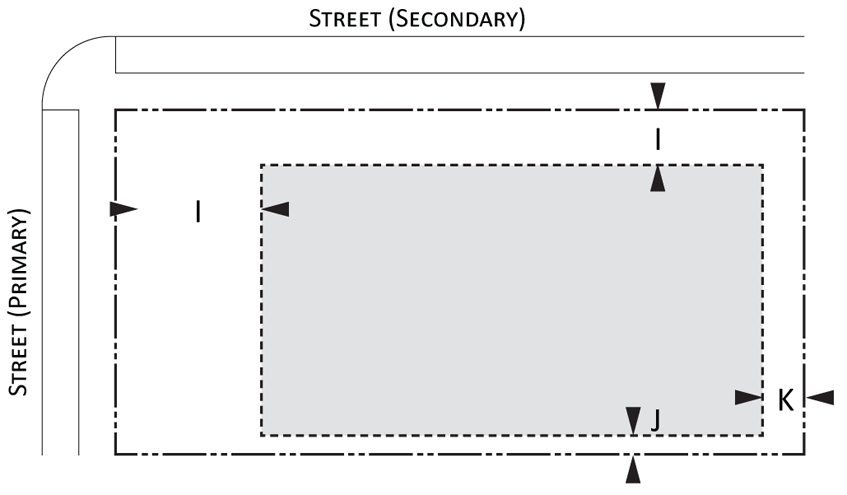
BUILDING HEIGHT
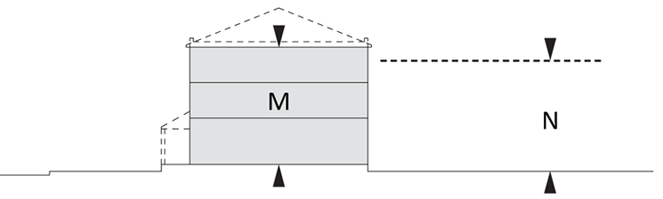
PARKING LOCATION
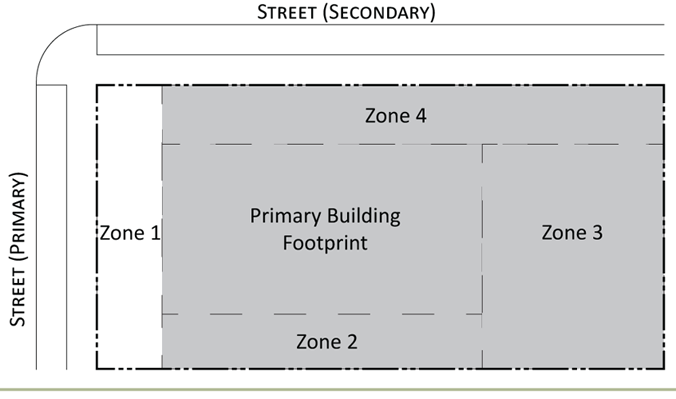
(J)
Design Standards. Each building type permits one principal building at the frontage and one outbuilding to the rear of the principal building as provided for each lot requirements by building type.
The following private frontages are either required or permitted by building type and/or district as provided in the tables on each building type. The specific parameters for each private frontage are illustrated in this section.
1.
Range of Private Frontages:
(a)
Commercial(C)
(b)
Porch (P)
(c)
Stoop (S)
(d)
Forecourt (F)
P PORCH (Sec. (J)(1)(a))
The facade is set back from the front lot line per applicable street setback requirements. The facade includes an attached front porch structure. A wide variety of porch designs are possible.
FRONTAGE ZONE AND INTERFACE ZONE DIMENSIONS
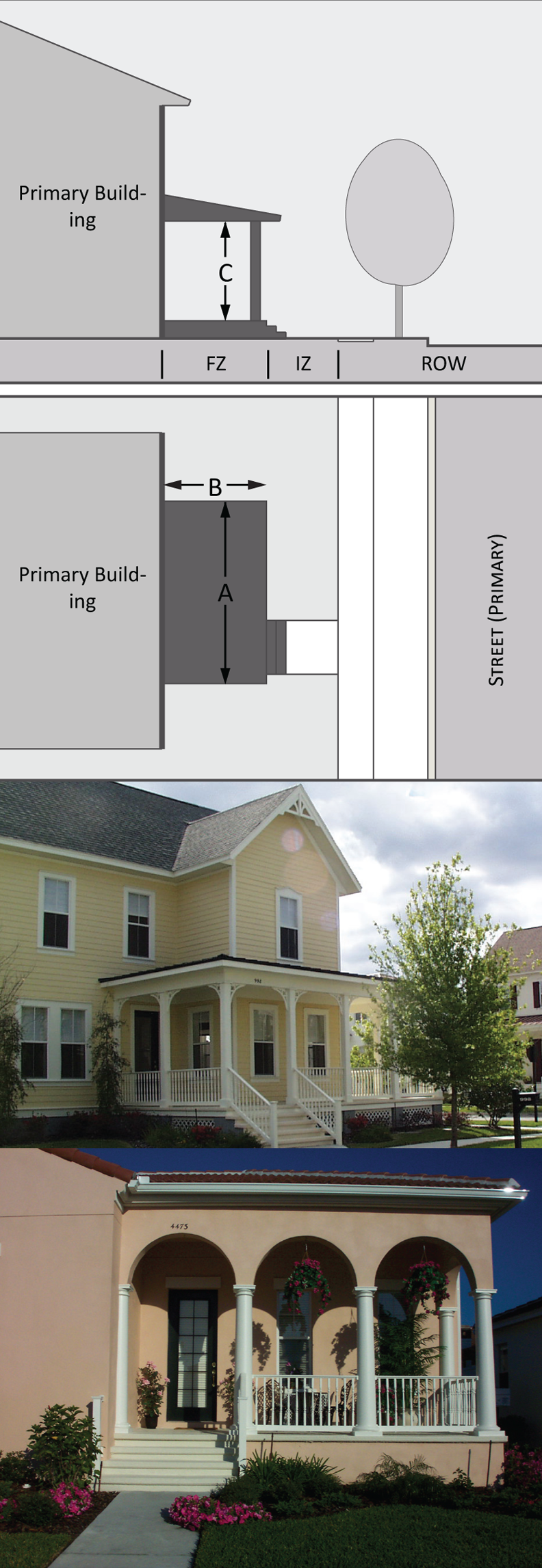
S STOOP (Sec. (J)(1)(b))
The facade is set back from the front lot line per applicable street setback requirements. The facade includes an attached entry stoop (an elevated landing with stairs) that is placed at or near the front lot line. The gound floor is elevated to provide privacy. The stoop may include a roof.
FRONTAGE ZONE AND INTERFACE ZONE DIMENSIONS
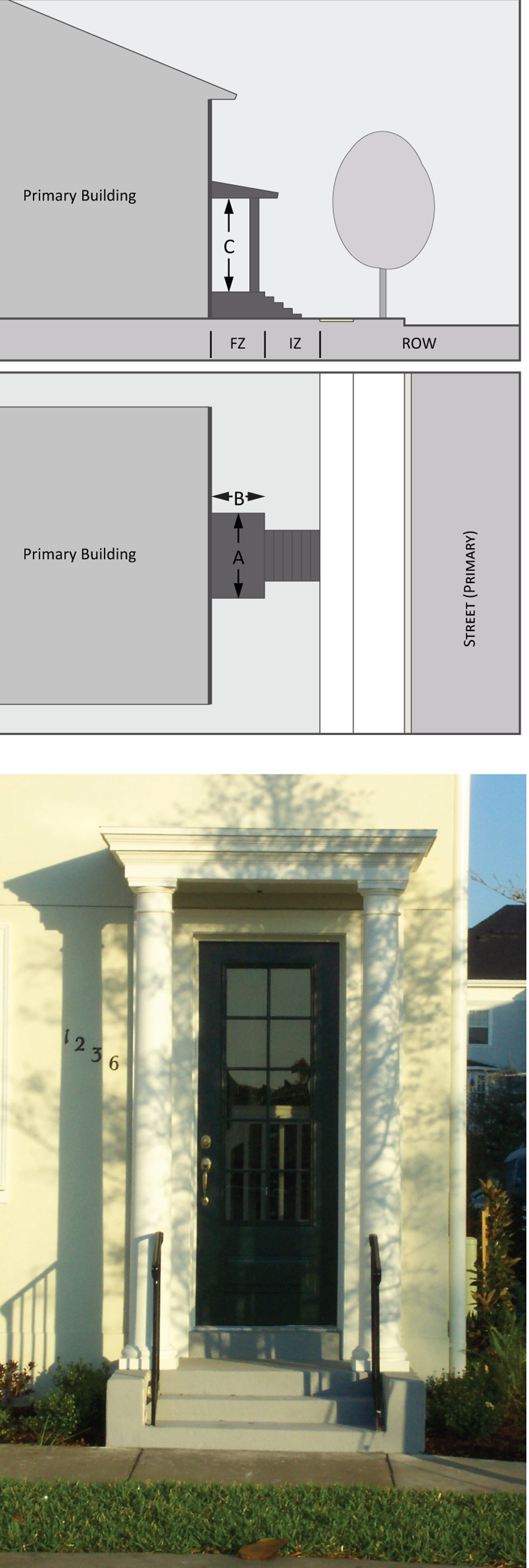
F FORECOURT (Sec. (J)(1)(C))
The facade is set back from the front lot line per applicable street setback requirements. The portion of the facade is recessed to form an uncovered court. The court is suitable for outdoor dining, gardens, vehicle drop-offs, formal entries etc. A fence or wall may be used to define the private space of the court. The court may be elevated behind a retaining wall at or near the front lot line with entry steps to the court.
FRONTAGE ZONE AND INTERFACE ZONE DIMENSIONS
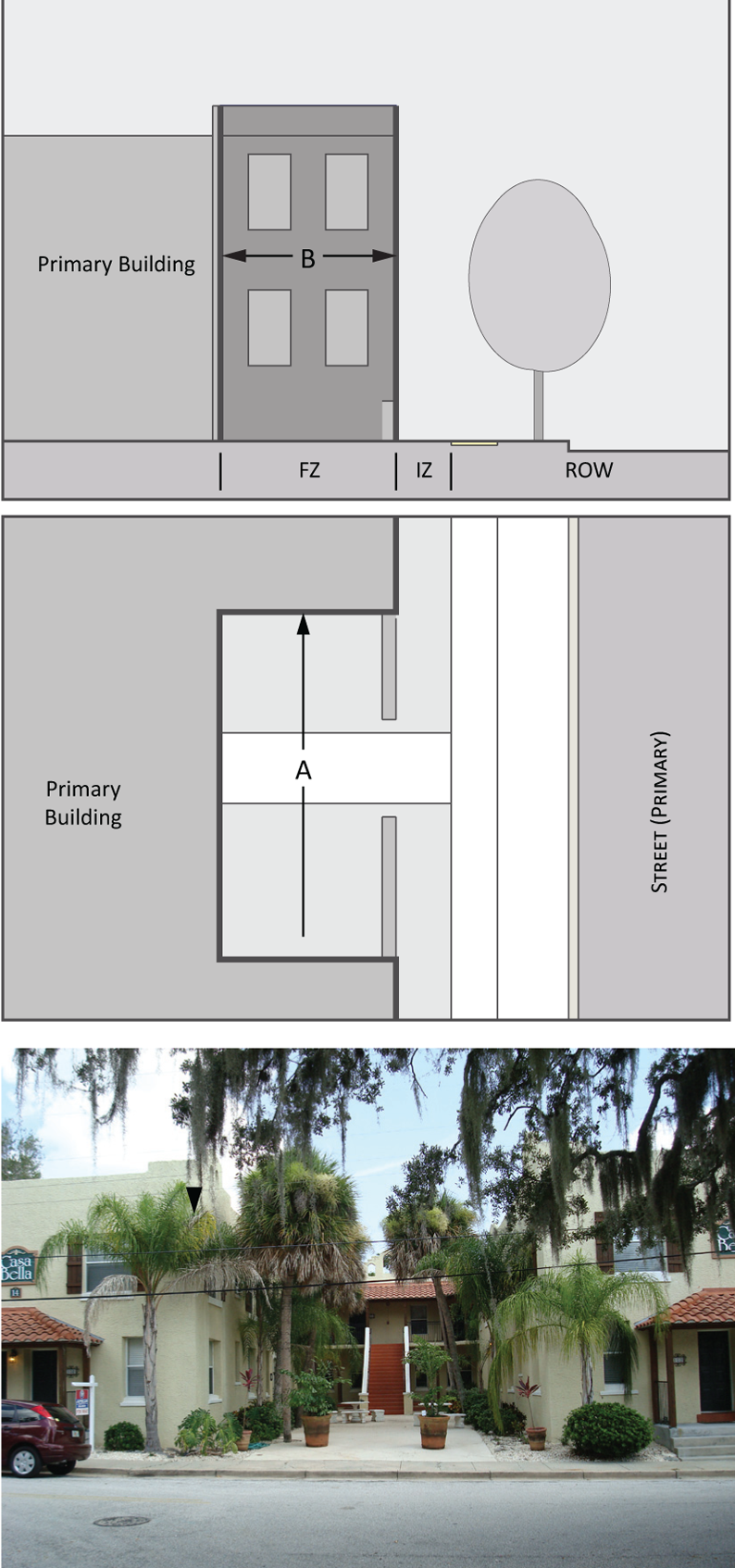
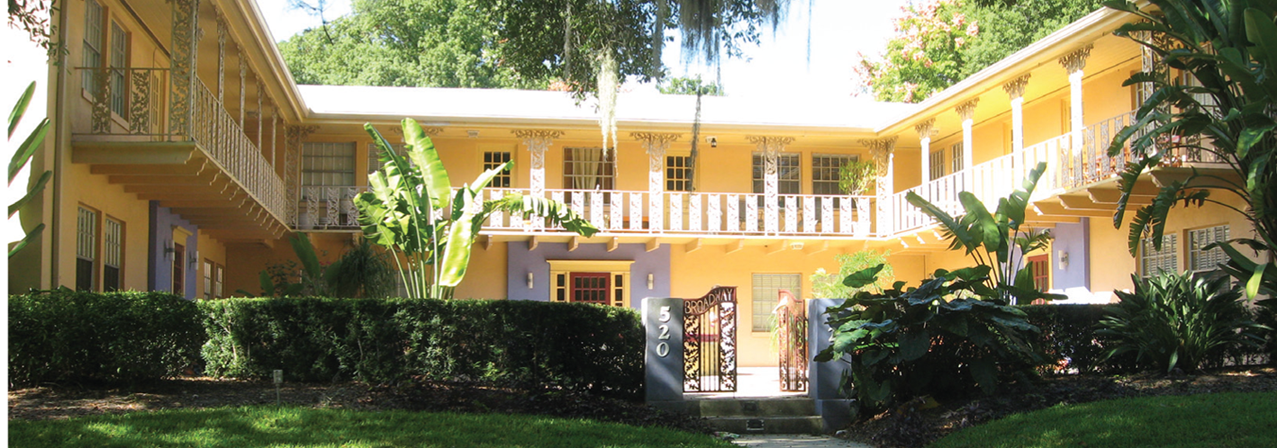
C COMMERCIAL (Sec. (J)(1)(d))
The facade is set back from the front lot line per applicable street setback requirements, typically at or near the front lot line with the entrance at siewalk grade. The facade may include an awning, shed roof, or gallery (a lightweight colonnade with no habitable building space above it) that covers the sidewalk and may extend into the right-of-way. The facade has a substantial amount of glazing at the sidewalk level. Recessed entrances are acceptable.
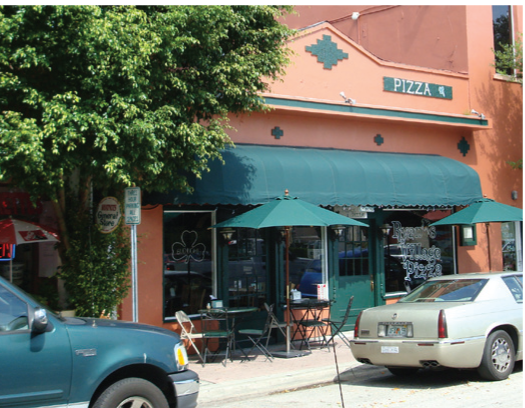
FRONTAGE ZONE AND INTERFACE ZONE DIMENSIONS
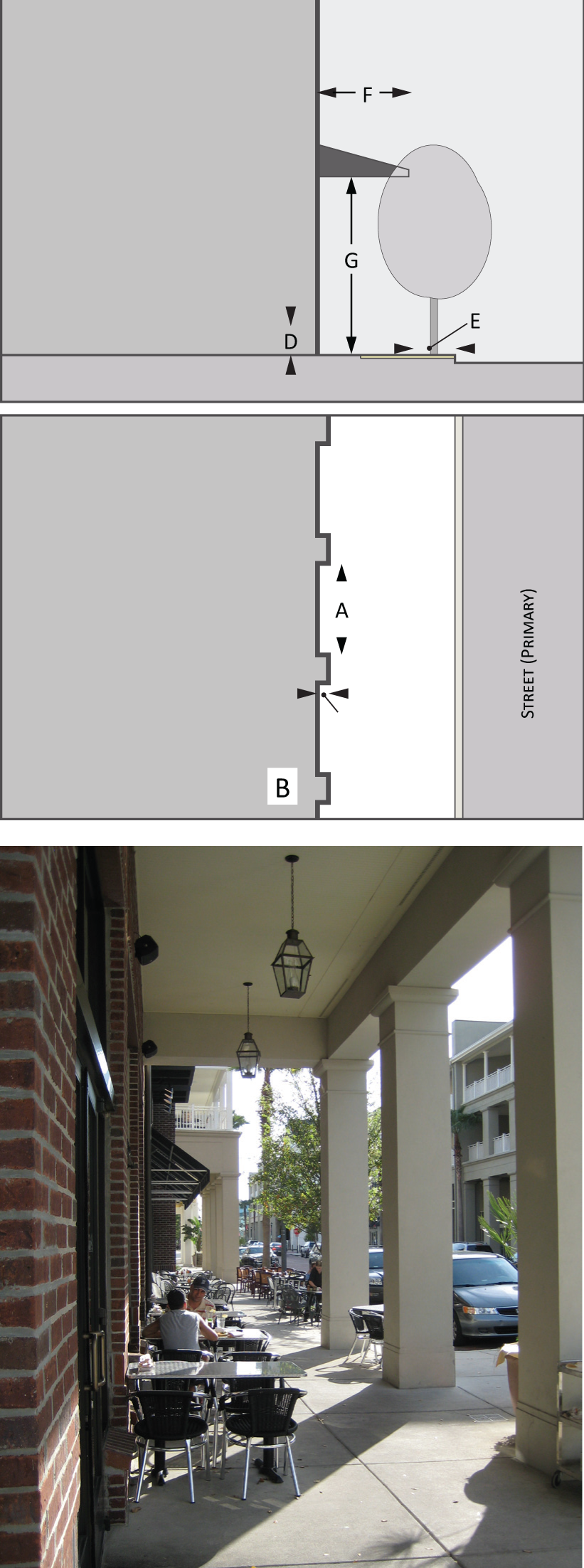
(K)
Landscape, Private Frontage Zone Landscaping Non-Residential and Multi-family Residential. The private frontage zones are intended to be used for pedestrian activity and, if not occupied with arcades or galleries, they shall be used as an extension of the sidewalk, as an outdoor seating area, or for street furniture. Landscaping in this area, if provided, shall be in the form of containers and/or planter boxes in scale and consistent with the building mass and architecture. Private Frontage Areas in front of uses that do not require pedestrian interaction along the façade (e.g. churches, offices, multifamily) may be landscaped with a combination of intermediate trees, palms, shrubs, vines and/or ground covers.
(L)
Parking Structures. Structured parking shall conform to the following standards
1.
Parking structures must be concealed by liner buildings, which are placed between the parking structure and the lot frontage for at least 80% of the width of the parking structure. On lots with multiple frontages, a liner building shall be required along the primary street (A-Grid) and encouraged along the secondary street (B-Grid). The liner building shall meet the following standards:
(a)
The liner building shall have a height greater than or equal to the parking structure.
(b)
The liner building may be detached from or incorporated into the parking structure.
(c)
The liner building shall have a minimum depth of 30 feet along its entire length.
(d)
The portion of the parking garage that is not concealed behind a liner building shall be screened to conceal all internal elements such as plumbing pipes, fans, ducts and lighting. Ramping should be internalized wherever possible. Exposed spandrels shall be prohibited.
2.
Vehicle entrances to parking structures shall be located away from primary pedestrian activity areas.
3.
Pedestrian access to parking garages shall be provided directly from adjacent streets.
4.
Parking garages are exempt from the floor-to-ceiling height requirements.
(M)
Mechanical and Service Areas. This section applies to utility and mechanical equipment such as electrical, plumbing, and communications equipment as well as service areas, such as truck parking, waste disposal and loading docks.
1.
All mechanical equipment and service areas shall be located behind the façade, integrated into the overall mass of the building, and concealed from view from any lot frontage by parapets or recessed into hips, gables, parapets, or similar features. The design of the screening device shall be compatible with the building style; plain boxes are not permitted.
2.
Mechanical/utility equipment and service areas shall not be permitted as encroachments on any required setback.
3.
Mechanical/utility equipment may be allowed behind a street wall, if the location of such equipment behind the façade is not feasible.
4.
Exhaust air fans and louvers on façades may only be allowed on Secondary Frontages above the first floor.
5.
Mechanical equipment on a roof shall be enclosed by parapets or screen walls of the minimum height necessary to conceal it, and a maximum height of five (5) feet.
6.
Where such facilities are located adjacent to residential lots, they shall include a visual and solid acoustic buffer.
7.
Shopping cart storage shall be located inside the building or shall be screened by a four (4) foot wall consistent with the building architecture and materials.
(N)
Drive Thru Establishments. Private frontage standards shall be met for drive thru establishments and must adhere to the following standards.
1.
Drive thru lanes shall be located in the rear of the building and not visible from any street.
2.
Drive through lanes should be integrated into the building.
3.
When access to a drive-thru facility from the rear of a site is not possible, then a side drive-thru is permissible provided that all of the following requirements are met:
(a)
Drive-thru facilities shall be screened to minimize visual and noise impacts to residences and to preclude visibility from any streets or sidewalks. A masonry wall and landscape buffer shall screen drive-thru facilities. The wall shall be one foot higher than the facilities being screened on all sides where access is not needed;
(b)
No portion of queuing or access lanes or driveways shall be located between the building and the street or within 40 ft. from the primary façade of the building; and
(c)
Corner lots, the drive-thru shall be located on the side of the building that is furthest from the corner.
(Ord. No. 09-2013, § 2(Exh. A), 5-28-2013; Ord. No. 10-2016, § 2(a), (b), 6-14-2016; Ord. No. 06-2018, § 2, 10-24-2018; Ord. No. 12-2019, § 2, 8-14-2019; Ord. No. 25-2019, § 2, 1-22-2020; Ord. No. 05-2020, § 2, 7-8-2020; Ord. No. 04-2021, § 3(Exh. A), 4-13-2021; Ord. No. 15-2022, § 2, 1-10-2023; Ord. No. 02-2023, § 2, 5-23-2023; Ord. No. 09-2023, § 2, 7-25-2023; Ord. No. 21-2023, § 2(Exh. A), 10-24-2023)

