
Eastpointe City Zoning Code
ARTICLE 10
- SIGNS
Sec. 10.01.- Intent statement.
To balance public and private interests: signs promote a safe, well-maintained, vibrant, and attractive community, while accommodating the need to inform, direct, identify, advertise, advocate, promote, endorse, and otherwise communicate information. The placement and design of signs must further the land use planning objectives of Eastpointe and protect neighborhood character and the value of surrounding properties.
(Ord. of 11-13-2023)
Sec. 10.02. - Sign standards by district.
A)
Residential district sign standards. The sign standards listed in the table below apply to the following zoning districts:
1)
R-1, Low-Density Residential; and
2)
R-2, Medium-Density Residential.
B)
Mixed-use commercial district sign standards. The sign standards listed in the table below apply to the following zoning districts:
1)
MU-1, Neighborhood Mixed-Use;
2)
MU-2, Main Street Mixed-Use;
3)
DT; Downtown;
4)
Central Business District Overlay; and
5)
Gratiot Gateway Overlay.
C)
Light industrial and regional mixed-use district sign standards. The sign standards listed in the table below apply to the following zoning districts:
1.
MU-3, Regional Mixed-Use; and
2.
LI, Light Industrial.
(Ord. of 11-13-2023)
Sec. 10.03. - Sign definitions.
A)
Air-activated signs. A sign that is inflated by air or uses air flow to induce movement. Inflatable objects used for signs are often made of flexible fabric and are equipped with a motor to blow air into the object. Air-activated signs are typically temporary and are restrained, attached, or held in place by a cord, rope, cable, or similar method, but can be permanent.
B)
Animated sign. A sign that has any visible moving part either constantly or at intervals; flashing, scintillating, intermittent, or oscillating lights; visible mechanical movement of any description; or other apparent visible movement achieved by any means that move, change, flash, oscillate or visibly alters in appearance to depict action, create an image of a living creature or person, or create a special effect or scene. This definition does not include changeable-copy signs and electronic message center (EMC) signs that comply with this article.
C)
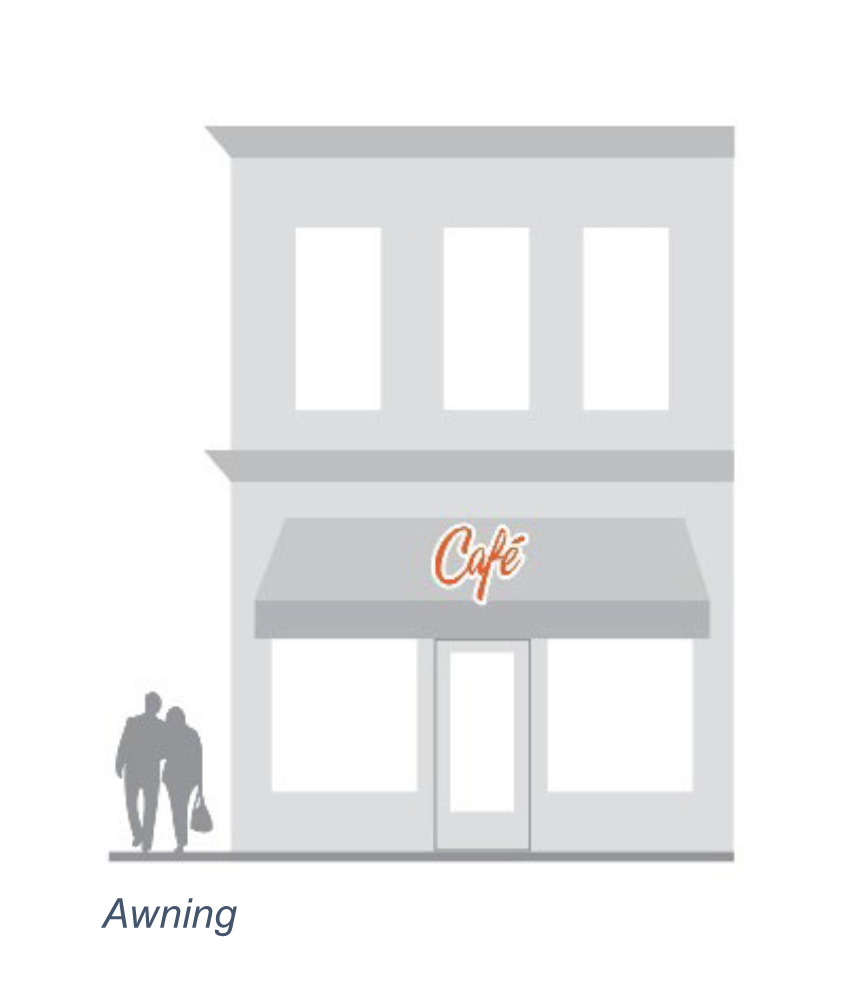
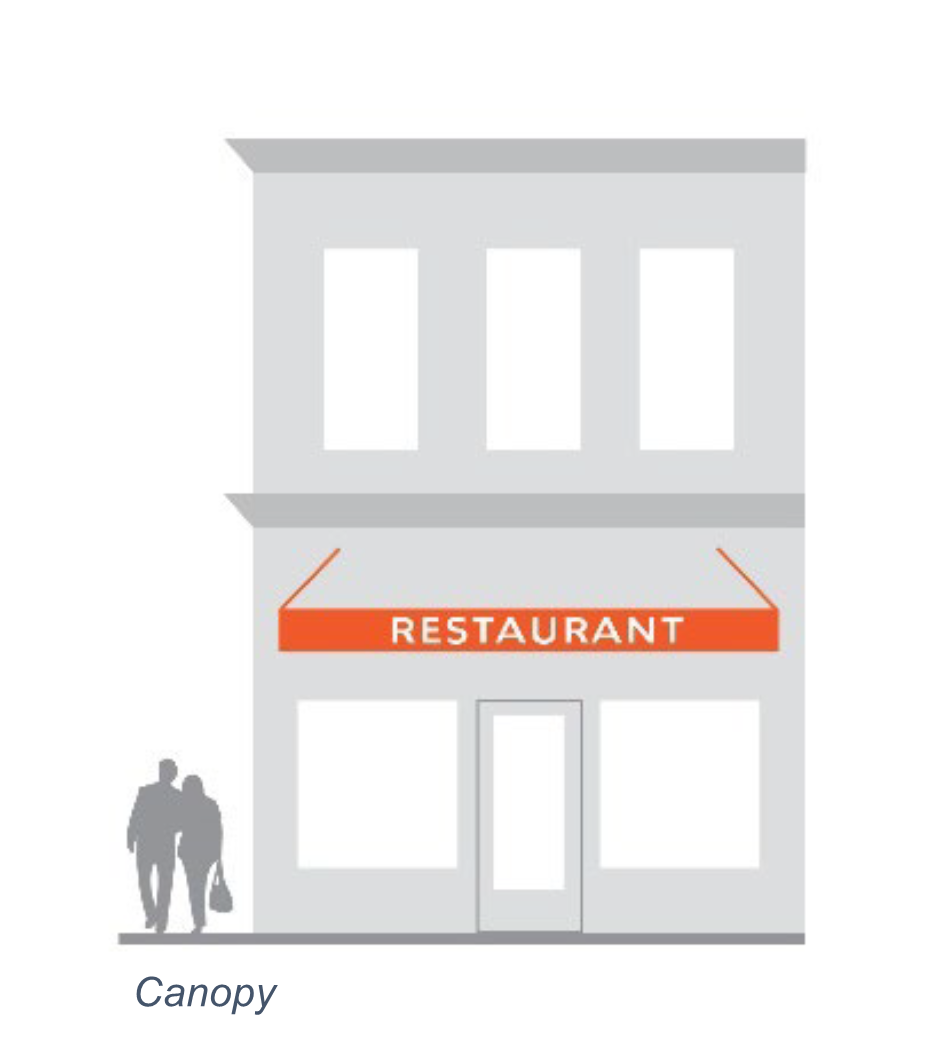
Awning (or canopy). A retractable or fixed shelter constructed of materials on a supporting framework that projects from the exterior wall of a building. A canopy or awning is placed over a door, window, entrance, outdoor service area or entire building. The canopy or awning sign is an integral and permanent part of that awning, canopy or other fabric, plastic, or structural protective cover. A marquee sign is not a canopy sign.

D)
Banner sign. A temporary sign on paper, cloth, fabric or other flexible or combustible material of any kind that is attached flat against a permanent sign face or strung between two poles or structures. National flags, state or municipal flags, or the official flag of any institution or business are not considered banner signs.
E)
Billboard (also known as an off-premises sign). Any sign which contains a message or advertises an establishment, product, service, space, or activity not available on the lot on which the sign is located.
F)
Building marker. Any sign indicating the name of a building, date of construction and any incidental information about its construction and history, which sign is cut into a masonry surface or made of bronze or other permanent material.
G)
Canopy (or awning). See awning.
H)
Changeable-copy sign. A permanent sign or portion thereof on which the copy or symbols change either automatically through electrical or electronic means or manually through placement of copy and symbols on a panel mounted in or on a track system.
I)
Commercial message. Any sign wording, logo, or other representation that directly or indirectly names, advertises, or calls attention to a business, product, service, or other commercial activity.
J)
Construction sign. Any sign which identifies the owners, financiers, contractors, architects, engineers, or tenants of a project under construction.
K)
Directional sign. A sign, commonly informational, that directs movement, provides instructions or is secondary to the use of the lot. Generally, signs of this type indicate the entrance/exit, drive-through location, "no parking" areas, etc.
L)
Electronic message center (EMC) sign. An electrically activated changeable-copy sign whose variable message and/or graphic presentation capability can be electronically programmed. EMCs typically use light emitting diodes (LEDs) as lighting sources.
M)
Entranceway sign. A sign that identifies the name of a residential subdivision or development and is located at the major entranceways to the subdivision or development.
N)
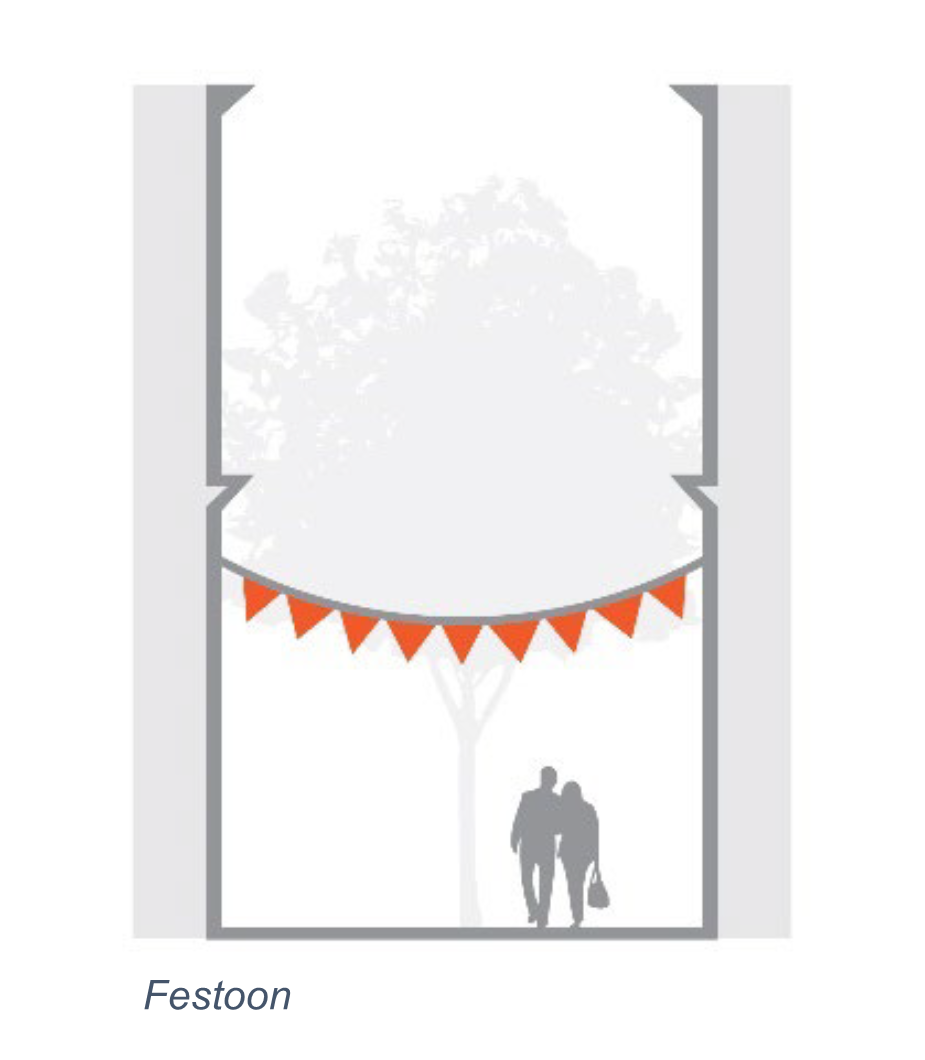
Festoons. A string of ribbons, pennants, spinners, streamers, tinsel, small flags, pinwheels, or lights typically strung overhead and/or in loops.
O)
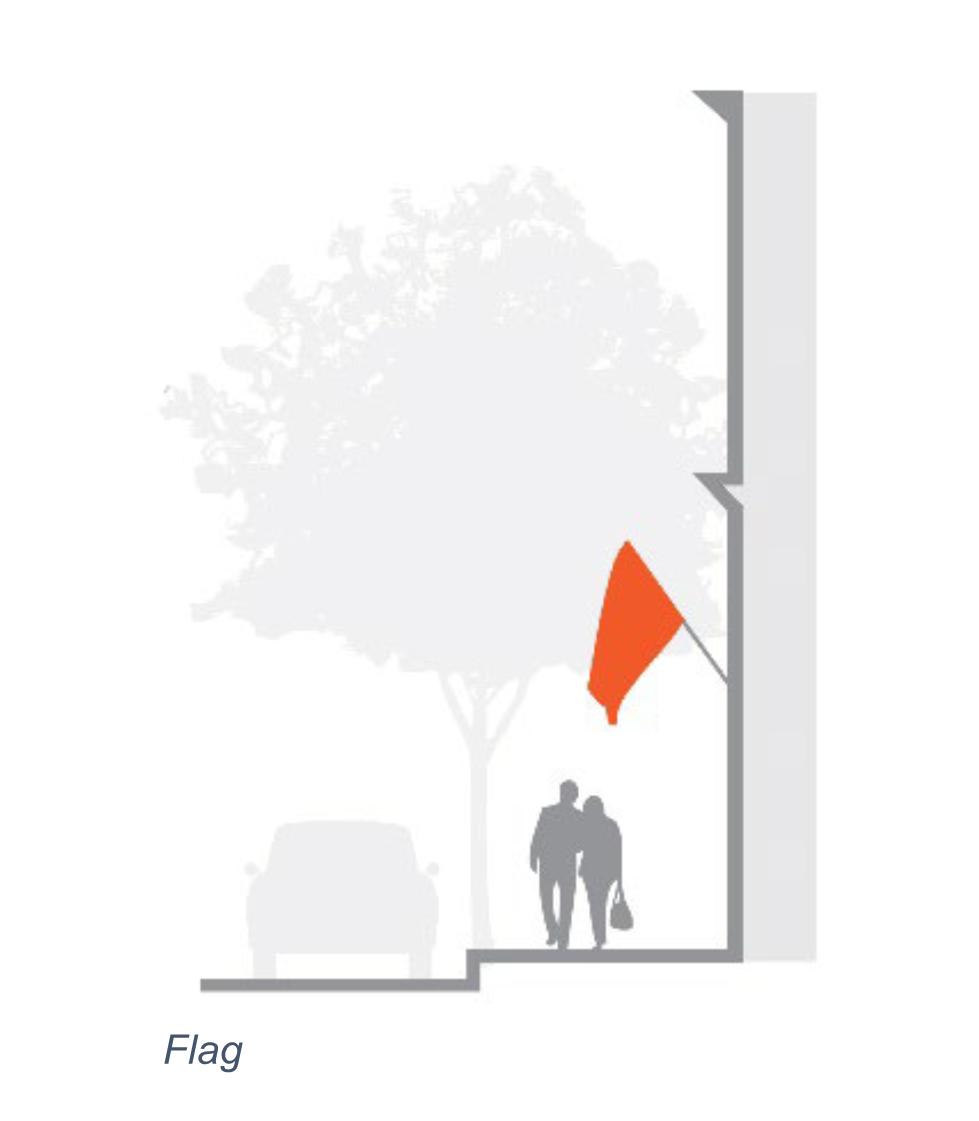
Flag. Any fabric, banner, or bunting containing distinctive colors, patterns, or symbols used to distinguish a government, political subdivision, or other political entity. Flags are typically supported on one side of the sign. Flags are not considered air-activated signs for the purposes of this ordinance.
P)
Government sign. Any sign posted by a unit of government for the health, safety, and welfare of the public.
Q)
Incidental sign. A small sign, usually two square feet or less, designed and located to be viewed by persons on a property and is generally not visible or legible from the right-of- way or adjacent properties. Examples of incidental signs include, but are not limited to, credit card signs, signs indicating hours of business, no smoking signs, signs used to designate bathrooms, handicapped signs, traffic control signs that conform to the requirements of the Michigan Manual of Uniform Traffic Control Devices, and other signs providing information to be read at close proximity.
R)
Interior sign. A sign placed within a building, but not including a window sign as defined in this article, which is not visible from any public street, sidewalk, alley, park, or public property
S)
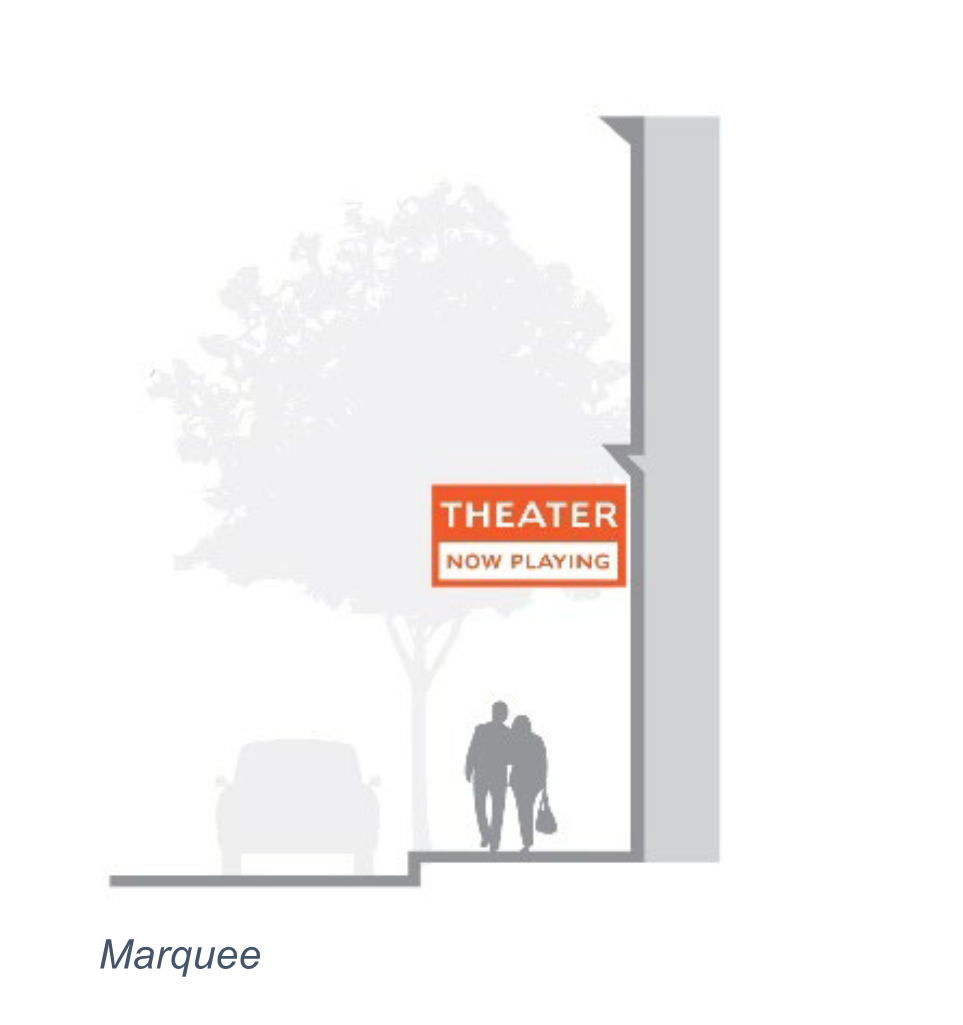
Marquee sign. Any permanent roof-like structure constructed of permanent materials projecting beyond a building or extending along and projecting beyond the wall of the building. Generally, a marquee is designed and constructed to provide protection from the weather. The marquee sign is affixed to, in any manner, or made part of the marquee and often includes a changeable copy component in addition to the display of a permanent message.
T)
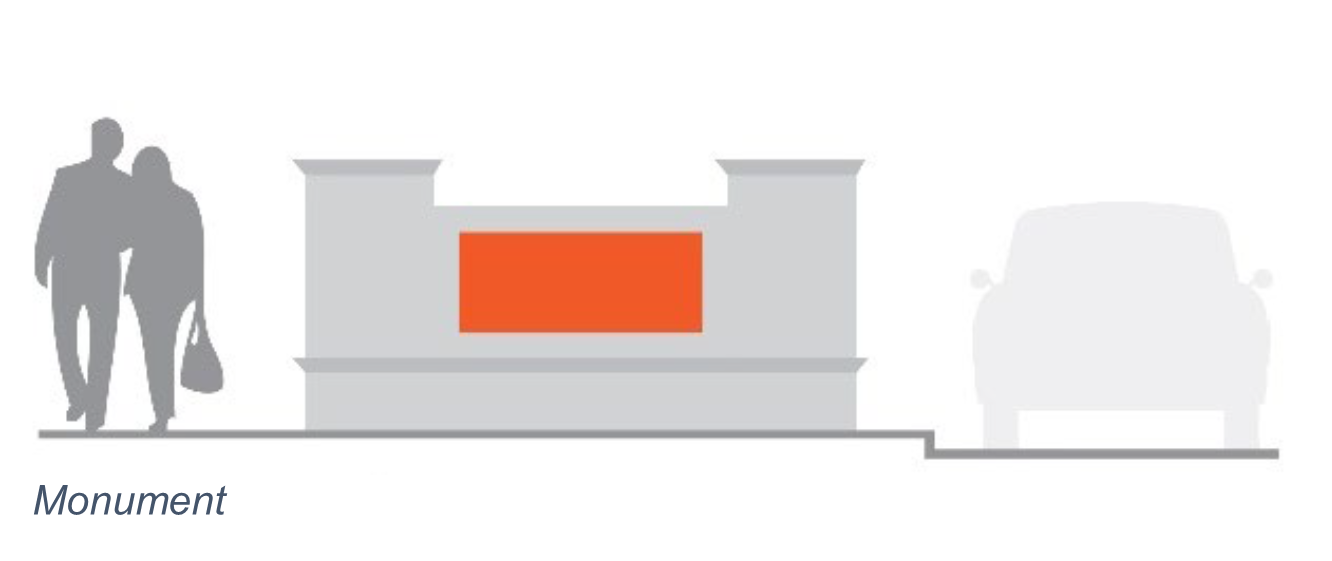
Monument sign. A base-mounted, freestanding sign placed on the ground and not attached to any building or other structure. A monument sign includes a solid supporting base of at least 24 inches in height and a width equal to or greater than the width of the sign face.
U)
Mural. An approved and planned design or representation painted on or drawn on a wall which does not contain any promotional or commercial advertising.
V)
Non-conforming sign. A sign that was lawfully permitted at the time it was erected but is not permitted under current law.
W)
Permanent sign. Any sign which has a permanent location on the ground, or which is attached to a structure having a permanent location and which meets the structural requirements for signs as established in this article and in the current Michigan Building Code.
X)
Placard. A sign that provides notices of a public nature, such as "No Trespassing" or "No Hunting" signs.
Y)
Pole sign. A freestanding sign which is supported by one or more poles that are attached to the ground in a permanent location and is separated from the ground by air.
Z)
Portable sign (and sandwich board sign). Any sign not permanently attached to the ground or other permanent structure, as a sign designed to be transported, including but not limited to signs transported by means of wheels; A- or T-frames; menu and sandwich boards; balloons, banners or umbrellas used for advertising; and signs attached to or painted on stationary or abandoned vehicles parked and visible from the public road that are not used in the day-to-day operation of a business.
AA)
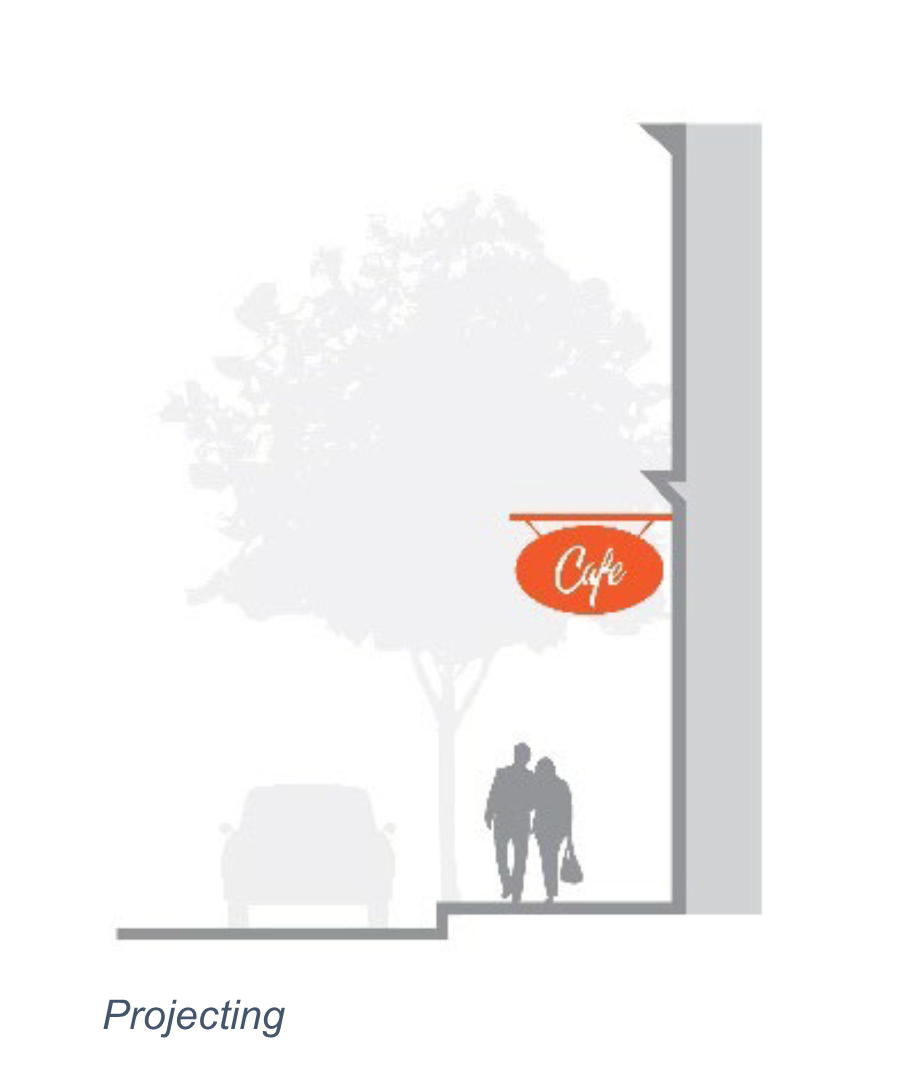
Projecting sign. Any sign, generally doubled-faced, affixed to a building or wall in such a manner that it extends more than 12 inches from the wall.
BB)
Sandwich board sign. See portable sign.
CC)
Sign. Any display or object which is primarily used to identify or display information or direct or attract attention by any means which is visible from any public street, sidewalk, alley, park, or public property and is otherwise located or set upon or in a building, structure, or piece of land. The definition does not include goods displayed in a window.
DD)
Roof sign. Any sign erected or constructed wholly on and over the roof of a building, supported by the roof structure.
EE)
Temporary sign. A display sign, banner or other device constructed of cloth, canvas, fabric, plastic, or other light temporary materials, with or without a structural frame, or any other sign intended for a limited period of display that is not permanently anchored to the ground or a building.

FF)
Vehicle sign. A sign, painted or otherwise, attached to an operable vehicle that is regularly used and moved, including signs on a truck trailer.
GG)
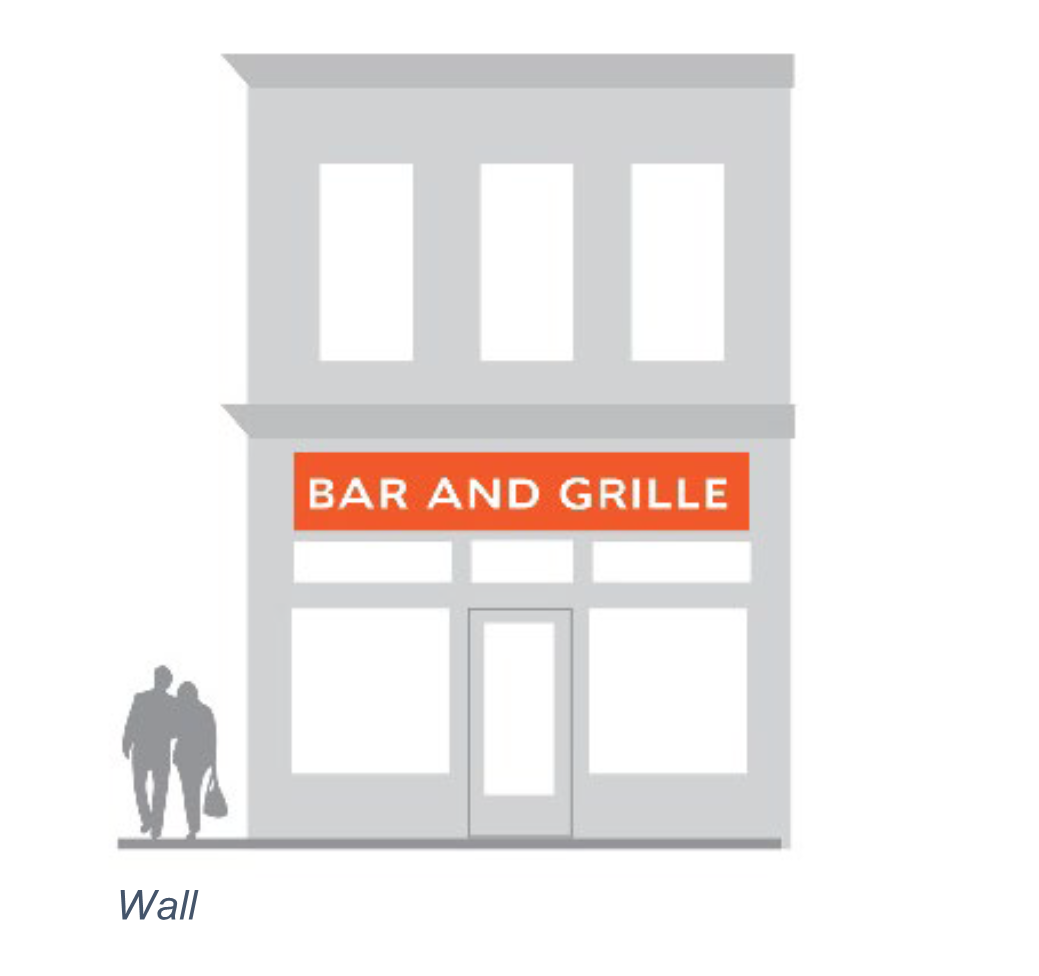
Wall sign. Any single-faced sign that is attached directly parallel to a wall, painted on the wall surface of, or erected and confined within the limits of an outside wall of any building or structure, which is supported by such wall or structure; this includes permanent window signs.
HH)
Window sign. Any sign, picture, symbol, or combination thereof, designed to communicate information about an activity, business, commodity, event, sale, or service, which is placed inside a window located on a wall or door or upon the windowpanes or glass and is visible from the exterior of the structure.
II)
Yard sign. A small, temporary sign typically used for non-commercial purposes. Yard signs are characterized by a wire frame, non-durable message surface such as cardboard or paper, and are often inserted into a lawn with wire posts. Although variations exist to the materials of the frame and message board, a consistent physical characteristic is its temporary and disposable nature.
(Ord. of 11-13-2023)
Sec. 10.04. - General standards.
The following general standards apply:
A)
Clear corner distance. Signs must maintain clear corner vision for all street intersections and driveway entrances. No signs can be located within a triangle formed by two points, each 25 feet away from the intersection of the right-of-way line and the driveway, and the line connecting them.
B)
Consistency. All signs developed for one building, structure or shopping center must incorporate a theme using similar methods of display and construction, which limits the number of fonts, colors, and sign face sizes. Signs must be compatible with the architectural style, elements, and materials of the principal building or structure.
C)
Colors. Sign colors must complement the color scheme of the building and structures on the lot. Day-Glo, fluorescent, or reflective color materials that give the appearance of changing color or brilliant luminescent colors are prohibited.
D)
Materials. Signs must be constructed of wood, glass, masonry, cast metal or high-density urethane (which must be painted and is intended to mimic wood). Prohibited materials include sheet plastic, plastic substrates, interior grade wood, unlaced plywood, sheet metal, neon, and LED.
E)
Illumination and lighting. External illumination is permitted in all zoning districts (backlighting of opaque letters is considered external illumination) and subject to the following standards. Temporary signs may not be illuminated.
1)
Lights must be steady, stationary, and shaded and/or shielded downward with light directed away from adjacent properties and streets.
2)
Signs with internal illumination must have the lettering and graphics in a lighter color than the background to the maximum extent practical.
3)
All signs must comply with relevant lighting requirements.
4)
Illumination by bare bulbs or flames is prohibited, except that bare bulbs are permitted on electronic changeable copy signs and theatre marquees.
F)
Electronic messaging center (EMC) signs.
1)
The message display area cannot change more than once per ten seconds; any sign that changes its message more frequently is considered a flashing sign.
2)
Only one EMC sign is permitted per lot.
3)
The use of a video display or special effects such as, but not limited to, scrolling, fading, wiping, flashing, changing colors or exploding is prohibited.
4)
The sign cannot create glare or have characteristics that impair the vision of motorists or create a nuisance for surrounding properties. Glare must be reduced and/or minimized in such a manner as to maintain an appropriate level of contrast during the day. To reduce driver distraction at night and light trespass into residential areas, electronic signs must have an automatic dimmer to control brightness, which cannot be manually overridden.
G)
Canopies and awnings.
1)
Canopies and awnings are permitted around the entire perimeter of a building. However, canopy and awning signs are only permitted to cover 25 percent of the total area of the canopy or awning.
2)
The scale, design, and color of the canopy and awning sign must be compatible with the architectural features of the building, including the color of the building.
3)
Awnings cannot extend more than six feet in front of the building.
H)
Height clearance. Canopy, awning, marquee, and projecting signs must maintain a minimum eight-foot clear space distance from the bottom of the structure to the grade or sidewalk.
I)
Landscaping. The area surrounding freestanding signs must be landscaped to match the design characteristics of the site (only for new signs).
J)
Murals. Murals are permitted in all zoning districts, with zoning administrator approval. In reviewing a mural, the following criteria must be applied:
1)
Be well designed and incorporate high-quality materials that enhance the overall appearance of the site and will not adversely impact safe and efficient movement of vehicles and pedestrians.
2)
Colors, though vibrant, must be complementary and harmonious with the exterior colors of the building structure, as well as consistent with the chosen theme.
3)
Its design, construction, and location cannot obscure or detract from the significant architectural features of the building structure; nor should the building's architecture be altered to accommodate the mural.
4)
Routine maintenance of the mural is the responsibility of the building owner where the artwork is located. If, for whatever reason, the mural falls into disrepair, the building owner will be notified in writing and required to make necessary repairs per the city's policy for correcting violations. If the repairs are not made within the specified time, the city reserves the right to repair or remove the mural at the owner's expense.
K)
Measurement.
1)
Signable area. Signs are measured as the area within a single, continuous perimeter composed of the smallest square, circle, rectangle, triangle, or combination thereof that will encompass the extreme limits of the writing, representation, emblem, or other display. This includes any frame or other material or color, forming an integral part of the background of the display or used to differentiate the sign from the background against which it is placed.
a)
The support structure necessary to support the sign is excluded from this calculation.
b)
Signage for multi-tenant buildings only calculates the wall length of individual tenant space, and not the building as a whole.
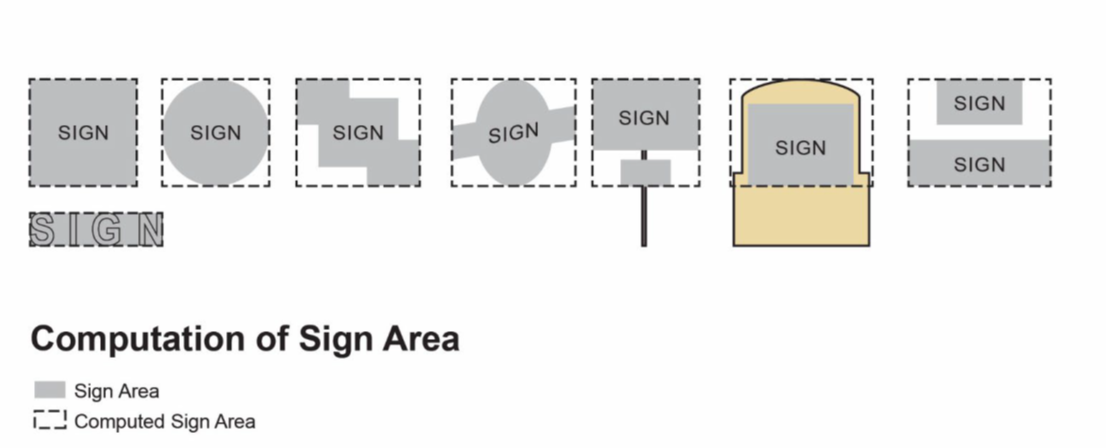
2)
Height. The height of a sign is calculated by measuring the distance from the base of the sign at grade, to the top of the highest attached framed component of the sign.
L)
Master sign plan. Within a project, buildings, or clusters of buildings, which have more than one tenant must submit a master sign plan with the sign permit application. The master sign plan must include the location, area, height, color, and font of all ground and wall signs, including the area designated for individual tenant signs. Elevations of ground signs must be included. The sign plan must be designed so that it establishes a common theme or design, uses similar construction methods, and is compatible in color, size, and scale.
(Ord. of 11-13-2023)
Sec. 10.05. - Temporary signs.
Temporary signs must meet the following:
A)
Sign permit. Temporary signs on private property are allowed only upon the issuance of a temporary sign permit by the building department.
B)
Display period.
1)
Each lot or single tenant building is allowed a maximum of three temporary sign permits within a 12-month period. Each permit is for a maximum period of four weeks. In the instance where more than one business is located on a lot or in a building, structure or shopping center, each business is permitted two temporary sign permits within a 12-month period.
2)
One temporary banner pertaining to the opening or "grand opening" of a new commercial use may be temporarily affixed to the commercial building or the new business for a period of not more than four weeks. The length of such banner cannot exceed 25 feet.
3)
Portable temporary commercial signs (such as A-frames) can be placed outside only during the hours when open to the public and must be stored indoors at all other times.
C)
Right-of-way. No sign can be placed, strung, or located within the right-of-way.
D)
Area and height. Signs have a maximum surface area of 32 square feet (except for A-frame signs, which are limited to 12 square feet per side), and a maximum height of six feet measured from grade (except for A-frame signs, which are limited to a maximum height of five feet). Temporary balloon signs are exempt from these area and height requirements unless balloons are included as an integral part of the requested temporary sign. Signs cannot impede or endanger pedestrian or automobile traffic, including maintaining required clear corner vision.
E)
Materials. Signs must be constructed of a durable material designed to withstand normal weather conditions. Wooden signs must be constructed of a pressure treated wood that is acceptable to the zoning administrator and painted or stained with an exterior grade of paint/stain. Property owners must receive a permit as described in this article prior to the erection of any temporary commercial signs and must follow all applicable requirements as described below. Portable ground signs are considered temporary commercial signs.
F)
Any temporary sign found by the building department to be in an unsafe condition must be removed by the sign owner within three business days after receipt of written notice.
G)
Signs must be removed immediately at the end of the display period provided for in this article. If temporary signs are not promptly removed at the end of the display period, a written violation notice will be issued by the city and a cumulative daily fee shall be assessed to the temporary sign permit holder until such sign is removed.
(Ord. of 11-13-2023)
Sec. 10.06. - Permit process.
A)
Permit required. It is unlawful for any person to erect, alter, or structurally change a sign (unless the sign is specifically exempt), without first obtaining a permit from the city. Any sign that makes use of electricity must, in addition to a sign permit, have an electrical permit.
B)
Permit not required. The following signs do not require a permit:
1)
Government signs, including those used to identify public facilities, government buildings, parks, and temporary government signs used for decoration or for seasonal events or holidays. This includes highway and street signs, and signs authorized by a road agency in conjunction with infrastructure improvements.
2)
Address numbers, with a numeral height of no greater than 12 inches.
3)
Historic markers under the authority/designated authority of the local, state, or federal organization.
4)
Essential service signs and signs required by law.
5)
Placard/building markers, no larger than two square feet in area.
6)
Flags, subject to the following:
a)
Flags and flagpoles cannot be located within any right-of-way.
b)
Flag poles have a maximum height of 30 feet.
c)
No more than one flag is permitted per lot in a residential district, and no more than three flags are permitted per lot in all other districts.
d)
Sixty square feet in size.
7)
Directional signs, no larger than four square feet in area and four feet in height.
C)
Review process.
1)
Applications for a sign permit are made to the building department and at least contain the following:
a)
The name, address, email, and telephone number of the applicant.
b)
Letter of approval, which outlines the consent of the property owner, if different from the applicant.
c)
The location of the building, structure, or lot to which or upon which the sign is attached to or erected on.
d)
Photographs showing the location of the proposed sign.
e)
Two sets of plans and specifications indicating the method of construction and attachment to the building or in the ground.
f)
A copy of the stress sheets and calculations showing the structure is designed for dead load and wind pressure in any direction in the amount required by the current Michigan Building Code. Where the zoning administrator deems necessary, a registered engineer must approve the structural design.
g)
The name of the person or company erecting the structure.
h)
An elevation of the proposed sign with dimensions, materials, colors, and wording.
i)
Any other information deemed necessary by the city to ensure compliance.
2)
The zoning administrator reviews all final sign applications and determines if the proposed request meets all the requirements.
D)
Prior to the issuance of a sign permit, a fee must be paid, as established by the city's fee schedule.
E)
Inspections. Signs for which a permit has been issued are inspected by the zoning administrator once erected. Approval is granted only if the sign is constructed in compliance with the approved plans and all applicable zoning and building code standards. Periodically, the zoning administrator may inspect signs for the purpose of ascertaining whether the sign needs repair or removal.
F)
All rights and privileges acquired by any person under the provisions of this article may be revoked upon violation of any of the conditions herein. If the work authorized under a permit has not been started within six months after the date of issuance, the permit is null and void.
G)
Any person filing an application for a permanent or temporary sign permit who feels they have been aggrieved by the decision of the zoning administrator may appeal such decision to the zoning board of appeals.
(Ord. of 11-13-2023)
Sec. 10.07. - Construction, maintenance, and removal.
A)
Construction and fastenings. Signs must be construed of durable material and in conformance with the requirements and specifications of the current Michigan Building Code. All signs must be erected in such a manner and with such materials to remain safe and secure during the period of use and all bolts, cables, and other parts of such signs must be kept painted and free from corrosion. Any defect due to the fault of the erector must be repaired by the owner.
B)
Maintenance. All signs and their components, including anchors, braces, and supports must be maintained in a condition of good repair. The zoning administrator is authorized to cause the removal of any sign, at the expense of the owner, which is deemed to be in disrepair or an immediate peril to persons or property. This does not alter the effect of non-conforming signs, which prohibits the replacement of non-conforming signs.
1)
If a sign is found to be insecure, illegible, fading, in a state of disrepair, or the message portion of the sign is removed leaving only the support structures, written notice will be given to the property owner, agent or person having interest in the building or property on which the sign is located.
2)
Improvements, corrections, or removal of the sign must be completed within 30 days of receipt of the written notice.
3)
If such condition is not corrected within the time allotted, the zoning administrator is authorized to cause the sign to be removed at the expense of the property owner, agent or person having interest in the building or property.
C)
Abandoned signs. Signs which have not been in use for a period of more than six months, including all previously approved variances for such signs, are considered abandoned signs. Abandoned signs must have all lettering or reference to the former business removed. Custom signs, which are only relevant to the defunct business that it served, must be removed completely from the site.
D)
Removal. Any sign now or hereafter existing which, at the time of construction, advertised a business being conducted or a product being sold or produced on the premises on which the sign is located, but no longer does so, must be taken down and removed by the owner, agent or person having the beneficial use of the building, structure or premises upon which such sign is found within 30 days after written notice to remove such sign from the building official.
(Ord. of 11-13-2023)
Sec. 10.08. - Non-conforming signs.
A)
Every permanent, legally existing sign which does not conform to the requirements of this article are deemed a non-conforming sign.
B)
Non-conforming signs may not be expanded, enlarged, or extended. Non-conforming signs may be maintained and repaired so as to continue the useful life of the sign. Normal maintenance includes the painting of chipped or faded signs; replacement of faded or damaged surface panels; or repair or replacement of electrical wiring or electrical devices.
C)
Whenever the principal building on a site on which a non-conforming sign is located is modified to the extent that site plan review and approval is required, the non-conforming sign must be removed.
D)
A non-conforming permanent sign may be changed on the face of the sign without jeopardizing the status of non-conforming use.
E)
No additional signs shall be permitted on a lot or building while a non-conforming sign exists on the lot or building.
F)
If, at any given location, there is a change in the occupancy, all non-conforming signs must be removed.
G)
Any non-conforming sign, sign structure or frame, which is more than 50 percent destroyed by fire, weather or other casualty loss cannot be restored or rebuilt.
H)
No review fee is charged for a new sign when the owner voluntarily proposes to remove a non-conforming sign.
I)
When a non-conforming permanent sign is removed it must be replaced only with a sign that conforms to all the requirements of this article. Non-conforming signs may be removed for maintenance or repair purposes as outlined in division (b) of this section. Removal of a non-conforming sign for repair or maintenance must receive a permit from the city. If the non-conforming sign is not reinstalled within six months, the non-conforming status of the sign must be deemed abandoned.
(Ord. of 11-13-2023)
Sec. 10.09. - Prohibited signs.
The following signs are prohibited:
A)
Any sign not expressly permitted.
B)
Signs, which by reason of their position, shape, illumination, location, or color obstructs the vision of drivers or of pedestrian traffic.
C)
Signs which incorporate in any manner flashing, moving, oscillating, and/or blinking lights.
D)
The following signs are only permitted on a temporary basis: Exterior pennant strings, flutter flags, spinners, banners, and streamers.
E)
Any obscene, indecent, or immoral content.
F)
Any sign or object, including inflatable objects, which has any visible motion, moving or animated parts or image, whether movement is caused by machinery, wind, or otherwise, except for permitted digital message signs and exempt flags, as defined in this article.
G)
Any sign structure or frame that no longer contains a sign.
H)
Rope lights.
I)
Roof signs or a sign which projects above the roof line.
J)
Signs that prevent the free ingress and egress from any door, window, or fire escape. No sign can be attached to a standpipe or fire escape.
K)
Any sign erected on any property, public or private, without the consent of the property owner.
L)
Any sign which simulates or imitates in size, color, lettering, or design, any traffic sign or signal or other word, phrase, symbol, or character in such a manner as to interfere with, mislead, or confuse the drivers or motorized vehicles.
M)
Off-premises signs, including, but not limited to billboards or vehicle business signs.
N)
Tube lights, whether LED, neon, or any other type of light, including those that line windows and doors.
O)
Signs which are structurally or electrically unsafe, in the opinion of the building official. "Structurally and electrically unsafe" includes, but is not limited to rust, non-functional wiring, leaning or in danger of toppling over, detaching from a wall, or in danger of falling off the wall, and visible damage.
P)
Signs which, in the opinion of the building official, have deteriorated to the point where they have become a blight on surrounding properties. "Blight" includes but is not limited to sign messages deteriorated to the point of unreadability, peeling paint, broken parts, and burnt out lighting.
Q)
The zoning administrator has the authority to immediately remove or cause to be removed any sign which has been placed or located within the public right-of-way contrary to the provisions of the ordinance. The city or its agents must not incur any obligation to retain, store, or maintain any materials or salvage resulting from the removal of such signs.
R)
The zoning administrator has the authority to immediately remove or cause to be removed any sign listed as prohibited in this ordinance unless the sign existed prior to the effective date of this ordinance and was permitted under the previously effective ordinance.
(Ord. of 11-13-2023)

