
Eastpointe City Zoning Code
ARTICLE 6
- SCHEDULE OF REGULATIONS, BUILDING FORM, AND DESIGN STANDARDS
Sec. 6.01.- Intent statement.
A)
Schedule of regulations. No building may be erected, nor any existing building be altered, enlarged, or rebuilt, nor any open space surrounding any building be encroached upon or reduced in any manner, except in conformity with the regulations for the district in which the building or use is located, per this article.
B)
Building form and design standards. Eastpointe's building form and design standards guide the establishment of harmonious building appearance on all exterior walls of a building to create, enhance and promote a uniform and quality visual environment throughout the city. Site lighting standards are also detailed that are attractive to the eye, while adequately illuminating a site for safety and convenience.
(Ord. of 11-13-2023)
Sec. 6.02. - Schedule of dimensional regulations.
(Ord. of 11-13-2023; Ord. No. 24-1238, 6-4-2024)
Sec. 6.03. - Footnotes to the schedule of regulations.
A)
Non-conforming lots of record may be permitted for use as single-family dwelling units, provided that any principal or accessory structures constructed on the lot complies with all other dimensional standards (excluding lot area).
B)
On blocks with 50 percent or more frontage established, the average depth of the five adjacent yards to determine the setback may be used (plus or minus three feet). Side yard setbacks must be a minimum of five feet.
C)
Minimum square footages apply to all single-family dwelling units or duplexes:
1)
One-story dwelling: 800 square feet ground floor.
2)
Two-story dwelling: 600 square feet of ground floor.
D)
Minimum square footages apply to all multiple-family dwelling units:
1)
Studio/efficiency unit: 450 square feet.
2)
1-bedroom unit: 600 square feet.
3)
2-bedroom unit: 800 square feet.
4)
3+ bedroom unit: 1,000 square feet.
E)
If the side yard is adjacent to a residential use or zoning district, or if the use itself is a residential use, then a minimum side yard of 13 feet is required (five feet minimum side/13 feet total). Rain barrels, connected to downspouts/gutters, are permitted within the side yard setback so long as the color is cohesive with the principal structure.
F)
If the parcel is located within an overlay, the overlay dimensional standards apply.
(Ord. of 11-13-2023; Ord. No. 24-1238, 6-4-2024)
Sec. 6.04. - Exceptions to the schedule of regulations.
A)
Height exceptions. The height limitations do not apply to chimneys, religious institution spires, cupolas, domes, water towers, smokestacks, ventilators, skylights, elevators, conveyors, cooling towers, flagpoles, public monuments, or power transmission towers, masts, and other similar mechanical appurtenances pertaining to and necessary to the permitted uses of the district. The planning commission may specify a height limit for any such structure when special land use approval is required, and such height limit is reasonably necessary for public safety or to otherwise to comply with the standards set forth in this ordinance.
B)
Parapet wall extension. The provisions of this ordinance do not prevent the erection, above the maximum building height limit, for a parapet wall or cornice for screening purposes (without windows), extending above such height limit not more than five feet.
(Ord. of 11-13-2023)
Sec. 6.05. - Overview of building form and design standards.
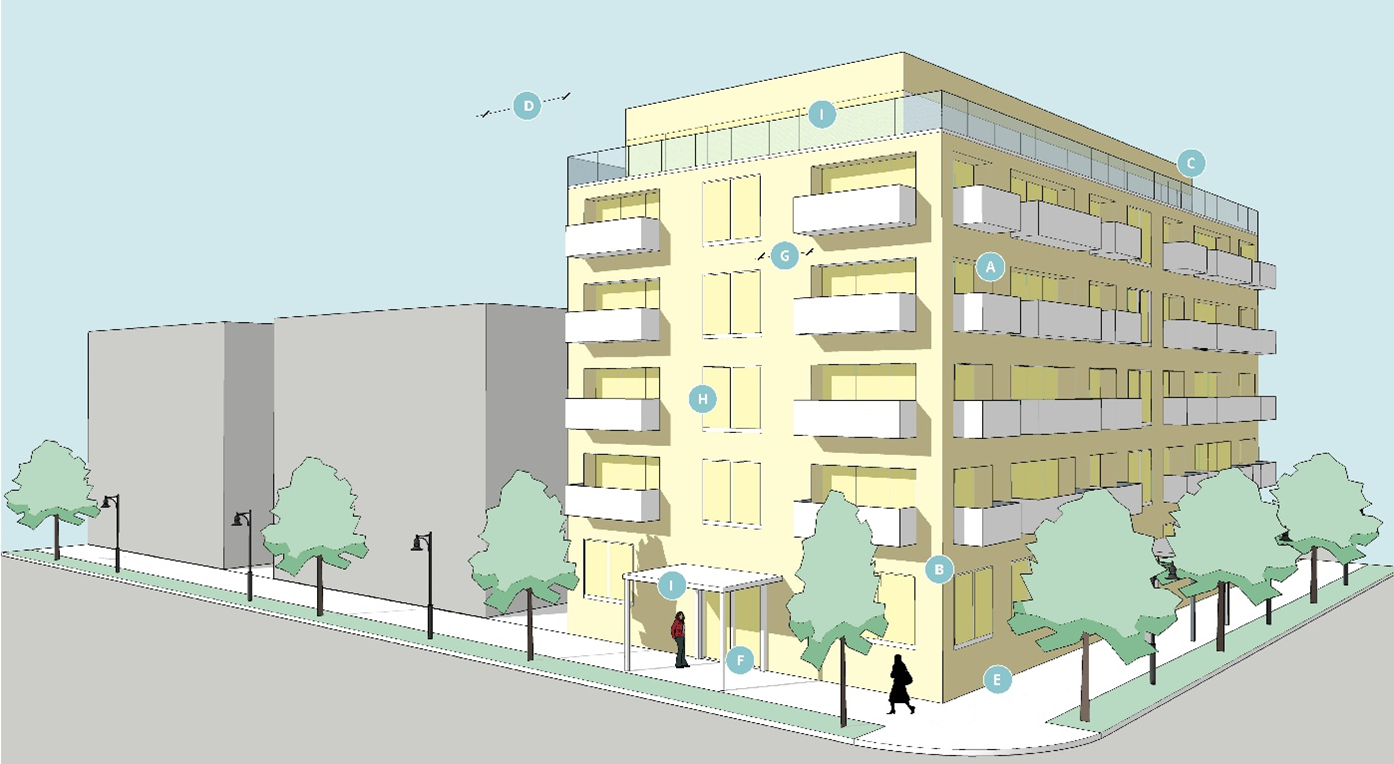
The following sections detailed standards for building design and form: while some criteria are relevant for all projects in each zoning district (e.g., lighting and materials), other criteria are specifically relevant to particular mixed-use district development projects with the intent to design an attractive commercial district.
A)
Building form. Building form standards include a minimum façade height, minimum ground floor height, maximum building height, minimum building separation, and maximum font yard setback.
B)
Design elements. Design element standards include guidelines on the primary entrances, blank wall lengths, first floor minimum glass percentage, additional floor minimum glass percentage, permittable lighting, materials and colors, and architectural features.
(Ord. of 11-13-2023)
Sec. 6.06. - Mixed-use building form and design standards.
The building form and design standards apply to all mixed-use and commercial buildings located in each of the following districts and overlays.
A)
Design element terminology. This ordinance uses the following clarifying terms when requiring design elements.
1)
Primary entrance. Entrance with the longest public right-of-way frontage. Public right-of-way frontage must be along a principal road, minor arterial, or major collector. Front entrances can be permitted along local roads if there are no other adjacent major streets. Applicants may receive a waiver from the planning commission to allow for another primary entrance than the longest public right-of-way frontage. The same applicants can receive a waiver from the zoning administrator if it is a sketch plan.
2)
Blank wall. All façades that abut a public right-of-way must abide by the blank wall requirements.
3)
Glass. The primary entrance must meet the minimum window glass percentage requirements. Other façades that abut the public right-of-way must meet the minimum glass percentage requirements but are able to receive a waiver by the planning commission if the applicant provides other architectural features. If the plan is an administrative sketch plan, the zoning administrator may provide a waiver.
B)
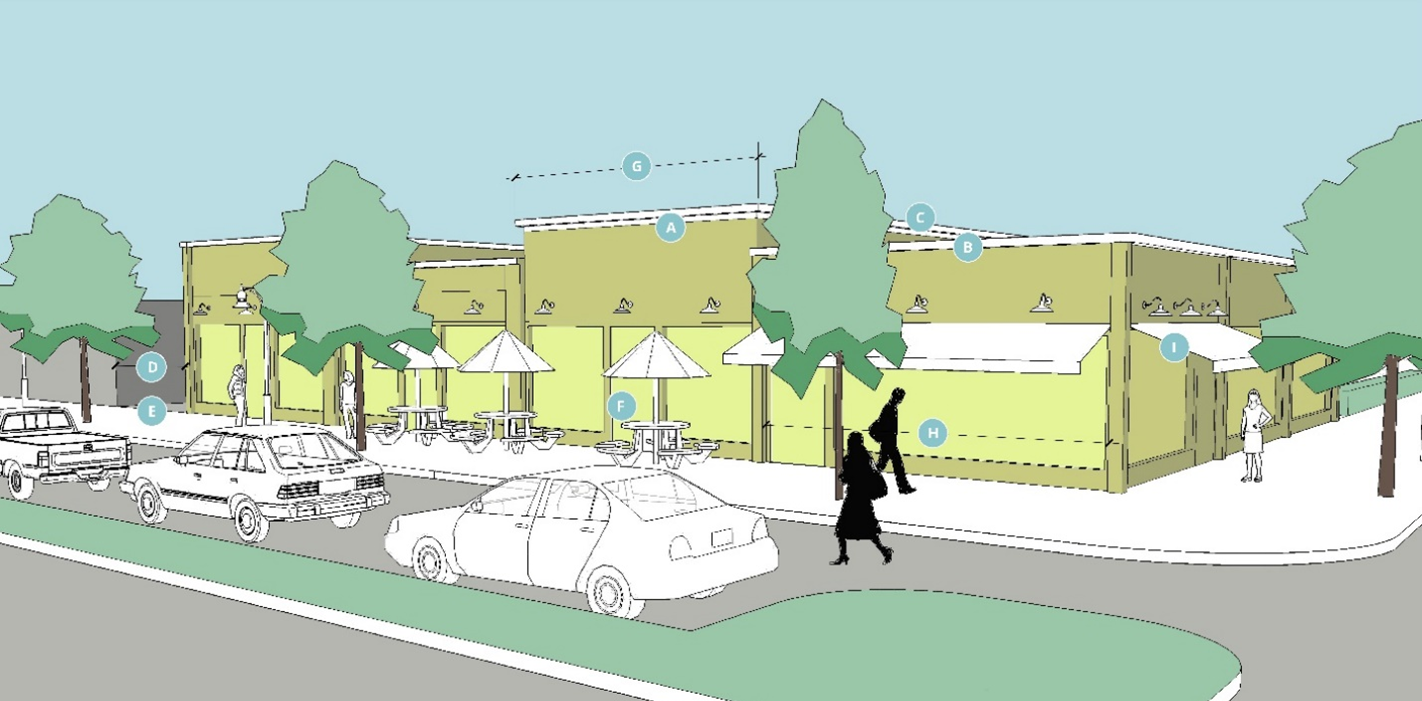
MU-1, Neighborhood Mixed-Use District. Buildings are setback from the street with a landscaped or activated front yard area (e.g., an outdoor dining area). Parking may be in the front of the building (this building typology is especially relevant to Kelly Road where the existing buried utilities restricts building footprints closer to the road. Sites have a ten-foot pedestrian sidewalk to provide for enhanced placemaking activities and support a parkway design. The following design requirements apply:
C)
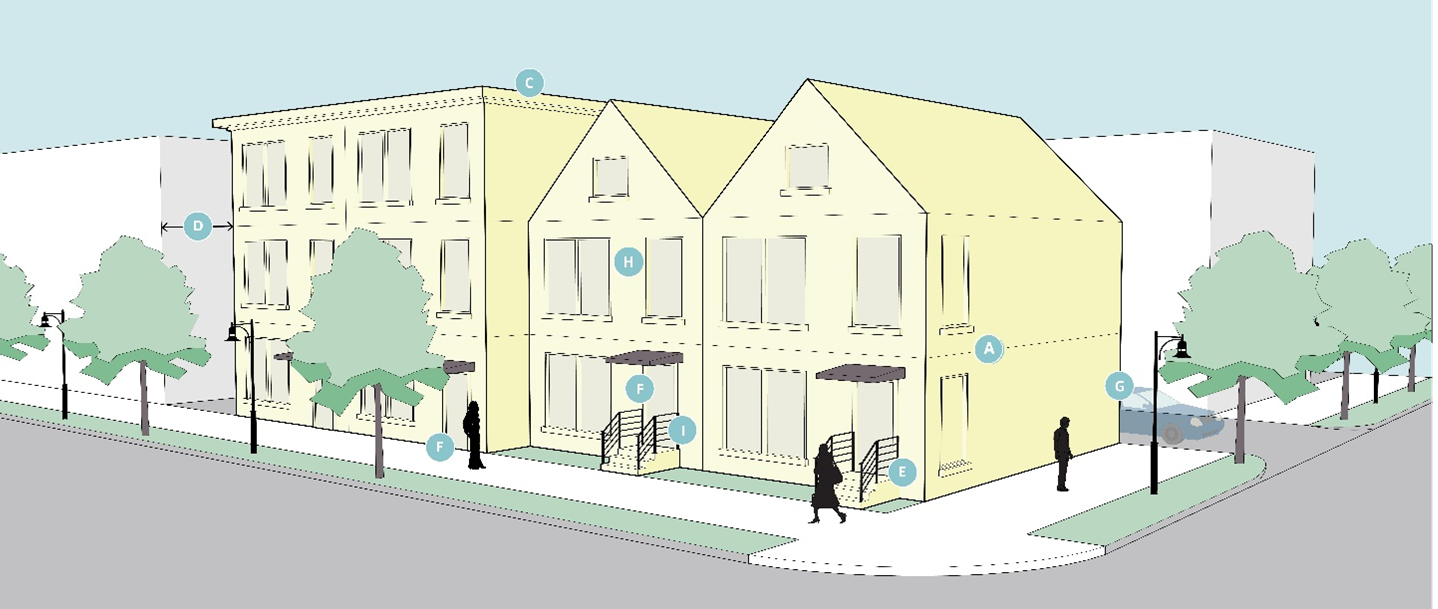
MU-2, Main Street Mixed-Use District. This district promotes a main street, pedestrian-oriented building typology along 9 Mile Road with active ground floor uses and primary access on a public street or from a public sidewalk. These buildings include pedestrian amenities (i.e., sidewalks, plazas, parks, and outdoor seating areas, etc.) that are integrated into the site design. The following design requirements apply:
D)
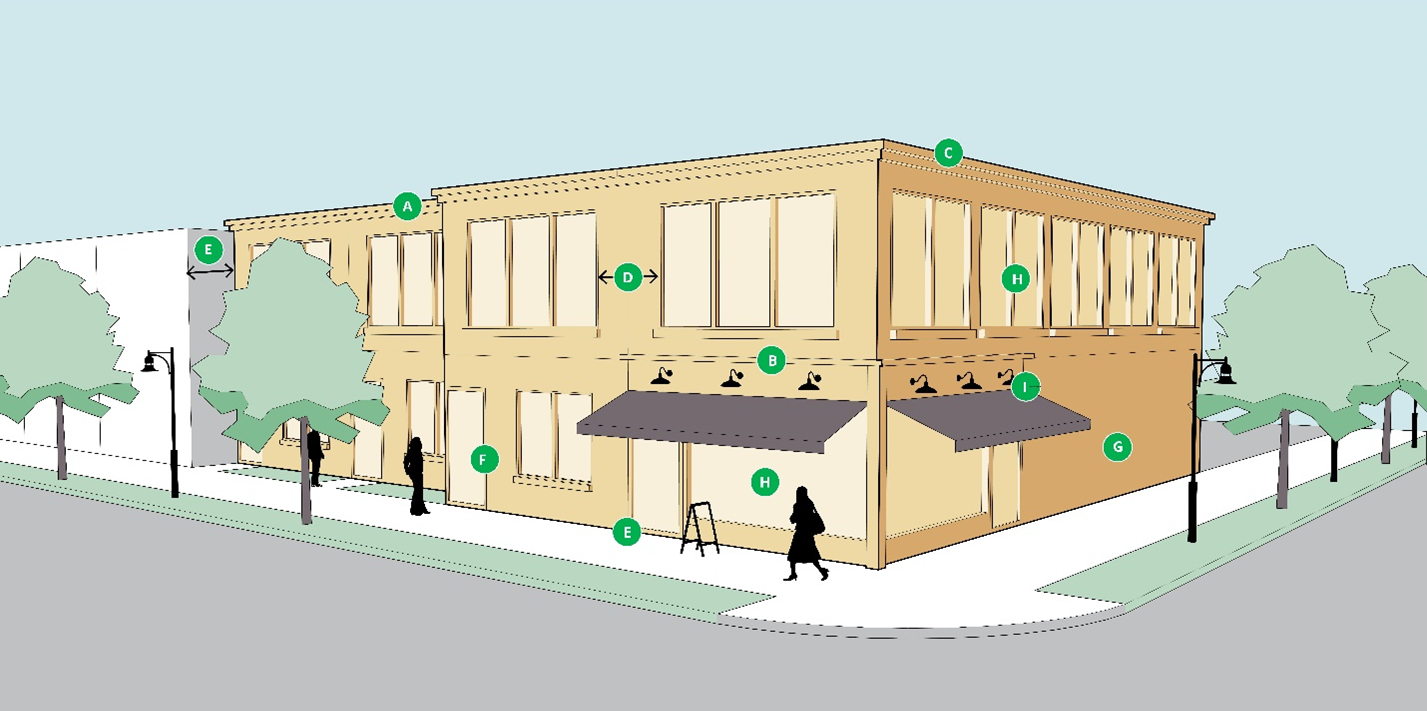
DT, Downtown District. This district promotes mid-to-high rise building typologies yet does not assign any minimum building height requirements. The following design requirements apply:
E)
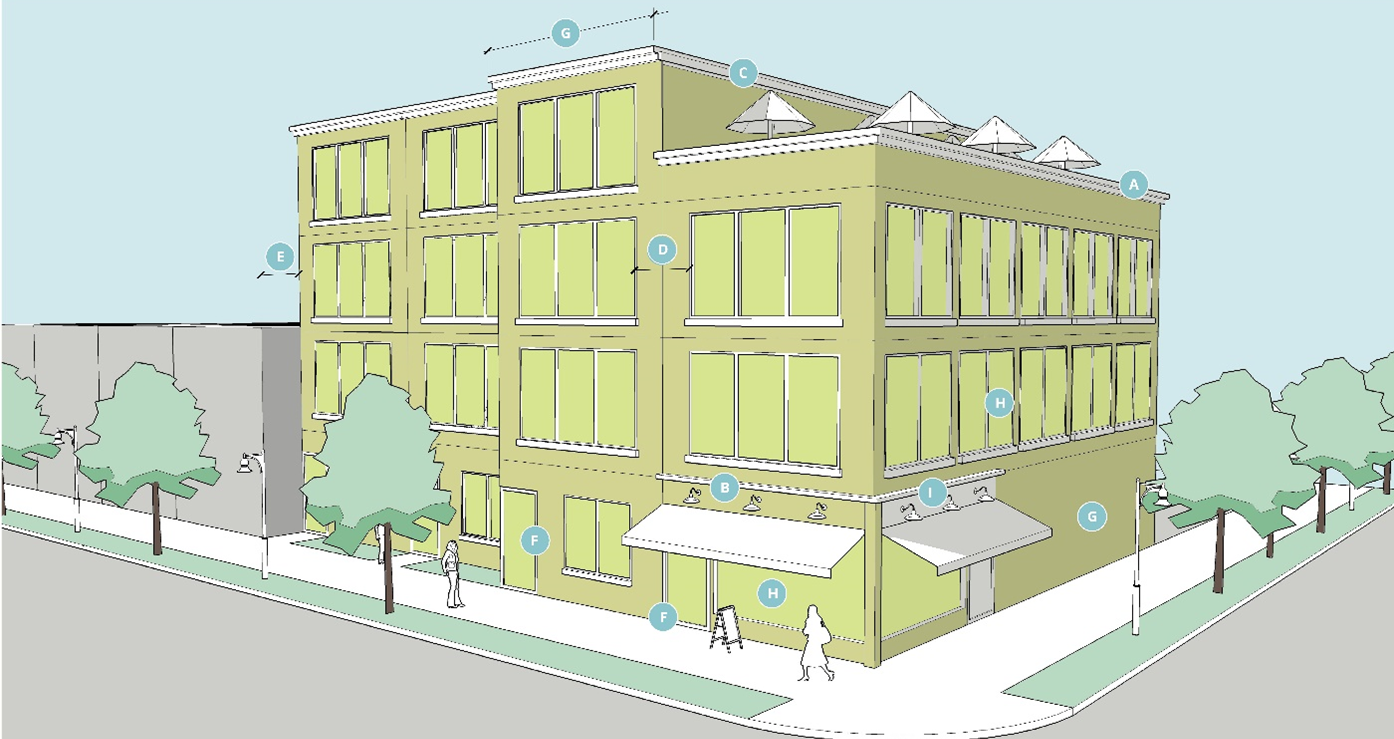
Central Downtown Overlay. This overlay promotes a mid-to-high rise building typology for buildings located in the heart of the downtown: their real estate and design are valuable to the city. Due to the iconic location of these buildings, situated within the four corners of the city (9 Mile and Gratiot), the following design elements apply to stimulate economic growth and attraction:
F)
Gratiot Gateway Overlay. This overlay promotes a high rise, mixed-use building typology. Due to the location of these parcels, at the busy and highly visible intersection of 8 Mile and Gratiot, these buildings act as a gateway to the Eastpointe community. Therefore, these buildings have additional design standards:
(Ord. of 11-13-2023; Ord. No. 24-1238, 6-4-2024)
Sec. 6.07. - Parking structures.
A liner building must be integrated into the parking structure (i.e., the ground floor on the outside of the parking garage must be used for retail/office or another pedestrian-oriented use to maintain an active and lively streetscape).
(Ord. of 11-13-2023)
Sec. 6.08. - Exterior building materials and colors.
A)
Permitted building materials. The table below details the permitted exterior building materials allowed on each façade in each zoning district, whether it is a principal material or an accent material.
1)
Principal material (P). Primary building materials must constitute at least 75 percent of the total façade on each building elevation.
2)
Accent material (A). Accent building materials, altogether, cannot constitute more than 25 percent of the total façade, on each building elevation.
B)
Engineered materials. Engineered equivalent materials are permitted as the original material is permitted in each district. Engineered materials must match the appearance of natural binding materials.
C)
Painted building materials. Building materials may not be painted or stained unless approved by the planning commission. Preference will be given to existing building materials that are already painted or stained and when the applicant proposes to stain, not paint, the façade.
D)
Building colors. Exterior finish materials and colors must be in natural tones and consistent, or compatible, with the character of the surrounding district to create a uniform and recognizable identity. Harmonization of colors is necessary. Accent colors are permitted to activate the street front and exercise artistic placemaking; this standard is to not be interpreted as prohibiting the incorporation of public art, such as a mural, to buildings or sites.
E)
Architectural features. All architectural features, including awnings, overhangs, roof projections, window accents, and the like must be compatible with the style, materials, and colors of the building.
F)
Waivers. The planning commission may modify the material standards, based on determination that the proposed materials or colors are high-quality and compatible with the architecture and style of the primary building and context.
(Ord. of 11-13-2023)
Sec. 6.09. - Lighting standards.
A)
Purpose. To ensure that sufficient lighting is provided in publicly accessible areas of buildings and properties that complements and enhances the environment and character of Eastpointe by aiming to:
1)
Permit reasonable uses of exterior lighting for night-time security, utility, productivity, enjoyment, and commerce.
2)
Minimize glare, obtrusive light, and artificial sky glow by limiting exterior lighting that is misdirected, excessive, or unnecessary.
3)
Conserve energy and resources.
4)
Protect the natural environment from the damaging effects of light pollution.
B)
General standards.
1)
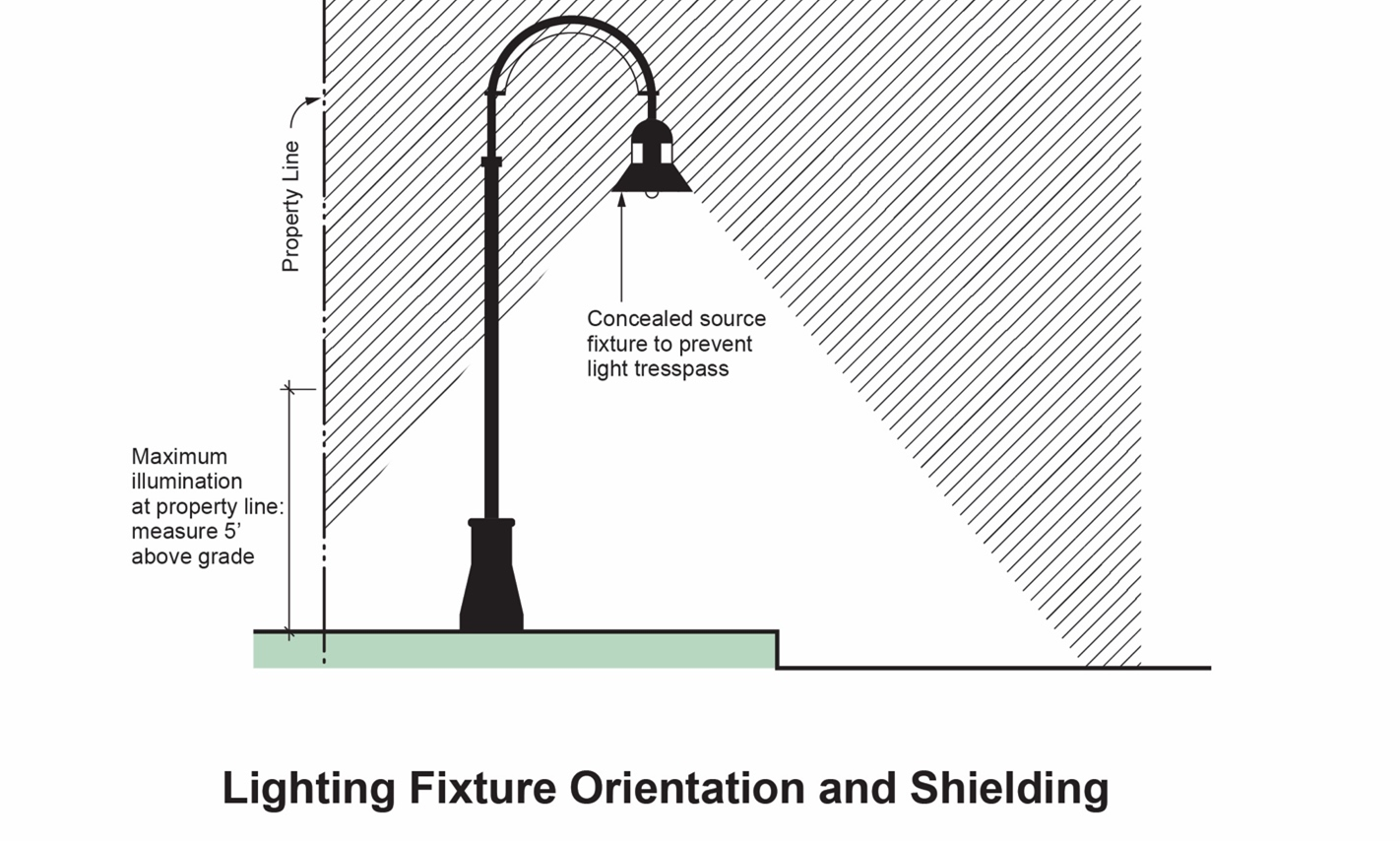
Illumination levels. Existing and proposed lights may not exceed the following maximum intensity levels (measured at a height of five feet above grade).
2)
Shielding. All exterior lighting, excluding accent lighting in residential districts, must be fully cut off and shielded so the surface of the source of the light is not visible, and is directed downward and shielded away from adjacent properties, with particular consideration to protecting residential uses.
3)
Non-essential lighting. Non-essential lighting must be turned off after business hours, except for the minimum necessary security lighting. The use of a motion detector or other automatic timing system of security lighting is encouraged.
4)
Consistent fixtures. The type and design of lighting must be consistent throughout a site.
5)
Impact. Lighting must be arranged so as to not adversely affect driver visibility on rights-of-way.
6)
Decorative fighting. Buildings within the MU-1, MU-2, and DT districts must feature decorative lighting on all façades which face the public right-of-way or residentially zoned or used property. Wall pack type lighting is prohibited.
7)
Gas station lighting. Lighting under gas station canopies is limited to fully recessed lighting fixtures.
8)
Height. The maximum height of light fixtures (measured from the finished grade to the top of the fixture) may not exceed the height of the building or the following, whichever is less:
C)
Exempt lighting. The following are exempt from the requirements of this article:
1)
Required exit signs and safety lights for stairs and ramps.
2)
Temporary holiday lights (provided that such lighting is installed no more than 60-days prior to, and 30-days following, the holiday such decorations represent).
3)
Lights required by the Federal Aviation Administration, or other federal or state agency.
4)
Interior lights.
5)
Temporary lights necessary for construction or emergencies.
D)
Prohibited lighting. The following lights are prohibited:
1)
Rope lights (including neon, except when used in outlined tubing signs) around and within window and door openings.
2)
Aerial lasers and/or "searchlight" style lights.
3)
Flashing, moving, or intermittent lights (including lighting that changes colors).
4)
Other intense lights, defined as having a light source exceeding 4,000 lumens per fixture.
E)
Special exception lighting.
1)
Lighting systems not complying with the requirements of this article, but consistent with its intent, may be considered by the planning commission, subject to special land use approval. This includes instances of:
a)
Sport fields and stadiums.
b)
Industrial lighting for hazardous areas or areas where higher pole heights are necessary to avoid interference with vehicles/operations.
c)
Public monuments, public buildings, government facilities, and religious institutions.
d)
Any other lighting application determined to be appropriate by the planning commission.
2)
The planning commission must find that the proposed lighting will not create unwarranted glare, sky glow, or light trespass. The applicant must demonstrate that every reasonable effort has been made to mitigate obtrusive light and artificial sky glow, supported by a signed statement from a registered engineer or by a lighting certified professional describing the mitigation measures.
(Ord. of 11-13-2023)

