
Fate City Zoning Code
ARTICLE XI
- NONCONFORMITIES
Purpose: This Article protects property rights by allowing nonconformities to continue. Because nonconformities are not favored by the law and are inconsistent with the City's comprehensive planning policies, this Article limits their expansion and prohibits further nonconformities. This article also protects vested rights for applications in process, consistent with Fate UDO Article I, Section 1.7. While nonconformities may continue, this Article creates a more balanced approach to nonconformities. The City acknowledges the need for ongoing maintenance and a market driven approach to substantial redevelopment under the requirements of this Ordinance while discouraging perpetuation of nonconformities through minimal investments intended to circumvent the overall intent of zoning regulations. This article is also intended to reduce vacancies and promote appropriate redevelopment and re-use of existing structures and lots.
(Ord. No. O-2023-003, § 3(Exh. A), 1-3-2023)
Sec. 36-11-1 - General provisions
11.1.1. Purpose and Applicability. This chapter governs uses, structures, lots, and other situations that came into existence legally prior to the effective date of this UDO or the effective date of future amendments to this UDO, but do not comply with or conform to one or more requirements of this UDO. These situations are collectively referred to as "nonconformities". A "nonconformity" means any of the following (see Fate UDO Article XII, Section 12.6):
(1)
Nonconforming use (Sec. 36-11-2);
(2)
Nonconforming lot (Sec. 36-11-3);
(3)
Nonconforming structure (Sec. 36-11-4);
(4)
Nonconforming site (Sec. 36-11-5).
11.1.2. Continuation Permitted. Any nonconformity that legally exists on the adoption date of this UDO, or that becomes nonconforming upon the adoption of any amendments to this UDO may continue in accordance with the provisions of this article.
11.1.3. Repairs and Maintenance. Incidental repairs and normal maintenance of nonconformities are permitted unless those repairs increase the extent of nonconformity or are otherwise expressly prohibited by this UDO. Structures may be structurally strengthened or restored to a safe condition, in accordance with an official order of a public official.
11.1.4. Tenancy and Ownership. The status of a nonconformity is not affected by changes of tenancy, ownership, or management.
11.1.5. Exception Due to Variance or Modification. This article does not apply to any development standard or feature that is the subject of a variance or modification granted by the Zoning Board of Adjustment. If a variance or modification is granted for a development standard that does not otherwise conform to the requirements of this UDO, that development standard is conforming.
11.1.6. Enforcement of Requirements. The City may withhold necessary permits, inspections, or other approvals, impose a fine, or pursue any other remedy authorized by state law to ensure compliance with this article (see Article II, Sec. 36-2.6 for enforcement procedures and penalties).
11.1.7. Nonconformity Due to City Action. A use, lot, or structure conforming to City ordinance is not considered nonconforming if a governmental entity reduces the size of the lot on which the structure is located by widening an abutting street or through the exercise, or potential exercise, of the City, County, or State's eminent domain power. Any status claimed under this subsection must be the result of City, County, or State action only and not otherwise result in a situation that jeopardizes the public health, safety, or welfare. Further, the City, County, or State's action must make it impossible or highly impracticable for the structure to be brought into conformity with this Ordinance. This subsection is intended to provide conforming status for the use, lot, or structure immediately after such City, County, or State action, only with regard to the following requirements:
(1)
The amount of square footage removed from the structure's minimum required lot area by the City, County, or State action;
(2)
The number of linear feet removed from the structure's minimum required lot depth or width by the City, County, or State's action;
(3)
The number of linear feet removed from the structure's minimum required front setback, side setback, or rear setback by the City, County, or State's action;
(4)
The number of existing properly marked parking spaces removed from the structure's minimum required off-street parking by the City, County, or State's action;
(5)
The increased percentage of lot coverage directly attributable to the City, County, or State's action; and
(6)
The amount of landscaping removed from the existing property by the City, County, or State's action.
11.1.8. Action by the Zoning Board of Adjustment. The Administrator shall determine whether the property owner has a right to continue a nonconformity. If a timely appeal of the Administrator's determination is filed, the Zoning Board of Adjustment determines the right to maintain or operate a nonconformity in accordance with the provisions of this Ordinance outlined in Section 2.5.6.
(Ord. No. O-2023-003, § 3(Exh. A), 1-3-2023)
Sec. 36-11-2 - Nonconforming uses
11.2.1. General. Any use of land that was legally in existence and nonconforming on the effective date of this Ordinance and has been in regular and continuous use, but which does not conform to the use regulations prescribed by this Chapter, is a nonconforming use. However, any single-family use lawfully existing on the effective date of this Chapter is considered a conforming use.
11.2.2. Change of Use.
(1)
A nonconforming use may only change to a conforming use allowed in the zoning district in which it is located.
(2)
Once a nonconforming use is converted to a conforming use, it shall not change back to a nonconforming use.
(3)
A nonconforming use shall not change to another nonconforming use.
11.2.3. Enlargement or Extension of Nonconforming Use. Nonconforming uses may not:
(1)
Increase the floor area or the land area devoted to the nonconforming use, or
(2)
Enlarge or extend the nonconforming use beyond the scope and area of its operation at the time the regulation that made the use nonconforming was adopted.
11.2.4. Loss of Nonconformity Status.
(1)
Abandonment.
"Abandoned" or "abandonment" means that a nonconforming use discontinues or ceases for any reason for more than 180 continuous calendar days. An abandoned nonconforming use loses its right to operate, and re-establishment of the nonconforming use is prohibited. Any subsequent use of the property shall comply with the regulations of the zoning district in which it is located.
A nonconforming use that discontinues or ceases but is re-established within 180 calendar days may continue if the nature and degree of the nonconformity does not change or increase from that which existed before the nonconforming use ceased.
(2)
Damage or Destruction.
(a)
If the structure in which a nonconforming use is housed, operated, or maintained is destroyed other than by an action of the City, County, or State to the extent of more than 50 percent of its fair market value, the use may not re-establish except in compliance with all regulations applicable to the zoning district in which it is located.
(b)
If the structure in which a nonconforming use housed, operated, or maintained is partially destroyed, where the damage does not exceed 50 percent of its fair market value, the nonconforming use may continue, and the structure may be rebuilt but not enlarged upon approval of a building permit.
(3)
Illegality. Illegal uses shall be immediately terminated pursuant to Section 36-2.6.
(Ord. No. O-2023-003, § 3(Exh. A), 1-3-2023)
Sec. 36-11-3 - Nonconforming lots
11.3.1. Nonconforming Lots of Record. No use or structure shall be established on a lot of record that does not conform to the lot area, lot width, or lot depth requirements for the zoning district in which it is located established, except as otherwise provided for in this section.
(1)
Lot Size. If a lot of record created by a subdivision plat has less width or area than the minimum requirements of the district in which the lot is located, the standard for width or area do not prohibit the erection of a use permitted by right in the zoning district or an accessory structure.
(2)
Adjacent Lots in Single Ownership. If two or more adjacent and vacant nonconforming lots are in single ownership at any time, and such lots individually have less width or area than the minimum requirements of the district in which such lots are located, then such lots shall be considered in combination and treated as a single lot or several lots that meet the minimum requirements for the district in which they are located under this Ordinance. Any construction, replacement, or enlargement of a dwelling or building shall require a combination or replatting of all necessary lots in order to achieve compliance with the provisions of this Ordinance.
(Ord. No. O-2023-003, § 3(Exh. A), 1-3-2023)
Sec. 36-11-4 - Nonconforming structures
11.4.1. General. A nonconforming structure or site is a building with improvements, the size, dimension, design, or location of which was lawful prior to the adoption, revision, or amendment of this Ordinance, but which fails to conform to the requirements of the development regulations applicable to the property by reasons of such adoption, revision, or amendment.
11.4.2. Continuation of Nonconforming Structure or Site. Except where prohibited by this article, a nonconforming structure may be used for any use allowed in the underlying zoning district, including an existing nonconforming use.
11.4.3. Maintenance and Minor Repair. The maintenance or minor repair of a nonconforming structure is permitted, provided that the maintenance or minor repair does not extend or expand the nonconforming structure or exacerbate any existing nonconformity. For the purposes of this subsection, "maintenance and minor repair" means:
(1)
Repairs that are necessary to maintain and to correct any damage or deterioration to the structural soundness or interior appearance of a building or structure without expanding or altering the building or structure;
(2)
Maintenance of land areas to protect against health hazards and promote the safety of surrounding land uses; and
(3)
Repairs that are required to remedy unsafe conditions that cause a threat to public safety.
11.4.4. Enlargement and Expansion. A nonconforming structure in which only permitted uses are operated may be enlarged or expanded if the enlargement or expansion can be made in compliance with all of the provisions of this Code established for structures in the district in which the nonconforming structure is located. Such enlargement or expansion shall also be subject to all other applicable City ordinances.
11.4.5. Setbacks. Buildings or structures with setbacks made nonconforming by the adoption or amendment of this Chapter may continue or rebuild within the existing setback if:
(1)
The proposed addition or alteration will either meet current setback requirements or will not encroach any further into the required setback than the existing structure; and
(2)
If the proposed alteration or addition is located on the side of the existing building, and this complies with the current side yard setback requirements.
(3)
Buildings with setbacks made nonconforming by the installation of roadways or other easements/property line adjustments created or enacted by a governmental entity are not required to meet the standard in subsection (2) above.
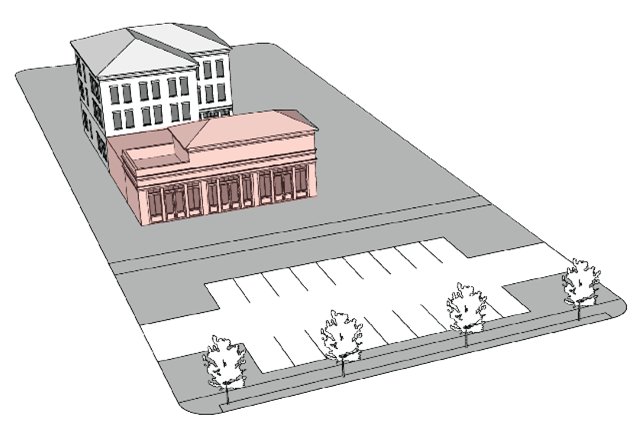
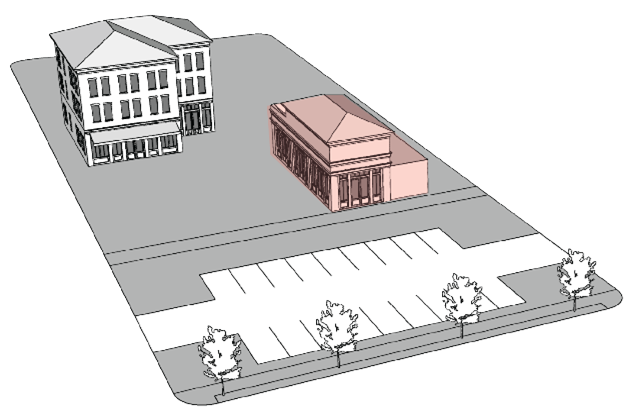
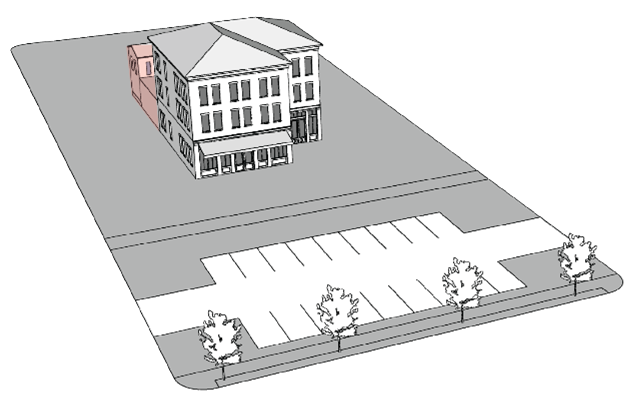
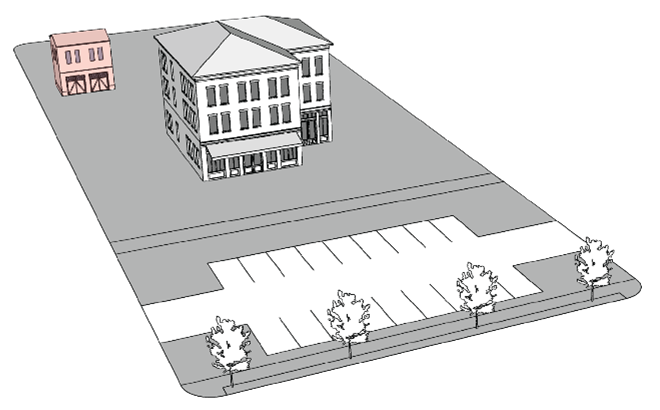
11.4.6. Nonconformity as to Maximum Setback (Build-to-Zone) and Frontage Buildout. If build-to zone standards are nonconforming (i.e., all buildings are located outside of the build-to zone, or existing buildings do not conform to the required frontage buildout):
(1)
Front: Addition. Any addition to the front must move toward the build-to-zone. The addition does not have to meet the frontage buildout.
(2)
Front: New Building. A new building must be placed in the build-to-zone until the frontage buildout has been met.
(3)
Rear: Addition. Rear additions are allowed because the extension does not increase the degree of the non-conformity.
(4)
Rear: New Building. New Buildings located outside of the build-to-zone are not allowed until the frontage buildout has been met.
(5)
Side: Addition. Side additions are not allowed because the extension increases the width of the building not in the build-to-zone.
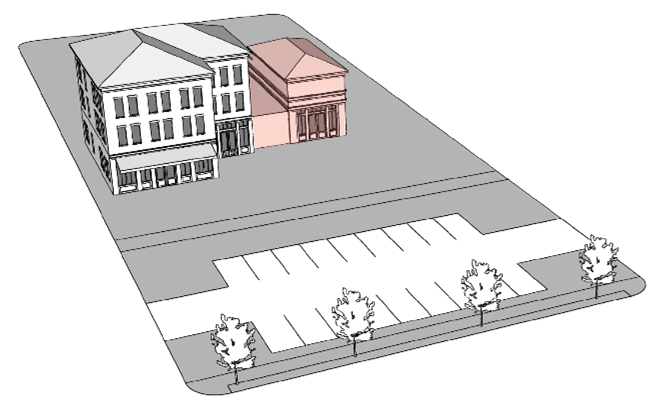
(6)
Side: New Building. New Buildings located outside of the build-to-zone are not allowed until the frontage buildout is met.
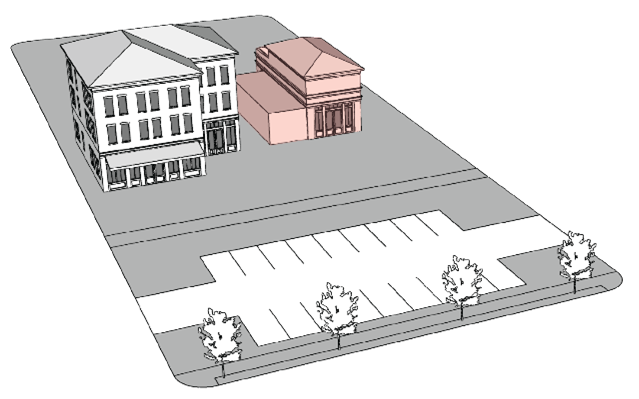
(7)
Side: Addition (Large Building). Side additions are not allowed because the extension increases the width of the building not in the Build-to zone.
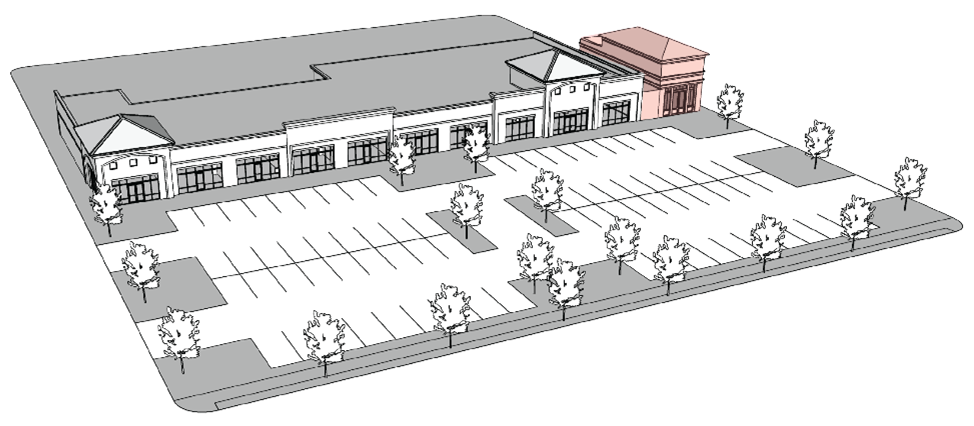
(8)
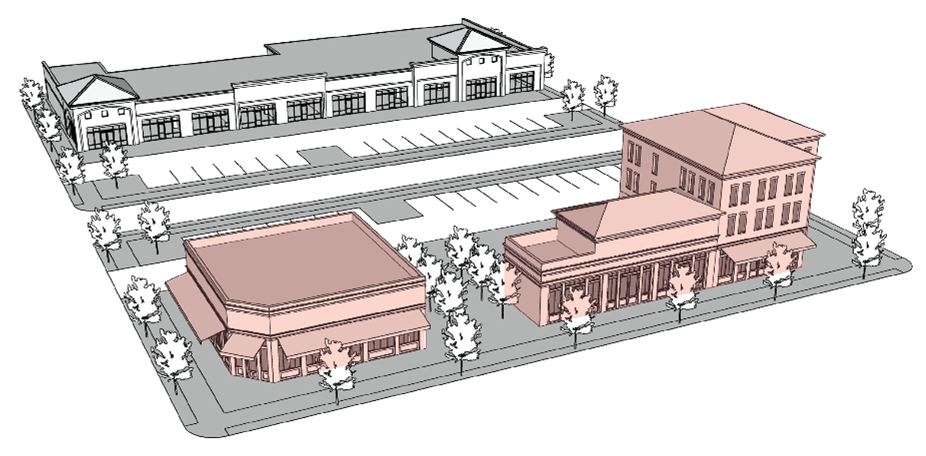
Side: Addition (Large Building) with a new connected street. If a connected street is added, side additions are now allowed because the new street establishes a new build-to-zone. The new street shall be selected from the allowable street types for the zoning district and shall conform to block standards (block lengths).
(9)
New Buildings within Build-to Zone.
(a)
Expansions or new buildings are permitted if:
(i)
The expansions achieve the required frontage buildout, or
(ii)
The area needed to achieve the frontage buildout is filled with conforming amenity space.
(b)
Parcels with street frontages greater than 300' may expand laterally inside the build-to zone if they do not decrease the extent of the frontage buildout.
11.4.7. Loss of Nonconforming Status; Damage or Destruction.
(1)
Continuation of Nonconforming Structure. The use of a nonconforming structure may be continued subsequent to the effective date of this Ordinance, provided that such continuance is in accordance with the provisions of this article and all other applicable codes of the City necessary to ensure adequate protection and safety of adjacent property and the users and occupants of such nonconforming structure.
(2)
Alteration or Enlargement of a Nonconforming Structure or Site. Any nonconforming structure may be altered or enlarged, provided that such alteration or enlargement shall neither create any new nonconformity nor shall increase the degree of the existing nonconformity of all or any part of such structure.
(3)
Damage or Destruction.
(a)
If the nonconforming structure is destroyed other than by an action of the City, County, or State to the extent of more than 50 percent of its fair market value, the structure shall not be restored unless it complies with all the regulations of the zoning district in which it is located.
(b)
If the nonconforming structure is partially destroyed, where the damage does not exceed 50 percent of its fair market value, the nonconforming structure may be rebuilt but not enlarged or expanded upon approval of a building permit, except where the enlargement or expansion can be made in compliance with all of the provisions of this Code established for structures in the district in which the nonconforming structure is located.
(Ord. No. O-2023-003, § 3(Exh. A), 1-3-2023)
Sec. 36-11-5 - Nonconforming Sites
(1)
Applicability. This section applies to any nonconforming site.
(a)
A "Nonconforming Site" is a situation that occurs when, on the effective date:
(i)
An existing site improvement on a lot (including but not limited to parking areas, storm drainage facilities, sidewalks, and landscaping) no longer conforms to the applicable regulations of this UDO, or
(ii)
The lot does not include site improvements required by of this UDO for any existing use, building or structure on the lot.
(iii)
This section does not apply to one-time repairs and renovations of less than 10% of the structural value of a structure or site improvements.
(2)
Generally. On nonconforming sites, additions to, or exterior repairs or alterations of any building, structure or site improvement that increases the square footage are not allowed, unless:
(a)
The nonconforming site improvements are brought into conformity with the regulations applicable to the use, building, structure, or zoning district, in accordance with the elements listed in Table 5.1-1, and
(b)
The activity is authorized by a Type I Site Plan (see Sec. 2.5.6).
(3)
Nonconforming Site Permit. When an addition to, or repairs or alterations to, any structure or site improvement is proposed on a nonconforming site, the Administrator may approve a site plan allowing the addition, repairs, or renovation if:
(a)
The situation creating the nonconformity is the only nonconformity pertaining to the property; and
(b)
Compliance with the site improvement requirements applicable to the zoning district in which the property is located is not reasonably possible. Mere financial hardship does not constitute grounds for finding that compliance with the site improvement requirements is not reasonably possible; and
(c)
The property can be developed as proposed without any significant adverse impact on surrounding properties or the public health or safety; and
(d)
If needed, the owner commits to other site design measures to reduce negative impacts associated with the nonconformity or to accomplish the purpose of the required site improvement.
(Ord. No. O-2023-003, § 3(Exh. A), 1-3-2023)

