
Fate City Zoning Code
ARTICLE VIII
- SIGNAGE
Sec. 36-8.1 - General provisions
8.1.1. Purpose.
The general purpose of the sign regulations of this article is to provide public safety, adequate lighting, open space and air, conservation of land, protection of property values, and encourage the highest and best use of land by providing that signs:
a.
Are maintained properly to avoid creating safety risks due to abandonment, collapse, decay, deterioration, or fire.
b.
Enhance the quality of the City's appearance by avoiding clutter and by not interfering with scenic views or character of certain City areas.
c.
Do not obstruct or interfere with the ability of the Fire or Police Departments to implement their job duties.
d.
Do not pose a hazard to public safety by confusing or distracting motorists or creating obstructions impairing a driver's ability to see pedestrians, obstacles, other vehicles, or traffic signs.
e.
Are regulated by size, quantity, scale, and proportionate balance in accordance with the structures for which associated with and standards consistent with the stated general purpose.
f.
Do not create nuisances for people using the public rights-of-way and streets nor owners/tenants of adjacent property by their height, size, brightness, or movement.
g.
It is not the purpose or intent of this ordinance to regulate signs based on their content.
8.1.2. Applicability.
The sign regulations of this article apply and are enforceable in the corporate limits of the City and the area of its extraterritorial jurisdiction as defined by V.T.C.A., Local Government Code § 42.021. This Section regulates only the sign structure and physical parameters and not the sign's content. Despite any other provision of this Section, no sign is subject to any limitation based on the content of its message. This section does not authorize the City to regulate any sign to the extent that it is exempt or regulated differently by state law.
8.1.3. Nonconforming signs.
a.
A sign that does not conform to the regulations prescribed in this chapter and that existed lawfully on the date of the adoption of this chapter or amendment hereto shall be deemed a nonconforming sign.
b.
The right to continue all nonconforming signs shall cease and such sign shall be removed or improved to conform to this chapter whenever:
1.
An approved application for certificate of occupancy or a certificate of occupancy for a change of business or ownership is issued as provided in the Zoning Ordinance of the City of Fate, and a sign is associated with the previous business or ownership. This provision applies to on-premises advertising only.
2.
A change of occupancy classification occurs as described in the building code and a sign is associated with the prior classification.
3.
A sign is altered, moved, or relocated without a permit pursuant to the provisions of this chapter.
4.
A sign is destroyed and the cost to repair exceeds 50 percent of the replacement cost on the date of damage.
5.
A sign leans such that an angle between the sign and the ground is 70 degrees or less.
6.
A sign has fallen onto the ground.
c.
Signs designated by official action of the City as having special historic or architectural significance are exempt from subsection b. of this section.
8.1.4. Prohibited signs.
a.
Sign Types. Pole signs, portable signs, marquee signs, ground signs, roof signs, bandit signs, and any signs attached to a tree(s) are prohibited. Permanent signs are prohibited in single-family residential zoning districts (RE, R-1, R-2, R-3) or uses except those signs that are typical and common to single-family residential zoning districts or uses (generally signs which will be removed within a specific and limited time or subdivision entry signs). Any sign attached, affixed, painted, or placed upon any vehicle, trailer, or similar mobile structure where the intent is apparent to be one of using the vehicle and its sign(s) for advertising goods, services or similar items shall be prohibited to be parked along a right-of-way in the same location, or in the same vicinity, for longer than 30 minutes in any 24-hour period. Any non-public sign located within the public rights-of-way or on City property (without City approval) is prohibited.
b.
Changeable Copy Signs. Manual changeable copy signs (placement of letters or symbols on a panel mounted in or on a track system or similar apparatus) are prohibited.
c.
Sign Lighting and Color. Ground-lighted signs and signs lighted in an upward direction are prohibited. Neon lighting may only be approved by Special Sign Permit. Flashing signs and moving lights integral to a sign or external to a sign that is intended to draw attention to a sign is prohibited. Sign color shall be neutral (neon or bright colors may only be approved by Special Sign Permit).
d.
Wall Signs. Box, or banner wall signs are prohibited. Painted wall signs depicting a business name or logo shall require a Special Sign Permit, Murals are not considered wall signs for the purposes of this Article. A box sign is a sign that is self-enclosed in a typically square or rectangular structure, with or without internal lighting, and which can be single or double-faced.
e.
Billboards. Off-premises advertising signs are prohibited.
8.1.5. Dilapidated or deteriorated signs.
a.
Any sign:
1.
Where elements of the surface or background have portions of the finished material missing, broken, or otherwise existing such that they are illegible.
2.
Where the structural support or frame members are visibly bent, broken, dented, or torn.
3.
Where the panel is visibly cracked or, in the case of wood and similar products, splintered in such a way as to constitute an unsightly or harmful condition.
4.
Where the message or wording can no longer be clearly read.
5.
Where the sign or its elements are not in compliance with the requirements of the current Electrical Code and/or Building Code of the City.
b.
No person shall keep or permit to be kept on any premises owned, controlled, or occupied by him or her any sign which is in a dilapidated or deteriorated condition as defined herein. Upon notice of violation, any such sign shall be promptly removed or repaired by the owner of the sign or the owner of the premises upon which the sign is located. A nonconforming sign as defined by this chapter is not dilapidated or deteriorated and shall not be repaired.
8.1.6. Exempt signs.
The following signs shall be exempt from the provisions (including permitting) of this chapter:
a.
City traffic signals, signs, and similar devices.
b.
Official legal notices.
c.
Public warning signs, traffic control signs, traffic directional signs, public service signs indicating danger or aids to safety, or similar signs erected by the City or similar entity.
d.
Signs displayed within the interior of a building which are displayed so as to not be visible from outside the building.
e.
Street numbers or addresses not exceeding 6 square feet.
f.
Signs or tablets cut into any masonry surface or when constructed of bronze or other noncombustible materials of similar quality and characteristics as determined by the Administrator.
g.
Sign facing when to be replaced at the same location if there is no change in area, shape, lighting, or color.
h.
Replacement of letters on non-illuminated wall signs with identical letters (same area, shape, and color) provided that a permit was obtained for the original sign intended to be replaced.
i.
Flags or emblems of a business or corporation when accompanied by both the national and state flags. One business or corporate flag shall be permitted per development. All flags displayed must follow the rules of standard flag etiquette and all business or corporate flags shall be no larger than the accompanying national and state flags.
j.
Temporary electioneering signs, though they are subject to time, place, and manner regulations for temporary electioneering signs found in Section 8.6.
8.1.7. Temporary political signs specifically authorized by V.T.C.A., Local Government Code § 216.903, as amended. Special sign permit.
The city council may grant a special sign permit for a sign that does not comply with the provisions of this Ordinance (see Illustrations 8.1.7.1 to 8.1.7.7) if:
a.
The requested sign is creative or innovative, or has unusual architectural or artistic value; and will make a positive contribution to the visual environment;
b.
Because of an unusual characteristic of the land or the built environment, additional size or height is needed to provide visibility comparable to other similar properties and uses;
c.
The Council wishes to authorize the use of an alternate material, design standard, or method of construction, where the city council finds the alternate is satisfactory and is at least the equivalent of that prescribed in the ordinance in quality, strength, effectiveness, durability and safety; or
d.
The sign is a mural that the Council determines is in the best interest of the city.
Illustration 8.1.7.1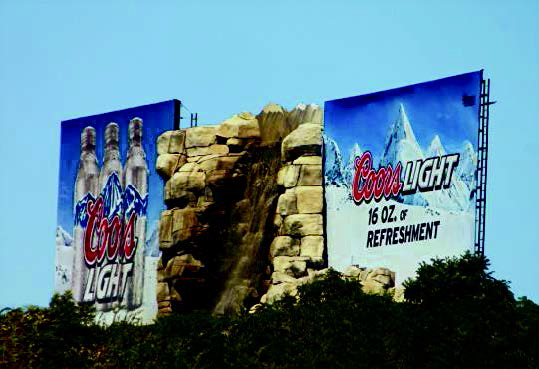 | Illustration 8.1.7.2 |
Illustration 8.1.7.3 | Illustration 8.1.7.4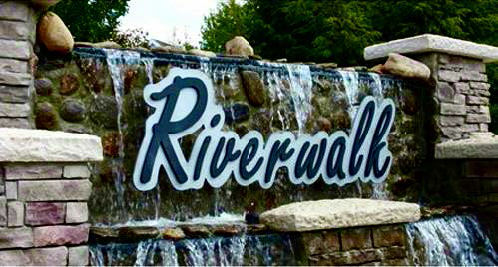 |
Illustration 8.1.7.5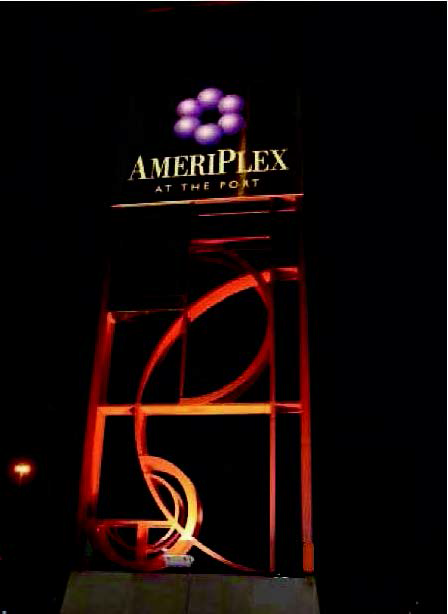 | Illustration 8.1.7.6 |
Illustration 8.1.7.7 | |
8.1.8. Application and permit requirements.
To obtain a permit, the applicant shall first file an application for permit on a form furnished by the Administrator. Every such application shall contain the following information:
a.
Sign type classification.
b.
Name, address and telephone number of the applicant.
c.
Name, address and telephone number of the owner of the property on which the sign will be located.
d.
Name, address and telephone number of person or firm erecting the sign.
e.
A description of the work to be covered by the permit for which application is made.
f.
Location of the building, structure, or lot upon which the sign is to be attached or erected.
g.
The signature of the permittee or authorized agent.
h.
Name of person for which the sign application has been made.
i.
Permit fee.
j.
Drawing of sign indicating the materials, lighting, and other design features.
k.
Elevation plan of the building showing the proposed sign on the building, the length of the elevation, and any other existing signs on the elevation along with the dimensions of such signs.
l.
Site plan indicating street frontage, property lines, sight visibility easements, existing rights-of-way, location of sign on property, relationship of proposed sign to ingress and egress points, and relationship of proposed sign to any other signs within a 60-foot spacing of the proposed sign.
m.
Any reasonable information requested by the Administrator to assist the City in its review of the application.
8.1.9. Wind pressure and dead load design.
All signs shall be designed and constructed to withstand wind loads as required by the Building Code of the City of Fate.
8.1.10. Certificate of occupancy required.
A business shall have a Certificate of Occupancy or have submitted application for a Certificate of Occupancy prior to the issuance of any sign permit for permanent signs. Changes of ownership require a new certificate of occupancy. The name of the business shall coincide with the sign to be displayed.
8.1.11. Responsibility for compliance.
The permittee, owner, agent, person, or persons having the beneficial use of the sign or the ground of a sign, the owner of the land or structure on which the sign is located, and the person(s) in charge of erecting the sign are all subject to the provisions of this chapter and are responsible for compliance with the provisions contained herein.
8.1.12. Penalty.
Any person found guilty of violating the provisions of this chapter shall be guilty of a misdemeanor and, upon conviction, shall be subject to a fine as provided by this Unified Development Ordinance, and each day the violation continues shall be a separate offense.
(Ord. No. O-2023-003, § 3(Exh. A), 1-3-2023; Ord. No. O-2024-030, §§ 21—23, 7-1-2024; Ord. No. O-2025-012, § 2, 3-13-2025)
Sec. 36-8.2 - Permitted permanent signs
8.2.1. Generally.
Signs are permitted only in accordance with the provisions of this chapter. No sign shall be erected, replaced, altered, or located without securing a permit. Internal lighting, halo lighting and crookneck lighting is permitted. Ground lighting is prohibited. Neon lighting may only be approved by Special Sign Permit. Sign color shall be neutral (neon or bright colors may only be approved by Special Sign Permit).
8.2.2. Pylon sign.
a.
Definition. A pylon sign is freestanding sign that is supported by a structure extending from and permanently attached to the ground by a foundation or footing which has at least 50 percent of the sign structure width in contact with the ground and the sign face by means of one or more supports such as poles, pole covers, or columns with a clearance between the ground and the sign face. Support material shall be constructed of brick, stone, fiber-reinforced cementitious board, ceramic or porcelain tiles, stucco, or other materials of similar characteristics and quality. See Illustrations 8.2.2-1 to 8.2.2-4.
b.
Permitted. Pylon signs are permitted in the I-30 Corridor only. I-30 Corridor refers to the area within the City limits located within 400 feet of the centerline of Interstate 30.
c.
Size. Maximum 250 square feet of sign copy, measured by an imaginary rectangle formed around the entire copy or grouping of words, letters or symbols. A minimum of 25 percent of each sign face shall be free of copy.
d.
Height. Maximum of 30 feet in height. Sign height shall be measured from the highest adjacent grade within 10 feet of the sign to the highest element of the sign.
e.
Number.
1.
For lots three acres or less in size or single-occupant lots: One.
2.
For multi-tenant lots greater than three acres, the number of pylon signs shall be limited by a minimum of 300 feet of separation (as measured along the property line) from another freestanding sign.
f.
Setback. Sign shall be set back 25 feet from the back of curb or from the edge of street or drive pavement where there is no curb (see Diagram 8.2.2-5). In no instance shall any sign obstruct the visibility of a sight visibility triangle or be located in a right-of-way or public easement.
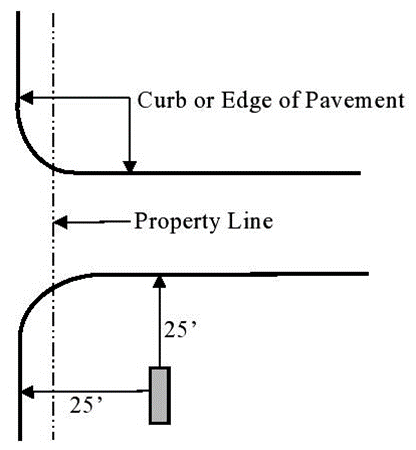
Diagram 8.2.2.5
g.
Exceptions.
1.
Existing nonconforming signs subject to the requirements of Section 8.1.3 may have 25 percent of the sign structure width in contact with the ground and sign face by means of one or more supports, except that a licensed engineer shall provide a report evidencing that the existing foundation or footing cannot support the required minimum wind design load of a sign having at least 50 percent of the sign structure width in contact with the ground and the sign face.
2.
Pylon signs are strictly prohibited except in the I-30 Corridor or with a Special Sign Permit.
Illustration 8.2.2.1 | Illustration 8.2.2.2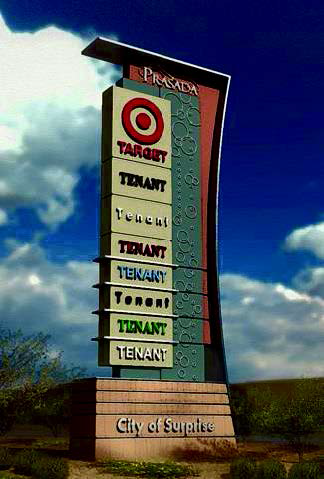 |
Illustration 8.2.2.3 | Illustration 8.2.2.4 |
8.2.3. Wall sign.
a.
Definition. Any sign attached to a wall with the sign facing parallel to and not more than 12 inches from the wall surface. Tubing which emits light and is attached to a wall surface shall be considered a wall sign when directing attention to the wall surface or when forming channelized letters (three-dimensional individually cut letters or figures, illuminated or not illuminated, affixed to a structure), logos, or pictorial designs. Wall signs shall not have electronic or manual changeable copy. See Illustrations 8.2.3-1 to 8.2.3-4.
b.
Size. Maximum 20 percent of the wall surface of the building or the lease space where sign is within the I-30 Corridor. Maximum 15 percent of the wall surface of the building or lease space in other locations. The wall surface shall be determined by measuring the length and height (up to a maximum of 20 feet in height) of the building or lease space elevation excluding windows and doors. The sign area will be determined by an imaginary rectangle drawn around the entire copy or grouping of letters, words, or symbols.
c.
Number. Wall signs may be placed on up to three sides (façade) of a building.
1.
Single occupant buildings with 50,000 square feet or less of gross floor area may have a maximum of two wall signs per façade.
2.
Single occupant buildings with more than 50,000 square feet of gross floor area may seek additional wall signs by Special Sign Permit.
3.
One wall sign per façade, per ground floor public entry in a multi-tenant building.
Illustration 8.2.3.1 | |
Illustration 8.2.3.2 | |
Illustration 8.2.3.3 | Illustration 8.2.3.4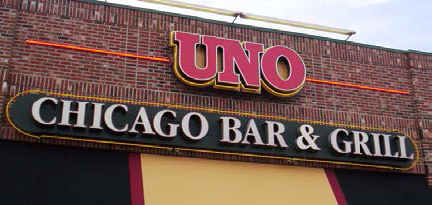 |
8.2.4 Monument sign.
a.
Definition. A sign having a low profile and made of stone, concrete, metal, brick or other materials of similar quality and characteristics. A monument sign shall be solid from the ground up, pole(s) or supports shall be concealed. A minimum 12-inch and maximum 36-inch base and a minimum eight-inch decorative border is required on all sides unless a Special Sign Permit is granted. The sign base and border shall be made of stone, concrete, metal, brick, or other materials of similar quality and characteristics. See Illustrations 8.2.4-1 to 8.2.4-5.
b.
Design standards. The sign(s) base shall be located within a landscaped area comprised of flowers, ornamental grasses, and other quality landscape materials that are a minimum of 6 inches in height at the time of planting and extend around the perimeter of the sign base, forming a solid unbroken visual barrier.
c.
Size. Maximum 80 square feet.
d.
Height. Maximum eight feet. Height shall be measured from grade to the highest element of the sign.
e.
Number.
1.
For single-occupant lots or multi-tenant lots three acres or less or for buildings with 50,000 square feet or less of gross floor area: One per street frontage.
2.
For single-occupant lots or multi-tenant lots greater than three acres or for buildings with more than 50,000 square feet of gross floor area, the number of monument signs shall be limited by a minimum of 150 feet of separation from another freestanding sign (as measured along the property line).
3.
Monument signs shall be separated by a minimum of 300 feet from another pylon sign associated with the same lot or tenant or occupant. Where a monument sign is contained or to be contained on a separate lot and is associated with a different tenant or occupant, the minimum separation shall be 150 feet.
f.
Setback. In the I-30 Corridor, signs shall be setback a minimum of 15 feet. In all other locations signs shall be setback a minimum of 10 feet. Sign setback is measured from the back of curb or from the edge of street or drive pavement where there is no curb. In no instance shall any sign obstruct the visibility within a sight visibility triangle or be located in a right-of-way or public easement. See Diagram 8.2.2-1.
Illustration 8.2.4.1 | Illustration 8.2.4.2 |
Illustration 8.2.4.3 | Illustration 8.2.4.4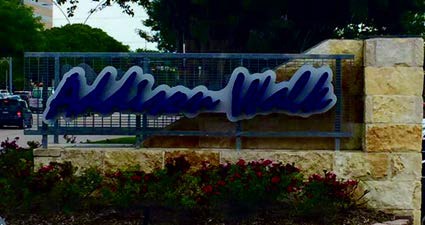 |
Illustration 8.2.4.5 | |
8.2.5 Window sign.
a.
Definition. Any sign affixed to any internal and/or external surface of a window, or that is located less than five feet from the window of any establishment. (see Illustrations 8.2.5.1 to 8.2.5.6). Tubing which emits light and is within any internal and/or external surface of a window, or that is located less than five feet from a window surface shall be considered a window sign when directing attention to the window surface or when forming letters, logos, or pictorial designs.
b.
Size. Maximum 10 percent coverage of the window area or aggregate window area, which is the sum total of all the window area on a façade per tenant or occupant.
c.
Number. Maximum of four window signs per façade per tenant or occupant.
Illustration 8.2.5.1 | Illustration 8.2.5.2 |
Illustration 8.2.5.3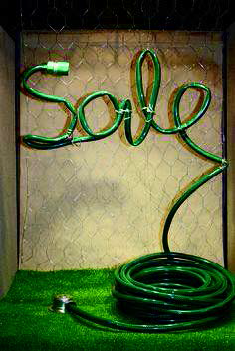 | Illustration 8.2.5.4 |
Illustration 8.2.5.5 | Illustration 8.2.5.6 |
8.2.6 Blade sign.
a.
Definition. An attached sign oriented perpendicular to the face of the building which projects more than 12 inches beyond the surface of the building to which it is attached. Blade signs shall not have electronic or manual changeable copy (see Illustrations 8.2.6-1 to 8.2.6-4).
b.
Size. 16 square feet total (eight square feet per sign face).
c.
Number. Maximum of one per façade per lease space or occupancy.
Illustration 8.2.6.1 | Illustration 8.2.6.2 |
Illustration 8.2.6.3 | Illustration 8.2.6.4 |
8.2.7. Incidental sign.
a.
Definition. Any on-site sign that is subordinate in scale to a permanent freestanding sign on the property. An incidental sign may be located within the immediate vicinity of entrances or exits on the property (see Illustrations 8.2.7-1 to 8.2.7-8). Support material shall be constructed of brick, stone, fiber-reinforced cementitious board, ceramic or porcelain tiles, stucco, or other materials of similar characteristics and quality.
b.
Standards. Incidental signs shall comply with the standards in Table 8.2.7-1. Table 8.2.7-1 establishes the following standards for incidental signs: maximum number, minimum spacing between other signs, maximum cumulative area, maximum height, and whether a sign can have lighting, channel letters, or changeable copy.
Note to Table 8.2.7-1: Y = the sign feature is allowed, N = the sign feature is not allowed.
Illustration 8.2.7-1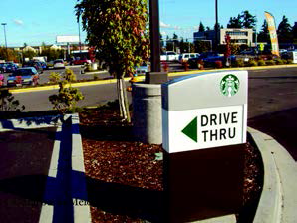 | Illustration 8.2.7-2 |
Illustration 8.2.7-3 | |
Illustration 8.2.7-4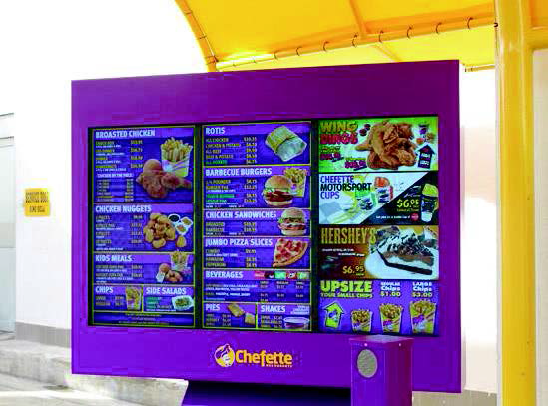 | Illustration 8.2.7-5 |
Illustration 8.2.7-6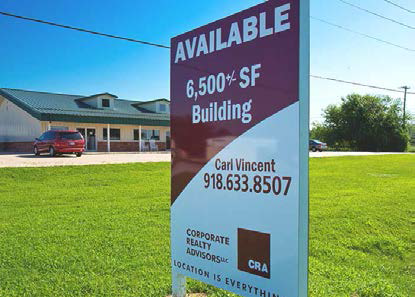 | Illustration 8.2.7-7 |
Illustration 8.2.7-8 | |
8.2.8. Freestanding subdivision sign.
a.
Definition. Any on-site freestanding sign that is located within the immediate vicinity of the entry to a residential subdivision, and that has a low profile and is made of stone, concrete, metal, brick or other materials of similar quality and characteristics. Subdivision sign(s) shall be solid from the ground up, pole(s) or supports shall be concealed. Freestanding subdivision identity sign(s) shall not have electronic or manual changeable copy. See Illustrations 8.2.8-1 to 8.2.8-3.
b.
Design Standards. The sign(s) base shall be located within a landscaped area comprised of flowers, ornamental grasses, and other quality landscape materials (as approved by the Administrator) that are a minimum of 6 inches in height at the time of planting and extend around the perimeter of the sign base, forming a solid unbroken visual barrier.
c.
Size. Maximum 50 square feet sign face area.
d.
Height. Maximum 6 feet. Sign height shall be measured from the highest grade within 10 feet of the sign to the highest element of the sign.
e.
Number.
1.
Maximum 2 per subdivision entrance where located adjacent to a thoroughfare identified on the master thoroughfare plan as an arterial or collector. 1 per subdivision entrance where located adjacent to all other roads.
2.
Freestanding subdivision signs are only allowed in the absence of subdivision wall signs.
f.
Setback. Minimum 10 feet. Sign setback is measured from the back of curb or from the edge of street or drive pavement where there is no curb. In no instance shall any sign obstruct the visibility of a sight visibility triangle or be located in a right-of-way or public easement. See Diagram 8.2.2-1.
Illustration 8.2.8-1 | Illustration 8.2.8-2 |
Illustration 8.2.8-3 | |
8.2.9. Wall subdivision sign.
a.
Definition. Any on-site wall sign attached to an approved masonry screening wall or entry feature along the periphery of a residential subdivision. Wall subdivision identity sign(s) shall not have electronic or manual changeable copy. See Illustrations 8.2.9-1 and 8.2.9-2.
b.
Design Standards. The sign(s) base shall be located within a landscaped area comprised of flowers, ornamental grasses, and other quality landscape materials (as approved by the Administrator) that are a minimum of 6 inches in height at the time of planting and extend on each side a minimum of 2 feet beyond the length of the sign copy.
c.
Size. Maximum 50 square feet.
d.
Height. Maximum 6 feet. Sign height shall be measured from the highest grade within 10 feet of the sign to the highest element of the sign.
e.
Number.
1.
Maximum 2 per subdivision entrance where located adjacent to a thoroughfare identified on the master thoroughfare plan as a collector or arterial. 1 per subdivision entrance where located adjacent to all other roads.
2.
Wall subdivision identity signs shall only be allowed in the absence of freestanding subdivision identity signs.
Illustration 8.2.9-1 | Illustration 8.2.9-2 |
8.2.10. Project development sign.
a.
Definition. Any sign identifying the developing tract of land on which it is located with a minimum 2-foot clearance between the ground and sign face. Where sign intended for residential purposes, said sign shall be removed after three years. Where sign intended for non-residential purpose, said sign shall be removed after two years. Project development sign(s) shall not have electronic or manual changeable copy. See Illustrations 8.2.10.1 and 8.2.10.2.
b.
Design standards. Signs may be constructed of any durable quality material. Trim and end caps shall be decorative.
c.
Size. Maximum 50 square feet.
d.
Height. Maximum 10 feet. Sign height shall be measured from the highest grade within 10 feet of the sign to the highest element of the sign.
e.
Number. 1 per every 50 acres, not to exceed a total of 5 per development. Signs shall be separated by a minimum of 400 feet from another sign.
Illustration 8.2.10-1 | Illustration 8.2.10-2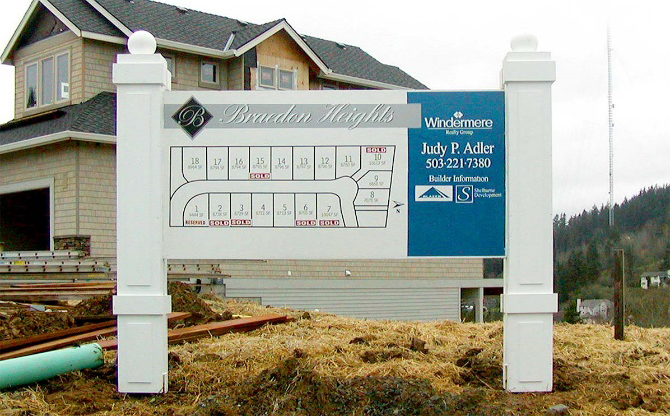 |
8.2.11. Model home sign.
a.
Definition. A sign having a low profile and made of stone, concrete, metal, brick or other materials of similar quality and characteristics. Sign shall be solid from the ground up, pole(s) or supports concealed. Model home sign(s) shall not have electronic or manual changeable copy. Sign shall be removed after 4 years or upon conversion of house to dwelling purposes, whichever occurs first. See Illustrations 8.2.11.1 and 8.2.11.2.
b.
Design Standards. The sign(s) base shall be located within a landscaped area comprised of flowers, ornamental grasses, and other quality landscape materials (as approved by the Administrator) that are a minimum of 6 inches in height at the time of planting and extend around the perimeter of the sign base, forming a solid unbroken visual barrier.
c.
Size. Maximum 40 square feet.
d.
Height. Maximum 5 feet. Sign height shall be measured from the highest grade within 10 feet of the sign to the highest element of the sign.
e.
Number.
1.
One per homebuilder per development having 500 lots or less.
2.
Two per homebuilder per development having more than 500 lots.
3.
Sign shall coincide with a house that is intended to be used or is being used to market the homebuilder associated with the sign.
f.
Setback. Sign shall be setback a minimum of 10 feet. Sign setback is measured from the back of curb or from the edge of street or drive pavement where there is no curb. In no instance shall any sign obstruct the visibility of a sight visibility triangle or be located within a right-of-way or public easement. See Diagram 8.2.2.1.
Illustration 8.2.11-1 | Illustration 8.2.11-2 |
8.2.12. Kiosk sign.
a.
Definition. Any sign that guides or directs traffic or pedestrians to attractions, services, amenities, or similar activities or uses (see Illustrations 8.2.12.1 and 8.2.12.2). Sign(s) intended for residential purposes shall be removed after 3 years and signs intended for nonresidential purposes shall be removed after 4 years, unless a Special Sign Permit is granted.
b.
Design standards. Signs shall be constructed of brick, stone, fiber-reinforced cementitious board, ceramic or porcelain tiles, stucco, or other materials of similar characteristics and quality. Signs shall be a ladder type with individual sign panels of uniform height and background color. Sign installations shall include breakaway 1 design features (if located in or within 20 feet of an existing or planned public right-of-way) and shall meet all other safety requirements outlined in the Design Criteria and Construction Standards.
c.
Size. Maximum 16 square feet.
d.
Height. Maximum 8 feet. Sign height shall be measured from the highest grade within 10 feet of the sign to the highest element of the sign.
e.
Number. 1 per every 200 feet (as measured at the property line), not to exceed a total of 10 per development. Signs shall be separated by a minimum of 200 feet from another sign.
Illustration 8.2.12-1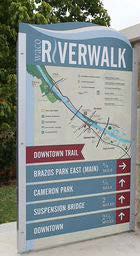 | Illustration 8.2.12-2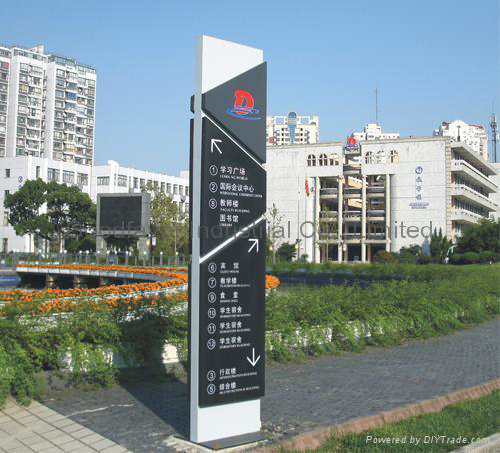 |
8.2.13. Utility pole banner sign.
a.
Definition. Any sign which is attached to a utility pole standard which is usually made of vinyl, cloth, metal, or similar materials. Sign(s) shall be securely attached at both ends, perpendicular or parallel to utility pole standards. Sign(s) shall not encroach onto adjacent property or public street rights-of-way or easement(s) and shall have a minimum clearance of 8 feet from the ground or sidewalk. All signs shall be removed after three years or when they are torn, faded, or become unattached to the pole. Utility pole banner signs are only permitted with approval of the Administrator. See Illustrations 8.2.10-1 and 8.2.10-2.
b.
Size. Maximum 12 square feet.
c.
Height. Maximum 10 feet. Sign height shall be measured from the highest grade within 10 feet of the sign to the highest element of the sign.
d.
Number. Maximum 2 per utility pole. If 2 per utility pole is proposed, signs shall be located on opposing sides. Utility pole banner signs may be attached on up to 50% of the existing utility poles within a development.
Illustration 8.2.13-1 | Illustration 8.2.13-2 |
(Ord. No. O-2023-003, § 3(Exh. A), 1-3-2023; Ord. No. O-2024-030, § 24, 7-1-2024)
Sec. 36-8.3 - Temporary signs
8.3.1. Generally.
Temporary signs are permitted only in accordance with the provisions of this chapter. No temporary sign shall be erected, replaced, altered, or located without securing a permit. Temporary sign permits are valid for 30 consecutive days from the date of issuance. No more than two temporary sign permits may be issued to the same owner, occupant, tenant, development, or similar entity in any calendar year. A third temporary sign permit is allowed within 60 days of issuance of a Certificate of Occupancy for a new occupant. This additional temporary sign permit is valid for 30 consecutive days from the date of issuance. A minimum of 20 consecutive calendar days shall elapse before an owner, occupant, tenant, development, or similar entity is eligible to receive another temporary sign permit.
8.3.2. Sidewalk sign.
a.
Definition. Any sign which is supported by the ground, but not attached to the ground. See Illustrations 8.3.2-1 and 8.3.2-2.
b.
Generally. Sidewalk signs shall not:
1.
Have changeable copy except that chalkboard may be used.
2.
Interfere with pedestrian, cycle, or vehicular traffic. ADA clearances shall be maintained at all times.
c.
Size. Maximum 10 square feet.
d.
Height. Maximum 4 feet. Sign height shall be measured from the highest grade within 10 feet of the sign to the highest element of the sign.
e.
Number. Maximum 2 per ground floor entrance. Signs shall be separated by a minimum of 20 feet from another sign. Double-sided signs shall be considered 1 sign.
f.
Nonresidential Uses. Sidewalk signs for nonresidential uses shall:
1.
Be removed and properly stored during closed business hours.
2.
Be substantially consistent in sign quality, type, and design as illustration 8.3.2-2.
3.
Be located within 5 feet of the primary entrance.
4.
In the OTC zone, shall not be subject to the 30-day maximum.
Illustration 8.3.2-1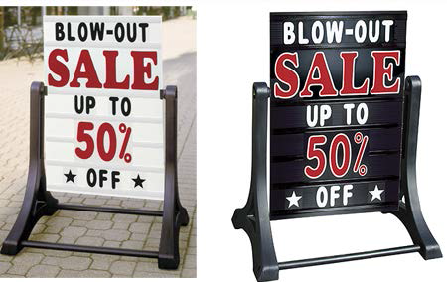 | Illustration 8.3.2-2 |
8.3.3. Banner sign.
a.
Definition. Any sign which is lightweight, inexpensive, and usually made of vinyl, cloth, paper, corrugated plastic, or similar flexible materials which is used to advertise goods, services, or similar items or matters to the general public. Banner signs are typically attached to a wall but may also be attached to the ground or a structure supported by the ground. See Illustrations 8.3.3-1 and 8.3.3-2.
b.
Size. Maximum 100 square feet.
c.
Height. Maximum 12 feet if attached to ground. Maximum 10 feet if attached to wall. Sign height shall be measured from the highest grade within 10 feet of the sign to the highest element of the sign.
d.
Number. Maximum 2 per occupant, tenant, or similar entity.
Illustration 8.3.3-1 | Illustration 8.3.3-2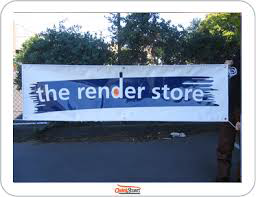 |
8.3.4. Human sign.
a.
Definition. Any sign which is carried by or is merely the attire of a person(s). Signs shall not obstruct the visibility of a sight visibility triangle or block vehicular, cycle, or pedestrian traffic. See Illustrations 8.3.6-1 and 8.3.6-2.
b.
Size. None.
c.
Height. None.
d.
Number. Maximum 2 per occupant, tenant, or similar entity.
e.
Exceptions. Human sign permits are valid for 10 consecutive days from the date of issuance.
Illustration 8.3.4-1 | Illustration 8.3.4-2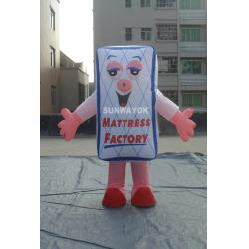 |
8.3.5. Inflatable sign.
a.
Definition. Any sign enlarged or inflated by air or moving gas and is located on the ground, a building, or similar structure and is with or without copy or other graphic(s). Inflatable signs shall be securely anchored or attached to prevent dislocation or encroachment onto adjacent property or public rights-of-way or easements. See Illustrations 8.3.5-1 and 8.3.5-2.
b.
Size. Maximum 15 feet in height, width, and depth.
c.
Height. Maximum 15 feet when located on the ground. Sign height shall be measured from the highest grade within 10 feet of the sign to the highest element of the sign. When located on a building or similar structure, height shall not exceed 15 feet as measured from the surface on which the sign is located or the maximum height permitted by the zoning district in which the sign is located, whichever is most restrictive.
d.
Number. Maximum 2 per occupant, tenant- or similar entity. Signs shall be separated by a minimum of 20 feet from another sign.
Illustration 8.3.5-1 | Illustration 8.3.5-2 |
8.3.6. Balloon sign.
a.
Definition. Any sign or cluster of signs inflated by air or moving gas that is tethered to the ground and extend upward and is with or without copy or graphic(s) that directs attention to an occupant, tenant, goods, services, or similar items or matters. Balloon signs shall be securely anchored or attached to prevent dislocation. See Illustrations 8.3.6-1 and 8.3.6-2.
b.
Size. Maximum diameter of 5 feet.
c.
Height. Maximum 100 feet. Sign height shall be measured from the highest grade within 10 feet of the sign to the highest element of the sign.
d.
Number. Maximum 20 per occupant, tenant, or similar entity.
e.
Exceptions. Balloon sign permits are valid for 10 consecutive days from the date of issuance.
Illustration 8.3.6-1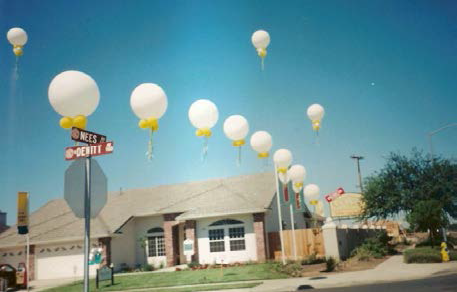 | Illustration 8.3.6-2 |
(Ord. No. O-2023-003, § 3(Exh. A), 1-3-2023)
Sec. 36-8.4 - Changeable electronic copy sign
8.4.1. Generally.
Changeable Electronic Copy Signs (CECS) are permitted only in accordance with the provisions of this chapter and shall comply with the provisions of the zoning district in which they are located. No CECS shall be erected, replaced, altered, or located without securing a permit.
a.
Definition. Any variable message sign or portion of a sign that utilizes computer-generated messages or other electronic means of changing copy. CECS shall be allowed only as an addition to a permitted freestanding sign and shall be permanently affixed or integral to said freestanding sign (CECS shall not be permitted to stand alone or as wall signs). See Illustrations 8.4.1-1 to 8.4.1-4.
b.
Size. CECS shall not exceed 40 percent of the total sign face area where sign is within 400 feet of the centerline of Interstate 30. 50 percent of the total sign face area in all other locations.
c.
Number. Maximum 1 per freestanding sign.
d.
Requirements. CECS shall:
1.
Not change copy at intervals less than 8 seconds.
2.
Contain static messages only, changed instantaneously through rapid dissolve, fade, or a substantially similar transition lasting no longer than 1 second.
3.
Any change of pictures or information on the changeable electronic variable message sign shall not produce the illusion of blinking, flashing, expanding or contracting shapes, rotation or any similar effect of animation.
4.
Be equipped with an automatic dimmer device and shall be programmed to automatically dim to a maximum illumination of no more than 0.2 foot-candles above ambient light conditions as measured at any point along the property line.
5.
Be of such design and quality that individual light bulbs are not detectable when the sign is in operation.
6.
The Administrator shall be provided with an on-call contact person and phone number for each permitted CECS. The contact person must have the ability and authority to make immediate modifications to the displays and lighting levels should the need arise. In the event the contact person is unobtainable or unresponsive, the permit holder grants to the Administrator or his/her designee the authority to access and disable the sign in case of emergency or when the sign poses a threat to public safety.
7.
Conform to the adopted building and electrical codes of the City.
e.
Exceptions. CECS shall be prohibited as wall signs and shall not be permitted to stand alone. In the Old Town Core (OTC) District, CECS are prohibited except that CECS may be permitted where used to display the price of fuel when the CECS is associated with a business selling fuel on the premises.
Illustration 8.4.1-1 | Illustration 8.4.1-2 |
Illustration 8.4.1-3 | Illustration 8.4.1-4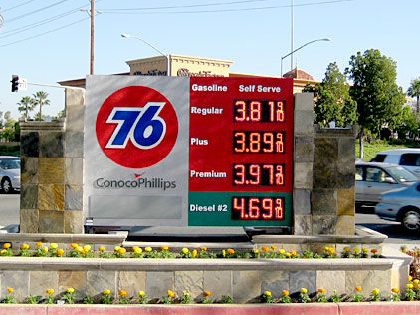 |
(Ord. No. O-2023-003, § 3(Exh. A), 1-3-2023)
Sec. 36-8.5 - Signs in the Old Town Core (OTC) District
8.5.1. Purpose.
This section establishes standards to ensure that signs in the OTC district are compatible in scale and character with the design and architectural character of the City's downtown.
8.5.2. Permitted Signs
The following signs are permitted in the OTC District, subject to the applicable standards in Sections 8.2 and 8.3:
8.5.3. Sign Design.
a.
Signs should be professionally constructed using high quality materials such as metal, stone, wood, or brass-plated material. Exposed neon signs may be permitted with a Special Sign Permit.
b.
LED signs (wall-mounted or freestanding) are prohibited.
c.
Changeable electronic copy signs are prohibited in the Old Town Core (OTC) Special District.
d.
Excessively bright colors or over-scaled letters shall not be used as a means to attract attention.
8.5.4. Exceptions.
a.
The Administrator may approve a different sign type, lighting, or digital signage, or up to a 10% increase in the dimensional standards for a sign in the OTC district if, in the opinion of the Administrator, the applicant demonstrates that:
1.
The sign is architecturally integrated with its surroundings in terms of size, shape, color, texture, and lighting so that it is complementary to the overall design of the buildings.
2.
The signs respect the immediate context of the building's location and the overall character of the OTC district.
3.
The sign enhances the primary design elements or unique architectural features of buildings.
4.
Copy is modified, if needed, to fit attractively in the space provided.
5.
The sign promotes street activity while enhancing the pedestrian experience.
b.
The Administrator shall approve, approve with conditions, or deny an exception within 10 days after a complete application is filed. If the Director denies the application or includes a condition to the permit, the applicant may request a special sign permit for the request within 10 days after receipt of the Director's written decision. The City shall approve, approve with conditions, or deny the special sign permit pursuant to section 8.1.7.
(Ord. No. O-2023-003, § 3(Exh. A), 1-3-2023)
Sec. 36-8.6. - Temporary Electioneering Signs
Temporary electioneering signs, as defined by V.T.C.A., Election Code § 61.003(b), posted at the City of Fate City Hall, located at 1900 CD Boren Parkway, shall be subject to the following location regulations:
a.
Temporary electioneering signs may be installed within permitted areas beginning seventy-two (72) hours before the voting period, as defined by V.T.C.A., Election Code § 61.003(b), begins.
b.
All temporary electioneering signs shall be removed no later than forty-eight (48) hours after the close of the voting period.
c.
Temporary electioneering signs higher than 24 inches above grade may not be placed closer than 30 feet from a street or driveway intersection, within 10 feet from the edge of public right-of-way, interior edge of sidewalk, or edge of driveway, and cannot be placed in the center median.
d.
No temporary electioneering signs may be placed within 100 feet of an outside door of the Fate City Hall building.
e.
Temporary electioneering signs shall not obstruct the vision of traffic on, entering, or exiting the roadway.
f.
Any temporary electioneering signs determined to be in a location that causes an immediate hazard to public safety, as determined by the Administrator, may be immediately removed by the City.
g.
Pursuant to V.T.C.A., Election Code §§ 61.003(c) and 85.036(e), a violation of these reasonable regulations concerning time, place, and manner of electioneering is a Class C misdemeanor.
(Ord. No. O-2025-012, § 3, 3-13-2025)

