
Fontana City Zoning Code
ARTICLE II
- ADMINISTRATIVE PROCEDURES
DIVISION 28. - REASONABLE ACCOMMODATIONS POLICY AND PROCEDURES[2]
Editor's note— Ord. No. 1874, § 8(Exh. A), adopted Sept. 14, 2021, set out provisions intended for use as Div. 28, §§ 30-354—30-364. Inasmuch as there were already provisions so designated, said sections have been codified herein as Div. 28 §§ 30-354—30-354.10 at the discretion of the editor.
Sec. 30-14.- Purpose.
The purpose of this article is to outline procedures used by the City of Fontana for the governing of the zoning ordinance (Zoning and Development Code) and implementation of the general plan. This article contains a description of the hearing bodies and the procedures for which they are responsible. The processes and guidelines for each procedure are also included within this article.
Sec. 30-15. - Specific project types.
(a)
Appeal. Any action taken by the Planning Commission or the Director of Community Development in the administration and/or enforcement of the provisions of this chapter may be appealed. An appeal stays proceedings until a determination of the appeal has been made. Specific procedures are outlined in Division 5 of this article herein.
(b)
General plan amendment. The general plan may be amended by changing the boundaries of the general plan land use map or text within the general plan whenever such an amendment is deemed necessary to protect or promote the public's health, safety, or general welfare or when the modification is viewed as appropriate in the context of generally accepted planning principles and surrounding land uses. Specific procedures are outlined in Division 6 of this article herein.
(c)
Development Code and zoning district map amendment. The Development Code and zoning district map may be amended by changing the development standards or boundaries of any zoning district boundary whenever such an amendment is deemed necessary to protect or promote the public's health, safety, or general welfare or when a modification is viewed as appropriate in the context of generally accepted planning principles, surrounding land uses, and the general plan. Procedures are outlined in Division 7 of this article herein.
(d)
Area plans. An area plan is intended to provide specific planning and high-quality design proposals for a defined geographical area consisting of mixed-use projects both horizontal and vertical that accommodate a mixture of commercial, residential, and open space. Procedures are outlined in Division 8 of this article herein.
(e)
Specific plan amendment. Specific plans may be amended when it is deemed necessary or desirable to modify the existing land uses and development standards for an area to assist with the implementation of the general plan goals. Procedures are outlined in Division 9 of this article herein. New specific plans are not permitted.
(f)
Administrative site plan, major, minor, amendment, and modification. An administrative site plan is intended to provide an administrative review of projects by the Director of Community Development because of their limited size and scope having minor implication and do not create any significant impact on the surrounding properties or the environment. Specific procedures as outlined in Division 10 of this article herein.
(g)
Design review, amendment, modification. A design review is intended to examine development to ensure high quality for the entire site design including buildings, landscaping, and parking. Such review enables the City to encourage the most appropriate development and prevent deterioration of property and aesthetics throughout the community. The design review process and its procedures as outlined in Division 11 of this article herein.
(h)
Conditional use permits, amendment, and modification. A conditional use permit is intended to examine certain land uses to determine whether the type of use proposed, or the location of that use, is compatible, or can be made compatible, with surrounding land uses. Specific procedures are outlined in Division 12 of this article herein.
(i)
Minor use permit, amendment, and modification. A minor use permit is intended to examine certain types of land uses that require review by the Director of Community Development to determine whether the type of use proposed, or the location of that use, is compatible, or can be made compatible with surrounding land uses. Specific procedures are outlined in Division 13 of this article herein.
(j)
Variances administrative and major. A variance is intended to examine when the strict interpretation of the provisions of this chapter causes physical hardship due to the property's unique size, shape, topography, location, or other physical condition. A variance may be granted for relief from certain provisions of the Code. Specific procedures are outlined in Division 14 of this article herein.
(k)
Time extension. A time extension is intended to provide the applicant additional time to complete a previously approved project required do to unforeseen circumstances. Specific procedures are outlined in Division 22 of this article herein.
(l)
Director's determination. A Director's determination is intended to specify that a use that is not listed within an established list of uses may be allowed to operate within a particular district because it is similar in nature/character. Specific procedures as outlined in Division 15 of this article herein.
(m)
Park review. A park review is intended to examine development to ensure high quality for the entire site design including structures, equipment, fields, landscaping, and parking. Such review enables the City to, encourage the most appropriate development, and prevent deterioration of property aesthetics throughout the community. Specific procedures as outlined in Division 16 of this article herein.
(n)
California redemption value (CRV) recycling collection facility. A California redemption value (CRV) recycling collection facility is intended to provide regulations and standards which pertain to the review, construction and operation of CRV recycling facilities within the City. The placement, construction or operation of any recycling facility, as defined herein, is prohibited without first obtaining a permit pursuant to the provisions set forth in this section. Specific procedures as outlined in Division 17 of this article herein.
(o)
Temporary use permits. A temporary use permit is intended to control and regulate land use activities of a temporary nature which may adversely affect the public health, safety, and welfare. The intent is to minimize any effects on surrounding property and the environment. Specific procedures are outlined in Division 18 of this article herein.
(p)
Home occupation permit. A home occupation permit is intended to establish a lawful home-based business within an established residence. Specific procedures are outlined in Division 19 of this article herein.
(q)
Design review sign. A design review sign application is intended to control and regulate the placement and visual appearance of a sign and to ensure that no hazard is presented to neither pedestrians nor motorists. Specific procedures as outlined in Division 20 of this article herein.
Mapping
(r)
Tract map—tentative and final. A tract map is intended is to provide procedures for the implementation of government codes relative to tract maps subdividing five or more parcels. Specific procedures as outlined in Division 21 herein and Chapter 26, Article II; the administrative procedures are herein.
(s)
Parcel map—tentative and final. A parcel map is intended to provide procedures for the implementation of government codes relative to parcel maps subdividing up to four parcels or combining parcels. Specific procedures as outlined in Division 21 herein and Article 4 of Chapter 26, Article IV, the administrative procedures are herein.
(t)
Lot line adjustment. A lot line adjustment is intended to provide procedures for the implementation of government codes relative to map re-alignment. Specific procedures as outlined in Division 21 herein and Article 4 of Chapter 26, Article IV, the administrative procedures are herein.
[Additional] procedures associated with projects.
(u)
Development agreement and amendment. A development agreement is intended to specify the duration, density and intensity of the uses, and/or provisions of dedication of land for public purposes. It may include conditions, terms, restrictions, and/or requirements for subsequent discretionary actions, provided that such conditions, terms, restrictions, and/or requirements for such subsequent discretionary actions shall not prevent development of the land for the uses and density set forth in the agreement. A development agreement shall be subject to periodic review. Specific procedures are outlined in Division 23 of this article herein.
(v)
Planned unit developments (PUD). A planned unit developments (PUD) is intended to encourage within the density standards of the general plan and Zoning and Development Code the development of a more desirable living environment by application of modern site planning techniques and building groupings or arrangements that are not permitted through strict application of the present zoning and subdivision ordinances. Specific procedures as outlined in Division 24 of this article herein.
(w)
Density bonus. A density bonus is intended to allow for an increase in the proposed number of units specifically permitted by the Zoning and Development Code and general plan when the increase is consistent with the state government code. Specific procedures as outlined in Division 25 of this article herein.
(x)
Certificate of occupancy. A certificate of occupancy shall be obtained for any building that has been erected, moved, altered, or enlarged prior to being occupied or used. Specific procedures are outlined in Division 25 of this article herein.
(y)
Certificate of appropriateness. A certificate of appropriateness may be granted for the alteration, restoration, rehabilitation, construction, relocation, or demolition of any historical landmark or structure per Chapter 5 of the Municipal Code.
(z)
Non-conforming use/structure. The non-conforming section is intended to regulate nonconforming uses and structures so that their detrimental effect on adjoining property values and on proper growth and development of the City, shall be restricted, controlled, and eventually eliminated. Specific procedures are outlined in Division 27 of this article.
Sec. 30-16.- Determination of fees.
(a)
Application fees shall be assessed as provided by resolution of the City Council.
(b)
Development impact fees. The developer/applicant shall pay a one-time adopted public improvement/impact fees related to extension or expansion of infrastructure necessary to serve a particular development. The fees are identified according to appropriate rates and schedules as adopted by the City Council.
Sec. 30-17. - Fee waivers.
The City Council may waive the filing fee for public or semipublic uses. The City Council shall have the sole discretion to authorize said waiver of fees.
Sec. 30-18.- Purpose.
This division is intended to provide procedures to ensure adequate review periods and information for City staff and the public regarding development projects reviewed by the City. The provisions in this division are also intended to provide procedures for consolidated deadlines and submittal requirements.
Sec. 30-19. - Submittal requirements.
(a)
A completed application along with the required fees for an entitlement shall be filed with the Planning Division in a manner prescribed by the Director of Community Development.
(b)
An entitlement application shall contain sufficient information to allow a department, board, commission, and/or City Council to act on a development permit proposal.
Sec. 30-20. - Determination of complete submittal.
(a)
Within 30 calendar days of the receipt of an application for an entitlement application, the City shall determine whether the requisite submittal requirements have been complied with and written notification of the City's determination shall be provided to the applicant(s).
(1)
An entitlement application determined to be complete shall be issued a notice of complete submittal.
(2)
An entitlement application determined to be incomplete shall be issued a notice of incomplete submittal stating the areas of incomplete information. An incomplete application shall not be scheduled for a public hearing until such application has been modified to contain the information stated on the notice of incomplete submittal and is then determined to be complete by the City.
(3)
Within 30 calendar days of the receipt of a resubmitted entitlement application, the City shall determine whether the requisite submittal requirements have been complied with and written notification of the City's determination shall be provided to the applicant(s).
(b)
Area plans, or large development projects shall not be considered complete until a final "draft" area plan or development proposal is submitted and determined to be complete by the City.
(c)
The applicant may request or agree to a waiver of the time limits of this section. Such request shall be in writing prior to the expiration of the above time limits.
Sec. 30-21. - Expiration of application.
If the applicant does not provide the information and materials necessary for a pending application to be deemed complete within 180 days after written notification of incompleteness and there has been no activity on the project, the application shall expire and be deemed withdrawn. The Director of Community Development may grant one 180-day extension provided the request is made in writing prior to the expiration date. Planning Division may refund any unexpended portion of the application fee. After expiration of the application or extension, if granted, a new application, including fees, plans, exhibits, and other materials will be required to commence processing of any project on the same property. The Director shall provide written notice to the applicant and shall also notify the applicant of the opportunity for appeal.
Sec. 30-22.- Hearing bodies.
The following hearing bodies shall make decisions on the various procedures provided for in this Development Code. All hearing bodies shall be responsible for the hearings indicated in Table No. 30-22.
Decisions of any "reviewing body" may be appealed to the City Council, except where state law limits such appeal to the City Engineer. If the Planning Commission is listed above as the "appeal body," the Commission must first review an appeal before it may be forwarded to the City Council for consideration.
DCD—Director of Community Development—Approval body
PC—Planning Commission—Approval body
CC—City Council—Approval body
PR—Parks, Community, and Human Services Commission—Recommending body
X—Indicates the reviewing and/or the approval body
a—Indicates that the reviewing body is to provide a recommendation to the City Council
b—Indicates that the reviewing body is to provide a recommendation to the Planning Commission
(Ord. No. 1898, § 6, 7-26-22; Ord. No. 1906, § 11, 10-25-22)
Sec. 30-23. - Hearing notification.
Notice shall be given for all hearings requiring notice not less than ten calendar days prior to the hearing or as otherwise required by the California Environmental Quality Act. In addition to the notice required by this division, the City may give notice of the hearing in any other manner it deems necessary or desirable.
Notification procedures
(1)
Legal advertisement. Notice shall be made by publication in a local newspaper of general circulation in the City of Fontana no less than one time and no less than ten calendar days prior to the date of the hearing.
(2)
Property owner. Notice of hearing shall be mailed or delivered to the owner of the subject real property or to the owners duly authorized agent no less than ten calendar days prior to the public hearing.
(3)
Project applicant. Notice shall be mailed or delivered to the project applicant no less than ten calendar days prior to the public hearing.
(4)
Local agencies. Notice of the hearing may be mailed or delivered to each local agency expected to provide water, sewage, streets, roads, schools, or other essential facilities or services to the project.
(5)
Surrounding property owners.
a.
Notice of the hearing shall be mailed or delivered to all owners of real property as shown on the latest equalized assessment roll within 660 feet of the real property that is the subject of the hearing, or such greater as determined by the Director of Community Development or his/her designee, The City may utilize records of the county assessor or tax collector.
b.
If the number of owners to whom notice would be mailed or delivered pursuant to this subsection is greater than 1,000, the City, in lieu of mailed or delivered notice, may provide notice by placing an advertisement of at least one-eighth page in at least one local newspaper of general circulation within the local agency in which the proceeding is conducted at least ten days prior to the hearing.
(6)
Request for notification. Notice of the hearing shall also be mailed at the owner's expense as established by the adopted fee resolution or delivered at least ten days prior to the hearing to any person who has filed a written request for notice with either the clerk of the governing body or with another person designated by the governing body to receive such requests.
(7)
Failure to receive notice. The failure of any person or entity to receive notice of the hearing shall not constitute grounds for any court to invalidate the actions of the City for which the notice was given.
Sec. 30-24. - Posting.
(a)
City initiated projects. If a notice of public hearing for a City initiated general plan amendment, specific plan, zone change, design review, and tentative tract or any other application affecting a specific property or properties exceeding 20 acres and/or would result in the mailing or delivering of more than 1,000 notices, the notice of public hearing shall also either be:
(1)
Published in at least one newspaper of general circulation in the City no less than one time and no less than ten days prior to the date of the hearing; or
(2)
Posted at least ten days prior to the hearing in at least three public places in the City, including one public place in the area directly affected by the proceeding.
(b)
Applicant initiated projects. Notice of public hearing for applicant-initiated projects affecting a specific property shall also be made by a posting on the site (by the applicant) in a conspicuous location no longer than ten days after the initial review.
(1)
A four-foot by eight-foot sign or signs shall be required to be posted at the project site. Daycare notification may be a two by two banner visible from the right-of-way. The purpose of the sign notice requirement is to notify the community and the neighbors in the affected area early in the review process, allowing the applicant and the City the benefit of citizens' comments during the initial stage of project review. A cash deposit to the City is required to ensure compliance with the notification requirements including removal of the notification sign. The project application shall not be deemed complete until the large sign is installed.
(2)
Sign criteria. In order to implement the signs as an effective form of public notification, the following rules and standards shall apply.
a.
Sign size and specification. All sign(s) shall be four feet by eight feet in size and be constructed to the specifications determined by the Planning Division. The specific project information text on the sign shall be provided by the Planning Division.
b.
Location and installation standards. All sign(s) shall be installed according to the specifications determined by the Planning Division. The signs shall be posted on each street frontage. Additional signs may be required as determined by the Planning Division.
c.
Sign removal and maintenance. All sign(s) shall be maintained and remain in place until the final decision on the application has been made or the application has been withdrawn. All sign(s) shall be removed by the applicant after 15 days of the final decision or date of withdrawal. Failure to remove the sign(s) within the prescribed period may result in forfeiture of the cash deposit.
(Ord. No. 1906, § 12, 10-25-22)
Sec. 30-25.- Right of appeal.
(a)
Any action taken by the Planning Commission or the Director of Community Development in the administration and/or enforcement of the provisions of this chapter may be appealed as indicated in Table No. 30-22 by the applicant or any interested party. An appeal stays proceedings until a determination of the appeal has been made.
(b)
If the original review body fails to make its decision within the time limit specified for the various proceedings, the applicant may file an appeal with the City Council requesting a decision by that body. Such an appeal shall be made within 15 days after the expiration of the time limit specified for the hearing body to act.
Sec. 30-26. - Authority of Planning Commission decision.
Upon an appeal of a decision from the Director of Community Development, the Planning Commission shall consider the record and such additional evidence as may be offered and may affirm, reverse or modify, in whole or in part, the order, requirement, decision, determination, interpretation, or ruling appealed from or make and substitute such other or additional decision or determination as it may find warranted under the provisions of this chapter. Where new evidence is submitted that affects or has a direct bearing on important planning considerations that could not be considered at the Director of Community Development level because such evidence was not there presented, the Planning Commission may return the matter to the Director of Community Development for action to be taken in light of such new evidence. The decision of the Planning Commission may be made either at the time of the appeal hearing or at a continued public meeting held within 30 days of the appeal hearing date.
Sec. 30-27. - Authority of City Council decision.
Upon appeal from a Planning Commission decision, the City Council shall consider the record and such additional evidence as may be offered and may affirm, reverse or modify, in whole or in part, the order, requirement, decision, determination, interpretation or ruling appealed from or make and substitute such other or additional decision or determination as it may find warranted under the provisions of this chapter. Where new evidence is submitted that affects or has a direct bearing on important planning considerations that could not be considered at the Planning Commission level because such evidence was not there presented, the City Council may return the matter to the Planning Commission for action to be taken in light of such new evidence. The decision of the City Council may be made either at the time of the appeal bearing or at a continued public meeting held within 30 days of the appeal hearing date.
Sec. 30-28. - Application.
The application for appeal shall be in writing and shall be filed in the Planning Division upon forms provided by the City. An appeal of any action in the administration or enforcement of this chapter shall indicate specifically the reasons for appeal.
Sec. 30-29. - Time for filing.
Any appeal shall be filed within 15 calendar days after the approving body has taken action.
Sec. 30-30. - Hearing date and notice.
Upon receipt of the notice of appeal, the body hearing the appeal shall set a date for hearing of the matter and give notice of the date, time and place of the hearing to the appellant at least ten days prior to the date of the hearing. The appeal hearing shall be scheduled no sooner than 30 days nor no later than 90 days from the date the application has been deemed complete. This time limit may be extended by mutual agreement of the City and the appellant.
(Ord. No. 1936, § 4(Exh. A), 12-12-23)
Sec. 30-31.- Purpose.
The purpose and intent is to keep an updated general plan to reflect the current desires and needs of the citizens for the long-term growth of the City.
Sec. 30-32. - Authority.
The City Council is authorized to approve or deny general plan amendment applications.
Sec. 30-33. - Pre-application meeting.
Prior to the filing of an application for a general plan amendment, the applicant or the applicant's representative shall apply for a pre-application review by City staff. Staff recommendations should be incorporated into the project prior to filing the formal application.
(Ord. No. 1906, § 13, 10-25-22)
Sec. 30-34. - Application.
Applications for general plan amendments shall be filed with the Planning Division upon such forms and accompanied by such data, information and fees as may be required by the Planning Division, to ensure a full presentation of the facts. No application shall be considered by an approval body until the application is determined to be complete and all required fees have been paid to the City.
(1)
A change to the general plan land use map may be initiated by the Director of Community Development, Planning Commission, City Council, or the owner or authorized agent of the owner of the property for which the application is being made.
(2)
An amendment to text of the general plan may be initiated by the Director of Community Development, Planning Commission, City Council, or any person directly affected by the provisions of this chapter. Additionally, staff shall provide the Planning Commission and City Council with an annual report outlining all revisions and changes to the general plan.
(3)
The Director of Community Development may request proof of authorization to file an application on behalf of another party.
Sec. 30-35. - Reserved.
Editor's note— Ord. No. 1906, § 14, adopted Oct. 25, 2022, repealed § 30-35, which pertained to Development Advisory Board (DAB) review and derived from Prior Code.
Sec. 30-36. - Noticing.
Notice of hearings for general plan amendment shall be as set forth in Division 3, herein.
Sec. 30-37. - Hearing—Planning Commission.
(a)
Upon the filing of a complete application for amendment to the text or land use map of the general plan, the matter shall be set for hearing before the Planning Commission for recommendation to the City Council. Applications for general plan amendments shall be heard four times (approximately quarterly) per year. The filing deadlines for such applications shall be set at a date no closer than 51 days prior to the appropriate meeting date.
(b)
The Planning Commission shall hold at least one public hearing upon the matters referred to in the application for amendment. If the Planning Commission finds that the proposal substantially promotes the goals of the City's general plan, the Planning Commission shall recommend the change to the City Council. The Planning Commission shall transmit its report in writing to the City Council within 90 days following the public hearing. The report shall set forth the reasons of the Planning Commission recommendations and the relationship of the proposed change to the general plan.
(c)
If the decision of the Planning Commission is to deny an application requesting the change of general plan amendment, the decision shall be final unless there is an appeal as provided for in Division 5 of this article herein.
(d)
The Planning Commission shall also have the authority to forward the application to the City Council for consideration.
Sec. 30-38. - Hearing—City Council.
The City Council shall hold at least one public hearing upon the matters referred to the Council by the Planning Commission or by appeal. The City Council may approve, modify or reject any part of the recommendation of the Planning Commission. The determination of the City Council shall be final and conclusive, except that whenever the City Council shall consider a change not previously considered by the Planning Commission, the Council may refer such change to the Planning Commission for its recommendation.
Sec. 30-39. - Time limitations.
If an application for a general plan amendment is denied by either the Planning Commission or City Council, another application of the same nature and affecting the same property shall not be filed within a period of one year from the date of denial. However, the hearing body denying the application may give permission for a new application to be filed if a change in circumstances or plans indicate a new application is warranted. Nothing contained in this section shall prohibit either the City Council or Planning Commission from initiating a change of general plan amendment at any time.
Sec. 30-40.- Purpose.
The Zoning and Development Code may be amended by changing the development standards (text) or zoning designation map boundaries of any zone whenever such an amendment is deemed necessary to protect or promote the public's health, safety, or general welfare or when modification is viewed as appropriate in the context of generally accepted planning principles, surrounding land uses, and the general plan.
Sec. 30-41. - Pre-application meeting.
Prior to the filing of an application for a Development Code and/or zoning district map amendment, the applicant or the applicant's representative shall apply for a pre-application meeting application. The pre-application meeting is presented to the Director of Planning for recommendation for the project. The recommendation should be incorporated into the project prior to filing the formal application.
(Ord. No. 1951, § 4(Exh. A), 5-28-24)
Sec. 30-42. - Application.
Applications for changes of zone shall be filed with the Planning Division upon such forms and accompanied by such data, information and fees as may be required by the Planning Division, to ensure a full presentation of the facts. No application shall be considered by the Planning Commission until the application is determined to be complete and all required fees have been paid to the City.
(1)
A change of zone may be initiated by the Planning Commission, City Council, Director of Community Development, or the owner or authorized agent of the owner of the property for which the application is being made.
(2)
An amendment to provisions of this chapter may be initiated by the Planning Commission, City Council, Director of Community Development, or any person directly affected by the provisions of this chapter.
(3)
The Director of Community Development may request proof or authorization to file an application on behalf of another party.
Sec. 30-43. - Reserved.
Editor's note— Ord. No. 1951, § 4(Exh. A), adopted May 28, 2024, repealed § 30-43, which pertained to Development Advisory Board (DAB) review and carried no amendatory history.
Sec. 30-44. - Noticing.
Notice of hearings for Zoning and Development Code amendments shall be as set forth in Division 4, herein.
Sec. 30-45. - Hearing—Planning Commission.
(a)
Upon the filing of a complete application for amendment to the Zoning and Development Code or zoning district map, the application shall be scheduled for hearing before the Planning Commission for recommendation to the City Council.
(b)
The Planning Commission shall hold at least one public hearing upon the proposal referred to in the application for amendment. If the Planning Commission finds that the proposal substantially promotes the goals of the City's general plan, the Planning Commission shall recommend the change to the City Council. The Planning Commission shall transmit its report in writing to the City Council within 90 days following the public hearing. The report shall set forth the reasons of the Planning Commission recommendations and the consistency of the proposed change to the general plan.
(c)
If the decision of the Planning Commission is to deny an application requesting the change of property from one zone to another, the decision shall be final unless there is an appeal as provided for in Division 5 of this article herein. The Planning Commission shall also have the authority to forward the application to the City Council for consideration.
Sec. 30-46. - Hearing—City Council.
The City Council shall hold at least one public hearing upon the proposal referred to the Council by the Planning Commission or by appeal. The City Council may approve, modify or reject any part of the recommendation of the Planning Commission. The determination of the City Council shall be final and conclusive, except that whenever the City Council shall consider a change not previously considered by the Planning Commission, the Council may refer such change to the Planning Commission for its recommendation.
Sec. 30-47. - Time limitations.
If an application for an amendment is denied by either the Planning Commission or City Council, another application of the same nature and affecting the same property shall not be filed within a period of one year from the date of denial. However, the Director of Community Development may allow for a new application to be filed if a change in circumstances or plans indicate a new application is warranted. Nothing contained in this section shall prohibit either the City Council or Planning Commission from initiating a change of zone at any time.
Sec. 30-67.- Purpose.
A specific plan may be amended by changing the development standards or zoning designation of any zone whenever such an amendment is deemed necessary to protect or promote the public's health, safety or general welfare or when modification is viewed as appropriate in the context of generally accepted planning principles, surrounding land uses, and the general plan.
Sec. 30-68. - Pre-application meeting.
Prior to the filing of an application for an amendment to a specific plan, the applicant or the applicant's representative shall apply for a pre-application review by City staff.
(Ord. No. 1906, § 20, 10-25-22)
Sec. 30-69. - Application.
Applications for an amendment to a specific plan shall be filed with the Planning Division upon such forms and accompanied by such data, information, and fees as may be required by the Planning Division, to ensure a full presentation of the facts. No application shall be considered by the Planning Commission until the application is determined to be complete and all required fees have been paid to the City.
(1)
An amendment to a specific plan may be initiated by the Planning Commission, City Council, Director of Community Development, or the owner or authorized agent of the owner of the property for which the application is being made.
(2)
An amendment to provisions of this chapter may be initiated by the Planning Commission, City Council, Director of Community Development, or any person directly affected by the provisions of this chapter.
The Director of Community Development may request proof or authorization to file an application on behalf of another party.
Sec. 30-70. - Reserved.
Editor's note— Ord. No. 1906, § 21, adopted Oct. 25, 2022, repealed § 30-70, which pertained to Development Advisory Board (DAB) review and derived from Prior Code.
Sec. 30-71. - Notice.
Notice of hearings for a specific plan amendment shall be as set forth in Division 4, of this article herein.
Sec. 30-72. - Hearing—Planning Commission.
Upon the filing of a complete application for an amendment to a specific plan, the matter shall be set for hearing before the Planning Commission for recommendation to the City Council.
(1)
The Planning Commission shall hold at least one public hearing upon the matters referred to in the application for amendment. If the Planning Commission finds that the proposal substantially promotes the goals of the City's general plan, the Planning Commission shall recommend the change to the City Council. The Planning Commission shall transmit its report in writing to the City Council within 90 days following the public hearing. The report shall set forth the reasons of the Planning Commission recommendations and the relationship of the proposed change to the specific plan.
(2)
If the decision of the Planning Commission is to deny an application requesting an amendment to a specific plan, the decision shall be final unless there is an appeal as provided for in Division 5 of this article herein.
(3)
The Planning Commission shall also have the authority to forward the application to the City Council for consideration.
Sec. 30-73. - Same—City Council.
The City Council shall hold at least one public hearing upon the matters referred to the Council by the Planning Commission or by appeal. The City Council may approve, modify, or reject any part of the recommendation of the Planning Commission. The determination of the City Council shall be final and conclusive, except that whenever the City Council shall consider an amendment not previously considered by the Planning Commission, the Council may refer such amendment to the Planning Commission for its recommendation.
Sec. 30-74. - Time limitations.
If an application for an amendment to a specific plan is denied by either the Planning Commission or City Council, another application of the same nature and affecting the same property shall not be filed within a period of one year from the date of denial. However, the body denying the application may give permission for a new application to be filed if a change in circumstances or plans indicate a new application is warranted. Nothing contained in this section shall prohibit either the City Council or Planning Commission from initiating an amendment at any time.
Sec. 30-223.- Purpose.
A Director's determination is intended to specify that a use that is not listed within an established list of uses, may be allowed to operate within a particular zoning district. The Director of Planning shall have the authority to determine other uses, in addition to those specifically listed in this article, which may be permitted or conditionally permitted in each of the various zones when, in his or her judgment supported by specific findings, such other uses are similar to and no more objectionable to the public welfare than those listed.
(Ord. No. 1899, § 4, 7-26-22)
Sec. 30-224. - Authority.
The Director of Community Development or designee is authorized to approve or deny Director's determination for project applications.
Sec. 30-225. - Application.
Applications for Director's determination shall be filed with the Planning Division upon such forms and accompanied by such data, information, and fees as may be required by the Planning Division, to insure a full presentation of the facts. No application shall be considered by the Director of Planning until the application is determined to be complete and all required fees have been paid to the City.
In reaching a determination that a use not specifically listed in this chapter may be permitted or conditionally permitted in each of the various zones, the Director shall make the following specific findings in writing:
(1)
That the proposed use is consistent with the applicable general plan map and text, the zoning district, and all other provisions of the Zoning and Development Code.
(2)
That the proposed use will be compatible with other permitted and conditionally permitted uses in the zoning district and that there will be no reasonably foreseeable adverse effect to other surrounding properties or their permitted uses.
(3)
That the proposed use will be organized, designed, constructed, operated and maintained so as to be compatible with the character of the zoning district and surrounding zoning districts as intended by the General Plan and Zoning and Development Code.
(4)
The proposed use is of a type, character, size, scale and nature which is compatible, conforming and otherwise harmonious with other like and similar uses, especially as related to operational characteristics such as services offered, goods, products, hours of operation, traffic and noise generation, and any other characteristic which by its existence provides factual information pertinent to the Director's Determination.
(Ord. No. 1898, § 11, 7-26-22)
Sec. 30-227. - Approval.
Upon receipt of a complete application for a Director's determination, the project will be reviewed by Planning staff for the Director's approval.
Sec. 30-228. - Appeal.
The decision of the Director of Community Development shall be final unless an appeal is filed. An appeal could be made to the Planning Commission as set forth in Division 5, of this article herein.
Sec. 30-229.- Purpose.
A park review is intended to examine development to ensure high quality for the entire site design including structures, equipment, fields, landscaping, and parking. Such review enables the City to, encourage the most appropriate development, and prevent deterioration of property aesthetics throughout the community.
Sec. 30-230. - Projects subject to review.
An application for park review is required for any public park or a developer-built park that will be dedicated to the City.
Sec. 30-231. - Authority.
The Parks, Community, and Human Services Commission (PCHSC) is authorized to review and provide comments for parks. The park review shall be presented to the PCHSC at a regular meeting.
The Planning Commission is authorized to approve or deny applications for park review upon review of the PCHSC, and to impose conditions upon such approval.
(Ord. No. 1906, § 54, 10-25-22)
Sec. 30-232. - Pre-application meeting.
Prior to the filing of an application for a park review, the applicant or the applicant's representative shall apply for a pre-application review in order to meet with the Director of Planning prior to submitted the formal application.
(Ord. No. 1906, § 55, 10-25-22)
Sec. 30-233. - Application.
Applications for park review shall be filed with the Planning Division upon such forms and accompanied by such data, information, and fees as may be required by the Planning Division, to ensure a full presentation of the facts. No application shall be considered by the Planning Commission until the application is determined to be complete and all required fees have been paid to the City.
Sec. 30-234. - Reserved.
Editor's note— Ord. No. 1906, § 56, adopted Oct. 25, 2022, repealed § 30-234, which pertained to Development Advisory Board (DAB) review and derived from Prior Code.
Sec. 30-235. - Review—Parks, Community, and Human Services Commission.
To recommend that a development project be forwarded to the Planning Commission, from the facts presented that the following conditions exist:
(1)
The design and layout of the proposed park is consistent with the applicable elements of the general plan; the design guidelines and development standards/policies of the proposal shall be consistent with the general plan, zoning, and applicable specific plans.
(2)
The design and layout of the proposed park will not interfere with the use and enjoyment of neighboring developments, or pedestrian and vehicular circulation.
(3)
The architectural design of the proposed park is aesthetically pleasing while enhancing the character of the surrounding neighborhood and will promote quality development envisioned by the general plan.
(4)
The design of the proposed park would provide a desirable environment for its users using structures, equipment, fields, landscaping, and parking in an aesthetically pleasing manner.
(5)
The proposed project is in compliance with all applicable federal, state, county, and City laws and regulations.
Sec. 30-236. - Findings of approval.
The Planning Commission shall approve any park review application subject to the following findings:
(1)
The proposal is consistent with the general plan, Zoning and Development Code, and any applicable specific plan.
(2)
The proposal meets or exceeds the criteria contained in this chapter and will result in an appropriate, safe and desirable development.
(3)
The proposal, in its design and appearance, is aesthetically and architecturally pleasing while enhancing the character of the surrounding neighborhood.
(4)
The site improvements are appropriate and will result in a safe, well-designed facility.
(5)
The proposal promotes the public health, safety, and welfare of the community.
Sec. 30-237. - Noticing.
Notice of hearings for time extension for projects shall be as set forth in Division 4, of this article herein.
Sec. 30-238. - Hearing.
Upon receipt of a complete application for park review a time and place for the hearing before the Director of Community Development shall be set.
Sec. 30-239. - Appeal.
The decision of the Planning Commission shall be final unless an appeal is filed. An appeal could be made to the City Council as set forth in Division 5, of this article herein.
Sec. 30-240.- Purpose.
It is the purpose of this section to provide regulations and standards which pertain to the review, construction and operation of CRV recycling facilities within the City. The placement, construction or operation of any recycling facility, as defined herein, is prohibited without first obtaining a permit pursuant to the provisions set forth in this section.
Sec. 30-241. - Authority.
The Director of Planning or designee is authorized to approve or deny California Redemption Value (CRV) Recycling Collection Facility through the process of minor use permit review applications, and to impose reasonable conditions upon such approval. Conditions may include, but shall not be limited to, requirements for installation and maintenance of landscaping and erosion control measures; requirements for vehicular ingress, egress, and traffic circulation; regulation of signs; regulation of hours or other characteristics of operation; requirements for maintenance of landscaping and other improvements; establishment of development schedules or time limits for performance or completion.
(Ord. No. 1906, § 57, 10-25-22)
Sec. 30-242. - Application.
Applications for recycling facility permits shall be filed with the Planning Division on forms, and accompanied by data, information, and fees as required by the Planning Division. The CRV recycling facilities shall be reviewed through a minor administrative site plan and minor use permit application. No application shall be considered by the approving body until the application is determined to be complete and all required fees have been paid to the City.
Sec. 30-243. - Definitions.
(a)
California Redemption Value (CRV) means a regulatory fee paid on recyclable beverage containers in California.
(b)
Convenience zone means that area within a one-half mile radius of a supermarket as designated by the California Department of Conservation pursuant to the terms of the California Beverage Container Recycling and Litter Reduction Act (California Public Resources Code § 14500 et seq.).
(c)
A supermarket is a retail establishment selling food, conveniences, and household goods with an area of no less than 35,000 square feet of gross floor area.
(1)
Recyclable material means reusable material including, but not limited to, metal, glass, plastic and paper.
(2)
Recycling facility means a structure or group of structures for the collection of recyclable materials and certified as a recycling facility by the California Department of Conservation as meeting the requirements of the California Beverage Container Recycling and Litter Reduction Act. CRV recycling facilities include the following:
a.
Reverse vending machine means one or more automated mechanical devices, which occupy a space no larger than 342 square feet, and which are used for the collection of one or more recyclable materials in return for a cash refund or redeemable credit slip with a value not less than the redemption value as determined by the California Department of Conservation.
b.
Mobile recycling unit means a kiosk, bin or portable container, occupying a space less than 342 square feet, and which are used for the collection and redemption of recyclable materials and which is operated by an attendant during hours of operation. A mobile recycling unit may include certain permanent structures associated with the mobile recycling unit as provided in this section.
Sec. 30-244. - Location of CRV recycling facilities.
(a)
One CRV recycling facility, capable of redeeming all forms of recyclable materials as provided herein, shall be allowed in each convenience zone. In the event two or more permit applications are received within one convenience zone which does not have an existing CRV recycling facility, the Director of Community Development may, in his/her discretion, choose which application best meets the needs of the community based on those factors including, but not limited to, convenience of use, pedestrian and vehicular traffic safety, aesthetic compatibility, etc.
(b)
In the event that two or more convenience zones overlap, one CRV recycling facility shall be permitted in the area of such overlap to service both zones, unless it can be demonstrated to the satisfaction of the Director of Community Development that such area of overlap is not available or amendable to meet all of the placement criteria as provided in this section.
(c)
Two or more recycling centers may be allowed within a convenience zone if, in addition to all criteria provided in this section, approval is granted pursuant to the provisions of a minor use permit and minor administrative site plan applications.
Sec. 30-245. - Development standards.
The placement, construction and operation of CRV recycling facilities, shall be subject to the following development standards:
(1)
CRV recycling facilities shall be established in conjunction with an existing commercial use which is in compliance with the current development, building, and fire codes and is located within a convenience zone in an area zoned for commercial or industrial uses.
(2)
CRV recycling facilities shall be setback at least 50 feet from any street frontage, as measured from the curb face.
(3)
CRV recycling facilities shall be conveniently accessible to pedestrians and vehicles and shall be designed to include safety provisions for separating pedestrian and vehicular traffic (i.e., special curb/walkways, drive aisles, bollards, safety lighting, etc.).
(4)
CRV recycling facilities shall be designed in a manner consistent with the architectural and site plan of the associated commercial use, including, but not limited to, exterior materials, color and landscaping.
(5)
CRV recycling facilities shall be designed with related permanent enclosures. The facility shall also provide an overhead trellis or arbor with landscaping over the front portion of the facility to shade the customers and attendant.
(6)
CRV recycling facilities that are operated by an on-site attendant shall be provided access to the facilities of the associated commercial use (i.e., restrooms, drinking fountains, etc.).
(7)
CRV recycling facilities shall be designed with a landscape planter at least five feet in width (inside dimension) along the sides and front of the facility.
(8)
CRV recycling facilities shall be maintained in good repair and the area immediately surrounding the recycling facility shall be maintained in a litter-free condition. All storage of recyclable material shall be within the recycling facility or related enclosed structure.
(9)
Signage required for a recycling facility shall be reviewed through a design review sign application and comply with the sign ordinance.
(10)
CRV recycling facilities which are operated by an on-site attendant and located within 100 feet of a property zoned or occupied for residential uses shall operate only during the hours of 9:00 a.m. to 7:00 p.m.
Sec. 30-246. - Reserved.
Editor's note— Ord. No. 1906, § 58, adopted Oct. 25, 2022, repealed § 30-246, which pertained to Development Advisory Board (DAB) review and derived from Prior Code.
Sec. 30-247. - Findings for approval.
The Director of Community Development or designee shall make the following findings before granting approval of an administrative plan review, minor application:
(1)
The proposal is consistent with the general plan, Zoning and Development Code, and any applicable specific plan or area plan.
(2)
The proposal meets or exceeds the criteria contained in this chapter and will result in an appropriate, safe, and desirable development promoting the public health, safety, and welfare of the community.
(3)
The proposal, in its design and appearance, is aesthetically and architecturally pleasing resulting in a safe, well-designed facility while enhancing the character of the surrounding neighborhood.
(4)
The site improvements are appropriate and will result in a safe, well-designed facility.
Sec. 30-248. - Noticing.
Notice of hearings for CRV recycling facilities shall be as set forth in Division 4, of this article herein.
Sec. 30-249. - Hearing.
Upon receipt of a complete application for a CRV recycling facilities a time and place for the hearing before the Director of Community Development shall be set.
Sec. 30-250. - Appeal.
The decision of the Director of Community Development shall be final unless an appeal is filed. An appeal could be made to the Planning Commission as set forth in Division 5, of this article herein.
Sec. 30-251. - Time limitations.
Each administrative site plan, modification approval granted under this section shall become null and void two years after the date of approval; unless:
(1)
The appropriate permits have been obtained and construction, defined as permit obtainment, commencement of construction of the primary building on site and successful completion of the first Building and Safety Division inspection has commenced within this period.
(2)
A one-time one-year extension may be granted by the Director of Community Development provided there are no changes to the originally approved site plan and elevations.
Sec. 30-252. - Automatic revocation.
Any permit granted pursuant to the term of this section shall be deemed automatically revoked if the operator's recycling certificate is revoked or suspended by the California Department of Conservation pursuant to the terms of the California Beverage Container Recycling and Litter Reduction Act.
Sec. 30-253.- Purpose.
The purpose of the temporary use is to control and regulate land use activities of a temporary nature which may adversely affect the public health, safety, and welfare. The intent is to ensure that temporary uses will be compatible with surrounding uses, to protect the right of adjacent residences and land owners, and to minimize any adverse effects on surrounding properties and the environment.
Sec. 30-254. - Authority.
The Director of Planning or designee is authorized to approve or deny temporary use applications, and to impose reasonable conditions upon such approval. Conditions may include, but shall not be limited to, requirements for buffers and/or barriers; requirements for vehicular ingress, egress, and on-site traffic circulation; regulation of hours or other characteristics of operation; establishment of development schedules or time limits for performance or completion.
(Ord. No. 1906, § 59, 10-25-22)
Sec. 30-255. - Application.
(a)
Applications for a temporary use permit shall be filed with the Planning Division upon such forms and accompanied by such data, information and fees as may be required by the Planning Division, to ensure a full presentation of the facts.
(b)
Applications for model home(s), new homes sales trailer(s), and/or construction trailer(s) may be combined with a design review application. Such temporary uses shall be limited to office uses for the sale of new homes, or for the construction of permanent structure(s) on the site where the trailer is located or within the tract if new homes are being constructed. Any trailer approved under a temporary use permit or design review shall be removed within 15 days following the close of escrow for the last home within the tract or when the applicant for the temporary use permit no longer offers homes for sale in the tract; or in the case of construction of a building on site, receipt of a certificate of occupancy; or written notice of removal by the Director of Community Development. The criteria outlined in Section 30-255.7 shall apply to the submission of a combined application.
Sec. 30-256. - Types of temporary use applications and conditions.
A temporary use permit shall be required for the following activities and shall be subject to conditions established herein and any other additional conditions as may be prescribed by the Director of Planning. All such uses shall be subject to the sign regulations within Chapter 3 and zoning regulations within Chapter 30 of the Municipal Code.
(1)
Outdoor display of merchandise/parking lot and private sidewalk sales for businesses located within a commercially designated property are limited to six display periods per calendar year. Industrial designated parcels used for wholesale/retail are permitted up to a total of six such outdoor displays per parcel per calendar year. The display periods may run consecutively or be distributed throughout the year. Each display period shall be a continuous period of days not to exceed seven days in length. The temporary use permit shall be subject to the following conditions:
a.
The display of merchandise outside of a building shall be permitted only during the hours of operation of the store. All goods and merchandise shall be placed inside of the building following the close of the day's business, except as otherwise approved in writing by the Director of Planning.
b.
No merchandise or goods shall be placed upon or permitted to project into any street, public sidewalk, or public right-of-way, nor restrict or interfere with handicapped parking or access to the commercial establishment(s) on site. The temporary use permit may allow the temporary occupation of on-site private sidewalks, parking stalls and drive aisles, however adequate drive aisles and on-site circulation shall be maintained at all times for safe and functional ingress and egress, handicapped access to handicapped parking spaces, and emergency equipment access. Tent sale area shall be physically delineated between pedestrian access and vehicular access ways.
c.
Tents, canopies, awnings, covers or other temporary covering devices may be approved by the Director of Planning on a case-by-case basis only in conjunction with the outdoor display of merchandise/parking lot or private sidewalk sales. If a tent, canopy, awning, or other temporary covering device is approved, prior to its use or installation the applicant shall obtain a permit for said device from the Building Official and/or Fire Marshal. Said device shall be constructed and installed to comply with all safety requirements.
d.
This section shall not be construed to permit the permanent or temporary storage of goods or equipment when otherwise prohibited by other provisions in this chapter.
(2)
Outdoor art and craft shows and exhibits subject to not more than 15 days of operation or exhibition in any 90-day period.
(3)
Seasonal retail sale of agricultural products limited to periods of 90 days in a calendar year and when parking and access is provided to the satisfaction of the Director of Planning.
• A minimum of ten on-site parking spaces shall be provided with provisions for controlled ingress and egress to the satisfaction of the Director of Planning.
(4)
Religious, patriotic, historic, or other similar displays or exhibits within yards, parking areas, or landscaped areas, subject to not more than 15 days of display in any 90-day period for each exhibit.
(5)
Christmas trees or pumpkin and fireworks, and seasonal sales lots subject to the following guidelines and conditions:
a.
All such uses shall be limited to 30 days of operation per calendar year.
b.
All lighting shall be directed away from and shielded from adjacent residential areas.
c.
Adequate provisions for traffic circulation, off-street parking, and pedestrian safety shall be provided to the satisfaction of the Director of Planning.
(6)
Circuses, carnivals, rodeos, pony riding, special event tents, or similar traveling amusement enterprises are subject to the following guidelines and conditions:
a.
All such uses shall be limited to not more than 15 days, or more than three weekends, of operation in any 180-day period. To exceed this time limitation shall require the review and approval of a conditional use permit as prescribed in Division 12 of this article herein.
b.
All such activities shall have a minimum setback of 100 feet from any residential area. This may be waived by the Director of Planning if no adverse impacts result.
c.
Adequate provisions for traffic circulation, off-street parking, and pedestrian safety shall be provided to the satisfaction of the Director of Planning.
d.
Restrooms shall be provided onsite.
e.
Security personnel may be required. The Police Department shall determine the level and type of security required.
f.
Special, designated parking accommodating for amusement enterprise workers and support vehicles shall be provided.
g.
Noise attenuation for generators and carnival rides shall be provided to the satisfaction of the Director of Planning.
h.
The applicant shall be required to submit plans for approval of tents and site plan by the Building Official and/or Fire Marshal 90 days prior to the special event being held. The tent must meet all Uniform Building Codes and applicable City codes.
i.
Approval from the Police Department (PD) is required; moreover, finger printing through PD may be necessary.
(7)
Model homes may be used as offices solely for the first sale of homes within a recorded tract subject to the following conditions:
a.
The sales office may be located in a garage, trailer, or dwelling.
b.
Approval shall be for a two-year period; at which time the sales office use shall be terminated and the structure restored back to its original condition. Extensions may be granted by the Director of Planning in one-year increments up to a maximum of four years or until 90 percent of the development is sold; whichever is less.
c.
A cash deposit shall be submitted to the City of Fontana, in an amount to be set by Council resolution, to ensure the restoration of removal of the structure.
d.
The sales office is to be used only for transactions involving the sale, rent, or lease of lots and/or structures within the tract in which the sales office is located, contiguous tracts, or a planned community. Notwithstanding the above, the Director of Planning may consider off-site model home sales offices subject to the granting of a minor use permit per Division 13 of this article herein. Where a legal, previously approved minor use permit exists, the minor use permit may be revised to incorporate other recorded tracts as needed.
e.
Failure to terminate sales office and restore structure or failure to apply for an extension on or before the expiration date will result in forfeiture of the cash deposit, a halt in further construction or inspection activity on the project site, and enforcement action to ensure restoration of structure.
f.
Street improvements and temporary parking at a rate of two spaces per model shall be completed to the satisfaction of the City Engineer and Director of Planning prior to commencement of sales activities or the display of model homes. The parking spaces shall be located within an off-street facility, except on-street parking may be permitted subject to the following conditions:
1.
The sales office, models, and on-street parking spaces shall be located at the end of a cul-de-sac street and coordinated with construction phasing such that there are no resident homeowners living in homes located adjacent to the gated, secured area of the street.
2.
The parking stalls shall be adequately striped and shall conform to City standards.
3.
Parking shall be permitted only within and on the project site. Parking along adjacent or perimeter streets (public or private) shall not be used to satisfy the model home sale parking requirement.
4.
Temporary landscaping, including minimum 48-inch box trees, shall be provided within the on-street parking area.
g.
All fences proposed in conjunction with the model homes and sales office shall be located outside of the public right-of-way, except where approved by the Director of Planning and City Engineer for security.
h.
Use of signs shall require submission of a sign permit application for review and approval by the Director of Planning.
(8)
Trailer coaches or mobile homes on active construction sites for use as a construction office or temporary living quarters for security personnel. The following restrictions shall apply:
a.
The Director of Planning may approve a temporary trailer for the duration of the construction project or for a specified period, but in no event for more than two years. If exceptional circumstances exist, a one year extension may be granted, provided that the building permit for the first permanent dwelling or structure on the same site has also been extended.
b.
Installation of trailer coaches may occur only after a valid building permit has been issued by the Planning Department.
c.
Trailer coaches permitted pursuant to this section shall not exceed a maximum gross square footage of 650 square feet in size.
d.
The trailer coach must have a valid California vehicle license and shall provide evidence of State Division of Housing approval as prescribed in the Health and Safety Code of the State of California. A recreational vehicle being defined as a motor home, travel trailer, truck camper or camping trailer, with or without motive power, shall not be permitted pursuant to this section.
e.
The temporary trailer coach installation must meet all requirements and regulations of the County Department of Environmental Health Services and the Planning Department.
f.
Any permit issued pursuant to this section in conjunction with a construction project shall become invalid upon cancellation or completion of the building permit for which this use has been approved, or the expiration of the time for which the approval has been granted.
(9)
Tent, canopies, awnings and easy-ups associated with any retail sales event are prohibited unless engineering plans signed by a certified engineer demonstrate the tent, canopy, awning or easy-up meets all Building and Safety Division requirements.
(10)
Temporary storage containers for seasonal sales may be approved from October 31, until January 31 and not to exceed 90 days. Approval of a site plan exhibit shall be approved demonstrating adequate parking is provided.
(11)
Food trucks in accordance with Section 30-256.1.
(12)
Farmers market. A farmers' market may be conducted on private property or in the public right-of-way when allowed in the Form-Based Code land use districts, provided it carried on in accordance with the following limitations, and provided an approved temporary use permit is granted:
a.
The operation of the farmers market shall be conducted by a for-profit or nonprofit organization or by a local governmental agency.
b.
An established set of operating rules addressing the governance structure of the market, hours of operation, and days of the week, maintenance, and security requirements shall be permitted and approved under the minor use permit application and site plan.
c.
A temporary use permit, a master site plan, as well as the signed set of conditions of approval, shall be posted in a conspicuous place at the market site.
d.
The organization responsible for governing or operating the farmers market shall obtain a business license and shall post the business license in a conspicuous place at the site.
e.
At least 51 percent of the vendors displaying inventory of the products sold in each farmers market are selling fresh fruits and vegetables.
f.
Fifteen percent or fewer vendors are nonfood vendors (i.e. handmade crafts, art exhibits, informational booths, etc.)
g.
All market signage shall be submitted and approved under the temporary use permit.
h.
The organization governing or operating the farmers market shall provide access to adequate sanitary facilities, including restrooms and/or portable sinks and toilets.
i.
Operation of the farmers market shall not obstruct the safe flow of vehicular or pedestrian traffic on or around the market site.
j.
The sale of, or consumption of, alcohol beverages on the market site is prohibited.
k.
The sale of second-hand merchandise is prohibited.
l.
Portable shelters (e.g.: EZ Up Shelters) with an area no larger than ten feet by ten feet are allowed in designated market areas. Any shelter larger than ten feet by ten feet must be approved under the temporary use permit application.
m.
Animals, other than law enforcement dogs and assistance animals for the disabled are not allowed on the market site.
n.
A commercial cannabis business shall not be permitted pursuant to this section.
o.
The Director of Planning shall have the authority to determine other market activities, in addition to those specifically listed in this article, which may be permitted, or conditionally permitted.
(13)
Temporary commercial buildings on active construction sites in the case of the reconstruction or remodeling of an existing commercial business. The following restrictions shall apply:
a.
The Director of Planning may approve a temporary commercial building for the duration of the reconstruction or remodeling project or for up to a maximum period of one year. If the Director of Planning determines that extenuating circumstances have occurred during construction, a one-year extension may be granted.
b.
A maximum of one temporary commercial building may be approved to operate a maximum of one business on the site. The business must be appropriately licensed, operating in compliance with all City rules, regulations, and codes, and must have been in operation prior to the start of construction.
c.
Installation of the temporary building may occur only after a valid building permit has been issued by the Building and Safety Department.
d.
The temporary building installation must meet all requirements and regulations of the County Department of Environmental Health Services and all applicable City departments and other regulating agencies.
e.
Temporary buildings installed under the provisions of this section shall be removed from the site within 14 calendar days of the completion of, and issuance of the Certificate of Occupancy for, the commercial building on the site.
f.
The temporary building shall not be installed on required vehicle parking and loading spaces as determined by Article XI, On-Site Parking and Loading Regulations. Vehicle parking spaces provided on the subject site in excess of the requirements of Article XI may be considered for the installation of the temporary building.
g.
The temporary building shall not obstruct access and/or drive aisles on the subject site.
h.
Signage for the business on the site shall be reviewed and approved through the temporary use permit and/or design review sign process.
(14)
Other uses and activities that may be needed on a temporary basis or similar to subsections (1) through (13) above as deemed appropriate by the Director of Planning.
(Ord. No. 1961, § 4(Exh. A), 1-28-25; Ord. No. 1969, § 4(Exh. A), 5-27-25; Ord. No. 1973, § 4(Exh. A), 10-28-25)
Editor's note— Ord. No. 1973, § 4(Exh. A), adopted Oct. 28, 2025, set out provisions intended for use as § 30-256(12). For purposes of classification, and at the editor's discretion, these provisions have been included as § 30-256(13) and renumbered the former § 30-256(13) as § 30-256(14).
Sec. 30-256.1. - Food truck temporary use permit.
(a)
Permit required. Except as otherwise provided by the City Code or state or federal law, a temporary use permit and business license is required for all food trucks, as defined herein, that operate within city limits. A food truck that operates without the required permit is subject to closure at any time. It shall be the responsibility of the applicant and/or food truck vendor to have the permit approval letter and business license on-site at all times during operation in city limits.
(b)
Exemptions.
(1)
Properly licensed lunch trucks servicing employees of legally established industrial businesses and employees of active construction sites. A business license is required for lunch trucks prior to operation.
(2)
Food trucks hired to cater for one-day private parties held on private property. A business license is required for catering businesses prior to operation.
(c)
Time of application. An application for a food truck temporary use permit must be submitted to the Planning Department in a complete form at least 60 calendar days in advance of the anticipated commencement date of the operation.
(d)
Term of permit. Temporary use permits under this section shall automatically expire one year from the date of issuance unless an earlier expiration date is noted on the permit. Renewal applications must be submitted 30 calendar days prior to expiration of the permit.
(e)
Operational requirements. Food trucks operating under this section shall meet all the following requirements:
(1)
Shall operate on legally compliant properties with industrial land use designations only and shall have a solid paved parking area adequate to accommodate the food truck, customer parking and vehicle circulation.
(2)
Shall not permit parking on the street or in the public right-of-way.
(3)
Shall not operate within 50 feet of a fire hydrant.
(4)
Shall not operate within any public driveway, drive aisle, or vehicular entrance or exit.
(5)
Shall not vend on any public street, public right-of-way, or public park.
(6)
Shall not store, park or leave any equipment overnight on any public street, public right-of-way, or park.
(7)
Shall vend only between the hours of 10:00 a.m. and 9:00 p.m.
(8)
Shall not display or set up tables and chairs.
(9)
Shall provide a trash receptacle for customer use.
(10)
Shall ensure the area is free from trash and debris at all times.
(11)
Shall not allow any items relating to the operation of the business to be placed anywhere other than in, on, or under the food truck (except for trash receptacles).
(12)
Shall not solicit or conduct business with persons in or on motor vehicles.
(13)
Shall not sell anything other than that which they are licensed to vend.
(14)
Shall not utilize sound amplification equipment, music, or live entertainment.
(15)
Shall not utilize any form of directional signage.
(16)
Shall operate in compliance with the Americans with Disabilities Act (ADA).
(f)
Application requirements. All food truck vendors shall obtain a food truck temporary use permit. Application materials shall include:
(1)
Detailed site plan (exhibit of proposed location) including the number of existing on-site parking spaces, location of parking spaces designated for the food truck(s), location of food truck(s), and the location of trash receptacles.
(2)
Notarized affidavit from the property owner(s) acknowledging the applicant's request and granting the applicant permission to park and vend at the location. If more than one food truck is proposed to operate at the same site, each food truck vendor shall submit a separate application and will be subject to the standards referenced in Section 30-256.1.
(3)
Proof of legal vehicle registration.
(4)
Business description to include hours of operation, items to be sold, number of employees, description of food truck including photos, number of parking spaces existing on the proposed site.
(5)
A copy of the County of San Bernardino Environmental Health Services Health Permit.
(6)
Business license. Upon obtaining the food truck temporary use permit, the applicant shall obtain a business license.
(7)
Cleanup and waste disposal plan to the City of Fontana, Environmental Code Compliance Department with the following information:
a.
Grey water disposal site.
b.
Fats, oils, and grease (FOG) disposal container.
c.
Fats, oils, and grease (FOG) disposal site.
d.
Trailer washdown site.
e.
Trash, recycle, and organic receptacles.
f.
Rubber mat to be placed underneath serving area.
(g)
Suspension; recission.
(1)
A food truck temporary use permit issued under this article may be temporarily suspended or permanently rescinded, at the Director of Planning's discretion, for any of the following causes: fraud or misrepresentation in the course of vending, fraud or misrepresentation in the application for the permit, vending in violation of any one or more of the provisions of this article, vending in a manner that creates a public nuisance or constitutes a danger to the public, or failure to pay the applicable business license tax.
(2)
Notice of the suspension or rescission of a food truck permit issued under this chapter shall be mailed, postage prepaid, to the holder of the food truck vendor permit at his or her last known address and the property owners on whose property the truck has been operating.
(3)
No person whose food truck permit has been rescinded pursuant to this article shall be issued a food truck permit for a period of two years following the date that revocation becomes final.
(Ord. No. 1961, § 4(Exh. A), 1-28-25)
Sec. 30-257. - Approval.
Upon receipt of a complete application for a temporary use permit, the project will be reviewed by planning staff for the Director of Planning's approval.
(Ord. No. 1961, § 4(Exh. A), 1-28-25)
Sec. 30-258. - Appeal.
The decision of the Director of Planning shall be final unless an appeal is filed. An appeal could be made to the Planning Commission as set forth in Division 4, herein.
(Ord. No. 1961, § 4(Exh. A), 1-28-25)
Sec. 30-274.- Purpose.
A design review sign purses and intended is to control and regulate the placement and visual appearance of a sign to ensure that no hazard is presented to neither pedestrians nor motorists.
Sec. 30-275. - Authority.
The Director of Community Development or designee is authorized to approve or deny design review sign applications.
Sec. 30-276. - Application.
Applications for a design review sign shall be filed with the Planning Division upon such forms and accompanied by such data, information and fees as may be required by the Planning Division, to ensure a full presentation of the facts.
Sec. 30-277. - Approval.
Upon receipt of a complete application for a Director's determination, the project will be reviewed by Planning staff for the Director's approval.
Sec. 30-278. - Appeal.
The decision of the Director of Community Development shall be final unless an appeal is filed. An appeal could be made to the Planning Commission as set forth in Division 5, of this article herein.
Subdivision III. - Reserved[1]
Editor's note— Ord. No. 1961, § 4(Exh. A), adopted Jan. 28, 2025, repealed Subdiv. III, §§ 30-315—30-321, which pertained to time extension—project and carried no amendatory history.
Sec. 30-323.- Purpose.
This division establishes the regulations and procedures for the approval of a planned unit development (PUD) project, major and minor.
(1)
Purpose. The purpose of this division is as follows:
a.
To encourage within the density standards of the general plan and Zoning and Development Code the development of a more desirable living environment by application of modern site planning techniques and building groupings or arrangements that are not permitted through strict application of the present zoning and subdivision ordinances;
b.
To encourage the reservation of greater open space and amenities for visual enjoyment and recreational use;
c.
To encourage a more efficient, aesthetic and desirable use of land; and
d.
To encourage variety in the physical development patterns of the City.
(2)
Intent. The intent of this division is to ensure that:
a.
Planned unit development permits will be issued only where the subject parcel is suitable to make innovative and creative site planning possible;
b.
Applicants for planned unit development permits have the professional capability to produce a creative plan;
c.
The public's interest in achieving goals stated in the general plan will be served more fully through the planned unit development process than through application of conventional zoning regulations;
d.
The advantages to landowners afforded by the planned unit development process will be balanced by public benefits; and
e.
Natural or man-made features and resources of the site such as topography, trees, watercourses, and the like are preserved.
(Ord. No. 1936, § 4(Exh. A), 12-12-23)
Sec. 30-324. - Authority.
Minor planned unit developments are allowed by-right in applicable zoning districts. The Planning Commission is authorized to approve or deny a major planned unit development application and to impose reasonable conditions upon approval.
(Ord. No. 1936, § 4(Exh. A), 12-12-23)
Sec. 30-325. - Uses permitted.
Only those uses permitted in the zoning district shall be permitted under conditions of this division.
Sec. 30-326. - Development regulations.
Any project developed pursuant to this division shall comply with the following regulations, and any permit issued shall be subject to such provisions established as conditions of approval.
(1)
Major planned unit development.
a.
Area of project. Planned unit development projects shall not be less than one acre in total area, except as modified below:
1.
For residential projects or mixed-use projects where all units are affordable according to City standards, the minimum land area shall be the minimum lot area requirement of the zoning district in which the project is located.
2.
For applications involving conversions of cooperatives to condominiums, the minimum lot area shall be the minimum lot area requirement of the zoning district in which the project is located.
b.
Maximum density. The dwelling unit density shall not exceed a number of units as set forth in the zoning district in which the project is located.
c.
Minimum area and dimensions of lot. The area, width and depth of individually owned parcels of land within the development shall be established as a condition of approval, based on the following factors:
1.
Topography of the land.
2.
The ground area covered by individual dwellings and accessory structures.
3.
Location of common open space and its relationship to the dwelling to be served.
4.
Aesthetic relationships between individual units and open spaces.
5.
Yards and setbacks.
i.
Front, side, and rear yards shall be established as a condition of approval. Building lines shall be indicated on the approved site plan map.
ii.
All buildings shall be set back from all perimeter lines of the project a distance not less than 15 feet for rear yards and ten feet for side yard setbacks. Greater perimeter setbacks may be required as a condition of approval.
d.
Distance between buildings. The distance between any two buildings within the project shall be established as a condition of approval but shall not be less than ten-foot between the edges of the eaves.
e.
Maximum building height. The maximum building height permitted in the zoning district shall apply.
f.
Required on-site parking.
1.
The number of required parking spaces shall conform to provisions of Article XI.
2.
The location and arrangement of parking shall be subject to review by the Planning Commission.
g.
Walls, fences, and landscaping.
1.
Appropriate walls, fencing and landscaping around the perimeter of the project shall be required.
2.
A landscaping plan for all common open areas shall be submitted with required plans. Approval of the landscape element shall include approval of an acceptable watering system, and assurance of continued maintenance.
h.
Signs. The provisions of the zoning district in which the project is located shall apply.
i.
Access.
1.
Vehicular access shall be subject to review and approval of the Planning Commission.
2.
Conflicts between pedestrian and vehicular circulation shall be minimized. Where such conflicts exist, adequate safety measures shall be in place to protect pedestrians.
3.
All pedestrian access to common recreation and open areas shall be subject to review and approval of the Planning Commission.
4.
Amenities adjacent to drive aisles and streets shall be separated by a physical barrier (i.e. low walls).
5.
A variety of pavement textures and colors are required for streets, access ways and driveways, including stamped concrete, pavers, colored concrete and interlocking paving materials.
j.
Minimum dwelling unit floor area. The minimum floor area for each dwelling unit shall not be less than the requirements established by the zoning district.
k.
Common open space elements. The Planning Commission shall review and approve the location, intent, landscape treatment and method of maintaining each common open space or recreational elements proposed. The Planning Commission may require, as a condition of approval, such improvements as fencing, walls, and/or landscaping necessary to protect abutting residential development.
l.
Fencing. All fences and walls shall be constructed of durable, long-lasting materials. Walls constructed of concrete block shall vary in texture, color, and/or incorporate landscaping in order to provide visual relief. Wood, chain link fencing, and barbed wire are prohibited.
m.
Amenities/recreational uses. Active and passive recreational uses shall be encouraged, including greenbelts, hiking and walking trails, parks, swimming pools, spas, barbecue areas and sports courts. The design of such recreational uses shall be properly integrated into the overall design of the project. Amenities adjacent to drive aisles and streets shall be separated by a physical barrier (i.e. low walls).
n.
Private yards. Private yards shall be of sufficient size to be useable for passive outdoor use by occupants.
o.
Orientation. Buildings shall be oriented and located in such a manner as to maximize views and privacy and minimize exposure to intrusive elements such as noise, traffic and negative views.
p.
Nuisance factors. The Planning Commission may impose standards, including restrictions on operating hours, for nuisance factors such as lighting, noise, vibrations, smoke, dust, dirt, odors, gases, heat, glare, or other physical impacts.
q.
Natural features. The development shall incorporate, where possible, natural terrain and trees or other vegetation into the overall design of the project.
r.
Other conditions. The Planning Commission may impose other conditions that it deems necessary or desirable to ensure that the project will be established, operated, and maintained in accordance with this division and all other requirements of this chapter and other provisions of law. The decision-making authority may further require reasonable guarantees and evidence that such conditions are being, or will be, complied with.
(2)
Minor planned unit development. Where a conflict exists between the standards in this section and those pertaining to the underlying zoning district, this section shall take precedence.
a.
Area of project. Minor planned unit development projects shall be located on sites that meet the following criteria:
1.
Located within the medium density residential (R-2) zoning district.
2.
Located where at least 80 percent of the land within a 300-foot radius of the site has been developed, and where water, sewer, streets, schools and fire protection are provided.
3.
Not larger than three acres in size.
b.
Maximum density. The dwelling unit density shall not exceed a number of units as set forth in the zoning district in which the project is located, except in cases of utilizing units from any allowable density bonus program.
c.
Minimum area and dimensions of lot.
1.
The lot area of individually owned parcels of land within the development shall be established as part of the minor planned unit development approval, with a maximum deviation of 20 percent from the requirements of the applicable zoning district unless otherwise approved by the Director of Planning.
2.
The lot width and depth shall meet the purpose of the minor PUD and be approved by the Director of Planning as part of the minor planned unit development approval. The Director of Planning may, at his/her discretion, forward applications for deviations in excess of 20 percent to the Planning Commission for decision.
d.
Setbacks. Front, side and rear setbacks shall be permitted to deviate from the requirements of the underlying zoning district. However, the front, side and rear setbacks shall not be less than the following:
1.
At no time shall the front setback be less than 15 feet between the front of the structure and the front property line.
2.
At no time shall the rear setback be less than ten feet between the rear of the structure and the rear property line.
3.
At no time shall the side setback be less than four feet between the sides of the structure and the side property lines.
e.
Lot coverage. Lot coverage shall be established as part of the minor planned unit development approval, with a maximum deviation of 20 percent from any applicable lot coverage of the zoning district.
f.
Distance between buildings. The distance between any two buildings within the project shall be established as part of the minor planned unit development approval but shall not be less than six-feet between the edges of the eaves.
g.
Maximum building height. The maximum building height permitted in the zoning district shall apply.
h.
Required on-site parking.
1.
The number of required parking spaces shall conform to provisions of Article XI.
2.
The location and arrangement of parking shall be determined as part of the minor planned unit development approval.
i.
Walls and fences.
1.
Fences and walls shall be designed to be an attractive part of the project with materials and designs that are compatible with the exterior building materials and demonstrate design integrity with the project as a whole. Wood fencing, chain link or chain link with slats, and barbed wire shall be prohibited.
j.
Landscaping.
1.
Landscaping shall meet the requirements of Article X (General Landscape Requirements).
2.
Landscaping shall be incorporated to create an attractive visual for residential units, to provide privacy for adjacent residential units and to create useable open space when possible.
3.
The landscape design shall provide shade and accent plant materials of distinctive texture and color.
4.
A tiered planting plan shall be proposed and installed.
i.
A minimum of three tier types that include a combination of groundcover, shrubs, and specimen trees shall be incorporated.
ii.
Different scales, forms, colors and/or textures of plant materials shall be used as "tiered" planting visually increases the depth of planters and promotes interest and diversity.
iii.
The tiered concept shall be applied to areas facing the right-of-way and in front of individual residential units or multi-family housing projects.
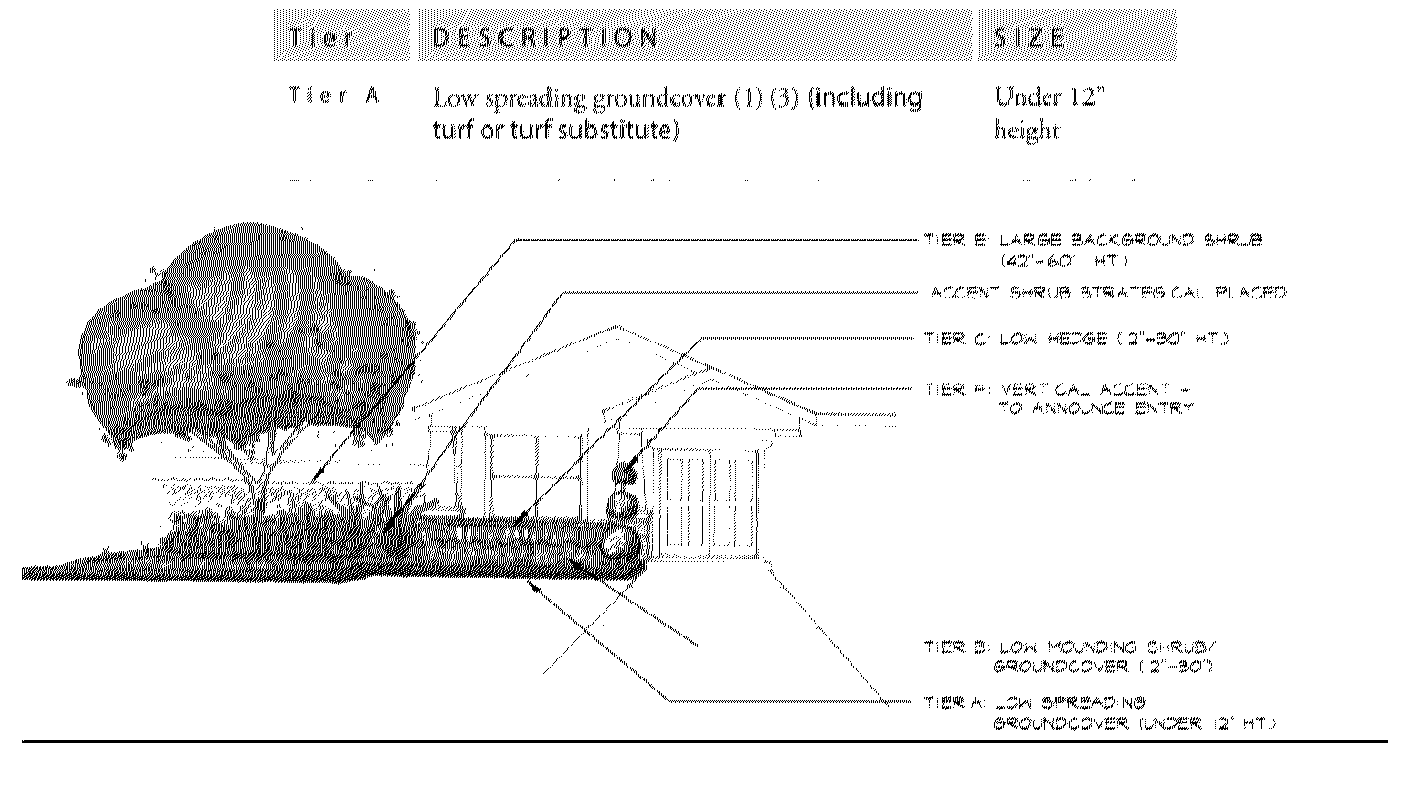
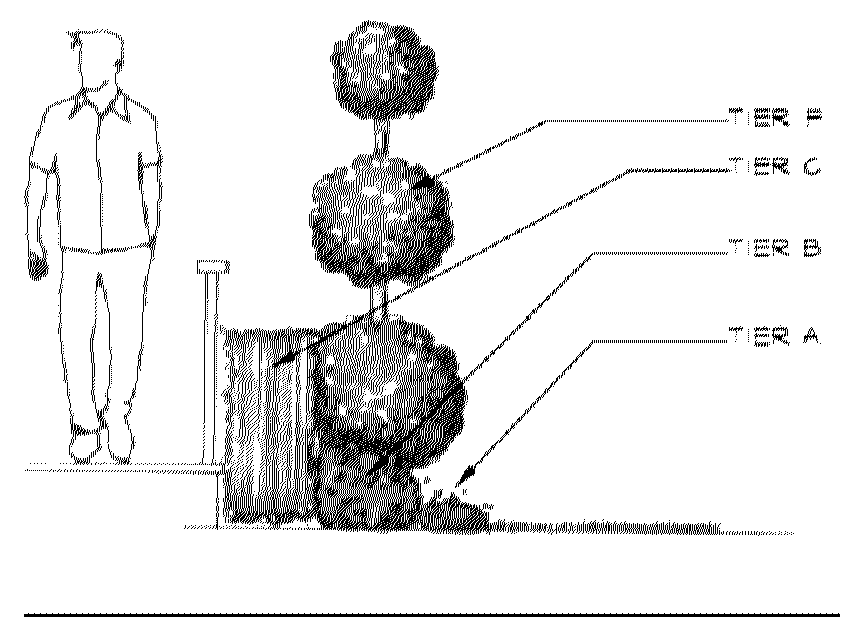
k.
Signs. The provisions of the zoning district in which the project is located shall apply.
l.
Access and paving.
1.
Decorative pervious paving shall be incorporated into paved and landscaped areas in order to enhance the appearance of the project, reduce the visual impact of paved surfaces and act as a traffic calming measure.
i.
Decorative paving, including stamped concrete, pavers, brick, grasscrete, interlocking paving materials and other comparable materials, shall be used for all drive aisles in the entire development.
2.
Conflicts between pedestrian and vehicular circulation shall be minimized. Where such conflicts exist, adequate safety measures shall be in place to protect pedestrians.
3.
The development shall include entry monumentation to provide an aesthetically pleasing, "celebrated" entry statement. The development shall provide all of the following components:
i.
A minimum of two 36 inch box trees.
ii.
Uplighting on the building and landscaping.
iii.
Architectural elements, such as columns, pergolas, low walls, and similar elements with signage identifying the community and/or address.
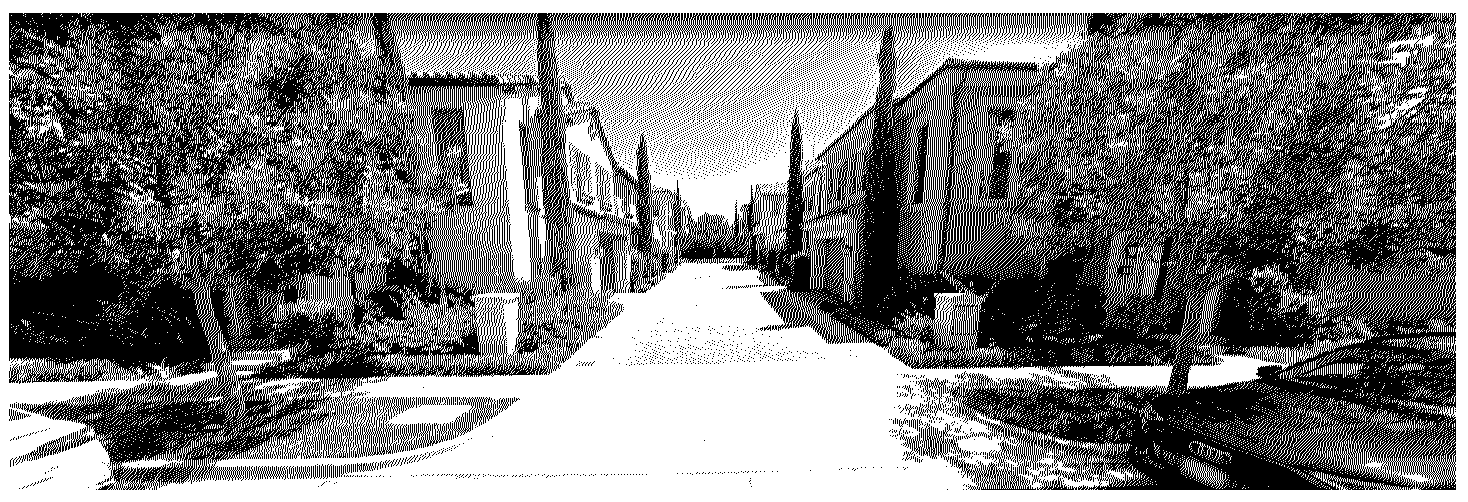
m.
Minimum dwelling unit floor area. The minimum floor area for each dwelling unit shall be established as required by the applicable zoning district.
n.
Architectural design and site criteria. All criteria in Section 30-435 and 30-477 shall apply to projects utilizing the minor planned unit development.
o.
Orientation. Buildings shall be oriented and located in such a manner as to maximize views and privacy and minimize exposure to intrusive elements such as noise, traffic and negative views. End units shall be oriented toward, and take access from, the public right-of-way.
p.
Frontage and entries. Each residential unit taking access from the ground floor shall incorporate one of the following frontage types:
1.
Porch. In the porch frontage type, the main facade of the building has a small-to-medium setback from the frontage line. The resulting front yard is typically small and can be defined by a wall or fence to spatially maintain the edge of the street. The engaged porch has two adjacent sides of the porch that are attached to the building while the other two sides are open.
2.
Dooryard. In the dooryard frontage type, the main facade of the building is set back a small distance and the frontage line is defined by a low wall or hedge, creating a small dooryard. The dooryard shall not provide public circulation along a ROW. The dooryard may be raised, sunken, or at grade and is intended for ground-floor residential.
3.
Stoop. In the stoop frontage type, the main facade of the building is near the frontage line and the elevated stoop engages the sidewalk. The stoop shall be elevated above the sidewalk to ensure privacy within the building. Stairs or ramps from the stoop may lead directly to the sidewalk or may be side-loaded. This type is appropriate for residential uses with small setbacks.
q.
Natural features. The development shall incorporate, where possible, natural terrain and trees or other vegetation into the overall design of the project.
r.
Private open space. A minimum of 200 square feet of private open space shall be provided for each residential unit. Private open space shall be accessed directly from the ground floor of the dwelling unit and shall be outside of the minimum front setback.
(Ord. No. 1936, § 4(Exh. A), 12-12-23; Ord. No. 1961, § 4(Exh. A), 1-28-25)
Sec. 30-327. - General requirements.
(a)
Phased development. A proposed planned unit development project that is phased over time shall be accompanied by a schedule establishing approximate dates when each phase shall be complete. Each phase of a phased development shall include its pro-rata share of total planned common space, facilities, services and inclusionary units, as applicable.
(b)
Common areas. Where common areas or facilities are proposed, an operation and maintenance program shall be prepared.
(c)
Development agreements. Completion time and complexity of proposed planned developments may make desirable a development agreement between the project applicant and the City. Any such development agreement shall be subject to the provisions of Division 23, of this article herein.
(Ord. No. 1936, § 4(Exh. A), 12-12-23)
Sec. 30-328. - Pre-application meeting.
Prior to the filing of an application for a planned unit development, the applicant or the applicant's representative shall apply for a pre-application review with City staff.
(Ord. No. 1906, § 66, 10-25-22)
Sec. 30-329. - Application.
An application for a planned unit development shall include a development plan that includes the following information:
(1)
Location and boundaries of property.
(2)
Site plan.
(3)
Existing and proposed land uses.
(4)
Density and floor-area ratios of proposed development.
(5)
Location of natural features.
(6)
Parking areas and circulation patterns.
(7)
Soils, grading, and drainage report.
(8)
Elevations of existing and proposed buildings.
(9)
Landscaping plan.
(10)
Fencing plans showing heights and materials proposed for fences and walls.
(11)
Signage plan.
(12)
Phasing plan, if applicable.
(13)
Amenities and Recreational areas within the development.
(14)
Other data and information deemed necessary by the City.
Sec. 30-330. - Reserved.
Editor's note— Ord. No. 1906, § 67, adopted Oct. 25, 2022, repealed § 30-330, which pertained to Development Advisory Board (DAB) review and derived from Prior Code.
Sec. 30-331. - Findings for approval.
Before the Planning Commission may grant a major planned unit development permit, it must make all of the following findings:
(1)
The proposed project conforms to the general plan and is consistent with the purposes and requirements of this division.
(2)
The uses within the project are compatible.
(3)
New buildings or structures related to the project are compatible with the scale, mass, bulk, and orientation of buildings and structures in the surrounding vicinity.
(4)
The project is consistent with any adopted design guidelines applicable to the project area.
(5)
The overall project reflects a high level of development and design quality that will enhance and benefit the City as a whole.
(6)
The proposed project will be served by adequate water, sewer, public utilities and services, and will have adequate vehicular and pedestrian access to ensure that it will not be detrimental to the public health, safety, or welfare.
(Ord. No. 1936, § 4(Exh. A), 12-12-23)
Sec. 30-332. - Noticing.
Notice of the hearing shall be made in accordance with the provisions of Division 4, of this article herein.
Sec. 30-333. - Hearing—Approval process.
(a)
Major planned unit development.
(1)
Upon the filing of a complete application for the required entitlements for a proposed residential development requesting to utilize the major planned unit development, the matter shall be set for hearing before the Planning Commission.
(2)
The Planning Commission shall hold at least one public hearing upon the matters referred to in the application for amendment. If the Planning Commission finds that the proposal substantially promotes the goals of the City's general plan, the Planning Commission shall recommend the change to the City Council. The Planning Commission shall transmit its report in writing to the City Council within 90 days following the public hearing. The report shall set forth the reasons of the Planning Commission recommendations and the relationship of the proposed change to the general plan. The Planning Commission shall also have the authority to forward the application to the City Council for consideration.
(b)
Minor planned unit development.
(1)
Minor planned unit developments are allowed by-right in applicable zoning districts. Compliance with the development standards in this division is required for approval of the minor planned unit development application but does not preclude the proposed development from being subject to other required review and approval for site, architectural, subdivision, and other applicable applications.
(Ord. No. 1936, § 4(Exh. A), 12-12-23)
Editor's note— Ord. No. 1936, § 4(Exh. A), adopted Dec. 12, 2023, repealed the former § 30-333 and enacted a new § 30-333 as set out herein. The former § 30-333 pertained to hearing—planning commission and had no amendatory history.
Sec. 30-334. - Hearing—City Council.
The City Council shall hold at least one public hearing upon the matters referred to the Council by the Planning Commission or by appeal. The City Council may approve, modify or reject any part of the recommendation of the Planning Commission. The determination of the City Council shall be final and conclusive, except that whenever the City Council shall consider a change not previously considered by the Planning Commission, the Council may refer such change to the Planning Commission for its recommendation.
Sec. 30-335. - Time limitations.
If an application for a general plan amendment is denied by either the Planning Commission or City Council, another application of the same nature and affecting the same property shall not be filed within a period of one year from the date of denial. However, the hearing body denying the application may give permission for a new application to be filed if a change in circumstances or plans indicate a new application is warranted. Nothing contained in this section shall prohibit either the City Council or Planning Commission from initiating a change of general plan amendment at any time.
Sec. 30-336.- Purpose.
The purpose and intent of this section is to encourage the development of affordable residential units for a range of income levels within the City with the provision of incentives or concessions. In offering these incentives or concessions, this chapter is intended to implement the requirements of state law and the goals and policies of the City's general plan housing element.
(Ord. No. 1961, § 4(Exh. A), 1-28-25)
Sec. 30-337. - State law incorporated.
The City shall provide the density bonuses and other incentives that are required by California Government Code §§ 65915 through 65918.
Sec. 30-338. - Eligibility for bonus and incentives or concessions.
To be eligible for a density bonus and/or other incentives or concessions as provided by this chapter, a proposed residential development project shall:
(1)
Consist of five or more dwelling units; and
(2)
Provide for the construction of one or more of the following within the development:
a.
A minimum of five percent of the total units of a housing development for very low-income households, as defined in Health and Safety Code § 50105; or
b.
A minimum of ten percent of the total units of a housing development for lower income households, as defined in Health and Safety Code § 50079.5; or
c.
A minimum of ten percent of the total dwelling units in a condominium project or in a planned development as defined in Civil Code § 1351(f) and (k), respectively, for persons and families of moderate income, as defined in Health and Safety Code § 50093, provided that all units in the development are offered to the public for purchase; or
d.
A minimum of 20 percent of the total units for lower income students in a student housing development that meets the following requirements:
1.
All units in the student housing development shall be used exclusively for undergraduate, graduate, or professional students enrolled full time at an institution of higher education accredited by the Western Association of Schools and Colleges or the Accrediting Commission for Community and Junior Colleges. In order to be eligible under this subclause, the developer shall, as a condition of receiving a certificate of occupancy, provide evidence to the city, county, or city and county that the developer has entered into an operating agreement or master lease with one or more institutions of higher education for the institution or institutions to occupy all units of the student housing development with students from that institution or institutions. An operating agreement or master lease entered into pursuant to this subclause is not violated or breached if, in any subsequent year, there are insufficient students enrolled in an institution of higher education to fill all units in the student housing development.
2.
The applicable 20 percent units shall be used for lower income students.
3.
The rent provided in the applicable units of the development for lower income students shall be calculated at 30 percent of 65 percent of the area median income for a single-room occupancy unit type.
4.
The development shall provide priority for the applicable affordable units for lower income students experiencing homelessness. A homeless service provider, as defined in paragraph (3) of subdivision (e) of Section 103577 of the Health and Safety Code, or institution of higher education that has knowledge of a person's homeless status may verify a person's status as homeless for purposes of this subclause.
e.
Ten percent of the total units of a housing development for transitional foster youth, as defined in Section 66025.9 of the Education Code, disabled veterans, as defined in Section 18541, or homeless persons, as defined in the federal McKinney-Vento Homeless Assistance Act (42 U.S.C. § 11301 et seq.). The units described in this subparagraph are subject to a recorded affordability restriction of 55 years and shall be provided at the same affordability level as very low-income units; or
f.
One hundred percent of all units in the development, including total units and density bonus units, but exclusive of a manager's unit or units, are for lower income households, as defined by Section 50079.5 of the Health and Safety Code, except that up to 20 percent of the units in the development, including total units and density bonus units, may be for moderate-income households, as defined in Section 50053 of the Health and Safety Code; or
g.
A senior citizen housing development, as defined in Sections 51.3 and 51.12 of the Civil Code, or a mobile home park that limits residency based on age requirements for housing for older persons pursuant to Section 798.76 or 799.5 of the Civil Code.
(3)
A density bonus and any associated incentives and concessions provided for the provision of affordable units and a density bonus utilizing units from the No Net Loss Program shall be mutually exclusive.
(Ord. No. 1961, § 4(Exh. A), 1-28-25)
Editor's note— Ord. No. 1961, § 4(Exh. A), adopted Jan. 28, 2025, amended § 30-338 in its entirety, in effect repealing and reenacting said § 30-338 to read as set out herein. The former § 30-338 pertained to applications and carried no amendatory history.
Sec. 30-339. - Definitions.
The definition of terms shall be as provided in Government Code §§ 65915 through 65918.
Sec. 30-340. - Target rents and mortgage payments.
Target rents and Mortgage payments shall be as provided in Government Code §§ 65915 through 65918.
Sec. 30-341. - Affordability requirements.
The affordability requirements shall be as provided in Government Code §§ 65915 through 65918.
Sec. 30-342. - Procedure.
(a)
A developer requesting a density bonus or other incentive pursuant to this section shall include the following in the written narrative supporting the application:
(1)
A general description of the proposed project, general plan description, applicable zoning, maximum possible density permitted under the current zoning and general plan description and such other information as is necessary.
(2)
A calculation of the density bonus allowed pursuant to this division.
(3)
In the case that the developer requests the City to modify development standards as another incentive, a statement providing a detailed explanation as to how the requested incentive will enable the developer to provide housing at the target rents or mortgage payments. Modification of development standards will be granted only to the extent necessary to achieve the housing affordability goals set forth herein.
(4)
A statement detailing the number of density bonus units being proposed over and above the number of units normally permitted by the applicable zoning and general plan description.
(b)
City review of and action on the applicant's proposal for a density bonus and its consideration of any requested incentive or concession shall occur concurrently with the processing of any other required entitlements, if any. The fact that another required entitlement might be subject to discretionary approval does not subject the application for a density bonus or incentive or concession under this section to discretionary approval; they will merely be processed at the same time. If the developer proposes that the project not be subject to an impact fee or to another fee that is normally imposed on a development of the same type, the appropriate final approval will be by the City Council.
(c)
The Planning Commission or City Council, as appropriate, shall review the subject affordability agreement concurrently with the development proposal. No project shall be deemed approved until the affordability agreement has been approved by the appropriate reviewing body.
(d)
The Planning Commission or City Council, as appropriate, shall approve the density bonus and any other incentives as proposed by the applicant if the requirements of this chapter are satisfied.
(e)
A monitoring fee as established by resolution of the City Council shall be paid by the applicant to the City prior to issuance of a certificate of occupancy for the first unit. This fee shall be in addition to any other fees required for the processing of the environmental analysis, and/or any other entitlements required.
Sec. 30-343. - Reserved.
Editor's note— Ord. No. 1906, § 68, adopted Oct. 25, 2022, repealed § 30-343, which pertained to Development Advisory Board (DAB) review and derived from Prior Code.
Sec. 30-344. - Findings for approvals.
Before the Planning Commission may grant a density bonus, it must make all of the following findings:
(1)
As required by state law, the City shall grant a density bonus in accordance with Government Code §§ 65915 through 65918.
(2)
As required by state law, the City shall grant an incentive or concession in accordance with Government Code §§ 65915 through 65918, unless the City makes any of the findings in Government Code § 65915(d)(1)(A) through (C).
(3)
Effect on other actions. The granting of a concession or incentive shall not be interpreted, in and of itself, to require a general plan amendment, zoning change, or other discretionary approval.
(4)
Other City incentives. This division does not limit or require the provision of direct financial incentives for the housing development, including the provision of publicly owned land, by the City or the waiver of fees or dedication requirements.
Sec. 30-345. - Noticing.
Notice of hearings for time extension for projects shall be as set forth in Division 4, of this article herein.
Sec. 30-346. - Hearing—Planning Commission.
(a)
Upon the filing of a complete application for amendment to the text or land use map of the general plan, the matter shall be set for hearing before the Planning Commission for recommendation to the City Council. Applications for general plan Amendments shall be heard four times (approximately quarterly) per year. The filing deadlines for such applications shall be set at a date no closer than 51 days prior to the appropriate meeting date.
(b)
The Planning Commission shall hold at least one public hearing upon the matters referred to in the application for amendment. If the Planning Commission finds that the proposal substantially promotes the goals of the City's general plan, the Planning Commission shall recommend the change to the City Council. The Planning Commission shall transmit its report in writing to the City Council within 90 days following the public hearing. The report shall set forth the reasons of the Planning Commission recommendations and the relationship of the proposed change to the general plan.
(c)
If the decision of the Planning Commission is to deny an application requesting the change of general plan amendment, the decision shall be final unless there is an appeal as provided for in Division 5 of this article herein.
(d)
The Planning Commission shall also have the authority to forward the application to the City Council for consideration.
Sec. 30-347. - Hearing—City Council.
The City Council shall hold at least one public hearing upon the matters referred to the Council by the Planning Commission or by appeal. The City Council may approve, modify or reject any part of the recommendation of the Planning Commission. The determination of the City Council shall be final and conclusive, except that whenever the City Council shall consider a change not previously considered by the Planning Commission, the Council may refer such change to the Planning Commission for its recommendation.
Sec. 30-348.- Purpose.
A certificate of occupancy must be obtained before any building is occupied or used.
Sec. 30-349. - Issuance.
(a)
The Building Official shall issue a certificate of occupancy after:
(1)
He has received written notice that the structure or site is ready for occupancy or use and has inspected the structure or site;
(2)
The site conforms to all applicable provisions of this chapter and other codes, laws, and ordinances; and
(3)
The applicant has complied with all conditions of approval imposed by the City on the development.
(b)
In lieu of an on-site inspection of single-family homes by the Planning Division, the City will require the owner, developer and/or applicant, to certify in writing that the structures have been constructed in compliance with all conditions of approval and pursuant to the building plans approved by the City of Fontana.
Sec. 30-350.- Purpose.
The purpose and intent of this article is to regulate nonconforming uses and nonconforming structures so that their detrimental effect on adjoining property values and on the proper growth and development of the City, as set forth in the general plan and in this chapter, shall be restricted, controlled, and eventually eliminated.
Sec. 30-351. - Regulations.
In order to carry out the purpose and intent of this section, the following regulations shall apply:
(1)
Repairs, alterations, maintenance, additions, extensions, enlargements and moving. The following provisions apply to nonconforming uses:
a.
Nonconforming use.
1.
No nonconforming use or site shall be enlarged or intensified unless the Planning Commission approves such request through the conditional use permit process.
2.
No nonconforming use shall be enlarged or increased to occupy a greater area of land than that occupied by such use on the effective date except as outlined in the appropriate division of this article herein; and
3.
No nonconforming use shall be moved in whole or in part to any portion of the lot or parcel of land other than that occupied by such nonconforming use on the effective date.
b.
Nonconforming structure. Except as otherwise provided in this chapter, no nonconforming structure shall be moved, altered, or enlarged unless required by law, or, unless the moving, alteration, or enlargement will result in the elimination of the nonconforming aspect of the structure or as outlined in the appropriate division of this article herein.
(2)
Restoration of damaged structures. When an existing nonconforming building or structure which is damaged or partially destroyed by fire, flood, wind, earthquake or other calamity and the cost of such reconstruction, repaving or rebuilding is less than 75 percent of the replacement value of the structure immediately prior to this damage, as determined by the Building Official, the structure may be restored and the occupancy or use may be continued. Such reconstruction shall be started within a period of one year from date of damage and diligently pursued to completion. In the event such damage exceeds 75 percent of the replacement value of such building at the time of such calamity, no repairs or reconstruction shall be made unless every portion of such building and its use is made to conform to all regulations of this chapter for the zone in which it is located.
(3)
Discontinuation and abandonment. Whenever a nonconforming use has been abandoned (e.g., expiration of business license), discontinued or changed to a conforming use for a continuous period of six months, the nonconforming use shall not be reestablished, and the use of the structure or site thereafter shall be in conformity with the regulations for the district in which it is located. Discontinuation shall include termination of a use regardless of intent to resume the use. This shall not include time periods required for repairs, remodels, or expansions permitted in this section, Section 30-352 or Section 30-353 for a period not to exceed 24 months.
(4)
Change of use. The nonconforming use of a building or structure may not be changed except to a conforming use. Where such change is made for a continuous period of six months as provided for in subsection (6) above, the use shall not thereafter be changed back to a nonconforming use. However, the Planning Commission may grant a conditional use permit to allow one nonconforming use to be changed to another nonconforming use of the same or more restricted character if the Commission, after a public hearing, determines that because of the existing conditions in the area and on the property involved, such a change is warranted.
(5)
Displacement. No nonconforming use shall be altered, extended or restored so as to displace any conforming use.
(6)
Violations. Nothing in this section shall be interpreted as authorization for or approval of the continuance of the use of a structure or premises in violation of zoning regulations in effect or any amendment thereto.
(7)
Change of zones. The provisions of this section shall also apply to any nonconforming use or nonconforming structures in zones here after changed to a more restrictive use, or to zones hereafter established in areas not previously covered by the zoning map.
(8)
Conformance with intent and purpose. No nonconforming use or structure shall be enlarged, extended, increased, changed, modified or in any way continued or maintained in such a way as to abrogate the purpose and intent of these regulations as set forth in this section.
(9)
Residential structures. A residential structure(s) which is nonconforming because of height or area regulations shall not be added to or enlarged in any manner unless such addition or enlargement conforms to all the regulations of the district in which it is located.
(Ord. No. 1969, § 4(Exh. A), 5-27-25)
Sec. 30-352. - Exemptions.
(a)
Continuance. Any structure or use which was lawfully existing or under construction, and which becomes a nonconforming structure or nonconforming use as a result of the adoption of this chapter, may be continued subject to the provisions of this section.
(b)
Residential.
(1)
The provisions of this section relative to additions and enlargements to nonconforming single-family residential uses shall not apply; however, this clause shall not be interpreted to permit an increase in the number of dwelling units within any such residential building nor permit any residential addition or enlargement from complying with all zoning regulations of the district in which it is located, e.g. setback, height, area, etc.
(2)
Any legal non-conforming single-family residential structure which does not conform to current enclosed parking standards may construct a one car garage or carport, provided the property owner demonstrates that the physical limitations of the site prohibit full conformance to the Development Code standard of a two car enclosed garage. Said physical limitations shall consist of any construction which would encroach upon a required front, side, street side or rear yard setback area, or the location of the existing structure(s) on site, that were legally constructed with appropriate building permit, which because of their location do not permit sufficient physical space between the structure(s) and any property line to allow a driveway and/or access to the rear or side of the property where a garage, attached or detached, in conformance to the Development Code standards, could be constructed. All individual parking spaces shall conform to the Code's minimum size standards.
(c)
Public utilities. Nothing in this chapter shall be construed or implied to prevent the expansion, modernization, replacement, repairing, maintenance, alteration, reconstruction or rebuilding of public service and public utility buildings, structures, equipment, and facilities where there is no change of use or increase in the areas of the property so used.
(d)
Existing nonconforming buildings and sites. Notwithstanding the provisions of this section, the Planning Commission may allow the minor expansion and/or occupancy of an existing, nonconforming building without the requirement that the building and/or site be improved to current Development Code standards upon submittal of a completed design review application if it makes one or more the following findings:
(1)
That the existing building and/or site is so situated and configured as to preclude the installation of additional landscaped areas, drive areas and parking stalls necessary to bring the site into compliance with existing Development Code standards.
(2)
That the existing building, because of its location with respect to any public right-of-way and/or property line, cannot comply with existing Development Code standards with regard to building setbacks.
(3)
That the existing building, because of its height and/or existing lot coverage cannot comply with existing Development Code standards with regard to building height and lot coverage.
(4)
That such nonconforming building may be expanded on the legally recognizable parcel upon which the building is established, subject to all of the following operation and development standards:
a.
The size of the expansion shall not exceed ten percent of the total square footage of the existing building;
b.
The expansion shall benefit the health, safety and welfare of the occupants of the site;
c.
The expansion shall be architecturally compatible with the existing building; and
d.
The expansion shall be compatible with the character of the surrounding area.
Sec. 30-353. - Special exemption to permit incremental improvements to nonconforming buildings, structures, and sites with administrative site plan approval.
(a)
Notwithstanding any other provisions of Division 10 of this article herein to the contrary, with an administrative site plan application, the Director of Planning may permit the following limited improvements to be made to an existing nonconforming building, structure or site without the requirement that the building, structure and/or site be improved to current Development Code standards:
(1)
Additions to existing commercial buildings shall not exceed 50 percent and additions to industrial buildings or structures shall not exceed ten percent of the total square footage of the existing building or structure, provided said additions meet the fire protection requirements of Chapter 11 of the City Code;
(2)
Paving, repaving or realignment of parking lots and areas, provided that the number of parking spaces is not reduced to less than currently existing and provided that all applicable drainage, storm water (NPDES), and similar requirements are met;
(3)
Alteration of the exterior of an existing building or structure;
(4)
Installation of new landscaping or alteration of existing landscaping, provided that the amount of landscaping is not reduced to less than currently existing unless the Director of Planning further finds that other improvements approved under this section require a reduction in the landscaping. Any allowed reduction in landscaping shall be the minimum required to permit the improvements to be constructed.
(b)
Any person seeking a special exemption under this section shall submit a completed administrative site plan application to the Planning Department in a manner prescribed by the Director of Planning and shall pay any applicable fees.
(c)
Notwithstanding Division 10 of this article herein, the Director of Planning shall make the following findings before granting approval of the exemption and the administrative site plan application:
(1)
All of the existing building(s), structures(s) and uses on the site are pre-existing and legal nonconforming, and are not illegal or unpermitted;
(2)
The improvement(s) subject to the exemption support(s) a pre-existing legal nonconforming building, structure and/or use already on the site;
(3)
The exemption will provide an incremental improvement to the building, structure or use on the site in furtherance of the requirements of Chapter 30 of this Code;
(4)
The improvement(s) subject to the exemption will not, physically, legally, or otherwise, preclude the building(s), structure(s) or the site to come into compliance with current Development Code standards at a future date;
(5)
The granting of expansions to outdoor nonconforming operations does not include parcel mergers and site expansions, with the exception of display areas which may expanded by 50 percent within the existing site;
(6)
Granting the exemption will not be contrary to the goals of the City's general plan or any applicable specific plan;
(7)
Granting the exemption will not otherwise be deleterious to the public health, safety and welfare;
(8)
New and modified facades must be of high quality and be compatible with the architecture of the existing building and surrounding area;
(9)
If a new loading and repair bay area associated with automobile related uses is constructed, the loading area or repair bay may not face the right-of-way, or, if this is infeasible, must be screened from the right-of-way with three and one-half foot low walls and/or landscaping; and
(10)
If a residential structure is being expanded, then additional residential units shall not be constructed.
(d)
Reasonable conditions upon an exemption in order to protect the health, safety and welfare of the surrounding area.
(e)
Except as expressly set forth herein, the benefits of this section shall not abrogate, extend, expand or otherwise alter the provisions of this Division 22 and shall not eliminate or extend pre-existing legal nonconforming rights, or create them where they do not otherwise exist.
(f)
The benefits of this section shall apply only to complete applications, as provided for in subsection (b), which have been submitted to the Planning Department within a period of two years following the effective date of this section. Any exemptions requested after said two-year period must be sought pursuant to Section 30-85.
(Ord. No. 1906, § 69, 10-25-22; Ord. No. 1969, § 4(Exh. A), 5-27-25)
Sec. 30-354.- Purpose and intent.
The intent of the reasonable accommodations policy and procedure regulations is to provide flexibility in the application of the Zoning and Development Code for individuals with a disability when flexibility is necessary to eliminate barriers to housing opportunities. This article will facilitate compliance with federal and state fair housing laws and promote housing opportunities for Fontana residents.
The purpose of this article is to establish a procedure to make it easier for persons with disabilities seeking fair access to housing to make requests for reasonable accommodation as established in the Fontana's Zoning and Development Code, rules, policies, practices, and procedures pursuant to the Fair Housing Act and California Fair Employment and Housing Act.
(Ord. No. 1874, § 8(Exh. A), 9-14-21)
Sec. 30-354.1. - Applicability.
(a)
Any individual with a disability, his or her representative, or a provider of housing for individuals with disabilities may seek relief from any land use, zoning or building standard, regulation, policy, or procedure found in Chapter 5 of the Fontana Municipal Code (Buildings and Building Regulations) and Chapter 30 of the Fontana Municipal Code (Zoning and Development Code) to ensure equal access to housing and to facilitate the development of housing for individuals with disabilities by requesting a reasonable accommodation in the manner prescribed in Section 30-354.2.
(b)
The reasonable accommodation rules set forth in this chapter apply to proposals to modify existing structures and uses as well as new development, as necessary to reasonably accommodate a person(s)'s disability. Proposals to modify structures, especially single-family homes, should respect existing development patterns to the extent reasonably possible.
(Ord. No. 1874, § 8(Exh. A), 9-14-21)
Sec. 30-354.2. - Definitions.
Except where the context otherwise requires, the definitions below govern the construction of this article.
Applicant means a person, business, or organization making a request to the City for reasonable accommodation.
City means the City of Fontana.
Code means the Fontana Municipal Code.
Department means the Community Development Department.
Director means the Director of Community Development or his or her designee.
Fair Housing Laws means the "Fair Housing Amendments Act of 1988" (42 U.S.C. § 3601, et seq.), including reasonable accommodation required by 42 U.S.C. § 3604(f)(3)(B), and the "California Fair Employment and Housing Act" (California Government Code § 12900, et seq.), including reasonable modifications required specifically by California Government Code §§ 12927(c)(1) and 12955(1), and Civil Code § 54, as any of these statutory provisions now exist or may be amended from time to time by either legislative act or published judicial decisions.
Person with a disability means an individual with a "disability" or "handicap," as those terms are defined in the Fair Housing Laws, like 42 U.S.C. § 3602(h) and California Government Code § 12926(j) and (m), as modified from time to time. Generally, a "person with a disability" is any person with any a physical or mental impairment which substantially limits one or more of such person's major life activities.
Reasonable accommodation means a modification or exception to the standards, regulations, policies, and procedures contained in this Code for the siting, development, and use of housing or housing-related facilities, that would eliminate regulatory barriers and provide an individual with a disability equal opportunity for the use and enjoyment of housing of their choice.
(Ord. No. 1874, § 8(Exh. A), 9-14-21)
Sec. 30-354.3. - Requesting reasonable accommodation.
(a)
Notice of the City of Fontana's Reasonable Accommodations Policy and Procedures shall be displayed at public information counters in the planning and building offices of the City, and the City Clerk's office.
(b)
The department will create an application form to make it easier for applicants and their representatives to submit a request for a reasonable accommodation and easier for staff to process such requests. The form will request the following information:
(1)
The name, address and telephone number of the applicant.
(2)
Address of the property for which the request is being made.
(3)
The name, address, and telephone number of the owner of the property for which the reasonable accommodation request is being made.
(4)
A general description of the nature of the person(s) with a disability's medical, physical, and/or mental limitations that relate to the accommodation request. The applicant shall not be required to disclose any medical diagnoses or provide written medical documentation of the disability.
(5)
The policy, program, regulation, and/or development standard adopted by the City of Fontana that the applicant is requesting the City modify as a disability-related accommodation.
(6)
A description of how the applicant is proposing to modify the City's policy, program, regulation, and/or development standard.
(7)
A description of why the accommodation is reasonable and necessary for the needs of the person(s) with a disability.
(8)
Copies of any plans, drawings, pictures, and other supporting documentation that the City may need to render its decision.
(9)
Any other information the applicant believes would facilitate the City's decision.
(c)
If an individual or representative needs assistance making a request for reasonable accommodation, the department shall provide assistance to ensure that the process is accessible to the applicant or representative.
(d)
The applicant may be represented at all stages of the proceeding by a person designated by the applicant as his or her representative.
(e)
If the applicant is someone other than the property owner, the applicant must provide a letter of agency or authorization signed by the property owner consenting to the request.
(f)
To the extent allowed by law, the City shall treat requests for a disability-related reasonable accommodation as confidential information of the City. In particular, the City shall, to the extent allowed by law, maintain the confidentiality of any medical information and/or medical documentation provided by applicant. The City shall provide written notice to the applicant, and any person designated by the applicant to represent the applicant in the application proceedings, of any request received by the City for disclosure of the applicant's medical information.
(Ord. No. 1874, § 8(Exh. A), 9-14-21)
Sec. 30-354.4. - Review authority and procedures.
Review authority. Requests for reasonable accommodations under this article shall be reviewed in the following manner:
(Ord. No. 1874, § 8(Exh. A), 9-14-21)
Sec. 30-354.5. - Decision on application.
(a)
[Determination.] The director may approve, conditionally approve, or deny an application for a reasonable accommodation for an existing use or a proposed new use. The director shall issue a written determination within 30 calendar days of the date of receipt of a completed application. The director may:
(1)
Grant the accommodation request in full,
(2)
Grant the request subject to specified nondiscriminatory conditions that are consistent with the requested reasonable accommodation, or
(3)
Deny the request.
(b)
Stays. If necessary, to reach a determination on the request for reasonable accommodation, the director may request further information from the applicant consistent with Fair Housing Laws, specifying in detail the information that is required. If the director requests further information, then the 30-day period to issue a decision is stayed until the applicant responds to the director's request for further information.
(c)
Extensions. The applicant and director may agree to an extension of time for the director to review and make a decision on the reasonable accommodation request.
(d)
Notice of decision. Notice of the director's determination shall be mailed to the applicant. The notice of the director's decision shall state the facts and evidence upon which the director's decision was based in connection with the findings stated in Section 30-354.6.
(e)
Other approvals. If the project for which the request for a reasonable accommodation is made also requires a separate discretionary permit or approval, then the director may condition that the reasonable accommodation valid only upon approval of the separate discretionary permit or other zoning approval.
(f)
Variances. A reasonable accommodation that is granted pursuant to this chapter shall not require the approval of any variance as to the reasonable accommodation.
(Ord. No. 1874, § 8(Exh. A), 9-14-21)
Sec. 30-354.6. - Required findings.
(a)
To approve a request for reasonable accommodation, the director must make both of the following findings:
(1)
The applicant has demonstrated that the housing, which is the subject of the request for reasonable accommodation, will be occupied by a person with a disability.
(2)
The applicant has demonstrated that the request for reasonable accommodation is necessary to make specific housing available to one or more person(s) with a disability.
(b)
If the director can make the findings outlined above, then the director shall approve the reasonable accommodation request unless the director can make one or more of the following findings:
(1)
The City has demonstrated that the requested reasonable accommodation will, under the specific facts of the case, impose an undue financial or administrative burden on the City.
(2)
The City has demonstrated that the requested accommodation will, under the specific facts of the case, require a fundamental alteration of a land use, zoning or building standard, regulation, policy, or procedure of the City.
(3)
The City has demonstrated that the requested reasonable accommodation will, under the specific facts of the case, result in a direct threat to the health or safety of other individuals or substantial physical damage to the property of others.
(c)
If the director denies the request based on one or more of the findings set forth in paragraph (a) above, then at the applicant's request, the director shall engage in an interactive process with the applicant to explore whether an alternative accommodation could provide the person(s) with a disability access to the housing without creating an undue burden, fundamental alteration, or direct threat.
(d)
The director may offer the applicant an alternate reasonable accommodation that provides an equivalent level of access to the person(s) with a disability but will not result in an encroachment into required setbacks, permitted exceedance of height limits, lot coverage or floor area ratio requirements specified for the applicable zoning district. When exploring alternate accommodations, the director should defer to the applicant to decide what accommodation will best meet the needs of the person(s) with a disability.
(Ord. No. 1874, § 8(Exh. A), 9-14-21)
Sec. 30-354.7. - Conditions of approval.
In granting a request for a reasonable accommodation, the director may impose any conditions of approval deemed reasonable and necessary to ensure that the reasonable accommodation would comply with the findings required by Section 30-354.6, the Fair Housing Laws, and the intent of this article. Such conditions may generally include, but are not limited to, the following:
(1)
The City's general/standard conditions of approval applicable to all projects;
(2)
The applicant's compliance with all other applicable zoning regulations;
(3)
A modification approved under this article is considered a personal request for accommodation by the applicant and shall not run with the land;
(4)
The reasonable accommodation shall terminate within a specified period of time if a person with a disability who requires the accommodation no longer resides on the property;
(5)
When the accommodation is no longer necessary, the improvements shall be removed within a specified period of time, provided removal would not constitute an unreasonable financial burden;
(6)
Time limits and/or expiration of the approval if it can be determined that the applicants' reasons for approving the accommodation no longer exists;
(7)
The property owner must record a deed restriction notifying prospective owners and occupants that the accommodation must be removed once it is no longer needed;
(8)
Methods, design considerations and features that reduce any impacts on surrounding uses;
(9)
Methods, design considerations and features that preserve the integrity of the property and structures; and
(10)
Any other conditions necessary to protect the public health, safety and welfare of Fontana residents.
(Ord. No. 1874, § 8(Exh. A), 9-14-21)
Sec. 30-354.8. - Appeals.
(a)
Any applicant who is dissatisfied by the decision made by the director on an application for a reasonable accommodation may appeal the director's decision to the Deputy City Manager. The appeal shall be filed via written notice detailing the grounds for appeal and shall specify whether the applicant would like a meeting with the Deputy City Manager before the Deputy City Manager decides the appeal. If an applicant or applicant's representative needs assistance submitting an appeal, the department shall provide assistance to ensure that the process is accessible to the applicant or representative.
(b)
A request for an appeal must be submitted to the director within 60 days of the mailing of the director's decision.
(c)
Upon the receipt of an appeal, the director will promptly forward the appeal to the Deputy City Manager. If the applicant did request a meeting with the Deputy City Manager, then the Deputy City Manager shall schedule the meeting to occur not later than 60 days from the date of receipt of the appeal. This time period may be extended based on the applicant's availability.
(d)
The Deputy City Manager shall decide the appeal within 30 days of either: (1) the date the City received the appeal if the applicant did not request a meeting; or (2) the date of the applicant's meeting with the Deputy City Manager.
(Ord. No. 1874, § 8(Exh. A), 9-14-21)
Sec. 30-354.9. - Expiration, revocation, termination.
(a)
Expiration. Any reasonable accommodation approved under this article will expire within 12 months from the effective date of approval or at such alternative time specified as a condition of approval unless:
(1)
A building permit has been issued and construction has commenced;
(2)
A certificate of occupancy has been issued;
(3)
The use is established; or
(4)
A time extension has been granted by the director.
(b)
Termination. The reasonable accommodation is granted to the person(s) with a disability and shall not run with the land. If accommodation is no longer necessary (e.g., because the person(s) with a disability no longer resides at the premises), then the reasonable accommodation will remain in effect only if the director determines that:
(1)
The modification is physically integrated into the residential structure and cannot easily be removed or altered to comply with this Code, or
(2)
The accommodation is necessary to give another person with a disability an equal opportunity to enjoy the dwelling.
(c)
The director may request that any successor-in-interest to the property provide documentation that one or more subsequent occupant is a person(s) with a disability needing the reasonable accommodation. Failure to provide such documentation within 30 calendar days of the date of a written request by the director will result in the termination of a previously approved reasonable accommodation and the applicable premises shall subsequently be made to conform to Code.
(Ord. No. 1874, § 8(Exh. A), 9-14-21)
Sec. 30-354.10. - Waiver of time periods.
Notwithstanding any provisions in this chapter regarding the occurrence of any action within a specified period, the applicant may request additional time beyond that provided for in this chapter or may request a continuance regarding any decision or consideration by the City of the pending appeal. Extensions of time sought by applicants shall not be considered delay on the part of the City, shall not constitute failure by the City to provide for prompt decisions on applications and shall not be a violation of any required time set forth in this chapter.
(Ord. No. 1874, § 8(Exh. A), 9-14-21)
Sec. 30-48. - Purpose.
The purpose of the area plan is intended to provide the basis for development for specific planning and design proposals for a defined geographical area within the regional mixed use (RMU) zone. The project shall be interconnected with walkable and mixed-use areas developed vertically or horizontally. Planned unit development (PUD) standards and application process outlined herein.
(1)
Create a mixed-use product that accommodates a wide range of commercial, office, medium density residential, civic, open space and may welcome job-rich light manufacturing uses without adverse impacts on surrounding uses. The RMU land use category has a residential density of 12 to 24 du/acre (not including amenity square footage) and a commercial intensity of 0.1 to 1.0 floor area ratio (FAR) and is intended to create vibrant activity centers with compatible activities using both vertical and horizontal true mixed-use projects. RMU projects shall be guided by an area plan.
(2)
To promote and protect the public health, safety, and welfare.
a.
To implement the goals and objectives of the general plan.
b.
To enhance the quality of development.
c.
To obtain the quality of life resulting from comprehensive and orderly planning.
d.
To encourage greater flexibility and more creative and imaginative designs for larger scale projects.
e.
To promote efficient use of land while providing a walkable mixed-use project.
Sec. 30-49. - Submission requirements.
A proposal for an area plan shall be processed upon the application of the property owner(s), subject to the following provisions:
(1)
Submission of a formal area plan and related material as required on the application form for review and recommendation by the Planning Commission and final decision by the City Council.
(2)
Submission of a conditional use permit and design review applications.
(Ord. No. 1906, § 15, 10-25-22)
Sec. 30-50. - Use regulations.
(a)
Allowable uses in each area plan shall be established by the area plan text approved by the City Council. Uses incorporated within the area plan shall be the same as those established within the Zoning and Development Code that are permitted in the R-MU zone. Other proposed uses shall be established within the area plan with the adoption of the definition pertaining to uses within the area plan text.
(b)
A conditional use permit will be required for a PUD and subject to design review, as established by the Zoning and Development Code.
(c)
Standards listed in Article VI, herein, shall apply.
(d)
All parking and loading standards shall comply with the standards established within the Zoning and Development Code.
(e)
All signs shall comply with the standards established within Chapter 3 of the Municipal Code.
Sec. 30-51. - Pre-application meeting for area plan.
Prior to the filing of an application for an area plan, the applicant or the applicant's representative shall apply for a pre-application meeting application review by City staff.
(Ord. No. 1906, § 16, 10-25-22)
Sec. 30-52. - Submittal requirements.
The project will not be considered as officially filed until such time as the following information is submitted:
(1)
An official filing application.
(2)
A boundary survey of the property including gross land areas proposed within individual land use districts.
(3)
A physical setting map including a topographic map and grading concept plan showing surrounding properties and lot boundaries within 100 feet of the project boundaries. This map shall also show the location of any adjacent approved projects, all existing on and offsite structures, and any other natural or man-made feature which could limit development.
(4)
A map showing all existing general plan land use designations within the project boundaries and within 300 feet of the project boundaries.
(5)
Tabulations showing the current general plan land use designations and any proposed land use designations for any proposed land use general plan amendments.
(6)
A proposed land use plan with tabulations showing land use district acreages, populations, and housing units.
(7)
A development plan indicating general phasing and anticipated time schedule for beginning of construction and completion of each phase.
(8)
A circulation plan showing proposed and existing streets, pedestrian ways, trails, and bike paths.
(9)
A preliminary report and overall plan describing anticipated requirements and proposed means of providing public services and utility facilities. This includes storm drainage, sewage disposal, water supply, parks, and school facilities.
(10)
An area plan with text setting forth the land use regulations, site development regulations, and performance standards. The text shall include the following:
a.
Introduction including the project description, project location and setting, project summary, and user's guide to the area plan.
b.
Summary including a condensed statement of the purpose, scope, and main ideas of the area plan.
c.
Planning framework including background and project history, purpose, existing and proposed on and off-site land uses, general plan conformance, general plan consistency, and summary of amenities exceeding City Code requirements.
d.
Community development including an introduction, plan concept and design objectives, land use, circulation plan and road sections, and park and recreation plan.
e.
Design guidelines including an introduction, site planning, architectural styles, design guidelines, landscape plans, pedestrian and bike plans, walls and plans, grading, signage, and lighting.
f.
Public facilities plan including an introduction, water sources and supply, wastewater and sanitary sewer, storm drainage, and public services.
g.
Area plan implementation including an introduction, phasing, development regulations, general provisions for each land use area, and plan administration.
h.
The appendix shall include the property ownership, general plan compliance, plant palette, adopting ordinance, CEQA compliance, authority and scope.
(11)
Quantitative data, such as, population, land use acreages, types of housing units including minimum square footages, and any other data necessary to illustrate phasing of development, and potential impact upon public services. The Director of Community Development may request additional information to convey the project concept to the Planning Commission.
(12)
Additional information and materials required by the Director of Community Development.
Sec. 30-53. - Application.
Applications for changes of zone shall be filed with the Planning Division upon such forms and accompanied by such data, information and fees as may be required by the Planning Division, to ensure a full presentation of the facts. No application shall be considered by the Planning Commission until the application is determined to be complete and all required fees have been paid to the City.
(1)
A change of zone may be initiated by the Planning Commission, City Council, Director of Community Development, or the owner or authorized agent of the owner of the property for which the application is being made.
(2)
An amendment to provisions of this chapter may be initiated by the Planning Commission, City Council, Director of Community Development, or any person directly affected by the provisions of this chapter.
(3)
The Director of Community Development may request proof or authorization to file an application on behalf of another party.
Sec. 30-54. - Reserved.
Editor's note— Ord. No. 1906, § 17, adopted Oct. 25, 2022, repealed § 30-54, which pertained to Development Advisory Board (DAB) review and derived from Prior Code.
Sec. 30-55. - Noticing.
Notice of hearings for area plan shall be as set forth in Division 3, herein.
Sec. 30-56. - Hearing—Planning Commission.
(a)
Upon the filing of a complete application for amendment to the Zoning and Development Code or zoning district map, the application shall be scheduled for hearing before the Planning Commission for recommendation to the City Council.
(b)
The Planning Commission shall hold at least one public hearing upon the proposal referred to in the application for amendment. If the Planning Commission finds that the proposal substantially promotes the goals of the City's general plan, the Planning Commission shall recommend the change to the City Council. The Planning Commission shall transmit its report in writing to the City Council within 90 days following the public hearing. The report shall set forth the reasons of the Planning Commission recommendations and the consistency of the proposed change to the general plan.
(c)
If the decision of the Planning Commission is to deny an application requesting the change of property from one zone to another, the decision shall be final unless there is an appeal as provided for in Division 5 of this article herein. The Planning Commission shall also have the authority to forward the application to the City Council for consideration.
Sec. 30-57. - Hearing—City Council.
The City Council shall hold at least one public hearing upon the proposal referred to the Council by the Planning Commission or by appeal. The City Council may approve, modify or reject any part of the recommendation of the Planning Commission. The determination of the City Council shall be final and conclusive, except that whenever the City Council shall consider a change not previously considered by the Planning Commission, the Council may refer such change to the Planning Commission for its recommendation.
Sec. 30-58. - Time limitations.
If an application for an area plan is denied by either the Planning Commission or City Council, another application of the same nature and affecting the same property shall not be filed within a period of one year from the date of denial. However, the Director of Community Development may allow for a new application to be filed if a change in circumstances or plans indicate a new application is warranted. Nothing contained in this section shall prohibit either the City Council or Planning Commission from initiating a change of zone at any time.
Sec. 30-59. - Area plan amendments.
(a)
An amendment to an area plan by an applicant shall require preliminary review by the Director of Community Development, filing an official application and required materials supporting the amendment, submittal of a fee deposit, Planning Commission review and recommendation, City Council review and final decision.
(b)
Amendments may be initiated by the City Council or Planning Commission by a majority vote. All requested Planning Commission amendments shall be submitted and considered by the City Council and accepted for processing by a majority vote. Staff may initiate an area plan amendment by submitting the requested amendment to the Planning Commission for a vote. Only the amendments accepted by majority vote of the Planning Commission shall be submitted to the City Council for consideration. The amendment shall only be accepted for processing by majority vote of the City Council.
Sec. 30-60. - Pre-application meeting for area plan.
(a)
Prior to the filing of an application for an area plan amendment, the applicant or the applicant's representative shall apply for a pre-application review by City staff.
(b)
The Director of Planning will determine when the conceptual project will be submitted to the Planning Commission for a workshop. The presentation to the Planning Commission shall be an informal presentation for informative purposes only and is only intended to obtain Planning Commission comments on the proposed project. The applicant shall not receive any rights or entitlements pursuant to this informal review procedure and the Planning Commission shall not be bound by their comments. The Planning Commission or City Council may request changes to the project when it is formally presented for their consideration even if those changes differ from the Planning Commission comments and requests made during the informal review procedure.
(Ord. No. 1906, § 18, 10-25-22)
Sec. 30-61. - Application.
Applications for changes of zone shall be filed with the Planning Division upon such forms and accompanied by such data, information and fees as may be required by the Planning Division, to ensure a full presentation of the facts. No application shall be considered by the Planning Commission until the application is determined to be complete and all required fees have been paid to the City.
(1)
A change of zone may be initiated by the Planning Commission, City Council, Director of Community Development, or the owner or authorized agent of the owner of the property for which the application is being made.
(2)
An amendment to provisions of this chapter may be initiated by the Planning Commission, City Council, Director of Community Development, or any person directly affected by the provisions of this chapter.
(3)
The Director of Community Development may request proof or authorization to file an application on behalf of another party.
Sec. 30-62. - Reserved.
Editor's note— Ord. No. 1906, § 19, adopted Oct. 25, 2022, repealed § 30-62, which pertained to Development Advisory Board (DAB) review and derived from Prior Code.
Sec. 30-63. - Noticing.
Notice of hearings for area plan amended shall be as set forth in Division 4, of this article herein.
Sec. 30-64. - Hearing—Planning Commission.
(a)
Upon the filing of a complete application for amendment to the Zoning and Development Code or zoning district map, the application shall be scheduled for hearing before the Planning Commission for recommendation to the City Council.
(b)
The Planning Commission shall hold at least one public hearing upon the proposal referred to in the application for amendment. If the Planning Commission finds that the proposal substantially promotes the goals of the City's general plan, the Planning Commission shall recommend the change to the City Council. The Planning Commission shall transmit its report in writing to the City Council within 90 days following the public hearing. The report shall set forth the reasons of the Planning Commission recommendations and the consistency of the proposed change to the general plan.
(c)
If the decision of the Planning Commission is to deny an application requesting the change of property from one zone to another, the decision shall be final unless there is an appeal as provided for in Division 5 of this article herein. The Planning Commission shall also have the authority to forward the application to the City Council for consideration.
Sec. 30-65. - Hearing—City Council.
The City Council shall hold at least one public hearing upon the proposal referred to the Council by the Planning Commission or by appeal. The City Council may approve, modify or reject any part of the recommendation of the Planning Commission. The determination of the City Council shall be final and conclusive, except that whenever the City Council shall consider a change not previously considered by the Planning Commission, the Council may refer such change to the Planning Commission for its recommendation.
Sec. 30-66. - Time limitations.
If an application for an area plan amendment is denied by either the Planning Commission or City Council, another application of the same nature and affecting the same property shall not be filed within a period of one year from the date of denial. However, the Director of Community Development may allow for a new application to be filed if a change in circumstances or plans indicate a new application is warranted. Nothing contained in this section shall prohibit either the City Council or Planning Commission from initiating a change of zone at any time.
Sec. 30-75. - Purpose.
The purpose and intent of the administrative site plan, major process is to provide for the administrative review of projects which, because of their limited size and scope, have minor aesthetic, land use, or traffic implications and do not create any significant impact on public utilities or services. The administrative site plan process is to assure that projects comply with all applicable City standards and ordinances, and are not detrimental to the public health, safety, or welfare, or are materially injurious to properties or improvements in the immediate vicinity.
Sec. 30-76. - Authority.
The Director of Planning or designee is authorized to approve or deny administrative site plan, major, minor, modifications and amendment review applications and to impose reasonable conditions upon such approval. Conditions may include, but shall not be limited to, requirements for special yards, open spaces, buffers, fences, walls, and screening; requirements for installation and maintenance of landscaping and erosion control measures; requirements for street improvements and dedications, regulation of vehicular ingress, egress, and traffic circulation; regulation of signs; regulation of hours or other characteristics of operation; requirements for maintenance of landscaping and other improvements; establishment of development schedules or time limits for performance or completion.
(Ord. No. 1906, § 22, 10-25-22)
Sec. 30-77. - Projects subject to administrative site plan, major.
All applications for administrative site plan, major review are required for commercial, industrial, and institutional projects which may or may not involve the issuance of a building permit for construction or reconstruction of a structure which meets the following criteria:
(1)
New construction of 24,999 square feet or less for commercial and institutional projects.
(2)
New construction of 49,999 square feet or less for industrial projects.
(3)
Commercial project with structural additions for commercial projects which do not result in total building area of more than 24,999 square feet.
(4)
Industrial project with structural additions which do not result in total building area of more than 49,999 square feet.
(5)
New construction, of parking lots 5,000 square feet or larger.
(6)
Façade changes, to an existing and previously approved entitlement, without major structural changes.
Sec. 30-78. - Pre-application meeting.
Prior to the filing of an application for an administrative site plan, major, the applicant or the applicant's representative shall apply for a pre-application review by City staff.
(Ord. No. 1906, § 23, 10-25-22)
Sec. 30-79. - Application.
An application for an Administrative Site Plan, Major review shall be filed with the Planning Division in a manner prescribed by the Director of Community Development, including, but not limited to, plans and elevations. Further, any improvements which are depicted and approved as part of the Administrative Site Plan on any colored rendering, elevation, or drawing which is presented in conjunction with a development application, shall be installed pursuant to the approved plans.
Sec. 30-80. - Reserved.
Editor's note— Ord. No. 1951, § 4(Exh. A), adopted May 28, 2024, repealed § 30-80, which pertained to Development Advisory Board (DAB) review and carried no amendatory history.
Sec. 30-81. - Findings for approval.
The Director of Community Development or designee shall make the following findings before granting approval of an administrative plan review application:
(1)
The proposal is consistent with the general plan, Zoning and Development Code, and any applicable specific plan or area plan.
(2)
The proposal meets or exceeds the criteria contained in this chapter and will result in an appropriate, safe, and desirable development promoting the public health, safety, and welfare of the community.
(3)
The proposal, in its design and appearance, is aesthetically and architecturally pleasing resulting in a safe, well-designed facility while enhancing the character of the surrounding neighborhood.
(4)
The site improvements are appropriate and will result in a safe, well-designed facility.
Sec. 30-82. - Noticing.
Notice of hearing for an administrative site plan, major, shall be as set forth in Division 4, of this article herein.
Sec. 30-83. - Hearing.
Upon receipt of a complete application for an administrative site plan, major, a time and place for the hearing shall be set.
Sec. 30-84. - Appeal.
The decision of the Director of Community Development shall be final unless an appeal is filed. An appeals could be made to the Planning Commission as set forth herein, Division 5, of this article herein.
Sec. 30-85. - Time limitations.
Each administrative site plan approval granted under this section shall become null and void two years after the date of approval; unless:
(1)
The appropriate permits have been obtained and construction, defined as permit obtainment, commencement of construction of the primary building on site and successful completion of the first Building and Safety Division inspection has commenced within this period.
(2)
A one time two year extension may be granted by the Director of Planning provided there are no changes to the originally approved site plan and elevations.
(Ord. No. 1898, § 11, 7-26-22)
Sec. 30-86. - Purpose.
The purpose and intent of the administrative site plan, minor is to provide for the administrative review of projects which, because of their limited size and scope, have minor aesthetic, land use, or traffic implications and do not create any significant impact on public utilities or services. The administrative site plan process is to assure that projects comply with all applicable City standards and ordinances, and are not detrimental to the public health, safety, or welfare, or are materially injurious to properties or improvements in the immediate vicinity. Administrative site plan review is a process that enables the City to ensure the quality and compatibility of the proposed development with surrounding properties. The procedures established herein will:
(1)
Facilitate review of development proposals in a timely manner;
(2)
Ensure conformance with all applicable local design guidelines, standards, and ordinances;
(3)
Minimize adverse effects on surrounding properties; and
(4)
Promote the goals and policies of the general plan.
Sec. 30-87. - Projects subject to administrative site plan, minor.
All applications for administrative site plan, minor review are required for commercial, industrial, and institutional projects which may or may not involve the issuance of a building permit for construction or reconstruction of a structure which meets the following criteria:
(1)
New construction of parking lots less than 5,000 square feet, expansion, or significant reconstruction of parking lots.
(2)
Structural additions less than 1,000 square feet that meet all the requirements of the Municipal Code, including parking. All modifications shall be architecturally compatible with the existing building.
(3)
Accessory structures totaling less than 1,000 square feet (i.e. shade structures, trash enclosures, generators, and additional mechanical equipment). All structures must be screened from the public-right-of-way and adjacent properties. Accessory structures attached to the building shall match the existing building.
(4)
Façade changes to an existing and previously approved entitlement, with no major structural changes.
(5)
Solar carports at previously developed sites that comply with open parking standards.
(6)
One accessory structures less than 200 square feet that are not visible from the right-of-way, do not take up any required parking or landscaping, and do not require fire sprinklers, may be approved through the plan check process.
(7)
When permitted, the establishment and/or construction of an outdoor storage area not exceeding ten percent on the same site as, and in conjunction with, an existing business.
(8)
New installation and replacement of public art.
(Ord. No. 1969, § 4(Exh. A), 5-27-25)
Sec. 30-88. - Pre-application meeting.
Prior to the filing of an application for an administrative site plan, minor, the applicant or the applicant's representative shall apply for a pre-application review by City staff.
(Ord. No. 1906, § 24, 10-25-22)
Sec. 30-89. - Application.
An application for an administrative site plan, minor review shall be filed with the Planning Division in a manner prescribed by the Director of Community Development, including, but not limited to, plans and elevations. Further, any improvements which are depicted and approved as part of the administrative site plan on any colored rendering, elevation, or drawing which is presented in conjunction with a development application, shall be installed pursuant to the approved plans.
Sec. 30-90. - Reserved.
Editor's note— Ord. No. 1906, § 25, adopted Oct. 25, 2022, repealed § 30-90, which pertained to Development Advisory Board (DAB) review and derived from Prior Code.
Sec. 30-91. - Findings for approval.
The Director of Community Development or designee shall make the following findings before granting approval of an administrative plan review, minor application:
(1)
The proposal is consistent with the general plan, Zoning and Development Code, and any applicable specific plan or area plan.
(2)
The proposal meets or exceeds the criteria contained in this chapter and will result in an appropriate, safe, and desirable development promoting the public health, safety, and welfare of the community.
(3)
The proposal, in its design and appearance, is aesthetically and architecturally pleasing resulting in a safe, well-designed facility while enhancing the character of the surrounding neighborhood.
(4)
The site improvements are appropriate and will result in a safe, well-designed facility.
Sec. 30-92. - Noticing.
Notice of hearing for an administrative site plan, minor, shall be as set forth in Division 4, of this article herein.
Sec. 30-93. - Hearing.
Upon receipt of a complete application for an administrative site plan, minor, a time and place for the hearing shall be set.
Sec. 30-94. - Appeal.
The decision of the Director of Community Development shall be final unless an appeal is filed. An appeals could be made to the Planning Commission as set forth herein, Division 5, of this article herein.
Sec. 30-95. - Time limitations.
Each administrative site plan, minor approval granted under this section shall become null and void two years after the date of approval; unless:
(1)
The appropriate permits have been obtained and construction, defined as permit obtainment, commencement of construction of the primary building on site and successful completion of the first Building and Safety Division inspection has commenced within this period.
(2)
A one time two year extension may be granted by the Director of Planning provided there are no changes to the originally approved site plan and elevations.
(Ord. No. 1898, § 11, 7-26-22)
Sec. 30-96. - Purpose.
The purpose and intent of the administrative site plan, amendment is to provide for the administrative review for any non-expired approved entitlement for administrative site plan on undeveloped sites is eligible to apply for an amendment pursuant to the amendment procedures herein.
Sec. 30-97. - Authority.
The Director of Planning or designee is authorized to approve or deny administrative site plan, amendment review applications, and to impose reasonable conditions upon such approval. Conditions may include, but shall not be limited to, requirements for special yards, open spaces, buffers, fences, walls, and screening; requirements for installation and maintenance of landscaping and erosion control measures; requirements for street improvements and dedications, regulation of vehicular ingress, egress, and traffic circulation; regulation of signs; regulation of hours or other characteristics of operation; requirements for maintenance of landscaping and other improvements; establishment of development schedules or time limits for performance or completion.
(Ord. No. 1906, § 26, 10-25-22)
Sec. 30-98. - Pre-application meeting.
Prior to the filing of an application for an administrative site plan, amendment, the applicant or the applicant's representative shall apply for a pre-application review by City staff.
(Ord. No. 1906, § 27, 10-25-22)
Sec. 30-99. - Application.
An application for an administrative site plan, amendment review shall be filed with the Planning Division in a manner prescribed by the Director of Community Development, including, but not limited to, plans and elevations. Further, any improvements which are depicted and approved as part of the administrative site plan on any colored rendering, elevation, or drawing which is presented in conjunction with a development application, shall be installed pursuant to the approved plans.
Sec. 30-100. - Projects subject to administrative site plan—Amendment.
(a)
Applications for amendments to administrative site plans are required for commercial, industrial, and institutional projects with a previously approved administrative site plan entitlement that has not yet expired, is not under construction or developed, and which may or may not involve the issuance of a building permit for construction, including:
(1)
Major façade changes that include significant structural changes, such as changes to the location of windows and doors, roof pitch or structure, building materials, etc.
(2)
Major site plan changes, such as relocation of buildings, but not including the relocation or modifications to parking spaces where such relocation or modification reduces the number of parking spaces below the required number of parking spaces.
(3)
The addition of square footage to a previously approved building totaling less than one percent of the total building area.
(b)
Amendments to an approved administrative site plan shall be approved by the Director of Planning or his/her designee. Upon the submittal of an application, the Director of Planning shall have the discretion to determine if the proposed amendment will be referred to the approving body for approval or approved administratively. The following parameters shall be used to guide the Director of Planning's decision:
(1)
Changes to conditions of approval, increases in the square footage, and significant changes to either the site plan (such as changing the size, shape, or position of a building on a project site) or architectural elevations (such as changes in building height or massing, altering the exterior building materials, adding or deleting elements such as balconies, dormers, porches, etc.) shall be referred to the approving body for review and approval of an administrative site plan amendment.
(2)
Changes to the following may be reviewed and approved administratively by the Director of Planning:
a.
Architectural features that are not significant in nature (i.e., window treatments, shifting of windows or minor changes in window size, decorative trim, or numbers, the shifting of parking spaces on site that do not reduce the number of required parking spaces below the minimum required by the Article XI or the applicable specific plan, etc.)
b.
Site improvements that enhance the site regarding the aesthetics, public safety and/or security.
c.
Project features not visible from the public right-of-way and that do not result in a material change to the project's operational characteristics, scale intensity or fundamental design intent as originally approved.
(3)
Within five years of the original administrative site plan application, color combinations and color schemes for commercial and industrial buildings shall not be modified or changed without prior approval of the original approving body by a revision to the original application. Minor hue color changes, regardless of the date of the original application and modifications of color combinations and color schemes for administrative site plan applications which are five years or older from the date of approval may be approved by the Director of Planning administratively. The Director of Planning may refer minor hue color changes to the original approving body for consideration under a revision to the original application.
(Ord. No. 1973, § 4(Exh. A), 10-28-25)
Sec. 30-101. - Findings for approval.
The Director of Community Development or designee shall make the following findings before granting approval of an administrative plan review application:
(1)
The proposal is consistent with the general plan, Zoning and Development Code, and any applicable specific plan or area plan.
(2)
The proposal meets or exceeds the criteria contained in this chapter and will result in an appropriate, safe, and desirable development promoting the public health, safety, and welfare of the community.
(3)
The proposal, in its design and appearance, is aesthetically and architecturally pleasing resulting in a safe, well-designed facility while enhancing the character of the surrounding neighborhood.
(4)
The site improvements are appropriate and will result in a safe, well-designed facility.
Sec. 30-102. - Noticing.
Notice of hearings for administrative site plan, amendment shall be as set forth in Division 4, of this article herein.
Sec. 30-103. - Hearing.
Upon receipt of a complete application for an administrative site plan, amendment a time and place for the hearing shall be set.
Sec. 30-104. - Appeal.
The decision of the Director of Community Development shall be final unless an appeal is filed. An appeals could be made to the Planning Commission as set forth herein, Division 5, of this article herein.
Sec. 30-105. - Time limitations.
Each administrative site plan amendment approval granted under this section shall become null and void two years from the date of original approval; unless:
(1)
The appropriate permits have been obtained and construction, defined as permit obtainment, commencement of construction of the primary building on site and successful completion of the first Building and Safety Division inspection has commenced within this period.
(2)
A one time two year extension may be granted by the Director of Planning provided there are no changes to the originally approved site plan and elevations.
(Ord. No. 1898, § 11, 7-26-22)
Sec. 30-106. - Purpose.
The purpose and intent of the administrative site plan, modification is to provide for the administrative review for approved projects currently under construction or developed. Administrative site plan modifications shall be pursuant to the procedures outlined herein.
Sec. 30-107. - Authority.
The Director of Planning or designee is authorized to approve or deny administrative site plan, modification review applications, and to impose reasonable conditions upon such approval. Conditions may include, but shall not be limited to, requirements for special yards, open spaces, buffers, fences, walls, and screening; requirements for installation and maintenance of landscaping and erosion control measures; requirements for street improvements and dedications, regulation of vehicular ingress, egress, and traffic circulation; regulation of signs; regulation of hours or other characteristics of operation; requirements for maintenance of landscaping and other improvements; establishment of development schedules or time limits for performance or completion.
(Ord. No. 1906, § 29, 10-25-22)
Sec. 30-108. - Pre-application meeting.
Prior to the filing of an application for an administrative site plan, modification, the applicant or the applicant's representative shall apply for a pre-application review by City staff.
(Ord. No. 1906, § 30, 10-25-22)
Sec. 30-109. - Application.
An application for an administrative site plan, modification review shall be filed with the Planning Division in a manner prescribed by the Director of Community Development, including, but not limited to, plans and elevations. Further, any improvements which are depicted and approved as part of the Administrative Site Plan on any colored rendering, elevation, or drawing which is presented in conjunction with a development application, shall be installed pursuant to the approved plans.
Sec. 30-110. - Projects subject to administrative site plan—Modification.
(a)
Applications for administrative site plan modification are required for commercial, industrial, and institutional projects with a previously approved administrative site plan entitlement that has not yet expired, is currently under construction or developed, and which may or may not involve the issuance of a building permit for construction, including:
(1)
Major façade changes that include significant structural changes, such as the changes to the location of windows and doors, roof pitch or structure, building materials, etc.
(2)
Major site plan changes, such as relocation of buildings, but not including the relocation or modifications to parking spaces where such relocation or modification reduces the number of parking spaces below the required number of parking spaces.
(3)
The addition of square footage to a previously approved building totaling less than one percent of the total building area.
(b)
Modifications to an administrative site plan shall be approved by the Director of Planning or his/her designee. Upon written request from an applicant, the Director of Planning shall have the discretion to determine if the proposed modification will be referred to the approving body for approval or approved administratively. The following parameters shall be used to guide the Director of Planning's decision:
(1)
Changes to conditions of approval, increases in the square footage, and significant changes to either the site plan (such as changing the size, shape, or position of a building on a project site) or architectural elevations (such as changes in building height or massing, altering the exterior building materials, or adding or deleting elements like balconies, dormers, porches, etc.) shall be referred to the approving body for review and approval of an administrative site plan modification.
(2)
Changes to the following may be reviewed and approved administratively by the Director of Planning:
a.
Architectural features that are not significant in nature (i.e., window treatments, shifting of windows or minor changes in window size, decorative trim, or numbers, the shifting of parking spaces on site that do not reduce the number of required parking spaces below the minimum required by the Article XI or the applicable specific plan, etc.)
b.
Site improvements that enhance the site regarding the aesthetics, public safety and/or security.
c.
Project features not visible from the public right-of-way and that do not result in a material change to the project's operational characteristics, scale intensity or fundamental design intent as originally approved.
(3)
Within five years of the original administrative site plan application, color combinations and color schemes for commercial and industrial buildings shall not be modified or changed without prior approval of the original approving body by a revision to the original application. Minor hue color changes, regardless of the date of the original application and modifications of color combinations and color schemes for administrative site plan applications which are five years or older from the date of approval may be approved by the Director of Planning. The Director of Planning may refer minor hue color changes to the original approving body for consideration under a revision to the original application.
(Ord. No. 1973, § 4(Exh. A), 10-28-25)
Sec. 30-111. - Findings for approval.
The Director of Community Development or designee shall make the following findings before granting approval of an administrative plan review, modification application:
(1)
The proposal is consistent with the general plan, Zoning and Development Code, and any applicable specific plan or area plan.
(2)
The proposal meets or exceeds the criteria contained in this chapter and will result in an appropriate, safe, and desirable development promoting the public health, safety, and welfare of the community.
(3)
The proposal, in its design and appearance, is aesthetically and architecturally pleasing resulting in a safe, well-designed facility while enhancing the character of the surrounding neighborhood.
(4)
The site improvements are appropriate and will result in a safe, well-designed facility.
Sec. 30-112. - Noticing.
Notice of hearings for administrative site plan, modification shall be as set forth in Division 4, of this article herein.
(1)
Property owner. Notice of Director's action shall be mailed, emailed, delivered to the owner of the subject real property or to the owners' duly authorized agent no less than ten calendar days prior to the DAB review.
(2)
Project applicant. Notice shall be mailed, emailed, delivered to the project applicant no less than ten calendar days prior to the Director's action.
(3)
Local agencies. Notice of the Director's action may be mailed, emailed, or delivered to each local agency expected to provide water, sewage, streets, roads, schools, or other essential facilities or services to the project.
(4)
Surrounding property owners. Notice of the Director's action shall be mailed or delivered to all owners of real property as shown on the latest equalized assessment roll within 300 feet of the real property that is the subject of the review no less than ten calendar days prior to the Director's action.
Sec. 30-113. - Hearing.
Upon receipt of a complete application for an administrative site plan, modification a time and place for the hearing shall be set.
Sec. 30-114. - Appeal.
The decision of the Director of Community Development shall be final unless an appeal is filed. An appeals could be made to the Planning Commission as set forth herein, Division 5, of this article herein.
Sec. 30-115. - Time limitations.
Each administrative site plan, modification approval granted under this section shall become null and void two years after the date of approval; unless:
(1)
The appropriate permits have been obtained and construction, defined as permit obtainment, commencement of construction of the primary building on site and successful completion of the first Building and Safety Division inspection has commenced within this period.
(2)
A one time two year extension may be granted by the director of Planning provided there are no changes to the originally approved site plan and elevations.
(Ord. No. 1898, § 11, 7-26-22)
Sec. 30-116. - Purpose.
(a)
The purpose and intent of the design review process is to assure that projects comply with all applicable City standards and ordinances, and are not detrimental to the public health, safety, or welfare, or are materially injurious to properties or improvements in the immediate vicinity and define the types of projects that are subject to these procedures. Design review is a process that enables the City to ensure the quality and compatibility of the proposed development with surrounding properties. The procedures established herein will:
(1)
Facilitate review of development proposals in a timely manner;
(2)
Ensure conformance with all applicable local design guidelines, standards, and ordinances;
(3)
Minimize adverse effects on surrounding properties; and
(4)
Promote the goals and policies of the general plan.
(b)
An application for design review is required for any of the following activities requiring the issuance of a building permit for construction/reconstruction of buildings:
(1)
Residential projects of five units or more.
(2)
New construction of 25,000 square feet or more for commercial and institutional projects.
(3)
New construction of 50,000 square feet or more for industrial projects.
(4)
Structural additions which will result in a total building area of 25,000 square feet or more for commercial projects.
(5)
Structural additions which will result in a total building area of 50,000 square feet or more for industrial projects.
Sec. 30-117. - Pre-application meeting.
Prior to the filing of an application for a design review, the applicant or the applicant's representative shall apply for a pre-application review by City staff.
(Ord. No. 1906, § 32, 10-25-22)
Sec. 30-118. - Application.
An application for a design review shall be filed with the Planning Department in a manner prescribed by the Director of Planning, including, but not limited to, plans and elevations. Further, any improvements which are depicted and approved as part of the design review on any colored rendering, elevation, or drawing which is presented in conjunction with a development application, shall be installed pursuant to the approved plans.
(Ord. No. 1961, § 4(Exh. A), 1-28-25)
Sec. 30-119. - Reserved.
Editor's note— Ord. No. 1906, § 33, adopted Oct. 25, 2022, repealed § 30-119, which pertained to Development Advisory Board (DAB) review and derived from Prior Code.
Sec. 30-120. - Findings for approval.
The Planning Commission shall approve any design review application subject to the following findings:
(1)
The proposal is consistent with the general plan, Zoning and Development Code, and any applicable specific plan.
(2)
The proposal meets or exceeds the criteria contained in this chapter and will result in an appropriate, safe and desirable development promoting the public health, safety, and welfare of the community.
(3)
The proposal, in its design and appearance, is aesthetically and architecturally pleasing resulting in a safe, well-designed facility while enhancing the character of the surrounding neighborhood.
(4)
The site improvements are appropriate and will result in a safe, well-designed facility.
Sec. 30-121. - Noticing.
Notice of hearings for design review shall be as set forth in Division 4, of this article herein.
Sec. 30-122. - Hearing.
Upon receipt of a complete application for a design review a time and place for the hearing shall be set.
Sec. 30-123. - Appeals.
The decision of the Planning Commission shall be final unless an appeal is filed. An appeal could be made to the City Council as set forth in Division 5, of this article herein.
Sec. 30-124. - Time limitations.
Each design review approval granted under this article shall become null and void two years after the date of approval, unless:
(1)
The appropriate permits have been obtained and construction, defined permit obtainment, commencement of construction of the primary building on site and successful completion of the first Building and Safety Division inspection has commenced within the two years period.
(2)
A vesting tentative tract or parcel map is approved concurrently with the design review item. In such cases, the design review approval period shall be valid pursuant to the time limits prescribed by Division No. 21, of this article herein.
(3)
Any valid design review in effect at the date of adoption of this section shall remain valid for a period of two years from the date of that design review approval. A one-time two-year extension may be granted by the Director of Planning provided there are no changes to the originally approved site plan and elevations.
(Ord. No. 1898, § 11, 7-26-22; Ord. No. 1961, § 4(Exh. A), 1-28-25)
Sec. 30-125. - Purpose.
(a)
The purpose and intent of the design review, amendment process is to assure that projects comply with all applicable City standards and ordinances, and are not detrimental to the public health, safety, or welfare, or are materially injurious to properties or improvements in the immediate vicinity. Projects eligible for an amendment are for any nonexpired approved entitlements for design review on undeveloped sites pursuant to the amendment procedures herein.
(Ord. No. 1973, § 4(Exh. A), 10-28-25)
Sec. 30-126. - Pre-application meeting.
Prior to the filing of an application for a design review, amendment, the applicant or the applicant's representative shall apply for a pre-application review by City staff.
(Ord. No. 1906, § 34, 10-25-22)
Sec. 30-127. - Application.
An application for a design review amendment shall be filed with the Planning Department in a manner prescribed by the Director of Planning, including, but not limited to, plans and elevations. Further, any improvements which are depicted and approved as part of the design review, amendment on any colored rendering, elevation, or drawing which is presented in conjunction with a development application, shall be installed pursuant to the approved plans.
(Ord. No. 1961, § 4(Exh. A), 1-28-25)
Sec. 30-128. - Projects subject to design review—Amendment.
(a)
Applications for design review—amendment are required for projects with a previously approved design review entitlement that has not yet expired, is not under construction or developed, and which may or may not involve the issuance of a building permit for construction, including:
(1)
Major façade changes that include significant structural changes, such as the changes to the location of windows and doors, roof pitch or structure, building materials, etc.
(2)
Major site plan changes, such as relocation of buildings, but not including the relocation of or modifications to parking spaces where such relocation or modification reduces the number of parking spaces below the required number of parking spaces.
(3)
The addition of square footage to a previously approved building totaling less than one percent of the total building area.
(b)
Amendments to an approved design review shall be approved by the Director of Planning or his/her designee. Upon written request from an applicant, the Director of Planning shall have the discretion to determine if the proposed amendment will be referred to the approving body for approval or approved administratively. Administratively approved amendments to a design review originally approved by the Planning Commission shall be placed on the Planning Commission agenda under the Director of Planning report for informational purposes. The following parameters shall be used to guide the Director of Planning's decision:
(1)
Changes to conditions of approval, increases in the square footage, and significant changes to either the site plan or architectural elevations shall be referred to the approving body for review and approval of a design review.
(2)
Changes to the following may be reviewed and approved administratively by the Director of Planning:
a.
Architectural features that are not significant in nature (i.e., window treatments, shifting of windows or minor changes in window size, decorative trim, or numbers, the shifting of parking spaces on site that do not reduce the number of required parking spaces below the minimum required by the Article XI or the applicable specific plan, etc.)
b.
Site improvements that enhance the site regarding the aesthetics, public safety and/or security.
c.
Project features not visible from the public right-of-way and that do not result in a material change to the project's operational characteristics, scale intensity or fundamental design intent as originally approved.
(3)
Within five years of the original design review or administrative site plan application, color combinations and color schemes for commercial and industrial buildings shall not be modified or changed without prior approval of the original approving body by a revision to the original application. Minor hue color changes, regardless of the date of the original application and modifications of color combinations and color schemes for design reviews and administrative site plan applications which are five years or older from the date of approval may be approved by the Director of Community Development. The Director of Community Development may refer minor hue color changes to the original approving body for consideration under a revision to the original application. Appeals shall follow provisions of Section 30-132.
(Ord. No. 1973, § 4(Exh. A), 10-28-25)
Sec. 30-129. - Findings for approval.
The Planning Commission shall approve any design review, amendment application subject to the following findings:
(1)
The proposal is consistent with the general plan, Zoning and Development Code, and any applicable specific plan.
(2)
The proposal meets or exceeds the criteria contained in this chapter and will result in an appropriate, safe and desirable development promoting the public health, safety, and welfare of the community.
(3)
The proposal, in its design and appearance, is aesthetically and architecturally pleasing resulting in a safe, well-designed facility while enhancing the character of the surrounding neighborhood.
(4)
The site improvements are appropriate and will result in a safe, well-designed facility.
Sec. 30-130. - Noticing.
Notice of hearings for design review, amendment shall be as set forth in Division 4, of this article herein.
Sec. 30-131. - Hearing.
Upon receipt of a complete application for a design review, amendment a time and place for the hearing shall be set.
Sec. 30-132. - Appeals.
The decision of the Planning Commission shall be final unless an appeal is filed. An appeal could be made to the City Council as set forth in Division 5, of this article herein.
Sec. 30-133. - Time limitations.
Each design review amendment approval granted under this article shall become null and void two years after the date of approval, unless:
(1)
The appropriate permits have been obtained and construction, defined permit obtainment, commencement of construction of the primary building on site and successful completion of the first Building and Safety Division inspection has commenced within the two years period.
(2)
A vesting tentative tract or parcel map is approved concurrently with the design review item. In such cases, the design review approval period shall be valid pursuant to the time limits prescribed by Division No. 21, of this article herein.
(3)
Any valid design review amendment in effect at the date of adoption of this section shall remain valid for a period of two years from the date of that design review approval. A one-time two-year extension may be granted by the Director of Planning provided there are no changes to the originally approved site plan and elevations.
(Ord. No. 1898, § 11, 7-26-22; Ord. No. 1961, § 4(Exh. A), 1-28-25)
Sec. 30-136. - Purpose.
Modification is to provide for the administrative review for approved projects currently under construction or developed. Design review, modifications shall be pursuant to the procedures outlined herein.
Sec. 30-137. - Pre-application meeting.
Prior to the filing of an application for a design review, modification, the applicant or the applicant's representative shall apply for a pre-application review by City staff.
(Ord. No. 1906, § 36, 10-25-22)
Sec. 30-138. - Application.
An application for a design review modification shall be filed with the Planning Department in a manner prescribed by the Director of Planning, including, but not limited to, plans and elevations. Further, any improvements which are depicted and approved as part of the design review, modification on any colored rendering, elevation, or drawing which is presented in conjunction with a development application, shall be installed pursuant to the approved plans.
(Ord. No. 1961, § 4(Exh. A), 1-28-25)
Sec. 30-139. - Projects subject to design review—Modification.
(a)
Applications for design review—modification are required for projects with a previously approved design review entitlement that has not yet expired, is under construction or already developed, and which may or may not involve the issuance of a building permit for construction, including:
(1)
Major façade changes that include significant structural changes, such as the changes to the location of windows and doors, roof pitch or structure, building materials, etc.
(2)
Major site plan changes, such as relocation of buildings, but not including the relocation or modifications to parking spaces where such relocation or modification reduces the number of parking spaces below the required number of parking spaces.
(3)
The addition of square footage to a previously approved building totaling less than one percent of the total building area.
(b)
Modifications to an approved design review shall be approved by the approving body or the Director of Planning or his/her designee. Upon written request from an applicant, the Director of Planning shall have the discretion to determine if the proposed amendment will be referred to the approving body for approval or approved administratively. Administratively approved modifications to a design review originally approved by the Planning Commission shall be placed on the Planning Commission agenda under the Director of Planning report for informational purposes. The following parameters shall be used to guide the Director of Planning's decision:
(1)
Changes to conditions of approval, increases in the square footage, and significant changes to either the site plan or architectural elevations shall be referred to the approving body for review and approval.
(2)
Changes to the following may be reviewed and approved administratively by the Director of Planning:
a.
Architectural features that are not significant in nature (i.e., window treatments, shifting of windows or minor changes in window size, decorative trim, or numbers, the shifting of parking spaces on site that do not reduce the number of required parking spaces below the minimum required by the Article XI or the applicable specific plan, etc.)
b.
Minor site improvements that enhance the site regarding the aesthetics, public safety and/or security.
c.
Project features not visible from the public right-of-way and that do not result in a material change to the project's operational characteristics, scale intensity or fundamental design intent as originally approved.
(3)
Within five years of the original design review application, color combinations and color schemes for commercial and industrial buildings shall not be modified or changed without prior approval of the original approving body by a revision to the original application. Minor hue color changes, regardless of the date of the original application and modifications of color combinations and color schemes for design reviews applications which are five years or older from the date of approval may be approved by the Director of Planning. The Director of Planning may refer minor hue color changes to the original approving body for consideration under a revision to the original application. Appeals shall follow provisions of Section 30-33.
(Ord. No. 1973, § 4(Exh. A), 10-28-25)
Sec. 30-140. - Findings for approval.
The Planning Commission shall approve any design review, modification application subject to the following findings:
(1)
The proposal is consistent with the general plan, Zoning and Development Code, and any applicable specific plan.
(2)
The proposal meets or exceeds the criteria contained in this chapter and will result in an appropriate, safe and desirable development promoting the public health, safety, and welfare of the community.
(3)
The proposal, in its design and appearance, is aesthetically and architecturally pleasing resulting in a safe, well-designed facility while enhancing the character of the surrounding neighborhood.
(4)
The site improvements are appropriate and will result in a safe, well-designed facility.
Sec. 30-141. - Noticing.
Notice of hearings for design review, modification shall be as set forth in Division 4, of this article herein.
Sec. 30-142. - Hearing.
Upon receipt of a complete application for a design review, modification a time and place for the hearing shall be set.
Sec. 30-143. - Appeals.
The decision of the Planning Commission shall be final unless an appeal is filed. An appeal could be made to the City Council as set forth in Division 5, of this article herein.
Sec. 30-144. - Time limitations.
Each design review, modification approval granted under this article shall become null and void two years from the date of approval, unless:
(1)
The appropriate permits have been obtained and construction, defined permit obtainment, commencement of construction of the primary building on site and successful completion of the first Building and Safety Division inspection has commenced within the two years period.
(2)
A vesting tentative tract or parcel map is approved concurrently with the design review item. In such cases, the design review approval period shall be valid pursuant to the time limits prescribed by Division No. 11.
(3)
Any valid design review, modification in effect at the date of adoption of this section shall remain valid for a period of two years from the date of that design review approval. A one time two year extension may be granted by the Director of Planning provided there are no changes to the originally approved site plan and elevations. An extension request with any proposed change to the site plan or elevations shall require Planning Commission approval.
(Ord. No. 1898, § 11, 7-26-22)
Sec. 30-145. - Purpose.
The City recognizes that certain types of land uses require individual review by the Planning Commission to determine whether the type of use proposed, or the location of that use, is compatible with, or can be made compatible with surrounding land uses.
Sec. 30-146. - Authority.
The Planning Commission is authorized to approve or deny applications for conditional use permit, and to impose conditions upon such approval.
(Ord. No. 1906, § 38, 10-25-22)
Sec. 30-147. - Pre-application meeting.
Prior to the filing of an application for a conditional use permit, the applicant or the applicant's representative shall apply for a pre-application review by City staff.
(Ord. No. 1906, § 39, 10-25-22)
Sec. 30-148. - Application.
(a)
Applications for conditional use permits shall be filed with the Planning Division on forms, and accompanied by data, information, and fees as required by the Community Development Department. No application shall be considered by the Planning Commission until the application is determined to be complete and all required fees have been paid to the City.
(b)
At a minimum, the application shall include:
(1)
A written statement that the applicant is the owner of the subject property or an agent thereof.
(2)
The legal description of the property involved, the proposed use, and site plans.
(3)
The proposed use of the building and property.
Sec.;en. - Reserved.
Editor's note— Ord. No. 1906, § 40, adopted Oct. 25, 2022, repealed § 30-149, which pertained to Development Advisory Board (DAB) review and derived from Prior Code.
Sec. 30-150. - Findings for approval.
In giving approval to a conditional use permit application, the Planning Commission shall make the following findings:
(1)
The proposed use is allowed within the applicable zoning district and complies with all other applicable provisions of the Zoning and Development Code, Municipal Code, general plan, any applicable specific plan or area plan, and City regulations/standards.
(2)
The site is physically suited for the type, density, and intensity of the proposed use including access, utilities, and the absence of physical constraints and can be conditioned to meet all related performance criteria and development standards.
(3)
Granting the permit would not be detrimental to the public interest, health, safety, convenience, welfare, or materially injurious to persons, property, or improvements in the vicinity in which the project is located.
Sec. 30-151. - Noticing.
Notice of hearings for conditional use permit shall be as set forth in Division 4, of this article herein.
Sec. 30-152. - Hearing.
Upon receipt of a complete application for a conditional use permit, a time and place for the public hearing before the Planning Commission shall be set.
Sec. 30-153. - Appeal.
The decision of the Planning Commission shall be final unless an appeal is filed. An appeal could be made to the City Council as set forth in Division 5, of this article herein.
Sec. 30-154. - Time limitations.
Any conditional use permit granted pursuant to the provisions of this division is conditional upon the permittee proceeding with a good faith intent to commence upon the proposed use within two years after the effective date of the approval. No permittee shall obtain any right solely by reason of such conditional use permit issuance, unless and until such good faith intent to commence upon the proposed use is evidenced. Evidence of a good faith intent to commence upon the proposed use shall consist solely of the following, as applicable:
(1)
For a conditional use permit for which no other entitlements or permits are required, actual use of the subject site for the use that is authorized by the conditional use permit has commenced within such time period.
(2)
In addition, if a tentative tract map, vesting tentative tract map, or parcel map is approved concurrently with the conditional use permit item, the final map has been recorded within such time period.
(3)
In addition, for a conditional use permit for which a building permit is required to comply with any condition of the conditional use permit, all appropriate building permits have been obtained and construction (defined as permit obtainment, commencement of construction of the primary building on-site, and successful completion of the first Building and Safety Division inspection) has commenced within such time period.
(4)
An extension of up to two years beyond the initial time period provided in subparagraph (a) may be granted by the Director of Planning upon a showing by the applicant of unavoidable delay not caused by the applicant. An applicant for an extension of this time limit must submit a written request to the Planning Department for a time extension 60 days prior to the original time limit expiring. Appeals of the Director of Planning's decision shall be made to the Planning Commission as set forth in Division No. 5, of this article herein.
(Ord. No. 1898, § 11, 7-26-22; Ord. No. 1961, § 4(Exh. A), 1-28-25)
Sec. 30-155. - Revocation.
(a)
A conditional use permit may be revoked or modified if the Planning Commission makes any of the following findings:
(1)
That any condition of the conditional use permit has not been complied with or is violated;
(2)
That the use is detrimental to the public health or safety or is a nuisance;
(3)
That the conditional use permit was obtained by fraud;
(4)
That the use for which the conditional use permit was granted has ceased or been suspended for a period of one year.
(b)
Notice of hearings for conditional use permit shall be as set forth in Division 3, herein.
(c)
The decision of the Director of Community Development may be appealed to the Planning Commission pursuant to Division 4, herein.
Sec. 30-156. - Purpose.
The purpose and intent of the conditional use permit amendment is to provide for the review for any non-expired approved entitlement for conditional use permit on undeveloped sites is eligible to apply for an amendment pursuant to the amendment procedures herein.
Sec. 30-157. - Pre-application meeting.
Prior to the filing of an application for a conditional use permit amendment, the applicant or the applicant's representative shall apply for a pre-application review by City staff. Staff recommendations should be incorporated into the project prior to filing the formal application. Projects determined minor in nature may be waived of this process by the Director of Planning.
(Ord. No. 1906, § 41, 10-25-22)
Sec. 30-158. - Application.
(a)
Applications for conditional use permit amendment shall be filed with the Planning Division on forms, and accompanied by data, information, and fees as required by the Community Development Department. No application shall be considered by the Planning Commission until the application is determined to be complete and all required fees have been paid to the City.
(b)
At a minimum, the application shall include:
(1)
A written statement that the applicant is the owner of the subject property or an agent thereof.
(2)
The legal description of the property involved, the proposed use, and site plans.
(3)
The proposed use of the building and property.
Sec. 30-159. - Reserved.
Editor's note— Ord. No. 1906, § 42, adopted Oct. 25, 2022, repealed § 30-159, which pertained to Development Advisory Board (DAB) review and derived from Prior Code.
Sec. 30-160. - Findings for approval.
In giving approval to a conditional use permit amendment application, the Planning Commission shall make the following findings:
(1)
The proposed use is allowed within the applicable zoning district and complies with all other applicable provisions of the Zoning and Development Code, Municipal Code, general plan, any applicable specific plan or area plan, and City regulations/standards.
(2)
The site is physically suited for the type, density, and intensity of the proposed use including access, utilities, and the absence of physical constraints and can be conditioned to meet all related performance criteria and development standards.
(3)
Granting the permit would not be detrimental to the public interest, health, safety, convenience, welfare, or materially injurious to persons, property, or improvements in the vicinity in which the project is located.
Sec. 30-161. - Noticing.
Notice of hearings for conditional use permit amendment shall be as set forth in Division 4, of this article herein.
Sec. 30-162. - Hearing by Planning Commission.
Upon receipt of a complete application for a conditional use permit amendment a time and place for the public hearing before the Planning Commission shall be set.
Sec. 30-163. - Appeal.
The decision of the Planning Commission shall be final unless an appeal is filed. An appeal could be made to the City Council as set forth in Division 5, of this article herein.
Sec. 30-164. - Time limitations.
Any conditional use permit amendment granted pursuant to the provisions of this division is conditional upon the permittee proceeding with a good faith intent to commence upon the proposed use within two years months after the effective date of the approval. No permittee shall obtain any right solely by reason of such conditional use permit issuance, unless and until such good faith intent to commence upon the proposed use is evidenced. Evidence of a good faith intent to commence upon the proposed use shall consist solely of the following, as applicable:
(1)
For a conditional use permit amendment for which no other entitlements or permits are required, actual use of the subject site for the use that is authorized by the conditional use permit amendment has commenced within such time period.
(2)
In addition, if a tentative tract map, vesting tentative tract map, or parcel map is approved concurrently with the conditional use permit amendment item, the final map has been recorded within such time period.
(3)
In addition, for a conditional use permit amendment for which a building permit is required to comply with any condition of the conditional use permit, all appropriate building permits have been obtained and construction (defined as permit obtainment, commencement of construction of the primary building on-site, and successful completion of the first Building and Safety Division inspection) has commenced within such time period.
(4)
An extension of up to two years beyond the initial time period provided in subparagraph (a) may be granted by the Director of Planning upon a showing by the applicant of unavoidable delay not caused by the applicant. An applicant for an extension of this time limit must submit a written request to the Planning Department for a time extension 30 days prior to the original time limit expiring. Appeals of the Director of Planning's decision shall be made to the Planning Commission as set forth in Division No. 5, of this article herein.
(Ord. No. 1898, § 11, 7-26-22)
Sec. 30-165. - Purpose.
The purpose and intent of the conditional use permit modification is to provide for the review for any approved, vested entitlement for conditional use permit and allow for modifications pursuant to the procedures outlined herein.
Sec. 30-166. - Pre-application meeting.
Prior to the filing of an application for a conditional use permit modification, the applicant or the applicant's representative shall apply for a pre-application review by City staff. Projects determined minor in nature may be waived of this process by the Director of Community Development.
(Ord. No. 1906, § 43, 10-25-22)
Sec. 30-167. - Application.
(a)
Applications for conditional use permit modification shall be filed with the Planning Division on forms, and accompanied by data, information, and fees as required by the Community Development Department. No application shall be considered by the Planning Commission until the application is determined to be complete and all required fees have been paid to the City.
(b)
At a minimum, the application shall include:
(1)
A written statement that the applicant is the owner of the subject property or an agent thereof.
(2)
The legal description of the property involved, the proposed use, and site plans.
(3)
The proposed use of the building and property.
Sec. 30-168. - Reserved.
Editor's note— Ord. No. 1906, § 44, adopted Oct. 25, 2022, repealed § 30-168, which pertained to Development Advisory Board (DAB) review and derived from Prior Code.
Sec. 30-169. - Findings for approval.
In giving approval to a conditional use permit modification application, the Planning Commission shall make the following findings:
(1)
The proposed use is allowed within the applicable zoning district and complies with all other applicable provisions of the Zoning and Development Code, Municipal Code, general plan, any applicable specific plan or area plan, and City regulations/standards.
(2)
The site is physically suited for the type, density, and intensity of the proposed use including access, utilities, and the absence of physical constraints and can be conditioned to meet all related performance criteria and development standards.
(3)
Granting the permit would not be detrimental to the public interest, health, safety, convenience, welfare, or materially injurious to persons, property, or improvements in the vicinity in which the project is located.
Sec. 30-170. - Noticing.
Notice of hearings for conditional use permit modification shall be as set forth in Division 4, of this article herein.
Sec. 30-171. - Hearing.
Upon receipt of a complete application for a minor use permit a time and place for the public hearing before the Planning Commission shall be set.
Sec. 30-172. - Appeal.
The decision of the Planning Commission shall be final unless an appeal is filed. An appeal could be made to the City Council as set forth in Division 4, of this article herein.
Sec. 30-173. - Time limitations.
Any conditional use permit modification granted pursuant to the provisions of this division is conditional upon the permittee proceeding with a good faith intent to commence upon the proposed use within two years months after the effective date of the approval. No permittee shall obtain any right solely by reason of such conditional use permit modification issuance, unless and until such good faith intent to commence upon the proposed use is evidenced. Evidence of a good faith intent to commence upon the proposed use shall consist solely of the following, as applicable:
(1)
For a conditional use permit modification for which no other entitlements or permits are required, actual use of the subject site for the use that is authorized by the conditional use permit has commenced within such time period.
(2)
In addition, if a tentative tract map, vesting tentative tract map, or parcel map is approved concurrently with the conditional use permit item, the final map has been recorded within such time period.
(3)
In addition, for a conditional use permit modification for which a building permit is required to comply with any condition of the conditional use permit, all appropriate building permits have been obtained and construction (defined as permit obtainment, commencement of construction of the primary building on-site, and successful completion of the first Building and Safety Division inspection) has commenced within such time period.
(4)
An extension of up to two years beyond the initial time period provided in subparagraph (a) may be granted by the Director of Planning upon a showing by the applicant of unavoidable delay not caused by the applicant. An applicant for an extension of this time limit must submit a written request to the Planning Department for a time extension 30 days prior to the original time limit expiring. Appeals of the Director of Planning's decision shall be made to the Planning Commission as set forth in Division No. 5, of this article herein.
(Ord. No. 1898, § 11, 7-26-22)
Sec. 30-174. - Purpose.
The purpose and intent of the minor use permit is to provide for the accommodation of land uses with special site or design requirements, operating characteristics, or potential adverse effects on surroundings, through review and the imposition of conditions of approval.
Sec. 30-175. - Pre-application meeting.
Prior to the filing of an application for a minor use permit, the applicant or the applicant's representative shall apply for a pre-application review by City staff. Projects determined minor in nature may be waived of this process by the [Director] of Community Development.
(Ord. No. 1906, § 45, 10-25-22)
Sec. 30-176. - Application.
(a)
Applications for minor use permits shall be filed with the Planning Division on forms, and accompanied by detailed, information on the use of the building and property, and fees as required by the Planning Division. No application shall be considered by the Director of Community Development until the application is determined to be complete and all required fees have been paid to the City.
(b)
At a minimum, the application shall include:
(1)
A written statement that the applicant is the owner of the subject property or an agent thereof.
(2)
The legal description of the property involved, the proposed use and plans.
Sec. 30-177. - Reserved.
Editor's note— Ord. No. 1906, § 46, adopted Oct. 25, 2022, repealed § 30-177, which pertained to Development Advisory Board (DAB) review and derived from Prior Code.
Sec. 30-178. - Findings for approval.
The Director of Community Development shall make the following findings as may reasonably apply when considering approval of a minor use permit application:
(1)
The proposed use is allowed within the applicable zoning district and complies with all other applicable provisions of the Zoning and Development Code, Municipal Code, general plan, any applicable specific plan or area plan, and City regulations/standards.
(2)
The site is physically suited for the type, density, and intensity of the proposed use including access, utilities, and the absence of physical constraints and can be conditioned to meet all related performance criteria and development standards.
(3)
Granting the permit would not be detrimental to the public interest, health, safety, convenience, welfare, or materially injurious to persons, property, or improvements in the vicinity in which the project is located.
Sec. 30-179. - Noticing.
Notice of hearings for minor use permit shall be as set forth in Division 4, of this article herein.
Sec. 30-180. - Hearing.
Upon receipt of a complete application for a minor use permit, a time and place for the hearing before the Director of Community Development shall be set.
Sec. 30-181. - Appeal.
The decision of the Director of Community Development shall be final unless an appeal is filed. An appeal could be made to the Planning Commission as set forth in Division 5, of this article herein.
Sec. 30-182. - Time limitations.
Any minor use permit granted pursuant to the provisions of this division is conditional upon the permittee proceeding with a good faith intent to commence upon the proposed use within two years after the effective date of the approval. No permittee shall obtain any right solely by reason of such minor use permit issuance, unless and until such good faith intent to commence upon the proposed use is evidenced. Evidence of a good faith intent to commence upon the proposed use shall consist solely of the following, as applicable:
(1)
For a minor use permit for which no other entitlements or permits are required, actual use of the subject site for the use that is authorized by the minor use permit has commenced within such time period.
(2)
In addition, if a tentative tract map, vesting tentative tract map, or parcel map is approved concurrently with the minor use permit, the final map has been recorded within such time period.
(3)
In addition, for a minor use permit for which a building permit is required to comply with any condition of the minor use permit, all appropriate building permits have been obtained and construction (defined as permit obtainment, commencement of construction of the primary building on-site, and successful completion of the first Building and Safety Division inspection) has commenced within such time period.
(4)
An extension of up to two years beyond the initial time period provided in subparagraph (a) may be granted by the Director of Planning upon a showing by the applicant of unavoidable delay not caused by the applicant. An applicant for an extension of this time limit must submit a written request to the Planning Department for a time extension 30 days prior to the original time limit expiring. Appeals of the Director of Planning's decision shall be made to the Planning Commission as set forth in Division No. 5, of this article herein.
(Ord. No. 1898, § 11, 7-26-22)
Sec. 30-183. - Revocation.
(a)
A minor use permit may be revoked or modified if the Director of Community Development makes any of the following findings:
(1)
That any condition of the minor use permit has not been complied with or is violated;
(2)
That the use is detrimental to the public health or safety or is a nuisance;
(3)
That the minor use permit was obtained by fraud;
(4)
That the use for which the minor use permit was granted has ceased or been suspended for a period of one year.
(b)
Notice of hearings for minor use permit shall be as set forth in Division 3, herein; provided that the owner and/or applicant of the subject property shall be notified by certified mail.
(c)
The decision of the Director of Community Development shall be final unless an appeal is filed. An appeal could be made to the Planning Commission as set forth in Division 4, herein.
Sec. 30-184. - Purpose.
The purpose and intent of the minor use permit amendment is to provide for the accommodation of land uses with special site or design requirements, operating characteristics, or potential adverse effects on surroundings, through review and the imposition of conditions of approval.
Sec. 30-185. - Authority.
The Director of Community Development or designee is authorized to approve or deny minor use permit amendment applications.
Sec. 30-186. - Pre-application meeting.
Prior to the filing of an application for a minor use permit amendment, the applicant or the applicant's representative shall apply for a pre-application review by City staff. Projects determined minor in nature may be waived of this process by the [Director] of Community Development.
(Ord. No. 1906, § 47, 10-25-22)
Sec. 30-187. - Application.
(a)
Applications for minor use permit amendments shall be filed with the Planning Division on forms, and accompanied by detailed, information on the use of the building and property, and fees as required by the Planning Division. No application shall be considered by the Director of Community Development until the application is determined to be complete and all required fees have been paid to the City.
(b)
At a minimum, the application shall include:
(1)
A written statement that the applicant is the owner of the subject property or an agent thereof.
(2)
The legal description of the property involved, the proposed use and plans.
Sec. 30-188. - Reserved.
Editor's note— Ord. No. 1906, § 48, adopted Oct. 25, 2022, repealed § 30-188, which pertained to Development Advisory Board (DAB) review and derived from Prior Code.
Sec. 30-189. - Findings for approval.
The Director of Community Development shall make the following findings as may reasonably apply when considering approval of a minor use permit Amendment application:
(1)
The proposed use is allowed within the applicable zoning district and complies with all other applicable provisions of the Zoning and Development Code, Municipal Code, general plan, any applicable specific plan or area plan, and City regulations/standards.
(2)
The site is physically suited for the type, density, and intensity of the proposed use including access, utilities, and the absence of physical constraints and can be conditioned to meet all related performance criteria and development standards.
(3)
Granting the permit would not be detrimental to the public interest, health, safety, convenience, welfare, or materially injurious to persons, property, or improvements in the vicinity in which the project is located.
Sec. 30-190. - Noticing.
Notice of hearings for minor use permit amendment shall be as set forth in Division 4, of this article herein.
Sec. 30-191. - Hearing.
Upon receipt of a complete application for a minor use permit amendment, a time and place for the hearing before the Director of Community Development shall be set.
Sec. 30-192. - Appeal.
The decision of the Director of Community Development shall be final unless an appeal is filed. An appeal could be made to the Planning Commission as set forth in Division 5, of this article herein.
Sec. 30-193. - Purpose.
The purpose and intent of the minor use permit modification is to provide for the review for any approved, vested entitlement for minor use permit and allow for modifications pursuant to the procedures outlined herein.
Sec. 30-194. - Pre-application meeting.
Prior to the filing of an application for a minor use permit modification, the applicant or the applicant's representative shall apply for a pre-application review by City staff. Projects determined minor in nature may be waived of this process by the [Director] of Community Development.
(Ord. No. 1906, § 49, 10-25-22)
Sec. 30-195. - Application.
(a)
Applications for minor use permits modification shall be filed with the Planning Division on forms, and accompanied by detailed, information on the use of the building and property, and fees as required by the Planning Division. No application shall be considered by the Director of Community Development until the application is determined to be complete and all required fees have been paid to the City.
(b)
At a minimum, the application shall include:
(1)
A written statement that the applicant is the owner of the subject property or an agent thereof.
(2)
The legal description of the property involved, the proposed use and plans.
Sec. 30-196. - Reserved.
Editor's note— Ord. No. 1906, § 50, adopted Oct. 25, 2022, repealed § 30-196, which pertained to Development Advisory Board (DAB) review and derived from Prior Code.
Sec. 30-197. - Findings for approval.
The Director of Community Development shall make the following findings as may reasonably apply when considering approval of a minor use permit modification application:
(1)
The proposed use is allowed within the applicable zoning district and complies with all other applicable provisions of the Zoning and Development Code, Municipal Code, general plan, any applicable specific plan or area plan, and City regulations/standards.
(2)
The site is physically suited for the type, density, and intensity of the proposed use including access, utilities, and the absence of physical constraints and can be conditioned to meet all related performance criteria and development standards.
(3)
Granting the permit would not be detrimental to the public interest, health, safety, convenience, welfare, or materially injurious to persons, property, or improvements in the vicinity in which the project is located.
Sec. 30-198. - Noticing.
Notice of hearings for minor use permit modification shall be as set forth in Division 4, of this article herein.
Sec. 30-199. - Hearing by Director of Community Development.
Upon receipt of a complete application for a minor use permit modification a time and place for the hearing before the Director of Community Development shall be set.
Sec. 30-200. - Appeal.
The decision of the Director of Community Development shall be final unless an appeal is filed. An appeal could be made to the Planning Commission as set forth in Division 5, of this article herein.
Sec. 30-201. - Time limitations.
Any minor use permit modification granted pursuant to the provisions of this division is conditional upon the permittee proceeding with a good faith intent to commence upon the proposed use within two years after the effective date of the approval. No permittee shall obtain any right solely by reason of such minor use permit issuance, unless and until such good faith intent to commence upon the proposed use is evidenced. Evidence of a good faith intent to commence upon the proposed use shall consist solely of the following, as applicable:
(1)
For a minor use permit modification for which no other entitlements or permits are required, actual use of the subject site for the use that is authorized by the minor use permit has commenced within such time period.
(2)
In addition, if a tentative tract map, vesting tentative tract map, or parcel map is approved concurrently with the minor use permit, the final map has been recorded within such time period.
(3)
In addition, for a minor use permit modification for which a building permit is required to comply with any condition of the minor use permit, all appropriate building permits have been obtained and construction (defined as permit obtainment, commencement of construction of the primary building on-site, and successful completion of the first Building and Safety Division inspection) has commenced within such time period.
(4)
An extension of up to two years beyond the initial time period provided in subparagraph (a) may be granted by the Director of Planning upon a showing by the applicant of unavoidable delay not caused by the applicant. An applicant for an extension of this time limit must submit a written request to the Planning Department for a time extension 30 days prior to the original time limit expiring. Appeals of the Director of Planning's decision shall be made to the Planning Commission as set forth in Division No. 5, of this article herein.
(Ord. No. 1898, § 11, 7-26-22)
Sec. 30-202. - Purpose.
An administrative variance is permission to depart from the Zoning and Development Code, because of special circumstances unique to a specific property, strict application of the ordinance deprives such property of privileges enjoyed by other property in the vicinity and under identical zoning. Any administrative variance granted shall not constitute a special privilege.
Sec. 30-203. - Authority.
The Director of Community Development or designee is authorized to approve or deny administrative variance applications.
Sec. 30-204. - Pre-application meeting.
Prior to the filing of an application for an administrative variance, the applicant or the applicant's representative shall apply for a pre-application conference with City staff. Projects determined minor in nature may be waived of this process by the Director of Community Development.
(Ord. No. 1906, § 51, 10-25-22)
Sec. 30-205. - Application.
(a)
Applications for an administrative variance shall be filed with the Planning Division on forms, and accompanied by data, information, and fees as required by the Community Development Department. No application shall be considered by the Planning Commission until the application is determined to be complete and all required fees have been paid to the City.
(b)
At a minimum, the application shall include:
(1)
A statement that the applicant is the owner of the subject property or an agent thereof;
(2)
The legal description of the property involved, the proposed use, and site plans;
(3)
A reference to the specific provisions of this chapter that are applicable to the requested variance; and
(4)
The specific use and standard for which the administrative variance is being requested shall be described in detail.
Sec. 30-206. - Applicability.
The Community Development Director shall be authorized to approve the following types of administrative variances:
(1)
Modifications of ten percent or less of any zoning district setback, lot width, lot depth, building coverage, building height, or wall height standard.
(2)
Alternate parking plans involving a modification of ten percent or less of any of the off-street parking and loading standards.
Sec. 30-207. - Reserved.
Editor's note— Ord. No. 1906, § 52, adopted Oct. 25, 2022, repealed § 30-207, which pertained to Development Advisory Board (DAB) review and derived from Prior Code.
Sec. 30-208. - Findings for approval.
The Director of Community Development may grant an administrative variance from the requirements of Division 14, of this article herein where practical difficulties, unnecessary hardships, or results contrary to the intent of this chapter would occur from the strict and literal interpretation and enforcement of the Code. An administrative variance may be granted upon conditions which will ensure the protection of the public safety, health, and welfare. To grant an administrative variance, the Director of Community Development shall make the following findings:
(1)
That because of circumstances applicable to the property including size, shape, topography, location or surroundings, the strict application of this chapter will deprive the property of privileges enjoyed by other property in the vicinity and under identical zoning classification;
(2)
That the granting of such an administrative variance will be subject to conditions assuring that the variance shall not constitute a grant of special privileges inconsistent with the limitations upon other properties in the vicinity and zoning district in which the property is located; and
(3)
That the administrative variance does not authorize a use or activity which is not a specifically allowed use in the zoning district in which the property is located.
Sec. 30-209. - Noticing.
Notice of hearings for an administrative variance shall be as set forth in Division 4 of this article herein.
(Ord. No. 1961, § 4(Exh. A), 1-28-25)
Sec. 30-210. - Hearing.
Upon receipt of a complete application for administrative variance a time and place for the hearing before the Director of Community Development shall be set.
Sec. 30-211. - Appeal.
The decision of the Director of Community Development shall be final unless an appeal is filed. An appeal could be made to the Planning Commission as set forth in Division 4, herein.
Sec. 30-212. - Time limitations.
Each administrative variance granted under the provisions of this article shall become null and void two years after the date of the action approving the administrative variance unless:
(1)
The construction authorized by the administrative variance or permit has been commenced within two years after the granting of the administrative variance and diligently advanced to completion; or
(2)
The occupancy of land or buildings authorized by the administrative variance has taken place within two years after the granting of the administrative variance; or
(3)
The decision approving an administrative variance contains in its findings and conditions specific authority for extending the time limit defined; or
(4)
The Director of Planning finds that circumstances beyond the control of the applicant have caused delays which do not permit compliance with the time limits established, in which case a one-time two-year time extension may be granted by the Director of Planning.
(Ord. No. 1961, § 4(Exh. A), 1-28-25)
Sec. 30-213. - Purpose.
A variance, major is permission to depart from Zoning and Development Code, because of special circumstances unique to a specific property, strict application of the ordinance deprives such property of privileges enjoyed by other property in the vicinity and under identical zoning. A variance, major is intended to examine when the strict interpretation of the provisions of this chapter causes physical hardship due to the property's unique size, shape, topography, location, or other physical condition. A variance, major may be granted for relief from certain provisions of the Code. Any variance, major granted shall not constitute a special privilege.
Sec. 30-214. - Authority.
The Planning Commission is authorized to approve or deny applications for variance, major, and to impose conditions upon such approval.
(Ord. No. 1906, § 53, 10-25-22)
Sec. 30-215. - Pre-application meeting.
Prior to the filing of an application for a variance, major, the applicant or the applicant's representative shall apply for a preapplication conference with Director of Planning. Projects determined minor in nature may be waived of this process by the Director of Community Development.
(Ord. No. 1951, § 4(Exh. A), 5-28-24)
Sec. 30-216. - Application.
(a)
Applications for a variance, major shall be filed with the Planning Division on forms, and accompanied by data, information, and fees as required by the Community Development Department. No application shall be considered by the Planning Commission until the application is determined to be complete and all required fees have been paid to the City.
(b)
At a minimum, the application shall include:
(1)
A statement that the applicant is the owner of the subject property or an agent thereof;
(2)
The legal description of the property involved, the proposed use, and site plans;
(3)
A reference to the specific provisions of this chapter that are applicable to the requested variance, major; and
(4)
The specific use for which the variance, major is being requested shall be described in detail.
Sec. 30-217. - Reserved.
Editor's note— Ord. No. 1951, § 4(Exh. A), adopted May 28, 2024, repealed § 30-217, which pertained to Development Advisory Board (DAB) review and carried no amendatory history.
Sec. 30-218. - Findings for approval.
Either the Planning Commission or City Council may grant a variance, major from the requirements of this chapter where practical difficulties, unnecessary hardships, or results contrary to the intent of this chapter would occur from the strict and literal interpretation and enforcement of the Code. A variance, major may be granted upon conditions which will ensure the protection of the public safety, health and welfare. To grant a variance, major, the Commission must find from the facts presented that the following conditions exist.
(1)
That because of circumstances applicable to the property including size, shape, topography, location or surroundings, the strict application of this chapter will deprive the property of privileges enjoyed by other property in the vicinity and under identical zoning classification;
(2)
That the granting of such a variance, major will be subject to conditions assuring that the variance, major shall not constitute a grant of special privileges inconsistent with the limitations upon other properties in the vicinity and zoning district in which the property is located; and
(3)
That the variance, major does not authorize a use or activity which is not a specifically allowed use in the zoning district in which the property is located.
Sec. 30-219. - Noticing.
Notice of hearings for variance, major shall be as set forth in Division 4, of this article herein.
Sec. 30-220. - Hearing.
Upon receipt of a complete application for variance, major a time and place for the public hearing for the matter shall be set not less than ten days nor more than 51 days thereafter.
Sec. 30-221. - Appeal.
The decision of the Planning Commission shall be final unless an appeal is filed. An appeal could be made to the City Council as set forth in Division 5, of this article herein.
Sec. 30-222. - Time limitation.
Each variance, major granted under the provisions of this article shall become null and void two years after the date of the action approving the variance, major unless:
(1)
The construction authorized by the variance, major or permit has been commenced within two years after the granting of the variance, major and diligently advanced to completion; or
(2)
The occupancy of land or buildings authorized by the variance, major has taken place within two years after the granting of the variance, major; or
(3)
The decision approving a variance, major contains in its findings and conditions specific authority for extending the time limit defined; or
(4)
The Director of Planning finds that circumstances beyond the control of the applicant have caused delays which do not permit compliance with the time limits established, in which case a one-time two-year time extension may be granted by the Director of Planning.
(Ord. No. 1961, § 4(Exh. A), 1-28-25)
Sec. 30-259. - Purpose.
The purpose and intent of the home occupation permit is to establish a lawful home occupation within an existing residential structure.
Sec. 30-260. - Authority.
The Director of Community Development or designee is authorized to approve or deny home occupation permit applications.
Sec. 30-261. - Application.
Applications for a home occupation permit shall be filed with the Planning Division upon such forms and accompanied by such data, information and fees as may be required by the Planning Division, to ensure a full presentation of the facts.
Sec. 30-262. - Home occupation restrictions.
In approving a home occupation in an existing residential structure, the Planning Division must find that the use can be conducted safely, will not have an adverse effect on the neighborhood or other adjacent uses, and can reasonably be expected to conform to the following restrictions:
(1)
No use shall create or cause noise, dust, vibration, smell, glare or electrical interference or other hazards or nuisances.
(2)
No employees other than residents of the dwelling shall be allowed in connection with a home occupation. (Babysitters or domestic servants are not considered employees of a home occupation.)
(3)
There shall be no clients or customers on the premises at any time, except where the Planning Division determines that limited customer traffic may be warranted due to the nature of the business.
(4)
If a home occupation is to be conducted on rental property, the property owner's authorization for the proposed use shall be obtained prior to the issuance of a home occupation permit.
(5)
Where the person conducting the home occupation serves as an agent or intermediary between outside suppliers and outside customers, all articles, except for samples, shall be received, stored and sold directly to customers at an off-premises location.
(6)
There shall be no use of material or mechanical equipment not recognized as being part of a normal household or hobby use.
(7)
No vehicle larger than a one-ton, four-wheel truck may be used in connection with a home occupation.
(8)
Activities conducted, and equipment or material used, shall not change the fire safety or occupancy classifications of the premises nor use utilities in amounts greater than normally provided for residential use.
(9)
There shall be no sale of products or services on the premises.
(10)
There shall be no advertising which identifies the home occupation by street address.
(11)
The use shall not involve the special use of commercial vehicles for delivery to or from the premises.
(12)
There shall be no storage of material and/or supplies, indoor or outdoor for purposes other than those permitted in the residential zone.
(13)
The home occupation shall not be identified by a sign.
(14)
A structure or space outside of the main building or an accessory structure, including the garage, may be used for home occupation purposes. Whenever a garage is used, the home occupation shall not reduce the required parking area as established by this Code.
(15)
In no way shall the appearance of the structure be altered or the occupation within the residence be conducted in a manner which causes the premises to differ from its residential character either by use of colors, materials or construction, lighting, signs, sounds or noises, vibrations, or similar distinctive workings.
(16)
The Director of Community Development may impose such conditions on the issuance of the permit as are necessary to ensure that the use will have no adverse effect on the neighborhood, and it shall be unlawful for a home occupation to be carried on in violation of such conditions or so as not to conform with the requirements of this section.
Sec. 30-263. - Prohibited home occupation uses.
The following uses, either by operation or nature, are not incidental to or compatible with residential activities and shall therefore not be permitted as home occupations:
(1)
Automotive repair (body or mechanical), upholstery and painting.
(2)
Barber and beauty services.
(3)
Medical offices, clinics and laboratories.
(4)
Cannabis dispensaries and sales.
(5)
Household appliance repairing.
(6)
Welding.
(7)
Any business dealing with firearms, ammunition, explosives, or ancillary products.
(8)
Similar uses as determined by the Director of Community Development.
(Ord. No. 1899, § 5, 7-26-22)
Sec. 30-264. - Approval.
Upon receipt of a complete application for a Director's determination, the project will be reviewed by planning staff for the Director's approval.
Sec. 30-265. - Revocation/termination.
A home occupation permit may be revoked if the Director of Community Development finds that any of the following conditions exist:
(1)
That any condition of the permit has been violated or the activity is not carried on so as to conform to Division 19 of this article herein for cottage food operations or to the findings.
(2)
That the use has become detrimental to the public health or safety or constitutes a nuisance.
(3)
That the permit was obtained by fraud.
(4)
That the use of which the permit was granted has ceased or was suspended for six or more successive calendar months.
(5)
That the condition of the premises, or the area of which it is a part, has changed so that the use is no longer justified under the meaning and intent of this section.
(6)
That a valid business license has not been obtained from the City within 30 days of approval in accordance with City requirements.
(7)
If the business license and permit renewal application are not renewed within 30 days after expiration, the home occupation permit shall become null and void.
Sec. 30-266. - Appeal.
The decision of the Director of Community Development shall be final unless an appeal is filed. An appeal could be made to the Planning Commission as set forth in Division 5, of this article herein.
Sec. 30-267. - Purpose.
The purpose and intent of the home occupation permit is to establish a lawful home occupation within an existing residential structure.
Sec. 30-268. - Authority.
The Director of Community Development or designee is authorized to approve or deny home occupation permit.
Sec. 30-269. - Application.
Applications for a home occupation permit shall be filed with the Planning Division upon such forms and accompanied by such data, information and fees as may be required by the Planning Division, to ensure a full presentation of the facts.
Sec. 30-270. - Development standards.
(a)
A cottage food operation ("CFO"), as defined in California Health and Safety Code § 113758, must obtain administrative approval of a home occupation permit prior to operation within the City.
(b)
A CFO permit shall be granted if:
(1)
The application is complete; and
(2)
The Director of Community Development finds that the CFO complies with Fontana City Code sections concerning spacing and concentration, traffic control, parking, and noise control and can reasonably be expected to conform to the restrictions set forth in Division 19 herein, with the exception of subsections (b), (c), (e), and (h); and
(3)
The cottage food operator shall obtain and provide the following to the Planning Division:
a.
A copy of either the CFO's "Class A" registration number or "Class B" permit number issued by the San Bernardino County Environmental Health Services Department; and,
b.
The CFO's self-certification checklist approved by the San Bernardino County Environmental Health Services Department; and,
c.
A copy of the City of Fontana business license.
(c)
The permit shall not be transferable to another cottage food operator, nor transferable to another CFO site.
(d)
A CFO shall have no more than one cottage food employee, as defined in Health and Safety Code § 113758(b)(1).
(e)
All sales shall be conducted entirely within the residential structure/building.
(f)
Gross annual sales shall not exceed the amount specified in California Health and Safety Code § 113758.
(g)
For the purpose of avoiding nuisances caused by traffic and parking issues, a CFO shall be located no closer than 1,000 feet as measured from property line to property line in all directions, from another CFO. Upon written request by the applicant, a reduction in this separation requirement may be granted provided that the Director of Community Development can make the following written findings:
(1)
That the proposed CFO is consistent with the applicable general plan map and text, the zoning district, and all other provisions of the specific plan.
(2)
That the proposed CFO will not create reasonably foreseeable parking, circulation or other traffic issues as a result of its proximity to another existing CFO.
(3)
The proposed CFO is of a type, character, size, scale and/or nature which is compatible, conforming and otherwise harmonious with other like and similar home occupation uses, especially as related to operational characteristics such as hours of operation, traffic and noise generation, indoor/outdoor configuration, and any other characteristic which by its existence provides factual information pertinent to the Director's determination.
(4)
That in no circumstance shall a CFO be closer than 600 feet from property line to property line in all directions from another CFO.
(h)
No traffic shall be generated by any CFO in greater volumes than would normally be expected in a residential neighborhood, and the CFO shall not increase parking demands on the street on which the residential unit is located.
(i)
Hours of operation shall be limited between the hours of 8:00 a.m. to 6:00 p.m., Monday—Friday.
(j)
The City may suspend the CFO permit if the CFO's operation violates any traffic or noise provision of this chapter, becomes an immediate threat to the public health or safety, and/or if the cottage food operator's "Class A" registration or "Class B" permit is suspended by the County of San Bernardino Environmental Health Services Department or is otherwise invalidated.
(k)
The City may revoke a CFO permit if a condition in Section 30-272 is found to exist and/or if the cottage food operator's "Class A" registration or "Class B" permit is revoked or invalid.
(l)
One off-street parking space shall be provided for one employee of the CFO.
Sec. 30-271. - Approval.
Upon receipt of a complete application for a Director's determination, the project will be reviewed by Planning staff for the Director's approval.
Sec. 30-272. - Revocation/termination.
A home occupation permit may be revoked if the Director of Community Development finds that any of the following conditions exist:
(1)
That any condition of the permit has been violated or the activity is not carried on so as to conform to Section 30-272 for cottage food operations or to the findings in Section 30-270.
(2)
That the use has become detrimental to the public health or safety or constitutes a nuisance.
(3)
That the permit was obtained by fraud.
(4)
That the use of which the permit was granted has ceased or was suspended for six or more successive calendar months.
(5)
That the condition of the premises, or the area of which it is a part, has changed so that the use is no longer justified under the meaning and intent of this section.
(6)
That a valid business license has not been obtained from the City within 30 days of approval in accordance with City requirements.
(7)
If the business license and permit renewal application are not renewed within 30 days after expiration, the home occupation permit shall become null and void.
Sec. 30-273. - Appeal.
The decision of the Director of Community Development shall be final unless an appeal is filed. An appeal could be made to the Planning Commission as set forth in Division 5, of this article herein.
Sec. 30-279. - Purpose.
The purpose and intent is to provide procedures for the implementation of Government Codes relative to parcel maps subdividing up to four parcels or combining parcels. Specific procedures as outlined in Article 4 of Chapter 26; the administrative procedures are herein.
Sec. 30-280. - Authority.
The Director of Planning or designee is authorized to approve or deny tentative parcel map applications, and to impose reasonable conditions upon such approval.
(Ord. No. 1906, § 60, 10-25-22)
Sec. 30-281. - Pre-application meeting.
Prior to the filing of an application for a tentative parcel map application the applicant or the applicant's representative shall apply for a pre-application review with City staff.
(Ord. No. 1906, § 61, 10-25-22)
Sec. 30-282. - Application.
An application for a tentative parcel map shall be filed with the Planning Department in a manner prescribed by the Director of Planning, including, but not limited to, plans.
(Ord. No. 1961, § 4(Exh. A), 1-28-25)
Sec. 30-283. - Reserved.
Editor's note— Ord. No. 1906, § 62, adopted Oct. 25, 2022, repealed § 30-283, which pertained to Development Advisory Board (DAB) review and derived from Prior Code.
Sec. 30-284. - Findings for approval.
The Director of Planning or designee shall make the findings identified in Chapter 26 before granting approval of a tentative parcel map application.
(Ord. No. 1961, § 4(Exh. A), 1-28-25)
Sec. 30-285. - Noticing.
Notice of hearings for tentative parcel map shall be as set forth in Division 4, of this article herein.
(Ord. No. 1951, § 4(Exh. A), 5-28-24; Ord. No. 1961, § 4(Exh. A), 1-28-25)
Sec. 30-286. - Hearing.
Upon receipt of a complete application for a tentative parcel map, a time and place for the hearing before the Director of Planning shall be set.
(Ord. No. 1961, § 4(Exh. A), 1-28-25)
Sec. 30-287. - Appeal.
The decision of the Director of Planning shall be final unless an appeal is filed. An appeal could be made to the Planning Commission as set forth in Division 5, of this article herein.
(Ord. No. 1961, § 4(Exh. A), 1-28-25)
Sec. 30-288. - Time limitations.
Each tentative parcel map approval granted under this article shall become null and void pursuant to the time limitation identified in Chapter 26.
(Ord. No. 1961, § 4(Exh. A), 1-28-25)
Sec. 30-289. - Purpose.
The purpose and intent is to provide procedures for the implementation of Government Codes relative to tract maps subdividing five or more parcels. Specific procedures as outlined in Division 2 of this article and Chapter 26; the administrative procedures are herein.
Sec. 30-290. - Authority.
The Planning Commission is authorized to approve or deny applications for tentative tract maps, and to impose reasonable conditions upon such approval.
(Ord. No. 1906, § 63, 10-25-22; Ord. No. 1961, § 4(Exh. A), 1-28-25)
Sec. 30-291. - Application.
An application for a tentative tract map shall be filed with the Planning Division in a manner prescribed by the Director of Planning, including, but not limited to, plans.
(Ord. No. 1961, § 4(Exh. A), 1-28-25)
Sec. 30-292. - Reserved.
Editor's note— Ord. No. 1906, § 64, adopted Oct. 25, 2022, repealed § 30-292, which pertained to Development Advisory Board (DAB) review and derived from Prior Code.
Sec. 30-293. - Findings for approval.
The Planning Commission shall make the findings identified in Chapter 26 before granting approval of a tentative tract map application.
Sec. 30-294. - Noticing.
Notice of hearings for tentative parcel map modification shall be as set forth in Division 4, of this article herein.
(Ord. No. 1951, § 4(Exh. A), 5-28-24)
Sec. 30-295. - Hearing.
Upon receipt of a complete application for tentative tract map a time and place for the hearing before the Planning Commission shall be set.
(Ord. No. 1961, § 4(Exh. A), 1-28-25)
Sec. 30-296. - Appeal.
The decision of the Planning Commission shall be final unless an appeal is filed. An appeal could be made to the City Council as set forth in Division 5, of this article herein.
Sec. 30-297. - Time limitations.
Each tentative tract map approval granted under this article shall become null and void pursuant to the time limitation identified in Chapter 26.
Sec. 30-298. - Purpose.
A lot line adjustment is intended to provide procedures for the implementation of Government Codes relative to map re-alignment. Specific procedures as outlined in Division 21 herein and Article 4 of Chapter 26, Article IV, the administrative procedures are herein.
Sec. 30-299. - Authority.
The Director of Planning or designee is authorized to approve or deny lot line adjustment applications.
(Ord. No. 1961, § 4(Exh. A), 1-28-25)
Sec. 30-300. - Application.
Applications for a lot line adjustment shall be filed with the Planning Department upon such forms and accompanied by such data, information and fees as may be required by the Planning Department, to ensure a full presentation of the facts.
(Ord. No. 1961, § 4(Exh. A), 1-28-25)
Sec. 30-301. - Approval.
Upon receipt of a complete application for a lot line adjustment, the project will be reviewed by Planning staff for the Director's approval.
(Ord. No. 1961, § 4(Exh. A), 1-28-25)
Sec. 30-302. - Appeal.
The decision of the Director of Planning shall be final unless an appeal is filed. An appeal could be made to the Planning Commission as set forth in Division 4, herein.
(Ord. No. 1961, § 4(Exh. A), 1-28-25)
Sec. 30-302.1. - Urban lot splits.
(a)
Purpose. The purpose of this section is to allow and appropriately regulate urban lot splits in accordance with Government Code § 66411.7.
(b)
Definition. An "urban lot split" means the subdivision of an existing, legally subdivided lot into two lots in accordance with the requirements of this section.
(c)
Application.
(1)
Only individual property owners may apply for an urban lot split. "Individual property owner" means a natural person holding fee title individually or jointly in the person's own name or a beneficiary of a trust that holds fee title. "Individual property owner" does not include any corporation or corporate person of any kind (partnership, LP, LLC, C Corp, S Corp, etc.) except for a community land trust (as defined by Revenue and Taxation Code § 402.1(a)(11)(C)(ii)) or a qualified nonprofit corporation (as defined by Revenue and Taxation Code § 214.15).
(2)
An application for an urban lot split must be submitted on the City's approved form. Only a complete application will be considered. The City will inform the applicant in writing of any incompleteness within 30 days after the application is submitted.
(3)
The City may establish a fee to recover its costs for adopting, implementing, and enforcing this section of the Code, in accordance with applicable law. The City Council may establish and change the fee by resolution. The fee must be paid with the application.
(d)
Approval.
(1)
An application for a parcel map for an urban lot split is approved or denied ministerially, by the Planning Director, without discretionary review.
(2)
A parcel map for an urban lot split is approved ministerially if it complies with all the requirements of this section. A final parcel map is approved ministerially as well, but not until the owner demonstrates that the required documents have been recorded, such as the deed restriction and easements.
(3)
The approval must require the owner and applicant to hold the City harmless from all claims and damages related to the approval and its subject matter.
(4)
The approval must require the owner and applicant to reimburse the City for all costs of enforcement, including attorneys' fees and costs associated with enforcing the requirements of this Code.
(e)
Requirements. An urban lot split must satisfy each of the following requirements:
(1)
Map Act compliance.
a.
The urban lot split must conform to all applicable objective requirements of the Subdivision Map Act (Government Code § 66410 et seq., "SMA"), including implementing requirements in this Code, except as otherwise expressly provided in this section.
b.
If an urban lot split violates any part of the SMA, the City's subdivision regulations, including this section, or any other legal requirement:
1.
The buyer or grantee of a lot that is created by the urban lot split has all the remedies available under the SMA, including, but not limited to, an action for damages or to void the deed, sale, or contract.
2.
The City has all the remedies available to it under the SMA, including, but not limited to, the following:
i.
An action to enjoin any attempt to sell, lease, or finance the property.
ii.
An action for other legal, equitable, or summary remedy, such as declaratory and injunctive relief.
iii.
Criminal prosecution, punishable by imprisonment in county jail or state prison for up to one year, by a fine of up to $10,000.00, or both; or a misdemeanor.
iv.
Record a notice of violation.
v.
Withhold any or all future permits and approvals.
c.
Notwithstanding Government Code § 66411.1 of the SMA, no dedication of rights-of-way or construction of offsite improvements is required for an urban lot split.
(2)
Zone. The lot to be split is in a single-family residential zone. For purposes of this section, a single-family residential zone is a zone where the only residential use that is allowed as a primary use is a single residential dwelling on a lot.
(3)
Lot location.
a.
The lot to be split is not located on a site that is any of the following:
1.
Prime farmland, farmland of statewide importance, or land that is zoned or designated for agricultural protection or preservation by the voters.
2.
A wetland.
3.
Within a very high fire hazard severity zone, unless the site complies with all fire-hazard mitigation measures required by existing building standards.
4.
A hazardous waste site that has not been cleared for residential use.
5.
Within a delineated earthquake fault zone, unless all development on the site complies with applicable seismic protection building code standards.
6.
Within a 100-year flood hazard area, unless the site has either:
i.
Been subject to a letter of map revision prepared by the Federal Emergency Management Agency and issued to the local jurisdiction, or
ii.
Meets Federal Emergency Management Agency requirements necessary to meet minimum flood plain management criteria of the National Flood Insurance Program.
7.
Within a regulatory floodway unless all development on the site has received a no-rise certification.
8.
Land identified for conservation in an adopted natural community conservation plan, habitat conservation plan, or other adopted natural resource protection plan.
9.
Habitat for protected species.
10.
Land under conservation easement.
b.
The purpose of subpart (e)(3)a above is merely to summarize the requirements of Government Code § 65913.4(a)(6)(B)—(K). (See Government Code § 66411.7(a)(3)(C).)
(4)
Not historic. The lot to be split must not be a historic property or within a historic district that is included on the State Historic Resources Inventory. Nor may the lot be or be within a site that is designated by ordinance as a city or county landmark or as a historic property or district.
(5)
No prior urban lot split.
a.
The lot to be split was not established through a prior urban lot split.
b.
The lot to be split is not adjacent to any lot that was established through a prior urban lot split by the owner of the lot to be split or by any person acting in concert with the owner.
(6)
No impact on protected housing. The urban lot split must not require or include the demolition or alteration of any of the following types of housing:
a.
Housing that is income-restricted for households of moderate, low, or very low income.
b.
Housing that is subject to any form of rent or price control through a public entity's valid exercise of its policy power.
c.
Housing, or a lot that used to have housing, that has been withdrawn from rental or lease under the Ellis Act (Government Code §§ 7060—7060.7) at any time in the 15 years prior to submission of the urban lot split application.
d.
Housing that has been occupied by a tenant in the last three years.
(7)
Lot size.
a.
The lot to be split must be at least 2,400 square feet.
b.
The resulting lots must each be at least 1,200 square feet.
c.
Each of the resulting lots must be between 60 percent and 40 percent of the original lot area.
(8)
Easements.
a.
The owner must enter into an easement agreement to establish easements that are sufficient for the provision of public services and facilities to each of the resulting lots.
b.
Each easement must be shown on the tentative parcel map.
c.
Copies of the unrecorded easement agreements must be submitted with the application. The easement agreements must be recorded against the property before the final map may be approved, in accordance with subpart (d)(2) above.
d.
If an easement is recorded and the project is not completed, making the easement moot, the property owner may request, and the City will provide, a notice of termination of the easement, which the owner may record.
(9)
Lot access.
a.
Each resulting lot must adjoin the public right-of-way.
b.
Each resulting lot must have frontage on the public right-of-way of at least 22 feet.
(10)
Unit standards.
a.
Quantity. No more than two dwelling units of any kind may be built on a lot that results from an urban lot split. For purposes of this paragraph, "unit" means any dwelling unit, including, but not limited to, a primary dwelling unit, a unit created under Section 30-434.1 of this Code, an ADU, or a JADU.
b.
Unit size.
1.
The total floor area of each primary dwelling that is developed on a resulting lot must be:
i.
Less than or equal to 800 square feet and
ii.
More than 500 square feet.
2.
A primary dwelling that was legally established prior to the urban lot split and that is larger than 800 square feet is limited to the lawful floor area at the time of the urban lot split. It may not be expanded.
3.
A primary dwelling that was legally established prior to the urban lot split and that is smaller than 800 square feet may be expanded to 800 square feet after the urban lot split.
c.
Height restrictions.
1.
On a resulting lot that is larger than 2,000 square feet, no new primary dwelling unit may exceed a single story or 16 feet in height, measured from grade to peak of the structure.
2.
On a resulting lot that is smaller than 2,000 square feet, no new primary dwelling unit may exceed two stories or 22 feet in height, measured from grade to peak of the structure. Any portion of a new primary dwelling that exceeds one story must be stepped back by an additional five feet from the ground floor; no balcony deck or other portion of the second story may project into the stepback.
3.
No rooftop deck is permitted on any new or remodeled dwelling or structure on a lot resulting from an urban lot split.
d.
Lot coverage. The lot must comply with the lot coverage limit imposed by the underlying zoning. This lot coverage standard is only enforced to the extent that it does not prevent two primary dwelling units on the lot at 800 square feet each.
e.
Setbacks.
1.
Generally. All setbacks must conform to those objective setbacks that are imposed through the underlying zone.
2.
Exceptions. Notwithstanding subpart (e)(10)e above:
i.
Existing structures. No setback is required for an existing legally established structure or for a new structure that is constructed in the same location and to the same dimensions as an existing legally established structure.
ii.
Eight hundred square feet; four-foot side and rear. The setbacks imposed by the underlying zone must yield to the degree necessary to avoid physically precluding the construction of up to two units on the lot or either of the two units from being at least 800 square feet in floor area; but in no event may any structure be less than four feet from a side or rear property line.
3.
Front setback area. Notwithstanding any other part of this Code, dwellings that are constructed after an urban lot split must be at least 22 feet from the front property lines. The front setback area must:
i.
Be kept free from all structures greater than three feet high;
ii.
Be at least 50 percent landscaped with drought-tolerant plants, with vegetation and irrigation plans approved by a licensed landscape architect;
iii.
Allow for vehicular and fire-safety access to the front structure.
f.
Parking. Each new primary dwelling unit that is built on a lot after an urban lot split must have at least one off-street parking space per unit unless one of the following applies:
1.
The lot is located within one-half mile walking distance of either
i.
A corridor with fixed route bus service with service intervals no longer than 15 minutes during peak commute hours or
ii.
A site that contains:
(A)
An existing rail or bus rapid transit station,
(B)
A ferry terminal served by either a bus or rail transit service, or
(C)
The intersection of two or more major bus routes with a frequency of service interval of 15 minutes or less during the morning and afternoon peak commute periods.
2.
The site is located within one block of a car-share vehicle location.
g.
Architecture.
1.
If there is a legal primary dwelling on the lot that was established before the urban lot split, any new primary dwelling unit must match the existing primary dwelling unit in exterior materials, color, and dominant roof pitch. The dominant roof slope is the slope shared by the largest portion of the roof.
2.
If there is no legal primary dwelling on the lot before the urban lot split, and if two primary dwellings are developed on the lot, the dwellings must match each other in exterior materials, color, and dominant roof pitch. The dominant roof slope is the slope shared by the largest portion of the roof.
3.
All exterior lighting must be limited to down-lights.
4.
No window or door of a dwelling that is constructed on the lot after the urban lot split may have a direct line of sight to an adjoining residential property. Fencing, landscaping, or privacy glass may be used to provide screening and prevent a direct line of sight.
5.
If a dwelling is constructed on a lot after an urban lot split and any portion of the dwelling is less than 30 feet from a property line that is not a public right-of-way line, then all windows and doors in that portion must either be (for windows) clerestory with the bottom of the glass at least six feet above the finished floor, or (for windows and for doors) utilize frosted or obscure glass.
h.
Landscaping. Evergreen landscape screening must be planted and maintained between each dwelling and adjacent lots (but not rights-of-way) as follows:
1.
At least one 15-gallon size plant shall be provided for every five linear feet of exterior wall. Alternatively, at least one 24-inch box size plant shall be provided for every ten linear feet of exterior wall.
2.
Plant specimens must be at least six feet tall when installed. As an alternative, a solid fence of at least six feet in height may be installed.
3.
All landscaping must be drought-tolerant.
i.
Nonconforming conditions. An urban lot split may be approved without requiring a legal nonconforming zoning condition to be corrected.
j.
Utilities.
1.
Each primary dwelling unit on the resulting lots must have its own direct utility connection to the utility service provider.
2.
Each primary dwelling unit on the resulting lots that is or that is proposed to be connected to an onsite wastewater treatment system must first have a percolation test completed within the last five years or, if the percolation test has been recertified, within the last ten years.
k.
Building and safety. All structures built on the lot must comply with all current local building standards. An urban lot split is a change of use.
(11)
Fire-hazard mitigation measures.
a.
A lot in a very high fire hazard severity zone must comply with each of the following fire-hazard mitigation measures:
1.
It must have direct access to a public right-of-way with a paved street and the ability to withstand 75,000 pounds of vehicle weight with a width of at least 40 feet. The public right-of-way must have at least two independent points of access for fire and life safety to access and for residents to evacuate.
2.
All dwellings on the site must comply with current fire code requirements for dwellings in a very high fire hazard severity zone.
3.
All enclosed structures on the site must have fire sprinklers.
4.
All sides of all dwellings on the site must be within a 150-foot hose-pull distance from either the public right-of-way or of an onsite fire hydrant or standpipe.
5.
If the lot does not have a swimming pool, the lot must have a water reservoir of at least 5,000 gallons per dwelling, with fire-authority approved hookups compatible with fire authority standard pump and hose equipment.
b.
Prior to submitting an application for an urban lot split, the applicant must obtain a certificate of compliance with all applicable fire hazard mitigation measures in accordance with this subpart (e)(11). The City or its authorized agent must inspect the site, including all structures on the site, and certify as to its compliance. The certificate must be included with the application. The applicant must pay the City's costs for inspection. Failure to pay is grounds for denying the application.
(12)
Separate conveyance.
a.
Within a resulting lot.
1.
Primary dwelling units on a lot that is created by an urban lot split may not be owned or conveyed separately from each other.
2.
Condominium airspace divisions and common interest developments are not permitted on a lot that is created by an urban lot split.
3.
All fee interest in a lot and all dwellings on the lot must be held equally and undivided by all individual property owners.
b.
Between resulting lots. Separate conveyance of the resulting lots is permitted. If dwellings or other structures (such as garages) on different lots are adjacent or attached to each other, the urban lot split boundary may separate them for conveyance purposes if the structures meet building code safety standards and are sufficient to allow separate conveyance. If any attached structures span or will span the new lot line, the owner must record appropriate CC&Rs, easements, or other documentation that is necessary to allocate rights and responsibility between the owners of the two lots.
(13)
Regulation of uses.
a.
Residential-only. No non-residential use is permitted on any lot created by urban lot split.
b.
No STRs. No dwelling unit on a lot that is created by an urban lot split may be rented for a period of less than 30 days.
c.
Owner occupancy. The applicant for an urban lot split must sign an affidavit stating that the applicant intends to occupy one of the dwelling units on one of the resulting lots as the applicant's principal residence for a minimum of three years after the urban lot split is approved.
(14)
Notice of construction.
a.
At least 30 business days before starting any construction of a structure on a lot created by an urban lot split, the property owner must give written notice to all the owners of record of each of the adjacent residential parcels, which notice must include the following information:
1.
Notice that construction has been authorized,
2.
The anticipated start and end dates for construction,
3.
The hours of construction,
4.
Contact information for the project manager (for construction-related complaints), and
5.
Contact information for the Building and Safety Department.
b.
This notice requirement does not confer a right on the noticed persons or on anyone else to comment on the project before permits are issued. Approval is ministerial. Under state law, the City has no discretion in approving or denying a particular project under this section. This notice requirement is purely to promote neighborhood awareness and expectation.
(15)
Deed restriction. The owner must record a deed restriction, acceptable to the city, that does each of the following:
a.
Expressly prohibits any rental of any dwelling on the property for a period of less than 30 days.
b.
Expressly prohibits any non-residential use of the lots created by the urban lot split.
c.
Expressly prohibits any separate conveyance of a primary dwelling on the property, any separate fee interest, and any common interest development within the lot.
d.
States that the property is formed by an urban lot split and is therefore subject to the City's urban lot split regulations, including all applicable limits on dwelling size and development.
(f)
Specific adverse impacts.
(1)
Notwithstanding anything else in this section, the city may deny an application for an urban lot split if the building official makes a written finding, based on a preponderance of the evidence, that the project would have a "specific, adverse impact" on either public health and safety or on the physical environment and for which there is no feasible method to satisfactorily mitigate or avoid the specific adverse impact.
(2)
"Specific adverse impact" has the same meaning as in Government Code § 65589.5(d)(2): "a significant, quantifiable, direct, and unavoidable impact, based on objective, identified written public health or safety standards, policies, or conditions as they existed on the date the application was deemed complete" and does not include (1) inconsistency with the zoning ordinance or general plan land use designation or (2) the eligibility to claim a welfare exemption under Revenue and Taxation Code § 214(g).
(3)
The building official may consult with and be assisted by planning staff and others as necessary in making a finding of specific, adverse impact.
(Ord. No. 1885, § 3(Exh. A), 2-8-22)
Sec. 30-302.2. - Finance and conveyance maps.
(a)
Purpose. The purpose and intent is to provide procedures for the implementation of Government Codes relative to Finance and Conveyance Maps. Specific procedures as outlined in Division 21 of this article and Chapter 26; the administrative procedures are herein.
(b)
Authority. The Director of Planning is authorized to approve or deny finance and conveyance map applications.
(c)
Application. An application for a finance and conveyance map shall be filed with the Planning Department in a manner prescribed by the Director of Planning.
(d)
Reserved.
(e)
Findings for approval. The Director of Planning shall make the findings identified in Chapter 26 before granting approval of a finance and conveyance map application.
(f)
Noticing. Notice of hearings for finance and conveyance maps shall be as set forth in Division 4, of this article herein.
(g)
Hearing. Upon receipt of a complete application for the project a time and place for the hearing before the Director of Planning shall be set.
(h)
Appeal. The decision of the Director of Planning shall be final unless an appeal is filed. An appeal could be made to the Planning Commission as set forth in Division 5, of this article herein.
(i)
Time limitations. Each finance and conveyance map approval granted under this article shall become null and void pursuant to the time limitation identified in Chapter 26.
(Ord. No. 1898, § 7, 7-26-22; Ord. No. 1951, § 4(Exh. A), 5-28-24)
Sec. 30-303. - Purpose.
The purpose and intent of a time extension is intended to provide the applicant additional time to complete a previously approved project required do to unforeseen circumstances.
Sec. 30-304. - Authority.
The Director of Planning or designee is authorized to approve or deny time extension for tentative parcel maps applications.
(Ord. No. 1961, § 4(Exh. A), 1-28-25)
Sec. 30-305. - Application.
Applications for a time extension for tentative parcel map shall be filed with the Planning Department upon such forms and accompanied by such data, information, and fees as may be required by the Planning Department, to ensure a full presentation of the facts.
(Ord. No. 1961, § 4(Exh. A), 1-28-25)
Sec. 30-306. - Reserved.
Editor's note— Ord. No. 1961, § 4(Exh. A), adopted Jan. 28, 2025, repealed § 30-306, which pertained to noticing and carried no amendatory history.
Sec. 30-307. - Reserved.
Editor's note— Ord. No. 1961, § 4(Exh. A), adopted Jan. 28, 2025, repealed § 30-307, which pertained to hearing and carried no amendatory history.
Sec. 30-308. - Reserved.
Editor's note— Ord. No. 1961, § 4(Exh. A), adopted Jan. 28, 2025, repealed § 30-308, which pertained to appeal and carried no amendatory history.
Sec. 30-309. - Purpose.
The purpose and intent of a time extension is intended to provide the applicant additional time to complete a previously approved project required do to unforeseen circumstances.
Sec. 30-310. - Authority.
The Director of Planning is authorized to approve or deny applications for time extension for tentative tract maps and to impose conditions upon such approval.
(Ord. No. 1906, § 65, 10-25-22; Ord. No. 1973, § 4(Exh. A), 10-28-25)
Sec. 30-311. - Application.
Applications for time extension for tentative tract maps shall be filed with the Planning Department upon such forms and accompanied by such data, information, and fees as may be required by the Planning Department, to ensure a full presentation of the facts. No application shall be considered by the Planning Commission until the application is determined to be complete and all required fees have been paid to the City.
(Ord. No. 1961, § 4(Exh. A), 1-28-25)
Sec. 30-312. - Noticing.
Notice of hearings for tentative tract map time extension shall be as set forth in Division 4, of this article herein.
(Ord. No. 1961, § 4(Exh. A), 1-28-25)
Sec. 30-313. - Hearing.
Upon receipt of a complete application for a time extension for tentative tract map, a time and place for the hearing before the Planning Commission shall be set.
(Ord. No. 1961, § 4(Exh. A), 1-28-25)
Sec. 30-314. - Appeal.
The decision of the Planning Commission shall be final unless an appeal is filed. An appeal could be made to the City Council as set forth in Division 5, of this article herein.
Sec. 30-322. - Purpose.
The City Council shall, by resolution, establish procedures, requirements and fees pertinent to applications for and consideration of approval of development agreements under Government Code § 65864 et seq.

