
Fontana City Zoning Code
ARTICLE VII
INDUSTRIAL ZONING DISTRICTS
Sec. 30-520. - Purpose.
The industrial zoning districts are established to create opportunities for a wide range of industrial operations to conduct business in the City, thereby building a strong economic base and providing employment opportunities for residents. Consistent with general plan land use policy, this article establishes design guidelines and development standards intended to:
(1)
Encourage development of well-designed, functional industrial facilities;
(2)
Ensure that industrial operations are compatible with adjacent industrial uses, and non-industrial land uses; and,
(3)
Ensure that industrial operations are conducted in a manner that does not threaten the health of City residents and does not harm the environment.
Sec. 30-521. - How to use this article.
Subsequent sections of this article describe permitted land uses in industrial zoning districts and the development standards and design guidelines applicable to these uses. All uses must comply with the development/use regulations, development standards, performance standards, and design guidelines set forth in this article.
Sec. 30-522. - Industrial districts.
Two industrial zoning districts are established as follows:
(1)
Light industrial (M-1). An industrial zoning district that accommodates employee-intensive uses, such as business parks, research and technology centers, offices, and supporting retail uses, high cube/warehousing which does not permit heavy manufacturing, processing of raw materials, or businesses logistics which generate high volumes of truck traffic.
(2)
General industrial (M-2). A general industrial zoning district that accommodates the manufacture and treatment of goods from raw materials, high cube/warehousing and logistics, and permits other types of industrial uses not suitable for location in the M-1 District.
(Ord. No. 1823, § 8(Exh. A), 2-25-20)
Sec. 30-523. - Purpose.
This division establishes general development standards for all industrial development. These standards are derived from the general plan and serve three primary purposes: to ensure industrial development is consistent with all elements of the general plan and other adopted plans, to ensure development is adequately served by public services and facilities, and to ensure public, health, and safety concerns are addressed in the development process.
The standards are to be used in conjunction with the standards specified in Division 4 and the design guidelines (outlined in Division 7). No project may be approved unless it conforms to the requirements of this division.
Sec. 30-524. - Plan consistency.
All projects must be consistent with the following plans:
(1)
All elements of the general plan;
(2)
The San Bernardino County Hazardous Waste Management Plan; and
(3)
Applicable specific plans. (Note: Any specific plans adopted subsequent to the adoption of this Development Code shall meet or exceed the minimum development standards contained herein.)
Sec. 30-525. - Land use compatibility.
The location and design of a project shall recognize that conflicts between abutting or nearby land uses can arise due to such factors as the operating characteristics of an existing use, hazards posed by a use, or the physical orientation of a building. On a City-wide scale, the general plan land use policy map establishes a pattern of land use designed to minimize land use conflicts. At the project level, the following features should be incorporated into a project as appropriate to ensure the compatibility of different land uses.
(1)
Open space buffer. Landscaped parkways, parking lots, and similar open space areas shall be used as appropriate to separate industrial uses from potentially incompatible uses. The width and treatment of the buffer will vary depending upon the types of potential conflicts to be resolved. To soften visual impacts, the buffer shall include landscaping and screening.
(2)
Topography. Grading plans shall incorporate natural earth forms and graded earthen berms as appropriate to create visual screens and to buffer noise.
(3)
Streets. Street design and site access shall be configured to provide trucks with easy, unobstructed access to parking and off-street loading areas.
(4)
Landscaping. Landscaping shall be used alone or in conjunction with other features (e.g. open space buffer, topography) to reduce potential visual and light and glare conflicts.
(5)
Physical barriers. Physical barriers such as masonry block walls and berms shall be provided as specified in these regulations to reduce noise, visual, and light and glare impacts.
(6)
Building orientation. All buildings shall be cited and oriented to reduce noise, light and glare, visual, and other conflicts. For example, loading areas shall be located in areas where noise from such operations will not adversely impact adjacent uses.
(7)
Infill development. Infill development in established industrial areas shall be especially sensitive to compatibility concerns and shall be developed in a manner sensitive to existing uses in terms of density, scale, and design theme.
Sec. 30-526. - Infrastructure.
(a)
Streets. All new development and expansion of existing development shall provide public street and/or private street improvements consistent with the hierarchy of streets in the general plan. Additional improvements and dedications shall be provided as determined through the entitlement process.
(b)
Water. All applicants shall verify that adequate water and industrial sewer facilities are or will be available to serve the planned use.
(c)
Sewer. All projects shall be served by a sewer system either public or private. Applicants shall verify that an adequate sewer system is or will be available to serve the project. If no sewer is available, then all applicants shall provide correspondence from the Santa Ana Reginal Water Board identifying that the project shall be permitted to utilize a septic system.
(d)
Storm drains. All projects shall provide storm drain and other flood control and drainage facilities consistent with the comprehensive drainage plan. All improvements shall be performed in accordance with the provisions of Chapter 26 of the Municipal Code.
(e)
Logical extension of facilities. Development shall be phased in accordance with the logical, incremental extension of necessary infrastructure.
(f)
Mitigation charges. Where mitigation charges are determined, a fair share amount shall be assessed by means of a special study or analysis prepared and/or reviewed by appropriate City staff.
(g)
Water treatment. When required, a water quality management plan (WQMP) that is in accordance with the California State requirement while using the criteria from the San Bernardino County Flood Control District.
Sec. 30-527. - Public facilities and services.
(a)
Public transportation. New development shall provide public transit facilities such as bus stops, bus shelters or transit turn-outs where appropriate.
(b)
Trails. Public trails shall be provided consistent with the conservation, open space, parks and trails element of the general plan.
Sec. 30-528. - Resource conservation.
Energy resources. New projects shall be encouraged to incorporate passive and active solar systems into site and building design and as required by the latest California Building Code.
Sec. 30-529. - Public safety.
(a)
Emergency access. Access for emergency vehicles shall be incorporated into project design in accordance with the California Fire Code.
(b)
Fire hazards. Projects constructed within, or adjacent to, an established fuel modification zone as identified in the general plan, noise and safety element, or within a fire hazard overlay district known as "fire prone areas," shall provide and incorporate a fuel modification and fire protection plan. Review and approval of a submitted plan by the fire protection district (FPD).
(c)
Geologic hazards.
(1)
Faulting. Geologic reports shall be required for development on properties lying within an Alquist-Priolo Special Studies Zone. The development must incorporate citing and design features recommended in the geologic study.
(2)
Slopes. In the San Gabriel Mountains and Jurupa Hills, no grading shall be permitted on hill slopes in excess of 15 percent. On all other slopes in excess of 15 percent, no grading shall be permitted unless detailed geologic studies are prepared to show that hill slopes can be stabilized and further provided that the grading does not occur on significant topographic features.
(d)
Corner cut-off. The provisions regarding unobstructed visibility shall be required to follow the engineering standards for sight triangle requirements and shall be in compliance with all applicable standards of this chapter to ensure a clear sight triangle.
(Ord. No. 1865, § 8(Att. 2), 3-23-21)
Sec. 30-530. - Uses permitted.
(a)
Uses by zoning district. Table No. 30-530, lists the uses permitted in each of the industrial zoning districts. A "P" indicates the use is permitted by right and requires site and architectural approval; "M" indicates the use requires the granting of a minor use permit; a "C" indicates the use requires a conditional use permit; and "—" means the use is not permitted in that zoning district.
(b)
Uses subject to specific requirements. Permitted uses marked with an asterisk "*" are permitted subject to specific use regulations in Section 30-532. Conditional uses are subject to the provisions of Section 30-533. Uses marked with a double asterisk "**" are subject to the provisions of Section 30-532 et seq.
(Ord. No. 1828, § 8(Exh. A), 5-12-20; Ord. No. 1951, § 4(Exh. A), 5-28-24)
Sec. 30-531. - Prohibited uses.
Any use not specifically permitted by Table No. 30-530, shall be prohibited, unless the Director determines it is permitted, pursuant to the provisions of Article II, Division 16 of this chapter. The use shall be similar to or have substantially the same operating characteristics as a permitted use and a written determination to that effect shall be issued by the Director.
Sec. 30-532. - Special use regulations.
This section establishes special regulations for certain permitted uses marked with an asterisk (*) in Table No. 30-530. The use is permitted provided that the use conforms to the following regulations.
(1)
General outdoor display or storage of materials or goods for sale or rent. All businesses which display or store materials out of doors shall comply with the following provisions:
a.
All display or stored materials, including vehicles, shall be set back 25 feet from right-of-way and shall not be located in any required parking area. The designated storage area and screening shall be identified on an approved entitlement plan.
b.
The entire area used for display or storage shall be surfaced with asphalt or an equally serviceable hard pavement surface. The surface shall be maintained in good condition.
c.
Display or storage of equipment or materials, except equipment and vehicles for sale or rent, shall be screened by a decorative screen wall in conjunction with landscaping of a minimum height of six-foot or as otherwise determined through the entitlement process.
(2)
Construction trailers. A trailer used for construction offices or watchman's quarters is permitted at a construction site provided with the approval of a temporary use permit as required in Article II:
a.
The trailer is located on the same or adjacent premises as the construction site.
b.
The trailer is used only during the period of construction. All trailers shall be moved prior to final project inspection.
c.
Not more than one person shall occupy the watchman's quarters.
d.
Shall comply with provision set forth for temporary uses as defined in Article II.
(3)
Vehicle service and repair. Vehicle service and repair shall be permitted within an enclosed building and is not to be permitted outside.
(4)
Adult businesses. Adult businesses shall comply with the provisions of Article XVIII of Chapter 15 of the Municipal Code.
(5)
Bus depot. Bus depot sites shall provide the following:
a.
A dedicated and identified passenger loading/unloading area with a minimum dimension of 12-feet wide by 45-feet in length and, if applicable, a minimum 14-foot height clearance. The loading/unloading areas shall be located outside of any required drive aisle, parking area, setback area, or any other area designated or dedicated for another purpose.
b.
A permanent covered area for waiting passengers shall be provided and shall include, at minimum, a restroom, seating, and a trash bin.
c.
Amenities such as the sale of sundries and/or convenience items, services, or similar, shall be available to waiting passengers within 1,320 feet (one-fourth mile) of the bus terminal, as measured from the required passenger waiting area.
(6)
Bus terminal. Bus terminal sites shall provide the following:
a.
A dedicated and identified passenger loading/unloading area with a minimum dimension of 12-feet wide by 45-feet in length and, if applicable, a minimum 14-foot high clearance. The loading/unloading areas shall be located outside of any required drive aisle, parking area, setback area, or any other area designated or dedicated for another purpose.
b.
A permanent covered area for waiting passengers shall be provided and shall include, at minimum, a restroom, seating, and a trash bin.
c.
Amenities such as the sale of sundries and/or convenience items, services, or similar, shall be available to waiting passengers within 1,320 feet (one-fourth mile) of the bus terminal, as measured from the required passenger waiting area.
d.
All bus/motor carrier repair and washing shall be conducted in a fully enclosed building.
e.
Busses/motor carriers stored on-site for more than 12 hours shall be located in a designated area for that purpose and be screened from view of adjacent public streets or rights-of-way by a decorative wall. Other effective means of screening such as mature landscaping of sufficient height and density may be approved through an administrative site plan application.
(7)
Warehousing distribution/logistic/business park regulations in the M-1 Zone. The following does not apply to M-2 zoned parcels. M-2 zoned parcels shall be per the Development Code for warehousing.
Intent. The intent of allowing warehousing is to provide for well-planned and orderly development of business parks and warehousing distribution/logistic uses on properties within the M-1 industrial zone.
a.
General standards. The development standards and design guidelines, including elevations herein, for warehousing distribution/logistics and business park type uses shall be considered the minimum standards and conform to the Fontana Municipal Code and the following additional requirements.
The setback requirements may be increased to provide an appropriate separation between uses in order to protect the public health, safety, and welfare if alternative means of providing separation are not practical.
b.
Building orientation. No truck loading/unloading area shall be located adjacent to existing residential uses. A building may however be utilized to separate the truck loading/unloading area from existing residential uses.
c.
Parking location. The placement of buildings and parking lots shall emphasize the attractive designs of buildings with less emphasis on parking lots. On-site parking shall be buffered from the right-of-way through screen walls, mounding and landscaping and/or building placement. Furthermore, visitor and/or employee parking may be located at the front of the building adjacent to the main entry.
d.
Walls. A minimum ten foot high wall shall be required adjacent to existing residential uses. A higher wall may be required for noise and/or screening purposes.
e.
Minimum Architecture Standard.
1.
Mass and scale.
i.
The mass and scale of the buildings shall respect the visual and physical relationship to the adjacent buildings and surrounding sensitive uses. Taller building elements shall be placed towards the center of the site, with lower elements adjacent to surrounding properties.
ii.
Buildings shall be stepped back when adjacent to or in close proximity to sensitive uses (e.g. residential, schools, etc.).
iii.
Vertical and horizontal offsets shall be provided to reduce the visual bulk of the building.
2.
Minimum building facades standard.
i.
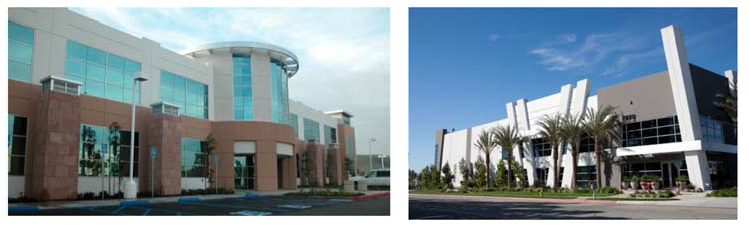
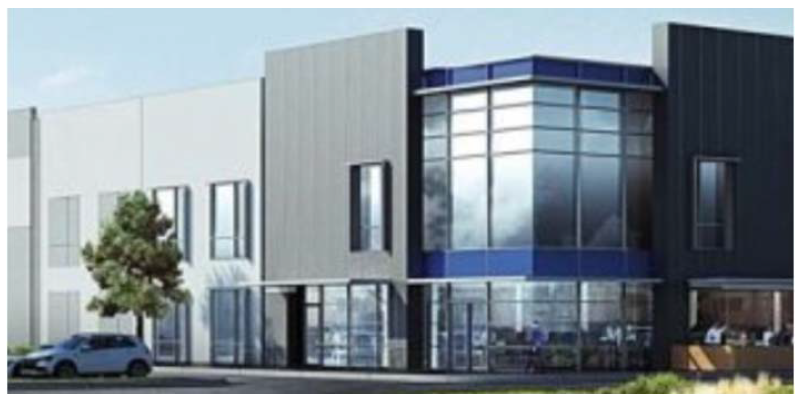
Building facades shall incorporate architectural elements such as windows, decorative trim (cornice or cap), pillars, roofline variations and wall plane breaks to minimize blank walls to create visual interest, and to reduce the opportunity for graffiti.
ii.
All building elevations, whether front, side, or rear shall be architecturally detailed.
3.
Architectural accents (e.g., cornices, tiles, trim around windows, grooves in building faces, accent band details, bulkheads, etc.) shall be used to create variation along building facades. See Figure 1.
Figure 1

Figure 2
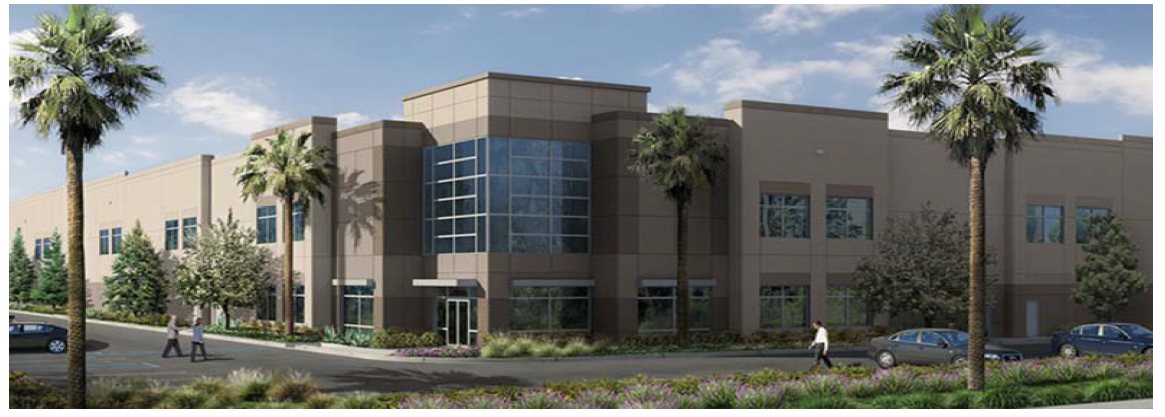
Figure 3
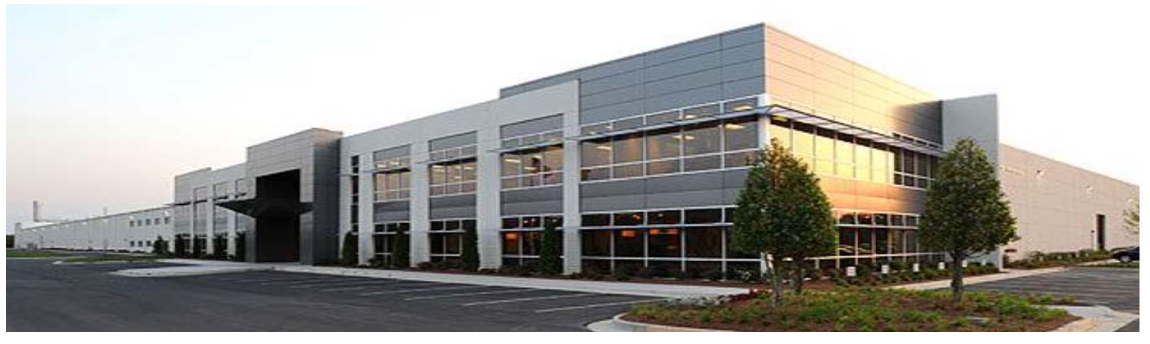
Figure 4
4.
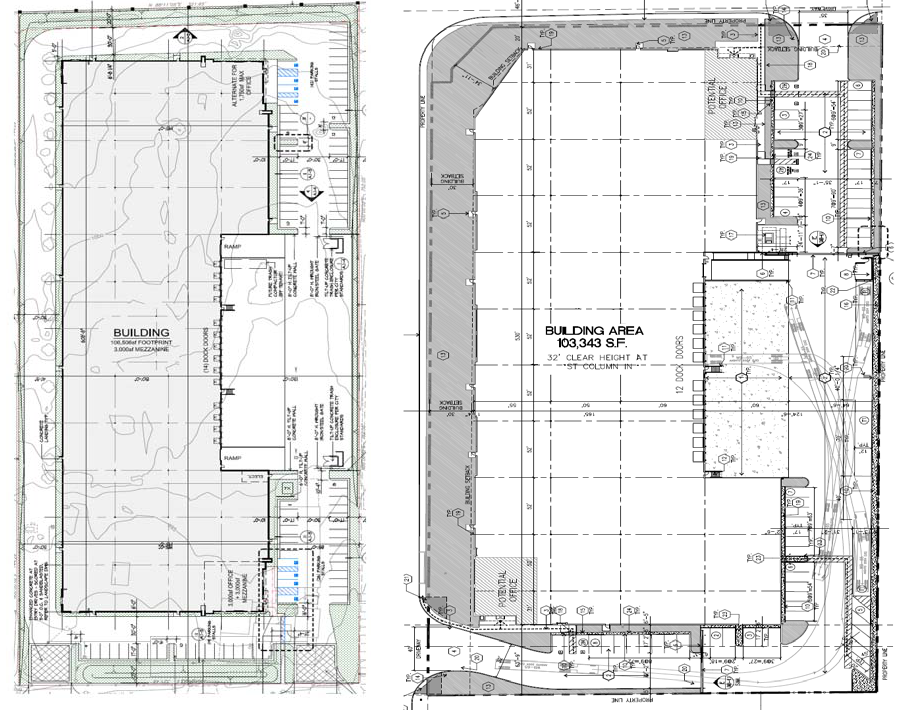
Site plan (typical).
Figure 5
(Ord. No. 1823, § 8(Exh. A), 2-25-20)
Sec. 30-533. - Conditional use regulations.
All uses marked with a "C" in Table 30-530, must comply with the conditional use permit procedural requirements outlined in Article II, Division 12 of this chapter. In addition, certain conditional uses must comply with the specific development and operation standards outlined below.
(1)
Automobile fueling stations.
a.
Applicability. The provisions of this section shall apply to all new construction of automobile fueling stations
b.
Lot area and frontage. Each service station site shall have a minimum net lot area as specified in the zoning district in which the service station will be located.
c.
Existing stations. The provisions contained in paragraph (2) above shall not be applicable to existing stations in the City so long as such stations remain in use as fueling stations.
d.
Lot coverage. Automobile fueling stations shall have maximum allowable lot coverage of 35 percent.
e.
Air/water. Air and water dispensing equipment shall be provided. Such equipment shall be located in an easily accessible location and shall be maintained at all times. Non-operating equipment shall be repaired within five calendar days.
f.
Restroom requirements. All fuel retailers shall provide restrooms which are continuously maintained for the use of, and at no charge to customers and employees. The restroom entrances shall be screened from view from adjacent properties and public rights-of-way by decorative structural screening as approved by the Community Development Department.
g.
Regulations.
1.
Location. The site shall have direct frontage on a major, primary, or secondary highway.
2.
Driveway access. One access drive shall be permitted for each street frontage unless additional access drives will enhance the public health, safety, and welfare.
(2)
Automobile/truck repair facility. All hydraulic hoists and pits, and all lubrication, greasing, automobile washing and polishing and permitted repair equipment must be enclosed entirely within a building, and all work shall be done within a completely enclosed building. No outdoor storage of inoperative vehicle or vehicles under repair shall be permitted on the site.
a.
Signs. See Chapter 3 of the Municipal Code.
b.
Storage and display. Outside storage and display of new or used merchandise shall not be permitted.
c.
Hours of operation. Hours of operation shall be determined on a case-by-case basis by the Planning Commission.
d.
Restroom requirements. All fuel retailers shall provide restrooms which are continuously maintained for the use of, and at no charge to customers and employees. The restroom entrances shall be screened from view from adjacent properties and public rights-of-way by decorative structural screening as approved by the Community Development Department.
e.
Renovation of existing facilities. Renovation of existing facilities which increases assessed evaluation of the facility by more than 30 percent shall comply with the requirements contained herein. When existing conditions prevent compliance with these requirements, the renovation shall be considered to be in substantial compliance with this article as determined by the Planning Commission.
(Ord. No. 1828, § 8(Exh. A), 5-12-20)
Sec. 30-535. - Lot dimensions, building height and maximum intensity.
The development standards outlined in this article are the minimum standards applicable to the development of industrial facilities. These standards shall be used in conjunction with the development policies and the design guidelines (presented in Division 7).
(1)
Table No. 30-536 specifies required lot dimensions, building heights, and maximum permitted building intensities. The lot dimension requirements apply only to the creation of new parcels.
Table No. 30-536A
Lot Dimensions, Building Height and Maximum Intensity
(2)
Table No. 30-536.B and Table No. 30-536.C specify the minimum required setbacks for buildings and parking areas. All required yard areas shall be clear of all structures and shall be landscaped and maintained in a neat and healthy condition according to the landscaping provisions of this chapter.
Table No. 30-536.B
Building Setback
Notes:
a.
The setbacks may be increased to provide an appropriate separation between uses in order to protect the public health, safety, and welfare if alternative means of providing separation are not practical.
b.
Rear and side setbacks for industrial zoning districts may be reduced to zero feet by approval of the approval body on a case-by-case basis, if the approval body determines that such reduction benefits the public health, safety, and welfare. If a zero setback is approved the applicant shall establish a minimum ten-foot access easement from the adjacent property owner.
Table No. 30-536.C
Parking and Drive Aisle Setbacks
Note: Parking setbacks along Cherry Avenue, Valley Boulevard, Sierra Avenue, Foothill Boulevard, shall be 25 feet.
(Ord. No. 1823, § 8(Exh. A), 2-25-20)
Sec. 30-537. - Permitted projection into yard areas.
No projections may extend into required setbacks except signs; signs shall follow the specifications in Chapter 3 of the Municipal Code.
Sec. 30-538. - Screening.
(a)
Adjacent to residential zoning district. All industrial uses adjoining or abutting a residential zoning district shall be screened by a solid masonry wall not less than ten feet in height. However, in the front yard area abutting the residential lot, the fence or wall may be lower as determined through the site plan review process. Any masonry wall shall be constructed with decorative block (split-face or slump stone, or equal, or finished on both sides with plaster, stucco.
(b)
Rooftop mechanical equipment. All rooftop mechanical equipment, with the exception of solar panels, shall be screened on all sides by screening not less than the height of the equipment being screened. The screening devices shall be well incorporated into the design of the building through such features as parapet walls, false roofs, or equipment rooms.
(c)
Mechanical equipment, ground. All mechanical equipment shall be screened to the extent feasible on all sides by a decorative screen wall not less than the height of the equipment being screened in conjunction with landscaping, subject to approval of the Director of Planning. The decorative screen wall shall be located between the street and the mechanical equipment not less than three-foot. The decorative screen wall shall be well incorporated into the design of the building. The other side of the equipment shall be screened with landscaping not less than ten-gallon shrubs or approved landscaping.
(d)
Loading areas screening.
(1)
All loading areas shall be screened from off-site viewing. The purpose of loading area screening is to allow for loading areas to be screened from view from the public right-of-way and to utilize screening that is architecturally compatible with the surrounding environment.
(2)
Where loading doors face a public street, any openings in the screen wall shall be positioned such that neither the loading doors nor the loading areas are visible from the street.
(3)
All loading areas and all loading doors shall be screened from the view of the public street by decorative screen walls in combination with dense landscaping, inclusive of trees, shrubs and berming, or by portions of the building such that the loading areas and doors are not visible from the public right-of-way.
(4)
A line-of-sight analysis shall be required with all development applications, and shall show that all loading areas and roll up doors are screened from view from the public right-of-way.
• A line-of-sight analysis shall at a minimum contain a site plan and cross section graphics demonstrating the line-of-sight from the right-of-way to the loading or storage areas at six feet above the right-of-way surface at three distinct points: The centerline of the right-of-way and the property lines on either side of the right-of-way. The graphics shall be to scale, fully dimensional, and contain all building elevations, berms, walls, landscaping, setbacks, fences, and other structures as they are being proposed to be built.
(e)
Parking lot screening.
(1)
Along any boundary between an industrial zoning district and abutting, residentially designated property, decorative screen walls shall be installed and dense vegetation planted. Trees with at least 24-inch boxes shall be planted at intervals of 30 feet or less, depending upon the species used, along the nonresidential side of the wall. The use of barbed wire, razor wire, electric fencing, or similar materials is prohibited when located along any boundary that abuts residentially designated property.
(2)
Parking areas and driveways adjacent to a public right-of-way, shall be screened from view by a landscape buffer with a minimum width of 15 feet or as required setbacks. Berming shall be provided, mounded to an average height of three feet above the curb height along public streets. Maximum slope of mounds shall be three to one. Trees and shrubs shall be planted in this area according to the standards contained in Article X.
(3)
A sight-line analysis shall be required with all development applications, and shall show that all loading areas, roll-up doors, storage items, equipment, and vehicles, are screened from the public view of adjoining parcels and public streets.
• A sight-line analysis shall be identified on the site plan and cross section graphics demonstrating the line of site from the right-of-way to the loading or storage areas at six feet above the right-of-way surface at three distinct points: The centerline of the right-of-way and the property lines on either side of the right-of-way. The graphics shall be to scale, fully dimensioned, and contain all building elevations, berms, walls, landscaping, setbacks, fences, and other structures as they are being proposed to be built.
(4)
The landscaping shall consist of the use of evergreen shrubs, closely spaced and maintained at least at the specified height of any required decorative walls. Plants shall be selected so as to reach the minimum required height 18 months after planting. The planting of a landscape screen adjacent to rail lines is encouraged.
(Ord. No. 1970, § 4(Exh. A), 6-10-25)
Sec. 30-539. - Accessory buildings.
Accessory buildings may be located anywhere on a lot except within the required front yard area. Accessory buildings shall conform to the same setback and building height requirements applicable to primary structures.
Sec. 30-540. - Antenna, radio, television, satellite dishes and wireless telecommunications.
Refer to Chapter 32 of the Municipal Code.
Sec. 30-541. - Fences and walls.
(a)
Heights. Fences, walls and hedges may not exceed eight feet in height when located in a required interior setback area and may not exceed three and one-half feet in height when located in any required setback adjacent to a street. Fences with a maximum height of eight feet as measured from the sidewalk elevation, may be permitted where required for security purposes a minimum of ten feet away from the front property line within the landscape setback. Such fencing, walls and hedges shall not create an obstruction to the sight triangle and shall not interfere or obstruct the line-of-sight for motorists.
(b)
Temporary fencing.
(1)
Vacant/unoccupied land. An open mesh type fence limited to eight-foot in height or a split rail fence limited to four-foot may be located around the perimeter of a vacant parcel of land (at property line) until such time as the subject parcel is developed.
(2)
Abandoned buildings. An open mesh type fence limited to eight feet in height may be located around a parcel of land (at property line) that contains an abandoned building(s) until such time as the subject parcel is developed.
(c)
Fences and walls—General.
(1)
Neither wood nor chain link fencing shall be allowed in any yard adjacent to a public right-of-way.
(2)
Fences and walls shall be compatible in terms of design and materials with the main structures on the site.
(3)
Approved security fencing located within a required setback adjacent to a street shall be of tubular steel construction, with 18-inch maximum width pilasters a minimum of eight feet on center. Any such fencing shall be complimented by landscaping inclusive of trees and shrubs to provide an aesthetically pleasing and safe environment for businesses within the industrial area and located a minimum of ten feet away from the front property line within the landscape setback.
(4)
Any fences or walls adjacent to a public right-of-way or identified by the Fontana Police Department shall be coated with an anti-graffiti coating that is approved by the Fontana Police Department. Where possible, vines shall be planted to encourage growth on the wall in an effort to discourage graffiti.
(5)
The use of barbed wire, razor wire, or similar materials is prohibited within the any industrial zoning district.
(d)
Electric fencing.
Definition. For the purpose of this section, an electric fence is defined as any bare wire or conductor which is supported on insulators and is located outdoors within ten feet of the ground or a walking surface and is attached to a post, fence, wall, or structure, and which is capable of being energized from any electrical source, including batteries, unless such bare wire or conductor is guarded against accidental contact by forms of enclosures approved by the current edition of the National Electrical Code. Not included in this definition of electric fence are wires or conductors utilized for railway signaling and communication installations, installations under exclusive control of electric utilities, communication equipment under exclusive control of communication utilities and bare conductors which are specifically permitted in the current edition of the National Electrical Code.
(1)
Location:
a.
Electric fences shall be minimized from public view for properties located along major and primary highways as indicated on the most recently adopted circulation master plan and for properties with freeway frontage. A method of visual screening shall be approved by the Director of Community Development.
b.
Electric fences shall be monitored subject to Chapter 22, Article IV (burglary, robbery, and panic alarms: verified burglary and fraudulent verified burglary alarms) of the Fontana Municipal Code.
c.
An electric fence may be installed on properties that do not touch, join at the edge or border, or share a common property line with an existing residential land use or a residential zoning district.
d.
Electric fences shall be installed behind an approved perimeter wall/fence with a minimum height of six feet.
e.
No electric fences may be permitted within the front yard setback or street yard setback.
f.
The electrical security fence proposed adjacent to a sidewalk must be installed behind the side yard and front yard setback and a solid masonry wall.
(2)
Height. Electric fences shall have a maximum height of ten feet.
(3)
Performance standards. Electric fencing shall meet the performance standards as determined by the most recently adopted International Building Code, and the International Electro Technical Commission (IEC).
(4)
Perimeter fence or wall. The electrical security fence is not permitted as a perimeter fence or wall.
(5)
Warning signs.
a.
Electric fences shall be clearly identified with warning signs of a maximum of nine square feet, prepared in English and Spanish that read: "Warning—Electric Fence" at intervals of not less than 60 feet.
b.
Warning signs shall be black typewritten text with a yellow or white background.
c.
Warning signs shall not advertise or provide contact information of the electric fence manufacturer.
(6)
Separation. Horizontal separation between the perimeter fence and the electrical security fence shall comply with the IEC standards.
(7)
Emergency access.
a.
An emergency Knox Box or any other similarly approved device (e.g. Rapid Emergency Access Control Transmitter (REACT) System) must be installed at every gate providing access to a property secured by an electric fence to allow fire department, police department, and/or any other emergency responder access.
b.
In the event that emergency access by emergency responders (i.e. Police Department, Fire Department, etc.) to a property where a permitted electric fence has been installed and is operating, is required due to an emergency or urgent circumstances, and the Knox Box or other similarly approved device is absent or non-functional, and an owner, manager, employee, custodian or any other person with control over the property is not present to disable the electric fence, emergency responding personnel shall be authorized to disable the electric fence in order to gain access to the property. As a condition of permit issuance, all applicants issued permits to install or use an electric fence as provided herein agree to waive any and all claims for damages to the electric fence against emergency responding units and/or personnel under such circumstances.
(8)
Electrification. The energizer for electric fences must be driven by a commercial storage battery not to exceed 12 volts DC. The storage battery is charged primarily by a solar panel. However; the solar panel may be augmented by a commercial trickle charger.
(9)
Indemnification. The applicant/property owner agrees to defend, indemnify, and hold harmless the City of Fontana or its agents, officers, and employees from any claim, action or proceeding against the City of Fontana, or its agents, officers, or employees resulting from the approval and installation of an electrical security fence. The City of Fontana shall promptly notify the applicant/property owner of any claim, action, or proceeding and the City of Fontana shall cooperate fully in the defense. If the City of Fontana fails to cooperate fully in the defense, the applicant shall not thereafter be responsible to defend, indemnify, or hold harmless the City of Fontana.
(10)
Insurance. Prior to the approval of any request to install an electrical security fence within the City of Fontana, the applicant/property owner shall provide to the City a certificate of commercial general liability insurance covering third party liability risks in a minimum amount of $1,000,000.00 combined single limit per occurrence for bodily injury, personal injury, and property damage insurance with the City named as an additional insured party.
(11)
Landscaping. Addition of the electrical security fence shall in no way preclude the installation and maintenance of required landscaping.
(12)
All electric fenced areas shall be kept free of weeds and other debris that may constitute a fire hazard.
(13)
Any contractor/installer of an electric fence found in violation of this section of the Zoning and Development Code may be subject to a misdemeanor as described in [subsection] (14) below.
(14)
Violation; misdemeanor. It shall be unlawful, and a misdemeanor for any person to install, maintain or operate an electric fence in violation of these development standards.
(e)
Plan check approval. The following requests for an electric security fence may be approved through the plan check process in the M-1 and M-2 zones under the following circumstances:
(1)
Adjacent to residential. An electric fence may be installed on properties that touch, join at the edge or border, or share a common property line with an existing non-conforming residential land use as long as the electric fence is installed behind an approved solid block wall with a minimum height of six feet.
(2)
Installed on previously approved chain link fencing. Electric fences installed on a previously approved chain link fence shall be located behind the chain link fence and the chain link fence must be covered with an approved durable, wind resistant mesh or other material that acts as a barrier and screen.
(3)
Behind front and side yard setbacks. An electric fence proposed behind the front and/or side yard setback shall be located behind an approved wall or fence. If the electric fence is placed on an approved chain link fence the chain link fence must be covered with an approved durable, wind resistant mesh or other material that acts as a barrier and screen. On corner lots, the electric fence shall be angled inward to the property.
(f)
Director determination. An electric fence may be permitted in the M-1 and M-2 Zones at the discretion of the Community Development Director or designee through the Director's determination review process under the following circumstances:
(1)
Along major and primary highways/freeways. Electric fences shall be minimized from public view for properties located along major and primary highways as indicated on the most recently adopted circulation master plan and for properties with freeway frontage. A method of visual screen shall be approved by the Director of Community Development and may utilize an approved durable, wind resistant mesh or other material that acts as a barrier and a screen.
(2)
Along the Pacific Electric (PE) Trail. Electric fences proposed adjacent to the PE Trail shall be located behind a tubular steel fence with pilasters or a solid block wall.
(Ord. No. 1865, § 8(Att. 2), 3-23-21)
Sec. 30-542. - Trash and recycling collection areas.
All trash receptacles and disposal areas shall be screened from view. All industrial facilities shall be provided with trash receptacles and recycling facilities as follows:
(1)
Number. An adequate number and size of receptacles shall be provided to serve all uses on a property.
(2)
Screening. All receptacles shall be screened and the trash enclosure that is designed pursuant to the City approved conceptual plan. The receptacle shall not be visible above the wall. The enclosure shall be architecturally compatible with the architecture of the proposed/existing structures.
Sec. 30-543. - Noise and vibration.
(a)
Noise levels. No person shall create or cause to be created any sound which exceeds the noise levels in this section as measured at the property line of any residentially zoned property:
(1)
The noise level between 7:00 a.m. and 10:00 p.m. shall not exceed 70 db(A).
(2)
The noise level between 10:00 p.m. and 7:00 a.m. shall not exceed 65 db(A).
(b)
Noise measurements. Noise shall be measured with a sound level meter that meets the standards of the American National Standards Institute (ANSI) Section SI4-1979, Type 1 or Type 2. Noise levels shall be measured using the "A" weighted sound pressure level scale in decibels (reference pressure = 20 micronewtons per meter squared).
(c)
Vibration. No person shall create or cause to be created any activity which causes a vibration which can be felt beyond the property line with or without the aid of an instrument.
Sec. 30-544. - Light and glare.
All lights shall be directed and/or shielded to prevent the light from adversely affecting adjacent properties. No structure or lighting feature shall be permitted which creates adverse glare. A photometric plan shall be provided that indicates the amount of light emanating from the proposed/existing light fixtures.
Sec. 30-545. - Odors.
All uses shall be operated in a manner such that no offensive odor is perceptible at or beyond the property line of that use.
Sec. 30-546. - Electromagnetic interference.
No use, activity, or process shall be conducted which produces electromagnetic interference with normal radio and television receptions beyond the property line of that use.
Sec. 30-548. - Purpose.
The following guidelines are to be used in conjunction with development policies and standards contained in the article to create industrial developments that are functionally compatible or enhance the surrounding users.
Sec. 30-549. - Applicability.
These guidelines apply to all new industrial development as well as additions and remodels. No activities conducted within industrial districts shall be conducted in such a manner as to constitute a public or private nuisance. The approval body may impose such conditions or mitigation measures as may be appropriate to ensure that activities conducted within an industrial district shall not constitute or become a public or private nuisance. Without limiting the generality of the foregoing or otherwise modifying other applicable provisions of this chapter, all activities conducted within industrial districts shall comply with all applicable provisions of local, state and federal laws and regulations with respect to noise, vibration, smoke, odors, fire and explosive hazards, radiation, toxic and noxious matters, electromagnetic interference and lighting. The approval body may impose such conditions or mitigation measures as may be appropriate to ensure that activities conducted within any industrial district shall not violate any provisions of local, state or federal law, or regulations with respect to the matters identified in the immediate preceding sentence. See also industrial building design policy.
Sec. 30-550. - Site plan design.
(a)
Grading and drainage.
(1)
Graded slopes shall meet California Building Code.
(2)
All graded slopes in excess of three to one shall be stabilized and planted with groundcovers and trees or shrubs.
(3)
Grading shall not occur within the drip line of a tree (with a caliper size greater than ten inches at chest height) that merits observation or within ten feet of the bank of a riparian corridor unless such grading is approved by a landscape architect.
(4)
The grading of land along transportation corridors shall conform to the natural topography of the immediate area and result in a harmonious transition of the manmade grade with the natural terrain.
(5)
Site grading design shall complement and reinforce the architectural and landscape design character by helping to screen parking, loading and service areas, by helping to reduce the perception of height and mass on large buildings, by providing reasonable transitions between on-site uses, by providing elevation transitions contributing to the efficiency of on-site and off-site movement systems, and by providing reasonable transition between lots.
(b)
Building orientation.
(1)
All buildings shall be cited and oriented to reduce noise, light and glare, visual, and other conflicts. Refuse/recycle collection and loading areas shall be located in areas where noise from such operations will not adversely impact adjacent residential uses.
(2)
Buildings shall be cited for windows and entries to take advantage of views.
(3)
Buildings shall be designed and cited to minimize the impact of built forms on the natural landscape. Roof lines shall keep a low profile so as to not dominate the horizon line.
(4)
The orientation of a building and its parts shall be related to nature and the elements: sun, wind, and rain. The design and placements of windows and doors shall be considered with exposure to natural elements in mind.
(5)
In new projects, buildings shall be positioned to minimize the impact of shadows on adjacent properties. Building architecture shall be designed to provide shade in the summer and sunlight in the winter.
(6)
Placement of the industrial buildings shall provide the most aesthetic public views. Open work areas shall be located away from public views. Where overriding considerations require that the work areas remain visible to public views, they must be fully screened using walls and a combinations of berms and landscaping.
(7)
Design themes for individual projects shall integrate the constraints and opportunities provided by adjacent developments in complying with an overall street design theme.
(8)
Building area setbacks from the street shall vary to provide character to the area.
(9)
Whenever possible, buildings should be oriented on the site in a manner that will allow for solar energy devices to have access to sunlight. Running roof ridge lines east-west allows easy solar access for roof mounted solar collectors.
(10)
HVAC ducts shall be oriented away from abutting residential areas.
(c)
Access and circulation.
(1)
Pedestrian.
a.
On-site pedestrian circulation systems shall be provided to meet the movement needs of on-site users. Such systems shall provide safe, all-weather surfaces and aesthetically pleasing means of on-site foot travel. Pedestrian walkways shall be an integrated part of the overall architecture and site design concept.
b.
Pedestrian and bicycle access shall be conveniently provided to connect industrial uses with surrounding land uses.
c.
Along walkways, between buildings, expanded areas provide for occasional sitting areas are encouraged.
(2)
Vehicular.
a.
On site bus turnouts and shelters shall be installed in industrial areas that generate the highest bus passenger volume. Mass transit routes that serve areas of business use shall load passengers in clearly marked, reserved areas with pedestrian facilities provided.
b.
The access and circulation of a development shall be designed to provide safe and efficient system, both on and off the site. Points of access shall be designed in conformance with the City access regulations, and shall not conflict with other planned or existing access points.
c.
The vehicular circulation system shall be designed to reduce conflicts with pedestrian traffic, minimize impacts on adjacent properties, combine circulation and access areas where possible, and provide adequate maneuvering areas.
d.
Access drives for industrial areas shall be located as far as possible from street intersections and shall be coordinated with median openings and where median openings are not available, designed for efficient "right-turn only" ingress and egress.
e.
Access drives shall be coordinated with adjacent lots so as to minimize the number of curb cuts required and to not impede on the efficient flow of peak period traffic. Consideration shall be given to adequate separation of adjacent access drives or the development of common access drives.
f.
In no case should trucks have to use public right-of-way to maneuver into a loading space, including the necessity to have to back-in from a public right-of-way. There shall be adequate truck maneuvering area for the largest truck size anticipated for the subject industrial development. Trucks utilizing loading areas shall not encroach upon drive aisles or parking spaces. Sufficient area shall be provided for the parking of empty or stored trailers.
g.
The citing of handicap parking stalls within an industrial development shall be subject to the requirements of the current Building Code.
(d)
Relationship of parking areas to buildings.
(1)
Adequate parking shall be provided for all new industrial facilities to accommodate peak hour use. See Article XI for standards. The employees and visitors parking shall be located separate from truck loading areas.
(2)
Aisles shall be positioned perpendicular to building entries for easy pedestrian access. Pedestrian corridors shall also incorporate landscaping material.
(3)
Where design permits, parking areas located behind buildings are encouraged. Driveway access to rear parking and loading areas and clear signage identifying rear parking availability shall be incorporated into the overall design.
(4)
If vehicle parking is adjacent to the on-site truck path, the vehicle parking shall be located on the building side of the truck path.
(e)
Open space.
(1)
Open spaces shall be designed as an integral part of the overall site plan design. Open spaces shall enhance the building design, enhance public views and spaces, provide buffers and transitions, provide for a balance of solar uses, and provide screening.
(2)
The display of art and fountains is encouraged in open spaces.
(3)
Open spaces can occur within an industrial development in any scale, from an intimate low wall for sitting to an expansive plaza. These spaces are encouraged within all new industrial development and shall be designed at a scale proportionate to each individual project.
(4)
Open spaces shall provide a landscape design and access connection to the primary building entry.
(5)
Open spaces shall be integrated into the vehicular and pedestrian circulation systems as a primary focus and destination.
(6)
Open spaces shall be strongly defined by adjacent buildings with facades being visually interesting and building mass well-articulated.
(7)
The provision of ample seating/outdoor break area in open space areas is essential and should be carefully placed to allow a variety sitting environments.
(8)
Open spaces shall be designed to direct attention toward the entry statement of the project.
(f)
Lighting.
(1)
All exterior lighting shall be adequately controlled and shielded to prevent glare and undesirable illumination to adjacent properties or streets.
(2)
On-site lights shall provide a safe, functional and aesthetic design. Enough lighting should be provided to ensure a safe environment while at the same time not cause areas of intense light or glare.
(3)
Light fixtures and poles shall be designed and placed in a manner consistent and compatible with the overall site and building design.
(4)
High intensity security lighting fixtures shall not be substituted for site or landscape lighting or general building exterior illumination, but shall be limited to loading and storage locations or other similar service areas only.
(g)
Utilities.
(1)
Temporary overhead power and telephone facilities are permitted only during construction.
(2)
Transformer enclosures shall be designed of durable materials with finishes and colors used which are compatible and harmonious with the overall architectural theme.
(3)
Placement, location and screening of utilities of any kind which cannot be installed underground and must be placed above ground for function and safety reasons require approval by the Director of Planning.
(h)
Public safety.
(1)
Entrances to buildings shall be well lighted and void of any large shrubbery or obstructions.
(2)
Adequate emergency access routes for the egress/ingress of emergency vehicles shall be required for all projects.
(Ord. No. 1865, § 8(Att. 2), 3-23-21; Ord. No. 1970, § 4(Exh. A), 6-10-25)
Sec. 30-551. - Building design.
(a)
Design theme.
(1)
In order to establish and reinforce an industrial district identity, new industrial projects are encouraged to develop a central design theme around which the following architectural elements can be designed: building form, signage, light fixtures, walls and fences, landscaping and other site furnishings, as well as areas of public gathering such as plazas and courtyards.
(2)
A recognizable design theme shall be established for each facility. That theme shall be one that creates a harmonious building style, form, size, color, material and roofline, as it relates to surrounding planned or existing developments.
(3)
It is not intended that one style of architecture should be dominant but rather that individual structures shall create and enhance a high quality and harmonious community appearance. Subtle variations are required which provide visual interest but do not create abrupt changes causing discord in the overall design of the immediate area.
(4)
Electrical rooms shall be designed into new buildings as part of the building with direct access from the outside of the building.
(b)
Scale.
(1)
The height, bulk, and design of industrial development shall be compatible with the surrounding neighborhood.
(2)
Multi-story buildings shall be set back toward the center of the site or be designed in a stepped style.
(c)
Materials and colors.
(1)
Colors, textures, and materials shall be coordinated to achieve total compatibility of design and shall blend well with the environment.
(2)
A sensitive alternation of colors and materials shall be used to produce diversity and enhance architectural effects.
(3)
While no category of exterior materials is considered "correct," the use of a particular material should exemplify the special characteristics of the overall design theme.
(4)
Generally acceptable materials are stucco, wood siding, native rock and stone, split face, slump stone, concrete, brick, or combination thereof.
(5)
Conditionally acceptable material (only limited usage) shall be steel (painted), glass block, and black glass windows.
(d)
Lighting.
(1)
Building and landscape accent up lighting shall be incorporated into the landscape plan.
(2)
Lighting systems shall be architecturally compatible with surrounding buildings to express the unique character of the area.
(3)
All exterior lighting shall be adequately controlled and shielded to prevent glare and undesirable illumination to adjacent properties or streets.
(4)
Where possible, light fixtures shall be incorporated into the building elements to minimize their impact. Fixtures shall be appropriate for the architectural design and shall be energy efficient.
(5)
For those buildings that are located in excess of 100 feet from the front property line, street address numbers of 12 inches or greater in height shall be displayed via an internally illuminated address display box.
(e)
Architectural compatibility.
(1)
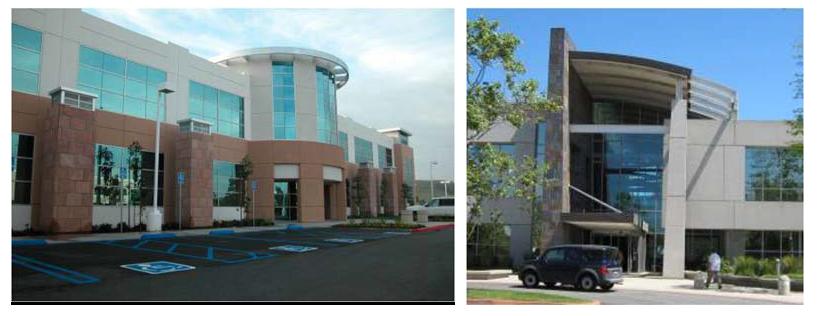
Mass and scale.
a.
The mass and scale of the buildings shall respect the visual and physical relationship to the adjacent buildings and surrounding sensitive uses. Taller building elements shall be placed towards the center of the site, with lower elements adjacent to surrounding properties.
b.
Buildings shall be stepped back when adjacent to or in close proximity to sensitive uses (e.g. residential, schools, etc.).
c.
Vertical and horizontal offsets shall be provided to reduce the visual bulk of the building.
(2)
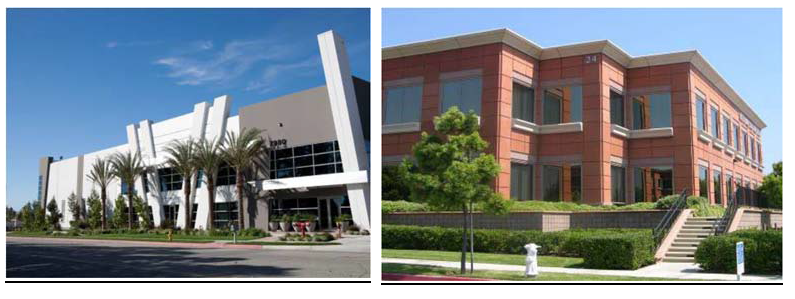
Building facades.
a.
Building facades shall incorporate architectural elements such as windows, pillars, and wall plane breaks to minimize blank walls, to create visual interest, and to reduce the opportunity for graffiti.
b.
All building elevations, whether front, side, or rear shall be architecturally detailed.
c.
Architectural accents (e.g., cornices, tiles, trim around windows, grooves in building faces, accent band details, bulkheads, etc.) shall be used to create variation along building facades.
d.
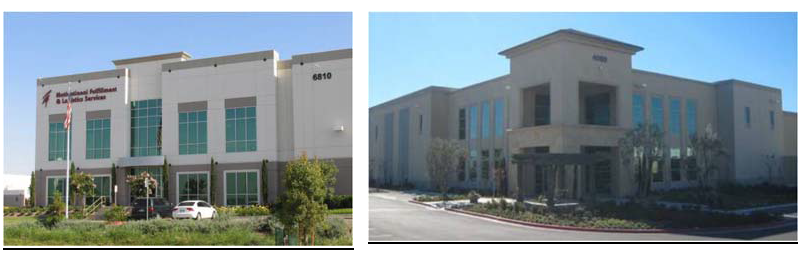
Roofs shall be designed as an integral component of building form, mass, and facade. Building form shall be enhanced by sloped or offset roof planes, eave heights, and rooflines.
(3)
Colors and materials.
a.
Colors and materials for all structures on-site should consist of earth tones. Use of different colors and materials or textures is strongly encouraged.
b.
Building materials shall be durable and able to withstand long-term exposure to the elements.
c.
Large expanses of smooth material (e.g., concrete) shall be broken up with expansion joints, reveals, or changes in texture and color.
(4)
Landscaping.
a.
Landscaping shall be in scale with adjacent structures, streets, and public spaces, and be sized appropriately when fully grown.
b.
Landscaped areas should incorporate a three-tiered planting system:
1.
Ground cover and flowering plants;
2.
Shrubs and vines; and,
3.
Trees.
c.
Development on corner lots shall be enhanced with a combination of specimen trees, accent plantings, upgraded perimeter wall surfaces, hardscape treatments and landscape lighting adjacent to the street intersection.
d.
Drought-tolerant and low-maintenance trees, vines, and groundcovers shall be used on-site. Drip irrigation systems shall be installed to ensure the highest possible level of water conservation.
e.
Setbacks adjacent to sensitive uses shall include dense landscaping to provide visual screening and noise attenuation.
f.
Landscaped berms along site edges shall be used to screen parking, loading and service areas and to serve as a sound reduction measure.

g.
Surface parking lots shall be well-landscaped to reduce heat island effect and visually reduce the expanse of paved area.
h.
Pervious paving materials are strongly encouraged for sidewalks, pathways, and parking lots or other paved surfaces on-site.
i.
An automatic irrigation system using current equipment and technology shall be provided for planted areas.
j.
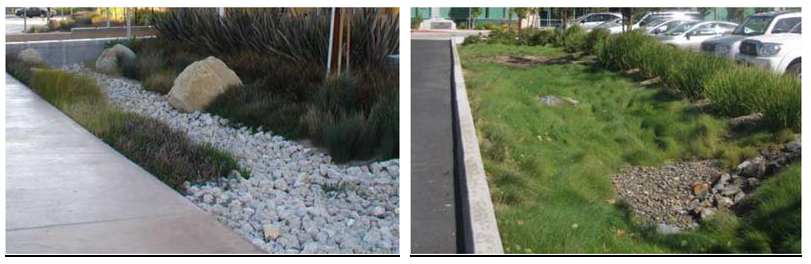
Run-off retention and on-site water filtration/stormwater treatment features and bioswales should be a part of the overall landscape design and can also serve as buffering methods for adjacent businesses.
k.
Trees shall be selected and placed to provide canopy and shade for walkways, pedestrian open spaces, and parking areas.
l.
Tree and shrub planting shall be in large masses.
m.
Plant material selected shall be suited to the specific soil and micro climatic conditions.
Sec. 30-552. - Purpose.
The purpose of this section is to promote the use of alternative modes of transportation other than the use of single occupant vehicle, and peak hour travel, thereby reducing congestion, reducing air pollution and improving the quality of life.
Sec. 30-553. - Applicability.
This section shall apply to all incorporated portions of the City. Prior to issuance of a building permit for any new construction project requiring a design review for which a site plan is submitted on or after this article comes into effect, provisions shall be made for all applicable trip reduction requirements of this section to be implemented. The requirements shall not be applied to existing development except when new square footage is added which exceeds 25 percent of the original development.
Sec. 30-554. - Trip reduction measures.
The following trip reduction measures shall be implemented:
(1)
Bicycle parking racks or secured bicycle lockers shall be provided for all nonresidential developments and multiple-family developments with ten or more units. Bicycle racks or lockers shall be provided at a rate of one bicycle parking space per 20 automobile parking spaces with a minimum of a two-bike rack.
(2)
On-site pedestrian walkways and bicycle paths shall be provided between adjoining buildings and connecting each building in a development to public streets and sidewalks or transit stops, for all new nonresidential developments and multiple-family developments with ten or more units.
(3)
Preferential parking spaces which are signed and striped for vanpools and carpools shall be provided at a minimum rate of ten percent of employee vehicle parking for all new nonresidential developments of 20,000 square feet or greater.
(4)
A passenger loading area equivalent to a minimum of three parking spaces shall be provided in a location close to the main building entrance or employee entrance, designed not to interfere with vehicular circulation, for all new nonresidential developments of 50,000 square feet or greater.
(5)
Parking spaces shall be designed with a minimum vertical clearance of seven feet two inches to accommodate vanpool vehicles.
(6)
Locker, shower, and changing room facility(ies) accessible to both men and women shall be provided for employees bicycling or walking to work, for all new nonresidential developments which meeting the following thresholds.
(7)
All new nonresidential developments with 20,000 square feet or greater shall provide an information area easily accessible to employees that offers information on available transportation alternatives, such as: metro link service schedules, transit route schedules and maps, rideshare matching services, available employees or customer incentives and air quality information.
(8)
Transit facilities such as bus pullouts, bus pads and bus shelters shall be provided for new developments along existing or planned transit routes at approximately one-quarter mile apart, as determined in cooperation with local transit providers and City Engineer and transportation planning staff.
(9)
A telecommuting center or contributions toward the development of such a center shall be required for all new residential developments of 200 or more units.
(10)
On-site video conferencing facilities shall be provided for all office park developments with 1,000 or more employees or office building with a capacity of 500 or more employees.
(11)
Sidewalks shall be provided for all new developments in accordance with the city's circulation element of the general plan, subject to conditions of existing, adopted specific plans.
(12)
Child care facilities shall be considered for inclusion as part of new nonresidential developments with 1,000 or more employees.
(13)
All new projects which meet the San Bernardino County Congestion Management Program thresholds shall participate in the construction or payment of fees toward the construction of bicycle facilities required during the design review or project approval process.
(Ord. No. 1865, § 8(Att. 2), 3-23-21)
Sec. 30-555. - Exception to trip reduction requirements.
The City Council, Planning Commission or Director of Community Development, as appropriate, may modify all or part of the trip reduction measures for new projects set forth above, if the following findings can be made:
(1)
One or more of the measures are not applicable due to special circumstances, including, but not limited to, the location or configuration of the project, the implementation demand management strategies, or other specific factors which make infeasible implementation, or reduce the effectiveness, of the prescribed measure(s); and
(2)
An alternative trip reduction and transportation demand management strategy will be implemented to reduce an equal amount of trips as would have occurred as a result of imposition of the prescribed measures. (Implementation of the alterative strategy shall be a condition of project approval.

