
Georgetown City Zoning Code
CHAPTER 6
RESIDENTIAL DEVELOPMENT STANDARDS
SECTION 6.03. - MIXED USE
The Mixed Use District (MU), established in Section 4.11, is intended for residential and non-residential development to promote a dense and active mixed use urban environment. As established in the MU guidelines, a project zoned or proposed to be zoned MU may be completely residential and contain varying housing types and densities in a well-planned setting. Incentives available for developments in this district, along with guidelines, development standards and process for using the MU District can be found in Section 4.11 of this Code, attached as a separate document found at the City of Georgetown Planning and Development Department office or at http://udc.georgetown.org.
(Ord. No. 2017-15, § 2, 2-28-2017)
Sec. 6.01.010. - Authority.
The provisions of this Chapter are adopted pursuant to Texas Local Government Code chs. 211 and 212 and the City Charter.
(Ord. No. 2017-15, § 2, 2-28-2017)
Sec. 6.01.020. - Purpose and Intent.
This Chapter establishes development standards for residential properties within the City limits and ETJ of the City of Georgetown.
(Ord. No. 2017-15, § 2, 2-28-2017)
Sec. 6.01.030. - Applicability.
A.
Within the Extraterritorial Jurisdiction (ETJ).
All residential development within the City's ETJ is subject to the provisions of Section 6.02.010.
B.
Within the City Limits.
1.
All residential development within a Residential Zoning District shall be subject to the provisions of this Chapter.
2.
All residential development within a Non-residential Zoning District shall be subject to the provisions of Sections 6.05 and 6.06 in addition to the development standards of the zoning district in which it is located.
3.
All non-residential development within a Residential Zoning District or the Agriculture District shall be subject to the Building Design Standards set forth in Section 7.04 and the Lighting Standards set forth in Section 7.05 in addition to the development standards of the zoning district in which it is located.
(Ord. No. 2017-15, § 2, 2-28-2017)
Sec. 6.02.010. - General.
A.
All new development shall be located on a lot or tract meeting the requirements of Section 3.08 of this Code.
B.
All new lots or tracts shall have a minimum lot width and street frontage along a public street as follows:
1.
Within the city limits the minimum lot width and street frontage shall be in accordance with the zoning district in which it is located.
2.
Within the ETJ the minimum lot width and street frontage shall be 25 feet.
3.
A Subdivision Variance varying or waiving these requirements may be requested pursuant to Section 3.22 of this Code.
C.
All development within the city limits and areas of the ETJ where the City provides fire protection services shall comply with the applicable standards contained in the International Fire Code, as adopted in the City of Georgetown Code of Ordinances, Chapter 8.04. When such standards conflict with any lot, dimensional, and design standards of this Code, the International Fire Code standards shall apply.
(Ord. No. 2017-15, § 2, 2-28-2017)
Sec. 6.02.020. - AG—Agriculture District.
The Agriculture District (AG) is intended to allow large rural residential development, agricultural, and farming uses and may include lands that are relatively undeveloped. The AG District is also the default district for land newly annexed into the City, but not yet placed in an appropriate zoning classification. For these reasons, the AG District may contain a wide variety of residential and non-residential uses. The AG District may take on characteristics of either a residential or a non-residential zoning district and certain design criteria may be required depending on the use.
A.
Lot and Dimensional Standards.
B.
Allowed Uses.
1.
Single-family detached (minimum lot size: two acres).
2.
Those residential uses identified in the Use Tables in Chapter 5 of this Code as allowed in the AG District.
3.
Those non-residential uses identified in the Use Tables in Chapter 5 of this Code as allowed in the AG District.
4.
Those accessory uses identified in Subsection 5.01.020.E of this Code that may be compatible with the primary uses allowed in the AG District.
C.
Non-Residential and Accessory Design Standards.
1.
Non-residential structures shall meet the lot and dimensional standards of the AG District, in addition to the requirements of Sections 7.04 and 7.05.
2.
Residential accessory structures shall meet the requirements of Section 6.06.010.
3.
Residential accessory structures shall not exceed the height of the principal residential structure. However, accessory structures associated with a Non-residential Use allowed in Table 5.07.010 (Agricultural Uses) may exceed the height of the principal structure provided the maximum building heights of the district are not exceeded.
D.
Other Requirements of this Chapter.
1.
Dimensional Interpretations and Exceptions, Section 6.04.
2.
Accessory Structures, Garages and Carports, Section 6.05.
(Ord. No. 2017-15, § 2, 2-28-2017)
Sec. 6.02.030. - RE—Residential Estate District.
The Residential Estate District (RE) is intended for areas of very low density single-family residential use and associated uses. The district has a lot size minimum of one acre to retain a rural character and is appropriate where topography or lack of public utilities and services may necessitate a low density.
A.
Lot and Dimensional Standards.
B.
Allowed Uses.
1.
Single-family detached minimum lot size: One acre.
2.
Those residential uses identified in the Use Tables in Chapter 5 of this Code as allowed in the RE District.
3.
Those non-residential uses identified in the Use Tables in Chapter 5 of this Code as allowed in the RE District.
4.
Those accessory uses identified in Subsection 5.01.020.E of this Code that may be compatible with the primary uses allowed in the RE District.
C.
Non-Residential and Accessory Design Standards.
1.
Non-residential structures shall meet the lot and dimensional standards of the RE District, in addition to the requirements of Sections 7.04 and 7.05.
2.
Residential accessory structures shall meet the requirements of Section 6.06.010.
3.
Residential accessory structures shall not exceed the height of the principal residential structure.
D.
Other Requirements of this Chapter.
1.
Dimensional Interpretations and Exceptions, Section 6.04.
2.
Accessory Structures, Garages and Carports, Section 6.05.
(Ord. No. 2017-15, § 2, 2-28-2017)
Sec. 6.02.040. - RL—Residential Low Density District.
The Residential Low Density District (RL) is intended for areas of low density Single-family residential use and associated uses. The RL District is intended to allow larger lots than in the RS District with a minimum of 10,000 square feet. The pattern of residential development and land use closely matches that of the Residential RS District.
A.
Lot and Dimensional Standards.
B.
Allowed Uses.
1.
Single-family detached (minimum lot size: 10,000 square feet).
2.
Those residential uses identified in the Use Tables in Chapter 5 of this Code as allowed in the RL District.
3.
Those non-residential uses identified in the Use Tables in Chapter 5 of this Code as allowed in the RL District.
4.
Those accessory uses identified in Subsection 5.01.020.E of this Code that may be compatible with the primary uses allowed in the RL District.
C.
Non-Residential and Accessory Design Standards.
1.
Non-residential structures shall meet the lot and dimensional standards of the RL District, in addition to the requirements of Sections 7.04 and 7.05.
2.
Residential accessory structures shall meet the requirements of Section 6.06.010.
3.
Residential accessory structures shall not exceed the height of the principal residential structure.
D.
Other Requirements of this Chapter.
1.
Dimensional Interpretations and Exceptions, Section 6.04.
2.
Accessory Structures, Garages and Carports, Section 6.05.
(Ord. No. 2017-15, § 2, 2-28-2017)
Sec. 6.02.050. - RS—Residential Single-Family District.
The Residential Single-Family District (RS) is intended for areas of medium density with a minimum lot size of 5,500 square feet. The RS District contains standards for development that maintain single-family neighborhood characteristics. The District may be located within proximity of neighborhood-friendly commercial and public services and protected from incompatible uses. All housing types in the RS District shall use the lot, dimensional and design standards of the District.
A.
Lot and Dimensional Standards.
B.
Allowed Uses.
1.
Single-family detached (minimum lot size: 5,500 square feet).
2.
Single-family attached (provided that the requirements in Subsection C.2. are met).
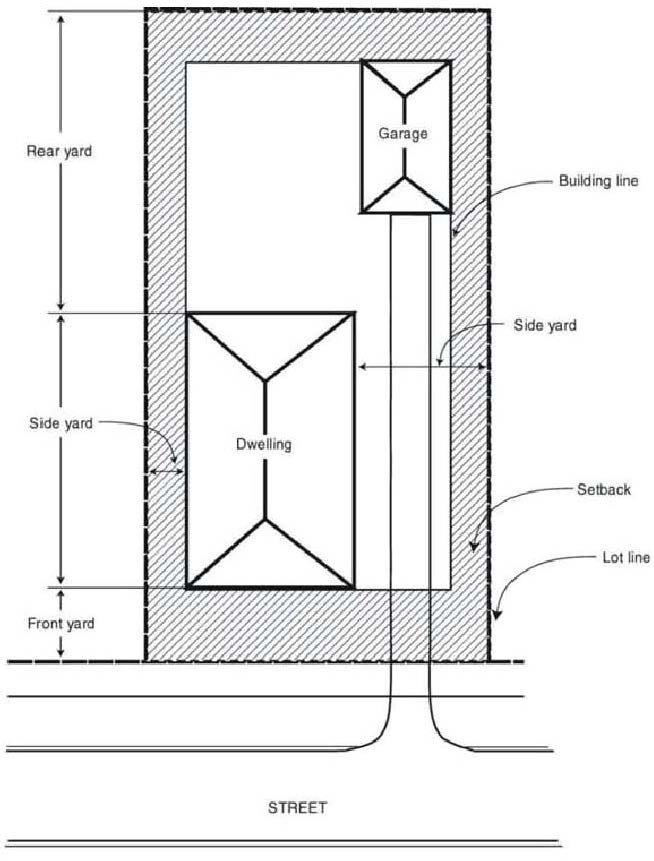
3.
Single-family, zero lot line (provided that the requirements in Subsection C.3. are met).
4.
Those residential uses identified in the Use Tables in Chapter 5 of this Code as allowed in the RS District.
5.
Those non-residential uses identified in the Use Tables in Chapter 5 of this Code as allowed in the RS District.
6.
Those accessory uses identified in Subsection 5.01.020.E of this Code that may be compatible with the primary uses allowed in the RS District.
C.
Residential Design Standards.
The design standards below apply to all development in the RS District in addition to the site design standards in Section 6.06.
1.
Similarity Restrictions.
Except as provided in Subsection a. below, no new dwelling that is similar in appearance to a neighboring dwelling is permitted. The standards to determine such similarity are set forth below and shown by example in the illustrations contained in this section.
a.
Exemptions. The following shall be exempt from these provisions:
i.
Dwellings for which a Building Permit was approved before March 11, 2003.
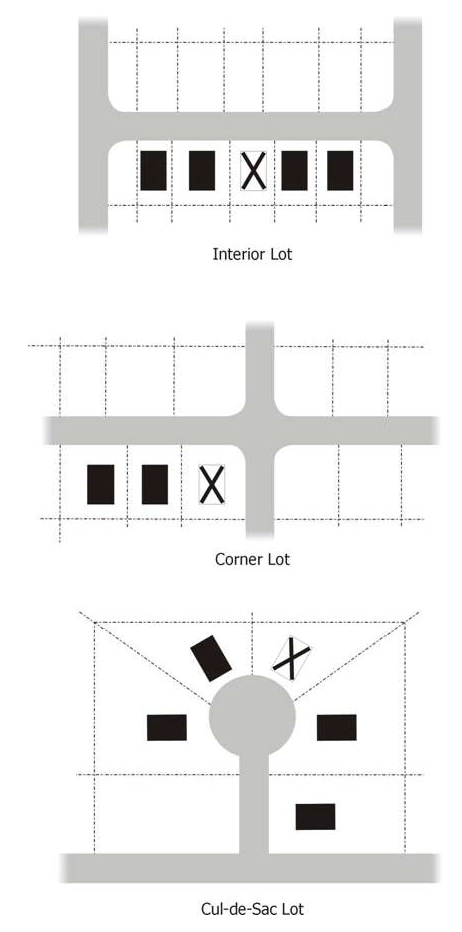
ii.
Dwellings within a housing diversity development, where a unified plan containing similarity of architectural form and style among dwellings is integral to such a plan.
b.
Differences in Appearance.
i.
Differences in bulk and massing shall be reviewed for the lots on either side of the proposed dwelling on the same side of the street, as shown in the following illustrations.
ii.
Where lots are interrupted by an intervening street, public parkland, or similar feature of at least 50 feet in width, no review shall be necessary.
iii.
The proposed building shall be considered different from any vacant lot for which no building permit has been issued without requiring further documentation.
c.
Differentiation. The proposed dwelling shall differ from other applicable dwellings in at least two of the five criteria listed below.
i.
The dwelling is a different housing type.
• Single-family detached;
• Single-family attached; or
• Single-family, zero lot line.
ii.
The dwelling differs in the number of full stories.
• Single-story; or
• Two-story.
iii.
The dwelling has a different type of garage.
• Front-loaded garage (one- or two-car);
• Side-loaded garage; or
• Detached garage.
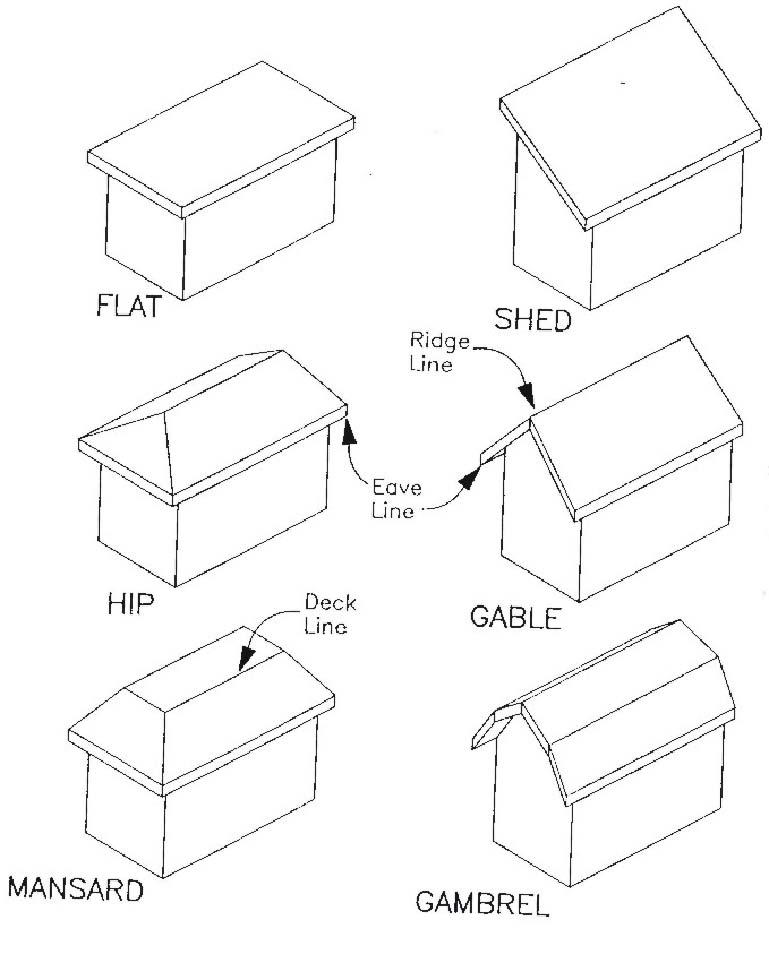
iv.
The dwelling has a different roof type.
• Gable;
• Hip;
• Gambrel;
• Mansard; or
• All of the above roof types are rotated 90 degrees.
v.
The dwelling has variation in the front facade.
• The garage is set back a minimum of four feet from the front facade;
• A covered, open-walled porch at least six feet in depth extends a minimum of thirty-three percent (33%) of the width of the front facade; or
• Other articulation of the front facade at least four feet in depth extends at least thirty-three percent (33%) of the width of the front facade.
d.
Application Review.
• Acceptable documentation may include photographs of the other structures in question (no building elevations are required).
• A subdivision or phase thereof may be reviewed as a whole for conformity with this requirement, provided that adequate documentation to ensure conformity is submitted with the plat. Such documentation is not required to be recorded as part of the plat.
• The Building Official shall review the submitted documentation and any previously-approved Building Permits and make a determination. Where the Building Official finds that a dwelling for which a Building Permit is being requested is similar in appearance based on the standards above, the Building Permit shall be denied.
2.
Single-Family, Attached.
A single-family, attached dwelling is allowed using the lot and design standards of the RS District, in addition to the following criteria:
a.
Both dwellings shall be located on separate legal lots;
b.
The side setback between two single-family attached lots may be reduced to zero feet; and
c.
Single-family, attached dwellings are not allowed in the Old Town Overlay District.
3.
Single-Family, Zero-Lot Line.
A single-family, zero-lot line dwelling is allowed using the lot and design standards of the RS District, in addition to the following criteria:
a.
The zero-lot line shall not be the lot line adjacent to:
i.
A lot not containing or planned for zero-lot line dwellings;
ii.
A highway frontage road; or
iii.
A garage or carport taking access from a side street.
b.
A minimum building separation of 12 feet is provided between all zero-lot line dwellings.
c.
The eaves on the side of a house with no side setback may project no more than 18 inches over the adjacent property line and a perpetual easement or deed restriction for the eave projection is recorded for the lot where the projection occurs.
d.
No structure extends into a public easement.
e.
Any rain gutters are positioned to drain only onto the lot of the house to which they are attached.
f.
A recorded easement or deed restriction is provided to allow for maintenance or repair when the eaves or side wall of the house are within four feet of the adjacent property line. The easement or deed restriction on the adjacent property must provide at least five feet of unobstructed space between the furthermost projection of the structure(s) and the edge of the easement.
g.
No windows or other openings on the side of the structure on or within three feet of the lot line with no setback are allowed, except for windows that do not allow or restrict visibility of the adjacent lot, such as clerestory or translucent windows.
D.
Non-Residential and Accessory Design Standards.
1.
Non-residential structures shall meet the lot and dimensional standards of the RS District, in addition to the requirements of Sections 7.04 and 7.05.
2.
Residential accessory structures shall meet the requirements of Section 6.06.010.
3.
Residential accessory structures shall not exceed the height of the principal residential structure.
E.
Other Requirements of this Chapter.
1.
Dimensional Interpretations and Exceptions, Section 6.04.
2.
Accessory Structures, Garages and Carports, Section 6.05.
(Ord. No. 2017-15, § 2, 2-28-2017)
Sec. 6.02.060. - TF—Two-Family District.
The Two-Family District (TF) is intended for two-family dwellings that are located on one lot. The TF District also includes single-family attached and single-family detached development and associated uses. Two-family and single-family dwellings are permitted on individual lots, but the lot, dimensional and design standards are intended for two dwellings in one structure on a single lot. The TF District is a moderate density District that may be used to separate residential areas zoned RE, RL or RS from higher density residential and commercial areas.
In the TF District, a maximum of two units per structure may be erected on a single lot.
A.
Lot and Dimensional Standards.
B.
Allowed Uses.
1.
Two-family.
2.
Single-family detached.
3.
Single-family attached (provided that the requirements of Subsection C.2. are met).
4.
Single-family, zero lot line (provided that the requirements of Subsection C.3. are met).
5.
Those residential uses identified in the Use Tables in Chapter 5 of this Code as allowed in the TF District.
6.
Those non-residential uses identified in the Use Tables in Chapter 5 of this Code as allowed in the TF District.
7.
Those accessory uses identified in Subsection 5.01.020.E of this Code that may be compatible with the primary uses allowed in the TF District.
C.
Residential Design Standards.
The design standards below apply to all dwellings in the TF District in addition to all site design standards in Section 6.06.
1.
Minimum Lot Width Reduction.
The minimum lot width for a two-family dwelling may be reduced to 60 feet, 30 feet per dwelling, when the required off-street parking is located behind each dwelling with approved rear access.
2.
Single-Family, Attached.
A single-family, attached dwelling is allowed using the lot and design standards of the TF District, in addition to the following criteria:
a.
Both dwellings shall be situated on separate legal lots;
b.
The minimum lot size is 4,500 square feet;
c.
The side setback between two single-family, attached lots may be reduced to zero feet;
d.
The minimum lot width for a single-family, attached dwelling is 45 feet, although the width may be reduced to 35 feet when the required off-street parking is located behind the dwelling with approved rear access; and
e.
Single-family, attached dwellings are not allowed in the Old Town Overlay District.
3.
Single-Family, Zero-Lot Line.
A single-family, zero-lot line dwelling is allowed using the lot and design standards of the TF District, in addition to the following criteria:
a.
The zero-lot line shall not be the lot line adjacent to:
i.
A lot not containing or planned for zero-lot line dwellings;
ii.
A highway frontage road; or
iii.
A garage or carport taking access from a side street.
b.
A minimum building separation of 12 feet is provided between all zero-lot line dwellings.
c.
The eaves on the side of a house with no side setback may project no more than 18 inches over the adjacent property line and a perpetual easement or deed restriction for the eave projection is recorded for the lot where the projection occurs.
d.
No structure extends into a public easement.
e.
Any rain gutters are positioned to drain only onto the lot of the house to which they are attached.
f.
A recorded easement or deed restriction is provided to allow for maintenance or repair when the eaves or side wall of the house are within four feet of the adjacent property line. The easement or deed restriction on the adjacent property must provide at least five feet of unobstructed space between the furthermost projection of the structure(s) and the edge of the easement.
g.
No windows or other openings on the side of the structure on or within three feet of the lot line with no setback are allowed, except for windows that do not allow or restrict visibility of the adjacent lot, such as clerestory or translucent windows.
D.
Non-Residential and Accessory Design Standards.
1.
Non-residential structures shall meet the lot and dimensional standards of the TF District, in addition to the requirements of Sections 7.04 and 7.05.
2.
Residential accessory structures shall meet the requirements of Section 6.06.010.
3.
Residential accessory structures shall not exceed the height of the principal residential structure.
E.
Other Requirements of this Chapter.
1.
Dimensional Interpretations and Exceptions, Section 6.04.
2.
Accessory Structures, Garages and Carports, Section 6.05.
(Ord. No. 2017-15, § 2, 2-28-2017)
Sec. 6.02.070. - TH—Townhouse District.
The Townhouse District (TH) is intended for townhouse and attached single-family development. The TH District is appropriate for infill development as well as a transition from residential areas to non-residential areas. This district is also appropriate in areas designated on the Future Land Use Plan as one of the mixed use land use categories.
In the TH District, townhomes shall be located on individual lots. A townhouse row shall not include more than six connected units.
A.
Lot and Dimensional Standards.
B.
Allowed Uses.
1.
Townhouse (individual lots).
2.
Single-family, attached (provided that the requirements in Section 6.03.070.C.6 are met).
3.
Those residential uses identified in the use tables in Chapter 5 of this Code as allowable in the TH District.
4.
Those non-residential uses identified in the use tables in Chapter 5 of this Code as allowed in the TH District.
5.
Those accessory uses identified in Section 5.01.020.E of this Code that may be compatible with the primary uses allowed in the TH District.
C.
Residential Design Standards.
1.
Required Setbacks.
a.
Except as otherwise provided herein, the minimum front setback shall be 15 feet. A minimum front setback of ten feet is permissible when off-street parking access is limited to the rear of the property.
b.
A minimum side setback of ten feet is required for a building if it is on a corner lot or at the end of a row of townhouses.
2.
Building Design.
Townhouse development shall comply with the building materials requirement in Section 7.04.040 and contain variation through articulation of the front facade, using at least one of the following:
a.
A garage that is set back at least four feet from the front facade;
b.
A covered, open-walled porch of at least six feet in depth extends at least fifty percent (50%) of the width of the front facade; or
c.
Other articulation of the front facade at least four feet in depth that extends at least fifty percent (50%) of the width of the front facade.
3.
Private Open Space.
For townhouse development, each dwelling unit shall be provided with a private yard or open space of not less than 150 square feet, which shall be immediately accessible and functional to the dwelling that it serves. Such open space may be at the front, rear or side of the dwelling unit and shall be in addition to the required setbacks or common recreation area requirements.
4.
Common Amenity Area.
Common amenity areas are required for townhouse development in accordance with Section 6.06.020.
5.
Bufferyards.
A low level bufferyard is required for development in the TH District adjacent to the AG, RE, RL and RS Districts. When internal to a housing diversity development (Section 6.07.020), bufferyards shall not be required. See Section 8.04.060 for bufferyard requirements.
6.
Single-Family, Attached.
Single-family, attached dwellings are allowed using the lot and design standards of the TH District, except as stated below:
a.
Both dwellings are situated on separate legal lots.
b.
The minimum area per dwelling is 4,500 square feet.
c.
The minimum lot width for a single-family, attached dwelling is 45 feet, although the width may be reduced to 35 feet when the required off-street parking is located behind the dwelling with approved rear access.
d.
Single-family, attached dwellings are not allowed in the Old Town Overlay District.
D.
Non-Residential and Accessory Design Standards.
1.
Non-residential structures shall meet all of the lot and dimensional standards of the TH District, in addition to the requirements of Sections 7.04 and 7.05.
2.
Residential accessory structures shall meet the requirements of Section 6.06.010.
3.
Residential accessory structures shall not exceed the height of the principal residential structure.
E.
Other Requirements of this Chapter.
1.
Dimensional Interpretations and Exceptions, Section 6.04.
2.
Accessory Structures, Garages and Carports, Section 6.05.
3.
Common Amenity Area, Section 6.06.
(Ord. No. 2017-15, § 2, 2-28-2017)
Sec. 6.02.080. - MF-1—Low Density Multifamily District.
The Low Density Multifamily District (MF-1) is intended for attached and detached multifamily residential development, such as apartments, condominiums, triplexes, and fourplexes, at a density not to exceed 14 dwelling units per acre. The MF-1 District is appropriate in areas designated on the Future Land Use Plan as high density residential or one of the mixed-use categories, and may be appropriate in the moderate density residential area based on location, surrounding uses, and infrastructure impacts. Properties zoned MF-1 should have convenient access to major thoroughfares and arterial streets and should not route traffic through lower density residential areas. The MF-1 District is appropriate adjacent to both residential and non-residential districts and may serve as a transition between single-family districts and more intense multifamily or commercial districts.
A.
Lot and Dimensional Standards.
B.
Allowed Uses.
1.
Multifamily, detached dwelling units.
2.
Multifamily, attached dwelling units.
3.
Those residential uses identified in the use tables in Chapter 5 of this Code as allowable in the MF-1 District.
4.
Those non-residential uses identified in the use tables in Chapter 5 of this Code as allowed in the MF-1 District.
5.
Those accessory uses that may be compatible with the primary uses allowed in the MF-1 District per Section 5.01.020.E of this Code.
C.
Residential Design Standards.
The design standards below apply to residential development in the MF-1 District in addition to the provisions of Sections 6.05 and 6.06 of this Chapter.
1.
All development within the MF-1 District shall also comply with the building design standards of Section 7.03 and the lighting design standards of Section 7.04 of this Code.
2.
A minimum building separation of 12 feet is required between all buildings on the site.
3.
Landscape bufferyards are required between the MF-1 District and adjacent AG, RE, RL and RS Districts. See Section 8.04.060 for bufferyard requirements.
4.
Common amenity areas are required for development in the MF-1 District in accordance with Section 6.06.020.
5.
The maximum number of dwelling units per structure shall be 14 units. Buildings with more than 14 units may be allowed provided the following additional standards are met:
a.
The building does not face a public street right-of-way, residential zoning district, or public park; or
b.
The building is a non-rectangular building that has a shape similar to a "C", "U", "T", "L" or other shape as approved by the Planning Director. In this event, the length of any building façade/wall shall extend a minimum of one-third of the primary building façade/wall.
D.
Non-Residential and Accessory Design Standards.
1.
Non-residential structures shall meet all of the lot and dimensional standards of the MF-1 District, in addition to the requirements of Sections 7.03 and 7.04 of this Code.
2.
Residential accessory structures shall meet the requirements of Section 6.05.010.
3.
Residential accessory structures shall not exceed the height of the principal residential structure.
E.
Other Requirements of this Code.
1.
Dimensional Interpretations and Exceptions, Section 6.04.
2.
Accessory Structures, Garages and Carports, Section 6.05.
3.
Common Amenity Area, Section 6.06.
4.
Chapter 8, Tree Preservation, Landscaping, and Fencing.
5.
Chapter 9, Off-Street Parking and Loading.
(Ord. No. 2017-15, § 2, 2-28-2017; Ord. No. 2019-37, § 2(Exh. B), 6-11-2019)
Sec. 6.02.090. - MF-2—High Density Multifamily District.
The High Density Multifamily District (MF-2) is intended for attached multifamily residential development, such as apartments and condominiums, at a density not to exceed 24 dwelling units per acre. The MF-2 District is appropriate in areas designated on the Future Land Use Plan as high density residential or mixed-use. Properties zoned MF-2 should have direct access to major thoroughfares and arterial streets and should not route traffic through lower density residential areas. The MF District is appropriate adjacent to both residential and non-residential districts and may serve as a transition between single-family districts and more intense commercial districts.
A.
Lot and Dimensional Standards.
B.
Allowed Uses.
1.
Multifamily, attached dwelling units.
2.
Those residential uses identified in the use tables in Chapter 5 of this Code as allowable in the MF-2 District.
3.
Those non-residential uses identified in the use tables in Chapter 5 of this Code as allowed in the MF-2 District.
4.
Those accessory uses that may be compatible with the primary uses allowed in the MF-2 District per Section 5.01.020.E of this Code.
C.
Residential Design Standards.
The design standards below apply to residential development in the MF-2 District in addition to the provisions of Sections 6.05 and 6.06 of this Chapter.
1.
All development within the MF-2 District shall also comply with the building design standards of Section 7.03 and the lighting design standards of Section 7.04 of this Code.
2.
A minimum building separation of 15 feet is required between all buildings on the site.
3.
Landscape bufferyards are required between the MF-2 District and adjacent AG, RE, RL and RS Districts. See Section 8.04.060 for bufferyard requirements.
4.
Common amenity areas are required for development in the MF-2 District in accordance with Section 6.06.020.
5.
The maximum number of dwelling units per structure shall be 24 units. Buildings with more than 24 units may be allowed provided the following additional standards are met:
a.
No building facade/wall shall exceed 240 feet in length.
b.
Building facade/wall exceeding 240 feet in length may be permitted when:
i.
The building façade/wall does not face a public street right-of-way, residential zoning district, or public park; or
ii.
The building is part of a non-rectangular building that has a shape similar to a "C", "U", "T", "L" or other shape as approved by the Planning Director. In this event, the length of any building façade/wall shall extend a minimum of one-third of the primary building façade/wall.
D.
Non-Residential and Accessory Design Standards.
1.
Non-residential structures shall meet all of the lot and dimensional standards of the MF-2 District, in addition to the requirements of Sections 7.03 and 7.04.
2.
Residential accessory structures shall meet the requirements of Section 6.05.010.
3.
Residential accessory structures shall not exceed the height of the principal residential structure.
E.
Other Requirements of this Code.
1.
Dimensional Interpretations and Exceptions, Section 6.04.
2.
Accessory Structures, Garages and Carports, Section 6.05.
3.
Common Amenity Area, Section 6.06.
4.
Chapter 8, Tree Preservation, Landscaping, and Fencing.
5.
Chapter 9, Off-Street Parking and Loading.
(Ord. No. 2017-15, § 2, 2-28-2017; Ord. No. 2019-37, § 2(Exh. B), 6-11-2019)
Sec. 6.02.100. - MH—Manufactured Housing District.
The Manufactured Housing District (MH) is intended for the development of manufactured, HUD-Code mobile home parks and subdivisions. Manufactured/mobile home subdivisions include individually platted lots for the placement of manufactured/mobile homes and also includes manufactured housing parks, as that term is defined in this Code. The Manufactured Housing District establishes special area and design requirements for both parks and subdivisions, as well as setback requirements for individual lots. Both parks and subdivisions provide open space and recreational areas appropriate for the acreages and number of units contained.
More than one structure housing a permitted principal use may be erected on a single lot or building plot, but setback and other requirements of this Code must be met for each structure as though each were on an individual lot.
The Manufactured Housing District includes mobile-home parks and manufactured housing on individual lots. Specific site design and development standards for MH are described in this section.
A.
Allowed Uses.
1.
Manufactured housing, individual lots.
2.
Manufactured housing park.
3.
Those residential or non-residential uses identified in the use tables in Chapter 5 of this Code as allowed in the MH District.
4.
Those accessory uses identified in the use tables in Chapter 5 of this Code that may be compatible with the primary uses allowed in the MH District.
B.
Design Standards for Housing Manufactured Off-Site.
All single-family or two-family housing manufactured off-site, including manufactured and modular housing, are subject to the following standards and requirements.
1.
The unit shall be the only habitable structure upon the lot on which it is placed.
2.
The unit shall have a label or documents certifying that it is constructed in compliance with the National Manufactured Housing Construction and Safety Standards Act of 1974.
3.
The wheels, axles, tongue, towing apparatus, and transporting lights shall be removed prior to final installation of the unit.
4.
The unit shall be placed on a permanent foundation consisting of masonry or concrete and constructed to the standards of the applicable building codes adopted by the City.
5.
Crawl space shall be provided under each unit with access and ventilation as required by the building code adopted by the City.
6.
The unit shall be located so that its longer dimension is parallel to the street on which the lot fronts.
7.
Steps to the ground level with handrails and a permanent landing shall be provided at each outside doorway in compliance with the requirements of the applicable building code adopted by the City.
8.
All electrical service equipment shall be mounted on the structure in compliance with the conditions imposed by Exceptions No. 1 and No. 2 under Section 550-23(a) of the National Electric Code (NEC), latest edition, as adopted by the City.
9.
The exterior finish cannot have a high-gloss finish. The exterior walls shall look like wood or masonry, regardless of the actual composition.
10.
Maximum Height—Two Stories.
a.
All accessory buildings shall be limited to one story in height.
b.
The roof shall be pitched with a minimum vertical rise of two and one-half feet for every 12 feet of horizontal run.
c.
The roof shall have eaves that project a minimum of 12 inches from the exterior wall.
11.
Size of Setback.
a.
Minimum Front Setback—20 feet from a dedicated street; 15 feet from any private street or drive;
b.
Minimum Interior Side Setback—Five and one-half feet; 20 feet between units; 20 feet from zoning district line;
c.
Minimum Exterior Side Setback—25 feet from a dedicated street; 15 feet from any private street or drive;
d.
Minimum Rear Setback—Seven feet; 20 feet from any zoning district line;
e.
If a garage is provided, the garage shall have a 25-foot front setback.
12.
Size of Lot.
a.
Minimum Lot Size—3,500 square feet per unit;
b.
Minimum Lot Width—35 feet;
c.
Minimum Lot Depth—110 feet.
13.
Minimum Dwelling Size—900 square feet.
14.
Maximum Impervious Coverage—See Section 11.02 for impervious cover limitations.
15.
Minimum Parking Requirement—Two spaces per unit.
16.
Minimum Area for Manufactured Housing Subdivision (one unit on one platted lot)—5,500 square feet.
17.
Minimum Area for Manufactured Housing Park—Two acres.
C.
Design Standards for Manufactured Housing Park.
1.
Tenant Parking. Each parking space shall be concrete in accordance with City standards and located to eliminate interference with access to parking areas provided for other manufactured/mobile homes and for public parking in the park.
2.
Visitor and Supplemental Parking. In addition to parking spaces required for each manufactured/mobile home unit there shall be parking provided for the manufactured/mobile home community in general:
a.
One visitor parking for every three manufactured home spaces;
b.
One supplemental parking or vehicle storage space for the parking or storage of boats, campers and similar vehicles or equipment for every six manufactured/mobile home spaces;
c.
Supplemental spaces may be located anywhere within the manufactured/mobile home community provided that no manufactured/mobile home space shall be situated further than 150 feet from a visitor space;
d.
No parking space shall be less than nine feet by 18 feet, which is not to be included in the lot size.
3.
Access. Each manufactured/mobile home community shall have direct access from a public street or an internal street. Where an internal private street provides access, the same shall be concrete in accordance with City standards dedicated to the public as an emergency access or fire lane easement to allow for the rapid and safe movement of vehicles used for the purpose of providing emergency health or public safety services. Each emergency access easement shall have a clear unobstructed width of 24 feet, shall connect to a dedicated public street, and shall have a turning area and radii a minimum of 50 feet to permit free movement of emergency vehicles. Dead end streets are not allowed. Cul-de-sac streets shall not exceed 500 feet in length. Fire lane easements shall be maintained by the manufactured/mobile home park.
4.
Walkways. Designated concrete walkways a minimum of five feet in width shall be provided on both sides of roadways or streets.
5.
Street Names and Signs. Within each manufactured/mobile home park, all streets shall be named, and manufactured/mobile homes numbered in a logical and orderly fashion. Street signs shall be of a color and size contrasting with those on public streets and roadways so that there is no confusion regarding which are private and which are public streets. These signs and numbers shall be of standard size and placement to facilitate location by emergency vehicles.
6.
Other Signs. Along all sections of emergency access easements, the owner or agent shall erect metal signs prohibiting parking.
7.
Intersections. Internal streets shall intersect adjoining public street at approximately 90 degrees and at locations which will eliminate or minimize interference with traffic on those public streets.
8.
Street Lighting. Street lighting within the manufactured/mobile home park shall be provided and maintained by the owners of the manufactured/mobile home park.
9.
Drainage and Soil Protection. The ground surface in all parts of the park shall be graded and equipped to drain all surface water in a safe, efficient manner. Each manufactured/mobile home space shall provide adequate drainage for the placement of a manufactured/mobile home. Exposed ground surfaces in all parts of every manufactured/mobile home park shall be paved and/or covered with stone, brick paving or other similar solid material or protected with a vegetative growth (such as grass) capable of preventing soil erosion and eliminating dust.
10.
Anchorage. To insure against natural hazards such as tornadoes, high winds, and electrical storms, anchorage at each manufactured/mobile home shall be provided at the time of installation, according to the building code.
11.
Skirting. Skirting or a curtain wall, unpierced except for required ventilation and access door, shall be installed and maintained so that it encloses the area under the structure. The skirting or foundation must be a continuous, complete, opaque, and rigid surface that lends permanency to the appearance of the unit and totally screens the crawl space under the unit. The foundation skirting or curtain wall shall be of brick or stucco only. Material used for the skirting shall be erected so as not to create a fire hazard and maintained in a good state of repair.
12.
Usable Open Space Requirements. Each parcel of land, developed under the MH standards, shall provide 280 square feet of usable open space per unit.
13.
Single-family dwellings constructed in this district shall conform to the standards as set forth in the RS District.
14.
Open storage is prohibited.
(Ord. No. 2017-15, § 2, 2-28-2017)
Sec. 6.04.010. - Lot Exceptions.
A.
Minimum Lot Size.
No Building Permit or development approval may be issued for a lot that does not meet the minimum lot size requirements of this chapter except as specified in the following cases:
1.
Nonconforming lots may be used in accordance with the provisions set forth in Chapter 14.
2.
Utilities using land or an unmanned building less than 1,000 square feet of site area shall be exempt from the minimum lot size requirements.
3.
The following types of lots, as defined in Section 16.02, are exempt from the minimum lot size requirements in all Residential Zoning Districts:
a.
Open space lots;
b.
Landscape lots;
c.
Drainage lots;
d.
Median lots; and
e.
Access lots.
B.
Minimum Lot Width.
1.
The minimum lot width for lots fronting a cul-de-sac may be reduced to a minimum of 30 feet at the front property line provided that the minimum required lot width is provided at the front setback line.
2.
The minimum lot width may be reduced to 40 feet with approved rear access for any district.
3.
The following types of lots, as defined in Section 16.02, are exempt from the minimum lot width requirements in all Residential Zoning Districts:
a.
Open Space Lots;
b.
Landscape Lots;
c.
Drainage Lots;
d.
Median Lots; and
e.
Access Lots.
(Ord. No. 2017-15, § 2, 2-28-2017)
Sec. 6.04.020. - Setbacks.
A.
General.
1.
No building, structure, or other development feature shall be located within a required setback or yard unless otherwise specified in this section.
2.
No part of a setback or other open space required in connection with any building, lot or use for the purpose of complying with this Code shall be included for any other building, lot, or use as part of a setback or open space.
3.
When determining the setbacks for corner lots, the front line shall be adjacent to the shortest street dimension of the lot. In instances where the lot is relatively square or otherwise unusually shaped, a request may be made to the Director for a determination of the front lot line.
4.
When determining the setback for lots with more than one street frontage, other than corner lots, the Planning Director shall determine the front lot line on the basis of street classification, lot dimensions, building orientation, access, traffic flow, proximity of building to the street, and other best planning practices.
B.
Setback Reductions and Exceptions.
1.
Alleys.
a.
When residential driveway access is taken from an alley, the garage setback to the alley may be reduced to ten feet.
b.
On lots where driveway access is only permitted via an alley, the minimum front setback may be reduced to 15 feet.
c.
On lots with an approved private rear access easement, rear setbacks shall be measured from the nearest boundary of the easement.
2.
Where the lot setbacks reduce the buildable width or depth of an existing lot to less than 40 feet, the Director is authorized to reduce the required setback to provide a minimum buildable width or depth of 40 feet.
3.
When an existing setback is reduced because of a conveyance to a federal, state or local government for a public purpose and the remaining setback is at least fifty percent (50%) of the required minimum setback for the District in which it is located, then that remaining setback will be deemed to satisfy the minimum setback requirements of this Code.
4.
Properties in the Old Town Overlay District may request a Certificate of Appropriateness for setback exception in accordance with Section 3.13 of this Code.
5.
Adjacent lots with a building or other permanent structure built across the shared lot line on or before March 11, 2003, shall be treated as a single lot, with the shared lot line not considered for measurement of all dimensional standards.
C.
Features Allowed Within Required Setbacks.
The following features may be located within a required setback:
1.
Landscape features (as defined in Chapter 16).
2.
Driveways located:
a.
In a front setback, provided that the driveway does not run parallel to a public street;
b.
In a side setback, if serving a side-loaded or detached rear garage or other parking area; or
c.
In a rear setback, if accessed by a rear alley or public street.
3.
Sidewalks, fences, and walls, meeting the requirements of Section 8.07.
4.
Uncovered patios provided that:
a.
The patio is located entirely within the side and/or rear yard, except that an uncovered patio may be located within a front yard if:
i.
The surface area of the uncovered patio within the front yard does not exceed ten percent (10%) of the total calculated area within the front setback;
ii.
The uncovered patio is set back at least 15 feet from all street property lines;
iii.
No built-in structures, such as grills or fire pits, are included in any portion of the uncovered patio within the front yard; and
iv.
The patio is screened from street view by a knee-wall or short seating bench not exceeding 30 inches in height and made of materials consistent with the architecture/materials of the home, a natural berm, a solid shrub wall, or a combination thereof; and
b.
The patio is set back at least three feet from side and rear property lines, except as otherwise provided for in this Section.
5.
Uncovered outdoor kitchens located entirely within the side and/or rear yard and setback at least three feet from side and rear property lines.
6.
Pergolas provided that the pergola is:
a.
Located entirely within the side and/or rear yard, including structural supports and overhangs;
b.
Set back at least three feet from side and rear property lines;
c.
Maintained with at least fifty percent (50%) open roof elements;
d.
Not enclosed with ground to roof walls other than that of the primary structure, except that a shading system with at least fifty percent (50%) transparency is permitted on up to two sides; and
e.
No more than eight feet in height.
7.
Pools located entirely within the side and/or rear yard and set back at least three feet from side and rear property lines.
8.
Minor utilities.
9.
Mechanical equipment such as air conditioning units, pool pumps, and similar equipment, but such equipment is not allowed in the front setback and is allowed in the side and rear setbacks only if such equipment cannot be reasonably located behind the structure.
10.
Sills, belt courses, cornices, buttresses, chimneys, flues, eaves and other architectural features provided that such features do not extend further than 18 inches into any required setback.
11.
Stormwater ponds, pursuant to the setback limitations and design criteria in Section 11.04 of this Code.
12.
None of the features above (except plant material and public sidewalks) shall extend into a public easement without approval of a License to Encroach.
(Ord. No. 2017-15, § 2, 2-28-2017)
Sec. 6.04.030. - Building Height.
A.
Measurement.
Building height refers to the vertical distance between lowest finished grade at the edge of the building or the base flood elevation where applicable, and:
1.
The average height level between the eaves and ridge line of a gable, shed, hip, or gambrel roof;
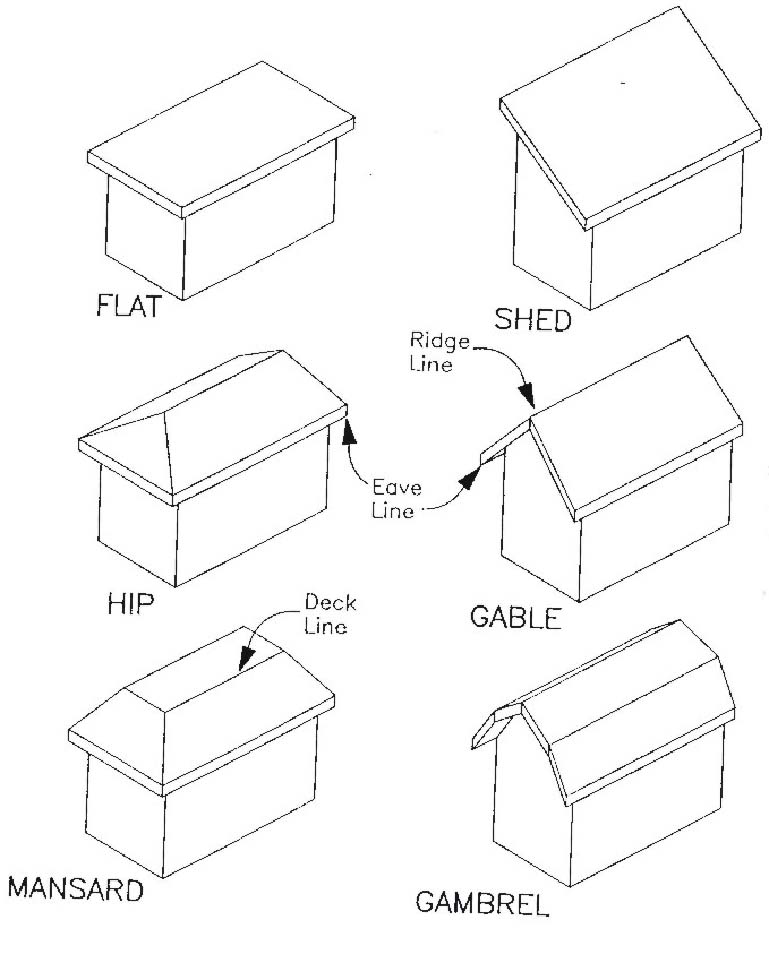
2.
The highest point of a mansard roof;
3.
The highest point of the coping of a flat roof; and
4.
Roof parapets, as described in Section 7.04.040.D, may exceed the height limitations of this Code by no more than ten feet.
B.
Exceptions to Height Limits.
Except within the Courthouse View Protection Overlay District or as otherwise expressly stated in this Code, the height limitations of this Code shall not apply to any of the following:
1.
Electrical power transmission and distribution lines;
2.
Belfries, cupolas, spires, domes, monuments, chimneys, radio/television receiving antennas, or chimney flues; or
3.
Bulkhead, elevator, water tank or any other similar structure or necessary mechanical appurtenance extending above the roof of any building where such structure does not occupy more than thirty-three percent (33%) of the area of the roof.
(Ord. No. 2017-15, § 2, 2-28-2017)
Sec. 6.05.010. - Accessory Structures, Garages and Carports.
A.
Accessory structures and buildings shall meet the dimensional standards of the base zoning district, except as specified in this Section. However, properties in the Old Town Overlay District may request a Certificate of Appropriateness for setback exception in accordance with Section 3.13 of this Code.
B.
The accessory structure shall only be located on a lot with a principal structure, unless two adjacent lots have common ownership, in which case the structures may be located on different lots. In such instance, the accessory structure shall be located in the rear yard as determined by the lot with the principal structure on it.
C.
The square footage of an accessory structure shall not exceed twenty-five percent (25%) of the square footage of the principal structure. However, the maximum accessory structure square footage may exceed twenty-five percent (25%) of the principal structure to allow for the construction of a detached two-car garage, not to exceed 600 square feet. For the purposes of this calculation, the square footage of an attached garage shall not be considered part of the principal structure.
D.
Accessory structures measuring eight feet or less in height are allowed in the setbacks in the rear yard up to three feet from the property line, but may not extend into any P.U.E.
E.
No more than thirty percent (30%) of the rear yard may be covered with accessory buildings or structures. However, the maximum coverage may be extended to fifty percent (50%) of the rear yard to allow for the construction of a detached two-car garage, not to exceed 600 square feet. All impervious cover requirements in Section 11.02 shall be met.
F.
Accessory dwelling units located in accessory structures in the AG, RE, RL, and RS Districts are allowed subject to the limitations provided for in Subsection 5.02.020.B or within a housing diversity development without limitations (as detailed in Section 6.07.020).
(Ord. No. 2017-15, § 2, 2-28-2017)
Sec. 6.06.010. - Applicability.
The provisions of this Section apply to:
A.
Attached multifamily development;
B.
Manufactured housing parks; and
C.
Any development type where three or more dwelling units are located on a single lot or parcel, with each dwelling unit located in a structure with three or more dwelling units.
(Ord. No. 2017-15, § 2, 2-28-2017; Ord. No. 2019-37, § 2(Exh. C), 6-11-2019)
Sec. 6.06.020. - Common Amenity Area Requirements.
A.
Common amenity area shall be provided by the developer. This amenity area is in addition to any required parkland dedication or private open space requirement.
B.
The amenity area shall be privately constructed, maintained and operated by the developer, residents of the subdivision through an incorporated homeowners association or property owners association, or the owner of the manufactured home lease community, and the person or entity responsible for ownership and maintenance. Operational responsibilities shall be noted on the plat and/or on a separate instrument recorded in the Official Records of Williamson County.
C.
Common amenity area(s), accessible to all residents, shall be provided at the following rate:
D.
The required amenity area(s) shall be selected from those listed below. Director approval shall be required for any amenity types not listed. When more than one amenity is required, they shall differ from one another.
1.
Playground equipment—Manufacturer must certify that it meets all commercial recreational safety standards.
2.
Picnic areas—Minimum of two tables and two cooking grills per 100 dwelling units.
3.
Trails (walkways or bike trails)—At least the distance of the perimeter of the property.
4.
Landscaped sitting areas—Minimum of one bench per building either in an organized grouping or dispersed throughout development.
5.
Fenced dog park—Minimum size of 2,500 square feet with 25-foot minimum depth.
6.
Private fitness facility.
7.
Business center.
8.
Sport courts.
9.
Clubhouse—To include kitchen and social room for resident use.
10.
Swimming pool.
11.
Laundry facility.
12.
After school center for children.
13.
Community garden—Minimum 200 square feet.
E.
The common amenity area shall be designed to adequately serve the number of dwellings within the development, according to accepted City standards set by the Parks and Recreation Department. All equipment and other improvements must be of commercial quality and approved by the Director of Parks and Recreation.
F.
At least fifty percent (50%) of the common amenity area must be located outside of the 100-year floodplain.
(Ord. No. 2017-15, § 2, 2-28-2017)
Sec. 6.07.010. - Conservation Subdivision Development.
To encourage Conservation Subdivision development, this Code allows flexibility to development standards in all Zoning Districts for residential developments that use conservation development practices in order to: protect natural resources, conserve valuable open space, reduce erosion and sedimentation, preserve riparian corridors, provide for walking trails, protect the community water supplies, reduce infrastructure, preserve prime agricultural land, provide smaller streets with less environmental disturbance, and plan for overall watershed protection. Attempting to achieve these objectives using the process established in Section 11.06 of this Code qualifies a development as a conservation subdivision eligible for the incentives and alternative development standards.
Conservation Subdivision lot and dimensional standards can be found in Section 11.06.
(Ord. No. 2017-15, § 2, 2-28-2017)
Sec. 6.07.020. - Housing Diversity Development.
A.
Purpose.
To encourage housing diversity, this Code allows flexibility to the development standards and allowable housing types for projects that foster housing diversity.
B.
Housing Types.
The following table shows the types of housing permitted in a Housing Diversity Development. At least three of the following housing types in any of the following Districts shall be included to qualify for the alternative dimensional standards in Table 6.07.020.B.
Table 6.07.020.B: Permitted Housing Types by Residential District
C.
Dimensional Standards.
The following table provides the dimensional standards for each residential building type that can be used in lieu of the dimensional standards otherwise applicable.
Table 6.07.020.C: Housing Diversity Dimensional Standards 1
1. All Standards in Table 6.07.020.C shall meet any specific requirements of the allowed housing type, as detailed elsewhere in this chapter. When a conflict occurs between such requirements and the standards of this table, the table shall apply.
2. Lots less than 40 feet in width must be alley loaded lots, with the exception of townhouse lots.
3. See Section 6.02.070.C.1.a for clarification.
D.
Interpretations and Exceptions.
All dimensional standards in Subsection C. above, are subject to the interpretations and exceptions in Section 6.05.
E.
Perimeter Buffer.
The perimeter buffer applies to the subdivision edge or contiguous area of a Housing Diversity Development, and not to specific Zoning Districts within the development. The perimeter buffer may be counted towards required landscaping if it is within the lot.
F.
Alternative Sidewalk Design.
Refer to Section 12.02.040 Alternative Design and Financing for sidewalk options in Housing Diversity Developments.
(Ord. No. 2017-15, § 2, 2-28-2017)
Sec. 6.07.030. - Multi-Lot Unified Development.
A.
Multi-Lot Unified developments may be located in any residential zoning district, save and except Residential Estate (RE), Residential Low Density (RL), Residential Single-Family (RS), and Two-Family (TF) zoning districts.
B.
Abutting properties with similar residential zoning districts and that are part of a Multi-Lot Unified Development pursuant to Section 4.05.030 of this Code may be developed in accordance with the development standards in Section 7.03.030.D of this Code.
(Ord. No. 2017-15, § 2, 2-28-2017)
Sec. 6.07.040. - Workforce Housing Development.
A.
Purpose.
To encourage affordable housing for the workforce, this Code allows flexibility to the development standards and allowable housing types for projects that foster housing affordability.
B.
Dimensional Standards.
The following table provides the dimensional standards for each residential district that can be used in lieu of the dimensional standards otherwise applicable.
Table 6.07.040: Workforce Housing Dimensional Standards
1. All Standards in Table 6.07.040 shall meet any specific requirements of the allowed housing type, as detailed elsewhere in this chapter. When a conflict occurs between such requirements and the standards of this table, the table shall apply.
2. Lots less than 40 feet in width must be alley loaded lots, with the exception of townhouse lots.
C.
Interpretations and Exceptions.
All dimensional standards in Subsection B., above, are subject to the interpretations and exceptions in Section 6.05.
D.
Alternative Sidewalk Design.
Refer to Section 12.02.040 Alternative Design and Financing for sidewalk options in Workforce Housing Developments.
E.
Workforce Housing.
1.
Workforce Housing Developments in Single-Family Residential, Two-Family and Townhouse Districts that include twenty percent (20%) of the housing units available for those whose incomes are less than or equal to eighty percent (80%) of the area median family income (as set by the Department of Housing and Urban Development) are eligible to use the standards in Table 6.070.030 for all lots within the subdivision. The deed restrictions, approved by the City Attorney, must include language that requires all workforce housing lots be restricted for ten years from the date of the original home sale to the qualifying buyer any resale shall be to a party whose income is less than or equal to eighty percent (80%) of the area median family income or, absent that, shall require a payment to the City of their proportionate and prorated share of fees that were waived for their lot.
2.
Workforce Housing Developments in Low-Density Multifamily (MF-1) and High-Density Multifamily (MF-2) Districts are eligible to use the dimensional standards in Table 6.07.040 with the provision of the following workforce housing units.
a.
Dwelling units per structure maximum can be reached by providing five percent (5%) of the total development as workforce units.
b.
Front setback can be reduced by five feet for every ten percent (10%) of total development set as workforce units, to the minimum.
c.
Impervious cover can be increased by ten percent (10%) for every ten percent (10%) of the total development set as workforce units, to the maximum of seventy percent (70%), with required water quality improvements as required in Section 11.02.
F.
Fee Waivers.
Workforce Housing Developments are eligible for administrative fee waivers, as adopted and published by the City of Georgetown.
(Ord. No. 2017-15, § 2, 2-28-2017)

