
Hampton City Zoning Code
ARTICLE 11
- SIGNS
Sec. 11-1.- Purpose.
A.
A comprehensive regulation is necessary because of the current burgeoning growth in Hampton and Henry County in general and because two major highways run through the City and attract signs that are unrelated to business uses inside the City, leading to poor aesthetics and dropping property values.
B.
It is necessary to maintain a visually satisfying environment to prevent the further deterioration of the City and to ensure that it remains an attractive residential area as well as a viable commercial area. A plethora of signs of a certain size and nature, no matter how tasteful, can have an undesirable effect upon traffic safety and the well-being of the entire community. The city is more likely to attract commercial enterprises and permanent residents if it improves and maintains the City's appearance. City residents will ultimately benefit from enhanced retail and commercial environments and improvements in the quality of life as a result of these regulations. It is a rational desire of the community, and most specifically of those who live therein from day to day, to plan their physical surroundings in such a way that unsightliness is minimized.
C.
Further, the City has an obligation and a right to protect the rights of adjoining landowners to adequate light and air, to promote desirable living conditions and sustain stability of neighborhoods, to protect property against blight and deprivation, and to encourage the most appropriate use of land, buildings and other structures throughout the City.
D.
Accordingly, in consideration of the City's rights and obligations to promote traffic safety, to preserve property values, to provide for the convenience and enjoyment of public travel, to eliminate annoyance to travelers, to attract tourists, residents and industry, to serve the public health, safety and morals, to advance the general prosperity of the community, and to serve the general welfare, the City Council hereby imposes the regulations contained in this article.
E.
The City Council finds that signs provide an important medium through which individuals and entities may convey a variety of noncommercial and commercial messages. However, left completely unregulated, signs can become a threat to public safety as well as a traffic hazard. Such signs may also constitute an aesthetic nuisance and be a detriment to property values and the City's public welfare. The City Council intends by enacting this Ordinance to:
1.
Balance the rights of individuals and entities to convey their message through signs and the right of the public to be protected against the unrestricted proliferation of signs;
2.
Protect the public health, safety, welfare, and aesthetics of the City;
3.
Reduce traffic and pedestrian hazards;
4.
Maintain the historical image of the City;
5.
Encourage signs that enhance the architectural character of buildings and the streetscape;
6.
Protect property values by minimizing the potentially adverse effects and visual blight caused by signs;
7.
Promote economic development;
8.
Ensure the protection of the right to freedom of speech and expression provided by the Constitutions of the United States and the State of Georgia and, in no event, place restrictions that apply to any given sign dependent on the constitutionally protected communicative content of the sign;
9.
Advance the goals, objectives and policies of the Hampton Comprehensive Plan; and
10.
Ensure the fair and consistent enforcement of sign regulations.
(Ord. No. 457, § 1, 8-14-18)
Sec. 11-2. - Definitions.
For the purposes of this article, the following terms shall have the meaning ascribed to them in this section unless the context clearly indicates a contrary meaning or unless specifically stated otherwise in this Article. Any term not defined in this section shall be as defined in the City of Hampton Zoning Ordinance or, in the absence of such definition, shall have their customary dictionary definitions.
Abandoned or dilapidated sign. Any sign that contains damaged panels; visible rust or rot; damaged support or sign structures; broken, missing, loose or bent parts; faded or flaking paint; non-operational or partially non-operational illumination or mechanical devices or which is otherwise dilapidated, unsightly, unkempt or in disrepair.
Aerial view sign. A sign applied, mounted or otherwise affixed to the horizontal face of a building roof intended to be viewed from an aircraft and accordingly, not readily viewable from the adjacent ground. Aerial view signs shall not be displayed on any structure that is not a building.
Aggregate sign area. The total area of all signs on a lot. Street numbers assigned by the United States Postal Service shall not be considered in calculating aggregate sign area.
Animated/flashing sign. A sign featuring movement or a change in color, lighting or message used or intended to be used to depict action or create a special effect or scene. This includes signs that rotate or revolve to display a message.
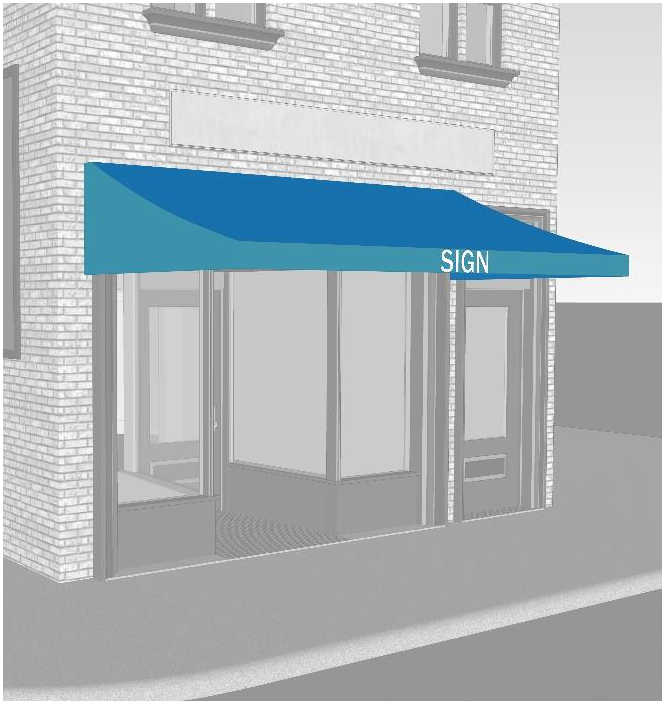
Awning sign. Any sign applied or attached directly to an awning. May include a sign on a cloth, metal, plastic, or other cover designed to shade a window or entrance and is attached to any structure.
Back to back sign. A sign with two parallel sign faces oriented in opposite directions.
Backlit or halo-lighted sign. A type of channel letter sign featuring lighting that is directed toward the back of the sign when it is mounted on a wall. The light floods the wall to which the sign is mounted and creates a shadow or negative space which has the effect of lighting the space around the lettering.
Banner. A temporary sign made of cloth, paper, cardboard, canvas, plastic or similar material on which a message may be displayed. Banners are intended for use for a relatively short time and are typically attached to a building or freestanding structure but may also be in the form of trash receptacle covers, tire covers, rack covers or similar accessory structures. Flags and feather flag signs are specifically excluded from the definition of "banner."
Beacon. Any device that uses light in a rotational or intermittent pattern designed to attract attention to a specific location.
Billboard. Any ground sign with a sign display face greater than 300 square feet. Billboards may display a traditional static image, a "multiple message sign" accomplished by a mechanical transition to a second or third image or a "large screen video display" utilizing full motion video technology and commonly referred to as digital or LED (light-emitting diode) billboards.
Blade sign. See projecting sign or swinging sign.
Bracket sign. See projecting sign or swinging sign.
Building facade. The portion of any exterior elevation of a building extending vertically from grade to the top of a parapet wall or eave and horizontally across the entire width of the building elevation.
Building frontage. The linear feet of the exterior wall of a building that faces any road or public street that provides a means of direct ingress and egress to the lot.
Business subdivision. A single parcel on which multiple businesses are located, or multiple connected parcels on which businesses are located and/or where the owners of the parcels share any common property.
Canopy sign. A sign mounted on the vertical face of an attached building feature in the case of a marquee or a freestanding structure such as is found at fueling stations intended to shelter the public from the elements. Marquee signs are canopy signs.
Changeable copy sign. Any sign that incorporates changing lettering, graphics or images to form a message or messages, whether such changes are accomplished electronically or mechanically. spectacular signs are not included in the definition of "changeable copy sign."
Channel letter sign. A channel letter sign is a type of wall sign consisting of a three-dimensional graphic element that appears as individual letters as opposed to a message placed on a common background or frame. A channel letter sign may also be called an individualized letter sign.
City Council. The elected body of the City of Hampton, comprised of the Mayor and 6 Council members having the authority to adopt and to enforce this article.
Copy. Any text, symbol, or graphic content or message of a sign.
Costume sign. An outfit worn to create the appearance or characteristics of a particular period, person, place, or thing and which is worn by a person to attract attention to a message being conveyed. Any other form of communication involving an individual is considered a handheld sign.
Customer merchandise sign. Any sign whether located inside or outside of a building that is intended to be viewed by individuals on the premises whether inside or outside of a building.
Decal. A picture, design or label made to be transferred (as to glass, wood, metal, or any other fixed object) from specially prepared paper, plastic or similar material.
Decision date. The date a final decision concerning a permit is rendered by the Zoning Administrator or the City Council.
Detached sign. See ground sign.
Door sign. See wall sign or window sign.
Drive-through sign. A ground sign located on a non-residential lot adjacent to a driveway leading to a drive-through window in any building located on the lot and situated such that any message contained thereon is visible to pedestrians or motorists on the lot but is not readable from any public right-of-way.
Eave. The projecting lower edges of a roof overhanging the wall of a building.
Election period. The period of 45 days immediately preceding a federal, state, county, or city election or referendum. The period shall include the time preceding any run-off election.
Entrance sign. Any ground sign placed at the intersection of a public street and a public or private entryway into a residential subdivision or an apartment, condominium, townhouse, office, institutional, commercial or industrial development.
Erect. To apply, assemble, attach, build, construct, hang, install, mount, paint, place, suspend, or otherwise affix.
Externally illuminated sign. Any sign illuminated by an external light source directed primarily toward such sign.
Fascia sign. See wall sign.
Feather flag sign. A temporary sign consisting of a pole driven into the ground or mounted upon a base with an attached vertically elongated material typically constructed of cloth, paper, flexible plastic or fabric and resembling a feather, flag, sail or rectangle.
Flag. A sign consisting of fabric or similar material attached at one end to a pole or building and hanging freely such that it may flutter or move in the wind. Feather flag signs are specifically excluded from the definition of "flag."
Flashing sign. Any sign on which the message, appearance, illumination, color, shape or size changes in intensity, scrolls, flashes or changes more often than once every 10 seconds, including but not limited to readerboards.
Flat sign. See wall sign.
Foot-candle. A basic unit of measurement of light on a surface that is one foot from the source of light of one candle; a unit of illuminance or the intensity to which something is illuminated.
Ground sign. A class of signs that includes pole, monument, entrance and pylon signs erected directly on the ground or supported by uprights or braces permanently placed in the ground and not supported by or suspended from any building or structure.
Hand held sign. Any sign larger than 6 inches by 6 inches carried by a person, including but not limited to sign panels, picket signs, shields or sandwich boards.
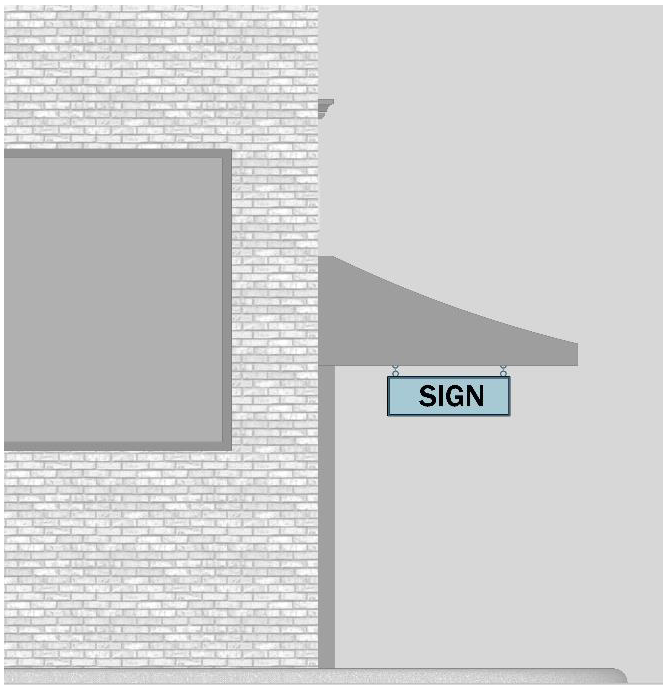
Hanging sign. A sign mounted under a marquee, canopy or awning perpendicular to the building face.
Illuminated sign. A sign designed to project artificial light directly or through translucent material from an internal or external light source.
Inflatable sign. A sign intended to be filled with air or other gas for proper display or support.
Informational sign. A sign designed and erected for conveying information to the public, including motorists and pedestrians.
Internally illuminated sign. Any sign that is lit by electric lights, luminous tubes, LED components, or other light source located within the interior of the sign.
LED sign. Any electronically controlled sign utilizing light-emitting diode technology to form a portion of or the entire sign message, whether that message is changeable or static. Such signs include any sign that uses LED technology of any kind, whether conventional (using discrete LEDs); surface mounted (otherwise known as individually mounted) LEDs; transmissive, organic light emitting diodes (OLED); light emitting polymer (LEP); organic electro polymer (OEL); or any other similar technology. LED signs meeting the standards of this article are permitted as changeable copy signs.
LED strip lighting. Any lighting using LED technology used to attract attention and typically applied as a row or ribbon of lights to buildings, windows or glass doors as accent lighting.
Lot. A parcel, tract or area of land legally established by recorded plat, subdivision or as otherwise permitted by law, to be separately owned, used, developed or built upon and conforming to all standards of the zoning district in which the lot is located.
Mansard sign. See roof sign or wall sign.
Marquee sign. See flashing sign.
Median. A paved or landscaped area dividing any public or private right-of-way, road or highway into travel lanes and aligned parallel to the direction of vehicle travel.
Mobile sign. See temporary sign.
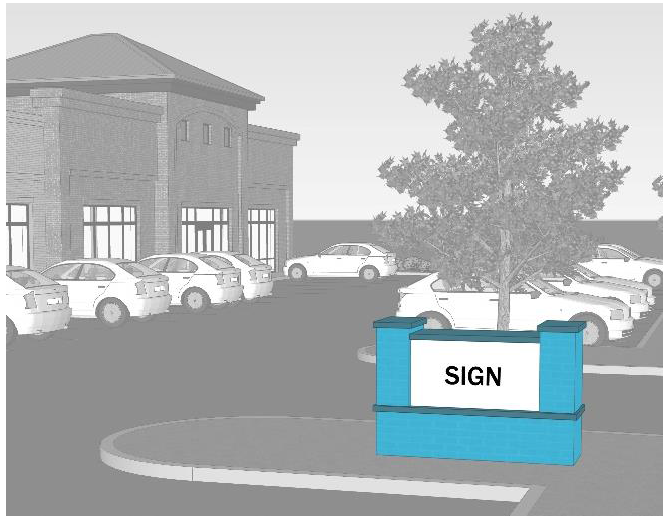
Monument sign. A ground sign with a base positioned directly on the ground providing a solid and continuous platform for the sign face. The supporting structure shall be at least as wide as the sign and shall be fabricated of brick, stone, metal or other architectural material compatible with the architectural finishes on buildings established on the property.
Moving sign. See flashing sign.
Multiple message sign. See flashing sign.
Mural. Any artistic image hand-painted, hand-tiled, digitally printed or otherwise applied directly on the exterior wall of a building, a freestanding wall or other permanent structure.
Murals, historic. Original works of visual art or wall signs produced by hand that were tiled, painted directly on or affixed directly to a wall or building prior to the date of adoption of this article. Murals that re-create an historic image bearing a relationship to an historic Hampton theme established after the date of adoption of this article shall also be considered historic murals.
Murals, limited message. Murals painted on or otherwise applied to an exterior building wall or freestanding wall that contain a graphic or written message not greater than 50 percent of the width of the wall on which the mural is proposed and not exceeding 10 percent of the total area of the mural.
Murals, original art. Original works of visual art produced by hand that are tiled, painted directly on or affixed directly to a wall or building. Original art murals may be mechanically produced or computer-generated prints or images. Original art murals may not contain text, graphics or symbols.
Neon sign. An illuminated sign that emits various colors of light based on electrified glass tubes or bulbs that contain rarefied neon or other gases.
Noncombustible material. Any material that will not ignite at or below a temperature of 1,200 degrees Fahrenheit and will not continue to burn or glow at that temperature.
Nonconforming sign. Any sign that was legal at the time of installation, but which as the result of amendments to this article does not conform to the provisions of this article at the date of adoption.
Obscene sign. Any sign containing nudity or depicting sexual conduct as defined by O.C.G.A. § 32-6-52 or as thereafter amended.
Painted wall sign. See mural.
Parapet sign. See wall sign.
Pennant. See temporary sign.
Person. Any individual, firm, partnership, association, corporation, company, trust, organization, or any other entity of any kind.
Pitched roof sign. See roof sign.
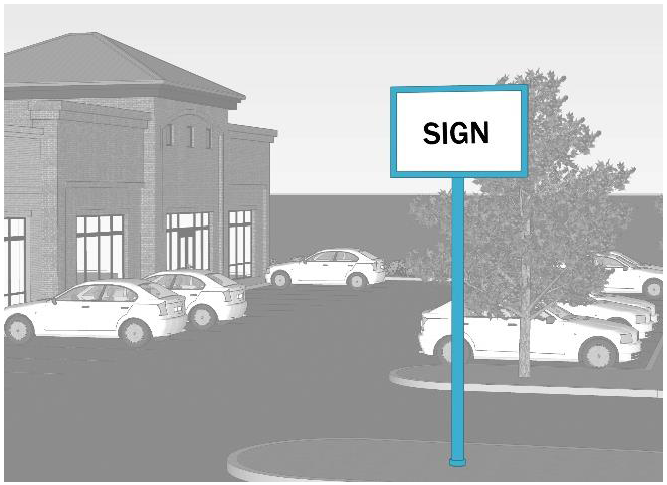
Pole sign. A ground sign mounted on one or more poles set permanently in the ground.
Portable sign. A temporary electrical or non-electrical sign mounted on a trailer intended to be mobile or to remain in place for a limited time, whether or not fastened to an object, building or staked to the ground in any manner.
Primary facade. The exterior wall of the building most nearly parallel to the street providing primary access to the lot.
Projecting sign. Any sign attached perpendicularly to a building and extending beyond the front line of the building to which the sign is attached; also called a blade or shingle sign.
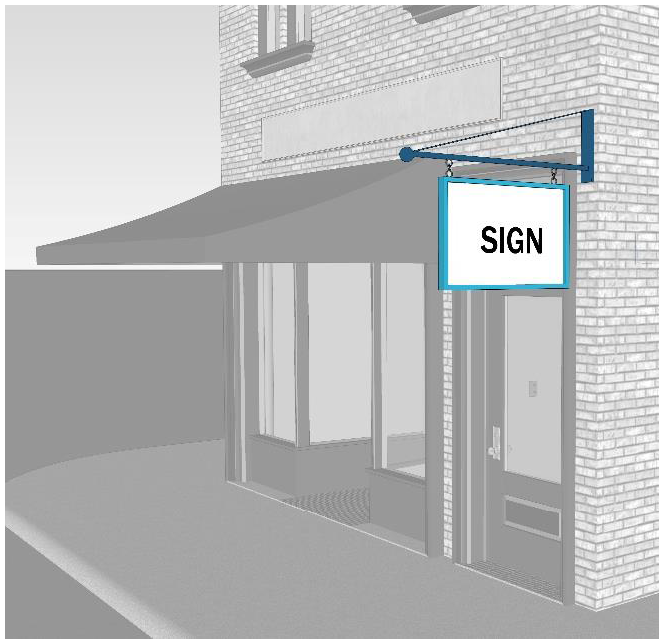
Pylon sign. A ground sign comprised of a sign face mounted on a support base that is the same width as the sign face. A pylon sign is distinguished from a pole sign in that the support member of a pylon sign features an opaque panel extending from grade to the bottom of the sign face.
Readerboard. A type of sign designed to allow a changeable message whether by mechanical or electronic means. See definition for "flashing sign."
Reflectors. Any device used for reflecting light directed at the device to render the device more visible or noticeable.
Residence. A house, dwelling or place occupied by an individual, family or household on a permanent basis.
Revolving sign. See "flashing sign."
Road frontage. The distance along which a lot abuts any public street measured in linear feet.
Roof sign. Any sign erected on the roof of a building or structure and displayed above the lowest horizontal line of the building or structure roof. A sign above a parapet wall, above the top line of a mansard roof, above a freestanding or attached canopy or above a building marquee is considered a roof sign. Roof signs shall not be wider than the building or structure on which they are erected.
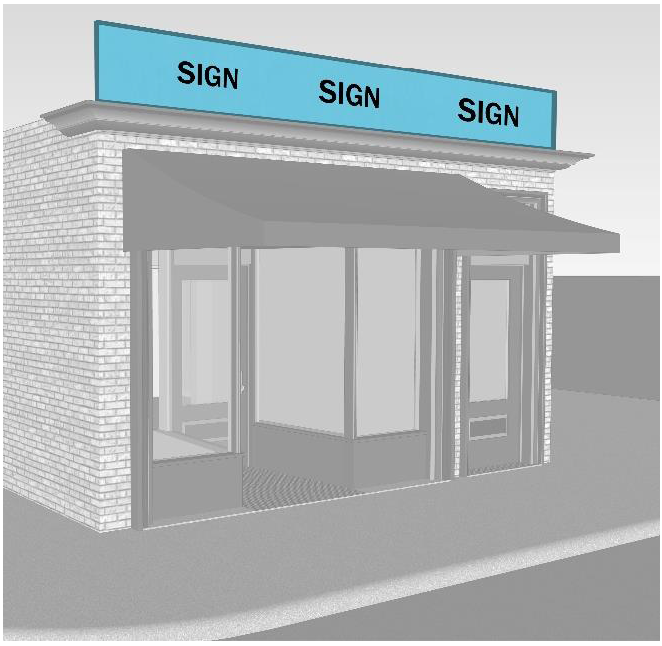
Roofline. The highest continuous horizontal line of a building roof. On a sloping roof, the roofline is the principal ridgeline, or the highest line common to one or more principal slopes of a roof. On a flat roof, the roofline is the highest continuous line of the roof or parapet, whichever is the higher. On a mansard roof, the roofline is the top of the mansard feature.
Rotating sign. A sign that utilizes electronic, mechanical or other motorized means to produce movement of any part of a sign.
Sandwich board sign. A self-supporting, movable A-frame sign limited to two visible sides not secured or attached to the ground or surface on which the sign is located. Also known as a sidewalk sign.
Searchlight. See "temporary sign".
Secondary facade. Any exterior wall of a building that is most nearly parallel to an adjoining street that is not the primary facade. A secondary facade may also be an exterior building wall to the rear of the primary facade and may adjoin a parking lot rather than a street. The end elevation of a building shall also be considered a secondary facade.
Shingle. See "projecting" or "swinging sign."
Sign. Every device, fixture, placard, frame, letter, figure, character, mark, plane, point, design, picture, representation, stroke, stripe, trademark, or other message technique that uses any color, form, graphic, illumination, symbol, or text to attract attention or convey information or intended to attract attention or convey information and which is placed outdoors in view of the public or, when placed in the interior of a building or structure, in a manner as to be visible to the public from outside the building or structure.
Sign area. The total area on which a message is displayed on any sign, including the limits of text, graphic representation, emblem or any figure or similar character together with any frame, other material, open space, or color forming an integral part of the display or used to differentiate such sign from the background. The sign area of a double-faced sign having unequal faces shall be the area of the larger sign face. Double-faced signs having an interior angle formed by the faces greater than 45 degrees shall be considered individual sign faces and the area of each face shall be used in calculating sign area. The area of wall signs shall be the net geometric area measured by the smallest possible rectangle or combination of rectangles enclosing the display surface of the sign, including the outer extremities of all letters, characters and delineations. Window sign area shall be measured in the same manner as wall signs. Sign area for entrance signs shall include any tablet or similar surface on which the sign face is displayed.
Sign height. The vertical distance measured from the surface of the nearest adjacent street at a point on the street centerline nearest and perpendicular to the proposed location of the sign to the highest point of the sign or sign structure.
Sign, number of. For purposes of determining the number of signs, a single display surface or single display device containing elements organized, related or composed to form a unit shall be considered one sign. Where a message is displayed in a random manner without an organized relationship to other display elements, or where reasonable doubt exists as to the relationship of elements, each element shall be considered a single sign.
Sign structure. All members of a sign, including braces, posts and supports, excluding the sign face itself.
Silhouette sign. A silhouette sign is a type of wall sign formed by cutting individual letters or images in a surface or applying individual letters or images to a wall as to create a message.
Snipe sign. A stake sign or sign posted on a tree, utility pole or other structure in the public right-of-way.
Special event. Any planned occasion that does not take place on a daily, weekly, monthly, or quarterly basis and is designed as a celebration or is an irregular occurrence intended to attract business or raise money. The term "special event" includes, but is not limited to automobile racing events, grand openings, seasonal sales, liquidations, going-out-of-business sales, vehicle shows or displays, craft shows, rummage sales, bake sales, promotional events, festivals, or holiday celebrations.
Spectacular sign. A sign that is animated, flashing, scrolling or otherwise involves the movement of the sign message, wired for lights or luminous tubing, or both, or featuring copy-controlled action utilizing flashed circuit breakers, computers, or other electrical, electronic, or mechanical means.
Stake sign. Any temporary sign supported by at least one upright placed in the ground and not supported by or suspended from any building or structure.
Store front. The primary facade of a single, undivided unit containing an area larger than 750 square feet.
Streamer. See "temporary sign."
Structural change or repair. Any reinforcement, replacement, bolstering, augmenting or substitution of a support element of a sign structure, including but not limited to alteration or replacement of the foundation, support structures, columns, beams, sign frame, or sign head for any purpose other than to render the sign structure safe.
Subdivision internal sign. Any sign placed at the intersection of two public roads inside a residential subdivision.
Subdivision sign. Any sign placed at the intersection of two public roads where one of the roads is the main thoroughfare into and out of a single-family residential subdivision.
Submission date. The date stamped on a sign application indicating the date the application was actually received by the City of Hampton.
Suspended sign. See "projecting" or "swinging sign."
Swinging sign. Any sign mounted such that the sign may freely move back and forth.
Temporary sign. Any sign or device not permanently attached to the ground or other permanent structure designed to be mobile or to remain in place for a limited time. This includes, but is not limited to, signs designed to be transported regularly from one location to another, signs designed with wheels, regardless of whether the wheels remain attached to the sign, or signs tethered to an existing structure. These signs include, but are not limited to, skylights, balloons, streamers, feather flag signs, flag strings, inflatable signs, banners, beacons, searchlights, pennants, portable signs, sandwich boards, sidewalk signs, costume signs, hand held signs, snipe signs, and stake signs.
V formation sign. A sign with two sign faces, forming the shape of the letter "V" when viewed from above with an angle between the two faces of not more than 60 degrees.
Vehicle mounted signs. Any sign or combination of signs attached to or affixed in any fashion, mounted on, painted or otherwise affixed on a vehicle, whether motorized or drawn, that is placed, parked or maintained at a particular location visible from a public right-of-way or driven from place to place for the express purpose of promotion or conveying a message. Vehicle mounted signs also include digital signs affixed on vehicles.
Wall sign. Any sign mounted parallel to or flush with any exterior building wall, painted on a wall surface or otherwise attached to an outside wall of any structure or building that may include a door. Channel letter signs and silhouette signs are types of wall signs.
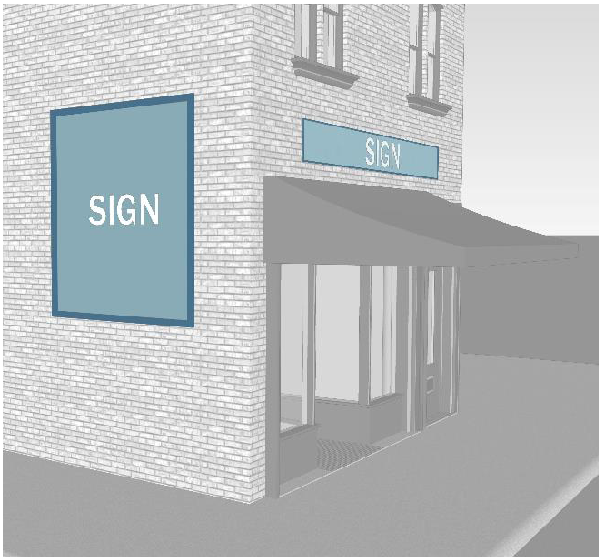
Window sign. Any sign displayed to an outside observer on or through a window, or covering a window or exterior glass door, visible to the public from outside the building or structure in which the sign is displayed. Any sign that conveys a message at a scale as to font size or graphic or the use of such components as neon that are visible to pedestrians or motorists in the right-of-way, despite the location in the interior of a building or structure, shall be considered a window sign. The term "window sign" shall include any sign posted on or otherwise affixed to a glass door.
Zoning district. The classification of parcels of land as defined in the City of Hampton Zoning Ordinance and designated on the Official Zoning Map.
(Ord. No. 457, § 1, 8-14-18)
Sec. 11-3. - Applications and Permits.
A.
Complete Application Required. All applications for sign permits must be complete and contain all required information. If the Zoning Administrator shall determine that the application does not contain all required information as set forth in this article, or if such information is not sufficient to determine whether the permit should be issued or denied, or if such information is inaccurate or untrue, the application shall be denied by the Zoning Administrator. A new application will be required and will be given a new date and time stamp.
B.
Application Requirements. No Person shall erect, construct, enlarge, alter, repair, move, improve or convert any sign in the City, or cause such action, without first obtaining a separate permit for such sign from the Zoning Administrator or City Council (if Zoning Administrator's decision is appealed and overturned), provided that a permit shall not be required for stake signs. Applications for sign permits shall be made on forms provided by the City and shall contain the following information:
1.
Name, address, phone number and email address of the applicant;
2.
Name address, phone number and email address of the person, firm, corporation, or association installing the sign;
3.
Written, notarized consent of the owner of the building, structure or land on which the sign is proposed;
4.
Location/Address of building, structure or lot upon which a sign is to be installed;
5.
A sketch indicating height, size and position of the sign in relation to nearby buildings or structures, property lines, rights-of-way, and other signs located on the lot showing compliance with all setback lines required by the City;
6.
A copy of any electrical or building permit required and issued for the sign;
7.
A copy of any insurance policy or bond as required by the City Code;
8.
Three sets of accurately scaled color drawings of the plans, contents, specifications, and method of construction and attachment to the building or the ground for the sign as well as a scaled drawing of the site showing drives, structures, and any other limiting site features;
9.
A written list describing all other signs located on the lot indicating the sign type, size and placement; and
10.
Such other information as the Zoning Administrator may reasonably require for the permitting process relating to the type of sign to be permitted, the lot upon which the sign is to be placed, and/or the placement of the sign and the effects thereof on traffic patterns, pedestrians, and/or general aesthetics.
C.
Submission of sign permit applications. Sign permit applications must be delivered to the Community Development Department for date and time stamping.
D.
Approval of Zoning Administrator.
1.
Approval of the Zoning Administrator is required for all sign permit applications. Such officer shall examine the plans and specifications to determine if the same comply with the City's zoning regulations and shall provide to the applicant a written decision within 30 days of receipt of the application. A decision shall be written and emailed and/or mailed via U.S. Mail to the applicant at the address provided on the permit application.
2.
A sign permit issued shall be construed to be a license to proceed with work and shall not be construed as authority to violate, cancel, alter or set aside any provisions of this Appendix, City Code or Georgia law, nor shall such issuance of a permit prevent the Zoning Administrator from requiring the correction of errors in plans or in construction, or of violations of this Appendix.
3.
Upon the expiration of the 30-day period without a decision being made on the application, the applicant shall be permitted to erect and maintain the sign under this statutory provision unless and until such time as the Zoning Administrator notifies the applicant of a denial of the application and states the reason(s) for the denial. No person erecting a sign under this provision shall acquire any vested rights to continued maintenance of such signs, and if the Zoning Administrator or the City Council (after a timely appeal) later denies the application, the sign must be brought into compliance with this Appendix. Any sign erected under this provision must conform to the City's construction safety regulations and must be removed immediately if it fails to conform to the City's construction safety regulations.
E.
Application fees. Each application for a sign permit must be accompanied by a payment of the application fee to the City of Hampton. The fee for sign permit applications shall be determined by a schedule of fees adopted by resolution of the City Council from time to time.
F.
Issuance and denial of applications and permits; appeals.
1.
In the event the Zoning Administrator determines or learns at any time that the applicant has not properly completed the application for the proposed sign or that the application does not meet all requirements for approval, he shall promptly notify the applicant of such fact and shall automatically deny the application.
2.
Provided that the sign application is complete and approved, all fees have been paid, and the proposed sign and the lot upon which the sign is to be placed are within all the requirements of this article and all other ordinances of the City and other applicable law, the Zoning Administrator shall approve the application and issue the permit for the sign.
G.
Time period. If the work authorized under the permit has not been completed to the satisfaction of the Zoning Administrator using common industry standards within six months after the date of issuance, the permit shall become null and void.
H.
Appeals. See Section 12-9 Appeals of Administrative Decisions.
(Ord. No. 457, § 1, 8-14-18)
Sec. 11-4. - Construction Standards.
A.
Building code compliance. All signs shall be constructed and maintained in accordance with the provisions of the City's building code.
B.
Reflectors. Reflectors and lights shall be permitted on ground signs, roof signs, and wall signs; provided, however, that the reflectors and lights shall be provided with proper glass lenses so that no light therefrom creates a hazardous or dangerous condition.
C.
Internal illumination. The illumination of internally illuminated signs shall not exceed 20 foot candles of incandescent light measured at a distance of ten feet from such structure.
D.
External illumination. Externally illuminated signs shall be lighted so that no lights are positioned in such a manner that light glares or shines into the eyes of motorists or pedestrians so as to create a hazardous or dangerous condition.
E.
Other code compliance. All building, construction, setback, zoning or other relevant codes excluding permitting (other than that provided elsewhere herein) shall be applicable to the location, construction and siting of signs and shall be read in harmony with this article.
(Ord. No. 457, § 1, 8-14-18)
Sec. 11-5. - Special Limitations.
In addition to the limitations set forth in the other sections of this article, the following limitations shall apply to these specific types of signs:
A.
Wall signs. No wall sign shall cover wholly or partially any wall opening, nor project beyond the ends or top of the wall to which it is attached.
B.
Roof signs. No roof sign shall be placed on the roof of any building or structure in such manner as to prevent free passage from one part of the roof to any other part thereof or interfere with openings in the roof.
C.
Projecting signs.
1.
No projecting sign may be placed over public streets, alleys, or ways available for vehicular traffic.
2.
Night illumination. Every projecting sign located at a commercial business shall be illuminated between sunset and 11:00 p.m. every night, on each side thereof, by at least five watts per square foot of sign surface, but in no case less than 800 lumens for each sign surface.
3.
All projecting signs must be installed at a 90-degree angle to the building facade.
4.
The bottom of any such sign shall have a ground clearance of at least eight feet.
D.
Temporary signs.
1.
Temporary signs must be removed from the premises within 30 days from the date the sign is first placed on the lot except for stake signs placed upon a lot by the property owner, or with the property owner's permission.
2.
All temporary signs shall be securely installed and shall meet all applicable safety standards as prescribed by the building code, electrical code or as promulgated by the City Council or its designated representative.
3.
Before a permit may be issued for a temporary sign, as prescribed by Section 11-3, the applicant must demonstrate that the sign will not adversely affect the health, safety, welfare, aesthetics or morality of the community.
4.
A temporary sign permit shall only be issued per parcel not to exceed two permits per parcel within a one year period and said two permits must be at least 30 days apart.
5.
If any temporary sign is erected or maintained in such a manner so as to be in violation of this article or any other ordinance or law of the City, the Zoning Administrator may give written notice to the owner thereof and to the owner of the property and premises upon which the sign is located that the sign must be removed within three days. If the sign is not thereafter removed, the Zoning Administrator may cause its removal and impose the cost of the removal as a lien upon the property upon which the sign sits.
E.
Banners.
1.
Banners shall be considered temporary signs as defined in subsection (d) above and shall be subject to the same limitations regarding the issuance of permits for temporary signs.
2.
In addition to the special limitations found in subsection (d) above, banners shall be further regulated as follows:
i.
No person shall be permitted to display more than one banner on the premises, and only one banner shall be displayed on the premises at any given time;
ii.
Each person is responsible for erecting and removing its banner;
iii.
No banner shall be any larger than 60 square feet;
iv.
No banner shall be attached to trees.
v.
Banners on city property. Banners on city property may be displayed for no more than 72 hours.
F.
Awning signs.
1.
Awning signs must be painted or installed directly on the valances of the awning.
2.
Awning signs shall not have lettering or graphics exceeding ten inches in height.
3.
No awning sign may be internally illuminated.
4.
The signable area of any awning sign shall not exceed ten percent of the surface area of the awning.
G.
Entrance sign. All entrance signs shall be placed on private property and may not be placed in the right-of-way, except that the City Council may allow an entrance sign to be placed in the right-of-way in a center median if:
1.
The sign has two faces;
2.
The location has been approved in writing by the City Council and, if applicable, the Henry County Department of Transportation or the Georgia Department of Transportation; and
3.
The applicant agrees to be responsible for maintenance and repair of the entrance sign and ensures that the existence of the entrance sign is documented on the final plat for the development.
H.
Subdivision sign. All subdivision signs shall be placed on private property and may not be placed in the right-of-way, except that the City Council may allow a subdivision sign to be placed in the right-of-way in a center median if:
1.
The sign has two faces;
2.
The location has been approved in writing by the City Council and, if applicable, the Henry County Department of Transportation or the Georgia Department of Transportation; and
3.
The applicant agrees to be responsible for maintenance and repair of the subdivision sign and ensures that the existence of the subdivision sign is documented on the final plat for the development.
I.
Flags.
1.
In ground. A flag may be flown from a metal pole permanently placed in the ground. See Chart for size requirements per district.
2.
Projecting. A flag may be flown from a pole attached to a bracket projecting from the side of a building or door frame. The pole shall not exceed six feet in length, nor one inch in diameter. The flag flying from such pole shall not exceed three feet in width and five feet in length. Additionally, the flag displayed in such manner shall not impede pedestrian or vehicular traffic.
3.
Hanging. A flag may be hung in either the primary facade or secondary facade of a property appropriately zoned under this article. The flag shall count against the percentage of window signage permitted for the zoned property as delineated in Section 11-9.
J.
Handheld signs. All handheld signs shall meet the following regulations:
1.
Hand held signs are permitted only in conjunction with the City's ordinances and regulations of mass gatherings.
2.
No handheld signs shall be placed or carried which extend beyond the width of the carrier's body or that extend more than 24 inches above the carrier's head.
3.
All persons carrying any such signs, shields or sandwich boards shall remain at least ten feet apart, shall not stand or loiter in front of any doorway, driveway or public street intersection and shall not interfere with the general flow of traffic, whether pedestrian or vehicular.
4.
All handheld signs are exempt from the permitting requirements of Section 11-3.
5.
Changeable copy signs and LED signs. Only monument signs can be changeable copy or LED signs and cannot constitute more than 50 percent of the area of the monument sign.
(Ord. No. 457, § 1, 8-14-18)
Sec. 11-6. - Special Requirements.
A.
City property. All lots, buildings, structures or property owned by the City of Hampton shall be exempt from all requirements of this article. Further, city-sponsored or operated events shall be exempt from sign regulations. Only official City of Hampton signs or official traffic control and safety signs shall be placed within any city right-of-way.
B.
All signs must be placed upon a lot. No sign may be placed on any lot, which lot does not meet the minimum requirements of the Zoning Ordinance and Subdivision Regulations of the Code of Hampton, Georgia.
C.
Obstruction to doors, windows or fire escapes. No sign shall be erected, relocated, or maintained so as to prevent free ingress to, or egress from, any door, window or fire escape; nor shall any sign be attached to any stand pipe or fire escape.
D.
Seasonal lighting: Allowed only for 45 consecutive days and not to be extended, strands or strings of lights may be erected on each lot in addition to the signage otherwise allowed by this article, but only pursuant to the following conditions:
1.
Lighting shall be UL approved outdoor lighting;
2.
Lighting shall not exceed one linear foot per foot of public road frontage, per lot.
E.
Sign not to constitute traffic hazard. No sign or other structure regulated by this article shall be erected at the intersection of any public streets in such a manner as to obstruct free and clear vision from vehicles thereupon; or be placed at any location where, by reason of the position, shape or color, it may interfere with, obstruct the view of, or be confused with, any authorized traffic sign, signal, or device; or make use of the words "STOP", "DANGER", or any other word, phrase, symbol or character in such manner as to interfere with, mislead or confuse motorists.
F.
Posting on trees, poles, etc. No sign shall be allowed to be tacked, painted, posted, marked, or otherwise affixed on trees, utility poles, or other similar structures, or on rocks, the ground itself, or other natural features.
G.
No posting on supports. No message or advertisement may be displayed on any portion of the structural supports of any sign.
H.
Maintenance. All signs regulated by this article shall be kept clean, neatly painted, and free from all electrical and mechanical hazards, including, but not limited to, faulty wiring and loose connections, and the premises surrounding the signs shall be maintained by the owner in a sanitary and inoffensive condition, free and clear of all weeds, rubbish and debris.
I.
Special situations. Those developments which include at least one building of three stories or more may be permitted wall or roof signs in sizes not exceeding 100 square feet per primary and secondary facade. The sign allowance provided under this subsection shall be exempt from the aggregate signage allowed per lot.
J.
No simulation of public signal. No sign shall be erected which simulates an official traffic control, warning sign or public service signal.
K.
Compliance of premises with City Code. No permit shall be issued as to any lot where such lot is in noncompliance with any provision of the City Code.
L.
Entrance signs, subdivision signs, and signs on properties with a conditional use permit may be externally illuminated from dusk until dawn, but may not be internally illuminated or include an LED sign or changeable copy sign.
M.
LED strip lighting, rope lighting, or string lights are to be prohibited for the border or perimeter of windows, signs, or doors to attract the attention of customers.
N.
Neon signs shall be allowed only in historic districts.
O.
Awnings: Awnings shall be made of rustproof metal or high quality, colorfast and sunfade-resistant canvas. Colors shall be limited to a single field color with a single contrasting color for lettering and shall comply with all other requirements of this article.
(Ord. No. 457, § 1, 8-14-18)
Sec. 11-7. - Variances.
This section shall provide the exclusive procedures for granting variances to the requirements of this article.
A.
Upon application by the property owner of a lot zoned OI, C-2, C-3, M-1, M-2, or MU covering more than ten contiguous acres, the City Council may grant a variance to allow the aggregate signable area to exceed 500 square feet where the applicant has shown that:
1.
All signs and structures within the business development are in conformance with this article; and
2.
The variance, if granted, would not cause substantial detriment to other property owners or tenants, or to the public good, nor would it impair the purpose and intent of this article; and
3.
The City Council shall consider at least one of the following factors:
i.
The size of buildings constructed on the subject lot;
ii.
The potential to subdivide the lot; or
iii.
The number of different tenants occupying the buildings; and
4.
Financial loss to the applicant. However, such loss is not sufficient grounds, by itself, to justify a variance.
Furthermore, peculiar conditions or circumstances which are the result of actions of the current or former owner(s) of the property covered by the application cannot be considered as grounds to justify a variance. The authority to erect and maintain additional signs as may be permitted under any such variance shall terminate upon the subdivision of the lot upon which such variance was granted.
1.
Upon application by the property owner of a lot zoned MR-1 or MR-2, covering more than ten contiguous acres, the City Council may grant a variance to allow a ground sign where the applicant has shown that:
2.
All signs and structures within the business development are in conformance with this article; and
3.
The variance, if granted, would not cause substantial detriment to other property owners or tenants, or to the public good, nor would it impair the purpose and intent of this article; and
4.
The City Council shall consider at least one of the following factors:
i.
The size of buildings constructed on the subject lot;
ii.
The potential to subdivide the lot; or
iii.
The number of different tenants occupying the buildings; and
5.
Financial loss to the applicant. However, such loss is not sufficient grounds, by itself, to justify a variance.
Furthermore, peculiar conditions or circumstances which are the result of actions of the current or former owner(s) of the property covered by the application cannot be considered as grounds to justify a variance. The authority to erect and maintain additional signs as may be permitted under any such variance shall terminate upon the subdivision of the lot upon which such variance was granted.
B.
Upon application by the property owner of a lot, the City Council may grant a height variance where the applicant has shown that:
1.
All signs and structures within the business development are in conformance with this article; and
2.
The variance, if granted, would not cause substantial detriment to other property owners or tenants, or to the public good, nor would it impair the purpose and intent of this article; and
3.
The City Council shall consider at least one of the following factors:
i.
The size of buildings constructed on the subject lot;
ii.
The potential to subdivide the lot; or
iii.
The number of different tenants occupying the buildings; and
4.
Financial loss to the applicant. However, such loss is not sufficient grounds, by itself, to justify a variance.
Furthermore, peculiar conditions or circumstances which are the result of actions of the current or former owner(s) of the property covered by the application cannot be considered as grounds to justify a variance. The authority to erect and maintain additional signs as may be permitted under any such variance shall terminate upon the subdivision of the lot upon which such variance was granted.
(Ord. No. 457, § 1, 8-14-18)
Sec. 11-8. - Sign Setbacks and Restrictions.
A.
All signs shall be required to be located within the required front yard of a principal structure and shall not be permitted to extend beyond the front property line into the public street. The location of signs shall not interfere with the view of a traffic signal or traffic vision.
B.
When the requirements in Section 11-9 make reference to this subsection, in order to erect a second sign a use must have frontage on two publicly dedicated public streets with each public street including a legal curb cut. In addition, there must be a minimum lot area of one acre to permit a second such sign to be erected. In those instances where one of the public street frontages is on a public street serving a residential subdivision, a second sign shall be prohibited.
C.
Except in the DT-MU district, all signs shall be required to be set back a minimum of 1 foot from all property lines.
D.
All signs shall be required to be set back a minimum of 10 feet from all electrical transmission lines.
(Ord. No. 457, § 1, 8-14-18)
Sec. 11-9. - Requirements by District.
A.
In addition to all other regulations in this article, all signs must conform with the requirements contained in this section.
B.
The following types of signs shall be permitted on lots zoned RA, R-1, R-2, R-3, R-4, R-D, PD, and:
1.
One flag of not more than 15 square feet. Where flags are flown from flagpoles, flag poles shall not exceed 35 feet in height. Official flags of a government entity shall not be subject to these limitations.
2.
For subdivisions, one subdivision sign at each entrance from an exterior street, designed as a monument sign, not to exceed 32 square feet in area or 8 feet in height.
3.
For uses with a conditional use permit, one entrance sign designed as a monument sign, not to exceed 32 square feet in area or 8 feet in height.
C.
The following types of signs shall be permitted on lots zoned MR-1, and MR-2:
1.
One flag of not more than 15 square feet. Where flags are flown from flagpoles, flag poles shall not exceed 35 feet in height. Official flags of a government entity shall not be subject to these limitations.
2.
One entrance sign designed as a monument sign, not to exceed 32 square feet in area or 8 feet in height.
3.
One projecting sign, not to exceed 15 feet in area and not to project more than 6 feet beyond the facade.
4.
One temporary sign, not to exceed 100 square feet.
D.
The following types of signs shall be permitted on lots zoned OI and C-1:
1.
One flag of not more than 40 square feet. Where flags are flown from flagpoles, flag poles shall not exceed 60 feet in height. Official flags of a government entity shall not be subject to these limitations.
2.
Monument signs not to exceed 32 square feet in area or 8 feet in height.
3.
Projecting signs, not to exceed 15 feet in area and not to project more than 6 feet beyond the facade.
4.
Roof signs, not to exceed 3 feet in height above the eave or 75 square feet in area.
5.
Wall signs, sandwich board signs, awning signs, and window signs.
6.
The total area of all signs, excluding temporary signs, shall not exceed 150 square feet.
7.
Temporary signs, not to exceed 8 feet in height or width, and not to exceed 32 total square feet.
E.
The following types of signs shall be permitted on lots zoned C-2, C-3, MU, M-1, and M-2 for individual establishments that are not a part of a business subdivision:
1.
One flag per establishment of not more than 40 square feet. Where flags are flown from flagpoles, flag poles shall not exceed 60 feet in height. Official flags of a government entity shall not be subject to these limitations.
2.
One pole sign per establishment not to exceed 20 feet in height or 100 square feet in area.
3.
One monument sign per establishment not to exceed 20 feet in height or 50 square feet in area.
4.
Projecting signs, not to exceed 20 feet in area and not to project more than 6 feet beyond the facade.
5.
Roof signs, not to exceed 5 feet in height above the eave or 100 square feet in area.
6.
Wall signs, sandwich board signs, awning signs, and window signs.
7.
The total area of all signs, excluding temporary signs, shall not exceed 300 square feet.
8.
Temporary signs, not to exceed 8 feet in height or width, and not to exceed 32 total square feet.
F.
The following types of signs shall be permitted on lots zoned C-2, C-3, MU, M-1, and M-2 that are part of a business subdivision:
1.
One flag per establishment of not more than 40 square feet. Where flags are flown from flagpoles, flag poles shall not exceed 60 feet in height. Official flags of a government entity shall not be subject to these limitations.
2.
One pole sign for the first 50,000 square feet of total gross leasable area in the business subdivision, plus one additional pole sign for each additional 100,000 square feet. No pole sign shall exceed 20 feet in height or 150 square feet in area.
3.
One monument sign for the first 50,000 square feet of total gross leasable area in the business subdivision, plus one additional monument sign for each additional 100,000 square feet. No monument sign shall exceed 20 feet in height or 100 square feet in area.
4.
One projecting sign per establishment, not to exceed 20 feet in area and not to project more than 6 feet beyond the facade.
5.
One roof sign per establishment, not to exceed 5 feet in height above the eave or 100 square feet in area.
6.
One wall sign per establishment, not to exceed 100 square feet in area.
7.
Sandwich board signs, awning signs, and window signs.
8.
The total area of all signs, excluding temporary signs, shall not exceed 400 square feet.
9.
Temporary signs, not to exceed 8 feet in height or width, and not to exceed 32 total square feet.
G.
The following types of signs shall be permitted on lots zoned DT-MU:
1.
One flag of not more than 25 square feet. Where flags are flown from flagpoles, flag poles shall not exceed 35 feet in height. Official flags of a government entity shall not be subject to these limitations.
2.
Projecting signs, not to exceed 25 feet in area and not to project more than 5 feet beyond the facade.
3.
Roof signs, not to exceed 3 feet in height above the eave or 32 square feet in area.
4.
Wall signs and window signs, not to exceed 32 square feet in area for each facade.
5.
Awning signs, not to exceed 1 foot in height.
6.
One sandwich board sign.
7.
The total area of all signs, excluding temporary signs, shall not exceed a total of 100 square feet.
8.
Temporary signs, not to exceed 8 feet in height or width, and not to exceed 32 total square feet.
H.
The following types of signs shall be permitted on lots zoned DT-RC:
1.
One flag of not more than 25 square feet. Where flags are flown from flagpoles, flag poles shall not exceed 25 feet in height. Official flags of a government entity shall not be subject to these limitations.
2.
Projecting signs, not to exceed 25 feet in area and not to project more than 5 feet beyond the facade.
3.
Wall signs and window signs, not to exceed 25 square feet in area.
4.
One sandwich board sign.
5.
The total area of all signs, excluding temporary signs, shall not exceed a total of 100 square feet.
6.
Temporary signs, not to exceed 8 feet in height or width, and not to exceed 32 total square feet.
(Ord. No. 457, § 1, 8-14-18)
Sec. 11-10. - Unsafe and Unlawful Signs.
A.
If the City Council or its designated representative shall find that any sign regulated herein is unsafe or unstable, or is a menace to the public health or safety, or is abandoned, or is maintained in a dilapidated condition, or has been constructed or erected or is being maintained in violation of the provisions of this article, the City Council or its designated representative shall notify the permittee, owner, or occupant of the property on which the sign is located by certified mail of such violation. Said notice shall include a brief and complete statement of the violations to be remedied. If the permittee, owner, or occupant of the property where the sign is located cannot be located, notice shall be affected by the City Council or its designated representative affixing the notice to the sign or to the building on which the sign is erected.
B.
If the permittee or property owner fails to remove or alter the structure so as to comply with the standards herein set forth within ten days after such notice, the permit for such sign shall be revoked and the permittee or property owner shall be subject to the penalties set forth in Section 11-14 of this article.
C.
In any case in which a sign is an immediate threat to the physical safety of persons or adjoining property, the City Council or its designated representative may cause such structure to be removed summarily and without notice and cause the cost of same to be placed as a lien on the property upon which the sign sits.
(Ord. No. 457, § 1, 8-14-18)
Sec. 11-11. - Nonconforming Signs.
A.
The following provisions shall apply to signs which, on the effective date of this article, were approved and legally erected under previous sign restrictions and which became nonconforming with respect to the requirements of this article's restrictions:
1.
The owner of the sign shall secure a permit for the continuation of the sign subject to the restrictions of this section. Application for such permit must be filed within ten days of the notice of nonconformance. There shall be no charge for this permit. Failure to apply for such permit within ten days shall result in waiver of the protections afforded nonconforming signs by this section and the display of such sign shall be thereafter unlawful.
2.
No change shall be made in the size of any nonconforming sign, nor shall any structural changes be made in such a sign unless the sign is brought into compliance with the provisions of this article.
3.
Any nonconforming sign declared to be unsafe by the City Council or its designated representative shall be removed or rendered safe and brought into compliance with the provisions of this article.
4.
Except as provided in this article, any sign erected on any public property or public street in violation of this article may be removed therefrom by duly authorized employees of the City or Henry County, and the responsible party may be cited for such violation.
B.
Except when destroyed by fire or other Act of God, a nonconforming sign shall not be replaced by another nonconforming sign, except that the substitution or interchange of poster panels, painted boards or dismountable material on nonconforming signs shall be permitted.
C.
Minor repairs and maintenance of nonconforming signs shall be permitted. However, no structural repairs or changes in the size or shape of the sign shall be permitted except to make the sign comply with the requirements of this article.
D.
No change in shape, size or design shall be permitted on a nonconforming sign except to make the sign comply with all requirements of this article.
(Ord. No. 457, § 1, 8-14-18)
Sec. 11-12. - Prohibited Signs.
It shall be unlawful for any person to erect flashing signs, billboards, or aerial view signs in the City. Vehicle mounted signs shall also be prohibited in the City.
(Ord. No. 457, § 1, 8-14-18)
Sec. 11-13. - Exemptions.
A.
The following signs are exempt from the permitting requirements of this article; provided, however, that such signs shall be subject to all other provisions of this article:
1.
Wall signs one square foot and smaller.
2.
Projecting signs five square feet and smaller.
3.
Memorial signs or tablets, names of buildings, and dates of erection when cut into any masonry surface or when constructed of bronze or other incombustible materials.
4.
Stake signs with an area of 4 square feet or less.
5.
Any ground sign or stake sign that has an area of 6 sq. ft. or less placed during a permit exempt season which is period of time that starts the first day of the qualifying period preceding a federal, state, county, or City of Hampton election, including primary election, special election and runoff election, and that ends three (3) days after said election. Signs under this paragraph may be placed in the Right-of-Way provided that:
i.
Such sign be placed at least 5 ft. from the edge of pavement for streets with no curb, OR 5 ft. from the outer edge of the curb for streets with curbs, OR 1 ft. from the outer edge of the sidewalk for streets with sidewalk;
ii.
Approval of property owner(s) is obtained prior to placing signs on private property(ies);
iii.
Approval of property owner is obtained if the placement of sign in the Right-of-Way is directly in front of a residential or commercial property;
iv.
Signs are not placed on parcels or lots owned or operated by the City.
Where any such sign creates a public safety risk or an imminent danger to public safety, the Code Enforcement Officer immediately may move the sign to the nearest location in the right-of-way where it will not create a public safety risk. S/He then shall notify the person or entity, if known, that placed the sign of its new location and the reason prompting the move. That person or entity may maintain the sign on the new site, relocate the sign to an alternate safe area or remove the sign entirely.
The person or entity that places a sign in any right-of-way shall be responsible for its removal immediately after the expiration of the period stated in this subsection. Where that person or entity fails to undertake such action, the City may remove the sign from the right-of-way. The actions authorized under this paragraph are in addition to any other lawful remedies available to the City.
B.
The following signs are exempt from all provisions of this article:
1.
Signs that are not visible from any public street or any adjacent property.
2.
Temporary signs required to be posted by federal law, state law, Henry County, or by the Code of Ordinances of Hampton, Georgia.
3.
Decals affixed to or signs painted on equipment, fuel pumps or other types of vending equipment used for dispensing retail products, provided that such decals or signs have a signable area not exceeding four square feet on any single piece of equipment.
(Ord. No. 457, § 1, 8-14-18; Ord. No. 487, § 1, 10-8-19)
Sec. 11-14. - Penalties.
Any person found in violation of any of the provisions of this article shall be subject to a fine not to exceed $500.00 per day. A separate offense shall be deemed committed each day during or upon which a violation occurs or is permitted to continue. Any sign erected or maintained in violation of this Ordinance for more than 30 days shall also be subject to removal by the City at the owner's or permittee's expense.
(Ord. No. 457, § 1, 8-14-18)

