
Hayward City Zoning Code
SEC. 10-1.1600
INDUSTRIAL DISTRICTS 22
Note— Section 10-1.1600 replaced by Ordinance 19-10, adopted June 4, 2019.
SEC. 10-1.1601 - PURPOSE.
The purpose of the Industrial District is to:
A.
Provide a thriving employment center supportive of innovation and advanced manufacturing uses;
B.
Designate adequate land for a range of manufacturing, industrial processing, research and development, professional office, distribution and storage, service, and other workplace uses consistent with the General Plan;
C.
Strengthen the City's economic employment base and provide a range of employment opportunities to meet the needs of current and future residents;
D.
Provide high quality employment opportunities for people at all education levels;
E.
Provide a suitable environment for various types of industrial uses, and protect them from the encroachment of uses that would impair industrial operations or create future land use conflicts;
F.
Ensure that sensitive uses adjacent to industrial areas are protected through appropriate limitations on uses and appropriate design and development standards; and,
G.
Ensure high quality site and building design and the provision of employee amenities to provide a desirable working environment and so that the appearance and effects of development is compatible with the character of the area in which it is located.
SEC. 10-1.1602 - SUBDISTRICTS.
The Industrial District is divided into the following subdisticts:
A.
Light Industrial (IL). The Light Industrial (IL) Subdistrict, applies to areas that generally contain small parcels located in relatively close proximity to residential areas, accommodates a wide variety of light industrial uses taking place primarily within enclosed buildings and producing minimal impacts on nearby properties. It is most restrictive of all the Industrial Subdistricts on outdoor use and storage, heavy industry, and warehousing and distribution and the most permissive on non-industrial uses such as office, retail, and service commercial uses. Uses with combined small-scale or custom manufacturing and retail components, such as breweries, furniture making, and food production uses, are allowed. In areas adjacent to residential districts, development standards address potential incompatibilities and are intended to minimize impacts and nuisances.
B.
Industrial Park (IP). The Industrial Park (IP) Subdistrict, applies to areas with generally larger parcel sizes and uniform streetscapes, as well as areas with existing or potential industrial park development, is intended to provide areas for high technology, research and development, and industrial activities in an industrial park or campus-like atmosphere. A variety of industrial, manufacturing, and high technology uses are allowed, but this Subdistrict is more restrictive with regard to heavy industrial uses than the General Industrial Subdistrict. Warehousing and distribution uses are allowed, provided buildings and site development are designed with an office appearance from right-of-way, or with flexibility to transition to a manufacturing or research and development use. Retail and service uses that serve local employees and visitors are also permitted either as part of a larger development or as stand-alone uses on smaller sites. Development standards focus on creating and maintaining frontages that give the look and feel of integrated development, consistent with an industrial park or campus-like atmosphere.
C.
General Industrial (IG). The General Industrial (IG) Subdistrict, applies to areas with a variety of parcel sizes and where a wide range of general industrial uses already exist, is intended to accommodate the widest variety of industrial uses including heavy industrial and warehousing/distribution uses. Development standards focus on well-designed frontages along key corridors and screening with more flexibility in other areas.
SEC. 10-1.1603 - USE REGULATIONS—INDUSTRIAL SUBDISTRICTS.
Table 10-1.1603, Land Use Regulations—Industrial Subdistricts, sets the land use regulations for Industrial Subdistricts by letter designation as follows unless a use or activity is prohibited or subject to a higher level of permit pursuant to other parts of this Section, other requirements of the Hayward Municipal Code, or other applicable regulations:
"P" designates permitted uses.
"A" designates uses that are permitted after review and approval of an Administrative
Use Permit.
"C" designates uses that are permitted after review and approval of a Conditional
Use Permit.
"M" designates uses that are permitted after review and approval of a Major Conditional
Use Permit.
"-" designates uses that are not allowed.
A project which includes two or more categories of land use in the same building or on the same site is subject to the highest permit level required for any individual use or single component of the project.
Section numbers in the right-hand column refer to other sections of the Zoning Ordinance or other limitations as well as subsections A through E following the Table.
Land uses are defined in Article 1, Section 10-1.3500, Definitions. In cases where a specific land use or activity is not defined, the Planning Director or other approving authority shall assign the land use or activity to a classification that is substantially similar in character. Land uses defined in the Hayward Municipal Code and not listed in the table or not found to be substantially similar to the uses below are prohibited. Unless otherwise explicitly stated, all uses shall be conducted indoor.
A.
Outdoor Storage. Refer to Section 10-1.1605(L) for Outdoor Storage regulations.
B.
Adult Entertainment Activity. Refer to General Regulations Section 10-1.2735.b. for Adult Entertainment Activity Regulations.
C.
Alcoholic Beverage Outlets. Refer to General Regulations Section 10-1.2750 et seq. for Alcoholic Beverage Outlet Regulations.
D.
Antennas and Satellite Dishes and Telecommunications Devices. Refer to Chapter 10, Article 13 of the Hayward Municipal Code, the Antenna and Telecommunications Facilities Ordinance, for regulations of antennas, satellite dishes and telecommunications devices.
E.
Hazardous Materials Use and Storage. All uses allowed in the Industrial Subdistricts pursuant to Table 10-1.1603 shall comply with all applicable code and regulation requirements pertaining to hazardous materials and the following permit requirements.
1.
Permitted. The following hazardous materials use and storage activities are permitted:
a.
Production, storage, and/or handling, utilizing Group B hazardous materials less than 5,000 pounds of solids, 550 gallons of liquids, or 2,000 cubic feet of gases at standard temperatures and pressures.
b.
Production, storage, and/or handling, utilizing Group C hazardous materials less than 50,000 pounds of solids, 5,500 gallons of liquids, or 20,000 cubic feet of gases at standard temperatures and pressures.
2.
Administrative Use Permit. The following hazardous materials use and storage activities are subject to Administrative Use Permit approval:
a.
Production, storage, and/or handling, utilizing Group B hazardous materials which exceed the following thresholds: 5,000 pounds of solids, 550 gallons of liquids, or 2,000 cubic feet of gases at standard temperatures and pressures.
b.
Production, storage, and/or handling, utilizing Group C hazardous materials which exceed the following thresholds: 50,000 pounds of solids, 5,500 gallons of liquids, or 20,000 cubic feet of gases at standard temperatures and pressures.
3.
Conditional Use Permit. Conditional Use Permit approval is required for the production, storage, handling, or similar activities utilizing any amount of hazardous materials classified as Group A hazardous materials by the Fire Chief or his or her designee.
(Amended by Ordinance 21-05, § 2, adopted July 20, 2021; Amended by Ordinance 25-02, § 1(Exh. A), adopted January 21, 2025; Amended by Ordinance 26-06, § 1(Att. IV, Exh. C), adopted May 5, 2026; Memo of 6-4-2026, Att. A)
SEC. 10-1.1604 - DEVELOPMENT STANDARDS.
Table 10-1.1604, Development Standards—Industrial Subdistricts, prescribes the development standards for Industrial Subdistricts.
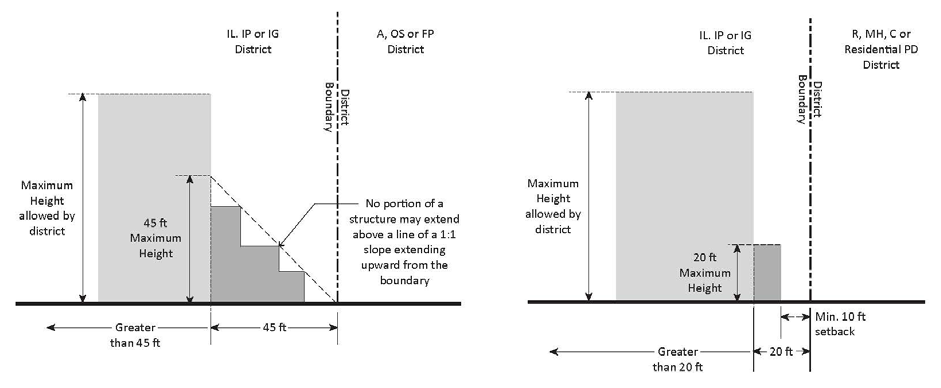
Figure 10-1.1604: Maximum Height, Industrial Subdistricts
(Memo of 6-4-2026, Att. A)
SEC. 10-1.1605 - REVIEW PROCEDURES.
A.
Site Plan Review. Site Plan Review, pursuant to Section 10-1.3000, Site Plan Review, is required for the following development projects and uses unless the project otherwise requires Planning Commission approval.
1.
Development of new structures greater than 5,000 square feet in size.
2.
Additions, or partial demolitions with reconstruction, adding or affecting 10 percent of the existing gross floor area and resulting in a structure greater than 5,000 square feet in size.
3.
Any site modification affecting 5,000 square feet or 10 percent of the site area, whichever is greater.
B.
Major Site Plan Review. On sites of 10 or more acres, Major Site Plan Review, pursuant to Section 10-3075, shall be obtained prior to any subdivision or other approval for new development.
SEC. 10-1.1606 - SUPPLEMENTAL STANDARDS APPLICABLE TO ALL PROPERTIES WITH THE INDUSTRIAL DISTRICTS.
A.
Design Guidelines. All development shall be consistent with the Industrial District Design Guidelines.
B.
Sidewalks and Street Frontage Improvements. Sidewalks, curbs, and gutters shall be provided if none already exist, or repaired if the existing sidewalks are in poor condition, to the satisfaction of the City Engineer. Other street frontage improvements shall be installed consistent with City standards and specifications.
C.
Primary Building Entrance.
1.
All buildings shall be designed with a primary building entrance.
2.
A minimum of one building per site shall orient the primary building entrance to face or be oriented to within 45 degrees of parallel to the street frontage. Where a site is located on two public streets, a primary entrance shall be oriented toward the street with the higher classification. If a site fronts two public streets of equal classification, the applicant may choose which frontage on which to meet the requirement.
a.
Exception. The entrance orientation requirement may be modified or waived where the Planning Director or other approving authority finds that the intended use of the property or the location of or shape of the site warrant a variation, that street-facing building walls will exhibit architectural relief and/or detail in such a way as to create visual interest at the street frontage, and there are specific features of the site and design of the building such that strict application of the orientation requirement is not necessary to create or enhance visual interest.
D.
Facade Transparency at Primary Entrance. A minimum of 50 percent of the building wall area located within 20 feet of the midpoint of a primary building entrance shall be comprised of transparent windows or openings. Glass is considered transparent where it has a transparency higher than 80 percent and external reflectance of less than 15 percent.
1.
Exception. The building transparency at primary entrance requirement may be modified or waived where the Planning Director or other approving authority finds that the intended use has unique operational characteristics with which providing the required windows and openings is incompatible and street-facing building walls will exhibit architectural relief and/or design detail, or will be enhanced with landscaping or art, in such a way as to create visual interest.
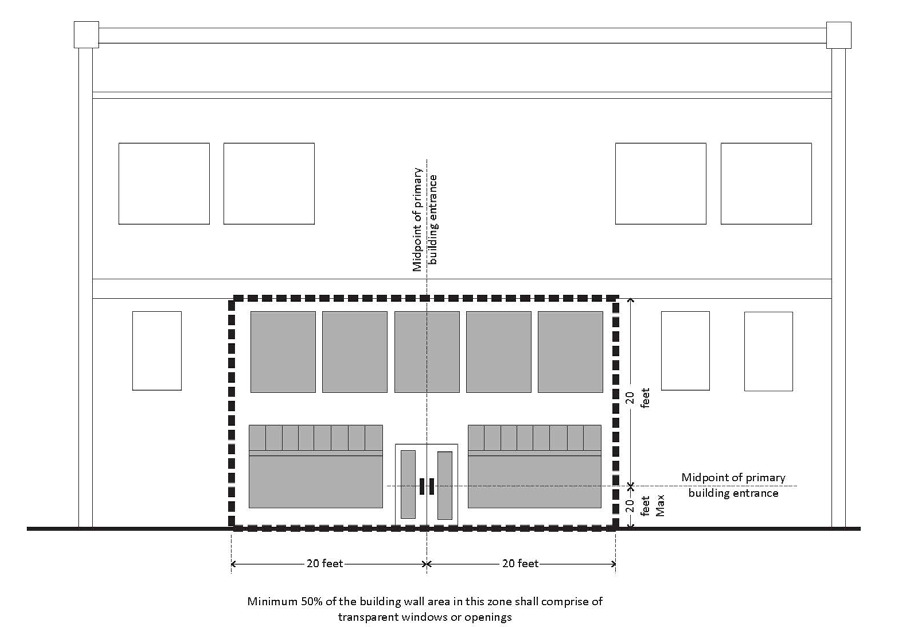
Figure 10-1.1606.D: Elevation Façade Transparency at Primary Entrance
E.
Pedestrian Access. ADA compliant pedestrian walkways shall be provided according to the following standards.
1.
Internal Connections. A system of pedestrian walkways shall connect all buildings on a site to each other, to on-site automobile and bicycle parking areas, and to any on-site open space or employee amenity areas.
2.
To Street and Sidewalk Network. Pedestrian walkways shall connect the primary building entry or entries to a public sidewalk on each street frontage.
3.
To Transit. Pedestrian walkways shall be provided from transit stops to building entrances.
4.
To Trails and Trail Access Points. Pedestrian walkways shall provide a connection from the site to any adjacent publicly accessible trails and shall provide a connection to trail access points or to off-site facilities that provide connection to nearby trail access points.
F.
Detached Accessory Buildings. Detached accessory buildings are permitted subject to the following requirements:
1.
Shall not exceed one story or 14 feet in height.
2.
Shall be located to the side or rear of the primary building.
3.
Shall be a minimum of 20 feet from any property line abutting an A, OS, R, MH, C or residential PD District.
4.
Shall be permanent in nature and composed of the same or complementary materials and colors utilized on the primary building. Tents, fabric canopies, and temporary trailers and containers may not be used as permanent accessory structures.
G.
Yard Exceptions. Required yards shall be at every point open and shall not be obstructed with non-movable features from the ground upward, except as specifically identified in another section of this Zoning Ordinance or as provided below:
1.
Architectural Projections. Architectural features such as bay windows, cornices and eaves may extend up to two feet into any required yard.
2.
Decks and Ramps. Decks and ramps less than 30 inches in height and screened with landscaping on all sides may be located within required yards as follows:
a.
Decks and ramps 12 inches or less in height may be located in any required yard.
b.
Decks and ramps between 12 to 30 inches in height may be located in any required rear or side yard but no closer than three feet to the rear or side property line.
H.
Fences, Walls, and Hedges.
1.
Maximum Fence Height. Fences, hedges and walls shall not exceed a height of four feet, measured at grade on either side of the fence, in a required front or side street yard or in a required landscape area along the perimeter of the site; and shall not exceed eight feet in height along rear and interior side yards.
2.
Required Walls Between Industrial and Other Districts. A solid masonry screening wall shall be provided where an Industrial District abuts any A, C, FP, MH, OS, R, or residential PD District.
a.
Timing. The screening wall shall be provided at the time of new construction or expansion of buildings, or changes from one use to another use that requires a use permit.
b.
Height. The screening wall shall not be less than eight feet in height, measured on both sides of the wall.
c.
Location. Screening walls shall be located interior to any required landscape area along the perimeter of the site and shall be arranged so as to substantially hide the building, facility, or activity required to be screened from adjoining lots.
d.
Design. Shall be constructed of split face or other decorative masonry material with a cap that is visible on both sides of the wall.
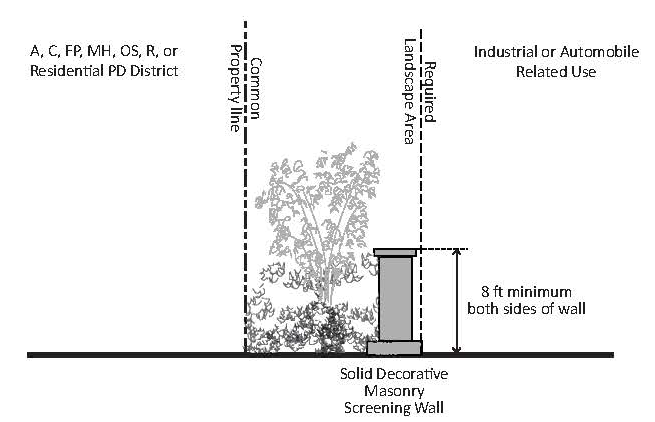
Figure 10-1.1606.H: Walls Between Industrial and Other Districts
3.
Security Fencing.
a.
Barb, razor wire or electric security fencing shall not be located within any required front or street side yard or within 20 feet of an A, OS, FP, R, MH, C, or residential PD district boundary.
b.
The portion of the fence consisting of barb or razor wire or similar security fencing shall not exceed three feet in height and shall be angled inward toward the subject property.
4.
Intersection Visibility. Where a lot is situated at the intersection of two or more streets, fences, hedges and walls shall not be erected, placed, planted, or allowed to grow in such a manner as to obstruct intersection visibility, pursuant to Hayward Traffic Code, Sections 9.01 through 9.05, relating to Obstructions to Visibility at Intersections Prohibited, as the same are now in effect or which may hereafter be amended or replaced.
I.
Screening.
1.
Mechanical and Electrical Equipment. All exterior mechanical and electrical equipment shall be screened or incorporated into the design of buildings so as not to be visible from public rights-of-way. Equipment to be screened includes, but is not limited to, all roof-mounted equipment, air conditioners, emergency generators, heaters, utility meters, cable equipment, telephone entry boxes, backflow preventions, irrigation control valves, electrical transformers, pull boxes, and all ducting for air conditioning, heating, and blower systems. Screening materials shall be consistent with the exterior colors and materials of the building. Exceptions may be granted by the Planning Director or other approving authority where screening is infeasible due to existing development or health and safety or utility requirements.
J.
Trash and Recycling Facilities.
1.
Trash and recycling facilities shall be located within an enclosure with a roof and gate. The enclosure shall be constructed of decorative wood or masonry wall or combination thereof (unless waived by the Planning Director or other approving authority) that is compatible with the design of the primary building on the site.
2.
Trash and recycling facilities shall be located no further than 100 feet from the use it is designed to serve, unless the site topography is such that adhering to this standard would interfere with the collection of trash.
K.
Window Coverage.
1.
Transparent windows and doors of buildings occupied by businesses engaging in retail sales, all or a portion of which are within five vertical feet of the floor and which are visible from public rights-of-way or pedestrian walkways or are otherwise visible by the general public from the exterior, shall remain free of coverings and materials that prevent views into or out of the stores.
2.
Retail goods intended or sale, or goods being stored, or other coverings or materials shall be located no closer than five feet from a transparent window or door, unless they are located beneath or above a window and are not visible from public right-of-way or pedestrian walkways or are otherwise visible by the general public.
3.
This section shall not apply to signs or retail goods that are presented within or adjacent to a window and that are a part of a decorative window display, as determined by the Planning Director or other approving authority.
L.
Outdoor Storage. Storage of goods, materials, machines, equipment, cargo structures, vehicles, trucks or parts outside of a building for more than 72 hours is allowed in conformance with the following:
1.
Accessory Use. The materials, products, or equipment stored shall be accessory to and necessary for the operation of a permitted use being conducted within a building on the site.
2.
No Activity Outside of a Building. All land uses and activities other than passive storage shall be conducted wholly within enclosed buildings. No processing or activities other than storage is permitted outside of the building(s).
3.
Materials. Hazardous or toxic materials shall not be stored outdoors. All goods, materials, machines, equipment, and other shall be contained or covered and shall not result in chemical or polluted stormwater run-off.
4.
Location Limitations. Storage shall be located outside of required yards, parking and circulation areas, and required landscaped areas. Outdoor storage shall be located a minimum of 20 feet from residentially zoned land.
5.
Screening. Storage shall be screened from view from any public street or freeway; existing or planned residential area; or publicly accessible open space area. The height of stacked materials shall not exceed the height of the screen.
6.
Surfacing. Storage shall be located on a paved or other surface approved by the City Engineer.
7.
Compatibility. The nature of the items being stored and its location, screening, and extent shall be compatible with adjoining uses, as determined by the Planning Director or other approving authority.
8.
Permit Requirements.
a.
Outdoor Storage 25 Percent or Less of Site Area. Outdoor storage in combination with a permitted primary use and occupying 25 percent or less of the total open site area is permitted on IL, IP and IG District properties, subject to standards contain in this section. Open site area excludes required yards and parking areas.
b.
Outdoor Storage Over 25 and less than 50 Percent of Site Area. Administrative Use Permit approval is required for all outdoor storage occupying more than 25 percent of the total open site area on IL, IP and IG District properties. Outdoor storage on IL and IP District properties may not exceed 50 percent of the site.
c.
Outdoor Storage Over 50 Percent of Site Area. Conditional Use Permit approval is required for all outdoor storage occupying more than 50 percent of the total open site area on IG District properties.
M.
Lighting, Exterior. Exterior lighting and parking lot lighting shall be provided in accordance with the Security Standards Ordinance (No. 90-26 C.S.) and be designed by a qualified lighting designer and erected and maintained so that light is confined to the property and will not cast direct light or glare upon adjacent properties or public rights-of-way. Such lighting shall also be designed such that it is in keeping with the design of the development.
N.
Landscaping. Landscaping and irrigation shall be provided in accordance Chapter 10, Article 12 Bay-Friendly Water Efficient Landscaping Ordinance, and the following.
1.
Landscape Areas. The following areas shall be landscaped, and may count toward the total area of site landscaping required by the zoning district regulations.
a.
Street Frontages. Street trees shall be planted along all street frontages at a minimum of one 24-inch box tree per 20 to 40 lineal feet of frontage or fraction thereof, except where space is restricted due to existing structures or site conditions.
b.
Required Yards. Required front, side, side street, and rear yard areas shall be landscaped, except for permitted driveways, and walkways.
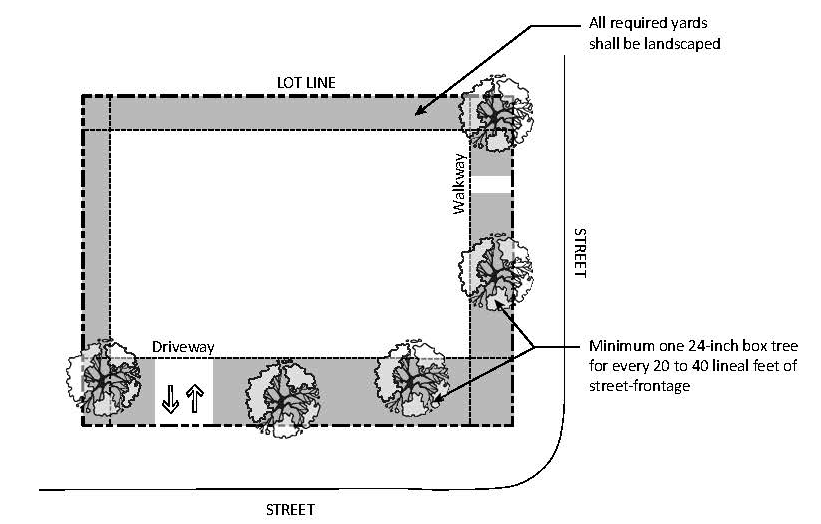
Figure 10-1.1606.N.1.b: Street Frontage and Required Yard Landscaping
c.
Buffer Areas.
i.
A minimum 12-foot wide landscape buffer planted with a minimum of one 15-gallon evergreen tree per 20 linear feet shall be provided along all property lines abutting the BART and railroad right-of-way.
ii.
A minimum 10-foot-wide landscape buffer planted with a minimum of one 15-gallon evergreen tree per 20 linear feet shall be provided in the following locations:
(1)
Along all property lines abutting an A, C, MH, OS, R, or Residential PD District.
(2)
Along all property lines abutting a publicly accessible open space area or trail alignment.
(3)
Along all property lines abutting an existing or future right-of-way.
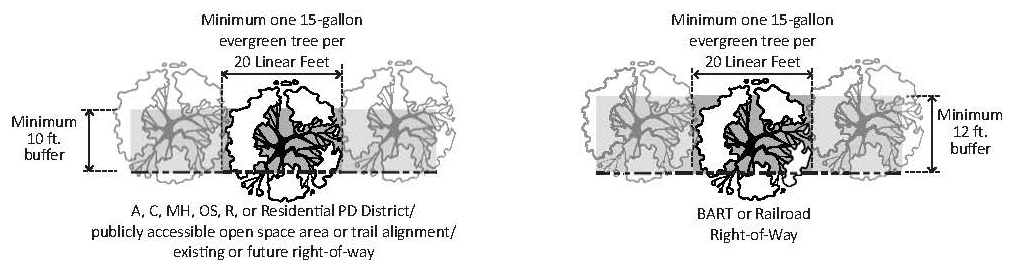
Figure 10-1.1606.N.1.c: Buffer Area Landscaping
d.
Building Perimeters. Portions of buildings facing a public street shall have one or more landscaped areas with a minimum five-foot-wide landscaped area along a minimum 50 percent of the building face.
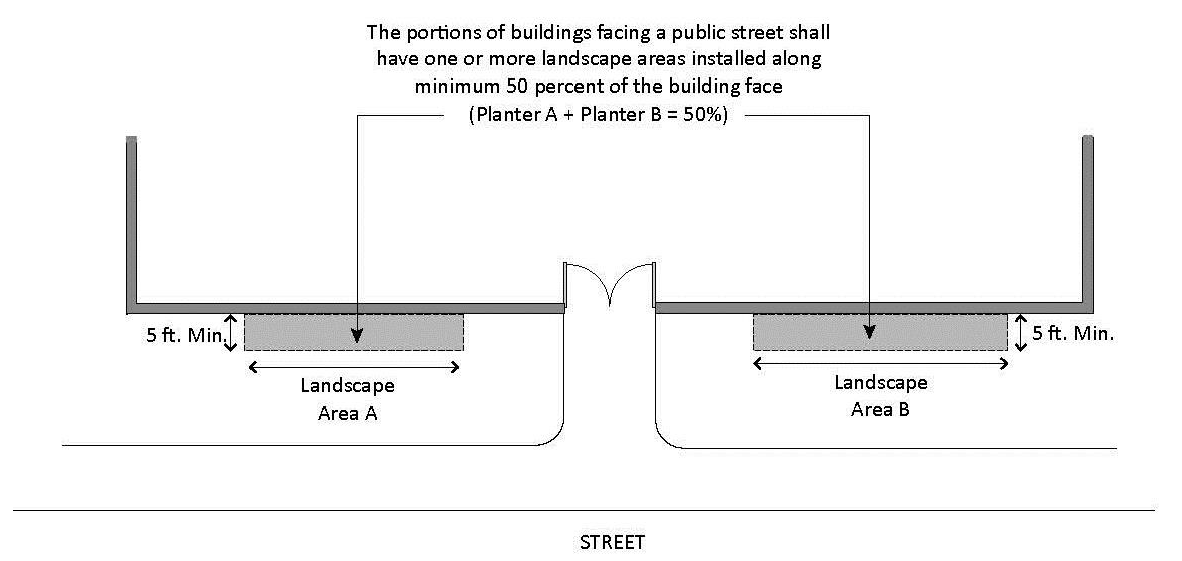
Figure 10-1.1606.N1.d: Building Perimeter Landscaping
e.
Parking Areas. See minimum parking lot landscaping and design standards in Chapter 10, Article 2, Off-Street Parking Regulations.
f.
Other Areas. All other areas not utilized for structures or paving shall be landscaped unless otherwise authorized by the Planning Director or other approving authority because of site constraints, existing or adjacent site conditions, or phased development.
2.
Materials. The sole use of bark, decorative paving, or decorative rock shall not be allowed in required landscape areas unless approved through an Alternative Landscaping Plan.
3.
Tree Preservation. Trees shall be preserved in accordance with Chapter 10, Article 15, Tree Preservation Ordinance.
4.
Alternative Landscape Plan. Modifications or revisions to the requirements of this Section related to buffers, building perimeter, parking lot landscaping and materials may be approved by the Planning Director or other approving authority where it is demonstrated that the intent of the landscape requirements of this Section will still be met. However, in all cases, all required setbacks shall be landscaped and the minimum site landscaping requirement shall be met. An Alternative Landscape Plan shall be prepared and shall clearly detail the modifications being requested from the provisions of this Section.
5.
Maintenance.
a.
Landscaping shall be maintained in a healthy, weed-free condition at all times and the irrigation system shall be designed and operated to reduce runoff, promote surface filtration, and minimize the use of fertilizers and pesticides.
b.
The owner's representative shall inspect the landscaping on a monthly basis and replace dead or dying plants (plants that exhibit over 30% dieback) within ten days of the inspection.
c.
Three-inch-deep mulch shall be maintained in all planting areas. Mulch shall be organic recycled chipped wood in the shades of Dark Brown Color.
d.
All trees planted as a part of the development as shown on the approved landscape plans shall be "Protected" and subjected to protection under Chapter 10, Article 15, Tree Preservation Ordinance.
e.
Irrigation systems shall be tested periodically to maintain uniform distribution of irrigation water; irrigation controller shall be programed seasonally; irrigation system should be shut-off during winter season; and the whole irrigation system should be flushed and cleaned when the system gets turn on in the spring.
O.
Parking and Loading. The parking and loading provisions of Article 2, Off-Street Parking Regulations, apply in the Industrial Districts except as provided below.
1.
Change of Use of Existing Buildings. When a new use is established in an existing building and there is no alteration that would change the building square footage on-site, no additional parking spaces shall be required.
2.
Parking Area Adaption Plan. Where parking is provided on any site at a ratio of less than one space per 500 square feet of floor area, a plan shall be provided demonstrating that parking area, in conformance with the requirements of this section and Article 2, providing a minimum of one parking space per 500 square feet of floor area can be accommodated on site without alteration to any structure.
3.
Mixed and Accessory Uses. The total requirement for off-street parking spaces shall be the sum of the requirements of the various uses on the site except as provided in Section 10-2.401, Shared Parking, Section 10-2.402, Off-Site Parking, and below.
a.
Square footage dedicated to accessory uses occupying no more than 30 percent of the gross floor area shall be subject to the same parking requirements of the primary use of the building in which it is located.
4.
Loading Area Orientation and Location. Truck loading areas shall not face the street.
a.
Exception. The loading area orientation and location requirement may be modified or waived through Site Plan Review where the Planning Director or deciding authority finds that the intended use of the property or the location of or shape of the site and/or existing development warrant a variation, that street-facing loading areas will exhibit architectural treatment, or will be enhanced with landscaping, in such a way as to minimize the visual impact at the street frontage, and there are specific features of the site and design of the building such that strict application of the orientation requirement is impractical.
5.
Bicycle Parking and Placement. All development shall provide short- and long-term bicycle parking spaces in conformance with the Building Code. Short-term bicycle parking shall be located near the project entrance in a well-lit, easily accessible location that does not block walkways. Long-term bicycle parking may be located within lockers or within the building(s) provided all employees have access to the long-term bicycle parking area(s).
P.
Employee Amenity Areas. All new development and additions that expand existing floor area by 25 percent or more, resulting in at least 10,000 square feet of floor area and employing 10 people or more, shall provide an employee use area at least 300 square feet in size. The employee use area shall be identified and improved as passive or active recreational space, or indoor or outdoor amenities for the use and enjoyment of employees.
Q.
Open Space. All new development and additions that expand floor area by 25 percent or more on sites two acres or more in size shall provide open space areas equal to 10 percent of the site area, or as modified through the Major Site Plan Review process if the approving authority finds that the reduction in open space would be off-set by employee or public amenities that enhance the quality of open space area provided. The open space area shall provide gathering space or opportunities for active or passive recreation, be centrally located, and include benches or other seating and other features that enhance the comfort, aesthetics, or usability of the space. The area provided to meet the open space requirement may count toward other site requirements such as landscaping, employee amenities, and stormwater retention and control if the area provided as open space also meets the criteria of those individual requirements.
R.
Sustainability Plan. All applications for new industrial development or redevelopment of a site shall include a Sustainability Plan that incorporates best practices of sustainability for the proposed Business operations and site-specific improvements. The Plan may include, but not limited to, recommendations for energy conservation and efficiency, green infrastructure, water conservation, reductions in air emissions, use of toxic materials, and recycling.
SEC. 10-1.1607 - PERFORMANCE STANDARDS.
A.
General Standard. Land or buildings shall not be used or occupied in a manner creating any dangerous, injurious, or noxious fire, explosive or other hazard that would adversely affect the surrounding area.
B.
Uses/Activities Shall be Conducted Indoors. All land uses, other than outdoor storage consistent with Section 10-1.1606(L), shall be conducted wholly within enclosed buildings.
C.
Measurement of Impacts. Measurements necessary for determining compliance with the standards of this Section shall be taken at the lot line of the establishment or use that is the source of a potentially objectionable condition, hazard, or nuisance.
D.
Dust, Fumes and Odors. Uses, activities, and processes shall not operate in a manner that emits excessive dust, fumes, odors, smoke, or particulate matter, unless authorized under federal, State, or local law. Sources of air emissions shall comply with all rules established by the Environmental Protection Agency (Code of Federal Regulations, Title 40), the California Air Resources Board, and the Bay Area Air Quality Management District.
E.
Electromagnetic Interference. No use, activity or process shall cause electromagnetic interference with normal radio and television reception, or with the function of other electronic equipment beyond the lot line of the site in which it is situated. All uses, activities and processes shall comply with applicable Federal Communications Commission regulations.
F.
Fire and Explosive Hazards. All activities, processes and uses involving the use of, or storage of, flammable and explosive materials shall be provided with adequate safety devices against the hazard of fire and explosion. Firefighting and fire suppression equipment and devices standard in industry shall be approved by the Fire Department. All incineration is prohibited with the exception of those substances such as, but not limited to, chemicals, insecticides, hospital materials and waste products, required by law to be disposed of by burning, and those instances wherein the Fire Department deems it a practical necessity.
G.
Glare. No use shall be operated such that significant, direct glare, incidental to the operation of the use is visible beyond the boundaries of the lot where the use is located.
H.
Hazardous and Extremely Hazardous Materials. In addition to all other applicable requirements of this Zoning Ordinance, including Section 10.1603(E), Hazardous Materials Use and Storage, the use, handling, storage and transportation of hazardous and extremely hazardous materials shall comply with the provisions of the California Hazardous Materials Regulations and the California Fire and Building Codes, as well as the laws and regulations of the California Department of Toxic Substances Control and the County Environmental Health Agency. Activities, processes, and uses shall not generate or emit any fissionable or radioactive materials into the atmosphere, a sewage system or onto the ground.
I.
Heat and Humidity. In no case shall heat emitted by a use cause a temperature increase in excess of five degrees Fahrenheit on another property.
J.
Noise. All uses and activities shall comply with the Noise Regulations contained in Chapter 4 of the Municipal Code.
K.
Waste Disposal.
1.
Discharges to Water or Sewers. Liquids and solids of any kind shall not be discharged, either directly or indirectly, into a public or private body of water, sewage system, watercourse, or into the ground, except in compliance with applicable regulations of the California Regional Water Quality Control Board and the requirements of the City of Hayward Public Works - Environmental Services Division.
2.
Containment. Wastes shall be handled and stored so as to prevent nuisances, health, safety and fire hazards, and to facilitate recycling subject to the review and oversight of the Hayward Fire Department - Hazardous Materials Division. Closed containers shall be provided and used for the storage of any materials which by their nature are combustible, volatile, dust, or odor producing or edible or attractive to rodents, vermin, or insects.
L.
Vibration. No vibration shall be produced that is transmitted through the ground and is discernible without the aid of instruments by a reasonable person at the lot lines of the site. Vibrations from temporary construction, demolition, and vehicles that enter and leave the subject parcel (e.g., construction equipment, trains, trucks, etc.) are exempt from this standard.
M.
Maintenance. The owner of each parcel shall, at all times, keep and properly maintain the entire premises in a safe, clean condition and in a good state of repair, complying in all respects with governmental, health, fire, and police requirements and regulations.
SEC. 10-1.1608 - NONCONFORMING USES, STRUCTURES, AND SITE DEVELOPMENT.
Uses, structures, and site development that were legally established but do not comply with the standards and requirements of this Ordinance are subject to the provisions of Section 10-1.2900, Nonconforming Uses, and the following.
A.
Additions and Alterations to Nonconforming Structures. Additions and alterations to nonconforming structures may be made provided the addition or alteration conforms with all the development standards of this Title and there is no increase in the nonconformity of the structure.
B.
Correction of Nonconforming Building Features and Discretionary Approvals. If any portion of a site or building are modified in conjunction with an application for a discretionary permit, then the site or building area that is the subject of the discretionary application shall be brought into substantial conformance with the Supplemental and Performance standards of this section.
C.
Correction of Nonconforming Building Features and Building Permit. For all projects requiring a building permit, structures that are nonconforming because they do not meet the requirements of Section 10-1.1605(C), Primary Building Entrance, or Section 10-1.1605(D), Façade Transparency at Primary Entrance, shall provide façade treatments, design details, or landscaping in such a way as to create or enhance visual interest from the street.

