
Jenks City Zoning Code
ARTICLE 3
- BASE DISTRICT SPECIFIC STANDARDS
Sec. 16-3-1.- Bulk and Dimensional Standards.
(A)
Table 16-3-1(A) addresses the requirements applicable to development or use of a lot in a residential zoning district.
(B)
Table 16-3-1(B) addresses the requirements applicable to development or use of a lot in an agriculture, office, commercial, or industrial zoning district.
(1)
ROC District Bulk and Dimensional Standards. The bulk and dimensional standards for the RTC—Riverfront Tourist Commercial District shown in Table 16-3-1(B) shall apply to all parcels in the ROC—River Oriented Commercial Legacy District.
(2)
CH District Bulk and Dimensional Standards. The bulk and dimensional standards for the CG—Commercial General District shown in Table 16-3-1(B) shall apply to all parcels in the CH—Commercial High-Intensity Legacy District.
(C)
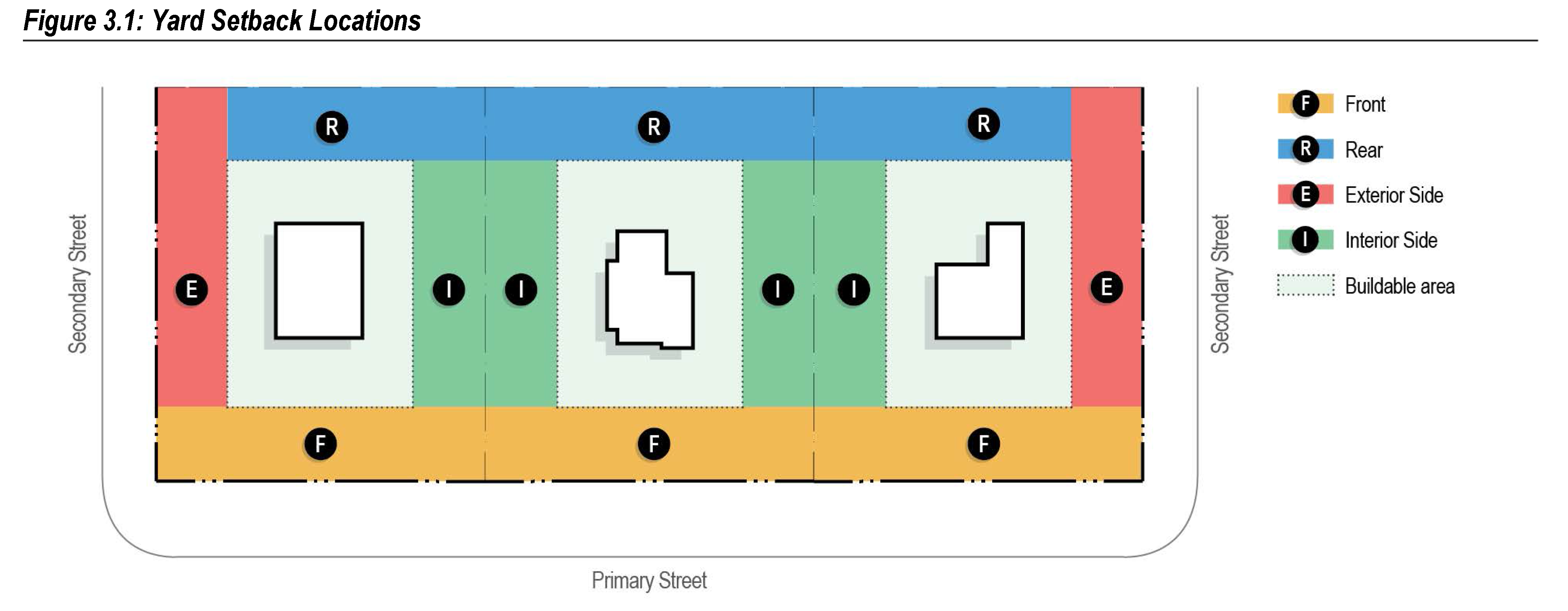
Compliance with Yard Requirements. Except as otherwise provided, required yards shall be open and unobstructed from the ground to the sky, unless otherwise permitted in this UDO. Yards provided for a building for the purpose of complying with the provisions of this UDO shall not be considered the yard for any other building, and yards provided for a lot shall not be considered the yard of any other lot.
(Ord. No. 1581, § II, 4-5-2022; Ord. No. 1624, § I(Att. A), 10-17-2023; Ord. No. 1658, § I(Att. A), 1-7-2025; Ord. No. 1668, § I(Att. A), 3-25-2025)
Sec. 16-3-2. - Calculating Dimensions.
(A)
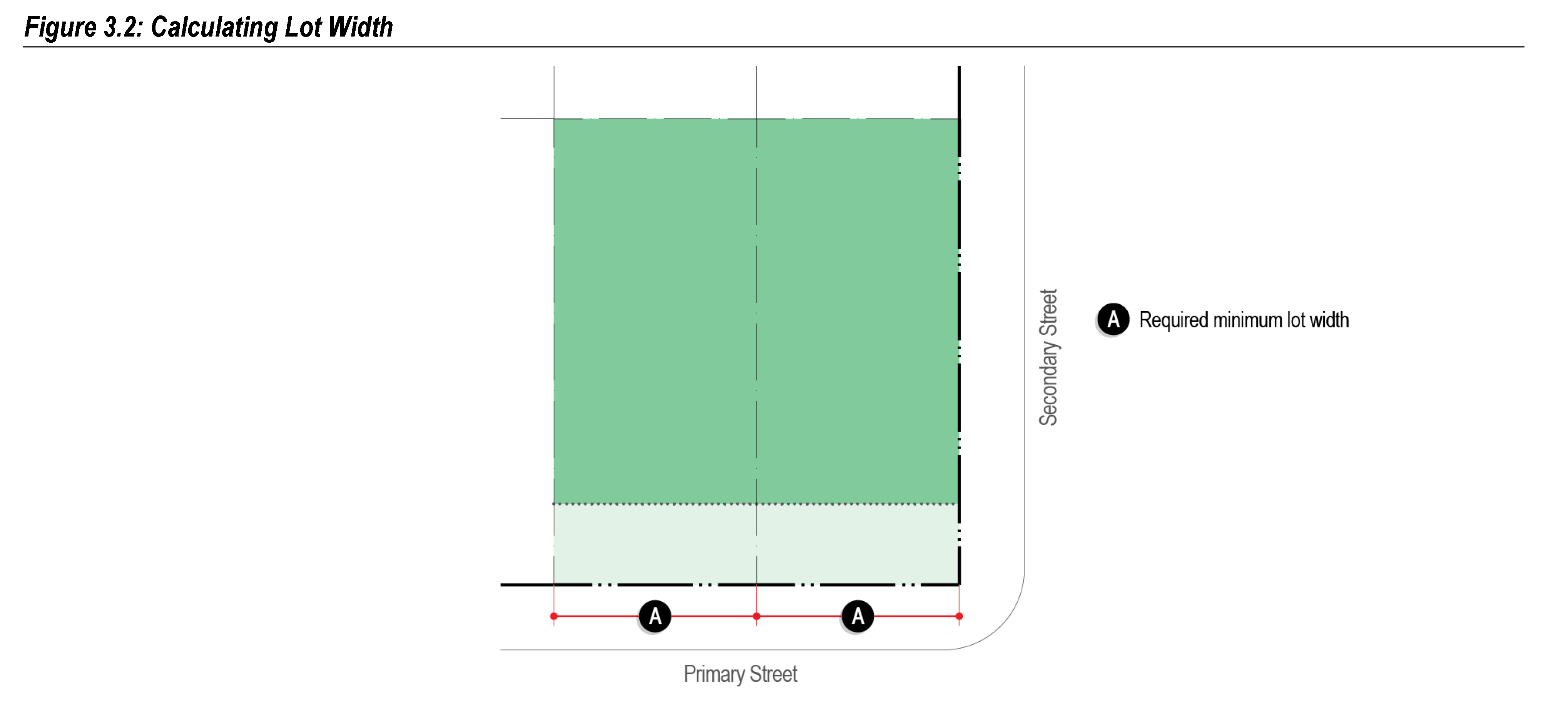
Lot Width. All lots shall abut upon a public or private street, and each lot shall have a minimum lot width measured at the property line.
(B)
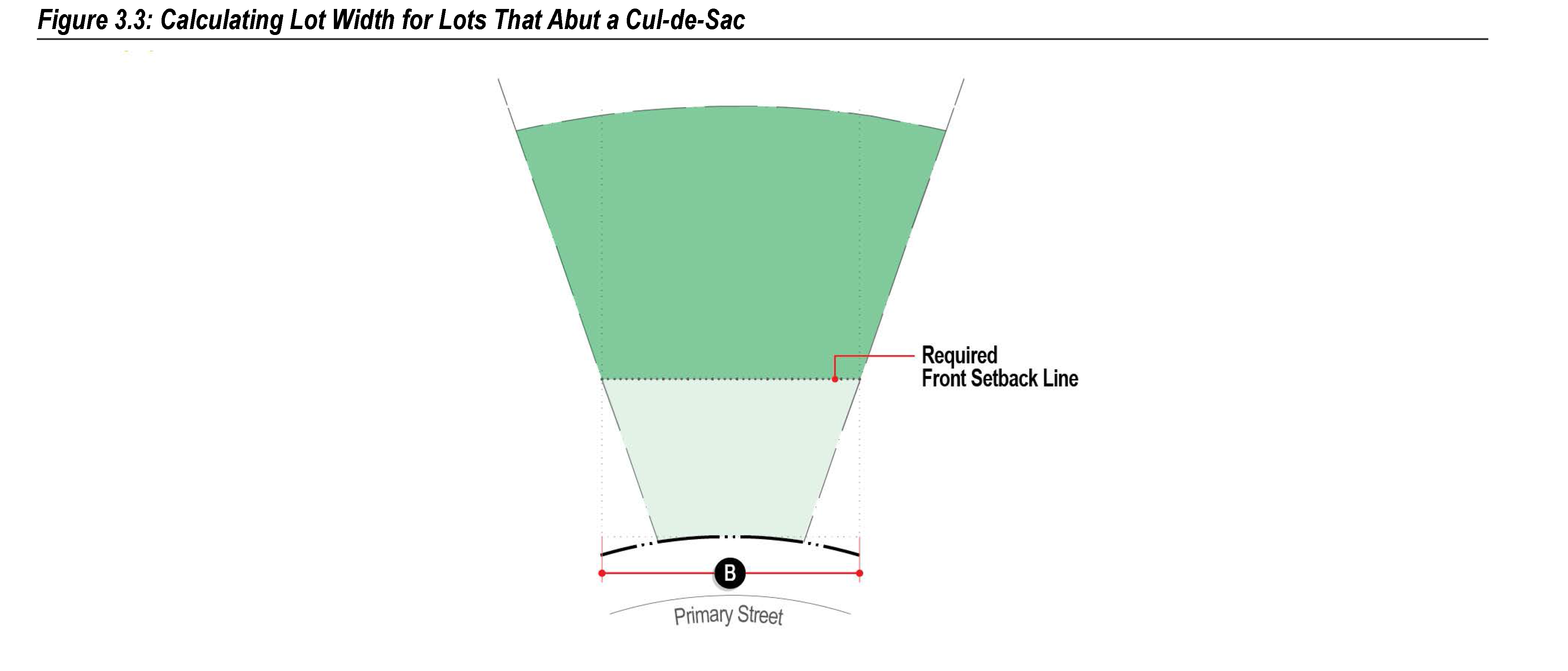
Lot Widths for Lots that Abut a Cul-de-Sac. The lot width of all lots which abut a cul-de-sac may be reduced by a maximum of 50 percent of the required lot width for the district in which it is located, as measured from the property line. The required lot width for the district shall be met at the front yard setback line.
(C)
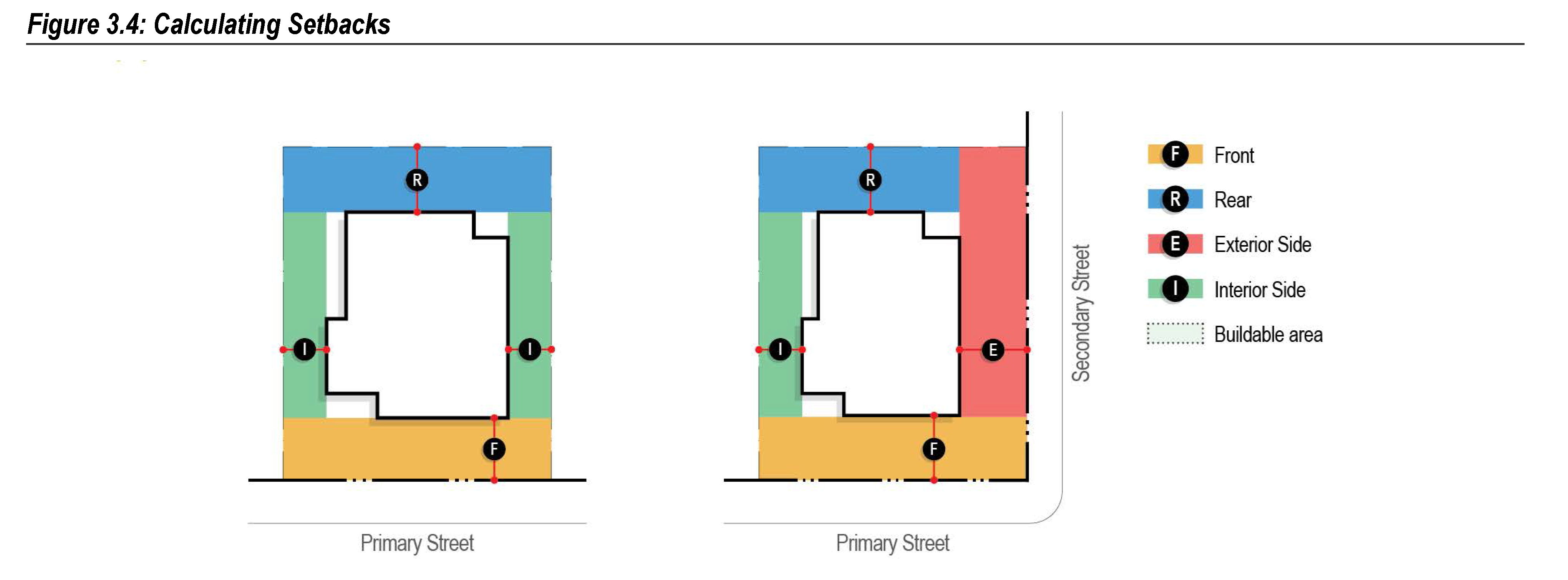
Yard Setbacks. A required yard setback shall be measured by the shortest distance between the principal building and the applicable lot line.
(D)
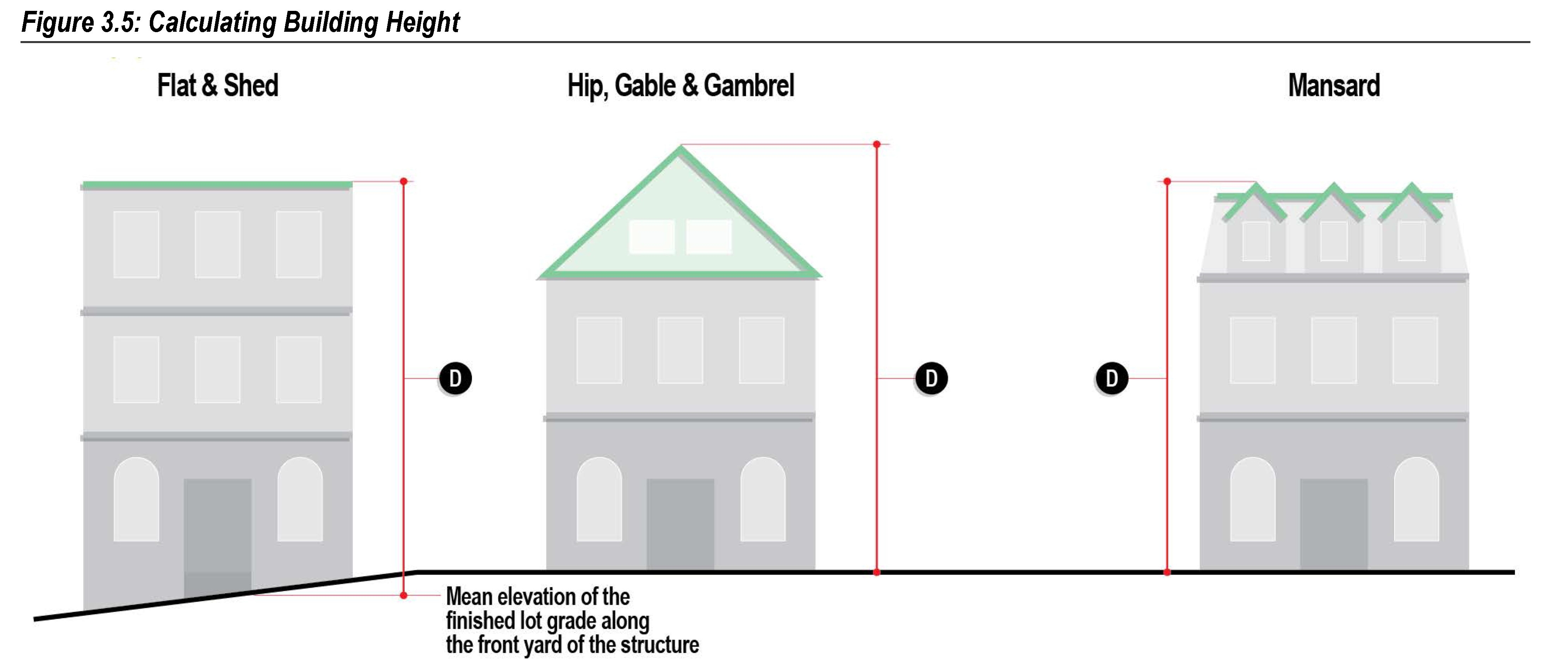
Height. Building height shall be the vertical distance measured from the mean elevation of the finished lot grade along the front yard of the structure to the highest elevation of the roof.
(E)
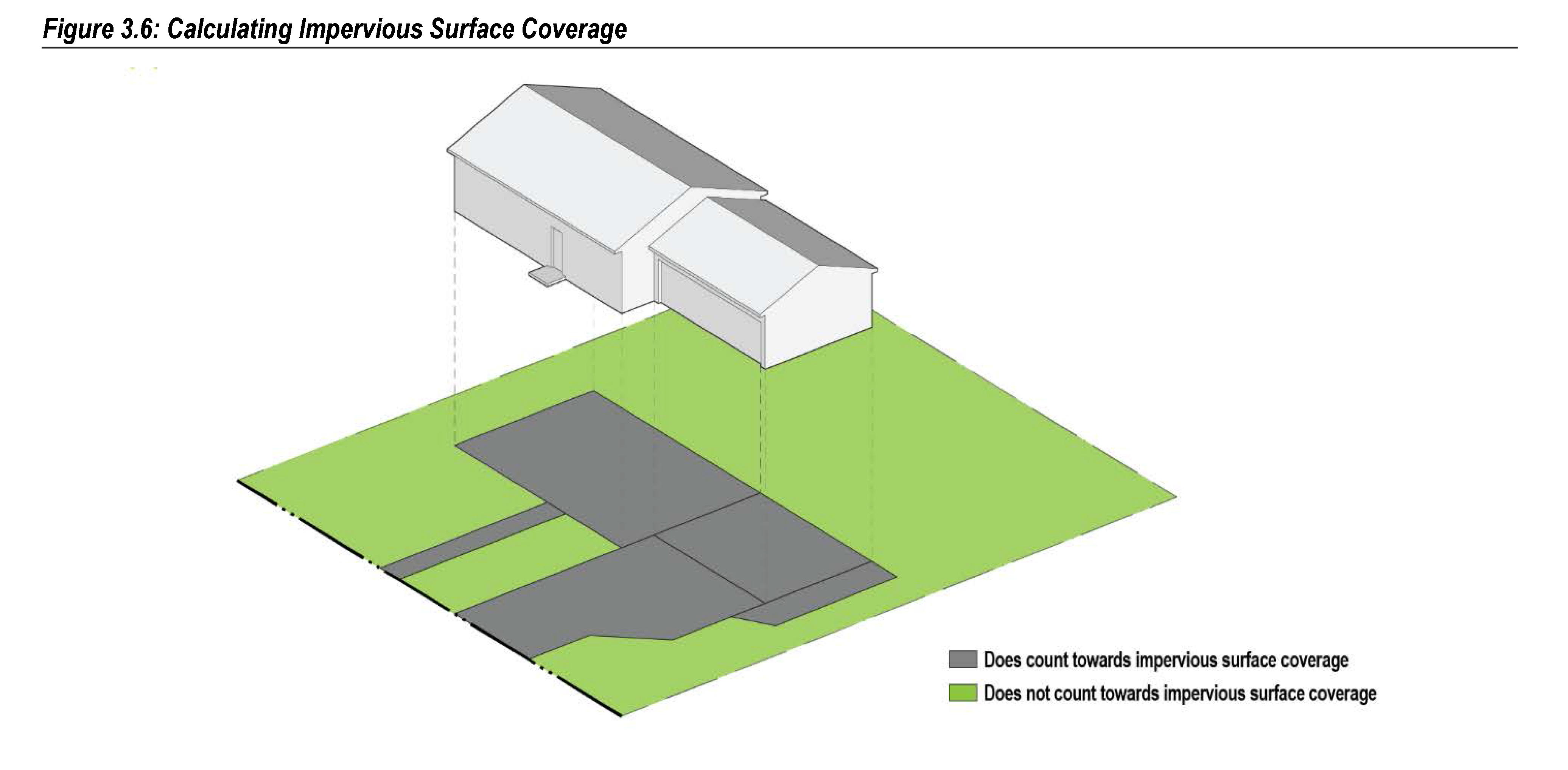
Impervious Surface Coverage. That portion of a lot that is covered by hard surfaces that impede infiltration of rainfall into the underlying soil profile, including all paved surfaces and principal and accessory buildings and structures.
(Ord. No. 1581, § II, 4-5-2022)
Sec. 16-3-3. - Exceptions to Bulk and Dimensional Standards.
(A)
Height Exceptions. The following structures, except where preempted by other government regulations, shall not be subject to the height limitations of the district in which they are located:
(1)
Farm buildings and structures.
(2)
Aerials, antennas, belfries, chimneys, cupolas, domes, elevators, mechanical equipment penthouses, flagpoles, masts, monitors, smokestacks, spires, towers (cooling, fire hose), and ventilators, provided they are not intended for human occupancy and do not exceed the height limitations of the district in which they are located by more than 20 percent unless approved as a special exception as detailed in section 16-9-6.
(B)
Lot Area and Width Exceptions. Except for fire protection and ambulance service, lot area and width requirements shall not apply to indoor or outdoor governmental uses or temporary uses as detailed in section 16-3-4(B) and (C).
(C)
Permitted Yard Obstructions. Obstructions are permitted in required yards as follows:
(1)
Architectural projections, including windowsills, belt courses, cornices, eaves, flues, and ornamental features may project a maximum of three feet into required yards, provided that they do not obstruct the light and ventilation of adjacent buildings and such projections are set back at least three feet from an adjacent side or rear lot line, and 20 feet from any front lot line.
(2)
Terraces, patios, uncovered decks, and ornamental features, which have no structural element more than three feet above or below the adjacent ground level, may project any distance into a required rear yard or ten feet into a required front or side yard. All such projections must be set back at least three feet from an adjacent side or rear lot line, and 20 feet from any front lot line.
(3)
Fire escapes, fireproof outside stairways, egress window wells, and balconies may project a maximum of three feet into required yards, provided that they do not obstruct the light and ventilation of adjacent buildings and such projections are set back at least three feet from an adjacent side or rear lot line, and 20 feet from any front lot line.
(4)
Lamp posts with a maximum height of ten feet, and flag poles up to 35 feet in height may be located within required yards, provided they are set back at least five feet from property lines.
(5)
Temporary ADA ramps may extend into a required front yard provided that the ramp is setback at least three feet from the side property line(s).
(6)
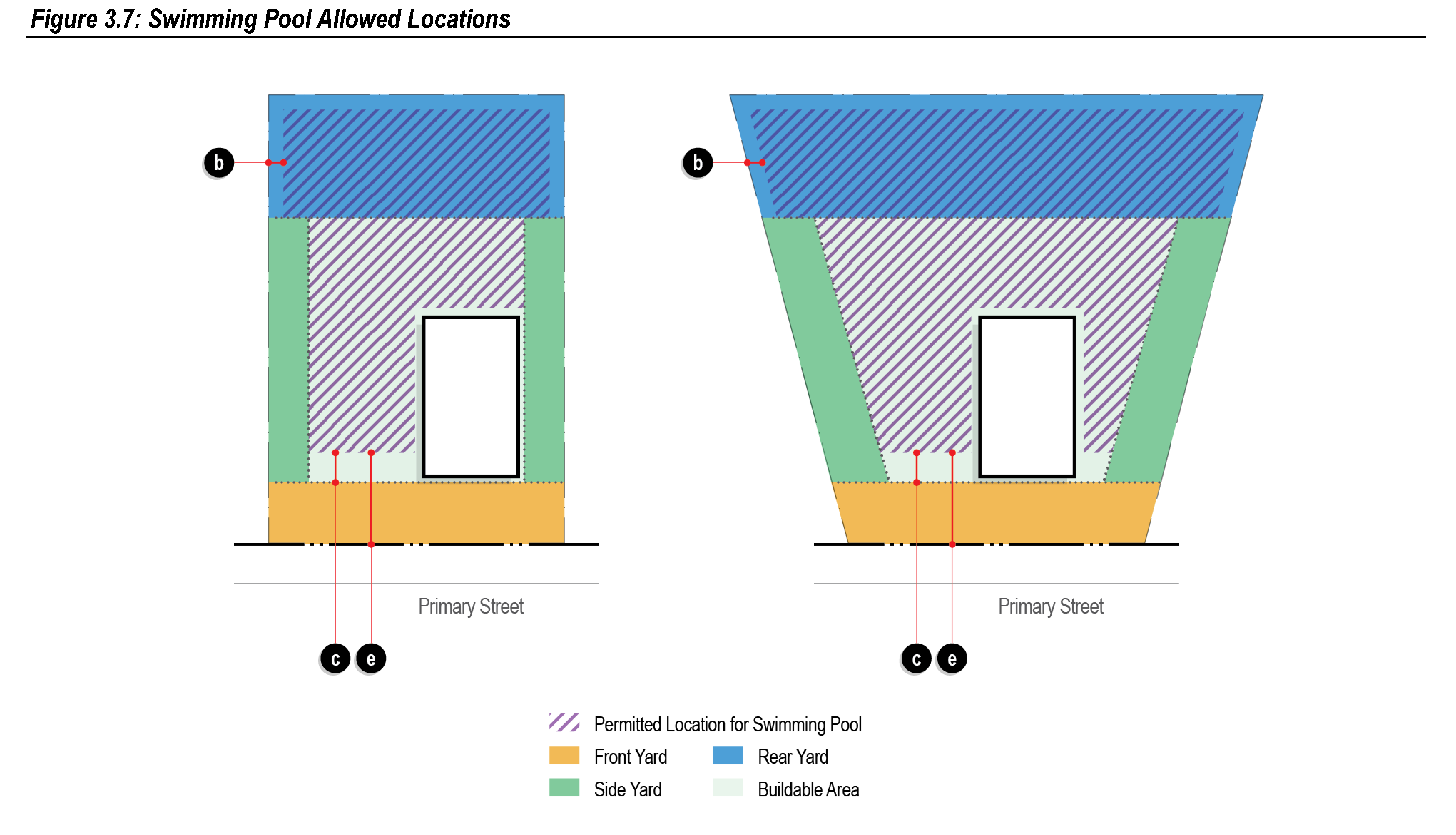
Swimming Pools and Associated Equipment. In the AG District or any residential district, swimming pools and associate equipment shall be located:
(a)
In a rear yard and/or within the buildable area of the lot,
(b)
A minimum of five feet from property lines,
(c)
A minimum of ten feet from the nearest front elevation of the primary building,
(d)
Outside of any utility easement or drainage easement, and
(e)
At least 25 feet from any street right-of-way.
(D)
Existing Building Encroachment on Front Yard Setbacks.
(1)
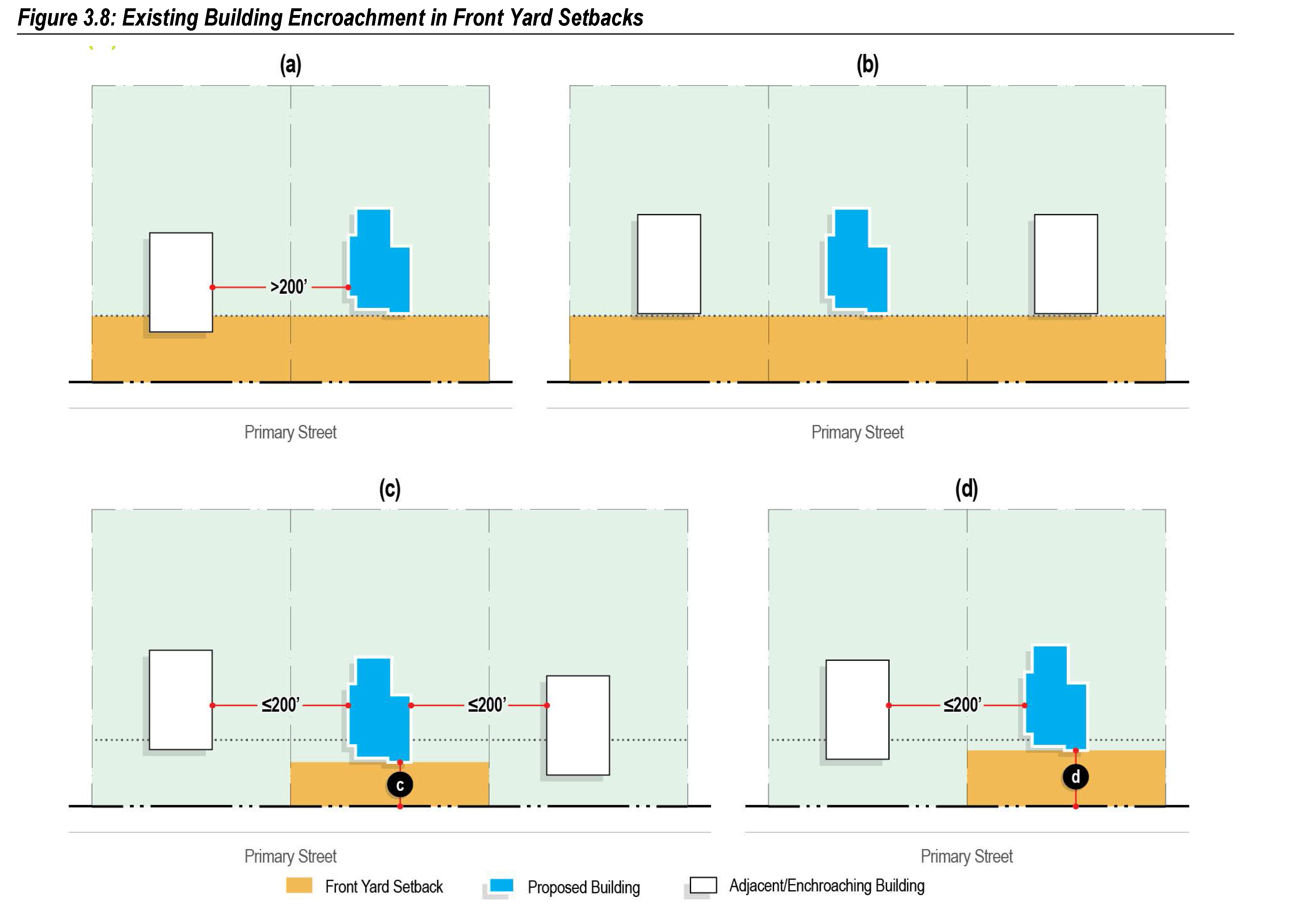
Where an existing building or buildings on the same side of the street and within the same block encroach on the required front yard setback, the required front yard setback for new construction shall be established as follows:
(a)
If the proposed building is to be located more than 200 feet from an encroaching building, the proposed building shall conform to the front yard or setback established for the district in which the proposed building is to be located.
(b)
If the proposed building is to be located between adjacent buildings which conform to the required front yard setback, or between a conforming building and an intersecting street, the proposed building shall conform to the front yard setback established for the district in which the proposed building is to be located.
(c)
If the proposed building is to be located within 200 feet of encroaching buildings on both sides and there are no intervening buildings, the front yard or building setback shall be the average of the front yard setback of the two nearest front corners of the encroaching buildings.
(d)
If the proposed building is to be located within 200 feet of an encroaching building on one side, but not both sides, and there are no intervening buildings, the front yard or building setback shall be the average of the front corner of the encroaching building and the front yard setback established for the district in which the proposed building is to be located.
(2)
Provided, however, that in the application of subsections (c) and (d) of this subsection, the front yard or building setback shall not be reduced by more than 20 percent of the minimum requirement.
(Ord. No. 1581, § II, 4-5-2022; Ord. No. 1624, § I, 10-17-2023)
Sec. 16-3-4. - Permitted, Conditional, Special Exception, and Specific Uses.
(A)
The following key is to be used in the interpretation of Table 16-3-4(B) and Table 16-3-4(C) below:
(1)
Permitted Uses. Uses which are marked as "P" in the tables shall be allowed subject to all applicable regulations of this UDO.
(2)
Conditional Uses. Uses which are marked as "C" in the tables shall be allowed upon the approval of a Conditional Use Permit as detailed in section 16-9-3(D).
(3)
Special Exception Uses. Uses which are marked as "SE" in the tables shall be allowed upon the approval of a Special Exception as detailed in section 16-9-6.
(4)
Specific Use Permits. Uses which are marked as "S" in the tables shall be allowed upon the approval of a Specific Use Permit (SUP) as detailed in section 16-9-7. Should the project deviate from development standards of the UDO a PUD would be required in lieu of the SUP.
(5)
Planned Unit Development. Uses which are marked as "PUD" in the tables shall be allowed upon the approval of a Planned Unit Development as detailed in section 16-9-8.
(6)
Temporary Uses. Uses which are marked "T" in the tables shall be allowed upon the approval of a Temporary Use Permit as detailed in section 16-9-3(G).
(7)
Prohibited Uses. A blank space in the tables indicates that a use type is not allowed in the respective zoning district unless it is otherwise expressly allowed by other regulations of this UDO.
(8)
Uses Not Listed. If a proposed use is not listed in the tables, the City Planner shall determine if the use is substantially similar to a use listed on the tables. If it is, they shall treat the use in the same manner as the substantially similar use. If not, the use shall be regarded as prohibited.
(9)
Additional Regulation. If a use has use specific standards they are referenced in this column. Use specific standards shall apply to permitted, special exception, and specific uses.
(10)
Site Plan Review Requirements. The site plan review requirements shall be required for applications as specified in section 16-9-3(C).
(B)
Residential District Permitted, Special Exception, and Specific Uses.
(C)
Nonresidential District Permitted, Special Exception, and Specific Uses.
(1)
ROC District Use Standards. The permitted, special exception, and specific uses for the ROC—River Oriented Commercial Legacy District shall be as specified for the RTC—Riverfront Tourist Commercial District.
(2)
CH District Use Standards. The permitted, special exception, and specific uses for the CH—Commercial High-Intensity Legacy District shall be as specified for the CG—Commercial General District.
(Ord. No. 1581, § II, 4-5-2022; Ord. No. 1624, § I(Att. B), 10-17-2023; Ord. No. 1625, § II(Att. A), 10-17-2023; Ord. No. 1679, § I, 1-20-2026)
Sec. 16-3-5. - Downtown Core District Specific Standards.
(A)
Development Plan. Prior to the change of occupancy, construction, or reconstruction of any building or structure, exterior remodeling, placement of exterior lighting or signs, or any proposed construction requiring the issuance of a building permit other than a small job permit for a property located within the DC—Downtown Core District, an application for Site Plan Review, as detailed in section 16-9-3(C), shall be made and shall be subject to the DC—Downtown Core District Specific Standards established in this section.
(B)
Exterior Building Materials. Exterior building materials shall be traditional, time and weather tested materials and techniques.
(1)
Ground Floor. Exterior building materials utilized on the ground floor shall be limited to wood, masonry, stucco, fiber cement, or stone veneer systems. Stone veneer systems utilized on the ground floor shall have a minimum thickness of three inches.
(2)
Upper Floors. Exterior building materials utilized on upper floors may include all materials permitted on the ground floor as well as EIFS or precast panels with inlaid or stamped brick texture. All materials utilized on upper floors shall have a minimum thickness of one inch and shall be structurally integrated into the façade of the building.
(C)
Type of Construction. Manufactured, mobile, and metal units shall be prohibited unless otherwise expressly permitted by this UDO.
(D)
Rooftop Equipment. All rooftop equipment shall be screened from view from any public street or sidewalk right-of-way by a parapet wall(s).
(E)
Alley Access. Where a lot abuts an existing alley, access shall be maintained or established and utilized to access offstreet parking, loading, and service areas.
(F)
Orientation. Main entrances to buildings shall be oriented towards the primary street to which it abuts. Secondary entrances are encouraged along secondary streets.
(G)
Parking.
(1)
Location.
(a)
Parking Areas Accessory to Primary Uses. Private off-street parking areas accessory to primary uses shall be located to the rear of buildings.
(b)
Parking Areas as Primary Uses.
(I)
Private off-street parking areas as primary uses of parcels fronting A street or aquarium place may be located anywhere on a lot pursuant to all other regulations of this UDO.
(II)
Private off-street parking areas as primary uses of parcels on Main Street shall be prohibited.
(2)
Nonresidential Uses. Nonresidential uses in the DC—Downtown Core District shall be exempted from providing offstreet parking.
(H)
Parking Area Landscape.
(1)
Parking Area Perimeter Landscape Zone. A low masonry wall the height of which provides effective screening to a maximum height of three feet shall be used in conjunction with required landscaping as detailed [in section] 16-6-3(D).
(2)
Parking Area Interior Landscape Zone. The parking area interior landscape zone requirements detailed in section 16-6-3(E)(3)(a) shall be met in all parking areas fronting A street or aquarium place regardless of building placement.
(I)
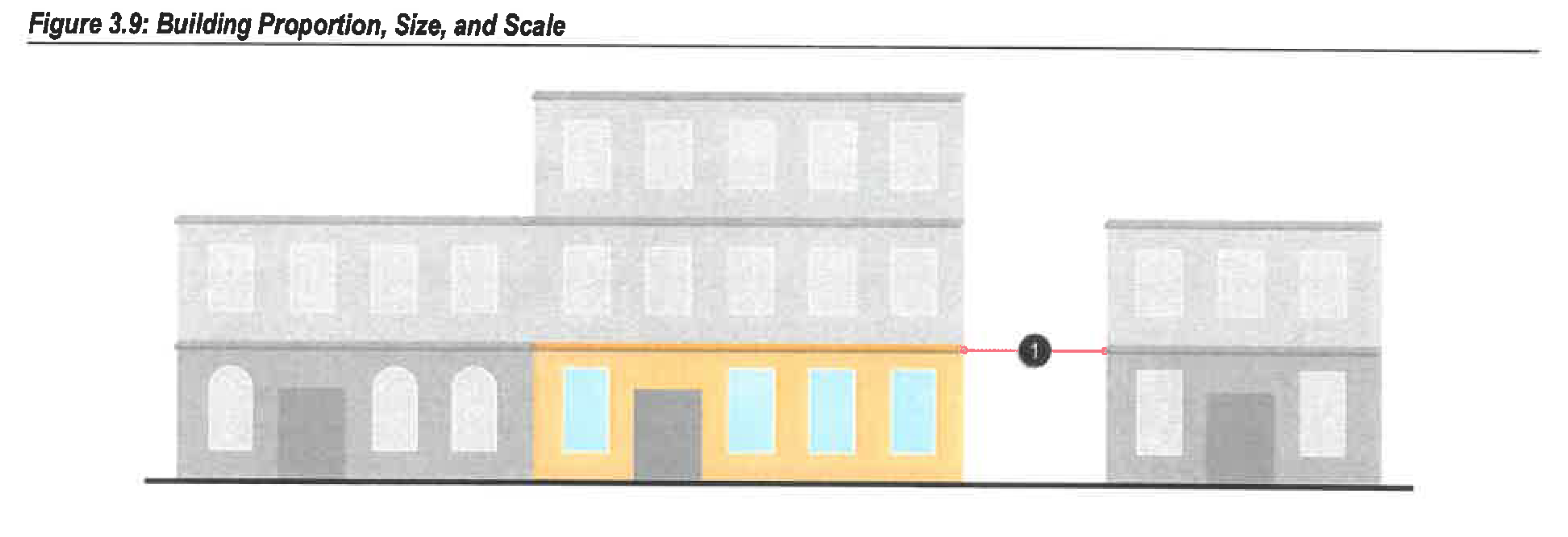
Proportion, Size, and Scale.
(1)
The height of the first floor of new development shall be consistent with the height of the first floor of existing adjacent development and shall be emphasized using storefronts and decorative cornices.
(I)
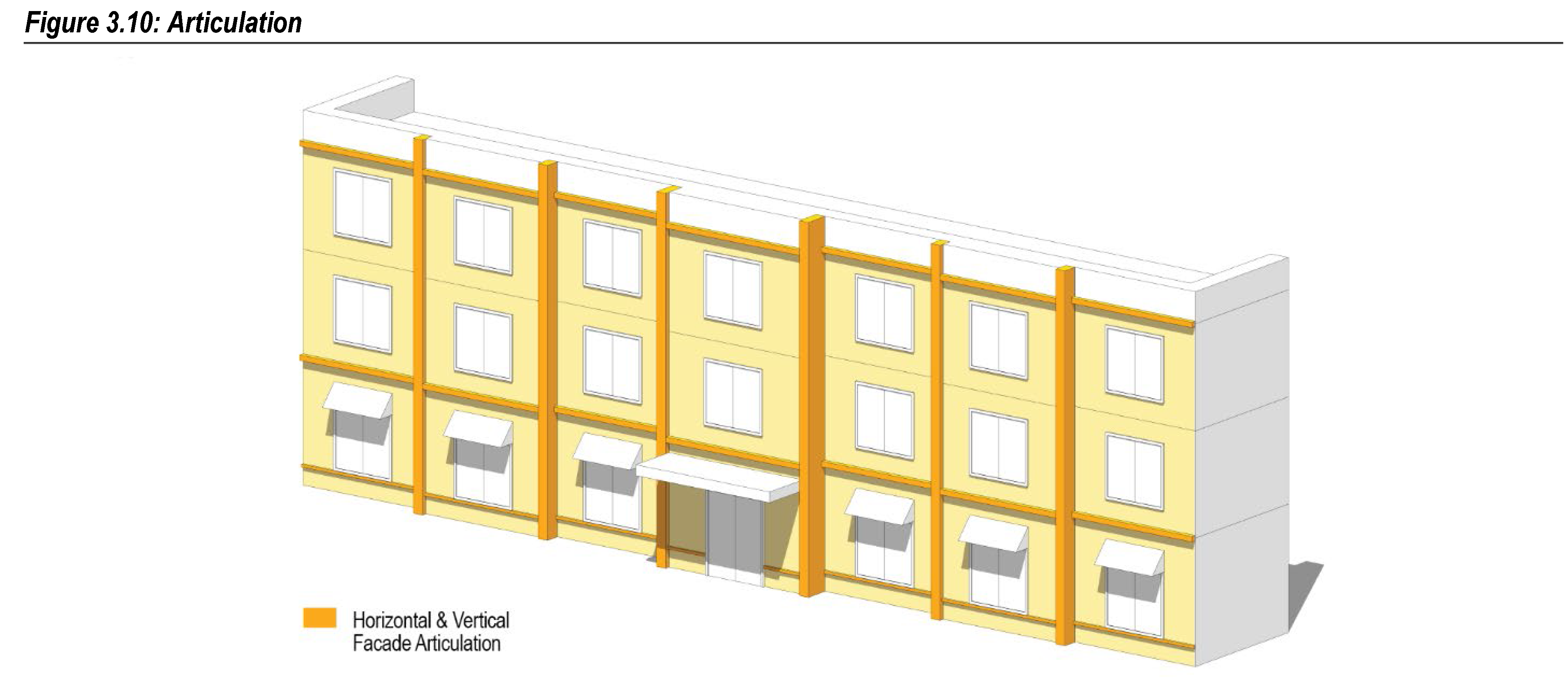
Articulation. All development shall include architectural details such as bulkheads, masonry piers, transoms, cornices, window hoods, and other similar details to provide horizontal and vertical façade articulation.
(J)
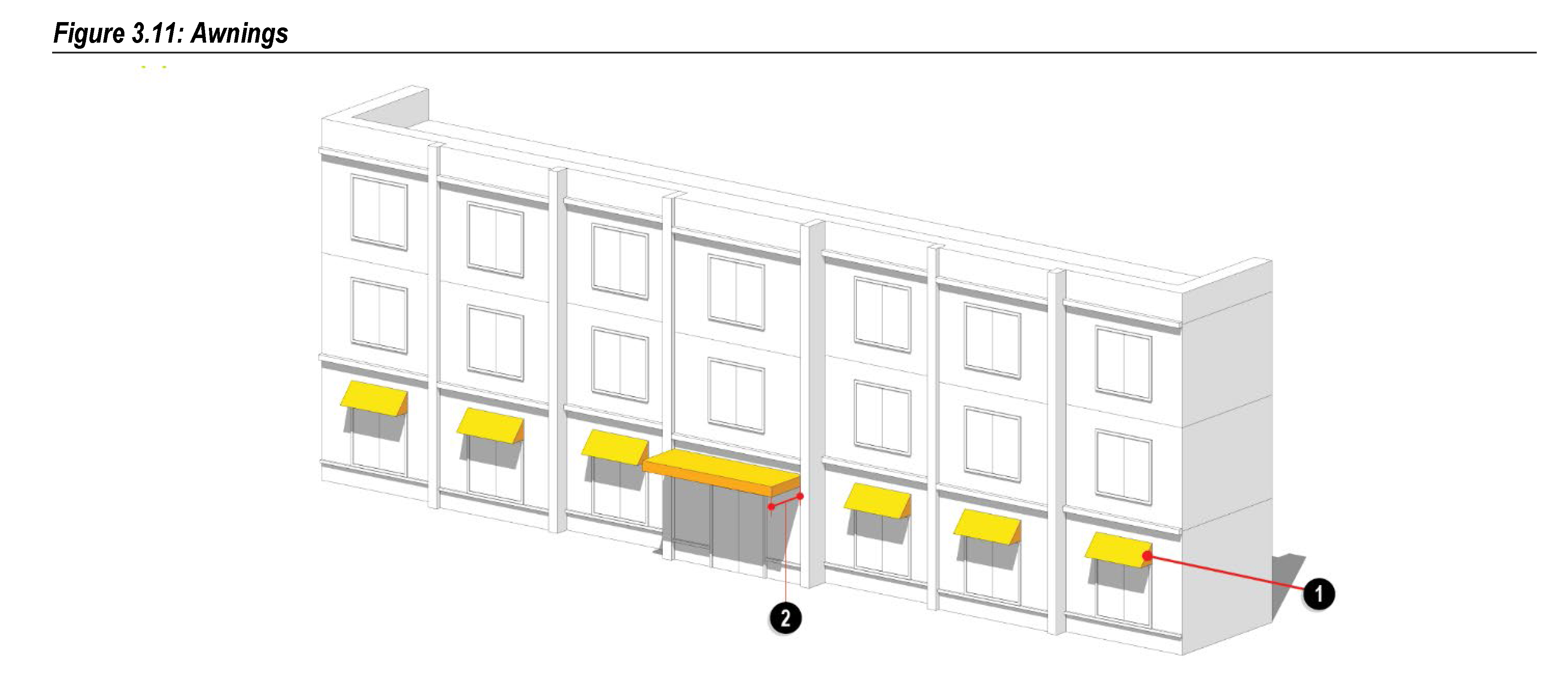
Awnings.
(1)
Building canopies, awnings, or similar weather protection devices are encouraged on the first floor of all buildings.
(2)
If provided shall project a minimum of three feet and a maximum of five feet from the façade.
(K)
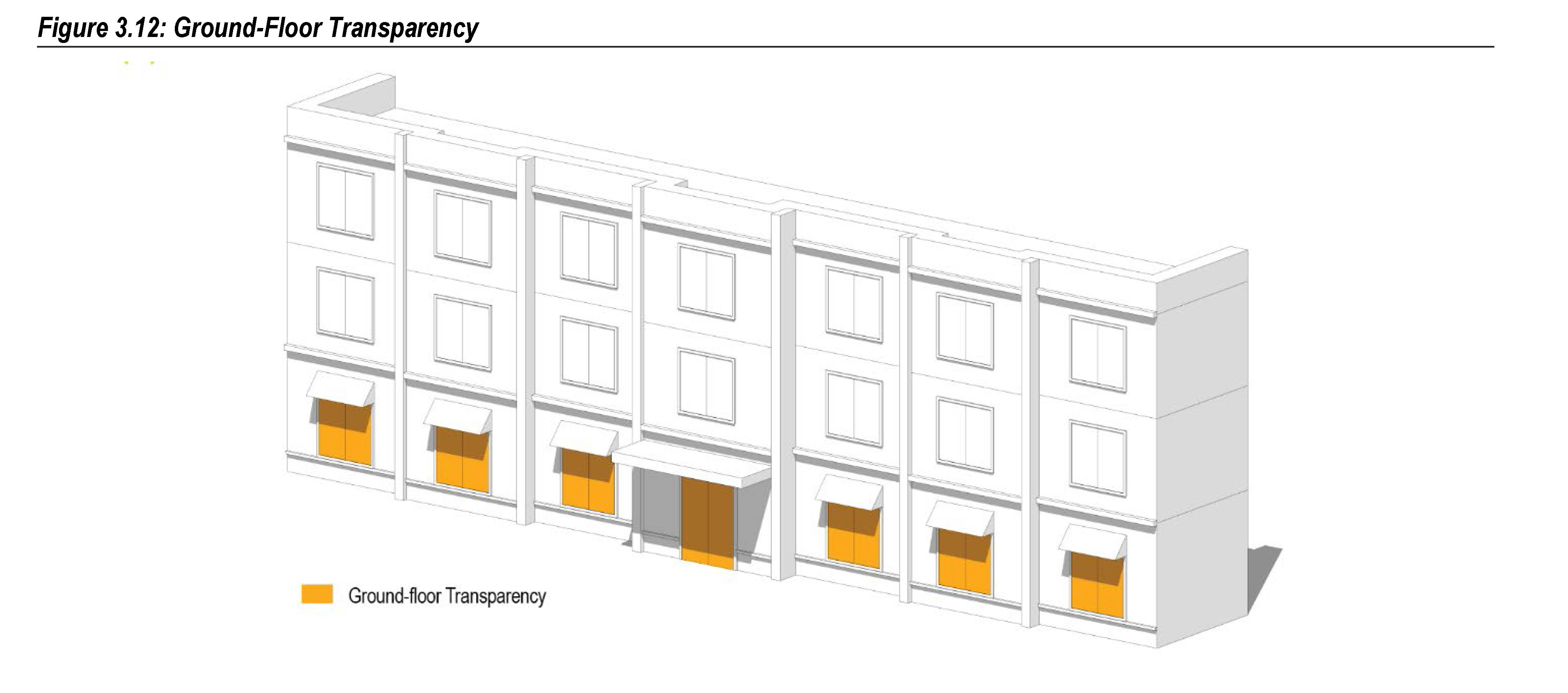
Transparency. The ground level of all buildings must offer pedestrian interest along sidewalks and pedestrian paths. Therefore, the first floor of any building façade facing a public right-of-way, with the exception of alleys, shall include transparent windows and/or doors arranged so that the uses inside are visible from and/or accessible to the street on at least 50 percent of the façade.
(Ord. No. 1581, § II, 4-5-2022; Ord. No. 1624, § I, 10-17-2023)
Sec. 16-3-6. - Riverfront Tourist Commercial District Specific Standards.
(A)
Development Plan. Prior to the change of occupancy, construction, or reconstruction of any building or structure, exterior remodeling, placement of exterior lighting or signs, or any proposed construction requiring the issuance of a building permit other than a small job permit for a property located within the RTC - Riverfront Tourist Commercial District, an application for Site Plan Review, as detailed in section 16-9-3(C), shall be made and shall be subject to the RTC - Riverfront Tourist Commercial District Specific Standards established in this section.
(B)
Exterior Building Materials. Exterior building materials shall be traditional, time and weather tested materials and techniques.
(1)
Ground Floor. Exterior building materials utilized on the ground floor shall be limited to wood, masonry, stucco, fiber cement, or stone veneer systems. Stone veneer systems utilized on the ground floor shall have a minimum thickness of three inches.
(2)
Upper Floors. Exterior building materials utilized on upper floors may include all materials permitted on the ground floor as well as EIFS or precast panels with inlaid or stamped brick texture. All materials utilized on upper floors shall have a minimum thickness of one inch and shall be structurally integrated into the façade of the building.
(Ord. No. 1581, § II, 4-5-2022)

