


Jersey Village City Zoning Code
ARTICLE XI
OFF-STREET PARKING AND DRIVEWAY STANDARDS12
Cross reference— Parking generally, § 66-41 et seq.
Sec. 14-281.- Off-street parking.
(a)
Minimum number of parking spaces. The developer shall provide off-street parking spaces in accordance with the standards in this article and table 14-11 when a building or structure is erected or an existing building enlarged, or an old structure or foundation is converted to a new use.
(b)
Designation of spaces. The following rules shall be applied in computing the number of off-street parking spaces required:
(1)
Fractional spaces shall be rounded to the next higher whole space.
(2)
Buildings or structures containing mixed uses shall provide off-street parking spaces equal to the sum of the various uses computed separately.
(3)
The required off-street parking spaces shall be located on the same lot as the building or use served, except as follows:
a.
When an increase in the number of off-street parking spaces is required by a change or enlargement of use, or where off-street parking spaces are provided collectively or used jointly by two or more buildings or establishments, the required off-street parking spaces may be located at a distance not to exceed 300 feet from an institutional building served or 500 feet from any other nonresidential building served; provided, however, that a written agreement thereto is properly executed and filed as provided in this subsection.
b.
When the required off-street parking spaces are not located on the same lot with the building or use served or when the required off-street parking spaces are provided collectively or used jointly by two or more establishments, a written agreement which ensures the retention of such spaces for this purpose shall be drawn and executed by the parties concerned, approved as to form by the city attorney, and filed for record in the office of the county clerk. A copy of the recorded agreement shall be filed with the application for a building permit or certificate of compliance if a change in use is involved.
c.
Not more than 50 percent of the off-street parking spaces required for theaters, bowling alleys, dancehalls, nightclubs, restaurants or similar uses may be provided and used jointly by uses not normally open, used or operated during the same hours as those listed.
d.
Not more than 80 percent of the off-street parking spaces required for a church, school auditorium or similar use may be provided and used jointly by uses not normally open, used or operated during the same hours as those listed.
e.
All parking lots, aisles and spaces required shall conform to the standards in this article.
f.
The above parking requirements shall not prohibit the enlargement of a building or structure, provided that excess spaces exist and such enlargement does not create a deficiency in the total number of off-street parking spaces.
g.
Any proposed land use, whether commercial, industrial or residential, not specifically designated in table 14-11, which by its nature generates or attracts vehicular activity or traffic, must provide sufficient parking spaces on or near the site to accommodate the vehicular load for residents, customers, clients, suppliers, etc., which would normally be associated with the proposed land use, to the satisfaction and approval of the city.
(c)
Parking lots.
(1)
All parking lots, parking spaces, maneuvering aisles, loading areas and driveways shall be paved according to the following minimum standards:
a.
Concrete: four inches thick, 3,000 psi and reinforced with 6 by 6 6/6 w.w.m. or #3 bars at 18 inches center-to-center, each way.
b.
Asphalt: two inches thick asphaltic concrete on a compacted base of 95 percent density.
c.
Grass paving reinforcement system: Plastic grass paver on compacted sandy gravel road base of 95 percent modified proctor density subgrade. A grass paving reinforcement system shall be allowed only for off-street parking spaces in excess of the minimum number of spaces required.
(2)
Location, size and number of handicapped parking spaces shall conform to the latest building codes, state and federal laws.
(3)
If a development requires ten or more parking spaces, up to ten percent of those spaces may be designed for compact cars. Effective stall dimension shall be a minimum of 7.5 feet by 15 feet, and each space shall be signed "COMPACT CARS ONLY."
(4)
All other parking spaces and lots shall meet the standards provided in figure 14-13.
(5)
All parking spaces shall be clearly delineated and designated by means of painted stripes, wheel stops, signs or other approved methods.
(6)
Parking lots and loading areas shall be designed to allow all vehicle maneuvers such as backing, parking and turning the vehicle, to take place on the lot.
(7)
Parking lots shall not be located closer than ten feet to a front lot line, ten feet to a side lot line or ten feet to a rear lot line.
(8)
The developer shall landscape parking lots according to the standards contained in section 14-311(e).
(9)
Where more than one parking lot is required to satisfy the standards of this chapter, a landscape area of at least ten feet in width shall separate parking lots; provided, however, that sufficient aisle connections shall be provided to ensure adequate traffic flow.
(10)
Parking lot lighting. Parking lot lighting shall be arranged to avoid a spillover outside property lines. Parking lots lights shall have a maximum height of 25 feet and be glare shielded. Lights mounted on a building shall not extend above the building roof line. Lighting for ground-mounted signs shall be affixed to the signs.
(d)
Off-street loading requirements.
(1)
Any use that receives or distributes materials or merchandise by vehicle shall provide off-street loading space in accordance with the requirements detailed in this subsection (d)(1).
a.
Industrial uses shall provide one loading space for each 10,000 square feet of floor area.
b.
Business uses shall provide one loading space for each 15,000 square feet of floor area.
(2)
The following rules shall be applied in computing the number of off-street loading spaces required:
a.
Floor area shall mean the gross floor area of the use.
b.
Fractional spaces shall be rounded to the next higher whole space.
(3)
The required off-street loading spaces shall be located on the same lot as the building or use served.
(4)
A loading space shall contain a minimum of 420 square feet and shall be approximately 12 feet in width and 35 feet in depth.
(Ord. No. 95-04, § 1(1001), 2-20-95; Ord. No. 97-09, § 1, 5-19-97; Ord. No. 97-32, §§ 1—3, 12-15-97; Ord. No. 99-17, § 15, 8-16-99; Ord. No. 02-21, § 1, 7-15-02)
Sec. 14-282. - Driveway design standards.
The developer shall design, construct, upgrade, reconstruct or repair driveway approaches (also referred to as driveways or curb cuts) for access to lots according to the standards of this section. Driveways shall be permitted only upon streets where full street improvements exist and are maintained as a public street; provided, however, that low volume (residential) driveways may be permitted on public alleys or other accepted public access facilities in existence prior to the adoption of this chapter. Prior to construction of a driveway, the developer shall obtain a driveway permit from the city.
(1)
Location and construction of low volume (residential) driveways.
a.
The developer shall locate low volume driveways entirely within the frontage of a lot and not less than one foot from any side property line as extended perpendicularly to intersect with the curb line.
b.
The developer shall construct driveways so as not to interfere with pedestrian crosswalks.
c.
The developer shall construct driveways a minimum of three feet from any obstruction such as a street light or utility pole, fire hydrant, traffic signal controller, telephone junction box, etc.
d.
The developer shall construct driveways to conform to the criteria shown in figure 14-14.
1.
With any new driveway construction or complete reconstruction of a driveway in district A, organic plant material such as grass or groundcover shall be provided along both sides of any portion of the driveway within the minimum required front yard area. Such organic plant material shall be placed immediately adjacent to the driveway edges and extend at least three feet from the driveway. Where the driveway is less than three feet from a side property line, within the minimum required front yard area.
i.
Where permeable material are used in such driveway construction or reconstruction, the surface area of the permeable materials installed shall not apply toward satisfaction of the residential landscaping standard in section 14-101 (b) under which a minimum of 50 percent of the required front yard and require side yard adjacent to a side street must be devoted to landscaping.
e.
The developer shall design driveways with curb return radii according to the classification of the street as provided in table 14-13.
(2)
Location and construction of high volume driveway approaches. The location of high volume driveway approaches is based on a number of factors, including the location of individual property lines and available street frontage, requirements of internal site design, number of vehicles to be accommodated and traffic safety. As a general rule, the farther from an intersection a driveway can be located, the less it will affect the through traffic and the less delay it will cause to vehicles using the driveway.
a.
The developer shall locate high volume driveway approaches entirely within the frontage of the lot and not less than ten feet from any side property line; provided, however, that joint driveway approaches may be permitted where a permanent joint access is provided by the respective property owners either through platting or a mutual access easement (see subsection (1)g. of this section).
b.
The developer shall consider the location of other driveways on the opposite side of the street when locating a proposed driveway. Where possible, driveways on both sides of the street shall be aligned in order to minimize adverse effects on through traffic and to optimize efficiencies of the driveway. Driveways directly opposite each other shall be given preference over staggered driveways. Where it is not possible to place driveways directly opposite each other, a driveway shall be placed so that adequate left turn storage capacity is provided in advance of each driveway in order to avoid the overlap of left turn movements.
c.
The developer shall construct driveway approaches so as not to interfere with pedestrian crosswalks.
d.
The developer shall construct driveways a minimum of three feet from any obstruction such as a street light or utility pole, fire hydrant, traffic signal controller, telephone junction box, etc.
e.
The developer shall construct high volume driveways to conform to the criteria shown in figure 14-15.
f.
When the owner or owners of two adjacent lots agree to permanently combine access points, the city shall grant an incentive bonus. The total lot width normally required will be reduced by 15 percent for each lot. In addition, where the agreement also includes a permanent mutual parking agreement, the required number of parking spaces may be reduced by 15 percent for each development.
g.
The maximum number of driveways per lot, based on the street classification and lot width shall be as shown in table 14-12.
h.
Driveways located on U.S. 290 and Beltway 8 shall be permitted from the state department of transportation.
TABLE 14-12
MAXIMUM HIGH VOLUME DRIVEWAYS PER LOT
TABLE 14-13
MINIMUM DRIVEWAY CURB RETURN RADIUS
i.
Driveway spacing for high volume driveways. The developer shall design and construct high volume driveways according to the spacing standards shown in figure 14-16.
(3)
Driveway design. Driveway design will depend on the land use, the volume, the character of both through traffic and driveway traffic and the speed of traffic on the through street. Dependent upon these factors, the critical design elements include radii of curb returns, driveway throat width and the angle between the driveway centerline and the edge of the roadway.
a.
The developer shall design driveway entrances to be able to accommodate all vehicle types having occasion to enter the lot, including delivery vehicles.
b.
The developer shall design driveways with curb return radii according to the type of driveway and the classification of the street as provided in table 14-13.
c.
Tapered or channelized deceleration lanes for vehicles turning right into high volume or intersection type driveways may be required on arterial streets. Where such lanes are necessary, additional right-of-way may also be required.
d.
The use of one-way driveways, supported by an appropriate internal circulation system, is encouraged so that entrances and exits can be separate driveways. This will promote smoother traffic flow into and out of the driveways and reduce traffic congestion in through lanes on the street.
e.
In some cases, where necessary for the safe and efficient movement of traffic, the city may require that special design techniques be employed to restrict or limit turning movements into or out of a driveway before the driveway can be approved. Such restrictions do not affect the number and location of access points as specified elsewhere. Figure 14-17 gives approved minimum design criteria for limited movement driveways. Deceleration lanes may also be required to be incorporated into the design.
f.
Driveway design standards for sites that include fuel pumps parallel to the adjacent street are necessary due to the special access needs that characterize such developments. The developer shall design sites for fuel pumps according to the following standards:
1.
The minimum corner clearance shall be a distance of 35 feet measured from the point of intersecting right-of-way lines to the point of tangency of the curb return radii leading to the driveway approach. The point of tangency of the curbline corner radius and that of the curb return radius of the driveway approach shall not be compounded.
2.
The minimum spacing between driveway approaches within the same property lines shall be 25 feet of tangent curb length.
3.
A minimum distance between the fuel pump, island and the right-of-way or property line shall be 25 feet.
g.
The developer shall design driveways so as not to interfere with, block, hinder or impede the flow of traffic on a public street. Where it is determined that a proposed driveway will block, hinder or impede the flow of traffic, the developer shall provide alternative means of ingress and egress to the lot or lots such that the negative effects of the proposed driveway are eliminated.
(4)
Restrictions. Access to public streets will not be provided where the conditions described in this subsection restrict or compromise the safety and efficiency of the access.
a.
Backing maneuvers. Access points shall not be approved for parking or loading areas that require backing maneuvers in a public street right-of-way except for single-family residential uses on local streets.
b.
Sight distance requirements. The minimum sight distance shall be provided at all access points as shown in figure 14-18.
c.
Signalized intersections. Access drives within the area of intersection of public streets where traffic signals are installed, or are anticipated to be installed in the future, will not be permitted.
d.
Provision of access. If a lot has frontage on more than one street, access will be permitted only on those street frontages where standards can be met. If a lot cannot be served by any access point meeting these standards, access points shall be designated by the city based on traffic safety, operational needs and conformance to as much of the requirements of these guidelines as possible.
e.
Driveway approaches. Driveway approaches shall not be constructed or used for the standing or parking of vehicles.
(5)
Abandoned driveway approaches. Whenever the use of any driveway approach is abandoned and not used for ingress and/or egress to the property abutting, it shall be the duty of the property owner of such abutting property to restore the curb according to the city's specifications.
(Ord. No. 95-04, § 1(1002), 2-20-95; Ord. No. 99-17, § 16, 8-16-99; Ord. No. 01-30, §§ 2, 5, 10-15-01; Ord. No. 2013-46, § 5(Exh. A), 12-16-13)
Sec. 14-283. - Table 14-11 off-street parking standards.
OFF-STREET PARKING STANDARDS
(1) For multifamily complexes with ten or more units, the required number of guest parking spaces will be determined by multiplying the total number of parking spaces otherwise required for such apartment complex by 0.05.
(2) Parking for office areas shall be provided according to the standards for office uses in this table.
(Ord. No. 95-04, § 1(table 10-1), 2-20-95; Ord. No. 97-32, § 4, 12-15-97; Ord. No. 2023-13, § 15, 5-17-2023)
Sec. 14-284. - Figure 14-13 parking lot dimensions.
PARKING LOT DIMENSIONS
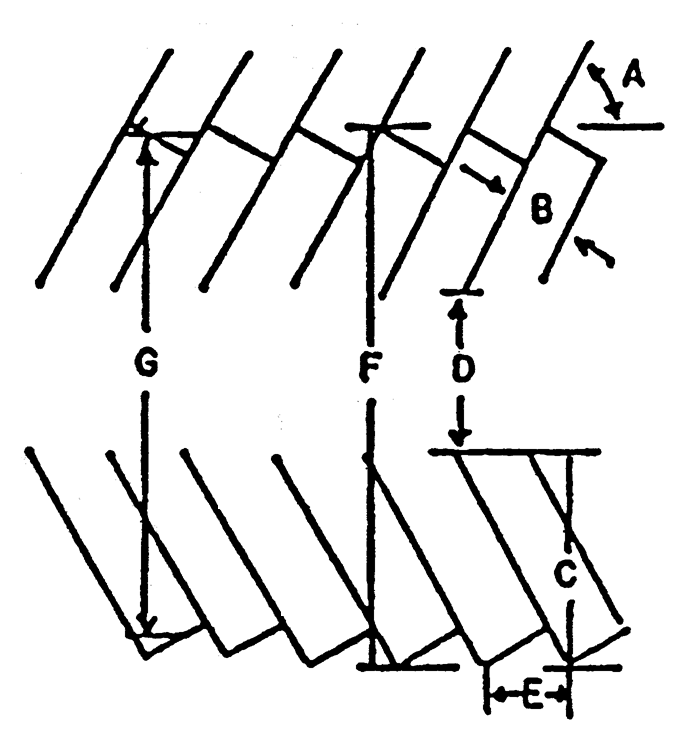
Parking Lot Dimension
A - Park angle.
B - Stall width.
Figure 14-13 Parking lot dimensions
C - 19 feet stall-to-curb.
D - Aisle width.
(a) - One-way traffic.
(b) - Two-way traffic.
E - Curb length per car.
F - Center-to-center width
(curb-to-curb module).
G - Center-to-center width module
(assuming front bumper overhang).
(Ord. No. 95-04, § 1(fig. 10-1), 2-20-95)
Sec. 14-285. - Figure 14-14 residential (low volume) driveway criteria.
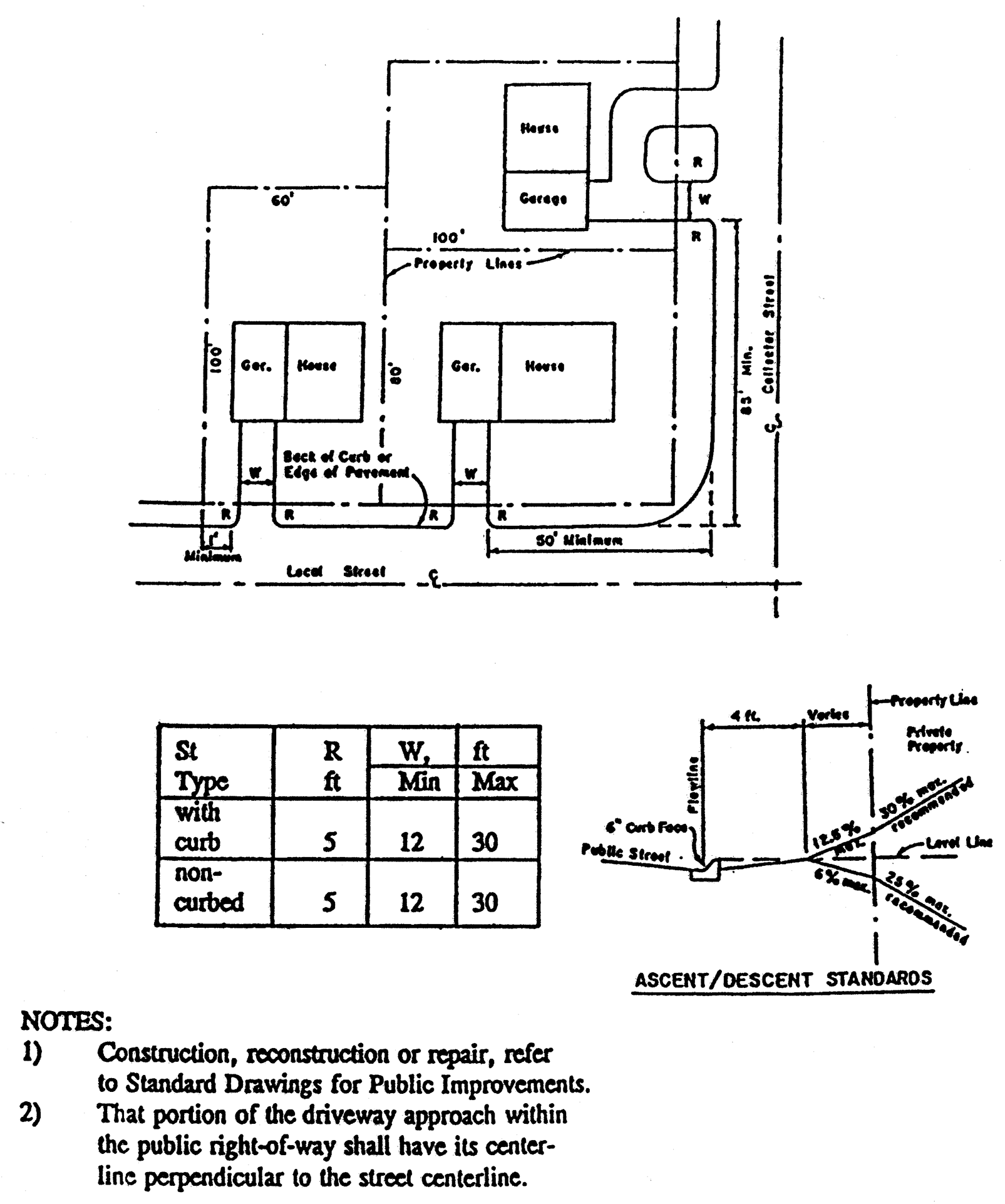
Figure 14-14 residential (low volume) driveway criteria
(Ord. No. 95-04, § 1(fig. 10-2), 2-20-95)
Sec. 14-286. - Figure 14-15 entrance and exit dimensions for high volume driveways.
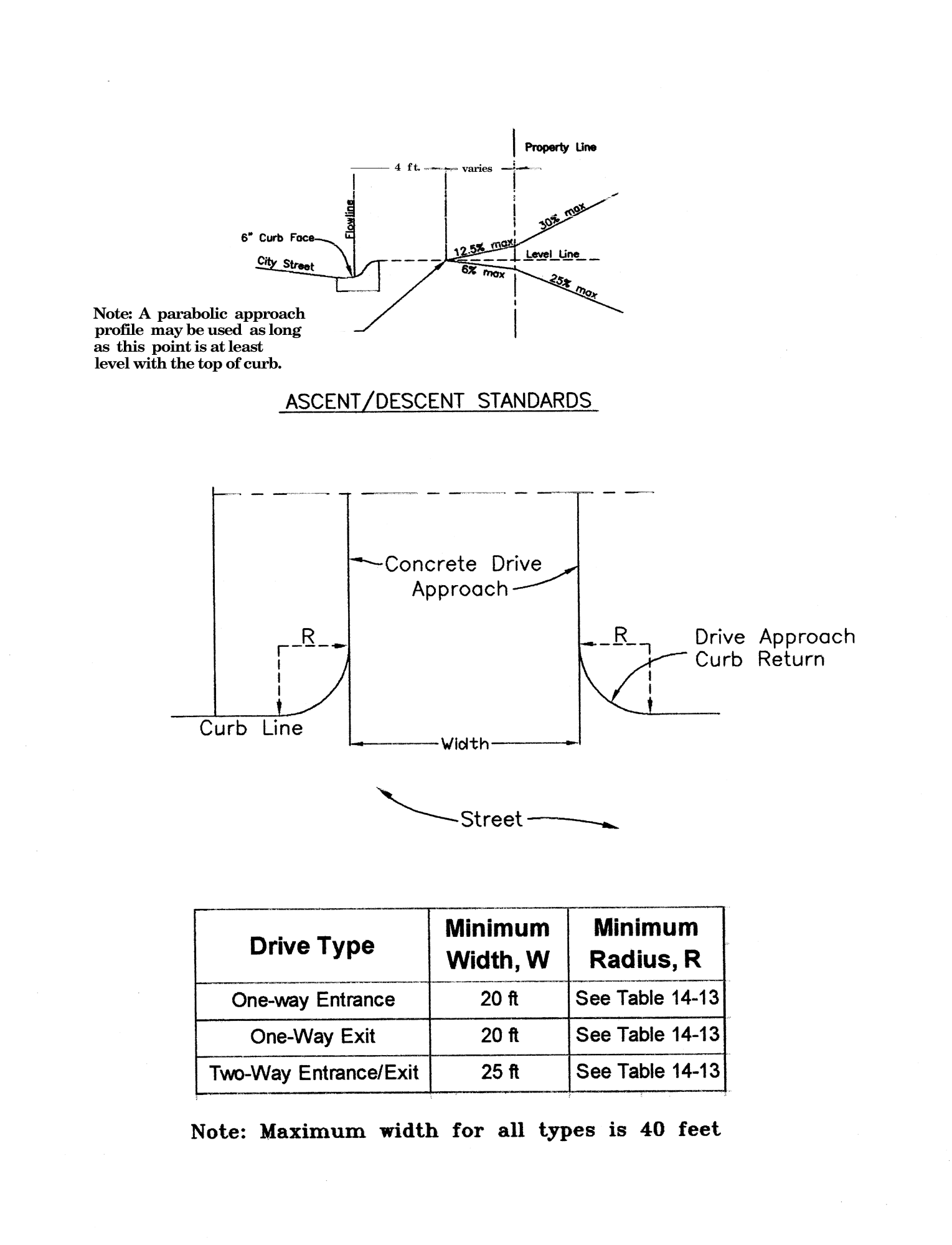
Figure 14-15 Ascent/Descent Standards
(Ord. No. 95-04, § 1(fig. 10-3), 2-20-95; Ord. No. 01-30, § 4, 10-15-01)
Sec. 14-287. - Figure 14-16 high volume driveway spacing criteria.
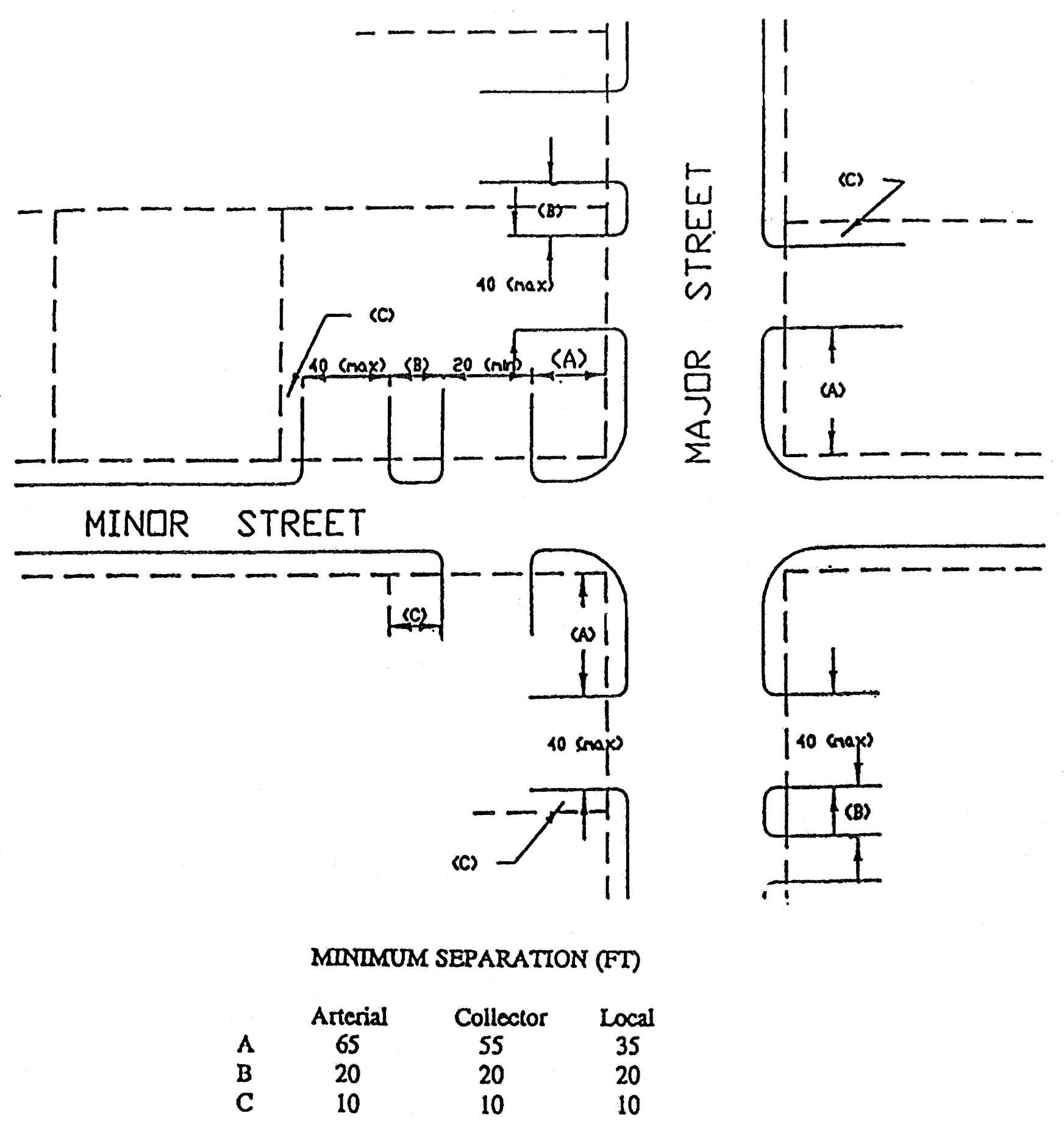
Figure 14-16 High Volume Driveway Spacing
(Ord. No. 95-04, § 1(fig. 10-4), 2-20-95)
Sec. 14-288. - Figure 14-17 design criteria for limited movement driveway.
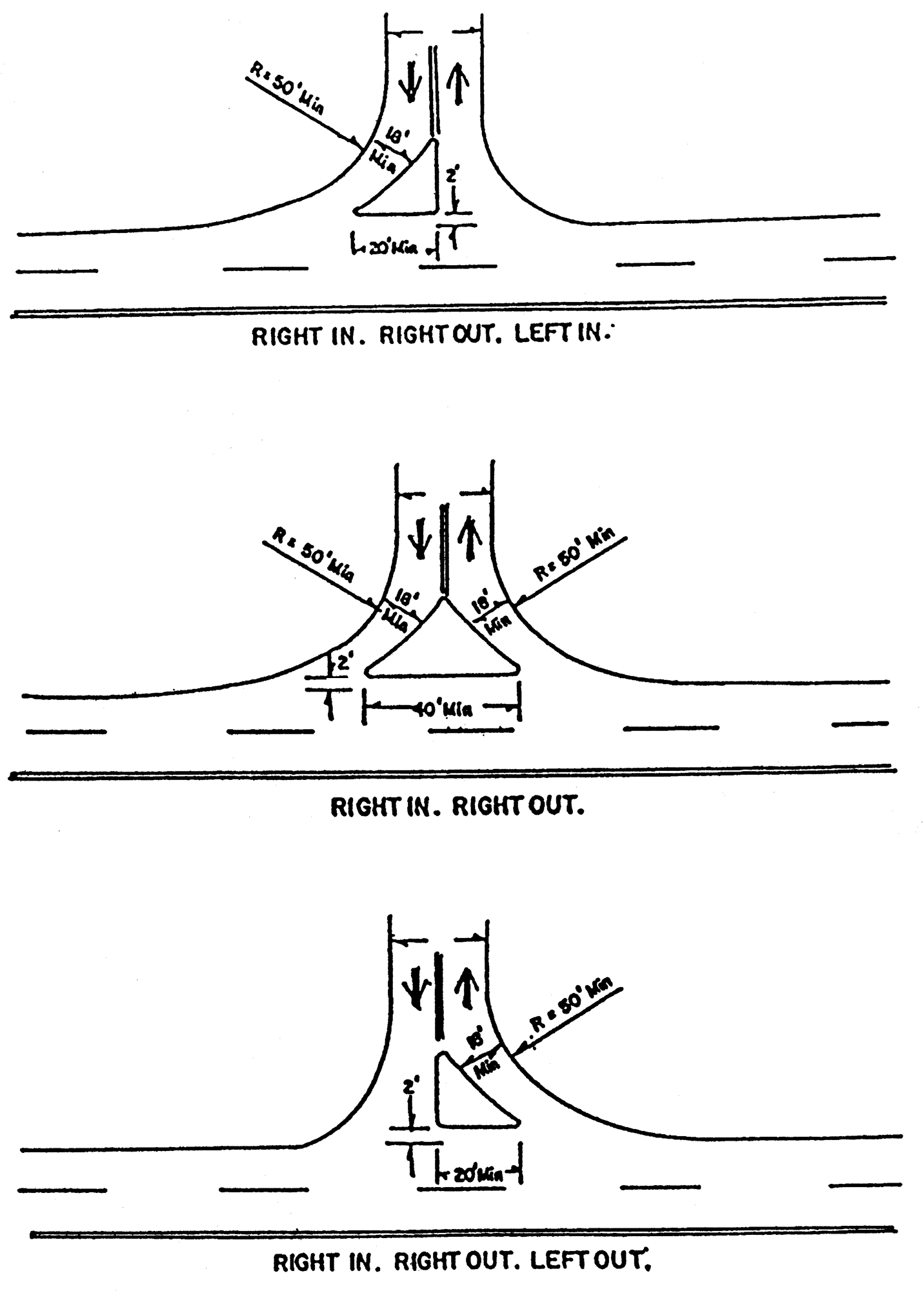
Figure 14-17 design criteria for limited movement driveway
(Ord. No. 95-04, § 1(fig. 10-5), 2-20-95)
Sec. 14-289. - Figure 14-18 sight distances for driveway design.
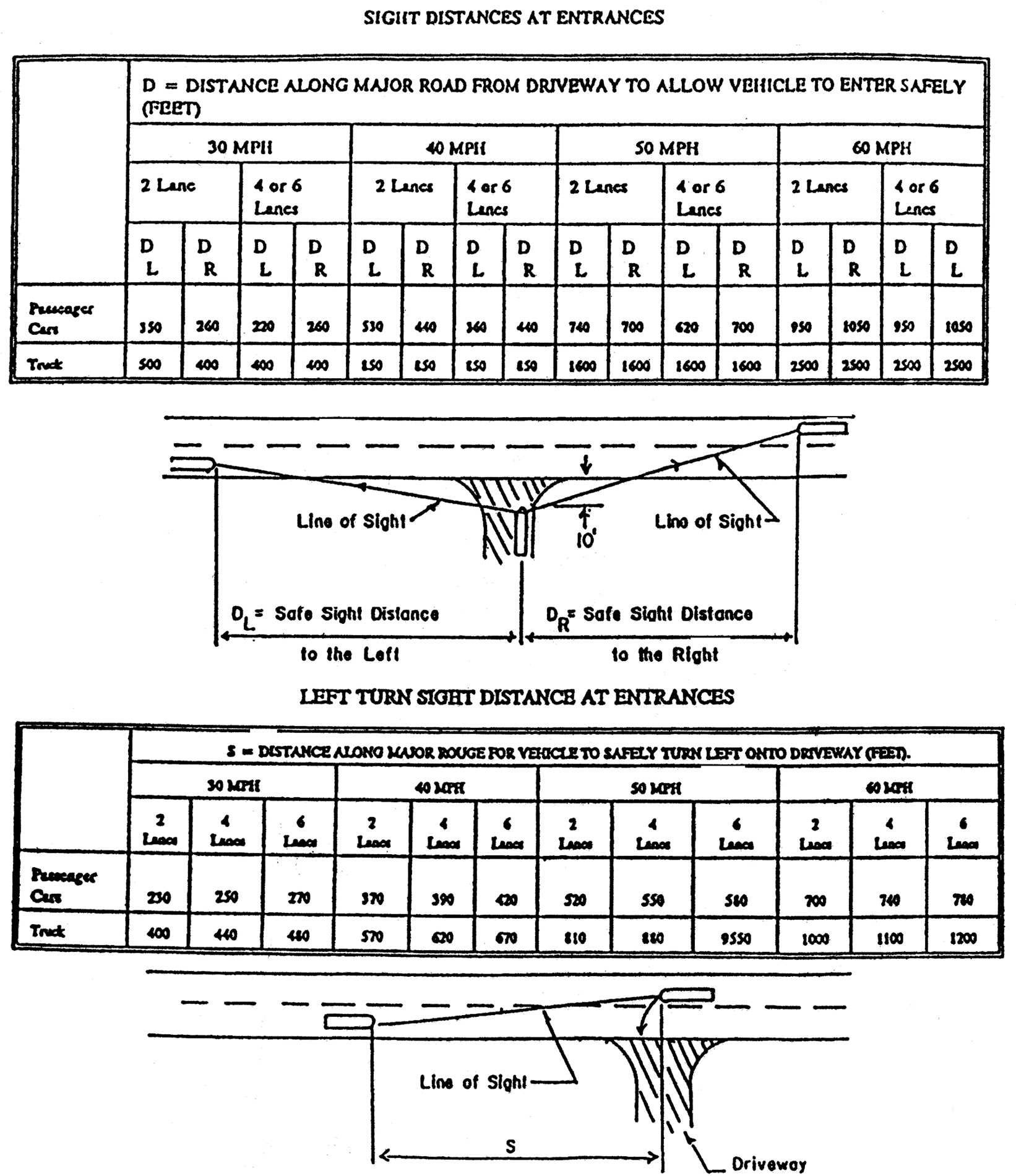
Figure 14-18 sight distances for driveway design
(Ord. No. 95-04, § 1(fig. 10-6), 2-20-95)