
Knoxville City Zoning Code
ARTICLE 5
- COMMERCIAL AND OFFICE DISTRICTS
5.1 - PURPOSE STATEMENTS
A.
Commercial Districts
1.
C-N Neighborhood Commercial Zoning District
The C-N Neighborhood Commercial Zoning District is intended to provide for an environment of integrated residential development and small-scale commercial and service uses, predominantly serving nearby residential neighborhoods. Low-intensity mixed-use is encouraged within the C-N District, with dwellings permitted above the ground floor, as well as multi-family and townhouse development located alongside select commercial uses.
2.
C-G General Commercial Zoning District
The C-G General Commercial Zoning District is intended to provide for a heterogeneous mix of retail, personal service, office, and residential uses within and along Knoxville's commercial nodes and corridors. The C-G District is intended to promote mixed-use development in a pedestrian-oriented environment that recalls the City's traditional business districts, and offers flexibility in the creation of integrated commercial, office and residential spaces. The C-G District is divided into three levels of intensity related to the overall form and design of the development; however, uses are the same across all levels. This zone is intended primarily for indoor commercial uses with limited exceptions per special use approval.
3.
C-H Highway Commercial Zoning District
The C-H Highway Commercial Zoning District is intended to accommodate higher-intensity commercial uses of a predominantly auto-oriented character, including retail, rental, and service establishments of a more intense commercial character including those requiring permanent outdoor service or storage areas. The C-H District regulations are intended to ensure the mitigation of any potential impacts related to such establishments on neighboring uses. The C-H District is divided into two levels of intensity related to the overall form and design of the development; however, uses are the same across all levels.
4.
C-R Regional Commercial Zoning District
The C-R Regional Commercial Zoning District is intended to accommodate medium- to large-scale commercial development within the City of Knoxville that serves both local and regional markets. Such development may generate a considerable amount of traffic, and typically requires significant area for off-street parking. High-density residential uses are also permitted within the C-R District, to facilitate mixed-use development where appropriate. The C-R District is divided into two levels of intensity related to the overall form and design of the development; however, uses are the same across all levels.
5.
DK Downtown Knoxville Zoning District
The DK Downtown Knoxville Zoning District is intended to accommodate the unique conditions of downtown Knoxville. Multiple subdistricts are established within the DK District, each focused on a variation of the form and activity that occurs within the downtown area. Though the subdistricts contain controls tailored to specific areas of downtown, they are linked through a focus on encouraging the creation of mixed-use development, and enhancing the existing character of downtown as a vibrant, pedestrian-friendly, regionally significant commercial and cultural center.
B.
Office Districts
1.
O Office Zoning District
The O Office Zoning District is intended to provide for an environment of low intensity office and service uses, mixed with residential uses. The O District may additionally serve as a transition between single-family residential areas and more intensely developed commercial or industrial areas within the City of Knoxville.
2.
OP Office Park Zoning District
The OP Office Park Zoning District is intended to accommodate large office developments and office parks/campuses. The district is oriented toward larger-scale complexes that may include accessory services for employees such as personal services, restaurants, and retail establishments. District standards are intended to guide the development of office as a more campus-like environment.
5.2 - USES
A.
Article 9 lists permitted and special principal uses and temporary uses for the commercial and office districts.
B.
The following use restrictions apply to the DK District subdistricts:
1.
Multi-family dwellings are allowed in the DK District as follows. These restrictions apply only to a development that is residential use only; mixed-use developments/ dwellings above the ground floor are allowed in all DK District subdistricts:
a.
In the DK-B Subdistrict.
b.
In the DK-E Subdistrict.
c.
In the DK-W Subdistrict for structures that are 50 years or older as of the effective date of this Code.
2.
Homeless shelters are allowed only in the DK-E Subdistrict.
3.
Social Service Centers are allowed only in the DK-E Subdistrict.
C.
The following use restrictions apply to the OP District:
1.
Day care centers, eating and drinking establishments, personal service establishments, and retail goods establishments are prohibited as standalone structures. Such uses must be integrated into larger office buildings within an office park development.
(Ord. No. O-43-2021, § 1, 3-23-21)
5.3 - DIMENSIONAL STANDARDS
A.
Table 5-1: Commercial and Office Districts Dimensional Standards establishes the dimensional standards for the office and commercial districts, with the exception of the DK District. The dimensional standards for development for the DK District are found in Sections 5.5 below. These regulations apply to all uses within each district unless a different standard is listed for a specific use.
B.
In the C-N District, and in the O District when the lot abuts a single-family residential district, nonresidential development is limited to the maximum gross floor area indicated in Table 5-1. Additional gross floor area may be permitted if, during site plan review, it is found that the development meets all of the following standards. If the development is being approved in conjunction with a special use, then a request for increased floor area will be reviewed as part of the special use, rather than site plan review.
1.
The development maintains the privacy of adjacent residential lots through techniques such as decreased height, additional landscape and screening measures, building massing and design to mitigate adverse impacts of noise and lighting, and increased setbacks above those required from adjacent residential lots.
2.
Building design elements incorporate pedestrian-scale features, such as awnings and storefront windows.
3.
The design of the site's circulation system provides adequate and safe access for both motor vehicles and alternate modes of transportation, including pedestrians and bicyclists. The design must minimize potentially dangerous traffic movements and points of conflict between vehicles and pedestrians or bicyclists.
COMMERCIAL DISTRICT DIMENSIONAL STANDARDS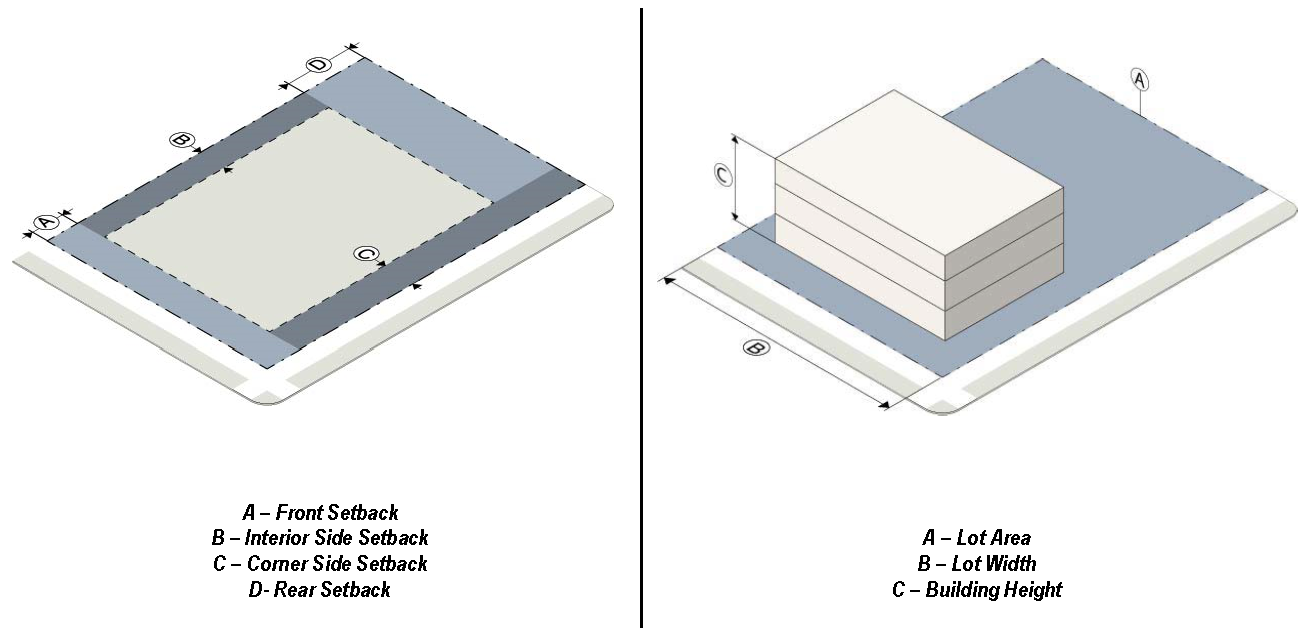
(Ord. No. O-32-2025, § 1, 4-29-25)
5.4 - DESIGN STANDARDS
The following design standards applies to new construction and to any additions to a structure existing as of the effective date of this Code that exceed 30% or more of the existing structure's square footage. (Design standards for development in the DK Districts are found in Sections 5.5 below.)
A.
Commercial Districts Design Standards
1.
Table 5-2: Commercial Districts Design Standards establishes the design standards for the C-N, C-G, C-H-2, C-R-2, and O Districts. In the table, a "•" indicates that the standard is applicable in the district indicated. The absence of a "•" indicates that the standard does not apply to the district.
2.
For residential structures, the principal use standards in Section 9.3. shall apply when in conflict with the Commercial Districts Design Standards in Table 5-2. The design standards in Table 5-2 do not apply to single-family and two-family dwellings. Mixed-use structures that include residential uses must meet the standards in Table 5-2.
B.
Building Material Restrictions
In the C-N, C-G, C-H-2, C-R-2, and O Districts, the following building materials are prohibited on any façade facing a public right-of-way, excluding alleys, or any façade that abuts a residential district. Such materials may still be used as decorative or detail elements for up to 25% of the façade, or as part of the exterior construction that is not used as a surface finish material.
1.
Concrete Plain concrete masonry units (CMU);
2.
Aluminum, steel or other metal sidings; this restriction does not include metal architectural wall panels;
3.
Exposed aggregate concrete wall panels;
4.
T-111 composite plywood siding;
5.
Plastic;
6.
Vinyl.
C-N DISTRICT DESIGN STANDARDS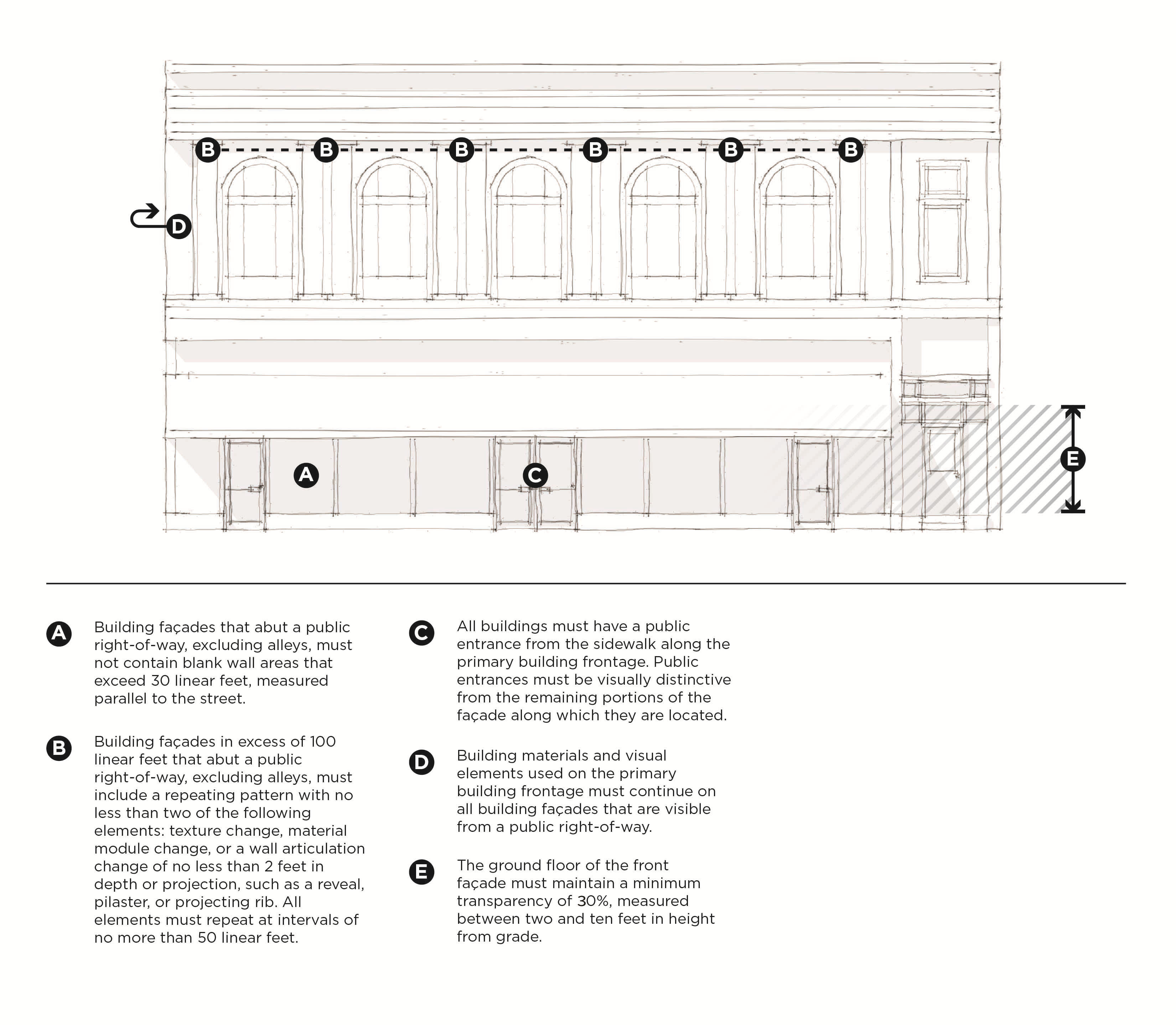
C-G DISTRICT DESIGN STANDARDS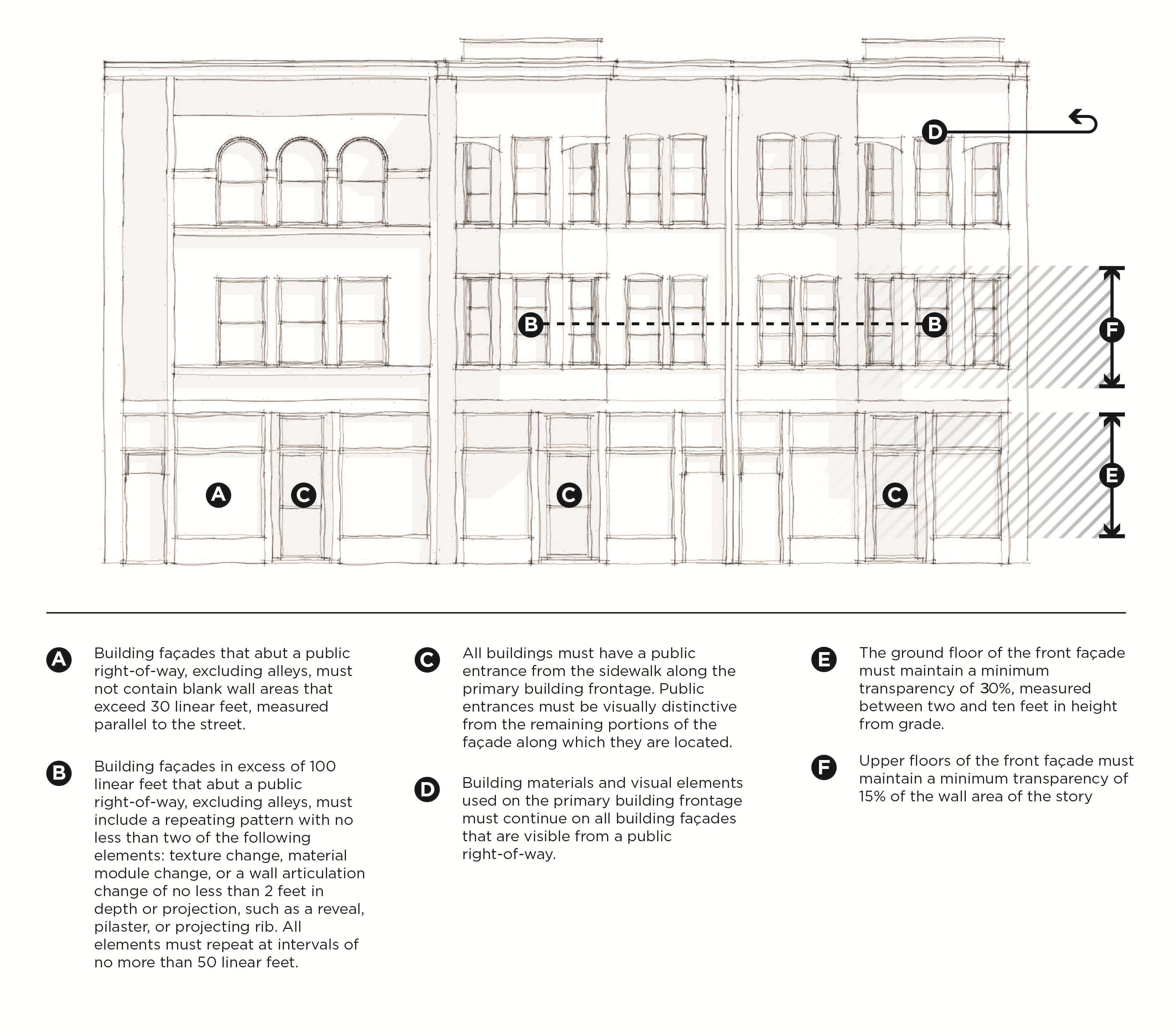
C-H-2 DISTRICT DESIGN STANDARDS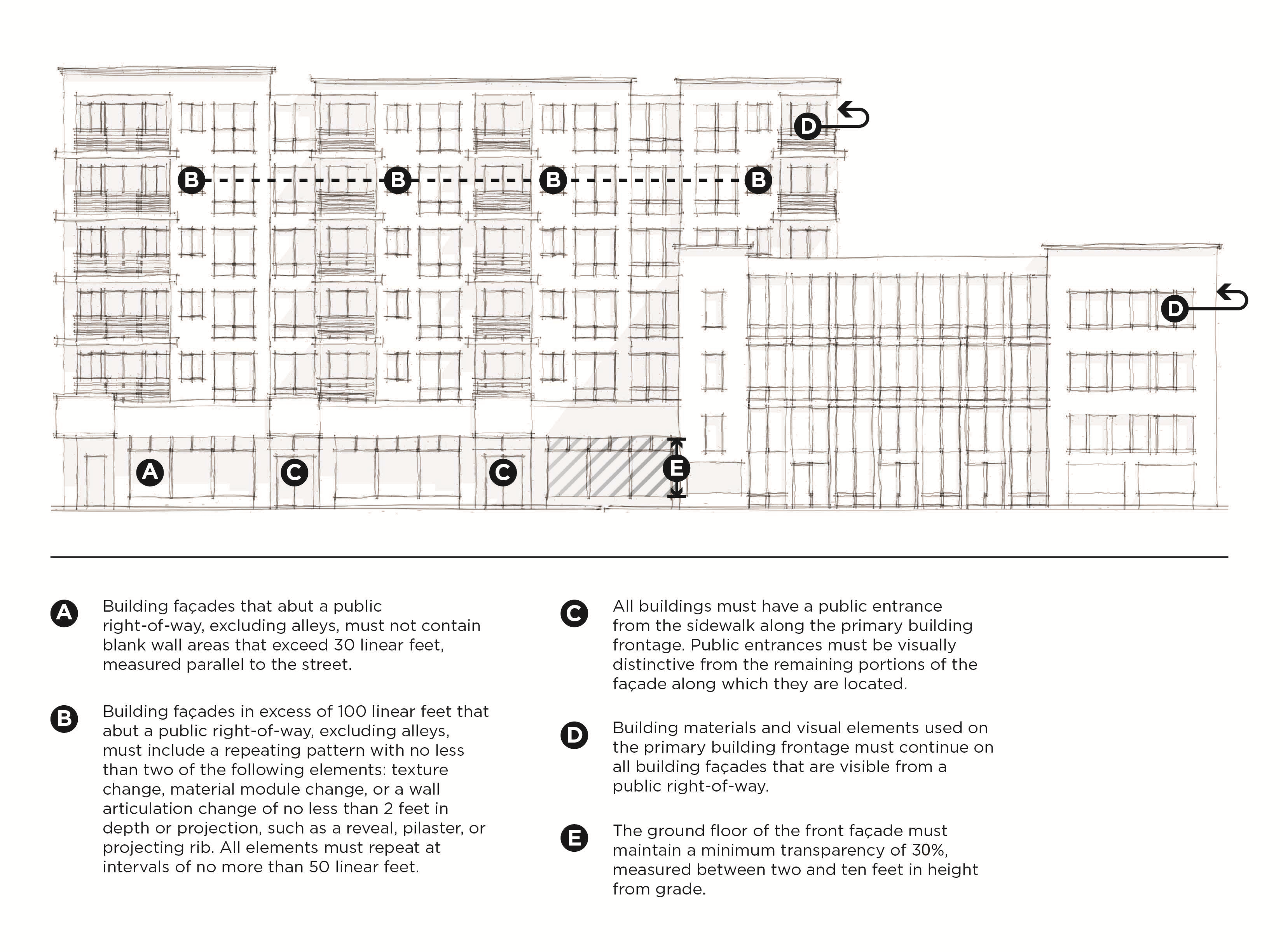
C-R-2 DISTRICT DESIGN STANDARDS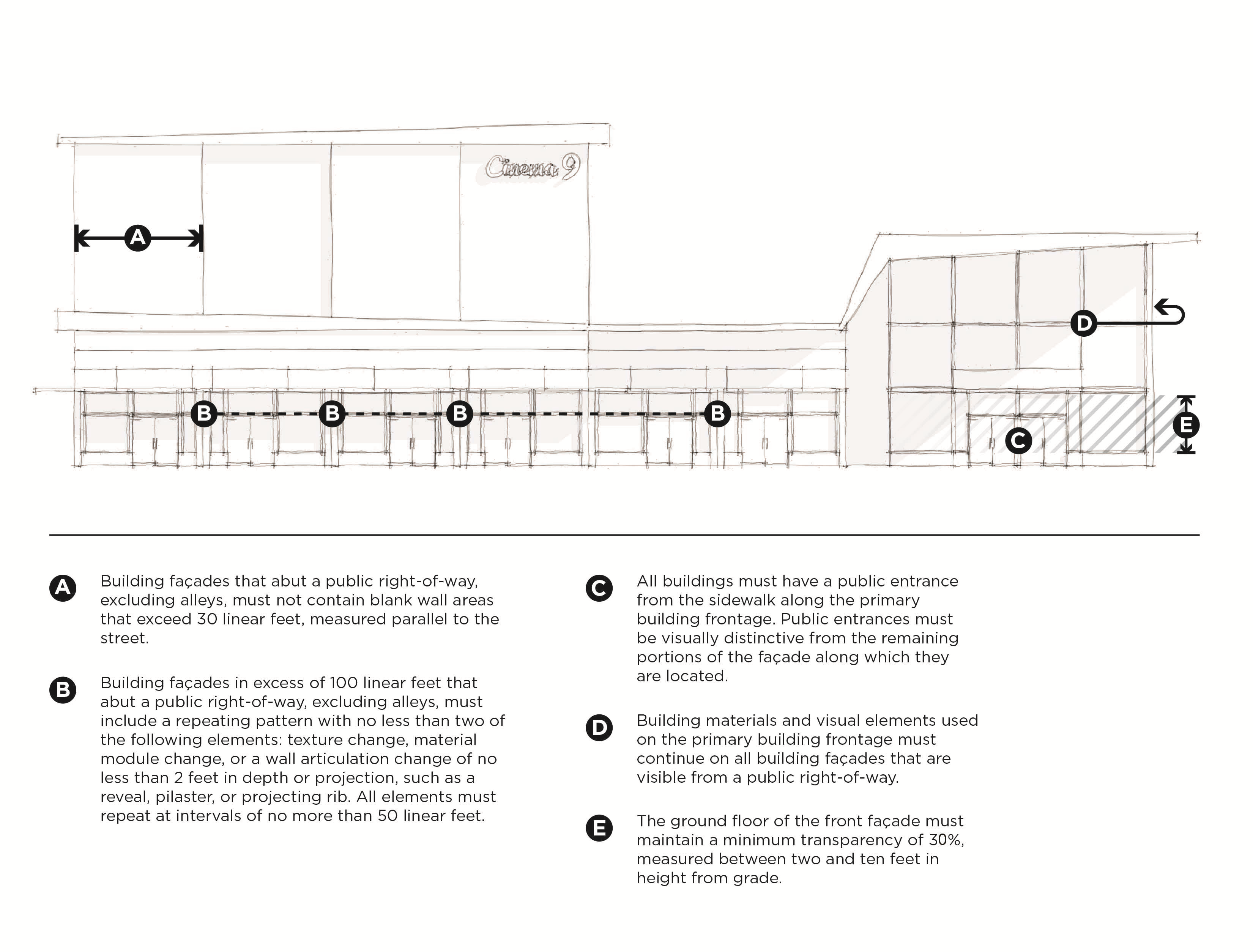
(Ord. No. O-113-2024, § 1, 9-17-24)
5.5 - DK DISTRICT STANDARDS
A.
Subdistricts Established
The DK District is intended to accommodate the unique development environment within downtown. To facilitate development that reinforces and enhances the existing varied character areas of downtown Knoxville, the DK District is divided into five sub-districts that include tailored dimensional and design standards related to their specific contexts. These sub-districts are:
1.
DK-B Downtown Knoxville Boulevards Subdistrict
The DK-B Downtown Knoxville Boulevards Subdistrict is intended to accommodate those areas of Downtown Knoxville that have developed in a manner characterized by wide, planted boulevards, and a green, open landscape consisting of lawns, plazas and structures at variable setbacks.
2.
DK-G Downtown Knoxville Grid Subdistrict
The DK-G Downtown Knoxville Grid Subdistrict is intended to accommodate those areas of Downtown predominantly characterized by the traditional 300-foot by 300-foot grid pattern established in the Plan of the City of Knoxville. It is recognized that this central area is likely to be the most intensely developed portion of the downtown, and the standards are therefore designed to ensure that future development maintains the pedestrian orientation and mixed-use environment characteristic of the traditional grid.
3.
DK-H Downtown Knoxville Historic Core Subdistrict
The DK-H Downtown Knoxville Historic Core Subdistrict is intended to accommodate those areas of Downtown Knoxville characterized by a heterogeneous mix of uses organized within a highly-walkable environment with a continuous, consistent street-wall, and a preponderance of historic and cultural resources.
4.
DK-W Downtown Knoxville Warehouse Subdistrict
The DK-W Downtown Knoxville Warehouse Subdistrict is intended to accommodate the area located primarily along Jackson Avenue and the rail yard on the north end of Downtown Knoxville, and characterized by a mix of retail and warehouse/industrial uses in historically significant structures. Subdistrict standards are designed to allow the continued mix of uses in this area, and to reinforce the existing built character of the Warehouse Subdistrict.
5.
DK-E Downtown Edge Subdistrict
The DK-E Downtown Edge Subdistrict is intended to address areas of transition between the higher intensity environment of the Downtown and adjacent smaller-scale mixed-use areas. The DK-E Subdistrict facilitates mixed-use development with standards that focus on compatibility with adjacent development.
B.
DK Subdistricts Dimensional Standards
1.
Table 5-3: DK Subdistricts Dimensional Standards establishes the dimensional standards for the Downtown Subdistricts. These regulations apply to all uses within the district unless a different standard is listed for a specific use.
2.
A minimum ground floor height of 12 feet measured from floor to floor is required in the DK-G and DK-H Subdistricts.
3.
Buildings over 85 feet in height are required to incorporate a stepback a minimum of ten feet from the street-facing façade plane. Such stepback must occur above the third story, and below the seventh story.
C.
Design Standards
1.
Table 5-4: DK Subdistricts Design Standards indicates the applicability of design standards for the DK Subdistricts. In the table, a "•" indicates that the standard is applicable in the subdistrict indicated. The absence of a "•" indicates that the standard does not apply to the subdistrict.
2.
New construction and certain expansion and alteration actions within the DK District, as described in the Downtown Design Review in Section 16.5, are subject to review and approval by the Design Review Board per Section 16.5 (this excludes the DK-E Sub-District per item 3 below). The Downtown Knoxville Design Guidelines contain standards that the Design Review Board will use to review such development per Section 16.5, in addition to Table 5-4.
3.
The DK-E Sub-District is not subject to review by the Design Review Board, but still requires site plan review by Knoxville-Knox County Planning Commission staff. Only the design standards of Table 5-4 apply to the DK-E Sub-District. These design standards apply to new construction and to any additions to a structure existing as of the effective date of this Code that exceed 30% or more of the existing structure's square footage.
D.
DK District Building Material Restrictions
The following building materials are prohibited on any façade facing a public right-of-way, excluding alleys, or any façade that abuts a residential district. Such materials may still be used as decorative or detail elements for up to 25% of the façade, or as part of the exterior construction that is not used as a surface finish material. The Design Review Board, as part of Design Review, may approve the use of such restricted materials on a case by case basis. The Design Review Board must find that use of these materials as primary building material is a creative approach to building form that allows for an architecturally and/or environmentally innovative design. This does not apply to the DK-E Sub-District which must comply with these building material restrictions.
1.
Plain concrete masonry units (CMU);
2.
Aluminum, steel or other metal sidings; this restriction does not include metal architectural wall panels;
3.
Exposed aggregate concrete wall panels;
4.
T-111 composite plywood siding;
5.
Plastic;
6.
Vinyl;
7.
Exterior insulation and finish system (EIFS).
DK-B SUBDISTRICT DESIGN STANDARDS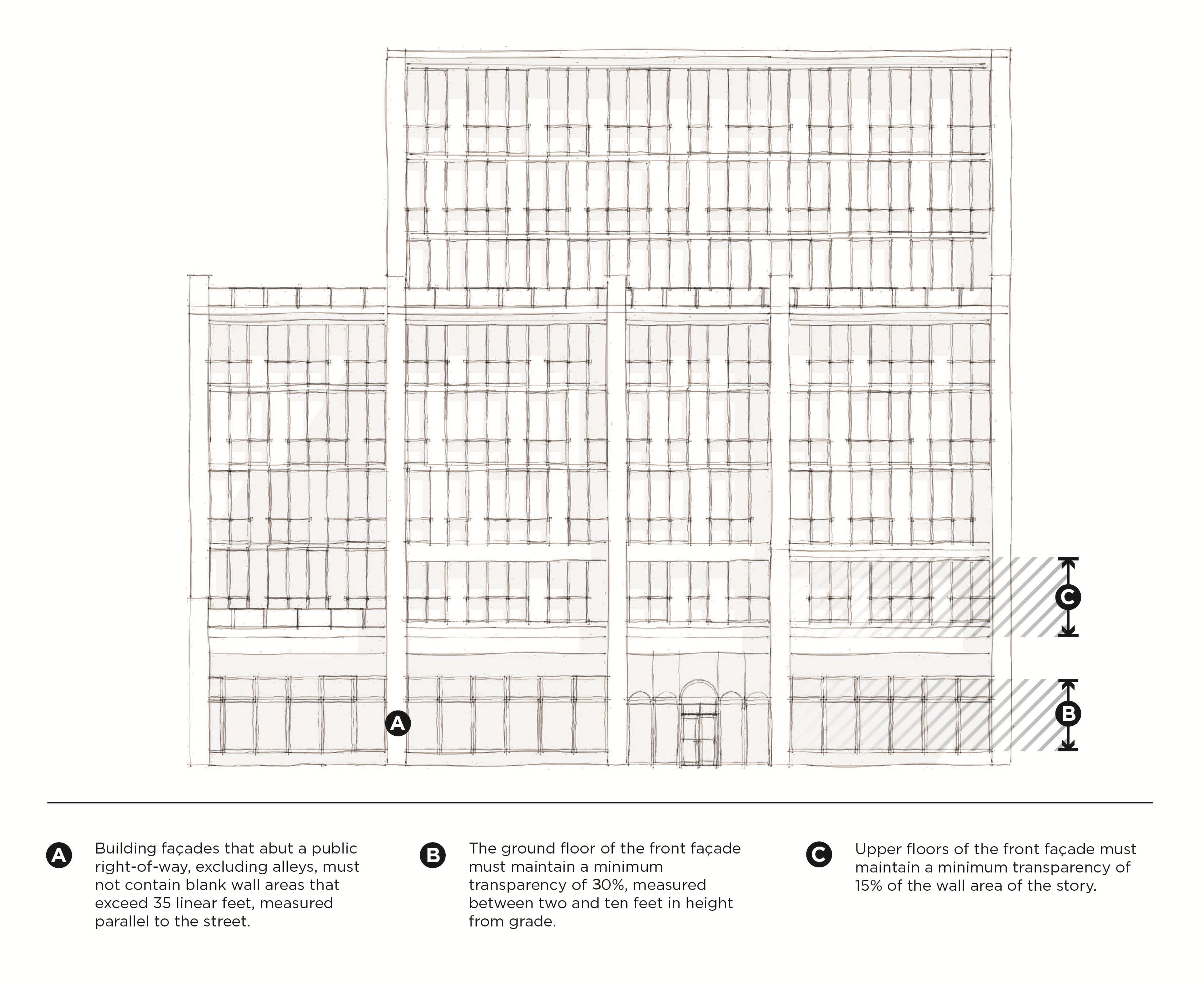
DK-G SUBDISTRICT DESIGN STANDARDS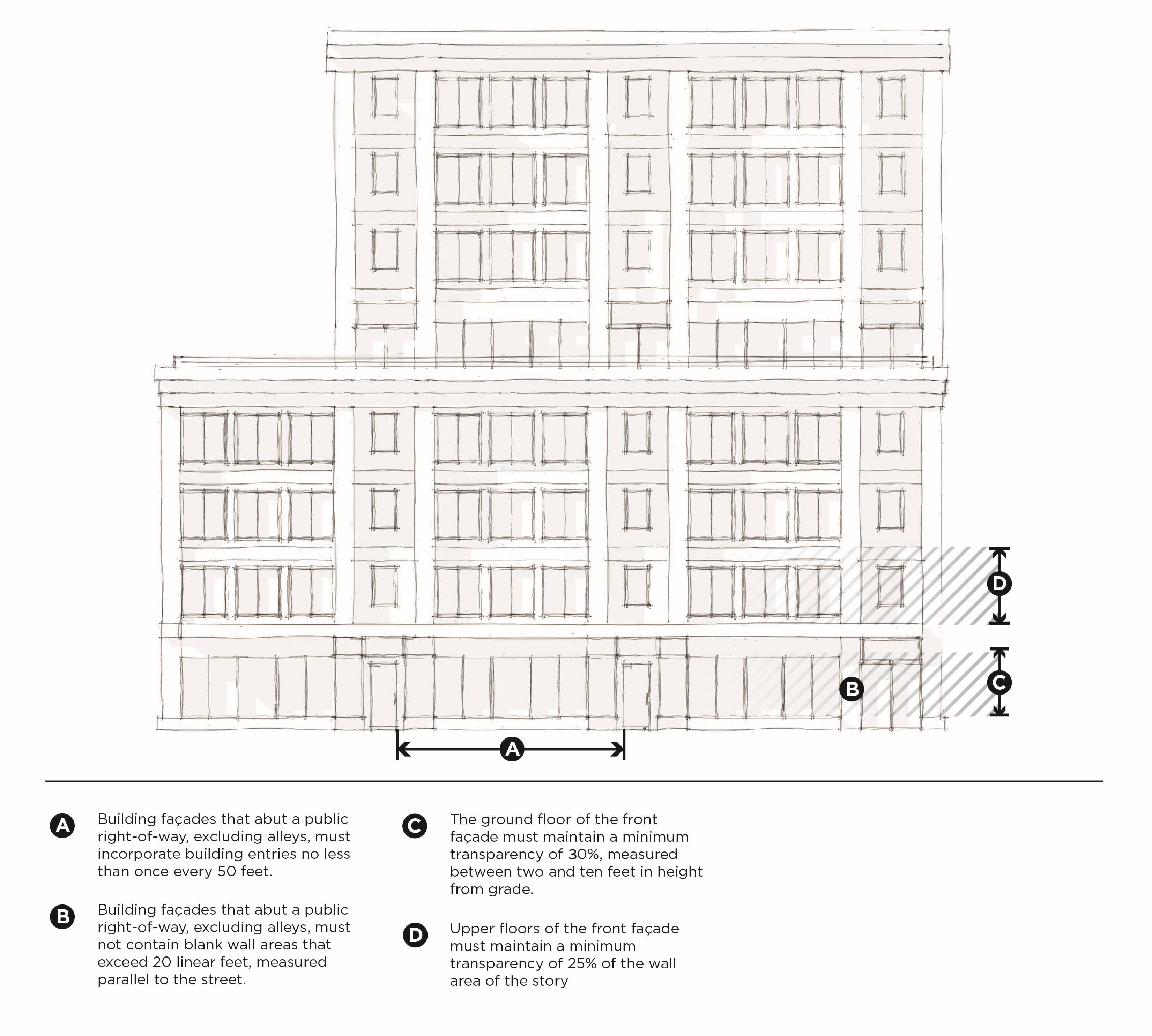
DK-H SUBDISTRICT DESIGN STANDARDS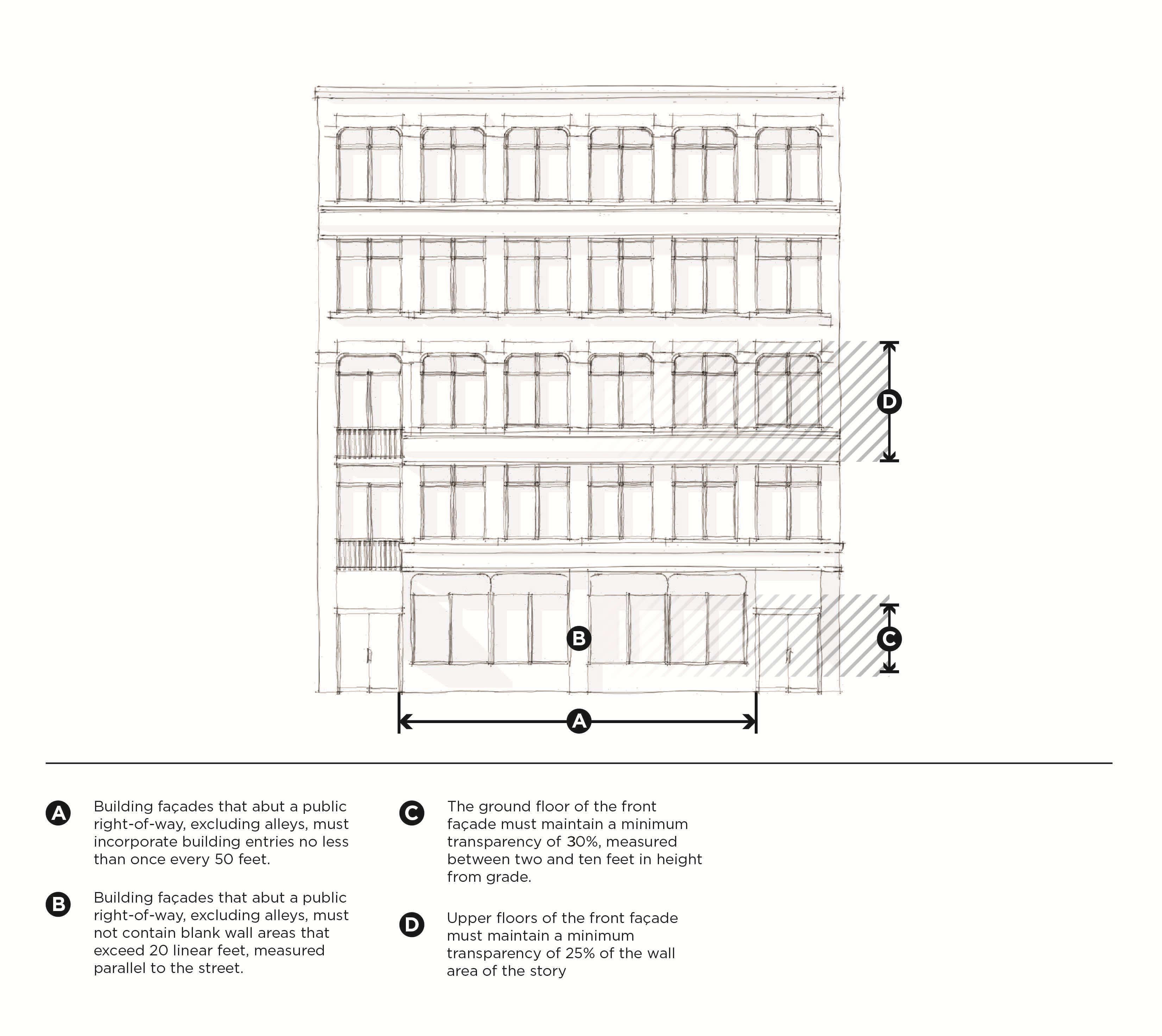
DK-W SUBDISTRICT DESIGN STANDARDS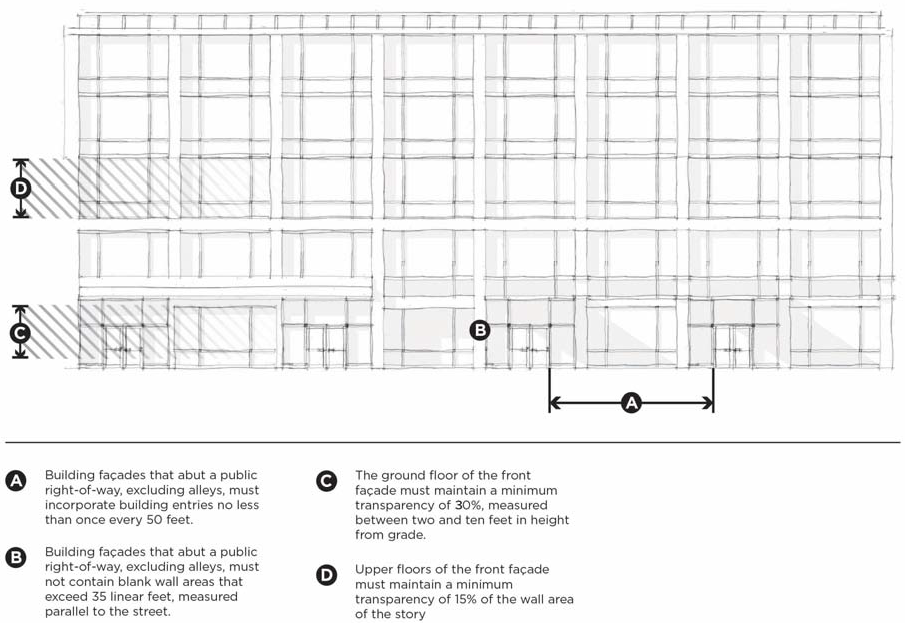
5.6 - GENERAL STANDARDS OF APPLICABILITY
A.
Site Development Standards
See Article 10 for additional on-site development standards and requirements, such as exterior lighting, accessory structures and uses, and permitted encroachments.
B.
Off-Street Parking and Loading
See Article 11 for off-street parking and loading standards and requirements.
C.
Landscape
See Article 12 for landscape, buffering, and screening standards and requirements
D.
Signs
See Article 13 for sign regulations.

