
La Fayette City Zoning Code
ARTICLE I
- PREAMBLE AND DEFINITIONS
Section 29-10.- Preamble and enacting clause.
In pursuance of the authority conferred by the Georgia General Planning and Zoning Enabling Act of 1957, as amended, and for the purpose of promoting the health, safety, morals, convenience, order, prosperity or the general welfare of the City of LaFayette; lessening congestion in the streets, securing safety from fire, panic, and other dangers; providing adequate light and air; preventing the overcrowding of land, avoiding undue concentration of population; facilitating the adequate provision of transportation, water, sewerage, schools, parks and other public requirements; conserving the value of buildings and encouraging the most appropriate use of land throughout the City, all in accordance with a comprehensive plan, the Mayor and Members of the Council of the City of LaFayette do ordain and enact into law, this Chapter.
Section 29-11. - Short title.
This Chapter shall be known and may be cited as the "Zoning Ordinance of LaFayette, Georgia."
Section 29-12. - Definitions.
Except specifically defined herein, all words used in this chapter have their customary dictionary definition. Words used in the present tense include the future tense. Words used in the singular include the plural, and words in the plural include the singular. The word "shall" is always mandatory. The word "may" is permissive. The word "person" includes a firm, association, organization, trust, company, or corporation as well as an individual. The word "lot" includes the words "plot" or "parcel." The word "building" includes the word "structure." The words "used" or "occupied," as applied to any land or building, shall be construed to include the words "intended, arranged, or designed to be used or occupied." The word "Map" or "Zoning Map" means the Official Zoning Map of LaFayette, Georgia.
For the purpose of this Chapter, certain terms or words shall be interpreted as follows:
(1)
Accessory Use or Building: A use or building customarily incidental and subordinate to the principal use or building and located on the same lot with such principal use or building.
(2)
Alley: A public or private thoroughfare which affords a secondary means of access to abutting property and not intended for general traffic circulation.
(3)
Alteration of Building: Any change in the supporting members of a building except such change as may be required for its safety; any addition to the building; any change in use from that of one district classification to another; or of a building from one location to another.
(4)
Automobile Filling Station: A building or lot having pumps and storage tanks at which fuels, oils, or accessories for the use of motor vehicles are dispersed, sold or offered for sale at retail and where repair services are incidental.
(5)
Automobile Repair and Service Station: A building, lot, or both, in or upon which the business of general motor vehicle repair and service is conducted, but excluding a junk and/or auto wrecking business.
(5.5) Borrow Pit: An excavated area where naturally earthen materials are to be removed for use as ordinary fill at another location, and shall include land from which dirt, gravel, rock or related material will be excavated and used for road and other fill purposes. (Ord. No. 99-9, § 1, 10-11-99)
(6)
Building: Any structure, except a mobile home, having a roof supported by columns or by walls and which is designed for the shelter, support, or enclosure of persons, animals, or property of any kind.
(7)
Building, Principal: A building in which is conducted the main use of the lot on which said building is located.
(8)
Building Area: The maximum horizontal projected area of a building, excluding open steps, terraces, and corners projecting not more than thirty (30) inches, and excluding self-supporting balconies above the first floor and projecting into the yards.
(9)
Centerline Of Streets: A line surveyed and monumented as such or, if a centerline has not been surveyed and monumented, it shall be that line running midway between the outside curbs or ditches of the street.
(10)
Conditional Use: A use of land which is permitted in a particular zoning district only after review by the Planning Commission and action by the Board of Appeals. Before authorizing such use, the Board of Appeals must find that the use is in compliance with all provisions of this Chapter, and is in compliance with the conditions established by this Chapter for such use.
(11)
Court: An open space, other than a yard, which may or may not have direct street access around which is arranged a single building or a group of related buildings.
(12)
Dwelling: A building or portion thereof designed or used for permanent residential occupancy by one or more families or individuals.
(13)
Dwelling Unit: One (1) or more rooms in a residential building designed as a unit for occupancy by one (1) family for working, living and sleeping, [purposes].
(14)
Dwelling, Single-Family: A detached building designed for or occupied exclusively by one (1) family.
(15)
Dwelling, Two-Family: A detached building designed or altered to provide dwelling units for two (2) families.
(16)
Dwelling, Multiple-Family: A building or portion thereof designed or altered to provide dwelling units for three (3) or more families.
a.
Dwelling, Upstairs: A portion of a building which is:
(1)
Designed or altered, and used for residential occupancy; and
(2)
Located above the street level story of a building that is located and operating as a permitted use in either a B-1 Commercial District (Central Business District) or a B-2 Commercial District (General Business District). No pets shall be permitted in any upstairs dwelling. (Ord. No. 08-7, § 1, 4-14-2008)
(17)
Family: One (1) or more persons occupying premises and living as a single housekeeping unit, as distinguished from a group occupying a boardinghouse, a lodginghouse or hotel.
(18)
Flood: The general overflow of a stream which results in inundation of lands not normally covered by water. In this Chapter land subject to flood shall be any land which is below the elevation reached by an overflow rising to six (6) feet above median stream flow elevation, unless it can be determined in a study by a registered engineer that a lower elevation would be a reasonable elevation for carrying out the intent of this Chapter.
(19)
Floodway: The channel of a stream and that part of the adjoining floodplain designated so the minimum area required for passage of flood flow and in which no filling shall be allowed, which in this Chapter shall be any land which is below the elevation reached by an overflow rising three (3) feet above median stream flow elevation, unless it can be determined in a study by a registered engineer that a lower elevation would not be subject to flood.
(20)
Floodway Fringe: The area outside the floodway but immediately adjacent to it which is subject to flood and within which the supplemental regulations for the floodway apply (see subsection 29-60.)
(21)
Group Housing Project: A group housing project is defined as two (2) or more buildings which are located on a parcel of land not subdivided into the customary streets and lots, and which will not be so subdivided or where the existing or contemplated street and lot layout makes it impractical to apply the requirements of this Chapter to the individual building units which may be so oriented that the main entrance does not directly face the street.
(22)
Height of Building: The vertical distance measured from the mean finished ground level adjoining the building to the highest point on the roof.
(22.5)
Home Occupation: An occupation or profession which is customarily carried on in a dwelling unit or in a building or other structure accessory to a dwelling unit; and is carried on by a member of the family residing in the dwelling unit; and is clearly incidental and secondary to the use of the dwelling unit for residential purposes; and which conforms to the conditions [set out in section 29-60 ("Home Occupations")]. (Ord. of 2-9-87)
(23)
Junkyard: Any use involving the storage or disassembly of wrecked automobiles, trucks, or other vehicles or the dismantling, demolition, or abandonment of automobiles or other vehicles or machinery or parts thereof, the keeping, abandonment, sale or resale of junk including scrap metal, used paper, or other scrap materials, salvaged house wrecking and structural steel materials; storages, baling or otherwise dealing in bones, animal hides, used cloth or rags, used plumbing fixtures, appliances, furniture, and used brick, wood or other building materials. Such uses shall be considered junkyards whether or not all or part of such operations are conducted inside a building or in conjunction with, addition to, or accessory to other uses on the premises.
(24)
Lot: A portion or parcel of land devoted to a common use and occupied by a building or group of buildings devoted to a common use together with the customary accessory uses and open spaces belonging to the same.
(25)
Lot, Depth of: The mean horizontal distance between the front and rear lot lines, measured in the general direction of the side lot lines.
(26)
Lot, Double Frontage: A lot extending the entire width of the block and having street frontage on both the front and rear lot lines.
(26.1)
Lot, Small: Any lot of record which at the time of the adoption of this amendment is insufficient in width or area to enable the title owner thereof to conform to the dimensional requirements of this section including, minimum lot size, lot coverage, and minimum yard dimensions. Where, at the time of the adoption of this amendment, the title owner of two (2) or more small lots, as defined herein, which are contiguous to each other such adjoining lots shall be considered as a single lot and not small lots, as defined herein, and shall be subject to all the requirements of this section, except in the instance where after combining all the contiguous lots the combined lots would still have insufficient width or area to enable the title owner thereof to conform to the dimensional requirements of this section including, minimum lot size, lot coverage, and minimum yard dimensions. (Ord. No. 06/02, § 2, 5-8-2006)
(27)
Lot, Width: The distance between the side lot lines measured at the building setback line.
(28)
Mobile Home or Trailer: A detached residential dwelling unit designed for transportation on streets and highways on its own wheels or on flatbed or other trailers, and arriving on the site where it is to be occupied as a dwelling, complete and ready for occupancy except for minor and incidental unpacking and assembly operations, such as location on jacks or other temporary or permanent foundations, connection to utilities and the like.
(29)
Mobile Home Park: A parcel of land which has been planned and improved for the placement of mobile homes for nontransit use.
(30)
Nonconforming Use: The use of a building, structure or land existing at the time of enactment of this Chapter or subsequent amendments which does not conform to the regulations for the district in which it is located.
(30.5)
Personal Care Home: Personal care home means a building, a facility or place in which is provided two (2) or more beds and other facilities and services, including rooms, meals, and personal care, for nonfamily ambulatory adults. For the purpose of this zoning ordinance, a personal care home shall be limited to those homes which are classified as "Family Personal Care Home" and "Group Personal Care Home" as defined under the Rules of Department of Human Resources (State of Georgia) Physical Health, Chapter 290-5-35, and the same shall specifically not include what is classified and defined as a "Congregate Personal Care Home" under said Rules, and all of the definitions contained in section 290-5-35-.01 of said Rules are hereby adopted by reference and incorporated herein and made a part hereof, except that "Personal Care Home" under this ordinance shall specifically exclude and not include a "Congregate Personal Care Home" as classified and defined under said Rules. (Ord. No. 1-88, § C, 1-11-88)
(31)
Planned Shopping Center: A commercial development of at least three (3) acres located on a single lot and developed in conformance with section 29-60 of this Chapter.
(31.1)
Recycling Center: An establishment, place of business, facility, or building which is maintained, operated, or used for the purpose of storing, keeping, buying, or selling recyclable materials including, aluminum cans or scraps, tin, copper, glass, paper products, tires, plastics, bi-metal and steel containers, and other metals.
(32)
Rooming or Boarding House: A dwelling, other than a hotel, motel or lodginghouse, where meals and/or housing accommodations for three (3) or more persons are provided for hire.
(33)
Setback or Building Line: A line beyond which no foundation, wall, eave or other part of any building shall project unless specified exceptions are made elsewhere in these regulations.
(34)
Sign, Advertising: Any freestanding or partly or wholly attached structure displayed for the purpose of conveying some information, knowledge or idea to the public.
(35)
Sign, Business: A sign situated on the same lot or premises as the principal use, advertising the principal use only.
(36)
Sign, Incidental or Accessory:
(1)
A nonilluminated sign, not exceeding one (1) square foot in area and attached wholly to a building.
(2)
A sign pertaining only to the rent, lease, or sale of the premises upon which displayed and not exceeding six (6) square feet in area.
(3)
A sign not exceeding twelve (12) square feet in area upon the premises of a church or other institution for the purpose of displaying the name of the church or institution and the activities or services.
(4)
Directional or information signs of a public or quasi-public nature not exceeding eight (8) square feet in area which state the name or location of a town, village, hospital, community center, private school, college or youth organization, church or other place of worship, or the name or place of meeting of an official or civic body.
(36.1)
Solar Collection Device:
(a)
Solar collection device, for the purpose of this Ordinance, shall pertain to equipment utilized for providing an electric power source to a structure either in part or entirely. A solar collection device does not pertain to accent, landscape or exterior lighting devices.
(b)
A solar collection device may not be mounted to the sides or any other portion of a primary structure other than its roof.
(c)
Roof mounted systems:
a.
Single-family and duplex dwellings:
i.
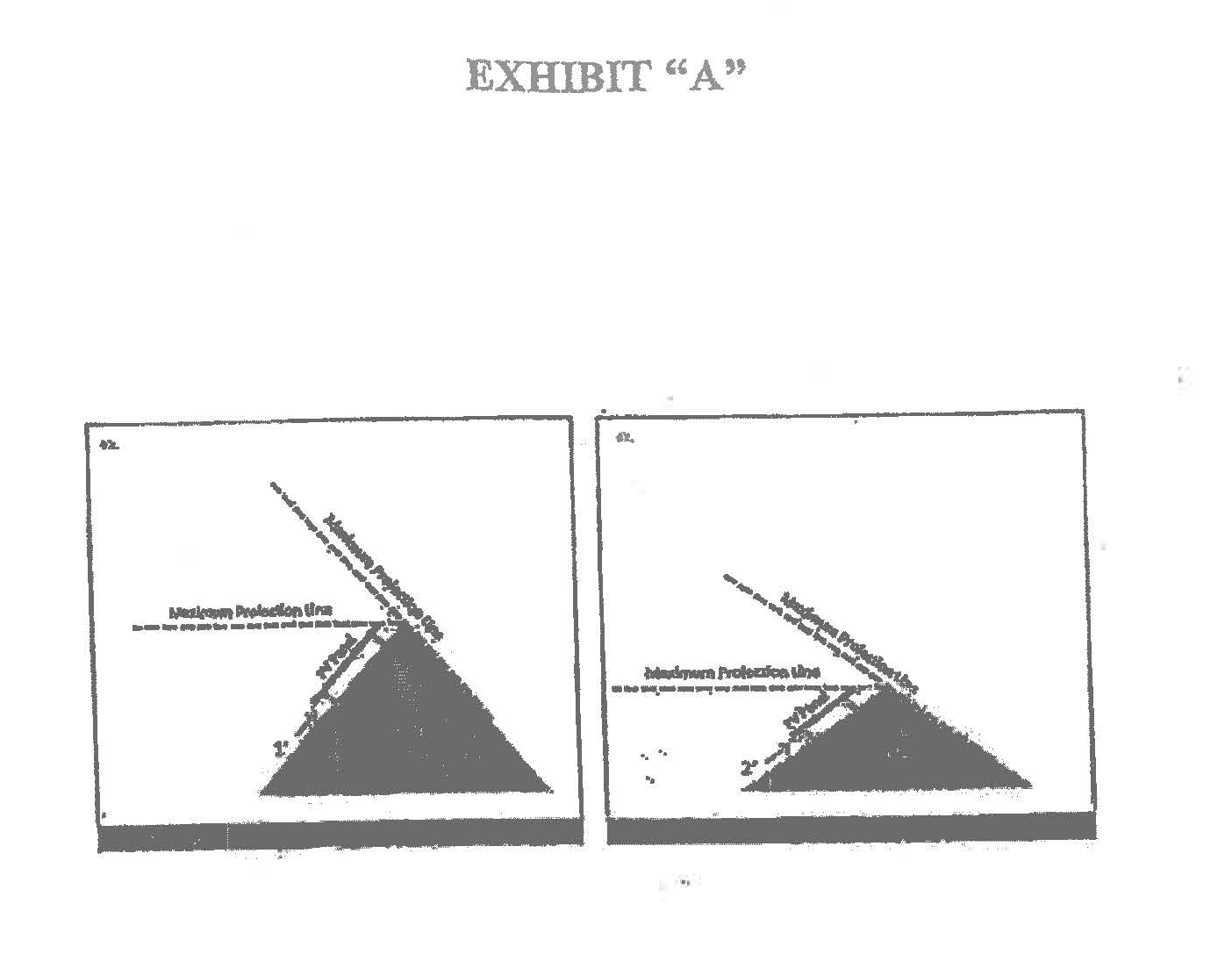
No taller than one (1) foot, as measured on a vertical axis to the roof below, to which it is installed, unless the roof pitch is 2:12 or less, in such case two (2) feet is permitted. No portion of a solar collection device shall project above the maximum projection line depicted within figures attached hereto as Exhibit A.
b.
Non-residential and residential multi-family (excluding single-family or duplex dwellings):
i.
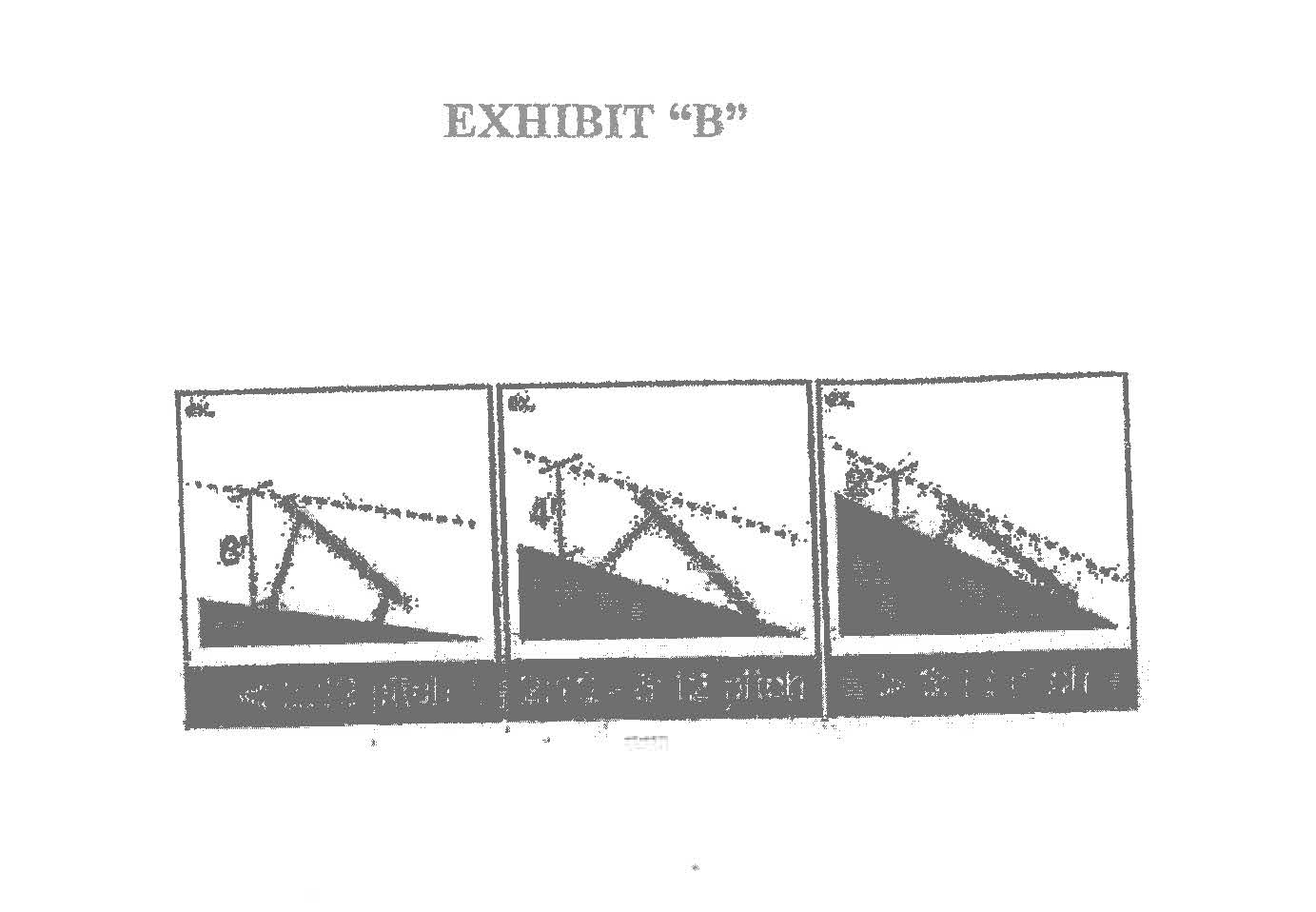
If < 2:12 pitch roof, no taller than eight (8) feet as measured on a vertical axis to the roof below, to which it is installed (see attached hereto as Exhibit B).
ii.
If 2:12 to 6:12 pitch, no taller than four (4) feet as measured on a vertical axis to the roofline to which it is installed (see attached hereto as Exhibit B).
iii.
If > 6:12 pitch, no taller than two (2) feet, as measured on a vertical axis to the roofline to which it is installed (see attached hereto as Exhibit B).
c.
All buildings regardless of use: a roof mounted solar collection device shall not extend beyond any roof overhang nor shall it extend beyond a horizontal plane as drawn from the highest point of a roof pitch.
(d)
A solar collection device may not be attached to a street facing roof face.
(e)
If the dwelling has a roof that is perpendicular to the street, then the solar collection device shall have the same pitch as the roof, and to the extent possible, shall lay flat on the roof.
(f)
If ground mounted, solar collection devices shall not exceed five (5) feet in height, must be placed to the side or rear of the primary structure and must be screened from view.
(37)
Street: A public or private way which affords the principal means of access to abutting properties.
(38)
Structure: Anything constructed or erected including signs, the use of which requires location on the ground, or attachment to something having location on the ground.
(38.1) Townhouse, fee simple. A type of dwelling unit that is no less than one (1) nor more than two (2) stories in height above ground level which has individual outside front and rear entrances, is separated from other dwelling units by common party walls that are four-hour fire rated masonry construction extending from the foundation through the roof line for a minimum of three (3) feet, occupies its own lot and is part of a contiguous group of at least three (3) such townhouses. The firewall separating single story units and two-story units must extend only to the roof decking of the two-story unit. (Ord. of 4-14-86. § A)
(38.2)
Warehouse: An establishment, conducted within a completely enclosed building, that is engaged in the storage of goods, materials, equipment, or products.
(39)
Yard: An open space on the same lot with a principal building open, unoccupied and unobstructed by buildings or structures from ground to sky except where encroachments and accessory buildings are expressly permitted.
(40)
Yard, Front: A yard extending the full width of the lot, and situated between the street and the front line of the building projected to the side lines of the lot.
(41)
Yard, Rear: A yard extending across the full width of the lot and located between the rear line of the lot and the nearest line of the principal building projected to the side lines of the lot.
(42)
Yard, Side: A yard situated between the building and the side lot line and extending from the front yard to the rear yard. Any lot line not a rear line or a front line shall be deemed a side line.
(Ord. No. 17-02, § 2, 2-13-2017; Ord. No. 18-09, § 1, 6-11-2018; Ord. No. 23/02, § 1, 7-18-2023)

