
La Fayette City Zoning Code
ARTICLE VI
SUPPLEMENTAL REGULATIONS AND MODIFICATIONS
The provisions of this Chapter shall be subject to such additions or modifications as herein provided by the following supplementing regulations:
Section 29-60.- Conditional uses.
Conditional uses are subject to the approval of the Board of Appeals. A plan of the proposed use will be submitted to the Planning Commission for their review. The Planning Commission shall then submit the plan and recommendations to the Board of Appeals for review and action. Action by the Board of Appeals may follow a public hearing. If a public hearing is held, at least thirty (30) days' notice of the time and place of such public hearing shall be given the owner of the proposed conditional use and surrounding property owners.
(a)
In reviewing the proposal, the Board of Appeals shall be guided by a number of factors which shall include the following:
(1)
The adequacy of access to the site;
(2)
Adequacy of parking provisions;
(3)
The character of the area in which the use is proposed to be located;
(4)
Whether the use will be offensive to surrounding uses;
(5)
Adequacy of fences and other buffers;
(6)
Any other considerations deemed pertinent by the Planning Commission and/or Board of Appeals.
(b)
In addition to the factors listed in paragraph (a), the following supplemental regulations are established for the conditional uses listed in Article V.
Individual Mobile Homes
A mobile home, as "mobile home" is defined in Chapter 6, Article VI, Mobile Homes, section 6-91 of this Code, shall not be permitted to locate on a lot within the City of LaFayette for use or occupancy as a dwelling, accessory dwelling, principal building, or structure in any zoning district, except that a mobile home may be used or occupied only as a single-family dwelling within the B-2 commercial district, but only if the mobile home is exclusively contained within a mobile home park as provided in this section and this Code.
A mobile home or homes shall be temporarily parked and used as a bona fide construction office, storage place or quarters of a night watchman at the construction site provided the intended parking and use of such mobile home or homes is made known to the Building Inspector.
A single camping trailer may be stored, but not occupied in any district, except that in residential districts such camping trailers shall be parked in the rear yards.
(Ord. No. 18-07, § 2, 4-9-2018)
Mobile Home Park
A mobile home park may locate in a B-2 district provided each such park meets the following requirements:
(1)
Site shall front upon or the entrance shall be within one block of a State or Federal Numbered Highway.
(2)
Minimum size of park site shall be five acres including land for accessory buildings, recreational and playground areas.
(3)
Minimum size lot for each mobile home within the park shall be 3,000 square feet.
(4)
Each lot within the park shall be served by and have appropriate connections to sewer line, water line, and electrical power line.
(5)
A buffer strip not less than 15 feet in width shall be provided completely around the park except at access roads. Such strip shall contain a five-foot planted screen which grows to and is maintained at a minimum height of five (5) feet, and a ten-foot grass strip.
(6)
The owner of a park may utilize the front part of the site for mobile home sales provided that said part is completely within a B-2 district and is not more than 15 percent of the total park area.
(7)
A park shall not accept mobile homes unless and until such time as at least 20 lots have been completely developed with all utilities and all-weather surfaced access drives.
(Ord. No. 18-07, § 3, 4-9-2018)
Group Housing Projects
A group housing project is defined as two or more buildings which are located on a parcel of land not subdivided into the customary streets and lots, and which will not be so subdivided or where the existing or contemplated street and lot layout makes it impractical to apply the requirements of this Chapter to the individual building units which may be so oriented that the main entrance does not directly face the street.
Group housing projects may be permitted in any of the various districts in which residences are permitted in this Chapter. The purpose of group housing projects is to permit maximum flexibility of design by the developer. In all such cases, group housing projects shall comply with the following standards:
(1)
Lot Size: A group housing project shall be permitted only on a lot or plot of ground having an area of not less than 32,000 square feet.
(2)
Street Access: Any building established in connection with such group housing project which cannot properly be served by emergency or service vehicles from an abutting street shall be made accessible to such vehicles by a paved driveway having a roadbed width of not less than twenty (20) feet, exclusive of parking spaces.
(3)
Off-Street Parking Facilities: Off-street parking spaces shall be provided as required in Section 29-42 of this Chapter.
(4)
Separation of Buildings: All buildings and structures established in connection with such projects shall be not less than twenty (20) feet apart.
(5)
Setback Requirements: Unless otherwise provided by this Chapter, all buildings and structures established in connection with such development shall comply with the frontyard setbacks established for the district in which located and shall be set back not less than twenty-five (25) feet from any side or rear property line.
(6)
Uses Prohibited: In no case shall a use be permitted in connection with such developments that is prohibited by this Chapter in the district in which such project is to be located.
(7)
Lot Area per Dwelling Unit: A group housing project shall conform to the minimum lot area per dwelling unit for the district in which it is located.
(8)
Position of Dwelling Structures: No dwelling structure established in connection with a group housing project shall be situated on a lot as to face the rear of another building or structure within the development or on adjoining properties.
(9)
Sidewalks Required: Sidewalks not less than four (4) feet in width shall be installed in the project area leading from all front and rear doors to adjacent streets or alleyways. Sidewalks shall be required along all property abutting streets within the project.
Office Trailer (Accessory Building):
Office Trailers shall be permitted, as indicated, only as an accessory building (as "accessory building" is defined in this Ordinance) in connection with a permitted use upon application for a conditional use permit provided that the office trailer is in compliance with the following requirements, to-wit:
(a)
Shall have been originally constructed as an office trailer.
(b)
Shall not be constructed as a dwelling unit for the purposes of living and sleeping.
(c)
Shall not contain bedrooms or a kitchen.
(d)
Said office trailer shall be limited to the use as an office in connection with the permitted use only and for only so long as the property is being used for a permitted use; can only be used as an accessory building, as aforesaid. If the property, for sixty consecutive days, ceases to be used for the permitted use for which the property was being used when the conditional use was granted, the office trailer shall be removed from the property no later than 15 days from the end of the 60 consecutive day period (75 th consecutive day from the last day the property was used for the permitted use when the conditional use was granted).
(e)
No office trailer shall be upon property that is not actively being used for a permitted use.
(f)
Shall not be a trailer that was originally constructed as a mobile home or converted to a mobile home as "mobile home" is defined in this Ordinance.
(g)
Any and all conditions and safeguards required by the Board of Appeals as are appropriate under this Ordinance.
(Ord. No. 04-15, § 3, 11-8-2004)
Planned Shopping Center
The primary purpose and application of the planned shopping center in LaFayette shall be for supplying convenience goods and performing services to meet the shopping needs of residential areas. Such proposed development shall be permitted in a B-2 district only on a single lot or plot of ground with a minimum area of three (3) acres and only on a State or Federal Numbered Highway. No proposed building or structure shall be less than fifty (50) feet from any property line, except where the property line is a street right-of-way line, in which case no building or structure shall be less than thirty (30) feet from the property line. Along any property line abutting a residential district, there shall be a heavily planted buffer strip of a minimum width of ten (10) feet, or solid masonry wall no less than six (6) feet in height or other suitable means, in such a way as to form a permanent screen which shall be designed to shield adjacent residential districts from parking lot illumination, headlights, and blowing papers and dust, and to reduce the visual encroachment of commercial architecture.
Provisions shall be made to provide adequate vehicular and pedestrian access and circulation, so as not to present problems of safety on site or unduly impede traffic movements on adjacent streets. Off-street parking shall be provided according to the regulations in this Chapter and no signs shall be erected within the front or side yard areas, except a sign or signs designating the name of the shopping center.
The uses permitted in the planned shopping center include the following:
(1)
Any convenience business or service designed to serve surrounding residents such as: barber and beauty shops, shoe repair, supermarket, variety store, drugstore, gift shop, nut shop, and automatic laundry, laundry and drycleaning pickup establishments, hardware stores, branch banks, insurance offices, or other similar establishments.
(2)
Automobile service stations.
Public Utility Station
Public utility stations such as electrical transmission stations, gas regulator stations shall be permitted where allowed in Section 29-50 if the following conditions are met:
(1)
The installation is essential for the service of the immediate area.
(2)
All structures shall be set back a minimum of fifty (50) feet from any property line.
(3)
The structure shall be enclosed by a woven wire fence of a minimum height of seven (7) feet.
(4)
There shall be no office space on the lot.
(5)
There shall be no storage of equipment or vehicles on the premises.
Nursery Schools and Kindergartens
Nursery schools shall be permitted as a conditional use provided they meet the following criteria:
(1)
The lot on which such uses are established shall have access on a public street.
(2)
There shall be not less than 30 square feet of indoor play area for each child at maximum enrollment, and not less than 150 square feet per child of outdoor play area at maximum enrollment.
(3)
The outdoor play area shall be enclosed by a fence not less than 3.5 feet and planted buffer at least 6 feet wide.
(4)
A circular drive shall be provided for off-street loading and unloading.
Roominghouse
Taking of roomers, boarders, and tourists shall be permitted provided that such use shall be conducted within an existing principal building by persons resident on the premises, off-street parking space as required in this Chapter is provided in the rear yard, and that the lot shall be screened in the rear and on both sides by a planted buffer strip at least three (3) feet in width and height, and consisting of plant material of such growth characteristics as will provide an obscuring screen.
Advertising Signs
Freestanding outdoor advertising signs shall be permitted where indicated provided that the minimum size per sign shall not exceed fifty square feet and that the total area of signs shall not exceed two square feet per linear foot of the face of the building, or for open air business uses, one square foot per three hundred square feet of land in such use.
Business Signs
Business signs shall be permitted where indicated except that they shall be attached to a structure and the maximum size shall not exceed fifty (50) square feet and the total area of signs per building shall not exceed two (2) square feet per linear foot of the face of the building.
Meat and Dairy Processing
Animal slaughterhouses and stockyards shall be permitted in I-2 Districts provided that adequate and permanent measures are designed into the operation to minimize objectionable emission of dust, gas, smoke, noise, fumes and odors. These measures shall be presented in writing when application is made to the Board of Appeals for the conditional use permit.
Junkyards
Junkyards and automobile wrecking yards shall be permitted in the I-2 Districts when wholly enclosed by a solid wall, planted screen or similar opaque partition, not less than seven (7) feet in height, and shall comply with all yard requirements for this district. All dismantling, storage or repair work shall take place within the screened area, and no material shall be piled or stacked to a height in excess of twelve (12) feet above ground level.
Uses Within The Floodway
In reviewing a proposal for construction of any building or any use within the floodway district, the Board of Appeals shall be guided by the following standards, keeping in mind that the purpose of the district is to prevent encroachment into the floodway which will unduly increase flood heights and endanger life and property.
(1)
Any uses permitted shall be of a type not appreciably damaged by floodwaters and which will not pose a threat to health, safety or property during periods of flooding;
(2)
Filling of land will be permitted for construction of roads only;
(3)
Any structure permitted shall not be used for human habitation and shall be designed, constructed, and placed so as to offer minimum obstruction to the flow of water and shall be firmly anchored to prevent flotation, thus threatening to further restrict bridge openings and other restricted areas in the stream.
Home Occupation
(1)
The occupation or profession shall be carried on wholly within the principal building or within a building or other structure accessory thereto.
(2)
Not more than one (1) person outside the family shall be employed in the home occupation.
(3)
There shall be no exterior display nor any exterior sign (except nameplate), no exterior storage of materials and no other exterior indication of the home occupation or variation from the residential character of the principal building.
(4)
No offensive noise, vibration, smoke, dust, odors, heat or glare shall be produced.
A home occupation includes, but is not limited to art studio; real estate office; insurance office; dressmaking; barber shop or beauty parlor; professional office of a physician, dentist, lawyer, engineer, architect, accountant; or musical instruction limited to a single pupil at a time. (Ord. of 2-9-87)
Personal Care Home
A personal care home must meet all of the following special conditions:
(a)
The home must be approved and licensed by the State of Georgia Department of Human Resources, if the same is required by said department;
(b)
The outward appearance of the home is that of a single-family residence;
(c)
The home shall not alter the residential character of the neighborhood, create an institutional setting nor exceed the capacities of existing community recreational and social service facilities;
(d)
No personal care home shall be located within one thousand five hundred (1,500) feet of another personal care home;
(e)
At the time of application for permission for conditional use, each personal care home owner must submit to the City of LaFayette a statement of the exact nature of the home, the qualifications of the home operator, the type and number of personnel and the number of residents;
(f)
Each personal care home must conform to the zoning requirements of the residential district;
(g)
Off-street parking must be provided so as not to give the appearance of a multi-family use;
(h)
Each personal care home shall not house or provide other services for more than fifteen (15) persons; and
(i)
Each personal care home application must be submitted to the Lafayette Planning Commission for review and recommendation. The planning commission shall then submit their recommendation to the board of appeals for review and action.
Any personal care home which is hereinafter authorized and/or approved under this zoning ordinance and which is approved as a conditional use by the board of appeals must comply with all of the rules and regulations which are then in effect under the laws of the State of Georgia and under the rules of any regulatory agency or department of said state government which has any jurisdiction over the same and further must comply with any and all other city regulations, ordinances and codes, and must comply with all public health and sanitation rules and regulations of the state, the city and any other governmental body having jurisdiction over the same.
(Ord. No. 1-88, § C, 1-11-88)
Barber Shop and Beauty Parlor
APPEARANCE. Must maintain the appearance of a residence and the building shall not be used for any other purpose.
OFF STREET PARKING. A minimum of two (2) off street parking spaces shall be provided for each work station.
SIGNS. No Advertising Sign shall be allowed. A Business Sign shall be allowed to be displayed in only one glazed area and shall not exceed 24" by 24" in size nor shall it cover more than 50% of the glazed area. The Business Sign shall be displayed on the inside surface of the glazed area and shall not be illuminated.
FLOOR AREA AND FACILITIES. The maximum work stations allowed shall be two (2) and shall not exceed 25% of the total floor area. All floor area and facilities, to be used by the general public, shall be accessible to the Physically Challenged and shall comply with The Georgia Accessibility Standards.
PROTECTION OF POTABLE WATER SUPPLY. An approved Backflow or Back-Siphoning device and/or devices shall be installed and maintained in good working condition as required by the City of LaFayette Cross Connection Control Program and approved by the Codes-Enforcement Officer. Additional requirements may be necessary and will be addressed on an individual basis dependent on the degree of hazard.
HOURS OF OPERATION. The hours of operation shall be limited to 9:00 a. m. through 8:00 p.m. Monday through Saturday.
(Ord. No. 02-01, 1-14-2002)
Small Lot
For a small lot as defined in this section, the zoning appeals board is empowered, in addition to hearing the conditional use application, to hear the request for a request of a minimum variance for minimum yard dimensions for the zoning district in which the lot is located.
(Ord. No. 06/02, § 3, 5-8-2006)
Tattoo studio. A tattoo studio may locate in an 1-1 District as a conditional use. A tattoo studio must meet all of the following special conditions, to-wit:
(a)
The operator of a tattoo studio must have at all times a valid permit for such tattoo studio from the Walker County Board of Health or its duly authorized representative, all as provided by O.C.G.A. § 31-40-2, as amended;
(b)
Each tattoo studio must conform to the zoning requirements of the I-1 District;
(c)
Each tattoo studio must at all times comply with all of the rules and regulations promulgated by the Georgia Department of Community Health and the Walker County Board of Health regarding tattoo studios;
(d)
No tattoo studio shall be located within five hundred (500) feet of any parcel of land which is used for residential uses or purposes; any parcel of land upon which is a church, school, governmental building, library, city recreational department activity or facility; or any parcel of land upon which another tattoo studio is located (for the purposes of this subsection, distance shall be by airline measurement from any door of the tattoo studio to the closest property lines of the parcel of lands involved, and the term "parcel of land" means any quantity of land capable of being described by location and boundary, designated and used or to be used as a unit); and
(e)
Each tattoo studio must comply with any and all conditions and safeguards as are appropriate under this Ordinance as required by the Zoning Board of Appeals.
Any tattoo studio which is hereinafter authorized under this Ordinance and which is approved under this Ordinance must comply with all of the rules and regulations which are then in effect under the laws of the State of Georgia and under the rules of any regulatory agency or department of said state government which has any jurisdiction over the same and further must comply with any and all other city regulations, ordinances and codes, and must comply with all public health and sanitation rules and regulations of the state, the county, the city and any other governmental body having jurisdiction over the same.
"Tattoo Studio" shall be defined as defined by O.C.G.A. § 31-40-1, as amended.
(Ord. No. 09-08, § 2, 12-14-2009)
Warehouse. A warehouse may be located in a B-2 Commercial District as a conditional use. Provided, however, that the warehousing of materials that are flammable, explosive, or that otherwise create hazardous or commonly recognized offensive conditions must meet all federal, state, and local requirements for storage.
Warehouses must meet all the following special conditions, to-wit:
(a)
Must be located on at a lot with at least fifteen (15) acres therein;
(b)
Must maintain a buffer on any side adjacent to a residential district or existing residence and on the rear and sides of property to prevent parking lot illumination, headlights, noise, and visual encroachment of commercial architecture. The buffer shall consist of landscaping and approved fencing. No activities on site shall create any noise or light pollution to the detriment of surrounding properties.
(c)
No more than ten (10) trailers shall be allowed on the property at any time;
(d)
Any shipping containers must be mounted on trailers and no shipping containers shall be allowed on the ground of the property;
(e)
No trash shall be stored outside the building except in approved trash receptacles;
(f)
The property must have access frontage to a state highway;
(g)
There shall be one (1) principal building upon the property;
(h)
The maximum square footing of any warehouse on the property shall be one hundred thousand (100,000) square feet;
(i)
No other activity shall be allowed on the lot other than warehousing;
(j)
No manufacturing, assembling or other like processes of any type associated with industrial zones and activities shall be allowed;
(k)
The location of the building on the lot shall have set back requirements of fifty (50) feet for front, sides and rear;
(l)
The building must have all required and current code requirements and fire protection systems and meet all other building code requirements;
(m)
Ingress and egress routes to and from the property must be from or onto a state highway and meet all requirements of the state including, but not limited to, acceleration and deceleration;
(n)
The building must meet all current building codes;
(o)
The property must meet all current state and local storm water runoff requirements; and
(p)
There shall be no outside paging systems.
(Ord. No. 18-09, § 3, 6-11-2018; Ord. No. 23/03, § 1, 7-18-2023)
Section 29-61. - Lots without city sewers.
Any lot on which is hereafter constructed a residential, commercial or other type of building, which is not served by a city sewer line and which must depend upon a septic tank and tile field for sewerage disposal shall have a sufficient land area and soil conditions to support minimum percolation requirements of the Georgia State Health Department, as administered by the County Health Officer, for the type use. In addition, a lot for a single-family dwelling shall have minimum area of 15,000 square feet.
Section 29-62. - Corner visibility.
On a corner lot in any residential district no fence, wall, hedge, structure, or planting, or other obstruction to vision between the heights of two and one-half feet and fifteen feet above street level shall be erected, placed, or maintained within the triangular area, formed by the intersection of street lines and a straight line joining said street lines at points which are thirty feet distant from the point of intersection measured along said street lines.
Section 29-63. - Developmental standard for townhouses.
A.
General provisions
(1)
Separation requirements: No portion of a townhouse or accessory structure in or related to one group of contiguous townhouses shall be closer than 20 feet to any portion of a townhouse or accessory structure related to another group, or to any building outside the townhouse area.
(2)
Open space between units and buildings: The front or rear face of a dwelling unit shall be not less than 50 feet from the front or rear face of another dwelling unit. The unattached side of a building shall be not less than 20 feet from the side face of another such building and not less than 40 feet from the front or rear face of another such building or unit.
(3)
Alignment: No dwelling unit shall be situated so as to face the rear of another dwelling unit unless terrain differences or vegetation will provide effective visual separation.
(4)
Parking: At least two parking spaces shall be provided for each dwelling unit off the public right-of-way.
(5)
Preservation of common areas: If common areas are provided for in a development, the developer or homeowner's association created by the developer, by recorded covenants and restrictions running with the land, shall preserve and maintain for the owners and occupants of the units the lands set aside for open space, parks, recreation use, or common off-street parking places.
(6)
Buffer areas: There shall be a buffer area with a minimum depth of 12 feet consisting of a mixture of trees (evergreen) and shrubs. A buffer is required on all sides of the property except that side abutting a public street.
(7)
Accessory uses: A planned development shall be allowed accessory uses as defined in this Ordinance; however, accessory uses are prohibited per individual townhouse lot.
B.
Specific standards for townhouses
(1)
The development of townhouses involves a subdivision of land and all applicable rules of any subdivision regulations of the City of LaFayette shall apply.
(2)
Not more than eight contiguous townhouses nor fewer than three shall be built in a single building.
(3)
The minimum width for the portion of the lot on which the townhouse to be constructed shall be 16 feet, but the minimum average width of a single unit in a contiguous group of three (3) or more units shall be 20 feet.
C.
Procedures for approval of townhouses
(1)
Application for approval; site plan required: A site plan of the proposed development drawn to scale shall be submitted to the Board of Appeals as provided in Section 29-60 of this Ordinance. Each site plan shall be drawn at an appropriate scale and shall show the following:
a.
Name: Name(s) of the proposed development. Name(s) and address(es) of the owner(s) and the designer(s) of the site plan.
b.
Date: Date, approximate north arrow and scale.
c.
Boundaries: The boundary line of the tract to be developed drawn accurately to scale and with accurate linear and angular dimensions.
d.
Location map: A map to an appropriate scale showing the location of the development.
e.
Contours: Contours with a minimum vertical interval of five (5) feet referred to sea level datum shall be provided for both existing and proposed topography. (This provision may be waived if topography is substantially level and/or contours are not necessary for the provision of water and sewer.)
f.
Existing features: The location and dimensions of existing and platted property lines, streets, buildings, watercourses, railroads, bridges, water mains, sewers, culverts, drain pipe, and public utility easements, both on the land to be developed and on the portion of the land immediately adjoining which abuts the land to be developed, and any other pertinent characteristics of the land; the names of adjoining subdivision or the names of record owners of adjoining parcels of unsubdivided land; and the zoning of the property.
g.
Proposed improvements: The names, where appropriate, and locations and dimensions of proposed streets, alleys, sidewalks, easements, buildings, parking, recreation areas and facilities, yards and other open spaces.
h.
Utility and drainage plans: Utility and drainage plans shall be provided including all information required by the Health Department, Mayor and Council, and other City authorities to determine that water, sewer, sanitary disposal, and storm drainage improvements will be made and located in accordance with City requirements.
i.
Buffer areas: Location, dimensions and treatment of all required buffer, landscaped or planted areas including fences.
j.
Proposed protective covenants: A preliminary outline of proposed protective covenants, including provisions for the organization and financing of a landowner's association where appropriate.
(Ord. of 4-14-86, § C)
Section 29-64. - Telecommunications towers.
Telecommunication towers may be located in I-1 and I-2 as a conditional use provided such telecommunications towers meet the following requirements:
I.
Definitions. As used in this ordinance, the following terms shall have the meanings indicated:
A.
"Alternative tower structure" means any clock towers, bell towers, church steeples, light/power poles, electric transmission towers, manmade trees (without accessory buildings/structures), and similar natural or manmade alternative design mounting structures that camouflage or conceal the presence of antennas or towers.
B.
"Antenna" means any exterior apparatus designed for the sending and/or receiving of electromagnetic waves for telephonic, radio, television, or personal wireless services. For the purposes of this ordinance the term "antenna" does not include any tower and antenna under seventy (70) feet in total height which is owned and operated by an amateur radio operator licensed by the Federal Communications Commission, any tower and antenna under (90) feet in total height operated under a non-commercial educational (NCE) license issued by the Federal Communications commission, any device designed for over-the-air reception of radio or television broadcast signals, multichannel multipoint distribution service or direct broadcast satellite service, or any cable television headend or hub towers and antennae used solely for cable television services.
C.
"Co-location" means the placement of the antennas of two or more service providers upon a single tower or alternative tower structure.
D.
"Director" means the chairman of the City of LaFayette Planning Commission or his/her designee.
E.
"Governing body" means the City Council for the City of LaFayette.
F.
"Monopole tower" means a telecommunications tower consisting of a single pole, constructed without guy wires or ground anchors.
G.
"Telecommunications facilities" refers to antennae and towers, either individually or together.
H.
"Tower" means a structure, such as a lattice tower, guy tower, or monopole tower, constructed as a freestanding structure or in association with a building, other permanent structure or equipment, on which is located one or more antennae intended for transmitting or receiving analog, digital, microwave, cellular, telephone, personal wireless service or similar forms of electronic communication. The term includes microwave towers, common carrier towers, and cellular telephone towers.
II.
Exclusions. The following shall be exempt from this ordinance:
A.
Any tower and antenna under seventy (70) feet in total height which is owned and operated by an amateur radio operator licensed by the Federal Communications Commission;
B.
Any device designed for over-the-air reception of television broadcast signals, multichannel multipoint distribution service or direct broadcast satellite service; or
C.
Any telecommunications facilities located on property owned, leased or otherwise controlled by the City of LaFayette provided a license or lease authorizing the telecommunications facility has been approved by the Governing Body.
D.
Any cable television headend or hub towers and antennae used solely for cable television services.
III.
Co-location; availability of suitable existing structures. No new tower, except amateur radio towers, shall be permitted unless the applicant demonstrates to the satisfaction of the Planning Commission and the Board of Appeals that no existing tower or existing alternative tower structure can accommodate the applicant's proposed antenna. All evidence submitted shall be signed and sealed by appropriate licensed professionals or qualified industry experts. Evidence submitted to demonstrate that no existing tower or alternative tower structure can accommodate the proposed antenna shall consist of one or more of the following:
A.
That no existing towers or suitable alternative tower structures are located within the geographic antenna placement area required to meet the applicant's engineering requirements.
B.
That no existing towers or suitable alternative tower structures are of sufficient height to meet the applicant's engineering requirements.
C.
That existing towers or suitable alternative tower structures do not have sufficient structural strength to support the applicant's antenna and related equipment.
D.
That the applicant's proposed antenna(s) would cause electromagnetic interference with the antenna(s) on the existing towers or suitable alternative tower structures, or the antenna(s) on the existing towers or suitable alternative tower structures would cause such interference with the applicant's proposed antenna(s).
E.
That the cost or contractual provisions required by the existing tower or suitable alternative tower structure owner to share an existing tower or suitable alternative tower structure or to adapt an existing tower or suitable alternative tower structure for sharing are unreasonable. Costs exceeding new tower development are presumed to be unreasonable.
F.
That the applicant adequately demonstrates that there are other limiting factors that render existing towers or suitable alternative tower structures unsuitable.
IV.
Requirements for telecommunications facilities.
A.
General requirements for all telecommunications facilities: The requirements set forth in this section shall govern the location and construction of all telecommunications facilities governed by this ordinance.
1.
Building codes and safety standards. To ensure the structural integrity of telecommunications facilities, the owner of a telecommunications facility shall ensure that it is maintained in compliance with standards contained in applicable local building codes and the applicable standards for such telecommunications facilities, as amended from time to time. Owners of telecommunications facilities shall conduct periodic inspections of such facilities at least once every year to ensure structural integrity. Inspections shall be conducted by a qualified, independent engineer licensed to practice in Georgia. The results of such inspection shall be provided to the Director.
2.
Regulatory compliance.
a.
All telecommunications facilities must meet or exceed current standards and regulations of the FAA, the FCC and any other agency of the state or federal government with the authority to regulate telecommunications facilities. If such standards and regulations are changed then the owners of the telecommunications facilities governed by this ordinance shall bring such telecommunications facilities into compliance with such revised standards and regulations within the date established by the agency promulgating the standards or regulations.
b.
Owners of telecommunications facilities shall provide documentation showing that each telecommunications facility is in compliance with all applicable federal and state requirements. Evidence of compliance must be submitted every 12 months.
3.
Security. All telecommunications facilities shall be equipped with an appropriate anti-climbing device or other similar protective device to prevent unauthorized access to the telecommunications facility.
4.
Lighting. No illumination is permitted on telecommunications facilities unless required by the FCC, FAA or other state or federal agency of competent jurisdiction or unless necessary for air traffic safety. If lighting is required or necessary, the Director may review the available lighting alternatives and approve the design that would cause the least disturbance to the surrounding uses and views.
5.
Advertising. No advertising is permitted on telecommunication facilities. However, a whip antenna may be allowed on any legally permitted permanent billboard or outdoor advertising sign as long as the other requirements of this ordinance are met.
6.
Visual impact.
a.
Telecommunications facilities shall either maintain a galvanized steel finish or, subject to any applicable standards of the FAA or other applicable federal or state agency, be painted a neutral color or painted and/or textured to match the existing structure so as to reduce visual obtrusiveness.
b.
If an antenna is installed on a structure other than a tower, the antenna and associated electrical and mechanical equipment must be of a neutral color that is identical to, or closely compatible with, the color of the supporting structure so as to make the antenna and related equipment as visually unobtrusive as possible. Roof-mounted antennas shall be made visually unobtrusive by screening to match existing air conditioning units, stairs, elevator towers or other background.
c.
Where feasible, telecommunications facilities should be placed directly above, below or incorporated with vertical design elements of a building to help in camouflaging.
d.
Telecommunications facilities shall not be placed in a direct line of sight with historic or scenic view corridors as designated by the Governing Body or by any state or federal law or agency.
e.
Any equipment shelter or cabinet that supports telecommunications facilities must be concealed from public view or made compatible with the architecture of the surrounding structures or placed underground. Equipment shelters or cabinets shall be screened from public view by using landscaping or materials and colors consistent with the surrounding backdrop. The shelter or cabinet must be regularly maintained.
7.
Landscaping.
a.
Landscaping shall be used to effectively screen the view of the telecommunications facility from adjacent public ways, public property and residential property.
b.
Native vegetation on the site shall be preserved to the greatest practical extent. The applicant shall provide a site plan showing existing significant vegetation to be removed, and vegetation to be replanted to replace that lost.
c.
The Board of Appeals may waive or modify the landscaping requirement where lesser requirements are desirable for adequate visibility for security purposes, for continued operation of existing bona fide agricultural or forest uses such as farms, nurseries and tree farms or where an antenna is placed on an existing structure. In certain locations where the visual impact of the tower would be minimal, such as remote agricultural or rural locations or developed heavy industrial areas, the landscaping requirement may be modified or waived by the Board of Appeals.
8.
Maintenance impacts. Equipment at a transmission facility shall be automated to the greatest extent possible to reduce traffic and congestion. Where the site abuts or has access to a collector or local street, access for maintenance vehicles shall be exclusively by means of the collector or local street.
9.
Principal, accessory and joint uses.
a.
Accessory structures used in direct support of a telecommunications facility shall be allowed but not be used for offices, vehicles storage or other outdoor storage. Mobile or immobile equipment not used in direct support of a telecommunications facility shall not be stored or parked on the site of the telecommunications facility.
b.
Telecommunications facilities may be located on sites containing another principal use in the same buildable area.
10.
Lot size and setbacks.
a.
The following setback requirements shall apply to all telecommunications facilities, provided however, that the Board of Appeals may reduce the standard setback requirements of this section if the goals of this ordinance would be better served thereby.
i.
Telecommunications towers must be set back a distance equal to the height of the tower from any off-site residential structure.
ii.
Towers, guy wires and accessory facilities must satisfy the minimum zoning district setback requirements.
iii.
Telecommunications facilities must be setback from any property line a sufficient distance to protect adjoining property from the potential impact of telecommunications facility failure by being large enough to accommodate such failure on the site, based on the engineer's analysis required in Section V.
b.
For antennas attached to the roof or a supporting structure on a rooftop, a 1:1 setback ratio (example: ten foot (10') high antenna and supporting structure requires ten foot (10') setback from edge of roof) shall be maintained unless an alternative placement is shown to reduce visual impact.
B.
Additional requirements for towers:
1.
Site location and development shall preserve the preexisting character of the surrounding buildings and land uses and the zone district as much as possible. Personal wireless telecommunication towers shall be integrated through location and design to blend in with existing characteristics of the site to the extent practical.
2.
Existing on-site vegetation shall be preserved or improved, and disturbance of the existing topography shall be minimized, unless such disturbance would result in less visual impact of the site to the surrounding area.
3.
At a tower site the design of the buildings and related structures shall, to the extent possible, use materials, colors, textures, screening, and landscaping that will blend the tower and related facilities to the natural setting and built environment.
4.
Towers shall not be located any closer than 1500 feet from an existing tower unless technologically required or visually preferable.
5.
When a tower is adjacent to a residential use, it must be set back from the nearest residential lot line a distance at least equal to its total height.
6.
In no case shall a tower be located in the required front yard, back yard or side yard in a residential district.
7.
Towers shall not be sited where they will negatively affect historic or scenic view corridors as designated by the Governing Body or any state or federal law or agency or where they will create visual clutter.
8.
Towers shall be enclosed by decay-resistant security fencing not less than six (6) feet in height and shall be equipped with an appropriate anti-climbing device or other similar protective device designed to prevent tower access.
9.
Placement of more than one tower on a lot shall be permitted, provided all setback, design and landscape requirements are met as to each tower. Structures may be located as close to each other as technically feasible, provided tower failure characteristics of the towers on the site will not lead to multiple failures in the event that one fails.
V.
Application procedures.
A.
General application requirements for all building and conditional use permits. In addition to all other requirements of this section, the following information shall be submitted when applying for any building permit, conditional use permit or other permit or variance included in this ordinance and must be submitted for an application to be considered complete:
1.
Basic information.
a.
Site plan or plans to scale specifying the location of telecommunications facilities, transmission building and/or other accessory uses, access, parking, fences, landscaped areas, and adjacent land uses.
b.
Landscape plan to scale indicating size, spacing and type of plantings required in Section IV(A)(7).
c.
A full description of the environment surrounding the proposed telecommunications facility, including any adjacent residential structures and districts, structures and sites of historic significance, streetscapes or scenic view corridors.
d.
A description of anticipated maintenance needs for the telecommunications facility, including frequency of service, personnel needs, equipment needs, and traffic, noise or safety impacts of such maintenance.
e.
Report from a qualified, independent engineer licensed in the State of Georgia, documenting the following:
i.
Telecommunications facility height and design, including technical, engineering, economic, and other pertinent factors governing selection of the proposed design;
ii.
Total anticipated capacity of the telecommunications facility, including number and types of antennae which can be accommodated;
iii.
Structural failure characteristics of the telecommunications facility and demonstration that site and setback are of adequate size to contain debris.
f.
A definition of the area of service to be served by the antenna or tower and whether such antenna or tower is needed for coverage or capacity.
g.
Information showing the proposed facility would provide the needed coverage or capacity.
h.
The identity of a community liaison officer appointed by the applicant to resolve issues of concern to neighbors and residents relating to the construction and operation of the facility. Include name, address, telephone number, facsimile number and electronic mail address, if applicable.
i.
Identification of the geographic service area for the subject installation, including a map showing the site and the nearest or associated telecommunications facility sites within the network. Describe the distance between the telecommunications facility sites. Describe how this service area fits into and is necessary for the service network.
j.
Statement of the unavailability of existing towers or existing alternative tower structures as provided in Section III, above.
2.
Five-year plan and site inventory. Each application shall include a five-year facilities plan and site inventory including the following:
a.
A list of all existing, existing to be upgraded or replaced, and proposed telecommunications facility sites within the City limits and within one mile of the City limits and a map showing these sites. The list must include the following information for each site:
i.
Street address;
ii.
Assessor's Block and Lot or other applicable ad valorem tax identification number;
iii.
Zoning district;
iv.
Type of building (commercial, residential, mixed use) and number of stories;
v.
The number of antennas and base transceiver stations per site and the location and type of antenna installation (stand alone rooftop, building facade, etc.) and location of the base transceiver station installation(s);
vi.
The height from grade to the top of the antenna installation; and
vii.
The radio frequency range in megahertz, the wattage output of the equipment and effective radiated power.
b.
If the applicant does not know specific future tower and antenna site locations but does know of areas where telecommunications facilities will be needed within the next five years to provide service, the applicant shall list the Assessor's Blocks contained within the anticipated geographic service area and identify each geographic service area within a number that will correspond to the future telecommunication facility site.
3.
Additional information requirements for towers:
a.
Applicants must identify all existing towers for which there are applicants currently on file with the Board of Appeals. Applicants must provide evidence of the lack of space on all suitable existing towers to locate proposed antenna and of the lack of space on existing tower sites to construct a tower for the proposed antenna. If co-location on any such towers would result in less visual impact than the visual impact of the proposed tower, applicants must justify why such collocation is not being proposed. If co-location on any such tower would increase negative visual impact, then the applicant must so state and demonstrate. The Board of Appeals will review with special care justifications that appeal only to undue expense and/or to undue difficulties in entering into a lease agreement. The Board of Appeals shall carefully weigh such claims, and the evidence presented in favor of them, against a project's negative impacts at the proposed site.
b.
In all zones, applicants must demonstrate that they cannot provide personal wireless communication service without the use of a telecommunications tower.
c.
The applicant shall quantify the additional tower capacity anticipated, including the approximate number and types of antennae. The applicant shall provide a drawing for each tower showing existing and proposed antennae locations. The applicant shall also describe any limitations on the ability of the tower to accommodate other uses, e.g., radio frequency interference, mass height, frequency or other characteristics. The applicant shall describe the technical options available to overcome those limitations and reasons why the technical options considered were not chose to be incorporated. The Board of Appeals may approve those limitations if they cannot be overcome by reasonable technical means.
d.
The applicant must provide a utilities inventory showing the locations of all water, sewage, drainage and power lines impacting the proposed tower site.
4.
[Additional information:] The applicant must provide any other information which may be requested by the Planning Commission or the Board of Appeals to fully evaluate and review the application and the potential impact a proposed telecommunications facility.
B.
Conditional use permits. In granting a conditional use permit, the Board of Appeals may impose additional zoning conditions to the extent determined necessary to buffer or otherwise minimize adverse effects of the proposed tower or antenna on surrounding properties.
VI.
Future co-location. Applicant and owner shall allow other future personal wireless service companies, including public and quasi-public agencies, using functionally equivalent personal wireless technology to co-locate antennae, equipment and facilities on a telecommunications facility unless specific technical constraints prohibit said co-location. Applicant and other personal wireless carriers shall provide a mechanism for the construction and maintenance of shared facilities and infrastructure and shall provide for equitable sharing cost in accordance with industry standards.
VII.
Nuisances. Telecommunications facilities, including, without limitation, power source, ventilation and cooling, shall be operated at all times within the limits of the City of LaFayette Noises Ordinance, shall not be operated so as to cause the generation of heat that adversely affects a building occupant and shall not be maintained or operated in such a manner as to be nuisance.
VIII.
Removal of antennae and towers. All telecommunications facilities shall be maintained in compliance with standards contained in applicable building and technical codes so as to ensure the structural integrity of such facilities. If upon inspection by the Director any such telecommunications facility is determined not to comply with the code standards or to constitute a danger to persons or property, then upon notice being provided to the owner of the facility and the owner of the property if such owner is different, such owners shall have thirty (30) days to bring such facility into compliance. In the event such telecommunications facility is not brought into compliance within (30) days the City may provide notice to the owners requiring the telecommunications facility to be removed. In the event such telecommunications facility is not removed within (30) days of receipt of such notice, the City may remove such facility and place a lien upon the property for the costs of removal. Delay by the City in taking action shall not in any way waive the City's right to take action. The City may pursue all legal remedies available to it to insure that telecommunications facilities not in compliance with the code standards or which constitute a danger to persons or property are brought into compliance or removed. The City may seek to have the telecommunications facility removed regardless of the owner's or operator's intent to operate the tower or antenna and regardless of any permits, federal, state or otherwise, which may have been granted.
IX.
Abandoned towers.
A.
Any telecommunications facility that is not operated for a continuous period of twelve (12) months shall be considered abandoned, whether or not the owner or operator intends to make use of it or any part of it. The owner of a telecommunications facility and the owner of the property where the facility is located shall be under a duty to remove the abandoned telecommunications facility. If such antenna and/or tower is not removed within sixty (60) days of receipt of notice from the City notifying the owner(s) of such abandonment, the City may remove such tower and/or antennae and place a lien upon the property for the costs of removal. The City may pursue all legal remedies available to it to ensure that abandoned telecommunications facilities are removed. Delay by the City in taking action shall not in any way waive the City's right to take action. The City may pursue all legal remedies available to it to ensure that telecommunications facilities not in compliance with the code standards or which constitute a danger to persons or property are brought into compliance or removed. The City may seek to have the telecommunications facility removed regardless of the owner's operator's intent to operate the tower or antenna and regardless of any permits, federal, state or otherwise, which may have been granted.
B.
If the owner of an abandoned tower or antenna wishes to use such abandoned tower or antenna, the owner first must apply for and receive all applicable permits and meet all of the conditions of this ordinance as if such tower or antenna were a new tower or antenna.
X.
Preexisting towers/nonconforming uses.
A.
All telecommunications facilities operative on February 8, 1999, shall be allowed to continue their present usage as a nonconforming use and shall be treated as a nonconforming use in accordance with Section 18-20.1 of the Municipal Code. Routine maintenance, including replacement with a new tower or antenna of like construction and height, shall be permitted on such existing telecommunications facilities. New construction other than routine maintenance shall comply with requirements of this ordinance.
B.
A telecommunications facility that has received City approval as of February 8, 1999, in form of either a building permit or conditional use exception, but has not yet been constructed or placed in operation shall be considered an existing telecommunications facility so long as such approval is current and not expired.
C.
Placement of an antenna on a nonconforming structure shall not be considered an expansion of the nonconforming structure.
XI.
Penalty for violation of ordinance.
A.
Any person who attempts to erect or erects a telecommunications facility covered by this ordinance without having first obtained the necessary building permit, conditional use permit or variance in the manner provided in this ordinance shall be guilty of violating a duly adopted ordinance of the city and shall be punished either by a fine not to exceed $500.00 or by imprisonment not to exceed 60 days or both. The court shall have the power and authority to place any person guilty of violation of this ordinance on probation and to suspend or modify any fine or sentence. As a condition of such suspension, the court may require payment of restitution or impose other punishment allowed by law.
B.
If any structure is erected, constructed, altered, repaired, converted or maintained in violation of this ordinance or without obtaining that required permits, or if any building, structure or land is used in violation of this article, the City, in addition to any other remedies, may institute proceedings to prevent such unlawful erection, construction, reconstruction, alteration, conversion, maintenance or use or to correct or abate such violations. Each and every day such unlawful erection, construction, reconstruction, alteration, conversion, maintenance or use continues may be deemed a separate offense.
XII.
Coordination with federal law. Whenever the Governing Authority finds that the application of this ordinance would unreasonably discriminate among providers of functionally equivalent personal wireless services or prohibit or have the effect of prohibiting the provision of personal wireless services, a conditional use permit waiving any or all of the provisions of this ordinance may be granted.
(Ord. No. 99-3, §§ I—XII, 2-8-99; Ord. No. 25/07, § 1, 5-12-2025)
Section 29-65. - Building materials and design requirements.
(a)
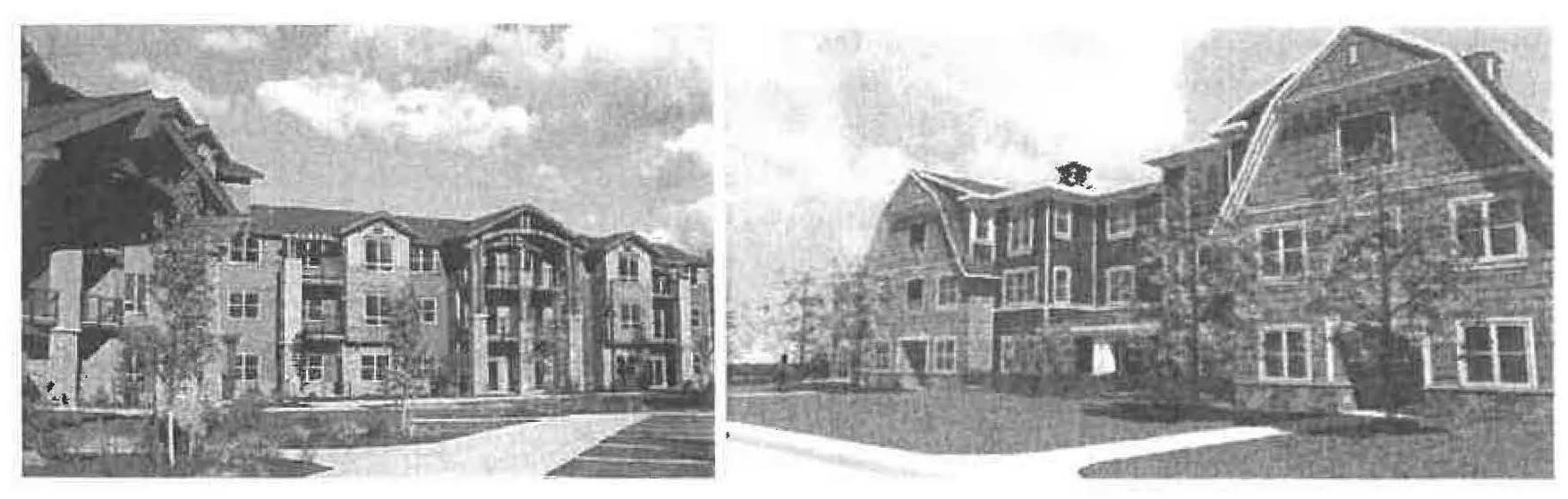
Multiple-Family Dwellings. The following provisions govern the use of building materials and design requirements for all new constructions, and repairs to damages of fifty (50) percent or more, of multi-family dwellings within R-3 and B-2 Districts.
Exterior façade materials: Exterior building materials for all sides visible from a street shall be composed of:
(1)
A combination of at least thirty (30) percent brick masonry, stone masonry, brick veneer, or stone veneer, and seventy (70) percent fiber cement siding, or Premium Vinyl Siding (minimum thickness .044 mils) for each side; or
(2)
Architectural designs with combinations of three (3) exterior materials such as brick, stone masonry and fiber cement siding, or Premium Vinyl Siding (minimum thickness .044 mils) in minimum percentages of thirty (30) percent for each side.
Horizontal patterned fiber cement siding must be in the upper section of the structure. Architectural accent siding is allowable but must also be placed in the upper section of the structure.
Architectural treatments shall be consistent on all sides of the building.
Permitted materials shall be brick, stone, brick veneer, stone veneer, vinyl siding and soffit with a minimum thickness of .044 mils, natural wood, or cement-based material siding having the appearance of wood, such as Hardi-Plank/Board.
Prohibited materials: Generally metal siding, vinyl siding and soffit with a thickness of less than .044 mils, smooth-faced concrete block, split-face block masonry, textured concrete units, fiber cement, stucco, tilt-up concrete panels, prefabricated steel panels, standing-seam or corrugated metal walls, including aluminum, sheet metal or any other metal substance, standard concrete block, Masonite, T111 and all other forms of plywood, chipboard and particle board are all prohibited as external finish materials.
Exceptions: Vinyl siding, split face block masonry or textured concrete units are allowable on any side not visible from a street. Split face block masonry is allowable at ground level up to four (4) blocks high on any side not visible from the street.
Façade articulation: Buildings designed with completely flat façades and monotone color schemes are not permitted. All buildings are required to have horizontal and vertical façade variations such as pop-outs, bays, recesses, arches, banding, columns, gables, porches, or projections, or similar features and modulation to break up roof lines. Such features are required at least every twenty (20) feet along all exterior wall planes and shall be of sufficient width and depth to clearly differentiate each feature from those next to and around. All exterior walls facing a public street or parking area should be articulated by a change in material or depth of material as described above. Fenestration (the design and disposition of windows and other exterior openings) should also be utilized to enhance the articulation in the design. The building official shall have discretion to authorize small adjustments to the distance between roof line variation in circumstances where he/she deems it necessary for the design to meet the intent of the design standards.
Roof materials: All roof surfaces exposed to view shall be covered with asphalt or fiberglass shingles, wood shakes or shingles, clay tiles, slate or standing seam metal, or corrugated metal, excluding used or rusty material without approval by Council.
Pitched roofs: All structures shall have a minimum roof pitch of 5:12.
Flat roofs: No flat roofs are permitted.
Throughout subsection 29-65(a), when reference is made to sides of a dwelling that are "visible from a street," the applicable sides of the dwelling are defined as follows:
(1)
If the dwelling is located on a corner lot that is bordered by two (2) or more streets, then all four (4) sides of the dwelling;
(2)
If the dwelling is not located on a corner lot that is bordered by two (2) or more streets, then the applicable sides of the dwelling are the side that faces the street and the two (2) sides of the dwelling that are adjacent to the side of the dwelling that faces the front of the street. The fourth side of the dwelling is not considered to be applicable or visible from the street.
(b)
Commercial buildings. The following provisions govern the use of building materials and design requirements for all new constructions, repairs to damages of fifty (50) percent or more, of commercial buildings within B-1 and B-2 Districts.
Exterior façade materials: Exterior building materials for all sides visible from a street shall be composed of:
(1)
A combination of at least thirty (30) percent brick masonry, stone masonry, split face block masonry or textured concrete units and seventy (70) percent fiber cement siding for each side provided, however, that the thirty (30) percent material requirement may be cumulative for all sides so long as all visible sides from the street have at least eight (8) inches from the finished grade of brick masonry, stone masonry, brick veneer, or stone veneer; or
(2)
Architectural designs with combinations of three (3) exterior materials such as brick, stone masonry, split face block masonry, textured concrete units and fiber cement siding shall in minimum percentages of thirty (30) percent for each side.
Horizontal patterned fiber cement siding must be in the upper section of the structure. Architectural accent siding is allowable but must also be placed in the upper section of the structure.
Architectural treatments shall be consistent on all sides of the building.
EIFS systems are not preferred but are permitted provided it consists of no more than thirty (30) percent of each exterior side and is installed in the upper half of the structure.
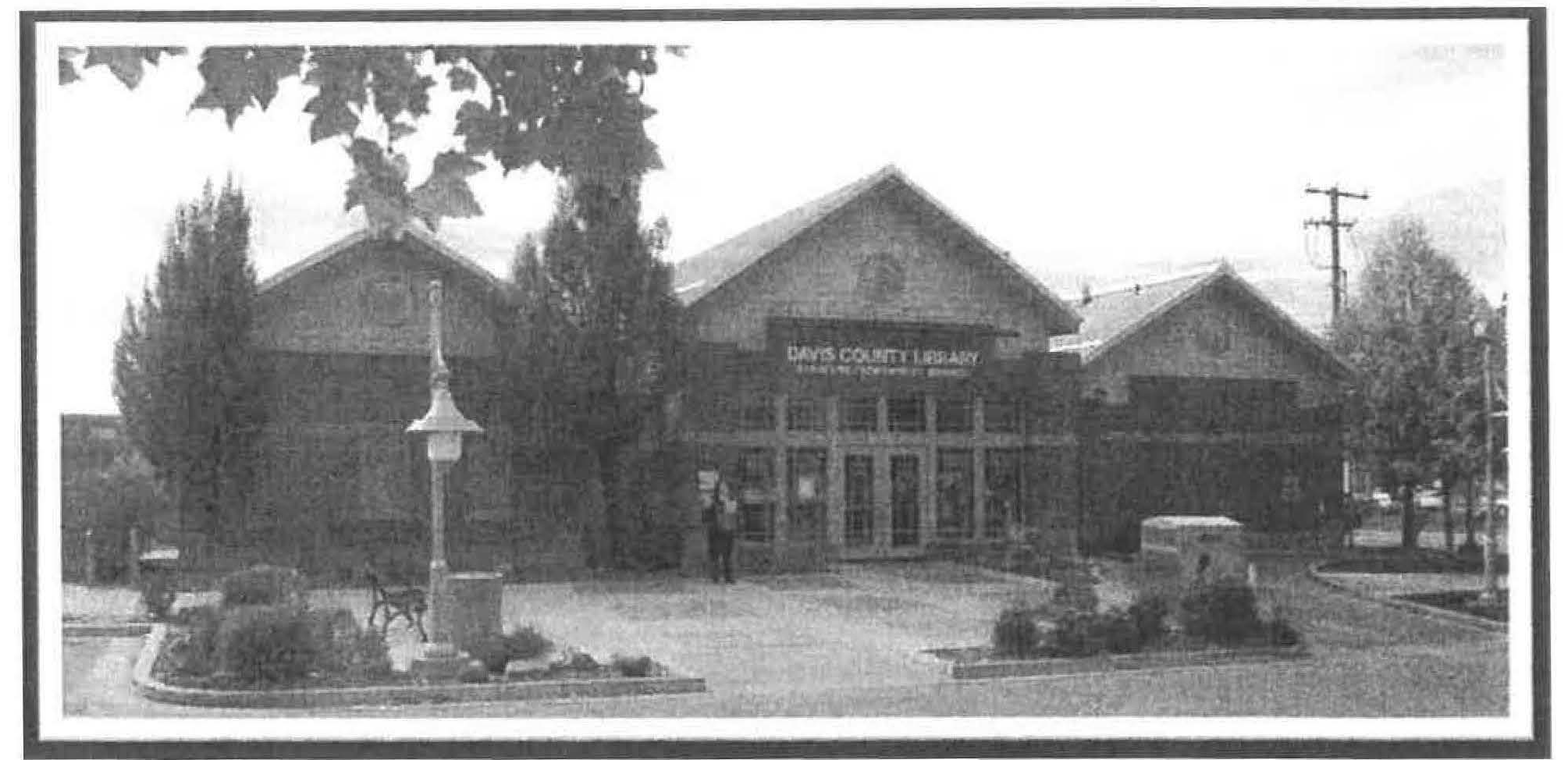
Façade Articulation: Buildings designed with completely flat façades and monotone color schemes are not permitted. All buildings are required to have horizontal and vertical façade variations such as pop-outs, bays, recesses, arches, banding, columns, or similar features and modulation such to break up roof lines. Such features are required at least every thirty (30) feet along all exterior wall planes and shall be of sufficient width and depth to clearly differentiate each feature from those next to and around. All exterior walls facing a public street or parking area should be articulated by a change in material or depth of material and by fenestration (the design and disposition of windows and other exterior openings). Building elements such as canopies, porches, bays or projections should be used to break up the appearance of a long wall. The building official shall have discretion to authorize small adjustments to the distance between roof line variation in circumstances where he/she deems it necessary for the design to meet the intent of the design standards.
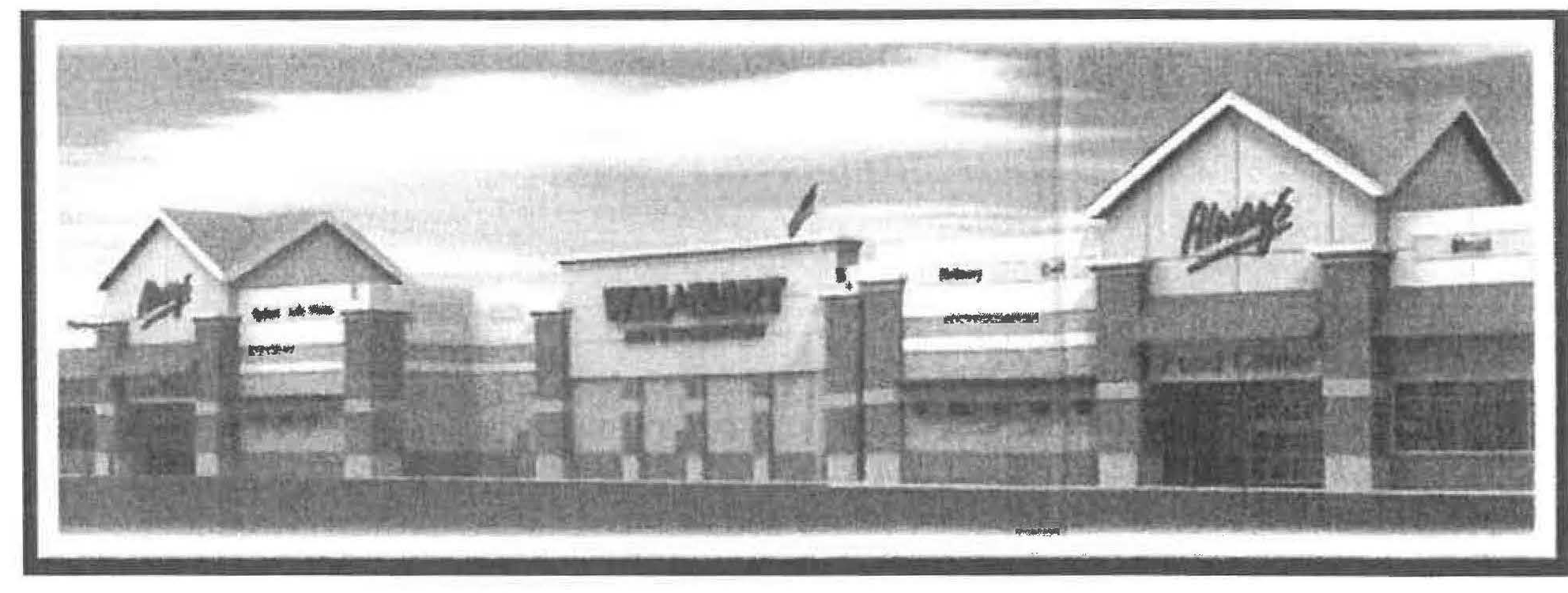
Prohibited Materials: Metal siding, vinyl siding, smooth-faced concrete block, stucco, tilt-up concrete panels, prefabricated steel panels, standing-seam or corrugated metal walls, including aluminum, sheet metal or any other metal substance, standard concrete block, Masonite, T111 and all other forms of plywood, chipboard and particle board are all prohibited as external finish materials. Also, vinyl siding and soffit less than .046 thickness.
Roof materials: All roof surfaces exposed to view shall be covered with asphalt or fiberglass shingles, wood shakes or shingles, clay tiles, slate or standing seam metal, or corrugated metal, excluding used or rusty material without approval by Council.
Pitched Roofs: All structures shall have a minimum roof pitch of 6:12.
Flat Roofs: No flat roofs are permitted without façade and roof design sufficient enough to create modulation and screening of HVAC other types of equipment that are non-architectural treatments.
Throughout subsection 29-65(b), when reference is made to sides of a building that are "visible from a street," the applicable sides of the building are defined as follows:
(1)
If the building is located on a corner lot that is bordered by two (2) or more streets, then all four (4) sides of the building; or
(2)
If the building is not located on a corner lot that is bordered by two (2) or more streets, then the applicable sides of the building are the side that faces the street and the two (2) sides of the building that are adjacent to the side of the building that faces the front of the street. The fourth side of the building is not considered to be applicable or visible from the street.
(c)
Single-Family Dwellings. The following provisions govern the use of building materials and design requirements for all new construction, and repairs to damages of fifty (50) percent or more, of single-family dwellings within all zoning districts:
(1)
All framing materials utilized in the construction of single-family dwellings must be grade #2 lumber or better:
(2)
All floor systems must use sixteen-inch centers, twenty-three and thirty-two hundredths (23.32) inches four (4) feet by eight (8) feet T&G subfloors, and must be attached with adhesive and screws or adhesive and ring shank nails.
(3)
All wall framing must meet the following requirements:
(i)
Single bottom plate;
(ii)
Double top plate;
(iii)
Sixteen-inch centers;
(iv)
Studs must be nailed twice through bottom plates and twice through top plates;
(v)
Sealant must be placed under bottom plates:
(vi)
Two (2) by six (6) or greater walls when drain lines/vents above two inches in diameter penetrate top plate, including dryer vents;
(vii)
Blocking in all exterior walls above nine (9) feet in height; and
(viii)
A minimum of seven-sixteenth-inch sheathing which must be fastened at sill plate, rim joist, and bottom of plate wall, and must run from sill plate top of the ceiling joist.
(4)
For house wraps, approved house wrap must be used on entire home or zip system, provided that house wrap seams must be taped and zip tape must be rolled.
(5)
All roof framing must meet the following requirements:
(i)
Rafters must be sixteen (16) inches on centers and trusses must be based on engineer design;
(ii)
Decking must be seven-sixteenth (7/16) inches;
(iii)
Two (2) by six (6) sub-fascia; and
(iv)
Soffit must be a minimum of twelve (12) inches except on pyramid hip, mansard, or gambrel roofs.
(6)
All electrical conductors size 4 gauge and below, must use solid copper, or stranded copper wiring, provided, however, that copper clad aluminum is not permissible.
(7)
All siding must meet the following requirements:
(i)
All vinyl must be four-tenths (.040) minimum; and
(ii)
Masonry, including stucco, must be utilized on all sides facing roads.
(8)
All roofing must meet the following requirements:
(i)
Felt must be utilized with a drip edge required all the way around the roof and ice and water barriers must be installed where necessary;
(ii)
Shingles may be utilized provided, however, that three-tab shingles are prohibited; and
(iii)
Metal roofs must have dome cap screws and must have lx minimum furring strops over roof decking, under metal.
(9)
All windows must be taped to house wrap with appropriate tape that is lapped properly.
(10)
Exterior doors must utilize rot free jambs if the door is exposed but such jambs are not required if the door is under cover.
(11)
For single-family dwellings located within subdivisions, the following additional provisions are applicable:
(i)
Exterior façade materials: Horizontal patterned fiber cement siding, or premium vinyl siding must be in the upper section of the structure. Architectural accent siding is allowable but must also be placed in the upper section of the structure. Approved masonry must be beneath other permitted materials but is allowable as a material up to one hundred (100) percent of surface area. Architectural treatments shall be consistent on all sides of the building. Permitted materials shall be brick, stone, brick veneer, stone veneer, vinyl siding and soffit with a minimum thickness of forty-four hundredths (.044) mils, natural wood, or cement-based material siding having the appearance of wood, such as Hardi-Plank/Board. In addition, exterior building materials for all sides visible from a street shall be composed of:
(A)
A combination of at least thirty (30) percent brick masonry, stone masonry, brick veneer, or stone veneer, and seventy (70) percent fiber cement siding, or premium vinyl siding (minimum thickness .044 mils) for each side, provided, however, that the thirty (30) percent material requirement may be cumulative for all sides so long as all visible sides from the street have at least eight (8) inches from the finished grade of brick masonry, stone masonry, brick veneer, or stone veneer.
(B)
Architectural designs with combinations of three (3) exterior materials such as brick, stone masonry and fiber cement siding, or Premium Vinyl Siding (minimum thickness forty-four hundredths (.044) mils) in minimum percentages of thirty percent (30%) for each side.
(12)
Prohibited Materials: Generally metal siding, vinyl siding, and soffit with a thickness of less than forty-four hundredths (.044) mils, smooth-faced concrete block, split-face block masonry, textured concrete units, stucco, tilt-up concrete panels, prefabricated steel panels, standing-seam or corrugated metal walls, including aluminum, sheet metal or any other metal substance, standard concrete block, Masonite, Tl 11 and all other forms of plywood and particle board are all prohibited as external finish materials. Notwithstanding the foregoing, vinyl siding, split face block masonry or textured concrete units are allowable on any side not visible from a street, and split face block masonry is allowable at ground level up to four (4) blocks high on any side not visible from the street.
(i)
Façade Articulation: Buildings designed with completely flat façades and monotone color schemes are not permitted. All buildings are required to have horizontal and vertical façade variations such as pop-outs, bays, recesses, arches, banding, columns, gables, porches, or projections or similar features and modulation to break up roof lines. Such features are required at least every thirty (30) feet along all exterior wall planes and rooflines and shall be of sufficient width and depth to clearly differentiate each feature from those next to and around. All exterior walls facing a public street or parking area should be articulated by a change in material or depth of material as described above. Fenestration (the design and disposition of windows and other exterior openings) should also be utilized to enhance the articulation in the design. The Building official shall have discretion to authorize small adjustments to the distance between roof line variation in circumstances where he/she deems it necessary for the design to meet the intent of the design standards.
(ii)
Roof materials: All roof surfaces exposed to view shall be covered with asphalt or fiberglass shingles, wood shakes or shingles, clay tiles, slate or metal. Metal roofs are permitted only if they have a reflectance similar to (or less than) that of the siding material.
(iii)
Pitched Roofs: All structures shall have a minimum roof pitch of 6:12 on main roof. Dormers, and other secondary roofs must be approved by building official.
(iv)
Throughout this Section, when reference is made to sides of a dwelling that are "visible from a street," the applicable sides of the dwelling are defined as follows:
(A)
If the dwelling is located on a corner lot that is bordered by two (2) or more streets, then all four (4) sides of the dwelling; and
(B)
If the dwelling is not located on a corner lot that is bordered by two (2) or more streets, then the applicable sides of the dwelling are the side that faces the street and the two (2) sides of the dwelling that are adjacent to the side of the dwelling that faces the front of the street. The fourth side of the dwelling is not considered to be applicable or visible from the street.
(Ord. No. 18-08, § 2, 5-14-2018; Ord. No. 19-05, § 1, 5-13-2019; Ord. No. 24/01, § 2, 7-8-2024; Ord. No. 24/08, § 1, 11-11-2024; Ord. No. 25/03, §§ 2, 3, 3-10-2025)
Sec. 29-66. - Recycling center regulations.
(a)
Recycling Centers, as defined in this Chapter, are not permitted or conditional uses within any district in the City under this Chapter. In regard to such businesses which preexisted the establishment of the City's zoning requirements imposed by this Chapter, the regulations provided in this Section are applicable. Further, the provisions of this Section shall not be construed to allow Recycling Centers as permitted or conditional uses in any district located within the City.
(b)
Fencing. All materials stored within the grounds of a Recycling Center must be located behind a solid wall, fence, or similar opaque partition, not less than eight (8) feet in height, and must comply with all yard requirements pertaining to the district wherein the Recycling Center is located. In addition, all loading and unloading of materials delivered to or removed from the Recycling Center must take place behind the constructed wall, fence, or partition.
(c)
Storage of Materials. Recycling materials shall not be piled or stacked to a height in excess of eight (8) feet above ground level.
(Ord. No. 23/02, § 2, 7-18-2023)

